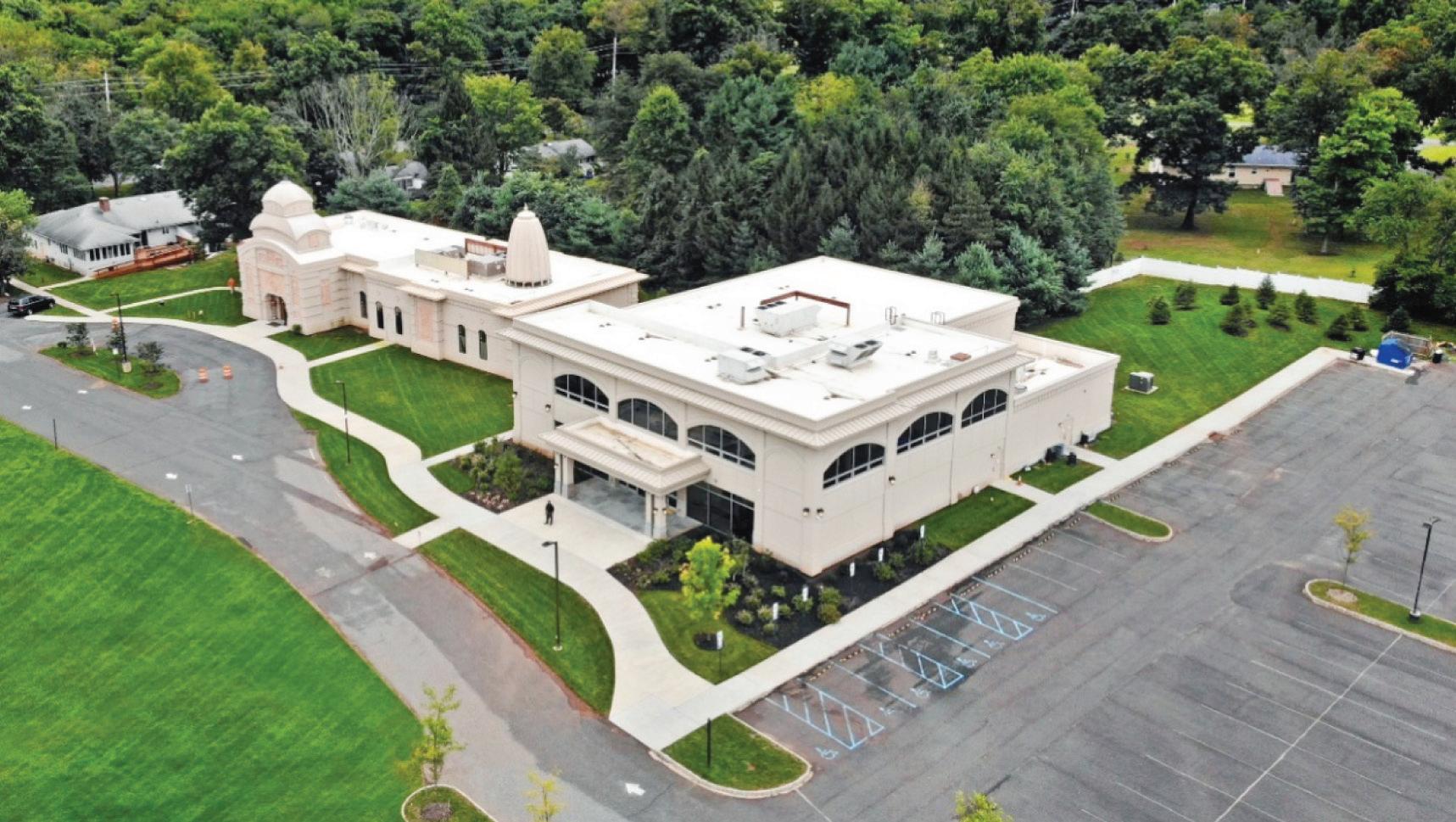
Ananda Mandir 269 Cedar Grove Lane Somerset, NJ 08873


Ananda Mandir 269 Cedar Grove Lane Somerset, NJ 08873
Religious seRvices:
l Even though the temple was closed to visitors for almost 12 months, all religious events (including twice daily pujas by the priest) were performed in accordance with the Bengali panjika Durga Puja and Kali Puja, the two biggest religious events of the Bengali calendar, were held in strict conformity with all the prevailing CDC and Township regulations. Size of the crowd was well controlled on both occasions, much to the happiness (and safety) of all the participants.
l Funeral services were provided to families who had lost loved ones to COVID-19 here in the US or in India. We also performed Hindu weddings as well as other rituals such as Annaprasan, Upanayan, Kumari Puja, etc., although the number of these events were down significantly because of the pandemic.
HumanitaRian seRvices:
l (a) Donated canned and packaged non-perishable food to Franklin Township Food Bank; (b) Organized blood collection drive for the Red Cross; (c) Held COVID-19 test clinics in cooperation with the health authorities; (d) In 2020, made cash donations, totaling $5000, to local Police and Fire Departments, Food Bank and Emergency Services for their dedicated front-line work against COVID-19.
l To help the victims of the second wave of COVID-19 in West Bengal, Ananda Mandir organized a “donation drive” in May/June, 2021– and jumpstarted this drive with a contribution of $10,000 from its own funds. At the time of writing this report, total collection has grown to almost $15,000. Ananda Mandir has partnered with Kolkata Foundation to ensure that the funds directly
By debajyoti chatterji
Following NJ State guidelines, Ananda Mandir imposed severe restrictions on inperson gatherings in mid-March 2020. Most of the restrictions were finally lifted in June of this year. However, we offered a wide range of services to the Indian community in NJ and neighboring states even during this 15-month long pandemic. Here are some of the most significant services provided to our members and friends:
benefit needy COVID patients in West Bengal (see a separate report on this donation drive elsewhere in this issue).
educational seRvices:
l Continued to provide Bengali language and heritage classes to school-age children, and offer lessons in Odishi and other classical dances (through Zoom sessions)
cultuRal PRogRams
l Although we could not present onstage events such as musical and theatrical shows (because our Tagore Community Hall was closed to the public), we presented at least six cultural programs to our members and friends through our digital perform. Many of these programs featured well-known artistes from Kolkata and New Jersey and attracted large number of viewers. We received many compliments for the quality of these programs.
In the summer of 2020, Ananda Mandir (AM) participated in the first ever NJ Bengali community wide virtual Quiz competition organized by Kallol of New Jersey. It was one of the most enjoyably memorable experiences under lockdown – enlightening, challenging and spirited, and above all unifying and
Sosthi Monday October 11
Saptami Tuesday October 12
Ashtami & Wednesday October 13
Sondhi Puja
Nabami Thursday October 14
Dashami Friday October 15
Kojagori Lakshmi Puja Wednesday October 20
& Satyanarayan Puja
*For Timing and other details, please visit our Website
socially uniting. Kudos to the organizers and the Quizmaster. AM’s team included Subrata Bhaumik (Captain), Subhodev Das, Rik Sen, and Sanjoy Paul. AM breezed through the elimination and semifinal rounds to reach finals and won the runner up title for the 2020 competition.
liteRaRy activities
l Continued to publish Ananda Sangbad (our quarterly news magazine) and Anandalipi (our annual literary magazine). Both print and digital versions were available to all the members and friends. Organized several sessions of Sahitya O Alochana on Ananda Mandir Digital Platform, the most significant being a 2-part panel discussion of key aspects of the COVID-19 infection and treatment. The Writers Club members met (remotely through Zoom) on a monthly basis to share their writings to their peers and receive constructive feedback. Gayatri Memorial Awards for Literary Excellence were announced on a timely basis to two accomplished authors after a nation-wide competition.
senioRs suPPoRt activities
l Evergreen Club members continued to enjoy their monthly get-togethers through Zoom videoconferencing. The meetings usually attracted 25 to 30 seniors, covered a wide range of subjects and featured songs, readings, experience sharing and informational presentations. During the last year, guest artists were invited to these sessions to provide high-quality cultural experiences.
youtH PRogRams
l Continued to publish Kisholoy, a monthly literary magazine written entirely by school-age children of the Ananda Mandir community. This online magazine also issued a special, Durga Puja (Sharadiya) issue. – Also conducted a community-wide competition to recognize two young authors for excellence in creative writing through Kishalay Awards.
community Relations
l We invited our neighbors to get to know us better and visited them with flowers and chocolates. Similarly, we visited the local Fire and Police depart-
continue to page 13 }
Calendar of Events (Dates are subject to Change) Please check our website frequently www.anandamandir.org Tel: 732-873-9821
NOTE: If a particular Puja time is not listed, please contact temple or visit our website: anandamandir.org
July(*)
ShyAMA PuJA
Friday, 09
RAth JAtRA
Monday, 12
BIPAdtARInI PuJA
Tuesday, 13
PunoR JAtRA & SAtyAnARAyAn PuJA
Monday, 19
GuRu PuRnIMA
Saturday, 24
SAhItyA o AlochAnA (*)
Friday, 30
cultuRAl PRoGRAM (*)
AuGuSt (*)
ShyAMA PuJA
Saturday, 07
RAkhI PuRnIMA & SAtyAnARAyAn PuJA
Sunday, 22
JAnMAShtoMI
Monday, 30
SAhItyA o AlochAnA (*)
Friday, 27
cultuRAl PRoGRAM (*)
SePteMBeR (*)
ShyAMA PuJA
Monday, 06
GAneSh chAtuRthI
Friday, 10
BISwAkARMA PuJA
Friday, 17
SAtyAnARAyAn PuJA
Sunday, 19
SAhItyA o AlochAnA (*)
Saturday, 25 cultuRAl PRoGRAM (*) octoBeR (*)
MAhIShASuR MARdInI
Sunday, 03
ShyAMA PuJA
Tuesday, 05
tIl tARPAn
Wednesday, 06
duRGA PuJA
Monday – Friday, 11-15
koJAGoRI lAkShMI PuJA & SAtyAnARAyAn PuJA
Wednesday, 20
SAhItyA o AlochAnA (*)
Saturday, 30 cultuRAl PRoGRAM (*)
(*) See www.anandamandir.org or Call Mandir for details
Special Religious Services: Upon request, the priest of Ananda Mandir offers services such as in-house Shraddhas, Rituals associated with Cremations (Antyesti Kriya), Shraddha Anniversaries, Pre-wedding rituals (Naandimukh, Ashirwad, etc.), Upanayan (Paitey), Annaprasan, Wedding Ceremonies & Wedding Anniversaries, Griha Prabesh (Bhumi Puja), Consecrations of new cars (New Car Pujas) and others. If you have needs for any of the above or more, please feel free to contact Biswabhai @ 732-873-9821
Ananda Sangbad
MAndIR
A Periodical Newsletter Published By AnAndA
(A Tax-Exempt, Non-Profit Organization)
269 Cedar Grove Lane Somerset, NJ 08873
Phone: 732-873-9821 Website: www.anandamandir.0rg ***
Guru chakravarty Executive Editor
All queries, articles, news reports and letters should be directed to guruchakravarty@yahoo.com Phone: 908-752-3065 ***
For general information, please contact the following executives of Ananda Mandir:
Jai Prakash Biswas President
debajyoti chatterji Vice President
Anjan lahiri Vice President
Ashok Rakhit Vice President
Arun Bhowmik General Secretary
chanu das Treasurer
Pradip Majumdar Assistant Treasurer
BECOME A MEMBER OF ANANDA MANDIR AND PARTICIPATE IN THE COMMUNITY ACTIVITIES TO ENRICH YOUR FAMILY
Yes, the rage of COVID-19 is continuing with vengeance in India. While here, for the first time in over a year, most of us are getting a relief from breathing through a mask, the story from the other side of our homeland is dire. For several days last week, the predominant scene on CNN was burning pyres of dead bodies in New Delhi. Horrible stories were heard on TV about how people were frantically looking to get oxygen cylinders for their dying relatives. Sick people arriving in the hospitals were turned back for the lack of hospital beds. The effect of people dying of COVID-19 in India was felt here at our doorsteps in New Jersey too. Biswabhai reported May as the busiest month ever for performing “Shraddha” ceremony by the relatives of people who died of this deadly disease back home.
Officially, the country reported 330,000 deaths so far, placing India second on the global death list, just behind USA, however, the unofficial number is thought to be much higher. By May 1, India set a global record: more than 400,000 cases in one
day. Daily cases are coming down, from an all-time high of 400,000 to about 150,000 recently. Total new cases in West Bengal are down too, currently at about 11,000 per day. Lockdown-like restrictions are in place for major cities like Delhi, Kolkata and Bangalore.
There is a name for this new variant of COVID-19. It is B.1.617.2, now renamed Delta. World Health Organization has now accepted a new naming system with letters from the Greek alphabet in the order in which they are designated potential threats. B.1.1.7, the variant discovered in Britain that has contributed to devastating waves of cases globally is named Alpha.
The Indian community in the US is responding to calls for help. There are dozens of relief agencies raising money to procure and transport oxygen concentrators and PPE to the affected areas. Pratham USA, the largest child education promoter in India, is ensuring equitable distribution of more than 7,500 oxygen concentrators in 21 states alongside its carefully vetted regional implementation
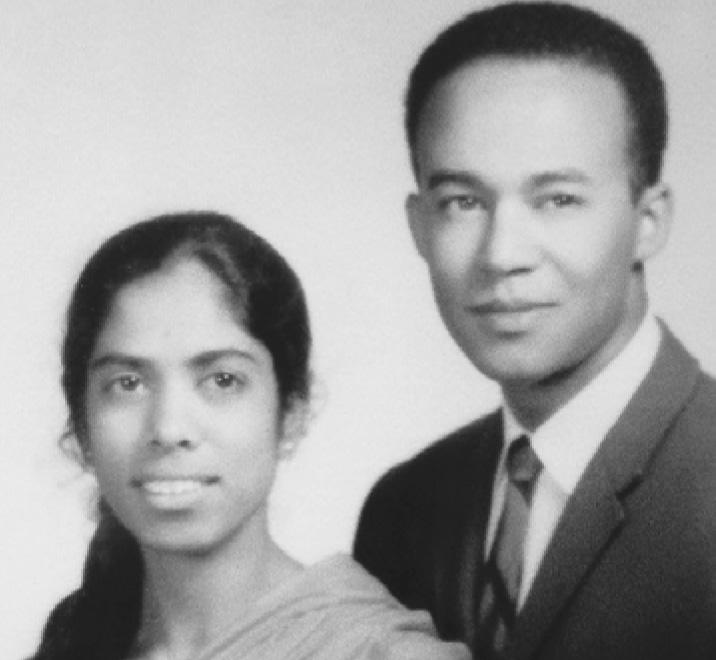
In the April-2021 issue of Ananda Sangbad, we published a picture with a caption below it reading Shyamala Gopalan and Donald Harris. The picture was intended to depict the parents of Kamala Harris,but it did not. The correct picture of the parents of Kamala Harris, Shyamala Gopalan and Donald Harris, are shown below. We regret the error.
Guru Chakravarty
Executive Editor
partners. 2900 oxygen concentrators were recently sent to Delhi by prominent businessman and philanthropist Vinod Khosla and his group that will support over 34000 patients in Chennai, Bangalore, and Kolkata. Organizations like Direct Relief, Oxygen for India, and others are working tirelessly to solve the oxygen availability problem. Bay Area Prabasi has formed a consortium with Kolkata Foundation of New Jersey to provide direct help to the people in need through field-based organizations in Kolkata – AIM ( Associated Initiative for Mankind Foundation), MUKTI, RHCF (Rural Health Care Foundation) and Kolkata Gives. Their plan is to procure 500 high quality oxygen concentrators and ship to Kolkata. Concentrator units are procured at $783/per unit. Ananda Mandir is doing its part with donation of $15000 to Kolkata Foundation making sure that the funds directly benefit needy COVID patients in West Bengal. Bharat Sevashram Sangha of New Jersey, CAB (Cultural Association of Bengal) as well as other local cultural organizations are all
pitching in.
One important factor in all this effort is looming large – lack of sufficient vaccination. Of the eight vaccines currently under production in India so far, only three have been approved for useanother two are in the early stages of clinical trials, and a further three are in latestage trials. The three vaccines approved for injection are Covaxin (made by Bharat Biotech), Covishield (made by Serum Institute of India under license from AstraZeneca) and recently added Sputnik V Vaccine, originally supplied by Russia, and now being made locally. Currently, India’s cumulative doses administered so far have reached about 216 million. Of this, 171 million are first doses and 45 are second doses. Indian government is promising to vaccinate all of the adult population by the end of 2021. Until then our vigil must continue with an all-united effort to keep this deadly disease under control.
guru chakravarty Executive Editor
will be held on Sunday, August 8 in the Front Building (Basement)
At the Annual General Meeting, the voting members will have opportunities to hear from the president (and other members of the Ananda Mandir Executive Committee) on the accomplishments of the past year, the issues faced and addressed, and the challenges facing the organization in the coming year. You will also hear from the chairs of the various committees about the various activities they pursued during the past year and their plans for the year ahead. You will also be served an enjoyable lunch and treated to a short cultural program.
All Voting Members (Life Members to Benefactors) are requested to attend.
Letters/Emails will be sent to you with further details.
Oxygen is an essential medical treatment – from general medicine administration to medical assistance and emergency procedures– to save human lives. It is a critical element for human life existence, and because of its natural availability through the air, it is sometimes forgotten to be a life-saving essential medicine. The timely availability of medical oxygen is a decider of life and death for the patient. Hospitals around the world are always giving priority of the continuous availability of medical oxygen above others.
Yet, in recent months, it has become clear just how vital oxygen is as India reels from a deadly surge in COVID-19 cases. The world witnessed express trains, dubbed “Oxygen Express”, racing across the country to deliver the vital need from the production plants to the capital of New Delhi and other regions. Meanwhile, desperate pleas filled social media from people forced to helplessly watch their family members slowly suffocate.
Throughout the COVID-19 pandemic, medical oxygen shortages have struck hospitals in Brazil, Peru, Nigeria, Jordan, Italy, and beyond. In the United States, too, oxygen supplies at hospitals in New York City and California have run dangerously low at times. Combined with the crisis in India, these have now captured international attention.
Oxygen shortages are far from a new phenomenon. Experts say the pandemic is exacerbating the oxygen access gap that causes an untold number of preventable deaths every year in low- and middleincome countries.
Medical Oxygen is a critical ingredient in treating certain health conditions such as pneumonia, malaria, sepsis, and meningitis. Children and mothers are often administered medical oxygen to ease breathing when their lives are at risk during a medical treatment. Its importance grew once more during the COVID-19 pandemic because of its close association with the respiratory system. High-flow nasal oxygen is found to be a safe and effective treatment for COVID-19 patients who are not in an ICU. According to the WHO, 15 percent of COVID-19 patients require medical oxygen because of breathing difficulties.
“What COVID has done is expose how fragile actually the systems around oxygen have been over the years,” says Mphu Ramatlapeng, executive vice president for implementation at the Clinton Health Access Initiative (CHAI). The CHAI was a recent finalist for a $100 million grant from the MacArthur Foundation to fund its proposal to ensure oxygen access in India, Nigeria, Ethiopia, Kenya, and Uganda. “My worst nightmare was something like COVID happening.”
Why is it such a challenge for countries to get adequate oxygen, one of the most fundamental of life-sustaining elements? Here is a look at the complexities of delivering medical oxygen, how scientists are working to find solutions, and how the pandemic has prompted the international community to respond more forcefully – before another country becomes the next India. the oxygen access gap
Medical oxygen is high purity oxygen than what is in the air which we breathe. The Earth’s atmosphere contains 21 percent of oxygen by volume, while most of it is made up of nitrogen. In contrast, medical oxygen has a minimum of 82 percent oxygen, achieved through a chemical process. Oxygen’s use as a therapeutic drug dates back to World War I, when it was used to treat soldiers exposed to mustard gas in the trenches across Europe. Oxygen therapy prevents hypoxemia, which occurs when individuals have low levels of oxygen in their blood. When blood oxygen is low, the body’s organs begin to shut down. Oxygen is also administered when patients are put under anesthe-
By Subhodev das
sia in surgery.
“The use of oxygen is pretty much in every aspect of our lives in the medical world,” Ramatlapeng says. Sadly, oxygen access gap exists in low- and middle-income countries. A 2014 study of hospitals in Malawi found that only 22 percent of the patients who needed oxygen received it. A similar 2019 study in Nigeria revealed that hospitals were able to provide oxygen to 20 percent of the children who needed it. A study published last year showed that when oxygen was provided in remote healthcare facilities of Papua New Guinea where pneumonia was common among children at least, mortality rate was reduced by 50 percent.
Despite clear evidence of medical oxygen saving lives, there are many complex challenges to actually getting it to healthcare facilities – starting with the way oxygen is delivered in the first place. cylinders, concentrators, and piped oxygen
Oxygen delivery systems take on different forms depending on location: large or small facilities; urban or rural environments; high- or low-income communities.
Bulk oxygen is the preference of major healthcare facilities worldwide. In this system, hospitals store liquid oxygen in enormous tanks on site and pipe the medical oxygen throughout the facilities such that it can be turned on and off like a spigot. This arrangement requires access to gas companies—which have a relative monopoly on the market—to fill up the tanks. It is also an enormous investment to build the infrastructure, which smaller healthcare facilities could ill afford.
Instead, healthcare facilities in rural or low-income communities rely on medical oxygen in individual cylinders that gas companies fill at oxygen plants. The highly pressurized cylinders are heavy and dangerous, making them expensive to transport – particularly to remote villages. They typically contain enough oxygen to last an adult between one and three days, meaning that a healthcare facility has to maintain a healthy backup – again a cost-prohibitive proposition.
This is where oxygen concentrators can fill the gap.
Oxygen concentrators have been around since the 1970s. These machines contain zeolite crystals that absorb the nitrogen from regular air, leaving concentrated oxygen that flows to a patient through tubes connected to nasal prongs. One oxygen concentrator can provide oxygen to two children at a time. However, these require steady supply of electricity, which is not always available. If there is a power outage, even just for a few minutes, a child could die.
The uncertainty of electricity supply has forced many who are working to bridge the oxygen access gap to turn to solar concentrators, which work in the same way but are powered by solar panels and batteries rather than electricity. Alongside there is a rising use of oxygen generators, which are essentially much bigger oxygen concentrators that midsized regional hospitals can use to fill cylinders for smaller facilities in their district — a hub-andspoke model.
A combination of solar concentrators and oxygen generators appears to be the best option for more low- and middle-income communities. In the long run, a successful oxygen program for any community requires a different kind of investment. As a healthcare professional noted in the 2020 study of rural communities, “It’s simple to give someone in India an oxygen cylinder and a face mask and let them go. But that’s not a system, it’s a Band-Aid.”
Having access to oxygen does not mean that it
can be reliably administered to patients. Healthcare facilities must have staff with the expertise to use and maintain oxygen concentrators, which might otherwise have a lifespan of six months to a year. The facilities should also have a strong supply management system in place to handle replenishment of the oxygen cylinders, ensuring there is always oxygen on hand.
Prior to administering oxygen, the facilities must diagnose hypoxemia in the first place. Hypoxemia is hard to detect in its early stages, with few clinical symptoms until it progresses to the point where a patient is gasping for breath.
Herein comes the pulse oximeter
Invented in the 1970s, these small electronic devices are clamped onto a person’s finger to measure blood oxygen saturation. They became a standard of care in U.S. hospitals by the end of the ‘80s. The early days of the pandemic saw Americans panicbuying them.
“It’s important to have it at the entry point in a medical facility,” Ramatlapeng says.
Ramatlapeng also notes that pulse oximeters are not available in 90 percent of the healthcare facilities in the countries where the CHAI works. They are simply not yet seen as vital in the same way as blood pressure machines and thermometers.
Now, that may be attributed to the way deaths are reported. Hypoxemia is rarely reported as a cause of death except in rare cases like, for example, mountaineers. Instead, the disease itself — pneumonia, malaria, cardiovascular disease—is more likely to be listed on a death certificate. Ramatlapeng says that this is why even healthcare professionals do not always realize how many lives are utterly lost to hypoxemia.
“People and children have been dying due to the lack of oxygen for years and years,” she says. “We think oxygen must take center stage now.” an essential—but neglected—medicine
Closing the oxygen access gap is going to take significant investment from the international community—which has historically been lacking in a funding landscape that tends to prioritize new drugs and vaccines.
“It’s an essential medicine that has been neglected,” says Trevor Duke, the lead author of the 2020 study and a pediatrician at the University of Melbourne. “Oxygen is an essential drug, but it’s a very old drug. So, there’s been a low priority on oxygen generally.”
Yet one can hope that the COVID-19 pandemic could trigger a shift in those priorities as it highlights the criticality of medical oxygen for saving lives.
Last fall, a coalition of NGOs launched the COVID-19 Oxygen Needs tracker, which allows funders to see in real time how many cubic meters of oxygen are needed in low- and middle-income countries each day. The results were so staggering that the WHO launched a COVID-19 Oxygen Emergency Taskforce in February with the goal of securing $90 million in immediate funding for oxygen needs in low- and middle-income countries and $1.6 billion in funding for the next year.
Robert Matiru, director of programs at Unitaid, a Geneva-based global health initiative that is leading the taskforce, acknowledged that oxygen needs were slow to gain traction among funders.
“It should have been a wake-up call before India,” Matiru says. “It shouldn’t have taken something like this for governments to see just how important this is.”
Matiru says the WHO taskforce has four main objectives: bring attention to the oxygen crisis, price out the oxygen needs of low- and middle-income countries, link those needs to financing and
Bengali, my mother tongue is the national language of the independent nation of Bangladesh and the state language of the Indian state of West Bengal, which shares a common border with Bangladesh. It is also the predominant language of state of Tripura and parts of the state of Assam (Cachar, Barak Valley). Native Bengali speakers are spread all over the world with large concentrations in the United Kingdom and the Gulf States. Bengali has the sixth highest number of native speakers in the world. Besides, it boasts of a high quality of literature comparable to the best in the world.
Bengali language evolved from Sanskrit, via an intermediate language, Maghdi Prakrit. Sanskrit is also the origin of other major languages of Northern India: Hindi, Gujarati, Marathi, Punjabi, Kashmiri, Oriya, and Assamese. The language originated around the Ganges Delta in the Indian subcontinent in the areas presently occupied by Bangladesh and the adjacent Indian state of West Bengal. Together, the area constituted the province called Bengal till India’s independence from the British in 1947. The area was generally occupied by Hindus and some Buddhists before being conquered by the Muslims led by Bakhtiyar Khilji, a general of the ruling Delhi Sultan in 1203 AD. Islamic hegemony in Bengal lasted around 550 years, till the British conquest in 1757. The Muslim period left its impact in all spheres of Bengali life. Large scale conversions into Islam occurred over time. This is reflected in the large percentage of Muslims in Bengal and also the large number of Arabic and Persian words that entered the Bengali language.
The earliest instances of what may be called Bengali were reputedly discovered by Pandit Haraprasad Shastri from manuscripts in Nepal (Charjapads), which pushed back the origins of the language to around 1000AD. This languagelike the Old English of preChaucer, is hardly intelligible to the present generation, ‘Intelligible’Bengali probably started making its appearance around the fifteenth century during the Sultanate Period.A unique script also evolved, distinct from other languages of India. In the early days, Bengali also bore
strong resemblances with Oriya and Assamese languages from the neighboring areas. Even today, the three languages are mutually intelligible, particularly if spoken slowly. In fact, the Bengali and Assamese scripts are almost identical.
There is evidence of some impressive literature from this early period of Bengali in the lyrics of Chandidas; the Mangal Kavyas; Bengali translations of Ramayana and Mahabharata; and the various biographies of Chaitanya Mahaprabhu. Various dialects evolved in different parts of Bengal. But from early on, it appears that the dialects of the districts of Nadia and Hooghly just north of Kolkata gained primacy as evident from the old literature. Another peculiar feature of the language is the existence of two parallel streams: Sadhu Bhasha (Written Language) and Chalit Bhasha (Spoken Language). These features, as well as the primacy of the language of Nadia and Hooghly are evident even in the present day.
The British conquered Bengal in 1757 with their victory in the Battle of Plassey. Slowly the British established their hegemony over Bengal in many spheres of life. This engendered a major interaction between the British and particularly the educated upper classes of Bengalees. The exposure brought the Bengalees into contact with the English language and western ideas. English words started entering the Bengali language and some of them became commonplace (like ‘chair’ and ‘tebil’ (table)). Somehow, a fair number of Portuguese words like janala (window) and fita (ribbon) has also entered common usage. A major impact of the English-Bengali interaction was the flowering of an educated, intellectual class among the Bengalees. There appeared towering personalities like Raja Ram Mohan Roy (religious and social reformer), Ishwar Chandra Vidyasagar (scholar and social reformer), Bankim Chandra Chattopadhyay (novelist) and Michael Madhusudan Datta (poet). this ushered in the muchheralded Bengali Renaissance in the middle of the nineteenth century. It centered around the city of Calcutta, now Kolkata, which was then the capital of British India and reputedly the
By Partha Sircar
second city in the empire after London. We Bengalees like to think (justified or not) that the Bengali Renaissance is in the same league as the European Renaissance. There was a burst of activity in every sphere: art, religion, politics and last but not the least, literature. Bengali language was greatly enriched. The output during the period catapulted Bengali literature to another level. The Renaissance also gave birth to the Bengali drama with legendary dramatists and actors like Girish Chandra Ghosh, and later, Shishir Bhaduri. Perhaps the most shining product of the Renaissance was Rabindranath Tagore. A polymath, the like of which is rarely seen, his poetry, songs, short stories, novels and dramas are comparable with the best in the world. Tagore was awarded the Nobel Prize in Literature in 1913, the first Asian to win the prize.
The Partition of India in 1947 and the birth later of the new nation of Bangladesh in 1971 were seminal events in the life of the Bengali speaking people. Initially, at the independence of India from the British in 1947, the country was split into Hindu majority India and Muslim majority Pakistan. The territory of Pakistan consisted of a western Sector (West Pakistan) bordering Afghanistan and an eastern Sector (East Pakistan) which constituted the eastern two-thirds of erstwhile Bengal. The Partition saw major migrations of people from both sides of the East Pakistan border: primarily Hindus migrating from east to west and a significant but considerably lesser number of Muslims from west to east. Thus began the story of a parallel existence of the Bengali language in two countries. There evolved differences in the predominant accents and vocabulary between the Bangladeshi and Indian Bengali, most notably the greater presence of Arabic and Persian words in the Muslim dominated Bangladesh. One is reminded of Britain and America, with their differences in accents and spellings and Winston Churchill’s famous saying: “two great nations divided by a common language”.
East Pakistan became the biggest entity of Bengali
speakers in the subcontinent with about sixtypercent of the speakers. From its earliest days in 1947, there was discontent regarding the national language in Pakistan. Matters came to a head with the Language Riots in February 1952. February 21, 1952, has been designated as the International Mother Language Day, a day of singular pride in Bangladesh. The discontent between the two Pakistans simmered on, till matters came to a head after the national elections in 1971. There was a bloody war of secession and on December 16, the new nation of Bangladesh was born. From its earliest days, Bangladeshis took great pride in the Bengali language. With total support from the government, its literary activity has grown by leaps and bounds as did other activities like movies. One author to emerge out of this is the novelist Humayun Ahmed, who enjoys immense popularity on both sides of the border.
Roughly forty percent of the speakers remained in India. They were predominantly Hindus, but also included 20-25 percent Muslims. Most made their home in the truncated state of West Bengal with Calcutta (now Kolkata) as its capital and center of activity. There were smaller enclaves in Tripura, some parts of Assam and other places. With Calcutta as the center, literary activity, including dramas and music continued unabated from the earlier British period. Some exceptional writers like the poet Jibanananda Das emerged as worthy successors to their predecessors. Another major development during the period was the
Bengali cinema, which had taken its initial steps prior to independence. There was a profusion of activity with the appearance of a large number of films. The quality of films also improved with some making their mark in international film festivals. One name stands out, that of Satyajit Ray. He was honored with an Oscar Lifetime Achievement Award in 1992. Clearly, two separate paradigms are at work. For the Bangladeshis their language is their national pride, and they uphold it zealously.
The Bengalees in West Bengal, however, being part of a bigger country (India), are subject to different a different set of social and political pressures from both outside the state and inside. They do not appear to have the same zeal for their language as their counterparts across the border. The declining preference and proficiency for the language among the young urban elites is clearly evident in the profusion of Hindi and English words in their vocabulary. In Kolkata and in other urban areas, there is nowadays a craze for English medium schools - Bengali medium schools, in turn are taking a back seat, including some which were once highly regarded. One wonders how the future will unfold. It is not out of the realms of possibility that due to the larger numbers of Bangladeshis, their form of the language with greater predominance of Arabic and Persian words would in the future eclipse its counterpart in West Bengal across the border. after all, West Bengal and Bangladesh do not have an atlantic ocean between them like england and america.
| continue from page 3
drive down the price of oxygen. Although the taskforce will focus on COVID-19 needs, it could have long-term implications for closing the oxygen access gap.
“The good thing is that by investing in medical oxygen for COVID you’re also investing in medical oxygen systems,” Matiru says. He also points out that the acute pandemic needs are in fact long-term needs in many lowincome countries where the vaccine rollout is slow.
Duke worries, however, that the response will not be fast enough to spare countries that are likely to experience their own surges in COVID-19 cases and are even more vulnerable than India. Still, he hopes that the pandemic will trigger a new understanding of the importance of investing in good oxygen systems rather than just the latest technology.
“The best time to do something was several years ago, but it’s not too late now.”
By Rahul Ray
It always intrigued me –why do Sikh men and women have similar-sounding first names. If I had no prior knowledge ‘Gurpreet’ can be a man or a woman. In contrast, most Indian names are gender-specific. In other words, it is easy to tell the gender from the first name of a person. There are first names that can go either way, but their number can be counted on fingers. For example, in Bengali, Shanti is the only name that I can come up with that can go either way. Thereby, why do Sikhs choose to confuse others with something so simple as a name?
Growing up as a boy in Kolkata I found Sikh men and women to be physically larger and possibly stronger than average Indians. I was awed by tall Sikh men with turbans and the abundance of facial hair and in some cases a Kripan or a sword in their Kamar-bundh. To me, they represented a stronger race among fellow Indians. History was also on my side. I read how Sikhs under the leadership of their prophets or Gurus fought fearlessly with Mughal emperors for their independence.
This historical lesson also gave me the idea, however much strange it may sound, that Sikh men and women, gallant that they are musthave names that are somewhat ‘manly’. Thus, instead of a dainty and what is perceived to be a feminine first name, such as Ketaki, Swapna or, Madhuri, all ending with a soft-sounding vowel, a simple Google search produced consonant-heavy first names for Sikh women, such as Amritpreet, Amritpal, Hardeep, Amandeep, etc. Now, wait a minute. I have a woman-friend named Hardeep, but I also have a man-
man or a woman? *
The answer is – you don’t. You can only tell whether a Sikh person is a man from his last name ‘Singh’, meaning ‘lion’, or a woman with her last name ‘Kaur’, meaning ‘princess’. These are almost exclusively two last names that most Sikhs use. In other words, in terms of first names Sikhs are truly gender-neutral, and they have a simple binary system for the last name. This is truly a revolutionary concept because there are hundreds of last names for Indians. Furthermore, it is often easy to comprehend from one’s last name which caste he/ she belongs to, which part of India his/her ancestors may have come from, and other ethnographic details. Such information may be salutary to a high-caste person, but it can surely become a mode of oppression for people belonging to the bottom rung of the caste system. This would be an impossible task as far as Sikh last names are concerned.
This, I am sure will be sweet music to the ears of people who stand for women’s rights, and in general, opposed to the patriarchal pattern of society. Wait again. How did Punjab, where most Sikhs live became such a hotbed of gender- equality, at least in terms of names? Soon we will find out that social justice among Sikhs is not restricted to names only. In old times people of Punjab, that includes current West Punjab in Pakistan and East Punjab in India, suffered from oppressive rulers and invaders like other fellow countrymen. They also suffered from patriarchy and casteism, as was and still is the bedrock of Indian society.
Till Guru Nanak arose.
Nanak was born in 1469
friend named Amandeep. It is getting confusing. How can one tell from the first name whether a person is a
By Basab dasgupta
Theto a Hindu Khatri family in the province of Punjab in present-day Pakistan. Rumor
title of this essay is meant to be an ironic pun. Of course, all Bengalis of my era have listened to, loved and sung songs written by him. Yet, we seldom bring his name up or bestow lavish praise on him in our social discussions in the same way as we do about many singers and music directors. I am talking about the famous lyricist, Gouri Prasanna Majumdar (GPM). I was aware of his name from my childhood, probably because of his rather long name, which was always pronounced together, along with other Bengali lyricists. It was much later in my life when I started to appreciate his greatness. It was probably my college friend Amal (not his real name) who reintroduced GPM in my world of music. He casually mentioned one day that GPM was his maternal uncle (mama). I acknowledged that I knew his songs, but I really did not know which were written by him. So, I started to investigate who wrote all the Bengali modern songs I liked in order to assess how much importance I should give to Amal’s family connections. Surprisingly, I found out that almost all songs from Bengali cinema that I passionately liked were written by GPM. I started not only to listen to all those songs again, but also to closely follow every word carefully. It gradually became clear why GPM’s songs made such profound impressions on me (and on millions of other Bengalis). First of all, the lyrics were very simple. No symbolism, no gimmick, no doublemeaning. However, even a few words in his songs have a very significant meaning which immediately touches our heart. Secondly, an intimate connection with the Bengali culture seems to be imbedded in is songs. It would be difficult to translate them into a different language. Thirdly, appeal of his lyrics seems to be not only independent of the music director but enhances the music no matter who is directing it. Unlike the Bollywood music world where a lyricist is typically associated with a specific one or two music directors or Salil Chaudhuri (SC) who wrote lyrics only
for songs he directed, GPM has written for a number of famous music directors including Hemanta Mukherjee, Sachin Dev Burman (SDB), Nachiketa Ghosh, Ansuman Roy, Shyamal Mitra, Robin Chatterjee and Rahul Dev Burman (RDB), covering a span of several decades. One can tell which songs have GPM’s lyrics because the lyrics become the dominant aspects.
His flexibility in the ability of working with almost any music director made him a highly sought-after lyricist, especially in composing songs for Bengali movies. SC apparently did not write songs for any music director other than himself and most of his memorable lyrics are found in non-film songs. It seems that the turf of modern Bengali songs was unofficially divided between the two of them: GPM for movie songs and SC for annual puja songs although GPM wrote may non-film songs as well, especially for SDB and RDB.
GPM attended Presidency College and his father was the superintendent of Hindu Hostel. He reportedly met SDB during his college days and wrote the song “Bodhu go madhumash” for him. SDB liked the song and sang it himself and this was GPM’s first recorded song. After that he never looked back.
My most favorite modern Bengali song of all time is “Ei raat tomar amar” from the movie “Deep Jele Jai”, directed and sung by Hemanta. Yes, those were GPM’s words. I have never heard a more romantic line than one line in that song: “ami acchi tumi achho tai, anubhobe tomare je pai” (I exist because you exist. I will cease to exist without you. I don’t need to be physically intimate with you; I can get you simply through my feelings!) The line brings tears of joy to my eyes.
Another one of my favorites is “Neer chhoto, khoti nei”. The message is one of optimism. If your nest is small there is no problem; just spread your wings and see the world. The sky is, after all, vast. The song “ei path jodi na sesh hoi” from the movie “Saptapadi” sowed seeds of romantic dreams in my adolescent heart. In the
title song from the movie “Neel Akasher Niche” there is a line that I often think of in my time of desperation even at my old age: “Chhoto chhoto mausher chhoto chhoto asha, ke rakhe khobor tar”. As I am getting older, I cannot help but cry out the line “pather klanti bhule......” from the movie “Marutirtha Hinglaj”.
We often talk about the duo Uttam Kumar and Suchitra Sen when discussing the so-called “golden age” of Bengali cinema. Unfortunately, we do not talk with equal passion about the other duo that made this age golden: Hemanta and GPM. Just think of the movies “Harano Sur”, “Indrani”, “Sesh Parjanta”, “Looko Churi”, “Bipasha”, “Bandhu”, “Sathi Hara”, “Saptapadi”, “Deep Jele Jai”, “Neel Akasher Niche”, “Marutirtha Hinglaj”, “Deya Neya”, “Chaoa Paoa”, “Pathey holo deri”, “Jiban Trishna”, “Jautuk” and many others.
GPM’s lyrics resonated equally effectively through vocals of Manna De (“Anthony Fireengi”, “Sanyasi raja”), Shyamal Mitra (“Sagarika”, “Ban Palasher Padabali”). Geeta Dutt (“Swaralipi”) and others.
I love many of GPM’s more recent compositions in collaboration with RDB such as “Jete dao amay deko na” and “Jabo ki Jabo na”. I particularly liked the song “mohuae bosechhe aj mou go” because of its rhyming words. The line “..moneri moner nache chhou go” is a wonderful way to express immense heart-felt joy using elements from Bengali culture.
GPM reportedly wrote a song about “adda” in coffee house: “coffee houser sei adda ta” in response to a challenge from his niece, a song everyone who used to hang out in coffee house during college days can identify with. The lyrics strike a chord especially in our effort to locate all of our old classmates and speculation about where they are and what they are doing. GPM was inspired by Sheikh Mujibar Rahman’s struggle for freedom of his country – Bangladesh – and wrote the song “shono ek Mujibarer..” which became the anthem of freedom struggle for the country. There are many stories of GPM writing
By Guru chakravarty
Atthe end of Kurukshetra War, Pandavas occupied the throne of Hastinapur with Yudhisthir as the king. He reigned for 36 years to establish a kingdom of peace and prosperity. Dhritarashtra’s sons, the Kauravas, not only lost the war and the kingdom, but also all 100 of them lost their lives. Out of respect and sympathy for Dhritarashtra, the aged blind uncle in the royal family, Yudhisthir committed to discuss all administrative actions with him before implementing them. In addition, he issued instructions to all people involved in governing the country that included his four brothers, to be respectful to Dhritarashtra, and to make sure that his wishes were carried out respectfully. Thus, Dhritarashtra and his wife Gandhari, who kept her eyes covered for her entire married life out of love and respect for the blind husband, lived well under the Pandava’s rule. Yudhisthir did all he could to bury the past hatred and hostility between the two sides and move on with goodwill and respect.
Fifteen years passed by under Yudhisthir’s reign with peace and prosperity in the country. Dhritarashtra was getting old and one day he decided that it was time for him to live the life of “Banaprashtha”, to live in a forest and spend his last days in spiritual works. However, his heart was still crying for his perished sons, and he wished if he could meet them for one final time. He expressed his wish to Maharishi Vyasdev to see if it was at all possible. Also, Kunti, who had neglected her own son Karna because he was born out of wedlock, wanted to express her penance to him. They requested Vyasdev to bring them back to life for one occasion. Vyasdev agreed to do so and by his enormous spiritual power, he called upon all the deceased warriors to appear in their living form. At his call, they all rose from water in Mother Ganga in an amazing celestial spectacle. This time there was no animosity but only friendship and goodwill. Kauravas met with Pandavas, Karna met with mother Kunti, and his five Pandava brothers. Abhimanyu met Uttara and
mother Subhadra, and five sons of Draupadi met their mother. What’s more, Vyasdev gave celestial vision to Dhritarashtra to see his sons for this occasion. In the following morning, Vyasdev requested all deceased people to return to their own places. They did so by diving into Mother Ganga and went back to their usual abodes in heaven.
Now, Dhritarashtra was ready to leave the luxurious life in the palace of Hastinapur and go live in a forest. Gandhari, as always, stayed with her blind husband. Since they both were practically blind, one by birth, and one by choice, Kunti, mother of the Pandavas, decided to go with them and take care of them.
Three years passed by. One day Maharishi Narad came to Hastinapur in his globetrotting ways. When Yudhisthir enquired about Dhritarashtra and others with him, Narad said that all three passed away in a fire in the forest. Narad explained that they could have saved themselves, however, they decided that it was time to leave this world. Narad assured Yudhisthir that they were all great souls and achieved the ultimate goal of life.
Another eighteen years passed by when the Yadav kingdom was destroyed by inner quarrels and fighting. Knowing that the end of the Yadavs was imminent, Krishna sent for Arjun to come and rescue the women and children. Krishna himself was killed by being shot with an arrow by a hunter. In absence of any Yadav warrior, Dwaraka was getting looted by attackers, When Arjun the greatest living warrior of Bharat, tried to stop the attackers, he was unable to do so. Upon his return to Hastinapur, Maharishi Vyasdev explained to Arjun that the reason he lost his power is because his work in this world is done, so, he did not need those powerful weapons anymore.
Upon hearing the whole story from Arjun, Yudhisthir felt the influence of “Mahakal”, the end of an era. It was time for renunciation; to leave the kingdom and go. All the brothers agreed with him and decided to ac-
company him in his journey. Draupadi insisted to go with her husbands. They crowned Parikshit as the king of the empire. Then the six people started their journey of “Mahaprashthan”, the final getaway. They were a little surprised to see a dog followed them.
After they went past the Himalayas, the journey became physically challenging. One after another they fell, unable to continue. Draupadi was the first to fall, followed by Sahadev, Nakul, Arjun, and finally, Bhim. Only Yudhisthir could continue on, still followed by the dog. Then, with joyful sounds from the sky, Maharaj Indra, the king of heaven, came down in his celestial chariot. With open arms he invited Yudhisthir:
“Come Yudhisthir, ride with me to heaven”
“Maharaj Indra, I cannot go with you alone. You must take my brothers and my wife who accompanied me all the way until they fell”, Yudhisthir said.
Indra said: “They have already gone to heaven. You will see them when you come with me”.
Yudhisthir said: “This dog has come all the way with us too. He must be allowed to come with me”.
Indra said: ‘Yudhisthir, you have earned the reward of going into heaven as a living being by virtue of your amazing truthfulness and good deeds in your life. However, nobody can take a dog with him to heaven. You must get rid of your kindness for the dog”.
When Yudhisthir did not agree to go without the dog, suddenly the dog changed to Lord Dharma. Dharma said to Yudhisthir,
“You have again proved yourself to be the best human being on earth by showing your commitment to your dependents. Let us all climb into the chariot”.
Together, they all went to heaven.
Parikshit was born from the marriage of Abhimanyu, son of Arjun, and Uttara, the daughter of King Birat. Abhimanyu got killed in the Kurukshetra war before Parikshit was born. Still, there is a bigger twist in the birth of Parikshit.
At the end of the war, Ash-
wathama challenged Arjuna for a battle. In the fight, he invoked “Bramhastra”, the ultimate weapon that never fails, even though he had promised Dronacharya, his father and teacher who taught him it’s use, that he would never use it. Arjun had to counterattack with Bramhastra too. Vyasa intervened and asked them both to take their weapons back. Arjun took his Bramhastra back, but Ashwathama did not have the knowledge to retract it. Anyhow, the Bramhastra could not kill Arjun because he had a blessing from God to evade it. But Ashwathama was so vengeful that he directed the weapon towards Uttara’s womb to kill the only living grandson of Arjun. With all of Pandavas sons dead, the unborn baby was the last of Kuru/Pandava lineage.
Because of the amazing power of the Bramhastra, Parikshit was killed in the womb, and Uttara gave birth to a dead son. Uttara with Subhadra and the entire Pandava relatives were absolutely devastated at this happening and cried uncontrollably. Without any way out of it they all fell at the feet of Lord Krishna, praying to him to save the newborn’s life.
Subhadra said,“Oh Krishna, my all-powerful brother, you are the God of all Gods; you can do anything you wish. You let my only son Abhimanyu die in the war, and now my only grandson is dead. Please Lord, save my grandson, save the lineage of the Pandavas”.
Uttara too fell to Krishna’s feet, and kept begging him to save her son until she fell unconscious with grief.
Krishna consoled them: “I will bring life back to the child”.
With his blessing the young stillborn got his life back. At this happening, all the melancholy was gone replaced by hearty exclamations of joy and the sound of conch shell. Krishna named the young boy “Parikshit”, because he passed the test to become the savior of the Pandava lineage.
Parikshit became the King of the Kuru Empire at age 36 and reigned for 24 years. Blessed and saved by Lord Krishna himself, Parikshit ruled the country with good sense and judgement, maintaining peace and prosperity. But his demise came in a
strange manner as bizarre as the tale of his unusual birth. Once Parikshit went to hunt in a forest. He shot an arrow at a deer that did not get killed and disappeared in dense forest. In pursuit of the deer, he happened to find an Ashram of Rishi named Shamik. When Parikhit enquired about the shot deer, Rishi Shamik did not answer, because he was in deep meditation at the time. King Parikshit got annoyed because he thought that he was deliberately ignored, and by bad judgement, he put a dead snake around the neck of Rishi Shamik and went away. When Shringi, the young son of Rishi Shamik, returned from his school and found out about this insulting behavior by Parikshit, he was furious with anger. He cursed that the person who did such a terrible thing to his father, would die from a bite by the most poisonous snake of all named Takshak within seven nights. When Rishi Shamik learned about the curse after his meditation period, he was sad and asked his son to withdraw the curse. But Shringi was unable to do so. Rishi Shamik sent a messenger to Parikshit to let him know about the curse, and to ask him to take precautions against snakebite. Parikshit took the matter most seriously. He assembled physicians with expertise in poison treatment, and Brahmins with spiritual power to protect him. On the seventh day of curse, Takshak sent a few of his assistants, disguised as Brahmins, to take some fruits and flowers to the King. It was sunset time. Parikshit started to feel like he was able to break the curse. He did notice a tiny black insect in one of the fruits. Jokingly, he lifted it to the assembled men and said,
“Let’s see if the curse by Shringi becomes true and if this little insect becomes Takshak”.
Suddenly, the tiny black insect turned into roaring Takshak and bit Parikshit, killing him instantly. Then, Takshak flew away into sky.
ePilogue
Parikshit’s young son Janmejoy was crowned as the new king. At a later time, when he could fully compre-
continue to page 7 }
| continue from page 5
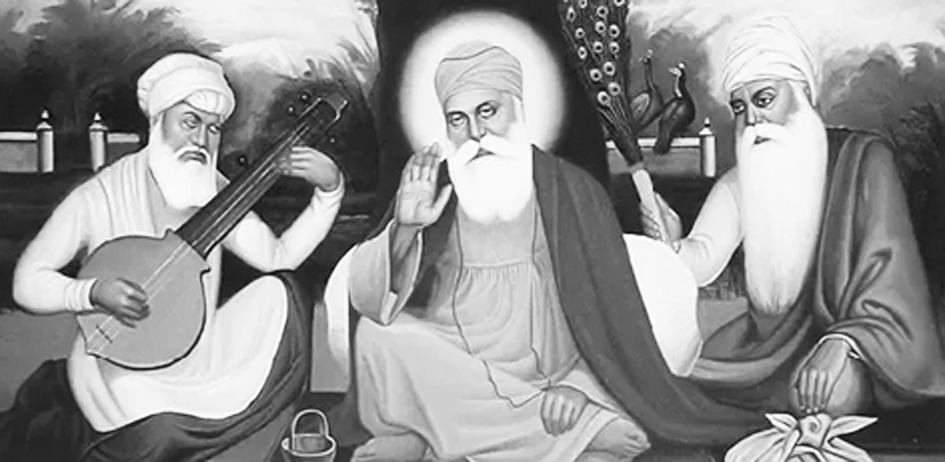
has it that Nanak had a life-changing vision when he was about thirty years of age. He renounced all his earthly belongings and began a journey of soul-searching and spirituality. After extensive traveling he settled down in Kartarpur in current Pakistan and gathered a large group of followers with whom he often communicated through poems which he narrated as songs or Shabads, accompanied with a stringed instrument by Mardana, his born Muslim turned Sikh, traveling companion.
Nanak was fondly called Baba Nanak by his followers who were common folks, often with very little money and power. Many of them were traditional low-caste people in a horrific caste-stratified Indian society. They were oppressed by Muslim rulers on one hand, and high-caste Hindus on the other. Soon Baba Nanak gave them salvation by invoking a new ‘Sikh’ identity which stood for social and economic justice for all. Sikh, which means ‘seeker of Truth’ forbade all discrimination based on caste, gender, race, color or creed. In no time ‘Baba Nanak’ was transformed into ‘Guru Nanak’, the spiritual leader of the new Sikh religion. Guru Nanak also sought harmony between Hindus and Muslims. Strife between these two communities often tore apart the veneer of the Indian society then and now. Today, Baba Nanak Shah Fakir is considered ‘Hindu Ka Guru’ (Guru to Hindus) and, ‘Musalman Ka Pir’ (Pir or prophet to Muslims).
The Sikh religion has evolved over six hundred years, yet the teachings of Guru Nanak and nine other Gurus remain firmly in place. For example, servitude or Seva is a central theme that is currently manifested in Langar, an event in which free food is prepared in Gurdwara or the place of worship, and eaten in a community fashion regardless of religion, caste or any other social or religious barriers.
Sikh religion evolved from a position of equality and justice for all. Therefore, it is easy to comprehend why Sikhs have a few gender-neutral names to downplay patriarchy in the society, and a ‘Singh’ and a ‘Kaur’ as last names to differentiate between a man and a woman and give the equal share of life in all manifestations to both genders equally.
*I must admit that here I am dealing with a simple gender-based definition of a man and a woman, or cis-gender people only. The whole issue about trans-gender and cross-gender etc. is left out of this discussion.
| continue from page 5
a song in a matter of minutes, sometimes on the back of an envelope or other scratch paper. He was a living breathing embodiment of our melodic emotional expression.
GPM probably immortalized himself by the words of the song “Amar ganer swaralipi lekha robe” with music by Nachiketa Ghosh. He wrote “Agami prithibi kan pete tumi shono..” in case he did not come back and even gave us clues of where we can find his “swaralipis” - in the tune of “rakhali banshi” in rural Bengal and in the middle of “jhora patar mormor dhawni”. Indeed, his lyrics have been permanently carved in our hearts. Just think of any line from any Bengali modern song that has permanently remained in your head because of its powerful impact or beauty, likelihood is that it was written by GPM.
It is a crying shame that GPM was not even awarded with a Padmashri title, not to mention even higher recognition. One reason can be the fact that he was a stranger in Bollywood. I wish that he could have written in Hindi as well which would have given him a nation-wide fame. I wonder if his lyrics would have the same impact if someone simply translated them into Hindi. Perhaps it is impossible to achieve fame simply being a lyricist. Names of lyricists are often not mentioned whether it is a song playing in the radio or a clip on Youtube.com. One has to do something more like compose the tune (ala SC) or sing (which is the case in most songs in the western pop, rock and country music world) in addition to writing the songs.
Lack of appreciation for GPM is probably not surprising in the Tagore-centric Bengali culture.
However, lyrics written by GPM were particularly suited for the film industry which by nature were highly effective to appeal to the hearts of the audience. For me, personally, many of GPM’s lyrics have left more of an impact on me than similarly themed Tagore songs. As an example, take the GPM-written masterpiece “Aaj dujonar duti poth ogo..” from the movie “Harano Sur”. It leaves me in a state of deep sadness and melancholy. A similarly themed Tagore song “Amar e path tomar pather …”, while a very pleasant song, has marginal emotional impact.
Sadly, GPM did not come back to us. He did not have any children and could not pass his DNA along to his next generation. Unfortunately, Amal did not inherit any of that although his passion for music may have come from his mama.
| continue from page 6
hend how his father died, he was angry at Takshak and wanted to take appropriate revenge. His counselors advised him to perform a “Sarpasatra” Yagna, a process where snakes will be asked to self-destruct by jumping into fire. In due time, the yagna was started by the Brahmins with spiritual power to ask all snakes of the world to
jump into the fire. Innumerable snakes were killed in the process. Takshak himself was very afraid and went to take shelter under Indra, the king of heaven. However, the spiritual power of the Brahmins performing the Yagna was so high that even Indra could not resist the mesmerizing pull, and he had no choice but to leave Takshak alone. Then all snakes went
By Rama Saha and dilip chakrabarti
After graduating from the class of1972, a whole bunch of Pharmacy students migrated to USA, most of them coming in between 1973 and 1978. In the beginning, it was not easy to find jobs, and all of them had to do some low-paying odd jobs in different areas of available work. Some worked in drug stores as a drug clerk, some worked in restaurants, while a few joined in private security jobs. Some of them joined colleges for higher studies. Some moved from New York to New Jersey or other states. That was how the life began in the USA. Although they got separated physically by geographical distance, their mental connection was always stitched together with the thread of J.U. Pharmacy Class. They came closer to one another by weekend telephone calls and sharing their experiences in their relative fields. Eventually, they established themselves in their desired fields, some started to work for Giant Pharmaceuticals, and some started their own business. A group of them made their homes in Long Island and they started to come together in the weekends like an extended family. Eventually, these weekend family gatherings started to be known as “Goat Meat Party” of the Pharmacy Group.
As years passed by, the link with those who were in other parts of USA became feeble and at one point it became almost nonexistent. Everyone was busy in raising their children and families. There was no connection whatsoever unless someone needed something from his peer for any reason.
Being under this condition, a group of Pharmacy Students of Jadavpur University who graduated in 1972, has converted these restrictions to their advantage and decided to meet their classmates through virtual meeting. Their yearning for the reunion of Pharmacy Class of 1972 made them initiate a virtual meeting and classmates from all over USA attended this Reunion on March 28, 2021.
Prior to starting the meeting, our classmate Dilip explained the dos and don’ts of this meeting; then another classmate, Rama, took charge of the meeting. Here is how she conducted this meeting from start to finish.
The first virtual Reunion of Class of 72 JU Pharmacy was called to order at noontime (EST), 9:30 PM (IST and Sri Lanka Time), and 9:00 AM (PST) on March 28, 2021, by Dilip Chakrabarti, the initiator and dreamer of this reunion. Dilipda welcomed each and every member from our 1972 batch with open arms and expressed his cordial gratitude to the class for participating in this longawaited reunion. He also explained the dos and don’ts of Zoom so that the meeting can run efficiently, smoothly and uninterruptedly. He then turned it over to Rama Saha to conduct the meeting.
to a young but spiritually powerful Brahmin named Aastik, who was the son of Takshak’s sister, and prayed to him to save them. Aastik agreed and went to King Janmejoy to speak with him. By his pleasing manners and superior arguments, Aastik was able to convince Janmejoy to stop the yagna. Takshak and other remaining snakes were saved.
Two big incidents made the life upside down in USA. One is called 9/11 and the other is the recent one known as Covid Pandemic. In both cases our free movement was enormously compromised, and free mixing became a thing of the past. Even families refrained from meeting other members of the same family.
Since the apocalyptic Pandemic started, the regular life in every country of the world has started to fall apart. Restrictions are being imposed here and there, and daily life is at its worst limitation in every walk of our society.
Rama Saha opened by thanking Dilipda for his great idea of this virtual meet and for giving her the opportunity to conduct the program. She also thanked everyone for taking their time off from their busy schedule and attending this virtual meeting. She was very happy to see that everyone complied with her request to wear blue like true blue friends, showing friendship that is genuine, dependable, trustworthy and loyal.
Rama took all the attendees of this Virtual meet for a walk down the memory lane of Jadavpur University campus between 1968 through 1972 to revisit, relive and reminisce the wonderful, kaleidoscopic, colorful memories and good old times of our college life.
Rama structured the program in three segments: Introduction, Celebration of
Editor’s Note: This is a new column of factual stories of “Unexpected Kindness from Strangers” as experienced by the writers. Our readers are encouraged to participate in this column to share their own factual stories.
By Asok Baral
It was late Sunday afternoon, and I told my wife, “Let’s go to a movie, haven’t been to one in a long time. She asked, “Which movie?”
“I don’t know, what’s going on?”
“All Hindi movies”
“I don’t like Hindi movies. But let’s go anyway. After all, we are leaving Ranchi in a few days”
“Then let’s go to Ratan Talkies. Bhabani was saying it’s pretty entertaining”
So, we headed to Ratan Talkies in the main road. We were going to leave Ranchi for Kolkata in ten days, and from Kolkata to USA in another fifteen days. We used to live in America but had returned to India with the idea of permanently settling there. But things didn’t work out as planned, so we will be going back. And this will be a good outing before we leave.
The movie was okay and ended at about 9 o’ clock. Then I started driving back to home. This was Ranchi in the seventies, it was a totally different town. The main road was the primary thoroughfare and always extremely crowded. If you could see from above, all you would see are people’s heads, and in the middle of these all kinds of vehicles – rickshaws, bicycles, cars, buses, trucks, you name it.
So, I was driving back at about ten to fifteen miles speed. And around me, there were people, rickshaws, bicycles, all moving in both directions. Suddenly one bicyclist fell. And as luck would have it, he fell on the bonnet of my car. I had no place to move, I gave a hard brake and stopped in a few yards.
And as soon as I stopped, to my utter dismay, I saw hundred people surrounding my car. They were in the front, in the back, in the side, and all I could see angry faces screaming at me. And all I could hear is the pounding on my car – boom, boom, boom and the scream “open the door”. Inside the car, I and my wife were shivering in fear. She was holding onto me and screaming, “Don’t hurt him”, and I was screaming “Call the police”. But nobody could hear us. All you could hear was the big pounding sounds and the scream “Open the door”.
Suddenly I saw on the driver side of the window the face of a young gentleman. He was trying to tell me something. I figured out that he was asking if I was willing to take the injured man to the hospital. I slightly lowered the window glass just to say, “Certainly”.
In those days, the Indian Ambassador cars had handles for lowering
the glass or opening the door. In the split second that I had lowered the glass, the young man flipped open the back door. And at the same time, I saw that a big muscular man pushed his hand through the opening and with a swift flip opened the driver side door. He pushed me real hard, and he was in the driver’s seat.
All this time, nobody had paid any attention to the man who was injured. He got up on his own and was slowly walking towards the car. The young man pushed him into the back seat and sat next to him. The two back doors were open, and everybody tried to jump into the car and squeeze himself into the car.
As soon as the injured man was inside the car, the driver started driving. The crowd dispersed quickly. The driver was going at full speed, and folks at the back were clinging to each other and the open door. Eventually, they could all get down. The driver was not saying a word and heading towards Rajendra Medical College. The young Bengali gentleman at the back was telling the injured man, “Nothing will happen”. But his only worry was “My pant is all torn up”.
Within a few minutes, we reached Rajendra Medical College. The young man went inside and talked to somebody. Immediately few folks came out and took the injured man inside.
Then the young man came to me and said that he could recognize me.
My brother-in-law, Biluda, was very well known in Ranchi Bengali community, he had a popular music and dance school. The young man had seen me with him in Union Club, the oldest Bengali club in Ranchi. He had seen the whole incidence, and realized what could happen, and immediately decided what to do. We took his hands and said, “We don’t have words how to thank you”. He was very polite, and said “This is my duty, I am glad that we could take you out of the situation”. We asked him how he will return home. He said, “don’t worry, I will manage. You take care of this side”.
Now the driver who had brought us to the hospital approached me. I could see that he was little embarrassed because he had pushed me so hard. He stood in front of me and slowly said, “Sir, what can I tell you, the stiletto had come out, that’s why I had to take the steering from you”.
Stiletto - the sharp-edged knifethat criminals use for hurting or killing. That stiletto was for me. We stood frozen, just thinking how close
By Sudipta chattopadhyay
Valentine’s is not a date for me, it’s also not a day for ex-boyfriends or husbands, it means something else entirely. This special day is for everybody close to my heart.
The first thing that comes to mind when I think of a valentine is... “Ma”. Our first love, our mother. When we open our eyes for the very first time… the first thing we see is the loving face of our Mom, we instantly fall in love. The process of loving each other, bonding with each other starts even before our first breath in this earthly plane.
The word “mother…mom…. ma….mama….mana….amma” in any form, gives a feeling of love, joy, warmth and security. To me a mother is the universal mother to anybody. She could be white or brown, black or yellow! In any skin color she is only a mother. I experienced this motherly love from a total stranger (a white lady) and from that moment, I realized that a mom is a mom in spite of any skin color.
At one point in our life, my husband worked at a state project in Lansing, Michigan. At that time our green card was in process so we didn’t take the hassle of changing our address and decided he would be at Michigan, and I would be at our New Jersey apartment. Partha was in the USA for such a long time. But still he couldn’t become an American, especially in eating. He didn’t like any food other than typical Bengali food. (maach, bhat, dal, aluposto). During that time, he was staying at a hotel, and it was difficult for him to cook. I used to cook for the week and send it with him when he would come for the weekends. Anyone could carry food in flights then. The security system was not that strict either. But everything changed because of 9/11. There were very strict security measures in flights, baggage restrictions and traveling every week became very difficult. His company came to know about his traveling and eating problem. So, they provided him an extended stay hotel. In the summer, I went there to spend time with him. I was new there and didn’t know anybody. While living in that hotel, sometimes I used to take a stroll along a walking trail near the hotel.
Our hotel was just outside the MSU (Michigan State University). I loved that campus so much! It always reminded me of our NBU (North Bengal University) campus. As we were new to the place and didn’t
know anyone over there, we usually spent our evenings in the Starbucks inside the Campus. I loved to watch the students… chatting, arguing with each other, studying silently in the corner…It always took me back to my student life. There were so many Indian students. They gave us a lot of information about Indian restaurants and grocery stores.
One day I had a craving for a cheese pizza at lunch. I couldn’t take leftover maach, bhat anymore! So, I decided to go to the campus to have it. There was a trail from the back of the hotel towards the campus. As I was not familiar with the place that much, I took the wrong way, and went in the opposite direction. After some time, I realized something was wrong. I couldn’t see any sign of the campus. As the jungle got thicker, I felt it was better to take the way back to the hotel.
That was a hot summer day. I was quite hungry and thirsty. On my way back, I saw a lady walking down towards me with her dog. Suddenly she stopped by me and asked, “Are you okay, dear?” (By the way let me mention here that people of Michigan are very friendly, helpful and family oriented which we do not see that much on the East Coast). I answered “Yes, I am okay!” But she was not at all satisfied with my answer. She came near me and said, “I don’t think you are okay, come and sit here next to me”. I sat by her side on a big log and suddenly I blacked out. When I regained my consciousness after a couple of minutes, my head was on her lap, and she was sprinkling water on my face. Then she started scolding me “Why are you so careless? This hot weather is not good for you and your baby. And you don’t even carry a water bottle with you! I think you are dehydrated”. I was surprised. How could she know I was pregnant? It was too early to know! I hadn’t even told my mother about my pregnancy then and knew nothing about taking care of myself and my baby.
Then she gave me a candy and told me to drink water from her bottle. I suppose she might be diabetic, and that’s why she carried candy with her. To me she was God’s angel. If she hadn’t noticed me, I don’t know what would have happened! After a couple of minutes, I told her “I am feeling okay now”. But she didn’t listen to me. She escorted me to the hotel room, called my husband and told him to take good care of me and my baby.
| continue from page 10
we were to a tragic end. This was India in seventies when Hindu-Muslim riots were quite common. There were several in Ranchi and Jamshedpur in last few months. The spot where the accident happened was known to be notorious for trouble. It was in front of a taxi stand. There was a Hindu community on one side of the road and a large Muslim community on the other. There had been a few major scuffles, including murders in front of the taxi stand. All those horror stories ran through our heads like a lightning, and we just stood in complete shock.
The driver noticed us and slowly said, “Sir, my name is Rahim. I am a taxi driver. When I saw the stiletto, I knew I have to get you out”. We just couldn’t thank him enough and kept saying how grateful we were for saving our lives. He was very polite and said “Insallah you are okay”.
Seeing my condition, he asked whether I would be able to drive, otherwise, he could drop us off in our home. We promptly accepted his offer.
When we were talking to the taxi driver, two gentlemen came in two scooters and stopped behind us, seemed like they wanted to talk to me. They took me to one side and asked, “Are you okay?”
I said we were fine. The injured guy had been admitted in emergency and he should be okay.
Then they explained their real purpose of coming. There was a similar incidence about a month ago. One driver took a couple to the hospital. But they never reached the hospital. The car was never found. After two days, the couple’s dead bodies were found in a nearby paddy field. When they saw a bunch of hooligans driving us away, they got concerned and followed us to the hospital.
Now we were in a second shock, never thought of this, took us a couple of minutes to digest what we heard. I was lost for words, didn’t know how to thank complete strangers going out of their
way to make sure about our safety. They were very polite, enquired if we needed any help. They volunteered to take us home in their two scooters. I said that it would not be necessary since Rahim was going to drop us off. Somehow, they didn’t like my answer, and said that they will follow my car, and when we reach home, just wave at them and they would be on their way.
Rahim drove us home. I felt so grateful to him. He was a poor man and all I could do is give him some money. I didn’t have too much with me, first he wouldn’t take it, then after some persuasion, he accepted it.
Next morning, I went to my other brother-in-law, Subhas, who was a doctor practicing at the same Medical College. He heard everything and said that we were lucky to be alive. He promised to check the injured person and let me know his condition in the evening.
I learnt that he had a slight concussion, but the MRI and x-ray didn’t show any problem. The hospital was going to release him next day. The man’s only concern was that his pant was torn up and his cycle wheel was broken. I told Subhas that I would pay for the medical expenses, and for the pant and the cycle. I enquired whether I could see him. Subhas thought for a moment and said that it won’t be a good idea, and Subhas would arrange that the person gets the money.
Many years have passed since that fateful evening, but those few moments are still fresh in our minds. On that day, I found out how fragile human lives are. Our lives go on at a routine pace, but one sudden mishap can change everything forever. Fortunately, in a world seething with animosities and anger, there are many compassionate and caring persons. They are ready to jump in, even for strangers, often risking their own well-being. I never saw that Muslim driver again, or the young Bengali man, or the two local gentlemen on scooters. They were Godsent to us. We are still alive, and to them we are grateful for ever.
Reported by Subrata Bhaumik
Sahitya O Alochana (SOA) is a monthly literary and topical discussion forum under the aegis of Ananda Mandir (AM). It has completed its 13th anniversary in January 2021 and will have organized one hundred and twentythree (125) sessions by the time this report goes to press. These monthly sessions feature exciting and illuminating discussions on diverse subjects including literature, art, theater, and movie; history, philosophy, and religion; science and mathematics; economics and business; and social issues, sports, and current affairs.
Last 12 months have been the leanest in terms of the “SOA” activity volume primarily due to the Pandemic fallout. However, quite a few eclectic and very interesting sessions were organized as explained below.
October 2020 - In this session, Swami Sarvapriyananda, a renowned Hindu monk and philosopher, and the head of The Vedanta Society, New York discussed some of the very compelling and competing concepts of Hindu Philosophy focusing on “Advaita vs. Dvaita Schools of Upanishad” with unparallel clarity, completeness, and authority.
He walked the audience through the evolution of the various schools of Vedanta philosophy, the cross-pollination of ideas between the then evolving Advaita Vedanta philosophy and Buddhism that was born out of the rejection of the hitherto Hindu Brahminical order, and the similarities and differences between various forms Advaita and Dvaita Vendanta. While this is probably not the appropriate forum for exploring the details of the Swamiji’s illuminating discourse, here is synopsis that covers at a high level the contents and boundaries of the discussion.
Advaita, the nondualist concept, features the union of Atman and Nirguna (without attribute) Bramhan, the indestructible and never-ending
energy, matter, and time - the one supreme spirit that is the origin, support, and the sum-total of the phenomenal universe. This is the ultimate truth, consciousness, and reality. Anything that is perceptibly different from this oneness is “Maya” (Illusion). Vishsista Advaita (Qualified Non Dualism) on the other hand upholds the ultimate reality of the union Saguna (with attribute) Brahman and Atman (like Advaita) while maintaining the supremacy of the Brahman – while Dvaita (dualist theory) popularized by Madhavacharia around 13th century BC rejects the concept of oneness in Advaita, and posits that Brahman (the supreme being) is different (swathantra) from the sentient and the insentient world that consists of Jiva and Jara (animate and inanimate world. They both are separate realities while the Bramhan (the supreme being) appears to control the other reality of the Jiva and Jara world.
This session was facilitated by a team that included Amitabha Bagchi, Subrata Bhaumik, and Gautam Goswami. It was a hugely successful session that was greeted with very high level of enthusiasm by the participants – 90 people attended the session on Zoom while another 1,500 viewed it on You Tube and Facebook.
dec 2020 – This session was entitled “Of Race and Religion - A Review of the American Political Order.”
Amitabha Bagchi, a cofounder of our group and a veteran presenter in the alochana sessions led the discussion, which was moderated by Poushali Mukherjea.
Amitabha Bagchi presented a well-researched and compelling discourse on the evolution and the current status of the racial dynamics in American society. It was a really interesting and informative session that roused strong interest and participation from a robust attending crowd – approximately 40 people attended the live session.
march 2021 – In this sessionPallavi Guha, professor of Journalism at Towson University and the author of the recently published book entitled “Hear #MetooIndia,”talked about the unknown warriors of anti-rape and sexual violence movement in rural and semi-rural India, their involvement and perception of the anti-sexual violence movement. This was a wonderful and informative session that was moderated by Shamita Das Dasgupta – cofounder of Manavi.
June 2021 - The topic of this session is the life and works of Nabaneeta Dev Sen, one of the most celebrated and prolific writers of post-independence Indian literature. For our generation who grew up in the last few decades of twentieth century she epitomized the crusade of feminist writing in Bengali literature. She passed away in 2019, and this event is dedicated to the celebration her life and work. The “discussion leader” is nandana dev sen, nabaneeta dev sen’s daughter who is also a writer, actor, and child-rights activist. The event will have a special focus on the Nandana’s translation of her mother’s work especially “Acrobat,” the recently published book of poems. The session would be moderated by Debali Mookerjea Leonard, a professor of World Literature at James Madison University and a student of Nabaneeta Dev Sen.
Future sessions - Quite a few interesting sessions are in the pipeline for the next several months. They include a multimedia poetry reading session (poems of Eliot and Yeats) adorned by music, “Gender Fluidity – an Evolutionary Perspective”. and finally, another philosophical session on the age-old human quest of knowing the “Who am I” through the angle of Vedanta.
The friends of Sahitya O Alochana would like to thank Ananda Mandir for its continued support for the forum’s contribution to the cultural enrichment of the local South Asian communities.
| continue from page 10
On our way back to the hotel she gave me a lot of information about pregnancy. She was a mother of
three…two daughters and one son. She told me about them and shared about her best Valentines gift ever. Her oldest daughter gave her that
most precious Valentines gift … her first grandchild… born that year on Valentine’s Day.
I was so lucky to have had her
by my side that day. I will be always grateful to her all my life… She was my Valentine that day and has remained so until now.
By Anooshka Sen (age 8)
WHY IS OUR ADDRESS IMPORTANT? Our address is important because it helps us locate a person, a place or a building. If someone in outer space wants to find us, then they can use our cosmic address to find us, or they will be lost in the universe.
Our universe is huge, and Earth is just a very tiny part of it. The universe is so big that scientists measure distance between objects in the universe in light-years. Light-years sound like a measure of time but it’s actually a measure of distance. One Light-year measures the distance that light travels in one Earth year which is a huge amount, given light is the fastest travelling thing in the universe.
Our cosmic address starts with House number followed by Street, City, State, Country, and Planet. Our Earth is the third smallest planet in our Solar System. Like our Solar System there are many Solar Systems in the Milky Way galaxy. Our Milky Way galaxy has four major arms and few minor arms. Our Solar System is located in one of the minor arms called Orion Arm.
Like our Milky Way galaxy there
are many galaxies around us. Andromeda is our nearest neighborhood galaxy. Milky Way galaxy, Andromeda and 28 other galaxies together make the Local Group. About 1300 Local Groups together make the Virgo Cluster. Virgo cluster is part of a supercluster named Laniakea.
So, if someone out in the universe were trying to reach Ananda Mandir, they could use
Ananda Mandir’s cosmic address: 269 Cedar Grove Ln Somerset New Jersey USA
Earth
Solar System
Orion Arm
Milky Way Galaxy
Local Group
Virgo Cluster
Laniakea (Supercluster) Observable Universe
Reference:
1) https://phys.org/news/2017-07-evidence-impacts-milky-galaxy.html
2) https://time.com/4400940/orion-nebula-photos-very-large-telescope/
Dear Friends, Patrons and Theater Lovers,
A few months back, we had informed you that we are proud, honored and excited to be the first South-Asian theater group to have been granted membership into the New Jersey Theater Alliance, a prestigious platform for New Jersey’s professional theaters. The alliance serves as the voice of professional theater in New Jersey by developing innovative, collaborative, and engaging programs and services for member theaters and their diverse audiences. This truly is a recognition
of our connection with you - our audience - and with the broader community.
Our first showcasing in the year 2021, under the aegis of New Jersey Theatre Alliance, was the play, “Our Voices” on World Theater Day. On Saturday (May 22nd at 11:00 am), we brought you our second offering “The Waiting Room”. This showcasing was a part of the Stages Festival, now being held in New Jersey. The play, conceptualized and directed by Subhasis Das is a collaboration between Epic Actors’ Workshop and Kushilab.
By
It wasn’t much long ago that we watched and idolized someone, hoping to our best that we could reach half the success, fame, and happiness they have found. Actors, singers, athletes, writers. Maybe even someone we knew in personparents, relatives, friends, neighbors. We then entered the path to achieve our goals and worked hard, losing track of time. Minutes and hours; days and years. And now for the first time, stuck in the middle of this pandemic, quarantined in isolation with nothing but our thoughts and regrets to keep us company, did we realize how fast time flew by.
The people we knew, fresh in their youth with an unmatched spirit, have grown old, their choices in life weighing hard on their shoulders. One peek at the mirror will reveal the same about us. We didn’t just age physically, but we had our past reflect itself upon us, both the good and the bad. Each year that passed us by took us closer to the end of our lives and every minute that we spent chasing dream after dream, we found no time to question why we were stuck in this endless loop of dream chasing.
It all begins small- your first step, your first word. Then expectations grow higher, and the pressure increases- good grades, awards, prestigious universities, reputable professions. Yet, we still yearn to grow further- promotions, bonus, and paychecks. With the professional side of life, our need to live with honor, dignity, pride, and privilege also increases. The one little thing we forget about most, is often - what happens next?
Your dreams are never-ending.
What does it take for a woman from a conventional middle-class family in Rourkela, Odisha, to become a successful entrepreneur in the technology domain whose first venture ends up becoming a multi-million dollar revenue generating company?
Of course, it is wonderful to dream big and aim higher. But what of now? When will life stop being an uphill battle and be steady for you to enjoy all the hard work you have been doing?
In a few years’ time, when you look back to the prime of your life, you might even forget what kept you going; what made all the suffering worth it. You will forget the lyrics behind your favorite song today. You will forget the memories you made watching a movie or a show. You will forget the meaning behind the picture tucked in the middle of your favorite book. You will forget how simple things in life would bring you more joy than any amount of money ever could.
In time, as we transition into adulthood, humanity and relationships take a backseat as our focus remains falsely fixed on erroneous priorities. We dream too big; we achieve some, we fail some. But the success never seems to measure up to the piling failures. Ultimately, all it does is sow the seeds of self-loathing. We forget to see the blessings we have now but instead focus on ‘if’s’ and ‘but’s’.
In the end, friends turn to strangers, family turns into an obligation. We have no time to build human connections that is not driven by ambition, envy, passion, or profit. We let the moments pass by, unseen, unheard, unchecked. We forget what it is like to be young, and full of hope. While we fall behind the pattern so clearly repeating itself for thousands of years, we never stop and wonder about what lies ahead in the end, and what matters now until then.
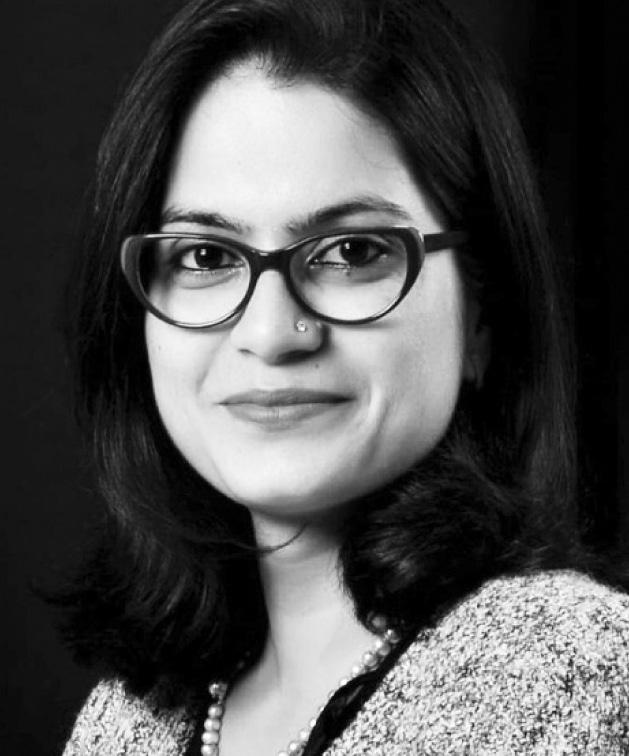
Ask Madhumita Agrawal, whoafter founding IPexcel, a technology and innovation consulting firm, also recently became the first woman to cofound an Indian electric vehicle company developing an in-house vehicle, OBEN Electric Vehicle. Speaking to the Better india, Madhumita outlines a remarkable journey, which has taken her from Rourkela to IITKharagpur, IIM-Bangalore and finally Bengaluru, the technology hub of India, where both the enterprises she founded conduct their operations today.
Reported by Pradip R. das
GSCA conducted its annual Board of Trustees election for 2021. Five candidates vied for the three available positions in the board and voter turnout over 85% was indeed phenomenal at this year’s election. The new seven member board, including the four officers comprising the chair, vice chair, general secretary and treasurer, took office in mid-April. Subhamoy Sen is the new chairman of the board for a one year term.
In lieu of a face to face Annual General Meeting (made impossible under the current social distancing and group meeting restrictions due to the coronavirus pandemic), the 2020 Annual Report was circulated online to all GSCA members. In it, the outgoing chairperson of the board and the treasurer outlined and summarized the past year’s achievements and finances. Committee reports were also included as well as the welcome address by the new chairperson. Since the activities for the rest of the year remain uncertain, a provisional budget was approved by the members to keep the necessary operational expenses of the organization funded appropriately.
Six new members were welcomed into GSCA.
A revised by laws (2020) was approved by the required majority of the members and is in effect.
Baisakhi
On May 15th, GSCA celebrated Baisakhi with an online presentation for viewers. An in-house program consisting of a collage of poems and songs written and composed by Rabindranath Tagore, Kazi Nazrul Islam was presented by GSCA members as singers and narrators. Some songs were accompanied by dances as well. The overall compilation of GSCA inhouse talents was a remarkable showcase.
Several artists from Kolkata in informal renditions of their respective genres also performed from Kolkata on this live virtual program. A dance program by “Stage for change” was colorful and wellchoreographed that delighted the online viewers. Another item included Shovan Sundar Basu, with his unique brand of “Kobita Concert ‘’. This is one of the happenings and visible faces of Bengali culture today.
The finale was performed by the duo of Gourab Sarkar and Madhuri Dey. Although they entertained the online audience and viewers with some duet songs, both Bengali and Hindi, they also presented solo pieces. Madhuri Dey is a professional singer from Kolkata and has won many accolades with her mellifluous voice and soulful singing. Gourab Sarkar, the first runner-up in Zee’s Sa-Re-Ga-Ma 2019, delighted the listeners with his melodious renditions of Bengali and Hindi songs. They also entertained some personal requests made online.
Kudos to the many behind-the-scenes technical hands and participants from GSCA who made this presentation possible.
gsca Philanthropy
In response to the severe calamities caused by the outbreak of the new strain (second wave) of COVID-19 infections in India, GSCA recently donated $3500 to MUKTI, a field service organization in West Bengal to provide immediate relief in multiple ways, essential medicines, oxygen concentrators and PPE items to the most needy and vulnerable people.
As in previous years, GSCA awarded scholarships to six college-bound students of Plainfield High School. GSCA representatives participated in the award program held at the Plainfield High School on 03 June.
Reported by chanakya Ganguly
As the pandemic still goes on, showing signs of slowing down in the US, but raging in India and other parts of the world, NJPA has been practicing lockdown in the true sense of the word. There have not been any events organized or people meeting as people are focused on managing their daily lives in the midst of the many uncertainties, wearing masks, practicing social distancing. Some getting their first or second vaccine shots as slots open up gradually for all.
Yogic Process can help build the immune system and lower stress and inflammation. Yoga helps lower stress hormones that compromise the immune system, while also conditioning the lungs and respiratory tract.
AIIMS, India and Dean Ornish found a significant association between yoga, meditation, breathing, stress management, healthy whole-food, to increased telomerase activity in human peripheral blood mononuclear cells, and thus lower stress, lipoprotein, cholesterol, inflammation, cytokines.
Yoga can lead to “Eternal Freedom needs Eternal Vigilance” as Jefferson stated (DOB: April 13, 1743). Variolation, infecting with low doses of smallpox, dates to early India, also to many other parts, Turkey and then to England. Edward Jenner made a safer smallpox (cow pox) vaccine live virus, made its way to Harvard Professor Benjamin Waterhouse, US President Thomas Jefferson, who promoted vaccination. He wrote, “It is tranquility and occupation which give you happiness.” Yoga can take us to calm and reason, clear the emotional fuel of the fiery mind.
May reminds us of the French revolution (May 5, 1789-Nov 9, 1799), which stood for values of Equality, Fraternity, Liberty. Charles Dickens wrote in the Tale of Two Cities, “It was the best of times, it was the worst of times. Have a heart that never hardens, and a temper that never tires, and a touch that never hurts.” David Copperfield could turn that trauma into triumph, and Dickens took this pain and didn’t let it consume him, but instead he decided to share it through his writing. Yoga can reform the spirit to break from the aggressive and lethargic state to clear up injustice and past trauma.
Till we meet again, have a bright summer of Yogic Practice to raise Consciousness like the Sun, to be noble like Rama, who never lost his cool, patience and faced a million adversities with grace, courage. Yogic Enlightenment is the solution to understand the reality of self-confidence and justice. Yoga makes one alert, agile, highly prepared. Information about our upcoming events will be available on our Facebook page “NJPA Parivar.”
(January 1, 2021, to June 31, 2021)
Reported by debajyoti chatterji
Note: Writers Club meetings are open only to “active writers” who are willing to present their own writings (in Bengali or English) to their peers. Readings of third-party authors are not permitted. Club members are welcome to share their poems, short stories, personal narratives and essays – whatever they prefer to write. After each presentation, an intensive Q&A period follows, sometimes lasting as long as thirty minutes. As a result, our twoand-half hour sessions permit readings by only 6 to 7 writers. To accommodate all writers, we follow a staggered order over several sessions. If you are an active writer and would like to join our club, please send an email to debsmee572@gmail.com. It is hard to believe that on July 27 Writers Club will celebrate its second birthday!
Youngest of all the cultural wings of Ananda Mandir, it was launched two years ago on an experimental basis. At that time, some of us wondered if the writers in our midst would be interested in meeting on a regular basis to share their own writings with their peers and receive constructive feedback. A meeting was called through social media to gauge the level of interest. We were pleasantly surprised at the positive response received. More than twenty-five individuals welcomed the idea, and the first meeting of “Writers Club” was held in a private home. Subsequently, Ananda Mandir became the home for the bimonthly meetings of this group.
When the pandemic struck and Ananda Mandir went into a lock-down mode in mid-March of 2020, Writers Club members quickly adapted to the Zoom videoconferencing technology. This move was a success, and the group began to meet on a monthly basis. Our last meeting (on June 25) was the 16th successful monthly Zoom session during the pandemic. Even when the pandemic-related restrictions are over, the group may choose to continue to hold Zoom sessions because the videoconferencing technology brings people together with the least amount of inconvenience. If you are an active writer and would like to join our club, please send an email to debsmee572@gmail.com.
“Ananda Sandhya” Programs Are Back now on Our Digital Platform!
Contact Arun Bhowmik for details
| continue from page 1
ment personnel and key members of the township administration to strengthen our relationships. We worked closely with Franklin Township Inter-Faith Council and organized several collaborative events. in addition to these community-facing activities, ananda mandir management and volunteers worked hard to improve many internal operations that are often not directly visible to our members. examples are enhancements to our it infrastructure, establishment of a high-quality digital platform for virtual meetings and programs, landscaping of the grounds and maintenance of the buildings on campus, and a major “spring renewal and clean-up” effort.
(January 1, 2021, to June 31, 2021)
Reported by debajyoti chatterji
The COVID-19 pandemic forced Ananda Mandir to not only shut down all big events but also stop all smaller meetings and social get-togethers like monthly sessions of Evergreen Club and Writers Club. The shut-down happened back in March of 2020. Fortunately, technology came to our rescue in the form of videoconferencing, and during the past 15 months, we have made excellent use of Zoom sessions to develop and maintain a new rhythm for our social and cultural interchange. Evergreen Club met on a monthly basis without fail and attracted impressive number of participants (in the 20 to 30 range), some joining from distant states. We do miss the potluck lunches and dinner-theater outings but are quite happy with our Zoom get-togethers!
The first session of the reporting period (January 1 to June 31, 2021) was held on Sunday, January 24. Following usual practice, the meeting used an “open format” to allow the attendants to present their talents or stories in the format that suited them best. They could present a song, read a poem or a short story, share a personal experience or describe a visit to an exotic destination. In addition, the session featured two guest artists, sutapa mukhopadhyay and ashish saha, who recited Rabindranath’s Karna-Kunti Sangbad to delight the audience.
The February 21 session featured arun Bhowmik as the guest performer – in addition to the usual “open format” presentations. Arun is a highly popular musician within the NJ Bengali community, and we are fortunate to have him as one of our core members. He kindly agreed to entertain us with a number of Rabindra Sangeet, Nazrul Geeti and modern songs.
The March meeting was held on the 28th and was largely devoted to paying tributes to Provat Sinha who had just passed away. Provat was a key member of Evergreen Club and was a constant presence (together his wife, Mita) in our temple. He was a true gentleman and liked by everyone he came in contact with it. -- The guest artists were suman Banerjee and his 5-years old daughter, ishaana. Suman artfully presented a medley of Bengali songs, and Ishaana enchanted the audience with her splendid recitations of poems.
The main theme for the April 25 session was the celebration of Baishakh, the first month of the Bengali calendar. The invited artistes were niloy and soumi Jana, a gifted husband-wife team, and they presented a joint program titled Katha O Gaane Baishakh. The audience sincerely appreciated their presentation.
On May 26, Evergreen Club members celebrated the birthday of Rabindranath Tagore through an offering songs and poems. In addition, mitra Purkayastha, a well-known classical dancer and teacher from our community, presented Nritya Malika, a beautiful program of Odishi dances by her students from the Rhythms of dance & music school. Mitra was assisted by her key disciple, nilanjana Banerjee, in presenting this program.
At the time of going to press, the June session is scheduled for June 27. The date or time may have to change as the Annual General Meeting of Ananda Mandir is also scheduled for that day.
Reported by debajyoti chatterji
Deeply moved by the news about the terrible miseries inflicted by the second wave of COVID-19 on the people in India (and West Bengal in particular), Ananda Mandir announced a donation drive on May 4. To encourage members and friends to give generously, Ananda Mandir decided to donate $10,000 from its own resources. And to make sure that the collected funds are put to good use immediately, we decided to channel the donations to the needy through Kolkata Foundation, a NJbased non-profit charitable organization with an established track record.
At the time of writing this report, the donation drive has yielded almost $15,000, including the $10,000 from Ananda Mandir. We thank all
our members and friends who have supported this drive by visiting the special page on the Kolkata Foundation website dedicated to Ananda Mandir Donation Drive.
We were pleased to receive an email from Dr. Dhritiman Banerjee, Founder/Director, on June 3, where he noted: “We at Kolkata Foundation are extremely grateful for the support of Ananda Mandir and its patrons during the second COVID relief efforts in West Bengal… Over 30 of the core members of Ananda Mandir donated to the fundraising drive, in addition to the initial $10,000 that was donated by the organization. To all of you, a heartfelt Thank You! Because of donations from organizations like Ananda Mandir and the funds raised by Kolkata Foundation itself, we have
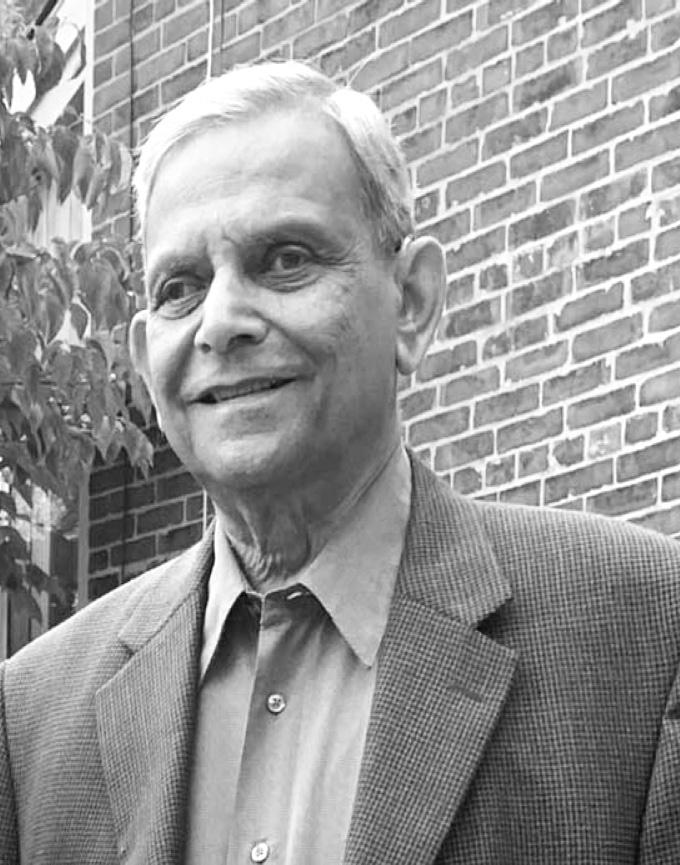
Sumit Roy (December 10, 1940 –May 26, 2021)
already contributed 100 oxygen concentrators (which are expensive),10,000 free medicine kits (created in consultation with senior medical doctors on the frontlines of COVID care in Canada and UK), and 500 pulse oximeters to our operation hubs in West Bengal. These are a part of a larger set of 450 oxygen concentrators funded by partner fundraising organizations. In addition to covering Kolkata, we are also working with dozens of trusted nonprofits across all of Bengal -- from Siliguri to Purulia to the Sunderbans.”
We hope and pray that the COVID pandemic in India (and in the US) is nearing its end, and we look forward to a speedy return to normal life, free of constant worries about family members, friend, neighbors and coworkers.
With deep regret and a lot of fond memories Ananda Mandir announces the loss of our beloved life-member Dr. Sumit Roy. He passed away peacefully at his residence in Burt, New York surrounded by his loving family. He is survived by his wife Beethi, son Shomik (Anita) and daughter (Sanjeev) along with four grandchildren, Ananya, Priyanka, Avnee, and Rohan.
Sumit was born in Kolkata to late film actor Bikash Roy and late Kamala Roy on December 10, 1940. He graduated from Bengal Engineering College in Electrical Engineering in 1960. He arrived in the US from India in 1964 to pursue a PhD in Artificial Intelligence. Upon graduation from the Illinois Institute of Technology, Sumit was hired by Bell Laboratories.
A stalwart of the Information Age, Sumit was a trailblazer at Bell Labs. Of his many accomplishments, he showed most pride in being a member of the 3B2 Microprocessor group as well as the cellular systems unit, Autoplex.
On the social front, Sumit was deeply involved and an active participant with the activities of Antara of NJ, Rabindra Mela, Kallol of NJ and North American Bengali Conference. A real connoisseur of music and literature he was a diehard fan of Rabindranath Tagore. He was able to recite Tagore poems and sing Rabindra Sangeet extemporaneously. He created an excellent website – www. Gitabitan.netwhich contains all of the Tagore songs with each song’s history, notation, and other details.
We pray for eternal peace for his soul and offer our sincere condolences to his family.
The Gayatri Memorial Awards were established in 2010 by Jerry GaMarsh to honor his late wife, Gayatri GaMarsh. The program is administered through the Awards & Recognition Committee of Ananda Mandir, Somerset, nJ.
Two cash awards are usually given each year to recognize outstanding works published in North America-based literary magazines. One award is given to an author of Bengali works, and another is given to an author in English. Each award consists of $500 in cash and a commendation plaque. Under certain situations, co-winners may be selected for an award category.
An author may nominate himself/herself -- or may be nominated by third parties (using the Nomination Form shown below). Each nomination must be submittedthrough email and supported with copies of one of the following:
Two (and only two) works of prose (essays, short stories or plays) published in North America-based Bengali or English print or digital magazines within the last five years. The submitted articles should not be more than ten (10) pages long. Longer articles may be disqualified. Books or book chapters will not be considered.
In case of poetry, submission may consist of up to four poems, each ofreasonable length (2 pages or shorter).
A combination of prose and poetry may be submitted as well. However, please submit no more than one short story, essay or play and two poems.
Please note that unpublished works of literature will not be accepted. Full publication references must be given for the articles submitted with each nomination. Articles published in magazines or websites outside of North America will not be considered.
Nominated authors must be 18 years or older and residents of North America.All nominations and correspondence should be submitted electronically.
Each nomination should include a short biography of the author. Judging, however, will be based primarily on the supporting publications. Judges’ decisions will be final.
Members of the Awards & Recognition Subcommittee and the judges cannot submit nominations for themselves nor can they be nominated by third parties.
Deadline for nominations (with supporting documents) for the 2021 awards is August 31, 2021. Awards will be announced and presented in the Fall of 2021.
Please send nominations (with supporting documents) to Debajyoti Chatterji (debsmee572@gmail.com)
In case of questions, please email Debajyoti Chatterji (debsmee572@gmail.com) or Guru Chakravarty (guruchakravarty@yahoo.com).
You can access your donation history and check the completeness of our records. If you find donations that are not recorded or are recorded incorrectly, you could bring such omissions/errors to our attention. To access your donations history, look at the drop-down menu under “Members” – and click on “Members Log In”. If you created a user id and a password before, use those to log in, and under “What would you like to do” question, click on “My Donations” to see your donations over the past 8 years (and the cumulative donations total before 2011).

| continue from page 7
life – tribute to the batch mates who are not with us anymore, and an open session (adda). She tried to duplicate the college environment as if we are all spending a day or two at the University campus.
The first segment was Introduction of the attendees. For the fun of it, Rama suggested everyone to visualize sitting in a classroom on the 3rd floor of Pharmacy building attending classes following the timetable for that day. Professors for their respective classes walk in and start taking the roll call. Everyone answers the alphabetical roll call, by giving a very short introduction of themselves and relating nostalgic and fun filled incidents. This segment was opened with Tagore’s ‘Purano shei diner Katha’ sung by Anjali, Banani and Rathin. Banani sang another beautiful song on request. Lots of light, pleasant and laughing moments came back to our minds as we joked around about our professors and students remembering the old days sitting in that classroom.
The second segment was remembering our loved ones who are no longer with us. For this, she moved us to Vivekananda Hall to celebrate the program ‘Celebration of life’ to honor and pay respect to our friends who are not with us anymore. This program was opened with white colored candle lighting and display of white flowers remembering our friends, Chittaranjan Maity, Mihir Kundu, Milon De, Pradeep Chaudhuri, Prashanto Sen,
Rabin Sengupta, and Tapan Samadder. Arpan Mazumdar, Buddhadeb Mazumdar, Shyamal Sarkar, Pradeep Banerjee and Pratap Khan paid brief informal tributes to our lost friends. The order of rest of the service was a song by Anjali, recitation by Pratap followed by another song by Rathin and closing recitation by Dhruba.
The third segment was our most favorite –adda – adda and more adda We visualized as if we all gathered in the open air of Vivekananda Rock, sipping Milonda’s bharer cha aftermass cutting M.Pal’s class and having best time of our life as though there was no tomorrow.
Topics for discussion were 3rd year Pharmacognosy class trip to Botanical Gardens, 4th year trip to Bombay to visit the Pharmaceutical companies, mass cut from M. Pal’s class, and planning for 50 years celebration in 2022.
Throughout the program the enthusiasm and excitement of the participants were overwhelming. This made it very hard to say goodbye but after about 4 hours, Rama finally bid farewell to all the attendees with the promise to meet again.
The meeting ended with a promise to bring together classmates from 1972 Pharmacy Department of J.U. from different parts of the world to meet, greet and plan for 50th anniversary celebration in 2022.
Finally, the program concluded with an inspirational poem written by Dilip Chakrabarti and recited by Dhruba and a vote of thanks by Dilipda.
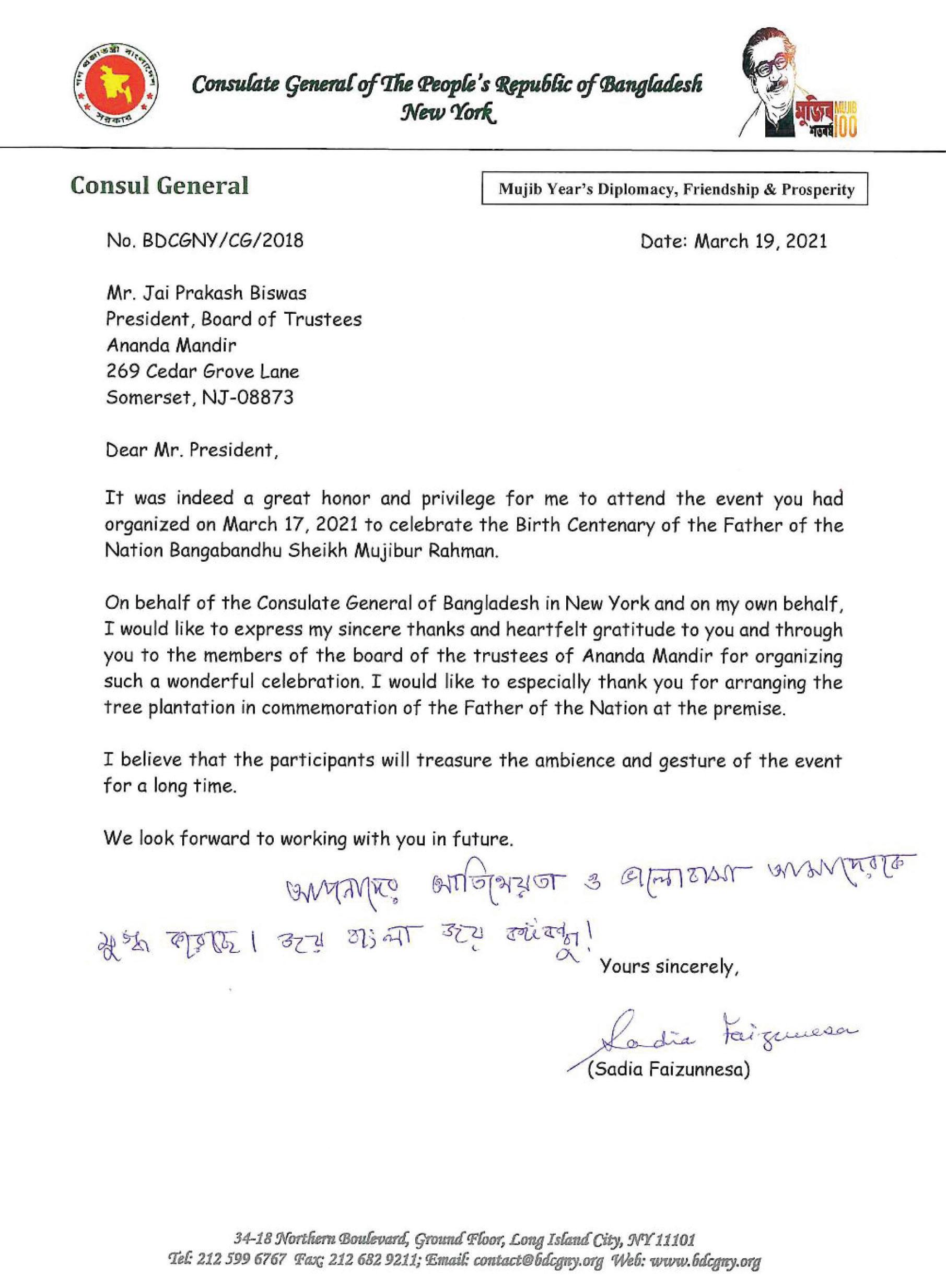
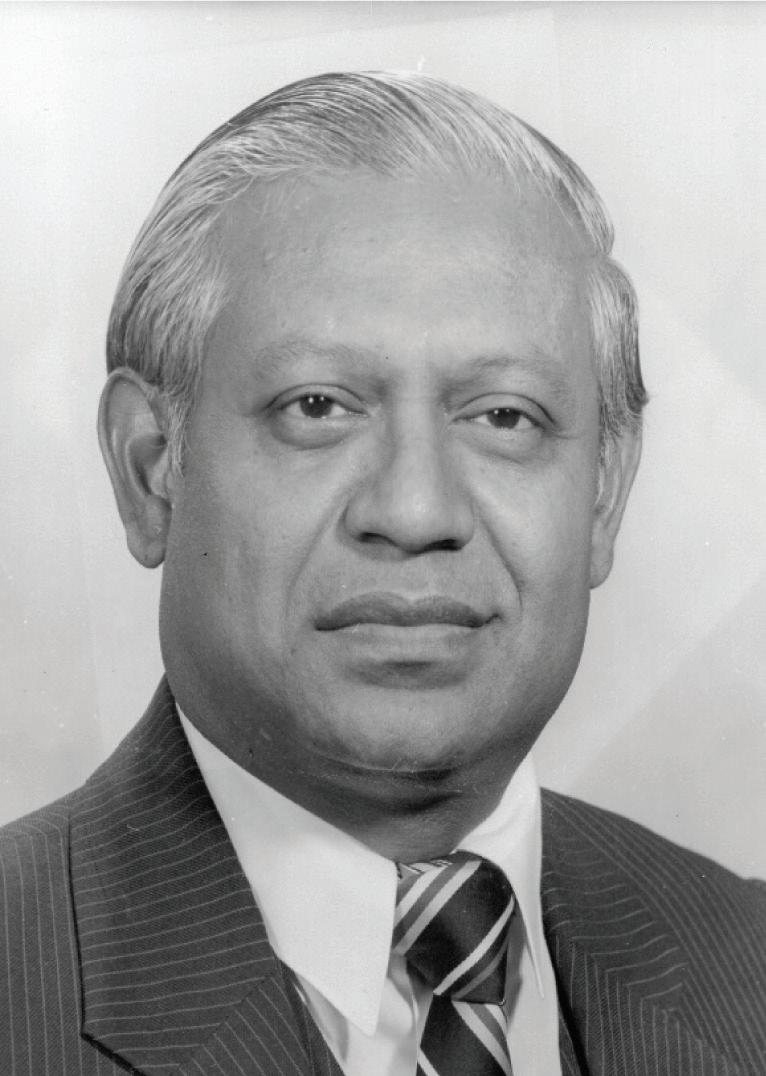
By debajyoti chatterji
Ananda Mandir expresses sincere gratitude to Dr. Samir Dutta, MD, FRCS, for making an unsolicited donation of $100,000. This generous donation will be used by Ananda Mandir to partially reduce its debt obligation.
Dr. Dutta is widely known not only within the Ananda Mandir community but also among Bengalis in New York and New Jersey. He came to New York many decades ago after completing his FRCS in the UK and became involved in many philanthropic and community activities. After retirement, he moved to New Jersey and settled in a neighborhood very close to Ananda Mandir. Almost immediately, he established a strong relationship with Ananda Mandir. He is a core (and valued) member of Ananda Mandir Evergreen Club. Ever helpful, his friends and neighbors talk of him in glowing terms for his compassionate and valuable advice and support in moments of need.
An article will be published in a future issue of Ananda Sangbad to detail Dr Dutta’s life journey and community activities and visions.