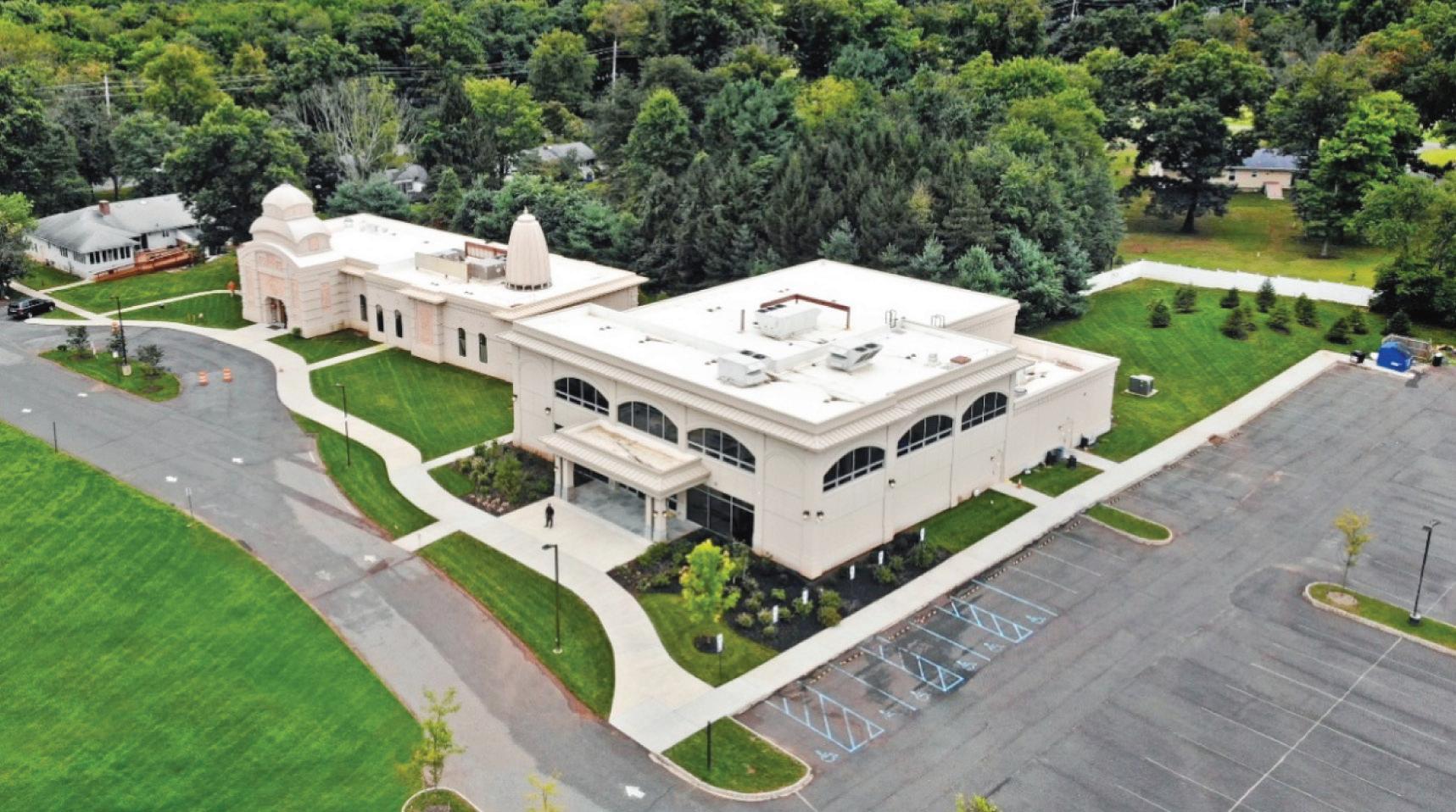
Ananda Mandir 269 Cedar Grove Lane Somerset, NJ 08873


Ananda Mandir 269 Cedar Grove Lane Somerset, NJ 08873
By Pronoy Chatterjee
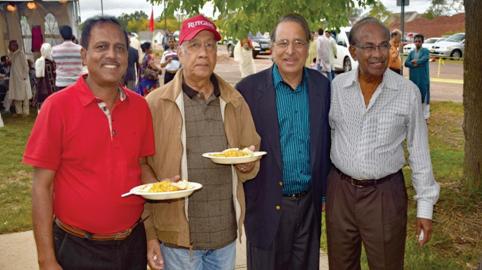
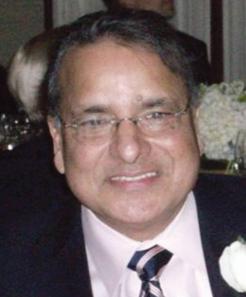
and a community leader, Chandi Maitra of New Jersey, passed away on April 26, 2020, suffering from a debilitating illness in recent years. He was born in Chinsurah, Hooghly district in West Bengal in 1940. As a young boy, Chandi grew up in a religious ambience spending most of his time near the temple of Belur Math at Howrah. He and his family were very
closely associated with the Ramakrishna Mission. He proudly recalls that he used to take Brahmachari Gyan Maharaj, a disciple of Swami Vivekananda, for evening walks along the Ganges for many years till he was 13 when the Maharaj passed away. This memory left a deep religious impression in his mind that was quite evident in his later works.
Chandi was graduated as
a civil engineer from Indian Institute of Technology (IIT) at Kharagpur, India. He did further advanced study at the University of Leeds in England, and Rutgers University in USA. From Rutgers, he graduated with MBA in Finance. After working for twelve years at Jacobs Engineering gas a project director, he founded his own engineering and construction management firm in 1982, called Maitra Associates Inc., which focused its major activities in two states, New York and New Jersey.
As I recollect my initial
continue to page 14 }
Mahishasura Mardini: Sunday, 18 October 4:30am – 6:30am
Durga Puja: Wednesday, 21 October to Sunday, 25 October (See det1ailed schedule on Page 8)
Kojagori Lakshmi Puja: Friday, 30 October
Purna Bhattacharya: It’s heart breaking news for our entire community. The man was not only successful but his generous support to entire community cannot be measured. I am so sorry and praying for his soul to Rest in Peace.
Amitabha Bagchi: When I think of the recently deceased Chandi Maitra, I remember two things. First, his drive for a Bengali temple, in the cause of which he would constantly challenge the audiences at Bengali gatherings for contributions he promised to match personally. That drive led to the creation of Ananda Mandir. Second, his manifest emotionalism. At one annual meeting of Ananda Mandir held at the East Brunswick Library, he so savaged the
team that I was afraid he would leave our common cause. Instead, he surprised me with a check for a substantial amount. He was never happy with the looks of our first temple, stating in his inimitable fashion that he could not bring his grandmother to see and worship in it. His passionate advocacy of the proper aesthetics for a Bengali Hindu temple came to fruition when the churas were installed on top – at a time, unfortunately, when Chandi was no longer able to savor the fulfilment of his dream.
Kamalesh Sirkar: A STAR has fallen from our firmament! On an afternoon in late March 1994, he went to the podium in Kallol’s General Body Meeting and thundered “Are we Bengalis from
Mars?” He then went ahead and made a major pledge and electrified the audience. We were forever changed since that afternoon; we recovered our confidence and never looked back. He was such a dynamic figure!
Ashok Rakhit: Chandi had a really strong desire for a nice, Bengali-style churo in our first temple. We spent $20,000 extra to put steel structured roof to hold additional weight for the churo but at the end we could not add it because of delayed construction and expenses exceeding budget! At the end, we finally did put churo in our new temple but Chandi could not really see and appreciate it because of his health issues. Sometimes I think maybe he did see it but could not express his feel-
ings to us!
Debajyoti Chatterji: Chandi played a tremendously important role in the establishment of Ananda Mandir. He was the tireless champion who brought the Bengali community together to raise funds needed to buy a large property in Somerset, NJ in 1997. Chandi continued to drive and guide Ananda Mandir for more than fifteen years after that milestone event. He envisioned a beautiful temple built in Bengali architectural style with a prominent “chura” (spire) that the community would be proud of. His dream was fulfilled a few years after he effectively retired because of health issues. He will be forever remembered and missed by the Ananda Mandir community.
Calendar of Events (Dates are subject to Change) Please check our website frequently www.anandamandir.org Tel: 732-873-9821
NOTE: If a particular Puja time is not listed, please contact temple or visit our website: anandamandir.org
JULY (*)
ULTORATH Jatra & Satyanarayan Puja
Wednesday, 01, 6:30pm - 8:30pm Guru Purnima
Sunday, 05, 9:00am – 10:30am Shyama Puja
Monday, 20, 6:30pm - 8:30pm Sahitya O Alochana (*)
Friday, 24, 8:00 pm Cultural Program (*)
AUGUST (*)
Rakhi Purnima & Satyanarayan Puja
Monday, 03, 6:30pm – 8:30pm Janmastomi
Tuesday, 11, 9:00am – 9:00pm Shyama Puja
Tuesday, 18, 6:30pm – 8:30pm Ganesh Chaturthi
Saturday, 22, 9:00am – 10:30am Satyanarayan Puja
Sunday, 30, 6:00pm – 8:00pm Sahitya O Alochana (*) Friday, 28, 8:00pm Cultural Program (*)
SEPTEMBER (*)
Shyama Puja
Wednesday, 16, 6:30pm – 8:30pm Til Tarpan
Thursday, 17, 10:00am– 1:00pm Biswakarma Puja
Thursday, 17, 9:00am – 10:00pm Satyanarayan Puja
Sunday, 27, 5:30pm – 7:30pm Sahitya O Alochana (*) Friday, 25, 8:00pm Cultural Program (*)
OCTOBER(*)
Shyama Puja
Friday, 16, 5:30pm – 7:30pm Mahishasura Mardini Live Sunday, 18, 4:30am – 6:30am Durga Puja (See Details in box)
Wednesday, 21, To Sunday, 25 Kojagori Lakshmi Puja & Satyanarayan Puja
Friday, 30, 5:30pm – 9:00pm Sahitya O Alochana(*) Cultural Program (*)
(*)Mandir is currently closed for coronavirus restrictions.
(*) See www.anandamandir.org or Call Mandir for details
Special Religious Services: Upon request, the priest of Ananda Mandir offers services such as in-house Shraddhas, Rituals associated with Cremations (Antyesti Kriya), Shraddha Anniversaries, Pre-wedding rituals (Naandimukh, Ashirwad, etc.), Upanayan (Paitey), Annaprasan, Wedding Ceremonies & Wedding Anniversaries, Griha Prabesh (Bhumi Puja), Consecrations of new cars (New Car Pujas) and others. If you have needs for any of the above or more, please feel free to contact Biswabhai @ 732-873-9821
A Periodical Newsletter
Published
By
ANANDA MANDIR
(A Tax-Exempt, Non-Profit Organization)
269 Cedar Grove Lane Somerset, NJ 08873
Ph: 732-873-9821
Website: www.anandamandir.org
PUBLICATION COMMITTEE OF ANANDA MANDIR
Chairperson: Debajyoti Chatterji, Debsmee572@gmail.com
Assistant Chairperson: Subrata Bhaumik, Bhaumik.subrata@gmail.com
Editor-in-Chief: Amitabha Bagchi, amitabhanj@gmail.com
Executive Editor, Ananda Sangbad: Guru Chakravarty, guruchakravarty@yahoo.com
Executive Editor, Anandalipi: Subhodev Das, subhodev.das@gmail.com
Editors: Sushmita Dutta, sushmitadutt2@gmail.com Amrita Kangle, amritakangle@hotmail.com Nupur Lahiri, nupurlahiri@aol.com
Associate Editor: Ruby Banerjea, r_banerjea@yahoo.com
Advisors: Pronoy Chatterjee pkc_usa@yahoo.com Ashok Rakhit ashokrakhit@gmail.com
l All queries, articles, news reports and letters should be directed to the Managing Editor Phone: 908-752-3065
E-mail: guruchakravarty@yahoo.com
l For general information, please contact the following executives of Ananda Mandir: Jai Prakash Biswas President
Suprasad Baidyaroy Vice President
Debajyoti Chatterji Vice President
Ashok Rakhit
Vice President
Arun Bhowmik
General Secretary
Chanu Das Treasurer
Pradip Majumdar
Assistant Treasurer
Covid-19, the coronavirus disease of 2019, is a new experience for all human beings, across the globe. The pandemic suddenly exposed billions of people to an existential threat, instilling fear of death, such that National Governments were forced to order people to stay home and shut down the normal way of life, like never before. After a prolonged lock down lasting over two months and hundreds of thousands of deaths, the Governments are slowly allowing the citizens to resume normalcy.
But wait, the normal is not the way we lived before Covid-19. Instead it is a “new normal” that we must adjust to, at least in the near future. Many experts in science, business and administration, have expressed their views of what would the “new normal” look like. Here is an adaptation of some of those views with regard to events that will affect our lives. Availability of an effective vaccine and development of therapeutic drugs may mitigate some of the restrictions in future.
Both social distancing and wearing face coverings where social distancing can’t be practiced will be the new way of life. Gatherings will be severely limited to avoid face-to-face interactions as much as possible. Handshaking to meet and greet will be replaced by hand waving or head nodding. Hand sanitizers will have to be provided by event organizers and hand washing will be encouraged. Gathering at entertainment events, or simple pool parties, once very attractive, will no longer be
something to look forward to. On a more personal note, our once-a- year get-together at Durga Puja in October 2020 looks improbable at this time.
Besides construction and assembly line type of work, and possibly some service industries where being hands-on is the only way, most work will be transformed into digital form. McKinsey wrote an excellent report on how thepost-COVID-19 world will look like in regard to working atmosphere. Here is an excerpt:
“Indeed, recent data show that we have vaulted five years forward in consumer and business digital adoption in a matter of around eight weeks. Banks have transitioned to remote sales and service teams and launched digital outreach to customers to make flexible payment arrangements for loans and mortgages. Grocery stores have shifted to online ordering and delivery as their primary business. Schools in many locales have pivoted to 100 percent online learning and digital classrooms. Doctors have begun delivering telemedicine, aided by more flexible regulation. Manufacturers are actively developing plans for ‘lights out’ factories and supply chains. The list goes on.”
Writing in Market Watch, Daniel Gorfine and Kabir Kumar described the urgent upgrades to the financial infrastructure that the US needs in order to succeed. They opined that “…our financial infrastructure is no longer fit for purpose.”
Education leaders around the world—at the federal, state, and district levels—are grap-
Ananda Mandir is inviting nominations for 2020 Gayatri Awards. Two cash awards are presented each year: $500 to First Prize winners (in English and in Bengali Publications categories), and $300 to Second Prize winners. Winners also receive plaques with appropriate citations. Details on rules and requirements can be found on Ananda Mandir website. Click on this link: https://www. anandamandir.org/gayatri-memorial-award/ for details -or contact Debajyoti Chatterji (debsmee572@gmail.com). Deadline for submission of nominations is August 31, 2020.
pling with three important questions related to getting students safely back into the classroom:
• When should schools reopen?
• For which segments of students and teachers (if not everyone) should schools reopen?
• What health and safety measures should schools adopt on reopening?
Many institutions including prestigious Ivy League colleges will expand on-line education while limiting actual classroom instructions. The colleges that want to hold classroom lessons would be at a severe disadvantage to make proper arrangements of social distancing. This will probably force many established colleges to shut down their facilities to avoid paying for maintenance of costly infrastructures.
Education, particularly at the primary level, will be disproportionately affected. Whereas private schools can arrange for on-line education for their wealthy clients with home computers, the same would not be possible for many public schools, particularly those in the inner cities. For countries with large rural population, such as India, the primary education in villages cannot be sustained without classroom instructions.
The restaurant industry will see a new reality, post COVID-19. Social distancing will need to be implemented, resulting in thinning of customers that would be difficult for sustenance of the industry. Adjustments will have to be made for proper ventilation. Moving forward, curbside service will be a staple of the
industry. There will also be a shift in consumer focus regarding food safety.
Business travel will be cut down drastically, to be replaced by video conferences. More bad news is in the air for the airlines as they are forced to eliminate the middle seat to meet the social distancing requirements. Prices would have to go up drastically and unpopular routes would have to be cancelled.
The CDC estimates that three quarters of new human diseases originate in animals. The virus that causes COVID-19 appears to have originated in bats. Peter Dashik, a Disease Ecologist and a renowned virus hunter, says, we’re doing things every day that make pandemics more likely.
Fareed Zakaria said in his CNN GPS show: It’s what we are doing to nature. As human civilization expands, building roads, clearing farmland, constructing factories, excavating mines, we are also destroying the natural habitat of wild animals, bringing them closer and closer to us.
Then there’s climate change, which intensifies everything, transforming ecosystems, forcing more animals out of their habitats. As we change ecosystems and natural habitat, long dormant diseases can emerge to which we have no immunity.
Fareed concludes: So let us not get back to just normal. Let’s change our ways to make normal life less dangerous for the planet, for nature and for animals which, of course, includes us.
Guru Chakravarty Executive Editor, Ananda Sangbad
Kishalay Awards for Writing Excellence are presented each year to young writers (under the age of 18). First prize carries a cash award of $300, and the second prize winner receives $200 (plus certificates). Only schoolage children and kins of Ananda Mandir members qualify for this competition. Deadline for nomination submission is August 31, 2020. Please contact Subrata Bhaumik (bhaumik.subrata@gmail.com) for details on rules and requirements.
Debajyoti (DC): Let’s begin at the beginning. Where were you born, and what was your childhood like?
Paritosh (PMC): I was born in 1940 in Moulmein, Burma (now known as Mawlamynie, Myanmar), a town about 300 km south east of Rangoon (now Yangon). My father worked for the British government there. The family left Burma in 1943 by ship as the Japanese pushed deeper into the country during WWII. We moved back to our ancestral home in Shilaur, in the Brahmanbaria district of East Bengal (now Bangladesh) and settled down. Unfortunately, after the partition of India in 1947, we had to move again in 1948 to Agartala, in Tripura, India, after our house was the target of a well-orchestrated and pre-announced armed invasion.
DC: So, you were uprooted twice in the short span of five years?
PMC: Yes, I was. But I was too young to remember much of those early days. Also, I was a part of a large family of five brothers and four sisters. As the fifth child, I was not the focus of the family’s priorities, because the eldest sons were their prime concerns. As a result, I did not even attend any schools until I was 13 years old. Self-taught, I successfully completed the High School Certificate Exams as a “private” student at the age of 13 and entered college in 1953.
DC: Wow! You went to college at age 13? How did things go from there on?
PMC: I went to Raja Rammohan Ray College in Calcutta (now Kolkata) because it was physically the most convenient option for the family. In 1957 I graduated first in my college class with Honors in
By Debajyoti Chatterji
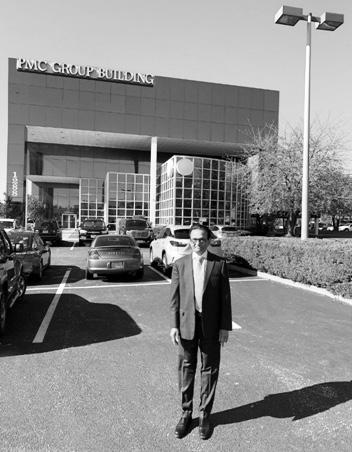
Successful Bengali entrepreneurs are relatively rare, especially among Bengalis living in the US. Dr. Paritosh M. Chakrabarti of New Jersey is one such rarity. He is the Founder and Chairman of PMC Group, Inc., a Mount Laurel, NJ-based industrial enterprise. In twenty-five short years, he has succeeded in growing PMC Group into a billion dollar, global chemicals business. In 2016, NJ Biz, a weekly newspaper, listed Paritosh as one of the “50 Richest Individuals” in the state. But Paritosh is not just a highly successful industrialist. He is also a thoughtful philanthropist who sincerely believes that “a corporation must have a soul”.
The author recently interviewed Paritosh to gain insights into his life’s journey from an outstanding student and researcher to a highly successful entrepreneur and philanthropist.
Chemistry. For post-graduate studies, I then chose to attend the premier scientific institution in Calcutta, the University College of Science. In 1959, I received my master’s degree in chemistry from Calcutta University, being the top student in the graduating class of the university and receiving a gold medal for that distinction.
DC: Did you then go on to do your doctoral research?
PMC: No, not right away. I was hired by Bharat Mills as the Chief Chemist of R&D operations in Gujarat. I won that position after a nationwide contest and was offered a handsome salary and many perks. I joined the company with great enthusiasm but soon started feeling lonely and restless. Deep inside, I was longing to do more research in a university setting. By chance, I met Prof Seshadri of Delhi University, and he strongly encouraged me to return to the academia.
DC: So, you returned to Calcutta University?
PMC: Yes, but only after I struck a good bargain with the vice-chancellor of the university at that time! I wanted to be allowed to do unsupervised, independent research that would lead directly to a DSc – without going through a PhD first. That was an extremely rare privilege extended to any researcher, but the vice chancellor agreed. Additionally, he awarded me
the Sir PC Ray Fellowship for the duration of my research. That was in 1960.
DC: That must have raised a lot of eyebrows within the university?
PMC: Yes, it did. But I proved all skeptics wrong when I received my DSc degree in 1964 at the age of 24, the youngest ever DSc from Calcutta University. And I am proud to say that for my research, I successfully synthesized Brazilin (a naturally occurring red dye of significant medicinal and scientific interest), a feat that had eluded researchers for over 100 years.
DC: Remarkable achievements indeed! Did you join the university as a professor?
PMC: No, I headed for the Ohio State University to do post-doctoral research under Prof Melvin Newman, a renowned organic chemist. Unfortunately, I had to return to Calcutta after about eighteen months because of a tragic development in the family. While in the US, I came to know through a Bengali newspaper that my eldest brother, Suratha, had been killed in a “car accident”. He was the Deputy Commissioner of Police in Calcutta and was targeted by criminal groups for assassination. My family had not notified me of his death because they knew that I would drop everything and return, and I did exactly that.
• A global chemicals and pharmaceuticals business with over 2000 employees and almost $1 billion in annual revenue.
• Established in 1994 by Dr. Paritosh M. Chakrabarti.
• Corporate office located in Mount Laurel, NJ, and manufacturing operations at 15 other locations around the world.
• One of the fastest growing companies in the specialty chemicals market segment in the US.
• Eight Business Divisions in five countries (US, France, Germany, South Korea and India) across three continents (North America, Europe and Asia).
• PMC Group Vision: A Corporation with a soul and one that acts as an engine for regional economic growth and exists primarily to promote common good by creating social values. This engine is fueled by profit, but it drives its power from its ability to innovate and from the quality of service it provides to its customers.
DC: Oh no! That must have been a terrible tragedy to deal with.
PMC: It was. But my family survived the tragedy and so did I. After a while, I resumed my career trajectory as a researcher. I spent a year
from Group Leader to Section Manager to Director of R&D positions. In 1982 I was recruited by PPG Industries as the Director of R&D for their Chemicals Division. As in GAF, I moved up the management ladder fairly quickly. I became VP of R&D for Chemicals Division in 1987, and the Chief Technical Officer of PPG Industries in 1992. In that capacity I reported to the Chairman and CEO of this Fortune 100 enterprise and was responsible for the work of over 2500 scientists, engineers and support staff. DC:I understand that 1993/1994 were critical years in your journey from a sen-
at University of Hull in England as an ICI Fellow, and then joined Michigan Technological University as an Assistant Professor. That was in 1968.
DC: When did you decide to leave the academic world and join industrial R&D?
PMC: Industry came calling very soon, and in 1969, I joined FMC Corporation to lead their research project on phosphate replacement in fertilizers. Industrial R&D attracted me because I was interested in applying scientific knowledge to solve commercial and social problems. I spent three happy years at FMC and was then recruited by GAF to head their Surfactants Group. I spent ten years at GAF and progressed
ior corporate officer to an ambitious entrepreneur. What happened during that time?
PMC: Yes, they were truly critical years in my professional career. In 1993, the long-term CEO of PPG decided to retire, and the Board began looking for a new CEO. I was short-listed for that position. But I realized that I also had an opportunity to buy a part of PPG’s business, make it a private company, give it a fresh start, and run it the way I felt good corporations should be run. A good company, in my opinion, is “a corporation with a soul.” Such a company should serve not just the interests of
By Prof. Arup K. SenGupta
(Editor’s Note: The author is a 2020 Fulbright-Nehru Research Fellow in India and a Professor of Environmental Engineering at Lehigh University, PA)
Sachin Tendulkar – the Michael Jordan of the game of cricket and an icon in every household in India – unexpectedly flashes up on the TV screen for an advertisement sponsored by the Indian Health Ministry. He is giving a lesson but that has nothing to do with honing strokes with a cricket bat. It is all about how to clean hands with soap using running water to get rid of every trace of sneaky and
access to clean water, let alone running safe water within the household. The technique of cleaning hands with soap and running water is truly a luxury well beyond their reach now and in the foreseeable future. Wouldn’t it have been nice if Tendulkar or Big B had said something or concocted an alternate technique, recognizing the plight of the millions of water-deprived individuals in India? Or a more global ques-
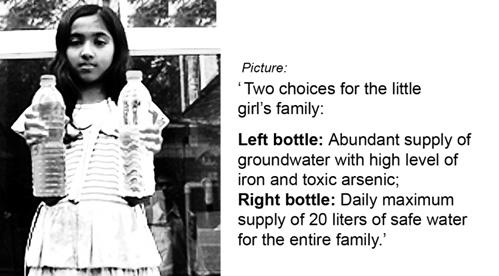
mean-spirited Covid-19 virus. Steps are detailed. The entire hand cleaning process would take about 30 seconds and it consumes about 2.0 liters of water. For an average person, cleaning is recommended five times every day i.e., 10 liters of daily supply of clean water that should be free of germs, bacteria and any toxic chemical. The goal of the TV announcement slot is to develop awareness to prevent Covid-19 infection. Later in the evening, I saw on TV another demonstration of hand washing from Bollywood’s superstar Amitabh Bachchan, our very familiar Big B with nearly similar content.
The intent of the public health message is unarguably beneficial but the question that springs instantly is: Who are the target audience for the advertisement delineating the step-wise tutorial of hand washing? Hardly one third of India’s population enjoy access to running water and that privilege is confined mostly amongst relatively affluent people in large metropolises and other urban populations. Next one third of the population has access to clean water but only intermittently and the quality is not guaranteed. Aside those, well over 250 million people in India lack
munities and neighborhoods that lack purchase power. In contrast, Covid-19 is an allout ruthless evil that does not spare anyone in its path, rich and powerful included and it defies the basic principle of free market economy. One cannot buy mercy or special treatment from Covid-19 at a higher price. In a cruel way, Covid-19 is an equalizer; it does not discriminate between rich and poor. Unlike water, Covid-19 infects and wounds every human on its path. It did not spare the British prince, British prime minister, Hollywood film stars, star athletes and professional players. No special escape route exists for the elite to combat Covid-19.
The Makings of a Successful Bengali Entrepreneur: with Paritosh Chakrabarti
| continue from page 3
the owners and the customers but also serve its employees and the society at large. I knew I had the vision, the knowledge and the determination to take a small part of PPG and grow it manifold in a short period of time into a model of a “company with a soul.” So, in 1994, I bought PPG’s Polymer Products Business Unit in Stockerton, PA, with 50 employees. That was the first building block of my company, PMC Group.
DC: That must have been a very brave and risky move! You were leaving a cushy, corporate job and entering the rough-and-tumble world of small business, probably with a heavy debt load.
tion: Do we really know our own next door people sharing the same planet?
From a life-threatening viewpoint, both Covid-19 and water have a lot in common. According to the World Health Organization (WHO), every day – repeat every 24 hours – about 6-10,000 people die from water borne diseases.
Just to put some perspective about the numbers, more people died from unsafe water worldwide during just the last two weeks of March than all the deaths combined that were inflicted by Covid-19 worldwide since its outbreak in Wuhan in December 2019. Why is then no public fuss, no sign of alarm, and no mounting scare from unsafe water with such a high and consistent killing rate?
The answer is simple: It is the blessing (or curse) of the free market economy. Water market is governed by the principle of free market economy; the rich and powerful can buy safe water at elevated prices, posing no health related threat. Water related fatalities are only limited to the resource-poor people who don’t afford to pay the market rate of safe water and therefore, literally perish globally. Supply chain of safe water does not extend to com-
World Water Day on 22nd March came and flew by nearly unnoticed under the ominous cloud of Covid-19. The World Water Day celebrates water and raises awareness about the grave disparity in the world where nearly 2.5 billion people lack access to safe water. In the South and South East Asia including the Indian subcontinent, nearly 200 million resource-poor people are threatened by natural arsenic contamination of ground water but ready-to- apply technology exists to mitigate the situation. However, technology implementation is discouraged in rural and peri-urban areas due to lack of purchase power of the resource-people in the region. Now we are amid an existential threat worldwide from Covid-19 and we consciously skipped any event or celebration this year.
We all aspire that human ingenuity will rise to the occasion and there would soon be a vaccine or some kind of a counter to stop the onslaught of Covid-19. That is the need of the hour. If and when that mission is accomplished, we should not forget that study after study has shown that lack of access to quality water drives inequality and perpetuates the cycle of poverty which in turn pulls down the entire nation and the world too. It will then be so wonderful to watch Tendulkar or Big B on TV screen advocating the importance of safe water and means to enhance its access for a healthy and equitable India with the same passion and urgency. In the meanwhile, the poor and the unfortunate have to somehow survive the wrath of Covid-19 even without access to clean water.
PMC: It was indeed a risky move. I had to invest a lot of my savings and borrow a lot more to fund the purchase of the company. After I took charge, I personally ran the business with drive and determination and paid attention to every detail. Soon the business was producing excellent results. During the first year of its operation, Polymer Products Company generated over $14 million in revenue and pretax pre-interest profit of $3.5 million. With proper management of working capital, we generated an additional $3 million of cash. For any entrepreneur in 1995 it would have been more than enough to live in a lavish lifestyle, but I had a bigger dream. Our stellar performance during the first year made us a darling of the lender banks and leveraging on our cash flow we could now access new fund for new acquisitions.
DC: It is most heartening to see that your business has an excellent succession plan, an issue that is usually a critical one for family-run businesses, especially when they are significant in size and scope. Your two sons will be able to manage your business empire after you retire.
PMC: Yes, I am very proud of them. Debtosh, an MIT grad, runs the PMC Group, North America, and Raj, a Harvard grad and a Princeton, PhD, runs PMC Group International. PMC Group will be in very able hands when I retire! DC: Let us now turn to the Chakrabarti Foundation, the philanthropic arm of PMC Group. This is one of the elements of your “corporation with a soul” credo. What does the Foundation support?
PMC: The Foundation’s primary focus is on promoting and nurturing education. To that end, it provides (a) scholarships for college-going children of PMC Group employees; (b) funding for educational institutions and schools in localities where PMC Group companies operate; (c) Bengali Scholar Award for college-going student of Bengali descent. We also give grants to schools and libraries (in locations where we operate) to purchase books, desks, laboratory equipment and other necessities. And we sponsor students to attend seminars and science fairs.
DC: Besides supporting the Foundation, you have also been a generous benefactor to many local Bengali organizations such as Ananda Mandir.
PMC: Yes, I have supported, and continue to support, many Indian organizations because they involve the community and promote cultural and educational activities. I am one of the largest donors to not just Ananda Mandir but also to Indian Cultural Center of South Jersey, Bharat Sevashram Sangha, and Cultural Association of Bengal. I have also been a key supporter of many North American Bengali Conferences.
DC: And you did not forget your alma mater, Calcutta University, right?
PMC: No, I did not. Back in 1992, even before I started PMC Group, I established a chaired professorship at Calcutta University through an endowment of $150,000. It was quite a large sum at that time and the interest on this amount was enough to support a full Professor and a Postdoctoral Fellow. It was my small token of appreciation to the university that gave me the education that was critical to my career.
DC: Thank you, Paritosh, for sharing your interesting and inspiring life story. You are a great role model for all aspiring entrepreneurs among us. We wish you and PMC Group all the best.
It has to be said, Planet Earth would breathe a long sigh of relief if humans were to vanish.
And temporarily, in many places, they have.
Amid the unprecedented coronavirus global lockdown, scenes worthy of a Disney film emerged; from swans gliding through the now-clear canals of Venice to blue skies over China where the air is usually choked with smog.
‘Nature has set the reset button’ was one sentiment doing the rounds on social media at the beginning of the worldwide lockdown. In early April, locals of Jalandhar in Punjab began tweeting photos of the Himalayas from more than 120 miles away; visible for the first time in 30 years following a drop in air pollution.
A welcome silver lining to an otherwise doom-filled scenario....
The environmental changes wrought by the coronavirus were first visible from space. Then, as the disease and the lockdown spread, they could be sensed in the sky above our heads, the air in our lungs and even the ground beneath our feet.
While the human toll mounted horrendously from a single case in Wuhan to a global pandemic that has so far killed more than 400,000 people, nature, it seemed, was increasingly able to breathe more easily.
As motorways cleared and factories closed, dirty brown pollution belts shrunk over cities and industrial centers in country after country within days of lockdown. First China, then Italy, the US, UK, Germany, India and dozens of other countries experienced temporary falls in carbon dioxide and nitrogen dioxide of as much as 40 percent. The drop in greenhouse gas emissions greatly improved air quality and reduced the risks of asthma, heart attacks and lung disease.
For many experts, it is a glimpse of what the world might look like without fossil fuels. However, hopes that humanity could emerge from this horror into a healthier, cleaner world will depend not on the short-term impact of the virus, but on the longterm political decisions made about what follows.
After decades of relentlessly increasing pressure,
By Subhodev Das
Swans in canals, dolphins at empty cruise ports, wild boar in cobbled streets, and a record-breaking number of flamingos painting Navi Mumbai in pink prove how fast nature can reclaim the world
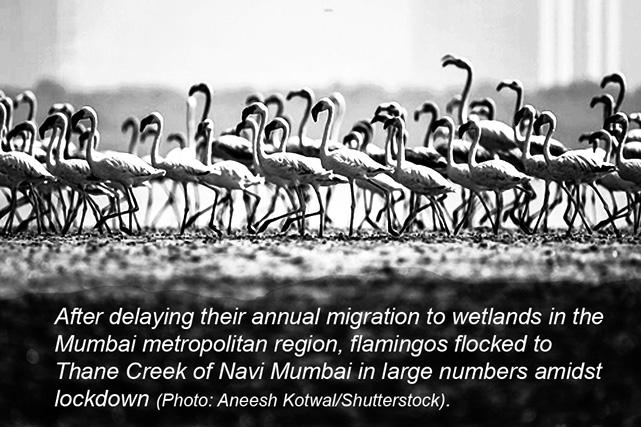
the human footprint on the earth suddenly lightened. Air traffic halved by mid-March compared with the same time last year. In April, road traffic fell in the UK by more than 70 percent, to levels last seen when the Beatles were in shorts. With less human movement, the planet has literally calmed: seismologists reported lower vibrations from “cultural noise” than before the pandemic.
Key environmental indices, which have steadily deteriorated for more than half a century, paused, or improved. In China, the world’s biggest source of carbon, emissions were down about 18 percent between early February and mid-March—a cut of 250 million tons, equivalent to more than half the UK’s annual output. Europe is forecast to see a reduction of around 390m tons. Significant falls can also be expected in the US, where passenger vehicle traffic – its major source of CO2—has fallen by nearly 40 percent. Even assuming a bounce back once the lockdown is lifted, the planet is expected to see its first fall in global emissions since the 2008-9 financial crisis.
There is no doubt that these lockdowns are hitting the fossil fuel industry. With fewer drivers on the roads and
planes in the air, the price of oil has slumped almost two-thirds since last year. Car sales fell by 44 percent in March, with motorway traffic down 83 percent. So many more people are learning to teleconference from home that the head of the Automobile Association in the UK advised the government to switch infrastructure investment from building new roads to widening internet bandwidth.
This is potentially good news for the climate because oil is the biggest source of the carbon emissions that are heating the planet and disrupting weather systems. Some analysts believe it could mark the start of a prolonged downward trend in emissions and the beginning of the end for oil. Others strike a more cautious note about the fuel that has dominated our lives and polluted our atmosphere for the past century.
“The drop in emissions is global and unprecedented,” Rob Jackson, the chair of Global Carbon Project said. “Air pollution has plunged in most areas. The virus provides a glimpse of just how quickly we could clean our air with renewables.” But he warned that the human cost was too high, and the environmental gains could prove temporary. “I refuse to celebrate a drop in emissions driven by tens of millions
ness as usual, environmental gains are likely to be temporary or reversed. China provides some indication of what can be expected. With no new cases in Wuhan, the lockdown was eased, and energy use and air pollution have been steadily rising since the end of March.
Nevertheless, while our species was in temporary retreat during the lockdowns, wildlife filled the vacuum. This year will almost certainly see a much lower toll for roadkill by cars and trucks, which—in the US alone—annually takes the lives of several millions of animals and birds. Many councils have delayed cutting the grass on roadside verges—one of the last remaining habitats for wildflowers – which should bring a riot of color to the countryside this summer and provide more pollen for bees.
of people losing their jobs. We need systemic change in our energy infrastructure, or emissions will roar back later.”
Hopes that the pandemic will accelerate the transition to a cleaner world are already running into a political wall: the “shock doctrine” of disaster capitalism outlined by the author and activist Naomi Klein. In her book of the same name, the Canadian writer describes how a powerful global elite exploits national crises to push through unpopular and extreme measures on the environment and labor rights.
This is what is happening in the United States and elsewhere. Oil company executives have lobbied Donald Trump for a bailout. Under the cover of the crisis, the White House has rolled back fuel-economy standards for the car industry, the Environmental Protection Agency has stopped enforcing environmental laws, three states have criminalized fossil fuel protesters and construction has resumed on the Keystone oil pipeline. The US government’s massive economic stimulus bill also included a $50 billion bailout for aviation companies. Environmental groups are urging the UK and European Union not to do the same.
If governments prime the economic pumps with the intention of a return to busi-
Coyotes, normally timid of traffic, were spotted on the Golden Gate Bridge in San Francisco. Deer grazed near Washington homes a few miles from the White House. Wild boar roamed in Barcelona and Bergamo, Italy. In Wales, peacocks strutted through Bangor and sheep were filmed on roundabouts in a deserted playground in Monmouthshire. According to one estimate, the bear population in Yosemite National Park quadrupled.
The wildlife resurgence was presented as the comedy in our tragedy. Cartoonists depicted throngs of tourist animals gawping through city windows at humans under lockdown. Commentators even talked of the “post-human” era—a mocking rejoinder to the idea that we live in Anthropocene, a period of human domination that is reshaping the planet. Humor does not get much blacker. We are laughing at our own decline – and assuming that nature will be the beneficiary. Environmental campaigners say that is a dangerous misconception. The picture is different across our unequal world. Rich, industrialized nations are seeing a temporary recovery of nature because there is so little of it in the first place. Poorer countries, on the other hand,
By Vishnupriya
was a landmark series of cultural programs produced by Ananda Mandir in collaboration with Creative Mind Mirror during the COVID-19 pandemic. This presented a completely new face of Ananda Mandir to the community. In short, it was a game changer, considering its embrace of a novel technological platform in this very challenging stay-athome time. It created awareness, offered entertainment, and provided succor to the affected.
During the Covid-19 crisis, Ananda Mandir had to be closed for the first time. Since social distancing had to be maintained during the Bengali New Year celebrations, the BOT thought of a novel way of entertaining the community through livestreaming of the Naboborsho cultural program. Ranjana Sanyal, one of two anchors for the program, introduced the local artistes like Arun Bhowmick and Suranjan Bhanja Choudhury among others, and Soumen Roy, the other anchor, welcomed the artistes from Kolkata, and they were both wonderful. This was the first attempt by Ananda Mandir to bring the temple pujo followed by an entertainment program to a remote audience, neither event was pre-recorded or videotaped but live-streamed in real time. This Naboborsho program was a big success and caught the attention of the viewers both locally and internationally as a wonderful technological approach to serve a current need. The members of the BOT were excited to consider it as a viable option going forward, and the audience reaction was very positive.
At the time Ananda Mandir was planning to present Naboborsho program through live-streaming, two extremely forward-looking creative individuals, Pinaki Datta and Rituparna Das Datta (of Creative Mind Mirror, a NJbased organization), were also developing plans for a series of cultural programs featuring artistes from Kolk-
ata. This proved to be a great coincidence and resulted in the germination of a promising kernel.
That a casual conversation can be hugely impactful is our take away from this entire experience because a tiny seed crystallized into an idea and then this idea spread in the community to touch thousands of minds and hearts to bring a huge difference in the lives of many stuck-at-home individuals, wanting to connect with others. This is exactly what happened with E-Jolsha.
Pinaki Datta and Rituparna Das Datta shared their creative thought with Sajal Mukherjee, Cultural Secretary of Ananda Mandir, and asked if Ananda Mandir would join with them to create a unique digital platform. While the credit of conceptualization and networking with artistes goes to this creative couple, Ananda Mandir provided the digital platform for content management and the entire end-to-end program execution management, having already tried out this platform for the Naboborsho program.
That is how E-Jolsha was born and began to spread its wings.
The basic purpose of this new platform was to create a digital space where local, national and international groups working towards COVID-19 relief could all come together in the spirit of an informal adda and some entertainment -- and connect with the broader community. It was meant to be a bridge. This was never conceived as a fund- raising campaign for Ananda Mandir or Creative Mind Mirror. It was designed to be a networking platform to bring many individuals and groups to share their passion for a common cause with global implications. So, it was an inclusive attempt to bring everyone together. In the process, those affected by COVID-19 directly or indirectly, those providing service to the affected and those with the wherewithal to financially help these services all came
together. And to facilitate this process, Ananda Mandir, as a Hindu temple and cultural organization in NJ, made significant investments in terms of creating this technical platform. Investment came mostly in the form of numerous hours of intensive effort by our software experts, who had to juggle demanding job commitments and family expectations. Especially Joy Bhowmik, Nilotpol Paul and Sajal Mukherjee, deserve special mention for executing the program using Zoom and YouTube platforms. The other person who played a critical role was Satyajit Bhattacharya. More about him later.
To live-stream for six weeks since April 19, and 9 episodes back to back with minimal interruptions, was no mean effort. New, untested endeavors come with their own set of challenges, and E-Jolsha wasn’t an exception. Those behind the scenes brought us seamless presentations, but a great deal went into continuous improvisation even during run time. Changing course in real time while the program is running calls for resourcefulness of the most creative kind, and the audience wasn’t ever disappointed with the producers. These experts were not only involved in pre-live connectivity tests which sometimes came loaded with technical glitches needing immediate resolution, but also post-live analytics, like drop in audience viewership during the program and the collection of feedback to improve the quality of the next episode.
Each of the episodes was designed with an underlying theme to provide entertainment, discussion, and information, all in a very informal tone and temper. The spirit of the quintessential Bangali adda was the most appealing part of the entire program. There was always a tremendous amount of variety to look forward to, and each episode had a dynamic of its own. While most of the episodes were designed and organized by Pinaki and Ritu-
parna, the episodes focusing on classical music and younger talents were the creations of Satyajit Bhattacharya. He also was the brain behind the tribute to Rishi Kapoor in Episode 8. -- The anchors for the episodes were wonderful, especially Rituparna, who was splendid. She leveraged her personal relationships to approach and get some of the best performers and artistes from Kolkata to join the cause and perform without any payment because they were as passionate about the cause as she was. Many senior and tremendously accomplished artistes joined to express their faith in such a cause and were willing performers. The other anchors, Ranjana Sanyal, Satyajit Bhattacharya, and Sudipta Bhawmik were equally remarkable.
The first episode brought some of the best poetry and music offered by Bratati Bandyopadhyay, Lopamudra Mitra, Srikanto Acharya, and Joy Sarkar. In Episode 2, devoted to classical music, the high point was the introduction of the artistes through pre-produced high-quality videos in order to bring to light the real sound quality which unfortunately cannot be captured in a live Zoom performance dependent on the inherent limitations of the platform. The audience was treated to excellent performances by Smt. Mitali Bhawmik, Pandit Tejendra Narayan Majumdar and others. Episode 3 not only brought in artistes like Iman Chakraborty, Saheb Chatterjee, Neepabithi Ghosh and film star Rituparna Sengupta, but also someone like Sharmishtha, providing outreach to isolated, needy seniors in South Kolkata.
While Episode 4 showcased young artistes of incredible caliber from the tri-state area, Episode 5 was entirely focused on folk music. The audience was entertained by a wonderful theater experience in Episode 6 with artistes sharing their on stage and backstage experiences with unforgettable, hilarious anecdotes.
In the aftermath of Cyclone Amphan, Episode 7, dedicated to poetry, had to be cancelled because of loss of Internet connectivity in Kolkata. Fortunately, the pro-
ducers quickly came up with an alternative show without missing a bear. It included an overview of the program, recap of the main events, feedback from audience, a panel discussion and a Q&A session, while showing support and solidarity to the city of Kolkata and the parts of West Bengal and Odissa ravaged by the super cyclone. This reflected incredible resourcefulness and undoubtedly a week of sleepless nights to come up with this replacement program to fill the void at the last moment. The unforeseen natural disaster, I guess was responsible for unlocking their creativity once again there was no possibility of connecting with Kolkata facing power outages and disruption of networks. It was also a wonderful gesture to pay a tribute to the two superstars that Bollywood lost recently, Irrfan Khan and Rishi Kapoor, in Episode 8. Very interesting nuggets of personal experiences with Irrfan Khan were shared by local artistes Gargi Mukhopadhyay and Sarwar Haroon in a lively adda mood during the days of filming Mira Nair’s Namesake in which they performed together.
Episode 9, presented on June 7, was dedicated to Poetry that was cancelled earlier and had to be rescheduled.
As viewers, we were very lucky to hear artistes like Jagannath Basu, Urmimala Basu, Bratati Bandyopadhyay, Shovonsundar Basu and Aditi Basu Roy, and poet Subodh Sarkar. Unfortunately, due to prior commitments Srijato and Durba Bandopadhyay couldn’t participate but were there briefly to acknowledge and support the effort. This was also the final episode of E-Jolsha.
And in all these episodes, relevant information about groups and individuals engaged in the outreach programs was brought to the audience, so connecting became possible and people were assisted as per their needs. Also, these sessions provided an opportunity to acknowledge and highlight our everyday heroes in these trying times. But as they say,”All good things must come to an
| continue from page 6
end”, so was with E-Jolsha series.
Like many other viewers, I look forward to a second series of E-Jolsha in the future and other interesting and imaginative use of Ananda Mandir’s digital platform.
The temple pujo and arati are now being live-streamed every Saturday evening and for special religious occasions. We can tap the spiritual within us as we see Ma Kali from our homes worshipped by Biswabhai with his characteristic ardor and devotion. This was unthinkable before the Ananda Mandir BOT took the decision to embrace this novel approach and step out of the comfort zone in order to bond all the existing devotees practicing social distancing. It was also to create awareness among others because the very scale of such a platform is immense.
Many people have now come to know about Ananda Mandir in the US and outside because of the global reach of digital media. The total viewership of the E-Jolsha episodes, across all channels, ranged between 1000 and 3000, with people watching our programs from several countries and four continents. This is undoubtedly a huge outreach and truly remarkable.
Digital platforms are here to stay. We know that this is a new normal for us living in the shadow of COVID-19 with or without stay-at-home mandate. They will probably coexist with the traditional in the days to come. One of the panelists in Episode 7, Sumit Ganguli, said that he is reminded of the “Medici Effect with regard to breakthrough insights at the intersection of ideas, concepts and cultures”, I think he is spot on about E-Jolsha. It is certainly a breakthrough model where new ideas meet to reassess status quo and forge ahead to cater to immediate cultural, social, artistic and spiritual needs during these unprecedented times with the help of a new technological platform.
As a NJ resident and a devotee of Ananda Mandir, I am deeply grateful to the President, the Vice Presidents, the Cultural Secretary, the General Secretary, and all other members of the BOT, and of course, their partner, Creative Mind Mirror, for introducing us to this unique digital experience and for taking a wonderful journey together . A big thank you and hats off for pulling it off with such success.
Please note that you can become an Associate Member of Ananda Mandir by donating a minimum of $100. Your subsequent donations of $50 or more are credited to your account. When your total cumulative donation reaches $1000, you become a Life Member. Your support, small or large, is most welcome and sincerely appreciated.
By Tathagata Ghosh
Sports leagues was one of the first activities to be shut down in the wake of the COVID crisis to the despair of sports fans all over the world. The prolonged shutdown must have caused anxiety, lockdown angst and a whole host of psychological problems. Economists and politicians all over the world also realized was the enormous impact it also had on the economy. The economic impact of sports in the world is so significant that it is one of the first activities that politicians and administrators worldwide are focused on restarting. It is just not just an escape or a release for people watching sports, it is a way of life. An enormous amount of advertising dollars, sales of billions of sports related memorabilia and equipment are a direct result of sports being played and broadcast live all over the world.
On March 9, a news article in US News stated that the cancellation of the BNP Paribas Open 2020 in Southern California will lead to a potential loss of $400 million. The decision to cancel the tournament was taken by the organizers because they had a handful of COVID cases in that particular area in Southern California. This was before the tsunami of COVID infections hit the USA. This two week prestigious tournament was expected to attract about half a million visitors. The prize money given out was about 20 million. Assuming that the total investment into this tournament was in the range of about $40 million, the return was expected to be $400 million. This highlights how important an economic driver sport is. Tennis is not the most popular sport in the US but still generates enormous economic activity.
Soccer has an unparalleled worldwide appeal and every one of the phenomenally successful leagues all over the world are some of the biggest money earners. Almost every top soccer league in the world has had a record growth and contributed to the well-being of the players, led to the improvement and prestige of the sport and has directly contributed to the economies of the country they are located. The English Premier League has grown almost 800 percent from 1999 to 2016 and now directly contributes over 3 billion pounds yearly to the British economy.
The occupancy of the stadiums is over 90%. This success story is repeated all over Europe by the top soccer leagues. The governing body of soccer FIFA is also extremely wealthy earning typically more than a billion dollars a year by just the sales of television rights during the World Cup.
The IPL, the Indian Premier League, has become a wildly successful in a few short years. It is a league that premiered a little over a decade ago and extremely successful in economic terms and contributes over $100 million to the Indian economy. It is the most popular cricket league in the entire world drawing top-class players and packing stadiums. It provides employment to hundreds of thousands of people. It builds camaraderie amongst nations and players. The total economic impact is estimated to be in the range of $500 million when calculated about five years ago. This league is played about 2 months in the year and the benefits to the economy are healthy and positive.
In the age of COVID, when people are confined to their homes, suddenly people realize that one of the major causes of boredom and anxiety is when they do not have access to live sports. Frequently during a local lockdown due to some local disaster there is always somewhere in the world where there is some live sports event to watch. We have been spoiled to the extent where we have multiple live sports being telecast and it is extremely hard to choose which one to watch. There is an ineffable pleasure in watching live sports that is not fulfilled by recorded shows.
March Madness, the premier college basketball tournament was dealt a cruel hand in early March when the COVID crisis was peaking and the tournament had to shut down. College sports is much loved but somewhat controversial. Many of the high spending Division 1 schools spend between $100 million to $200 million yearly to sustain their premier sports programs. Many colleges either break even or lose money on their sports program including Rutgers. The most successful sports programs end up making over $50 million in profits. It is incontrovertible that the draw of sports enhances the reputation of schools and builds a brand like
none other. It builds allegiance and loyalty to the college that directly translates into charitable endowments. The loyalty of the fan base willing to travel with the team around the country and watch their games is a phenomenon common in professional sports but as prevalent in amateur college sports. There is a certain myth that sports people make a lot of money and hence it is lucrative for a person to concentrate on sports. This is a mirage that is worth addressing. Only in most lucrative leagues, the sports people make money. In a few leagues like the NFL and NBA many athletes make a significant amount of money. The star players obviously make incomes in the stratospheric levels, but the leagues are lucrative enough for every player to earn sufficient money and also to receive health and other benefits. On the other hand, in sports like tennis, apart from the Top 50 or so players, almost everybody else barely cover their hotel and travel costs, flying to one tournament to the next. Coaches and physios are very expensive and only the top players can manage to retain them on a full-time basis. The lower level players barely can afford coaches and are often travelling alone from Challenger level events that barely draw any audience and most certainly not the glitz and glamour of the Grand Slam tournaments. Many of these players depend on the vagaries of sponsorship to be able to continue playing the game. Similarly, soccer in Europe in the prestigious leagues can help somebody make significant money but in the MLS in the USA, the average player makes in the range of about $180,000 a decent amount but nowhere to what one can make in the European leagues. The actual benefit of these leagues accrues to the corporations, the investors and the city. This is one of the reasons that cities vie with each other to provide lucrative deals to teams to relocate.
As the sports leagues start again, it will feel the winds of hope is again starting to blow gently. The stadiums will be empty, but the fans will be cheering from front of their TV’s and computers. If there was a way for that sports person in that stadium to hear the cheers from the living rooms, they may also hear in the background the jangling of money and the sweet roar of economic revival.
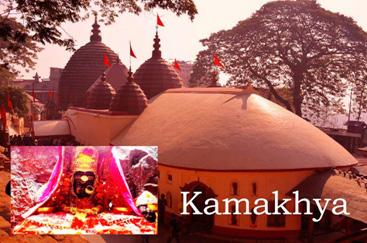
G„
•þ÷ìíî ¤y ô¥yôyëûy †þyôyíÅ‚ ¤D•þy !ˆöìîûïÐ †þyôyöì‡Ä!•þ ¤˜y ö˜÷ìî @ý̘Äöì•þ ¤•þ•þ‚ l÷ìîûÐÐÐ Œ †þy!¡†þyþ›%îûy” 58 ù52éŸé55 Š
†þyôîû*þ› †þyôy‡Äy þ›#‘þ ßiyl þ›)öìîÅ òò²ÌyˆöìÄy!•þ£ìþ›%îóó lyöìô ‡Äy•þ !Sé¡Ð †þyôöì˜î
îû&öìoîû öe«yöì™ èþß¿#è)þ•þ ¥öì¡ îû&öìoîû †,þþ›yëû ߺîû*þ› ²Ìy® ¥l ~¥z †þyîûö씥z òò†þyôîû*þ›óó
lyô ¥öìëûöìSéÐ ô¥yôyëûyîû ~†þ!þ ô%‡Ä þ›#‘þßiyl ~¥z †þyôîû*þ› †þyôy‡ÄyÐ ¤•þ#îû ö˜¥ !î£% ¤%˜¢Ål‹þöìe« !S駬 †þîûöì¡ 84!þ ‡öìuþ !îèþ_« ¥öìëû •þy 84!þ
þ›#‘þßiyöìl þ›!•þ•þ ¥ëû– öëyˆîöì¡ 51!þ þ›#‘þßiyl xyôîûy Kþy•þ ¥öìëû!Sé îy!†þ ¤†þ¡
~‡öìly =® xyöìSéÐ ¤•þ#îû òòöëy!lóó †þyôîû*þ› †þyôy‡Äyöì•þ þ›!•þ•þ ¥ëûÐ ’þzêþ›!_ G ¤,!ÜT öë ßiyöìl ¥ëû •þy¥y¥z òòöëy!lóóÐ ˆöì•þîû ’þzêþ›!_îû †þyîû” ö˜î# ô¥yôyëûyÐ~¥z
þ›#‘þßiyöìlîû =îû&c xþ›!îû¤#ôÐ †þyôy‡Äy ¥öì¡l òòþ›,!íî#•þcóóÐ ¤•þ#îû òòöëy!lóó ~¥z þ›#‘þßiyöìl þ›!•þ•þ ¥öìëû ²Ìhßìîû#è)þ•þ ¥ëû ~î‚~¥z òòöëy!l
þ›#öì‘þóó †þyôy‡Äöì˜î# ô¥yöì˜öìîîû ¤!¥•þ !l•þÄîy¤ †þöìîûlÐ þ›îÅ•þˆyöìeîû ²ÌßËîöì”îû ¡™yîûyîû ôöì™Ä ~¥z òòöëy!lþ›#‘þóóÐ ¥z¥y 21xyD%¡˜#‰Å G 1!î•þ!hßì ²Ìßi ~¥z
öëy!lþ›#‘þ †%þô†%þöìôîû lÄyëû îû_«î”ÅyÐ èþ_«ˆ” ~¥z ßiyöìl †%þô†%þô G !¤„˜%îû myîûy ö˜î#îû x‹þÅ”y †þöìîû íyöì†þlÐ ô¥yôyëûy ~¥zöìëy!lþ›#öì‘þ þ›Méþ†þy!ôl# ô)!•þÅöì•þ e«#’þüy †þîûöìSél– †þyôy‡Äy– !eþ›%îûy– †þyöìôÙ»îû#–¢yîû˜y G ôöì¥yê¤y¥yÐ †þyô– îû*þ› =” myîûy ~¥z þ›Méþ†þy!ôl# ¤îŘy x¡B,þ•þyÐ öëy!lþ›#öì‘þîû ÷èþîûî òò’þzôyl¨óóÐ îʽþy!˜ ö˜îˆ”öì†þ !ë!l öôy!¥•þ †þöìîûl !•þ!l¥z ô¥yôyëûyÐ ~¥z ô¥yôyëûy òò†þyôóó þ›)îûöì”îû !l!ô_ l#¡ þ›îÅöì•þ ¤D•þy ¥öìëûöìSélÐ ô¥yôyëûy †þyôy‡Äyîû ˜%¥z þ›yöì¢Å îy”# G †þô¡yîû þ›)y †þîûöì•þ ¥ëûÐÐÐ †þyôy‡Äy ö˜î#îû þ›)yîû ¤!¥•þ òò’þzôyl¨ ô¥yöì˜î– †þyöìôÙ»îû ô¥yöì˜î– xöì‰yîû ô¥yöì˜î–!¤öìkþÙ»îû ô¥yöì˜î– ö†þy!þ!¡öìDÙ»îû ô¥yöì˜î G xyÁËycöì†þÙ»îû ô¥yöì˜öìîîû þ›)y †þîûöì•þ ¥ëûÐ ö˜î#îû öëy!ˆl# ëíy öÇþô˜y– xyöìîûyˆÄ˜y– ™l˜y– ëû˜y– îîû˜y– öôy¥˜y–
}!kþ˜y– !¤!kþ˜y– î%!kþ˜y– Ö!kþ˜y– è%þ!_«˜y– ô%!_«˜y– öôyÇþ˜y– ey”˜y– Kþyl˜y G
†þy!hsý˜yîû þ›)y †þîûöì•þ ¥ëûÐ
xÁº%îy‹þ#îû ¤ôëû †þyôîû*þ›†þyôy‡Äy ô!¨îû 4!þ !˜l î¦þ íyöì†þ ~î‚ ~¥z ¤ôëû ~¥z
¤ôëû ~†þ !î¢y¡ öô¡y îö줖 ö˜¢ö옢yhsýöìîûîû ¡Çþy!™†þ l¤ôyˆô ¥ëû ~î‚ îà
•þy!sf†þ G ¤§¬Äy¤# ~¥z þ›#‘þßiyl ˜¢Åöìl xyöì¤lÐ xÁº%îy‹þ#îû ¤ôëû þ›,!íî# îû/ߺ¡y
¥lÐÐÐ îû/߬yl ¤ôyþ›l ly ¥Gëûy þ›ëÅhsý ô!¨îû î¦þ íyöì†þÐ
~²Ì¤öìD xyöì¡y‹þly †þ!îû öë ²Ì!•þ!þ þ›#‘þßiyöìlîû !lߺ þ›,í†þ þ›,í†þ òò’þzÅyóó xyöìSéÐ ¥z¥y ¤Á›)”Å =®Ð ë„yîûy ~¥z !î˜Äy yöìll •þ„yîûy !èþ§¬ þ›#öì‘þîû òò’þzÅyóóîy ¢!_«
’þzþ›¡!¸þ †þîûöì•þ þ›yöìîûlÐ ¤†þ¡ þ›#‘þßiyöìl ¤•þ#îû öë öë xD þ›!•þ•þ ¥öìëûöìSé ö¤¥z
ö¤¥z þ›#‘þßiyl ¥öì•þ ²Ì!•þ!þ òò’þzÅyóó ’þzêþ›§¬ ¥öìëû xÁº%îy‹þ#îû ¤ôëû †þyôîû&þ› †þyôy‡Äyîû
òòöëy!lþ›#öì‘þóó !ô!¡•þ ¥l ~î‚ ¤•þ#îûþ›)”Åö옥 ˆ!‘þ•þ¥ëû G ö˜î# îû/ߺ¡y ¥lÐ ~¥z !îöì¢£ì ¤ôöìëû ~¥z òòöëy!lþ›#‘óó xþ›!îû¤#ô ¢!_«îû ö†þw ¥öìëû Göì‘þÐ öëyˆ#ˆ”
™Äylöìlöìe ~¥z òò’þzÅyóó ’þzþ›¡!¸þ †þöìîûlÐ
†þyôy‡Äy ö˜î#îʽþy– !î£%G ôöì¥Ù»öìîûîû þ›)l#ëûy !•þ!l î%!kþ G ×#î,!kþ ߺîû*!þ›”#Ð
öe•þy ë%öìˆ îîûyöì¥îû þ›%e lîû†þ òò†þyôîû*öìþ›îûóó x™#Ù»îû !Séöì¡l !•þ!l ö˜î# ôy•þyîû
ô¥yl èþ_«!Séöì¡lÐ †þy¡yhsýöìîû lîûöì†þîû ¤!¥•þ î!¡þ›%e òòî¦%þcóó ßiyþ›l †þîûöì¡ lîû†þ
îy”y¤%öìîûîû lÄyëû x¤%îû ¥öìëû Göì‘þl– ~î‚ òò†þyôy‡Äyóó ö˜î#îû ²Ì!•þ !èþ§¬ ôöìlyèþyî
öþ›y£ì” †þöìîû ö˜î#öì†þ !îîy¥ †þîûöì•þ ôlßi †þöìîûlÐÐÐ ’þz_« ¤ôöìëû ö˜î#îû ô!¨îû ˆ¥l xîûöì”Äîû ôyöìVþ ~†þ!þ þ›#‘þßiyl !¥¤yöìî !Sé¡ ö†þylô!¨îû !Sé¡ lyÐ ö˜î# òòlîûöì†þîûóó ¤!¥•þ Sé¡ly †þöìîûlÐ
By Debajyoti Chatterji
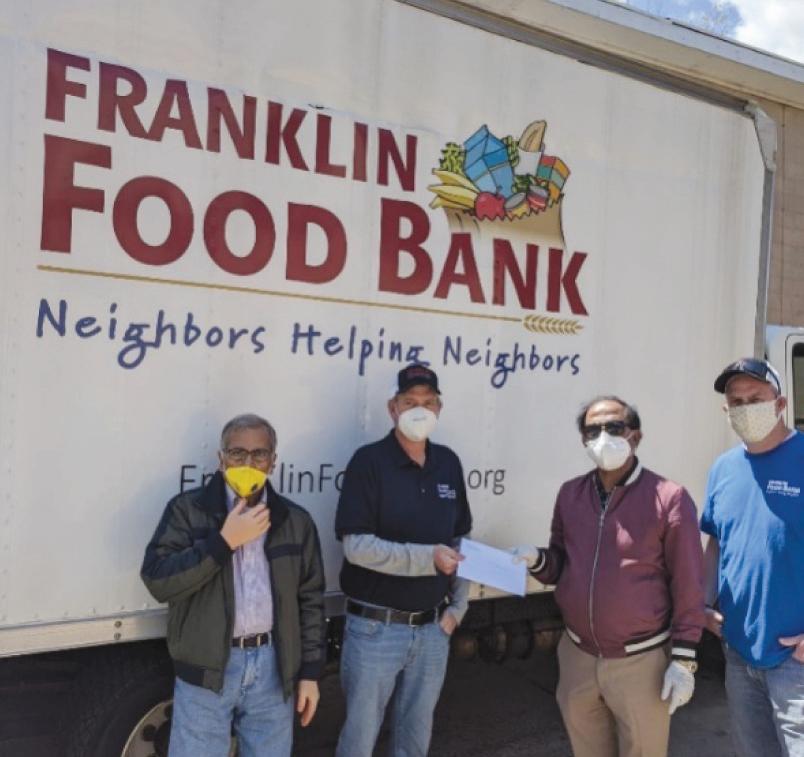
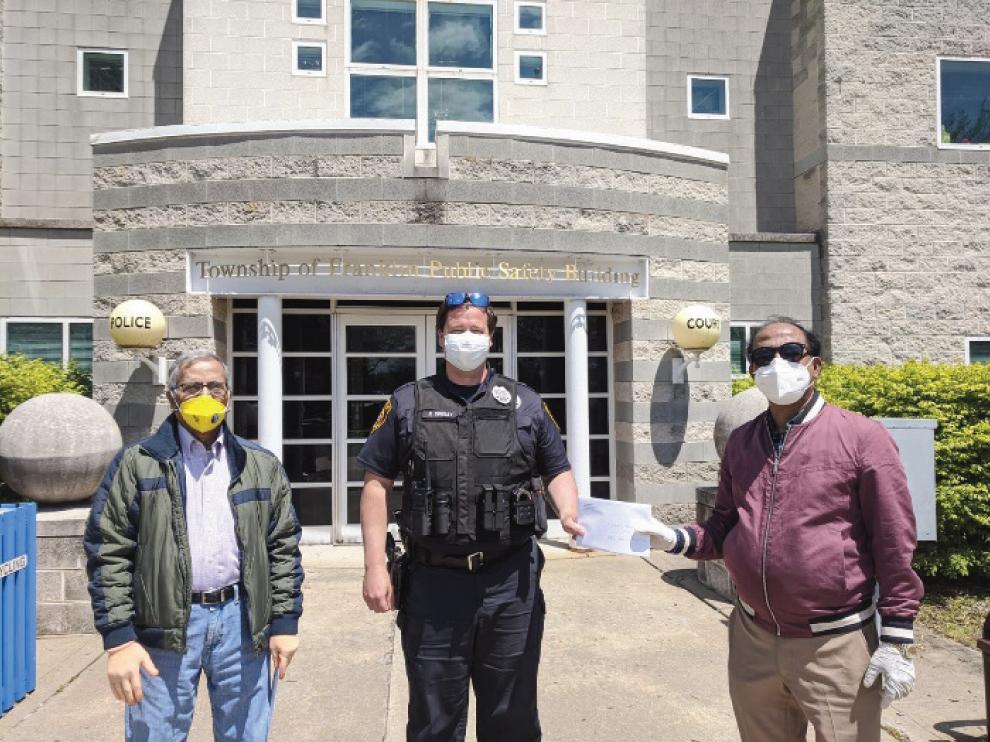
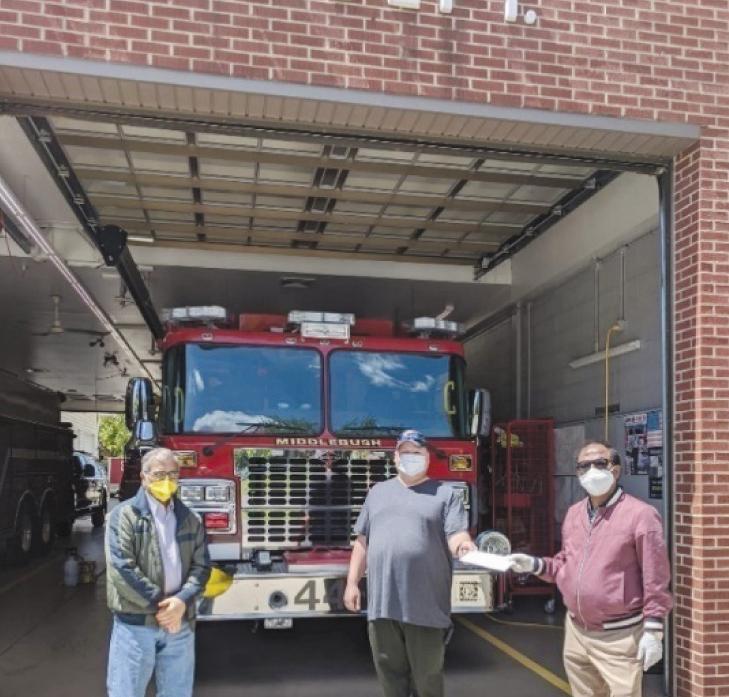
On May 7, three members of Ananda Mandir Board of Trustees visited several facilities in and near Franklin Township, NJ, with a very special mission. Their first stop was at the Franklin Township Food Bank. From there, they went to Franklin Township Police Department. Their last stop was at Middlebush Volunteer Fire Department. Everywhere our team went, it was greeted with great warmth and enthusiasm. For logistical reasons, the team could not visit two other destinations: RWJ University Hospital and South Bound Brook Ambulance & EMS Group.
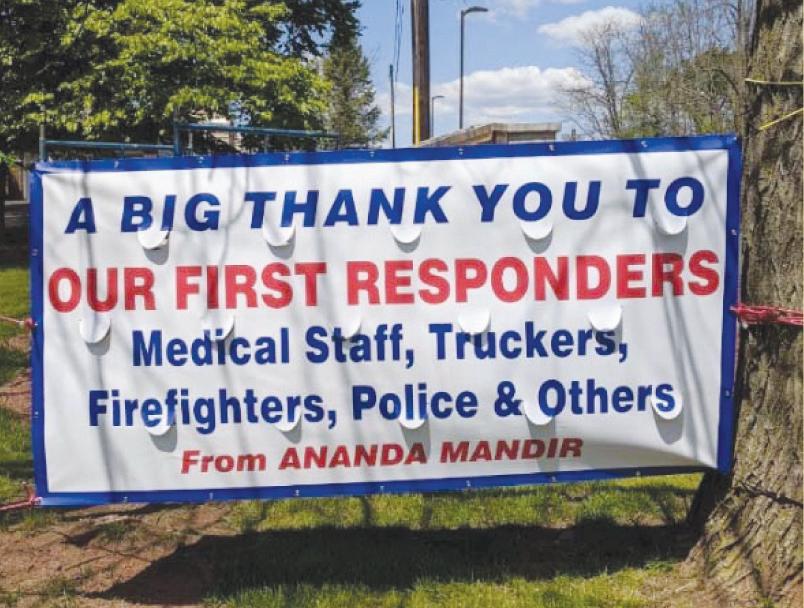
their brave and selfless work for the community.
On this day, Ananda Mandir donated a total of $5000 to these five organizations. Our team delivered donation checks personally to Franklin Township Food Bank, Franklin Township Police Department and Middlebush Volunteer Fire Department (see photos below). Checks to RWJ University Hospital and South Bound Brook Ambulance & EMS Group were mailed out, in accordance to their wish.
requested extra help from Ananda Mandir.
Ananda Mandir thanks Dr Paritosh Chakrabarti whose matching contribution of $2500 made it possible for us to reach out to the other local “first responders”, as named above.
We also thank Utpal Sengupta, Meena Dam and Jai Prakash Biswas for their personal commitment and drive to this effort to honor and support highly deserving organizations in our community.
continue to page 9 }
This team had two objectives in mind: (1) convey Ananda Mandir community’s gratitude to these organizations who are working tirelessly to help people affected by the COVID-19 crisis, and (2) provide financial support to these “first responders” so that they may continue to do
Fifteen members of Ananda Mandir Board of Trustees, under the leadership of Utpal Sengupta, raised $2500 to support Franklin Township Food Bank, an organization that has been supported by Ananda Mandir for many years. Because of the high level of pandemic-induced unemployment, the need for replenishing the stock at the food bank had become acute, and the food bank had
NOTE: In another effort, Ananda Mandir urged its members to make donations directly to a global fund-raising effort launched by Rotary Club of Belur to buy personal protective equipment for public hospitals in West Bengal. This global effort by Rotary Club of Belur raised a total of $50,000. We were pleased that this effort was supported by many Ananda Mandir members.
Reported by Mita Sinha, Chair, Puja Committee
Marchis a favorite month for all Indians. For Bengalis, Dol Purnima/Dol Jatra is a major festival. This festival is dedicated to Sri Krishna and Radha. Inside the temple deities of Krishna and Radha were decorated in palanquins and devotees applied Abir (colored powder) on their feet. After that everybody applied Abir on each other. This ritual is to show respect to the elders and also, it is a gesture of love and friendship.
We also had Satyanarayan Puja in the evening. After the puja, arati and the abir khela, the dayended with nice dinner.
COVID -19 came right after this festival and it changed the whole atmosphere not only in our temple but for the entire country. People were not allowed to gather; social distancing was enforced, and our temple was shut down to all visitors. All the pujas are still going on in the temple as scheduled without any visitors.
We also had a Shyama puja on March 9.
Basanti Puja started on March 30 and continued to April 3. Puja rituals were performed everyday morning and evening from Shashti to Dashami.
In April we had two Satyanarayan Pujas and one monthly Shyama Puja; all of them were performed as scheduled.
Our Bengali New Year was on April 14. We always celebrate this day with great pomp and glory but this year, because of the COVID-19
we had to stay away from the temple. We had our regular puja, but the cultural events were done “on-line” via internet. Our cultural group organized the program. All of us were able to view and listen to the beautiful program from our home.
On April 26, we were scheduled to have Akshay Tritia/ Lord Krishna’s Chandan Jatra Puja. This is one of our favorite festivals as well. We usually get a group of people from New York who perform Kirtan in the temple. Unfortunately, we were deprived of that experience this year.
On May 6, we had our Satyanarayan Puja and on May 21 we had Phalaharini Kali Puja. Normally these pujas are well attended by devotees but under the current circumstances the temple is closed to the public.
Since members cannot come to the temple we are trying to bring pujas to our homes. We have started on-line puja now. People can sponsor puja through Ananda Mandir’s website. The puja is offered during the day with the sponsor’s name and Gotra. The Arati is offered with the sponsors’ names and Gotras on Saturday evenings between 7 to 7:30 pm and it is shown by live streaming.
I am hopeful that all of us will be out of this situation very soon. Our life will be normal again and we will be able to visit the Temple regularly. For the time being, stay strong and stay well. We are going to overcome this situation and we will continue to pray to Ma for our well-being.
DURGA PUJA - 2020
Mahishasura Mardini 2 Sunday, 18 October, 4:30am – 6:30am
DURGA PUJA
Debir Bodhan, Amantran O Adhibas 2 Wednesday, 21 October 6:00 pm – 8:00 pm
Saptami 2 Thursday, 22 October, 9:00 am – 11:30 am Pushpanjali 2 11:30 am – 2:00 pm
Ashtami 2 Friday, 23 October 8:30 am – 11:30 am Pushpanjali 2 11:30 am – 2:00 pm Sondhi Puja 2 Friday, 23 October, 1:30 am – 2:18 am
Nabami 2 Saturday, 24 October, 9:30 am – 11:30 am Pushpanjali 2 11:30 am – 2:00 pm
Bijoya Dashami 2 Sunday, 25 October, 9:00 am – 11:00 am (Evening Stuti & Arati will be performed 5:30 pm – 8:30 pm from Saptami to Nabami)
Kojagori Lakshmi Puja 2 Friday, 30 October

| continue from page 8
!•þ!l ~¥z !îîyöì¥ îûy! xyöìSélÐ lîû†þ ’þzê¤y!¥•þ
¥öìëû òò!îÙ»†þôÅyóó ö†þ ß¿îû” †þöìîûl– !îÙ»†þôÅyîû myîûy
ö˜î#îû !löì˜Å¢ ô•þl ~†þ!þ îûyöì•þîû ôöì™Ä !•þ!l
ëyî•þ#ëû †þyëÅ ¤ôyþ›l †þîûöì¡ òòô¥yôyëûy ~†þ!þ
ôyëûyîû*þ›# †%þE%þþ ¤,!ÜT †þîûöì¡l ~î‚ G¥z †%þE%þþ îy
öôyîûˆ îûy!e ¤ôyþ›öìlîû þ›)öìîÅ öèþyöìîûîû ¤)‹þly†þy¡
ö‰y£ì”yîû lÄyëû †%þE%þþ ™ç!l †þîûöì¡lÐ ô!¨îû
!lôÅyöì”îû †þy ¤ôy® ¥öì¡G öëö쥕%þ †%þE%þþ– ™ç!l
•%þöì¡!Sé¡ x•þ~î öèþyîû ¥öìëûöìSé ~¥z ™öìîû !îîyöì¥îû
¢•þÅ èþD ¥¡Ð
lîû†þ öe«yöì™ Kþyl¢)lÄ ¥öìëû G¥z †%þE%þþ ö†þ î™ †þöìîûlÐ òò†%þ†%þîûy†þþy‹þ!†þóó lyöìô G¥z ßiyl ²Ì!¤kþÐ
lîû†þy¤%îû þ›îûî•þÅ# †þyöì¡ î!¢Ûþ ô%!l †þ•,þ†þ
x!èþ¢® ¥lÐ î!¢Ûþô%!l †þyôy‡Äy ˜¢Åöìl xy@ýÌ¥# !Séöì¡l– lîû†þy¤%öìîûîû †þyöìSé î!¢Ûþô%!l xyöìî˜l
ylyöì¡ lîû†þy¤%îû ô%!löì†þ !lîûy¢ †þîûöì¡– ô%!lîû
x!èþ¢yöìþ› òòlîû†þy¤%îûóó ×#†,þ£ †þ•,þ†þ x!‹þöìîû
!îlÜT ¥l ~î‚ ô!¨îû ¡%® ¥ëûÐ
þ›îûî•þÅ#þ›ëÅyöìëû ö†þy‹þ!î¥yîû îûyî‚öì¢îû
ö†þy‹þîûy !îÙ»!¤‚¥ †þyôy‡Äyîû ¡%® ô!¨îû ‡ll
!l!ô_ òòö†þ¨%†þ¡y¥zóó lyöìôîû ~†þ þ›%öìîûy!¥•þ !löìëûyˆ †þöìîûlÐ òòö†þ¨%†þ¡y¥zóó èþyöìî !îöìèþyîû ¥öìëû ö˜î#îû þ›)y †þîûöì•þl xí‹þ ¤¦þÄyxyîû!•þ l¤ôöìÇþ †þîûöì•þl lyÐ !•þ!l ¤¦þÄy†þyöì¡ ô!¨îû îû&kþ †þöìîû !îöìèþyîû ¥öìëû ë‡l xyîû!•þ †þîûöì•þl •þ‡l ö˜î# ôy•þy G¥z xyîû!•þîû ‰rþyîû •þyöì¡ •þyöì¡ l,•þÄ †þîûöì•þlÐ ¤¦þÄy†þyöì¡ ô!¨îû î¦þ íyöì†þ ~îû*þ› x!èþöìëyˆ îûyyîû †þyöìl ‰l ‰l xy¤öì•þ îûyy lîûlyîûyëû” ö†þ¨%†þ¡y¥zöì†þ ²ÌÙÀ †þîûöì¡ !•þ!l ô¥yîûyöì†þ G¥z îÄyþ›yöìîû !l!¡Å® íy†þöì•þ îöì¡lÐ îûyy e«ô¢/ ö†þ¨%†þ¡y¥zöì†þ ‹þyþ› !˜öì•þ íy†þöì¡ ö†þ¨%†þ¡y¥z ¤†þ¡ ¤•þÄ ‰þly ô¥yîûyöì†þ !îî,•þ †þöìîûlÐ îûyy !l ‹þöìÇþ ö˜î#ôy•þyîû l,•þÄ ˜¢Ål †þîûöì•þ
By Pronoy Chatterjee
Coronavirus, that spread as Covid – 19 epidemics, rapidly transforming to a pandemic scale, has become a household word at the time of writing this article, when over hundred thousand Americans already died and more than a million affected with sicknesses due to the complexities of the disease. We are being constantly bombarded, twenty four hours a day, with grim reports of uncertainties of our future on TV channels and radio. It infused in our mind an unprecedented fear and panic, to an extent that people are scared to open their entrance door, even if there is no one at the door, for fear of getting attacked by the virus.
Today, we all are more knowledgeable about virus, in general, and coronavirus in particular. We discuss on how it attacks our healthy lung cells, liver and kidney and how it is maneuvering the world politics and toppling the centuries old sapiens’ social lifestyle. We are repeatedly taught on how to stay away from our society, our community, as well as from our loved ones to save ourselves and to save the people around us. The pandemic that we are experiencing is not just an epidemic of sickness, but mental delusion too. It produced a tremendous shock tremor to our social structure, shattering our age old tradition of our culture on how we live as social beings. It could be defined as a psychic pandemic, as well.
Towards the end of the last quarter, while struggling to take care of my wife suffering from a debilitating illness, my mind was blocked off from the creeping news of covid-19 maladies that started to shake the world in an unprecedented way. I was first hit with a shocking realization of coronavirus scare in the midst of my wife’s sudden seizure on March 12. I called her home visiting primary care physician and the doctor immediately directed a nurse to rush to my home at 9 0’clock at night. The nurse didn’t spare any time to arrive at our house while we were anxiously counting seconds for her presence, but before ringing the doorbell, she called us on the phone and asked three questions: “is there anyone in home who is exposed to any coronavi-
rus affected person, is there anyone who has above normal temperature and is there anyone who is coughing? My son, who was in home at the time, answered all negative responding to her questions. Unfortunately, my daughter who was also at her mother’s bedside at the time cleared her voice which sounded like mild cough. The nurse on the other end heard and said that she would call her supervisor and get back to us. A few minutes later she called and said she wouldn’t be able to enter into the house because she heard someone coughed. I was in a shock and despair.
After diligently arguing with Medicare for months, I had been able to make an arrangement to have my wife get twenty four hours medical and nursing care at home. At last, I thought, coronavirus-scare stole away from me my security about my assurance of handling my wife’s much needed twenty four hours professional medical care, creating a sudden turmoil in my family. In the midst of this chaotic situation with conflicting opinions among my children, myself and my wife’s private full time aids on how to handle her violent seizure/shaking at a comatic stage due to an extreme electrolytes imbalance, I and my son started administering her an infusion of a prescribed medicine holding in one hand a cellphone to follow the doctor’s step by step instruction. This was my first direct encounter with the coronavirus of 2020; before it was just news in the television and radio.
Next two days, I was terribly worried on how to take care of my wife, since she needed constant medical care, but doctors and nurses wouldn’t come home until they were absolutely sure that the person who coughed was not affected or exposed to the virus and that was impossible to prove, because there was no authenticated test for the virus at that time. However, that scenario changed as my wife passed away two days later, quietly in her sleep, in the midst of a worldwide pandemonium. Since she was gone, I remained confined at home, like everybody else, following the “social distancing” of Government imposed law due to coronavirus pandem-
ic, with only occasional short trips for buying essentials to sustain life. This locked-in situation led me to delve into the thinking on who we are and how do we react to any unknown and unpredictability. Is coronavirus that unique in striking the humans and what would be its long term effect on us and on the world at large?
Let’s take a look into the history of a pandemic with plague in fourteenth century, which was more commonly known as black disease, where a specific virus jumped from rats to humans and caused an international plague pandemic. As in a New York Time’s recent article, that pandemic took the lives of one third of the population of Europe. In India alone, it took twelve million lives. However, we the human race didn’t get totally extinct, we survived, mainly due to the discovery of new medicines and vaccines to combat the virus and partly due to an evolutionary natural survival instinct by spontaneous enhancement of antibody immunity in our system. A similar miserable pandemic took place with smallpox virus, which was eventually being controlled, but not before the death of millions worldwide. Similar situation was with Ebola virus that first infected in Africa and SAARS that was originated in China, where thousands were killed before the situation was finally stabilized through the invention and effective implementation of new ammunitions to fight the virus.
It appears that this type of pandemic in a way is a kind of natural process, whereby initiating a devastation the Nature probably acts to bring back the balance of its own creation. It may be similar to a phenomenon like a massive earthquake, tsunami or volcanic eruption, where a natural disaster causes unprepared humans to die in hundreds, thousands and millions, but it revitalizes the productivity of earth’s soil to sustain the lives of earthly species for eons.
I hear the news, the lockdown in home for covid-19 that caused thousands to die and millions to face disastrous economic downturn, but it produced significant environmental benefits. Now, people in Pennsylvania can breathe much fresher air because the coal production
has a set back and people in New Delhi can see the bright stars in the evening sky and people from Northern Bihar can see the peaks of Himalayan mountain, because of the clear air due to reduced automobile exhaust and factory generated smokes. So, I see coronavirus on one side caused a tremendous destruction where the human species are not able to hold onto their traditional life style, whereas the miseries of lock-down in home is allowing the nature some way to bring back the balance of its own structure, restoring the pure fresh air that is essential to our survival. Home confinement produced a tremendous pressure on us the modern homo sapiens, on the other hand, it detoured our path that would save us from the destruction of the entire planet’s air quality over the years. Covid-19 pandemic may have initiated a process to save the planet by changing the culture of the homosapiens or humans.
That said, we now ask where we shall go from here on. No one knows the future and when we don’t know, we feel more insecure. We try to speculate on what is lying ahead.
As I visualize, this coronavirus pandemic has two parts, one the biological wide scale epidemic and another psychological scare. The medical – sickness pandemic will surely be controlled in time. There is no reason and it is hard to believe that an effective vaccine and remedial medicine will not be in the market in a year or two and hence illness scenario of the pandemic will be over by the end of 2021, although hundreds and thousands and maybe millions may slump down to the end of life by that time.
This kind of dark days have repeatedly come and gone over millions of years of human existence. Eventually Coronavirus epidemic will also be controlled. However, that does not mean the current pandemic will be completely gone even with the measurable extinction of the virus. I think, pandemic will continue to remain with us for years to come in the form of psychological paranoia and that would drastically alter our social, economic and educational environment.
Our social and socio-behavioral pattern will change significantly. For years to
come, at least two to three years from now, many of us will be reluctant to participate in any social or recreational gatherings, such as theaters, movies, recreational events, sports events, wedding receptions, birthday parties and so on, including barbeque parties at backyard, even if there is no legal restriction for social gatherings. Many will show excuses to accept invitation instead of admitting that they are still scared of covid-19. Virtual wedding receptions, sports and performing arts, such as, virtual Broadway shows, theaters and concerts would be aggressively promoted by tech industries for business interests and for overly concerned public fostering fear of unknown. It will pursue the general public to adapt those virtual socialization and entertainments over the traditional ones.
This pandemic will have also an impact on fashion change. We already see new fancy designs are propping up on face masks and eventually the people will adapt it as a formal dress code. In time, a product may be developed that would cover the entire face but allow conversational voice transmission. This total head covering mask will become a fashionable feature of our dress codes, while providing a dependable protection from viruses and bacteria of all kinds. Similarly, medical treatments will also be revolutionized; we will have virtual contact free tests for viruses and remote treatment procedures. The educational system will also be permanently changed. There will be more and more on-line classes starting from primary schooling to higher education.
Certainly, the time has come to recognize that our centuries old traditions in all phases of life have been shaken by the coronavirus pandemic. Let’s be generous and bold enough to greet all the changes that would drip down from the effect of coronavirus, Let’s make ourselves comfortable by diligently adapting the changes without getting frustrated.
While going through this path of cultural change, let’s not sidetrack the safety issues, wearing face mask and gloves, hand sanitization and social distancing, whenever we are out. We will certainly win the war against this deadly virus, if we proceed in right path. Stay safe and well.
By Rahul Ray
(Editor’s Note: Part 1 of this article was published in the April 2020 issue of Ananda Sangbad. Please read on for Part 2)
Synopsis of Part 1: The role of human activity in increasing the earth temperature via green-house effect cannot be denied. It is caused primarily by increasing level of carbon dioxide in the atmosphere as delineated in the accompanied cartoon. In summary, remnants of pre-historic animals and trees produce oil, natural gas and coal, which we humans have been mining to fuel our progress and creature comfort. However, burning these fuels produce carbon dioxide that is pumped into atmosphere. Trees assimilate carbon dioxide to produce their food and ours, but we are cutting down trees wantonly. Furthermore, carbon dioxide, produced by these activities is trapping heat from the sun and increasing earth-temperature, leaving natural disasters of enhanced magnitude in the wake.
Ingreat Indian epic Mahabharata, members of Jaduclan clubbed one another to death while king Krishna, old and fragile looked on helplessly. Therefore, an obvious question to ask is – are we too weak in front of mighty nature to do nothing and wait for more natural disasters of increasing devastation to happen, or we can collectively and individually start contributing towards preventing this Armageddon, before it gets completely out of our hands?
It is a huge issue, and a very natural reaction would be - what can we do? This reminds me of an anecdotal tale I heard from my friend. Before India became a free country, anyone seeking help in a government office would face a Sahib who would ask politely – What can I do for you? After 1947, anyone going to a government office would meet a fellow Indian who would look disinterested and say – What can I do for you?
Difference in the above pun is attitude. Therefore, in the context of global warming we need to get interested first, and then begin - talk the talk. In other words, become vocal, teach others about potential environmental catastrophe if we do not act soon.
Talking has its prices. It can instantly become a political issue. As I mentioned in Part 1, people who do not believe in global warming and its consequences think that environmental consciousness is for left-leaning people only. The simple answer is - our planet is home to all people of different color and creed, politically right or left. Avoiding disaster will help everyone, not just the environmentally-conscious.
Then there are these religious people or groups who believe that our planet with all its belongings were created by God, and we should not tinker with it, because He will take care of things of concern in His own time and pace. Here the answer can be – man is considered to be God’s best creation. Then, why would He hurt His own creation! And hurting has already started. However, reasoning is one thing and ‘believe in beliefs’ is another, and one can certainly expect push-backs talking about environmental issues.
Right to vote is possibly the most important empowerment in a democratic society. In the past few years several parties have sprung up in various countries, particularly in Europe whose policies and goals are geared towards environmental concern and protection. Although none of these ‘green’ parties currently wield any significant political power in any country, their rise has given the electorate a chance to think and act on environmental issues. However, being concerned about environment does not necessarily mean that one would vote for candidates from ‘green’ parties only, because that may often mean ‘throwing away’ your vote in a critical election. Instead, one should seek out candidates who have strong position towards environmental protection. This may mean that these candidates stand against fossil-fuel lobby and refuse to take money from them for campaign-related expenditure.
There are also several other steps one can take with an eye towards protecting our environment. In another great Indian epic Ramayana,
it is stated that the bridge between Bharat (Indian mainland) and the island of Lanka (SriLanka) was constructed by squirrels who brought stone-lets in their mouth one by one. Whether it is real, or fiction can be debated, but the take-home message is where there is will there is a way. If little squirrels can do, we also can halt or even prevent catastrophe related to global warming. This brings my personal journey towards this goal, hence -walk the walk.
I started thinking about environmental issues some ten years ago, but after three years of procrastination I decided to take active steps in line with my conviction that I must do whatever I can to prevent global warming. By this time, I was ordained to the mantra – consume less and recycle. I convinced myself that most consumable goods are produced in manufacturing facilities that required energy from oil, coal or gas, all environmental pollutants. Therefore, consuming less, in general would help the environment. Water-purification requires energy. Therefore, I take short showers. I turn off lights and other electrical equipment when not in use and put computers in sleep mode. I recycle everything that is recyclable to a point that after a large party at my place our friends keep less soiled plastic and paper items separately for me to recycle. I planted a few trees in my yard. They bloom every year, much to my joy, but they probably do not have
much of an impact on environment, I argued. Therefore, in late 2013 I decided to do things to potentially have a significantly larger impact. After considerable thinking and information-gathering, I decided to go solar. We have a fairly large and old house west of Boston. It was built in 1950s without much consideration for insulation, because energy was cheap then. Heating is an essential part of living in New England, and in my case, it is done by burning heating oil. Rest of my utilities use electricity which, it is to be generated largely by burning oil or gas, and sold to us, customers. My average energy bill, including oil and electricity was approximately $3,000 per year.
I wanted to cover 100% of my energy usage by solarelectricity, requiring installation of a large number of solar panels, forty-three to be exact. Part of my south side was blocked by five very tall and old pine trees. I could get by with smaller number of panels, I was told by the installer, if I cut down those trees, which I readily refused. Total price-tag was a hefty $32,000 and change. My wife told me that I was hell-bent on wasting a large sum of money.
Wasting money? In reality, dividends started coming back pretty fast. There was a 30% federal tax-credit and a one-time one-thousand dollar tax-credit from the state of Massachusetts as incentives. In addition, I was to get $2000-2500 as Solar Renewable Energy Credit (SREC)
for ten years because amount of energy produced in my roof is traded as stock. In the last five years I have received $14,000 plus change as SREC payment, tax-free, and free from the sun. At the top of it I did not pay any electric bill within five months of installation of the panels, that is August 2014. A simple math tells me that my investment was paid off in five years or less.
There is also an intangible benefit. For the past five-six years I have heavily supplemented my central oilheating system with electric space heaters, thereby significantly reducing my carbon foot-print by burning less oil. Furthermore, as stated earlier commercially generated electricity is largely generated by burning environmentally unfriendly fuels and pumping more greenhouse gases into atmosphere. In my case electricity is produced on my roof with zero pollution.
There was yet another benefit waiting to be tapped. Amount of electricity generated by solar panels on my roof is significantly higher than my consumption, and excess electricity goes back to the utility grid as dollarcredit. In October 2019 I accumulated a solar-credit of approximately $1,400. I did not know what to do with this credit until I heard about heat pumps.
After some searching and reading, I learned that heat pumps operate by a technology that involves super-
While in quarantine, maintaining social distance, we are completely dependent on technologies to be functional. It would be impossible for us to function today if we were not computer literate. Therefore, before I get into today’s technology, I want to look back to the era of 90’s and recall an iconic figure in gratitude, William Henry Gates, (aka Bill Gates), for his contribution in getting us familiar with personal computer. Microsoft revolutionized computer experience for us with PCs having easy to use Windows environment. We got our first taste of computer, desktop PCs, without which we wouldn’t be technically knowledgeable to deal with the whole gamut of technologies we are now dealing with while in quarantine.
Of course, Steve Jobs (Steven Paul Jobs) the cofounder, chief executive and chairman of Apple Computer is also credited for being pioneer of the personal computer era, but PCs running on Microsoft Windows became a household name worldwide for ease of use and affordability. In later years, 2007 onwards, Steve Jobs spearheaded the launch of iPod and iPhone transforming Apple Inc. into a global leader in smartphones. But then, for us, users of easy to use ‘touch screen’ interface of a smartphone, there was a long phase of user experience with WYSIWYG (what you see is what you get) built into our extensive experience with Microsoft Windows.
Hired to work for Microsoft, as I walked into the corporate campus in Redmond, Washington State, my heart beat got faster in joy as I stood under three hoisted flags at Microsoft campus gate – flags of USA, Washington State and Microsoft Windows – the computer operating system that we got used to over the past 20 years and no competitors could replace it. An estimated number of PCs having Microsoft Windows is 1.5 billion worldwide creating a new bunch of humans called ‘computer literate’. We needed that labeling to be able to reach where we are today – technology dependent humans under lockdown quarantine. With Microsoft Windows installed in our PCs, we took
By Sushmita Dutta

baby steps in learning applications like Word, Excel, and Windows Media Player and so on. With the number of personal computer users rising to billions, software companies like Google, Facebook and YouTube found a lucrative market niche and we got information search engines, social media for social connections, and we began experiencing audio, video rich media on demand. Our technology appetite soared as Internet delivered higher speed and bigger bandwidth. Moving forward, we got inexpensive technologies like Wi-Fi and Smartphone making communication easier and almost instantaneous. All these technology advancements happened as if we were slowly and steadily being prepared for a prolonged lock down period when we could not survive without technology. We now work from home, shop online, chat online, pray online, attend virtual meetings and virtual entertainment, musicals, theaters utilizing live streaming technology (Streaming is the method of data transmission used for video on the Internet and Live Streaming is streamed video sent over the Internet in real time – actually when the program is happening) from different parts of the world via Internet presenting a plethora of human talents, famous performers and personalities. We are under lock-down yet, we are happy. And, of course, we are fully functional.
“We are changing the world with technology”, says Bill Gates. A true visionary, he had predicted most of these technologies we have today and written about them in his best seller book “The Road Ahead”, the first version was published in 1995. In review of his book, Amazon writes, “Bill Gates lays out his vision of an interconnected world built around the Internet, based on the prem-
ise that life will be transformed by the convergence of inexpensive computing and inexpensive communications.” So true, today almost every individual, be they technical or non-technical knows Internet surfing, owns inexpensive computing devices like the laptop and can afford easy to use communication gadget like the smartphone. We are now a new breed, humans having techno expertise to experience the world virtually. Now and after quarantine, we will probably continue with our virtual experiences because it saves travel. Everything will probably continue to be online as Bill Gates writes in his personal blog ‘Gates Notes’– “COVID-19 pandemic will define this era.”We will see many more technology innovations that will fit our ‘new world’ requirements like Zoom did with the advent of social distancing in quarantine.
Zoom is now a household name. The company is valued at $16 billion, and this is how Zoom began:
In 1994, Eric Yuan, Zoom’s founder and CEO used to work in Japan. Bill Gates was visiting Japan for a speech on
upcoming technology as Microsoft was about to launch Internet Explorer as part of Windows 95 release. Eric recalls, he was inspired by Bill Gates’ speech on the future of Internet. He said, “He had first thought of the idea of a video conferencing company when he was a college freshman”. Those days, he used to take a 10-hour train ride to see his girlfriend. He spent those long train rides daydreaming about having a smart device that would connect him to his girlfriend and he would be able to talk with her and see her without having to take the ride.
Eric’s dream came true with him relocating to Silicon Valley and eventually launching Zoom on April 21, 2011. A video conferencing cloud software company, Zoom was primarily used for online business meetings, video conferencing, online business presentations, webinars and workshops. With pandemic and social distancing, Zoom found a bigger market in connecting people with people via streaming video over free public platforms like Facebook and YouTube. Eric Yuan made $4 billion in three
months! But then, does Zoom have its down times?
Zoom connectivity –Pros and Cons:
On May 17, 2020, around 9:05 a.m. CDT, 7,622 people reported issues with Zoom’s malfunctioning, 72% of users claiming the video conferencing application wasn’t working. On the same day we had an episode of ‘E-Jolsha’ from Ananda Mandir which was also interrupted.
Wi-Fi and Smartphone connectivity enables ‘anytime, anywhere’ access to the Internet and we remain connected to any event happening anywhere in the world, but Internet traffic has its limitations. Yes, even today when we have advanced so far into reasonably highspeed technology, we face problems with Internet traffic and bandwidth issues. Here is an extract:
Globally, Internet traffic will reach 161.3 Exabytes per month in 2020, up from 53.2 Exabytes per month in 2015. Global Internet traffic will be 5.3 Exabytes per day in 2020, up from 1.7 Exabytes per day in 2015. (Source: Global - 2020 Forecast Highlights: Cisco)
A quick note on three technical terms:
• Global Internet traffic: It is the flow of data within the entire Internet all across the globe. We consume hundreds of gigabytes of data in the form of broadcast televi-
continue to page 13 }
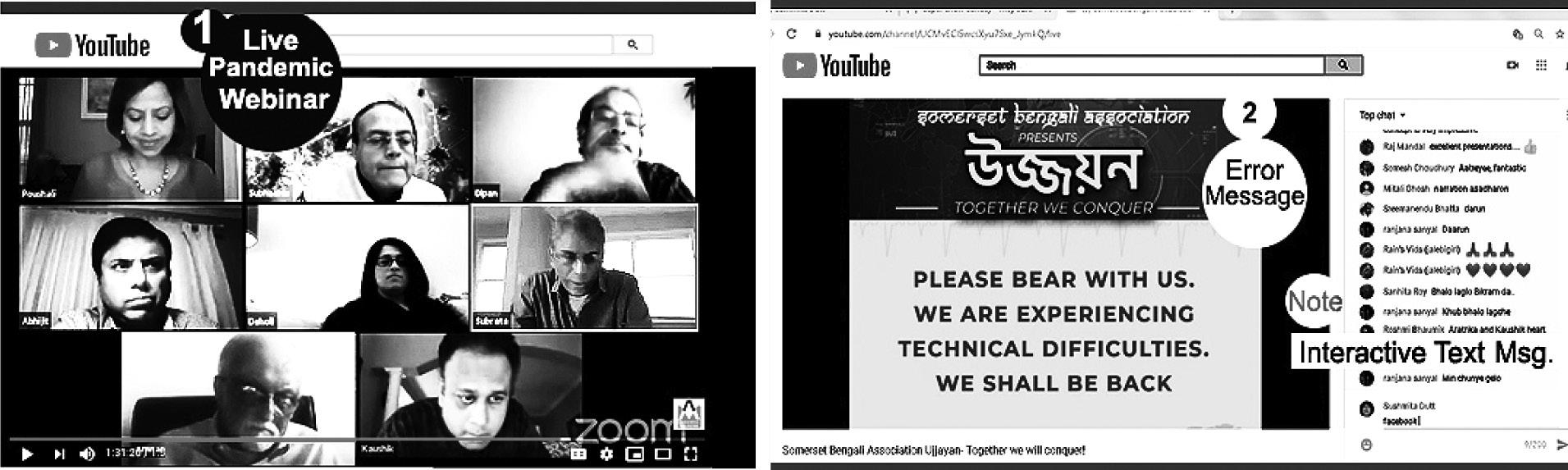
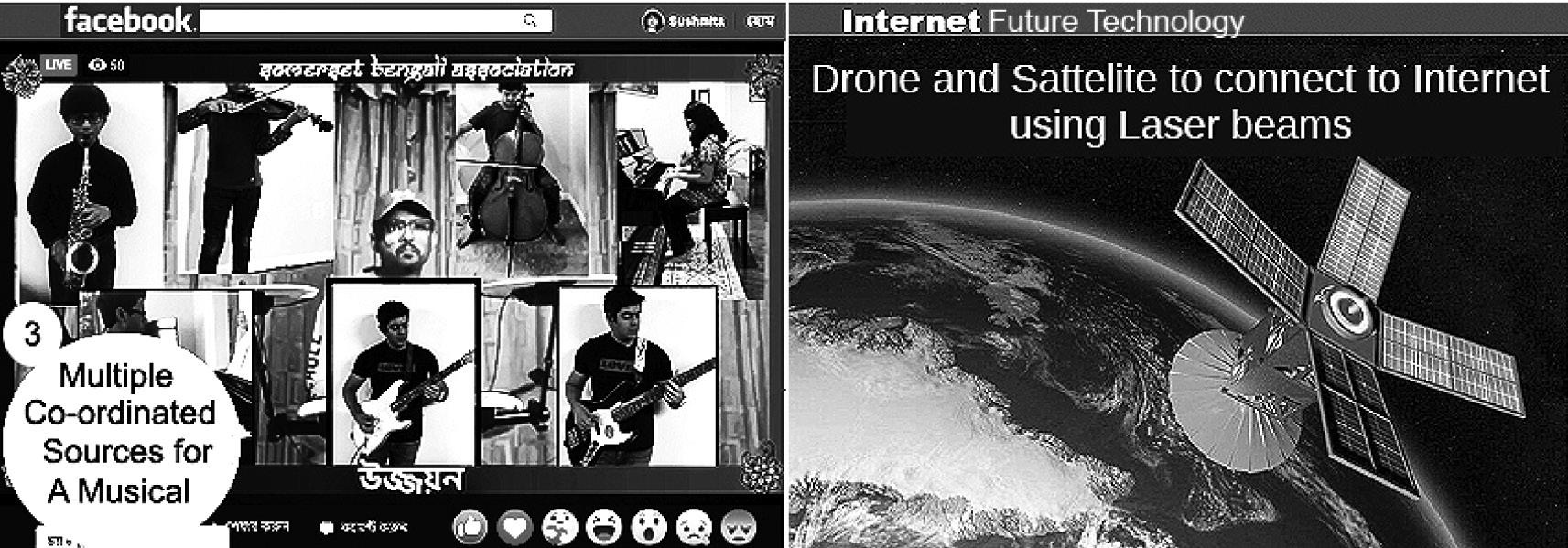
| continue from page 5
especially in the southern hemisphere, fear an increased threat to wildlife because the pandemic means they have less money and personnel with which to conserve endangered species and habitats.
In the Amazon rainforest, environmental authorities are reining in monitoring and protection operations. In the Masai Mara and Serengeti, nature reserves are taking in less tourist revenue, and are therefore struggling to pay rangers. Conservation groups fear this will open the door to more illegal poaching, mining, and logging, especially now that local people are losing income and need new ways to feed their families.
Potentially offsetting this is reduced demand for many natural resources, but it remains to be seen whether home isolation of half the world’s population affected the appetite for consumer goods.
The respite for nature will be less important than what follows. That is already being decided in closed meetings while the public is locked down at home. UN leaders, scientists and activists are pushing for an urgent public debate so that recovery can focus on green jobs and clean energy, building efficiency, natural infrastructure, and a strengthening of the global commons.
“This is the big political battle,” said
Laurence Tubiana, CEO of the European Climate, and an architect of the Paris agreement. Leading scientists have jointly signed an open appeal for governments to use recovery packages to shift in a greener direction rather than going back to business as usual.
Ultimately, the most important environmental impact is likely to be on public perceptions. The pandemic has demonstrated the deadly consequences of ignoring expert warnings, of political delay, and of sacrificing human health and natural landscapes for the economy. Of new infectious diseases, 75 percent come from animals, according to the United Nations Environment Program. Compared with the past, they pass more rapidly to humans through wildlife trafficking and deforestation and then spread across the globe through air travel and cruise-ship tourism. China – the world’s biggest market for wild animals—appears to have recognized this by banning the farming and consumption of live wildlife. There are growing calls for a global ban on “wet markets”.
The pandemic has also shown that pollution lowers our resistance to disease. More exposure to traffic fumes means weaker lungs and greater risk of dying from Covid-19, according to scientists at Harvard University. As the UN’s environment chief, Inger Andersen, put it, nature is sending us a message that if we neglect the planet, we put our own wellbeing at risk.
| continue from page 11
cooling of certain gases trapped in a condenser coil. Therefore, it is very different from producing heat by space heaters which involves an expensive process of electrically heating a coil. In effect, heat pumps are very large space heaters without high cost of running them. I also learned that heat pumps can double up as air conditioners in summertime by simply lowering the temperature in the unit.
However, the most attractive aspect of heat pumps for me was they can heat up an area of choice in the house such as kitchen or bedroom on demand within minutes, thereby eliminating the need for heating up entire house. Another attractive feature was they are ductless, thereby eliminating loss of heat (or cool) via leaky ducts. Ducts are also often dusty, and source of nasty allergens. I was sold. What can be better? I will be using my solar credit-electricity to run heat pumps to heat areas I need to heat, thereby, significantly reducing my dependence on oil heat. This will save me money by using less heating oil. It will also boost my conscience by polluting the environment less.
I called a couple of contractors for evaluation and estimate, and finally settled on installing three decent size heat pumps for a price-tag of approximately
$9000 after a rebate. I also received a seven-year interest-free loan from a bank as a state green energy initiative. The units were installed in mid- November 2019.
We survived entire New England winter with only half-a-tank of heating oil and our newly installed heat pumps. Heat pumps produced heat even when outside temperature was in teens. Actually, our house was never so warm before.
I was apprehensive in the beginning, because heat pumps do require considerable amount of electricity. However, 2020 summer is here, and we still have significant amount of solar-electricity credit. Furthermore, this credit will keep on increasing through warm summer months. At this rate I anticipate paying off my heat pump loan in approximately two more years.
Currently we have a partially electric car. In the near future I plan is to purchase a fully-electric vehicle which we will charge with solar electricity produced on my roof. My goal is to have a nearly zero carbon-impact on the environment in terms of energyuse, and without costing me anything. At the top of it, I will accumulate annual cash bonus in the form of SREC checks for the next four years. What can be better in this uncertain and trying time!
| continue from page 12
sion, broadcast radio, downloaded and streaming digital content and video games online.
• Exabyte: The unit symbol for Exabyte is EB. 1 EB = 1billion gigabytes of data.
• Bandwidth: It determines the amount of data that can be sent and received from one point to another over a certain period of time. It is measured as bits per second -bits/s. Bandwidth limitations have an impact on data being transferred.
For jammed Internet traffic, low bandwidth issues and related technical interruptions, virtual programs online like video streaming may stop abruptly. We have been experiencing that recently on collaborative platforms like Zoom, Facebook and YouTube. We have had many virtual entertainment programs presented recently by community organizations, some had the luck of having flawless uninterrupted run, like the webinar on Pandemic presented by Ananda Mandir in the early days of lock down, April 25, 2020, had zero technical glitches, absolutely none. Community members participated virtually over Zoom frame presenting their views via YouTube and Facebook. (See picture 1: Live Pandemic Webinar). But then, there were other virtual programs which were having technical interruptions in streaming videos and had to be stopped and resumed later (See picture 2: Ujjayan on YouTube).
Please note that while Picture 2 shows an interrupted video on YouTube, interactive text messages were still on. Also, the same program, “Ujjayan” video, was running successfully on Facebook without any technical interruptions (See picture 3) In fact, to my delight, technically, in this show of “Ujjayan” multiple musicians played the same song in a coordinated capture, the Zoom feature that we experienced at later dates (May/June 2020) without interruptions.
Pandemic made Zoom rise to unforeseen growth. Everybody is using Zoom, maintaining social distancing, but is that what Zoom wants? Zoom’s founder and CEO Eric Yuan is reportedly expanding into creating future customers by adding 90,000 schools to his list for free distribution and free training on how to use Zoom. But then, Zoom’s dependency on Internet traffic and bandwidth issues remains a technical issue to be addressed.
3D Studio, California created a
presentation on future technologies. Each one of us will have our personalized digital database of friends, customers, events, videos, images, webinars etc. We will be able to display the entire database graphically (interactive images) over a large screen, it can be a blank wall of our bedroom. We will select the image we want to interact with and then we will have ‘Laser Beam’ connectivity, yes, you are reading right, it’s neither Wi-Fi nor cable but laser beams to connect to Internet, retrieve and display information at finger flip in super high speed. Facebook is already working on this technology as a solution to our Internet traffic problems (See picture: Facebook: Future Technology). Also, a German startup Mynaric (https://mynaric.com/technology/overview/) is working on sending information using laser beam.
Technology: Where is the Human touch?
I want to mention a personal experience. I was then in an internship at Digital Multimedia Lab of New York University. I had a bright friend, an IT professional from Washington DC who used to be my valued, online contact for complex technology questions. He texted me one weekend that he was driving to New York and wanted to have lunch with me. I took a digital view of the restaurant he had reserved online and I said, perfect. We met for the first time, two online friends at a restaurant. A tall, handsome guy, his looks through his glasses made him look brighter than what he looks online. I was impressed. As we progressed through the lunch and some interesting conversations, I gradually gathered that the human touch was missing. I did not feel that heart connection with him and while returning home I realized that this is probably the horrific downside of technologies we live with - there is no exchange of pulse beats. There is no human touch. I do not want to have a robotic life, never. I want to be human. I want to have faceto-face social contacts. I want to feel and breathe human closeness. We do not have that human experience in our virtual world, at least not now. Bio-technology software companies are aiming to bring that human experience to online, virtual human interactions. But we are not there yet. I wish we had that human aspect of technology developed before we got into this social distancing, quarantine phase. Keeping my fingers crossed for that Human Touch!
Reported by Pradip R. Das
GSCA conducted its annual Board of Trustees election for 2020. Seven candidates vied for the four available positions in the board and voter turnout at ~93% was indeed phenomenal at this year’s election. The new 7 member board, including the four officers comprising the chair, vice chair, general secretary and treasurer, took office in early April.
In lieu of a face to face Annual General Meeting (made impossible under the current social distancing and group meeting restrictions due to the coronavirus pandemic), the 2019 Annual Report was circulated online to all GSCA members. In it, the outgoing chairperson of the board and the treasurer outlined and summarized the past year’s achievements and finances. Committee reports were also included as well as the welcome address by the new chairperson. Since the activities for the rest of the year remain uncertain, an interim budget was approved by the members to keep the necessary operational expenses of the organization funded appropriately.
Baishakhi
On May 2nd, GSCA celebrated Baishakhi with an online presentation for viewers. An in-house program “Basanti Hay Bhubonmohini” consisting of a collage of poems and songs written and composed by Rabindranath Tagore, Kazi Nazrul Islam, Michael Madhusudan Dutta, Jibanananda Das was presented by GSCA members as singers and narrators.
Several artists from Kolkata in informal renditions of their respective genres also performed from Kolkata on this live virtual program. They included “Pancha Kobir Konya” Riddhi Bandyopadhya and “Bachik Shilpi” Samya Karfa. The finale was performed by Sagnik Sen who, with his mellifluous voice, entertained all viewers and listeners with Rabindra Sangeet and Hemanta Mukherjee’s songs. Sagnik also entertained some personal requests made online.
Overall, there were 1200 viewers for this live online program by GSCA. Kudos to the many behind-the-scenes technical hands and participants from GSCA who made this presentation possible.
GSCA Philanthropy
In response to the global corona-
virus pandemic, GSCA contributed from both its own fund and members’ donations to several organizations engaged in covid-19 relief operations such as
• NJPRF
• Funding for supplies in NJ Hospitals
• Robert Wood Johnson Hospitals
• JFK Medical Center, Edison
• Ramakrishna Mission
When a category 4 cyclone, Amphan, struck Kolkata and West Bengal in mid-May causing widespread devastation all across, GSCA again rose to the occasion and made donations to
• Mukti Foundation
• Bharat Sevashram Sangha
In continuation with its mission objectives and yearly functions, GSCA in 2020 awarded one time scholarships to six graduating Plainfield High School seniors to help them in some ways to get started in colleges or vocations of their choices.
The fruits of GSCA’s philanthropic efforts in West Bengal saw seven students, supported by GSCA throughout their studies, completing their MBBS in February 2020 and begin their residencies. Currently, GSCA is supporting a total of twenty seven students in West Bengal…. eleven in MBBS, four in Nursing, nine in Engineering and three in Science streams.
“New Normal”
We all have been living in unprecedented times caused by covid-19 outbreak from a new coronavirus for the past several months. Researchers across the globe are working tirelessly and frantically to discover a vaccine but till that happens, we have to accept the “New Normal” way of living. This includes, but not exclusively, social distancing, work from home for those possible to do so, online learning from home for students, and particularly, more stress on personal hygiene. Online socializing platforms have become immensely popular and allow people to stay connected.
No one can say, with some degree of confidence, what might happen in the future in the post coronavirus era, there’s so much uncertainty that one can only say what’s happening now. People are just adapting to the “new normal” way of living. Will we ever fully go back to the lives we lived in the pre coronavirus times? Perhaps not.
Stay Healthy and Safe!
Reported by Chanakya Ganguly
With the start of the Coronavirus outbreak in NJ in March 2020, all NJPA events remained suspended. On April 22nd, 2020, World Earth Day was celebrated reminding us that, Yoga can change our inner environment for renewal and pursuit of peace. May 7th, 2020 marked the birthdays of Buddha and Rabindranath Tagore. May also marked the Mental Health Awareness Month.
Yogic Practice can form character, strengthen the mind, expand the intellect. The uncontrolled mind drags us down, but the guided mind frees us, so we can gradually progress in the Noble Eight-Fold Path of the Buddha – Virtue (Right Speech, Action, Livelihood), Meditation (Right Effort, Mindfulness, Concentration), Wisdom (Right View, Resolve). It is a matter of realized practice than mere intellectual knowledge.
Yoga can also help in reducing Diabetes, Obesity as it puts people at risk of corona infection.
Doctors in UK’s NHS reported that out of 2204 Covid-19 patients admitted to 286 NHS intensive care units, 73% were overweight. Obesity, general and/or abdominal is associated with higher levels of inflammatory markers even before the virus strikes.
With the current crisis, it is time to reflect on our values, principles and directions. It is important to understand Yoga, Meditation, Ayurveda, Clean Diet to achieve sustainable goals in Life.
Till we meet again, have a Wonderful Summer of Yogic Consciousness. Information about upcoming events will be available on our Facebook page “NJPA Parivar.”
Reported by Arpita Gupta
This year has quickly become an unforgettable year. We started the year with our annual Saraswati Puja, which filled our hearts with joy. We prayed, celebrated and enjoyed gathering with friends and family.
Then the sudden COVID-19 pandemic hit the world, causing the quarantine which changed our busy day-today lives and usual routines. Unable to interact face-to-face with the rest of the community, we all learned to live with these limited means. Even though we faced these challenges, the Indian Community Center has maintained its mission in order to help and assist those in need by fund raising in support of the Salvation Army, Robert Wood Johnson Fund, and Kolkata Foundation. From time to time, we inquired about the wellbeing of our members by giving personal calls, delivering personal groceries to senior members, giving updates on grocery alerts as well as other COVID related information. It is incredible to see the positive support provided by everyone and the togetherness of our community in such difficult circumstances.
Baisakhi was scheduled but postponed due to these unforeseen circumstances. We will be planning a virtual Baisakhi program for the near future.
In addition, Bengal, which was in the process of recovering from the later stages of this pandemic has recently been hit by Cyclone Amphan. ICC is currently working to support a similar fund raising effort for those affected by this tragedy.
| continue from page 1
a distinct smiling face, frequently standing at a podium on a social gathering and vigorously campaigning for the establishment of a traditional Bengali - Hindu temple with a cultural community center in New Jersey. He was confident and extremely optimistic that he could mobilize the community to come forward with active participation in creating a decent establishment, which we could proudly present as our own religious and cultural center. His relentless efforts, dedication and encouragement with a deep financial contribution had been a major driving force behind the establishment of such a center in New Jersey, called “Ananda Mandir,” but Chandi’s death cut short his continued enjoyment of the fruits of his dream. Nonetheless his efforts and contribution paved the way for our future generations to gather under a common roof to nurture our religious and cultural heritage for years to come. We salute Chandi for his outstanding leadership contribution for building Ananda Mandir.
Besides Ananda Mandir, he was also a strong supporter of Kallol’s cultural activities and Cultural Association of Bengal’s (CAB’s) activities, frequently sponsoring their annual Banga Sammelan, also known
as the North American Bengali Conferences (NABC). His handsome contribution to these organizations speaks volumes about his deep cultural and social commitments for the Bengali community in North America.
As a professional engineer, he had ample contributions to numerous designing and construction management projects for a number of organizations, such as, New York’s Port Authority, Triboro Bridge and Tunnel Authority, New Jersey’s Department of Transportation and many other private and public enterprises. Some of his noteworthy projects include rebuilding of the World Trade Center, International Arrivals Terminal at JFK Airport, Continental Terminal at Newark, rehabilitation of the Manhattan Bridge and Lincoln Tunnel. When I think of Chandi now, it projects an image of a meteor or shooting star that suddenly brightened the sky with a dazzling light but abruptly disappeared into the deep darkness.
Chandi Maitra will always be remembered for his vigor and relentless passion to make positive and lasting impact on our community through his vision, leadership and philanthropic activities. We will miss him - his smiling face, his friendship and his talk with humor and wit.
Reported by Subrata Bhaumik
Sahitya O Alochana (SOA) is a monthly literary and topical discussion forum under the aegis of Ananda Mandir (AM). It completed its 12th anniversary in January 2020 and will have organized one hundred and twenty-three (123) sessions by the time this report goes to press. These monthly sessions feature exciting and illuminating discussions on diverse subjects including literature, art, theater and movie; history, philosophy and religion; science and mathematics; economics and business; and social issues, sports, and current affairs. Below is an account of a few recent sessions.
March 2020 - No session was held in March due to scheduling conflicts.
April 2020 - In April we organized a session that addressed one of the greatest challenges that humanity is currently confronted with – novel Coronavirus. This session was the first one of a two-part series entitled “Pandemic, People, and Evolution.” It was an online event in keeping with times.
The session covered the history of pandemics and the science around them with a special focus on experience from the frontline and our collective struggle to manage the Covid 19 crisis while working on a potential cure. It clearly and successfully separated itself from the stream of confusing information that is constantly overwhelming our sensory system and navigated through the bits and bytes of this never-ending chatter separating facts from the fear, and constructively approached the coping process with this apocalyptic calamity, that, if not attended with thoughtful and effective response, will likely crowd us out.
The format of the session was a presentation by a panel of very successful and erudite healthcare professionals – researchers and practitioners from our community followed by a Q&A session. The panel comprised of Subhasis Banerjee, MD; Abhijit Chatterjee, MD; Kaushik Mitra, PhD; and Poushali Mukherjea, PhD. Other subject matter experts supporting the panelists included Deholi Bandyopadhyay, MS. and Dipan Ray, PhD with years of clinical pharmacy practice and education background.
Poushali Mukherjea moderated the discussion. It was a very successful session, which was evidenced by the number of cheering attendees (over 100) and the very engaging Q&A part that characterized by a very large number of thoughtful and practical questions, and the sheer length of that segment (about 40 minutes) – the whole session lasted about two and half hours.
A ton of thanks goes out to the panelists for their time, effort, and excitement to be a part of the discussion, and last but not the least, to Joy Bhowmick who oversaw a flawless execution of the digital meeting on multiple platforms that ran the risk of turning into a technical disaster.
May 2020 - No session was held in May due to continuing difficulties and scheduling conflicts resulting from the contagion fallout.
Future sessions - Quite a few interesting sessions are in the pipeline for next several months. In June the second part of the Pandemic session mentioned above is being held. It will address some of the sociological, economic, and evolutionary issues associated with pandemic and, of course, the human resilience. In July and the following months various other sessions on eclectic topics are being planned. They include a session on infamous Bengal Famines over the centuries, and a potential session on Gita – various interpretations.
The friends of Sahitya O Alochana would like to thank Ananda Mandir for its continued support for the forum’s contribution to the cultural enrichment of the local South Asian communities.
We welcomed 2020 with a fabulous New Year’s Eve Party at the Tagore Hall. The event was a joint effort with Kallol of New Jersey and was attended by a joyous crowd of 230. We were glad to note that Evergreen Club members constituted a very large part of the Ananda Mandir contingent.
The New Year began with detailed plans for three meetings during February-April period. Following our past experience, no sessions were planned for January because many members were away in India on their traditional winter sojourn. Our first meeting of the year, held on Sunday, February 16, celebrated “poush parbon” with many “pithey and puli” dishes, lovingly prepared at home by our volunteers to add special pizzazz to an already lavish potluck lunch. This was the first time we celebrated poush parbon with pithey and puli, and we were pleased to see more than thirty members participate in the feast and in the cultural program afterwards.
By Debajyoti Chatterji
Our next meeting was planned for Sunday, March 22, and the theme was set, following our historical tradition, as “experiences from this year’s winter vacation in India”. Unfortunately, by March 15, COVID-19 related social distancing restrictions were firmly in place, so we had to cancel our March 22 session.
Undeterred by the restrictions on face-to-face meetings, Evergreen Club members quickly adopted video conferencing as a viable alternative. We celebrated the Bengali “Naboborsho” (New Year) via Zoom on Sunday, March 29. We lamented the fact that there was no communal potluck lunch, and no hugs and handshakes were possible. Nevertheless, we were happy to enjoy each other’s virtual company and get our mind off the raging pandemic. A short cultural program brightened our session in the face of a darkening social mood.
Since that first video session, seven “virtual meetings” of Evergreen Club were suc-
cessfully held through the end of June, including one in April to celebrate “Kabi Jayanti” and one in May to observe “Mother’s Day”. For a while we met on a weekly basis, and then switched to a bi-weekly schedule – in place of our usual once-a-month face-to-face sessions.
While we miss face-to-face socialization (and sumptuous pot-luck lunches and dinnertheater outings), we are happy to enjoy the unanticipated benefits of these video sessions. Not only has our meeting frequency increased significantly, we have also found consistently larger attendance level (30+ members attending each session). Most significantly, we have found that the video conferencing format has encouraged almost every member to come forward and participate in the presentations and discussions without hesitation or inhibition!
As we wait for normalcy to return to our lives, we urge everyone to stay home, stay safe and stay well.
By Debajyoti Chatterji
Club” was launched a year ago on an experimental basis. At that time, some of us wondered if the writers in our midst would be interested in meeting on a regular basis to share their own works with their peers and receive constructive feedback. A meeting was called through social media to gauge the level of interest, and if enough people came forward, then establish a set of agreed objectives and ground rules for such a “Writers Club”. We were pleasantly surprised at the positive response received. More than twenty-five individuals welcomed the idea, and the first meeting of “Writers Club” was held in the home of Kumkum and Pradip Sen on July 27, 2019. More than a dozen writers attended this discussion-and-planning session with great enthusiasm and offered many suggestions. True to the name of this newborn “club”, several writers read their writings to all present at the meeting. At the end, a delightful dinner was served by the hosts, Kumkum and Pradip.
Since that humble but enthusiastic beginning, Writers Club has established itself as a highly motivated and active group. Ten successful meetings have been organized since that first meeting, and Ananda Mandir has become the group’s official home. In the early days, Writers Club met on a bi-monthly basis. In March of this year, we decided to move to monthly sessions, but COVID-19 sabotaged our plans, and we had to cancel our meeting scheduled for March 27, 2020. However, being a resourceful and dedicated group, Writers Club decided to embrace video-conferencing technology to conduct its sessions. These video sessions have worked very well. During April and May, Writers Club met on a biweekly basis. With the advent of summer and increased frequency of video conferences in our social and work life, these video sessions are now being held at three-week intervals. These meetings are typically attracting 16 to 20 writers.
Writers Club meetings are open only to “active writers” who are willing to present their own writings to their peers. Readings of third-party authors are not permitted. Club members are welcome to share their poems, short stories, personal narratives and essays – whatever they prefer to write. After each presentation, an intensive Q&A period follows, sometimes lasting as long as thirty minutes. As a result, our two-and-half hour sessions permit readings by only 6 to 7 writers. To accommodate all writers, we follow a staggered order over several sessions.
One of the remarkable achievements of this young club has been recognizing “nascent talents” and encouraging them to present their “first writings” to the group. At least four such “new writers” are now busy pursuing their previously unrecognized passion!
If you are an active writer and would like to join our club, please send an email to debsmee572@gmail.com.
The COVID-19 crisis has brought many challenges to all of us, and Ananda Mandir has not escaped its impact either. We had to close our temple doors to the devotees, cancel planned cultural programs, and shut down Tagore Hall until further notice. As a result, all of our revenue streams have virtually stopped. Since much of our expenses continue at usual levels, “cash flow” has become a significant problem for the organization.
This year’s Annual Fund-Raising Lunch has been scheduled for Saturday, August 9 (program details will be announced later). We are hopeful that by that time, requirements such as “social distancing” and “facial masks in public” will have been lifted, and that you and many other members and friends of Ananda Mandir will be present at that event. And being ever-supportive of Ananda Mandir, no doubt you will once again give generously to help your favorite organization weather this year’s unexpected financial storm.
You may donate on-line through our website (anandamandir.org) or send a check to Ananda Mandir to: 269 Cedar Grove Lane, Somerset, NJ 08873