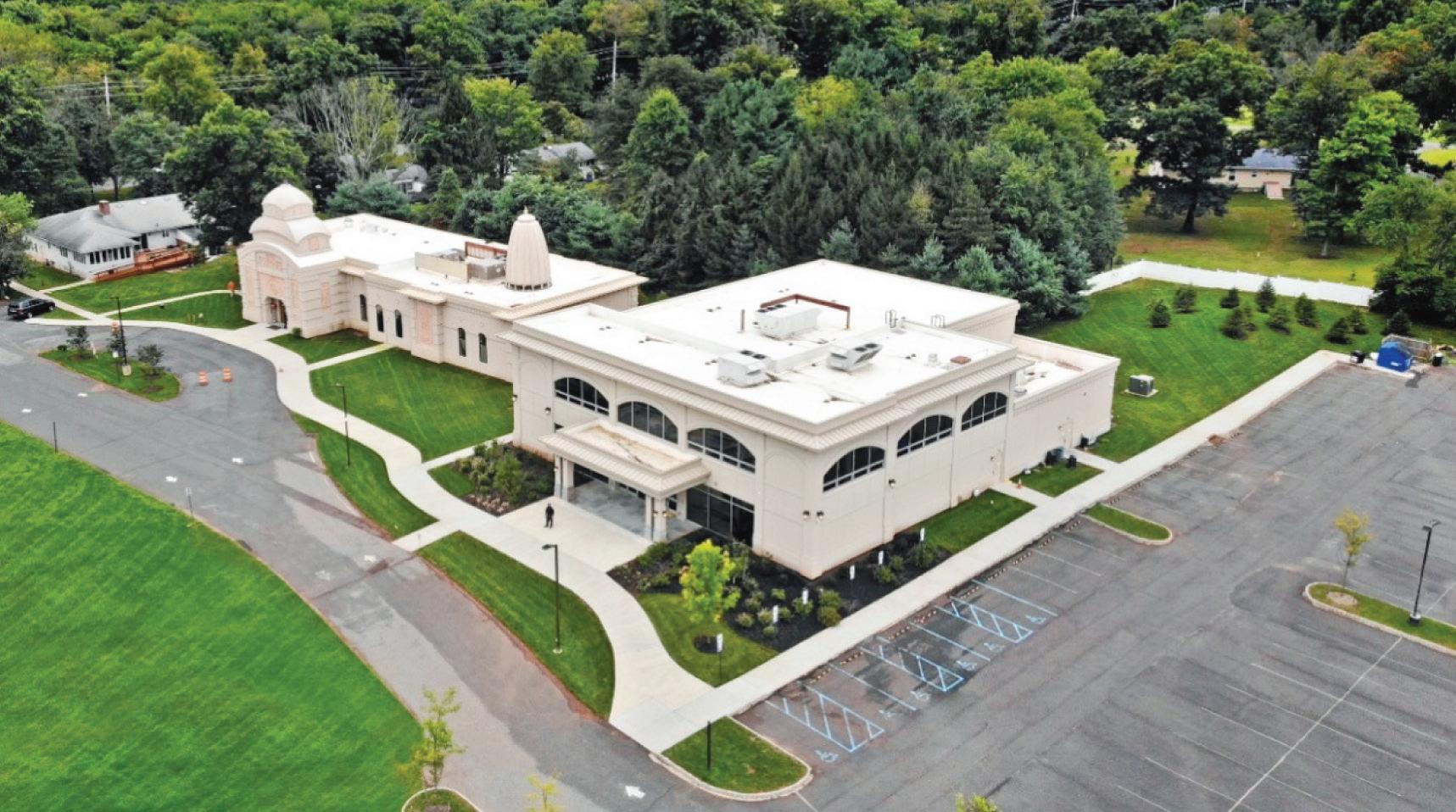
Ananda Mandir 269 Cedar Grove Lane Somerset, NJ 08873


Ananda Mandir 269 Cedar Grove Lane Somerset, NJ 08873
NJ
PERMIT NO. 1215
By Partha Chatterjee
I have written and rewritten these words at least a dozen times. And while I am quite confident that I will never have perfected my sentiments that meet my father’s talents in the written word, I will try my best.
My name is Partha Chatterjee, the son of Pronoy Kumar Chatterjee and Swapna Chatterjee. On behalf of our family, I would like to thank you all for coming today. I know that for many of you, it has been a difficult couple of days in dealing with the loss of “Pronoy Da”.
My father lived a long and majestic life. His journey, like many, started out simple and along the way, he had many roles. He started, like many of us, as the baby, born to a poet and a mother, whose love he remembered to his last days. He had that role for many years, as the youngest son of 6, playing up to the adoration of his elder and younger sisters. And while he never moved beyond playing the role of being “khokon”, he did embrace a new role as a student – achieving and accomplishing academic achievement that few can understand and even fewer can claim. Soon thereafter he embraced the role of husband, and while not a fairy tale marriage, it endured like all marriages with its highs and lows. He cared for his wife until the very end.
But my father was not satisfied with being just a son, a brother, a PhD, a husband. Like many of you, his ambition was great so he decided to take on the tole of immigrant. Immigrating in 1963 to a foreign land, separated by thousands of miles from his beloved family, culture and homeland. Connected only by blue air mail and horrible ISD/STD lines. Along his many years, he collected countless other roles:
• A scientist and inventor
• A Father to 2 (and then 3)
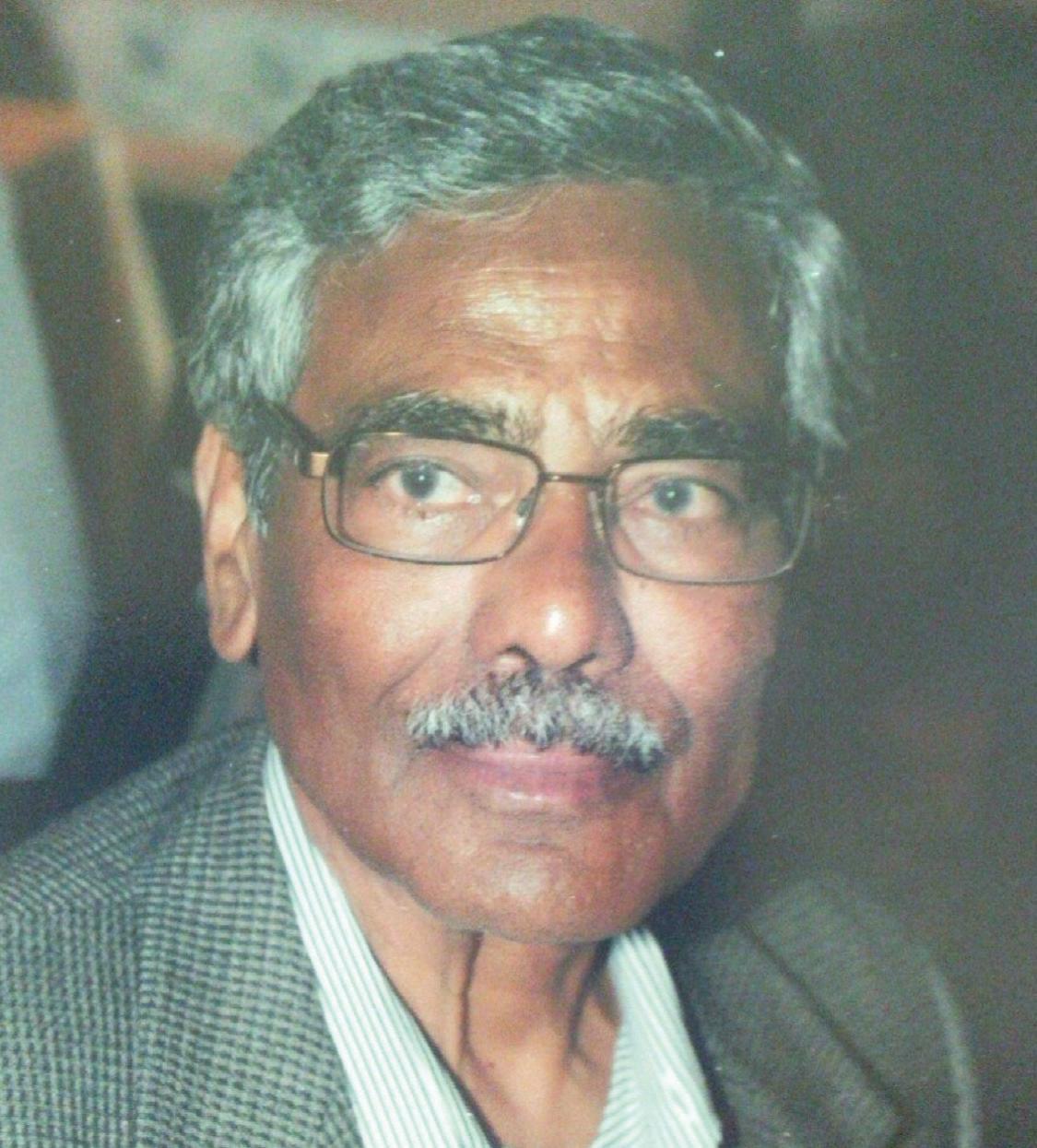
(October 26, 1936 – October 17, 2021)
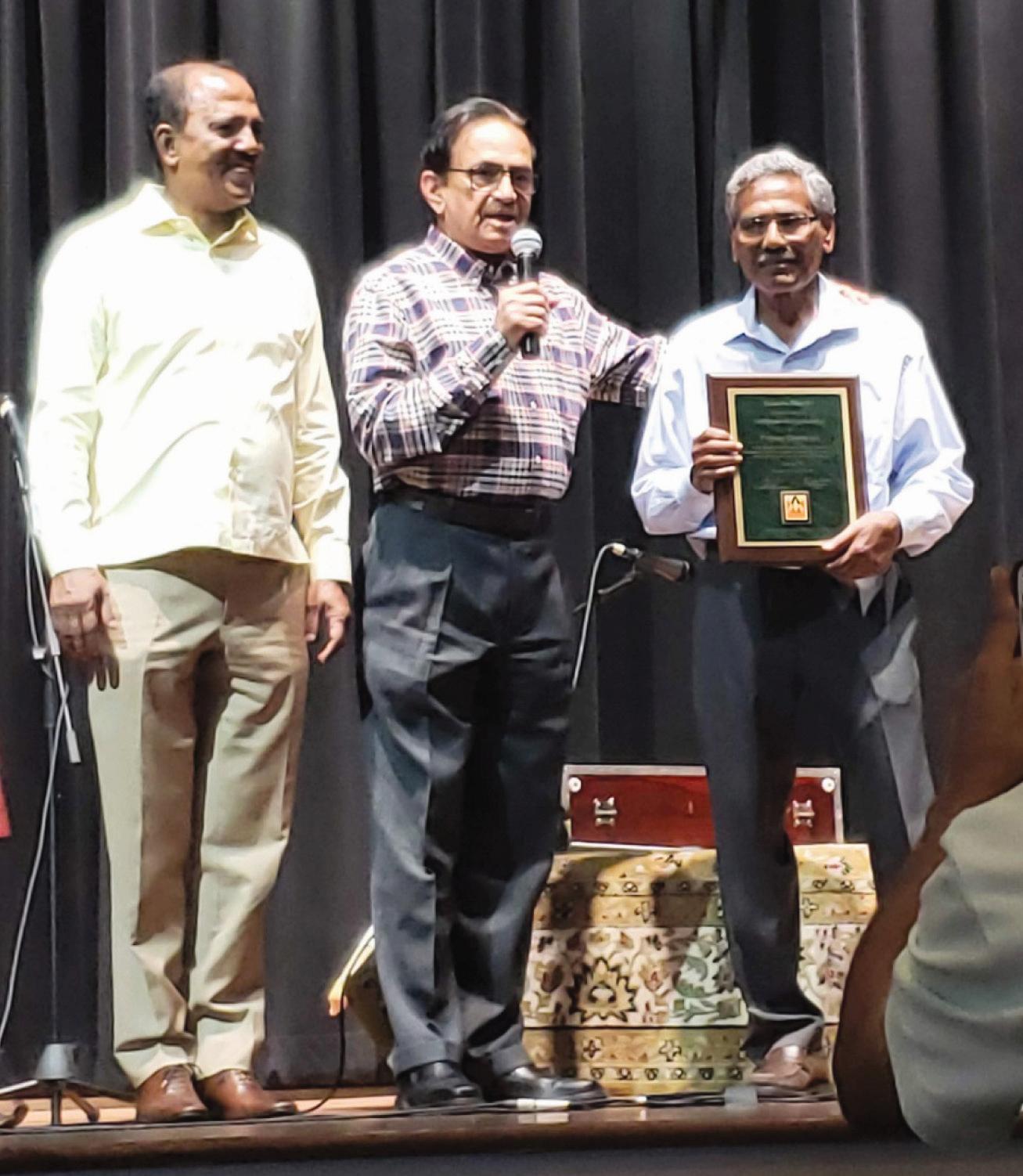
Chatterjee receiving Distinguished Leadership award from Paritosh Chakrabarti and Jaiprakash Biswas in August, 2019
By Debajyoti Chatterji
Adistinguished scholar, author and community leader, Dr Pronoy Chatterjee, passed away on Sunday, October 17, 2021 in his home in the presence of family members and a few of his closest friends.
Pronoy was born in the village of Sitalpur, West Bengal, where he spent his early childhood years. In 1946, he moved to Benares (now Varanasi) with his parents, Rameshwar Chatterjee and Nanibala Chatterjee (Ganguli). After finishing high school in 1952, Pronoy completed Bachelor’s and Master’s degrees from Benares Hindu University (BHU). In 1959, he joined Kandi Raj College, Murshidabad, as a Lecturer in Chemistry. He subsequently conducted research at the Indian Association for the Cultivation of Science, an institution of higher learning, and earned his PhD degree.
Ananda Mandir
Calendar of Events (Dates are subject to Change) Please check our website frequently www.anandamandir.org Tel: 732-873-9821
NOTE: If a particular Puja time is not listed, please contact temple or visit our website: anandamandir.org
JANUARY(*)
NEW YEAR’S DAY
Saturday, 01
SHYAMA PUJA
Sunday, 02
SATYANARAYAN PUJA
Sunday, 16
RATANTI KALI PUJA
Sunday, 30
SHYAMA PUJA
Monday, 31
SAHITYA O ALOCHANA (*) CULTURAL PROGRAM (*)
FEBRUARY(*)
SARASWATI PUJA
Bani Bandana & Hatekhori
Satorday, 05
SATYANARAYAN PUJA
Saturday, 05
SAHITYA O ALOCHANA (*) CULTURAL PROGRAM (*)
MARCH (*)
SHIVA RATRI
Tuesday, 01
SHYAMA PUJA
Wednesday, 02
HOLI/ DOL
Friday, 18
SATYANARAYAN PUJA
Friday, 18
SHYAMA PUJA
Thursday, 31
Saturday, February 05, 2022
In August, 1963, Pronoy came to New Orleans, Louisiana, with his new bride, Swapna, as a post-doctoral research fellow under a USDA fellowship. Two years later, he moved with his family to Princeton, NJ, as a research scholar at the university. Soon thereafter, he joined the Personal Products Division of Johnson & Johnson and served the company with great distinction for many years as a research manager. He conducted and supervised groundbreaking research on novel absorbent systems. A number of US patents were issuedbased on his work, and the company reaped significant commercial benefits as well. In recognition of the research Pronoy conducted at Johnson & Johnson on absorbents, Calcutta University conferred a D.Sc. degree on him.
After early retirement from continue to page 6 }
SAHITYA O ALOCHANA (*) CULTURAL PROGRAM (*)
APRIL, 2022
BASANTI DURGA PUJA
Thursday, 07 – Monday, 11
SHUBHO NABABARSHO
Friday, 15
SAHITYA O ALOCHANA (*) CULTURAL PROGRAM (*)
(*) See www.anandamandir.org or Call Mandir for details
Special Religious Services: Upon request, the priest of Ananda Mandir offers services such as in-house Shraddhas, Rituals associated with Cremations (Antyesti Kriya), Shraddha Anniversaries, Pre-wedding rituals (Naandimukh, Ashirwad, etc.), Upanayan (Paitey), Annaprasan, Wedding Ceremonies & Wedding Anniversaries, Griha Prabesh (Bhumi Puja), Consecrations of new cars (New Car Pujas) and others. If you have needs for any of the above or more, please feel free to contact Biswabhai @ 732-873-9821
Ananda Sangbad
A Periodical Newsletter Published By ANANDA
MANDIR
(A Tax-Exempt, Non-Profit Organization)
269 Cedar Grove Lane Somerset, NJ 08873
Phone: 732-873-9821
Website: www.anandamandir.0rg ***
Guru Chakravarty Executive Editor
All queries, articles, news reports and letters should be directed to guruchakravarty@yahoo.com Phone: 908-752-3065 ***
For general information, please contact the following executives of Ananda Mandir:
Jai Prakash Biswas President
Debajyoti Chatterji Vice President
Anjan Lahiri Vice President
Ashok Rakhit Vice President
Arun Bhowmik General Secretary
Chanu Das Treasurer
Pradip Majumdar Assistant Treasurer
BECOME A MEMBER OF ANANDA MANDIR AND PARTICIPATE IN THE COMMUNITY ACTIVITIES TO ENRICH YOUR FAMILY
Since the inauguration of Ananda Mandir there were efforts to publicize the activities of Ananda Mandir via a newspaper. In 2005, when the Board of Trustees wanted to take a leap into production of a quality paper, beyond just the news about the temple activities, they turned to Pronoy to take charge. Pronoy was quite experienced in producing club magazines, in addition to being an accomplished writer himself. He showed his brilliance in transforming the production of the Ananda Mandir paper in a way that not only started to produce a high quality newspaper, but also established a support structure to sustain it. He put together a team of writers and editors, defined the objectives of the team and specify the roles of the team members. That was the beginning of the Ananda Sangbad, the quarterly newspaper as we see it today. Pretty soon, he organized the production of Anandalipi, the annual magazine.
What was impressive was his continuing evolution with new ideas and his ability to implement those ideas. In 2010, he created the “Gayatri GaMarsh Memorial Award for Literary Excellence” and set the guidelines to implement the program. The first Gayatri Awards were issued in 2011. In 2012, Pronoy created the idea of selecting an Outstanding Volunteer from
all the members working for the temple to recognize their work. So, he established an “Awards & Recognition Committee” and set guidelines for selecting the awardees. He also saw the need to identify groups or organizations outside Ananda Mandir who provided philanthropic community services. So, he collected donations from people to create a separate fund for awarding those efforts. The first such award was given to “Manabí” in 2013. In July 2018, when Ananda Mandir hosted the North American Bengali Conference in Atlantic City, Pronoy proposed the idea of a “NABC Special” issue that included selected previously published articles in Ananda Sangbad in order to publicize the paper.
Pronoy guided the publication committee of Ananda Mandir with a stable hand. The leadership of Pronoy was never in question. There was arguments and dissentions during the meetings, however, these heated discussions were never bitter or personal, and at the end, the functional ability of the committee only grew. He worked diligently himself and valued the timely completion of tasks by other committee members.
Pronoy loved writing and he wrote frequently in both Ananda Sangbad and Anandalipi. He authored one of his memorable writings in
his sickbed in Robert Wood Johnson hospital that was published in the July-2013 issue of Ananda Sangbad. He wrote:
Standing at a hallway next to the window and gazing at the landscape of New Brunswick of today, I reminisce my days at Johnson & Johnson Research, where my creativity bloomed and I saw many successes of my efforts. Life was not easy at that time and it is not easy now, but there is one difference. Back then I had the passion, imagination and enthusiasm for creativity. I have lost that dream now as the words of the doctor’s final statement still reverberates in me: “You have cancer”.
Pronoy was quite knowledgeable in Vedantic Philosophy. He wrote a brilliant piece, “Interpretation of Vedanta” in the April-2013 issue of Ananda Sangbad, where he explained his understanding of the subject as follows:
The concept of “Oneness” in Vedanta tells us that God and nature, that is the creator and its creation, are the same. The rocks, the rivers, the stars, the moon, the animals, the worms and you and I are all “One”, separated only in the perception of our minds. Everything that we see or conceive, that we imagine or dream, every sound, smell or thoughts, all are “One”; not separate from one another.
Pronoy retired from the Publication Committee in Jan-2019, because of continued illness of his wife Swapna, and his own illness
of ALS creeping up. Still, he chose to remain as an advisor and offered guidance on the two publications that he nurtured to fruition. In his last article in Jan-2021 of Ananda Sangbad, “A Self Introspection”, he wrote:
As I look back the path that I walked through my journey for over eight decades, toiling in hopes and aspirations that lit my mind in excitement and thrills, and at times, brought sadness and disappointments, causing depression, I ask myself the purpose of all these and the reason for this journey. Are these real or illusion? Why am I here, where I came from and where I am going to? I don’t know, but I continue my journey ever since, without any pause, to an unknown destination.
Pronoy diligently saved the published issues of Ananda Sangbad in order to create an archive to be saved at Ananda Mandir. At Pronoy’s continued urging, Debajyoti did complete that painstaking task and created an archive starting with copies of the publication even before Pronoy’s time, to the current issue. This combined collection has been filed in thick binders and saved at Ananda Mandir.
Pronoy was recognized for his long association and leadership at Ananda Mandir with a “Distinguished Leadership” award in August, 2019.
Guru Chakravarty Executive Editor
Andy Bose, a well-known CPA in New York, and a well-wisher of Ananda Mandir liked what he read in Ananda Sangbad so much that he volunteered to pay the expenses of the publication starting July, 2016. His support of the paper continued for each issue of the paper until 2021 when he took retirement from his business. Many people may not know that he funded the entire cost of printing and mailing every issue of Ananda Sangbad for almost 5 years (@$1250 per quarter) simply because he enjoyed reading it. In our view, that was the greatest vote of confidence we could have ever hoped for.
At a meeting of the Board of Trustees of Ananda Mandir on Sunday, 14 November 2021, the members unanimously expressed heartfelt gratitude to Andy and wished him a happy and healthy retirement. Andy, we offer invitation to you to visit us at Ananda Mandir whenever you can.
By Paritosh Chakrabarti
The last few years have been quite difficult for me, with the deaths of many friends and relatives, so much so that I do not feel like giving funeral talks anymore. These talks do not do anything to the deceased. They are for those who survive. In recent times I have been trying to do every little thing I can to people I know to make their lives a little happier when they are alive. So, I will try to make my comments brief.
I had known Dr. Pronoy Chatterjee for about 52 years since we first came to New Jersey in 1969. That relationship ended on Sunday, October 17, at 2:50 pm.
In our 52 years relation there was a gap, a gap of 12 years, when I and my family lived in Pittsburgh. That was between 1982 and 1994. I remember Pronoy coming to visit me when I came back from Pittsburgh. He came to see me at the PMC Polymer Products Company in Stocker Town, Pennsylvania. It was the first company that marked the beginning of the PMC Group Companies in September 1994. We went out for lunch to a country club in Easton.
Though Pronoy and I interacted socially as members of the Bengali community, there was nothing exceptional or special about those interactions except for cases where there were needs for support to fellow Bengalis in times of difficulty. I recall an occasion when one of our New Jersey friends was going through a divorce proceeding. This friend was going to lose the control of her house unless she could immediately pay $8,000 as part of her spouse’s share of equity. I was in Pittsburgh at that time. The friend called me and asked me if I could lend her the money and she would pay me back within one year. I told her that I would give her the money but before I did that, I thought the community must come forward in such cases with a helping hand. I called several of our mutual friends. Most did not respond except for Dr. Pronoy Chatterjee and Purna Bhattacharyya. We solved our friend’s problem. This was just one example. Pronoy would always come forward when he was asked for help by any member of the community.
I came to know Pronoy more deeply than just through social interaction since the time he was diagnosed with Pancreatic Cancer in 2012 and was given only a few months to live. He was retired at the time. But he had the strength of character and a determination to fight when there was a crisis. That made him beat the odds of survivability of pancreatic cancer. He was declared cancer-free in 2014. How he did it is a long story unto itself that I will narrate some
other day in some other place.
What I want to talk about now is what he did during the period from 2014 to October 17, 2021.
While many people, when struck by a devastating disease like pancreatic cancer, would have felt sorry for themselves or would have blamed their fate for the misfortune, Pronoy did nothing of that sort. He immersed himself in voluntarism and literary work. This reminds me of a few letters Poet Laureate Tagore wrote to Hemantabala and his wife Mrinalini Devi. Though I read many of Tagore’s letters from a collection of his letters, I did not pay any special attention to the above letters until I read an essay by one Semantee Ghosh titled Sreemati Chhuti. In these letters, Tagore divided his life into three types of work – Kaz, Baje Kaz, and AuKaz. He went on to define what he meant by the terms.
By Kaz he meant the work a person does as their duty. In his case, it was the work he was doing in building the Visva Bharati University and teaching there.
By Baje Kaz, he meant unessential work, namely what one does out of his or her internal calling. In his case, these were his writings of thepoems, songs, dramas, short stories, etc. These ware all Baje Kaj
By AuKaz he meant no-work -- what he called Chhuti –the time spent leisurely doing nothing. He also described Aukaz as sunnya kaz, meaning zero-work. He later explained sunnya as the time he spent contemplating, from where came forth all his creative work, the ones for which he was awarded the Nobel Prize. The Nobel Prize was awarded for his Aukaz.
I mentioned this to Pronoy about a couple of weeks ago. He thought these descriptions were very perceptive and he could relate to them in his own life.
It seems that from 2012 through October 17, 2021, all Pronoy was doing was Aukaz in Kabiguru’s language. He spent most of his time organizing the literary magazine ANANDALIPI and writing various pieces of literary work. He also devoted himself to voluntary work, responding to those who needed his help and counsel. One of his last acts was to facilitate a major donation to Ananda Mandir that I was contemplating for a while. I must add that Pronoy was not alone in our community who gave and continues to give a major part of their time to voluntarism. I respect them and my heart-felt appreciation goes to all of them.
Pronoy’s radiation- and chemotherapy ultimately made him suc-
By Amitabha Bagchi
AlthoughI had known Dr. Pronoy Chatterjee (Pronoyda to me) for over thirty-five years, I came to know him closely only in the last dozen or so years of his life. Our relationship moved over the years from perfunctory acquaintanceship in the beginning to mutual appreciation and regard that led finally to genuine friendship and fondness in the end.
I first heard of Pronoy Chatterjee from his friend Dr. Anil Mukherjee (aka Anilda) shortly before coming to New Jersey in 1984. Anilda was my colleague at Xerox Corporation in Rochester, New York. He and Pronoyda were friends from years ago when both of them were young postdoctoral research chemists in New Orleans.
In New Jersey, I first became acquainted with Pronoyda through events organized by New Jersey Puja Association (NJPA), principally Kali Puja and Saraswati Puja. I later learnt that he was one of the people who founded NJPA during his Princeton University days. In those early years of mine in New Jersey, Pronoyda was a manager of research at Johnson and Johnson. We met and interacted mainly at Bengali social gatherings. I remember him ribbing his good friend, Dr. Braja Dulal Mookherjee, about spirituality, theism and icon worship at a religious function held in the latter’s home.
Pronoyda and I began to get closer when we both got involved with the conceptualization of Ananda Mandir in the middle 1990s. Pronoyda came to Ananda Mandir not from the puja angle of NJPA but from the more secular or cultural angle of the Asian-American Cultural Exchange, of which he was a member. When circumstances, viz., zoning restrictions, forced enthusiasts like me to lean toward the temple side of Ananda Mandir as its primary raison d’etre, I had my first serious disagreement and debate with Pronoyda. We both took it in good humor, however, and moved on.
Within a couple of years of Ananda Mandir’s becoming a reality – with real estate ownership and plans afoot for expansion into a temple-cum-religious center – Pronoyda spearheaded a process that is sure to have a profound and long-lasting impact on the organization. With able support from Debajyoti Chatterji and Ashok Rakhit, he set up a structure for publications under Ananda Mandir’s banner that serves the twin purposes of publicizing the organization’s activities and promoting the literary ability and interest of our members and well-wishers. One pillar of the
structure is a quarterly newsmagazine called Ananda Sangbad -- with news, features and articles of reader interest. The other pillar is an annual bi-lingual literary magazine, called Anandalipi, containing short stories, poems and essays that largely but not exclusively showcase the creativity and literary talent of the Bengali diaspora in North America.
The genius of Pronoyda lay not just in starting the two magazines but in creating a detailed support structure to ensure their continued publication for years to come. At the apex of course were the Chair and Vice-Chair of the Publications Committee. Under them were one Editorin-Chief, two principal editors (variously dubbed Managing Editors or Executive Editors), and a set of editors and associate editors. Pronoyda spent quite some time defining, perfecting, and laying down the roles and responsibilities of each position. He then interviewed people to fill the positions, gauging their interest and commitment. In effect, he created a miniature support structure of our publications reminiscent of the more elaborate one of, say, the Ananda Bazar Patrika and Sharadiya Desh
*** *** ***
Most of the activities I have described above took place in the aughts – i.e., the first decade of the twenty-first century. At that time, I was deeply involved with Ananda Mandir in a secretarial and operational capacity. But I had very limited overlap with Pronoyda, and was only vaguely aware of his literary interests and creative ambitions. I made an occasional contribution or two to the publications and bought a copy of Pronoyda’s first novel, but otherwise I did not have much of an interaction with him.
The situation began to change in the latter half of 2008 when I became better acquainted with Gayatri GaMarsh. Apart from being a senior editor of Ananda Mandir’s publications, Gayatri was also responsible for the new English-language page of Sangbad Bichitra, the flagship fortnightly published by the Cultural Association of Bengal (CAB). At Gayatri’s invitation, I started contributing a regular column to Sangbad Bichitra’s English-language page. Within a year, in the fall of 2009, Gayatri GaMarsh died suddenly and unexpectedly from complications stemming from heart-valve surgery. Shortly thereafter, Pronoyda approached me to fill in the void left by Gayatri’s death. As a result, in the
About 40 years ago, he and Swapna Boudi came to our house when we had our first child. They said, “Rita, our son Partha grew up in this crib. If you don’t mind, we would love to give this to you for your daughter. It is in great condition.” I saw an honest, sincere man, no ego, no motive, just a simple friendly offer. We were humbled. Our daughter did grow up in that special crib.
Some of us know that he was an expert in buying “pathar mangsho”. During the heydays of NJPA, he used to insist to go with us to buy the goat meat, because he said he was a connoisseur on goats, he could identify a good goat from a bad goat. Hope he meant real goats, not --- never mind.
Rita and I visited him one day in the hospital while he was suffering from pancreatic cancer. He was finishing up his forceful conversation with a doctor. As the doctor left, he turned to us and said, “You know, I think I will beat this pancreatic cancer thing”. He said that firmly with a smile. I told to myself, isn’t that just about impossible? Well, he sure proved me wrong. We all enjoyed his company for a number of years after that.
During the final few weeks of his life, Rita and I visited him frequently. I shared a bottle of scotch with him, while Rita brought in some delicious Bengali home cooked delicacies that he truly relished. “Shorshe Bata Ilish Maach from Bangladesh” was probably the last authentic Bengali dish he enjoyed.
May God bless his soul! May he rest in peace forever!
Dwipen Sarkar
Pronoy was a close friend for more than fifty years. I have many, many fond memories of Pronoy the gentleman, Pronoy the scientist, Pronoy the author and Pronoy the community leader. Two of these memories stand out in my mind:
First, Pronoy was the first among us to buy a home in 1971. He took an automobile maintenance course from an Adult Education Program in his hometown, Spotswood. He invited a few of his close friends to bring their cars to his home so he could teach us how to change oil, filters and do minor tune-ups in his driveway. We were all young, living in apartments at that time and trying to save money whenever possible. Pronoyda’s graciousness left a huge mark on our minds.
Second, starting in 1970, New Jersey Puja Association (NJPA) began to organize annual Saraswati Pujas. In the early 1980s, a few of us wanted to organize annual Kali Puja. However,
the vast majority of NJPA members was against the idea and even told us that they would not join if we went ahead. Pronoyda took a strong leadership role and championed the idea of annual Kali puja Ultimately, his determination and power of persuasion prevailed, and NJPA began annual Kali Puja, a tradition that continues even today.
I met Pronoyda back in 1969 in the home of a close friend in Iselin, NJ. I was thrilled to meet a well-known scholar, a reputed scientist and a respected writer. Even though it was our first meeting, I connected with him quickly.
Over the decades I became very fond of him, and would not miss any opportunity to spend time with him, often in the company of other mutual friends. Our adda sessions were most memorable. It did not matter what topic was discussed -- the temperature in the room went through wild swings. Pronoyda would stick to his point, and as Black Label flowed freely, his power of argument increased rapidly. I always noted that no matter how these sessions evolved, he was loved by all.
Pronoyda’s ever-elegant and ever-humorous personality, strong character, consistency of ideas and principles, out-of-the-box thinking, motivational and leadership abilities impressed me the most. In life’s transitional circumstances, be it when he left J&J, or when he got a clean bill of health after defeating his pancreatic cancer, he stood firm with an alwayspositive outlook. He was my friend, mentor, a sounding board, and above all a person to look up to!
On the most personal level, he was my Dada, and he loved me, Pronoyda, you are still here, right within my heart. At the end of our “Last Supper” we hugged, and I noticed tears in his eyes.
I have known Pronoyda for the last 30+ years or so.
What do I say about Pronoyda? There is just so much, but he has friends present here, who have known him longer and far better than me.
What impressed me about Pronoyda the most has always been the depth and breadth of his knowledge base. I went to visit him last week, brought some food and planned to stick around for half an hour or so. By the time I left, it had been more than 3 hours and I didn’t even know it. Our discussions ranged from astrophysics to spirituality of Hinduism to third class 3-tier compartments in Indian railways in 50s’ and 60s’. We talked,
we argued, we laughed. It sure was nice. Never felt the 20-year difference in age.
Pronoyda was also one of the most progressive, most open-minded persons I have ever known. I like to think I am also, but there are certain social issues that tend to lean the other way. We have had roaring arguments over such issues. Neither side backed down, issues were rarely resolved, but a mutual understanding without judgement was always there. Through it all, I believe our friendship was cemented.
As a longtime member of New Jersey Puja Association, the oldest Bengali organization in the tri-state area, I must recognize Pronoyda’s never-ending contributions to NJPA. He was one of the founding members and the original Registered Agent. He has been the guiding force and a mentor to generations of NJPA members. NJPA has now lost one of it’s most respected and beloved patrons.
I will miss Pronoyda at so many levels! Our talks, our arguments, his philosophy and spirituality, his guidance, his encouragements and above all, his humanity and his love without judgement and also a face, always with a smile.
I humbly pay my unending respect to a unique human being; I have been fortunate enough to know.
I was lucky to have known Pronoy Chatterjee for over thirty years in the Bengali community of Central Jersey. He was an erudite man, widely read in English and Bengali, with a keen sense of humor. He enjoyed spirited discussions with friends and passionately put forth his views on a wide range of socially significant subjects.
I remember well our working together on a revision of the constitution of Kallol of NJ. His attention to detail was immaculate. His persuasive arguments, for or against particular statements, were crisp and mostly irrefutable. I learned significantly from our discussions during this time irrespective of whether or not I agreed with him.
Most of all, I admired Pronoyda for his courage and convictions in dealing with his ailments. I remember visiting him in the hospital several years ago when he declared firmly that he had decided to decline further treatment for his cancer. I am glad he lived on to enjoy several more years before suffering his final debilitating disease. His decision in favor of euthanasia was his last decisive and courageous act.
I will miss his smile, and his wisdom.
Dr. Pronoy Chatterjee, an immensely popular figure in New Jersey, was a role model for many people. I knew Pronoyda for quite some time, dating back to when I arrived in this country. Those days when I was in Princeton, I would see Pronoyda appearing in every social gathering in New Jersey, where the entire Bengali community was just one big family. Bespectacled Pronoyda with his prominent mustache and curly hair and a little smile on his face, would entertain people with his favorite brand of jokes. I recall a theatrical performance in Princeton where he played the role of an old man, mimicking the famous movie figure, Bikash Roy. In Princeton where I got married in traditional Bengali style, he along with his departed wife Swapnadi, performed the ceremonial details by being members of the groom’s party. Thus, I had an exceedingly high regard for him, and every time I met him, that sweet recollection would flash in my mind, and I would become very nostalgic. Near Princeton at Johnson & Johnson he was engaged in scientific research for a long time, which he enjoyed immensely. I could not decipher how his interest switched to writing that would soon overwhelm him, He would embrace writing as his Preyasi (beloved). He built a solitary cottage for his beloved where he would spend hours writing in solitude. Even as an established scientist, I knew he had no regrets for transforming himself into a literary figure, and that would keep him going.
He encouraged numerous writers to join him, and thus Ananda Sangbad and Anandalipi were born. I feel extremely fortunate to be a part of that group. Like any ambitious writer, he was probably worried that he would not be able to attend to his Preyasi for too long. I am truly inspired by his writing where he very successively projected his own self.
There is no Pronoyda anymore. In the heat of the night, silence fell and exerted its power. As the news of his death was announced, his admirers started dreaming of him floating inches and inches above the ground. In bed that very night, I withdrew deep inside myself. That night, understanding that the voices in my head outnumbered all other thoughts but Pronoyda’s. I heard Pronoyda’s humanitarian voice, “Bhalo Theko” (stay well). That contended myself with listening, and soon I was able to listen to my inner voice.
Debajyoti Chatterji
In my mind, the one word that best describes Pronoy and his exemplary life is “positivity”. He always looked
| continue from page 4
at the positive side of all situations, issues and experiences. When I think of him and his life, I am reminded of a famous poem by Rabindranath Tagore:
Let me depart with these simple words: In my life, I have witnessed incomparable wonders and received gifts priceless.
I have drunk the nectar from the lotus of life that blooms forever in the ocean of endless light. I am grateful, I am blessed. And if it has to end here now So be it, let it be.”
Pronoy, in his life, did indeed drink that magical nectar that gave him a balanced view of this world and this life -- and a spiritual perspective on the life beyond. I will miss him and will treasure the memories of our time together.
Jayashree Chatterjee
It was three days before October 17. I was on the phone with Pronoyda. There were two pieces of advice he gave me that evening. “I tell this to everyone who likes to write,” he said. “When you create something, what’s uppermost in your mind is what you want to communicate to others; but what’s equally important is what your audience wants to know.” And then came his second piece of advice: “Being a good caregiver doesn’t mean seeing to just the physical comfort of your patient. The patient’s emotional comfort is also extremely important.”
Pronoy da was the one who encouraged me to write for Ananda Sangbad and Anandalipi, and for that I am very grateful. But I’ll also always remember him for that second piece of advice.
Subhodev Das
My serious association with Dr. Pronoy Chatterjee, affectionately called Pronoy-da by many, goes back several years when I joined the publication committee of Ananda Mandir. Prior to that, I had known him for over a decade when he would patronize our theatrical productions. Our interactions started to become more engaged, when I would help him to edit his submissions for Ananda Sangbad, Ananda Mandir’s quarterly newsmagazine. Several years later, when I assumed the editorship of Anandalipi, Ananda Mandir’s literary magazine and Pronoyda’s brainchild which he reared dearly for a long time, our exchanges became even more frequent. Although he had stepped away from Anandalipi’s editorial work, concerns about the magazine’s survival and improvement never left him to which the magazine’s editorial board paid close attention. In his final days, he was planning to get his collection of short stories, Light and Shade of Life, published that I was helping him with the editing. However, he decided to put an abrupt end to his project. It is now upon us to carry on his legacy to make the world a little more intriguing.
By Partha Sircar
I was reading the book called ‘Renaissance’ by the eminent historian Paul Johnson. The far reaching influence of the fourteenth and fifteenth century artists, philosophers, scientists and writers of Europe namely Dante, Petrarch, Erasmus, Boccaccio, Chaucer, Michelangelo, Machiavelli, Luther, Da Vinci, to name just a few really left a deep impression on me. Particularly, the wide range of areas that were covered - literature, art, sculpture, buildings - left an indelible mark for years to come. I was suddenly reminded of something by Nirad C. Chaudhuri I had read, where he indicated a comparable glorious era for the Bengalees. It appears that all these great men were born in the nineteenth century, and reached their peaks by the 1930s. It is also interesting (as Niradbabu points out so perceptively) that other than Chaitanya Mahaprabhu, no Bengalee before that period can claim the same level of eminence and influence all over India and whose effect is still felt to the present day. The effect of the newfound interaction with the British/Western influence cannot be denied.
And what a train of luminaries they were, in a wide array of human endeavor! I have humbly tried to make a small list of these luminaries, whose stamp has not only been deeply imprinted in the two Banglas, but often in the whole subcontinent, and sometimes to the world beyond. Here is my list (in no particular order) with very brief descriptions of their contributions:
Raja Rammohan Roy (1772-1833)
Hailed as the Father of the Bengali Renaissance. Spearheaded the movement for the abolition of Suttee (Sati) – burning of Hindu widows on the funeral pure of a recently deceased husband. Also major inspiration for the re-introduction of the lost Upanishads and Vedanta, to the educated Bengalees and ushering in the Brahmo Movement promoting monotheism into Hinduism.
Ishwar Chandra Vidyasagar (1820-1891)
Remarriage Act, being moved by the plight of the young widows damned to poverty and deprivation. He simplified and systematized the Bengali alphabet with his two immortal volumes of Bornoporichoy. He also had immense contributions in the areas of women’s education. Widely known for his compassionate heart.
Bankim Chandra Chatterjee (1838-1894)
Perhaps the greatest Bengali novelist to date. Ushered in a new era for Bengali literature with iconic novels like Kapalkundala, Chandranath, Anandamath, Krishnakanter Will and occasional satirical novels. His non-fiction novels on Sri Krishna and commentaries on the Bhagavad Gita established him as a leader of Neo-Hinduism. His song Bande Mataram provided major inspiration during India’s independence movement.
Michael Madhusudan Dutt (1824-1873)
Michael Madhusudan Dutt was arguably the first great poet in modern Bengali literature. His magnum opus Meghnadbadh Kabya was a milestone. His long poems Brajangana and Birangana were also signature compositions. He introduced the sonnets and the blank verse (amittrakshar chhanda) to Bengali literature. His plays like Sharmishtha, and satirical dramas like ‘Buro Shaliker Gharey Ro’ were significant additions in the Bengali literary milieu.
Girish Chandra Ghosh (1844-1912)
Girish Chandra Ghosh’s multifaceted contribution to the Bengali drama include innumerable plays he wrote, directed them and acted in them. His histrionic skills were legendary. Singlehandedly he developed the Bengali theater to a mature art form. He was a leading disciple of Thakur Ramakrishna Paramahamsa
Rabindranath Tagore (1861-1941)
a colossus: a poet, a song writer, writer of short stories and novels, dramas and also delved into art, politics, education and spirituality. He won the Nobel Prize in Literature in 1913, the first Asian to be so honored. He has the unique distinction of being the author of national songs of two different countries: India and Bangladesh Tagore’s poetry (almost exclusively in Bengali), with its wide variety if genres and subject matterelevated Bengali literature to a new level. He was a prolific composer with around 2,230 songs to his credit. His songs, known as Rabindrasangeetoccupy a very high place in Bengali cultural life.The body of tunes ranged from classical ragas, local folk tunes and sometimes western tunes, all well blended into the lyrics.His short storieswere singular in Indian literature up to that point. Here, Tagore beheld the lives of India’s poor and common people examining their lives with a penetrative depth and feeling. Tagore wrote eight novels and four novellas addressing a wide range of issues. He also wrote several dramas, including dance dramas. which hold a very important place in Bengali cultural life. He also has left behind memorable travelogues, lectures and autobiographies including Manusher Dhormo (The Religion of Man) and his brief chat with Einstein, “Note on the Nature of Reality”.
Rabindranath started painting probably after sixty. The unconventional paintings impressed the connoisseurs and exhibitions of his work were held in Europe. In politics, Tagore opposed imperialism and supported nationalists; but rebelled against strongly nationalist forms of the independence movement.Thus, he often had serious differences with Gandhiji and his ‘charkha’’. In education, Rabindranath Tagore believed in open air education and had reservations about any teaching done within four walls. The experimental school he set up, Shantiniketan is testament to his ideas and is now a full fledge university named Visvabharati.
Sarat Chandra Chattopadhyay (1876-1938)
Sarat Chandra Chattopadhyay remains the all-time most popular, translated, and adapted Indian author and that includes Rabindranath Tagore. He was a novelist and short story writer of the early 20th century. His works deal with the contemporary social practices that prevailed in Bengal. Many of his novels have been made into popular movies in multiple Indian languages.
Best remembered for his tireless effort at passing the Widow
Editor’s Note: This is the first part of a two-part series. The second part will be published in the next issue of Ananda Sangbad. (The Writer’s note: I took the term ‘Bengali Renaissance’ to mean a quantum jump, a paradigm shift if you may, of Bengali social and intellectual life, whose effects spread far afield and whose effects we feel even at the present time. A list such as this is by nature, subjective. But the overall message is undeniable. And it all occurred from the early part of the nineteenth century and lasted till the 1940s with a few exceptions.) continue to page 6 }
Rabindranath Tagore represented arguably the ultimate flowering of the Bengali Renaissance. He was
| continue from page 5
Surendranath Banerjee (1848-1925)
One of the earliest Indian political leaders, Banerjee formed the Indian Association with Anandamohan Bose in 1876. He was one of the founder members of the Indian National Congress in 1885 and one of the most prominent voices against the Partition of Bengal in 1905. A moderate, he, unlike Tilak, favored dialogue over confrontation with the British.
Chittaranjan Das (1870-1925)
Deshbandhu Chittaranjan Das was one of the tallest leaders of the Congress and the independence movement. A leading figure in Bengal during the Non-Cooperation Movement of 1919–1922 he initiated the ban on British-made clothes. He was the first Mayor of Calcutta. He was a believer in non-violence and constitutional methods and communal harmony and championed national education. He resigned from Congress in 1923 after losing to Gandhi’s faction and founded the Swaraj Party withMotilal Nahru and young Suhrawardy.
Manabendranath (M.N.) Roy (1887-1954)
Manabendra Nath (M.N.) Roy: Established the first Communist Party outside Russia in Mexico, ended up in Russia and worked closely with Lenin. In October 1920, he formed the Communist Party of India from Tashkent. In 1927, he led a Comintern delegation to China. Falling out with Stalin, he escaped to India, and was promptly arrested. Releasedafter five years, hejoined Congress.In 1947, Roy abandoned communism and switched to Radical Humanism.
Chandra Pal (1858-1932)
Bipin Chandra Pal was an early leader of India’s independence movement and early member of Indian National Congress. Lala Lajpat Rai and Bal Gangadhar Tilak, he formed the triumvirate: Lal-BalPal’ that was associated with revolutionary activity. Pal, along with Sri Aurobindowas one of the main architects of the Swadeshi movement.
Swami Vivekananda (1863-1902)
Swami Vivekananda (born Narendra Nath Datta) was the most prominent disciple of Thakur Ramakrishna Paramahamsa, the Saint of Modern India. He introduced a modern interpretation of Hinduism (Neo-Vedanta). He was catapulted into the pinnacle of fame with his lectures at the Parliament of Religions in Chicago in 1893. He founded the Ramakrishna Mission in 1897 which has now spread worldwide.A prolific speaker and writer in both English and Bengali, much of his work is preserved in complete works of Swami Vivekananda.
The Brahmo Leader Keshab Chandra Sen distinguished himself with his oratorical skills and fresh new ideas, which had a tremendous impact on progressive Bengali thought.His novel ideas of ‘the formless God’ and incorporating Christian theology came into the existing leadership, forcing him to break away, forming new organizations. Brahmos contributed to major reforms on women’s issues. In later years, Keshab started developing greater appreciation for Ramakrishna.
Subhas Chandra Bose
A patriot and leading figure in India’s independence struggle, Netajj rose through the ranks in Congress and was twice the President. But dissensions with Gandhi and other leaders forced him to leave the party and the country during Second World War. He escaped to Germany and then to Japan. There, aided by the Japanese, he formed the Indian National Army (INA) with POWs and Indian expats. INA marched with Japanese Army into India but were routed by the British. Netaji escaped but reportedly died in a plane crash. His death is still a mystery.
Jagadish Chandra Bose was arguably the first major scientist of modern India. IEEE has recognized him as one of the fathers of radio science for his inventions in radio wave and microwave optics. In plant physiology, he made some pioneering inventions like the crescograph. His instruments produced some striking results, likenoting the quivering of injured plants. He was elected a Fellow of the Royal Society (FRS).
Meghnad Saha (1893-1956)
Meghnad Sahawas an Indian astrophysicist who developed the Saha ionization equation, used to describe chemical and physical conditions in stars. He helped build several scientific institutions. He was elected a Fellow of the Royal Society (FRS). Later,as Member of the Indian Parliament, he prepared the original plan for the Damodar Valley Project and was also instrumental in the formation of the National Planning Commission.
Scientist Satyendranath Bose was closely associated with Einstein in their formulation of the Bose-Einstein Statistics. This result derived laid the foundation of quantum statistics. The fundamental particle, boson is named after him. Bose also made significant contributions in crystallography. Bose was elected a Fellow of the Royal Society (FRS). Later, he had served as the Vice-Chancellor of Visva Bharati University.
| continue from page 1
• A Prolific author as an essayist and a novelist
• A thinker who could quote Kafka and seamlessly shift into conversations on when to fertilize your lawn
• A community builder and leader
• A Cancer patient (and survivor)
• An ALS patient and whose resolution to dignity could not be comprised
When my wife, Ninna, and I shared the loss of our children’s Thakur Da, or Taks as they liked to call him, no moment was harder. Having lost their Thakur Ma, or TMa (another affectionate nickname they coined) just last year, we had hoped to save them from any further pain. But in that moment of sadness, our childrengave me the defining role ofhis life.
That of FRIEND.
On October 17th, we all lost a dear friend. A friend that would come to us when we needed him, whether we knew it or not:
• A friend that shared in our joys, however small or large
• A friend that shared in our sorrows, sometimes the most tragic of them
• A friend that felt the need to explain the connection between Parallel Universes and Vedantaism and how Rabindranath Tagore had a song that somehow connected those two together
• A friend that knew, that friendship comes with consequences, even when it came to his own family
• A friend who could show sympathy and empathy and respect all at the same time
• A friend who understood that friendship can be hard and that people may not always see or like what you are doing, but you do it anyway because of your love for them
• A friend that gave invaluable advice; and speaking as his son, sometimes what he thought as valuable advice was a matter of perspective - like how to properly shovel a driveway during a snowstorm or how I should get my haircut
• A friend that could not rest until he knew that all those close to him were okay and would be okay even after he was gone.
Baba, in this journey on earth, we all were blessed with having called you friend. You were my best friend. A friend that I could share with, discuss anything with, rely on and laugh with. I will miss you forever.I wish only for you to rest now. Rest in knowing that your friendship to allhad an enduring impact. Rest in knowing that all will be okay. I wish you luck on your next great journey.On behalf of Ninna, Nikhil, Leila and Kamran, we love you and will always miss you in our lives.
Thank you all very much for coming.
| continue from page 1
Johnson & Johnson, Pronoy joined the United Nations as a Scientific Advisor and traveled to many underdeveloped countries to transfer scientific and technological knowhow necessary for the manufacture of personal hygiene products such as diapers and sanitary napkins. Later, he wrote a textbook on absorbents that received wide acclaim.
Not only did Pronoy publish scholarly articles and monographs, but he was also wellknown in the local Bengali community as an accomplished writer and a helpful mentor for many aspiring authors. For years, he was the editor of Kallol Sahitya Patrika, He was also the editor of the literary magazine published by the North American Bengali Conference (NABC). And for the past decade he was the chair of the Publications Committee of Ananda Mandir, and under his able guidance, Anandalipi (the annual literary magazine of Anan-
da Mandir) and Ananda Sangbad (the quarterly news magazine) have been published on a regular basis. As a writer himself, he authored two works of fiction, Her Own Path (2002) and A Living Memory (2007).
As a community leader, Pronoy was the main force behind establishing New Jersey Puja Association (NJPA) in 1969. Under its banner, the first Saraswati Puja in New Jersey was held in 1970, thanks to the strong leadership of Pronoy. Besides NJPA, he was a core member of Kallol of New Jersey – and a Founding Member of Ananda Mandir, Somerset, NJ. He served on the Board of Trustees of Ananda Mandir for many years. The Bengali community in New Jersey and the neighboring states has lost an illustrious member whose absence will be acutely felt by all. May his soul find eternal peace as we remember him with love, respect and gratitude!
| continue from page 3
cumb to ALS. He knew there was no escape from it, and it would gradually make him completely invalid -- unable even to talk. He knew that he was rapidly nearing the end of his life. He talked to me at length about his thought in this matter. To make his last few weeks and days cheerful, I first organized a luncheon in his house where I invited several of his close friends.
And then, very recently on September 28, Srimati and I arranged for a “LAST CELEBRATORY SUPPER” for him in a private setting at the Ruth’s Chris Steak House in Princeton with 17 people of Pronoy’s choosing in attendance. This supper lasted for a little over five hours. The guests shared many stories that involved their relations with Pronoy. Pronoy later told me that he enjoyed every moment of it. Srimati and I were pleased to hear that.
As I mentioned, Pronoy’s life came to an end at 2:50pm on October 17 in his own house. Pronoy had his son Partha and his daughter Gargi on his side, and three other friends including me were also there.
It seems that some unique things that are beyond ordinary comprehension always happened in Pronoy’s life. He lived for 9 years after he was diagnosed with pancreatic cancer while he was given less than 6 months to live. He beat the statistical odds of survivability from pancreatic cancer. If that was a surprise, please be prepared to listen to this. October 17 was a clear sunny day. It had heavily rained the day before, but 17th started with the sky clear and bright. As Pronoy’s body was being taken out through the front door of his house at around 4:15 in the afternoon, a rainbow appeared in the sky as if arching over the limousine from the funeral home that was carrying his body away. The rainbow disappeared a few minutes later and there began a faint drizzle later in the day.
I am a spiritual man, but I am not religious in the common understanding of the term. I do not believe in miracles. But the appearance and disappearance of the rainbow on October 17, at the time Pronoy’s body was being put in the carry-away limousine, were facts that all five of us who were present there witnessed. I have had experiences before that came close to knocking me off my core agnostic position. This was another such experience. I know experiences that do not have ready explanationsare not a proof of the opposite. So, I still hold onto my “qualified” agnostic position in religion.
A few days earlier, Pronoy had joked about a little fear he had about how it would be like “living” in the afterlife – how it would be to lead a “life” without cell phone, he joked. Though a spiritual man and an avowed agnostic, it seemed that he had begun to have thoughts of afterlife during the last days of his life. He began to call it the beginning of a “new journey”. If he knew that the rainbow would appear, he might have been more comfortable and assured in the thoughts of his “new journey”.
I will stop with a personal message to Pronoy. Goodbye and farewell my friend. If there is an afterlife you must be well positioned in it. The rainbow foretold us. If there is no afterlife you must have merged into the fathomless Sunnya, Zero, or nothingness. As I shared my thoughts with you Sunnya or Nothingness is not non-existence but rather it is the source of everything – it is the womb of all existences. It is where everything comes from and where everything ends up into. Either way, my friend, you must be grandly in peace even without a cell phone.
As for myself, I must be honest with you. It was tough to see you go. And it has been tougher every day during the last couple days as I reached out to my cell phone to call you and realized that you won’t be there to answer it! Anyway, I know peace will soon descend on all of us – your family members and your friends.
May peace prevail on everyone!!!
Accident! The mere utterance of the word normally sends a shiver through our spine. There are many types of accidents, and almost all of them invariably would conjure up images of death and destruction. Auto-accidents are possibly the most common, and in many cases, they lead to death and property loss in their wake. Natural disasters like tornados, tsunamis lead to accidents on a much larger scale.
However, small scale natural calamities, for example, a winter storm frequently causes icy roads leading to multi-car accidents and often death.However, accidents do not always have to lead to a bleak outcome. Accidental meeting of a sperm and an ovum is the key to new life-formation in most of the animal kingdom, termed as oogamous reproduction.
Almost all scientific discoveries happen progressively with diligent and rational pursuit of thinking and experimentation. For example, there is no truth behind the lore that Isaac Newton was staring at an apple falling from a tree to get the ‘eureka moment’ leading to his famous law of gravity.
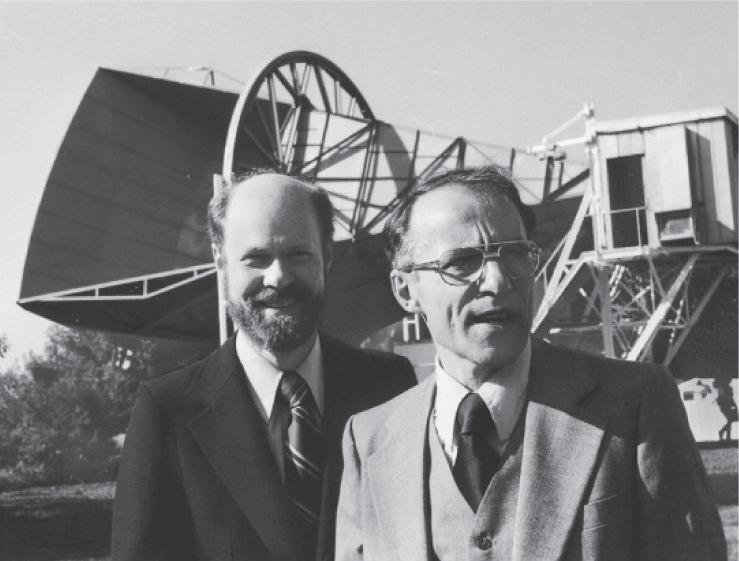
However, on May 20, 1964, Arno Penzias and Robert Wilson, two American radioastronomers, heard an unexplained buzz in Bell-Labs Holmdale Horn Antenna in New Jersey. They tried everything to remove all possible sources of this interference, including removing pigeons nesting in the antenna. Yet, the buzz persisted. The scientists doggedly pursued and ultimately discovered that the buzz was due to the “cosmic microwave background radiation, the ancient light that started saturating the universe 380,000 years after its creation.”1They were awarded the Nobel Prize in Physics in 1978.
Therefore, accidental happenings, observations, however small and apparently insignificant have been known to lead to discoveries that often could not be comprehended simply by rational thinking or experimentation.
In late November 1895 Wilhelm Conrad Rontgen, a 40-years old Physics Professor in Wurtzburg, Germany was
By Rahul Ray
experimenting with a cathode ray tube in his home. Cathode ray tubes aka Crookes tubes, a rage among physicists in those days include a vacuum tube
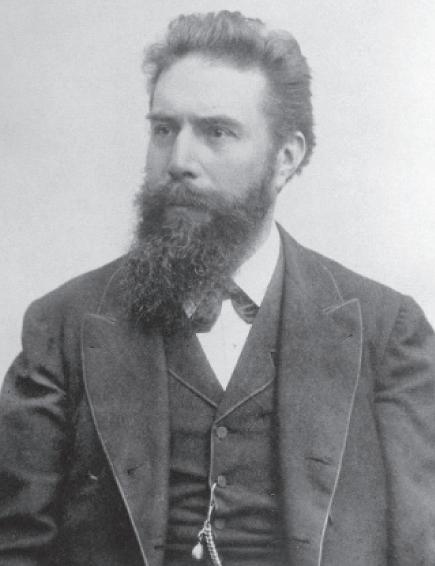
with electrodes. When electricity is switched on bright beams of electrons are seen to pass towards the positively charged anode.
Rontgen covered the tube with dark cardboard to prevent the beam from being seen.
Yet he noticed that a curious green light was projected on a screen across the room. He failed to block the strange light by putting black cardboard, a thick book, even a wooden shelf in front. At some point, he held up a small lead disk in his hand. He was terrified by the dark shape of the disc with his skeletal fingers holding it on the screen.
He kept his curious observation to himself, but finally relented and told his wife, Anna whom he enlisted for a follow-up experiment. Rontgen replaced the screen across the room with a photographic plate and had his wife place her left hand in the path of the beam.
Upon developing the plate, they were amazed to see a skeletal image of her hand with their wedding ring on the ring finger.
Not knowing the nature of the beam Rontgen termed it ‘X-
ray’. This is the tale of the accidental discovery of X-ray that has revolutionized the medical field. Rontgen went on to receive the Nobel Prize in Physics in 1901.2
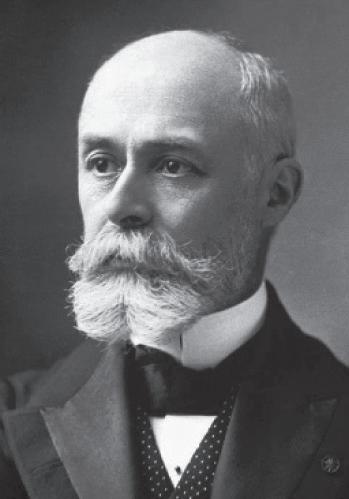
The curious and accidental discovery of X-ray by Rontgen crossed the German border to France where Henri Becquerel, a French physicist was trying to explain the strange phenomenon of phosphorescence, an uncontrolled ray of light given off by certain compounds when exposed to light. He thought that the phosphorescent materials need to be exposed to bright sunlight, as a rule, to observe phosphorescent glow.
However, on an overcast day with almost no sunlight, he observed hazy images on a photographic plate placed on a chunk of uranium salt. He correctly explained this strange
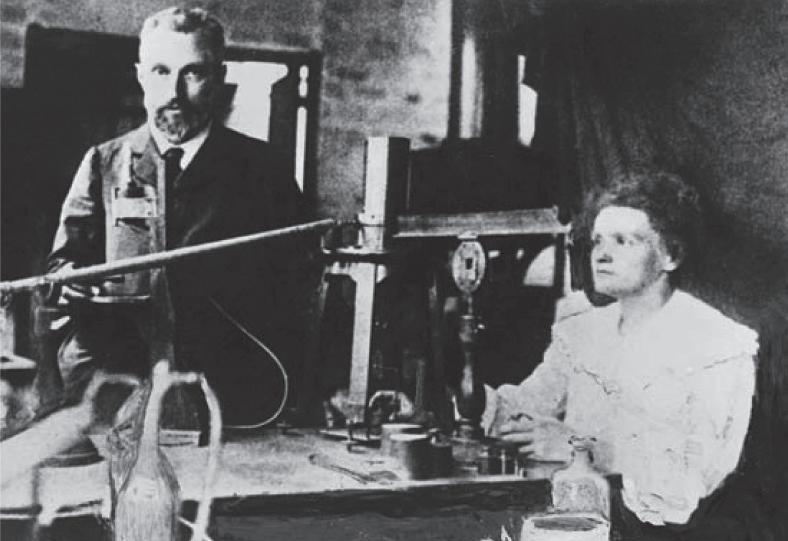
phenomenon as fundamental to certain elements such as uranium, and later on thorium, and coined the word, ‘radioactivity’. The year was 1886, and in the same year, Polish-French chemist Marie SkłodowskaCurie and her Physicist husband Pierre Curie discovered Polonium and Radium as elements that give off radioactive radiation. These three scientists were awarded the Nobel Prize in Physics in 1903.3
In our society, somebody rarely reads his own obituary. But, in April 1988 a French newspaper declared that - Alfred Nobel, the merchant of death who made a thriving business by finding better and faster ways of killing people is dead (para-phrased). In reality, it was Ludvig, Alfred’s brother who died on that day.4
The news of his own demise did not sit well with Alfred Nobel, the Swedish chemist, arms dealer, prolific writer, and discoverer of nitro-glycerine as the chief ingredient of dynamite which became an instant success to make tunnels for bridges and other large construction projects.
While Rontgen or Becquerel did not bother to patent their discoveries, Nobel, a consummate businessman and an entrepreneur patented his discovery and became hugely wealthy. He invested his wealth in further research. As a result, he established and personally super-
By Mita Sinha Chair, Puja Committee
This year the month of October brought special joy to our hearts because CORONA virous pandemic was mostly under control and most of our members were vaccinated so after about 18 months of staying home all of us got the opportunity to enjoy the Durga Puja of 2021 in person. Kabi Guru Rabindra Nath’s poem “Pujar Saaj” explains exactly how all Bengalis feel about Durga Puja, it goes like this:
“Ashwiner majha majhi, Uthilo bajana baji, Pujar somoy elo kache, Madhu Bidhu dui bhai chooto chooti kore tai, Anande dui hath tule nache”
This is a long poem but the first paragraph explains what we all share about Durga Puja. The little child in all of us gets awakened and Bengali community all over the world feels special joy in their hearts.
At Ananda Mandir the month of October started with Mahishasura Mardini Giti Alekhyo on October 3 between 4:30 to 6:30 am. This is an early morning celebration and Ananda Mandir has been doing this program for many years.
On October 5, we had our monthly Shayama Puja. Our monthly pujas are always well attended. Devotees came to the temple and enjoyed the Puja, Arati, and Pushpanjali. We always have dinner prepared by our members so all of us had our dinner together.
The last activity for this month was Tila Tarpana. Tarpana is a term in the Vedic practice that refers to an offering made to divine entities. It is performed by remembering the ancestors with their names. With chanting of mantras, one offers water, milk, and black sesame seeds.
At Ananda Mandir Durga Puja was celebrated from October 11 to October 15. The puja started with Shoshti puja and ended with Bijoya Dashami. Goddess Durga symbolize the divine forces known as Shakti that is used against the negative forces of Evil. These five days are special for Bengalis all over.
Because of the pandemic still lingering on, we required all attendees to pre-registration and show proof of vaccination at the door. We also requested everybody to wear their mask inside the temple. It helped us to manage the crowd and everyone felt comfortable visiting the temple. We had plenty of foods available for everybody for all five days. Nice seating arrangements were done on the Tagore Hall patio and with beautiful music playing in the background, created an absolutely holiday atmosphere. We had multiple vendors inside the Tagore Hall who were selling sarees, music and even paan. This year the weather was perfect that made it enjoyable for everybody. All our volunteers worked hard to make
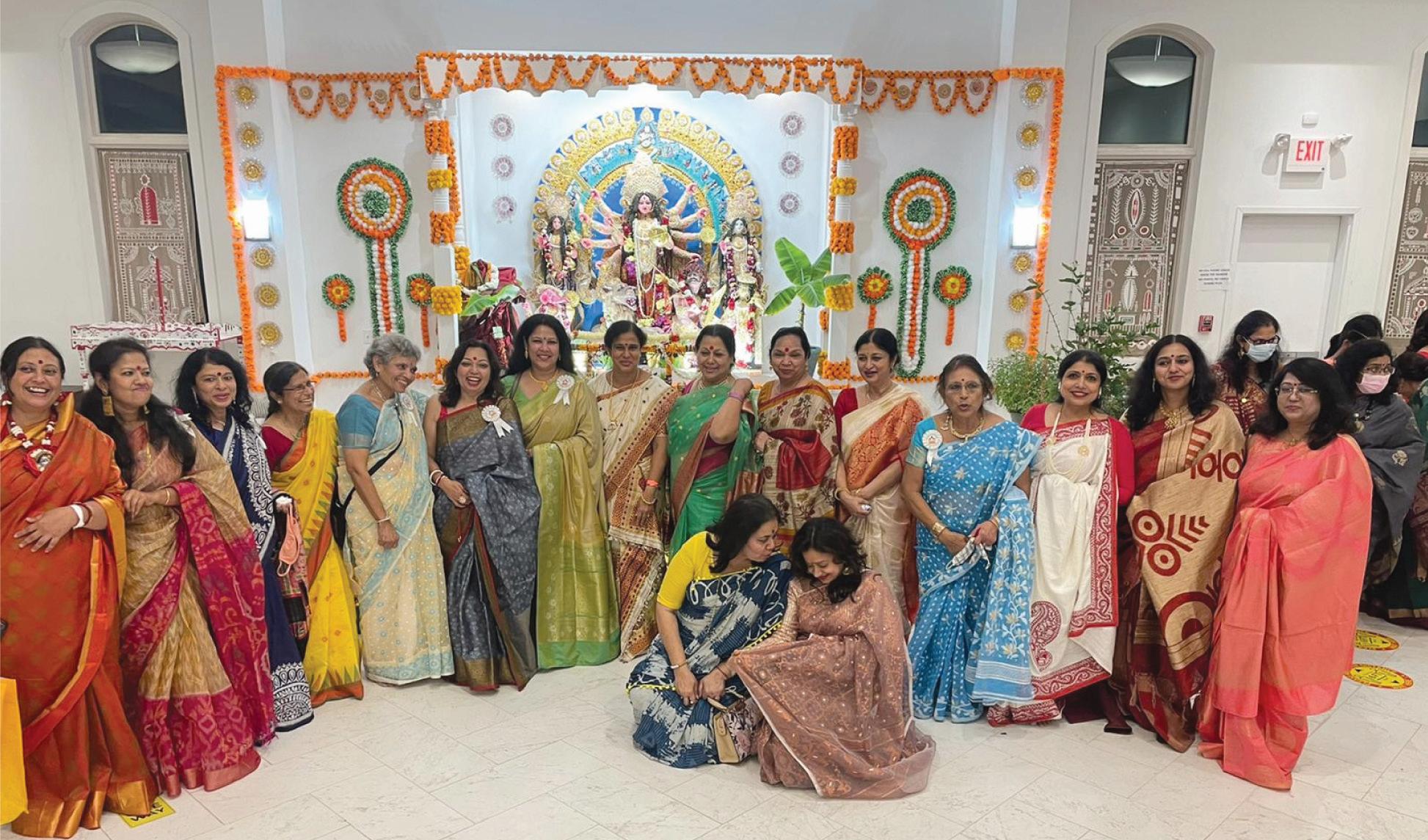
it a successful Puja this year.
We also had live streaming of Durga Puja celebrations for people to enjoy from home. Cultural programs were also broadcasted for members who could not come to the Mandir. All in all, everyone enjoyed this year’s Durga Puja.
The month of October ended with Kojagori Lakshmi Puja. It falls on the full moon day “Purnima”, in the month of Ashwin. We had few devotees attended this puja at our Temple. Most of our members do this puja at their home on this day that is why it is never very crowded at the Mandir for Lakshmi Puja. We had a well-attended puja at our temple this year.
The month of November started with Maha Kali Puja at Ananda Mandir. Ma Kali is worshipped at night with Tantric rites and mantras. The outside of our temple was illuminated with beautiful colored lights and we had fireworks in the evening. Most of our members stayed on until midnight to see the puja and all had their prasad at the Mandir.
The next puja was Jagaddhatri Puja at Ananda Mandir. We did this puja in the morning at the temple. We had quite a few members attended this puja.
Ananda Mandir’s Foundation Day was November 14. Like previous years, some members came to pray at the temple.
The month ended with Raas Purnima and Satyanarayana Puja. The Raas Purnima is a celebration of Lord Krishna. In the evening we had our monthly Satyanarayan Puja. Lots of devotees came to the temple this day.
December is usually a slow month at Ananda Mandir, with the onset of winter people like to stay home but our puja goes on. On December 3rd, we had our monthly Shyama
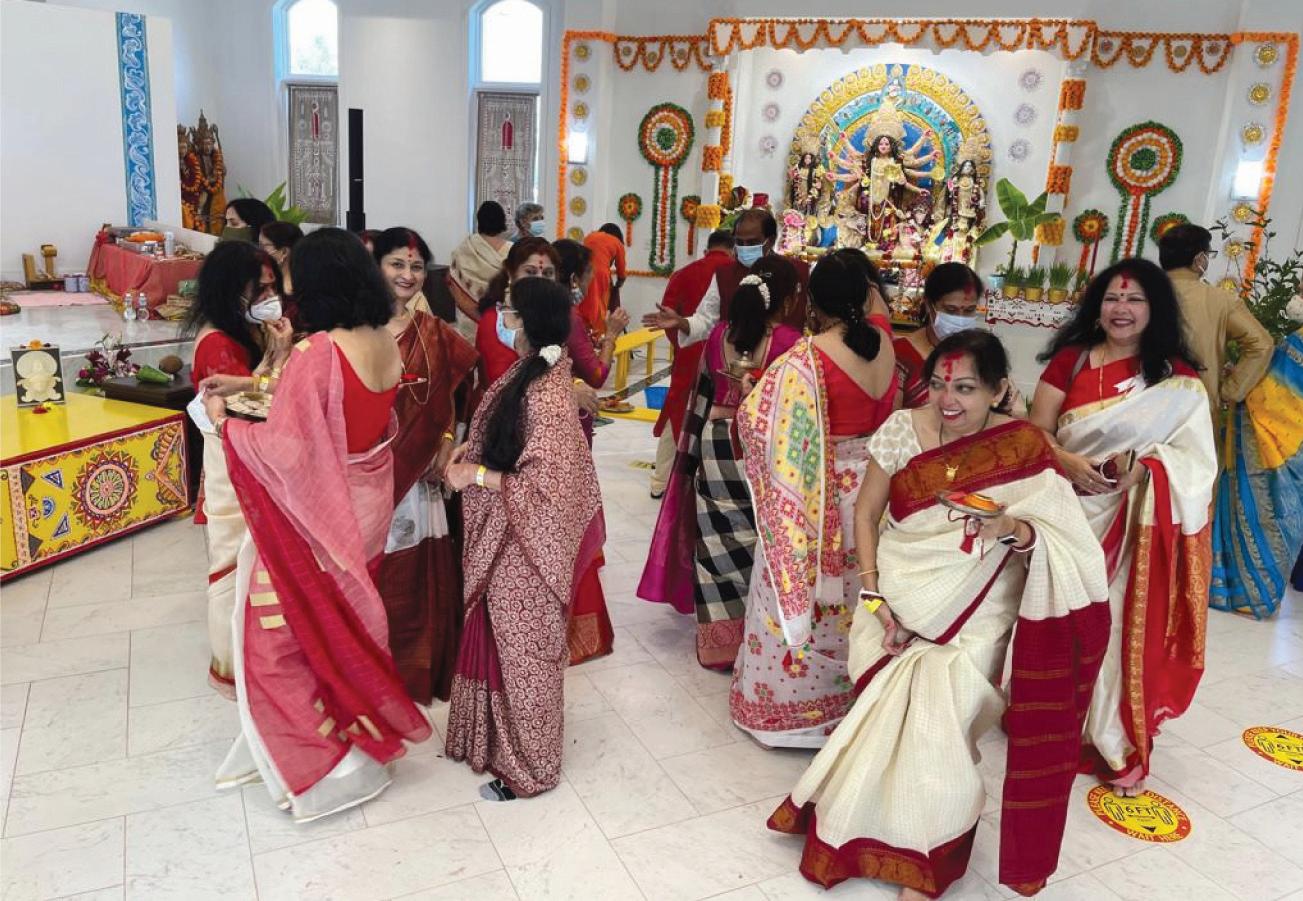
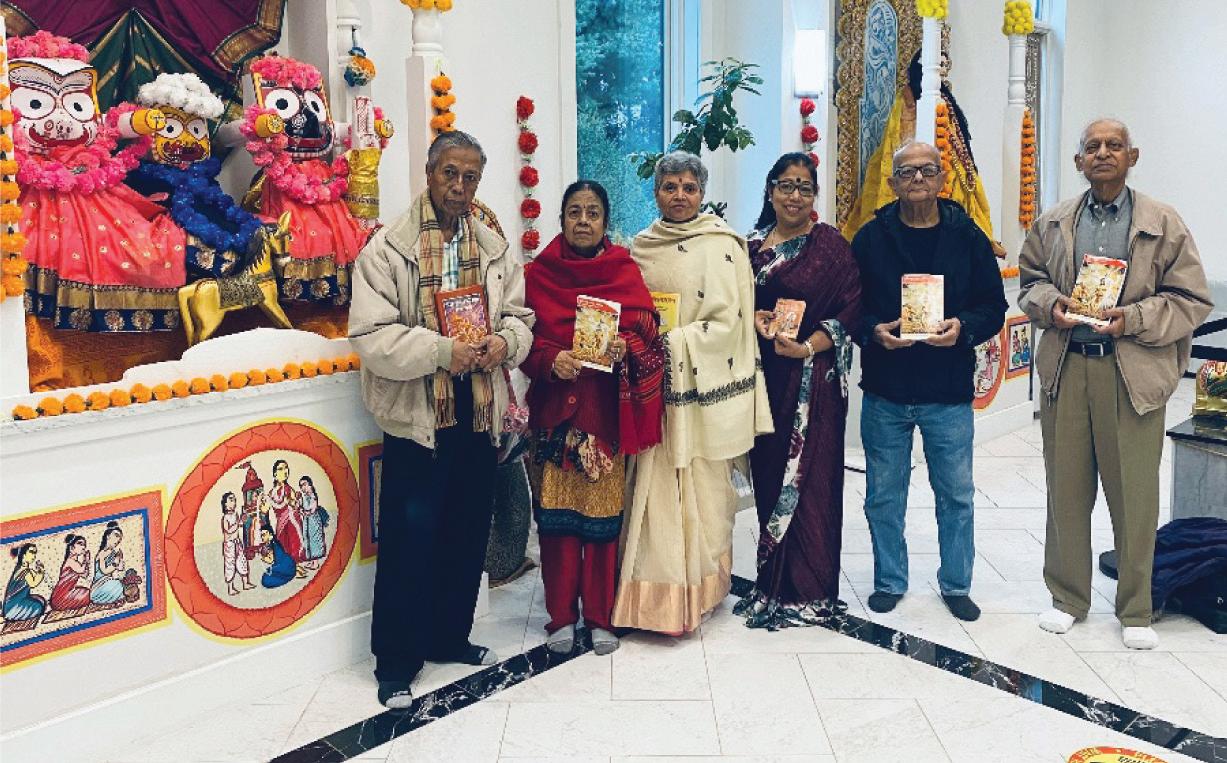
Puja. Some of our regular devotees were in the temple for this puja. A group “Gita Paath” was organized on December 11 like previous years to recognize “Agrahayana” as the most auspicious month of the year.
Overall, we had a very successful
calendar year in 2021. We collected record amount of revenue from Durga Puja and Kali Puja this year. Ananda Mandir is a special place for our community. This is a place of worship as well as a place for socialization for our Bengali community.
Theoperation theater was actually a dust-ridden garage, and though the operating table looked dust free, it had a makeshift appearance. A bhisti, carrying water in a bag made of goatskin, stood outside. And that was the only source of water.
Dr. Samir Dutta gazed in amazement. He was used to the operation theaters of North America where he was a cardiothoracic surgeon, and what he was seeing in this garage in rural Mehrauli, a district of Delhi in India, seemed completely unbelievable.
Dr. Dutta was visiting Mehrauli at the invitation of his friend, Dr. Jayanta Banerjee, who was also a surgeon. “I want to heal people”, Dr. Banerjee had told him, and so had opened this center in a predominantly Muslim area, where many patients were suffering from spine TB.
“What impressed me was the fact that here was a Hindu doctor doing everything he could to help a mainly Muslim population,” says Dr. Dutta. “I was determined to help him.”
It was the early 1970s, and at the time, Dr. Dutta was on the Board of Directors of the India Abroad Foundation that publishes the newspaper India Abroad. When he returned to the US, he requested its founder-owner Gopal Raju, to help Dr. Banerjee with his cause. The Foundation sent the doctor $12,000, stressing that the money be used for installing free running water and toilets for women. This was Dr. Dutta’s first humanitarian mission in India.
Dr. Samir Dutta received his MBBS degree from Nilratan Sircar Medical College, Calcutta in 1960. In 1963, he did his internship at Griffin Hospital, Connecticut, which is affiliated with Yale University. In 1964 he went to the UK to get his FRCS degree. He returned to the US in 1967 and worked as a surgeon, mostly in New York. He also became a Fellow of the International College of Surgeons (FICS), and a Fellow of the American Academy of Disability Evaluating Physicians (FAADEP). He retired in 2014 as a trauma surgeon. Now, as he looks back on his life, Dr. Dutta reminisces about his past.
“Throughout my life I have felt as though I have not been the one to decide what I have to do – that decision has been made for me. It’s like
By Jayashree Chatterjee
(Editor’s Note: Interviews published in previous issues of Ananda Sangbad had focused on successful entrepreneurs and business leaders because they are relatively rare within the local Bengali community. However, we are fortunate to have many physicians, surgeons, engineers, scientists and other professionals among us. This time we are focusing on an accomplished surgeon who has not only distinguished himself in his profession but also proved to be a community leader and a philanthropist.)
Ramprasad’s song TomarKormo tumi koro ma. Loke bole aami kori. My life has been a journey towards my destiny and someone, something, has inspired me, filled me with enthusiasm. Whatever I have done has been due to this force. That does not mean that I blame it for any of my failures. I take full responsibility for the consequences of my actions. I believe that success and failure go side by side. Both are part of my destiny.”
In the 1970s, Monoranjan Dutta, one of the founders of AIA, introduced Dr. Samir Dutta to the then newly established Association of Indians in America. AIA was founded in 1967, and was the first national association in the US for Asian Indians. Dr. Samir Dutta served on its board in many leadership positions – as its National Vice President, President of the New York Chapter, and Chairman of AIA’s Project India. In this last position, he was involved in many philanthropic projects that were successfully implemented in India. During the Union Carbide Plant disaster in Bhopal in December, 1984 he organized the raising of funds for the victims of the poisonous MIC gas, and visited Hamida Hospital in Bhopal to see for himself what more could be done. When the 1984 communal riots took place in Delhi, he helped AIA raise money for the widows and orphans created as its aftermath. He also led the AIA project, organized in coordination with Johnson & Johnson, to donate artificial hip joints and medical equipment worth $ 15 million to three institutions in India: Bombay Hospital in Bombay, Sanchetti Institute of Orthopaedic Research, Pune, and Choithram Hospital, Indore. These were some of his major projects but during his tenure, he also oversaw other important ones such as sending donations to the rural cancer society in Baruipur, West Bengal, to the Aurobindo Institute for the Sightless
in Suri near Santiniketan, and funding aid that was given to refugees of Indian origin from Uganda and Bangladesh.
Sometime after Dr. Dutta’s term at Project India ended, one evening the doctor was at work in his office when he was told that a couple named Rosemary and Walter Picardo wanted to meet with him.
The Picardos’ story was composed of the stuff that dramas are made of. Before her marriage to Walter, Rosemary was an RN in California who was sent by the Catholic Charitable Society to Goa, India. There one day, on the streets of this coastal city, she saw a young Indian man lying on the ground, overcome by the formidable effects of alcohol and drugs. She took him to her church and helped him recover. Then she aided him in overcoming his addiction to both alcohol and drugs. The couple fell in love and got married. After that, they came to New York, determined to open a center (they did so in 1989, and named it Nav Nirmaan) to treat addicts of South East Asian origin. Since they needed a leader who knew the community, and who could make a success of their project, they went to the Indian Consul General in New York for help. The Consul General told them to contact Dr. Samir Dutta. “But I have no training in treating alcohol abuse,” protested Dr. Dutta. “I am a trauma surgeon. And are there really South East Asians here who suffer from this problem?” They assured him that there were, and that there were people who suffered from domestic violence as well.
So, Dr. Dutta set about the task of learning about alcohol and drug abuse, helping the Picardos set up a clinic for people of Indian, Pakistani, Bangladeshi, Sri Lankan and Nepali origin, and raising funds for the organization. For this last job he met with the Mayor of New York, and New York senators as well.
Talking about this time of his life, Dr. Dutta says that the best memory he has of the clinic concerns a young Pakistani man who was an alcoholic. The alcoholic’s addiction drove his wife to such dire straits that one day she threw him out of the house. That was when the Nav Nirmaan Foundation came to his aid. They took him under their wing and counseled both him and his wife. When he recovered, Dr. Dutta persuaded him to work for the Foundation. “We needed a counselor who could speak Urdu”, says Dr. Dutta. “But I have to tell you about something else that happened –something that touched me so much that I have never forgotten it. His wife came to me and thanked me profusely. Then she, a Pakistani, Muslim, burkha-clad young woman gave me a hug. She said I had saved her family. I felt overwhelmed!”
After sometime, the Picardos approached Dr. Dutta again with another request. They wanted to open a clinic for alcoholics in Bombay. They had been given land in Murbad, Thane, and they wanted his help. So Dr. Dutta raised funds for them again, and also built an auditorium for them in honor of his wife, Papri Dutta. He visited the clinic a few times. Today, the clinic in New York has closed down but the one in Mumbai provides active help to those suffering from alcoholism.
Early on in his work for different charitable institutions, Dr. Dutta realized he needed to have a good relationship with the news media in order to promote the causes for which he was working so hard. He built a relationship not just with the India Abroad Foundation (in that capacity, he, together with the others on the Board, had a statue of Mahatma Gandhi erected in Washington DC) but also with Vision of Asia, the first Indian news channel, and the radio channel Bharat Vani that operated from Fordham University. He
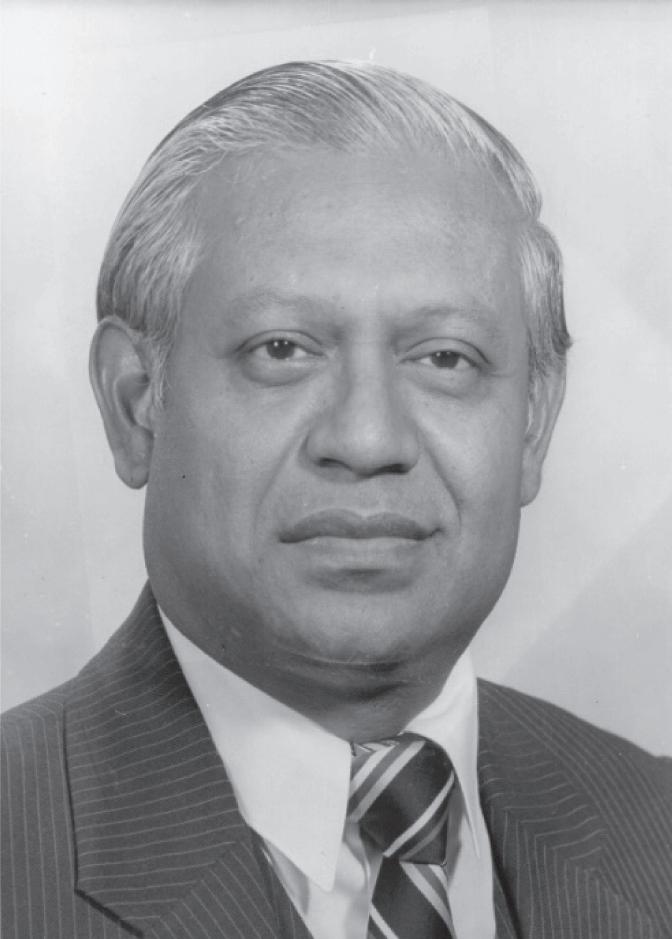
took part in many of the late Brij Lal’s programs to publicize what AIA was doing.
“The American public had a lot of questions about India and Indians and I needed to give them the right information in the right way,” says Dr. Dutta.
In the arena of politics, inspired by Kanak and Monoranjan Dutta, Samir Dutta supported many democrats as such as Jimmy Carter, Mario Cuomo and Pat Moynihan in their election races.
“But the president I got recognition from was President Reagan,” he goes on to say. “During the Reagan administration, I was appointed as a member of the Presidential Advisory Committee for South Asians, and was also one of the four doctors working with the Education Department in Washington to award disability grants.”
Dr. Dutta feels that working with and for people is what really interests him. Perhaps it is because of this that the other institution that he has donated generously to in both India and the US, is temples. As far as Ananda Mandir is concerned, he says it is the Mandir’s priest Biswajyoti Nayak who makes the place special. ”He is truly dedicated, and inspires people to visit the temple. His inner strength comes from sincere devotion.”
What makes Dr. Dutta the man he is? In her tribute to Dr. Dutta, the late Purabi Nandi of Sangbadic described him as an American who has not forgotten his Indian and Bengali cultural roots. She was correct. This country matters to him; hence his interest in working with its political parties. So does India; the causes that he has worked for in India show that. And at heart he is Bengali, which is why things Bengali matter to him. It is these three interests that make him who he is.
By Amitabha Bagchi
In an earlier essay that appeared in the July 2020 issue of Ananda Sangbad, I wrote about the profession of passionate love by women in the Indian epics. My focus was on the Anarya women, i.e., women outside the Aryan pale, and how forthright they were in expressing sexual ardor to their love interests: Shurpanakha to Lakshmana in the Ramayana; and Hidimba to Bhima and Ulupi to Arjuna in the Mahabharata.
In this follow-up article, I wish to focus on the expression of love by Aryan women in the classical Indian literature. They were perhaps a bit more demure and restrained than their non-Aryan counterparts, but quite forthright in their own way in revealing their passion and intent.
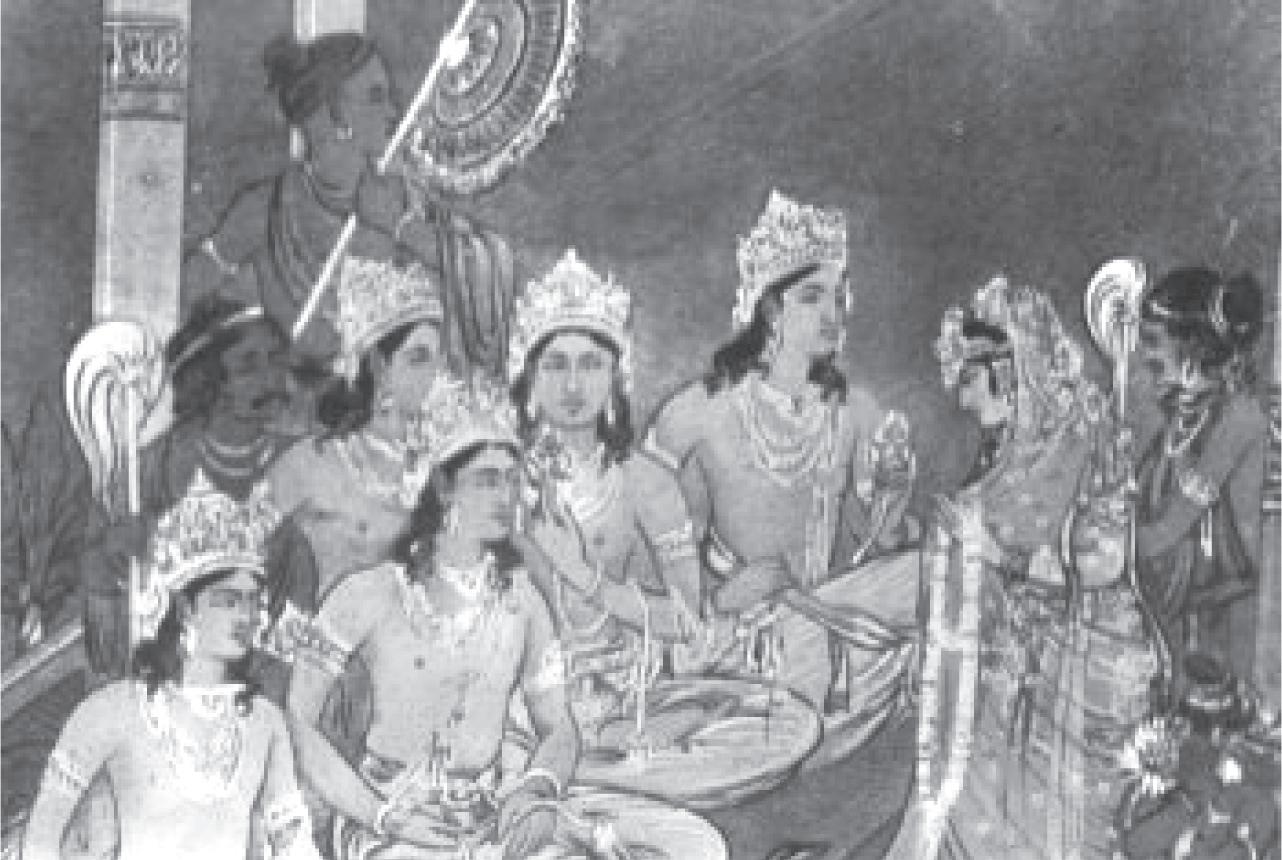
A majority of the Indian classical literature was written by people in royal courts who benefited from royal patronage. Not surprisingly, the protagonists tended to be mainly royalty – i.e., princes and princesses belonging to the Kshatriya caste. A common practice among this group was Swayamvara, whereby a girl of marriageable age would choose her husband from among a group of suitors invited by her father or guardian to a grand assembly (known as the Sabha). The pool of aspiring grooms was of course screened by the girl’s parent. Nevertheless, the prospective bride had considerable free agency as she moved from suitor to suitor in the assembly, listened to the merits of each as recounted by her escort, and finally garlanded the one she preferred -- to be united in matrimony as her husband.
Swayamvara plays a large and important role in the love story of Nala and Damayanti. Nala was the king of Nishada. He was extremely handsome, a capable ruler and an exceptional charioteer. His one vice was addiction to the game of dice, which, however, he did not play very well. Damayanti, the daughter of the King of Vidarbha, was so beautiful that even Gods
wanted to marry her. Although Nala had not set eyes on Damayanti and vice versa, they fell in love from hearing about each other from strangers: Nala from an itinerant brahmin who sang the prais-
cast his spell and sweettalked Nala into having a high-stakes game of dice with his brother. Being the weaker player, Nala lost his kingdom and was exiled to a forest with his wife. Still under the spell of the evil god, he abandoned his wife in the forest. Damayanti found refuge in
inquiries with the help of her maid to make certain that her surmise was correct. What happened next Is described thus on the web (http://ritsin.com/story-nala-damyanti-love-unknown-mahabharata-vana-parva.html/):
“Throwing all decorum to the winds, she [Damayanti]
es of Damayanti to him; and Damayanti from a messenger swan, captured and released by Nala, who flew to Damayanti and sang paeans to his savior.
In time, Damayanti’s father arranged for her daughter’s Swayamvara. The event drew both human royalties like Nala and divinities like several gods. The gods were aware of the secret locked in Damayanti’s heart, and so they decided to turn themselves into clones of Nala. This, naturally, bewildered Damayanti as she came to the assembly. She was, however, able to use her wits and could place the garland on the neck of the real Nala. (Only Nala cast his shadow; the gods apparently did not.)
The union of Nala and Damayanti, however, did not turn out to be all smooth sailing and eternal happiness. The gods were disappointed, of course, but none more so than the god of Kali Yuga, who had arrived late for the Swayamvara and missed the action. He was enraged at not getting Damayanti and vowed to take revenge. Kali Yuga bided his time and, after several years, found his opportunity. He
the court of King Chedi and was eventually reunited with her father.
Meanwhile, Nala was slowly coming out of Kali Yuga’s spell when he rescued a magical serpent from forest fire. In return, the serpent (Naga) gave him two things for help in the future: a poisonous bite that turned Nala into an ugly and deformed dwarf; and a magical garment to wear for being restored to his original form. Now Nala could travel incognito, and he went to the king of Ayodhya, Rituparna, and found employment as the king’s charioteer.
Safe in her father’s palace, the clever and brainy Damayanti hatched an innovative plan to find Nala, her true and abiding love. She asked her father to arrange a second Swayamvara for her. This one brought in King Rituparna along with his chariot driver, Nala, as the deformed dwarf.
Damayanti was waiting on her balcony and listening to the hoof beats as the carriages passed her palace. She immediately recognized from the hoof beats that King Rituparna’s carriage was being driven by her husband. She made additional, discreet
Damayanti is originally from the Mahabharata. Parts of the story were later turned into a Great Poem (Mahakavya) by Shriharsha as Naishadha Charita.)
The love story of Malavika and Agnimitra is of an entirely different genre. The story constitutes the plot of the first drama of Kalidasa. It is based on some events that happened during the Shunga dynasty (175 to 84 BCE) that followed the Maurya Empire in India.
ran down to meet the chariot driver and was stunned to meet a dark, short and deformed man instead of the fair, tall and handsome Nala. She asked, “Why does a man want to send his dutiful wife back to her father’s home?”
The man replied, “Because he has lost his kingdom and cannot support his wife in the manner she was accustomed to before her marriage.” He then puts on his magic garment and is returned to his original form.”
There was no further need for the second Swayamvara, of course. King Rituparna was pleased with the turn of events, but he was loath to see his friend the chariot driver go. Nala agreed to stay for a while on condition that Rituparna, an expert dice player, would teach him the finer points of the game. Thus fortified, Nala challenged his brother to a game of dice where the stakes would be his former kingdom and wife Damayanti. The brother foolishly agreed to the challenge and was soundly whipped in the game This way, Nala recovered his kingdom, kept his wife, and led a happy and peaceful life.
(The story of Nala and
The story concerns the love affair of two people of seemingly unequal rank or status. King Agnimitra of Vidisha is smitten after seeing the picture of the servant girl, Malavika, who is the beautiful handmaiden of his principal queen, Dharini. Malavika was captured and given to Dharini as a gift by her brother after his victory in a battle. Her social status is unknown. As the queen guards Malavika from Agnimitra’s attention, the king in cahoots with the court jester contrives to find ways to see the servant girl. The two dream up a dance competition where Malavika performs, spy on the girl as she is sent by her mistress to do certain ritualistic tasks, and so on. When the queen discovers her husband’s passion for the girl, she has Malavika imprisoned. But soon it is revealed that Malavika is of royal lineage, from the kingdom that was conquered in the battle, and the queen gracefully accepts her as another of Agnimitra’s queens.
A very interesting and novel aspect of this unequal love affair is the first appearance of Chalika (Subterfuge) as a dramatic art form in Sanskrit literature. Chalika refers to a kind of drama or dance form, involving a song that consists of four parts and is recited with gesticulation. It is through such gestures and double-entendres that Malavika in her dancing telegraphs her passionate affection for the king. Here once again is a woman of Indian antiquity who is candid and forthright in her expression of affection for her beloved, but who does it in a subtle and inoffensive way to avoid societal opprobrium.
By Tathagata Ghosh
Many a time you must have across an Indian name that seemingly is impossible to pronounce by a nonIndian. My name happens to be one of them. On the other hand, complicated tongue-twisters, Eastern European names, flow off the lips of newscasters without a hitch. We wanted to solve this dilemma when we were naming our first child. We wanted to have a name that was unambiguous and easy; with very little chance for the name to be mutilated.
We named our first child Neha. Little that we realize that even that short and pithy name would be mispronounced. That got me thinking that maybe the correct phonetic name should be Neyha (or Nayha) , so that it cannot be subject to gross misinterpretation. Many Indian names, when written in English, are so phonetically incorrect that it is no surprise that they cannot be pronounced accurately. No fault of the person who is unaware of how the name is pronounced in a foreign tongue.
There are some names that seem completely intractable because of the double curse of the D and a T. Consider my friend Debajyoti Chatterjee. I had gone to a restaurant and I saw in his note he said that the reservation was under Dave. I realized that Debajyoti-da was faced with the same conundrum as my father had in a different continent. My father, Debabrata Ghosh, also went by Dave in Australia. Both Debajyoti-da and my dad were forced into an Anglicized name so that the natives were comfortable with them. What they may have preferred was ‘Debu’ instead of the longer name but that also would not be pronounced correctly. The way they may have spelt this out phonetically would be ‘Theybu’. I think the natives could pronounce this with slaughtering the name. Abandoning Debu/Theybu and settling for Dave is a compromise which Indians are forced to make every generation. Now the strange thing is that even in India, the Indian names are discarded for an Anglicized name. Malathi probably becomes trendy as Molly.
This widespread mutilation of names and pronunciations happens right in the urban jungle of India cities. People from the North made mincemeat of South Indian names and North Indian names were similarly pulverized in the South. East and the West are not spared either. As Indians made their way to the frigid shores of distant lands, they realized that their names were disdainfully chopped and splintered till they were effectively Anglicized beyond recognition or settling on a poor substitute of their original names. Masses of Italians and Greeks and Jews previously had realized there were only square slots for the long-
winded rounded names even from European shores. Most of them settled for non-descript Anglicized names and their sons and daughters probably forgot those original names after a few years.
The penchant for writing non-phonetic names could be an odd throwback from a colonial past where I suspect the English prescribed names be written in a certain manner, to make it easier for them to pronounce. So then came the habit of spelling names with a lot of A’s instead of the O’s. A name constantly mis-phoneticized would be Amitabha. This is a common name especially in Bengal but came with variety of spelling including Amitava which was lackadaisically butchered with incorrect emphasis on every odd vowel. With a definite clarity, Amitav Ghosh attempted a more unambiguous, phonetically easier version of the name. Still a closer phonetic version may have been Omitaabh Ghosh, the Bengali version. I took that route too when I published my book as Tathagat Ghosh.
The paucity of vowels in the English language leads to compromise in the spelling of Indian names. The rich variety of Indian names, some playful some pretentious, leads to odd spellings which rarely captured the actual pronunciation. The problem is compounded by English having only a limited number of consonants compared to any Indian language and hence when it comes to any names that have a variation of T or D. Those are inelastic consonants that do not account for all the variations possible with Indian names.
There seems be enough consonants in English to attempt to create a proper phonetic name for say, Satyajit Ray. Every Bengali knows how to pronounce this name with pride but this unfortunate international icon has his name garbled by every film and media personality who is not from Bengal. His first name should be Shottojeet and this may also fall short because of the T. His last name could be a bouquet of vowels Raaei. Shottojeet Raaei, legendary film maker, should be the way his name probably should be spelt.
How do we enhance this language, English, which that is inherently phonetically limited? Maybe there will be a point in the future that the variations of T and D will creep into the language through bold innovations. The day is not far away when Devnagari letters may be offered up as autocorrect someday and it just becomes part of the English language. Till that happens, maybe it is time for parents to start thinking about a phonetic variation of their name for their child. If done with care and thoughtfulness, maybe when the name is called out in a crowd, the child may even recognize it.
| continue from page 3
spring of 2010, I formally joined the editorial team of Ananda Mandir. Thus began my close association with Pronoyda till his death.
Pronoyda had known Gayatri for many years. He was also friendly with Gayatri’s husband, Gerry. With funds contributed by Gerry GaMarsh, Pronoyda started the Gayatri GaMarsh Memorial Awards. Two awards were to be given out annually, one in English and the other in Bengali, to the best submissions from contestants of literary works (stories, poems, essays) published in magazines in North America. The awards were started in 2010 and are now in their 12th year. This is the second great legacy left behind by Pronoyda.
After joining the Ananda Mandir editorial board, my task initially consisted of writing features for Ananda Sangbad and editing contributions sent for both magazines. Then came a period of serious perturbations. Between 2012 and 2013, first the editor of Anandalipi, Biman Bhatta, fell sick and passed away. Next Pronoyda, a picture of health till then, was diagnosed with pancreatic cancer that required lengthy hospitalization. Seeing all the turbulence around the publications team, I agreed to succeed Biman Bhatta as the editor of Anandalipi in 2013.
Anandalipi, the literary magazine of Ananda Mandir, was especially close to Pronoyda’s heart. I learnt an enormous amount from him in my capacity as the magazine’s editor. Pronoyda gave me a list of outfits in India that did the layout design, make-up or composition, and printing; he guided me through the process of negotiating prices with them and picking a winner. He also started me off with a list of past contributors and their e-mails to solicit new submissions. We discussed and debated, sometimes strenuously, the quality of some of the submissions and their acceptability for the magazine. All in all, it was a tremendous learning experience for which I would be forever grateful to Pronoyda
I edited Anandalipi for six years. The crowning glory (or a case of dumb masochism) came in 2018 when Pronoyda and Debajyoti Chatterji talked me into editing – in addition to Anandalipi – the souvenir magazine of the North American Bengali Conference (NABC 2018), an event that was being organized by Ananda Mandir.
Shortly after that conference, Pronoyda began talking about relinquishing his role as the Chair of Ananda Mandir’s Publications Committee. As a result, in 2019, Pronoyda became an Advisor to us while the committee was reorganized: Debajyoti replaced him as the Committee Chair, I became the Editor-in-Chief and Subhodev Das came in as my successor to the (now re-named) Executive Editorship of Anandalipi
The period 2019 to 2021 was, for Pronoyda, a time of personal loss and mounting health problems. It led to his slow disengagement from Ananda Mandir and his beloved Bengali community. Swapna Chatterjee, his wife of many years, had been ailing for some time and passed away in early 2020. Soon after that, Pronoyda was diagnosed with Amyotrophic Lateral Sclerosis (ALS). Commonly known as Lou Gehrig’s disease, it slowly robbed Pronoyda of his mobility. I was deeply saddened when the end came, with the gentleman – my mentor in many ways – in full control of his mental faculties but unable to accept his inevitable and progressive loss of motor control and physical movement.
| continue from page 9 öô™yô ö˜î# ¤îûߺ•þ#ô
¥öìFSé òxyôîûy yëûy!èþ¡y£ì#– þ›%ey!èþ¡y£ì#– xyôîûy öël ²Ìy G x§¬ ¡yèþ †þ!îûó èþÇþ#ô¥# ²Ìy!ô£ìôóÐ xÙ»öìôöì™îû !¤!lîy¡# ö˜î# ¤%îyà– ¤%¨îû xD%!¡!î!¢Ûþ ~î‚ !•þ!l ¤%²Ì¤!îl#– ö˜î# !¤!lîy¡#îû ¤yöìí ¤îûߺ•þ# ¤Á›!†þÅ•þy ¥öìëûöìSélÐ
}öì@»öì˜îû 10ô ôuþöì¡îû 32 ¤)öì_« îûy†þy–!¤!lîy¡#– =D% G ¤îûߺ•þ# Ý•þ ¥öìëûöìSélÐ òëy =D%–ëy !¤!lîy¡#– ëy îûy†þy– ëy ¤îûߺ•þ#ó xíÅyê
ò!ë!l =D%– !ë!l !¤!lîy¡#– !ë!l îûy†þy G !ë!l
¤îûߺ•þ# •þ„yöì˜îû xyôîûy xy¥´yl †þ!îûóÐ ~¥z
ö˜î#ˆ” ¤†þöì¡¥z ö¡y†þ þ›y!¡†þy Gþ›îûß›îû ö†þyíyG ö†þyíyG èþ!ˆ”# ¤Á›!†þÅ•þy ¥öìëûöìSélÐ !î˜Äy x!™Ûþye# ö˜î# ¤îûߺ•þ# !†þ xlÄ ö†þyl îû*öìþ› þ›)!•þy ¥öìëûöìSélÚ ²Ì”ëû˜y ~¥z ²ÌÙÀ †þîûöì•þ xy!ô •þ„yîû ö‹þyöì‡îû þ›yöìl ö‹þöìëû î%Vþ¡yô öë!•þ!l
!î£ìëû ööìl Ö™%ôye xyöì¡y‹þlyîû !l!ô_ ~¥z ²ÌÙÀ ’þzayþ›l †þîûöì¡lÐ
!î£ìëû†þ ôöìsf Ý•þ ¥öìëûöìSél òˆèþÅô ö™!¥ !¤!lîy¡# ˆèþÅô ö™!¥ ¤îûߺ•þ#ó ö¥– !¤!lîy¡#– ˆèþÅöì†þ ™yîû” †þîû– ö¥– ¤îûߺ•þ# •%þ!ôG ˆèþÅöì†þ ™yîû” †þîûÐ ö˜î# ¤îûߺ•þ# ¤‚@ýÌyöìôîû G ²Ì•þ#†þ ~î‚ ¢e& !l™öìl !•þ!l ¤%!lþ›%”y– •þ„yîû ¥öìhßì xyôîûy ö†þyíyG xßf ö˜öì‡!Sé– ö˜î#îû îy¥l ö†þyl ö†þyl öÇþöìe !¤‚¥–î,£ì– ôëû)îû G ¥‚¤ ¥öìëûöìSéÐ xßf!î˜Äy– ölï!î˜Äy–îû”!î˜Äy– öÄy!•þ£ì !î˜Äy– †,þ!£ì!î˜Äy– ¤†þ¡ ¢yßf ~î‚ ë•þ²Ì†þyîû !î˜Äy xyöìSé ¤†þ¡ !î˜Äyîû x!™Ûþye# ¥öì¡l ö˜î# ¤îûߺ•þ#Ð xöìhsýÄ!ÜT †þyöìëÅîû þ›)öìîÅ Ù¢yl x!@Àîû ²Ì#!•þ¤y™öìl ¤îûߺ•þ#îû Ý!•þ xíöìîÅöì˜îû 18¢ x™Äyöìëû !îî,•þ ¥öìëûöìS郃ƒÙ¢yöìlG öë ¤îûߺ•þ# þ›)y þ›yl ~ ööìl !•þ!l !î!ß¿•þ ¥öìëû!Séöì¡lÐ !•þ!l G¥z !˜l ˆèþ#îû îûyöì•þ xyôyöì†þ Call †þöìîû þ›y!îûy•þ ¤îûߺ•þ# G l#¡ ¤îûߺ•þ# ¤Á¿öì¦þ ²ÌÙÀ †þöìîûl– èþ!î£ìÄöì•þ •þy ylyîyîû
One of the unexpected consequences of the lockdown ordered to curb the spread of coronavirus during the initial months was shortage of toilet paper. It was probably just a glitch in the supply chain management as a result of increased demand because of home confinement. The problem disappeared as the suppliers caught up with the demand.
This phenomenon made me wonder why God created all living species in such a way that they cannot convert all the food they consume directly into their necessary nutrients. Their only choice is to extract only a part of the intake during the digestive process and discard the rest in the form of solid, liquid or gaseous waste. A rather large portion of internal organs of any species is devoted to the execution of this digestive process.
Surprisingly or perhaps not so surprisingly, many man-made engines, the ones powered by gasoline/diesel or coal in particular, go through a similar process. They are fed with some substance which is basically a source of heat energy and only a part of that input is converted into useful work and the rest is exhausted as useless material. The fraction that is converted into mechanical energy is called the efficiency of the engine.
In fact, there is a law in physics, the second law of thermodynamics, which states that it is impossible to construct an engine with one hundred percent efficiency. It seems that a living machine like a human body has to obey this law. Even God did not create living beings which would violate this law.
Of course, the second law of thermodynamics itself was formulated by God. So, God could have made this law more accommodating I.e., allowing engines with 100% efficiency and created human beings (or any other living being) with no human waste. God is consistent but I do not know why He made things so complicated. Just imagine what this earth would look like if all engines had perfect efficiency. There would be no exhaust gases and no global warming. Similarly, if living species did not exude any waste, the entire planet would be cleaner. I am sure that God has a purpose but we just do not see it.
The common denominator in both of these conversion processes is that the input energy is heat and output is some form of mechanical work. The second law of thermodynamics apply to such processes. I immediately thought of electric cars which coverts electrical energy from the car batteries to mechanical energy. There are no exhaust gases because efficiency of electric engines is very high and second law is not violated. The efficiency is not 100% however, because there are many losses related to friction, resistive heating and other dissipative forces. Typically, efficiency of an electric car is around 60% while that of a gasoline or diesel-powered car is around 20%.
By Basab Dasgupta
Why cannot the scientists come up with a new innovative digestive process whereby some form of energy other than calories in food can be converted into the energy our body needs for all its functions? If that happens there would be no need to eject any solid waste from our body. There will be no need for not only toilet papers but also for conventional toilets.
This is not really such a radical idea. People who are in coma, for example, stay alive because they are fed all the nutrients and vitamins their bodies need intravenously. I have heard stories of holy men in India who survive for years without any food. I do not know how they do it but the physicist inside me says that it has to be some direct conversion of energy from the person’s surrounding, atmospheric gases and sunlight in particular, into his nutrients, much like an electric car.
Even in the USA, there is a group called “Bretharians” who not only believes that it is possible to live without food but many claim that they have lived for weeks, months and even years doing just that. They do take water and fruit juices, however.
The comatose people still need to dispose of solid waste from their bodies and it is done using an attachment to a disposable bag. I can envision a world where people live without eating food and without going to toilet simply by carrying two bags with connecting needles inserted into their bodies, one full of chemicals for intake and another for disposal of waste. Inventors and medical community have not yet thought about anything like this scheme presumably because it is cumbersome and inconvenient, not to mention that this scenario would deprive us of a large part of our living pleasure.
Just imagine the consequences if we do not have to eat or cook. There would be no need for elaborate grocery shopping, fancy kitchens with modern appliances or cooking utensils, serving of food at any social gettogether; no need for farming and agriculture or killing chickens, cows, fish, pigs and sheep; all restaurants would shut down and our tastebuds would sit idle. It is not just tastebuds, but much of our internal organs would be unnecessary (much like the engine of a Tesla car, compared to a gasoline car).
In fact, there would be no need for earning money (which is primarily for survival I.e., for buying food) and therefore no need to get education for the purpose of getting a job.
The entire human body needs to be re-engineered if it does not have to process food. I certainly believe that God could have done this reengineering at the outset if His idea was to create living beings which could survive without food. For example, He could have incorporated
some biological photo-voltaic cells within our body which could convert sunlight into electricity and we could have used this electricity to move our body parts. Perhaps we could also use chemical energy from exothermic chemical reactions if our bodily fluid consisted of some special chemicals.
It appears to me that God’s concept of living on food was intended to create the “food chain” in order to support the entire biological system and eco-system on this planet. Grass and vegetable grow by extracting nutrients from mother earth. God created herbivore animals, birds and insects in such a way that they can survive on the plants. Carnivore mammals eat those animals and birds to survive. Human beings are omnivores who consume both vegetables and animal meat. This chain maintains the balance of lives in nature.
If we can live on air and sunlight, we can devote all of our time to other activities. These other activities can be creative and positive or destructive and negative. On the positive side, people can focus more on actions based on cerebral activities and spiritual/philosophical thoughts. On the darker front, people can engage in crimes, violence and sexual activities.
God wanted to keep His children busy and not to live in a dark world full of negative thoughts and activities. He did not want everyone to become pious and spiritual either; that would have meant this world becoming like a heaven and defeated HIS plan of guiding people, step by step, to heaven through thousands of reincarnations. His purpose was to make sure that human beings (and living beings in general) go through life cycles as we know it; get educated to get a job, get a job to earn money, get married to have children, raise children and spend earned money to feed everyone. During this process, they go through the usual struggles of life and learn about love and kindness and raise themselves to a higher level of enlightenment for next reincarnation.
Why did God design such a long tedious difficult journey? The answer is perhaps quite simple. He is just playing a game, kind of like Solitaire or Pac Man or Super Mario Brother. He has created the universe and now encourages all living beings to realize that this universe is just an illusion imagined by Him. The ultimate purpose for all living creatures is to break through the illusion after experiencing all kinds of difficulties and barriers in numerous reincarnations (much like repeated iterations in a video game with increasing difficulty level) and not only recognize Him as the creator but somehow disappear in His brain! That is when the game ends!
He obviously wants the game to be a long one. There is no point in making it short. He is all alone and has the eternity of time at His disposal!
| continue from page 7
vised nearly ninety laboratories by traveling across the globe and, thus obtaining the nickname ‘Europe’s wealthiest vagabond’ from Victor Hugo, the famous French novelist. Nobel, a confirmed bachelor who avoided women as ‘distractions’ was unmoved by name, fame and money. However, he was deeply wounded by being pronounced dead before he was actually dead and being called a merchant of death. Kenne Fant, the most important biographer of Alfred Nobel writes that “It pained him so much that he never forgot it” and, that he would not rest until he had crafted “a cause upon which no future obituary writer would be able to cast aspersions.”5
Nobel devised a clever way to keep himself immortal. In November 1895 he wrote a four-page hand-written document, without the assistance of a lawyer while sitting in a club in Paris in which he willed 31 million Swedish Kroner
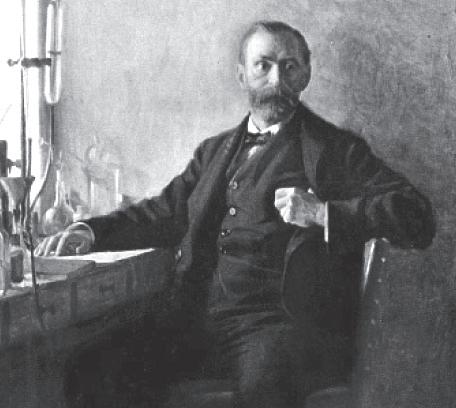
(approximately $250 million today), the bulk of his estate to be invested and the interest from which is to be conferred to people in several disciplines with the greatest benefit to mankind. Therefore, an accidental reporting of the premature death of Alfred Nobel led to an act that most likely will stay with mankind for a foreseeable future.
As stated earlier, it is a chance happening that we are brought into the earth. The happy outcome of such an accident is that we can write about other accidents that are not unpleasant and have brought great benefits to mankind.
1Cosmic Anniversary: ‘Big Bang Echo’ Discovered 50 Years Ago Today, by Mike Wall, May 20, 2014, Space.com.
2Wilhelm Rontgen: https://en.wikipedia.org/wiki/ Wilhelm_R%C3%B6ntgen
3Henri Becquerel: https:// en.wikipedia.org/wiki/Henri_Becquerel
4The newspaper error that sparked the Nobel Prize. Sean Braswell, https://www.ozy.com/ true-and-stories/the-newspapererror-that-sparked-the-nobelprize/40007/.
5 Alfred Nobel: A Biography, by Kenne Fant (Author), Marianne Ruuth (Translator), August 5, 2014, Publisher- Arcade, distributed by Simon and Schuster.
Editor’s Note: This is a column of factual stories of “Unexpected Kindness from Strangers” as experienced by the writers. Our readers are encouraged to participate in this column to share their own factual stories.
By Probal Sanyal
(Editor’s Note: The writer was inspired by Rahul Ray’s New York Cabbie story, published in the October-2021 issue of Ananda Sangbad, and decided to write his own cabbie story in Amman)
We - my wife Sunanda and myself - had flown to Kolkata on a Royal Jordanian (RJ) flight in the winter (December?) of 2000. The RJ flights went from JFK to Amman, the capital of Jordan, and then directly on to Kolkata. Coming back, they retraced the same route. It probably no longer flies directly into Kolkata now, which was the main attraction for us then.
At that time, RJ had a deal that the passengers could take a break-journey in Amman one time, either going out or on the return flight, at no extra cost. We had decided to take it on our way back.
Now, our daughter, Supriya, had been in Kolkata for the previous six months or so, touring sightseeing places while also working with philanthropic organizations - Mother Teresa, I believe. Upon graduation from NYU the previous year, she wanted a take a breather. She had planned to come back with us, but she did not have the option of taking the break-journey in Amman, although it was a RJ ticket. In any case, she would have to spend the night in Amman in order to catch the plane back to JFK the next day. RJ would put her up at a hotel pretty close to the airport. We, meanwhile, were going to spend the next three days at a downtown hotel in Amman - about 30 km from the airport.
We all boarded the plane together at Kolkata and reached the airport sometime in the evening. We took a taxi - most taxis were Mercedes - from the airport. We stopped by at Supriya’s hotel for check in and to drop off her luggage before going on to our hotel. Our plan was to have dinner in downtown Amman, drop off Supriya at her hotel after dinner, and then find our way back to our own hotel in downtown Amman- a lot of travelling and expense.
As we were mulling our options - partly in Bengali, partly in English - the taxi driver, who understood our situation quite well, spoke up. He said, in good English: I will wait while you have your dinner and then I will drop you two off at your hotel and then drive back to the airport to drop off your daughter at her hotel.
The cab driver looked like a gentleman and clearly was a fairly educated person in Jordan to be able to speak good English. But it was a foreign country after all and we were visiting it for the first time. Would it be safe to let Supriya travel alone with him in the night all the way to the airport?
He sensed our hesitation and said the famous words: “Trust me.!!”
He said: “I am an ex Jordanian Air Force officer and I have a daughter. Your daughter will be like my daughter. She will be perfectly safe. Do not worry.”
Somehow, his words felt pretty convincing and after he dropped us off at the downtown hotel where we had reservations, we let him drive our daughter back to her airport hotel, almost 30 km away. Our daughter, born and brought up in the US, was not fearful or concerned. After a reasonable amount of time, we called her from our hotel - yes, she had reached her hotel quite safely.
And we enjoyed the next three days in Jordan - visiting Petra, Jerash, the city of Amman, etc. I remember that we had lunch one day near the Dead Sea but were told that we could not travel over the Allenby Bridge into Israel because of the many restrictions on travelling between the two countries. And I still remember the famous words: “Trust me”.
By Debajyoti Chatterji
Asreported before, the onset of the pandemic-induced restrictions in March, 2020, forced Evergreen Club (and other similar cultural and social programs of Ananda Mandir) to move to Zoom videoconferencing for monthly group sessions. To a large extent, such sessions have been very successful, with good attendance and active interchange between members. While we have all missed our popular pot-luck lunches and group outings to restaurants and other destinations, participation of invited artistes at each session has made them highly enjoyable. Only in November did we organize our first group outing – after a 20-month stretch of video conferencebased meetings! Following our past tradition, we did not organize
Evergreen Club meetings in July and August to allow our members to enjoy the summer months with family and friends. Our first session in the reporting period (July 1 to December 31) was held on Sunday, September 26, featuring Banani Mukherjee as our guest performer. Banani is an accomplished author and actor – and she is simply superb in presenting one-person shruti natok. The October session was held on Sunday, October 31 and was based on our usual open format, allowing members to present short stories, songs, experiences and observations. The invited performers were Banani Mukherjee – and Arun Bhowmik, the extremely popular “resident musician” of the Ananda Mandir community. Arun entertained the group with several
songs.
For the November session, we organized a delicious lunch in a private room at a nearby restaurant (Stage House Tavern). Almost 30 members attended this lunch and celebrated the break from 20 months of videoconferencing. The presentation and discussion part of the meeting was shorter than usual because of the fun atmosphere of the restaurant lunch with drinks!
The final session of the Seniors Forum for the year will be a “Holiday Get-Together” on Saturday, December 18. It will be held at Ananda Mandir (Front Building) and feature a “mini-lunch” with six mouth-watering courses of good Bengali food. Attendance is expected to be high, and the members are eagerly looking forward to a good time with their peers.
By Debajyoti Chatterji
Note: Writers Club meetings are open only to “active writers” who are willing to present their own writings (in Bengali or English) to their peers. Readings of third-party authors are not permitted. Club members are welcome to share their poems, short stories, personal narratives and essays – whatever they prefer to write. After each presentation, an intensive Q&A period follows, sometimes lasting as long as thirty minutes. As a result, our two-and-half hour sessions permit readings by only 6 to 7 writers. To accommodate all writers, we follow a staggered order over several sessions. If you are an active writer and would like to join our club, please send an email to debsmee572@gmail.com.
During the reporting period, Writers Club held Zoom video conferences on the following dates: Friday, September 24 Friday, October 29 Friday, November 19. There were no sessions during July and August (summer vacation period for most members and their families) and December (holiday season).
At the sessions, members typically present their original writings (poems, short stories and essays), in Ben-
gali or in English, and then receive constructive feedback from their peers. Because a session lasts 2 to 2.5 hours, we can accommodate 6 to 7 authors, each getting an allocation of roughly 30 mins, including time for Q&A and constructive feedback.
During the reporting period, Writers Club reached an important milestone in its short life: it became two years old on July 27, 2021.
Our journey had begun with much enthusiasm on the
Reported by Chanakya Ganguly
On Thursday, November 4th, 2021, NJPA celebrated Kali Puja online streamed to members over YouTube because of the on-going Covid situation. Guru Chakravarty performed the Puja with all the mantras and conducted the Arati with deep devotion. Kali Puja from Kal (nothing escapes the march of time).
Ma Kali represents the curbing of the ego arising out of
limited bodily attachment and self-importance. Thus, suggests extreme Yogic discipline, to dismantle life and put it back again for gradual mastery, with the cessation of vibrations, as she touches Shiva.
On Sunday, October 17, 2021, one of NJPA’s founding members and a leading guiding force for over half a century, Dr Pronoy Chat-
part of a modest sized group of writers. Not surprisingly, we have experienced some high points and some frustrations. Recognizing that we may want to make some course adjustments, we used the October 29 to brainstorm on the path forward. We are looking forward to implementing the key recommendations from this brainstorming exercise in the New Year. Wishing all our members and friends a very happy and healthy New Year!
terjee, passed away. He was a scientist, author, and relentless searcher of spirituality. He leaves behind his thoughts in books and articles he wrote over the years. His memory will remain vivid in our minds and his spiritual thoughts will go on forever in nudging our minds to reflect on humanity’s ultimate role in this universe.
Information about upcoming events will be available on our Facebook page “NJPA Parivar.”
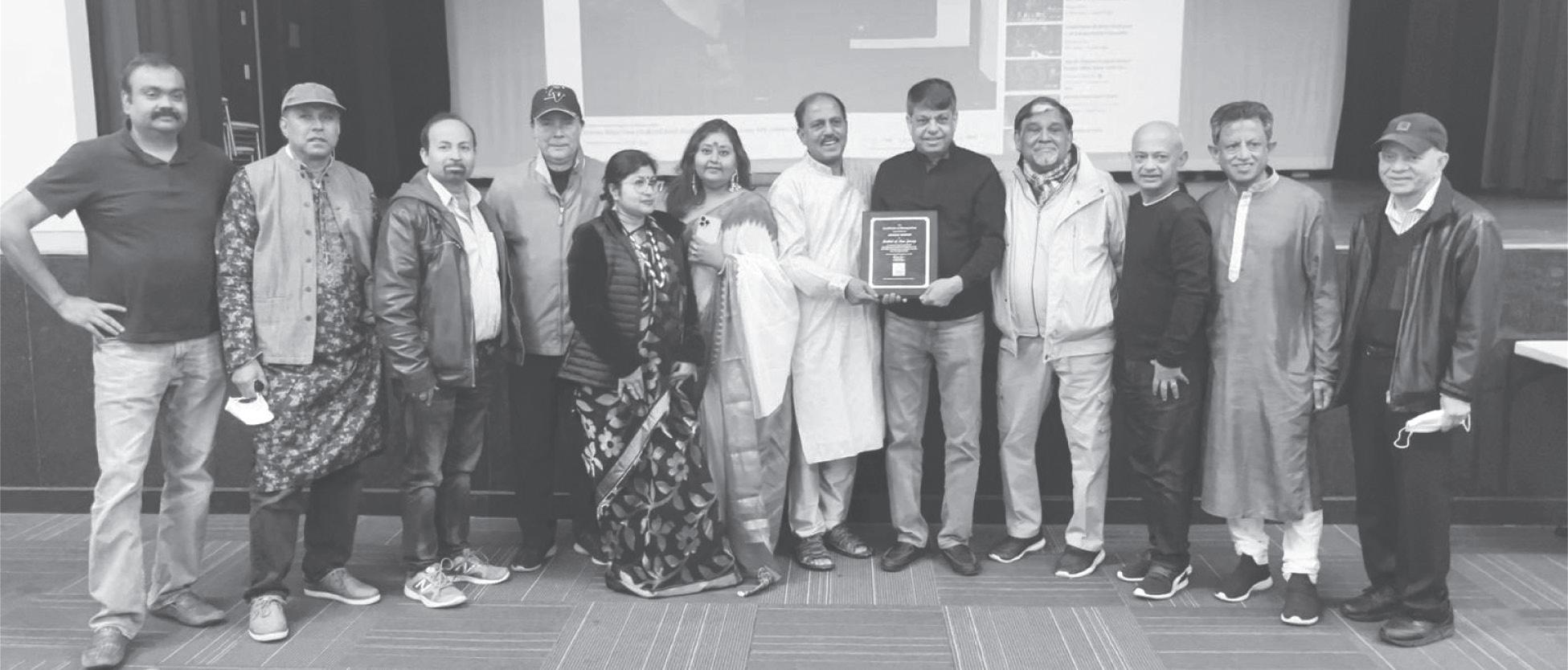
For more than a decade, volunteers from Kallol of New Jersey have taken upon themselves the responsibility of sponsoring the Kali Puja dinners. This has, in turn, required the volunteers to do all the preparations of the ingredients, cooking multicourse meals for hundreds of guests and raising the necessary funds.
Ananda Mandir is grateful to Kallol of New Jersey for these outstanding acts of kindness and sup-
port. To show sincere appreciation, Ananda Mandir presented a Certificate of Appreciation to Kallol of New Jersey in the evening of this year’s Kali Puja, held on Thursday, November 4.
The photo below shows Jai Prakash Biswas (President, Ananda Mandir) presenting a plaque to Ashok Ganguly, President of Kallol, in the presence of representatives of both organizations.
Reported by Pradip R. Das
Durga Puja, October 9 &10, 2021
For us Bengalees, Durga pujo is the time of the year, irrespective of whatever challenges and difficulties we faced in the past year, our spirits are lifted by the joyous festivities and cheers that the season brings. In our adopted homeland here, we strive to recreate and relive the nostalgia surrounding Durga pujo back in India and pass it onto the next generation. We all participate wholeheartedly in this endearing process.
2020 and 2021 has been particularly difficult for all of us as the coronavirus pandemic engulfed the entire globe and caused innumerable health and/ or economic distress to many citizens in all countries. The world witnessed various attempts by different governments to face this pandemic through national lockdowns, partial closures and issuance of common sense guidelines for their citizens, hygiene, social distancing, wearing masks, and avoiding large groups being the most basic.
For celebrating Durga puja this year, GSCA, guided primarily by health concerns, celebrated with fewer attendees than its normal years by restricting registration to a certain low number. The spacious Swaminarayan Temple at Somerset, NJ was chosen as the venue. All Durga puja rituals were meticulously performed by Guru Chakravarty over the two days. Breakfast, prasad/bhog
SAMRAGNEE MAJUMDAR NAMED MEMBER OF THE MILLION DOLLAR ROUND TABLE
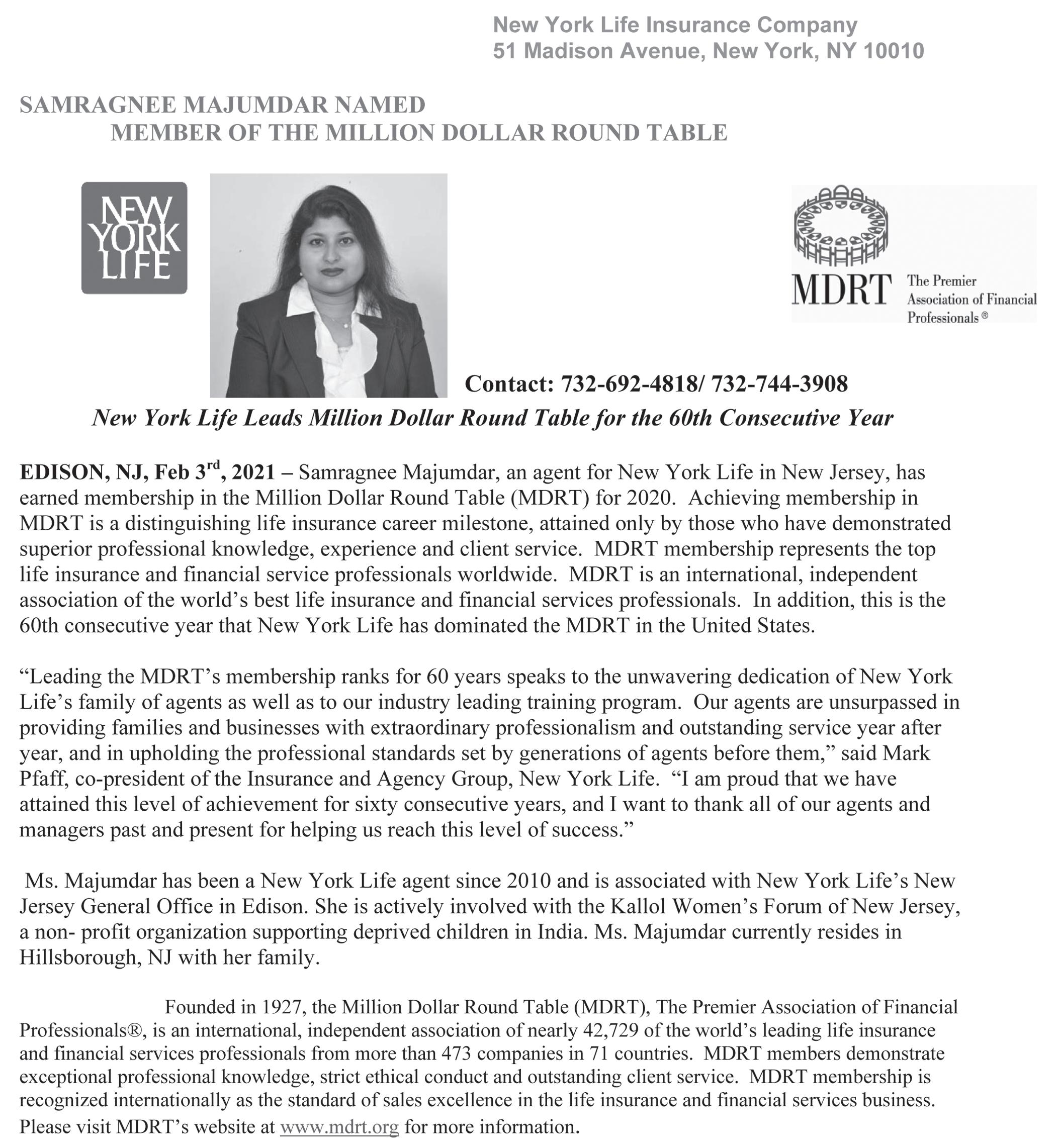
tions were pre-recorded. Two successive evenings of wonderful presentations well choreographed and videographed.
and dinner were served or boxed to all attendees both days.
Cultural programs (a very nominal paid option) were streamed to all registered members and non-members as well on both Saturday and Sunday (10/09 & 10/10) through another secured online link. Saturday’s programs included songs by Pousali Banerjee, a folk singer from Santiniketan, who was privileged to be under tuteleges of several proficient singing personalities. She received a national scholarship in 2009 for Rabindra Sangeet and her participation in Saregamapa in 2017 propelled her journey as a singer.
Sunday’s cultural items began with GSCA’s In-house program “Rupang Dehi Jayang Dehi”. Talented GSCA singers, narrators and dancers came together to offer prayers to Maa Durga through stotrams, songs and verses to celebrate this great festival.
“Amar Bhitor O Bahire Antare Antare” - a collection of songs and poems by the father and daughter duo of Suman and Ishannaan was appreciated enthusiastically by viewers.
The main event for the evening was songs by “Chandrabindu”. Based in Kolkata, they are well known for satirical and colloquial lyrics, with references to current affairs and cultural happenings. Incidentally, all the Indian presentations were streamed live from India while the local and in-house presenta-
The entire GSCA management team and the various volunteers are to be applauded for the Durga puja experience they provided in this particularly difficult time.
GSCA Board Election 2021
Four positions being vacated in 2022 were filled. The names were announced to the members via a Board MOM and a communication from the Chairman on November 14.
The new board takes office from January 1, 2022.
GSCA Holiday Party, December 11, 2021
The annual fun-filled extravaganza was held at Mirchi Restaurant North Brunswick this year.
GSCA Philanthropy
For several years, GSCA has been making concerted efforts to expand its philanthropic activities in ways that are having greater impacts on communities and individuals. Most notably, currently GSCA’s scholarship fund is supporting 40 students in West Bengal - 18 MBBS, 6 BSc Nursing, 9 Engineering and 7 in Science fields. The students that are selected for support by GSCA are supported through their entire curriculum until they graduate successfully. Additionally, GSCA provides a one time scholarship to 6 Plainfield High School graduating seniors every year. GSCA’s philanthropy wing is indeed doing a noble and praiseworthy job in making a difference in individuals’ lives and to their families.
Reported by Arpita Gupta
With the world having changed so rapidly in the past few years, feelings of nostalgia call back to the old days. The strongest feelings from our youth are of Durga Puja; the celebrations, dance, food, festivities, which all formed lasting impressions on all of us. Last year, we were able to experience that nostalgia again virtually, however something seemed missing. Indian Community Center of Garden State (ICC-GS) celebrated it’s 2021 Durga Puja on October 16th& 17th at Rishta Banquet Hall in Parsippany, New Jersey this year and the yearnings of the community for those old feelings were overflowing as it became one of the largest and most successful pujas by the club.
With reservations filled up on both days our friends, family, and the community showed their desire to create new memories and relive past emotions. The puja started on Saturday with our priest Guru Da, who created an atmosphere full of enthusiasm and togetherness with his hymns and devotional songs. Lunch and Dinner included primarily goat meat, rice, sweets, and other sumptuous dishes that people enjoyed. In the evening, we were able to honor our continued guests from the Consulate General of NY’s office as well as the Mayor of Parsippany, Mr. Soriano.
On the second day, we had sindur khela with the beats of the dhaak. All the women gathered and did boron to Durga thakur, danced, and had a joyous time. Overall, everyone contributed to making the Puja a very memorable event that showed the spirit of the community. In the evening, virtual cultural programs were held by Anwesha Duttagupta as well as a star-studded program ‘Pujo elo phire’ which was displayed alongside local talents.
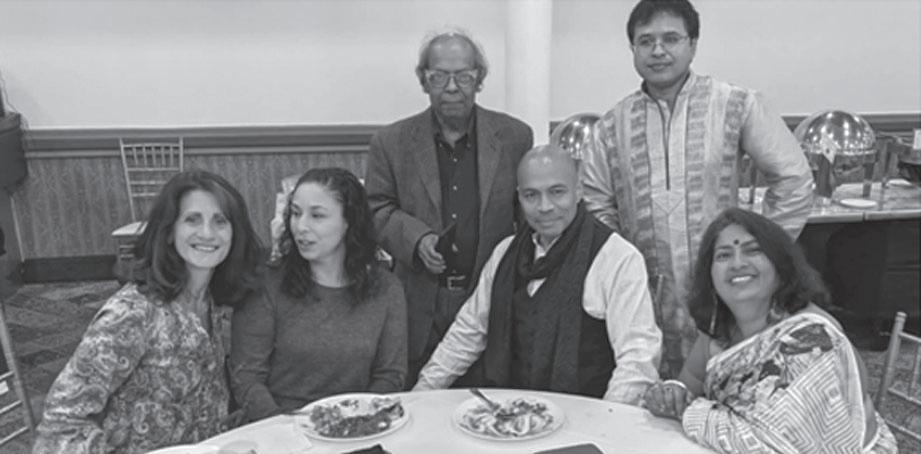
ANANDA MANDIR HAS ANNOUNCED THE WINNERS OF THE 2021 GAYATRI MEMORIAL AWARDS CONTEST. The co-winners in the English nominations category are Sophia Mitra (Edison, NJ) and Rahul Ray (Wayland, MA). The winner in the Bengali nominations category is Susmita Kundu (Peewaukee, WI). Each winner has received a cash award of $500 and a plaque with an appropriate citation. Congratulations to all the winners!
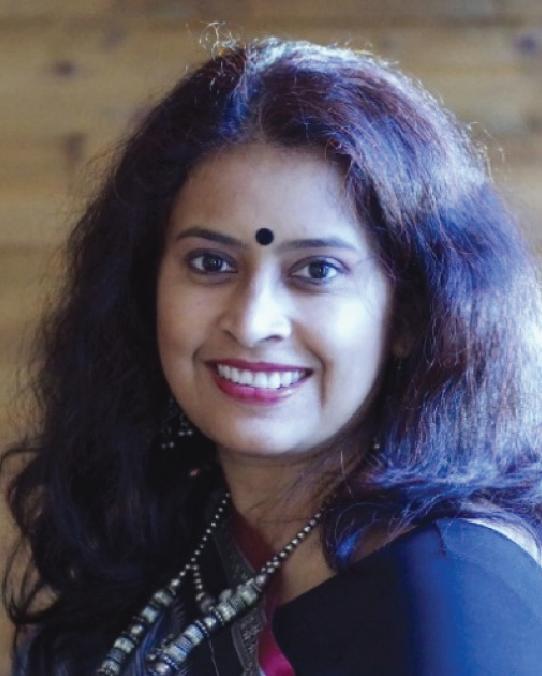
As a professor, Sophia teaches English literature and composition classes at a NJ college and conducts creative writing workshops for elementary to high school students. As an academic, she publishes regularly in research journals, but creative writing in all forms is her true passion. She has published in many magazines and maintains a blog, English 101, where she muses about topics related to societal change. She enjoys writing for children as she is a mother of two kids, aged 12 and 15.
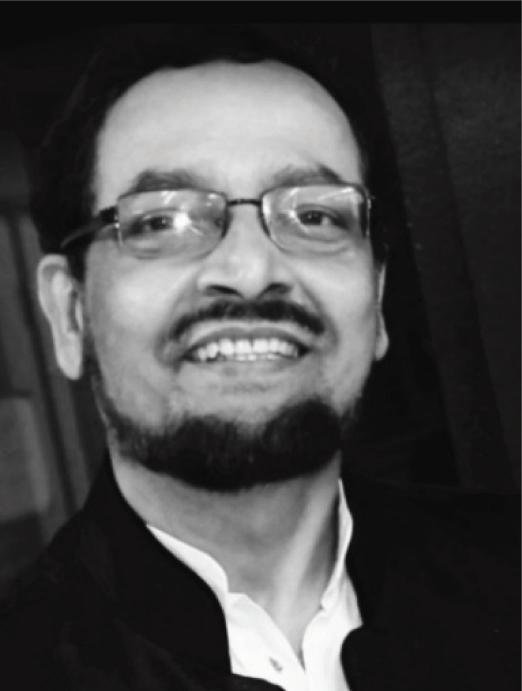
Rahul Ray has written numerous essays, poems and short stories (of many types) and has published in many magazines in India and America (such as Desh, Krittibas and Nabakallol in India and UTSAB, Aamra, Parabas and Anandalipi in America). Rahul writes in English as well as in Bengali and has authored or coauthored three books and one anthology of essays. Although a scientist by profession, Rahul received training in art and classical Western music and is a musician by choice. He is an active member of several writer groups. He received a Gayatri Memorial Award in 2015 in the Bengali nominations category.
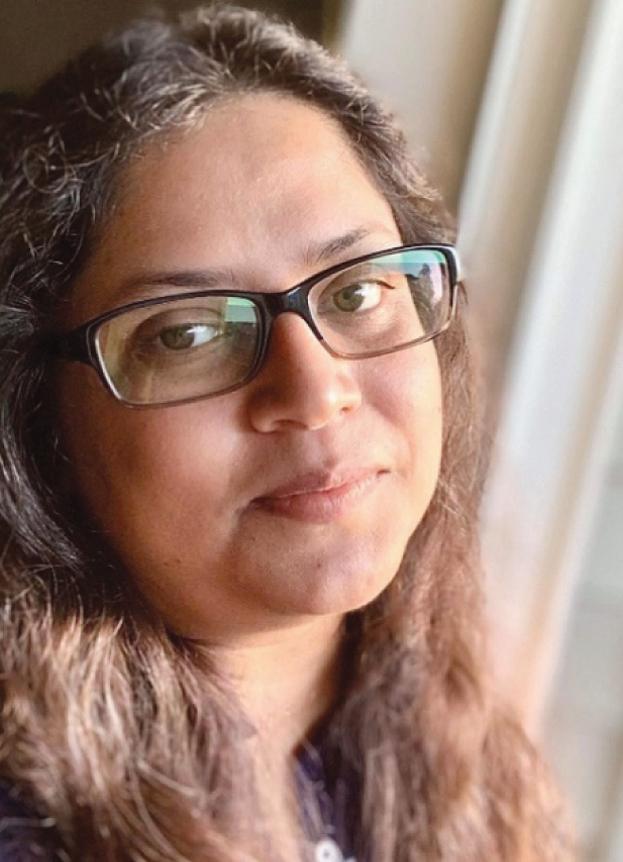
Susmita spent her childrhood years in Howrah, West Bengal. A physicist by training, Susmita received her doctorate from the Saha Institute of Nuclear Physics, Kolkata. She currently lives in Wisconsin, with her husband and a six year old child. Always interested in reading and writing, her passion took a turn after she became a mother, and she began to focus on creating imaginative stories appropriate for young children. She has, however, continued to write fiction for adult readers. She is the author of two books and many short stories.