Ananda Mandir
269 Cedar Grove Lane Somerset, NJ 08873


Ananda Mandir
269 Cedar Grove Lane Somerset, NJ 08873
NJ PERMIT NO. 1215
By Guru Chakravarty
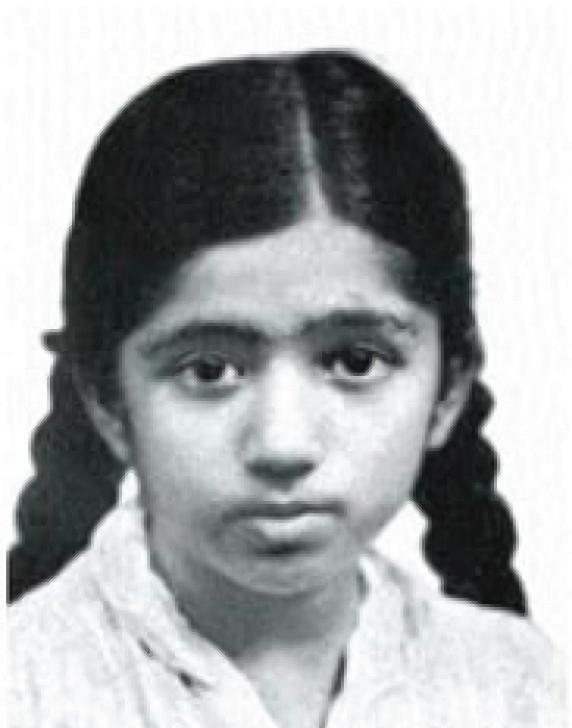

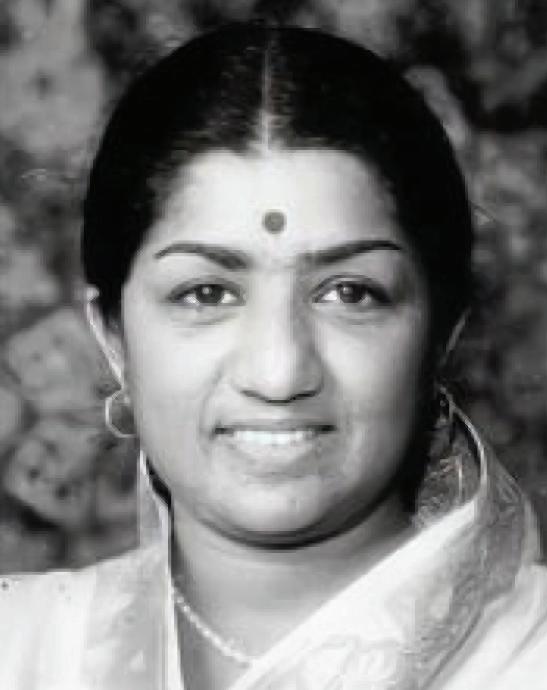
BHARAT RATNA LATA MANGESHKAR (September 28, 1929 - February 6, 2022)
Lata Mangeshkar will be rembered as the greatest Indian playback singer ever. Her contribution to the Indian music industry in a career spanning seven decades gained her honorific titles such as the “Queen of Melody”, “Nightingale of India”, and “Voice of the Millennium”.
Lata recorded songs in over thirty-six Indian languages, primarily in Hindi, but also in Marathi, Bengali, Gujarati, and others.
She received innumerable awards throughout her career. She received Bharat Ratna, the highest award offered by the Government of India. In addition, The Government of India bestowed the Dadasaheb Phalke Award, the highest in the field of cinema, on her. She received three National Film Awards, four Best Female Playback singer Filmfare awards, and the Filmfare Lifetime Achievement Award.
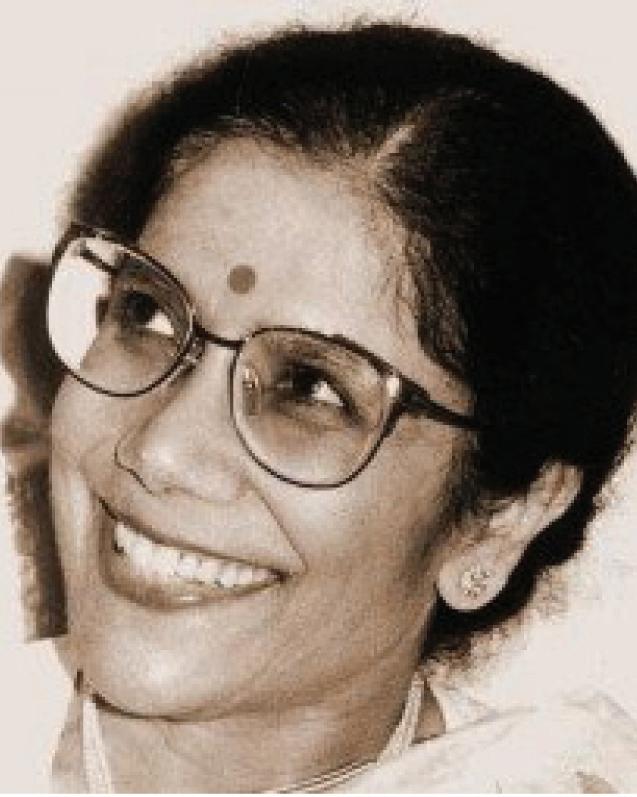
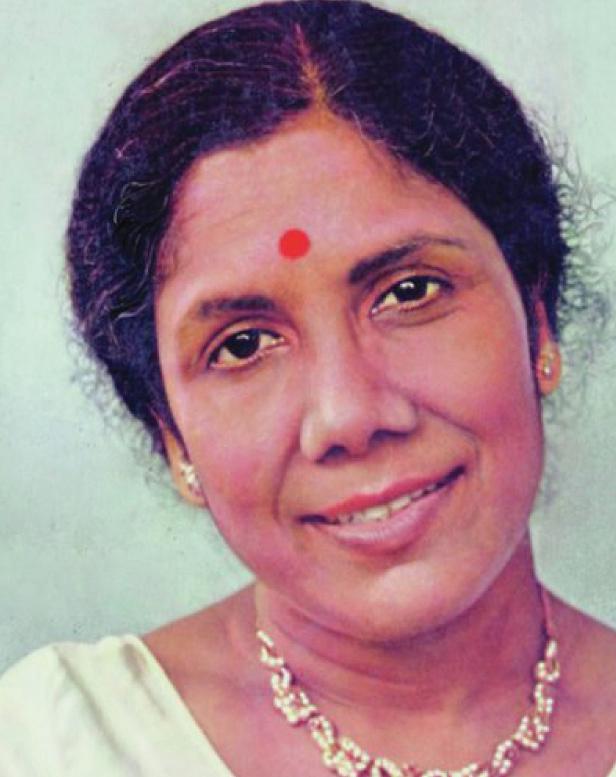
GEETASHRI SANDHYA MUKHOPADHYAY (04 October, 1931 – 15 February, 2022)
Sandhya Mukhopadhyay will be remembered as the greatest female Bengali film playback singer ever. Her songs in films starring Uttam Kumar and Suchitra Sen in the fiftees and sixtees still generates unforgettable sweet memories in the hearts of most ageing Bengalees. She received Banga Bibhushan, the highest civilian honor of West Bengal. She won oneNational Film Award for Best Female Playback Singer and two Bengal Film Journalists Awards. On 26 January 2022, on the Republic Day and a few days before test-
continue to page 2 }
Friends, look above and watch how at dusk the sky gracefully appears, veil after veil, studded with stars, and three of them are ours. It is a remarkable coincidence that shining stars like Lata Mangeshkar, Sandhya Mukherjee, and Bappi Lahiri would leave us for heavenly abode in a matter of one week.
As a child, Lata Mangeshkar along with her four siblings were raised in an atmosphere of classical music under her father’s tutelage. She lost her father when she was a teenager and would become the guardian of her family. The beginning of her career was beset with tremendous hardship. Sometimes she would work without pay, while the producers would keep the money for themselves. Playback singers were considered unimportant, but upon her strong insistence, they would eventually receive royalty for their work. To cover a wide
By Mandira Chattopadhyay, Ohio
group of audience, Lata Mangeshkar learned a host of Indian languages, especially Bengali which fascinated her.
As she grew in stature, urban legends about her talents began to proliferate. Referred sometimes as the Nightingale of India, her silky voice pierced the films of various languages. She very successfully captured the great diversity of audience, both India and abroad. They were all mesmerized by her voice. Bengalis’ yearning for the Golden period of modern Bengali songs (Adhunik Gaan) was at one time at its peak, with the artists like Hemanta Mukherjee, Manna Dey capturing the hearts of the Bengali audience for more than four decades.
Sandhya Mukherjee was one of the brightest stars during that period. She always wanted the love of her coun-
trymen and nothing else. Though she sang songs of different genres, she will always be remembered for her rendition of modern songs for numerous Bengali films. It has frequently been stated that the box office hit films starring Uttam Kumar and Suchitra Sen would not have been complete without the outstanding playback singing of Sandhya Mukherjee. These include the immortal hits like “Gaane Mor Kon Indradhanu” or “Ei Poth Jodi Na Shesh Hoy” and numerous others. She brought a unique characteristic in her rendering of songs that evolved from her classical background coupled with her melodious voice ornamented with vibrato. The timber of her voice was fresh and unlike what her audience heard before. She had a short stint in Bombay in the early nine-
teen fifties but opted to start her soon-to-be a brilliant career in Calcutta, because Bengal was in her heart and soul. Bappi Lahiri spent his childhood in Naktala where I used to visit my friend who lived there. We would place our ears on the front door of Bappi Lahiri’s house to hear his famous parents sing to his tabla accompaniment, which he mastered at a very young age. It was a fascinating experience for us. He would later excel in pop music, something we were not allowed at home. I remember that the legendary actor of Bengali screen Chhabi Biswas lived right across Bappi Lahiri’s house. Subsequently Bappi Lahiri moved with his parents to Bombay to acquire the rhythm of Bollywood songs. With a sheer luck he was introduced to Lata Mangeshkar who brought him to limelight. He won the hearts of young people through
continue to page 2 }
Ananda Mandir
Calendar of Events (Dates are subject to Change) Please check our website frequently www.anandamandir.org Tel: 732-873-9821
NOTE: If a particular Puja time is not listed, please contact temple or visit our website: anandamandir.org
APRIL(*)
BASANTI DURGA PUJA
Shasthi, Thursday, 07
Saptami, Friday, 08
Ashtami, Saturday, 09
Nabami & Ram Nabami, Sunday, 10
SATYANARAYAN PUJA,
Sunday, 10
Dashami, Monday, 11
NEW YEAR’S DAY
Tuesday, 15
SHYAMA PUJA
Saturday, 02
SAHITYA O ALOCHANA (*) Cultural Program (*)
MAY(*)
AKSHAY TRITIA
Tuesday, 03
RAM THAKUR SMARANOSTAV
Sunday, 15
PHALAHARINI KALI PUJA
Sunday, 29
Sahitya O Alochana (*) Cultural Program (*)
JUNE (*)
GANGA PUJA & DASHOHARA
Thursday, 09
SATYANARAYAN PUJA
Sunday, 12
JAGANNATH MAHAPRABHU’S SNAN JATRA
Tuesday, 14
SHYAMA PUJA
Tuesday, 28
SAHITYA O ALOCHANA (*)
Cultural Program (*)
JULY, 2022 (*)
RATH JATRA
Friday, 01
BIPADTARINI PUJA
Tuesday, 05
ULTO RATH JATRA & SATYANARAYAN PUJA
Saturday, 09
SHYAMA PUJA
Thursday, 28
SAHITYA O ALOCHANA (*) Cultural Program (*)
(*) See www.anandamandir.org or Call Mandir for details
Special Religious Services: Upon request, the priest of Ananda Mandir offers services such as in-house Shraddhas, Rituals associated with Cremations (Antyesti Kriya), Shraddha Anniversaries, Pre-wedding rituals (Naandimukh, Ashirwad, etc.), Upanayan (Paitey), Annaprasan, Wedding Ceremonies & Wedding Anniversaries, Griha Prabesh (Bhumi Puja), Consecrations of new cars (New Car Pujas) and others. If you have needs for any of the above or more, please feel free to contact Biswabhai @ 732-873-9821
Ananda Sangbad
MANDIR
A Periodical Newsletter Published By ANANDA
(A Tax-Exempt, Non-Profit Organization)
269 Cedar Grove Lane Somerset, NJ 08873
Phone: 732-873-9821
Website: www.anandamandir.0rg ***
Guru Chakravarty Executive Editor
All queries, articles, news reports and letters should be directed to guruchakravarty@yahoo.com Phone: 908-752-3065 ***
For general information, please contact the following executives of Ananda Mandir:
Jai Prakash Biswas President
Debajyoti Chatterji Vice President
Anjan Lahiri Vice President
Ashok Rakhit Vice President
Arun Bhowmik General Secretary
Chanu Das Treasurer
Pradip Majumdar Assistant Treasurer
The COVID-19 pandemic first and foremost was, and still is, a health crisis. However, it has had a disastrous effect on the education of our children. Many countries rightly decided to close schools, colleges and universities. The crisis presented the dilemma to governments all around the world to choose between closing schools and keeping them open. The choice was between saving their lives and educating them in the usual way. The severe long-term disruption was a hindrance in the normal development of millions of students.
Most educational institutions around the world cancelled in-person instruction and moved to remote learning and teaching in March 2020 in an attempt to contain the spread of COVID-19. Although the adoption of distance learning was key to ensure the continuity of education following the physical closure of schools, students were, on average, likely to experience a learning loss because of the closure.
The switch from offline to online learning caused by COVID-19 affected the
entire system of education negatively. The new system was both untested and unprecedented. It not only challenged the families to provide their children the access to internet and computers, it also challenged the authorities to provide the teaching materials to the teachers. In particular, it affected those children, in primary and lower secondary schools, who have higher difficulties in adapting to the new learning environment. The switch also exacerbated existing educational inequalities. More vulnerable students, those from less economic backgrounds, were especially likely to fall behind during this lockdown period. These students were less likely to have access to relevant learning digital resources (e.g. laptop/computer, broadband internet connection) and less likely to have a suitable home learning environment (e.g. a quiet place to study or their own desk)
When teaching moved to online, student assessments faced new challenges with uncertainty. Many schools simply cancelled any assessments. The loss of proper
assessment delayed the recognition of students with high potential and those with learning difficulties. Unfortunately, these interruptions will not just be a short-term issue, but will probably have long-term consequences.
The leaning time for students was reduced during the pandemic from nonexistent in schools in financially disadvantaged areas to a minor extent in schools in affluent areas. We will now have to make up for it, if at all possible, by increasing both the amount and quality of learning time—through extended schedules, summer enrichment and after-school activities, more personalized instruction, and staffing strategies that reduce class sizes.
Then there is the sociocultural growth of the children to think about. Cameron Caswell, a psychologist says: “Adolescence is one of the most formative life stages, explaining that the skills developed, the beliefs formed, and the ways we perceive ourselves and how we interact with the world during this stage play a major role in defining who we become as adults”. “I believe the impact
from prolonged isolation will be greater on them,” she said. Participation in sporting activities at the school has not been possible because of the pandemic. Organized sports, workouts, and physical activities have many social and psychological benefits for children. The benefits are more than just the physical activity during play. Involvement of the child with other children in a team playing the game provide a spirit of togetherness.
At this moment, CDC recommends universal indoor masking by all students (ages 2 years and older), staff, teachers, and visitors to K-12 schools, regardless of vaccination status. In addition to universal indoor masking, CDC recommends schools maintain at least 3 feet of physical distance between students within classrooms to reduce transmission risk.
The loss of education, particularly for the adolescents, is irreversible. Let us hope the relief is coming sooner than later.
Ananda Mandir opened the stage for our community children to celebrate Bani Bandana on March 5, 2022.
BECOME A
MEMBER OF ANANDA MANDIR AND PARTICIPATE IN THE COMMUNITY ACTIVITIES TO ENRICH YOUR FAMILY
The program opened with messages from our priest Biswabhai followed by Arun Bhowmik, our General Secretary.Then the program opened with the invocation of Ma Saraswati with a stotra – Maya, the five years old Saraswati holding the veena, was on the center of the stage while 4-year-old Soumili brought the pradeep to her and the elementary students Kavya and Ritika danced in the Bharatnatyam style.
By Sudipta Choudhury
It was truly a divine atmosphere.
The six-year-old Ishanaa recited Juta Abhiskar- the different characters in this poem came alive through her voice modulation.
The Budding Stars –Kurchi (Violin), Korok (Cello) and Turjo (saxophone) performed, “Purono Shei Diner Kotha,” through their instruments, which evoked feelings of nostalgia. They are all middle school students. This performance was directed and conducted by Shreya Bhanja
Choudhury, a highlu talented singer herself.
The elementary and middle school children celebrated the winter through the dances on “Poush Toder daak diyechhey” and “Sheeter haway laglo nachon”.
A classical dance on Kathak was performed by Anuron Chakraborty and a very iconic song “Baje re Muraliya” was sung by Sahil Ghosh, a 12 years old middle school student.
The various community schools like: Mrittika, RDM,
Surosree, Rageshree Music School, Malini’s school of music, Swagata’s Music Academy participated in the program. There were other performers who played the keyboard (Eshani Goswami) and guitar (Darsh Goswami). The program ended with our Youth Band consisting of Srijon (trumpet), Sounak (keys), Soumyanil (violin), Amulya (tabla), Sayanshuvra (saxophone), Dev (drums), plaing Bangla Songs, beautifully directed by Shreya.
(Please continue to P-8 to see a few pictures in color)
| continue from page 1 | continue from page 1 ing positive for COVID-19, Mukherjee was awarded the
disco music. His appearance was striking with his long hair and jazzy garments and lots of gold chains hanging around his neck. I had the opportunity to see him at one of the NABC meetings, where we would have to line up to
a full house. His humble nature would not go along with his dazzling appearance, but that was his trademark. He could have lived longer and produced more, but because of his ill health we lost him untimely.
Padma Shri for her performance in music, however, she refused the award.
Mahishasur Mardini : September 25
Durga Puja : October 1 through October 5
By Rahul Ray, Masachussetts
Lori, our friendly neighbor came in unannounced and reminded me of taxes. She has some issues with her bank, and she is worried about how to report her interest-earning to the IRS. I assured her that IRS is very unlikely to go after her even if she, a person living solely on social security income misrepresented her paltry interest earning from her bank. She is one of those who always worry about things going wrong. Therefore, my assurance to her that I have been doing my taxes for the time immemorial and, I know the workings of the IRS quite well meant nothing to her. She left with an I don’t know what will happen to me written all over her face, and somehow transmitted a smidgen of her worries to me. It is only mid-February, but the tax-filing deadline will be here soon, and I need to get prepared. It is a necessary evil, I pondered.
Coming to this country as a graduate student I knew nothing about filing taxes until I was educated by my good friend and a fellow graduate student, Mr. Ashok Saluja. “The measly graduate assistantship money that we receive is not going to trigger any tax payment, but we still need to file taxes by the 15th of April every year.” He wisely declared. “Every year?” I exclaimed in disbelief. “Yes, every year.” He said gravely giving me the impression that failing to do so will have serious consequences.
Thus, I obtained the simple version of the almighty Federal Tax Form 1040 from the local post office. It is needless to say I had never seen anything quite like this before. Somehow Ashok knew. He taught me which lines are to be filled and which lines are to be left untouched. This was my introduction to doing taxes
I grew up in a family in India in which talking about money was considered to be almost sinful. My parents provided me with everything that I needed to grow up: food, education, shelter, and even small pocket money. Therefore, why did I need to talk about money? And pay-
ing taxes? That was only for adults to worry about.
Earning money as a graduate student and managing it, however meager was an eye-opener for me. First, I learned that most monetary transactions were done with checks. Therefore, I had to have a bank account. Bank account? That isonly for adults to deal with! Means I have become an adult? Adult it was: I had to pay for the dorm, cafeteriameal, buy clothes for the hard winter and sundry. Then at the end of every month, I had to balance the checkbook and make sure that I did not overspend. Soon, somewhat surprisingly I learned that there was still room for saving money however small even with my very scanty stipend. All were novel to me, and filing taxes added to that enlightenment. Thus, I began a new journey into life in capitalist America.
I have been doing my taxes since. As a result, I have become quite an expert on making sense of various tax forms and publications. My wife, apprehensive of my abilities says- ‘Such and such persons got huge tax-returns, ‘cause they went to tax-preparation experts, while we are paying taxes. I don’t think you know the ropes about the tax-things quite as much as you claim.’ I smile and say ‘I know the things quite well. If you are to get a refund based on your income, you will, and if you don’t qualify for one, you won’t.’
My answer does not satisfy her. However, our conversation raises a somewhat uncomfortable issue – can we somehow make our income go down, and end up paying fewer taxes, or even get a refund? In other words, can we use tax loopholes, meaning finding ways to come up with tax-shelters where the real income would vanish like in those mighty black holes in the cosmos that are known to devour anything in their path?
It may sound illegal, but the idea of cavorting to tax loopholes to lower reporting income and reduce taxes is legal. Therefore, I too look for loopholes to lower our tax. However, the problem is,
individuals like myself with salaries or others with small businesses do not have too many legal tax shelters to dip into. In other words, we do not have too many avenues to lower our reportable income and thereby lower taxes.
The situation is, however, very different for very wealthy or large businesses or corporations. They have access to the tax lawyers who are experts in finding those loopholes and write-offs and help their clients in lowering their taxes or eliminating them altogether.
The way tax laws were written originally and modified several times by the decree of Congress, super-rich and large corporations can take many tax breaks and write-offs while average Joe-s end up taking the lion’s share of the tax burden. It is important to understand that taxes that we all pay ultimately help the society at large in various forms such as building and repairing roads and bridges to payment for Covid-relief. It is needless to say that the poor to wealthy all are beneficiaries of these social projects
If I listen to Bernie Sanders, Elizabeth Warren, and like, whom I do, I keep hearing that the super-rich and large corporations are not paying their ‘fair’ share of the tax burden. I hardly ever hear them say that they are cheating on their taxes because unless proven otherwise in the court of law they are not guilty of any law-breaking.
Therefore, what does ‘paying their fair share of tax burden’ mean? The way I understand, Sanders, Warren, and others are trying to say that the super-rich and large corporations must voluntarily come up with some unspecified/ to-be-determined percentage of their income as taxes to reduce the tax burden from the yolks of mostly the poor and the middle class.
Yes, voluntarily, because it is extremely difficult to prove that the super-rich and large corporations are cheating on their taxes, as specified earlier. On the other hand, it is unthinkable today that the super-rich can be put on trial as in the French Revolution in the late eighteenth century.
Paying taxes voluntarily begs the issue of morality. In
other words, the super-rich and large corporations must feel the moral pinch that while their income is skyrocketing there are people who are hurting badly, yet they are the ones who are bearing the lion’s share of the tax revenue by being good, tax-paying citizens.
Such a surge of morality is unthinkable in the present globalized world which is dominated by neo-liberal tycoons and like. I must underline that neoliberalism is a far cry from a socialistic doctrine of economic liberalization, meaning more economic power to the people.
Therefore, how is it possible to make the super-rich feel the moral pinch and voluntarily donate part of their income as taxes to benefit society at large?
The ancient Greeks had a way, meaning in the ancient times in Greece only the super-rich paid taxes, and voluntarily. As a matter of fact, they were the only people who paid taxesin a monetary sense while the rest served society according to their skills and abilities. It may appear as complete fiction today but it is a part of human history on social engineering.
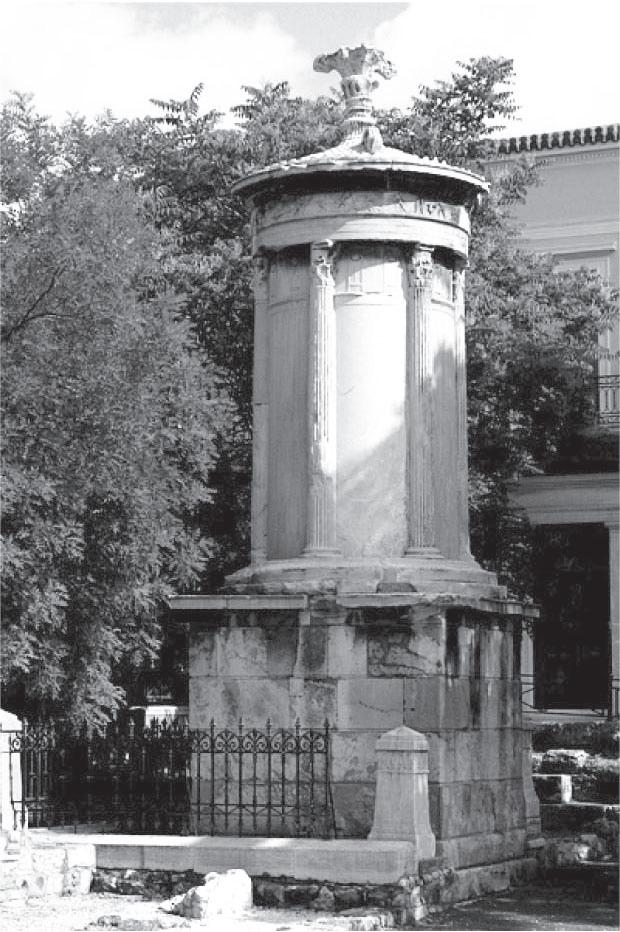
An ornate and tall marble monument with Corinthian pillars stands near the Acropolis and the Theatre of Dionysus in present-day Athens, Greece. It is a choragic monument dedicated to Lysicrates. The word ‘choragic’ comes from the Greek word ‘choregos’ meaning chorus leader: a person who sponsors the staging of a Greek drama. Lysicrates was one such person.
But, what does that have to do with paying taxes?
The year was 334/335 BCE. People from all walks
drama festival staged by great playwrights such as Sophocles, Euripides, Aeschylus, and like. Each play was sponsored by a chorego, a very wealthy patron who funded and supervised all activities related to the drama including room and board for all the people involved, their costumes and masks, artists, and their materials for the painting of sceneries, and rehearsal. The entire festival was free to the masses.
At the end of the festival one play was selected by the majority of the spectators to be the winner of the Dithyramb Competition (a wild choral hymn of ancient Greece, especially one dedicated to Dionysus). That year the winning play was sponsored by and fully funded by Lysicrates. He also paid for erecting the monument named after him to commemorate the event, the only such monument existing today.
At the outset, one wonders why would the wealthy do such a thing? As unbelievable as it may sound, the incentive for those wealthy people like Lysicrates was the irresistible attraction for the praise and recognition that
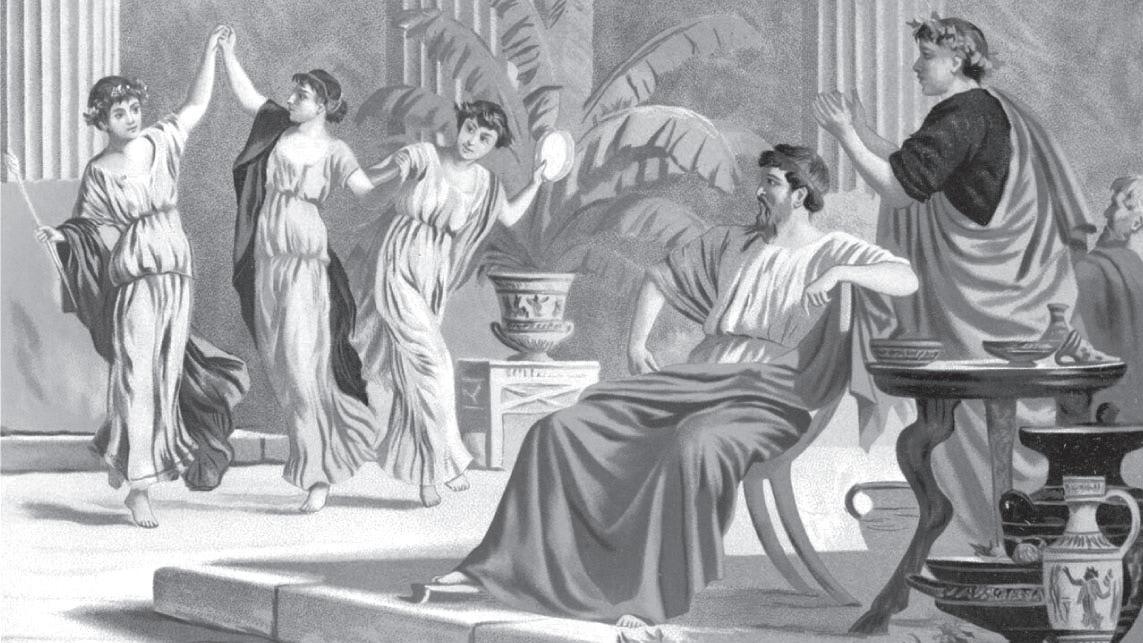
of life in Athens and far streamed into The Dionysus Theatre in the Acropolis to watch a week-long yearly
average citizens heaped on them. And for this craving to boost their ego these wealthy
By Debajyoti Chatterji
If you visit the corner of 99th Street and Broadway in the Upper West Side of Manhattan, you will notice a seven-story brick building. This 10,000 sq ft building has been standing at that location (244 W. 99th Street) since 1910 and has no doubt undergone its share of exterior facelift and interior renovation over its 112-year life. Today, it is a hotelcum-condo complex, the home of an extended-stay hotel (Hotel 99) and several individually owned condominiums. This building looks similar in size and architecture to many other structures in the neighborhood, so you are not likely to think twice about it as you walk or drive by. You would not know that back in the 1970s, this building gave much needed shelter to many newly arrived Bengali immigrants. It was a silent witness to the many struggles these freshly landed students and professionals faced in a new country, some 8000 miles away from the homes they had left behind. These immigrants had little money, no jobs, and virtually no one to lean on in case of emergency. For them, Clinton Arms Hotel was a lot more than a simple shelter. In the hearts of those Bengalis who arrived in New York City in the 1970s, this unpretentious building still occupies a soft and warm corner, no matter how basic and unattractive that shelter had been in the days long gone.
The Immigration & Naturalization act of 1965 was signed into law by President Lyndon Johnson in 1968. For the first time, it became possible for Asians (including Indians) to become legal residents (and subsequently citizens) of the United States. Preference was given by the US Government to “highly qualified professionals” like physicians, scientists, engineers, accountants, pharmacists, professors, etc., to immigrate to America. As a result, thousands of Indian students and scholars already enrolled in degree programs or research projects in American universities or hospitals fairly easily obtained “Green Cards” and became “permanent residents” of the US. Soon thereafter, the US began to encourage highly qualified professionals living in India to apply for “Green Cards” and enter the US. Numerous Indian professionals, including many Bengalis, took up the opportunity and started heading for America, even though very few had job offers in hand. What they had

with them were their Green Cards, their professional credentials, a few dollars in pocket – and dreams of a better life. The most popular point of entry for Bengali immigrants was New York City, partly because it was the most well-known American city in the world and partly because the city offered the greatest opportunity to find jobs.
Unfortunately, the US economy suffered a prolonged recession during the first half of the 1970s. Finding good jobs was difficult even for American citizens. For freshly arrived immigrants from India (and many other Asian and African countries), the situation was even more problematic. Most employers were not familiar with Indian universities or companies, and they were reluctant to hire individuals who had not been educated, trained or employed in America. Basically, engineers, scientists and other professionals who had held positions of significant responsibility in India and had excellent academic records were rejected outright by American companies for “lack of relevant and acceptable experience”. Furthermore, India was going through a severe foreign exchange crisis, and the government had placed strict limits on how much dollar an Indian emigrant could take with him/her while leaving the country. So, even individuals from affluent Indian families could not bring with them more than a modest sum of dollars. Some could bring a couple of hundred dollars with them only after a special approval from the Reserve Bank of India, but the vast majority of the early immigrants were allowed to purchase only 8 dollars at their airport of departure.
Some of the Bengalis coming to NYC were forewarned about the American job situation by their class-
mates or colleagues who had preceded them. Nevertheless, they were determined to pursue their American dream and were willing to take their chances. So, they came to America and ended up facing the hard landing that was waiting for them. There were also many Bengali immigrants who had no idea that the American economy was in recession and the job situation was awful. They arrived in NYC, full of ambition, enthusiasm and hope only to encounter disappointments, sense of shame, homesickness and depression. For them, the landing was probably even harder and more heart-breaking.
For Bengali immigrants arriving in NYC without a pre-arranged accommodation, finding an inexpensive place to stay in the city center for an uncertain period of time was the first and foremost problem to solve. Since only a few were fortunate to have friends, relatives or colleagues already living in the city, the vast majority of the Bengali immigrants arrived at the JFK airport with suitcases, passports, Green Cards and a few dollars – but without any idea about where they were going to go from the airport terminal. Some asked airport personnel for suggestions and were told to go to a YMCA in the city. A few were greeted by classmates or relatives and taken away to their homes or to a prearranged accommodation like a hotel or a rooming house. Then there were the unlucky ones who had no place to go and had to latch on to other Indian immigrants wandering around inside the terminal -- and decide together where to go. Usually, these collective decisions were based on somebody having vaguely heard of a low-cost hotel in Manhattan that took in Indian travelers. And the name that came up most frequently in these kinds of on-the-spot brotherhood of freshly arrived Indian im-
migrants was Clinton Arms Hotel in Manhattan.
In the 1970s, Clinton Arms Hotel provided very basic, no-frills accommodation to a budget-conscious clientele who wanted rooms for extended stay. Some stayed for weeks, some for months and a few for even longer periods. The clientele included students studying at Columbia University for post-graduate programs, senior citizens – often widows and widowers, and quite a few newly arrived immigrants. The hotel was reportedly owned by a Jewish gentleman and was run more like a YMCA than like a traditional hotel. There was a lobby with a security guard-type of attendant but no common arras to speak of. No dining facilities, no bars either. Single rooms predominated, although a few couples stayed every now and then. Most rooms offered a single bed, one table and a clothes rack or a closet. Shared bathrooms and kitchens were at the end of each hallway. The shared kitchens were small, and each contained a cooking range, a refrigerator and a limited number of utensils. Some residents used the kitchens but many brought in food from outside, Payphones were installed on the hallways; no private lines were available. Residents had to stop by the front desk to pick up their mail because there was no room delivery service of any kind. No in-house laundry facilities were available, and residents had to lug their dirty clothes to nearby laundromats. There were three elevators in the building but not all of them worked all the time.
Notwithstanding the struggles and sufferings experienced by the early Bengali immigrants who stayed in Clinton Arms Hotel, most were ultimately successful in establishing themselves as highly valued professionals in their areas of expertise. Unfortunately, a few had to return to India, after exhausting their limited resources and feeling defeated by the lack of job opportunities.
Nobody knows exactly how many Indian or Bengali immigrants stayed at Clinton Arms Hotel during the 1970s. I guess that the total number was in the 100 to 200 range, if not larger. By 1980, the torrid pace of Indian and Bengali immigrants arriving in NYC with Green Cards had slowed to a trickle. Clinton Arms Hotel began to assume a much diminished role in the minds and lives of the NYC Bengali immigrant community.
By Partha Sircar, California
Editor’s Note: This is the second part of a two-part series. The first part was published in the January-2022 issue of Ananda Sangbad.
(The Writer’s note: I took the term ‘Bengali Renaissance’ to mean a quantum jump, a paradigm shift if you may, of Bengali social and intellectual life, whose effects spread far afield and whose effects we feel even at the present time. A list such as this is by nature, subjective. But the overall message is undeniable. And it all occurred from the early part of the nineteenth century and lasted till the 1940s with a few exceptions.)
Gaganendra Nath Tagore
Gaganendranath Tagore was counted as one of the earliest modern artists in India. He studied and assimilated Japanese brush techniques and the influence of Far Eastern art into his own work. Gaganendranath pioneered experiments in modernist painting anddeveloped a complex post-cubist style. He also took up drawing cartoons and caricatures.
Nath Tagore (1871-1951)
Abanindranath Tagore was the first major exponent of Swadeshi values in Indian art. He sought to modernize Mughal and Rajput styles and advocated favoring Indian sources such as the the Ajanta Caves. Among his famous paintings are the Arabian Nights series and the painting ‘Bharat Mata’ depicted as a saffron-clad divine woman – one of the earliest visualizations of “Mother India”. He left behind a coterie of students like Nandalal Bose, Asit Haldar, and Sarada Ukil.
Bose (1882-1966)
Nandalal Bose, a pupil of Abanindranath Tagore, was known for his “Indian style” of painting. He created a new art movement in India. Among his notable contributions are the iconic lino cut of Gandhi’s Dandi March; sketching the emblems of the awards like Bharat Ratna; and beautifying/decorating the original manuscript of the Constitution of India. His notable students include Benode Behari Mukherjee and Ramkinkar Baij.
Dwijendralal Roy (1863-1913)
Dwijendralal (D. L.) Roy has been immortalized for his patriotic songs like ‘Dhanadhanya puspabhara’ and ‘Banga amar anani amar’. He wrote about 500 songs and his compositions, known as Dwijendragiti had a unique place in the Bengali music milieu. He was also an accomplished dramatist. His historical plays like ‘Mewar Patan’, and ’Shah Jehan’ were particularly popular and often successfully staged.
Profulla Chandra Roy (1861-1944)pioneer chemist and industrialist
Profulla Chandra Roy was an eminent Bengali chemist. He was particularly known for his discovery of mercurous nitrite and his work on Ammonium and alkylammonium nitrites. He was the founder of Bengal Chemicals & Pharmaceuticals in 1901. It was India’s first pharmaceutical company,
Ashutosh Mukherjee (1864-1924) educationist – put Calcutta Univ. in the world map
Sir Asutosh Mukherjee ss Vice Chancellor of the Calcutta University (1906-1914; and 19211923) transformed it into a world renowned academic institution. He was instrumental in discovering the talents of the Nobel Laureate physicist C. V. Raman and the philosopher S. Radhakrishnan. He was also appointed a judge in the Calcutta High Court.
Brajen Seal (1864-1938)
Brajendra Nath Seal was a humanist philosopher. He was a polymath in the truest sense as revealed by his publications on a wide variety of subjects. Seal was the keynote speaker at the first session of the First Universal Races Congress of 1911. Seal was the inaugural chair of philosophy at India’s first graduate school in philosophy at the University of Calcutta and the Vice Chancellor of Mysore University.
Suniti Kumar Chatterjee (1890-1977) – pioneering philologist
Suniti Kumar Chatterjee was a pioneering Indian philologist. He made seminal contributions in the areas of the origins and development of Bengali language and literature, Bengali phonetics and linguistics. He also contributed to the complex language issue in India
Jadunath Sarkar (1870-1958) – pioneer historian
Possibly the first Indian to be truly recognized as a historian. His extensive writings on the iconic Mughal Dyansty, was possibly his greatest contribution
Sri Aurobindo (Aurobindo Ghosh)
Sri Aurobindo was a leading nationalist dedicated to the independence of India. He openly joined the political movement at the outbreak of the agitation against the Partition of Bengal in 1905. In Bengal, he established contacts and inspired revolutionaries like established youth clubs like Anushilam Samiti. He was arrested in 1908 in connection with the Alipore Bomb Case. During a year of isolated incarceration, he found his calling for spiritual pursuits. He escaped to Pondicherry, then a French colony and began his new life.
Prashanta Chandra (P.C.) Mahalanobis (1893-1972)
A pioneer in the field of statistics in India, best known for his establishment of the Indian Statistical Institute (ISI). Among his other contributions: he introduced and implemented the concept of pilot surveys and sample surveys and a method of estimating crop
continue to page 12 }
| continue from page 4
Greeks, no more than 1% of the population came up with funds in the form of taxes that paid for the entire cost of the drama festival every year.
It is to be emphasized that at that time Athenians put an extraordinary premium on various intellectual pursuits, be it art or literature, or drama or philosophy. But that was not all. Paying for public arts was only a small portion of the expenditure that the local government had to incur to run various societal activities.
The most expensive item was maintaining armadas of trireme ships. Greece was not involved in large war fares at that time, but she had already started doing businesses in faraway lands. Such ventures required fleets of well-manned, well-armed ships at a huge expenditure. These ships needed scores of oarsmen to a large number of soldiers. Therefore, taking care included paying for food and lodging to buying armaments. Much like the patrons of the arts the super-rich Greeks came up to the challenge and sponsored these ships in the form of paying taxes, and even on occasions paid more than their fair share.
It may sound that the system was unfairly tilted towards the rich, but in reality, the poor and middle class, instead of
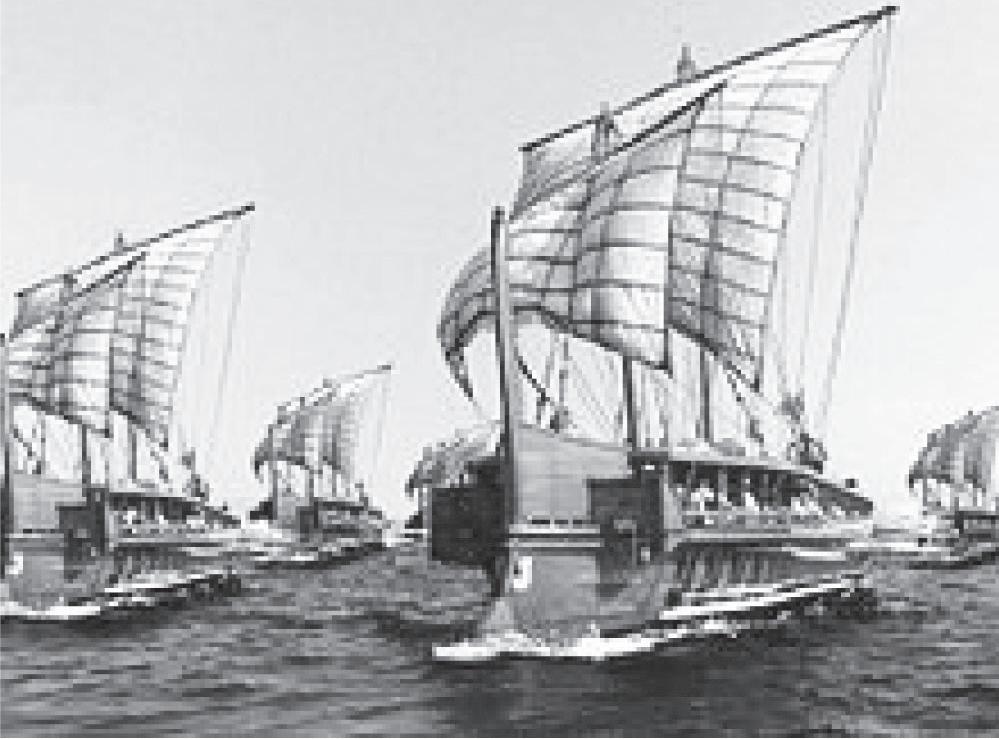
paying taxes did their share also. They manned the ships as oarsmen, others filled the ranks of soldiers, artisans brought their skills for the public good. This way nobody felt that they were treated unfairly.
In addition, a distinct sense of camaraderie permeated in the 4th-5th century Athenian society: there was a need for everyone in the society, as individuals and communities to survive and flourish together and, thereby actively support their unique form of direct democracy
But not everything always ran smoothly. There were instances when rich patrons failed to do their share of financial sponsorship. Old court documents, unearthed by scholars show that in such cases the person was shamed in front of a large crowd. For example, if a patron, coming from a family of high pedigree and honor failed to pay he was accused of being greedy and holding on to his money unfairly.
It turned out that such public accusations had teeth, and the defaulter saved his face by stating that it was a misjudgment on his part, and he would not do it again and quickly paid up. Therefore, voluntary payment of taxes provided dividends in the form of moral and spiritual satisfaction, as well as social grace.
After reading this far it is plausible to think that such a practice of voluntarism and participatory democracy may work today to extract taxes from the super-rich. However, true to the maxim that all good things must come to an end the Athenian experiment came to an end after almost two centuries from its inception. Today the Lysicrates monument stands as a witness to that ideal.1,2
1I heard the tale of the Athenian experiment first from my good friend Dr. Kishanlal Chakrabarty.
2The article by Nick Fouriezos further triggered my interest in the subject: https://www.ozy.com/fast-forward/howancient-athens-convinced-its-wealthiest-to-love-paying-taxes/409789/
Ananda Sangbad
Introduction:
Inspired by my own love for plants and visits to various greenhousegardens in NJ and PA, I often wondered if I could also grow some of my favorite South Asian plants and flowers in a greenhouse set up. So, a few years ago, I decided to seek out an opportunity to embrace my connection with plants. With a little help from my wife, I started Pushpashree, a flower farm business. The business is currently small, dependent on access to suitable greenhouse space, and run as a solo operation. I have been growing seven different varieties of Joba (Hibiscus) flowers all year-round. We supply loose flowers that we grow, garlands, and some floral arrangements for ceremonies in a few local temples, private events, and celebrations.
I plan to bring a series of short articles on interesting information about some plants and trees familiar to the South Asian population, and how to grow and care for them in your homes and gardens. I am thankful to Ananda Sangbad for providing me an opportunity to connect with the community who share my passion for gardening. As I share my experiences, experiments, and explorations, I hope that you will find something engaging in these articles, irrespective of your interest in gardening.
In the US, Tulsi is treated as a seasonal plant, especially in the Northeast. Many years ago, I remember visiting a local Indian grocery store in Edison, NJ where small saplings of Tulsi sitting in a Styrofoam cup and handful of soil, were being sold for a few dollars. My wife and I bought such a sapling and placed it in a little pot on our deck. While it flourished through the summer months, the Tulsi plant did not survive that winter.
With spring coming up and summer just around the corner, you are already starting to see Tulsi saplings being sold in most Indian grocery stores. It is an extremely popular plant in most South Asian homes. Whether grown and nurtured for religious, cultural, medicinal, or culinary uses, many of us have grown them in our homes and gardens, with varying degrees of success.
Tulsi is an aromatic short stemmed, woody, perennial shrub, scientifically known as Ocimumsanctum tenuiflorum. It is one of 60 known species from a family of plants, called Lamiaceae. Other plants in this family include fragrant and well-known herbs such as mint, rosemary, sage, oregano, Italian basil, Thai basil, thyme, and lavender. Tulsi, also known as the holy basil, grows in the countries of India, Nepal, Sri Lanka, Thailand, Cambodia, and parts of Southeast Asia, including China.
In the Indian subcontinent there are 3 main species of Tulsi plants: (1)
By Pravesh Lal
Editor’s Note: Pravesh and his wife Shuchismita run a small business, growing plant and flowers familiar to people from South Asian countries - such as Joba (Hibiscus), Beli/Juhi (Jasmine), Korobi (Oleander), and Jhumkolata (Passion-flowers). They supply loose flowers and garlands made from these flowers to local temples and people in the community for various pujas, celebrations, and ceremonies. Pravesh may be contacted at pushpashree.usa@gmail.com
Rama or Sri Tulsi – the leaves of this plant are green in color, have a strong aroma but a mild taste, and are mostly used for religious purposes and herb al teas; (2) Krishna or Shyama Tulsi - the leaves of these plants are darker in color (purplish), have a strong pep pery taste but milder aroma, and are used for both making teas as well as in ayurvedic medicines; and (3) Vana (or wild) Tulsi - the leaves of this spe cies are dark green and slightly hairy,
have a strong lemony taste and are mostly used for making teas and as culinary herbs.
Other, lesser known and rarer varieties of Tulsi include the Kapur Tulsi, Babui Tulsi, Barbari Tulsi, and Kali Tulsi which are also used in various ayurvedic medications.
The word Tulsi in Sanskrit means the incomparable one. Books describing medical practices in ancient India, such as Atharva Veda and the Charaka Samhita, refer to Tulsi as the Queen of Herbs. Some of you may have tried Tulsi teas and Kadhas which are used in many homes as remedies for common ailments like headaches, body-aches, colds, and congestion. The leaves and stems are boiled with various other herbs and spices to make herbal tea infusions (steeping from leaves). Decoctions (extractions from a bark or stem) from the Tulsi plant are known to reduce stress and fatigue and treat various throat problems as well.
The Tulsi plant is commonly grown in the courtyard of homes in a dedicated four-sided structure called Vrindavan or Tulsi Manch. It is believed that the presence of Tulsi in a home is said to increase reverence, good health, and happiness to all members of the family. There are many stories from the Hindu mythology about the roles that Tulsi has played in shaping the cultural, social, and religious uses of this plant.
As per Hindu scriptures, Tulsi is a manifestation of Goddess Lakshmi, the consort of Lord Vishnu and is worshiped as Goddess or Mother Tulsi. Tulsi leaves are one of the most important offerings in the worship of Lord Krishna and Lord Rama. They are also used for worshiping Lord Hanuman. There is a popular and auspicious Hindu festival called “Tulsi Vivah,” celebrated in many
places in India. During this festival, the Tulsi plant (or goddess Lakshmi) and Shaligram (Vishnu in the form of stone) are ceremoniously married, to mark the beginning of the traditional
Have you seen movies and TV shows where pious women of the household water the Tulsi plant each morning
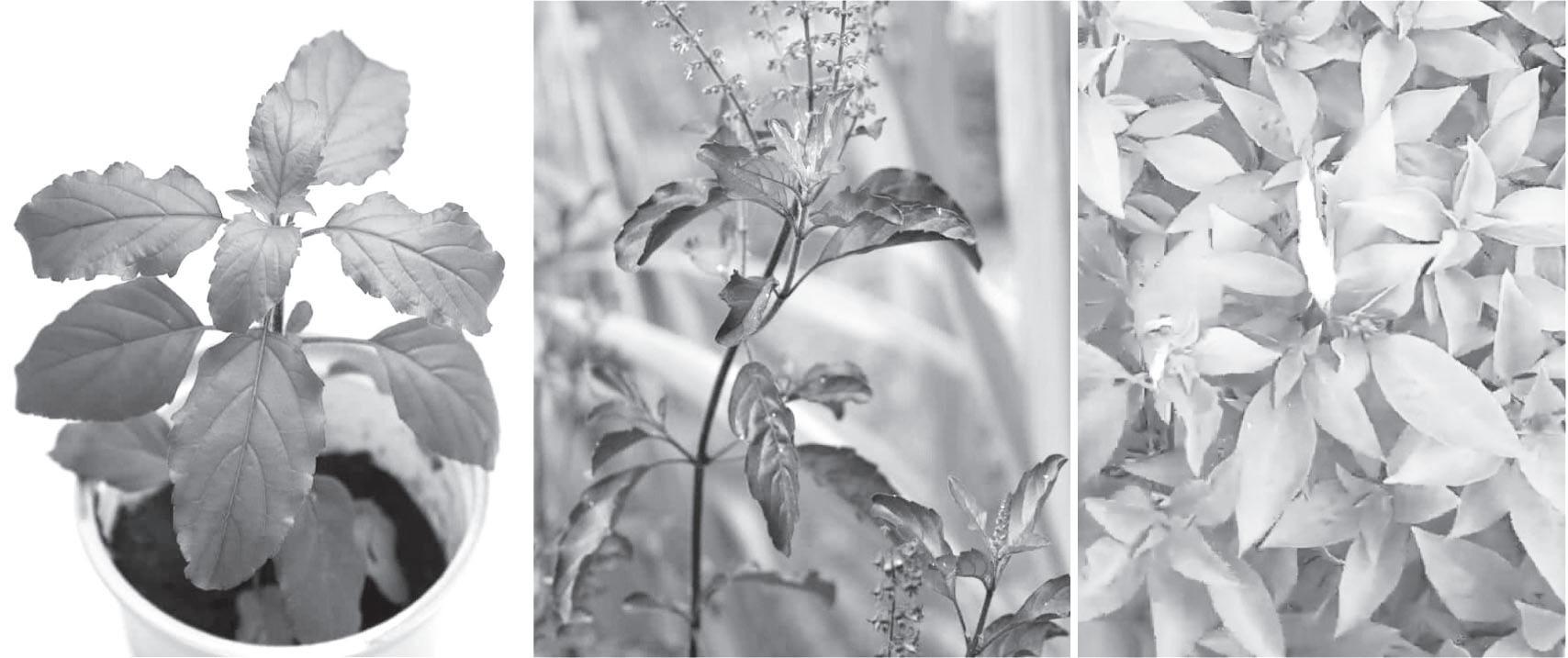
and light little clay lamps each evening, while offering prayers for welfare of their home and family? However, the idea that all a Tulsi plant needs is a little water and lots of devotion is not entirely true.
Conversations with many people in NJ has allowed me to narrow down some of the major problems in growing and caring for a Tulsi plant. These include lack of suitable temperatures, light, soil, nutrients, and plant pests. In this article I am sharing some of my experiences so you can care for the Tulsi plant(s) in your home.
A Tulsi plant can be grown either from its seeds or from cuttings. Tulsi seeds require warm temperatures to germinate and need to be kept in a place that is at least 70°F. Place a few seeds in small pot with a little bit of soil that is always kept moist, but make sure that the soil does not get soggy. You should be able to see the seeds start germinating in about three weeks after planting.
Tulsi cuttings taken from an established healthy plant can be used to start a new plant as well. Take a cutting, 4 to 6 inches long, using a sharp garden shear or a knife. Remove all the flowers and most of the leaves and then place it in a glass of water. Keep the cutting in a warm environment, such as near a sunny window. Make sure you change the water every few days to avoid any mold growing on or around the cutting. Small roots will start forming within 2-3 weeks, after which you can place them in small pots with soil.
Tulsi plants need well-drained, aerated, organic soil. Compact, clayey, or soggy soil will make the roots rot. In order to improve the drainage of the soil, mix in a handful of sand
with the soil. If you keep your plant indoors mainly, I have found that using organic soil, enriched with beneficial fungus (Mycorrhizae) keeps my plants healthy and mostly bug free. Most local garden supply stores and online stores, sell this type of soil. To make sure that my plants get enough nutrients I repot most of my plants, including Tulsi, every year in spring (March or April). This allows the roots to utilize the nutrients present in the fresh soil to support plant growth during the summer months. I also prefer to do the repotting either early in the morning or in the evening to reduce any trauma to the plant.
In my experience, you do not have to water the Tulsi plant daily. In fact, the plant needs water only if the soil becomes dry to touch. Especially when indoors, try to avoid wetting the leaves during watering as this may cause mold infections.
Commercial fertilizers have a combination of three min plant nutrients: Nitrogen(N), Phosphorus(P) and Potassium(K). Different combinations of these nutrients (also called the NPK ratios) are prepared for different plants and their growth phases. Both liquid and dry formulations of fertilizers are sold with instructions for application. For the Tulsi plant, I use a spoon full of a balanced liquid fertilizer (NPK ratio: 10-10-10 or 1212-12) on a monthly schedule during spring and summer. I usually avoid fertilizing during the winter to let the plant rest.
The Tulsi plant likes full or partial sunlight and warm temperatures. However, if you live in NJ or neighboring states, you must move your Tulsi plant indoors in the fall (September or October). Place the plant near a bright sunny south-facing window, or under bright artificial plant lights for at least 8-10 hours a day. While the Tulsi plants need temperatures above 60 F to remain green and thrive, do not place them near drafts of warm air as this will dry out the leaves and damage the plants. Once all the dangers of frost have passed (i.e., late April or May), you may move the Tulsi plant outside again.
Insects such as spider mites, aphids and mealybugs are some of the most common pests that can ravage the Tulsi plant. As a first tactic, I regularly spray my Tulsi plant with a gentle stream of water to wash these insects off. I also make sure that this water does not spray on nearby plants and is drained away. There have been times when just spraying water is not enough to remove the infestation. In
By Mita Sinha, Chair, Puja Committee
In early January the pandemic was under control so we started getting somewhat relaxed with COVID-19 restrictions but it did not last long. All of us have been through a lot in last two years and we forgot what a normal life is anymore! We have to be careful going back to our daily activities as cautiously as possible. Omicron started in full force in mid-January so we took some additional precautionary measures for our puja activities at Ananda Mandir.
The year 2022 started with
the celebration of the New Year’s Day on January 1st. The temple stayed opened all day and devotees visited the temple throughout the day since it is customary for Indians to start the year with a visit to the temple.
The next one was our monthly Shyama Puja. A lot of attendees came to the Mandir for this puja. Due to Omicron virus, we stopped food distribution and started mask wearing inside the temple again from the beginning of January 2022. We started giving out whole fruits and
sweets as prasad instead of boxed food.
Ratanti Kalika Puja was on January 30th. This Puja is observed in the month of Magh, mostly by people of eastern India. Number of Ananda Mandir members came to the temple on this day and enjoyed the Puja and Arati and prasad was distributed to everybody.
The month of February started with Saraswati Puja. Goddess Saraswati is the Hindu Goddess of knowledge, learning, wisdom and music, and hence is the most popular among students of all domains. The Saraswati Puja is always performed in the morning and lot of fami-
lies with their kids visited the temple with puja offerings and participated in the puja activities.
We also had Hatakhori on this day. Hatakhori is an auspicious religious ritual which is performed to signify starting education for a Hindu child. This is observed in West Bengal and it happens on the day of Saraswati Puja. Little children of three or four years old perform a ritual of writing Bengali alphabets and numbers on a slate. We had 25 kids came to the temple for this ceremony and they had fun writing on a slate, in good old-fashioned way. They also received a bag of gifts from Ananda
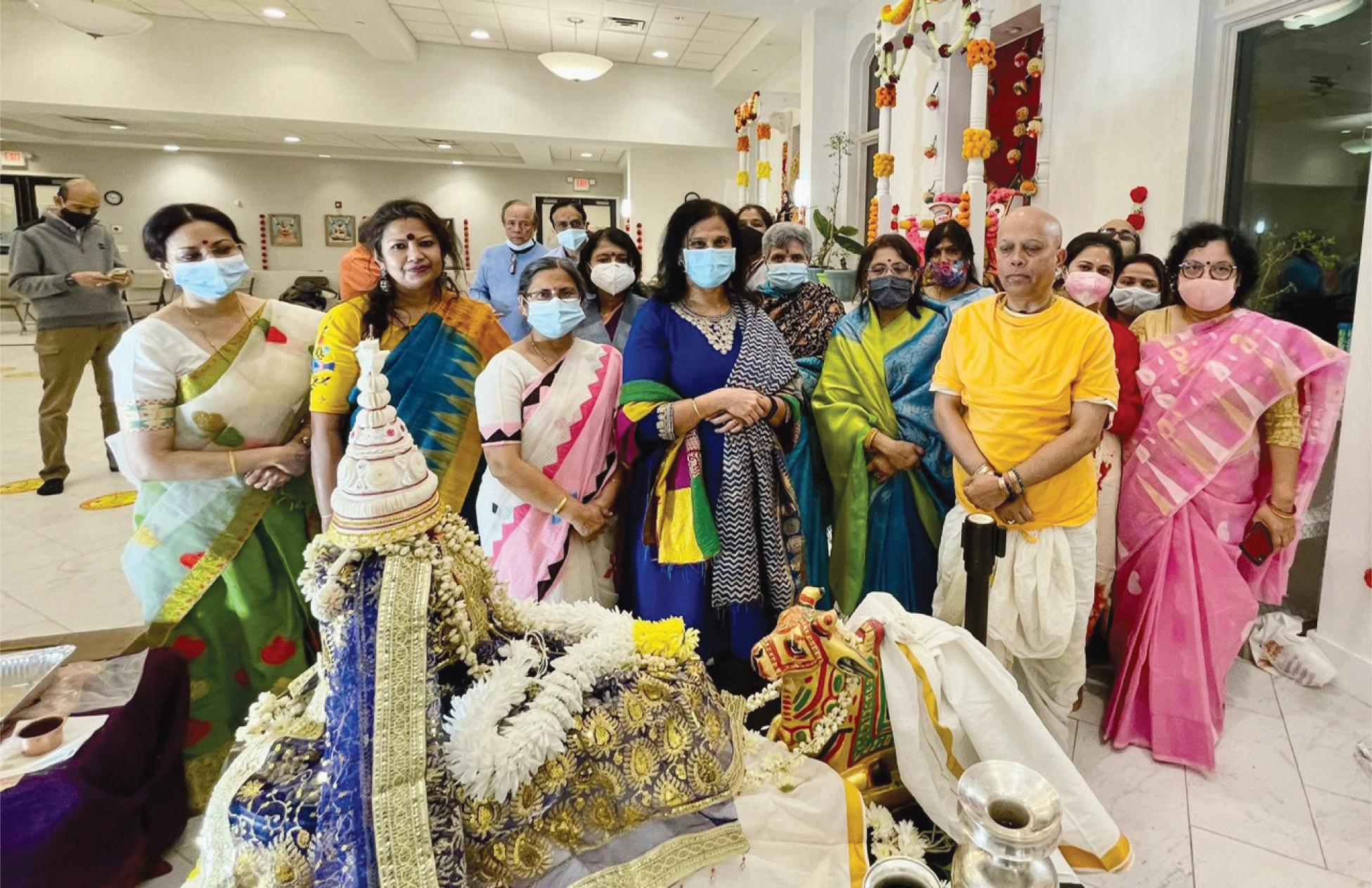
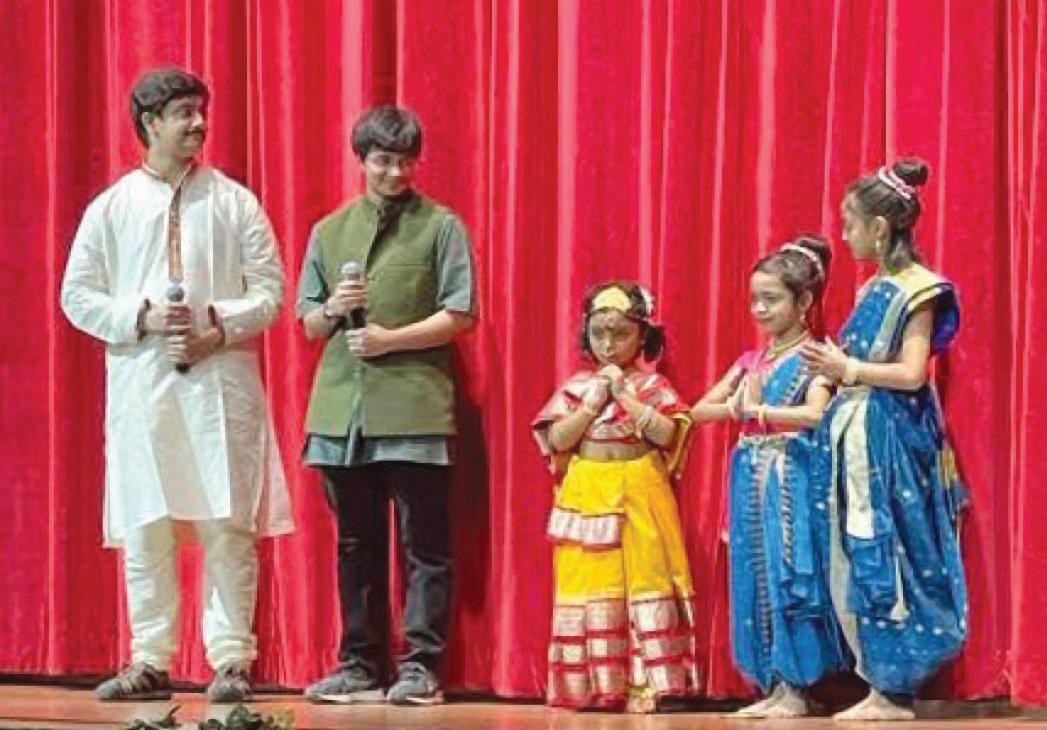
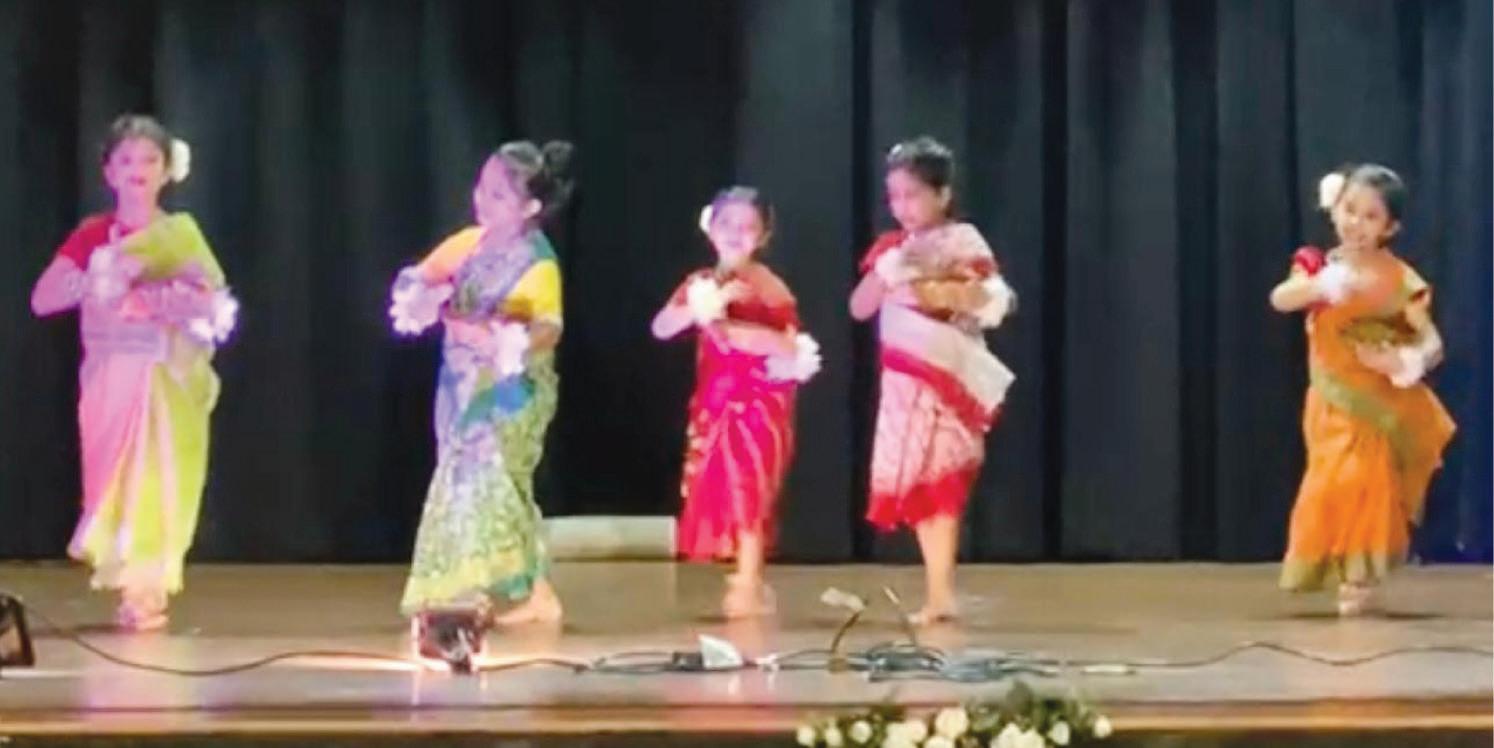
Mandir. This is a fun ritual and both kids and parents enjoy it every year.
February ended with our monthly Satyanarayan Puja. It was a cold day but our devotees were brave enough and came to the temple to attend the puja. All of us enjoyed the puja and Arati and had prasad after the puja.
We had Shivaratri on March 1st this year. This is a major festival celebrated in a Hindu calendar. The festival marks the end of winter and the arrival of summer. Maha Shivaratri is observed to mark a remembrance of overcoming darkness and ignorance in life. Devotees observe a day-long fast on this day. This is a sacred day for Hindus across the globe. Ananda Mandir stayed open from 10:00 am to 10:00 pm. At night we had Hima Chandan Arati and Rajbesh of Lord Shiva. Most of our members stayed at the temple until late that night.
On March 2nd we had our monthly Shyama Puja in the evening. A number of our members visited the Mandir to attend the puja.
The next Puja in March was Dol Purnima/Holi. Holi is our spring festival celebrated throughout North India. It is known as Festival of color, on this day participants throw colored water and colored powders on one another. At Ananda Mandir we celebrate this festival by rubbing color powder on each other’s face. This was a fun day and all of us enjoyed the festival.
Also, in the evening we had our monthly Satyanarayan Puja. A popular puja at our Mandir. We prayed together and after the Arati all of us had Sinni and fruits.
2022 seems like a good year so far, even though it is too early to say. We just hope and pray that COVID goes away and we can enjoy our life in peace. So many people lost their near and dear ones in past two years. We hope that 2022 brings us good health and prosperity.
Please come and visit the temple and be a part of this organization. This is definitely a special place and everybody is welcome at our temple.
Thiswas the headline of an article published in the New York Times in July 2018. Having grown up associating midlife crisis with swapping your hatchback for a sports car, I was pleasantly happy to discover this antidote when I hit my fiftieth year of life.
Many people in midlife find themselves dancing around a vague, restless feeling or an inner desire to better themselves. A feeling that there’s something more, something meaningful and important just out of reach. Something intriguing but elusive sitting in the shadows nearby.
Most people understand that the “something” is deeply connected to them. Something they know well and yet can’t quite pinpoint or describe. If they could just find a torch they could shine a light on it and bring that elusive thing out into the light.
Psychologist Kathleen Brehony says that two important things happen in midlife. We experience a heightened awareness of death, ultimately recognizing that our own time is limited. Therefore, she says, “the deepest inner strivings of the soul press for expression.” So paradoxically, the fear of death and the urge to leave a legacy can bring us alive in creative new ways at midlife.
I have been drawn to the arts since childhood. However, as an adult, like so many others, I mostly kept my love of painting and crafting boxed and tucked away on a shelf along with my art supplies. Other than school projects for my children, or community volunteer work that required my creative involvement, art was something “I did not have time for”. With a full-time job in the state government and two children to raise, my reasoning seemed logical. As time went by and I neared midlife, I felt my priorities shift and felt more liberated and less guilt ridden about listening to my creative self. Yet, I never seemed to be able to give myself the permission, if that is what I can call it, to pursue it wholeheartedly.
As with other areas of my life, it took some lemons being thrown at me to finally make the lemonade! In 2018 I had a surgery that required me to be housebound for 6 weeks. After the first week, I realized that to hold on to
By Ranjana Sanyal
“Forget a Fast Car. Creativity Is the New Midlife Crisis CureWho needs a Ferrari when you can pick up a paintbrush?”


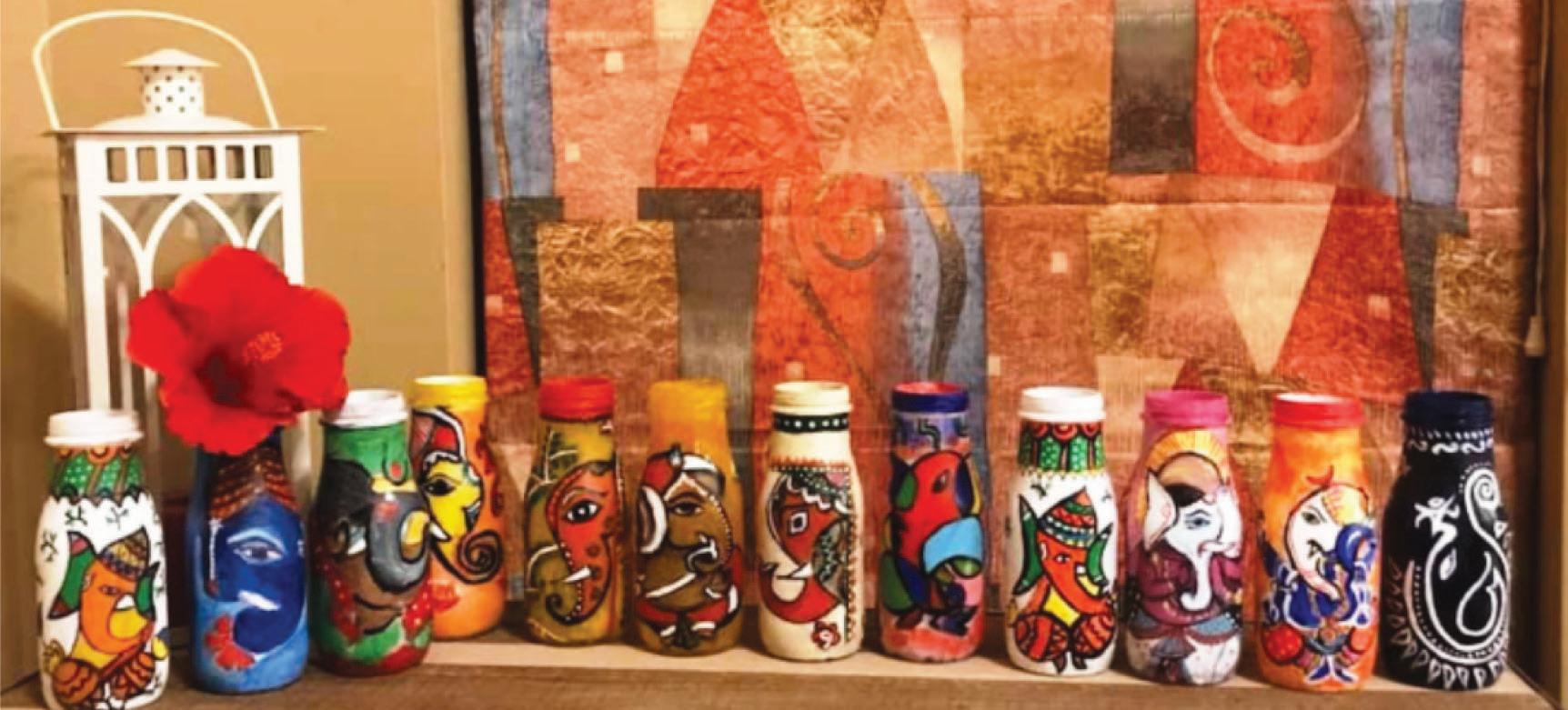
my sanity I needed to paint! I had some empty bottles lying around the house and painted Ganeshas on them. I sold them to raise money for Medha, a non-profit with which I am associated.
Then came COVID. March 2020 brought the full onslaught of the pandemic and the months of home quarantine. To ward off anxiety, I started painting pictures and quotes on small stones and pebbles. I posted my “Pebble of Wisdom” on social media every morning, and developed quite a following. People started reaching out to me saying that the quotes were motivating them or helping them cope. As months went by, I started painting in earnest and selling my products to friends and acquaintances. My hand painted wood trays seemed to catch the fancy of many and orders started pouring in. Fast forward to 2022 and my love of painting has taken the shape of a small business, “The Creative Hand “. Now, I am selling my products not just in New Jersey, but shipping them to customers all over the United States.
Now that the “painting” genie has emerged, there is no way that I can avoid giving in to the urge to paint. It is like a compulsion. So, what changed? Perhaps, as we reach our midlife and beyond, we are able to break away from societal strangleholds on our creativity. Whether it is in the garden, through visual art, photography, theatre, dance, writing, speaking - or any other form of expression - midlife offers many avenues for our creative energy.
History abounds with examples of artists who found their creativity in midlife or even in old age. Since painting is my passion, I thought I would draw your attention to a few, perhaps lesser known examples.
Grandma Moses worked on a farm most of her life. She only started painting in her late seventies, after she retired from her farming duties. At the start of her career, Grandma Moses entered some of her paintings into her local county fair, but they did not win any prizes. Her work was discovered by art collector Louis Caldor, when
and are in museums collections at institutions such as the Los Angeles County Museum of Art and the Whitney Museum of American Art.
Mary Delany was twice widowed. After the death of her second husband when she was 68 years old, she focused on making intricate paper cutouts of plants and flowers to help her cope with the loss. These cutouts were so exquisite that they are now part of the British Museum’s collection. Mrs. Delany created almost two thousands of these pieces of art, working until age 88.
Creativity requires that we connect with the deepest part of ourselves. That we allow ourselves to be motivated by our most primal feelings: fear, joy, love. It requires that we be open, that we use the best of the past to create the future. Life itself can be viewed as a creative force and the daily moments within it the canvas for which to imprint your chosen art form.
ò˜)îû ö˜¢# ö¤¥z îûy‡y¡ öSéöì¡ó
| continue from page 6
he found her paintings for sale at the local drug store. Caldor worked on Grandma Moses’ behalf to get her work displayed in museums and galleries. Grandma Moses enjoyed over twenty years of painting success and became a folk art sensation. She painted up until her death at 101 years old.
Bill Traylor was broke and homeless at the age of 85.
To pass the time, he started drawing and displaying his work on the streets. A fellow artist, Charles Shannon, noticed Traylor’s talent and got him better tools. Bill Traylor made well over a thousand pieces of art in his lifetime, many of which are still displayed and celebrated today. Noah Purifoy earned teaching and social work degrees before he embarked into the world of art. He is best known for his found-art sculpture displayed in the desert in Joshua Tree, California. Noah did not even begin his work in Joshua Tree until he moved there when he was 72 years old. His works have been displayed in the United States and internationally,
!þ›Ûþ†þ ²ÌÝ•þ †þöìîû ëöìKþ !löìî˜l †þîûy ¥ëûÐ þ›%îûy†þyöì¡ òþ›%öìîûy’þy¢ó ô,ˆëûy ¥öì•þ ²Ìy® ôy‚¤ myîûy ²ÌÝ•þ †þöìîû ëöìKþ ’þz꤈ †þîûy ö¥y•þ Ð ôl%¤‚!¥•þyîû þ›Méþô x™Äyöìëûîû 23¤‚‡Ä†þ öÙÕyöì†þ •þy !îî,•þ ¥öìëûöìSéÐ òëöìKþîûó !l!ô_ þ›Öî™ !¥‚¤y lëû– òëöìKþ£ì% ö˜îyÝ£ìÄ!hsý ëöìKþ ¤îÅ‚ ²Ì!•þ!Ûþ•þôÐ ƒƒƒ þ›ÅlÄ yëûöì•þ ëKþy•þ ¤îç‚ëKþôëûô •þ•þ/Ð ôy†þÅöì[þëû ôöì•þ ëKþ¥z ™îû”#öì†þ ™yîû” †þöìîû xyöìSélÐ xö짬îû !l!ô_ # #îl ™yîû” †þöìîû xyöìSél– öô‰ ¥öì•þ î,!ÜT– î,!ÜT ¥öì•þ ¢¤Ä ö¤¥z ¢¤Ä ¥öì•þ ²Ìyl ™yîû” ~î‚ î,!ÜT ¥öì•þ þ›%lîûyëû öô‰Ð ~¥z ëKþ î•þÅôyl xyöìSé¥z îöì¡ ™îû”#îû îöìÇþ ²Ìyöì”îû ß›¨l î•þÅôylÐ ëöìKþîû !l!ô_ î™ xîöì™îû
By Basab Dasgupta, California
The process of entering into the US by air involves an elaborate process of consisting of inspection of passport, visa for non-citizens and search of one’s baggage for any dutiable item or contraband by the customs officers. Before the pandemic, it used to be a lot easier to enter the country by car, especially for US citizens, from Mexico or Canada and typically required an affirmative answer to a simple question “are you a US citizen?”
In view of all the controversies surrounding border security between USA and Mexico, President Trump’s partial construction of a wall along our southern boundary and recent surge in influx of illegal immigrants, I was reminiscing about my tenure at Sony in San Diego when I had to go to our manufacturing plant, located in Tijuana, Mexico several times a week.
Going into Mexico never posed any issues because no one asked for any documents. On the way back to USA there were customs and immigration checkpoints with several lanes. Lines of cars would form in each lane, reminiscent of lines at a Costco gas station. Depending on the time of the year and hour of the day, these lines could be very long. Typically, the rush hour periods were bad and Christmas seasons the worst as the Mexicans would head to US malls for shopping.
The border agent would ask the occupants of the car for citizenship. If you seem to be an American in your looks and/or mannerism, you can simply answer “US citizen” and chances were that you would be let into the US without showing any document. Mexican drivers and occupants would be asked to show their work permits or green cards or other “papers”. On some occasions the driver would be asked to pop open the trunk to make sure that there was no contraband being smuggled. Drug-sniffing dogs were available to assist the agents in this effort. If you declared yourself as a citizen of some other country, you would be sent to a “secondary” inspection area in a separate building. There you could be asked some questions about purpose of your
visit, residence etc. and travel documents plus any baggage in your trunk were inspected.
I crossed the border hundreds of times. If I was driving by myself, I could get away without any document simply by declaring myself as an American citizen. If I was with Mexican (and/or Japanese) guys and the only one to claim to be a US citizen, the border agent would typically ask me some questions such as where I lived and why I went to Mexico and in rare situations might check my driver’s license. I never had to go to the secondary inspection point.
The immigration officers have probably established a correlation between body language/mannerism and residency status of the passengers based on their years of observations.
I would like to share three funny stories about the anxiety of my fellow passengers (not regular commuters to Tijuana and not US citizens) when they reentered US through these checkpoints after a visit to our plant.
Satoko was a Japanese employee at Sony. She provided liaison support on procurement and logistics of materials purchased from Japan. She was an attractive and westernized woman. She was married to and later divorced from an American guy. She had a keen sense of humor but was very reserved and proper in all of her behavior.
On one occasion I needed her to attend an important budget meeting around 11 am at our Tijuana plant. I asked her a couple of days in advance and assured her that I would drive her there myself. She said “Oh, I am sorry. I will have to go home around that time because my dishwasher repairman is coming”. I said “I wish you were involved with the milkman in the morning”. She smiled. I persuaded her to change her dishwasher repair schedule and accompany me to Tijuana.
The meeting went well. As Satoko and I were driving back and approaching the border checkpoint she said “I just realized that I forgot to bring my green card”. I
looked at her. She appeared much Americanized and I knew that she spoke English perfectly. I emphatically told her “Ok, no problem. When the agent asks for citizenship, just say ‘US citizen’ and there would be no issues”. She understood.
“Citizenship?” the grim voice of the border agent was probably a little too intimidating to Satoko. Although I confidently said “US citizen” and the agent seemed satisfied, Satoko’s response of “US citizen” was in very low voice and almost inaudible. “Excuse me?” the grim voice reverberated again. This time, the ever-proper Satoko could not lie anymore. “I have green card but forgot to bring it with me”. Needless to say, she was instructed to go to the secondary inspection.
Now I was upset with her; she could be detained for a while and I would probably be running around, if nothing else to withdraw money for her. The penalty for not carrying the green card was more than $100. I parked the car in front of the secondary building and told her “I am not going. You created this problem and you go and solve it”.
About ten minutes later Satoko emerged from the building with a smiling face. The customs and immigration officials let her go. She did not have to sit through rigorous interrogation; she did not have to pay any fine. Her smile did the trick.
MR. HATTORI:
Mr. Hattori was the “president” of the Sumitomo-USA which was a supplier of copper wire to our plant. It is quite customary for the suppliers to periodically visit their customers, especially a customer like Sony, to make sure that they were pleased with the product and it is even better if the suppliers can see first-hand how their product is utilized. Mr. Hattori requested me if I could take him to our plant in Tijuana. “No problem” I said.
It was Mr. Hattori and another Japanese associate who rode with me. As three of us were driving down to Tijuana, about half way down Mr. Hattori confessed that he forgot to bring his passport. “Will this be a problem?” he asked in a slightly embarrassed manner. I knew that
this would be a problem. I was glad that he told me before we entered Mexico. I did not want to take any chances and decided to check with the US immigration officials at the border before we entered Mexico.
I presented Mr. Hattori in front of one of the officers and explained the situation. I overemphasized the importance of his position by saying that he was the president of an internationally famous company. In reality, Sumitomo-USA was a small plant in Kentucky only supplying to Sony. I told the officer that it was very critical for both Sumitomo and Sony that he got to see the plant and it would only take an hour and a half at most for him to make this trip. I was almost begging to the officer to allow Mr. Hattori to go to Tijuana and then come back, perhaps by giving him some temporary document. It seemed logical because it was obvious that Mr. Hattori was already in USA. The officer kept asking “where is his passport”? I finally told him the truth “It is at his home in Kentucky”.
After listening to all of our explanations and pleas, the officer informed us of his decision “the only way I can let him back in is if someone FedExes his passport to him”. I was feeling a little exasperated by then and also felt a little humiliated that a “big shot at Sony” like me could not do this favor to Hattori. I asked the officer as we were leaving “Don’t you ever make any exception to your procedures in emergency situations like this?” The officer said “I am already making an exception. I could arrest him right now for not carrying his passport with him”. The immigration rule is that every foreigner in this country must carry his/ her passport all the time. Mr. Hattori waited at a nearby McDonald’s while I took his companion and showed him the plant.
PAUL:
Paul was a Swiss guy and the “International Sales Director” of Ciba-Geigy, a global company, located in Basel, Switzerland which supplied us epoxy resin necessary for encapsulation of our transformer products. Just like Mr. Hattori, Paul was making a courtesy call and wanted to see our plant.
Paul was a tall lively guy
with a great sense of humor. I hit it off with him. In addition to properties of epoxy resin we discussed memories of my vacations in Zurich and Geneva. He had another Swiss fellow and their US sales manager with him. I wanted to take a couple of my guys. We decided to go in two cars. Paul and I were in one car and the rest in the other.
Paul suddenly remembered that he left his passport in his hotel room in San Diego. Unlike the case of Mr. Hattori, we were already in Tijuana on our way to the plant when Paul informed me of this oversight. I looked at him and he appeared to me to be as American as it gets and I knew that there would be no difficulties in bringing him back; but I decided to tease him a little bit. I said “From what I know, the Swiss guys are very popular in Mexican prisons”. He was not amused. Finally, I gave him the same advice that I had given to Satoko: “Relax. When the immigration officer asks for citizenship just confidently say that you are a US citizen and there would be no problem”. However, I could tell that Paul was feeling anxious throughout the entire time we were at the plant; so much so that he did not even ask too many meaningful questions about their product.
Finally, the showtime came; we were at the border checkpoint on our way back to San Diego. “Citizenship?” the same word I had heard hundreds of times before. We both answered “US citizen”, but Paul’s answer was very convincing unlike that of Satoko. The officer waived us in. Paul finally smiled with a sigh of relief.
We decided to pull a prank on Paul. They had invited me and my two subordinates for dinner at a nice restaurant in San Diego after work. I instructed one of my guys to set up the doorman at the restaurant ahead of my arrival there with Paul. As Paul was about to enter the restaurant, the doorman asked him “May I see your passport?” Paul had this look of total bewilderment for a second as if he finally got caught at the border! Then he realized the prank and said “you guys!” We all laughed out loud.
These funny stories have some serious implications: a)
continue to page 11 }
By Partha P Ray, Texas
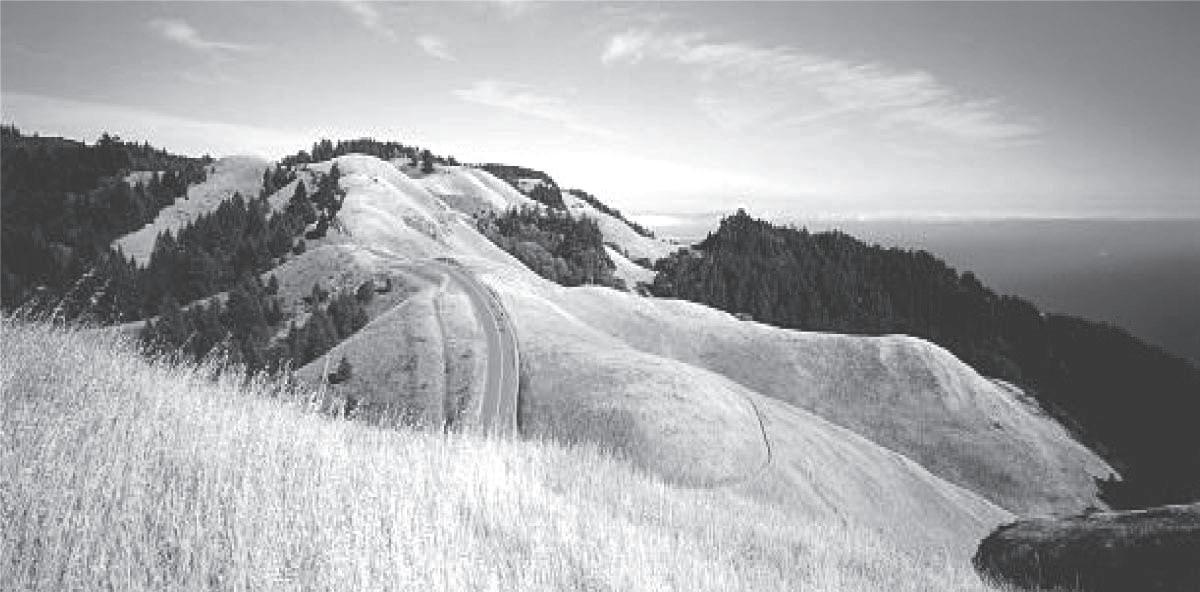
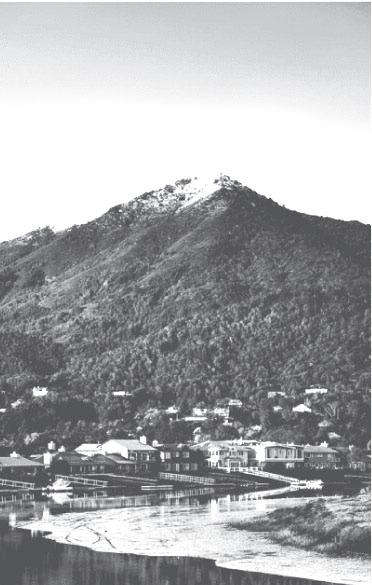
OverlookingSan Francisco Bay and Marin County, Mount Tamalpais was thought by the Miwok Indians to be the home of their God, Coyote. They considered it a place of reverence. According to linguists, Tamalpais is a combination of the Miwok words, “tamal” meaning coast or west and “pais” meaning hill. It is also sometimes known as the “Sleeping princess”.
Mount Tamalpais, locally known as Mount Tam, is a peak in Marin County, California, United States, often considered symbolic of Marin County. Much of Mount Tamalpais is protected within public lands such as Mount Tamalpais State Park, the Marin Municipal Water District watershed, and National Park Service land, such as Muir Woods.
Mount Tamalpais State Park:
A walk on 2,571-foot Mount Tamalpais puts Northern California in perspective. From this promontory just north of San Francisco, you can see the Farallon Islands 25 miles to the west and the Sierra Nevada 150 miles to the east on a clear day. Next to the often-crowded Muir Woods National Monument, “Mount Tam” Is popular too, but it doesn’t feel as packed. Here you will find deep canyons, cool redwood forests, oak woodlands, open meadows and chaparral.
Activities:
The park offers 60 miles of hiking trails, plus picnicking, star-gazing, horseback riding, wildlife viewing, birdwatching, botanizing, rock-climbing, mountain biking and geocaching. Ocean swimming is permitted nearby at Stinson Beach.
Accessible Features:
Parking, campsites, restrooms, cabins, Mountain Theater, 0.75-mile-long Verna Dunshee Trail, parts of the Old Mine and McKennan Trails.
Five, including Steep Ravine Environmental Campground (seven campsites, 10 cabins), Alice Eastwood Group Campsite (two group sites), Pantoll Campground (16 campsites), Bootjack Campground (15 campsites) and Frank Valley Group Horse Camp (25 campsites).
FAUNA: Raccoons, gray foxes, squirrels, bobcats, coyotes, black-tailed deer, mountain lions and more than 150 species of birds
ROCKS: Sandstone, shale, greenstone, chert, quartz, tourmaline, green serpentine
FLORA: More than 750 plant species, including these wildflowers: Cali-
fornia poppies, lupine, Douglas irises, goldfields and shooting stars
OWNER: The land is partially owned by the California State Parks system, with the remaining portion belonging to the Marin Municipal Water District.
Cushing Memorial Amphitheater:
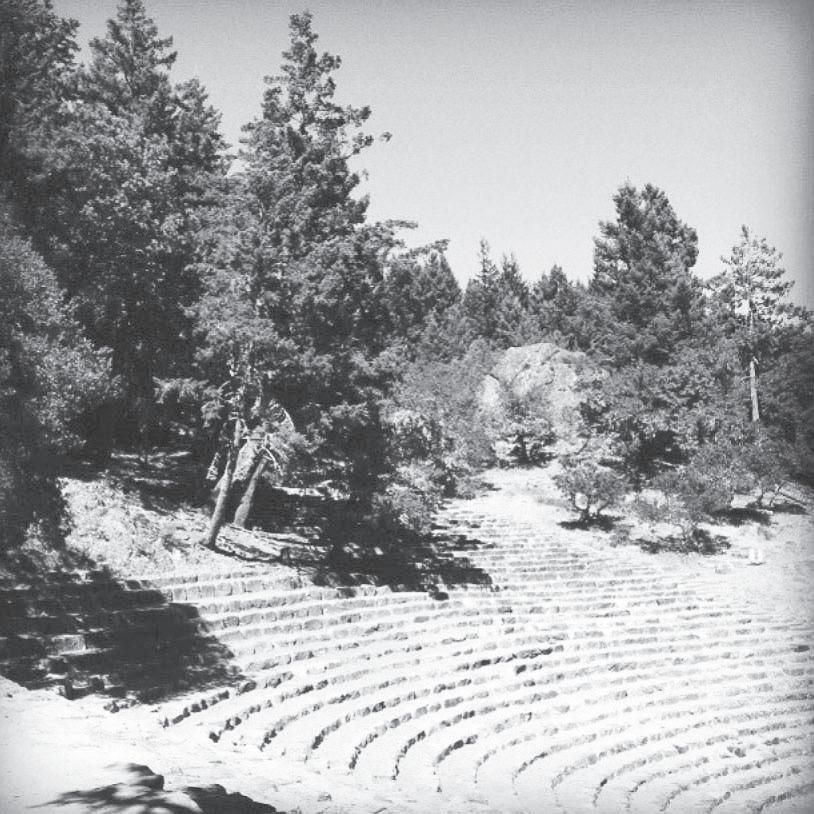
The Sidney B. Cushing Memorial Amphitheatre, also known as the Cushing Memorial Amphitheatre or simply the Mountain Theatre, is a 4,000-seat openair venue in Mount Tamalpais State Park,
road that begins in Mill Valley, once the right-of-way of the Mount Tamalpais Scenic Railroad is the easiest route to traverse up the mountain to its peak of 2,571 feet (784 m) at East Peak.
Home of Theatrical Performances:
Mt. Tamalpais is home to the Cushing Memorial Amphitheatre, also known as the Mountain Theatre, a 4000-seat open air event venue. Since 1913, Mt. Tamalpais has hosted theatrical performances called Mountain Plays in its glorious natural setting. Offering a truly unique theater experience, tour-
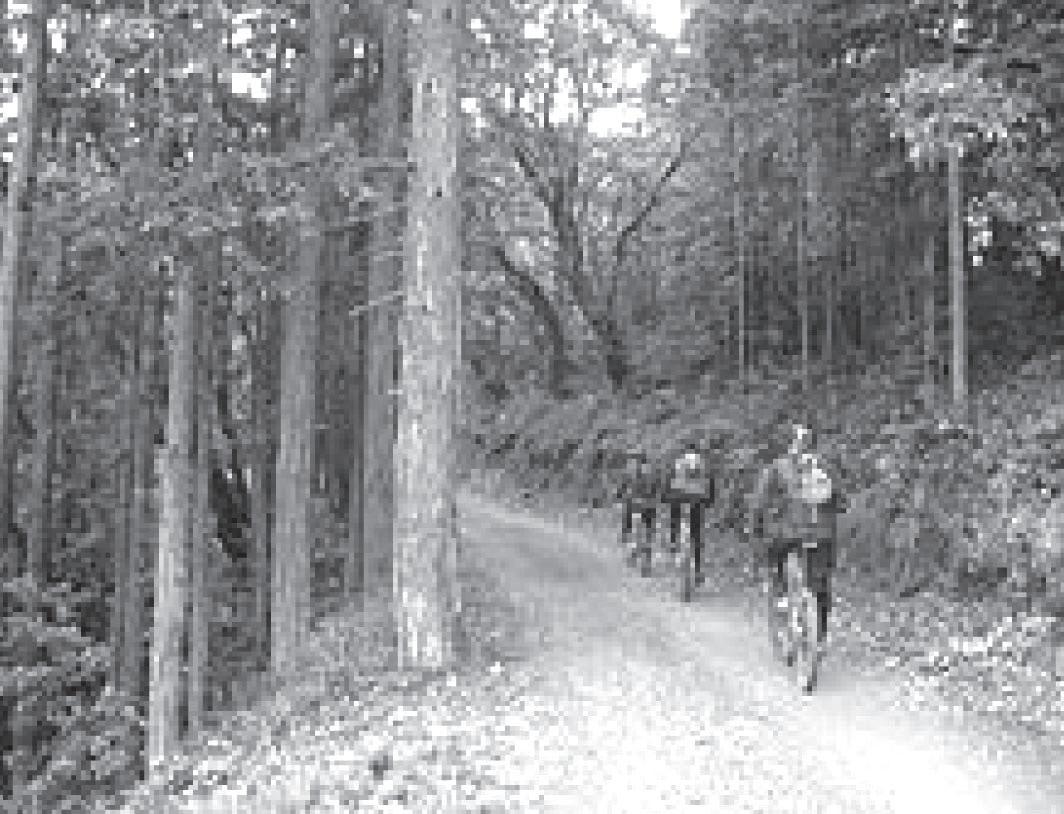
Mountain biking on Mount Tamalpais:
Mount Tamalpais (locally referred to as Mt. Tam) and the surrounding areas in Marin County, California are recognized as the birthplace of modern mountain biking. In the 1970s, mountain biking pioneers such as Gary Fisher, Otis Guy, Charlie Kelly and Joe Breeze were active. The 2006 film Klunkers chronicled their story, solidifying Mount Tamalpais’ status as a mountain biking destination, as did Frank J. Berto’s book The Birth of Dirt. The area is used by mountain bikers due to Mount Tamalpais’ proximity to a highly populated geographic region, ease of access, varied terrain, and views. A number of trailheads surround the mountain, and the paved and dirt fire roads that cross Mount Tamalpais and adjacent foothills provide options for people of all fitness levels. Most offroad cyclists reach Mount Tamalpais through the towns of Ross, Fairfax or Mill Valley, and the less used access points that exist through the towns of Larkspur and Kentfield. The Old Railroad Grade fire
| continue from page 7
those instances, I have had to use a gentle soap solution, or a horticultural soap solution to wash/spray the leaves and the stem. This soap solution kills majority the insects without doing harm to the plant. In order to ensure any eggs (of the pest) that hatched over 3-4 weeks, got treated with soap, I had to spray regularly (every other day) for a month or so.
Whether it is for religious or medicinal use, you can routinely harvest Tulsi leaves without damaging the plant. I always pinch off the top four or six pairs of leaves and any flower buds. This allows the Tulsi plant to produce new branches and new leaves and grow bushier. Regularly removing faded, wilted, or discolored leaves from the plant and the soil will help to keep the plant healthy. Tulsi plant may need periodic pruning throughout the year in order to control the size of the plant, especially when the plant is to be moved indoors in the winter.
Hope you have found some interesting insights about Tulsi and if you have further questions or would like to share your gardening experiences, email me at pushpashree.usa@gmail. com. I wish a healthy growing season for your plants, with boundless beauty and bounty in your gardens as well as peace and joy in your heart.
ists and residents alike love to enjoy the festival-style outdoor experience showcasing Broadway musicals and award-winning plays during the summer months.
Because of its natural beauty and tall peak, Mt. Tamalpais has become a popular subject of painters creating California landscapes. Among the many artists who have used the mountain as the subject of at least one painting are Norton Bush, Jack Wisby, Jules Tavernier, Nancy Wallace, Harry Cassie Best, and Theodore Wores.
Mount Tamalpais – WildFlower Hike
Scenic views while traveling the roads, going up or down the Tamalpais Mountain, located half an hour drive Northwest of the Golden Gate bridge in San Francisco are fascinating and breath taking. Roads winding up or down sometime overlooking valley almost 2600 feet down and then sudden-
continue to page 13 }
| continue from page 10
If you are Caucasian and driving across the border it is very easy to get into USA without any documentation. b) Mannerism and fluency in English are just as important as skin color. An African-American person would also have no difficulty in coming back to USA. c) It is no wonder that people committing heinous crimes in USA flee to Mexico because there is virtually no control of the people going into Mexico by car (at least, from USA).
I have not been to Tijuana for more than eighteen years now ever since the drug related violence surged in the city. I do not know if the border crossing protocol has changed much over the years. I know that there are currently severe restrictions in border crossing because of the Covid-19 pandemic.
By Guru Chakravarty

It all began with an innocent game of dice between the Pandavas and the Kauravas. However, there was one big question mark. The Kauravas had a brilliant but crooked player on their side, Shakuni. With Shakuni’s resourceful mind, the bet was set at the highest level of wealth, the ownership of the Kuru Kingdom. The winner would get the entire kingdom, and the loser would be banished to a jungle- living for twelve years. In addition, the loser would spend an extra year in anonymity. If by any chance, they would be exposed in that thirteenth year, there would be a new 12-year banishment. Friends of Yudhisthir cautioned him vociferously against playing with Shakuni, but Yudhisthir, the straightforward ever truthful unsuspicious man that ever lived, agreed to play with that awful bet, and promptly lost the game. So, they had to abandon the Palace and go live in forests.
At one time during the forest living, Arjun went to the Himalayas to pray to Lord Shiva. After he was able to please the Lord with his prayers, Shiva blessed him with a “Dibyastra” (a highly powerful godly weapon). In addition, he granted Arjun some happy time at the Swargalok (the heaven). Lord Indra, the king of heaven, came down himself in his decorated chariot and took Arjun up to his palace in the heaven. Gods and Goddesses, respected Rishis, and the Apsaras (the famous dancing ladies of the heaven) came to greet Arjun.
Arjun lived in the Indralok for five years. One day, Chitrasen, who taught singing and dancing to Arjun, went to Urbashi, the most beautiful dancer of Swargalok, and said;
“Hi Urbashi, Arjun is very much attracted to you and would like to come visit you”.
“Oh, I will be so happy to see
| continue from page 5
yields through statistical surveys; and the Mahalanobis Distance, one of the most widely used metrics to find how much a point diverges from a distribution, based on measurements in multiple dimensions.
A pioneer historian, Majumdar is known widely for his editorship of the 11-volume ‘The History and Culture of the Indian People’; a 3-volume ‘History of the Indian Freedom Movement’; a well known History of Bengal; and writings on Indian influence in the Far East. A Professor at Dacca University from 1922, he was its Vice Chancellor from 19371942.
Nirad C. Chaudhuri (1897-1999)
A prolific writer, who wrote mainly in English, but has also written in Bengali. His most well known books in English include Autobiography of an Unknown Indian; Thy Hand Great Anarch; Continent of Circe; Passage to England; Hinduism, A Religion to Live By; and Scholar Extraordinary, A Life of Friedrich Max Müller.
Nabin Chandra Das (1845-1925) – Pioneer confectioner, creator of Rosogolla
The Bengali Renaissance also had its impact on the world of confectionery. And possibly its greatest face is Nabin Chandra Das, who is generally credited as the creator of the iconic Bengali sweetmeat “Rosogolla”
him. I wall wait for him”. Urbashi said.
When Arjun came, Urbashi said,
“Since I first danced before you in the palace of Lord Indra, I have been attracted to you, and wanted to be close to you. I am so glad that you came”.
Arjun was not really prepared for such warm and sensual welcome. Here he was, face to face, with the most beautiful woman of the Swargalok, and suddenly, he felt overwhelmed and somewhat intimidated by her approach. He just kind of withdrew inside.
“Urbashi, you are the mother of the Kuru dynasty. You met with our ancestor Pururoba, whose grandson Puru created our lineage. I am respectful of you”.
Urbashi smiled lovingly: “You should be aware that there is no aging in the swargalok. Therefore, there is no rule against people of any age loving each other”.
Still, Arjun hesitated.
“I am sorry, I cannot physically meet with someone whom I respect like a mother figure”.
Urbashi’s love for Arjun now turned into anger.
“Are you a “klib” or something?” hinting that he might be a transgender.
“Here I am, the most wanted woman in the entire swargalok. All gods in the heaven get aroused to see me dance and look at me with devouring eyes. I am offering myself to you, and you just ignore me. I don’t know how I will be to show my face after this!”
Arjun did not dare to say anything. He knew that anything he said would come back to haunt him.
“I came to you freely in love, and you rejected me. Yes, you are a “klib”. You have no masculinity. If you are not a “klib” now,
continue to page 14 }
Kazi Nazrul Islam (1899-1976) – great poet, songwriter and patriot
An outstanding poet and songwriter, Nazrul was honored as the national poet of Bangladesh. He is credited for having written more songs than Rabindranath Tagore. The genre of his songs, known widely as Nazrulgeeti is characterized by its typical tune and is highly popular. His patriotic poems earned him the epithet of ‘Bidrohi Kobi’ (Rebel Poet). Though born in a Muslim Kazi family he had composed devotional songs for the goddess Kali, which had become quite popular. He was also an early leader of the Communist Party of India
Ustad Alauddin Khan (1862-1972)
Ustad Alauddin Khan was an Indian sarod player and multi-instrumentalist, composer and one of the most notable music teachers in Indian classical music. Among his students who became widely known were his son, Ali Akbar Khan, Timir Baran, Ravi Shankar, Nikhil Banerjee, Vasant Rai, Pannalal Ghosh, Sharan Rani and V. G. Jog.
Sukumar Ray (1887-1923) – Our own Dr. Seuss
A pioneer in the area of nonsense rhymes and gibberish, his Abol Tabol compares favorably with Dr. Seuss. His other perennially favorite ‘nonsense’ classics include: Ho Jo Bo Ro Lo, Jhala Palaa, Pagla Dashu and others have been for over 100 years. Satyajit Ray, the Oscar winning filmmaker is his son.
Muzaffar Ahmed (1889-1973)pioneer and legendary communist party leader
Muzaffar Ahmed, popularly known as Kakababu, was the founder of the Communist Party of India in 1922. Communism and leftist thought have held a proud place in the Bengali psyche.
A list such as this is by nature, subjective. I am sure, to some, I have left out a few names and some of those listed do not belong. But the overall message is undeniable. And it all occurred from the early part of the nineteenth century and lasted till the 1940s with a few exceptions. And most of the action took place within a 10 to 15 square-mile area of what is now North and Central Kolkata. It conjures up images of medieval Florence or ancient Athens. I can think of very few born in the next century to measure up to the same stature: definitely Satyajit Ray, and Bangabandhu Mujibur Rahman. Perhaps Amartya Sen, Uday Shankar or P. C. Sorcar may also be considered.
As a personal prerogative, I did not include the name of Ramkrishna Paramhansa. To me he is a god-man in the same level as Buddha, Christ or Mohammed, and as such, he is beyond such a list as above. I ask the reader’s consideration for this idiosyncrasy.
I was not focusing on a particular time period but more on identifying the architects of the oft used term Bengali Renaissance. I took the term ‘Bengali Renaissance’ to mean a quantum jump, a paradigm shift if you may, of Bengali social and intellectual life, whose effects spread far afield and whose effects we feel even at the present time. I was not concentrating on a specific time period, but it appears that its inception occurred sometime in the early parts of the nineteenth century.
We have to agree that the designation of a luminary is by its very nature somewhat subjective. Then again, there is the issue of degree of ‘luminarity’. I suppose the idea of legacy figures in all of this somewhere. Without beating around the bush further, I submit that at the present time and by present standards, to me the list represents the highest percentage of luminaries and the highest degree of ‘luminarity’. I did not have any other criteria. Again, some names may have been omitted because they did not occur to me at the time or my assessment of them, some of which may have been faulty.

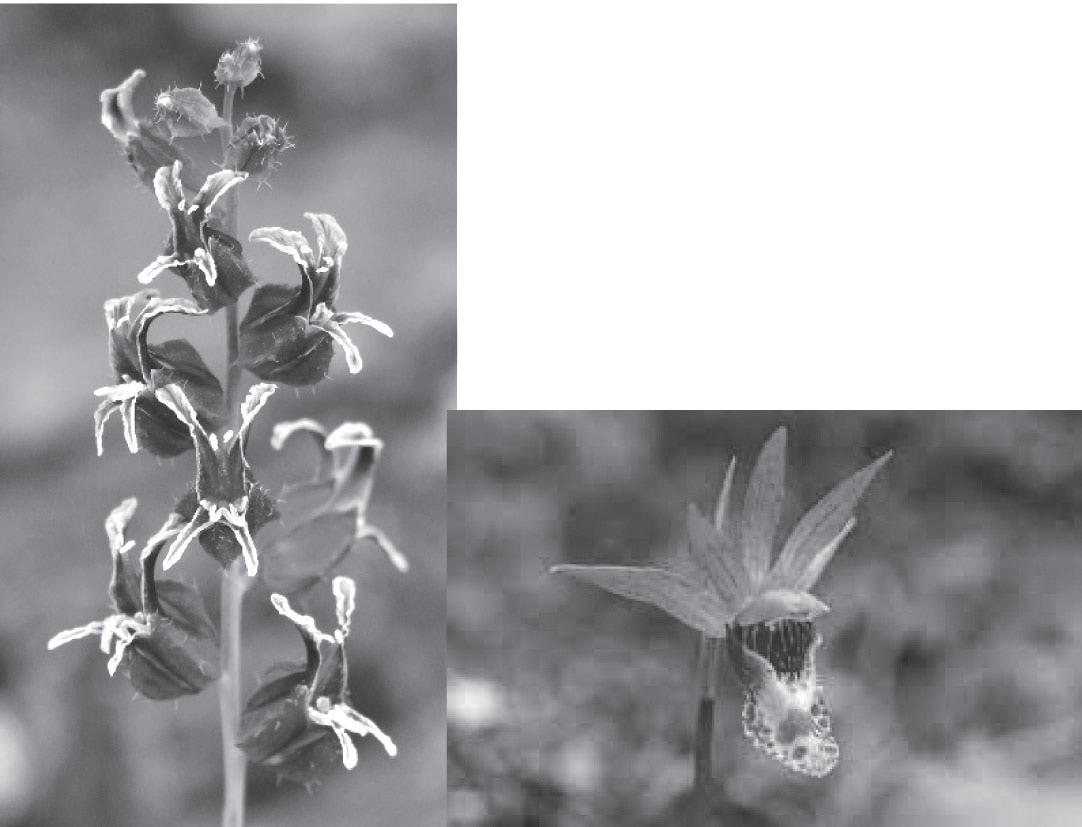
| continue from page 3
ly exposing the vast stretch of the Pacific Ocean, alternating between two completely different yet stunningly amazing views are the gateways to a wonderful experience. Between sharp and abrupt right and left turns, the driver must be careful looking at the road, driving cautiously in a stop and go motion. But we were lucky to have our son driving the car and letting us enjoy the magnificent views.
The most striking scene was when suddenly we could look at the ocean, its body of water, the distant horizon, I realized that instead of water, it faded into misty fog and strangely enough there is no clear line of separation between water and the sky above as it is covered with oncoming shifting fog. Being from Texas, we never experienced this very own San Francisco phenomenon and the scene appeared to be hypnagogic, some artist’s rendering of an ocean in all its magnificent details.
It was late October and little before dusk. I do not remember to have ever seen such beautiful landscapes. It is possible that the entire bay area to be covered with thick fog, when high on the Mount Tamalpais are blue sky and sunshine. While we are comfortably above the floating clouds and enjoying the nature, the thought of multitude of people underneath are covered with thick and inclement fog made us sad.
Nature has been displaying its beauty at its best. In the mountains, large rocks, monster boulders, tall trees, radiant Redwoods, splendid Sequoia, plush pines, Live oak, scented Eucalyptus, Douglas Fir, together with variety of shrubs, flowering plants, green vegetation, tall prairie grass and berries not to mention the different types of birds.
San Francisco Bay is the largest estuary on the west coast of the United States. Its 1600 square miles of wetlands and open water are home to at least 800,000 birds and waterbirds at any given time and to millions during peak migration; Loons, Pelicans, Waterfowls, Vultures, Ospreys, Eagles, Falcons, Woodpeckers, Shorebirds, Gulls, Seabirds, Kingfishers, Jays, Magpies, Crows and many others too many to mention.
Awed and mystified, with so much of nature’s beauty, I thought, who could better describe the impressions of a mere mortal who comes face to face with such endless patterns at every turn of the road, than English poet William Wordsworth?
“To the external world hints of a greater spiritual reality; trees are symbols, rocks and stones a hidden language, mountains’ mysterious statements made by a creator, who tries to communicate with his creation.I have felt a presence that disturbs me with the joy of elevated thoughts; a sense sublime of something far more deeply interfused, whose dwelling is the light of setting sun, and the round ocean, and the living air, and the blue sky, and in the mind of man...”
References:
1. https://en.wikipedia.org/wiki/Common_kingfisher
2. https://www.pinterest.com/pin/431853051768427348/
3. https://www.gardeningknowhow.com/ornamental/trees/ fir/fraser-fir-tree-care.htm
4. https://www.gettyimages.com/photos/mt-tamalpais
5.https://www.gettyimages.com/detail/photo/female-jogging-for-exercise-royalty-freeimage/170638438?adppopup=true
6. https://www.goodreads.com/quotes/499784-i-have-felt-apresence...
7.https://en.wikipedia.org/wiki/Mountain_biking_on_ Mount_Tamalpais
https://wildflowers.russellramblings.com/2010/11/mt-tamalpais-wildflower-hike/
By Dilip Chakrabarti
Of late the musical solar system of India has sustained an irreparable loss by the death of three mega stars like Lata Mangeshkar, Sandhya Mukhopadhyay and Bappi Lahiri. While Lata and Bappi were well known for their music all over India, Sandhya was the queen reigning in Bengali music. One can get some consolation with thoughts that Lata and Sandhya have left the mundane world at a mature age, Lata was 92 and Sandhya was 90, but the demise of Bappi Lahiri came out of the blue at a relatively young age of 69. Their passing away have made the whole country sad and the loss is irreparable for the music industry. It can be easily recognized that certain stream of musical flow will be paralyzed until some others appear to shine in their respective musical solar system.
I am lucky to have met Bappi Lahiri personally. With a mournful mind I shall try to write a few words about Bappi Lahiri, the son of famous singers Mr. Aparesh Lahiri and Mrs. Bansari Lahiri. He was born on Nov 27, 1952 in Calcutta (Kolkata). His father and mother were regular singers as well as composers for the All-India Radio and the Bengali Film Industry. This famous Lahiri family hailed form Sirajganj, now in Bangladesh. This Brahmin Lahiri family was very much loved in the area for their musical talents and their love and affection for the neighbors of community. However, after the partition of India the family had moved to West Bengal of India. Bappi’s musical talents were noticed by his parents when, at the age of 3 years, he could play Tabla very well. He started to learn Tabla under the supervision of Samta Prasad. His musical talent fully blossomed at the age of 19 under the rigorous training of Samta Prasad. His first composition was in Bengali film “Daadu” in 1974 where Lata sang a song which was composed by him, this opportunity opened the door for his talent and success. Since then he started to become known to many musical stalwarts little by little. At an early age he started to idolize Elvis Pressley, probably that is one of the reasons he started to like and wear gold jewelry and he considered gold as a symbol of good luck. Later he made a Signature Appearance for him wearing gold jewelry and his fans loved him very much with those jewels.
Eventually, he flourished as a singer, composer and record producer to the fullest extent of his potential. He popularized the use of synthesized disco music in Indian Music Industry and eventually he was recognized as the pioneer of disco music in India. His popularity went sky high in the 1980s and 1990s with film Sound Tracks. He achieved major Box Office success in Hindi, Bengali, Kannada and Telugu film Industry. Guinness World Records recognized him for recording more than 180 songs in one year. His music was extremely well accepted by the contemporary musical talents and the public as well. As a result, his music received great popularity among the new generation.
In 2012, his album, World Peace, Love

Bappi Lahiri (27 November, 1952 – 15 February, 2022)
and Harmony received the nomination for a Grammy Award among the top five albums. Eventually, he was selected to become a jury member in the ceremony of Grammy Award.
In spite of being an enormouslypopular personality, he was always humble and loved to serve the country whatever way he could. His love for humanity and country led him to run for an electoral position as a BJP Member in 2014 Lok Sabha Election of India, but he succumbed to Kalyan Banerjee of Trinamool Congress Party.
He loved Banga Sammelan and he attended this conference a few times including the Banga Sammelan of 2014. As a Management Committee Member of that Banga Sammelan, I had the privilege to speak to him. Besides exchanging personal greetings, we spoke about the success of the Cultural Association of Bengal for so many years for doing the Banga Sammelan and he admitted that he felt proud that he could participate in the largest Bengali Conference outside of India. Also, he admitted that people who attend the NABC (Banga Sammelan) at large are very polite and accommodative and he said “I support NABC from the bottom of my heart”. Since I was the Editor of Sangbad Bichitra, I requested him for an interview which I wanted to publish in our newspaper, Sangbad Bichitra, and he happily agreed with my request. He enjoyed the company of many famous personalities since his childhood, and he maintained the same attitude to mingle with average people when he himself became a celebrity. He was a huge star of music world yet so humble that nobody would believe it unless they experienced his company. He was a complete down to earth human being and he loved to be among common people.
Any music lover will miss him. The Music Industry and the Country will miss him. He will always be remembered by his fans. He has created a lofty altar for Indian Music in the whole globe.
On his passing away CAB lost a friend; Bengalis lost a son and India lost an Ambassador of Indian music. We pray for the salvation of his soul. May his soul mingle with the Almighty God. May God bless him with eternal peace and love!
By Amitabha Bagchi, California
Not so long ago, Jangal Mahal (“Forest Land”) was a name that evoked terror in the hearts of most Bengalis. The area of dense Sal (Teak) forest in the southwestern corner of West Bengal -- bordering the state of Odisha -- was a hotbed of Maoist insurrection. There were frequent attacks on police stations and other symbols of authority. Communication links were often disrupted through armed robberies on highways and train derailments precipitated by sabotage of railroads. The situation was indeed nightmarish, but the cause was not hard to understand. The woods were largely populated by tribals – India’s original inhabitants or autochthon –and they had suffered through centuries of either benign neglect or not-so-benign exploitation at the hands of the ruling class. First the Mughals and then the British divvied up ownership of the forest land among zamindars (local chiefs) in a feudal tenure system. Then came the railways, late in the nineteenth century, which made forest products more accessible and more lucrative, opening up the area for land exploitation. Decades of unchecked exploitation of forest resources, while neglecting the well-being of its inhabitants, led to the rebellion by the local populace.
It redounds to the credit of the present rulers of West Bengal that, through a combination of good governance, cajoling, cooption and luck, the insurrectionists have been pacified and brought into the political mainstream. Whereas at one time, every tribal professed to be a Maoist, nowadays very few do so. As part of the political give-and-take, the subdivision of Jhargram, where Jangal Mahal is situated, has been elevated to the status of a district. And a novel piece of the normalization process has been the inventive mixing of art and culture in a tribal village by a local artist from Jhargram, Mrinal Kumar Mandal. The village has been christened Khwabgaon (Village of Dreams).
For his model art project, Mrinal Mandal chose a small village of Lodha tribals deep in the Salboni region, some ten kilometers from Jhargram. The village consisted of fourteen families living in modest earthen homes. The genius of Mrinal lay in inspiring the villagers, mainly children, to pick up brush and paint and color the walls of their dwellings with imaginative artwork of their own design. He thus helped create an open-air gallery of murals smack in the middle of the forest that is Jangal Mahal. Some of the murals are displayed below.
Over time, Mrinal Mandal has expanded his activities with the villagers in several directions. Not all villagers can be gifted painters, so he has taught them other skills, like making Dokra artefacts (lost wax metal casting technique using bronze or copper), Katum
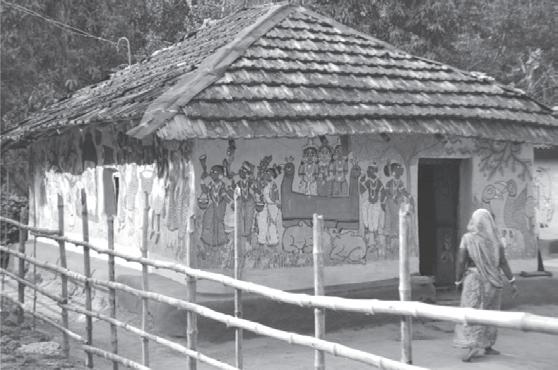
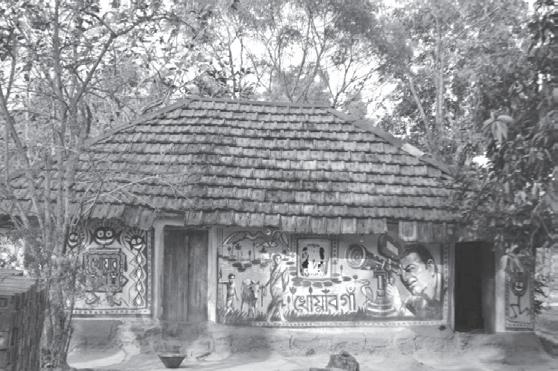
Kutum art (wooden sculpture made from twigs and driftwood), and so on. He has also tried to improve and expand the villagers’ skill set by promoting interaction with established artists visiting from Kolkata, holding workshops on metal casting, etc. The artworks so produced are on display at small gift shops in Khwabgaon for purchase by visitors.
The Lodha tribe has an annual festival around the time of Diwali when they ceremonially worship cattle and put fresh white paint on the outer walls of their huts. This makes it possible to refresh the murals every year, thus renewing the exhibits of the open-air art gallery that is Khwabgaon
I went to Jhargram and visited Khwabgaon as part of Mrittika’s Exhibition team for this year’s North American Bengali Conference (NABC 2022). This year’s NABC Exhibition will have a segment that will highlight Khwabgaon and present a workshop on mural painting supervised by Mrinal Mandal as an invited guest.The work at Khwabgaon is supported by voluntary help and financial contribution by interested individuals. For additional information, the reader may visit the website of the NGO, Chalchitra Academy: https:// www.facebook.com/chalchitraacademy12/
| continue from page 12
then you most certainly will be one. I curse you Arjun to become a transgender, and live like a woman”. And she left.
Now Arjun was terrified. He ran out of her place in utter fear and went straight to Lord Indra to tell him what happened. And to beg him to free him from the curse. Lord Indra smiled and said:
“Don’t worry, Arjun. Actually, you will be able use this curse to your advantage. You will live as a transgender for one year during the year of anonymity. Then you will regain your normal form”. Thus consoled, Arjun felt good and continued to live in the heaven.
Fast forward a few years to the end of twelve years of the Pandavas’ living in woodlands. The thirteenth year appeared that required the Pandavas to remain undercover in disguise. So they sat down to discuss how to go about doing it. Finally, they concluded to live in the kingdom of Matsyadesh under King Birat who was known to be kind and a philanthropist. Now they had to plan how to set up their disguise and be accepted by the King to work for him.
Yudhisthir said: “I will be a dice-maker and amuse the king and his court with attractive dices made of beautiful gems”.
Bhim said: “Everybody knows that I need food, and what’s more, I can cook. I will get a job in the kitchen. In addition, by virtue of my wrestling ability, I will become a Guru of the king’s wrestling team”.
Arjun said: “I learnt music, singing and dancing from the Gandharva during my life in heaven, I will teach that to the women of the palace. Of Course, I would have to get dressed as a woman, and behave like a woman to get inside the women’s quarters. So, I will utilize the curse of Urbashi to practically become a transgender”.
Nakul said: “I have the experience as a veterinarian, and I expect no problem in getting employment for taking care of the horses”.
Sahadev said: “I have the expertise to take care of the cows and the production of milk for the King.
But what would Draupadi do? She was born as a Princess, and how could she take a job now? Draupadi said: “I will become a Sairindhri, an expert in women’s hairdress-
ing, who is well respected and not subject orders from the queen or her people”.
The stage was set for the Pandavas to start the year of living in anonymity. They adopted secret names for themselves: Joy, Jayanta, Bijoy, Joysen and Jayadbal. The brothers entered the kingdom separately, in their respective disguises, and each appealed to the king for his employment in his kingdom. Spotting Draupadi from a high floor in the palace, Queen Sudeshna called her up. After talking with her Sudeshna could see that Draupadi was not an ordinary woman, but a special lady of high qualities. However, Draupadi said that all she wanted is doing hair for Sudeshna and her family. Queen Sudeshna assured her that nobody would dare to treat her in a disrespectful way.
Arjun presented himself in a woman’s attire, draped in red silk. He wore ivory bangles, golden earrings and necklaces made of coral and pearls. He said to King Birat: “My name is Brihannala and I am a transgender. How did I become a transgender is a sad story that I can tell you when the great King has time to spare. But, I am an expert in music, singing and dancing, and I will love to teach it to all the princes and the princesses and all the women of the king’s palace”.
Accepting Brihannala’s status as a transgender, King Birat addressed her as a female:
“Brihannala, you seem to come from a high family. I have no interest in hearing your tragedies of life. I am interested in your abilities. I ask you to teach what you know to my daughter Uttara”. He then told Uttara to find a pace for Brihannala in the royal palace. When Draupadi saw Brihannala having a good time surrounded by young ladies, she was a little jealous and said in jest: “Brihannala, you seem to be having a time of your life. There is no need to worry about me”.
As the Pandavas spent the year of anonymity, Duryodhan and the Kauravas were planning to expand their empire. They decided that that the kingdom of Birat was a suitable target to occupy.
Duryodhan initiated a battle of the two kingdoms by stealing sixty thousand cows of King Birat. The king himself was busy on another front, fighting with Sush-
arma, the King of Trigartas. The four Pandavas were with the king, helping in his battle against Susharma. So, it was up to Uttar, a young son of Birat, to defend against Duryodhan. Uttar knew that he was no match to fight with Duryodhan, and he looked for a way out. Out loud, he said:
“I will fight Duryodhan and recover our cows, if only I could get a suitable charioteer. Alas, I lost my current charioteer. What can I do? It’s so sad that I can’t go to recover our cows”.
At his continuing wallowing, Brihannala offered himself to be the charioteer. Uttar was not prepared for this development, however, Brihannala kind of forced him to come with him, to face Duryodhan and the Kauravas. After Brihannala defeated the Kauravas, everybody in the Kaurava side knew this must be Arjun himself. Duryodhan said:
“Hey, this is great! We are defeated, but we have found Arjun. So, now they have to go back to another 12 years of banishment.”
Bhisma, well versed in astronomy, said: “Sorry, Duryodhan, the thirteenth is over today. Now, the Pandavas completed their commitment and you have to return their legitimate kingdom to them”.
The Brihannala phase of Arjun’s life was finally over. However, it brings home the controversies surrounding the subject of “klib” or the gender nonconformity that existed in the Vedic period.
When King Birat found out the identity of the Pandavas, he was highly pleased. He wanted to show his exuberance by offering his daughter Uttara in marriage to Arjun. However, Arjun declined and said:
“Maharaj, I am humbled by this proposal, but I must respectfully decline. I have been a teacher of your daughter, and I have treated her like my daughter. However, I will love to have her as my daughter-in-law. I ask you to give her to my son Abhimanyu in marriage”.
King Birat readily agreed to the proposal. Abhimanyu and Uttara would eventually get married and have a son named Parikshit, who would go on to be the first King of the Kuru dynasty after the Yudhisthir era.
By Aishik Sen (Age 16)
I

n 1816, a teenage girl named Mary Shelley was given a challenge by her friend, Lord Byron. The challenge was to see who could write the better ghost story. The very next year, at the age of 19, Shelley published her ghost story, and it soon became one of the most popular horror stories on Earth. The book was named Frankenstein, after its main character Victor Frankenstein. Victor Frankenstein, the main character, is a man obsessed with nature and the idea of creating life. After years of work, Frankenstein eventually succeeds in giving life to a creature sewn together from dead bodies. The author draws interesting connections between Frankenstein and the creature, eventually leading the readers to a question of who really fills what role. Is Frankenstein the monster, or the maker?
First, let’s consider the question in a literal manner. Is Frankenstein the monster or his creator? Despite the book being out for more than 2 centuries, it is still a common misconception that Frankenstein is the monster, which is not true. In reality, the monster was never given a name by his creator, Frankenstein, but was only ever called “monster.” This gives us an interesting view into Frankenstein’s way of thinking. Despite the fact that he created every aspect of the creature and brought it to life, he labels the creature as the monster instead of recognizing his own fault. The very next thing that Frankenstein could think to do was flee. He ignores its existence until it kills his brother, at which point he develops a deep hatred for the creature.
This question can also be used to ask something slightly different. Instead of a literal question, we can observe the more metaphorical side of the question. Is Frankenstein (Victor) the maker or the monster? We can develop an answer by observing an interaction between Victor and the creature, when the creature informs Victor (and us, the readers) what exactly he’s gone through since his creation. The creature makes one thing explicitly clear. “He had abandoned me, and in the bitterness of my heart I cursed him”. Frankenstein, the closest thing he had to a father, ran away from him, and so did everyone that saw him. He hid in a village and learned to speak, but was still kicked out from the village once he was discovered. Because of his physical appearance, everyone treated him as a monster, despite now having the same maturity as a peaceful, well educated person. During the interaction where the creature tells Frankenstein what he’s been through, we see another point to consider from Frankenstein. When listening to the creature, he’s swayed by his stories and requests, and even admits “did I not as his maker owe him all the portion of happiness that it was in my power to bestow?”. Frankenstein acknowledged him as a “creature of fine sensations” but the moment he remembered the creature’s physical appearance, he started treating him as a monster again. This is where we begin to see a strange connection between Frankenstein and the creature. The creature repeatedly draws a connection between himself and Adam, the first man. “I ought to be thy Adam, but I am rather the fallen angel, whom thou drivest from joy for no misdeed”. As the creature exhibits more and more human tendencies, Frankenstein becomes more harsh and inconsiderate. We see this when Frankenstein, in a fit of rage, destroys the mate he was making for the creature. His main reasoning for it was that “a race of devils would be propagated upon the Earth” if they were able to mate. He ruins any chance of the creature being happy, so the creature curses him and promises revenge. Once again, we see that Victor’s obsession with nature and his tendency to play god have brought nothing but destruction to him. His desire to create life resulted in the loss of everyone he loved. Through this, we see that even in a book about a man and the monster he created, there is no true definition as to who the true monster is.
Dipak Sakar, distinguished professor, Department of Animal Sciences. has been recognized as an Expertscape world expert in pro-opiomelanocortin. This peptide molecule produces multiple hormones including beta-endorphin, α-melanocyte stimulating hormone, and adrenocorticotropic hormone. These hormones are made mainly in the brain and regulate many body functions including feeling good, addiction, stress control, metabolic regulation and immunity.
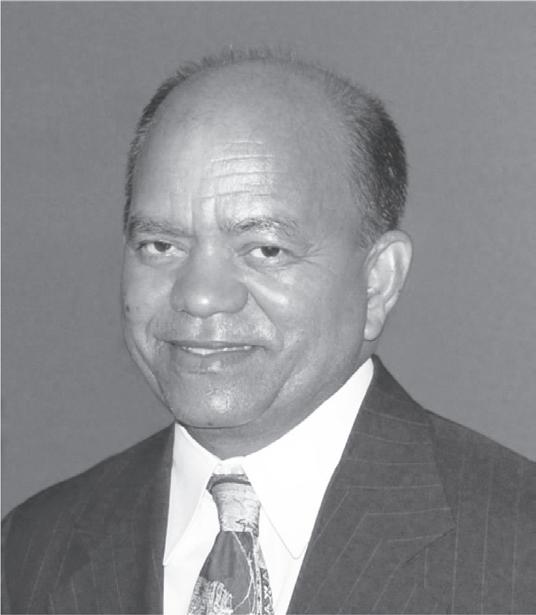
Expertscape ranks and lists the world’s top experts in clinical and research medicine, and is a global resource for patients and re-
Reported by Pradip R. Das
New Board
A new Board Of Trustees composed of four new and three continuing members took office at the beginning of this year. Bidip Sinha is the new Chairman of the board for the current year.
GSCA Holiday Party, December 11, 2021
The annual fun-filled extravaganza took place at Mirchi, N. Brunswick this year. It was a members-only event in which many participated. An enjoyable evening of good food and music.
GSCA Women’s Forum
2021 was the inaugural year of this forum by GSCA women members with the objective of helping women and children. It was formally formed in May 2021.
Notable amongst its initiatives and activities were:
*Collaborating with
On Saturday, February 5th, 2022, NJPA celebrated Saraswati Puja online streamed to members over YouTube because of the ongoing Covid situation. Senior Priest Guru Chakravarty performed the Puja with all the mantras and conducted the Arati with deep devotion. Saraswati (Goddess of Learning) has - four arms: four elements of inner life - train mind, intellect, ego, consciousness for inclusivity, right, wrong discrimination, avoid destruction; veena (sitar) classical arts (objective art to express enlightenment), beads-spiritual discipline, white sari, less
ferring physicians. Using PubMed-based algorithms, Expertscape placed Sarkar in the top 0.1% of scholars writing about pro-opiomelanocortin over the past 10 years, a level it considers “World Expert.” Sarkar’s contributions to 20 scholarly articles on the topic between 20122022 led to this top ranking among more than 25,000 published authors worldwide on the topic.
Reference: Office of Communications, Rutgers University
of needy and distressed people, especially women and children.
Saraswati Puja 2022
SEVA for donating to Covid impacted people in India.
*Publicize its mission and activities by creating its own Facebook account with technical assistance from GSCA’s Public Relations and Technology Committee.
*Taking initial steps to start a “Bangla School” with GSCA volunteers as teachers and open to member and GSCA patrons’ children as enrollees.
*Fundraising event during GSCA’s annual summer picnic. Sale items included sarees, arts & crafts materials donated by members. The proceeds from these sales were donated to charitable organizations.
Women are an important demographic in GSCA. Based on its activities during the first few months of its formation, we can look forward to many contributions from this forum for the betterment
On a bright sunny Sunday, February 6th, GSCA celebrated its first community puja of the year, albeit with limited in-person attendance at a private venue. The puja proceedings were streamed live to members from the venue. Members enjoyed the puja ambience from the comfort of their own homes. However, “Hatekhori” was sorely missed. Puja prosad and food boxes were distributed to members at their homes.
The cultural programs, also streamed, started with “Devi Bandana” by the children of GSCA members. The main program was a performance by a Boston based group “Philomela” (first album released in Kolkata in 2019). This group consisted of two main singers with guitarists, percussion and keyboard accompanists. Their medley of songs and music were modern and folk based.
Reported by Chanakya Ganguly
jewels, cool meditative mind like the mountain lake, lotus (detached), rise over baser instincts.
The meditation music of Spiritual raga Hamshadhwani represents the cry of the calm mind of the swan on a lake. Saraswati has veena and swan, rejoicing in the power of the Spiritual mind, beyond the senses, moving towards the center. Ragas are - infinite spiritual source of controlled, detailed classical music, spiraling inwards as one elaborates. Aalap is a
melodic improvisation which involves singing or playing the notes of a Raga in a slow tempo. It uses three Saptaks or octaves – Mandra (lower), Madhya (middle), Taar (higher). It can be broadly classified as: Aarohi – ascending order, Avrohi – descending order, Arohi+Avrohi, Sthayi – certain notes are alliterated, Sanchari – mix of all the four types.
Information about upcoming events will be available on our Facebook page “NJPA Parivar.”