Service Requested


Service Requested
Reported by Sushmita Dutta

[Cautionary Note: Residents of West Bengal relying on deep tube well water for survival must get the water tested for arsenic level. Free testing is available at The School of Environmental Studies at Jadavpur University, Kolkata. Some newly constructed multi-storied building developers find it convenient to provide ground water to the apartment owners. Get the water tested before buying an apartment.]
36% of West Bengal population is at risk from arsenic poisoning” reads a report on “International Arsenic Conference” held in Kolkata from February 18-20, 2012. West Bengal minister for Public Health Engineering and Panchayat, Sri Subrata Mukherjee gave his assurance at the international conference that, “By 2020 every household member of the state will receive 100 liters of pure water each day.” The World Health Organization validated findings on the groundwater arsenic crisis in West Bengal and neighboring Bangladesh and described it as the "largest mass poisoning in history."
“ Millions of people are at potential risk from arsenic contaminated water poisoning,” said Dr Dipankar Chakraborti, the director of environmental studies at Jadavpur University, Kolkata. He said, “Villagers also use arsenic-contaminated water in agriculture creating the risk of arsenic deposits in rice, livestock and cow dung frequently used for cooking fuel.”
When I initiated a project on arsenic water for the state of West Bengal, with a proposal from Dr Pronoy Chatterjee, I didn't realize the seriousness of arsenic contaminated water and its impact on people's health. With exposure to actual facts and figures, it
became a terrifying experience for me and I committed myself to active participation in fighting this life threatening problem of my native land. My investigation began beyond Government offices. Here is an in-depth and exclusive report for Ananda Sangbad readers:
The road from my "Bhite Bari" (ancestral home) near Golpark, Gariahat winds up to 10 minutes drive to Jadavpur University in South Kolkata. I was scheduled for a meeting with Dr Dipankar Chakraborty The morning was unusually chilly, Thank God, I had my socks on because as I stepped into the department and asked for Dr Chakraborti, a middle-aged man looked at me through his thick glasses and said, "I am Dipankar, but please leave your shoes outside the main door and then come in". Back to the department's entrance, I found a notice on the gate which I had missed - "Shoes are not allowed." This rule is for all, including a physician from Scotland who was visiting Dipankar to get data on the burning environmental problem in West Bengal - arsenic pollution of groundwater and its health hazards.
Turn to page 04
Seniors Forum was launched by Ananda Mandir in July 2011 to focus on issues of interest to members nearing retirement or already retired. The basic idea was for such “seniors” to get together on a monthly basis (or more frequently if needed) to work as a group on topics they recognized as important to them. Since then a core group of active participants has been meeting regularly on the third Sunday of every month and has started a number of projects. This is a brief report on the on-going activities of this group.
Reported by Debajyoti Chatterji
Create Mutual Support Systems: In one project the group is enlisting volunteers who would be willing to provide occasional transportation to other seniors who cannot drive In another project, the group is collecting names and phone numbers of family members who could be contacted in case of emergency In a third project, a “medical information card” has been designed as a multi-fold card that can be carried by seniors in their wallets This card will soon be printed and made available to all members free of charge for their use
Turn to page 05
Mandir Calendar of Events (Dates are subject to change) Please check our website frequently: www.anandamandir.org Tel: 732-873-9821
NOTE: If a particular puja time is not listed, please contact temple or visit our website : anandamandir.org
Ananda Sandhya
Friday, April 13, 8:00 pm
Naba Barsha celebration
Saturday, April 14, 8:00 am – 9:00 pm
Shyama Puja
Friday, April 20, 6:00 pm
Sahitya O Alochana
Friday, April 20, 8:00 pm
Akshay Tritia
Tuesday, April 24, 9 – 12 noon
Shri Ram Thakur Smaran Utsav Kirtan/SatyanarayanPuja
Sunday, April 29 (Time to be announced)
Satyanarayan Puja
Saturday, May 5, 6:00 pm
Ananda Sandhya
Friday, May 11, 8:00 pm
Sahitya O Alochana
Friday, May 25, 8:00 pm
Falaharini Kali Puja
Sunday, May 20, 6:00 pm
Ganga Puja & Dasha-hara
Wednesday, May 30, 9:30 – 11:30 am
Satyanarayan Puja,
Sunday, June3, 7:30 pm
Ananda Sandhya
Friday, June 8, 8:00 pm
Sahitya O Alochana
Friday, June 15, 8:00 pm
Shyama Puja
Monday, June 18, 6:15 pm
Jagannath Mahaprabhu's Ratha-Yatra
Thursday, June 21 (Time to be announced)
Bipad-Tarini Puja
Tuesday, June 26, 9:30 –12:00 noon
Jagannath Mahaprabhu's Ulto-Ratha-Yatra
Friday, June 29 (Time to be announced)
Religious Services: Upon request, the priest of Ananda Mandir offers services such as in-house Sradhyas, Rituals associated with Cremations (Anthesti Kriya), Death Anniversaries Pre-weddng rituals (Nundimukh, Ashirwad, etc), Upanayan (Paitey), Annaprasan , Wedding Ceremonies & Wedding Anniversaries, G r i h
) Consecrations of new cars (New Car Pujas) and others. If you have needs for any of the above or more, please feel free to contact Biswabhai @ 732-873-9821
A Periodical Newsletter Published By
ANANDA MANDIR
(A Tax-Exempt, Non-Profit Organization)
269 Cedar Grove Lane Somerset, NJ 08873
Ph: 732-873-9821
Website: www.anandamandir.org
Editor-in-Chief Pronoy Chatterjee
Assistant Editors
Guru Chakravarty
Debajyoti Chatterji
Co-Editors
Amitabha Bagchi
Biman Bhatta
Subrata Bhaumik Jayashree Chatterjee
Sushmita Dutta
All queries, articles, news reports and letters should be directed to the Editorial Board:
Phone/Fax : 732-651-8802
E-mail: pkc usa@yahoo com
For general information, please contact the following Executives of Ananda Mandir:
Dipak Sarkar President
Krishna Bhattacharya Vice President
Jaiprakash Biswas Vice President
Chanu Das Treasurer
Maumita Bajpai General Secretary
On the expansion of Ananda Mandir and its new activities:
As reported in the last issue of Ananda Sangbad, the total expansion of Ananda Mandir would include construction on two fronts, the expansion and renovation of the existing temple and the building of a new “Community Center.”
Additionally, several site improvements are also planned, such as, enhanced landscaping, new access road, expanded parking lot, etc. While it had already been decided to move on with tahe plan, the debate still continued on, if it was prudent to start both tasks at the same time with $4 million bank loan or to do it in a staggered two-phase approach, first temple expansion and renovation with roughly half the loan and then Community Center at a later date, or vice versa.
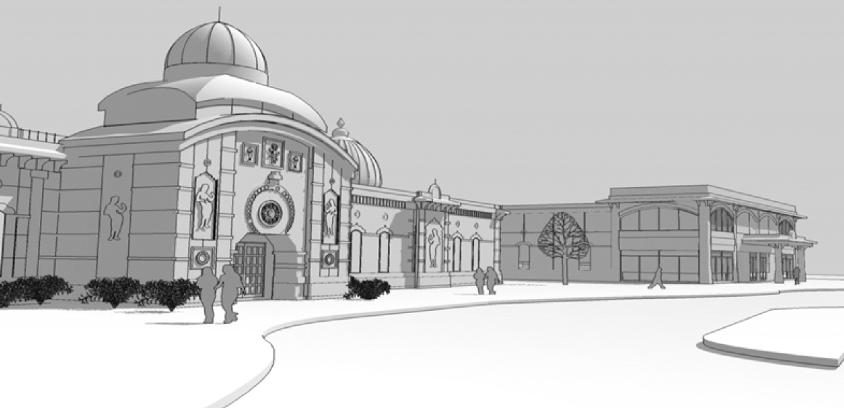
The construction of both simultaneously would ultimately cost less in net amount than doing it in two phases, stretching to a longer period of time, due to the inflation and other construction related extra cost factors. However, in the former case the burden of loan would be significantly higher and if the expense (mortgage plus operational) substantially exceeds the monthly revenue, we may encounter a serious cash flow problem. The same problem could also arise in the two-phase approach too, but in that case because of the lower mortgage amount of the first phase ($1.5 to 2.0 million) and the lower operational cost, the deficit in cash flow, if any, could be managed at a lower risk.
Hence the issue on simultaneous versus phased construction approach was tabled again at last month's BOT meeting for further review, where everyone present at the meeting had a chance to voice their opinion. Finally, after a long debate on the issue, the construction on “all fronts simultaneously” was approved.
Now that the debate is over and the final decision has been made, our members should come together and extend their hands to accomplish the project successfully We must have an effective and dedicated management team that will oversee the construction and develop an appropriate business plan to achieve the financial goal projected by the Construction Committee.
While the details on construction related issues are going on, Ananda Mandir is also expanding its activities in new areas. It has initiated “Outstanding Volunteers Recognition” program for Ananda Mandir's members, established a “Grant Fund for Community Services,” launched a “Summer Internship
Program” for college students and high school seniors and created “Seniors Forum” to address the issues of active retirees, elderly citizens and those who need assistance for health reasons. This issue of Ananda Sangbad has brief announcements on those programs.
Ananda Mandir has lost a great friend and an outstanding volunteer and leader, Dr. Anil Raychaudhuri, who passed away in January this year He was a senior member of our editorial team, who used to take a lion's share of our editorial task. We will always remember him for his support and friendship.
We welcome Jayashree Chatterjee and Amitabha Bagchi to our Editorial Board as co-editors and to the Publication Committee of Ananda Mandir Both of them have long experience in publishing creative writings in magazines and newspapers. We are pleased to have them in our publishing team.
Sincerely,
Pronoy Chatterjee Editor-in-Chief
Acknowledgement
The Board of Trustees of Ananda Mandir expresses its appreciation to Santosh and Ambalika Mukherjee for financially sponsoring this publication.
Acknowledgement
The Board of Trustees of Ananda Mandir expresses its appreciation to Suprasad Baidyaroy for bearing cost of freight of our annual magazine “Anandalipi-2011” from Kolkata.
Board of Trustees has established a program to recognize
If you are a Life Member and believe that someone deserves this recognition, please feel free to e-mail nomination to Pronoy Chatterji (pkc_ usa@yahoo.com)
Designed & Printed by
Details of the program and the nomination form can be seen in our website www anandamandir org
Didn't Receive Your C o p y o f A n a n d a
If you are a Life Member or an Associate Member but didn't receive your copy of Ananda Sangbad, it may be because we do not have correct address on file for you. Please send an email to Guru Chakravarty (guruchakravarty@yahoo.com) with your correct address, and we will send you another copy
By Guru Chakravarty
Ananda Mandir lost one of its greatest friends and a dedicated selfless leader. Anytime there was a program at Ananda Mandir, be it annual events like Kali Puja with several hundreds of devotees or monthly events like Ananda Sandhya or Shyama Puja with 20 – 50 people attending, a pleasant welcome from Anilda could not be missed at the entrance After a prolonged treatment at Overlook Hospital, initially for an innocuous looking cough and cold symptoms, then for serious heart and kidney problems, Anilbaran, popularly known as Anilda, passed away on December 24, 2011
The cremation was held Wednesday, December 28 at the Rosedale Crematory, Montclair, New Jersey, where many of his friends and admirers from his professional and social contacts came to pay the last homage to the loving and caring man
Anil was born in Calcutta, India He was the son of Monorama Majumder and Saratchandra Raychaudhuri He received his undergraduate degree from the University of Calcutta and his Master's Degree in Rangoon, Burma Anil came to the United States in 1960 on scholarship and received his PhD in Biology from the University of Cincinnati in 1963 He married Purnima “Konadi” Bardhan on December 12, 1964 Anil worked for Merrill Pharmaceuticals, Ciba-Geigy, and Novartis Pharmaceuticals, where he retired from after 25 years of service as a Research Scientist During his retirement, he found joy spending much of his time at Ananda Mandir where he served as Vice President and a Member of the Board of Trustees He had also served as President of ICC for 4 years and was still Member At Large when he deceased
Anil is survived by his wife of 47 years, Purnima, daughters, Raka and Renee, son, Neil, and grandchildren, Taylor and Falyn Hoyt, and Delaney and Mason Rettele
Biswabhai, the mandir priest performed the “Shraddha” ceremony according to Hindu rites and rituals at Ananda Mandir on January 7, 2012 Dipak Sarkar, the President of Ananda Mandir had organized a town hall meeting for the friends and the family after the shraddha, inviting speakers from the community to pay tribute to Anilda Dipak Sarkar, opened the session with condolences to the family present at the occasion - Mrs Raychaudhuri (Konadi), daughter Raka, son Neil and the grandchildren He then read a short biography of Anilda (see the highlighted box) He spoke of Anilda's dedication to the Ananda Mandir in serving many different areas of the organization, including a four year term of Vice President Biswabhai, who had become quite close to Anilda over the years, was the next speaker, but he was a bit overwhelmed to come to the podium Whenever Anilda visited Ananda Mandir, he developed a habit of staying late to the wee hours in the morning On those occasions, Anilda and Biswabhai kept chatting and discussing with each other all kinds of subjects, be they mythological stories from Puranas, or stories behind events like “Ratanti Kali Puja” or “Falaharini Kali Puja” On many occasions we saw Biswabhai and Anilda throwing challenging remarks at each other in mock sarcasm that only showed their deep trust in each other.
Neil, the only son and the youngest child of Anilda spoke on behalf of the family Anilda was an accomplished scientist, which the family was always proud of He believed in a disciplined approach to accomplish things in life He was a caring family man and a loving father who liked to spend a lot of time with his children He did not mind coming home after a rigorous day of work and then taking the children to play tennis Both Neil and his eldest sister Raka became highly proficient in Tennis, Neil becoming a tennis-pro and Raka rising to fourth place ranking in US junior tennis
Tapasi Seal, a member of ICC (Indian Community Center) then sang a sloka: “Tumhi ho mata, Pita tumhi ho”, followed by a Rabindra Sangeet (Tomar asime pran mono laye joto dure ami jai), a bhajan (aya dwar tumhare Rama), and another Rabindra Sangeet (Dhay jeno mor sakal bhalobasa prabhu tomar pane) Tapasi lovingly remembered how Anilda used to playfully call her by a wrong name whenever they met Anilda was a two-term President of ICC
Pronoy Chatterjee, the Editor-in-chief of Ananda Mandir's publications spoke of Anilda's remarkable contribution, both in creative writing (particularly in prolific editing) and in taking care of many logistical issues related to mailing Pronoy said that he sometimes stayed late with Anilda at Ananda Mandir and gradually got to know him as a friend, beyond just the editorial colleague relationship He had jokingly asked Anilda how he was able to create such subtle expression of love in his writings (reference “Anutapta Abinash” Anandalipi-2010), to which Anilda had replied that one must always be romantic at heart
Lal Mohan Hore spoke of Anilda's dedication and stamina at all the programs at Ananda Mandir. Anilda was gradually showing the effect of age creeping up on him; however, he rarely talked about it He always showed up, sat down at his favorite donation collection spot, and stayed to the end Chandi
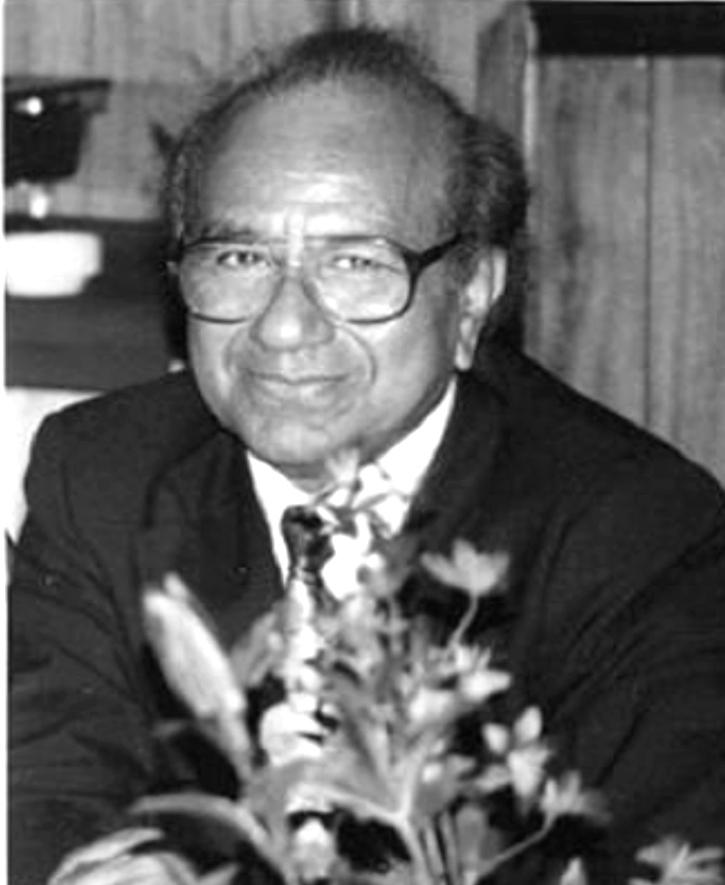
Anilbaran Raychaudhuri
Jan 1, 1932 to Dec 24, 2011
Maitra said that dedication such as Anilda's was rare and Ananda Mandir was fortunate to get such a person who established a high standard of selflessness
Ashok Rakhit was a one-time colleague of Anilda at Ciba-Geigy Ashok spoke of starting his career as a rookie research scientist, where Anilda and another Bengali scientist Dr. Naba Choudhury (now deceased) were prominent senior researchers Ashok was relieved and gratified that the two senior scientists were kind and friendly to him That friendliness grew with time and when Ashok became a key member of the Ananda Mandir board of trustees, he enlisted them both as life members
Prabir Sarkar, the current President of ICC, paid respect to Anilda as the past two-time President, and remembered how his pioneering efforts have established ICC as one of the major Bengali organizations in this area Anilda's presence in ICC programs and as a member-at-large in the meetings of ICC was highly desired and his advices were respectfully accepted
Guru Chakravarty spoke of Anilda as a writer and an editor. He wrote two regular columns in the Sangbad: (1) Highlights of Recent Activities at Ananda Mandir and (2) Ananda Sandhya -a Monthly Musical Soiree He was also responsible for putting together the quarterly Calendar of Events In addition, he would sometimes write special reports like, fund raising lunch, annual general meeting etc Editing was near and dear to his heart He would spend a lot of time on each article, word by word, and make grammatical and composition corrections But the one task that everyone avoided, the mailing of the Sangbad, he willingly made a monopoly of it He prepared address labels, affixed them on the paper, sort them in packages and mail them at the post office per bulk mail instructions
Shikha Chatterjee remembered Anilda as a loving and respected elder brother and a dedicated Ananda Mandir leader. Amitabha Bagchi spoke of the profound impact of Anilda's dedication to many areas of work at Ananda Mandir. Santosh Mukherjee talked about Anilda's selfless service that is invaluable to an organization like Ananda Mandir. Amitava Sen touched on the fact that each speaker had many good things to say for a man who was truly loved by all Suranjan Choudhury brought the session to a closure with two beautiful songs: "Oshru Nodir Sudur Paare" and "Megh Bolechhe Jaabo Jaabo"
Anilda will be missed at Ananda Mandir as a dedicated leader, as a passionate worker, as a dependable person, as a multi-tasker, as a prolific editor-cum-writer, as a friendly face, as a man with whom everyone wanted to be friend with On February 12, 2012, Anilda was posthumously recognized as an “Outstanding Volunteer” by the Board of Trustees of Ananda Mandir.
Reported by Sushmita Dutta
Some background on the source of arsenic in West Bengal:
Arsenic toxin was discovered in the water supply of the Bengal delta. The arsenic contaminated water comes from deep tube wells that were dug by international aid organizations in 1970s. The purpose of those tube wells was to provide safe alternative to surface water (lakes, ponds etc.) infected with microbial pathogens. Later, groundwater pumped-up through deep tube wells was found tainted by arsenic deposits. At the delta head located near Murshidabad and Nadia districts in West Bengal, 150-250m thick granular zone containing groundwater has high concentration of arsenic under unconfined condition. Arsenic poisoning was first officially diagnosed in1983 by dermatologist K.C. Saha of the School of Tropical Medicine. The patient was from Ramnagar village in South 24-Parganas district.
An investigative study conducted by the School of Environmental Studies at Jadavpur University reports that - “Two-third of Kolkata city is likely to get affected by arsenic poisoning.” Here are some highlights of the report –
●78 municipal wards in Kolkata are under arsenic affected zones.
●32 wards receive deep tube well water having excess of 50 microgram arsenic per liter (WHO standard for permissible arsenic in drinking water is 10 microgram per liter).
●Arsenic tolerance level has exceeded in the underground water of the following South Kolkata and Metiabruz locations: Park Street, Lowdon Street, Jodhpur Park, Lake Gardens, Kosba, Tallygaunj, Bhawanipur, Naktala, Bansdroni, some areas in Behala and around the By-pass.
● “Most of Kolkata dwellers drink filtered water from the river Ganges which is arsenic free”, said Arsenic Task Force Chairman Professor Kanan Jyoti Nath. “But not all wards under the municipal corporation of Kolkata receive river water People under those areas drink deep tube well water.” Professor Nath recommends that “Water received from deep tube well should not be used for drinking without testing arsenic level”.
●The residents of an 88 modern apartments building in Golf Garden use drinking water having 11% more than the tolerance level of arsenic pumped through a 600 ft deep tube well. The School of Environmental Studies tested employees of this multi-storied building and found more than higher level arsenic in their urine. However, the residents of this building still continue to drink the water for lack of awareness as to how arsenic contamination can be hazardous to health. What can arsenic do to our health? Here are progressive symptoms of arsenic contamination?
●Stiffness of palms and feet
●Black spots on body all over
●Weakening of nerves
●Long-term stomach disorder
●Skin, lungs and kidney cancer
Impact of arsenic on human body is not immediate. Gradual arsenic poisoning from contaminated drinking water can take years to ravage the body, producing pigment patches, scaly skin, swollen limbs and joints and tumorous growths on limbs and feet.
“How alarming is this problem in West Bengal, especially in the interior villages where arsenic contamination percentage is higher than that found in Kolkata?” I asked Dr Dipankar Chakraborti.
Dipankar replied, “In 1988, when we commenced arsenic survey in West Bengal, we knew about 22 persons affected in villages spanned over five districts. Now according to our latest survey the number of affected villages has increased to 3417 in eleven districts. Over last 19 years, with every additional survey, we noticed an increasing number of arsenic contaminated villages and more affected people.” It may be interesting to our readers to know that Dipankar left his research position in US to dedicate the rest of his work life in fighting arsenic poisoning. “Through a recent study in Basirhat,”
Dipankar continued, “in a village of 55 families, we found 21 persons affected by arsenic poisoning. All five members of a family died of arsenic cancer It's a serious problem.”
The recent International Arsenic Conference held jointly by the Central Government of India and the Ministry of West Bengal is possibly a positive indication that some measures will be taken to remedy this problem. At the conference there were researchers and scientists from various countries. An international arsenic task force has been created named “International Center for Arsenic Studies.” What will this task force do?
●Conduct tests and studies on causes and removal of arsenic presence in water
●Evolve remedial solutions to arsenic contaminated places and render drug administrations and treatments to arsenic affected people.
How will these tasks be administered is not known yet. So far, multiple Arsenic Testing Kits have been tried and tested. There is an in-depth report on effectiveness and reliability of Arsenic Field Testing Kits. Samples from 290 wells have been tested by field kits and by a reliable laboratory technique to ascertain the reliability of field kits. False negatives were as high as 68% and false positives up to 35%. The team from the environmental studies department at Jadavpur University analyzed 2866 samples from previously labeled wells and found 44.9% mislabeling data. Money is being spent without scientific validation of the field kit method. We need improved, environment friendly laboratory techniques to produce reliable data.
Also, there is a definite need to build arsenic awareness by mass training and education. Some recommend setting up mobile laboratories to cover large affected areas of West Bengal. These laboratories can deliver training, education and also testing. Many arsenic experts, including Dipankar, believe that a long term solution to this problem is better management of West Bengal's abundant surface water with modern purification technologies ensuring safe consumption.
Professor Arup Sengupta of environmental and chemical engineering department at Lehigh University, Pennsylvania is now at the Indian Institute of Science in Bangalore, India as a Fulbright Fellow Arup is involved in offering a sustainable engineering solution to the arsenic crisis. He has responded to me saying “There are now over 250,000 people in West Bengal who drink arsenic-safe water from our 250 plus SARSAC (Sustainable Arsenic Removal System in Affected Communities).” These systems, I believe, have also created jobs for villagers. But then, such projects need support and funds.
Do you want to extend a helping hand? Do you have a technological solution? Please voice your opinion via letters to Ananda Sangbad Edtior A USbased NRI Arsenic Task Force is being created to help save lives of our own native land – “Sujala, Shufala, Shashya, Shyamala - Bangla”. Come, join hands.
Ananda Mandir's membership category changes for the fourth quarter of 2011
New Grand Patron - Gold: Anup and Soma Rakhit
New Grand Patron - Silver: Pradip and Shikha Majumdar
New Patrons: Dulal and Babhrabi Chakraborty / Somesh and Satabdi Choudhury / Priya Ranjan and Sucharita Das / Achintya and Roopali Bhattacharjee
New Life Members: Abhimanyu and Sudeshna Banerjee / Tanmoy and Shakuntala Basu / Ujjal K. Datta / Amitava and Sarbani Dutta / Dr. Samir K. Dutta / Atalanta Ghosh and Sofia Paul / Jayanta K. Pal and Champakoli Sinha-Roy / Dipanjan Paul and Sangeeta Roy
Please note that you can become an Associate Member of Ananda Mandir by donating a minimum of $50. Your subsequent donations of $50 or more are credited to your account. When your total cumulative donation reaches $1000, you become a Life Member. Your support small or large, are most welcome and sincerely appreciated.
Reported by Debajyoti Chatterji
Learn from Discussions and Presentations: Forum members as a group have discussed many topics and learned from each other's knowledge and experiences. Occasionally outside speakers have been invited to give presentations on complex topics. A seminar-type presentation was given on “What You Should Know About Medicare” by a group member Other presentations by outside speakers are being scheduled on “Wills, Trusts, Probate and Taxes: What You Need to Know About Estate Planning”, and “What You Must Know Before You Buy Annuities”. Several topics related to aging and elder care that continue to receive attention from the group are in-home care, acute care rehab facilities, assisted living, nursing home care, long term care insurance, etc. Last but not the least is the issue of end-of-life rituals and facilities that cater to people of Hindu faith – and the need to develop a support system for our member families facing such end-of-life issues.
Organize Group Activities to Nurture Body and Mind: Weekly pranayam classes are being planned, and bridge game sessions are being explored. A group cruise through the inland passage of Alaska has been scheduled for late July/early August. A bus tour of Vermont/New Hampshire may be organized if sufficient interest exists. We plan to open our library at least one day a week to draw
our seniors for weekly interactions. The idea behind these social and recreational activities is to nurture cross-family bonds and interdependencies among our seniors. Make Useful Information Available To All Through The Web: Forum members are collecting useful information on a number of topics with the objective of creating a “Seniors Information Sourcebook”. This sourcebook will be placed on Ananda Mandir's website and will contain information and links to subjects like senior housing near Ananda Mandir, elder care facilities like rehab units, assisted living and nursing homes in Somerset and neighboring counties, funeral homes, crematoriums and end-of-life ritual requirements per Hindu traditions, catalog of books in our library that are available for borrowing, resources available in various townships' senior citizens centers and local libraries, discounts available to seniors in stores and other organizations, etc.
Future reports in Ananda Sangbad will keep you updated on the activities of Seniors Forum. However, if you are nearing retirement or already a retiree, you are welcome to join the group and participate in the group's activities. If you are interested, please call or email Debajyoti Chatterji (973-586-2505; debsmee572@gmail.com
By Adityadeb Sanyal (Riju)
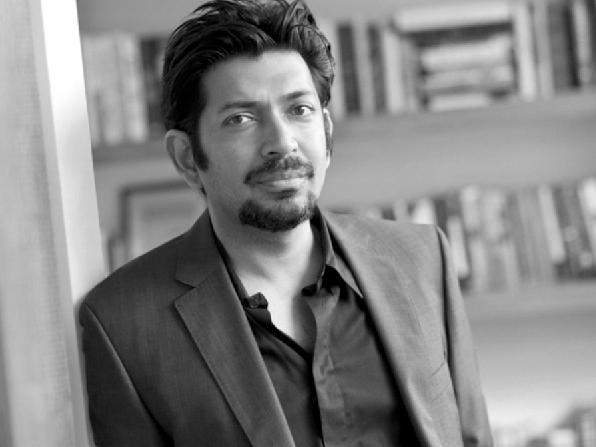
In his Pulitzer Prize-winning book The Emperor of All Maladies, Dr Siddhartha Mukherjee, a cancer physician and researcher at Columbia University, compiles a comprehensive collection of scientific research, ancient and modern history, and patient experiences to shed light on the history of cancer and the progress made on its cure and prevention. The reason Mukherjee characterizes the narrative as a biography of cancer is that he believes cancer resembles a parallel species of man, but one that is “more adapted to survival than we are”. He explains how our “desperate, malevolent doppelgänger” alters the normal division of one cell to form two by disrupting the signals that stimulate and obstruct cell division, triggering the relentless proliferation of cells. He reveals how cancer, similar to humans, is constantly responding to environmental changes through mutations, which resist the attacks of chemotherapeutic drugs and the immune system, enabling cancer to adapt and survive.
Mukherjee travels through time to unearth the changing perceptions and treatments of cancer He begins with the Egyptian physician Imhotep in 2500 BC who described cancer in hieroglyphs and despairingly wrote, “there is no treatment”. Then, he follows Atossa, a Persian queen with breast cancer in 500 BC who ordered her Greek slave to cut off the tumor with a knife. Two hundred years later, the ancient Greek physician Hippocrates identified the tumor as karkinos, Greek for crab, which reminded him of the shape of the tumor, and the study of cancer as onkos, meaning load or burden. The ancient Roman physician Galen attributed the systemic disease to black bile trapped in the body and boiling out as tumors. Through the next thousand years, surgeons tried to purge the bile from their patients' bodies with knives and scalpels with little success. In 1778, Scottish surgeon John Hunter categorized cancer in two stages, recommending local surgery for early, localized breast cancer, but only “remote sympathy” for advanced cancer that had metastasized across the body

The author then describes the era of radical surgery that began in the 1890's, led by American surgeon William Halsted, where surgeons aggressively r e m o v e d o r g a n s a n d m u s c l e surrounding a local tumor to prevent cancer relapse and treat metastatic cancer It took more than a century before Philadelphia surgeon Bernard Fisher conducted a clinical trial of radical surgery, and proved that it was largely unnecessary and did not provide any benefit over localized removal of tumors. With Marie Curie's discovery in 1902 of radium, an element that emits Xrays (that can penetrate deep into human tissues), American physician Emil Grubbe found that X-rays could be used to treat cancer locally, but it could also cause cancer In 1878, German immunologist Paul Ehrlich discovered the drug Salvarsan that could treat
syphilis, marking the first time in history that a drug was made to target a specific pathogen He b e g a n t h e s t u d y o f chemotherapeutic drugs or “magic bullets” to treat cancerous cells.
Mukherjee further delves into the political aspects of cancer awareness that brought cancer “from its basement to the glaring light of publicity”. He describes how American socialite Mary Lasker used the power of modern advertising and promotion to increase federal funding for cancer research in the 1950's. She, along with her followers known as “Laskerites”, transformed a little-known physician-led panel on cancer into the American Cancer Society, a “well-oiled fundraising machine” that used icons and mascots in newspaper ads to capture public attention(,) and pressure the federal government to increase cancer research funding. Their efforts led to the National Cancer Act of 1971, signed by President Nixon, to fund the National Cancer Institute to research chemotherapeutic drugs and run randomized clinical trials.
As a result of this accelerated research, new multi-drug chemotherapeutic treatments for leukemia, cancer of the white blood cells, were discovered. American oncologist Vincent DeVita discovered a multi-drug treatment for Hodgkin's Disease, a rare form of leukemia. American oncologist Donald Pinkel discovered an 8-drug regimen to treat Acute Lymphoblastic Leukemia (ALL), commonly found in young children. American researcher Min Chiu Li fathered the use of adjuvant therapy, which uses extra doses of chemotherapeutic drugs on patients long after visible signs of a tumor have vanished to prevent cancer relapses. This therapy produced a cure for choriocarcinoma, a tumor of the placenta, the first cure of a form of cancer in adults.
The primary focus on the cure as the main solution to cancer occluded any research in prevention. However, in 1954, British epidemiologists Doll and Hill monitored 800 smokers and non-smokers in a two-year study for which they used the British National Registry They discovered that all lung cancer deaths in the group occurred in smokers. In spite of this study, American physicians and scientists at the time, many of whom smoked cigarettes, still regarded the link as laughable and absurd. Eventually, after several subsequent studies and policy changes, including the U.S. Surgeon General's report in 1964, the Federal Trade Commission's mandate to place warning labels on cigarette packages, and anti-smoking television campaigns, the tobacco industry was slowly decimated in the U.S. Today, 24% of Americans smoke cigarettes, down from 45% in the 1950's. Nevertheless, U.S. tobacco industries are moving to other countries to spread the vector of cancer where fewer tobacco regulations exist.
In addition to cigarette-smoking prevention, other secondary prevention techniques included the Pap smear, discovered by Greek physician Papanicolou in 1941 to capture cervical cancer at its first stages. Mammograms were also discovered by U.S. radiologist Robert Egan in the 1960's to detect early breast tumors. In spite of the advances in cancer treatment and prevention, very little of this cancer research dealt with the specific biological pathways of the cancer cell and their genetic roots. In
The IPO Buzz: In early February 2012, a Facebook user posted on his page “Facebook goes public tomorrow and Mark Zuckerberg, 27, who ...gets valued at 16 billion dollars. What is this? What is going on here? I am coming here, writing a couple of lines, it goes to a server We are not talking about Einstein here!” Another user responded: “Take it EZ. This is USA, and it's good for the economy He cannot exercise (sell) all of his shares...right away…and didn't he work his butts off...their revenue was 1 billion last year probably, mostly from ads. And people will remember Einstein for his work for light years to come…” The first commenter wrote back “Today Godfather Pizza has $1B revenue. Gates and Jobs worked hard for something that impacted our lives, Z'berg worked hard for what? I simply don't get the valuation right but I am sure his investment bankers do…”
Déjà vu: As we know, for last several weeks the media has been abuzz with Facebook's upcoming Initial Public Offering (IPO). And it sure has caught the fancy of millions of people worldwide – the above exchange being one example.
The Facebook users got the some of the facts wrong – Facebook didn't go public yet, but filed for an IPO slated for May 2012 with Securities and Exchange Commission (SEC); its earnings and revenue for 2011 were $1 billion and $3.7 billion, respectively; and the estimated valuation of Zuckerberg's holdings runs around $24 billion.
But, the exchange between the evidently flabbergasted users makes one point loud and clear: the world at large is at a loss at the value the high world of finance puts at this social media pioneer founded eight years ago as “thefacebook” by Mark Zuckerberg and three of his buddies at Harvard.
Background: Let's begin with background of this conversation. At Sharepost, a secondary market not available to general public, Facebook shares recently traded at $44, which puts its value across the $100 billion mark – an astounding number indeed! Keep in mind that this valuation is just an indication how the IPO in the primary market may be valued – the actual value will depend on the demand for it.
To put things in perspective, let's compare Facebook's value to the recent market valuations of some of the top names that have greatly impacted our lives: GE $201 billion, Microsoft $268 billion, Proctor & Gamble $184 billion; etc. And of course there is Apple at $500 billion, the most valuable company in the world; and Google at $198 billion, the most valuable internet company in the world.
So what is it that driving the meteoric rise of Facebook up the value chain? Here is what Zuckerberg says in the S1 (IPO registration) statement. “At Facebook, we're inspired by technologies that have revolutionized how people spread and consume information. We often talk about inventions like the printing press and the television — by simply making communication more efficient, they led to a complete transformation of many important parts of society They gave more people a voice. They encouraged progress. They changed the way society was organized. They brought us closer together.”
Wildfire Popularity: According to Alexa, the Web information company, Facebook is second amongst the top websites of the world just behind Google. Its membership increased from a paltry 1 million in December 2004 to 845 million in February 2012. What a viral growth! Even if we exclude an allegedly large number (50 million?) of pet and impersonal pages, we are still talking about approximately 1 in 8 people in the world claiming to be a part of the Facebook community Let's take a deeper dive into what makes you and I visit our Facebook pages as many times a day as we do.
There may be many reasons. Firstly, the “stay in touch factor” - it's a simple and quick way of connecting and staying in touch with people including friends and family no matter how far apart they are. Secondly, the “me factor” - people love to talk about themselves and Facebook capitalizes on that to the extreme. You talk about you in your profile, post your pictures and videos, say what's on your mind, and even use your page or pages to create a nexus of people like you. It's probably one of the best places, which could potentially buttress your ego and create one of the few comfort zones you may have. Additionally, there is the “curiosity factor.” Don't we all love to know about people without them knowing that we are prying? In some ways, we all would like to be the “Curious George”, the monkey from the famous children's book series. Facebook provides a wonderful channel for anonymously satisfying such need without getting into trouble like the adorably impish character Then the youth factor –Facebook has helped create an almost exclusive youth culture including new vocabulary and lingo that some of us love to adopt. Finally, the “free lunch” and the mass mobilization factors cannot be ignored. The use of Facebook is mostly free. And its role in mass mobilization and opinion influencing is striking. For example, Barack Obama used Facebook as one of the tools to reach and mobilize young voters in his presidential election campaign, and the Arab uprising reportedly gathered steam and spread on the social networking sites including Twitter and Facebook.
Value to Business: Companies that are in possession of physical or intellectual resources, and have sustainable business models, that monetize these assets for years to come command great values. Basic rules of economics dictate that the value of an asset/company is the present value of the sum total of its future earnings. Thus, an oil company with huge reserves, a pharmaceutical company with numerous patented drugs, or a company whose inventions make our lives so much easier (Apple & GE) will be at the top of the value chain, because these assets will provide a steady or growing stream of future earnings. These are physical assets that would have values on standalone basis even if the companies creating them did not exist. They are called breakup value. Then we have companies that have effectively created their own values by reshaping the ways we live, work, and interact - Microsoft and Google for example.
Where does Facebook fall in this spectrum? It doesn't have any breakup value for sure. But what does it have that catapulted it right in the front and center of the current corporate value debate? A look at Facebook's business model and its sustainability will provide some clues to the puzzle.
Business Model: Zuckerberg says the users are Facebook's most valuable assets. By users he means the information on the users. And Facebook has a huge
By Subrata Bhaumik
treasure trove of such information waiting to be tapped – much like a cash machine. It has access to very personalized information on the astoundingly huge universe of users and their friends. And sharing such information with advertisers for a price is exactly what Facebook's business model is. Let's take a look at how valuable this information is.
Some believe that the Facebook data is potentially more valuable than the data collected by other massively popular sites, like Google. That's because it collects a rich set of personally identifiable information from the user profiles, which contains not only the users' demographic data, but also data about their and their friends' online and offline likes and dislikes. The personal and social details of Facebook's data could give marketers unprecedented power to find new customers. A company like Pepsi or Proctor & Gamble, could use the combination of demographic and preference data to identify the people who have already bought their products.
And there's more. If a marketer is looking to reach people who have a good chance of going out and buying its product, it would like to focus on people whose friends have already purchased it. For example, a 40 year old woman in Paris who and her friends buy elegant mink coats or a group of 50 year old men in Texas who buy pickup trucks. The tastes and buying habits of your friends may be better predictors of what you are likely to buy than the information on you alone.
Let's take a look at what the above data means in terms of business potential. The worldwide online advertising market, which is Facebook's target market, is huge. Some industry estimates put this market to $50 billion- $75 billion a year with the potential to reach over $100 billion in a few years. Facebook is on the way to become one of the major players in it, and could conceivably claim between 10% - 15% percent of this revenue potential, which means that in a few years its revenue could approach $15 billion – a potentially large company
Then there are Facebook credits and direct payments. Facebook credit is a payment system that users can use as a currency for purchasing applications on its platform. The company keeps 30% of all revenue generated by the credits.
Sustainability and Risks: Let us also consider the risks associated with this model, which could potentially undo such potential.
Competition: In the registration statement, Facebook laid out some of the risks to its business in the highly fickle and competitive social media industry The company views Google, Twitter, and Microsoft - which has a financial stake in Facebook - as its chief rivals. It warns that Google, for example, could integrate its Chrome Internet browser, its Android operating system or its search engine into its Google+ social site — a move that could put Facebook at a disadvantage. As it sounds, if Google can successfully and seamlessly combine them, which it officially intends to do, Facebook would probably need to do something like that or become a part of an industry juggernaut to stay competitive.
It also says that the advertisers may view some of its social ads as unproved, and that increases in mobile viewership could adversely affect revenue because it doesn't currently generate "meaningful revenue" there.
Evolving Space: Moreover, the social media is an evolving space. Trends will come and go. The players would need to understand the pulse of this “fickle minded universe” and navigate accordingly We all know about what happened to “Myspace,” a pioneer in the space. It failed because the company didn't understand that online socializing is a trend and did nothing to try to make it more than frivolous socializing. There was a backlash of Myspace users not wanting anything to do with corporate ads and useless junk that garble their pages and make downloading a nightmare. It started losing members and revenue. Finally, Rupert Murdoch, its owner had to sell it for a meager $500 million. It will be interesting to see how Facebook users react in a potentially similar situation.
Privacy Issues: In recent years, Facebook has come under intense scrutiny over its handling of the privacy of user data. As such, any careless move by Facebook to monetize its user data could prove extremely counterproductive. It's important to note that even a simple change in consumer privacy legislation could easily force Facebook to redefine its business model. In fact, the company's future will depend on finding the right balance between its users' privacy expectations and the quality of the social marketing data to be delivered to its business partners.
Pressure on the Management: Although the company more than quadrupled its revenue in the last two years and turned its losing operation into a highly profitable one over last four years, there will be tremendous pressure from Wall Street (once it becomes public) to continue to deliver comparable growth and profitability Any strategic and operational gaffe that thwarts growth or dilutes profitability will destroy its value overnight.
Back to Valuation: Is the current valuation on solid foundation or on quick sand? Only time can tell. A company that may seem to be extremely valuable today could turn into a penny stock tomorrow
Here is a personal anecdote: In 2001, I had an opportunity to discuss the irrationally high values of the internet companies with a Stanford Business School student who was a senior employee of a highflying technology company This individual who happened to have collaborated on a case study with Craig Barrett, the then CEO of Intel Corporation and a guest professor at the business school, indicated that Mr Barrett believed that the bankers' apparent inability to justify the fundamentals behind these high valuation levels shouldn't validate the notion that the companies didn't command those values. Oh well! We all know what happened to those valuations in the following years.
It is difficult to value private companies in an industry that is still defining itself. Besides past performance, one has to factor in many issues including future risk profiles of the company and the industry, liquidity issues, general market conditions, macro-economic issues, etc. Add to that the paradigm shift the social media companies are bringing in the market, you get a fairly complex exercise. Such information may not be available in Facebook's case. And the usual models, there are a few, used in the world of finance may not be very useful in such situations.
Editor's Note: This is a new series of articles by the author, to continue in future issues of Ananda Sangbad
Introduction: Colonization of India by the British happened at a time when India was in a chaotic and weakened situation. The society had remained static for centuries. It was also subject to horrible oppression and tyranny by the rigid caste system, unacceptably low status of women, polygamy, child marriage, prevalence of “Sati-daho”, and all sorts of cruel practices and superstitions. The exploitative motive of colonial powers is well known. However, it also ushered in a revolution in thoughts and ideas in religion and society in the late 18th and early 19th century, soon after the British occupied Bengal, Bihar and Orissa (1764). The elimination of the terrible practices and synthesis of the desirable thoughts and deeds began to dramatically change the deplorable state - thanks to the leaders of the 19th century Renaissance in Bengal. The pioneer of this transformation was Ram Mohan Roy (1772-1833).
In this brief survey, I shall focus on a few of the less known personalities.
Derozio and Young Bengal
Henry Louis Vivian Derozio (1809-31): Derozio was of Anglo-Portuguese-India ancestry and the son of an officer in a British company His family lived in 155 AJB Road (today), Calcutta. From 1815 to 1823, he was educated in a school at Dharmatala Street run by Drummond, a poet and a scholar influenced by philosophers, positivists and reformers of the 18th century Europe. After school he tried but disliked a clerkship job, and spent a couple of years in Bhagalpur, rich in natural beauty, with his aunt. Here he became a promising poet. His 'The Fakir of Jhungeera' shows genuine patriotism, rare for Eurasians or even for Indians in that era.
Derozio was appointed to Hindu College in May 1826 (due to his commentary on Kant's work and his own poems). He immediately attracted many students as a freethinking brilliant teacher Derozio started an 'Academic Association' with a monthly journal where he and his students and friends published their views and criticisms. He tried to broaden and deepen their knowledge of Western thought and literature, debate on women's education, arguments for and against the existence of God, and question the prevalent practices of the society and religion in light of modern rationality Some of his students used to celebrate their emancipation by eating beef, drinking alcohol, and ridiculing the hated practices.
There were excesses in some cases. It should be remembered that the teacher and students were teenagers. On the other hand, reports by H.H. Wilson (1786-1860) of Sanskrit College and Asiatic Society (who also translated Rigveda Sanhita, Vishnu Puran and Meghdoot), and others evidenced Derozio's effective teaching of excellent quality The following lines, penned by him, provide an insight into Derozio as a loving teacher:
Expanding like petals of young I watch the gentle opening of your minds
And the sweet loosening of the spell that binds Your intellectual energies and powers. What joyance rains upon me when I see Fame in the mirror of futurity, Weaving the chaplets you have yet to gain, And when I feel I have not lived in vain.
The conservatives of the society and the board of directors started an agitation against the troublesome teacher Gossips of all sorts began to circulate against the Young Bengal group. After the 1829 abolition of “Sati-daho,” things came to a head since the group supported it strongly, thereby antagonizing the conservatives even more. Finally, on April 23 [Shakespeare's birthday!], 1831, the directors of Hindu College fired Derozio without giving him a chance to defend. On his strong objection, Henry Hayman Wilson (a famous orientalist and Derozio's friend) posed 3 questions to him as a compromise. His answers to these are powerful. However, he was compelled to leave and face hardship with his dependents: step mother and beloved sister Amelia. He remained active, published a daily and kept close contact with the Derozians. Unfortunately, he was struck down by cholera by the end of that year at the age of 22. The Christian community considered him a non-believer; and as such, he was not allowed to be buried inside the Park Street cemetery His remains were transferred to its present location much later
Under Derozio's inspiring leadership, his students challenged the age-old beliefs and questioned centuries-old practices, and attempted to change them based on rational philosophy and science. The orthodox reaction was strong. Derozio saw the beginning of some changes before his untimely death. His students continued the reform work through two periodicals, The Enquirer and Jnananneshan. David Hare, a strong supporter of Ram Mohan and of Derozio, a lifelong friend of India, and a pioneer in starting the Hindu College, School Book Society, Medical College, etc., led the Academic Association. But the promising start in reformation did not develop into a large movement, yet the close group kept their distinction and contributed individually and also in collaboration in various areas. The 1843 visit by George Thompson, a British Magistrate was important. He suggested that Derozians should
By Rajat Chanda
organize themselves into political associations. Thus the Bengal British India Society, subtitled 'aristocracy of intelligence', was started.
Slightly younger bunch of new leaders such as Debendranath with inspired followers rejuvenated the Brahmo movement in 1843 and Vidyasagar, Akshay Datta and others continued to reform the society, education and others spheres.
Radhanath Sikdar (1813 – 70): Radhanath was the only Derozian who dedicated his life to science. As a student in Hindu School he was especially good in mathematics, a favorite student of Dr Tytler George Everest was searching for a mathematician with spherical trigonometry background for the Great Trigonometric Survey (GTS). At age 19, Radhanath joined GTS as 'computer' with salary of Rs 30/month. He excelled in Geodesic Survey Indians were allowed to rise up to Deputy Collector in 1833. Radhanath was offered that post. Everest prevented his departure to be one by arguing that he is indispensable. He said, “… few of my instruments that he (Skidder) can not manage --- and none of my computations of which he is not thoroughly master He can not only apply formulae but investigate them.”
After 20 years of service, Radhanath was transferred to Calcutta as 'Chief Computer' (salary Rs 600/month), also serving as Superintendent of Meteorological dept. He developed formulae for converting barometric readings to a standard temperature. In 1851 a voluminous 'Survey Manual' was published. The preface stated that all technical and mathematical chapters were written by Radhanath Sikdar In the 3rd Edition, published in 1875, after Radhanath's death, the preface was deleted, derecognizing the crucial contribution. 'Friend of India', a journal, called it 'Robbery of the Dead'.
Much of the data was collected by observations from far since entry into Nepal and Tibet was not possible at that time. One of the crucial corrections to observation were due to refraction of light coming from the cold mountaintops to much warmer points of data collection, making the apparent heights different from the actual. Radhanath computed and applied these corrections. One of the peaks, called 15, was computed to be 29,002 ft high. In 1852, Radhanath rushed to the then Surveyor General and announced, 'Sir, I have found the highest mountain in the world!'
It is important to note that Radhanath is not even mentioned in an important recent book 'Everest: mountain without mercy' by B. Coburn, published by National Geographic Society! The Himalayan Survey covered 1,600 miles. Thousands of workers were involved. Hundreds died from Tiger and Malaria attacks, and accidents.
Radhanath remains a largely unsung hero. John Keay, a historian, confirms 'His great contribution was working out and applying the allowance to be made for refraction'. Radhanath, in collaboration with Peary Chand Mitra, a fellow Derozian and an intimate friend, published 'mashik patra', a monthly magazine written in simple colloquial style, especially for the women. He strongly protested child marriage prevalent at that time and never married.
Peary Chand Mitra (1814 – 83): Peary Chand learned Persian in his young age, and studied English at Hindu College. While he was a student himself, Peary Chand started a school at his home with his friends Radhanath, Rasik Krishna Mallick and Sib Chandra Deb with help from Derozio and Hare. He became the Librarian of the recently opened Public Library He wrote widely in many magazines and newspapers. His 'Alaler Gharer Dulal', the first novel written in the colloquial Bengali, in contrast to the prevailing Sanskritized style, was very popular
He was also a successful businessman. With Tarachand Chakravarty, a fellow Derozian, he ran an import-export business. Peary Chand was interested in the development of agriculture. He strongly criticized the Permanent Settlement act.
Ramgopal Ghosh (1815 – 68): Ramgopal's brilliance as a student of Hindu College attracted the attention of David Hare. When Derozio established the Academic Association, he became a leading member He was very fluent in English and later in his life he became a great orator, called Indian Demosthenis. Many high Government officials attended Association meetings who noted his talents.
Ramgopal started business ventures in collaboration with Joseph and Kelsall. Later, in 1848, he floated his own firm, which became very successful. He helped friends like Ram Tanu Lahiri and Rasik Krishna Mallick in their social reform work and in publication of Journals Jnananweshan, Bengal Spectator, etc. He also helped John Bethune to establish his Girls' School in 1849. Another Derozian, Dakshinaranjan Mukhopadhyay donated the land on which the school was built.
Ramgopal helped Dwarkanath Tagore in supporting the cost of education of two of the four Calcutta Medical College students who were sent to England to pursue further studies in Medicine and Surgery
Ghosh was the first Indian to demand the eligibility of Indians in the ICS (1853). It was he who proposed establishment of modern Indian Universities (1854). With his initiative and donation the statue of David Hare was erected. It survives in the Presidency College campus. A benevolent man, he wrote off all his loans given to friends and various institutions.
Sahitya O Alochana is a literary and current affairs forum under the aegis of Ananda Mandir that endeavors to achieve its motto “Alochana Brings Good Things to Mind.” It held several exciting and thought provoking sessions since the August 2011 discussion, which is the last time it was reported about in Ananda Sangbad (October 2011 edition). Given below are the brief commentaries on the sessions that took place in the September 2011 – February 2012 period.
September - This session was entitled “Urdu Adab – 1.” The suffix 1 signifies the possibility of additional session(s) on the topic. The discussion leader was Siddartha Sahi, a Mathematics professor at Rutgers University Siddartha provided a thorough overview of one of the very important aspects of the cultural heritage of our ancestral land, South Asia that is. Not only did he explore the treasure troves of Urdu Ghazals/Shayaris composed by many literary legends of undivided India – Vali Deccani, Mirza Ghalib, Daag Delvi, and others -- over a period of two hundred years, he also explained the evolution of different styles of Urdu poetry that prevailed in North India, parts of South India (Deccani), and the present day Pakistan. A detailed account of the main themes that recur in Urdu poetry and its grammar including length, various styles of metering and rhyming, and the customary repetition of certain lines was also presented in the session. This was a very interesting and informative session.
October – Rajat Chanda led the session on “Forgotten Heroes of Bengal”, which featured a discussion about the “Young Bengal Movement”, one of the main elements of the “Bengal Renaissance.” Mr Chanda gave an overview of the various radical but free and visionary thinkers of the early 19th century Bengal, and their contributions in shaping the Bengali cultural and social movement of the time. The focal point of the session was Henry Derozio, the firebrand professor of Hindu College (now Presidency College) in Calcutta. Derozio was a literary figure and a fiercely free and rationalist thinker of Bengal with Portuguese lineage who in his very short life was able to help usher in this famous movement. The discussion also explored the lives and works of some of his followers – commonly known as “Derozians” who were eminent personalities in various fields including science, mathematics, religion and philosophy, arts, and social reform. A full blown report on the topic is also included in this edition.
November – This session covered the work and life of Harold Pinter, the Nobel laureate English playwright, producer, actor, and director Sudipta Bhaumik led this session with support from Amitabha Bagchi. The discussion explored Pinter's work and presented an in-depth analysis of "Birthday Party", one of Pinter's early and famous plays that deals with the eve r- b lu r r i n g d i s t i n c t i o n b e t we e n a n d t h e intertwinedness of real and unreal; right and wrong; normalcy and disaster; clarity and confusion; and more importantly, the inadequacy of language as a tool of communication. It was also noted in the discussion that Pinter was credited and discredited at the same time with creating a class of drama known as "Comedy of Menace", which in the theater world is seen as closely aligned with the "absurdity and obscurity" that are often alleged to be the anchoring style and theme of Samuel Beckett's plays. The discussion also uncovered other aspects of Pinter who also happened to be a poet and
Reported by Subrata Bhaumik
essayist often expressing his own political views on social justice.
December – In place of the regular discussion, a movie was screened in December with a post screening review that was held in the usual exchange format. The screening was organized and the discussion was led by Amitabha Bagchi. The movie shown was Herbert, a highly acclaimed Bengali movie, which is directed by Suman Mukherjee, and is a winner of several international awards.
It tells the kaleidoscopic saga of an idiot savant who grew up in Kolkata, feeding on the charity of relatives and being the butt of local jokes. He declares one day that he has received a message in a dream that has told him where the diary of a long-dead cousin is hidden. People are surprised and amused. But when his prediction turns out to be true, Herbert becomes an instant sensation. He sets up a roaring business called "Dialogues with the Dead" and runs it for several years. For the first time in his life, Herbert earns money and the respect of others. But his luck runs out and his life is upended when the International Rationalist Society declares him a fraud and threatens to turn him over to the law unless he closes his thriving business. Thus begins an alternately sad and bizarre set of events. The movie also walks the viewer through the changes in character that Kolkata went through in the last century And it employs the protagonist Herbert as a kind of pendulum, swinging back and forth in time, pausing and breaking its linearity
February - “Kothai Pabo Tare”, loosely translated as “Where can I find him/my soul”, was the title of the February session that focused on the Bauls of Bengal. It was led by Subhodev Das and Nupur Lahiri supported by Subrata Bhaumik.
The discussion examined whether or not the Bauls of Bengal are more than their popular images of wandering minstrels, or mystic folksingers who transcend religion and competing philosophies, exploring their connection with the much revered Sufis of the Islamic civilization. The session also provided an in-depth analysis of their evolution, philosophy, religion – yes, they profess one, which is attaining through love the oneness of one's body and soul with the ultimate soul in the cosmos – and finally, their music and poetry that are the mainstay of Baul culture, sect, or movement. The discussion also explored the lives and works of various famous Bauls: from Gagan Harkara to Fakir Lalon Shah, to Rabindranath, the hidden Baul –don't be surprised, Tagore was fascinated by the Baul philosophy -- to some of the present day Bauls, and the community's quest for the ultimate soul. An interesting observation was made, which alluded that “Imagine” the famous independent song by John Lennon, the legendary former Beatle, was influenced by the Baul philosophy
Future sessions – Quite a few very exciting sessions are in the pipeline for the next few months including “Gita for Commuters – Princeton to New York”, “Urdu Adab 2”, “Beijing and Bangalore on the Mobile - a Cultural Conversation on Changing China and India”, and a review of Rohinton Mistry's work.
The friends of Sahitya O Alochana would like to thank Ananda Mandir for its continued support for the forum's contribution to the cultural enrichment of the local Bengali and Indian community
Reported by Krishna Dutta Roy & Debajyoti Chatterji
Every year Ananda Mandir organizes over 50 religious ceremonies. In this galaxy of religious events, the one star that shines very brightly in the winter months is the Saraswati Puja when young children join their parents in worshipping Ma Saraswati, the Goddess of Learning for all Hindus. This year the Saraswati Puja washeldonSaturday,January28withgreatenthusiasm by children and adults alike. For a mid-winter event, the weatherwassurprisinglypleasant,andasaresult,alarge crowd could participate in the puja and enjoyed the activitiesinvolvingchildrenofallages.
Puja started at 9:00 am and the first of four rounds of anjali was offered at 11:30 am. Then the signature ceremony of this event, Hate Khari (“first writing”) began. Some 15 children took their turns in takingpenandpaperandthussymbolicallybegantheir life-long journey of learning (Bidyarambha). On behalf of the organization, these little learners were given boxesofcrayons,coloringbooksandmarkerpens.
A cultural program featuring many children and young adults followed Hate Khari and lasted almost three hours. The program was organized by Rita Bhowmik. Sreya Mukherjee, Priya Mukherjee and Parama Das acted as the Program MCs. We thank Rita, Sreya, Priya and Parama for their special efforts. Thanks alsogotothemanymusic,danceandlanguageschools for actively supporting this grand event. It was heartening to see that our children and their elder brothers and sisters were truly involved in making their ownprogramandtheirpujaexperienceagreatsuccess.
We thank all the performers named below (with their specific performances) for their lively and skilled participation in the cultural program, and we wish them continuedsuccessinthefuture:
ShivamMukherjee:SaraswatiBandana BrindaGuha&Friend:DanceRecital RishavDas: SongsonKeyBoard ParamaDas&PriyaMukherjee:Songs SreyaBhanjaChoudhury:Songs AnusreeSaha:Songs
NikhilKundu:SaraswatiBandanaandSongs KimayaBajpai:StoriesonSaraswatiandGanesh MitaliBhawmik'sstudents(Rahul,Megha,Shankhadip, Sanjana, and Debanjan, under the direction of one of Mitali's senior students, Indrani Chakraborti):- Musical presentation
Variety performance by Mrittika's Students (Kirin, Sunaya, Rianna, Sidharth, Shivalik, Srijon, Renee, Rani, Disha,Eamon,Shayom)
MalabikaGuha'sstudents:DanceRecital
Ananda Mandir's little kiddie members (Trisha, Trina, Rishika,Aditi,Sruti,andSreya):MusicalProgram
MitraPurakayastha'sstudents:DanceRecital
Anindita Sarkar's students (Anurag, Roshnita, Advika, Ria,Sanya):MusicalProgram
SunaritaMitra'sstudents:DanceRecital AuroniSen:PoetryRecitation
AmritaPal:DanceRecital
KatrinaKosnik:SongsonKeyBoard
In these trying economic times, it is to public libraries that people are turning more than ever for help with their job-seeking efforts, and to fulfill their informational and recreational needs. The irony is that the rigors of the economy are also causing staffing cuts and the slashing of materials budgets at public libraries. So the challenge that libraries face is how to offer increased services with meager funds, and it must be said to the credit of most public libraries that though they are straining their resources to the utmost, they are achieving their goal to a very large extent.
One of the many patron interactions that I, as a librarian, shall never forget was when a man came to me for help with using Word 2007 which we have on our public PCs; he was used to Word 2003. I helped him format his resume, and showed him how to attach it to the email he was sending to a potential employer He returned to the Reference Desk about half an hour later, looking rather uncertain. “I am not sure whether I've done the right thing”, he said. He had wanted to send his resume to another company but couldn't remember how to attach it to an email; I was busy helping another patron, and in any case he was embarrassed to ask for help again. So he forwarded the first email to the second employer Now he was not sure that he had done the right thing.
Incidents such as these have prompted many libraries to offer Word, Excel and PowerPoint classes. The New Jersey State Library is helping public libraries offer job-seeking classes, as well. With the aid of the BTOP Grant that is part of the American Reconstruction and Reinvestment Act, public libraries are getting trained instructors to conduct job-seeking sessions of 4 classes per session for their patrons. At these classes, people are taught how to write resumes, look for jobs online, and apply for jobs online. What is frustrating is that these sessions are limited to 12 people only because the instructors say that they cannot give individual help to more than 12 people at a time. The reason makes sense but the reality is that there are many more people who need this kind of help.
There are other ways in which libraries help people in these hard times. We have some patrons who have cancelled their cable TV service in order to meet their daily expenses. They use their TVs to watch DVDs, and as another cost-saving practice, they loan the DVDs from the library rather than rent them. For us librarians, there is a certain sense of satisfaction in interlibrary loaning DVDs for such patrons.
Actually, that is one of the best things about the public library – most of its services are free. And the interlibrary loan system in New Jersey is generally so well organized that it is usually possible to get most books from other libraries. In fact, in the past two years, most libraries have seen an increase in the number of items they interlibrary loan, and a large increase in number of DVDs that patrons check out.
On the one hand there are the patrons who need job-seeking help; on the other, there are those patrons who received e-readers for Christmas, particularly Kindles, and who turn to libraries for instruction on how to use these devices. Also, since ebooks are what many patrons want, many New Jersey libraries have joined OverDrive, a service that rents out e-books. So libraries organize e-reader workshops to show patrons how to download e-books from OverDrive
By Jayashree Chatterjee
onto their e-readers. To complicate matters, the way to do this differs for the Kindle, the Nook and the iPad. And to complicate matters even further, the way to do this is different for the different kinds of Nooks, as it is for the different kinds of Kindles and iPads! To really help patrons, librarians need to have many technological skills at a time when libraries cannot afford to offer them technological training It should be added that librarians need excellent customer-relations skills as well. Because e-books are digital, patrons feel that they should always be available, and are genuinely aggrieved when they are not. But publishers block access in such a way that not more than one person can check out an ebook at a time. Also, publishers like Harper Collins block access to an e-book after 26 checkouts. If libraries want that title after that, they have to pay for it again. So, unlike access to information on the web, multiple users do not have access to the same e-book at the same time.
The aim of public libraries is to offer services for every single age group Most Youth Services departments offer storytimes, starting with programs for newborn babies. These mother-and-child programs help babies develop cognitive skills Storytimes continue for toddlers and children till the age of 5. These programs do not just develop a child's attention span, imagination etc; they also help a child to get ready for the structured and instructional atmosphere that they face when they start going to school. In this regard, mention must also be made of public library Summer Reading Club programs - they help keep children's reading skills alive, something that is vital because educational testing has shown that during the threemonth summer vacation, many children lose their reading skills due to lack of practice.
The next age group, the Young Adult age group, has different needs, and YA departments offers programs that are generally very innovative in conception. They range from simple movie nights to science experiment workshops, and from book discussion groups to fun programs like Square Dancing Through the Stacks. The unfortunate part is that many libraries do not have the funds to employ a YA librarian.
Seniors make up the last patron group. Talks on medical topics like Alzheimer's Disease are organized for them. Some libraries invite financial advisors to explain estate planning and retirement issues. On a daily basis, most librarians help seniors with email and other computer-related problems.
The crux of the matter is that public libraries exist to help their communities obtain the information that they need in all the various forms in which information is disseminated today They reflect the makeup of their community, and their aim is to evolve into a community center that their patrons can always turn to. In recent years, with the increasing entry of the Internet into all aspects of our lives, people have wondered about the future relevance of public libraries. But the fact is that while a service like Google gives an overwhelmingly large amount of information, parts of which are irrelevant or come from a questionable source, libraries organize information and help their patrons navigate through it. Providing reliable sources is part of their job. Perhaps it is because of all this that it is said of public libraries that providing “education brilliantly disguised as leisure” is their biggest achievement.
By Adityadeb Sanyal (Riju)
Continued from page 05
fact, until the 1970's, it was assumed that cancers were the result of viruses such as the Rous Sarcoma Virus (RSV), found to cause cancer in chickens. It was not until U S biologists Vogt and Duesberg found that RSV's cancer-causing ability was linked to the src gene, a proto-oncogene found in all human cells, that scientists began to find that cancer was a genetic disease. The src is a proto-oncogene that produces a kinase protein, which activates other proteins by adding a phosphate group to them in a cascading pathway linked to cell division. When the src gene is mutated, the kinase is hyperactivated, resulting in accelerated cell division and cancerous behavior The use of recombinant DNA technology, discovered by Genentech in the 1980's, allowed scientists to engineer human proteins in bacterial or animal cells, making it easier to create drugs that target cancer by treating its altered molecular pathway The integration of cancer genetics and screening has allowed for enhanced prevention of breast cancer by improving detection of BRCA-1, a proto-oncogene, and following up with preventive targeted therapy Increased research in molecular pathways of cancer-affected genes is likely to yield many new chemotherapeutic cures, especially with continued progress made by The Cancer Genome Atlas, which uses analysis of the genome to identify genetic mutations responsible for 20 forms of cancer Dr Mukherjee's biography of cancer reveals that there may never be a universal cure for cancer However, he demonstrates that cancer research is a constructive work-in-progress that builds on prior research and observations. While cancer continually changes form and wreaks havoc on the human body, researchers and patients must keep pace with cancer and try to “outwit, outlive, and survive” the emperor of all maladies.
[Editor's note: Adityadeb is a Junior at Brandeis University]
By Subrata Bhaumik
Continued from page 06
Lack of Substitutes: If bankers cannot put a meaningful value to the company, then why is the private market assigning such an astounding value to Facebook? The answer may lie in the fact there is a huge demand for innovatively trendy investments due to the lack of good substitutes. The global economy has slowed down and the world is awash in investible cash due to mass liquidation of traditional investments caused by poor market returns and historically low interest rates. Maybe we are heading back to the days of stashing cash under the mattress. Also successive doses of cash injection in the economy by the Federal Reserve have only increased the size of this idle cash, which is in part driving up the values of any alternate investments that are out there with even a hint of future success.
California Gold Rush: And what can be a more attractive investment than a social media company from Palo Alto even if it's in an uncharted territory? In a world deluged with investible cash, anything that looks high potential, which Facebook does, will likely (in the eyes of the investors) replicate the proverbial California Gold Rush, hopefully a much longer one.
Concluding Comment: While the bankers figure out the value of the company, Mark Zuckerberg, the high school nerd who knows five languages, often recited from epics like Iliad, wrote path-breaking programs at middle school, while scoring top grades in science, mathematics, and classical studies will keep tinkering with the “cool website” that he cofounded, thereby significantly influencing the way we socialize. Don't nerds deserve respect? In fact, they may even be “cool.” Bill Gates once famously said that “Be nice to nerds, chances are you will end up working for one.”
By Mandira Chattopadhyay
The other day I saw John Ford's The Grapes of Wrath and its depiction of the struggles of the Oklahoman farmers during the days of the Dust Bowl. Their Depression era problems looked very similar to our own--though even more dire-which made me remember Samuel Bogorad, a retired professor I know who had lived during those times. I wondered what he might have to say and what his experiences might offer to times like these. During the Great Depression, things were much worse: more than twice the current number of those unemployed did not have jobs (25% overall. In urban areas it climbed to over four times the current number (37%). I asked him what life was like for him in his hometown.
"I was fairly young. By the end of the 1930's people went back to work in the factories that manufactured war materials. I lived in Southeastern New England in a small textile town called New Bedford, Massachusetts. That town was particularly hard hit by the Depression. It produced cotton textiles. The town was in a desperate economic condition, like many towns of New England. Other towns like Burlington, VT, were hit as well. These mills were hit hard because countries like Japan and India could provide cheap labor, and most cotton industries moved to the South. Mill towns in New England never recovered after the Depression. The factories later began to manufacture finished products and technological supplies. In my hometown there were not so much of breadlines. But I did see men selling apples, and many other homeless people. Panhandling was common on every street.”
I pressed him further on the impact of the Depression on his family
"The Depression had a decided impact on my life. My father's business was selling retailed furs, women's fur coats, and scarves. Those very things in the Depression became luxury items. When the Depression hit, the volume of my father's business went down considerably What that meant to me was that the prospect of going to college in style supported by parents with a check for food, clothing, etc. became less of a possibility At that point, the Depression had hit so hard, that it was questionable whether I would go to college or not. Fortunately I had a very good high school record, and eventually received a scholarship that covered some of my tuition. My grade record in college was good enough so that I got a full scholarship my last year There were four children in my family My older sister was married by that time, so she was no longer a figure in the family income. I had two younger siblings: my sister and brother, who were in grade school. Once the decade ended, and the Depression was 'over,' people went back to work in factories. My father's trade began to pick up again. When I did go to college, I worked. I did various kinds of jobs.”
"How did you find work?”
"During that time the government and the National Youth Administration, which provided funds so that the college kids could do various kinds of jobs. I myself had a NYA job. And I must say that my family made sacrifices for me at that time. These jobs were earmarked for students who agreed to stay in school. Some kids in NYA worked in academic departments, other in physical plants such as shoveling snow or raking leaves. I had one of the most fascinating jobs I ever had in my life. It provided me with an opportunity in which I learned a great deal about art. The university where I worked had a huge collection of reproductions of paintings. They used to loan them out to students and faculty In other words, it was a kind of revolving collection, a rental collection. My job was to be a sort of custodian of this art collection, to loan these paintings out. They had tags on the wall that indicated to whom it would be loaned. What was interesting to me was that on the back of each of those paintings, was a typewritten legend naming the painting, the artist and saying something about the period of art in which it was painted and so forth. So it became a hobby to me, since there were hours of free time when I would be doing my homework. I preferred to walk around and turn the paintings over so I could read what was on the back. That is where I discovered the difference between Rembrandt and Manet and Monet, and so forth. And I had never had a formal course in art, but I learned a terrific amount. "
He chuckled, "Somewhat surprisingly I've always been grateful to the Depression and the opportunity of the experience because of what I learned. I had no loss of jobs because I was a student throughout the whole period. I had no savings. My father had a modest income. He bought savings bonds. After the war, prosperity came back. All the bonds my father bought during the Depression began to mature. Their values increased considerably, so that when I went to graduate school in Northwestern University, my father was able to support me when I got married and was attending graduate school During the war I taught naval cadets at Northwestern.”
"What did your family think of politics and politicians back then?"
"My father was a democrat. I don't think he liked Hoover He was a firm supporter of FDR. I was sympathetic towards the president's views. I don't think people necessarily disliked Herbert Hoover Hoover had a commendable record. After World War I, he had helped the nation in many ways. He can be blamed, however,
for the government policies that eventually led us to the Great Depression(s) (remove extra s). Later on it would be fair to say that I was opposed to the war on pacifist grounds. But once the war had started, I wholeheartedly supported it. I was very supportive of the necessity to aid the Jewish people, since I myself am Jewish. I supported fully the American intervention to defeat Hitler.”
“What did you think of the first lady, Eleanor Roosevelt?”
"She was a very prominent person as a First Lady She had a great reputation that most first ladies don't have since they live in the shadow of their husbands. But this was not so for Eleanor Roosevelt. She, I think, influenced many of the actions that FDR eventually took. FDR also had a respectable family As a kid, I respected the Roosevelt children, since they were of my age. They both became prominent leaders in the armed forces.".
“What were your sources of information?”
“I do remember Fireside Chats. As a kid I admired Father Coughlin, [the radio priest whose weekly broadcasts famously endorsed President Roosevelt and his policies]. He was a great public speaker I was not paying attention, as a kid, to the highly racial remarks he made. I discovered that all his socio-economic-political viewpoints differed from those that I believed in. My admiration turned the other way by this point. Father Coughlin definitely opposed other races. He was regarded as having a sort of fascistic attitude. He upheld his strong anti-Semitism. Finally the church silenced him.”
“What was life like for women at the time?”
“In a town like New Bedford, many families were dependent on jobs in the factory Women were a strong part of the workforce. Such jobs as these were available, but women tended to get laid off before men. So the families no longer had two incomes; they had one. So women suffered heavily during that period. They were primarily limited to menial jobs such as housekeeping and other domestic work. I had no personal experience that I can refer to. So it wasn't until the end of the period, when the war started, that women once more were employed in the factories. The war industries needed women, since most men were out of the country The period saw a great number of family dislocations. The divorce rate, I am sure, escalated. So family dislocations were common.”
“Did the struggles pull families apart or bring them closer together?
“I think the Depression brought many families closer together; they needed each other's cooperation in these hard times.”
After our discussion, I thought of how the current conditions have inadvertently brought some families closer together: children and even older adults were forced to move back in with their parents. Perhaps we should take heart as well and hope that our struggles will have the same effect of bringing us closer together emotionally as well.
Ananda Mandir is accepting applications from college students and high school seniors for Summer Internship from May through August, 2012. The internship program will include learning and helping research works in the areas of biological science, physical science and engineering at various laboratories in New Jersey Additional internship opening is in the area of pharmacy in New York City Some internships are paid, others are voluntary Paid interns have to be minimum 18 years old and US citizens or permanent residents. Application with resume and indicating the area of internship interest should be sent to Dr Pronoy Chatterjee, e-mail: pkc_usa@yahoo.com , by April 20. 2012
By Jerry GaMarsh
"The
color of springtime is in the flowers, the color of winter is in the imagination."
– Ward Elliot Hour
Many beginning gardeners start planting without knowing the growth habits or origins of their plant stock. Many decades ago, I was one of them. Some of what follows relates to personal experience. Invasive species usually evolve from the importation of plant or animal stock from other parts of the world resulting in unintended consequences. In the avian world, a primary example is the European Starling first brought to North America by Shakespeare enthusiasts in the nineteenth century Because of its aggressive behavior it has driven out many Native American species in certain areas and is considered to be an invasive species. The same problems are involved in the importation of plant stock from other parts of the world.
A classic example of this is the plant Kudzu which was introduced into the U.S. in 1876 at the Philadelphia Centennial Exposition. Ostensibly, it was imported as a forage crop and an ornamental plant. From 1935 to the mid-1950s, farmers in the south were encouraged to plant Kudzu to reduce soil erosion. It was widely planted by the Roosevelt era conservation corps during the 1930s. The problem is that Kudzu kills or degrades other plants by smothering them under a solid blanket of leaves, by girdling woody stems and tree trunks, and by breaking branches or uprooting entire trees and shrubs through the sheer force of its weight. Kudzu plants grow rapidly, extending as much as 60 feet per season and can grow at a rate of about one foot per day under optimal conditions. Some can grow up to 100 feet in length and weigh up to 400 pounds. Fortunately, in 1953 it was removed from the USDA's list of permissible cover plants.
One of the most invasive of the ornamentals is the several hundred species of bamboo which were imported into this country by the horticultural industry Of these, 24 are in the genus Phyllostachys, the most invasive of the bamboo plants. One of the most aggressive bamboo plants is Phyllostachys aurea which is both hard to kill or remove. Bamboo reproduces by underground rhizomes which develop so rapidly that they can produce a virtually impenetrable forest in a short period of time. The resultant “forest” often requires a bulldozer to remove. It has been estimated that $138 billion is spent every year in an attempt to manage these plants. That is not to say that all bamboo plants are bad. There are various species of “clumping” bamboo which grow discreetly and are native to the mountains of China, South and Central America, and India. This is the favorite food of the Chinese Panda Bear
Because I seriously doubt that these first two examples are being experienced by our readers, I'll move on to the more mundane, local problem plants which can be broken down into two categories: invasive perennials and invasive vines and shrubs.
I don't think that anything can be more frustrating than planting a well thought out garden only to see it overrun by a single specimen. A classic example of this is the purple loosestrife (Lythrum salicaria) which not only crowds out your native plants but grows up to 4 feet tall. If not caught early on, a single purple loosestrife can produce up to three million seeds in a single year! If you have already planted it, your only recourse is to dig it up before it blooms, lay it out in the sun until it dries out and compost it.
Another perennial which is widely sold by local nurseries is the “Obedient “plant (Physostegia virginiana) which spreads by underground rhizomes running through other perennials in the area weakening or even killing them.
I love colorful non-flowering plants as a filler between flowering annuals, so when I saw the Chameleon plant (Houttuynia cordata) years ago it seemed to fit in perfectly with my gardening plans. The problem is that this particular predator spreads by underground rhizomes, rooting stems and seeds. And if that weren't enough of a problem, the leaves when crushed or stepped on produce a pungent, unpleasant odor By the time I caught on to the problem, I had to dig up a large portion of the garden to rid myself of this pest.
The last perennial I have had problems with is the Chinese lantern (Physalis alkekengi). Growing flowers that lend themselves to drying such as the strawflower, globe amaranth and cockscomb has always been a favorite endeavor of mine, so the showy orange seed pod of the Chinese lantern seemed like a natural. It took only a short period of time to realize that the seeds spread rampantly and sprout easily taking over large portions of the surrounding area.
These are but a few of the known invasive perennial species. There are literally hundreds which are listed on the internet and in many gardening books.
Like the invasive perennials, there are hundreds of invasive vines and shrubs but I will relate my experiences to only three (which I am still battling).
In 1981 I built a new house in Piscataway and proceeded to add a pergola behind the garage as an area for outdoor dining and entertaining. What was needed of course was something to provide shade so I naturally thought that climbing vines would be the perfect answer I chose bignonias (also commonly called trumpet vine), honeysuckle and bittersweet - three vines which would produce leaf cover as well as flowers during the summer They all grew rapidly and within two seasons had covered the pergola. That is when the trouble began. I suddenly found that I had specimens of these vines growing all over my yard with the bignonia being the most egregious offender I found them popping up 50 to 100 feet away from the original planting and they produced runners from which other plants sprouted up. The only way of getting rid of these runners is to manually pull them up (if very young) or dig up the mature runners. If you look carefully in the middle of built up city areas, you can see these invaders growing out of the seams and cracks in concrete walls such as several I've seen along the off ramps on the Garden State Parkway
Although invasive, many of the species are attractive and well worth growing in containers. I think in many of my previous articles I have referenced container gardening and this article will be no different. Although the invasive species which reproduce through wind spreading the seed would not fall into this category, those producing underground runners or rhizomes certainly would. This would be especially pertinent in the case of bamboo which can grow and flourish in containers. Care in choosing the proper size container would be important since some of the larger bamboo species could rapidly outgrow their containers.
Whether or not you consider common Ivy (Hedera helix) an invasive plant, its growth habits should be carefully noted before planting. Being a vine, it can grow up to 100 feet tall and will cling tenaciously to any surface available with small aerial roots. This can be particularly disconcerting if planted next to a house which has had new siding applied since the siding will quickly become over run and scarred with these roots. The effect of ivy overgrowing a structure is readily seen in England where entire huge mansions are covered in green ivy Of even more concern is its effect on trees. Large well established beds of Ivy can quickly climb large older trees eventually killing them off. Judicious trimming of runners starting to climb the trunks will be necessary to keep the trees healthy
As a final word on invasives (or at the very least plants that spread rapidly) it would be wise to remember that many plants that are used to “naturalize” can spread quickly to unintended areas. This was brought to my attention when I planted hundreds of bulbs to over grow an area which was difficult to cultivate due to both lack of sunlight and large tree roots. The planting performed beautifully the first year but the second year proved to be a problem. I have many stone paths through the garden which the grape muscari have taken over Admittedly, these pathways of purple do look spectacular in May but then comes the job of leveling these plants and refurbishing the stone pathways every year
As an interesting gardening sidelight it should be noted that due to global warming, the US Department of Agriculture has produced a revised temperature zone map with the zones being moved farther north. This is the first time in 30 years that the map has been updated. The update affects zone 6 (where half of New Jersey lies) which extends across the United States to the west coast. Particularly affected are the Midwest states of Kansas and Nebraska where the zones are shifting dramatically Where zone 6 had cut the state of Kansas in half (east to west) it has now moved north to the Nebraska border In New Jersey where the state is roughly divided in half into Zones 6&7, some of what was classified in central NJ as zone 6 is now in zone 7. The northern part of the state (Northern Morris, Sussex and Warren counties) are unchanged but some of the counties south of there have been upgraded temperature wise by 5 to ten degrees. My area of Piscataway, South Plainfield and Edison which had been previously listed with winter temperatures of -10 to 0 degrees Celsius is now listed with average winter low temps of 0 to +5 degrees Celsius (I'm still waiting to see those palm trees sprouting in my front yard). A map of the new temperature zones is available at the USDA internet site.
These new zones are based on 1976–2005 weather data. Climate changes had previously been based on a 50 to 100 year period. The new map uses only a 30 year average. Although I don't think that I will be seeing those palm trees growing in my front yard anytime soon, global warming at this time is definitely occurring and will impact both gardening and general agriculture in the future.
Until the next time, Happy Gardening!
By Himansu Mukherjee
The origin of the caste system may be traced back to the racial segregation in the society in earlier times. When Greeks and Romans became very powerful, they launched military expedition to many countries and brought home the captives as slaves. The slaves were forced to do all types of menial jobs. Slavery in ancient European societies, and until recently in white America, is in part comparable to the caste system in India.
After the decline of Roman power, Europe plunged into darkness. But this despicable social malady continued. When Europe emerged from the Dark Age, an era of progress and prosperity began. Social discrimination gradually disappeared, and Europe moved forward to create a classless society However, social barrier and discrimination were neither dictated nor condoned by Christianity
European societies got rid of the social discrimination. But the colonial powers of Europe enforced racial segregation on the peoples of occupied lands of Asia and Africa. The apartheid policy of the English rulers in South Africa is well known.
Caste system is a curse in the human society The notion that Hinduism is tarnished by caste system is unfounded and thus unjustified.
When the Aryans came to India, they settled on the Indo-Gangetic valley They were called Hindus, and the religion they developed is known as Hinduism. Hinduism is one of the earliest and noblest religions on earth. Vedas, Upanishads and Bhagavat Gita are the great religious books of Hinduism, and these are priceless treasures of humanity The great British philosopher, Prof. Huley described Bhagavat Gita as the greatest religious book ever produced by mankind.
For the smooth running of the society and the community, Aryans, however introduced the concept of the division of labor Based on peoples' capability and skill, people were divided into four categories namely, Brahmins, Khatriyas, Vaishyas and Shudras. Brahmins were in charge of teaching and priestly duties. Khatriyas were responsible for the protection of the country and the maintenance of law and order Vaishyas were selected to run commerce and industry The rest of the population, consisting of the captives, were Shudras, and they were assigned to till the land and do menial work
It should be pointed out that the caste system in the Aryan society was neither dictated nor endorsed by Hinduism. It is wrong to blame Hinduism for the caste system.
There was no caste in the ancient Vedic Aryan society There is no mention of caste system in the Vedas and in the 5,000 year old Bhagavat Gita. Hinduism teaches that we are children of God, and we are all created equal. Gita stressed on Karma (action or deed) to make life meaningfully productive, but clarifies that no work is mean. Gandhiji remarked (Young India, Nov 24, 1927) that caste is an excrescence (offshoot), just like untouchability imposed upon Hinduism. All the excrescences that are emphasized were never part of Hinduism. Hindus and not Hinduism are responsible for caste abuses.
Originally, caste divisions were designed not to antagonize the people but to facilitate work and maintain social order There was good cooperation and communication between different groups, but in course of time, barrier between different castes appeared and the Aryan society was segregated.
Under the oppressive rule of Moslem emperors after they invaded and occupied India, old Aryan civilization in India was almost facing extinction. Conversion into Islam was forced by ruling authorities. Caste system in the Hindu societies became more rigid to avoid forced conversion and to protect cultural identity
Conversion insults God. God is not different in Hinduism, Christianity or Islam. Conversion in India was mostly done by force, and it was motivated by greed. It is painful when one is separated from kith and kin due to conversion.
When Britain ended 600 years of Moslem rule, it reawakened the closed Hindu society Caste barriers and other superstitions began to melt down. Britain set up an administration based on justice and the rule of law The Renaissance, which brought social, political and economic revolution in Europe, also touched India. The impact of Renaissance diluted the social barriers in the Indian societies, and Indians were infused with new life. The revival of Indian society was marked by the rapid progress in education, politics, art, industry, science and technology
In conclusion, rigidity of the caste system is now on the wane. Inter-caste marriages are now frequent and accepted by the society We all look forward to the day when the caste system will completely disappear, and one can marry the girl of one's choice as in other societies outside India without being burdened by the caste system. People will enjoy unbridled freedom, not only in marriage, but also in every other aspect of life. In fact, the social revolution in modern times will create a classless society in India.
By Amitabha Bagchi
India in recent times has not been known for manufacturing prowess. Tata Motors, however, is an exception. It started slowly enough, making trucks in collaboration with Mercedes-Benz, much like what its Indian competitors (Ashoke Leyland, Hindusthan Motors, Maruti-Suzuki) had done or would later do for other kinds of automobiles. Then it stunned the world by acquiring Britain's Jaguar Land Rover (JLR) in 2008. It created an even bigger stir by launching the Tata Nano, the world's least expensive passenger car (at around US $3,000) and rolling it off the factory floor in the summer of 2009.
No wonder, then, that people sat up and took notice when Tata Motors announced in January 2009 that it would introduce a car with a compressed air engine in 2011. That forecast, however, proved to be premature. Like many similar attempts to build a usable “air car” before them, Tata's efforts were bedeviled by the twin challenges of efficiency and scale. The upshot was that, by the end of 2009, Tata Motors quietly shelved the plan for launching the air car
What exactly is an air car? It is an automobile that uses a pneumatic motor or a compressed air engine to do mechanical work that would lead to motion. Pneumatic motors use the stored energy of compressed air to create either linear motion – with a series of pistons in cylinders, typically – or rotary motion – with the help of vanes fitted in a slotted rotor mounted on a drive shaft.
Attempts to build an air car have had a long history The first successful attempt to build an air car was made in France in the mid 19th century Since then, pneumatic motors were used to run trams (in Nantes, France) and trains in mines. For both trams and trains, though, compressed air engines were eventually replaced by electric engines. There are pneumatic tools however, like impact wrenches and dental drills, that successfully use a variety of air engines or motors.
The main advantage of an air car is that it is “clean” in the sense that it produces no noxious emissions Arrayed against it, however, are several disadvantages. The first one is its low energy efficiency – typically 5-7% as compared to nearly 14% for the internal combustion engine. The second is the limited travel range for a reasonable size compressed air tank. The third one is the limit of speed, although the French manufacturer MDI (Motor Development International) has claimed without proof that it can produce vehicles that can travel between 80 and 140 km (depending on the driving condition) before recharge and attain a top speed of 110 km/h. Finally, air cars are built with light bodies that may not fare well in crash tests.
The Tata air car conceptual engine was to be developed by MDI. The same engine was also supposed to be distributed in the US by Zero Pollution Motors. Zero Pollution Motors used to claim that it would introduce the “world's first air powered cars for the United States by late 2009 or early 2010.” That claim certainly was not realized. Meanwhile, the Tata Motors vice president for engineering systems (S. Ravishankar) stated in an interview in late 2009 that “their project was facing difficulties in terms of vehicle range and cooling.” Ravishankar also had this interesting comment: “Air is not a fuel, it is just an energy carrier So a tank full of air does not have the same energy as a tank full of CNG. Any vehicle using only compressed air to run would face problems of range.”
The unfortunate fact is that clean cars at present are having trouble meeting the standards of customer convenience as well as economy General Motors recently announced the temporary shut-down of the assembly line for its much anticipated electric car, the Chevy Volt. The model is apparently far from reaching its anticipated sales target for the year Hybrid autos remain expensive and their sales are helped somewhat by Government tax break. Given the limitations of driving range and top speed, cars driven by compressed air engine are not yet competitive in the marketplace. How “clean” they are may also be open to question, because compressing air requires an energy source, typically electricity, and generating it using fossil fuel could itself lead to pollution. Tata Motors discovered all the pitfalls within a year of making a bold prediction and were forced to pull back.
Ananda Mandir is pleased to announce the launch of a program to award financial grants to support Community Service Projects aimed at helping the South Asian community in the Greater New Jersey area Project Proposals Are Welcome From Organizations and Individuals
Please visit www.anandamandir.org for program details and application requirements or Contact:
Pronoy Chatterjee (pkc_usa@yahoo.com) or Debajyoti Chatterji (debsmee572@gmail.com)
Reported by Krishna Dutta Roy & Debajyoti Chatterji
By Prabir Sarkar
Ananda Mandir's puja calendar for the months of January, February and March was quite full. We conducted our monthly Satyanarayan Pujas on January 8, February 5 and March 4. These pujas began on those days around 5:30 pm and were attended by many devotees. Our monthly Shyama Pujas were held on January 22, February 21 and March 21. These pujas also started at 5:30 pm and drew enthusiastic crowds.
In addition to the monthly Satyanarayan and Shyama Pujas, we observed the New Year (Nababarsha), Ratanti Kali Puja, Saraswati Puja, Maha Shiva Ratri, and Dol Purnima.
The temple doors were opened early on the morning of January 1 and were kept open all day so that people could come anytime to offer their nabobarsha prayers and seek blessings of good health and happiness in the New Year Almost 150 people visited the temple that day Our Food Committee prepared and served food in the evening to the visitors.
On January 21 we celebrated Ratanti Kali Puja with much pomp and enthusiasm. The event was well attended witth75 to 100 people joining the celebration. We catered food on that day.
The long-awaited Saraswati Puja was observed on Saturday, January 28. A detailed report on this major event of the winter months is given elsewhere in this
Reported By Arun Bhowmik & Guru Chakravarty
John Wubbenhorst
Music loving members of the community were treated to a very special program at the monthly Ananda Sandhya gettogether on December 9, 2011.
John Wubbenhorst, the founder and leader of the ground breaking fusion group “Facing East”, presented an exciting highly entertaining program playing Flute, both eastern style Bansuri, and the western style flute. He was accompanied on Tabla by Samrat Kakkeri, a very accomplished Tabla player
John Wubbenhorst is a disciple of Pandit Hariprasad Chourasia for many years. John is a master flautist having the distinction of a fluent virtuoso of both the “Bansuri” (the bamboo flute) and the western flute. He has played internationally with famous musicians like Ramesh Misra, Bajan Sopori, Victor Wooten, Larry Coyell, Paul Horn, and others.
The next Ananda Sandhya was scheduled on Friday, March 9 for an evening of Hindustani classical and devotional songs. Artist of the evening was Ajay Divakaran who enchanted the audience with a great performance. He was accompanied by Arindam Chakrabarti on Tabla and Madhu Vora on Harmonium.
issue of this news magazine.
Maha Shiva Ratri, the other major event in our winter calendar, was held on February 20. The temple was open from 9 am to 9 pm. Although this event fell on a Monday, almost 150 devotees visited and bathed Lord Shiva during the open hours. Preparation for the puja started the day before. In the temple, Smee Chatterji and Rita Bhowmik made the garlands for Lord Shiva's Raj Besh. In the community building, Rik Sen, Chitra Mondal, Rita Bhowmik, Lopa Das, Ambalika Mukherji, Bandana Rakhit and Smee Chatterji worked hard to prepare hundreds of purees for the many visitors expected the next day Suprasad Baidyaroy from the Food Committee prepared the delicious vegetable curries. Thanks to their efforts, all visitors next day left the temple well-fed. The puja itself, the ritual of bathing Lord Shiva by all the assembled women and solemn chanting by the priest was enjoyed by the devotees attending the evening session. For the day- time visitors Krishna Dutta Roy led a team of volunteers in preparing and distributing bags of fruits and sweets. All in all, Maha Shiva Ratri celebration was a grand success.
Dol Yatra, an annual event that combines religious devotion with social playfulness, was celebrated with great enthusiasm on March 8 by children and adults alike. The final puja of this reporting period, Basanti Puja, began on March 30 and was completed on April 2 and was a great success.
Invites retirees and near-retirees to participate actively in Forum meetings and activities. Future Meeting Dates:
Sunday, April 22 (1:30 pm – 3:00 pm) Sunday, May 20 (1:30 pm – 3:00 pm) Sunday, June 17 (1:30 pm – 3:00 pm) Sunday, July 15 (1:30 pm – 3:00 pm)
Dear Members of Ananda Mandir,
As you all know by now, the cultural events presented by Ananda Mandir (musical shows during Kali Puja, Durga Puja, Live Mahalaya to name a few) have gained great popularity in our community of music lovers One such routine event is the monthly event ANANDA SANDHYA, presented usually on second Friday evenings This is the wonderful platform where our community musicians get a chance to showcase their talents Are you interested to do an Ananda Sandhya program at Ananda Mandir as a solo artist, or present a group program? If you have attended any, you know that this is a 2 hour program of high quality If you are “WILLING, ABLE, AND CAPABLE”, please contact our cultural secretary Arun Bhowmik at arun bhowmik@hamonusa com, or call him at 908-672-1452 for details
We look forward to hearing from you
By Prabir Sarkar
On Sunday, January 29, 2012, Indian Community Center of Garden State (ICC) celebrated its Bani Bandana Dibash (Saraswati Puja Day). We thank all the patrons and members for sending us numerous messages and feedback about the warm, homely, joyous atmosphere at our Saraswati Puja celebration. Being the first event of the year conducted by ICC, we are happy that our team effort made this wintry celebration a memorable one. We are grateful for the kind words and encouragement. This will help us to further dedicate our energy towards betterment of our community and fun for our young generation.
Saraswati Puja celebration was a great success in terms of children participation, the size of audience, exquisite presentation of cultural programs and the quality of the venue. The event was held at the Ukranian American Cultural Center of NJ in Whippany Starting at about 2:00 P.M, the community dressed in their best -- women in beautiful, decorative saris, young girls in ghaghras, men in dhuti and kurta and little boys in pajama-panjabis -- started assembling in the Puja venue from all over New Jersey By 4:00 P.M., a large crowd filled the assembly/dining hall of the center where the Puja rituals were carried out. Aided by the members of Puja committee, the rituals were performed by Suddhasatta Acharyya, followed by “Hate Khari” and “Pushpanjali". After a few rounds of Pushpanjali, Prasad was distributed from a cornucopia of fruits, sweets and Bhog.
The afternoon witnessed a galaxy of beautiful children who took part in the cultural program starting with Children's Orchestra directed by Ranjan Raychaudhuri. The orchestra featuring ICC children on keyboard, violin, guitar and drums wonderfully played familiar tunes of Rabindrasangeet. The children's play "BirPurush" based on Rabindranath Tagore's poem of the same name was directed by Baruna Haldar and Bidisha Sarkar The play captivated the audience with participants ranging from the very young to teenagers but their collective performance was just outstanding. This was followed by a hilarious "shruti natok" called "PuPu" adapted from a short story by Sirshendu Mukherjee. The audio enactment was presented by Debjit Banerjee and Arup Saha. People could not leave their seats but had to hold onto their sides and keep laughing. Throughout the program, Soumendra Seal and Ananda Chaudhuri dedicated themselves in capturing all the events through their videography and photography
By Biman Bhatta
Kallol's New Year's Eve Party for 2011 was held on December 31, Saturday at the Shezan Restaurant, Oak Tree Road, Edison, New Jersey One prominent feature of the gathering this year was the attendee number Even though some longtime Kallol members had left earlier for Kolkata to spend their winter time there, the gathering at the party here was quite significant. The event apparently attracted people at the promise of lots of fun and entertainment. Snack, dinner, and various beverages were in plenteous supply for everyone's enjoyment. The DJ performance was pretty pleasurable too, and you could tell that by looking at the dance floor Untiring dancing efforts by the people to the rhythms of the music throughout the whole duration of the party were remarkable. Then it all pinnacled at the strike of the midnight. With the live telecast on a large video screen ushering in the New Year, the champagne bottles were opened for everyone. It was quite a sight as people embraced and wished each other a very Happy New Year And when finally it was time to return home, people wondered why the party could not continue for the rest of the night.
Usually during January thru March Kallol activities lie latent since no social events are scheduled during this period. The Executive Committee members use this time to assemble and finalize portfolio activities for their presentations during the forthcoming Annual General Meeting. This year this meeting will be held on Sunday, April 1, 2012. Along with the regular AGM activities, a new Executive Committee will also be elected to serve for the approaching term of 2012 thru 2014. Obviously Kallol members will be experiencing the excitement that an election processes supposedly brings in.
Updates on Kallol's impending activities are routinely posted on the club's official website www.kallol.com. So please visit this link from time to time for detail information about the club's future happenings.
Thank you and good luck for the “Naba Barsho”
The main attraction of the evening was the song and music program by the guest artist Jayati Mukherjee from South Jersey This was a program that included popular, melodious songs from the past to the present. Accompanying Jayati were a talented set of musicians playing Octopad, Guitar and Keyboard. Jayati and her band created such enticing music that many guests could not just stay in their seats and rushed to the floor to dance with all sorts of interesting moves. It was a really fun filled evening. The event ended with a sumptuous dinner with traditional Bengali Khichuri, Vegetable Chop, Bandhakopi and Chutney with Laddu to add a touch of sweet to the taste.
As we look forward, we are getting ready for the Baisakhi. Before I say good bye for now, I acknowledge the contributions of many of our dedicated ICC members and their efforts which have made this event such a memorable one. Please stay tuned to our website http://www.icc-gs.org for all the upcoming events and information.
(A Community Service Arm of Kallol of New Jersey)
Is Active in SupportingEducational Efforts for Underprivileged Children In India and the United StatesAnd is seeking Members, Volunteers and Donors
If you are interested in joining or helping, Please contact: Ranjana Sanyal 908-252-0333 rsanyal@hotmail.com or Achira Ghosh 908-722-1517 Achira.ghosh@gmail.com
By Kankana Sengupta
On January 14th of this year, festive fervor gripped Bengalis as NJPA organized Saraswati Puja to pay obeisance to the goddess of learning--the goddess personified as knowledge in its full grandeur The bitter sub-zero temperature did not deter the spirit of Bengalis to witness and take part in one of the most important pujas. Puja and dinner was followed by a very attractive cultural program and other fun filled activities.
NJPA came into existence in 1969 with the efforts to preserve, protect and personify our religious and cultural values, to encourage our future generations to participate in celebrating our festivals, and to provide a platform to all Bengalis and Indians to come together to meet, greet, entertain and celebrate our heritage. We are grateful that we still have been able to continue to preserve and foster this overall theme. We have received positive input about our work and have been able to elevate our effectiveness to benefit from the momentum we have enjoyed over the last few years.
NJPA will be holding its Annual General Meeting very soon. This year a new Executive Committee will come into action. Please stay tuned for further announcements.
Our success as an organization will be measured in your success as a continuing member We ask for and welcome your active participation. So please keep your ideas, suggestions and comments flowing and keep checking our website at http://njpa.net regularly
Kaveri Kaul, Bengali
Kaveri Kaul, an India-born filmmaker who grew up in New Jersey likes to make movies about real life people facing hard choices. In the documentary Back Walking Forward she describes the uphill struggle of Eric, a 19 year old young man full of life who was hit by a van and suffered traumatic brain injury. It is a documentary that not only celebrates Eric's courage to re-learn life skills but also of his family and the medical team that has faith in him.
Kaul's films have been shown in film festivals in London, Berlin and Sydney Her documentary Long Way from Home is about the struggle of three teenaged girls who come from economically unprivileged families - a Cambodian refugee, an Egyptian Muslim and an African American, enrolling in a private prestigious prep school of white schoolmates. It is not a film without hope, but it is also against the thought that multiculturalism will dissolve racial and social divides.
Her non-fiction feature One Hand Don't Clap was released in theaters in the United States, Japan and Europe. Broadcast on PBS, her film First Look won the Best Cultural Film Prize at the Festival of Latin-American Cinema and the Silver Prize at Italy's Festival of Film on Art.
Kaveri is the daughter of Kanak Dutta, a grassroots democrat who unsuccessfully ran for the state assembly seat over 30 years ago, and Professor Manoranjan Dutta, who are well known at Ananda Mandir (Source- India Abroad, March 9, 2012)
Gayatri Memorial Awards have been established by Ananda Mandir (Somerset, NJ) to recognize authors who have demonstrated excellence in writing through their published essays, poems, short stories or plays. The awards have been made possible through a significant contribution from Jerry GaMarsh, husband of late Gayatri GaMarsh. Gayatri was an accomplished author and artist –and a key member of the editorial team of Ananda Sangbad and Anandalipi, publications of Ananda Mandir The Gayatri Award is administered through the Awards & Recognition Subcommittee of Ananda Mandir
Two cash awards will be given each year to recognize outstanding works published in North America-based literary magazines within the last five years. One award will be given to an author of Bengali works, and another will be given to an author in English. Each award will consist of $500 in cash and a certificate
An author may nominate himself/herself or may be nominated by a third party (using the Nomination Form shown below). The nomination must be supported by photocopies of two (and only two) essays, poems, short stories or plays published in North America-based Bengali or English magazines. The two supporting publications can be of the same type or of different types (eg, one poem and one short story). Unpublished works of literature will not be accepted. Full publication references must be submitted for the articles submitted with each nomination. Articles published in magazines outside of North America will not be considered.
Nominated authors must be 18 years or older Each of their published articles (prose or poems), submitted with their nominations, should be relatively short (no more than 5 or 6 printed pages in length).
Deadline for nominations (with supporting documents) for the 2012 awards: June 30, 2012. Awards will be announced and presented in Fall, 2012. Please download the application form from the Ananda Mandir website, www.anandamandir.org and send nominations (with supporting documents) to:
Dr. Pronoy Chatterjee
6 Marcin Court
Spotswood, NJ 08884
In case of questions, contact Pronoy Chatterjee (pkc_usa@yahoo.com) or Guru Chakravarty (gurucharavarty@yahoo.com)
Argentina's Tryst with Mahabharata
Spread over 12 acres, Hastinapur is called the City of Wisdom (ciudad de la sabiduria) in Argentina. The Argentines learn philosophy, read in library, practice yoga and meditation and sing bhajans here. There is a dozen Indian gods- some are sitting or standing on the pedestals, and others hang on walls and pillars. Ganesh, Krishna, Surya, Narayana and Siva have their own temples.
Hastinapur respects all religions and beliefs, and goes beyond the boundaries of established religions.
There are temples for Buddha, Virgin Mary, Greek god Demeter and All Faiths. Their library has books of all religions and schools of thought. The City of Wisdom is not the ultimate destination. It does not prescribe wisdom doses. It simply helps people to seek, find and pursue their own path to wisdom. They give classes in yoga, meditation, philosophy, devotional singing and sacred drama They organize workshops, seminars and retreats. They also provide community service. They celebrate festivals such as Ganesh Chathurthi and Baishaki.
Hastinapur temples do not have priests or other middlemen between the gods and worshippers. There is no concept of collection of donation. Worshippers pray, recite mantras and sing devotional songs individually or in groups.
Hastinapur Foundation was established by Alda Albrecht in 1981. She introduced Indian philosophy and became a Guru for the Argentines seeking wisdom. She wrote a number of books such as The Saints and teachings of India and The teachings of the monks from Himalayas.
(Source: NGI magazine -A report by R Viswanathan, Ambassador of India to Argentina, Uruguay and Paraguay)
STROKE: Remember the 1st Three Letters..... S. T. R.
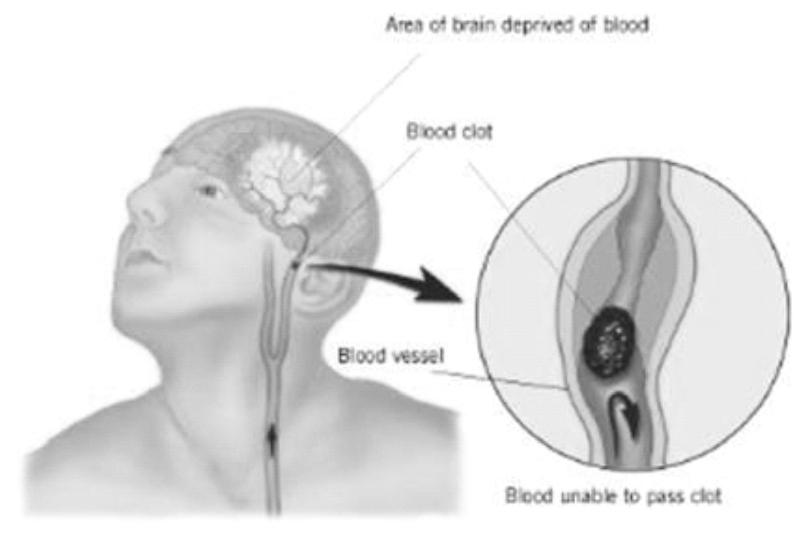
STROKE IDENTIFICATION:
A neurologist says that if he can get to a stroke victim within 3 hours he can totally reverse the effects of a stroke...totally. He said the trick was getting a stroke recognized, diagnosed, and then getting the patient medically cared for within 3 hours, which is tough.
RECOGNIZING A STROKE
Thank God for the sense to remember the '3' steps, STR. Read and Learn! Now doctors say a bystander can recognize a stroke by asking three simple questions:
S *Ask the individual to SMILE.
T *Ask the person to TALK and SPEAK A SIMPLE SENTENCE (Coherently-i.e. It is sunny out today.)
R *Ask him or her to RAISE BOTH ARMS.
New Sign of a Stroke -------- Stick out Your Tongue
Ask the person to 'stick' out his tongue. If the tongue is 'crooked', if it goes to one side or the other that is also an indication of a stroke.
If he or she has trouble with ANY ONE of these tasks, call emergency immediately
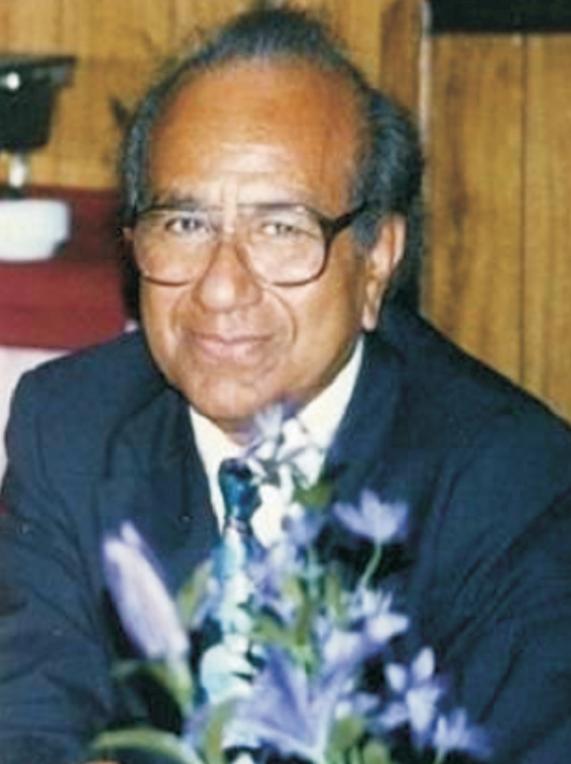
Anil Raychaudhuri, popularly known as Anilda, served selflessly in areas of publications, donation collection, and as chair of the P u b l i c i t y a n d Communication Committee He was also a past VicePresident of Ananda Mandir He made a profound impact on the organization with his dedication in all the areas he served He loved Ananda Mandir so much and spent such a great deal of time here that it was like second home to him Anilda worked tirelessly to enhance the quality of Ananda Mandir's publications by rigorous editing of articles His amiable and friendly nature attracted the members of Ananda Mandir and especially new visitors to the temple, helping to add new members Anytime there was a program at Ananda Mandir, be it annual events with several hundreds of devotees or monthly events with 20 – 50 people attending, a pleasant welcome from Anilda could not be missed at the entrance
The Award and Recognition Committee of the Board of Trustees of Ananda Mandir is pleased to announce that at the February 12, 2012 meeting the Board recognized (Late) Anil Raychaudhuri and Suprasad Baidyaroy as the “Outstanding Volunteers” . Suprasad Baidyaroy has givendedicatedandselfless service to Ananda Mandir from the very beginning of the organization For much of the past 10 years, he has shouldered the prime responsibility of large-scale cooking for all kinds of events He has done this on weekends and weekdays, in daytime and at night, and in good weather and bad He has also, on his own, bought and donated furnishings for the temple (oriental rugs, chairs, tables, etc ) and utensils and burners for the kitchen – and personally delivered them to our facility Suprasad has also taken care of the shipping arrangements and costs for all the deities from India and our publicationsAnandaSangbadandAnandalipifromKolkata
The Board will continue to recognize one or two “Outstanding Volunteers,” every quarter selected from the nominations received from the Life Members of Ananda Mandir The application form for nomination is available at www anandamandir org (see announcement elsewhere in this newsletter)