The measure of success of a news magazine or a newspaper is expressed by the number in circulation. There are various categories to consider: Time magazine is dominant in the political arena, People magazine dominates social media, AARP magazine is the king among aged population, so on and so forth. One of my friends in the publishing business in India says that this number is generally highly inflated in order to achieve certain privileges. However, the real measure of the success is when people talk about it, use it for reference in discussions, and keep it on the kitchen table for an occasional glance while sipping coffee. Some of the serious readers do find an important subject to agree or disagree on, and go on to express their opinions about it in the “Letters to the Editor” column.
For us, the publishers of Ananda Sangbad, our circulation of 1250 is limited to the community of readers involved or familiar with Ananda Mandir. It focuses on the events that are planned for and by the Ananda Mandir organization, but it also includes many interesting topics related to literary, scientific, economics, environmental and community affairs. Articles on “Forgotten Heroes of West Bengal”, the phenomenon of “Higgs-Boson” particles in an understandable language, the concept of “Carbon Credit”, action on ar-
senic contamination in waters in West Bengal, and informative articles for senior citizens are a few examples that we are proud of. It also has stimulated the dormant literary interest in many to venture into writing for the first time. We very much want to encourage people to take up writing. We know that people do discuss some of the Ananda Sangbad articles in the frequent social gettogethers, talking against or sometimes in favor of what is written. We want to encourage such discussions by asking you to write in our “Letters to the Editor” column. Not only can you express your opinions on a particular article, but you are free to write about anything, as long as it meets our journalistic standards. You may want to write about what new themes may be included to make it more attractive to our readers. You are even welcome to start a new column on popular items like sports, culinary, advice for raising children, what voluntary services to join, so on and so forth.
As you will see, we have started a new series on “Health Matters”. We will very much like to see your response to the article.
Guru Chakravarty Editor, Ananda Sangbad
Highlights of Recent Puja Activities
Reported By Krishna Dutta Roy, Chair, Puja Committee
Like other years, Ananda Mandir started the new year by keeping the temple open for the public all day. In the evening, Dr. Manisha Chakravarty, accompanied by her friends, presented an enjoyable program of Srimad Bhagabat Geetapath sprinkled with some devotional songs.. Arun Bhowmik, Ananda Mandir’s cultural secretary, also entertained the gathering with devotional songs in his usual captivating style. An estimated two hundred people visited the temple throughout the day.
We had our monthly Shyama Puja on 11th January with a gathering of about 60 people. The monthly Ananda Sandhya program was held on that same night.
On 12th January, Mrittika Inc., the South Asian Center for Language and Heritage, started the first of a series of events on the occasion of its 25th Anniversary, with the celebration of Swami Vivekananda’s 150 th birthday. The program was a huge success. It was helped by participation of several prominent cultural organizations of New Jersey and New York. The participants from NJ were: Ananda Mandir’s own cultural group, Bharatiya Kala Kendra, Ekta, Gitanjali, Pratidin, Sara Rattir, and Friends of Mrittika. The New York participants consisted of Ranjani Music & Dance school from Queens, NY and Sanchari
Acknowledgement
The Board of Trustees of Ananda Mandir expresses its appreciation to Suprasad and Reeta Baidyaroy for assisting with publication of Anandalipi, our annual magazine.
from Bronx, NY
The monthly Satyanarayan Puja was held on Sunday, 20th January. The month of February was a very snowy month. On 8th February, our very special yearly Ratanti kali Puja suffered because of heavy snowfall of eight inches. Instead of the expected big crowd, only about 15 devoted souls braved the snow and attended this auspicious event. However, on the next day, 9 th February, in our monthly Shyama Puja, we got our crowd back and about sixty people were in attendance.
The Saraswati Puja was celebrated on Friday, 15th February. Though it was a week day, there was no lack of enthusiasm of the public. Ladies clad in yellow sarees were all abound. Kids and adults alike brought books for Ma Saraswati’s blessings. About ten young boys and girls had their Hatekhori /Bidyarambha with the help of priest Biswabhai. The Puja was completed with Arati and Pushpanjali by 11:30am, and then lunch was served. That evening, we had our monthly Ananda Sandhya. This was a memorable evening for those who love Rabindra Sangeet. Mr. Jafar Billa gave a thoroughly enjoyable performance of some of the great songs of Kabiguru.
The Saraswati Puja celebration continued on Sunday, 17th February, with a program of “Bani Bandana”, organized for
school children who could not attend the Puja in the week day. As usual we had the Puja, Arati, Pushpanjali and Hatekhori, followed by lunch. But the special event of the day was a cultural program performed by the kids. This program stated with an aspiring singer Nikhil Kundu, who performed Saraswati Bandana and Rabindra Sangeet. Then Mrittika staged “Bile theke Vivekananda” , the transformation from young Bile to Swami Vivekananda. It was totally in Bengali, performed by the students of Mrittika with perfect pronunciation and without any prompting. The participants were: Srijan Bhanja Chowdhury, Disha Bhowmick, Akash Bhowmick, Dia Paul, Maya Ganguly, Priya Ganguly, Sunaya Dasgupta Mueller, Kirin Dasgupta Mueller, Andy Ghosh, Emon Ghosh Dastidar, Abeer Chakraboty.
Mitali Bhaumik’s students Roshmi Banerjee, Sankhadeep Chakrabrty , Megha Nayar gave us a superb program with Ganesh Bandana, Najrulgeeti, Bhajan and Rabindra Sangeet, accompanied by Angsh Patel on Tabla.
Next performer was Aratrika Dey, who sang Rabindrasangeet and Palligeeti. Her excellent voice charmed the crowd. Her Palligeeti drew plenty of applause. Shreya Bhanja Chowdhury sang Rabindra
Didn’t Receive Your Copy of Ananda Sangbad?
If you are a Life Member or an Associate Member, but didn’t receive your copy of Ananda Sangbad, it may be because we do not have the correct address on file for you. Please send an email to Guru Chakravarty (guruchakravarty@yahoo.com) with your correct address, and we will send you another copy.
sangeet in her usual melodious voice. Her delivery of the Saraswati Stotram, which was composed by her father, was just superb.
Risav Das had an excellent presentation on keyboard. Parama Das and Priya Mukherjee both performed solo songs. They both received a lot of applause.
After a big array of vocal programs we had a change of pace with dances.
The first program was by the students of Mitra Purkayasth’s Rhythms of Dances and Music(RDM) school. The students who performed were: Sunaya Dasgupta Mueller, Ananya Mukherjee, Oishi Ghosh and Arunima Paul.
The next dance program was by Sunrita Mitra’s dance school.(Rhythms of Life) The two dances from this group were performed by Ramyani Mitra, Priyal Ganguli and Ankita Chakraborty
The last item of the day was a vocal program performed by the talented students of Bharatiya Kala Kendra. They presented a program of “Ragashrayee Sangget”, led by their guru Partha Mukherjee.
This entire program was organized by Rita Bhowmik and conducted by Arun Bhowmik, It was truly a memorable evening for all in attendance.
The day was still not done. In the evening we had the monthly Satyanarayan Puja.
Shiv Ratri was observed on Sunday 10th March with a large attendance of devotees. More information and pictures will be provided in the next issue.
Bhattacharyya
On-line Dialog with the Winners of 2012 Gayatri Memorial Awards
by Debajyoti Chatterji
Have you ever read and loved something and marveled: what made the author write this great piece of literature, or what makes this writer tick? Did you then put that curiosity aside, knowing that you have no easy access to the author — and go on with your life? I have done that probably a hundred times and forgotten all about those incidents.
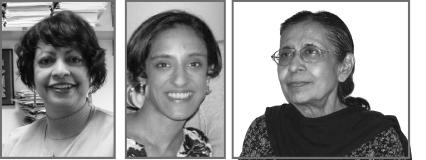
Fortunately, three authors who have created beautiful literature could be reached quite easily and asked questions about their works because we just honored them with the 2012 Gayatri Memorial Awards for Literary Excellence. They are Eva Khashnobish (winner in Bengali publications category), and Bakul Banerjee and Kooheli Chatterji (co-winners in English publications category). However, Eva is a resident of New Delhi while Bakul lives in Illinois and Kooheli is a New Jerseyan. So, a face-to-face meeting with these awardwinning writers was not a viable option. But thanks to the miracles of email and the worldwide web, virtually
everybody in this planet is reachable, and I could hold an on-line dialog with our gifted authors quite easily and gain most interesting insights into their lives and works. Our award winners come from very different backgrounds, and that made my job even more interesting. Eva was born in Bihar, India, received her MA in Political Science from Patna University, and taught at several colleges in various parts of India. She then went to Oxford University to continue her studies but returned to India because of ill health. After more years as a college professor in India (and for a while in Ethiopia) Eva settled down in a suburb of New Delhi. She published her first short story in 1977 in the Bengali magazine, Nabakallol.
Over the years she has written more than 200 short stories and published 9 books in Bengali. –Kooheli, on the other hand, was born in Schenectady, NY, in a Bengali professional family, around the time when Eva published her first short story, and has only a few publications
to her credit. She received her BA in English Literature from Wesleyan University, CT, and is currently a teacher-administrator in a private educational institution in NJ. Bakul, our third winner, was trained as a geophysicist, with her Masters degree from IIT-Kanpur, and her PhD from Johns Hopkins University. She is currently working as a computer scientist. Although trained as a technologist, Bakul has pursued her reading and writing interests, especially after she became an empty nester. She has authored many short stories and poems, mostly in English in magazines and anthologies throughout US. Her book of poems, “Synchronicity” was published in 2010. She is working on publishing two more collections of poems and stories and a novel.
When did these gifted authors become interested in writing and why? When I asked that question, Kooheli’s answer was short and direct: “I adore stories. I have adored them since I was a child. The form they take – oral, written, prose,
lyrical – matters far less than, I think, the impact they have on us. C.S. Lewis once said, “We read to know we’re not alone.” Perhaps the same is true of writing. My interest in writing comes from that desire to share with others some of my life experiences and my observations about the world. I guess I write to convince myself that I am not alone.” Bakul traces the origin of her interest in writing to her childhood days: “When I was growing up, my father inspired me to read everything, including world literature. Although I studied mathematics and science throughout my life, I read voraciously until I came to the United States. During my college years, I wrote the usual bad poems. I had to mostly abandon writing and reading during first twenty five years of my life in this country. After my girls went to college, I began writing again.” Like Bakul, Eva got introduced to literature and the love of reading and writing at a very early age. “My father was a physician. When he moved to a small town in the state of Bihar, he hired private tutors for homeschooling for my sister and I,” Eva recalls. “I used to spend my spare time reading books and day-dreaming. I remember that I used to hate arithmetic. One day, I was pretending to do my arithmetic but was actually writing poetry. My tutor found out and showed my poem to my father. I was ten years old at that time.” This was the genesis of Eva’s life-long love affair with reading and writing. “I wrote because I wanted to. A strong, insurmountable urge used to push me to write. I
Gayatri GaMarsh Memorial Awards For Literary Excellence
Gayatri Memorial Awards have been established by Ananda Mandir (Somerset, NJ) to recognize authors who have demonstrated excellence in writing through their published essays, poems, short stories or plays. The awards have been made possible through a significant contribution from Jerry GaMarsh, husband of late Gayatri GaMarsh. Gayatri was an accomplished author and artist, and a key member of the editorial team of Ananda Sangbad and Anandalipi, publications of Ananda Mandir. The Gayatri Award is administered through the Awards & Recognition Subcommittee of Ananda Mandir.
Two cash awards will be given each year to recognize outstanding works published in North America-based literary magazines within the last five years. One award will be given to an author of Bengali works, and another will be given to an author in English. Each award will consist of $500 in cash and a certificate. An author may nominate himself/herself — or may be nominated by third parties (using the Nomination Form shown below). The nomination must be supported by photocopies of two (and only two) essays, poems, short stories or plays published in North Americabased Bengali or English magazines. The two supporting publications can be of the same
type or of different types (e.g.., one poem and one short story). Unpublished works of literature will not be accepted. Full publication references must be submitted for the articles submitted with each nomination. Articles published in magazines outside of North America will not be considered.
Nominated authors must be 18 years or older. Each of their published articles (prose or poems), submitted with their nominations, should be relatively short (no more than 5 or 6 printed pages in length).
Nominations should include short biographies of the authors. Judging, however, will be based primarily on the two supporting publications. Judges’ decisions will be final.
Members of the Awards & Recognition Subcommittee and the judges cannot submit nominations for themselves nor can they be nominated by third parties.
Deadline for nominations (with supporting documents) for the 2013 awards: July 31, 2013. Awards will be announced and presented in the Fall of 2013. Please send nominations (with supporting documents) to Debajyoti Chatterji 77 Mackenzie Lane South Denville, NJ 07834
In case of questions, please email Debajyoti Chatterji (debsmee572@gmail.com) or Guru Chakravarty (guruchakravarty@yahoo.com).
remember one occasion when I was temporarily displaced from my usual room, so I took refuge in a bathroom and wrote a complete story there.”
My next question was: What topics interest you most as a writer? For Bakul, life experiences seem to form the basis of most of her writings. Her short stories are centered on her “direct experiences with crossing cultural, not always geographic, boundaries.” She adds: “It was strange to be the only Asian woman at the Uranium Enrichment Plant climbing the rungs of a ladder to reach control boxes at the top of a fifty feet tall high bay. However, it was downright scary to have my exam papers torn away from my hand by rioting students during the Naxal movement in Kolkata. Conflicts at these crossroads interest me.” Kooheli takes a different approach to finding her topics of interest. “Family, ethnicity, education, relationships. If it occupies my mind, it finds its way into my writing,” Kooheli says. Eva thinks that she plays a very limited role in the selection of her topics or themes or settings. “Day-to-day activities and incidents leave impressions on me, sometimes in the form of flash photos, like a sudden gust of wind blowing heavy curtains apart and revealing something interesting,” she adds. “When I sit down to write, that interesting something transforms into a story.” Eva gave me several examples of this skill of hers, this capturing of a scene or a word or a character in the mind’s eye and then converting that into a story in a completely different setting. I wish I could share some of these examples with the readers but space restrictions force me to resist that temptation. Since all the winners in 2012 were women, I could not help but ask a seemingly sexist question: How do you balance family/career demands against your interests in writing? Eva says that such demands have been minimal in her life. “Unlike my sister, I never got into sewing, knitting, crocheting or cooking, thanks to my mother’s tacit support. When I got married to a military officer, I thought that I will have to prepare elaborate dishes for him. To my pleasant surprise, he turned out to be an avid reader with very easy eating preferences. A simple meal is enough for him. And he sincerely believes that writing is a great art form, so he
Ms. Bakul Banerjee
Ms. Kooheli Chatterjee Ms. Eva Khasnobish
Vedanta is not a religion of a specific region or a group of people, it’s a philosophy of mankind, dealing with creator and creation (nature). Vedanta does not belong to Hinduism, however, Hinduism is largely based on Vedanta philosophy. Vedanta carries the ultimate message of all major religions of the world, recognizing that all religions are the paths to the same goal. Different religions have different approaches and different belief systems but they all speak the same ultimate truth.
According to most historians, Vedanta evolved from an ancient culture, the culture of the Aryan, who invaded the upper Indus basin of India sometime in 2000-1500 B.C. and settled in India. Their culture was known as Vedic culture, which had basic beliefs that go back to the period when Aryans lived in the North West Asia, ten thousand years ago. The earliest literary products of Aryans, developed over a period of five thousand years, are the Vedas, sacred hymns worshiping nature with ritualistic sacrifices. The Vedic culture that blossomed in India is divided into four categories, developed in different time frames, signifying different schools of thoughts. They are called Rigveda, Samaveda, Yajurveda and Atharvaveda. Many volumes were written illustrating not only rituals under each category of Vedas but also the evolution of metaphysical thoughts during the entire Vedic era.
An Interpretation of “VEDANTA”
Vedic thought became increasingly refined and subtle towards the end, but its foundations are all to be found in the Rigveda, the oldest of all scriptures. All metaphysical thoughts of Veda were directed toward the search of harmony, equivalences and correspondences between individual self and universal or cosmic self. Its ultimate goal was a reduction to unity by way of successive logical analysis.
Another class of writings during that period is the numerous Upanishads, mainly composed in lyrical verses, called “Slokas” in Sanskrit language. The Upanishads contain the basic philosophical aspects of the religion of the Vedic era. During the Vedic era hundreds and thousands of sages devoted their life-time exploring the nature and its evolution. They meditated on questions, “Who are we, how did we come into existence and what’s our destiny?” Their wisdom was compiled and verbally transmitted from generations to generation and then produced in the form of scriptures, the Upanishads of Vedas, as writing came into existence.
Vedanta is the essence or conclusion of Vedas, a philosophy and it became the foundation of modern Hindu religion. Literally, ‘Ved’ means knowledge and ‘anta’ means end. Thus, Vedanta is the culmination of knowledge, the wisdom of Hindu sages, the
By Pronoy Chatterjee
transcendental experience of those who realized the absolute truth. Vedanta attempts to set forth the teachings of the Upanishads in a consistent way. It clarifies different concepts, such as, dualism, qualified dualism and monism or nondualism and develops a unified philosophy reconciling the apparent contradiction among them.
Vedanta is a vast subject but its core message is simple, the “Oneness.” We are all unified, “One” but manifested in different discrete forms as the deep ocean manifests itself with the hundreds and thousands of glittery bubbles at the top of its waves. Inside the ocean the water is calm and dark but on the surface it looks so different, bubbly and shiny. But, it is all the same water. The reflection of light and the computation of sensory organs make its appearance different. This is a reality illusion. We see colorful rainbows in the sky but in reality nothing is there, it is the reflection of light on moisture particles. Nature’s different discrete forms are actually the reaction to our sensory organs processed in our brain and so it is a game of mind.
The universe is apparent, like the appearance of water in a mirage, which is not real. Our perceived universe is continually changing. We perceive this universe through space, time and causation. Space begins when one comes into existence, time begins when one gets the
ability to think and causation begins when one becomes limited. This tangible universe disappears when one realizes the absolute truth depicted in Vedanta. This truth is universal. All religions of the world express the same truth in different languages and in various ways.
The concept of “Oneness” in Vedanta tells us that God and nature, that is the creator and its creation, are the same. The rocks, the rivers, the stars, the moon, the animals, the worms and you and I are all “One”, separated only in the perception of our minds. Everything that we see or conceive, that we imagine or dream, every sound, smell or thoughts, all are “One”; not separate from one another. This Vedanta philosophy has been explained in the scripture in different ways with numerous examples by different sages.
We find a striking similarity of certain scientific concepts advanced in recent decades with the Vedantic concept of “Onenes.” According to a modern scientific theory, everything in the material universe is the manifestation of a vibration of an imaginary string that vibrates in 11 dimensions (7 more than we discovered so far), known as String Theory. All that we see or conceive in this universe is the manifestation of this hypothetical string vibrating in different modes and in different planes or dimensions.
Buddha as the Charioteer of Arjuna
By Subrata Bhaumik
Author’s note – Using a hypothetical scenario, this article presents a very high level analysis, based on the author’s understanding, of a few crucial but rudimentary concepts of Hinduism and Buddhism that, on the surface, may sound similar. It is in no way intended to provide clear answers to life’s dilemmas and a model for ontological analysis.
Background
In Bhagavad Gita, Krishna tells Arjuna that, because he is a Kshatriya, it is his social duty to fight in a war against his enemies, even if they are his cousins. Krishna goes on explaining that a Kshatriya’s “Dharma,” is to fight and serve his society, and to act without desire for any outcome. Krishna also tells Arjuna not to worry about killing his cousins because Atman (Soul) is imperishable and eternal. It is only the body (the transient form) of the killed that is destroyed, but the Atman lives on to be reborn until
“Moksha” is achieved.
A Hypothetical Situation
Now let us imagine that Gautama Buddha instead of Krishna was driving Arjuna’s chariot on that fateful day. It would be interesting to make a conjecture about how Buddha would have advised Arjuna. Would his advice have been the same as or any different from the one that Krishna had offered to the warrior?
Quest for an Answer
A review of some of the basics constructs (relevant to the situation at hand) of Hinduism and Buddhism; two religious philosophies that have similar end goals, but are strikingly different in terms of causality towards the goal; may provide some building blocks for a resolution of our conjecture. They each believe in the possibility of ultimate human liberation or enlightenment. The final liberation (Mokhsa) espoused in Advaita Vedanta, the dominant Hindu philosophy,
and the enlightenment (Nirvana) in Buddhism are in essence similar notions that aim at attaining salvation or final freedom from the quagmire of human bondage. But then, how would one reconcile the fact that the two systems share a basically similar metaphysic of salvation with the deep-rooted and fundamental differences in their views of the Atman and the purpose of life?
Review of Basic Similarities and Differences
Similarities: In Advaita Vedanta, the world view is largely circular. And hence, “Kala” - the cosmic time - is circular as well. It is yesterday, today, and tomorrow. It is a manifestation of the creator, “God”: God is timeless, for time is relative and ceases to exist in the absolute. Death is not the end of the time, but a gateway to the next cycle - rebirth. This is also true of the universe itself, and is akin to the cyclic patterns in the rhythms of nature. Thus
It’s somewhat like playing a violin, where the vibration of the string in three dimensions, at different modes, produces different melodies. So, in essence, modern science indicates that everything is just the characteristic of one entity, manifesting in multiple forms of nature.
A further advancement of the String Theory defines that this hypothetical string is in a close loop and thus its vibration is mathematically projected as the vibration of a membrane created by the enclosed space of the string. This membrane vibrates in 11 dimensions and it’s known as M-Theory in modern physics. However, this incremental advancement does not affect the essential concept that has been discussed above. Referring to certain recent breakthrough discoveries in astrophysics and particle physics, viz., Higgs-boson particle (God particle), communication using nutrinos, galaxy cluster motion etc., Professor Kathryn Uhlrich, dean of mathematical and physical sciences at Rutgers University commented, “ The more you dig and further out you go (in physics), the more you realize that we are so connected. There is a basic commonality in the universe (Home News Tribune, MyCentralJersey.com, Page 2, Feb 4, 2013).” That commonality evolves from the unification of the cosmic universe; all in ‘One.’
reincarnation and Samsara follow each other in a circular way until “Mokhsa” is reached, when one’s self (Atman) becomes part of the indestructible and neverending energy (and time) that is “Nirguna Brahman” - the one supreme spirit, which is the origin, support, and the sum total of the phenomenal universe. It is at this point, “Atman,” human being’s true self, which is divine and eternally free, is one with Brahman.
The ignorance of this unity with “Brahman,” known as “Maya” – illusion, is at the root of all human misery. It leads people to believe that the world is made up of distinctly separate things, and blinds them to the reality that life is a unified whole. Maya is inscrutable, which ceases to exist at the dawn of knowledge, the knowledge of our own divine nature. The notion that every action has ineluctable future effects – concept of “Karma”is part and parcel of Hindu world
view. This interdependence is the basis of the cycle of “Samsara”, to which creations come back for working out their Karmas until “Mokhsa” is attained.
In Buddhism, we see similar concepts in “The Four Noble Truths”: 1) All of life is suffering (“Dukkha”); 2) Suffering is caused by desires (“Tanha”) for life and or things that do not bring enlightenment and purification; 3) Suffering may be relieved by removing the desire; and 4) Desire may be removed by following the right (“Samyak”) “Eightfold Path” that Buddha taught, which would lead to “Nirvana.”
Note that Buddhism believes in extinction of the miseries of the Karmic cycle through “Nirvana”, and that the cycle of inherently implies rebirth. So, the basic framework of life and the universe is circular, which is similar to the Hindu view of the
It has been speculated for almost half a century and even loudly proclaimed at times that Rabindranath Tagore, with his multifaceted genius of a poet, fiction-writer, novelist, playwright, painter, statesman, and above all a lyricist and composer par excellence is all but forgotten, except to Bangla-speaking people of the world. This diaspora still proudly proclaims that Tagore is a 'Biswakabi' or Poet of the World. But I often wonder how much the present intelligentsia of the world is aware of his contribution or what will be his lasting impression in generations to come. I am a Bengali and such doubts pain me enormously. Therefore, whenever any nonBangla speaking Indian or a foreigner shows any interest in Tagore my heart gets filled with a groundswell of joy, and an
Continued from page 01
Rabindranath In a New Age
expectation that possibly it is not time yet to insert Tagore's name in the list of 'endangered species'.
My first encounter with 'Rabindranath in a new Age' took place sometime in July of 2011 inside a Home Depot store in nearby Waltham. For the uninitiated, Home Depot is a chain store devoted to building materials and pretty much everything that relates to anyone's abode with all its paraphernalia. Inside the store orange-jacketed personnel are eager to answer customer enquiries, from the mundane –what to do about water-drip -to the exotic -- what shape of the sauna bath will match with my bathroom décor, etc. It is a heaven for people like me who want to use their own hands first if anything is not functioning or broken before calling the
By Rahul Ray
plumber or electrician, for example.
I was putting tiles on my kitchen wall and needed some advice at the Help Desk. It was a warm summer day, and I had a T shirt and shorts on. This T shirt is my favorite with a picture of Rabindranath in the front and a poem of his in Bangla
script printed in the back. I was waiting patiently in the line when I noticed a young fellow on the other side trying to draw my attention. I could decipher from his broken English that he was speaking about the picture on my T shirt.
“Tagoray, tagoray, the famous poet!” – he spoke out in excitement.
From his accent I could figure out that he must have been form a Latin American country. I replied with equal gusto – “Yes, we call him Tagore. But, how do you know him?”
“Oh, I read many of his poems.”
I quickly left the store, barely holding back my tears of joy!
Lately my laptop has been taking up almost all of my time while awake. Therefore, loss of its function can easily be equated to a total paralysis on
my part. I have realized that computers, much like humans, can often be stricken with virusborne coughs and sneezes and totally incapacitating flu via invisible gauntlets thrown out by internet goons. Recently, against all my protective action a usurper got hold of my computer and sent it to a paralytic stupor. Fortunately, I have bought an extended warranty for my laptop, and with a quick call to Dell I could get a service appointment in two days.
On the day of the appointment a portly young Caucasian man showed up in my office. He introduced himself as Jose. Upon my friendly gesture Jose stated that he is from Venezuela and a resident of this country for almost fifteen years. He drove trucks for a living for a Turn to page 16
Periodicals Published by Bengalis in North America: Quo Vadis?
of Bengali immigrants in North America, one additional void in their lives was the lack of access to news from “back home”. There was no Internet in those days; even phone calls to India were not easy. To fill that vacuum, “news magazines” like Sangbad Bichitra and Udayan were launched by Bengali associations. Published by the Cultural Association of Bengal, NY, Sangbad Bichitra began its life back in 1971. It addressed the Bengali hunger for news from home by putting together a digest of Bengali newspaper clippings. That format has remained largely unchanged to this date although several new features have been added in recent years, such as original articles written specifically for Sangbad Bichitra. -- Published by Bengali Association of North America (BANA, Floral Park, NY) since 1993, Udayan is another long-running news magazine of a format similar to Sangbad Bichitra. Udayan carries news reports and original articles – and has a limited English section, primarily for the benefit of children and young adults. Unlike Sangbad Bichitra or Udayan, Ananda Sangbad, published by Ananda Mandir since 2005 on a quarterly basis, is an all-English news magazine.
All this may suggest to our readers that all is well with periodicals published by Bengalis in North America. Unfortunately that is not the case. Many forces are pushing and pulling the publication environment, and what will
happen in the future will depend on which forces prevail.
Unlike puja patrikas, Bengali sahitya patrikas in North America have seen many ups and downs. Even after successful runs lasting many years, several literary magazines had to cease publication either because key individuals leading the efforts moved away (or passed away) or financial sponsorship dried up. Most notable among such untimely exits were Atolantik, Antorik and Utsab. More recently, after a record of thirty-five years of uninterrupted publication, Kallol Sahitya Patrika suffered an interruption last year. (We hope it will be re-launched soon with renewed determination and vigor.) And Aamra, published from Canada since 1985, changed this year from a print magazine to a webzine. On the brighter side, a new monthly magazine, Du Kool, was launched last year from Cincinnati, OH. In its short life, it has achieved an admirably good standard of content quality and production polish.
To add complication to the situation, the last fifteen years have witnessed rapid growth of a new publication medium: the Internet. This new medium has become both a competitor and a collaborator of the traditional print medium. Many individuals and organizations now prefer Internet publication because publishing on-line periodicals is less expensive and more flexible. Additionally, the Internet has helped the
creation of a new form of publication: web-log or blog. In the years ahead, will North American Bengalis see more of web-based periodicals and less of print publications? Probably, yes. None of our print-based publications can be viewed as national in reach or coverage. Circulation is usually limited to members of sponsoring organization, and these publications are generally not known outside of their home states. Webbased publications, on the other hand, suffer no geographic limitations – and are usually available free to all interested readers and writers. It is heartening to see that a number of web-based Bengali publications have become established with loyal followings. No doubt more will emerge in the coming years.
Parabaas.com is probably the oldest of the Bengali webbased literary magazines (“webzine”) published from North America. Its first issue appeared in 1997. Over 50 issues have been published so far, and each issue offers a full basket of literary works in Bengali and English. It also features English translations of famous Bengali authors – and offers a bookstore. It is a mature publication that attracts authors and readers from not just North America but also from the Indian subcontinent and elsewhere.
If Parabaas.com is the oldest Bengali webzine from North America, Abasar.net may be the boldest. Abasar.net was officially launched in 2002 (although its origin can be traced back to 2000) with a
most unusual vision: provide Bengali readers with an almost encyclopedic range of facts and information, all written in Bengali language. For example, this website contains useful information on Kolkata and Dhaka, breaking news from Bengal and India, and articles on recreation and entertainment, law and administration, science and technology, arts and literature, society and culture, health, environment, and women's issues. The website has direct links to many useful and unusual on-line resources such as Gitabitan.com a treasuretrove of little-known facts and helpful notes on all the songs written by Rabindranath Tagore!
Probably the behind-thescenes, unsung heroes of literature-minded members of the Bengali immigrant communities are the “writers' groups” in the US and Canada. Unmesh in the Chicago area and Lekhoni in Greater Boston are good examples of such active groups. These forums are usually held once a month and provide an informal platform to aspiring as well as established authors. Each participant is expected to read at least one of his or her latest writing at each session. Success of these writers' groups arises from healthy interchange with peers in a supportive atmosphere. Whether active pursuit of Bengali love for reading and writing survives and flourishes in North America may well depend on the success of these dedicated groups of literature-lovers. Unfortunately
only a handful of these writers groups are currently active. Looking ahead, I must admit that I am concerned about the future of literary magazines by Bengalis in North America. Too many factors now seem to be conspiring against continued success of Bengali print publications. Fewer authors, fewer readers, and fewer sponsors are willing to pay the necessary publication and distribution costs. Second generation Bengalis do not seem interested in, or capable of engaging with, Bengalilanguage magazines and periodicals. While all Bengali immigrants take great pride in the literary and commercial achievements of luminaries like Jhumpa Lahiri, Bharati Mukherjee or Chitra Banerjee Devakaruni, these authors do not grace the pages of our struggling magazines. Lesser known but talented Bengali immigrant writers are often more content with publishing their works in Kolkata-based magazines than in North American puja patrikas or sahitya patrikas. Fortunately, the increasingly popular vehicle of webzines and blogs is a bright patch in this otherwise bleak landscape. These modern, efficient and userfriendly digital publications seem to give both the readers and the authors what they like in terms of flexibility, speed, cost and coverage. However, whether web-based periodicals and other web resources in Bengali language will establish loyal and lasting following remains to be seen.
Buddha as the Charioteer of Arjuna
Continued from page 04
world order.
Differences
However, these two seminal philosophies of the East are at loggerheads over a few crucial religious and ontological concepts including the meaning of “Dharma”, the permanence of being, and the existence and oneness of “Atman”, which are the basic tenets of Advaita Vendanta.
Dharma – Individual vs. Collective
In Hinduism, it is generally defined as one’s duty with respect to his or her individual self and the society, and Dharma is set in the context of the universe; while the sum total of Buddhist teachings can be interpreted as how to view the world in relation to ridding the life of all its miseries. The teachings of Buddha are more focused on the individuality and the practicality in one’s attention and decisions. Hinduism, on the other hand, leaves Dharma separated into two spheres, personal and social. Both sectors rely on strict adherence to one’s role, whether that be familial or within the society.
Permanence vs. Impermanence
In Hinduism Atman, and, by inference, the universes itself are eternal - without beginning and end, and imperishable.
In Bhagavad Gita, Krishna explains this concept to Arjuna, “Na jayate mriyate va kadacin nayam bhutva bhavita va na bhuyah ajo nityah sasvato yam purano na hanyate hanyamane sarire” – Gita 2.20. This can be translated as “For the soul there is neither birth nor death at any time. He has not come into being, does not come into being, and will not come into being. He is unborn, eternal, ever -existing and primeval. He is not slain when the body is slain.”
By contrast, Pali Canon, the oldest and the most strict scripture of Buddhism, espouses the theory of “Anicca” (impermanence), which is one of the three marks of existence in Buddhism, the other two being Dukkha and Anatta (noself). Everything in the universe is impermanent and is in the state of constant flux. Note that Buddhism, quite interestingly, is not perfectly clear about the impermanence of the universe itself. There are strong suggestions that it has no beginning and no end, which may be interpreted to contradict the basic Buddhist theory of impermanence.
Lastly, although Buddhism indirectly accepts the view of Samsara, it preaches that Nirvana can be attained in one life, thereby further short-circuiting the Hindu eternal and circular view of universe.
Atman vs. Anatta and oneness
The Vedanta concepts of
Atman, Parmatman, and their oneness are unequivocally reflected in the famous expression of “Tat tvam asi” (thou art that) from Chandogya Upanishad. It is the mainstay of the relationship between the individual and the absolute.
Buddhism generally rejects the concept of an eternal soul with its doctrine of “Anatta”, which claims that the Hindu concept of Atman is an illusion (Maya). The core supposition of this philosophy considers Atman to be a personal and selffocused concept, which is unnecessary and counterproductive in the context of Nirvana, the end goal. For the Buddhists, it is the cause of Samsara cycle; it provides the psychological basis for attachment to life and material things; and it is the chief source of all our misery. In Buddhist beliefs, the notion of eternal Atman is an offshoot of a set of five “Skandhas” (psychological aggregates), which are in the state of constant flux themselves. And one needs to cleanse him or her from the sense of “self” to gain enlightenment.
So, the concept Atman, which is one with Brahman in Hinduism, is not acceptable in Buddhism. In fact, such refutation of the Atman theory is further developed in the Buddhist concept of “Sunyata”, which can be regarded as being devoid of self- essence (Svabhava). Note that, it is not the simple emptiness that the Sanskrit word would suggest. All phenomena are interdependent, and there is no phenomenon that is a thing by itself. So, the self-contained and immortal self doesn’t exist.
Although some schools of Buddhism including Mahayana, Chan and Zen schools, and the recent Thai Dhammayaka movement do make a clear distinction between the impermanent “mundane self”, the mutable ego or selfish Atman, so to speak, and an eternal true self, which is in fact none other than the Buddha (the enlightened one) himself in his ultimate Nirvanic nature. All sentient beings have “Buddha Dhatu”, which can be loosely translated as the core of the improved meaning of the selfless Atman.
Back to the Hypothetical Situation
Now, let us examine the possibility of a substantially different advice coming from Buddha, given the divergent views of life in these two religions. As per Krishna’s advice, Arjuna should fulfill his duty as a Kshatriya, and in doing so, he shouldn’t be attached to the outcome of his actions. Would Buddha have approved of Arjuna’s fighting the war, regardless of the suggested
detachment from the fruit of the action? It might seem that the detachment and the absence of personal desire could be interpreted as a surrogate for controlling Tanha (desire), which might qualify for being the Buddhist way. But, how would that stack up against the “Samyak” (right) eightfold ways advised in Buddhism to remove desire? Would it be the right action with right intention stemming from the right view?
Note that as per Hindu philosophy, Arjuna’s Dharma to fight would only benefit his own Karma by bringing him closer to reaching Moksha. In Buddhists thoughts, quite interestingly, the same action would seem to pull him away from Nirvana, because, as one could argue, Buddha’s ways of attaining Nirvana are probably more individualistic than the pluralistic dharmic view advised by Krishna. The Hindu views likely postulate that one’s role in the society or a group of people is also a major factor in shaping one’s dharma. Furthermore, as per Buddhist belief of impermanence and Anatta, the men Arjuna was about to kill would not become part of the Paramatman (Hindu belief), because eternal soul is a myth and they would arguably be denied the chance of attaining their own Nirvanas through the noble ways.
Maybe this would mean that the hypothetical “Buddhist Arjuna” would potentially be veering off the noble paths if he fought the war, because the results would add to overall human misery and that he would be succumbing to some kind of societal desire, a potential “Tanha”, and thereby pulling himself away from Nirvana.
So, it is conceivable that Buddha would have regarded such action as engaging more in the cycle of Samsara; inflicting additional suffering, and finally not leading to inner peace of Arjuna, which would be the gateway of his own enlightenment. But, based on the basic level of analysis presented in our discussion, is it reasonable to expect that Buddha would have advised Arjuna not to engage in the battle? As a matter fact, there is no simple and definitive answer.
Concluding Comments
It is difficult to make a precisely logical inference about what Buddha’s advice would have been in our hypothetical situation. It sure needs more robust and considered analyses, which are better left to the philosophers and theologians. For the learners of world cultures, and religions, it suffices to say that the discussion presents a good opportunity to glean the wide divergence between these two great philosophies that trace their roots in the same culture and part of the world.
An Interpretation of “VEDANTA”
Continued from page 04
Vedanta, however, goes a step further. It says that not only the material universe but the entire sphere of life, including our thoughts and the mental and physical actions, all are unified ‘One’ with its variety of manifestations. In other words, the entire material universe plus our thoughts, minds, actions, all are ‘One.’ It’s just how that ‘One’ manifests itself creating an illusionary world, that’s the real mystery.
Vedanta also implies that time, as we perceive, is only in our mind. Time is a mentally fabricated ruler to separate the events, such as, life from death, the childhood from youth, events of so called past, present and future. It is an illusionary mental device, which obscures the true understanding of nature. The whole universe, all its attributes and qualities, its different forms and compositions, infancy and maturity, all exist eternally, unchanged, unaltered; only the fictitious time and space separate them in an imaginary scale. There is no past and future, all exist at this moment, the present. With our ignorance we only learned to see camouflaged version of the reality, not the absolute truth. All materialistic things and all the spiritual concepts that developed since the beginning of time are the integral part of one big singularity and it is everything, manifested differently.
That singularity, or “One”, was never created and it will never be destroyed and that is Self (Atmana) or “Brahman”. We all are the different manifestations of Brahman. Brahman manifests as the universe and the individual beings through its power of “Maya.” Maya brings the imperfection in our knowledge and we see the things through the veil of Maya in a way which they are not. Our knowledge of the world is inconsistence.
If we can fully comprehend this monistic concept of Vedanta, the whole world would coalesce in us and we will not discriminate others, they would be a part of us. At this stage, we gain the ultimate freedom, free from sufferings, free from insecurities of any kind, free from all worries. Buddha explained this philosophy and called this stage “Nirvana”. In “Bhagavad-Gita” it is defined as “Moksha (freedom). Freedom of the soul is the essence of Vedanta’s teachings and therefore Swami Vivekananda called it as a “Voice of Freedom.” Vedanta is the message of ultimate freedom, peace and love.
In Swami Vivekanand’s words, “There are moments when every man feels that he is one with the universe, and he rushes forth to express it, whether he knows it or not. This expression of oneness is what we call love and sympathy, and it is the basis of all our morality. This is summed up in the Vedanta philosophy, ‘Tat Tvam Asi’ or ‘Thou art That.’ Thou art one with this universal being; every soul that exists is your body.”
Our sufferings are due to the attachment to the material and sensual world. According to the Vedanta, if we truly understand its philosophy, we can free ourselves of all our sufferings by practicing specific yogas. Vedanta teaches how to achieve this freedom while remaining active in our work, fulfilling our duties. By achieving this freedom, one can overcome all the miseries of life including ailments, distraught, loss of hopes or pains from strenuous relationships and gain the ultimate peace.
On-line Dialog with the Winners of 2012 Gayatri Memorial Awards
Continued from page 03
encourages me to spend more time writing than doing household chores.” – In a different stage in life, Kooheli’s answer is quite different: “I wish I could say that I’ve struck the perfect balance between writing, career and family, but the truth is that I am still looking for this. I set my alarm forty-five minutes before I “must” get up and spend that time immersed in a book. It’s a small but hugely meaningful habit for me, a way to start the day for me on my own terms. On the other hand, I write before I fall asleep. My thoughts seem loosest then, most likely to run off in directions I can’t anticipate.” Bakul, the technologist-turned-author, says bluntly: “My normal answer is to forget about balancing anything. I worked, often for very long hours, and spent rest of the time taking care of my two daughters and cooking big Indian meals. Fortunately, it did not prevent me from letting my imagination roam freely while waiting for the piano lessons to finish, the payesh to thicken and other similar mindless activities.”
There is one point on which Eva, Bakul and Kooheli all agree: they are pleased and honored to be associated with the memories of the late Gayatri GaMarsh. Winning the Gayatri Memorial Awards has given each of them new impetus to write (and they are all full of stories and poems and essays yet to be written) and share their literary creations with their readers. We wish the three award winners continued success and satisfaction in the years ahead.
Indian Literary Scene and the Rushdie Conundrum
By Amitabha Bagchi
Salman Rushdie – that famous son of India – poses for his native land a unique challenge and a conundrum. By right and history, he should be a darling of the Indian literati. First of all, India and Indians play a central role in his novels – directly as well as through allusions. Thus Gibreel Farishta and Saladin Chamcha drop from the sky in “The Satanic Verses” from an Air India plane exploding exactly at the height of Mount Everest. In their descent, they sing the opening number of Raj Kapoor's “Shri 420” about their hearts belonging to Hindusthan even if their bodies are wrapped in foreign accoutrements. “The Moor's Last Sigh” is full of sly references to Bollywood gossips and Bombay mafia dons. In it, the hero metaphorically traces backward Vasco de Gama's epic voyage to discover India by moving from India's coast to Portugal's. And the birth of the protagonist in perhaps his best and most celebrated novel, “Midnight's Children,” coincides precisely with the birth of the new nation of independent (and truncated) India.
Secondly, Rushdie has garnered fame and admiration in the West, which should have naturally translated into respect and popularity at home. After all, Indians have traditionally adored their countrymen who have become famous abroad: from Vivekananda and Tagore to Satyajit Ray and the Shankar brothers (Uday and Ravi), the list is long indeed.
Such expectations are belied, however, in Salman Rushdie's case. His name is anathema to the Indian political class, which banned “The Satanic Verses” – in spite of the author's open letter to Rajiv Gandhi protesting the action –and kept silent during his years of hiding in England to survive the Ayatollah Khomeini's fatwa. His Indian co-religionists are often up in arms against his blasphemy and seeming apostasy. Even his family apparently disowned him after the controversy flared. Indians of other religious faiths, with only a dim understanding of the nature and details of the controversy, prefer to remain neutral and avoid upsetting communal peace.
Now that the fatwa against Rushdie has been withdrawn if not rescinded, India finds itself in a quandary about how to welcome the suddenly footloose writer. There is no
question that the author is drawn emotionally to the country of his birth. It is rather less clear how far his countrymen are drawn to him, as was amply demonstrated at two literary conferences over the past year or so.
The first was the Jaipur Literature Festival just over a year ago. Rushdie was invited to be the guest speaker at a plenary session. The news of the invitation created a simmering of discontent among a section of the local people. There were rumors of hit men and possible assassination attempt, and the state government of Rajasthan declared that they would be unable to guarantee the author's physical safety. Since there are still hotheads, in and outside of India, who would love to carry out Khomeini's fatwa, that declaration all but guaranteed that the author would not be able to travel to Jaipur. He canceled the trip to India altogether. A back-up plan was then hatched, which would permit Rushdie to address the audience remotely via satellite. That plan, too, had to be abandoned at the last moment under intense government pressure. Indians were left with the spectacle of a large hall filled with eager attendees staring at a blank TV screen.
A similar sequence of events unfolded in connection with this year's Calcutta Book Fair. Rushdie was touring India with the director (Deepa Mehta) and cast members to promote the movie version of his novel, “Midnight's Children.” The director and crew were supposed to attend a session of the Kolkata Literary Meet (KLM) on the premises of the Book Fair. When Rushdie expressed a desire to participate, all hell broke loose. There are conflicting reports on what actually happened. Per Rushdie, he was invited but had to abandon his Calcutta trip at the last minute “because of objections raised by the state government and an ultimatum issued by police.” According to the organizers of the Calcutta Book Fair, however, they never invited Rushdie in the first place; but Rushdie later claimed to have an invitation letter and airline ticket from them.
How does one explain this puzzle – the seeming reticence of India and Indians to give him a speaker's platform, if not embrace him outright? How can we understand the attempt to shut out a celebrated writer in
what is otherwise a relatively free country?
What these episodes really demonstrate are the contradictions of the modern Indian state and the limitations they impose on freedom of speech in the country. The specific contradictions highlighted in the Rushdie conundrum stem ultimately from the partition of India at the time of independence – a searing event that he has written so poignantly about. In agreeing to the partition of British India, modern India accepted the political reality of Pakistan but denied its philosophical basis in the “two-nation theory.” It opted instead to have a multiethnic and multi-religious, secular identity. But it also felt constrained to reassure its large Muslim minority by retaining the sharia law for civil disputes and repeatedly acceding to the demands of its most conservative, even obscurantist, clerics. Such manifestly “nonsecular” compromises were justified as promoting communal harmony and avoiding religious violence. The approach in turn encouraged imposing certain limitations on the freedom of speech in India for the sake of perceived societal good. The goal may be noble, but it has certainly narrowed the space for free and unrestrained debate and discussion on sensitive topics.
Into this space has stridden Salman Rushdie with his seemingly disrespectful views on certain tenets and beliefs of Islam. Indians remain puzzled about how to respond. Rushdie has no doubt riled his coreligionists; but Indians of other faiths or minority groups are not exactly rushing to his defense in great numbers. In view of the immense diversity of the nation and the potential for disturbance from carelessly uttered words, most Indians appear to be content with the social compact that curtails their freedom of speech somewhat for the greater common good. They can appreciate Rushdie's talent and admire his storytelling, but they do not necessarily subscribe to the absolutist view of freedom of speech as held in the West. Their attitude more closely reflects the Indian Supreme Court opinion at the time of Emergency that held (and I paraphrase) that “freedom of speech is not a license for unrestrained garrulity.”
Are You Too Old For Gardening?
By Jerry GaMarsh
Old gardeners never die. They just spade away and then throw in the trowel.
- Herbert V. Prochnow
I'm sure that this little piece of poetry was written tongue in cheek because many gardeners don't continue to spade away; they simply stop spading and give away their trowel.
An unfortunate fact of life is that we all grow older and many times this interferes with the things we have enjoyed doing all of our lives.
This was made painfully clear to me during the spring and summer of 2012. I never had experienced a loss of energy for the pursuits I had enjoyed during my 50s and 60s. Then in my 70s, I started to slow down. And I sustained an injury in the spring of 2012 that incapacitated me for a better part of the year. The yard became overgrown. There was no gardening, nothing planted and no plans for the future. In November, looking out the window at this picture of desolation, I knew something had to be done. So, I started researching gardening for the aging and the physically challenged. The answers to these problems can be categorized by asking four questions. How can I change the character or design of the garden or yard to minimize the amount of work required to maintain it? How able (or disabled) am I? How will this affect the amount of labor and the amount of time I can spend in the garden? Are there tools or alternatives I can use to minimize these problems?
The matter of design can be broken down into two categories: zero maintenance and low maintenance. Many yards consist of small portions of land covered with lawn and some areas, especially under trees, that are barren where nothing will grow except weeds. Some lawn lovers will labor endlessly to groom lush velvety lawns. I am not one of them. Even with the most careful of commercial lawn care “specialists” on the job, many lawns ultimately turn into weed gardens which require tilling and replanting. I prefer a zero maintenance approach. This may not be within your ability when addressing the second question but a onetime investment with a professional landscaper could provide a long term return in work you didn't have to do. Rock gardening (turning lawns into naturalized rock and stone areas) has
become very popular lately and is well worth investigation. The problem of shady areas under trees is one I ran into years ago. After trying all sorts of “shade tolerant grass seed” (unsuccessfully), I finally settled on the idea of a “sea of green” by planting lots of English ivy with a few scientifically placed large natural rocks (think of the Japanese Zen garden). Within a year, the area was overgrown with ivy---problem solved. The only care here would be trimming the ivy runners around the edges of your “sea” once a year. If you can't handle the weight of large rocks, there are very natural looking faux “rocks” available through gardening catalogs that weigh only a couple of pounds apiece and vary in size up to a couple of feet. Because of their light weight this also affords you the opportunity of easily moving the “rocks” around to determine their placement for maximum visual impact. For some other ideas of rapid growing ground cover, there are the following: variegated goutweed, creeping lily turf, golden creeping Charlie and lily of the valley. They vary in height from 1 inch up to 8 inches so the effect one wants would determine the plant chosen. Most of these plants require moist soil except for creeping lily turf which is drought tolerant. The second part of redesign has to do with deciding just how much gardening with flowers and veggies you want to do. Although this may sound repetitious, I have to refer you back to my articles on container gardening. Containers solve many problems for those with restricted physical abilities. For one thing, smaller containers can be used to make them more manageable for planting, lifting and placement. Also, for those with restricted movement, a folding adjustable height table can be used as a makeshift, movable potting table or even a permanent garden display area. This would allow for even those in a wheelchair due to aging, injury or disease to be able to continue gardening. I saw a permanent wooden table structure set up in a semicircle for assessable gardening which took up no more than 100 square feet (an area of 10 by 10 feet). The backyard was not very large but still provided a perfect amount of room for the impaired gardener and the display of flowers on this table was truly striking. Having problems with your fingers and Turn to page 09
First IEEE Milestones in India
The work of J.C. Bose and C.V. Raman to be recognized
By: IVAN BERGER
Introductory Note from Tathagata Ghosh:
The golden era of fundamental research in India arguably was around the turn of the 20th century and the early 20th century. Two very influential Indian scientists in the field of physics and applied physics conducted ground-breaking experiments and research during that period. They were Acharya Jagadish Bose and Prof. C.V. Raman. Both of them did their experimental and theoretical work in Kolkata and these led to major advances in the field of science.
J.C. Bose with little support and crudely fashioned equipment, managed to conduct cutting edge research in a field that would have immense impact on wireless communication in the future. C.V.Raman's experiments on light scattering which lead to the Nobel Prize were sometimes conducted with just visual observation. The application of Raman's effect was very fundamental and far-reaching and to this day there are new applications of this work.
The following article was published in the 'The Institute' magazine of IEEE(Institute of Electrical and Electronics Engineers) in recognition of these two pioneers from India. Their achievements are being recognized by special commemorative occasion by IEEE in Kolkata, India. Our thanks to the editors of the IEEE 'The Institute' magazine for the permission to reprint the following article. The contributions of J.C. Bose and C.V. Raman are available in various papers published by the IEEE and other prestigious journals.
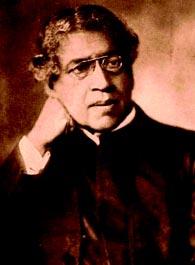
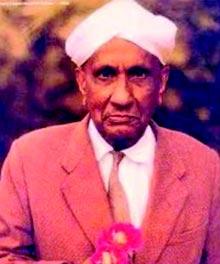
Technological achievements in India are being honored with IEEE Milestones in Electrical Engineering and Computing. The first millimeter-wave communications experiments, by J.C. Bose [left], and the molecular scattering of light, discovered by C.V. Raman [right], are to be recognized in Kolkata, West Bengal, on 14 and 15 September.
RADIO WAVES
Two years before Guglielmo Marconi's long-wave radio demonstration in England, Sir Jagadish Chandra “J.C.” Bose demonstrated millimeter-wave radio in Calcutta (now known as Kolkata). Bose (1858–1937), born in what is now Bangladesh,
was a versatile scientist, working in physics, biology, botany, and archeology. After graduating from St. Xavier's College, in Calcutta, he studied medicine for a year at London University, left because of poor health, and in 1881 entered Christ's College, Cambridge, in England, to study physics under Lord Rayleigh.
After graduating in 1884 with a natural science tripos (an honors baccalaureate), Bose returned to India. A year later, a recommendation from Rayleigh got him the post of professor at Presidency College, in Calcutta, the first Indian to hold
radio waves, Bose was interested in radio purely as a scientific endeavor.
Bose also developed equipment for generating, transmitting, and receiving radio waves and used it to demonstrate the waves' properties.
He also experimented with galena, a form of lead sulfide, to make an early type of semiconductor diode, using it as a detector of radio waves. Galena detectors were at the heart of the reliable and inexpensive “crystal sets” that helped make radio popular until
that title there. The college's British administrators offered him only one-third the salary of its European professors. Bose protested by taking no salary at all for several years until the college recognized his value and raised his salary to match his European peers, retroactive to the start of his professorship.
During his 30 years at the college, Bose conducted research and engaged his students' interest through extensive scientific demonstrations. It wasn't easy, because the school had no lab facilities. Bose was, however, given the use of a 2.2- squaremeter room, and he devised his own equipment with the aid of a tinsmith.
Between 1894 and 1900, Bose performed pioneering research on radio waves and generated waves as short as 5 milli-meters. His work predates that of Marconi, who is most often associated with the development of radio. Unlike Marconi, who sought to commercialize his work with
to lecture before London's Royal Institution (1897). He was knighted by the British Empire in 1917 and became the first Indian member of the prestigious Royal Society of London in 1920.
On 14 September, his experimental work on millimeter-band radio is to be recognized when a plaque is placed in the corridor of the A.J.C. Bose Auditorium in Presidency College's main building.
In the early 1900s, Bose did further pioneering work, this time in animal and plant physiology, another longtime interest. His contributions included his invention of the chrestograph for recording plant growth in increments as small as 1/100 000 of an inch. Another device he developed demonstrated the effects of electromagnetic waves on living and nonliving matter.
Bose, who believed strongly in the free exchange of scientific knowledge, lectured frequently in Europe and the United States on plant physiology and the effects of electromagnetic waves on living and nonliving matter.
In 1917 he founded the Bose Research Institute, in Calcutta, one of India's first scientific research institutes.
Bose was the first Indian scientist to make a name for himself in the western scientific world, and he received many honors. He was the first Indian
1970) was already well known among physicists when he first visited England in 1921, thanks mainly to his work in acoustics, especially in the sounds and vibrations of Western and Indian stringed instruments. But it was his interest in optics, and his curiosity on his trip home to Calcutta about the sea's deep blue color, that led to the IEEE Milestone.
Realizing that the sea's color resulted from light scattering, Raman turned his mind to that phenomenon when he reached home. “It seemed, indeed, that the study of light scattering might carry one into the deepest problems of physics and chemistry,” he later wrote.
While supporting himself as a civil servant in the Indian Finance Department, he used the laboratories of the Indian Association for the Cultivation of Sciences (IACS), where he and his protégé K.S. Krishnan exhaustively explored the scattering of light as it passed through various substances. In
1928, they discovered that when monochromatic light passed through a substance, a fraction of the scattered light that emerged was of a different color than the original beam, and that the color varied with the substance.
The experimental results, published in the Indian Journal of Physics (which Raman had founded two years earlier), touched on the phenomenon's quantum implications and stated, “We are obviously only at the fringe of a fascinating new region of experimental research which promises to throw light on diverse problems relating to radiation and wave theory, X-ray optics, atomic and molecular spectra, fluorescence and scattering, thermodynamics, and chemistry.”
Widespread recognition followed immediately. Raman's results were published in Nature in 1928, he was made a knight of the British Empire in 1929, and he was awarded the 1930 Nobel Prize in Physics. In his acceptance speech, he said his discovery had “practically unrestricted scope in the study of problems relating to the structure of matter.”
“We may also hope,” he said, “that it will lead us to a fuller understanding of the nature of light and of the interactions between matter and light.”
He was right. Spectroscopy, based on what was called the Raman effect, soon became chemists' principal tool for nondestructive chemical analysis, applicable to liquids, gases, and transparent solids. It can be used to analyze not only stable substances but also the spectra of the most transient chemicals. For those reasons, Raman's discovery was named an International Chemical Historic Landmark by the American Chemical Society and IACS in 1998.
But the Raman effect is also applied to electronics and communications, used in lidar (the optical analog of radar), in frequency conversion, in longdistance quasi-lossless transmissions schemes, nonlinear optics, and Raman amplification for optical communications. The phenomenon is of interest in engineering, nonlinear physics, and applied mathematics. IEEE plans to honor Raman's discovery as a Milestone in Electrical Engineering and Computing on 15 September. The commemorative plaque will be placed at the entrance of the IACS.
Courtesy: IEEE, First Published: September 2012 (Article provided by Tathagata Ghosh)
Sahitya O Alochana
Reported by Subrata Bhaumik
Sahitya O Alochana is a monthly literary and topical discussion forum under the aegis of Ananda Mandir that endeavors to achieve its motto “Alochana Brings Good Things to Mind.” It held several exciting sessions in the December 2012 – February 2013 period. They included screening of “Pasher Bari”, an old Bengali classic comedy movie; a discussion on the concept of “Atman (Soul)” in the major philosophies/ religions of the world; and a session on original writings of some fine local talents in our community. The movie screening was organized by Amitabha Bagchi; the Atman discussion was led by Subrata Bhaumik; and in the local writers' session, Jayashree Chatterjee and Gautami Das shared short stories penned by them.
The December session that screened “Pasher Bari”, the movie, also included a discussion on the future direction of Sahitya O Alochana, which recently completed its fifth anniversary. Ideas were exchanged on the variety, depth, and breadth of discussion, topics, timing, leveraging technology in broadcast, a potential blog, etc.
The January session featured a very intriguing philosophical topic: “Atman,” as conceptualized in the major religions of the world. This interactive discussion covered
the evolution and implications of the early Hellenistic and Egyptian views of soul; the concepts “Atman,” “Anatta,” and “Jiva or Ajiva”” in the Dharmic religions; “Soul”, “Spirit,” “Nishmat,” “Fanna,” etc. in the Abrahamic religions; and “Dao” and other concepts in oriental religions. It was a good event that was appreciated by a large attending crowd.
February was a pathbreaking month for the Sahitya Alochana group. In this session, we, for the first time, embarked on a treasure hunt in our own backyard, so to speak. And we uncovered and enjoyed the beauty of a few glistening drops of dew on the sheaves of paddy that lie in our doorsteps. Two fine local writers, Jayashree Chatterjee and Gautami Das, read short stories written by them. Jayashree shared two stories from a collection of short stories entitled “Where Oleanders Don't Grow” that she published in 1980, while Gautami Das read one of the short stories, which was published in Bartaman, the famous Bengali newspaper and magazine.
Jayashree Chatterjee's first story was about an Indian construction worker in Kuwait who traded the love and comfort of an Indian family for a very hard life in Kuwait, which, in some ways, was indentured to a brighter future. Due to a fateful turn of events, his
HOPE
By Mandira Chattopadhyay
I met Kathryn at Starbucks. I liked the way she was dressed and her downy, shoulder-length hair. She told me that she was majoring in performing arts, in violin. When my name was called, Kathryn told me that she liked Indians, and that she was involved in a project with her grandparents in India. I could tell that she came from an affluent family from the way she was dressed: nice jackets, pleated pants, a designer purse dangling on her arms. I asked her about her grandparents' project and she said she had been helping them in a leper colony in Chennai. She started narrating how a friend of her grandmother had started a school and a boarding house that provided the children of lepers a rigorous academic program that included English, science and computer technology. The other programs included teaching proper hygiene, living skills to those afflicted by leprosy and
self-reliance to their children and other members of their families. Volunteers from the United States would come to oversee the teachers of the program, and also to raise funds to run the program. She told me how the friend of her grandmother started the project as a means to get over the grief of her young daughter's untimely death. This lady had arrived in Chennai with no specific mission. While she was circling around, she noticed a young man begging on the street. She asked the cab driver about the beggar, and the cab driver told her he was from a leper colony, and had to beg to survive. Instantly she followed him to the leper colony. She found that it had no electricity, no food, no water; all the lepers were huddled together; outcasts from the society because leprosy was considered to be highly contagious. The following morning she took off for the States. Upon arrival she
dreams of a home nestled in Oleander grove remained unrealized. The symbolism, the intricate description of the lives of early construction workers in the Middle East, and the flow of the story were uniquely appealing and truly enjoyable.
Gautami's story entitled “Jotil”, “Complicated”, was about the complex feelings of a lonely Indian woman who was widowed at a young age. The story was set in the backdrop of her visit to her daughter in the U.S., and dealt with her expectations from and interactions with the immediate world. It was a very intriguing story that was deftly put together, and her reading held the attention of the attending audience through the final moments.
Future sessions – Quite a few interesting sessions are in the pipeline for the next few months including “Gender Empowerment and Women's Rights as Human Rights,” Recent Developments and Related Public Policy Implications in the World of Diabetes, Life after Death, Works of Stephen King, etc.
The friends of Sahitya O Alochana would like to thank Ananda Mandir for its continued support for the forum's contribution to the cultural enrichment of the local Bengali and Indian community.
Are You Too Old For Gardening?
Continued from page 08
hands due to among other things arthritis et al? There is an outfit which makes gardening tools called “Easi Grip Gardening Tools” especially for those with arthritis. The manufacture of small garden tools for the elderly and impaired has become somewhat more than a cottage industry.
For those of you who are not disabled, but just getting older, there are a few things to remember that can make your gardening much easier. Use raised beds to make planting, weeding and harvesting more accessible. Keep the beds narrow to reduce stretching while working in the garden (30 inches wide works well for me). There are light weight tools that are specially designed for the elderly and disabled (some are specifically designed for those with arthritis and have wrist braces). These are easier to handle than those found in most garden centers. Setting up your raised bed near a tap will have the added advantage of being able to use a constant drip irrigation system to relieve you of the constant task of watering your plants daily. Having a chair in the garden with drink cooler nearby is always welcome for taking a break on those hot summer days.
invited all her friends to tell them of her experiences. They all sat around her kitchen table, and discussed how to raise funds for a leper colony. In a few months the Rising Star Outreach was born.
In Rising Star Outreach, each child has a sponsor who provides opportunity for growth, to have a normal life, and to dispel from the child the stigma that there is a curse in the family. Rising Star Outreach now has its Board of Directors from both India and the USA, as well as numerous volunteers, donors and countless people from all over the world to uplift the plight of those in the Rising Star community.
While Kathryn was narrating the story, I started to reminisce about my childhood days in India. An incident still stuck in my mind: one evening as the dusk fell, my older sister took me out to give me a treat. We saw a cart in one dark corner loaded with Turn to page 10
Growing veggies can relieve some of the stress of paying outrageous prices for them at the local market. Nothing at the market can compare to a freshly picked, home grown, Jersey tomato. New Jersey has a very long growing season starting in March and ending in November. When buying plant stock, finances can be a daunting problem to deal with. One of the local nurseries I used to deal with doubled the prices of their flower and vegetable stock within the period of three years. The answer to this problem is both obvious and enlightening. Have you ever wondered why it is that you see the same old plants year after year with virtually nothing new showing up at your local nursery? The answer is seeds and nurseries usually plant only those varieties which have historically sold well. Not being bound by this near sighted view, start looking through seed catalogs. The number of different flower and veggie seeds available from the major seed companies like Burpee is truly astonishing. And while thinking about what veggies can be grown in your backyard area, remember that there are no absolutes about growing veggies. Although the conventional wisdom accepted by many is that all veggies require 6 hours or more of full sunlight a day, this applies to only part of the veggie world the most prominent being tomatoes, peppers, cucumbers, squash and eggplant. Some will grow with only 2 to 3 hours a day and include beans, broccoli, carrots, cauliflower, leeks, onions, peas, radishes and turnips.
And have you ever considered indoor gardening? Beside the fact that the environment for your garden can be controlled, many veggies and flowers can be grown during the winter in a window with a southern exposure. Cherry tomatoes, lettuce and radishes do very well grown in indoor gardens.
Obviously, this article was written with older folks in mind but it does not preempt the use of these tips and suggestions by youngsters who are not physically inclined (or those whose favorite things do not include a lot of manual labor).
Until the next time, happy gardening!
Ananda Mandir Seniors Forum ("Seniors Helping Seniors")
Invites retirees and near-retirees to participate actively in Forum meetings and activities.
Future Meeting Dates:
Sunday, April 21
Sunday, May 19
Sunday, June 23 (Meeting starts at 1:00 pm) Meeting Date/time may change for various reasons. Please call Debajyoti Chatterji (973-586-2505 home, 908507-9640 cell) to confirm date/time ahead of the meetings.
Khan Academy [khanacademy.org] is a nonprofit educational website created by Bengali-American educator Salman Khan, generally known as Sal. His father is from Barisal and mother from Kolkata. He was born in Louisiana, USA, on October 11, 1976 and went to public schools. He graduated from MIT (3 degrees) and Harvard Business School. He was a brilliant student.
With the stated mission of "providing a high quality free education for anyone, anywhere", the website supplies a free online collection of more than 4,000 micro lectures, each lasting about 10 minutes, via video tutorials stored on You Tube, teaching mathematics, physics, cosmology, chemistry, biology, economics, history, finance,
Brief Overview of the Khan Academy
By Rajat Chanda
economics, medicine, American civics, art history, and computer science. Khan Academy launched a computer science module in September 2012. Khan Academy has delivered over 240 million lessons. The brevity of lectures helps in maintaining the level of focus and attention of the audience.
Clearly, these lectures are useful to adults who wish to refresh or expand their knowledge base or keep in touch with the rapidly changing areas of knowledge such as Cosmology, molecular biology or Computer Science.
On the video screen one sees only handwritings and simple drawings, accompanied by the off screen voice of the instructor explaining the developing themes and concepts. The informal and engaging conversational style of Sal's teaching is highly
HOPE
Continued from page 09
green coconuts. A man was chopping coconuts and serving the fresh coconut juice. My sister noticed that the man's arms were all bandaged. Instantly she pulled my hand away and ran home muttering “leper, leper.” As I grew up, I heard from my mother how my grandmother's sister isolated herself in the remote town of Deoghar to take care of her husband struck with leprosy. Her husband was a brilliant person, and she never wanted to send him to a sanitarium; she devotedly nursed him till his last day.
The following week Kathryn invited me to a violin concert to hear her playing violin; she told me that she went every year to Chennai to teach violin to children. After the concert she introduced me to her grandparents who told me how much they enjoyed their stay in India for three years in a row helping their friend to build the Rising Star Outreach. They told me one time while at a colony the stations got really backed up with people waiting for the nurse to put on new bandages. Without even thinking, three volunteers began giving the people massages, one oiling and massaging their legs, the others massaging their arms, hands and shoulders.
As I listened to her story, I was reminded of Tagore's poem “Abhisar.” The monk Upagupta as he lay on the street was accidentally stamped by the footsteps of the palace dancer Basabdatta. The dancer apologized and invited him to her place, and the monk refused. He told her that she was now in her glory and this was not the time; he would come when the time was right.
As time went by, while passing the palace, the monk noticed how the dancer was dumped outside the palace because she was eaten up by a bad disease.
“City people had brought her here
To outside the city walls abandoned Her presence to them a poison.”
“The monk sat down and looked up
Her stiff head upon his lap
On the parched lips he poured water
Recited benedictions upon her head
He anointed her form lovingly With cooling paste of sandalwood.”
The volunteers of the Rising Star Outreach played a very similar humanitarian role to the unfortunate victims of leprosy.
appreciated by high school students or anyone else wishing to learn or refresh the topics developed.
These courses are free to any end-user with internet access. The lectures originated from Sal's remote tutoring of a cousin of his via internet. He noticed that these lessons were being followed by many who chanced to come across them. In late 2009 he quit his job in the financial sector and focused his energy entirely in systematically developing these courses. Since these lessons can be paused and replayed at will, they become a self-paced learning tool. It was known for a long time that one-on-one lessons are very effective but also very expensive. The revolutionary distribution method provided by the internet allowed individual selfpaced access to world class lessons very inexpensively for anyone, anytime, anywhere, a reality.
The fame of Khan Academy grew rapidly after Bill Gates highly praised it publicly and said that he uses it for the education of his own children. Sal obtained significant financial support from Google, Bill and Melinda Gates Foundation and several other organizations and individuals. These resources allowed the academy to attracted software engineers and other professionals to develop detailed methods of assessing progress and difficulties experienced by the registered students, as well as monitor problem-solving and practice sessions. These sessions of questioning and discussing the materials covered in selfpaced lectures for solidifying the concepts learned helped a deeper understanding of the subject under study. This also allowed 'flipping' the usual learning format of listening to class lectures, usually in a noninteractive manner, and doing the home work on one's own. In this format one can listen to the high quality lectures at
home, which can be paused and repeated as required, augmented by Q and A, discussion and practice sessions. Next, the student is ready to tackle the traditional 'home work' in class helped by interactions among fellow students and the teacher. This 'flipped' method, which exchanges the home- and classwork, allows quick identification and resolution of problem areas. It also exposes them to multiple ways of looking at and solving problems.
It is a pleasure to report the level of recognition, honor and appreciation that Khan Academy has received in the short span of its existence over national and international media. Sal was invited to deliver 2012 commencement lectures at MIT and Rice, 2011 TED talk and in numerous prestigious interview programs such as 60 minutes (CBS), Charlie Rose (PBS) etc. His recent book, titled 'The One World School House: Education Reimagined', describes the central theme of opening up class time for truly interactive learning experience. The academy is already used by millions of students, parents and teachers. It is expected that in near future increasing number of school systems will attempt to implement such scaled up yet individualized education.
Thanks to the all-pervading access of internet, geographical and linguistic isolation of communities can be surmounted by translating the contents of and providing voice overs of the YouTube videos to some of the most widely spoken languages of the non-English speaking world. Chinese, Hindi, Spanish, Russian, Bangla and Portuguese are some of the obvious examples of such languages. It is well known that if the medium of instruction is not one's mother tongue and/or only imperfectly understood, then unfamiliar or complex subject matters become doubly daunting. I experienced this in
my teaching experiences in India and Brazil.
Khan Academy is making a serious effort in surmounting the language barriers. I had the privilege of doing the translations and providing voice overs for the physics portion of the videos in the Academy [bn.khanacademy.org]. It covers introductory and intermediate level topics in conversational style, avoiding technical terms and artificial translations as much as possible. Whenever possible, glimpses of more advanced or interesting ideas are touched upon.
I am in the process of moving to the Bay area and expect to participate in other interesting projects in the Academy; possible areas of discussions may be motivations of professional physicists and their work. I also want to do a piece on goals of physics: the ongoing quest for unified view/ understanding of the 'laws' of nature. The mileposts in this journey began with the works of Newton more than three centuries ago, unifying the terrestrial and celestial physics in his universal laws of gravitation. Maxwell unified electricity, magnetism and optics in mid19th century and establishing the surprising fact that the speed of light in vacuum is a universal constant. A generation later this fact motivated Einstein's theory of relativity. The dream of Einstein, unification of electromagnetism and gravity, which he pursued for many years, did not succeed. However, in mid to late 20th century, the very short range sub-nuclear forces were better understood, thanks to very important insights of WeinbergSalam, Gross-Wilczek and others, now known as the 'standard model'. This rekindled Einstein's dream in a larger framework. But gravity remains outside of this framework and the quest is on.
Let us end by remembering the poet's words 'shesh nahi je, shesh katha ke bolbe?'
Growing up, my father and I had two special activities that we did together, just he and I.
One is that we would take long walks from our home in Tollygunge to the Central Park in Golf Green and back. We would set off just before sunset and would return a little after dark. I do not remember the specifics of our conversations but we would talk non-stop and about everything. Along our route, there was a woman who sold homemade snacks out of her garage. We would flop onto her red plastic chairs and dig into khastha kachoris. The sky was usually a deep shade of blue during these breaks and the first stars of the night would just be coming out of hiding. The woman who fed us had short hair and a son who was my age - some evenings he was there helping her out but he was a shy and reticent fellow and I do not think we ever spoke a word to one another.
Our other special activity was going to the movies. This probably happened two or three Sundays a month, often less. Sometimes Baba chose the film and sometimes I did. Multiplexes were still a thing of the near future - in the late '90s, we would ride the metro to Nandan, New Empire or the Lighthouse Cinema. Even though Nandan was the nicest theater, with plush seats and - gasp - airconditioning, my father and I preferred the New Empire experience. You could get a tall, frothy glass of mixed fruit juice across the street from New Empire and the spiciest plate of pau bhaji right around the corner. Baba would always wait
LENS INWARD
By Bornila Chatterjee
(Editor's Note: Bornila Chatterjee is a filmmaker who currently lives in
“Let's Be Out, The Sun is Shining” won the Audience
for me to ask if we could get something to eat, and I was more than happy to play my part in our routine.
Once, my father's pocket was picked on the way to New Empire. He was wearing a panjabi with wide, loose pockets and our tickets happened to be in the wallet that was stolen. I do not remember what film we were on our way to see, but my father never bought advanced tickets ever again.
Back then, I preferred mainstream American pictures over mainstream Indian ones. The “other”, the “western world”, just seemed more interesting. My father was less rigid about his tastes. Regardless of what we saw - Hollywood or masala - we would dissect everything during our evening walks - themes, shots, how often the boom dipped into frame, music or lack thereof, confusing plot points, the acting... Neither of us had much of a cinema vocabulary and these conversations were as rambling and circuitous as the walks we took.
The first film I ever saw with a boy was Sam Mendes' American Beauty. I was fourteen or fifteen and until then, I had only ever gone to the movies with Baba or with an older cousin who studied at IIT Kharagpur and spent his weekends with us. The boy's name was Mehul - a couple of years older than I was, he read film reviews, knew a lot about the world outside Calcutta and was eager to see American Beauty. I did not read film reviews, but Mehul's excitement was contagious. There must
have been other friends with us at the theater but the only person I remember is Mehul, hunched forward with his elbows on his knees, totally absorbed in the Burnhams' misery. My father and I usually leaned back in our seats. I decided to give this new pose a try, mostly to get my tall friend out of my eyeline.
There was something oddly immersive about sitting there with my chin resting lightly on my thumbs. It made me feel like I could just reach out and touch the people on screen. Granted, American Beauty is a powerful film (however you choose to view it) but the somewhat physical discomfort of our way - my and Mehul's waymade the experience even more engaging. When Annette Bening leaned against the sliding doors and slapped herself over and over again, a weird thrill shot up and down my spine. Nothing on screen had ever had that effect on me before. I felt nostalgic for moments I had never experienced, and a certain sadness that was inexplicable. The universe felt tragic and that afternoon, that tragedy made complete sense.
On the way home, Mehul was bursting with thoughts about American Beauty. He talked, I listened. There was only one person in my life with whom I liked to pick movies apart. So as soon as I reached home, I cornered my father and told him everything about the film - Jane and Angela's friendship, Lester and Ricky's relationship, the Burnhams at their dining table, those rose petals, that plastic bag... I told
Baba I wanted a little camcorder like Ricky's so I could make little videos and have stacks of tapes in my room. I would record every detail of my middle-class existence and someday someone would watch those tapes and find beauty and meaning in the mundane recordings. He said he would think about it.
Rituparno Ghosh's newest film Bariwali was playing in theatres around this time. Our neighbor Rupa Ganguly had a starring role in the film and that - to be absolutely frank - was the only reason I was curious to see it. And so one Sunday, Baba and I headed out to see Bariwali. It was the first Bengali film I ever saw in a theater. Moreover, and this is a little embarrassing to admit - it was the first Bengali film I'd seen since I was a child.
Bariwali is about a lonely, aging woman Banalata (played by Kiron Kher) who lives in near isolation in a sprawling, crumbling mansion. She allows a film crew to shoot in a wing of her estate and suddenly the house is filled with all kinds of people involved in the production. The film director draws Banalata out of her shell and even offers her a small part in his film. When he and the crew leave, her life goes back to its former solitude. She reaches out to the film director, but her letters go unanswered. Though Banalata has changed, the world she inhabits has not.
Once again, a cinematic exploration of the tedium of middle-age had me mesmerized. Yet Banalata's malaise hit harder than Lester's - after all, it was confined within the same cultural barriers that were only recently
A NEW JERSEY RESIDENT & A HURRICANE CALLED SANDY
By Jayashree Chatterjee
“Panic. An alarmingly deep sense of panic. That's what Sandy's left me with,” said Moonachie borough clerk and resident Supriya Sanyal, in voice full of emotion. “Now every time it rains, I can't help rushing downstairs to check whether there's been any flooding.” Then she continued in a softer, slower tone, “But I also have a deep sense of gratitude towards those who came forward to help us during Sandy. So many people did.”
Other Moonachie residents had similar things to say about the intensity of the storm. She'd
never seen anything like it in her lifetime of 91 years, was Honey Belle's awestruck comment to an NBC reporter. And, according to The Washington Post, 25-year-old Moonachie police officer Scott Lemongello likened the state that his house was left in to a scene from the Titanic. But as Sanyal said, while the hurricane did wreak havoc, the acts of heroism that it gave rise to were equally remarkable. Residents went out of their way to help neighbors; government workers did all they could to ensure the safety of townsfolk;
and local government staff worked incredibly long hours in tough conditions to keep local government functioning and to conduct the presidential elections which took place the very next week. Gov. Christie was right when he later declared, “Sandy may have damaged our homes and our infrastructure, but it did not destroy our spirit -------The people of New Jersey have come together ---- Across ages, races and backgrounds.”
For Sanyal, events started unraveling sometime after 9
p.m. on the night of Monday, October 29. Suddenly, there was a massive power outage. Sanyal looked out of her window and saw the resident of the house opposite rush out of his front door towards his car. “The water is coming,” he shouted. “Oh my God, look at the water - I have to move my car.”
It was only much later that they learned that the water was coming from the creek behind his house that is connected to the Hackensack River. At that time, they had no idea where the water was
dawning upon me. How can one live at peace with antiquated norms in modern India? What does bearing the weight of one's culture do to the individual? And in the case of Banalata's relationship with the film director, what are the consequences of the change that art can affect?
The Mendes film made me want to record the world around me. Ghosh's film made me want to be a filmmaker. By that I mean a desire to go beyond simply turning a camera on life and calling it art but instead capturing this moment in time by creating my own stories in light and shadow and sound that hone in on the details of lifelikeness.
That desire was clearly widespread, for a cultural shift was underway. Independent Bengali cinema has exploded dramatically. In addition to Ghosh and his few colleagues from the 90s, there are now several filmmakers who are experimenting with the kinds of stories they tell and how they tell them. Starting around the late 2000s, the most provocative films playing in multiplexes are no longer the ones from overseas, Hollywood or Bombay but local ones that turn the lens inward, on the people, the city and society around us. In 2013, it is still an exciting time to be a part of the Bengali film experience, both as a filmmaker and as an audience member. Hopefully, this renaissance will not end anytime soon. Because I love nothing more than leaning forward in a dark theater and getting lost in a portrayal of another human's life.
coming from. “I'll move my car so you can park next to mine, in my driveway,” she called out. But after she moved her car, she saw that his vehicle was already submerged and only the hood could be seen. And then, within 15 minutes, water began rushing down the street. Soon, the first five steps that lead to her front door were submerged. That was when she realized that this storm was going to be worse than Hurricane Irene. Sanyal ran downstairs to check her basement, and found
Turn to page 12
Brooklyn, New York. Her first feature film
Award at the New York Indian Film Festival in 2012.)
The Andaman & Nicobar Islands
By Paroma Sengupta
Going to the Andaman and Nicobar Islands to work has always been one of my dreams. Some Some say that it is the Holy Grail of field sites for ecologists. Well, I did go to the islands to work, not as an ecologist but as an environment educationist, something equally
Continued from page 11
water pouring in through the basement windows and door. The sound of the phone ringing made her race upstairs again. It was a reverse 911 call. “Go to higher ground,” the message said. “Go to higher ground.” Then the sound of car alarms filled the air. The water had caused the sensors to go off. Outside, only the hood of her car and the tops of the 3-foothigh hedges near her front door were visible.
She suddenly thought of her longtime friend and neighbor 77year-old Linda Pasquino. Linda was at home, all alone. Sanyal and Pasquino had always been there for each other in good times and bad. But a knock on Pasquino's door elicited no response. So Sanyal called the police. “We'll come as soon as we can,” they said, and then added, “You should go to higher ground. The water's still rising.” So Sanyal led her daughters to the bedrooms upstairs; but she found it was impossible to stay there. She felt she had to keep checking on the basement and first floor. Soon she saw that the water in her basement had risen to about 3 ½ feet and had rushed into her boiler.
When day dawned the next morning, trucks and motorized boats belonging to the National Guard, the Bergen County OEM, and other organizations from neighboring towns, came down her street to pick up residents and take them to safety. Sanyal's immediate neighbors, the Shahs and Pasquino, whom she had finally been able to contact, said they were not going to leave their homes. So Sanyal decided to stay on in hers, too. Then she found that she did not have any water in her house. So she went to the Shahs who took out their garden hose and ran it through
exciting.
The Andaman and Nicobar Islands are located in the Bay of Bengal, geographically closer to South East Asia (Thailand and Indonesia), than the Indian mainland. The capital of this union territory is the Andaman town of Port Blair. The Andaman Islands are divided into three districts: North Andamans, Middle Andamans and the South Andamans. The Nicobar Islands are to the south of the Andamans.
There are 6 different indigenous peoples living in the Andaman and Nicobar Islands: the Great Andamanese, the
Jarawa, the Onge, the Sentinelese, the Shompen and the Nicobarese. Contact with these tribes is limited. The other people who live on the Islands are “settlers”, such as the Bengali, Tamil and Malayali communities and the Karen, people of Burmese origin.
The Islands are also of great historical significance mainly because of the fact that they were chosen as a penal settlement by the British when India was a colony of the Raj. The Cellular Jail, built in the form of 7 wings with only single occupancy cells for prisoners, stands as a testament to the
A NEW JERSEY RESIDENT & A HURRICANE CALLED SANDY
her upper window. They gave her enough water to fill several buckets.
At 2 p.m., firemen and the National Guard came round to say that they were expecting another tidal surge at about 9 p.m. It was then that Sanyal and her daughters learned that the high winds that had been whipped up by the hurricane in the vicinity of Newark Bay had created an 8.5 –foot-high tidalstorm surge. This surge had overflowed into the Hackensack River, whose waters had then rushed into Moonachie and Little Ferry, flooding both towns. Much later, they also heard that the natural berm in this area was 5 feet high and so no match for the 8.5-foot tidal surge. As a result, Moonachie was completely flooded, plunging its 2,700 residents into a veritable nightmare.
Later in the afternoon, there came another knock on the front door. TJ, a friend of one of Sanyal's daughters, had come all the way from Teaneck to look in on them. He had parked at Little Ferry, and then walked to their house through the swirling waters that surged through Moonachie.
But by the time he convinced them to come with him, it was impossible to walk to Little Ferry. The streets were under 3 feet of water. Abandoned cars lay around town. More dangerous still, damaged power lines swung in the wind right above the water. Later, on NPR's “All Things Considered”, an intrepid reporter managed to interview several drivers who had lost their way in Moonachie. They recounted the most hair-raising experiences with stalled cars. But where Sanyal and her daughters were concerned, members of the National Guard drove them safely to their friend's car, and TJ
took them to the house of Barbara, the mother of another high school friend.
On Wednesday morning, Sanyal awoke to hear that the mayor of Moonachie had sent a message to all residents who had left the town. “Don't come back now”, he had said.
But Sanyal knew she had to go back. Apart from the fact that she was deeply worried about her house, she also agonized over what had happened to Borough Hall, which she heard was under water. She had vital and historical government documents in her office. And, as if that was not enough, the presidential elections were the very next Tuesday. Then they heard that a fire had broken out in a house in Moonachie. Sanyal started looking for a rental car and finally, on Thursday afternoon, she and her daughters managed to get one and return to Moonachie.
They found that the waters on the streets had begun to recede, and inside their house, they were surprised and relieved to see that the water had diminished, probably because they had a shower stall in the basement and the water had gone down the drain. “So at least we were able to stay at our own house”, said Sanyal, “other residents on our street were not able to return till the middle of January because their homes were so badly damaged”.
On Friday Sanyal got a call from the mayor. He asked her to meet him at Borough Hall. What she saw horrified her. Her work place was heavily damaged.
Sanyal and other borough employees went back to Borough Hall on Sunday to retrieve those essential documents that they needed immediately. Sanyal found that
courage of those who fought for India's independence.
I work for a non profit organization that deals with, among other things, environmental education. While environmental education is an integral part of all school curricula in theory, there are still lacunae in terms of actual implementation on the ground.
The Islands themselves offer vast scope for a comprehensive environmental education program. There are a number of endemic species of both flora and fauna and there are large stretches of healthy coral reefs.
all her boxes of records, municipal court papers, tax documents, records from 1910 of births, deaths and marriages etc were dripping wet. She donned a facemask and sorted through the papers, even though they were stained with water that was polluted with debris from the river and the creek, and smelled of refuse. The following week, she gave a company that specializes in restoring damaged documents, 168 boxes of records to restore.
Then a local, private security company came to the rescue of the municipal workers. It gave Borough Hall staff the use of one of its warehouse showrooms. Neighboring towns came to their help as well. Edgewater gave them filing cabinets, the Borough of Fort Lee gave Sanyal a desk, WoodRidge pitched in with an old chair and folding table. Local companies donated office furniture. “People are helping and we are very thankful for that”, Sanyal told a reporter from The Record.
They were to work out of the showroom for 11 weeks; then they were moved to a trailer in an 8-trailer mobile office complex in the parking lot of the old Municipal Building.
But that Sunday morning as Sanyal sorted through her papers, the showroom and the trailer were very much in the future. The presidential elections were two days away. But where would Moonachie residents go in order to vote? Borough Hall, the Civic Center and the Municipal Building were all water damaged. So were the polling machines. The commissioner of the County Board of Elections arranged for the Bergen County Vocational School at Teterboro to be a polling center for Moonachie residents. She also found new
polling machines, and told Sanyal to go to the vocational school to set up for the elections. Ginger, Teterboro's municipal clerk, and the superintendent of the vocational school went out of their way to help Sanyal get the facility ready.
On the day of the elections, Sanyal found reporters from NBC, 1010 WINS and Channel 12 waiting to speak to her. But she had too much work to do to grant interviews, and said so.
“You're obstructing the public's right to know”' one reporter told her.
“And you're obstructing me from doing my job”, she replied, and went on with her work. The day passed without any major problems, and that night Sanyal could not help heaving a major sigh of relief.
As of the beginning of March 2013, Sanyal and her coworkers are still in the trailer. Meanwhile, the uphill task of getting Moonachie back to normal is going on. The consensus now seems to be that a higher tide gate needs to be erected on Newark Bay. Berms are not going to help should another major hurricane occur.
But at the mobile office complex, work goes on as usual. At the end of a recent municipal meeting, the commissioner of the Board of Elections came up to Sanyal and shook her hand. “Supriya, you've survived,” she said. “We will work with you to bring things back to normal.”
Sanyal opened her mouth to reply, but the many emotions that surged within her stopped her from giving voice to any of the thoughts that came to mind. Besides, the superintendent was well aware of what all of them - what all of Moonachie - had been through. “Yes, we have survived,” she said with a smile.
Tree branches at the Wandoor Coast
The Andaman & Nicobar Islands
There are also mangroves all along the coastline and littoral and evergreen forests.
There are around 50 species of mammals found in the forests of the Andaman Islands. There are no large predators such as tigers, lions or leopards; although one does find the Andaman King Cobra at the top of the food chain as apex predator.
One of the biggest examples of the threat that introduced species pose is the spotted deer or the chital axis. These animals were introduced by the British as game animals. Now they are more of a pest, having eaten away all the undergrowth in some islands, leaving the forest floor barren. Ironically, they are classified as a protected animal by the Indian Government as they are ecologically important on the mainland.
There are over 250 species of birds in the Islands, 14 of which are endemic. The edible-nest swiftlet, a bird endemic to the Islands is a prized delicacy in China, the nests being a core ingredient in Bird's Nest Soup.
The coral reefs that surround the Islands are fringing reefs. Corals belong to the group of animals called coelenterates, and it is their relationship with small plants and fish and other marine organisms that make them a unique marine ecosystem. Corals are only able to survive in a particular temperature range, making them not only valuable but also a great indicator for any sort of pollution that might alter the temperature of the ocean.
Snorkeling and diving amongst the coral reefs is possible in areas such as Havelock and Jolly Buoy, the latter being one of the islands that comprise the Mahatma Gandhi Marine National Park. To go to the other islands one needs a permit.
I had the opportunity to spend more than a month in the Islands. This afforded me the chance to get a first hand insight into the ecosystems and biodiversity in the region and also interact with the people of the Islands. I was invited to homes and dinners. I was even invited by fishermen to go fishing with them! I hiked through tropical rainforests, went snorkeling in the clear oceans and waded through mangrove swamps.
To completely experience what the Islands have to offer one must immerse oneself in the environment, slow down and take a break from the frenetic city life that so many of us are caught up in. And what an experience it can be!
Summer Internship Program for College Students And High School Seniors
Ananda Mandir has launched Summer Internship for college students and high school seniors. Last year it recruited three interns in biological science area. It will continue recruiting for the internship program for this year again. The program will include learning and helping research works in the areas of biological science, physical science and engineering at various laboratories in New Jersey. Additional internship opening will be in the area of pharmacy in New York City. Some internships are paid, others are voluntary. Paid interns have to be minimum 18 years old and US citizens or permanent residents. For this year's internship, application with resume indicating the area of internship interest should be sent to Dr. Pronoy Chatterjee, e-mail: pkc_usa@yahoo.com by the extended deadline April 25, 2013.
MEDICAL COLUMN Bone Marrow Transplantation
By Rajat Bannerji, MD
(Author's Note: I will use the first of these medical articles in Ananda Sangbad to provide an overview of allogeneic bone marrow transplantation. In future articles, I will ask colleagues in various specialties to contribute on medical topics of general interest.)
As readers of print and online media targeted to the Indian-American community, many of us have seen appeals for bone marrow donors to help a sick patient, and some of us may have seen on TV or read about Robin Roberts, an anchor on the ABC program Good Morning America, who has recently undergone an allogeneic bone marrow transplant. This procedure is now used to treat a variety of diseases including blood cancers such as acute leukemias, high risk lymphomas and multiple myeloma, some chronic leukemias; noncancerous bone marrow diseases such as aplastic anemia, severe thalassemia, and rare diseases such as severe combined immunodeficiency syndrome. Allogeneic transplants involve taking cells from one individual and transplanting them to another individual who has been treated with a conditioning regimen of various combinations of chemotherapy with or without whole body radiation. There is also a type of transplant, autologous transplant, when cells from an individual are transplanted back to the same individual, but that will not be discussed in this article.
The science of bone marrow transplantation began in the 1950s when it was shown in animal models (rodents, dogs, primates) that an animal which has received a lethal dose of radiation could be saved by the infusion of bone marrow cells from a healthy animal of the same species. One of the first examples of bone marrow transplantation in humans was a series of 6 cases published in the New England Journal of Medicine in 1957 by E. Donnall Thomas who would go on to win the 1990 Nobel Prize in Medicine for his pioneering work in developing bone marrow transplantation as a treatment for human disease. The science has advanced over the past 5 decades to allow for a wider diversity of potential donors, better treatment of complications allowing older patients to receive transplants, and the treatment of a wide variety of diseases. This essay will review the stem cells being transplanted, the immunology and choice of donors, and important complications of the procedure.
Bone marrow transplantation
depends upon the ability of hematopoietic stem cells to reconstitute the entire blood system including the various types of infection fighting white blood cells (neutrophils, lymphocytes, monocytes and others), oxygen carrying red blood cells, platelets which are important for blood clotting and wound healing, and to produce more stem cells. For this reason bone marrow transplantation is now referred to as hematopoietic stem cell transplantation (HSCT). The stem cells are collected (stem cell harvesting), from the donor in one of two ways either directly from the bone marrow or from the blood. Bone marrow stem cells are obtained from the donor in the operating room where, under anesthesia, a needle is used to draw out the liquid marrow from the pelvic bones. Peripheral blood stem cells are obtained by stimulating the donor's stem cells to leave the marrow and go into the blood circulation (stem cell mobilization), by means of a few days of daily injections with a medicine called G-CSF (granulocyte colony stimulating factor). The donor then has an IV catheter placed in each arm so blood can be passed through an apheresis machine which collects the stem cells while returning the blood to the donor. About three-quarters of all stem cell harvests are now done using peripheral blood stem cells. Regardless of the technique, the stem cells once acquired are frozen for storage until the time of the transplant.
A recent randomized trial conducted by the Blood and Marrow Transplant Clinical Trials Network suggests that the overall success of the transplant is the same regardless of whether the stem cell source is bone marrow or peripheral blood.
An important limitation to HSCT is the ability to find a suitable stem cell donor whose cells match the recipient. The immune system of both the donor and the recipient look at cell surface proteins from the human leukocyte antigen (HLA) system to decide if a cell is foreign or not. If the recipient's immune system attacks the donor cells, then the transplant may be rejected and if the donor's immune cells attack the recipient, then graft-versushost-disease (GVHD) can occur
where the donor immune system attacks the recipient's organs. The HLA genes are clustered together on chromosome 6 and we each inherit half our HLA genes from each parent. Therefore any 2 siblings have a 1 in 4 chance of being a match for each other. Only about 30% of patients requiring a HSCT have an appropriate matched sibling donor, the remainder of patients look for an unrelated donor in the National Marrow Donor Program database. The major markers looked for in a match are the HLA-A, B, C and DRB1 marker pairs leading to a possible “eight of eight” match, or adding an additional marker HLA-DQ and a possible “ten of ten” match. In addition to matched siblings and matched unrelated donors, another source of donor stem cells is fetal umbilical cord blood collected from donated umbilical cords after delivery of a baby. It has been shown that umbilical cord blood stem cells allow for greater HLA mismatch between donor and recipient without increasing the risk of GVHD, thus increasing the pool of potential donor stem cells. As can be seen from this discussion the patient's children or parents are not typically stem cell donors, since they would have only half of the HLAantigens matched with the patient. Some transplant centers have experimental protocols investigating such haploidentical stem cell transplants, but due to the high risk of GVHD this type of transplant is not routine. Once an appropriate source of matched stem cells has been found and the stem cells have been collected, the patient is then treated with a conditioning regimen prior to receiving the donor stem cells. The original myeloablative regimens of total body radiation plus chemotherapy were meant to eliminate the underlying cancer and to destroy the recipient's immune system so the donor stem cells would not be rejected. These treatments often caused severe damage to the lining of the mouth, throat and digestive system, damage to the liver, and damage to the lungs and increased the risk of infection. The pre-transplant treatment also resulted in early development of GVHD. Less intensive non-myeloablative conditioning regimens have
Mahatma Gandhi Marine National Park
COMMUNITY SECTION
Theater Bulletin from Epic Actor's Worksdhop
By Dipan Ray
After a grand success of “Bhopal” during South Asian Theater Festival in November 2012, Epic Actors Workshop and Bond Street Theatre, New York traveled to India and Nepal in December 2012. “Bhopal” was performed at the following venues:
December 3, 2012: at the Paschimbanga Natya Academy Theatre Festival at Rabindra Sadan, Kolkata.
December 6, 2012 at the Kathmandu International Theatre Festival. Kathmandu, Nepal.
December 8, 2012 at the National Centre for the Performing Arts , Centrestage Theatre Festival, Mumbai.
Next performance: March 23rd - Washington DC
8th South Asian Theater Festival, 2013
Grand Silver Jubilee celebration of Epic Actors' Workshop in collaboration with Crossroads Theater on September 27 – 29, 2013.Epic will present plays in three different languages (Bengali, English and Hindi)
Friday, September 27th: Opening Ceremony honoring all the Actors who participated for last 25 years
Epic – Journey for 25 years –
A multi- media presentation narrating Epic's 25 years history Directed by Indraneel Mukherjee
Saturday September 28th:
·A Bengali play written and Directed by Sudipto Bhowmik
·A Hindi play Directed by Mohan Agashey
·An English play written by Girish Karnad and Directed by Farley Richmond
Sunday, September 29th
·Our Voices – A New Voice from New generation – A play in English written by Gargi Mukherjee and Directed by Gargi Mukherjee and Ricardo Khan
·A Bengali play written by Chandan Sen and Directed by Meghnad Bhattacharya
A Bengali play written by Ajitesh Bandopadhaya and Acted/ Directed by Sudipto Chattopadhaya
Bone Marrow Transplantation
Continued from page 13
been developed after an important insight was gained showing that the new immune system following transplant was the key to curing the patient's leukemia (graft-versus-leukemia effect) and not the aggressive chemotherapy and radiation used prior to the transplant. The new less intensive conditioning regimens have allowed older patients to safely receive a HSCT. The late complications of transplant remain regardless of the intensity of the conditioning regimen, and these include chronic GVHD, late infections, low thyroid, bone loss and even higher rates of second cancers.
HSCT is a potentially curative treatment for patients with life threatening leukemias, or certain other blood diseases, tempered by toxicities of the treatment itself. A study of over 15,000 HSCT patients reveals that treatment related death rates have decreased from 37% to 28% in adults receiving an unrelated donor transplant (the majority of transplants) during the period 2000-2004 compared to 2005-2009 while survival at 3 years following transplant has improved from 35% to 42%.* Although these are sobering statistics, it must be remembered that most of these patients were suffering from diseases with average survival of less than one year.
For those wishing for a more detailed review I suggest the article by Copelan, E.A. (N Engl J Med 2006;354:1813-26).
*American Society of Hematology 2012 Annual Meeting, abstract #234 (Blood 2012;120(21)#234).
Welcome to my recipe corner! Before I begin with my recipes, I would like to wish all the readers a very happy Bengali New Year; “Shubho Naba Barsha.” May the New Year bring you health, happiness and prosperity!
Bengalis have a permanent love affair with food. As Bengali women love to cook, Bengalis in general love to explore not just their own cuisine but every cuisine in the world.
I'll start with a recipe from my dida (my maternal grandmother). I have never met my dida, as she passed away when my mother was sixteen years old, but she was an amazing cook.
I have heard about her culinary skills from a lot of people, including Dhriti Bagchi of New Jersey. Her mother Dolly mashi learnt many recipes from my dida as she was starting her married life in Madhya Pradesh.
This is a vegetable dish called Phulkopir ar Chhanar Maul or Cauliflower and Paneer in coconut sauce. For this recipe you will need:
1 Cauliflower
2 medium potatoes
1 large ripe tomato
16 oz paneer
1 can of coconut milk
Recipe Corner
By Bhaswati Bhadra
1 tbsp ginger paste
1 tsp turmeric powder
4-5 green chilies
1 tsp chili powder
1 tsp cumin powder
1 tsp coriander powder
1 tsp cumin seeds
1 bay leaf
1 inch stick cinnamon
4 cloves
4 green cardamoms
1 tsp sugar Oil
Ghee
Salt according to taste
Cut the cauliflowers into florets.
Peel and cut the potatoes into one inch pieces. Chop the tomatoes. Cut the paneer into one inch cubes.
Heat the oil in a pan and separately sauté the potatoes, cauliflowers and the paneer and
Ratna Bhatta
(1949 – 2013)
remove. Add a little more oil to the pan and add the bay leaf, cumin seeds and the whole garam masala.
Add the ginger paste and the tomatoes. Cook till the tomatoes are soft. Add the turmeric, cumin and coriander powders and the sugar. Fry for a minute. Add the coconut milk. Let it come to a boil then add the potatoes. Cover and cook until the potatoes are almost done, and then add the cauliflower, paneer and salt.
Cover and simmer until all the vegetables are cooked. A little water can be added time to time. Turn off the heat. Add the ghee and the green chili. There should be a thick gravy. This dish is best served with rice.
It is with deep sadness we inform you that Ratna Bhatta, a life member of Ananda Mandir, passed away at 5 am on March 7, 2013, after fighting a long and courageous battle with cancer. She leaves behind her husband Biman Bhatta who was, until recently, the editor of Anandalipi, the annual literary magazine of Ananda Mandir, her son Raoul and daughter Rhea. Our thoughts and prayers are with Biman, Raoul and Rhea.
Jyotirmoy Dutta Chowdhury, MD
(1927 – 2012)
It is with deep sadness we inform you that Dr. Jyotirmoy Dutta Chowdhury, a life member of Ananda Mandir, passed away on December 28, 2012 at Morristown , NJ . He is survived by his wife Meena Duta Chowdhury, his daughter Mitra and sons Tapu, Paul and Gautam and five grandchildren. Our thoughts and prayers are with Jyotida and his family.
COMMUNITY NEWS
Kallol Corner
Reported By Debahuti Roy
Moving on from November 2012, as we stepped into 2013 – the time has been relatively quiet on the Kallol front. Kallol arranged a New Years Eve party at Shezan for all Kallol members and their friends to ring in 2013 together. The party was a great success.
During this period, the Kallol community suffered severely from the loss of two life members. First, we lost our Jyoti da (Dr. Jyotirmoy Dutta Chowdhury) on December 28. Kallol offers its deepest sympathy to Meena boudi and all their children and grandchildren.
Then, on March 7, we lost our very own Ratna boudi (Ratna Bhatta). After a 6 month long battle with cancer, the ever smiling boudi passed away. Just cannot imagine….the Durga puja area without Ratna Boudi around. The Kallol family stands with Biman da, Rhea and Raoul in this tough time.
As many of you know, Ashok da (Ashok Das) is courageously battling cancer. May God give Ashok da the strength to fight this battle and survive!
Again moving on…we come to the close of the year….our Annual General Meeting, is scheduled on March 31st at Kiddie Well Camp. This will be the time to look back what went right, what was wrong and what is the best way to move forward.
Let's keep Kallol going.
NJPA Corner
Reported By Kankana Sengupta
Once again, the vast, high-octane winter storm in February that left its icy mark on much of the nation took a heavy toll on NJPA. NJPA's Saraswati puja had to be cancelled proving that humankind has no dominion over nature. While we were cautiously optimistic, we were not expecting to cancel the event. Although Mother Nature did triumph but did not dampen our spirits. Our puja, rescheduled to March 9th , was celebrated with its usual gusto and fervor. We all flocked together to offer our prayers to Ma Saraswati and feast on food, enjoy the vibrant cultural festivities that showcased our local talents. A detailed report will be given in the next issue.
As our calendar year draws closer, we are looking forward to our AGM to be held in April when a new Board of trustees will come into action.
We hope that you will join our events this year. Please stay tuned for future announcements or check our website at http:/ /njpa.net
ICC Corner
Reported By Soumyendra Seal
The year began for Indian Community Center of Garden State (ICC), with the hosting of the Annual General Meeting on January 20th. At the meeting, the members elected a new Executive Committee (EC), consisting of the following nine members- Chitrali Ray Chaudhuri, President; Tara Sinha, Vice President; Arpita Gupta, General Secretary; Atashi Sonty, Treasurer; Baruna Haldar, Cultural Secretary; Sanchita Deb, Recreations Secretary; Ajanta Roy, Social Secretary; Soumyendra Seal, Communications Secretary and Somnath Chowdhury, Member-at-large. The new EC, takes this opportunity to thank all retiring members for their dedication and past contributions, especially to Prabir Sarkar who presided over that team for the past four years.
ICC continued its tradition of holding the annual Saraswati Puja which was held on Saturday, February 23rd. As in previous years, this year's celebrations were held in a warm and homely atmosphere, and in spite of the inclement weather, members and patrons joined in very large numbers to make it a memorable experience.
The event started around 3:00PM, at the newly renovated Randolph Community Center, with a group of members setting up the Deity, stage and Puja samagri. The rituals were solemnized by Suddasatta Acharya and witnessed by ladies and girls dressed in their beautiful costumes and jewelry, accompanied by the men and boys also in their best attire. Pushpanjali, the showering of the Shanti Jal and 'Hathe Khori' marked the conclusion of the Pujas. As the guests proceeded to enjoy the Prosad and Puja Bhog, the stage was set for the next phase of the celebrations.
The cultural programs started around 6:00PM, by a welcome note and introduction of the new EC members, by Arpita Gupta, General Secretary. The rest of the evening was conducted by Bidisha Sarkar who set the stage for the evening with a very beautiful composition. ICC children started the program, with a Saraswati Bandana, sung by Sourin Seal who was accompanied on the Tabla by Nitant Gupta and introduced by their friend Monisha Nath. ICC children continued to enthrall the packed hall with a lively performance of Sukumar Ray's drama 'Lakhaner Shaktishel', compared by Ritika Sinha and conducted by Baruna Haldar.
This was followed by a spell bounding Classical rendition of a Sanskrit Saraswati Stotra by Tapasi Seal; accompanied by Sanchita Deb on the Harmonium and Nitant Gupta on the Tabla. Nitant and his brother Unmukt then presented a Tabla/Sitar Jugal Bandi of Raag Bhairavi.
Renowned Dancer and Choreographer from Kolkata - Rumeli Dutta Chowdhury, provided a very apt conclusion of the cultural program. She presented two scintillating dance sequences composed by her, which was very well appreciated by all.
Sougata Chatterjee once again provided his usual high quality audio and lighting support, while Ananda Chowdhuri and yours truly tried to capture the moments on still and video photography. A sumptuous Bengali dinner consisting of Khichuri, Badhakopi Takari, Vegetable Fries, Chutney and Misti marked the end of this year's Saraswati Puja.
Once again, on behalf of myself and the rest of the Executive Committee members, I take this opportunity to thank all members and patrons who attended, for their help and support in making this a grand success. Please stay tuned for announcements for upcoming events at our website www.icc-gs.org
Ananda Mandir Board of Trustees has established a program to recognize Outstanding Volunteers
If you are a Life Member and believe that someone deserves this recognition, please feel free to e-mail nomination to Pronoy Chatterjee (pkc_usa@yahoo.com)
Details of the program and the nomination form can be seen in our website www.anandamandir.org
Ananda Mandir is pleased to announce the launch of a program to award financial grants to support Community Service Projects aimed at helping the South Asian community in the Greater New Jersey area Project Proposals Are Welcome From Organizations and Individuals Please visit www.anandamandir.org for program details and application requirements or Contact: Pronoy Chatterjee (pkc_usa@yahoo.com) or Debajyoti Chatterji (debsmee572@gmail.com)
Outstanding Volunteer of Ananda Mandir
Based on the deliberations of the A w a r d s & R e c o g n i t i o n Committee, Ananda Mandir Board of Trustees has announced Chanu Das as an “Outstanding Volunteer”
Chanu Das has exemplified himself through his dedication and services to Ananda Mandir
As a Treasurer, he has guided the Board Of Trustees of Ananda Mandir to smoothly navigate through its multimillion dollar budget, maintaining, analyzing and interpreting every details of the financial aspects. Besides f u l f i l l i n g t h i s p r i m a r y responsibility, he had been always ready to respond to any
call from our priest and management team for a n y e m e r g e n c y services or routine maintenances of the premises. He did it irrespective of whether his name was in the Task Team or not. On many occasions, he brought the repairman and stayed with him the whole day until the repair was successfully completed. He would frequently visit Ananda Mandir, inspect the premises for repair and/or inventory supply at kitchen or at the temple and go out of his own to fulfill those needs He would spend a substantial amount of his time to help assisting the normal functioning of Ananda Mandir He has unequivocally set a high bar for all of us in the management team by setting an example of his own dedication, sincerity and volunteering time to the cause of Ananda Mandir
The Board will continue to recognize “Outstanding Volunteers,” selected from the nominations received from the Life Members of Ananda Mandir. The application form for nomination is available at www.anandamandir.org (see announcement elsewhere in this newsletter)
Ananda Mandir Membership Recognition
Ananda Mandir's membership category changes for the 1st quarter of 2013
New Benefactor (1):
Pijush and Chandra Chakraborty
New Grand Patron - Silver (2): Saibalesh and Seuli Mukhopadhyay
Ashis B. Pal and Ellen Griensmeyer
New Patron (2):
Siddhartha and Malavika Bhattacharji
Dhiraj and Chitrita Chanda
New Life Member (10):
Dipen and Nabanita Banerjee
Jayadratha and Tandra Bhowmick
Ashok K. and Saswati Motayed
Amit and Bonosree Nandi
Rajat Premi and Antara Mukherjee
Manash and Gayatri Ray
Ranjan and Chitrali Ray Chaudhuri
Tapas and Arundhati Sanyal
Subrata Sen and Kowsilla Pillay Kaushik and Shalmi Sikdar
Please note that you can become an Associate Member of Ananda Mandir by donating a minimum of $50 Your subsequent donations of $50 or more are credited to your account When your total cumulative donation reaches $1000, you become a Life Member. Your support small or large, are most welcome and sincerely appreciated.
ANANDA SANDHYA
Reported by Arun Bhowmik
A brilliant performance by Sitarist Indrajit Roy Chowdhury on January 11 marked the start of a new year of Ananda Sandhya. He was accompanied by our well known tabla player Anirban Roy Chowdhury
Indrajit Roy-Chowdhury is a disciple of Pandit Subroto RoyChowdhury, the sitar maestro. Indrajit has performed at numerous programs in India and USA including concerts arranged b y S p a n d a n ( K o l k a t a ) , Ramkrishna mission (Belur Math), and Banga Sammelan (Houston, USA). Currently, Indro is continuing his training with his guru Subroto Roy-Chowdhury while performing in the U.S and India. He has also had the unique honor of accompanying
legendary singers such as Ustad Ghulam Ali, the ghazal maestro, and Anup Jalota, the bhajan samarat.
Anirban is a disciple of Late Ustad Alla Rakha, Pandit Jogesh Samsi, and Ustad Zakir Hussain Zafar Billah, a well known Rabindra Sangeet singer in the community, performed on 15th February in
Rabindranath In a New Age
Continued from page 05
long while, and t h e n w e n t t o a vocational school to get a diploma to run his own business as a computer technician. His wife works as a nurse in a local hospital. Soon Jose politely broke up our conversation and got to work.
He turned on the switch and the portrait of Rabindranath with his flowing silvery mane and snowy beard a p p e a r e d a s m y screen-saver
“Aha, Tagoray! Jose declared excitedly “He was a great man, a real humanist!”
I was awestruck! But I was also intrigued that he didn't mention that Tagore was a poet.
“But, he is best known as a poet, you know. He received Nobel Prize in literature. Have you read his work?”
“No, I haven't. But I know that his poems are taught in some Latin American countries. However, I belong to a society where we learn about great men of the world. I learned about Tagoray there – a great soul!”
After Jose's departure I bowed silently to the Tagore aficionados of the Latin world – the poets, the writers, the academics who have kept Rabindranath alive for now and for future generations.
My third encounter took place in my home. This year my younger son came home for Christmas. On the 26th morning our door-bell rang and my son's friend Art, escorted by his father Wynn, came in to offer greetings to my son. Soon Wynn and I broke into a conversation. But, I noticed that Wynn was surveying our living room with attention. I asked him politely –
“Wynn, what do you find so interesting in this room?”
“Well, I find all the interesting objects of art. Then there is J.S. Bach, and there is Tagore.”
“Tagore! You mean you know him?”
his usual style that is well liked by the audience. He was ably supported by Gokul Panda, an upcoming tabla player versatile in classical style.
th In March 8 , Sreemati Indrani Chakraborti performed a classical vocal concert
a cc o m p a n i e d b y A m o d Dandawate and Madhu Vora.
For April a “Bhajan Sandhya” is planned with participation by great local talents: Sri Mohan Deshpande, Smt Gayatree Sharma, Sri Suranjan B Chowdhury, Smt Arundhati Mallik, and Sri Partha Mukhopadhyay Please stay tuned for further information in Ananda Mandir's bulletins.
“Well, of course. He was a great poet and a philosopher”
I knew from an earlier meeting that Wynn is an architect by profession and a passionate naturalist. He belongs to a society devoted to the transcendentalist ideals of Emerson - Thoreau –Alcott and other nineteenth century philosophers, naturalists and social reformers. I knew that he had been exposed to Hindu and Buddhist philosophies. But, to recognize Rabindranath from his portrait is a tall order – I thought. How many poets and writers of the world can I recognize by their pictures? Only a handful -those whose works I care for deeply Therefore, to me Wynn's recognition of Tagore as a 'great poet' from his portrait only bore the sign of his deep love and feeling for Rabindranath. My heart leaped in joy!
Lest there is love
Lest there is life, Pray, the Boisakh, the 25th The 22nd of Srabon Live for all and sundry Live for eternity!
Announcement
Dear Members of Ananda Mandir,
arun.bhowmik@hamonusa.com
As you all know by now, the cultural events presented by Ananda Mandir (musical shows during Kali Puja, Durga Puja, Live Mahalaya to name a few) have gained great popularity in our community of music lovers. One such routine event is the monthly event ANANDA SANDHYA, presented usually on second Friday eveningof the month. This is a wonderful platform where our community musicians get a chance to showcase their talents. Are you interested in doing an Ananda Sandhya program at Ananda Mandir as a solo artist, or presenting a group program? If you have attended any, you know that this is a 2 hour program of high quality. If you are “READY, WILLING AND ABLE”, please contact our cultural secretary Arun Bhowmik at , or call him at 908-672-1452 for details. We look forward to hearing from you.