What Makes Fulani Braids One of the Most Distinctive Protective Styles Few braided hairstyles carry as much cultural history and visual character as fulani braids Lakewood, WA. Named after the Fulani people, a large ethnic group spread across West Africa, the style has been worn for generations as a form of personal and cultural expression long before it became a popular protective style elsewhere. Understanding what defines Fulani braids, how they're created, and what to expect from the process can help anyone considering the style whether searching in Lakewood, WA or elsewhere make a more informed choice.
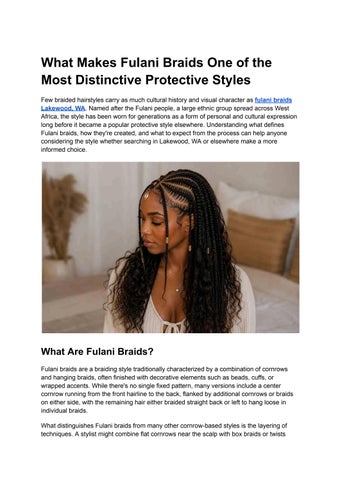
What Are Fulani Braids? Fulani braids are a braiding style traditionally characterized by a combination of cornrows and hanging braids, often finished with decorative elements such as beads, cuffs, or wrapped accents. While there's no single fixed pattern, many versions include a center cornrow running from the front hairline to the back, flanked by additional cornrows or braids on either side, with the remaining hair either braided straight back or left to hang loose in individual braids. What distinguishes Fulani braids from many other cornrow-based styles is the layering of techniques. A stylist might combine flat cornrows near the scalp with box braids or twists
further down, then add embellishments to highlight specific sections. This combination gives the style its signature look: intricate near the roots, textured and decorative toward the ends.
Cultural Origins The Fulani people, also known as Fula or Fulbe, are one of the largest ethnic groups in West Africa, with communities across countries including Nigeria, Senegal, Guinea, and Mali. Traditional Fulani hairstyles often carried social and cultural meaning, with braid patterns and adornments varying by region, age, and occasion. While modern interpretations of the style have evolved and diversified, the braiding remains rooted in this cultural heritage.
Common Variations of Fulani Braids Because Fulani braids aren't a single rigid pattern, stylists often adapt the technique to suit different preferences, hair types, and desired outcomes. ● Center-part Fulani braids. A single cornrow runs down the middle of the head, often accented with beads, while the rest of the hair is styled in braids or twists on either side. ● Fulani braids with cornrow accents. Multiple thin cornrows frame the face or crown, transitioning into looser braids partway down. ● Fulani braids with curly or wavy ends. Rather than braiding all the way to the tip, some versions leave the last few inches curled or crimped for added texture. ● Fulani braids with beads and cuffs. Metal or wooden cuffs, beads, or wrapped thread are added along individual braids, a detail closely tied to the style's traditional roots. The specific combination chosen often depends on face shape, hair length, and how much time the wearer wants to spend on styling and maintenance.
Benefits of Choosing Fulani Braids Like other braided protective styles, Fulani braids offer more than a distinctive look.
Protection for Natural Hair Because the natural hair is braided and tucked away from daily manipulation, heat exposure, and friction, Fulani braids function as a protective style that can support length retention over time, provided they're installed and maintained properly.
Styling Versatility The combination of cornrows and hanging braids creates natural opportunities for styling variety. The center or front sections can be pulled into an updo, half-up style, or ponytail, while the rest of the braids remain down, offering flexibility that some single-technique styles don't provide as easily.
Low Daily Maintenance Once installed, Fulani braids generally require less daily styling time than many other hairstyles, since the pattern is already set. This can be a practical advantage for people with busy schedules who still want a polished, intentional look.
What to Consider Before Getting Fulani Braids While the style offers real benefits, a few factors are worth understanding beforehand.
Installation Time Fulani braids typically involve more detailed cornrow work near the scalp compared to simpler braided styles, while crochet braids offer a different installation approach that can also be customized to suit various looks. Both styles may require different amounts of time depending on the technique. The exact duration depends on the specific pattern chosen, hair length, hair density, and whether beads or other accents are included.
Scalp Tension Because cornrows are braided directly against the scalp, tension is a more significant factor than in styles that begin further from the root. Braids that feel tight immediately after installation are common, but any persistent pain, pulling, or discomfort is not typical and should be addressed with the stylist.
Hair Preparation Clean, detangled, and well-moisturized hair generally holds a pattern more effectively and is easier for a stylist to section accurately. Many people wash and condition their hair a day or two before their appointment rather than arriving with heavily oiled or product-laden strands.
Caring for Fulani Braids Proper aftercare plays a meaningful role in how the style holds up and how comfortable it remains over time.
Scalp Care Even with the hair braided, the scalp still needs attention. A lightweight, non-greasy oil or scalp treatment applied sparingly along the parts can help address dryness without leaving buildup that weighs down the cornrows.
Protecting the Style at Night Wrapping the hair with a satin or silk scarf, or sleeping on a satin pillowcase, can help reduce friction, minimize frizz, and keep the braids looking neater for a longer stretch of time.
Washing Braided styles can still be cleansed periodically. Diluting shampoo and applying it directly to the scalp with an applicator bottle, followed by a thorough rinse and gentle patting to dry, is a common approach that helps avoid excessive frizz while keeping the scalp clean.
How Long Do Fulani Braids Typically Last? Longevity varies based on braid size, the complexity of the pattern, hair texture, and how well the scalp and edges are cared for. Many people wear Fulani braids for several weeks, though the cornrowed sections near the scalp may show new growth sooner than the hanging braid portions. Keeping an eye on the roots and removing the style before excessive matting or tension develops is generally recommended to protect the natural hair underneath.
Choosing a Stylist for Fulani Braids Because Fulani braids combine multiple techniques, precise cornrow work and consistent tension throughout the head, experience matters more than it might for simpler styles. When researching stylists in the Lakewood, WA area or elsewhere, it can help to review examples of previous Fulani braid work specifically, ask how the stylist handles tension around the hairline, and discuss the desired pattern, length, and any accents beforehand. A brief consultation can also help clarify realistic timing and preparation expectations.
Frequently Asked Questions 1. What's the difference between Fulani braids and regular cornrows? Regular cornrows are typically braided flat against the scalp from root to tip in a single technique. Fulani braids combine cornrows near the scalp with hanging braids, twists, or curled ends further down, along with decorative elements like beads or cuffs, creating a more layered and textured overall look.
2. Do Fulani braids work for all hair types? Fulani braids can generally be adapted to different hair textures and lengths, since the technique relies on sectioning and braiding rather than requiring a specific starting texture. Stylists often adjust braid size and pattern complexity based on the individual's hair.
3. How should I prepare my hair before a Fulani braid appointment? Arriving with clean, detangled, and moisturized hair is typically recommended, as it allows for more accurate sectioning and can reduce overall installation time. Avoiding heavy products before the appointment is also generally advised.
4. Are Fulani braids heavier than other braided styles?
This depends on the specific pattern, braid size, and any added accents like beads or cuffs. Styles with more decorative elements or thicker braids can feel heavier, so discussing preferences with a stylist beforehand can help balance appearance with comfort.
5. Can Fulani braids be restyled after installation? Yes, to some degree. The cornrowed sections near the scalp offer some flexibility for parting or pulling back, though the overall pattern is generally set once installed. Discussing styling goals with the stylist beforehand can help ensure the pattern supports the versatility desired.
6. How do I know if my Fulani braids are too tight? Some initial tightness is common with cornrow-based styles as the scalp adjusts. However, persistent throbbing, sharp pain, or visible bumps along the hairline are not typical and may indicate the braids need to be adjusted or, in some cases, removed and reinstalled with less tension.
Ready to embrace the beauty and versatility of Fulani braids? Contact us today to discuss your preferred pattern, length, and decorative details.