GENDER &
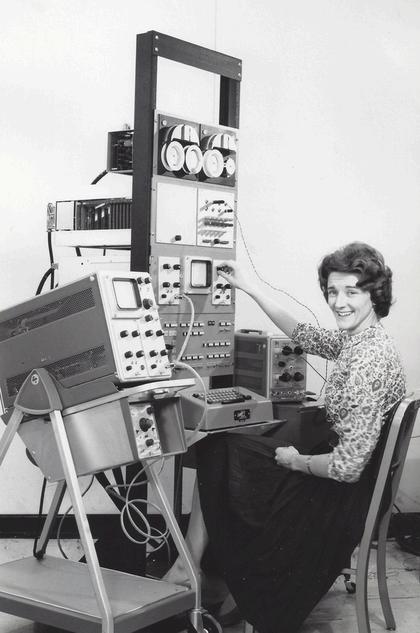
By: Amy Pichardo De Leon
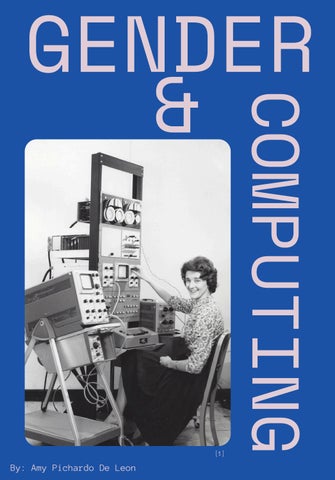
By: Amy Pichardo De Leon
The story we are usually told about computing leaves out the people who made it possible....

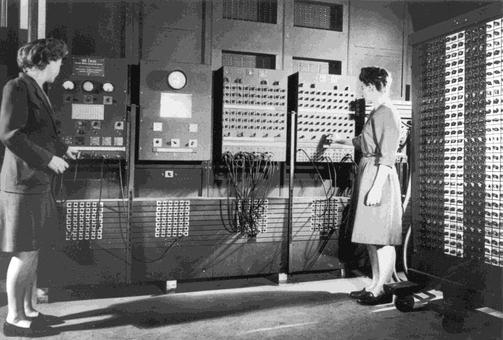
This Zine challenges that familiar narrative by uncovering how the field shifted from being coded as women’s clerical labor to becoming dominated by “tech-bro” culture. It argues that the real history of the computer is not just about invention and innovation, but about the overlooked labor and physical strain of the people who kept the machines running.
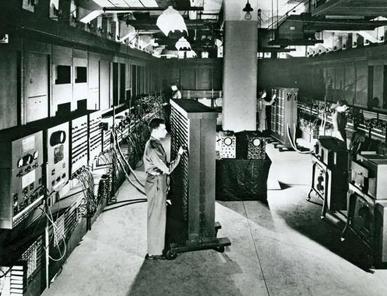
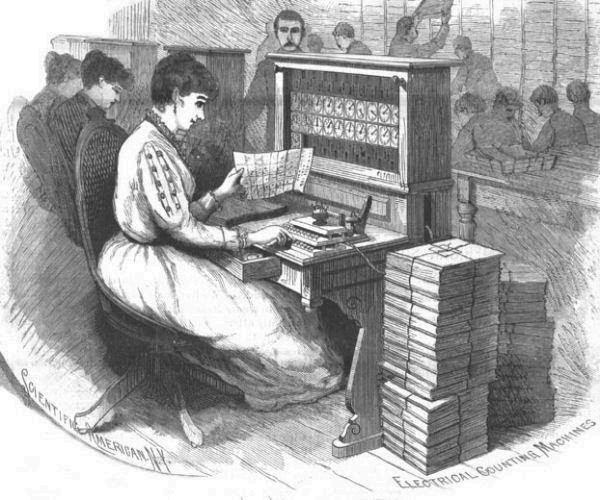
Long before it was a machine on your desk, a computer was a human being, usually a woman, whose professional labor involved solving the complex nonlinear differential equations essential to the modern state.
These workers were often treated as interchangeable parts of the office equipment, famously exemplified by a physicist who requested, “three more microscopes and three girls.”
By 1945, the term shifted from the human operator to the electronic machine, which effectively erased the technical expertise of the women who built the foundations of our digital world.
W A R M A C H I N E S & I
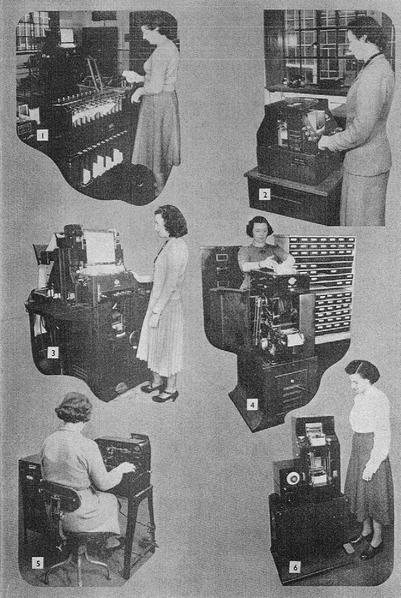

DURING WORLD WAR II, WOMEN WERE THE SINEW OF INFORMATION WORK, PROGRAMMING THE ENIAC AND CRACKING NAZI CODES AT BLETCHLEY PARK, YET THEY WERE OFTEN TREATED AS INVISIBLE ACTORS IN HISTORY’S VICTORY PHOTOS.
For Black women, innovation was often erased before it could even be recorded, a process called archival amnesty that refused to recognize their technical survival tools as technology at all.
Technological expertise has historically been defined through a white masculine lens that deliberately excludes the domestic and agricultural innovations developed by Black women for survival.
This process of archival amnesty ensures that their creative tool use and communication patterns are omitted from the master narrative of progress.
By confining the definition of technology to institutional machine work, the historical record sustained a hierarchy that unrecognized the agency of Black women as skilled technicians.

In the 1960s, computing was rebranded as an intellectually prestigious and masculine pursuit at elite colleges like Dartmouth, where programming became a tool for prowess and fraternity bonding.
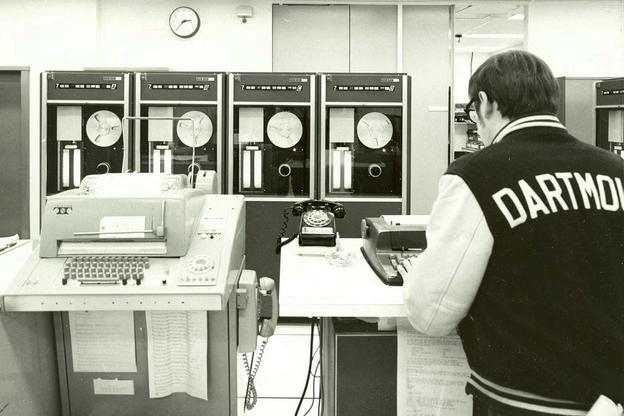
At institutions like Dartmouth College, innovations such as BASIC and time-sharing systems fostered a form of “computing citizenship” largely reserved for white, affluent men. As computing gained prestige, what had once been dismissed as clerical labor was rebranded as competitive masculine expertise, pushing pioneering women operators out of the field
The history of computing can and should be told through the lens of computer pain, a world of musculoskeletal suffering that was first saddled upon female clerical workers.
Workplace automation in the nineteen eighties disproportionately targeted pink collar clerical roles where women of color were tasked with the exhausting repetition of data entry. These workers reported doubling or tripling the rates of blurred vision and hand cramps compared to professional users who enjoyed more job autonomy.

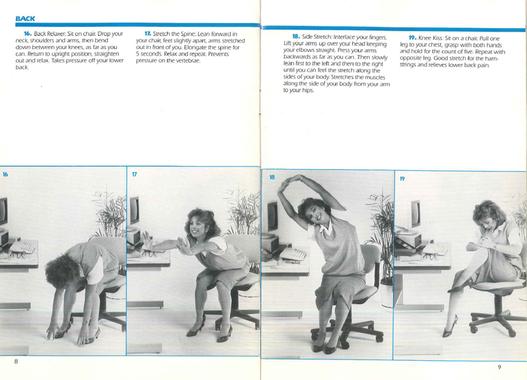
Management often individualized this systemic suffering by expecting workers to perform nondisruptive stretches that maintained productivity while ignoring the structural trap of the machine.
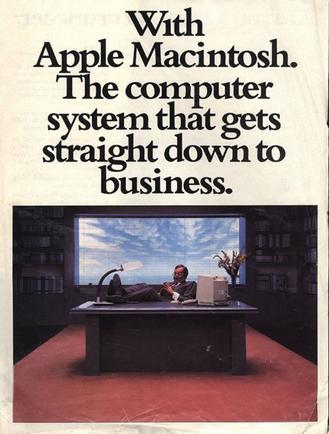
The "Leisurely" Executive (Macintosh Ad)
The Cummins KeyScan ad portrays women as clerical operators of office computing systems, reinforcing automation as feminized labor In contrast, the Macintosh ad shows a relaxed male executive distanced from the keyboard, framing computer use as authority rather than secretarial work

Interface design was gendered: typing was seen as fundamentally secretarial until the mouse allowed male executives to operate computers in a leisurely way that avoided feminine associations.
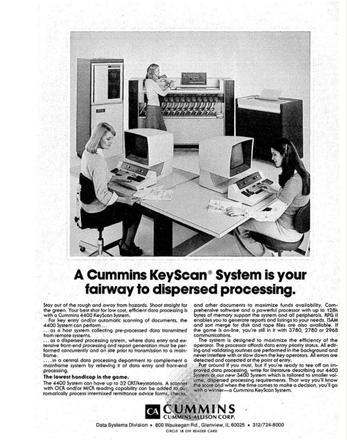
The "Clerical" User (Cummins KeyScan Ad)
Hicks, Marie. “War Machines.” Programmed Inequality: How Britain Discarded Women Technologists and Lost Its Edge in Computing, MIT Press, 2017.
Light, Jennifer S. “When Computers Were Women.” Technology and Culture, vol. 40, no. 3, 1999, pp. 503–535.
Nooney, Laine. “How the Personal Computer Broke the Human Body.” Vice, 12 May 2021, www.vice.com/en/article/how-the-personal-computer-broke-the-human-body/.
Rankin, Joy Lisi. “Tech-Bro Culture Was Written in the Code: How Computing Pioneers at Dartmouth in the 1960s Gave Rise to the Macho Tech Culture We See Today.” Slate, 1 Nov. 2018, slate.com/technology/2018/11/dartmouth-basiccomputer-programmers-tech-bros.html.
Steele, TreaAndrea M. “History of Black Women and Technology.” Oxford Research Encyclopedia of American History, 2021.
Works Cited
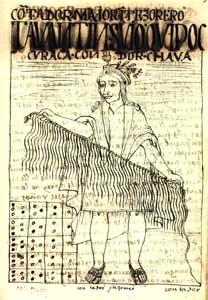
7.Quipu Curaca (Inca Knot Record). GoGeometry.com, gogeometry.com/incas1/quipu/quipu_curaca.jpg.
8.Image from “Tech-Bro Culture Was Written in the Code.” Slate, slate.com/technology/2018/11/dartmouth-basic-computer-programmers-techbros.html. Compote.Slate.com, compote.slate.com/images/b938f280-84ee-4d20930c-4d5442d6721d.jpeg?crop=1560%2C1040%2Cx0%2Cy0&width=2200.
9 Image from “How the Personal Computer Broke the Human Body.” Vice, www.vice.com/wp-content/uploads/sites/2/2021/05/1620745906008-image9.png
10 Image from “How the Personal Computer Broke the Human Body.” Vice, www.vice.com/wp-content/uploads/sites/2/2021/05/1620745979756-image21.png
11 Image from “How the Personal Computer Broke the Human Body.” Vice, www.vice.com/wp-content/uploads/sites/2/2021/05/1620745945823-image20.png