
Elise Ansel 2026

Page 1


ELISE ANSEL

ENDURING BEAUTY

If you travel worldwide to museums and head for the galleries of historical paintings as often as contemporary displays; if you rush to, say, Venice as excited to visit the Frari, Santa Maria della Salute, the Scuola Grande di San Rocco, San Giorgio Maggiore or the Accademia to savor the Titians, Tintorettos, Veroneses, and Bellinis as you are to explore the Biennale, so is Ansel. If you are smitten by Old Master paintings and the tantalizing aura of time and ageless beauty that envelopes and gilds them, you and Ansel have that in common too. If you revel in paint’s materiality and its miraculous versatility—the worlds it can conjure with the flick of a brush—so does Ansel (and all the countless artists who have chosen it as their medium since the early days of civilization and continue to do so). This, then, is a love story that, like any love story, needs a beloved. It’s a duetto, as she phrases it, with certain masters from the past that began when she was a fledgling artist and has only become deeper, more impassioned in the years since.

For this exhibition of new work, Ansel focuses on one of the painters she most venerates: Titian (Tiziano Vecellio), the great Venetian master of color. Ansel is not a passive admirer, not a copyist in the manner of painters who stand before a painting to reproduce it, to acquire its techniques. She is far more activist, feminist, inventive. Her stance is interrogative, interpretative, searching for what a Renaissance masterpiece signifies to her as a twenty-first century abstract painter who is also a woman. “It’s not about being a channel but about being a creative collaborator in a very energizing exchange,” she said, with artists like Titian who remain “very much alive and relevant.”

Selecting the painting she will work with is for Ansel, who is a naturally gifted colorist, initially a coup de foudre. She is beguiled by a painting’s colors and arrangements, by its brushwork and structure. She might bring a sketch-

Titian, The Death of Actaeon, 1559-1575, Oil on canvas, 70 3/8 inches x 77 7/8 inches (178.8 x 197.8 cm).

The National Gallery, London, United Kingdom.

Titian, Bacchus and Ariadne, 1520-1523, Oil on canvas, 69 1/2 x 75 1/2 inches (176.5 x 191 cm).

The National Gallery, London, United Kingdom.

book and make drawings while standing in front of the painting. Sometimes she photographs it. At other times, she just looks. It is, as every painter knows, essential to see the painting in person. In Ansel’s case, her process depends upon it.

Ansel recounts how she was introduced to Titian’s Bacchus and Ariadne (1520-23) in graduate school in the early 1990s. It became one of the cornerstones of her practice. She visited it again and again at the National Gallery of Art in London and found in it an inexhaustible, stimulating cache of color combinations and forms for use in her own future paintings. (In her studio, Ansel—like many artists—pins up reproductions of chosen paintings taken from books, digital images, and postcards next to her sketches, photographs, and the multiple versions she has made of them as points of reference, prompts, and departures.)

Only then does she zero in on the painting’s narrative, which, in the case of Titian, is often biblical or mythological, with the stories taken from Ovid’s Metamorphoses presented as allegories. The Metamorphoses, acclaimed by Renaissance scholars and philosophers as one of the great poems of the classical world, was frequently used to reconcile classical Greek and Roman culture with Christian beliefs, joining reason and faith together in accordance with the credos of humanism and its new world view.

Ansel, while cognizant of the history of the paintings, is more invested in how such paintings might be read today. What kind of conversation can she have with the paintings in question. What is her voice in this. How might, she,

a woman, have painted those subjects, often nudes, a traditional genre that has been under fire as misogynistic since the rejection of the proprietary, patriarchal male gaze as the once unquestioned point of view. She says that she has “spent the last decade looking at art history through a female lens, countering or adding to a male perspective, overturning narratives of violence and voyeurism.”

Specifically, she has been researching the work of women artists of the Renaissance and Baroque, such as Artemisia Gentileschi and Sofonisba Anguissola. Until recently, very few of them were acknowledged in the history books.

What she searches for is “the abstraction,” based on formal concerns, and iconography which, in the best works, are inseparably intertwined. Sometimes the abstraction is evident immediately. At other times, multiple attempts are required to find the resolutions she wants, reflecting the source, her extrapolations from it, and her intuitive responses. Ansel always finds something that she hasn’t noticed before when she dives into a painting’s richness, emerging with her own subjective haul. (Love is not always blind.)

To open up the duetto, though, she uses the nonfigurative.

Abstraction allows me to interrupt what is a one-sided narrative and transform it into a sensuous, nonnarrative form that embraces multiple readings. It metamorphosizes the meaning of the works from which my paintings spring, shifting the focus from narrative content to the brushstrokes themselves, and to the specific material characteristics of the paint. I don’t have a prescriptive method or recipe. I am translating, I am dancing, allowing multiple iterations to emerge, through the process.

She wants to bring elements of the initial figuration into a more completely abstract picture space to get to the truth at the heart of the painting. “I never fully succeed, so I try again—and again and again.”

Titian, Tarquin and Lucretia, ca. 1571, Oil on canvas,

74 2/5 x 57 inches (188.9 x 145.1 cm).

Fitzwilliam Museum, University of Cambridge, Cambridge, United Kingdom.

Lucretia (2025) is Ansel’s (ongoing) exchange with Titian’s Tarquin and Lucretia (ca. 1571). Titian depicts the moment that Sextus Tarquinius is about to rape the irreproachable (but seductively voluptuous) Roman matron Lucretia. Ansel, however, transforms the meaning by rotating the painting so that the villain occupies the space of the victim, consolidated into an abstract shape that flaunts the eye-catching, brilliant (Titian) red of his garb. The form appears again in the righthand panel of the triptych, there shifted from scarlet red to delicate pink to further underscore the transformation of the image and its meaning. Lucretia—represented by a long diagonal stroke of honey brown, accompanied by translucent sweeps of white—is now occupying Tarquin’s dominant position. The story has been upended. The painting is no longer a scene of violation. And the black of the lower ground of the composition is remarkably luxuriant—softened and so velvety that you want to touch it to confirm that it’s paint. It is a cushion rather than an abyss.

Band of Gold (2026), among Ansel’s newest works, is based on the Sleeping Venus (ca. 1508-1510) attributed to both Giorgione and Titian, his student. One of the most beautiful nudes in the history of western art, and one of the most beautiful paintings in this exhibition, Ansel distills it into a series of horizontal strokes—some sheer, others more opaque, the palette ranging from a crimson inflected with white, to a bright goldenrod orange that zooms in from the left, to a hint of tender pale blues and peach, in addition to shades that range from olive green to gold green. The undulating band of the latter is a reference to the recumbent goddess, who is, in this iteration, devoid of lasciviousness (nude rather than naked, as art historian Kenneth Clark once classified portrayals of female bodies). Ansel’s painting is about the “eternal femina” as part of nature, an apparition that is as light as a breath, seemingly paused for the moment before it shifts and disappears.

Green Going (2025) is, however, the showstopper. It is a triptych of three 60-inch squares that characteristically feature reprised editions of previous paintings inspired by Titian: Avalon, Fire Fangled Feathers, and Lucretia.

Giorgione (da Castelfranco) and Titian, Sleeping Venus, ca. 1508-1510, Oil on canvas, 42 3/4 x 68 7/8 inches (108.5 x 175 cm).

Gemäldegalerie Alte Meister, Dresden, Germany.

The title is from Wallace Steven’s gorgeous poem, Peter Quince at the Clavier, about imagination, mutability, mortality, and immortality related through the (topical) story of Susanna and the Elders. Ansel’s brushwork is on full virtuosic display. It is confident, controlled, and fluid, while the composition is like a call and response, one stroke reacting to the next. The markings and shapes are distinctive, like performers in an ensemble. They swerve, curve, and sweep across the surface: up, down, across, diagonally. They halt to reverse themselves, come to a stop, then set off again into a kind of spiral, a pirouette, before cycling exuberantly, joyfully, triumphantly onward.

The palette is also unrestricted: yellows, greens, touches of blue, oranges, reds, earth tones, white, dark and light. She lets them swirl, come to rest, and then explode. You might imagine that there is sound coming from them; the colors are a kind of visual music, reminding us of the English critic and aesthete Walter Pater’s famous dictum: “All art constantly aspires to the condition of music.”

We don’t need to compare any of Ansel’s paintings with their sources to experience aesthetic pleasure. They reward our attention with their own dazzling impact. But there is an extra layer of enjoyment when the comparison is made and we can see the dialogue, the wide net of associations that Ansel casts over her paintings, and the differences that illuminate the conversation between two artists across the centuries. Not least, there is also a duet with the associations of each viewer who engages with the capacious pictorial space that Ansel has constructed—a humanistic, if temporary, refuge from the realities of a world where so much can break your heart.

Lilly Wei is a New York-based art critic, independent curator, and journalist.

Avalon, 2025 Oil on linen
54 x 60 inches
137 x 152 cm
Concert, 2025 Oil on linen
48 x 60 inches
122 x 152 cm

60 1/4 x 60 inches

153 x 152 cm

Diana, 2025 Oil on linen
Fire Fangled Feathers, 2025
Oil on linen
60 x 72 inches
152 x 183 cm

152 x 457 cm

Green Going, 2025
Oil on linen
60 x 180 inches
Lucretia, 2025 Oil on linen
60 x 48 inches
152 x 122 cm
Peach I, 2025
Oil on linen
60 x 54 inches
152 x 137 cm
Peach II, 2025
Oil on linen
60 x 54 inches
152 x 137 cm
Peach III, 2025
Oil on linen
60 x 54 inches
152 x 137 cm
Splintered Sunlight III, 2025
Oil on linen
60 x 52 inches
152 x 132 cm
Splintered Sunlight IV, 2025
Oil on linen
60 x 52 inches
152 x 132 cm
Band of Gold, 2026
Oil on linen
40 x 60 inches
102 x 152 cm
Blue Bird, 2026
Oil on linen
34 x 38 inches
86 x 97 cm
Bronze Decor, 2026
Oil on linen
54 x 60 inches
137 x 152 cm
Ocean Flower, 2026
Oil on linen
54 x 60 inches
137 x 152 cm
Rescue Me, 2026
Oil on linen
60 x 65 inches
152 x 165 cm
Wing, 2026
Oil on linen
48 x 60 inches
122 x 152 cm

Published on the occasion of the exhibition

ELISE ANSEL DUETTI

2 April – 9 May 2026

Miles McEnery Gallery 511 West 22nd Street New York NY 10011

tel +1 212 445 0051 www.milesmcenery.com

Publication © 2026 Miles McEnery Gallery

All rights reserved

Essay © 2026 Lilly Wei

Photo Credits

p. 4: Digital Image © The National Gallery, London, United Kingdom. All rights reserved. p. 4: Digital Image © The National Gallery, London, United Kingdom. All rights reserved. p. 6: Digital Image © Fitzwilliam Museum, Cambridge, United Kingdom / Bridgeman Images p. 7: Digital image © bpk Bildagentur / Gemäldegalerie Alte Meister, Dresden, Germany / Art Resource, New York, NY / photo by Erich Lessing

Associate Director Julia Schlank, New York, NY

Photography by Dan Bradica, New York, NY Christopher Burke Studios, New York, NY

Catalogue layout by Allison Leung

ISBN: 979-8-3507-6257-0

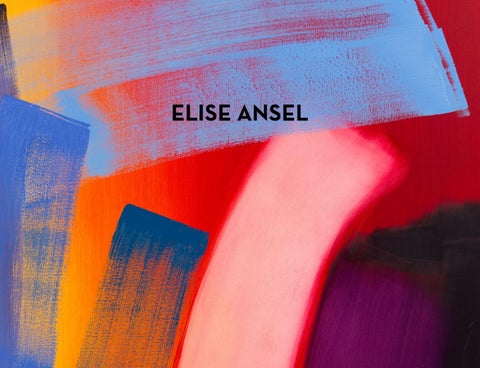
Cover: Peach I, (detail), 2025

Turn static files into dynamic content formats.
Create a flipbook