Homeowners Manual
Connecting people and communities


Connecting people and communities
1. A Warm Welcome
Welcome Message from the Ard na Sailí Team
HomeBond Guarantee
Your Management Company, BMG Property Management Ltd.
2. The Systems & Products that bring your home to life
About the systems that bring comfort, efficiency, and elegance to everyday living:
Heat Pump System & Thermostats
Mechanical Extract Ventilation
Water
Water Pressure System & Storage Tank
Valves and Plumbing Access
Electricity Supply
Sanitary Ware within your Home
Windows and Doors
Paint Finishes in your Home
SIRO Fibre Broadband
Smoke Detectors & Heat Alarms
3. Preserving the Quality of your New Home
Expert guidance to ensure your home continues to perform beautifully:
Acclimatising your Home
Managing Moisture & Preventing Condensation
Caring for your Kitchen
Caring for your Drains
4. Enhancing your Outdoor Space
Establishing and Maintaining your Garden - Cultivate an outdoor haven that complements your home’s design.
5. Supplier Information & Home Maintenance Log
Supplier Details
Home Maintenance Log
6. Living with Ongoing Construction
Detailing what you and your family should be aware of to stay safe.
7. Some Key Guidance
Safe Fixing Guidance
Brickwork
Radiators
Painting & Wallpapering
Tiling
8. Dedicated Support
Homeowner Support Team - Personalised assistance whenever you need it.
We are delighted to accompany you as you begin this new chapter. We believe that a home is more than a place to live, it is a space crafted for comfort and lasting enjoyment. To support you in fully appreciating the quality of your new surroundings, we have curated this Homeowners Manual.
Within these pages, you will discover an overview of how the various features and systems in your home operate, along with guidance on how to preserve their standard for years to come.
You will also find direct links to all relevant manufacturers’ documentation. We encourage you to explore these materials, as certain product warranties may require activation or registration by you.

For your attention:
Every home evolves with daily living, and thoughtful care ensures it retains its beauty and performance.
We invite you to take the time to review the information contained here, as well as the accompanying documents, so that you may enjoy your home at its finest.
Wishing you many years of comfort and happiness in your new home.
Warm regards,

All of our homes are safeguarded under a HomeBond guarantee, Ireland’s leading provider of structural defect protection for newly built homes since 1978. This partnership ensures long-term confidence, security, and peace of mind as you settle into your new home.
Your home is protected by the HomeBond Latent Defects Policy, a comprehensive 10-year warranty and insurance programme designed to safeguard you against significant structural, mechanical, and electrical issues providing long term confidence and peace of mind.
The full policy documentation and Certificate of Insurance have been provided to your solicitor. Should you decide to sell your home in the future, the remaining balance of the 10-year cover can be utilised by the new homeowner.
Should you wish to find out more information on HomeBond go to www.homebond.ie

For your attention: We recommend requesting these documents, reviewing them thoroughly, and keeping them stored securely for future reference.
We have established the “Ard na Sailí Owners Management Company” and as a homeowner you are now a valued member of this organisation. To ensure the smooth running of the communal areas, BMG Property Management Ltd has been appointed to act on behalf of the Ard na Sailí Owners Management Company.
When you move in, BMG will contact you to formally introduce themselves. They will outline their role, responsibilities, and the services they provide, as well as your obligations as a homeowner. Much of this information is also detailed in your Deed of Transfer, which you signed during the sales process.
Once the development is fully handed over to the Ard na Sailí Owners Management Company, BMG will arrange the first Annual General Meeting (AGM). At this meeting, homeowners will have the opportunity to establish a Board of Directors, after which the development will ultimately be managed solely by its owners.


Your residence is equipped with a Daikin air -to-water heat pump, an advanced and energy efficient system designed to provide both heating and hot water using renewable ambient energy. By drawing warmth from the outside air, the heat pump delivers consistent comfort throughout your home while supporting a more sustainable and environmentally conscious lifestyle.
While we strongly recommend reviewing the full manufacturer’s manual, the following guidance will help you enjoy optimal performance from your Daikin system:
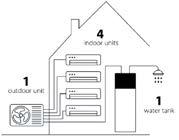
Your heat pump is a finely engineered piece of technology, and it is important not to adjust or tamper with the unit itself. The temperature within your home should be managed exclusively through the Pipelife P1 thermostats located on each floor. These thermostats are designed to work seamlessly with the Daikin system to maintain an ideal living environment.
The system automatically gives precedence to hot water production, providing a steady, dependable supply whenever required. Following moments of higher use, such as a relaxing bath or an extended showerplease allow up to 40 minutes for the cylinder to return to full temperature.
For the most efficient heating, we recommend avoiding the use of radiator covers. These can limit warmth distribution and reduce the overall performance of your heating system.
Important – your heat pump must be serviced every 12 months by a qualified professional. Regular servicing maintains energy efficiency, protects performance, and keeps your warranty valid.
Your warranty is now activated, and your details are registered on Daikin’s Stand By Me Portal. You’ll receive email reminders when your annual service is due.
A mild background hum from the indoor heat pump unit is expected and reflects the smooth and continuous operation of the heat pump.
Your radiators will feel pleasantly warm rather than intensely hot. This gentle, consistent heat is a hallmark of advanced heat pump technology, designed to provide luxurious comfort while maintaining exceptional efficiency
To keep your system performing flawlessly, your heat pump must be serviced every 12 months. The installer of your heating system, JSM Heating Solutions Ltd, has established a dedicated servicing team to service all heat pumps annually in the Ard na Sailí development.
This QR code can be used to book your annual service of your heat pump with JSM Heating Solutions Ltd. It has also been placed on your indoor heat pump unit.
Your Daikin heat pump includes a 5-year manufacturer’s warranty.
Daiken Heat Pump Documentation
Please click here for the Manufacturers Manual where you will find full details on operation, maintenance and manufacturers warranty.
Pipelife P1 Thermostat Documentation
Please click here for the Manufacturers Manual where you will find full details on operation, maintenance and manufacturers warranty.
Your home is equipped with a Vent-Axia Mechanical Extract Ventilation (MEV) system, a premium solution designed to ensure a consistently fresh and healthy indoor environment. This system provides continuous, efficient ventilation throughout multiple areas of your residence, extracting moisture, carbon dioxide, and external pollutants. The result is improved air quality, enhanced comfort, and a healthier living space.
The MEV unit incorporates an advanced integrated humidity sensor, which automatically adjusts the fan speed in response to changing moisture levels within your home. This intelligent feature conserves energy, minimises noise, and ensures optimal performance at all times.
The sensor is also designed to detect small yet rapid increases in humidity even when overall levels remain below the usual triggering threshold. This refined sensitivity allows the system to respond promptly, providing sufficient ventilation even in smaller rooms where changes in moisture occur quickly.
A boost switch has also been provided to allow you to manually increase the fan speed, should it be required to remove excessive moisture or pollutants from the air. The boost switch is located on the wall of the upstairs landing and is labelled “Vent Axia”.
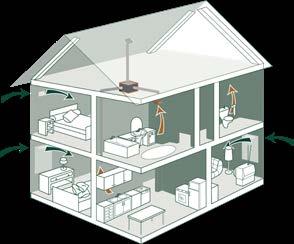
The ceiling vents in your home have been pre set to deliver the optimal airflow for each room. Although these vents can be opened or closed by twisting them, we strongly recommend that you do not adjust them. Changing their position can disrupt the designed airflow balance throughout the house.
Please note that the downstairs vents also play an important role in providing fire protection for the upper floor. For safety reasons, these vents should not be altered or interfered with.
Warranty
Your Vent-Axia Mechanical Extract Ventilation (MEV) system is covered by a 2 year parts and labour warranty, along with a 5 year warranty on the motor.
Please click here for the Manufacturers Manual where you will find full details on operation, maintenance and manufacturers warranty.
This detailed manual outlines everything you need to know to ensure your MEV system continues to perform at its optimum level. Your MEV system is designed to deliver long-term reliability and exceptional air quality within your home. To ensure optimal performance, it is recommended that a qualified service engineer carries out routine maintenance every 5 years, including cleaning the propeller to remove any dust or dirt buildup.
If you experience any issues with your ventilation system or wish to schedule maintenance, please contact Lindab Ltd. Their full contact details can be found in the Supplier Details section of this homeowners manual.
Water enters your home from a public watermain supply which is provided and managed by Uisce Eireann.
This is a fresh water drinking supply and goes directly to your kitchen sink where you can obtain water for consumption. It is not recommended to consume water beyond this point. The supply continues to your pressurised storage tank in the utility room (semi detached and detached units) and under the stairs (mid terrace units) where it is stored for distribution around the plumbing systems in your house.
Your home has a water meter box located in the public footpath outside you property. We have included a photo of the water meter to allow you to identify it. This water meter is the property of Uisce Eireann where they may ultimately install a water meter for your home. In case of emergencies, it is possible to shut off the water at this point by turning the valve within the box.
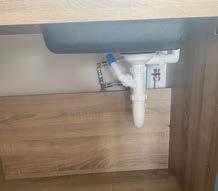
If necessary, the primary mains supply can also be turned off using the stop valve located beneath the kitchen sink. A photo has also been included below to allow you to identify this stop valve.
This valve can be used to stop the water supply from being distributed around your home and to your EPS storage tank by turning it to the off position. Once your EPS storage tank is full, the water is then circulated around your home.
The EPS storage tank is equipped with an overflow pipe which is connected to the underground drainage system.
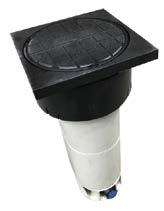
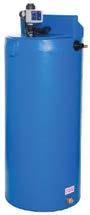
Your home is equipped with an EPS Multiboost 350 litre slimline storage tank with a built in water pressure pump, designed to maintain a steady and reliable flow of water throughout the property. This system ensures excellent pressure at all outlets, enhancing everyday comfort and delivering a premium living experience. Your slimline storage tank and water pump is supported by a 2-year manufacturer’s warranty, offering reassurance and long-term protection.
Please click here for the Manufacturers Manual where you will find full details on operation, maintenance and manufacturers warranty.
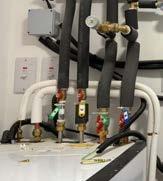
There are several valves located above the internal heat pump in the utility room (semi detached and detached units) and upstairs storage room (mid terrace units). These valves allow you to shut off water circulation to different areas of your home if required. For your convenience, all valves have been clearly labelled. Please ensure these valves remain easily accessible at all times.
Always consult a qualified plumbing contractor before carrying out any alterations or additions to your plumbing system.
Upon completion of the sale of your new residence, you will have signed a formal handover agreement. This document includes the electricity meter reading taken at the time of closing, along with your MPRN, the unique number that identifies your electricity supply.
We will forward these details to Energia (your electricity provider) so that your account can be established correctly and all billing transferred seamlessly into your name.
For your attention:
While you may choose to explore alternative electricity providers in the future, we strongly recommend keeping a personal record of both your initial meter reading and your MPRN for your own reference and convenience.
Electricity is an essential part of modern living, and because we use it constantly, it’s easy to forget how powerful it is. While extremely useful, electricity can also be dangerous if handled incorrectly. Accidents in the home do occur, so it’s important to understand the basic safety principles and to avoid taking unnecessary risks.
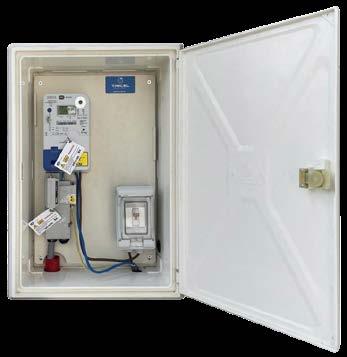
Your home receives its electrical supply through the ESB Networks main fuse and meter. These components are sealed and must never be tampered with, except when reading the meter. From the meter, cables feed into your consumer unit (commonly called the fuse box).The consumer unit contains:
• A main on/off switch
• Several Miniature Circuit Breakers (MCBs)
• A Residual Current Device (RCD)
MCBs protect individual circuits within your home. If a circuit becomes overloaded or develops a fault, the MCB will automatically switch off the electricity to that circuit. You can reset an MCB by returning it to the ‘on’ position.
The RCD provides additional protection by disconnecting the power if it detects an imbalance in the electrical flow, which may indicate a fault in the circuit. If an RCD trips, it can also be reset by switching it back to ‘on’. RCDs should be tested periodically using the built in ‘test’ button to ensure they remain fully functional.
If an MCB keeps tripping, a faulty appliance is often the cause. To check this:
1. Unplug all appliances on the affected circuit.
2. Reset the MCB.
3. Plug in each appliance one at a time until the issue reoccurs.
Any appliance causing the MCB to trip should be repaired or replaced promptly. Circuit breakers are there to protect you. If they trip repeatedly and you have ruled out faulty appliances, do not continue resetting them. Contact a qualified electrician to investigate and repair the fault safely.
When it comes to electrical work, the rule is simple: Never attempt repairs, alterations, or installations yourself.
All electrical work must be carried out by a competent, registered electrician. Even tasks that appear minor can have serious safety implications if done incorrectly.
In an emergency where you cannot safely reach the consumer unit, the electrical supply to your home can be shut off using the main trip switch located in the external meter box (circled in red above).
Your home is fitted with Ideal Standard I.LIFE toilets and wash-hand basins, Flair Slimline Shower
Trays and Ideal Tempo bath. Your bathrooms are designed for comfort and durability; however, they are not wet rooms. Please do not wash down walls, floors, or fittings using a shower head or hose, as this may lead to water damage over time. To protect the finish and longevity of your sanitary fittings, please follow these care recommendations:
Everyday cleaning
Use warm, soapy water, this gentle approach is sufficient for regular maintenance. Regular wiping and drying will prevent buildup and keep surfaces pristine and keep limescale at bay.
Avoid harsh chemicals
Cleaners with hydrochloric acid, chlorine, bleach, or acetic acid can damage surfaces. Do not use abrasive pads or powders.
Avoid spraying cleaners directly onto surfaces
Instead, spray onto a soft cloth and apply gently. Direct application can cause erosion over time.
Rinse away residue
Everyday products such as shampoos, soap, shower gels, etc., can cause staining or deterioration. Rinse with warm water after each use to prevent residue accumulating.
Please click here for the Manufacturers Manuals for all your sanitary ware
Your windows and doors are supplied by Munster Joinery and are designed to deliver exceptional performance, security, and thermal efficiency.
All Munster Joinery windows and doors come with a 10-year manufacturer’s warranty, offering long-term reassurance and protection.
Please click here for the Manufacturers Manual where you will find full details on operation, maintenance and manufacturers warranty.
Dulux Trade Satinwood (White) was applied to all internal woodwork, including skirting boards, architraves, doors, and door frames in your home.
Click here for the Technical Data Sheet for the Dulux Trade Satinwood paint
We are delighted to tell you that your home is serviced by the SIRO Fibre Broadband network, Ireland’s 100% fibre to the home infrastructure delivered by ESB and Vodafone. SIRO provides exceptionally fast and reliable internet with speeds of up to 1Gb, supporting streaming, smart home technology, remote working, and multiple device usage with ease.
To pre order your broadband, visit www.siro.ie/new-developments and enter your Eircode. The below QR code can also be used to order your broadband. A wide range of internet providers offer packages over the SIRO network, giving you, the homeowner, flexibility and choice.
If your home does not appear on the SIRO availability map, there is no need for concern. Simply contact David or Shane using the details provided below, and they will personally arrange the broadband connection to your home.


Scan here to find out more
Please click here for the Technical Data Sheet for the Armstead Trade Vinyl Matt paint
was used on all external walls.
Please click here for the Technical Data Sheet for Dulux Trade Weathershield Smooth Masonry Paint 30YY 69/048
Your home is fitted with interconnected smoke and heat alarms designed to provide early warning in the event of fire. These alarms detect smoke or rapid increases in heat and will sound throughout the property to give occupants maximum time to escape. They are mains-powered with battery backup and must be tested regularly using the built in test button to ensure proper operation. Alarms should never be removed, painted, or tampered with, and any faults, such as repeated chirping, should be addressed promptly by following the manufacturer’s guidance or contacting a qualified professional. More detailed operating, testing, and maintenance instructions are available in the manufacturers manual.
Please click here for the Manufacturers Manual where you will find full details on operation, maintenance and manufacturers warranty.

While the full details of your home’s systems and features can be found within the individual manufacturers’ manuals, this section highlights the key areas where your attention or action is required. It also outlines important information that will help you preserve the quality, comfort, and long-term performance of your new home.
Important – the following offers general care recommendations only. It is essential to read all manufacturer manuals and warranty documents thoroughly. Failure to follow the manufacturer’s specific guidelines may result in warranties becoming null and void.
As your home is newly constructed, it will require a gentle period of acclimatisation during the first 12 months of occupancy. Throughout the building process, many of the materials used, such as timber and plaster naturally absorbed moisture which must be allowed to evaporate gradually.
A slow and steady drying process is essential to minimise minor shrinkage and hairline cracking, both of which are normal characteristics of a new home. Your Daikin air -to-water heat pump will maintain a consistent temperature, while the Vent-Axia Mechanical Extract Ventilation system provides the fresh airflow needed to support controlled drying.
It is important not to add excessive additional heat to accelerate this process. Doing so may cause the materials to dry too quickly, leading to unnecessary and more pronounced cracking. The best approach is to allow your home’s systems to operate as designed and to keep internal doors closed where possible to help maintain stable conditions.
As moisture within the structure begins to evaporate, it must be effectively ventilated to avoid dampness, condensation, and the potential development of black mould on walls or surfaces.
Condensation occurs when warm, moisture filled air meets a cooler surface and reverts to water droplets. Once your home has fully dried out, the high standard of insulation used in modern construction will help to significantly reduce the likelihood of condensation forming.
Your Vent-Axia Mechanical Extract Ventilation system plays a central role in this process by continuously extracting moist air and maintaining a healthier, balanced indoor environment.
Because your kitchen stands as the centrepiece of the home, it naturally experiences more wear than other areas of the house. Thoughtful care can go a long way in preserving its beauty and ensuring that heat and moisture do not lead to unnecessary condensation or potential mould. Below are a few practical guidelines to help you maintain your kitchen to the highest standard.
Be careful with heat-producing appliances
Don’t place toasters, or similar appliances directly under wall cabinets. Steam producing appliances, kettles etc., should be used in a clear open space, not directly under cabinets. The heat and steam can damage the cabinets and paintwork. If your home has a dishwasher, allow it to cool down before opening the door. Opening it immediately after a cycle releases a lot of steam that can affect the surrounding units.
Wipe spills immediately
Clean up any moisture, food spills, or splashes as soon as they happen. This helps prevent stains and protects worktops and appliances from long-term damage.
Clean kitchen surfaces gently
Avoid waxes, abrasive cleaners, or scouring pads, which can damage finishes. Use a mild cleaning mix with a damp cloth and dry thoroughly with a soft cloth.
Keep the sink clean and dry
Wash the sink regularly with warm water and mild detergent. After cleaning, dry it with a soft cloth to avoid limescale. Try not to leave water sitting in the sink or around it, as it can cause stains or wear over time. Avoid abrasive cleaners, do not use wire wool, scouring pads, or harsh chemicals. These can scratch surfaces and leave behind tiny metal particles that may rust later.
To help prevent blockages and ensure smooth operation, we recommend carrying out visual checks on all accessible drains every six months.
Appliances such as dishwashers, washing machines, and showers require more frequent attention. Their filters and traps can accumulate grease, food particles, detergents, and other residues, so periodic cleaning will help maintain performance and prevent unpleasant odours or blockages.
The following materials can cause significant blockages and should always be discarded responsibly in household waste and should never be disposed of through sinks or toilets:
Fats, Oils & Grease These solidify and compromise drainage.
Food Waste Even small particles can create long term blockages.
Wet Wipes (including “flushable”) They do not break down and obstruct pipework.
Sanitary Products Designed to absorb, not disintegrate.
Cotton Items Cotton buds, pads, and wool all swell and cause clogs.
Nappies & Hygiene Products Too bulky for any plumbing system.
Hair Forms dense knots that restrict flow.
Medications Should be returned to a pharmacy, not flushed.
Harsh Chemicals or Solvents Risk damaging seals, pipes, and the environment.
Paper Towels & Tissues Far too strong to break down like toilet paper.
Plastic Items Non biodegradable and harmful to drainage systems.


Your garden is a beautiful blank canvas, an outdoor extension of your home where you can express your style and create a space that is uniquely yours.
In most cases, your garden will have been freshly grass-seeded prior to your move-in. As the lawn begins to establish, there are several simple steps you can take to support healthy growth and long-term success. A newly seeded lawn will take several months to fully knit together. With gentle care in the early stages, it will reward you with a lush, durable finish.
In some cases, your garden may not have been grass-seeded because ground temperatures were too low. If this applies to your home, the grass will be seeded as soon as ground conditions allow.
Understanding Your Soil
During construction, the site’s topsoil is stripped, stored, and then returned to the garden areas once work is complete. While this ensures the valuable top layer of soil is preserved, the process temporarily alters how the soil naturally behaves, its structure, air pockets, drainage channels, and microbial life become disrupted. Over time, the soil will naturally rebuild its structure, restore drainage, and regenerate healthy microbial activity, all essential for strong plant growth.
You can help this recovery by covering the soil with compost, mulch, or vegetation such as grass. These coverings protect the soil, retain moisture, and support the development of a healthy, organic layer.
Why is my grass Patchy?
A new lawn often looks patchy simply because different areas germinate at different speeds. Uneven moisture, slight soil compaction, birds eating seed, or rain/wind moving seed can all create thin spots. This is completely normal in the first few weeks with watering and time, most lawns fill in naturally. Here are some tips to help the process along.
Keep Soil Evenly Moist Water lightly once or twice daily so the surface stays damp, not muddy.
Loosen Bare Spots Lightly rake or break up patchy areas to improve seed to soil contact.
Reseed Thin Areas Add a small amount of fresh seed and gently rake it in. Cover with a thin layer of compost or topsoil.
Avoid Walking on the Lawn Foot traffic slows establishment. Keep off for the first 4–6 weeks.
Protect From Birds and Wind Lightly cover seed with soil or use netting to reduce seed loss.
Delay the First Mow Wait until grass reaches 7–8 cm. Use the mower’s highest setting for the first cuts.
Fertilise Later Don’t feed the lawn until it’s at least 6–8 weeks old.
What to do with Weeds?
Weeds popping up in newly sown grass is totally normal. Early weeds appear because watering triggers dormant weed seeds in the soil and disturbing the ground during sowing brings more to the surface. Since weedkillers can’t be used on young grass yet, these weeds often get an early head start.
Grass seedlings are delicate in the first 4–6 weeks, so leave early weeds alone they’re usually soft annuals that die back or disappear once mowing begins. Start mowing when the grass reaches 7–8 cm, keeping the mower high; this naturally weakens weeds and helps the grass thicken. Keep the soil evenly moist to help the grass outgrow the weeds.
Avoid weedkillers, raking, or disturbing weeds at this stage, as these can damage young grass. After 8–12 weeks, once the lawn is established, you can hand-weed or use a selective lawn weedkiller if needed.
Why is the Soil Cracking?
Cracking happens when the soil surface dries out, especially in newly raked seedbeds. Clay-rich soils shrink as they dry, causing splits, and lumpy or uneven soil dries at different rates, making cracks more likely.
Keep the soil lightly moist to stop surface drying and cracking. Gently close cracks with a rake or light pressure and avoid burying seeds. Adding a thin layer of fine compost or topsoil helps retain moisture and improves germination. Avoid walking on the area, as foot traffic can widen cracks and disturb the seedbed.
How can I fix hollows?
Minor dips or hollows are normal as the soil settles.
If your new lawn is under 4–6 weeks old, leave hollows alone the soil is still settling, and the young grass is delicate Just keep watering and avoid walking on the area.
Once the lawn is 6–8+ weeks old and has had 2–3 mows, you can fix shallow dips by adding a thin 1 cm layer of fine topsoil/compost and brushing it in. Repeat every few weeks if needed.














This log helps you track and record routine upkeep, supporting a clear and organised approach to maintaining your home.


You are among the first to move into a new home, please be aware that construction will continue until the full Ard na Sailí development is complete. Although our sites are securely fenced and supervised, contractors, machinery, and delivery vehicles will still be active in the area. Please always remain vigilant and follow safety signage.
Construction sites can be tempting play areas, so ensure children do not enter these areas and fully understand the dangers involved.
Building work naturally results in dust, mud, noise, and general disruption. We work hard to keep the development clean and tidy, but conditions such as heavy rain or hot, dry weather can occasionally cause unavoidable inconvenience. We apologise in advance and will take prompt action to address any issues.
If major works are planned that may affect access to your home, we will notify you in advance to minimise disruption.




Your home has timber stud walls, always use a detector to check for hidden electrical cables or pipes before drilling, nailing, or hanging anything. Use only appropriate stud wall fixings such as plasterboard fixings, or screws for timber studs as incorrect fixings or striking hidden services can be dangerous; if unsure, seek professional advice.
Some bricks naturally contain salts that can form a white, powdery or crystalline deposit on the surface called efflorescence. This process is completely normal and can occur as the walls dry out. It is harmless and will gradually disappear over time with exposure to weather and regular washing by rain.
It is common for air to become trapped in a heating system, which can prevent radiators from heating fully or cause cold spots. This can usually be resolved by bleeding the radiators if needed. Bleeding a radiator release trapped air, you will know it needs bleeding if it feels hot at the bottom but cold at the top, or you hear gurgling. Do not hang wet clothing on radiators or cover the temperature control valves, as this can reduce the system’s efficiency, prevent the thermostat from working correctly, and may lead to uneven heating throughout your home. If you are unsure how to safely maintain your radiators, please seek advice from a qualified professional.
As your new home continues to dry out during its first year, we recommend waiting at least 12 months before painting or wallpapering. This allows the building materials to settle and moisture to evaporate naturally, helping to prevent cracking, peeling, and uneven finishes. Light touch-ups may be fine, but for best results, allow the full drying period before carrying out major decorating works.
Your new home has been designed with occupant safety as a priority. All required fire proofing measures have been implemented in accordance with Building Regulations and recognised good design practices. While a fire is unlikely, it is important to plan how you and your household would exit the property in an emergency. Identify a safe escape route and ensure everyone in the home is familiar with it. Know the location of any keys needed for escape and make sure all occupants understand how to operate the windows, as they may be essential in an emergency.
The downstairs ceilings are constructed to provide a period of fire resistance. These should not be altered or penetrated - such as for recessed lighting or other fittings - unless the work is carried out by a qualified professional who can confirm that the fire protection remains intact. If your home is a semi detached or terraced property, the same considerations apply to the party wall shared with neighbouring homes, as it is also designed to provide essential fire resistance
Prior to tiling your bathrooms, you will need to hire a qualified plumber to remove and refit any sanitary ware or appliances. We have taken great care to ensure that all fixtures have been installed correctly. Therefore, it is important that any removed items are reinstalled properly, and you should carefully monitor for leaks after the work is completed, particularly around toilets and sinks.
Additionally, you should ensure that the internal components of the toilet cistern have not been disturbed during removal or reinstatement. Misalignment or damage to these components can cause stiff or difficult push button operation and may lead to slight water leakage into the toilet bowl. This can result in your EPS storage tank pump activating frequently, including during the night.

Should you ever require assistance, our Homeowner Support Team and management partners are here to support you. Please use the QR code to access our contact form, and we will respond as quickly as possible.
Wishing you every happiness in your new home. The Ard na Sailí Team