





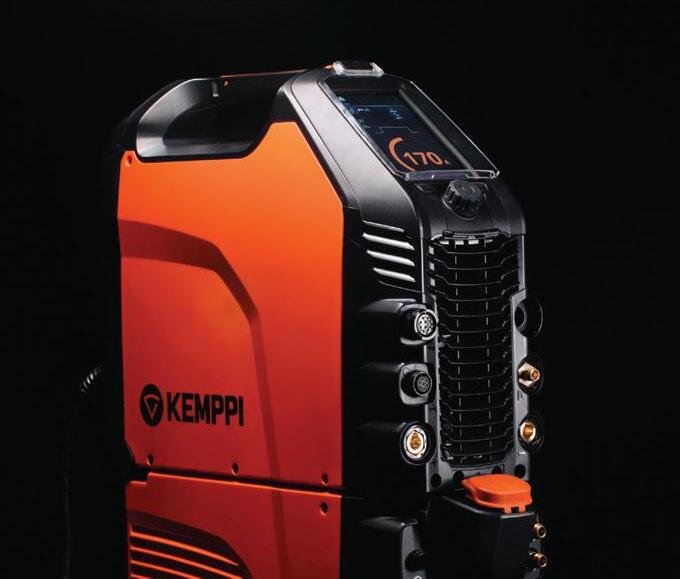









The Master T series is a premium range of TIG welding machines for professional AC and DC TIG welding. They deliver exceptional weld quality and precision. Weld Assist provides faster weld parameter set-up, and powerful performance features like Pulse, MicroTack, and AutoCool improve welding control, quality, speed, and energy efficiency.
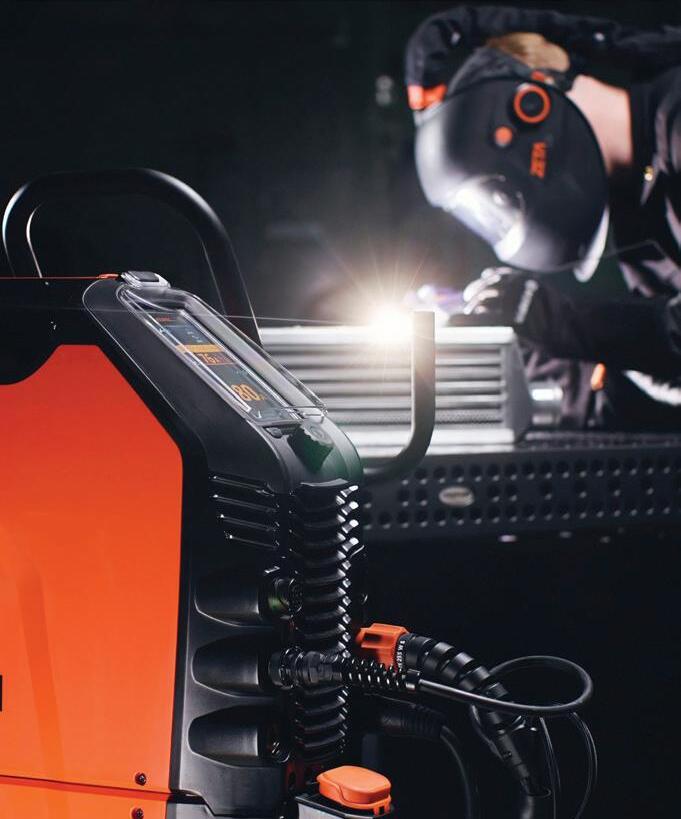
The Master T ACDC models include two unique performance modes: MAX WeldClean establishes the Master T as a powerful electrolytic weld cleaner; and DeMagnetisation mode eliminates remnant magnetic fields within a workpiece.























EFFECTIVE SAVINGS 35%


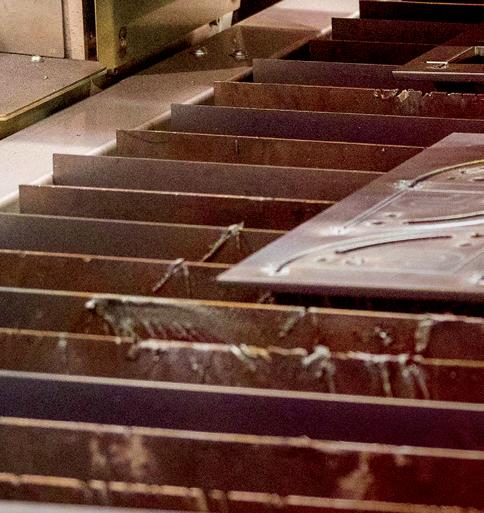
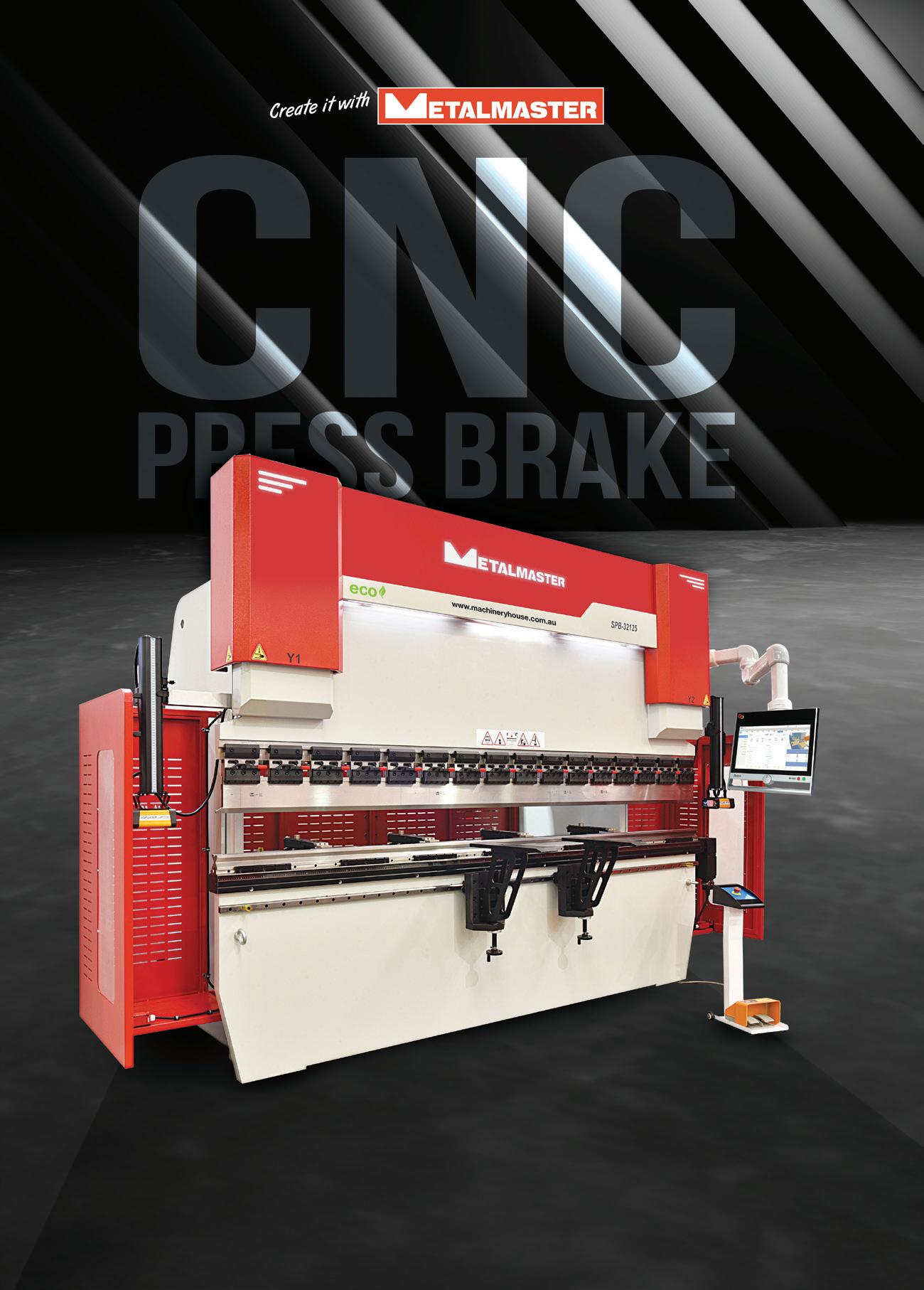
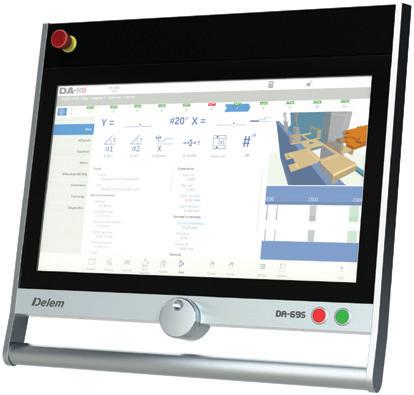
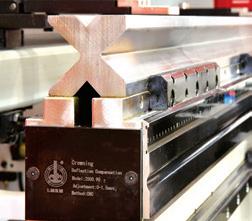
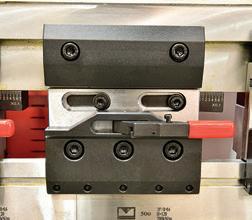
METALMASTER'S new CNC HYBRID Series is the flagship model of the impressive CNC Press Brake range. Featuring a Hybrid ECO Servo hydraulics system with a brushless servo motor that precisely controls hydraulic pressures, oil use and energy usage to be quiet and efficient. Equipped with high-end 24" DELEM Controllers capable of complex 2D and 3D programming, and are available in either 5+2 or 7 Axis options. Multi-axis back gauges with larger capacities, along with offline programming software to enhance your productivity.



























Many businesses across Australia are evaluating and implementing AI systems in their workflows. What should you know?





6 From the CEO
8 From the Minister
10 From the Industry
12 Industry Commentary: CBA
78 AMTIL Inside
80 Industry Calendar
82 Manufacturing History
For story leads, sales enquiries or any other feedback related to AMT, contact AMTMagazine@amtil.com.au
Publisher
AMT Magazine
AMTIL
Suite 10, 5 Corporate Boulevard
Bayswater VIC 3153
AUSTRALIA









Australian Manufacturing Week 2026, the nation’s premier event for the advanced manufacturing and precision engineering industry, made its Queensland debut in Brisbane. Check out the highlights of this landmark show.
Long one of Australia’s largest industrial sectors, mining and resources are strong drivers of the nation’s advanced manufacturing industry.
T 03 9800 3666
E info@amtil.com.au
W amtil.com.au
Prepress & Print
Printgraphics Australia
AMT Magazine is printed in Australia under ISO14001
Environmental Certification using FSC® Mix certified paper sourced using sustainable tree farming practices.
Copyright © Australian Manufacturing Technology (AMT). All rights reserved. AMT Magazine may not be copied or reproduced in whole or part thereof without written permission from the publisher. Contained specifications and claims are those supplied by the manufacturer (contributor).
Disclaimer
66 YOUR BUSINESS
Concepts and information to help you make informed decisions within your organisation.
The opinions expressed within AMT Magazine from editorial staff, contributors or advertisers are not necessarily those of AMTIL. The publisher reserves the right to amend the listed editorial features published in the AMT Magazine Media Kit for content or production purposes. AMT Magazine is dedicated to Australia’s machining, tooling and sheet‑metal working industries and is published four times per year. Subscription to AMT Magazine (and other benefits) is available upon application. Contact AMTIL on 03 9800 3666 for further information.
2026AMTV26.N3JULY

100%
Locally
Quality
Local
Repair
Excellent
National
Free
In opening the recent and successful Australian Manufacturing Week, I was pleased to deliver an address about how technology and innovation are transforming manufacturing as we have known it.
I began with the truth as I see it about Australian manufacturing. Manufacturing will not die. It’s too important. But it will, and indeed, it is transforming.
We are a nation of builders. We’ve built railways across deserts, cities on coastlines, industries that fed the world, powered the region, and shaped our national identity. And now we are called upon to build again — this time a new future for Australian manufacturing.
A future that is smarter, cleaner, and globally competitive. A future that is unmistakably ours. Built on flexibility, not scale. Because right now, manufacturing is not just changing — it is transforming at a scale the world hasn’t seen since the Industrial Revolution.
Australia has a choice and must choose to lead it.
Manufacturing remains a powerhouse, with 104,000 businesses employing 930,000 Australians and contributing over what the Australian Industry Group says is $137 billion of value‑added output.
I still often hear the lament on the demise of the car industry in Australia, but I rarely hear people talking about our incredible transformation to 99% SMEs. Our future will be built on technology uptake and flexibility, not scale. Business models are changing to high value, low volume. It is the most adaptable that will survive and thrive, not just the strongest, fastest or smartest. The most adaptable will succeed. And that means understanding the conditions at play and how we can adapt to them.
There is no doubt that the manufacturing industry is contracting by GDP percentage terms. While weak economic conditions in Australia have proven difficult for most industries, manufacturing has declined faster and further than any of its peers.
Drawing on this data from the Australian Industry Group’s annual Manufacturing Performance and Outlook report (2025), given the contribution of manufacturing to the Australian economy, this should and is a cause for concern to many.
The economic impacts of the manufacturing recession ripple beyond the industry itself. The outsized contribution to exports, investment, R&D and innovation mean that a weak manufacturing industry will drag on our national aspirations to be a high tech and high productivity economy.
The report identifies four factors – energy costs, skills shortages, trade risks and productivity difficulties – which have combined to drive manufacturing into transformation.
1. Australia is at a Turning Point
For decades, we’ve heard that manufacturing in Australia is shrinking and that the world has moved on.
But the data tells a different story. Besides the hundreds of millions it contributes to the economy and the near million jobs, manufacturing remains the sixth largest industry in Australia, generating 12.4% of Australia’s exports and 7.9% of our capex investment in 2024, and more than 5% of our country’s GDP. It is our most R&D intensive industry (reinvesting 4.1% of value added back into R&D), and our most innovative industry when it comes to new product development. And it is the second largest investor in R&D in the country.
Most importantly, we are now entering a moment when technology is rewriting the rules of global competition.
Based on data regarding Australian business structures, small and medium enterprises (SMEs)—businesses with fewer than 200 employees—constitute roughly 99% of manufacturing firms in certain states.
Overall, the Australian SME sector is considered the "backbone" of the economy, comprising over 98% of all businesses across all sectors.
This is Australia’s opportunity to create the manufacturing of the future, with flexibility.
2. Embracing Robotics and Automation is Australia’s New Industrial Muscle
Automation is accelerating worldwide. The International Federation of Robotics reports a 9% increase in operational industrial robots in 2024.
Australia is catching up, but not fast enough.
From advanced robotics in Western Sydney’s aerospace precinct, to automated mining operations in the Pilbara, to robotic food processing in regional Victoria — automation is becoming our new industrial muscle.
The global vision guided robotics market is projected to grow from $3.2 billion in 2025 to over $7 billion by 2030.
This is about supercharging workers, not replacing them. It gives Australian workers the tools to compete with anyone, anywhere.
3. No vision of the future would be complete without addressing the role of artificial intelligence. AI is quickly becoming the imagination engine of modern manufacturing. Long language models and visual language models are at the heart of the possibilities. If your business is not thinking about the impacts and the possibilities of AI now, you will be left behind. Like it or not, we need to address it.
ANCA, a legendary Australian CNC leading company have very deliberately integrated AI to advance their role in precision manufacturing.
They use it in ‘predictive maintenance and quality’, which monitors machine performance, reduces downtime and ensures high precision tool production.
• ANCA’s Integrated Manufacturing System (AIMS) uses AI and automation to connect, automate, and optimise the entire production process, improving efficiency and reducing reliance on manual labour.
• ANCA also utilises AI to optimise grinding processes, ensuring superior surface finish and accuracy.
These kinds of gains can change industries.
And the International Data Corporation (IDC) FutureScape’ report ‘Worldwide Manufacturing 2026 Predictions’ predicts 90% of the world’s largest manufacturers will augment operational roles with automation, boosting worker efficiency by 30%, by 2027.
This means Australia could get greater productivity, higher quality, lower waste, and increase global competitiveness. AI is not replacing Australian workers; it is amplifying them.
4. Smart Factories are Australia’s Next Competitive Advantage
Smart factories are emerging across the country — in Melbourne’s advanced manufacturing hubs, in Brisbane’s biomedical precincts, in Adelaide’s defence and space clusters. Deloitte’s 2025 Smart Manufacturing Survey shows companies embracing AI are becoming more agile, resilient, and competitive.
A smart factory can: Predict equipment failures; reduce energy use; minimise waste; enable mass customisation and connect supply chains end‑to‑end. This is manufacturing that thinks.
5. The Global Race — and Australia’s Moment Nations are racing to lead the next industrial era. Digital maturity is becoming a measure of national strength, meaning embracing data centres, rethinking energy needs, and planning for a digital future.
Per KPMG, 34% of manufacturers globally are already seeing ROI from AI use cases, more than any other sector. We need to build our independence by creating the sovereignty to manufacture if supply chain is disrupted. That means diversifying our trade relationships and deliberately building our own capability — in defence, clean energy, medical technology, advanced materials, and space.
6. None of this is possible without people and the Australian workforce needs to rise to the challenge
The future of Australian manufacturing is not about humans competing with machines but humans leading machines.
The manufacturing industry has struggled in skills and talent attraction, but the tide is turning. Trades are becoming seen as safer jobs, with the rise of AI. Critical thinkers will be in high demand, and engineers will be increasingly important as they lead AI implementation.
It’s been a decade since Olivier Scalabre’s (Senior Associate Director at the Boston Consulting Group) 2016 Ted Talk on the Fourth Manufacturing Revolution.
He noted 50 years of slowing global economic growth and suggested an impending world with no growth — social tension and declining living standards. Historically, spikes in economic growth have followed major manufacturing revolutions: the steam engine, mass production, and early automation. Each revolution boosted productivity, in turn driving economic growth.
Scalabre foresaw another manufacturing revolution, which could reignite global growth and reshape globalisation. Attempts to revive manufacturing — leveraging cheaper labour markets and building larger, specialised factories — delivered temporary gains and ultimately created inflexible supply chains. Meanwhile, digital innovations like the internet transformed services but did little to improve industrial productivity, which continues to decline.
The new revolution, he said, would emerge from the convergence of advanced technologies with manufacturing. These include advanced robotics; robots that collaborate with humans and perform complex tasks. He predicted that automation in factories would rise to 25% by 2026 to be 20% more productive.
He predicted that Additive Manufacturing (3D Printing) that was already transforming plastics and now metals, would represent 25% of global manufacturing.
These shifts will have major macroeconomic consequences and are the heart of the transformation we are seeing. You can judge if Scalabre was correct, but he was definitely on the right track.
More recently Lauren Dunford, argued that manufacturing is the most overlooked and important force shaping our future. Dunford is the CEO and co‑founder of Guidewheel, an AI‑powered FactoryOps platform, who delivered a TED2025 talk titled "The future isn't just coded — it's built". She highlighted manufacturing as a critical, yet overlooked, engine of innovation needed to solve challenges like climate change and scaling AI.
Manufacturing represents one sixth of the global economy, she contends most people barely think about it despite using manufactured goods daily.
She shared that 57% of Gen Z wants to be social media influencers, not manufacturers. This, Dunford says, is a huge problem — because manufacturing is where the biggest opportunities of that generation exist.
So
COVID exposed fragile global supply chains. When factories shut down, we ran out of essentials. Her message: “If we can’t make things, we break.”
Even AI depends on manufacturing. Data centres — the physical backbone of AI — require massive amounts of steel, cement, servers, cooling systems, and electricity. None of it exists without manufacturing.
Dunford says we need to support a new generation of manufacturing heroes.
Where the future sits, modern manufacturing jobs should be and are no longer are dirty or dangerous — they are clean, high tech, and cutting edge. But millions of roles may go unfilled by 2030 because young people don’t yet see manufacturing as a desirable career.
Dunford quotes Edison: “Opportunity is missed by most people because it’s dressed in overalls and looks like work.”
Australian Manufacturing Week was our big and wonderful celebration of people and companies who make things.

The next manufacturing revolution offers a chance for sustainable, widely shared economic growth — but only if countries act deliberately, retrain their workforce, and embrace the transformation. We need to stop blaming governments for a lack of handouts and work with state and federal governments, as partners, to create the future that we want. If done right, it promises more wealth, more productivity, and a better future for the next generation.


LORRAINE MAXWELL Chief Executive Officer at AMTIL
Strengthening Australian research and development is not peripheral to the Albanese Government’s productivity agenda; it is an essential component of our plan to boost innovation and investment, support good jobs and create a more productive and resilient economy.
A succession of global shocks – wars, pandemics and supply chain crises – has shown just how important those security and resilience objectives are. As the poet Dorothea Mackellar famously put it, we live in a sunburnt country. We are also, at times, a drought‑prone country. Economic resilience means using water in a way that doesn’t put additional pressures on Australia’s water supply. Equally, it means building more energy for new industries and making modern manufacturing technologies more energy efficient.
The data centre expectations that I announced earlier this year put strong emphasis on energy additionality and water efficiency. But traditional industries can advance the work of driving efficiency and economic resilience, too. Research and development is an essential part of that effort.
Australia has world‑class researchers in our universities, industries and national science agencies. We also have genuinely innovative businesses onshore. What we have not always possessed is a truly national, mission‑oriented research and development system that can connect the two.
The independent Ambitious Australia report, chaired by Robyn Denholm and published earlier this year, sets out what a more coherent approach looks like. The report calls for less fragmentation and more strategic focus across the national research and development system.
That is a generational reform agenda. It will not be delivered in a single term, let alone a single Budget. But this year’s Federal Budget takes the first crucial steps in response.
First, the Government is establishing a new National Resilience and Science Council to better coordinate public sector investment in research and development, aligning that effort more closely with key national priorities. This cornerstone reform will replace pre‑pandemic frameworks with a more mission‑oriented, fit for purpose Council that help turn the best scientific advice into economic and industrial success for Australia.
Second, this Budget introduces a package of measures to simplify and focus the Research and Development Tax Incentive (RDTI) for greater impact. The Budget lowers the intensity threshold for RDTI and also lifts the maximum RDTI expenditure threshold from $150 million to $200 million, to make Australia a more attractive place for large firms to invest in R&D. Better targeting of the RDTI is expected to increase R&D investment by young firms by $400 million per year.
Third, the Government is expanding venture capital tax incentives from 1 July next year, encouraging more investment and unlocking patient private capital for young, growing firms with significant innovative potential.
Finally, this Budget invests in the infrastructure and development of Australia’s public science agencies, so they can make the biggest possible contribution to national productivity and resilience. That includes more than $387 million for the CSIRO over the next four years; $21.7 million to support the Australian Space Agency’s leadership of a burgeoning industry with real advanced manufacturing benefits; and $273 million to sustain the National Measurement Institute, which underpins vital trade and transactions and supports consumer confidence.
A stronger R&D system is how Australia will grow more great startups and develop more first‑of‑a‑kind technologies. It’s how Australia can provide more good manufacturing and science jobs for Australians, especially in outer suburban and regional communities.
Recently, with the Member for Corangamite Libby Coker, I visited Xefco, a world‑leading textile manufacturing startup located at the ManuFutures hub at Deakin University’s waterfront campus in Geelong. Thanks to a $4.99 million matched funding grant from the Albanese Government’s Industry Growth Program, Xefco will be able to commercialise and grow its world‑first Ausora® technology for textile dyeing.
In a nutshell, Ausora® is a water‑free dyeing and finishing process for application in textile manufacturing. It eliminates wastewater, almost eliminates chemical consumption and delivers 90 per cent energy savings. And unlike some earlier waves of technological adoption in that sector, Ausora® is owned and developed by Australians, elevating Australia’s standing in a global market valued at more than $2 trillion. Crucially, Xefco did not achieve this breakthrough alone. Ausora® is the product of deep collaboration with Deakin University’s Institute for Frontier Materials, the Innovative Manufacturing Cooperative Research Centre and the ARC Research Hub for Future Fibres. It’s a very Geelong story – and also proof of how Australian research excellence supports industrial success when the right mission is set and the right concentration of effort directed to achieving it.
Textiles manufacturing helped make colonial Australia an economic powerhouse. That industry has been a driver of Australia’s industrial, technological and social development. That history isn’t incidental. It’s central to the story of modern Australia.
Like other sectors of Australia’s economy, textiles, clothing and footwear manufacturing is finding new ways to contribute to the mission for a more efficient, productive and resilient Australia. What’s at stake in the reform of our research and development system is nothing less than the future of Australia’s industrial capability, productivity and economic resilience. It’s the ability to manufacture things like textiles efficiently and sustainably –especially when global supply chains cannot be relied on. A more effective research and development system will strengthen Australia’s industrial fabric at a critical juncture in our history.

SENATOR HON TIM AYRES Minister for Industry and Innovation and Minister for Science

Buying advanced sheetmetal processing equipment is a major investment. That’s why we work closely with you to identify the right machine, configuration and set-up for your operation. Ensuring it’s not just fit for purpose today, but able to support your business as your needs evolve. With decades of industry experience, we help maximise productivity, performance and long-term value. Real Service. Real Support. Real People. That’s Applied Thinking.
By James Thomson, Lead – Standards and Product Regulation, Australian Industry Group
Five years after the closure of the Lane Cove Test Station, Australia is beginning to grasp the scale of what was lost. It marked the erosion of a national capability that underpins electrical safety, system reliability, innovation and industrial competitiveness across the entire electricity system.
This reality was laid bare at a recent Australian Industry Group forum examining the impacts of Lane Cove’s closure. Industry experts from standards development, manufacturing, system engineering and forensic investigation delivered a consistent message: Australia’s rapid electrifi cation is now running ahead of our ability to independently test and validate the equipment it relies on.
Electrifi cation is transforming every layer of the economy. Buildings are shifting away from gas. Electric vehicle charging is scaling rapidly. Data centres are increasing power densities by orders of magnitude. Distributed energy resources are turning consumers into generators. Power electronics, solidstate switching and direct current are no longer niche technologies, but core features of modern electricity systems. Each of these changes places new stresses on equipment that was never designed for today’s operating conditions.
Testing is what turns theory into confi dence. Modelling and assessment are valuable, but they cannot replicate real world fault conditions. Highcurrent and highpower testing prove whether equipment can withstand short circuits, thermal stress, mechanical forces, harmonics and bidirectional power fl ows. Without that capability, Australia is increasingly asked to take safety, reliability and compliance on trust.
The impacts extend far beyond any single product category. Switchboards are one example, but the same constraints apply to transformers, cables, protection devices, power electronics, energy storage interfaces and emerging DC systems. As materials change, fault levels rise and networks become more complex, every component in the current path must be verifi ed under worstcase conditions. That assurance cannot be imported cheaply or quickly.
Reliance on overseas testing brings signifi cant risks. Access to international test facilities is expensive and subject to growing global queues. Shipping large equipment offshore adds time, cost and uncertainty to already constrained projects. Oversight of testing quality can be limited, creating differences in interpretation between international standards and Australia’s regulatory framework. Smaller manufacturers, in particular, struggle to absorb these costs, discouraging local innovation and favouring off‑the‑shelf imported solutions.
Over time, this dynamic reshapes industry behaviour. Instead of engineering solutions tailored to Australian conditions, businesses are pushed toward assembling international systems. Innovation, intellectual property and technical expertise migrate offshore. Australia risks becoming a downstream consumer of electrical technology rather than a contributor to its development.
Safety and reliability sit at the heart of this issue. Many arc fl ashes, fi res and unplanned outages ultimately trace back to equipment that was either never properly proven under fault conditions or have age degraded performance. Highenergy failures do not remain localised; they can cascade through networks, disrupt industry and place workers at serious risk. The loss is also generational. Lane Cove was not just a facility; it was a centre of expertise where engineers, technicians and apprentices developed an intuitive understanding of electrical forces that cannot be learned from textbooks alone. That hands‑on knowledge base, built over decades, is extremely diffi cult to rebuild once dispersed. At the same time, Australia faces a widening skills gap, with experienced practitioners retiring and fewer pathways for younger engineers and tradespeople to gain exposure to realworld testing environments.
This challenge is not confi ned to low‑voltage systems. Medium and high‑voltage equipment, crucial to networks, renewables, mining and heavy industry, face the same constraints. Transformers, reactors, protection systems and highpower switching devices are larger, more complex and even harder to test offshore. Yet they are central to grid stability and longterm asset performance. Equipment expected to operate for 40 years or more must be proven, not assumed, to survive evolving operating conditions.
This is not an argument for reopening Lane Cove. That site is gone. Nor is it an appeal to nostalgia. It is a call to recognise highpower electrical testing as strategic infrastructure. Other countries understand that independent verifi cation capability underpins safety, standards credibility and industrial resilience. Australia increasingly stands apart in assuming it can electrify at scale without that foundation. Doing nothing is no longer an option. Over the next decade, the absence of domestic highpower testing will increasingly constrain standards development, delay projects, undermine confi dence in compliance and push more value offshore. In a world of supply chain stress and geopolitical uncertainty, that is a risk Australia can ill afford.
The forum made clear that recognising the problem is only the fi rst step. The next must be an industry‑led effort to rigorously assess the case for rebuilding this capability, including governance, funding, workforce development and longterm viability. Reestablishing highpower testing will be complex and capital intensive, but without a disciplined and coordinated approach Australia risks allowing a critical national capability to fade permanently.
Electrifi cation is foundational to Australia’s future prosperity and safety. But without testing capability, innovation is stifl ed and Australia risks falling behind.











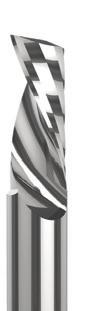
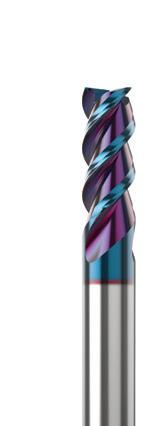
From precision tooling and advanced PVD coatings to Australian-made manufacturing, premium machinery, industrial 3D printing, CNC woodworking solutions and certified PPE, our group brings together specialist businesses supporting industry across Australia.
Advanced Australian manufacturing and engineering businesses, united by innovation, precision, and certification excellence.
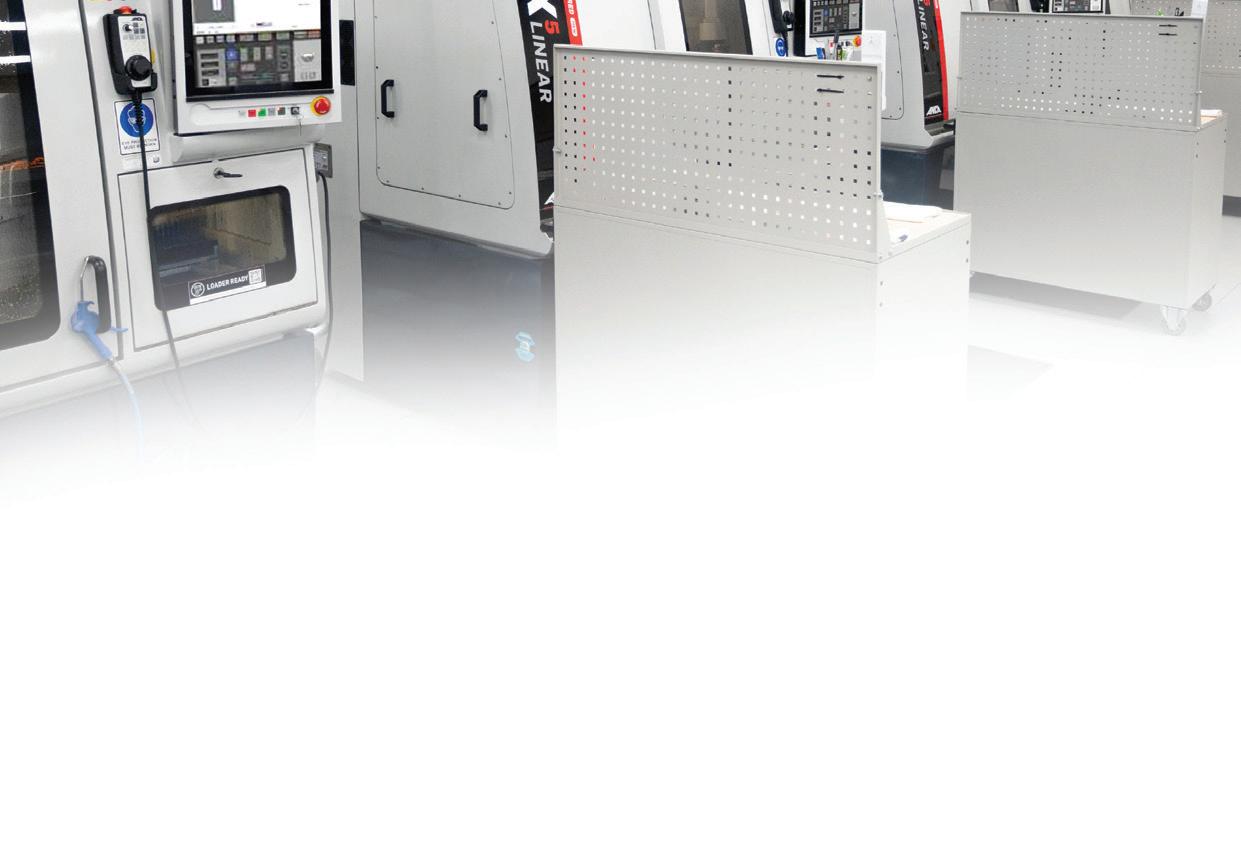

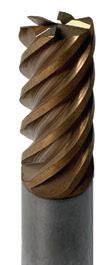
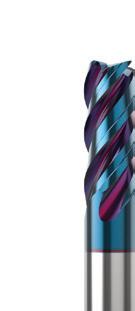
YOUR COMPLETE CUTTING TOOL SOURCE FOR METAL CUTTING, ALUMINIUM, COMPOSITES, PLASTICS & WOODWORKING







Australia’s manufacturing sector entered 2026 with signs of renewed momentum, but global disruption and rising operating costs continue to test the industry’s resilience.
The latest Manufacturing Signals Report from CommBank shows that manufacturing output returned to growth in late 2025 after a difficult period of contraction. However, many businesses are still managing margin pressure driven by higher freight, fuel and input costs, ongoing supply chain disruption and persistent labour shortages.
For manufacturers, the current environment is creating a more complex balancing act between maintaining day to day operational performance and positioning themselves for future competitiveness. “There are signs of recovery in manufacturing, but it’s far from a straightforward external environment. Businesses are having to manage persistent cost and supply pressures, while also positioning themselves for long term competitiveness,” Belinda Harris (General Manager Commercial Banking QLD, Commonwealth Bank of Australia).
Navigating cost and supply chain pressures
Geopolitical tensions and shipping disruptions across key global trade routes have increased pressure on supply chains and inventory management, with CommBank data pointing to 10 to 14 day shipping delays for the sector, which extends lead times and weakens delivery certainty. In response, many businesses have moved to bring orders forward or increasing stockholdings to strengthen supply security. While these strategies may help reduce exposure to disruption, they also extend cash conversion cycles and increase pressure on working capital and liquidity.
“The days of ‘just in time’ are behind us, but moving to a more ‘just in case’ approach to inventory comes with a real cost. Holding more inputs and stock can improve resilience, but it also ties up capital and puts pressure on cash flow, so resilience is as much a financial decision as an operational one, requiring manufacturers to take a more deliberate approach to how they balance inventory, cash flow and risk,” said Elizabeth Huxley General Manager of Working Capital at Commonwealth Bank of Australia.
Manufacturers continue to face structural challenges that have intensified since COVID 19. Input cost inflation remains elevated, while labour shortages across technical and trade occupations are continuing to constrain productivity and growth capacity.
As a result, many manufacturers are focusing on operational efficiency, productivity improvement, and financial resilience. Rather than relying solely on volume growth, businesses are increasingly redesigning processes, reviewing cost structures and exploring how technology can improve performance.
AI and automation are becoming central to this transition.
The report found that around 80% of manufacturers are investing in or planning to adopt AI capabilities, with many exploring opportunities to streamline operations, improve
forecasting, reduce manual processes, and support workforce productivity.
“At a time when cost pressures remain elevated, improving productivity has become a key lever for manufacturers, and it’s pleasing to see so many of our customers use AI to drive innovation and efficiency,” said Belinda.
Understanding downstream demand signals
Demand conditions also remain an important signal across the sector, although the outlook varies by industry and end market. CommBank’s analysis points to stronger spending trends across several manufacturing linked sectors, including food and beverage, consumer goods, electronics, home improvement products, and automotive parts and accessories.
For domestic manufacturers, these trends can provide valuable insight into where demand is strengthening, stabilising or softening, helping businesses identify opportunities to compete, adapt and grow market share in an increasingly competitive environment.
“Demand isn’t moving evenly across the sector, so having a clear line of sight on where activity is picking up or slowing down is really important,” CBA’s Harris said. “It’s helping manufacturers fine tune how much they produce and where they focus,” she said.
Despite ongoing pressures, Australian manufacturing continues to demonstrate fortitude and adaptability. The sector’s share of GDP has stabilised in recent years and currently sits around 5.7%, while many manufacturers continue to move towards higher value, more specialised production across areas such as advanced food manufacturing, medical technologies, and battery‑related materials.
In an environment beset by disruption and rapid change, businesses that can improve productivity, strengthen operational resilience, and respond quickly to changing market conditions are likely to be better positioned for growth.
Read the full report
Discover more insights from CommBank’s Manufacturing Signals Report at commbank.com.au/manufacturing
This editorial is intended to provide general information of an educational nature only. Any opinions, conclusions or recommendations are reasonably held or made, based on the information available at the time of its publication. Data relates to the annual period between 01 April 2025 and 31 March 2026 and the same period prior. Commonwealth Bank of Australia ABN 48 123 123 124 AFSL and Australian credit licence 234945.


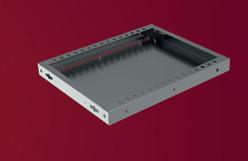
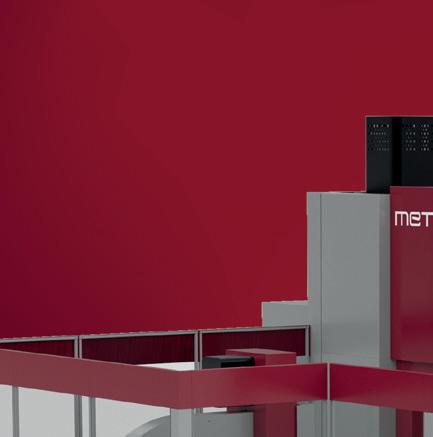
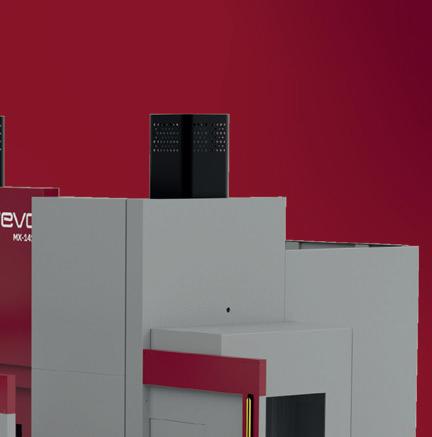





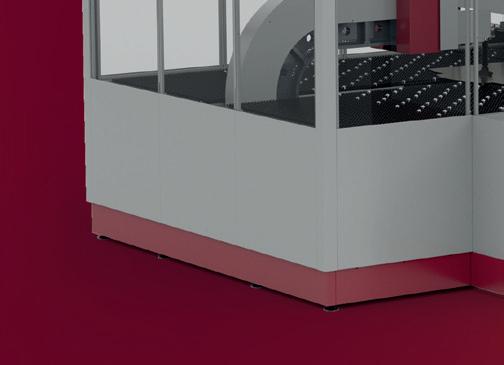

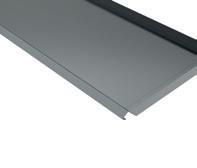
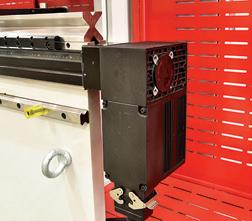
More productive than a traditional press brake









Ideal for medium-to-high volumes


Fully CE compliant, designed with safety and reliability in mind
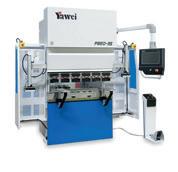
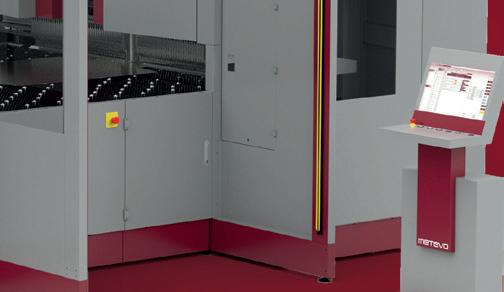
Metevo introduces a new generation of panel benders, a cost-effective solution designed to boost productivity, reduce labour costs and the need for press brakes in standard panel production.


Many businesses across Australia are evaluating and implementing AI systems in their workflows. What should you know?
16 AI in Australian Manufacturing: Closing the Readiness Gap – is Australian manufacturing ready to turn AI from isolated pilots into repeatable capability?
18 Artificial Intelligence: Positive for Companies, their People, and Australian Industry – how AI can help Australian manufacturers and their people
20 How ARM Hub is Helping Manufacturers Turn Data into AI Capability
22 AI Adoption Trends in Advanced Manufacturing – what’s real, what’s emerging, and what Australian manufacturers are doing next
24 CSIRO Launches New AI Infrastructure to Bring Real Time Intelligence Closer to Manufacturing
25 Robots on our roads – a case for automated road maintenance
26 Diverseco Makes AI Practical on the Factory Floor – AI systems managing production variability
28 Effective Counter‑UAS Capability: Why RfAI Makes the Difference – developing technology is changing how drones are used in defense
29 Discovering the Unknown: How Autonomous Technology is Accelerating Ocean Mapping
30 AI on the factory floor: turning data into insight and execution
32 How Vision Language Models Are Redefining Quality Intelligence in Australian Manufacturing
34 Finisar: Where AI Meets Photonics on the Manufacturing Floor
36 AI Adoption: Start Small, Solve Real Problems – increase productivity for a competitive advantage
Artificial intelligence is no longer sitting on the horizon for Australian manufacturing. It is already influencing how manufacturers plan production, monitor equipment, manage quality, support workers and make operational decisions. But as more businesses move from curiosity to adoption, a larger question is emerging: is Australian manufacturing ready to turn AI from isolated pilots into repeatable capability?
The most successful uses of AI are unlikely to come from technology alone. They will depend on whether manufacturers have the right data, skills, governance, infrastructure and business discipline to apply AI where it solves real operational problems.
The opportunity is significant. The CSIRO’s Artificial Intelligence Roadmap estimates that digital technologies, including AI, could increase productivity by up to 40% and contribute $315 billion to Australia’s GDP by 2030. The Australian Government’s Department of Industry, Science and Resources also identifies AI as a critical technology with potential to transform existing industries and build new ones.
For manufacturing, however, the value will not come from AI as a standalone tool. It will come from combining AI with existing industrial strengths: precision engineering, automation, robotics, quality systems, industrial software, connected equipment, advanced materials and process control. AI’s role is not to replace manufacturing know how, but to make that know how more responsive, data driven and scalable.
The investment signals are already visible. According to the Australian Bureau of Statistics, business expenditure on R&D grew 18% to $24.4 billion in 2023 24. AI was the fastest‑growing area, with businesses investing $668.3 million in AI R&D, more than double the $276.3 million recorded in 2021 22. Manufacturing remained the second largest industry for business R&D expenditure, accounting for $5.0 billion, or 21% of total business R&D.
But the same data also points to tension. ABS figures show R&D spending directed at manufacturing outcomes fell 3% to $4.6 billion, continuing a downward trend since 2019‑20. This suggests Australian manufacturing is investing in a period of pressure, not abundance. The business case for AI therefore needs to be practical: improved uptime, better yield, less waste, stronger forecasting, safer work and better use of scarce labour.
Global manufacturing research reinforces that point. KPMG’s intelligent manufacturing research found that 93% of respondents believe organisations that embrace AI will develop a competitive edge over those that do not. It also found that 72% intend to use AI to improve efficiency, 77% to drive growth, 96% have experienced operational and efficiency improvements, and 62% have seen ROI greater than 10%.
Yet adoption is still uneven. The National AI Centre’s AI Adoption Tracker found that 41% of Australian SMEs were adopting AI. Among adopters, 22% reported improvements in decision making speed and 18% reported productivity optimisation. In tandem, the share of businesses unaware of
how to use AI had fallen to 21%, suggesting awareness is improving but capability gaps remain.
This is where the Australian manufacturing context becomes important. Many manufacturers already hold valuable data in ERP systems, production records, maintenance logs, quality systems, machine controllers, inspection records and supplier data. But that data is often fragmented, inconsistent or difficult to access. For AI to be useful, manufacturers need to understand what data they have, who owns it, how reliable it is, and whether it can be connected across the business.
The Reserve Bank of Australia has observed that many firms have been investing in cloud computing and data infrastructure as foundational steps for modernisation and future AI adoption. It also notes that firms expect investment in AI, machine learning, robotics and automation to be much higher over the next three years than it has been previously. However, the RBA also highlights an important caution: many companies are still in an adjustment phase.
Technology investment often begins with risk management, system upgrades and operational resilience, rather than immediate productivity gains. It also notes that AI adoption has often been piecemeal and employee led, with many firms still seeking high impact use cases. For established manufacturing businesses, the path to productivity may involve a “J curve”, where short term disruption and process adjustment come before longer term gains.
That is a useful warning for manufacturers. AI should not be treated as a quick software purchase. It requires changes to workflows, training, data management, accountability and decision making. A manufacturer may need to modernise legacy systems, clean data, document processes, train supervisors and involve frontline workers before the technology can deliver value.
Skills are a major part of the challenge. The CSIRO estimates that Australia will require as many as 161,000 people with specialist AI skills by 2030. It also warned of sovereign risks if sensitive sectors rely too heavily on AI technologies developed and controlled offshore.
AI adoption will intensify those pressures because manufacturers will need people who understand both production and digital systems. The most valuable capability may not be pure data science, but hybrid skills: tradespeople, engineers, operators and managers who can work with data, automation and AI enabled tools.
Governance is another readiness issue. The Responsible AI Index 2025, commissioned by the National AI Centre, found that 79% of Australian businesses believed they were implementing AI safely and responsibly, but only 29% were assessed as doing so. On average, organisations were adopting only 12 of 38 responsible AI practices across
areas including accountability, safety, fairness, transparency and contestability.
For manufacturers, that gap is not theoretical. AI may touch customer IP, product quality, worker safety, cybersecurity, procurement, production data or regulated obligations.
A model used to support inspection, quoting, scheduling or maintenance needs clear ownership, validation and review. Responsible AI should therefore sit alongside existing systems for quality, safety, risk, cybersecurity and continuous improvement.
Government policy is increasingly focused on closing that gap. The Australian Government’s response includes the $22.7 billion Future Made in Australia Plan, a $1.7 billion Future Made in Australia Innovation Fund, the $15 billion National Reconstruction Fund, $523.2 million for the Battery Breakthrough initiative, and investment in skills, apprenticeships and Industry 4.0 capability.
The policy direction is not only about AI, but AI is clearly part of the industrial strategy. The government response also highlights the National Robotics Strategy, released to harness robotics and automation and help revive Australian manufacturing. The strategy itself sets a vision for Australian industries to responsibly develop and use robotics and automation technologies to strengthen competitiveness, boost productivity and support local communities.
There are also more targeted measures. The AI Adopt Program provides grants of $3 million to $5 million over four years to establish AI Adopt Centres that help SMEs adopt responsible AI enabled services. The program is designed
to create a “front door” for SMEs, support real world applications, build workforce skills and improve productivity in National Reconstruction Fund priority sectors.
Research infrastructure is another part of the picture. In March 2025, the Australian Research Council launched the ARC Industrial Transformation Research Hub for Future Digital Manufacturing, led by Swinburne University. The $5 million hub will focus on AI and Internet of Things technologies, including digital twins, to support more competitive and resilient manufacturing. Swinburne estimates that Australian manufacturing productivity and resilience could rise by as much as 30% through the hub’s work.
The ARC has said the hub will support the transition to smarter, more connected systems, including AI powered tools for texture modified food and advanced structural health monitoring and predictive maintenance for aerospace. It also links the hub’s work to the Future Made in Australia agenda and the need to build skills for Industry 4.0.
Australia’s AI in manufacturing landscape is developing quickly, but the next phase will depend on execution. Investment is rising, research capability is growing and policy support is strengthening. The real test will be whether manufacturers can connect those opportunities to the systems, people and processes that make advanced manufacturing work.
AI will not define the future of manufacturing on its own. The manufacturers that gain the most will be those that treat AI as part of a broader capability agenda: better data, stronger skills, trusted governance and practical problem solving.
Artificial intelligence is often discussed in terms of disruption, automation and risk. But a new report from the Australian Industry Group and the Australian Government’s National Artificial Intelligence Centre offers a more practical message for industry: when implemented well, AI can be positive for companies, their people and Australian manufacturing.
The report, Artificial Intelligence: Positive for companies, their people, and Australian Industry, draws on case studies from six organisations — George Weston Foods, InfraBuild, ANCA, Blackmores, ISS Health Services and Dux — each using AI in different ways.
Together, they show that AI adoption does not need to begin with a grand transformation program. In many cases, the strongest results come from applying AI to a clearly defined operational problem.
One of the report’s clearest findings is that AI works best when it supports people rather than attempts to replace them. At Blackmores, AI is being used to improve workplace safety through SoterAI, an ergonomic risk assessment tool that analyses posture, movement and manual handling tasks. The system provides real‑time feedback and risk ratings, helping identify changes that can reduce injury risk in manufacturing, packing and logistics environments.
Importantly, the technology does not remove the need for human judgement. Blackmores’ safety team still reviews recommendations, considers the needs of different workers and adapts solutions to suit real conditions on the floor. In that sense, AI becomes a faster and more consistent way to identify risk, while people remain responsible for decisions and implementation.
The report also highlights the way AI can make knowledge more accessible. George Weston Foods has used generative
AI to support standard operating procedures and training materials, including content that is easier for workers with English as a second language to understand. Rather than replacing subject matter experts, the AI tool freed them from some administrative work so they could spend more time supporting frontline staff.
ANCA’s use of AI in product manual translation shows another practical application for advanced manufacturers. Its proprietary platform combines machine translation with a fine‑tuned AI model and a glossary of more than 9,000 technical terms across 13 languages. The system has achieved a 99% word‑level accuracy benchmark, with human oversight retained in safety‑critical contexts.
For businesses considering AI, the report identifies several lessons: start with real problems, engage staff early, define what AI means in the business, get data ready, invest in targeted training, keep improving, and strengthen governance.
Leadership also matters. The report found that successful AI adoption is often driven from the top, with senior leaders setting direction, aligning projects with business goals and ensuring appropriate governance.
The report contends that AI is not separate from existing business improvement. It should sit alongside quality, safety, training, maintenance, lean processes and continuous improvement.



























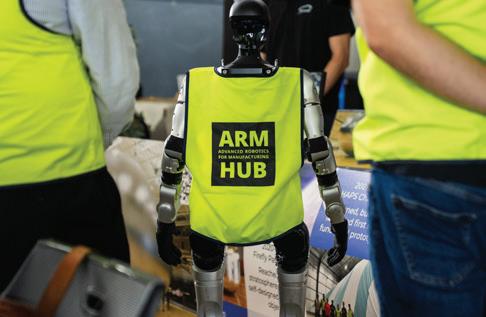
Before artificial intelligence can improve a production line, optimise a process or support a new service model, it needs something much less glamorous: usable data. For many Australian manufacturers, that is where the real work begins. The opportunity is not simply to adopt AI, but to bring together the information already sitting across ERP systems, spreadsheets, machines, maintenance records and customer files, and turn it into something the business can act on. That is where ARM Hub can help.
Based in Queensland, the Advanced Robotics for Manufacturing (ARM) Hub helps businesses design, test and deploy advanced technologies, including robotics, automation and AI. Its work spans technology audits, roadmaps, prototyping, AI deployment and support for companies moving from concept to commercial application.
Founded in 2020, ARM Hub began with a strong focus on robotics and advanced manufacturing. Today, according to Founder and CEO Cori Stewart, one of its most important areas of work is helping manufacturers understand, organise and use their data.
“We still do robots,” Stewart says. “But the biggest challenge companies have is managing and understanding how to use the data. This is a really key part of modernising Australian industry.”
Much of the public conversation around AI in manufacturing focuses on robots, computer vision or automated production lines. Those applications remain important, but Stewart says many small and medium sized manufacturers face a more basic barrier: their data is scattered across too many systems.
“The key problem we’ve been addressing from the beginning is that most of the companies we engage with, big and small, have data that is not unified in one place,” she says. “It might be on servers, on the manufacturing floor, in SharePoint, in CRM and ERP systems.”
For AI to work effectively, that information needs to be accessible, secure and structured enough to support decision‑making. ARM Hub’s Data and AI as a Service model is designed to solve that problem for manufacturers that may not have the budget, internal skills or IT resources to build their own enterprise grade AI environment.
The service uses a secure, cloud based Data Lakehouse environment, powered through ARM Hub’s partnership with Databricks, to help businesses bring together data from across their operations and turn it into usable insight. ARM Hub describes the service as a way to unlock the value of business data while maintaining security, privacy and control, with flexible access to AI tools and infrastructure.
“Rather than each business building its own advanced data infrastructure from scratch, ARM Hub provides a shared environment where companies can establish a secure workspace, connect relevant data and develop AI tools suited to their operations,” Stewart says.
The model is aimed at manufacturers of all sizes, particularly those with limited IT resources that want access to a modern data and AI platform without heavy upfront investment. “The service is designed to help businesses bring AI into day to day operations, make better use of data they already collect and modernise systems without major IT overhead,” Stewart says.
That approach also aligns with ARM Hub’s role as an AI Adopt Centre. The Australian Government’s AI Adopt Centres support small and medium sized enterprises to adopt responsible AI enabled services, with free specialist services available to eligible SMEs.
Stewart says this kind of support is important because many manufacturers do not have in house data science teams. “The issue is not always whether AI is affordable; increasingly, it is whether the business has the ability to absorb the technology and turn it into measurable gains.”
One example Stewart gives is a regional metal fabricator that was spending significant time on manual ordering processes. ARM Hub assessed the opportunity, ingested relevant data and modelled whether automation would save time before deployment.
The AI process was then connected from email to ERP, allowing orders to be captured and checked rather than manually reworked. According to Stewart, the opportunity represented around 17 recoverable productive hours a week and approximately $62,000 a year in savings.
The lesson is not that every manufacturer should automate the same process. It is that the best AI projects start with a defined business problem.
“A lot of board members and business owners ask, What are we doing about AI? What’s our AI strategy?” Stewart says. “These are almost always the wrong first question. The question is: what is the business challenge you are trying to solve?”
ARM Hub’s work with Koodaideri provides another example of how AI and data can support manufacturing growth beyond the factory floor. Koodaideri develops tooling solutions aimed at improving safety and efficiency for equipment and maintenance technicians in high risk environments, particularly mining. Its flagship product, Safe Adjust, is a hydraulic tuning system that allows technicians to remotely calibrate hydraulic systems on live equipment, improving safety protocols and operational efficiency.
As Koodaideri looked to scale, it faced several challenges: establishing in house manufacturing systems, improving quality control for scaled production, supporting global expansion
and developing a subscription‑based digital platform. ARM Hub’s support included advice on local assembly, design for manufacturing, injection‑moulded housings and in‑house capability, including 5‑axis CNC milling for critical components.
A major focus was the development of a digital platform using AI and big data analytics. The aim was to enable remote servicing, improve control over software and firmware IP, generate field insights, inform product improvements and support subscription‑based business models.
For manufacturers, this is an important evolution. AI is not only a productivity tool for internal operations; it can also become part of the product and service model. A piece of equipment can generate field data. That data can support diagnostics, updates, customer support, product improvement and recurring revenue. But to do that safely and commercially, the manufacturer needs control over data, software and IP.
Human in the Loop
Stewart also stresses the importance of keeping people in the loop. ARM Hub’s approach is not to hand decision‑making entirely to machines, particularly where risk, quality or safety is involved.

“AI is really good at speed, pattern recognition and automation,” she says. “Humans are really good at judgement, control, trust and accountability. We need to bring that to every bit of the solutions we’re having.”
AI adoption is not simply an IT upgrade. It affects how businesses manage data, quality, skills, production, service and customer relationships. It may also change the role of internal technology leaders, who increasingly need to work as strategic partners in competitiveness rather than simply service providers.
“Start with the business problem, unify the data, test the opportunity, keep humans accountable, and scale only when the value is clear,” says Stewart.
For Australian manufacturers, that may be the most useful way to think about AI. The technology is powerful, but its value depends on the systems around it. ARM Hub’s AI‑as‑a‑Service model is one way to lower the barrier to entry, giving manufacturers access to the infrastructure, expertise and support needed to turn scattered data into practical capability.




As Australia moves through 2026, artificial intelligence is firmly on the radar for manufacturing businesses. Across industry discussions, the focus has shifted from curiosity to practical evaluation, with manufacturers assessing where AI can deliver measurable value and where expectations may be outpacing reality.
The picture that emerges is one of cautious progress. AI is already being applied in targeted ways, but widespread transformation remains a longer term proposition shaped by operational constraints.
What technology is available?
In practice, most AI capability is currently delivered through software, often layered onto existing systems.
“Systems are becoming more conversational, contextual, and intuitive,” says Rigan Wallis, Account Executive at Fishbowl Inventory. “We’re moving toward a future where software operates as an intelligent partner alongside the business.”
Natural language interfaces are lowering barriers, allowing operators to interact with systems more directly. Rather than adapting to complex workflows, users can query data and generate insights in real time.
More advanced applications, such as digital twins, allow manufacturers to simulate products and processes before committing physical resources. While still evolving, these tools offer clear potential in reducing prototyping time and improving decision making.
However, current applications are largely focused on improving workflows, reporting, and data visibility rather than delivering fully autonomous systems.
From promise to practical application
As adoption grows, so too has the volume of “AI enabled” solutions entering the market.
Discussions at Australian Manufacturing Week 2026 suggested that some of these offerings are incremental improvements to existing automation rather than step‑change technologies.
That does not reduce their value. Many are delivering tangible gains by saving time, improving visibility, and reducing operational friction.
The key takeaway is that AI is currently delivering the most consistent value in targeted, problem specific applications rather than broad transformation efforts.
Monitoring AI adoption in Australia
Across the Australian manufacturing sector, adoption is uneven but accelerating.
Wallis notes that most businesses remain early in the maturity curve, typically exploring AI or running pilot projects rather than deploying at scale.
Erin Bombell, Marketing Operations at SQiBLE, describes the landscape as a “two speed economy.”
“While many manufacturers are exploring generative AI for administrative tasks, operational AI—embedded into shop
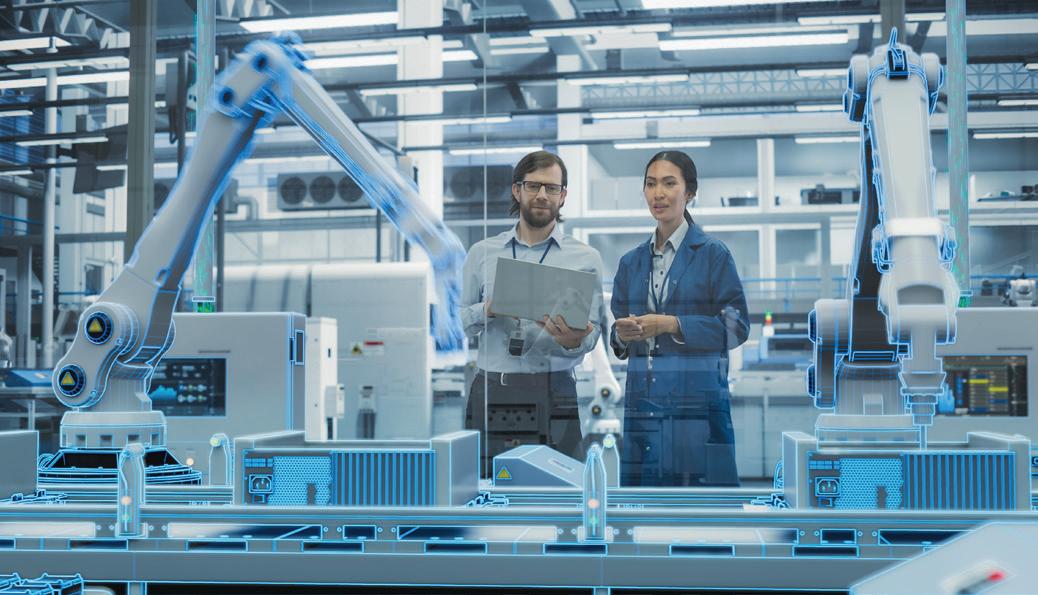
floor workflows—is moving more deliberately,” she explains.
This reflects the realities of precision manufacturing, where high capital investment and tight tolerances demand proven outcomes.
Common use cases include:
• Predictive maintenance
• Demand and inventory forecasting
• Machine to ERP data integration
• Automation of administrative tasks
Importantly, both contributors emphasise a shift in mindset.
AI is increasingly viewed as a way to support decision making and strengthen resilience, rather than replace skilled labour.
One of the more consistent insights from industry discussions is that meaningful gains often sit outside core production.
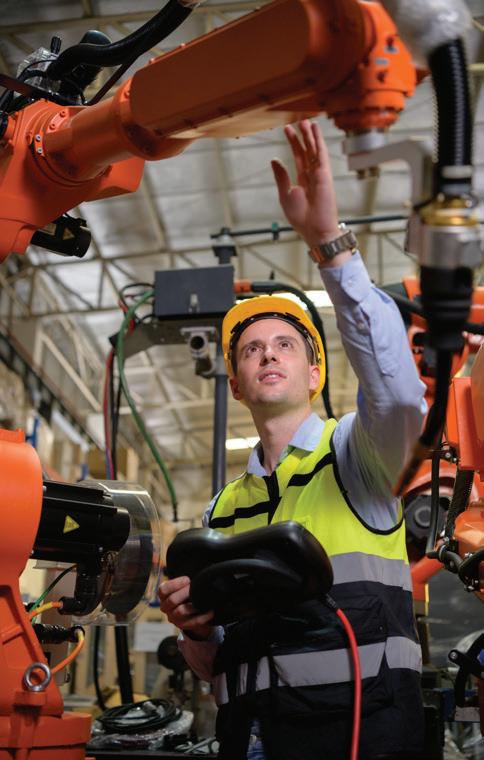
Following AMW2026, Colin Wells, Managing Director of Robotic Automation™, noted that inefficiencies frequently stem from material handling, movement, and end of line processes rather than primary tasks.
This has led to greater focus on system wide optimisation. In many cases, relatively simple automation in areas such as machine tending, packing, or internal logistics can deliver immediate improvements without large scale transformation.
Despite growing engagement, several challenges continue to shape adoption.
Data remains a central issue. Many manufacturers hold valuable information, but it is often fragmented across systems.
“The largest hurdle is not actually AI itself,” says Wallis, “but the broader challenge of technology adoption and the foundations that support it.”
Bombell similarly highlights the difficulty of connecting shopfloor systems with core business platforms, along with the ongoing divide between operational and IT environments.
Workforce capability is another key factor. Successful implementation depends on training, change management, and alignment with existing workflows. Defining return on investment remains difficult in early stage projects. Together, these challenges reinforce a common theme: AI is most effective when built on strong operational foundations.
The Australian Government’s ai.gov.au platform provides practical guidance, case studies, and links to funding programs, supporting businesses to adopt AI responsibly and effectively.
AI adoption in Australian manufacturing is expected to continue progressing steadily.
Wallis describes a shift toward “AI as an embedded operational layer,” where systems support decision making proactively rather than simply responding to queries.
At the same time, expectations remain grounded. As Bombell notes, the focus should remain on process improvement and human machine collaboration.
“AI helps us move faster and explore more, but human engineers provide the spark.”
For most manufacturers, the path forward will be incremental. The greatest gains will come from applying AI to clearly defined problems and integrating it into existing systems and workflows.
For now, the outlook is cautiously optimistic: progress is real, but the full impact is still unfolding.
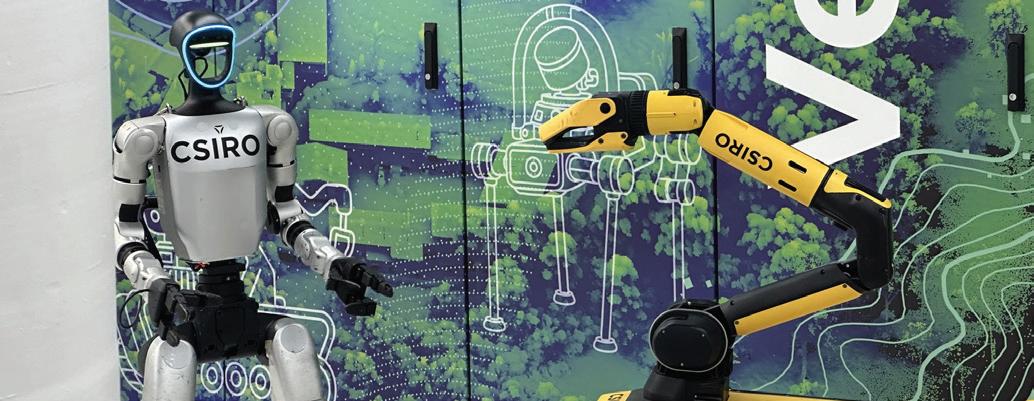
Australia’s national science agency, CSIRO, has built new AI infrastructure that could help accelerate the next generation of intelligent robots, sensing systems and autonomous machines used in advanced manufacturing.
The compact purpose built infrastructure named Vetra is based at CSIRO’s Queensland Centre for Advanced Technologies (QCAT) in Pullenvale. It delivers high performance AI computing in a smaller, modular and sustainable footprint, located where real world testing and research happen.
Unlike traditional, remote cloud based data infrastructure, Vetra provides super fast, on site processing close, or on the ‘edge’ to where data is generated. This allows robots and sensing systems to respond faster, learn continuously and operate more safely in complex physical environments such as production lines, automated warehouses, inspection cells and heavy industrial facilities.
According to Liming Zhu, Director of CSIRO’s Data61, “AI is rapidly moving beyond digital systems into the physical world, including robots, infrastructure, sensing and safety critical environments.”
“Vetra enables real time physical AI research by bringing high performance computing to the edge, where proximity to data allows systems to respond, learn and operate safely in complex environments in ways that are not possible with cloud only or distant data centre approaches,” Zhu says.
“This represents a different form of sovereign AI, where physical location becomes part of the capability itself, establishing a model and associated innovative technologies that can be replicated and exported to other locations where on site, trusted AI is required.”
Vetra sits alongside Australia’s largest robotics research facility, allowing AI systems to learn directly from real world testing rather than simulations alone. For manufacturers, this distinction matters. Robots and automated systems may perform well in simulation, but factory conditions are rarely perfect. Lighting changes, parts vary, surfaces shift, materials behave differently and production environments can be noisy, dusty, hot or unpredictable.
By giving researchers the ability to process physical world data close to the machines generating it, Vetra can support development in areas such as adaptive robotics, automated inspection, predictive maintenance, machine vision, autonomous materials handling and safety critical industrial sensing. Powerful AI systems generate significant heat, making cooling one of the biggest challenges for modern computing infrastructure.
Vetra has been designed to reduce environmental impact by using carbon dioxide based cooling systems and closed loop liquid cooling, reducing reliance on traditional water intensive cooling methods.
Under normal operation, the infrastructure wastes almost no water for cooling and is expected to save around 225 tonnes of carbon dioxide emissions each year – roughly equivalent to taking 50 cars off Queensland roads annually.
According to CSIRO’s Chief Technology Officer Angus Macoustra, the infrastructure had been designed from the ground up with sustainability in mind. “High performance AI systems generate a lot of heat in dense, enclosed spaces. Vetra shows how advanced technology can be delivered in a way that significantly reduces water use and emissions.”
Vetra includes 48 high performance graphics processing units (GPUs) which can perform thousands of complex mathematical calculations at the same time on large sets of data. The infrastructure has been designed so it can expand over time as demand grows to meet future research and industry needs.
For the manufacturing sector, the launch reinforces the growing importance of physical AI: systems that do not simply analyse data after the fact, but sense, learn and respond in the real world. As factories become more automated, connected and data rich, the ability to process information close to machines may become increasingly important to productivity, safety, quality and competitiveness.
By Sierra Haigh
Manual maintenance for more than 875,000 kilometres of roads nationwide rests mostly on the shoulders of local governments, costing billions in inconsistent repairs and late‑stage identification of cracks and other damage.
According to a 2023 report by the Bureau of Infrastructure and Transport Research Economics, governments at the federal, state, and local level spend about $30 billion on road maintenance annually, making up between 20 and 40 per cent of the nation’s total road expenditures.
This is the cost accumulated by every crack and pothole Australians navigate every day – a cost that could be slashed by a robot.
The $1.2 million AI powered robotic system being developed by Charles Darwin University (CDU), Civiltech Solutions, and the Additive Manufacturing Cooperative Research Centre (AMCRC) could be key to filling in the gaps early and reducing the economic toll.
CDU Centre for Asphalt and Road Technologies (CART) Director Dr Ali Rajabipour said the project brought together several advanced technologies into a single automated maintenance system.
CART, which officially launched this year, produces research and solutions designed to improve road access, safety, and longevity through industry partnerships and technological breakthroughs.
Though this latest project is in the early stages of development and integration, Dr Rajabipour said he anticipated the robots would extend a thoroughfare’s lifespan, reduce road closures, and bolster worker safety.
“Automated road maintenance technologies could significantly improve the efficiency and consistency of road repairs across Australia,” Dr Rajabipour said.
“Earlier crack detection and timely sealing can extend pavement life and reduce the need for expensive major rehabilitation works.
“This is particularly important for regions such as the Northern Territory, where long road networks and remote communities create major maintenance challenges.”
Once operational, the robots will use light detection and ranging (LiDAR) technology to scan road surfaces and create detailed digital maps of any and all cracks and pavement defects.
Incorporating artificial intelligence into the robot’s programming will allow the machine to identify the type, size, and severity of the cracks to determine how best to repair these defects before carrying out the task themselves.
Dr Rajabipour said the robot could be likened to an intelligent road repair vehicle.
“In the case of cracked asphalt, for example, the robotic arm or repair mechanism would move to the exact location of the damage and apply sealing material into a crack automatically,” he said.
“The goal is to reduce manual labour, improve repair quality, and make road maintenance safer by limiting workers’ exposure to live traffic and hot materials.”
While the robots can be trusted to repair roads autonomously, Dr Rajabipour said not all human involvement would be eradicated from the process.
“The robots and AI systems support and assist workers rather than completely replacing them,” he said.
“Human involvement is especially important during setup, quality assurance, safety checks, and decision making in unusual or complex situations. The system is also mounted on a vehicle, which needs a driver.”
There is broad scope for the technology to be applied across other industries, even though the AI systems are being developed specifically for a road maintenance context.
Similar AI and robotic systems could be adapted for other infrastructure inspections and maintenance activities, including bridges, airport runways, pipelines, rail infrastructure, mining operations, and industrial asset management.
Additive Manufacturing CRC Managing Director Simon Marriott said the project demonstrated how additive manufacturing could enable entirely new approaches to infrastructure maintenance.
“Additive manufacturing allows highly specialised components to be designed and produced both rapidly and cost effectively, which is critical when developing advanced robotic systems,” Mr Marriott said.
“This collaboration highlights how industry and research organisations can work together to develop scalable solutions that improve productivity, sustainability and capability across Australia’s infrastructure sector.”
The project is the latest in a history of collaborations between CDU and Civiltech Solutions to improve road safety through automation.
Civiltech Solutions Founder and Chief Executive Officer Leigh Carnall said the project represented a major step toward modernising road maintenance.
“Road maintenance is still largely manual and reactive,” Mr Carnall said.
“By combining AI, robotics and advanced manufacturing, we can detect defects earlier and repair them with far greater precision, helping road authorities maintain networks more efficiently.”
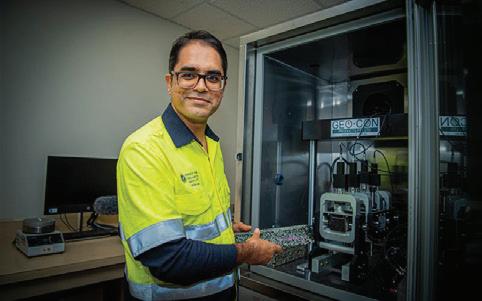
For many manufacturers, artificial intelligence still feels complex, expensive and difficult to apply. For Diverseco, the opportunity is more practical. AI is already helping automation systems deal with one of the biggest challenges in production environments: variability.
Diverseco provides robotics, automation and intralogistics solutions for manufacturers, logistics operators and industrial businesses. According to Peter Hickey, General Manager of Intralogistics and Warehouse Solutions at Diverseco, the company is applying AI and machine learning across four main areas: intralogistics, industrial robotics, collaborative robotics and autonomous mobile robots.
“AI is primarily used to manage variability and randomness in handling items, which is one of the biggest challenges in automation,” Hickey says. “That capability enables more flexible, intelligent and scalable solutions.”
In intralogistics, this may include freight picking and loading onto sortation systems, freight singulation for random freight, optical character recognition for labels, detecting markings such as dangerous goods logos, random product palletisers and depalletisers with smaller footprints, and inspection and quality assurance. In robotics, it can include machine tending for variable parts, welding seam tracking, adaptive welding, inspection and quality assurance.
For manufacturers, the benefit is the ability to automate processes once considered too inconsistent for traditional automation.
Historically, industrial robots worked best in highly controlled environments, where the part, product, path and action were consistent. That model remains valuable, but modern manufacturing and distribution environments are rarely so predictable.
Machine vision is changing that. AI driven systems allow robots to interpret variation in real time, from random orientation and mixed item types to changing product conditions, then identify, classify and respond accordingly.
“AI driven vision is significantly expanding what robots can do,” Hickey says. “But its impact goes beyond robotics alone. AI enables entire systems to become more adaptive and responsive to variability, providing complex, aged control systems a new life. It enhances capability, but it does not replace good system design.”
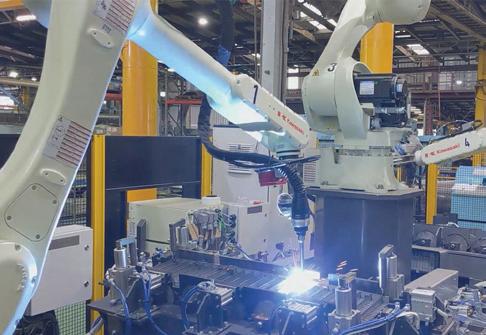
Traditional automation relies on fixed positions, speeds, tolerances and sequences. Dynamic process control uses AI, sensors and machine vision to monitor the process and adjust parameters on the fly.
In practice, that may mean changing a robot’s grip point, modifying a palletising pattern, tracking a weld seam, or adjusting inspection thresholds in real time.
“The key benefit isn’t just incremental efficiency,” Hickey says. “It’s the ability to automate processes that were previously too variable to justify automation at all. The gains are familiar to any manufacturer: reduced downtime, higher throughput, improved yield, less rework, lower labour dependency and greater process stability.”
“AI driven data processing is also being used to predict maintenance requirements, which can help warn before failures occur or reduce preventative maintenance costs.”
However, Hickey says many manufacturers still misunderstand what AI adoption requires. Some assume it means a major overhaul, a large upfront investment or a move toward fully autonomous operations. In reality, most successful implementations are targeted and incremental.
“The misconception is that AI is a leap into the unknown,” he says. “In reality, it’s an incremental step toward more flexible and capable systems.”
The workforce impact is more nuanced than the common “robots replacing people” narrative. Hickey sees AI and robotics acting as an adjunct to workers, particularly where skills are short or tasks are repetitive, labour intensive or ergonomically difficult.
Cobots and vision guided robotics are central to that shift because they can work alongside people, humans and machines. Robots can take on repeatable, physically demanding or variable handling tasks, while people remain critical for supervision, exception handling, optimisation and continuous improvement.
“AI systems still require human expertise to train, validate and refine them,” Hickey says. “They are most effective when used to support people, while humans manage exceptions, optimisation and system improvement.”
Diverseco sees the intelligent factory not as a single destination, but as a moving target. The goal is a factory that is adaptive, connected, data driven and scalable.
AI does not need to begin with a fully autonomous factory. It can begin with a camera, a robot, a recurring bottleneck and a process that needs to cope better with variation. AI then becomes a tool that makes automation more flexible, resilient and useful on the factory floor.
Salvagnini Australia Pty Ltd
11A 29-31 Clarice Road,
Box Hill South, VIC 3128, Melbourne
E. australia@salvagninigroup.com
Automatic panel bender
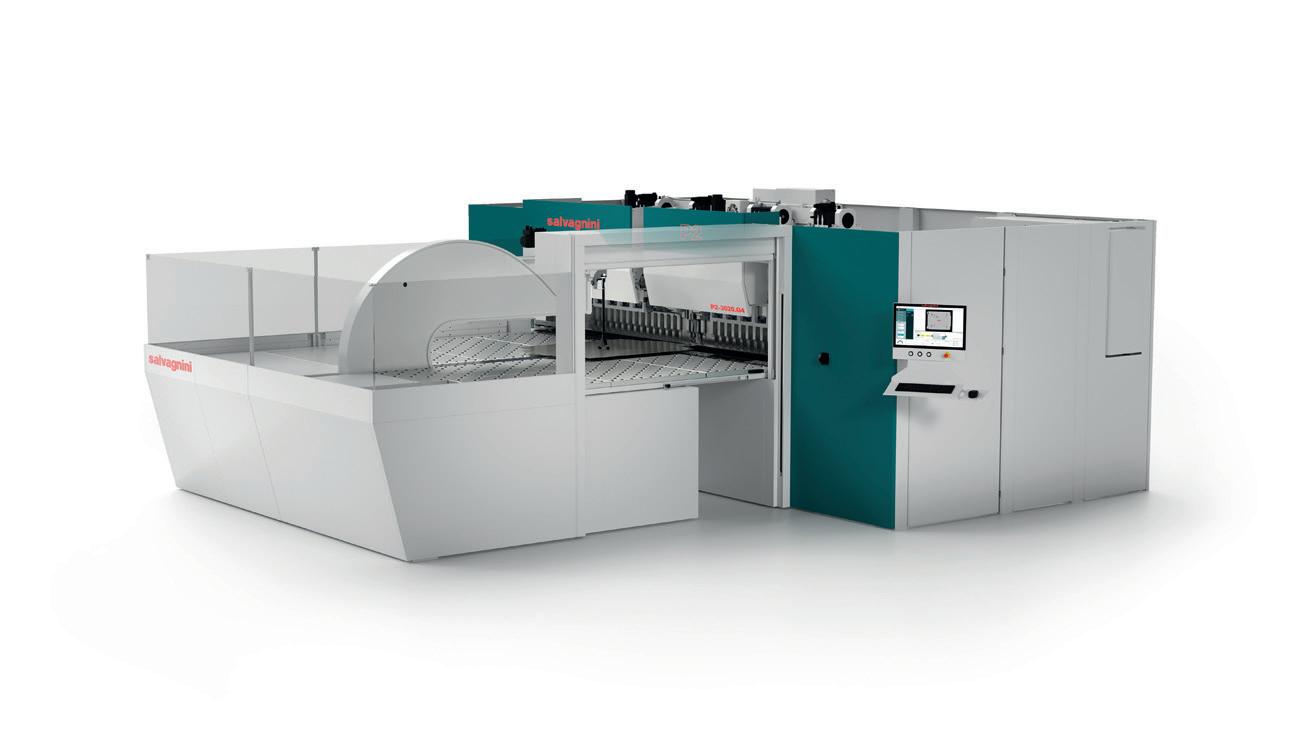
The P2-3020 processes parts with a bending length of up to 3000 mm, opening new opportunities for large-format applications such as: door manufacturing, refrigeration, electrical enclosures, high-mix sheet metal production.
Productive: up to 17 bends per minute
Flexible: universal bending tools for all materials and thicknesses
Automated: fully automatic bending cycle and automatic tool setup
Efficient: 0.5 kW standby power consumption
Over 4,000 installations in 87 countries, the Europe's largest panel bender manufacturing plant and over 40 years of experience and competence speak for themselves: Salvagnini is an authority on “panel bending 4.0”.
By Angus Harris, DroneShield
Uncrewed aerial systems (UAS) are evolving faster than traditional Counter UAS hardware can respond. Most operators understand the fundamentals: sensors, situational awareness, and layered defence. But the real distinction between adequate and advanced Counter UAS capability increasingly lies not in hardware, but in software – specifically, artificial intelligence.
Good hardware remains essential, but hardware alone cannot keep pace with the speed at which drone threats advance. Even the best sensing hardware will fall behind if the AI engine relies on static rules or fixed detection libraries, becoming obsolete within months of deployment. What operators need today is a capability that is frequently updated, and better at recognising both known and unknown drone threats in real time.
The drone threat environment has fundamentally changed. First person view (FPV) drone platforms are being modernised and weaponised at a rate that renders traditional drone detection based on static libraries insufficient. Recent conflicts have made this shift impossible to ignore. What was once an emerging military concern is now a mainstream battlefield reality – cheap, widely accessible drones are being used daily to locate, track, and strike targets in ways that have caught many defence establishments off guard. The lesson from these conflicts is straightforward – standing still is not an option. Operators who rely on static detection capabilities have found themselves exposed, not because hardware failed, but because the threat outgrew it.
This is the problem DroneShield’s Radio Frequency Artificial Intelligence – RfAI – was built to solve. Instead of relying solely on traditional radio frequency (RF) analysis, RfAI uses advanced machine learning models to identify and classify drones based on subtle, unique RF patterns. Built on more than six years of AI training and operational learning, RfAI identifies drones by recognising patterns that are difficult to isolate through manual analysis alone, and it delivers that awareness instantly through an embedded interface designed for tactical users rather than specialists.
Because the capability is software driven, it is designed to evolve rapidly. RfAI receives quarterly updates, improving detection speed and classification accuracy without the need to modify hardware. Dedicated fixed wing drone classification has also been introduced, which is a timely addition as longer range fixed wing platforms continue to feature more prominently across military and asymmetric threat environments. Updates are delivered across DroneShield’s sensor and effector ecosystem, meaning fielded systems get better with every release cycle. The system requires no specialist maintenance to benefit from these improvements – it is self contained and suited to expeditionary missions where simplicity and reliability matter. In practical terms, this means operators spend less time second guessing what they are seeing and more time acting on it. RfAI is designed to do the hard work in the background, so that the person on the ground gets clear and confident answers quickly – helping operators stay ahead of evolving threats. With regular software updates improving detection accuracy, RfAI helps to reduce false positives, which is critical in high tempo environments where hesitation, distraction, or misidentification may carry operational risk.
For military personnel, law enforcement agencies, and critical infrastructure operators, the message is clear. With the threat landscape now constantly shifting, only a capability that updates at a similar speed can stay relevant. AI has become the decisive factor in Counter UAS effectiveness, which means the smartest software – not the heaviest or most expensive hardware – will determine who maintains the advantage. RfAI meets that shift: adaptive, operationally proven, and built for a threat environment that does not stand still. We encourage operators to evaluate DroneShield systems sidebyside with alternatives in a live environment –the difference is most evident in the field.
Angus Harris is Chief Technology Officer at DroneShield (ASX:DRO)

James Keane, Chief Executive Officer of Greenroom Robotics
Climate change is no longer a distant threat. It is already reshaping coastlines, marine ecosystems and the infrastructure that supports the global economy. As governments, industries and researchers work to adapt, one knowledge gap remains surprisingly large: the shape of the ocean floor.
Bathymetric data is fundamental to understanding and managing a changing ocean. It informs ocean circulation models, improves tsunami forecasting, supports fisheries management and helps track environmental change. It also plays a critical role in identifying underwater hazards and planning subsea infrastructure such as cables and pipelines.
Yet only 28.7 per cent of the ocean floor is currently mapped, up from six per cent in 2017. More than two thirds of the ocean remains unexplored. For a world trying to build resilience in the Anthropocene, this lack of data is a serious constraint on scientifically informed decision making.
The Nippon Foundation GEBCO Seabed 2030 Project is working to close that gap. A collaboration between The Nippon Foundation and the General Bathymetric Chart of the Oceans, the initiative aims to inspire and accelerate efforts to map the entire ocean floor by 2030 and make the data freely available through the GEBCO Ocean Map. Formally endorsed as a Decade Action under the United Nations Ocean Decade, it represents one of the most ambitious global ocean data initiatives of its kind.
However, achieving this goal will require more than incremental progress. Ocean innovation and capability across the sector must scale at an unprecedented pace. Traditional hydrographic surveying methods that rely on large, crewed vessels are costly, time intensive and difficult to deploy at the scale required.
This is where advances in autonomous maritime technology are beginning to transform the landscape. Australian company Greenroom Robotics is among those contributing to this technological shift. Specialising in artificial intelligence‑enabled perception and autonomy software, the company is focused on modernising maritime operations through safer, more efficient and environmentally responsible systems.
Earlier this year, Greenroom Robotics announced a partnership with the Seabed 2030 Project to support the efficient collection, processing and sharing
of bathymetric data. The collaboration reflects a growing recognition that achieving global mapping goals will depend on cross sector partnerships and the integration of advanced technologies.
As the global maritime industry faces crew shortages, the ability to scale operations without proportional crew increases is critical. With advanced maritime autonomy and AI powered optical radar, Greenroom Robotics helps offshore survey operators to reduce crew size, while maintaining high standards of data quality. Smaller, more flexible platforms can now be deployed across both coastal and remote regions, expanding coverage while reducing operational costs.
As Seabed 2030 continues to build momentum, the role of industry particularly in advanced manufacturing, robotics and digital systems is becoming increasingly important. Innovations in sensor technology, vessel design and data processing will all contribute to expanding global mapping capacity.
Crucially, all data collected through the Seabed 2030 initiative is made freely available via the GEBCO global grid. This open access model ensures that governments, researchers and industry can leverage high quality ocean data to inform decision making and drive innovation.
The scale of the challenge remains immense. Mapping the entire ocean floor by 2030 will require sustained investment, collaboration and technological advancement. But progress to date demonstrates what is possible when global ambition is matched with innovation.
As the world faces mounting environmental and economic pressures, understanding the ocean is no longer optional, it is essential. And increasingly, it is autonomous technology that is helping to turn the unknown into actionable insight.
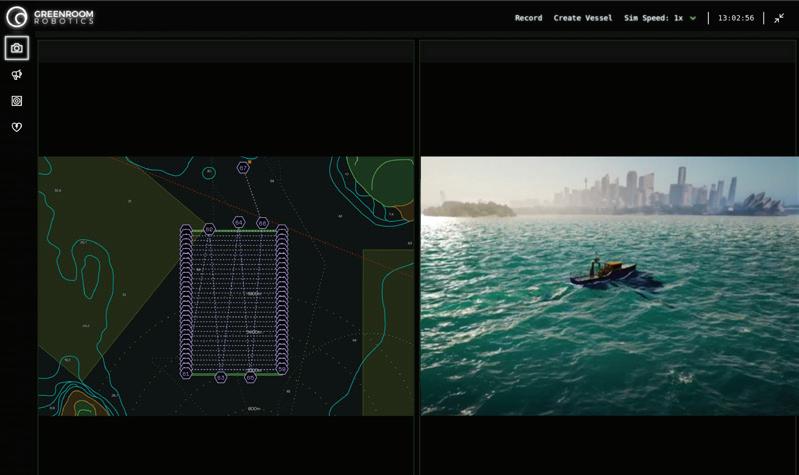
By Scott Wiltshire, Vice President and General Manager, Oracle NetSuite ANZ
Manufacturers across Australia and New Zealand are not short on data. What many still lack is the ability to turn that data into decisions quickly enough to influence outcomes on the floor.
The Department of Industry, Science and Resources’ AI
Adoption Tracker shows that, by the end of last year, about one in four Australian manufacturers were using AI, but only about 3 per cent were applying it broadly in day to day operations. For manufacturers, the challenge is no longer access to AI. It is applying AI in ways that deliver repeatable operational value.
This requires shifting the conversation away from AI as a technology initiative and towards AI as a tool for insight and execution. The opportunity is not in adding more dashboards. It is in helping teams respond faster and with more confidence across production, inventory, warehousing and fulfilment.
Moving beyond retrospective reporting
Many manufacturers still work with a lag between what is happening in the business and what leaders can actually see. By the time reports are reviewed, the window to act has often narrowed or closed.
AI can reduce that lag by identifying patterns in operational data earlier, whether that is a shift in demand, a supplier delay, a bottleneck, or a change in inventory velocity, and recommending actions to support faster execution. The value is not in surfacing more information, but in helping teams act sooner, before small issues become larger and more expensive problems.
That can mean rescheduling a production run, adjusting purchasing, reallocating stock between sites, or reprioritising orders to protect service levels.
Why the data foundation matters
AI is only as useful as the data behind it. When finance, inventory, production, and supply chain data sit in disconnected systems, teams spend too much time reconciling numbers and not enough time acting on them.
As operations grow more complex, spreadsheets and siloed systems increasingly create friction across the business.
Production planning becomes harder to align with inventory, warehouse teams work from incomplete information, and finance is left reconciling outcomes after the fact.
True Protein provides a practical example of an in house manufacturer that manages its supply chain directly. As it grew, maintaining a clear view across production, inventory, and fulfilment became more difficult. Bringing data together into a more unified view improved visibility, reduced manual reconciliation, and supported faster decision making.
Inventory and warehousing are practical starting points
Inventory remains one of the clearest use cases for AI in manufacturing, as it directly affects service, scheduling, cash flow, and margin at the same time.
Traditional forecasting methods often rely heavily on historical patterns. In more volatile conditions, that is not always enough. AI can add value by combining historical and current data to

refine forecasts, flag changing assumptions, and surface risks earlier. It can also help identify slow‑moving or excess stock before it puts more pressure on working capital.
For manufacturers balancing both production and distribution, real‑time visibility across raw materials, work in progress, finished goods, and customer orders is critical. Better inventory insight supports better decisions in operations, procurement, and finance. In the warehouse, AI can help with labour constraints and cost control by prioritising orders, optimising picking paths, identifying exceptions earlier, and flagging bottlenecks to improve speed, accuracy, and overall efficiency.
Embedded AI and BYO AI both matter
AI adoption is becoming more practical because it is increasingly being delivered inside the business systems manufacturers already use. This matters because the goal is not to create another layer of technology. It is to improve the decisions people make every day.
When AI is embedded into workflows across planning, purchasing, warehousing, and finance, teams can act on insight in context. They do not need to step outside an existing process to interpret a separate tool or report.
At the same time, manufacturers want the flexibility to use their own AI tools and models where that makes sense. A bring‑your‑own‑AI approach allows businesses to work with the assistants or specialised models that suit their needs, while still grounding outputs in trusted operational data from core systems. That combination of embedded AI and BYO AI gives businesses both consistency and flexibility.
From capability to consistency
AI will not solve all labour challenges on its own, but it can reduce pressure by improving decision‑making at the point of work.
AI is no longer out of reach for most manufacturers. The real question is how to apply it in ways that deliver measurable and repeatable improvements.
The manufacturers seeing the best results are not treating AI as a separate program. They are using it to strengthen existing processes, improve decision‑making, and act earlier across the areas that matter most. That starts with getting the data foundation right, then applying AI where it can deliver the greatest operational impact.



The X5 is a versatile welding machine that adapts to your needs while increasing valuable arc-on time. A highperformance MIG/MAG welder with must-have features, it helps increase productivity, improve weld quality and reduce downtime.
Make the seemingly impossible, possible

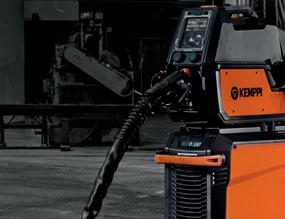
For challenging welding applications and demanding production targets, new MAX arc performance processes offer increased welding travel speed, improved weld pool control and lower heat input, without the need for an additional voltage sensing cable.




Call: (02) 8785 2000
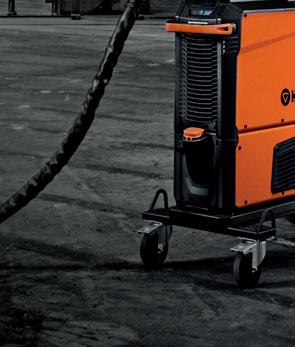
Walk through a high‑performance Australian manufacturing facility and you will encounter a fundamental paradox: automation has transformed much of the production floor, but most consequential quality judgements still depend on the experience of veteran inspectors. These individuals carry an irreplaceable mental library built across decades of hands‑on observation. They intuitively know which surface irregularities signal serious risk, and which are meaningless noise. As this generation moves toward retirement, manufacturers across Australia are confronting a daunting knowledge‑preservation. Vision Language Models (VLMs) are emerging and capable of bridging that gap.
Historically, automated visual inspection relied on a simple and brittle model: define what a defect looks like, then seek it in every image. This approach performed adequately in highly controlled settings but required near‑perfect consistency in lighting, material surface, and component presentation to operate reliably. When conditions deviated, conventional systems lost confidence rapidly. VLMs were designed to operate differently.
By fusing deep visual perception with the semantic reasoning capabilities of large language models, they can interpret an image not merely as a pattern to be matched but as a scene to be understood. A VLM examining a welded joint does not compare it against a reference template, it evaluates the joint using metallurgical principles, applicable standards, documented failure modes, and probabilistic risk. It can explain its findings, flag borderline cases for escalation, and update its assessment as needed. The shift from detection to understanding represents a qualitative leap in what automated inspection can accomplish.
Capturing Expert Knowledge Before It Walks Out the Door
Australian manufacturing faces more than a shortage of workers; it’s an impending loss of a specific and hard‑won professional intelligence. Senior machinists and quality technicians develop their skills through time and experience, not just formal training. This expertise lives in intuition forged by thousands of hours of observation, judgement, correction, and feedback.
VLMs can capture this embodied knowledge before it is lost to retirement. Leveraging annotated recordings of expert operators conducting inspections and performing precision assembly, the model absorbs the reasoning behind each decision rather than just the outcome. The result resembles a structured apprenticeship at scale. Implemented thoughtfully, VLMs do not displace human expertise. They extend its reach and protect it against attrition, a critical advantage for an industry where skilled trades are increasingly difficult to recruit and retain.
Historically, conventional machine vision has been limited by its reliance on two‑dimensional image data. For straightforward flat‑surface inspection tasks, this constraint may be acceptable. But Australian manufacturers working with complex geometries in sectors such as defence, mining equipment, and precision engineering cannot afford to evaluate components through a flattened lens. Depth is frequently the dimension that determines whether a part is acceptable or must be rejected.
Spatial AI closes this gap. Integrating depth sensors, 3D point cloud‑processing, and photogrammetric reconstruction with VLM‑based reasoning produces an inspection capability that evaluates components in full geometric context. Surface topology, dimensional conformance, and material condition can all be assessed simultaneously against design specifications. For organisations that have already invested in spatial computing infrastructure, this integration acts as a force multiplier.
The performance of any VLM‑based inspection system scales significantly when it operates within a digital twin environment. A well‑maintained digital twin provides the reference context connecting isolated inspection events into a quality intelligence system. Findings can be logged against the twin, compared with prior inspection history, reconciled against engineering specifications, and fed back into the model’s own improvement loop.
This assists Australian manufacturers operating under regulatory scrutiny, including those supplying into defense, medical devices, and critical infrastructure. A digital twin‑anchored VLM system generates an auditable inspection record that links each decision to the data and criteria that produced it. Over time, the twin evolves into an adaptive quality system that becomes more capable with each production cycle.
VLMs are in production. Active deployments exist today across aerospace assembly operations, automotive stamping lines, and high‑precision machining environments globally. Australian manufacturers are beginning to follow suit, but many local leaders still treat VLMs as an emerging technology rather than a capability to deploy. This gap carries measurable strategic costs, with global competitors realiing efficiency and quality gains from active programs.
Quality and operations leaders building their AI investment roadmaps should test three critical assumptions. First, identify which elements of workforce expertise face the greatest immediate risk of loss, and whether a systematic knowledge‑capture effort could preserve those capabilities. Second, quantify where in the current inspection workflow undetected subtle defects or excessive false‑positive rates are creating the costliest downstream disruptions. Third, evaluate the integration gap between existing spatial computing and digital twin investments and the real‑time decision layer on the production floor.
In high‑stakes quality assurance where the cost of a missed defect can result in product recalls, regulatory breaches, or safety incidents, VLMs have few meaningful parallels in the current technology landscape. Australian manufacturers that move deliberately today will hold a structural quality advantage that will become progressively harder for competitors to close.
About the Author: Dijam Panigrahi is Co‑founder and COO of GridRaster, Inc. His work focuses on the intersection of spatial AI, digital twins, and autonomous inspection for aerospace, defense, and advanced manufacturing organisations. Visit www.gridraster.com for more information.
Multiple milling heads are better than one.

Tooling speed and simplicity.
Greater machining flexibility.
Shorter tool change times.
Better tool setting precision.
Cost-effectiveness and versatility.

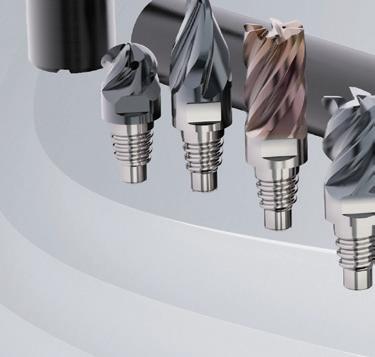
Precise and rigid head to shank interface. For strength and repeatable accuracy.
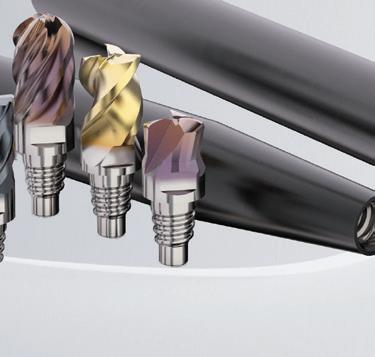

One cutter head can be used on various shanks to meet desired reach. Shanks can accept multiple types of cutting heads for different applications. Super flexible tool length options.

A great shank range with steel, solid carbide and heavy metal versions.

Artificial intelligence in manufacturing is often discussed in broad terms: predictive maintenance, smarter scheduling, automated inspection and faster decision-making. At Finisar’s Australian operation, AI is being applied in a far more exacting environment: the manufacture of optical network switching and monitoring products that help carry a significant proportion of global internet traffic.
Finisar provides wavelength management components and subsystems, including wavelength selective switches (WSS), to leading networking equipment manufacturers. Located in Sydney, the company develops WSS products enabled by Liquid Crystal on Silicon (LCoS) technology, supporting Flexgrid functionality that allows dynamic control of channel width and lets channel plans be configured “on the fly” after deployment.
In practical terms, this means bandwidth can be adjusted as demand changes, helping telecommunications networks carry increasingly complex and high volume data loads. Finisar’s products are used by major optical telecommunications system suppliers, including companies like Nokia, Fujitsu and Ciena, which then integrate the modules into higher level systems for telecommunications providers and data centre operators.
For Dr David Psaila, Senior Director of New Product Introduction and Engineering, the company’s strength lies in the combination of advanced photonics, automation and manufacturing know how.
“Finisar is a world leader in the design, development and manufacture of optical network switching and monitoring products,” Psaila says. “These products are essential elements in today’s fibre optic networks, from routing internet and telecommunications traffic, to connecting AI data centres.”
That last point is significant. AI is not only being used inside Finisar’s manufacturing operations; the company’s technology also supports the data infrastructure on which AI increasingly depends. As demand grows for cloud computing, video, telecommunications, enterprise connectivity and AI enabled services, the ability to route optical signals efficiently becomes more important.
Behind Finisar’s products is a highly specialised manufacturing challenge. WSS modules require the precise placement and alignment of micro optic components, including lenses and polarisers.
“These are not conventional assembly tasks,” Psaila says. “They involve sub micron, and in some cases nanometre scale alignment of micro optic components. At that level, even tiny environmental disturbances matter.”
On the shop floor, this means manufacturing systems built on vibration isolated platforms, tightly controlled airflow, high‑precision translation stages, optical encoders and piezoelectric positioning stages for nanometre level adjustment. Coarse alignment may be performed using vision systems, where machine learning helps detect component features and edges more reliably.
AI is making one of its biggest contributions in component alignment and Optical Calibration stages. For component alignment, light is passed through the optical system while performance metrics such as received optical power or beam quality are continuously optimised. Traditionally, this kind of process required iterative movement of the workpiece
across multiple axes, with measurements taken after each small adjustment. Machine learning now helps predict where components should be positioned, based on data acquired from previous successful assemblies.
“The biggest impact of AI is in the final alignment stage, where active feedback is critical,” Psaila says. “AI improves the speed and robustness of the search and optimisation process, essentially finding the optimal positions of the components faster and more reliably than traditional methods, especially as system complexity increases.”
One of the company’s most important AI applications is Optical Calibration. “This process utilised the LCoS to fine tune the location of the optical beams in the WSS and is necessary to overcome manufacturing and component variations in the physical assembly of each WSS module, ensuring products meet customer requirements for optical performance,” Psaila says.
In the past, Finisar relied on what Psaila describes as a “brute force” approach. Each optical parameter of each module was optimised without drawing on broader process trends or sophisticated optimisation algorithms. Calibration could take more than 24 hours and often required manual intervention, tying up expensive test and measurement systems. In some configuration tasks, work that could take humans up to 48 hours can now be reduced to around two hours through AI enabled processes.
“As the business grew, it was clear that this approach was not scalable,” Psaila says. “So we began employing more sophisticated optimisation algorithms and machine learning techniques. The current suite of calibration algorithms learns from the optimisation paths and data collected from previous successfully calibrated modules. This results in a more accurate calibration of a module, improving yield, and significantly reduces the time taken for the process.”
Finisar’s AI use is not limited to calibration. It extends across manufacturing and engineering. In kitting, cameras inspect picked kits to check that parts and quantities are correct, with machine learning used to identify and count fasteners and other small items. In inspection, machine learning is used to assess whether optical components are correctly positioned and to analyse epoxy bonds for shapes or features that may indicate a weak bond and possible future failure.
The company also uses machine learning to characterise beam shape through the optical system, identifying small distortions that may indicate lens defects or contamination. These are the kinds of subtle quality issues that can be difficult, inconsistent or slow for human inspection to detect at scale.
In software and equipment development, Finisar is also using AI to accelerate engineering work. Psaila says the company uses a GPT based tool to write driver or interface code for new equipment based on specification sheets and manuals. AI models running on Finisar’s own Nvidia GPU servers are also

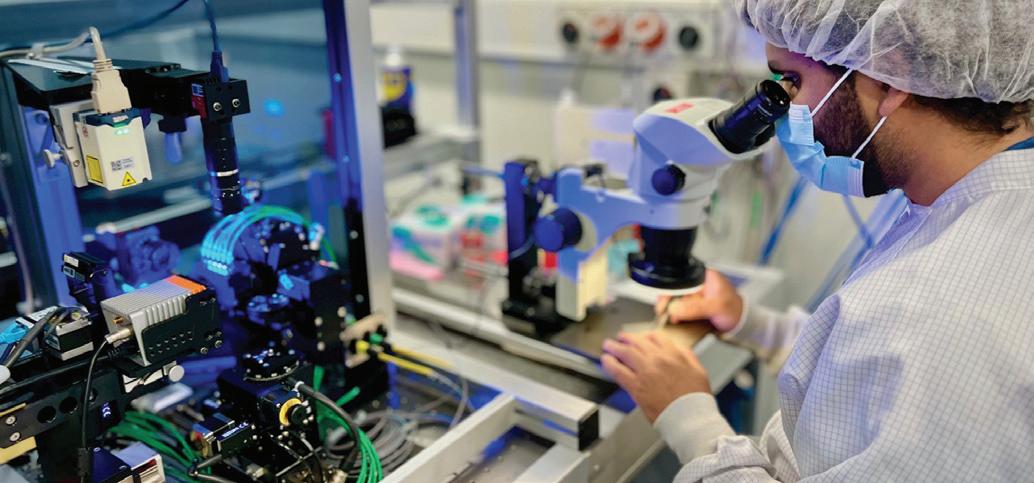
assisting product firmware development, particularly in code documentation and automated test generation.
“The value is not simply speed. Better documentation improves maintainability and helps onboard new software engineers. Automated test generation can include fault‑injection scenarios, boundary conditions and edge cases, strengthening software quality,” Psaila says.
Finisar is also using commercial GPT tools to accelerate the development of user interfaces. Rather than spending weeks moving through discussions, mock‑ups and revisions, teams can use AI in a meeting to create a simulated interface using sample data. Users can ask to visualise data in different ways, with the AI modifying the design in real time. The resulting interface can then be used as a template for the actual program.
For manufacturers still considering how to implement AI, Psaila cautions against treating it as an instant solution.
“AI cannot be implemented as an out‑of‑the‑box magic wand to fix or improve all manufacturing issues,” he says. “It should first be applied to a specific, easily defined problem that needs resolving using the skills currently available within the organisation.”
That is an important lesson for the broader manufacturing sector.
Finisar’s use of AI has grown from clearly defined operational problems: speeding up optical calibration, improving precision alignment, reducing inspection variability, supporting software development and making engineering workflows more efficient. These are not abstract AI experiments; they are targeted applications connected to measurable commercial outcomes.
Psaila says another challenge for manufacturers is data readiness. Many factories still rely on off‑the‑shelf machines from multiple vendors, with data in different formats and locked away in local hard drives, spreadsheets or isolated systems. Finisar has found that successful AI implementation often requires investment in engineering talent to design and build automation equipment and data management systems from the ground up, or to retrofit existing systems intelligently.
The company’s local manufacturing capability is also critical. Developing and manufacturing WSS modules requires optical physics, materials and mechanical engineering, electronics, software, manufacturing engineering, process engineering and mechatronics. Psaila says bringing those disciplines together
under one roof allows Finisar to own the full product and manufacturing development pipeline.
That enables rapid prototyping, multiple design iterations and close co‑design of products, assembly processes and manufacturing equipment. It also allows issues to be understood and resolved locally before sub‑assemblies are transferred to high‑volume manufacturing sites.
“The development and manufacture of WSS modules requires a multi‑disciplinary skill set,” Psaila says. “We have found that success is best achieved if we can pull all these resources together under one roof.”
Highly Specialised, Export-Oriented and Deeply Connected
This local capability has wider significance. Advanced manufacturing in Australia is often strongest where companies compete not on labour cost, but on intellectual property, process control, engineering depth and speed of innovation. Finisar’s Sydney operation is an example of that model: highly specialised, export‑oriented and deeply connected to global technology supply chains.
Looking ahead, Psaila sees AI contributing to almost every facet of photonics manufacturing. Future opportunities include production planning, inventory and supply chain optimisation, predictive maintenance, in‑line quality control, real‑time statistical process control and AI‑assisted robotics for precision assembly.
However, Psaila believes the biggest constraint may not be technology itself, but skills. Finisar is positioning itself for the next stage by finding and training engineers with the cross‑disciplinary capability to integrate manufacturing processes with AI.
That may be the central lesson for manufacturers considering AI adoption. The technology matters, but so does the manufacturing knowledge around it. AI delivers the greatest value when it is embedded into real processes, guided by engineers who understand the product, the equipment, the data and the customer requirement.
For Finisar, AI is not a future concept. It is already part of how complex optical products are aligned, calibrated, inspected and improved. In a manufacturing environment where precision is measured in nanometres and the end product helps carry global internet traffic, that makes AI not just a productivity tool, but a competitive necessity.
While many manufacturers have made significant strides with automation and lean practices, they are finding that productivity gains have started to plateau. With AI no longer an experimental technology but a way to increase productivity for a competitive advantage, manufacturers must learn how to adopt AI. Yet, many manufacturers remain unsure where to begin.
That uncertainty is understandable. Manufacturers are already dealing with rising costs, supply chain uncertainty, labour shortages, margin pressure and increasingly complex customer expectations. Introducing another layer of technology can feel difficult, particularly for small and medium‑sized businesses without large IT teams or capacity for major transformation projects.
According to Mark Feathers, Product Marketing Manager at Epicor, “The good news is that AI adoption does not need to begin with a full‑scale digital overhaul. The most successful manufacturers are not trying to do everything at once. They are starting with clearly defined operational challenges, using AI in practical ways to reduce issues, improve visibility and make faster, smarter decisions”
That starting point might be unplanned downtime, excessive scrap, poor first‑pass yield, long changeovers, inefficient scheduling, high energy use, or difficulty accessing information locked inside ERP, MES or maintenance systems. These are practical problems with measurable impacts, making them ideal candidates for early AI projects.
A useful first step is to create a basic inventory of available data sources. What information is being collected? Where is it stored? Who owns it? How reliable is it? Which systems are disconnected? This process can quickly reveal opportunities for improvement and help identify where AI may be able to deliver value.
“One of the most common misconceptions is that manufacturers need perfect data before they can start,” Feathers says. “In reality, many businesses already have valuable operational data. The challenge is often making that data meaningful and usable across the organisation.
At the same time, initiatives like Epicor Ascend are helping businesses modernise and move to cloud‑based environments more efficiently, creating a stronger digital foundation for future AI adoption while reducing complexity and accelerating time‑to‑value.
Another misconception is that AI will replace people. In manufacturing, its greater value is usually in supporting people: helping planners make better scheduling decisions, giving operators clearer production insights, assisting maintenance teams with early warnings, or reducing manual data entry.
“Manufacturers should also avoid treating AI as a technology project only,” Feathers notes. “Successful adoption requires input from operations, engineering, quality, maintenance, IT, finance and the shop floor. The people closest to the process are often best placed to identify where delays, waste or uncertainty occur.”
A practical approach is to choose one focused use case, confirm the data is available, set a clear performance target and run a pilot. Examples might include reducing unplanned
downtime by 25%, cutting changeover time by 15%, improving first‑pass yield by 10%, or reducing energy use per unit. These targets give the project a business purpose and make it easier to evaluate success.
“Importantly, manufacturers should build confidence gradually,” Feathers says. “Start with one use case, measure the result, learn from the process and then expand. Early wins help build trust across the business and create momentum for broader adoption.”
“AI is not a magic solution, and it will not fix poor processes on its own. But when applied to a real operational challenge, supported by the right data and guided by people who understand the process, it can help manufacturers make faster decisions, reduce waste, improve agility, and build more resilient operations.”
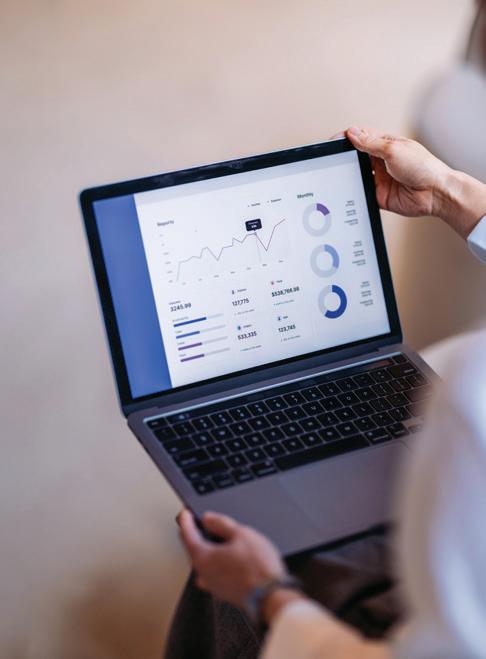






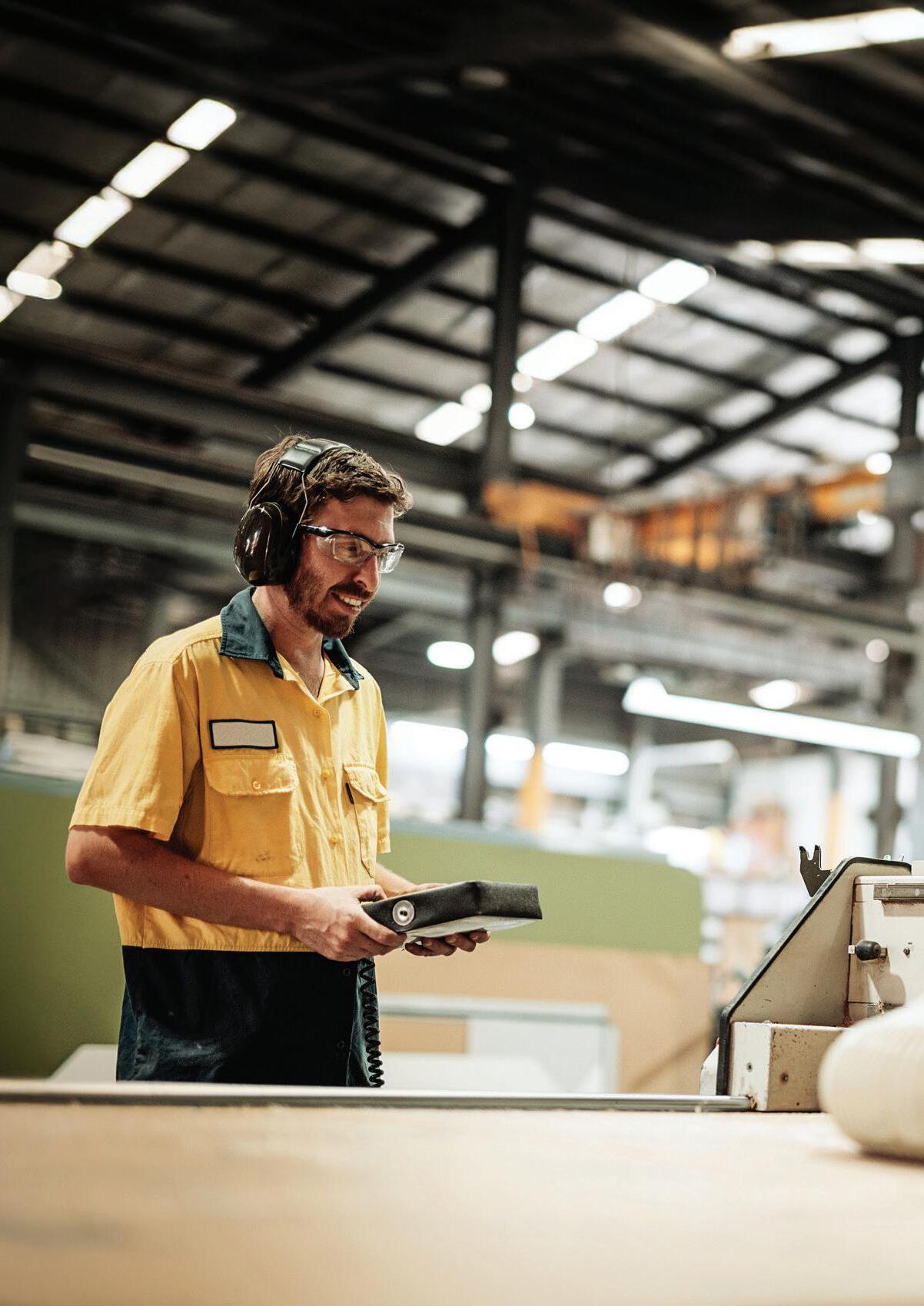




Australian Manufacturing Week 2026, the nation’s premier event for the advanced manufacturing and precision engineering industry, made its Queensland debut in Brisbane. Check out the highlights of this landmark show.
Australian Manufacturing Week 2026 made its Queensland debut with the kind of energy that confirms one thing clearly: Australian manufacturing wants to connect, collaborate, learn and invest.
Held from 12–14 May at the Brisbane Convention and Exhibition Centre, AMW2026 brought the national manufacturing community north for the first time. The move proved more than a change of venue. It opened the event to a strong Queensland audience, while attracting visitors, exhibitors and industry leaders from across Australia and overseas.
Across three days, 6,862 unique visitors attended the show, generating 8,145 total visits. The difference between those two numbers tells its own story. Many attendees returned for more than one day, returning to continue conversations, revisit stands, compare technologies and take part in the speaker program.
The show floor reflected the same momentum. AMW2026 featured 232 exhibitors across a 15,000sqm footprint, divided into six product zones: Additive Manufacturing, the Australian Manufacturers Pavilion, Machine Tools, Manufacturing Solutions, Robotics and Automation, and Weld and Air Solutions.
Together, these zones gave visitors a clear picture of the technologies and services shaping the next phase of local manufacturing, from advanced fabrication and machine tools through to automation, welding, additive manufacturing, industrial software, skills and sovereign capability.
While AMW has always been a national event, Brisbane gave the 2026 edition a distinct Queensland flavour. Queensland accounted for 76% of visits, reflecting strong local support for the event and the depth of manufacturing activity across the state. New South Wales followed with 11%, Victoria with 7%.
International visitors also formed part of the mix, with attendance from China, New Zealand, the United States, Singapore, Vietnam, Japan and other markets. This
overseas participation reinforced the growing reach of AMW as a platform for manufacturing technology, capability and collaboration.
The industry profile was broad, with general engineering and manufacturing representing the largest share of visitors at 34%, followed by construction at 9%, mining, oil and gas at 6%, and automotive at 5%.
The result was a show floor where conversations moved easily between sectors, with many visitors looking for technologies that could solve common problems: improving productivity, reducing waste, addressing skills shortages, increasing precision and making operations more resilient.
Just as important was the level of decision making authority in the room. More than 22% of visitors identified as CEOs, directors, owners, general managers or managing directors. Engineers and technical managers accounted for 13%, sales and marketing for 11%, and operations for 8%.
For exhibitors, this created the kind of environment trade shows are designed to deliver: high quality conversations with people who understand the problems and, in many cases, have influence over the investment decisions.
With the theme of Manufacturing the Future through Tech Innovation, AMW2026 continued to build its role as a knowledge sharing platform. The speaker program featured 34 speakers across 24 sessions and attracted 1,451 attendees.
Sessions explored the issues shaping manufacturing today and tomorrow, including automation, artificial intelligence, additive manufacturing, skills, economic conditions, sovereign capability and advanced manufacturing adoption. The strong attendance showed that visitors were not only coming to see equipment, but to understand the trends behind it.
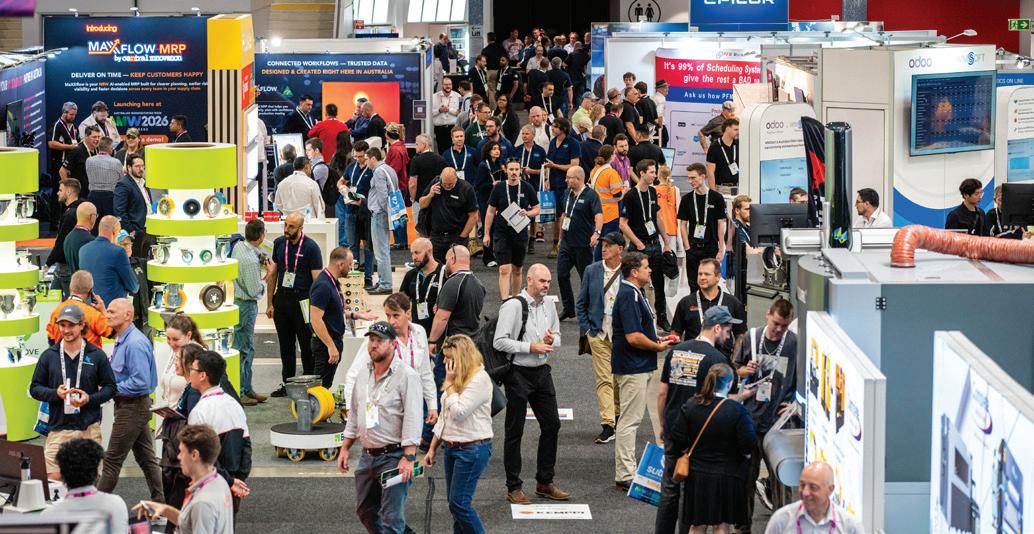
At the official opening, AMTIL CEO Lorraine Maxwell framed the event within the wider transformation of Australian manufacturing. She argued that manufacturing is not dying but changing fundamentally.
“I don’t believe manufacturing is dying,” Maxwell said. “Manufacturing is too important to die. Instead, it is transforming and it has been for more than a decade.”
Maxwell said the future of manufacturing in Australia would not be based on the commodity model of the past, but on flexibility, adaptability and high value capability.
“The future for us as Australians and as global citizens is not only coded, but it’s built,” she said. “And we are a nation of builders.”
“Today we’re being called on to build again — not just infrastructure or products, but a new future for Australian manufacturing. It will be built on flexibility, not scale.”
“Australia has a choice. We can helplessly watch this transformation happen, or we can lead it for ourselves. This is Australia’s opportunity not to rebuild the manufacturing of the past, but to create the manufacturing of the future.”
That theme ran through the exhibition floor. AMW2026 was not only about machines, systems and products. It was about the changing shape of manufacturing work itself. Technologies such as robotics, automation, AI, digital systems, machine tools, additive manufacturing and connected equipment are no longer sitting at the edge of the sector. They are becoming part of the operating environment for businesses of all sizes.
Graham Fraine, Director General of the Department of Natural Resources and Mines, Manufacturing and Regional and Rural Development, delivered the opening ministerial address, saying, “Queensland is made for manufacturing, and we are very proud to be hosting Australian Manufacturing Week.”
“Manufacturing has a strong, enduring and growing opportunity in this state. We just need to grasp it,” Fraine said. “Queensland has an incredible breadth and depth of manufacturing talent, and an incredible workforce and skill set within those businesses.”
“We’ve got great natural assets, we’ve got infrastructure, we’ve got logistics networks, and we are uniquely placed to take advantage of the opportunities ahead. We’ve got the vision. We are strong believers in the future of manufacturing in Queensland.”
Fraine highlighted the role of the state’s manufacturing hubs, which support local manufacturers with expertise, skills development and funding opportunities. In 2025, two new hubs opened on the Sunshine Coast and in Toowoomba, extending the network’s reach.
The 2032 Olympic and Paralympic Games were also a key theme. “The 2032 Games represent a once in a lifetime opportunity for Queensland,” said Fraine. “The opportunities
around the Games are absolutely about those four weeks, but they are also about how we craft infrastructure for the future of Queensland. The Games are about the legacies for our communities and businesses in the 10, 20 and 30 years beyond.”
“We are working to embed opportunities for local manufacturers into the infrastructure, delivery and legacy of Brisbane 2032,” said Fraine.
For manufacturers, that means potential opportunities across infrastructure, construction, supply chains, transport, materials, equipment, fit out, maintenance and legacy projects. It also reinforces the need for local capability to be visible, connected and ready.
The exhibitor feedback throughout the show reflected the same pattern: strong foot traffic, meaningful conversations and a high level of interest from visitors seeking practical solutions.
Many exhibitors noted that attendees were not simply browsing. They were asking detailed questions, comparing options, discussing investment plans and looking for ways to improve their businesses.
The broader message from AMW2026 was clear. Manufacturing remains under pressure from energy costs, skills shortages, global competition, supply chain risk and productivity challenges. But it is also full of capability, ambition and technical depth. The businesses walking the aisles were not looking backwards. They were looking for the tools, partners and ideas that could help them adapt.
Maxwell’s opening address captured that sense of urgency and optimism. She said Australia does not need to be the biggest manufacturing nation, but it does need to embrace change and build the things the world cannot build without us.
“The next manufacturing revolution offers a chance for sustainable, widely shared economic growth, but only if countries like Australia act deliberately, retrain our workforce and embrace the transformation,” said Maxwell.
AMW2026 showed what that looks like in practice. It is not one technology or one sector. It is a mix of machine tools, robotics, welding, additive manufacturing, industrial software, local products, skills, regional capability and business confidence. It is manufacturers asking better questions, suppliers offering more integrated solutions, and industry gathering around a shared belief that Australia’s manufacturing future is still being built.
After a successful Queensland debut, attention now turns to Melbourne, where AMW will return from 11–14 May 2027. Brisbane has broadened the event’s national reach and demonstrated the strength of manufacturing interest beyond the traditional southern centres. Melbourne will now build on that momentum, bringing the industry together again at scale.
12th – 14th May 2026
Brisbane Convention and Exhibition Centre
Australian Manufacturing Week has long been recognised as Australia’s leading event for the advanced manufacturing and precision manufacturing industry. This year’s show, held in Brisbane, is the first time AMW has taken place in Queensland.
Well attended by industry personnel, the event was a tremendous success. Thank you to all the visitors, exhibitors, speakers, and others who took part in AMW.
Total Visitors: 6,862
Total Visits: 8,145
Total Visitors Day by Day Attendance
Visits - Country of Origin
Australia – 96.74% China – 0.80%
New Zealand – 0.77% United States – 0.36%
Singapore – 0.29% Vietnam – 0.16%
Japan – 0.12% Other – less than 0.1% per country
Visits - Australian State of Origin
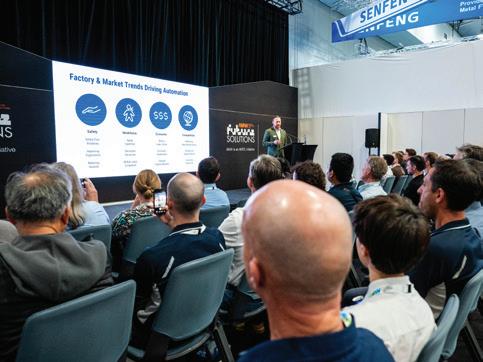
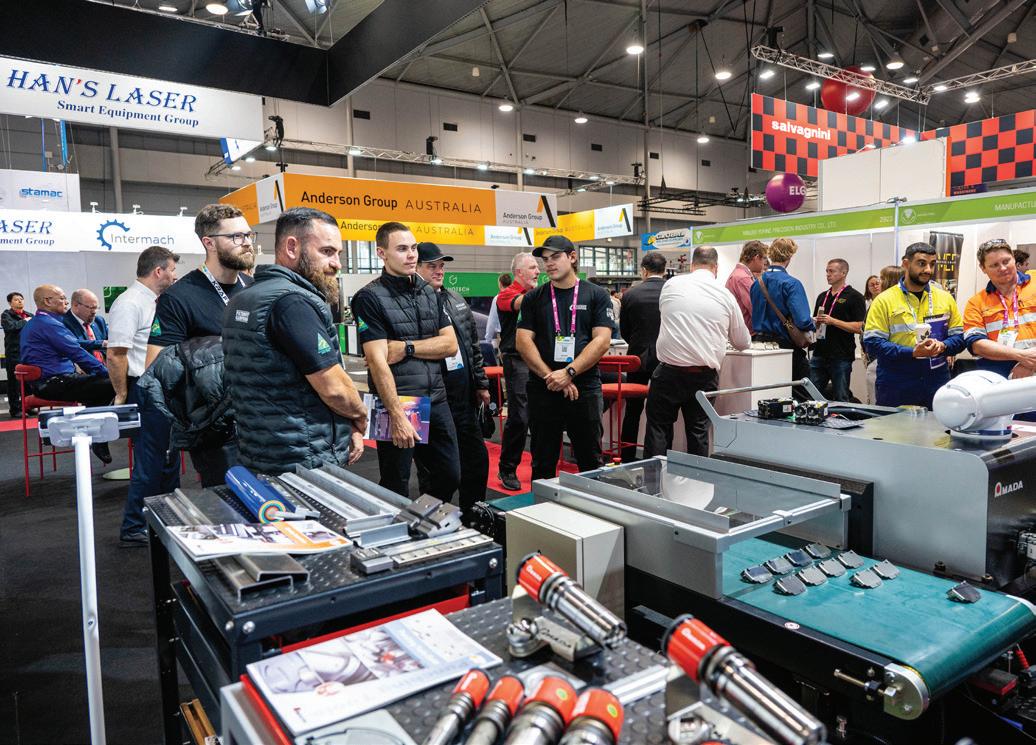
Visits - Top
Visits - Top Job Function
Total Speakers: 34
Total Sessions: 24
Total Attendees: 1,451
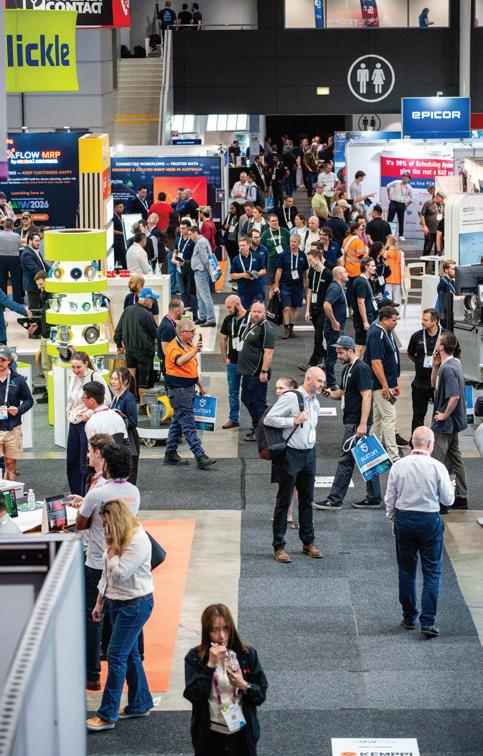
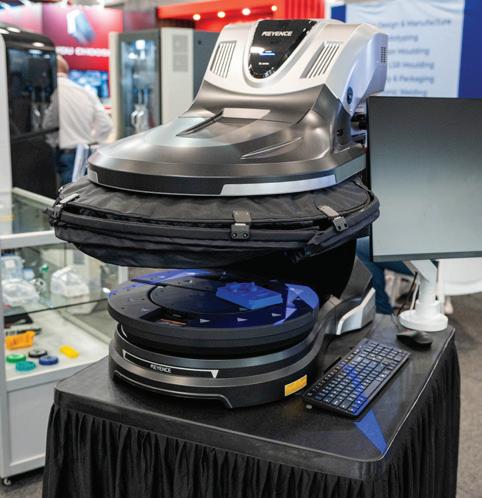
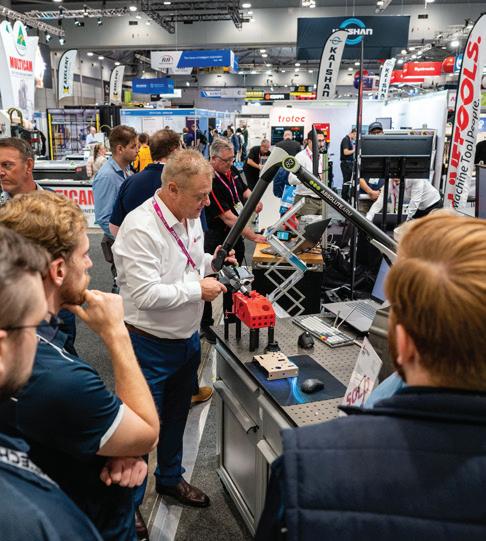
EXHIBITION
Total Exhibitors: 232
Total Exhibition Footprint: 15,000 sqm
Product Zones: 6 1. Additive Manufacturing Zone 2. Australian Manufacturer’s Pavilion 3. Machine Tools Zone
Manufacturing Solutions Zone
Robotics & Automation Zone
Weld & Air Solutions Zone
We hope you will join us again in 2027, when AMW returns to Melbourne on 11 14 May. More details will be available later this year.
The achievements of Australia’s manufacturing sector were in the spotlight at the 2026 Manufacturers’ Monthly Endeavour Awards gala dinner, as industry professionals and organisations from around the country came together to recognise the people and businesses helping shape the sector’s future.
Hosted at The Westin Brisbane in early May, the sold‑out event brought together more than 250 manufacturing professionals for an evening dedicated to celebrating high achievers, emerging leaders and innovative companies contributing to the growth of Australian manufacturing.
This year’s Endeavour Awards comprised 10 categories, recognising achievement across leadership, innovation and manufacturing performance. Established categories such as Manufacturer of the Year and Leader of the Year returned, alongside four new awards highlighting Innovation in Aerospace, Transport, Health Technology, and Food and Beverage Manufacturing. The expanded program reflects the increasing breadth and diversification of Australia’s manufacturing industry.
AMTIL is particularly pleased to see two of its members recognised on the night, with Bosch Australia Manufacturing
Solutions (BAMS) winning the Advanced Manufacturing Excellence Award, and BOC taking home both Innovation in Food and Beverage Manufacturing and the evening’s top honour, Manufacturer of the Year.
Leveraging Bosch’s 140 years of global innovation, Bosch Australia Manufacturing Solutions has been active in industrial automation and advanced manufacturing for more than 70 years. Originally established to support Bosch’s operations across Australia and New Zealand, BAMS has evolved into a robotics integrator and automation engineering partner for the wider market, delivering bespoke machinery, automated production lines and turnkey manufacturing solutions across sectors including MedTech, renewables, food and beverage, and FMCG.
BOC, a Linde company, has contributed to Australian industry for more than 100 years, supporting sectors including welding and cutting, steelmaking, refining, chemical processing, environmental protection, wastewater treatment, food processing and distribution, glass production, electronics and healthcare. In welding, BOC’s technical experts work with customers across gas mixtures, welding and cutting processes, and digital welding technologies, including as
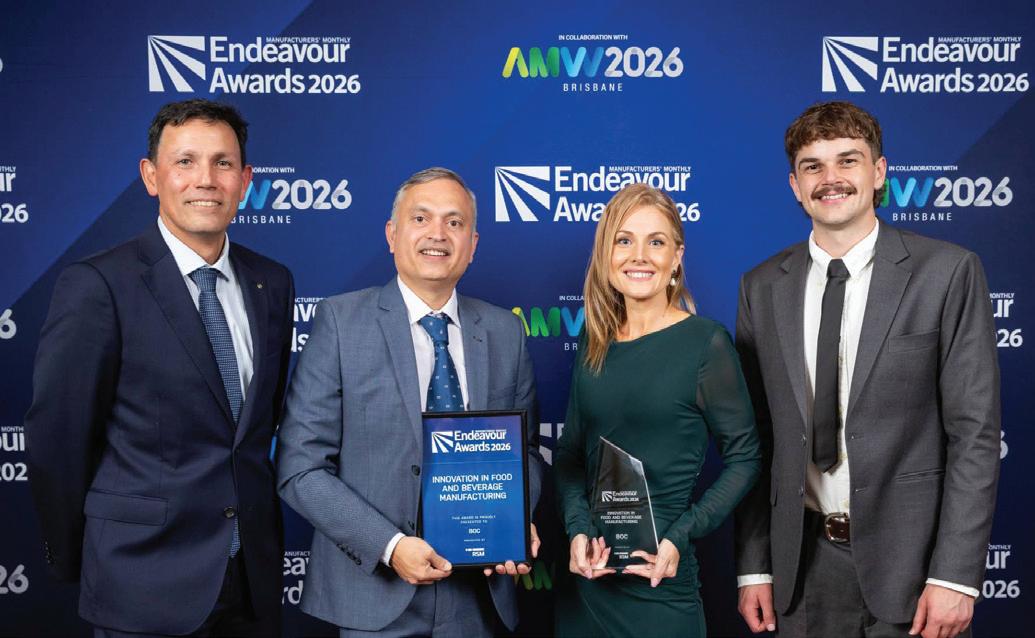




the exclusive supplier of EWM digital welding machines in Australia and New Zealand.
AMTIL CEO Lorraine Maxwell congratulates both companies on their achievements, saying the awards reflected the depth of capability within Australia’s manufacturing technology sector.
“Bosch Australia Manufacturing Solutions and BOC are both outstanding examples of the innovation, technical expertise and commitment to excellence that exist across AMTIL’s membership,” Maxwell says.
“Their success at the Endeavour Awards is not only a great recognition of their individual achievements, but also a reminder of the strength and sophistication of Australian manufacturing.”
The 2026 Endeavour Awards winners were:
• Excellence in Sustainability: REDARC Electronics
• Rising Star of the Year Award: Alex Hansen from NEACH
• Outstanding Start‑Up Award: Hypersonix Launch Systems
• Innovation in Health Technology: iOrthotics
• Innovation in Food and Beverage Manufacturing: BOC
• Innovation in Transport: Amtek
• Advanced Manufacturing Excellence Award: Bosch Australia Manufacturing Solutions (BAMS)
• Innovation in Aerospace: Space Machines Company
• Leader of the Year: Alan Oppenheim from Ego Pharmaceuticals
• Manufacturer of the Year: BOC
The top accolade of the night, Manufacturer of the Year, was awarded to BOC after achieving the highest overall score in their respective category. The prestigious award recognises outstanding performance, leadership and innovation across the manufacturing sector, and is considered the pinnacle achievement of the Endeavour Awards program.
Since their inception, the Endeavour Awards have become the benchmark for excellence within Australia’s manufacturing industry. Open to all manufacturing businesses operating across the country, the awards bring together industry professionals committed to advancing innovation, capability and growth across the sector.


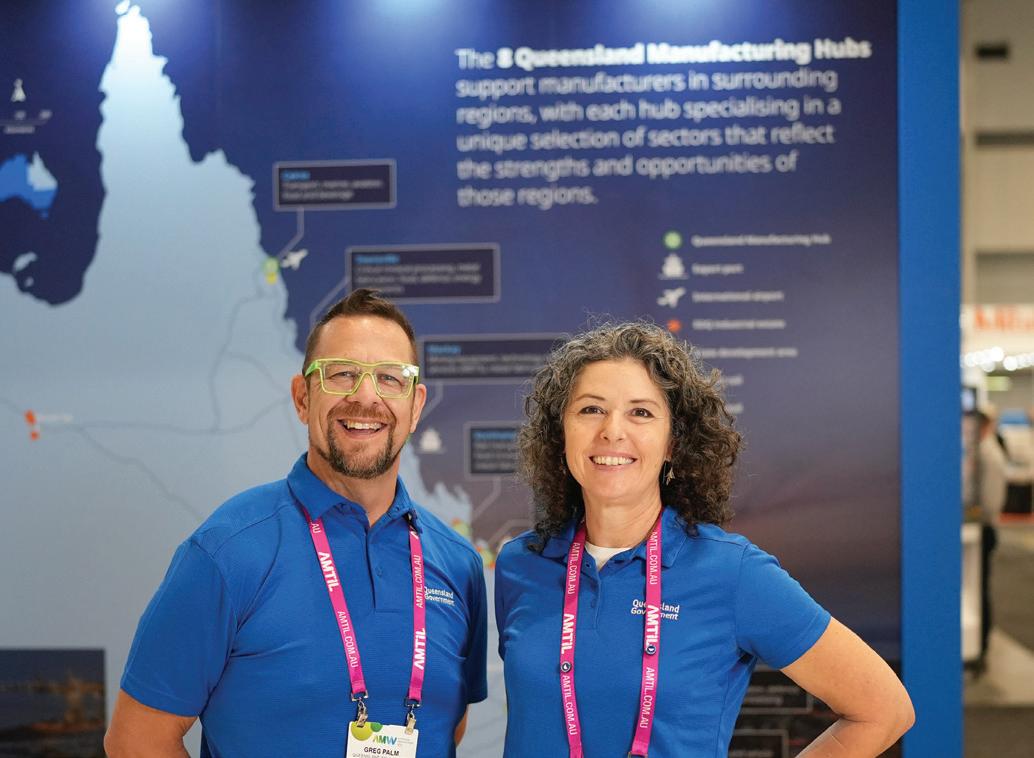
The Australian Manufacturers Pavilion at Australian Manufacturing Week (AMW) again proved the value of putting local capability directly in front of industry. With exhibitors including the likes of Queensland Government, Ronson Gears, Manufacturing Skills Queensland, the Australian Foundry Institute, PJ Bowers, BAC Systems, Capral, the Australian Made Campaign, City of Moreton Bay, Ipswich City Council and Shearform, the zone brought together manufacturers, industry bodies and government partners with a shared focus on Australian capability.
The mix on display reflected the breadth of local manufacturing: precision gears, aluminium extrusion, engineered foam, sheet metal, storage systems, skills development, foundry capability, regional investment attraction and the Australian Made brand. It was a strong reminder that manufacturing strength is not built around one product or one region, but across a connected ecosystem of suppliers, makers, councils, training bodies and industry partners.
Jason Kidd, Queensland’s Deputy Director General, Manufacturing and Regional and Rural Development, said AMW provided an opportunity to showcase the state’s manufacturing depth, “Queensland offers a unique combination of advantages for manufacturing businesses and investment, including a skilled workforce, world class infrastructure, proximity to the Asia Pacific region and a strong network of ports, rail and road links.”
He also pointed to Queensland’s manufacturing hubs as an important part of that support system, providing services around benchmarking, digital adoption, advanced manufacturing, leadership development and pathways from schools into industry.
“Our goal is to help businesses like yours succeed here in Queensland,” Kidd said. “Together we can ensure that Queensland remains a leader in manufacturing, creating jobs, driving innovation and delivering prosperity for our communities.”
The Queensland Government stand also featured a range of partner organisations on hand to provide advice and answer questions from manufacturers. These included TAFE Queensland, the ARM Hub and ICN, giving visitors access to information on skills and training, advanced manufacturing and AI adoption, and supply chain opportunities.
Manufacturing Skills Queensland (MSQ) continued the skills conversation. With workforce shortages still affecting many manufacturers, MSQ’s presence underlined the importance of training, career pathways and industry led workforce planning. Nathan Edwards, Senior Data Strategist at MSQ, said the future of trades is not about replacement, but transformation. “Trades are not disappearing, they are expanding and changing,” Edwards said. “The question is whether our system will change with it.”
“Queensland manufacturing remains a cornerstone of the economy, contributing more than $28 billion and employing more than 170,000 people, with more than half
of the workforce and businesses located outside South East Queensland.”
However, Edwards warned that training, technology and industry needs are not always evolving at the same pace.
“We don’t have an issue of pipeline quantity; we have a pipeline issue of level and alignment,” he said. “The risk is not automation or AI, it is inaction,” he said. “Transform, train and invest in these people and the industry will bloom.”
Regional capability was also strongly represented. The City of Moreton Bay used the zone to highlight its growing advanced manufacturing base and encourage visitors to connect with local manufacturers. The Ipswich and Wagga Wagga City Councils also showcased their industrial strengths and investment potential, reinforcing the role local governments play in attracting business, supporting industry networks and connecting manufacturers with opportunities.
At the PJ Bowers stand, Kyle Mace explained that the company specialises in engineered foam and custom manufacturing, supplying sectors including defence, marine and packaging. Based at Sumner Park, PJ Bowers produces a wide range of foam solutions using materials from EPS packaging foam through to high quality Zotefoams from the UK.
“We do engineered foam and custom manufacture,” Mace said. “We supply to all sorts of industries, from defence to marine to packaging. Our in house capabilities include CNC machining, glass wire cutters, oscillating knives and four‑digit cutters, depending on the shape, size and application required,” Mace said. “We can do all sorts.”
Custom foam solutions were also highlighted by OSAAP Australia, which used the show to demonstrate how foam inserts can improve tool control, order and protection across workshop and operational environments.
Ronson Gears brought precision gear manufacturing to the zone, showcasing its Australian manufacturing capability alongside KHK stock gear products from Japan. Capral reported a strong start to AMW2026, with visitors stopping by to learn more about its Australian made aluminium extrusions and latest solutions for local manufacturing. The company’s presence reflected the continuing importance of aluminium in transport, construction, renewables, fabrication and advanced manufacturing supply chains.
The Australian Made Campaign added a national identity to the zone, reinforcing the value of trusted local provenance. For manufacturers, the green and gold kangaroo remains more than a logo; it is a signal of local production, quality and supply chain confidence.
The Additive Manufacturing Zone at Australian Manufacturing Week again showed how far additive manufacturing has moved beyond curiosity and into practical production. This year’s exhibitors—from Emona Instruments, iO3D Printing, and Laserman Australia, through to the Additive Manufacturing CRC, 3D Solutions Australia, Shining3D Tech and RAM3D— gave visitors a close look at the materials, machines, services and research pathways helping manufacturers adopt AM with greater confidence.
The tone was noticeably practical, with exhibitors focused on where AM delivers commercial value, how to match materials and processes to applications, and how to integrate the technology into existing workflows. The emphasis was less on AM as a standalone technology, and more on how it can support faster product development, short run production, complex geometries, supply chain resilience and customised manufacturing.
Emona Instruments’ focus was on helping Australian manufacturers identify the additive manufacturing technologies best suited to their applications, from polymers and composites through to metals and printed electronics. The company’s message was that AM is not simply about the machine itself, but about understanding the right process, material and workflow to move from experimentation to practical production capability.
For iO3D Printing, the message was grounded in real production experience. Nicholas Carroll explained, “Our primary business is manufacturing custom orthotics for podiatry patients, with spare printer capacity used to provide third party 3D printing services. We focus on prototyping and production runs.”
The company prints in materials including polypropylene, PA11 and PA12, allowing customers to select materials according to the properties required for different parts. “The nature of our print is you don’t need any structural support because the part is suspended in powder,” Carroll said. “You’ve got fully articulated parts you can print that spin and rotate.”
A major theme was that while AM is now a proven industrial technology, successful adoption still depends on clear use cases, a strong business case, the right skills and a pathway to scale.
Simon Marriott, Managing Director of the Additive Manufacturing CRC, said skills remain one of the key barriers to wider adoption. “A big challenge at the moment is skilled staff who know how to run machines and operate in a production environment. That is a bottleneck for many organisations looking to get into production.”
For manufacturers already using AM, the lesson was to treat the technology as a practical tool for faster iteration. Jonathan Tighe, Head of Industrial Design at Intellidesign, said his advice to design teams is simple: “Print aggressively. Treat it like paper. If you’ve got an idea you want to print and try, don’t hesitate.”
“What that means for our customers is they see their ideas coming together quicker and faster. The mistakes, challenges and problems come to the surface sooner, and you’re in a much tighter evolution,” said Tighe.
AM is clearly helping to solve production problems, shorten development cycles, reduce waste and create new product possibilities.
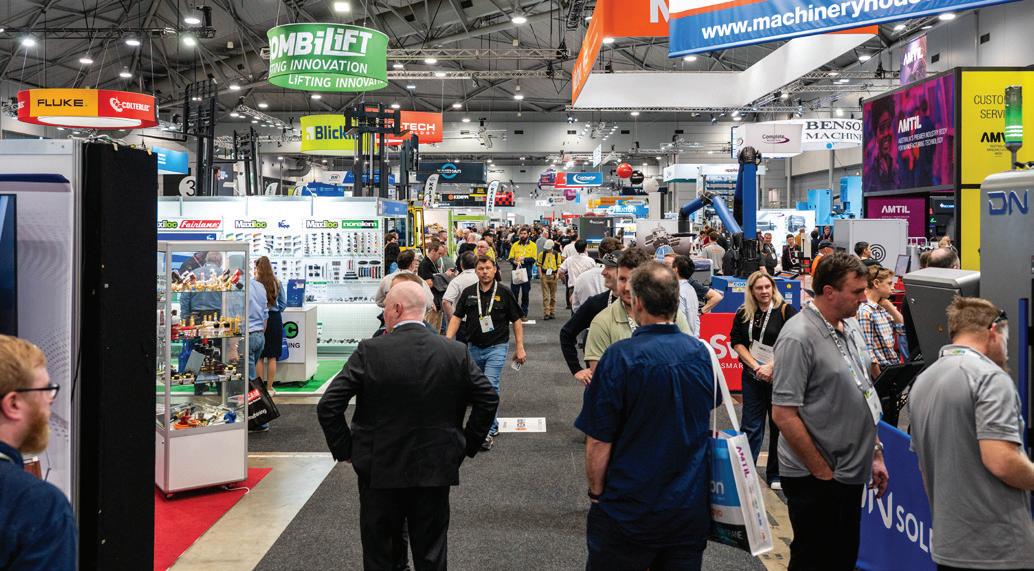
The Machine Tools Zone has always been one of the anchors of Australian Manufacturing Week, and this year it again delivered the scale, noise, movement and capability that make manufacturing tangible. From cutting and bending to storage, automation, multi‑axis machining and materials processing, the zone showed the practical technologies Australian manufacturers rely on to make parts accurately, repeatedly and efficiently.
Exhibitors included SWI Machinery, Laser Machines, Peddinghaus, Koenig Machinery, Benson Machines, Biesse, Kaishan Australia, Hare & Forbes Machinery, Kraftech, Amada Oceania and Anderson Group.
Together, they reflected the breadth of the machine tool market: sheet metal processing, laser cutting, press brakes, machining centres, sawing, drilling, compressed air, waterjet cutting, wood and composite processing, and the support systems that sit around production.
A clear theme across the zone was integration. Manufacturers are no longer looking at a machine in isolation. They are asking how cutting connects to bending, how software connects to programming, how automation can add capacity, how safer material handling can improve flow, and how service support can keep equipment running after installation.
At Amada Oceania, that thinking was on display in the form of a compact production line. Jan Halfar explained, “We have an entry‑level fibre laser for blanking components and a small servo electric press brake with a collaborative robot attached. Parts were cut on the laser, then transferred to the bending cell, where the cobot held and positioned them. The team is producing practical giveaway samples on the stand, including phone stands and business card holders.”
“For manufacturers dealing with labour shortages or looking to extend productive hours, the appeal is easy to see. The cobot system is designed to be moved in and connected when required. During the day, an operator can use the press brake as a standalone machine. In the afternoon or overnight, the cobot can be wheeled in, docked, connected and loaded.”
The system is also retrofittable to existing Amada press brakes, making it a pathway into automation for businesses that may not be ready for a fully automated cell.
For Anderson Group Australia, AMW2026 marked an important step in its local presence. Davide Pontini explained that the main Anderson Group business is based in Taiwan, producing machines for the aerospace, wood and metal industries. The Australian business is based in Sydney, with a showroom, spare parts and technical support across the states.
“We started supplying Australia directly eight months ago,” Pontini said. “This is the first exhibition we’ve done. AMW has been busy and provided the perfect opportunity to introduce Anderson’s direct local model to the Australian market.”
On the stand, Anderson demonstrated their capability across both wood and metal. One side featured machinery for the wood industry, including CNC equipment, while the other showcased the Okaseki brand for metal applications, including three axis, four axis and five axis machines.
Biesse demonstrated the value of versatility, particularly for manufacturers processing different materials. Mauricio Pereira
showed a five axis waterjet cutting system capable of cutting metal, aluminium, glass, stone, rubber and other materials that can come into contact with water.
“Biesse customers also use waterjet systems for marine MDF and marine ply, with cutting capacity up to 200mm thick,” explained Pereira. “The system uses abrasives where required to assist cutting and achieve a better finish, particularly on harder materials.”
Pereira also pointed to Biesse’s own 66,000psi servo driven pump, which helps keep the machine quieter, and an adjustable water level that allows submerged cutting to improve quality and reduce noise.
“The software is also designed to reduce the pressure on operators. The machine includes a material library with many pre programmed parameters. You don’t have to start from zero every time,” Pereira explained. “The machine is already pre‑programmed with a library of materials. It makes it easy for the customer and the operator.”
That point is significant in a market where skilled operators remain hard to find. By embedding process knowledge into the machine, suppliers are helping manufacturers make advanced equipment more accessible.
At the Hare & Forbes stand, there was a wide range of metalworking equipment, including DN Solutions CNC machines, Metalmaster press brakes and Bodor lasers. The DN Solutions DVF 5000 five axis machining centre drew attention as a versatile simultaneous machining platform, while the DNX series multitasking mill turn lathe represented a newer model in the Australian market.
“The multi axis machining is becoming more and more popular,” said Craig Murray. “This is the first one in Australia.”
On the fabrication side, Hare & Forbes also showed its Metalmaster SPB hybrid press brakes. The direction, according to the team, is increasingly toward 3D automation and better integration between laser cutting and bending.
“What you can do is laser cut the piece, then put it in the press brake and fold it up, and you can use the same file for both,” said Cameron Hart. “The interchangeability is really quite good.”
The hybrid press brake technology is designed to reduce unnecessary energy use. Traditional hydraulic systems can waste power by running continuously, while hybrid motors operate only when required. The machines on display also featured modern control systems, 3D importing capability and tooling features aimed at making setup and operation more efficient.
Laser safety was another theme at the Hare & Forbes stand. The company showed Bodor A Series and C Series fibre lasers, including fully enclosed machines. According to Brad Werner, “The open top Class 4 lasers carry serious risks, including potential eye damage from reflected laser light. Fully enclosed systems help manage those risks while allowing manufacturers to take advantage of high powered cutting technology. The C Series also featured exchange tables for production environments, allowing loading and unloading while cutting continues inside the enclosed work area.”
Material flow was also part of the Machine Tool Zone story. Daniel Fisher from Applied Machinery highlighted the ANTL ARW3015
10‑shelf material storage library, designed to help manufacturers maximise vertical storage space while improving safety on the factory floor.
“Rather than using forklifts to lift unstable pallets several metres into the air, the system stores sheet materials vertically and presents them when required,” said Fisher. “Each shelf has a three‑tonne capacity.”
“We brought the system here with the purpose of sheet metal storage,” Fisher said. “But customers have been telling us they are seeing possibilities for storing parts, tools, fixtures and jigs.”
Sutton Tools introduced the Mitutoyo MiSTAR 555 to the Australian market at AMW2026, following its appointment as the official authorised distributor for Mitutoyo across Australia and New Zealand. The MiSTAR 555 is designed to bring laboratory‑level CNC coordinate measuring machine accuracy onto the shop floor, giving manufacturers a practical way to strengthen inspection and quality control closer to production. Koenig Machinery used AMW2026 to showcase its laser and manufacturing solutions, including CO2 lasers, fibre lasers, tube fibre cutters, fibre markers, press brakes, UV printers, metal wide belt sanders and laser materials. The company provides machinery, materials and technical support for precision cutting, marking, sanding and finishing applications.
The team reported strong visitor interest and high‑quality conversations throughout the show, with AMW2026 providing a valuable opportunity to connect with customers, partners and manufacturers looking at future investment.
Across the rest of the zone, exhibitors such as Complete Machine Tools, Bystronic, Odoo, Livetools, Salvagnini and Ficep added to the sense that machine tool investment is becoming more focused on productivity, reliability and total production flow. Whether the issue is compressed air, drilling and sawing, laser cutting, fabrication, or service support, manufacturers are looking for solutions that reduce bottlenecks and make workshops more resilient.
The overall direction was clear. Machine tools are becoming more capable, but also more connected. Lasers are feeding press brakes. Cobot cells are extending productive hours. Waterjets are handling wider material ranges. CNC machines are moving deeper into multi‑axis and multitasking territory. Storage systems are being treated as part of production efficiency, not just warehouse housekeeping.
In a market where margins are tight and skilled labour is precious, the machines that stood out were those that helped manufacturers do more than make parts. They helped them make better use of time, people, materials and floor space.

Welding is one of the world’s oldest industrial crafts, yet it continues to evolve at a remarkable pace. From its origins in ancient forge welding to today’s digitally enabled intelligent systems, the discipline has undergone a profound transformation. What began as a purely manual skill, dependent almost entirely on the welder’s experience, has become a sophisticated technology-assisted process. While craftsmanship remains essential, modern welding is now firmly augmented by digital capability.
Forge welding dates back to the Bronze Age, when Egyptian and Greek blacksmiths practised it as a wholly manual trade. Using a forge, hammer and tongs, they relied on steady hands, trained eyes and repetition to achieve consistent results.
Iron was smelted from ore, and then heated and hammered to fuse separate pieces into one. Through this process, early metalworkers produced tools, weapons, armour and jewellery, and often of remarkable quality given their limited tools.
Although the blacksmiths refined their skills, forge welding remained the primary technique well into the 18th century due to a lack of scientific knowledge. There was little understanding of how to precisely control heat control or material properties.
The introduction of electricity in the early 19th century fundamentally changed welding. Scientists such as Humphry Davy identified the electric arc, laying the groundwork for arc welding. This discovery introduced a powerful new way to generate intense, controllable heat, allowing metal to be melted directly and with far greater precision. Welders could
now concentrate heat exactly where it was needed to produce stronger and more consistent joints.
By 1885, this scientific progress culminated in the first arc welding machine, patented by Nikolay Benardos and Stanisław Olszewski, and it marked a decisive shift toward industrialised welding.
“This ‘welding machine’ was in essence just a power source and basic electrodes,” explains Stuart Orr, Sales Director, Kemppi Australia. “It continued to rely on the welder’s manual skill, but it also did change welding. Thicker metal pieces could now be welded together, and metals could be welded with far greater accuracy, control and speed.”
The demands of World War I and World War II accelerated welding innovation dramatically. The need to rapidly produce ships, vehicles and weapons led to the development and adoption of new techniques such as shielded metal arc welding (stick welding).
At the same time, early ‘standalone welding machines’ emerged. Companies like Lincoln Electric and Miller Electric developed power sources that made arc welding more accessible and scalable.
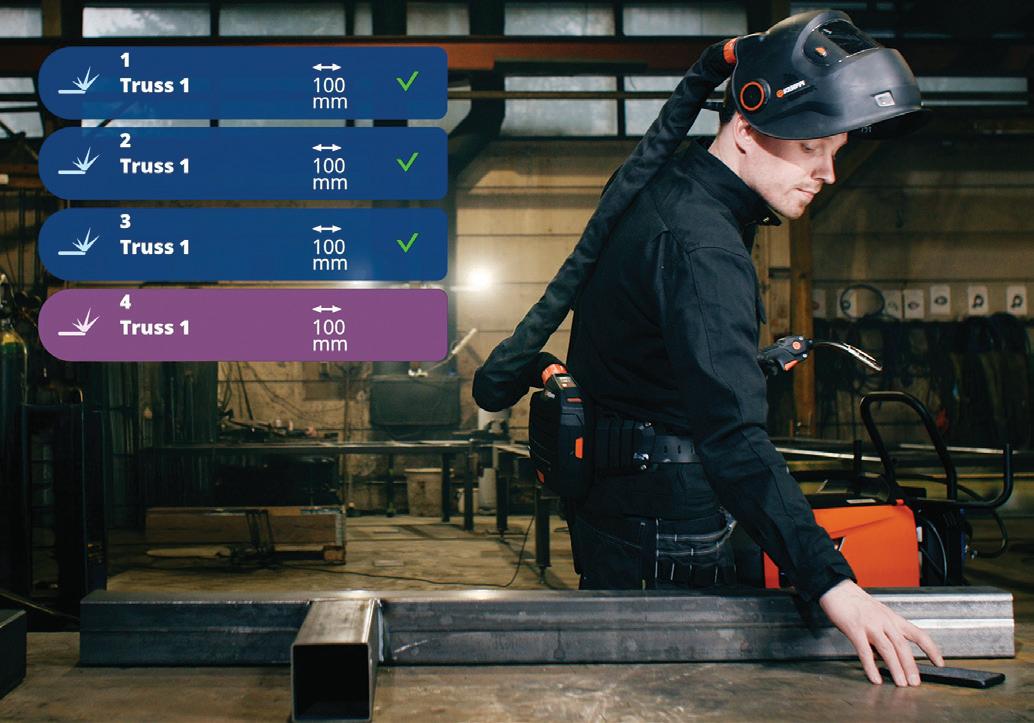
Despite these advances, welding remained a manual process. Operators were still responsible for striking and maintaining the arc, controlling electrode movement, and managing travel speed. Skill, judgement and experience continued to define weld quality.
The first semi automated welding machines appeared in the 1960s and 1970s and, while their development was gradual, they would impact the welder’s role significantly.
Manufacturers began combining the power source, wire feeder and controls. Miller Electric developed integrated MIG units, while ESAB, Kemppi and Lincoln Electric also experimented with combining and creating more compact machines.
A major breakthrough came in 1977 when Kemppi introduced the first inverter based welding power source. This made possible machines that were smaller, lighter and easier to integrate into single units, and by the 1980s true all in one semi automatic welding machines had become the industry standard.
Semi automatic welding fundamentally changed the workflow. Continuous mechanical wire feeding replaced manual electrode handling, eliminating the need for the welder to repeatedly stop and restart the arc or manually manage consumable rods.
The semi automatic welding machines also helped stabilise key variables such as the filler feed rate, which allowed welders to make more consistent welds and boost their productivity.
These analog machines also redefined the welder’s skill requirements. Welders increasingly needed to understand machine parameters such as voltage, wire speed and shielding gas flow, and how these interacted with material thickness and joint type to elicit quality welds. Hence, technical literacy became just as important as manual skill.
From the 1990s onwards, semi automatic welding machines entered the digital era. Equipment evolved from being purely analog driven to digitally assisted welders.
Kemppi was the first welding machine manufacturer to move from using analog to digital welding technology. They incorporated microprocessor controlled arc systems, synergic MIG settings, and programmable memory functions into their welding machines.
The welding machine was now capable of automatically adjusting voltage, current and arc performance to allow the welder to deliver even more precise and consistent quality welds at a faster pace and with little need for manual correction.
By 2015 these machines had become systems that went well beyond delivering considerable welder convenience. They could now automatically link multiple welding parameters, adjust arc behaviour dynamically, and store and record welding programs.
Their intelligent capability fundamentally changed the role, skillset and day to day experience of the welder. The welder’s hands on skill still mattered, but it was now complemented by digital awareness and decision making.
Welding in the Connected Era
Today’s welding systems are increasingly connected. Welding systems can log welding data and traceability using digital cloud based software solutions such as Fronius’ WeldCube or Kemppi’s WeldEye, while solutions like ESAB’s WeldCloud enable fleet wide management and performance optimisation.
“These capabilities are particularly valuable in manufacturing environments where quality assurance, compliance and productivity are critical,” said Stuart. “And for the welder, welding is no longer just a skill or process. It has evolved into a smart capability that can generate data within a broader digital ecosystem to augment their work.”
Artificial intelligence (AI) is set to transform the modern welding system into a far more autonomous and predictive tool which collaborates with the welder.
Control of the arc is likely to shift from being adaptive to predictive, as sensor data will allow the system to predict changes before they happen. AI is also likely to enable the welding system to instantly generate optimal parameters, eliminating the need for manual setup. Live weld quality feedback is expected to become the norm, as will predictive maintenance and uptime. The welding system will be able to monitor component wear, arc irregularities and electrical signatures to ensure maximum uptime.
AI will further elevate the role of welders as it shifts their focus towards oversight, optimisation and system interaction.
Without a doubt, welding has transitioned from a purely manual craft to a digitally assisted, highly integrated process. As Stuart explains, “Welding expertise now sits at the intersection of craftsmanship and technology. The modern welder is not only a skilled tradesperson, but also a knowledgeable operator of advanced systems.
“As the industry continues to evolve, one constant remains; the importance of skill. What has changed is how that skill is applied.”
The Manufacturing Solutions Zone at Australian Manufacturing Week 2026 brought together a broad mix of technologies and services aimed at helping manufacturers work smarter, safer and more efficiently. From industrial software and data analytics to materials handling, simulation, ventilation, tooling, mobility and design support, the zone reflected the practical challenges manufacturers are working through every day.
Just some of the exhibitors included 3M Australia, Bickle Wheels and Castors, Central Innovation, Coltertec, Dimension3 System, Fantech, Invenio, LEAP Australia, Lightwave Technology, and Mechtric. Across the zone, the message was clear: manufacturers are looking for solutions that improve productivity, reduce risk, support quality and help them make better use of people, equipment and data.
For Combilift, AMW2026 was an opportunity to demonstrate materials handling systems designed for long, awkward and heavy loads. Chris Littlewood explained, “We’ve brought several products to the stand, including the Combilift CB, the electric CBE multi directional counterbalance unit, the C4000 long load forklift, the Cube omnidirectional forklift and the WR4 multi directional walk behind reach truck.”
The applications were highly relevant to fabricators, metal processors, timber suppliers and manufacturers handling aluminium, steel or other long products. The WR4, for example, is designed to safely handle long loads in aisles as narrow as 2.1m.
“It’s designed for very safe materials handling for long products like steel, timber and aluminium — anything outside the length of general palletised goods,” Littlewood said. Hubtex was also focused on making awkward materials easier to move and store. Buckley Stevenson said the company’s multi directional forklifts are suited to customers handling large format laser sheet, steel and other bulky materials.
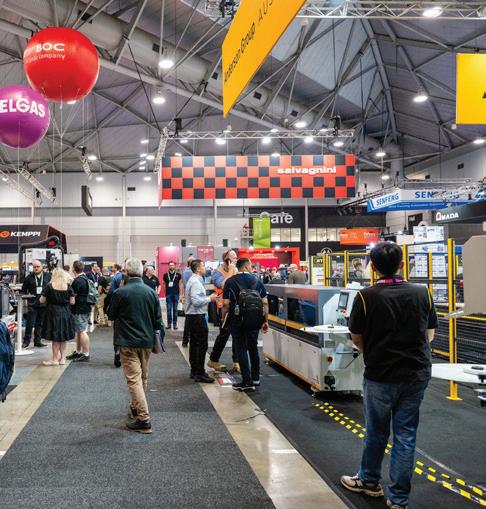
“It’s about handling long, awkward, bulky materials,” Stevenson said. “We’re showcasing our narrow aisle equipment designed to help manufacturers make better use of their available footprint, either by increasing storage density in an existing warehouse or reducing the space required for the same volume of stock,” Stevenson said.
Stevenson said the quality of enquiries at AMW2026 had been strong, with visitors focused on practical solutions rather than simply browsing. “We’re talking to more decision makers, and more people invested in finding real solutions,” he said.
Atlas Copco’s stand focused on smart tooling, operator guidance and zero defect manufacturing. As Scott Duncan explained, “Atlas Copco supports everything from small screws used in electronics through to large bolts for wind turbines, oil and gas, heavy industry and transport applications.”
The company demonstrated tightening tools linked to software that guides operators through assembly processes, confirms each step and records data for verification.
“The software and programming is where we really set ourselves apart,” Duncan said. “The tooling feedback gives you the accuracy you’re trying to achieve, and then displays it in the program so the operator can do it more predictably.”
The result, he said, is safer, smarter and more repeatable manufacturing. “It’s all about zero defects,” Duncan said. “When you’re manufacturing with tooling, you’re having fewer problems with the products you’re making.”
Data was also central to Minitab’s presence. According to their Data Scientist Mikhail Golovnya, “Manufacturers can use data to move from describing what has happened to predicting and preventing problems before they occur.”
“Traditional AI and machine learning already have proven manufacturing applications in quality control, defect detection, fault diagnosis, predictive maintenance, process optimisation, forecasting, supply chain, yield prediction and energy consumption. You can use that information to predict and prevent something bad that can happen in the future,” Golovnya said.
Golovnya also cautioned manufacturers against adopting technology for its own sake. “Some people don’t understand the actual business need,” he said. “They want to accommodate technology for the sake of technology.”
The broader economic context was addressed by Trent Saunders, Senior Economist at CommBank, who pointed to global uncertainty, cost pressures and shifting investment patterns. He noted that Australian businesses are facing higher input costs and margin pressure, but also highlighted major investment pipelines in public infrastructure, data centres and AI related capability.
For manufacturers, that reinforced the relevance of the zone itself. Whether the challenge is space, labour, accuracy, safety, data, workflow or cost control, the Manufacturing Solutions Zone showed that incremental improvements can have a major impact.
The Robotics and Automation Zone at Australian Manufacturing Week 2026 showed a sector moving steadily from possibility to practicality. Exhibitors like Chain Systems Australia, Elite Oceania, M.A.P. Services, Norman G Clark, Schmalz Australia, Schunk Intec, Treotham Automation and Wago brought together the components, systems and expertise helping manufacturers automate with greater confidence.
Emphasis was not simply on robots replacing manual work, but on building safer and more efficient production environments. From gripping, clamping and vacuum handling through to cabling, controls, motion systems and full automation support, the stands reflected the many pieces needed to make robotic systems work reliably.
However, automation is rarely a single purchase. A successful robotic cell may require the robot itself, end of arm tooling, sensors, safety systems, guarding, cables, controllers, compressed air, software, programming support, integration expertise and ongoing maintenance. Visitors could see how those elements fit together, and to speak with suppliers working across different stages of the automation journey.
Companies such as Schunk Intec and Schmalz Australia highlighted the importance of gripping, clamping and vacuum handling in automated production. These are often the details that determine whether an automation project works reliably in practice.
A robot must pick, hold, move, place or secure parts accurately, repeatedly and safely. For manufacturers handling varied components, irregular shapes or changing production runs, the right end of arm technology can be the difference between a promising concept and a dependable production process.
Wago, Treotham Automation and Chain Systems Australia also represented the supporting technologies that sit behind automation. Cables, connectors, controls, and motion components may not always be the most visible part of a robotic system, but are critical to uptime and reliability. When equipment moves constantly, protecting cables and hoses, maintaining signal integrity and simplifying installation all contribute to more robust automation.
At the KUKA and Industrial Automation Australia stand, the focus was on complete solutions. Stephen Grup from KUKA said the partnership combined KUKA’s robot hardware with IAA’s integration, installation, support and training capability.
“Most people are looking for that whole picture… that’s a critical part.”
The stand included many technologies, but the most memorable was a small LEGO based robot training system aimed at schools.
“The concept was designed to help bridge the skills gap by giving students a low risk way to learn real robot programming,” said Grup. “[It] runs on the same controller architecture as larger KUKA industrial robots, meaning the learning pathway can translate into real manufacturing skills.”
“We had a young boy come up and say, ‘Oh my, it’s LEGO,’” Grup said. “If we can build enthusiasm around manufacturing, it benefits the whole sector.”
An impactful reminder that automation adoption requires more
than machinery. Manufacturers need programmers, technicians, engineers, maintenance teams and operators who are confident working with automated systems. Introducing students to robotics earlier, in an accessible form, helps to build that future workforce.
Vaughan Moore from Industrial Automation Australia (IAA) said manufacturers often know they need automation but not where to start. IAA works with customers from concept through design study, digital modelling, build and commissioning.
Early design work is crucial. By modelling a proposed system before it is built, manufacturers can better understand how materials will move, likely bottlenecks, required safety systems and if the investment is likely to deliver a return. Moore said IAA takes customers through that process, translating manufacturing problems into automation solutions.
Elite Oceania’s Managing Director Richard Sulman urged manufacturers to approach automation in measured steps.
“The most successful projects start with a clear pain point and a defined return, rather than attempting to automate too much at once.”
Sulman also stressed the importance of testing, validation and support before investing. “Manufacturers should ask where spare parts are held, how quickly machines can be serviced, and whether the supplier can prove the system works in a real production environment. Automation is as much about process, people and risk management as it is about robots.”
He advised SMWs can deliver major gains through automation, but the strongest projects usually begin with a specific, repeatable task: a welding process, a loading and unloading job, a materials handling bottleneck, etc., that can be solved with better consistency. Once that first project is proven, businesses can build confidence and expand from there.
Robotic Automation also drew attention with a broad automation display. Peter Martin said the company’s work spans multiple industries, with strength in welding systems. On display were collaborative welding robots, industrial welding robots, rail systems and autonomous mobile robot solutions for moving parts around machine shops and assembly areas.
The company’s autonomous mobile robot demonstrated where automation is heading beyond the fixed robotic cell. AMRs can help move parts between machines, workstations or assembly areas, recapturing downtime and freeing people to focus on higher value tasks.
Martin also pointed to the flexibility of robotic systems, noting that application specific tools can be fitted to. Rails extending robot reach and using multiple workstations to allow one area to be unloaded as another is being processed are practical time saving solutions to increase utilisation and reduce waiting time.
Across the floor, the message was consistent: automation is increasingly accessible but must be applied carefully. Successful projects start with a clear problem, involve the right partners, consider end users, and plan for support after installation.
The zone made one thing clear: automation has exceeded single machine conversation and is about integration, skills, safety, service, data, reliability and finding the right solution for the right task.
The Weld & Air Solutions Zone at Australian Manufacturing Week 2026 was full of activity, with exhibitors showing how far welding has moved beyond the arc alone. From machines and consumables to shielding gases, fume control, robotics, training tools and digital systems, the zone reflected an industry responding to sharper expectations around safety, productivity and skills.
For Kemppi, AMW2026 was a chance to show the breadth of its current range. According to Mark Shaw, “We’ve brought all our products that Kemppi has on offer, including our new Master T range.”
One of the key highlights was Kemppi’s SuperSnake subfeeder system, which allows welders to work 20m to 25m away from the main wire feeder. “The welders are working at the front of the stand while drawing wire from a machine positioned at the rear, demonstrating the extended reach of Kemppi’s SuperSnake system,” Shaw explained.
Fume management and welder protection were also strong themes across the zone. Shaw said Kemppi’s core business remains welding machines, but the company also offers personal protection equipment, on torch fume extraction and fresh air respiratory systems.
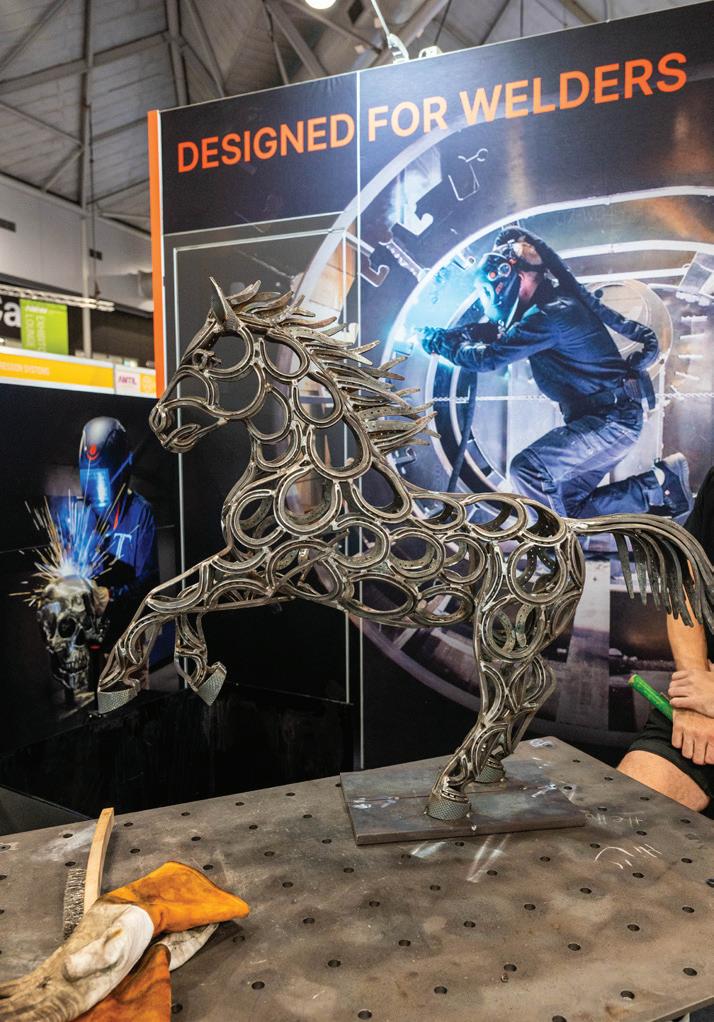
“The one thing that sets us apart is that all our equipment is designed in house by welders,” Shaw said. “They’re tested to the highest industry standards.”
BOC demonstrated how welding performance, gas technology and automation are increasingly connected. As Kyle Scott said, “we have four live demonstrations, including wire arc additive manufacturing, aluminium welding, high speed stainless steel welding and a cobot demonstration with integrator Diverseco.”
BOC showcased its EVOS 300 bar cylinders, shielding gas developments and new digital gas system, which can be retrofitted or installed to help improve control and monitoring. Plus, BOC welcomed Chaz Mostert from the Walkinshaw TWG Racing team to their stand, giving attendees the chance to meet Chaz and chat all things motorsport.
South Pacific Welding drew strong interest, with the AXXAIR orbital welding system on display. Designed for high spec applications, the system delivers clean, precise, and repeatable results.
According to Jason Cocking from SPW, “Our range covers everything from budget friendly machines to high end European made EWM equipment, along with products from suppliers including ESAB and WIA, plasma machines, gas equipment, engine driven machines, safety products and fume‑reduction solutions.”
“Supplied air is a big topic at the moment in regards to reducing fume,” Cocking said. “We have a
range of products around personal protection, but also gases and specialty wires to reduce the amount of fume that is released into the atmosphere.”
“AMW is a key event for us as a distributor and exhibitor,” Cocking said. “A lot of our customers don’t get another opportunity to see all our products at once.”
Weldclass was busy, demonstrating their ALLCLEAR® FP series, which was developed for situations where access, flexibility and effective fume control all need to work together. By drawing fumes and grinding dust directly down through the work surface, the system keeps the tabletop clear for fixture point setups, cobots and robotic applications, without the restriction of overhead hoods or articulated arms.
Alphaweld took the opportunity to launch the brand new Betaweld PASIV8 at AMW, as well as demonstrating the cutting edge technology of the KUTAVAR CNC Plasma table.
Coregas used AMW2026 to highlight the growing importance of gas quality and process control across welding, cutting and additive manufacturing. Drawing on the global expertise of Nippon Sanso Holdings Corporation, the company showcased the 3DPro® Purifier with Nanochem®
Technology, designed to reduce oxygen and moisture at the point of use and support more consistent, high quality additive manufacturing outcomes.
Also on display was MiruGas®, a monitoring technology for applications such as additive manufacturing, laser cutting and welding, giving manufacturers clearer insight into gas performance where consistency and repeatability are critical.
At the Weld Australia stand, the focus was on training, quality and industry capability. The Soldamatic augmented reality welding simulator proved especially popular with school groups, giving students a chance to experience virtual welding and see how technology is being used to support skills development.
Visitors also showed strong interest in Weld Australia’s welding defects display, which prompted conversations about inspection, quality and best practice.
Weld Australia CEO Geoff Crittenden said, “Technology has an important role to play in attracting the next generation to welding, but it also helps reinforce the fundamentals: quality, safety, inspection and good practice. The level of interest we saw at AMW shows that manufacturers understand welding skills are critical to Australia’s future industrial capability.”
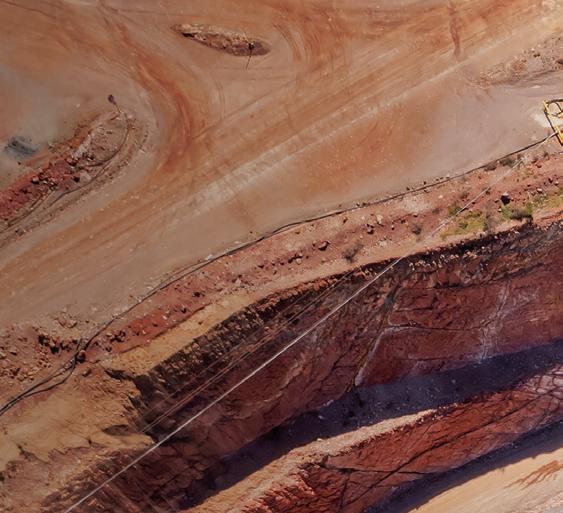





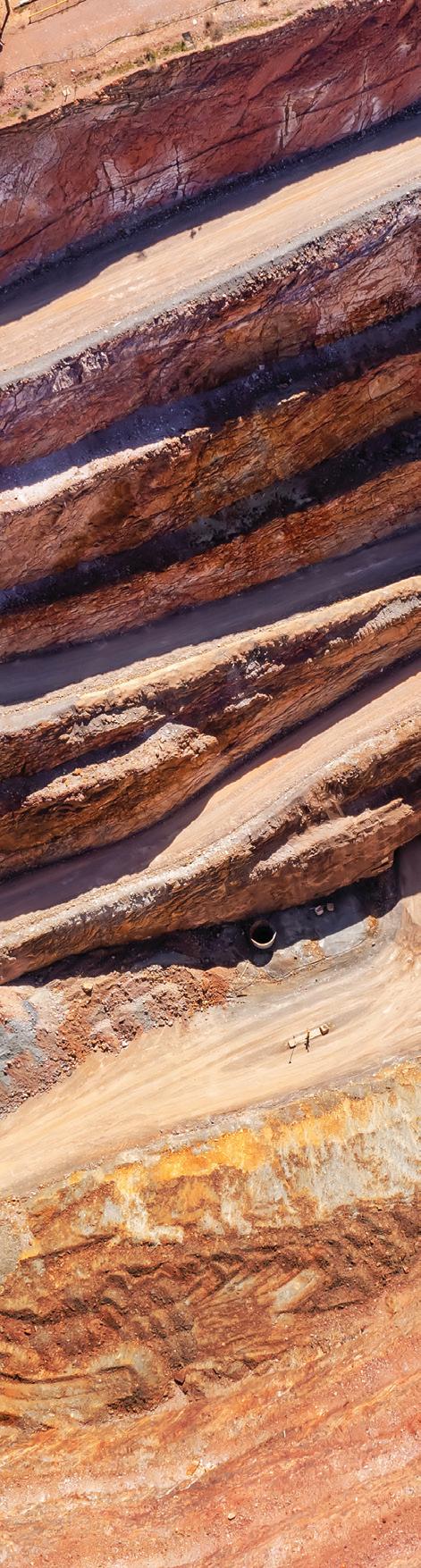

Long one of Australia’s largest industrial sectors, mining and resources are strong drivers of the nation’s advanced manufacturing industry.
58 Manufacturing for Mining: Australia’s Industrial Backbone
60 MaxMine: Turning Mine Data into Measurable Operational Improvement
61 Technofast Brings Hydraulic Precision to Mine Maintenance
62 Steel fabricator lifts productivity by 20% while reducing welding fumes
64 RCR Marks 50 Years of Engineering
65 Scandium: The Rare Earth Metal the World Can’t Get Enough of
Mining has long been one of the pillars of the Australian economy. But behind every open-cut mine, underground operation, processing plant and port facility sits another critical sector: the manufacturers that design, build, repair and improve the equipment that keeps the industry moving.
For Australian manufacturing technology suppliers, mining is not only a customer market. It is a demanding test bed for engineering capability. The sector requires heavy fabrication, precision machining, hydraulics, wear components, automation, robotics, materials handling systems, sensing, control systems, safety technology and increasingly sophisticated digital tools. In many cases, mining has helped Australian manufacturers become world class by forcing them to solve difficult problems in harsh environments.
The scale of the opportunity remains substantial. The Department of Industry’s December 2025 Resources and Energy Quarterly forecast Australia’s resources and energy export earnings at $383 billion in 2025–26 and $374 billion in 2026–27. Export volumes are expected to remain robust and rise close to record levels in 2027, even as some commodity prices soften.
Iron ore is expected to remain Australia’s largest resources earner, accounting for about one quarter of export earnings over the next two years, while gold earnings are forecast to reach $69 billion in 2025–26 and $74 billion in 2026–27.
This is a large, active and capital intensive industry.
According to the latest available Austmine National Survey, mining equipment, technology and services (the METS sector) generated $114 billion in revenue in 2020, with two thirds of companies exporting $17 billion in goods and services.
More recent investment data shows the underlying demand environment remains substantial: the Australian Government’s Office of the Chief Economist’s most recent Resources and Energy Quarterly reported that Australia’s resources and energy industries invested $13.7 billion in the September 2025 quarter, up 5% year on year, while total mining industry investment is expected to rise modestly to around $55 billion in 2025–26.
For manufacturers, those numbers translate into real demand: conveyors, crushers, screens, pumps, mobile plant components, fabrication, wear liners, valves, fasteners, electrical enclosures, lifting equipment, monitoring systems and specialist tooling.
Mining operations run continuously, often in remote locations, and downtime can be extremely expensive. Suppliers that can improve reliability, reduce maintenance time, extend component life or improve worker safety are solving problems that have direct commercial value.
The mining market, however, is never static. ABS data for 2023–24 shows the mining industry recorded the largest fall in operating profit before tax among selected industries, down $66.7 billion, or 27.4%, while mining earnings declined $42.4 billion, or 15.4%. That does not remove the long term opportunity, but it highlights the cyclical environment in which mining manufacturers operate. Commodity prices, global demand, energy costs, project timing and capital discipline all affect purchasing decisions. That volatility shapes what miners want from suppliers. They are not simply looking for equipment; they are looking for lower total cost of ownership. A locally manufactured solution that costs more upfront may still win if it reduces shutdown time, improves availability, lowers energy use, reduces labour intensity, improves safety or avoids the risk of importing critical parts during a disruption.
Western Australia illustrates the scale of the industrial ecosystem. In 2024–25, WA’s mining industry supported 134,009 on site full time equivalent positions, with iron ore employing 65,496 FTEs and gold 35,672 FTEs. WA’s mining and petroleum industries recorded $33 billion in investment in 2024–25, while projects under construction
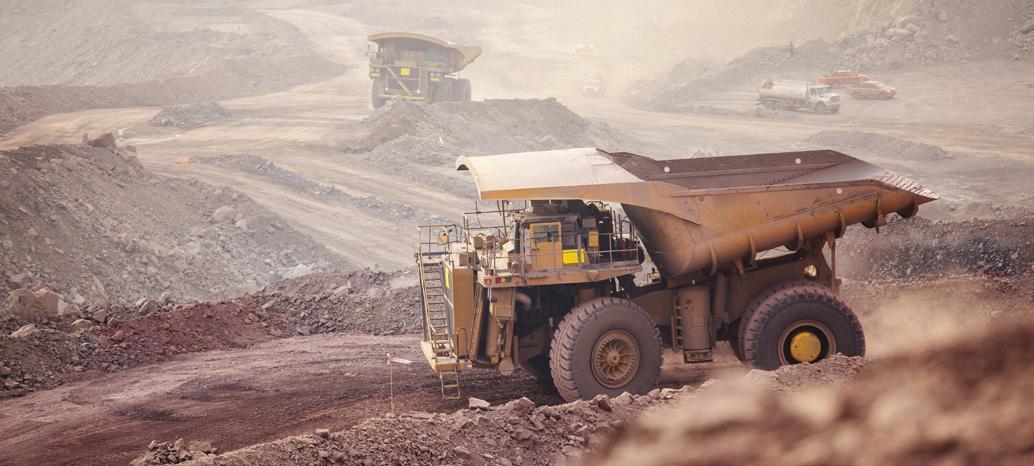
and committed were valued at an estimated $49 billion as of September 2025. Medium and longer term projects were valued at an estimated $122 billion.
There are plenty of opportunities well beyond Western Australia though. Queensland coal and gas, South Australian copper and uranium, New South Wales coal and critical minerals, Tasmanian mineral processing, and emerging rare earths and battery mineral projects all need advanced manufacturing support.
Much of that work sits in areas where Australian suppliers have established strengths: custom engineering, short‑run production, repair and overhaul, rapid response, niche design and integration.
Critical minerals are adding a new dimension. According to Australia’s Identified Mineral Resources 2025, released by Geoscience Australia, Australia remained the world’s leading producer of lithium in 2024, although its share of global production fell from 51% to 43% as global output expanded more quickly.
Australia was a top five global supplier of 14 mineral commodities in 2024, including cobalt, lithium, manganese ore, rare earths, rutile, uranium and zircon. Production also increased across several critical minerals and strategic materials, including tantalum, lithium, rutile and rare earth elements.
The Australian Government has identified critical minerals processing as a priority under the Future Made in Australia Investment Framework, with measures including a $7 billion Critical Minerals Production Tax Incentive, a $566.1 million Resourcing Australia’s Prosperity initiative and $10.2 million to investigate common user processing facilities.
For the manufacturing industry, the critical minerals opportunity is not limited to mine development. The bigger prize may be in moving further down the value chain: mineral processing equipment, refining plant components, high‑purity materials, battery supply chain inputs, environmental systems, automation, laboratory equipment, filtration, separation technologies and plant maintenance. If Australia wants more downstream processing, it will also need more industrial capability around those projects.
The Department of Industry, Science and Resources forecasts critical minerals exports to increase from around $11 billion in 2024–25 to $14 billion in 2026–27, while lithium earnings are forecast to recover from $4.8 billion in 2024–25 to $6.8 billion in 2026–27. Those figures remain relatively small compared with iron ore, but they point to a market that is strategically important and likely to require higher levels of technical specialisation.
Government policy is also pushing in this direction. The Future Made in Australia agenda commits $22.7 billion over the decade to build a stronger and more resilient economy, maximise opportunities from the net zero transition and secure Australia’s place in a changing global environment. For manufacturers supplying mining, this policy environment
matters because it encourages investment in sovereign capability, local processing, clean energy supply chains and industrial resilience.
At the same time, the mining sector is under pressure to improve productivity and reduce emissions. That is creating demand for technologies that help mines operate more efficiently: automation, electrification, advanced sensing, remote operations, fuel monitoring, predictive maintenance, digital twins, robotic inspection and safer maintenance tools.
Manufacturers that can combine physical products with data, software or service models are likely to be better placed than those selling components alone.
This is where the boundary between manufacturing and METS is becoming less clear. A company may fabricate a chute, machine a precision component, build a hydraulic tensioning system or design a feeder, but increasingly it may also provide monitoring, installation support, refurbishment, data insights or lifecycle services. In mining, product reliability and service responsiveness are often as important as the original equipment itself.
Skills remain a major constraint. The Minerals Council of Australia reports that mining employed about 290,100 people in 2024–25 and supported around 11,000 apprentices, with many more jobs linked through supply chains.
Manufacturing suppliers face the same pressure: shortages of machinists, welders, fitters, engineers, automation specialists and technicians. The companies that invest in apprenticeships, cross training, digital capability and safer, more attractive workplaces will be better positioned to support mining customers.
The other challenge is scale. Australian manufacturers are often excellent at customisation, innovation and problem‑solving, but mining customers may require national service coverage, documentation, quality assurance, safety systems, traceability and the ability to support large fleets or multiple sites. For smaller suppliers, partnerships with OEMs, larger integrators or regional service networks can be essential.
Despite these challenges, Australian manufacturers have a strong value proposition. They understand local mining conditions. They can work closely with customers. They can respond quickly to breakdowns and shutdown windows. They can design for specific ore bodies, climates, maintenance practices and site constraints. They can also offer sovereign resilience in a market where long international supply chains remain vulnerable.
The future of manufacturing for mining in Australia will not be defined by volume alone. It will be defined by capability: the ability to deliver equipment and technology that improves safety, productivity, sustainability and reliability.
The strongest opportunities will sit where manufacturing expertise meets mine site problem solving.
Open-cut mining has never lacked data, but much of what is collected is incomplete, inconsistent or of too poor quality to reliably support decisions. At the same time, vast quantities of machine-generated data remain underused or missed entirely. Across modern mine sites, haul trucks, excavators, mobile equipment, fleet management systems and operational teams generate huge volumes of information every shift. The challenge is turning that data into decisions that improve safety, productivity, cost control and sustainability on the ground. That is the problem MaxMine has set out to solve.
Founded in 2015, MaxMine is an OEM agnostic Australian technology company focused on open pit mine sites. Its platform captures, processes and analyses operational data from load and haul fleets, using proprietary hardware, high resolution data collection, machine learning, AI and coaching services to help mine operators identify and implement practical improvements.
For CEO Shaun Mitchell, the opportunity is clear. Mining, he says, has historically been one of the last large industrial sectors to fully digitise its core operating environment. That delay is understandable: open cut mines are harsh, mobile and complex environments where data acquisition is difficult, communications can be unreliable and technology often needs to be purpose built.
“The mining industry was probably one of the last really big industrialised areas that hadn’t really digitised,” Mitchell says. “There was a real opportunity to provide more data to help improve mine safety, productivity and sustainability.”
MaxMine’s approach can be understood in three parts. The first is data capture. The company installs its own proprietary hardware on mining equipment, focusing particularly on the load and haul fleet from drill and blast through to the waste pile or run of mine pad. According to Mitchell, MaxMine works across up to 132 different makes and models of equipment, collecting data from haul trucks, diggers and related assets.
The second part is the application layer: the analytics, reporting, dashboards, mobile apps and wallboards that transform raw operational signals into usable information. MaxMine’s platform provides web dashboards, email reports, wallboards and mobile access, designed to give different roles on site visibility over performance during and between shifts.
The third part, and one Mitchell sees as a key differentiator, is coaching. “The key part of what we do is behavioural change,” he says. “It’s not just, ‘Here’s the data, good luck with that.’ We work with customers to help them implement practical change.”
“Mine sites are complex operating systems. A productivity issue may not have a single cause. It may be connected to payload, haul road condition, queuing, idle time, operator behaviour, equipment health, shift practices or mine design. MaxMine uses diagnostics to identify which levers are most likely to deliver improvement, then works with site teams to act on them.”
The richness of the data is central to the model. Mitchell says MaxMine collects information from almost every sensor available on a truck or digger, at around one second intervals. That high frequency data is then synchronised and classified using machine learning and verification processes, allowing the system to understand not only that a truck has stopped, but why it has stopped.
“Is it because the truck is waiting for an excavator? Is it in a queue? Is it traversing somewhere else? We can provide all of that context,” Mitchell says.
That context can be especially important for safety. Mitchell gives the example of a fully laden haul truck travelling down a ramp.
“MaxMine can identify the truck’s payload, gear, speed, location, braking and retarder use, active machine alerts, nearby equipment and even whether a water cart had passed through the area recently. In effect, the system can operate like a black box for incident investigation.”
MaxMine has supported more than 230 incident investigations, captured more than 14 million equipment operating hours, and more than 584 million tonnes are tracked and optimised annually through the platform.
For operators, supervisors and superintendents, the value is not in the volume of the data, but in what it enables them to do differently.
“If you’ve got one operator who is slow and the rest are speeding, you’re only ever going to go as fast as the slowest truck,” Mitchell explains. “Your trucks will end up queuing somewhere anyway.”
“When a load and haul circuit is working well, the result is almost choreographed: trucks moving through the pit at consistent speeds, arriving at the digger at the right time, with minimal waiting and reduced risk.”
MaxMine also uses gamification and benchmarking to support behavioural change. Operators can see performance league tables, compare crews and understand how their behaviour affects agreed KPIs. “This helps create buy in, particularly when site teams can see the connection between safer operation and improved performance,” says Mitchell.
Productivity gains can be significant. “When we start working with a new mine, the site can typically expect a 15% to 30% productivity improvement, depending on size, maturity and operating conditions. These gains may come from reducing idle time, queueing and hang time; improving payloads; identifying haul road issues; improving truck efficiency; and changing operator behaviour,” Mitchell says.
The same principles can also support sustainability. While market focus can shift between decarbonisation, productivity and fuel cost depending on economic conditions, the underlying levers are often aligned. Better haul roads reduce rolling resistance. Less idling reduces diesel use. More efficient circuits reduce unnecessary travel. Improved productivity can therefore contribute to lower fuel consumption and emissions.
For open cut mine sites, the promise of MaxMine is practical: fewer blind spots, better decisions and measurable improvement. In a sector where small changes in payload, cycle time, safety performance or fuel use can translate into substantial operational value, the ability to turn high resolution data into action could become one of the most important capabilities on site.
In mining, where large machinery, heavy loads and tight shutdown windows are part of everyday operations, the way a bolt is tightened can have significant consequences. A difficult to remove nut can turn a planned maintenance task into a time consuming and hazardous job, while poorly tensioned fasteners can contribute to downtime, equipment damage or safety risk.
For Australian manufacturing company Technofast, the answer lies in using simple hydraulic power to apply direct, controlled tension to bolts and shafts. Its patented hydraulic fastening systems are designed to improve the speed, precision and safety of standard bolt fastening in critical industrial applications.
The company’s story began far from a mine site. Founder and CEO John Bucknell grew up on a farm, where repairing disc plough bolts sparked the idea.
“If you broke a disc, you had to get out there in the hot sun and bash it all apart with a hammer and put it all back together again,” Bucknell recalls. “I came up with the concept of using a grease gun, which I knew produced a lot of hydraulic pressure, to make up a hydraulic nut.”
From that practical starting point, Technofast developed into a specialist supplier of hydraulic tensioning technology. Early support from Dr Duncan Gilmore at the University of Queensland helped refine a hydraulic nut that could apply tensile load and retain it through the locking system. The technology later moved into mining with assistance from BHP, before expanding across metal preparation, steel, power generation and other heavy industries.
Mining has remained a major focus. Technofast’s applications include crushers, screens, dragline support ropes, foundation bolts and other critical fastening tasks. The company works with OEMs and mining operators, including customers across coal, iron ore and gold, as well as overseas markets such as Namibia, South Africa and Mongolia.
Safety is Paramount
For Bucknell, the safety case is central. “Even when torque wrenches are used, someone still needs to hold the tool, creating potential for hand and crush injuries. In contrast, Technofast systems can be connected together, tensioned simultaneously around a flange and operated from a distance. It makes the process much safer.”
One of the company’s most important mining developments is the EziTite Hydraulic Head Nut System, developed to replace standard mantle head nuts on gyratory crushers. The project was supported by the Advanced Manufacturing Growth Centre and marked an expansion of the EziTite Hydraulic Nut range into new markets.
In practical terms, the product targets a maintenance problem familiar to quarrying and mining operators. The head nut holds the cone
into the crusher. As the mantle wears and elongates, it can tighten the nut, making removal difficult.
“Traditionally, crews may have used a gas axe, sometimes near epoxy used to seat the mantle, creating fumes and additional risk. With the hydraulic head nut, we’re able to pump it up, release the locking mechanism and then wind it off. That’s a great increase in worker safety and efficiency.”
The Four Es
Mining operations are often measured in downtime, availability and production losses. Technofast’s hydraulic systems are designed to apply controlled force directly, helping crews complete fastening and release tasks efficiently, effectively and safely.
“Hydraulic tensioning offers a higher level of accuracy than conventional torque based methods. With torque tensioning, you’d be lucky to get 15% either side of your stated specification,” Bucknell says. “Using hydraulic tensioners, you can get well within 2%.”
“We’re not selling something that’s cheaper,” he says. “We’re selling a system that is going to save money in the long run. We stress the four Es: ergonomic, efficient and economical, and (mechanical) efficacy. Do it once, do it right, and do it quickly.”
After three decades in Australia, Technofast’s proposition remains grounded in a straightforward idea: use hydraulic power to make critical fastening safer, faster and more accurate. In mining, where maintenance outcomes directly affect productivity and worker safety, that simplicity may be its greatest strength.
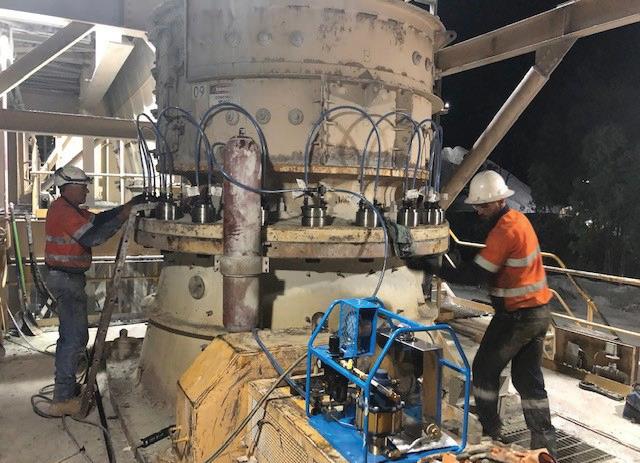
NEACH is a long‑established structural steel fabrication business in South‑East Queensland that has operated continuously for more than 50 years. NEACH partners with Tier 1 and Tier 2 contractors to deliver critical infrastructure across government, defence, commercial, and resources sectors.
Ryza Garbacz, CEO and Managing Director of NEACH says they are a continuously improving enterprise that takes pride in high quality precision steel fabrication, investment and innovation.
“Innovation isn’t just about welding equipment. It’s about creating safer, more sustainable and more productive outcomes for clients and employees.”
Achieving efficiency as projects grow
NEACH delivers projects consistently in the $5m to $20m contract value range to a high standard, with efficiency a key challenge as project sizes grow. With demand increasing across multiple South‑East Queensland sites including major rail projects, efficiency gains were essential. This required the team to scale productivity without compromising on quality or safety.
This led NEACH to review its welding capability with support from BOC’s Application Technology Centre in Rocklea and BOC application specialists. The facility gave the NEACH team an opportunity to compare different welding machines operated by a welding cobot, and to assess how modified GMAW transfers could benefit fume output and cleanup.
Ryza stresses the importance of both continuous improvement and investment in new technologies.
“We always strive for that one percent continuous improvement every day. It adds up to a lot over the course of a year. However, investing in new technologies can also give you a massive leg up in productivity gains and safety outcomes.”
Following the review, NEACH invested in a fleet of new EWM welding machines including 14 EWM Phoenix XQ 400 and 2 EWM Titan XQ 500, exclusively supplied by BOC. Whilst costing more than a standard machine, they provide supreme arc control, deeper penetration, and reduced fume exposure, setting a new benchmark for fabrication capability.
The EWM Phoenix XQ 400 is a modular inverter welding machine that offers MIG/MAG (standard and puls) with MMA, TIG and arc air gouging capabilities. Ideal for medium to heavy duty applications that require higher output and productivity, it comes pre‑programmed and utilises EWM patented processes including forceArc® XQ for even better welding results.
forceArc® XQ is a low‑heat and directionally stable process with a powerful arc with deep fusion penetration for the upper power range. It has a significantly lower included angle in comparison to standard welding processes. This means fewer welding passes, reduced weld volume, faster weld times and reduced wire consumption.
Ryza explains the investment came down to the machines having the right components and processes to meet client expectations.
“These machines have all the right components to give you a very stable control of voltage, current and supreme arc control. We identified the benefit of investing in these machines, and speeding up the time it takes to achieve the quality product that our clients expect.”
Immediate benefits delivering value for customers and welders
For the NEACH team, the benefits of the welding machine upgrades were immediately visible in time and cost efficiency, quality and reliability – giving them confidence to achieve first‑time quality on every job.
Ryza says in just one month after investing in the new welding machines, the workshop lifted production by 20% with reduced re‑work, clean up and downtime. This resulted in faster delivery with product achieving first‑pass quality.
Dedicated synergic lines for welding wire and BOC ARGOSHIELD 10 in GMAW/GMAW Puls, forceArc® and forceArc® Puls processes, together with the new welding equipment has meant a faster and easier set up for quality welds.
The supreme arc control and penetration has resulted in stronger, more reliable welds across all projects.
Ryza explains that as a Certified CC3 Structural Steel Fabricator, NEACH is achieving consistent results for compliance.
“Our workers can pick their torch up, run a weld and it’s very accurate. Amp and voltage control is absolutely supreme. If you’ve got good quality equipment that’s reliable and works the first time every time, you’re going to get much better production and happier staff as well.
“The forceArc® XQ control gives us a deeper penetration into all fillet and butt welds. At the end of the day, we’re joining material. We want to make sure that each joint is done really well and if we’re getting better penetration, it’s a better outcome for everybody.”
Improved safety, wellbeing and energy use
With a new workplace exposure standard for welding fumes implemented in Australia in 2024, welding fume reduction is a priority for many fabrication businesses. In the NEACH workshop, the pulse function of the EWM machines reduced fume output and fatigue with less manual adjustment required.
“This investment has boosted team morale with precision equipment that improves consistency, safety, and ease of operation.”
There has also been added energy savings benefits. When compared to standard spray arc, forceArc® processes and high efficiency inverter technology of the EWM machines can deliver up to 60% total electricity cost savings. These savings are further enhanced by weld seam geometries that use less wire and gas. Together with shorter welding times and minimal finishing work, this conserves energy but also saves production costs.
For NEACH, the decision to invest in new technologies and embrace new processes came at the right time, matching its strong ambition for growth and efficiency. The approach was not simply replacing machines; it was testing how equipment, process settings, consumables and specialist support could work together to improve the overall environment.
This reflects a broader challenge for Australian manufacturers. As project complexity increases and skilled trades remain under pressure, incremental productivity gains and technology investment can make a measurable difference in future success.

For RCR Mining Technologies, reaching 50 years in business is not simply a matter of history. It is a measure of staying relevant in one of the world’s most demanding sectors.
Headquartered in Western Australia, RCR is an original equipment manufacturer and integrated engineering solutions provider specialising in bulk materials handling equipment and manufacturing solutions for the global mining, industrial, defence, rail and renewables markets. Its product range includes apron feeders, belt feeders, sealed pan feeders, conveyors, stackers, isolation gates, hydraulic power units, trommels and other equipment designed for harsh operating environments.
For Mark Hayward (Manufacturing Manager APAC), the company’s longevity comes back to a strong culture of innovation, as well as two fundamentals: people and quality.
“We look after our people and their safety. That’s our priority,” Hayward says. “It has always been at the heart of what we do. We want people to go home safe, and to feel valued.”
That focus sits alongside a long standing commitment to manufacturing standards. “Right from the start as a small manufacturer, we maintained the highest standard of quality,” he says. “Others might do it cheaper and quicker, but not us. We provide value across the full product lifecycle when it comes to quality and we are ISO certified.”
Founded in 1975, RCR has grown from a regional supplier of mineral processing equipment into a business supplying national and international markets. The company now operates across multiple sites and supplies equipment into markets including North America, South America, Africa, Kazakhstan and Mongolia.
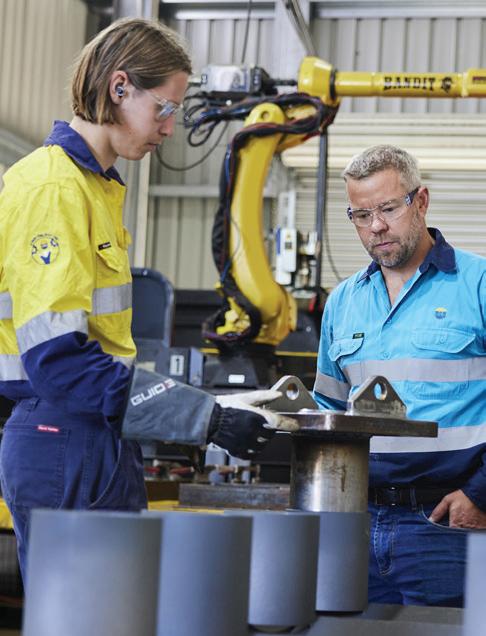
Hayward says around 65% of RCR’s work is linked to iron ore, with other customers in gold, copper, lithium and mineral sands. The company designs and manufactures award‑winning materials handling systems, while also providing installation, maintenance, spare parts and repair support.
“A lot of competitors don’t do the one stop solution, but we do, right here in WA,” Hayward says. “Clients come to us with unique problems, and we can manufacture a bespoke solution that meets their needs.”
One recent example is the RCR Sealed Pan Feeder, which Hayward describes as a game changer. “Traditional apron feeders can allow leakage or fine ore dust to escape as they rotate, sometimes requiring a dribble conveyor underneath. RCR’s sealed pan feeder combines the robustness of an apron feeder with the sealing properties of a belt feeder, eliminating the need for a dribble conveyor or integrated belt.”
“The result is a low profile design that reduces leakage, downtime and maintenance. This is essential in mining, where every dollar matters,” he says.
Investment in Automation
RCR has invested in its own manufacturing capability, introducing robotic welder arm technology at its Bunbury workshop. The move was driven by demand for repeat spare parts for RCR equipment, where welding was labour intensive and difficult to scale.
The robotic system reduced cycle time from 60 minutes per item to 20 minutes, while improving repeatability and safety. The system also reduced lifting requirements by up to 75% and removed operators from fumes, radiation, sparks and other hazards.
“It was our first step on the robotics journey,” Hayward says. “It frees up skilled welders for more important tasks and creates a new skills development pathway for operators.”
Diversification into Renewables
RCR is looking beyond mining. The company was recently awarded funding through the WA State Government’s Wind Energy Co Investment Program to support production of components for wind turbines. Hayward says the grant will help fund equipment and facility upgrades, including a large machining centre, a portable mill for final finishing, a robotic welding cell and electrical upgrades.
The move reflects a broader diversification strategy, applying RCR’s established mining manufacturing capability to the growing renewables sector.
For Hayward, the opportunity for manufacturers is to keep thinking differently. “The key to continued success for Australian manufacturing is investing in people, embracing new methods and technologies, and not compromising on quality.”
Rod North – Managing Director, Bourse Communications
Scandium sits at the intersection of aerospace, clean energy, and next-generation telecoms. Its strategic importance has never been greater. Despite being one of the rarest critical metals and having numerous vital applications across a variety of sectors, globally scandium supply relies solely on byproduct production.
Scandium is one of the world’s rarest, and consequently most valuable, critical metals. Current prices on the Shanghai Metals Market range between US$3,000‑3,500/ kg, approximately 1.5 times the value of silver.
Scandium Market Dynamics
Whilst Scandium is a unique strategic and critical rare earth metal, globally there are no mines where it is the primary metal being produced. The U.S. Geological Survey estimated global production of scandium oxide was 60 tons in 2025 up 50% from 40 tons in 2024. Supply currently relies on low concentration by‑product extraction from mines producing other metals primarily nickel and titanium. China dominates the global scandium market as the primary producer, with Beijing’s grip tightening further in April 2025, when the government imposed specifi c controls on metal, alloys, oxides and compounds. Though more recently in December 2025, this policy was revised with China beginning to issue general licences for rare earths to selected exporters.
Scandium’s primary uses are in alloying with aluminium to make it lighter and stronger, solid oxide fuel cells and next generation 5G/6G networks. Scandium‑aluminium alloys provide exceptional strength‑to‑weight ratios which have critical applications in the aerospace, automotive and defence providing lighter parts, extended component life cycles and lower fuel use. In solid oxide fuel cells, scandium stabilised zirconia electrolytes enabling 60‑70% electrical effi ciency which improves decarbonisation efforts while in 5G/6G telecommunications, scandium components improve signal quality and effi ciency.
Scandium is a highly sought‑after commodity particularly for the aerospace, aeronautical, automotive and defence industries, but due to its supply constraints and consequent high price, it has only seen limited introduction into manufacturing processes. It is expected that with more supply into the market scandium‑aluminium alloys will be adopted more widely into the production processes of these industries, to great effect.
Australia’s Position & Native Title Progress with Ngaanyatjarra Traditional Owners
Australia is well positioned to become a major global supplier of scandium with projects that include scandium as the secondary commodity being evaluated. The Fifi eld district in new South Wales has several projects including the benchmark Sunrise Energy Metals’ (ASX: SRL) Syerston deposit which is undergoing feasibility. Sunrise Energy Metals’ share price has seen an increase of over 3,000% in the last year alone, with the company now having a market cap of over 2 billion dollars, speaking to the major interest in scandium exploration and companies that are looking to bring more supply to the market.
The earlier stage Olympus Scandium Project located in the West Musgrave region of Western Australia is owned by Hawk Resources Limited (ASX: HWK). Hawk believes that Olympus represents an opportunity to discover a new scandium district following a review of exploration results from work completed 20 years ago. Critically the historical exploration was for copper, nickel, platinum group metals and cobalt ‑ scandium was not a sought‑after commodity at the time.
The review of past exploration identified a 7km x 4km soil anomaly grading +500ppm Sc with individual soil samples grading up to 1,200ppm Sc. The past work also included 24 shallow RAB drill holes spaced at 200m intervals along 4 traverse lines which intersected high grades of scandium from surface including 11m @ 934ppm Sc, 5m @ 948ppm Sc and 6m @ 821ppm Sc. All of the RAB holes intersected anomalous scandium over minimum thicknesses of 2m with grades exceeding 300ppm Sc. Individual 1m sample intervals down the holes assay up to 2,037ppm Sc.
Importantly none of the RAB holes were drilled within the soil anomaly although two lines traversed separate scandium soil anomalous zones. All the scandium assays were taken using a portable XRF analyser and the RAB results support the earlier soils.
After picking up the project in October 2025, Hawk announced an Agreement for Mineral Exploration with the Ngaanyatjarra Traditional Owners in May which marks a major milestone on the path to commencing exploration. Following completion of a cultural heritage survey on the ground and ministerial consents, work on the ground is expected to commence in June 2026 with the first phase being soil sampling and lab assaying to confirm the historical results. If this proves successful, exploration to delineate the highest priority zones for drilling will follow.
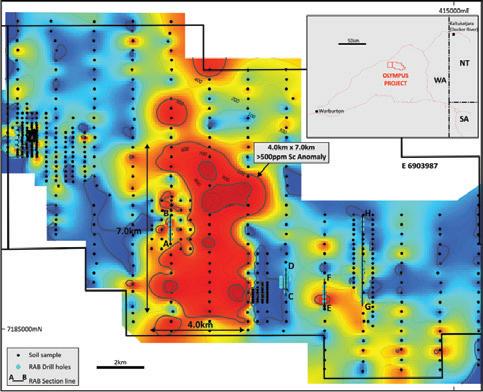


help you make informed decisions within your organisation.
68 Navigating the New Normal: How Australian Manufacturers Can Survive the US Market Shift
69 Amiga Engineering – an Award Winning Business at the Forefront of Advanced Engineering Technology
70 What the Federal Budget Means for Manufacturers
72 The Hidden Cost of Small Inefficiencies in Australian Workshops — Practical Observations from the Field
73 Equipment Data Acquisition – Global Semiconductor OEMs Required to Transition to SEMI’s EDA
74 AI Compliance Basics — Moving from Policy to Real World Implementation
76 Opinion: The SERD Report Identified the Chasm, But Missed the Bridge Concepts and information to
Practical guidance on tariffs, compliance and supply chain challenges
By Adam Nichol, Nichol Industries/G’day Gateway & Ben Nichol, G’day Gateway
The export relationship between Australian manufacturers and the United States has changed significantly. Policy uncertainty is replacing a previously stable trading environment, creating new challenges for exporters. As Australia’s second largest trading partner for manufactured goods, the US remains critical, and manufacturers that adapt quickly will gain a lasting competitive advantage.
Recently introduced sweeping reciprocal tariff frameworks treat many imported goods as leverage in broader geopolitical negotiations within US trade policy. Australia’s strong diplomatic relationship has not translated into tariff exemptions. Exposed industries include metals and fabricated products, food processing equipment, medical devices, and precision manufacturing. A 10–25% duty applied to the US customs value can quickly eat through operating margins.
Understanding the correct Harmonized Tariff Schedule (HTS) classification is imperative to prevent paying higher duty rates than required. Engaging a licensed US customs broker to audit your current classifications and apply for binding tariff rulings where applicable can deliver meaningful savings.
Regulatory
Tariffs are visible but regulatory missteps are often invisible until they become expensive. The complexities of US federal and state regulatory environments catch Australian businesses off guard with surprising regularity.
FDA oversight extends beyond pharmaceuticals and medical devices, including food contact materials, certain industrial chemicals, and equipment used in regulated manufacturing processes. The Federal Trade Commission governs labelling, advertising claims, and country of origin requirements. State‑level rules add further layers around environmental compliance, product safety, and occupational health.
Strengthened procurement rules under recent US ‘Buy American’ legislation mean that government contracts and federally funded projects increasingly require domestic content thresholds that most Australian suppliers cannot meet. If public sector procurement is part of your US strategy, this needs immediate reassessment.
Consider engaging US regulatory counsel proactively. A compliance audit before market entry costs a fraction of a product recall, FDA warning letter, or state enforcement action.
Currency and Pricing Pressure
Recent macroeconomic turbulence has placed increased importance on managing the risk of AUD/USD volatility. Australian manufacturers quoting in USD face a squeeze: a weakened Australian dollar raises costs in local terms and a strong dollar compresses margins on existing US contracts.
US customers expect pricing stability. Renegotiating contracts mid term damages relationships and signals vulnerability. The solution is to build currency adjustment clauses and price escalation provisions into contracts, a standard practice in international trade that is often missed by Australian exporters unfamiliar with US norms.
Your bank’s trade finance team or an independent foreign exchange specialist can model scenarios relevant to your contract profile. The goal is not to eliminate currency risk, but to make it manageable and predictable.
The United States is a collection of regional markets with different buyer behaviours, logistics infrastructure, and
competitive dynamics. An Australian manufacturer that succeeds in the Pacific Northwest may fall flat in the Southwest. Finding reliable US distribution partners is often underestimated. Without local credibility, warm introductions, or a US presence, gaining traction can take 12–18 months or more. Many Australian manufacturers also overlook the importance of US based customer service. Compounding this, growing “Made in America” sentiment means businesses must compete on value and differentiation, not price alone.
To succeed, business should see the US market as a long term investment, not an opportunistic revenue stream. Several actions can build resilience:
• Audit your tariff classifications. Retain a licensed US customs broker to verify HTS codes, identify any reclassification opportunities, and apply for binding rulings. A single reclassification could reduce duty costs at scale.
• Build currency protection into contracts. Include price adjustment mechanisms tied to defined AUD/USD bands. Buyers who understand international trade will accept this as standard.
• Use a US Third Party Logistics (3PL) provider. Instead of asking US customers to wait 4–6 weeks for ocean freight, you can ship next day from a domestic location. This improves bid competitiveness, and it reduces per unit landed costs compared to air freight.
• Secure cross border business insurance. Many Australian policies do not cover US product liability, errors and omissions, or commercial legal disputes governed by US law. US litigation risk is higher than in Australia, so seek coverage before your first sale, not after your first claim.
• Leverage Austrade and the Australian American Chamber of Commerce. Both offer warm introduction networks, local market intelligence, and in some cases, access to US buyers actively seeking Australian suppliers. The advantage these organisations provide is underused by many Australian manufacturers.
• Diversify your US customer base. No single US client should represent more than 30–40% of your export revenue. Concentration risk is a structural vulnerability. Build the pipeline before you need it.
The Opportunity in the Uncertainty
The situation is not purely adverse, disruption reshuffles competitive advantage. Many businesses. including some US suppliers, are equally ill prepared. Genuine technical differentiation, strong quality credentials, and the operational discipline to deliver reliably into the US market
Businesses proactively managing the situation will be best positioned when conditions stabilise.
The US market has always rewarded preparation over opportunism, only the cost of being underprepared has changed.
About the Authors
Adam Nichol is the managing director of Nichol Industries, a supplier of industrial marking and identification solutions to Australian manufacturers and strategic advisor to G’day Gateway.
Ben Nichol is the founder of G’day Gateway, a US-based third-party logistics company specialising in helping Australian e-commerce brands and manufacturers enter the US market, and Nichol Industries USA.
Founded in 1988, award winning highly professional business Amiga Engineering Pty Ltd has built a national and international reputation for delivering precision-machined and Additive Manufacturing (AM) components across such diverse industries as aerospace, automotive, space, medical, sovereign precision engineering, mining, oil & gas, food & beverage, water treatment and industrial engineering.
With in almost 20,000 square metre modern facilities based in Tullamarine, Victoria, Amiga started with just two manual machines. Today Amiga employs 20 highly skilled personnel with a combination of youth including three apprentices plus a team of long serving experienced engineers with capabilities in megatronics, chemical, aerospace and mechanical skill sets. The company has invested heavily in the latest technology with some of the most advanced 3D Additive Manufacturing systems in Australia, with castings or hybridised manufacturing routes where shapes are optimised for strength and weight. Across the aerospace, automotive and energy sectors, component designers are pushing the limits of geometry, material science and structural performance increasing the importance of this technology.
Amiga has spent years building the capacity and engineering sovereign capability designed to solve challenges with components featuring organic shapes, internal channels, multi‑axis curvature and minimal flat faces. Additive
Manufacturing metal materials currently in use at Amiga include Ni Nickel Super Alloy, AISi10Mg Aluminium, SS316L‑Stainless Steel, W 45 Tungsten, T1A14v Grade 23, Scalmalloy and 17‑4PH with many of these used in critical components in space, aerospace and highly corrosive applications. Today Amiga is one of a very limited number of companies in the world that can metal 3D print in Tungsten and the only company in Australia certified to print in Scalmalloy.
According to Amiga founder and owner Michael Bourchier, the latest Additive Manufacturing capability delivers weight reduction, customisation, lattice structures, topology optimisation, enhanced fluid flow and component consolidation leading to increased functionality.
Amiga has recently commissioned the latest FANUC Robocut Model Alpha C800iC high performance Electrical‑Discharge Machine for precision cutting of thick, stepped and tapered parts with enormous savings in machine time and running costs.
Of critical importance in the further development and enhanced capability of the company, Amiga is celebrating the most recent acquisition with the commissioning of the latest Okuma GENOS M460V 5AX Vertical Machining Centre. This machining centre is internationally recognised as one of the most capable vertical 5 axis machining centres in its class with thermal stability and micron level accuracy. It will be particularly important in the machining of complex automotive and mechatronic system components such as housings, knuckles, mounts and control interfaces which require exceptionally tight machining tolerances across non‑linear geometries. There is an air of excitement within the engineering personnel with the introduction of this machining centre as the latest technology brings new skills and advanced Okuma programming capability.
“Our strategy at Amiga is to expand Australia’s sovereign precision machining capability, to support emerging industries in space, advanced mobility and clean technology, strengthen the integration between Additive Manufacturing and CNC machining and to design without compromise delivering complex geometries consistently with repeatable quality,” said Michael Bourchier. “We are reinforcing our position as one of the most capable multi disciplinary engineering firms in the country dedicated to expanding both domestic and international markets,” he said.
This quality assured company is certified to ISO9001:2015 and AS9100D is already expanding development into highly sophisticated training drones, high performance ballistic Titanium vehicle protection and critical item component protection. Also manufactured are complex helicopter bed and medical bed mechanisms, vital components in collaboration with Gilmore Space, hypersonic launch systems for the Scramjet Engine with Hypersonic Launch Systems, optimised UAV structures, crafted ballistic suppressors and lightweight aircraft components to name just a few.
“The company has built a proven record of taking research to commercialisation with partners in Universities, DTC and DSTG and this work is acknowledged with numerous industry awards such as ‘Most innovative Manufacturer, Sovereign Industry Champion, Aus Space Award – Engineering company of the Year 2025, Vic Manufacturing Hall of Fame – Manufacturer of the Year and Apprentice of the Year 2025,” said Michael.
As part of the company’s significant diversification program Amiga manufactures industrial gearboxes and supplements this program with globally recognised gearbox brands plus extensive fabrication and maintenance of large precision items. Expansion plans for the company involves ongoing investment in technically advanced machines and robotics plus the development of tactical drones, high temperature Additive Manufacturing (AM) coatings for space components etc. as Amiga Engineering continues to build a bright future for Australian Manufacturing.
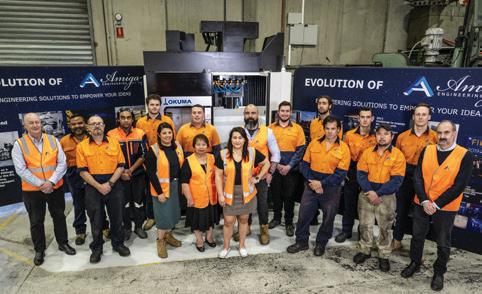
The 2026-2027 Australian Federal Budget was released on Tuesday 12 May. The budget papers contain a number of measures that may affect Australian manufacturers, particularly small and medium-sized businesses looking to invest, manage cash flow, undertake research and development, or respond to rising operating costs.
A key measure for smaller manufacturers is the decision to make the $20,000 instant asset write‑off permanent from 1 July 2026. This will allow eligible small businesses with turnover of up to $10 million to immediately deduct eligible assets costing less than $20,000. For manufacturers, this may support investment in tools, equipment, digital systems, workshop technology or other smaller capital purchases, while also providing greater certainty for future investment decisions. The Budget papers estimate this will improve small business cash flow by around $890 million over five years.
The Budget introduces a permanent two‑year loss carry‑back arrangement for companies with turnover of up to $1 billion from 1 July 2026. In practical terms, this may assist manufacturers that make new investments and temporarily move into a tax loss position, by allowing them to carry those losses back against tax paid in previous profi table years. This is intended to support investment and risk‑taking, particularly in businesses exposed to demand fl uctuations or large upfront capital costs.
For manufacturers involved in product development, process improvement or advanced technology, changes to the Research and Development Tax Incentive will be important to watch. From 1 July 2028, the Government plans to better target the incentive, including increasing offset rates for core R&D by around 25 to 50 per cent, increasing the turnover threshold for the refundable tax offset, reducing the intensity measure and increasing the maximum expenditure threshold.
The Budget also includes measures aimed at improving access to capital for start‑ups and growth businesses. These include loss refundability for start‑ups from 1 July
2028 and expanded venture capital tax incentives from 1 July 2027. While these measures will be most directly relevant to early‑stage and high‑growth fi rms, they may also affect manufacturers developing new products, commercialising technology, or operating in areas such as advanced materials, robotics, automation, clean technology, defence, space or medical manufacturing.
More broadly, the Government has announced a productivity package that it says will reduce regulatory costs by $10.2 billion a year. For manufacturers, the practical impact will depend on how these reforms are implemented, particularly in areas such as approvals, reporting requirements, payroll tax administration and business compliance.
The Budget also commits more than $39.1 billion over the forward estimates to support research and development through higher education programs, grants, scientifi c organisations, defence capability and agricultural research. Specifi c allocations include $387.4 million for CSIRO, $273 million for the National Measurement Institute, and $21.7 million for the Australian Space Agency. These institutions play roles in research, standards, measurement, commercialisation and capability development across industry.
There are also temporary measures linked to fuel and supply chain pressures, including $1 billion in interest‑free loans to assist eligible manufacturing and logistics businesses responding to market disruption. The broader Budget overview also refers to fuel excise relief, a fuel security reserve and measures aimed at strengthening fuel supply resilience.


























Why am I a member of AMTIL?


Aside from supporting our industry through membership of our peak body, I find the developed network of like-minded companies and individuals invaluable. As an engineering and manufacturing group we all face similar challenges. Often when issues arise I am able to pick up the phone and discuss a problem or get advice from other members who all share our common values and goals of seeing Australian manufacturing prosper Peter Sutton, Sutton Tools



Since 1999, AMTIL has been connecting business, informing of opportunities and growing the manufacturing community.
To learn more and become an AMTIL member, visit amtil.com.au/join-amtil, contact us at 03 9800 3666 or email info@amtil.com.au
amtil.com.au



By Dever Yang, Abrasivestocks Australia
Over the past few years working across Australia, I’ve spent a lot of time inside workshops — metal fabrication shops, automotive repair businesses, and small manufacturing operations. One thing that keeps standing out to me is not the big problems, but the small ones that happen every single day.
These small inefficiencies are easy to ignore. They don’t stop production, they don’t trigger alarms, and no one really tracks them. But over time, they quietly build up into real cost.
In abrasive related work such as cutting, grinding and sanding, consumables are constantly used. Because each item is relatively low in cost, they are often not managed closely.
But in reality, a lot of waste comes from very normal daily behaviour.
For example, a worker may switch between cutting and grinding tasks several times during the day. When changing discs, partially used ones are often left aside or mixed together. Later on, instead of finding the original disc, a new one gets opened.
The same happens with sanding discs. Many are replaced before they are fully used. Some still have 30–50% of usable life, but they are simply not used again. Individually, this doesn’t seem like a big issue. But across multiple workers and over time, it adds up faster than most people expect.
It is easy to think this is a discipline problem. In my view, it’s usually not.
Most of the time, it comes down to how the workshop is organised.
In many places, there is no clear system to separate new consumables from partially used ones. Under time pressure, people will always choose the fastest option — which is opening a new item. That is just how people often work in a busy environment.
The same logic applies to safety.
In some workshops, PPE is encouraged but not enforced, relying on reminders rather than structure. As a result, compliance is inconsistent, and this can lead not only to injury, but also lost time and disruption.
What I’ve noticed across Australian workshops is that improvements don’t always require big investment.
Simple changes can make a real difference.
For example, separating new and used consumables into clearly marked areas already reduces unnecessary waste. In one workshop I visited, they installed a simple rack to store partially used discs. Workers were encouraged to reuse them before opening new ones.
There was no strict rule, no extra supervision — but it worked.
This kind of approach aligns with basic lean principles like 5S. Not in a complicated way, but in a practical, workshop‑friendly way.
When people talk about efficiency, they often focus on speed — faster machines, faster processes.
But in real workshop environments, efficiency is also about consistency.
If materials are not organised, time gets wasted looking for things. If tools are not managed properly, work becomes interrupted. If safety is not controlled, the risk of downtime increases.
All of this affects output, even if it’s not immediately obvious.
Manufacturing in Australia is under pressure — labour costs, energy costs, and supply chain challenges are all increasing. In this environment, improving efficiency is not about major upgrades all the time. Sometimes, it’s about doing the basics properly.
From what I’ve seen, workshops that focus on small operational details tend to perform better over time.
Conclusion
In most workshops, inefficiency is not caused by big problems. It comes from small actions repeated every day without a clear system.
Fixing this doesn’t require large investment. It requires attention, structure, and consistency.
And in a competitive market, those small improvements can make a bigger difference than expected.
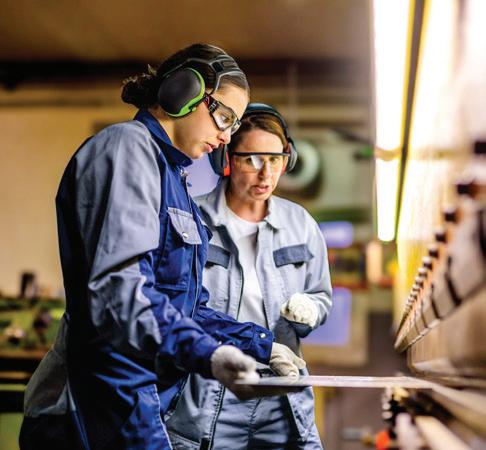
By Marc Engel, CEO, Agileo Automation
In 2005, SEMI introduced its Equipment Data Acquisition (EDA) standard, also known as Interface A, to expand its standards suite and address the global semiconductor industry’s increasingly diverse and complex needs. EDA standards facilitate and streamline communication between a factory’s data collection applications and manufacturing equipment. The evolution from SECS/GEM to GEM300 and now EDA is an important architectural evolution that reflects the increasing complexity of semiconductor manufacturing.
The original SECS/GEM standards established a robust framework for equipment to host communication and standardised equipment behavior, enabling reliable interactions and laying the foundation for automation. With the move from 200mm to 300mm wafers, GEM300 was introduced to address higher throughput requirements and advanced process control. Building on SECS/GEM, GEM300 added features such as job management, automated material handling, and material tracking that were critical to support larger wafers and increased production volumes.
As global semiconductor manufacturing moves toward higher levels of automation and data driven optimisation, and as tier‑one fabs increasingly deploy advanced nodes, heterogeneous integration, advanced packaging, and more complex device architectures, legacy protocols can no longer handle the required data velocity and contextual richness. Therefore, semiconductor equipment manufacturers need to start preparing their transition from SEMI’s SOAP based Freeze 2 to the high performance gRPC Freeze 3, enabling higher throughput, lower latency, and stronger cybersecurity for AI ready manufacturing data.
The concept of a “freeze” stabilises SEMI standards by designating mature, reliable versions that collectively form the standards suite. SEMI E178 governs freeze versions for EDA, with Freeze 2 serving as the current stable framework for high‑speed, high volume data acquisition. As part of the ongoing evolution, the industry is preparing for Freeze 3, which will introduce support for HTTP/2, gRPC, and protocol buffers, among other enhancements. While Freeze 3 continues to evolve, SEMI EDA Freeze 2 remains a reliable, proven standard that drives data acquisition and integration in today’s semiconductor manufacturing. This evolution underscores the industry’s commitment to embracing cutting edge technologies for data driven semiconductor manufacturing.
With each new process node and the growing adoption of advanced packaging techniques, the global semiconductor industry faces a steep increase in data complexity. With the upcoming Freeze 3 enhancements, SEMI EDA standards are positioned to more efficiently handle these increasing data demands. By improving data throughput and seamlessly integrating with modern analytics and AI‑driven solutions, these standards enable real time process optimisation, predictive maintenance, and more adaptive manufacturing operations. For equipment OEMs, the key
values are as follows – a stronger EDA architecture helps reduce integration friction, improve data availability for fab customers, and prepare equipment platforms for future factory requirements.
Time is of the essence for global semiconductor equipment OEMs as SEMI’s newest EDA standard Freeze 3 is expected to be released in the second half of 2026. Global wafer fab owners already require EDA for their tier one fabs and advanced packaging facilities in their RFQs. Now, the real challenge for OEMs is how quickly and safely they can transition to EDA. Here is a set of essential considerations to take into account to successfully accelerate EDA adoption without creating costly future rework:
• Full support of EDA Freeze 2 (SOAP/XML)
• Future proof architecture enabling transition to and compliance with Freeze 3 (gRPC/protocol buffers)
• Robust cybersecurity features (authentication, encrypted communications)
• High performance acquisition of structured equipment data
• Capability for the equipment model to adapt to equipment variability
• A data architecture designed for consistency across interfaces (EDA and SECS/GEM)
With the growing demand for data to improve yield in tier‑one fabs, advanced packaging, and 3D integration, EDA is becoming a baseline expectation for equipment entering the world’s most advanced fabs. There is therefore some urgency for semiconductor equipment OEMs to start working on an EDA adoption path that will deliver compliant production machines to global fab customers ahead of SEMI’s anticipated EDA Freeze 3 release this year. OEMs that act early will be better positioned to manage Freeze 2 deployments today, prepare for Freeze 3 tomorrow, and offer fab customers a cleaner, safer, and more scalable path toward data driven manufacturing.
About Marc Engel
Marc Engel is the CEO and Co-Founder of Agileo Automation, a French software company specialising in equipment control and connectivity for the semiconductor industry. With over 25 years of experience in industrial automation, he started his career as an engineer working on robotics and tool control at such OEMs as RECIF Technologies. As company CEO since 2010, Marc has led and driven the development of A²ECF-SEMI, a modular equipment automation framework used by OEMs worldwide to integrate SECS/GEM, GEM300, OPC UA, EDA, and Industry 4.0 capabilities. At the intersection of automation and digital transformation, he has been involved in research and innovation projects supporting the adoption of digital twins, model-driven development, and edge-to-cloud architectures for production equipment. Marc also supports start-ups and established OEMs in defining automation strategies and implementing SECS/GEM interfaces for successful fab deployment.
Artificial intelligence is already on the shop floor, in the office and embedded in the systems manufacturers rely on every day. The compliance challenge now is not writing another policy; it is turning good intent into repeatable practice.
Artificial Intelligence (AI) has moved quickly from boardroom discussion to business reality. Across Australian manufacturing, it is already appearing in quoting tools, production planning, predictive maintenance, quality inspection, inventory forecasting, engineering design, customer service and cybersecurity. It is often embedded in everyday software like Microsoft Copilot, ERP enhancements, CAD tools, machine vision platforms, cloud analytics dashboards and CRM systems.
That creates a problem for governance. AI is no longer a future issue that can be parked with the executive team, legal department or IT function. It is already being used by staff, suppliers and software vendors. The question for manufacturers is no longer whether they need an AI policy. The more important question is whether that policy can survive contact with the real world.
According to Andrew Lawrence, CEO of governance, risk and compliance specialist de.iterate, the gap between intention and implementation is where most organisations are now exposed.
“AI compliance does not fail because a business lacks principles,” Lawrence says. “It fails because nobody can show how those principles are applied when a team buys a new tool, trains a model, uploads production data, or relies on an AI generated recommendation.”
In manufacturing, compliance cannot be an abstract exercise. There is no value in a laminated AI policy stuck on the lunchroom noticeboard. Value comes from knowing which AI systems are in use, what data they touch, who owns them, how they are monitored, and what happens when something goes wrong.
The emergence of ISO 42001 Information technology — Artificial intelligence — Management system is an important development because it shifts AI governance from broad ethical statements to a management system approach. The standard sets requirements and guidance for establishing, implementing, maintaining and continually improving that system.
That language will be familiar to manufacturers. Many already operate within ISO 9001, ISO 14001, ISO 45001, ISO 27001 and other customer specific quality systems. ISO 42001 is not simply asking organisations to declare that they use AI responsibly. It asks them to demonstrate that AI is governed through defined processes, roles, risk controls, documentation and continuous improvement.
“AI compliance should not sit apart from existing business systems. It should connect to quality, safety, cybersecurity, privacy, procurement, engineering change control, supplier assurance and operational risk management,” says Lawrence. “Manufacturers understand management systems better than most sectors. They already know that quality is not achieved by telling people to care about quality. It is achieved through controls, records, inspections, corrective actions and
accountability. AI needs the same discipline.”
According to Lawrence, the practical starting point is simple, “You need to know what AI your company is using. You can’t govern what you don’t know.”
This is harder than it sounds. AI may be embedded in off the shelf software, used experimentally by engineering teams, or accessed by staff through public tools. It may be used to summarise documents, draft tenders, inspect welds, optimise cutting paths, classify defects, translate technical manuals, or assist with maintenance scheduling.
An AI inventory should capture, at minimum, the system name, business owner, vendor, purpose, users, data inputs, outputs, level of automation, decision impact, integrations, security controls and whether the system affects customers, workers, safety, quality or regulated obligations.
For a small precision engineering business, this might begin as a controlled spreadsheet. For a larger advanced manufacturer, it may need to sit inside a formal GRC platform, asset register or enterprise risk system.
The key is to avoid governing only the obvious AI tools. Think about your entire ecosystem. A chatbot used by office staff may pose privacy or confidentiality risks. A machine vision system on the production line may pose quality and customer assurance risks. A design assistant may introduce intellectual property and product liability questions.
Not every AI use case requires the same level of control. A tool used to draft an internal meeting summary should not be treated the same way as an AI system used to accept or reject products, generate engineering recommendations, monitor worker performance, or support safety‑related decisions.
A practical AI compliance model should classify use cases into risk tiers. Low risk uses might include internal brainstorming, document summarisation or administrative drafting, provided sensitive data is not entered into public tools. Medium risk uses might include customer communications, procurement analysis, supplier evaluation or production forecasting. Higher‑risk uses include quality inspection, design validation, safety monitoring, cybersecurity response, autonomous control systems and decision support tools that materially affect customers, workers or contractual obligations.
“The mistake is treating AI as one category,” Lawrence says. “A manufacturer using AI to tidy up meeting notes has a very different risk profile from one using AI to detect defects. Compliance has to follow the use case.”
“Risk classification should drive the level of review, documentation and approval required. A low risk tool may need basic user guidance and data handling rules. A high risk application may require formal risk assessment, validation, human oversight, performance
monitoring, cybersecurity review, supplier due diligence and escalation procedures.
Many manufacturers will consume AI through vendors rather than build it themselves. That makes procurement one of the most important points of control.
Before approving an AI enabled system, organisations should ask:
Does the vendor use customer data to train its models?
Where is data stored and processed?
How is model performance monitored?
What security certifications does the vendor hold?
What happens if the AI output is wrong?
These questions should be embedded in procurement checklists, supplier onboarding and technology approval processes. This is particularly important for manufacturers in highly regulated supply chains, including defence, aerospace, medical devices, transport, energy and critical infrastructure.
Keep Humans in the Loop (and Define What That Means)
‘Human oversight’ is one of the most common AI governance phrases, but it can be dangerously vague. In practice, it must be defined.
If a quality inspector reviews an AI generated defect flag, what are they expected to check? If an engineer uses an AI design suggestion, what validation is required before release? If a maintenance planner accepts a predictive alert, what evidence supports that action?
Human in the loop controls only work when people are trained, empowered and accountable. A human who simply rubber stamps an AI recommendation is not meaningful oversight. Manufacturers should define when human review is required, what competence is needed, what records must be kept, and when issues must be escalated.
Document Decisions and Evidence
Compliance is not only about doing the right thing. It is about being able to prove it. For AI, evidence may include an approved use case register, risk assessments, vendor reviews, data protection checks, test results, accuracy monitoring, user training records, incident logs, model change records and management reviews.
For higher risk systems, manufacturers should also consider keeping records of validation testing, false positive and false negative rates, override decisions and customer‑specific requirements.
This evidence will become increasingly important in audits, customer assurance, insurance assessments and incident response. If an AI enabled system contributes to a quality failure, data breach, unsafe condition or contractual dispute, the organisation will need to reconstruct what happened and show that reasonable controls were in place.
Lawrence argues that evidence is where many AI programs are weakest. “Boards and executives often ask, ‘Do we have an AI policy?’ That is the wrong first question,” he says.
“The better question is, ‘Can we show which AI systems we use, what risks we accepted, what controls are operating, and who is accountable?’”
AI training should be practical, not theoretical. Staff do not need lengthy lectures on abstract AI ethics. They need guidance on what they can and cannot do in their roles.
For engineering teams, that may include rules about using AI with customer drawings, specifications and proprietary designs. For production teams, it may cover reliance on AI generated alerts or inspection outputs. For sales and estimating teams, it may address confidentiality, accuracy and approval of AI assisted proposals.
AI systems change. Vendors update models, data changes, production conditions vary, users develop workarounds and new risks emerge. Compliance cannot be a once a year exercise.
A practical AI management system should include periodic review. Are approved tools still being used as intended? Have new AI features been introduced by vendors? Have staff started using unapproved tools? Are outputs accurate enough? Do controls still match the level of risk?
This continuous improvement mindset aligns strongly with manufacturing practice. AI governance should be treated much like quality management: monitor performance, identify non conformances, apply corrective actions and improve the system over time.
“For Australian manufacturing, the opportunity presented by AI is significant. AI can help address skills shortages, improve productivity, reduce waste, enhance quality, strengthen maintenance and accelerate engineering work. But those gains depend on trust,” says Lawrence.
“Good governance can make AI adoption faster, safer and more valuable. It creates the guardrails that allow AI to be used with confidence.”
For manufacturers, that is familiar territory. The tools may be new, but the principle is not. In advanced manufacturing, performance has always depended on disciplined systems, skilled people and reliable evidence. AI compliance is no different.
By Ray Keefe, Managing Director, Successful Endeavours
As a contributor to a Strategic Examination of R&D in Australia industry roundtable, I was struck by the gap between the quality of the analysis and the effectiveness of the final recommendations, and by the relative absence of Australian industry in the formal submissions—particularly given the goal of improving translation of University research into commercial outcomes. The report contains several strong observations:
• The numbers are right about the lack of university research commercialisation
• The problem is identified – lack of translation
• Impediments are identified – too difficult to do an IP deal with a university
• Lack of collaboration – Australian creativity and talent tries to get by on its own
• Lack of a national interest test or national research priorities
• Ideas for an industry to research portal or mechanism to improve this connection
This is one of more than 60 reports in the last 40 years on the topic—so the problem is not new. But it also missed the industry side of the equation and conflates innovation with research. Research happens in chunks, as needs are identified. Innovation happens across the full idea‑to‑market lifecycle. The missing piece is the bridge that connects the two, the active relational infrastructure that connects research, industry, and markets. The problem with the SERD report is that Universities are not, and have never been, the primary researchers in Australia. University research only accounts for $730M of the $24B industry spends on R&D annually. The $14B annual university research funding is mostly derived from student fees with the remainder from federal sources such as ARC grants. Because the university system is designed to optimise research output and global standing— which underpin funding and international competition— commercialisation is not the primary intended outcome. So, the universities are rationally operating to optimise the outcomes they need.
Increasing funding into this system, without addressing translation, scales inputs rather than outcomes. The issue is not funding—it is how the system converts university research into commercial outcomes.
There are promising models we can draw from—but they must be adapted to Australian conditions. While we possess some world‑leading creativity and talent, we lack collaboration and a clear economic direction. This is reflected in Australia’s ranking of 105th globally for economic complexity—a reflection of the absence of a clear long‑term economic development strategy, not capability.
So what do I think we should do?
As an engineer, I believe you can only come up with a robust solution to a problem you adequately understand. Otherwise, you are hoping to get lucky.
Here are my suggestions to build an Innovation Translation Bridge for the Australian economy:
1. Start with a proven model: The Global Institute on Innovation Districts’ Theory of Change identifies three elements:
physical assets, funding, and network assets. Australia has the first two. The third is the missing piece.
2. Acknowledge our unique constraints: our high resourcefulness and talent, which contributes to our low collaboration, is both a strength and a constraint. We need to work extra hard in Australia if we want to improve this and in the Theory of Change model the relational glue (Networking Assets) must be stronger here than it needs to be in Europe.
3. Map the existing networks: industry, academic and research; and begin the process of building a network of networks.
4. Have a national plan: and let that drive the national interest test and use that for a portion of the current funding pool. Innovation and Industry Minister Tim Ayers is right that this is a 10‑year move, not one budget cycle. This is not a course correction; it is a U‑Turn.
5. Pilot this and debug it before national rollout: We have a track record of failed policies and activities in this space so assuming we get this one right first time at scale is unrealistic.
What are the resources we could apply to this process?
Let’s look at the under‑utilised assets already available, and in particular the IP and areas of interest already in play. Now I’m not suggesting exposing the underlying IP, just the area of interest for general statistical review:
• Some 45,000 government grant and funding programs and instances over the past 30 years with no consolidated records of what worked, what didn’t and what outcomes ensued.
• R&DTI records showing the areas of commercial interest being researched.
• University research papers and IP currently sitting on the shelf and not utilisable yet due to the system we currently have.
• CSIRO projects history
Again, keeping the actual IP confidential, this is an ideal Ai application. Data triage at scale is exactly what AI excels at.
So, between the map of networks, map of IP, map of industry areas of research needs, and a map of project types and their outcomes, we could have our first dashboard for innovation commercialisation opportunities.
Take it one step further and map the ‘who’ associated with each area of interest and research, and we could start mapping needs to capability and making introduction between entities that didn’t know they were going to be useful to each other. This is exactly what the Global Institute on Innovation Districts’ Theory of Change Network Asset is intended to do. This must be an active system, not a portal or another list, if we are to overcome the inherently low collaboration that is our starting point.
Australia does not need another report describing the translation chasm—we need to start building the bridge that crosses it.
SERD Report https://www.industry.gov.au/publications/ ambitious-australia-strategic-examination-research-anddevelopment-final-report
GIID Theory of change https://giid.org/learn/resources/ theory-of-change/



Is your manufacturing business ready for a health check?
Transform your business and secure your financial future in just one hour.

The William Buck Hour is designed to help businesses assess their current position, realign thinking and maximise their business’s potential In just one hour, we’ll guide you through a detailed discussion structured around a range of key fundamentals.








Following the session, our advisors will conduct an analysis of your business using commercial i i ht f i l i e d b t ti t d d t d l ri iti d ti l c insights, professional experience and best practice standards to develop a prioritised action plan for your business


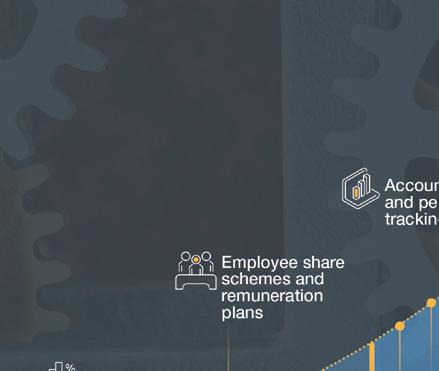
The end result is a fresh perspective and focused strategy to help you move forward.
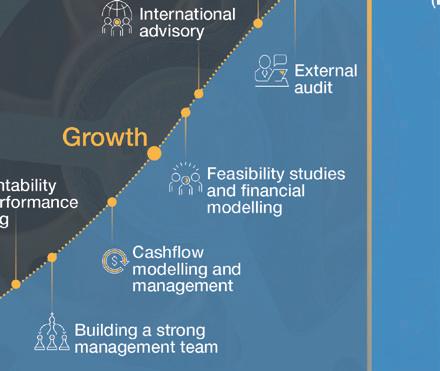







A dedicated team of intellectual property specialists delivering approachable, responsive, and tailored support, offering flexible independent services to protect and advance clients’ current and future needs.
BRM PATENT ATTORNEYS
Melbourne, VIC brmpatentattorneys.com.au

Helps organisations make smarter workforce decisions by identifying, measuring and leveraging skills through a powerful, purpose‑built centralised skills intelligence platform, far beyond spreadsheets or generic systems.
SKILLS BASE
North Geelong, VIC skills-base.com

Delivers fast, high‑quality 3D printing, CAD design, scanning and prototyping, offering advanced additive manufacturing and low‑volume production to help businesses innovate quickly and cost‑effectively.
KAD3D
Reservoir, VIC kad3d.com.au

An Australian engineering and fabrication company specialising in custom mild steel pressings, architectural metalwork, and general cutting, bending, and folding services.
FUSION METALS
Osborne Park, WA fusionmetals.com.au

Delivers premium new and used machinery nationwide, specialising in sheet metal and fibre laser technology, backed by 50+ years’ expertise and trusted global brand partnerships.
INTERMACH PTY LTD
Moorabbin Airport, VIC intermach.com.au

Supplies high‑precision components across multiple industries, offering flexible production from prototypes to complex assemblies with diverse materials, fine tolerances, and high‑quality finishes.
ALFRED LEWIS ENGINEERING PTY LTD
Braeside, VIC alfredlewis.com.au

Delivers global industrial automation and IIoT solutions, offering smart sensing, connectivity, IP67 I/O, software and services that boost efficiency across diverse industries worldwide.
TURCK PTY LTD
Notting Hill, VIC turck.com.au

Design, build and support bespoke laser cleaning systems, offering end‑to‑end manufacturing, mobile services, and laser equipment, tooling and safety gear for industry.
SENTRAX LASERS
Clontarf, QLD sentraxlasers.com

A metrology‑focused engineering company delivering CMM systems, software, calibration and training, combining technical expertise with solutions that enhance quality and accuracy for manufacturers.
YUKAS ENGINEERING SERVICES / OZ METROLOGY
Banyo, QLD yukasengineering.com.au

Founded in 2013 delivering professional cutting solutions using fast wires, hot wires, sheet cutting and CNC routering, supplying high‑quality polystyrene and polyurethane products nationwide.
ALL AXIS
Pooraka, SA allaxis.com.au
AMTIL members and guests were welcomed to Capral Aluminium’s facilities in Melbourne’s northern suburbs. The visit provided insight into Capral’s operations, its evolution over time, and how the business is responding to workforce challenges, investing in technology, and positioning itself for future growth in Australian manufacturing.
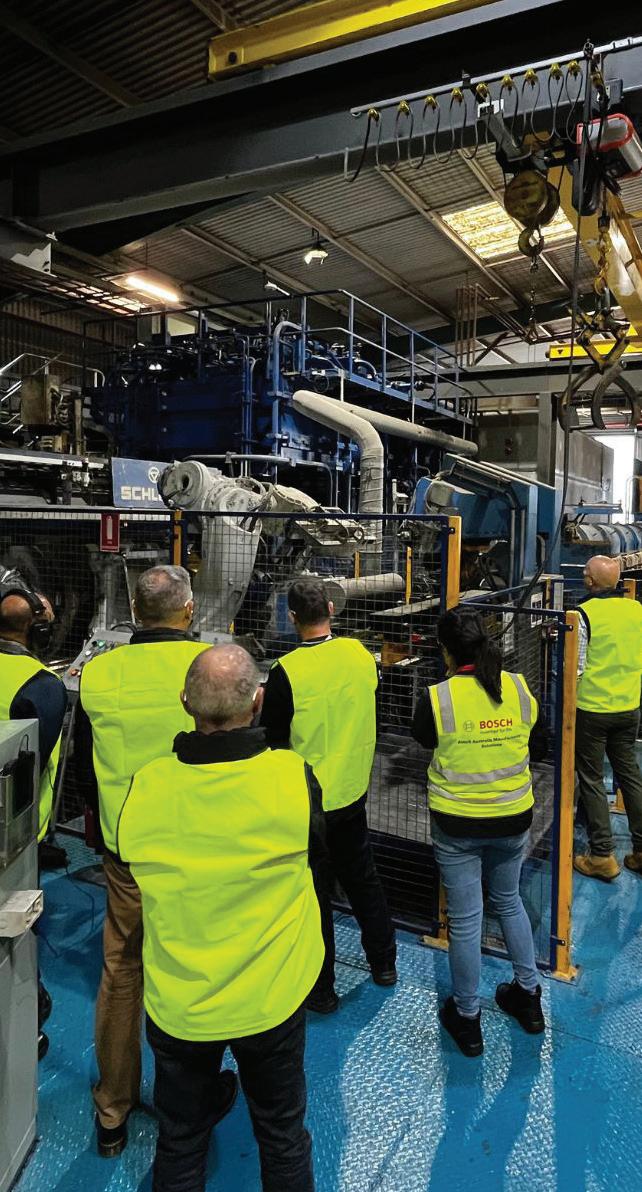
Through the Australian Additive Manufacturing Network (AAMN), Objective 3D welcomed AMTIL members and guests to their facilities in Melbourne’s outer east. Visitors explored equipment and processes supporting 3D printing in over 100 materials. A presentation focused on scaling additive manufacturing to meet production volume needs.
For the first time, AMW was held in Queensland from 12‑14 May. 6,800+ visitors explored the latest and emerging advanced manufacturing solutions, learned from the industry’s leading voices at the Future Solutions Speaker Program, and networked with manufacturers from all over the nation. A tremendous success, sights are now set on AMW2027, to be held in Melbourne from 11 14 May.
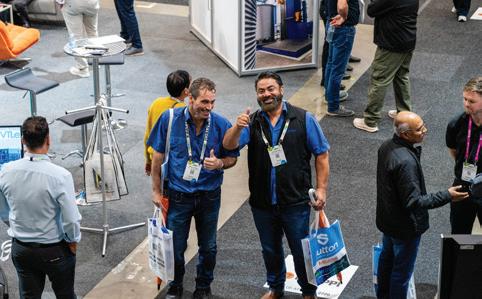
Flinders University opened the doors of its Factory of the Future, in Tonsley SA. A strong line up of speakers shared insights across industry, government and business, covering everything from active projects and operational approaches through to the programs, grants and initiatives supporting Australian manufacturers. A participating business also brought a practical perspective to how these opportunities translate into real world growth.
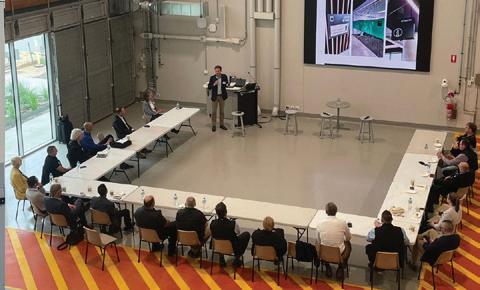
Readers are advised to check with all event organisers for the latest information. For the latest international travel advice, please visit smartraveller.gov.au For more events, please visit amtil.com.au/events
MACHTECH SAUDI ARABIA
SAUDI ARABIA, Jeddah 7‑9 September 2026 mactech-ksa.com
IMTS
USA, Chicago 14‑19 September 2026 imts.com.au
35.BI-MU 2026
ITALY, Milan 13‑16 October 2026 bimu.it
FABTECH
USA, Las Vegas
21‑23 October 2026 fabtechexpo.com
EUROBLECH 2026
GERMANY, Hannover 20‑23 October 2026 euroblech.com
JIMTOF 2026
JAPAN, Tokyo
26‑31 October 2026 jimtof.org
PLAST IMAGEN
MEXICO, Mexico City 10‑13 November 2026 plastimagen.com.mx
ADVANCED DESIGN & MANUFACTURING EXPO
CANADA, Montreal 11‑12 November 2026 admmontreal.com
METEC INDIA
INDIA, Mumbai 30 Nov – 2 Dec 2026 metec-india.com
NPE
USA, Orlando 3‑7 May 2027 npe.org
CONTROL 2027
GERMANY, Stuttgart 11‑14 May 2027 control-messe.de/en
EAST MANUFACTURING TECHNOLOGY SERIES
USA, West Springfield 11‑13 May 2027 east.mtseries.com
METEC GERMANY
GERMANY, Dusseldorf 21‑25 June 2027 metec-tradefair.com
NEWCAST
GERMANY, Dusseldorf 21‑25 June 2027 newcast.de
LASER WORLD OF PHOTONICS
GERMANY, Munich 22‑25 June 2027 world-of-photonics.com/en/trade-fair/
WORLD STAINLESS STEEL NETHERLANDS, Maastricht 16‑18 Nov 2027 stainless-steel-world-event.com


















QME
MACKAY SHOWGROUNDS
21-23 JULY 2026
The Queensland Mining & Engineering Exhibition is the largest mining event in Queensland, featuring more than 300 suppliers and attracting more than 5,000 visitors in 2024. The event showcases supplier innovation and excellence and will illustrate the world class capabilities of Mackay and the broader Central Queensland region. queenslandminingexpo.com.au
REGEN EXPO
SYDNEY, ICC
22-23 JULY 2026
Previously known as the Australasian Waste Recycling Expo (AWRE) and Circularity, ReGen is Australia’s only event connecting the full circular resource supply chain ‑ from design to recovery to second life.
https://regenexpo.com.au/


LAND FORCES
PERTH CONVENTION & EXHIBITION CENTRE
6-8 OCTOBER 2026
The Land Forces International Land Defence Exposition is the region’s premier event for the land defence sector, featuring a comprehensive international industry exhibition, a specialist conference program with presentations and symposia from leading defence institutions, and extensive networking opportunities. landforces.com.au/
APPEX 2027
MELBOURNE CONVENTION & EXHIBITION CENTRE
16-19 MARCH 2027
APPEX 2027 will represent all areas of processing & packaging including; machinery, ancillary equipment, materials and packaging, food processing, logistics & materials handling, and industry services. appex.com.au/




In post-war Wolfsburg, Sir Laurence Harnett dismissed the humble Volkswagen, unaware he was standing on the threshold of one of the industry’s greatest success stories.
Next day we drove off to see the Wolfsburg plant. I stayed about three weeks inspecting every inch of it. It was a beautifully designed plant. Not a bomb had fallen on it, but there was a gaping hole in the middle of the main building. One of our Wellington bombers, hit by flak and losing height, had started to circle out of control a few miles from the plant. The crew bailed out and the plane had flown on in circles. It crashed, eventually, right through the roof of the VW factory.
When I saw the plant, it was producing cars at the rate of thirty a day, with a work‑force under the control of the British Army of Occupation. The Occupation authorities were using the cars for official transport, and were selling the surplus production in Belgium and Switzerland to gather up some hard currency, taking almost any price that offered. That was why Mr. Dedman and other Autralians believed that the VW was a very low‑priced car. Sold under thoes condition, it was a cheap car, but no one in the VW plant was doing any costing on it: currency values in Europe hadn’t begun to settle down.
There was no proof then that the VW would have public acceptance.To my mind it was not low‑priced in terms of its design and manufacture. It could be brought down in cost, but only with a pretty high volume of production‑at least 250,000 units a year. I couldn’t see Australians going for it in such numbers. A four‑cylinder, air‑cooled rear‑mounted engine; a great number of metal pressings requiring good dies and many large presses; extensive, costly tooling, and difficulty in making styling changes with such heavy tooling costs‑this didn’t fit my idea of the Australian motoring picture. But what did interest me was the equipment in the press‑shop. I could see great uses for those presses in
Australia. When I got back to London, I made out a report rejecting the Volkswagen, but recommending acquisition of the press‑shop equipment. Canberra hummed and hah‑ed. Eventually we decided to ask for the presses, but were knocked back. In the end, we didn’t even get a spanner. The subsequent rise of the VW to world popularity proved that I had made a pretty poor assessment of its potential. Some people may think it is a very embarrassing blot on my escutcheon that I rejected the Volkswagen, including the plant and sole manufacturing rights, when it was virtually thrown at me. But before I turned it down, the British and American motor industries had looked it over and had come to exactly the same conclusions as I had. The man who proved us all wrong was a Gennan engineer named Nornfeldt. He took over Volkswagen from the British Occupation Authority and worked it without currency for a while, paying his workers with food and clothing obtained as barter for VWs. He somehow gathered up materials and equipment and metals and pushed VW into a very efficient, high‑volume manufacturing organisation.
After my visit to Wolfsburg I resumed my search for a car for Australian manufacture. I had told Voss in Paris that it was essential that we have a free hand to modify the design in Australia: we could not take any car on if we had to be dependent on the whims of some factory in a distant country. And now the diligent Voss had news for me. “Mr. Hartnett,” he said, “I’ve found a man you should meet. He has designed a car, with the backing of the French Government. I think you might be interested.” The man was Jean Gregoire, whose friendship I have treasured ever since.
To be continued…
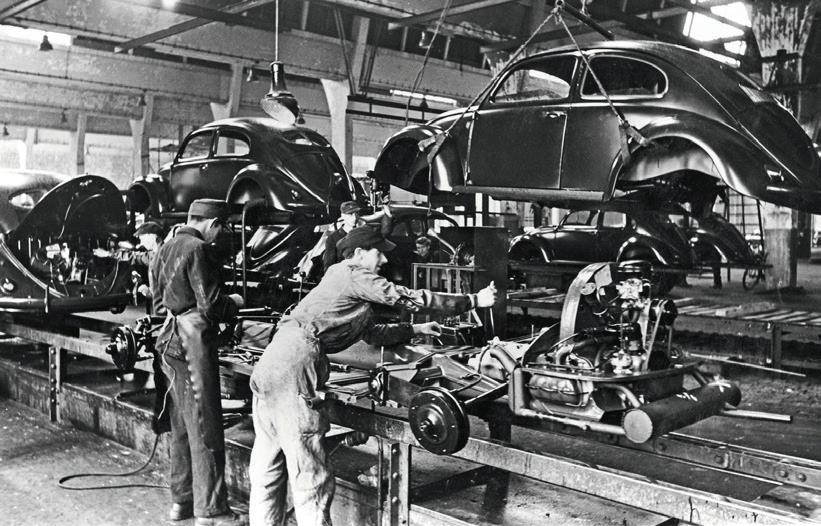
Early production of the Volkswagen Beetle at the Wolfsburg factory in Germany.







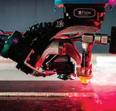
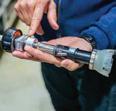

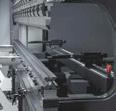



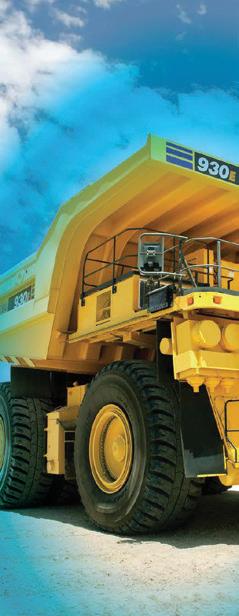

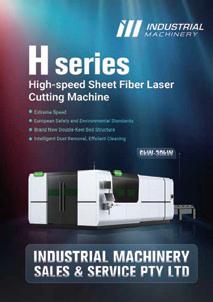







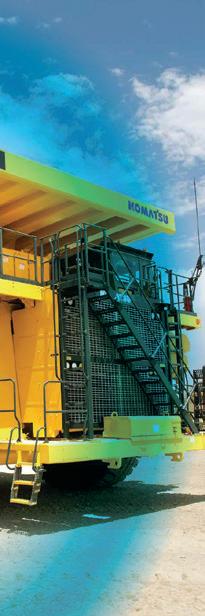
















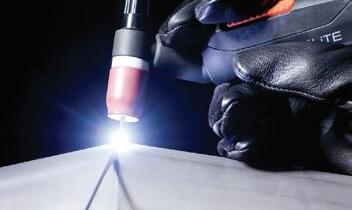
Smooth arc ignition gives welders great control, precision and efficiency. Weld Assist guides you to faster weld parameter set-up, and lower noise levels help you maintain focus throughout your welding work.
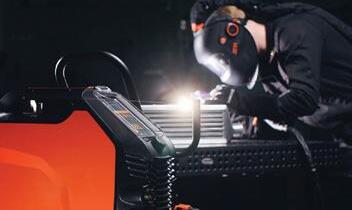
Value based specifications combine powerful welding capability with additional performance features like Pulse, MicroTack and AutoCool technology, influencing improved welding control, quality, speed and energy efficiency.

Master T ACDC models include two unique performance modes: MAX WeldClean establishes the Master T as a powerful electrolytic weld cleaner; and DeMagnetisation mode eliminates remnant magnetic fields within a workpiece.