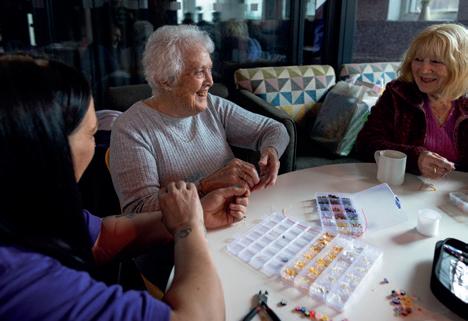
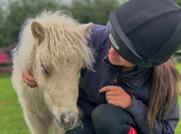
As people move from work to retirement, volunteering can play a significant part in people’s lives, with a wide range of opportunities to suit all individuals.
6 Why we need to have a conversation about Enshittification
Read how the term Enshittification was coined by technology writer Cory Doctorow to describe the systematic degradation of online services that once made our lives better.
8 Competition
A chance to win a pair of theatre tickets.
10 Mediterranean Dishes
Recipes inspired by the Mediterranean diet to make a healthy lifestyle simple.
13 Afternoon Tea
Step into the wonderful world of Afternoon Tea, from the birthplace of the tradition, The Langham London, with two delightful recipes.
15 Update
How your pharmacy can help when you have to wait to see a doctor; Downsizing with Regency Living.
17 What’s On Events on around the UK.
Published by:-
Amra Media Solutions Ltd
Marash House
2/5 Brook Street
Tring Herts
HP23 5ED
•Tel: 01442 891608
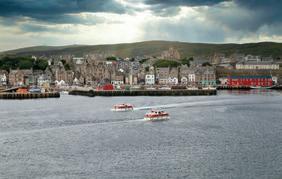
21 Shetland – Discover your true North Shetland-based travel writer and tour guide Laurie Goodlad reveals what makes these islands so special –and why visitors return time and again.
23 Downsizing in retirement
When you retire, change can be invigorating, and downsizing can open up a new lifestyle you had never imagined.
25 For the love of animals
As a nation of animal lovers, it is important to a lot of us to make a difference to their lives.
29 How to protect your eyes when you have diabetes
Here’s what you actually need to know about keeping your eyes healthy.
32 Inspirational Ideas – Blue & White
•Email: info@amramedia.co.uk
•www.retirement-today.co.uk
•Layout: Karen Wightman
All rights reserved. No part of this publication may be reproduced without the prior permission of the publisher. The opinions expressed in this magazine are not necessarily those of the publisher. Although every care is taken to ensure the accuracy of the information and the advertisements contained within the magazine, the publishers cannot accept any liability. Retirement Today would be pleased to receive your articles and photographs for possible publication. Although all reasonable care will be taken the magazine can assume no responsibility and contributors are advised to retain a copy.
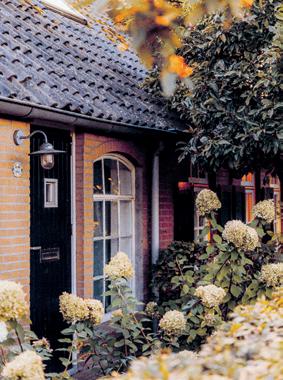
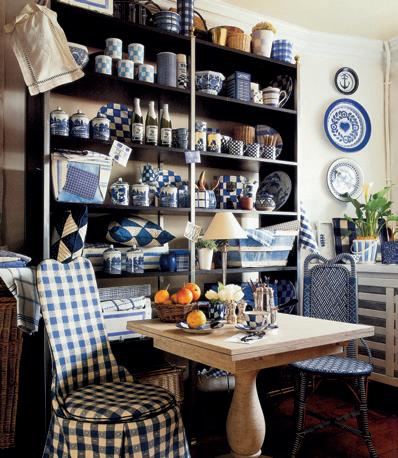
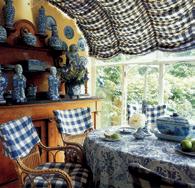
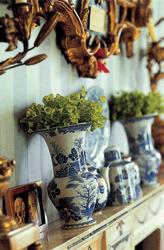
Interior designer Roger Banks-Pye’s bold and exciting use of colour is evident throughout his interiors with blue and white pivotal in many of his designs.
34 Footloose in Austria
Debra Rixon writes about her travels to Austria.
36 Roses
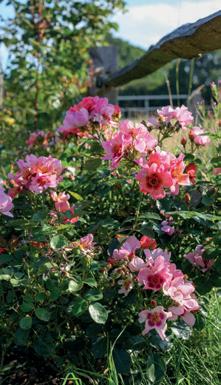
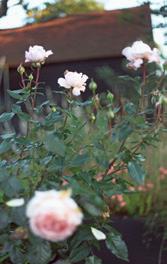
Roses are a classic and instantly recognisable plant, providing bursts of colour and fragrance.
39 Lasting Power of Attorney
A Lasting Power of Attorney (LPA) is an important legal document for one or more persons to make decisions on your behalf should there come a time you are unable to do so yourself.
41 Charity News
Important news within the world of charity.
Cover images: courtesy of pexels.com
Image right; from ‘Hamlyn Cooks: Mediterranean’. Published by Hamlyn.
Retirement is a life changing experience, full of expectation and a step into the unknown. Perhaps endless days filled with social activities feel a little unchallenging after the hustle and bustle of the daily grind and you are looking for something more rewarding. These days with more people living longer and healthier lives, the thought of retirement as a time to just sit back and put your feet up has long gone and one of the ways for them to keep active and remain involved in their community is to become a volunteer.
Number: 1058284
Number: 3148360
As people move from work to retirement, volunteering can play a significant part in people’s lives. For example, it allows you to connect with your community and make it a better place and even helping out with the smallest of tasks can make a real difference to charities. Countless charities couldn’t function without people who give up part of their day to gift their time and expertise for the benefit of others. And for those that do just that, the rewards are great.The fulfilment offered and the range of skills needed mean that for those looking for new challenges, this offers the perfect solution.
Volunteering can be a two-way street, as it can benefit you as well as the cause you choose to help. It can be a great way to meet new people and make new friends, especially if you have recently moved and are now new to the area. Helping others can reduce stress, combat depression and bring fun and fulfilment to your life. Once you have decided that you might want to take on some volunteering work, the next thing you have to decide is what you
would like to do and what is available in your area. There is a wide range of opportunities to suit all individuals. For instance, any active charity tends to need administrators, whether it’s answering the telephone, creating newsletters, and anyone with IT skills in assisting with websites and social media would be putting their skills and experience to good use helping others. People who drive could be a valuable asset too, maybe visiting the housebound providing companionship to the elderly, delivering meals, or offering to take people to doctors and hospital appointments. There are also plenty of opportunities to help the younger generation too, for example reading to children and helping with after school activities.
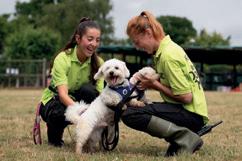
Are you an animal lover? Why not consider dog walking which will also keep you active, or helping at an animal shelter or maybe even assisting by fostering a pet until it finds it’s forever home.
If you like meeting people, another possibility would be working in a charity shop where there is a variety of volunteering roles from sorting
CASE STUDY
out donations, or being at front of shop helping with customer service, or maybe a stock collection driver.
In the Spring and Summer months many charities hold fetes and help is always welcomed to man the stands or to get involved with the organising of the event. Fundraisers organise events such as coffee mornings too, as well as collections outside supermarkets and other locations in local communities.
We have suggested some ideas for volunteering if you want to consider giving back something to your community and help make a difference to the lives of others. You can give as much or as little time that suits you. The time commitment can vary to suit yourself and the organisation. However, it is better to give a smaller amount of time you can commit to and be reliable, rather than promise more time which becomes harder to uphold and could
“A rewarding way to stay involved” –Nigel’s story
Nigel Wildish first encountered Support Through Court, a charity supporting people going through the family and civil courts without representation, as a family magistrate.
“I would often see people coming into court without a lawyer, supported by a volunteer,” Nigel remembers. “The volunteer was always helpful – both to the client and to the court.”
As Nigel approached retirement, he began thinking about how best to use his time and people skills. The answer appeared when a former colleague walked into his courtroom as a Support Through Court volunteer.
“I asked her about the organisation afterwards,” he says. “She explained what volunteers do, and it immediately struck me as something I would enjoy. It seemed like a good way to stay involved in family court cases after retiring.”
One particular moment stayed with him. Two people in court, both without legal representation, were close to reaching an agreement but struggling to find common ground. Nigel asked them to step outside with the volunteer.
“Ten minutes later she came back and said they had reached an agreement. That really showed me how valuable volunteers can be.”
After retiring, Nigel joined Support Through Court as a volunteer at London’s Central Family Court, where he has been supporting clients since 2018. Across the charity, over 600 volunteers from a variety of
result in you having to cancel and let people down.
Please be aware that before you start any volunteering work, make sure you are absolutely clear on the terms and conditions, the same as you would be for any paid work. Find out exactly what the work involves, who you will be working with and when you would be needed, that way there will be less chance of any confusion or misunderstanding once you have started.
Remember, volunteering is one of those great opportunities when the more you give, the more you receive, and what better way to spend some of your retirement making a real difference to the lives of others!
backgrounds provide free practical and emotional support.
Why we need to have a conversation about Enshittification
By Jamie Dobson, author
of ‘Visionaries, Rebels and Machines: The story of humanity’s extraordinary journey from electrification to cloudification’ .
The term Enshittification was coined by technology writer Cory Doctorow to describe the systematic degradation of online services that once made our lives better. If you’ve ever wondered why Facebook feels more like an advertising hellscape than a social network, why your carefully curated LinkedIn posts disappear into an algorithmic void, or why Netflix seems determined to stretch a single series of Stranger Things across multiple months, then you’ve experienced enshittification firsthand.
It’s not just your imagination. These platforms really are getting worse. And there’s a depressingly predictable pattern to how it happens.
The Four Stages of Platform Decay
Enshittification follows a clear trajectory. Platforms don’t start awful – quite the opposite. They begin by being genuinely useful, even delightful. But their descent into mediocrity follows four distinct stages.
STAGE ONE: Be good to users. The platform starts small, making something users genuinely want.
STAGE TWO: Be good to business users. As the user base grows, the platform needs revenue. They start catering to advertisers and business users, but they’re careful not to alienate the core audience.
STAGE THREE: Extract value from business users. The platform goes public or takes on serious investment. Now it needs growth, profit, and
ever-increasing returns.The company starts squeezing business users.
STAGE FOUR: Extract value from everyone. This is where platforms become completely enshittified. They’ve reached market saturation. The only way to increase profits is to make things worse for everyone. Users get bombarded with ads, spam, and algorithmic manipulation. Business users pay more for worse service.
And this isn’t just a technology story – it mirrors the broader growth trajectory of companies in our current economic system. Start small and user-focused, scale rapidly, monetise aggressively, then squeeze every penny out of the corpse until it stops twitching.
Beyond Social Media:
The virus spreads
Social media is where you’ll find the vanguards of enshittification, but it’s spreading across every digital service.
Remember when the deal with streaming services was pay one monthly fee, watch everything, no ads. If you want that service these days, you need to pay a higher fee. We’ve recreated cable television, except more expensive and more fragmented.
Dating apps exemplify how to speedrun enshittification. Tinder started as a simple, free way to meet people. But actual, long-lasting relationships reduce its user base and being happy doesn’t bring in revenue. Now it’s a carefully engineered frustration machine where the algorithm deliberately hides your matches unless you pay for premium features.
E-commerce platforms have soured online shopping. Amazon’s search function now serves you sponsored results over cheaper, higher-quality items. While eBay has become so cluttered with promoted listings that finding genuine bargains requires archaeological skills.
The economics of inevitable decay
This is a predictable consequence of how we’ve structured our economy around infinite growth and shareholder returns. When platforms start out, they’re focused on creating value for users because they need users to exist. But once they’ve reached market saturation and taken on shareholders, the focus shifts to extracting value from users. There’s literally nowhere else for the growth to come from.
The stock market demands quarterly growth forever, which is mathematically impossible on a finite planet with finite users. This is especially true with rapidly-growing technology companies – it’s relatively easy to achieve 100% growth by increasing your user base from one million to two, but much harder to double from three to six billion. Eventually, every platform reaches the point where the only way to increase profits is to make the service worse while charging more for it. They’ve saturated their market, eliminated their competition, and locked in their users. The logical next step is to harvest the trapped audience like battery farmed chickens.
This is capitalism eating its own children. Financial incentives birth successful platforms but then demand so much growth that they buckle and die. Capital flees the sinking ship and finds new projects to drive into the ground.
When even Capitalism says “This is too much”
The enshittification model is fundamentally unsustainable. You can’t endlessly extract value from users without eventually destroying the thing that made them valuable in the first place. When users finally revolt – and they will – these platforms will face catastrophic decline. Their business models depend on network effects, and network effects work in reverse just as powerfully as they work forward.
Even from a purely capitalist perspective, this approach is selfdefeating. These companies are stripmining their own future. They’re trading long-term sustainability for short-term profit extraction, which is exactly the kind of behaviour that destroys markets and creates opportunities for disruptors.
Some companies have recognised this. Google, for all its flaws, has been notably slower to enshittify its core products compared to Facebook or Twitter. Their leadership has remained more product-minded, understanding that their dominance depends on actually being useful rather than simply being unavoidable.They’re still addicted to growth, but they’ve been more careful about killing the goose that lays their golden eggs.
Even eBay, that monument to early 2000s web design, has resisted major changes partly because users were familiar with how everything worked. Sometimes what looks like technological stagnation is actually resistance to enshittification.
The counterexamples give us hope Not every digital platform follows this path to hell. Some have found ways to resist enshittification, and
their success points toward possible solutions.
Wikipedia remains one of the internet’s greatest success stories precisely because it was structured from the beginning to resist commercial pressure. It’s a non-profit organisation run by volunteers, funded by donations rather than advertising or investment capital. Because Wikipedia doesn’t need to generate ever-increasing returns for shareholders, it can focus on serving users rather than extracting value from them. In fact, the more users it serves, the better it becomes, as more people contribute knowledge and corrections.
Open-source projects like Linux follow a similar pattern. They’re not trying to satisfy shareholders – they’re trying to satisfy users. The more people use Linux, the more developers contribute to improving it. Competition happens through diversity of distributions and approaches, not through corporate consolidation and rent-seeking. These projects get better over time rather than worse because they’re structured around collaboration rather than extraction.
The key insight here is structural: these platforms avoid enshittification because they don’t have the economic incentives that drive it. They’re not trying to maximise quarterly growth or satisfy venture capitalists. They’re trying to solve problems and serve communities.
Challenger banks like Monzo, Starling and Revolut have disrupted the traditional banking sector by providing better service in a sector that was stagnant and resistant to change. They’re easier to use and more accessible, adding features valued by customers rather than simply trying to increase profit.
But here’s the crucial question: will they maintain these advantages as they mature and face pressure for greater profitability? Both Monzo and Starling Bank are reported to be preparing for IPOs this year which may lead to the same pressure for infinite growth. The jury is still out, but their early success demonstrates that users will flock to platforms that prioritise their needs over extraction.
Vinted is currently providing an interesting case study.This second-hand clothing platform is competing directly with eBay by eliminating seller fees entirely (something eBay is now copying). But they’ve reached market saturation in their core regions, and investors will eventually demand higher returns. Will they resist the temptation to enshittify, or will they follow the familiar pattern of extracting value once users are locked in?
Continued overleaf
The regulatory solutions that actually worked
Cory Doctorow argues that we already know how to fix enshittification because we’ve had the tools before. For decades, four specific forces kept companies from becoming extractive rent-seekers: competition, regulation, labour power, and interoperability. The problem isn’t that we don’t know what works, it’s that these forces have been systematically dismantled over the past forty years.
When Alexander Graham Bell invented the telephone, the early industry was a complete mess. Different telephone companies couldn’t connect to each other’s networks. You might need three different phones just to call all your contacts. The system was fragmented, expensive, and barely functional.
The solution wasn’t to let market forces sort it out – it was regulation. Governments imposed strict rules about service availability, profitability margins, and reinvestment requirements. Phone companies became regulated utilities, required to provide universal service and prohibited from extracting excessive profits from their monopoly positions. The same approach worked for electricity, water, and other natural monopolies. These services are too important to leave to pure market dynamics, and the economics of network effects make competition impractical beyond a certain point.
Crucially, we need to restore interoperability – the right to modify, hack, and improve the digital tools we
use. Twenty years of expanding intellectual property law has made it illegal to fix defective products or create competing services. We can’t even install generic ink cartridges in our printers without potentially breaking the law. Restoring “adversarial interoperability” would let users escape walled gardens and create alternatives when platforms turn hostile.
The real power belongs to users
Here’s the thing about enshittified platforms: they’re vulnerable. Their business models depend entirely on user engagement, and users can choose to disengage. It’s not the creators of technology who determine its destiny – it’s the users. It’s determined by the people who set policies, vote in elections, run businesses, and choose how to spend their time and money.
THE ENSHITTIFICATION
OF EVERYTHING ISN’T INEVITABLE – IT’S A CHOICE
WIN UK TOUR TICKETS
If you
loved ‘Jersey Boys’, you’ll love THE BALLAD OF JOHNNY & JUNE
Step into the world of Johnny Cash and June Carter Cash in this brand-new musical packed with “iconic songs”, “irresistible chemistry” and “real heart.”
ABOUT THE AUTHOR
Jamie Dobson is the founder of Container Solutions, and has been helping companies, across industries, move to cloud native ways of working for over ten years.
Container Solutions develops a strategy, a clear plan and step by step implementation helping companies achieve a smooth digital transformation. With services including Internal Developer Platform Enablement, Cloud Modernisation, DevOps/ DevSecOps, Site Reliability Engineering (SRE) Consultancy, Cloud Optimisation and creating a full Cloud Native Strategy, companies get much more than just engineering know-how. Jamie is also author of ‘The Cloud Native Attitude’ and the recently published ‘Visionaries, Rebels and Machines: The story of humanity’s extraordinary journey from electrification to cloudification’. Both are available from Amazon and good bookstores. www.container-solutions.com/
From the Olivier and Tony Award-winning visionary director Des McAnuff (Jersey Boys, The Who’s Tommy, Ain’t Too Proud), The Ballad of Johnny & June is a high-energy, life affirming celebration of love, rebellion and two people bound by music.
Told through the eyes of their son, John Carter Cash, this is the definitive story behind the legends.
This powerhouse musical joins country music’s most enduring icons on the road, as they battle their demons and occasionally each other. It’s a foot-stomping, heart-racing ride through fame and one of the greatest love stories ever told, brought to life with “astoundingly good” performances from Christopher Ryan Grant (Million Dollar Quartet, The Iceman Cometh) and Christina Bianco (Joseph and the Amazing Technicolor Dreamcoat, The Wizard of Oz) who lead a company of thirteen, plus full band.
With a phenomenal songbook that inspired generations of musicians including I Walk the Line, Ring of Fire, Hey Porter, Jackson, I’ve Been Everywhere, Sunday Morning Coming Down, Hurt, A Boy Named Sue and many more, don’t miss your chance to join music royalty at The Ballad of Johnny & June.
The Ballad of Johnny & June is now on tour, visiting 20 venues, until 19 September 2026. For more information, and to book your tickets, visit johnnyandjunemusical.com
Terms and Conditions: One winner will receive two tickets to see The Ballad of Johnny & June at the tour venue of their choice, valid for all performances until 19 September 2026, subject to availability. No cash alternative. Travel and accommodation not included. For your chance to win a pair of tickets, email info@amramedia.co.uk quoting BJJ Comp in the subject line. Closing date 1 July 2026.
Thousands of people have already recovered their compensation and £millions more could be due. It’s possible that you too could be owed. Why
any of the following?
Mediterranean dishes
Recipes inspired by the Mediterranean diet to make a healthy lifestyle simple.
Asparagus and Pea Quinoa Risotto
Serves 4
Total cooking time 15 minutes.
275 g (9 oz) quinoa, rinsed
600 ml (1 pint) hot vegetable stock
200 g (7 oz) asparagus, chopped
200 g (7 oz) frozen peas
1 tablespoon chopped mint
3 tablespoons grated Parmesan cheese pepper
Place the quinoa and stock in a saucepan and bring to the boil, then reduce the heat and simmer for 12–15 minutes until the quinoa is cooked, adding the asparagus and peas about 2 minutes before the end of the cooking time.
Drain the quinoa and vegetables, then return to the pan with the mint and 2 tablespoons of the Parmesan and season with pepper.
Mix well. Serve, scattered with the remaining Parmesan.
For Asparagus and Pea Tart –
Unroll a 375 g (12 oz) packet ready-rolled puff pastry and place on a baking sheet. Mix together 200 g (7 oz) cream cheese and 1 tablespoon Dijon mustard in a bowl, then spread over the pastry, leaving a 1.5 cm (¾ inch) border around the edge.
Top with 300 g (10 oz) trimmed asparagus and 100 g (3 oz) defrosted peas. Drizzle with 2 tablespoons olive oil, then season with pepper and scatter over 50 g (2 oz) grated Parmesan cheese.
Place in a preheated oven, 200˚C (400˚F), Gas Mark 6, for 20–22 minutes. Serve with a crisp green salad.
Total cooking time 30 minutes.
Chicken, Lemon and Olive Stew
Serves 4
Preparation time 20 minutes. Cooking time 1 hour.
1.5 kg (3 lb) chicken about 4 tablespoons olive oil
12 baby onions, peeled but left whole 2 garlic cloves, crushed
1 teaspoon each ground cumin, ginger and turmeric ½ teaspoon ground cinnamon 450 ml (¾ pint) chicken stock
125 g (4 oz) kalamata olives
1 preserved lemon, pulp and skin discarded, chopped 2 tablespoons chopped fresh coriander salt and pepper
Joint the chicken into 8 pieces (or ask your butcher to do this for you). Heat the oil in a flameproof casserole and brown the chicken on all sides. Remove the pieces with a slotted spoon and set aside.
Add the onions, garlic and spices and sauté over a low heat for 10 minutes until just golden. Return the chicken to the pan, stir in the stock and bring to the boil. Cover and simmer gently for 30 minutes.
Add the olives, preserved lemon and coriander and cook for a further 15–20 minutes until the chicken is really tender. Taste and adjust the seasoning if necessary.
For Green Couscous to serve as an accompaniment –
Shake together 150 ml (1/4 pint) olive oil and 50 ml (2 fl oz) lemon juice until well combined. Season with salt and pepper.
Tip 250 g (8 oz) cooked couscous into a warmed serving dish and stir in 1 bunch chopped spring onions, 50 g (2 oz) chopped rocket and 1/4 cucumber, halved, deseeded and chopped. Stir in the lemon juice dressing and serve.
100 g (3½ oz) spinach leaves, rinsed and roughly sliced
5 eggs, lightly beaten
75 g (3 oz) pitted green olives, roughly chopped
150 g (5 oz) Cheddar cheese, grated salt and pepper
Heat the olive oil in a large nonstick frying pan. Add the onion and red pepper and cook gently for 7–8 minutes until soft and golden.
Stir in the paprika and chickpeas and cook for 1 minute, stirring frequently. Add the spinach leaves and cook until just wilted.
Pour the beaten eggs into the pan and stir to combine. Cook gently, without stirring, for 4–5 minutes until almost set.
Scatter over the olives and grated Cheddar, then slide under a hot grill, keeping the handle away from the heat. Grill for 4–5 minutes until golden and set. Slice into wedges and serve immediately.
For Chickpea and Spinach
Salad with Poached Eggs –
Heat 2 tablespoons olive oil in a large frying pan.
Add 1 sliced onion and 1 deseeded and sliced red pepper and cook gently for 7–8 minutes.
Stir in 1/2 teaspoon hot smoked or sweet paprika and a 400 g (13 oz) can chickpeas, drained and rinsed, and cook for 1 minute, stirring frequently. Meanwhile, poach 4 eggs in a large pan of gently simmering water.
Toss the chickpea mixture briefly with 200 g (7 oz) baby spinach leaves and heap on to 4 serving plates. Top each salad with a poached egg and serve immediately.
Pear and Almond Cake
Serves 4
Preparation time 20 minutes.
Cooking time 35 minutes.
125 g (4 oz) unsalted butter, softened, plus extra for greasing
125 g (4 oz) caster sugar
2 large eggs, beaten
50 g (2 oz) plain flour, sifted
100 g (3½ oz) ground almonds
½ teaspoon baking powder
3 ripe pears, peeled, halved and cored
50 g (2 oz) flaked almonds icing sugar for dusting
Beat the butter and caster sugar together in a bowl until pale and fluffy. Add the eggs, a little at a time, beating well after each addition. If the mixture starts to curdle, add 1 tablespoon of the flour.
Fold in the flour, ground almonds and baking powder using a large metal spoon and tip into a greased 20 cm (8 inch) spring-form cake tin and use a palette knife to even out the mixture.
Arrange the pear halves over the top of the cake and bake in a preheated oven, 190°C (375°F), Gas Mark 5, for 25 minutes. Scatter the flaked almonds over the top and return to the oven for a further 10 minutes. The cake is ready when a skewer inserted into the centre of the cake comes out clean. Leave the cake to cool in the tin, then carefully remove the ring and base. Dust with icing sugar and serve with mascarpone cream (see below), if liked.
For Mascarpone, Marsala and Orange Cream –
To serve as an accompaniment, whisk the grated zest of 1 orange and 2 tablespoons of its juice in a bowl with 2 tablespoons sweet Marsala and 100 g (3 oz) mascarpone cheese. Sweeten with icing sugar to taste.
Live-in care from Spring Retirement offers the reassurance of full time support and companionship, within the comfort and security of your own home. Whether for a few weeks or long-term, our rigorous professional standards and everyday kindness can put a spring back in your step.
We offer fully managed, live-in care
All our carers are highly trained, qualified and experienced in caring for adults, including those living with: l
l
l Sensory Impairment
Afternoon Tea
Step into the wonderful world of Afternoon Tea, from the birthplace of the tradition, The Langham, London.
The Langham holds a unique place in the history of Afternoon Tea. Opened in 1865, it was the first place to move this great Victorian invention from the drawing rooms of the aristocracy and into a refined yet accessible experience, enjoyed in the grand setting of a luxurious hotel. Since then, their afternoon tea has evolved into an internationally celebrated event, admired for its elegant presentation, culinary creativity and timeless charm.
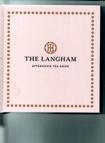
The Langham Afternoon Tea Book is an invitation for readers to step into their tea rooms, for a delicious celebration of the elegant art. Recipes range from indulgent creations to refined reimaginings, as well as approachable favourites.
Here are two recipes we have selected for you to try.
100g cream cheese
75g crème fraîche
50g Scottish smoked salmon
50g hot smoked salmon
2 teaspoons lemon juice
1 small bunch of dill, tender fronds picked and finely chopped
25g gherkin, finely diced
1 tablespoon gherkin pickle juice
8 slices brown bread, or 8 small brioche rolls
1 small bunch of lamb’s lettuce, leaves picked salt and freshly ground black pepper tiny sprigs of flat-leaf parsley to garnish
You will also need: Six 10cm round silicone moulds, 3cm deep, greased with butter and lined with baking paper
Recipes from The Langham Afternoon Tea Book £20, White Lion Publishing. Photography Jamie Orlando Smith
Hot Smoked Salmon with Dill
Smoked Salmon has a long association with finger sandwiches, but in this version the salmon is hot smoked, which gives the sandwich a rich texture, and balances the sweet acidity of the dill pickles.
Pulse the cream cheese, crème fraîche, smoked salmon, hot smoked salmon and lemon juice in a food processor until all the ingredients are well combined.
Scoop the mixture into a bowl and add the dill, gherkin and pickle juice. Mix to evenly combine and season to taste.
To assemble:
Lay out the bread slices on your work surface. Divide the salmon mixture equally between all of the slices, spreading it out into an even layer. Place the picked lamb’s lettuce on top of half of the slices, then carefully turn over the remaining bread to sandwich the filling. Cover the sandwiches, then refrigerate them for 30 minutes. Slice off the crusts and cut each sandwich into three 3cm x 9cm finger-size portions to serve.
If you’re using small brioche rolls, hollow out the centre of each roll and fill it with the salmon mixture. Garnish with a few tiny sprigs of flat-leaf parsley, if you wish.
Makes 8-12 portions
Honey Cake
An unapologetic celebration of honey, this cake is quite simply sweet, sticky and utterly, perfectly delicious.
In a stand mixer fitted with the paddle, combine the lemon and orange zests with the sugar and salt and mix on low speed for 1 minute to extract the oil from the zests. Gradually add the eggs and cream to the bowl, mixing continuously until smooth. Sift the flour and baking powder into the bowl and mix until almost combined. Add the melted butter and mix again until smooth. Bake immediately, or cover and chill the mixture overnight.
Heat the oven to 160°C fan.
Weigh 180g of the cake mixture into each mould and bake the cakes for 30–35 minutes, until well risen and a skewer inserted into the middle of each comes out clean. Leave the cakes to rest for 3–4 minutes in the moulds, then remove them and leave to cool on a wire rack for 10 minutes.
To assemble:
Drizzle the warm cakes with the honey, leave to cool to room temperature, then scatter with pearl sugar to serve.
Makes 6
Since 1st Take's Personal Shopper Service was launched 14 years ago, we have taken great pleasure in tracking down countless rare DVDs, CDs and Books for our valued customers. Whether you are looking for a favourite film, TV series, cherished book or album you haven't heard in years, we will do our best to track it down. Many people tell us that they would not know where to start without our bespoke service, and we pride ourselves on handling all enquiries courteously - and with no obligation to order.
In a modern four star hotel
Options Available
Bed & Breakfast – includes full continental buffet breakfast
Half Board – includes breakfast and full special buffet dinner
Full Board – includes breakfast, dinner and buffet lunch
All Inclusive – includes breakfast, lunch, dinner, snacks during the day and unlimited local drinks (including local house wine, spirits, beer, soft drinks, juices, tea and coffee) – served until 23.00 hrs
Free high speed WIFI, free Room Safe, Mini Cooler included in room, Self-Service Laundry including detergents (coin-operated)
Check out our special offers
Booking can be made direct from our website –please note that offers are updated in your search
For over 70 years AISPA has been supporting animal protection organisations throughout Italy. Our support involves the rescue and rehoming of cats and dogs, neutering campaigns and conservation initiatives including birds, bears and turtles. Please complete the form below and return it to us by post or email
info@aispa.org.uk
Angela Gifford CEO
Angela Gifford from Able Community Care advises on how your pharmacy may be able to help when you have to wait to see a doctor.
‘The earliest I could see a doctor was two weeks away –and I’m not alone.’
What is a Personal Health Budget?
A Personal Health Budget is a source of NHS funding to pay for healthcare support, which is not widely known.
My company, Able Community Care began providing Live-in Care support in 1980 and today we can provide our services throughout mainland UK and the offshore Islands, such as Jersey and as we did recently, in the Western Isles.
Many of us have heard similar phrases from friends and relatives and published figures show that:
• Roughly 13% to 15% of patients wait 8-14 days
This is especially helpful for:
A Personal Health Budget is based upon a personalized, care, support plan which sets out a person’s health and wellbeing needs, the outcomes they wish to achieve and, if the eligibility criteria is reached, then NHS funding towards the cost of supporting this plan is given.
• Older adults needing quick advice
recently, in the Western Isles.
• Live-in care enables older people and people with a disability to remain living in their own home rather than moving into a residential care setting.
• Nearly 10% of patients (over 2 million) face waits longer than 22 days
If you live in England and have a local community pharmacy, you could use Pharmacy First Pharmacy First is an NHS England initiative launched in 2024. With Pharmacy First, you can walk into your local pharmacy and ask for a private consultation with a pharmacist. They can assess symptoms, give advice, and in some cases provide NHS treatment – all without needing to see a GP first.
• Families with children who are unwell
• Carers supporting relatives
Both adults and children with complex healthcare support needs can apply for this NHS funding, and for full details of the criteria, search ‘NHS who can have a personal health budget’ for the full details.
• Live-in Care offers helps with domestic tasks, assistance with personal care and especially important in the Autumn and Winter seasons, companionship.
• Live-in care enables older people and people remain living in their own home rather than residential care setting.
• Live-in Care offers helps with domestic tasks, personal care and especially important in the seasons, companionship.
There are over 10,000 participating pharmacies in England, meaning most local pharmacies can offer this service. Just go in and ask:
Personal Health Budgets can be given to people who require healthcare support in their home or in a care home.
If you would like to know more about our Live-in Care call on 01603 764567.
“Can I have a Pharmacy First consultation, please?”
If you would like to know more about our Live-in Care Schemes, give us a call on 01603 764567.
• In Scotland the initiative is titled NHS Pharmacy First Scotland
In each geographical area there is an Integrated Care Board, which you can contact and they will give guidance on how to apply for this funding. Recently, I rang on behalf of a lady who has complex care needs and was advised to contact her GP or Community Nursing Team who would apply on her behalf.
Questions we are often asked are about the cost, the availability, the professional status of the care workers and what happens if there is an emergency situation after our office is closed.
• The Welsh equivalent of Pharmacy First is the Common Ailments Service (CAS).
Our information brochure gives further information and our website at www.ablecommunitycare.com has an application form you can complete.
Questions we are often asked are about the cost, the professional status of the care workers and what happens emergency situation after our office is closed.
• In Northern Ireland Pharmacy First Able Community Care www.ablecommunitycare.com
Health conditions such as dementia, Parkinson’s Disease, stroke support, may be eligible for this funding, and a call to the organisations which represent these health conditions such as the Alzheimer’s Association, Parkinson’s Disease Association and the Stroke Association, and other representative health support charities, will be helpful to you.
Our information brochure gives further information www.ablecommunitycare.com has an application form
For a brochure email to: info@ablecommunitycare.com
Able Community Care, based in Norfolk but available
For a brochure email to: info@ablecommunitycare.com
Able Community Care, based in Norfolk but available everywhere.
Angela Gi ord – Able Community Care –A nationwide, live-in, care provider since 1980
Downsizing with Regency Living
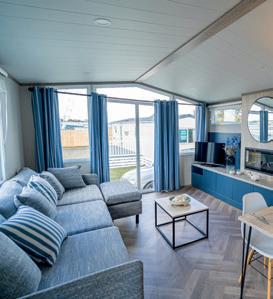
Regency Living is about choosing a new chapter that feels just right. For homeowners ready to downsize without compromise, our beautifully designed residential Park Bungalows offer the perfect balance of comfort, style and freedom.
We create thoughtfully planned communities where people can enjoy high-quality living, more manageable spaces and a lifestyle designed around ease. Our contemporary homes are built to exceptional BS3632 residential standards, combining elegant interiors with practical layouts that make year-round living simpler and more enjoyable.
Downsizing with Regency Living doesn’t mean giving anything up – it means gaining more. More time, more flexibility, and more peace of mind. With lowermaintenance homes, private outdoor space and welcoming surroundings, our developments are designed for relaxed living, whether you enjoy entertaining, travelling, or simply savouring the quiet comforts of home.
Regency Living developments can be found across the UK, from coastal settings to countryside retreats and well-connected towns. New locations in Norfolk and Christchurch further reflect the variety of places available, each carefully chosen to offer an appealing setting and
a strong sense of place. While every development has its own character, all share the same commitment to quality, community and attention to detail.
Moving home can feel daunting, which is why Regency Living aims to make the process as straightforward as possible. Our Part Exchange scheme allows homeowners to use the value of their current property towards a new Park Bungalow, helping to reduce uncertainty and avoid unnecessary delays.
For those considering downsizing in comfort and style, now could be the right time to explore what’s possible — starting with finding out how much your current home could be worth. www.regency-living.com
Angela Gifford CEO
My company, Able Community Care began providing support in 1980 and today we can provide our services mainland UK and the offshore Islands, such as Jersey
What’s On...
The Last Princesses of Punjab: Kensington Palace, Celebrating Sophia Duleep Singh’s 150th Birthday
From 26 March 2026 to 8 November 2026, Kensington Palace will open The Last Princesses of Punjab, a powerful new exhibition marking the 150th birthday of Princess Sophia Duleep Singh – suffragette, activist, and goddaughter of Queen Victoria. For many visitors, especially those reflecting on the legacy they leave behind, the exhibition offers a moving exploration of heritage, identity, and resilience across generations of remarkable women. At its heart is Princess Sophia, celebrated for her fierce commitment to women’s suffrage. A familiar figure selling The Suffragette outside Hampton Court Palace, she used her royal status not for comfort, but to amplify the voices of women across Britain. Her defiant 1911 census protest – famously declaring “No Vote, No Census” – is among the personal artefacts on display.
But Sophia’s story is inseparable from the women who shaped her. The exhibition traces an extraordinary lineage, from her grandmother Jind Kaur, the last Maharani of the Sikh Empire, to her mother Bamba Müller, whose mixed heritage and challenging life in England reveal the complexity of identity during Empire. Her sisters, Catherine and Bamba Sutherland, also carved unique paths – supporting Jewish refugees during the Second World War, preserving Punjabi cultural heritage, and forging unconventional lives that challenged social expectations. What makes this exhibition especially resonant today is its intergenerational perspective. Alongside historic objects, visitors will encounter contemporary reflections from British South Asian women responding to themes of belonging, cultural inheritance, and the enduring impact of empire.
For those who enjoy thoughtful storytelling about legacy and the lives that shape us, The Last Princesses of Punjab offers a compelling look at women who defied limits – and whose influence continues long after their time.
For more information contact groupsandtraveltrade@hrp.org.uk
In Bloom –How plants changed our world
Ashmolean Museum, Oxford until 16 August
How much do we really know about the plants and flowers in our gardens and vases?
Beyond their beauty, many have surprising stories of exploration, exchange and discovery.
Visitors are taken across the world and back, tracing the journeys that some of Britain’s most familiar blooms travelled to get here. Featuring more than 100 artworks, including beautiful botanical paintings and drawings, historical curiosities and new work by contemporary artists. Learn how plants changed our world and left a legacy that still shapes our environments and back gardens today. www.ashmolean.org
British Landscapes: A Sense of Place
Pallant House Gallery, Chichester, West Sussex 30 May – 1 November, 2026
A major exhibition which explores how artists from the late 18th century to the end of the 20th century have captured the distinctive character, emotional resonance and enduring “spirit of place” found in Britain’s landscapes. Bringing together works by more than 60 artists, the exhibition traces how painters, printmakers and sculptors responded to the countryside, coastlines, towns and cities of the British Isles – not simply as scenery, but as places shaped by memory, myth, labour, conflict and imagination. From quiet lanes and chalk hills to industrial sites and abstracted coastal forms, revealing how landscape has been central to British visual culture and to ideas of national identity. The exhibition traces a lineage from 18th century master Thomas Gainsborough, and the golden age of British watercolour to some of the most evocative landscape art of the 20th century.
Inviting visitors to reflect on the landscapes that have shaped Britain’s imagination – places layered with history and emotion – the exhibition speaks not only to what Britain looks like, but how it felt to live here. www.pallant.org.uk
Paul Nash, Wittenham, 1935. Watercolour on paper, Pallant House Gallery, Hussey Bequest, Chichester District Council (1985)
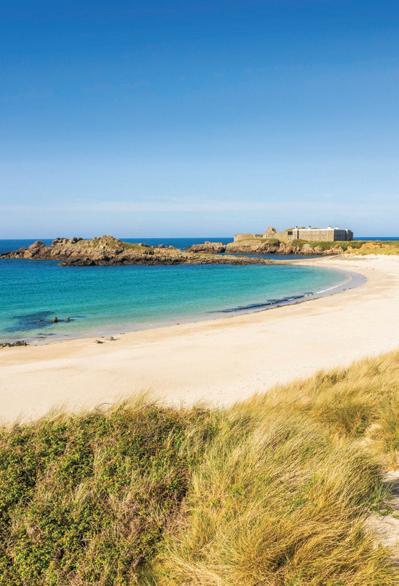
Alderney feels like a best-kept secret –one of those rare places that quietly captures your heart. Just eight miles off the coast of France, this small Channel Island offers something increasingly hard to find: space, calm, and a true sense of escape. With no crowds, queues, or traffic, it has earned its reputation as a hidden gem.
At just one and a half miles wide and three and a half miles long, Alderney offers surprising variety. The coast is never far away, with dramatic cliffs, sweeping sandy beaches, and sheltered bays inviting exploration. Around 40 miles of footpaths cross the island, making it perfect for walking and cycling. Days unfold easily: a morning on cliff paths, an afternoon swimming or rock-pooling, and an evening watching the sun set over the sea.
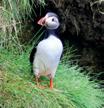
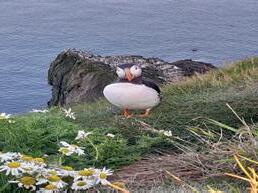
Nature lies at the heart of Alderney’s appeal. The island is internationally recognised for its wildlife, especially its seabird colonies. Rocky outcrops host thousands of gannets and puffins, while dolphins and grey seals are often seen offshore. It’s a haven for birdwatchers, photographers, and anyone who enjoys the natural world.
Despite its peaceful atmosphere, Alderney is rich in history. Evidence of the past stretches from Neolithic burial sites to Roman remains overlooking the sea. Its strategic position has left a legacy of fortifications, including Victorian forts and World War II bunkers, all of which are free to explore. Together, they offer a fascinating glimpse into the island’s layered past.
Alderney: the Channel Island
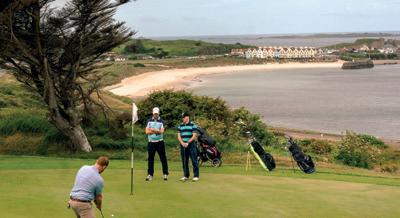
At the centre of island life is St Anne, a charming town of cobbled streets, independent shops, and welcoming cafés. It’s the perfect place to pause, enjoy a leisurely meal, and soak up the friendly atmosphere. Dining is relaxed, with a focus on fresh local produce, particularly seafood, served in cosy pubs and restaurants. For those seeking activity, there’s plenty to do. Kayaking, hiking, and cycling come naturally, while sea swimming is a highlight thanks to the clean, clear waters. There’s also a scenic nine-hole golf course, tennis courts, and even a padel court.
As night falls, Alderney reveals another of its special qualities: truly dark skies. With little light pollution, stargazing is exceptional, and on clear nights the Milky Way stretches vividly overhead. You might even spot one of the island’s distinctive blonde hedgehogs along the way.
A lively events calendar adds to the island’s charm, from the famous Alderney Week to music, wildlife, and food festivals throughout the year. Accommodation ranges from
boutique hotels and guesthouses to self-catering cottages, glamping by the beach, and even stays in historic forts.
Whether for a weekend or longer, Alderney offers a rare blend of tranquillity, natural beauty, and understated charm - a place where life slows down and visitors leave feeling they’ve discovered something truly special.
Plan your island escape: visitalderney.com
toOrkney and Shetland
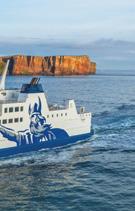
Your holiday in the beautiful Northern Isles begins as you set sail with NorthLink Ferries.
The comfortable and reliable service offers sailings from Aberdeen to Lerwick, Shetland, with regular calls into Orkney’s capital of Kirkwall.
Alternatively travel from Caithness to Orkney’s port of Stromness. This 90 minute journey on MV Hamnavoe is the only sailing to Orkney which passes the iconic sea stack, the Old Man of Hoy.
Shetland
Orkney
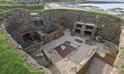
Skara Brae, Orkney – A settlement of houses which were occupied 5,000 years ago.
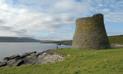
Mousa Broch, Shetland – One of the best-preserved Iron Age brochs, built 2,000 years ago.
Shetland –discover your true north
Shetland-based travel writer and tour guide Laurie Goodlad reveals what makes these islands so special – and why visitors return time and again.
Not so long ago, Shetland was the place you might notice “boxed off” on a weather chart somewhere off Scotland’s coast. Today, it has become a must-see destination, drawing thousands of visitors each year. Part of that rise is thanks to the popular TV series Shetland , which has helped reposition the islands firmly – and correctly – on the map.
But Shetland’s appeal runs far deeper than screen fame. Its unique location, almost equidistant between Scotland and Scandinavia, has shaped a culture unlike anywhere else in the UK. The islands’ Viking and Norse heritage remains deeply embedded in everyday life, from traditions to language. Gaelic has never been spoken here – and there are no haggis, kilts and bagpipes – instead, the local dialect is rooted in Old Norse. Place names often sound more Scandinavian than Scottish, and identity is distinct: many residents think of themselves as Shetlanders first, Scots second. Until 1469, the islands belonged to Scandinavia before being transferred to Scotland as part of a royal dowry.
Today, Shetland comprises more than 100 islands, 16 of them inhabited, connected by ferries, bridges and, in the case of the more remote Fair Isle and Foula, small aircraft carrying six passengers. Around 23,000 people live in Shetland – never “the Shetlands” – and while traditional industries such as fishing, aquaculture, crofting and oil remain mainstays, the islands have a rich reputation for music, craft and visual art.
Visiting Shetland requires a little forward planning. Accommodation and transport should ideally be booked nine to twelve months in advance. Northlink Ferries connect mainland Scotland to Shetland, operating nightly services from Aberdeen to Lerwick. Or, if you prefer you can go by plane from most Scottish airports, or twice weekly from London.
For many, summer is the perfect time to visit. Around midsummer, Shetland enjoys up to 19 hours of daylight, with long, sun-kissed evenings that seem to stretch endlessly. These extended days are ideal for walking, wildlife watching and simply soaking up the landscape. Wildflowers line roadside verges and meadows, while the cliffs and seas teem with life.
From mid-April to mid-August, seabirds return in
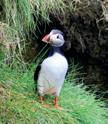
spectacular numbers. Puffins, gannets, guillemots, shags, Arctic terns and skuas fill the skies and nest along dramatic cliffs. One of the most memorable experiences is an evening trip to the uninhabited island of Mousa. There, visitors can stand in
the shadow of a remarkably preserved 2,000-year-old Iron Age broch and, as dusk falls, watch tiny, palm-sized storm petrels flutter back to their nesting places within its ancient stone walls. It’s a magical encounter, as nature and archaeology collide. Shetland’s human story stretches back even further. Evidence of settlement dates to Neolithic times, and the islands are rich in archaeological sites. Places like Jarlshof reveal layer upon layer of history, from early farmers through the Bronze and Iron Ages to the arrival of Viking and Norse settlers. Brochs – mysterious drystone towers unique to Scotland – can be found across the islands, each raising as many questions as it answers.
For those keen to explore at a gentler pace, Shetland offers excellent facilities for touring, including campsites well suited to motorhomes and caravans. These provide a convenient base for discovering different areas, including the northern isles of Unst,Yell and Fetlar, each with its own character and charm.
More adventurous travellers might venture further afield to Fair Isle or Foula. These remote outposts offer rugged landscapes, exceptional birdlife and a sense of true escape. Foula’s towering sea cliffs are among the highest in Britain, surpassed only by those of distant St Kilda.
Yet Shetland’s appeal is not only in its landscapes and wildlife – which also include seals, whales and otters – but in its people. Visitors often remark on the warmth of the welcome and the strength of community life. Throughout the year, local events offer opportunities to connect, from informal gatherings like traditional “Sunday Teas” to larger celebrations. Winter brings its own unique spectacle. Up Helly Aa, held on the last Tuesday of January, is Shetland’s famous fire festival. A torchlit procession of Vikings winds through Lerwick before a full-sized galley is ceremonially burned, a dramatic nod to the islands’ Norse heritage. Whether you come for the history, the wildlife, the culture or simply the space to breathe, Shetland has a rare ability to inspire and restore. It is a place to slow down, reconnect and return to – again and again.
For further information and help on planning your journey, a copy of Shetland: Your Essential Travel Guide is available from all good bookshops.
Please contact our Head Offi
942 8782 to discuss your residential park home or holiday lodge requirements.We can supply park homes and leisure lodge homes from any manufacturer.We have an inventory of stock homes from any of the leading manufacturers available immediately, alternatively you can place a forward order for a home of your choice with a lead time of 12 weeks delivery. Our parks are located in Berkshire, Oxfordshire, Surrey and Essex with our address details listed below. We have in excess of 1200 residents living on our estates and have more than 40 years experience in the industry, with our first park ownership in 1976. We look forward to welcoming you to one of our parks.
Our welcoming residential Park Bungalow communities foster a relaxed lifestyle for individuals aged 45 and over. Whether you’re considering downsizing into a beautifully designed Regency Living bungalow to enjoy a simpler, low-maintenance way of life, or you picture yourself overlooking coastal vistas, nestled in the countryside, or within easy reach of cultural hubs, Regency Living offers a collection of enviable destinations.
Downsizing in retirement
As you approach retirement, where you live is one of the most important decisions to be taken. Some people will want to stay put when they retire but some will want to move into a smaller, more convenient home. In fact, many people find at this time in their life, moving can be an exciting attraction as you don’t have to worry about being tied to a certain area easy for commuting to work. Change can be invigorating and downsizing can open up a new lifestyle you had never imagined.
Moving to a smaller property may have been on your mind for a while and even more so as you face retirement. Perhaps the size and repairs involved in an old house have got you thinking what it would be like to live in a lowmaintenance, modern abode. Perhaps you have looked in to how much you could gain from selling your larger home, living mortgage free and having some spare cash to enjoy holidays, outing etc. Many owners will have already cleared their mortgage by retirement which is a real bonus, but maintenance costs are not likely to change so you will need to set aside funds to preserve your property. A smaller place will mean less maintenance, less cleaning and hopefully smaller bills. It will also be more manageable
sized rooms, to avoid feeling too confined, which could cause stress. Remember, if you and your partner are at home together most of the time, you will need room to avoid getting in each other’s way.
With life expectancy rising in the UK, today’s retirees are living longer and staying fitter than previous generations. Most people are aware of the need to try and keep fit and look for opportunities to maintain a healthy, active lifestyle. However, although you might be pretty sprightly when you retire, one thing to consider is that this might not always be the case as you get older and where you live should reflect this. Rather than thinking when you retire you should downsize, perhaps it would be more appropriate to think of it as ‘rightsizing’.
when it comes to the upkeep of the outside, with a smaller garden this will reduce the work too. One thing to remember when considering downsizing is that people who have lived in very large houses should be careful to find something with good-
Any move can come with mental, physical and logistical challenges, but try to view it as the next milestone in your life. Allow yourself plenty of time and head space to tackle each task in turn and start to look forward to the new stage in your life. If you have lived in your home for some time, there may not be space at the new property for all the belongings you have acquired over the years –so it may be wise to declutter a little sooner rather than later. Take one room at a time and start by emptying wardrobes, drawers, cupboards etc. You can either sell unwanted items such as furniture or donate your surplus items to your local charity who welcome contributions to aid their funds. Then tackle the loft and garage, if applicable.
Downsizing your home can improve your quality of life in many ways. It may give you the opportunity to move closer to loved ones so you can maintain your independence while also being within easy reach of family and friends. You can choose to be nearer a town or city, having amenities within walking distance – or near a bus stop. This could also mean that you save on the associated costs of driving. It gives you the opportunity to make a new start, experience living in a different area and the possibility of engaging in new social events, opening up a new lease of life.
Moving into something smaller will have some disadvantages but most people find the advantages very much outweigh the drawbacks.
Raising funds for a new treatment and recovery centre
For cats with little or no hope, Catastrophes Cat Rescue provides a lifeline they so desperately need. Many of the cats have been abandoned, ill-treated or simply feral living outside and often are on the streets, with no opportunity of veterinary care.
Catastrophes Cat Rescue are currently raising funds for a new treatment and recovery facility at their sanctuary. The target is £50,000.
As Liz Varney, Founder and Director of the charity, explains:
“The facility will enable us to care for cats that are in need of emergency veterinary treatment and surgery, and will support the work of our vets to help with the recovery and convalescence that leads to successful rehabilitation.”
This facility will help cats like Alfie, the handsome chap in the picture,
CASE STUDY
Every dog matters
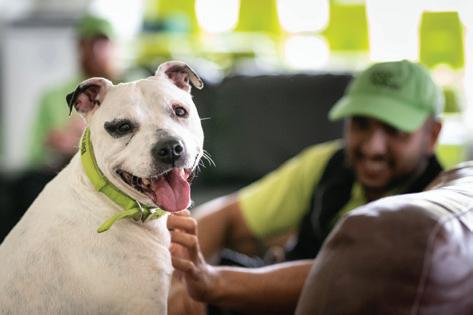
Birmingham Dogs Home is a charity that has been serving the West Midlands community for over 130 years since their charity was founded in 1892, and they have always provided homeless dogs with a refuge and a place to feel safe. From humble beginnings they are now proud to be the largest dog rescue charity in the region, operating from two rescue centres.
They care for over 2,000 homeless dogs every year, and their vision is for every dog to be cared for with kindness and empathy, so that they can lead a happy, fulfilled life, feeling safe and loved. they believe that every dog matters, which is why their teams work tirelessly, every day, to relieve suffering and help every dog they can, whilst providing medical care, emotional support and training as well as food, shelter and love. Most of the dogs they care for have been abandoned and come to them as strays through local authorities. They do not receive any government funding and rely solely on the generosity and kindness of the community they serve.
who was in desperate need of help. He was living out and surviving on scraps. He was wanting to eat but struggling to move with what appeared to be a completely lame back leg. Initially he was taken to a vet in London by a kind hearted lady, but it was suggested he be put to sleep without further investigation as he appeared to be feral. Fortunately, the lady made a call to see if someone would take him on, as he was young, strong and seemed one of life’s survivors.
For Alfie, time was of the essence. We said ‘yes’ and he was rushed to our vet for full check over, pain relief and x-rays. Alfie had a very badly broken leg – the only answer was orthopaedic surgery as soon as possible.
With the help of an emergency appeal for donations, Catastrophes were able to proceed without delay.
Thanks to the skill and expertise of an orthopaedic vet in London, Alfie’s surgery was successful and we are pleased to say he has made a full recovery.
It is cases like Alfie, where intensive care, recovery and convalescence is vital that we are aiming to have a purpose built facility here at the Sanctuary.
For cats in need, the charity aims to be ‘their someone’ and with the wonderful help of supporters of our rescue work, we will do our very best to give the cats in our care the chance of a bright future.
www.catastrophescats.org
care for your dog in the event of your passing. This a free service and many supporters who sign up also choose to leave a gift in their Will to Birmingham Dogs Home.
They are very proud of all they have achieved but they are only able to continue providing these life-changing and life-saving services, thanks to the very special people who kindly remember them in their Wills, as a cause close to their heart.
They have now also launched their Forever Friends service which can provide you with reassurance that their charity can continue to
Every Dog Matters – thank you for helping make the world a better place for them.
Please be a part of their future by remembering them in your Will today. Visitwww.birminghamdogshome.org.uk/support-us/ leave-a-gift-in-your-will/
Visit a supermarket or shopping centre and there is a very good chance there will be somebody on the door or in the foyer, asking you to contribute to one charity or another. Switch on the TV and thousands of pounds are being raised from television viewers while they sit watching ‘fundraising’ programmes. Read about the millions of pounds that are handed out by the lottery commission to all sorts of causes, deservedly or otherwise. So what is the effect of all this visible fund raising having on the general public? Could it just be making everyone believe that all charities are well supported, well funded and generally doing very nicely thank you!
Sadly though, this is often not the case! To just survive another day is a constant struggle, with many charities working for animal welfare still fighting for every penny they can lay their hands on, and certainly without lottery funding.
In the current climate, where people are battling to pay bills and keep their homes going, many people cannot afford the up-keep of pets. In addition, families are breaking up and people’s circumstances change, meaning that they are no longer in a position to keep a pet. Sadly, more and more animals are being abandoned or taken to animal sanctuaries, and animal shelters, and charities are full to the brim.
It can be great fun and very rewarding owing and caring for a horse or pony, but with the rising
For the love of animals
costs in feed, bedding, farrier and vet bills, not to mention land being sold off, people are really struggling to keep their horses and ponies. As a result, many more are alas being abandoned and neglected, putting a huge strain on the equine charities who work tirelessly providing them with the care they need for a healthy and happy life.
We can only be full of gratitude to the people who give their time and effort at animal shelters. They care deeply, try to rehabilitate animals who have suffered, in many cases, horrendous abuse and neglect, with a view to finding loving, forever homes for as many animals as possible.
As well as domestic animals, wildlife rescue centres in the UK are dedicated to helping save and rehabilitate injured and orphaned wild animals. Many of these rescues are open 24 hours a day, 365 days of the year to attend to any wildlife that is in need.
Their aim is to return the animals and birds back to the wild when they are fully recovered. However, many are unable to be released for various reasons and are therefore looked after at the sanctuaries for the rest of their lives, at a cost.
Knowing there is somewhere to turn when we find that injured hedgehog or bird is something we must be proud of in this country as in some countries any kind of help for injured wildlife is totally unavailable.
Financial support is also vital to help continue developing techniques and procedures for medical research into human disease without the use of animals or animal tissue, and to eliminate the use of animals in biomedical research and testing.
Organisations campaigning to end animal cruelty both in the UK and around the world need your support to enable them to continue fighting for a world where humans treat animals with respect and understanding. Much needed funds go towards improving and developing animal welfare standards worldwide, and at the same time help raise awareness of abuse and cruelty.
So just how do these animal charities that do such sterling work all over the country survive? The answer most will tell you, is their reliance solely on work done and income raised or donated by a loyal group of ‘friends’ and ‘supporters’.
Some charities are fortunate in owning or having had bequeathed, properties that are home for both the animals and the administration. But, as every house owner will know, the upkeep of any building will, in itself, cost a small fortune.
If you are an animal lover, one of the main ways to support an animal charity is to leave them a legacy in your Will. With careful consideration and wise investment this could be a great asset to a charity (or charities).
A monthly direct debit donation can also be a great way to make a difference too. Choose an amount you can afford, which can be as little as a couple of pounds a month as every little helps. Also, with Gift Aid the charity will receive even more.
Why not ask friends and family to donate to your chosen charity for your birthday or even Christmas, rather than purchasing an unwanted gift.
Thinking of decluttering? Then why not sell your unwanted items and donate the money raised. Or maybe hold a charity event, such as a coffee morning or sponsored walk. Most importantly remember to enjoy your fundraising, after all, no matter how much or how little you raise, your fundraising really does have the ability to change lives. Consider playing your part and help the good work live on!
We highlight the work done by some really special charities. All of them deserving of your support.
The gift of friendship
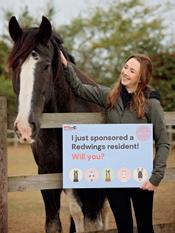
For a unique and thoughtful gift, why not sponsor a Redwings Adoption Star horse or donkey for a friend or loved one, or even yourself?
Standing at an impressive 16.3 hands high, stunning Adoption Star Shire cross Fox is a true gentle giant who loves to bend his head over the fence for a cuddle with his visitors.
While Fox now enjoys a peaceful life in his paddock at the charity’s Caldecott Visitor Centre, in Norfolk, his future was not always so certain. This handsome gent arrived at Redwings in 2010 as part of a large group of horses when he was just a few months old.
Fox has a condition which means he experiences stiffness in his legs so his chances of finding a new home to suit his needs were slim. However, he now has a permanent home at the Sanctuary under the watchful eye of Redwings’ vet team.
From just £2 per month, you can sponsor Fox for yourself or a loved one and ensure he and his four-legged friends continue to enjoy happy and healthy lives at Redwings.
What’s included in your adoption?
• Your Adoption Star’s photo and rescue story
• A certificate of adoption
• A bookmark featuring your Adoption Star
• A factsheet all about your chosen animal
• Three postal updates a year from your new friend, including one at Christmas!
• Quarterly email updates with photos from your Adoption Star
• An invitation to their birthday party – yes, really!
CASE STUDY
Three decades of impact, and a future you can help to shape
With the help of our supporters, we’ve spent the last 35 years campaigning to advance animal welfare and work towards a kinder world for animals. Much of this progress takes time, and everything we hope to achieve in the future is only possible because supporters choose to remember Naturewatch Foundation in their Wills. These gifts allow us to plan with confidence and continue being a strong, steady voice for animals.
Protecting wildlife in the UK
We work closely with police, government departments and charities across the UK to protect wildlife and ensure those who harm animals are held accountable. By providing vital information to support arrests and investigations, and through our ‘Target Crime Not Wildlife’ campaign, we have united smaller wildlife rescue organisations into a powerful coalition – giving the sector a stronger collective voice to drive real change and keep wildlife safe.
Driving change for animal welfare
We have campaigned tirelessly for greater transparency around animal testing in the UK, holding the government to account on its phaseout plans and calling for clearer public reporting. Alongside this, we work to end low-welfare pet breeding and support small rescue organisations through our Pet Rescue Grant.
Improving animal welfare worldwide
Internationally, we have supported animal welfare in Ukraine since 2013 and now work across Eastern Europe. We are also proud to
To sponsor a Redwings Adoption Star, call 01508 505246 or visit www.redwings.org.uk/adoption today.
coordinate World Animal Day, uniting people worldwide to raise awareness and improve animal welfare standards
Leave a lasting gift for animals
By leaving a gift in your Will, you can help Naturewatch Foundation protect animals for generations to come – ensuring our vision of a kinder world for animals continues to grow and inspire.
Adopting a horse, pony or donkey at Redwings is a fantastic way to support Redwings and make a new friend in the process, and it costs from as little as £3 a month.
Bransby Horses –Rescue and Welfare
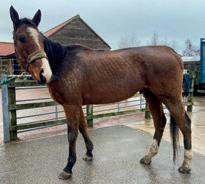
In 2025, our Welfare Team supported nearly 4,000 equines in the community. Of the 105 equines admitted to our care, 55% arrived severely underweight. A growing and deeply concerning trend. As the cost of equine care continues to rise, more owners are struggling, and more equines are arriving in urgent need. Pablo was one of them.
A concerned member of the public contacted our Field Officer, Kris, who could feel how underweight Pablo was even through his rug.When the owner explained they could no longer provide the care he needed, Pablo was signed over to Bransby Horses, his best chance of recovery.
With a body condition score of just 1.5, visible ribs and painful, overgrown feet, Pablo needed immediate help. After a hoof trim and shoes, his lameness eased, and with a tailored feeding plan, he began to gain weight, an incredible 32kg in just three weeks.Today, he is brighter, more comfortable, and finally receiving the care he had been missing for so long.
Stories like Pablo’s are only possible because of the generosity of our supporters. Last year, providing tailored nutrition for our equines cost the charity £33,353, and this figure covers feed alone. It does not include the £27,465 we also spent on hay, a vital necessity for many of the equines who come into our care. Many arrive hungry, underweight or with medical conditions that require specialist feeding, and every one of them deserves the chance to recover.
At Bransby Horses, legacies are a lifeline, making rescue and rehabilitation possible. In fact, three in four equines owe their lives to gifts in Wills.
By leaving a gift in your Will, no matter the size, you can help provide vital feed, safe shelter and the second chance every equine deserves. Your legacy can transform a life.
CATASTROPHES CAT RESCUE
Catastrophes Cat Rescue provides a lifeline for cats in desperate need.
The cats we take in have often been abandoned or badly treated. Some are simply strays who have lived on the streets and never had the chance of a caring home. With your support we can reach out to them and provide urgent veterinary care, food and warmth.
We actively support spaying and neutering as an essential part of responsible animal care.
Our unique sanctuary in the Sussex countryside gives cats that are difficult to home such as feral, nervous and elderly cats, a peaceful environment with all home comforts and the freedom of the country gardens that surround the sanctuary.
Please remember us in your will.
With your legacy we can provide homeless and unwanted cats with love and care and a bright future.
“Help us to be their someone”
Visitors welcome by appointment – Contact Liz Varney:
If you’ve been diagnosed with diabetes, you’ve probably heard warnings about protecting your eyes. But between managing blood sugar, medications, and everything else, it’s easy to feel overwhelmed. Here’s what you actually need to know about keeping your eyes healthy.
Why Diabetes affects your eyes
Your eyes rely on a delicate network of tiny blood vessels to keep your retina – the light-sensitive tissue at the back of your eye – healthy and functioning. Think of your retina as the film in a camera, capturing the images you see every day.
When blood sugar levels run high over time, these small blood vessels can become damaged, a condition known as diabetic retinopathy.
What you can do to prevent problems
This probably all sounds quite scary.The good news is that this damage doesn’t happen overnight, and there’s plenty you can do to protect your sight.
Most important is keeping your blood sugar, blood pressure, and cholesterol well-managed. This requires consistent, long-term effort through a combination of diet, exercise, medication, and monitoring. Small, steady improvements add up over time.
That being said, even people with excellent diabetes management sometimes develop eye problem.
The NHS Diabetic Eye Screening Programme
Fortunately, the NHS offers regular screening for diabetic patients to help spot any issues as soon as possible.
By Saanan Umeed, Medical Retina Consultant, Midland Eye
Actual waiting times vary by area, though if you’re concerned about delays, your optician can sometimes advise on which hospital services have shorter waits. If you have private health insurance, this may also be an option – coverage varies, so it’s worth checking your policy.
Anti-VEGF Injections
There two types of diabetic retinopathy (non-proliferative and proliferative) and the main treatment for both conditions involves regular injections of anti-VEGF medication. VEGF is a protein that promotes blood vessel growth.
After each injection, keep your eye clean by avoiding rubbing it or exposing it to tap water for a few days. Stay away from dusty activities like gardening or decorating. Infection is extremely rare but if you notice increasing pain or redness, contact your eye clinic immediately.
Steroid injections
Steroids offer an alternative that works more broadly than antiVEGF, reducing multiple chemicals that cause swelling. They’re given as slow-release pellets that last around four months – meaning fewer appointments than anti-VEGF. However, they’re not suitable for everyone. Steroids can increase eye pressure (problematic if you’re at risk of glaucoma) and may speed up cataract development. Your specialist will discuss whether they’re right for you.
Laser treatment
Once you’re diagnosed with diabetes, you’ll automatically be invited for regular eye screening. If screening detects changes in your eyes, you’ll be referred to a hospital eye specialist.
Your next steps
Managing diabetic eye health doesn’t need to feel overwhelming. Here’s how to make it manageable:
Don’t miss your screening appointments. They’re your early warning system, catching problems when they’re most treatable. Mark them in your calendar and treat them as non-negotiable.
Focus on consistent diabetes management. You don’t need to be perfect – just consistent. Small improvements in blood sugar, blood pressure, and cholesterol control add up to significant protection for your eyes.
Report changes quickly. New floaters, flashing lights, persistent blurred vision, or wavy lines all warrant a quick call to your optician or GP. Early action makes a real difference. Keep your glasses up to date. Sometimes what feels like deteriorating vision is simply an outdated prescription.
Don’t hesitate to ask questions. If something isn’t clear, ask your eye care team to explain it differently. Understanding what’s happening helps you feel more in control and makes treatment easier to cope with.
For proliferative retinopathy, laser treatment can help by deliberately treating areas of peripheral retina –parts you don’t really use for day-today vision. Think of it like carefully pruning a tree. This pruning reduces the chemical signals that trigger abnormal blood vessel growth while nipping the new vessels in the bud. Treatment typically starts at the far edges of your vision to see how you respond. If the unwanted vessels stop growing, you’ll just be monitored. If they continue, treatment gradually moves closer to the centre, always taking care to preserve your functional vision.
Occasionally, complications arise that need surgical treatment rather than injections or laser. This might sound daunting, but these procedures are well-established and highly successful.
Know you’re not alone. Living with diabetes can feel isolating, especially when it starts affecting your vision. Organisations like Diabetes UK and the Macular Society offer information, support groups, and someone to talk to who understands. Many areas also have eye care liaison officers who can provide practical advice and emotional support.
ABOUT THE AUTHOR
Saanan Umeed is a Medical Retina Consultant at Midland Eye. Midland Eye was founded by four ophthalmic surgeons to provide patients with a comprehensive, specialist service for the diagnosis and treatment of all eye conditions.
Welcoming Spring: How to refresh your outdoor space for the season ahead
As gardens begin to wake after winter and the days gently stretch out, early spring offers the perfect moment to give your outdoor space a little attention. There’s a quiet joy in these first tasks of the season, sweeping the patio, refreshing pots, noticing the early colour returning and the knowledge that soon you’ll be able to enjoy relaxed mornings and easy evenings outside again.
At Hillarys, some of the most inspiring ideas we see come straight from our customers, people transforming everyday gardens into inviting, personal spaces. One such customer is Luke, known to many on Instagram as @man_about_ gardening.When he moved into his new build home, the garden was a blank slate, flat ground, bare fencing, and little else. Today, it’s a welcoming oasis of colour and comfort, thanks to thoughtful planting, clever use of shade and a beautifully styled freestanding pergola.
For Luke, preparing for spring always starts with the plants.
“I always notice the planting first, what’s blooming, what smells amazing, what’s new,” he says.
“With early bulbs and bedding plants in season, even a few pots of primroses, pansies or tulips can instantly brighten a patio or doorway. Tidying up the remnants of winter, deadheading, brushing down hard surfaces, refreshing compost, helps the whole space feel renewed.”
Lighting is another element Luke swears by:
“Lighting is key for atmosphere. A few lanterns or candles make the evenings feel really special. Add a rug, a couple of cushions, a small side table, and suddenly you have an outdoor sitting room ready for spring afternoons and those first gatherings of the year.”
Spring evenings can be crisp, so a soft glow not only adds ambience but encourages you to spend a little longer outdoors. Under his pergola, Luke has created a warm, inviting corner using simple lanterns and gentle uplighting, an approach that works equally well beneath an awning.
“In fact, awnings and pergolas have grown increasingly popular over recent years, says John Foster, installation manager at Hillarys. “And it’s easy to see why, they make outdoor spaces more useable, more often. Awnings provide reliable shade on bright days, and pergolas bring a clear sense of structure, protection from the inevitable rain showers
and turn an outdoor area into a true extension of the home.”
And importantly, creating a beautiful outdoor space doesn’t have to be expensive. Luke often shares this reassurance:
“No matter what your budget, there’s always something you can do, whether it’s a few pots, some string lights, or a fully styled pergola.
“A fresh cluster of terracotta planters, a comfortable chair moved into a sunny spot, or repurposing lanterns and throws from indoors can completely change the feel of a garden.”
For more information about awnings and pergolas visit www.hillarys.co.uk
Inspirational Interiors
Blue & White
Roger’s attitude toward design, fabric and colour is to constantly seek to be innovative and amusing; he has no desire to emulate the entirely traditional approach of many decorators whose tendency is to create purely period settings. Rather, he promotes a gentle evolution of 20th-century decoration, to broaden the boundaries of the accepted ‘classic’ look and give his interiors a fresh twist and wider palette.
However, he would not dream of compromising his high standards of decorative integrity and exquisite finish by so much as a fraction for the sake of some quirky modernism: whatever element he employs to surprise and excite will never be detrimental to the harmony of the finished scheme.
Blue-and-white ‘things that amuse’ massed together in Roger’s London kitchen include painted vegetable boxes and an abundance of china, from tea caddies to bright café mugs. Scraps of fabric and even rolls of plastic provide inspiration while they await incorporation into one of his designs. ‘Nothing stays more than a month’ he says.
His bold and exciting use of colour is one of the most important sources of inspiration and is evident throughout his interiors. In particular – above all other single colours or colour combinations – blue and white are pivotal in many of his designs. Indeed, he happily admits to a passion that borders on fanaticism, and uses any opportunity he can to introduce it. There are several reasons for his enthusiasm for this combination. Primarily, he feels that this versatile pairing can be used to great effect in virtually any situation, however
grand or diminutive the scheme. If a crisp and contemporary look is sought, then the paler blues such as sapphire and cobalt are the ones to use, smartened and structured with a hint of black here and there.
If the room is south-facing and full of light, then a cool grey-blue will work, but beware of dull northern light which will kill most blues, except perhaps a red-biased blue. Also keep in mind that blue dyes are unstable and will fade quicker than other colours, especially when placed in direct light. Blue and white will work either as
a solitary statement or put together in a glorious multitude of materials, paintwork, paper and artefacts to combine many blues of different patterns and textures.
Roger’s seasoned advice when dealing with multiple shades of blue is that there is only a danger of disastrous clashes when just two conflicting blues are used in juxtaposition.
Add a third, fourth, fifth – however many the scale and economics of the piece will stand – and the whole thing will come together in a delicious melting pot. The kitchen is probably the room with the most potential for exploiting this bold application. At its most informal and eclectic materials, ornaments and artefacts with a broad provenance can be introduced in as informal a collaboration as you like –there is no room for a timid hand when the blue-and-white saturation look is sought. The idea is to put together all manner of patterned fabrics – checks, chintzes, toiles, spots, stripes – and use them as blinds, slipcovers, cushions, napkins, tablecloths and curtains. Off-cuts could be framed instead of pictures, tea towels may be wrapped around ceiling light flexes by way of disguise or draped, handkerchief-style, to transform a boring lampshade. If
you can’t find enough blue-and-white china to fill the shelves, paint cardboard vegetable trugs begged from the grocer in blue-and-white stripes and fill rustic baskets with painted angular twigs and blown eggs and pine cones to fill the spaces and add a different emphasis in shape and texture.
Delft-style tiles and Indian cotton rugs would complement each other on the vertical and horizontal planes.
I’ve always liked blue-and-white china and suddenly, I just discovered blue-and-white checks and became impassioned of them
Perhaps, one of Roger’s most fulsome experiments in blueand-white decoration has been the treatment of some of his own rooms both in London and in his house in the country. His kitchen, for example, has evolved its blue-andwhite persona over many years, long before every glossy magazine extolled the virtues of this look – not least, perhaps, because it is so seductively photogenic. Now the simple dresser frames a massed display of china, tins and pretty bits of junk. However, the arrangement is crucial to the look and Roger takes great care to achieve a sense of order and balance. The result is an eclectic, inexpensive mise-enscène that shifts and evolves because it is artistic, functional and fun.
Naturally, a high level of sophistication and perfect finishing was a prerequisite in couturier Valentino’s London house. His kitchen, therefore, is a fine example of a smart, restrained and discerning use of blue and white. Here, a large-scale checked cotton is gathered into draw blinds over the sloping windows and the back and seat cushions of the wicker chairs. A Provençal-style tablecloth and highly selective display of fine French and Chinese porcelain complete the picture. No clutter, no fuss.
In Valentino’s kitchen conservatory, blue-and-white fabrics are used for the sophisticated check of the ingenious overhead gathered blinds, for the cushion pads and covers slipped over the backs of the chairs and in a pretty Provençal-style tablecloth. French and Chinese porcelain plates, some of which are actually sunk into the wall for a permanent mosaic effect, contribute to the international feeling of the room.
The magic of blue-and-white fabric is in its transglobal character, whether homespun or sophisticated, classic or modern. In his own homes, Roger exploits all these attributes. A handmade patchwork throw lies alongside flamboyant leopard prints and smart stripes, his bed is made up with a crisp assortment of multi-checked cottons and his bathroom is a two-toned tapestry with a sheer gingham blind and bath curtains and a frayed patchwork chequerboard wall.
Blue-and-white will look spectacularly handsome wherever you put them, whatever the lighting conditions and atmosphere of their given location. Perhaps the ‘signature’ that is most likely to reveal Roger’s hand in a decorative scheme is his frequent use of blue-and-white as a counterpoint to highly decorated rooms and richly coloured and patterned chintzes. The effect is superb in its most simple form: adding a single, deeply comfortable chair beautifully tailored in a blue-and-white check, for example, is like providing iced mineral water in a crystal glass during a rich meal.
Throwing in a touch of gilt will add an extra fillip to a blue-and-white scheme. Bells of Ireland (Moluccella laevis) tumbling over the top of a willow-patterned urn supply a further sharp contrast in a splash of brilliant green. The joy of using blue and white is that they form such an accessible combination and look good in any room situation, whether formal or informal.
Inspirational Interiors by Roger Banks-Pye, published by Ryland Peters & Small (£40)
We arrived at Hallstatt the traditional way, by bus and train from Salzburg and rolled our cases down the path to the jetty to find the ferry just gliding towards us. It gave us time to catch our breath – the view of Hallstatt across the water had well and truly taken it away. It really is picture perfect; nary a ripple on the pristine lake, the spire of the Protestant church narrow and dark above its white body. The ferry drops you at the jetty which is close to the main market square of Hallstatt, which is pretty and traditional with wooden houses and a fountain in the centre. There are few cars in Hallstatt - the town is so lovely they want to keep it that way. If you come by road - and there are excellent links - you have to leave your vehicle at the car park outside the town. Only a few tourist coaches or local traffic is allowed to come down the tunnel into the town itself. And I prefer it that way. There are also few hotels; ours (the Hirlatz) was owned and managed by the Höll family and was a 15 minute drag of the case or a very short taxi ride from the main square.
Kätte Höll was in charge, a charming and lively woman who instantly made us feel welcome. Once we were introduced to her father, Herr Höll, and saw the family photographs of him with his dog and walking stick high up on alms or snowline, we realised we had found a fellow walker. And what a walker he was! If he felt inclined, he would take parties of guests out on guided walks into the Dachstein Mountains, and I had no doubt whatsoever that he would easily outstrip most of them and barely miss a
breath either. He used to take Kätte hunting, and his pride in her was very evident. It required no discussion; we must have him in our film and we feel his interview was a great contribution to it.
Claudia from the Tourist Office introduced us to Ulrike, a town guide, and we had such a good time with her. Her sense of humour was mischievous, which suits mine, so we
got on like a house on fire, which I suppose is bit of a ‘non-pc’ thing to say as 35 houses were destroyed in the village in their Great Fire. They all know each other, it’s such a small place, and Mia was another guide at the Salt Mine who was very good. We walked up the Salz Berg to the mine, but you can take a funicular from the bottom.There are 7000 year old historic graves at the top of the
Debra in Hallstatt
Hallstatt trail
berg, the discovery of which created a new time-line in man’s history. The Salt Mine really is a ‘great day out’Mia didn’t rush us along, we all had time to lick the walls and touch and poke things, and the slides were of course the main event. You have to dress up in uniform to protect your clothes, and possibly go faster down the wooden slides. It is unnerving just launching yourself on these things; it’s been such a long time since I went down a slide on the ‘recreation ground’ with my little son clamped firmly between my knees. But you can’t get out of it - be warned - and it isn’t that bad, you can go down in tandem if you want. The little train that brought us out was sweet, and as I’m partial to any kind of train, it was a fun way to end the visit.
You really do need several days in Hallstatt to do it justice. If you just wander around the pretty squares, admire the houses and do a little meander along the upper old route you will only skim the surface. The Hallstatt museum is very good, but all the information boards in and out of the display cases were in Germanonly when we went, which rather lessens the effect because you only get an impression from the artefacts instead of an in-depth version. I speak German, but it’s rusty and you don’t have the time to stand and translate it in your head and then repeat it for your partner’s benefit.
There are so many walks for all kinds of abilities that it really is hard to choose which ones to take. Our walks were of necessity circular and as we really do walk every step, the weather is what it is, and mountain weather is so unpredictable. The Dachstein caves really are worth visiting, the Eishöll in particular, is quite spectacular and very cold, and the other villages are pleasant to visit, although very quiet. Hallstatt is the main attraction at the lake and everyone knows it. Strolling about in the evening is very relaxing with so few tourists around, and there is no nightlife to be had. On certain nights, there is no food to be had either. Be warned that the guesthouses and hotels and restaurants within Hallstatt all have a night off, so finding a meal last minute is a fraught exercise. During our visit it was a Tuesday night, and we’d been so busy filming that we actually forgot, and strode from one shut restaurant to another in slightly panicked mode until we found the big hotel in Marktplatz, which was open and serving. The dining room wasn’t huge, and a large
party of Austrians from another city were celebrating a family birthdayit made the whole atmosphere very jolly and we were soon laughing and raising our glasses with them. As soon as they discovered we were English they immediately switched to our language, and we spent a very pleasant evening meeting lovely people in a rustic restaurant, surrounded by country artefacts, with some awfully good schnapps and a roaring fire.
Next we took the train to Salzburg. Mozart was born here, the ‘Sound of Music’ was filmed here and the prestigious Salzburg Festival held here, so all testaments to the city’s unique musical history. Historically and culturally rich, the medieval city - also a UNESCO World Heritage site - is the focus of our second visit in Austria. If you stay in the relatively compact centre of town you won’t need public transport at all. Despite The Sound of Music musical being released in 1965, most Austrians don’t know it; however, the city is still proud of all of its film locations, which are tourist attractions of course.
We started our walk in the Schloss Mirabell gardens, the steps of which were used in ‘the’ film to sing Do, Re, Mi. Do look out for the weird collection of life-size gnomes. We crossed the bridge over the fast flowing river Salzach into the old town. To make it easy, we suggest taking the lift to the Mönchsberg museums and gardens above the city for really special views. Then you can walk on through woodland to the
Fortress and all its attractions. Further on past the Fortress is the once powerful convent on the Nonnberg. I felt a chilly reminder that Hitler’s ‘Eagle’s Nest’ at Berchtesgaden was just on the other side of the mountain.
After you have had your fill of history, descend umpteen steps into the compact old town and make your own haphazard trail around the famous musical city. There are a number of grand squares to explore all with their own story, plus performances by street musicians from the University, and wonderful cafés. Mozart came from here so you can’t miss a visit to his birthplace. We stayed right in the heart of the old town, so walked out each day to explore without the fuss of transport. I was well acquainted with ‘Mozart’s Balls’ from my office days, so it was no hardship to visit the famous chocolatier Furst to find out how they were made, and of course, to try some. And life would not be complete without a slice of delicious Sachertorte, now would it?
We did cross back over the river to the new town to visit the world famous Marionette theatre and take a look behind the scenes and chat with the founder’s granddaughter.
From the old town, we decided on a river trip on the power cruiser “Amadeus” to the magnificent Hellbrunn Palace with some watery surprises in its gardens. The current on the Salzach is so fierce, the Amadeus was specially built, and even ‘waltzes’ on its way back, if you’re lucky.
David and Debra flew to Salzburg and took the train to Hallstatt.
After David took early retirement from the BBC, the couple have focussed on their own productions, and for over ten years have been renowned for their walking films in Europe.
For information on all the Footloose films, take a look at www.footloose.tv or watch previews of the walks on YouTube.
Salzburg Fountain
SHETLAND TOURS & HOLIDAYS
2026 dates now available 03 –08 May 05 –10 June 08—13 July 07—14 Aug
A second generation family rm with over 30 years experience, every one of our greenhouses is individually designed and hand-made in high quality aluminium. Visit our website or contact us for further information.
Roses
Roses really opened my eyes to just how different locally grown flowers can be compared to their imported counterparts. At flower school we used an endless supply of imported spray roses. I found them incredibly stiff, the lack of scent was always disappointing and, more often than not, they wouldn’t really unfurl or do anything at all in the vase. I struggled to see how these flowers had been so heavily romanticized.
Using locally grown roses is a totally different experience, however. Each one has its own unique scent and they tell a story as they age. During the summer, I’ll often have a couple of stems in a bud vase on the coffee table. I love to watch them change over the days, the saturated pigment of the bud slowly fading as the petals open, the way the scent starts to soften and change over time. I might leave them in a sunny spot, letting the water evaporate completely, hoping to be left with a perfectly dried bloom to continue enjoying when the flowering season is over.
CHOOSING YOUR VARIETIES
I do a lot of research before choosing a rose. There are so many varieties and they all have their own unique characteristics, so I like to see them in person before committing to a purchase. Most of the varieties I grow are ones that I have spotted at beautiful gardens such as Sissinghurst and Great Dixter, or in the gardens of neighbours
GROW
When I first started planting the cutting garden, I picked up some potted roses from the local garden centre, but they struggled to get going. Now I order my roses online as bare roots, which tend to develop stronger root systems and mature into healthier plants. You can plant them out between mid-autumn and midspring, but try to do it during a dry spell and when there is no chance of frost. For really healthy plants, it’s good practice to water them regularly and not let them dry out in the heat of the summer. We often neglect to feed ours but can see the difference when we do. When we remember, we use fish, blood and bone fertilizer. If you want to add scent to a terrace or outdoor dining space, certain rose varieties also look fantastic in pots.
and friends. Seeing them in situ to get a sense of the size and shape they are going to create when mature is really helpful to me when planning a garden.
Some of my favourite roses to grow are ‘For Your Eyes Only’, a floribunda rose with a mix of sunset tones. It lasts really well in a vase and has a flatter petal structure making it an interesting addition to arrangements.
‘Roald Dahl’, a David Austin rose, is the most glorious peach colour. Like ‘For Your Eyes Only’ it repeats flowering, so needs deadheading for masses of blooms. Others that I grow are ‘Strawberry Hill’, a great pink variety; ‘Buff Beauty’, which is a slightly paler, peachy tone, and ‘Rhapsody in Blue’, which has deep purple blooms.
David Austin’s ‘Boscobel’ is one of my favourites to grow in this way and has a delicious scent that I don’t think anyone has ever managed to capture in candle or perfume form.
It’s really important to prune your roses, we normally do this in late winter, removing any dead stems and cutting the rest back by half to encourage healthy growth in the upcoming season.
GATHER
What I love about using locally grown flowers is that, sometimes, you have the ability to show the entire journey of the flower in one single stem. Roses are a perfect example of this. You’ll often find a flower in bloom with another bud just about to open and one or two still closed tight. As the individual flowers aren’t known for their long vase life, cutting them in these different stages means you can extend the length of time you have them in your arrangement. As the first flower drops its petals, you will still have other buds on the stem waiting to open up and fill in the gaps. And, unlike the imported varieties, your garden varieties will die beautifully, the little pile of petal confetti they shed will add a touch of their signature romance and whimsy to the vignette you have created.
Don’t underestimate the foliage on your roses, if you are getting towards the end of the season and your flowers have stopped blooming, the foliage is still a great addition to arrangements. It has lovely structure and can be used to great effect to create dynamic silhouettes and shapes within your designs.
An extract from Life in Bloom by Graeme Corbett, Frances Lincoln. RRP £22.00
As well as making a Will, a Lasting Power of Attorney (LPA) is also another important legal document that can help ensure your wishes are carried out. A Will takes effect after you pass, while an LPA takes effect while you are alive. Some solicitors consider this to be just as important as making a Will.
A lasting power of attorney is a legal document that lets you appoint one or more persons to make decisions on your behalf should there come a time when you are unable to do so yourself. This can happen if you become ill, have an accident, or develop a disability.
However, before doing anything it would be a good idea to discuss the options with the family or someone you trust to see what they think and whether they can help. This has to be done before losing mental capacity otherwise it is invalid.
Knowing you have someone you can trust to make decisions in your best interests in the event you are unable to do so yourself can be very comforting, not just for you but your wider family too.
In England and Wales there are two types of LPA, you can choose to make one for health and welfare and one for financial affairs, or both. In Scotland there are similar documents
Lasting Power of Attorney
– a Continuing Power of Attorney for finance and property and a Welfare Power for health and welfare, and in Northern Ireland, there is just a Enduring Power of Attorney for property and finance.
A health and welfare LPA allows someone to make decisions about another person’s health and care. This can include decisions about daily activities, medical care and where to live. The LPA can only be used when the donor has lost the mental capacity to make the decisions for themselves. It can’t be used to make decisions while the donor can still make them for themselves.
The LPA for property and finances give someone the authority to make decisions about your money and property. You can use an LPA to pay bills, manage bank accounts, collect benefits or pensions and sell property. You can choose when your attorney can make decisions, either when you lose the capacity to make decisions yourself, or as soon as the LPA is registered.
If no LPA is in place and you lose mental capacity, your loved ones will need to apply to the Court of Protection to become a deputy if they want to make decisions on your behalf. This can be a costly, complex and lengthy process. If you have a LPA, it can take effect as soon as it’s needed, meaning your chosen attorney can step in straight away.
If you are having health issues, then knowing you have a LPA in place can take away an enormous amount of stress at a difficult time. However, they’re not something to leave until later in life. You should consider putting one in place when you draw up a Will. Often, we have no warning of when we might lose capacity to make financial decisions, so the sooner you draw up a LPA, the sooner you will be protected.
After your family and friends, will you consider us?
Family comes first, and having a Will in place provides invaluable peace of mind for you and your family.
Many ABF supporters feel an enormous sense of pride in leaving a lasting legacy for those who have served their country.
We are the Army’s national charity. Since 1944 we have been here to support soldiers, former soldiers and their families in times of need.
With no government funding, we rely on the gifts we receive from Wills to support more than a third of our work.
Army Benevolent Fund is a registered charity in England and Wales (1146420) and Scotland (SC039189) and registered as a company limited by guarantee in England and Wales (07974609).
Charity NEWS
Helping those with diabetes
Diabetes affects over four million people in the UK about ten per cent of whom have Type 1 diabetes requiring daily multiple injections of insulin. The remaining ninety per cent have Type 2 diabetes and while they are different conditions, people with either condition need help, support and information. The Trust was set up to help with the day-to-day difficulties of living with diabetes. We not only want to help those living with diabetes, but also their families who can sometimes be forgotten. Diabetes can cause other health complications and sadly there is no cure, so we produce booklets on the many aspects of living with diabetes Trust also funds research that will help to improve the daily lives of people living with diabetes now. The Trust also co-ordinates the collection and distribution of insulin and diabetes supplies to developing countries. We also run a national helpline which offers a friendly ear when the going gets tough.
We are very grateful to everyone who makes a donation to help the Trust to continue its work of helping people with diabetes and their families. We know that it is a difficult time but any help you can give will help us to continue to help others. Thank you.
A season of second chances for Britain’s baby wildlife
Each spring, as the countryside bursts into life, Tiggywinkles Wildlife Hospital prepares for its busiest and most demanding time of year. The baby season brings an extraordinary number of young animals through the hospital doors, all needing urgent help.
At the height of the season, more than 2,000 wild patients may be in care each night. Many are tiny, vulnerable babies that have been orphaned, injured or separated from their parents. From fluffy owlets and delicate songbirds to fox cubs and badger cubs, each arrival requires specialist treatment and round-the-clock attention.
Baby birds, in particular, keep the team exceptionally busy. Some species must be hand-fed every 20 minutes from early morning until late evening, with carefully prepared meals to help them grow strong and healthy. It’s painstaking work that requires patience, dedication and a steady pair of hands.
Young mammals bring their own challenges. Orphaned fox cubs and badger cubs need regular bottle-feeding, warmth and careful monitoring as they develop. As they grow stronger, they are gradually moved to outdoor enclosures where they can socialise with others of their kind and learn the natural behaviours they will need for life in the wild.
The ultimate goal is always the same: rehabilitation and release. Every animal is given the best possible chance to recover and return to the wild where it belongs.
Behind the scenes, this remarkable effort relies on a dedicated team of vets, nurses, and trained volunteers working tirelessly throughout the season. As a charity, Tiggywinkles rely entirely on the kindness of the public. Whether you donate, visit their centre, or leave a gift in your Will, your support helps them continue to give wild animals the care they urgently need. To get involved, visit www.tiggywinkles.com or call 01844 292292.
The legacy continues – over 120 local community organisations will carry forward the impact of the Big Local programme
Communities across England will continue to benefit from the “truly transformational” Big Local programme for years to come, as more than 120 locally led legacy organisations carry forward the work started through a pioneering resident-led change programme in England.
Although March 2026 marked the formal conclusion of the Big Local programme, the impact of the initiative will continue to grow in communities across England. Over the past decade and a half, thousands of residents, volunteers, local businesses and community groups have taken part in the programme. 150 communities were each given control of £1m in long-term funding to improve their areas. Big Local has supported local businesses, invested in young people, improved health and wellbeing and built lasting community hubs.
Now, more than a hundred legacy bodies established by dedicated local residents will continue delivering valued projects and services in their neighbourhoods.
Rachel Rowney, CEO of Local Trust, who has worked on the programme since 2012, said: “Big Local was a unique experiment. Placing funding and decision-making directly in the hands of communities, on this scale, had never been tried before. The results, are a testament to the idea that if you trust residents with power and resource, they will build better communities.
“Throughout England, thousands of residents have developed the confidence, skills and networks to improve their neighbourhoods. Crucially these skills won’t be lost and, through the over one hundred legacy bodies, will continue to make a difference to their communities long after the programme ends.”
Exploring Care Support for Yourself or an Older Family Member?
When care needs arise for yourself or a loved one, it’s natural to wonder about the best path forward.
While residential care homes are one option, there's a wonderful alternative that lets you stay exactly where you belong – in the comfort and familiarity of your own home. Welcome to Live-in Care Support. Your home. Your routine. Your independence. Our care team working alongside you every step of the way as we have done for thousands of older people since 1980.
Ready to explore how live-in care could work for you?
Request your free brochure today and discover a care solution as unique as you are.