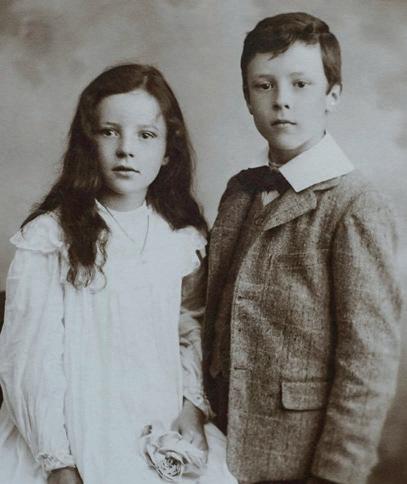
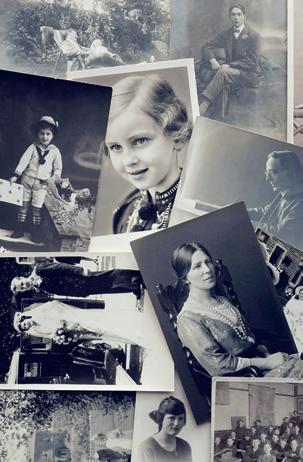
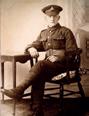
Why genealogy has become such a popular and engrossing hobby.
6 Key things to consider when buying a classic car
Thinking of buying a classic car? Tips to help you find a car that brings years of enjoyment rather than unexpected bills.
8Healthy Eating
Whether you are looking for better health or better meals (or both), bring the magic of the Mediterranean to your own kitchen.
11 Veggie Recipes
Two delicious recipes to try at home.
13 Update
Are your parents getting older?; Downsizers are prioritising needs not wants.
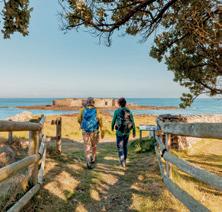
14 The Magical UK island of Alderney
Alderney, the hidden gem of the Channel Islands.
16 Footloose in Holland
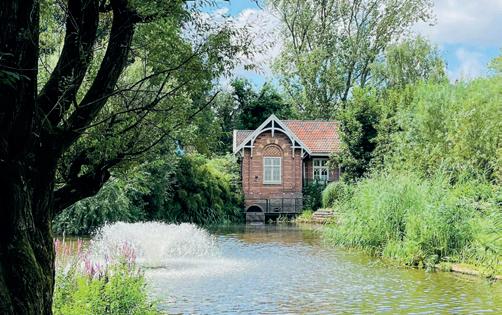
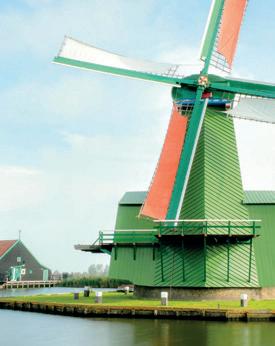
Read about Debra Rixon’s experiences as she visits the scenic and coastal areas of Holland.
19 What’s On Exhibitions around the UK.
25 Park Living
A unique and appealing lifestyle that many more people are turning to.
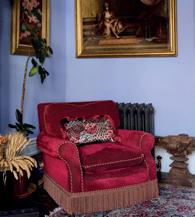
32 Faded GlamourSouk Style in the City
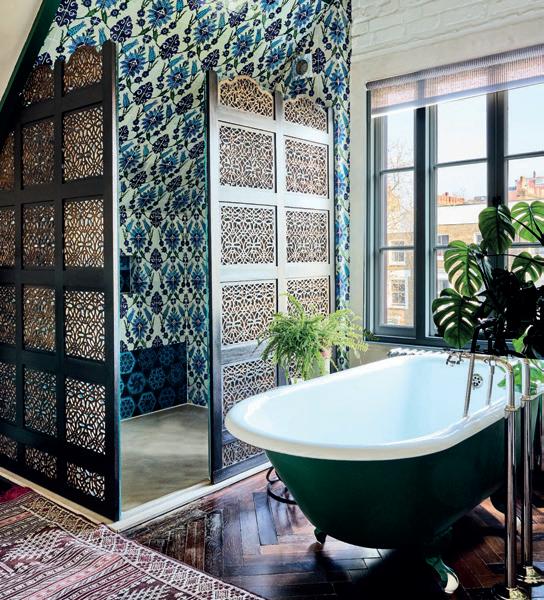
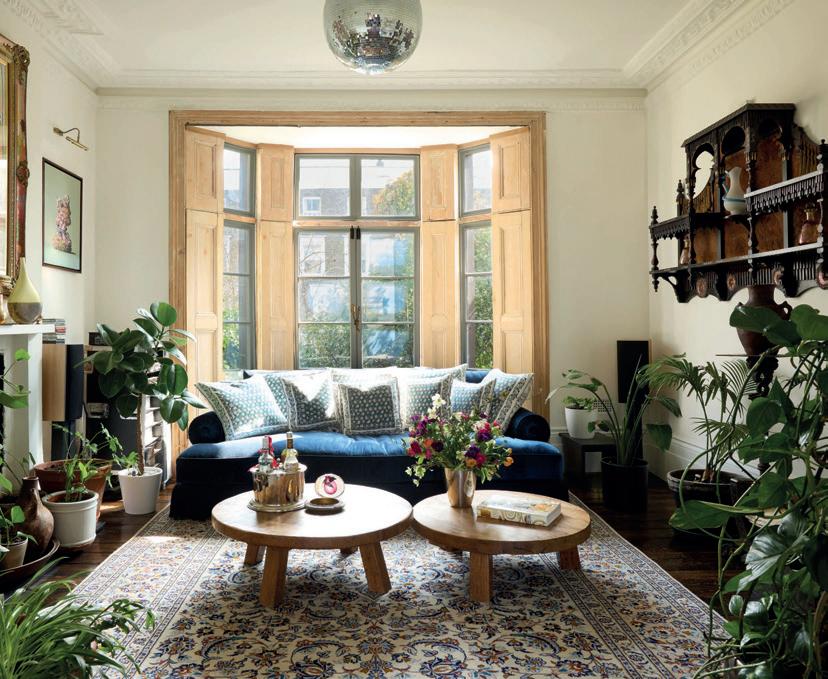
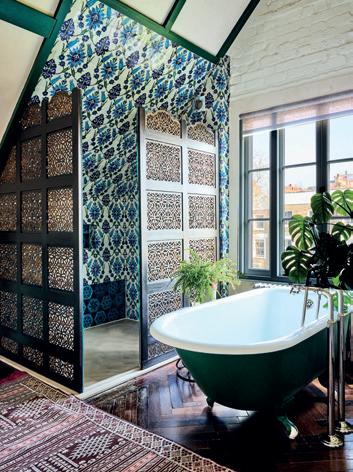
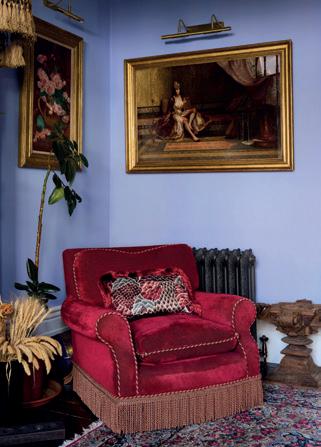
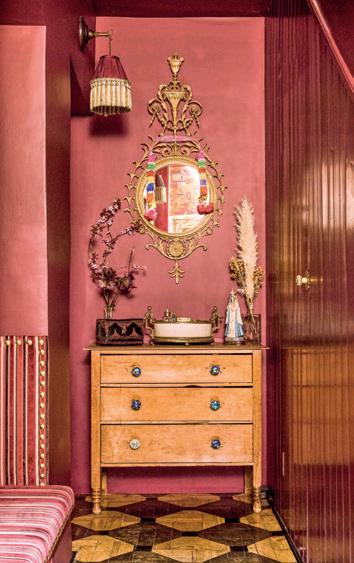
Read about an amazing fivestorey Edwardian townhouse which is intriguing, stunning and just a little bit different.
35 Making step counts count
Published by:-
Amra Media Solutions Ltd
Marash House
2/5 Brook Street
Tring Herts
HP23 5ED
•Tel: 01442 891608
•Email: info@amramedia.co.uk
•www.retirement-today.co.uk
•Layout: Karen Wightman
All rights reserved. No part of this publication may be reproduced without the prior permission of the publisher. The opinions expressed in this magazine are not necessarily those of the publisher. Although every care is taken to ensure the accuracy of the information and the advertisements contained within the magazine, the publishers cannot accept any liability. Retirement Today would be pleased to receive your articles and photographs for possible publication. Although all reasonable care will be taken the magazine can assume no responsibility and contributors are advised to retain a copy.
How donating data can transform our understanding of knee replacement surgery.
35 Depression - a survey
Rise in depressive symptoms among poor women in their late 50s and early 60s.
37 Making a Will
Making a Will is the only sure way that allows you to decide how you wish your estate to be distributed when you pass.
40 & 42 Charity News
Important news within the world of charity.
If you would like to receive FREE digital copies of Retirement Today magazine, please email the code ‘Free Digital RT’ to: info@amramedia.co.uk
Cover images:
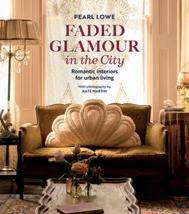
Top left; image by Kate Martin from ‘Faded Glamour in the City‘
Unlock your family story in retirement with the UK’s original school of family history!
Remember those childhood tales of great-grandparents who crossed oceans or tamed wild frontiers? In retirement, you might finally have the gift of time to become your family’s historian and uncover the truth behind the stories.
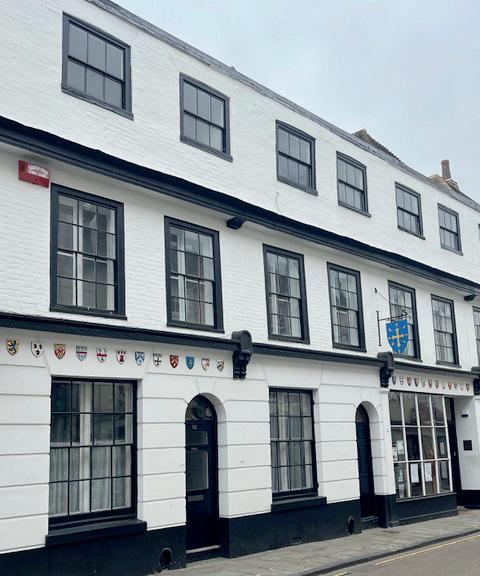
The Institute of Heraldic and Genealogical Studies (IHGS) is a charity dedicated to family history and heraldic education, and is located in the historic heart of Canterbury. Our expert genealogists have refreshed our online courses; they can support you to learn new skills to explore family history, or to know what sources to head for to get over some of those classic genealogical “brick walls”. Dive into flexible bite-size modules from your armchair. Learn to hunt census records, decode faded parish entries, craft elegant pedigrees, and conquer palaeography.
You could consider studying IHGS’s Higher Certificate, the gold standard in family history learning, supported by expert tutors who provide friendly and personal guidance.With the Higher Certificate, recognised by AGRA, RQG and CPD, you could even turn your hobby into a profession.
At IHGS’s Northgate building in Canterbury you can browse a unique library and explore the new Kent Ecclesiastical Index (1500s–1700s). You can visit us to tap FamilySearch’s vast archives, uncover some second-hand gems in the fascinating charity bookshop, or become one of our lovely volunteers.
If you’d rather ask others to search for your family then let IHGS’s qualified and trusted genealogists trace your tree, or get DNA insights from our network of global experts. Our team will help you to spark “aha!” moments to share at family gatherings!
Join our community of fellow explorers – your ancestors are calling!
isit www.ihgs.ac.uk to find out more, or email enquiries@ihgs.ac.uk
and can give useful information about the name, gender, age, occupation and birthplace of your ancestor. The first census to give personal information was in 1841. The 1911 census is the latest you can obtain information from at the moment because of the 100-year privacy rule and was the first written in the relative’s handwriting very often containing personal comments which can add extra dimension to your research. The common practice in those days for parents, grandparents and children to live together in the same or nearby households helps make your detective work easier. Nowadays you can do the family research quite easily on your computer, get access to a particular census and download material as long as you pay a fee.
PARISH REGISTERS AND GRAVESTONES
Tracing your ancestors
What can you do to while away the extra hours that retirement brings?
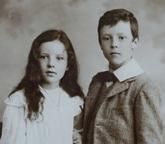
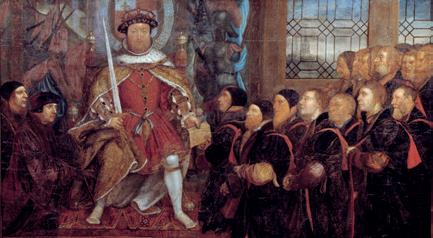
If you have ever watched the popular Who Do You Think You Are? TV programme you will know just how fascinating and unpredictable tracing ancestors can be and why genealogy has become such a popular and engrossing hobby.
When I first retired I decided to trace both lines of my family back as far as possible to see if some of the tall tales told about some of the members were really quite so tall. What I didn’t expect to find en route were the fascinating little bits of history from each family’s perspective, the frustrating blind alleys you meet, getting to know your ancestors as flesh and blood rather than as a cold statistic on a family tree.
DIGGING INTO THE FAMILY TREE
Like most things you have to start somewhere. My particular journey began when I came across a yellowing press cutting about one of my great-great-uncles who died in the early 1900’s. It had obviously been cherished by my grandmother and from it I was able to go backwards in time with information gleaned from regular visits to the births, marriages and deaths registry
By Mike Francis
which was conveniently situated near where I lived. I would order a relevant certificate and collect it a few days later. The time sped by as I became increasingly engrossed in this detective work and dug deeper into the family tree. I discovered that one side of the family started out as farmers on the east coast living a healthy outdoor life away from the pestilence in the towns and building walls to stop watery creeks from invading the farmland. Consequently, my great-great-great grandfather died in 1847 at 76 years old, a good age for those early times.
COINCIDENCE, CONFUSION, CALAMITY
Subsequently the family became grocers and opened four branches in the Midlands. By coincidence the other side of the family were also grocers in Cambridge. Along the way I stumbled across confusing or distressing events that often occur in family histories. If the first born in a family died then the second child of the same sex would be given the same name. When a mother of 3 died unexpectedly the father was unable to look after the children and the family suddenly separated. One of them landed up in a workhouse.
WHAT’S IN THE
CENSUS?
If like me you want to find out where you fit into the family picture the census is the first port of call
Churches can be a useful addition to your army of fact finding tools. Parish Registers can provide records as far back as the 1500’s and if you locate a church near where your ancestor lived you might be able to find the name on their register.You need to be on the alert for anything you might find there. One of the churches I visited had a stained-glass window in the porch bequeathed by an ancestor of mine with his name proudly engraved in the centre. Gravestones can also help fill in the gaps of family history. A gentle walk round the churchyard could be worth the few minutes it takes if you find a relative buried there although allow some time to decipher the etching on the stone which may have faded over the years.
FULL CIRCLE
While out hunting for signs of my family’s history in Suffolk I came across a village graveyard.The first grave on the right as I entered was my great-great-uncle’s. Because of his importance to the local community he had been given the most prominent position in the graveyard and it was his death recorded on a yellowing press cutting that had inspired my genealogical adventure.
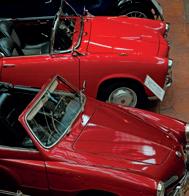
If a classic car is on your wish list but you’re nervous about choosing the right one – or worse, ending up with a money pit – a bit of preparation goes a long way. These eight tips will help you find a car that brings years of enjoyment rather than unexpected bills.
Buy the best you can afford
This is the golden rule of classic car buying. A sound, well-maintained car is almost always cheaper and far less stressful than rescuing a “bargain” project. Once you factor in welding, paint, mechanical work, electrics and interior trim, a tired example almost always ends up costing more than a better one would have in the first place.
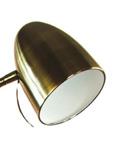
Unlike a traditional lament bulb, our lamps produce a brighter concentrated light which will transform your reading experience. Small and large print will appear crisp and clear with more vibrant colour. The focussed beam of light is similar to direct sunlight and is ideal for reading books, magazines,newspapers, along with hobbies including painting, jigsaws, sewing and much more. Making it the essential lamp for your home.
If possible, look for a car that’s already on the road and being used regularly. A running, MOT’d car that’s been regularly driven and maintained will almost always be a better bet than one that’s been off the road for years.
Bring an expert with you
It’s easy to fall in love at first sight, but a second pair of knowledgeable eyes can save you from an expensive mistake. Take someone who really understands the model you’re buying – ideally a specialist who works on them.
They’ll know what correct panel gaps look like, where rust typically forms and how to recognise poor repairs. They’ll also pick up mechanical issues on a test drive: weak braking, odd noises, steering feel, or a misbehaving engine. Even when buying from a dealer, an independent inspection is worthwhile; no dealer can know every model inside-out, and a marque specialist may spot things they’ve missed.
Bodywork matters most
Rust, welding and paintwork are by far the costliest parts of classic car ownership. Even on small cars, proper restoration involving stripping, repairing and repainting can easily run into five figures, and complex or fibreglass-bodied cars can cost even more.
Inspecting bodywork thoroughly is therefore essential. Look for ripples, bubbling paint and mismatched panels, and don’t be afraid to get on your knees with a torch to check underneath. Avoid viewing a car in the rain or in poor light – both hide a multitude of sins.
For most buyers, avoiding project cars is the safest route. If you do want a restoration project, try to buy the soundest shell you can. Even enthusiasts who enjoy the process often underestimate the time and money involved.
Budget for maintenance, not just the purchase
Running costs vary hugely between makes. Many new owners end up struggling with the upkeep of their dream car.
for more
Key things to consider when buying a classic car
or camper may require more space and be less convenient. Above all, choose something you’ll actually drive. Classics deteriorate when left unused, which reduces reliability and enjoyment. A car that suits your habits will stay healthier and give you far more pleasure.
Don’t buy for investment
Classic cars are rarely good financial investments. Values fluctuate, and most cars simply hold steady rather than increase. Some markets have even seen declines – pre-war cars, for instance, have softened considerably, while certain 1980s and ’90s models have risen.
Tools such as Hagerty’s valuation guide can help you understand current market conditions, but remember that maintenance, storage and insurance usually outweigh any profit.
The real return on a classic comes from enjoyment. If it appreciates, great – but buy the car that makes you smile when you open the garage door.
Think twice about cars without an MOT
By Tim Winton, Cambrian Classics
More modest classics – MGs, Minis, Triumphs and similar – tend to be mechanically simple, inexpensive to repair and well served by parts suppliers. It’s wise to check parts catalogues before committing to a model so you know what routine replacements will cost.
Set aside a yearly maintenance fund. Even the best-cared-for cars need regular attention: servicing, adjustments, occasional repairs and fresh tyres. Tyres in particular deserve scrutiny – always check date codes; anything over ten years old should be replaced.
Who will fix it
It’s important to find a mechanic familiar with older technology. Many modern workshops are geared towards computer diagnostics and modular repairs, not carburettors, contact breakers and ageing wiring. Classics often suffer from multiple small issues rather than a single
obvious fault, so finding someone who understands how the whole system works is invaluable.
Cars with carburettors are usually straightforward; fuel-injected classics can be much more complex. Don’t buy one with running issues unless you’re prepared for a potentially expensive recommissioning.
Be honest about what you want from a classic
Emotion plays a big role in classic car buying, but make sure the car fits your lifestyle. Think about how and where you’ll use it. Are you happy pottering along country lanes, or do you want something capable of keeping up with modern traffic? Are you planning local shows, weekend drives or long-distance touring?
Comfort, practicality and storage also matter. A small roadster might be perfect for solo use and easy to garage; a large saloon, vintage tourer
Even though cars over 40 years old are exempt from MOT testing, a valid certificate remains highly reassuring. It shows a qualified tester has recently inspected brakes, suspension, steering and lights.
A car with no recent MOT may be hiding rust, seized brakes, perished tyres or electrical faults. Some owners avoid testing altogether, but this has led to many unsafe cars returning to the road. An MOT is not a guarantee of perfection, but it’s an excellent snapshot of condition and a sign of responsible ownership.
If a seller hasn’t put the car through an MOT, ask them to do so. Any issues revealed can be addressed before purchase or considered in your decision.
Final thoughts
Classic car ownership is deeply rewarding, offering a connection to engineering, history and the pure joy of driving. With research, realistic budgeting, and advice from experts and fellow enthusiasts, you can find a car that brings years of pleasure. Buy with both heart and head and choose a classic you’ll love to drive.
ABOUT THE AUTHOR
Tim Winton is the founder of Cambrian Classics Ltd, a family-run business that specialises in classic car repair and servicing and is located by the beautiful Ceredigion coast. Cambrian Classics offers services that range from restoration and repair work to regular servicing and maintenance. Cambrian Classics is a recommended garage for both the MG Owner’s Club and Just Kampers, and regularly works on pre-1980’s classic cars, including pre-war vintage vehicles. Cambrian Classics specialises in a variety of classic marques including MG, Austin-Healey, Rolls Royce and Bentley, Alfa Romeo, Mercedes, BMW, Triumph, Volkswagen, Morris, Land Rover, Mini, Rover. www.cambrianclassics.co.uk
Healthy Eating
Whether you’re looking for better health or better meals (or both), bring the magic of the Mediterranean to your own kitchen
Potato and Kale Soup
My version of zuppa Tuscana, one of my favourite hearty soups from a popular Italian chain restaurant (we won’t name names), boasts fresh ingredients, a fraction of the sodium, and double the fibre! It’s perfect for winter evenings.
Place the olive oil and onion in a Dutch oven or large pot over medium heat. Cook until softened and translucent, 5 to 7 minutes. Add the garlic, seasoning, and oregano and cook just until fragrant, about 30 seconds. Add the potatoes and mix well. Pour the broth into the pot until the vegetable mixture is covered, turn the heat to high, and bring to a boil. Reduce the heat to a simmer and cook for about 15 minutes, or until the potatoes are tender. Stir the kale into the soup and let cook for a few minutes more, until the kale is tender and has become submerged into the soup base. Add the milk and red pepper flakes and simmer for a few final minutes. Feel free to garnish with additional herbs or spices of your choice and serve.
Nutrition Analysis Per Serving:
262 calories; 12 g total fat, 5 g saturated fat; 154 mg sodium; 31 g carbs; 4 g fibre; 0 g added sugar; 12 g protein, 1.5 vegetable serving
• If you’re enjoying this soup as a main course, have 2 servings and consider adding 2 to 3 ounces (55 to 85 g) of a protein, like cooked mini meatballs, sausage, or chicken. Alternatively, you could have slightly less soup plus a bit more protein, 3 to 4 ounces (85 to 115 g).
• For a plant-based alternative, swap the milk or cream for full-fat coconut milk. To make it entirely vegan, use vegetable broth in place of chicken broth as well.
Tuscan “Butter” Shrimp
Don’t be fooled by its name: this dreamy, creamy one-pan wonder is indulgently rich (and packed with protein), but contains no butter at all. The sauce gets its texture from milk and bold, nutty Parmesan, and you’ll be dying to spoon it over rice, beans, or vegetables, or dunk crusty bread in it.
Peak Seasons: Winter and spring, or year round
Yield: 4 servings
Prep Time: 15 minutes
Cook Time: 30 minutes
1 teaspoon EVOO (extra virgin olive oil)
4 cloves garlic, minced
16 ounces (455 g) raw shrimp, peeled, deveined, tails removed
1 small yellow onion, diced
½ cup (120 ml) dry white wine
2 tablespoons (28 ml) fresh lemon juice
5 ounces (140 g) sun-dried tomatoes, drained
1¾ to 2 cups (355 to 475 ml) cold milk
Pinch each salt and black pepper
1 teaspoon potato starch
2 cups (86 g) fresh baby spinach
1/3 cup (8 g) fresh basil leaves
2/3 cup (67 g) freshly grated Parmesan cheese
Heat the olive oil in a large skillet over medium-high heat. Add the garlic and cook for 30 seconds or just until fragrant. Add the shrimp and cook 3 minutes per side, or until pink and cooked through. Transfer to a bowl and set aside. Cook the onion in the remaining oil until translucent, about 5 minutes. Pour in the white wine and lemon juice and cook until the mixture is reduced by half, 8 to 10 minutes. Add the sun-dried tomatoes and cook for 1 to 2 minutes more.
Reduce the heat to medium-low, then add all but 2 tablespoons (28 ml) of the milk and bring to a gentle simmer, stirring occasionally.
Season with salt and pepper. (I recommend adding the milk a little at a time: however, the mixture should be liquidy now, not thick.)
Make a slurry by adding the potato starch to the reserved milk in a small bowl and mixing well. Add the slurry to the pan when the sauce is simmering: this will quickly thicken its texture. Stir well then add the spinach and basil, letting them wilt for a few minutes. Return the shrimp to the pan and let simmer for a couple minutes before adding the Parmesan. Remove from heat and serve over your favourite whole grain, or alongside sautéed vegetables.
Nutrition Analysis Per Serving:
441 calories; 20g total fat, 6g saturated fat, 482 mg; sodium; 26g carbs, 4g fibre, 0g added sugar, 36g protein, 0.5 serving of vegetables: 0.5 serving of whole grains
Sicilian-inspired Eggplant Parmesan
Come with me to southern Italy where fresh local ingredients take centre stage, as in this sizzling, cheesy, comfort-food classic. Packed with vegetables in all the best ways, this meal still delivers an impressive 20 grams of protein and 12 grams of fibre per serving.
Peak Seasons: Spring to early autumn
Yield: 4 servings
Prep Time: 1 hour
Cook Time: 50 minutes
2 globe eggplants
Pinch sea salt
¼ cup (60 ml) EVOO
1 can (32 ounces, or 910 g) low-sodium tomato sauce
½ cup (50 g) freshly grated Parmesan cheese
8 ounces (225 g) mozzarella cheese, thinly sliced
1 bunch fresh basil
Pinch black pepper
Pinch red pepper flakes
Use a sharp knife to trim the tops and bottoms of the eggplants, then slice them crosswise to form rounds about ½ inch (13 mm) thick. Salt both sides of the eggplant slices and lay them flat on a baking sheet lined with paper towels. Cover with another layer of paper towels, then lay something heavy on top of them (like a rectangular casserole dish or cookbook) and let sit for one hour. This helps to extract some of the water so the eggplant doesn’t absorb all the oil.
Preheat the oven to 400°F (200°C, or gas mark 6). Lightly brush both sides of the eggplant rounds with olive oil and lay them on baking sheets (you will need at least two). Roast for 20 to 25 minutes, or until golden brown on both sides, flipping the slices and swapping the trays halfway through. Remove from the baking trays and set aside.
Reduce the heat to 350°F (180°C, or gas mark 4). Spread a few tablespoons (45 to 60 ml) of tomato sauce on the bottom of a casserole dish, then begin preparing the Eggplant Parmesan in individual towers, layered as follows. Layer 1: eggplant round, Parmesan, sauce. Layer 2: eggplant round, mozzarella, basil, sauce. Layer 3: eggplant, Parmesan, sauce. Repeat these layers until the eggplant is gone. Top with the remaining tomato sauce and whatever cheese and basil is left. Top with red pepper flakes if desired and bake for 30 minutes, or until the sauce is bubbling and the cheese has melted. Let rest for 10 minutes before serving.
Nutrition Analysis Per Serving (approximately 2 eggplant towers): 462 calories; 28 g total fat, 11 g saturated fat; 535 mg sodium; 39 g carbs; 12 g fibre; 0 g added sugar; 20 g protein; 2 vegetable servings
• Use a low-sodium tomato sauce, or better yet, make your own.
Ratatouille Provençal
Hailing from the Provençal region in the south of France, this dish celebrates rustic Mediterranean flavours with in-season vegetables and herbs. I think it’s a great partner for just about any type of protein. Plus, it gets bonus points for adding over 2 servings of vegetables to your day.
Peak Seasons: Late spring to early autumn
Yield: 6 servings
Prep Time: 5 minutes
Cook Time: 25 minutes
1 globe eggplant, chopped
Salt and black pepper to taste
2 tablespoons (28 ml) EVOO
½ red onion, chopped
3 cloves garlic, minced
1 zucchini, trimmed, chopped
1 summer squash, chopped
1 red bell pepper, chopped
2 tomatoes, chopped
1 can (15 ounces, or 425 g)
crushed tomatoes
Salt and black pepper to taste
1 teaspoon fresh oregano leaves
½ teaspoon red pepper flakes
1 bay leaf
¹/3 cup (13 g) chiffonade fresh basil
Place the chopped eggplant in a colander, sprinkle with salt, and let drain in the sink or over a bowl while preparing the remaining vegetables. Pat the eggplant dry with a paper towel.
Heat 1 tablespoon (15 ml) olive oil over medium-high heat in a Dutch oven or large pan. Add the onion and cook for a few minutes until translucent. Then, add the garlic and cook just until fragrant, about 30 seconds. Add more oil if needed. Reduce the heat to medium and add all the vegetables. Season with salt, pepper, oregano, red pepper flakes, and bay leaf. Cover and let cook for 25 to 30 minutes, checking occasionally as the vegetables will continue to release water. If the moisture causes the mixture to become more soupy than stew-like, cook uncovered for the remaining time. Once the vegetables are cooked through, remove the bay leaf, stir in the basil, and serve.
Nutrition Analysis Per Serving:
121 calories; 5 g total fat, 1 g saturated fat; 53 mg sodium; 17 g carbs; 6 g fibre; 0 g added sugar; 4 g protein; > 2 vegetable servings
• Make it a main by doubling your serving and adding 3 to 6 ounces (85 to 170 g) protein of your choice, or ½ cup (weight will vary) of beans such as (120 g) drained, rinsed chickpeas.
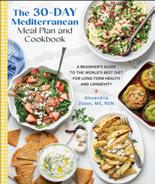
Recipes from The 30-DAY Mediterranean Meal Plan and Cookbook, by Alexandria Zozos £18.99 Fair Winds Press
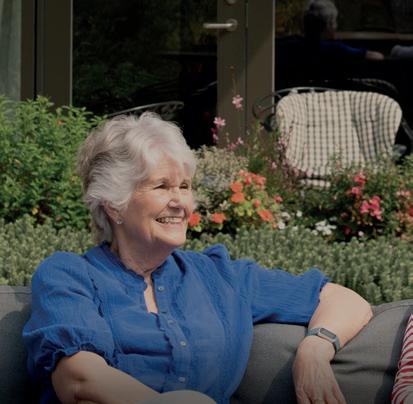
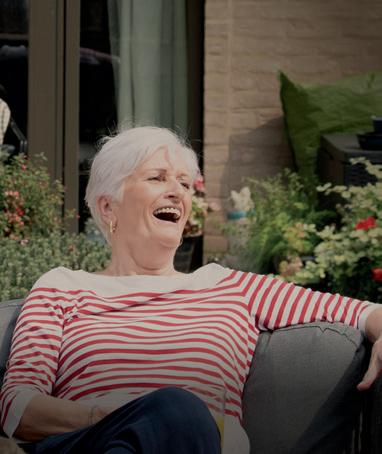
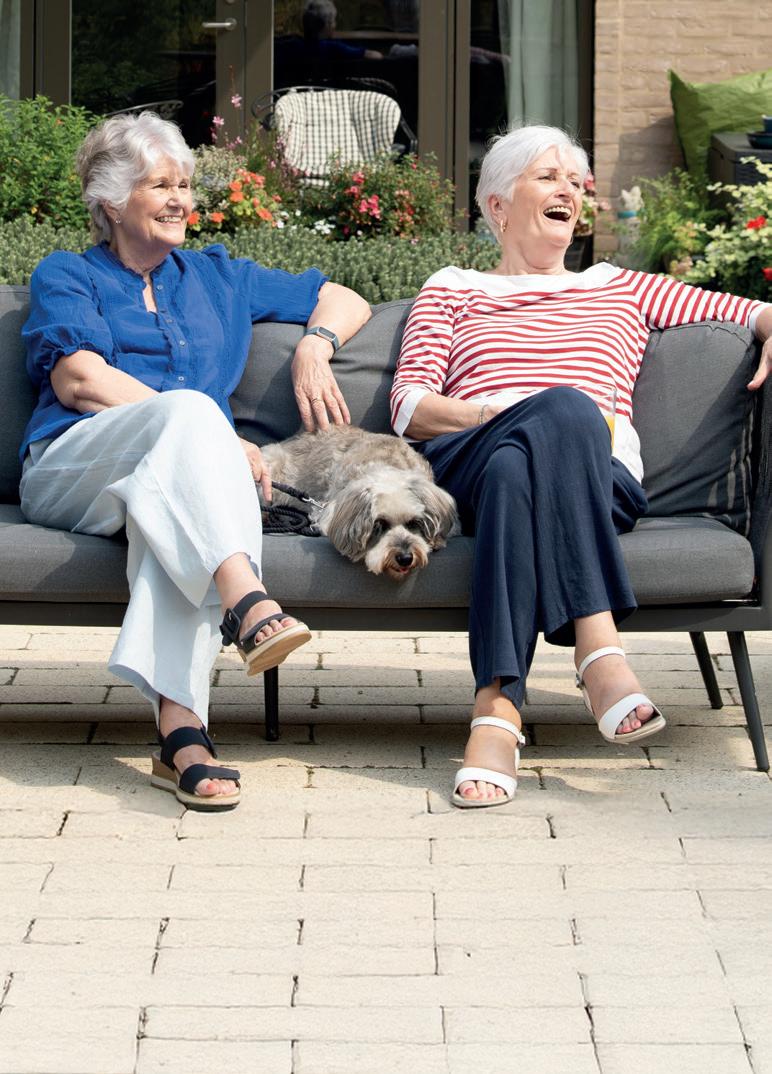
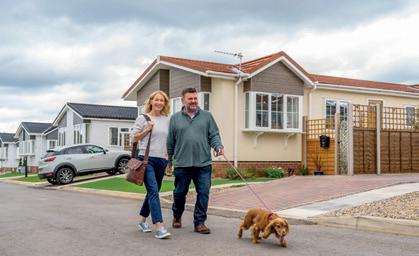
Penny, Sue and Mabel the dog, Pegasus Homes residents
30g sun-dried tomatoes, rinsed and drained (these should be the dried type, not marinated in oil)
15g dried mixed mushrooms, rinsed and drained
80g aubergine, cubed
2 tbsp vegetable oil
1 tbsp liquid smoke
600ml vegetable stock
1 tsp yeast extract
150g dried green lentils, rinsed and drained
1 onion, finely diced
1 stick of celery, finely diced
3 cloves garlic, finely chopped
2 tsp onion powder
1 tsp dry thyme
3 tbsp arrowroot powder
2 tbsp tomato purée
1 tbsp soy sauce
For the mash:
700g celeriac, peeled and chopped
440g potatoes, peeled and chopped
Salt and pepper
150g vegetarian brie, cut into small chunks
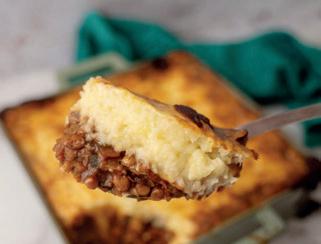
Place the dried tomatoes and mushrooms into a small bowl and cover with 300ml of boiling water. Set aside to soak for at least 20 minutes. Drain the vegetables, retaining the liquid for later. Chop the tomatoes and mushrooms and set aside. Make the mash: Place the celeriac and potatoes into a large saucepan and cover with boiling water. Add a large pinch of salt. Cook on medium heat for 20 minutes until soft. Remove from the heat, drain and mash until smooth. Season to taste. While the mash is cooking, roast the aubergine: Toss the cubed aubergine in 1 tbsp of the oil and the liquid smoke. Season with a little salt and pepper. Roast in the preheated oven for 15-20 minutes until soft. Remove from the oven and set aside.
To cook the lentils: Place the stock in a medium saucepan and bring to the boil. Add the yeast extract and stir until dissolved. Add the lentils and cook for 20 minutes. Drain the lentils and reserve the liquid. Set aside.
Heat the remaining oil in a large deep-sided frying pan or saucepan on a medium heat. Add the onion and celery. Season with salt and pepper and sauté for 3-4 minutes until starting to soften. Add the garlic and sauté for a further 1 minute. Add in the chopped tomatoes and mushrooms and cook for 2 minutes, stirring to avoid anything sticking to the pan.
Add the aubergine, lentils, onion powder, thyme and arrowroot. Stir until well-combined.
Next, add two thirds of the reserved liquids (soaking liquid and lentil stock), tomato purée and soy sauce. Stir well.
Continue to stir and cook for 2-3 minute while the sauce thickens, adding more liquid as necessary to form the sauce. Remove from the heat.
Spoon the filling into a deep ovenproof dish and smooth out to form an even layer. Add approximately 100g of the brie to the mash and stir well. Gently spread the flavoured mash over the filling to cover the entire surface.
Cook in the preheated oven for 20 minutes.
Remove from the oven and dot the top with the remaining brie. Continue to cook in the oven for 5-10 minutes until the top is starting to turn golden brown.
Serve immediately.
The pie can also be cooled then stored in the fridge for 2-3 days or frozen for up to 3 months.
You will need an ovenproof dish approximately 20cm x 25cm.
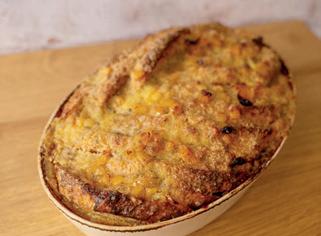
Orange and Rosemary Sourdough and Butter Pudding
PREPARATION 20 MINS, PLUS 40 MINS SOAKING. COOKING 45 MINS. SERVES 6-8. NUT-FREE
For the pudding:
1 orange
100g dried apricots, roughly chopped
100g butter or margarine, softened
½ tsp ground ginger
½ tsp ground cinnamon
10 slices stale sourdough bread
200g thick-cut marmalade
100g candied orange peel
2 tbsp demerara sugar
For the custard:
400ml milk
100ml double cream
4 med free-range eggs
4 tbsp caster sugar
1 tbsp finely chopped fresh rosemary
½ tsp orange essence
Zest and juice the orange. Place in separate bowls. Set aside.
In a small bowl, place the apricots and cover with the orange juice and set aside to soak for 20 minutes.
In a separate small bowl, mix the butter, ginger and cinnamon. Set aside.
Spread both sides of the bread slices with the butter mixture, spread one side with marmalade. Cut the pieces in half and set aside.
Make the custard: warm the milk in a small saucepan on a medium-low heat. Meanwhile, in a bowl or large jug, mix all of the custard ingredients and the reserved orange zest, until combined and the eggs are well beaten. When the milk is warm, slowly drizzle the paste into the pan, stirring constantly. Continue to heat and stir until the custard is thick. Remove from the heat and set aside.
Lay a third of the bread slices in the bottom of the dish. Scatter a third of the candied orange peel and soaked apricots onto the bread. Pour on a third of the custard. Continue in this way with the rest of the ingredients. Top with any remaining fruit and custard. Set aside to allow the custard to soak into the bread for at least 20 minutes.
Preheat your oven to 180oC / fan 160oC / gas 4.
Once the custard has soaked into the bread, sprinkle the top with the demerara sugar and bake for 40 minutes until browning lightly.
Remove from the oven and serve immediately. The pudding can be stored in the fridge for 2-3 days or frozen for up to 3 months.
In the 1950s, people often believed “old age” began in our late 50s or early 60s.
Today, many consider it to start closer to 66 – but with over 16,000 people aged 100+ in the UK, age is clearly changing.
Whatever age we call “old,” if your parents are growing older it’s natural to want to help them enjoy safe, comfortable and fulfilling later years.
Starting open conversations now can support their wellbeing and make future decisions easier for everyone.
Health & Wellbeing
A good place to begin is understanding key aspects of their health: Who is their GP?
What medications do they take?
When was their last health review? (Everyone aged 75+ is entitled to a free annual NHS health check.)
Are they registered with a dentist and optician?
Having this information means you can offer support if required and ensure they stay on top of routine care.
Legal & Financial Planning
Next, consider legal and financial arrangements: Do they have an up-to-date Will?
Have they arranged a Lasting Power of Attorney?
Do they know where to get reliable guidance if not?
If private care may be needed, have you spoken with a specialist financial adviser – such as a member of SOLLA (Society of Later Life Advisors)?
What is a Personal Health Budget?
It may also be worth checking if they are eligible for Attendance Allowance – a non-means-tested benefit for people who need support due to illness or disability. Local councils or Integrated Care Boards may also help fund care after a financial assessment.
Home Safety
A simple walk around their home can highlight potential risks: Are there trip hazards?
Are smoke and carbon monoxide alarms working?
Many fire services offer free home safety checks, and some police forces provide free home security advice. Small adjustments can make a big difference in keeping someone safe and confident at home.
Care & Future Wishes
Some conversations are more sensitive, such as care preferences or funeral wishes. Discussing these before they become urgent can reduce stress later. Families can explore options like support at home or residential care and store information safely to revisit as circumstances change.
Many charities, including Age UK, offer free fact sheets and guidance on topics such as health, housing, income, and benefits. Gathering information and planning ahead gives families more choice and peace of mind, helping loved ones enjoy later life with dignity and independence rather than making decisions in crisis.
A Personal Health Budget is a source of NHS funding to pay for healthcare support, which is not widely known.
My company, Able Community Care began providing Live-in Care support in 1980 and today we can provide our services throughout mainland UK and the offshore Islands, such as Jersey and as we did recently, in the Western Isles.
Angela Gifford, Owner of Able Community Care. Able Community Care has provided live-in care support across the UK since 1980.
Visit: www.ablecommunitycare.com
Downsizers are prioritising needs, not wants
My company, Able Community Care began providing Live-in Care support in 1980 and today we can provide our services throughout mainland UK and the offshore Islands, such as Jersey and as we did recently, in the Western Isles.
A Personal Health Budget is based upon a personalized, care, support plan which sets out a person’s health and wellbeing needs, the outcomes they wish to achieve and, if the eligibility criteria is reached, then NHS funding towards the cost of supporting this plan is given.
• Live-in care enables older people and people with a disability to remain living in their own home rather than moving into a residential care setting.
• Live-in Care offers helps with domestic tasks, assistance with personal care and especially important in the Autumn and Winter seasons, companionship.
Both adults and children with complex healthcare support needs can apply for this NHS funding, and for full details of the criteria, search ‘NHS who can have a personal health budget’ for the full details.
• Live-in care enables older people and people with a disability to remain living in their own home rather than moving into a residential care setting.
The findings revealed the top considerations for moving to senior living are shaped around practically; living independently with optional support, security, manageable home maintenance and accessible care support.
• Live-in Care offers helps with domestic tasks, assistance with personal care and especially important in the Autumn and Winter seasons, companionship.
Personal Health Budgets can be given to people who require healthcare support in their home or in a care home.
If you would like to know more about our Live-in Care Schemes, give us a call on 01603 764567.
In each geographical area there is an Integrated Care Board, which you can contact and they will give guidance on how to apply for this funding. Recently, I rang on behalf of a lady who has complex care needs and was advised to contact her GP or Community Nursing Team who would apply on her behalf.
Questions we are often asked are about the cost, the availability, the professional status of the care workers and what happens if there is an emergency situation after our office is closed.
If you would like to know more about our Live-in Care Schemes, give us a call on 01603 764567.
Questions we are often asked are about the cost, the availability, the professional status of the care workers and what happens if there is an emergency situation after our office is closed.
First conducted in 2023, across both 2023 and this year’s survey, health was the dominant concern for those considering senior living. A significant 70% of respondents said they would prioritise independence and control over financial gain. This was particularly true for those over 75, while financial security and predictable expenses were the key priorities for respondents under 75.
Our information brochure gives further information and our website at www.ablecommunitycare.com has an application form you can complete.
A new survey from real estate advisor CBRE highlights shifting consumer priorities for those over 55.
Our information brochure gives further information and our website at www.ablecommunitycare.com has an application form you can complete.
Health conditions such as dementia, Parkinson’s Disease, stroke support, may be eligible for this funding, and a call to the organisations which represent these health conditions such as the Alzheimer’s Association, Parkinson’s Disease Association and the Stroke Association, and other representative health support charities, will be helpful to you.
For a brochure email to: info@ablecommunitycare.com
Able Community Care, based in Norfolk but available everywhere.
Historically, senior living has been marketed as a lifestyle choice, centred around luxury amenities and aspirational living. However, CBRE’s results show consumer sentiment is increasingly moving toward practical considerations.
Angela Gi ord – Able Community Care –A nationwide, live-in, care provider since 1980
For a brochure email to: info@ablecommunitycare.com
Able Community Care, based in Norfolk but available everywhere.
The findings show there is an awareness gap surrounding senior living communities that continues to drive misconceptions. Many consumers still associate senior living with a loss of independence, with results showing approximately 40% of respondents cited reduced autonomy as a key concern when considering a senior living community.
Angela Gifford CEO
Angela Gifford CEO
The Magical UK Island of Alderney
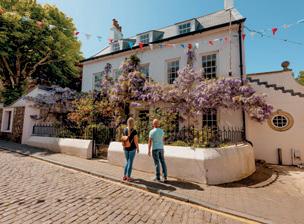
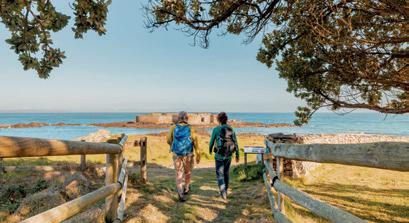
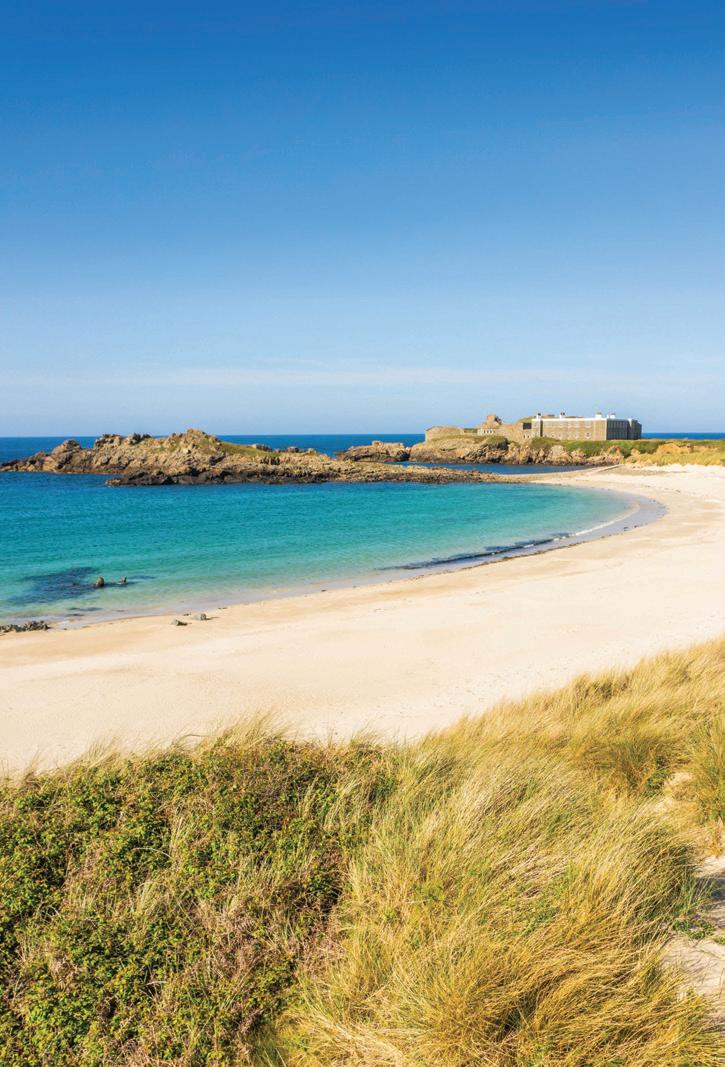
You may not have heard of the Channel Island of Alderney. It is not the biggest Channel Island, or the smallest, the one without any cars or famous cows. But it is the one you will lose your heart to. Just eight miles off the coast of France, with no crowds, queues or traffic jams Alderney is the ‘hidden gem of the Channel Islands’ and it offers an unspoilt and peaceful escape.
At just one and a half miles wide and three and a half miles long, you are never far from the beautiful coastline or the charming town of St Anne.
Nature is all around you on this small island - take in the stunning views from the cliff paths, go birdwatching, fishing or rock-pooling or relish the tranquillity of a stroll on one of the island’s stunning and expansive sandy beaches.
The island is full of history too. Explore Victorian forts and WWII bunkers, visit a Neolithic burial site or follow in the footsteps of legionaries at a Roman fort overlooking the sea, all of which are free to the curious visitor. There’s also plenty on offer for the sports enthusiast. The island naturally lends itself to kayaking, hiking and cycling. It’s a sea swimmer’s paradise too, with the long white sands, dunes and sheltered bays. There is a spectacularly scenic nine-hole golf course, a bowling green, clay pigeon shooting, tennis and you can even enjoy a game of padel tennis on the newly installed court.
The night-time can be magical too. In the evening, whilst you’re heading to one of the island’s many excellent places
to eat or famously welcoming pubs, you might come face to face with one of our blonde hedgehogs - and just look up on a clear night to see the incredible starry nights which the island’s truly dark skies offer!
Why not plan your visit around our tempting festival line-up for the year ahead? From the infamous Alderney Week summer carnival to the Chamber Music Festival and Bloomin’ Alderney, to the annual Wildlife Festival, a motor sprint or fishing festival; the island has something for everyone!
stay at a Victorian fort, to luxurious holiday homes, or even glamping at Saye beach with a sunset view.
There is no other place in the world like Alderney. It’s a friendly island with an easy pace of life, where children can still roam free.
Whether you’re looking for a weekend escape for two or space for the whole family, you’ll be spoilt for choice in Alderney with hotels ranging from family-friendly to boutique luxury, alongside a whole host of welcoming guesthouses. If you prefer to go selfcatering, options range from a unique
For help planning a trip to the island of Alderney and for more information on accommodation, things to do, where to eat and how to get around, go to: visitalderney.com
Pure Beauty Pure Escapism
CHANNEL ISLANDS
Island of Alderney
WFootloose in Holland
by Debra Rixon
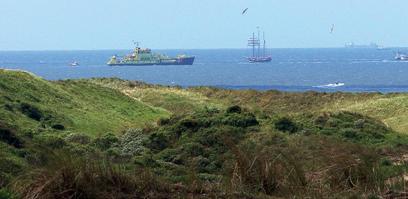
hen we decided to walk part of the Dutch coastal path, Kustpad, from the Hook of Holland to Haarlem, I was sure we had pretty much accounted for the wind factor. When we actually set foot on the sand, coming out of the ferry port and a short dune walk, I realised we had seriously erred in not taking the blast factor into account. As we two plucky Brits set off along the sand with Goretex jackets tightly zipped and snapped down; cuffs so tight they could cut off circulation; hoods up and drawstring pulled to a small ‘O’ for vision we were watched by the hardy Dutch... sunbathing. The beach resembled an Arctic plain, the sand blowing across it in never ending stinging curtains as we trudged, heads down, into the blast. Not the most auspicious start to an 80km trail, you might think, but it was bracing and raised the determination level, although when the trail did veer off the hard packed sand into the dunes and we turned our back on the wind, we did heave a sigh of relief.
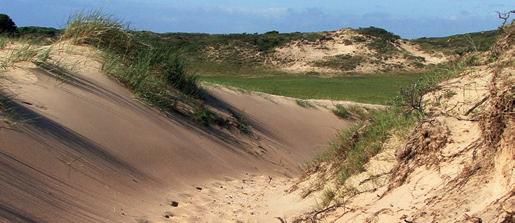
I found the dunes fascinating, and the idea of intentionally creating new ones was novel, but we learned as we walked, how absolutely vital the new ones were. Rows and rows of uniform planting of the grass whose roots form the webbing to retain the sand were almost an art form of their own, and the difference between the old dunes and them was startling. The old ones didn’t look like dunes –they were completely green with trees, shrubs and bushes growing – until you scratched the surface and found the sand beneath. There were unbroken seas of glass houses containing Holland’s lucrative market garden produce to walk past before we reached The Hague and its seaside resort of Scheveningen. We didn’t spend a lot of time in The Hague, preferring the old fashioned, faded seaside. The old pier has gone, but the town’s former glory can still be seen in the imposing edifice that is the KurHaus. The dunes beyond Scheveningen are known for their pure drinking water – the Dutch are past masters at reclaiming both land and water. We interviewed Ans Groenewegen from the Dutch water company Dunea, who explained
to us how they supply a huge area of Holland with pure drinking water and manage the dune catchment area as a nature reserve. We shared the Kustpad with cyclists, walkers, horse riders and Aberdeen Angus cows as we walked on, towards Katwijk. Hidden in the dunes at Zandvoort is the old Formula One circuit, and the muffled revving and racing sounds from the still used race track can be heard as you walk out of the resort. I liked Katwijk and its sister town Nordwijk very much. Strolling through the streets, I couldn’t stop myself from glancing in the large windows fronting the houses – the Dutch don’t seem to like curtains or blinds, and it was intriguing to see the displays that were clearly placed in the windows for passersby to appreciate – the best china, best floral arrangement, best pictures and ornaments. I was so enamoured of staring at these intentional displays that I more than once got more than I bargained for – half naked men lounging on chairs, watching tv or eating their dinners – always men, I might add. The Dutch are a very laid back nation it seems, or at least the men are.
Both Katwijk and Nordwijk are resort towns, with plenty of bars and restaurants fronting or permanently built on the beach. I tried eating raw herring, having missed the National Herring Festival earlier, and found it more palatable than I had dared to hope for, between two slabs of bread. Whilst I nibbled delicately at mine, Dave did the Dutch thing and turning his head up like a seal, dangled the herring fillet from his hand and ate it all in one go. It tastes better than it sounds.
The Kustpad continues north, in and out of the dunes, and a second water company has its production ‘facility’ buried under another nature reserve. The landscape is familiar now, and we made good progress towards Haarlem, the walk into town becoming a trail through the suburbs. The town is lovely with wonderful Hanseatic architecture, hearing the carillon in the square play well worth waiting for. This marked the end of our trail, and at the old railway station, we caught the train into Amsterdam.
I found Amsterdam utterly absorbing. Two very personable and knowledgeable ladies gave us both
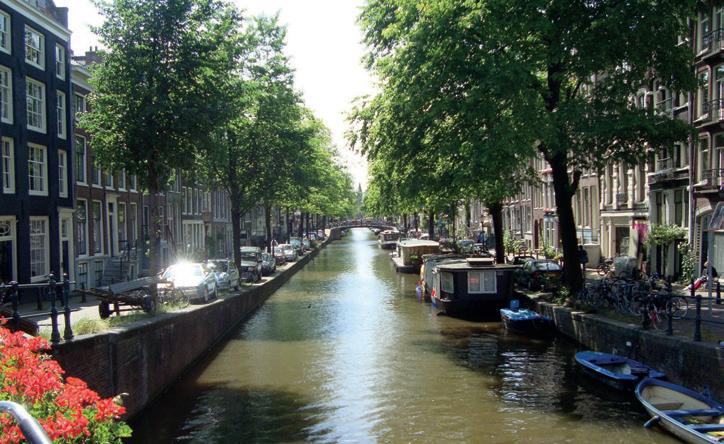
The coast Sunny canal
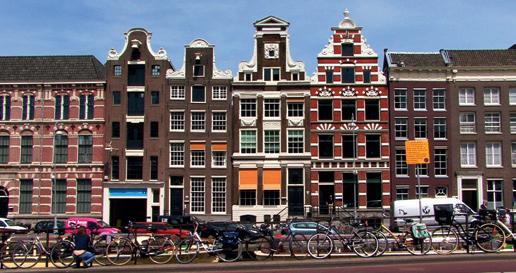
history and insight into the Dutch and their culture, and from the huge Central Station we set off to walk the compact, planned city with a real sense of anticipation. I had to change my ways in Amsterdam – often I am so lost in examining buildings and observing people that I relax completely and that’s a dangerous thing to do in a city that has six million bicycles. I narrowly missed being mown down on a regular basis, and crossing the street on the pedestrian crossing won’t necessarily save you either. I quickly learned to look at both sets of traffic lights – the one for the bicycles as well as the one for the cars! We walked out from the magnificent Central Station down the Damrak, with fascinating shop windows and old buildings on either side of the street; the infamous Red Light district and Chinatown lead off to the left. We were restricted in what we could film in the Red Light district, which is a shame as it contains some of the oldest houses in Amsterdam, as well as the old fisherman’s church, and the smallest church in the city, hidden inside a normal looking house. The huge Dam square holds the national Freedom monument, stately royal palace and the magnificent Nieue Kerk church.
We crossed the canals, admiring the wonderful multi-storeyed and -windowed canal houses till we reached Westerkerk, which has a stunning ‘burning bush’ metal artwork inside and possesses terrific views of Amsterdam from the top of its tower – which Dave climbed as usual, vertigo forcing me to mind the equipment at the base. It also has the most amazing view over the Anne Frank house, where if you know what to look for, you can see the actual windows that Anne herself gazed out of when it was safe to do so. The Anne Frank House museum is somewhere that has to be experienced more than visited. To go behind the false book case and through the secret door into their cramped sanctuary is an unforgettable experience and eerily brings Anne and her family and friends back into the rooms. Annemarie Bekker from the Anne Frank Trust re-tells Anne’s tragic story with quiet warmth and empathy that is truly memorable.
I loved walking the canal streets, and not having learned my lesson, loved peering into windows again. Windows in Amsterdam had a very different role to play in the past, as city guide Muriel Hoetjes explained,
and hiding your own ‘richdom’ became the most important rule. You can wander in every direction enjoying the streets, but we did keep to a loose trail to ensure we saw as many of the sights as we wanted to. Spui Street seemed to offer the best route for us, and we managed to take in the hidden gem of Begijn Court refuge as well as the famous floating flower market before we reached Museumplein. Completely bypassing the magnificent Rijksmuseum, I made a beeline for Coster Diamonds, Dave trailing apprehensively in my wake. Inside, we had a very entertaining time interviewing one of the diamond polishers, Theo, and admiring all the bling you could possibly desire in one place.
Back on the trail again, empty handed, we crossed several unremarkable streets to find the Amstel that gives the city its name, and followed it back towards the port, passing the massive Hermitage before crossing and heading into the old Jewish quarter. Rembrandt’s house and the flea market are tourist draws on this side of Amsterdam, as is the world famous Artis Zoo with its wonderful Art Deco touches. I felt this quarter had suffered more from lack of ‘city hall
largesse’; it looked more run down and less well heeled than the western part of the city. There is also an excellent Dutch Resistance Museum, appropriately tucked away down the street that leads to the zoo.
We wanted to finish our city trail back at Oosterdok, in front of the huge jutting prow of the science centre, NEMO, to remind ourselves that Amsterdam is still a city that is under constant threat: the delicate balance between air, water and wood is all that stands between life and death for the city.
There is a companion DVD, the Keukenhof Gardens and Dutch Flower Parade – a Footloose special, which includes an in-depth look at the spectacular seven and a half million flower bulbs in the stunning Spring gardens, an exclusive interview with the park’s young designer and tours of all the pavilions. We finish up with a look at the floats for the Flower Parade being made, and watch the procession on its route to Haarlem.
Debra and David took the ferry to Hook of Holland and walked out of the terminal directly onto the Kustpad. They made a base at Zandvoort, and made use of the excellent bus service to take them to and from a day’s hike. The Kustpad is well way-marked and maintained, and is also popular with cyclists. The train from Haarlem into Amsterdam takes around 15 minutes.
After David took early retirement from the BBC, they have focussed on their own productions, and for over ten years have been renowned for their walking films in Europe. For information on all the Footloose films, take a look at www.footloose.tv or watch previews of the walks on YouTube.
Do you know what Spandau Ballet’s 80’s hit ‘Gold’, the film ‘Wonka’ and King Charles III all have in common?
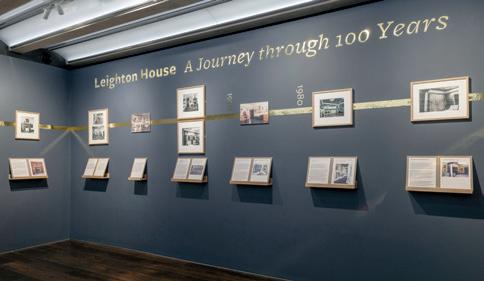
Leighton House, in Kensington, is the answer.
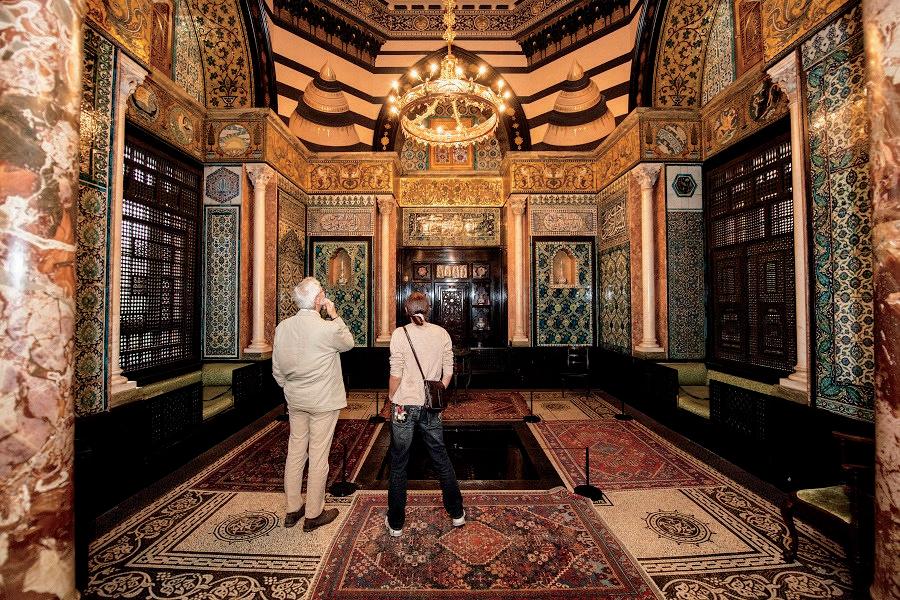
The former studio-home of eminent Victorian artist, Frederic, Lord Leighton (1830 – 1896) became a public museum in 1926, under the care of The Royal Borough of Kensington and Chelsea. One hundred years have passed since, and Leighton House is now celebrating its centenary with an imaginative and enlightening programme of exhibitions, special events and outreach initiatives. The museum is open 6 days a week and alongside a ticketed visit to the restored historic interiors, there is free access to art displays, a glorious garden, a café and temporary exhibitions. One of three current exhibitions documents the museum’s fascinating journey from post-war whitewashed walls to the reinstated opulence in the 80’s – often featured in music videos and films. HM The King has visited twice, recently in 2023 to recognise ongoing work with displaced Syrian artisans, honouring Leighton’s interest in craftmanship of the Middle East.
Leighton House is a unique cultural offer in the heart of West London, blending art, culture and creativity. Its richly decorated interiors get transformed with the presence of contemporary installations, including the current Ghost Objects exhibition (until 1 March 2026) featuring life-size paper replicas of four lost items from Leighton’s original collection. In Spring, the extraordinary Arab Hall, built as an extension to his house and inspired by Leighton’s travels to Middle East and North Africa, will take central stage with a multifaceted project including film, contemporary installations and a free exhibition. Accompanying public events will invite people of all ages and interests to join practical workshops, talks, concerts and film screenings. www.rbkc.gov.uk
Anna Ancher: Painting Light
Dulwich Picture Gallery, London
On until 8 March 2026
See the first major UK exhibition dedicated to Anna Ancher (18591935), one the most important and innovative artists in Danish history, and one of the few women of her era to achieve widespread recognition for her work.
Bringing together rarely seen studies discovered in Ancher’s home with a wide selection of works spanning her remarkable career, the exhibition features over 40 paintings – among them several of her most celebrated masterpieces, such as The Maid in the Kitchen (1883-1886), on loan from The Hirschsprung Collection, and Interior. Brøndum’s Annex (c.1916), on special loan from Skagens Museum.
Though widely regarded in Denmark as one of the country’s greatest artists, Ancher remains relatively unknown to British audiences. This exhibition will offer a rare opportunity to experience her intimate paintings, revealing her pioneering use of colour and masterful ability to capture light, firmly positioning her among the leading artists of the late nineteenth and early 20th century. A key voice in the Scandinavian ‘Modern Breakthrough’ movement, Ancher sought to depict everyday life with honesty and authenticity. She was a central figure among the Skagen Painters, a community of artists who settled in the remote fishing village of Skagen at the northernmost tip of Denmark. Nearly all of Ancher’s works depict scenes around Skagen, and she frequently used locals as models; uniquely among the Skagen Painters, Ancher was raised in the town itself, giving her a deep, personal connection to her sitters and their everyday lives.
www.dulwichpicturegallery.org.uk
Modern Masterpieces: Paintings from the Barber Institute of Fine Arts
Compton Verney, Warwickshire
On until Sunday 6 September 2026
Six powerful portraits of modern life.
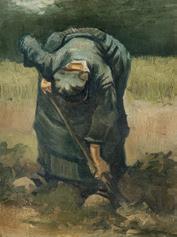
Compton Verney is inviting visitors to come face to face with six exceptional paintings by towering figures of modern art, including Vincent van Gogh, Pierre-Auguste Renoir, Édouard Vuillard, and Pierre Bonnard, in an intimate display. On loan from the Barber Institute of Fine Arts at the University of Birmingham, which is currently closed for a capital project, these outstanding works provide tantalising glimpses into the lives and interests of these influential artists. With subjects that range from the domestic activities of a family eating dinner together, to the tangible, back-aching toil of diffing heavy soil; from the lively, sympathetic portrait of a handsome Sicilian student to the studied nonchalance of a cigarette smoker; each picture holds the viewer’s gaze and affords a fascinating insight into past lives, from late 19th to early 20th century fashion to interior décor. www.comptonverney.org.uk
Vincent van Gogh, A Peasant Woman Digging 1885. Oil on Canvas laid on Paper. The Henry Barber Trust, the Barber Institute of Fine Arts, University of Birmingham.
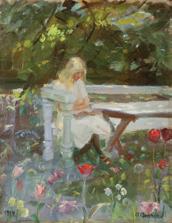
A Girl in the Garden in Summertime. Skagen, 1914. Courtesy of Skagens Museum.
In a modern four star hotel
Options Available
Bed & Breakfast – includes full continental buffet breakfast
Half Board – includes breakfast and full special buffet dinner
Full Board – includes breakfast, dinner and buffet lunch
All Inclusive – includes breakfast, lunch, dinner, snacks during the day and unlimited local drinks (including local house wine, spirits, beer, soft drinks, juices, tea and coffee) – served until 23.00 hrs
Free high speed WIFI, free Room Safe, Mini Cooler included in room, Self-Service Laundry including detergents (coin-operated)
Check out our special offers
Booking can be made direct from our website –please note that offers are updated in your search
Qawra Coast Road, Qawra, St Paul’s Bay, Malta tel: 00356-21570591 info@bellavista.com.mt www.bellavistahotelmalta.com
SHETLAND TOURS & HOLIDAYS
2026 dates now available 03 –08 May 05 –10 June 08—13 July 07—14 Aug
After your family and friends, will you consider us?
Family comes first, and having a Will in place provides invaluable peace of mind for you and your family.
Many ABF supporters feel an enormous sense of pride in leaving a lasting legacy for those who have served their country.
We are the Army’s national charity. Since 1944 we have been here to support soldiers, former soldiers and their families in times of need.
With no government funding, we rely on the gifts we receive from Wills to support more than a third of our work.
Scan here for further information on our free Will making services
armybenevolentfund.org/gifts-in-wills
Alternatively please call Emma Hamilton, Gifts in Wills Manager, on 020 7901 8909
Art Deco: the golden age of poster design
London Transport Museum Opened November 2025
The new exhibition in the Global Poster Gallery, gives you the opportunity to explore the origins of art deco and its influence on iconic transport posters and transport design over the last 100 years. The lean, colourful designs of art deco are instantly familiar and have been wellknown with the London transport network for a century. Explore a visual journey through the iconic style that grew in the 1920s and 1930s, when posters and artworks were present on tubes, trains, trams and buses.
Over 100 original posters from London Transport Museum’s collection, alongside loans from significant collections are on display. Entry to the Global Poster Gallery is free with your Museum admission. For further information visit www.ltmuseum.co.uk
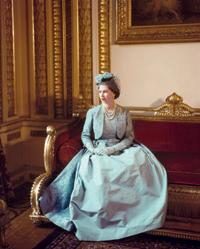
Queen Elizabeth II: Her Life in Style
The King’s Gallery, Buckingham Palace 10 April - 18 October Tickets are on sale now
Discover the full breadth of the late Queen’s wardrobe, one of the largest and most important British fashion collections of the 20th century.
To celebrate Queen Elizabeth II’s enduring fashion legacy and continued influence on the British fashion industry, three worldrenowned British designers – Erdem Moralioglu, Richard Quinn and Christopher Kane –are contributing pieces to this landmark royal exhibition. This is the largest display of Queen Elizabeth II’s fashion ever mounted, and features approximately 200 items. Many items are on display for the first time, from couture evening wear to impeccably tailored off-duty clothing, as well as behind-the-scenes fashion illustrations, some with handwritten annotations by designers, the Queen’s dresser or even the Queen herself, giving visitors a glimpse into the thoughtful decision-making and craftsmanship behind each outfit.
Further information and tickets visit www.rct.uk
HERE QUALITY
&
LIFESTYLE COME FIRST
Please contact our Head Office on 0118 942 8782 to discuss your residential park home or holiday lodge requirements.We can supply park homes and leisure lodge homes from any manufacturer.We have an inventory of stock homes from any of the leading manufacturers available immediately, alternatively you can place a forward order for a home of your choice with a lead time of 12 weeks delivery. Our parks are located in Berkshire, Oxfordshire, Surrey and Essex with our address details listed below. We have in excess of 1200 residents living on our estates and have more than 40 years experience in the industry, with our first park ownership in 1976.
We look forward to welcoming you to one of our parks.
Hearing the riches of London, by Frederick Charles Herrick, 1927 (C) TfL from London Transport Museum’s collection.
How to downsize to a park home
Compass Insurance insures tens of thousands of park home, holiday caravan and lodge owners, and the company has been doing so for more than 45 years. Here are their top tips to how to ensure a smooth transition when downsizing to a park home.
Downsizing property is a significant life decision that many retirees across the UK are embracing. Whether you are looking to become mortgage-free, reduce living costs, or simply enjoy a manageable lifestyle, moving to a residential park home offers a unique solution.
While the move offers independence and a supportive community, it requires preparation.
Tips for a successful move
Start decluttering early
Downsizing means reducing your belongings. Start this process months before your move by sorting items into categories: keep, donate, sell, or dispose. Be ruthless. If you haven’t used it in years, you likely won’t need it. Consider car boot sales or online marketplaces to generate extra funds for the move.
Measure your new space
Park homes are designed to maximise space efficiently, but they are smaller than traditional houses. Obtain accurate measurements and create a floor plan to ensure your current furniture fits.You may need to replace bulky items with more compact alternatives.
Visit multiple parks
Don’t settle on the first park you see.Tour several residential parks in your desired area. Speak to current owners about their experiences, check the maintenance standards, and ensure the community atmosphere suits you.
Consider location and future needs
Think about your long-term requirements. Is the park close to shops, doctors, and public transport? Is the home wheelchair accessible if your mobility changes? Future-proofing your decision now will ensure peace of mind later.
Financial and legal checks
Budget
realistically
Beyond the purchase price, account for pitch fees, utilities, and insurance. It is also wise to build a financial buffer for unexpected costs.
Review the pitch agreement
The pitch agreement is the contract between you and the park owner. Always have this reviewed by a solicitor who specialises in park home purchases to understand your rights, resale terms, and pitch fee arrangements.
The importance of specialist insurance
Once you have decided to move, protecting your investment is essential. Park homes require specialist coverage that differs significantly from standard household insurance.
Because park homes are built differently from brick-and-mortar houses, they face unique risks regarding weather damage and movement. A standard home policy may leave you underinsured.
What to look for in a policy
A comprehensive policy should cover the structure against fire, flood, storm, and theft. It should also include:
• Contents cover: Protection for belongings inside and outside the home.
• Debris removal and re-siting: Costs often excluded from standard policies.
• Alternative accommodation: If the home becomes uninhabitable.
• Public liability: Essential protection for any homeowner.
Downsizing with confidence
Moving to a park home is an opportunity to embrace a simpler, more affordable lifestyle. By planning carefully and securing the right protection, you can ensure your new chapter is positive and worry-free.
Ready to protect your park home?
Get a quote online at http://compass.co.uk/ or call our team on 0344 274 0277
For more tips and insight features, head to https://compass.co.uk/ news/
Compass Insurance is a trading name of Bspoke Lifestyle Ltd, registered in England and Wales under Company Number: 11429456 at Registered address: 7 Pullman Court, Great Western Road, Gloucester GL1 3ND. Bspoke Lifestyle Ltd is authorised and regulated by the Financial Conduct Authority, FRN Number: 820727.
LIFESTYLE
“We
wish we had done it years ago”
Discover how a move to a residential park could bring you the freedom to live life your way.
If you’ve dreamed of having the financial flexibility to make the most of each day, now could be the perfect time to explore a lifestyle change. Park home living can give you the space, both financially and emotionally, to enjoy more of what truly matters.
We know it’s a big decision, and you’ll want to feel fully informed. That’s why we’ve created our FREE Beginner’s Guide to Park Home Living, filled with everything you need to decide if park home living is right for you, from financial and legal details to real stories from residents who’ve already embraced their new beginning. At Tingdene Parks, we’ve helped many people realise their later life dreams, joining welcoming communities in wonderful coastal, rural and semi-rural locations.
START THE NEW YEAR WITH A FRESH OUTLOOK. A new year is the perfect time to start your new lifestyle. Take the first step towards a brighter, more carefree future.
Call for more information or to request your FREE guide 01933 829945 or scan here
If you are approaching retirement or contemplating semi-retirement, then may be you are thinking of moving and starting to consider the various options available.
Having more free time at your disposal once you have retired, you will find your living space will suddenly assume a greater part of your daily life. The great thing about retirement is that is gives you the chance to branch out into a different lifestyle, move away to a different place and start a new adventure.
When moving to any type of property, your decision making will be partly down to personal preference, while other factors such as your financial circumstances, lifestyle, health and age, will ultimately play a part in the outcome.
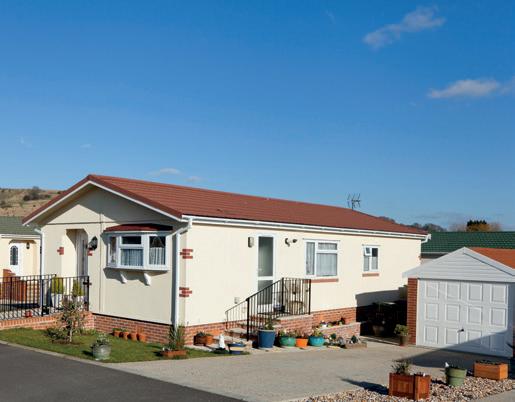
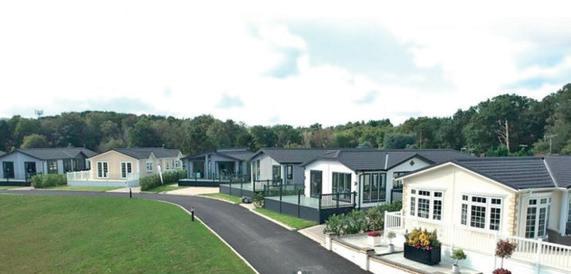
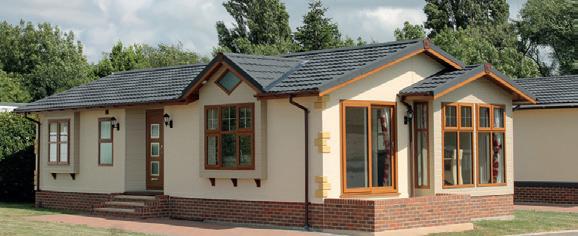
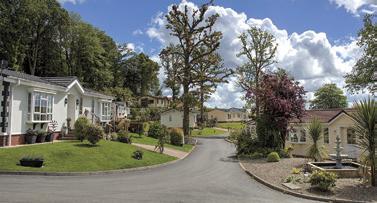
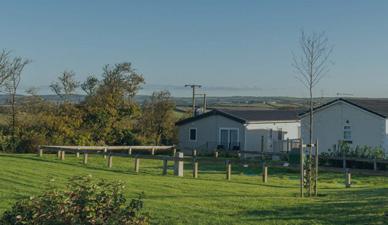
It may not be an option you have thought about, but Park Home living is something well worth considering. Ideas of a park home can be very much misconstrued and if you assume a park home is a small step up from a static caravan then you really need to think again, as today they are less like a caravan and more like a luxury bungalow style property, which have become increasingly popular as a lifestyle choice for retires.
Park homes are single-storey structures, which can be built to requirement. This makes park home living ideal for those who find staircases challenging.
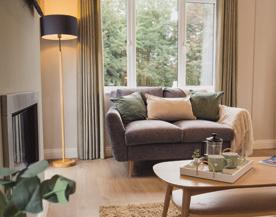
Usually fully furnished to high specifications, with low maintenance, most offer a wide range of layouts and designs, with good quality furnishings, and carpets. They are well insulated, with double or
Park Living
A unique and appealing lifestyle that many more people are turning to
triple glazing and central heating, making them very energy efficient and eco-friendly, and they also fall within the lowest council tax band.
In fact, everything you need for a comfortable, relaxed, luxury lifestyle. So for those who are looking for an affordable and low-maintenance place to live, park homes make the ideal choice, with many designed exclusively for the retired or semiretired.
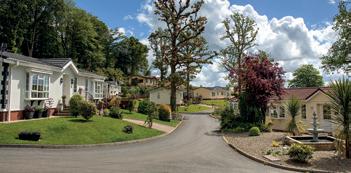
Due to age restrictions (usually 50+) living in a park home often means living amongst like-minded people of a similar age looking for peace and quiet in their retirement, but are still active. There can be a strong sense of community spirit, which is further encouraged through social events, communal facilities like clubs and gardens, giving a shared sense of security and support among residents. The social environment can make it easier to share interests and make friends with other residents, while at the same time maintaining your privacy.
As we grow older, it becomes increasingly important to find a place to live where we feel safe and comfortable, and many parks have gated secure entry systems, giving you peace of mind.
One of the great things when you retire is that it frees you up from the daily routine of
commuting and gives you the opportunity of possibly moving to a new area and having a complete change of location. Maybe you have family or friends in a certain part of the country that you would like to move near to, or perhaps there is somewhere you have visited on holiday which has appealed to you and would be your ideal retirement location. Residential park homes are very often situated in the most idyllic, beautiful areas up and down the country, so whether you are looking to move by the coast, in the countryside, or near to a town, the choice is yours!
Another reason they are so popular is their price, which compares favourably with the more expensive traditional homes. Choosing a park home can free up capital, giving you the chance to travel and live life to the full in retirement.
However, it is important to mention that although you buy the home, you won’t actually own the land if it’s on a park, so you will need to pay a monthly ground rent which varies from park to park.
Park homes fall into two categories, either residential park homes on parks with an all year round licence which allows you to reside there full time, or leisure homes which are intended to be used as holiday homes and most can be rented out when you are not using it, giving you a source of revenue. It’s important to make sure that the park of your choice has the type of licence to cover the use of your home as you require.
Although there is no legal requirement to use a solicitor when buying a park home, we strongly recommend doing so. Like any other ‘bricks and mortar’ property, buying a park home is a major commitment, and just as you won’t dream of purchasing bricks and mortar without a solicitor, the same should be said when purchasing a park home.
If you are looking to purchase a park home, find a solicitor that has expertise in park home law to guide you through the purchase and who will be aware of any pitfalls that may occur, so any potential issues can be picked up and quickly sorted.
There are numerous companies specialising in park living, and the following are examples of what is available throughout the UK.
Allens Caravans – Overstone Lakes
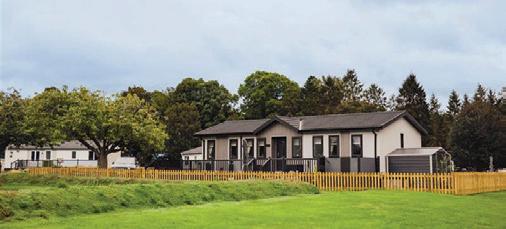
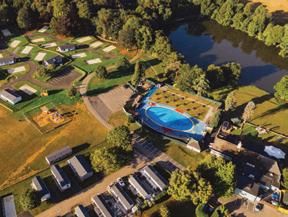
Set within the Northamptonshire countryside, Overstone Lakes is entering an exciting new chapter with the launch of its brand-new residential development. Thoughtfully designed for those seeking a relaxed, secure, and fulfilling way of life, this latest addition offers a fresh take on residential park living – where comfort, community, and nature come together effortlessly.
Surrounded by beautifully landscaped grounds and tranquil lakes, the new residential homes at Overstone Lakes provide a peaceful retreat from the pace of everyday life, without feeling remote. Each home has been carefully positioned to make the most of its surroundings, offering a sense of space, privacy, and connection to the outdoors.
CASE STUDY
Regency Living
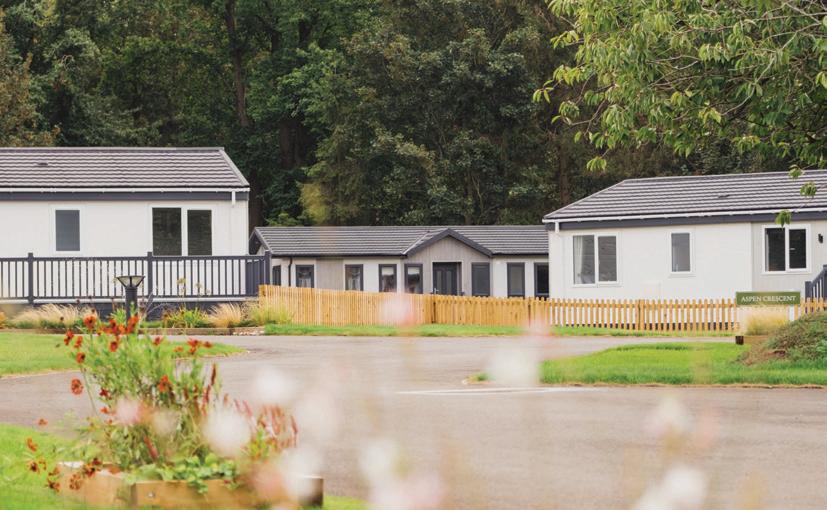
Regency Living offers a supreme collection of residential Park Bungalow communities, set in some of the UK’s most enviable locations, with a selection of carefully chosen developments from the Kent coast to the Dorset countryside and beyond.
Whether you’re looking to downsize, appreciate single storey living, or simply start fresh in a like-minded community, Regency Living developments are where comfort, convenience, and charm come together.We take pride in curating an exclusive collection of residential Park Bungalows, primarily suitable for those aged 45 plus, creating a perfect spot for those seeking a relaxing and manageable lifestyle.
It’s a setting that invites morning walks by the water, relaxed afternoons on your decking, and evenings spent unwinding in calm, natural surroundings.
At the heart of the development is a strong sense of community. Overstone Lakes is more than just a place to live –it’s a place to belong. Residents enjoy the reassurance of a professionally managed, well-maintained park, along with access to on-site amenities and a friendly team always on hand to help. Whether you’re downsizing, retiring, or simply looking for a lifestyle change, residential living here is designed to make life simpler and more enjoyable.
Conveniently located with nearby villages, local amenities, and easy transport links, Overstone Lakes offers the best of both worlds: countryside living with everyday essentials close by.With beautifully designed homes, a welcoming environment, and being part of the Allens Caravans family, this new residential development is an opportunity to embrace a lifestyle that feels settled, secure, and truly your own.
Your next chapter starts here, at Overstone Lakes.
For further information, get in touch: overstone@allenscaravans.co.uk tel: 01386 710738
And with Regency Living’s Home Part Exchange Scheme you have a hassle-free way to downsize by trading your current property for a luxury Park Bungalow. The scheme guarantees a quick sale at up to 100% market value, eliminating estate agent fees, solicitor fees, chains, and uncertainties. With no hidden costs and a straightforward process, the scheme provides financial security and peace of mind. It’s an ideal solution for those seeking a stress-free move to a high-quality, lowmaintenance home in a welcoming community.
What truly sets us apart? It starts with the homes themselves –thoughtfully designed, easy to maintain, and finished to the exceptional BS3632 residential standards. Think stylish interiors, modern kitchens, and light-filled living spaces that open onto private gardens. It’s everyday luxury, designed around you.
Pets are welcome on most developments, as we know that home
wouldn’t be home without them.That’s why our communities are near to green areas, dog-walking routes, and easy access to open countryside – the perfect setting for pets to stretch their legs and enjoy the good life right alongside you.
So, whether you’re looking to enjoy more freedom, make room for the things that truly matter, or settle into a community where both you and your pets are welcome, Regency Living is here to help you turn the page in style.
Start your Regency Living journey today!
CONTACT DETAILS:
Company: Regency Living Telephone: 01329 761849
Email:sales@regency-living.com
Web: www.regency-living.com
Whether you’re looking for a peaceful countryside retreat, a coastal escape, or a welcoming residential community, our parks are designed to bring comfort, connection, and a sense of belonging. With Allens Caravans, you’re not just buying a home — you’re joining the family.
Step into community, not just a home
When you visit a Tingdene Residential Park, you don’t just see homes – you feel community. As one resident put it: “The property is beautiful, it’s wonderfully quiet. We’ve started getting to know our neighbours, and it’s been a pleasure – there’s a real community spirit here. We couldn’t be happier with our decision to move.” (Mr & Mrs McNeil)
With 29 parks across England, Tingdene has earned its reputation as a trusted, family-rooted operator.We believe your later years deserve the same care, stability and consistency we’d want for our own families. Each park is shaped not simply as a collection of homes, but as a living, supportive community where neighbours look out for one another and come together for social events.
Where you might call home
Coastal charm
• Oaktree Park, Attleborough (Norfolk) offers a close-knit community never far from shops, social life and key amenities.
• Sandpiper Gardens, Clacton (Essex) is a brand-new over-45s park offering sea air, green open space, and high-quality homes and plots.
• Hazelgrove Park, Saltburn-by-the-Sea provides elevated coastal living with sea views and access to historic Saltburn.
Rural calm
• Wixfield Park, Great Bricett (Suffolk) offers peaceful countryside living while keeping you close to market towns and everyday essentials.
Town + country balance
• Ashfield Park, Scunthorpe is a short bus ride from the town centre, with a supermarket, pub/restaurant and golf club all within walking distance.
CASE STUDY
With empty plots ready to choose from and move-in-ready homes available at many locations, we can help you find not just a house but a place to truly call home.
Here for you, every step of the way
We know moving later in life can feel daunting. Our friendly team supports you through every stage, from first enquiry to moving day and beyond. With part-exchange and assisted move schemes, we help make the transition simple and stress-free.
Experience Tingdene Residential Parks for yourself. Visit tingdene-parks.net or call 01933 427805 to plan your next step.
Warren Park: The Perfect Setting for Your Next Chapter
Set within beautifully maintained surroundings, Warren Park is more than just a place to live; it is a lifestyle choice. Thoughtfully laid out and carefully managed, the park provides a sense of calm and security that allows residents to relax and feel at home from the moment they move in. Life at Warren Park is perfectly suited to relaxed, retirement living, where each day can be enjoyed at a comfortable pace in a welcoming and peaceful environment.
Located in the picturesque village of Thursley, Warren Park is a secluded park home development surrounded by some of Surrey’s most beautiful countryside. Positioned to the west of the A3 London–Portsmouth road, the park is just 10 minutes from the M25, offering excellent transport links while retaining a peaceful rural atmosphere.
With easy access to local amenities, residents enjoy the best of both convenience and tranquillity.
Nature is truly on your doorstep at Warren Park. The park backs directly onto the Thursley Common National Nature Reserve, providing a stunning natural backdrop and endless opportunities for gentle walks and wildlife spotting. Hindhead Commons and the iconic Devil’s Punch Bowl are also close by, making the area ideal for those who appreciate outdoor living and scenic landscapes.
Brought to you by WVC Park Homes, the fastest growing mobile homes operator in the south of England, Warren Park reflects a strong commitment to quality and care. WVC Park Homes takes great pride in selecting and developing only top-quality parks, ensuring each location meets high standards for both design and long-term management. Their experience and dedication are evident in every detail.
For those seeking an ideal retirement destination, look no further than Warren Park.
To book a viewing or for more information, please contact: 01784 778110
parkhomes@wvc.co.uk www.wvcparkhomes.co.uk
Warren Park
New Year, New Beginnings at Warren Park
Whether you’re looking for a fresh start or a more relaxed way of life, Warren Park combines natural surroundings with a strong sense of community — the perfect setting to begin your next chapter. All homes are designed for easy, low-maintenance living. They provide bright, well-proportioned spaces that are both practical and welcoming. Park home living at Warren Park allows you to enjoy a relaxed lifestyle, with more time for yourself, and the freedom to truly feel at home in a calm and secure environment. We highly recommend a viewing of Warren Park to appreciate its true beauty.
Homelands Park
Homelands Park Ltd in Shropshire is an over 50’s fully residential park home village located in the sought after rural location of Chorley near Bridgnorth.
One pet welcome. Show home available to purchase, plots for you to choose your model or design your dream home and occasionally second-hand homes come up for sale. Try before you buy – stay in our luxury holiday lodge – live the rural dream!
A likeminded community is paramount to one’s well-being one where you are respected and assured. With friendly neighbours and park owners living adjacent to the site, help and support is nearby.
Family owned for over 60 years. Fishing pool within grounds and a designated allotment area. Walking and golfing are popular, some residents volunteer at the local animal rescue in all capacities. Various exercise, arts and crafting activities, bingo and film nights
CASE STUDY
take place in the village.
The Duck Inn, in Chorley offers a warm welcome. In the neighbouring village of Stottesdon is the local reputable doctor’s surgery, and church, a place of Christian worship for over 1000 years. The market towns of Bridgnorth, Bewdley, Shrewsbury Much Wenlock and Ludlow are a short drive away with a variety of unique shops and places to dine out.
The Mobile Home Act 1983 gives security of tenure, and all new homes have a 10-year manufacturer’s warranty. Property partexchange available.
Homelands Park Ltd, High Green Chorley, Near Bridgnorth, Shropshire, WV16 6GB 01746 718145 www.homelandschorley.co.uk email: info@homelandschorley.co.uk
A family operated business for more than 40 years
Garstons Park is the headquarters of JJ Cooper Park Estates that specialises in park home living. A family run business with over 30 years’ experience.
Although a family run business, we employ a large number of staff to ensure the parks run smoothly and the welfare needs of the residents are met in a friendly and professional manner.
The parks are for those 45 years of age and over, and therefore the majority of residents are retired or semi-retired. Location is everything, we operate eight residential park homes set in beautiful areas of the south of England, three within easy reach of London. We take great pride in maintaining and developing our properties to the highest standard. We
offer single and double homes to cater for a variety of lifestyles as we understand that everyone’s needs are unique. Parks have immaculate, well-kept garden areas and many have leisure facilities on site, such as fishing, walks and golf, as well as conveniently situated within walking distance of local amenities too.
We can supply park homes and leisure lodge homes from any manufacturer. We have an inventory of stock homes from any of the leading manufacturers available immediately, or alternatively you can place an order for a home of your choice.
www.jjcooperandsons.com
Call: 0118 942 8782
START A NEW LIFESTYLE
HOMELANDS
A family run park in a friendly village community where your well being is ourpriority.
Set on the outskirts of the small village of Chorley, surrounded by outstanding Shropshire countryside, including the Clee Hills and Wyre Forest.
Always plots available for your new park home! Brand new and pre-loved homes for sale.
Call to arrange a viewing today on 01746 718145 / 07980 828311
ww w.hom e landscho rley.co. uk
Homelands Park, High Green, Chorley, Nr Bridgnorth, Shropshire, WV16 6PP (Postcode for satnav: WV16 6GB)
1
In this tranquil light-filled space, the custom-made blue sofa is framed by the grand bay window. The vintage tables echo the wooden shutters, while an abundance of greenery reinforces the connection with the garden. A mirrored disco ball overhead adds a touch of unexpected charm.
FADED GLAMOUR
ISouk style in the city
have known this amazing five-storey Edwardian townhouse for many years because it used to belong to a friend, the talented designer Sera Hersham-Loftus, who affectionately named it Chocolate Towers due to its brown exterior. For the past 15 years it has been the London family home of Austrian entrepreneur Carmen Haid, the founder of Atelier Mayer, which sells rare vintage objects and luxury lifestyle products.
Carmen and I share a deep appreciation for antiques, fine craftsmanship and vintage pieces that are steeped in history. She sources all the pieces she sells herself, from vintage dealers, auctions, flea markets and on her travels, and commissions local artisans to create bespoke items for clients around the world. Carmen’s business is based in Marrakesh and Paris as well as London, and the influence of those vibrant cities, along with her Austrian heritage, is evident throughout her home.The interior has a distinctly global feel, offering a slightly more bohemian interpretation of faded glamour. It’s intriguing, stunning and just a little bit different.
Stepping inside is like entering a serene oasis in the heart of the city.The house is a wonderful mix of light-filled living spaces and cosy seating areas anchored on elaborately patterned Persian rugs that add opulence.
Everywhere you look there are interesting pieces of furniture, many of them featuring intricate carving or upholstered in sumptuous jewel-coloured textiles and scattered with an array of embroidered, woven, printed and trimmed
This Moorish-inspired bathroom has hand-painted Ottoman Iznik tiles and carved wooden panels, with a Mughal latticework design around the shower. The green-painted rafters tie in with the roll-top tub and natural greenery.
cushions. The walls are filled with artworks, and there are so many unusual lights, mirrors and artefacts that it truly is a feast for the eyes. Cut flowers and leafy plants contribute to the exotic atmosphere. I am always envious of people whose homes are full of lush greenery, as I have a knack for killing plants. Friends often gift them to me, insisting, ‘You can’t possibly kill this one.’Yet a few months later, without fail, it’s dead.
Carmen’s business is based in Marrakesh and Paris as well as London, and the influence of those vibrant cities, along with her Austrian heritage, is evident throughout her home
and bathrooms the warmth and softness of rugs under bare feet is more than welcome. On the walls, there are expanses of whitepainted exposed brickwork, which has so much more character than smooth plaster and gives a simple, rustic feel. Carmen has used beautifully crafted cutwork wooden screens and panels as doors and room dividers –such a clever way of bringing pattern and texture into a space.
limestone walls and sloping ceiling have been lined with Turkish hand-painted decorative tiles with a green and blue botanical design. The beams in the bathroom have been painted deep emerald, echoing the green in the tiles.
Carmen maintains that it’s still early days with this house and she hasn’t quite finished it yet, but I wonder how many homes ever feel truly finished, especially when their owner is constantly coming across the most covetable pieces all in a day’s work. That’s certainly the case for me, and in my view some of the most interesting homes are those that are constantly evolving – it keeps things fresh and exciting!
Different eras and cultures have come together to give each room its own personality. There is somewhere to suit every mood or activity. Business meetings are held in the panelled Secessionist fumoir, which opens onto the prettiest of courtyard gardens. Then there are meals with family and friends in the airy Gustav Klimt-inspired kitchen-dining space. Carmen also enjoys curling up with a good book in ‘the tent room’ or relaxing in the drawing room for drinks at the end of the day. Upstairs feels like stepping into a riad. The original flooring is a mix of white-painted floorboards and matt dark-stained parquet, again covered with the most gorgeous patterned rugs. I appreciate the authenticity of old wooden floors, but in bedrooms
The master bedroom encompasses a tranquil dressing area at one end and the most stunning bathroom with a walk-in shower and freestanding rolltop bathtub at the other.
Being right at the top of the house, it has amazing views and incredible light. The Japanese-style wooden bed is low to the floor and is topped with a glorious multicoloured patchwork bedspread. Like me, Carmen has a cupboard full to the brim with the most exquisite vintage bedspreads, though hers are Oriental and mine are mostly French or English. I love having different bed coverings to choose from as an effortless way to change the look, depending on the season or your mood.
In the en-suite, more carved panels screen off the shower area, where the
In the hallway, burgundy walls and a reclaimed parquet floor set a dramatic tone. Bullion-fringed lights inspired by Beirut’s Hotel Albergo and an ornate gilt mirror bring glamour to the space.
Deep-pile velvets are used for upholstery throughout the house. I especially love this burgundy armchair with the Persian rug and periwinkle blue walls. A painting of roses by Sir Matthew Smith hangs alongside an 1887 Orientalist work by Emmanuel de Dieudonné entitled A Turkish Beauty with a Narguilé.
Faded Glamour in the City published by CICO Books (£25)
Catastrophes Cat Rescue provides a lifeline for cats in desperate need.
The cats we take in have often been abandoned or badly treated. Some are simply strays who have lived on the streets and never had the chance of a caring home. With your support we can reach out to them and provide urgent veterinary care, food and warmth.
We actively support spaying and neutering as an essential part of responsible animal care.
Our unique sanctuary in the Sussex countryside gives cats that are difficult to home such as feral, nervous and elderly cats, a peaceful environment with all home comforts and the freedom of the country gardens that surround the sanctuary.
Please remember us in your will.
With your legacy we can provide homeless and unwanted cats with love and care and a bright future.
“Help us to be their someone”
Visitors welcome by appointment – Contact Liz Varney:
donating data can transform our understanding of knee replacement surgery
University of Manchester researchers are to trial the groundbreaking linkage of historical step counts from patients’ smart devices to their healthcare data in a bid to transform our understanding of how knee replacement surgery affects them.
Knee osteoarthritis – the most common reason for replacement surgery – affects around one in five people over 50 in the UK, with over 120,000 people having a knee replacement each year.
“ Osteoarthritis causes pain and limits normal daily activities, like walking or climbing stairs. Knee replacement surgery is one of the only definitive treatments. But how much better does physical activity, like walking, get after a knee replacement? ”, said Professor Will Dixon who is leading the research.
“ To make informed decisions about whether to have surgery or not, we need to know this - yet the current evidence is patchy. ”
The Manchester research team
are asking for the help of people who have already had a knee replacement to develop and test this way of conducting health research. They want to make use of data that has already been collected, inside and outside of the health service, and piece it together.
Prof Dixon added: “ All of the data needed to understand how activity improves after knee replacement surgery already exists.
“ Millions of people in the UK routinely track their step count using their smartphone or fitness tracker. In fact, over 95% of adults now own a smartphone.
“ By joining together step counts from people’s smartphones and wearables with information about their surgery, we can understand how much physical activity improves after knee replacement. ”
The PAPrKA study (which stands for Physical Activity Patterns after Knee Arthroplasty) wants to recruit UK adults who had a knee replacement surgery between January 2017 and December 2023, and who used an iPhone, Apple
Watch, Fitbit or Oura ring before and after their surgery. Interested people can visit the study website at bit.ly/knee3 to donate their activity data, which will be securely transferred from the University to the National Joint Registry where it will be linked with data about their operation.
This will allow the researchers to examine how activity patterns change following surgery, including how this differs by levels of activity before surgery, types of operation, patient age and more.
Matt’s story
In November 2022, former Iron Man Triathlete Matt Barker had a partial knee replacement following years of increasing pain and reduced mobility. Before surgery, even standing became painful and his job as a teacher was getting progressively harder.
“ Colleagues would worry about me and ask if I was alright” Matt recalls. “This was especially difficult as I still saw myself as fit and active, but the reality became impossible to ignore. ”
Since having surgery, his physical activity improved dramatically - no longer experiencing the previous swelling and pain. He was able to resume much of the daily activity he was doing before his knee issues developed.
Matt concludes: “ Most of us base our activity on what we have to do and what we feel able to do. The availability of data from our devices can really bring home the extent to which your mobility is changing. Post operation, they have been a great motivator to view improvement, as well as alerting me to my limits. My hope is that PAPrKA can give people like me a clearer understanding before surgery of how much better their activity is likely to get. ”
The PAPrKA study is part of the Health Research from Home programme funded by the Medical Research Council [grant number MR/Y003624/1].
Rise in depressive symptoms among poor women in their late 50s and early 60s
Depressive symptoms have become more common since the mid 2010s among women in their late 50s and early 60s, with their prevalence rising from around 15% in the mid 2010s to 21% in 2023-24.
The increase has been particularly steep among the least wealthy third of women, with the share experiencing these symptoms rising from around 30% in the mid 2010s to 39% in 2023-24.
In contrast, the share of men aged 55-64 experiencing depressive
symptoms has been stable, averaging 11% over this period (and 22% for the least wealthy third of men).
The differing trends in mental health between poorer and wealthier women at these ages have parallels in physical health. Over the longer run, the overall prevalence of mobility problems among people aged 55-64 has fallen for both men and women. The poorest third of women, though, have seen no improvement in mobility issues, with around 55% reporting at least one mobility problem.
These trends are important both in their own right and because poor health is an important predictor of labour market inactivity in the run-up to state pension age. The government has an ambitious target to increase the employment rate of 16- to 64-year-olds to 80% (from its current rate of 75%). Increasing employment among those aged 55-64 is likely to be important here, since employment rates of older working-age people in the UK are well below those in many other high-income countries. Poor mental health is likely to act as a significant headwind to the government’s employment target.
Change the course of heart diseases for future generations
Throughout life, many of us devote our time, energy and love to the people and communities who matter most. We invest in our children, support our friends and families and have worked hard from a young age. As we look toward the future and reflect on the legacy we hope to leave, some people choose to make a deeply meaningful gesture: including a gift to Heart Research UK in their Will.
These thoughtful gifts have a remarkable and lasting impact. Though given quietly and often without fanfare, they help shape the future of heart health right across the country. A gift in your Will can play a powerful role in funding life-saving research, supporting pioneering medical breakthroughs and improving care for the millions of people affected by heart conditions. For many, it is a way to give back – ensuring that others inherit not only memories, but the chance of living a longer, healthier life. Heart disease remains one of the UK’s biggest killers, touching families in every community. But thanks to the gifts in Wills generously left over the past 50 years, we’ve come a long way since the 1960s. These acts of kindness have helped protect countless lives, and we hope this generation will continue that legacy – ensuring future families can enjoy long, healthy, happy lives with the people they love. Gifts in Wills fund around 70% of Heart Research UK’s work. They are the organisation’s lifeline, empowering scientists and clinicians to push boundaries, explore bold new ideas and pursue the next major breakthrough. This support helps accelerate the development of new treatments, advances surgical techniques and delivers vital training for medical professionals across the UK. Crucially, it also enables community-based projects that help prevent heart disease before it starts – improving lives at every stage. By leaving a gift in your Will, you can help ensure this momentum continues. Your legacy can fuel cutting-edge studies, early-stage innovations and frontline programmes that give people the tools to live healthier, longer lives. It’s an opportunity to create real and lasting change; to leave something far more profound than possessions –hope for generations still to come.
Leave more than just memories
A gift in your Will to Heart Research UK is not only a generous act; it is a testament to the values you have lived by. It is a way to extend your compassion, care and commitment well into the future. Whether large or small, every gift helps push forward the fight against heart diseases, transforming the outlook for families who may otherwise face unimaginable challenges.
For many supporters, this is one of the most rewarding decisions they ever make. It is a chance to give future families the gift of more time together, more milestones, more memories and more life.
Inheritance tax benefits: a smart way to give, a smart way to live on Planning for the future also means protecting your estate for the people you love. For estates valued above £325,000, anything over that threshold may be taxed at 40%. With potential changes ahead for pension-related inheritance rules, many families are thinking more carefully about how to safeguard what they have built.
Leaving a gift to charity can be an effective and meaningful way to do this. Charitable gifts are exempt from inheritance tax, and if at least 10% of your estate is left to charity, the tax rate on the remainder may fall from 40% to 36%.
This simple decision can reduce the tax burden on your estate, while supporting a cause that reflects your values.
TMaking a Will
Do you need a Will?
o some people the answer to this question may be obvious. However, to many they will feel that it’s not relevant to them because they do not have any assets to distribute. Reasons people give for not making a Will is that they are not married, they don’t own their own property or they don’t have any children.
Making a Will is so important as it is the only sure way that allows you to decide how you wish your estate to be distributed when you pass. Aside from the risk of someone benefitting from your estate who you would not have chosen, dealing with the estate of someone who died without a Will is much more complicated and costly. Members of the family left behind will be handed a great deal of unnecessary, time consuming, work that could easily have been avoided. In the UK when someone dies without making a Will, their estate passes in accordance to the Rules of Intestacy, which sets out a specific order of who benefits from the estate. If you die without a Will, unmarried and with no children or grandchildren then your estate would automatically pass in the following order:
• To your parents, or if none
• To your whole blood siblings, or if none
• To your half blood siblings, or if none
• To grandparents, or if none
• To uncles and aunts of the whole blood
Finally, if none of the above survive you, your assets will pass to the Crown.
If you don’t already have a Will, then seek out a solicitor who can help you in the process of making one, If you don’t have a solicitor, the following will be able to help:
• The Law Society – use its Find a Solicitor service to find legal advice in England, Wales and Scotland.
• Law Society of Northern Ireland.
Homemade Wills are not generally recommended as often people use ambiguous wording and although it may appear perfectly clear to them, may be less obvious to others and could result in your wishes being misunderstood, as well as causing a significant delay in resolving the estate.
Updating your Will
If you have already made a Will, it needs to be kept up to date to avoid it becoming outdated which could have severe consequences for loved ones after death. It is especially important to update your Will in the event of major life changes such as having children, getting married or divorced, buying a house, if the
executor of your estate has died or moved away, or when any beneficiaries have passed away. Even if these changes don’t occur, it is always a good idea to review your Will every few years to make sure it still reflects your wishes.
Leave a Legacy
Once family and friends are taken care of, consider who else you want to help. Leaving a legacy to a charity of your choice in your Will, means you will be making a significant contribution to its vital work for future generations. No matter how small, a legacy can make a huge difference to the charity in the long term.
Leave the gift of life in your Will
Gifts in Wills of any size are the spark that ignites lifesaving research, creates spaces that make hospitals feel less clinical, and funds cutting-edge equipment that gets people back on their feet. You may have personally experienced the great care our NHS staff provide at Queen Elizabeth Hospital Birmingham, Heartlands, Good Hope and Solihull Hospitals; or perhaps you’re inspired to consider a gift in your Will in memory of a loved one.
Each year the Children’s Outpatients Department at Solihull Hospital provides care and treatment for approximately 17,000 children, with some of these children returning for regular check-ups. Gifts in Wills have helped Solihull Hospital Charity fund the refurbishment of the department, giving our young patients a much more positive experience. The renovation includes bright, bold wall art and sensory toys, as well as an interactive floor projector, providing a much-needed distraction.
Anna’s son, Arthur, has several health challenges, so he spends a lot of time at the hospital. Her late aunt, Kara chose to support the Charity by leaving a gift in her Will specifically for the Children’s Department. Anna said, “Solihull Hospital Charity has used my aunt Kara’s gift to make the department much more welcoming. The interactive projector is Arthur’s favourite and now we struggle to get him to leave after his tests! I’m so proud that Aunt Kara’s gift is making such a difference to families at Solihull.”
CASE STUDY
Emma Parker left a gift in her Will this year to the Charity. She said, “I had been wanting to make a Will for a number of years after the QE saved my life after a very rare illness and getting a free Will through the charity using their partnership with Octopus Legacy, made sense, as it also meant I could leave money to the hospital that saved me. I now have the Will I was wanting, exactly as I wanted it.”
Whatever your motivation, a gift in your Will to University Hospitals Birmingham Charity will be a legacy that helps us support all the patients and staff at our four hospitals, now and in the future.
To find out more, please visit: https://hospitalcharitywills.org
epilepsy
Your legacy could help build a better tomorrow for people with
Throughout your life there will be many milestones – finding a life partner, building a career or buying a home. Making a Will is another important step, ensuring your loved ones are looked after and your wishes are carried forward.
Every day, scientists and clinicians at Epilepsy Society work together to push the boundaries of epilepsy research – and each legacy gift brings us closer to the breakthroughs that could transform lives. As the UK’s only charity partnering closely with the National Hospital for Neurology and Neurosurgery in London, we unite world-leading expertise to improve diagnosis, treatments and long-term outcomes for people with epilepsy.
With more than 630,000 people in the UK affected, this work has never been more vital. And more than a third of it is funded by gifts in Wills.
Andrew’s Story: Andrew experienced significant prejudice because of his epilepsy, and the side effects of his medication often limited his opportunities throughout his teens and early twenties. After receiving specialist care and a change in treatment at the Epilepsy Society, his seizure control improved dramatically. He was able to return to full-time work, and his family finally felt supported, informed and understood.
His brother Paul said Andrew’s gift of a legacy to the Society was his thank you for the medical treatment and support he had received
from Epilepsy Society. “He really appreciated being looked after by people who recognised that his epilepsy was as important and significant in his life as he felt it was. ” Andrew’s hope was that his legacy would help drive forward Epilepsy Society’s pioneering genomics research, with real hope for better treatments and one day even a cure for epilepsy.
Your legacy can help shape the breakthroughs of tomorrow.
Find out more at: epilepsysociety.Org.Uk/giftsinwills
Your Legacy Their Tomorrow
The Little Sisters of the Poor are a charity committed to supporting the needs of vulnerable older people of modest means, by providing a caring home with safe accommodation, respite provision, and palliative end of life care.
In these challenging times, our staff and volunteers are going above and beyond to make sure that our high quality care continues. However, because of rising costs and inflation, our charity is in real danger of being unable to remain financially viable, which would have a huge impact on the many hundreds of people who rely on us for their care.
In response to the increasing economic pressures faced by our care homes, we are appealing for crucial funds to help us continue to meet the ever-evolving needs of our residents – many of whom are lonely and isolated before they come to us, and often have very little money and no family members of their own to depend on.
Please visit www.littlesistersofthepoor.co.uk/donate-here/ and make a secure online donation today. All gifts, no matter what size, will be very gratefully received and 100% of your donation will benefit our residents.
The Little Sister’s Mission has always been to care for the elderly poor, and we strive to challenge ageism and disadvantage to ensure the neediest are included in society and can lead fuller, more independent lives.
With your crucial support, we can continue to provide safe, affordable, quality care and assistance to older people in need – not just now but for future generations.
Thank you so much.
Little Sisters of the Poor 2a Meadow Road, London SW8 1QH 020 7735 0788 www.littlesistersofthepoor.co.uk
“I believe everyone ought, in duty to do any good they can” Thomas Coram, founder of the Foundling Hospital, 1739.
Founded in 1739, Coram is the first and longest continuing children’s charity. We have evolved from the eighteenth century Foundling Hospital, to a forward thinking, dynamic and modern group of specialist children’s charities, directly supporting over 140,000 children, young people and families every year.
In England, an estimated 2.3 million children are living with risk because of a vulnerable family background.1
We bring expert knowledge from across the sector to make a difference day-by-day and child-by-child and push for systematic change to make a real and lasting positive impact on children’s chances. We fight for justice through our legal work to improve children’s rights. We bring together loving families through adoption and enable children to shine through our education programmes. Inspired by children and young people’s voices, we galvanise professionals and the Government to improve childhood for all children.
Coram increasingly relies on gifts in Wills to fund our work giving children the love and opportunity to thrive. Your gift, small or large, will ensure better chances for generations of children to come.
Find out more by visiting: www.coram.org.uk/ways-you-can-give/gifts-in-wills or by scanning the QR code.
Charity NEWS
Three decades of impact, and a future you can help shape
The start of a new year is a perfect time to reflect on the past and plan for the future, and at Naturewatch Foundation, it’s no different. As we look ahead, we also celebrate the progress we’ve made in advancing animal welfare. Thanks to the generosity of our supporters, we’ve spent more than three decades making the world a kinder place for animals. Much of this is long-term change, and all we hope to achieve in the future is only possible because supporters choose to remember Naturewatch Foundation in their Wills. These gifts help us plan with confidence and continue being a strong, steady voice for animals. Over the years, we’ve delivered lasting results. We campaign to strengthen wildlife crime laws and created an award-winning police control room training package, now used by over 93% of police forces in England and Wales. We also provide specialist training to officers nationwide, helping them recognise, record and respond to wildlife crime.
Naturewatch Foundation champions transparency around animal testing. Our cruelty-free shopping guide, launched in 1993, is the first guide to include a paint and decorating brand. We also work to end lowwelfare pet breeding and support small rescue organisations through our Pet Rescue Grant. Internationally, we’ve supported animal welfare in Ukraine since 2013 and now work across Eastern Europe. We are proud to coordinate World Animal Day, uniting people to improve animal welfare standards worldwide. By leaving a gift in your Will, you can help Naturewatch Foundation protect animals for generations, ensuring our vision of a kinder world continues to grow and inspire. www.naturewatch.org
Leave the Old Ways Behind
The New Year is a powerful reminder that progress requires change and support from those willing to build a better future. For decades, science has relied on methods that cause suffering to animals and often fails to accurately predict human responses.
In Great Britain alone, 2.64 million experiments used animals in 2024. Worldwide, it is estimated over 100 million animals are used in scientific research every single year.
Make a resolution this year that will last for generations.
Your gift ensures that research moves permanently away from outdated methods and towards the cutting edge. Replacing animal research requires comprehensive support:
• Innovative Research: We fund pioneering projects, bringing new, human-relevant technologies like organs-on-chips to life.
• Future Expertise: We invest in the next generation, providing Summer Studentships for undergraduates.
• Systemic Change: We accelerate progress through high-level policy work and collaborating with regulators.
• Education and Training: We provide support across the UK and beyond, training researchers to successfully implement nonanimal methods.
A legacy gift is crucial because it offers the certainty we need to keep advancing our work for as long as we are needed. Your generosity ensures that ethical and effective methods become the global standard, accelerating progress for generations to come.
Speak to us today about how a gift in your Will can empower a revolution in science.
Wildlife Rescue Under Strain: Why Support is More Vital than Ever
Britain’s wildlife is facing an escalating crisis – and the nation’s rescue centres are feeling the impact more than ever. At Tiggywinkles Wildlife Hospital in Buckinghamshire, one of the busiest wildlife hospitals in the world, staff are treating record numbers of casualties, with 24/7 admissions now a constant reality rather than an occasional rush.
Hedgehogs too underweight to survive hibernation, deer tangled in fencing, owls and foxes injured by road traffic, and fledgling birds weakened by storm – these are daily cases. Rising urbanisation, busier roads, and extreme weather are placing unprecedented pressure on the UK’s wild species. More members of the public now recognise when animals need help, and while that awareness is heartening, it also means more wildlife arriving in need of urgent treatment.
Crucially, wildlife rescue receives no government funding. Every X-ray, every course of antibiotics, every meal and heat pad is paid for entirely through public donations, animal adoptions, and community fundraising. With the cost of medical supplies, food, and utilities rising sharply, keeping up with demand has become one of the sector’s toughest challenges.
Yet supporters make incredible success stories possible - from hedgehogs overwintered and released in spring, to birds of prey returned to the skies after complex rehabilitation.
As we move into a particularly challenging winter, Tiggywinkles is urging continued support for the vital work of wildlife rescue. For every injured animal, having somewhere to turn can mean the difference between survival and loss.
To find out how you can help, visit: sttiggywinkles.org.uk
Charity NEWS
Will you remember the horses and donkeys at Redwings Horse Sanctuary?
A safe home, the company of friends and a lifetime of care. Redwings Horse Sanctuary believes that every horse, pony, donkey and mule has the right to a happy and healthy life, free of fear and neglect. For more than forty years you have helped support us in that mission.
We rescue neglected and abandoned equines from all over the country, giving them a safe place to live and providing essential veterinary treatment, rehabilitation and care for the rest of their lives.
It’s one of the things that makes Redwings special. The waifs and strays, the sick and aged, those that no one else will help are all welcome here. By making a gift in your Will you can ensure a horse with nowhere else to go has a future they can look forward to.
Redwings is 100% funded by public donations and gifts in Wills make up the largest proportion of our income - in fact, we simply couldn’t function without them. They have helped us open our centre at Aylsham, develop our horse hospital at Redwings Hapton and funds vital equipment for our in-house vet team. A gift of just £100 would enable us to sow an acre of grass seed on new land to feed our horses. Remembering Redwings in your Will is a wonderful way to support the charity’s work and leave a lasting legacy that will help horses, ponies, donkeys and mules for generations to come.
If like us, you want to give abandoned and neglected horses and donkeys a safe home and a second chance, then a gift in your Will means you can always be there for them: Call 01508 481030, email legacies@redwings.co.uk or visit www.redwings.org.uk/legacies where you can order a free Redwings Will pack. Love Horses, Love Redwings.
The Royal College of Surgeons of England: Clinical Excellence and Innovation
The UK’s Medical Royal Colleges play a pivotal role in safeguarding the standards of healthcare, and the Royal College of Surgeons of England (RCS England) is our cornerstone of surgical excellence. Established by Royal Charter in 1800 and growing to become an international membership organisation, RCS England has evolved into the central authority in surgical education, training, and professional development. Setting rigorous standards for surgical practice and accredited training programmes, the College advises government and healthcare institutions on clinical effectiveness – always and only focused on advancing good surgical outcomes for patients, their health, and their quality of life.
For legal professionals navigating clinical negligence, personal injury, or regulatory cases, understanding the role of RCS England offers valuable insight into a vast range of activity underpinned by care for the patient.
For many supporters of RCS England, their appreciation of our work takes the shape of a Legacy or In Memory gift, and every year, an extraordinary range of our work is made possible by this generosity. With a tried-and-true record of working with pledgers to understand and guarantee their wishes, and showing our appreciation, the College is a safe pair of hands for any size of gift and every personal interest.
Even the cultural heritage of RCS England has been strengthened by pledgers’ generosity. The oldest painting in the College’s collections is King Henry VIII and the Barber Surgeons, attributed to the studio of Hans Holbein the Younger. This 1541 group portrait commemorates the union of the Barbers and Surgeons, with Henry VIII presenting a charter to Thomas Vicary, the first Master of the Company. The College’s version is a preparatory cartoon for the final painting, confirmed by radiographic evidence revealing transfer marks beneath the surface. The work features prominent royal physicians and surgeons, set against a backdrop of Tudor London. Professor Bertram Cohen CBE’s research authenticated its provenance, and his legacy gift ensures its preservation. Returned to public display in 2022, the painting is a reminder of the intertwined histories of visionary scientists and their patrons. www.rcseng.ac.uk
Winter is here and it is the season when the highest number of falls are recorded for older people.
Winter is here and it is the season when the highest number of falls are recorded forolder people.
Throughout the UK and the offshore islands Able Community Care will be supporting older people with our Live-in Care, Support Service, being on hand to minimize falls and offering 24/7 support.
Winter is here and it is the season when the highest number of falls are recorded for older people.
Throughout the UK and the offshore islands Able Community Care will be supporting older people with our Live-in Care, Support Service, being on hand to minimize falls and offering 24/7 support.
Able Community Care was founded in Norfolk in 1980 and since then has enabled thousands of older people and people with a disability to remain living in their home of choice, their own.
Throughout the UK and the offshore islands Able Community Care will be supporting older people with our Live-in Care, Support Service, being on hand to minimize falls and offering 24/7 support.
Able Community Care was founded in Norfolk in 1980 and since then has enabled thousands of older people and people with a disability to remain living in their home of choice, their own.
Able Community Care was founded in Norfolk in 1980 and since then has enabled thousands of older people and people with a disability to remain living in their home of choice, their own.
Call 01603 764567 for further details and an information brochure, or you can email to info@ablecommunitycare.com or visit our website at:
Call 01603 764567 for further details and an information brochure, or you can email to info@ablecommunitycare.com or visit our website at:
www.ablecommunitycare.com where you can also find an application form.
Call 01603 764567 for further details and an information brochure, or you can email to info@ablecommunitycare.com or visit our website at:
www.ablecommunitycare.comwhere you can also find an application form.
‘It is better to know us and not need us than need us and not know us’.
www.ablecommunitycare.com where you can also find an application form.
‘It is better to know us and not need us than need us and not know us’.
‘It is better to know us and not need us than need us and not know us’.