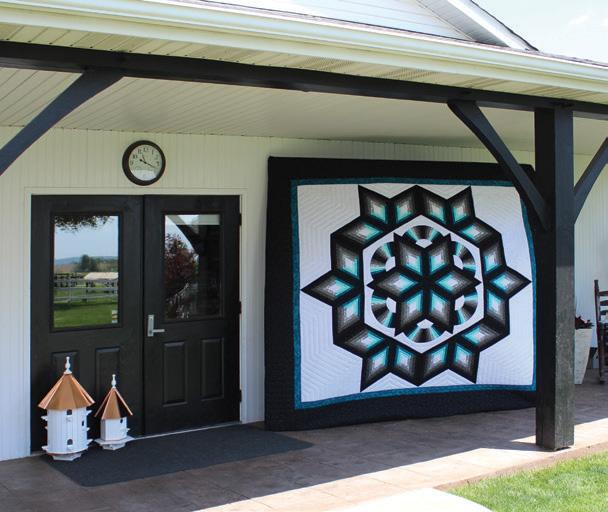
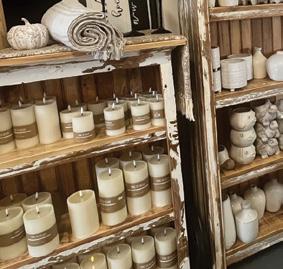
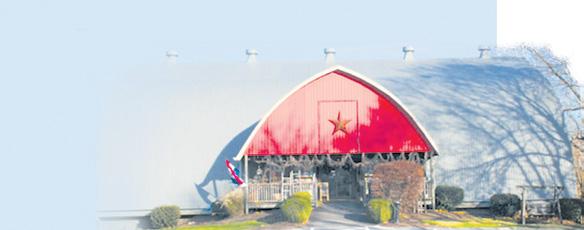
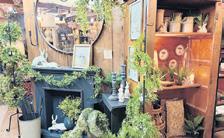
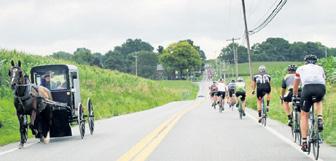
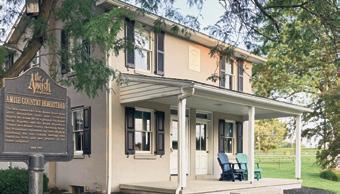
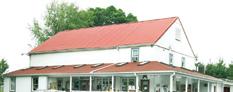
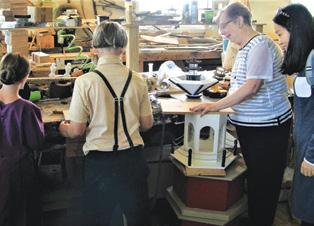
Experience the charm of Riehl’s Quilts & Crafts, here local families share their talents through beautiful handmade creations.
Experience the charm of Riehl’s Quilts & Crafts, here local families share their talents through beautiful handmade creations.
Experience the charm of Riehl’s Quilts & Crafts, here local families share their talents through beautiful handmade creations.
Handmade Is Our Heritage — and that’s the “Riehl” difference!
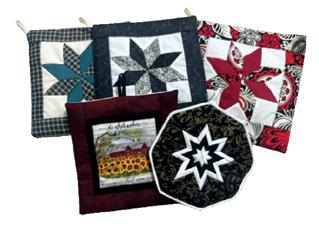
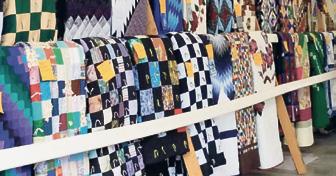
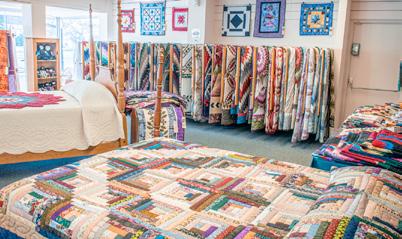
Quilts – Discover the timeless beauty of traditional Amish quilts in every size — king, queen, and single. Each one is stitched with care to brighten your home.
— and that’s the “Riehl” difference!
Quilts – Discover the timeless beauty of traditional Amish quilts in every size — king, queen, and single. Each one is stitched with care to brighten your home.
Quilts – Discover the timeless beauty of traditional Amish quilts in every size — king, queen, and single. Each one is stitched with care to brighten your home.
Country Gifts & Crafts – Find something for everyone!
Experience the charm of Riehl’s Quilts & Crafts, here local families share their talents through beautiful handmade creations.
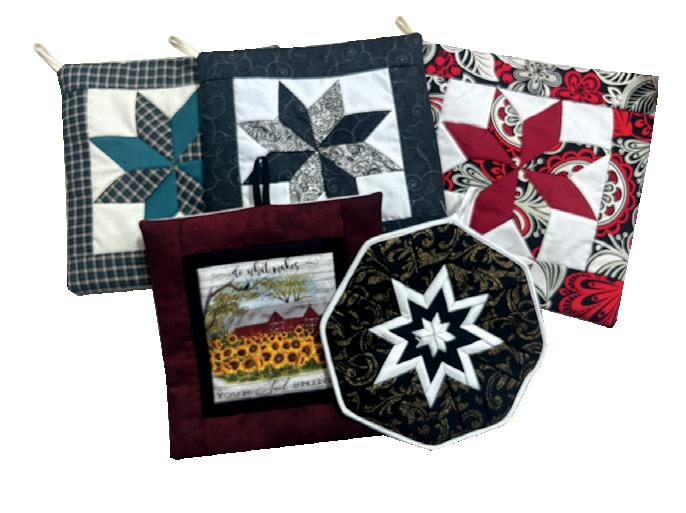
Country Gifts & Crafts – Find something for everyone! From quillows, handbags, and purses to leather goods, souvenirs, toys, and baby gifts — the perfect keepsake is waiting for you.
From quillows, handbags, and purses to leather goods, souvenirs, toys, and baby gifts — the perfect keepsake is waiting for you.
H O UR S
Country Gifts & Crafts – Find something for everyone! From quillows, handbags, and purses to leather goods, souvenirs, toys, and baby gifts — the perfect keepsake is waiting for you.
Monday - S r da - 5pm Closed Sundays
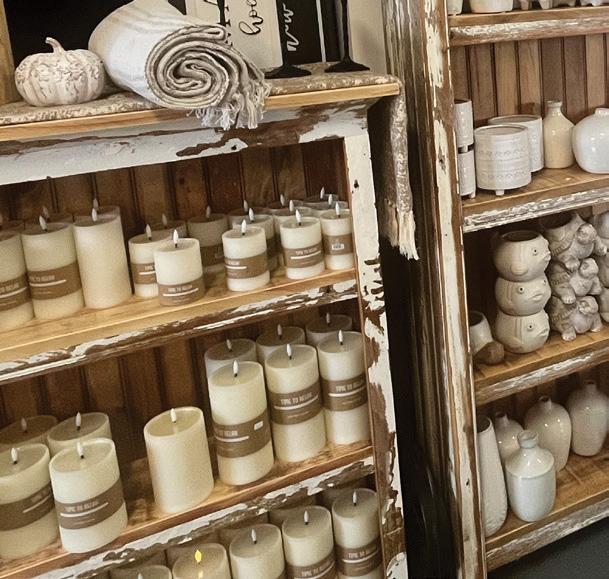
or the Home – Add warmth and character to your space ith handcrafted home décor, kitchen items, pillows, lap ows, wall hangings, birdhouses, feeders, brooms, and more.
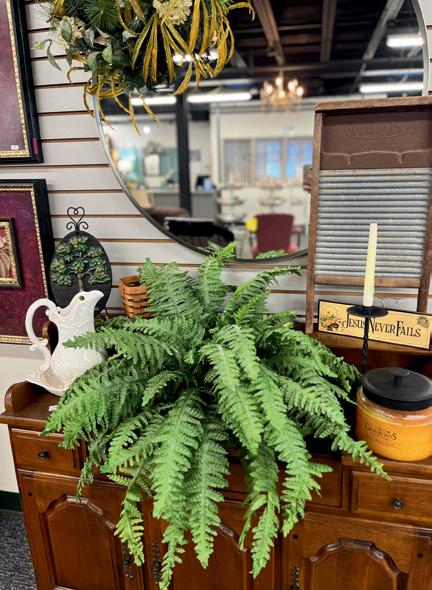
For the Home – Add warmth and character to your space with handcrafted home décor, kitchen items, pillows, lap throws, wall hangings, birdhouses, feeders, brooms, and more.
For the Home – Add warmth and character to your space with handcrafted home décor, kitchen items, pillows, lap throws, wall hangings, birdhouses, feeders, brooms, and more.
Experience the charm of Riehl’s Quilts & Crafts, here local families share their talents through beautiful handmade creations.
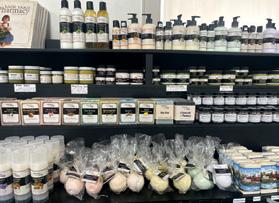
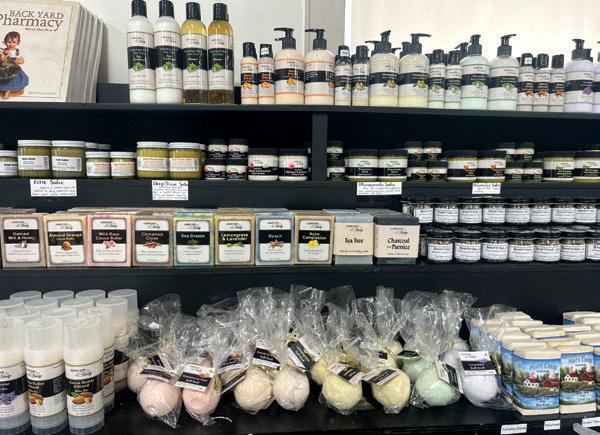
Body Care – Pamper yourself with all-natural lotions, soaps, lip balms, and more — all made right here in Lancaster County, PA.
Body Care – Pamper yourself with all-natural lotions, soaps, lip balms, and more — all made right here in Lancaster County, PA.
Body Care – Pamper yourself with all-natural lotions, soaps, lip balms, and more — all made right here in Lancaster County, PA.
Snack Shack – Take a break and treat yourself! Enjoy Fizzy efreshers, cold foam coffees, and a variety of snacks — dried fruits, nuts, candies, cookies, whoopie pies, and more.
Eveningsby appointment orby chance. For a catalog or i nf call
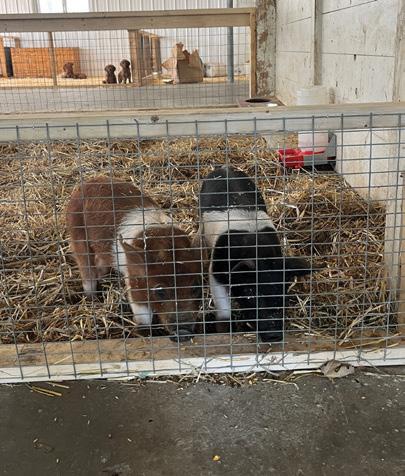
Say hello to our
Snack Shack – Take a break and treat yourself! Enjoy Fizzy Refreshers, cold foam coffees, and a variety of snacks —
Snack Shack – Take a break and treat yourself! Enjoy Fizzy Refreshers, cold foam coffees, and a variety of snacks — dried fruits, nuts, candies, cookies, whoopie pies, and more.
Quilts – Discover the timeless beauty of traditional is waiting for you.
Quilts – Discover the timeless beauty of traditional is waiting for you.
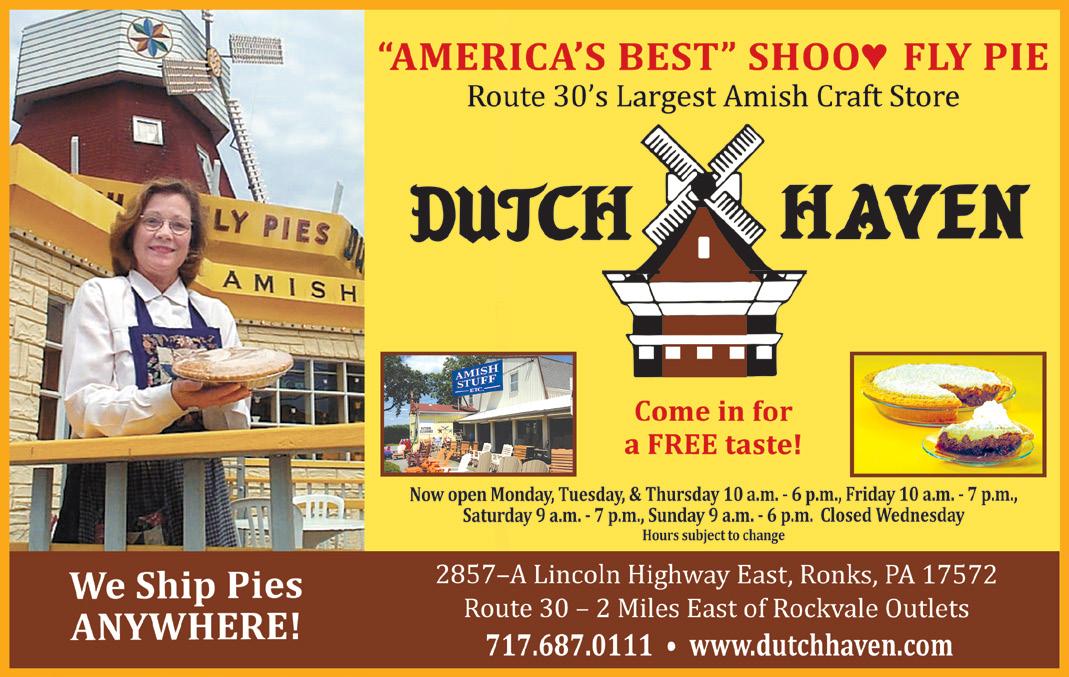
Travelers have been traversing Lancaster County along Route 30 for well over two centuries. And for over 70 years, a very special building has signaled their arrival in Amish Country. It has a legitimate claim on being the area’s oldest visitor landmark. Most importantly, it’s the “place that made shoo–fly pie famous.” That iconic structure is the Dutch Haven windmill.
With a history dating back to the beginnings of tourism here, the building is rich in memories. From the time it started as a luncheonette in 1920 right up to the present, it has remained most famous for shoo–fly pie, served warm with whipped cream. The Dutch Haven shoo–fly pie has even been mentioned in a TIME magazine article.
Today, as soon as you walk in, you’ll be offered a free sample of that same delicious, gooey pie. Some 40,000 pies are baked annually, using the original (secret) recipe. Visitors are still encouraged to “Take one for yourself or send one to someone nice.” You can buy and ship pies home at the store or at their “online shop,” where you’ll find other local crafts as well.
Yes, Dutch Haven is much more than pies, with over 10,000 unique gift items, foods, and collectibles. Some of the most popular are jams, jellies, and canned goods, noodles, hex signs, quilted spice mats, Amish straw hats, jewelry and gemstones, Amish dolls, onyx and soapstone animals, trivets, Tiffany lamps, framed prints, plenty of T–shirts and postcards, and a tremendous selection of
Amish–made outdoor furniture. It’s an eclectic mix, to say the least. As you explore, you’ll discover lots of other “surprises” around every corner. Expect the unexpected! And don’t forget the Amish–style root beer in the barrel.
Dutch Haven is now open Monday, Tuesday, and Thursday 10 a.m. - 6 p.m., Friday 10 a.m. - 7 p.m., Saturday 9 a.m. - 7 p.m., Sunday 9 a.m. - 6 p.m., and closed Wednesday. Hours are subject to change. Visit our website for information. For more info about this Lancaster County landmark, call 717.687.0111. Look forward to your free sample when you walk in under the welcoming arms of the windmill for this truly is the place that made shoo–fly pie famous.
See Our World From a Buggy!
A Family Tradition that Never Disappoints
No matter the stage in life or agenda of the day, guests, locals (and even our drivers) find riding in a horse-drawn carriage to be very relaxing! Even after thousands of carriage rides, Jessica, Sarah, Rachel, Miriam
About Jessica
Born a small town girl, it was Jessica’s dream to own a horse and carriage where she could share our lifestyle with others. She and her siblings attended a one-room schoolhouse and experienced the rigors of frigid winters and hot summers. At the young age of 14 when her eighth grade education ended, Jessica had the opportunity to select the interior color of her buggy, choosing which style wood dashboard she wanted, and items such as a speedometer or a hand-powered windshield wiper! YES, even 30 years ago every family custom ordered the interior design of their Amish carriage. An opportunity presented at Plain & Fancy Farm to open a carriage business for visitors. Shortly after, Jessica found her favorite horse, named him Aaron, and soon began offering a carriage ride experience to travelers who were seeking to learn more
Aaron was Jessica’s first horse!
about the Amish, Mennonites, and Old Order Brethren of Pennsylvania. Tracing our heritage back through Pennsylvania Dutch trails, to the Dutch Brethren of the Netherlands, Germany and Switzerland,
and their two brothers still love taking an evening joy ride in the carriage.
When you come to our buggy ride, every ride begins with a ride through our covered bridge!
as young as 6 or 7 years old driving their miniature pony to town!
Today, Jessica’s family lives in one of the oldest known standing homes in
Lancaster County. For over 31 years, the family has maintained the passion to share the Christian faith and “reasons” for living a Plain lifestyle. During those years, Jessica and her five siblings became parents to a combined 15+ children!
As Jessica and Miriam continue to expand our rides, we now offer many public, private and “themed” buggy rides. Inquire about scheduling your next special moment and create memories to last a lifetime!
still holds strong! On our ride you’ll have the opportunity to ask questions about day to day life, Don’t forget to ask about the electrical sources in our homes (electrical wires are still non-existent).
In Jessica’s childhood home, and in a few of the Plain churches, children are permitted to go to school beyond eighth grade. When Jessica had the opportunity to go on local farm calls with a veterinarian, she found a love of medicine and caring for horses.
Once she obtained her vet technician degrees, she worked five years in a horse operating room. She quickly discovered her true passion was caring for not just animals but humans as well. Being the eldest sibling, she led by example and soon her next four siblings followed suit in pursuing
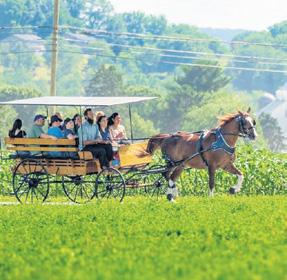
Embrace the moment and travel the countryside in our locally made horse drawn Amish carriages! Fun Fact:
Just as we continue to grow and develop, our communities continue to adapt to newer technology that may be permissible to utilize within the home or at work. It is important to understand that Amish and other Plain community members do not have a specific
healthcare degrees. Jessica’s sisters remain in Lancaster County practicing nursing within the local communities.
GROUPS ARE WELCOME!
We have team carriages so your group can ride together! Group rates available for 20+ riders.
Summer Hours
May–September Mon–Sat 9am–5pm Open Sundays 10am–4pm
A 30-35 minute tour passing a cluster of Amish homes and businesses in an all Amish area. Travel our country roads, the way we travel! Cookies, snacks and drinks are USUALLY available for purchase, depending on our Amish neighbors availability.
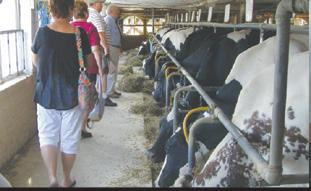
A 50-60 min tour that stops at a local farm! Experience our way of life on a real local, working Amish farm. With our exclusive access, step inside the barn and meet a variety of farm animals, including beef cattle, goats, and horses. Discover how our neighbors continue to adapt to daily life without electrical wires.
A 30-35 minute tour passing numerous Amish farms. Our local drivers can answer your questions and talk to you about points of interest.
Private Journey Tours
For a truly unique experience, book your own private tour, with your own driver, horse, and buggy. Our guests call it “ unforgettable”!
When Amish are Called to MEXICO
By Clinton Martin
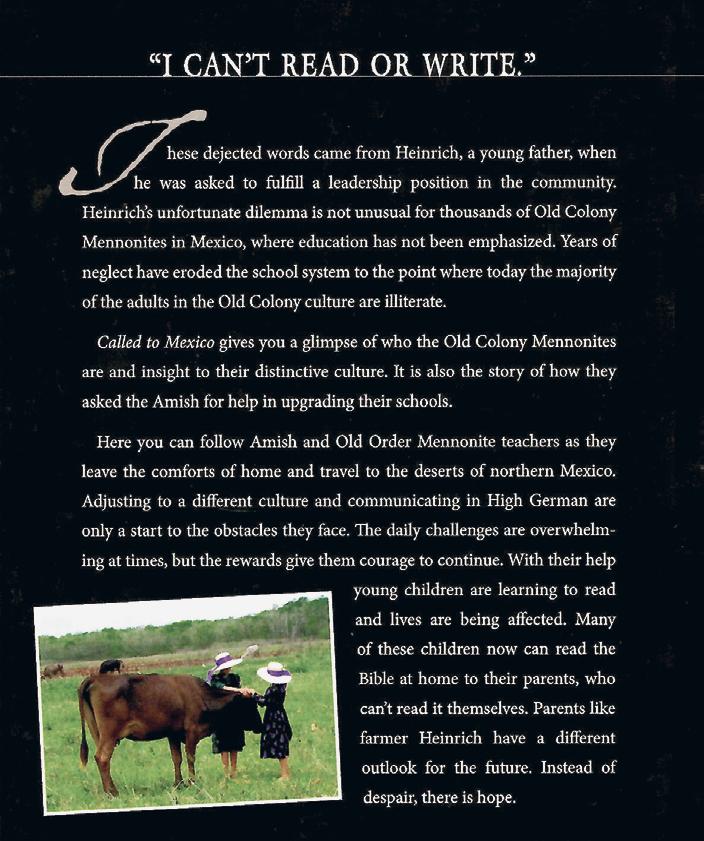
Iused to say, if you see Amish people in Mexico, they are almost surely there seeking healthcare, like surgeries or other major treatments. Long story short, it is not unusual for the Amish to go to Mexico for healthcare, because it is much cheaper for them there, compared to in the US. They are one of the largest cash-paying, self-pay customer bases in healthcare, and while they get huge discounts on procedures in the US
(cash is still king here!) they can still save money going to Mexico. However, today that’s not the only reason you’ll see Amish people in Mexico. You might also run into Amish people in Mexico who are there as “education missionaries” – that’s my word, not theirs. They probably wouldn’t necessarily appreciate the term, but that’s the best way I can describe what they are doing.
Why Amish people would be needed in Mexico, to strengthen
educational practices in a like-minded community, requires a quick primer on the history of the Anabaptist movement (from which we get the Amish, and other similar groups.)
It all started in Europe, around the time of the Reformation. Essentially, the Anabaptist people, the forefathers of the Amish, Mennonites, Brethren, and other groups, were willing to move to wherever they could live their lives in peace. But in many cases, no sooner
would some prince, duke, or king grant them permission to reside in his land, that permission would be rescinded for some reason, the persecution would start, and they’d have to look for a new place.
These Anabaptist groups often had certain things in common. “Nonresistance” (some use the term pacifism,) adult baptism (as opposed to infant baptism,) and the separation of church authority from government authority (no state-churches.) Oh, and they all spoke German. To say they were “from Germany” would not be accurate. Partially because the borders in Europe today are very different from 500 years ago. Germany didn’t really exist at that time. The Germanspeaking world was carved up into small principalities and nation-states.
One of these Anabaptist groups, which we call Old Colony Mennonites today, took a somewhat unique journey to the Americas. They ended up going from the German-speaking parts of Europe, to modern-day Ukraine, then Russia, Canada, and then from there down to Mexico.
They’ve been in Mexico for many years, but due to their difficult journey through the various countries, while they maintained their separate culture, religion, and notably the German language, picking up, packing up, settling down, and then moving again, led them to have little time for a functioning education system. In fact, while they flourished commercially and culturally in Mexico (largely because the Mexican government more-or-less agreed to leave them alone and not bother them) they realized that their education system was broken.
Most of the Old Colony Mennonites couldn’t read or write. They had little educational materials. To their frustration, they couldn’t even read the Bible, or their hymnal, or any other devotional material. How does one strengthen one’s faith if one can’t even read the Bible? They were concerned.
They were aware of the Amish in America. Similar beliefs. Like-minded cultures. Traditions in common. The Amish also speak a German dialect. So, the Old Colony Mennonites
reached out to the Amish, asking them to come down and help re-establish and reinvigorate an educational system for their people – to help them learn to read and write.
The message was received favorably by some Amish here in the United States, and a formal effort to help their Mexican brethren was formed. The first Amish people to travel down to meet with the Old Colony Mennonites realized quickly how different the German dialect spoken by most Amish in the US had become from the High-German spoken in Mexico. Many Amish in America struggle to communicate in High-German. It is more of a written and read language for them, and when speaking they are much more comfortable in PA Dutch
(which has almost become its own language entirely.)
So, the Amish here, who were interested in helping there, brushed up and studied up on their high-German before heading down, which added an interesting and intriguing element to the whole effort.
An excellent book has been written, “Called to Mexico: Bringing Hope and Literacy to the Old Colony Mennonites” author uncredited, which details this heartfelt effort. Much of what was written in this article was gleaned and summarized from reading this book. I got my copy at the Gordonville Print Shop, but if you aren’t in the area and can’t visit the Print Shop yourself, you can write to Old Colony Mennonite Support, PO Box 525, Nappanee, IN 46550 if you’d like to get a copy for yourself.
Antiquing in Amish Country
By Ed Blanchette
Do you enjoy searching for antiques? Perhaps you are looking for that special something, or you just enjoy searching for a surprise to add to your home decor. Maybe you hope to find an item worthy of an “Antique Roadshow.” Whatever you discover, once you find it, it becomes your personal treasure. What makes Lancaster County such a great place to go antiquing? One obvious answer would be that this area has a rich history going back hundreds of years to the first settlers in the early 1700s. Many of us have stuff in our attics that we have forgotten about, or inherited. Who knows what may be out there either at a yard sale
or an antique shop? Here in Lancaster County we boast thousands of antique shops and dealers. The Adamstown area alone has over 3,000 antiques dealers, and is known as Antiques Capital, U.S.A. The many locations stretch out along Route 272, just off Pennsylvania Turnpike, Exit 286.
Whether you are after a rarity, or just something old that intrigues you, you’ll find everything from sheet music to music boxes, pocket watches to kitchen sinks, nostalgic clothes to beautiful wardrobes to hang them in. Glassware, crafts, toys, clothes, artwork, china, quilts and fabrics, memorabilia...the list is endless!
When the Land Runs Out
What Do the Amish Do?
By Clinton Martin
Up until the 1940s, almost all of the Amish in Lancaster County were farmers. As “English” (nonAmish) farms came up for sale, the Amish would buy every farm that they could. Eventually, farmland became very expensive and often not cost effective when considering what could be produced on an acre of farmland versus what an acre of farmland cost to buy.
Over the generations the Amish population in Lancaster County grew to the point that many of the Amish families that wanted to farm couldn’t find a farm that they could afford to buy.
This led to “Daughter Settlements”
If you refer to the Amish in Lancaster County, you are not talking about all of the Amish in this area of Pennsylvania. When most Amish refer to the Amish in the local area, they are talking about all of the Amish in Central Pennsylvania. The Amish use the term, “Lancaster
Settlement” and that includes all of the Amish in Central Pennsylvania.
The Lancaster Settlement includes the Amish in more than just Lancaster County. It also includes the Amish in Chester County, Berks County, Lebanon County, Dauphin County, York County, Adams County, Franklin County, Cumberland County, Perry County as well as some areas in northern Maryland (and possibly areas on the fringes of those counties).
As a result of farmland becoming increasingly expensive, Amish from the Lancaster Settlement banded together to migrate to other areas of the country where farm land was more affordable (but not necessarily as productive). That migration was planned by groups of families that would buy large tracts of farms in an area and then that group of Amish families would migrate to an area as a group. They moved as a
group, because they needed enough families so they could establish a Church District to maintain their culture and Amish Church connections.
Lancaster County Amish established new settlements in many states, including New York, Virginia, Delaware, Maryland, Kentucky, Indiana, Wisconsin and many other locations.
These “Daughter Settlements” usually take with them the “dress code”, styles of carriages and other characteristics of the Lancaster Settlement. Also, the Elders of their Church Districts stay connected (“networked”) to the Elders in the Lancaster Settlement. For instance, Bishops in Church Districts in Daughter Settlements in Kentucky travel to Lancaster County twice a year for the Bishops’ Meeting (a week-long meeting where Bishops meet to talk about and come to consensus on how to handle issues in the Church.)
Who Wants to Join Me for a FIELD TRIP?
By Clinton Martin
For decades, school groups from around the United States, and even a few from overseas, have come to Lancaster County for educational trips, visiting local museums, attractions, local restaurants serving PA Dutch foods, taking tours with local expert guides, and truly trying to learn the “how, who, what, where, and when” of the Amish.
The Amish Experience is a local tour company which welcomes schools, and I’m publishing here an excerpt from their study guide, used by teachers before the trip, to help prepare their students for what they are about to see.
So, I’ll invite all of you to come along with me on a Field Trip (at least of the mind) where you peer into the world of the Amish.
— A Brief History
NOTE: All teachers should read this section to determine what information is appropriate for students understanding at their grade level.
Most of us have ancestors who came to the United States from some other place. Amish ancestors came from Western Europe. They were part of a religious movement that started in the early 1500s. It was a troubled time when poverty, war, and religious questions threatened Western European society. This was the time of Martin Luther, who felt it was time to reform the Catholic Church. It was the beginning of the Protestant Reformation, and the formation of new churches in Europe.
Another important reformer was a man named Zwingli who lived
in Zurich, Switzerland. Luther and Zwingli tried to work out reforms through the government and state supported church.
In 1525 in Zurich some radical dissenters met and baptized one another. These people decided to follow Christ by forming a church apart from the state. They noticed when they read their Bibles that the people who were baptized were adults, not infants. (At this time in history all Christians were baptized as infants.) But the dissenters felt people needed to be old enough to understand their beliefs when they were baptized. This group was first called Swiss Brethren. Later they were called Anabaptists which means “Rebaptizers” because they were baptizing adults who had already been baptized
Background image source: Designed by Magnific
as infants. Catholics and Protestants alike viewed these non-conformists as radicals and the State saw their beliefs as a threat to its authority. All children were automatically members of the state church, and this was a record for the government to use later for taxation and military service. Both the church and the government felt threatened by adult baptism.
The Anabaptists were also pacifists because Jesus taught peaceful nonviolence (“Turn the other cheek”). The government was not happy with them when they refused to fight in the military. These Anabaptists were hunted down, tortured, and often killed, and so these “Swiss Brethren” were forced to meet and worship in secret.
Anabaptist ideas spread beyond Switzerland. In the Netherlands a former Catholic priest named Menno Simons joined the movement in 1536 and became an important Anabaptist leader. Those who followed his teachings were called “Mennists” or “Mennonites”.
In 1693 Jacob Amman, a Swiss-born leader of an Anabaptist community, felt other Mennonite leaders were becoming too liberal. Amman felt the Mennonite church was not as separated from the world as it should be.
When he couldn’t convince other Mennonite leaders to change, he and his followers split away and were eventually called Amish. The Amish were persecuted for their religious beliefs and practices, and they traveled around Germany and Switzerland looking for a home where they could worship and live as they believed God wanted them to.
In 1681, an Englishman named William Penn had received a land grant from the king of England. His colony would be called Pennsylvania [Penn’s Woods” in Latin] to honor Penn’s father. William Penn was a member of the Quakers, a church which was also persecuted. Penn, who had once himself been imprisoned for his beliefs, set up his colony as a “holy experiment” offering religious tolerance to persecuted people. Early records show that a ship called “Charming Nancy” brought 21 Amish families to Pennsylvania in 1737. Within 30
years, more than 100 households left Europe for the New World.
In Lancaster County they found the same characteristics for productive farmlands that were theirs in Europe, and they settled here. To this day, Lancaster is known as the “Garden Spot,” with some of the richest nonirrigated farmland in the country.
Today the Amish stand out from us because of their distinctive dress and lifestyle, their continued use of horsedrawn vehicles, and their meeting in homes for church. These are conscious choices on their part; it is not because of poverty or ignorance. They value their way of life and want to preserve it.
There are approximately 40,000 Old Order Amish people living in Lancaster County, Pennsylvania. The Amish first came from Europe to settle in Pennsylvania, but they now live in 32 states - Pennsylvania, Ohio, and Indiana have the most. Over 400,000 Amish live in the United States and Canada.
The Amish are Christians basing their faith on the Bible - both Old and New Testaments and some extra books called the Apocrypha. The Old Order Amish have a list of their beliefs and practices called the “Ordnung”. The Ordnung is formed and maintained by the church leadersBishops, Ministers, and Deacons.
The Amish base their beliefs on the Bible and traditions that came from their forefathers. They want to live a plain and simple life that keeps them close to God and at peace with their fellow man. They also want to be as independent and self-sufficient as possible. In the past they were persecuted by the government and church officials, so they want to trust God and their fellow church members and not the government for help in time of trouble and in their everyday living.
At the center of this way of life is a belief in the family and community. Anything that would tend to weaken or destroy these is limited or shunned altogether. The virtues of humility and servanthood (individual to the group) are important to them as well. Prideful photographs are shunned; they want neither Social Security, government aid, or worldly insurance.
One thing many people know about the Amish is that they do not use a lot of modern technology. The Old Order Amish do not own or drive cars, they do not use tractors to pull their farm equipment (through the fields,) they generally do not hook up to “from the grid” electricity, and they attempt to limit telephones from interrupting home life by keeping them at arm’s reach, some keeping their phones stored in an outbuilding, rather than in their homes. (Phones are kind of a sticky subject with the Amish currently – they are wrestling with the issue.) They do not think modern technology is wrong or evil by itself, but they try to avoid using technology in ways that would lead to a break-up of family or community life. For example, if the family is at the table together for the evening meal, they don’t want to be interrupted by the telephone ringing. Meals are family time. The impact of this technology is kept, intentionally, at a distance. At the heart of Amish life for about onethird of the Lancaster Amish settlement is the farm. Here the family works hard and they work together. Both of these are extremely important to these quiet, industrious people. From an
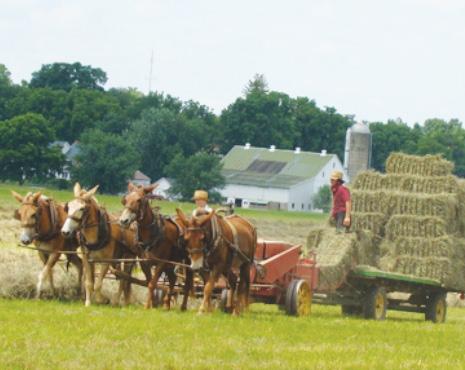
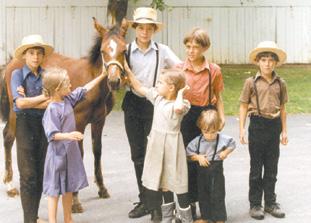
early age, children are taught to have responsibilities, enjoy work, turn chores into games, and give their best effort as part of the family. Thus, even very young boys might be seen driving a team of mules in the early spring.
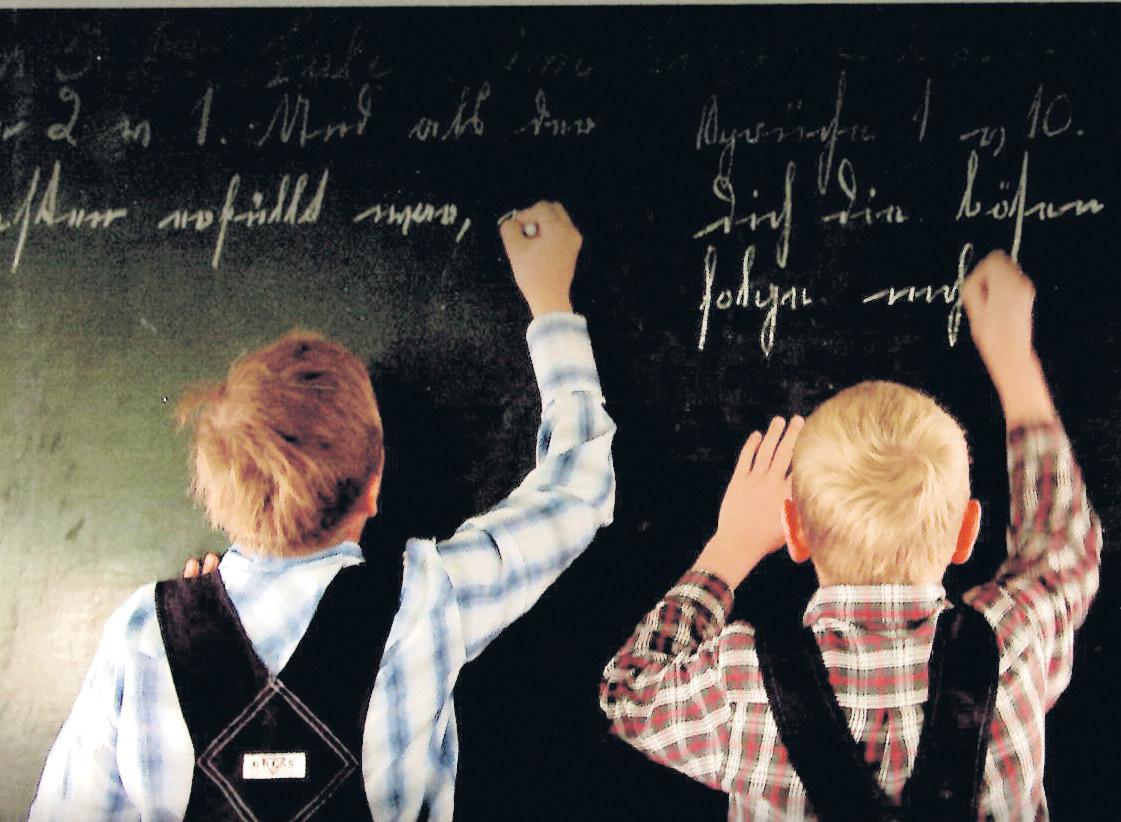
There are around 300 Amish oneroom schoolhouses in Lancaster. For the Amish child, school is an extension of family life and designed to prepare them practically for adult life. In the one-room school, older children help younger ones, groups recite together, and all play vigorous games at recess. The teacher assigns lessons and corrects behavior, while students choose favorite songs to sing or answer questions. Traditional desks form rows, with each one a little bigger than the one in front of them. From a raised platform the teacher orchestrates the activities of all eight grades.
Thus, being Amish affects every activity - from early morning rising, to chores, to one-room school. It is a simple life with a slower pace that provides definitive values, firm standards and a sense of identity. Nevertheless, teenagers must choose for themselves if they want to become Amish, a decision that is not easy for many, especially with the many temptations of the modern world around them. Yet, within the boundaries provided, the Amish child finds belonging, purpose and security. Indeed, these may have much to do with why the majority of children decide to join the faith and increase its numbers.
THE MARTYRS MIRROR
Martin Luther’s translation of the Bible (which is in German) is the book used in Amish church services,
tortured and killed because they were doing what they thought God wanted them to do.
From the beginning of their movement, Anabaptists had to meet in secret, in caves, barns, or wherever they could gather and worship without being caught and arrested. One story from the MARTYRS MIRROR is about Pieter Pietersz, who ran a ferryboat on the Amstel River in Amsterdam. He offered his boat as a meeting place for Anabaptists. The worshippers could seem to be innocent passengers. Pieter took his newborn infant to a hiding place in the country so he wouldn’t have to have him baptized. The authorities learned he was an Anabaptist and arrested him in January 1569. He was tortured almost immediately, condemned, and executed at the stake on Feb. 26.
To the Amish, individual wants and feelings are secondary to the best interests of the group, be it family or church community. Competition is not encouraged; cooperation is expected.
but another important book that strengthens Amish faith is the MARTYRS MIRROR. A Dutch Mennonite minister collected tales of Anabaptist martyrs from court records, stories, and other books. In 1660 he first published a 1,478-page book called THE BLOODY THEATER or MARTYRS MIRROR. The second edition included 104 engraved illustrations. In 1748 Pennsylvania Mennonites had the book translated into German. It was the largest book printed in colonial America. (The first English edition was published in 1837.) This book tells many stories of people, mainly Anabaptists, who were
Several thousand Anabaptists were martyred, more than any other group in the 16th century. Many rulers at that time feared that the Anabaptists were destroying God’s good society by disobeying government orders---not bringing their babies to be baptized, refusing to serve in the military, and worshipping separately from the state church. Many magistrates thought they were being good citizens, when they tortured and killed Anabaptists, believing it was for the public good because God wanted them to do this. The Anabaptists refused to change their ways because they, too, believed they were following God. Throughout history a lot of “good” people have done terrible things in God’s name. But as bad as the 16th century was, more people have been killed for conscience’s sake in the 20th and 21st centuries than many others in history.
REMINDERS for Visitors to Amish Country
Although thousands of visitors come to Lancaster County to experience a bit of the Amish lifestyle, the Amish are a private people and find the attention somewhat disconcerting. It is important to respect their feelings while you’re visiting. With that in mind, here are a few tips for fostering good relations between the Amish and non–Amish.
NO PICTURES Please! Don’t ask an Amish person to pose for a picture. Most will politely refuse. It is against our Amish neighbors convictions to have their pictures taken, except in very special situations. Please respect this belief and do not take photos without permission, just as you would like to have your beliefs respected.
HOLD YOUR HORSES Driving along area roads, you will no doubt encounter numerous Amish carriages, or “buggies,” as visitors like to call them. Do not honk your horn, because the sound may frighten the horse and cause an accident. Instead, wait until it is safe to pass and then give the buggy plenty of room. Be sure not to cut back in the lane too sharply in front of the horse. The county’s roads are generally wide enough that you should be able to pass most buggies without much of a problem.
NO TRESPASSING Do not trespass onto private Amish property for a closer look. Amish homes are not museums, and Amish people are not exhibits. Respect their property and privacy as you would like others to respect your own. You can get a good sense of Amish life at many area visitor attractions and on guided tours.
WAVING Do not be offended if the Amish do not wave back to your friendly gesture. With all the people who wave to them throughout a day, they would be waving back all day if they did!
A FINAL WORD Remember the Amish are not on vacation and are not costumed actors. They are real people going about their daily lives. They are not here to serve as tour guides or attractions for visitors. This, after all, is their home, so please respect their beliefs and lifestyle.
The Amish Experience
250 Years of Teachable Moments in History
The Under Ground Rail Road—Part 4
By Ed Blanchette
In December of 2016 to March of 2020 the Amish Experience at Plain & Fancy Farm looked to create a bit of tangible and visual history for teachers and students through the wonders of the Magic Lantern Shows at Plain & Fancy Theater. Due to Covid in 2020, the Magic Lantern Shows were discontinued, but those teachable elements from history that were put together by Lancaster County historians Randolph J. Harris and
Leroy T. Hopkins, Jr., Ph.D., as a study guide for the Magic Lantern Show at the Amish Experience still remains mostly intact. As we celebrate the 250th year of the constitution “17762026”, we here at Amish Country News feel the contributions of this valuable information would be right in line to share with you, our readership. In doing so, we will be sharing multiple parts over multiple issues. In the last issue we visited an Introduction in Part
3 – Now the Under Ground Rail Road Part 4, enjoy.
Who was Involved? “Stationmasters, Conductors” & Spies Revealed!
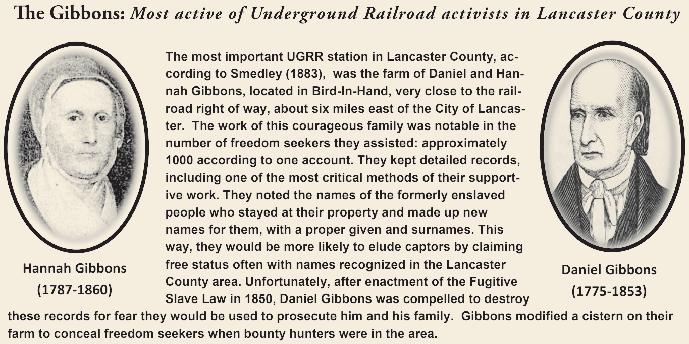
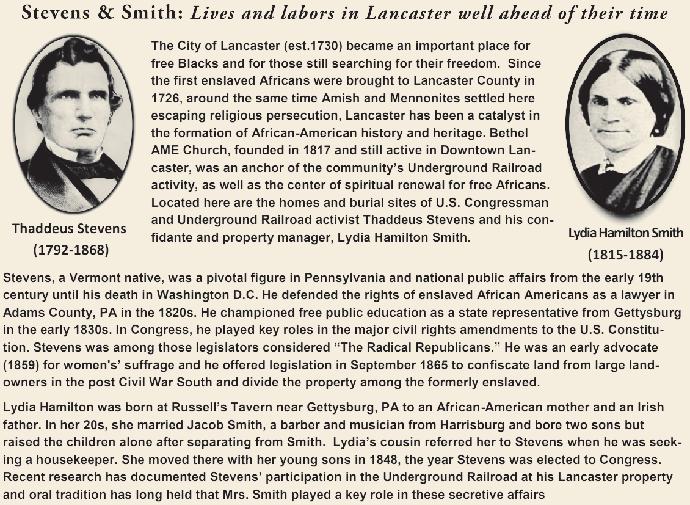
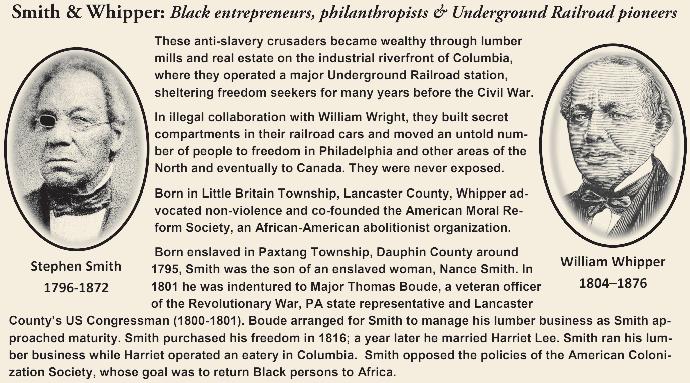
Passive and active resistance to the “peculiar institution” was shared by people of African heritage and white settlers from Europe and their descendants. In Lancaster County, some Quakers were involved while other religious groups such as Methodists and Lutherans were often united in their hatred of the institution of slavery. Much has been written about the involvement of Quakers such as Daniel Gibbons and William Wright in the efforts to assist escapees from enslavement, but it is noteworthy that African entrepreneurs such as William Whipper, Stephen Smith, and Robert Boston of Bethel AME Church in the City of Lancaster also played key roles in the clandestine work. This aspect has only been examined in recent years.
Historical writers such as Robert Smedley or Wilbur Siebert reconstructed the work of majority community idealists like the abovenamed Quakers but mostly failed to mention the network of African churches and business people who risked life and limb to rescue their
enslaved brethren. The grandson of the Columbia’s pioneering Quaker founder, William Wright (1788-1846) was “an uncompromising hater of slavery. “ He is widely credited with establishing the system here of moving freedom seekers from one safe house to another, often among his Quaker relatives. This was an early organizational structure of this otherwise loose movement that became known as the Underground Railroad, which included Robert Loney, a free Black man who “ferried fugitives across the [Susquehanna] river in the night.…and gave them into the care of William Wright.” Smedley, 1883.
In Lancaster County, the most widely recorded routes of the Underground Railroad connect Columbia, Lancaster, and to a certain extent Marietta, with the rural areas in the Southern End of the County and the townships on the border of Chester
In Lancaster County, PA—1780-1883
County. What is not often considered are the African enclaves in Conestoga, Fulton, Little Britain, Sadsbury, and Salisbury Townships that were linked to these localities by family, religious, and business ties. Churches in those communities, notably the African Methodist Episcopal Church, were collecting points for area residents, some of whom owned small businesses: hair dressers, chimney sweeps and other skilled laborers.
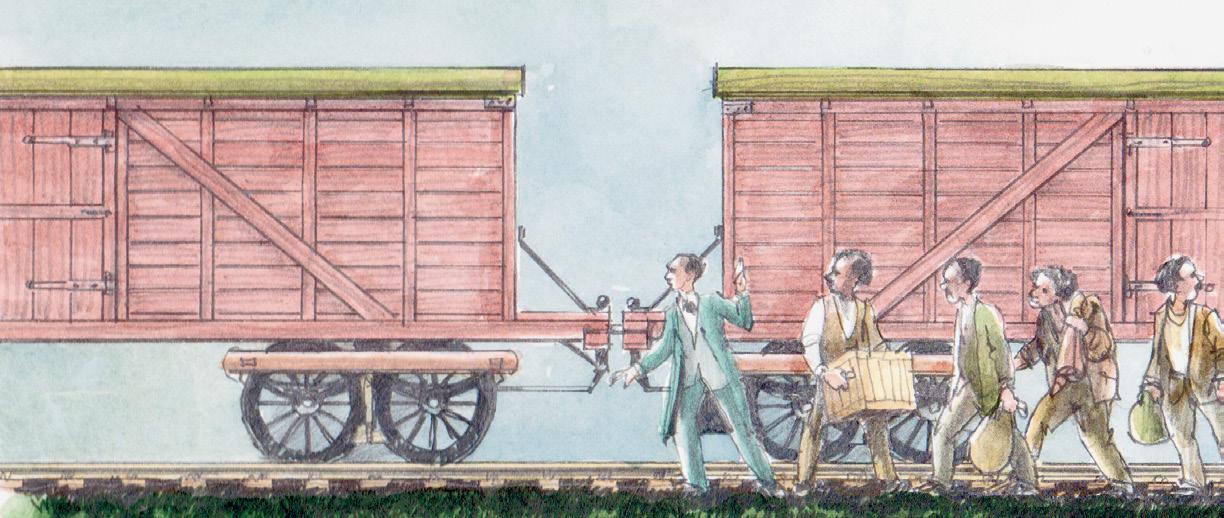
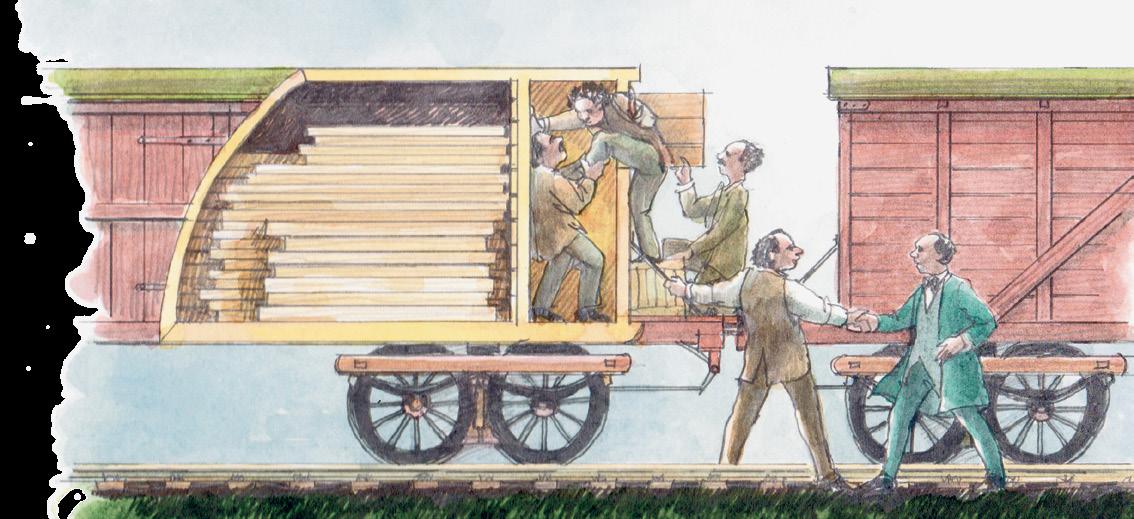
The work of the Underground Railroad was of necessity done in secret (with a few exceptions) because exposure meant punishment or worse. “Station masters” on the U.G.R.R. were idealists motivated by a love of freedom and a hatred for a system that was contrary to the values on which the nation had been founded. This humanitarian impulse crossed racial, religious, gender and class lines. Key locations and apparent pathways eastward for thousands of freedom seekers on foot, or sometimes on wagon or train rides, from the western counties of Southeastern Pennsylvania,
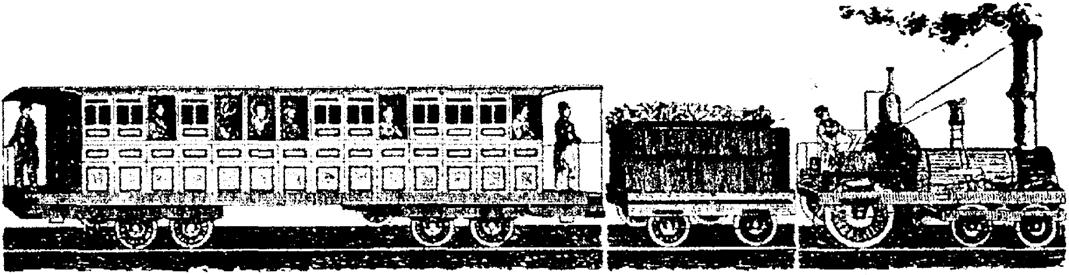
From A History of the Pennsylvania Railroad 1846-1896, J. Elfreth Watkins, 1896.
William Wright Home,1795, 2nd St, Columbia, PA
often through Columbia and across Lancaster County in search of freedom in Philadelphia and other
points North. The ultimate goal for many was Canada. From Siebert’s 1898 book based on names and locations recorded in Smedley’s book, 1883; shows how one historical narrative is involved in the creation and development of a newer account of the same historical subject.
Photographers!
ACN 2026 Photo Contest
>> Now Accepting Entries! <<
Got great photos? Send them to us and see your photo in the pages of Amish Country News and win prizes! Visit AmishCountryNews.com for Photo Contest prizes and more info. Email your HIGH RESOLUTION ONLY photos in JPG format to clinton@amishexperience.com (minimum size 8”x10” at 300 DPI). Put 2026 Photo Contest in the subject line. File names should contain your name. Include your name, address and phone number with brief details of location and subject matter in the email. No more than five photos can be submitted. LOW RESOLUTION PIXELATED IMAGES WILL NOT BE ACCEPTED.
Photos become property of Amish Country News / Amish Experience and may be used in upcoming issues, publications, and promotional materials.
Intercourse
Probably no other town in Amish Country can claim its fame is owed largely to one simple thing—its name. For years people have sent letters home with the name stamped boldly on the envelope… Intercourse, PA. There are several explanations for the name, and they are woven into the brief history that follows.
In the beginning, of course, there was very little here, just settlers arriving in the New World from Europe. Back around 1730, the Old Provincial Highway (or Old Philadelphia Pike, Route 340) was laid out to connect Philadelphia with the inland town of Lancaster. Conestoga wagons, pulled by six to eight horses, hauled supplies and freight back and forth between the two cities. Providing rest for
travelers and horses, taverns sprouted along the way, becoming centers for news, gossip, and business transactions. And that is how the town got started when the first building, a log tavern, was constructed in 1754. The Newport Road, a former Indian trail, came from Newport, Delaware to the south, and it is believed that because of these intersecting roads the tavern took “Cross Keys” as its name. That was true at least until 1814, when it was named Intercourse in a real estate scheme to establish a more sizable town. George Brungard had acquired 48 acres of land north of the roads in 1813. He attempted to lay out a town site and divide it into sections for sale by a lottery, advertising “151 handsome building lots of $250 each to be drawn for by number.”
IFC Steak & Shrimp Dinner
August 15, 2026 1 p.m. – 5:00 p.m. 10 N Hollander Rd, Intercourse, PA
Drive through or eat in. Ticketed event, tickets MUST be purchased in advance to guarantee meal. Watch for flyer! We hope you can join us!
For more information visit www.village ofintercourse.com/events/2019/8/16/ intercourse-fire-company-country-auction or call 717-768-3402. Tell them, “Amish Country News sent you”!
The newspaper advertisement stressed “the great importance of so many turnpikes and great leading roads intersecting at and near this place.” As one writer has noted, in those days “intercourse had a common usage referring to the pleasant mutual fellowship and frequent intermingling which was so much more common in the informal atmosphere of the quiet country village of that day.” There was no hesitancy on the part of the United States Post office Department to accept the name ‘Intercourse’ since it meant a commercial or trading site.
Intercourse cont’d on page 22
To Country Knives
Smokehouse at Plain & Fancy Farm
Aaron & Jessica’s Buggy Rides
Intercourse cont’d from page 20
But back to our story and Brungard’s scheme. Although lotteries had been used for many years to sell various things, his real estate lottery failed, and most of the land was combined into one tract. More recently, in 1971, another person tried to take advantage of the town’s name and sell one-inch square plots of property to visitors. This plan proved to be a flop as well.
In the old days, there were only five houses, counting the inn, and the town grew slowly. But by 1880, Intercourse had 54 homes and a population of 280. Communications improved with the arrival of the post office, and later the telephone.
Getting the first post office up and running was a difficult matter. The main problem was finding a building and someone willing to perform the duties of a postmaster. The first, Benjamin Fraim, performed his duties from the Cross Keys Tavern, and may have had a job working there, since “his income, based on a percentage of the postal transactions for the year ending 1829 was only $8.21.”
Over the years the post office moved among stores or restaurants whose owners hoped visits by residents would increase their business.
The local stagecoach service apparently started around 1898. It was “a single horse conveyance similar to a
market wagon, with a roll-up curtain and double set of seats.” The stagecoach brought items from Lancaster City for local Intercourse businesses, and even picked up milk, butter, and eggs for delivery to Lancaster restaurants and industries, including an ice cream plant. One history of Intercourse notes that when it snowed, a bobsled was used instead. “When the driver knew of passengers beforehand, their comfort was added to by many a hot brick heated the night before in the oven, and wrapped in newspaper to preserve its warmth.”
As the days of the dirt road drew to a close, so too did the stagecoach days with the Rowe Motor Truck service started by Coleman Diller in 1910. In 1923 the Penn Highway Transit Company was organized and initiated bus service to Lancaster. It is noted that “many of the Amish residents of the area were anxious to see the line started, but did not care to subscribe to
stock. Instead they liberally bought books of tickets which were really prepaid bus fares.” By 1924 enough money was raised to buy a Mack Auto Bus for $6,800. It held 25 passengers and even had solid rubber tires!
Since the town never really got to be “too large,” it has retained much of its sense of community, from the little public library in a former one-room school to the volunteer fire company. Surrounded by farms, the town has grown little and retains much of its former charm, even when thousands of visitors descend upon it during the tourist season.
Many residents and visitors enjoy the atmosphere of this small town, a place where family, community, religion, and hard work are still important values. The village of Intercourse has certainly changed over the years, but it has changed slowly, and “sometimes the things that grow the slowest are the ones that endure the longest.”
SUBSCRIBE TO AMISH COUNTRY NEWS
Amish Country News is printed seven times per year. Fantastic articles! Money saving coupons!
Country! For an Amish Country News annual
complete this form and send a check or
order for $35 to: Amish Country News, PO Box 414, Bird-In-Hand, PA 17505
Strasburg
The area we know today as Strasburg was first settled by German-speaking Swiss Mennonites. After bargaining with William Penn in London, they came directly to Philadelphia from the Rhineland, arriving in September of 1710, on board the ship Maria Hope with a combined passenger and crew list of 94 persons. Thirty-six of the leaders were granted patent deeds from Penn’s property commissioners for 14,000 acres of land surrounding Strasburg. Some of the family names are familiar to locals today, including John (Hans) Herr, whose house in Lancaster County is open to visitors and remains as the county’s oldest surviving dwelling (1719).
French fur traders opened up the first path through this area from Philadelphia to the Susquehanna River—known as “Minqua’s Path.” As early as 1716, when the first Conestoga wagon was used for hauling goods between Philadelphia and Lancaster County, it became known as the Conestoga Road.
During the next half century, traffic on this road increased considerably— and Main Street Strasburg was developed. The first buildings appeared in the village about 1733. Strasburg flourished in the 18th century primarily because of its location along the major wagon routes between Philadelphia, Lancaster and the Susquehanna River. Strasburg was one of the principal stopping stations and, with the heavy wagon traffic, there were as many as ten taverns here.
No doubt the religious nature of the first settlers was responsible for the village becoming a center for worship and education. In 1816, when the village was incorporated into a Borough, the name Strasburg was selected, undoubtedly named for the Cathedral City from which the Swiss Mennonites came, the Alsatian city of Strasbourg.
Wealthy doctors and clergy, and an interest in worship and education, made Strasburg a cultural and educational center for the region. The first formal school opened in 1790, a
Gap Relief Auction
August 7 & August 8, 2026
This is an annual community celebration of generosity with food and a quilt and variety auction to support the relief, development and peace work of the Mennonite Central Committee. The Friday dinner and Saturday breakfast will be take-out only. Mud Sales are a unique Lancaster County tradition to raise funds for local volunteer fire companies. For more information visit mcc.org/ events/gap-relief-auction or call 717-617-9746. Tell them, “Amish Country News sent you”!
classical academy where Greek and Latin were taught.
These academic enterprises were followed during the 19th century by a flood of schools. In 1823, by an act of the Legislature of Pennsylvania, an Academy was established in which “the languages, arts, and sciences will be taught.”
The year 1839 marked the founding of the Strasburg Academy at 37 East Main (the present day Limestone Inn
Choo Choo Barn
Bed & Breakfast was the headmaster’s home and housed boarding students). The Academy gained the reputation of being one of the best academies in the country for both boarding and day students, and its students came from all over the East Coast and as far away as Cuba and Puerto Rico.
In 1841, a classical school for girls, the “Strasburg Female Seminary,” opened at 17 East Main. Such a school for girls was quite unusual at that time.
As Strasburg flourished, so did its neighbor to the east, Philadelphia. The commercial interests of Philadelphia pressured the State Legislature to improve the transportation network into their city. As a result, an internal
improvements bill passed in 1826 to construct a series of canals. The Philadelphia and Columbia Rail Road was also incorporated with financing provided by the state.
With these undertakings, Strasburg residents became alarmed at the possibility of losing their commercial position and from this concern emerged the Strasburg Rail Road. In 1832 a charter was secured from the Pennsylvania Legislature to construct a rail line connecting Strasburg with the Philadelphia and Columbia Rail Road main line near Paradise. Due to financial difficulties, the project was delayed until finally put in running order in 1852. But this shortline between Strasburg and
New Layout with Animations, trains, scenery & surprises! • New inventory in our gift shop
Paradise was not financially successful for many reasons, until it was revived to provide rides to visitors on authentic steam locomotives, thus becoming the focal point for all of the town’s train attractions.
A Scenic Culinary Journey and a Taste of Amish Country
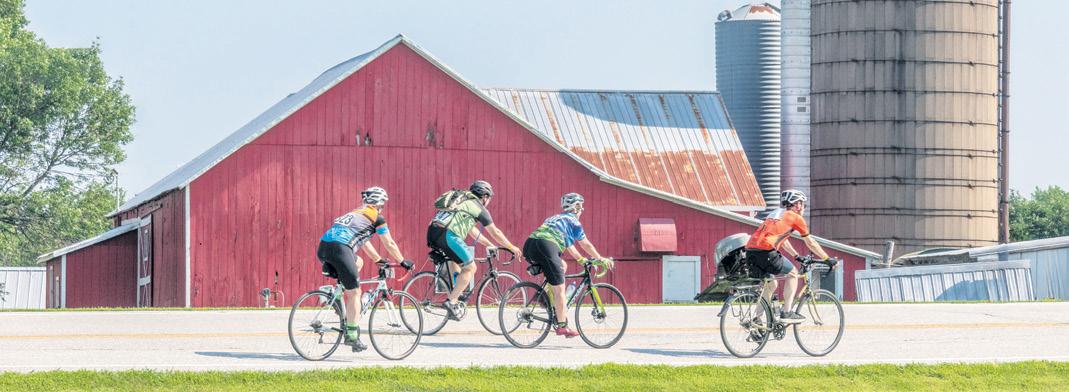
Ride through the rolling hills of Lancaster County Pennsylvania, tucked within the panoramic Susquehanna Valley. Immerse yourself in a landscape of picturesque farmlands, covered bridges, and fresh local flavors. From the physical challenge of the Fondo, to the best of farm-to-table culture, this event is a must for cyclists and foodies alike.
From beginners to avid enthusiasts, there’s a distance for you. The Amish Country terrain features a marvelous blend of gentle rolling hills and short, invigorating climbs. All while passing by corn stalks eight feet tall through the beautiful, tranquil farmland.
On August 29, 2026, experience the Amish Country Fondo in the heart of Lancaster County like never before with Farm to Fork Fitness Adventures. Starting and ending at the historic Barn at Paradise Station in Ronks Pennsylvania. This bicycling tour is designed for the “foodie cyclist” who appreciates both
a picturesque ride and fresh organic local agriculture. Participants will cycle through breathtaking scenic farmland, stopping at local family farms along the way to enjoy food/snack tastings prepared with ingredients straight from the fields. The four main farm stops along the bike routes include Down on the Farm Creamery, White Oak Nursery, Red Barn Market, and Wayvine Winery. It’s a beautiful celebration of fitness, community, and the rich bounty of our local area farmers.
Hosted by The Barn at Paradise Station. A stunning restored 19thCentury space located in the heart of Lancaster County’s Amish Country, providing a perfect backdrop for a classic Farm to Fork event. Every route starts and finishes at The Barn at Paradise Station. Every route showcases a di erent side of what makes this region so unique. As you ride through the heart of Pennsylvania Dutch Country, you’ll cross several of Lancaster County’s 28 historic covered bridges and share the road with traditional horse-and-buggies.
Join us in supporting local agriculture and building community, one pedal stroke at a time. For more information you can visit: https://www.farmtoforkfitness.com/ pa-dutch-fondo-
Amish Country Fondo Lancaster County, PA
August 29, 2026
Farm to Fork Adventures include Fully supported rides • Carefully curated farm stops • Fresh, locally sourced snack bites • Support vehicles & staff • Community-focused atmosphere
Hosted by For more information or to sign up
www.farmtoforkfitness.com/ pa-dutch-fondo-
The Barn at Paradise Station
A stunning 19th-century space in Lancaster’s Amish Country.
A blend of biking, exploration & farm fun
Bird–in–Hand
Heritage Days at Plain & Fancy Farm
Of the many unique village names that dot the Amish Country map, one of the more interesting is Bird-in-Hand.
The story of the town of Bird-inHand is as colorful as the name itself. To be correct, the town is really a village since it has no governing body. When Bird-in-Hand celebrated its 250th Anniversary (1734 – 1984), a commemorative booklet was put
together. It outlined a brief history of the town…
William Penn, an English Quaker, had founded the colony of Penn’s Woods (Pennsylvania), and settlers began arriving from Europe in the early 1700s, moving westward from the port city of Philadelphia. English Quakers and Swiss Mennonites were the early settlers. The Quakers built a meetinghouse and twostory academy, which stands today, next to the fire company. But over the years, the Germans “made the greatest lasting impact.”
A friendly relationship existed between the early settlers and the Shawnee and Conestoga Indians, who were the area’s first inhabitants. They taught settlers how to deaden trees,
August 15, 2026 11 a.m. – 3 p.m. Looking for the perfect way to spend a Saturday in Lancaster County? Homestead Days at Plain & Fancy Farm are a great way to experience history, fun and PA Dutch traditions! Each month features different activities and vendors based on a theme. Join us every 3rd Saturday from June to September, from 11 a.m. to 3 p.m. for fun activities, great food and more. Please note that some activities require paid tickets. For full schedule and additional details, visit plainandfancyfarm.com/happenings/ homestead-days. Tell them, “Amish Country News sent you”!
use deerskin, prepare corn as food, and use medicinal herbs.
“When the Old Philadelphia Pike became a well-established route of transportation for those traveling west to the Alleghenies, Lancaster became known as the gateway to the west.” The trip by stagecoach for passengers, or Conestoga wagon with freight and merchandise, lasted several days. Inns were built every few miles, identified with signs held by an iron pole or attached to the side of the building.
Bird–in–Hand cont’d on page 32
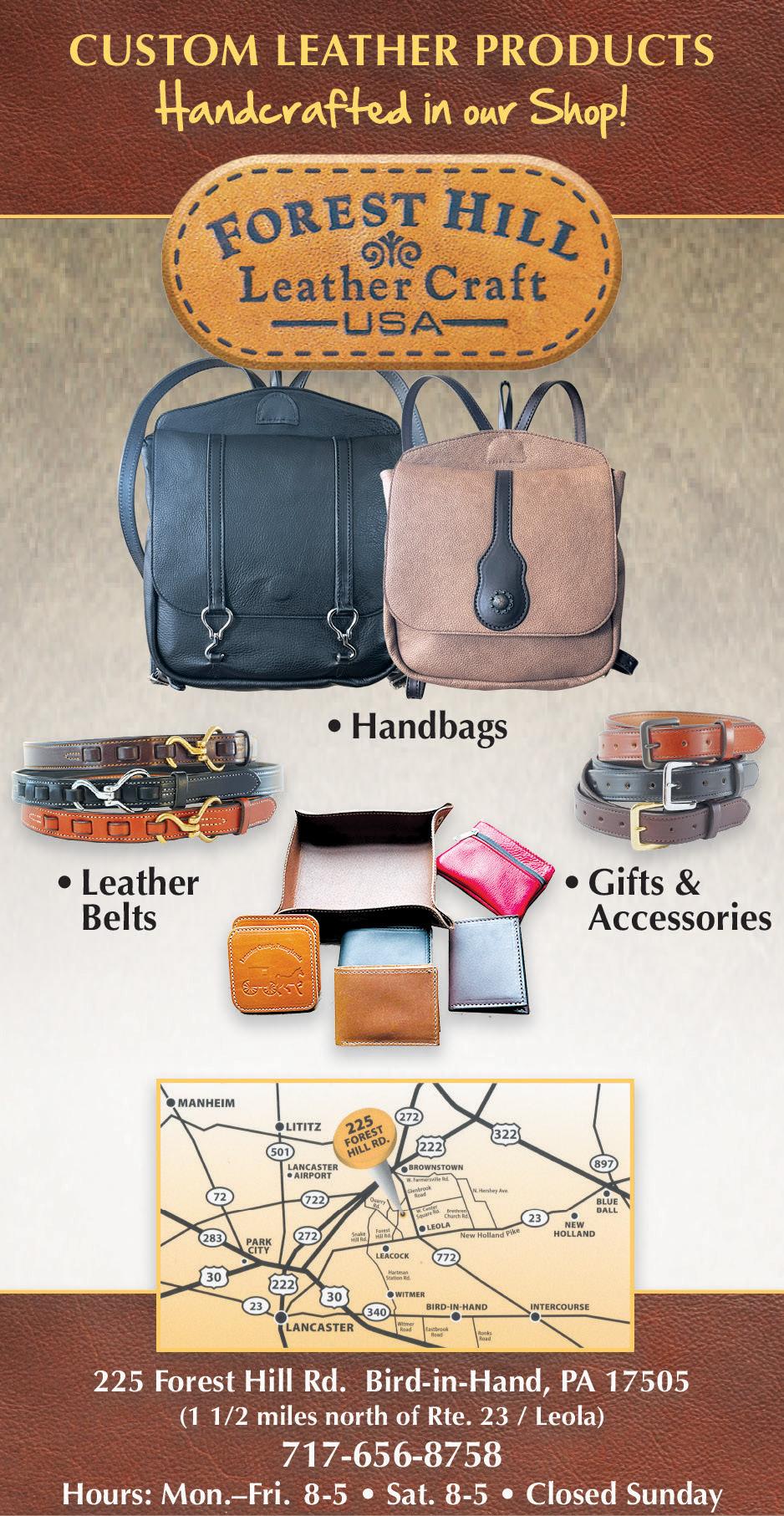
To Forest Hill
Craft
To Mr. Sticky's
To Flory's Cottages & Camping
Our Advertisers
In & Around Amish Country
By Edward Blanchette
Aaaah, Summertime! Long hot days, Family Vacations & Barbeques, and Ice Cream! Yes, Summers & Ice Cream, they go perfectly together. And ice Cream is the one thing that can assist in taking the edge off from the heat of the day, topping off the end of a great meal, or to just put a smile on a child’s face. Whether you’re nine months or ninety years young, it’s Ice Cream that brings the biggest smile of approval, hands down! Definitely the go-to for most people this time of year. And why not? This frozen treat comes in a multitude of flavors, colors, and sizes. Not to mention a variety of ingredients to satisfy even the pickiest of consumers. From hard scooped to soft serve that create the Banana Splits, Hot-Fudge Sundays, your favorite
Small Business Spotlight
flavored shake, to even the simplest vanilla cone be it waffle cone or standard, Ice Cream has certainly come a long way from its meager beginnings.
It’s believed that the precursors to Ice Cream originated as far back as “2700 BCE”. It is also believed that “early” Ice Cream was also created during the Tang Dynasty of China (618 to 907 CE), the iced milk that had been so popular in earlier dynasties had become a widespread delicacy. But in America, the first Ice Cream Parlor was believed to have been opened in New York City in 1776. American colonists were the first to use the term “Ice Cream”. The name came from the phrase “iced cream”, which was similar to “iced tea”. The name was later abbreviated to “Ice Cream”, the name we know today*.
introduced a soft-serve frozen dessert, first served on the US’s east coast to limited success in the 1970s, dubbed the name “Frogurt”.
• In 1978 Brigham’s Ice Cream Shop in Boston developed and introduced the first packaged frozen yogurt under the product name “Humphreez Yogart”.
• In 1980-81 the first patents for Lactose-reduced ice cream and process for the production of and for this specific creation of Lactosereduced Ice Cream was created***.
From there, the many innovations for this frozen treat took off**.
• In the 1840s the first ice cream churn was invented.
• In 1851 the first ice cream plant was opened.
• In the 1880s the Ice Cream Sunday was born.
• In 1904 the first waffle cone made its debut at the “World’s Fair” in St. Louis, MO.
• In 1970 a man named H.P. Hood
Now, with all of the technology and the sophistication that Ice Cream is today and with the average American consuming approximately 19.7 pounds of ice cream annually. Though the majority of ice cream may be sold through grocery stores, and not restaurants****, we still have our favorite spots to frequent and go to, to indulge ourselves with this awesomely delicious— frozen tasty treat, be it with friends & family, or just by yourself. It’s always a welcome & tasty escape. In “Amish Country” there are certainly a bunch of locations that serve or sell that frozen treat, that is Ice Cream. But I would be a miss, if I did not mention the additional prime locations to the Ice Cream Shops that also serve this
Google – History of Ice Cream – manyeats.com/ history-of-ice-cream/
Google – History of Ice Cream – www.thoughtco .com/history-of-ice-cream-1991770
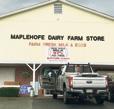
Maplehofe Dairy 799 Robert Fulton Highway, Quarryville 717-786-3924
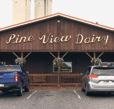
Pine View Dairy 2225 New Danville Pike, Lancaster 717-872-5486 pineviewdairy.com
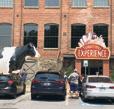
Turkey Hill Experience 301 Linden Street, Columbia 717-684-0134
turkeyhillexperience.com
See ad on page 17
“Dairy Treat”. That being the multiple Dairy Creamery locations that dot the landscape of Lancaster County and the counties that surround all that is “Lancaster Pennsylvania”. From milk, cheeses, to Ice cream. You can usually find all of your dairy needs in these locations that specialize in all-things dairy. And in some, you might even find a bit more farmland treasures, that being baked goods and some local produce. Routing out any other remaining cravings or needs you may have, to what one might perceive as a one-stop shopping experience.
As we wind down our summer, remember to look for and support these unique small businesses if you can, especially after a difficult 15 to 18 months of community & business disruptions due to world events and recognize how special those businesses are in our hearts and for what they have to offer to our communities with their special contribution. Listed are a number of locations of where you might go. As our summer soon comes to an end and you travel through “Amish Country” feeling the need to indulge those cravings and enjoy a cool refreshing & tasty treat, that is of course…Ice Cream.
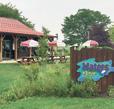
Waters Edge Mini Golf 230 N Ronks Road, Bird-in-Hand 717-768-4653
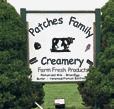
Patches Family Creamery 201 Fonderwhite Road, Lebanon 717-273-1983
patchesfamily creamery.com
Perrydell Farm & Dairy 90 Indian Rock Dam Road, York 717-741-3485 perrydellfarm.com
Country Music Connection: AMISH & BEYOND
By Clinton Martin
AMennonite walks into a bar in Nashville…
Sounds like the opening line of a joke, but Conrad Fisher is no joke, nor is his remarkable story a tall tale. Fisher’s parents were both born into Amish families, but his father joined a Mennonite church as a young man. Fisher grew up going to Mennonite churches, ones whose music was typically acapella and rarely featured musical instruments.
Despite this, during his formative years, his home was not devoid of modern music. His father liked Johnny Cash. His brother liked Chuck Berry, Buddy Holly, and the Everly Brothers. When Fisher discovered the Beach Boys, his world opened and he recalled
in an Associated Press interview that hearing this music “blew his mind.”
As a young adult, Fisher moved to Tennessee and threw himself into the music business. He learned keyboard, guitar, bass, and drums, then learned the craft of music production and songwriting. Many people dream of moving to Nashville and making a living in the music industry there. Few of these dreamers make it. Conrad Fisher did. One of the songs he wrote was even recorded by the Oak Ridge Boys.
But Nashville didn’t really suit him. Playing in bars every night, the drinking, carousing, tossing drunks who got into fights, etc. – it just wasn’t the best place for him to raise his family. While making
the music business his vocation, he remained a faithful Mennonite.
In 2022, he learned that a Presbyterian church in Central Pennsylvania had folded, and the building was vacant, and indeed up for sale. This happened to be only a few miles from where he was born. Almost immediately, he decided to buy it, with the plan to turn it into a space for musical exploration and experimentation. He named it Ragamuffin Hall, and it attracts mostly roots, blues, country, bluegrass, and gospel practitioners to play and record with Fisher either playing along or acting as producer and mixer.
Due to Fisher’s heritage, the fact he is a native speaker of PA Dutch, and his “clean country” taste in music,
25th April, 2026. PICTURE: AP Photo/Matt Rourke
Ragamuffin Hall has drawn a wide range of Anabaptist groups, some of which have been Old Order Amish. This might surprise many readers, to learn that there are Old Order Amish people who play in bands, playing all manner of instruments, even an electric guitar from time to time. People have come from Missouri, Ohio, and all over Pennsylvania to play music at Ragamuffin Hall.
Ben and Rose, the Old Order Amish married couple who amassed 30 million (and counting) views on YouTube of them performing hymns and contemporary Christian tunes, also performed at the hall with Fisher accompanying them. They performed two official, sold-out concerts, with a merchandise table selling items including the Amish Country staple – whoopie pies.
What should not surprise any readers is that Ben and Rose have left the Old Order Amish Church and attend a less conservative relatively adjacent (doctrinally) Christian congregation. A fellow formerly Amish Youtuber, Amos Raber (of Goshen Indiana) also interviewed by the Associated
Press, noted, “Most times, if you see someone who’s really Amish doing that kind of thing, they’re probably not going to be Amish long.”
When I first wrote about Ben and Rose in Amish Country News, I commented that you can never say “never or always” when it comes to the Amish. As in, an Old Order Amish person would NEVER do that, or they’ll ALWAYS do this. But,
even I wondered how Ben and Rose could continue their YouTube celebrity without facing censure and pushback from Old Order Amish authority.
Want to be the next person to make music at Ragamuffin Hall? Or just want to listen to it? Next time you are in Central Pennsylvania, give the place a visit? Read more at https://theragamuffinhall.com/.
Put your best foot forward.
You shouldn’t have to fight foot and ankle pain to get through each day. With years of experience and advanced technology behind us, we can help you move forward — without the pain. Schedule an appointment at UPMC.com/OrthoCPA.
The reason for these signs was twofold. First, they could be understood by all nationalities. Secondly, many teamsters or waggoneers were poorly educated and could not read. If they were given orders to stop at a certain inn, they could do so by recognizing the artwork on the signboard.
The old legend of the naming of Birdin-Hand concerns the time when this pike was being laid out. Legend says that two road surveyors were discussing whether they should stay at their present location or go to the town of Lancaster to spend the night. One of them said, “A bird in the hand is worth two in the bush,” and so they remained. The sign in front of the inn is known to have once “portrayed a man with a bird in his hand and a bush nearby, in which two birds were perched,” and soon was known as the Bird-in-Hand Inn.
The original hotel was destroyed by fire about 1851. By the following year, a three-story hotel was built to replace it. More recently, it was known as Bitzer’s Hotel before becoming the present Village Inn of Bird-in-Hand, now on the National Register of Historic Places. The Historic Preservation Trust of Lancaster County noted that it “may be one of the few 19th century inns in the context of a small town in Lancaster County, which survives with a high degree of architectural integrity.”
The town post office was established in 1836 as the Enterprise Post Office. “Enterprise” was then the official name of the town, until the final change back to Bird-in-Hand in 1873.
After a large fire in 1896, people discussed the need for a fire company. In the early days, hitting a circular saw alerted the men of a fire. The year 1916 saw the change from horse-drawn to motorized fire equipment. Today the Hand-in-Hand Fire Company remains a volunteer organization, famous for its delicious fund-raiser dinners.
The town of Bird-in-Hand remained relatively unknown until a musical called PLAIN & FANCY opened in New York. The show Playbill noted that “The action takes place in and around Bird-in-Hand, a town in the Amish country of Pennsylvania.” The cast was brought to Bird-in-Hand on January 17, 1955, prior to the official opening.
Today, the town of Bird-in-Hand is still small, said to have a population of only about 300 people. On any given day, there may be more visitors than inhabitants. Many are city folks who have come to enjoy the country atmosphere, history, and shopping. It is said that visitors “can still expect friendly shopkeepers, homegrown Lancaster County foods, and restful lodging for weary travelers.”
Amish VIP (Visit–in–Person) Tour 717–768–8400 | AmishExperience.com
Anna’s Gifts & Sundries
800-669-3568 | MillersSmorgasbord.com
Country Lane Furniture (Tues & Thurs till 8pm) 717–867-5701 | CountryLaneFurniture.com
Shady Maple Farm Market 717–354-4981 | Shady-Maple.com/farm-market/ Smokehouse at Plain & Fancy Farm 717–768–4400 | SmokehouseBBQandBrews.com
Water’s Edge Mini Golf 717-768-4653 | WatersEdgeGolf.net
OPEN SUNDAY in Amish Country
For Plain People, Sunday is a day of rest, but there are many things to do in Amish Country on Sundays. Save some of these for your Sunday sight–seeing.
Shady Maple Farm Market 717–354 – 4981 | Shady-Maple.com/Farm-Market/ Smokehouse at Plain & Fancy Farm 717–768–4400 | SmokehouseBBQandBrews.com
Turkey Hill Experience 844–847–4884 | TurkeyHillExperience.com
Water’s Edge Mini Golf 717-768-4653 | WatersEdgeGolf.net
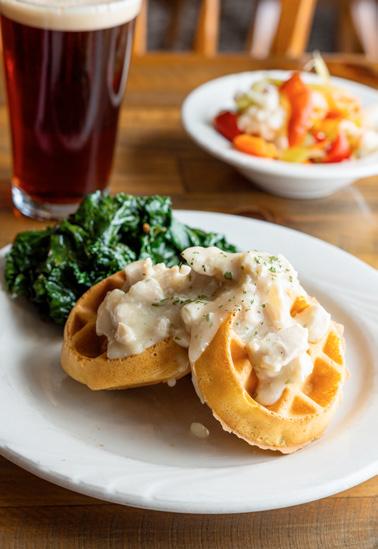
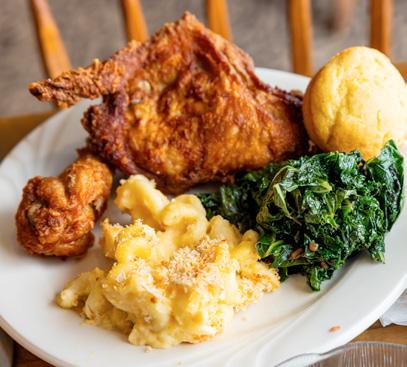
Since 1929, Miller’s has been cooking from scratch, serving Lancaster County PA Dutch heritage dishes like chicken pot pie, ham balls, chicken & waffles and fresh baked desserts.
Buffet Dining OptiOns: Lancaster’s Traditional Smorgasbord OR Soup, Salad & Bread Smorgasbord. Plus, wine, beer and cocktails available.
Open 7 Days a Week
Reservations Strongly Encouraged|Walk-ins Welcome Reserve Online at Millers1929.com or call 717-687-6621.
Traditional Adult Smorgasbord Dinner
Valid for up to four adults on our Traditional Adult Smorgasbord Dinner. Not valid Saturdays, Easter, Mother’s Day, or Thanksgiving. Not valid with any other offer, special, discount, birthday offer, or group rate. Applies to Traditional Adult Smorgasbord Dinner only. Not valid on any other dining option. Must show coupon to server prior to dining. Not valid on prior purchases or vouchers.
Expires 10/30/26. PLU ACNS26
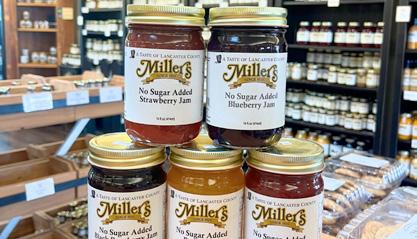
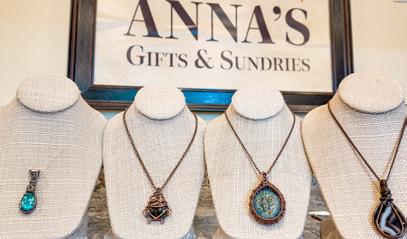
Shop local here you can find locally made items including hand-stitched quilts from Amish and Mennonite artisans, tasty Lancaster County baked goods, handcrafted jewelry, and specialty gift items.
Route 30, two miles east of Rt. 896 • 2811 Lincoln Highway East, Ronks, PA 17572 MILLERS1929.com
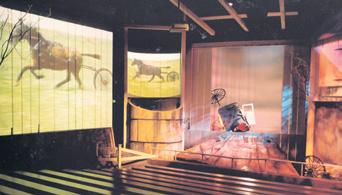
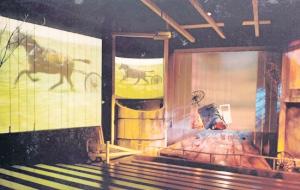
WITNESS the emotional story of an Amish teenager's struggle in Jacob's Choice, where he must choose between his faith and the modern world. 3–D sets, special effects, unique "ghost–like" characters, all on five screens.
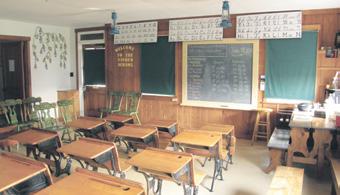
EXPLORE the Amish Country Homestead, the region’s only Officially Designated Heritage Site Amish home then sit at a desk in the Fisher Amish Schoolroom furnished authentically with desks and more from an actual Amish classroom.
TOUR the magnificent back roads through Amish Farmlands with a certified tour guide in complete comfort onboard one of our 14 passenger busses.
SATISFY yourself that you’re making the most from your Amish Experience. Since 1959, the area’s first, and still foremost, interpretative source of Amish Culture.
Journey along back country roads, deep into the Amish Farmlands to discover sights rarely seen. Under the watchful eye of your certified guide, you’ll gain insights into the “how” and “why”of an ever–changing culture, and see at–the–moment activities of the Amish. If you’ve seen the Amish portrayed on the various “Reality” TV shows, and you wonder what really is true and not true about the Amish, this is the tour you won’t want to miss! We’ll debunk myths about the Amish and provide accurate, respectful, and authentic information, just like we have done for over 60 years.
Rare is the opportunity to meet with Amish families willing to share their traditions and beliefs with you. In a group whose size is never more than 14, this is the only Amish Tour to be designated an official “Heritage Tour” by the County of Lancaster. Visit an Amish farm at milking time, stop at a Cottage Industry, and finally enjoy a visit and chat with one of our Amish friends in their home.
Monday through Saturday at 5 p.m.
The SuperSaver Package includes the Amish Farmlands Tour, the acclaimed “Jacob’s Choice” at the Amish Experience F/X Theater, and a tour of the Amish House & One–Room School.
PLAIN & FANCY
The Only Place Where You Can Do
It All...
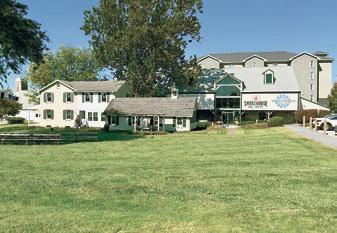
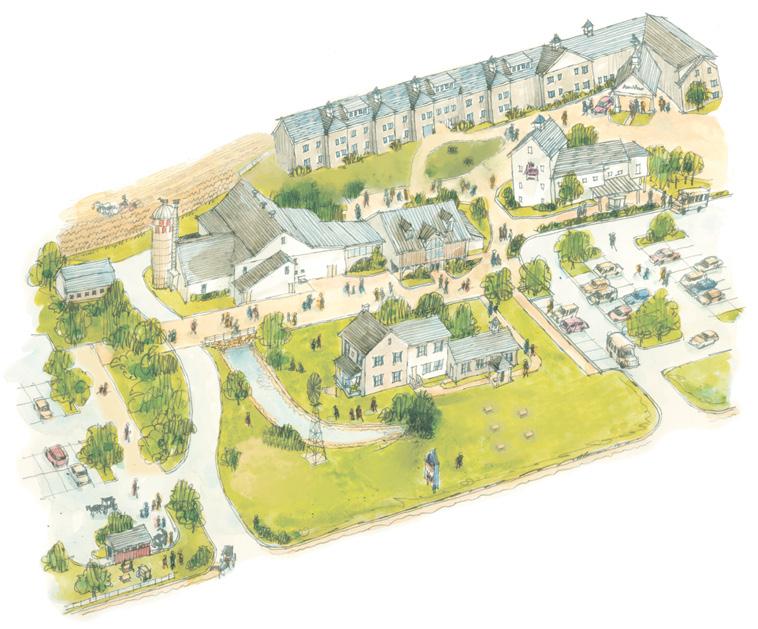
Drive along the area’s only AAA Scenic Cultural Byway, and when you’re mid–way between Bird–in–Hand and Intercourse, you’ll discover the ten pristine acres known as Plain & Fancy Farm, and home of the Amish Experience Theater, Country Homestead, farmlands & VIP tours, buggy rides, shopping, restaurant and hotel.
Jacob’s Choice at the Amish Experience Theater
Discover what it means to be Amish through an immersive film as you become part of the emotional struggle of the Fisher family to preserve more than 400 years of Amish traditions. Five viewing screens, a unique barnyard setting and special effects create a one–of–a–kind experience.
Amish Farmlands Tour
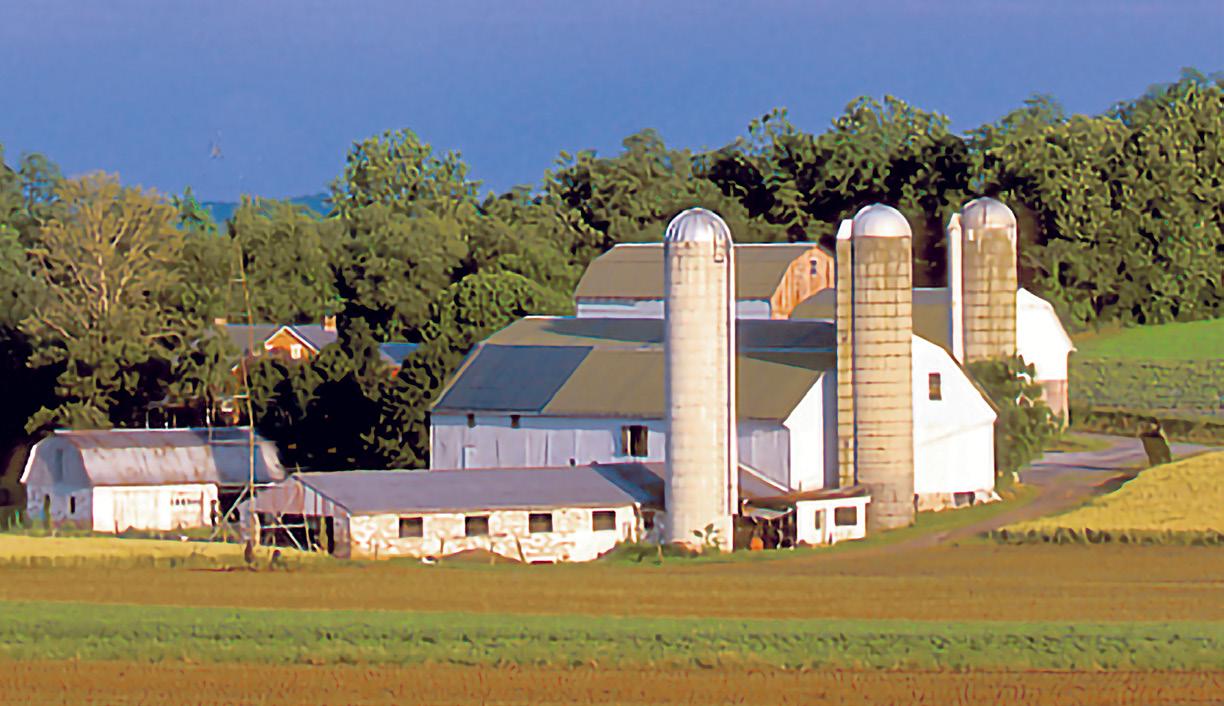
Journey down rarely traveled back country roads, deep into the farmlands, to discover the sights sought after by visitors. Gain insights into the hows and whys of an ever–changing culture from certified guides in mini–shuttles. Stops may include a roadside stand, quilt shop, country store or craft shop on an Amish farm.
Amish Country
Homestead & Schoolroom
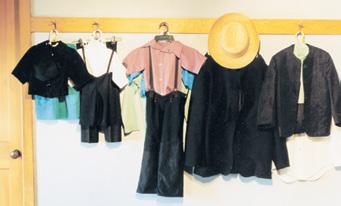
Visit the only officially designated “Heritage Site” Amish house. As you walk through the nine rooms with your guide, unravel the riddle of Amish clothing, life without electricity, and eight–grades–in–a–room education as you sit at authentic Amish school desks.
Visit–in–Person Tour
This officially designated “Heritage Tour” is a rare opportunity to meet and talk to the Amish personally. On this exclusive tour you will go right into the barn on an Amish farm at milking time, visit with an Amish artisan at his workplace, and then enjoy a personal visit and conversation right in an Amish home.
AMISHVIEW INN & SUITES
SMOKEHOUSE AT PLAIN & FANCY FARM THE BARN & HEARTH SHOP RESTROOMS & ATM
AMISH EXPERIENCE THEATER BOX OFFICE VIP & FARMLAND TOUR
AMISH COUNTRY HOMESTEAD
AARON & JESSICA’S BUGGY RIDES
Aaron & Jessica’s Buggy Rides
Aaron & Jessica’s drivers are happy to share life stories and answer questions.
Smokehouse at Plain & Fancy Farm
Please see right hand page.
The Barn & Hearth Shop
Find home décor, home goods, and kitchenware. Plus, locally made foods and baked goods. You’ll also find Amish mementos from straw hats to Amish dolls.
10 Acres of Fun & Food |
AmishView Inn & Suites
A Top Hotel in Lancaster County
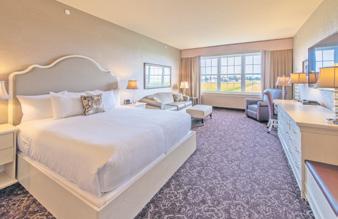
The place for the perfect adult-only getaway or family vacation with indoor pool and hot tub, fitness center, and hot hearty breakfast. Our rooms and suites all feature kitchenettes, and many rooms feature clawfoot soaking tubs, and farmland views.
Adult-Only AND Kid-Friendly Buildings
The family-friendly East Building includes a wide array of beautiful, award-winning rooms, suites that are newly renovated as well as a pool and arcade that will satisfy the requirements of any family. The adultsonly West Building features elegant Grand King rooms with clawfoot soaking tubs and guaranteed farmland views - fulfilling the needs of adults seeking a tranquil escape.
Complimentary Hot Hearty Breakfast Buffet Lancaster’s best complimentary hot breakfast buffet includes made-to-order omelets, eggs, and waffles along with endless helpings of bacon, sausage, country potatoes and much more. Plus, don’t forget tasty bakery items from our own Miller’s Bakery. Menu items subject to change.
Other Amenities
Every room or suite includes a kitchenette with refrigerator, microwave, sink, and coffee maker. Bathrooms feature lighted make-up mirrors, hair dryers, and the Tarocco line of shampoos and soaps. Plus, complimentary Wi-Fi. Book today as there are so many things to do on Plain & Fancy Farm.
Get the Whole Story at: AmishViewInn.com • 1-866-735-1600
Paradise
For over 250 years, visitors coming into Lancaster County from the east on Route 30 have traveled through a small town known as Paradise, just one of the many intriguing town names in the area. Officially, Paradise Township adopted the name during its organization in 1843.
Different sources credit different people with naming the area. Some say that the name Paradise was given by Joshua Scott, who later became
known for his map of Lancaster County. Standing in the middle of a road admiring his surroundings one day in 1804, he remarked that the town should be called Paradise, because its beauty made it seem like one.
The story of Paradise and its first settlers goes all the way back to Europe, to the area of the Palatinate in Germany. Here many Protestants had settled following the declaration of King Louis XIV that all Protestants in France would
Jazz on the Patio
August 27, 2026 6 p.m. – 8:30 p.m. The Barn at Paradise Station, 312 Paradise Lane, Ronks Jazz on the Patio is back for a third season! Join us on the Courtyard Patio at the Barn at Paradise Station for fresh food, drinks and the best live jazz music around. Casual dress. No cover. Free parking. For more information visit www.barnat paradisestation.com/events or call 717-687-5000.. Tell them, “Amish Country News sent you”!
be persecuted. With fears of invasion by the army of France looming, many of these people decided to accept the invitation to settle in William Penn’s colony of Penn’s Woods in the New World. In 1708, Daniel Fierre (Ferree), along with his family and mother Mary, went to England to obtain citizenship papers before proceeding to New York. By 1712, these French Huguenot settlers had secured land in Pennsylvania, in Lancaster’s Pequea
Valley. They were the first white people in the area and lived peaceably with chief Tanawa and the local Indians. Mary Fierre died four years later at the age of 63. Hers became the first grave in the family’s cemetery. If you ride the Strasburg Rail Road, you will pass her gravesite at Carpenter’s Cemetery, one of Lancaster’s oldest.
The origins of Route 30, also known as the “Lincoln Highway,” go back to Lancaster’s colonial days when this frontier county needed a communication route between it and the provincial capital of Philadelphia. At that time, the first “planned” road between Philadelphia and Lancaster was what is now Route 340. It was called the “King’s Highway,” and today we still call it the “Old Philadelphia Pike.”
As time went on, it became evident that the road could not accommodate the increasing traffic between Lancaster and Philadelphia. Since the cost of such a road was too much for the state to undertake, the company charged with building it was given the power to demand “reasonable” tolls from users. Investors received dividends earned from the tolls collected along the gates of the turnpike.
The 1792 Act went on to describe the construction of the highway, which was to be a bed of small crushed stones on top with larger stones
underneath, rather than dirt, so as to prevent carriage wheels from cutting into the soil. Such a revolutionary system of road construction combined the ideas recently developed by a Frenchman and two Englishmen, one of whom was named John McAdam. We now take the term for paved roads or “macadam” from his last name. The
turnpike officially opened in 1795 and was the first long-distance, hardsurfaced road in the country.
The backroads around Paradise remain beautiful to this day, as the lush greens of the summer give way to the fall colors of the harvest season. So, during your visit to Lancaster, be sure to spend a little time in Paradise.
There really is no place quite like Lititz, and everyone should plan to spend some time there while in Amish Country.
Lititz Springs Park is a popular spot for locals, and the site for many community activities. Indeed, the town’s 4th of July Celebration, begun in 1818, is reputedly the “oldest continuing community-wide observance in the United States.” The Lititz story is tied to that of the Moravian faith in Bohemia. It was in the presentday Czech Republic that John Hus and followers founded the Moravian Church in 1457. Historians note that since this was 60 years before Luther’s Reformation, the Moravians may lay claim to being the oldest organized
Protestant Church. But over the course of the Thirty Years War, its 200,000 members nearly disappeared. In the 18th century, a renewal of the Moravian Church came through the patronage of Count Zinzendorf of Saxony. He invited all those persecuted for their faith to come to his lands in Saxony.
As was the case with other persecuted religious groups in Europe, many Moravians sought freedom by taking the perilous journey to the New World, arriving in the early 1700s, with the main settlements becoming established in Pennsylvania and North Carolina.
Missionary work was integral to the faith, and preachers were sent from the Moravian community in
Elizabethtown Fair
August 24 – 29, 2026
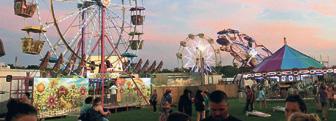
The Elizabethtown Fair is one of 108 Pennsylvania State Fairs. We offer animal, agricultural, competitive and commercial exhibits. We have a free petting zoo, free nightly entertainment, contests for all ages, rides and lots of great food! Each August the Etown Fair provides an opportunity for the showcasing of agriculture in Lancaster County and surrounding counties. For more information and details, please visit etownfair.com or call 717-367-0508.
Tell them, “Amish Country News sent you”!
Bethlehem, Pennsylvania. Zinzendorf himself arrived in America in 1742. A local resident, John Klein (Kline), was so moved by hearing Zinzendorf’s preaching that he made arrangements to transfer his lands over to the Moravian community in 1755. It was in the following year that the town actually got the name of Lititz, the German spelling for Lidice, where European Moravian reformers had taken refuge in 15th century. For about a hundred years, Moravian church members were the only people permitted to live in the town. A Brothers’ House and Sisters’ House were erected for the unmarried men and women, although they did not live communally. It was not until 1855 that non-Moravians were allowed to own their own houses.
The Brothers’ House played a role in the American Revolution. George Washington ordered it used as a military hospital between 1777-78. Some 1,000 soldiers were nursed here, about half of whom died and were buried nearby. One name is linked forever with the history of Lititz—Julius Sturgis. It was Sturgis who opened the first commercial pretzel bakery in the New World in Lititz. The year was 1861, and the site at 219 East Main Street is on the National Register of Historic Places.
A tour of the bakery is unlike any other. Inside, you get to try your hand at pretzel twisting. It’s not as easy as it looks. Guests also may see the old brick bake ovens, as well as the more modern facilities. Schedule a tour by calling the bakery at 717-626-4354.
Ephrata
Ephrata, a small yet influential town, derives its name from Genesis, meaning “fruitfulness.” With a population of 13,800, it’s strategically positioned between Lancaster and Reading, serving as the gateway to Northern Lancaster County’s lucrative manufacturing sector.
Its history dates back to the 18th century Ephrata Cloister, founded by Conrad Beissel, which evolved into a thriving village. By 1871, Ephrata was described as “a well-built country town of about one hundred and twenty families, and very beautifully and healthily located.”
In 1848, Senator Joseph Konigmacher established the Ephrata Mountain Springs Hotel, a luxurious resort frequented by notable figures like Presidents Lincoln, Buchanan, and Grant.
A trolley system was built to connect the hotel with the town of Ephrata down the hill. At its peak, the hotel could accommodate up to 500 visitors who would stay throughout the summer.
The Reading & Columbia Railroad was completed in 1883, and the town experienced economic booms through industries like cigar manufacturing, horse trade, silk, textiles, and shoes. Downtown Ephrata once catered to all needs, from groceries to hardware.
Today, Ephrata retains its historical charm with landmarks standing as important reminders of the borough’s history. The community’s first bank, Ephrata National Bank, still serves customers today behind its Georgian style structure designed by renowned architect, C. Emlen Urban.
Located near the town’s square sits the circa 1880’s railroad station, owned by the Ephrata Borough and serving as home to Mainspring of Ephrata, economic development corporation for the borough. The area surrounding the station has been beautifully landscaped and is known as the Whistle Stop Plaza. Many events, services and even weddings are held at this popular gathering place. The community’s Welcome Center is also located in this building. From here, visitors and residents alike can download a historic walking tour through the Uniquely Ephrata app.
Recreation thrives with facilities like the Ephrata Rec Center, community pool, and the newly opened Ephrata Unleashed Dog Park. The WarwickEphrata Rail Trail and Heatherwood Bike Park offer outdoor activities, while quality education and healthcare are ensured through the Ephrata Area
Concerts by the Creek
August 11, 2026 — The Nobles at 6 p.m., Improvement Movement at 7 p.m.
Ephrata’s Grater Park is going to be rocking this summer with a stellar line-up of bands for the 2026 Concerts by the Creek season. In its 19th year, Concerts by the Creek is a free, all-ages concert series held in the park over the summer. Food trucks and one local brewery will attend this rain-or-shine series. For more information and details, please visit www.concertsbythecreek.org or call 717-721-6169. Tell them, “Amish Country News sent you”!
School District and award-winning Wellspan Ephrata Community Hospital.
Municipal services include police, code enforcement, and utility management, with the borough’s own electric company providing power.
Ephrata is experiencing some significant revitalization that will secure a vibrant, healthy town for future generations. The borough, under the auspices of Mainspring of Ephrata, completed a walkability project in the downtown area that enhanced pedestrian safety, and launched a Façade Improvement Grant Program and Revolving Loan Fund Program to improve aesthetics and help businesses to expand. The borough continues to strengthen the economy by promoting available leased space within commercial properties, attracting specialty retailers, and preserving historic buildings.
Ephrata cont’d on page 44
Veterinary & Boarding Locations in Amish Country
By Edward Blanchette
So, you find yourself going on a vacation or on an outing with your family that takes you out of your initial community. That’s exciting! This venture may also include a furry family member to go along on the ride. It is believed that approximately 40 percent of vacationing families bring their pet along for the adventure. It’s also believed that 85 percent are dog owners and 21 percent are cat owners, according to surveys taken by PetRelocation (2019/08/08) and the American Pet Products Association (2019/02/13) traveling with a pet. That’s up from approximately 19 percent over a decade ago. In addition, it is believed that individual pet parents love to travel with their “fur-kids” or “fur-babies” even more so. Since February of 2021, that number jumps to approximately 78 percent of Americans that have pets travel with them each year.
When traveling we look to go over our vacation or travel list. To ensure we’re ready and prepared for the upcoming expectations of our travel. Suitcases packed, RVs loaded, sunscreen, tooth brush, mad- money, and so on are just some of the things that we put on that list to prepare for a positive vacation result. But what about our pets? Have we really prepared for
every contingency, so that they have an enjoyable and safe outing?
Does the Hotel, Motel, or Camp ground you plan to visit allow for pets, are pet friendly, and are safe for them? What are the ordinances of the localities and/ or communities you are planning to visit with them? Did you pack up the necessities needed for your pet? List of medications or dietary needs? If not or should you run out, where is the nearest place to resupply, in the area(s) you plan to visit? Finally, one of the biggest questions that should be asked and addressed before you venture out with your pet, “Where is the nearest Vet/ Pet Hospital in the area? Do they have pet boarding available? What insurances and forms of payment do they take? What are their hours of operation? Do they have or who is the backup contact in case of the after-hours emergencies that may pop up?
When traveling, it’s usually easy to find a hospital, urgent care, or pharmacy to meet your or your family’s medical needs. But you can’t always just dial up “911” for your pet. Yes, you can google most information, but if you find yourself in an area with spotty or no service, especially with an evolving emergency situation where either minutes to even seconds can mean a big difference and are critical
to your pet’s wellbeing and getting back home with your family safely.
Here at “Amish Country News”, we have “fur-babies” too. In most publications that I see out there, very few tend to discuss the “vacationing pet” subject. So, I wanted to put a bit more of a spotlight on the subject and those small businesses in “Amish Country” that address this specific subject and important need, so everyone has a successful and positive experience as you visit Lancaster County and the counties that surround it. Here are what I feel are some common-sense preparation points to consider when planning your pet accompanying family vacation, as referenced from the following online site (https://www. cntraveler.com/story/how-to-travelsafely-with-pets). Below are a handful of bullet points to reference:
• Make sure your pet’s up for the trip
• Book in advance. And confirm!
• Get a (space-age) pet ID.
• Get an approved pet carrier.
• Acclimate your pet to the carrier.
• Bring medical records.
• Get the right gear.
• Stay on schedule.
• Avoid adventurous eating.
• Mark your territory.
Below, a short list of a few of the Veterinary pet care & boarding locations within “Amish Country”, provided where you are. The referred locations below
Warwick Run Animal Clinic
788 Rothsville Rd, Lititz, PA 17543 717-627-3411 www.warwickrun.com
Landisville Animal Hospital
3035 Harrisburg Pk, Landisville, PA 17538 717-898-1721 landisville.vet
New Holland Vet Hospital 700 E Main St, New Holland, PA 17557 717-354-3130 newhollandvet.com
Neffsville Veterinary Clinic
2555 Lititz Pk, Lancaster, PA 17601 717-569-5381 neffsvillevet.com
VCA Smoketown Animal Hospital 2497 Old Philadelphia Pk, Lancaster, PA 17602 717-394-5542 vcahospitals.com/smoketown
VCA Bridgeport Animal Hospital
1251 Ranck Mill Rd, Lancaster, PA 17602 717-393-9074 vcahospitals.com/bridgeport
Bernville Veterinary Clinic
7135 Bernville Rd, Bernville, PA 19506 610-200-6219 bernvillevet.com
Animal Health Care Center of Hershey 948 E Chocolate Ave, Hershey, PA 17033 717-533-6745 animalhealthcarecenterofhershey.com
Community Animal Hospital
400 S Pine St, York, PA 17403 717-845-5669 cah-york.com
Leader Heights Animal Hospital 199 Leader Heights Rd, York, PA 17402 717-741-4618 leaderheightsanimalhospital.com
Yorkshire Animal Hospital 3434 E Market St, York, PA 17402 717-755-4935 yorkshireanimalhospyorkpa.com
Pine Creek Animal Hospital 150 Pine Creek Dr, Gap, PA 17527 610-593-6132 pinecreekah.com
Black Horse Animal Hospital 5081 Lincoln Hwy, Kinzers, PA 17535 717-442-0252 blackhorseanimalhospital.com
Schumo Center For Animal Wellness
New Holland & Blue Ball
New Holland
Blue Ball
New Holland, settled in 1728 by John Diffenderfer of Heidelberg, Germany, is located in the fertile farmlands of Lancaster County. It is a charming small town similar to many towns in rural America, but its story goes back to well before the founding of our nation.
The unstable situation in Europe in the late 1600s spawned and nurtured the pioneer interest in the deep forest lands of Pennsylvania—60 miles inland from Philadelphia. In 1681 William Penn received his 40,000 square-mile land grant to settle King Charles’ debt to his father. The area now called New Holland was practically covered by virgin forests—sturdy timber of oak, ash, chestnut, and walnut.
By 1728, William Penn, had been dead for 10 years and his American
colony, called Pennsylvania and was being administered by a proprietary governor while the sale of land was formalized by patent deeds. In the case of one of the town’s early settlers, John Diffenderfer, the record shows that he applied for land to live on in 1728. It was surveyed and placed on the county map in 1735. The deed was finally issued to him on March 22, 1758 after 30 years!
The village founders were German, not Dutch. They were surrounded by English and Welsh Quakers, Episcopalians, a few Swiss-German Mennonites and some Scotch-Irish Presbyterians. The Amish arrived later.
The town was once known as New Design, a name given by Michael Diffendefer for his real estate development in 1750. But in 1802,
Annual Fiddlers Picnic
September 7, 2026 9 a.m. – 6 p.m.
Come out and do a little picking with your friends, or just sit and relax and listen to all the great music . Free admission and parking.
For more information, please visit newhollandsummerarts.com. Tell them, “Amish Country News sent you”!
when a post office was established and an official name was necessary, there was no dissension to naming the town New Holland. These grateful people remembered how extremely kind the inhabitants of Holland were to them when they fled persecution and sought religious freedom in the New World.
New Holland was laid out as a “street town” in the typical European style of having the villagers live in a central location along both sides of the street, but each having an outlying plot of land to cultivate as an adjunct to his trade as a craftsman. Even today, the main street of New Holland has major “kinks” or bends in it. Unsympathetic visitors claim it looks as if the town were built along a “cow path.” But if one looks with a discerning eye, the street also follows the high ground. The land on the ridge was the driest, and in winter it would be blown clear of much of the snow. These settlers made the obvious facts of nature work for them rather than against them, offering a lesson for us all even today.
The borough’s commitment extends to preserving natural assets like the Ephrata Mountain, exploring plans for hiking trails and conservation easements to enhance community living. It is from this 200 acres of public wooded land that the healing waters flowed all those years ago to the Mountain Springs Hotel.
Ephrata continues to thrive as a fruitful community, blending its rich history with modern amenities for residents and visitors alike.
DUTCH APPLE DINNER THEATRE
Brings the Broadway Hit
PRETTY WOMAN PRETTY WOMAN
The Musical to Lancaster County
Get ready to fall in love all over again as Dutch Apple Dinner Theatre presents Pretty Woman The Musical, August 14 through September 24. Based on the beloved 1990 romantic comedy, this Broadway musical adaptation brings the unforgettable story of Vivian and Edward to life with dazzling choreography, memorable songs, and all the romance, humor and heart audiences adore.
Making its Dutch Apple debut, Pretty Woman The Musical reimagines one of Hollywood’s most iconic love stories for the stage. When successful businessman Edward Lewis hires the spirited and independent Vivian Ward to accompany him for a weekend, what begins as a business arrangement soon becomes an unexpected journey of selfdiscovery, second chances and finding love where it’s least expected.
Filled with high-energy production numbers, heartfelt ballads and plenty of laugh-out-loud moments, the musical captures the charm of the original film while offering a fresh theatrical experience for longtime fans and newcomers alike. With music and lyrics by Grammy Award winner Bryan Adams and Jim Vallance, and a book by the film’s original screenwriters, Garry Marshall and J. F. Lawton, the Broadway adaptation celebrates the enduring message that it’s never too late to rewrite your own story.
“Pretty Woman is a perfect date night musical – or a girls’ night out,” said Lauren Sobon, Artistic Producer. “Audiences will enjoy all the romance and humor they remember from the film while experiencing the excitement,
energy and memorable moments that only live theatre can deliver.”
Performances run August 14 through September 24 at Dutch Apple Dinner Theatre, 510 Centerville Road,
Pretty Woman cont’d on page 46
Enjoy Award-Winning Dinner Theatre At One Great Price!
AUGUST 14 – SEPTEMBER 24
THE MUSICAL
If you love the movie, you’ll love the musical. This modern Cinderella tale follows a businessman who hires an escort to spend the weekend with him. As the weekend unfolds, the two embark on an unexpected journey of self-discovery and find true love along the way. PG13
live
and entertainment, there’s no better experience or value like dinner and a show at Dutch Apple!
The Carole King Musical
Amish Homemakers
Getting Upgrade in the Laundry Room
Amish Homemakers Getting Upgrade in the Laundry Room
By Clinton Martin
You’d be hard-pressed to find an Amish person alive today that remembers washing clothes by hand, washboard and kettle being ancient history even for the Plain People. The Amish in Lancaster County have been using washing machines to launder their clothing since at least the 1950s. The appliance of choice? Maytag’s Wringer Washer.
However, there’s a quiet revolution going on among Amish homemakers. Little by little, the wringer washer is being replaced by more modern machines. I had the opportunity to visit an Amish home after the family made the upgrade, to learn the “how,” “why,” and “who.”
The family chose a Speed Queen Electric Washing Machine which is pretty typical for families ditching their wringer washer. The old style, Maytag Wringer Washing Machines have not been totally phased out. Some Amish still use (and prefer) them, especially “in the Southern end.” Lancaster County’s Amish are generally known to be more conservative in the southern half of the County, whereas the Amish who live in the northern half of the County are known for being more “progressive” (In the Amish sense. Crunchy granola people would still find the progressive Amish to be extremely right-leaning.)
The wringer washing machines are no longer manufactured by Maytag, but most of the local Amish owned washing machine repair companies continue to refurbish and repair wringer washing machines. At least one Amish washing machine company is manufacturing new Wringer Washers, “Dutch Maid Brand” which is essentially a copy of the Maytag design.
The Speed Queen Electric Washing Machine in the family’s Laundry Room was converted to run on DC battery power by an Amish owned company in the Narvon, PA area. The appliance would basically be useless in an Amish home unless converted to run “off-grid” rather than plugged in. In the conversion from AC electric power to DC battery power, the factory-installed AC electric motor was removed. It was replaced by a DC powered electric motor and DC electric controller. After the new Speed Queen Washers are converted to run on DC electric power, the machines are resold to Amish washing machine dealers and repair companies, who in turn resell the machines (at a price markup) to the Amish customers.
This means the Amish aren’t exactly saving money upgrading from Wringer Washer to Automatic Washer
– in fact due to the workarounds and conversions involved, it can be a little pricey. But the convenience and ease of doing the laundry is obviously deemed worth it. I was told by the family that two fully charged, DeWalt batteries should be enough to run the Speed Queen Washing Machine for three full loads of laundry.
Drying the laundry is still done on a typical clothes line for a typical Amish home. Some Amish homes have “spinners” in which the wet laundry is placed and spun to draw out some of the water. The laundry is still hung out to dry but takes far less time to dry after being “spun.”
Lancaster. Guests enjoy a complete evening or matinee experience featuring a freshly prepared buffet followed by the live Broadway-style production. The musical is rated PG-13 due to adult themes and sexual innuendo.
Get tickets at: DutchApple.com; the box office 717-898-1900; in-person 510 Centerville Road Lancaster, PA 17601.
To arrange interviews, press engagements, or for photos, please contact: Nanci Jo Anderson, Marketing Manager 717-898-1900 NAnderson@dutchapple.com.
Pretty Woman cont’d from page 45
Amish VISIT-IN-PERSON Tour
EXCLUSIVE
Amish Visit-In-Person Tour (3 Hrs.)
$58.95 adult, $48.95 child (age 6-12*)
* Children under age 6 not permitted on VIP Tour
Stop 1: The Amish Farm Observe the milking process and discover “Amish electricity” as you learn that the Amish do not milk cows by hand.
Stop 2: Amish Cottage Industry As the Amish population grows, more Amish turn to home businesses rather than farming. Visit an Amish workshop to see what they make and how they make it.
Stop 3: The Amish Home We’ll go to the home of one of our Amish neighbors for friendly conversation…a chance to sit, chat, and visit the Amish way.
Enjoy a 2.5–HOUR Experience featuring a traditional Amish Family-Style Meal, served in an Amish home.
$67.95 adult, $65.95 child (12 and under)*
* Small children must be in a car seat you provide.