Engineering and industry are everywhere around us. Every building we walk into, every car we ride, and every phone we use is made possible because of people who design, build, and create. Engineering is all about solving problems and making life better through ideas, creativity, and technology. Engineers think of ways to make things work faster, safer, and smarter and that’s something we see every single day.
The industrial world makes those ideas real. Factories, machines, and workers come together to produce the things we need and use daily. From clothes to electronics, from cars to furniture, industries help turn inventions into real products that people can buy and benefit from. Without industry , all the great ideas from engineers wouldn’t reach the real world.
Engineering and industry work hand in hand. They both depend on each other to keep the world moving forward. Together, they build new technology, create job opportunities, and make our lives more comfortable and connected.
In this magazine, we’ll take a closer look at how engineering and industry work together, how technology is changing both fields, and how they help shape the future we’re living in today.
MAIN ARTICLE
1) Engineering in Technology and Innovation
Engineering is one of the most dynamic and influential fields in the world, playing a critical role in shaping the modern world through innovation, technology, and problem-solving. It is the application of scientific principles to design, build, and maintain systems, structures, machines, and processes that improve our quality of life. Engineers play a central role in addressing the challenges faced by society, impacting areas such as healthcare, energy, communication, and transportation. They develop medical devices, sustainable energy solutions, and advanced transportation systems like electric and autonomous vehicles. Engineers also work on environmental innovations, including waste management, water treatment, and renewable energy. At the heart of engineering is problem-solving creating innovative solutions that push the boundaries of what is possible. With advancements in artificial intelligence, machine learning, and automation, engineering continues to evolve, shaping a smarter, safer, and more sustainable world.
2) Industrial Technology
Industrial technology progress is a key driving force for industrial upgrading, resulting from the continuous integration and combination of existing technologies. At the industrial level, this process enhances resource efficiency, optimizes technological structures, and promotes innovation. It influences how enterprises operate, make innovation decisions, and manage risks. Firms willing to undertake technological risks strengthen their competitiveness, increase R&D investment, and improve productivity, contributing to overall economic growth. However, technological innovation also brings uncertainty in investment returns and commercialization. The rise of digital finance driven by big data, IoT, AI, and cloud computing has transformed traditional financial systems. It improves capital allocation efficiency, reduces information asymmetry, and expands financing access for technology-driven firms. Digital finance thus supports innovation by lowering operational risks and promoting efficient resource use.
TECHNOLOGY SPOTLIGHT
COLLABORATIVE MANUFACTURING / COBOTS
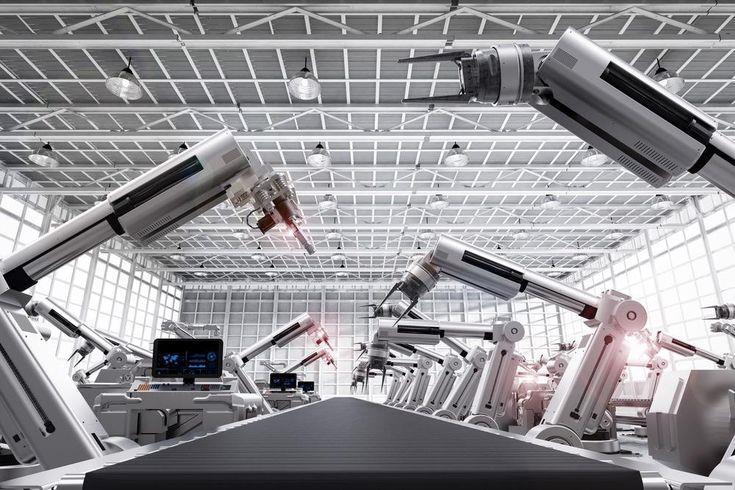
Collaborative manufacturing, where robots and human workers join forces, is transforming modern factories. By automating repetitive tasks and enabling humans to work safely alongside collaborative robots, industries can boost productivity, flexibility, and overall safety. While these innovations promise significant improvements, challenges such as high costs, specialized training requirements, and potential job displacement remain. Researchers are exploring cost-effective robots, intuitive interfaces, adaptable safety standards, and accessible training programs to overcome these hurdles. With proper implementation, collaborative manufacturing has the potential to revolutionize production processes, reduce downtime, and optimize performance across industries.
Did you know?
Which year was the first collaborative robot designed to work safely alongside humans?
NEWS OR CURRENT ISSUES IN ICT From Risk Management to Risk Engineering: Challenges in Future ICT systems
communication devices and applications, including radio, television, mobile phones, computers, networks, satellite systems, and services like videoconferencing and distance learning. Traditional ICT design often focuses on one or two system aspects, such as security, privacy, or reliability, making it difficult to manage the Information and Communications Technology (ICT) encompasses all interdependencies between these aspects.
For example, the interaction between security and safety in modern car electronics or between security, privacy, and reliability in connected medical devices. Current trends emphasize the need to address these interdependencies through a more integrated approach, where risk management is embedded in system design. This requires the development of risk modeling, metrics, and a flexible risk language to support multidisciplinary risk engineering and ensure the safe, reliable, and secure operation of modern ICT systems.
F U N F A C T S
1) Did you know?
Some bridges are designed to “sing”?
Engineers calculate vibrations carefully to prevent dangerous resonance, like the Tacoma Narrows Bridge collapse in 1940.
2) Did you know?
Industrial robots in car factories can work 24/7 without breaks, performing repetitive tasks with extreme precision that humans cannot match.
3) Did you know?
Smart factories now use loT sensors to track machines, energy, and materials in real time, making manufacturing faster, safer, and more efficient than ever.
hjCONCLUSION
In conclusion, this magazine shows how engineering and industrial technology have continued to shape the modern world through the use of innovation, creativity, and practical solutions.
This publication explores advances in automation, robotics, smart manufacturing, and Industry 4.0, and in so doing, these elements begin to inspire new engineers to think both critically and creatively about newer possibilities.
Ultimately, the knowledge share, throughout these pages reflects the importance of technology in driving progress and building a smarter, more efficient in future.
REFERENCES
- Jones, E. (2024). Engineering: Shaping the future through innovation and problem-solving. British Journal of Research, 11(11), 105.
- Palanisamy, C., Perumal, L., & Chin, C. W. (2025). A comprehensive review of collaborative robotics in manufacturing. Engineering, Technology & Applied Science Research, 15(2), 21970–21975. https://doi.org/10.48084/etasr.9709
- Campilho, R. D. S. G., & Silva, F. J. G. (2023). Industrial process improvement by automation and robotics. Machines, 11(11), 1011 https://doi.org/10.3390/machines11111011
- Bahrin, Mohd Azli Kasturi, Othman, Mohd Faizal, Azli, Nur Hidayah Nur, & Talib, Mohd Faizul. (2016). Industry 4.0: A review on industrial automation and robotic. Jurnal Teknologi (Sciences & Engineering), 78(6–13).