State Innovations In National Service & Volunteering Report
Foreword
Every year, millions of Americans engage in national service and volunteering in their communities, states, nation, and world to improve the lives of others. We see examples of such service within our states – with mentors and tutors helping students stay on track to graduate, chefs and volunteers serving food to the hungry, teams of younger and older Americans working together to clean up rivers and parks, and Americans using their skills and creativity to address a wide range of public problems. Those who serve in our military defend our democracy at home and around the world.
At a time when Americans want to restore that “can-do” American spirit, national service and volunteering empower citizens to take action to improve our communities, states, nation, and world. As Governors, we can play a leadership role in our states in expanding those opportunities, issuing calls to service to remind Americans of the central roles they can play in our democracy, and igniting the culture of service in many innovative ways that can inspire leaders in other states. Together, we can move a nation toward a stronger culture of service, citizenship and responsibility.
In so doing, a culture of service engages Americans in solving public challenges. But it does something more – when you serve with someone in a common mission, it builds trust across the differences of politics, race, ethnicity, faith, and background, a tonic the nation needs at a time of division. Our Disagree Better initiative shows that Americans can transcend our differences to solve public challenges together, and in the process, create a stronger spirit of national unity. National service and volunteering can be pathways to opportunity in education and employment and build the very skills employers are looking for in employees – the ability to work in teams, engage in collaborative problemsolving, learn to listen to different viewpoints, and see the value of discipline, grit, and the dignity of hard work.
We entered public service because we wanted to make a difference in our states. Through national service and volunteering, millions of Americans can make a difference to improve the lives of others and the communities in which they live. As Governors, we are excited to work to expand national service and volunteering opportunities within our states, to share the many innovations from Governors and leaders from other states, and to help catalyze a stronger culture of service that will help heal a divided nation, provide more pathways of opportunity, and restore our confidence in tackling big public challenges together.
Governor Spencer Cox (R-Utah) Governor Jared Polis (D-Colorado) Chair, National Governors Association Vice Chair, National Governors Association
Statement
For 30 years, AmeriCorps, the federal agency for service and volunteering, has been partnering with Governors and states, betting on the power of national service to bring Americans together, strengthen communities, and solve our most urgent challenges. Since our founding, more than 1.25 million Americans have served in AmeriCorps and millions more have served with AmeriCorps Seniors –making a lasting impact in their communities while earning more than $4.5 billion in federal AmeriCorps Segal education awards and gaining skills needed for 21st century jobs.
Service is not a nice-to-have it is indispensable to our democracy. Through AmeriCorps programs, communities across the country become safer and more civically engaged. AmeriCorps members earn money for education, expand their career opportunities, and improve lives including their own.
The impact of national service is hyper-local, and it’s changing lives. Every year, AmeriCorps, the largest grant maker for service, invests more than $1 billion in national service programs in all US states, Guam, Puerto Rico, the US Virgin Islands, and Washington DC, and native nations. States are the proving grounds for innovation and creativity in national service and AmeriCorps is proud to fund, inform, and amplify these success stories.
As we work with Governors and state leaders to create and expand service opportunities, AmeriCorps continues to take bold steps to reduce barriers to service, expand pathways to education and economic opportunity, and ensure AmeriCorps programs reflect the rich diversity of our nation. And, as President Biden has championed, we’re committed to raising the living allowance to $15 per hour, to make sure that everyone can have the opportunity to serve.
As this report shows, when governors prioritize national service, and partner with AmeriCorps and state service commissions, the benefits are transformative – from a stronger workforce and more equitable access to post-secondary education, to safer, healthier, and more unified communities.
Michael D. Smith CEO, AmeriCorps
Executive Summary
Many Governors and states across the nation leverage national service and volunteering in their states and communities to meet pressing needs, bridge divides, and strengthen a culture of service. These innovations come at a critical time for our country to restore confidence in solving public challenges together, bringing people together across differences in common purpose, and providing more opportunities for Americans of all ages to give back to their communities and states. This report shares many of those innovations to expand these initiatives nationwide and create a stronger learning community to do so.
Innovations emerging from Governors and other stakeholders within states include initiatives that make structural changes or provide strong leadership, such as elevating service to a cabinet level position to coordinate efforts across state agencies, issuing calls to service and providing support and recognition to those who serve, creating a bi-partisan National Service and Volunteering Caucus in the State Legislature, and hosting annual summits to move initiatives on national service and volunteering forward. Nearly every state and territory has a state service commission that works with AmeriCorps, the federal agency for national service and volunteering, that can be further leveraged. The budgets of Governors and states can allocate funding to match federal funding for national service and volunteering and incentivize more private sector and philanthropic funding.
Service is not just an act of compassion, it can be a pathway to post-secondary training and education and to employment with incentives such as providing in-state tuition for those who perform a year of service in the state, matching the federal education award, and making service a stronger pathway into the workforce. Policies and practices can also make service relevant to getting and enhancing the benefits of holding a job, such as state policies that provide hiring preferences for state employment for those who have performed national service and provide state employees paid time off to volunteer.
Service at its core is also about problem-solving, and Governors and other stakeholders are using national service and volunteering as powerful strategies to bring more human capital to address state and local challenges in education, conservation, public health, poverty, substance abuse, emergency response, and more. Governors and State Legislators can create Service Year Fellows programs, a key new initiative included in federal national service legislation and a top recommendation in the National Commission on Military, National and Public Service report, to open up national service and volunteering to qualifying nonprofits, community and faith-based organizations, and agencies that are seeking more people to help and to offer more choice to individuals in where and how they serve their communities and states. Service can also make compelling linkages between populations with younger and older Americans and veterans and civilians serving side-by-side to tackle community, state and national challenges in a spirit of common purpose.
National service and volunteering have been called the “golden thread of American democracy,” which enables Americans to make a difference in the lives of others and their communities. The innovations of Governors, State Legislators, and other leaders to expand and enhance service opportunities within their states can serve as points of inspiration for leaders across the country to enhance America’s culture of service, citizenship and responsibility.
Introduction
This report on State Innovations in National Service highlights the case for national service and volunteering, the many ways in which Governors, State Legislators and other stakeholders are expanding opportunities for Americans to serve, and examples for how leaders in other states can further ignite a culture of service and citizenship to build bridges across our differences and help solve public challenges.
National service in America taps every part of American society and is structured as a public-private partnership. The federal AmeriCorps program provides significant funding to states to develop and support programs in their states and communities and requires matching funding for its grants so that programs are not only dependent on federal resources. It involves partnerships among federal, state and local governments, universities, businesses and local and national nonprofits. From the beginning, recognizing that states are closer to the ground and have always been seen as the laboratories of democracy, the founders of the modern service movement built into the design a significant reliance on and great flexibility for the states. This design presents a significant opportunity for Governors both to direct federal resources to meet their priorities for their states and to innovate at the state-level to increase engagement in service and volunteering.
There are many creative ways to grow and improve national service and volunteering, including federal level changes, and greater engagement of the private sector, philanthropy, universities and more. More Perfect, a bipartisan alliance of more than 20 Presidential Centers and 100 partners working to advance five foundational Democracy Goals, worked with 10 leading national service organizations to issue the Ask and All plan of action in October of 2023 to dramatically expand national service and volunteering in America over the next decade. As a follow on to that paper, this report focuses on what Governors can do to make the greatest use of federal resources and to launch their own initiatives to advance civic engagement in their states. In this paper, we will provide a series of examples of the ways in which Governors of both parties have led on national service, volunteering and other civic engagement initiatives. Those examples will provide ideas to Governors and State Legislators interested in creating more service opportunities. In addition, the paper makes a series of recommendations about the ways in which Governors can take a lead in making service and volunteering more prevalent and powerful in their states to connect to state and gubernatorial priorities, knit together their communities, and provide pathways and support for young people to move forward in their education and access to the workforce.
The Case for National Service and Volunteering
National service and volunteering cultivate engaged citizens who are central to a vibrant democracy. Americans who participate in national service and volunteering are more connected to their neighbors and nation. This service brings young people and adults out of their comfort zones and enables them to serve alongside people of different races, ethnicities, ages, backgrounds, geographies, and beliefs toward a shared goal. This sense of common purpose develops more empathetic citizens and builds an enduring sense of duty and civic responsibility that lasts a lifetime. At a time when our country’s divides extend far beyond where we live or the politics we practice, building bonds through service with people who are different from ourselves teaches collaboration as a powerful problem-solving tool, leverages our differences as strengths, and strengthens the fabric of our society.
Service has been at the core of American democracy since our country’s founding, with the citizen soldiers of the Revolution, the voluntary associations described by Alexis de Tocqueville in Democracy in America in the 1830s, the service efforts undertaken by every generation in war and peace, and the major initiatives launched by Presidents and Governors from both political parties and by nonprofits, philanthropy, and the private sector that have created new opportunities for Americans to serve.
National service and volunteering and the civic engagement it cultivates also build skills for future careers and habits of responsible citizenship an understanding of others, the dignity of work and discipline, a sense of personal agency to effect change, a habit of civil dialogue, and an ability to work in multigenerational teams. Participants in a year or more of civilian national service receive a living stipend and, upon completion of their service, an education award. For many young people, service opens the doors to being the first in their family to imagine and obtain a college education. It is also possible that people of all ages can find a service opportunity that maximizes their respective skill sets and opportunities to contribute.
Making national service and volunteering an expectation a new American rite of passage from youth to adulthood will renew and redefine the role of citizens in our democracy, promote an understanding of rights and responsibilities, and cultivate the leaders our communities and nation need to tackle our toughest challenges. Similarly, older people experiencing life transitions whether returning from military service, becoming empty nesters, seeking an “encore” career, or considering retirement should be given the opportunity to serve their communities in new ways, and through co-generational service, inspire younger generations to a lifetime of service.
As efforts at the national level to expand national service and volunteering continue, Governors, State Legislators and other leaders within states are stepping up to innovate to bring new energy, initiatives, and ideas to expand service.
At a time when Americans are worried about our divisions, see dysfunction in our national government, and want to see public problems addressed, an era of “big citizenship” needs to emerge that empowers the individual to make common cause with others in their communities and states to help solve our public challenges. In the process, such efforts will cultivate generations of the very leaders we need within communities, states and the nation who learn to work across politics and backgrounds to solve public challenges together.
State Innovations
Leadership from Governors
ROLE OF GOVERNORS
History reminds us that leadership in national service matters greatly. Presidents of both parties who have initiated major national service efforts and issued calls to service to the American people have unleashed energy, idealism and talent to help solve the nation’s public problems. Examples include Franklin Roosevelt’s Civilian Conservation Corps during the Great Depression; John F. Kennedy’s Peace Corps; Lyndon B. Johnson’s VISTA during the War on Poverty; Richard Nixon’s Senior Corps; Jimmy Carter’s 40-year commitment to Habitat for Humanity; George H.W. Bush’s Points of Light; William J. Clinton’s AmeriCorps; George W. Bush’s Freedom Corps after 9/11; Barack Obama’s FEMA Corps; and Joe Biden’s American Climate Corps. Ronald Reagan appropriately called this spirit of volunteer service “a deep and mighty river flowing through the history of our nation.” In many cases, these leaders are remembered for their national and volunteer service legacies.
Governors are also in a unique position to rally people in their states and expand opportunities that enable Americans of all ages to serve. Governors can play a critical role in directing the approach and work of state agencies and departments and inspiring public-private partnerships, so major institutions also have a stake in advancing national service and volunteering. By encouraging state agencies and departments to incorporate service models into their delivery systems, investing in volunteer engagement training to better understand effective practices and approaches, and conducting assessments of current service and volunteer opportunities, Governors can ensure that state governments embrace service as a strategy in conducting daily business. Further, this approach has many benefits, including meeting state and local needs, building an ethic of civic engagement, uniting citizens from different backgrounds, and often saving tax dollars.
CABINET - LEVEL SECRETARY
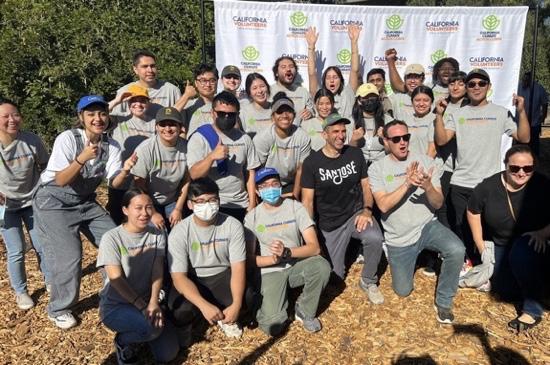
One of the most powerful ways a Governor can make service a statewide priority and integrate it with the work of other state agencies and incentivize more private sector and philanthropic support is to create a cabinet-level Secretary for Service and Volunteering. In 2008, then California Governor Arnold Schwarzenegger (R), signed an executive order creating the nation’s first cabinet-level Secretary of Service and Volunteering (now Chief Service Officer) to lead the state service commission, California Volunteers, and advise the Governor and other members of his Cabinet on strategies to integrate national service opportunities into state initiatives and programming. During this time, state agencies and departments, including the California Department of Veterans Affairs and California Conservation Corps, worked with California Volunteers to leverage resources from AmeriCorps and other funding sources to expand service opportunities in the state.
In addition, Louisiana and Montana have created cabinet-level positions for the leaders of their state service commissions. Most recently in 2023, Maryland Governor Wes Moore (D) issued an executive order creating the cabinet-level Secretary of Service and Civic Innovation to lead a newly formed state Department of Service and Civic Innovation. This new position and department boasts one of the most robust state investments in service years with a Service Year Option, Maryland Corps, and the Governor’s Office of Service and Volunteerism (which directs national service and volunteer programming in Maryland).
STATE SERVICE COMMISSIONS
“Serving others is the greatest and most rewarding work we can do, and AmeriCorps provides fantastic opportunities to reach out a helping hand to those in need.”
From its founding, AmeriCorps programs have operated as public-private partnerships that are formed in communities to address the most pressing local needs. To serve this principle, state service commissions were embedded in the original authorization of AmeriCorps, so that unique needs within a state would drive the investments in service. Having served as Governor of Arkansas, President Clinton foresaw the need for Governors and state-level champions to define the needs in their states, therefore when AmeriCorps was created it required each state to establish a state service commission made up of leaders from all sectors in that state to receive their population formula-share of AmeriCorps funding. Currently 49 States, the District of Columbia, and two territories have state service
Arnold Schwarzenegger (R), 38th governor of California (2003–2011)
FOREST CORPS
commissions that collectively receive nearly $200 million in formula programmatic grant funding and another $200 million in national competitive funding from the federal AmeriCorps agency. State service commissions do much more than just provide grant funding, they also lead program development efforts, develop partnerships across state agencies, and promote service and volunteerism efforts across their respective states. The federal programmatic and administrative funding provided to commissions is also matched by state and local funding as well as private sector and philanthropic funding.
By providing state funding to secure the required match for federal administrative funds available to state service commissions, Governors ensure that sufficient resources are available to explore and build partnerships that lead to new national service opportunities. In nearly half of the states, these state service commissions are actively involved in disaster response activities, often serving as the designated lead organization for volunteer and donations management in partnership with the state emergency management agency.
Further, state service commissions are well-positioned to provide technical assistance to state agencies and departments and other statewide organizations in developing service positions in support of each agency’s respective mission. A 2020 evaluation report, The Value of State Service Commissions, conducted by Dialogues In Action in partnership with America’s Service Commissions, found that the value commissions bring to their states actually extends far beyond AmeriCorps grant administration, training, and technical assistance. Report data revealed that state service commissions are trusted entities within their states as connectors between on-the-ground community needs and state and federal government resources and identified notable impacts that commissions have in their states and communities.
Impact Findings – State Service Commissions:
● Help national service programs navigate complexity
● Humanize compliance to help national service leaders and programs evolve
● Build capacity for impact, innovation, and sustainability
● Improve the state’s ability to understand and meet community needs
● Develop the next generation of social sector leaders
● Enrich nonprofit culture and practices
● Build bridges to strengthen collaboration
● Place greater emphasis on elevating national service and volunteerism
● Balance ensuring compliance with supporting impact and innovation
● Reduce barriers to equitable and inclusive service and volunteerism
● Play a more significant role in building the capacity of the social sector
● Rural communities, in particular, see commissions as their ally and partner to help them access much-needed resources
Many state policymakers are unaware that commissions are required by federal statute to match the federal funds they receive to support their state commission in administering AmeriCorps grants and promoting service in their state. Most state governments provide all or a portion of the required match through their state budget. In many instances, states provide additional state funding to support the work of the state commission, thereby providing resources to develop creative partnerships and innovative programs to meet community needs. Further, several states have provided state funding to support programmatic efforts to expand national service benefits for members serving in the state, invest in statewide volunteer engagement efforts, or develop fully state-funded service efforts. Examples of these types of investments are included throughout this report.
EXECUTIVE ACTION
In recent years it has become more common for Governors to take action directly to demonstrate a commitment to service or to seize opportunities that service partnerships may present rather than waiting for legislative action:
Maryland
In January 2023, newly-elected Maryland Governor Wes Moore made one of his first actions after taking office to issue an Executive Order creating a cabinet level department dedicated to service programming. The new Department of Service and Civic Innovation is headed by a cabinet secretary and houses the state service commission and two state-level service programs Maryland Corps and The Service Year Option.
Colorado
“By calling Marylanders to serve –and serve together – we will ensure our citizens develop skills to meet society’s needs. I look on this inaugural cohort and I see courage, compassion, and vision. I am so grateful for your willingness to raise your hands and join this new endeavor. You are the trailblazers who will define not just the future of these programs, but the future trajectory of our state. Service isn’t a vision we claim, it’s a tradition we inherit. Service will save us.”
Governor Wes Moore (D)
Colorado Governor Jared Polis issued Executive Orders in 2022 and 2023 that support a growing demand for workers in Colorado, particularly in the healthcare sector. Governor Jared Polis’ 2022 executive order addressed the expansion of apprenticeship and as a result Serve Colorado (the state service commission) and the Trailhead Institute (a public health nonprofit organization) have partnered with the Colorado Department of Labor and Employment (CDLE) to establish the Colorado Public Health Works Registered Apprenticeship program, which is supported by the national Public Health AmeriCorps program. The one-year program provides participants with paid on-the-job training and classroom instruction to prepare them for careers as public- or private-sector community
"In every corner of our vibrant state, Serve Colorado and our dedicated AmeriCorps members embody the spirit of service, helping meet local community needs and achieving our vision of a Colorado for All. From tackling challenges like climate change through our Colorado Climate Corps to addressing learning loss with Reading Corps, Colorado AmeriCorps members are helping us build a stronger, more connected Colorado."
Colorado Governor Jared Polis (D)
health workers. Apprentices serve at local public health agencies while they complete the competencies and hours required to earn their U.S. Department of Labor Registered Apprenticeship certificate. The Trailhead Institute serves as the apprenticeship sponsor as well as an AmeriCorps grantee, allowing it to act as an administrator of funds and technical assistance provider to the local public health agencies that host apprentices. CDLE’s Office of the Future of Work (which houses the State Apprenticeship Agency) and Serve Colorado provided technical assistance to the Trailhead Institute in developing the apprenticeship standards in alignment with AmeriCorps and federal Department of Labor (DOL)-registered apprenticeship requirements.
In 2023, Governor Polis issued another executive order that directs Serve Colorado to partner with community-based organizations and postsecondary education institutions to develop three new work-based learning programs or Registered Apprenticeship programs.
Utah
In late 2023, Utah Governor Spencer Cox issued two executive orders to demonstrate his state’s commitment to service.
The first, Executive Order 2023-08, encouraged each state agency to organize a department-wide service project and give employees two hours of administrative leave to participate. This order applies to the 24,000 state employees over the next year.
“Service is the golden thread of our democracy that knits us together as a people. We are excited to create Service Year Fellowships and take executive action to expand opportunities for service throughout Utah.”
Governor Spencer Cox (R)
The second, Executive Order 2023-09, connects service to state economic development incentives that private, for-profit companies receive from the state. Under the order, the Governor’s Office of Economic Opportunity will require businesses that receive any kind of future economic development support to provide at least 20 service hours per high
paying job per year for the duration of the incentive. This order was issued to encourage service and volunteering to become an ongoing corporate value for those who receive state incentives.
In Focus:
CALIFORNIA
For more than 40 years, since the launch of the California Conservation Corps (CCC) by Governor Jerry Brown (D), California has paved new paths in national service. From the first-ever cabinet-level Chief Service Officer under Governor Arnold Schwarzenegger (R), to the innovative COVID, Climate, and College Access initiatives called for and rolled out by Governor Gavin Newsom (D). As the largest state in the country, it also has one of the largest footprints for national service with more than 6,400 AmeriCorps members serving annually.
Service has seen substantial growth through innovative programs and new investments throughout Governor Newsom’s administration. CA has invested in new programming, such as the Climate Action Corps and College Access Corps. In 2023, over $190 million were invested in service and volunteering by the State of California. In addition to new programming, California has augmented the corps member benefits to work toward service years being more accessible to more Californians. Governor Newsom’s vision and commitment dramatically changed the landscape of service in California, and with support from partners, such as Service Year Alliance, new education and advocacy efforts are underway to secure long-term support and investments from the State Legislature. California is a shining example of what is possible when a Governor’s vision, a state service commission’s capabilities, and support with the State Legislature all come together.
Here are the most recent service initiatives launched and championed by Governor Newsom’s administration:
#CALIFORNIANSFORALL
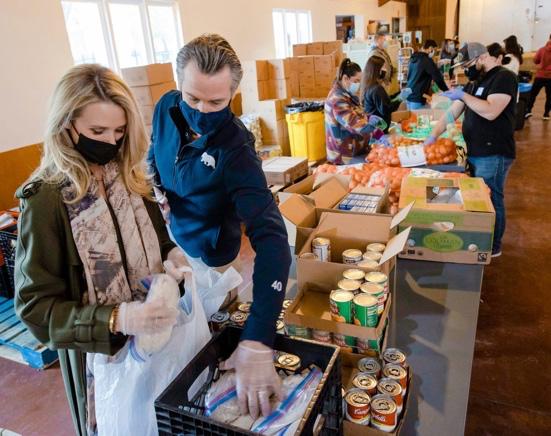
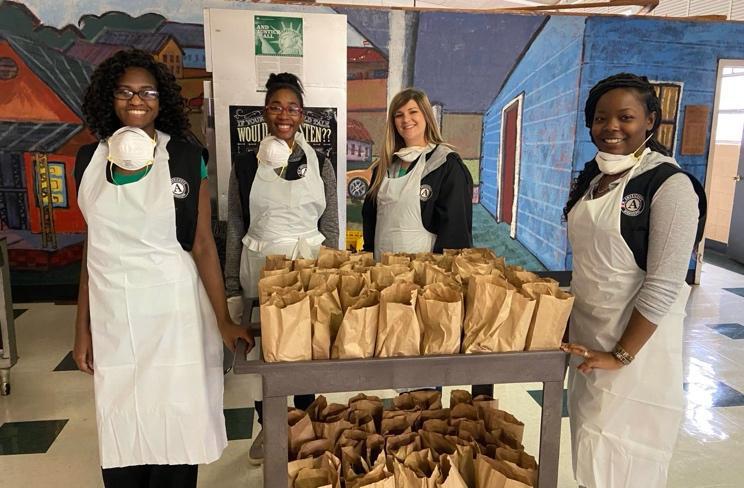
Volunteer corps of individuals who actively supported their communities during the COVID-19 pandemic by checking on older neighbors, volunteering at food banks, and more. Since April 21, 2020, more than 48,000 people have signed up to respond to the COVID-19 crisis.
OPERATION FEED CALIFORNIA
At the onset of the pandemic, Governor Newsom took early action to stabilize strained food banks with personnel and logistical support that developed into Operation Feed California, an unprecedented collaboration among nonprofits, state agencies and individuals to keep vulnerable Californians fed through the pandemic. During COVID-19, Operation Feed California guided the stabilization of 36 food bank operations in 27 counties, establishing a statewide volunteer ecosystem and coordinating crossstate agency solutions to increase resource deployment, adapt programs and address shortfalls.
This key statewide infrastructure led by California Volunteers in partnership with the Governor’s Office of Emergency Services, California National Guard, and local partnerships supported food banks serving more than 306 million meals to vulnerable Californians since March 2020.
CALIFORNIA CLIMATE ACTION CORPS
As part of California’s comprehensive climate strategy, California Climate Action Corps is the country’s first statewide corps of its kind with the mission of empowering all Californians to take meaningful action to protect their homes, health, and communities against the harshest impacts of climate change. California Climate Action Corps engages people through a variety of levels and activities, from those who have an hour to commit at home, to those who can commit a year of service, and everything in between.
As of 2023, this includes engaging more than 21,000 volunteers in 73,411 hours of service to frontline and low-income communities with
CALIFORNIA CLIMATE ACTION CORPS FELLOWS AND VOLUNTEERS
OPERATION FEED CALIFORNIA
state and local government agencies, nonprofit organizations, universities and colleges where they will focus on developing and implementing climate action projects.
CALIFORNIA COLLEGE CORPS
Governor Newsom also established the California College Corps. Forty-six colleges across the state have mobilized 3,200 students who are engaged in performing hundreds of hours of service through local nonprofits in education, climate and food insecurity. Students can earn a living stipend and education award of up to $10,000. The California College Corps also innovatively included 500 Dreamers, expanding access to service experiences for this population. Of the 3,200 students enrolled in the California College Corps, 80 percent are students of color, 64 percent are the first generation to attend college, and 68 percent are Pell Grant eligible. Given the high demand, California is looking to double the size of this program in the coming years.
CIVIC ACTION FELLOWSHIP
To meet Governor Gavin Newsom’s vision of reaching 10,000 service members in the state, California Volunteers along with a coalition of public and private universities launched the Civic Action Fellowship designed to help students pay for college through public service while using a combination of federal and state funding. As part of this fellowship program, current undergraduate and graduate students sign up and commit to serve their communities as they tackle local and regional community challenges. The service is tailored toward students’ academic curriculum while encouraging four-year completion, graduate school, job placement, and an engrained commitment to civic engagement.
SAN JOAQUIN VALLEY AMERICORPS EXPANSION
California Volunteers expanded AmeriCorps into the San Joaquin Valley in 2019-2020 to establish the region’s first network of AmeriCorps programs. Supported by partners such as the Fresno Center, California Teaching Fellows Foundation, Equality California Institute, Porterville Unified School District, Community Action of Kern and many more, nearly 500 Californians, recruited from their communities, are committing to a year of service in over 200 locations across the region. AmeriCorps members are addressing critical community needs throughout the region by providing needed support in low-income schools, increasing healthcare access for those in need, promoting restorative justice, enhancing social-emotional wellness, and mentoring first-generation students as they navigate high school and transition to and through college.
STATE LEGISLATIVE PROPOSALS
Legislative engagement is often the primary way to embed national service and volunteer opportunities in state responses to community needs and to support service members during or after their term of service.
STATE SERVICE CAUCUS
In 2022, America’s Service Commissions worked with a bipartisan group of legislators from several states dedicated to supporting service programs and service members to create the State Service Caucus. This caucus meets six times a year to stay up to date on issues related to service at the state and federal levels and to discuss how they can work together to best support those efforts.
The Caucus now has participation from more than 40 legislators from 19 states. Caucus members were key drivers of important state-level legislation in 2023, including creation of Washington State’s Climate Corps Network and Maryland’s Service Year Option. Examples of successful state legislative proposals are included throughout this report.
Calls to Service
The Volunteering and Civic Life in America survey of the American people created after 9/11 in partnership with the U.S. Census Bureau, U.S. Bureau of Labor Statistics, and White House Freedom Corps Office measures the percentage of Americans 16 and older who engage in volunteering. The survey also highlights why Americans serve, the barriers that inhibit serving, and provides data on service by a range of demographics. The survey has also enabled states to determine their rates of volunteering. One of the leading reasons Americans serve is that they were asked to do so.
At the same time, this research shows that while informal volunteering rates of neighbors helping neighbors remained high between 2019 and 2021, formal volunteering through organizations dropped by seven percentage points – the largest dip since the data was first collected.
Our country’s ethic of volunteering and civic engagement is at an inflection point, and Governors can play a pivotal role in generating interest in volunteering and civic engagement by making clear, direct, and sustained calls to service. By inviting community members to serve, and providing incentives for doing so, Governors make a powerful statement regarding the importance of service to address community needs. Governors can leverage tools at their disposal – expanding national service positions, referencing service in their speeches, promoting volunteering opportunities through social media, creating state volunteering matching platforms and hosting special events to ask and inspire community members to make a commitment to serve. They can also more clearly demonstrate the value of service, by highlighting the many ways in which residents in their states can serve and make a difference.
NATIONAL AND STATE DAYS OF SERVICE
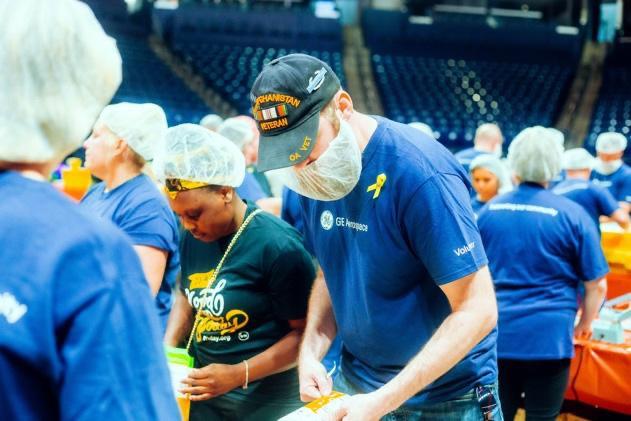
National Days of Service provide an opportunity for Governors, First Spouses, Lieutenant Governors and State Legislators to demonstrate their leadership and inspire residents of their states to give back. Such opportunities include the Congressionally designated Martin Luther King, Jr., National Day of Service and September 11th National Day of Service and Remembrance, and other opportunities such as Global Youth Service Day and Make a Difference Day. These occasions can act as an on-ramp to longer-term commitments, bring people together across differences, and create a sense of unity and belonging.
"We’re working to make it easier to create more service year opportunities because we believe service should be part of what it means to be an American. For every service year opportunity we create, more than 30 other volunteers get involved, bringing people of all backgrounds together to turn us from a country divided to a country united.”
Iowa Governor Kim Reynolds (R)
In 2019, Florida First Lady Casey DeSantis helped make a call to service to all Floridians, by launching Volunteer Connect, Florida’s official statewide volunteer opportunities platform administered by Volunteer Florida. The platform serves as an intermediary between Floridians who are interested in engaging in community service and nonprofit organizations and governmental entities that mobilize volunteers.
Governors and state legislatures can expand participation in state days of service and volunteerimg by providing funding via mini grants to communities and organizations that step forward to organize volunteers and national service members from a wide variety of programs locally or regionally. They can also encourage organizations to apply for AmeriCorps Days of Service grants that can help mobilize more Americans to engage in service activities that meet vital community needs and honor the legacy of Dr. Martin Luther King Jr. as well as those who lost their lives or rose in service following the attacks on September 11.
For example, the ServeOhio commission provides grants of up to $2,000 to support community volunteer projects organized each year for Martin Luther King, Jr. Day of Service (January), Global Youth Service Day (April), ServeOhio Day (June), and Make a Difference Day (October) thanks to support from partners like American Electric Power Foundation and the federal Volunteer Generation Fund (VGF). These mini grants support projects across the state that create or improve community assets or infrastructure, such as parks, schools, senior centers, and community gardens. ServeOhio has provided this funding for more than 25 years. In recent years, ServeOhio has awarded more than
$60,000 on an annual basis to communities that coordinated and supported local volunteer projects. As part of Serve Virginia, the Virginia Service Foundation awards mini-grants in connection with the 9/11 Day of Service and Remembrance.
GOVERNOR’S SERVICE AWARDS
VOLUNTEERS PREPARED 260K MEALS ON THE 9/11 DAY OF SERVICE AND REMEMBRANCE
Governors have a unique role and opportunity to highlight national service opportunities and recognize the efforts of those who serve. By utilizing the prestige of the Governor’s office, Governors, First spouses, and/or Lieutenant Governors can increase understanding of the impact of service in local communities in addition to recognizing the efforts of community members. Governors throughout the country – from Gretchen Whitmer (D) in Michigan and Glenn Youngkin (R) in Virginia, to Kim Reynolds (R) in Iowa and Tony Evers (D) in Wisconsin –have supported annual recognition events for their states’ outstanding service members and volunteers in addition to daily, weekly, and/or monthly recognition programming. These events also create invaluable opportunities to recognize philanthropic partners who make major statewide service initiatives and individual programs possible.
Governors are also able to highlight outstanding volunteers by presenting the President’s Volunteer Service Awards, a national awards program launched by President George W. Bush after 9/11 and managed by AmeriCorps in partnership with Points of Light. The President’s Volunteer Service Awards honor individuals whose service positively impacts communities and inspires those around them to serve.
ORGANIZING STATE SUMMITS ON NATIONAL SERVICE & VOLUNTEERING
Governors can also promote a culture of service in their states by organizing annual State Summits on National Service and Volunteering. For example, ServeOhio has hosted the annual Ohio Conference on Service & Volunteerism for more than two decades. Supported by the American Electric Power Foundation and Honda of America Mfg., the conference has brought together a variety of stakeholders, including nonprofit volunteer administrators, national service staff and members, corporate social responsibility professionals, the faith-based community, high school service-learning programs, and higher education professionals to build 21st century skills and create opportunities for connection and inspiration that support the continued evolution and impact of Ohio’s service and volunteerism professions. By hosting or supporting a similar opportunity for the service sector, elected officials not only provide an opportunity for professionals in the sector to connect, but also provide a venue to strategically align the service sector with the priorities of their city or state, increasing the effectiveness and impact.
SERVEOHIO
State leaders and state service commissions can host swearing-in and graduation ceremonies for a range of national service programs, which provide venues to model the call to service and give young leaders stronger connections to the state after their service term ends. These events can include other elected officials and federal government officials, local business partners, and media to increase attention and awareness on service opportunities.
National Service as a Strategy to Solve Public Problems
Improving Educational Outcomes
National service is a proven strategy to improve educational outcomes. Nearly 50 percent of national service members nationwide serve in education programs that provide academic tutoring, access to afterschool programming, and support to students transitioning to higher education opportunities. Further, in recent years, the National Partnership for Student Success – a partnership among the U.S. Department of Education, AmeriCorps, and John Hopkins University – has identified ways in which national service members and community volunteers can support students through various roles that provide expanded tutoring, mentoring, and student success coach services to assist students in their return to school following the pandemic.
States have also led with innovative programs to advance educational progress. For example, in Minnesota, education policy leaders saw a consistent gap between literacy science and the capacity of Minnesota’s schools to effectively use proven research and tools to secure proficient reading skills for students in the shortest amount of time. In 2002, State Representative and future Commissioner of Education, Alice Seagren, who at the time was simultaneously serving as a board member for ServeMinnesota and as chair of the Minnesota House’s K-12 finance committee, was charged with crafting a solution to the state’s persistently high rates of early literacy failure.
From Seagren’s original vision, Reading Corps was launched in a handful of Head Start sites in 2003 and has expanded to more than 2,000 members providing individualized tutoring to children aged 3 to grade 3 who are not on track to read proficiently by the end of the third grade in 700 preschools and elementary schools throughout Minnesota. Building on the success of the Reading Corps program and using a similar model, Minnesota Math Corps was launched in 2007 to address the math needs of 4th-
8th grade students. Today, Reading Corps has spread to 13 additional states (California, Colorado, Georgia, Idaho, Iowa, Maryland, Massachusetts, Michigan, Mississippi, Missouri, North Dakota, Virginia, Wisconsin) and the District of Columbia. After initial one-time funding of $150,000, the Minnesota legislature has continually increased the state appropriation for these programs from $900,000 in 2006 to now millions of dollars annually. Two rigorous evaluations of the Minnesota Reading Corps conducted by the National Opinion Research Center (NORC) at the University of Chicago found that these Reading Corps members produced significantly greater increases in students’ literacy outcomes, and that the model is highly replicable in multiple settings.
Workforce Development
Many cities, counties, or states have industries that are flourishing, but may lack residents with the skills or credentials needed to fill those needed roles. For many sectors, national service can act as a talent pipeline, offering corps members the exposure to a career that they had perhaps not considered and giving them opportunities to learn the skills needed to enter that career, all while they spend a year getting paid and addressing the needs of a community. For example, the national Public Health AmeriCorps program is an innovative partnership between AmeriCorps and the Centers for Disease Control and Prevention to infuse immediate public health capacity in local communities and build the next generation of public health leaders through service. With $160 million in funding provided to communities across the country, Public Health AmeriCorps is working to address a shortage of 80,000 workers in the public health field. Members participating in the program are younger, more diverse, and earlier in their education journeys than the broader public health workforce. From programs that connect opportunity youth to a career path, to professional corps that expose corps members to a career in need of additional human capital, service can help ensure that local career pathways are wellmaintained. Further, opportunities to serve can attract out-of-state talent while creating pathways to keep talented workers in your state.
States can model partnerships being developed at the federal level among their own state agencies and departments. The National Governors Association (NGA) with support from the Schultz Family Foundation is developing a new effort tying together national service and workforce development. As part of this effort, 10 states will participate in an NGA-facilitated Action Lab in early 2024 that will assist states in developing plans to create service to workforce pathways in critical workforce areas for the state.
This effort builds on existing efforts at the state and local levels including:
COLORADO SERVICE TO WORKFORCE RESOURCES
In 2022, Trailhead Institute and Serve Colorado worked with the Colorado Department of Labor and Employment to establish a Public Health AmeriCorps + Community Health Worker Registered Apprenticeship Program known as the Colorado Public Health Works (CPHW) program. This combination allows participants to reap the benefits of both programs in a single year. This pilot
program is housed within a public health institute designed to administer funds and technical assistance for local public health agencies. CPHW members serve at local public health agencies.
In response to other programs interested in developing their own AmeriCorps + Registered Apprenticeship program, Serve Colorado and the Trailhead Institute have developed a guide to provide the basic steps needed to explore and create such a program. Paired with the Colorado Public Health Works (CPHW) case study, the guide walks through how CPHW navigated the requirements for AmeriCorps and Registered Apprenticeship to create a combined workforce development program.
Further, Serve Colorado has released a Quality Credentialing Framework to assist service programs in considering how to include professional credentials into their training and development plans for members.
NEW HAMPSHIRE SERVICE YEAR WORKFORCE COMMISSION
“AmeriCorps members are truly inspiring individuals who selflessly serve the needs of our communities. Those who participate in AmeriCorps programs have had a lasting benefit on New Hampshire. We are grateful for the compassion and optimism that you work so hard to spread.”
New Hampshire Governor Chris Sununu (R)
The NH Service Year Workforce Commission was established following legislation that was introduced by State Representative – and AmeriCorps alum –Matt Wilhelm, passed with bipartisan, unanimous support and signed into law by Governor Chris Sununu in 2019 with the goal of promoting pathways between service year programs, higher education institutions, and employers. Members of the Commission – including leaders from the public, private, and nonprofit sectors –made recommendations to expand these pathways in order to support New Hampshire’s future workforce needs. Establishing ServeLearnEarn-NH.org is one step that has already been taken toward this end. This website, launched by the Volunteer NH commission, serves to connect current and future national service members and alumni to all service, higher education, and employment opportunities available in the state.
GREEN CITY FORCE AND POWERCORPS PHL
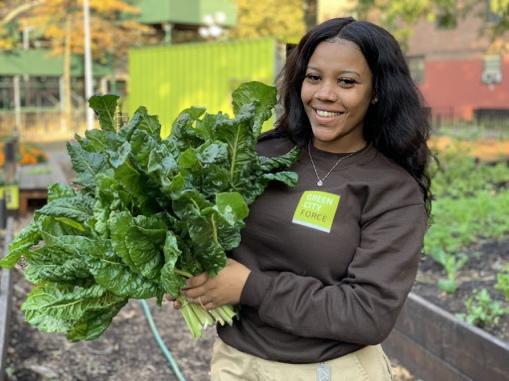
Green City Force in New York City enlists and trains young people from low-income public housing communities in using green technologies to develop a new and more equitable economy. Through leading environmental and health initiatives in public housing and other frontline communities, corps
members develop a life-long passion for sustainability and service. New York’s public housing communities are stronger, greener, healthier, and save residents money because of Green City Force’s corps members. With a focus not only on the impact the corps members have on their community, but also on ensuring a bright future for the corps members themselves, Green City Force has designed its program as a path to greater well- being. Graduates go on to jobs or college, directly or through alumni initiatives that build towards jobs and apprenticeships in the sector. Green City Force alumni have an 83 percent job placement rate within six months of completing their service year.
PowerCorps PHL, an AmeriCorps program funded and supported by PennSERVE, similarly engages disconnected young adults and returning citizens in paid service years and centers career advancement and apprenticeship practices in their service experience. PowerCorps PHL is powered by EducationWorks. It works closely with the City of Philadelphia through partnerships with Philadelphia Parks & Recreation, the Philadelphia Water Department, and partners in the public and private sector tackling pressing environmental challenges throughout Philadelphia. At the same time, it helps corps members develop skills to have meaningful options in post-secondary education, career paths in green infrastructure, electrical and solar, or urban forestry, or offering peer mentorship, youth work, and leadership to other corps members as a crew leader. Among their many successes, PowerCorps PHL has significantly reduced recidivism among its corps members from the city average of nearly 50 percent to less than 10 percent.
MEDSERVE
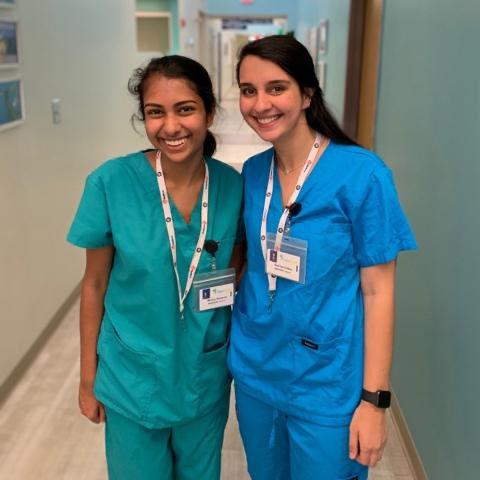
Founded in 2016, MedServe is an AmeriCorps program in North Carolina that takes recent college grads with pre-medical qualifications and places them in underserved community clinics for two years, filling a talent and skills gap in those communities. They are shaped into future service-oriented health professionals with real life experiences in primary care practice who go on to become champions of health equity. MedServe fellows often find that their AmeriCorps experience offers them a unique perspective into the health field, demonstrating, among other things, the value of understanding a patient’s historical context, the barriers that underserved communities face in receiving care, and the importance of being a culturally competent provider. In 2021, MedServe members also leveraged these skills to support COVID-19 testing and vaccination efforts at community health clinics across North Carolina.
GREEN CITY FORCE
VETSWORK
VetsWork is an AmeriCorps program of the Mt. Adams Institute in Washington State that serves as a career development program for military veterans interested in careers in public lands and natural resources management. VetsWork members are placed at local, state, and federal land management agencies such as the U.S. Forest Service where they engage in public lands and resource management work, gaining skills and hands on experience for careers in the environmental sector. As the first Registered Apprenticeship program in the AmeriCorps network, VetsWork members have access to GI Bill educational benefits including a Monthly Housing Allowance paid by the Department of Veterans Affairs in addition to the AmeriCorps living allowance.
AMERICORPS SENIORS INVESTMENT
“Senior Corps and AmeriCorps members were some of the first folks to step up to the plate to respond to the COVID-19 crisis, rising to the challenges in front of us by connecting virtually with students and those at high risk for COVID-19 by providing critical assistance of students, helping those that are the most vulnerable or in need in our communities, and by distributing meals and supplies and PPE... Our state is stronger because of folks like you.”
AmeriCorps Seniors is partnering with several organizations to pilot a service model that supports older adults changing careers and learning new skills through volunteer service opportunities. Through these grants, AmeriCorps Seniors is funding projects focused on supporting older adults as they seek to secure employment in professional, skilled labor, or para-professional careers. In addition, AmeriCorps Seniors is partnering with Public Health AmeriCorps, to support projects that address the public health needs of local communities, advance health equity and create pathways to public health careers for older adults.
Wisconsin Governor Tony Evers (D)
• Public Health in Illinois – The University of Chicago will support 18 AmeriCorps Seniors volunteers in Chicago and Harvey, Illinois. AmeriCorps Seniors volunteers will serve as community health workers to increase access to health care through program interventions. The University of Chicago will train seniors who live on the South Side or Southland to become clinical research assistants to assist with medical needs, including increase senior access to oral health, a senior roommate project to address loneliness, and connect seniors to health interventions. Seniors will receive training to fill critical gaps in research assistants.
• Tennessee – Porter-Leath project will support 25 AmeriCorps Seniors volunteers in the Memphis metropolitan area and through their service in this program, volunteers will address the shortage of qualified early childhood teachers. Volunteers will be placed in classroom settings and will earn a child development associate certificate.
• West Virginia – The National Council on Aging, Inc. project will support 72 AmeriCorps Seniors volunteers in the northern panhandle of West Virginia. Through their service in this program, volunteers will receive certification to fill one of three in demand positions: echocardiogram (EKG) technicians, phlebotomists, or certified nursing assistants.
Developing Future Civic Leaders with Bridge-Building Skills
One of the most unique aspects of national service is that it provides a triple bottom line –transforming lives, strengthening communities, and fueling civic renewal. Service builds bridges across differences by strengthening ties, creating bonds, and fostering community. National service alumni are likely to engage in other civic behaviors, like volunteering and voting. When alumni look back and reflect on their experiences, they highlight the challenges that helped them grow and everything they took away from working with the people they met. In many instances, national service brings people together who are different, whether it is two corps members, corps members and community members, or corps members and program staff. Working in these settings to accomplish common goals provides experiences that create space for individuals to learn active listening, empathy, conflict resolution, teamwork, collaboration, and more. These are the individuals with the kind of skills that employers want to hire, citizens want to vote for, and neighbors want to live next door to across our country.
National service programs represent an active and intentional effort to connect people across divides such as generational gaps, cultural differences, economic disparities, and varying viewpoints on societal matters.
Mobilizing individuals in national service, across government, nonprofit and education sectors can provide desperately needed services while also creating the future civic leaders our states and communities need.
Multiple efforts are underway to help ensure that these bridge-building skills are developed in service, including a pilot effort within the College Access Corps in California.
Many thought leaders are more broadly exploring the critical role service can play in reducing toxic polarization through bridging and offering suggestions for how to take action. In response to these priorities, AmeriCorps and Service Year Alliance are partnering to convene a first of its kind community of practice on national service and bridging. Through this multi-year partnership, pilots
of corps member curriculums and assessments, along with the exploration of other applied practices, will improve the sector's ability to bring intentionality to the way bridge-building shows up in the service year experience. The initiative will examine, measure, and spread effective practices and interventions that develop members as active citizens and build their skills and motivation to bridge divides.
Governors and State Legislators can invest in service to help develop leaders who can work across lines of difference and reduce polarization.
OHIO’S SERVICE SPEAKS
Service Speaks is a facilitated discussion program where AmeriCorps members from each Ohio AmeriCorps program are trained to facilitate conversations that use short philosophical and literary texts, images, and videos on the nature of service, civic engagement, justice, and related themes. Service Speaks allows members to talk about the meaning of their service, the community they serve, and the root causes of the issues in their communities.
ServeOhio hosts national service members and program staff for Service Speaks facilitation training once per year. Participants become more familiar with the art of facilitated discussion and have a better understanding of the importance of civic reflection.
Combating the Opioid Epidemic
National service programs are flexible and can evolve to meet emerging needs. In response to the growing prescription drug and opioid crisis, AmeriCorps placed a funding priority for programs addressing opioid addiction in its 2017 and subsequent funding competitions. During that year, the AmeriCorps agency provided grants to 22 state service commissions to help them identify and develop new AmeriCorps programs to tackle these emerging issues. In 2022, AmeriCorps invested more than $31 million to support AmeriCorps and AmeriCorps Seniors opioid and substance prevention, treatment, and recovery programming, supporting local national service programs that serve more than 260,000 people.
Governors and other elected officials can replicate such efforts by directing funding to state service commissions and other organizations to explore and develop service-based program models that would address emerging needs and priorities. For example, in Arizona, the state service commission acted on then Governor Ducey’s (R) concerns about drug abuse by making substance abuse a priority in the state AmeriCorps funding competition. After extensive outreach, two organizations became AmeriCorps grantees, including the Administrative Offices of the Arizona Supreme Court.
One of the first AmeriCorps programs to address the opioid crisis was launched in Virginia. The Richmond Healthy Futures Opioid Prevention and Economic Opportunities Program (RHOPE) manages partnerships and services focusing on opioid recovery, including workforce development
services for those disproportionately affected by COVID-19. Since its introduction in 2018, more programs have joined the fight to stop the spread of addiction and support recovery across the country.
In Wisconsin, the Marshfield Clinic Health System (MCHS) AmeriCorps Recovery Corps was formed in 2017 in response to the growing opioid and substance use crisis, in partnership with the HOPE Consortium to serve five counties and three tribal nations in northern Wisconsin. The program aims to recruit individuals in recovery or those impacted by substance use to become recovery coaches to help address the crisis head-on through their lived experience. AmeriCorps members receive extensive training in the Connecticut Community for Addiction Recovery Model, providing them with the skills needed to guide, mentor, and support anyone who would like to enter or sustain long-term recovery from an addiction to alcohol or drugs. Following their training, Recovery Corps members provide educational presentations with local substance abuse organizations, operate a hotline set up for referrals and open calls from individuals in the community seeking help, and serve as recovery coaches to help individuals struggling with substance abuse create and follow wellness plans to guide their recovery.
"Lt.
Governor Karyn Polito and I are thankful for the leadership and hard work demonstrated by AmeriCorps and Commonwealth Corps members and volunteers as we all work together to give back to our 351 cities and towns and meet the needs of residents across Massachusetts.”
Massachusetts Governor Charlie Baker (R)
These efforts have proven successful, as the program serves an average of 400 clients per year, 86 percent of whom made progress in their wellness plans and showed health improvement. It is estimated that everyone who stays in recovery saves the state $40,000 per year, although the even greater result is the meaningful impact recovery has on the communities and families that have been affected. One Recovery Corps member states, “Recovery Corps is the best thing I have ever given myself.” In recognition of the program’s efforts, Recovery Corps was honored as the AmeriCorps Program of the Year at the 2019 Governor’s Service Awards by Governor Tony Evers.
Building on its strong track record of scaling data-driven programs that work to meet state needs, the Minnesota commission helped launch the Minnesota Recovery Corps in 2018, a strategic partnership between ServeMinnesota, Ampact, and nonprofit organizations that annually serves more than 300 individuals in recovery and builds the capacity of organizations to more effectively respond to the opioid epidemic. The Minnesota Recovery Corps was launched to provide peer support and recovery coaching to individuals working to overcome opioid use and other substance use disorders. Participants increase their quality of life, self-esteem and self-efficacy, recovery capital, and confidence in staying substance free. As national service members, individuals also build their own Recovery
Capital and maintain sobriety. The program builds a pipeline of individuals prepared to work in the recovery field after service; members receive training toward Peer Recovery Specialist certification.
The misuse of and addiction to opioids is a national health crisis, inflicting tragedies of personal loss as well as harm to the economy, from healthcare and the criminal justice system to wages and productivity. Treatment, however, is only the first step in a lifelong process of recovery. Successful recovery starts with immediate and evidence-based treatment, but also requires ongoing support to rebuild what was lost something which Recovery Corps programs are well poised to provide.
Confronting COVID and Promoting Public Health
The COVID-19 pandemic caused widespread and acute economic hardship across the country. Among adults who lost work or income, nearly half reported that their families have reduced spending on food. Thousands of AmeriCorps members and AmeriCorps Seniors volunteers across the nation continued their service while adapting to meet the changing needs caused by the pandemic. They provided support, community response, and recovery efforts to communities, playing a vital role in needed services like vaccination support, food security, and education.
As one of eight states in AmeriCorps VISTA’s Food Security Initiative, the Volunteer NH commission in collaboration with Campus Compact for New Hampshire, the NH Food Bank and Governor Sununu’s (R) office led the statewide effort to address food insecurity through the development of the AmeriCorps VISTA Food Security Project. AmeriCorps VISTA has provided funding to support 20 members serving in regional teams across the state.
The New Hampshire COVID Community Care Corps (NH-CCCC) was also created in the state to address growing unmet needs in the wake of the global COVID-19 pandemic. CARES Act funding granted through Volunteer NH was leveraged to get the program off to a good start. Twenty AmeriCorps members hit the ground running to tackle challenges around the state. NH COVID Community Care Corps members distributed more than 10,000 meals to youth and families that struggled with food insecurity due to the pandemic, provided public health information related to COVID-19, led summer recreation activities for kids to support working parents during daytime hours, promoted volunteer recruitment for New Hampshire nonprofits and municipalities, and worked to expand Medical Reserve Corps to support vaccine distribution and other medical response needs.
The WA COVID Response Corps is another innovative private-public sector collaboration of Serve Washington, the Washington Department of Agriculture and the Schultz Family Foundation which partnered with four AmeriCorps programs to support a rapid response to the economic consequences of COVID-19. In 2020, this initiative deployed 125 AmeriCorps members at more than 70 communitybased organizations to increase the capacity of local nonprofits to address food insecurity in Washington. Response Corps AmeriCorps members support operations in regional foodbanks,
distribute food through community-based food banks, assist with making meals and distributing them through community partners, including school sites, and cultivate food sources through community gardens. This partnership with national service and philanthropy included investments to subsidize AmeriCorps host site fees to broaden the network of nonprofits aware of and able to participate in this response effort. Resources were also invested to strengthen meaningful member development opportunities through a tailored set of on-demand professional development courses, a monthly speaker series featuring experts and frontline workers, and a capstone project that helps members develop storytelling skills and strategic use of social media for social good. Additionally, the effort invested in strategies to identify promising practices to further diversify the racial and economic makeup of AmeriCorps membership to give a broader set of young people an opportunity to gain new experiences and skills through service that lead to workforce opportunities and economic mobility. Some of these strategies included increasing the member living allowance to 80% of the living wage of each county of service and providing an emergency assistance fund to support young people in service when they need access to emergency cash.
In 2020, ServeMinnesota leveraged AmeriCorps members to launch the Minnesota Emergency Response Initiative to help Minnesota organizations and communities affected by COVID-19. More than 300 AmeriCorps members served across the state to address issues including food insecurity, homelessness, distance learning, help for older adults and more. The Minnesota AmeriCorps Emergency Response Initiative is a prime example of how state service commissions and AmeriCorps can quickly respond to emerging issues. It gave nonprofit organizations, government agencies and school districts the opportunity to apply quickly for AmeriCorps members to help them with an increased demand for services related to the global pandemic. This initiative also provided an opportunity to connect with nearly 100 community organizations across the state large and small many of them new to national service.
In Colorado, COVID-19 Containment Response Corps (CCRC) was a group of AmeriCorps members and AmeriCorps Senior volunteers who served as case investigators or contact tracers for the State of Colorado during the COVID-19 pandemic. According to the CDC, “Case investigation and contact tracing is a specialized skill. To be done effectively, it requires people with the training, supervision, and access to social and medical support for patients and contacts.” From July 2020 to May 2021, the CCRC provided thousands of Coloradans with the information and resources they needed to understand their potential to spread COVID-19 and remain quarantined/isolated. During this time, AmeriCorps, the Colorado Department of Public Health and Environment (CDPHE), Serve Colorado - the Governor’s Commission on Community Service, and COVID Check Colorado, LLC (CCC)
MINNESOTA EMERGENCY RESPONSE INITIATIVE
partnered together to form the Colorado COVID Recovery Program and they signed a memorandum of understanding on July 1, 2020. Through their contributions to CCRC, AmeriCorps members and AmeriCorps Seniors volunteers completed 17,629 case investigations, 7,635 through contact tracing, and an approximate 32,803 test results delivered (out of approximately 67,500 calls attempted). The program also exceeded expectations as a pathway to employment for the members and volunteers who served, from early summer 2020 to the project’s wind-down phase in 2021. Roughly 934 members and volunteers served with CCRC in some capacity since the program’s inception. Of those 934, 84 former CCRC members and volunteers were hired to continue case investigation/contact tracing. This amounts to 11 percent who gained direct employment due to their service experience in CCRC.
Environmental and Climate Resilience
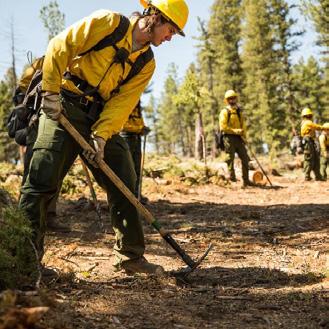
States have also taken significant steps to build on the largest experiment in civilian national service in U.S. history – the creation of the Civilian Conservation Corps in the 1930s – by creating state-level conservation corps. The first to be created was the California Conservation Corps (CCC), launched by Governor Jerry Brown (D) in 1976. Now, more than 120,000 people have served with the CCC throughout its 40 plus years of operations. This program remains part of California government today and, as the first state-level conservation corps ever created, it played a significant role in paving the way for other states to create state-level corps and contributing to the now more than 150 conservation corps across the country.
Conservation corps are critical in how states and localities manage public lands, coordinating land and stream reclamation, disaster planning and response, habitat restoration, and workforce training opportunities in the conservation, land management and climate fields. Today, conservation corps programming exists in all 50 states and the District of Columbia, engaging more than 24,000 young people ages 16-25 in conservation projects ranging from habitat restoration, disaster preparedness, as well as creating and maintaining parks and trails. In some states, these corps are administered by state conservation or parks agencies. Funding to support conservation corps is commonly a mixture of state funding, and funds from federal agencies including the National Park Service, the U.S. Forest Service, AmeriCorps and others. In recent years, many conservation corps programs have expanded, and new Green Corps programs have been created to focus on energy conservation projects, such as weatherization, all while training corps members for future careers in conservation. Nationally, many of these efforts are supported by The Corps Network, the national association for local and state conservation corps.
In 2023, Washington passed legislation (HB 1176/SB 5247) sponsored by Governor Jay Inslee (D) to create the Washington Climate Corps Network. This grant program will connect, amplify and grow climate-related service opportunities that mobilize and train young adults and veterans to build clean energy and climate-resilient communities, economies and ecosystems.
As of 2023, nine states in total have, or are in the process of, developing state-based climate corps initiatives. The states include Arizona, California, Colorado, Maine, Maryland, Michigan, Minnesota, North Carolina, and Washington. Additionally, much work has been done, by organizations like Service Year Alliance, to create roadmaps for stakeholders, including state leaders, to develop their own service years to focus on energy efficiency, community capacity building, or rural resilience. Further, America’s Service Commissions has developed a toolkit to assist states in developing their own climate corps efforts.
In addition to these state-led initiatives, communities across the county, such as Boston, MA; Buffalo, NY; Jackson, MS; LaPorte, IN; Wilmington, DE, and Vancouver, WA are working with The Corps Network to establish climate corps programs based on local needs and opportunities. And existing corps programs like the Conservation Corps of the Forgotten Coast in Apalachicola, FL; Kupu in Hawaii; the Montana Conservation Corps; and PowerCorps PHL, are growing to enroll additional participants (Corpsmembers) and complete more climate resilience and conservation projects.
These efforts build upon and influence the September 2023 White House announcement of the creation of the American Climate Corps and the December 2023 Interagency Memorandum of Understanding (MOU) designed to encourage and facilitate partnerships across multiple federal agencies – Agriculture, AmeriCorps, Energy, Interior, Labor, the Environmental Protection Agency, and the National Oceanic and Atmospheric Administration – to mobilize 20,000 individuals in climate-related service positions with clear connections to workforce support, to train and direct many more young people into careers in the clean energy economy.
AmeriCorps serves as the coordinating agency. This type of initiative has been supported by the President, many Members of Congress, and field-level stakeholders, such as those that make-up the Partnership for the Civilian Climate Corps (PCCC). The PCCC was established and led by America’s Service Commissions, Service Year Alliance and The Corps Network to bring more than 100 organizations together from national service, conservation, environmental justice, climate advocacy, workforce development, and more. The partnerships across the federal agencies within the American Climate Corps create opportunities for states, communities, and existing climate and conservation Corps to utilize funding from the Inflation Reduction Act and Infrastructure Investment and Jobs Act to meet the needs within communities, while mobilizing and training a new generation for the workforce.
With the President’s call to service, significant federal investments in climate resilience and green infrastructure, the creation of the American Climate Corps, and partners like the PCCC, states and communities across the country are prime to expand upon these efforts. Like the opportunity across federal agencies, these states and communities should consider utilizing Infrastructure Investment and Jobs Act and Inflation Reduction Act resources to stand-up new climate corps programs.
Military & Civilian Service: Veterans & Military Families Corps
Domestic national service has long played a role in assisting veterans and military families through the various transitions they face from frequent re-location to return to civilian life after tours of duty. In Fiscal Year 2022, national service participants served more than 290,000 veterans and military members and their families. Research demonstrates that veterans who continue their service on the home front have a range of better outcomes in terms of their reintegration into civilian life than their peers who do not engage in national or volunteer service. Right now, nearly 15,000 veterans are serving in AmeriCorps and AmeriCorps Seniors across the country. More states are exploring ways in which to encourage veterans to consider a year of service in civilian national service programs as a transition opportunity following their term of service in the military. In addition, service members can assist military families in connecting to and navigating their local communities. For example, in partnership with the Washington State Department of Veterans Affairs, Serve Washington supports an AmeriCorps program where members serve as peer mentors/navigators to veterans, active-duty military, and military families at colleges and community partner sites across the state.
Further, there are opportunities to connect military and national service recruitment efforts. In 2023, Serve Colorado signed a MOU with the Colorado National Guard to partner on recruitment efforts for their respective programs, including encouraging Colorado National Guard members to consider enrolling as national service members in the state.
Engaging Refugees
Under the leadership of Governor Kim Reynolds (R), Iowa has invested state funds in several innovative service programs that provide career development opportunities to historically underserved populations, including the Iowa Refugee & Immigrant Voices in Action (RIVA) AmeriCorps program. The RIVA AmeriCorps program was launched to “increase economic selfsufficiency, job readiness, and community engagement” of refugees living in Iowa. The unique model pairs one AmeriCorps member from the “receiving community” with two AmeriCorps members from the refugee community to train leaders in the refugee community to become work-readiness trainers. These work-readiness trainers then connect fellow refugees with services that help to reduce barriers to employment and then support them in obtaining training and employment that lead to economic self-sufficiency. AmeriCorps State and National and AmeriCorps NCCC members, including the Minnesota Refugee Response Initiative, supported the Operation Allies program, by ensuring refugees
AMERICAN RED CROSS
evacuated from Afghanistan had a safe temporary place to stay with access to critical short-term services and longer-term assistance.
Utilizing Service to Respond to Disasters and Building an Emergency Management Plan
In some cities and states, national service is an established way to leverage human capital to respond to a crisis. After 9/11, a wide range of programs were created or expanded to provide national service and volunteer opportunities to respond to disasters of all kinds, including the Medical Reserve Corps (a network of 300,000 service members), Citizen Corps (in every state and territory), Community Emergency Response Teams (more than 600,000 members trained), Volunteers in Police Service (more than 2,300 programs with 264,000 volunteers) and Fire Corps. AmeriCorps has extensive experience and resources to support states in all phases of the disaster services cycle, led by the agency’s Disaster Services Unit (DSU), housed in the AmeriCorps NCCC program. The DSU provides technical assistance before, during, and after a disaster, coordinating with FEMA to mobilize AmeriCorps Disaster Response Teams and other resources following a federally declared disaster to support shelter operations, call centers, volunteer and donation management, muck and gut operations, blue-roof tarping and debris cleanup, among other services. The AmeriCorps NCCC Traditional and the AmeriCorps NCCC FEMA Corps programs, administered directly by the agency, provide the quickest response capabilities of national service assets. Other national service assets include AmeriCorps Seniors RSVP, which engages 55 and over volunteers in each stage of disaster response, and AmeriCorps VISTA, which supports longterm disaster recovery efforts.
"Deployed to the hardest-hit areas of the region, the young people of AmeriCorps trained, coordinated, and led hundreds of thousands of community and faith-based volunteers that did the back- and heart-breaking work of dredging the Gulf Coast. AmeriCorps members helped to save Mississippi” following Hurricane Katrina.”
Haley Barbour (R), 63rd governor of Mississippi (2004-2012)
There are additional ways Governors have been able to mobilize national service to support disaster preparedness, response, and recovery. Most disasters are local, and while federal support is often crucial to the effective management and mitigation of a disaster, having an effective and preexisting local or state emergency management plans with defined roles for agencies, programs, and corps members can make a significant impact faster and more efficiently. Further, recruiting local corps members to interact with the
community can go a long way in ensuring that the response is relevant, culturally competent, and community-driven.
For example, during the 2020 state legislative session, Volunteer Florida helped promote and provide technical assistance for the state to pass a new Disaster Volunteer Leave Act for State Employees. This legislation amended and expanded the previous Florida Disaster Volunteer Leave Act, allowing Florida state employees to take up to 120 hours of administrative leave to volunteer after a disaster with a 501(c)(3) or 501(c)(4) organization to provide disaster response and recovery services to an area that has been declared a disaster by the Governor.
RESPONDING TO THE FLINT WATER CRISIS
While most of the disaster response and recovery work of national service has been related to weather events, national service members have been used to respond to public health disasters even prior to the COVID-19 pandemic. When the vast impact of the Flint water crisis became clear in 2015, Flint was in the midst of its National Service Accelerator five-year plan, aiming to increase its national service positions tenfold in five years. Using a combination of corps members already serving in the community and AmeriCorps NCCC members, national service became a significant part of the crisis response. Members provided aid to more than 100,000 people, including distributing bottled water, information, filters, and preparedness kits, as well as recruiting and coordinating volunteers and facilitating trainings. Anticipating about twenty years of long-term needs associated with the water crisis, Flint then established the Flint Urban Safety and Health Corps, which addresses many of those needs and continues to assist in Flint’s recovery.
The community already had a plan and relationships in place to organize existing national service members and the infrastructure to quickly take on additional corps members throughout the crisis. This allowed national service to help provide immediate relief to those affected and be part of the longterm solution, building the community’s resiliency to this and any other potential crises.
Emergency Response Initiative
Commissions across the nation are actively involved in emergency/disaster response activities. These initiatives include disaster preparedness, disaster volunteer recruitment and training, disaster response, disaster volunteer engagement, donations management, and supporting ongoing recovery
COMMUNITY EMERGENCY RESPONSE TEAM
efforts. These efforts are typically coordinated with the state’s emergency management agency. To learn more about state service commission efforts in this area, please visit America’s Service Commission’s publication, State Service Commissions and Disaster Services. Further, the AmeriCorps Disaster Services Unit works closely with state service commissions and voluntary associations active in disasters and is also available to help Governors and state leaders explore ways to use national service in disaster preparedness, response, and recovery efforts.
Youth Service Initiatives for Bridging & Skills for ProblemSolving
Service-learning is a method of teaching and learning that connects classroom lessons with meaningful service to the community. A growing body of research recognizes the benefits of service-learning as an effective strategy to improve academic achievement, increase student engagement, improve social behavior, build civic skills, and strengthen community partnerships. Service-learning can help struggling students get excited about school while also challenging gifted students to apply their problem-solving skills to real life scenarios. K-12 school districts and higher education institutions throughout the nation are supporting service-learning initiatives and state leadership can play a role in providing additional funding and support for such efforts.
In addition, in recent years with funding from the Mott Foundation, America’s Service Commissions have provided capacity building grants to state service commissions to explore ways to document existing youth service programming in their respective states and develop new programming. Such efforts have led to new youth service opportunities as well as funding to support youth-led service projects. State investments in youth service via schools and community organizations can introduce young people to service at a critical stage in their development that results in a lifelong commitment to service.
AMERICORPS DISASTER SERVICES UNIT
Governance Innovations
CHARGE STATE DEPARTMENTS & AGENCIES TO USE NATIONAL SERVICE TO HELP MEET THEIR MISSIONS
Governors and mayors play a critical role in directing the approach and work of local and state agencies and departments. By encouraging local and state agencies and departments to incorporate service models into their delivery systems, investing in volunteer engagement training to better understand effective practices and approaches, and conducting assessments of current service and volunteer opportunities within state government, governors can ensure that state governments embrace service as a strategy in conducting daily business. In 2014, then Governor Brandstad (R) of Iowa served as pioneer in this sense by establishing a Task Force via executive order to explore this type of service expansion across state government.
This approach has many benefits, including meeting state and local needs more cost-effectively, building an ethic of civic engagement, enhancing agencies’ capacity to achieve their missions, uniting citizens from different backgrounds, building a pipeline of individuals ready to enter public service, and often saving taxpayer dollars.
CREATE SERVICE YEAR FELLOWSHIPS THROUGH COMMISSION CERTIFIED NONPROFITS THROUGHOUT THE STATE
Most national service programs recruit individuals into opportunities that are already developed and funded. A unique alternative is to fund Service Year Fellowships, which instead funds individuals to complete service years. To make this happen, a state service commission or partner organization can certify positions within nonprofits, government, and education institutions, creating a bank of available and qualified service year opportunities. Then the state service commission or designated
partner organization receives and reviews applications from individuals to determine who will be awarded a Service Year Fellowship. Very much like the Service Year Option model in Maryland, a statewide entity plays a large role in determining who serves and matching them with opportunities across the state, rather than only being able to place individuals with funded national service programs.
Service Year Fellowships create more choice for individuals in determining where to serve, while also reducing the barriers to hosting a corps member for organizations. In this model, a host organization may or may not contribute financially to the corps members' living allowance or benefits. This model may allow for organizations with less capacity or access to philanthropic resources to benefit from hosting a service year corps member, bringing service years to communities that may currently be missing out.
Serve America Fellows were included in the strongly bi-partisan Serve America Act of 2009 developed by Senators Hatch (R-UT) and Kennedy (D-MA). The Service Year Fellowship concept was also included in legislation put forward in the spring of 2020 by the independent and bipartisan Congressionally-created National Commission on Military, National, and Public Service (The Commission) chaired by former Republican Congressman and Army Reserve Brigadier General Joseph Heck. As the Commission traveled the country, both young people and nonprofit leaders expressed great enthusiasm for the Service Year Fellowship concept, and it became one of the top recommendations that The Commission made to advance national service. More information regarding this concept is included in The Commission’s report on page 66.
ONE UTAH SERVICE FELLOWSHIP
The One Utah Service Fellowship, proposed by Utah Governor Spencer Cox and State Senator Ann Milner, aims to empower young residents by offering service opportunities in exchange for coverage of higher education costs and a stipend. The pilot program matches participants with participating organizations that provide meaningful service opportunities seeking to address critical state needs while preparing participants for post-secondary education or training through a comprehensive approach involving professional development, mentoring, job training, and financial literacy training.
To qualify, participants must be state residents who graduated high school within the last five years, commit to completing 1,700 hours of service within a one-year period with a partnering organization, and fill out the Free Application
for Federal Student Aid (FAFSA). The stipend consists of an hourly amount funded by the program and the partnering organization.
Upon successful completion of the program, participants are eligible for a tuition award of up to $7,400, which can be used for educational expenses at a Title IV school or to repay a student loan. This award functions as the "last dollar in," available after scholarships and financial aid are exhausted, and can be utilized over multiple semesters until depleted or up to seven years after program completion.
The program sets ambitious goals, intending to serve 750 participants during the pilot phase. To achieve this, it partners with nonprofit organizations or governmental entities that align with high-priority state needs, such as child literacy, affordable housing, homelessness, and mental health. The Utah Commission on Service and Volunteerism (UServeUtah) oversees the program and provides policy direction in collaboration with the Department of Cultural and Community Engagement, which offers oversight, and a private program administrator responsible for day-to-day operations.
The One Utah Service Fellowship is a well-structured initiative addressing both societal needs and the educational aspirations of young residents, with robust oversight, strategic public and private partnerships, and a comprehensive support system to ensure its success.
ESTABLISH A STATE OR CITY SERVICE CORPS
In 2007, then Massachusetts Governor Deval Patrick (D) and the state legislature created the Commonwealth Corps to engage Massachusetts residents of all ages and backgrounds in direct service to rebuild communities and address unmet community needs. Each year, the Massachusetts Service Alliance selects host sites for Commonwealth Corps members. Full-time corps members serve 10.5 months and receive a living stipend, health insurance, and a completion award (up to $2,500). Since the inception of this fully state-funded program, thousands of Commonwealth Corps members have served in the program.
In 2016, Maryland Governor Larry Hogan (R) signed legislation led by Senate President and AmeriCorps alum Bill Ferguson, creating the Maryland Corps which will provide similar service year opportunities in the state of Maryland. In 2023, newly elected Governor Wes Moore built upon Governor Hogan’s work to create a state-level Service Year Option targeted at creating service
opportunities for recent high school graduates. This program is an opportunity for those who recently completed high school, received their high school completion certificate, or earned their GED in Maryland. Members will serve across the state of Maryland in organizations that will provide job training, mentorship, and other resources to be successful all while earning $15 an hour plus focused professional development time each week.
Local entities like cities and counties can similarly embed national service positions into their plans. In some cases, as mentioned above, creating a Chief Service Officer position can help facilitate this. At a more local level, when Mayor of Flint, MI, Dayne Walling intentionally embedded service as a strategy during the development of the city’s master plan and leveraged the National Service Accelerator to expand service across the city.
In addition to state service commissions, the Cities of Service coalition is a network of more than 300 cities engaging citizens to solve critical public problems. Coalition cities receive technical assistance; access to a peer network where they can share ideas, resources, and best practices; and many other benefits.
ENCOURAGE PHILANTHROPY & BUSINESS TO SUPPORT SERVICE YEARS
National service in America has developed as a model for public-private partnership. Through their interactions with corporate and philanthropic leaders, Governors can encourage private investment to expand national service positions, especially in areas of critical importance for their state. Corporate and philanthropic dollars can fund the required federal match for AmeriCorps positions or fund initiatives to make service positions a higher quality experience. Such investments can create and/or match state funding to develop new service year opportunities that align with the giving priorities of companies and foundations alike. Further, companies can leverage their corporate engagement efforts by engaging employees in the development of new service opportunities and/or creating service positions to more effectively leverage the skills and interests of employees donating their time to local nonprofit organizations. Finally, foundations can prioritize grant funds to organizations that identify and commit a portion of their grant funds to support national service positions and other volunteer opportunities.
Some examples include:
• Philadelphia, PA, where American Airlines gave the local Service Year Impact Community and National Service Task Force a grant to explore equity initiatives.
S ENIOR CORPS
• Colorado, where Gary Community Investments directly supported technology needs of the COVID Containment Response Corps by providing AmeriCorps members with laptops, headsets, and hotspots.
• Austin, TX, where the Michael & Susan Dell Foundation supports a Service Year Impact Community, made up of a local collaborative of service programs, AmeriCorps Central Texas, as a local recruitment initiative.
• Beginning in 2021, the Schultz Family Foundation has invested funding in the National Service Challenge. As part of the National Service Challenge, the Foundation has invested funding in state service commissions to encourage the development of innovative strategies to expand access to service opportunities for young people and increase their economic mobility postservice. States involved in this effort include: Colorado, Iowa, Michigan, Minnesota, Pennsylvania, South Carolina, Texas, and Washington.
STATE’S SUPPORT FOR AMERICORPS SENIORS PROGRAMS
Within the AmeriCorps Seniors programs several states continue to invest their funds into AmeriCorps Seniors programs to expand their reach and impact especially in areas of critical importance for their state including California, New Mexico, Michigan, Ohio, and Texas. Through these investments by Governors, AmeriCorps Seniors programs are able to support more older Americans volunteers in service to their communities addressing critical community needs.
Pathways to Prosperity
Additional Supports for Corps Members Success
INCREASE OR SUPPLEMENT LIVING ALLOWANCE
Upon starting their service term, AmeriCorps members receive a living allowance to help support their cost of living and ensure service is accessible to all. The amount of the living allowance for AmeriCorps State and National programs can vary. The AmeriCorps agency has prioritized increasing the living allowance and stipend to ensure national service is an opportunity open to Americans of all backgrounds. In Fiscal Year 2024, AmeriCorps raised the national minimum living allowance for AmeriCorps State and National programs to $18,700 – the equivalent of $11 per hour – and the maximum living allowance will be $37,400. Even though it is not a wage, this living allowance is still subject to local and state income tax (in most cases), as well as federal income taxes, meaning even the modest amount allocated is less than the actual amount members receive. Members often cannot sustain themselves without outside assistance during their term of service, and many enroll in public assistance programs just to make ends meet.
In recent years, with leadership from the President and Congress and support from national service partners, AmeriCorps and state service commissions have prioritized increasing the minimum living allowance for all AmeriCorps members to a “livable wage” based on local conditions. Since 2021, the national minimum living allowance has increased more than 20 percent, with many states requiring higher living allowances. In 2022, President Biden called on Congress to increase member living allowances to the minimum equivalent of $15 per hour and AmeriCorps and service advocates are working with national and state programs to achieve that goal.
"AmeriCorps and Serve
Washington provide opportunities for thousands of individuals every year who want to engage in public service by working with some of the most vulnerable people in our communities.”
Washington Governor Jay Inslee (D)
However, many programs struggle to pay more than the minimum living allowance. By increasing or supplementing the living allowance above the required federal minimum, states demonstrate a commitment to and gratitude for those who serve as well as allowing a larger and more diverse pool of Americans to access and give back through their service.
The AmeriCorps Seniors Foster Grandparent and Senior Companion Programs provides a stipend of $4 per hour to the volunteers who are income eligible. The initial intent of the stipend was to ensure that all older Americans who want to serve are able to serve. As of right now, the stipend eligibility reaches only those seniors at 200% of the poverty level and below. The current stipend of $4 per hour no longer meets the initial intent and should be increased as well to meet the President’s directive to help support the cost of living and ensure service is accessible to all.
EXEMPT EDUCATION AWARD FROM STATE INCOME TAX
Currently, AmeriCorps alumni using their Education Award are required to pay federal, and in most states, income tax on the value of the award. The President and Congress are working to eliminate the tax at the federal level with the reintroduction of the AmeriCorps Education Award Tax Relief Act. In 2009, the Iowa State Legislature passed a bill to eliminate state tax on the value of the education award. This provision took effect January 1, 2010 and since that time, a taxpayer may exclude from Iowa individual income tax any amount of the federal Education Award to the extent the education award was reported as income on the federal tax return. Since taking effect, the Education Tax Credit has assisted thousands of Iowa AmeriCorps members, saving an estimated more than $1 million in taxes.
Following Iowa’s lead, four additional states (Minnesota, Nebraska, Oregon, and Wisconsin) have exempted the education award from their state income tax provisions.
HOMESHARING
One of the largest barriers to participation in national service is a lack of affordable housing, especially in cities with a higher cost of living. Exploring creative housing solutions can offer significant relief to corps members, while also supporting other populations as well. In Oregon, legislation has been introduced that would allow those in the community with an extra room in their home to rent that space to a service or other community member without paying state taxes on the rent they receive.
Several states, including Colorado, Massachusetts, North Carolina, Oregon, Washington, West Virginia, and Wisconsin, have piloted similar efforts to match service members with available affordable home-sharing options. Such arrangements are an effective way to signal the value of national service while further supporting corps members’ ability to serve. In another example, Baltimore worked with a developer to create Miller Court, housing specifically targeting teachers including those participating in service teaching programs. A handful of programs throughout the country offer established housing or housing stipends for their corps members, ensuring that the basic needs of their members are met, thereby allowing them to focus on making the biggest impact possible during their year of service.
PROVIDE MENTAL HEALTH SUPPORT
Increasingly, AmeriCorps programs across the nation are addressing emerging mental health needs of members by providing mental health and wellness training as well as access to a Member Assistance Program (MAP). Through MAP, enrolled members receive access to virtual and/or in-person mental health counseling appointments. Further, members can access additional lifestyle and wellness resources through the MAP to assist them in navigating their term of service.
MEMBER EMERGENCY ASSISTANCE FUNDS
Far too often, AmeriCorps members find themselves in stressful financial situations that may prevent them from completing their term of service. With the modest living allowance and the lack of affordable housing in communities throughout the nation, many members are unable to complete their term of service if an unexpected medical bill or transportation challenge surfaces. As a result, many commissions and programs across the country have established Member Emergency Assistance Funds which allow members to apply for emergency assistance that will assist in resolving their immediate financial challenge and hopefully, complete their term of service. The Schultz Family Foundation has invested in a pilot of this initiative for 20 states across the nation over a two-year period.
In Focus:
MARYLAND
Wes Moore is the first known gubernatorial candidate to position service as central to his platform when he campaigned to be Governor of Maryland in 2022. When he took office in early 2023, Governor Wes Moore took bold action to champion service and the role it could play in the way his administration would govern, by signing an Executive Order to create a cabinet-level department to promote and manage service programming in his state – The
Maryland Department of Service and Civic Innovation – as well as by sponsoring successful legislation to create a new state-level service year program to be housed within the newly created department. As a veteran, Governor Moore understands that service is not just an opportunity to strengthen communities, but also personally knows the role it can play in providing opportunities for young adults that are trying to define their paths forward and in bringing people together across lines of difference.
With strong champions in the Maryland State House, such as Senator Bill Ferguson, existing legislation had previously created Maryland Corps. This paved the way for the introduction and passage of the innovative SERVE Act. Through this legislation just under $14 million was set aside for the new department and to launch the Service Year Option. This new program aims to provide opportunities for all Marylanders to serve upon completing high school, so that more young people are engaged in community and gain skills for their future. Individuals will receive at least the equivalent of $15 an hour while serving within organizations across the state and a $6,000 education award upon completion. It is the first-in-the nation initiative for equity, since organizations can apply to host a single corps member without needing the capacity and resources to operate an entire service program, also individuals who want to serve are matched with service placements aligned with their area of interest without having to worry if it is the right fit. In its first year, Maryland is mobilizing more than 200 people in service and is working to scale to 2,000 people annually, before aiming for the ultimate goal of having enough opportunities to serve that any one of the 60,000 individuals graduating from high school each year could find an opportunity if they wanted.
Post-Service Pathway Innovations
One of the biggest challenges for those who serve is transitioning from their year of service to the next step in their professional career. Often service members enjoy the challenging and impactful work they get to do as part of their year of service and desire to continue that path as they begin on transition in their professional careers. At the same time state and local governments are increasingly finding it hard to find public sector workers for many of their most important jobs.
PREFERENTIAL OR NON - COMPETITIVE HIRING FOR SERVICE ALUMNI
During their year of service, members gain real-world experience and skills that often can translate directly to positions in federal, state, or local government that are open or under-filled. This was the case in Nevada, which in 2023 passed SB 87 allowing those completing at least 900 hours in a service program and are otherwise qualified for certain state positions, to bypass the state’s competitive hiring procedures. On the federal level, the President and AmeriCorps are working to extend existing noncompetitive civil service eligibility afforded to Peace Corps and AmeriCorps VISTA members to all AmeriCorps members serving an annual term. This incentivizes service members to look first at positions within these governments they have spent their service time developing skills and gaining experience.
In addition, the states of Virginia, Montana, and Wisconsin have signed as Employers of National Service, an initiative launched by AmeriCorps in 2014 that connects more than 700 public, private, and nonprofit employers to trained dedicated, mission-oriented AmeriCorps and Peace Corps. This creates a win-win scenario with the service member finding a viable long-term career pathway and state governments gaining a valuable recruitment tool for positions they otherwise have a hard time filling. Further, other states such as California, provide individuals completing a term of service the opportunity to purchase retirement service credits in the state public retirement system.
Higher Education Innovations
With the rising costs of higher education, elected officials can incentivize individuals to serve by reducing the cost of tuition at public colleges and universities. By matching the value of the federal education award earned by AmeriCorps members, providing in-state tuition for those serving in the state, offering academic credit for service years, or offering admissions preferences for those who complete a year of service, elected officials can do a great deal to put students on a path of service. Further, eliminating state taxation on the value of the federal education award stretches the impact the award has in financing post-secondary education. Finally, investments in service opportunities in K-12 schools as well as career/guidance counseling that highlights service opportunities exposes potential corps members to the various options available to them.
CONNECTING NATIONAL SERVICE TO ACADEMIC CREDIT
In 2016, Governor Terry McAuliffe (D) and First Lady Dorothy McAuliffe worked with college and university presidents throughout the Commonwealth of Virginia and the Aspen Institute’s Franklin Project (now part of Service Year Alliance) to develop the Virginia Compact on National Service. The compact outlines ways in which colleges and universities will support the creation of additional service years through aligning service years to academic credit, providing admission preferences and/or enrollment deferrals to students completing a year of service, as well as raising the profile of service year opportunities through recognition programming and integrating service into other existing efforts.
Another way for states to support national service is to invest in partnerships with service-minded colleges. The nonprofit College for Social Innovation (CFSI) is an AmeriCorps direct program that now offers programs in Massachusetts, New Hampshire, Vermont, and Delaware and serves college students drawn from partner colleges and universities in 11 states. CFSI enrolls members for an intensive semester of service, which counts for full academic credit at a growing number of partner colleges. Students either come to Boston for the organization's flagship "Semester in the City" program, which has worked with 200+ Boston social impact organizations since it was launched in the fall of 2016, or students can do their service in their home college community through Semester for Impact, which now partners with the University of Vermont, University of New Hampshire, University of Massachusetts at Dartmouth, and Delaware State University, an HBCU.
By getting colleges to offer participating students full academic credit, CFSI has been able to increase access to immersive service experiences and twothirds of participating students are low-income, first generation, and/or students of color. Learning and career results from the program are strong, as described in this chapter in a book on changemaker education published by AshokaU. Current partner colleges for CFSI are: Colby College (ME), University of New Hampshire (NH), University of Vermont (VT), Clark University, Endicott College, Lasell College, Wheaton College, Bridgewater State University, UMASS Amherst, and UMASS Dartmouth (MA), Wesleyan University (CT), Skidmore College (NY), Lebanon Valley College (PA), Delaware State University (DE), Guilford College (NC), Earlham College (IN), and Knox College (IL).
OFFERING IN - STATE TUITION OR ADMISSION PREFERENCES AT STATE COLLEGES FOR SERVICE ALUMNI
In 2016, the Arizona Legislature enacted House Bill 2547 which allows individuals who served in AmeriCorps in Arizona for at least one year to be classified as in-state students for the purposes of public university tuition in the state. Governor Ducey (R) signed the legislation into law and it became effective on August 6, 2016. Given that Arizona State University is one of the largest public universities in the country, this legislation has the potential to incentivize individuals completing a year of service in the state of Arizona. The Maryland Legislature passed similar legislation to encourage service within the state.
In April 2021, the Nebraska legislature unanimously passed LB 197, groundbreaking state legislation providing in-state tuition eligibility to all AmeriCorps alumni no matter what state they served in. The legislation, sponsored by then State Senator Tony Vargas, an AmeriCorps alum, enhances the AmeriCorps experience, increases college access and affordability, and is expected to draw more
COLLEGE FOR SOCIAL INNOVATION
students to Nebraska universities. As Senator Vargas said, “We should be bringing those dollars to our local colleges and universities and making our state a destination spot for volunteers after their service is completed.”
In addition, other states and institutions of higher education participating in Schools of National Service offer admission preferences as incentives for those that serve. This type of incentive can be profound – in Maryland, it is estimated that this initiative saves students originating from out-of-state more than $28,000 per year.
STATE COLLEGE/UNIVERSITY TUITION WAIVER FOR A YEAR OF SERVICE
Many states are seeing a twin challenge of outward migration of younger workers and reduced enrollment in their higher education systems. One innovative strategy to combat these challenges was passed by the West Virginia legislature in 2022. Senate Bill 228 offers AmeriCorps alumni who served in West Virginia a full-year tuition waiver at a state college or university for each year of service completed in the state. The bill was supported by the state university system and had broad support from across the political spectrum as a way to keep young, talented, and community-minded West Virginians from migrating to other states for career, service, and educational opportunities.
MATCHING THE EDUCATION AWARD AT PUBLIC UNIVERSITIES
Around the nation, more than 300 public and private universities participate in AmeriCorps Schools of National Service initiative, providing matching funds or other financial incentives to stretch the value of the education award earned by individuals completing an AmeriCorps term of service. These incentives are powerful in encouraging young people to complete a year of service as a means to fund their education and it’s an excellent way for universities to attract talented, experienced, and civicminded students to attend their institutions.
EXPANDING THE VALUE OF EDUCATION AWARD THROUGH STATE FUNDING
When he assumed office, Governor Newsom (D) made national service and volunteering a prime priority of his administration. Key elements of this strategy included investing state funds in increasing the living allowance on those serving full-time as well as the value of the education award for those attending public institutions in the state. Initially, this investment included more than $10 million in establishing new service positions as well as a state commitment for more than $9 million in ongoing funding to increase the education award for state members completing a full-time term of service (1,700 hours) in California to $10,000. These investments have been foundational to supporting additional service positions in the state.
INCENTIVIZE SCHOOL DISTRICTS TO AID IN RECRUITING
Recruitment is an ever-present challenge for service programs. There is no shortage of young and other Americans interested in investing a portion of their life to meaningfully serve their community. However, far too often, many of these civic-minded individuals don’t serve simply because they have
not been exposed to the opportunities that exist for them to serve where they are needed. One emerging idea being floated in the Texas legislature is to incentivize school districts to educate their students about service programs available to them in their state.
“I became a total advocate of [national service] when I saw AmeriCorps come into New Jersey after [Hurricane] Sandy. These people did wonderful things, and these young people also lifted people’s spirits. [...] They came in with smiles, and they felt like they could change the world. And they did. They did change the world. There’s something really wonderful about that.”
Chris Christie (R), 55th governor of New Jersey (2010–2018)
The legislation (HB 2179) is based on an already existing state program called the College, Career, and Readiness Program that offers cash incentives to school districts whose graduates engage in military service, education, or certain kinds of workforce training at a higher rate than a state baseline. In short, for every additional graduate that engages in one of the activities described above over what the state would expect if no effort is given by the school district, that district gets a funding boost. The legislation would simply add national service programs to the list of incentivized activities.
Corporate/Business Incentives
Every state has long used economic incentives to drive or encourage activity in the private sector. Now, some states are finding innovative ways to link service-oriented outcomes to these incentives. In late 2023, Utah Governor Spencer Cox (R) signed Executive Order 2023-09, which added a community service component to businesses seeking economic development incentives from the state. The Governor’s Office of Economic Opportunity will require businesses that receive any kind of future economic development support to provide at least 20 service hours per high paying job per year for the duration of the incentive. This order is an innovative way to spur private sector firms who receive community economic support to show a commitment to community service and volunteerism as an ongoing corporate value.
State Employee Volunteer Incentives
One way for a state or Governor to model support for service as a cultural value is to create opportunities for state departments and employees to engage in service activities or projects. In 2023, Utah Governor Spencer Cox (R) signed Executive Order 2023-08, which encouraged each state agency to organize a department-wide service project and give employees two hours of administrative leave to participate. This order applies to the 24,000 state employees over the next year. Many states provide similar incentives for state employees, particularly around youth mentoring initiatives.
Conclusion
The innovations outlined in this report demonstrate the inspiring momentum across the country where leaders are thinking differently about how they can deploy service as a strategy to meet pressing needs in communities. States are playing a pivotal role in demonstrating to our communities and country the impact that is possible when you invest in service. Whether it is responding to devastating wildfires or hurricanes, supporting individuals recovering from opioid addiction, providing food and resources for families to improve their food security, or expanding the capacity of nonprofit organizations that deliver foundational services within communities, states have figured out how to use service as a solution.
We imagine a future where service is part of growing up in America – it’s a future where children participate in service-learning and volunteering throughout school as they’re growing-up and after high school are presented with options, from service years to college, for them to pave their way. Universities and community colleges will pair service experiences alongside courses, so that students can earn their degrees faster while gaining extremely relevant hands-on professional skills. Employers will actively seek applicants that are national service alumni because they will value both the hard and soft skills, along with passion and commitment, that those individuals will bring to their work. People will have ongoing opportunities to serve in their communities through their “encore” years. As Americans go to vote for their local school boards, Governors, Members of Congress and President –they’ll look for civic-minded leaders, including those who are military veterans or service year alums.
With continued leadership and innovation in states, there will be giant leaps forward toward this future. Governors, State Legislators and all state-level leaders can play a role by building on the many examples across the country. More now than ever, service can strengthen communities, transform lives, and fuel civic renewal.
APPENDIX
For samples of executive orders, legislative proposals and other actions highlighted in this publication, please visit the following online resource folders:
● Executive Actions
● Legislative Proposals
● Budget Proposals
● Calls to Service
ABOUT AMERICA’S SERVICE COMMISSIONS
America's Service Commissions (ASC) is a nonprofit, nonpartisan association representing and promoting the 52 state service commissions across the United States and territories with the mission to lead and elevate the state service network. State service commissions are Governor-appointed public agencies or nonprofit organizations made up of more than 1,000 commissioners, private citizens leading the nation's service movement and administering more than 75 percent of the annual federal AmeriCorps funds to address pressing community needs. Visit our website for additional information.
ABOUT MORE PERFECT
More Perfect is a bipartisan alliance of 24 Presidential Centers, National Archives Foundation, American Academy of Arts & Sciences, Corporation for Public Broadcasting, Karsh Institute of Democracy at the University of Virginia, and more than 100 partners working together to advance five foundational Democracy Goals. Democracy Goal 2 is expanding national service and volunteering. Learn more here.
ABOUT SERVICE YEAR ALLIANCE
Service Year Alliance is working to make a year of paid, full-time service a service year a common expectation and opportunity for all young Americans. We envision a future in which national service is part of growing up in America. To achieve this vision, we work with states, agencies, and other partners to expand service year opportunities, and with programs, state service commissions, and the service year field to innovate around the corps member experience to demonstrate how service can transform lives. A commitment to the perspectives and experiences of young people, corps members, and alumni undergirds all of our work. You can learn more about our work at ServiceYearAlliance.org.