













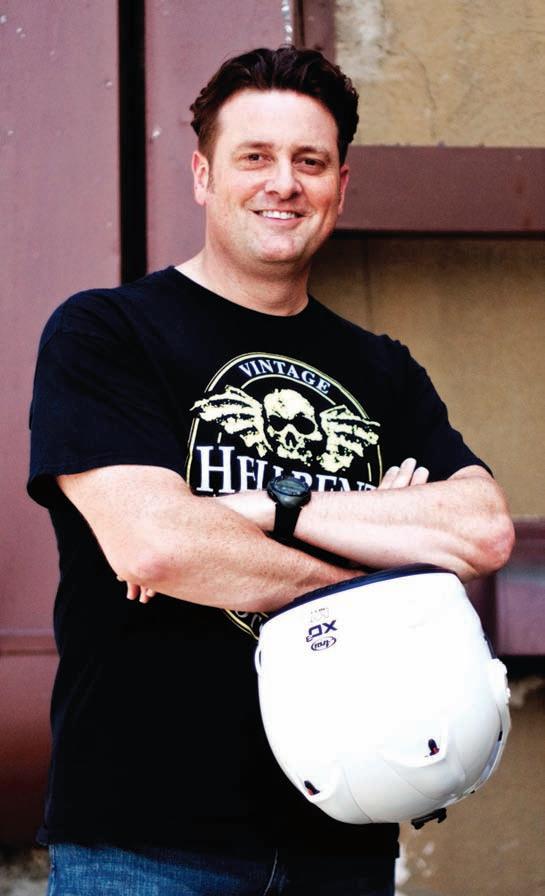
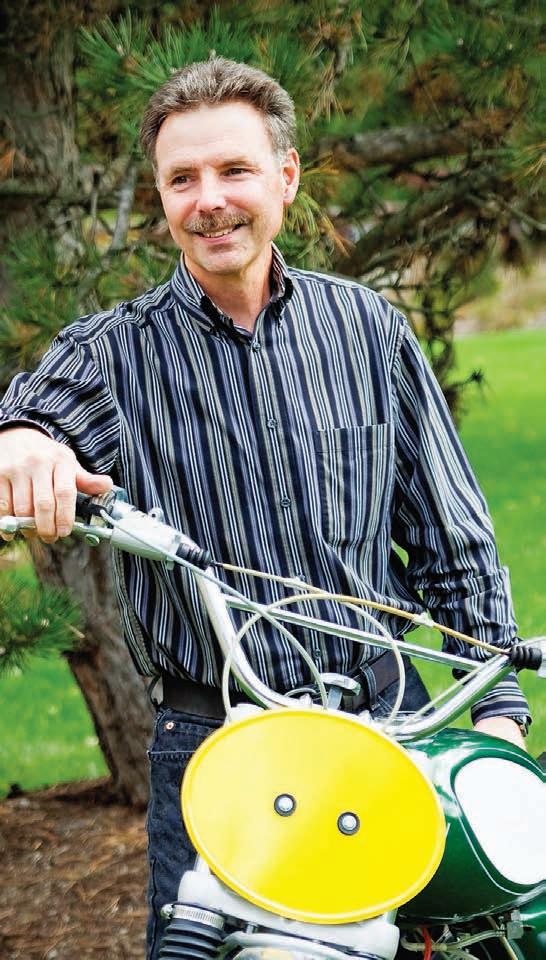
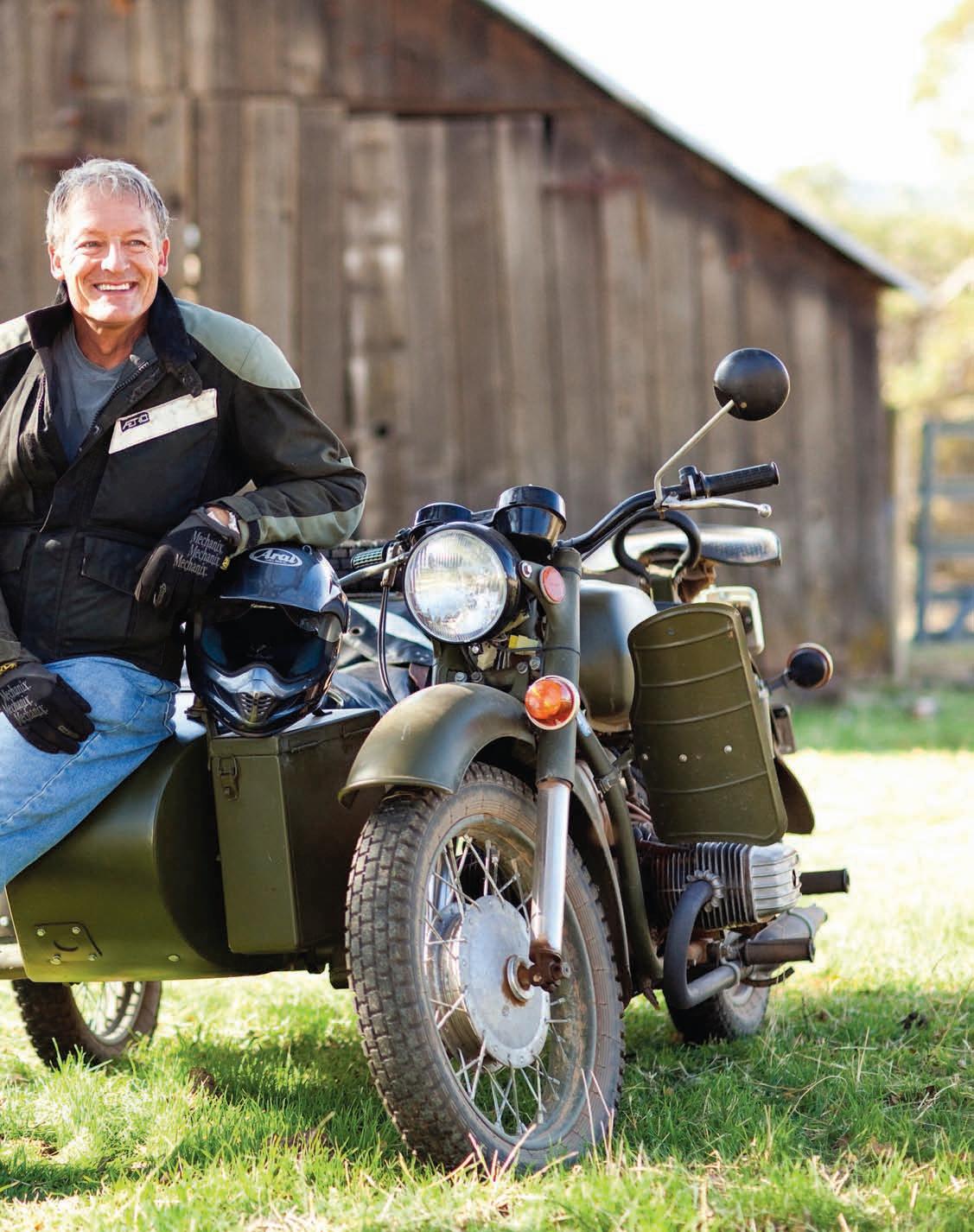
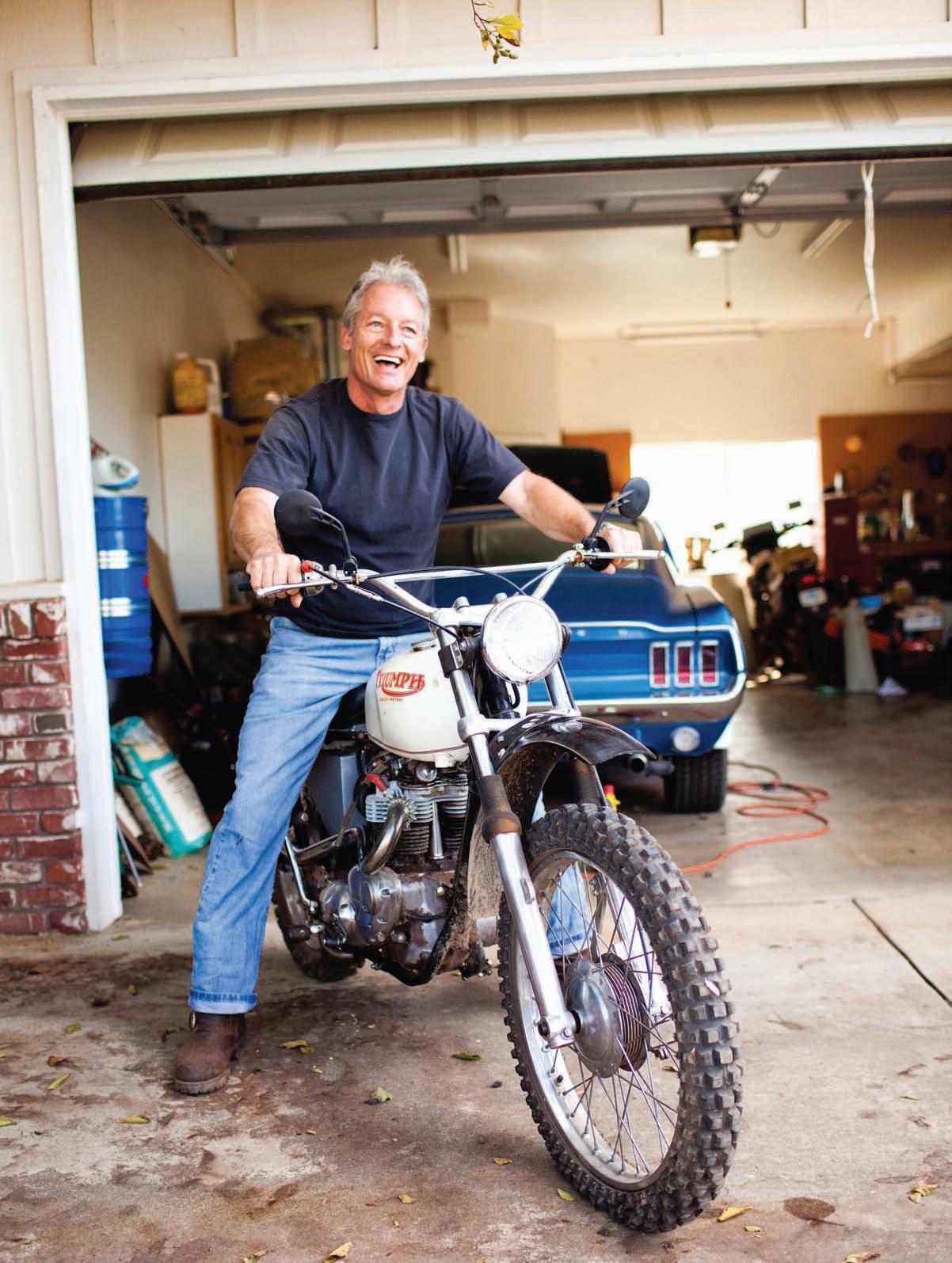
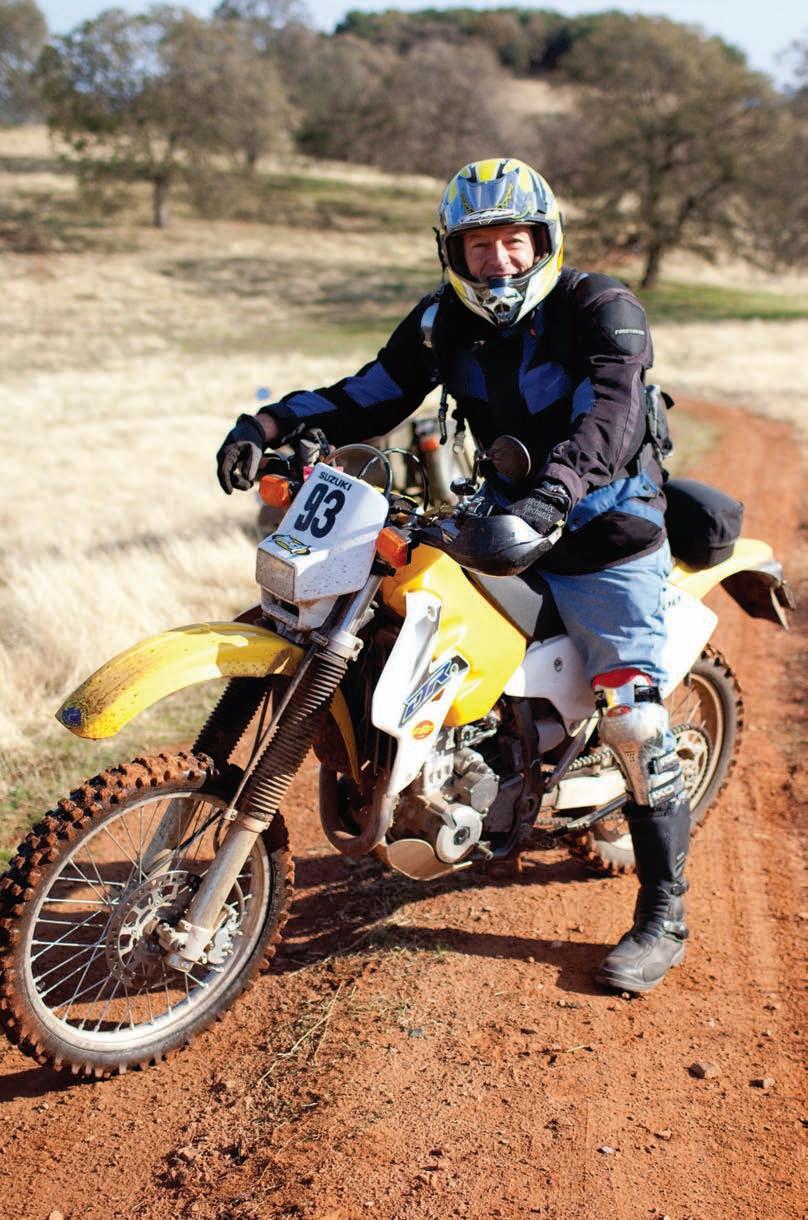
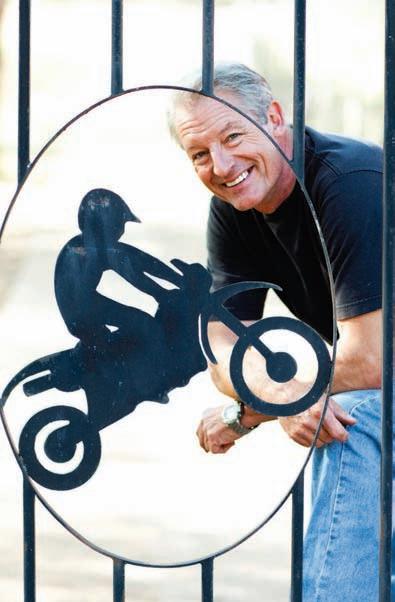
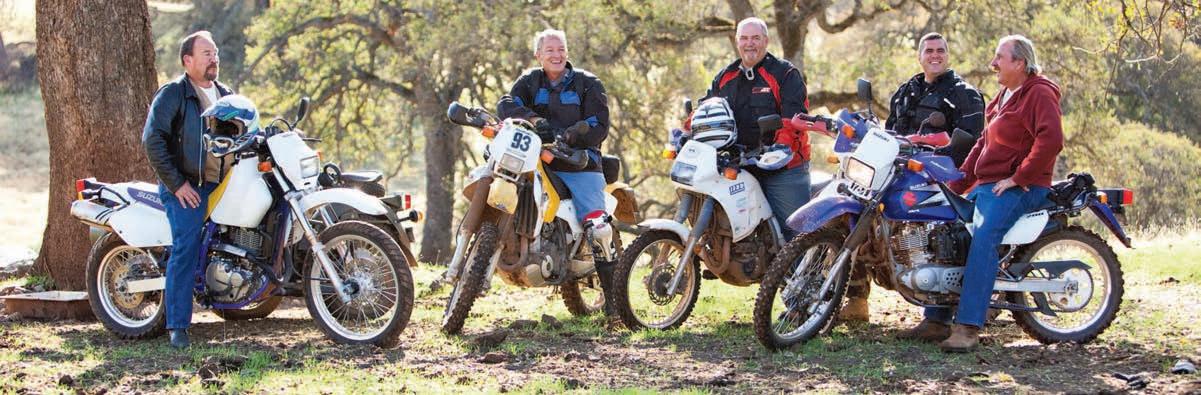
Actor. Motorcyclist. Perry King. P [ making a difference for motorcyclists everywhere. ]

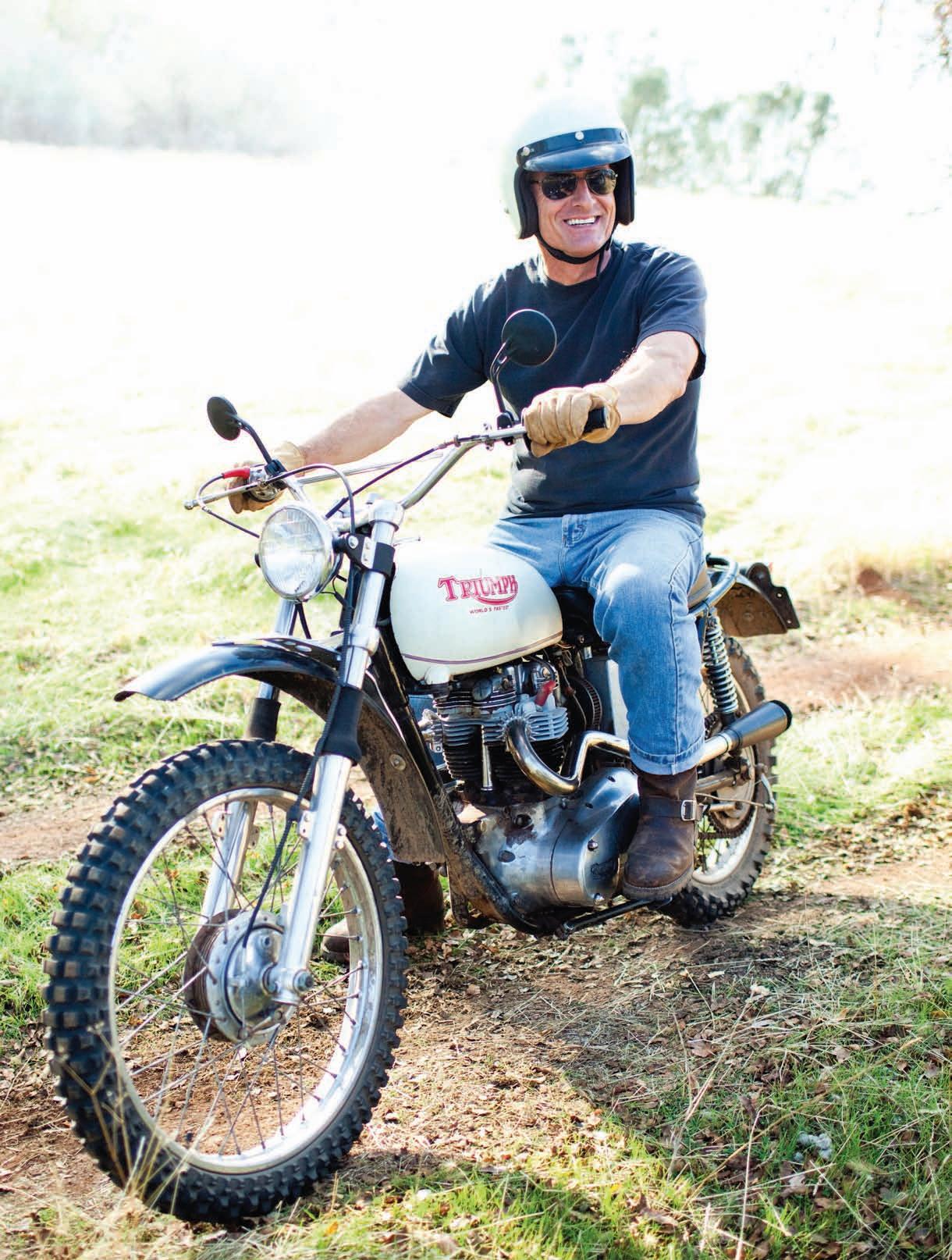




Actor. Motorcyclist. Perry King. P [ making a difference for motorcyclists everywhere. ]
There's nothing sweeter than customizing your equipment to match your own riding style and personality... you do it with your bike, now you can do it with your goggles. The Ally goggle offers modular components and multiple lens choices right out of the box, so you can set up your goggles to suit your style. With your choice of clear or mirrored smoke lens, removable nose guard, and interchangeable intake and exhaust vent inserts, the Ally can be customized to match your style and the track conditions.
Of course, there are some things you'll never want to change - like the thermal molded triple-layer face foam that soaks up sweat and provides a luxurious feel, or the ergonomic frame that's curved just right to allow increased field-of-vision while sitting snugly against your face for a superior seal.
The Ally Goggle... custom is clearly better.






















































































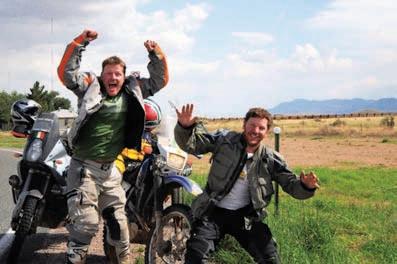
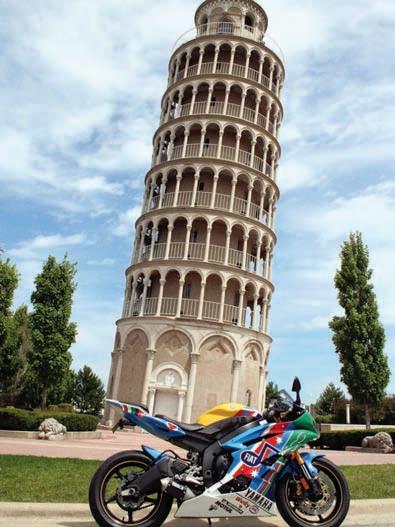
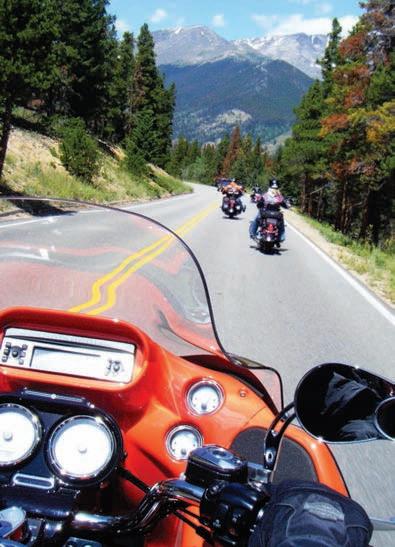
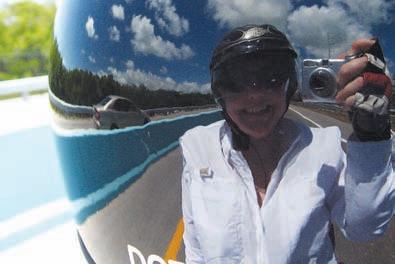
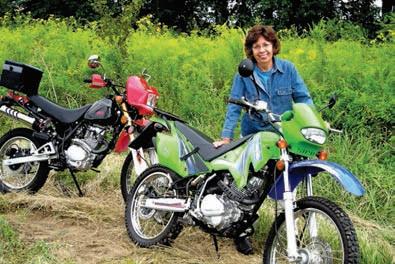
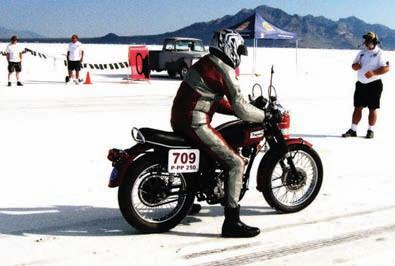
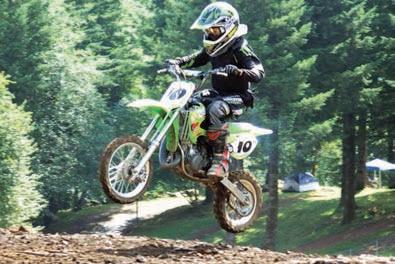
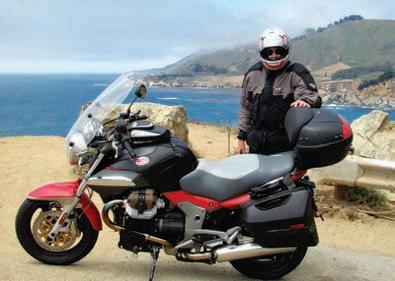
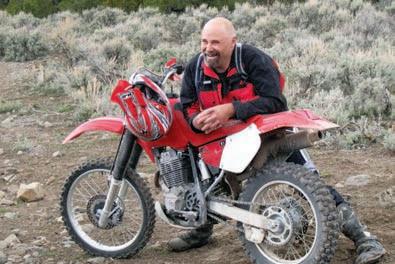
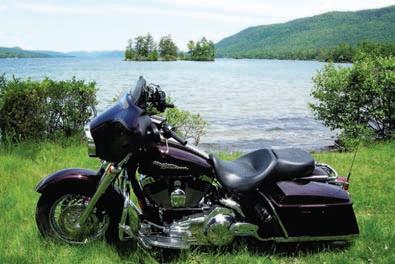
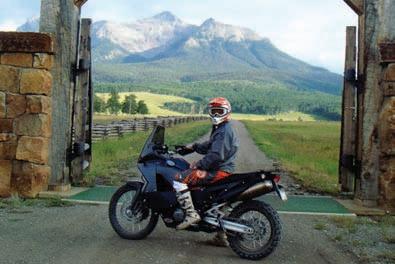
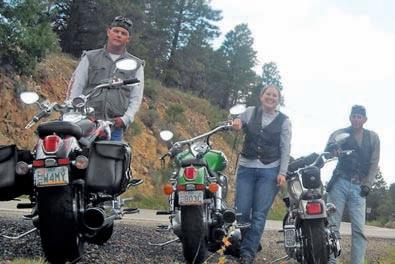
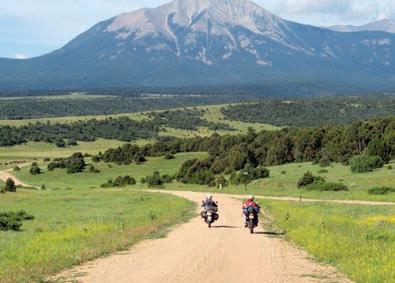
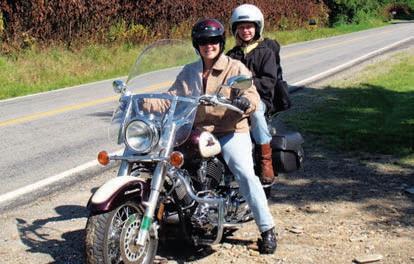
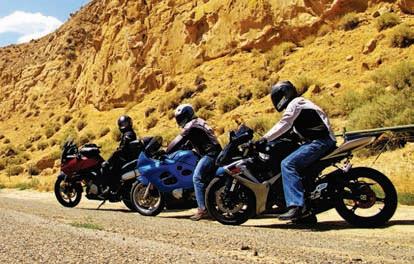
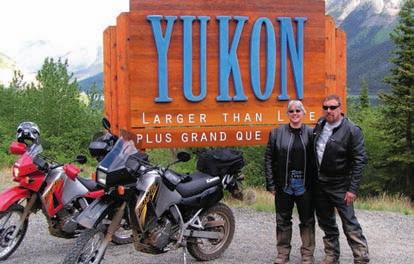
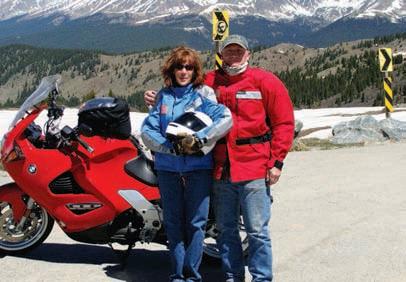
1) Brion Cooke (left) and his brother, Fiachra, in New Mexico while on a 3,400-mile, two-week ride. 2) Pete Jasinski’s Valentino Rossi-replaca Yamaha R6 in front of the replica Leaning Tower of Pisa in Skokie, Ill. 3) Linda Kelly took this photo while riding pillion with her husband, Michael, as they rode with six friends through the Rocky Mountain National Park in Colorado, riding 3,500-miles in 10 days. 4) Erin Groff self portrait. 5) Chuck Hansen ridea Utah. 6) Rebecca McMurdy and her daughter, Bethany. 7) Chris Kruger near Covington, Ind. 8) Tony Lisanti photo at Lake George, N.Y., during Americade. 9) Dana Locatell in Colorado. 10) 2007 AMA Road Rider of the Year Carl Bergman at the Bonneville Salt Flats in August when he set a speed record on his Triumph Trophy 250. 11) John Little outside Telluride, Colo. 12) (L-R) Tim Nguyen, Vanus Warren and Darin Heredia near Coalinga, Calif. 13) Ryan Richardson, 10, at Washougal in Washington. 14) Marty Stevens (left) and friends in New Mexico. 15) Tam and Bill Rodier. 16) Tom Culbertson in California. 17) Photo submitted by Ron Daniel. 18) Skip and Sarah Otto.
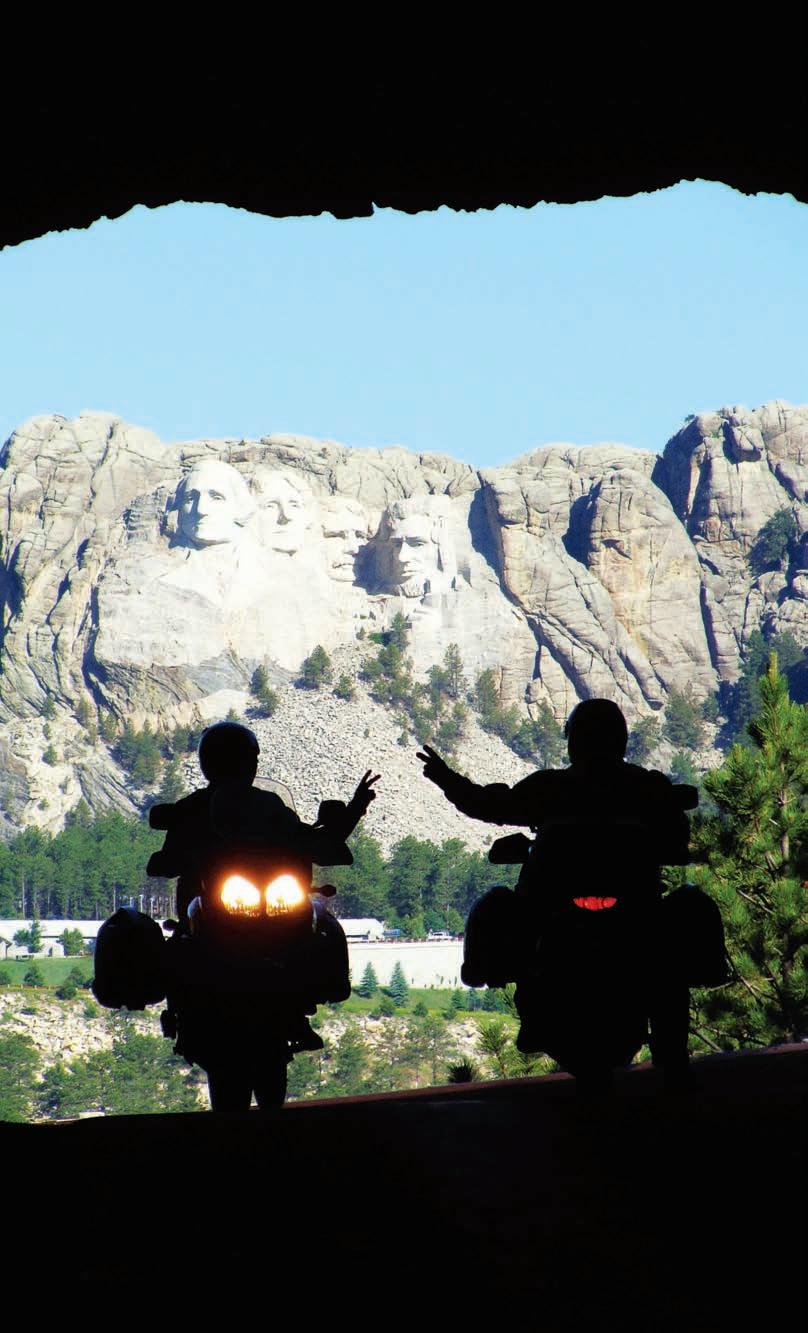
Congratulations Alex! You’re the winner this month! Alex Jamison captured his dad, Rob (facing Mt. Rushmore), and Thad Wolff at the North American V-Strom gathering in Rapid City, S.D. held June 26 - 29.
Got an image that represents what’s cool about motorcycling? Send your high-resolution photos, name and mailing address to submissions@ama-cycle.org. We’ll pick one standout photo next month and send the photographer a prize pack of AMA gear. Editors decisions are final. No purchase necessary.
There’s more where these came from! We get way more cool photos than we can publish here, and now you’ll find them all online, searchable and divided by category. Just visit AmericanMotorcyclist.com and click on the “Gallery” link on the left.









Editorial officEs
American Motorcyclist 13515 Yarmouth Drive Pickerington, OH 43147 (614) 856-1900 submissions@ama-cycle.org
Grant Parsons, Managing Editor
James Holter, Associate Editor
Bill Kresnak, Government Affairs Editor
Mitch Boehm, Contributing Editor
Mark Lapid, Creative Director
Nora McDonald, Production Coordinator
Jen Muecke, Designer
advErtisinG
Ray Monroe, Advertising Manager (815) 885-4445, rmonroe@ama-cycle.org

Misty Walker, Advertising Assistant (614) 856-1900, ext. 1267, mwalker@ama-cycle.org
All trademarks used herein (unless otherwise noted) are owned by the AMA and may only be used with the express, written permission of the AMA.
American Motorcyclist is the monthly publication of the American Motorcyclist Association, which represents motorcyclists nationwide. For information on AMA membership benefits, call (800) AMA-JOIN or visit AmericanMotorcyclist.com. Manuscripts, photos, drawings and other editorial contributions must be accompanied by return postage. No responsibility is assumed for loss or damage to unsolicited material. Copyright© American Motorcyclist Association, 2010.
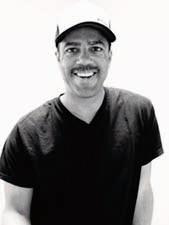












Molly carBon, Guest columnist Molly doesn’t just sit around and dream big—she goes out and lives big, as you’ll see in her guest column this month.
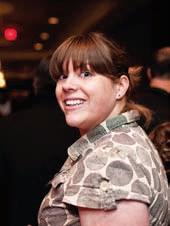
Holly carlylE, Photographer You’ve seen Holly’s work in this magazine plenty, with cover shoots of Neil Peart and Carson Daly. This month, Holly worked long hours with the rest of the AMA crew at the AMA Motorcycle Hall of Fame Induction Ceremony and AMA Racing Championship Banquet, producing her usual stellar images.
nora Mcdonald, Production coordinator Deep into wedding planning, Nora’s latest conundrum involves choosing wedding dresses based on how well they function while she’s riding a motorcycle. The rest of us are already planning on tying strings of cans on the back of the CB.
Bill KrEsnaK, Government affairs Editor Deep in training for his next dual-sport ride, Krez has lately been perfecting the $5, 2,500-calorie-a-day diet. Amazingly, pretty much all those calories come from lunch.
aMa Board of dirEctors
Contact any member of the AMA Board of Directors at www.AmericanMotorcyclist. com/whatis/trustees.asp
stan simpson, Chairman Cibolo, Texas
Jim Williams, Vice-Chairman Irvine, Calif.
Jon-Erik Burleson, Assistant Treasurer Murrietta, Calif.
Bill Werner, Assistant Secretary Brookfield, Wis.
John Ulrich, Executive Committee Member Lake Elsinore, Calif.
andy Goldfine, Duluth, Minn.
charles Goman, Winder, Ga.
Perry King, Northern California
Michael lock, Cupertino, Calif.
Maggie Mcnally, Albany, N.Y.
arthur More, Surprise, Ariz.
AMA-JOIN
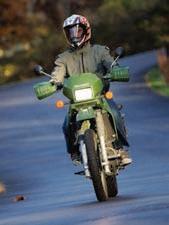
While the latest MotoGP installment is good, you can never beat the classics like “Road Rash,” which, chunky graphics aside, still rocks.
MarK laPid, creative director One of the great things about being a creative type is that you can do amazing things entirely inside your head—like meticulously restoring a CB160 into a full-on vintage racebike. In his mind, Mark has just got the engine back in the frame, and should soon be ready to fire it up and bask in the glow of a job well-done.
JEn MUEcKE, designer Milwaukee winters being what they are, Jen has managed to get a few rides in, but knows she’ll soon be sitting on her bike in the house, making “zoom” noises in between bouts of motorcycle racing DVDs.
JaMEs HoltEr, associate Editor James is remembering that changing a motorcycle tire is all technique. While swapping tires on his Yamaha 250F, he managed to pinch the tube an astounding four times. Yeah, it was a mess.
other contributors include: Matt Polito, Adam Campbell, Erin Lassahn, Grogan Studios, Number 9 Photography, Shannon Price, Neale Bayly, Adam Campbell, Jeff Kardas, Open Image Studio, Tom Bear, Steve Cox.








SCREW IT. LET’S RIDE.





THAT MIGHT NOT BE A HARLEY-DAVIDSON® MOTORCYCLE PARKED IN YOUR GARAGE. BUT THERE MIGHT BE ONE PARKED IN YOUR DREAMS. IF YOU’RE READY TO TURN THAT DREAM INTO REALITY, HARLEY-DAVIDSON IS PROUD TO ANNOUNCE THE COMPETITIVE BIKE EXCHANGE. WE’LL ACCEPT YOUR COMPETITIVE BIKE, AND PROVIDE $500 OVER THE TRADE-IN VALUE TOWARD THE PURCHASE OF A NEW H-D® MOTORCYCLE, UNTIL JANUARY 31ST, 2010. WE’VE GOT 34 DIFFERENT WAYS TO FULFILL YOUR DESTINY STARTING AT $6999.* DETAILS AT H-D.COM/TRADEIN.




































































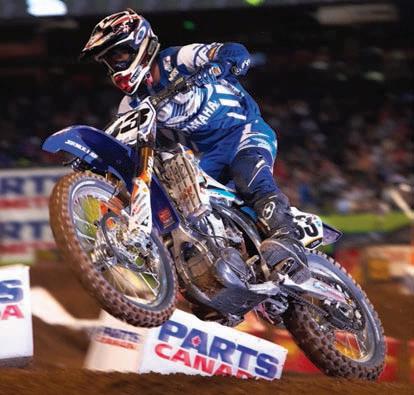
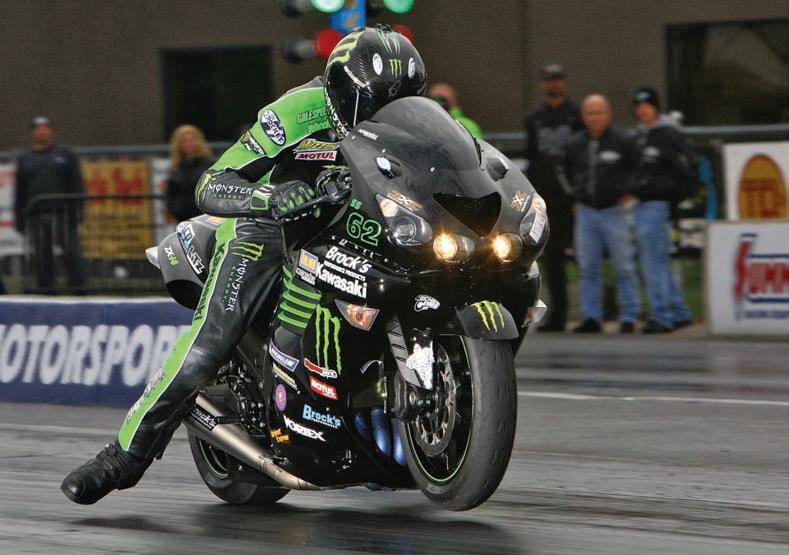
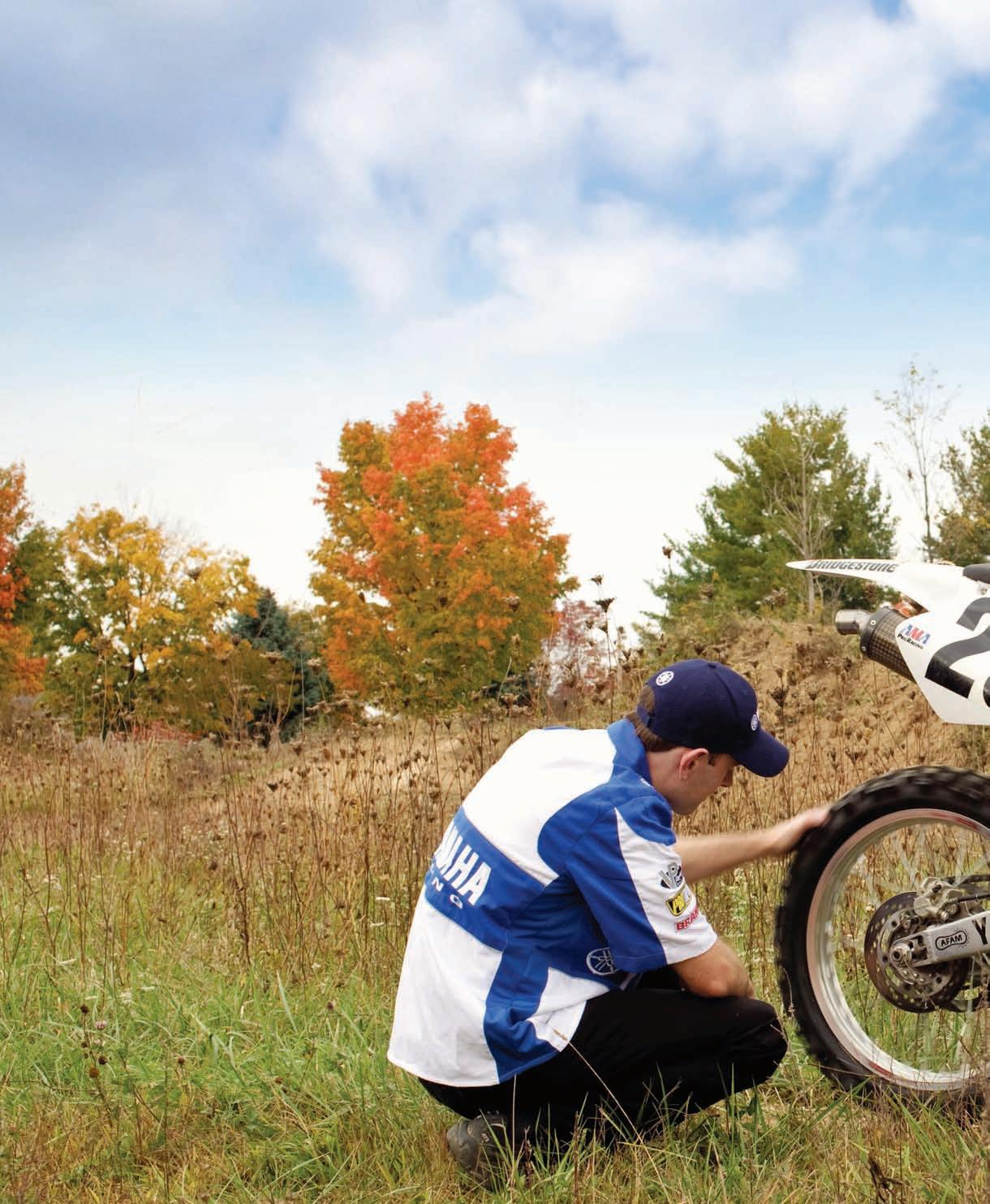
More than 40 years ago, Congress approved a survey of all public land and designated those areas that met the strict rigors of a specific new definition of “Wilderness.” So why do anti-access groups want to keep designating more? Simple: They want all motorized vehicles out.
You don’t have to let them win.
There are people in America who don’t want off-highway riding on public land, and they’ll stop at virtually nothing to accomplish their goals.
They’ll push legislation through Congress to shut down millions of acres of land, even though the elected representatives of the people affected most by the bill don’t like it.
They’ll even rewrite completely unrelated legislation to bar off-highway riding from millions of acres of public land, and then rush the bill through Congress for final approval in a matter of days without public debate.
If that doesn’t work, they’ll maneuver to get government bureaucrats to shut down areas to motorized recreation administratively—that is, with no one voting at all.
These days, anti-access forces are on the offensive like never before. And we riders are under attack.
When U.S. lawmakers gather in the halls of Congress early this year for another legislative session, among the issues they will be debating will be the future of offhighway riding in America.
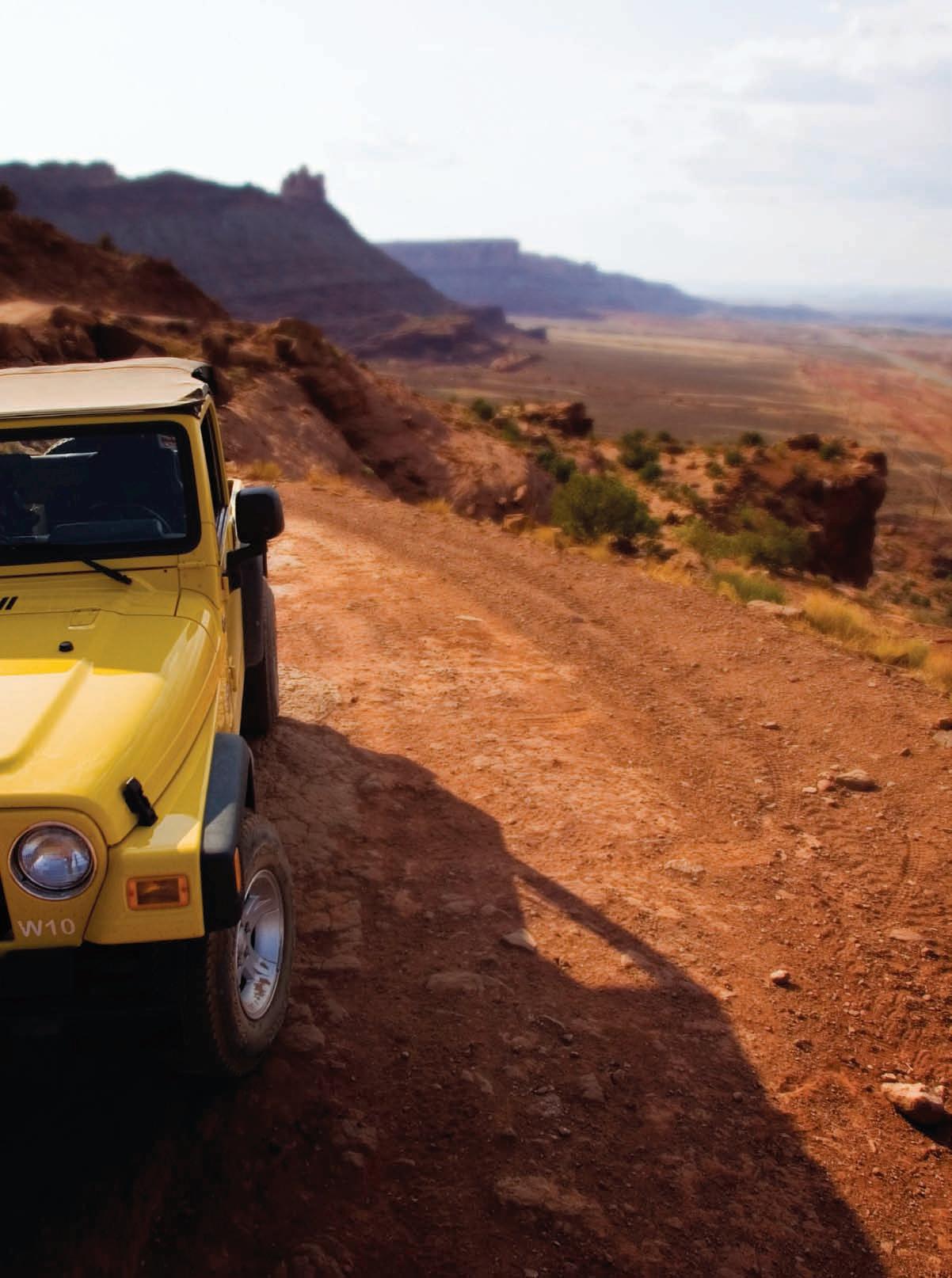
“The AMA supports appropriate Wilderness designations. But the groups pushing for these Wilderness designations are trying to make this public land their own private playgrounds,” says Ed Moreland, AMA vice president for government relations. “They want to block off-highway vehicle (OHV) riders from using any public land. They believe they are the only Americans who have the right to enjoy the outdoors.”
Those in the motorized recreation community who keep close tabs on antiaccess groups say those organizations are well organized, well funded and passionate in opposing OHVs.
“If these groups had their way, they would wipe OHVs off the face of the earth,” says Royce Wood, AMA government affairs manager. “They trot out celebrities in their public efforts, and work behind closed doors in their private efforts, to try to ban motorized recreation from public land.”
Brian Hawthorne, public lands policy director for the BlueRibbon Coalition (BRC), a national non-profit organization dedicated to preserving responsible
By Bill Kresnak
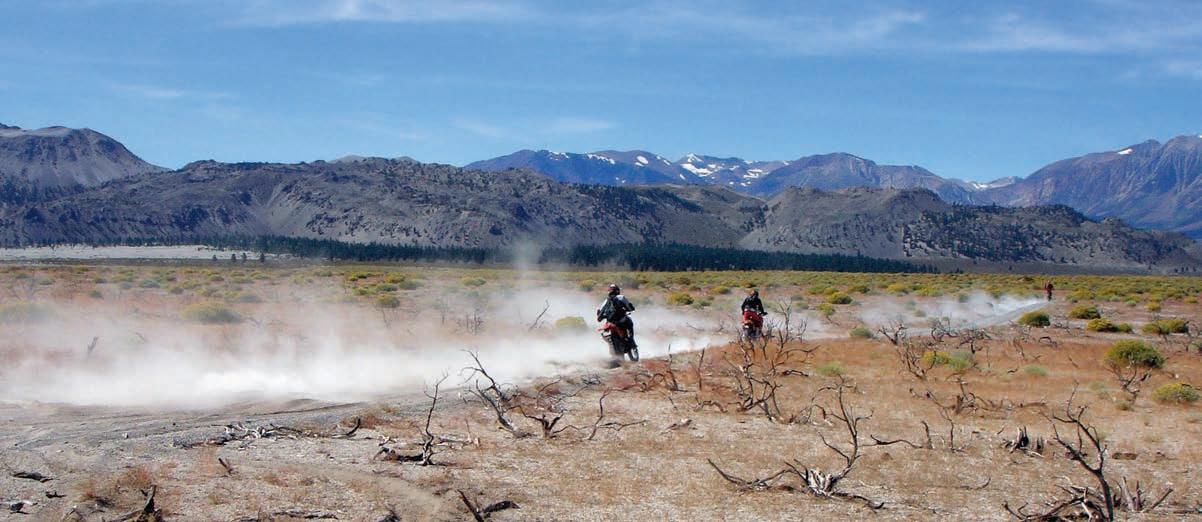
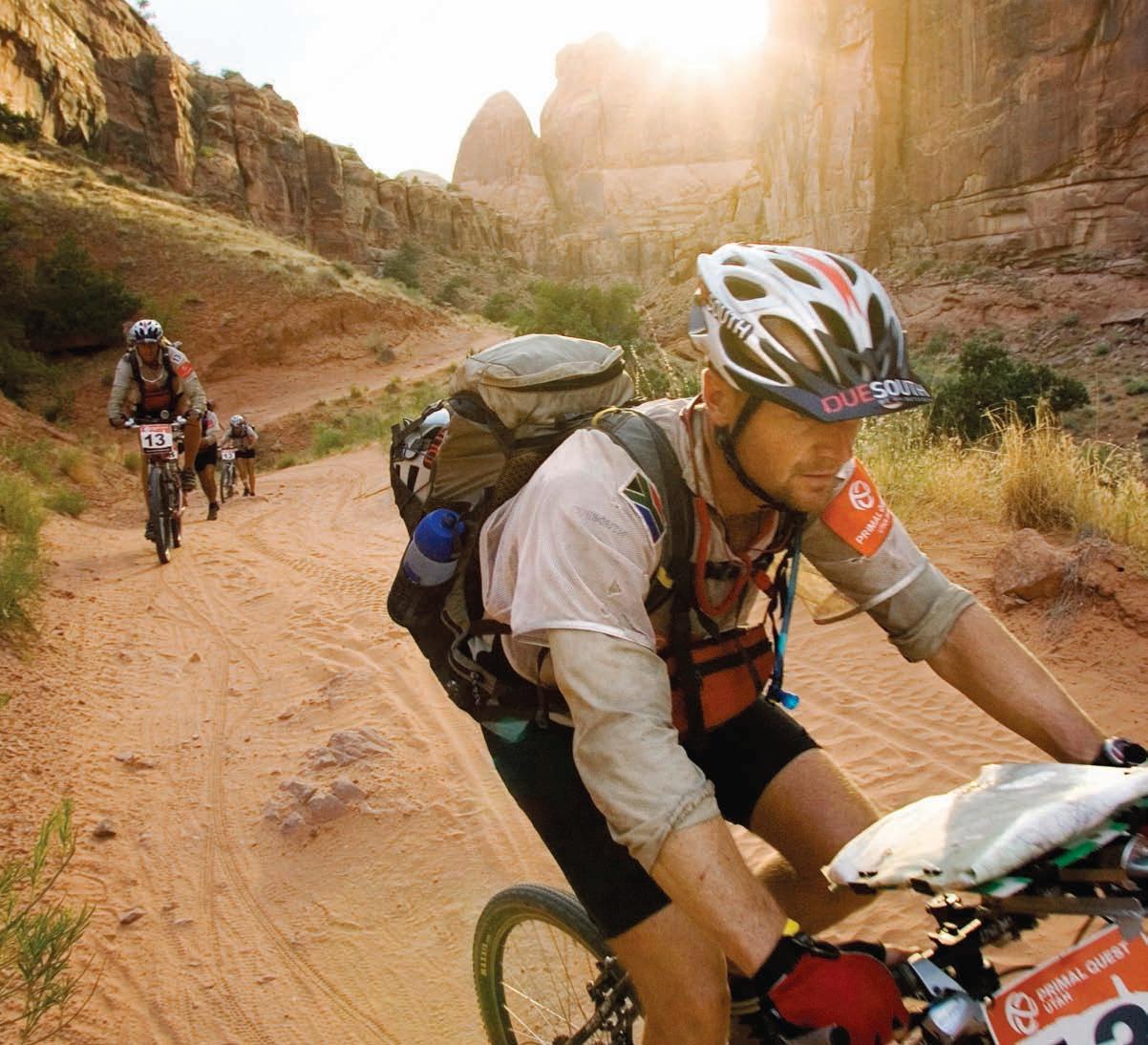
No matter how you enjoy federal lands—on four wheels or two, moto-powered or pedal-powered —anti-access groups want you out. Designating land as ‘Wilderness’ is their tool to make that happen.
recreational access to public land (www. ShareTrails.org), says the anti-access groups are well-oiled because they have millions of dollars flowing into their coffers.
“They derive a majority of their funding from a common source—coordinated grants from charitable organizations— and this helps all of the various groups coordinate,” Hawthorne says.
“For OHV users, there is no sugar daddy, no foundation, no government grants,” he says. “Although the manufacturers are doing a lot more, especially in recent years, the overwhelming majority of the funding available to counter the extremists comes directly from memberships and donations from individual OHVers.”
Dan Kleen, president of the National Off-Highway Vehicle Conservation Council (NOHVCC) that develops and provides a wide variety of programs to foster responsible OHV recreation (www.nohvcc. org), says the anti-access groups use an unfair tactic that’s difficult to counter.
“Unfortunately, one of their tactics is to throw out unproven accusations of damage and/or environmental concerns, leaving it up to us to prove them wrong,” Kleen says. “These tactics are a real threat to the future of our off-highway vehicle riding opportunities.”
The Anti-Access Groups’ Major Weapon
Anti-access forces are currently trying to bar off-highway riders from some 35 million acres of public land. How? By trying to get that land designated as
federal Wilderness, which would impose a variety of restrictions, including banning off-highway motorcycles, all-terrain vehicles (ATVs), mountain bikes and even landings by aircraft.
Wilderness designations, because of their ban on roads, motorized vehicles and such, don’t just impact off-highway riders and mountain bikers. They also create problems related to clearing dead wood from forests to prevent fires, protecting towns from wild fires and managing water, among other things.
Only Congress can designate land as Wilderness. Legislation calling for land to be designated as Wilderness is possible because of the National Wilderness Act of 1964. The law is intended to preserve land that “generally appears to have been affected primarily by the forces of nature, with the imprint of man’s work substantially unnoticeable.” That means no roads, power lines, buildings, bridges, or dams.
After that law was passed, there was a nationwide survey of public land to determine what land qualified. The survey led to congressional approval of Wilderness areas around the nation.
Since 1964, Congress has designated about 107 million acres of public land as Wilderness, barring motorized recreation. That’s an area bigger than California.
Now, anti-access forces are making a renewed push to get even more areas designated as Wilderness—even if those areas aren’t the pristine, untouched land envisioned and strictly defined by the
“There is no threat to these lands. Much of the Wilderness debate has become simply an acre hunt.”
Brian Hawthorne, public lands policy director for the BlueRibbon Coalition
1964 National Wilderness Act.
While there are several bills alive in Congress to designate some 35 million acres of public land as Wilderness, there are more proposals in the wings, waiting for sponsorship. And lawmakers in 2009 pulled some political sleight-of-hand to shut down more than 2 million acres by declaring it Wilderness through a byzantine bait-and-switch of unrelated legislation.
Moreland doesn’t want that to happen again.
“What was most alarming about this particular land grab was that the Senate leaders who were in charge of steering this bill subverted what is supposed to be an open process to push legislation through Congress quickly and without the opportunity for full public input and congressional debate,” he says. “This is not the way to produce thoughtful legislation, and we need to let lawmakers know that these kinds of legislative manipulations are simply unacceptable.”
Russ Ehnes, NOHVCC executive director, says it is no coincidence that there are “a wide variety of bills ranging from the wildly absurd bills like the Northern Rockies Ecosystem Protection Act to small locally driven bills” in the hopper.
“The strategy is clear: the absurd bills... serve one purpose—they make the smaller, locally driven bills look ‘reasonable’ by comparison,” Ehnes says. “But make no mistake, the small bills can devastate our riding opportunities, and in
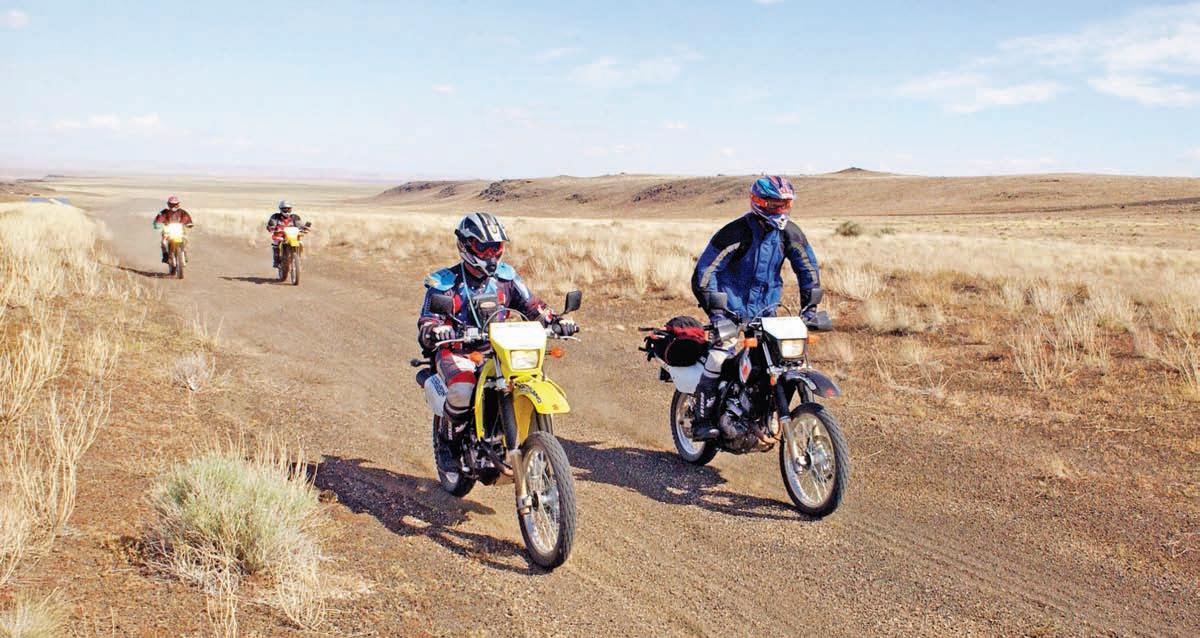
the current political climate they have a real chance of being passed.”
24 Million Acres: Going, Going...
One of the most shocking anti-access efforts under way right now involves H.R. 980: The Northern Rockies Ecosystem Protection Act, which would designate as Wilderness some 24 million acres of public land in Idaho, Montana, Oregon, Washington and Wyoming.
That’s an area the size of Connecticut, Delaware, Massachusetts, New Hampshire, New Jersey, Rhode Island and Vermont combined.
What makes this effort so outrageous is that it doesn’t even come from a lawmaker in an affected state. It was introduced by U.S. Reps. Carol Maloney (D-N.Y.) and Raul Grijalva (D-Ariz.), who also happens to chair the Natural Resources Committee’s Subcommittee on National Parks, Forests, and Public Lands.
“Rep. Maloney, who represents a part of New York City, should leave the management of public land in western states to those who represent the people who live in western states,” Moreland says. “This just goes to show how far anti-access forces will go to accomplish their goal of banning people from public land. They can’t get a lawmaker from one of the affected states to introduce the bad legislation, so they went to someone clear across the country.”
The U.S. House Subcommittee on National Parks, Forests and Public Lands held a hearing on the legislation, and the AMA was among those submitting testimony against it.
“Our public lands are for the enjoyment of all Americans—not just an elite few who would have you build a fence around them for those who are physically able to enjoy them,” Moreland said in the testimony. “Enthusiasts who enjoy the public lands of our nation are not just the nimble and fit, but also families with small children who wish to recreate together, as well as active senior citizens and the handicapped who enjoy the freedom to access the outdoors that OHVs and ATVs provide.”
Among opponents is Wyoming Democratic Gov. Dave Freudenthal, who wrote to U.S. Rep. Cynthia Lummis (R-Wyo.): “I have no doubt that the sponsors of H.R. 980 are well-intentioned. But even the best of intentions, when illconceived and poorly informed, can have a devastating impact on those of us that must live and work in their wake.
“Please communicate to your colleagues that this legislation should be soundly defeated in the event it is even granted further hearing,” he wrote. Lummis called the proposal a
Wilderness is a nonpartisan issue. There are lawmakers on both sides of the aisle who are on both sides of the debate. Riders need to let their federal lawmakers of all political stripes— Democrat, Republican or Independent—know they enjoy motorized recreation and want a full public discussion, with citizen input, before any more land is designated as Wilderness.
Representatives of national public land-access groups—the people on the front lines fighting for your right to ride, including AMA Vice President for Government Relations Ed Moreland, AMA Government Affairs Manager Royce Wood and the rest of your AMA government relations staff—all agree on measures you should take to help in the battle:
Contact your federal lawmakers by going to AmericanMotorcyclist.com > Rights > Issues & Legislation. There, you can find the names of the members of your congressional delegation, as well as their addresses and telephone numbers, and you can let them know how you feel. You can also send a letter from the website. Individuals are urged to sign up for the AMA Government Relations Department’s Action E-list to be notified by e-mail when their support is needed to make a difference.
“recycled” mess that has failed to pass the House or the Senate over the years.
Some of the sharpest criticism comes from U.S. Rep. Denny Rehberg (R-Mont.). The proposal, he says, “models its philosophy for 24 million acres of land after the approach taken in the 843 acres of Central Park. Look, but don’t touch. This approach may work in Manhattan, New York, but it doesn’t work in Manhattan, Montana.”
He adds: “This is about Washington, D.C., thinking it knows how to manage the Northern Rockies better than the people who live there.”
U.S. Rep. Maloney isn’t the only New Yorker who wants to close off vast amounts of western land to off-highway riders. U.S. Rep. Maurice Hinchey (D-N.Y.) sponsored H.R. 1925—America’s Red Rock Wilderness Act of 2009—which would close 9.4 million acres in Utah.
Hinchey is working overtime to close these riding areas. At the same time that he is pushing the bill in Congress, he is also attempting an end run, asking government bureaucrats to use their administrative power to close the land.
The legislation, if approved, would close forever areas around Moab, the San Rafael Swell and Chimney Rock. These are popular riding areas for OHVers
and certainly don’t meet the definition of land that “generally appears to have been affected primarily by the forces of nature, with the imprint of man’s work substantially unnoticeable” as required by the National Wilderness Act.
“It’s unfortunate that Rep. Hinchey would attempt to bypass congressional procedures to put into motion the intentions of a bill that lacks the support of even one representative from the state that bill would impact,” Moreland says. “This attempt is even more shocking given that much of the land in question doesn’t even meet the definition of Wilderness included in federal law.”
U.S. Sen. Orrin Hatch (R-Utah), who has served the people of Utah for more than 30 years, calls the legislation a “monument to a failed approach to Wilderness designation.”
Addressing the U.S. House Resources Subcommittee on National Parks, Forests and Public Lands, Hatch called the bill the work of special-interest groups who seem more intent on raising money than producing more Wilderness.
He also noted none of the bill’s sponsors or cosponsors is from Utah, and added they have neglected to consult with Utahns, the very people who would be most impacted by legislation.
“The authors of the legislation were careful to name it ‘America’s Red Rock Wilderness Act,’ not ‘Utah’s Red Rock
Wilder mor Register to vote, and vote accordingly.
Wilderness Act,’ even though the bill’s only purpose is to designate more than onesixth of my state as formal Wilderness,” Hatch said. “According to the authors of this legislation, Utahns have no special claim to those 9 million acres within our state’s boundaries. After all... ‘those are federal lands, and they belong to all Americans,’ they argue.
“Well, there may be some truth to that point of view, but it’s an intentionally simplistic view, and any member of Congress with federal lands within his or her district will quickly recognize that,” Hatch said.
“And I would be surprised if there were many members of Congress who would not take at least some offense at a proposal to set aside a sixth of their state or district without their consultation or input,” he said.
Adding his voice to the bi-partisan opposition to the proposal is U.S. Rep. Jim Matheson (D-Utah), who says: “In Utah, there is probably no more contentious public lands issue than the establishment of Wilderness areas. Much of Utah is land that has wild character. But discussions about Wilderness in Utah have usually taken on a polarized dynamic that has led to a great amount of emotional rhetoric and very little progress.”
Matheson notes that recent Wilderness designations in Utah have resulted from a collaborative, inclusive process where
all stakeholders’ views were considered. He says that bipartisan Wilderness bills involving Oregon, Idaho and Colorado have become law through a consensusdriven process.
“Wilderness needs to be home-grown,” he says. “It cannot be the work of only one group of stakeholders, no matter how extensive or sincere.”
With powerful opposition from the entire Utah congressional delegation and its governor, and the fact that this proposal has never come up for a vote in the past 20 years that it has been pushed in Congress, Hinchey and 88 other U.S. representatives sent a letter to U.S. Interior Secretary Ken Salazar asking him to administratively “step in and temporarily protect these lands.” Effectively they want to prohibit access without congressional approval to do so.
People who want to shut riders out of public land are already working on new battlegrounds.
The Hidden Gems Wilderness Campaign, a project of the White River Wilderness Coalition, is pushing to designate more than 400,000 acres in Colorado’s White River and Gunnison National Forests, as well as some nearby federal Bureau of Land Management land, as Wilderness, which would block any offhighway riding or even mountain biking.
The coalition has a massive public
relations campaign currently under way in Colorado to try to gather support. Even a local U.S. Forest Service supervisor says the Hidden Gems proposal is a bad idea.
The Forest Service studied the area before and determined in 2002 that only 82,000 acres could even qualify as Wilderness, and certainly not the more than 400,000 acres that’s proposed.
White River National Forest Supervisor Scott Fitzwilliams told the Glenwood Springs (Colo.) Post Independent that Wilderness designations should be used only for areas that truly qualify for the designation, otherwise the special quality of Wilderness is lost.
Fitzwilliams is referring here to the very strict definition contained in the Wilderness Act of 1964 that requires the land to be pristine. The law states that the land must be “an area where the earth and its community of life are untrammeled by man.”
“We could make (all forest lands) Wilderness and the issues are still right here, the ones that are really going to monumentally change the characteristics and natural resources of the valley—like (bark beetles) and the huge fuel build up, development of private land and conservation of open spaces,” Fitzwilliams told the newspaper.
Those pushing the Hidden Gems proposal are shopping the idea but haven’t secured a congressional sponsor, yet.
Moreland suggests other, more
Here are major Wilderness bills being considered in Congress that would bar motorcyclists from some 35 million acres of public land. H.R. designates the House version, and S. designates the Senate version. The AMA’s position on the bill is noted.
H.R. 192: Central Idaho National Forest and Public Land Management Act would designate more than 300,000 acres as Wilderness in the Sawtooth and Challis National Forests and in the Challis area. Conveys 1,000 acres near Boise, Idaho, from the federal Bureau of Land Management (BLM) to the state for a motorized park. The AMA opposes this because it will designate the prime areas for riding as Wilderness and the OHV community is left with a yet-to-be-designated area as a trade off.
H.R. 170, S. 183: Domiguez-Escalante National Conservation Area and Dominguez Canyon Wilderness Area Act would designate 66,280 acres in Mesa, Montrose, and Delta Counties in Colorado as Wilderness, to be known as the Dominguez Canyon
Wilderness Area, and about 210,000 acres as the DominguezEscalante National Conservation Area to be managed as part of the National Landscape Conservation Area. The AMA opposes this because it restricts OHV use to only a few designated roads and trails in the Conservation Area.
H.R. 765: The Nellis Dunes National Off-Highway Vehicle Recreation Area Act would convey 1,150 acres of federal BLM land to Clark County, Nev., for use as the Nellis Dunes National OffHighway Vehicle Recreation Area. The AMA supports this.
H.R. 980: The Northern Rockies Ecosystem Protection Act would designate more than 24 million acres of public land in Idaho,
!Join a local, state and national OHV group, such as the AMA. “More members means more political clout,” says Ed Moreland, AMA vice president for government relations. “If every AMA member got just one additional rider to join, that would go a long way in the fight against anti-access groups.”
appropriate ways to manage the land than by applying restrictive Wilderness designations.
“There are plenty of land-use designations that could be used that would allow land managers to conserve the land while, at the same time, accommodate users,” he says. “Just closing off the land is poor management, and a disservice to the public.”
Hawthorne agrees, and says that is the case with most, if not all, of the Wilderness proposals now in Congress.
“There is no threat to these lands,” Hawthorne says. “Much of the Wilderness debate has become simply an acre hunt.” A lot of the land “is very remote and not experiencing much in the way of recreational pressure.”
“I have no doubt that the sponsors of H.R. 980 are well-intentioned. But even the best of intentions, when ill-conceived and poorly informed, can have a devastating impact on those of us that must live and work in their wake.”
Wyoming Gov. Dave Freudenthal
(D),
in response to a Wilderness bill
Plus, new U.S. Forest Service plans are very restrictive, reducing all human access in certain areas anyway, he says.
In Congress, anything can happen. Antiaccess forces can get their way quickly.
In March, Congress fast-tracked a law to shut OHVs out of 2.1 million acres of public land in six days. No public input was allowed on the issue. The AMA and others worked hard to defeat the bill in the House by a single (based on twothirds majority of those present) vote of 282 to 144. What happened next was disappointing, to say the least.
Using political sleight of hand, U.S. Sen. Harry Reid (D-Nev.) took a bill entitled The Revolutionary War and War of 1812
Montana, Oregon, Washington and Wyoming as Wilderness or Wilderness Preservation System land. Affected areas include Glacier/ Northern Continental Divide, Yellowstone, Salmon/Selway, Cabinet/ Yaak/Selkirk, Hells Canyon, Islands in the Sky and Blackfeet. The AMA opposes this because it will make 24 million acres of public land off-limits to OHV riders without officials being required to demonstrate that all that land meets the legal definition of Wilderness.
H.R. 1925, S. 799: America’s Red Rock Wilderness Act of 2009 would designate 9.4 million acres of public in Utah as Wilderness. Areas affected include the Great Basin, Zion and Mojave Desert, Grand Staircase-Escalante, Moab-La Sal Canyons, Henry Mountains, Glen Canyon, San Juan-Anasazi, Canyonlands Basin, San Rafael Swell and Book Cliffs and Uinta Basin. The AMA opposes this sweeping because it closes popular OHV riding areas, including spots in Moab, the San Rafael Swell and Chimney Rock, among others.
Battlefield Protection Act and then added the language from the already-Houserejected Omnibus Public Lands Act—a 1,300-page bill that was the combination of 170 land measures.
Suddenly, The Revolutionary War and War of 1812 Battlefield Protection Act would designate as Wilderness more than 2.1 million acres in nine states, shutting out off-highway riders. Reid added a 1,300-page amendment to a two-page bill that had nothing to do with it.
When the Omnibus Public Lands Act was rejected by the House earlier, U.S. Rep. Rob Bishop (R-Utah), a leading opponent, called it a poor product of a poor process.
“It would have cut off reasonable access for a whole host of activities on our
Become active in your community’s governance. “Local citizens need to understand that those who recreate on public land are environmentalists too,” Moreland says. “We are stewards of the land. We recreate there because we love it. It’s important not to cede the argument that only anti-access forces can be environmentalists. Help your community understand that thoughtful and active management of public lands will allow and, indeed, encourage, responsible multiple use.”
public lands,” he said.
Senators can count votes, and knew they couldn’t get the revived bill approved if it needed a two-thirds majority in the House. Since the Revolutionary War and War of 1812 Battlefield Protection Act had already passed the House it had “preferential status”—meaning the amendments added by the Senate would only need a simple majority vote in the House, not a two-thirds vote. In layman’s terms, the Senate leadership now only had to get a simple majority of 218 House votes instead of the two-thirds majority of those present needed before.
Despite complaints from lawmakers that they hadn’t even seen many of the proposals in the bill, and complaints about the procedure used, the measure passed the Senate and then the House. President Barack Obama then signed it into law.
“The parliamentary maneuvers used on this bill were clearly aimed at winning passage of a bill that had already failed by conventional means,” Moreland said. “The Senate leadership changed the rules halfway through the game. The result was that outdoor recreationists’ concerns were ejected from the process.”
The bottom line, Moreland says, is that there are ways to properly plan for existing and future uses of public public land without designating it as Wilderness and locking out most Americans.
“We can’t afford to let the anti-access groups win this battle,” says Moreland. “We need to ensure that riders’ voices are heard. Every one of us has to contact our U.S. lawmakers and let them know the importance of responsible motorized recreation for us and for our children, for now and for the future.”
Responsible recreational groups are working with land managers nationwide to provide for the multiple use of public land without user conflicts, he says. Simply applying a Wilderness designation, instead of actively managing federal land wisely and thoughtfully, short-circuits that process.
The AMA’s Wood notes: “In many cases, we are seeing Wilderness designations being proposed for areas that have no business getting the designation. This is a reflection of a lack of imagination, leadership and willingness to allow for proper multi-use management.”
Moreland agrees.
“Land must be actively managed,” he says. “Active management is so much more than hanging a sign on a fence that reads: ‘Closed.’ Let those users living in a state decide what’s best for their land. Let responsible recreational groups work cooperatively.” •
The Wilderness Act of 1964 states that to earn a Wilderness designation the land must be “an area where the earth and its community of life are untrammeled by man,” and that “generally appears to have been affected primarily by the forces of nature, with the imprint of man’s work substantially unnoticeable.”
That means no roads, no dams, no power lines, no houses, no bridges—nothing that shows human involvement with the land. The AMA wholeheartedly supports that definition of Wilderness.
“Pristine land should be protected for current and future generations,” says Ed Moreland, AMA vice president for government relations.
“Public land that meets the strict criteria of the Wilderness Act deserves to be protected. But we have to be careful to protect the land for future generations and not from future generations. The way to do that is to use the designation process prudently,” he says.
“Public land that can’t meet the strict requirements of the Wilderness Act should be governed by another equally forceful federal law—the Multiple Use-Sustained Yield Act of 1960 that serves as a road map for federal public land managers,” he says.
“That law encourages a wide variety of activities, provided that
they take place in harmony with natural resource values,” he adds.
The AMA supports responsible recreational access to public land that doesn’t deserve to be designated as Wilderness. The AMA believes this access should be administered by professional land managers to meet the needs of participants, protect the land and promote responsible use.
While the AMA recognizes that no single recreation type is appropriate for every setting, there are certainly many places where OHV use can—and does—exist in harmony with other uses while preserving important natural and cultural resources, Moreland says.
The AMA supports actions by land managers and local jurisdictions to protect access to historic and established routes of travel into and across public lands.
“An important point for everyone to remember is that off-highway riders are environmentalists as well. We enjoy the outdoors, outdoor recreation, and care deeply for the land,” Moreland says.
“We believe that reasoned, active management of public land is the best way to protect the land, and the best way for all Americans to be able to enjoy this treasured resource,” he says.
The best way to protect America’s land is for all interested parties to work together, he says.



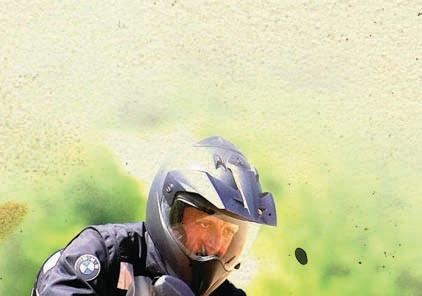
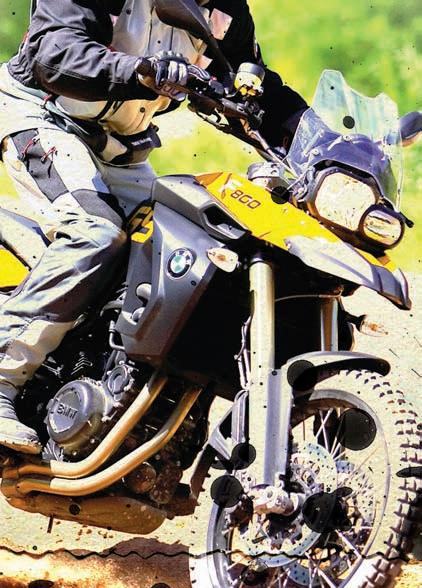











At BikeBandit.com, we think our staff should know what they’re talking about.
So we don’t just hire order takers, we hire riders. Riders like Brandon, who’s earned multiple certifications from the Motorcycle Mechanics Institute.
It’s one more way we make sure you get the right part on time ... every time. 70,000 customers a day choose BikeBandit.com for parts and accessories. Log on or call us today to find out why.



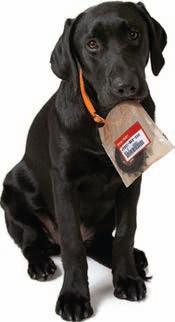

– Bandit, Director of Rapid Retrieval




TRIP INTERRUPTION COVERAGE. One thing Charlie St. Clair, Executive Director of Laconia Motorcycle Week, knows is the road can be pretty rough if your bike breaks down. That’s why Progressive offers Roadside Assistance for only $10 a year and Trip Interruption Coverage, which helps pay for places to stay and living expenses due to mishaps, for only $5 more.* This way, anywhere you are in the country, you’re covered. Call 1-800-PROGRESSIVE or call an independent agent. has been riding to rallies since 1972. covers each trip, there and back.