July - August 2026




americanmeditation.org The Journal of Yoga Science as Holistic Mind/Body/Spirit Medicine Celebrating 30 Years of Service (1996-2026)





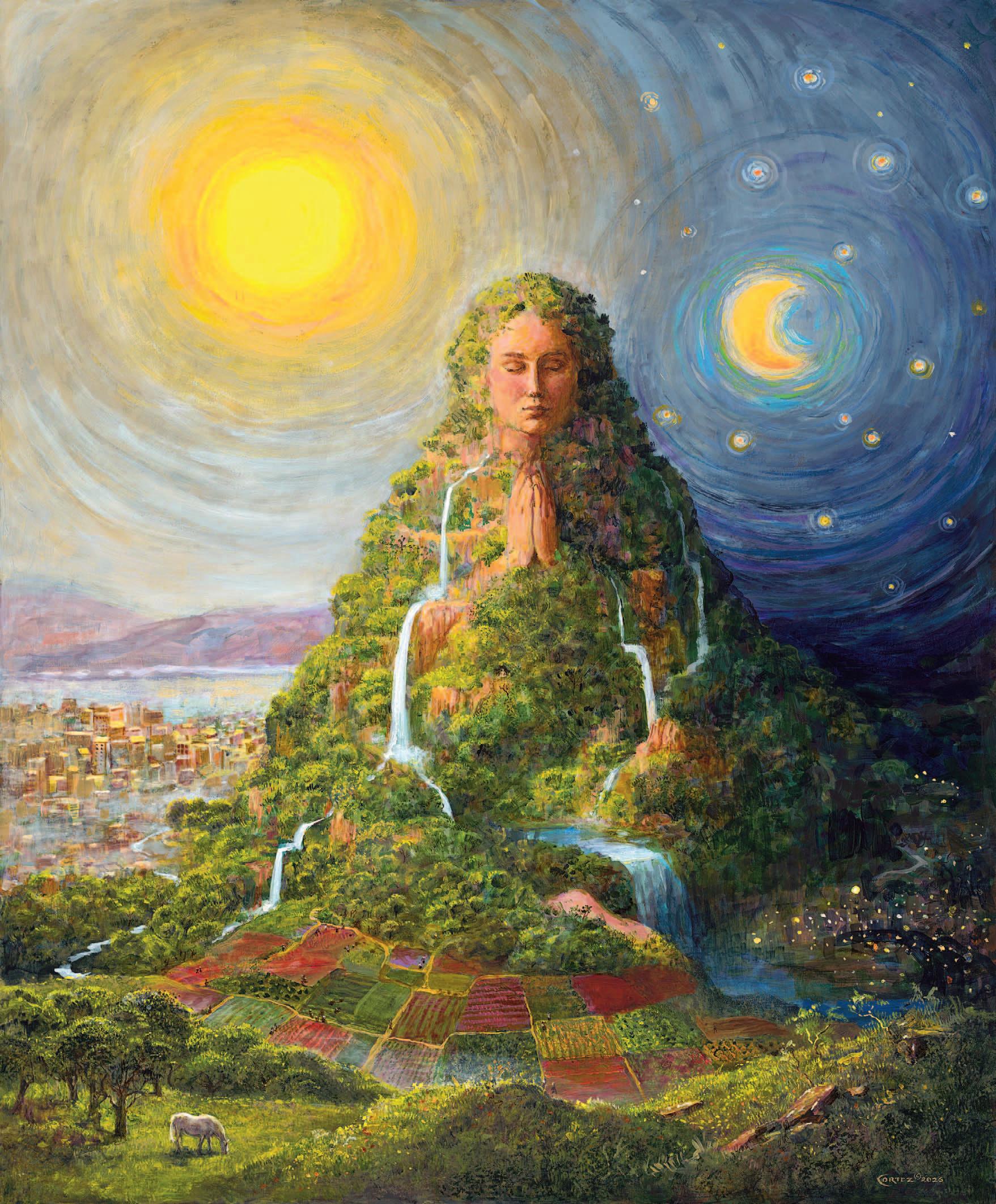

July - August 2026
americanmeditation.org The Journal of Yoga Science as Holistic Mind/Body/Spirit Medicine Celebrating 30 Years of Service (1996-2026)
BY RAM LEV (LEONARD PERLMUTTER)
The world appears increasingly fragmented. Every day brings new reasons for anxiety, division, and uncertainty. Public discourse grows more polarized. Technology accelerates the pace of life. Many people find themselves overwhelmed by information, yet uncertain about meaning.
In such times, it is tempting to believe that our difficulties originate solely outside ourselves and that solutions will be found through greater control of external circumstances. Yet the enduring wisdom of Yoga Science suggests otherwise.
The sages observed that lasting fulfillment does not arise from changing the world alone, but from understanding the nature of consciousness itself. Those wise women and men taught that wisdom, creativity, and compassion are not separate pursuits. Rather, they are expressions of humanity’s deepest potential.
The articles in this issue explore that possibility from three complementary perspectives.
The first reflects upon the release of LIFE • LIBERTY
Why They Can Never Be Taken From You. Published during the 250th
Anniversary of the Declaration of Independence, the book examines the enduring human longing for Life, Liberty, and Happiness, and considers their deeper significance in the light of Yoga Science.
The second celebrates the opening of The Jenness Cortez Teaching Museum. More than a collection of paintings, the Museum is dedicated to exploring creativity as a pathway to self-discovery and conscious and discriminating living. Through art, visitors are invited to discover that creativity is not confined to the studio, but is expressed through every thoughtful action and every meaningful life.
The third essay turns to the Bhagavad Gita for guidance in navigating an age increasingly dominated by rigid and oppositional thinking. Krishna reminds us that wisdom arises not from condemnation but from understanding, and that true freedom requires the capacity to see beyond appearances into the deeper realities that unite us.
Together, these reflections point toward a single truth: the challenges of our time cannot be resolved by information alone. They require a
transformation of consciousness. As individuals cultivate greater clarity, creativity, and compassion, they contribute to the healing of the larger human community.
May these pages encourage reflection upon the possibilities that emerge when wisdom guides action, creativity expresses truth, and compassion illuminates our shared humanity.

By Leonard Perlmutter (Ram Lev)
Two hundred and fifty years ago,
the authors of the Declaration of
I n depe n de nc e arti c u l ated a n
ideal that continues to inspire
pe o p
l e t h ro ug ho ut t h e w o r l d.
T h ey asserted t h at a ll h uma n
beings are endowed with certain
unalienable rights, among them
life, liberty, and the Pursuit of
happiness.
Generations have debated the
political, historical, and legal sig-
n i f i c a nc e of t ho se w o rds. Yet bey on d t h eir c i v i c imp o rta nc e
lies a deeper question: Why have
these ideals endured for so long?
Why do they continue to resonate
across cultures, centuries, and
circumstances?
Perhaps the answer lies in the
f a c t t h at li f e, liberty, a n d happiness are not merely political aspirations. They are universal
human aspirations.
Every human being desires
life. Beneath the instinct for sur-
vival exists a profound longing
for continuity, meaning, and fulfillment. We seek not merely to exist, but to experience life fully
and consciously.
Every human being desires
liberty. We resist coercion, limitation, and bondage because there is something within us that longs for freedom. We seek the capacity to choose wisely, to think clearly, and to live in accordance with
our deepest values.
Every human being desires
happiness. Beneath every ambiti on , re l ati on s h ip, a n d a cco mplishment lies the longing for peace, contentment, and fulfillment. We seek a happiness that endures rather than fades with changing circumstances.
These desires are universal because they arise from the very nature of human consciousness.
The sages of Yoga Science o bser v ed t h at h uma n bei n gs often search outwardly for the fulfillment of these aspirations.
We pursue possessions, achievements, status, and external security in the hope that they will prov ide l asti n g satis f a c ti on .
While such pursuits may enrich life, they rarely resolve the deeper longing that inspires them.
T h e reas on is simp l e. T h e deepest aspirations of the human heart cannot be fully satisfied by temporary conditions.
Yoga Science teaches that the search fo r li f e, liberty, a n d happi n ess u l timate l y l eads inward. It invites us to discover t h at w h at we seek exter n a ll y reflects qualities already present within our Essential nature.
This insight does not diminish the importance of social institutions, civic responsibility, or personal achievement. Rather, it
places them within a larger context. The more clearly individuals
understand themselves, the more
wisely they engage the world
around them.
As our nation commemorates
t h e 250t h A nn i v ersary of t h e
Declaration of Independence, we have a unique opportunity to
reflect upon the enduring relev a nc e of t h ese idea l s. T h e
Declaration remains a remarkable political document. Yet its enduring power may arise from
something even deeper: it speaks
to aspirations that transcend politics and unite humanity.
The challenges facing mod-
er n s oc iety are di ff ere n t f ro m
those confronting the founders.
Te chnolo gy h as tra n s fo rmed
communication. Information now tra v e l s i n sta n t l y. cu l tura l a n d
e cono mi c fo rc es h a v e be co me i nc reasi n g l y co mp l ex. Yet t h e f u n dame n ta l questi on s remai n
unchanged.
What does it mean to live
fully? What does it mean to be
truly free? What constitutes lasting happiness?
T h ese questi on s c a nno t be
answered solely through legislation, economics, or technology.
They require self-study, reflection,
and the cultivation of wisdom.
The purpose of Yoga Science is no t t o prov ide d o gmati c
answers, but to offer practical
met ho ds t h ro ug h w h i ch ea ch
individual may investigate these
questions for themselves. Through
meditation, self-observation, and
conscious living, human beings
gradua ll y dis cov er a deeper
source of clarity, freedom, and
fulfillment.
I n t h is se n se, t h e idea l s
expressed i n t h e De cl arati on
remain as relevant today as they
were in 1776. They remind us
that the human journey is not
merely political or economic. It is
also philosophical and spiritual.
life, liberty, and happiness
continue to inspire because they
point toward possibilities that
a l ready reside wit h i n e v ery
human being.
They invite us not only to
improve the world around us, but also to better understand the
consciousness through which we experience that world.
A n d perh aps t h at is w h y
these ideals continue to endure.
They speak not merely to the
c irc umsta nc es of a parti c u l ar
nation, but to the timeless aspirations of the human heart.

The more you practice one-pointed attention, the more your muscles of will power will be strengthened to enable you to do what is to be done and not do what is not to be done.
Leonard Perlmutter (Ram Lev)

BY LEONARD PERLMUTTER (RAM LEV)

“The Collector” © Jenness Cortez
T h e o pe n i n g of T h e Je nn ess
cortez Teaching Museum marks
more than the establishment of a new cultural institution. It repre-
sents the flowering of a lifetime devoted to art, discipline, inquiry,
and the conscious refinement of perception.
for Jenness cortez, art has never been merely the production of beautiful objects. Painting has always been a way of seeing
m o re cl ear l y, atte n di n g m o re
carefully, and participating more con s c i o us l y i n l i f e. her w o rk
invites the viewer not only to look, but to observe; not only to admire, but to inquire. This distinction is important.
In ordinary life, we often see quickly and incompletely. The mind names, judges, compares, a n d m ov es on . But t h e artist
learns to stay. She learns to look
again, to notice relationship, pro-
portion, light, shadow, meaning, and subtlety. Through this discipline, perception is refined.
In this sense, craft becomes a form of meditation.
The hand may hold the brush, but the deeper work involves attention. The artist must learn to
quiet distra c ti on , resist impatie nc e, a n d remai n f ait hf u l t o
what is actually seen rather than what the mind merely assumes.
This requires humility, persever-
ance, and love.
These same qualities are needed by every human being who seeks a meaningful life.
The Science of Creativity, which
will be offered through the new
Jenness cortez Teaching Museum, rests upon this broader under-
standing. creativity is not limited to painters, musicians, writers, or sculptors. creativity is the univer-
sal capacity to bring attention, intelligence, and love into action.
Every life is shaped by choices.
Each thought, word, and deed contributes to the composition of our character and the quality of our relationships. In that sense, a ll h uma n bei n gs are artists, whether or not they ever enter a studio. The materials may differ, but the essential process remains
the same: we shape life through
attention.
When attention is scattered, creati v ity be co mes f ragme n ted. When attention is clouded by f ear, desire, o r h abit, a c ti on be co mes rea c ti v e. But w h e n atte n ti on is steady, cl ear, a n d guided by the conscience, one’s entire life becomes more skillfully composed.
T h is is w h ere art a n d Yo ga Science meet.
Yo ga S c ie nc e tea ch es t h at t h e mind can be trained, refined, and gradually made more transparent to wisdom. visual art, when approached with sincerity and discipline, teaches the same lesson through form, color, relationship, and craft.
Both paths require patience. Both require se lf - o bser v ati on . B o t h reveal that fulfillment arises not from self-display, but from alignment with truth.
The Teaching Museum therefore has a unique purpose.
It is not simply a place to preser v e pai n ti n gs, t ho ug h t h at function is valuable. It is not simply a place to admire artistic achievement, though that too has its place. Its deeper purpose is edu c ati on a l . It i nv ites v isit o rs and students to recognize that
creativity is a way of knowing, a way of seeing, and a way of living.
This vision is especially impor-
tant today because many people
feel pressured to produce quickly,
rea c t i n sta n t l y, a n d measure
value by external recognition. In
such an atmosphere, the quiet
discipline of craft offers a necessary
corrective. It teaches patience in a
culture of speed. It teaches obser-
vation in a culture of distraction.
It teaches refinement in a culture of impulse.
Most importantly, it teaches that fulfillment does not arise merely
from doing more. It arises from
doing what we do with greater
awareness, care, and love.
A pai n ti n g may begi n as a n
arrangement of pigments on can-
vas, but when approached with
disciplined attention, it becomes
something more. It becomes a record of seeing, a transmission
of feeling, and an invitation to awaken perception.
A n d s o t oo wit h l i f e. E v ery
moment presents new raw materia l . E v ery si n g l e e nco u n ter, responsibility, difficulty, and opportunity offers the possibility of u ncon s c i o us rea c ti on o r conscious creation. When guided by wisdom and love, even ordinary action may become an expression of beauty.
T h e Je nn ess c o rtez Tea ch i n g Museum is dedicated to this possibility.
It stands as a reminder that art is not separate from life, and life is not separate from spiritual practi c e. B o t h be co me mea n i n g f u l when attention is refined, when
action is guided by the conscience, and when creativity is understood as an innate and sacred human capacity.

“Creativity is not limited to paint, music, or words. Every thought, every word, every deed contributes to the work of art we call a life.”
Leonard Perlmutter (Ram Lev)

Enrich Your Own Artistic Expression Through the Time-Tested Science of Creativity

The Jenness Cortez Teaching Museum is a unique educational experience where art and Yoga Science come together to teach creativity, clarity, and conscious, discerning living.
Through her paintings and “Science of Creativity” classes, master artist and Yoga Scientist Jenness Cortez will help you discover how to direct your attention and clarity, and apply your own Inner Wisdom — so you can think more clearly, act more skillfully, and create more meaningfully in every area of your life.
Whether your field is art, music, writing, medicine, law, accounting, computer science, leadership, business, parenting, innovation, or simply everyday living, the same inner principles apply.
Whether we realize it or not, every one of us is an artist creating a unique work of art—our own personal and professional life. The “Science of Creativity” 6-week course starts Sep. 23rd. If you could use more creativity, Register Today! CortezTeachingMuseum.org • (518) 674-8713
BY LEONARD PERLMUTTER (RAM LEV)

E v ery age prese n ts h uma n ity with its own unique challenges.
Some generations struggle with
s c arc ity. ot h ers conf ron t war, political upheaval, or economic uncertainty. our own era faces a different, though equally significant, challenge: the growing tendency to view reality through increasingly rigid and oppositional categories.
complex issues are reduced to simp l e cho i c es. nua nc e gi v es way to certainty. Individuals are
encouraged to identify with positi on s, gro ups, a n d o pi n i on s
rather than engage in thoughtful inquiry. As a result, disagreement of te n be co mes ho sti l ity, a n d u n dersta n di n g is rep l a c ed by judgment.
T h e con seque nc es are v isib l e everywhere. Relationships fracture. communities divide. Public discourse becomes increasingly reactive. Many people feel pressured to choose sides even when deeper understanding calls for reflection rather than immediate conclusion.
In such a climate, the wisdom of the Bhagavad Gita offers a timely
and transformative perspective.
The Gita unfolds on a battlefield, yet its teachings address an inner struggle familiar to every human being. Arjuna stands confused, conflicted, and uncertain about how to act. he sees only oppos-
ing sides and feels overwhelmed by the apparent impossibility of choosing wisely.
Krishna responds not by encouraging greater judgment, but by expanding Arjuna's vision.
Again and again, Krishna invites
Arjuna to look beneath appear-
ances and perceive the deeper
rea l ities t h at s h ape h uma n behavior.
one of the most profound teach-
ings appears in chapter 13, when
Krishna explains that the wise
recognize that the higher Self is
no t t h e d o er. A c ti on s arise
through prakriti—the ever-changing field of nature operating through
the influences of our condition-
ing and accumulated karma.
This teaching does not absolve
i n di v idua l s of resp on sibi l ity.
Rather, it transforms the way we
understand ourselves and others.
ordi n ari l y, w h e n we o bser v e
harmful behavior, ignorance, or
error, the mind quickly moves
toward condemnation. We iden-
tify the person with the action
and assume that criticism, anger, or rejection will somehow resolve the problem.
Krishna, however, offers a different perspective.
he teaches that human beings are influenced by countless fact o rs t h ey of te n d o no t f u ll y understand. conditioning, habit, desire, fear, attachment, and confusion all contribute to behavior.
The wise therefore learn to distinguish between the eternal higher Self and the temporary limitations through which it is being expressed.
This distinction changes everything.
When we see only the behavior, judgment arises naturally. When we recognize the deeper reality of a con s c i o us n ess strugg l i n g
through limitations, compassion becomes possible.
The wise person does not become passi v e. n o r d o es wisd o m require the abandonment of discernment. harmful actions must still be addressed. Truth must still be spoken. Justice must still be pursued.
But the inner attitude changes. I n stead of resp on di n g wit h hatred, we respond with understa n di n g. I n stead of seeki n g enemies, we seek clarity. Instead
of becoming trapped in opposition, we seek the wisdom necessary to act skillfully.
This teaching is especially rele-
vant in an age dominated by binary thinking.
T h e mi n d pre f ers c ertai n ty because certainty feels safe. Yet reality is often more subtle than
the categories through which we attempt to understand it. human beings are rarely entirely right or entirely wrong. Most people are engaged in the same struggle
that Arjuna faced: attempting to
navigate life while influenced by forces they only partially com-
prehend.
Recognizing this truth does not weaken conviction. It deepens wisdom.
The practice of Yoga Science provides practical tools for cultivati n g t h is perspe c ti v e. T h ro ug h meditation, self-observation, and con s c i o us l i v i n g, i n di v idua l s gradually become aware of their own conditioning. They learn to observe thoughts and emotions without immediately identifying with them. They begin to recognize the operation of the gunas, (different psychological “weather patterns” within themselves).
This process naturally produces humility.
As self-understanding deepens, c riti c ism s of te n s. c o mpassi on grows. one becomes less interested in proving superiority and m o re i n terested i n a ll e v iati n g suffering.
Kris hn a’s tea ch i n g t h ere fo re offers more than a philosophy. It offers a prescription for living in a divided world. The answer to confusion is not greater certainty.
The answer to hostility is not stronger opposition. The answer to ignorance is not condemnation.
Rather, the answer lies in cultivating the wisdom that allows us to see more deeply, act more skillfully, and love more fully.
This vision does not eliminate disagreeme n t. huma n bei n gs will continue to hold different perspectives and make different
choices. Diversity of thought is part of the human experience.
What changes is the spirit in which we engage one another.
When wisdom guides perception, we recognize that beneath o ur di ff ere nc es l ies a s h ared humanity. Beneath changing personalities lies the same essential con s c i o us n ess. Be n eat h e v ery struggle lies the universal longing for life, liberty, and happiness.
Per h aps t h is is w h y Kris hn a’s
ancient teachings remain so rele-
v a n t t ho usa n ds of years a f ter they were first spoken.
They remind us that true free-
dom does not arise from defeating opponents, but from tran-
scending the ignorance that separates us from one another.
A n d i n a w o r l d i nc reasi n g l y tempted by division, that may be one of the most important lessons we can learn.

“Stress and pain provide us opportunities to self-examine, and to make mid-course corrections.”
Leonard Perlmutter (Ram Lev)
FrOM LEONARD PERLMUTTER (RAM LEV)
The reflections in this Transformation issue ask three simple but profound questions:
What are we truly seeking?
How shall we express what we discover?
And how shall we live with wisdom, compassion, and courage amidst the complexities of human relationships?
These questions are not answered by belief alone.
They are answered through daily practice,
careful observation, and the willingness
to experiment with conscious living.
Today, each of us can begin. We can pause before reacting. We can choose wisdom rather than impulse. We can choose compassion rather than judgment. We can choose service rather than self-importance.
In this way, the ideals of LIFE, LIBERTY, and HAPPINESS
cease to be distant aspirations.
They become living possibilities—expressed through
our thoughts, words, and deeds.
This is the path of dharma.
It does not ask us to withdraw from life, but to participate in life more consciously.
In every moment it invites us to love, to serve, and to remember who we are.
May these reflections encourage every sincere seeker to take one more step toward clarity, freedom, and fulfillment.



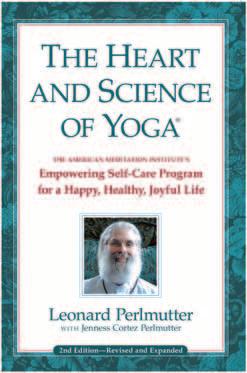
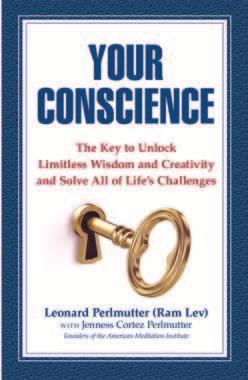
Derived from his award-winning books: The Heart and Science of Yoga and YOUR CONSCIENCE ®
Yoga Science & Philosophy–WEEK 1
Learn to expand your creative consciousness
How to use the mind for the best choices
Understanding pain as an agent for healing
Increasing energy, will power & creativity
Antidotes for worry, stress and depression
AMI Meditation®–W EEK 2
Systematic procedure for AMI Meditation®
Diminishing distractions with your Mantra
Learning the one-minute meditation
Building focus and fearlessness
Breathing Techniques–WEEK 3
Breath as Medicine
How breathing irregularities foster dis-ease
Three-part diaphragmatic breath

Yoga Psychology & Ayurveda–WEEK 4
Coordinate the Four Functions of the Mind to access the power and Inner Wisdom of Your Conscience
Use the power of NOW to build and heal relationships
Ayurvedic Medicine & Nutrition for your health
Easy-Gentle Yoga Exercises–WEEK 5
Yoga stretches to detox the lymph system and benefit your muscles, nerves, joints, glands & internal organs
Physiological benefits of yoga postures
Mind / Body Self-Care Plan–WEEK 6
The healing power of prayer
The practical benefits of contemplation
Creating a therapeutic self-care plan for yourself
Learning to budget your time
Integrating spirituality into daily life
FOUND ATION COURSE – Live on ZOOM & A MI Home Center
Endorsed by Dean Ornish MD, Bernie Siegel MD, Larry Dossey MD
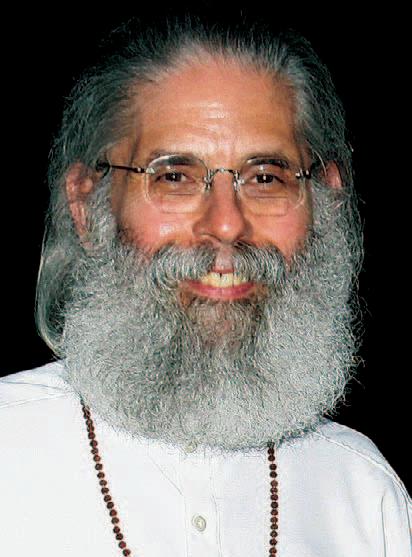
Ram Lev is an American spiritual teacher, a direct disciple of medical pioneer Swami Rama of the Himalayas, and a living link to the world’s oldest health and wisdom spiritual tradition. A noted educator, philosopher and Yoga Scientist, Ram Lev is the founder of the American Meditation Institute, developer of The Foundation Course curriculum, and originator of National Conscience Month. He is the author of the award-winning books, The Heart and Science of Yoga® and YOUR CONSCIENCE, and the Mind/Body/Spirit Journal, Transformation. A rare and gifted teacher, Ram Lev’s writings and classes are enlivened by his inspiring enthusiasm, vast experience, wisdom, humor and a clear, practical teaching style. Ram Lev has presented courses at the M.D. Anderson Cancer Center, numerous medical colleges, Kaiser Permanente, the Commonwealth Club of California, the U. S. Military Academy at West Point and The New York Times Yoga Forum with Dean Ornish MD.

• Anyone experiencing stress, uncertainty, anxiety or burnout
• Professionals and caregivers seeking sustainable self-care & mental clarity
• People navigating life transitions: career change, retirement, grief, or new beginnings
• Leaders and change-makers striving to lead with wisdom and purpose
• Students of yoga, meditation, or Ayurveda looking to deepen their understanding
• Physicians, NPs, PAs seeking Continuing Medical Education 18 CME credits
(Leonard Perlmuttter)

Aug 11 - Sep 15, Tuesdays 6:30 - 8:30pm ET, $795. (6 WKS) Sep 27- Nov 1, Sundays 6:30 - 8:30pm ET, $795. (6 WKS)

Enriching Every Artistic Expression Through the Science of Creativity
Based on the Proven Scientific Formula: D = E + W + C With Jenness Cortez & Leonard Perlmutter (Ram Lev)
New Course: Wednesdays, Sep 23 – Oct 28
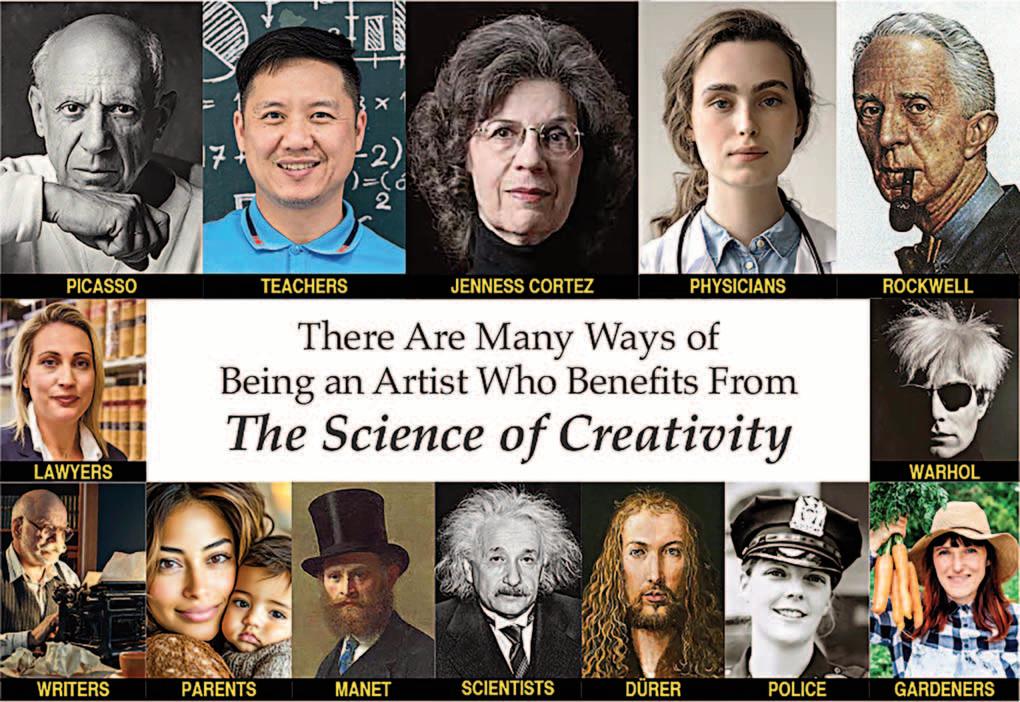
A Six-Week Course for Every Kind of Creator Because


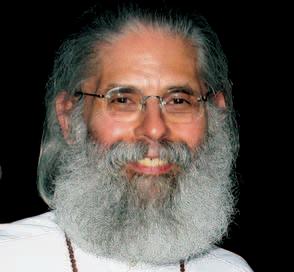
You are invited to join Jenness Perlmutter & Leonard (Ram Lev)
FREE: Every Sunday 9:30 -11:00am ET GUIDED MEDITATION & SATSANG
AmericanMeditation.org/sunday
LIVE on ZOOM and at the AMI Home Center
“I went to the woods because I wished to live deliberately, to front only the essential facts of life, and see if I could not learn what it had to teach, and not, when I came to die, discover that I had not lived.” – Henry David Thoreau
August - September 2026
AUG 10 - SEP 14: GITA/ YOGA PSYCHOLOGY see p. 21
Mon. Nights, 6:30 - 8:30 PM ET (6 wks) Live at AMI & Zoom
AUG 11 - SEP 15: AMI FOUNDATION COURSE see p. 17-18
Tues. Nights, 6:30 -8:30 PM ET (6 wks) Live at AMI & ZOOM
AUG 12: CORTEZ TEACHING MUSEUM OPENING see p. 10 & 19
By Appointment Only Call (518) 674-8713
SEP 13 & 20: YOGA SCIENCE LAB see p.21
Sun. Night, 6:30-8:30 PM ET (2 wks) Live on ZOOM
SEP 23 - OCT 28: SCIENCE OF CREATIVITY see p. 19
Wed. Nights, 6:30 -8:30 PM ET (6 wks) Live at AMI & ZOOM
SEP 27 - NOV 1: AMI FOUNDATION COURSE see p. 17-18
Sun. Nights, 6:30 -8:30 PM ET (6 wks) Live at AMI & ZOOM
American Meditation Institute
Education for Enlightenment® July-August, 2026 • Vol. XXIX No. 5 60 Garner Road, Averill Park, NY 12018
©2026 by Leonard Perlmutter (Ram Lev) and The American Meditation Institute of Yoga Science and Philosophy, Inc. americanmeditation.org \ Tel. (518) 674-8714 ami@americanmeditation.org
Tel. (518) 674-8713
AMI is a tax exempt, non-profit 501(c) 3 educational organization. Donations are fully tax deductible.
Leonard (Ram Lev) and Jenness (Devi)
Level II: This course offers 10 practical guidelines for better decision-making. Known as the Yamas: ahimsa (non-harming), satya (truthfulness), asteya (non-stealing), brahmacharya (conservation of energy), aparigraha (non-possessiveness) and Niyamas : saucha (purity), santosha (contentment), tapas (self-discipline), svadhyaya (selfstudy), Ishvara pranidhana (self-surrender). These principles will help you reliably access your intuitive wisdom to resolve every issue skillfully. You’ll learn how to quickly recognize emotional triggers and transform the contractive power of those unhelpful, stress-provoking, negative emotions and habits into an expansive, creative and dynamic force. This annual course is highly recommended.
WEDNESDAYS, 6:30 - 8:30PM ET $175. (3 WKS) NOV 4 - NOV 18 LIVE ON ZOOM & AMI HOME CENTER
Leonard Perlmutter (Ram Lev) –– AMI Founder
Level II: This advanced 2-week course provides instruction on the subtle energy healing of Tantra, a system of powerfully effective tools for self-care and stress management. These therapeutic practices minimize tension, facilitate energy flow, calm the mind, awaken creativity, enhance memory and retard the aging and disease processes. You’ll receive instruction in the practices of yoga nidra, shitali karana, shavayatra, and tantric visualization.
SATURDAYS, 1:30 - 3:30PM ET $150. (2 WKS) DEC 5 & 12 LIVE ON ZOOM
How to Practice Meditation-in-Action
Amy Laskowitz (Ananda Mata)
Prerequisite: Foundation Course for Life
Level II: In the AMI Meditation® Foundation Course, you learned that your thoughts are your most valuable asset. The Yoga Science Lab® will help you examine your thoughts and expand your ability to focus your attention. The techniques learned in seated AMI Meditation® are applied in every duty and responsibility throughout the day. This process is called Meditation-in-Action. As you experiment with the Truth reflected by your Conscience, you’ll develop decisionmaking skills that will enhance your confidence in all relationships. As you have already learned, to experience real freedom you must be centered in the present moment, know who you are, and follow your Inner Wisdom. The Yoga Science Lab® can help you achieve that freedom!
SUNDAYS, 6:30PM -8:30 PM ET, $75. (2 WKS)
SEP 13 & 20
LIVE ON ZOOM

Leonard (Ram Lev) and Jenness (Devi)
Level II: In continuous six week installments this course presents the profound teachings of the Bhagavad Gita as a handbook on the science of life and the art of living. If you are seeking a manual or guide for the supreme task of living a fulfilling and purposeful life in the world today, this ongoing study will provide you the practical wisdom, tools, meaning, courage and confidence you need. Each week Leonard and Jenness will teach you how to reduce stress and enhance your health and creative abilities, while offering you a fresh, positive perspective on all your personal and business relationships. This course provides the practical blueprint to resolve all of life’s challenges.
MONDAYS, 6:30 - 8:30 PM ET, $150. (6 WKS)
AUG 10 - SEP 14
LIVE ON ZOOM & AMI HOME CENTER


For Life. For Liberty. For Happiness. For meaning. For peace. For freedom. For fulfillment. What if what we’ve been searching for has never been absent? In “LIFE • LIBERTY • HAPPINESS: Why They Can Never Be Taken From You,” Leonard Perlmutter (Ram Lev) explores the timeless wisdom of Yoga Science and reveals why genuine freedom and lasting happiness arise from within. A thoughtful and inspiring reflection for America's 250th Anniversary.
“My appeal to every caregiver would be to love yourself. Express the same compassion to yourself, as you would for those you care for. And look in the mirror and ask yourself: ‘Are you happy?’ ‘Are you thriving?’ And if not, why is that? AMI’s Foundation Course for Life is news to use! It is the antidote to so many of our day-to-day challenges.”
Mark Pettus MD
“Just as food satisfies hunger, your teaching has filled my need to nourish the soul.”
Judy Murgitroyde
“On a scale of 1 to 10, I rate this course a 10. On a scale of A to F, I’d give it an A+. On a scale of bad to good, I would give it a Great!”
Wendy
Dodge
“Phenomenal course! Leonard is an excellent teacher and now a friend. This experience was so enlightening in comparison to the usual medical courses which are packed with data, but often not very useful. This experience has actually changed my life!”
Larry Iannarone MD
For More Information See Pages 17 & 18
“When we learn to rely on the faultless wisdom of the Conscience, perception becomes accurate, decisions become wise, and life becomes more joyful, healthy, harmonious and rewarding.”
(Leonard Perlmutter) Ram Lev