




400+ Firms mentored by Austin have received contracts exceeding $3 billion.
Austin Commercial is committed to recognizing, embracing, and supporting workplace diversity. As a construction industry leader, Austin takes pride in creating minority economic opportunities.

2026 – Issue I
Publisher Shelton A. Russell
Managing Editors PR PROS, LLC
Creative Director
William Cash
Digital Media Premier Web Design Solutions
Headquarters 514 Daniels Street, #186 Raleigh, NC 27605
Website www.AmericanDBE.com
About American DBE Magazine
American DBE Magazine is the premier industry resource for individuals and stakeholders who work in the infrastructure, construction and transportation industries. American DBE Magazine is published quarterly and distributed in all 50 states— plus Puerto Rico and the U.S. Virgin Islands—to DBE program administrators, business owners, and professionals in the Aviation, Highway Construction and Public Transit industries.

American DBE Magazine is published quarterly in Fall, Winter, Spring and Summer editions. The annual subscription rate is $24.99 including online editions, special industry reports, and four issues: single copy list price is $6.99 plus postage originating from Raleigh, North Carolina.
Advertising Sales editor@AmericanDBE.com (919) 741-5233 (Office)
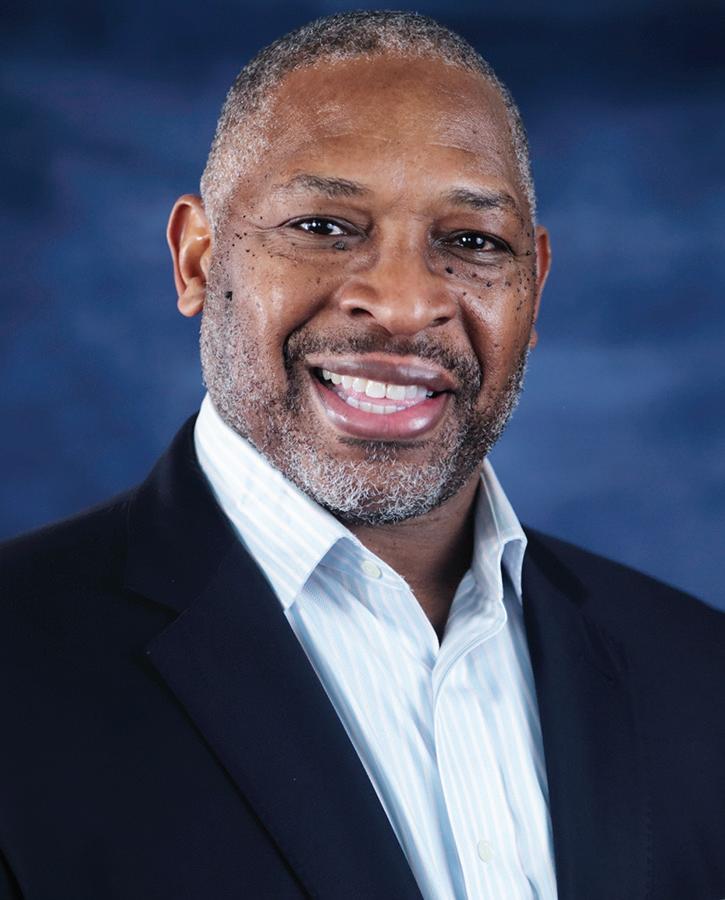
The phrase “the new normal” continues to resonate in my mind as I reflect on the economic and entrepreneurial landscape facing businesses owned by minorities and women. The environment has been challenging for quite some time through legal battles, economic downturns, pandemics, and changes in political leadership. Yet the shift since the beginning of the Trump administration feels different. In previous periods of uncertainty, the goal of diverse firms often centered on recovering from a setback to continue forward progress. Today, many business owners feel as though the foundation itself is shifting beneath them.
America feels different today. Laws and programs once viewed as hard-fought victories for racial and social progress are being eliminated or changed in ways we never imagined. In many ways, this moment appears less like a temporary setback and more like a permanent transition into a new operating environment. This new season calls for businesses and leaders to develop strategies that advance despite forces determined to reverse progress. It requires resilience, discipline, strategic thinking, and a willingness to adapt without losing focus on long-term goals.
That reality serves as the central theme throughout this issue of American DBE
Magazine. The legal, political, and operational landscape surrounding supplier diversity programs continues to evolve rapidly. New certification requirements, increased scrutiny, and changing procurement strategies are reshaping how firms compete and position themselves in the marketplace. Yet despite those challenges, I continue to see something encouraging throughout this industry. I see companies refusing to quit, organizations adjusting their strategies instead of abandoning their mission, and entrepreneurs focusing on long-term positioning instead of short-term fear.
In many ways, that mindset defines this issue. Our cover story featuring C. David Moody Jr. and C.D. Moody Construction is ultimately a story about endurance. David Moody built his company through economic downturns, financial pressure, personal struggles, and an industry that has never been easy for small and diverse firms to navigate. His story reminds us that sustainable success rarely happens overnight. More often, it is built through persistence, discipline, and the ability to keep moving forward when conditions become difficult.
That same theme appears in our feature on Jeffrey White and Gregory White of Legacy Rail Operations. Their company endured a significant slowdown in business before regaining momentum through operational expertise, relationships, and a refusal to abandon the vision they built upon their father’s legacy in the rail industry. This
issue also highlights organizations such as Equity in Infrastructure Project, COMTO and AMAC, which continue working to expand opportunity, strengthen participation, and help businesses remain competitive in a changing environment.
We also examine the growing importance of effective Personal Narrative Statements and the broader discussion surrounding whether firms are truly prepared to compete once certified. Certification alone is not enough. Firms must continue expanding operational capacity, developing stronger relationships, strengthening technical expertise, and increasing the ability to demonstrate value in competitive markets.
No one knows exactly what the next five or 10 years will look like for DBE programs and supplier diversity initiatives. However, history consistently shows that businesses willing to adapt, improve and play the long game are often the ones that survive and ultimately grow stronger. That is the spirit behind this issue. I hope these stories encourage you, challenge you, and remind you that even in uncertain times, opportunity still exists for firms prepared to pursue it.

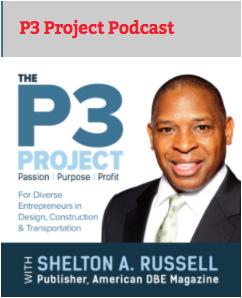
Shelton A. Russell, Publisher American DBE Magazine
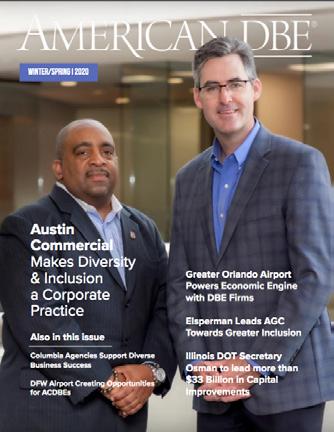


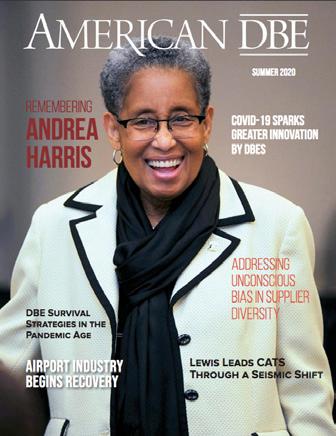

In February 2026, the Equity in Infrastructure Project released a new playbook designed to help public agencies increase contracting opportunities for historically underutilized businesses (HUBs) through procurement and contracting practices intended to increase competition for public work.
The publication, called “Procurement for Prosperity: A Playbook by the Equity in Infrastructure Project,” is intended to help agencies translate their pledge to increase access to prime contracts for HUB firms into action by providing a practical framework for aligning procurement practices with that goal.
Developed as a resource for public owners, the Playbook reflects the mission of the Equity in Infrastructure Project, which looks to “increase competition for public contracts by creating more prime, joint venture and equity partner opportunities for historically underutilized businesses.” Rather than proposing new policy, it focuses on how agencies can use existing procurement tools to improve access, strengthen competition and deliver greater value for infrastructure investments. More than 90 government agencies and private companies have signed the Equity in Infrastructure Pledge to work to increase opportunities for HUBs, and the Playbook represents another step toward implementation, offering a structured approach to acting on the stated commitments.
“The Playbook’s strategies, tools, resources and examples are a menu of proven, durable options that public agency, NGO
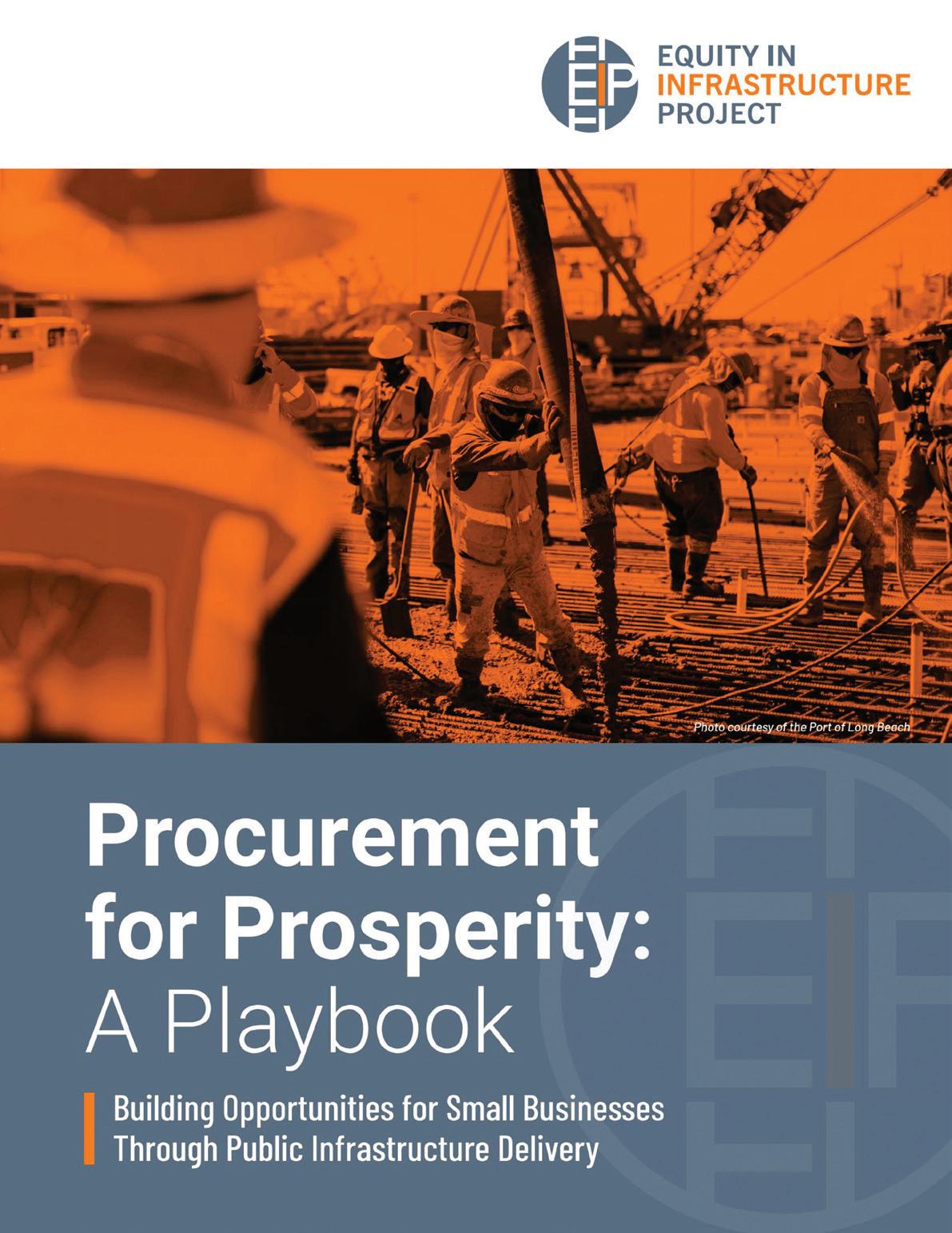
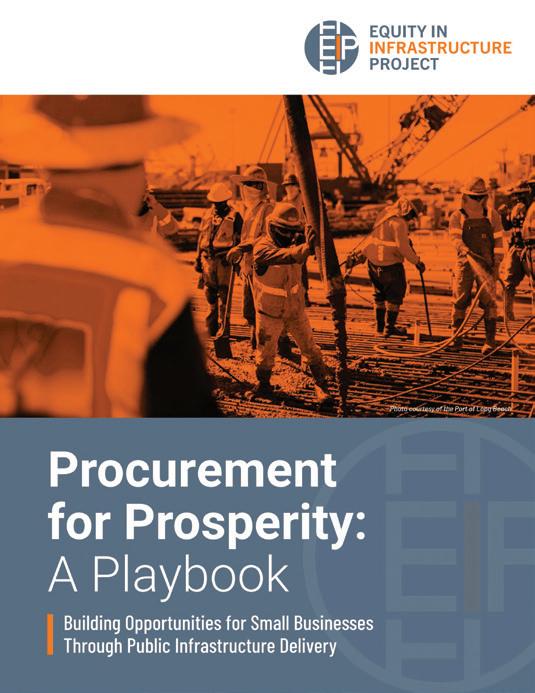
Cover of Procurement for Prosperity:
and private sector leaders can use to improve procurement and contracting, even in a changing environment,” the Equity in Infrastructure Project said in a press release announcing the publication’s launch. That emphasis on durability is central to the Playbook’s value. Many of the strategies outlined are intended to function within existing legal frameworks, including environments where race- and gender-based contracting programs are limited or under scrutiny. By focusing on procurement design, rather than program structure alone, the Playbook provides agencies with tools that can be applied regardless of policy shifts.
The Equity in Infrastructure Project hosted an online event introducing the Playbook in
March 2026 and is continuing its outreach efforts with a June 4 session in San Francisco titled, “Playbook for a New Paradigm: Advancing Contracting Opportunities for Small Businesses.” The event is intended to help agencies better understand how to apply Playbook’s strategies and share procurement practices that have been effective in other markets.
The Playbook is grounded in a broader market reality facing public infrastructure agencies. Construction costs have risen
sharply in recent years, while consolidation across the industry has reduced the number of firms competing for public work. According to the Playbook, real spending per mile on Interstate highway construction has more than tripled since the 1960s, placing added strain on public budgets. At the same time, many historically underutilized firms continue to face barriers embedded within procurement systems, including contract sizes that exceed their capacity, limited visibility into project pipelines and qualification requirements that can make participation difficult.
Within that context, the Equity in Infrastructure Project frames expanded participation not simply as a matter of inclusion, but as a mechanism for improving competition and market performance. Increasing the number of firms able to compete for contracts can help agencies manage costs, improve project delivery, and strengthen local economies. “More competition means more small business growth, more local jobs and reduced costs for public infrastructure agencies,” said Phillip A. Washington, CEO of Denver International Airport and an EIP co-chair.
Washington’s comments reflect a broader effort by agencies to connect procurement strategy with long-term economic outcomes and infrastructure delivery capacity. “We have to be in the business of maximizing value, and the way to get there is by learning from each other,” Washington said. That perspective is reinforced by industry leaders who view access to opportunity as integral to sustaining the workforce and contractor base needed to deliver infrastructure projects at scale.
“Our industry’s long-term success depends on building a workforce that reflects the communities we serve and ensuring that all companies have equitable access to opportunities to help build the infrastructure our nation needs,” said Peter Davoren, chairman and CEO of Turner Construction Company, during the Playbook’s launch event.
While the Equity in Infrastructure Project is built on a CEO-level pledge, the Playbook focuses on how that commitment is conducted through day-to-day procurement decisions. It documents strategies agencies are using to improve forecasting, enhance outreach, refine evaluation processes and structure contracts in ways that allow more
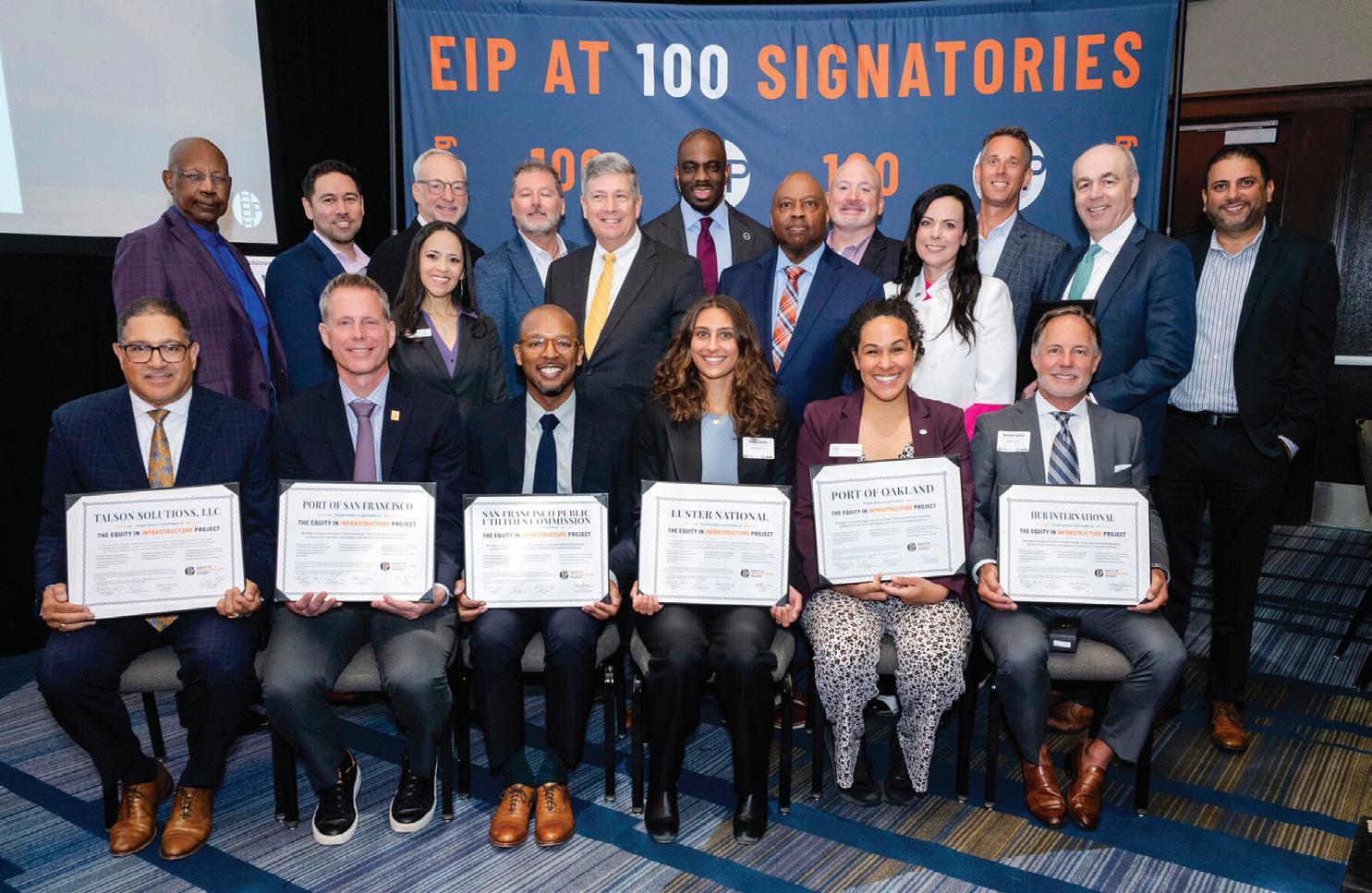
Representatives of six organizations celebrate signing the Equity in Infrastructure Pledge at the BuildIT Founders Day 2026 conference in San Francisco on June 4, 2026. The new signatories bring the total number of pledge organizations to 104 nationwide. Picture courtesy of Equity in Infrastructure
firms to participate. Many of the approaches outlined in the Playbook are drawn from agencies operating in race- and genderneutral environments, making the document particularly relevant as public agencies navigate changing legal and policy conditions.
“As the Playbook lays out, many agencies have operated in a race- and gender-neutral context, in some cases for decades, showing a clear path forward despite the changes to the DBE Program and other federal actions,” said John Porcari, co-chair of the Equity in Infrastructure Project and former deputy U.S. secretary of transportation. In practice, these strategies often begin with earlier engagement, bringing small business and diversity teams into project planning discussions before scopes are finalized so agencies can identify where participation opportunities can be created.
The Chicago Transit Authority is among the agencies using earlier engagement and internal coordination to strengthen HUB participation. During the launch event, Juan Pablo Prieto, director of diversity programs and DBE liaison officer for the Chicago Transit Authority, said “putting our department in the forethought of projects versus as an afterthought really changed the information that we were getting and the support that we were getting internally.”
Another key area of focus is transparency, particularly around project forecasting and communication with the contracting community. Many agencies have found that small businesses are often unable to compete
simply because they lack timely information about upcoming opportunities. “We actually heard from small businesses that one of the key barriers for them was just information, not knowing about the opportunity soon enough,” said Mića N. Anderson, senior director of the Commerce Hub at Denver International Airport. In response, agencies are expanding procurement forecasting and providing earlier visibility into upcoming projects, allowing firms to engage earlier, build relationships and position themselves to compete.
The significance of Procurement for Prosperity lies in its role as an implementation tool for agencies that have committed to the Equity in Infrastructure Project’s mission. It provides a practical framework for aligning procurement practices with that commitment, while also offering examples that can be adapted across different legal and market environments. For agencies, the Playbook offers a way to move beyond broad statements of intent and focus on measurable changes in how work is delivered.
“The daily complexities of running an airport, transit authority or similar entity mean no agency should go it alone, nor
can they,” said Dorval R. Carter Jr., former president of the Chicago Transit Authority and EIP co-chair. For HUBs, the Playbook provides insight into how access to public contracts may continue to evolve. While certification programs remain important, the document underscores that procurement design is increasingly shaping opportunity and influencing which firms can compete successfully.
At its core, the Playbook reflects a broader effort to align economic opportunity with infrastructure investment. By expanding participation, agencies are not only increasing competition, but also creating pathways for business growth, job creation and long-term wealth development within the communities they serve. As infrastructure investment continues and market pressures evolve, the ability to expand competition while maintaining efficiency will remain a central challenge. The Playbook does not resolve that challenge on its own, but it provides a clear framework for how agencies can begin to address it.
The question for agencies is no longer whether to expand opportunity, but how quickly they can align procurement practices to make it happen.
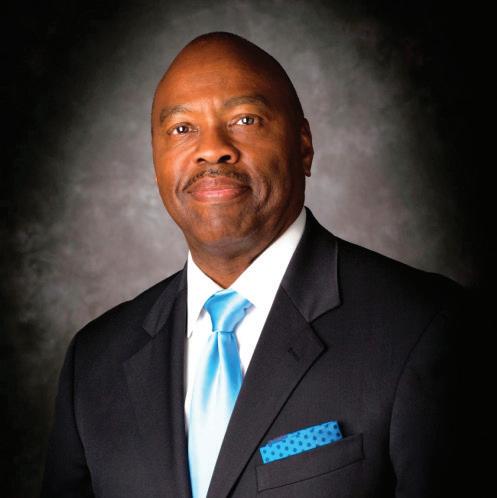

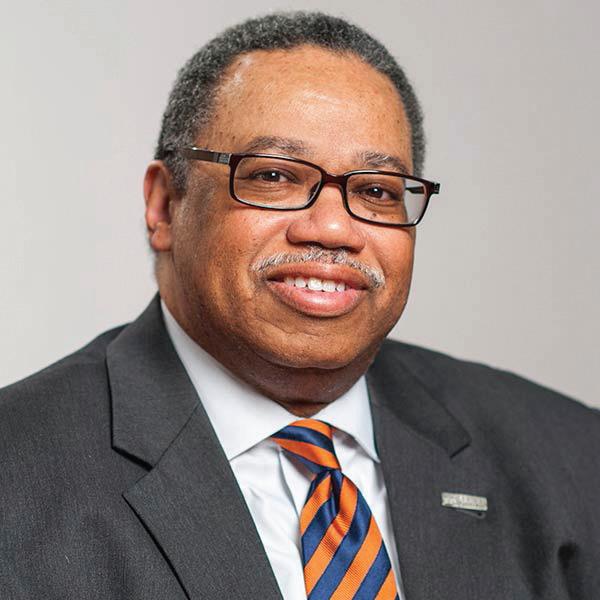




by Colette Holt, Esq. and Earl Key, Esq.
The attacks on civil rights programs designed to increase equality of opportunity for businesses owned by racial and ethnic minorities, and in some cases White women, continue unabated.
The case against the USDOT Disadvantaged Business Enterprise Program and the Interim Final Rule: Mid-America Milling Co. v. U.S. Dep’t of Transportation, E.D. Ky., Case No. 3:23-cv-00072, decided March 19, 2026
Two plaintiffs, a trucking firm and a milling subcontractor, sued the U.S. Department of Transportation (“USDOT”) in October 2023, challenging Congress’ determination that racial and ethnic minorities and women are presumptively socially economically disadvantaged in the market for federally assisted transportation contracts and associated subcontracts. Plaintiffs argued these presumptions violated the Equal Protection component of the Fifth Amendment’s Due Process Clause.
In September 2024, the federal district court granted a preliminary injunction in their favor. The court held that the racial presumption fails strict constitutional scrutiny because the program allegedly lacks a strong basis in evidence. According to the court, there were no “specific identified instances of past discrimination” in which the federal government participated, any statistical disparities must be linked to intentional government discrimination, and the Congressional record of disparity studies, anecdotal testimony and other reports was insufficient. The opinion further stated that the minority groupings are too broad and that USDOT must have specifically
discriminated against each group. The court also concluded that the program was insufficiently narrowly tailored because only certain minority groups are included, the approach is “scattershot,” the individual option to establish disadvantage is burdensome and there is no “logical” endpoint despite regular Congressional review.
The court further held that the gender presumption fails intermediate scrutiny for many of the same reasons, finding there must be evidence of “blatant” or “intentional” discrimination by USDOT. A preliminary injunction was entered awarding the plaintiffs the ability to remove a DBE contract goal on any contract anywhere in the country on a project on which they were “interested” in “bidding.”
The Biden administration had vigorously defended the program. With the start of the second Trump administration in early 2025, however, the government defendants switched sides and aligned with the plaintiffs on the merits. A group of DBEs and DBE trade associations then intervened to defend the program. In May 2025, plaintiffs and the government jointly moved for a consent order declaring the presumptions unconstitutional and making the injunction permanent.
and
Forum in Washington, D.C., in March 2026.
presumptions to be applied as mandated by Congress presents a constitutional emergency based on the Supreme Court’s rejection of the undergraduate affirmative action programs for Harvard and the University of North Carolina in the Students for Fair Admissions majority opinion. The IFR thus provided the full relief plaintiffs had sought.
In October 2025, USDOT issued the Interim Final Rule (“IFR”) to 49 C.F.R. part 26, eliminating the race- and sex-based presumptions from the DBE program. USDOT now asserts that allowing the
The Intervenor DBEs therefore moved to dismiss for lack of subject matter jurisdiction, arguing the case had become moot by the implementation of the IFR. The district court agreed, holding that the IFR rendered any further judicial relief impossible because plaintiffs had already gotten everything they asked for. The court expressly declined to rule on the constitutional merits, emphasizing that
Article III of the Constitution does not permit a federal court to declare a defunct regulatory scheme unconstitutional on the basis of a stale dispute.
The case against the Small Business Administration 8(a) program: Revier Technologies, Inc. et al. v. Loeffler et al., E.D. La., Case No. 2:25-cv-02328, filed November 17, 2025
Revier Technologies, Inc. is a small, White male-owned Louisiana-based software startup. Young America’s Foundation (“YAF”) is a national right-wing student organization with members on more than 1,000 college campuses. The defendants are the SBA Administrator, the SBA, the Attorney General and the U.S. Department of Justice. The DOJ is named because it played a role in the rulemaking history of the challenged regulation and historically defended the 8(a) program.
The complaint targets a 1998 SBA regulation implementing Section 8(a) of the Small Business Act, which creates a rebuttable presumption that members of designated racial groups are socially disadvantaged. Echoing Mid-America Milling, plaintiffs allege that the regulation fails strict scrutiny because there is no evidence of specific, identified past discrimination. They also argue the regulation is not narrowly tailored because the racial categories are “arbitrary,” race is used as both a negative and a stereotype and the program has no logical endpoint or sunset provision.
Independent of constitutional concerns, plaintiffs claim the regulation is arbitrary and capricious under the Administrative Procedure Act because the SBA applied the presumption of disadvantage for entire racial groups without a record of specific discrimination, the racial categories lack a rational basis and the agency has never reconsidered race-neutral alternatives since 1986.
A central theme of the complaint is that the 8(a) program has been incorporated by reference into programs across the federal government. The strategic goal is to dismantle simultaneously dozens of federal programs that seek to reduce race discrimination.
There is no mention of the earlier challenge to the program in Ultima Services Corp. v. U.S. Department of Agriculture, which was settled by the Biden DOJ by requiring individual narratives of disadvantage while still recognizing that discrimination still impacts current opportunities for its historic victims.
The litigation is in its early stages.
The attack on private sector business diversity programs: American Alliance for Equal Rights v. Mountain Plains Minority Supplier Development Council, D. Kan., Case No. 2:26-cv-02126, filed March 9, 2026
The American Alliance for Equal Rights, the outfit that sued Harvard’s admissions program and many other civil
rights programs, has sued the National Minority Supplier Development Council and its regional affiliate, the Mountain Plains Minority Supplier Development Council, on behalf of two anonymous White members who were denied Minority Business Enterprise (“MBE”) certification. The Alliance seeks relief under Section 1981 of the Civil Rights Act of 1866, which guarantees all persons the same right to make and enforce contracts regardless of race. The complaint argues that MBE certification constitutes a contract, that defendants intentionally discriminate on the face of their program and that the racial bar cannot survive strict scrutiny because the defendants have no compelling interest and the program is not narrowly tailored because it operates as a “racial quota” with no endpoint. This case is part of a broader litigation campaign against civil rights programs for Blacks and Hispanics by the Alliance and its counsel, Consovoy McCarthy PLLC. It seeks to extend the Students for Fair Admissions framework into the private nonprofit business diversity sector, targeting a well-established minority business development infrastructure that has provided significant opportunities to MBEs for decades.
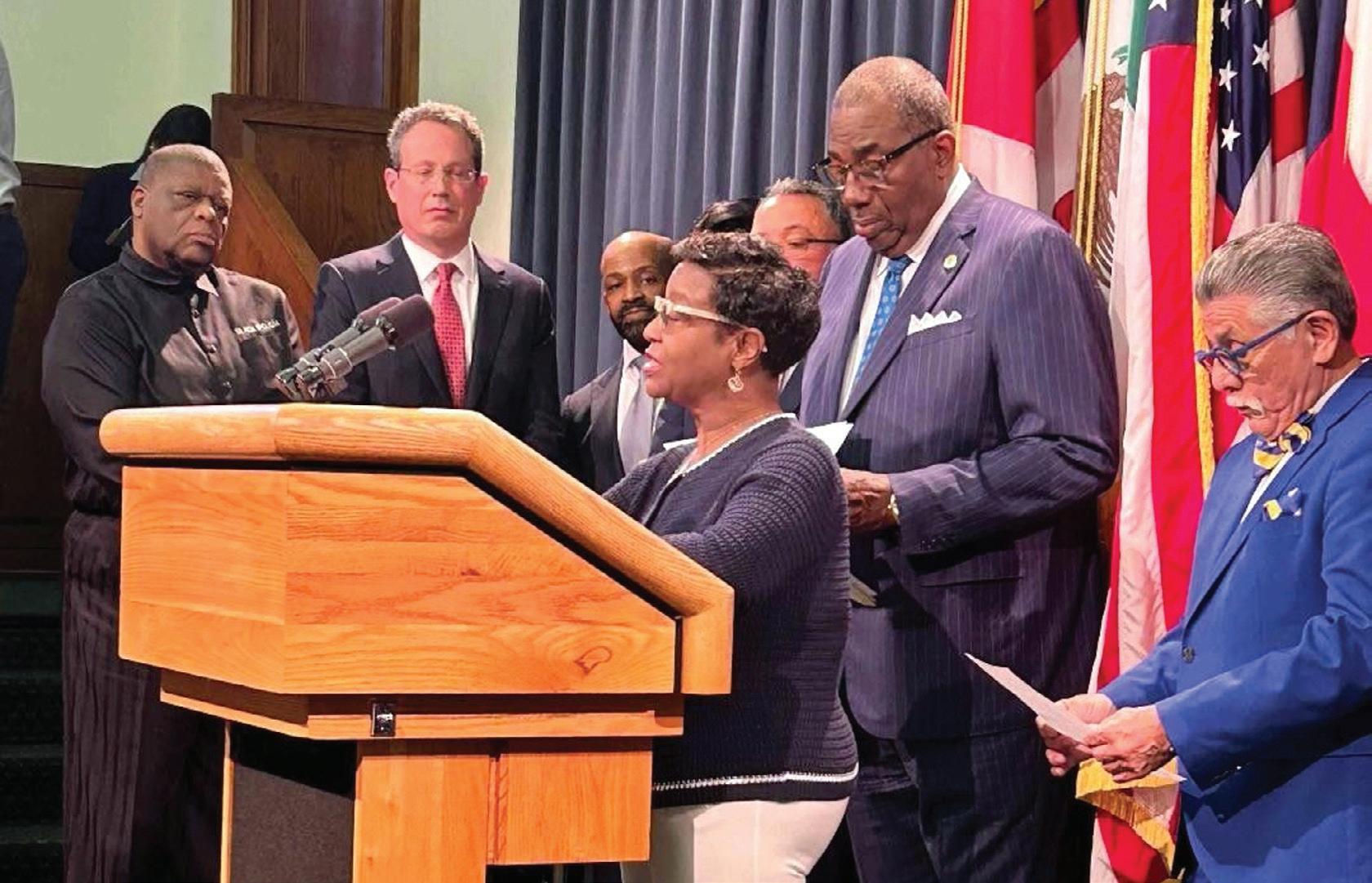
The case against the State of Texas Historically Underutilized Business program: Globe Express Trucking Inc. et al. v. Hancock et al., Travis County, Texas, 201st District Court, No. D-1-GN-26-001941, temporary injunction granted April 13, 2026
The plaintiffs are six small Historically Underutilized Businesses (“HUB”) whose HUB certifications were revoked and a nonprofit trade association serving minority contractors. Defendants are the Acting Texas Comptroller, the Office of the Texas Comptroller of Public Accounts and the executive directors or commissioners of four state agencies.
Texas’s HUB program is designed to remedy discrimination in state contracting by ensuring that HUBcertified businesses, historically those owned by minorities and women, have equal opportunities to compete for state contracts and subcontracts. The program does not establish quotas, set agency or contract goals or mandate preferential treatment in bidding.
On Dec. 2, 2025, Acting Comptroller Kelly Hancock issued an Emergency Regulation that redefined HUB eligibility, effectively revoking the HUB certifications of the plaintiff businesses solely because they are owned by Hispanics, Blacks or women. He converted the program into one solely for service-disabled military veterans. The court granted the temporary injunction and made several key findings. The court held that the Texas Legislature passed the HUB Act to remedy discrimination in state contracting and that the program neither institutes quotas nor mandates preferential bidding treatment. The court also found that Acting Comptroller Hancock lacked authority to unilaterally determine the constitutionality of the HUB Act.
The court further held that the Emergency Regulation and Proposed Regulations are likely invalid under the Texas Constitution because they violate due process by revoking HUB certifications without adequate notice and violate equal protection by revoking certifications based on the race, ethnicity and sex of business owners, the very characteristics the HUB Act was designed to protect.
Plaintiffs demonstrated irreparable harm by loss of currently held HUB-related contracts, inability to compete equally for future state contracts, exclusion from HUB-sponsored events and risk of bankruptcy or business closure.
The Emergency Regulations were held to be null and void as to plaintiffs. Hancock and the Comptroller’s Office were enjoined from enforcing the Emergency Regulations or adopting the Proposed Regulations unless and until the Legislature amends the HUB Act, the governor signs new legislation or a court with jurisdiction declares the HUB Act unconstitutional. Trial is set for Nov. 9, 2026.
Five plaintiff organizations filed suit challenging President Trump’s March 26, 2026, Executive Order 14398, Addressing DEI Discrimination by Federal Contractors. The order requires all federal agencies to insert a new clause into every federal contract by April 25, 2026.
Contractors must agree not to engage in what the order describes as “racially discriminatory DEI activities,” report subcontractors’ potential violations and acknowledge that noncompliance is material to payment decisions under the False Claims Act, potentially exposing contractors to civil and criminal liability. The complaint details ongoing chilling effects on members’ speech and work, including university faculty self-censoring research and classroom discussion on race and health disparities, medical professionals curtailing outreach to communities of color out of fear of losing federal funding and minority contractors avoiding participation in minority networking events.
Plaintiffs allege the order violates the First Amendment because it prohibits constitutionally protected speech and association involving race and ethnicity while targeting speech specifically about race, ethnicity and DEI. Plaintiffs also argue the order unlawfully conditions federal contract funding on contractors abandoning protected expression. The litigation is in its early stages.
The common thread running through each of these cases is a coordinated effort to dismantle decades of public and private sector programs designed to address the continuing effects of discrimination in business opportunities. Whether through litigation, executive action, regulatory changes or administrative reinterpretation of existing laws, the legal landscape for DBE, HUB, 8(a), MBE and other diversity initiatives is changing rapidly.
Yet the underlying disparities these programs were created to address have not disappeared. As courts, legislatures, agencies and advocates continue to grapple with these issues, businesses, public entities and program administrators must remain vigilant, informed and prepared to defend both the legality and necessity of efforts that promote equal access to economic opportunity.


Building a strong reputation in the construction industry rarely happens quickly, and sustaining one for nearly four decades is even more difficult. Yet that is exactly what C. David Moody Jr. has managed to do through recessions, financial strain, personal trauma, changing markets and the constant pressure that comes with operating a construction company. In an industry where thin margins and risk can end companies overnight, Moody has endured long enough to become one of Atlanta’s most recognized Black construction executives and a respected leader whose influence extends beyond the projects his company has built.

C. David Moody Jr., president and CEO of C.D. Moody Construction Co.
The success of C.D. Moody Construction was never part of a carefully crafted master plan. Moody describes himself as “a reluctant entrepreneur,” a phrase that reflects both the unexpected nature of his journey and the reality that his path into business ownership developed gradually through circumstance, experience and necessity. Long before he ever imagined leading a construction company, he was a young man growing up in Chicago and later Michigan during an era when Black students were often told more about the limitations placed in front of them than the possibilities available to them. That perspective began to change after arriving at Morehouse College in 1974.
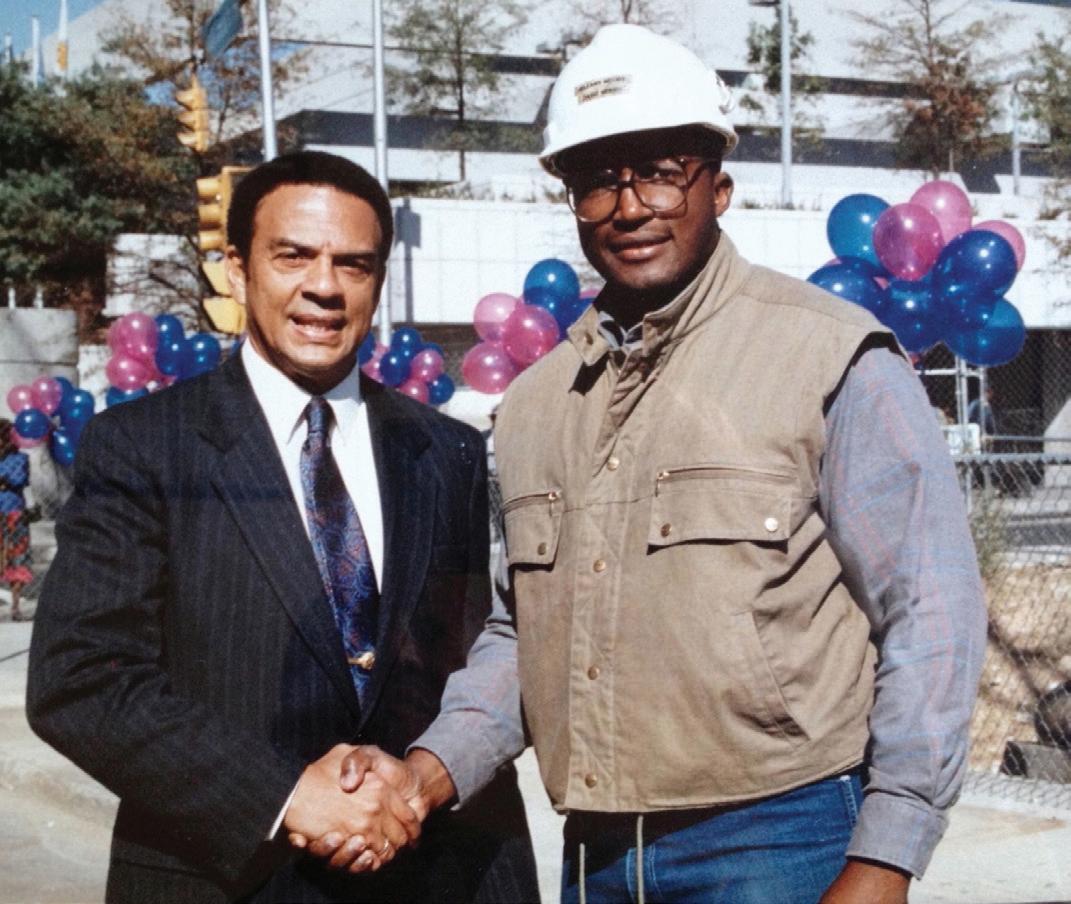
Looking back, Moody said attending Morehouse “was the greatest thing that ever happened to me,” because it exposed him to an environment where Black excellence was not unusual, but expected. The Atlanta University Center was thriving during that period, surrounding students with accomplished professors, emerging leaders and nationally recognized figures whose presence reshaped how many young Black men viewed themselves and their futures. Moody recalled meeting baseball legend Hank Aaron after he broke Babe Ruth’s home run record. He also remembers being friends and classmates with future Olympic champion Edwin Moses and meeting a young filmmaker named Spike Lee on the Morehouse campus. Those experiences expanded his understanding of what was possible. “What Morehouse really instilled in me was whatever you truly dream of doing, you can do,” Moody said. “That’s what changed my mindset.”
That sense of possibility deepened further at Howard University, where Moody earned a master’s degree in architecture. Howard exposed him to Black architects and professionals at a time when representation in the field remained limited. Born in 1956, Moody grew up in an America where opportunities for Black professionals were still heavily restricted, and he did not meet his first Black architect until he was fifteen years old. For Moody, Howard and Morehouse normalized ambition in ways that permanently shaped his confidence and worldview.
But entrepreneurship was not his goal. Moody initially envisioned a career in architecture and joined Bechtel, one of the largest construction firms worldwide, after graduate school as a staff architect. However, a field assignment on a nuclear power project changed the direction of his career. The pace and energy of construction appealed to him far more than sitting behind a drafting table producing technical drawings all day. “I realized construction fit me better,” Moody said. “I liked the noise, the action, the hard hats, the movement. Construction was something where every day you could see progress.”
His eventual move into entrepreneurship was less about pursuing a dream and more about adapting to difficult circumstances. After relocating to Atlanta with his wife in the early 1980s, Moody joined a small contractor that abruptly collapsed after failing to pay payroll taxes. Federal agents arrived, shut the company down and gave employees only minutes to collect their belongings before leaving the building. The experience left a permanent impression on him. “That taught me one of the greatest lessons of my life,” Moody said. “Don’t play with Uncle Sam.”
Over the next several years, he continued working for smaller contractors while learning firsthand how quickly companies could rise and fall. One experience pushed him decisively toward business ownership. The contractor he worked for also operated a bail bonding business, and Moody unexpectedly found himself assisting employees attempting to capture a bail jumper. “I said, ‘This is not what I signed up for,’” Moody recalled, laughing at the memory. “I didn’t want to be in construction and part-time bounty hunting.” In 1988, he launched C.D. Moody Construction with limited capital, little margin for error and

few illusions about how difficult the business would become. Moody openly acknowledges today that he underestimated the emotional and financial pressure associated with running a construction company. “I didn’t know what I didn’t know,” he said. “Looking back now, I was undercapitalized and just
Even as the company was growing publicly, Moody was privately carrying burdens that extended far beyond construction. For
trying to survive.” That survival mentality shaped much of the company’s early years and influenced how he approached both growth and risk.
Moody was not focused on becoming wealthy or building an empire. His focus was only on getting his family out of debt and keeping them there. “I remember telling my wife, ‘If I can just get us out of debt, we’ll never go back in debt again,’” he said. “That was my dream.”
The company gradually gained traction through high-profile projects such as Underground Atlanta before eventually reaching a major turning point through work in preparation for the 1996 Olympic Games. Serving on the Olympic Stadium project alongside H.J. Russell & Company and Beers Construction gave Moody something more important than revenue. It gave him confidence that the company could compete at a much higher level. “That was the project that really made me say, ‘Man, we can do this,’” Moody said.
trying to build a business,” he said. “It’s hard enough trying to be an entrepreneur and undercapitalized and learn and grow. Then you’re trying to deal with the baggage of trauma and trying to keep it at bay.”
By 2021, despite decades of professional success, Moody said he could feel himself emotionally unraveling again. This time, however, he made a different decision. Instead of continuing to bury the trauma, he pursued trauma-focused therapy and later Eye Movement Desensitization and Reprocessing (EMDR) therapy, a treatment designed to help individuals process traumatic experiences and reduce the emotional intensity attached to them. The process fundamentally changed how he viewed both leadership and performance. “Mental health and performance go hand in hand,” Moody said. “I think a lot of people are carrying things they never deal with, and they don’t realize how much energy it takes away from them.”
Part of that healing journey included climbing Mount Kilimanjaro in 2023. Although he ultimately stopped short of the summit because of dangerously low oxygen levels, the experience became deeply symbolic for him. After guides administered supplemental oxygen during the descent, he immediately felt the physical difference. “That little bit of oxygen changed everything,” Moody said. “And I realized how important it is in life to finally be able to breathe.”
decades, he buried a childhood trauma while trying to build both a business and a life. In 1992, after finally disclosing that trauma to his wife, he suffered what he describes as a nervous breakdown during a period when the company itself was gaining momentum professionally.
For years, Moody attempted to suppress those emotional struggles while continuing to perform professionally. Like many Black men of his generation, he had been conditioned to view emotional vulnerability as weakness rather than something requiring support or treatment. The expectation was to keep moving, keep working and keep providing regardless of what was happening internally. “We were taught if you get therapy, you’re weak,” Moody said. “So, you just power through.”
That approach worked temporarily, but it never fully removed the emotional weight he was carrying. Moody said he spent years trying to manage both the demands of entrepreneurship and the internal pressure created by unresolved trauma. “I spent more time wrestling with that daily than
The lesson extended far beyond the mountain itself. For Moody, therapy and emotional healing became their own form of oxygen after decades spent operating in survival mode, both emotionally and professionally. Today, he speaks openly about mental health, healing and resilience because he believes too many people silently carry burdens that affect their relationships, careers and overall well-being. “I can exhale finally,” he said. “When you can exhale, you can breathe.”
That commitment to helping others led Moody to create MoodysSpeaks.com, a platform through which he shares lessons from both his personal and professional journey. Through speaking engagements, writing and advocacy, he encourages others to persevere through adversity, pursue healing and discover purpose in life’s challenges. In many ways, it reflects the same philosophy that has guided his career for nearly four decades: difficult circumstances do not have to define a person’s future. They can become the foundation for growth, leadership and lasting impact.
Moody values being open and honest about his entrepreneurial journey, instead of presenting entrepreneurship as a polished success story, Moody often shares his battles with fear, uncertainty, emotional exhaustion and self-doubt alongside professional accomplishment. He believes leadership requires transparency as much as confidence. “There are people who want you to quit,” Moody said. “You can’t let them make you stop.”
technical expertise alone is not enough to sustain long-term success. “If you can’t get along with people, you won’t last long in this industry,” he said. “Construction is still a word-of-mouth business.”
Leadership, Teamwork And Legacy
Leadership, Teamwork And Legacy
If perseverance defines one part of Moody’s story, teamwork defines another. Construction, he said, is fundamentally collaborative work that requires people from different educational backgrounds, trades and experiences to function together toward a common goal. His years as a football player at Morehouse College reinforced those lessons early and continue to shape how he leads projects and people today.
“Everybody plays a role,” Moody said. “Whether it’s the laborer, the superintendent, the architect or the project manager, everybody matters.” That philosophy has helped shape both the company culture and Moody’s long-standing reputation throughout the industry. Construction remains deeply relationship-driven, and Moody believes
Throughout his career, Moody has worked on numerous major projects across Atlanta and beyond, though several hold especially personal significance. One was the Ray Charles Performing Arts Center at Morehouse College, which connected his professional career to one of the institutions that helped shape his life. Another was the Atlanta History Center’s Cyclorama Expansion project, which carried deeper cultural and historical meaning.
Standing inside a building housing a massive Civil War painting while serving as a Black contractor left a lasting impression on him. “I thought about people who fought and died so I could be standing there building that project,” Moody said. “I probably had ancestors looking down saying, ‘That’s why we did what we did.’”
Today, Moody continues focusing on the future, particularly through mission-critical work such as data centers, one of the fastestgrowing sectors in construction. He views those projects not only as opportunities for growth, but also as a pathway for developing the next generation of leaders within the company and exposing younger professionals to increasingly sophisticated work environments. Even amid rapid advances in artificial intelligence and
technology, Moody remains convinced construction will always remain rooted in human skill, labor and execution. “AI is never going to lay pipe or hang steel,” he said. “Construction is still about people building things.”
After nearly four decades in business, Moody’s understanding of success has evolved dramatically from the survival mindset that once dominated his thinking. Today, his focus centers more heavily on sustainability, leadership development and legacy. He wants the company to continue growing, but he also wants to ensure the next generation is prepared both professionally and personally for the demands leadership requires. His son, Charles D. Moody III, and his daughter, Karia Moody, both work in the company and are moving through the ranks. He also has other key leaders as part of the company’s succession plan.
In many ways, that perspective reflects the larger arc of his journey. Moody survived financial pressure that destroys many contractors, navigated changing political and economic climates, confronted trauma he carried silently for decades and built a respected company while doing so. The result is not simply a story about business success, but about endurance. In an industry where many firms struggle just to survive, Moody’s career is an example of what persistence over time can produce.

Opening day of Phase II of the Hartsfield-Jackson Atlanta International Airport Concourse D Widening Project. The $1.4 billion project is being delivered by HMBS, a joint venture consisting of Holder Construction, C.D. Moody Construction, Bryson Constructors and Sovereign Construction & Development.



https://www.laneconstruct.com/work-with-us/subcontractors-and-suppliers/
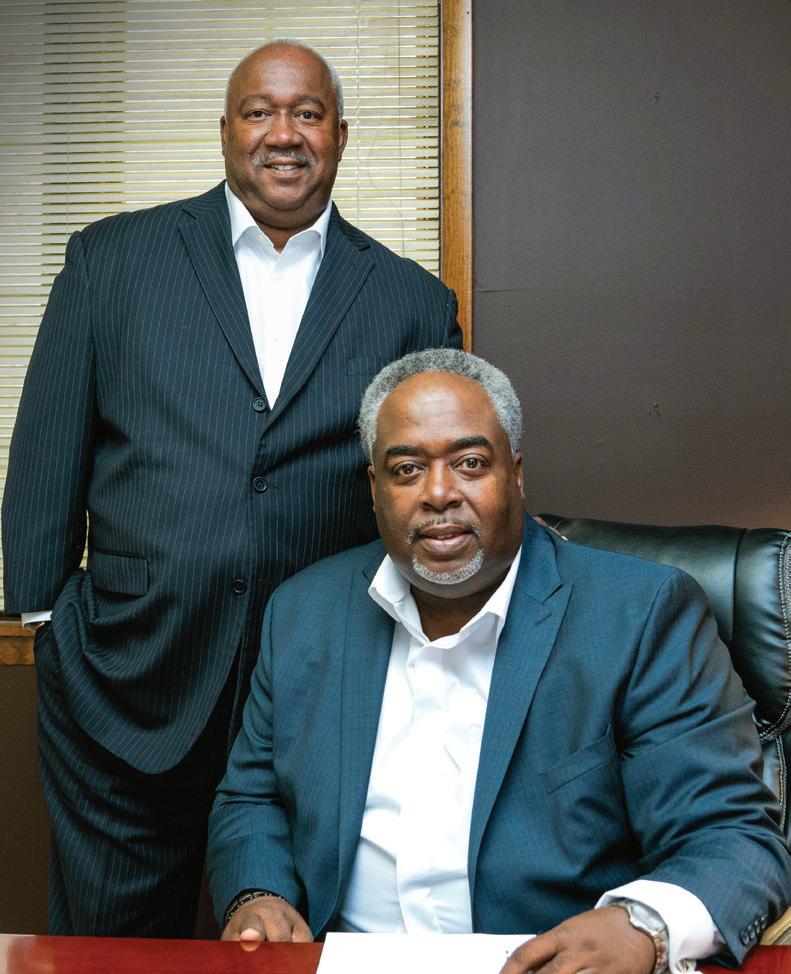
Jeffrey White and Gregory White are building Legacy Rail Operations with a clear sense of purpose, creating a company rooted in experience, grounded in discipline, and designed to endure through the highs and lows of the industry.
Their vision reflects both their professional backgrounds in rail operations and business, and the environment that shaped them long before the formation of the company.

Growing up on the South Side of Chicago, the brothers learned that stability had to be earned. Their neighborhood carried a reputation that reflected the realities they had to navigate daily. As Gregory White recalled, “Our area where we lived in Chicago had a nickname: ‘Terror Town,’ and getting to school was not a simple process. You could
be going through two or three different territories,” he said, describing what it meant to walk through neighborhoods shaped by gang boundaries and neighborhood rivalries. Those experiences required awareness,
discipline and resilience at an early age, traits that would later define how they approached business challenges.
— continued
That foundation started at home. The brothers credit their parents with instilling the mindset that would ultimately guide them through entrepreneurship. Their father, a longtime employee of the Chicago Transit Authority, not only introduced them to the rail industry but also modeled consistency, work ethic and long-term thinking. Gregory reflected on that influence directly, saying, “This whole thing started from our dad,” he said, while noting that their father remained invested in their success even as the business was taking shape. “He was trying to stick around long enough to see us cross over into something pretty successful,” he said. When American DBE Magazine first featured the company in 2019, Legacy Rail Operations was gaining traction, building on early success tied to major transit programs such as the Washington Metropolitan Area Transit Authority’s (WMATA) Silver Line. The firm had already begun to distinguish itself by addressing a gap in the industry, providing operational expertise that bridged the divide between design, construction and real-world execution. With a team built around seasoned professionals and a model grounded in experience rather than theory, the trajectory appeared strong.
What was not visible at the time was how that momentum could shift, and how critical resilience would become in the years that followed. After those early successes, the company entered a period without securing a major contract. For more than a year, Legacy Rail Operations operated without the type
of work that typically sustains firms in the transportation sector. It was a stretch that tested both the business model and the conviction behind it.
“There were times when nothing was coming in, and you’re trying to figure out how you’re going to keep the business going, but quitting was never part of the conversation,” Gregory said. Rather than pivoting away from their core expertise, the brothers stayed committed to the approach they believed in, continuing to build relationships and position themselves for future opportunities. That decision required discipline, particularly when results were not immediately visible. “We’ve been through tougher situations than that growing up, so when business gets hard, you don’t panic. You stay steady, you stay disciplined, and you keep preparing for what’s next,” he said.
That preparation ultimately positioned the company for its next opportunity, and when that opportunity arrived, it came at a moment that carried both professional and personal significance. As the business secured new work, including opportunities connected to WMATA, the brothers were also facing the reality that their father was nearing the end of his life. Being able to share that development with him created a moment that continues to define how they view their work. “We were able to tell him that he can rest well,” Gregory said. “We were on a project. We’re going to keep his legacy going as well.” It was not just about winning a contract, but about honoring the
foundation that made the business possible. Today, that foundation is reflected in how the company operates. Legacy Rail Operations has established a niche within the industry built on transit rail expertise, the skills necessary to ensure that complex transit systems function safely, and the talent to increase operational efficiency. On projects such as Maryland’s Purple Line, a 16-mile, 21-station light rail corridor, that expertise plays a critical role behind the scenes. Jeffrey described the company’s role in practical terms, explaining that their team works to ensure safe coordination of track access and movement, “making sure that people are getting on and off the tracks in a safe manner” and “making sure that the track allocations are appropriate.”
What distinguishes the company is not just what it does, but how it does it. Legacy Rail Operations has built its team around professionals who have spent years working in live transit environments. This “intellectual capital,” as the brothers describe it, allows the company to deliver insights grounded in real-world conditions rather than theoretical models. That experience enables them to anticipate issues, respond effectively in critical situations, and add value in ways that are not always immediately visible but are essential to project success.
That value is reflected most clearly in the company’s relationships. Rather than relying solely on new business development, Legacy Rail Operations has built a reputation that generates repeat opportunities. “One of

Track and station construction progresses inside the future Bethesda station on Maryland’s Purple Line. Legacy Rail Operations provided rail operations and maintenance expertise on the project, helping support the development of one of the nation’s largest light-rail transit initiatives.
Photo by Rainclaw7/Wikimedia Commons (CC BY-SA 4.0).

the things I’m very proud of is that every company that we’ve worked with, we’ve always been asked to come back and work on other projects with them,” Gregory said. The company’s repeat business reflects the reputation it has built through performance and experience.
The federal DBE Program has been instrumental to the company’s success through opening the opportunity to demonstrate their team’s capabilities in the passenger rail segment. However, the brothers are clear about how they view their role within that context. While certification can provide access to opportunities, it is not what sustains their business. As Gregory said, “It’s not because we’re a DBE. It’s because we add value. I don’t want to be there because of the color of my skin. I want to make an impact.” This philosophy guides how the company approaches every project, focusing on measurable contributions rather than
simply fulfilling participation requirements. Behind that performance is a structure built on trust and clearly defined roles. Jeffrey leads the operational side of the business, overseeing field execution and technical delivery, while Gregory manages administration, business development and strategy. The administrative side, though less visible, has been one of the most demanding aspects of sustaining the company. “It’s the thankless part of the business,” Gregory said, noting that the work often requires long hours and constant attention to detail. “It’s not uncommon for me to be up two, three, four o’clock in the morning trying to get something done,” he said, highlighting the level of commitment required to keep the business moving forward during both active and inactive periods.
More than a decade after its founding, Legacy Rail Operations has established itself as a firm defined by operational
expertise, disciplined execution and enduring relationships. Its work, often performed behind the scenes, plays a vital role in keeping complex transit projects moving safely and efficiently. At the same time, the company continues to evolve, with the next generation already beginning to take part in its future, as Gregory’s son now works within the business.
In the end, Legacy Rail Operations is not defined by any single project or milestone. The company’s story is rooted in endurance, discipline, and the ability to navigate uncertainty without losing direction. For Jeffrey and Gregory, the business represents more than professional success. It reflects a journey that began with their father, strengthened through experience, and carried forward with purpose. In every sense, it is a legacy built to last.
Certification as a Disadvantaged Business Enterprise or Airport Concession Disadvantaged Business Enterprise can open doors to federally assisted contracting opportunities and strengthen a firm’s position in competitive markets. For many small and diverse firms, certification provides access to procurement networks, enhances credibility with prime contractors, and supports long-term growth.
Recent regulatory changes are reshaping how firms obtain and maintain that certification. In October 2025, the U.S. Department of Transportation issued an Interim Final Rule that requires applicants and currently certified firms to submit a written Personal Narrative demonstrating social and economic disadvantage. The narrative must explain how disadvantage affected the owner’s educational, professional or entrepreneurial trajectory and how those experiences influenced business formation and development.
For business owners and program practitioners alike, the requirement has raised important questions. What should the narrative include, how detailed should it be, and how can firms approach the process with confidence while meeting federal expectations?
To better understand how firms are responding to the new requirement,
increased access to federally assisted contracting opportunities, improved visibility with prime contractors seeking partners, inclusion in directories used by agencies and buyers, and enhanced credibility in competitive procurement environments.
A key step in navigating the new rule is understanding what the Personal Narrative is intended to accomplish. The narrative is not a résumé, a marketing document or a general hardship story. Rather, it is a structured explanation of specific social and economic disadvantages recognized under federal standards.
Keen Independent Research conducted a national survey of DBE and ACDBE business owners. The survey gathered input from 165 firms across 37 states and a wide range of industries and company sizes.
The findings reveal significant variation in how certifying agencies are communicating and supporting compliance with the new rule. Some firms reported receiving written notification of the regulatory changes but little additional guidance, while others indicated they received no assistance at all. Only a small percentage of respondents reported receiving individualized support.
Entrepreneurship can be difficult for any business owner. However, the Personal Narrative must focus on barriers that constrained educational or professional advancement in ways that may not have affected similarly situated individuals. The purpose is to document how those experiences influenced the timing, structure or success of a firm’s development.
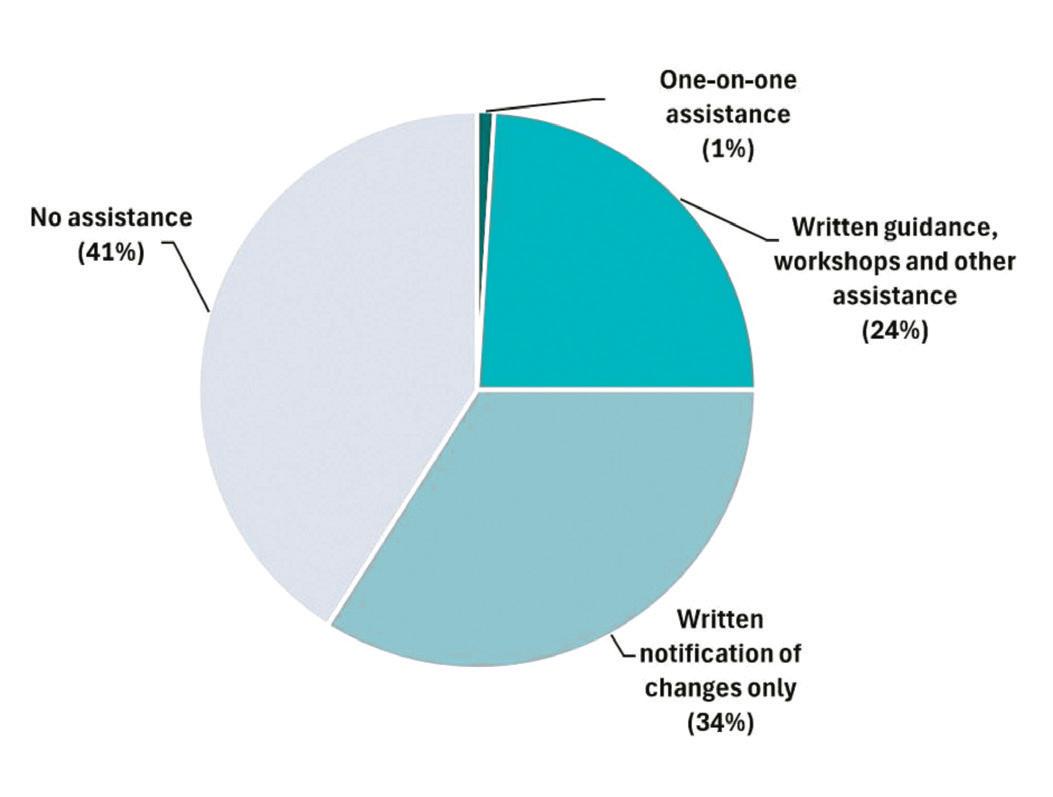
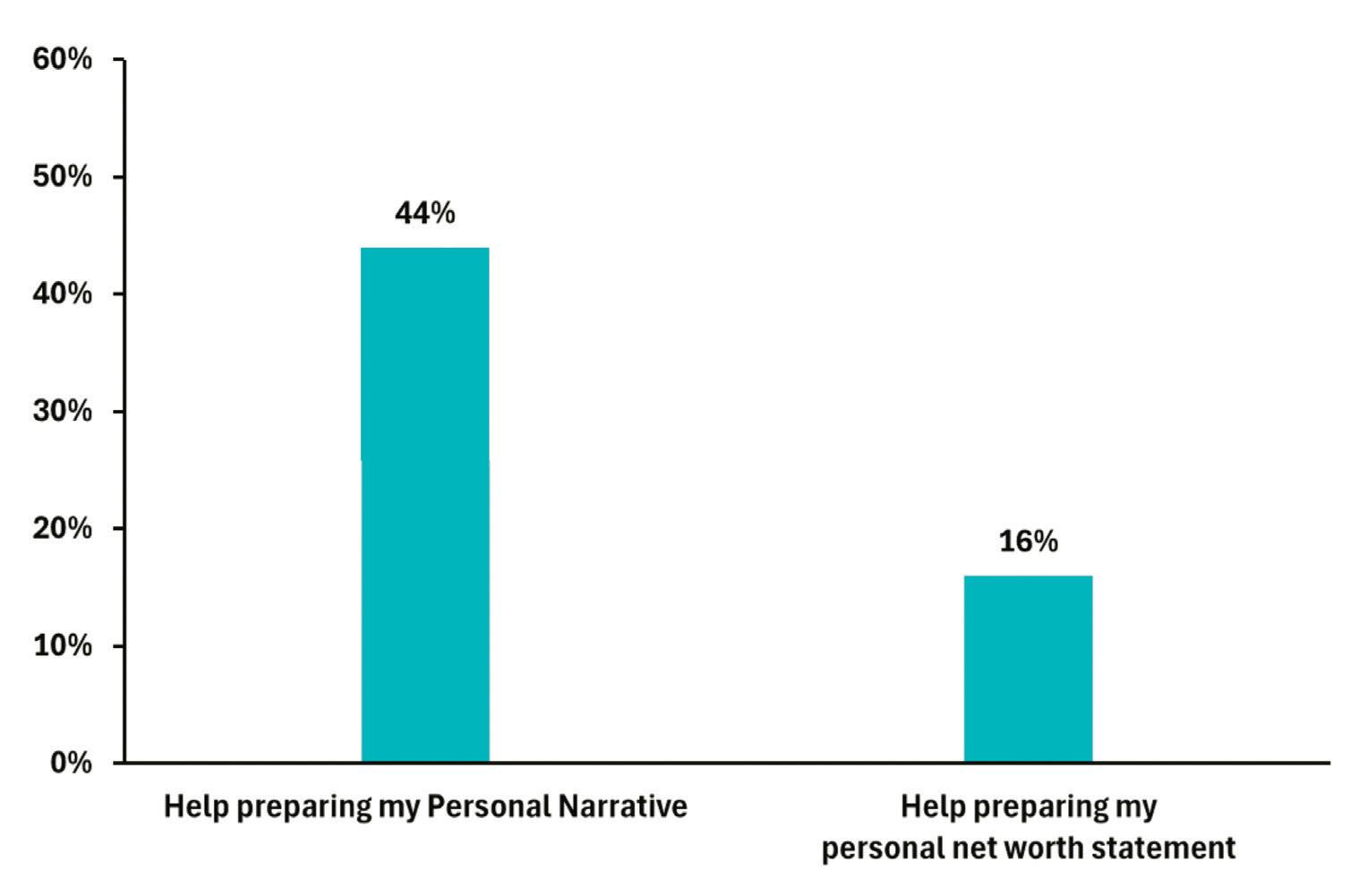
When asked what type of assistance would be most helpful, many business owners pointed to support in preparing their Personal Narrative, while fewer identified assistance with updating personal net worth statements as a priority. The responses underscore a broader need for clarity and technical support as firms work to understand and comply with the new certification expectations.
Despite these challenges, DBE and ACDBE certification continues to offer meaningful advantages. Certified firms may gain
Preparing an effective narrative often begins with reflection. Business owners may consider whether they encountered barriers affecting access to education or advancement, exclusion from professional networks, challenges obtaining capital or bonding, or other differential treatment linked to identity or background. Identifying when these experiences occurred and how they shaped business decisions can help create a clearer and more compelling narrative.
Specificity is critical. Broad statements about facing disadvantage throughout a career are typically insufficient. Instead, the narrative should describe concrete events, establish a timeframe, and explain how those events affected professional opportunities or economic outcomes. Distinguishing general business hardship from documented disadvantage is also essential. Economic downturns, supply disruptions or delayed payments may affect many firms, but the Personal Narrative must demonstrate how an owner’s experience differed due to recognized social or economic factors.
Another recurring challenge identified in the research involves connecting personal experiences to measurable business consequences. Some applicants provide detailed accounts of personal history but fail to demonstrate how disadvantage influenced company formation, growth or sustainability. The Interim Final Rule requires a clear link between disadvantage and negative economic impact on the business owner or the firm.
Examples may include delayed career advancement that limited capital accumulation, exclusion from networks that restricted early contracting opportunities, reduced access to mentorship affecting leadership development, or difficulty securing financing that constrained hiring, equipment purchases or project capacity. Drawing a direct line from experience to business outcome strengthens the narrative and aligns it with regulatory expectations.
Through its national survey and ongoing engagement with firms, Keen Independent Research also identified several consistent themes. Many business owners tend to understate their experiences, assuming they are not significant enough to include. Others struggle to interpret how their circumstances align with federal definitions of disadvantage. Some focus heavily on general business challenges rather than personal barriers, while many remain uncertain about how much detail is appropriate.
While the new Personal Narrative requirement may feel daunting, certification remains an important tool for expanding access to contracting markets and airport concession opportunities. Preparing a narrative requires thoughtful documentation, reflection and, in some cases, professional guidance. Many firms across the country have already submitted narratives and updated personal net worth statements and have been approved for continued certification. Business owners considering certification or recertification may benefit from reviewing their certifying agency’s specific instructions, studying the language of the Interim Final Rule, and outlining relevant experiences chronologically before drafting. Identifying concrete examples of disadvantage and clearly connecting those examples to business impact can help strengthen the final submission.
Ultimately, the Personal Narrative represents a shift toward greater individual documentation within the DBE and ACDBE programs. For firms that qualify, it also provides an opportunity to articulate the realities of building and sustaining a business while navigating unequal access to opportunity. Approached strategically, the requirement can support not only compliance but also long-term business positioning and growth.

public
evaluate workforce and contracting practices, identify barriers of DBEs and develop and expand opportunities for small and diverse firms. janine.kyritsis@ keenindependent.com


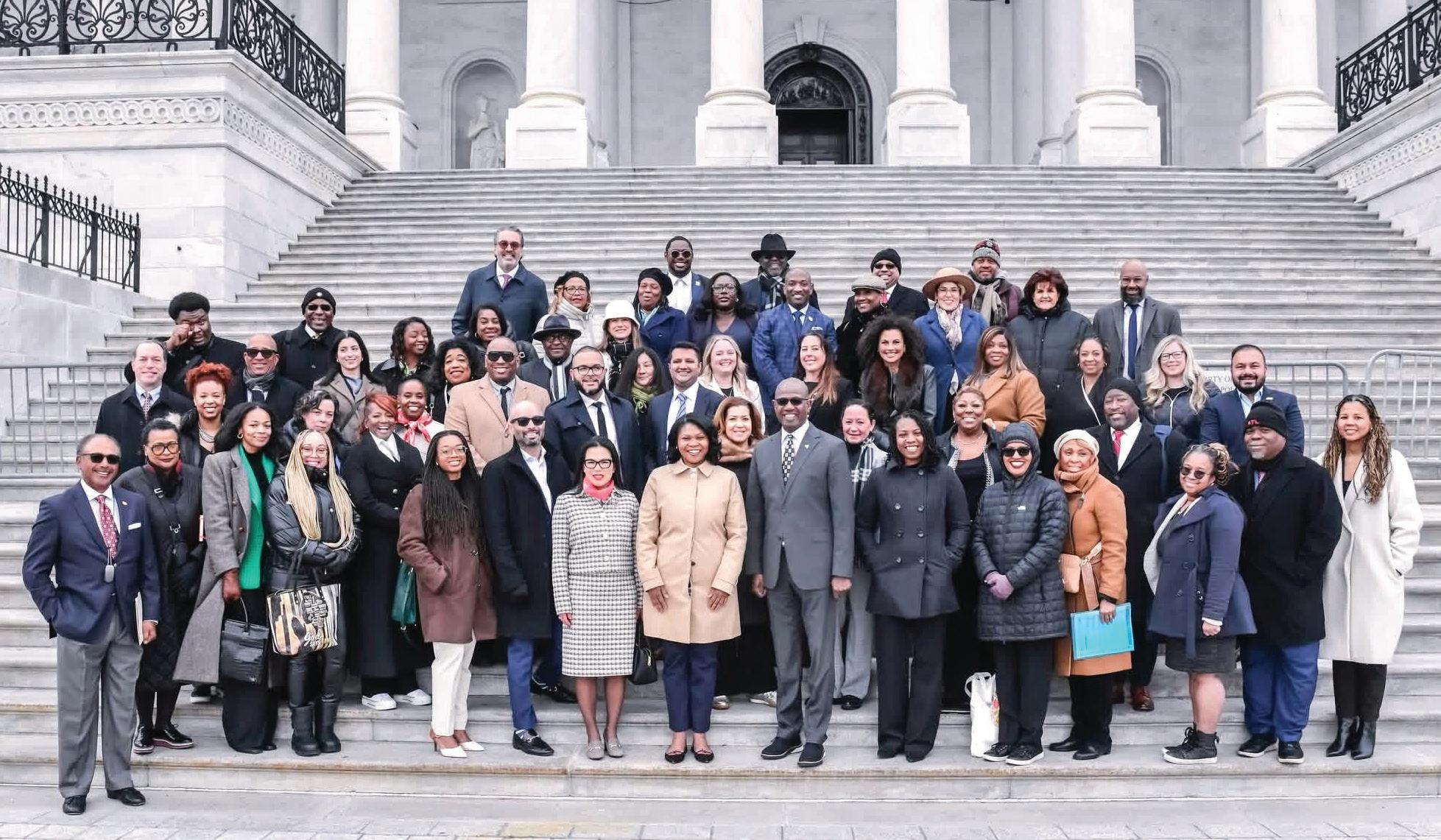
The Airport Minority Advisory Council’s 2026 Economic Opportunity and Policy Forum highlighted major airports across the country that are moving forward with capital and terminal development projects while adjusting to changes required by the new Interim Final Rule for the DBE and ACDBE programs. Executive leaders at these airports understand the social and economic value that small and diverse companies bring to their operations and remain committed to leveraging that value to deliver major improvement projects and operate concession programs within airport terminals.
Forward-looking strategies shaping this work were highlighted at the Forum, held March 16-18 in Washington, D.C. Discussions and conversations at the focused on strengthening access to opportunity, refining how work is delivered, and ensuring that businesses remain positioned to compete. Industry leaders approached these discussions with a practical mindset centered on execution, overcoming obstacles, and making measurable progress. This focus carried across sessions, panels, and informal conversations throughout the event.
Airport leaders, policymakers, and industry advocates made it clear that they are not standing still. They are improving procurement processes, expanding outreach and engagement, and aligning how opportunities are communicated. These efforts are not theoretical; they reflect adjustments already taking place across the industry. Leaders are refining how work is packaged, how firms are engaged, and how expectations are communicated to create stronger outcomes.
Several themes came into focus throughout the forum, including the emphasizing the economic role of small business participation, the continued alignment of industry stakeholders, and the practical strategies airports are using to improve engagement and participation. Together, these efforts reflect a commitment to working deliberately to strengthen how opportunity is sustained and delivered.
Congressman Cory Booker, a member of the U.S. Senate Committee on Small Business and Entrepreneurship, reinforced that broader perspective by delivering remarks on the economic role of small business participation and its direct connection to market performance. Booker emphasized how expanded participation increases competition, strengthens supply chains, and improves overall outcomes. He described the DBE framework as “a free-market program that opens pathways of opportunity,” highlighting its role in expanding access within industries where entry has not always been straightforward. “The DBE Program needs to be retained,” Booker said. “It’s not about preference; it’s about fair participation in an economy that was never neutral to begin with.”
Booker also emphasized the importance of recognizing the role small and emerging firms continue to play across infrastructure and transportation, noting that “the businesses here should not be reduced to ‘diverse suppliers,’” Booker said. “They are essential drivers of American growth and opportunity.” His perspective aligned with broader discussions around supply chains, competition, and economic performance, reinforcing that inclusion is not a peripheral consideration but a central driver of economic growth. Booker emphasized this point by stating that “when you invest in those excluded from opportunity, you don’t weaken America, you unleash it,” Booker said, underscoring the connection between expanded participation and long-term economic strength.
AMAC continues to play a central role in bringing industry stakeholders together to align strategy and advocate for continued access to opportunity. The forum began with
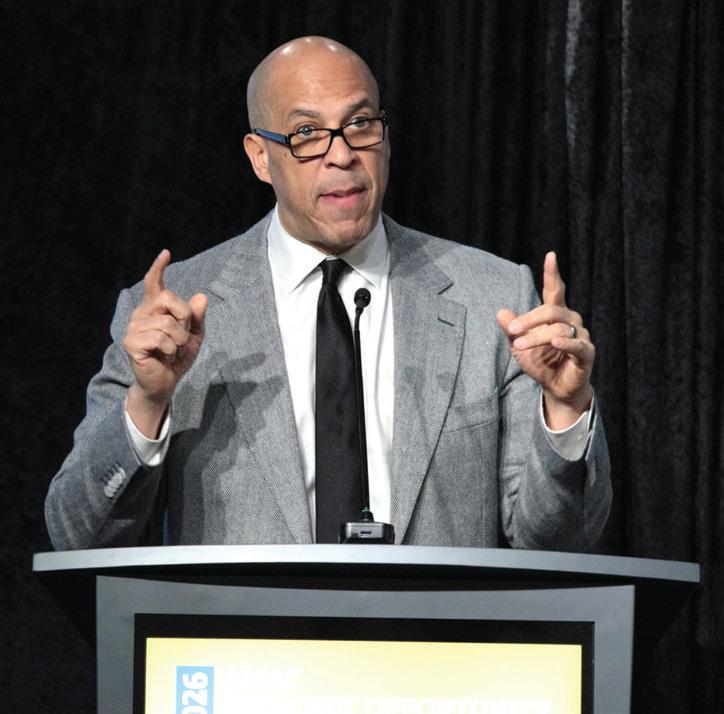
U.S. Sen. Cory Booker, D-N.J., delivers the keynote address at the 2026 AMAC Airport Opportunities and Economic Forum in Washington, D.C. Booker emphasized the economic value of small business participation and called for the continued support of the DBE Program.
a day of meetings on Capitol Hill, where a large group of AMAC members held more than 80 meetings with legislators or their staff members, sharing the impact of programs supporting small and diverse businesses, and the current realities of airport contracting and concessions work.
The second day of the forum featured a panel discussion titled “Pathways to Participation: How Airports Are Transforming Business Engagement.” Justina Mann, chair of AMAC’s Chapters Development Committee and president of Blue Ink Group moderated the session highlighting airports and prime contractors are strengthening forecasting, outreach, and procurement strategies to improve participation outcomes.
Throughout session made it clear that opportunity extends beyond formal requirements. Certification and compliance remain essential, but firms must also build relationships and remain engaged. As Amber Meshack, director of business, jobs and social responsibility at Los Angeles World Airports, explained, “there’s the official process and then there’s the real process,” underscoring how businesses navigate the industry in practice.
That distinction reflects AMAC’s broader role as both advocate and connector, helping businesses understand how opportunities develop and how to position themselves effectively within a complex and evolving environment.
— continued
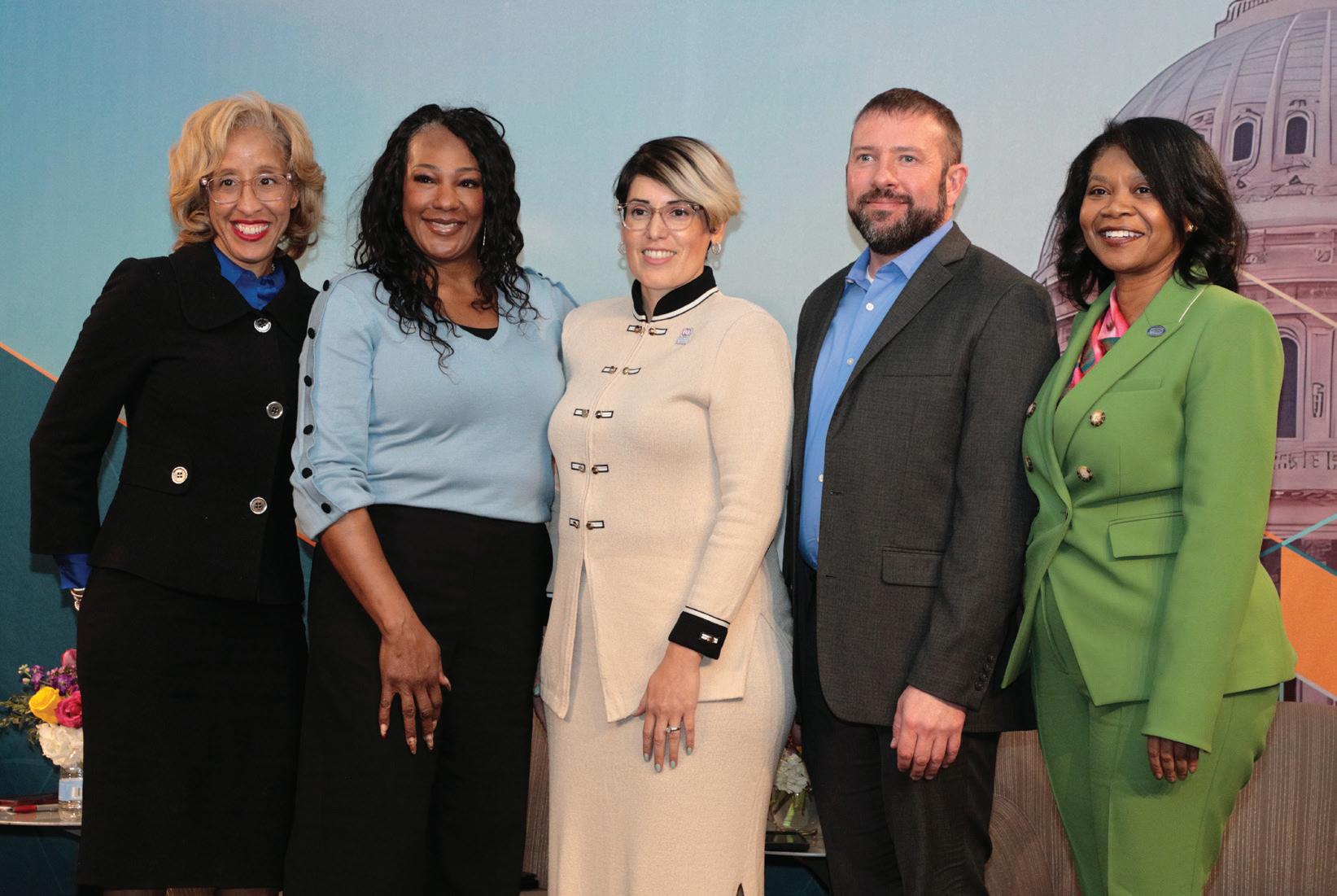
Panelists discuss business engagement strategies during the session “Pathways to Participation: How Airports Are Transforming Business Engagement.” Pictured from left are Justina Mann, president of Blue Ink Group and moderator; Amber Meshack of Los Angeles World Airports; Shawn Smith of Denver International Airport; Leticia Caviness of HartsfieldJackson Atlanta International Airport; and Eboni Wimbush, president and CEO of the Airport Minority Advisory Council.
Airports are showing the most visible progress in how they approach implementation, with a growing emphasis on early engagement, clearer communication, and procurement strategies that reflect how firms compete. Leaders are making adjustments across multiple points in the process to improve access and outcomes.
At Los Angeles World Airports, leaders are extending forecasting timelines and engaging businesses earlier in the process. As Meshack said, “We’re not only saying what is the work that we need, we’re also making commitments to improve upon the process every time,” a shift that has led to unbundling contracts and expanding opportunities for firms to compete at the prime level.
At Denver International Airport, Shawn Smith, senior vice president of culture and strategy, aligned procurement systems
with participation goals by redesigning evaluation processes. He explained, “If this is our value, it has to be reflected in our procurement process,” Smith said. Smith further emphasized early engagement, noting that, “We bring project managers to firms before they ever submit a proposal,” Smith said, improving access to information and strengthening firms’ ability to compete effectively.
At Hartsfield-Jackson Atlanta International Airport, Leticia Caviness, assistant general manager of business engagement, is aligning business engagement with internal systems such as budgeting and performance management. She noted that, “connecting dots within the department, connecting dots with City Hall and our external partners is a continued focus,” reflecting the coordination required across a large organization. Caviness also emphasized leadership accountability, explaining that, “it was transformational when the executive director held the chiefs



accountable,” reinforcing how expectations at the top influence outcomes across departments.
Despite heavy headwinds and changes to the USDOT DBE and ACDBE program, the forum emphasized that airport leaders, policymakers, and industry advocates continue to move the industry forward with intention, strengthening how opportunity is delivered through earlier engagement, clearer communication, stronger alignment, and procurement strategies grounded in real-world conditions.
Booker reinforced a theme that surfaced repeatedly throughout the forum when he said that broader participation leads to “more competition, better prices, stronger supply chains and more resilient infrastructure,” reflecting the view that business participation and economic performance remain closely connected throughout the airport industry.
C olette Holt & A ssociates provides legal counsel and consulting ser vices to governments and businesses.
• Minority / Women / Disadvantaged Business Programs
• Affirmative Ac tion and Compliance Consulting and Training
• Disparity and Availability Studies
• Speaking and Presentation Ser vices
• Exper t Witness Ser vices
• General Counsel to Americ an Contrac t Compliance Association
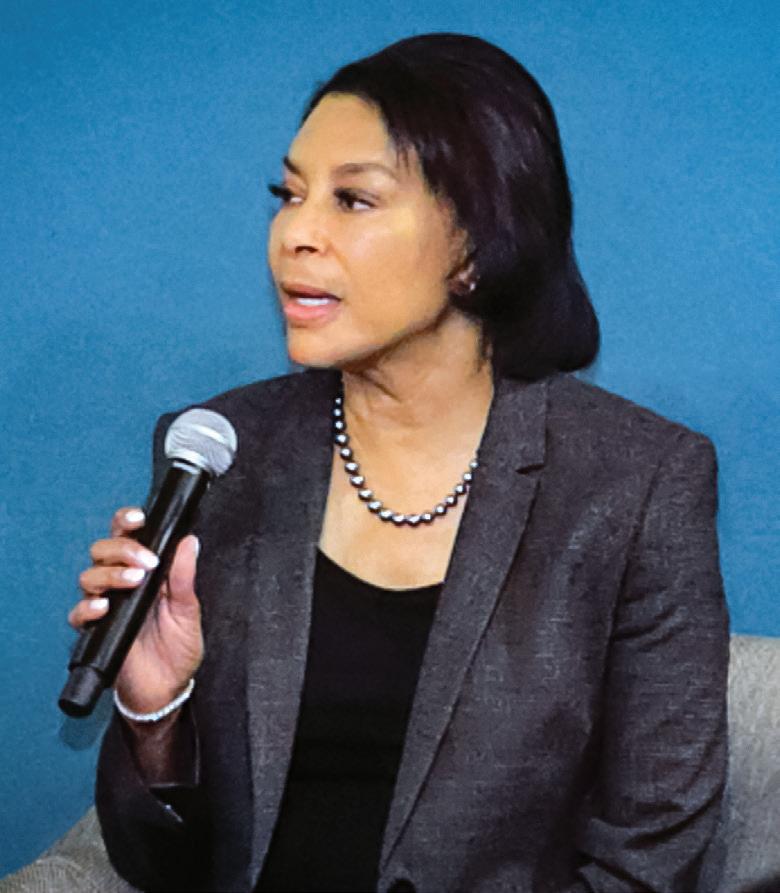
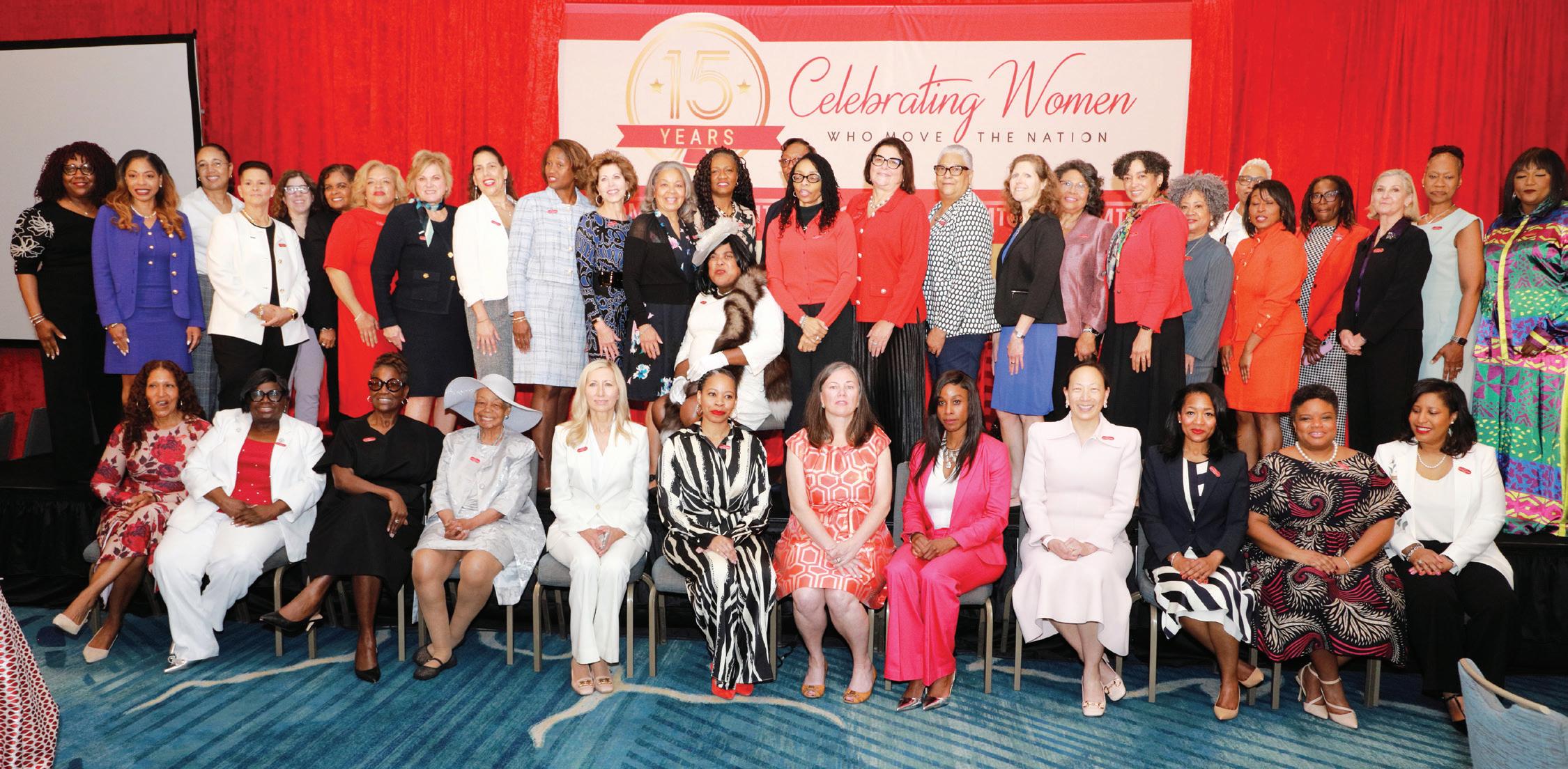
Each year, the Conference of Minority Transportation Officials (COMTO) shines a national spotlight on women whose leadership is shaping the future of the transportation industry through its Celebrating Women Who Move the Nation program.
Since its launch in 2011, the program has consistently reflected how leadership, visibility, and opportunity intersect in an industry defined by large-scale infrastructure investment and increasingly complex project delivery. In April 2026, in Washington, D.C., the program expanded in size and reach, drawing more than 500 attendees to the annual breakfast event. With the addition of ten new honorees in 2026, COMTO has bestowed this honor
on 172 women for their leadership and impact across the industry.
The women recognized as Women Who Move the Nation reflect the breadth of the transportation industry itself. From engineering and construction to program management and policy, their work contributes to how transportation systems are planned, delivered, and expanded. Over time, that recognition has mirrored a broader shift, as more women move into positions of authority and begin to shape not only outcomes but the structure of opportunity across the industry.
As the industry continues to evolve, the conversation around leadership is increasingly tied to both representation and workforce demand. April Rai pointed directly to the challenge facing the industry, connecting workforce needs with leadership gaps in a way that underscores the urgency of the moment. “Women are over 50 percent of the population, but less than 20 percent of leadership. Something’s missing. We have a workforce shortage, and we have to make sure that no talent is left on the table,” said April Rai, COMTO president and CEO. Her message reflects more than a call for representation; it highlights a fundamental business reality within the transportation sector. As infrastructure investment continues to expand, the ability to deliver
— continued
projects at scale depends on whether the industry can fully access and develop its available talent. “Elevating these women is one way to show what leadership looks like, and to make sure that inclusion and diversity remain a core cornerstone of organizations that want to be successful,” Rai added. “It’s necessary.”
That perspective reinforces the role of programs like CWWMN, not simply as recognition platforms, but as part of a broader effort to strengthen the industry’s leadership pipeline. In an environment where workforce shortages and increasing project demands continue to intersect, leadership development is no longer optional; it is essential to sustaining long-term growth and competitiveness.
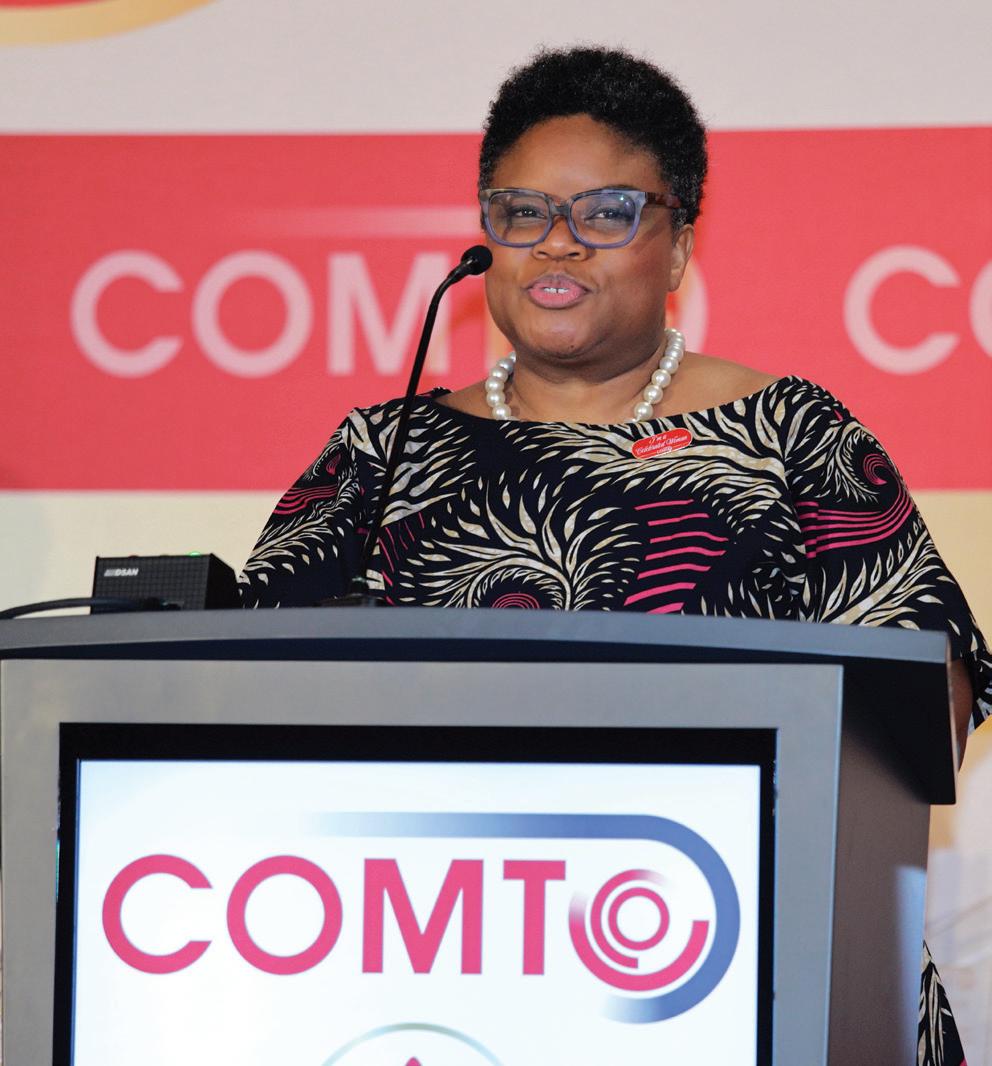
visibility in shaping the future of the industry. As more women move into executive roles, their presence begins to influence how leadership is perceived and who sees themselves as part of that pathway. “Representation matters,” she said. “It changes what people believe is possible.”
For Kelly Kelli of Kiewit, a 2026 honoree, leadership is defined by execution. Her work focuses on ensuring that small and diverse businesses can access and participate in major transportation projects, where opportunities are often difficult to access without deliberate effort.
Among this year’s honorees, Sharon JeanBaptiste represents the continued rise of women into executive leadership roles and the expanding influence that comes with those positions. As president of Ardmore Roderick, a minority-owned consulting firm based in Philadelphia, Pennsylvania, she leads within a highly competitive infrastructure environment, where decisions made at the executive level shape both organizational performance and long-term positioning within the industry.
Jean-Baptiste’s career spans major infrastructure organizations, where she has held senior roles influencing growth strategy, project delivery, and organizational development. That experience has given her perspective on how leadership within transportation has evolved over time. “We’re seeing more women step into positions where they’re not just part of the team, but leading the team and setting the direction,” she said. “That shift is changing how decisions are made and how organizations define success.”
At the executive level, leadership carries a broader responsibility that extends beyond internal operations. Decisions made in those roles determine how firms pursue work, structure teams, and engage partners across projects. Jean-Baptiste emphasized that influence as a defining characteristic of leadership in today’s environment.
“When you’re in a leadership role, you have the ability to open doors,” she said. “You’re thinking about who has access to opportunities and how those opportunities are created.”
That perspective reflects a growing expectation that leaders operate with both performance and purpose in mind. Delivering results remains fundamental, but leadership now requires a more intentional approach to how those results are achieved and who benefits from them. “There’s always an expectation that you deliver results, and that doesn’t change,” she said. “But there’s also an opportunity to think more intentionally about impact, about how the work we do creates pathways for others.”
That dual focus is becoming a distinguishing factor for firms operating at a high level. Organizations are increasingly evaluated not only on their technical performance, but on how they engage partners and expand participation within the industry. Jean-Baptiste pointed to that balance as a key characteristic of effective leadership. “The firms that stand out are the ones that understand you can do both,” she said. “You can deliver high-quality work and still be deliberate about creating opportunities.”
Beyond operational impact, she also highlighted the importance of
“It doesn’t happen by accident,” Kelli said, emphasizing that meaningful engagement requires intentionality from the outset. Building relationships, understanding firm capabilities, and identifying where those firms can contribute all play a role in creating real opportunities. Without that level of preparation, many capable firms remain on the outside of projects that could otherwise support their growth.
Kelli stressed that engagement must begin early in the project lifecycle, when firms still have time to position themselves effectively. Waiting until later stages limits their ability to prepare and compete. “It’s not just about checking a box,” she said. “It’s about bringing firms in early, helping them understand the work, and putting them in a position to succeed.”
Her role highlights a critical connection point within the industry. While executive leaders establish priorities, the work done at the project level ultimately determines whether those priorities translate into measurable outcomes. By focusing on preparation, coordination, and followthrough, Kelli helps ensure that opportunity is not theoretical but accessible to firms ready to compete and grow.
Reflecting on her recognition as a Woman Who Moves the Nation, Kelli framed the honor as a validation of the broader mission behind her work to engage small and diverse businesses on Kiewit contracts. “This is a testament to the importance of this work,” she said. “It’s about including, considering,
empowering, and uplifting the communities that we impact with our projects.”
She acknowledged that efforts to expand opportunity are not always fully valued, even though they directly contribute to increasing participation and building generational wealth. Being recognized, she added, affirms that the work matters and that creating access for others is a leadership responsibility worth sustaining over the long term.

Honoring women leaders who are impacting the transportation industry extends beyond the individual recipients to the organizations they represent. The award winners reflect a cross-section of government agencies, private firms, and nonprofit organizations, underscoring the influence of leadership across the sector. Their visibility reinforces the importance of inclusion and the role it plays in creating pathways for individuals and businesses to reach their full potential.
“These are women who move the needle. They influence policy decisions, shape how contracts are structured, and determine procurement programs and RFP outcomes across organizations. They may serve at
different levels, but they are all influencing the spaces where small diverse businesses can succeed and access opportunities. It is important that we elevate and recognize them because their leadership creates access and opens doors for entrepreneurs,” Tyra Reddus, COMTO deputy CEO said.
As transportation investment continues to expand, the need for strong leadership becomes more urgent. Workforce shortages, increasing project demands, and evolving industry expectations all reinforce the importance of developing leaders who can
operate across both strategy and execution. In that environment, leadership is not just about who is leading today, but who is being prepared to lead in the future.
Rai reinforced that perspective, emphasizing that recognition must translate into sustained impact. “We want to make sure that recognition leads to continued growth and continued impact,” she said, highlighting the program’s role in building a pipeline of leaders who will shape the industry moving forward.
Are you a small, minority or women-owned company seeking to thrive in the competitive world of transportation, aviation and highway contracts? Look no further! The City of Charlotte's Disadvantaged Business Enterprise (DBE) and Charlotte Business Inclusion (CBI) programs are your gateway to success! Our programs offer a unique platform for �irms like yours to secure federally assisted contracts within the transportation, aviation, and highway sectors. Additionally, we provide opportunities for various locally funded contracts, helping you grow your business and make a meaningful impact on the Charlotte region.
Engineering
Legal services
Structural steel
Electrical work
Geotechnical services
Interior �inishes
Landscape architecture
Welding
Construction

The dismissal of the Mid-America Milling Company v. U.S. Department of Transportation lawsuit in March 2026 closed one of the most closely watched legal battles in the history of the federal Disadvantaged Business Enterprise program. While the case itself is now over, the impact of the litigation is only beginning to reshape the transportation industry. For DBE firms across the country, the most important reality is that the program survived, but it will not return to operating in the same way it did before.
The case began in October 2023 in the U.S. District Court for the Eastern District of Kentucky, where Mid-America Milling Company and Bagshaw Trucking challenged the federal government’s use of raceand gender-based presumptions within the DBE Program. The plaintiffs argued that the program prevented them from competing equally for federally assisted transportation contracts because certain racial minorities and women received presumptive disadvantaged status during the DBE certification process. What initially appeared to be another legal challenge to affirmative-action-style contracting programs eventually evolved into one of the most consequential transportation contracting cases in decades.
The lawsuit spanned the Biden and Trump presidential administrations and intersected with broader national debates and legal proceedings surrounding diversity programs, federal contracting policy, and Equal Protection challenges that accelerated after the U.S. Supreme Court’s 2023 decision striking down raceconscious college admissions policies. The federal government, represented by the U.S. Department of Transportation and then-Secretary Pete Buttigieg during the Biden administration, defended the DBE program throughout much of the litigation. Judge Gregory Van Tatenhove presided
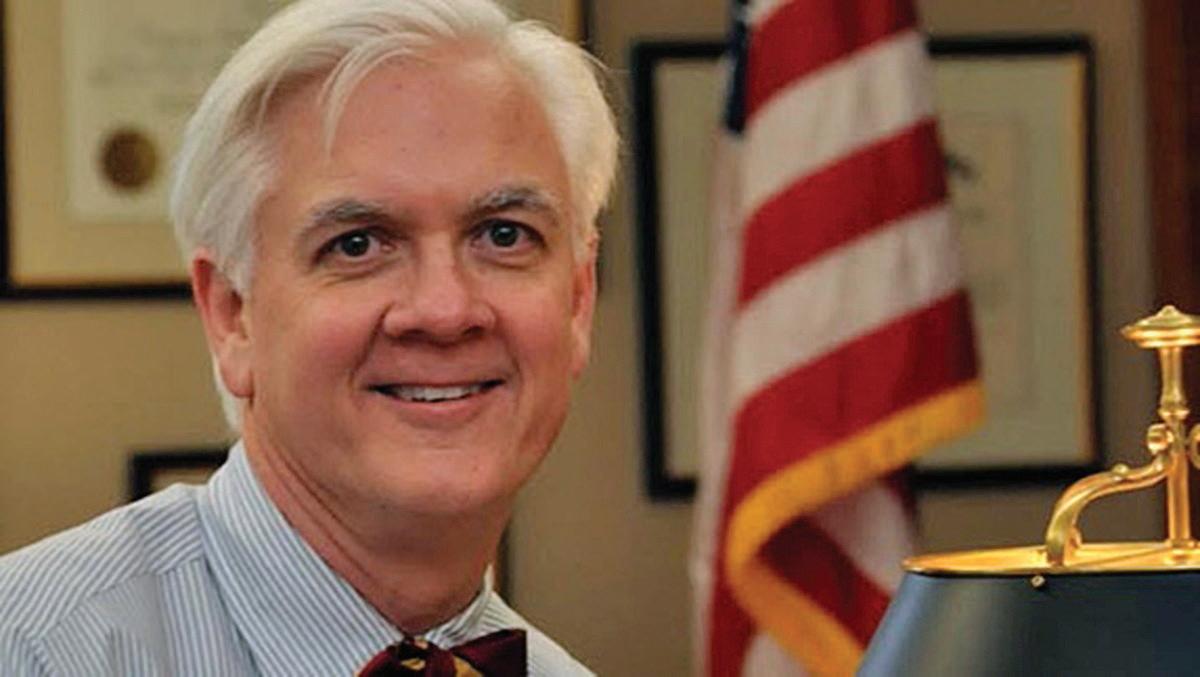
Judge Gregory F. Van Tatenhove of the U.S. District Court for the Eastern District of Kentucky dismissed the Mid-America Milling lawsuit in March 2026 after determining that USDOT’s Interim Final Rule had fundamentally altered the DBE Program challenged in the case. Photo courtesy of the University of Kentucky.
over the case and issued a preliminary injunction in September 2024 prohibiting the mandatory use of the DBE Program’s race- and gender-based presumptions for the plaintiffs involved in the lawsuit.
As the litigation intensified, a coalition of minority- and women-owned contractors and advocacy organizations moved to intervene in defense of the program. The intervenors argued that the lawsuit threatened opportunities that DBE firms had relied upon for decades and warned that dismantling portions of the program could significantly affect participation opportunities for disadvantaged businesses in transportation contracting. Their involvement underscored how closely the case was being watched throughout the transportation industry and among firms that depended on DBE participation goals to access public infrastructure opportunities. Brooke Menschel, senior counsel at Democracy Forward, said at the time that the intervention effort was intended to ensure “that the voices of minority- and women-
owned businesses will be heard in a case that directly threatens their opportunity to participate fairly in federally funded transportation work.”
The landscape changed dramatically after USDOT issued its October 2025 Interim Final Rule, which eliminated race- and genderbased presumptions and replaced them with an individualized certification process requiring firms to submit a “personal narrative” and additional supporting documentation. When the federal court ultimately dismissed the Mid-America Milling case as moot on March 19, 2026, the ruling effectively confirmed that the old version of the program no longer existed. “The issuance of the IFR fundamentally altered the regulatory framework challenged by Plaintiffs,” Judge Van Tatenhove wrote in the dismissal order. The court concluded that the challenged provisions
were no longer in effect and therefore the dispute could no longer proceed in its original form. Rather than producing a final nationwide ruling declaring the DBE Program unconstitutional, the litigation ended because the federal government had already rewritten major portions of the program before the court reached a final decision on the merits. In effect, the court determined there was no longer an active dispute for it to decide because the challenged portions of the program had already been changed or eliminated through USDOT’s Interim Final Rule.
For transportation agencies and contractors, the dismissal signaled that the DBE Program had entered a new operational era. The program itself remains intact, but significant portions of its traditional framework are temporarily paused while firms across the country undergo reevaluation and recertification under the revised federal standards. State transportation agencies continue operating DBE Programs through Unified Certification Programs, commonly known as UCPs, but agencies are now implementing a different certification structure than the industry operated under for decades.
The largest immediate impact has been the nationwide reevaluation process. Under the Interim Final Rule, DBE firms must now demonstrate individualized evidence of social and economic disadvantage rather than relying on prior presumptions. During that transition, transportation agencies were required to stop establishing new DBE contract goals and pause the counting of DBE participation until reevaluations are completed within their jurisdictions. The result has been a temporary operational holding pattern throughout the transportation industry while agencies work through tens of thousands of certifications nationwide.
The transition has not unfolded uniformly across the country. Some state transportation agencies appear to be moving through implementation and reevaluation more aggressively than others, signaling that portions of the revised operational framework could resume sooner in some states than others. California, for example, has publicly discussed reevaluation progress and the eventual resumption of goal setting, counting, and reporting
activities under the revised framework. Although agencies have not yet broadly resumed DBE goalsetting activities, the pace of reevaluation could eventually create significant differences in how quickly participation opportunities stabilize from state to state.
For long-time DBE firms, the changes have created both concern and cautious adaptation. Some firms worry that the number of certified DBEs could decline if portions of the existing certified base fail to submit the information necessary for recertification or fail to meet the new individualized standards. Others are concerned about how prime contractors may adjust participation strategies if the overall certified pool becomes smaller or more specialized once the reevaluation process is complete.
“We must ensure that all business owners, of all races, from both urban and rural communities, have a fair chance to contribute to building our nation’s wealth and productivity,” said Wendell R. Stemley, president of the National Association of Minority Contractors. “Anything else is injustice.”
At the same time, firms that successfully complete the new certification process may ultimately become even more valuable participants in the marketplace because of increased demand for experienced DBE contractors. If the certified pool declines in some states, qualified firms that remain certified could see stronger positioning on major transportation projects where agencies and primes continue pursuing supplier diversity participation goals.
The next few years will likely determine how significant those shifts become. State DOTs, airport authorities, and transit agencies are now entering the difficult process of rebuilding operational stability around the revised program structure. Agencies must balance compliance
with the new federal framework while continuing efforts to maintain participation opportunities for disadvantaged firms on federally assisted transportation projects. At the same time, a significant new development emerged in May 2026 when the U.S. House of Representatives released the first draft of its proposed surface transportation reauthorization legislation, the BUILD America 250 Act. Despite widespread concern throughout the transportation industry that the DBE Program could be eliminated entirely during reauthorization negotiations, the draft legislation preserved the program and reaffirmed congressional support for continuing disadvantaged business participation efforts in federally assisted transportation contracting.
The proposed legislation retained the long-standing national aspirational goal that “not less than 10 percent” of certain federal transportation funds should be expended through good-faith efforts involving small business concerns owned and controlled by socially and economically disadvantaged individuals. The bill also included explicit congressional findings stating that “the continuation of the disadvantaged business enterprise program” remains necessary because barriers to participation continue to exist within federally assisted transportation markets.
— continued
At the same time, the House proposal also reflected the new post-Mid-America Milling reality. Rather than restoring the old presumptive framework, the draft legislation directed USDOT to develop “objective criteria” for determining whether an individual qualifies as socially and economically disadvantaged under the program. The proposed bill additionally emphasized individualized evidence of disadvantage, economic hardship, systemic barriers, and denied opportunities rather than race- or gender-based presumptions alone.
For many firms, the draft legislation represented an important signal that Congress does not appear prepared to abandon the DBE Program altogether, even as the program continues evolving under a different legal and operational structure. AMAC President and CEO Eboni Wimbush described the court’s dismissal as “a significant victory for Disadvantaged Business Enterprises (DBEs) and the thousands of small businesses that help power America’s transportation industry.” Wimbush also emphasized that AMAC intends “to continue working
collaboratively with the U.S. Department of Transportation (USDOT) and the Federal Aviation Administration regarding the October 3, 2026, USDOT DBE/ACDBE Program Interim Final Rule to help ensure that all socially disadvantaged firms continue to have meaningful access to contracting opportunities throughout the transportation industry.”
The practical questions facing firms are no longer centered primarily on whether the program will survive, but on what the restructured DBE Program will look like once procurement operations fully stabilize. Will the number of certified firms decline significantly? Will agencies return to aggressive DBE participation goals once reevaluations conclude? Will disparity studies and race-neutral measures play a larger role moving forward? How will primes adjust outreach and participation strategies if the certified pool changes? Those questions remain largely unanswered and are likely to shape the transportation marketplace over the next several years. What is becoming clearer, however, is that the DBE program is moving into a more documentation-driven and individually
scrutinized era than many firms experienced previously. The dismissal order itself reflected the magnitude of the federal changes. The court noted that the Interim Final Rule had “eliminated or revised the challenged components of the program,” making the original legal dispute no longer actionable in its previous form.
For transportation agencies and contractors, that language underscored a broader reality already being felt across the industry. The future of DBE participation will likely depend less on assumptions tied to historical program structures and more on how the revised system is implemented over time at the federal, state, and local levels. The Mid-America Milling case may be over, but the larger transition surrounding the DBE program is still unfolding. Over the next few years, the transportation industry will likely determine not only how the revised certification framework operates, but also whether the program can continue creating meaningful participation opportunities for disadvantaged businesses under its new structure.

Certification has long answered one question: Does this firm qualify? Some agencies are now asking a second.
The application was complete. The ownership documents were in order. The personal net worth figures came in under the threshold. By every measure in the checklist, the firm qualified for DBE certification. It was also, by most practical measures, nowhere near ready to perform on a public contract. That gap, between what certification requires on paper and what contract performance demands in practice, sits at the center of a quiet but significant debate playing out in transportation agencies and certifying programs across the country.
A growing number of practitioners are questioning whether the traditional certification model, focused almost entirely on eligibility, is doing enough to set firms up for success once they are in the program. Some agencies are beginning to take a closer look at the issue.
The DBE certification process was designed to answer a specific legal question: Does this firm meet the federal criteria for participation? That means verifying size, ownership, control and the owner’s status as a socially and economically disadvantaged individual. Check those boxes and the firm is certified.
That framework has real advantages. It is consistent, relatively objective and grounded in regulatory requirements that apply the same way across jurisdictions. It does not ask certifiers to make judgment
calls about whether they believe a business will succeed. However, it also does not ask much about whether a firm has the bookkeeping systems, bonding relationships, insurance coverage or operational experience that government contracting actually requires.
A sole proprietor with a truck and a newly formed LLC can meet every eligibility criterion. That does not necessarily mean the firm is prepared for what comes next. Practitioners have watched this play out for years. A firm gets certified, pursues its first subcontract opportunity and discovers it cannot get bonded at the required level, does not have workers’ compensation coverage structured the way the prime contractor needs it, or has no idea how to submit a pay application. The relationship sours, and the firm’s reputation takes a hit before it has had a real chance to build one.
by Sheena Thomas
barriers to certification. Instead, they are designed to ensure firms understand the environment they are entering.
Other agencies have introduced structured interviews as part of the application process. These conversations go beyond verifying facts on a form and seek to understand how a firm actually operates. Has the owner handled subcontracts before? Does the company maintain a separate business bank
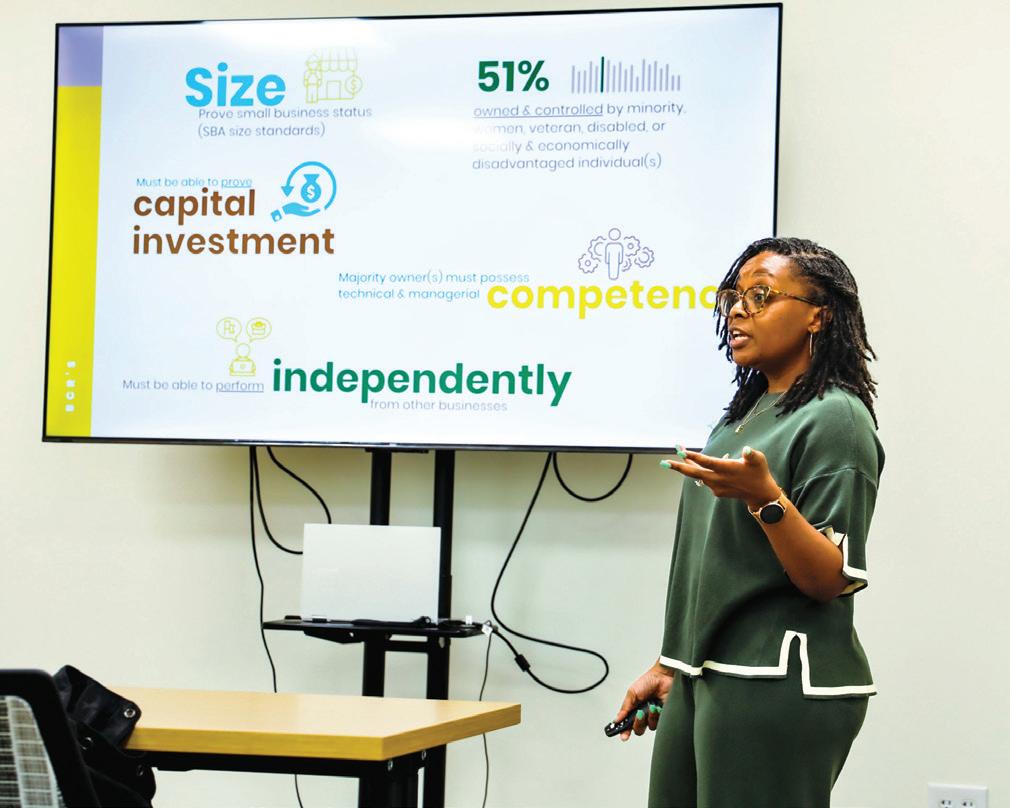
What is emerging in response is not a uniform policy shift. There is no federal directive pushing programs in this direction, and approaches vary considerably from one agency to the next. Yet a recognizable trend is taking shape as programs begin looking beyond the eligibility checklist to ask whether applicants have the capacity to participate meaningfully in public contracting.
For some agencies, that means precertification orientations that walk applicants through the practical realities of DBE participation, including what prime contractors expect, what documentation is required, and what bonding and insurance typically look like at various contract tiers. The sessions are not intended to serve as
account? What is the firm’s current bonding capacity? The answers do not automatically determine certification outcomes, but they provide certifiers with a more complete picture of a firm’s capabilities.
A smaller number of programs have experimented with tiered or phased structures, certifying firms at a foundational level and then directing them toward capacity-building resources before they are considered for certain contract opportunities. The goal is to keep the program accessible to firms at earlier stages of development while avoiding situations that place those firms in positions where they are likely to fail.
For programs interested in moving in this direction without creating new problems, several considerations are especially important.
First, the criteria must be explicit and publicly available. Firms preparing for certification should understand in advance what will be evaluated and how those evaluations will be applied. Vague standards are worse than no standards because they create confusion and expose programs to claims of inconsistency. Whatever a readiness review examines should be documented, clearly communicated, and applied uniformly to every applicant.
Second, assessment without support is simply another barrier. Agencies that identify gaps in a firm’s readiness should connect that firm with technical assistance providers, bonding assistance programs, small business development centers, and mentorship opportunities through established DBEs. The objective should be to help firms become ready, not to use readiness as a reason to keep the door closed.
These decisions also should not be made in a vacuum. Certified firms, advocacy organizations, prime contractors, and small business development professionals possess practical, on-the-ground knowledge that should help shape readiness frameworks. A process designed without their input is likely to overlook important realities.
For firms pursuing certification, the direction of travel is clear enough that preparation is worthwhile, regardless of whether a local certifying agency has formally adopted a readiness framework. Organized financial records, a business bank account separate from personal finances, a working understanding of insurance and bonding requirements, and a realistic assessment of the work a firm is prepared to pursue matter more than many applicants realize. These are not arbitrary hurdles. They are the factors that often determine whether a business can successfully perform once it secures a contract.
Firms in the early stages of development should not be discouraged. However, they should approach certification with an honest assessment of where they are and what they still need. Many programs offer free or low-cost technical assistance before

and after certification. Taking advantage of those resources is not a sign of weakness; it is precisely why those resources exist. For firms that are already certified, the growing emphasis on capability is worth noting. Certification opens the door. Performing well, consistently, reliably, and professionally is what keeps it open and ultimately leads to referrals, stronger relationships, and larger opportunities.
The DBE program turns 40 this year, and it has changed considerably over time, sometimes by design, sometimes in response to court decisions, and sometimes because practitioners discovered what worked and what did not. The conversation around readiness is part of that ongoing

evolution.
There are no easy answers. Holding firms to a higher standard at the point of certification may produce better outcomes for those who make it through the process. It may also exclude firms that would have succeeded with additional time and support. That tension does not resolve neatly, and anyone who suggests otherwise has likely not spent much time in a certifying office. What does seem clear is that the longterm credibility of the program depends on certified firms being able to perform successfully. Achieving that goal will require agencies and businesses alike to think more carefully about what happens after the certificate is issued.
Sheena Thomas is founder and principal of Lengo Strategic Partners, a consulting firm focused on supplier diversity, certification programs, and equitable participation in public contracting. She works with transportation agencies, public entities, and business development organizations to strengthen opportunities for disadvantaged and diverse businesses.
Page 3: Austin Commercial
Page 7: B2Gnow
Page 2: CERM
Page 28: Colette Holt & Associates
Page 3: Griffin & Strong
Page 32: Hampton Roads Connector Partners
Page 15: Ken Weeden & Associates
Page 20: Lane Construction
Page 11: Messer Construction
Page 5: PR PROS, LLC
Page 36: Virginia Department of Transportation (VDOT)
Page 40: Metropolitan Washington Airports Authority
Conference of Minority Transportation Officials (COMTO)
55th National Meeting and Training Conference Washington, DC; July 25-28, 2026 https://comto.org
American Contract Compliance Association 2026 ACCA National Training Institute Atlanta, Georgia; August 10-14, 2026 https://www.accaweb.org/events-nti/
National Minority Supplier Development Council (NMSDC)
NMSDC Annual Conference & Exchange 2023 Phoenix, AZ; September 20-23, 2026 https://www.nmsdc.org/
American Public Transportation Association (APTA) APTA’s TRANSform Conference & Expo Chicago, IL; October 4-7, 2026 https://www.apta.com


The Metropolitan Washington Airports Authority (MWAA) offers small businesses a place to grow.