When it comes to avalanche control, you need a supplier who delivers—when you need it and where you need it. All products are made in North America and backed by the only explosives company specializing in avalanche control. We are here to help make your work safer and more efficient every day, with convenient locations serving the mountainous West.
A3 STATEMENT OF PURPOSE
The American Avalanche Association promotes and supports professionalism and excellence in avalanche safety, education, and research in the United States.
A3 STAFF AND BOARD
EXECUTIVE DIRECTOR........Jayne Thompson Nolan
PRO EDUCATION MANAGER Jen Reddy
REC EDUCATION MANAGER.....Jayson Simons-Jones
MEMBER SERVICES..........................Meghan McElrone
DEVELOPMENT COORDINATOR Alexandra Lev
SOCIAL MEDIA COORDINATOR Jess Cohen
TAR EDITOR Alli Miles
TAR DESIGNER McKenzie Long
EDITORS EMERITI
Steve Conger
Sue Ferguson
Blase Reardon
Bruce Tremper Lynne Wolfe
A3 GOVERNING BOARD TRUSTEES
PRESIDENT* Scott Savage
VICE PRESIDENT* Liz King
SECRETARY* Kelly Robbins
TREASURER* Jonathan Shefftz
EDUCATION CHAIR* Aleph Johnston-Bloom
MEMBERSHIP CHAIR Jimmy Tart
PUBLICATIONS CHAIR Matt Hansen
GOVERNANCE CHAIR Hannah Follender
MEMBER AFFILIATE Bruce Edgerly
AT-LARGE PRO Kate Koons
AT-LARGE PRO MOTORIZED Travis Feist
Executive Committee denoted by *
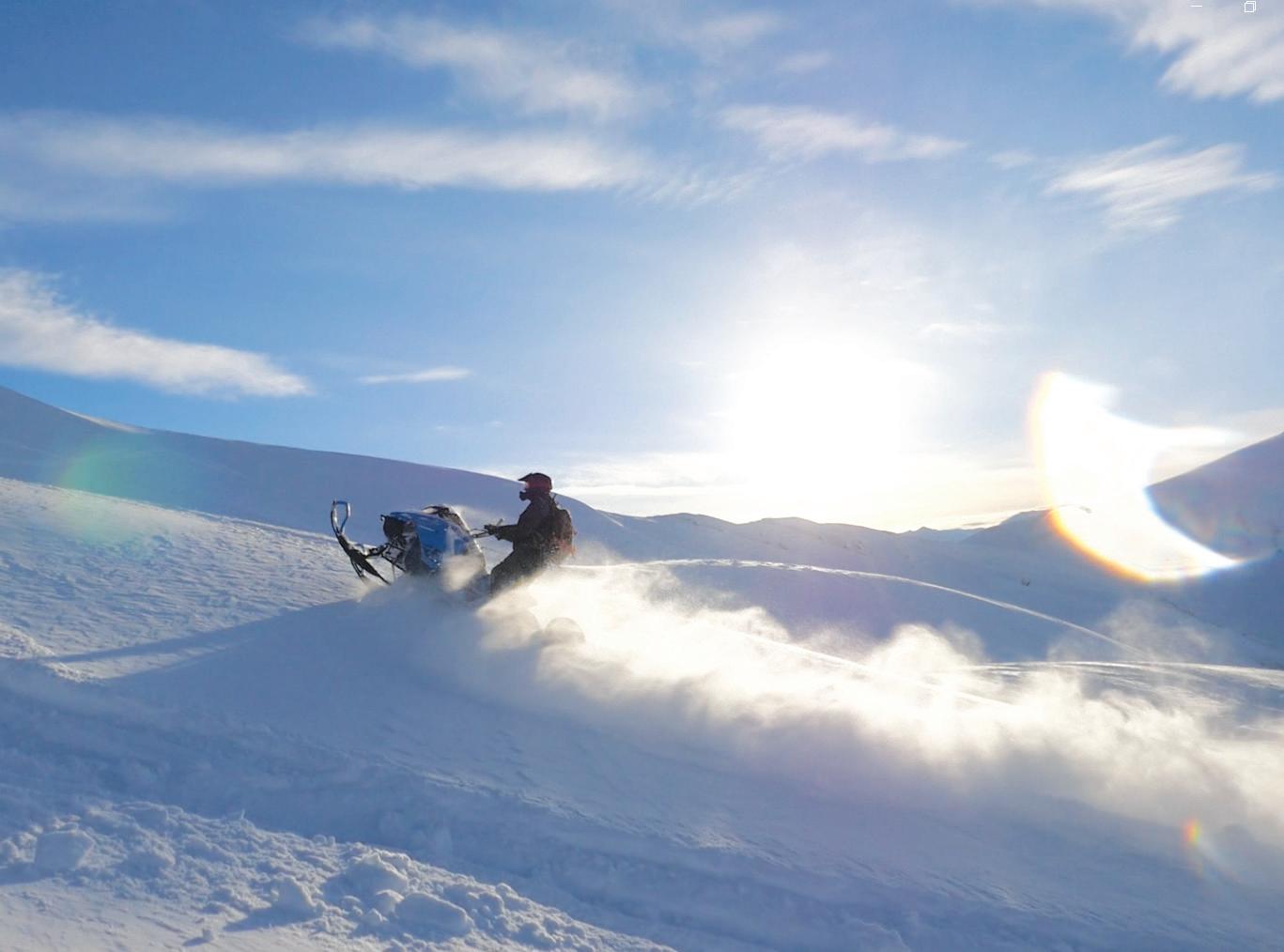
A still from a video of a very good day on Turnagain Pass. ! ANDREW SCHAUER
The Avalanche Review is published each fall through spring by the American Avalanche Association, Inc., a nonprofit corporation. For a digital version, visit theavalanchereview.org The Avalanche Review welcomes the submission of articles, photographs, and illustrations.
Please send submissions to:
Alli Miles –– Editor tel: (717) 756-0442 alli@avalanche.org
Design & Production:
McKenzie Long –– Designer tel: (513) 515-0723 mckenzie@cardinalinnovative.com
Subscription: $35 per year (4 issues). Subscription is included with membership dues to A3. For subscription and membership information, see www.AmericanAvalancheAssociation.org
Articles, including editorials, appearing in The Avalanche Review reflect the individual views of the authors and not the official points of view adopted by A3 or the organizations with which the authors are affiliated unless otherwise stated.
Materials may be reproduced for research or classroom use. Permission is also granted for use of short quotations, figures, and tables in scientific books and journals. For permission for other uses, contact The Avalanche Review.
DECISION-MAKING
Tolerance. By Evan Stone Mentorship 2.0. By Eeva Latuoso & Aleph Johnston-Bloom
RESCUE
Operational Mindsets for SAR. By Travis Laverty
FORECASTING
Forecasters Need to be Wordsmiths, Too. By Molly Absolon Avalanche Considerations in Couloirs. By Mike Austin
SKI CUTTING
How Should Pros Use and Talk About Ski Cutting? By Mike Parri The Art & Craft of Ski Cutting by an Avalanche Seeker. By Chrissie Oken Is Ski Cutting a 4-Letter Word? By Larry Goldie
2024–2025 MOTORIZED AVALANCHE FATALITIES
2024–2025 AVALANCHE CENTER SEASON SUMMARIES PART 1: AAIC THROUGH ESAC
LAST LAP
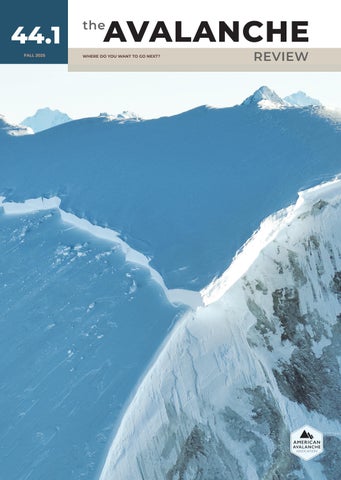
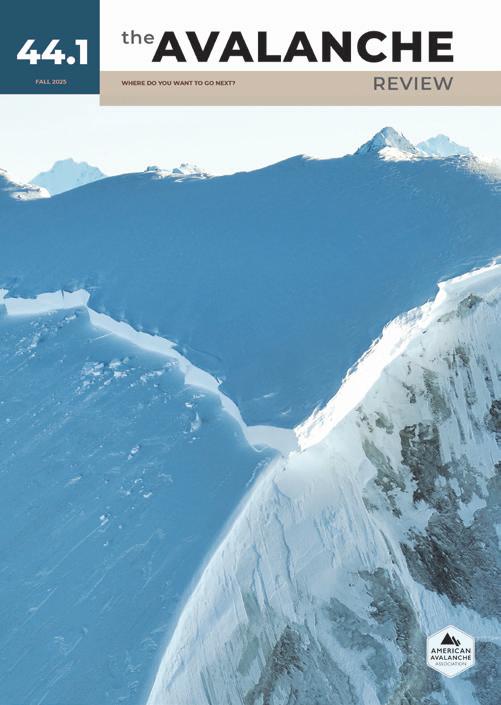
Valdez, Alaska. Lookers’ right portion of the historic Three Pigs full depth hard slab. Crown depth maximum estimated at 17+ feet utilizing a photogrammetry capable drone and software. HS-N-R5-D4-G interface consisted of glacial ice and firn snow. For more details read the Valdez Avalanche Center season summary starting on page 36. ! KYLE SOBEK, LEAD AVALANCHE TECHNICIAN, ALASKA DEPARTMENT OF TRANSPORTATION &
FROM THE EDITORS
As a life-long writer, I’ve found that one of the most uncomfortable things to write about is myself. However, I want you all to know me, and I want to connect with you, so here goes. I’m the new editor for TAR, and although I’m taking over Lynne’s role, I’ll be holding onto her as long as I can (more on that below).
I’m a ski guide, avalanche educator, and public forecaster for Central Oregon Avalanche Center. I also write for the niche world of trail and ultrarunning and have worked in various writing and communications roles for the past twelve years. Before that, I was a lawyer and had a brief stint as a public defender. I love to climb, run trails with my dogs Riggins and Firnspiegel, and decompress with a book and a mug of tea. If you would like to connect with me on any of the above topics, especially dogs, I’d love to hear from you.
This issue’s theme, chosen by our graphic designer McKenzie Long, is Where do you want to go next? I love how this theme conveys not just a constant state of movement, but the intentionality behind our choices. Where do you want to go? It’s our journey, and we get to decide.
Of course, TAR is changing, too. In this state of transition, it seemed appropriate to revisit the topic of mentorship. While putting this issue together, Lynne and I sat down with Aleph Johnston-Bloom and Eeva Latosuo to discuss the meaning and importance of mentorship.
In a similar vein, Evan Stone offers a personal reflection in his essay “Tolerance” about mentors, loss, and grief, and how these experiences have shaped his risk tolerance and decision-making, as well as his reasons for going into the mountains. We invite you to reflect on your own experiences with these topics and reach out to share your lessons, insights, and stories.
In Metamorphism, we commemorate Peter Lev, who was a colleague, teacher, mentor, and friend to so many in our community.
Under Forecasting, Molly Absolon delves into the art of writing avalanche forecasts and the challenge of message fatigue that comes with weeks and weeks of persistent slab problems. For the forecasters out there, we’d love to know: How do you maintain an appropriate sense of urgency when you’ve got “boringly similar conditions day after day?”
Next up, Mike Austin takes us on a deep dive into the unique snowpack and avalanche problems found in couloirs, and the need to look at couloirs on a “micro scale.” Grant Statham contributes key tips and considerations for traveling up or down couloirs.
Following this, Mike Parri questions how professionals apply and teach their guests and avalanche students about ski cutting. Chrissie Oken, Denali Ranger as well as Snow Safety team member at Vail, chimes in to say: “If you’re ‘ski cutting’ and you’re not seeing snow break at your skis and running downhill and entraining other snow in a very satisfying manner, you’re probably not ski cutting. You’re getting away with it.” Meanwhile, Larry Goldie unpacks appropriate ways—with very specific parameters—to use ski cutting as a risk management tool once you’ve already made the decision to ski the slope.
For our motorized friends, we’ve got an update from the A3 motorized working group, Jeff Hambelton’s takeaways from the snowmobile
Turnagain Pass, Alaska. This large avalanche was triggered after around 30 people had already been on the slope over many days. This is just the top, the avalanche propagated several hundred feet wide and ran over 1,500 feet. For more details read the CNFAIC season summary on page 41.
! ANONYMOUS
guide training and exam process in Canada, and Mike Duffy’s summary and key lessons regarding last season’s motorized avalanche fatalities. The takeaways are especially insightful for avalanche educators and forecasters who are striving to reach motorized users.
Finally, we’ve got the first batch of last year’s avalanche center summaries. Some centers dealt with funding challenges or an extremely low snow year, while others faced historically large storm and avalanche cycles. The Three Pigs avalanche on this issue’s cover is one such example, as it was part of a massive late-January natural cycle that occurred across all three of Valdez Avalanche Center’s forecast zones. Reading these summaries, one thing became clear: No matter the challenges, these centers did incredible work to adapt and continue providing the best possible product to their communities.
Ideas, questions, stories to share? Book reviews? Please don’t hesitate to say hello: alli@avalanche.org
Submission Deadlines for Volume 44
44.2: October 1–15
44.3: December 1–15
44.4: February 1–15
H—Alli Miles
i friends—I had such fun working on this issue with Alli. Be assured: she will CRUSH!—but you need to help her. Send her the photos, the poetry, the burning questions, please. I’m turning the TAR-monster over to her, but I am not going far. Close enough to help, to pop in with a comment or pick out a typo, and advise Alli on which of you knuckleheads gets drafted to add depth to a topic.
I’m thinking of running a column that spotlights an old-timer per issue—gonna start with Onno but he doesn’t know it yet. Who else do you want me to interview?
Speaking of interviewing, I’m sliding over to The Avalanche Hour to be part of Caleb Merrill’s expanded team, helping with planning, training, and interviews. Stay tuned for a Round Table in real time!
Oh and by the way, this has been the BEST job I’ve ever had (yes, including all those years guiding and teaching avalanche classes). I have learned and grown so much, turned editing into a true career that I am incredibly proud to have finished in good style. Enjoy this issue! Love, Lynne Wolfe
FROM THE EXECUTIVE DIRECTOR
As we kick off Volume 44 of The Avalanche Review, I want to take a moment to reflect on what has been an especially busy and rewarding year for the American Avalanche Association (A3). Our community continues to grow, and with that growth comes both challenges and opportunities to strengthen our mission of promoting professionalism within the industry.
Before diving into specific A3 updates, I want to recognize Lynne Wolfe for her extraordinary work as editor of The Avalanche Review for the last 20+ years. Lynne has poured both her heart and skill into shaping TAR into the thoughtful and essential publication it is today—connecting our community through stories, research, and shared learning. Her impact is profound, and we are deeply grateful. At the same time, I am thrilled to welcome Alli Miles as the new editor of The Avalanche Review. Alli brings fresh energy
and vision to the role, and I look forward to seeing how TAR evolves under her leadership. Please join me in thanking Lynne for her service and in warmly welcoming Alli to the editorial helm.
The bulk of A3’s work this year is highlighted in our 2024–25 A3 Impact Report on the opposite page. This report illustrates the progress our organization has made in advancing avalanche research, professional and recreational education, outreach, and collaboration with partners across the snow and avalanche world. None of this would be possible without the incredible support of our members, sponsors, and partners—thank you for standing with us.
Not highlighted in our Impact Report are all the new faces across A3 starting this year—on our board, staff, and as advisors. Their expertise, energy, and passion are already shaping our work in meaningful ways. We’ll be introducing them
A3 EDUCATION UPDATES
PROFESSIONAL-TRAINING
In the summer of 2024, the Pro 1 Proficiencies and Guidelines underwent significant revisions. After a full season of testing these updates across Pro 1 courses last winter, A3 and the Pro Provider Network agreed to several updates, including:
• Amending the Rescue Test time standard: Drawing from the latest research on avalanche burial survivability rates, and based on demonstrated student performance, the passing cut-off will now be seven minutes, effective beginning in the 2025–26 season. (see table below for evaluation criteria)
• To better prepare candidates for success on the Pro 1 course, students will now be required to have a minimum of one winter season between completing their Recreational Level 1 prerequisite and enrolling in a Pro 1 course. This will ensure candidates enter with adequate experience and decision-making context, aligning their skills with course demands.
Mark Description
Exceeds Standard (Pass)
At Standard (Pass)
Below Standard (Fail)
more fully in the next issue of TAR, so stay tuned for those updates.
As A3 enters another year, we remain grounded in our mission to support professionalism and excellence in avalanche safety, education, and research. We’re proud of the progress reflected in this issue and in the 2024–25 Impact Report, but we know there is always more to do. On behalf of the entire A3 staff and board, thank you to our members, sponsors, and partners. Your dedication and commitment make this work possible. Together, we continue to shape a safer future in avalanche country.
Over the past 18 months, A3 has been working closely with curriculum providers who manage franchised provider networks to ensure that all recognized course providers meet the same high standards across the board. This initiative is designed to protect both students and instructors by ensuring consistency in course quality, reciprocity standards, operational risk management, and adherence to instructor qualifications.
Over the summer, we began reviewing individual providers within these networks to confirm compliance with A3 standards. Providers who choose not to participate will lose reciprocity privileges across the A3 Recognized Provider network. This process is central to ensuring that every provider in the A3 network upholds the same level of professionalism, safety, and educational quality.
Student locates, recovers, and brings to surface two transceivers in less than five minutes while demonstrating an organized rescue process including three (3) stages of a transceiver search, pinpoint probing, and effective shoveling technique.
Student locates, recovers, and brings to surface two transceivers in five to seven minutes. Student exhibits a rescue process including the three (3) stages of a transceiver search, pinpoint probing, and effective shoveling technique with minor errors.
Student fails to locate, recover, and brings to surface two transceivers in less than seven minutes. The student demonstrates a disorganized rescue process with poor understanding of transceiver use/ functionality, unsystematic probing, and poor excavation strategy.
Another major development this year is the release of Version 2.0 of the Recreational Motorized Avalanche Education Guidelines, replacing the original 2011 standards. This update represents the culmination of extensive collaboration between A3’s Recreation Education Manager, the A3 Motorized Industry Working Group, the A3 Education Committee, and motorized educators across the industry—with generous support from the International Snowmobile Manufacturer’s Association (ISMA).
Key updates include:
• Avalanche Rescue Course (Basic) increased from 4 hours to a minimum of 8 hours
• Expanded required learning outcomes and recommended curriculum content for all courses
• Classroom and field time now designated in hours rather than percentages
• New guidelines created for Motorized Level 2: Advanced Recreational Avalanche Training
• Updated Course Leader and Instructor qualifications for Level 1 and Level 2 courses
These changes represent a major step forward in ensuring motorized avalanche education meets the unique needs of riders while aligning with best practices across the avalanche education community.
The A3 Education team would like to extend a massive thank you to both the Professional and Recreational Provider Networks that have supported and informed this work. We are grateful for the time and talent that you have shared and continue to share with A3, thank you.
To view the most current Education Guidelines visit www.americanavalancheassociation.org/education-overview.
Solo Rescue Exam Rubric
✓ Mining for Avalanches
✓ Remote Avalanche Forecasting in Tajikistan and Afghanistan
2024 2025
2,103 A3 Recognized Rec Courses completed
✓ 16,077 total students taught
✓ 114 moto specific courses held
✓ 688 students took moto specific courses
Hosted provider gatherings in Washington and California
Updated motorized education guidelines for Awareness, Rescue, Level 1, and Level 2 courses
Added 11 new providers to the A3 Recognized Provider Network
PROFESSIONAL DEVELOPMENT
100+ Job listings added to Pro Employment page
14 Snow & Avalanche Workshops supported
✓ 3,000+ in-person attendees
✓ 500+ virtual attendees
✓ 2 member networking events hosted
RESEARCH
❶ “The Human Factor 2.0” by Sara Boilen and Ian McCammon
❷ “Measuring Compactive Viscosity in Little Cottonwood Canyon” by Ben Silberman
❸ “Southcentral Alaska Historic Avalanche Knowledge Project” by Mary Gianotti
scholarships awarded to members taking Professional Training Courses
Hosted workshops for Pro Training Course instructors
✓ 9 instructors completed field training
✓ 60+ instructors attended virtual training for Pro 1 & Pro 2 course instruction
Completed collaborative reviews of 2 Pro Training Providers
Launched Industry Needs Assessment of the Pro 2 course
58 A3 Approved Pro Training courses completed
✓ 631 students taught
✓ Courses held in WA, CA, NV, UT, CO, NM, ID, NH, AK, WY, Chile, Japan
Launched Women’s Avalanche Network
11,000+ copies of The Avalanche Review distributed Launched digital SWAG application on Google Website
2.5 million pageviews
470,000 users
Avalanche Forecasting Platform
9,500 avalanche forecasts published
8,300 observations submitted
✓ 3,300 avalanches observed
✓ 120 warnings issued
Launched a working group with all 14 USFS avalanche center nonprofit friends groups to coordinate on advocacy initiatives.
Resilience Project
5 teams awarded Resilience Training Grants to support their mental health programs
8 Individual Resilience Grants awarded
2 webinars hosted on resilience
ISSW
Awarded 1 Young Presenter Scholarship to ISSW 2024 in Norway:
Dr. Elizabeth Keller: “Avalanches and Aftermath: The Relationship Between Traumatic Event Exposure and Ski Patrollers’ Wellbeing”
Dear TAR Readers,
As past and current board members and advisors of the American Avalanche Association, we’ve had the privilege of witnessing firsthand how far the organization has come since its beginnings. Founded in 1986 by a dedicated group of avalanche professionals, A3 started with a simple vision: bring together avalanche workers, educators, and researchers to share knowledge and improve safety in the mountains.
A little elbow grease and a lot of volunteer hours later, A3 has grown into the national professional association it is today—one that connects thousands of members across the US and beyond. We’ve established professional standards for avalanche workers, built respected education programs, and supported research that saves lives.
It is with this history in mind that we are proud to introduce A3’s Legacy Gift Society, a new way for members and supporters to make a lasting impact on the US snow and avalanche community through planned gifts. By including A3 in your estate planning, you join a dedicated group of individuals committed to advancing the avalanche profession and ensuring the future of A3’s programs.
Why join A3’s Legacy Gift Society:
• Create a lasting impact: Help secure the future of avalanche safety and education
• Support your community: Fund initiatives that protect avalanche workers
• Personalized recognition: Members will be honored in A3’s annual reports and receive updates on the impact of their contributions
How to join A3’s Legacy Gift Society:
• Include A3 in your will or trust
• List A3 as a beneficiary on your bank account, retirement plan, or insurance policy
• Establish a charitable gift annuity or other planned giving arrangement Contribute to A3 through a donor advised fund
If you are interested in learning more about how you can leave a legacy gift to A3, please contact Jayne Nolan at Jayne@avalanche.org.
Together, we can ensure the future of this incredible organization. Thank you for considering this meaningful way to make a difference.
Sincerely,
Nick Armitage
Betsy Armstrong
Ned Bair
Steve Conger
Bruce Edgerly
Kelly Elder
Mike Ferrari
Travis Feist
Liam Fitzgerald
Hannah Follender
Ethan Greene
Rick Grubin
Kevin Hammonds
Becs Hodgetts
Denny Hogan
Aleph Johnston-Bloom
Janet Kellam
Liz King
Kate Koons
Eeva Latosuo
Chris Lundy
HP Marshall
Halsted Morris
Patty Morrison
Mark Mueller
Drew Pogge
Blase Reardon
David Ream
Kelly Robbins
Scott Savage
Brad Sawtell
Jonathan Shefftz
Don Sharaf
John Stimberis
Stuart Thompson
Simon Trautman
Jimmy Tart
Katie Warren
Bill Williamson
Lynne Wolfe
Sean Zimmerman-Wall
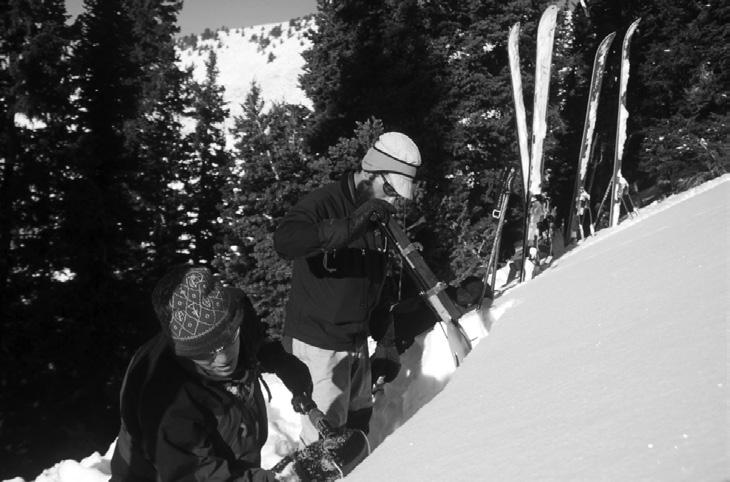
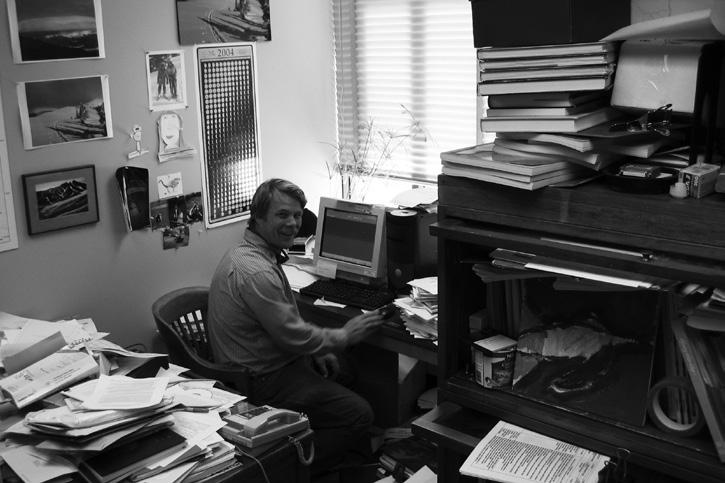
A3 Members Through the Years—Classic Corner Archives: (from top to bottom) 1 Ned Bair ready to throw a shot while working at Mammoth Mountain Ski Area. 2 Emily Johnston, Grand Targhee, 1999-ish. 3 Spencer Logan and Greg Johnson forecasting together in Logan, Utah, around 2000. 4 Mike “Coop” Cooperstein doing his MS degree fieldwork looking at surface hoar and near-surface facets at the Yellowstone Club back in the early 2000s. 5 Rod Newcomb working an AAI course in the San Juans, 1984. 6 Kelly Elder trying to avoid an office avalanche of paper, 2004. 7 Daniel “Howie” Howlett and Doug Christenson performing cornice work on Mt. Baldy in 1983. 8 Ethan Greene doing some preliminary work for his PhD at the cold lab at Montana State. ! THANK YOU TO KARL BIRKELAND, MIKE FRIEDMAN, EMILY JOHNSTON, AND JONATHAN MORGAN FOR THESE CLASSIC CORNER SUBMISSIONS.
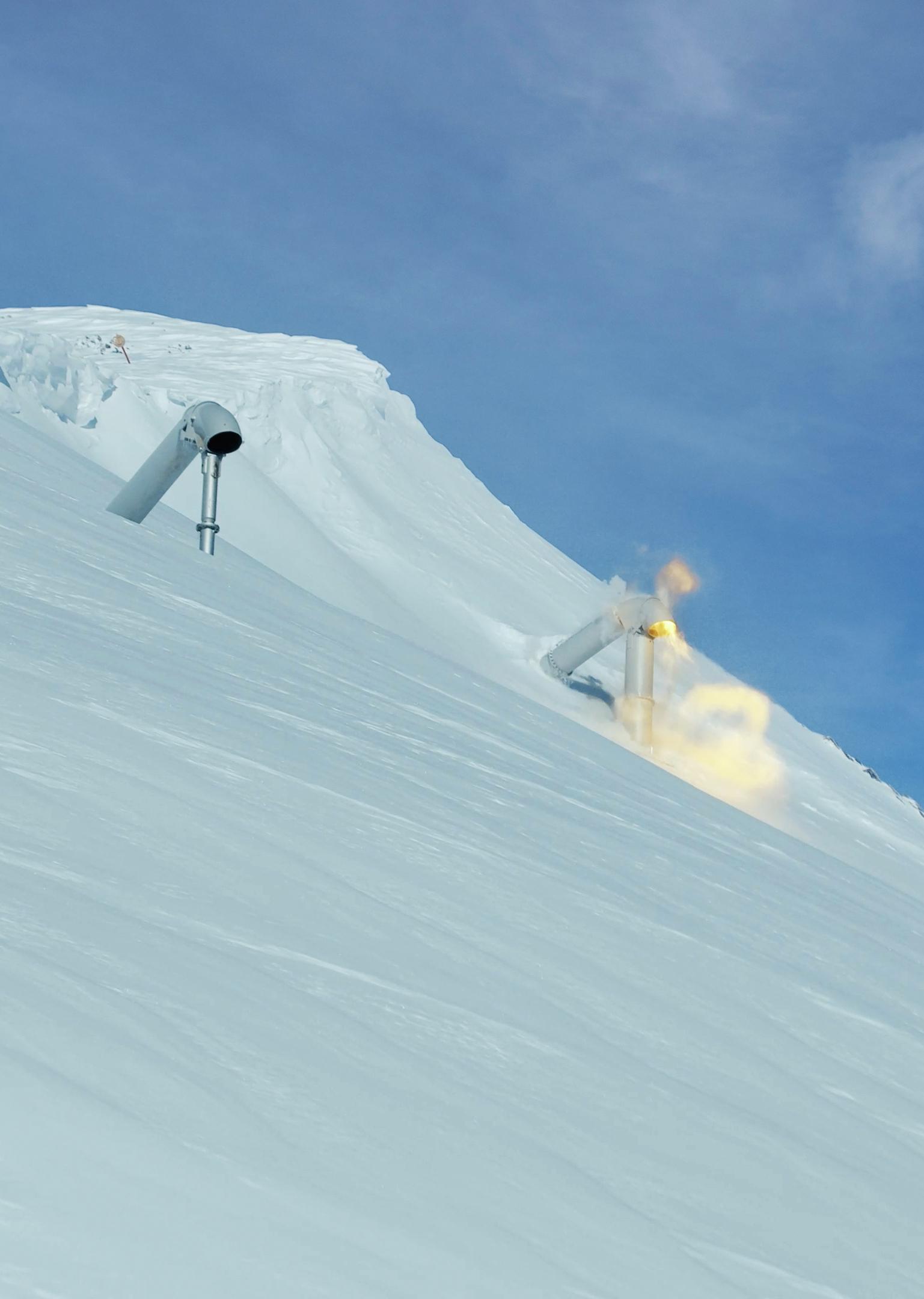
Diverse Mitigation Solutions
A3 Motorized Committee
The A3 was founded in 1986, originally as the American Association of Avalanche Professionals. Imagine the typical avalanche worker of the time: mustache, mirrored sunglasses, turtleneck, and skinny skis. Although the avalanche industry has evolved in ways more significant than fashion, the assumption remains
Duncan Lee ! ALLAN HUDSON
BY A3 MOTORIZED WORKING GROUP
that avalanche workers travel by skis—or sometimes snowboards.
Back in 1986, snowmobile technology was too limiting for avalanche workers to reliably take them off-trail in deep snow. But that didn’t stop recreational riders from trying, and the feedback loop between riders and manufacturers led to increasingly capable machines. Today, “mountain riding” has become its own discipline that would be jaw-dropping to anyone from 1986.
The snowmobile industry’s response to mountain riding has been similar to the ski industry’s response to fat skis and snowboards. Snowmobile dealers now sell avalanche safety gear, professional riders promote mountain riding through social media and action videos, and guide services take clients into avalanche terrain.
With snowmobilers comprising roughly 30% of annual avalanche fatalities in the United States, the avalanche industry is also responding. Many avalanche forecasters are traveling by snowmobile into terrain favored by snowmobilers—no longer just using them on long approaches to ski terrain. Professional avalanche training has become available to guides and other motorized avalanche workers. Recreational avalanche training is being promoted through partnerships between avalanche centers, guide services, riding clubs, state organizations, and equipment manufacturers.
The A3 just finished updating guidelines for recreational motorized avalanche classes, with
help over the past year from motorized educators. Before the ink was even dry on that project, another group with significant overlap was formed to provide guidance to the A3 prior to its next strategic plan. The goal for this second motorized working group is to help the A3 better represent motorized avalanche workers—something not explicitly addressed in the A3’s current strategic plan.
Contributors included Amy Jane David (media consultant and Ski-Doo ambassador), Alex Ibbotson (Indigenous Canadian snowmobile guide whose master’s thesis addressed snowmobile representation in avalanche education) Duncan Lee (filmmaker, educator, and FXR rep), Will Mook (snowmobile guide, avalanche educator, and Executive Director of Advocates for Multi-use of Public Lands), Jon Miller (founder of Backcountry United), and Aaron Case (managing partner of Stable Mountain). Representing the A3 board of directors were Aleph JohnstonBloom, Bruce Edgerly, and Travis Feist.
This group volunteered their time by poring over documents related to the A3’s current strategic plan, viewing them through the motorized lens, and offering feedback to more effectively reach motorized avalanche workers as that segment continues to grow and evolve. With this input, the A3 will be better poised to represent all types of the modern avalanche worker when it revisits the strategic plan in 2025–26.