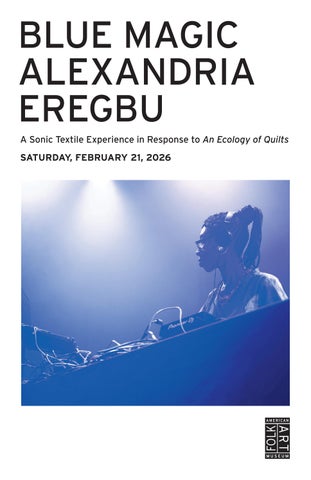
BLUE MAGIC ALEXANDRIA EREGBU
A Sonic Textile Experience in Response to An Ecology of Quilts
SATURDAY, FEBRUARY 21, 2026
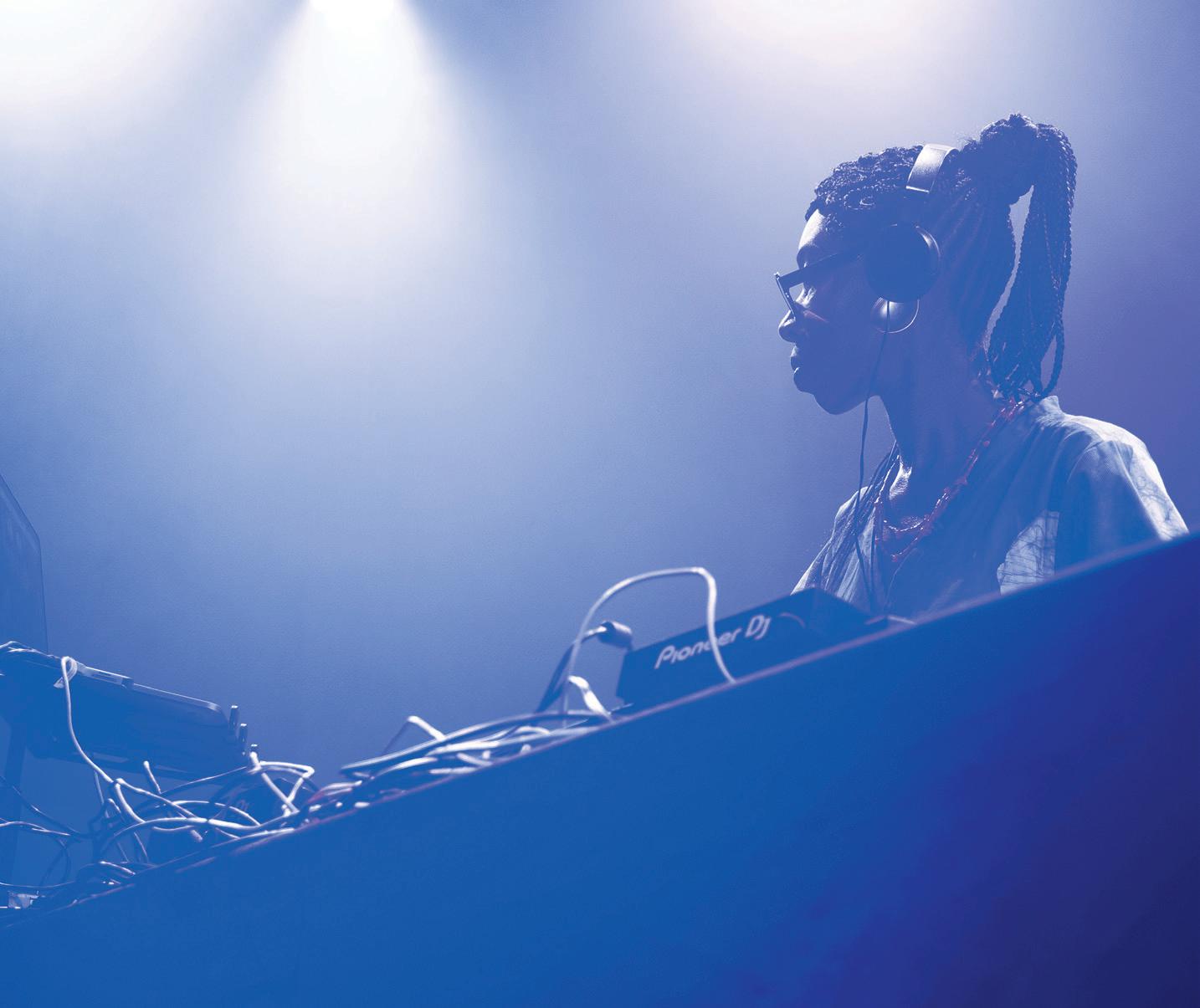
The American Folk Art Museum is pleased to present Blue Magic, a sonic textile experience commissioned from Alexandria Eregbu in response to An Ecology of Quilts: The Natural History of American Textiles, on view at the museum until March 1, 2026. Eregbu creates an haptic environment about the color blue, rooted in her own family history, the art of quilting, feminist ecologies, and listening practices across the Black Atlantic world.
Blue Magic takes its cues from the material history of indigo, one of the most ancient and enduring textile dyes. Like the exhibition An Ecology of Quilts, which situates American quilting within a globalized system of trade and production, the work considers the indigo plant as a participatory agent in histories of labor, extraction and resistance. Indigenous to India, Southeast Asia, and West Africa, and known historically as “blue gold” for its high commercial value, the crop was cultivated and transformed into dyestuff by enslaved African Americans in eighteenth-century South Carolina. It was also used during the nineteenth century to dye Lowell cloth, a coarse, durable cotton fabric worn mostly by enslaved workers, which would later evolve into denim. Now produced largely with synthetic dyes, denim has become a cherished commodity that contributes significantly to water waste and pollution.
A layering of indigo blue cloths, embellished with archival photographs, beaded shapes, hand-painted symbols and water jugs, Eregbu’s installation evokes the global environmental effects of fashion production. It manifests the current accumulation of discarded textiles along African coastlines and on the ocean floor. Voluminous and flowing, Blue Magic resembles a speculative marine figure grown out of ecological disaster. It may also personify Oshun, the Yoruba deity of water and protector of indigo, whose powers are known to African-descended thinkers and singers across centuries and are rechanneled here through Eregbu’s curated selection of songs and voices.
A unique combination of sampled sound and fabrics, Blue Magic brings together both the African and American sides of the artist’s family history. With its striking dark blue design, the textiles directly reference Àdìrẹ and Ukara, indigo-dyed cotton cloths traditionally prepared and decorated by women across Nigeria, where part of Eregbu’s family originates. Instead of using resist-dyeing techniques, the geometric shapes are formed from embroidered and appliquéd pieces stitched directly onto the surface. This is a nod to the skills of African American women who, like the artist’s grandmothers in the American South, learned to make use of every salvaged scrap, repurposing them into richly adorned surfaces. Recalling some of the quilts on view, the work plays with the traditional hopscotch and pinwheel patterns, that according to the artist resonate visually and sonically with
the ‘leopard’s paw print’ and ‘talking drum’ motifs found in cloths across Nigerian communities. Set to vibrant notes of music, this rhythmic variation of blue chants the material, spiritual, and cultural intimacies between the African and American continents. Here, the artist sings appreciation for her ancestors, a language of love and stewardship that generations of Yoruba textile designers such as Mama Nike have carried through their crafts.
As its title suggests, Blue Magic unleashes the alchemical power of indigo, invoking a spectrum of forms, experiences, and beliefs across the Atlantic. Also the name of a line of beauty products for textured hair, the work points to the expertise of Black women across the diaspora who, as Dr. Chelsea Frazier notes, “have always developed their own alternative understandings of the interconnectedness of all things.” Frazier will join Eregbu in conversation as part of the program, further expanding the ways a color can reshape conventional narratives of the earth. Indigo thus emerges as more than a dyestuff: it becomes a process and an ethic, offering pathways toward a more expansive, interrelational approach to history, culture, and ecology.

Blue Magic is accessible to all gallery visitors from 11:30 am to 7:00 pm, with special activations scheduled throughout.
PROGRAM SCHEDULE
12:00–1:00 PM Invocation & Opening Ceremony
4:00–5:15 PM
Artist Talk with Dr. Chelsea Frazier
6:00–7:00 PM
Evening Ritual & Closing Performance with FINDING IJEOMA
1 Dr. Chelsea Frazier, “Black Feminist Ecological Thought: A Manifesto,” Atmos, January 1, 2020. Accessed January 23, 2026. https://atmos.earth/political-landscapes/black-feminist-ecological-thought-essay
ABOUT THE ARTIST
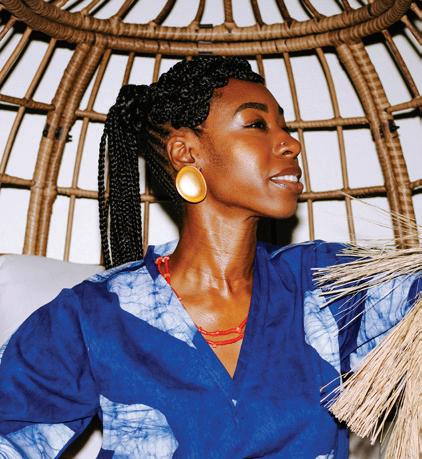
Alexandria Eregbu is an independent curator and cultural practitioner working at the intersections of art and music.
As a visual artist her artwork engages a combination of archival images, symbols, proverbs, and folklore to invoke ancestral memory in African American existence. She creates textiles, paintings, sculpture, and performances to bridge nature, design, healing, and ecology. She uses materials like beads, indigo, cowrie shells, wood, and feathers and processes like embroidery, appliqué, natural dyeing, drawing, and quilting to make meaning with the unseen.
As DJ FINDING IJEOMA, Alexandria blends distinct methods of sampling, mixing, and archival audio to amplify femme voices, invoke Black memory, and honor the tradition of storytelling within global dance music culture. Rooted in Chicago’s sonic legacy, her practice embodies a deep reverence for rhythm, ritual, and collective gathering.
ABOUT THE SPEAKER
Dr. Chelsea Mikael Frazier is a scholar working at the intersection of Black feminist literature and theory and the environmental humanities. Her scholarship, teaching, and public speaking span the fields of Black feminist literature and theory, visual culture, ecocriticism, African art and literature, political theory, science and technology studies, and Afrofuturism.
She is currently at work on her first book manuscript—an ecocritical study of contemporary Black women artists, writers, and activists. In her analyses, she probes the ways that dominant theoretical
and disciplinary frameworks in environmental studies obscure the legibility of what she calls a Black feminist ecoethic as it manifests in Black women’s environmental writing, visual art, and activism across the African diaspora.
Dr. Frazier’s research has been generously supported by the Northwestern University Presidential Society of Fellows, the Science in Human Culture program at Northwestern, the Buffett Institute for Global Studies, the Social Science Research Council, the Alumni Association of Barnard College, the Purdue University Lynn Fellowship, and the Mellon Mays Fellowship program. Her published work appears in the Journal of Critical Ethnic Studies and in the edited volume Ecologies, Agents, Terrains from Yale University Press.
ABOUT THE AMERICAN FOLK ART MUSEUM
Founded in 1961, the American Folk Art Museum is the nation’s museum of folk and self-taught artists. Candid, genuine, and unexpected, AFAM celebrates the creativity of individuals whose singular talents have been refined largely through personal experience rather than formal artistic training. With a collection spanning 7,500 works of art from four centuries and nearly every continent, the Museum engages people of all backgrounds through its collections, exhibitions, publications, and public programs as the leading forum shaping the understanding and appreciation of folk and self-taught art. Thanks to the generous support of our members, patrons, and donors, admission is always free.
is