THE NARRATIVE? WHO’S SETTING
Why gastroenterologists must lead the fight against GI misinformation
SUMMER 2026 // VOLUME 10, NUMBER 2

Why gastroenterologists must lead the fight against GI misinformation
SUMMER 2026 // VOLUME 10, NUMBER 2
Dr. Trisha Pasricha on the dangers of online health misinformation and how clinicians can help combat it. PAGE 20
ACG PERSPECTIVES
Patient Care Committee Chair Dr. Alisa Likhitsup interviews Past President Dr. Sunanda Kane on the science of patient expectations and experience.
PAGE 13
PUBLIC POLICY
Behind the scenes and on the Hill for ACG's 2026 Advocacy Day with ACG Governors and the Early Career Leadership Program.
PAGE 9
Executive Director
Bradley C. Stillman, JD
Editor-in-Chief | Vice President, Communications
Brian C. Davis
Managing Editor | Senior Manager, Communications Becky Abel
Art Director Emily Garel
Staff Writer | Communications Manager, Policy and Advocacy Gregory Kantor
President: William D. Chey, MD, MACG
President-Elect: Costas H. Kefalas, MD, MMM, MS-PopH, FACG
Vice President: Nicholas J. Shaheen, MD, MPH, MACG
Secretary: Jean-Paul Achkar, MD, FACG
Treasurer: Neil H. Stollman, MD, FACG
Immediate Past President: Amy S. Oxentenko, MD, MACG
Past President: Jonathan A. Leighton, MD, MACG
Director, ACG Institute: Neena S. Abraham, MD, MSc, MACG
Co-Editors, The American Journal of Gastroenterology:
Jasmohan S. Bajaj, MD, MS, FACG
Millie D. Long, MD, MPH, FACG
Chair, Board of Governors: Sita S. Chokhavatia, MD, MACG
Vice Chair, Board of Governors: Harish K. Gagneja, MD, MACG
Trustee for Administrative Affairs:
Sunanda V. Kane, MD, MSPH, MACG
Brooks D. Cash, MD, FACG
Dayna S. Early, MD, FACG
Jill K. J. Gaidos, MD, FACG
Seth A. Gross, MD, FACG
David J. Hass, MD, FACG
James C. Hobley, MD, MSc, FACG
Vonda G. Reeves, MD, MBA, FACG
Aasma Shaukat, MD, MPH, FACG
Jay N. Yepuri, MD, MS, FACG
Patrick E. Young, MD, FACG
youtube.com/ACGastroenterology
facebook.com/AmCollegeGastro x.com/amcollegegastro
@amcollegegastro.bsky.social bit.ly/ACG-Linked-In
IDEAS & FEEDBACK
We'd love to hear from you. Send us your ideas, stories, and comments. ACGMag@gi.org
CONTACT ACG
American College of Gastroenterology 11333 Woodglen Drive, Suite 100 North Bethesda, MD 20852 (301) 263-9000 | gi.org




American College of Gastroenterology is an organization with an international membership of over 21,000 individuals from 86 countries. The College's vision is to be the preeminent organization supporting health care professionals who provide compassionate, equitable, high-quality, state-of-the-art, and personalized care to promote digestive health. The mission of the College is to provide tools, services, and accelerate advances in patient care, education, research, advocacy, practice management, professional development, and clinician wellness, enabling our members to improve patients’ digestive health and to build personally fulfilling careers that foster wellbeing, meaning, and purpose.
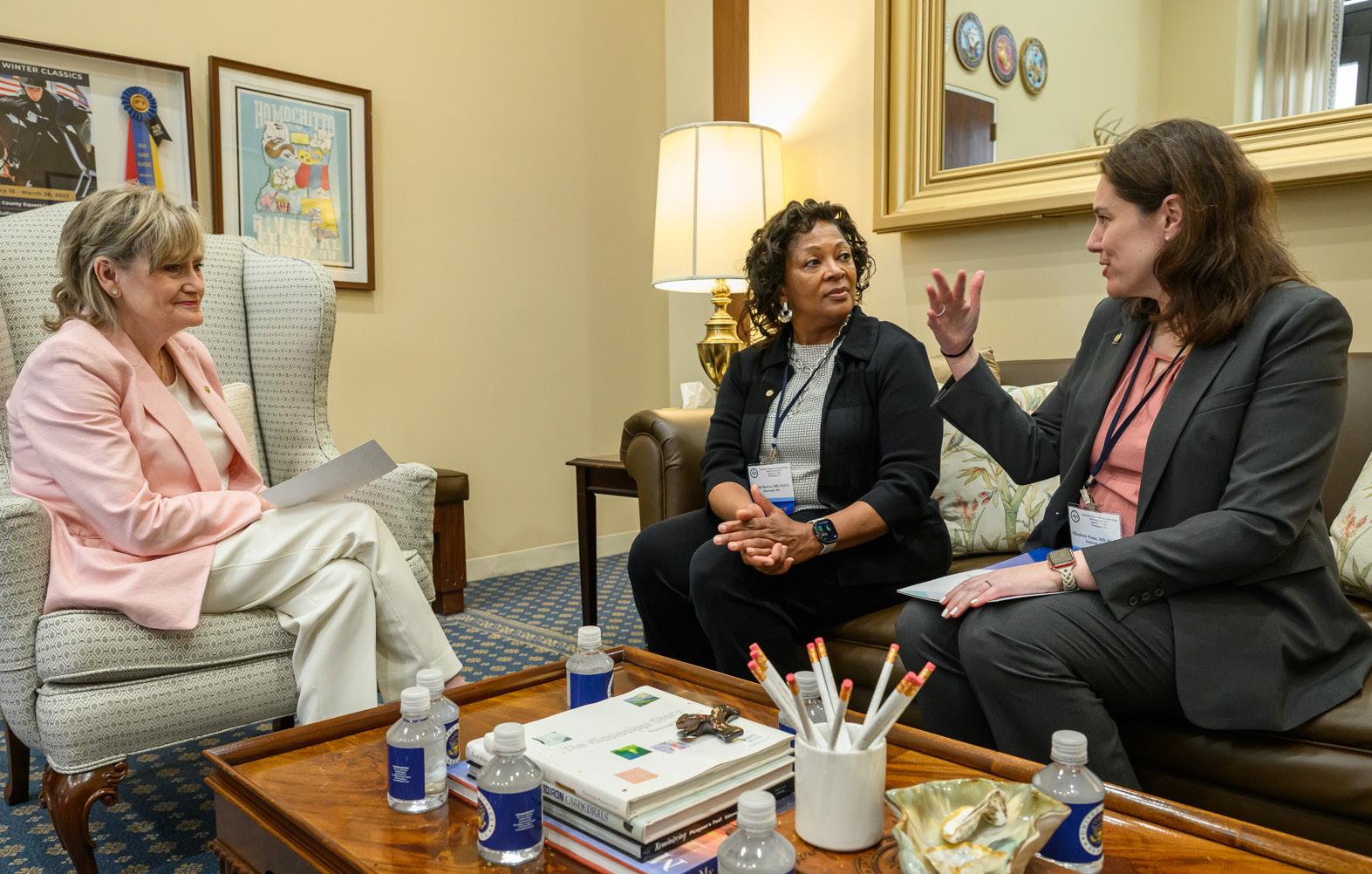
“Congress needs step-by-step instructions for the reforms our patients deserve, and physicians are the ones who need to provide it for our elected officials.”
4 // MESSAGE FROM THE PRESIDENT
Dr. William Chey on the uncertainty of biomedical research in America and scientific discovery in gastroenterology
6 // NOVEL & NOTEWORTHY
$3 million in ACG Institute research awards, CRC Awareness Month recap, a review of Guide to the Guidelines, Vol. 3, and more
8 // PATIENTS
A patient handout on the blood test to detect colorectal cancer
9 // PUBLIC POLICY
A behind-the-scenes look at ACG Advocacy Day 2026 with ACG Governors and Early Career Leadership Program participants 13
13 THE
Dr. Alisa Likhitsup interviews Dr. Sunanda Kane on patient expectations and experience
17 MY JOURNEY WITH THE ABIM
Dr. Divyanshoo Kohli on his experiences volunteering for ABIM
20 // COVER STORY
20 WHO’S SETTING THE NARRATIVE?
Dr. Trisha Pasricha on combating online health misinformation as a gastroenterologist
25 BOOK REVIEW
Dr. Mohammad Bilal reviews the book, You've Been Pooping All Wrong: How to Make Your Bowel Movements a Joy
27 PHARMACY CORNER
Dr. Shubha Bhat shares a pharmacist’s experience navigating patient misconceptions about IBD medications
29 // TRAINEE HUB
BEYOND THE SCOPE
Dr. Natalie Wilson on mastering the six core nontechnical skills of endoscopy
35 // GETTING IT RIGHT
35 LAW MIND
Ann Bittinger, Esq., on the implications of Medicare changes for gastroenterologists
38 AFTER HOURS
How Dr. Sara Horst fills her “buckets” to recharge and refocus outside of work
39 // INSIDE THE JOURNALS
AJG
AI in GI Special Issue and a new ACG clinical guideline on hepatic encephalopathy
CTG
Clinician’s Toolbox: Addressing Alcohol Use Disorder in Alcohol-Associated Liver Disease by Patel & Thakra, et al
ACGCRJ
Is There a Role for Intestinal Ultrasound in Polyp Detection? by Muralidharan, et al
ACG GUIDELINE HIGHLIGHTS
Hepatic Encephalopathy (April 2026)
SCIENTIFIC DISCOVERY
HAS REVOLUTIONIZED our understanding of human health and disease. Consider that less than a generation ago, gastroenterologists considered peptic ulcer a chronic disease resulting from excess gastric acid production, the main therapy for patients with inflammatory bowel disease was steroids, and hepatitis C was largely incurable and one of the leading causes of cirrhosis and liver cancer. Science has led to paradigm shifts for these diseases and countless others.
Metaphorically, science is the oil that keeps the engines of discovery and innovation running. For decades, the United States has been the undisputed worldwide leader in science and technology. According to a 2022 report from the National Science Board, the US ranked first, spending $923 billion on research and development, followed by China at $813 billion. That said, China now publishes more peer-reviewed scientific manuscripts than the US and in certain key sectors—like artificial intelligence—is filing more patents than the US. Who will lead the next set of transformative biomedical breakthroughs?
In my last “Message from the President,” I shared my views on how uncertainty and change are shaping clinical medicine. In this commentary, I would like to stay with the theme of uncertainty but this time as it relates to biomedical research in the US.
Let’s start at the National Institutes of Health (NIH). In April, the Trump administration released its annual budget for the federal government, which included $41.47 billion for the NIH—a decrease of $4.8 billion compared to FY 2026. The president’s budget is a blueprint for Congress to consider while finalizing spending levels, but the proposal is a stark reminder of the ongoing threats to research funding. The same scenario occurred last year, but Congress ultimately passed a budget increase of $216 million. Senators Thom Tillis (R-NC) and Alex Padilla (D-CA) recently circulated a “Dear Colleague” group sign-on letter in support of FY 2027 NIH funding, which received the support of 52 Senators from both parties (read the letter: fundnih.org/ media/10411/download). This summer, ACG and likeminded organizations will work with Congress to ensure adequate NIH funding levels.
In addition to the proposed budget cuts, other changes at NIH have profoundly affected medical research funding. First, NIH has changed its process around Notices of Funding Opportunity (NOFOs), the NIH mechanism for soliciting research ideas and awarding grants to scientists. Between 2012 and 2024, the agency issued about 500 to 1,000 NOFOs a year. In 2025, NIH published 120 NOFOs, more than an 80% decline from 2024. As of April 2026, the NIH has posted just 17 NOFOs.
Another change in grant funding is that many NIH institutes have adopted a “forward funding” model. This means multiyear grants are fully funded in their first year, rather than in increments over
the span of 3–5 years. No additional money was allotted to finance this change. Because approximately 40% of awarded NIH grants were forward-funded in 2025, NIH was forced to fund >5,000 fewer grants (an 8–9% drop compared to years past) and the “payline” (or minimum score necessary to make a grant fundable) decreased. For example, the National Cancer Institute (NCI) reported dropping its payline for R01 and R21 grants from around 10% to 4%. In other words, only one of every 25 NCI R01/R21 applications will be funded. Adding to the uncertainty, NIH has adopted a “Unified Funding Strategy,” which moves away from public posting of paylines in favor of a set of core tenets (scientific merit judged by peer review, alignment with the NIH mission, program balance, career stage, geographic balance, and stewardship of available funds) which will guide each institute’s funding decisions. While it is hard to argue with any of these core tenets, the lack of objective criteria to understand funding decisions adds further uncertainty.
There is growing concern that the subjectivity inherent in these core tenets will introduce a layer of bureaucracy that could allow politics to overrule scientific merit, as judged by peer review. Though some of these tenets will fall under the purview of institute and center leadership, as of February 2026, over half of the NIH’s 27 institute and center director positions were vacant or filled by acting directors. This exodus leaves a perception that some institutes are rudderless and unable to expertly navigate the application of the core tenets. This has also led to delays in grant review cycles as well as approval and release of funding.
As a division chief at a large academic medical center, this uncertainty has made it difficult to create budgets or even assign clinical effort for the faculty members
who conduct basic, translational, or clinical research. It has also forced our administrative team to commit precious time and resources to planning for multiple “what if” scenarios, all but one, of course, never come to pass.
Unquestionably, however, the most corrosive effect of all this uncertainty is on our investigators and, especially, young doctors considering a career in biomedical research. A career as a physician researcher has always come with significant sacrifices—lower salary, long hours with an unwritten expectation to work nights and weekends, intense competition for grant funding, and having to learn to cope with failure, sometimes accompanied by harsh criticism. As I often say to my team, only half jokingly, “Academic medicine is a contact sport.”
However, for those bitten by the research bug, the joys of discovery, advancing science, and innovating in ways that make a difference have always been worth the sacrifices. To choose a career as a physician researcher is to understand the balance of risks and benefits, which requires the ability to quantify the risks. When young gastroenterologists are faced with the inability to estimate—let alone quantify—those risks, many talented individuals will logically opt for the more sure prospects (and steadier paycheck) of a clinical career. Our fellowship application process this past year supports this hypothesis— typically between one third and one half of the fellow applicants we interview express a desire to pursue a career as a physician researcher. This year, of the outstanding group we interviewed, fewer than 10% wanted to pursue such a career pathway. I asked several applicants with impeccable research pedigrees why they didn’t want to pursue a career in research. They universally cited uncertainty and unacceptable levels of risk as key variables in their calculus. It is of course
“Ultimately, the key question is where biomedical research resides on our list of public priorities and whether we want to continue to be the pre-eminent purveyor of innovative, life-changing research.”
impossible to know whether this year represents an outlier or if our experience represents a “canary in the coalmine” moment.
Here is another real-time observation. To make up for ever-changing rules of engagement, unreliable timelines, and decreasing NIH paylines, physician researchers are being encouraged to “take more shots on goal” and to diversify their funding sources. This leads to a significantly greater number of grant submissions to receive similar or lower levels of funding than historical norms. Recognizing that each day is a zero-sum game, time spent on writing and submitting more grants is time that could have been spent conducting one’s research. Given that these same researchers may be asked to provide additional clinical effort to “earn their keep,” we see shrinking time to do research, and more of this work shifted to nights and weekends.
We should not take it for granted that the US will continue to lead the world in biomedical research. After all, until the early 1900s, our country was a relative backwater of research, with most impactful work done in the great centers of Europe. The partnership between the federal government and academia that has produced most American medicine breakthroughs didn’t begin in earnest until after World War II. The capacity for this goose to lay countless more golden eggs is not assured. In the near term, research groups and labs will be forced to fund themselves through layoffs, belt tightening, and prioritizing key themes. But a Darwinian process has already commenced, and the primary selection pressure is not ingenuity, but dollars. Ultimately, the key question is where biomedical research resides on our list of
public priorities and whether we want to continue to be the pre-eminent purveyor of innovative, life-changing research. If we want to retain our standing as the worldwide leader, we must prioritize biomedical research and invest appropriately. As my recent observations make clear, we must also create an environment where young doctors see a future in pursuing a career in science. As things stand, we risk a “lost generation” of researchers who chose against the uncertain path of discovery. A critical first step to valuing biomedical research and the future of medicine is to support NIH. This is a not a partisan issue; it is an essential ingredient to improving the health of Americans. As a specialty, gastroenterology should be actively engaged in the discussion about how to best invest our dollars aimed at stimulating discovery, and there is certainly room for differences of opinion. However, we should speak with one voice in saying that if our country hopes to benefit from the next generation of medical breakthroughs, we must invest in discovery today.
Acknowledgment: Thanks to Dr. Nick Shaheen, Brad Conway, and Gregory Kantor for their review and contributions to this piece.
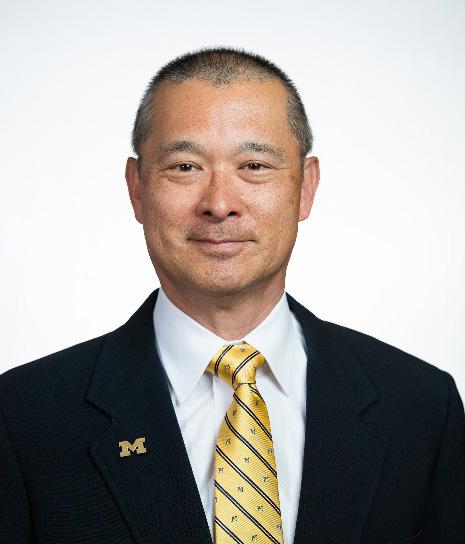
—Bill
The ACG Institute for Clinical Research and Education proudly announces $3 million in research award funding for 2026, the largest amount to date. This year, two awards doubled in size: the Clinical Research Award ($50,000 to $100,000) and the Pilot Award ($15,000 to $30,000).
The ACG Junior Faculty Development Award (awardees shown below) is a three-year award of $450,000, designed to support a junior faculty member of outstanding promise to establish an independent, productive career in gastroenterology or hepatology. This signature award of the College provides salary support for protected time to young investigators at critical points in their career development.

Katie A. Dunleavy, MD
Massachusetts General Hospital Lifestyle Determinants and Dietary Modulation of the Bile Acid-Microbiome Axis to Reduce Pouch Inflammation in Patients With Inflammatory Bowel Disease
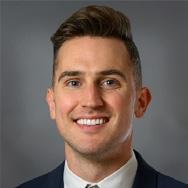
Justin T. Field, MD
University of California, San Francisco Prevalence and Determinants of Anal HSIL in Patients With Perianal Crohn’s Disease
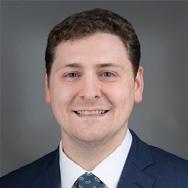
Corey J. Ketchem, MD, MSCE
Northwestern University Defining Optimal Therapeutic and Dilation Strategies in Eosinophilic Esophagitis Using AI and Real-World Data
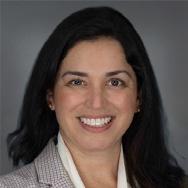

Sheila Rustgi, MD
Columbia University Irving Medical Center Novel Approaches to Early Detection of Gastrointestinal Cancer for BRCA Carriers
Yee Hui Yeo, MD, MSc
The Cleveland Clinic Foundation
SOBER-VR: An AI-Powered Virtual Reality Brief Intervention for Hospitalized Patients With Alcohol-Associated Liver Disease
The College’s investment in GI research and the promising investigators pursuing it is a longstanding tradition that supports the future of GI. View the full list of 2026 Research Award recipients and their projects at gi.org/research-grant-recipients
[BOOK REVIEW]
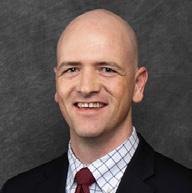
Reviewer: Andrew M. Moon, MD, MPH, FACG, University of North Carolina Chapel Hill

Brennan Spiegel, MD, MSHS, FACG, and Hetal A. Karsan, MD, FACG, know exactly where clinicians feel the strain: the expectation to stay current with an ever expanding library of clinical guidelines. Trainees are urged to “read the guidelines” to improve their fund of knowledge, while practicing clinicians carry the quiet guilt of not keeping pace with dozens of dense, data-heavy documents. With 39 American College of Gastroenterology guidelines at the time of publishing (and more on the way), each packed with hazard ratios, risk ratios, odds ratios, and pages of nuanced recommendations, the task can feel overwhelming.
Guide to the Guidelines, Volume 3, helps alleviate this strain. Drs. Spiegel and Karsan distill the evidence and recommendations from 15 recently published ACG guidelines into an engaging, accessible format organized across three major sections: pancreas, biliary, and liver. They translate the guidelines into case vignettes, memorable pearls, and practical questions written from the perspective of the trainees, advanced practice providers, and physicians who actually use them in clinic and inpatient consults.
The book’s greatest strength is its tone. The authors manage to make guideline review not only digestible but genuinely enjoyable. Their pacing is smooth, explanations clear, and humor surprisingly effective. By embedding recommendations within patient stories, they allow readers to absorb complex evidence almost effortlessly. You may not remember every hazard ratio, but you will remember why fully covered self-expanding metal stents outperform plastic ones for benign biliary strictures after the unforgettable analogy to the Pittsburgh Steelers’ “Steel Curtain” defense.
Importantly, this volume does not attempt to replace the guidelines themselves. Drs. Spiegel and Karsan position their work as a companion, something to help clinicians understand the "why" behind recommendations so that the "what" becomes easier to recall and apply. For quick reference on specific clinical decisions and a deep dive into the underlying evidence, the guidelines remain essential. The Guide to the Guidelines is designed to build durable understanding at a casual pace. Whether kept on a bedside table for a few cases before sleep or on a desk for lunchtime reading, Guide to the Guidelines, Volume 3, succeeds in transforming a daunting obligation into an engaging learning experience for aspiring and established gastroenterologists and hepatologists.
Order Volumes 1-3 from the ACG Store: bit.ly/acg-g2g

Since 2017, the College has featured the Conversations with Women in GI series in ACG Magazine, led by ACG Trustee Jill K.J. Gaidos, MD, FACG. This new digital collection reflects the countless hours she has dedicated, interviewing women in ACG and sharing their successes, challenges, and lessons learned.

ACG members and staff volunteered at Fight CRC’s United in Blue installation in Washington, DC, for the fifth year in a row! Each of the 27,000+ blue flags planted on the National Mall represented a person under age 50 projected to be diagnosed with colorectal cancer by 2030. This powerful backdrop set the stage for Fight CRC’s Call-on Congress advocacy event.
[ON AIR]
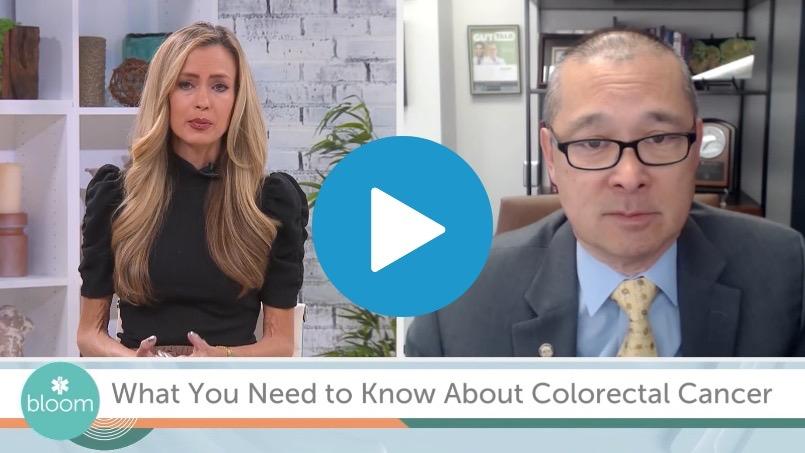
This year, ACG led a Colorectal Cancer Awareness Month radio and television media tour, pairing GI experts with local and national TV and news outlets to share messages about the importance of CRC screening and prevention. These spots appeared on ABC, CBS, and NBC affiliate stations, as well as SiriusXM Doctor Radio, and many local media outlets. Thank you to the members who volunteered their time and efforts to this initiative!

Benjamin H. Levy III, MD, FACG, again led and organized Tune It Up: A Concert to Raise Colorectal Cancer Awareness, a virtual concert that pairs musical performances with CRC screening and prevention messages. Artists included Tyler Childers, Blues Traveler, Lisa Loeb, Rufus Wainwright, and more across many genres, with special messages from some artists. You can view a recording of this year’s concert at gi.org/concert
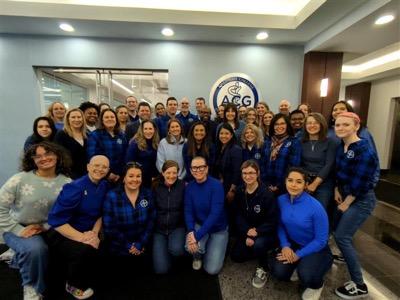
ACG staff joined the GI community in celebrating Dress in Blue Day on March 6, 2026! Our social media feeds were full of #DressinBlueDay splendor and the message was clear: If you’re 45 or older and at average risk, get screened for colorectal cancer!
[GIVING HOPE]
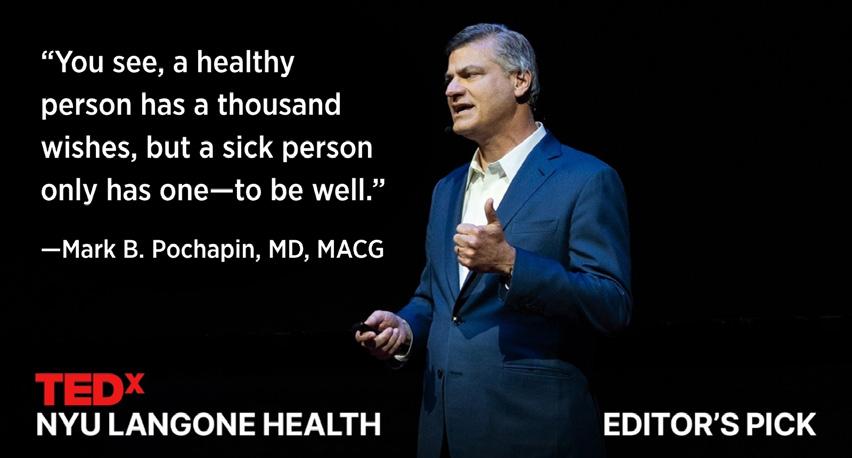
MARK B. POCHAPIN, MD, MACG, was recently appointed Senior Vice President and Senior Associate Dean of Institutional Advancement and Special Projects at NYU Langone Health. He is an ACG Past President and led the College during the height of the COVID-19 pandemic (2019–2020). Dr. Pochapin’s collaborative approach and vision for hope in medicine and patient care is reflected in a NYU Langone Health TEDx talk he gave, “How to Face Medical Diagnoses with Hope,” which was selected as a TEDx Editor’s Pick. He shares personal narratives about times when hope played a critical part in giving excellent care.
Watch the full TEDx Talk: bit.ly/tedx-pochapin
[GO GLOBAL]
The ACG International Relations Committee is developing a Global Health Opportunities Database to highlight clinical, educational, and research initiatives in GI around the world. To help launch this resource, they invite ACG members to submit global health volunteer or training opportunities that could benefit colleagues interested in international collaboration and service. If you know of a program, partnership, or volunteer opportunity that should be included, we encourage you to share it with us and help grow this new resource for the ACG community.
Submit: bit.ly/acg-global-volunteer

“These interviews go beyond personal narratives; they have become an integral part of our ACG Women in History celebration, preserving voices and experiences that might otherwise go unheard.” Amy S. Oxentenko, MD, MACP, MACG,
Read the full collection: bit.ly/acg-women-convos
ACG Immediate Past President
In the United States, colorectal cancer (CRC) is the third most common cancer in men and women. Fortunately, it is also one of the most preventable types of cancer because we can detect and remove precancerous growths (called “polyps”) during a colonoscopy. The American Cancer Society estimates that in 2025, over 150,000 people will be diagnosed with CRC, and approximately 53,000 will die from the disease. Screening could prevent more than 90% of CRC–related deaths but 65% of eligible Americans have not had CRC screening. Until now, doctors have mostly performed CRC screening in one of two ways: colonoscopy and stool-based tests.
In July 2024, the U.S. Food and Drug Administration (FDA) approved a new blood-based test for CRC screening. The FDA approved Guardant Health’s Shield™ blood test for CRC screening in average risk adults aged 45 and older. The test detects DNA fragments which CRC cells and precancerous polyps can shed into the blood. Like all stool tests, if the Shield™ test returns a positive result, a colonoscopy is required to confirm the presence of CRC or precancerous polyps.
What's the evidence?
The approval of Shield™ test was based on a study of nearly 8,000 men and women aged 45 and older from across the U.S. The test correctly identified 83% of all patients with CRC (all stages). The accuracy was only 55% for patients with early stage 1, curable CRC. This means that a one-time Shield test may fail to detect 1 in 3 early-stage cancers and 1 in 6 total cancers. By comparison, studies have estimated that colonoscopy detects over 95% of colorectal cancers. The Shield test detected only 13.2% of patients with worrisome precancerous polyps, which is no better than chance.
Who could take this test?
This blood test is intended for asymptomatic, individuals aged 45 or older who are at average risk of CRC. It is not to be used in individuals at increased risk of CRC such as those with a personal or family history of CRC or precancerous polyps, Crohn’s disease, colitis, or certain hereditary cancer syndromes.
What's the difference between a blood test vs. a colonoscopy?
Detection versus prevention. Blood tests are unable to detect precancerous polyps to any significant degree and are not a replacement for colonoscopy. A positive blood test must be followed by colonoscopy (a 2-step process). On the other hand, colonoscopy (a 1-step process) not only can detect cancer but also can remove precancerous polyps, and, therefore, can prevent CRC. Colonoscopy for screening is recommended every 10 years for average risk individuals.
What do the Test results mean?
A positive Shield™ test result indicates the possibility of colon or rectal cancer or advanced precancerous polyps, and you should proceed with a colonoscopy. It’s important to remember that false positives and negatives of CRC can occur. Patients with negative results should expect to repeat the blood test in 3 years or could consider switching to colonoscopy for screening at that time.
What are the benefits of the test?
Some patients may be reluctant to do a stool test or colonoscopy due to inconvenience, preparation requirements, or concerns about the risks of procedure. Blood tests may increase screening rates by offering an alternative test leading to higher number of people getting screened.
Is this test covered by insurance?
The Shield™ test is covered every three years for eligible Medicare beneficiaries. Coverage varies by private insurance plans, so contact your insurance provider or healthcare team to confirm.
Recommendations:
Blood based CRC screening should be reserved for patients who are unwilling to undergo colonoscopy as a first test or a stool-based screening test. Patients must be willing to undergo colonoscopy if the blood test is positive.
The American College of Gastroenterology (ACG) and Multi-Society Task Force (MSTF) currently recommend colonoscopy every 10 years or annual FIT testing for CRC in average risk individuals starting at age 45.


By Gregory S. Kantor, MPH
DURING OUR ANNUAL LUNCHEON and across more than 200 meetings throughout ACG’s Advocacy Day, legislators shared how essential physicians are in explaining the real-world impact of different policies—in our endoscopy suites, in patient exam rooms, on the phone with insurers, and in rural communities where access to a gastroenterologist can be limited.
As attendees reflected at the close of the day, progress in Washington is rarely as fast as we’d like—but it is possible, and it is built one meeting and one conversation at a time. Your willingness to show up—to put a face and a story to the statistics, whether here in Washington, DC, or by picking up the phone and calling your members of Congress—is what sets physician advocacy apart.
ACG is grateful to President William D. Chey, MD, MACG; Board of Governors Chair Sita S. Chokhavatia, MD, MACG; and Vice Chair Harish K. Gagneja, MD, MACG; Legislative and Public Policy Council Chair Steve T. Amann, MD, FACG; Early Career Leadership Program (ECLP) Co-Directors Andy Tau, MD, FACG, and Judy A. Trieu, MD, MPH; as well as everyone who dedicated their time to the success of our annual Advocacy Day.
Read our full recap of this year’s legislative agenda and highlights and how you can get involved today!
Each ACG “fly-in” is packed with memorable experiences, productive conversations, and most importantly, a great opportunity to stand up for GI clinicians and patients in Congress. This year, ACG followed four advocates to bring you this behind-the-scenes look.
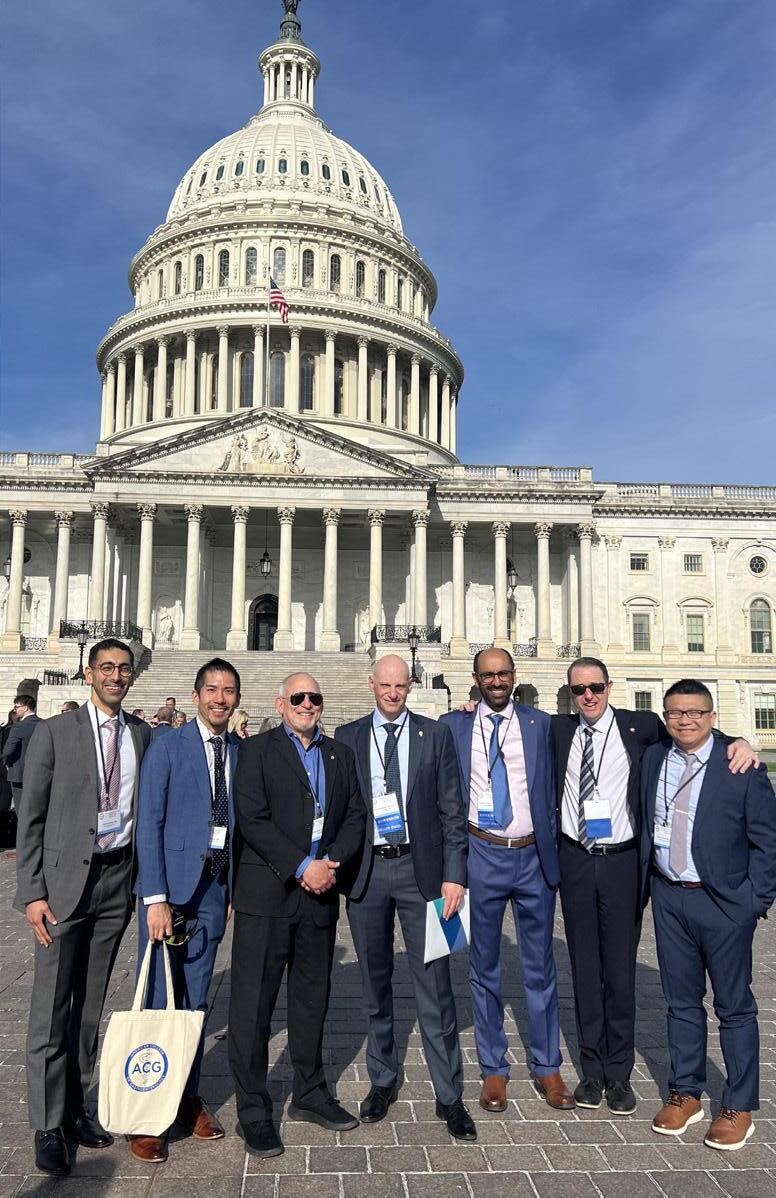
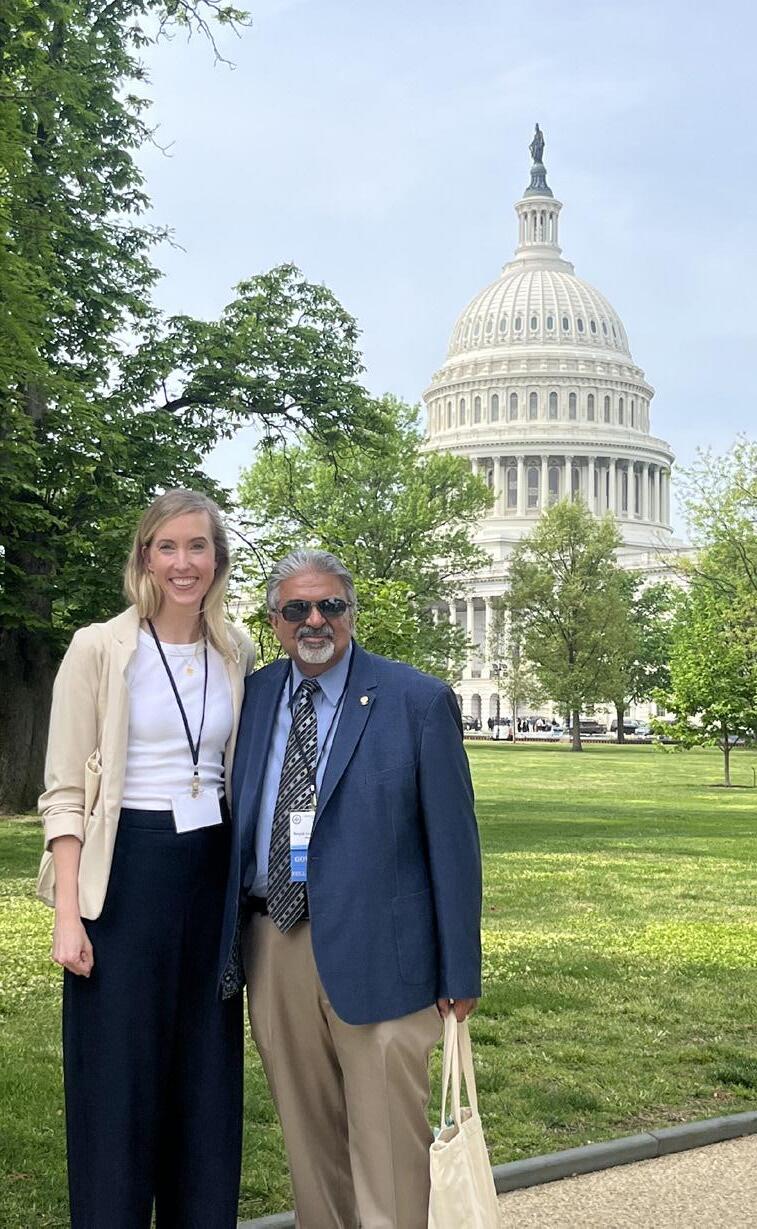
Before the first meeting, there’s a ritual: a final briefing at the hotel, the group photo in front of the Capitol, and a moment for our attendees to take in why they made the trip.
Nikki Duong, MD, Early Career Leadership Program participant from California: Today is a full circle moment for me, because many moons ago, back in high school, I interned for a Congressperson. I’m so excited to be back here with my friends and colleagues to advocate for our patients. It’s my first ACG Advocacy Day and hopefully not my last.
Megan K. Lutz, MD, Early Career Leadership Program participant from Wisconsin: I’m excited to sit down with our representatives and discuss issues that affect me and my patients every day. Their decisions have real impacts on things like access to care and treatment delays, and I hope that what we share can help drive meaningful change for our patients.
Elizabeth R. Paine, MD, FACG, Governor for Mississippi: I am so excited to be here in DC on behalf of my patients, and especially my IBD patients. Today, we’ll be urging our Mississippi representatives to cosponsor the Safe Step Act and other important reforms for our rural state.
Justin T. Kupec, MD, FACG, Governor for West Virginia: This is my sixth fly-in, and I’m looking forward most to revisiting those relationships with my
Members of Congress and their staff. My goal is to explain how they can support us in delivering the care our patients deserve without unnecessary administrative obstacles.
Step therapy and prior authorization reform led off meetings, with attendees explaining the real harm for GI patients. This year, attendees urged their members of Congress to co-sponsor the popular, bipartisan Safe Step Act (H.R. 5509 & S. 2903).
ND: One of the frustrating parts about step therapy is that it’s already challenging enough for our patients to access even basic care, and for physicians facing documentation burdens. We explained to our members of Congress that when you add extra barriers like step therapy and prior authorization, it’s only going to widen the disparity gap that we don’t want to exist for our patients.
ML: I had a great experience in my first meeting with Senator Tammy Baldwin’s office. I was encouraged because for a lot of our legislation, including the Safe Step Act, there is strong bipartisan support. I felt they had the best interests of our patients—their constituents—in mind.
On colorectal cancer screening, ACG continues to push the government to address a key coverage gap: ensuring surveillance colonoscopy is covered as preventive care, without copays or prior authorizations.
ML: When I spoke with Congressional staff, I shared that as a clinician, I see firsthand how essential it is for my patients with a history of polyps to receive timely follow-up colonoscopies without barriers like copays or prior authorizations. I never want people to have to make a choice about cancer prevention based on cost.
JK: Addressing the rise in early-onset colorectal cancer has been on our agenda for the past several years. Unfortunately,
we know that patients are getting cancer at a much earlier age. But through surveillance colonoscopy, we can prevent at least some of these cancers, which gives us the push to talk to our representatives and senators about improving access and coverage.
The most productive moments came when our advocates sat across from their own members of Congress.
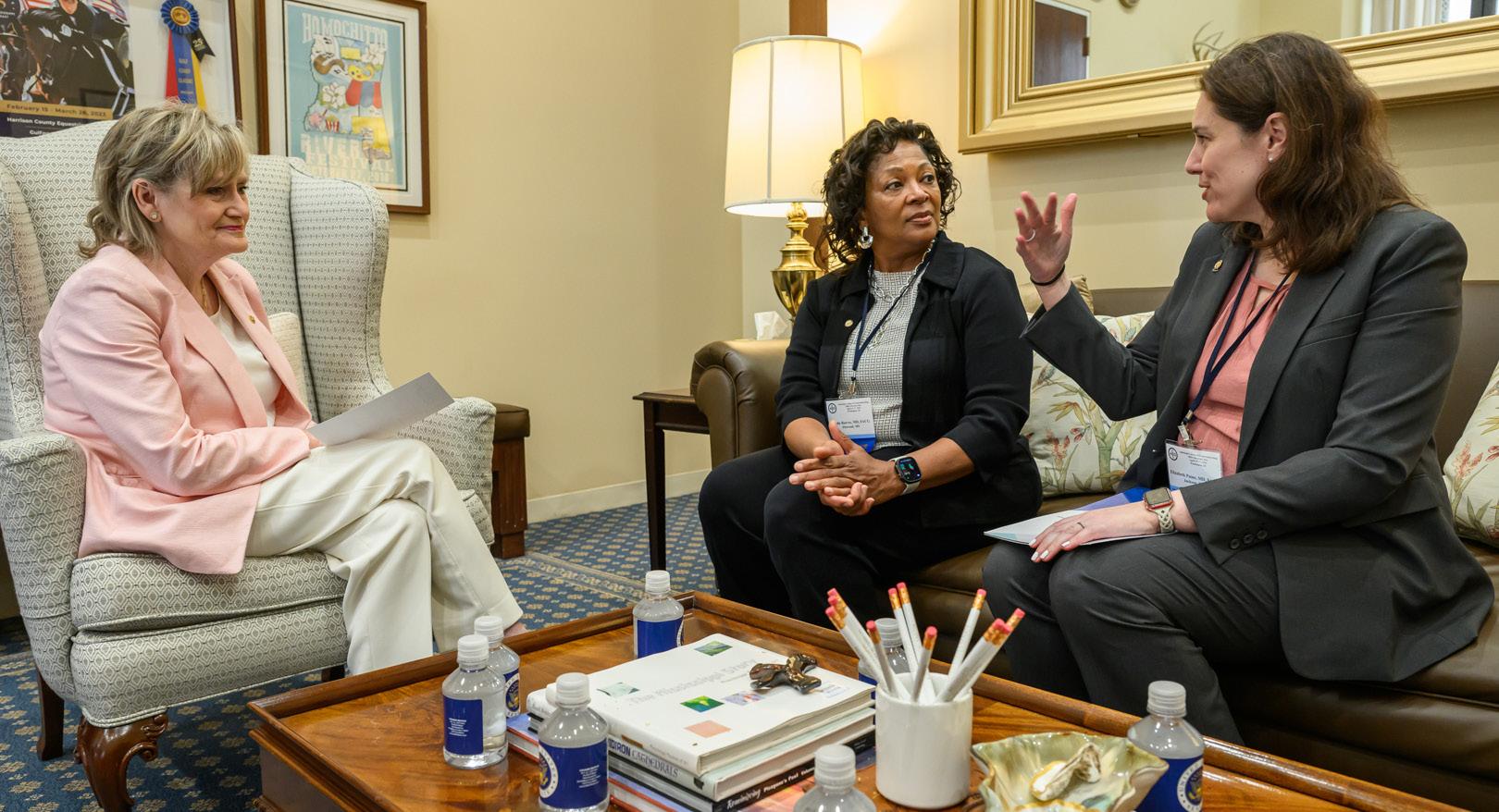
EP: I was so encouraged by our meeting with Senator Cindy HydeSmith because she asked us, as Mississippi gastroenterologists, to give her the roadmap for potential solutions [to the physician shortage]. Congress needs step-by-step instructions for the reforms our patients deserve, and physicians are the ones who need to provide it for our elected officials.
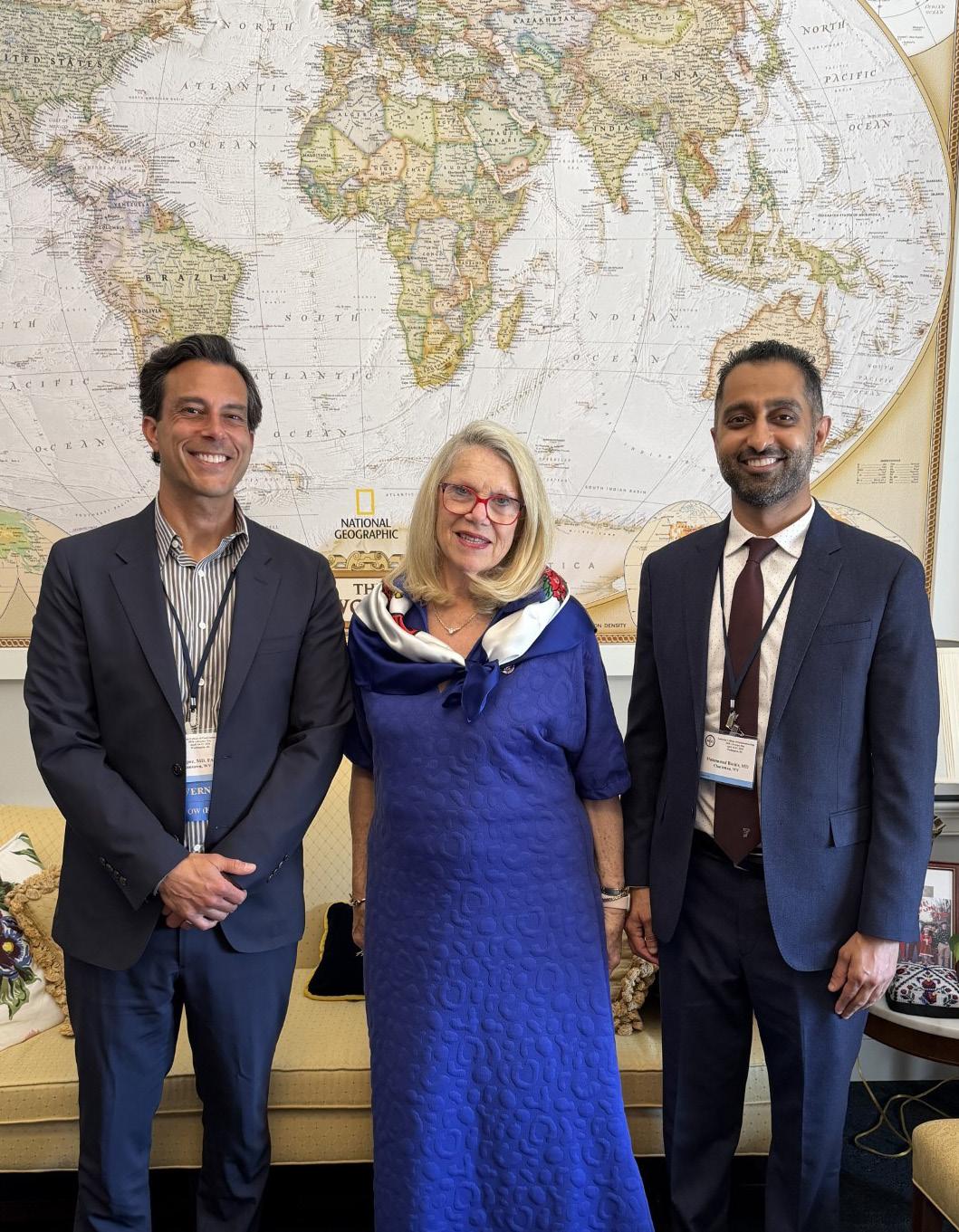
JK: West Virginia is a wonderful state, but often our patients face challenges in accessing the care they need, particularly GI and other specialties. In our meeting with Rep. Riley Moore, my representative, we explained how his support of the Specialty Physicians Advancing Rural Care Act (H.R. 4681 / S. 1380) would provide new opportunities for physicians to live in our state and provide care for patients they could not otherwise access.
The message from this year’s fly-in was clear: physician voices matter. Congress asked for our guidance, and ACG is committed to ensuring gastroenterologists—at all career stages—can answer that call.
“We explained...that when you add extra barriers like step therapy and prior authorization, it’s only going to widen the disparity gap that we don’t want to exist for our patients.” —Nikki Duong, MD, Early Career Leadership Program Participant
ND: It is never too early for trainees and early career GIs to engage in advocacy! Relationship building and policy changes take time. Engaging early allows you to learn more about the policymaking process while polishing communication and advocacy skills through practice. As early career physicians, we are often at the front lines and bring a unique perspective regarding the challenges faced by medical students, trainees, providers, and patients.
“Our voices matter, and advocating for our patients is a part of how we can take care of them outside of clinic.” —Megan K. Lutz, MD, Early Career Leadership Program participant
ML: Early career gastroenterologists and trainees need to see the real impact we can make by bringing our experiences to our representatives. Our voices matter, and advocating for our patients is a part of how we can take care of them outside of clinic.
EP: Years ago, I started out in the Young Physician Leadership Scholars Program and learned how essential advocacy is to care for our patients. More recently, I was thrilled to serve as ECLP co-director, and now, I have come to Congress as ACG’s Governor for Mississippi. I’m building relationships with Congressional staff and my confidence as a physicianadvocate has increased. It’s wonderful that the ACG has equipped me with the skills to show up for my patients in this way.
Dr. Duong is a gastroenterologist and transplant hepatologist with Stanford Health Care. He is also a clinical assistant professor in the Department of Medicine, Division of Gastroenterology and Hepatology, Stanford University School of Medicine.


Dr. Kupec is a gastroenterologist and Professor and Chief, Gastroenterology and Hepatology, West Virginia University Medicine.
Dr. Lutz is a gastroenterologist and Assistant Professor of Medicine, Division of Gastroenterology and Hepatology, University of Wisconsin Hospital & Clinics.
Dr. Paine is a gastroenterologist at the G.V. (Sonny) Montgomery VA Medical Center in Jackson, MS, and Associate Professor at the University of Mississippi Medical Center.
Photo right (L-R): Amrit Kamboj, MD (ECLP), Nikki Duong, MD (ECLP), Neil Stollman, MD, FACG (ACG Treasurer), Fouad Moawad, MD, FACG (Gov for Southern California B), Sundeep Singh (Gov for Northern California), Brennan Spiegel, MD, FACG (Gov for Southern California A), Nghiem Ha, MD (ECLP); photo center (L-R): Sen. Cindy Hyde-Smith (R-AL), Vonda Reeves, MD, FACG (ACG Trustee), Elizabeth Paine, MD, FACG (Gov for Mississippi); photo bottom right (L-R): Justin Kupec, MD, FACG (Gov for West Virginia), Rep. Carol Miller (R-WV), Muhammad Bashir, MD (ECLP); photo bottom left: Megan Lutz, MD (ECLP) and Deepak Gopal, MD, FACG (Gov for Wisconsin)
Easing the administrative burden just got easier!
ACG has developed a customizable letter generator for common GI services and treatments.
Each letter is meticulously crafted and vetted by subject matter experts, ensuring you include all the relevant data and research that payors require.
Simply input the patient’s clinical information, and you’ll receive a fully personalized prior authorization letter—saving you time and reducing hassle.
Why choose ACG’s Prior Authorization Letter Generator?
Quick Personalization
Easily add patient-specific details and medications.
Research-Backed
Letters include the most up-to-date data that payors want.
Total Privacy
ACG does not store any patient data through these forms.
Editable Output
The final letter is delivered in Word format for easy customization.
Simplify the prior authorization process today with ACG. You asked, we answered!
A Conversation with Alisa Likhitsup, MD, FACG, and Sunanda V. Kane, MD, MSPH, MACG, on the Science of Patient Expectations and Experience
DR. LIKHITSUP: If you could, please tell me about your career path and how you became involved in patient experience?
DR. KANE: I started off here in the Mayo GI division as the Associate Practice Chair. That gave me experience with clinical practice and understanding some of the challenges and opportunities with direct patient care. Then, I became the Chair for Quality for our division, and quality included credentialing and endoscopic metrics, but also included quality of care and patient experience.
I got good at trying to—in real time—offer service recovery, deescalate situations, and work with Mayo’s Office of Patient Experience— our office that meets regulatory metrics and standards and is the clearinghouse for patient compliments and complaints. Patients can email, phone, walk in, or send letters to this office. If it involves GI, they reach out to us and say, “Mrs. Jones was unhappy with her visit on X date. She didn’t feel heard. She doesn’t feel like she got what she came for.” Then it’s our
responsibility to answer and respond to the office, and then a letter goes to the patient with an explanation. That was part of my job as Chair of Quality. Dr. Kane next explains that new leadership determined that quality should be throughout the practice and that the Chair role was unnecessary. Her colleagues stood up, sharing that they still needed her support and felt that she was their champion. Next, a new position was established— Associate Chair for Patient Satisfaction and Experience.
That’s what I spend my time doing now because we are such a large division with so many different service lines that we average a complaint a day. The flip side of that is that we get 12 compliments a day, but the compliments come in on the Press Ganey surveys that are not real time. The complaints come in real time. It can be anything from “I didn’t like my experience,” “I feel like I wasted my time,” “You missed a diagnosis,” or “You didn’t do the tests that I wanted,” so just a really large range of things.
In my role, I deal with a lot of other divisions and service lines because GI works closely with dermatology, with rheumatology, with the surgeons. I’ve sort of made a reputation for myself of learning how to help physicians, be supportive of our colleagues, and how to talk to patients and respond to their complaints. When the former Patient Experience Medical Director was stepping down, I interviewed.
Under the umbrella of Patient Experience is [also] Experience Teaching, Education, and Coaching, which is a work group that deals with trying to help work units and individuals with scripting and education.
We also have a work unit that, unfortunately, came out of COVID, which is Patient Visitor Conduct. I know that every institution has an issue with patients who are angry—who are not just angry, but abusive, who are misogynistic, use inappropriate language, who are racist, and then who are violent—whether they are emotionally, psychologically, or physically violent. How do we deal with those patients? That’s a different work unit that falls under Patient Experience. A lot of things going on and a lot of moving parts.
Has patient experience been changing and improving overall over time?
We’re lucky in that Mayo has a long history of excellence and trust. But, since I would say COVID, that trust has somewhat devolved. The number of complaints and the number of
workplace violence episodes or attacks have gone up. More patients are unhappy and are willing to complain about it. I suspect that’s the case across the country, that the use of social media to berate and disparage practices and individuals is on the rise.
I know that’s an area of consternation and concern for individuals—that they have a bad reputation on Healthgrades due to one or two unhappy people. What I do is try to make sure that the patients who I see are satisfied, are happy with their care, and that if they are going to fill out evaluations—either online or Press Ganey—that they are constructive. I just say, “Listen, we appreciate all the feedback that you want to give us.” I leave it at that. Patients don’t have to have a good outcome to have a good experience. What do I mean by that? We may give them a diagnosis of cancer or that they’re not going to have a liver transplant. That’s a bad outcome or not what they were expecting, but they can still have a good experience where, well, “I didn’t get the answer that I wanted, but everybody was so thoughtful, nice, concerned, and empathic.” That’s what we’re looking for, right?
I think that’s what’s being asked on the Press Ganey report. Not primarily the outcomes, but the patients' satisfaction of being cared for and getting their questions answered—more than the right answer that they expected.
Correct. This is a really interesting study where we looked at Press Ganey responses for patients and, if you look at all of the metrics, questions, and the themes of the questions, basically eight questions that measure warmth and competence predict the relationship more than all of the 28 transactional experience measures combined. Warmth, competence, hope, and belonging explain 61% of the variance in the patient relationship ratings, with warmth measures being the strongest. Basically access, the parking lot, food, the provider, the nurse, explain 44% of the visit. But what actually presents the number one thing that you can actually control is if the patient perceives that there
is warmth and competence to the provider and the practice. What do warmth and competence look like? If a patient believes that you are warm and competent, the resulting emotions of that patient are admiration and pride of being part of that team or that practice. The behavior of that patient is that they will attract others to your practice and they will be loyal. That’s the likelihood to recommend or to return, right? That’s the measure that we’re all held to.
If you are cold but competent, then the resulting emotions of the patient are envy and jealousy. There is begrudging cooperation and obligatory association.
If you are warm—so you’re a really nice doctor, but you’re incompetent— then what you will get is sympathy and pity from the patient, and you’ll get indifference and neglect.
That’s the patient who doesn’t do what you recommend, who doesn’t follow up, who no-shows, who is always late. That’s the person who isn’t going to fill out a survey.
If you are cold and incompetent—so the worst of both of those things—you have a patient that ends up being contemptuous and disgusted, and then they reject you and disassociate. The goal is to be warm and competent. It’s not necessarily if you truly are competent, it’s perception.
That’s exactly what I was thinking about—patient perception and competence are totally not the same. Was there any strategy to apply to help physicians and nurses?
Yes, thank you for asking. Warmth is almost going back to simple social skills—which unfortunately we have lost—which is eye contact, just simple things. You’d be amazed at how many people don’t knock on the door before they enter the room or don’t introduce themselves or recognize the other people in the room. Actually shaking the hand of their patient.
When you’re in a field such as ours where we’re having to do physical examinations, [it’s important] that we first announce that we’re going to put our hands on the patient:
• “Is it okay if I feel your belly for your ascites?”
• “Is it okay if I listen?”
• “Let me help you up onto the examining table so that you don’t fall.”
Competence is being able to thoughtfully talk to the patient in language that they understand. If they have to Google something or use UpToDate or ChatGPT in front of the patient, do so as a team—“I haven’t heard of that supplement that you’re taking—let’s look it up together.”
In the medical field, we’re used to knocking on the door and looking our patient in the face, which is hard, right? You’re looking at the computer the whole time because you have 15 minutes to spend with that patient.
Okay, then you have to spend some resources to go out and use AI—something that is smart-listening to help you with your notetaking. Investing in some smart AI that is meant to augment and time-save as opposed to replace what we do is also very helpful.
From the evaluation when you get with the staff and providers, is there a level [at which you] will be flagged if there is anything that alarms you to say, “Let’s get the [physician] more help to get this better.”
Yes. People will tell me they don’t even open their evaluation, because they don’t think that it’s helpful or reflective of their practice, or it’s just soulcrushing to them.
My argument is that you’re going to hear from the really unhappy people. However, if you sit back and reflect, and you have multiple people who say that you’re not competent, “Okay, why is there the perception that you’re not competent?” Unless you have a significant number of evaluations, they’re not statistically significant or
“Patients don’t have to have a good outcome to have a good experience. What do I mean by that? We may give them a diagnosis of cancer or that they’re not going to have a liver transplant. That’s a bad outcome or not what they were expecting, but they can still have a good experience.” —Dr. Sunanda Kane
relevant. But at the end of the evaluation score report are the free text comments.
So what Mayo does is on their surveys, they actually have a unique feature—which doesn’t have to be unique—there is a box where you are asked in free text, “What impressed you the most about your visit?” And then, “What was the thing that disappointed you the most about your visit?”
Then we use a large language model to look at all of those comments and to break them down into buckets and themes for us. If it’s that your practice is hard to find, okay, that’s what disappointed you the most and that’s what made you unhappy when you walked in the door. Are we hard to find on Google Maps?
So, there are definitely signals and themes that an LLM can help a practice understand what they could potentially fix for a big impact and for relatively low cost.
If there is a smaller practice where there is somebody who is struggling, where they have low scores. It may be that it’s one area where that provider doesn’t talk about follow-up, and that’s what really brings their score down. The high performers can actually then educate their colleagues and say, “This is how I do it.”
Sometimes it’s a quick, simple fix because they don’t realize what their colleagues are doing or saying or not doing or not saying.
Dr. Kane shares that she’s sad that Press Ganey is perceived negatively, noting that the company has a chief medical officer and educators and can facilitate collecting patient feedback that will help physicians improve. Dr. Kane believes physicians won't necessarily change based on one unhappy patient, but they may
think about how to improve if you show them two years of data.
Physicians are all about being better than other people, right? We’re a competitive group. We always want to be the best, and we’re here for a reason.
Press Ganey wants to be here to help you be a better physician. What you need is a culture and you need a leader of experience and quality. Every practice, every institution. But nothing changes if there isn’t a champion who can actually blow the horn and say, “This is what needs to happen, and we’ll all be better for it.”
That’s very interesting. I think Press Ganey actually really helps because physicians also need to reflect to see their performance. I think that it’s very helpful to know what patients say about you. I think it’s a benefit. In community private practices, it’s usually the practice manager who looks at the scores. It’s really important for physicians to understand whether LTR, which is the number one metric—which is “likelihood to recommend” versus “likelihood to return.” You have to understand the metric by which you’re being measured. Some people don’t even know what metric they’re being held up to. Of course they’re not going to be happy when they see these reports or be motivated to change their behavior because they’re not even sure of the goal or scoring system.
“What you need is a culture and you need a leader of experience and quality. Every practice, every institution. But nothing changes if there isn’t a champion who can actually blow the horn and say, ‘This is what needs to happen, and we’ll all be better for it.’” —Dr. Sunanda Kane
Culture in the workplace is really big. Is there anything else you would like to share?
The Barrell Institute, which is a foundation that studies patient experience and patient engagement, at the end of the year in December 2025, their report came out that said the number one concern of patients in the past six months is cost of care.
From what I hear more and more, it sounds like this is the era of AI power. It’s very interesting to see all of these ambient dictation [systems] so that we don’t have to focus on the computer. Do you see that changing patient experience?
We do, but it totally depends on the patient and how the provider uses that AI, because there are certainly patients who are very suspect if you are recording them. How you explain the use of AI [is important].
There are also people who only want virtual visits. They don’t want to come in. They don’t want to have to spend the time, energy, and cost to come in for a visit if it can be done online. That’s strategic use of time by the providers— is it worth that? I find that you can be very efficient with a video visit.
Are there any tips for our gastroenterologists and advanced practice providers about patient experience and satisfaction? What should we try to do to improve?
I would start with saying that change comes from within and reflection. Having a bird’s eye view of the culture of your practice is also so important. Sometimes hiring a “secret shopper” to come and walk through your practice and point out things that you just take for granted every day.
We did that survey about hope, warmth, and competence. Hope really drives a lot of positivity, and fear drives a lot of negativity.
In the hospital, safety to a patient isn’t that they’re not going to fall. They’re going to feel safe if the hospital is clean. In an outpatient world, if the patient is able to
negotiate the parking lot and then walk in, what does the lobby look like? Do you have human beings or do you have kiosks for checking in? Is the wallpaper starting to chip away? We don’t have magazines anymore in this era of social media and AI— everybody’s just sitting there on their phones. How about screens that, instead of showing television, you are streaming pictures of positive things that inspire joy.
You know, go to your office tomorrow and look around. Is the garbage can full? Is there recycling that the patients can use?
You have a big institute with so many clinics and offices. That’s a very big task to really make improvement in all of these little things to add up to the patient experience.
Right. But you don’t have to have a huge team and resources to go in and, “Okay, so flyers, are they taped to the wall? Are they raggedy? Are they outdated? Things like that.”
Yes. And we walk past that hall every day, and we don’t ever recognize it. Again, what is the culture like? You as a physician, you’re one of the team leaders. Does your office staff have the empowerment to be able to problemsolve in real time? Do they feel like they can de-escalate an angry patient?
Dr. Kane details how desk staff can provide coupons or vouchers for parking and for $10 at the cafeteria, for example if someone has been waiting for an hour. Just recognizing and acknowledging their inconvenience or their emotions, it goes a long way towards de-escalation and that patient coming back.
As a provider, you need to be super mindful that, okay, the guidelines state, standard of care states that you do “XYZ,” and the patient either no-shows or they seem resistant to doing it. It might be because they are worried about how much it’s going to cost, and they may be embarrassed or proud to admit it. So, choose wisely, be thoughtful that if you’re ordering an EGD and colonoscopy that you’ve explained why and how this is going to change management. Cost is a huge thing to a patient.
Yes, definitely. I do see that in practice regularly. Explain to them why are we doing this, what’s the purpose of doing it, and have the same understanding on the purpose of it and, sometimes, negotiation to see what we can try the best to see what alternatives could be helpful.
Exactly right.
I’m so happy to be able to learn from you. I still have a lot more to learn.
Patients can’t not have an experience is what I always start off with. How I end is always, I may not remember exactly what you said. I may not remember what you did, but I will always remember how you made me feel.
Wow. That’s wonderful.

Dr. Kane is Medical Director of the Office of Patient Experience for the Mayo Clinic Enterprise. She is a Past President of ACG (2018-2019) and serves as the ACG Trustee for Administrative Affairs.
Dr. Likhitsup is Clinical Assistant Professor of Medicine at the University of Michigan. She serves as Chair of ACG’s Patient Care Committee.
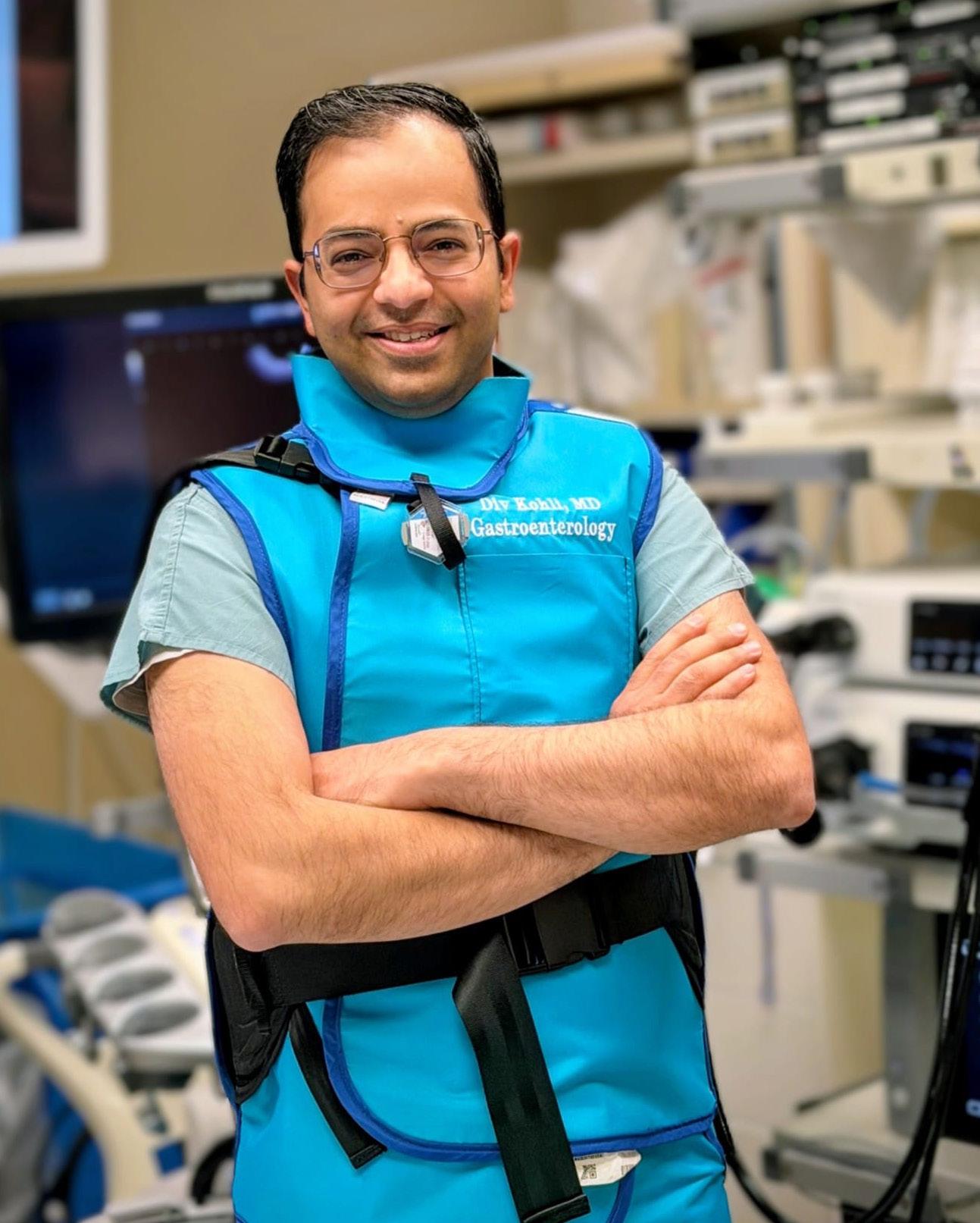
Divyanshoo Kohli, MD, FACG, Providence Sacred Heart Medical Center, Washington State University, Spokane, WA
Party That Sparked This Column
Kids can say the darndest of things!
My family and I were invited to a party at the house of one of our physician friends. Inevitably, the talk turned toward the difficulties of navigating the balance between work and personal life. After meandering through the sorrows of preauthorization requests and the unending inbox, a comment was made about how quickly medicine is changing, and the need to continue to remain updated. Our hostess, a hospitalist, was preparing to take the internal medicine 10-year exam and lamented how much she dreaded the exam.
My gastroenterology colleagues at that party—ever ready with a quip— teased me about the “hard” questions that I must have deliberately written during my time as an item-writer. It was at this time that my six-year-old snuck up and asked me why I was writing all these tough questions. He then asked me if he could write some as well!
It was one of those moments that sent me into a mental soliloquy of why I spent my precious time writing questions and working for the American Board of Internal Medicine (ABIM). This column is the response I could not share with my six-year-old, who had already bounced off to play in the yard.
I was, of course, quite familiar with “The Board.” The name itself conjured up puzzling questions with confusing choices about esoteric subjects. I remember my feelings when exiting the examination hall after finishing my medicine and GI boards—I felt supremely confident that I would fail! Much to my surprise—and relief—I passed with good scores.
Right after I started my first job in Kansas City, I got an email from ABIM asking if I would be willing to serve on the standard-setting panel. Surprised and intrigued, I acquiesced and traveled to Philadelphia for a fantastic session with a distinguished group of newly minted gastroenterologists, where we graded
the difficulty of the questions. I saw how seriously the ABIM took their question-making process and the rigor that item-writing involved.
That day, I asked the ABIM staff a lot of questions. I “paid dearly” for that—I got invited to write questions for the ABIM exam on the Item-Writing Task Force!
I was a little cautious since I did not know the nuances of writing an ABIM exam question. I had some experience attempting to write questions as a fellow at Virginia Commonwealth University. One of my mentors and faculty, Dr. Doug Heuman, asked the senior fellow to write “Board-style” questions for discussion at the end of the day. This was meant to be a “fun” exercise where the fellows could read a topic, come up with a question, and then discuss it amongst peers. While the discussion was certainly entertaining, writing the question turned out to be a challenge.
I chose to write questions on hepatology and inflammatory bowel disease, since I really enjoyed these two disciplines in GI—it is another matter I eventually specialized as an interventional endo-hepatologist. It was then that I realized how challenging it is to write a concise, accurate, and interesting question with a single answer and multiple plausible distractors.
With these thoughts swirling in my mind, I joined an elite panel of highly reputed GI physicians who guided me on the nuances of writing a good question. Over the next five years, I worked as an item-writer on the Item-Writing Task Force, where I interacted with some of the smartest and brightest gastroenterologists in the country. A lot of my fellow item-writers were practicing gastroenterologists working hard in the trenches of the community— far removed from the imperious ivory towers of academia that I had imagined. I was struck not as much by their academic brilliance as much
as I was enamored by their humility and willingness to collaborate and volunteer their time and expertise.
Over time, I learned so many things about the practice of medicine and the data behind it that I believe it has made me a substantially better physician. I have often marveled about how much data is available for our consumption and how little time is left to update our knowledge and learn. Writing questions and discussing them with peers, reviewing their questions, and discussing the underlying data was very informative. As an example, I tended to stay away from motility disorders of the esophagus and rectum. It was only during one of our Task Force meetings that one of the other item-writers with an interest in motility disorders explained some of the nuances to me.
This ability to network with physicians across the country in a small group setting has been the highlight of my ABIM service.
As time went on, I became a pod leader of the Item-Writing Task Force. An opportunity presented itself where there was a position open for a practicing gastroenterologist on the ABIM Gastroenterology Board, the board with oversight of assessment in the subspecialty. As I read the names of the serving board members, I realized what a scholarly group of academic leaders worked with the ABIM. My then-Chief of GI, Prateek Sharma, MD, FACG, encouraged me to apply and offered his support. My item-writing experience had given me enough experience to do well in the interview and, much to my delight, I became a member of the Specialty Board.
Over the next three years, I participated in making recommendations for the exam, producing best practices, and giving feedback to the ABIM. It also gave me an opportunity to meet the top leadership of the “fantastic four” GI societies: AASLD, ACG, AGA, and ASGE. We would discuss
how to coordinate best practices and tailor the exams to the needs of the diplomates.
It has been a fantastic partnership to collaborate with the societies to improve the exam. These discussions have helped move the exam away from testing esoteric minutia toward clinically relevant, everyday topics that gastroenterologists and hepatologists encounter.
It also gave me a birds-eye view of how the Longitudinal Knowledge Assessment (LKA) came about. It has been such a delight that the LKA has been received positively. Based on this feedback, I decided to do the LKA for internal medicine rather than giving up my internal medicine board certification.
Despite all the policymaking, I realized that I still loved being a clinician and the itch to work with questions remained unsatiated. And so, I jumped at the chance to work again with itemwriters on a different committee.
Alongside my work on the Specialty Board, I was accepted on the Gastroenterology Traditional, 10-Year Maintenance of Certification (MOC) Exam Approval Committee. It was an honor to sit with some of the sharpest minds, scholars, and academicians from across the country and debate the nuances of how a question was written, how the data has evolved, and how to better frame choices. Indeed, some of the people I sat with were the ones who had written the guidelines that shaped my practice! More than just understanding the nuances of gastroenterology, I got to see how intellectual giants navigate their way through complex decisions, troubleshoot problems, and figure out the easiest way to manage differences of opinion in a constructive manner.
New ABIM Gastroenterology LKA® with Hepatology Focus Available
Beyond making me just a better physician, I believe they have made me a better person.
The timing of my move to the Approval Committee was fortuitous. The gastroenterologists on ABIM Governance had been tasked with a complete revamp of the gastroenterology board exam. This was an exciting opportunity because we redesigned the entire exam pattern while maintaining fidelity to its underlying principles: accuracy, fairness, and discernment.
Over time, I have moved on to advocating for the work of ABIM. In this regard, every six months I get a chance to talk to colleagues and peers who are interested in working with ABIM. I am proud that some of my friends and colleagues now serve the ABIM in various capacities, ranging from the Item-Writing Task Force to the Approval Committee to the Specialty Board. Seeing their success makes me very happy.
I would encourage everyone reading this to consider partnering with the ABIM in any role that interests them. This is an exciting time to be volunteering with the ABIM, working at the leading edge of innovation and medical education.
Regarding the query from my son about writing questions: maybe one day in the future. For now, his actual writing needs to be legible! He still owes his practice one-page of cursive handwriting!
Dr. Kohli is an interventional endoscopist working in Spokane, WA. He is a member of the ABIM Gastroenterology Board and the Gastroenterology Traditional, 10-Year Maintenance of Certification Exam Approval Committee.
Enrollment for the new American Board of Internal Medicine (ABIM) Gastroenterology LKA with Hepatology Focus is officially open. Physicians currently enrolled in the Gastroenterology LKA can switch to the Hepatology Focus in the ABIM Physician Portal. You’ll stay in your current five-year cycle while receiving more Hepatology-focused questions in future quarters. Your certification will remain in general Gastroenterology.
If you’re due for a GI MOC assessment in 2026, enroll by June 30, 2026. Mid-cycle switching is only available during the first year of launch. Log in to your Physician Portal and select your Gastroenterology MOC Assessment to learn more.



By Trisha Pasricha, MD, MPH
WHEN I DECIDED TO MAJOR IN FILM PRODUCTION in college, I got enough eyebrow raises to power an elevator. It was an odd path for a pre-med student—one met with confusion by my advisors on both sides of that equation. But on the first day of my sophomore year filmmaking course, my professor said something I have never forgotten: “This is the classic filmmaker’s dilemma: do you save the drowning child, or do you film it?”
We laughed. We were making a documentary about a local cannoli shop, so the stakes didn’t quite feel that high. The classic “dilemma” felt irrelevant. Who would ever choose the story over real life?
But that question, it turns out, would follow me ever since.
What drew me to media in the first place are the same things I believe make a good scientist and clinician. In both fields, you must synthesize disparate pieces of evidence, fill in the holes of a puzzle, and rapidly earn the trust of the person in front of you. But the two worlds can pull in opposite directions. In medicine, everything is a gray area—we hedge, we qualify, we seek harmony. In journalism, you need a conclusion, a conflict, and ideally, to make your point in 800 words or less. As a medical journalist, the idea that someone might have to choose between what makes a good story and what is the right thing to do genuinely unsettled me.
And then came the pandemic.
I was a first-year gastroenterology fellow at Massachusetts General Hospital in the spring of 2020. Like many colleagues, I took care of patients in those COVID wards while the
outside world diverged in ways that were difficult to comprehend. The deaths we were pronouncing at the bedside were dismissed as exaggerated. Masks became political symbols. And when decades of rigorous science produced mRNA vaccines in record time, too many people turned the opportunity down.
The scariest misinformation, I came to understand, was never the most outlandish. It was the kind cloaked in scientific-sounding language, built on a kernel of real biochemistry, and delivered by someone in a position of authority— all in service of a story people desperately wanted to be true. We had the data. We just weren't winning the story.
I decided I wanted to leap back into media, becoming the “Ask A Doctor” columnist for The Washington Post, where I answer reader-submitted health questions every week on social media and in a written column. I have thought about that filmmaker’s dilemma constantly in the years since. I’ve come to believe it presents a false choice. No one has to choose between being a good clinician or scientist and being a communicator. Given what I witnessed in those wards, and what I see playing out now in my own specialty, I’d go further—we can no longer afford not to be both.
When I ask gastroenterologists about health misinformation, the conversation often turns to the frustrating moments in clinic—the patient who took “leaky gut” supplements for years before they talked to their clinician and found out they had celiac disease, or the one who asks you to interpret their $800 at-home microbiome test that has no clinical basis.
But the more troubling problem is the patient who never makes it to your office at all.
Research from the United Kingdom has found that approximately one in three people will delay speaking to a doctor about bowel symptoms because they are embarrassed. They are not silent, though—they are asking TikTok. A recent survey found that a majority of Gen Z now turns to social media as their primary source of health information, with TikTok leading the way. These are people who may never articulate their symptoms to a clinician, who may be quietly self-treating with unvalidated supplements, or who may be dismissing symptoms that warrant investigation because a charismatic online voice reassured them they had the answer.
Gastroenterology, in particular, occupies unusually fertile ground for misinformation. GI symptoms— bloating, irregular bowel habits, abdominal discomfort—are among the most common complaints in medicine and among the most commonly dismissed. Conditions like irritable bowel syndrome affect an estimated 10 to 15 percent of the global population, yet many patients spend years feeling unheard by the health care system before someone takes their symptoms seriously. That frustration is real, and it creates a vacuum. Into that vacuum pours a multi-billion dollar gut health wellness industry: unvalidated microbiome tests, digestive enzyme supplements with limited evidence, probiotic formulations marketed with sweeping claims, and detox protocols that no gastroenterologist would recommend. The claims are seductive precisely because they offer what the formal healthcare system sometimes fails to: acknowledgment, a diagnosis (valid or not), a solution, and an authority figure who seems to understand.
The embarrassment barrier compounds all of this. When someone is too mortified to describe their bowel habits to a physician but perfectly willing to watch a video about “gut
The scariest misinformation, I came to understand, was never the most outlandish. It was the kind cloaked in scientific-sounding language, built on a kernel of real biochemistry, and delivered by someone in a position of authority—all in service of a story people desperately wanted to be true.”

healing protocols” on their phone at midnight, we have to reckon with where people are actually seeking and receiving information— and meet them there.
THE FOUR PILLARS OF MISINFORMATION
Understanding why health misinformation spreads is prerequisite to countering it. In my experience, the most dangerous GI misinformation often shares four consistent features.
1. It contains a kernel of truth.
The scariest misinformation is not the most outlandish. It’s the claim that begins with real biochemistry or physiology before extrapolating wildly away from the evidence. A supplement that “supports gut barrier integrity” sounds plausible because intestinal permeability is a real physiological concept. A probiotic that “boosts immunity” sounds plausible because the gut microbiome does play a critical role in immune function. The scaffolding of truth makes the rest feel credible.
2. It seemingly comes from authority. Credentials and degrees confer trust—as do visual cues like white coats, scrubs, or framed certifications that are not specific to any one field. That trust can be weaponized. We need to recognize that the microphone matters, confidence echoes loudly, and that the public cannot always distinguish evidence-based GI medicine from evidence-adjacent wellness content.
3. It feeds into what people hope is true. People do not believe misinformation because they are foolish. They believe it because they are suffering, because they feel dismissed, and because the misinformation offers a simpler story with an actionable solution. A patient with IBS who has been told for years that their symptoms are “just stress” is primed to hear a wellness influencer say, “I know exactly what’s wrong with you, and here’s how to fix it.” We have to understand the emotional logic before we can address it.
4. The narrative vacuum gets filled. If gastroenterologists are not present in the spaces where people seek health information, someone else will be—and they may not make the choices we would make. The absence of authoritative, accessible GI content on social media is not neutral. It is an invitation.

Credentials and degrees confer trust—as do visual cues like white coats, scrubs, or framed certifications that are not specific to any one field. That trust can be weaponized. We need to recognize that the microphone matters, confidence echoes loudly, and that the public cannot always distinguish evidence-based GI medicine from evidence-adjacent wellness content. ”


When someone is too mortified to describe their bowel habits to a physician but perfectly willing to watch a video about ‘gut healing protocols’ on their phone at midnight, we have to reckon with where people are actually seeking and receiving information— and meet them there.”
When I think about the ecosystem of health information, I picture three overlapping circles: physicians and scientists, journalists, and content creators. Each group has distinct strengths. Physicians and scientists bring deep training, the ability to interpret data, and direct connection to patient needs. Journalists bring communication skills, institutional fact-checking, and ethical frameworks that hold their reporting to an entirely different standard. Content creators understand how to reach audiences on the platforms that matter—how to capture attention in three seconds, how to rapidly earn trust, and how to make something worth sharing.
Most of the time, these groups operate in complete silos. When even two of these circles overlap, even in what I think of as a “double helix,” something more powerful becomes possible. A scientist who also knows how to create engaging content can make complex findings digestible. A journalist with scientific training can ask sharper questions and resist being misled by weak evidence.
But the “triple helix”—the intersection of all three—is where the real potential lies. This is the space where scientific credibility, journalistic
rigor, and genuine communicative reach converge. It can be one person or a team of people working in collaboration. Either way, it is what we need to counteract misinformation at scale: voices that don’t just carry authority but also earn trust.
I have watched colleagues do this quietly and effectively. A gastroenterologist who posts short, rigorously accurate explainers on Instagram about what probiotics can and cannot do. A fellow who writes a clear-eyed newsletter that corrects common IBS myths. They didn’t start out with massive platforms. But they filled the vacuum with something real, and their reach compounded over time.
Not every gastroenterologist needs to become a newspaper columnist or an Instagram presence with six-figure followers. But every GI physician has a role to play. Here is what that can look like at different levels of investment:
Know what your patients are watching. You cannot counter a claim you have never heard. Spend 15 minutes on TikTok or Instagram searching “gut health” once a month. Know the specific claims circulating, the specific
products being promoted, the specific voices your patients are likely to encounter. This knowledge belongs in clinic. When a patient comes in having already heard a lot about a topic, meeting them there—“I know you’ve probably seen a lot about this online”—changes the conversation.
Address it before they ask.
Many patients who have been following questionable advice online will never bring it up unless you ask. Build it into your clinical routine: “Have you been trying any supplements or trying any dietary protocols for your symptoms?” The conversation that follows is not a lecture—it is an opportunity to validate their desire for answers and redirect toward evidence. Be willing to say “We don’t know yet.”
One of the most counterintuitive lessons I have learned as a medical journalist is that acknowledging uncertainty builds trust, it does not undermine it. The wellness industry thrives on false certainty. When a gastroenterologist says, “The microbiome science is genuinely fascinating and still evolving—here is what we know, here is what we don’t, and here is what that means for your care,” that transparency is itself a form of authority.
Partner with your institution.
Academic medical centers and health systems are sitting on tremendous credibility that is so often entirely absent from the social media landscape. If you feel drawn to creating content—a short video, a patient-facing FAQ, a post explaining what a new study actually showed—reach out to your institutional communications team. The content should feel like a physician talking to a patient—and if the tone allows it, have fun. The infrastructure, support, and amplification of an institution behind you can meaningfully extend your reach.
You have what it takes already.
The most common reason physicians give for not engaging publicly with health misinformation is that they don’t feel they have the right platform, the right credentials for public
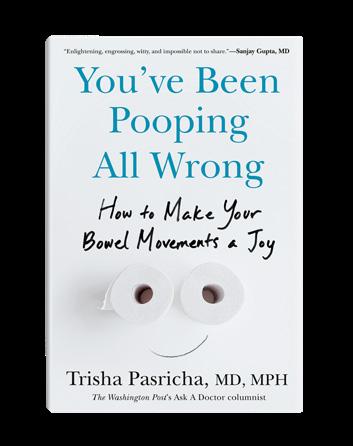
Book Review—You’ve Been Pooping All Wrong: How to Make Your Bowel Movements a Joy
By Trisha Pasricha, MD, MPH
Review by Mohammad Bilal, MD, FACG
I often tell my patients, “Constipation or diarrhea is a medical condition,” just like diabetes or hypertension. Patients with diabetes or hypertension don’t take anti-diabetic medications or anti-hypertensive agents as needed—they take it scheduled every day. But issues pertaining to bowel movements or “pooping,” as Dr. Trisha Pasricha calls it, are often misunderstood. In her book, You've Been Pooping All Wrong: How to Make Your Bowel Movements a Joy, Dr. Pasricha has led us through all issues pertaining to bowel movements in a systematic, evidencebased but, more importantly, fun and engaging manner. This book explores a topic that is often considered to be taboo but is undeniably universal. Her writing involves a perfect blend of humor, science, and personal anecdotes—starting from her years as a child learning from her inspirational father—Pankaj Jay Pasricha, MD, MBBS, another gastroenterologist who has spent decades studying the gut-brain interaction and neurogastromotility.
Dr. Pasricha is a gastroenterologist at Harvard Medical School with years of experience in medical journalism. The book is divided into three parts: The Secrets, The Science, and The Survival Guide. Each section is filled with practical advice and myth-busters. Even for me as a gastroenterologist, it was a highly valuable addition to my knowledge— plus a fun and engaging read that I couldn’t put down.
Within this book, she also highlights the work of a living legend in our field, Michael D. Levitt, MD, whose foundational work on flatulence improved our understanding of flatulence as we know it today. This was a personal favorite for me
because I had the privilege to work with Dr. Levitt the last four years of his career before he retired at the age of 89 at the Minneapolis VA Medical Center.
In the first part, Dr. Pasricha introduces the concept of “poophoria”—the joy of healthy pooping—and challenges societal taboos surrounding the topic. She shares stories from her medical practice, highlighting how many people are unaware of what constitutes a normal bowel movement.
The Science delves into the relationship between the gut and the brain. Dr. Pasricha explains how the enteric nervous system, often referred to as the “second brain,” plays a crucial role in digestion, mood regulation, and overall health.
The final and third part—The Survival Guide—is filled with practical tips on improving gut and bowel health.
The beauty of this book is that it is so easy to read and follow—that anyone from a gastroenterologist (like me) or someone with no medical background can follow along, stay engaged, and actually learn something that will help them in their daily lives. So don’t wait up—get your copy and read this book to make your bowel movements a joy.

Dr. Bilal is Associate Professor of
LEAD WITH WHAT’S TRUE BEFORE CORRECTING WHAT’S FALSE.
Acknowledge the kernel of truth in popular claims before explaining where the evidence diverges. This builds credibility and models good scientific thinking.
CITE YOUR UNCERTAINTY EXPLICITLY.
Phrases like “The data on this is still evolving” or “We don’t yet have strong evidence for this in humans” signal honesty rather than weakness.
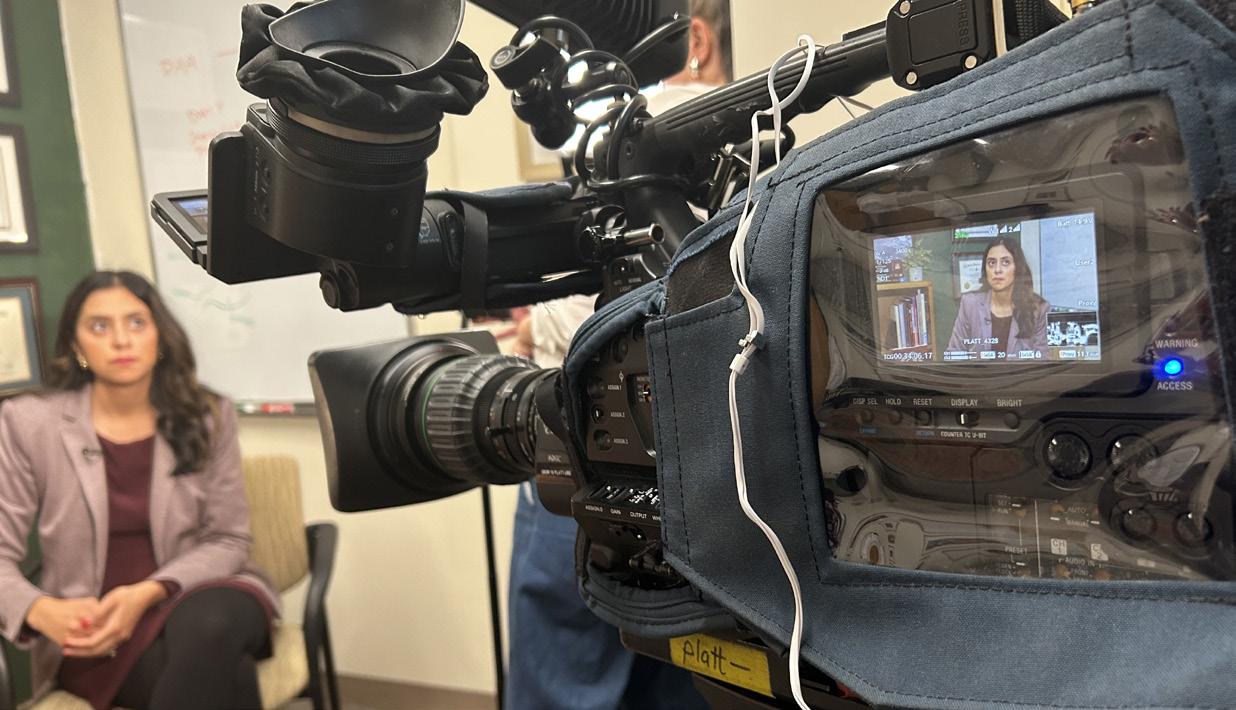
SPEAK TO THE PERSON, NOT THE DISEASE.
The most effective science communication is personal. A post that begins with a patient’s experience like typical symptoms or a trajectory (not a specific patient story) will travel further than one that begins with a statistic.
communication, or the right moment. Start somewhere, even if it feels small or imperfect. A clear, evidence-based response to a common GI myth posted once is more than nothing. It compounds.
Remember: The Narrative is Already Being Written
The narrative about GI health is being written right now, every day, on platforms where most of us are not present. That narrative will shape which symptoms people report, which treatments they pursue, which screenings they delay, and which diagnoses get missed. If we don’t write it, someone else will.
BE CONSISTENT, NOT VIRAL.
One post may not immediately change all minds. Sustained, regular presence in a topic area builds the trust that makes individual pieces of information land.
ENGAGE THE EMBARRASSMENT BARRIER DIRECTLY.
GI topics carry stigma. Content that names that stigma explicitly—“I know this is uncomfortable to talk about”—gives people permission to engage and helps surface symptoms that might otherwise go unmentioned.
KNOW THE PLATFORMS YOUR PATIENTS USE. The format matters. A thorough written thread may be ideal for a certain audience; a 60-second video is what reaches another. Meeting patients where they are means understanding where they actually are.
The patient who is too embarrassed to come to your office and is instead watching TikTok at midnight about their bowel symptoms—they deserve better than what the algorithm is currently offering them. They deserve a gastroenterologist’s voice in the room. They deserve accuracy delivered with the same urgency and relatability as the misinformation competing for their attention.
We are the ones who know what the right questions are. We are the ones who know what the science actually says. We are the ones who have sat across from these patients and heard what the algorithm never will. It is time to show up.

Dr. Pasricha is the Director of the Institute for Gut-Brain Research at Beth Israel Deaconess Medical Center and an Assistant Professor of Medicine at Harvard Medical School. She writes the “Ask A Doctor” column for The Washington Post and is the bestselling author of You’ve Been Pooping All Wrong, a guide to the brain-gutmicrobiome connection, including research on why people develop IBS and how anyone can achieve poophoria.
“The narrative about GI health is being written right now, every day, on platforms where most of us are not present. That narrative will shape which symptoms people report, which treatments they pursue, which screenings they delay, and which diagnoses get missed. If we don’t write it, someone else will.”
By Shubha Bhat, PharmD, MS
Patients with inflammatory bowel disease (IBD) today often come to clinic with concerns shaped not only by their symptoms, but also by what they have seen online. Common worries include:
• “I am worried about the possible risks like infections or cancer with these treatments. I have heard they can be hard to tolerate and may cause a lot of side effects.”
• “I prefer natural or alternative approaches, like supplements, detoxes, or diet changes. The medications being recommended seem too strong or unnecessary for me.”
• “I have seen products that claim they can fix the gut microbiome and cure my IBD, so I am not sure I need other medications.”
• “I am concerned about how expensive these medications are. It feels like pharmaceutical companies profit from them and I cannot afford treatment.”
As an embedded GI clinical pharmacist, I have the privilege of meeting patients at multiple touchpoints, whether in person, virtually, or telephonically, and walking with them through their IBD journey. When advanced therapies such as biologics or small molecule medications are recommended, it is not uncommon for me to hear one or more of the concerns listed above. Where a patient is emotionally and medically on their IBD timeline, along with any previous experiences with medications, can make the idea of starting these therapies feel overwhelming.
With information just a tap away, patients are increasingly turning to social media platforms like TikTok, Instagram, Reddit, Facebook,
and YouTube to learn about IBD and management. While this accessibility can empower patients to advocate for themselves, not all social media sources are reliable, and misinformation can lead to harmful decisions—especially when it discourages patients from starting or continuing necessary treatment.
Influencers vary widely in background— some are well-meaning patients sharing lived experiences, while others have no clinical expertise and may be motivated by affiliate marketing or paid partnerships. As a result, many posts and reels are presented without any scientific basis, often exaggerating negative experiences or promoting unproven “natural” cures.
Despite how convincing online content can seem, several facts remain clear:
1. We still do not fully understand the exact mechanisms driving IBD, and there is no single identified “root cause.”
2. There is currently no cure for IBD.
3. Most natural products, detoxes, or supplements are unregulated and not well studied, except for turmeric and curcumin, which have limited but emerging evidence.
4. Timely initiation of appropriate treatment is essential to prevent complications and disease progression.
5. Advanced therapies require individualized assessment to weigh benefits and risks—not all medications are right for every patient, but the right medication can be transformative.
Patients who come prepared, informed, and curious make for the best collaborative visits. Still, it is important for patients to verify the quality of online information and recognize when claims are being made without scientific support. Bringing questions, screenshots, or links to appointments can help clinicians assess what is fact, what is myth, and what deserves a deeper conversation.
I understand how daunting the long list of potential side effects can be, the financial burden many patients face, and the emotional appeal of “natural” remedies, especially when the conversation online promises quick fixes or microbiome “resets.” Every patient’s experience with medication is unique, and the goal of therapy is always to balance effectiveness with safety and tolerability.
As healthcare professionals, we stay up to date on the latest research, emerging therapies, and evolving evidence so we can guide patients with the most accurate information available. While patient empowerment is essential, partnership is equally important. Fostering an open, supportive space where patients feel comfortable sharing what they have read or watched and asking questions allows us to work together to sort truth from trend. Ultimately, the strongest defense against misinformation is a collaborative, trusting relationship between patients and their care team—one where concerns are heard, information is vetted, and decisions are made with both compassion and scientific clarity.

“...many
posts
and reels are
presented without any scientific basis, often exaggerating negative experiences or promoting unproven ‘natural’ cures.”


By Natalie Wilson, MD
It’s 7:30 AM in a busy endoscopy unit. The schedule is full.
In one room, a GI fellow begins a colonoscopy without a pre-procedure huddle. As the case starts, the scope is switched, instruments are requested without context, and biopsy jars are not clarified. Midway through, confusion arises—everything has gone into a single jar. The room grows tense, communication breaks down, and the case runs late.
Next door, another fellow starts a similar case. Before beginning, they briefly align with the team: confirming which scope to use, plan for biopsies, and specimen handling. The procedure runs smoothly, communication is clear, and the case finishes ahead of schedule.
Both procedures are technically successful. The difference? Nontechnical skills of endoscopy.
THE DIFFERENCE BETWEEN THESE TWO CASES is not due to technical skill, but rather to the nontechnical skills of endoscopy—communication, teamwork, leadership, and situational awareness. Though often overlooked and rarely taught formally, these skills are essential to safe, high-quality endoscopy.
This article explores the nontechnical skills that underpin high-quality endoscopy, introduces the concept of scopemanship, shares perspectives from endoscopy nurses, technicians, and anesthesia providers, and offers practical strategies for both fellows and programs to intentionally cultivate these skills in everyday practice.
“Many adverse events in healthcare are driven not by technical errors, but by failures in communication, decision-making, and teamwork.”
“When team members understand the clinical context and feel included, they are more likely to anticipate needs, contribute meaningfully,
In GI fellowship, we spend much of our time mastering the technical aspects of endoscopy—scope handling, tip control, and therapeutic interventions such as polyp resection and hemostasis. But the safety and overall success of a procedure depend just as much on how we communicate, make decisions, and lead within the room.
Nontechnical skills (NTS) in endoscopy, defined as the cognitive, social, and interpersonal abilities that complement technical proficiency, are increasingly recognized as essential to delivering safe, high-quality endoscopy. Beyond that, they shape the kind of endoscopist you become and the team culture you help create.
Importantly, many adverse events in procedures are not driven by technical error, but by failures in communication, decision-making, and teamwork.1, 11 Strong NTS are therefore critical to improving patient outcomes and procedural safety.
• Communication failures contribute substantially to endoscopy-related adverse events and malpractice claims; in one study, they were implicated in 41% of malpractice claims following perforation during endoscopy1
• Decision-making errors are implicated in the majority of patient safety incidents
• High-functioning teams reduce errors, improve efficiency, and enhance patient trust
NTS in GI endoscopy have been formalized into a validated behavioral framework—the Endoscopic Non-Technical Skills (ENTS) system—encompassing six domains.3, 9, 10
Communication is thought to be one of the most important NTS. It begins before the procedure with patient-centered informed consent, tailored to health literacy and designed to build trust. That trust becomes critical when complications arise. A patient who felt heard before a difficult procedure is far more likely to remain trusting afterward.
During the procedure, communication should be proactive, standardized, and closed-loop. Saying “I’ll need biopsy forceps for two separate samples in two different jars” prevents the quiet frustration of discovering mislabeled specimens at the end of a case. If there are high-stakes steps in a therapeutic procedure, the endoscopist should verbalize this aloud before each high-risk step. This ensures the room is focused and minimizes interruptions during critical points in the procedure.
When adverse events occur, timely and honest disclosure is non-negotiable. Find a private space, disclose honestly, and provide a clear plan. The same integrity you bring to consent should carry into every difficult conversation that follows.
Endoscopy is a team sport. Unlike many clinical settings, endoscopy teams are often composed of rotating nurses, technicians, anesthesia providers, and physicians who may not regularly work together. This creates a dynamic environment where roles must be quickly established and communication must be clear. Importantly, effective teamwork does not happen by default, it must be intentionally built.
Strong teams are grounded in mutual respect, clear roles, and shared
understanding. The endoscopist plays a key role in setting the tone: outlining the procedure indication and anticipated interventions, aligning the team around the plan, and fostering an environment where everyone remains engaged in patient care and feels comfortable speaking up. When team members understand the clinical context and feel included, they are more likely to anticipate needs, contribute meaningfully, and catch potential issues early.
Situational awareness means knowing what is happening in the room— not just on the monitor. Before the procedure, this means reviewing history for factors that could complicate the case: anticoagulation, prior difficult sedation, inadequate prep, or prior abdominal surgery. During the procedure, it means monitoring sedation depth, patient positioning and comfort, and recognizing early signs of complications.
A common trainee pitfall is tunnel vision: focusing entirely on the endoscopic image while missing critical cues elsewhere in the room. The pre-procedure safety checklist is a structured tool to promote collective situational awareness across the entire team.
Decision-making in endoscopy is not a singular moment—it is a continuous process. Before the procedure: Which scope? What sedation plan? What if the prep is poor? During the case: When should you reduce a loop, adjust your approach, or stop altogether? After an adverse event: Endoscopic closure or surgical consultation? Interventional radiology or expectant management?
Across studies of endoscopy-related adverse events, errors in judgment are among the most common contributors to patient safety incidents. Often, the issue is not a single misstep, but a failure to recognize evolving risk, or to adapt when conditions change.
For fellows, one of the most protective habits is recognizing your limits early—before a situation
escalates. Asking for help is not a failure of judgment; it is a hallmark of good judgment.
Leadership
Many fellows are surprised to discover that leadership is expected from day one. As the proceduralist, you set the tone of the room. When something goes wrong, the team takes its cues from you: your pace, your voice, your level of calm. A leader who becomes visibly panicked narrows the team’s ability to function. A leader who stays organized and clear—directing, rather than reacting—creates the conditions for effective crisis management.
In the acute phase of a complication, strong leadership means naming the problem clearly, assigning roles, and calling for the resources and personnel needed—including a senior colleague when the situation warrants it. Taking ownership is not the same as going it alone. After the procedure, leadership means leading the debrief and ensuring the team—who may be shaken—has support. Research on the psychological impact of endoscopic complications reminds us that adverse events affect providers too. Addressing that openly is itself a leadership act.
Professionalism
Professionalism in healthcare has been described as the code of conduct for promoting the best interest of our patients.8 It is often the most memorable aspect of a trainee’s presence in the endoscopy unit. It encompasses respect for staff and patients, ownership of outcomes, emotional intelligence, and a commitment to reflective growth. It is visible in how you handle a difficult conversation, how you respond to feedback, and how you treat the team at 4:45 pm on a Friday.
Professionalism also refers to how we conduct ourselves following an adverse event after endoscopic procedures. The guiding principles of professionalism after an adverse event include full disclosure, continued communication with the patient and family, coordination of care with involvement of skilled and trusted
“The fellow who tells me what’s coming next—that’s the one I want to work with.” — Endoscopy Nurse
colleagues, empathy, compassion, and appropriate documentation.
Fellows who demonstrate consistent professionalism—who thank the team, own their shortcomings, and stay curious about their own development—are the ones nurses and techs most want to work with. That reputation, built case by case, is part of your clinical identity.
engagement and care not just when cases are interesting, but on the routine days that make up most of fellowship. It is a standard you build toward with intention every single day.
THE ASPIRATIONAL STANDARD
If the endoscopy NTS framework provides the structure, scopemanship provides the spirit. First described on social media and derived from the sports term “sportsmanship,” scopemanship (a gender-neutral term, also referred to as scopepersonship) is defined as “the art, professionalism, ethics, and holistic approach befitting endoscopists that transcends beyond the core technical and nontechnical skills.”
What distinguishes scopemanship from a checklist is its emphasis on intention and culture. More than “Did you communicate?” it asks “Did you create an environment where communication could flourish?” Not just “Did you lead?” but “Did you lead in a way your team wanted to follow?”
“The core concepts of scopemanship include being ethical, compassionate, and attentive to the needs of others, fostering communication and leadership skills to create a healthy endoscopy environment for both the patient and the clinical team.”2
Scopemanship is also about sustaining joy in your work—showing up with
FROM THE TEAM: WHAT THEY NOTICE, WHAT THEY VALUE
In conversations with endoscopy nurses, technicians, and anesthesia colleagues, a consistent picture emerged of what distinguishes a fellow who “really shines.” Their reflections were candid, practical, and illuminating.
Communication: Bringing the Team Into the Plan
The most frequently cited quality? Proactive, anticipatory communication. Nurses and techs don’t just want to be told what instrument to grab. They want to understand the plan.
The difference between “I’ll need biopsy forceps—two separate samples, two separate jars” before the case versus “You are putting these in the second jar, right?” on the fourth biopsy pass is the difference between a shared mental model and quiet frustration. The former builds trust. The latter builds tension.
Communicating the procedure indication—and briefly explaining relevant findings—was also consistently valued. When nurses and techs understand the clinical context, they become better anticipators and more engaged partners in care.
“The
core concepts
of scopemanship include being
ethical, compassionate, and attentive
to the
needs
of
others, fostering communication and leadership skills to create a healthy endoscopy environment for both the patient and the clinical team.”
“The fellow who tells me what’s coming next—that’s the one I want to work with.” —Endoscopy Nurse
Presence & Situational Awareness
Beyond communication, staff notice presence: fellows who greet everyone in the room by name, acknowledge a patient’s anxiety, and raise the bed rail when stepping away. Who jump in where needed—helping reposition a patient or wheeling a bed when hands are full.
These gestures may seem small, but they signal something important: that you see the team as partners, not a backdrop to your procedure.
A Note from Anesthesia:
Respect the Airway Anesthesia colleagues emphasized situational awareness as their mostvalued fellow quality—and identified two specific behaviors as essential:
• Pre-procedure communication about comorbidities that affect sedation: recent MI or coronary stenting, reduced ejection fraction, critical aortic stenosis, acute respiratory failure, or any condition that may require intubation (e.g., gastric outlet obstruction, active upper GI hemorrhage, food impaction).
• Airway prioritization during procedures: If a patient develops bronchospasm or hypoxemia during upper endoscopy, airway management becomes the priority. Open, frequent communication with anesthesia is essential to determine whether to continue or withdraw the scope. Avoid leaving water in the esophagus, which significantly increases aspiration risk.
Before the Procedure
Brief the team: indication, anticipated challenges, special equipment needs
Review patient history for sedation and procedural risk factors
Communicate with anesthesia about relevant comorbidities
Confirm specimen handling plan before the first biopsy
During the Procedure
Narrate your plan; use closed-loop communication for critical steps
Stay alert to the room—not just the endoscopy screen
Warn the patient before uncomfortable maneuvers (conscious sedation)
Maintain open communication with anesthesia throughout
After the Procedure
Thank the team—and mean it
Debrief after complications or near misses
Document your reasoning, not just your findings
TO BUILD THESE SKILLS: A PRACTICAL GUIDE FOR FELLOWS
• Introduce yourself to every team member before every session. Every time. Learn names. Use them.
• Brief before you begin. Tell the team the procedure, your anticipated challenges, equipment needs, and contingency plan.
• Ask nurses and techs for feedback. “What could I do differently to make this run better?” is one of the highest-yield questions in fellowship. Then actually change your behavior based on what you hear.
• Request an ENTS-focused assessment. Ask your supervising attending to use the ENTS behavioral framework during an observed procedure and debrief the NTS domains specifically.
• Practice debrief. After a complex case or near miss, ask to debrief— even informally. Make it a habit now, and it becomes a leadership skill later.
Simulation is the most evidencesupported vehicle for NTS training in endoscopy.4-7 A randomized controlled trial by Walsh, et al., 6 found that even a single additional hour of NTS didactic training—covering communication, leadership, situational awareness, teamwork, professionalism, and decision-making—significantly improved colonoscopy performance
“Some of the best NTS learning, however, happens in structured debrief...What went well? What could have gone differently? What would we change?”
during first clinical cases. Teambased simulation that includes nurses and administrative staff has also been shown to improve patient safety knowledge and attitudes across disciplines. When available, in-situ multiprofessional simulation is particularly valuable, partly because it also exposes latent systems errors in the real environment.
For US-based GI fellows, the ASGE’s Assessment of Competency in Endoscopy (ACE) tools include NTS components as part of competency evaluation. Ask your supervising faculty to use these tools deliberately—feedback that names specific NTS behaviors is far more actionable than general impressions.
The NHS e-Learning for Health (e-LFH) hub offers accessible, structured modules on ENTS concepts, framed for endoscopy practice. Reading professionalism and scopemanship frameworks (Bilal et al., Am J Gastro 2023; Bollipo et al., Gastroenterology 2020) and the ENTS behavioral marker system literature are high-yield investments of fellowship reading time. Some of the best NTS learning, however, happens in structured debrief—10 minutes after a complex case asking—What went well? What could have gone differently? What would we change? As a fellow, requesting debriefs (rather than waiting for them) is itself a nontechnical skill.
PROGRAM DIRECTORS & EDUCATORS: CREATING THE CONDITIONS
Fellows learn nontechnical skills not only from explicit instruction, but from the cultures they inhabit. Programs that cultivate ENTS-proficient fellows share several features:
“The best endoscopists are not just technically proficient— they make everyone in the room better at their job.”
Ask any experienced gastroenterologist what they remember most about their best mentors, and they rarely lead with technical metrics. They remember the attending who introduced themselves to every member of the team before the first case—every time, without exception. The one who stayed calm when an intraprocedural complication occurred, and never let ego get in the way of asking for help. The endoscopist who, after a difficult case, showed up at the bedside every day—not because it was required, but because it was the right thing to do. The one who engaged nurses and techs during procedures, intentionally creating a culture where anyone in the room felt comfortable speaking up. The one who sat down with the family after a complication and spoke with honesty and without deflection.
These are endoscopic NTS in action. These are scopemanship.
Fellowship is a unique window of time when you can build these skills deliberately—with feedback, guidance, and room to make mistakes safely. The technical proficiency will come with volume. The NTS require something different: intention, self-reflection, and the humility to recognize that the scope is not the only part of the procedure.
“The best endoscopists are not just technically proficient—they make everyone in the room better at their job.”

Dr. Wilson is a GI fellow at the University of North Carolina at Chapel Hill and Trainee Hub Section Editor.
The author thanks Training Committee Chair Mohammad Bilal, MD, FACG, for his expertise in endoscopic nontechnical skills and scopemanship, and for the thoughtful discussions that shaped this article. The author also thanks the endoscopy nurses, technicians, and anesthesia providers who generously shared their perspectives and experiences, which are reflected throughout.
1. Hernandez LV, Klyve D, Feld L, et al. Do nontechnical skills affect legal outcomes after endoscopic perforations? Am J Gastroenterol 2020;115:1460–1465.
2. Bollipo S, Bilal M, Siau K, Charabaty A. How to introduce scopemanship into your training program. Gastroenterology 2020;159:1648–1652.
3. Hitchins CR, Metzner M, Edworthy J, Ward C. Non-technical skills and gastrointestinal endoscopy: a review of the literature. Frontline Gastroenterol. 2018;9:129–134.
4. Haycock A, Thomas-Gibson S. Non-technical skills in GI endoscopy as a unit quality measure. Best Pract Res Clin Gastroenterol 2025;76:102007.
5. Ravindran S, Haycock A, Woolf K, Thomas-Gibson S. Development and impact of an endoscopic non-technical skills (ENTS) behavioural marker system. BMJ Simul Technol Enhanc Learn 2021;7:17–25.
6. Walsh CM, Scaffidi MA, Khan R, et al. Non-technical skills curriculum incorporating simulation-based training improves performance in colonoscopy among novice endoscopists: randomized controlled trial. Dig Endosc. 2020;32:940–948.
7. Matharoo M, Haycock A, Sevdalis N, Thomas-Gibson S. Endoscopic non-technical skills team training: the next step in quality assurance of endoscopy training. World J Gastroenterol. 2014;20:17507–17515.
8. Bilal M, Feld LD, Hernandez LV, et al. Professionalism in the management of endoscopic adverse events. Am J Gastroenterol 2023;118:1725–1730.
9. Flin R, O’Connor P, Crichton M. Safety at the Sharp End: A Guide to Non-Technical Skills. CRC Press; 2008.
10. Herman T. Endoscopic non-technical skills and their relevance in the management of endoscopy-related adverse events [Review manuscript].
11. Cullinane M, Gray AJG, Hargraves CMK, et al. Scoping our practice: the 2004 report of the National Confidential Enquiry into Patient Outcome and Death. London; 2004.
Integrate NTS into orientation explicitly Solicit nursing and tech feedback about fellows— largely untapped and uniquely valuable
Use validated assessment tools (ENTS-DOPS, GAGES, GiECAT NTS) during observed cases
Schedule NTS-focused simulation sessions with multiprofessional teams
Normalize debrief after complications and near misses—model it yourself
Address unit culture that impairs NTS learning: time pressure, hierarchy that chills speaking up, lack of team continuity
Recognize and name great scopemanship when you see it— praise is a teaching tool
Ensure fellows know that asking for help is an expression of good judgment

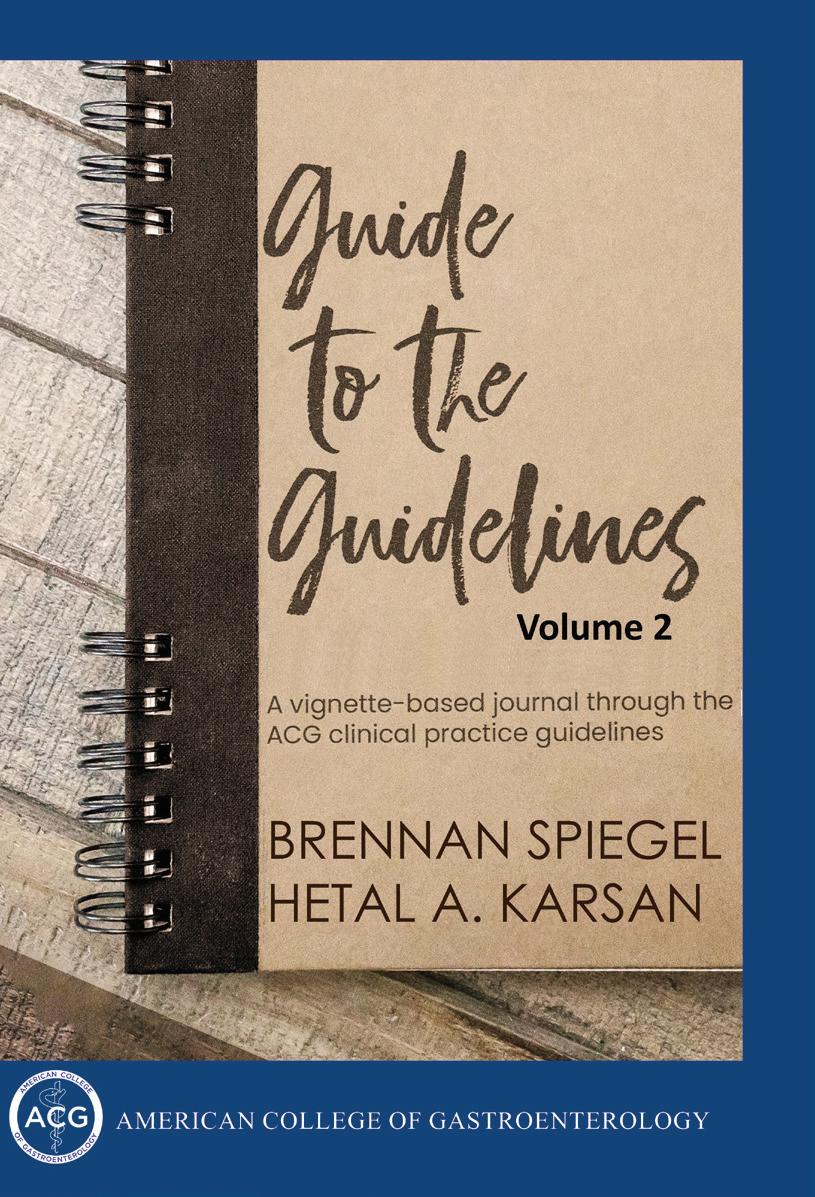
Each chapter of the Guide to the Guidelines series includes carefully selected vignettes designed to illustrate key concepts from the guidelines, followed by a conversation-style discussion written to keep you engaged. The authors highlight noteworthy points and provide multiple-choice questions to test your knowledge of the material.
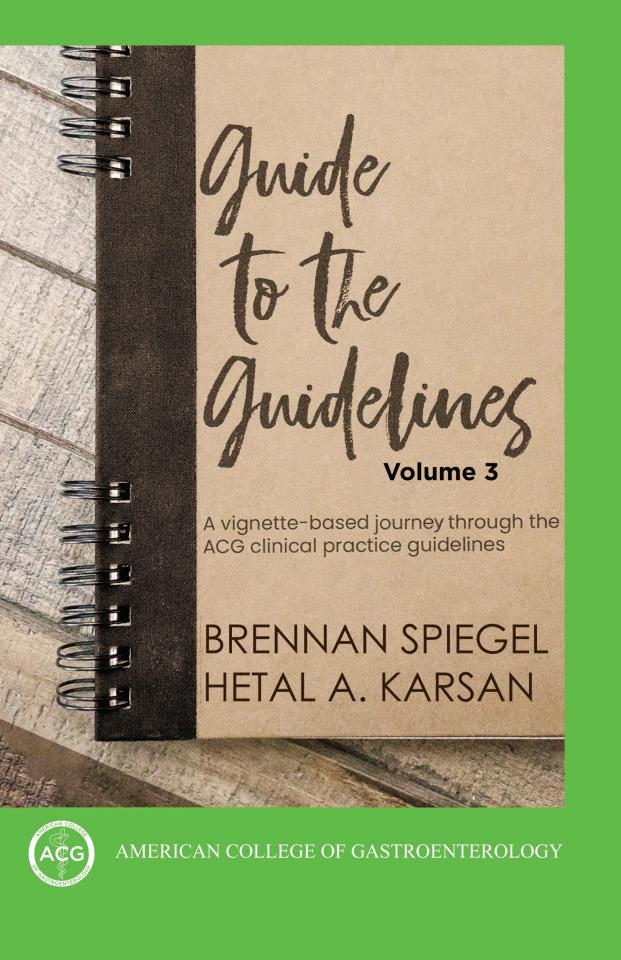
By Ann Bittinger, Esq.
IT’S NO SECRET that physician compensation in gastroenterology is largely based on volume, with the physician’s work relative value units (wRVUs) as the metric for measuring a physician’s productivity. Gastroenterology is very procedure-driven, with endoscopy often accounting for a large percentage of a physician’s work. When Medicare changes the way it values each wRVU for procedures, it can hit gastroenterologists especially hard.
“It’s almost like trying to walk the same mile you walked yesterday but this time with weights around your ankles. Each step is a bit harder, as you travel the same distance.”
Each year, the Centers for Medicare & Medicaid Services (CMS) issues a Medicare Physician Fee Schedule (MPFS). This annual update is where they implement policy changes and assign RVUs to procedure codes. For 2026, CMS issued a new “efficiency adjustment” that cut the wRVU values for many procedural, nontime-based services by 2.5%. This change has a disproportionate negative impact on facility-based gastroenterologists.
In billing for endoscopy, there are two components to reimbursement: a technical component that goes to the facility and a professional component that goes to the physician’s practice. Medicare physician payments are determined using a resourcebased relative value scale, which calculates payments by summing three RVUs— physician work, practice expense (PE), and malpractice insurance—adjusting for geographic cost differences and multiplying by a conversion factor. The PE RVUs will vary depending on whether the service is performed in an office setting (typically higher) or a facility setting (typically lower).
Endoscopies are one of the non-timebased services that CMS is applying a 2.5% “efficiency adjustment” or reduction to wRVUs. Technology and workflow have made it easier to complete procedures in less time, so the downward value adjustment was justified, CMS said. For example, take diagnostic colonoscopy (CPT 45378)—one of the most frequently billed codes by gastroenterologists. In 2025, CMS assigned 3.26 wRVUs to the procedure, before reducing it to 3.18 in 2026. The impact is much like currency deflation—even though the work you did is identical, CMS has devalued it. Then remember, this efficiency adjustment applies to all
endoscopy codes, meaning that even if your overall procedure volume is the same, the RVUs you generate in 2026 will decrease. This puts you at a disadvantage when negotiating your contract and will require you to pivot in some of your strategies.
performing 1,200 colonoscopies per year, that’s 96 fewer wRVUs in 2026 compared to last year. If the gastroenterologist’s conversion factor is $70, that’s $6,720 lost on diagnostic colonoscopies alone, if a physician was on complete productivity-based pay. It’s almost like trying to walk the same mile you walked yesterday but this time with weights around your ankles. Each step is a bit harder, as you travel the same distance.
Put simply: the numbers the employer assumed would be in place no longer reflect reality. The threshold a physician has to reach is no longer attainable.
Each office visit and procedure is given a certain RVU value by CMS, and most physicians have some sort of wRVU-based productivity threshold in their contract. So, the more wRVUs the physician generates, the more they are compensated.
In these models, a physician earns a certain amount of money per wRVU. For example, the contract might say that for each wRVU the physician generates over 8,000 per year, the physician will get $60/wRVU. Because of this compensation model, CMS policy changes can impact payment—even though the physician is doing the same procedure. Recall diagnostic colonoscopy (CPT 45378)—for a gastroenterologist
Physician contracts often have provisions that address which year’s Medicare Physician Fee Schedule the employer’s compensation calculators will use. Many of these paragraphs say that they will use the “then-current” values in the MPFS—meaning that in a multi-year or evergreen contract, the values will be what CMS says they are for that current year. This creates more volatility, subject to CMS policy changes like the efficiency adjustment.
Some, however, lock in years, with language like “wRVUs will be calculated based on the 2025 Medicare Physician Fee Schedules.” If your contract says something like
“If CMS policies cause an increase, the employer can disregard them. However, those sections don’t usually empower physicians to do the same if CMS causes a decrease, as in 2026.”
that, with a 2025 or earlier year for the MPFS, then the changes addressed above will not impact you. Over time, more employers have referenced specific years so they can better anticipate how much their physicians are paid, regardless of CMS changes.
Similarly, employers have also inserted clauses into their employment agreements to allow the employer to disregard CMS changes if they impact physician pay. If CMS policies cause an increase, the employer can disregard them. However, those sections don’t usually empower physicians to do the same if CMS causes a decrease, as in 2026. Gastroenterologists would be prudent to add the following language to their employment agreements: “In the event CMS, through adjustments in each year’s Medicare Physician Fee Schedule, decreases wRVU values for the top 20 CPT codes that Physician regularly bills more than two percent, then Employer shall provide Physician the number of ‘ghost wRVUs’ to reflect the values that were in place the year prior to the change being made. The ghost wRVUs will be added to the actual wRVUs physician generates for purposes of compensation calculations in this Agreement.”
Every gastroenterologist should analyze the compensation section of their employment agreement and their productivity throughout the year. Many employers are happy to share this data on a monthly or quarterly basis, which may include:
• The wRVUs required and the dollar amount you will be paid per wRVU (the conversion factor).
• Monthly wRVU reports with details on the wRVUs generated, from what services on which patients on what days. From this, you can extrapolate your top 20 CPT codes billed in terms of frequency but also the top ones in terms of wRVU values.
• Confirm the values reflect the MPFS that your contract says they must use.
“What is happening to the money that the employer expected would be necessary in 2025, when it set wRVU thresholds or requirements that are unrealistic for 2026? Regardless of which approach you take, remember: if you don’t ask, you don’t get.”
Some additional questions you should consider in your analysis:
• Do you have a wRVU-based bonus threshold where you have guaranteed pay but additionally a bonus if you meet the threshold?
• Worse, does your base pay drop if you don’t meet the threshold? Even worse, are you subject to termination of employment if you fail to meet the threshold?
• Do you perform more endoscopies in your own practice or do you do them at a hospital-owned endoscopy center or separate surgery center? Has this changed?
• What is the percentage of facility/ASC versus in your own physician-practice endoscopy suite?
Take the results of your analysis to the employer and explain that you are doing the same work for less pay than previously agreed to, through no fault of your own and by way of no amendment between the parties. It’s better to analyze and project this now rather than face the repercussions without a plan if you don’t meet your 2026 threshold.
You should have your contract reviewed by a seasoned physician contract attorney, who can help you analyze the contract and develop legal arguments that address the unfair impact of CMS policy changes.
Unfortunately, some gastroenterologists’ employment agreements today leave their compensation completely up to a “Compensation Plan” set entirely by the employer. The employer can pay what it wants, sometimes with very few guideposts. In this case, you may have no leverage in negotiating the employment agreement; the only alternative if the pay
is no longer fair may be to change employers.
It may not be as strong as a breach of contract argument, but you could also try the fairness route: for 2026, many employers budgeted for higher physician compensation than what is now expected. What is happening to the money that the employer expected would be necessary in 2025, when it set wRVU thresholds or requirements that are unrealistic for 2026?
Regardless of which approach you take, remember: if you don’t ask, you don’t get.

By Sara N. Horst, MD, MPH, FACG
TELL US ABOUT YOUR YEARS OF PRACTICE AND PRACTICE SETTING.
I am Sara Horst, a gastroenterologist at Vanderbilt Health specializing in the care of patients with inflammatory bowel disease. I also hold several administrative roles within the Department of Medicine, including Associate Vice Chair of Clinical Affairs, Clinical Health IT Director, Medical Director of our telehealth program, and Medical Director of our specialty pharmacy.
WHAT DO YOU DO “AFTER HOURS” THAT HELPS YOU TO RECHARGE/REFOCUS?
My time outside of work is valuable and limited, so I try to fill three buckets that bring me joy and fulfillment.
THE FIRST BUCKET IS SELF-CARE THROUGH EXERCISE. I’ve tried a lot of different approaches—gym memberships, classes, low and high intensity—and I’ve landed on a stationary bike with the Peloton app. I honestly do some of my best thinking while on the bike, and I have plenty of opinions about the best instructors!
THE SECOND BUCKET IS FAMILY AND FRIEND TIME. My kids are 10 and 14, so I spend a lot of time in the car with them. While I sometimes feel like an unpaid Uber driver, those rides are often a surprisingly good time to connect—whether we’re chatting or just enjoying music together. For instance, my daughter will throw on her “oldies” (songs I loved in high school), which are great to sing along to. I also try to carve out time on weekends to get together with friends. I particularly love card games, and there’s a standing Euchre tournament that I hate to miss.
THE THIRD BUCKET IS GIVING BACK. As a clinician, my goals around helping people have evolved over time. Early in my career, I was focused on becoming the best doctor I could be for my patients—something I’m still very much working toward. But as I’ve gained experience and taken on administrative roles, my sense of how to help others has expanded.
Over the past five to 10 years, I’ve invested a lot of time improving the electronic health record (EHR) experience at my organization. The more I talked with colleagues about it, the more I realized this wasn’t just a work priority—it was a genuine passion. My good friend Jami A. Kinnucan, MD, FACG, at Mayo Clinic Jacksonville and I started brainstorming how to extend EHR efficiencies beyond our own organizational bubbles, and from that, Gastro Digital Health was born. It’s a nonprofit focused on understanding the real-world complexities and needs of clinicians when it comes to their EHR. Our biggest focus right now is education. We’ve built a website with resources, hosted webinars, and are working toward hands-on symposia. We still have a long way to go but, recently, a clinician came up to me and shared how much our work had helped them. That’s all I need to keep going!
Jobs in medicine are demanding and can take a lot. I’ve found that what keeps me going is protecting the time and space to fill the buckets that fuel the rest.
After Hours is a venue for invited members to talk about hobbies and other areas of interest outside of medicine that help them to recharge. Thank you to ACG Trustee Jill K. J. Gaidos, MD, FACG, of Yale Digestive Diseases, for initiating this series, which is a collaboration with the ACG Professionalism Committee.
Dr. Horst is a gastroenterologist at Vanderbilt Health specializing in the care of patients with inflammatory bowel disease. She serves as Chair of the ACG Professionalism Committee.















THE RED JOURNAL recently published a special issue, AI Clinical Applications in GI and Hepatology, to explore this burgeoning area of medicine, as well as a new ACG Clinical Guideline on Hepatic Encephalopathy. A recent Clinician’s Toolbox article in CTG offers guidance on addressing alcohol use disorder in alcohol-associated liver disease, and fellows explore the use of intestinal ultrasound as a noninvasive imaging technique for identifying intestinal polyps in ACGCRJ
[THE AMERICAN JOURNAL OF GASTROENTEROLOGY]


[ACG CASE REPORTS JOURNAL] IS THERE A ROLE FOR INTESTINAL ULTRASOUND IN POLYP DETECTION?


AI CLINICAL APPLICATIONS IN GI AND HEPATOLOGY


The April 2026 issue of AJG showcased the myriad ways artificial intelligence (AI) can be applied in gastroenterology and hepatology, and the questions raised by this rapidly expanding technology. The issue includes innovative therapies and newly developed tools, legal and ethical considerations, implications for training, patient perspectives, and more.
“…We present a collection of studies examining today’s AI capabilities (or lack thereof) across gastroenterology, with a few examples of early groundbreaking work that will transform what it means to be a gastroenterologist,” writes Ryan W. Stidham, MD, MS, author of the issue’s special editorial, “Artificial Intelligence in Clinical Gastroenterology: Promise, Pace, and Proof.”
READ: bit.ly/ajg-ai-gi
LISTEN: bit.ly/ajg-ai-gi-pod
Bajaj, et al
READ: bit.ly/acg-he-2026
LISTEN: bit.ly/acg-he-2026-pod
HIGHLIGHTS: bit.ly/acg-he-2026-highlight (and on page 41)
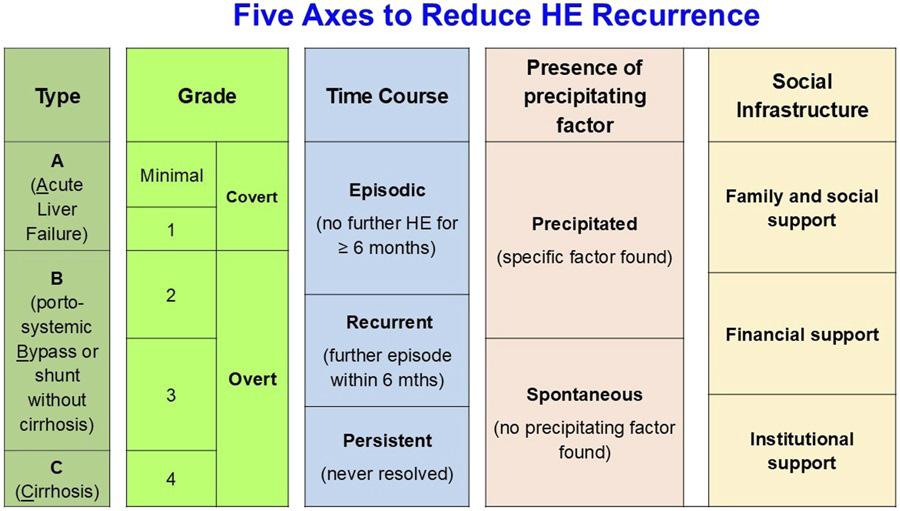
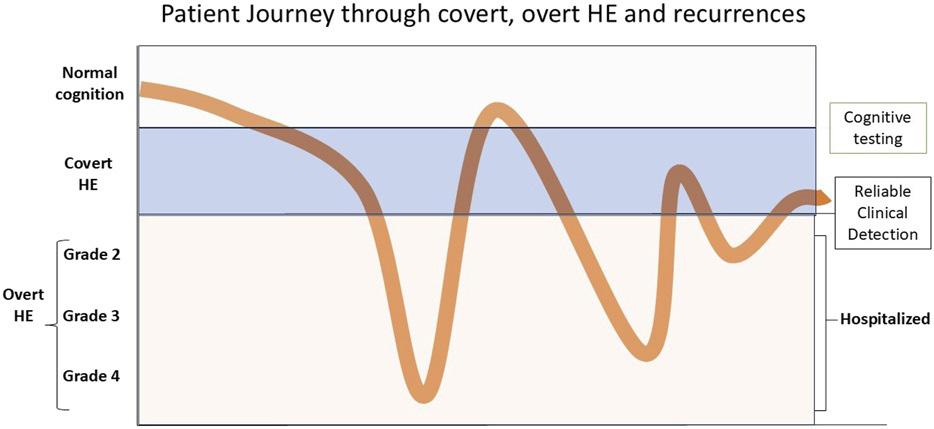
Muralidharan, et al., present a series of pediatric and adult cases in which intestinal ultrasound (IUS) identified benign and malignant intestinal polyps. They emphasize the potential of IUS as a noninvasive imaging technique for identifying intestinal polyps and its utility in the point-of-care setting to help triage care, from endoscopy to surgical referral.
READ: bit.ly/acgcrj-ius
LISTEN: bit.ly/acgcrj-ius-pod
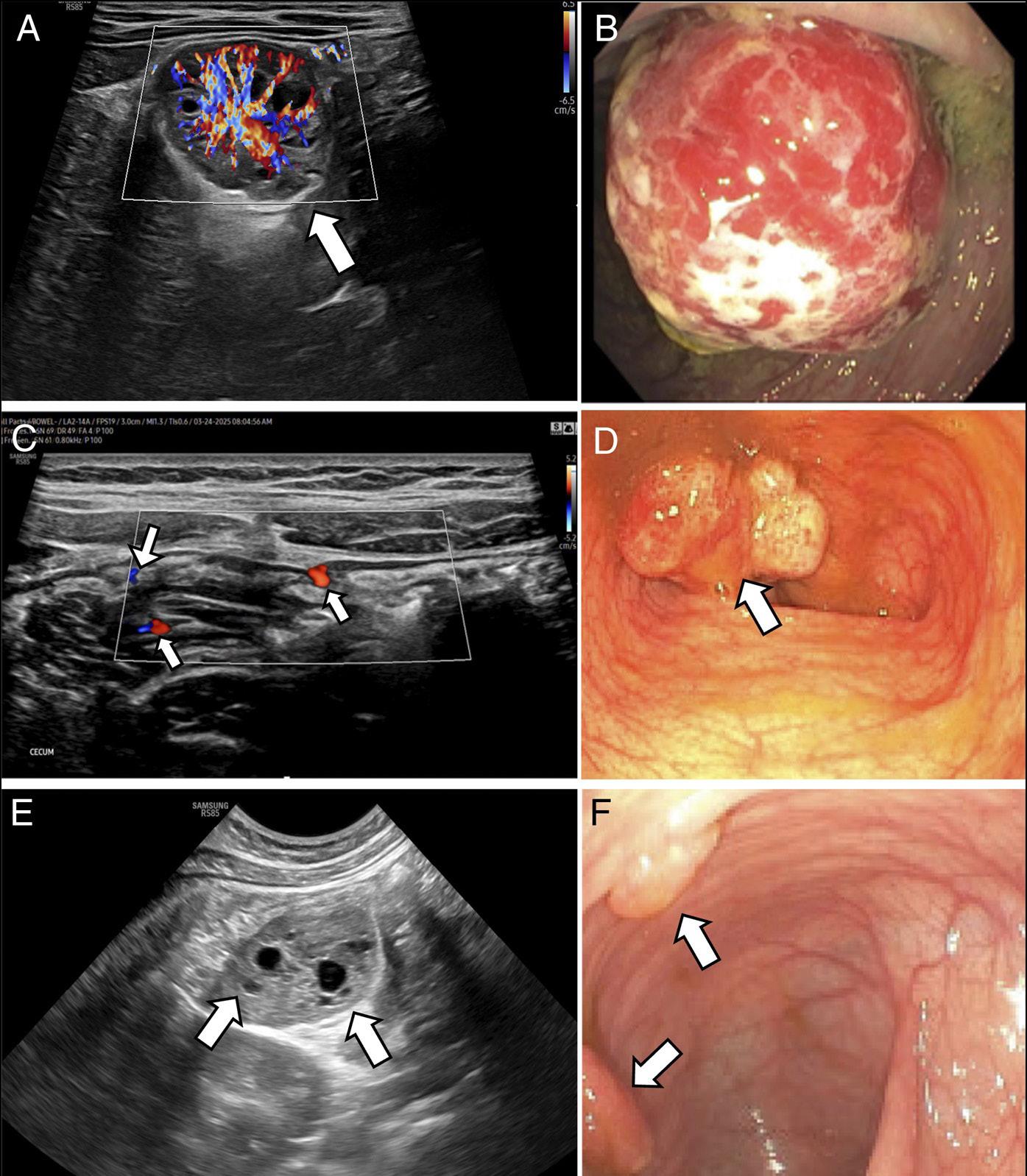
[CLINICAL & TRANSLATIONAL GASTROENTEROLOGY]
CLINICIAN’S TOOLBOX: ADDRESSING ALCOHOL USE DISORDER IN ALCOHOL-ASSOCIATED LIVER DISEASE
Patel and Thakra, et al., offer practical strategies and tools clinicians can implement in routine care to provide holistic, comprehensive treatment for both alcohol use disorder and liver disease in patients with alcoholassociated liver disease.
READ: bit.ly/ctg-box-aud
and Content:
CHE/MHE
CHE/MHE
Inpatient Management
Inpatient Management
• Use single-test strategy over 2-test combination strategy
• Use single-test strategy over 2-test combination strategy
• There is insufficient evidence for/against routine treatment of MHE/CHE for prevention of OHE
• There is insufficient evidence for/against routine treatment of MHE/CHE for prevention of OHE
Psychometric hepatic encephalopathy score (PHES)
Dementia
Prevention
Recurrence



Patients with cirrhosis and one or more of the following features could be prioritized for MHE testing
• Hypoalbuminemia
• Hypoalbuminemia
• Difficulty operating heavy machinery
• Difficulty operating heavy machinery
• CSPH OR presence of portosystemic shunts

Patients with cirrhosis and one or more of the following features could be prioritized for MHE testing
• Commercial drivers/pilots
• Commercial drivers/pilots
• Decompensated cirrhosis
• Non-specific cognitive complaints, difficulty with concentration, impaired quality of life Conditions
• CSPH OR presence of portosystemic shunts
• Decompensated cirrhosis
• Non-specific cognitive complaints, difficulty with concentration, impaired quality of life

Animal naming test (ANT) Stroop EncephalApp
Isolated asterixis without alterations in behavior or alertness is NOT enough to diagnose overt HE”
Isolated asterixis without alterations in behavior or alertness is NOT enough to diagnose overt HE”
In patients with cirrhosis and confusion without any neurological deficits, recommend against routine brain imaging
In patients with cirrhosis and confusion without any neurological deficits, recommend against routine brain imaging
Overt HE: Use lactulose or PEG as an alternative option
Overt HE: Use lactulose or PEG as an alternative option
Add rifaximin to lactulose in acute setting
Add rifaximin to lactulose in acute setting
Recommend against routine testing of serum ammonia to guide treatment
Recommend against routine testing of serum ammonia to guide treatment



Critical flicker frequency (CFF)

Conditions that may exacerbate cognitive impairment in cirrhosis patients Inpatient
Sepsis
Diabetes complications
Uremic encephalopathy
1. Sepsis 2. Diabetes complications 3. Uremic encephalopathy 4. Electrolytes disorders 5. Intoxication/exposure (CO)
Wernicke’s
Hypoxia or hypercapnia
Neurological conditions
Endocrine (thyroid, etc)
Dementia/acute psychosis

In the context of TIPS:
In the context of TIPS:
• Initiate rifaximin 14 days prior to elective TIPS and continue to 6 months in decompensated cirrhosis
• Initiate rifaximin 14 days prior to elective TIPS and continue to 6 months in decompensated cirrhosis
• Embolize extrahepatic collaterals
• Embolize extrahepatic collaterals
Sarcopenia and Nutrition
Sarcopenia and Nutrition
1. Protein intake target of 1.2-1.5 g/kg/day
1. Protein intake target of 1.2-1.5 g/kg/day

2. A late-night snack in patients with cirrhosis
2. A late-night snack in patients with cirrhosis

Use the Bristol stool scale along with bm frequency for titration of lactulose
Use the Bristol stool scale along with bm frequency for titration of lactulose

bm = bowel movement
bm = bowel movement
In cirrhosis with OHE, add rifaximin to prevent recurrence
In cirrhosis with OHE, add rifaximin to prevent recurrence
Add zinc supplementation if recurrence occurred despite being on lactulose and rifaximin
Add zinc supplementation if recurrence occurred despite being on lactulose and rifaximin
CSPH = clinically significant portal hypertension
CHE = covert hepatic encephalopathy
CO = carbon monoxide
CHE = covert hepatic encephalopathy CO = carbon monoxide
MHE = minimal hepatic encephalopathy
OHE = overt Hepatic encephalopathy
CSPH = clinically significant portal hypertension MHE = minimal hepatic encephalopathy OHE = overt Hepatic encephalopathy
DOI: 10.14309/ajg.0000000000003899. READ THE GUIDELINE: bit.ly/acg-he-2026
3. Against protein restriction in patients with HE
3. Against protein restriction in patients with HE 4. Exercise intervention
4. Exercise intervention
In patients with multiple HE and MELD <15, evaluate candidacy for living donor transplant
In patients with multiple HE and MELD <15, evaluate candidacy for living donor transplant
PEG = polyethylene glycol
PEG = polyethylene glycol
Pts = patients
Pts = patients
PTSD = post-traumatic stress disorder
PTSD = post-traumatic stress disorder
Jasmohan S. Bajaj, MD, MS, FACG; Sofia S. Jakab, MD; Arun B. Jesudian, MD, FACG; Robert S. Rahimi, MD; Andres Duarte-Rojo, MD; Po-Hung Chen, MD, PhD, FACG; Robert J. Wong, MD, MS, FACG; Elliot B. Tapper, MD & Puneeta Tandon, MD, MSc(Epi). The American Journal of Gastroenterology
Jasmohan S. Bajaj, MD, MS, FACG; Sofia S. Jakab, MD; Arun B. Jesudian, MD, FACG; Robert S. Rahimi, MD; Andres Duarte-Rojo, MD; Po-Hung Chen, MD, PhD, FACG; Robert J. Wong, MD, MS, FACG; Elliot B. Tapper, MD & Puneeta Tandon, MD, MSc(Epi). The American Journal of Gastroenterology DOI: 10.14309/ajg.0000000000003899.
READ THE GUIDELINE: bit.ly/acg-he-2026

A pilot program for patients with Crohn’s disease or ulcerative colitis
pilot program for patients with Crohn’s disease or ulcerative colitis
pilot program for patients with Crohn’s disease or ulcerative colitis
Do you have IBD patients in need of support from a gut-brain behavioral health professional? A telehealth psychotherapy group could be the right choice for them.
Do you have IBD patients in need of support from a gut-brain behavioral health professional? A telehealth psychotherapy group could be the right choice for them.
Do you have IBD patients in need of support from a gut-brain behavioral health professional? A telehealth psychotherapy group could be the right choice for them.
This program incorporates scientifically supported treatments designed to reduce stress, anxiety, inflammation, and flare frequency in people with Crohn’s disease or ulcerative colitis.
Treatments include:
This program incorporates scientifically supported treatments designed to reduce stress, anxiety, inflammation, and flare frequency in people with Crohn’s disease or ulcerative colitis.
• Cognitive behavioral therapy (CBT)
Treatments include:
This program incorporates scientifically supported treatments designed to reduce stress, anxiety, inflammation, and flare frequency in people with Crohn’s disease or ulcerative colitis.
For more information about this program, including the group style, fees, and schedule, scan the code or visit gipsychology.com/ccf
• Gut-directed hypnotherapy
Treatments include:
• Cognitive behavioral therapy (CBT)
For more information about this program, including the group style, fees, and schedule, scan the code or visit gipsychology.com/ccf
• Gut-directed hypnotherapy
• Cognitive behavioral therapy (CBT)
• Gut-directed hypnotherapy
Sessions are o ered for 75 minutes weekly for a total of eight weeks. Participants must be 18 years or older with a diagnosis of Crohn’s disease or ulcerative colitis (IBD), and access to a stable internet connection.
Sessions are o ered for 75 minutes weekly for a total of eight weeks. Participants must be 18 years or older with a diagnosis of Crohn’s disease or ulcerative colitis (IBD), and access to a stable internet connection.
Conducted in partnership with
Sessions are o ered for 75 minutes weekly for a total of eight weeks. Participants must be 18 years or older with a diagnosis of Crohn’s disease or ulcerative colitis (IBD), and access to a stable internet connection.
Conducted in partnership with
Conducted in partnership with


For more information about this program, including the group style, fees, and schedule, scan the code or visit gipsychology.com/ccf