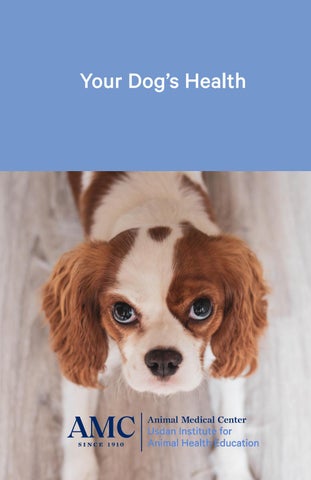
Your Dog’s Health
You & Your Veterinarian Congratulations on your new dog! Whether this is your first dog or you’ve always had a canine companion, this booklet will give you useful information on how to care for your dog and meet all of your pet’s medical needs. The key to making sure that your dog has a long, healthy, and happy life is to see your veterinarian on a regular basis. Visits to the veterinarian should start as soon as you get your dog and continue so that your dog is seen at least once a year. This allows your veterinarian to notice any changes that happen from year to year, catch issues early, and keep your dog healthy. Puppies need several vaccines to protect them from disease and also need to be checked regularly for worms and parasites. Your adult dog also needs to be kept up to date on vaccines, parasite checks, and monitoring of any health issues that may be discovered. If you adopt or buy a dog from another part of the country or internationally, be sure to tell your veterinarian so they can check for diseases or illnesses that are common in those areas. Bring any records you have from the breeder or rescue organization to your first appointment so your veterinarian can review them.
The Routine Exam Your veterinarian will give your dog a full “nose-to-tail” examination, which includes: • • • •
• •
Chest: Your veterinarian will listen to your dog’s heart and lungs to check if their heartbeat and breathing sound normal and healthy. Abdomen: Checking the abdomen allows your veterinarian to see if your dog is in pain or has an unusual reaction to being touched, which could be a sign of illness. Skin and coat: Some illnesses cause dogs to lose their hair or fur, or to make it less shiny than usual. Eyes: Your veterinarian will check for any visible signs of illness like redness, swelling, cloudiness, or discharge. They may also shine a light in your dog’s eyes to make sure their eyes respond properly to the light. Ears: Your veterinarian will check for any signs of ear infections or illness including swelling, bad odors, lumps, or discharge. Mouth: Your veterinarian will examine the teeth for tartar, tooth fractures, oral masses, and gingivitis. 1
Spaying & Neutering Spay is the colloquial term for ovariohysterectomy, which is the surgical removal of female reproductive organs. Neuter is the surgical removal of male reproductive organs or testicles. Both procedures have the same result: they prevent unwanted pregnancies. These procedures have health benefits beyond preventing unexpected litters of puppies. The Animal Medical Center staff gives the following seven reasons to “fix” your pet: 1. Prevent pyometra, a common life-threatening infection of the uterus in unspayed dogs. 2. Eliminate the risk of testicular, uterine, and ovarian cancer. 3. Decrease the risk of prostatitis, a bacterial infection of the prostate. 4. Decrease aggressive behavior, especially in male dogs, helping to prevent dog bite injuries. 5. Decrease the risk of breast cancer in females, especially if spayed before six months of age. 6. Avoid marking or spraying, i.e., male dog urine on your walls, drapes, or bed. 7. Save approximately 4 million lives annually. These lives belong to unwanted dogs and cats euthanized in America’s animal shelters.
2
Protection through Vaccination Vaccines are an easy way to prevent your dog from getting sick with serious, sometimes fatal, diseases. Groomers and kennels require vaccinations to prevent the spread of diseases in close quarters. Your veterinarian will discuss with you which vaccines your dog needs and how often to get them. Newborn puppies are protected through antibodies shared with them through their mother’s milk. Your puppy needs vaccinations to develop their own immunity. Your dog will need to get vaccines throughout their life, so make sure you keep track of when your dog is due for their vaccines. Always follow your veterinarian’s advice and don’t skip doses. BORDETELLA: This bacteria causes “kennel cough” and affects the respiratory system. It is spread in places where dogs are in close contact like kennels, groomers, and dog shows. Puppies are at the highest risk, but adult dogs can get sick too.
LYME DISEASE: A tick-borne bacteria that causes inflammation of the joints and lameness. Some dogs may develop kidney problems. PARAINFLUENZA: A highly contagious, viral disease that attacks the respiratory system. It is spread through contact with infected dogs or through the air.
DISTEMPER: A very contagious and often fatal virus that affects a dog’s respiratory, gastrointestinal, and nervous systems. The virus spreads through the air and vaccination is the only way to prevent it.
PARVOVIRUS: A very contagious viral infection that affects a dog’s gastrointestinal tract and immune system and can cause sudden death. It’s spread by contact with the infected stool of other dogs, contaminated environments or objects, or even people with the virus on them. This infection can be life-threatening in puppies.
HEPATITIS: A disease caused by a virus that affects the liver and cells lining the blood vessels. It can cause a high fever, swelling, and bleeding. LEPTOSPIROSIS: A bacteria that can cause permanent kidney, and liver damage. It spreads through contact with nasal secretions, urine, or saliva. Rats, mice, squirrels, and other rodents are common carriers of the bacteria.
RABIES: A serious, always fatal viral infection that affects a dog’s central nervous system. It’s usually transmitted through the bite of an infected animal, but can also be spread when an infected animal’s saliva comes in contact with broken skin. Rabies vaccinations are required in most states. 3
Guarding Against Parasites Your dog can get parasites from many different sources, including contact with infected dogs, or from a contaminated environment. External parasites live on your dog’s body and can cause scratching, head-shaking, biting, or red and irritated skin. Your veterinarian can usually diagnose these by finding them on your dog or doing various skin tests. The most common external parasites are: •
Ear mites
•
Ticks
•
Fleas
•
Lice
•
Mange mites
Most internal parasites live in a dog’s intestines and are diagnosed through an examination of your dog’s feces. These parasites often cause diarrhea, but they also may cause vomiting and weight loss. Some common internal parasites are:
•
Coccidia
•
Roundworms
•
Giardia
•
Tapeworms
•
Hookworms
•
Whipworms
Fleas & Ticks The best way to protect your dog is with year-round use of a veterinarianapproved preventative product. There are topical treatments, collars, and pills that can keep fleas and ticks from harming your dog and infesting your home. Your veterinarian can recommend the product that is best for your dog. Even if your dog is on preventative medication, be sure to inspect your dog and yourself for ticks after walks through the woods, fields, or visits to the dog park.
Heartworm Transmitted by the bite of a mosquito, heartworms are extremely dangerous and can be fatal. Unlike intestinal parasites, heartworms live in a dog’s heart or near the heart in major blood vessels. Heartworm and other parasites are a risk no matter where you live. However, they can easily be avoided with a preventative medication or treatment prescribed by your veterinarian. Be sure to give the medication or treatment as directed and on time. If you miss a dose, contact your veterinarian. 4
Dental DOs and DON’Ts Dental health is as important for dogs as it is for humans. Here’s what to do and what not to do to keep your dog’s teeth and gums healthy.
Do: Daily Brushing Brush your dog’s teeth daily with a soft-bristled toothbrush and pet toothpaste
Don’t: Bones & Tennis Balls Even nylon “bones” can fracture your dog’s teeth and tennis ball fur is very abrasive
Do: Check the VOHC The Veterinary Oral Health Council (VOHC) has a list of recommended products for pet dental health
Don’t: Tolerate Bad Breath Bad breath isn’t normal and can be a sign of periodontal disease
Do: Regular Dental Visits Schedule appointments for complete dental cleanings for your dog
5
Nutrition & Weight Management Dogs need a high-quality balanced diet to ensure they’re getting the vitamins and minerals their body needs. New pet food diets and trends come and go, so be sure to ask your veterinarian before starting your dog on a new diet. If you’re wondering what to feed your new dog, ask your veterinarian for a recommendation.
Diet & Exercise The Association for Pet Obesity Prevention estimates that 56% of dogs are overweight or obese. In animals, fat accumulates around internal organs before it’s visible from the outside. That means by the time you notice your dog is getting chubby, their health could already be negatively affected. If your dog does become overweight or obese, talk with your veterinarian about ways to get your dog back to a healthy weight. Dogs don’t need nearly as many calories as humans do. Though the average woman needs 2000 calories a day, a 20-pound dog only needs 300-400 calories a day. Being overweight or obese doesn’t just affect how your dog looks, it also increases their risk for many health problems including: • • • • • • • •
Cancer Cranial cruciate ligament rupture Decreased life expectancy by up to 2.5 years Heart and respiratory disease High blood pressure Kidney disease Type 2 diabetes and insulin resistance Osteoarthritis
Just like you, your dog needs regular, daily exercise. You should aim to give your dog at least two 15-minute walks a day, and more if possible. Exercise gives your dog physical and mental stimulation and is important for their health. If you’re struggling to find the time to walk your dog, enlist a trusted dog walker who can give your dog the exercise they need. You can also try other ways to get your dog exercise, such as agility, games, and physical fitness exercises. Ask your veterinarian for some recommendations and always check with them before starting your dog on an exercise plan. 6
7
Dog Park Safety If you’ve recently become a dog owner, you may be excited to take your dog to the local dog park. Before you go, review this information to make sure you’re both prepared to have a fun and safe time. By following these tips, you’ll be sure to win some canine and human friends!
Cuts, Scratches & Exposure • • •
Some dogs may like to play rougher than others, but if other dogs are acting aggressively, keep your dog away. Avoid going near fallen branches, trash, or discarded materials. Don’t bring your dog to the park when chemicals, like fertilizers or pesticides, have been recently used.
Fights & Bites • • • • • •
Train your dog to come when called, so you can call them away from a potentially dangerous situation. Keep your eyes on your dog (not your phone) at all times. Leave your sick dog home: Sick dogs are more prone to biting. Spay and neuter your dog. Unneutered male dogs are more often involved in bite incidents and females in heat can attract unwanted attention from male dogs. Dogs often show subtle signs before getting aggressive. Learn your dog’s cues by observing their body language at home and in public. Remember that a wagging tail doesn’t always mean a dog is happy! Don’t enter the dog park when another dog is in between gates or guarding the entrance. A dog that is “rushed” by other dogs may feel threatened and respond aggressively.
Fleas, Ticks & Parasites • • •
Make sure your dog is protected all year with a preventative medication or treatment. Even if your dog park isn’t covered in grass, fleas and ticks may still be present. Always pick up after your dog. Parasites and viruses are easily transmitted through dog feces.
Hydration • Bring water and a bowl with you to keep your dog hydrated and prevent overheating. • Keep your dog away from standing pools of water (like ponds or pools filled with water) since these can hold parasites or bacteria. • If your dog shows signs of overheating, such as excessive panting, vomiting, or sluggishness, go to the nearest veterinary ER. 8
Canine Body Language Signs a dog may be happy or calm Calm Posture
A calm or happy dog may have their ears and its mouth slightly open. The dog’s body will be in a relaxed position, such as sitting or lying down. You may also see the following behaviors:
Signs a dog may be nervous or fearful Nervous Posture
Play Bow
Expose Belly
Lie Down
Pace
A nervous or fearful dog may turn their head away, tuck their tail between their legs, flatten back their ears, and crouch. You may also see the following behaviors:
Shake Off
Yawn
Signs a dog may be upset or aggressive Aggressive Posture
An upset or aggressive dog may show their teeth, growl, and bark. The dog may narrow their eyes and hold their body very still. You may also see the following behaviors:
9
Bark
Lunge
Bite
Avoiding Household Emergencies The world is full of items that can be dangerous for our dogs. You can help prevent hazardous situations by pet-proofing your home, keeping a tidy living space, and familiarizing yourself with common household items that are dangerous to your dog.
Pet-Proofing Your Home Keep your home safe by reviewing the list of common dog toxins below and avoiding the following situations around your house: • • • •
Cabinets and drawers that are easily opened Garbage cans and laundry hampers without lids Decorative items that can be knocked over Loose cords and wires, including cords on curtains and blinds
Signs Your Pet May Have Ingested a Foreign Object Refusing to eat • Drooling excessively Vomiting repeatedly • Change in behavior (either Dry heaving/gagging very tired or very active) Coughing • Diarrhea Difficulty breathing or swallowing If you think your dog has ingested something dangerous, go to your local veterinary emergency room, or call one of the numbers below (fee applies):
• • • • •
ASPCA Poison Control Center: 1-888-426-4435 Pet Poison Helpline: 1-800-213-6680
TOP 10 HUMAN MEDICATIONS THAT ARE TOXIC TO DOGS
TOP 10 DOG TOXINS 1. 2. 3. 4. 5. 6. 7. 8. 9. 10.
OTC human medications Human prescription drugs Food (xylitol, grapes, etc.) Chocolate Veterinary Products Household items Rodent Killers (rodenticide) Insecticide Plants Garden Products (i.e. fertilizer)
1. 2. 3. 4. 5. 6. 7. 8. 9. 10. 10
NSAIDs Acetaminophen Antidepressants ADD/ADHD medications Benzodiazepines and sleep aids Birth control Ace inhibitors Beta-blockers Thyroid hormones Cholesterol lowering agents
Medication Safety Medications are among the top items that dogs accidentally ingest. Be sure to store all medications out of reach and behind a pet-proof door. Other tips to keep in mind: 1. Childproof doesn’t mean pet-proof: Your dog might be able to more easily open a medication bottle than you can using their teeth and nails. Don’t count on a safety lid to protect your dog or think that you can leave medications out just because they have safety lids. 2. Pet proof storage: Your dresser, nightstand, and bathroom counter are all places your dog can access. Keep your medications in a cabinet with a tight latch. Consider using child-proof cabinet mechanisms found at the hardware store to keep items out of reach. 3. Don’t shake, rattle, or roll: Shaking a pill bottle to get your dog’s attention or giving your dog a treat after they come for the rattle of pills will make your dog even more interested in the pill bottles. 4. Team approach to toxicity: If you have more than one pet, they may take a team approach to getting into the medication stash. For example, the pill bottles on your dresser are knocked down by your agile cat and find their way into the jaws of your clever dog. Once the bottle is open, everyone can help themselves to the surprise inside. 5. Travel inspection: When traveling, friends and family may not have their homes pet-proofed or pet-friendly, even if they have pets of their own. Take a quick look for any medication that your dog could easily reach or limit your dog to a safe area if there are any concerns that your dog may be able to access dangerous items. 6. Keep important phone numbers handy: • Animal Medical Center Emergency Room, 212-838-8100 • Pet Poison Helpline, 800-213-6680 (fee applies) • ASPCA Animal Poison Control, 888-426-4435 (fee applies)
11
Signs of Illness Even the healthiest and most-loved dogs may become sick at some point in their lives. Often a change in their behavior is one of the first signs that something is wrong. If your dog shows any of these signs, contact your veterinarian: • Loss of appetite for more than one day • Diarrhea • Constipation • Excessive panting • Constant scratching or biting • Biting or aggressive behavior in a normally calm dog • Listlessness • Hiding • Bad breath • Lumps under the skin • Dull hair coat • Anything that is unusual for your dog
Signs that your dog needs immediate attention: • Unable to have a bowel movement or urinate, but continues to try (straining) • Bloody urine • Bloody stool • Vomit that contains blood or unusual contents • Noisy breathing • Blue tongue and difficulty breathing • Gasping for breath • Scratching or biting that causes the dog to hurt themselves • Persistent vomiting or diarrhea
12
13
The Usdan Institute for Animal Health Education at the Animal Medical Center is the leading provider of pet health information. We aim to inform and empower pet owners and to share information with the public. With our staff of over 100 doctors and the knowledge gained from more than 110 years of experience, we are uniquely positioned to deliver the best and most up-to-date information for all your pet health needs. If you have a question about pet health, we have the answer. www.amcny.org/usdaninstitute