LEADERSHIP, INNOVATION, AND THE NEXT GENERATION IS YOUR LEADERSHIP PIPELINE READY FOR 2030?
At Citi, we pride ourselves on being a reliable partner for our clients, offering financial services that help empower growth and contribute to economic progress.
Citi’s global network stands as a fundamental asset, with a physical presence in more than 90 markets and a network serving clients in over 180 countries and jurisdictions.
For over 200 years, we’ve navigated all types of market environments, positioning us to help build and support the world’s trade corridors.
We are honored to be a strong supporter of the American Chamber of Commerce.
AI at Every Scale.
Enterprise-grade HDD solutions ready for AI workloads from hyperscale data centers to edge deployments.
AI-READY HARD DRIVES
Student Story - Watcharakorn (Tone) Thammasiri
Building Skills, Confidence, and Careers: Designing Opportunities for Young Professionals to Grow in the Workplace
Thailand's Executive Talent Crisis: Is Your Leadership Pipeline Ready for 2030? Freedom 250: Strengthening Partnerships and Future Leaders
the Future of Healthcare: Leadership, Innovation, and the Next Generation Thailand’s Tariff Classification: Key Risks, Possible Penalties, and Available Incentives
PDPC Regulation on Verification and Certification of BCR B.E. 2568
BOI Tightens Foreign Shareholding and Land Ownership Rules: What Investors Need to Know in 2026
SMEs at the Crossroads: Finance, Policy, and Thailand’s Economic Future
Getting Your U.S. Student Visa
Danieli Factory Tour
Shifting Global Dynamics: What It Means for Thailand’s Automotive Industry
Engineers Use the Newest Technology to Combat an Old Problem
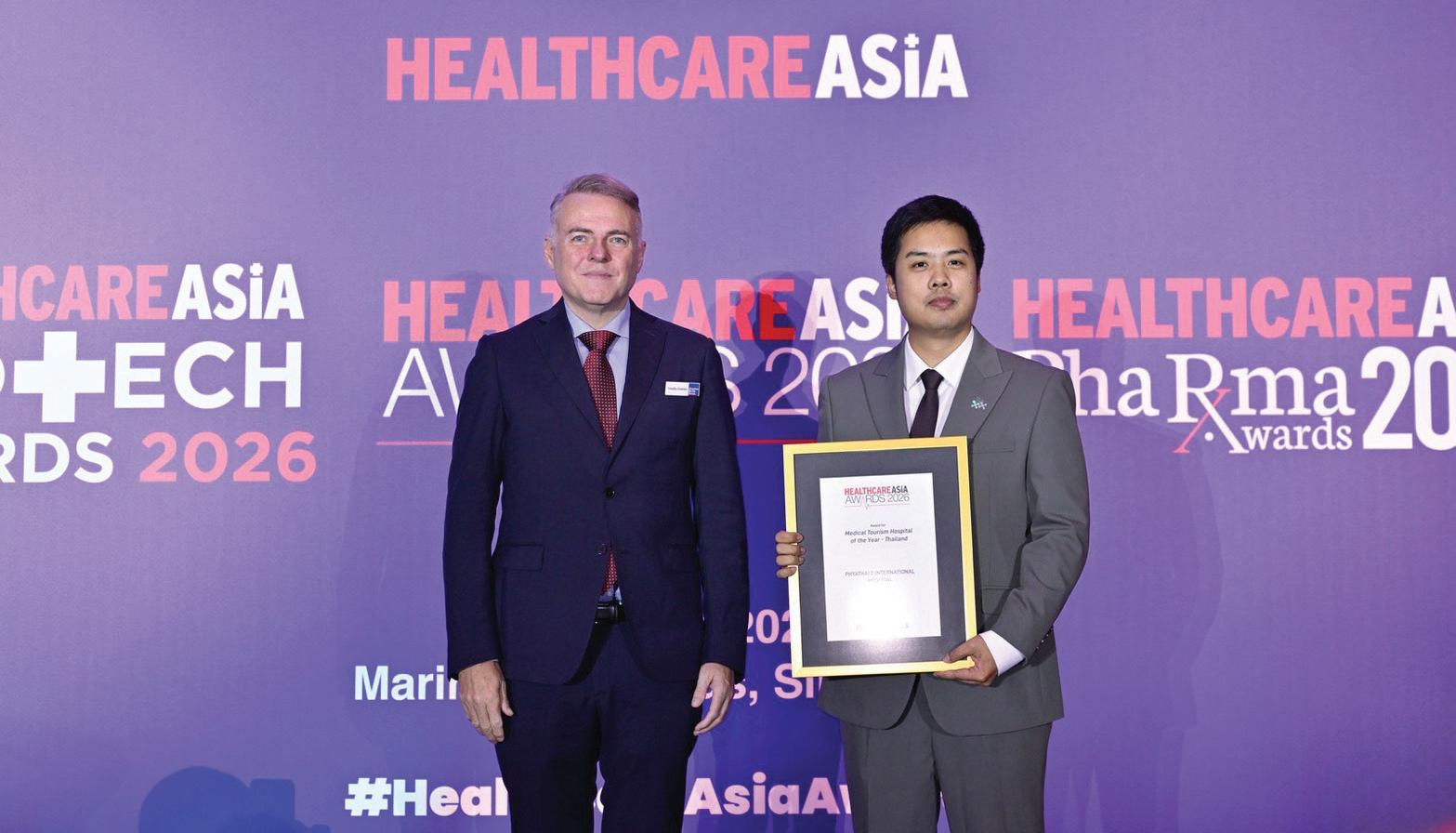
Phyathai 2 International Hospital Wins Medical Tourism Hospital of the YearThailand 2026
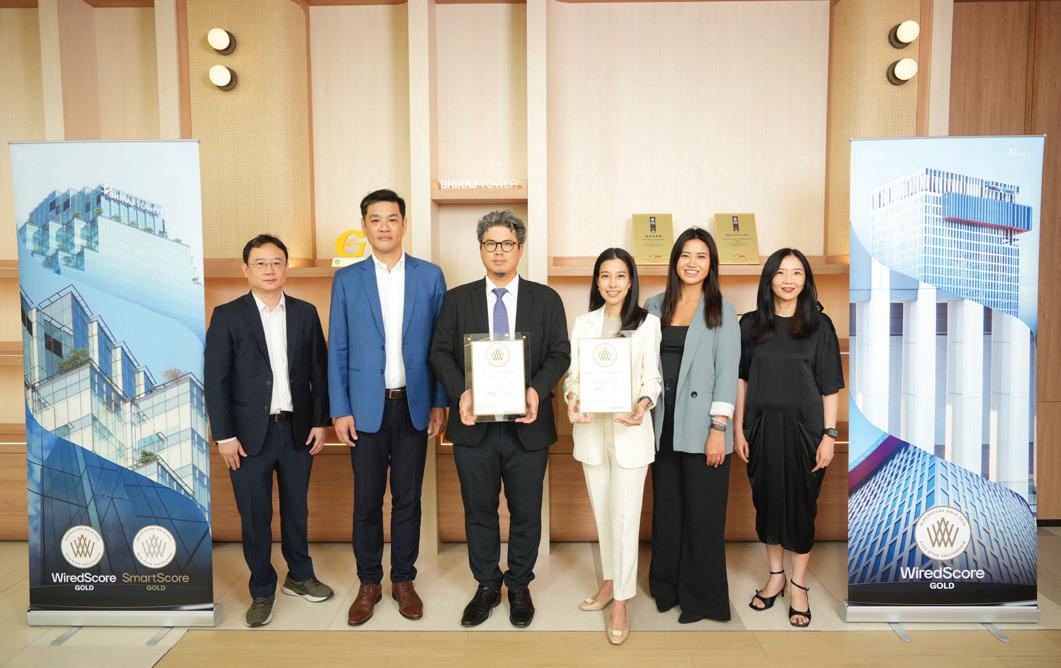
BHIRAJ BURI GROUP Achieves WiredScore and SmartScore Gold Certifications
Suntory PepsiCo Thailand and PepsiCo Thailand Transform “Waste” into “Value” Through the “Waste Nothing” Campaign
Welcome New Members
Affinity Program
AMCHAM BOARD OF GOVERNORS 2026
PRESIDENT
Chatit Huayhongtong, Chevron
VICE PRESIDENTS
Sondra Sutton Phung, Ford Motor Company
Raymond Deidrick, Ingredion Incorporated
Norachet Saetang, Seagate Technology
Philip Bernard, Western Digital
TREASURER
Winnie Wong, Mastercard
SECRETARY
Ririnda Tangtatswas, Betagro Group
GOVERNORS
Wiyada Srinaganand, 3M Thailand
Narumon Chivangkur, Citibank
Sasathorn Phaspinyo, FedEx Thailand
Anothai Wettayakorn, IBM Thailand
Charles Blocker, IC Partners
Asama (Prae) Dumrongmongcolgul, Meta
Idara Huang, Mondelez International
Mark Kuo, Pfizer Thailand
EXECUTIVE DIRECTOR
Heidi Gallant
T-AB Magazine is a publication by The American Chamber
101 True Digital Park, Griffin Building, Level 12A, Unit No.12A-06, Sukhumvit Road, Bangchak, Phra Khanong, Bangkok 10260 Tel: +66 (0)2 119 3350 www.amchamthailand.com
Editorial Advisory Board: Heidi Gallant
Editors: Varsha Wadhwani Phenphitchaya Chapanon
Any opinions expressed in articles in this magazine do not necessarily reflect the views of the Chamber.
T-AB Magazine welcomes contributions from AMCHAM members. Articles may be reproduced with acknowledgement, except those taken from other sources.
Letter from the Executive Director
Dear Members,
One of the most encouraging things about our work at AMCHAM is the opportunity to see potential grow into confidence, and learning turn into real opportunity. This
month, as Thai-American Business focuses on workforce development, I find myself thinking not only about policies, business needs, and economic priorities, but also about people—especially young people preparing to take their next steps into the professional world.
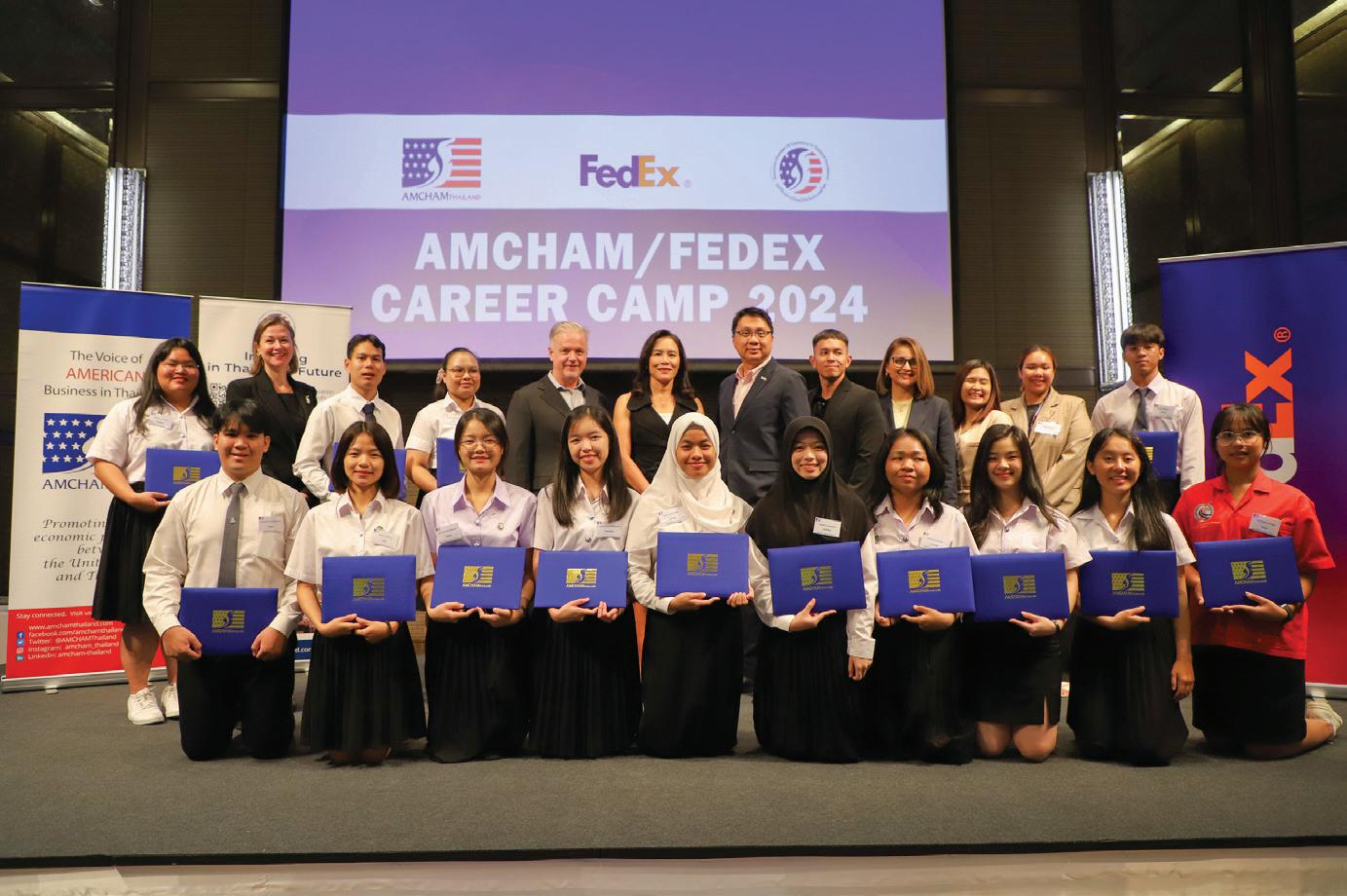
This theme feels especially meaningful for AMCHAM at this time of year. This month we’re hosting the AMCHAM Residential Academy, a 2.5 day program for mid-senior level executives from member companies with a focus on professional development and executive network building. In June, we are looking forward to welcoming our graduating scholarship students to Career Camp, where they will prepare for the transition from university to the workplace. It is always a special moment to see these students at this stage of their journey. Many have worked incredibly hard to reach this point, and it is a privilege for us to support them as they begin imagining what comes next. Career Camp is not only about practical preparation—it is also about encouragement, exposure, and helping students see that their aspirations are within reach.
As the business community continues to discuss the future of work, we need to remember the importance of investing in the next generation with intention and care. May’s T-AB Magazine offers useful perspectives on how employers, educators, and institutions can work together to strengthen Thailand’s workforce for the future. Most importantly, I hope it reminds us that behind every workforce conversation are real people whose futures can be shaped by the opportunities we create today.
Sincerely,
Heidi Gallant Executive Director
of Commerce in Thailand.
Building Skills, Confidence, and Careers: Designing Opportunities for Young Professionals to Grow in the Workplace
By Samantha Marion, Asian Institute of Hospitality & Management
Young professionals are expected to take ownership of their careers and develop the skills needed in an ever-evolving workplace. This can be strengthened by applying an active learning approach and encouraging reflection as part of daily work.
Research in learning science suggests that experience, such as practice, discussion, and teaching others, can increase outcomes dramatically compared to lecture-based learning (Freeman et al., 2014). This has direct implications for organizations that seek to develop those newly entering the workplace. Active learning should be embedded into the learner-centered experience. Rather than focusing solely on theoretical knowledge, students must be placed in realworld scenarios where they must apply concepts, make decisions, and reflect on the outcomes. This approach accelerates skill development and
builds the confidence required to operate in professional environments. When individuals are actively engaged in their learning, they are better able to articulate what they know, demonstrate what they can do, and adapt to new challenges.
Building Skills Through Experience
The ability to speak about skills with clarity is one way to stand out in the workplace. Earlycareer professionals are often observers in meetings rather than contributors, meaning that they attend, receive instructions, and absorb information, but are given limited opportunities to practice. In this situation they will struggle, not because they lack potential, but because they lack applied experience. To create opportunities for active learning in the workplace, organizations should assign ownership of small projects, encourage participation in cross-functional
discussions, or ask individuals to present ideas and recommendations on things they are passionate about. Over time, this allows movement from, “I understand this concept,” to confidently stating, “I have taken this action and here is the impact.”
Building Confidence Through Practice
Confidence is not guaranteed because of a certain amount of time spent in a role or organization, but can be developed intentionally through opportunities, feedback, and reflection. When young professionals are given opportunities to contribute, test ideas, and learn from outcomes, they develop a stronger sense of self-awareness. They begin to understand not only what they can do, but how they create value.
One framework that supports a young leader’s journey is Gallup’s CliftonStrengths, developed by psychologist Donald O. Clifton, which encourages individuals to focus on what they naturally do best rather than what they lack. According to Gallup, strengths are built when talent is combined with knowledge, skills, and practice, transforming natural patterns of thinking, feeling, and behaving into consistent high performance capabilities (Gallup, “How to Develop and Improve Your Strengths”, n.d.). Instead of trying to become wellrounded in every area, early-career professionals should focus on becoming exceptional in areas to which they already have a natural tendency.
This strengths-based approach in the workplace focuses conversations on investing in areas an individual is naturally best at, rather than on improving weaknesses. This perspective is particularly empowering for young leaders, encouraging them to communicate their skills,
confidence, and career aspirations in a way that is natural to them, impactful for the organization, and clear enough for their direct managers to support.
Encouraging Young Professionals to Share Their Story
Confidence is often thought of as a personality trait, when it is more closely connected to our level of self-awareness. Gallup’s CliftonStrengths encourages individuals to name, claim and aim their unique value as how you communicate your impact often matters just as much as what you have accomplished. Compelling professional stories typically follow a simple structure: challenge, action, and result. For example, instead of saying that you “improved a process,” you can explain the situation you encountered, the steps you took to address it, and the measurable outcome. This approach not only highlights your problem-solving abilities but also illustrates your thought process and initiative.
Storytelling is particularly effective when discussing career growth and future potential. Employers and leaders are not just interested in what you have achieved; they want to see how you have evolved in your mindset and in specific areas. For example, instead of saying, “I am improving my communication skills,” a young professional who has engaged in active learning might say, “I led a cross-functional discussion to align stakeholders on a project, which improved decision-making speed and clarity.”
Articulating Career Direction Through a Strengths Lens
The most transformative aspect of Gallup’s CliftonStrengths is its ability to shape how young professionals think about their careers. Rather
than asking, “What should I fix to succeed?” the question becomes, “Where can my strengths create the greatest impact?”
For example, a young professional with strong relationship-building talents may gravitate toward roles that involve stakeholder engagement, team leadership, or client management, framing their ambitions around where they naturally excel. Organizations that adopt a strengthsbased approach have been shown to see up to 23% higher employee engagement, 29% higher profit, and 72% lower turnover (Gallup, State of the Global Workplace, n.d.). These outcomes can be driven in part by employees who are working in roles that align with their strengths, bringing more energy, clarity, and purpose to their work. By articulating how their strengths connect to future roles, they make it easier for managers and leaders to support their development and provide relevant opportunities.
Designing Organizational Culture for Leadership Development
While all professionals must take ownership of their individual growth, leaders and organizations create the conditions that make that growth possible. This requires a mindset shift from viewing learning and development as a separate activity to work and instead embedding it within daily workplace habits.
To practically embed this into your workplace, organizations could:
• Design roles that include direct ownership, not just support tasks.
• Create environments for regular experimentation and continuous feedback.
• Encourage reflection through regular checkins and coaching conversations.
• Provide opportunities for individuals to present, teach, and share insights before promoting them to elevated roles where they will manage others fully.
These approaches do not require significant additional resources and contribute to the intention of building more capable team members that are more confident in their skills and career journey.
References
• Gallup. State of the Global Workplace.
• Gallup. “How to Develop and Improve Your Strengths.”
• Peter C. Brown, Henry L. Roediger III, & Mark A. McDaniel. Make It Stick: The Science of Successful Learning.
• Scott Freeman et al. “Active Learning Increases Student Performance in Science, Engineering, and Mathematics.”
Samantha Marion is the Director of Global Partnerships at AIHM and the AMCHAM Human Capital Committee Co-Chair. She focuses on advancing talent pathways through strength-based skill development and empowering individuals to build personal brands that support long-term career growth and executive presence.
Thailand's Executive Talent Crisis: Is Your Leadership Pipeline Ready for 2030?
By Richard Jackson, JacksonGrant
Thailand's labor market is facing a set of challenges that are unlike those of any other economy in the region. A rapidly ageing population, a widening digital skills gap, and intensifying competition for senior talent are converging at a moment when organizations can least afford to be unprepared.
Thailand Is Facing a Super-Ageing Population
Thailand is ageing rapidly, and what makes this particularly significant is that it is one of the only super-ageing populations in the world that is not a developed economy. Countries like Japan face the same demographic trajectory, but decades of economic development have given them the financial depth, healthcare infrastructure, and social systems to absorb it. Thailand is navigating that same curve from a fundamentally different position, which means the pressure falls more heavily on employers to build the leadership capability the country needs rather than waiting for external conditions to improve.
For business leaders, the opportunity is in getting ahead of it. The pool of mid-career professionals moving into executive roles is narrowing, graduate pathways into leadership are shifting as automation restructures entry-level work, and experienced professionals are increasingly
selective about where they invest their careers. Organizations that respond by building structured leadership development programs, investing in succession planning, and creating clear pathways into senior roles will be far better positioned to compete for the talent that does exist. Those that continue to treat pipeline development as a future consideration will find it progressively harder and more expensive to solve.
AI Adoption: Volume Without Depth
Thailand ranks among the top countries globally for AI adoption, with 72% of Thai office workers using AI in their daily work. That is an impressive figure, and one that reflects genuine enthusiasm across the workforce. However, volume of use does not equal depth of impact. Only around 16% of Thai workers are considered full-potential AI users, meaning those applying AI in ways that genuinely improve productivity and add business value.
This gap between adoption and effectiveness is one of the most important findings in our research. Digital fluency is not simply about having access to tools. It requires training, it requires context, and it requires leadership that understands how to integrate AI into real business decisions. A 35-yearold professional today has another two to three decades in the workforce. AI will be a fundamental part of how they do their job. The question of who is equipping them with those skills, beyond the graduate cohort, remains largely unanswered.
Government Policy Is Driving the Talent Agenda
Government policy will play a decisive role in shaping Thailand's workforce by 2030. Thailand 4.0 has set an ambitious agenda around advanced industries including semiconductors, data centers, and AI-enabled services. The government
has committed to producing more than 80,000 semiconductor specialists within five years, yet the country currently faces a shortfall of around 80,000 AI professionals. The gap between ambition and pipeline is real.
For executive teams, the policy landscape adds several layers of complexity that cannot be ignored:
• Education and STEM investment must improve at scale if Thailand is to build the domestic talent pipelines its industries need.
• English and Chinese language capability are increasingly essential, particularly as the volume of regional and Chinese-owned businesses operating in Thailand continues to grow.
• Retirement age policy needs serious discussion. A contracting workforce that exits at 60 creates compounding pressure on both talent supply and the tax base.
• AI regulation and data privacy legislation are advancing and will require leaders with genuine regulatory fluency, not just awareness.
• Carbon neutrality commitments by 2050 and the energy demands of digital infrastructure mean ESG leadership is becoming a core executive competency.
Digital fluency, regulatory awareness, and ESG leadership are no longer specialist capabilities. They are baseline requirements for senior leadership.
The Flexibility Divide
Our research reveals a clear picture of what Thai professionals want from work. 78% of candidates
favor full-time permanent roles, and more than half of the executives surveyed want greater access to international or remote opportunities. The message to employers is clear: senior talent in Thailand is not choosing between stability and global exposure. They expect both, and organizations that design executive roles with genuine international scope built in from the start will be better positioned to attract and retain the leaders they need.
Recruitment and Retention Under Pressure
Recruitment agencies remain the dominant channel for senior hires in Thailand, cited by 67% of employers as their most effective channel. However, over-reliance on any single source of talent creates long-term vulnerability. The most competitive organizations combine agency relationships with internal referrals, direct sourcing, and proactive employer branding to build more resilient pipelines.
Compensation remains a persistent challenge. Base salaries in Thailand frequently trail regional benchmarks, and benefits packages often fall short on health, wellbeing, and family support. In a market where senior talent compares offers
across borders, closing these gaps is not a future priority. It is an immediate one.
Findings in the article are based on the JacksonGrant Executive Thailand Workforce 2030 Report.
Richard Jackson is the Managing Director of JacksonGrant Executive, Board Director Asia Pacific - IIC Partners. With deep expertise across Thailand and the wider APAC region, he works with multinational corporations and leading local organizations to secure senior leadership talent and build future-ready executive pipelines.
Honorary Chairman Auto Parts Industry Club The Federation of Thai Industries (FTI)
Honorary Advisor Electric Vehicle Association of Thailand (EVAT)
SUPHOT SUKPHISARN KRISDA UTAMOTE AUTO COUNCIL
FORD EVEREST PLATINUM
Including Ford Care Program
5-Year or 150,000 km
Factory Warranty (whichever comes first)
Engine
3.0L 250PS
Freedom 250: Strengthening Partnerships and Future Leaders
By U.S. Embassy Bangkok
As part of America’s year-long Freedom 250 celebration, the U.S. Mission to Thailand continues to spotlight partnerships that drive security, innovation, and shared prosperity.
Recently, Ambassador Sean O’Neill launched the Mission’s Ambassador Speaking Series, engaging students from Chulalongkorn University in a discussion on the “America First Foreign Policy” and the enduring value of the U.S.–Thai partnership. The conversation highlighted how the alliance supports regional security, economic growth, and opportunities for the next generation of leaders.
The Mission is also expanding engagement beyond Bangkok through upcoming American Fairs. Embassy teams visited Nakhon Ratchasima and Hat Yai, meeting with provincial governors, business leaders, and university partners to advance planning and identify collaboration opportunities. Strong local interest underscores
the fairs’ potential as a nationwide platform to showcase U.S.–Thai partnerships and American excellence in innovation, technology, and business.
These efforts build lasting partnerships and expand opportunity across Thailand. We invite companies and partners to be part of this historic year. To explore collaboration opportunities, please contact USFreedom250Thailand@state.gov
Invest in your workforce with cloud trainingempower teams to drive innovation
Accelerate business transformation
Help your teams build practical skills and cloud expertise critical to your organization. Over 600 digital courses and curated learning plans, along with interactive, hands-on training, provide engaging learning experiences that span more than 30 technical domains and all skill levels.
Build cloud skills at scale with AWS Skill Builder, the online learning center built by AWS experts
• Self-paced labs with AWS Builder Labs
• Expert AWS instructor-led training - on demand with AWS Digital Classroom
• Game-based learning with AWS Cloud Quest and AWS Industry Quest
• Use case challenges with AWS Jam
• Exam preparation for AWS Certification
Top 5 benefits of AWS Skill Builder for Teams
1. Accelerate business transformation
2. Encourage hands-on experience
3. Develop expertise in key roles and industries
4. Motivate teams with collaborative learning and friendly competition
5. Fast-track career development for team members
eBook: Build Cloud Expertise and Transform Your Business
Discover how empowering your teams with cloud skills can drive innovation.
Learn how to maximize your cloud investment by upskilling your workforce with diverse training and learning experiences.
Download the eBook › Watch the demo ›
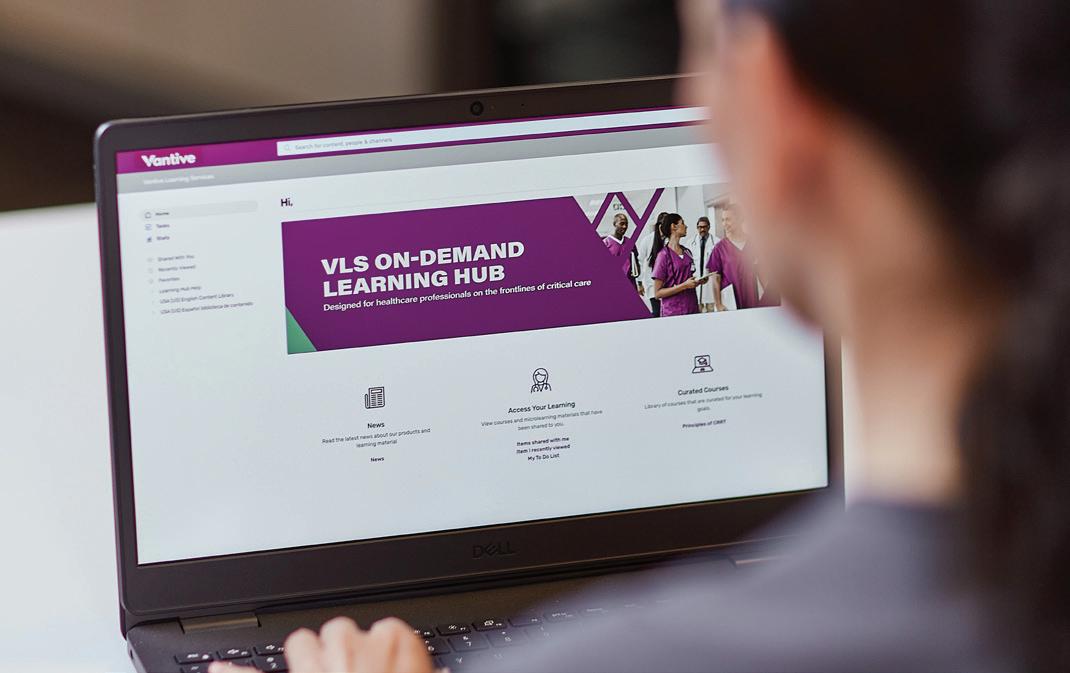
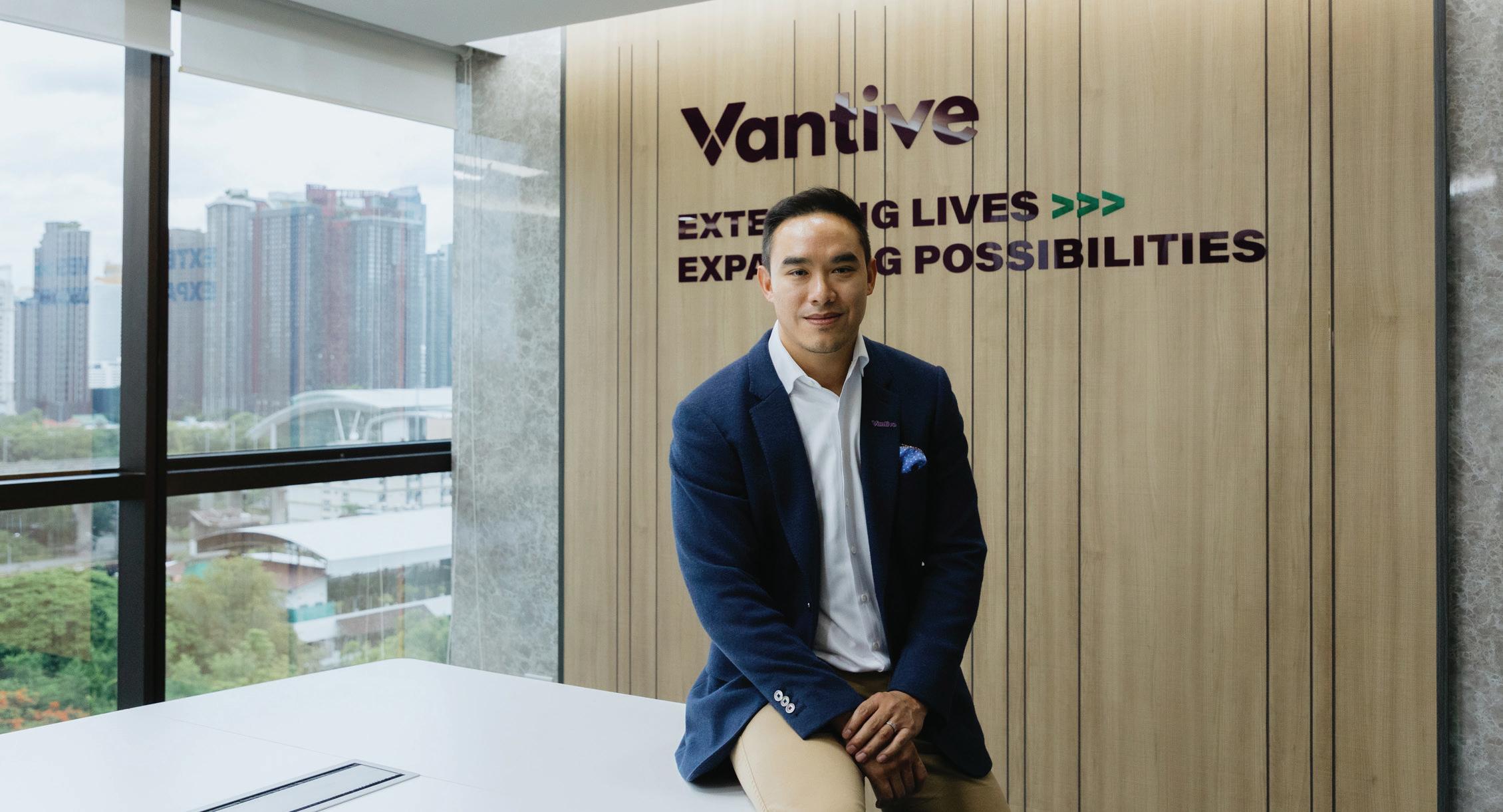
Shaping the Future of Healthcare: Leadership, Innovation, and the Next Generation
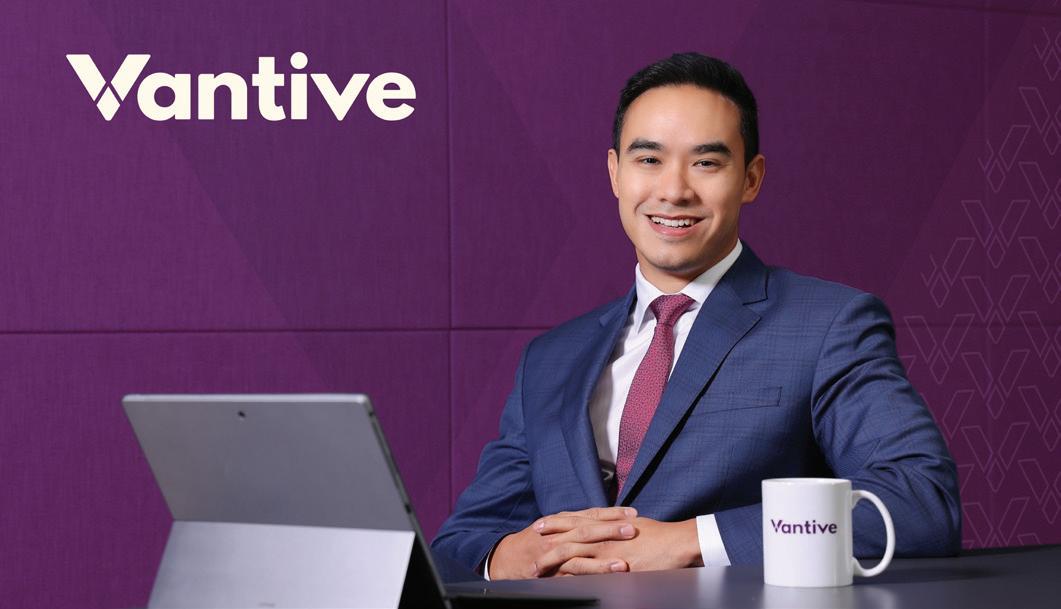
Paul Uthaichalanond is the Cluster General Manager at Vantive.
“Clinical expertise remains essential, but it is no longer sufficient.”
What capabilities will matter most for the next generation of healthcare leaders?
Before discussing capabilities, it is important to redefine healthcare leadership. For me, healthcare leaders are those who enable patients, healthcare professionals, and communities to live and work better lives—particularly in a rapidly changing and high pressure environment.
Clinical expertise remains essential, but it is no longer sufficient. Workforce shortages, accelerating digital and AI disruption, and the shift of care from hospitals into homes highlight the need for broader leadership capabilities that extend beyond traditional models.
In this context, successful leaders must be adaptive, systems oriented, and able to align people, technology, and partners to deliver safe, high quality care across settings.
In my view, the leaders who succeed will demonstrate five critical capabilities—C.A.R.E.S.
C – Compassion: leading with empathy across the healthcare ecosystem.;
A – Adaptability: learning, unlearning, and guiding teams through continual change.;
R – Resilience: sustaining performance while preventing burnout.
E – Empowerment: enabling decisions to be made closer to patients for impact.
S – Shared learning and cross sector collaboration: working across providers and partners.
Leaders who embed C.A.R.E.S. into policy and practice do more than lead organizations—they build trust, strengthen system capability, and support more resilient and sustainable healthcare systems for the future.
How is innovation in healthcare changing the way teams are structured and developed?
Healthcare innovation is not only transforming care models — it is reshaping how teams are built, as health systems respond to aging populations,
rising chronic disease, and rapid digitalization, while the future of healthcare increasingly depends on collaboration across disciplines rather than hierarchy within them.
Healthcare organizations can no longer operate in traditional silos. We are seeing a clear shift toward multidisciplinary, outcome driven teams that integrate clinicians with digital health experts, data scientists, and care coordinators. This model enables more connected, patient centric care— particularly in community and home based settings.
Organizations must build agility by broadening employee experiences across functions and work settings in a way that organically automates continuous learning. Investing in people is as critical as infrastructure, aligning healthcare teams around shared purpose, better outcomes, and resilient, future ready systems.
How can organizations enable younger professionals to contribute meaningfully from the start?
In a rapidly changing business environment, the question is no longer when young professionals will add value, but how quickly they are enabled to do so. Their early contribution depends on whether organizations design systems that prioritize capability over hierarchy and treat learning as a strategic asset.
Younger professionals thrive when learning is integrated into real work—where purpose, responsibility, and development move together— rather than through generic onboarding or classroom-style training detached from daily
execution. At the same time, early readiness must be supported by a strong focus on well-being. Highly motivated early-career talent is often willing to give their all to succeed, making them particularly vulnerable to burnout if expectations, support, and boundaries are unclear.
Business leaders play a critical role in shaping this environment. Fostering a strong collaborative culture within organizations and providing young professionals with a license to challenge the status quo will build ownership and trust early in their tenure. This can be challenging across many organizations as it requires leaders to be humble enough to accept that their experience and achievement pathway is not necessarily the recipe for success of younger professionals who have grown up in a digitally enhanced environment.
Organizations that allow for an accelerated learning pathway with purpose and well being will be best positioned to translate emerging talent into lasting business impact.
How should healthcare leaders rethink development to keep pace with industry transformation?
Currently, Healthcare is changing faster than ever, and it requires us to rethink leadership development in a much more intentional way. For me, development is no longer a one off program— it must be a continuous journey.
Today’s leaders must also build digital literacy, systems thinking, and the confidence to engage with innovations such as data and AI in ways that genuinely improve patient care. I believe empathy, adaptability, and the ability to collaborate across disciplines are more important than ever,
IN FOCUS
particularly as our teams operate under growing pressure and fatigue. Healthcare is ultimately a people driven industry, and leadership development must reflect that—putting patients, caregivers, and healthcare professionals at the heart of how we lead and grow.
In practice, this means leaders need to be visible and approachable, staying present to support teams through change. They must communicate persuasively, clearly explaining the “why” behind transformation, especially when it impacts patient care. Data driven decision making is also critical to guide strategic shifts, alongside strong collaboration with partners across the healthcare ecosystem.
What will define a successful healthcare organization in the next decade from a people and capability perspective?
From a people and capability perspective, successful healthcare organizations in the next decade will be defined by how well they enable their workforce to adapt, collaborate, and sustain performance as care shifts toward value based, patient centered models.
The rising workforce shortages, aging populations, and chronic disease are pushing care beyond
hospitals into communities and homes—requiring new skills, leadership capabilities, and ways of working.
Future ready organizations will invest in multidisciplinary teams, continuous learning, and leadership models that prioritize trust, clarity, and psychological safety. Care approaches such as home based kidney care or dialysis at home illustrate this shift clearly: delivering quality care outside traditional settings depends on empowered teams who can work across clinical, digital, and community boundaries.
Looking ahead, Healthcare organizations that integrate people's development into how work gets done—rather than treating it as a support activity—will build more resilient systems and deliver lasting impact for patients, professionals, and society.
“The question is no longer when young professionals will add value, but how quickly they are enabled to do so.”
Thailand’s Tariff Classification: Key
Risks, Possible Penalties, and Available Incentives
By Sumet Mingmongkolmitr, Blumenthal Richter Sumet & Schuler
In an increasingly globalized world, cross-border trade has become an integral part of modern business operations. As customers demand highquality goods at competitive prices, businesses are under growing pressure to source materials and products efficiently. As a result, the importation of raw materials or finished goods from overseas suppliers offering cost advantages, quality, and technology has become more common. However, all imported goods are required to pass through customs clearance before being released into the domestic market.
In Thailand, imported goods are generally subject to customs duties. The applicable tariff rate for each product varies depending on several factors, including product type, physical appearance, constituent materials, specifications, function, and working process. As a result, accurate tariff classification is a critical step in the importation process and requires careful consideration.
Incorrect tariff classification may lead to investigation by Thai Customs Department and legal consequences under Thailand’s Customs Law. In the event where the tariff classification of imported goods is questioned and subsequently examined by the Customs authorities, and it is determined that the goods have been misclassified, the importer shall be required to pay any shortfall of customs duties and value-added tax (VAT), along with applicable surcharges and penalties.
To mitigate these risks on incorrect tariff classifications, importers are encouraged to carefully review the detail of each tariff classification that the imported goods potentially fall into, and duty rates set out in Thailand’s Customs Tariff Decree B.E. 2530 (1987) before importation to ensure that the import tariff classifications of goods are correct. Importers may also consult customs officers or law firms specializing in customs matters. The determination
of import tariff classifications requires a detailed analysis of product characteristics, together with interpretative principles of HS Codes. This process relies on the Customs Department’s regulations and rulings, as well as the Explanatory Notes of the World Customs Organization. As a result, correctly characterizing tariff classifications can be complex and challenging.
Beyond the domestic tariff regime, importers may also be eligible for tariff incentives under other laws. Preferential duty rates may be available under international agreements to which Thailand and the exporting country are parties, such as
Free Trade Agreements (FTAs). Eligibility for such incentives is subject to specific conditions and detailed requirements stipulated in the relevant regulations.
Sumet Mingmongkolmitr is a Senior Partner, leading the firm’s Tax & Customs and Corporate & Commercial practices, with extensive experience in advising multinational and domestic businesses, as well as high-net-worth clients.
PDPC Regulation on Verification and Certification of BCR B.E. 2568
By Kowit Somwaiya, Praiya (Usa) Ua-areetham, and Warawut Aroonpakmongkol, LawPlus
This legal brief provides a summary of the key principles and provisions of the Personal Data Protection Committee (PDPC) of Thailand’s Regulation on Verification and Certification of Binding Corporate Rules B.E. 2568 (A.D. 2025) dated September 29, 2025 (BCR Regulation).
General Provisions, Scope, and Definitions
The BCR Regulation establishes the guidelines for verifying and certifying the BCR, which serves as a mechanism for cross-border data transfers under Section 29 of the Personal Data Protection Act B.E. 2562 (2019) (PDPA). The BCR Regulation applies to the BCR for Controllers (BCR-C), where members transfer and process data as controllers, and the BCR for Processors (BCR-P), where members process data on behalf of external controllers (Clause 2 of the BCR Regulation).
The BCR Regulation includes the Liable BCR Member, which refers to a group member established in Thailand who explicitly agrees
to accept liability and pay compensation for violations committed by members outside Thailand. This is to ensure that data subjects in Thailand have an effective channel for complaints and legal remedies within Thailand. Additionally, third-party beneficiary rights must be explicitly defined, allowing data subjects to enforce their rights under the BCR directly against members as if they were parties to the agreement (Clause 2 of the BCR Regulation).
Applicant Qualifications and Submission Channels
The applicant must be a member of the same affiliated business or group of undertakings and must be established under Thai law with a physical presence in Thailand. The applicant can be either the headquarters of the group in Thailand, or a member assigned responsibility for personal data protection within Thailand if no headquarters exists. Submission of the application can be made directly to the Office of the Personal Data Protection Committee (OPDPC), via post, email, or through other channels designated by the OPDPC (Clauses 7 and 9 of the BCR Regulation).
Required Documentation
Applications and supporting documents must be in Thai. If the original documents are in a foreign language, a certified and notarized Thai translation must be provided. The required documents include:
(1) the application form specifying the BCR type (BCR-C or BCR-P);
(2) the complete BCR documents, including all appendices and a list of bound members;
(3) a binding instrument, such as an Intra-Group Agreement (IGA);
(4) a referential checklist cross-referencing the regulation’s requirements with the BCR content to speed up the review (optional); and
(5) other additional documents (e.g., personal data protection policy, training documents), company affidavit, and power of attorney (if applicable) (Clause 8 of the BCR Regulation).
Special Process for Recognized BCRs
The BCR Regulation provides a special process for BCRs already approved under the EU GDPR, the UK GDPR, or data protection laws of other countries recognized by the PDPC. In these cases, the applicant may submit proof of the foreign certification and the approved BCR text, accompanied by a Thailand BCR Addendum that contains specific provisions for Thailand, which includes at least the following:
(1) identification of the Liable BCR Member in Thailand;
(2) confirmation of third-party beneficiary rights for Thailand data subjects;
(3) acceptance of the OPDPC’s supervisory power and Thai court jurisdiction; and
(4) clarifications to ensure consistency with the PDPA (Clause 11 of the BCR Regulation).
Key Elements and Evaluation Principles
For certification, the OPDPC evaluates the BCR based on several core principles, including legal effect and binding nature, effective enforcement, duty to cooperate, provisions guaranteeing personal data protection, personal data protection measures, and accountability and other supporting mechanisms (Clause 12 of the BCR Regulation).
Review Timeline and Outcomes
Upon receiving, the OPDPC performs an administrative check within 15 days. If complete, a case officer conducts a detailed substantive review, which must be completed within 180 days (extendable for necessary reasons) (Clauses 13 and 16 of the BCR Regulation). The review results in one of three outcomes:
(1) Certified: The BCR fully meets criteria.
(2) Conditionally Certified: The BCR requires minor amendments within a set timeframe.
(3) Not Certified: The BCR does not meet the criteria (Clause 15 of the BCR Regulation).
Validity, Appeals, and Fees
Validity: Once certified, the BCR is valid indefinitely until amended or revoked (Clause 17 of the BCR Regulation).
Appeals: The applicants can appeal for a rejection or conditional certification under
administrative law procedures (Clause 18 of the BCR Regulation).
Fees: There are no fees or service charges for processing applications (Clause 19 of the BCR Regulation).
Kowit Somwaiya is the Founder and Managing Partner of LawPlus. He has been ranked as a leading lawyer in Thailand and recommended by the Legal 500 and many other international legal profession publications for intellectual property, corporate, commercial, M&A, FDI, TMT and data privacy.
Praiya (Usa) Ua-areetham is a Partner at LawPlus. She specializes in laws on corporate, commercial, M&A, FDI, real property, e-commerce and personal data protection.
Warawut Aroonpakmongkol is an Associate Lawyer at LawPlus. He is a member of corporate and commercial team, specializing in laws data privacy.
BOI Tightens Foreign Shareholding and Land Ownership Rules: What Investors Need to Know in 2026
By Saranarat Wisesla, Dej-Udom & Associates
Overview
Thailand's Board of Investment (BOI) has introduced significant changes to foreign shareholding and land ownership requirements for promoted companies. These restrictions, effective September 1, 2025, and formally published in the Government Gazette on December 30, 2025, represent a notable shift in Thailand's approach to foreign investment in specific sectors.
Foreign investors currently operating in Thailand or considering new investments should carefully assess how these changes may impact their business structure and expansion plans.
New 51% Thai Shareholding Requirement
For companies seeking BOI promotion in certain business categories, at least 51% of registered capital must now be held by Thai individual shareholders. This requirement marks a departure from the previous policy that allowed 100% foreign ownership across most promoted activities.
Affected Business Categories
• Manufacture of bags made of leather or artificial leather (Category 9.8).
• Select manufacturing activities in designated sectors.
Exemption: Special Border Economic Zones
Companies located within BOI-designated special border economic zones may be exempt from the 51% Thai shareholding requirement. These zones offer continued flexibility for foreign-majority ownership.
Land Ownership Restrictions
The BOI will no longer grant land ownership privileges to foreign-majority-owned companies in specific industrial categories:
• Category 5.4.9: Rolling, drawing, casting, or forging of nonferrous metals.
• Category 5.4.11.2: Manufacturing of ferrous metal products or ferrous metal parts.
• Category 5.4.11.4: Manufacturing of nonferrous metal products for industrial use.
• Category 5.4.11.5: Manufacturing of other metal products.
• Category 6.2: Manufacture of chemical products for industry.
• Category 6.4.1: Manufacture of plastic products for industrial goods and parts.
Grandfathering Provision
Existing BOI-promoted companies may be exempt if they have:
• At least three projects granted promotion under the same juristic person.
• Projects approved during the past 15 years (2011-2025).
• Total investment of at least five billion baht.
New e-Land Application System (January 2026)
A new notification (Por. 9/2568) published on January 6, 2026, introduces an online application process for BOI-promoted companies seeking land ownership:
• e-Land System: All land ownership applications must now be submitted online.
• Application: Applies to all submissions since July 18, 2025.
• Stricter Criteria: Enhanced requirements for residential land ownership.
What Businesses Should Do
• Review Current Structure: Assess whether your business falls under affected categories
• Evaluate Restructuring Options: Consider Thai partner arrangements or relocation to special economic zones.
• Check Grandfathering Eligibility: Determine if existing projects qualify for exemption.
• Update Land Applications: Ensure compliance with new e-Land system requirements.
Saranarat Wisesla is a senior associate with extensive experience in corporate and commercial law, cross-border transactions, and intellectual property. She advises on commercial contracts, corporate structuring, legal due diligence, and regulatory compliance.
A Letter from the Government Affairs Desk
Dear Members,
A new administration brings new conversations and new opportunities for engagement. This month, our team hit the ground running in preparation for upcoming roundtable discussions with newly appointed Ministers. Our aim is not only to share AMCHAM’s Forward Five and policy recommendations, but also to offer our members' expertise and resources in support of the administration’s agenda.
In its policy statement, the government places education at the center of human capital development. Priorities include expanding inclusive lifelong learning platforms, building flexible skills pathways aligned with future labor market needs, and strengthening access to AI knowledge and financial literacy. This is the direction our member companies are already advancing and are ready to lead at scale.
Across our business community, there is a shared recognition that education and human development are essential to competitiveness. The Creative Economy Council is currently developing its white paper with recommendations to help position Thailand as a regional creative hub. A major theme is strengthening skills transfer and workforce training to raise production, postproduction standards, and IP awareness.
Realizing that foundational education outcomes are now investment signals, not just social goals, the Digital Governance Council has emphasized the importance of STEM proficiency and PISA benchmark scores in its white paper. It also proposes aligning education systems with AI, data analytics, and cybersecurity demands.
Perhaps the most exciting development this month for our team is the preparation of Memorandum of Understanding (MOU) with the Office of the Vocational Education Commission (OVEC). This partnership will foster practical collaboration
between OVEC institutions and AMCHAM member companies to upskill vocational students and equip the next generation with job-ready capabilities for a changing economy.
Beyond education, our team is closely tracking the evolving local policy environment. Our council meetings remain the best forum to hear timely updates, ask questions, and share your insights as we shape these collaborations and develop practical member-oriented recommendations. Please contact tong@amchamthailand and mai@ amchamthailand to be a part of our advocacy and partnership journey, ensuring delivery of real impact.
Napuck (Mai) Cherdchaiyapong Government Affairs Manager
Meeting with the U.S. Food and Agricultural Agencies
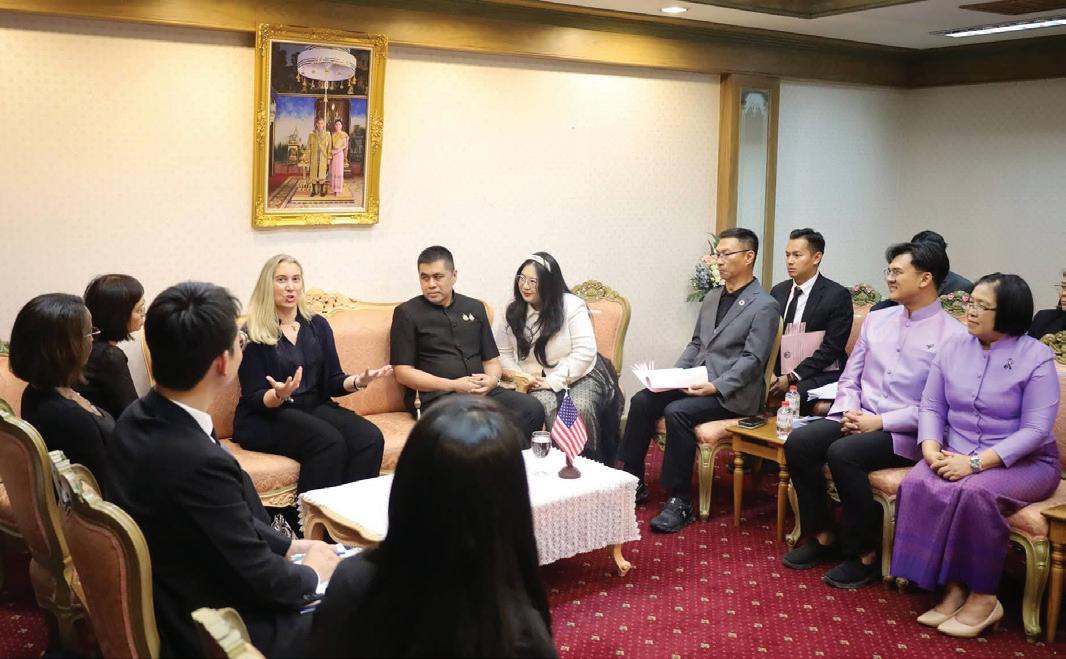
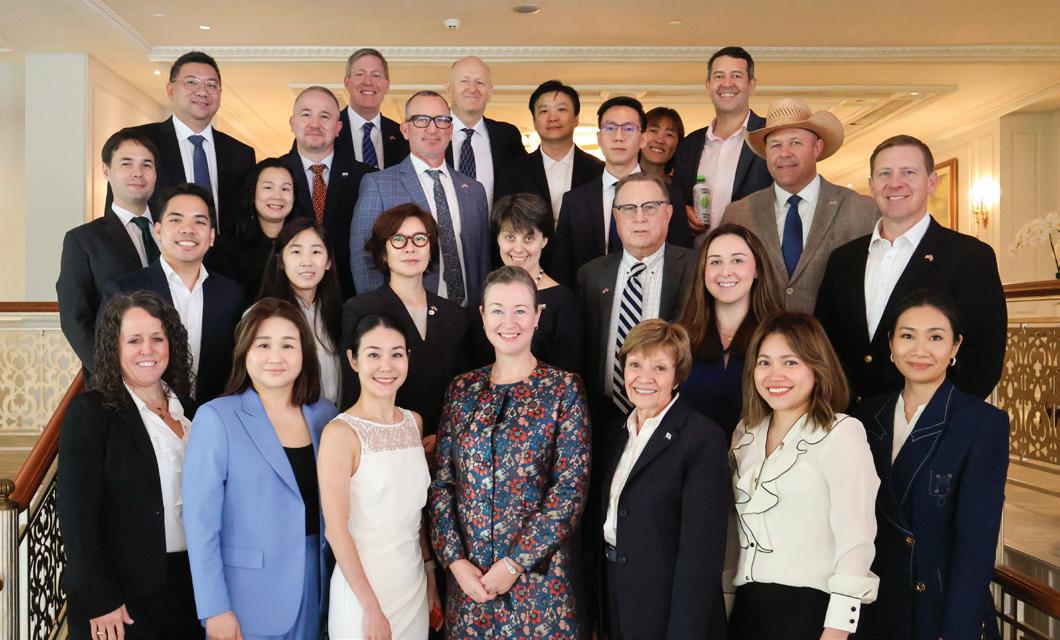
On April 29, the AMCHAM Food, Beverage & Agribusiness Council led a delegation of AMCHAM members in a meeting with representatives from the Department of Agriculture of the U.S. embassy in Bangkok, the National Association of State Departments of Agriculture (NASDA), U.S. Meat Export Federation, and state Departments of Food & Agriculture from California, Kansas, Maryland, South Dakota and Tennessee.
The meeting featured a constructive exchange of views on food and agricultural trade, highlighting opportunities to promote imports and exports between the U.S. and Thailand. The discussion also addressed key regulatory challenges for beverages and market access. Both parties shared sustainability and regenerative practices before committing to strengthen collaboration to promote shared economic interests.
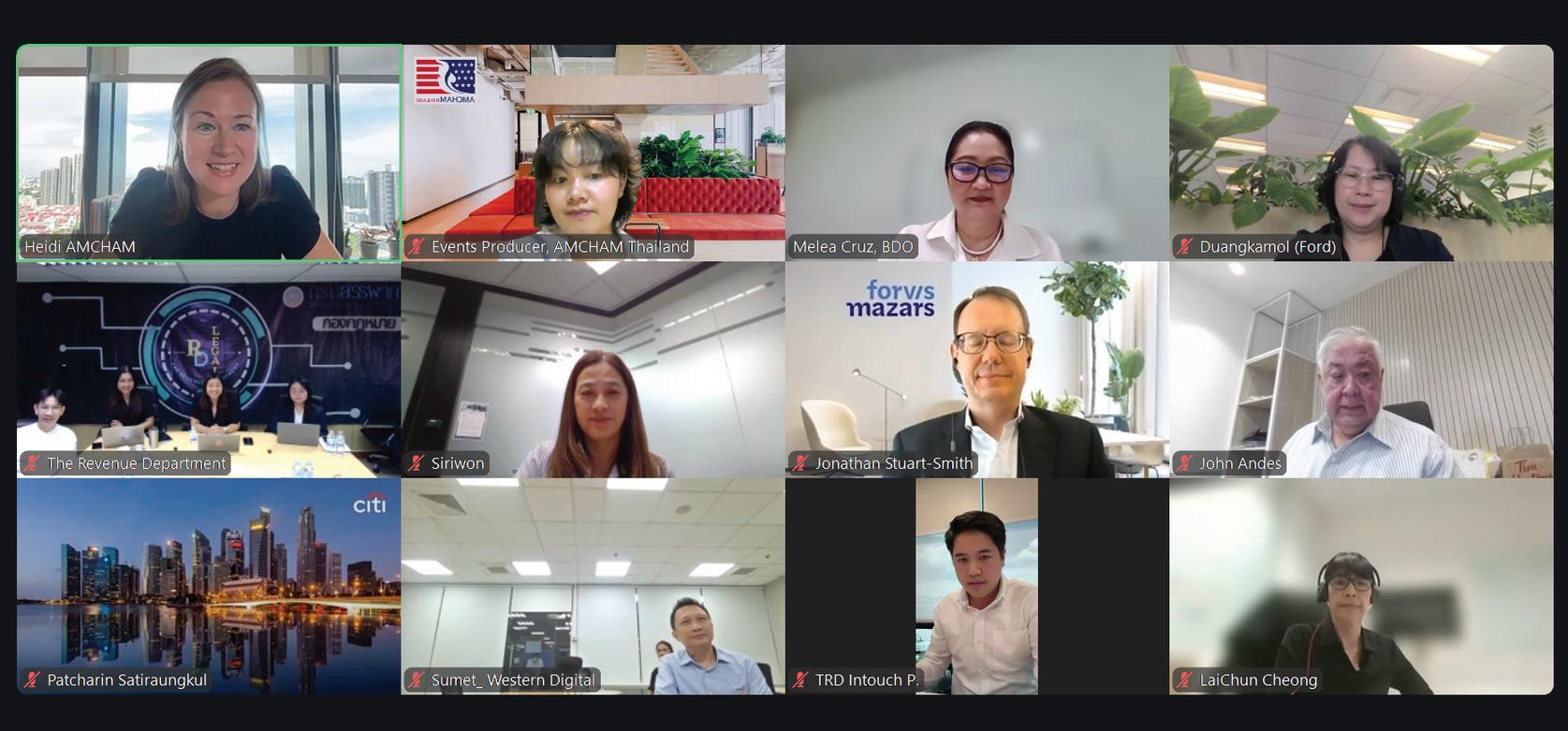
Consultation Meeting with Revenue Department on Global Minimum Tax Pillar II
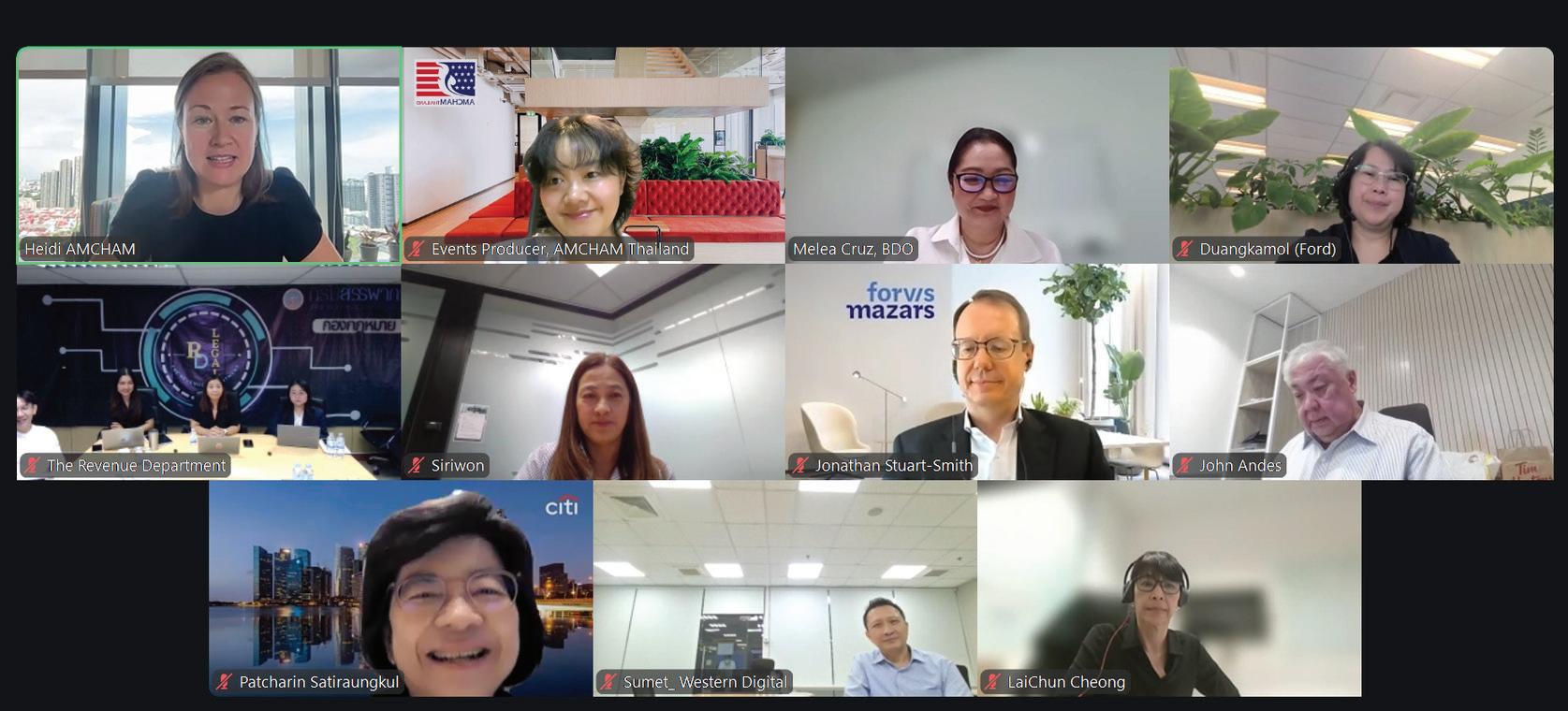
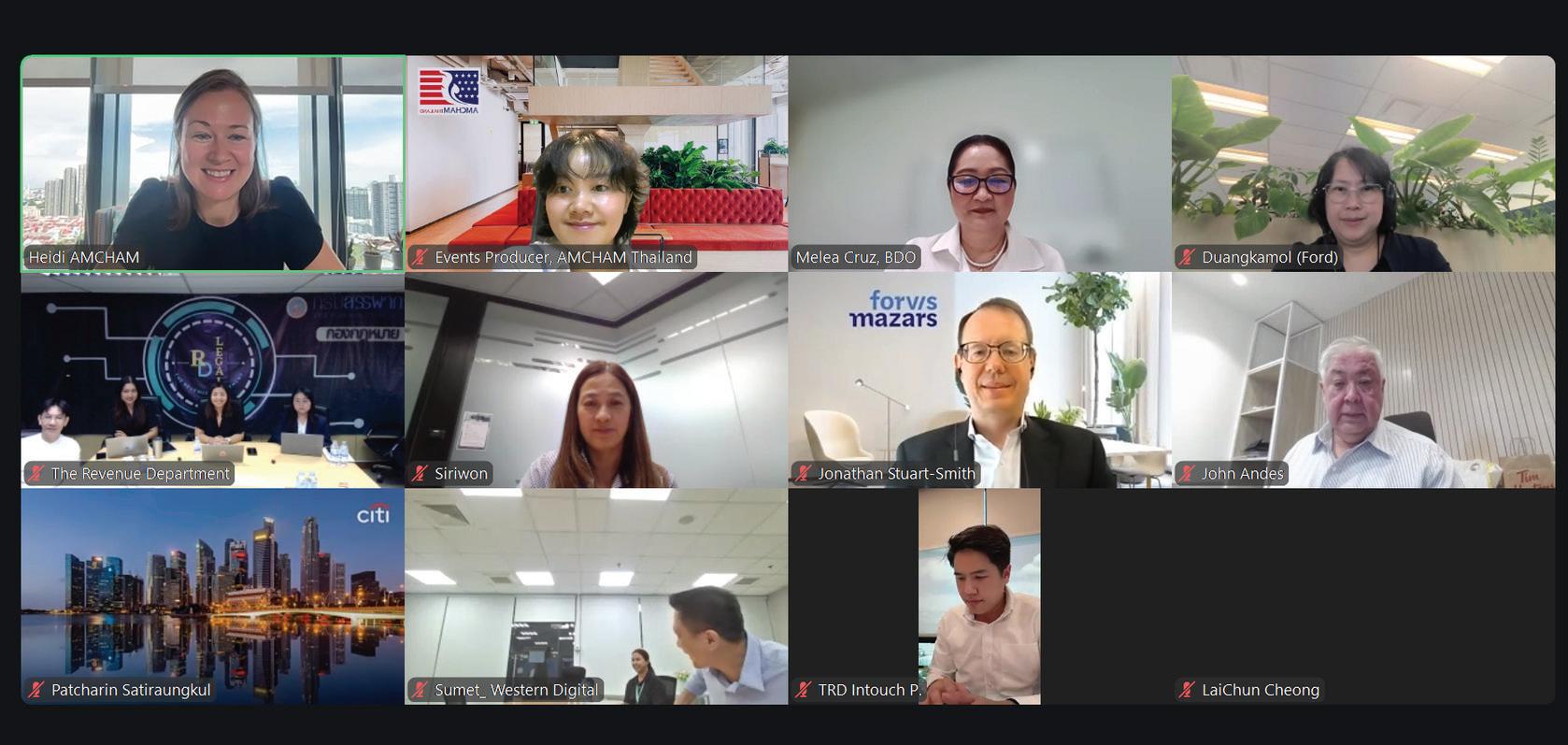
On May 18, AMCHAM Platinum members and Tax Council Co-Chairs, together with the Revenue Department under the Ministry of Finance, hosted a consultation meeting on Global Minimum Tax Pillar II. The discussion provided a consultative platform for AMCHAM delegates to receive updates and exchange views on Thailand’s legislative roadmap for implementing the Qualified Domestic Minimum Top-up Tax (QDMTT), anticipated developments on subsidiary legislations, including safe harbor provisions, and Qualified Refundable Tax Credits (QRTCs).
The session was well received and underscored Thailand’s commitment to aligning its domestic tax framework with Organisation for Economic Co-operation and Development (OECD) global standards It also reflected the authorities’ openness to constructive engagement and continued dialogue with the international business community.
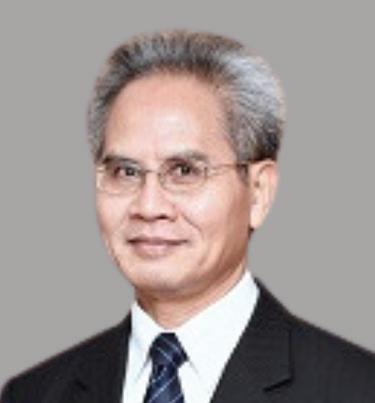
Danielle Na Pattaloong is the Director of Marketing at GQ Group and serves as an AMCHAM Young Professionals Committee Co-Chair.
“The network you build there is not passive, it actively pushes you forward and opens doors you did not expect.”
How has your journey with AMCHAM shaped your leadership perspective and professional growth?
AMCHAM has been a strong catalyst for how I think about growth and leadership. It is not just about learning, it is about being in the room with people who challenge your thinking and expand your perspective. You get exposed to different ways of leading, problem solving, and navigating careers. The network you build there is not passive, it actively pushes you forward and opens doors you did not expect. It also teaches you how to show up with more clarity and intention. Over time, that shifts how you lead and how you make decisions.
What are the key priorities of the AMCHAM Young Professionals Committee for 2026?
In 2026, the focus is simple. Real upskilling and real access to people worth learning from. We want to create more moments where young professionals can learn directly from experts and actually apply it to their careers. It is about making development feel practical, relevant, and immediately useful, not just theoretical. We also want to build a stronger sense of community among members. When people feel connected, they are more likely to grow together.
As a young professional, what do you value most in today’s workplace, and how can organizations better support the generation of talent?
Mentorship, without a doubt. You can shortcut years of trial and error by learning from someone who has been there and is willing to share openly. It also builds confidence in a way that no training program really can. Organizations can support this by creating more intentional spaces for those connections to happen. It does not have to be complicated, but it does need to be consistent. Over time, those small moments of guidance really compound into meaningful growth.
Meet Watcharakorn (Tone)
Thammasiri
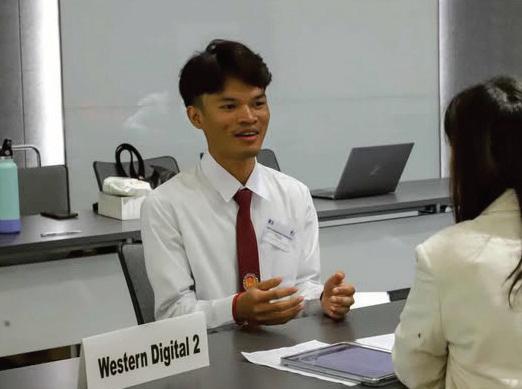
Hi, I am Watcharakorn (Tone) Thammasiri. I am currently a senior in the Higher Vocational Certificate program at Nonthaburi Technical College, majoring in Electrical Technology. Throughout my academic journey, I have come to believe that education is not limited to the classroom but also includes learning from reallife experiences, people, and diverse perspectives. This belief was a key reason why I decided to apply for the scholarship from the AMCHAM Thailand Foundation (ATF).
I chose the AMCHAM Scholarship because it offers more than financial support. The ATF places strong emphasis on the holistic development of young people, including their mindset, attitudes, and readiness for the professional world. In particular, the camp activities organized by the ATF provided me with valuable opportunities to develop essential life and career skills, exchange ideas with students from various institutions, and receive guidance from experienced professionals. These experiences truly strengthened my confidence and helped me gain a clearer sense of my goals and future direction.
"I aspire to grow into a capable professional who can contribute positively to society and help drive the country forward.”
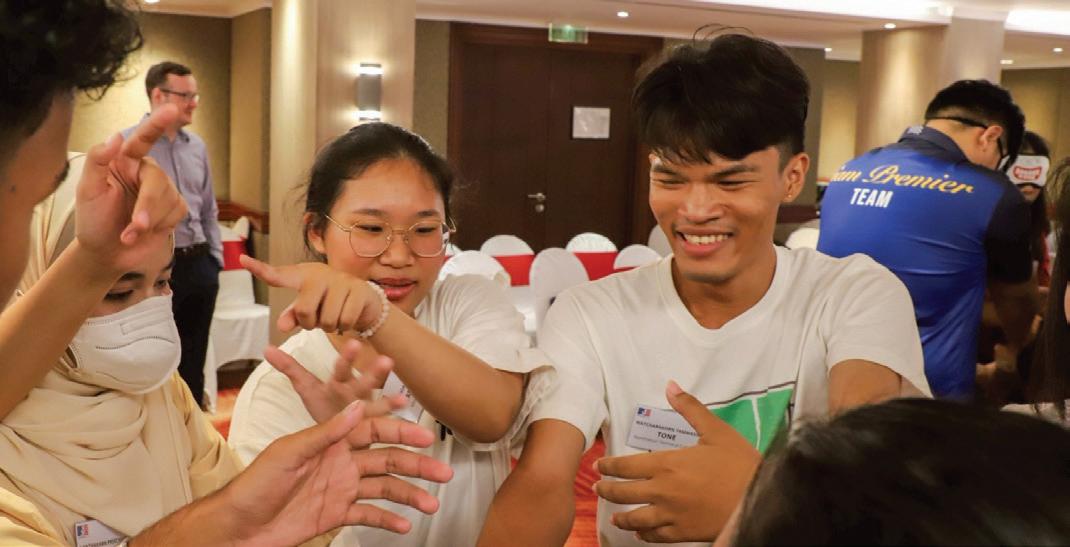
with new friends from different colleges. It created a relaxed atmosphere and encouraged me to express myself more confidently. I also found career planning and future design activities both fun and insightful. During the group activity, my team came up with the name “Christina SaeAMCHAM,” which brought laughter and joy to both the facilitators and fellow participants. The friendly and lively environment made the experience even more memorable. Another activity I truly enjoyed was the golf session, which allowed me to relax after company visits while spending quality time with new friends. It was a great opportunity to be myself and create meaningful memories together.
After completing my Higher Vocational Certificate, I plan to pursue a bachelor’s degree to further develop my knowledge and professional skills. I am committed to using the experiences and opportunities gained through the AMCHAM Thailand Scholarship as a strong foundation for my future. Ultimately, I aspire to grow into a capable professional who can contribute positively to society and help drive the country forward.
One of the activities I enjoyed the most was the ice-breaking session, which helped me connect Watcharakorn (Tone) Thammasiri, a fun and outgoing ATFer from the second cohort of the AMCHAM Vocational Scholarship Program, shares how the scholarship has accelerated his personal and professional growth while opening doors to valuable networking opportunities.
AMCHAM THAILAND FOUNDATION
ABOUT US
Education has been a core value for AMCHAM since the very beginning of the Chamber. Over the last three decades, AMCHAM has provided over 3,200 scholarships and supported over 890 primary schools.
In 2004, AMCHAM formally registered the American Chamber of Commerce in Thailand Foundation (ATF) to carry out its charitable activities. The ATF is recognized by the Ministry of finance as a Public Charitable Organization (number 632) and donations are deductible in Thailand.
AMCHAM FOUNDATION SCHOLARSHIP PROGRAM
Each year ATF enables disadvantaged Thai university and vocational students to complete their higher education studies through targeted scholarships. Our Community Engagement Council works directly with universities and vocational colleges to identify hard-working and motivated students enrolled in programs championed by AMCHAM member companies.
HOW YOU CAN SUPPORT THESE PROGRAMS
Sponsor university scholarship. Provide speakers and goodie bag items for Orientation/Career. Join the Community Projects Council. For further information, contact foundation@amchamthailand.com.
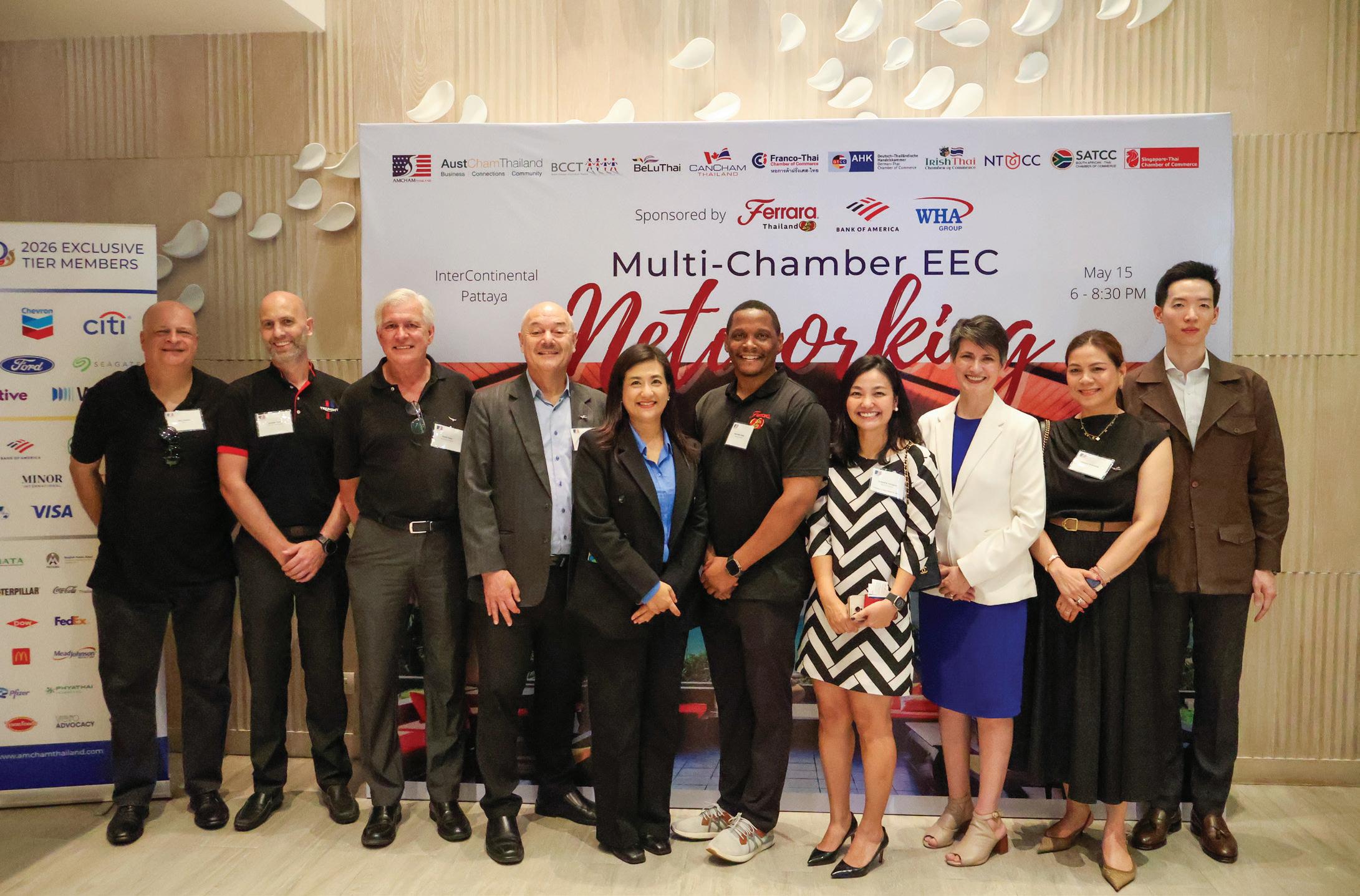
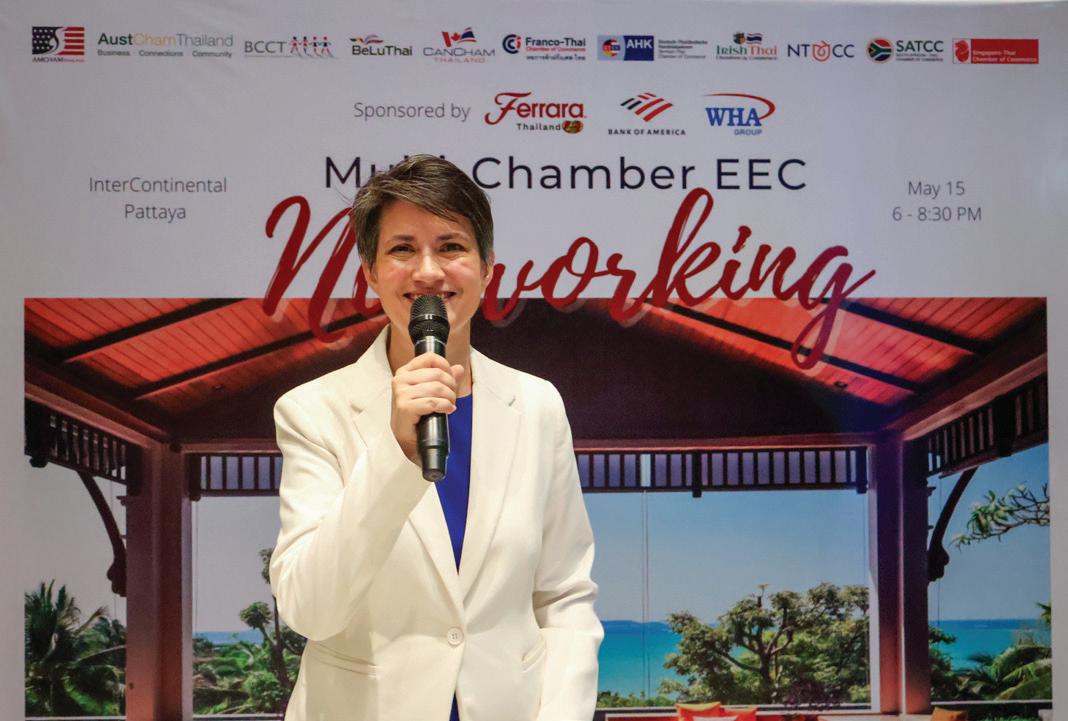
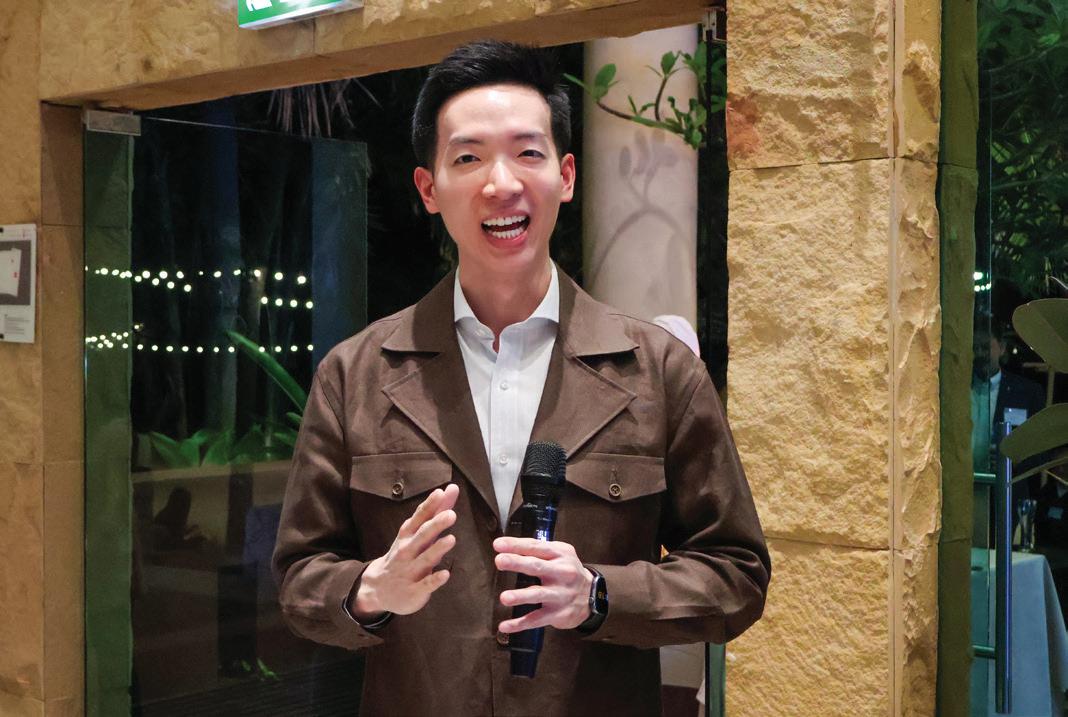
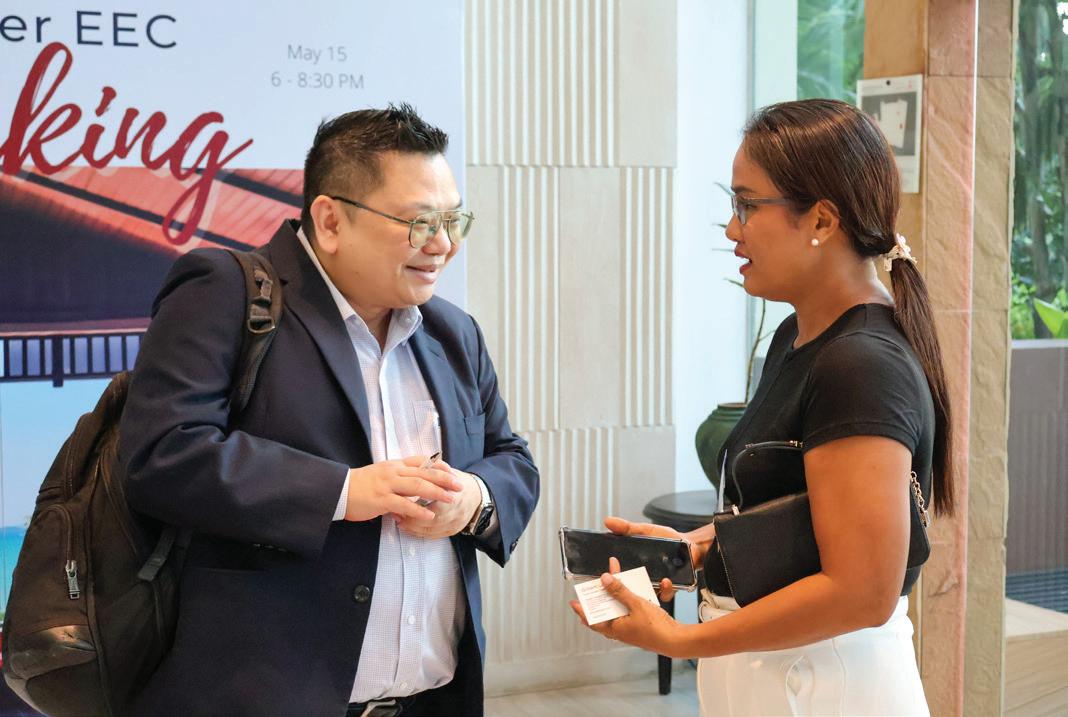
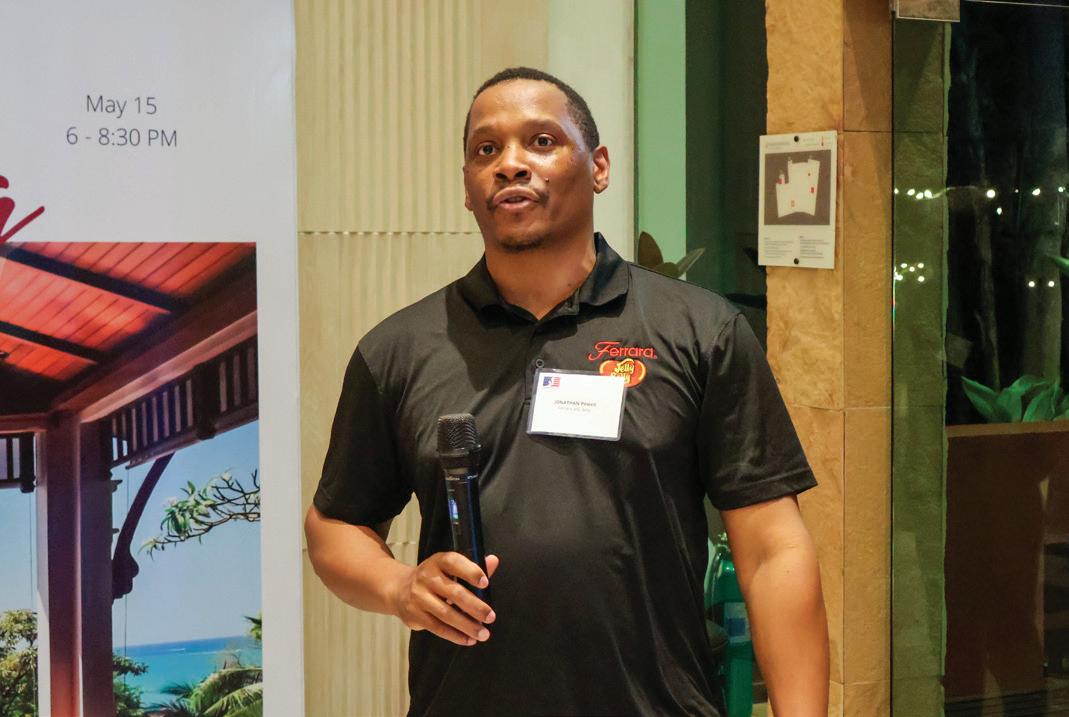
On May 15, the American Chamber of Commerce in Thailand (AMCHAM) successfully hosted the MultiChamber EEC Networking event at the InterContinental Pattaya Resort by IHG, Latitude by the Beach, with generous support from Ferrara Jelly Belly, Bank of America, and WHA Group.
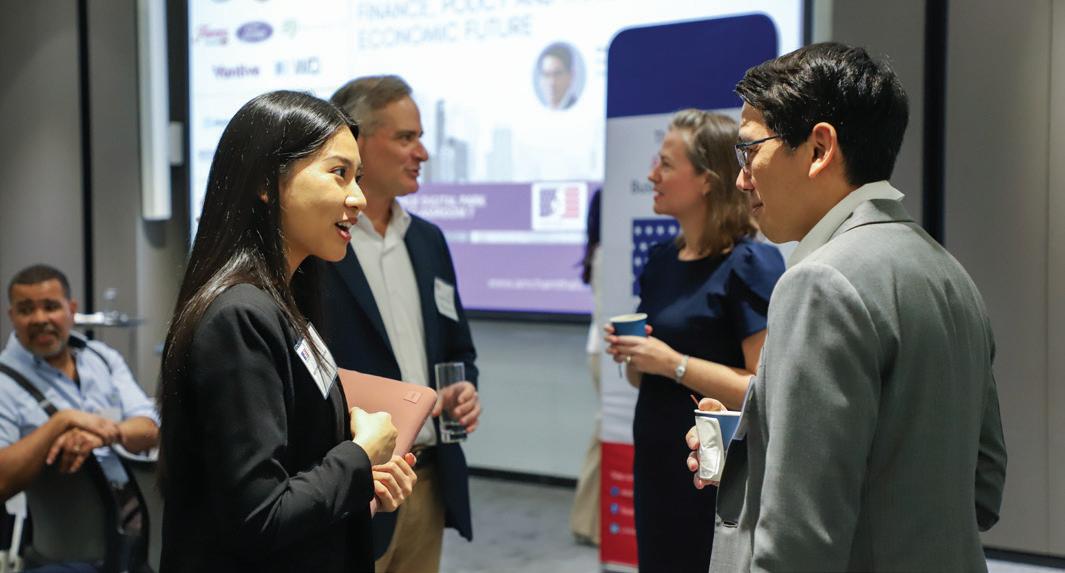
The event was organized by AMCHAM in cooperation with AustCham, BCCT, BeLuThai, CanCham, FTCC, GTCC, ITCC, NTCC, SATCC, and STCC. It offered business professionals and entrepreneurs an opportunity to grow their networks, build meaningful connections, and exchange insights across different sectors in a vibrant setting.
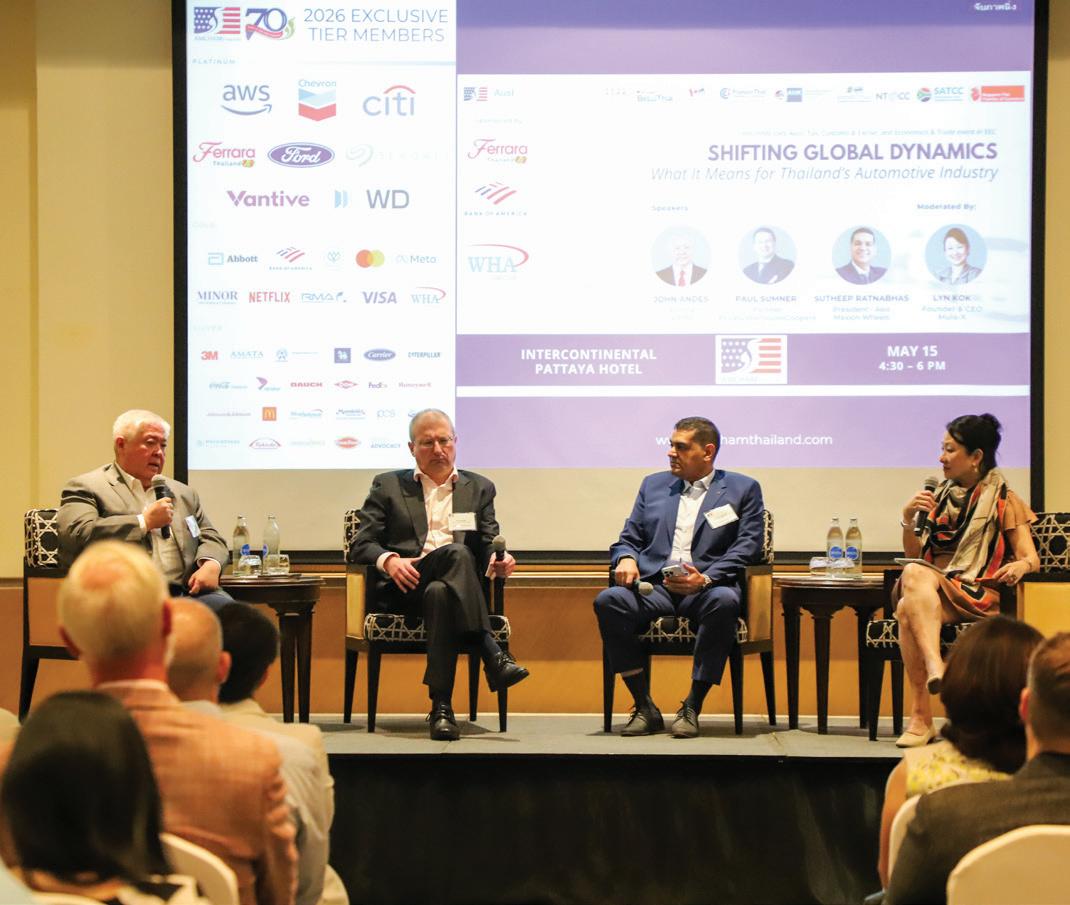
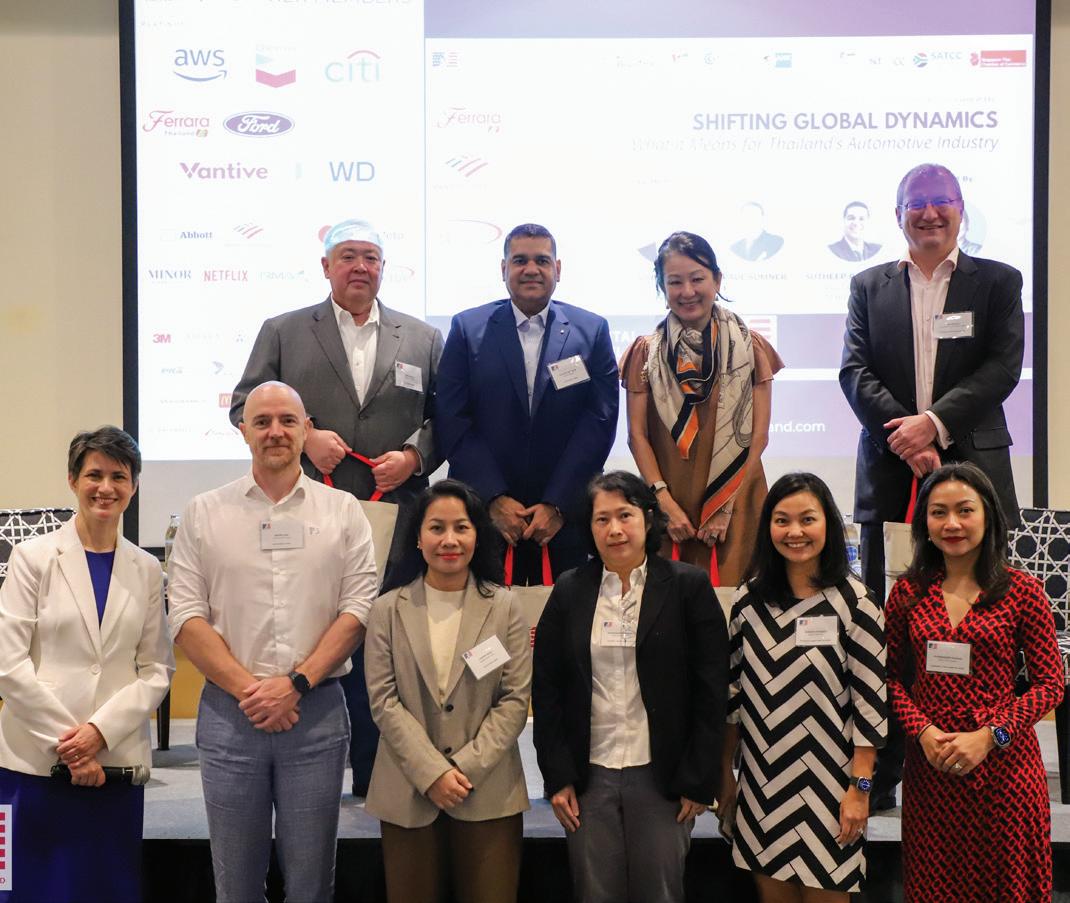
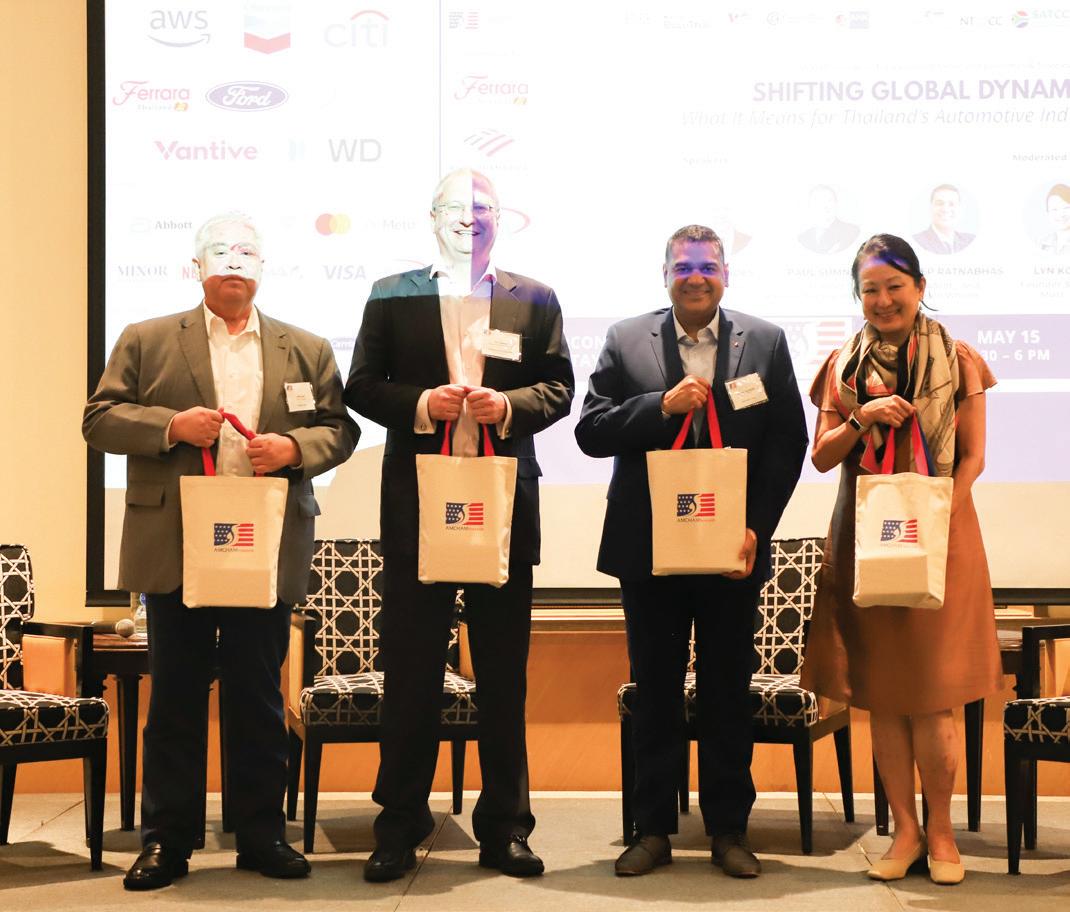
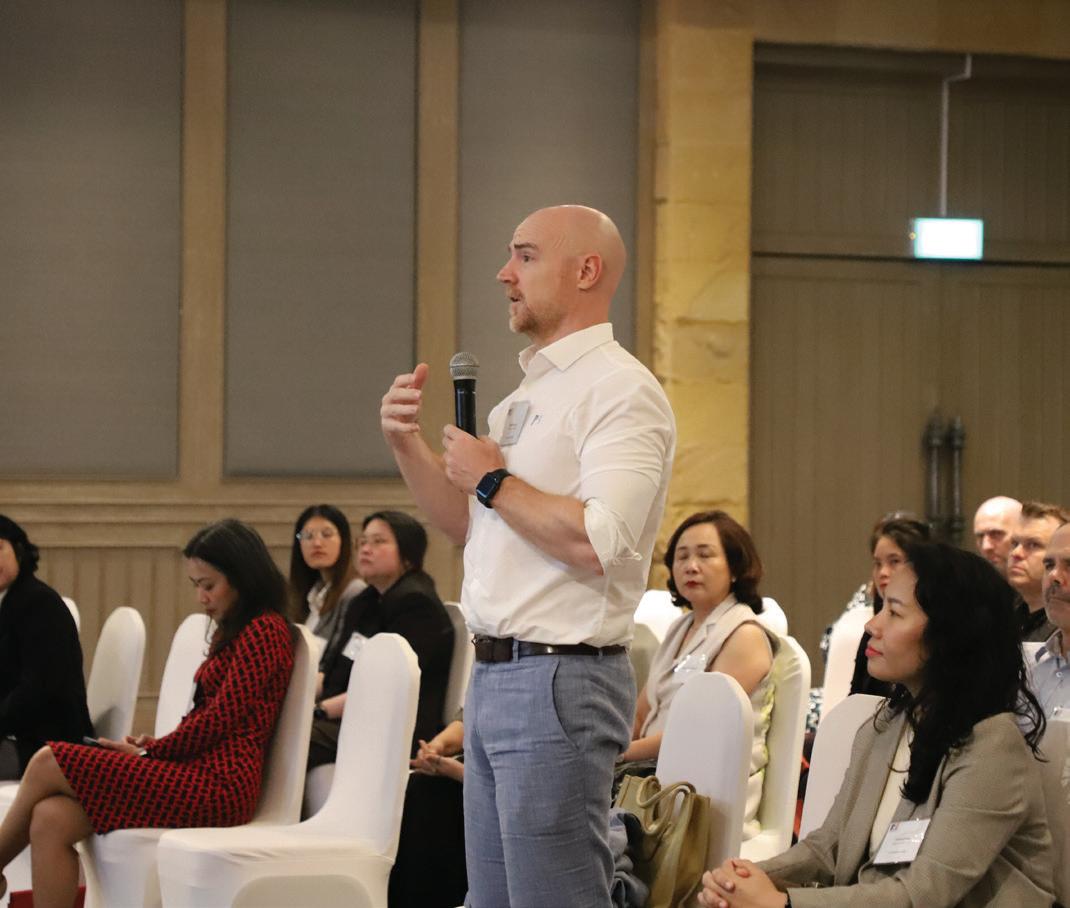
Prior to the networking event, the AMCHAM Auto Council, Tax Council, Customs & Excises Council, and Economics & Trade Committee jointly hosted a panel discussion on Shifting Global Dynamics: What It Means for Thailand’s Automotive Industry, moderated by Lyn Kok of Mula-X. The panelists, including John Andes of KPMG Thailand; Paul Sumner of PricewaterhouseCoopers; and Sutheep Ratnabhas of Maxion Wheels, discussed how compliance, supply chains, and certificates of origin are shaping the sector and highlighted the need for Thailand to strengthen workforce skills, technical capabilities, and manufacturing capacity to sustain its role as a regional manufacturing hub.
These events underscore AMCHAM’s ongoing commitment to supporting economic development and innovation on Thailand’s Eastern Economic Corridor. By bringing together key stakeholders and fostering collaboration, AMCHAM continues to create opportunities for its members to thrive in a rapidly evolving business landscape.
Small Business & Entrepreneurs Committee
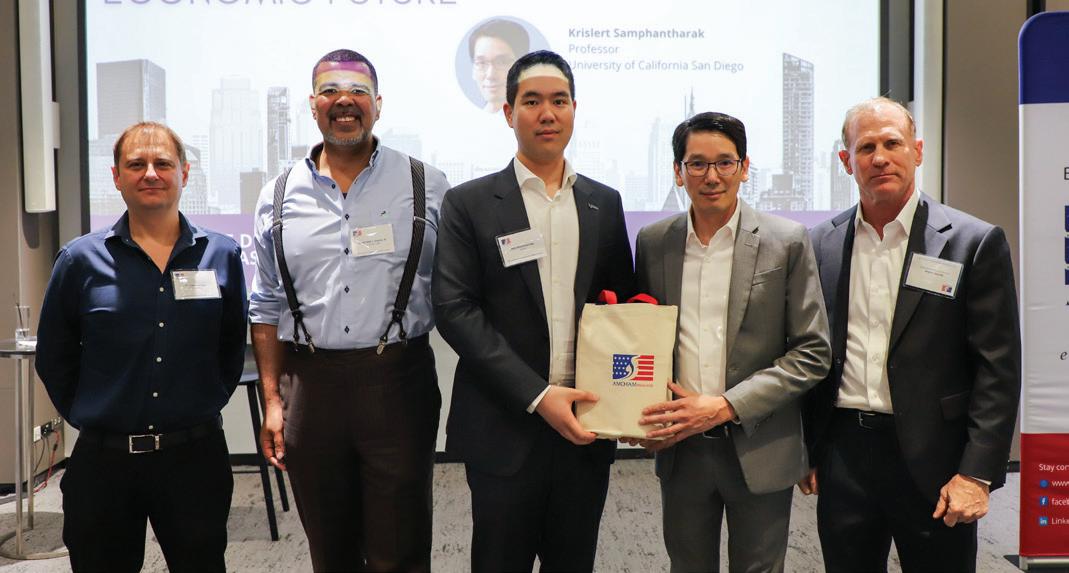
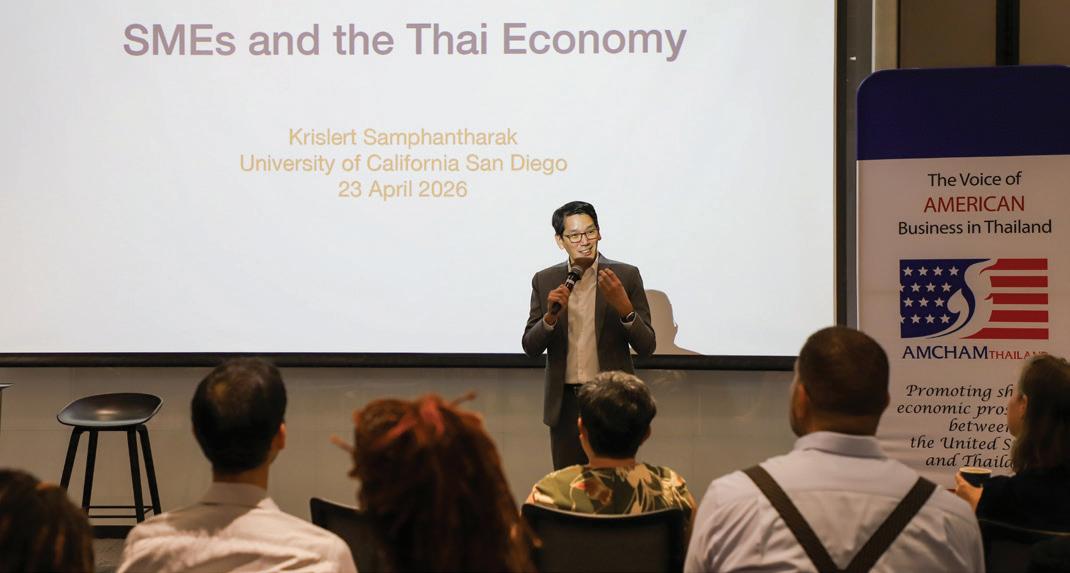
SMEs at the Crossroads: Finance, Policy, and Thailand’s Economic Future – Apr 22
Speakers: Professor Krislert Samphantharak of the School of Global Policy and Strategy, University of California, San Diego
Organized by: Small Business & Entrepreneurs Committee
Event Highlights:
The AMCHAM Small Business & Entrepreneurs Committee hosted a session on the critical role SMEs play in Thailand's economy. The professor guided attendees through the structural landscape of Thai SMEs, from their outsized contribution to GDP and employment to the challenges they face amid geopolitical uncertainty, climate risk, and a rapidly aging workforce.
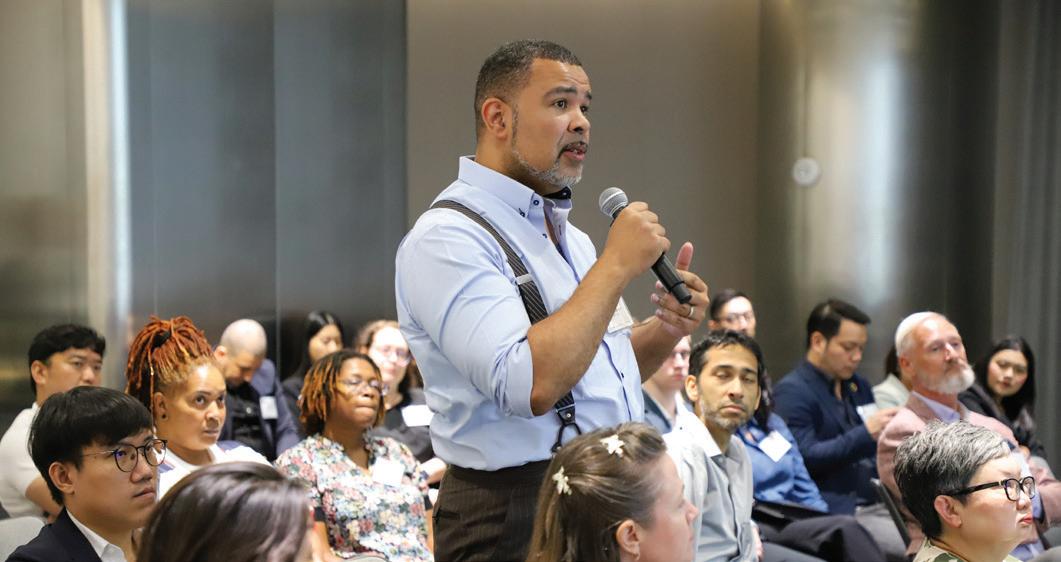
The session sparked discussion on the barriers that keep small businesses trapped in a "vicious cycle of being small," where limited scale restricts access to finance, technology, and markets. Attendees left with perspectives on the opportunities and complexities that lie ahead.
Human Capital Committee Getting Your U.S. Student Visa – May 12
Speakers: Leah George and Irving Cortes-Martinez of the U.S. Embassy in Bangkok
Moderators: Jessica Vechbanyongratana of Bangkok Patana and Naambo Shivute De Cock of LawtonAsia
Organized by: Human Capital Committee
Event Highlights:
The AMCHAM Human Capital Committee, together with the U.S. Embassy Bangkok, hosted a webinar on getting a U.S. student visa. U.S. Embassy Visa Chief Leah George and Foreign Service Officer
Irving Cortes-Martinez spoke directly to the audience, covering aspects of F and J student visas. Following the presentation, a variety of questions were asked through a moderated questionand-answer session, ensuring that all attendees had the information needed for a smooth visa application process.
EVENTS
Advanced Manufacturing Committee
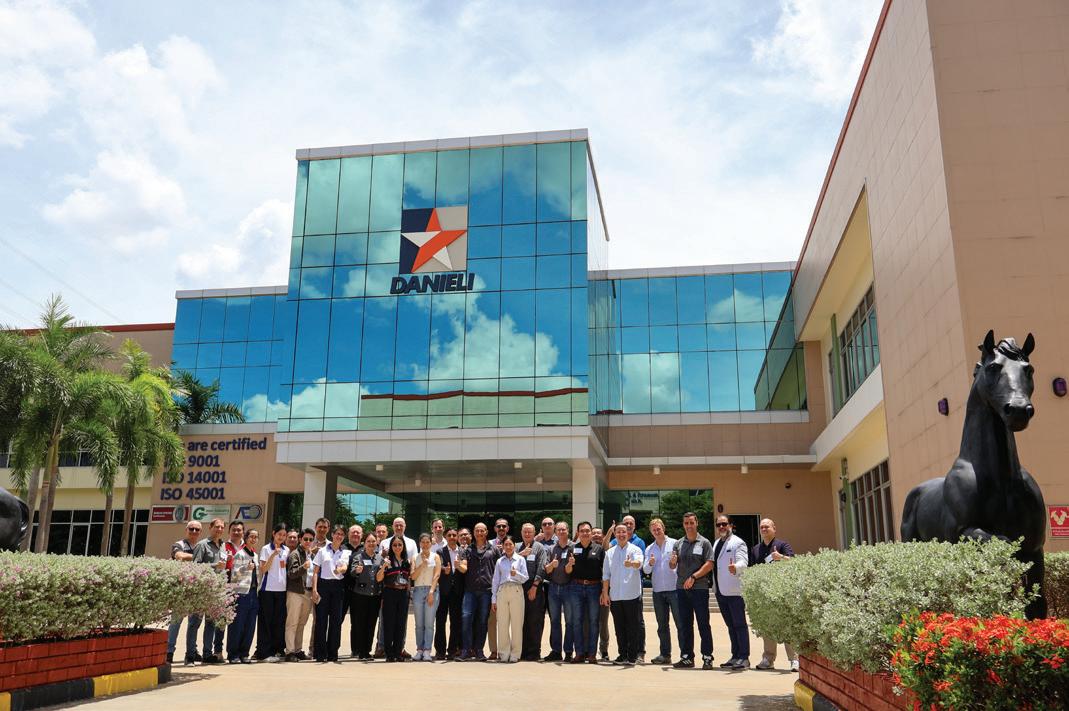
Danieli Factory Tour – May 15
Organized by: Advanced Manufacturing Committee
Event Highlights:
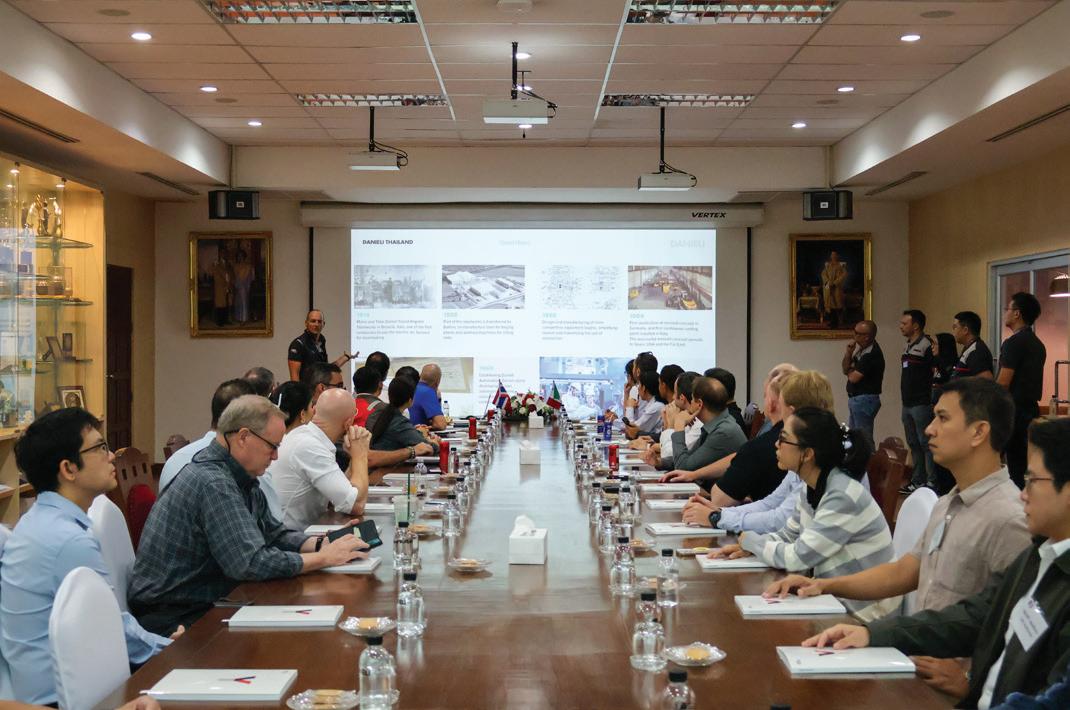
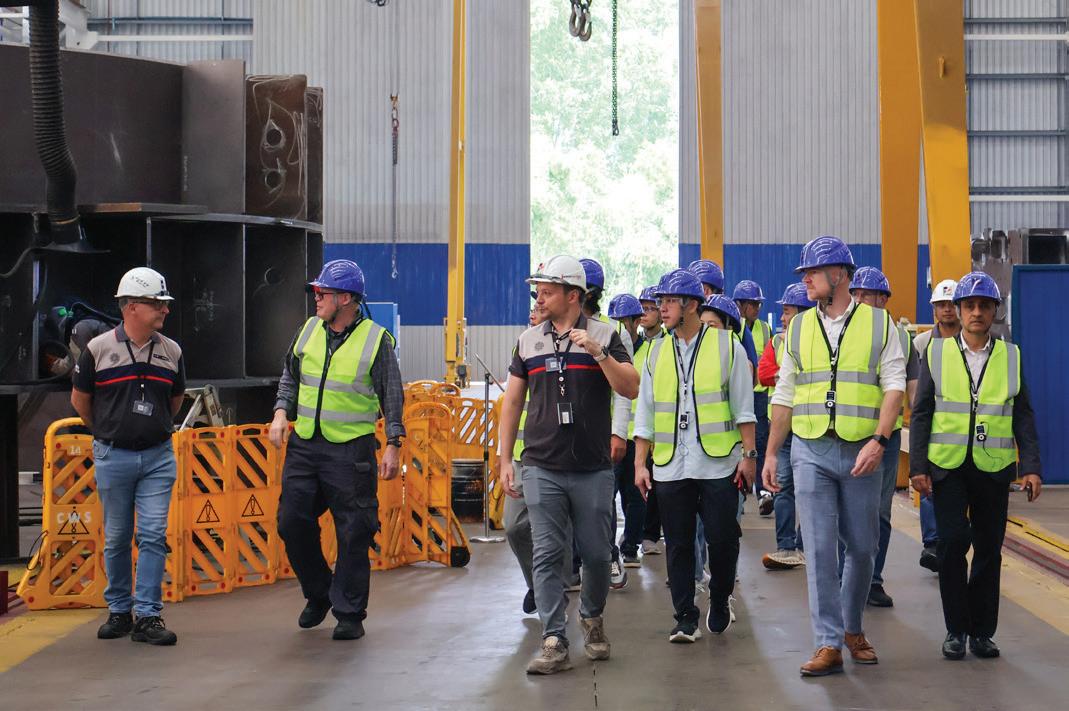
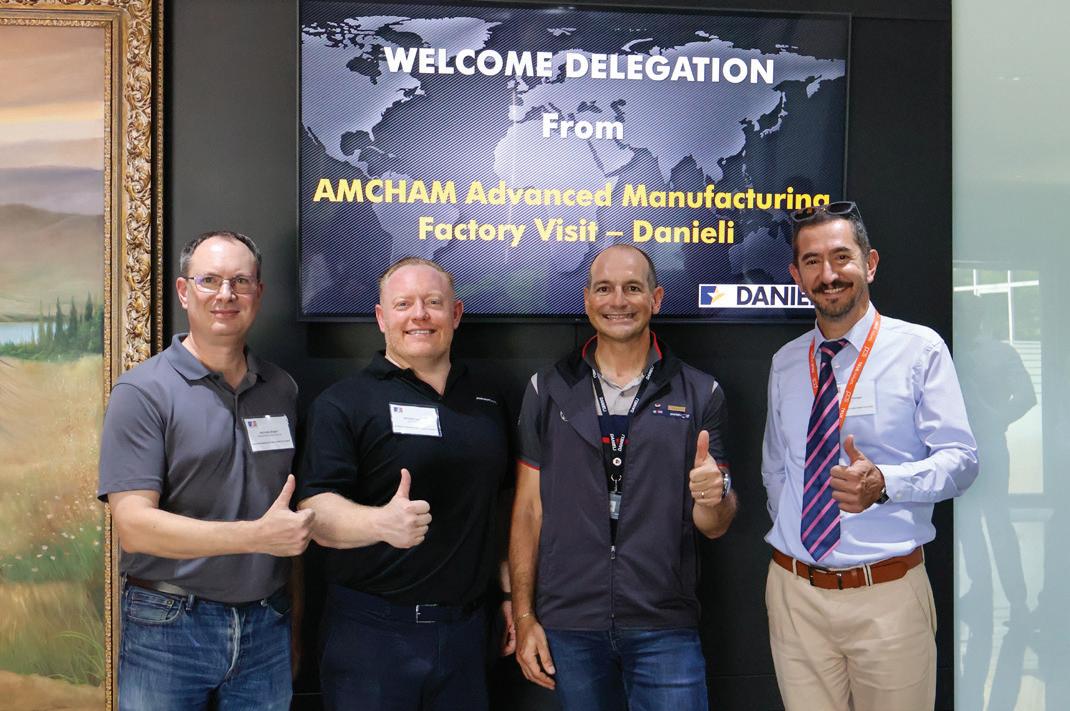
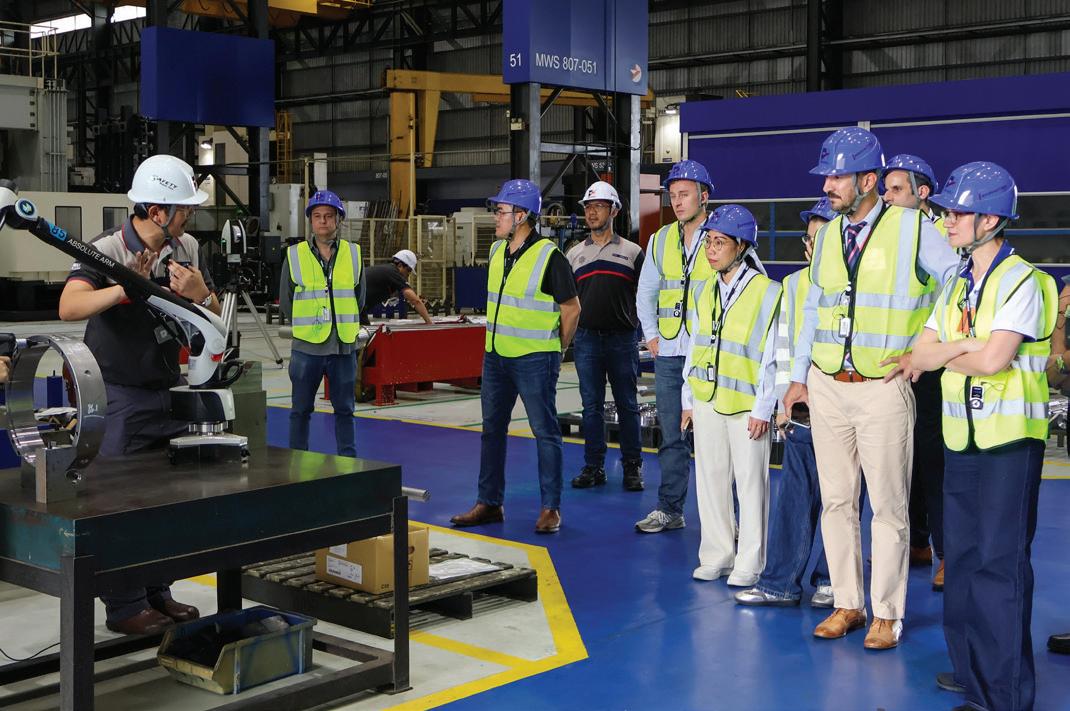
The AMCHAM Advanced Manufacturing Committee and members enjoyed an exclusive factory tour at Danieli in Rayong. Participants were welcomed with an insightful introduction to the factory before touring the plant. They had an opportunity to see advanced engineering solutions for steelmaking and metalworking, including integrated 3D engineering, while engaging with the factory team throughout the tour.
Joint Councils and Committee
Shifting Global Dynamics: What It Means for Thailand’s Automotive Industry – May 15
Speakers: John Andes of KPMG Thailand; Paul Summer of PricewaterhouseCoopers; and Sutheep Ratnabhas of Maxion Wheels
Moderators: Lyn Kok of Mula-X
Organized by: Auto Council, Tax Council, Customs & Excise Council, and Economics & Trade Committee
Event Highlights:
The AMCHAM Joint Auto, Tax, Customs & Excise, and Economics & Trade session on “Shifting Global Dynamics: What It Means for Thailand’s Automotive Industry” discussed how compliance, supply chains, and certificates of origin are shaping the sector. The panel also highlighted the need for Thailand to strengthen workforce skills, technical capabilities, and manufacturing capacity to sustain its role as a regional manufacturing hub.
Engineers Use the Newest Technology to Combat an Old Problem
By Boeing
Boeing applies quantum computing to combat aircraft corrosion, improve durability.
Fighting aircraft corrosion costs the industry 2.5 trillion U.S. dollars a year globally.
Boeing has been awarded 2.5 million U.S. dollars to help fight the problem using quantum computing.
Why it matters: Faster, more accurate corrosion modeling could improve material durability across aerospace, helping to mitigate material degradation, reducing safety risks and lowering lifecycle costs.
• Quantum computing aims to deliver the power to do that modeling.
Zoom in: Boeing’s QUantum Innovation for Corrosion Kinetics (QUICK) project received the award to optimize the full quantum computational stack — from applications to algorithms — and build a hybrid quantum classical workflow for corrosion use cases.
• The award comes as Boeing was selected for the Advanced Research Projects AgencyEnergy’s (ARPA-E) Quantum Computing for Computational Chemistry (QC3) program to apply quantum algorithms to chemistry and
materials problems that classical computers cannot yet solve. ARPA-E is a specialized agency within the U.S. Department of Energy (DOE).
Driving the news: QC3 is allocating 37 million U.S. dollars to ten quantum computing projects that focus on quantum solutions for chemistry and materials problems that go beyond the capabilities of classical computing.
• Boeing is the only company in the aerospace industry to be funded for a project under QC3.
• “We are excited to be part of QC3 and continue leading with anchored demonstrations to prove today’s capability and chart the path to scale for real-world impact,” said Jay Lowell, chief scientist for Boeing Disruptive Computing, Networks & Sensors.
How they did it: QUICK focuses on demonstrating how next-generation quantum machines outperform standard computers and running solutions on actual quantum computer hardware.
The big picture: QC3 projects are expected to achieve a 100x performance improvement versus the classical state of the art, and show clear paths to transformative impact in their targeted energy applications.
• For Boeing, such gains could speed up discovery of corrosion-resistant materials and shorten development cycles for components used across industries.
What is next: QUICK will proceed to implement and test its quantum algorithms on hardware as required by QC3 and use quantum computing to make corrosion modeling markedly faster and more accurate, with potential safety and cost benefits across multiple industries.
Phyathai 2 International Hospital Wins Medical Tourism Hospital of the Year - Thailand 2026
Phyathai 2 International Hospital received the Medical Tourism Hospital of the Year – Thailand award at the Healthcare Asia Awards 2026. The recognition reinforces its position as a medical tourism hospital in Thailand, delivering specialized care for international patients while supporting Thailand as a hub for medical tourism in Asia.
The hospital combines clinical services with a structured international patient management system to support patients throughout the treatment journey. This includes collaboration between multi-disciplinary teams across diagnosis, surgical treatment, rehabilitation planning, and recovery monitoring for continuity of care for complex medical cases.
For patients seeking medical treatment in Thailand, coordination begins before arrival. Medical records are reviewed in advance to support preliminary treatment planning, and international coordinators assist with scheduling, communication, and hospital navigation. The hospital aims to provide patient-centered care for the global community seeking medical treatment in Thailand.
BHIRAJ BURI GROUP Achieves WiredScore and SmartScore Gold Certifications
BHIRAJ BURI GROUP, one of Thailand’s leading office developers, has achieved globally recognized WiredScore Gold and SmartScore Gold certifications for BHIRAJ TOWER at EmQuartier, as well as WiredScore Gold certification for BHIRAJ TOWER at BITEC.
This affirms the buildings’ state-of-the-art digital infrastructure and robust, high-quality connectivity throughout.
At the same time, the SmartScore Gold certification highlights the building capacity to accommodate advanced smart technologies of the future, enhancing tenant experiences, fully supporting modern workstyles, and positioning it as nextgeneration smart building. This milestone also
reflects BOFFICE’s commitment to responsible and sustainable growth, delivering consistent and appropriate returns to unit holders, while raising both standards and quality of life for building occupants.
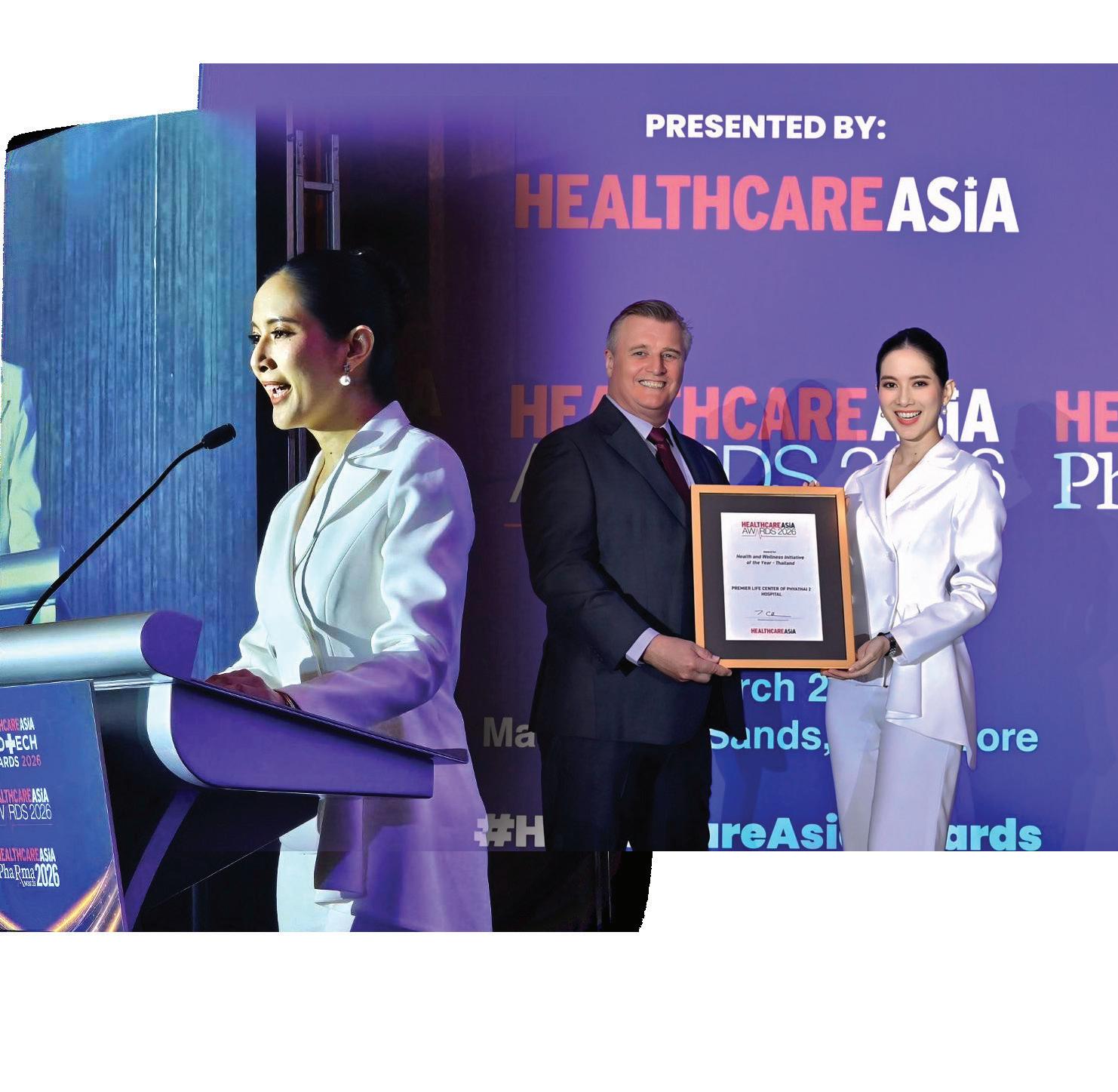
Award-Winning Preventive & Wellness Care in Bangkok
Premier Life Center at Phyathai 2 International Hospital
Recipient of Health & Wellness Initiative of the Year - Thailand at the Healthcare Asia Awards 2026.
Premier Life Center offers comprehensive preventive and personalised health programs intergrating advanced diagnostics, genomic analysis, and lifestyle evaluation to support long-term health and wellbeing.
Suntory PepsiCo Thailand and PepsiCo Thailand Transform “Waste” into “Value” Through the “Waste Nothing” Campaign
Suntory PepsiCo Beverage (Thailand) and PepsiCo Services Asia (“PepsiCo Thailand”) leveraged proceeds from the sale of recyclable waste under the third-year “Waste Nothing” campaign at the 15th Pepsi Presents Big Mountain Music Festival, to support field equipment for Khao Yai National Park. The initiative reflects a holistic waste management approach that transforms “waste” into “value” and gives back tangible benefits to the source community.
Wipawan Tasanapreechachai, Vice President, Corporate Affairs, Suntory PepsiCo Beverage (Thailand), said, “This initiative reflects our corporate values of ‘Growing for Good’ and ‘Giving Back to
Yai Tourism Association for placement across community areas. The initiative aims to promote the collection of clear, colorless PET bottles for recycling into new bottles through the Bottle-toBottle Recycling process.
A total of 8,787 kilograms of waste was successfully segregated for recycling or appropriate utilization. Beyond reducing landfill waste, the initiative helps deliver value back to the Khao Yai area across environmental conservation, community, and public participation dimensions.
Welcome New Members May 2026
CORPORATE MEMBERS
A science-driven company advancing agricultural productivity and sustainable food systems in Thailand and the region. Through fermentation technology, enzymes, yeast cultures, and nutritional solutions, it enhances animal health, feed efficiency, and performance across livestock and aquaculture. Guided by quality, innovation, and sustainability, Alltech collaborates with farmers, industry partners, and research institutions to build resilient food systems and deliver longterm value across the Thai agricultural landscape.
As part of Jabil's global manufacturing and supply chain network, the Thailand operations deliver end-to-end capabilities including design support, precision manufacturing, assembly, testing, and logistics. Serving sectors such as electronics, healthcare, automotive, and industrial markets, the company leverages advanced automation and quality systems to meet complex production demands. Guided by sustainability and operational excellence, Jabil collaborates across global teams to build resilient supply chains and create long-term value for customers, partners, and communities.
Affinity Program
THE CALM AFTER THE STORM
Sometimes, learning doesn’t need a spotlight. It begins quietly, with focus. Year 3 students rode straight into the eye of the storm as they explored Ernest Shackleton’s Endurance expedition. When the students were ready to note their thoughts, they were bursting with ideas and genuine emotion. Learning comes alive through experience.
M e m b e r s m u s t p r e s e n t A M C H A M m e m b e r c a r d
t o r e c e i v e p r o m o t i o n s o r d i s c o u n t s . I f y o u h a v e
n o t r e c e i v e d y o u r m e m b e r c a r d , p l e a s e c o n t a c t
t h e A M C H A M o f f i c e . F o r m o r e i n f o r m a t i o n
p l e a s e v i s i t w w w . a m c h a m t h a i l a n d . c o m .