Equestrian Traveler’s COMPANION

What Members Are Saying About Recent Services
"I was very surprised at the level of professionalism and it had the feeling of a one on one service. A thousand times better than AAA."
— Kellie M, CA (April 26)
"I have never had a better service than US Rider. The most valuable service is that I'm covered whether I'm pulling a horse trailer, travel trailer or in a private car. I've been a member for years and will continue. Thank you for providing this service, it is invaluable in my opinion!"
— Shelia C, OK (May 26)
"Such a relief to know help was on the way without stressing who to call or what to do. My camping trip was not ruined. Thank you, USRider."
— Nancy S, GA (May 26)
"Perfect Service. Kind interactions with efficient people who know their jobs and demonstrate the ability to fulfill the promised (by membership) services efficiently. Love US Rider!"
— Linda S, IA (May 26)
"Hailey was great with communications. She found a tow company (my car this time) and they were able to arrive within half an hour. She checked up on me and made sure things were safe and that I had the help I needed! Love you and the service you’ve provided for me since being a member!!"
— Rita H, IN (May 26)
"Hailey was amazing to work with!!! She went far and beyond my expectations. Her fast and expert service helped me in my time of need. I can't put enough emphasis on how I personally would value her as an employee. I have recommended USRIDER to all of my Equine friends!"
— Jan C, TX (May 26)
Our 24/7 nationwide plan covers everything from lockouts and jump starts to towing your vehicles, trucks, and trailers.
Travel with confidence knowing USRider will get you back on the road safely and efficiently, should unexpected vehicle or trailer problems occur.
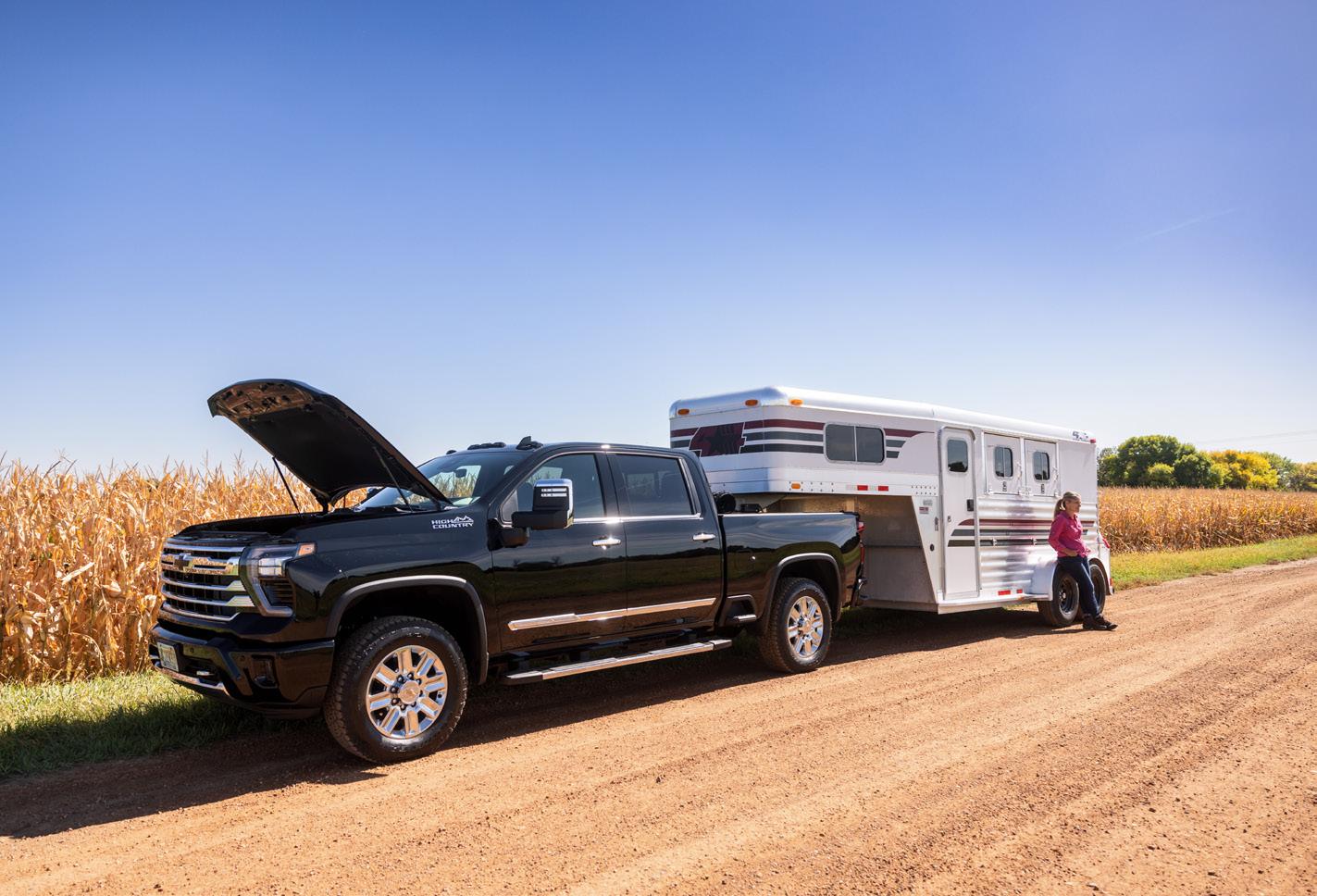
Keep Your Helmet Cool
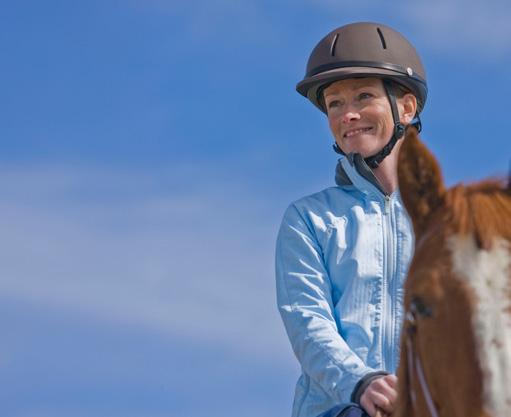
After your summer rides, do you stash your helmet in your vehicle’s trunk or in your trailer’s tack room? Or, at your home barn, do you perch your helmet on a fence post or place it on a patch of grass? It’s great to keep your helmet handy, but note that helmets aren’t made to withstand high heat. Don’t ever throw your helmet in a car trunk, where temps can reach more than 160 degrees Fahrenheit—too intense for helmet materials. Intense heat can cause your helmet’s structures to break down, compromising its protection capabilities. To preserve your helmet’s integrity, keep it out of the sun when it’s not in use, and store it in a tote or carrying bag where the fabric can wick moisture from the helmet and keep it dry.
— Heidi Melocco
TRAILERING
Beat the Heat
Help keep your traveling horse cool and comfortable this summer with these expert trailering tips. Stay tuned. A properly tuned engine runs cooler than a poorly tuned one.
Maintain your tires. To avoid blowouts, check air pressure in all tire including spares—while the tires are cool, before you travel.
Keep spare tires handy. Carry two spares for your trailer and a spare for your tow vehicle. Make sure all tires are in good condition and that they’re properly inflated. Then, if you do have a breakdown, you can get back on the road quickly.
Travel when cool. Avoid trailering during the warmest hours of the day.
Use a map app. Plan your route ahead of time using a map app on your mobile device to avoid getting lost. Extra time in a hot trailer can put your horse at risk for heat stroke.
Watch for dehydration. Carry a bucket, and two to three gallons of drinking water, per horse. If your horse won’t drink in the trailer, offer him water when you stop for fuel or at a rest area. Regularly check your horse’s capillary-refill time to evaluate hydration. You can do this through a trailer window. (For how to check capillary-refill time, click here.)
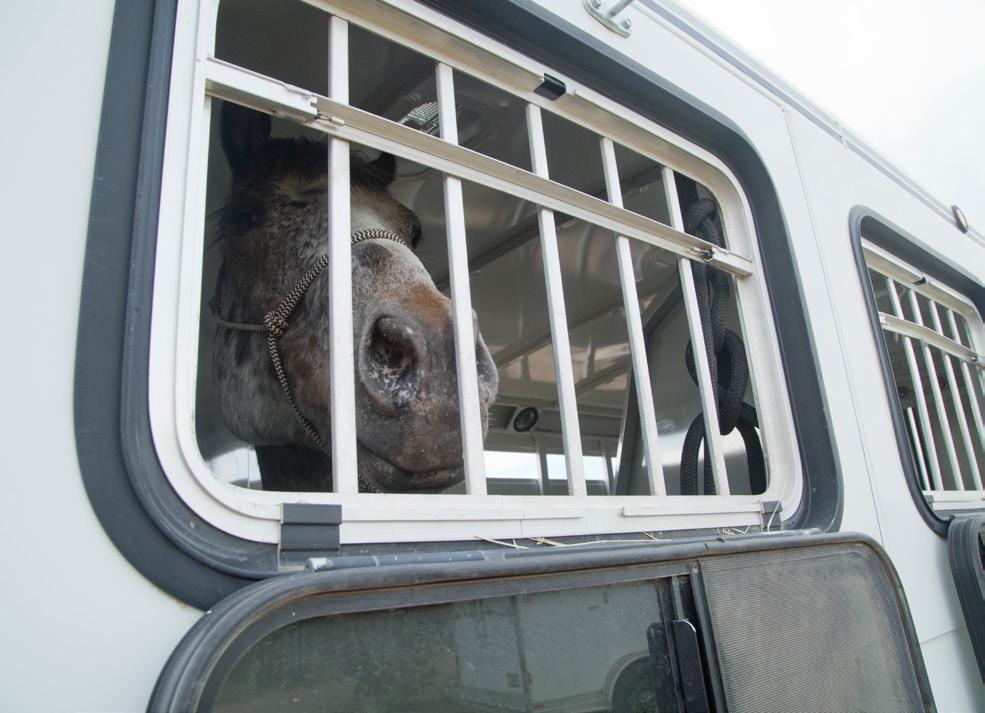
Vent the trailer. Promote airflow by opening all trailer vents, and making sure they’re unobstructed. However, don’t allow your horse to stick his head out the window—
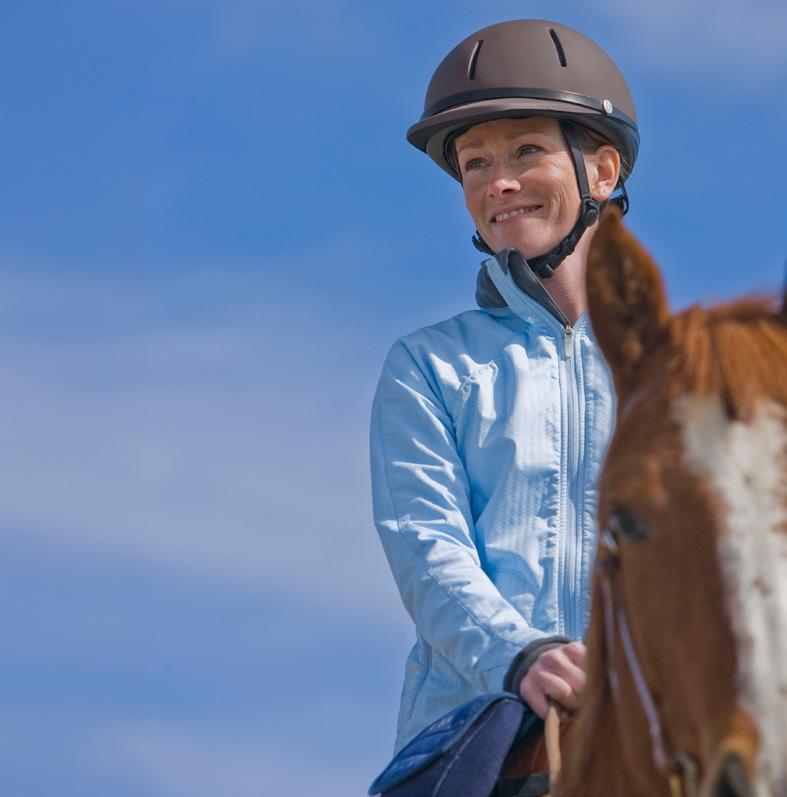
After your summer rides, keep your helmet out of the sun to preserve its integrity.
this could lead to serious eye injuries from bugs and debris. If you become stuck in traffic, provide as much ventilation in the trailer as possible without unloading your horse.
Monitor traffic conditions. A traffic accident could cause you to spend many hours trapped on the interstate. To help avoid getting stuck in traffic, use your mobile device’s travel and weather apps. Invest in a wifi hot spot so you have a continuous connection on the road. Park in the shade. Park in shaded areas and/or areas with some air movement.
— Rebecca (Gimenez) Husted, PhD
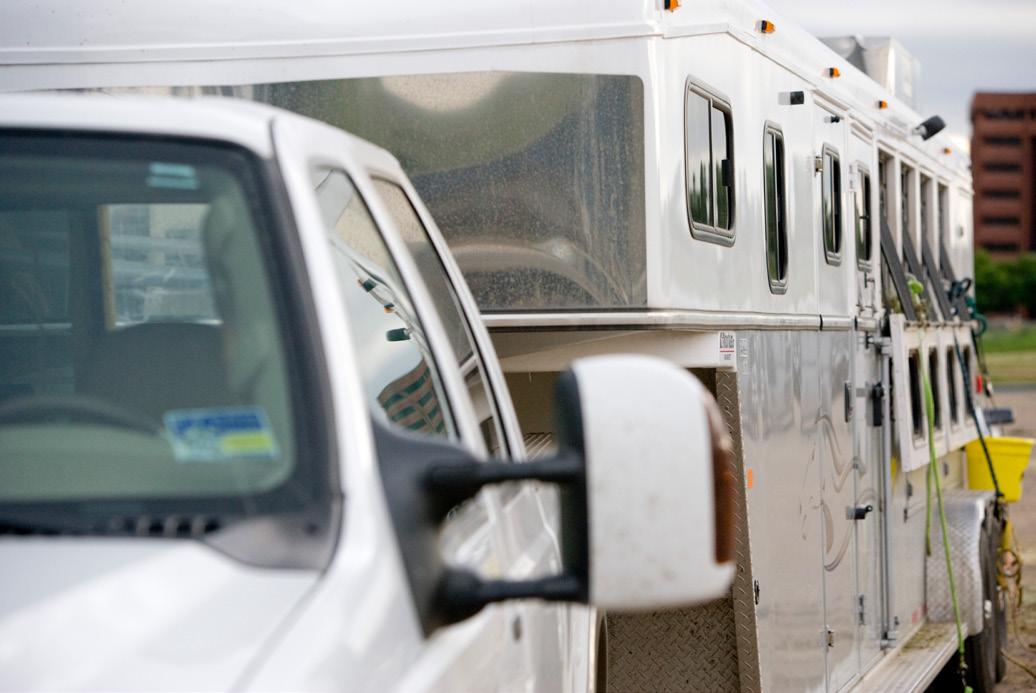
Promote airflow by opening all trailer vents, and making sure they are unobstructed. However, don’t allow your horse to stick his head out the window — this could lead to serious eye injuries from bugs and debris.
PHOTO BY HEIDI MELOCCO
PHOTO BY HEIDI MELOCCO
USRider Equestrian Motor Plan FAQs
Are you new to USRider—or thinking about becoming a USRider Member? Here’s a rundown of answers to frequently asked questions regarding USRider Equestrian Motor Plan Member benefits. (For more information, and for details regarding USRider’s Classic and Premier membership plans, go to usrider.org.)
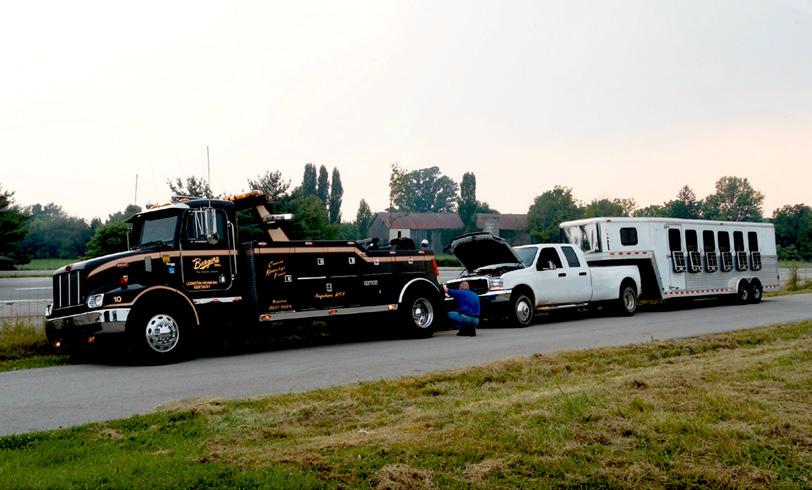
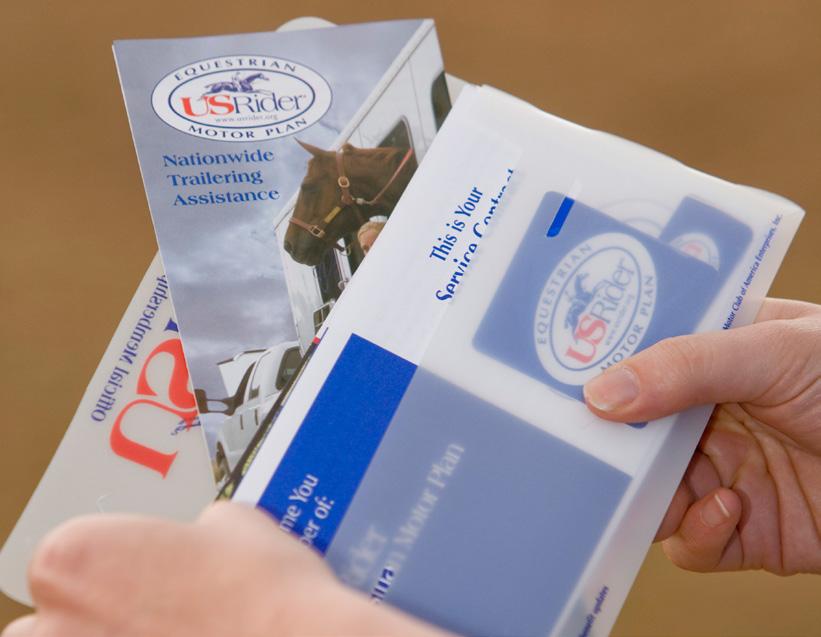
Top: There’s no set limit on the number of disablements per year; however, USRider reviews all unusual frequency of claims based on the average number of Member claims. Bottom: USRider membership is for the named Member and their horses.
HEALTH
Q. How many disablements am I allowed each year?
A. There’s no set limit on the number of disablements per year; however, in order to maintain fair and reasonable membership dues for all Members, USRider reviews all unusual frequency of claims based on the average number of Member claims. Usage of services considered excessive may result in limitations on the number of claims allowed, nonrenewal, or cancellation of membership. Excessive use of the plan usually indicates a vehicle is in need of maintenance or repair.
Q. Does USRider cover me only when I’m towing my horse trailer?
A. No, we cover you, as the Member, in any noncommercial, roadworthy vehicle you’re in, regardless of whether you’re towing a horse trailer—or whether you’re driving. The only vehicle(s) we don’t cover are motorcycles, mopeds, and tractors.
Q. Does USRider cover my truck and trailer?
A. Yes and no. We cover the truck and trailer when the Member is present. USRider membership follows the Member—not a particular vehicle or trailer.
Q. Does this membership cover any member of my family?
A. No. USRider membership is for the named Member and their horses. Eligible family Members, such as dependent children, and a spouse or domestic partner, may be added to any plan as an Associate Member.
Q. What if my friend or employee is driving my rig?
A. At USRider, we cover our Members in any noncommercial vehicle they’re traveling in, even if they’re not driving, but the Member must be present for coverage to be applicable.
Hot-Weather Feeding
You can help your horse stay cool this summer by feeding strategically at home and on the road. Grass is the ideal hot-weather feed, because of its high water content. If your horse doesn’t have enough grass available for it to be his main food, try tempting him with carrots, celery, apples, watermelon, squash, or salad greens added to a mixture of soaked beet pulp and wheat bran. Start with small meals if your horse isn’t used to these feeds. Add about 1 teaspoon of salt per pound of the mixture to improve appeal and get that needed salt into your horse. Note: It’s normal for appetites to drop off during periods of extreme heat. If this happens, don’t panic. Your horse will start eating again when he feels more comfortable.
— Eleanor M. Kellon, VMD

Feed your horse fruit with high water content to help keep him hydrated this summer.
PHOTO BY HEIDI MELOCCO
PHOTO COURTESY OF USRIDER
Prepare for the Worst
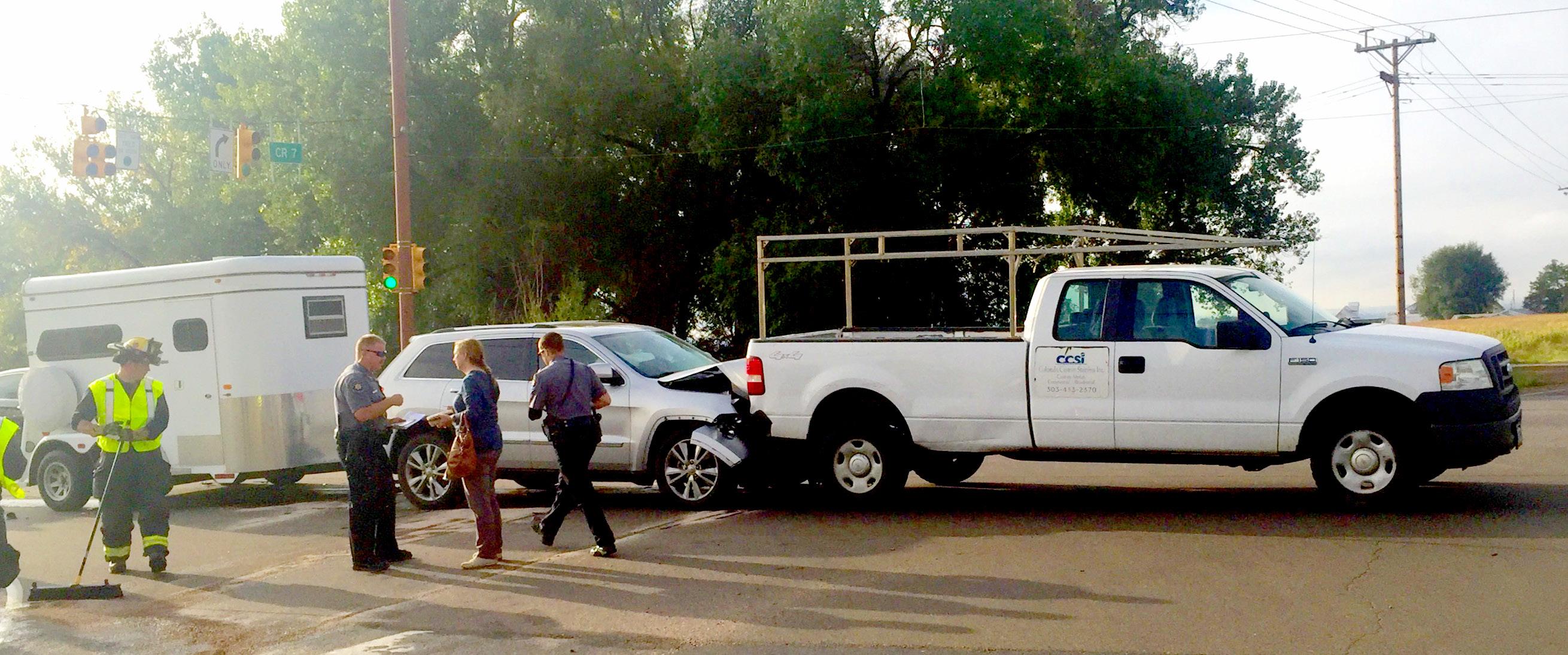
Trailering emergencies, such as a traffic accident, can happen to anybody at any time. Whatever the emergency, you can greatly influence the outcome by being prepared.
In case you become incapacitated, enter emergency numbers into your cellphone’s contacts under the initials “ICE horse.”
When it comes to trailering your horse, keep in mind Zig Ziglar’s sage advice: “Expect the best. Prepare for the worst.” Trailering emergencies can happen to anybody at any time. Whatever the emergency, you can greatly influence the outcome by being prepared every time you load your horse in your trailer, whether for a trip across town or across the country.
Here, I’ll give you seven types of emergency situations you might encounter while trailering your horse. For each situation, I’ll tell you how to prepare so you can be ready when it happens. By taking the precautions recommended here, you’ll be much more confident in your ability to handle each type of situation until help arrives.
Emergency#1: You’re involved in a traffic accident.
How to prepare: An accident can happen at any time. Lessen this risk by being the best and most responsible driver you can be. Enroll in a driving course. Enhance your control by properly setting up your rig, making sure your tow vehicle is rated to tow the weight of your loaded trailer and using the proper hitch. Carry spare halters and lead ropes in your vehicle or trailer so you’ll be prepared if—heaven forbid—your horse gets loose on the highway.
Emergency #2: You and/or your passengers become injured.
How to prepare: Store a human first-aid kit in your tow vehicle to treat minor injuries. Take first-aid and cardiopulmonary resuscitation (CPR)
PHOTO BY HEIDI MELOCCO
courses so, if you’re uninjured, you’ll be able to administer first-aid until help arrives.
Emergency #3: You become incapacitated. How to prepare: In extreme situations, you may become incapacitated. Help first responders handle your horse by posting a visible notice in your trailer listing names and numbers to call for help. Also, enter emergency numbers into your cellphone’s contacts under the initials “ICE horse.” (“ICE” stands for “In Case of Emergency.”)
Emergency #4: Your horse becomes injured. How to prepare: Even if your horse is a seasoned traveler, he can still hurt himself in the trailer or while you’re away from home. Wrap your horse’s legs, and consider other protective equine gear during travel to reduce the possibility of injury. Make sure your trailer is safe. Check for any sharp edges or protrusions inside that could cause injury. Use only removable interior dividers, bars, and center posts, in case you need to get him out of a trapped situation. Carry a well-stocked equine first-aid kit so you can tend to his injuries. Ask your veterinarian to teach you emergency-treatment techniques.
Emergency #5: You get a flat tire.
How to prepare: Have a spare tire that’s in good condition so you’ll be able to get back on the road quickly in the event you get a flat tire. In fact, carry at least one spare tire for both your tow vehicle and trailer. Then know how to change flats on both.
Emergency #6: Your tow vehicle breaks down.
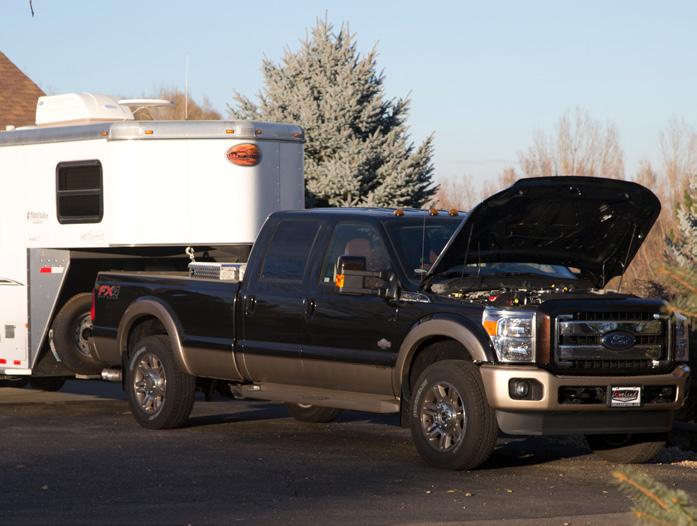
How to prepare: Lessen the chance of a roadside vehicle breakdown with a pre-trip check of fluid levels and tire condition, and by following a prescribed maintenance schedule.
Emergency #7: You’re stuck in a traffic jam.
How to prepare: If you get stuck in a long traffic jam, especially in hot weather, your horse could become stressed and agitated, and is even at risk for a heat stroke. Check reliable map apps to keep track of problem spots along your route and for suggested alternate routes. Keep 10 to 20 gallons of water on board at all times to help keep your horse cool. Offer him water to drink and, when it’s safe, rinse him off. If you need to, turn around, and head back home. USR
— Neva Kittrell Scheve (equispirit.com)
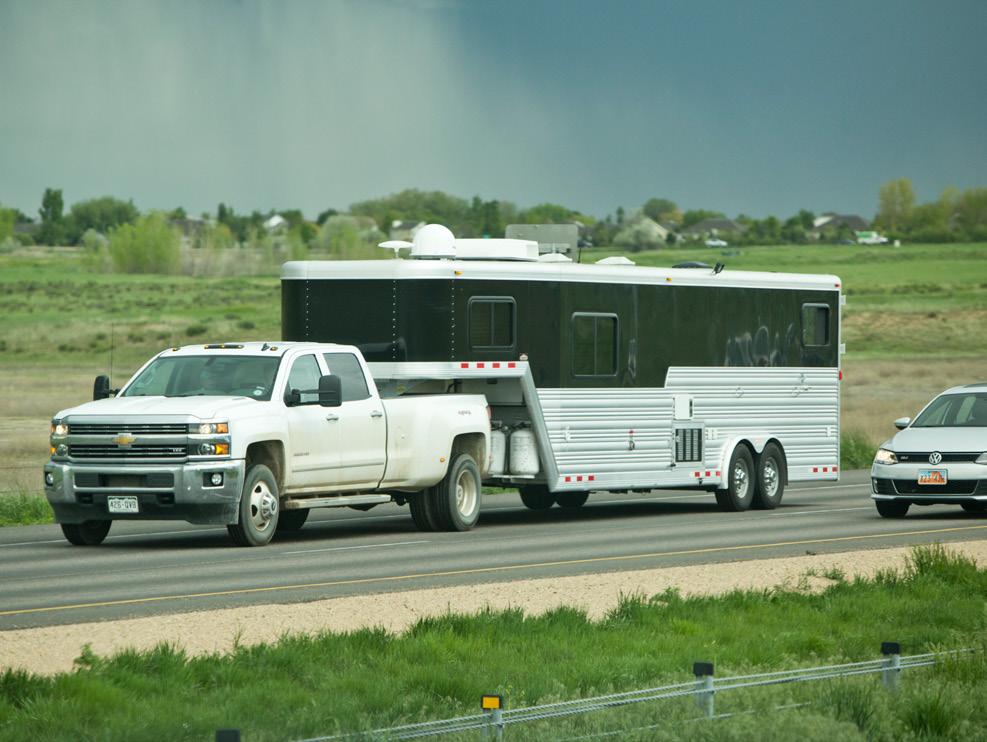
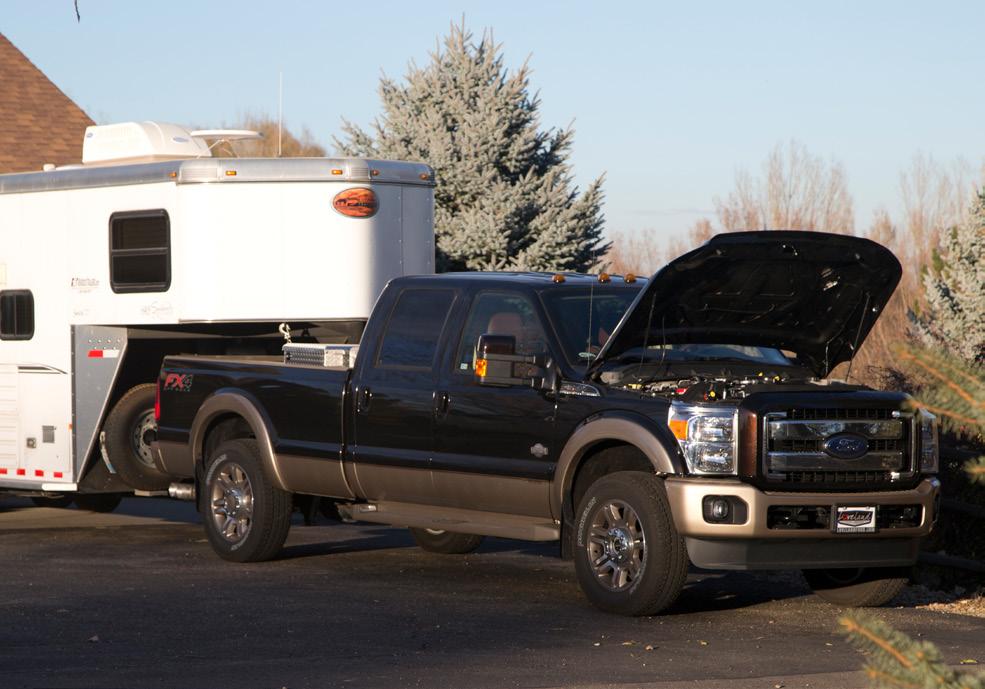
If you get stuck in a long traffic jam, especially in hot weather, your horse could become stressed and agitated, and is even at risk for a heat stroke.
An accident can happen at any time. Lessen this risk by being the best and most responsible driver you can be.
Lessen the chance of a roadside vehicle breakdown with a pre-trip check of fluid levels and tire condition, and by following a prescribed maintenance schedule.
PHOTO BY HEIDI MELOCCO
PHOTO BY HEIDI MELOCCO
PHOTO BY HEIDI MELOCCO
The Ride Inside
Here are seven ways to control your trailer’s interior environment to enhance your horse’s safety, comfort, and well-being.
By Tom Scheve and Neva Kittrell Scheve
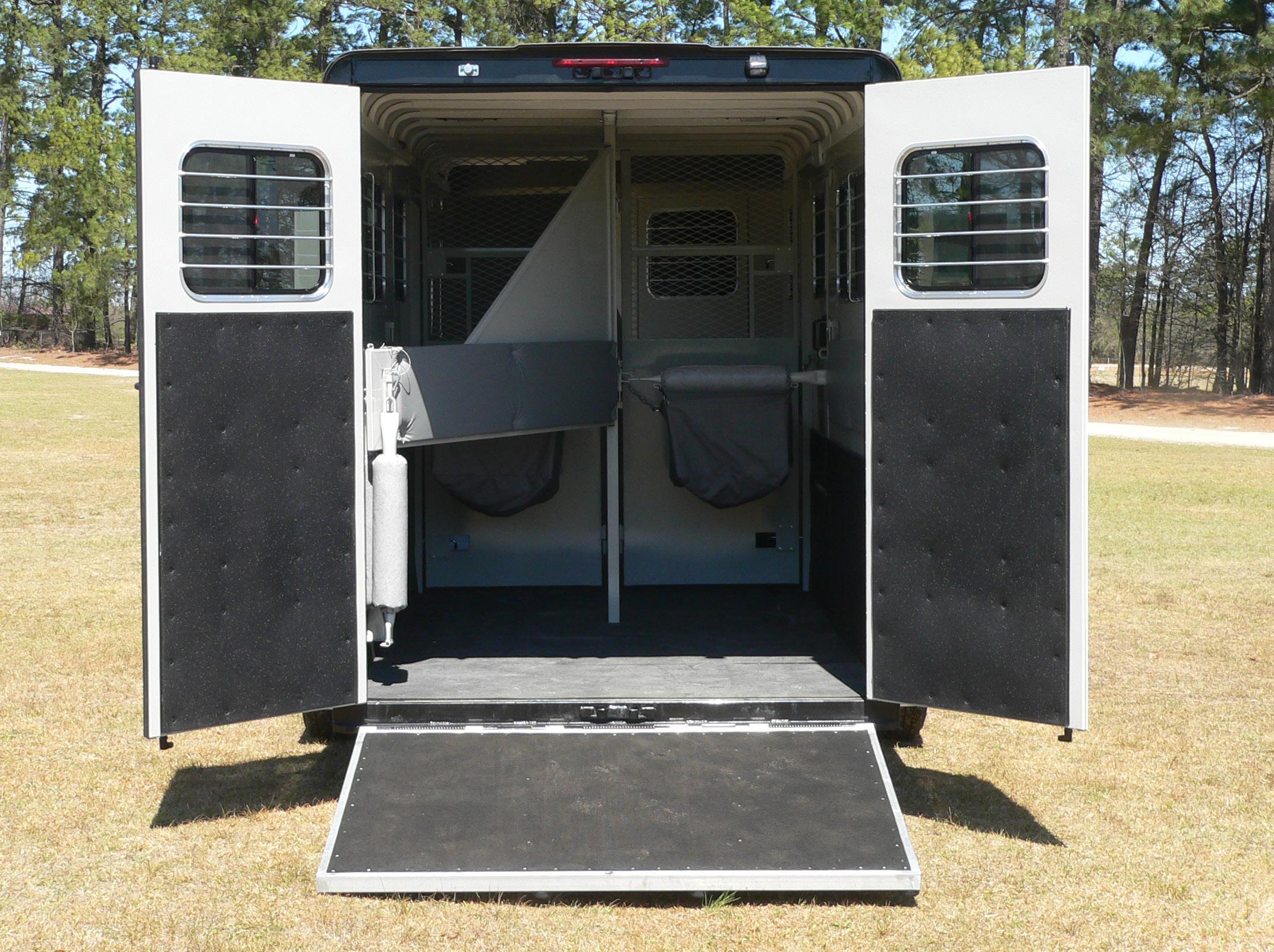
A light-colored, well-vented, comfortable trailer will not only invite your horse in and enhance his well-being on the road, but can also help keep him healthy and safe.
As you shop for a trailer, consider the interior environment. Get inside. Close the doors and windows. Is it quiet? Is it too hot? Too drafty? Is it dark? Can you change the environment for the better? Can you open vents and windows if it’s too hot? Can you easily keep out drafts without limiting ventilation?
Your trailer’s interior environment matters to your horse. A light-colored, well-vented, comfortable trailer will not only invite him in and enhance his well-being on the road
but also can help keep him healthy and safe.
Here, we’ll give you seven ways you can control your trailer’s interior environment: (1) insulate your trailer; (2) evaluate the vents; (3) install safe windows; (4) consider interior color; (5) consider exterior color; (6) add interior lighting; (7) add a fan. Here’s a closer look.
1. Insulate Your Trailer
Insulation keeps the outside out and the inside in. An insulated trailer will be cooler in the summer and
warmer in the winter. Outside noise will be deadened, and your horse will be more protected from highway sounds. All these factors will enhance his experience inside the trailer.
Insulation is highly recommended for extreme temperatures, hot or cold. If your trailer has a dual wall, the insulation between the walls helps to keep out the heat, so the inner wall stays cool. Note that if the walls are insulated, it could be overkill to insulate the roof. The vents, windows, and doors will allow a nice airflow to keep your horse happy.
PHOTO BY NEVA KITTRELL SCHEVE
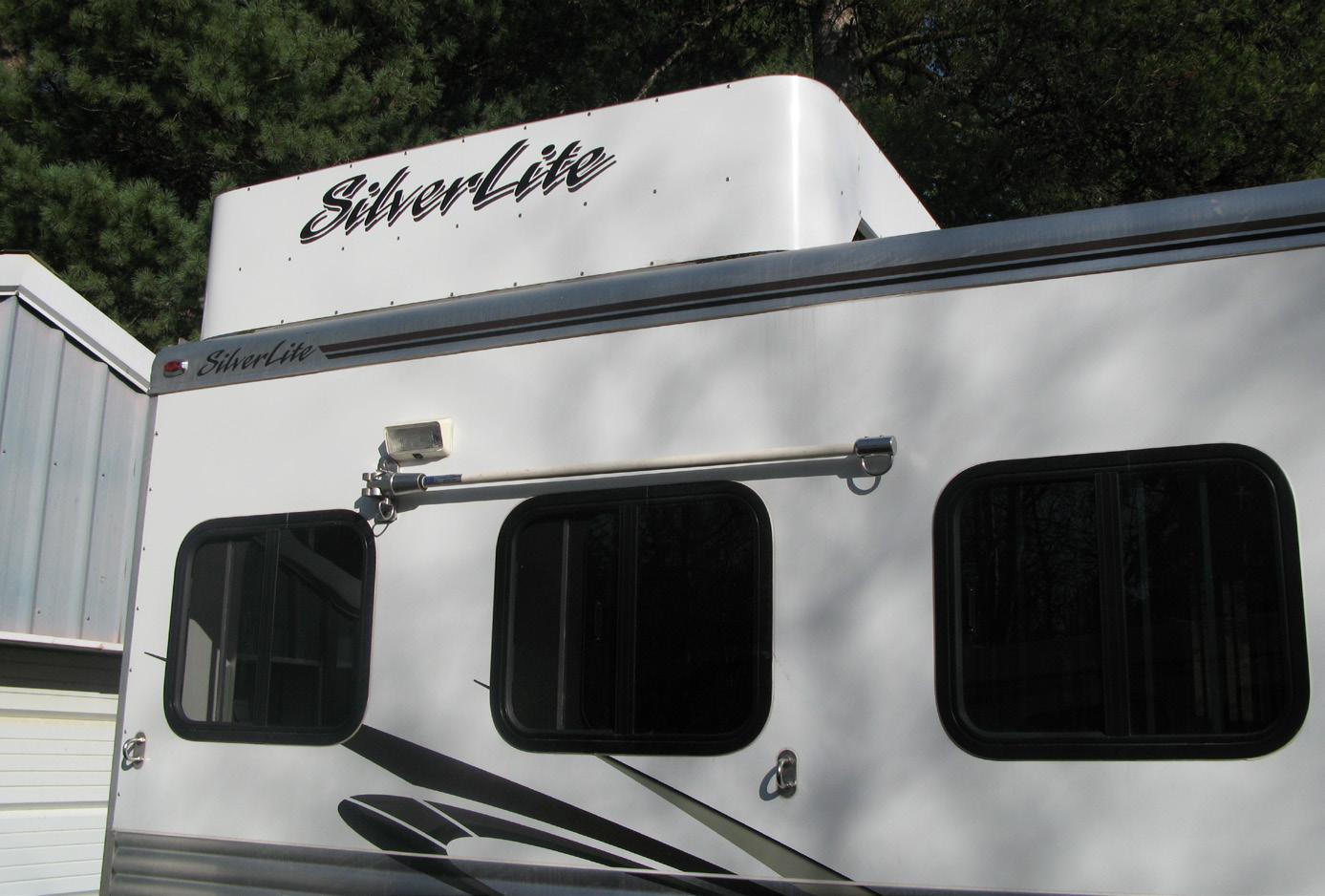
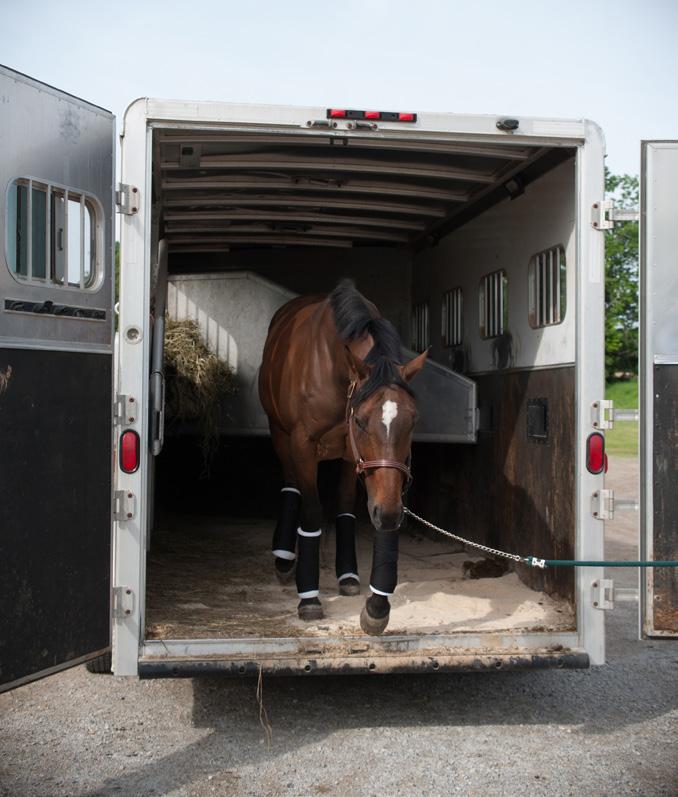
Bar guards protect your horse if he loses his balance and hits the window with his head, or rears and strikes the window with his hooves. Make sure the bars have no sharp edges.
In cold weather, insulation will help keep your horse warm. However, in cold weather, you need to manage an insulated trailer differently than you would a non-insulated one, or the benefits of insulation can be neutralized. Insulation allows heat to build up from your horse’s body heat, unless it can escape through a vent or window. If your trailer is highly insulated and fairly airtight, closing all the windows and vents in cold weather can cause the environment to become hot and steamy, and even damage your horse’s respiratory system. Even if the weather is very cold, it’s better to open the vents and some windows to allow airflow, then blanket your horse to keep him warm.
2. Evaluate the Vents
Your trailer’s ventilation system should be adequate enough to provide your horse with the cleanest environment possible. Vents are designed for this purpose, but they can’t do the job alone. Even if your trailer has lots of windows or open stock sides, roof vents serve a twofold purpose: They allow air flow to come into
the trailer from above, and they allow heat to escape out the vents when the trailer isn’t moving. An overhead vent for every horse in the trailer is the best option. The most efficient vents are two-directional. They can be opened toward the front to bring in more air or toward the back to bring in less air. This allows you to regulate the airflow that comes in from the top. Adjust the vents according to your speed and climate.
3. Install Safe Windows
Windows can enhance your horse’s comfort and health by providing light and temperature control. Light is important. A dark trailer is intimidating to your horse. As a prey animal, he fears he may become trapped by a predator. When your trailer allows light to enter, it becomes more inviting to him. An open stock trailer, with slats is also more inviting. Some enclosed trailers have optional extra side windows that light the trailer interior all the way around to the front. Windows also add more ventilation control, especially in insulated trailers. You can adjust the windows
in relation to the stall’s interior climate to get the optimum interior temperature. Most windows are made from either Plexiglas or tempered safety glass. Plexiglas windows tend to expand and contract, so they might not easily open and close in extreme heat. Bus-type windows are most common. However, in the trailer’s nose of a trailer, a crank-out window is more watertight against driving rain. Windows in the horse area should close from the outside so you don’t have to squeeze into your trailer with your horse to close them.
Bar guards protect your horse if he loses his balance and hits the window with his head, or rears and strikes the window with his hooves. Make sure the bars have no sharp edges. Look for round bars that are recessed into or placed flat against the window opening. Bars should be spaced closely enough that your horse can’t catch a hoof in them. Make sure the windows are sealed around the frame to keep excess moisture out of the inner walls and to keep leakage at a minimum.
Screens keep outside debris from
Windows can enhance your horse’s comfort and health by providing light and temperature control. Windows also add more ventilation control, especially in insulated trailers.
PHOTO BY KENT AND CHARLENE KRONE
PHOTO BY
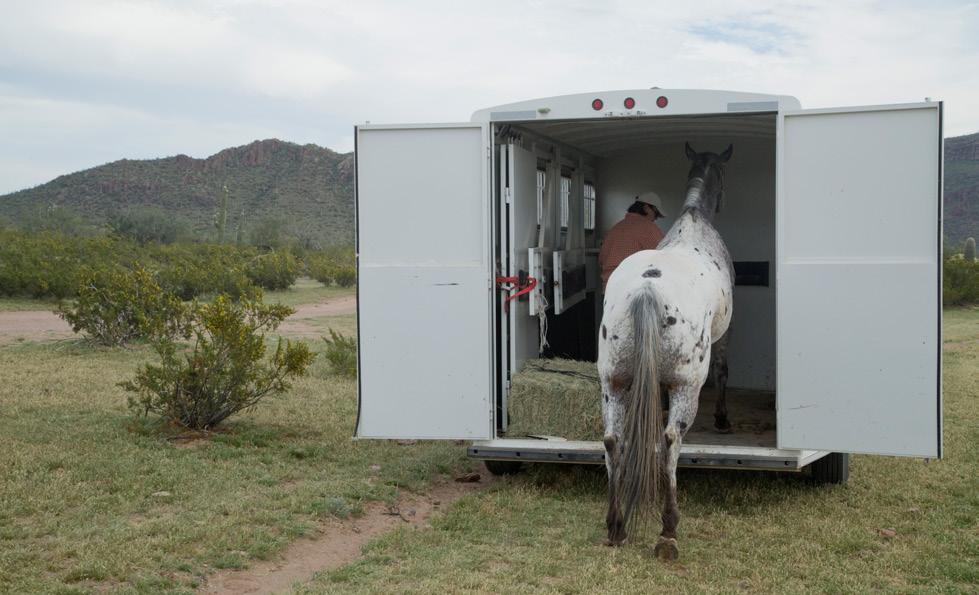
In our experience, when horses are loaded into a trailer with a light-colored interior, no matter what size or style, they walk in by themselves without balking.
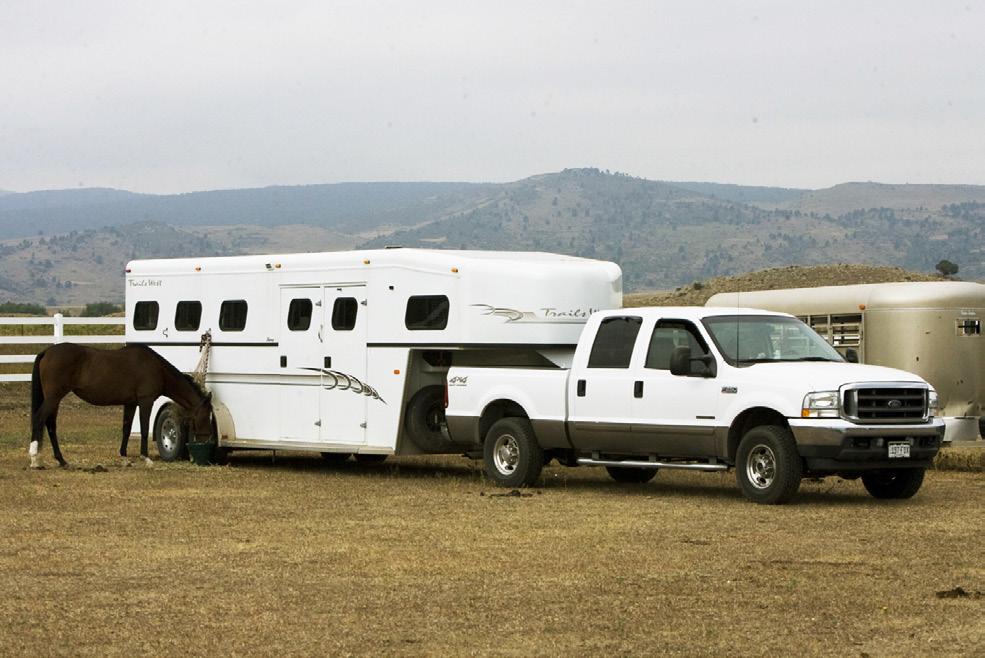
Light exterior colors reflect light and heat, which makes the surface cool. Your horse will appreciate a light exterior color, especially on hot, sunny days.
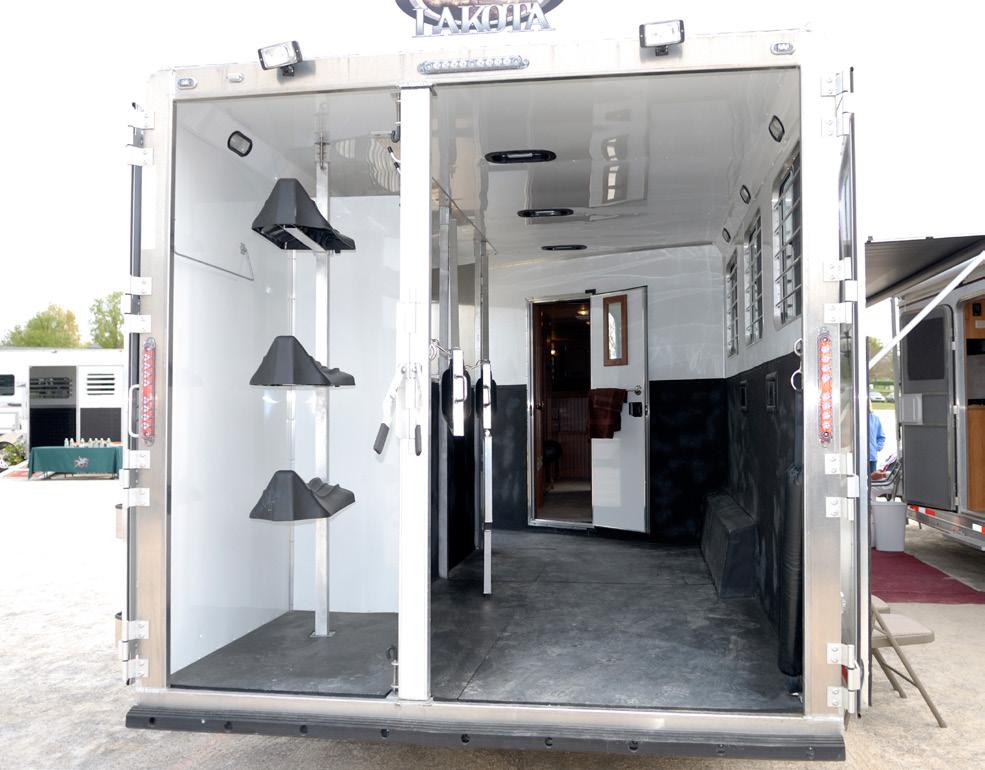
Interior trailer lights can be helpful when you load your horse on dark mornings. Interior lamps should be flat against the wall or ceiling, where your horse can’t bump into them.
blowing into a moving trailer; road debris can harm your horse’s eyes and lungs. Screens also discourage wasps and bees from making nests inside your trailer when it’s stored with the windows open.
4. Consider Interior Color
A trailer with a light-colored interior (and lots of windows) is inviting to your horse. Horses have very good night vision, but their eyes take longer than ours to adjust to light changes. A dark trailer looks like a dark, hollow cave to him. There could be a mountain lion in there! In our experience, when horses are loaded into a trailer with a light-colored interior, no matter what size or style, they walk in by themselves without balking. Horses seem to especially like light gray. Light gray is probably calming because it’s light, but not glaring. We’ve found that white is an inviting color, too.
5. Consider Exterior Color
It looks so good to have a matching truck and trailer. Your personality shows through your choice of color and design for your rig. Upscale, matching rigs have a look of success and prosperity. But there’s more to consider than how your trailer looks on the outside. You need to consider how your trailer’s exterior affects your horse’s comfort.
Dark exterior colors absorb light and heat, which makes the surface hot. If your trailer isn’t insulated, the hot metal greatly affects interior temperature. If your trailer is insulated, the insulation will help protect the inside wall from the outside wall, but still, the temperature will be compromised.
Light exterior colors reflect light and heat, which makes the surface cool. White is the most reflective and coolest exterior color but silver and pewter work as well. Your horse will appreciate a light exterior color, especially on hot, sunny days. If you’d like to match your trailer to your dark-colored truck, you can add custom striping. A light-colored roof is extremely important, no matter what color the rest of your trailer may be. Again, white is more reflective than any other color, including bare aluminum. Most new trailers have light-colored roofs, but not all, so be discriminating.
When buying a used trailer, you’ll have to shop carefully to find a light-colored or white roof. Note that some trailers have a color stripe between the top edge of the exterior walls and the bottom edge of the roof, but the roof itself is a light color. You might not be able to see this from the ground.
6. Add Interior Lighting
There are no disadvantages to interior trailer lighting, and
PHOTO BY CLIXPHOTO.COM
PHOTO HEIDI MELOCCO
PHOTO HEIDI MELOCCO
the advantages are many. Interior trailer lights can be helpful when you load your horse on dark mornings before leaving for a trail-riding destination or horse show. They’re also great for packing your trailer the night before. Interior trailer lighting is good for your horse, too. By turning on interior lights, the passing outside lights, such as traffic lights, are less disturbing to sensitive horses.
Interior lighting makes is easier to check on your horse at night. If your trailer doesn’t have living quarters or a dressing room, you might even be able to glance in your rearview mirror into your trailer’s front windows to keep an eye on your horse while driving.
Interior lamps should be flat against the wall or ceiling, where your horse can’t bump into them. A light
over each door is best. Each light will have its own switch. It’s convenient to have a master switch on the outside of your trailer that will turn the lights off and on together. You’ll need to plug your trailer into your tow vehicle for the trailer lights to work unless you have an optional recreational-vehicle style battery to run the interior lights when the trailer isn’t hitched. Be careful—if you accidently leave on your trailer lights, you can drain your tow vehicle’s battery and/or the RV battery.
7. Add a Fan
Oscillating interior fans can improve your trailer’s airflow. Fans are becoming more important as many parts of the country experience hotter climates. They can especially enhance equine comfort when your trailer car-
ries four horses or more, all producing body heat and warm breath. Fans are most useful when you’re moving slowly or stopped in traffic on a hot day. Locate the fans high enough to be out of harm’s way. Install bars or screens to protect the fans from the horses and vice versa. USR
Tom Scheve and Neva Kittrell Scheve are the authors of the nationally recognized textbook, The Complete Guide to Buying, Maintaining, and Servicing a Horse Trailer. Neva has also written two other horse-trailer books, including Equine Emergencies On The Road with Jim Hamilton, DVM. The Scheves present clinics at equine expos and promote trailer safety through articles in national magazines. They’ve designed and developed the EquiSpirit, EquiBreeze, and ThoroSport lines of trailers.
Wildfire!
Are you ready to evacuate your horse in the event of a wildfire? Help keep your horse safe with these expert tips.
By Rebecca (Gimenez) Husted, PhD
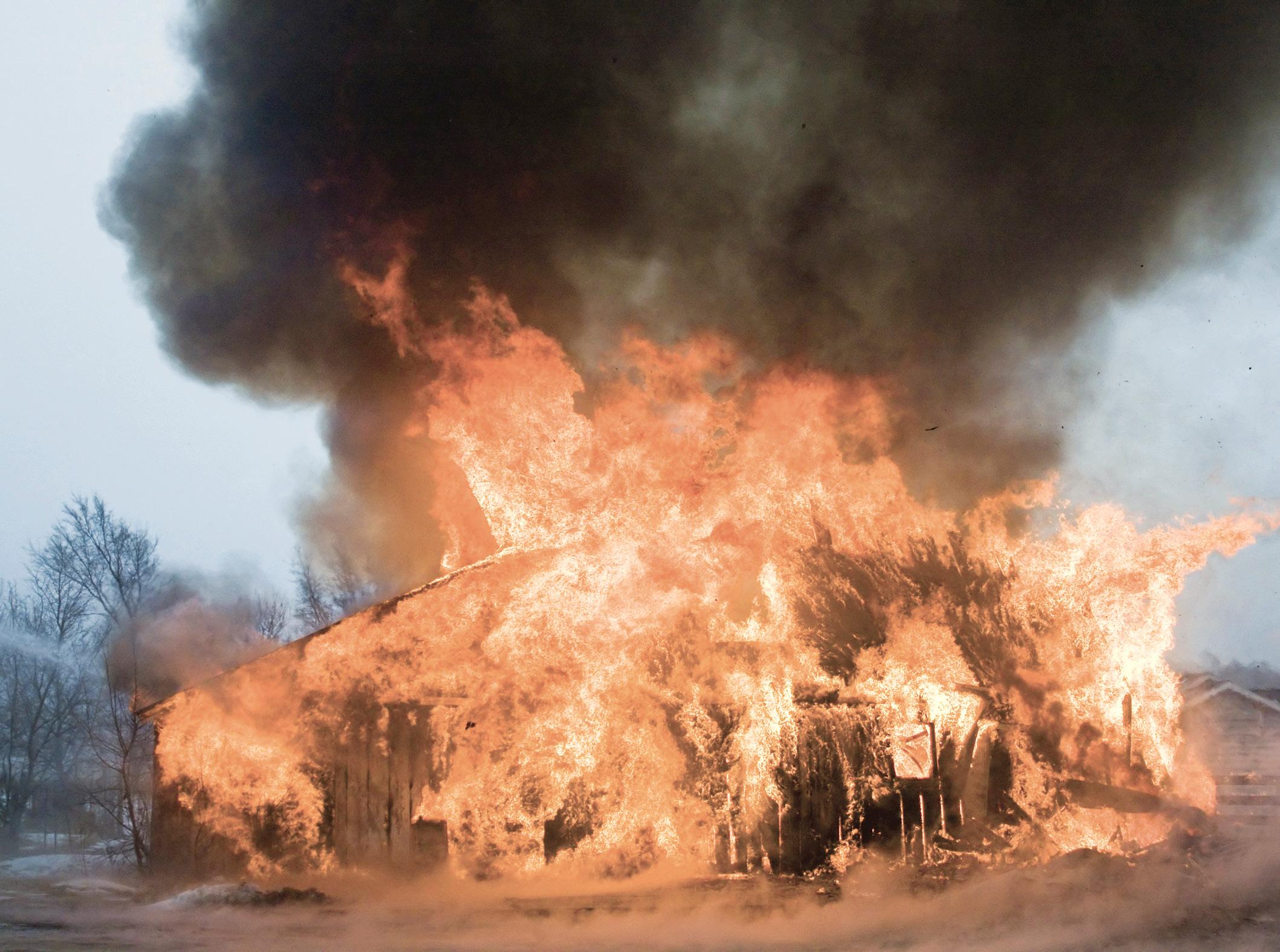
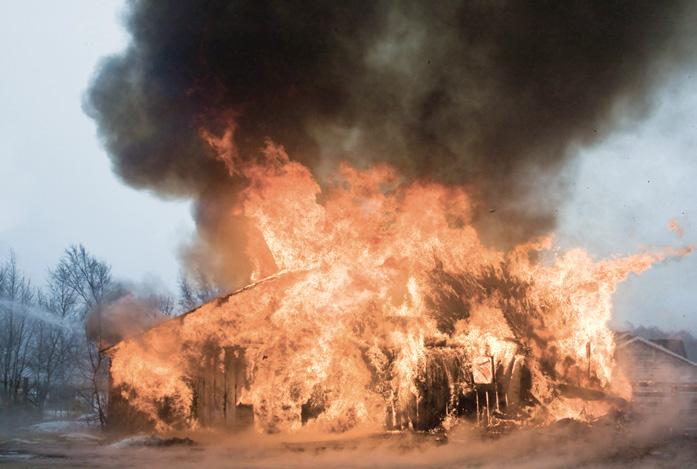
Summer is high fire season. If you live in an area at risk for wildfires, take action now to minimize a barn fire’s impact on your horse
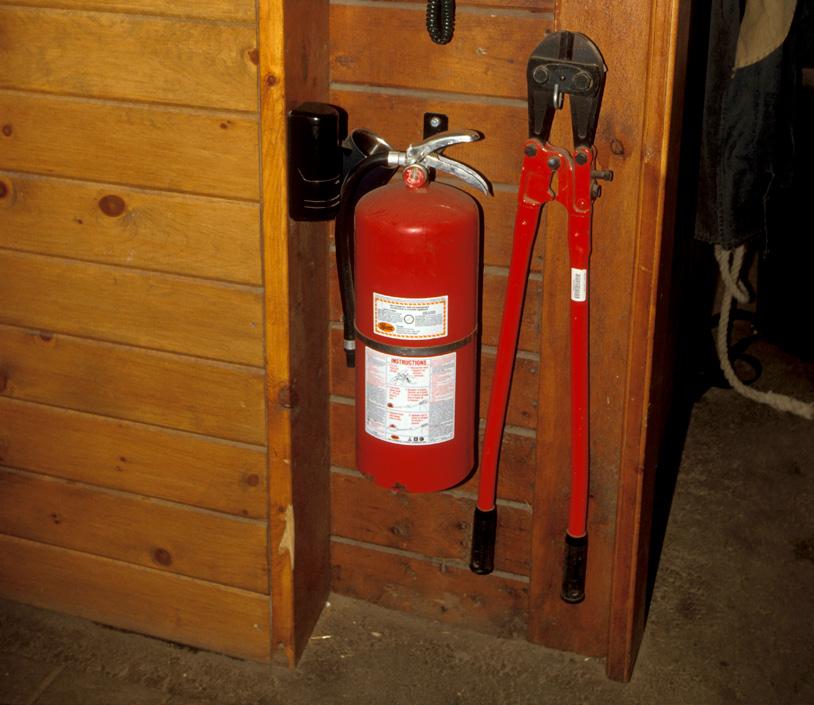
Make sure everyone in your horsehold knows the location of barn-fire response equipment, such as emergency phones, hoses, water sources, fire extinguishers, and heavy-duty cutters.
Summer is high fire season. A wildfire threatening your barn will lead to an evacuation order—and a lifesaving trailer trip for your horse. If you live in an area at risk for wildfires, follow these expert steps to minimize fire risk, prepare to evacuate, and react safely should a wildfire strike.
Minimize Risk
Here’s how to create defensible space and minimize the risk that a wildfire will put your stalled horse’s life in danger
• Gather information. Ask your insurer and local fire department personnel to walk through your barn to identify hazards and offer fire-risk-reduction suggestions.
• Design for fire safety. Design or retrofit your barn with fire safety in mind. Install open ventilation and frost-free hydrants. Create at least 33 yards of defensible space around each structure to allow fire crews to better protect your farm from falling cinders and direct flames. Invest in a fireproof roof, such as steel or tile, rather than one made from shake or composite
PHOTO BY CLIXPHOTO.COM
material. (For best practices, go to the Public Education page of the National Fire Protection Association’s website.)
• Invest in a sprinkler system. Install and maintain an automated sprinkler system. Although the initial cost can be high, note that many insurance companies will cut premiums by as much as 50 percent if you have an automated sprinkler. It’s also a depreciable expense.
• Minimize fire fuel. Store hay and bedding in a separate building, keep your barn clean and cobweb-free, and enforce a strict “no smoking” policy. Spray fire retardant to limit flame spread on existing wood surfaces.
• Landscape with care. Use xeriscaping (landscaping with drought-tolerant plants) and Firewise plants to reduce flammable vegetation around structures. (For more information, go to the Firewise page of the NFPA’s website.) Avoid landscaping with “kindling,” such as combustible mulch. Keep plants away from buildings.
• Store water. Store enough water to keep all horses hydrated should you lose power.
• Consider alternate power sources. Consider investing in generators or solar-powered sources to run pumps, appliances, and your sprinkler system in the event of a power loss.
Prepare to Evacuate
• Make evacuation plans ahead of time. If disaster strikes, you’ll save time and quite possibly your horse’s life. Here are the steps to take now.
• Plan evacuation transportation. How many trailer spaces do you have available? If you pack that fourhorse gooseneck trailer with four horses, where will you
put your pets and human family members? Would you have to make two trips to get the other horses in your barn?
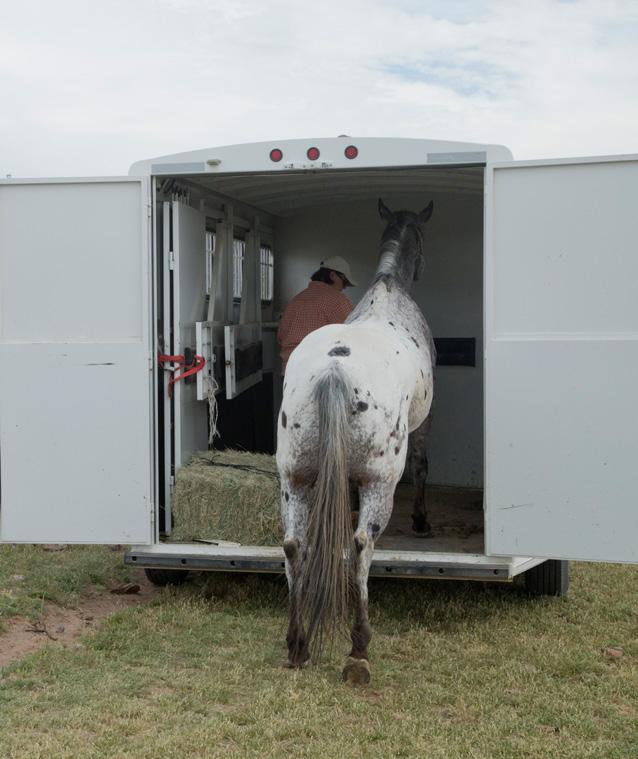
• Train horses to load. Train all horses on your property to load into the trailer, [I]no matter what[I]. Practice loading each horse alone. Practice when it’s hot, when it’s raining, and at night.
• Identify short-term boarding. Find an alternate place to board your horse during an evacuation, both in state and out of state.
• Ready your rig. Keep your truck fueled and hitched to your trailer with everything loaded, so you’ll be ready to go within a few minutes of an evacuation warning.
• Know equipment location. Make sure everyone in your horsehold knows the location of barn-fire response equipment, such as emergency phones, hoses, water sources, fire extinguishers, and heavy-duty cutters.
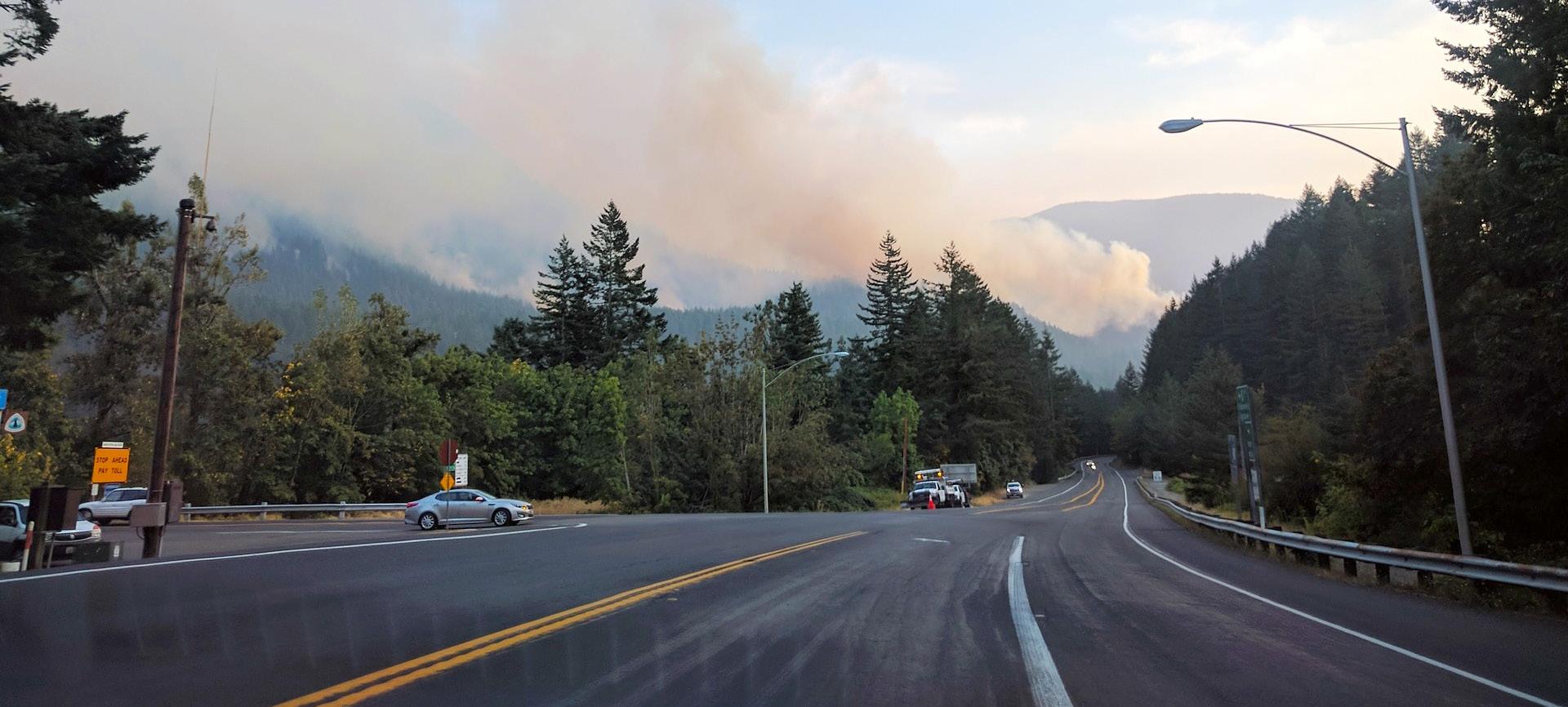
• Develop an escape route. Drive through every road in your neighborhood to identify escape routes. Keep in mind that officials may close off roads to enforce the evacuation order. Do you have more than one way to safety? Keep printed maps in every vehicle for reference in an emergency.
• Decide where to meet. Choose in advance a place where everyone involved in your household and horsehold will meet offsite, if you’re evacuated.
• Perform practice drills. Post your evacuation plan, and practice it with surprise drills. Vary the time of day and drill requirements. Practice catching all the horses and loading them into the trailer. Haul out a few miles, and return.
Drive through every road in your neighborhood to identify escape routes. Keep in mind that officials may close off roads to enforce the evacuation order.
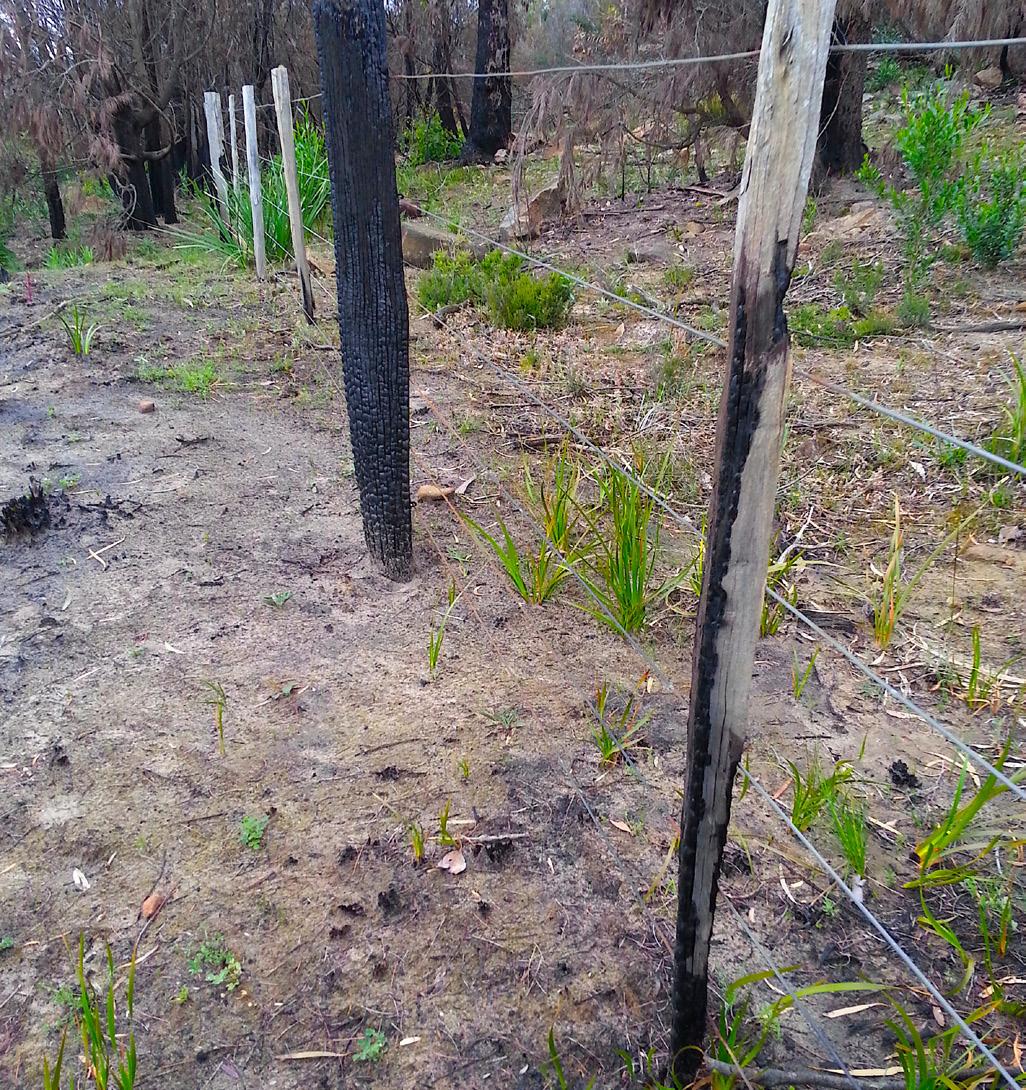
If flames are so close that they threaten your barn, windblown cinders will usually ignite a fire before the flame front actually gets to your property. Shown is a fence line after a wildfire blazed through.
React Safely
It’s not necessarily flames that will force an evacuation; it’s the thick black smoke filled with toxins. If flames are so close that they threaten your barn, windblown cinders (partially burned materials) will usually ignite a fire before the flame front actually gets to your property. These can be blown in from hundreds of yards or even miles away. If you need to evacuate, follow these steps to help keep your horsehold and household members safe.
• Avoid synthetics. Avoid synthetic (nylon or plastic) halters or lead ropes during a wildfire; they can melt, causing serious burns to horse or handler. Also avoid using nylon sheets, fly masks, and other synthetic tack or equipment. Very few horse-clothing items are fire retardant.
• Provide water and forage. If you have to evacuate, pack several days’ worth of water and forage in your truck or trailer for each horse.
• Microchip your horse. Microchip each horse now, in case you become separated from them, even if they’re at an evacuation facility. If you need to evacuate, affix on each horse’s halter a luggage tag with the horse’s name and your contact information. Prepare a luggage tag for each horse now.
• Stay back. Stay back, and let the firefighters work. Untrained people without respiratory protection, proper fire-protective clothing, and training should never enter
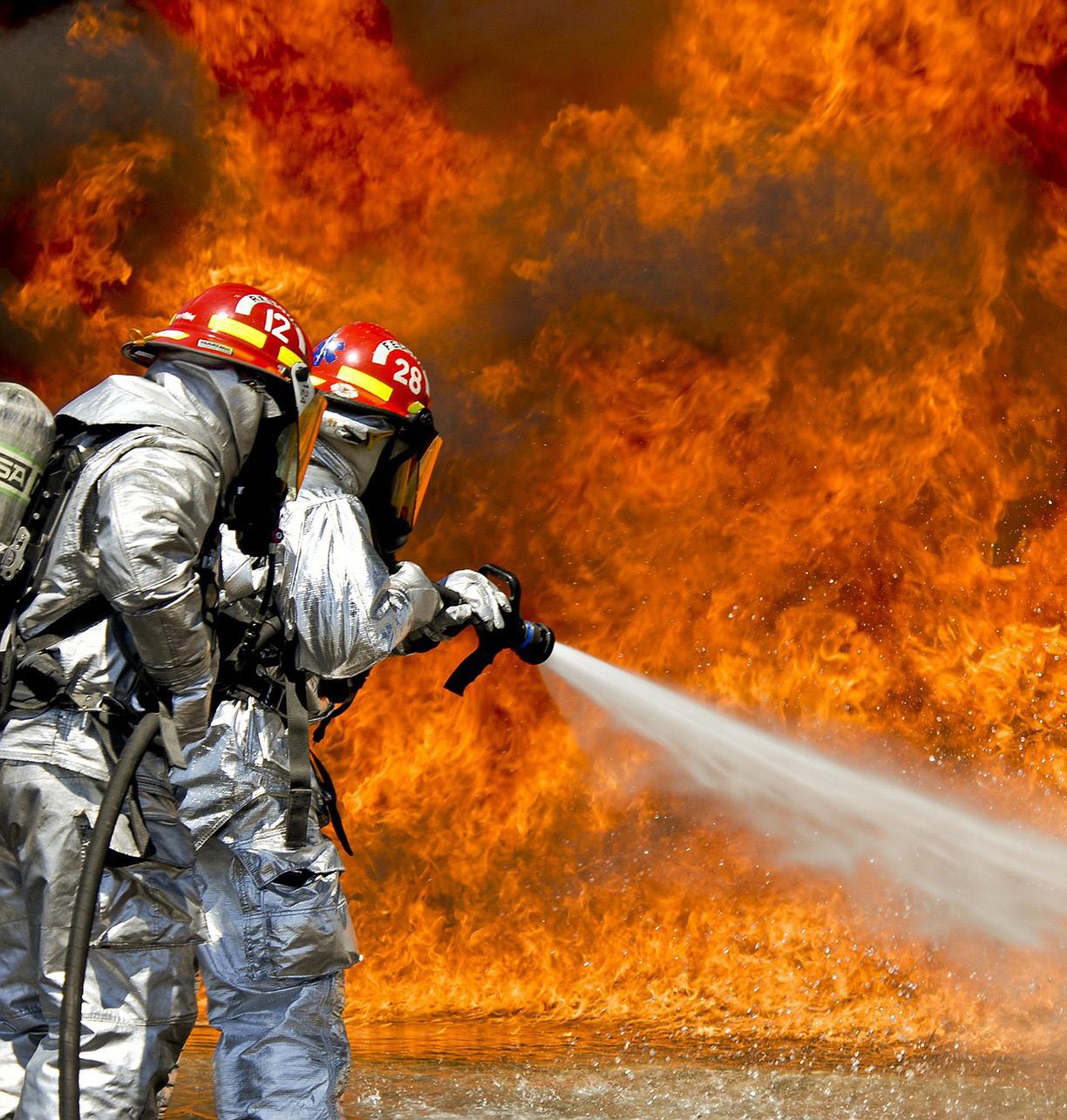
Stay back, and let the firefighters work. Untrained people without respiratory protection, proper fire-protective clothing, and training should never enter burning or smoking barn structures or zones.
burning or smoking barn structures or zones.
• Shelter in place. If you can’t evacuate your horse in time, have a shelter-in-place plan. Don’t leave your horse in your barn; house him in a pasture with all combustible vegetation removed or plowed under. Shelter-in-place measures are considered to be very dangerous and should only be used where there isn’t time to evacuate your horse to a safer place.
• Consult a veterinarian. Immediately after the emergency situation has resolved, consult a veterinarian for aftercare in case your horse suffers airway complications from smoke and toxic fumes. Toxins released during burning can severely damage your horse’s lungs and block the absorption of oxygen into the blood, causing asphyxiation. Flames don’t necessarily need to be visible for this to occur. After a fire, your horse might appear medically stable for days, then crash with severe pneumonia. USR
Rebecca (Gimenez) Husted, PhD (animal physiology), is president and a primary instructor for Technical Large Animal Emergency Rescue. A Major in the United States Army Reserve, she’s a decorated Iraq War veteran and a past Logistics Officer for the American Veterinary Medical Association’s Veterinary Medical Assistance Team. She’s an invited lecturer on animal-rescue topics around the world and a noted equine journalist.
PHOTO BY REBECCA GIMENEZ


How to Save Fuel
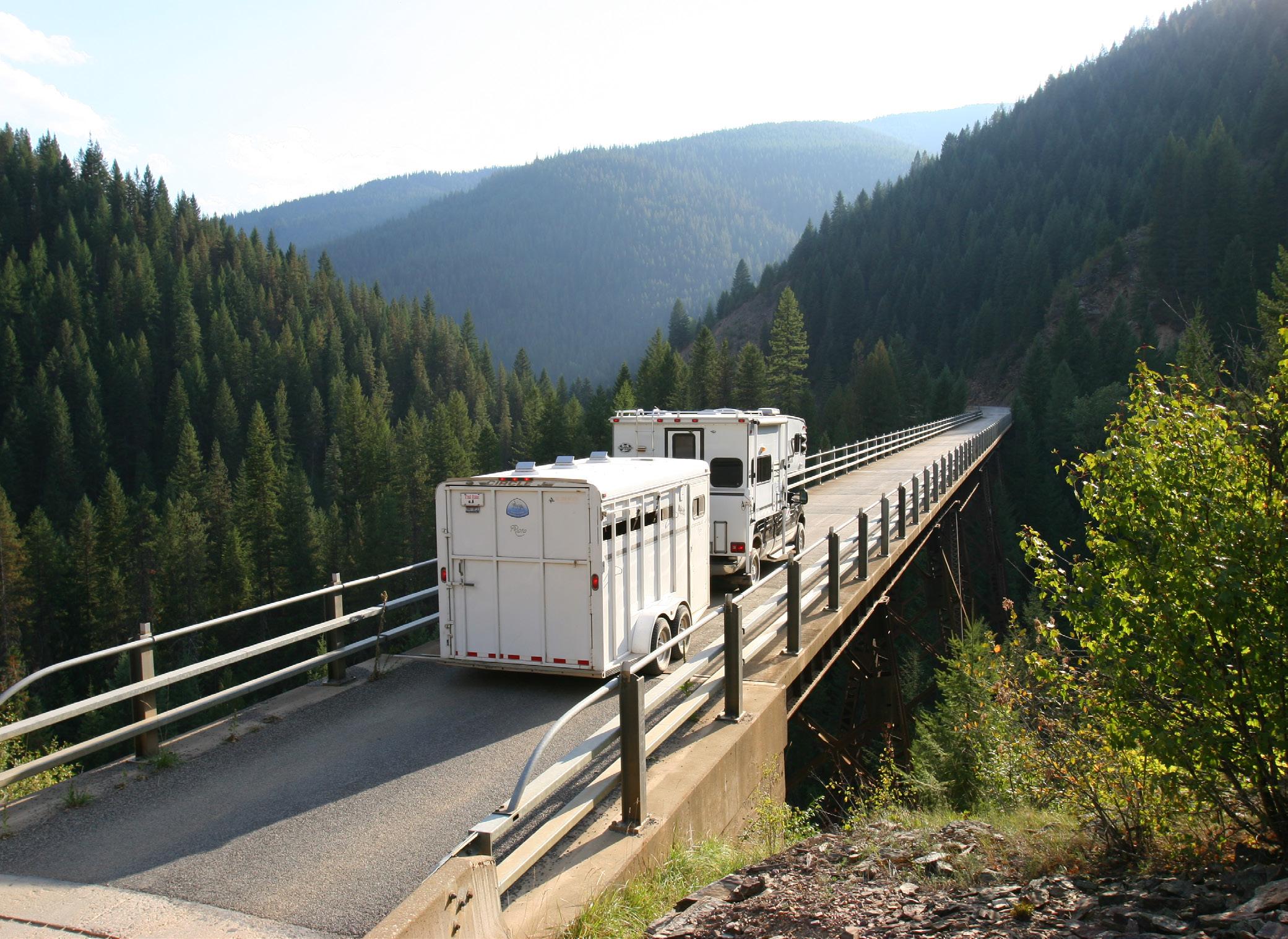
Here’s how to manage rising fuel prices to stay on the road and continue enjoying your equestrian pursuits this summer.
Staff Report
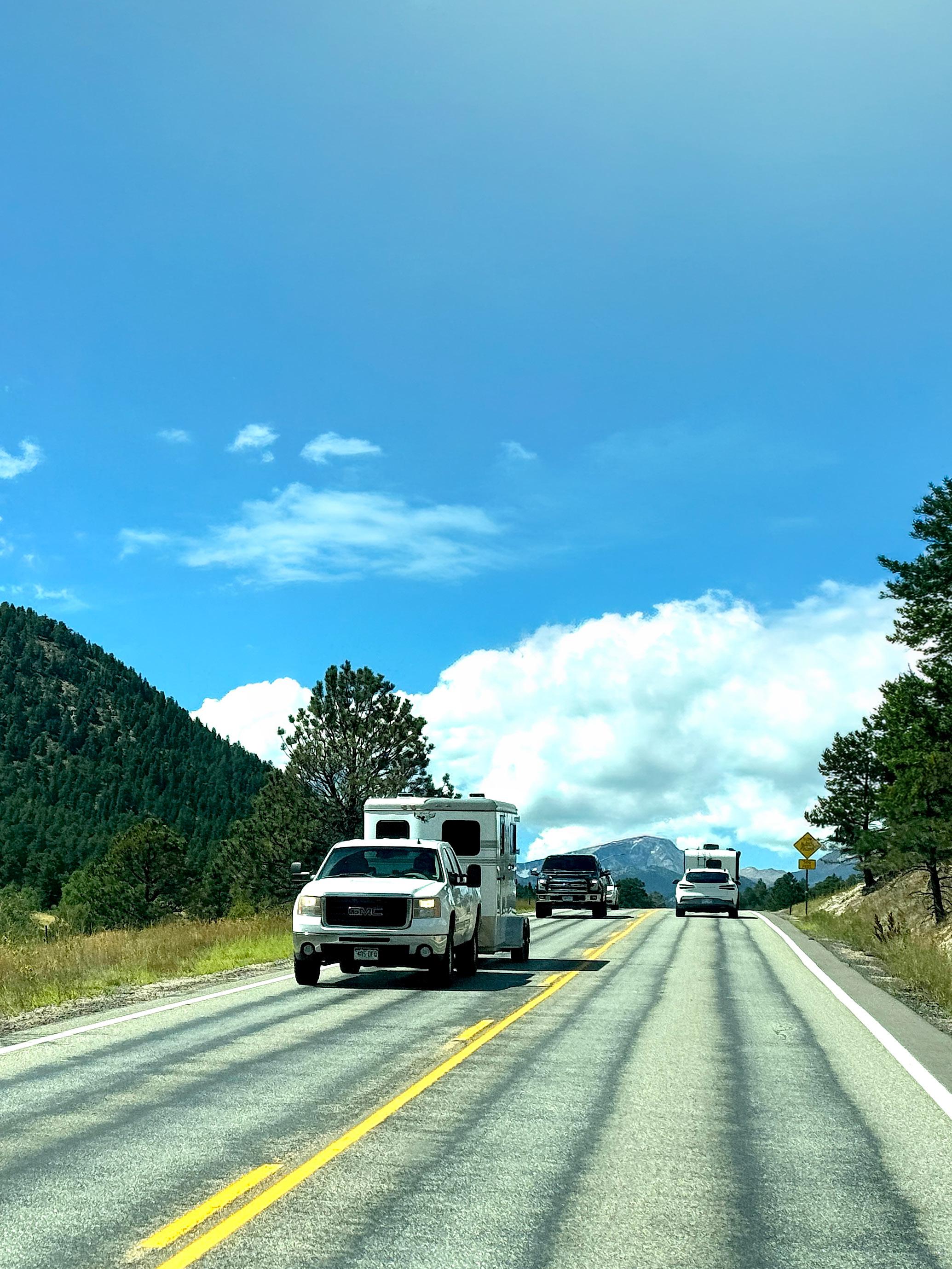
Summer is high travel season for horse owners, but today’s rising gas and diesel prices may be giving you pause. Stay on the road with these fuel-saving tips.
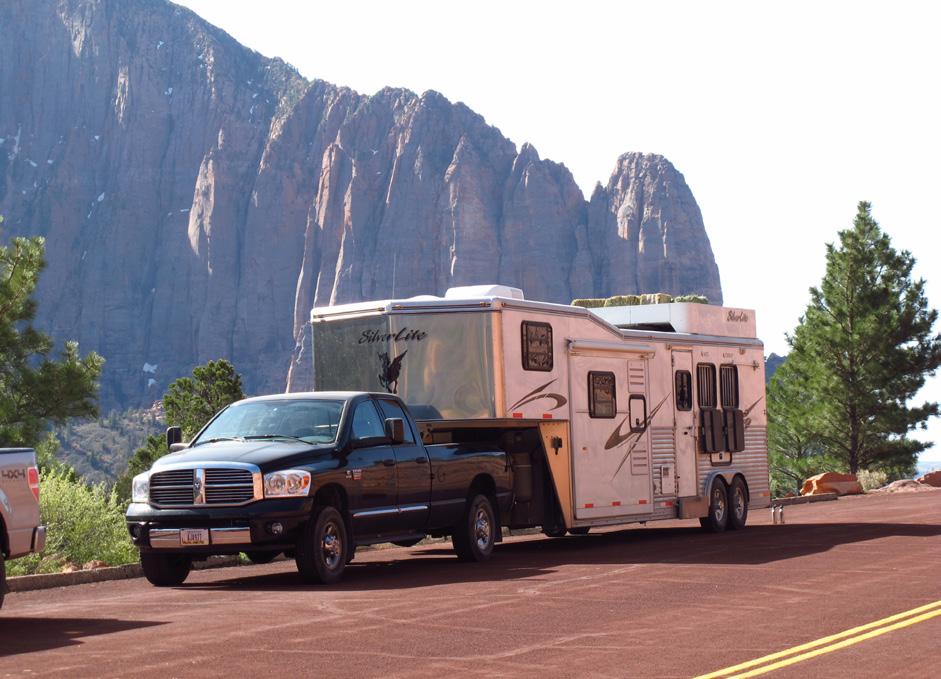
PHOTO BY KENT & CHARLENE KRONE
If you’re a recreational rider with trip-planning flexibility, plan a two- to three-day trail-riding vacation instead of hauling out for frequent day rides.
Summer is high travel season for horse owners. If you compete, you’re hauling your horse to shows to chase points. If you enjoy trail riding, you’re heading to trails near and far for fun or competition.
This summer, rising gas and diesel prices may be giving you pause. Stay on the road with these fuel-saving tips. We’ll also give you a formula you can use to keep track of your diesel vehicle’s fuel efficiency so you can better manage your travel expenses.
Be Vehicle Smart
First, take these steps to improve your tow vehicle’s fuel economy.
• Buy new. If you budget allows, look into buying a new tow vehicle. Newer trucks have better fuel economy than ever before.
• Think small. Drive a smaller, more fuel-efficient vehicle when you’re not hauling your horse. Don’t use your tow vehicle as a passenger car.
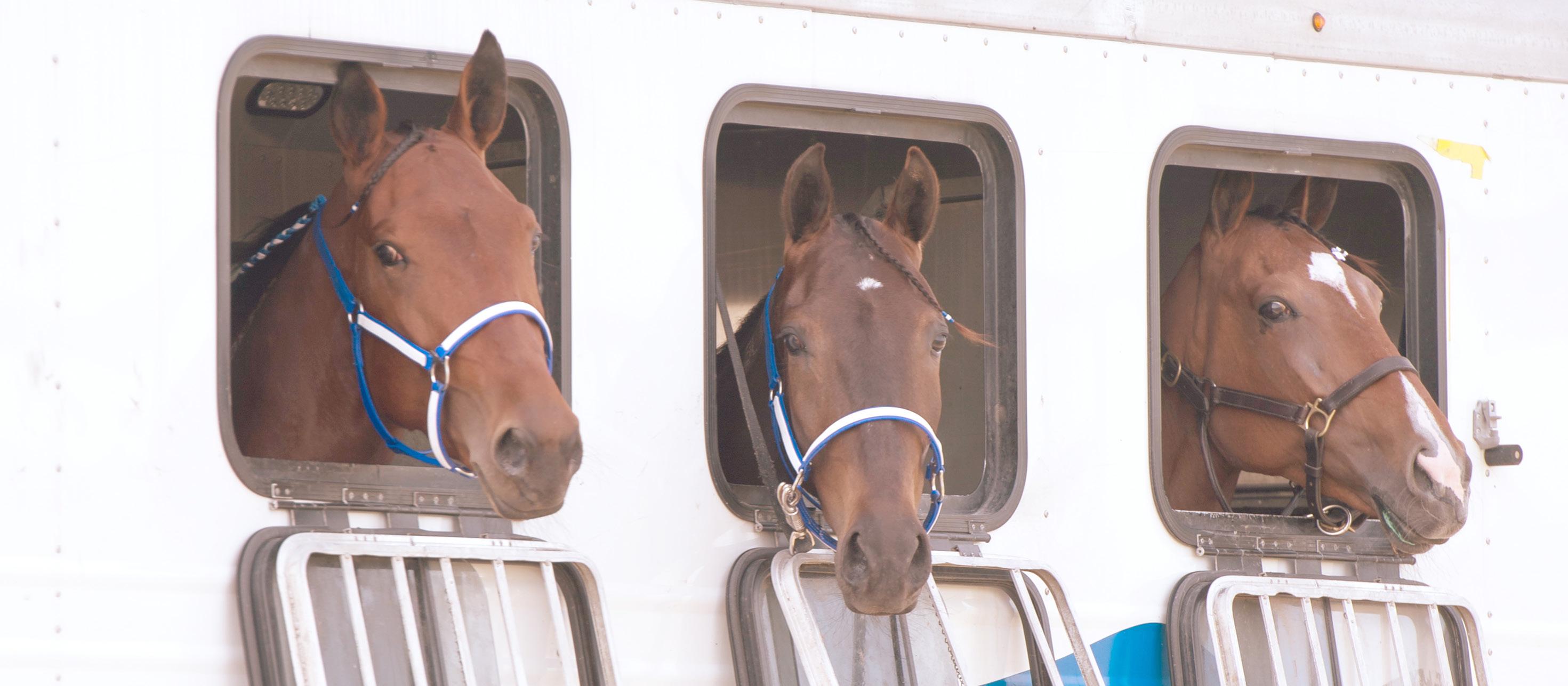
Ask a buddy or buddies to share the ride and split the fuel cost. If you go this route, make sure all horses load well and are quiet on the road. (When the trailer is moving, keep windows or screens closed to protect the horses’ eyes from road debris.)
• Maintain your tow vehicle. Work with a professional mechanic to keep your tow vehicle in top shape. Change the engine oil at the recommended intervals. Dirty oil causes engine friction, which requires more fuel. Keep your engine properly tuned. Repairs can go a long way; for instance, replacing a faulty oxygen sensor can improve fuel mileage as much as 40 percent. Regularly check and replace air filters; replacing a clogged air filter can also improve fuel mileage.
• Keep tires properly inflated. Maintain optimal air pressure in your tow vehicle’s tires. Check the pressure using a tire gauge. To find out how much air pressure is required, check the tires’ sidewalls. Recommended pressure will be listed as “PSI,” for pounds per square inch. Also maintain optimal air pressure in your trailer tires. Also, make sure the wheels are aligned to prevent tires from dragging.
• Keep track of your fuel economy. A drop in your tow vehicle’s fuel economy can be a sign that your vehicle needs work.
• Mind the motor oil. Check your tow vehicle’s owner’s manual to see what the manufacturer recommends. Using the wrong grade can lower your fuel mileage. Look for motor oil that touts “Energy Conserving” or “Resource Conserving” on the API (American Petroleum Institute) performance symbol; this supplemental oil category contains properties that can lead to improved fuel economy.
Before You Go
Next, take these measures as you plan your trailer trips.
• Get the “junk out of the trunk.” Remove unnecessary weight from your tow vehicle and trailer. The more weight you carry, the more fuel you burn.
• Think longer, less often. If you’re a recreational rider with trip-planning flexibility, plan a two- to three-day trail-riding vacation instead of hauling out for frequent day rides.
• Plan your route in advance. Find the shortest, easiest route to enhance your mileage. Avoid heavy traffic by taking alternate routes
and by traveling at non-peak hours. Sitting in traffic consumes fuel.
• Ride share. Ask a buddy or buddies to share the ride and split the fuel cost. If you go this route, make sure all horses load well and are quiet on the road. Have your travel buddies sign a form that releases you from liability in case of accident. (To purchase the appropriate form, go to www.equinelegalsolutions.com, click on “Forms,” click on “Buy Forms,” and search for Equine Hauling Liability Release.)
On the Road
Finally, use these tips to save fuel on the road.
• Keep the A/C on. The aerodynamic drag caused by keeping the windows open uses fuel. Unless you’re driving at slow speeds, rolling down the windows costs as much as, if not more than, turning on the air conditioning. And a comfortable driver is a safer driver.
• Drive gently. Don’t make jackrabbit starts; it wastes fuel and is hard on your horse. Avoid aggressive driving, and observe the speed limit. Mileage per gallon decreases
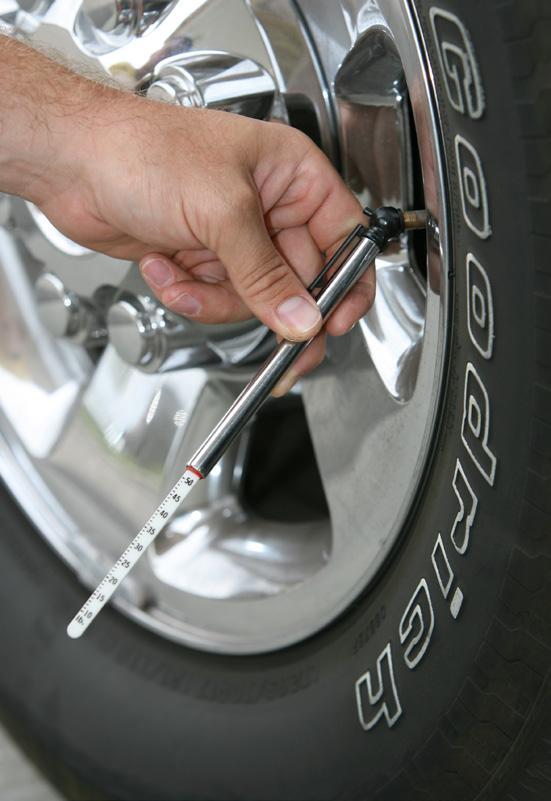
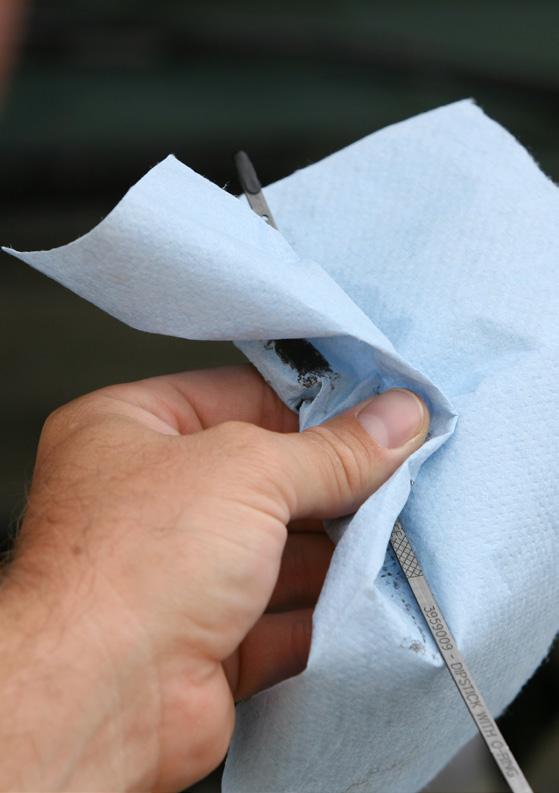
Maintain optimal air pressure in your tow vehicle’s tires. Check the pressure using a tire gauge (left). Change the engine oil at the recommended intervals. Dirty oil causes engine friction, which requires more fuel (right).
rapidly at speeds above 60 miles per hour. Each 5 miles per hour you drive over 60 mph can translate to an additional 10 cents per gallon.
• Stop with care. When stopping, take your foot off the accelerator and coast, then gently brake to a stop. When you see a red light, slow down to give it time to turn green, so you don’t have to come to a complete stop. Starting a rig from a dead stop eats fuel.
• Avoid excessive idling. Idling gets zero miles per gallon. Vehicles with large engines (such as pickup trucks and sport utility vehicles) typically waste more fuel idling than vehicles with small engines.
“Avoid excessive idling. Idling gets zero miles per gallon.”
• Use cruise control. Cruise control will help you maintain a constant speed, which, in most cases, will lead to increased fuel efficiency.
• Use high gears. High gears achieve the lowest engine RPMs, or how many times the engine will rotate in one minute. This will generate adequate power to maintain road speed while hauling a load.
• Use overdrive gears. Overdrive typically causes the engine speed to decrease. This saves fuel and reduces engine wear.
• Minimize fuel evaporation. When fuel is heated or exposed to air, it evaporates. Buy fuel in the early morning or at night. Park in the shade, and make sure the fuel cap is tightly secured. USR
Drive a Diesel?
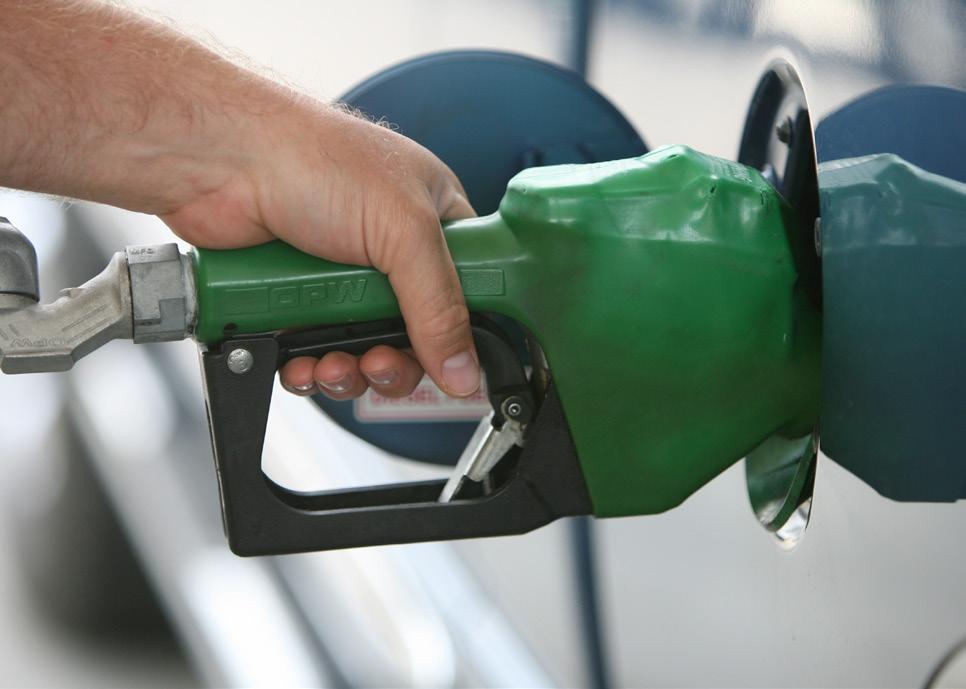
Do you drive a diesel truck? You probably won’t find the fuel efficiencies of diesel trucks listed anywhere, but you can calculate it yourself.
Do you drive a diesel truck? You probably won’t find the fuel efficiencies of diesel trucks listed anywhere, because the regulations set by the Environmental Protection Agency don’t apply to heavy haulers—a rig that weighs more than 8,500 pounds. You can calculate fuel efficiency yourself with one caveat: While some estimates say that diesel-powered trucks will decrease by 20 percent in efficiency when hauling, there’s no sure way to calculate the difference. But you can keep track of your diesel tow vehicle’s fuel efficiency from one trip to the next.
Here’s what to do:
• Calculate miles driven. Start with a full tank, and either record the mileage on the odometer or reset the trip meter. When you need to fill up again, subtract the old odometer reading from the new one to figure out the total distance you’ve driven.
• Jot down gallons pumped. Check the pump’s meter or your receipt to see how many gallons it took to fill up your tank.
• Do the math. Divide the number of miles you’ve driven by the number of gallons you purchased to calculate the miles per gallon.
Here’s an example:
403 (miles driven) ÷ 31(gallons purchased) = 13 MPG
PHOTO BY HEIDI MELOCCO
PHOTOS BY HEIDI MELOCCO
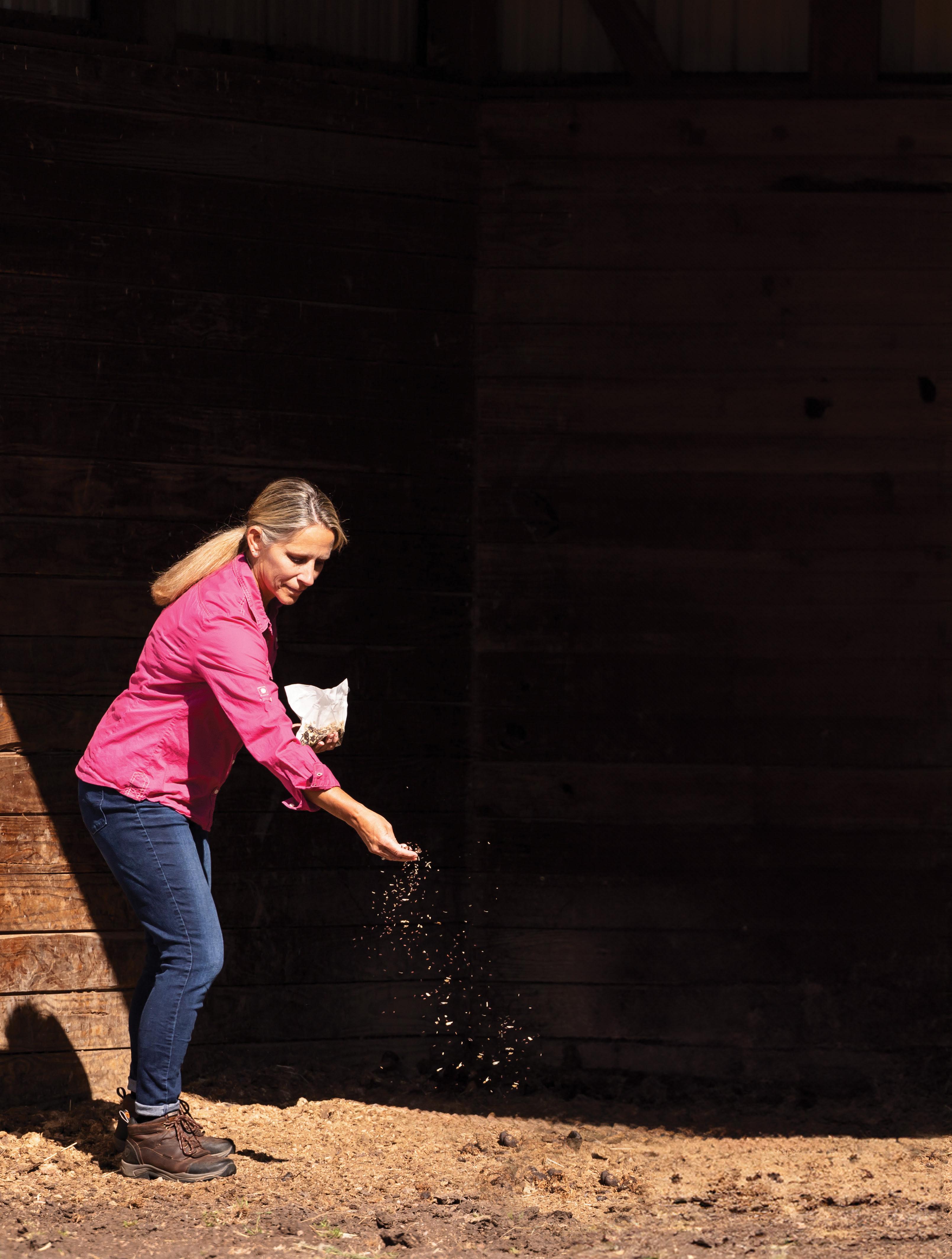
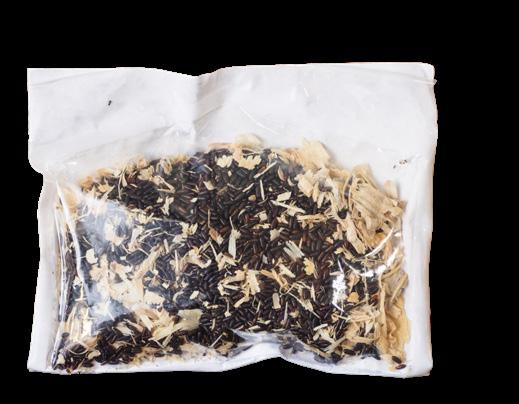
Fly Predators® are nature’s most powerful fly control solution. By killing flies before they hatch, Fly Predators dramatically reduce your fly problem without the use of harsh chemicals. Backed by decades of research and more than 23,000 reviews, Fly Predators are the fly control solution that really works!


Heart of the Rockies
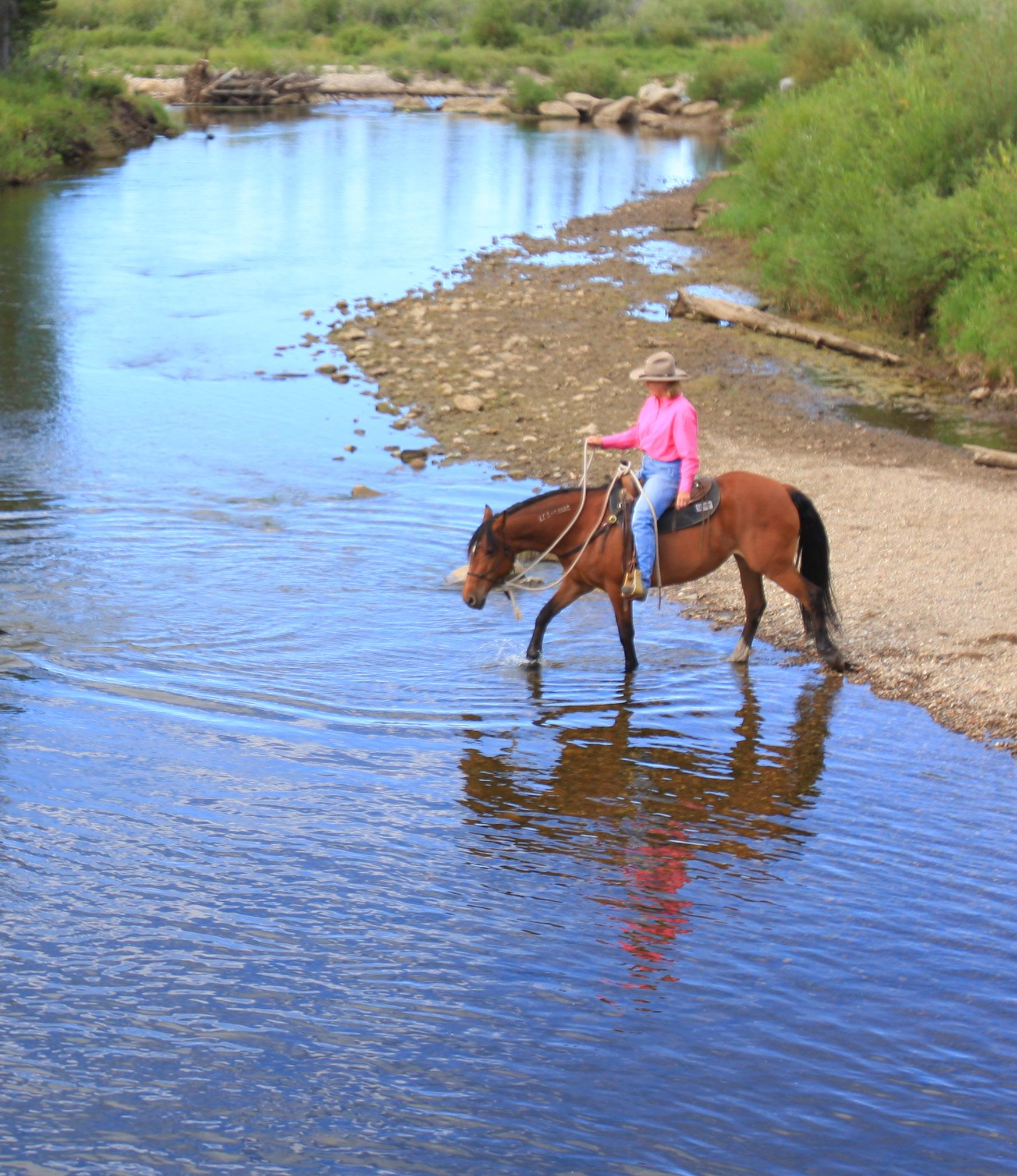
Colorado’s Winding River Resort offers serene rides through endless forests of aspen and evergreens.
Article and Photos by Kent & Charlene Krone
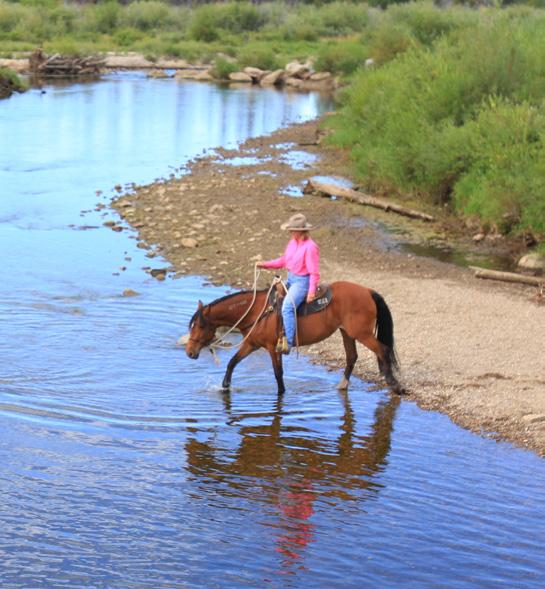
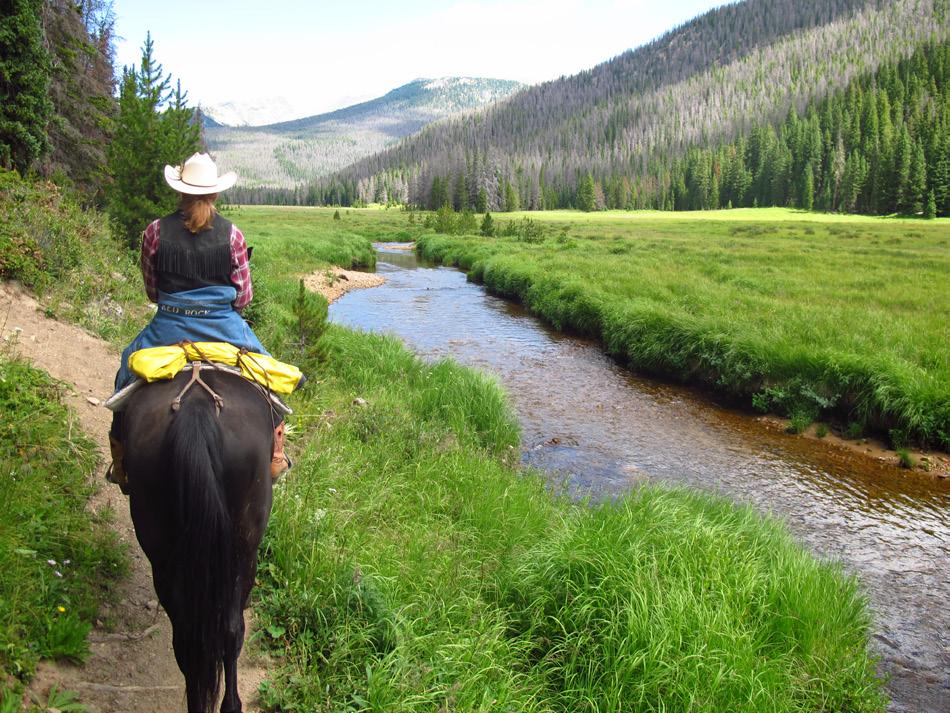
For horse-owning adventurers, Winding River Resort in north-central Colorado is an equestrian paradise. Here, resort wrangler Marcia Dickerson crosses the North Fork of the Colorado River.
Deep in the heart of Colorado’s Rocky Mountains lies the Winding River Resort. Located in north-central Colorado outside the historic mountain town of Grand Lake, this scenic haven sits along the North Fork of the Colorado River, and borders Rocky Mountain National Park and Arapaho National Forest. Arapaho National Forest is managed
jointly with the Roosevelt National Forest and the Pawnee National Grassland. Together, they’re known as ARP and comprise 1,730,603 acres.
Rocky Mountain National Park comprises 265,761 acres that provide varied terrain, including wooded forests, mountain tundra, and the Continental Divide. It also contains the headwaters of the famed
Colorado River. Approximately 349 miles of trails are in the park; horses are allowed on roughly 80 percent of them.
Note: The 2020 East Troublesome Fire created some unstable areas in this region. Check the websites before you go, and ask resort wranglers for current trail information.
Long Peak, at 14,256 feet elevation, is the highest peak in the park. It was named after Stephen Long, who visited the area in 1820. However, Enos Mills was the man ultimately responsible for the national park designation. A naturalist, writer, and conservationist, Mills lobbied for legislation to make this region a national park. His vision became a reality under President Woodrow Wilson in 1915.
Equestrian Paradise
For horse-owning adventurers, Winding River Resort is an equestrian paradise. Owned by Wes and Marcia House, the resort boasts 150 spacious recreational-vehicle sites, 24 corrals for guest horses, lodge rooms, tent sites, and cabins. Showers, restrooms, and laundry facilities are also onsite.
Wes has a Tennessee Walking Horse; Marcia owns a Missouri Fox Trotter. Thirty-five gentle horses and a baby-animal farm are also on the premises. Children are encouraged to pet and help feed the baby animals.
We pulled our living-quarters trailer into an RV site with two corrals. Nate and Cowboy, our Missouri Fox Trotter geldings, seemed pleased at the size of their accommodations.
From the flower-filled entryway to the modern bathhouse, Winding River is immaculately maintained. Our stay here was a comfortable, happy experience.
Arapaho National Forest
Ride in any direction from Winding River, and you’ll find gorgeous country to explore. Wes will also rent you a six-horse, bumper-pull trailer to access farther-flung trailheads. Before you set out on the trails, pick up a complimentary map from the resort’s gift shop.
If your horse tends to be spooky, take note: Backpackers frequently use llamas as pack stock. In addition to the backcountry horse campgrounds, there are three campgrounds dedicated solely to campers with llamas.
We went on three different rides from camp. First, we went on a small, exploratory loop ride into Arapaho National Forest, which borders the resort. To do this loop, go past the snowmobile rental shed, through a gate, and
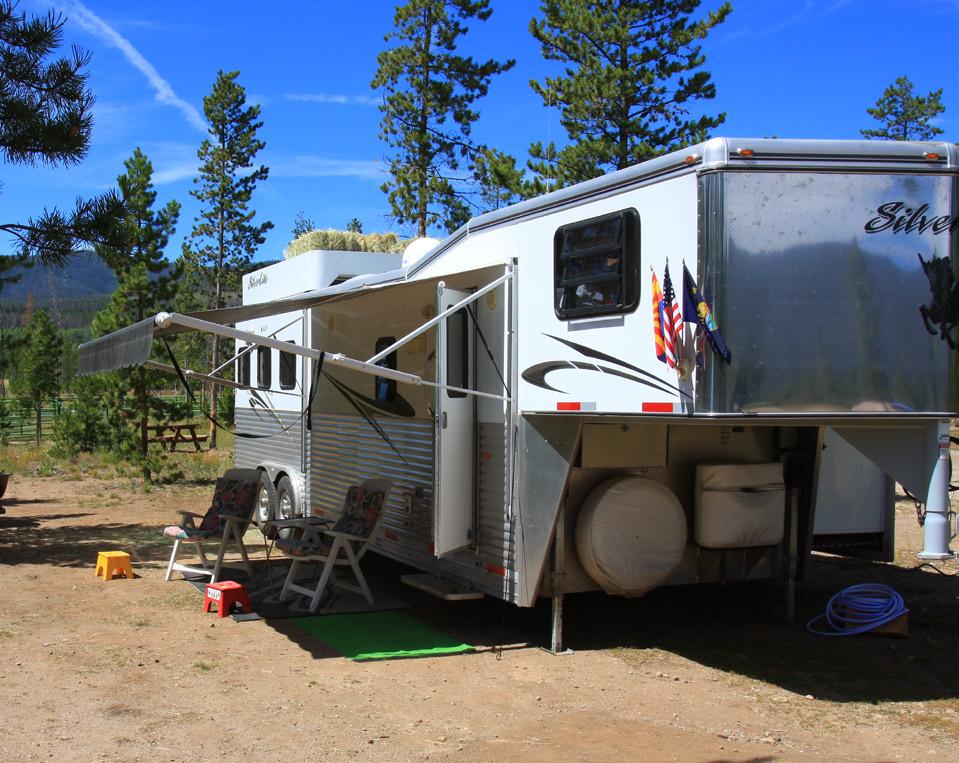
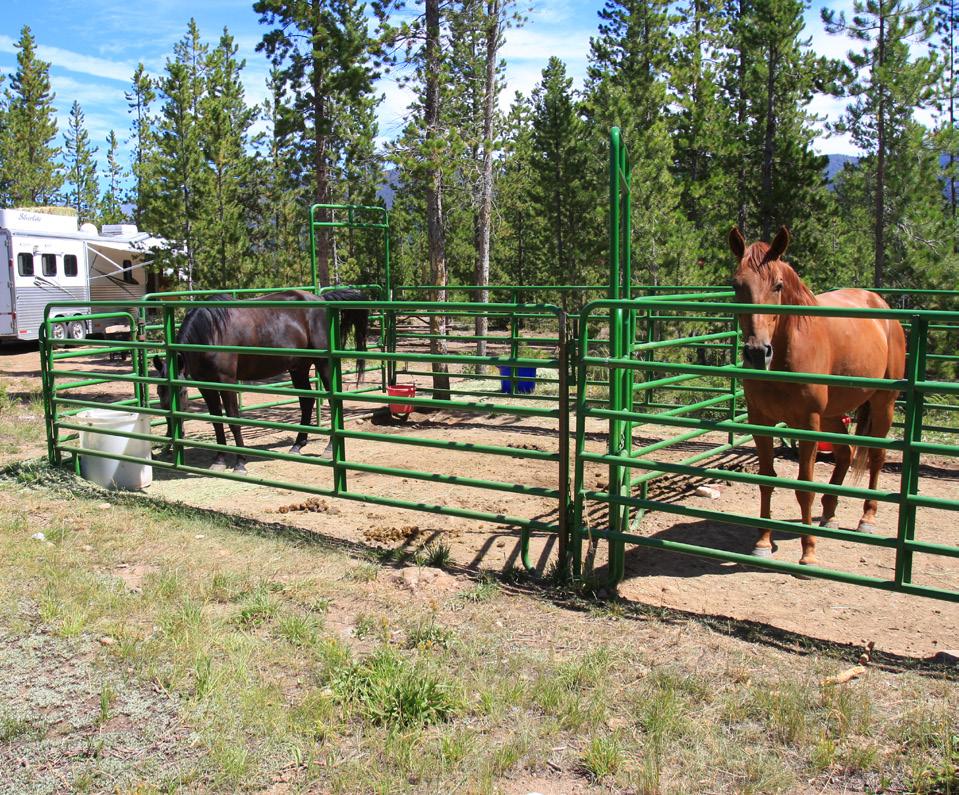
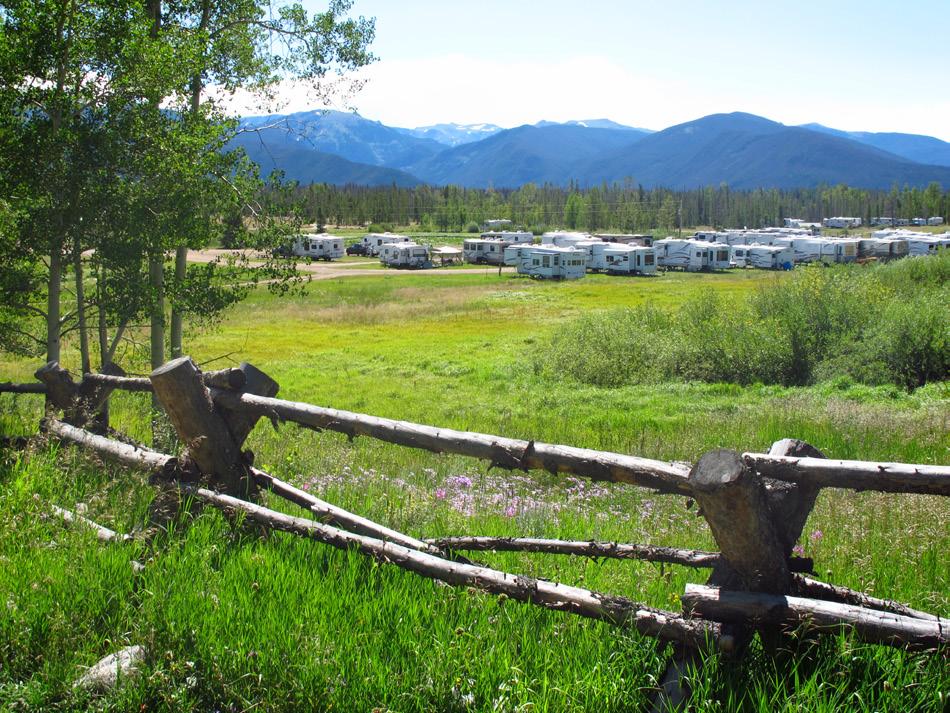
Top to bottom: The Krones’ living-quarters trailer at one of Winding River Resort’s spacious recreational vehicle sites. The Krones’ Missouri Fox Trotter geldings, Nate and Cowboy, relaxing in their corrals, which were conveniently located near the Krones’ campsite. The view of the camping area from the trail going west into the Arapaho National Forest.
take the immediate first right. The trail winds uphill and passes by numerous slash piles.
Sadly, portions of this area have been hard hit by beetle kill. To aid recovery, dead trees have been cut down and piled; they’re burned as conditions allow.
This loop will take you to long-distance viewing points. It then intersects with the incoming trail; you head back the way you came in. Depending on the time of year, you may see lots of sweet wild raspberries.
If you want to continue riding on this side of camp, follow the all-terrain-vehicle trails that head up the hill and branch off in various directions. You can do large loop rides and figure-eight loops.
Big Meadows
For our second adventure, we did the Big Meadows loop ride in Rocky Mountain National Park. To get to this trailhead, exit the Winding River campground, turn right at the Rocky Mountain National Park sign, and cross the bridge. At the three-way split, stay to the right, and look for the Kawuneeche Visitor Center.
Stay to the right of the visitor center, and ride past it. Within a half mile or so, you’ll come to an intersection. Go left to get to Big Meadows. If you turn right, you’ll head down to Grand Lake.
Nate and Cowboy thought this was a pleasant, easy trail. The 700-foot elevation gain to the meadows was a gradual incline on a mostly soft, shaded trail.
“The meadows are huge— much like an expansive, emerald sea hidden in the mountains.”
Arriving at Big Meadows, we saw where the word “Big” came from. The meadows are huge! They’re about two miles long and one mile wide, much like an expansive, emerald sea hidden in the mountains. Lush, green grass swayed in the wind. In the distance, Nakai Peak, at 12,216 feet above sea level, stretched skyward.
There’s a hitching post here, but we didn’t use it. Nate and Cowboy have trained us to hobbles! If there’s good grass, we hobble them, so we can all enjoy lunching together.
After Big Meadows, five miles remain on the loop back to Winding River. We left the meadows on the Green Mountain Trail, traveling mostly downhill.
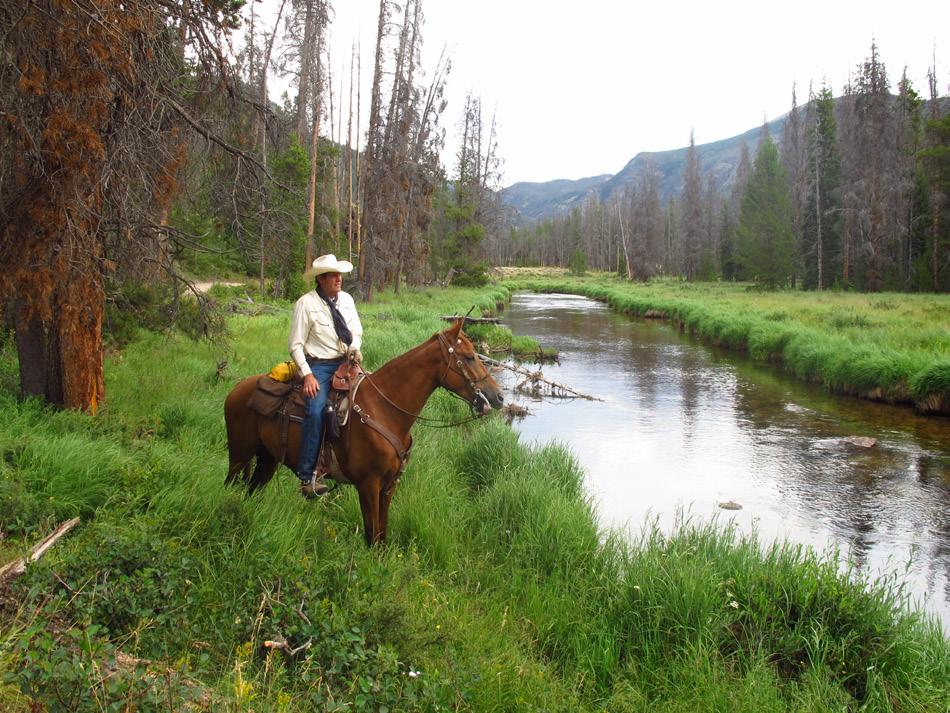
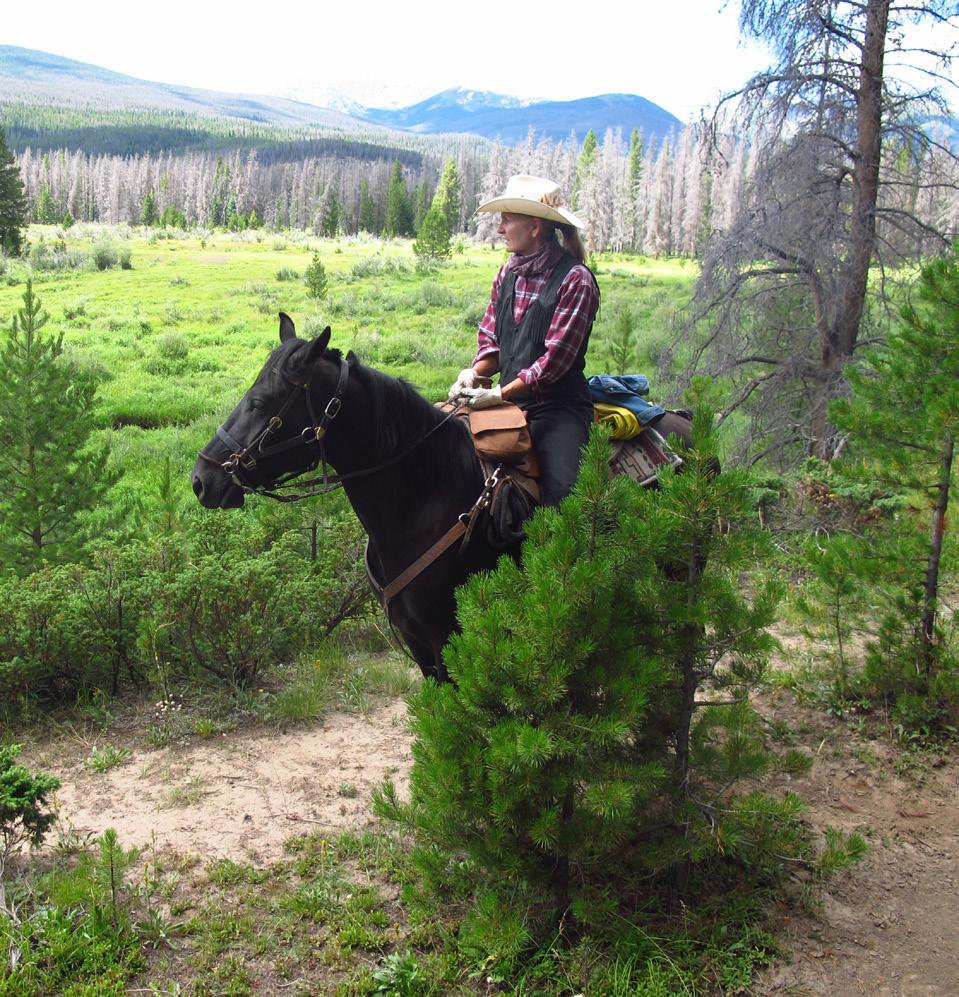
Top to bottom: Charlene Krone, aboard Nate, enters Big Meadows while following Tonahutu Creek. Kent Krone rides Cowboy up North Inlet Creek toward Cascade Falls. Charlene Krone along the North Fork of the Colorado River on the return trip from Big Meadows.
At the bottom, cross the highway, go about a half-mile to a junction, and veer right. Instead of a roadside trail, this trail follows the Colorado River and will lead back to the resort.
One joy of trail riding is viewing wildlife in a natural setting. This last portion of trail gave us two special glimpses of animals in their natural environment.
Our first thrill was a beautiful chocolate-colored moose. We stopped along the trail to watch him raise up his large head from the river where he was browsing for underwater foliage. The moose didn’t bother our boys. Nate and Cowboy thought he was a very large horse with a strange-looking head!
We then watched two geese shepherding their newly hatched babies—tiny balls of animated fluff—up river. The parents used their bodies to keep the tiny ones from getting separated and swept downstream.
Cascade Falls
On our last ride into the park, we rode seven miles to Cascade Falls. Begin this ride as though you were going to Big Meadows. However, after the visitor center, turn right at the intersection instead of left.
This will take you to the Tonahutu/North Inlet Trailheads. You’ll see two parking lots separated by a bridge. Turn left at the first parking lot. This puts you on the North Inlet trail; Cascade Falls is approximately five miles up.
Pastoral landscapes line the first mile or so of an old trail/road that winds through private property. A wooden rail fence encloses a matched pair of gorgeous dappled-gray Percherons. We stopped to admire them.
A small cabin marked the end of private land. The trail began to wind and climb up along a mountainside. Cliffs were festooned with greenery and boulders of golden hues.
Beware! Before the falls, the trail narrows, and there are sheer drop-offs. Not a place to meet backpackers coming the other way!
A low, rumbling growl signals the falls are nearby. An intersection with a stock trail to the left loops back to the falls. Friends had advised us to go no farther, so we walked from there to admire the falls tumbling down over the rocks. USR
Seasoned equestrian travelers Kent and Charlene Krone combine their interest in photojournalism with a passion for horses. They enjoy sharing their horseback adventures and equestrian-travel tips with fellow enthusiasts.
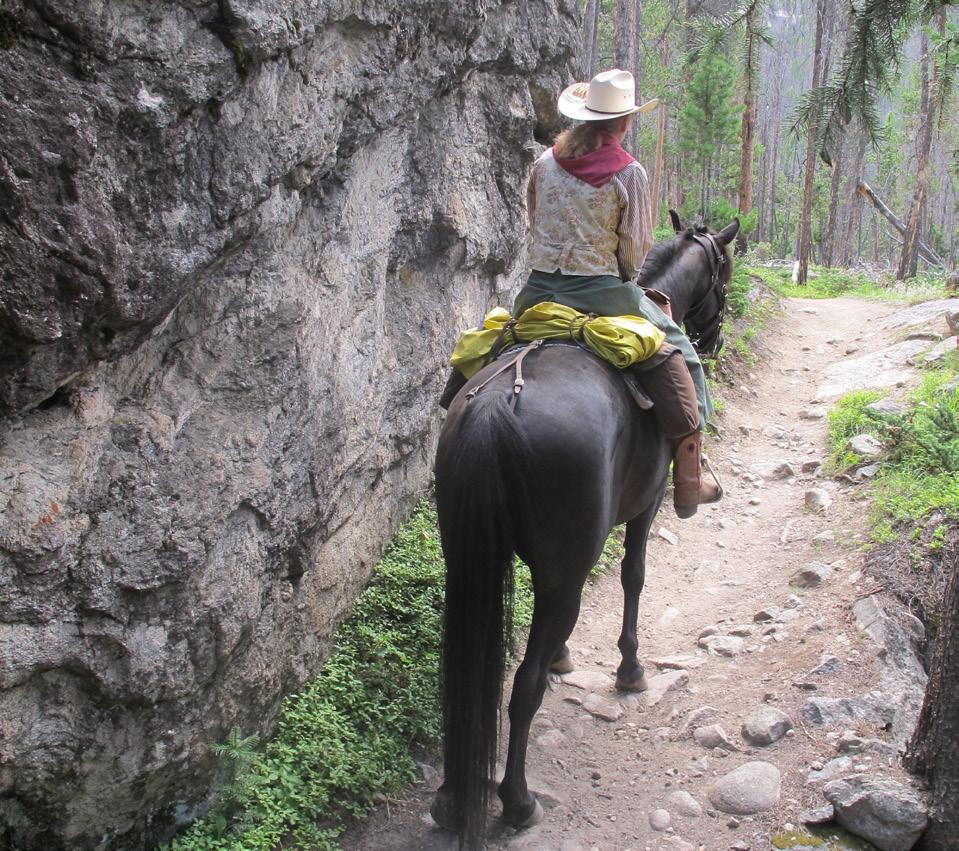
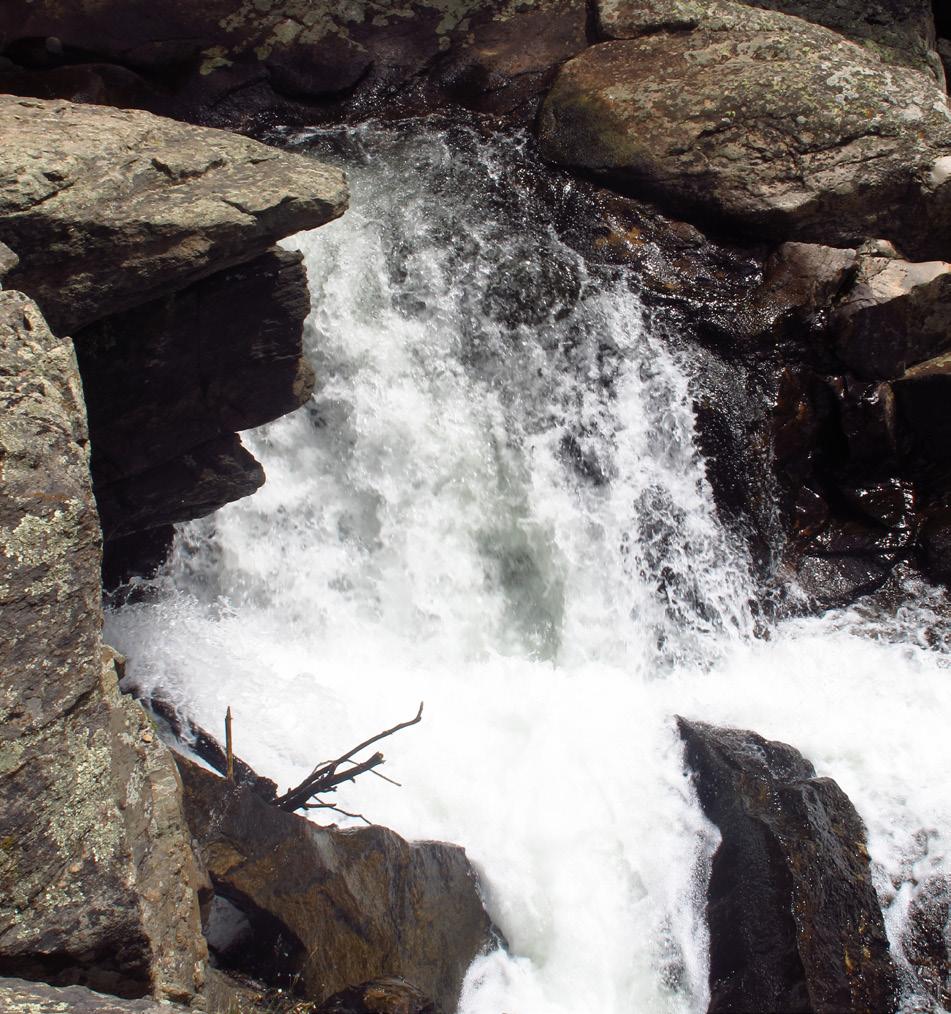
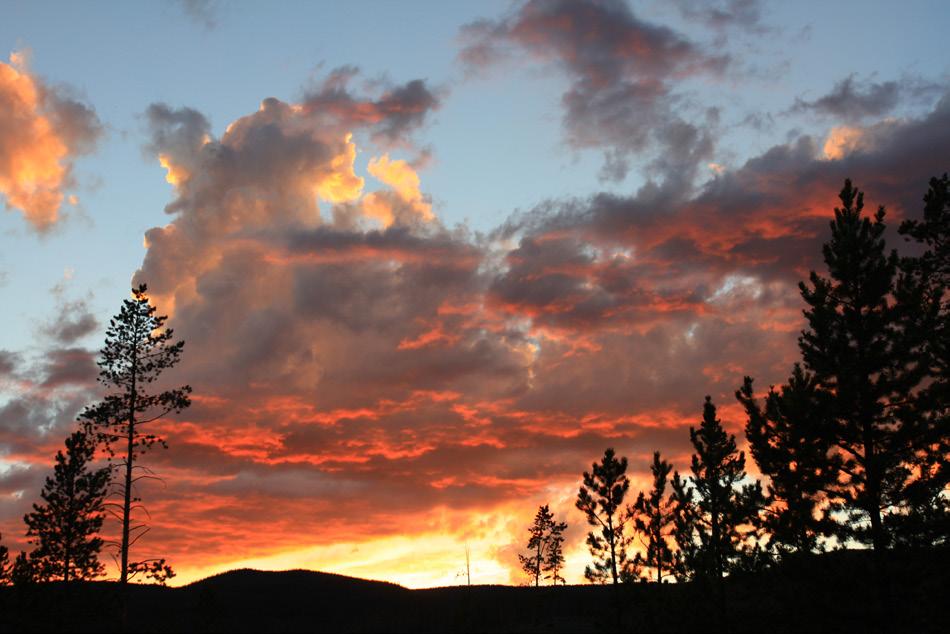
Top to bottom: Charlene Krone rounds a bend as she nears Cascade Falls. Cascade Falls, located at the end of a 7-mile ride from Winding River Resort. The sun sets over the heart of the Rockies.
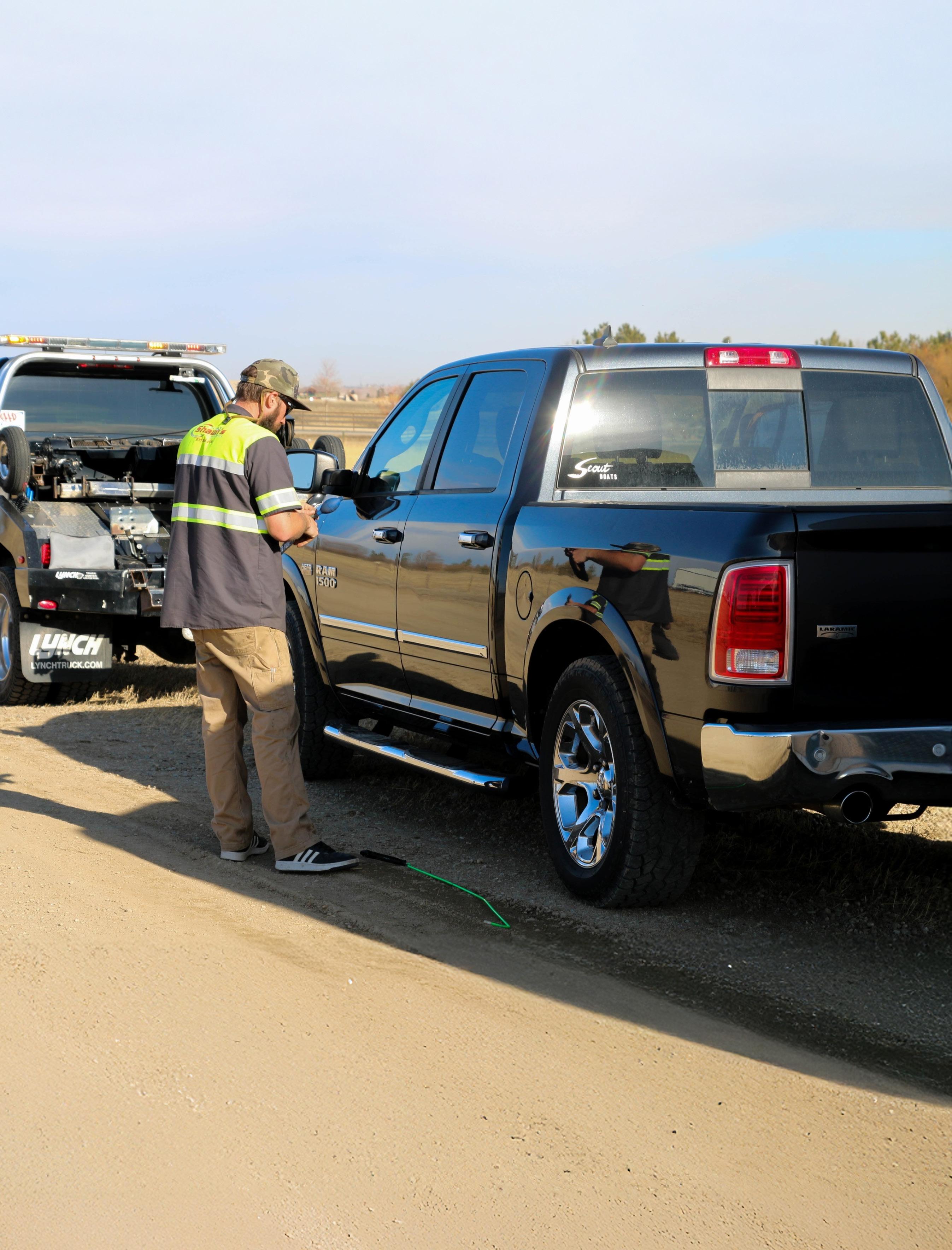
This mounted patrol volunteer suffered a roadside breakdown after a hot day on patrol. USRider made sure both she and her mare got safely home.
Article and Photos by Chris Friis
To the Rescue!
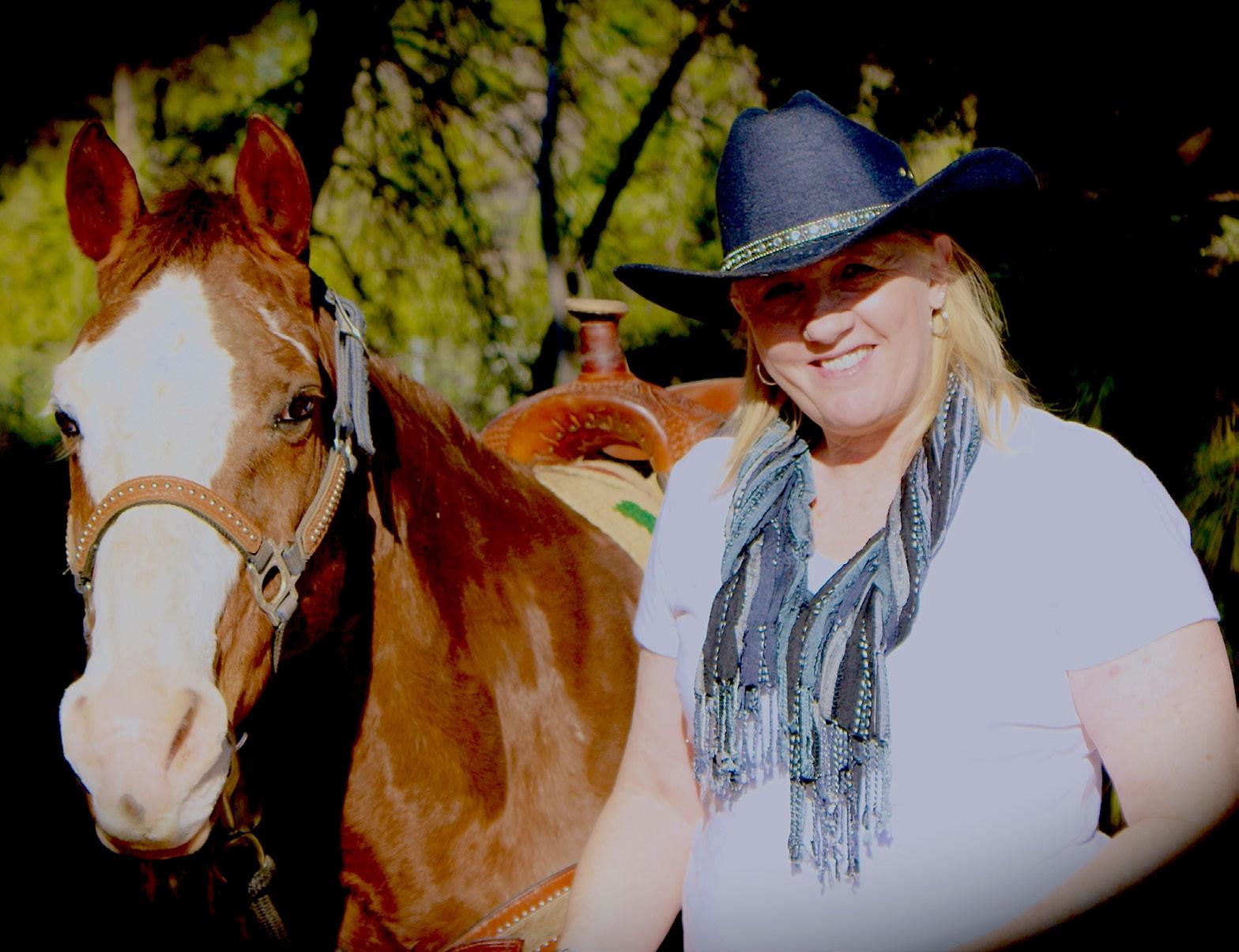
“During this incident, I think [my mare, Casey] knew there was trouble, because she stood calmly throughout our whole ordeal,” says mounted patrol volunteer and USRider Member Chris Friis.
I’m a volunteer with the San Mateo County (California) Sheriff Mounted Search and Rescue Unit, also known as MSAR. This unit is comprised of civilian horse-andrider teams trained in 25 skill areas who volunteer their time, horses, and horsemanship skills to assist with search-and-rescue operations.
Certified in emergency response, this is one of the few mounted units specially trained and frequently called upon to respond to emergencies throughout the state of California for mutual aid.
We coordinate closely with the sheriff office and other specialized search-and-rescue groups to ensure the best possible outcome. We also patrol on horseback at community events and fairs, ride in parades, and
assist with children’s educational programs.
‘Blown Transmission’
One summer, I scheduled for patrol in Half Moon Bay, California, a popular coastal tourist destination. I met up with my unit lead, Kelley Hix, to patrol the area’s beaches.
We saddled up and spent the better part of the day making sure visitors were safe and enjoying their day. It was such a beautiful ride. We also enjoyed interacting with everyone, as they all wanted to meet our horses.
After a successful patrol, it was time for me to load my mare, Casey, in the trailer and head back over the coastal mountains. I wanted to get back to the barn in time for Casey’s
dinner. Traffic was a bit heavy, with folks heading home after a nice day at the beach.
About halfway home, almost at the top of the coastal mountain, I had to give my truck a little more gas to get my speed up to make it over the crest. All of a sudden, I felt a small jolt, and I no longer had any power when I stepped on the gas.
Luckily, there was a small turnout on the side of the road that just barely fit my whole rig. A bit shaken, I put my truck into park and turned on the emergency flashers. I was parked at a steep, uphill angle.
I placed an emergency triangle behind my trailer and checked on Casey. She seemed fine. But then I noticed some fluid had blown out of my truck onto the road. Considering
the fact that I had no movement in any gear, coupled with the fluid on the ground, I knew I’d blown my transmission.
Calling USRider
I knew then I would need a tow truck. I’d been a member of USRider Equestrian Motor Plan for four years, but I’d never before needed to use the service. I pulled out my USRider membership card and dialed the 800 number. I was very impressed with the USRider Member Care Specialist, as one of the first things she wanted to know was, “Are you and your horse safe?”
The Member Care Specialist continued to get pertinent information and helped me identify my precise location. I was told I would be contacted within 15 minutes with an update of when help would be arriving.
My concern then turned to my horse’s well-being. I couldn’t unload her. We’d had a long, hot day, and the temperature was still warm. I was concerned she might overheat in the trailer.
Also, Casey is an impatient traveler. She’s fine as long as the trailer is moving. But when we stop, she’ll paw away! However, during this incident, I think she knew there was trouble, because she stood calmly throughout our whole ordeal.
Being part of a search-and-rescue unit, we’re taught to be prepared for almost any circumstance; this situation seemed to qualify. I didn’t know what the next few hours would hold for us, but I did know I had a full water tank in the trailer, as well as grain and first-aid supplies, if needed.
The USRider Member Care Specialist contacted me to let me know that help was on the way, but that it might take up to 90 minutes
to get through all the traffic coming back from the coast. However, with a little reassurance from a San Mateo County Sheriff’s black-and-white parked close by, we were safely tucked away from traffic waiting on the tow truck.
Soon, a large flatbed tow truck pulled up, and the driver started assessing the situation. The plan was to disconnect the trailer with Casey inside and pull the truck up onto the tow-truck’s flatbed. Chock blocks would be placed behind the trailer so it wouldn’t roll down the hill once the truck was disconnected.
This was a bit of a scary situation while parked on such a steep incline! But between the tow truck and my safety equipment, the trailer wasn’t going anywhere.
Once my truck was loaded up, the tow-truck driver backed up to the trailer and hooked it up on his truck’s back tow bumper. The pigtail was plugged in, giving us brake lights on the trailer.
I hopped in the truck. The driver merged back onto the roadway, and we headed toward home. We made it home safely. Casey received a nice big bowl of grain in her paddock that night.
‘So
Very Fortunate’
I was so very fortunate to have been introduced to USRider by our unit, and I’m glad I became a Member. USRider tows your truck and your trailer, so you don’t have to call anyone else.
Just as it may be reassuring to the public to know there are committed volunteers such as MSAR looking out for everyone, it’s just as reassuring knowing that USRider is looking out for all of us! You just never know when you may need to be rescued! USR
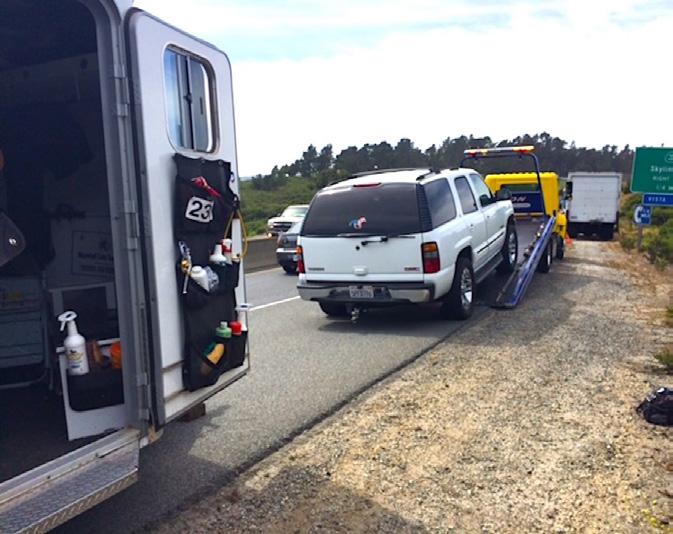
“The plan was to disconnect the trailer with Casey inside and pull the truck up onto the tow-truck’s flatbed,” says USRider Member Chris Friis. “This was a bit of a scary situation while parked on such a steep incline! But between the tow truck and my safety equipment, the trailer wasn’t going anywhere.”
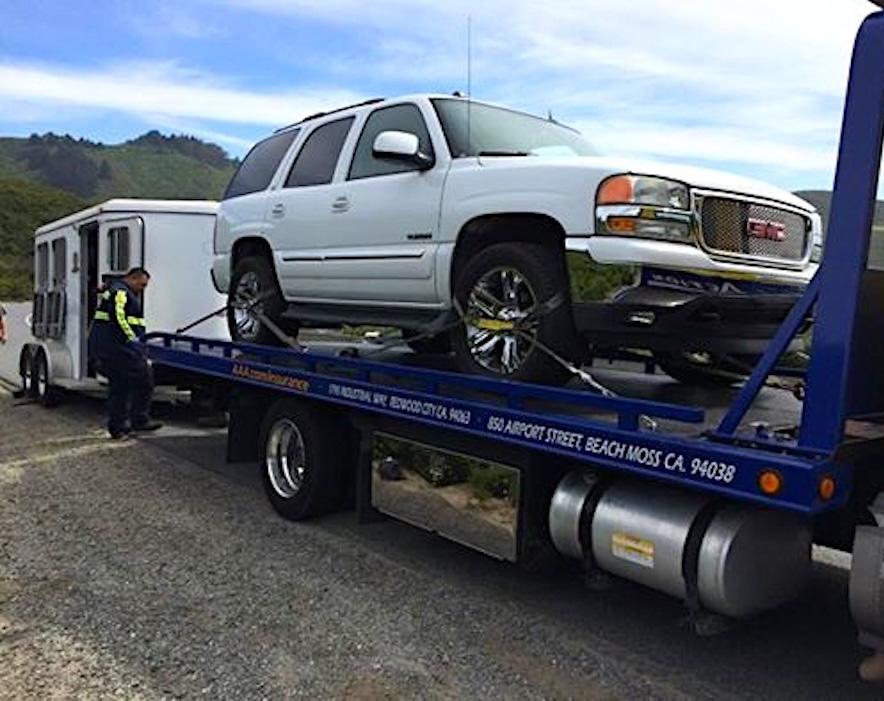
“USRider tows your truck and your trailer, so you don’t have to call anyone else,” notes USRider Member Chris Friis.
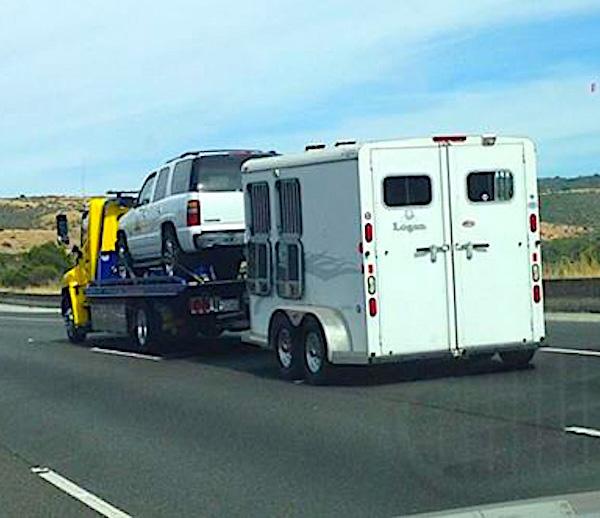
“We made it home safely,” reports Chris Friis. “Casey received a nice big bowl of grain in her paddock that night.”
Summer Solutions

Hay & Equipment Top-Mounted System
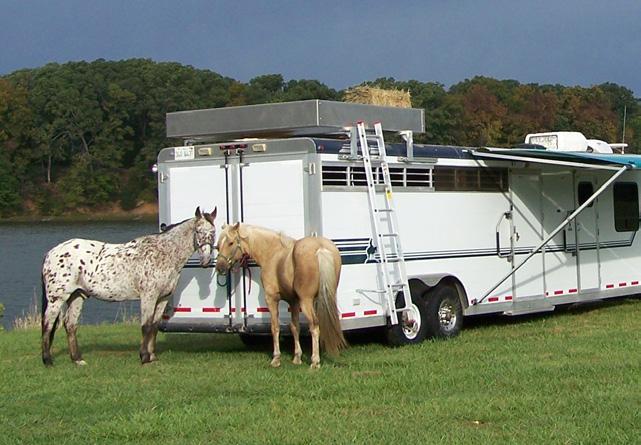
The HayRak, from Spirit Industries Inc., allows you to easily transport everything you need for your equestrian travels. This all-aluminum, modular, top-mounting system features an adjustable design that fits virtually every make of horse trailer. Transport hay, generators, water tanks, or whatever you need for your trip. The system is designed to transfer the weight-bearing load to your trailer’s side walls instead of the trailer roof. Every HayRak comes standard with a tilt-out ladder. USRider Members receive a 5% discount on the HayRak, as well as on the company’s newest product option, the HayRak HayPod™, designed to cover your load.
Collapsible Water Pail
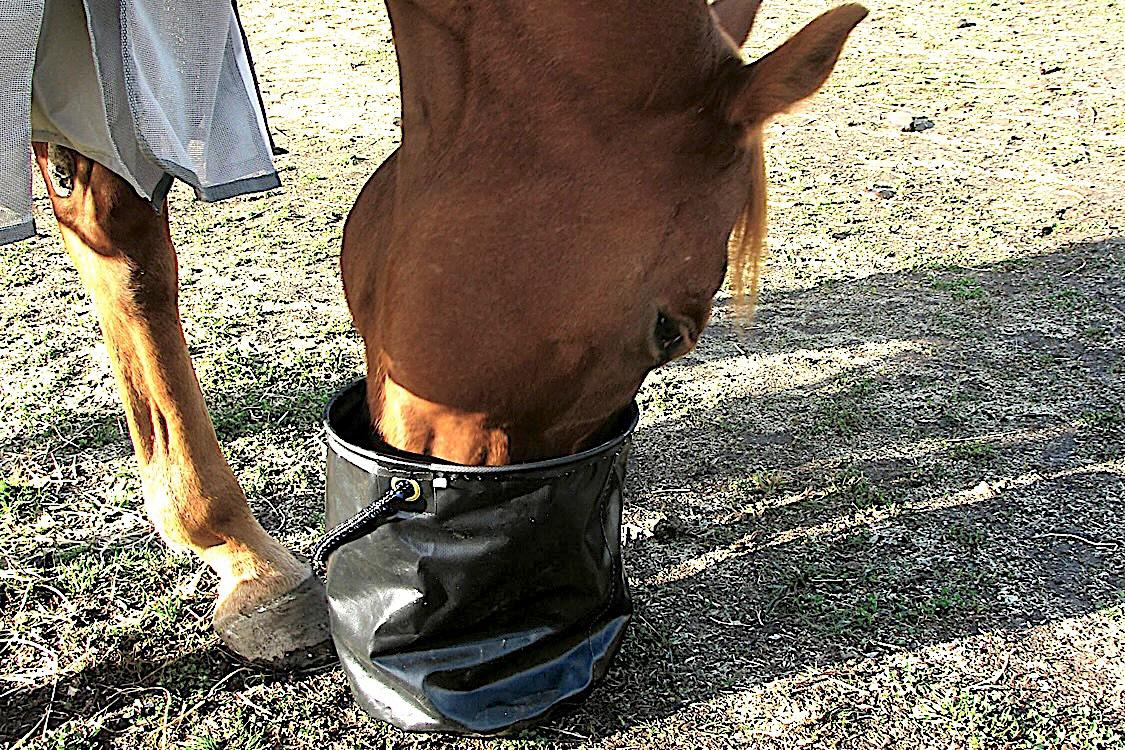
Water your horse anytime, anywhere with Cashel’s Collapsible Water Pail. This handy bucket is easy to pack and small enough to fit anywhere when collapsed. The Collapsible Pail is made of tough, waterproof material that’s extremely durable.
H2Go Wheelbarrow Bag
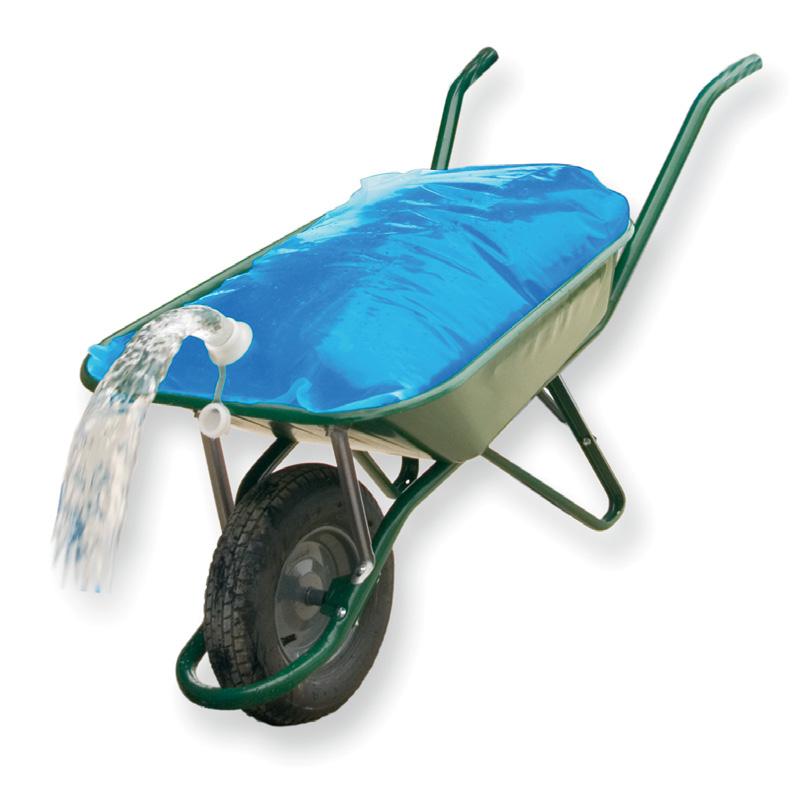
The H2Go Bag from the Horse Tack Company is a handy problem solver if you need to haul water during your trip away from the barn. Anytime there’s no hose available and you need water, this handy bag can hold up to 20 gallons, and fits neatly into any wheelbarrow. Its uniquely designed spout is designed for easy pouring. An anti-slide mat stops the bag from slipping out. The H2Go Bag folds away for easy storage.
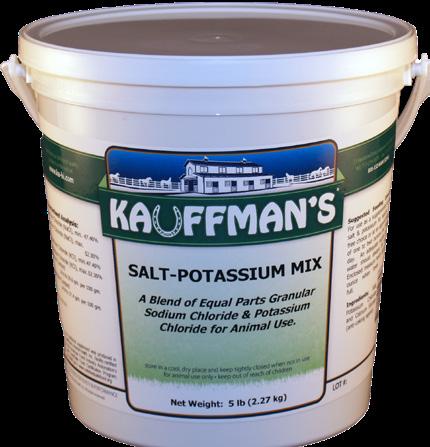
Kauffman Electrolytes
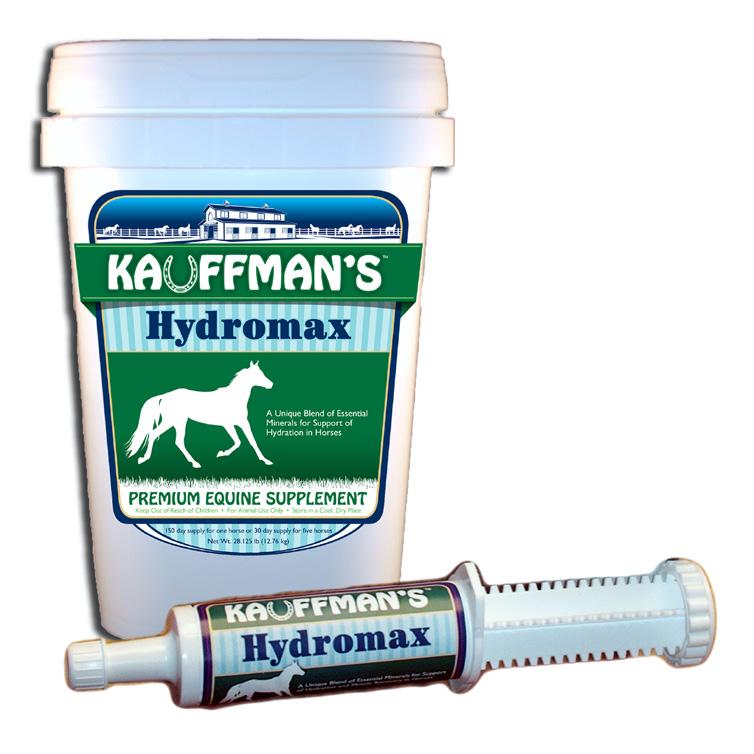
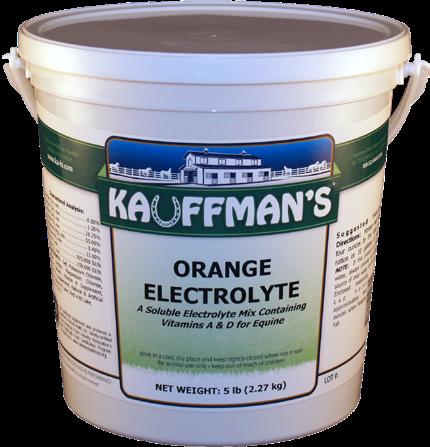
This summer, your traveling horse will likely experience heat, hauling stress, and strenuous riding and showing conditions, leading to excessive sweating and electrolyte loss. Kauffman’s Animal Health’s electrolyte supplement line is formulated to meet the challenging demands of your equine athlete. Supplements are available in water-soluble mixes and pastes.

EVERYTHING YOU LOVE ABOUT HORSES ALL IN ONE PLACE
Discover Ride TV, the ultimate equine streaming platform.
Whether you want to watch the biggest events in equestrian sport, bingewatch your favorite series, or learn from top pros, Ride TV makes it easy to watch your favorite videos anywhere, anytime, all in one place.

Start your 7-DAY FREE TRIAL!

Access Discounts on Summer Travel Products
As a Member of USRider, you can enjoy money-saving discounts from our nationally recognized equine-industry partners. You’ll find exclusive deals on items for you and your horse, including trailering products, tack and equipment, apparel, veterinary supplies, equestrian gifts and jewelry, equine publications, services, and more!
ID-MyHorse Tags
BriteAngle
If you’re a USRider Member, please log in to access exclusive discount codes. Not a Member? Join today! This issue, we spotlight discounts on products designed to aid Summer Travel. For more information on products from each of these companies, and for more Members-only discounts, click here.
Created by a veterinarian, ID-MyHorse’s Emergency Medical and Identification Tags contain vital information on both horse and rider should you experience an accident, injury, medical emergency, lost horse, or other critical incident. Not only does the information help you reconnect with your horse, it also allows first responders to notify your emergency contact and treat you with confidence, knowing your medical history. Braid the tag into a small section of your horse’s mane to keep it secure. ID-MyHorse tags are valuable both while traveling with your horse and at your home barn; keep one affixed to your horse’s mane in case he escapes or in the event of a natural disaster. USRider Members receive a 15% discount on new tags.
Diesel Fuel Discount Card
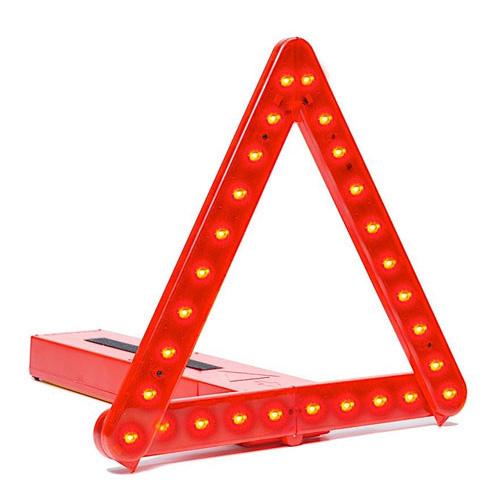
BriteAngle Flashing LED Triangles protect vehicles and horse trailers in roadside emergencies. The company’s highest priority is preventing the agony of people or equipment of any kind resulting from being hit because of a roadside emergency. BriteAngles warn oncoming traffic to SLOW DOWN and MOVE OVER. USRider Members receive an 11% savings when ordering a two-pack, plus two free cone mounting brackets.

Save money on diesel fuel nationwide by joining the free Open Roads program, a USRider Equestrian Motor Plan Preferred Partner. The card is accepted at thousands of locations nationwide, including top travel brands, such as Love’s Travel Stops and TravelCenters of America. Members routinely save between 40 and 50 cents per gallon (varies by location). How it works: Apply for the program online, receive your Diesel Fuel Discount card in the mail, download the mobile app for real-time prices and locations, and start saving money. USRider Members receive free Priority Processing.
The Organized Barn & Trailer®
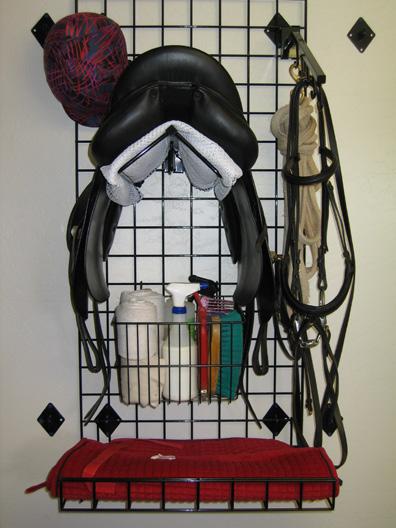
Stop stumbling over the tack and buckets on your trailer’s dressing-room floor. The Trailer Dressing Room Kit, created by The Organized Barn & Trailer, helps you get everything off your trailer floor and into a wall-mounted storage system. Hang several panels on the dressing-room walls or door with the wall supports’ mounting brackets, then add baskets, shelves, hooks, and hangers as needed. The large wire bin is excellent for storing bulky items, such as lawn chairs, blankets, table canopies, and tire jacks. A Tack Stall Kit is also available. USRider Members receive a 5% discount.




Keep-Cool Tips
This summer, help your horse stay in the comfort zone—and cool him down quickly if needed—with this checklist.
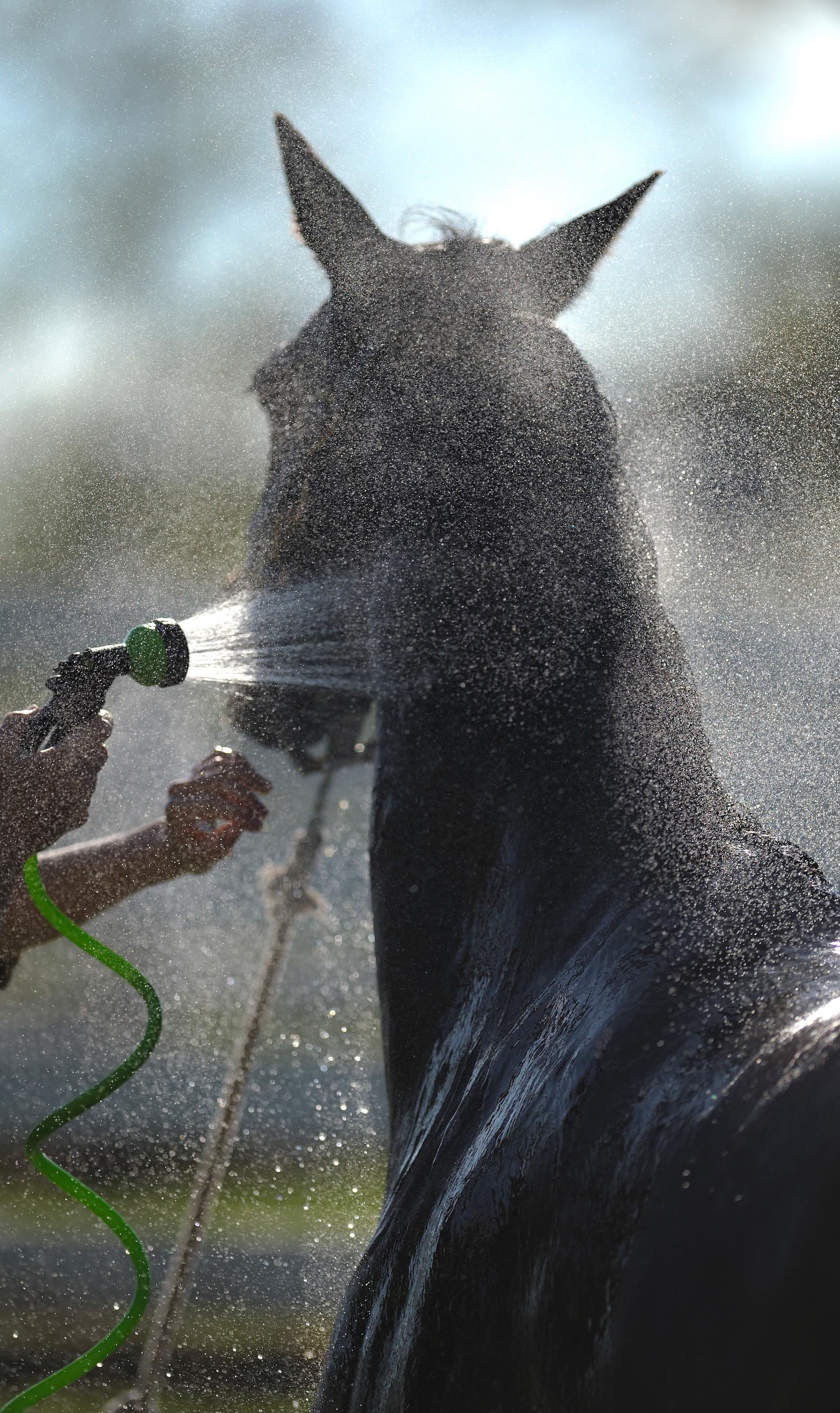
Sweltering summer heat is a health hazard for your traveling horse. He’s at risk for dehydration, weakness, colic, poor exercise tolerance—even heatstroke. Use this checklist to help keep your horse cool—and to quickly cool him down, if he shows signs of heat stress despite your best efforts.
Keep Him Cool
■ Provide clean water. Keep clean water in limitless supply available 24/7.
■ Provide ample shade. Make available plenty of shade from trees, shelters, or run-in sheds. If you must leave your horse alone during the hottest part of the day, it may be best to confine him to the barn or a small area you know has adequate shade.
■ Watch the hierarchy. If you have more than one horse in a pasture, make sure weaker, older, or less-dominant horses aren’t being chased away from water or shade.
■ Provide ample salt. If you provide free-choice salt, note that your horse should be eating at least two ounces per day. Weigh your blocks or bricks every two weeks to make sure. If he’s not consuming this much salt on his own, start adding salt to his grain. Or, give him a small daily meal of soaked beet pulp or wheat bran with two tablespoons of salt added.
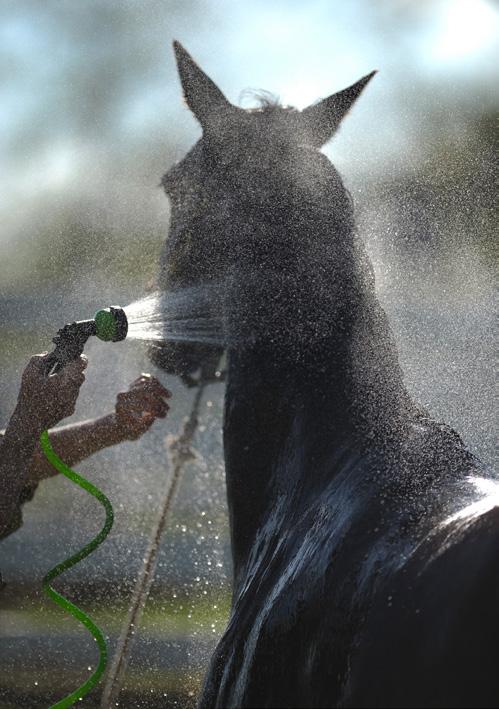
■ Hose him down. Hose your horse down during the hottest part of the day. Run the water a minute or two first to clear the hose of hot water.
To help keep your horse cool this summer, hose him down during the hottest part of the day.
PHOTO BY CLIXPHOTO.COM
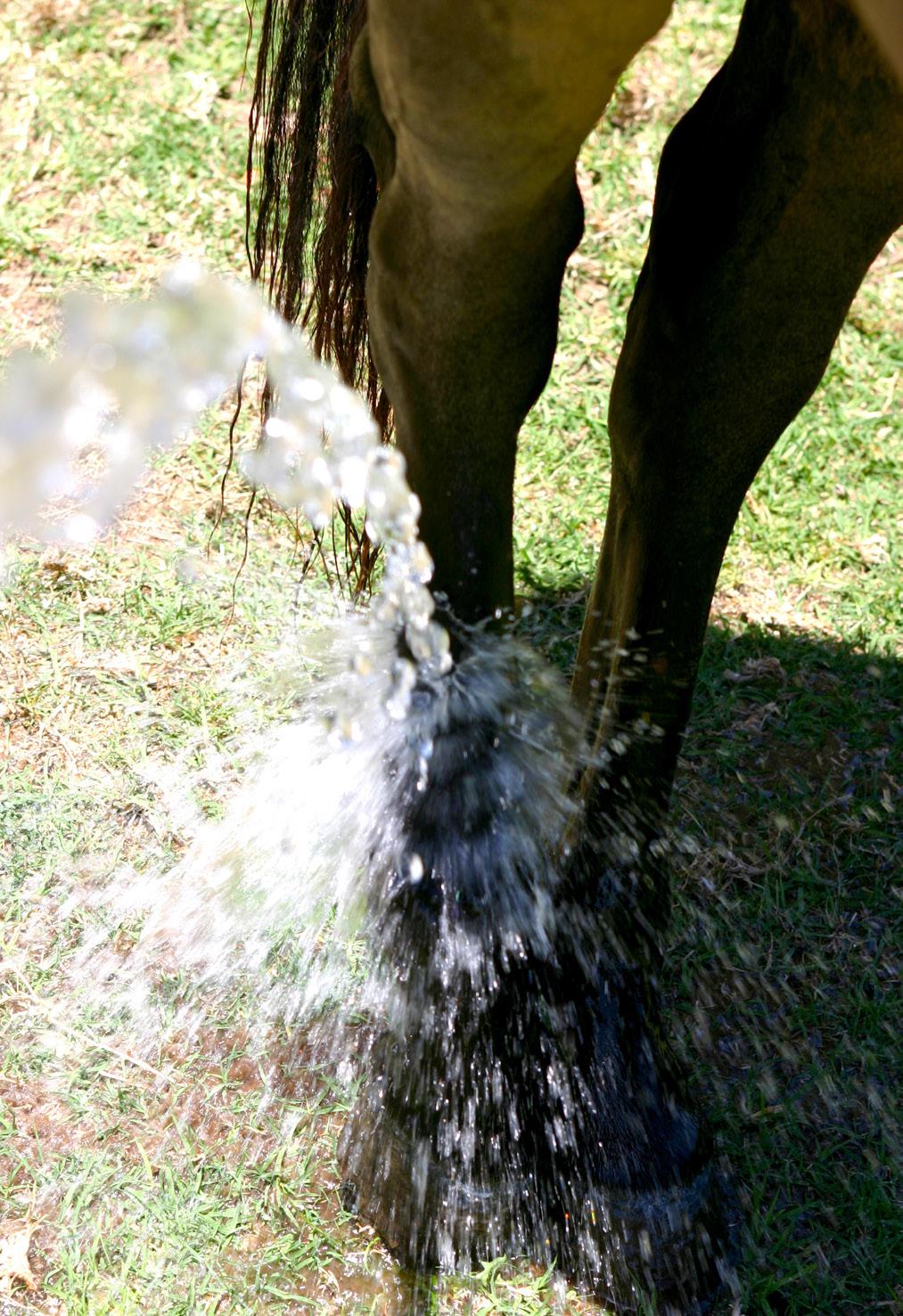
If your horse shows signs of heat stress, first hose target areas—his chest, the jugular grooves of his neck, and his lower legs. Then hose his entire body.
■ Invest in a sprinkler system. If your horse enjoys a sprinkler system, keep it outside your pasture fence, and set it to spray into the pasture.
■ Run fans. To maximize the evaporation of sweat and improve air circulation, set up large fans in your barn and run-in area. (Make sure cords are safely out of reach of chewing, curious horses.)
Quick Cooldown
An overheated horse, either from exercise or simple heat exposure, needs aggressive cooling. Watch him carefully for signs of heat stress, which include extreme depression, weakness, drenching sweat or failure to sweat, and even panting. If you see any of these signs, take the following steps to cool your horse down quickly.
■ Hose target areas. It’s simply not true that you can’t use cold water on a hot horse. In fact, cold
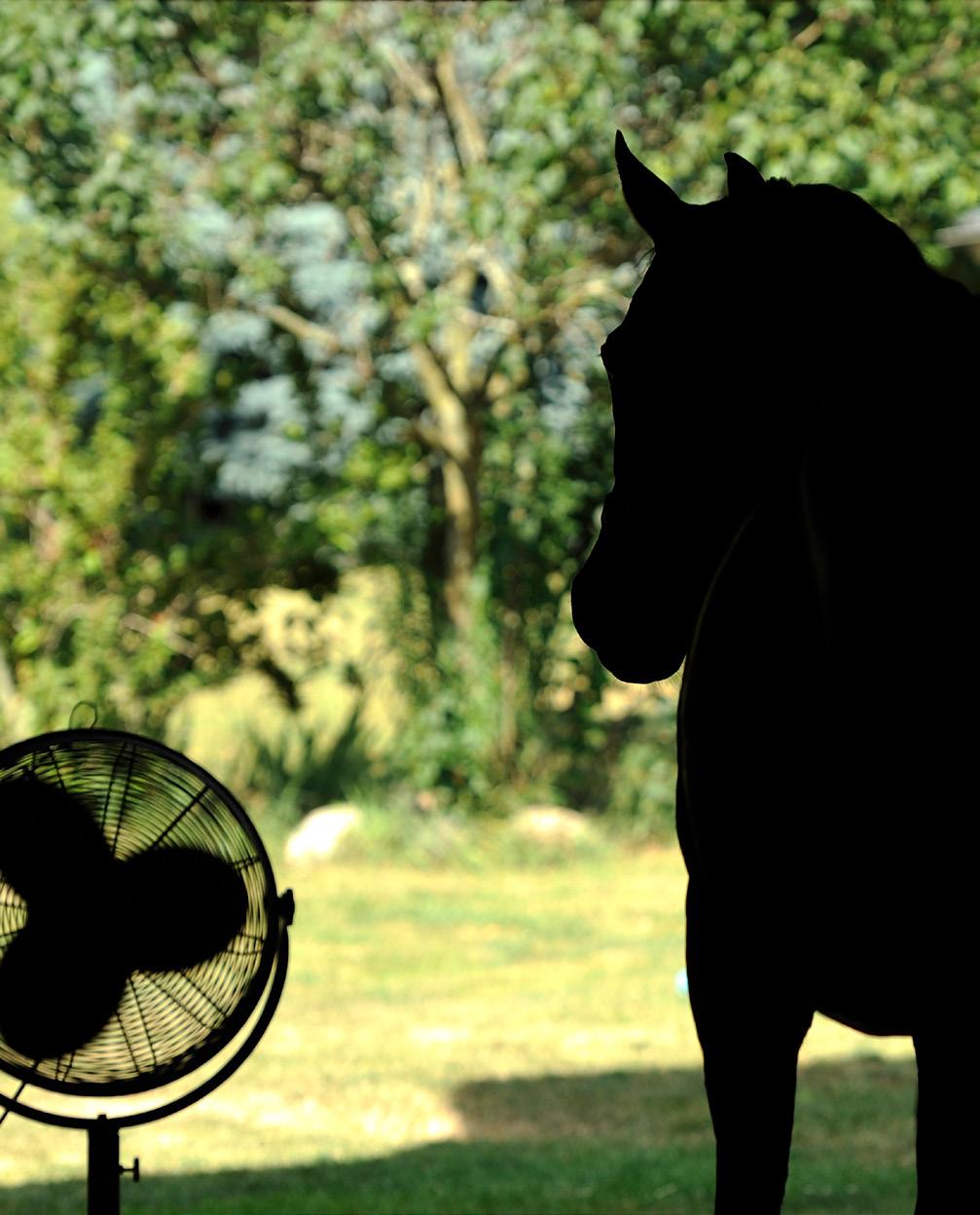
To maximize the evaporation of sweat and improve air circulation, set up large fans in your barn and run-in area set up large fans in your barn and run-in area.
water may prevent a life-threatening condition from developing. Run cold hose water over your horse’s chest, the jugular grooves of his neck, and his lower legs. These areas have many superficial blood vessels that can be rapidly cooled by the water and will carry the cooled blood to the interior of his body.
■ Hose his entire body. Once your horse seems less distressed (breathing eases), progress to hosing his entire body. Use a sweat scraper to scrape away the warm water. Continue hosing until the water running off underneath his body feels cool. This means the water is no longer picking up large amounts of heat from the surface of the skin.
■ Walk him. Slowly walk your horse in a shaded area. Observe him carefully to make sure his respiratory rate doesn’t climb again or that he begins to sweat. If this happens, repeat the cooling process.
■ Offer water. Offer tepid water at frequent intervals throughout this process. If your horse is very distressed at first, or breathing/panting heavily, he probably won’t drink. Keep trying.
— Eleanor M. Kellon, VMD
PHOTO BY CLIXPHOTO.COM
PHOTO BY HEIDI MELOCCO