Mortgage Women Magazine 2026 Issue 2 (Expanded Edition)
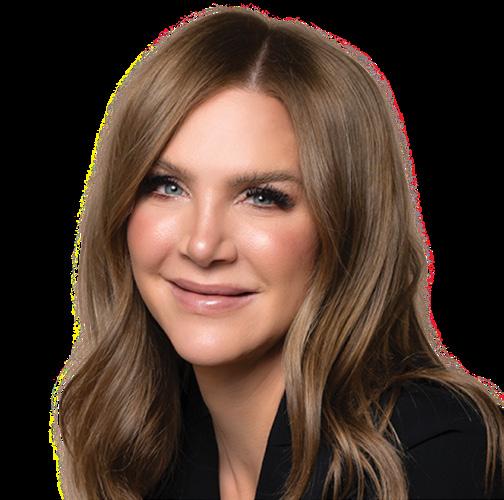
A SEAT FOR MORE LEADERSHIP STARTS WITH ONE VOICE — MOSI GATLING SHARES THE LESSONS THAT SHAPED HERS
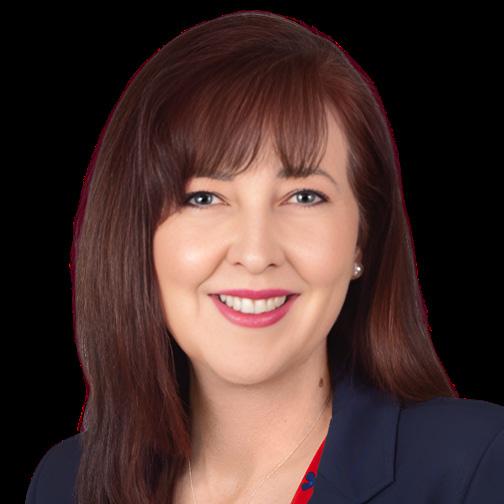
HUMAN INTELLIGENCE EFFICIENCY AND EMPATHY AREN’T COMPETING PRIORITIES — THEY’RE THE FUTURE OF MORTGAGE LENDING
FOUNDATIONS FOR THE FUTURE
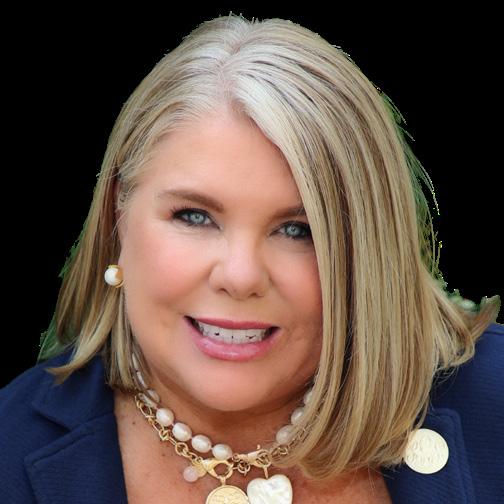
KELLY ZITLOW IS HELPING THE NEXT GENERATION OF WOMEN BUILD CONFIDENCE, SKILLS, AND CAREERS IN AN INDUSTRY READY FOR CHANGE THE RISK NOBODY SEES COMING MISALIGNED FRAUD, CREDIT, AND AUDIT FUNCTIONS ARE QUIETLY SHAPING LOSSES LONG BEFORE THEY APPEAR ON THE BOOKS
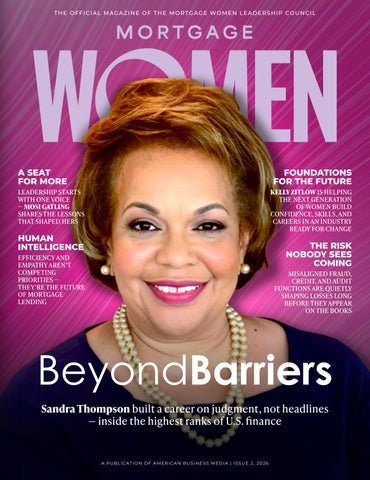
BeyondBarriers
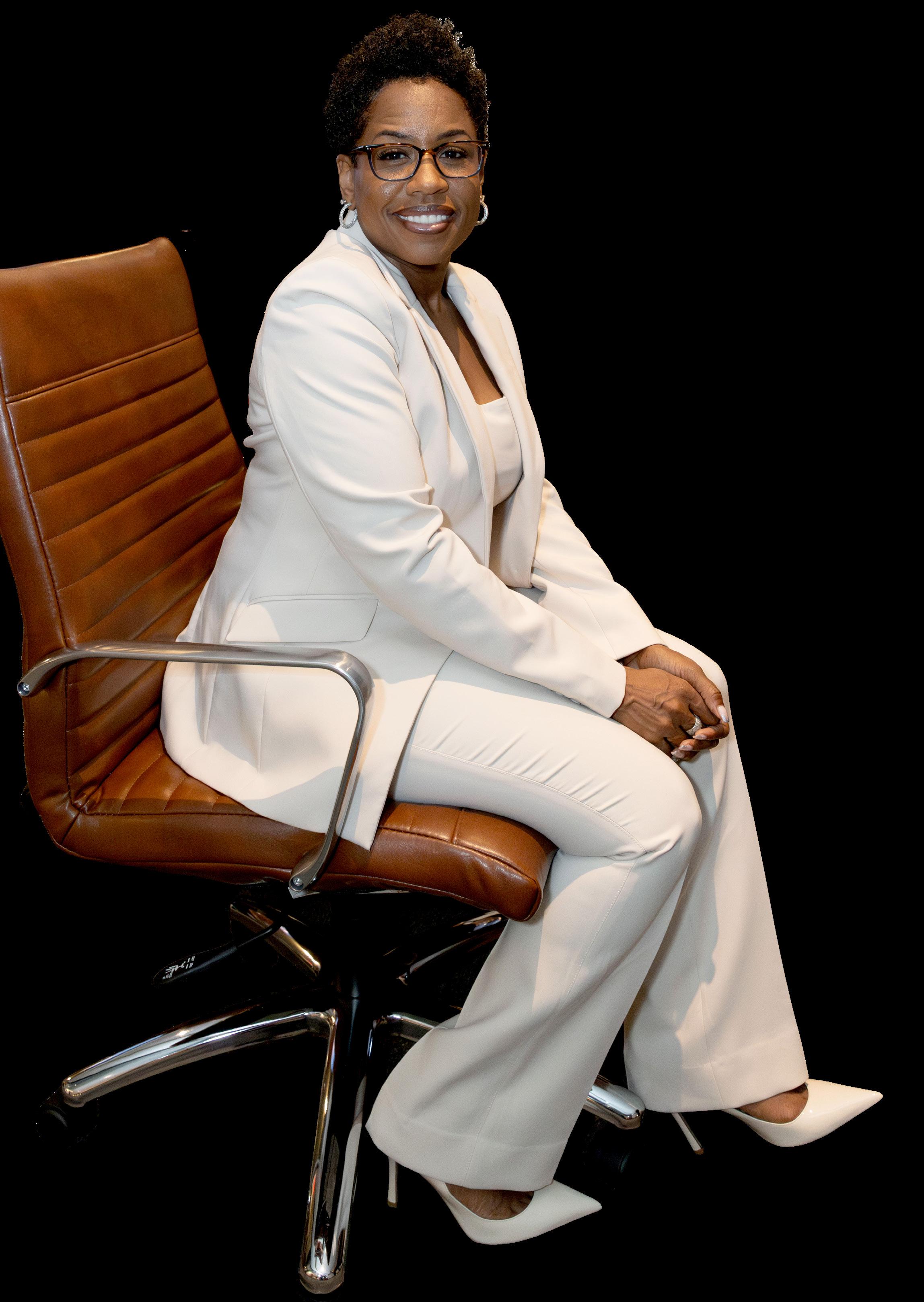
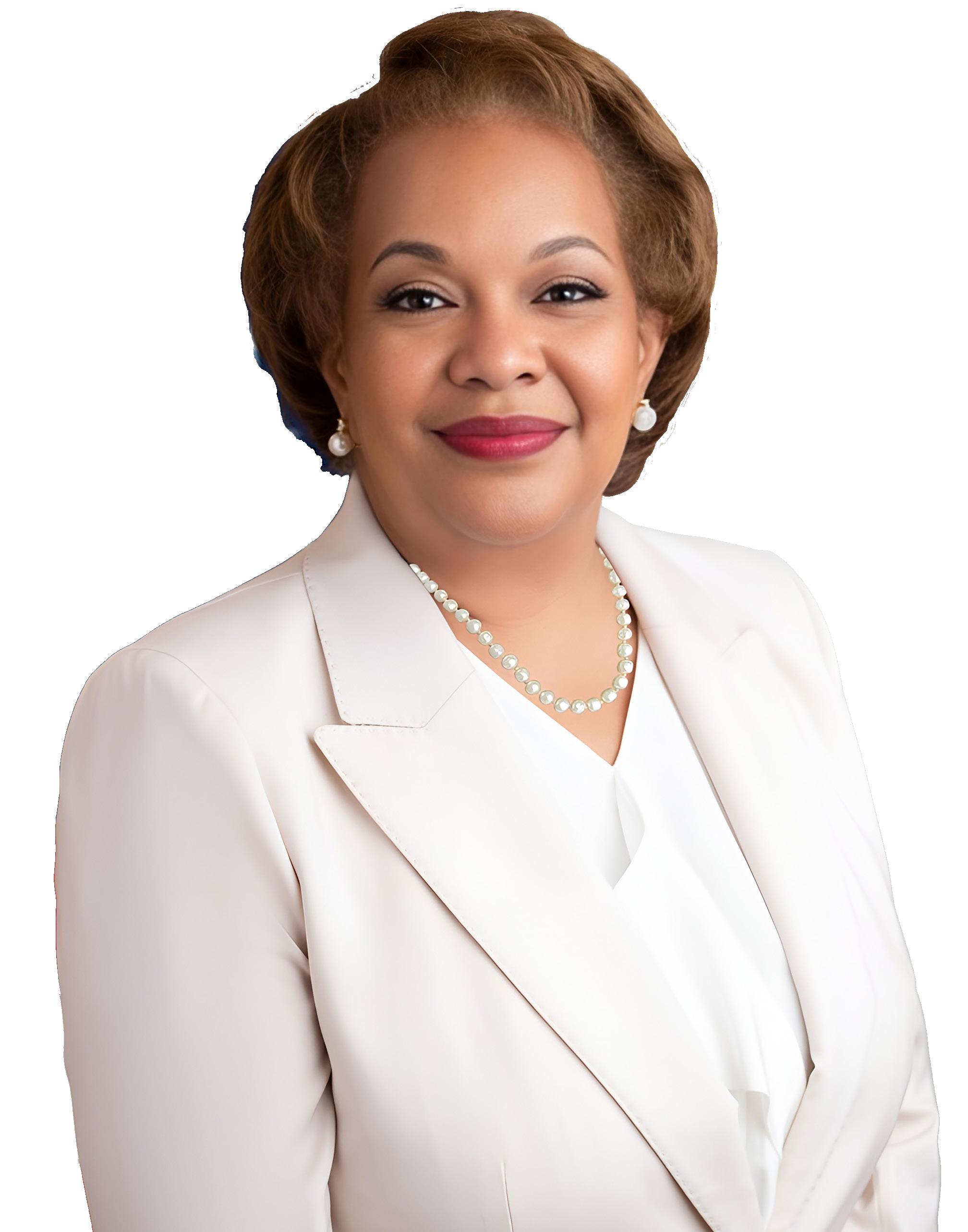
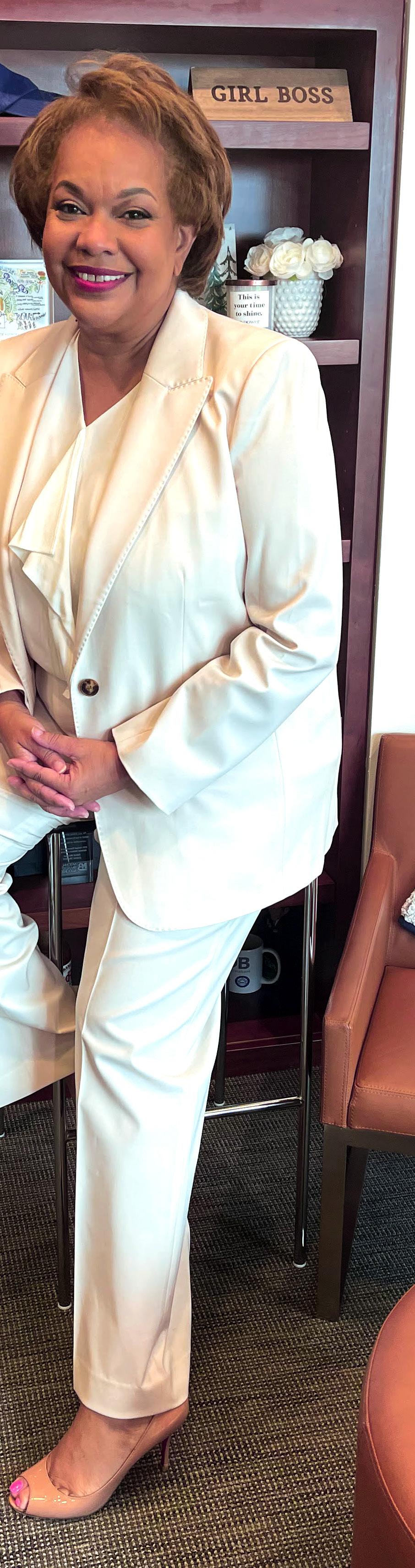
Sandra Thompson built a career on judgment, not headlines — inside the highest ranks of U.S. finance
We hope you've enjoyed recieving complimentary editions of Mortgage Women Magazine. New issues will be exclusive to members of the Mortgage Women Leadership Council.
Mortgage Women Magazine is the official magazine of the Mortgage Women Leadership Council. Membership not only guarantees your subscription to the digital magazine but also provides you with a wealth of benefits designed to empower and elevate women in the mortgage industry. These include access to a dynamic network, editorial opportunities, awards, community support, and much more. Join us in this exciting chapter by becoming a member of the Mortgage Women Leadership Council and ensure you stay connected and informed.
Leading The Way Forward
Exploring the ambition, resilience, and leadership that continue to shape careers, communities, and the future of our industry
July is a month of momentum, a time when the industry looks ahead, opportunities begin to take shape, and leadership conversations become even more important. In this issue of Mortgage Women Magazine, we celebrate the women who continue to elevate our industry through resilience, innovation, mentorship, and vision.
As we move toward summer, we are especially excited to invite you to join us this July in New Orleans for the Mortgage Star Conference (https://www.mortgagewomen. com/events/mortgage-star-national---new-orleans), where industry leaders from across the country will come together to share insights, strengthen relationships, and shape the future of housing finance. This year’s conference will also shine a special spotlight on the Mortgage Women Leadership Council and the women across our industry who continue to lead with excellence, elevate others, and create meaningful change. Mortgage Star has always been about connection and collaboration, and this year we are especially proud to celebrate the women who are shining brightly and helping pave the way for the next generation of leaders.
Immediately following Mortgage Star, the Ultimate Mortgage Expo will continue the conversation with dynamic programming, networking, and industry engagement that reflects the evolving future of mortgage lending and leadership.
This issue also features one of the most compelling conversations we have published to date.
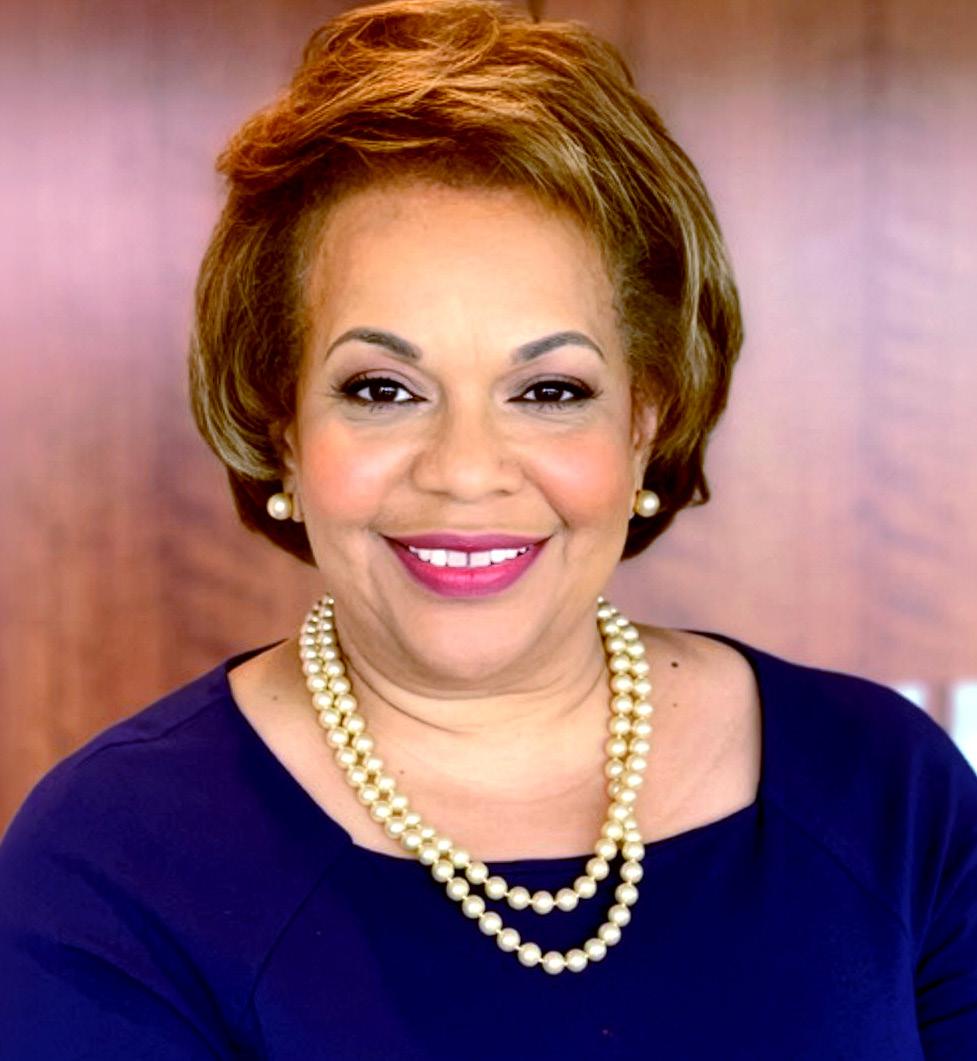
In Beyond Barriers: A Conversation with Sandra Thompson, former FHFA Director Sandra Thompson gives her first interview to Mortgage Women Magazine, and it is extraordinary. Thompson reflects candidly on her groundbreaking career, from becoming the first African American and first woman to lead bank supervision at the FDIC to serving as the first female Director of FHFA. Her perspective on leadership, resilience, mentorship, confidence, and public service is both deeply personal and profoundly instructive.
What makes this interview so remarkable is not only the history she has made, but the honesty and wisdom she shares along the way. Sandra speaks openly about navigating leadership in male-dominated spaces, learning to recover from failure, balancing career and family, and the importance of mentorship and sponsorship for women entering the industry today.
This is the kind of conversation you will underline, revisit, and share.
As you turn the pages of this month’s issue, take your time with this interview. There are lessons here for every stage of a career, whether you are just entering the industry, stepping into leadership, or looking for renewed inspiration in your professional journey.
Keep reading. You won’t want to miss a word.
Kelly Hendricks Managing Editor, Mortgage Women Magazine
STAFF
VINCENT M. VALVO
CEO, PUBLISHER, EDITOR-IN-CHIEF
ALISON VALVO
PRESIDENT & CHIEF OPERATING OFFICER
ANDREW BERMAN CEO, NATIONAL MORTGAGE PROFESSIONAL
BEVERLY BOLNICK ASSOCIATE PUBLISHER
KELLY HENDRICKS MANAGING EDITOR
JENNIFER RIDGEWAY ACCOUNTING MANAGER
NICK BONADIES SENIOR VICE PRESIDENT OF SALES
KRISTIE WOODS-LINDIG
CLIENT EXPERIENCE LEADER
EMMA WALSH
MEDIA DIRECTOR
CZARINNA ANDRES MANAGING EDITOR
KATIE JENSEN ASSOCIATE EDITOR
LAURA BRANDAO, SLOAN BREWSTER, JACQUELINE ‘JAX’ CRIDER, JESSICA GONZALEZ, SHELLY GRIFFIN, JENNIFER MANNION, JENNIFER MCGUINNESS-LUBBERT CONTRIBUTING WRITERS
TIMOTHY BURT MARKETING DIRECTOR
MEGHAN GOLDEN MARKETING SUPERVISOR
KATHERINE SALA MARKETING MANAGER
NAVINDRA PERSAUD EVENTS DIRECTOR
COURTNEY VALVO EVENTS COORDINATOR
MELISSA PIANIN VP OF EVENTS
JULIE CARMICHAEL PROJECT MANAGER
STACY MURRAY, CHRISTOPHER WALLACE GRAPHIC DESIGN MANAGERS
MATTHEW MULLINS MULTIMEDIA SPECIALIST
COVER STORY
44
Firsts, Not Friction
Sandra Thompson on leading at FDIC and FHFA— and why discipline beats barriers every time
BY JENNIFER MCGUINNESS-LUBBERT
6
Making More Room
New advisory board committees, fresh initiatives, and a shared commitment to opening more doors for women across mortgage.
12
Open Doors
New American Funding’s Mosi Gatling explains why adaptability, mentorship, and opening doors for others are the keys to lasting leadership.
20 The Invisible Advantage
The best mortgage professionals aren’t just closing loans— they’re managing conversations. Here’s how AI helps lighten the unseen workload without replacing the human touch.
24
Lead To Win
Three accomplished mortgage executives share how they build influence, develop high-performing teams, and protect their time without sacrificing results.
30 The Human Advantage
Artificial intelligence can improve efficiency, but trust, judgment, and relationships remain the qualities that define exceptional mortgage professionals.
34
Building More Than Homes
How Kelly Zitlow’s nonprofit is empowering the next generation of women to build confidence, careers, and communities.
40
Speaking The Same Risk Language
Lenders are beginning to realize that inconsistent classification across fraud, credit, and audit functions is driving avoidable portfolio losses.
54
Powering The Platform
Highlights
With New Advisory Board Members, MWLC Creates Subcommittee Structure Board members seek ways to elevate and empower more women to step into their potential
BY SLOAN BREWSTER, SPECIAL TO MORTGAGE WOMEN MAGAZINE
Aside from bringing on a diverse group of industry leaders to the Mortgage Women Leadership Council Advisory Board, the council, this year, is ushering in a new structure.
The format, which introduces new advisory board subcommittees, is designed to expand opportunities for collaboration, strengthen industry recognition initiatives, and create new ways for members to engage with the growing community, said Meghan Golden, director of digital communications for the council.
The transition comes on the heals of the recent induction of the newest advisory board members, many of whom expressed a strong desire to begin contributing immediately to the council’s continued growth, Golden said. In response to that enthusiasm, the board leadership team developed the subcommittees, inviting the members to join groups that speak to them so they can channel the council’s expertise, industry relationships, and leadership experience into initiatives that benefit the broader MWLC community.
These committees will help guide efforts to expand programming, increase visibility for women in the mortgage industry, and strengthen the connections that define the council network, Golden said.
The framework allows board members to collaborate on targeted initiatives designed to support professional growth, elevate industry voices, and expand opportunities for engagement among members.
In a recent meeting, the advisory board decided on several target areas of focus for the subcommittees.
To begin with, Golden said, the members want to strengthen the council’s recognition initiatives, so outstanding
women across the mortgage industry continue to be celebrated and highlighted. To this end, the council will elevate more voices, spotlight leadership across different industry sectors, and provide meaningful opportunities for women to gain visibility for the impact they are making within their organizations and the broader mortgage community.
Members also plan on finding more time to connect throughout the year. In this manner, they will strengthen their sense of community conversation, collaboration, and peer support across council programs, working groups, and events, Golden said. The goal is to make it easier to build relationships, share insights, and stay engaged with the council between major industry gatherings.
As the organization continues to expand, part of the advisory board’s work will focus on identifying ways to introduce more professionals to the council network and increase participation in its programs.
By leveraging the collective industry relationships of its advisory board members, the council hopes to broaden awareness of its initiatives and create additional opportunities for women across the mortgage industry to participate in the community.
The new structure will also support initiatives that align with the council’s broader mission of advancing women in the industry while encouraging meaningful engagement within the communities the organization serves. These efforts may include programs that highlight diverse perspectives within the industry as well as opportunities for members to come together around service and community impact.
Alongside the subcommittee launch, council leaders are exploring new ways to keep community conversations active and accessible for members. The goal is to create an environment that makes it easier than ever for council members to reach out to one another, connect with leadership, and stay engaged with council initiatives throughout the year.
The new subcommittee structure reflects the enthusiasm of the advisory board and the organization’s commitment to building a collaborative leadership community. By strategically tapping into the experience and strengths of its board
members, the council has set out to continue expanding opportunities for connection, recognition, and professional growth — while strengthening the network that brings women across the mortgage industry together.
BOARD MEMBERS SPEAK ABOUT WOMEN IN LEADERSHIP
This year’s new advisory board members come from varying backgrounds and include CEOs, COOs, founders, managing partners, broker-owners, executive directors, presidents, and vice presidents. While their skillsets and expertise span different aspects of the industry, they share a passion for joining the board, believe in the power of mentorship to build others up, and see the council as a means to create a safe community and space for women to grow professionally.
While they each have individual management styles, they share the desire to bring more women to the industry table and are tapping leadership skills to lift and build women up. They speak of the power of mentoring and bringing in diverse voices. Overall, the group shares a belief that leaders should work collaboratively while supporting and empowering others — women in particular. Over and over, they speak of confidence, resilience, inspiring others, elevating others, and lifting others up. They see the board as a space to achieve these goals and want to have an impact in creating pathways and opening doors for more women to step into their potential.
Sydney Payne, COO at Simplending Financial, for example, believes leadership is about creating space for others to rise. While she acknowledges leading involves setting direction and making decisions, for her it also means mentoring, advocating, and ensuring diverse voices are heard. In guiding women toward empowerment, leaders must model confidence, resilience, and collaboration while challenging barriers that have historically limited opportunities, she adds.
“I saw firsthand the impact of inclusive leadership,” she said. “Having my mentors showed me that leadership is most
powerful when it empowers others to see their strengths and step into their own potential."
Suha Zehl, founder and chief innovation officer at Z Technology Solutions, notes that leadership is not about titles or hierarchy, but creating space where others can rise. To empower women, leadership should model courage, authenticity, and resilience so other women feel seen, heard, and capable of stepping into their own power.
“It means using my influence to advocate for equity, to amplify underrepresented voices, and to mentor the next generation so that the path is a little clearer and a little wider for those who follow,” she said. “Leadership is legacy and it’s our responsibility to ensure the impact continues long after any one of us has left the room.”
Erica LaCentra, CMO at RCN Capital believes showing up authentically, leading by example, and providing meaningful contributions is the way to empower women. She hopes for a future in which women holding leadership roles is not the exception but expectation, and wants women to stop being hesitant to step into leadership roles.
Jacqueline ‘Jax’ Crider, manag ing partner at PBJ believes true leadership is intentional. She stresses the importance in understanding the people she is leading, recognizing their struggles, and helping them see who they can become.
“It’s not just directing others; it’s inspiring them to rise into the best versions of themselves,” she said.
“True leadership is not only about leading from the front but also about lifting others up, amplifying women’s voices, and modeling integrity, resilience, and collaboration,”
ANDREA RUIZ, LOAN OFFICER BRANCH MANAGER, NOT YOUR AVERAGE LENDER
Andrea Ruiz, loan officer branch manager at Not Your Average Lender defines leadership as the ability to inspire, guide, and create opportunities for others to reach their potential. To raise women up, leadership must break barriers, advocate for equity, and cultivate an environment where they feel supported and confident to step into decision-making roles.
“True leadership is not only about leading from the front but also about lifting others up, amplifying women’s voices, and modeling integrity, resilience, and collaboration,” she said. “I want to use my voice and platform to inspire other women to not only pursue leadership but to own it confidently.”
Courtney Dodd, head of mar keting at Floify believes leadership is about creating an environment where others feel seen, supported, and empowered to succeed.
“It’s not just about setting direction, but about lifting people up along the way,” she said. “True leadership is less about titles and more about influence, the ability to inspire, to advocate, and to open doors for those coming behind you.”
To lift women up, leaders should use their voices and platforms to make space for others, encouraging confidence in rooms where women may have historically been underrepresented, and showing through action that collaboration and empathy are strengths, not weaknesses.
Annette Foulkes, broker/ owner for Sterling Financial Services LLC sees leadership as the ability to guide and inspire others by showing up with integrity, resilience, and empathy.
“It’s not about a title, it’s about setting an example, creating opportunities, and helping others grow,” she said.
She is passionate about using her experience to support and empower other women through the Advisory Board.
Andrea Keirn, Senior Director of Marketing Operations at the Federal Savings Bank believes leaders
empower women through influence, inspiration and by guiding other toward shared goals while intentionally creating opportunities to amplify women's voices, decisions, capabilities, and contributions. In addition to decision-making and vision-setting, leaders should model inclusion, foster equity, and challenge organizational, structural, and societal barriers that have historically limited women's advancement.
Shelby Fennewald, home equity manager at Central Trust Bank defines a leader as someone who models the way for those around them and demonstrates empathy even in situations where understanding may be limited. She sees the advisory board as a space where women continue to grow, learn, nurture, and change the mold.
Dana Georgiou, chief revenue officer at Dunmor sums her leadership journey as “Grit, Grind, and Grace.” She says women can have soft hearts, but firm spines. She envisions a future where women don't have to choose between strength and grace or between being successful and being supportive and
“They can close million-dollar deals and text someone just to check in,”
DANA GEORGIOU, CEO, LENDING LUMINARY
says her philosophy is that women can be fierce competitors and compassionate collaborators.
“They can close million-dollar deals and text someone just to check in,” she said.
Melissa Rice, executive director at 63 Capital and Investments says leadership is about showing up, standing firm in your values, and helping others rise with you and being the one who listens, encourages, and leads by example. She believes real leadership is rooted in faith, humility, and purpose and is not about being perfect, but being present.
Leadership in regards to women’s empowerment is breaking barriers and building bridges.
“It’s having the courage to speak up, even when your voice shakes, and the wisdom to know when to step back and let someone else shine,” she said. “It’s mentoring, sharing resources, and creating opportunities for other women to thrive.”
Sue Meitner, CMB president at Centennial Lending Group said leadership is guiding, supporting, and empowering others to reach their potential. In women’s empowerment, it means advocating for representation, fostering confidence, and building communities where women advance together
Her vision is to see more women in leadership roles across the industry, including leading branches, divisions, companies, and strategic conversations.
“We are already capable; we simply need the access, confidence, and support to step forward,” she said.
Janet Pagan, branch manager at PRMG, described leadership as the ability to inspire, elevate, and create space for others to thrive, especially those whose voices have historically been underrepresented.
To encourage women’s empowerment, a leader must show up with authenticity, lead with empathy, and use their influence to open doors for others.
“It’s not just about making decisions, it’s about making a difference,” she said.
Cindi Harris, founder and owner of Harris Real Estate Valuation and Consulting LLC, defines leadership as empowering others, building trust, creating a safe space for authenticity and courage, and paving the way for others — especially women — to navigate spaces historically not designed for them with strength and grace. She noted that women are needed in leadership.
LaDonna Lockard, licensed realtor, educator, and advocate, is passionate about helping women grow in confidence and clarity. She believes leadership means sharing experience, supporting growth, and creating opportunities that allow others to step fully into their potential.
“We bring empathy and wisdom to the table in a way that is critical for teams,”
CINDI
HARRIS, FOUNDER AND OWNER, HARRIS REAL ESTATE VALUATION AND CONSULTING LLC
“We bring empathy and wisdom to the table in a way that is critical for teams,” she said.
Eliana Parada, producing branch manager at Supreme Lending, said leadership is rooted in service, vision, and empowerment, and requires breaking barriers while building bridges.
Elizabeth Mix, CMB and vice president at Western Alliance Bank, believes leadership is about creating confidence through guidance, opportunity, and consistent support.
Ultimately, this group of women not only seeks an avenue for giving back to the mortgage community, but wants to assure the opportunities for women continue to expand and there are always welcoming places for them at the table.
EMBRACING CHANGE PROFESSIONALLY
AND PERSONALLY
How life experiences have impacted Mosi Gatling
BY LAURA BRANDAO, CONTRIBUTING WRITER, MORTGAGE WOMEN MAGAZINE
MMoving around so much taught her that change is ok, it doesn’t have to be scary. When you are a military kid there isn’t a choice in the matter so you get used to making new friends and learning new rules. Gatling did grieve for continually having to leave friends she had come to care for, but keeping in touch by writing letters helped with the transitions.
From that experience, she came to understand that learning about different societies and cultures is a huge positive in life. That experience has helped her in adult life.
Gatling also married a military man and continued to change locations every couple of years as a result.
Currently, Gatling is the senior vice president of strategic growth and expansion for New American Funding, a nationwide mortgage lender operating in all 50 states and Puerto Rico.
osi Gatling was born in the Philippines while her father was stationed there. He was a trainer in the Navy, and the family moved about every two years during Gatling’s childhood.
Words shape interactions. Being aware of the impact and importance of how we express ourselves is something about which I am passionate.
Gatling and her family reside in Las Vegas, Nevada.
How did you get your start in the mortgage industry?
I came to the mortgage business almost by accident. 25 years ago I was working at a credit card company when my husband was transferred across the country by the military.
I was able to stay with the same company but the only department in the new location was in the mortgage side of the business. What began as just a job quickly became a calling when I realized I was drawn to the idea of helping people become homeowners, and a desire to see women offered opportunities and accolades they deserve.
I already knew I loved assisting others, but this profession gave me the scope to help with life-changing investments that can be beneficial to them and to their families in the future.
What does being a trailblazer mean to you?
For me, being a trailblazer means stepping into spaces where representation has been limited and then proving excellence is limitless.
I want to make sure doors are opened for those that come after me. The way to accomplish that is to unlock them and open them wide enough so everyone who wants to can step through without barriers.
It is also imperative the trailblazer be
It is also imperative the trailblazer be authentically and unapologetically themselves and set that as the example for anyone who wishes to follow their footsteps.
authentically and unapologetically themselves and set that as the example for anyone who wishes to follow in their footsteps.
Where do you see yourself and women in general in the industry over the next 5 years?
I see myself continuing to step up and into places where women have been underrepresented and working to change that through determination and drive. I also want to give a bigger platform to voices that aren’t always heard above the din of the workplace and its pressures and chaos. That means supporting and encouraging others to speak louder and with more confidence when they have an idea to share.
I really believe we are going to see more women emerging in C-suite roles, on many more boards, and in policy meetings in the coming years. The perspective, empathy, and value women bring to the table will be crucial to the continued growth and improvements in the way our industry serves its clients moving into the future.
I can see the talent is there and ready to be accessed. The next five years will be about making sure women are given — and ready to take on — the opportunities they have earned and richly deserve.
What is your professional superpower?
My professional superpower is my
ability to pivot and adjust to new situations without fear or hesitation. Having grown up with my dad in the Navy and moving every couple of years, major change was just part of life, and it is how you view that which makes a difference.
You can miss old places and the people you left behind but also look forward to seeing and experiencing something new. I lived in other countries where the customs and languages were different. Growing up like that gives you a perspective on life that allows you not only to accept but embrace diversity and differences rather than fear them.
This type of life has also taught me the intrinsic value of having to stretch yourself out of your comfort zone sometimes to greet new ideas and experiences with curiosity and enthusiasm.
I believe my life lessons have taught me that to build something beautiful, anticipate changes, and act accordingly is my personal superpower.
Tell us something about your career in the mortgage industry that was pivotal to your achievements today.
One of the most pivotal moments for me was recognizing that words have power. The terms you use to describe, promote, or denounce something carry great weight with your audience and should therefore always be chosen with the greatest of care.
Realizing how impactful words can be
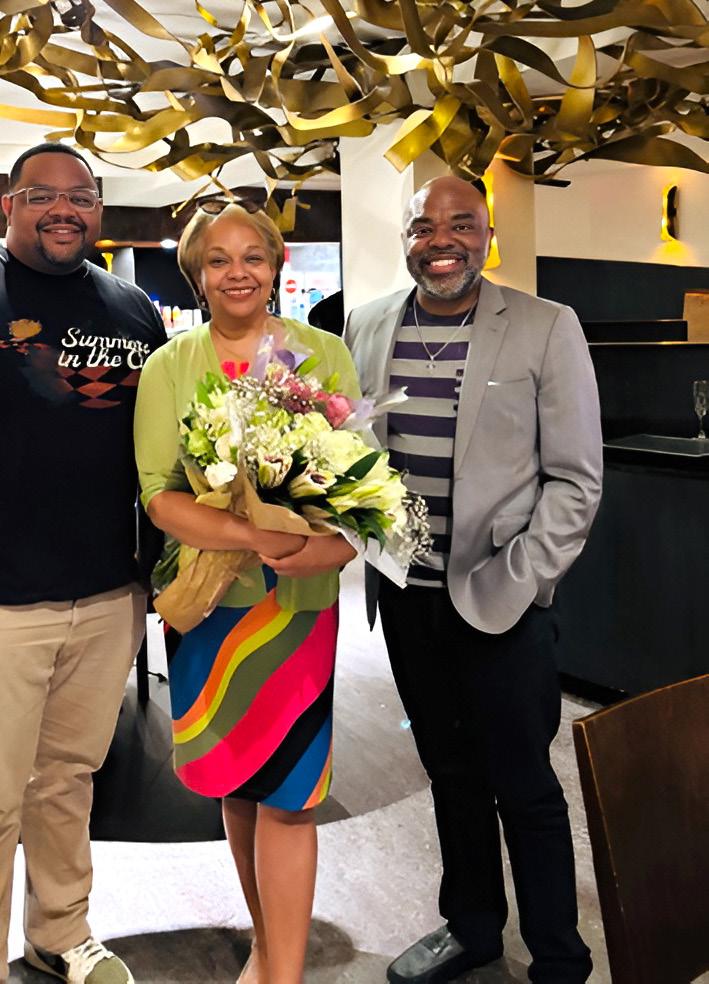
GATLING (CENTER), SHANTA PATTON-GOLAR, PATTON & ASSOCIATES EXP REALTY (LEFT), AND SHAWNEEQUA BADGER, THE BADGER REAL ESTATE GROUP POWERED BY EXP REALTY (RIGHT)
MOSI
in any situation — be it business, sales, or personal life — has impelled me to develop training and other initiatives centered around communication, representation, and access. Much of the work I do today is based on improving and understanding our communications with each other and clientele.
Words shape interactions. Being aware of the impact and importance of how we express ourselves is something about which I am passionate.
What advice would you give to a woman entering or trying to move up in their mortgage career?
I want young women to be intentional in their approach to achieving goals. Being deliberate about building a network and a reputation for hard work and reliability are paramount to moving forward at any organization.
It is important to seek mentors and others who can guide and advocate for you, but it is equally vital that you learn to advocate for yourself and remember that your perspective is valuable and worthy of consideration. You don’t need to ask permission to take your place at the table.
Find male colleagues who know how to get out of their own way when it comes to ascribing value to your opinion even if it differs from their own. There have always been “old boy” clubs in upper management but that is something that is rapidly disappearing in today’s corporate world. Finding male co-workers and managers who are willing to listen and give you an
MOSI & CORPORATE BROKER, SOTHEBY’S, LAS VEGAS, THOMAS MARSAW
opportunity to prove yourself is not as difficult as it once was for women with ambition and talent.
What does success mean to you?
Success for me is measured in the number of people and families I have assisted in becoming homeowners. I see the impact I have had in that part of someone’s life as a legacy of access and equity for everyone.
I want to lead by example and make the process about the success of our clients, not just the company’s bottom line. It is what drives me in my career, and I want my daughters to see and understand the importance of having a positive impact on the world and the people around them. It is my hope that my example can inspire them to be the main characters in their own life stories.
What do you enjoy doing outside our industry?
Outside of our industry my passion is music. I love going to concerts and standing up the entire time, singing along and feeling the joy and energy of the performance.
I also collect vinyl records. I think my favorite genre is R&B. My dad had a large record collection, and I believe I got my love of music from him. Music helps me stay grounded and comforts me when the day has been trying.
How do you recommend navigating change in an industry that is always changing and growing?
It is critical to keep learning and remain adaptable. Business changes quickly and is contingent on so many other
I believe my life lessons have taught me that to build something beautiful, anticipate changes and act accordingly is my personal superpower.
circumstances. The more curious and eager you are to study something new, the more likely you are to be able to leverage that to the advantage of the clients you are trying to serve.
Resisting change is a futile exercise that only serves to exhaust and hold you back. Embrace changes and let them work for you.
Do you think it’s important to have a mentor?
I absolutely do. Having someone to help with complicated decisions and give you the benefit of their own experience is invaluable.
I also believe that being a mentor to others is something to which we should all aspire. It opens the opportunity to teach, support, and uplift others in their professional journey. That, in turn, is a satisfying and rewarding experience.
A good mentor can be the difference between seizing the opportunity of a lifetime or passing on it because you don’t feel confident or don’t see the bigger picture. And helping others challenge themselves with new paths is just as impactful on the life of a mentor.
What do you want to be remembered for in our industry?
I would like to be remembered for opening pathways. I feel it is crucial to be someone who advocates for others and makes sure everyone feels equally seen, heard, and validated.
Everyone deserves an equal chance to
& CLAIR NAGEL, SOTHEBY’S GLOBAL REAL ESTATE ADVISOR
own a home of their own and feel that pride and security that comes with it. It is my mission to ensure that anyone who comes through our door and has a dream of unlocking that front door can have the opportunity to realize that goal.
I also want to help others in my industry find their leadership capabilities and help them achieve their goals. Even if they were previously overlooked, I want to be someone who can convince them to try again and feel confident in doing so.
How do you find your voice?
I found my voice by learning to trust my instincts and aligning myself with others who felt the same way about me and about themselves. My story has power, and recognition of that gave me the inspiration to stop shrinking it to fit what others expected and expand it to fill my own expectations.
A strong voice comes from being true to who you are and the belief that what you have to say is not only of value but will also give someone else the courage to speak up and be heard.
What is your biggest fear and why?
My biggest fear is that someone will miss out on the opportunity to own a home simply because they didn’t have the access or the right information to reach that goal.
This fear is what drives me every day in my mission to provide access to all
MOSI
The terms you use to describe, promote or denounce something carry great weight with your audience and should therefore always be chosen with the greatest of care.
the necessary support and information needed so that anyone who wants to own their own home has the chance to experience that success.
What’s your favorite book or podcast that you would recommend and why?
While it is not about the mortgage business, the book that has had a huge impact on me is “The Fire Next Time,” by James Baldwin. The story is one of legacy, resilience, and life perspective and it resonates with me in my professional and personal life.
How do we propel more women into leadership roles within our industry?
We need to normalize having women at every decision-making table.
This is achievable with intentional mentorship, sponsorship, and the creation of equal opportunities.
Women don’t lack talent, skills, or courage. But they aren’t always seen in the light of leadership, and they absolutely should be. I want women to have a solid platform to launch themselves into the role of leadership where they belong.
When I was a girl, I came home from school one day and told my father I hated math class. He sat me down and explained to me that I should never say I didn’t like something. By doing that, I set my mind up to believe I wasn’t good enough. I was counting myself out of the room. No one else
would be responsible for that.
The lesson stuck with me. Women should not count themselves out of the room because they don’t believe they are worthy of a seat at the table or because it seems too difficult to get there.
Would you like to add anything else?
Just this. Representation matters. Every mortgage close, client dream realized, and training session led is one more chance to prove what is possible for anyone willing to take a risk and put in the work. If my journey can inspire or encourage even one woman or family to dream bigger, I feel like I have done a worthwhile job.
The Anti-Hustle Mortgage Expert
Using AI without losing your voice
BY JACQUELINE 'JAX' CRIDER, CONTIBUTING WRITER, MORTGAGE WOMEN MAGAZINE
There’s a type of work in the mortgage industry that almost no one talks about.
It’s not underwriting guidelines.
It’s not pricing engines.
It’s not even rates.
It’s the invisible labor.
The calming messages when a borrower panics over conditions.
The translation between underwriting language and human language.
The follow-ups that keep agents confident in your process.
The documentation that keeps compliance comfortable.
Whether you’re in sales, operations, compliance, or marketing, the best mortgage experts in this industry spend a huge portion of their day doing work that never shows up on a leaderboard.
But it matters.
In fact, that invisible work is often the difference between a transaction that feels chaotic and one that feels calm, organized, and well managed.
The challenge?
Invisible labor takes time. And when pipelines grow, that time disappears quickly.
For years the solution was simple: hustle harder.
Answer the text.
Send the email.
Rewrite the message.
Explain the process again.
But today we have another option.
AI.
When you learn how to push AI properly, it stops sounding like a robot and starts acting like an assistant who understands your job.
Not as a replacement for expertise — but as a production partner that helps carry the invisible workload.
And the key to making it work isn’t the tool.
It’s the prompt.
PROMPTING IS THE NEW EXPERT SKILL
Most people approach AI like a search engine.
They type a quick sentence and hope the output works.
Sometimes it does.
Most of the time, it sounds robotic, generic, or completely unlike how a mortgage expert actually communicates.
That’s where prompting comes in.
When you learn how to push AI properly, it stops sounding like a robot and starts acting like an assistant who understands your job.
The framework I teach when working with business owners — including mortgage experts — is simple.
Think of prompting as a five-part structure.
1. Role
Tell the AI who it should act like.
Example:
“You are an experienced mortgage communication assistant.”
2. Context
Explain the situation clearly.
Example:
“A borrower is nervous because underwriting asked for additional documentation.”
3. Audience
Clarify who the communication is for.
Example:
“The message is for the borrower and should reduce anxiety while explaining next steps.”
4. Guardrails
This is especially important in mortgage.
Tell the AI what it must avoid.
Examples:
• No guarantees
• No rate promises
• Simple language
• Professional but warm tone
5. Deliverables
Tell it exactly what you want.
Examples:
• Two text message options
• One short email
• A subject line
• A clear next step
When you combine those five elements, AI moves from “interesting technology” to actual leverage.
WHERE THIS HELPS ACROSS THE MORTGAGE INDUSTRY
One of the biggest misconceptions about AI is that it’s primarily a marketing tool.
In reality, the biggest wins often happen in daily workflow communication.
Here are just a few ways experts across the industry are already using it.
FOR LOAN ORIGINATORS
AI can help draft:
• Borrower updates
• Referral partner check-ins
• Explanations of complex steps in simple language
• Follow-up messages that feel human instead of salesy
The goal isn’t automation.
The goal is clarity and consistency.
FOR OPERATIONS EXPERTS
Processors and operations teams handle enormous communication volume.
AI can help create:
• Condition request emails that are clear and respectful
• Milestone updates explaining what happened and what’s next
Of course, human review always remains essential. But AI can reduce the time spent rewriting the same types of messaging repeatedly.
FOR MARKETING EXPERTS
Marketing teams can use AI to:
• Repurpose long content into social posts
• Translate mortgage education into consumer-friendly language
• Generate topic ideas from borrower questions
The trick is ensuring the content still reflects your voice and your expertise, not generic industry advice.
THE BOUNDARY BENEFIT
One of the most surprising benefits of AI is something few people expect. It creates boundaries.
Many mortgage experts — especially those known for great service — struggle with feeling like they must always be available.
Text messages late at night.
“Quick questions” that aren’t quick.
Last-minute explanation requests.
AI doesn’t replace your expertise.
But it reduces the friction of responding. When communication takes two min-
utes instead of fifteen, the emotional pressure of constant responsiveness starts to ease.
And that’s where many experts realize something important.
The goal isn’t to work less.
The goal is to protect your focus for the work that actually requires your expertise.
When used correctly, AI doesn’t replace expertise. It amplifies it.
A QUICK NOTE ON CUSTOM GPTS
If prompting is the skill, Custom GPTs are the system.
Think of them as saved assistants that already understand your tone, your guardrails, and the types of communication you use most often.
For example, you might create:
• A Borrower Update Assistant
• A Realtor Partner Communication Assistant
• A Compliance Rewrite Assistant
• A Condition Explanation Assistant
Instead of starting from scratch every time, you begin with a system already aligned with how you work.
We’ll explore this in more depth in a future article, because Custom GPTs are quickly becoming one of the most powerful ways experts are scaling their communication without sacrificing authenticity.
For now, it’s enough to understand that better prompts lead to better outputs — and saved systems multiply that impact.
WANT THE 10 MORTGAGE PROMPTS?
If you want to experiment with AI immediately or you have but haven’t gotten the output you want, I’ve created a simple Google Doc with 10 mortgage-specific prompts designed for experts across origination, operations, compliance, and marketing.
They’re built using the framework above so you can copy, paste, and adapt them to your own voice.
Grab them here:
10 Mortgage AI Prompts
Because when used correctly, AI doesn’t replace expertise.
It amplifies it.
And in a business built on trust, clarity, and relationships, that may be the most valuable leverage of all.
Jax Crider is managing partner at PBJ Mortgage LLC.
From Producer To Leader
How to build influence, drive performance, and protect your time
TBY SHELLY GRIFFIN, CONTIBUTING WRITER, MORTGAGE WOMEN MAGAZINE
wenty-plus years ago, when I joined the mortgage industry, I strived to become a top producer. Whatever role I took on, from post-closing to secondary marketing, I wanted to be the very best. But as I rose from individual contributor positions into leadership, my definition of being a top producer changed. My primary goal was not to rise to the highest spot on the leader board anymore. Instead, I wanted my team members to do so.
I’d gradually shifted into the role of a servant leader — where an executive “shares power, puts the needs of others first, and helps people develop and perform as highly as possible,” according to the Robert K. Greenleaf Center for Servant Leadership
That does not mean I lost my competitive streak. Today, I co-lead correspondent sales with one of my best friends at Deephaven Mortgage, and we have a loving and fierce rivalry. I am constantly thinking of ways my team can outperform his team, and he does the same.
I won’t divulge who is winning more this year, as I don’t want to jinx our team’s stellar track record (hint, hint). What I will tell you is that servant leadership has been fundamental to our winning streak. I leverage a few other influence-building habits so my team can continue to rise, and I also prioritize self-care. After all, I need extra energy to drive my team over the finish line first.
From servant leadership to setting personal boundaries, here’s what works best for me.
PUT OTHERS’ NEEDS AT THE FOREFRONT
Let people thrive their way: Micromanage me and I’ll
find a new role elsewhere. So will the people I hire. I am scrupulous about bringing in collaborative, hardworking, high-energy, and ambitious people. Every day I wake up excited about helping each of them to prosper. My obligation is to discover what support they want, provide it, and then get out of their way so they can put their talents to work. Truly, I work for them.
Honor people’s need to make a difference: Whether I’m closing a major deal or watching the people I’ve mentored rise, having a significant impact fills me with joy. I want the people on my team to experience that same thrill. This has helped me overcome my biggest challenge as a leader, a hesitation to delegate. Now when team members say, “Let us help you,” I gratefully accept. I’m honoring their need to contribute to our shared success and helping them develop skills to achieve even bigger wins.
BUILD INFLUENCE
Maintain teams’ confidence in a limitless future: Great salespeople want to know their growth potential is limitless, and my corporate influence is key to that. I need strong, positive relationships with my fellow leaders in order to maintain their confidence and respect. Luckily, that’s easy. Many of us have worked together for several years, and we’re a tight-knight group.
Still, in a workplace where everyone cares about success, disagreements are bound to happen. When we sense problems brewing, my fellow leaders and I sit down and try to solve them without escalating any issues to our bosses. This further strengthens our relationships and prevents any hostilities from trickling down to our teams.
I’m also a big champion of workplace personality tests.
ASK THE EXPERTS
“Micromanage me and I’ll find a new role elsewhere. So will the people I hire.”
> Shelly Griffin
They provide invaluable insights on people’s hardwiring and communication preferences. Years ago, I completed one of these assessments with some of my fellow leaders, and we shared our results. I still rely on that data today.
TAKE CARE OF YOURSELF
Become a smart email manager: Who wants a frazzled leader? Data from a recent BambooHR survey indicates that bad managers are “the #1 turnover driver, even when people like their job.” I treasure my talented team and would be upset if I repeatedly lost focus or patience with them because I was fatigued or burned out.
One of my biggest strategies to avoid these problems is to protect my time. Smart email management is a lifesaver. I look at my phone constantly, but I’ve learned to triage messages while focusing on other priorities. For that reason, I also don’t wear a smartwatch.
Being immediately available by email or text, 24/7, just isn’t sustainable. Even hardworking sales superstars need to find balance.
I show up, in person or virtually, as my best self because of this boundary setting, and that inspires and energizes my team, too. It gives these superstars another reason to stay and grow with us and consistently rise to the top of the leader board.
SARA PARRISH
Chief Operating Officer, Incenter Lender Services
President, CampusDoor
If we’re honest with ourselves, many, maybe even most, women in financial services do not go home to relax when the workday ends. We go home to our second shifts managing households, caring for children and/or aging parents, and generally holding together the logistics of a life that doesn’t pause because the markets closed. We do this after spending cognitive energy on dynamics that our male colleagues don’t even have to think about. And then we do it again the next day. Excellently, I might add.
I’m not writing to the women who have it all figured out; rather, I’m writing to the women who dream about what’s possible when we stop trying to succeed on terms that weren’t built for our realities and start building influence, driving performance, and protecting our time and energy.
Whether you’re navigating the complexities of operations, wrangling capital markets, spearheading product development, or anything else in the crazy world of mortgage, the mechanics of sustainable leadership are the same. It’s not about being the loudest voice or working the longest hours. We all know if it were, the leadership tables would be stacked with us by now. It’s about being the clearest thinker, the most trusted partner, and the most intentional architect of your own time. Here’s how I do all three, without pretending it’s easier than it is:
INFLUENCE IS BUILT IN THE MARGINS
Many leaders, especially while they’re still growing, think influence is built on a stage, a boardroom, or in front of a huge group. In my experience, this is only half the picture.
The other half happens in a hallway conversation, a welltimed email, or connecting on a personal level with a colleague whose work intersects with yours in ways you haven’t mapped yet. For women in mortgage, this is both an advantage and a discipline. Research consistently shows that women tend to build broader, more diverse networks than their male counterparts and our networks tend to be webs rather than ladders. This breadth is a competitive asset, and our challenge is to activate it intentionally.
PERFORMANCE IS A STORY TO TELL WITH DATA
Female leaders are often coached to self-promote more. While this is well-intentioned advice and not entirely wrong, it misses something I’ve found to be critically important: the most effective self-promotion doesn’t feel like promotion at all. It feels like clarity.
High-performing women learn to translate their work into language their organizations care about, and they build the habit of making their impact visible in real time using the metrics that matter the most to the people making decisions about their careers. It’s not about ego, but about signal versus noise. In the complex organizations where most of us spend our time, the woman who closes a difficult loan, launches a feature ahead of schedule, or reduces her team’s processing errors by 30 percent owes it to herself and her
team to make sure that work is seen.
PROTECTING YOUR TIME AND ENERGY IS A LEADERSHIP DECISION
Despite what we often read, the most common form of professional self-sabotage I see among my peers is not imposter syndrome or failure to negotiate. It’s the slow, daily erosion of time and energy through the accumulation of small yeses. We say yes to the meeting that could have been an email, yes to being helpful in ways that do not serve the organization’s actual priorities (or yours!), yes, yes, yes. The cost of a misplaced yes is enormous, and the payment is our having to continue our work in a depleted state.
This isn’t about becoming completely unavailable or guarding our calendars with hostility, but it is about being as rigorous about what we take on as we are about our execution. Saying no to the wrong things is how you say yes to the right things.
MUTUALLY REINFORCING PRIORITIES
Influence, performance, and time are not competing priorities. When we understand them correctly, they are mutually reinforcing. The clearer we are about our time, the better our work becomes. The better our work becomes, the more authentic our influence. The more authentic our influence, the more we attract the kind of opportunities, partnerships, and environments that make sustainable performance possible. None of this is easy, but we know what we’re capable of.
“Being immediately available by email or text, 24/7, just isn’t sustainable. Even hardworking sales superstars need to find balance.”
> Shelly Griffin
ASK THE EXPERTS
NEENA VLAMIS
CEO, A and N Mortgage
Services Inc.
In the mortgage industry, there’s a familiar path for high achievers: you excel, you produce, and you build a reputation on the strength of your own pipeline. But what happens when the drive that made you a top producer compels you to lead? This question has defined my career. For many ambitious women in mortgage, the greatest challenge isn’t closing a difficult loan; it’s learning how to transition from being the star player to coaching the entire team to victory. It requires a fundamental shift in mindset, strategy, and even identity. How do you build an enterprise, inspire a team, and drive collective performance while ensuring the skills that got you here don’t get lost? More importantly, how do you do it all without sacrificing your sanity and your time? This is the tightrope walk of the producer-leader, and I’m here to share how I learned to navigate it.
PERSONAL NARRATIVE: FROM PRODUCER TO OWNER
My journey began where many of yours likely did: focused
on origination. I thrived on the hustle, the satisfaction of helping families secure their homes, and the direct correlation between effort and results. For years, my identity was synonymous with my production numbers. Yet, a persistent vision kept pulling at me — a desire not just to build my own book of business, but to build a company with a distinct culture and purpose. That vision became A and N Mortgage, a 100% women-owned firm I founded to create a different kind of workplace. The transition was abrupt. Overnight, I was no longer just a producer; I was the CEO, head of HR, chief marketing officer, and lead IT support, all while still originating loans to keep the lights on. It was in that crucible of wearing every hat that I was forced to evolve from a doer into a leader. A shift from personal production to building a platform for others to produce.
LEADERSHIP PHILOSOPHY AND INFLUENCE BUILDING
Moving from producer to leader meant redefining influence. As an originator, my influence was transactional and tied to individual results. As a CEO, I learned true influence is built on empowerment, not just authority. My leadership philos-
“I’m not writing to the women who have it all figured out; rather, I’m writing to the women who dream about what’s possible when we stop trying to succeed on terms that weren’t built for our realities and start building influence, driving performance, and protecting our time and energy,”
> Neena Vlamis
ophy is simple: lead from the front by setting a standard of excellence but empower your team to meet and exceed it on their own terms. This means investing heavily in mentorship. I see my primary role as a coach, helping my team members develop their skills, build their own brands, and achieve their personal goals. Influence in leadership doesn’t come from being the best originator in the room; it comes from creating a room full of the best originators. It is earned through credibility, demonstrated by staying current in our craft; visibility, by representing our team in the wider industry; and authenticity, by leading with transparency and a genuine commitment to their success.
DRIVING PERFORMANCE: SYSTEMS, METRICS AND CULTURE
One of the biggest anxieties for a top producer stepping into leadership is the fear that overall production will drop if they step back. The solution isn’t to work harder; it’s to work smarter by creating systems that scale your excellence. At A and N Mortgage, we invested early in building robust, repeatable processes for every stage of the loan lifecycle. This operational backbone ensures quality and efficiency, regardless of who is managing the file. Performance is guided by clear metrics that go beyond volume; we track client satisfaction scores, turnaround times, and file quality with equal intensity. This data empowers our team with objective feedback and keeps everyone aligned on our core mission. However, systems and metrics are only effective within a strong culture. We hire for attitude and ambition, creating a collaborative environment where success is celebrated collectively. Delegation becomes an act of trust, not a loss of control, because you have the right people and the right framework in place to support them.
PROTECTING YOUR TIME: BOUNDARIES AND DELEGATION
As producers, our instinct is to guard our time for revenue-generating activities. As leaders, your most valuable asset is still your time, but its highest and best use changes.
Protecting it requires ruthless boundary-setting. I learned to time-block my calendar, dedicating specific windows for strategic planning, team coaching, and business development — and treating those appointments with the same sanctity as a client meeting. The other critical component is delegation, which is an art form for any recovering top producer. It’s not about offloading tasks you dislike; it’s about strategically empowering your team with responsibilities that will grow their skills and confidence. Letting go of a file you know you could close perfectly is difficult, but it is the only path to building a scalable, successful enterprise.
EXAMPLES AND MEASURABLE OUTCOMES
The proof of this philosophy is in the results. When I intentionally shifted my focus from personal production to building systems and coaching my team, our key metrics improved dramatically. For example, after implementing a clear delegation framework and empowering our loan officers with more autonomy, our firm’s overall loan volume increased by 30% in one year, while my personal production accounted for a smaller, more strategic portion of that total. More importantly, our client satisfaction scores remained above 95%, proving empowering the team elevates quality rather than sacrificing it.
CALL TO ACTION AND NEXT STEPS FOR READERS
If you are a woman in mortgage wrestling with this transition, my advice is to start small but be intentional. Identify one core operational task this week that you can document and delegate to a trusted team member. Begin to map out what your leadership philosophy is, separate from your production goals. The journey from producer to leader is not a demotion from the work you love; it is an expansion of your influence and your ability to create lasting impact.
Shelly Griffin is Senior Vice President, Client Development, Deephaven
Mortgage.
Leading Forward With AI
Integrating innovation without losing the human connection
BY JENNIFER MANNION, CONTIBUTING WRITER, MORTGAGE WOMEN MAGAZINE
For more than two decades, I have worked at the intersection of marketing strategy and technology innovation. Each new advancement has required leaders to adapt while maintaining focus on the fundamentals that drive long-term success. Today, artificial intelligence is reshaping the mortgage industry — influencing workflows, compliance, marketing systems, and borrower communication. The challenge is no longer whether to adopt AI, but how to integrate it thoughtfully, strategically, and with the human connection intact.
AI AS A STRATEGIC TOOL
Across industries, I have seen a common pattern emerge when new technologies take hold. Early reactions often center on disruption or displacement. Over time, disciplined organizations shift the conversation toward integration and advantage.
In mortgage, artificial intelligence is strengthening document analysis, fraud detection, borrower follow-up systems, and data accuracy. These improvements reduce friction in processes that historically demanded significant manual effort.
What AI does not replace is judgment, empathy, and trust. Borrowers still need reassurance when navigating
complex decisions. Referral partners still need proactive communication. Teams still need steady leadership.
Technology expands capacity. It does not replace professional expertise.
ADAPTABILITY AS A LEADERSHIP COMPETENCY
The most valuable skill in this environment is not technical mastery. It is adaptability.
Technology will continue evolving beyond 2026 and well into the next decade. Platforms will shift. Tools will mature. Expectations will rise. Leaders who thrive will be those who remain curious and strategic rather than reactive.
Adaptable professionals consistently ask:
• Does this improve the client experience (CX)?
• Does it strengthen compliance and transparency?
• Does it support scalability without compromising service?
These questions elevate AI from a trend to a business decision.
Borrowers expect timely, personalized communication. Technology helps meet that expectation without sacrificing integrity.
SUSTAINABLE GROWTH THROUGH OPERATIONAL CLARITY
Efficiency is not simply about productivity. It is about sustainability. In an industry known for intensity and rapid pace, operational clarity becomes a strategic advantage for any professional committed to long-term success.
Thoughtful implementation of automation and AI can introduce structure where friction once existed. Standardized checkpoints, improved data visibility, and clearer reporting support smarter decision-making.
RESPONSIBLE AND ETHICAL IMPLEMENTATION
With expanded capabilities comes expanded responsibility. Fair lending practices, data privacy, algorithm transparency, and compliance oversight must remain central to any AI initiative.
Thoughtful implementation of
automation and AI can introduce structure where friction once existed.
ELEVATING MARKETING AND CLIENT COMMUNICATION
From a marketing perspective, AI has introduced powerful efficiencies. Content development, borrower segmentation, campaign automation, and co-branded outreach can now be executed with greater precision and consistency.
In my own work, I have seen how technology reduces the time spent building foundational materials, allowing greater focus on strategy, compliance oversight, and refinement. The voice remains human. Oversight remains professional. Execution becomes more scalable.
Leaders should approach adoption with informed questions:
• How is borrower data protected?
• Where is human review required?
• Are automated systems aligned with regulatory standards?
• How do we mitigate unintended bias?
Innovation without governance creates risk. Innovation with discipline builds trust.
PRESERVING THE HUMAN CORE OF LENDING
At its foundation, mortgage lending remains deeply personal. Behind every loan application is a life transition, a milestone, or a financial turning point.
Efficiency
and empathy are not competing priorities. They are complementary strengths.
Technology may accelerate document processing and improve response times, but it does not replace reassurance, clarity, or confidence. Those qualities remain human.
The most effective professionals moving forward will be those who combine digital fluency with emotional intelligence. Efficiency and empathy are not competing priorities. They are complementary strengths.
LEADING FORWARD
Artificial intelligence will continue advancing. That reality does not require constant reinvention.
Professionals do not need to become technologists. They need to remain informed decision-makers who evaluate tools strategically and implement them responsibly.
For mortgage professionals, this moment represents opportunity. By embracing AI with intention and integrity, professionals can shape how it is applied within their organizations and the broader industry.
The future of lending will not be defined by technology alone. It will be defined by the professionals who use it wisely.
Jennifer
H Mannion is the Senior Integrated Marketing Manager at Delmar Mortgage.
ACTION STEPS: LEADING WITH AI AND TECHNOLOGY IN MORTGAGE
1. MAP YOUR WORKFLOWS
Identify areas where manual effort or bottlenecks exist. Consider where AI or automation could enhance efficiency while maintaining quality and compliance.
2. START SMALL, TEST, AND LEARN
Pilot a single tool or process in a low-risk area, such as borrower follow-up, content automa-
tion, or document organization. Scale only after evaluating results.
3. ASK STRATEGIC QUESTIONS
Evaluate each technology for its impact on client experience, team workflow, and regulatory compliance.
Choose solutions that enhance human judgment, not replace it.
4. INVEST IN LEARNING AND DEVELOPMENT
Stay informed on AI trends, ethical considerations, and industry best practices. Encourage your team to
develop the skills needed for responsible, effective implementation.
5. MEASURE, REFINE, AND ITERATE
Use data to track efficiency, accuracy, and borrower satisfaction. Adjust processes based on outcomes rather than adopting tools for novelty alone.
6. MAINTAIN THE HUMAN CONNECTION
Even as technology accelerates processes, prioritize communication, trust, and empathy with clients and
referral partners. Technology should amplify, not replace, your leadership.
Planting Seeds
A mortgage professional’s nonprofit teaches girls about homebuilding
BY SLOAN BREWSTER, SPECIAL TO MORTGAGE WOMEN MAGAZINE
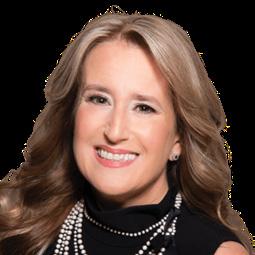
Aleader in the mortgage industry and “a visionary” according to her peers, Kelly Zitlow sits at the helm of a nonprofit empowering girls to master the use of power tools and take on the lost art of building with their hands.
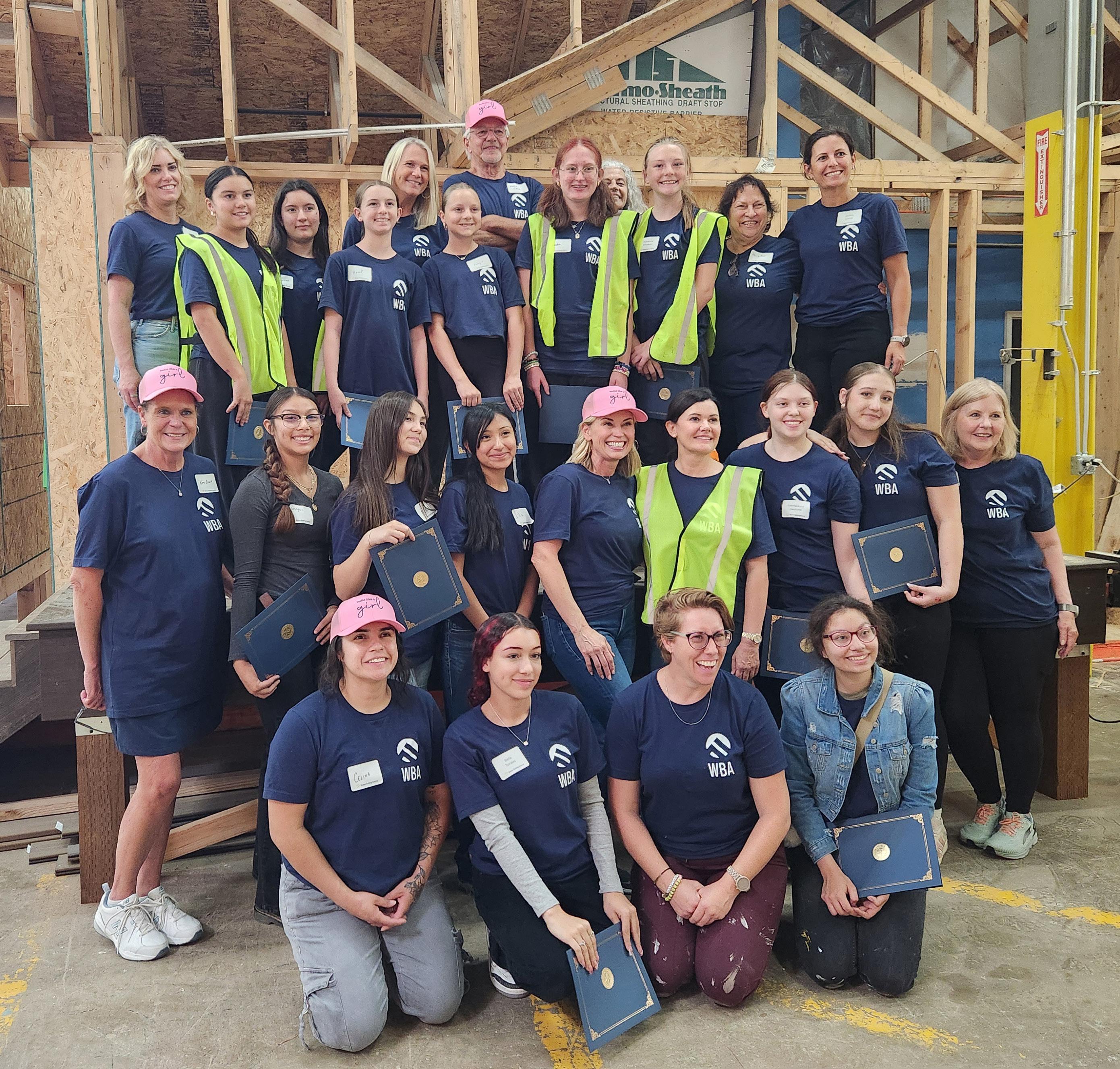
With a desire to encourage women not to limit themselves, Zitlow, executive vice president of sales and marketing for Cornerstone Capital Bank, in Scottsdale, Arizona, co-founded Women Building America (WBA), a nonprofit that brings teenage girls together in construction camps where they learn about homebuilding and affiliated fields.
Zitlow, who has been in the mortgage sector for three decades, co-founded the nonprofit with Lisa Cortez, a loan officer for Cornerstone Home Lending, in Raleigh, North Carolina.
Cortez, who works on the new home construction side of lending, invited Zitlow to attend one of her construction camp trips in Charlotte, N.C.
Zitlow was immediately enamored.
“I said, Lisa there’s something here,” she said.
Expanding on the idea could help more young girls see that home construction isn’t a profession exclusive to men, she
The nonprofit strives to embolden the young women while introducing them to possible careers.
“Our thought was how can we focus and get to some young girls before they get into the traditional workspace or college,” Zitlow said. “The goal here is to plant seeds — that’s what is so exciting.”
said. In addition, it would help the construction industry fill a deepening shortage in labor.
According to a news release from Associated Builders and Contractors, due to a high demand for construction services, the industry was down 439,000 workers at the beginning of last year. In 2026, as spending picks up in response to presumed lower interest rates, the industry will need to
bring in 499,000 new workers.
Zitlow asked Cortez if she was interested in creating a nonprofit and bringing the camps to even more girls. For Cortez, exposing more females to home construction was a no-brainer.
With a background in teaching and nursing, she said she entered the industry “against my will” when her husband pulled her in. From the getgo, she noticed there were not a lot of women in residential homebuilding. Coming from two female-dominated careers, that came as a shock.
“The goal here is to plant seeds — that’s what is so exciting.”
> KELLY ZITLOW
“It was very strange to me,” she said. “Even today in board meetings, builder meetings, I’m the only woman in the room.”
Zitlow pitched the non-profit idea to Cornerstone Board Chair Mark Laird, who was instrumental in bringing it to life, she said. With his encouragement, Cornerstone became a national sponsor.
In its inaugural year, WBA held camps in Dallas, Texas, and Denver, Colorado. They were so well-received that this year the nonprofit will host six camps: Denver, Colorado; Bastrop, Texas; San Antonio, Texas; Houston, Texas; Dallas, Texas; and Raleigh, North Carolina.
“We’ve had a fabulous response and we’re just getting started,” Zitlow said.
Cortez, calling Zitlow “a visionary,” credits her with getting WBA going and with its growth.
“Even
When the girls arrive for their day-and-a-half builder boot camp, they’re handed T-shirts and hardhats and get straight to work. Half of the first day is spent in the classroom learning from mostly women who have successfully navigated the home construction industry. Then, after a lunch break, it’s time to put on hardhats and get hands-on experience with power tools.
“The cool thing about this camp is that we actually go out and build something,” Zitlow said. “There’s nothing like seeing the light go off in a young mind who had no idea how to even use any power tools or how to design things, and to see the empowerment that happens in this transition in a day and a half.”
Homebuilders, general contractors and job superintendents donate time to train enrollees to use the tools and build something, such as a wooden planter, bookshelves, or a doghouse.
today in board meetings, builder meetings, I’m the only woman in the room.”
> LISA CORTEZ
“Kelly has the vision for branding,” she said. “She has a way of not just thinking about today or tomorrow, but a year from now.”
Jessica Towner, WBA Program and Operations Coordinator, agreed. “Kelly has been so instrumental in being that visionary,” she said.
None of the wood has been pre-cut, Zitlow noted. There are piles of lumber in warehouses waiting to be cut into exactly the right size and shape for whatever the girls are making that day.
“Just different projects where they’re actually using wood and power tools to build with their hands, which I think is a lost art,” Zitlow said.
With help from volunteers, the girls measure and cut the wood, put together the designs, then sand and paint the finished product. When they built planters, they were able to add flowers donated by a local nursery before calling it a day.
On day two, they do the finishing touches and take their work home.
“The great thing is we’re able to meet them where they’re at and kind of foster whatever interest that maybe was sparked by the camp,” Zitlow said.
The camps are meant to inspire the young women and help foster next steps, whether they are bound for college or plan to take on a trade in what has been a male-dominated space.
“There are great strides and amazing women that are in the home construction industry that are really helping to bring change but also to bring additional labor,” Zitlow said. “This is our way of being able to educate youth, empower young women and give them more options as they move forward in their careers and journeys.”
The vibe at the camps is of career exploration and breaking barriers, Cortez said. The girls are able to plan for careers in surprising fields including electrical work, plumbing, landscape design or a myriad of other trades affiliated with home construction. When they see successful women in these areas “their minds are blown” and their trajectory often pivots.
“These girls have never had this route on their career path,” she said. “In society, we don’t see women in these jobs. The
“There’s nothing like seeing the light go off in a young mind, who had no idea how to even use any power tools or how to design things, and to see the empowerment that happens in this transition in a day and a half.”
> KELLY ZITLOW
reality is women can do these jobs.”
WBA partners with Habitat for Humanity, which offers internship opportunities to camp-goers that allow them to participate in Habitat projects and receive a certificate.
Towner noted that the partnership with Habitat has made a positive impact and inspired one girl to secure an internship with an architectural firm. “To see a movement kind of develop through the voice of these girls is just so magical,” she said.
Zitlow expects more lightbulbs to go off as young women embrace the idea of career paths in construction. “The bigger thought here is that sometimes we’re moved by things and we let them pass for some reason,” she said.
She added that she was appreciative of the support from Cornerstone in helping her and Cortez bring their own idea to light so they can encourage women not to limit themselves.
RiskMisalignedFunctions
The hidden cost of mortgage fraud in a shifting regulatory landscape
BY JESSICA GONZALEZ, CONTIBUTING WRITER, MORTGAGE WOMEN MAGAZINE
In the mortgage industry, a file containing manipulated documentation rarely announces itself with a flourish. It moves quietly through underwriting, books as a performing loan, and surfaces as a loss — often 12 to 24 months later. By the time the delinquency triggers a deep-dive review, the window for meaningful intervention or recourse has typically closed. At that late stage, whether the loss originated in sophisticated identity theft, undisclosed real estate debt, or a genuine credit misjudgment has become largely academic. The capital is gone, and the damage to the portfolio is done.
What makes this problem structurally difficult is not just the existence of bad actors or the increasing availability of deepfake documentation. Rather, it is the organizational reality that fraud teams, credit risk functions, and internal audit are often evaluating the same application through fundamentally different lenses. These departments reach conclusions that drive inconsistent, sometimes contradictory, responses to the same underlying risk.
Until mortgage lenders address this internal misalignment directly, classification errors will continue to translate into pricing errors, portfolio degradation, and preventable loss.
If the loan is paying, the noise in the documentation is often dismissed as a secondary concern.
THREE FUNCTIONS, THREE DEFINITIONS OF SUCCESS
The friction within lending institutions stems from three distinct mandates that, while legitimate, are incomplete on their own. Fraud teams are naturally oriented around intent. Their mandate is to identify applications where borrowers or third parties have deliberately misrepresented material information, such as income, employment, or occupancy status. In their view, a lie is a lie, regardless of the borrower’s FICO score.
Credit risk functions, conversely, are oriented around performance. From this perspective, a document anomaly that does not immediately correlate with a high probability of default may not register as material, even if it reflects a clear misrepresentation of facts. If the loan is paying, the noise in the documentation is often dismissed as a secondary concern. Finally, internal audit operates within a controls framework, assessing whether institutional policies functioned as designed, regardless of the borrower’s intent or the loan’s performance.
The challenge is that these functions rarely operate from a shared classification taxonomy. This lack of a common language means the same underlying problem can be simultaneously flagged by fraud, ignored by credit risk, and miscategorized by audit, depending on which team reviews the file first.
DOCUMENT INTEGRITY AS A PRIMARY CREDIT RISK VARIABLE
For most of the industry’s history, document-level signals were treated as a fraud detection concern,
kept safely separate from credit modeling. That separation is no longer defensible. The proliferation of AI-assisted document manipulation has moved income and asset misrepresentation from an occasional exception to a systemic input quality problem.
Recent data from CoreLogic indicates a sharp spike in risk, with as many as one in 118 mortgage applications showing indications of fraud — an 8% rise from a year ago.
This trend is particularly concentrated in the investor space, which now accounts for roughly one in three home sales. Undisclosed real estate fraud has risen significantly as more investors juggle multiple mortgages with multiple lenders, often attempting to refinance several properties simultaneously.
The report also indicates that the highest-risk categories are investment and multifamily applications, estimating that one in 45 investment and one in 26 multifamily applications contain suggestions of fraud. At this scale, document authenticity is no longer a pre-underwriting filter; it is a fundamental variable in the risk equation.
THE REGULATORY VACUUM AND THE COST OF MISCLASSIFICATION
The urgency for internal alignment is further heightened by the shifting regulatory landscape in Washington. As the Consumer Financial Protection Bureau (CFPB) faces a potential shutdown in 2026, the nationwide alignment of banking laws and fraud interpretation is being interrupted. Historically, the CFPB provided a standardized framework across disparate state enforcement bodies. Its absence creates a destabi-
The role of internal audit must evolve into a proactive risk function.
lizing effect on how fraud is interpreted and enforced.
In this vacuum, the cost of misclassifying risk carries heavy penalties in both directions. When fraud is categorized merely as a credit loss, bad actors remain in the portfolio, recovery opportunities are forfeited, and pricing models absorb risk they were never designed to reflect.
Conversely, when operational errors are miscategorized as fraud, institutions create legal exposure, damage borrower relationships, and attract the kind of regulatory scrutiny that remains at the state level. We are already seeing an increase in enforcement from Government-Sponsored Enterprises (GSEs) like Fannie Mae and Freddie Mac, which has led to some lenders being placed on exclusionary lists and losing their approval status.
INTERNAL AUDIT: MOVING FROM RETROSPECTIVE TO FORWARD-LOOKING
The role of internal audit must evolve into a proactive risk function. In an environment where document integrity is a live credit risk variable, audit functions that remain purely retrospective — looking at what happened two years ago — are leaving meaningful current risk unaddressed. Forward-looking audit teams are now asking sharper, more predictive questions. Are document defects being classified consistently across the entire organization? Do the findings reflect a onetime intent, a systemic process failure, or both? Most importantly, are the audit trails sufficient to support a regulatory examination or a recovery action against a fraudulent entity?
ALIGNMENT THROUGH ADVANCED DATA
The lenders currently gaining ground on this problem share common operational characteristics. They treat document authenticity as a discrete risk signal rather than folding it into general credit performance metrics. They have developed shared classification standards that allow fraud, credit risk, and audit to operate from a common definitional framework. They maintain audit trails built for regulatory defensibility, not just internal reference.
In an environment where document integrity is a live credit risk variable, audit functions that remain purely retrospective … are leaving meaningful current risk unaddressed.
Lenders that proactively identify and remediate these classification deficiencies are better positioned to demonstrate control effectiveness to state regulators and the GSEs. They can recover losses that would otherwise be written off as “bad luck” and build the institutional knowledge that allows risk functions to improve over time.
The technology to support this approach — sophisticated AI capable of analyzing and extracting data from paystubs, tax returns, and bank statements — is now available. Fraud classification, at its core, is a data problem. For the first time, mortgage lenders have the tools to evaluate input integrity before documents ever reach the risk model. The question that remains is whether risk organizations are structured to deploy these tools coherently across functions that have historically operated with separate mandates and separate definitions of success.
Jessica Gonzalez is VP of Customer Success and General Manager of Automotive for InformedIQ.com.
Beyond
BeyondBarriers
Sandra Thompson on reading it, leading it, and embracing the fact that perfection is never the requirement
COVER STORY
SBY JENNIFER MCGUINNESS-LUBBERT, CEO, PIVOT FINANCIAL, SPECIAL TO MORTGAGE WOMEN MAGAZINE
andra Thompson’s rise to the top of financial regulatory oversight — spanning leadership at the Federal Deposit Insurance Corp. (FDIC) and the Federal Housing Finance Agency (FHFA) — was driven not by the obstacles she faced, but by her refusal to be constrained by them.
In a career marked by historic firsts, Thompson became the first African American and the first woman to lead bank supervision at the FDIC. She later broke new ground as the first female Director of FHFA. Her legacy is measured not by the barriers she overcame, but by the discipline, judgment, and leadership she brought to roles at the very center of the U.S. financial system.
In this conversation, Jennifer McGuinness-Lubbert sits down with Thompson to discuss her career, the decisions and perspective that guided her ascent—and how her experience offers lessons other women can draw on as they build their own careers in financial services.
Jennifer McGuinness-Lubbert: When you were growing up, did you plan a career in financial services and in Washington, D.C.?
Sanda Thompson: My career was not planned. I knew I was good at math, and I wanted to work with numbers. Right before I began my freshman year at Howard University’s School of Business, I read an article in the Chicago Tribune about an African American partner at Arthur Andersen — one of few, if not the only, black partner, he was a Howard graduate. I took a chance and called his office, and he invited me to spend a day shadowing him.
That experience left a lasting impression. I saw what success could look like. In between meetings, he gave me advice I’ve carried with me ever since: he said, “don’t just do what you’re good at — do what you love.” At the time, I told him I just wanted to make money. He smiled and said, “You can do both.”
I initially majored in accounting, but it wasn’t for me. I switched to finance, which I loved. After graduating, I began my career as a programmer. This role gave me a deep understanding of how loans work — payments, interest, amortization — I found it fascinating and then moved
into mortgage finance at Goldman Sachs.
The pivotal moment of my career came when I moved to Washington, D.C. and joined the Resolution Trust Corporation (RTC) during the savings and loan crisis. I helped “stand up” the government’s securitization program and later continued that work at the FDIC, which then led to me joining FHFA and ultimately becoming Director.
JML: What advice would you give to women beginning their career in this industry?
ST: Be fearless — but with fi-
nesse. Be confident, be prepared, and be willing to speak up — but do it with professionalism and respect. Don’t be intimidated by people who know more than you do, you don’t have to be perfect. Know when to speak, and just as importantly, know when to listen. Manage your ego, don’t use your position to diminish others. Treat everyone — at every level — with dignity and respect. Focus on what you can control. Do excellent work. First impressions matter.
Be fearless — but with finesse. Be confident, be prepared, and be willing to speak up — but do it with professionalism and respect. Don’t be intimidated by people who know more than you do, you don’t have to be perfect.
> Some of Sandra Thompson's advice to women beginning their career in this industry.
function, there are office dy namics and then there’s politics. Having people you trust to help you nav igate is invaluable.
At the same time, don’t carry unnecessary weight, don’t let fear or self-doubt limit how you show up. Keep your word, be on time or early, reputation matters more than people realize.
Seek out mentors who you can speak with candidly about understanding how organizations
JML: What advice would you give to women moving into a leadership role?
ST: Leadership is not about status, it’s about responsibility. Learn how to lead in all direc tions. Manage up, down, and across. Support your team, but don’t shy away from mak ing tough decisions. You won’t
Sandra Thompson ringing the bell as the Director of the FHFA at the New York Stock Exchange
please everyone, and that’s okay — but you do have to be accountable. Take responsibility for your team, and don’t throw people under the bus, even when mistakes happen. Surround yourself with people who are smarter and more experienced than you are — and just as importantly, people who will tell you the truth, not just what you want to hear.
Set boundaries. Be kind and collaborative but understand that not everyone will interpret kindness correctly. Be polite, but firm. Know where your line is and don’t be afraid to hold it.
Finally, never lose sight of what matters most. For me, that’s family. Your career is what you do — it is not who you are.
JML: Our industry is seen generally as male dominated, has this held you back? What advice would you give on how to navigate this?
ST: Our industry is, in many ways, still male dominated — but I can’t say that it has held me back. I’ve had the privilege of serving in some of the highest-ranking roles in the federal government, including as the first African American and the first woman to lead bank supervision at the FDIC, and later as the first female Director of FHFA.
That said, I have often been the only woman in the room — and at times, the only person of color. Those experiences shape you. I grew up on the south side of Chicago, where I was grounded in both fearlessness
and love. My parents instilled in me the importance of working hard and striving to be the best, regardless of circumstances. Howard University instilled the expectation that you had to be twice as good — and had a responsibility to show up as your best self every day.
Early in my career, I spent time worrying about how I was perceived. I missed several of my son’s early birthdays because I was working. I didn’t feel comfortable sharing that I had a young child. I wanted to prove that I could keep up and was committed. Looking back, some of that pressure was in my head. When you are different from the majority, you need a thick skin and believe you must consistently demonstrate your ca-
Thompson with her sons.
pability. There can be unspoken preconceived notions about who belongs and who doesn’t and this can influence decisions about opportunities and advancement. One lesson I wish I learned earlier is not to be afraid of failure. You will make mistakes — we all do. The real question is how quickly you recover. Early in my career, I would dwell on mistakes. I held myself to a level of perfection that wasn’t realistic. Over time, I’ve learned to recover more quickly. My male colleagues didn’t dwell on those moments — they moved on. I had to learn to adopt this mindset and I wish I had done it sooner.
JML: Did you have a mentor?
Someone who significantly influenced your career path?
ST: I’ve had several mentors — at almost every place I’ve worked. Formal mentorship programs aren’t common, so I sought out people I respected, who were genuinely invested in my success and took the time to get to know me — not just my work. Individuals I could be honest with. They were supportive and direct. They told me what I was doing well and where I needed to improve. It taught me to balance accountability and encouragement.
A mentor at the FDIC had a profound impact on me. He saw me through both struggles and successes and taught me lessons that have stayed with me to this day — the importance of confidentiality, the value of listening, and how to “execute with a vel-
vet glove,” meaning how to make tough decisions in a thoughtful and respectful way. He also emphasized the importance of “reading the room” — understanding not just what is being said, but what isn’t.
Even when I wasn’t in the room, he was one of my strongest advocates. When opportunities came up, he would simply say, “You should do this,” or just as directly, “I don’t think that’s the right move.” His leadership style wasn’t loud or overbearing, but it was incredibly effective — and deeply respected.
I had a similar relationship with a mentor at Goldman Sachs. After meetings, he would pull me aside and offer very direct feedback — what I did well and what I could have done differently. He made sure I had access to meaningful opportunities and wasn’t overlooked on important assignments.
I’m proud to say that they both attended my swearing-in ceremony when I became Director of FHFA. It meant a great deal to be able to acknowledge their impact on my career publicly, as it was significant.
They both taught me to give back, to mentor others, and to be that same source of support and honesty for the next generation as they were for me.
JML: Did you always want to be a leader? How did you become an effective one?
ST: I’ve always wanted to lead, but I had to learn what leadership meant for me. Early on, I often defined leadership by what I didn’t like — I knew the boss I did not want to be. I tried to imitate styles that worked for others, but that didn’t feel natural. Over time, I realized that effective leadership must be authentic. I had to develop a style that fit who I am — how I communicate, how I make decisions, and how I show up. Once I embraced that, I became much more confident and effective as a leader.
JML: How do you handle difficult conversations?
ST: I try to approach them with the goal of a win-win — not in terms of outcomes, but in how people feel. The answer may not always be what someone wants to hear, but they should leave the conversation feeling respected, not diminished. I stay focused on the issue, not the person, and I try to deliver even tough messages with care.
JML: How do you maintain calm when in the “hot seat”? What are some strategies that work for you?
ST: The first thing I do is pray. Whether I’m preparing for a
congressional hearing, delivering a speech, or navigating a difficult conversation, I pray — consistently. That grounds me, centers me, and gives me clarity before I walk into any high-pressure situation.
Beyond that, preparation is key. I do as much homework as I can, and I write my thoughts down, it’s how I process information, stay organized, and focused. I always carry a notebook, and I’ll even use my phone to capture thoughts if I need to.
When I’m preparing for a speech, I don’t just write it — I record it and listen to it. This helps me hear how it flows and whether my message is clear. I’ll also have others listen, including people who are not familiar with the topic, because if they can understand what I’m saying, I know I’m communicating effectively.
I also had to learn not to take things personally. For example, when testifying before Congress, people can be direct — or even harsh — in their delivery. You must stay composed, respond respectfully, and not react emotionally in the moment. That takes discipline, and it’s something I’ve worked to develop over time.
JML: What changes would you like to see in our industry to promote women professionals?
ST: We don’t always support oth-
We don’t always support other women in the way we should. That’s an area where we can — and should — do better. There is very little we can’t achieve together.
I would start with early exposure. Many young women simply don’t know this industry exists or what the opportunities are. We should be more intentional about showing up in high schools, at career fairs, and on college campuses—so women can envision themselves in these roles before they’ve made critical career decisions.
Sharing our experiences — both the successes and the challenges — can help demystify the path. Many of the issues women face today are not new, and it’s important for the next generation to understand that other women have navigated these challenges and succeeded.
Visibility matters. I would like to see more women highlighted — not just within women’s organizations, but across the broader industry and in national forums. Representation should not feel like an exception — it should feel expected.
Finally, we need to emphasize the importance of sponsorship, not just mentorship. Mentors advise you, and sponsors advocate for you — they open doors, create opportunities, and help position you for advancement. Increasing
this kind of active support will make a meaningful difference in how women progress in this industry.
JML: You recently moved onto a new chapter following your time as Director of FHFA, what are you focusing on now and what drives you today versus when you started?
ST: I am truly enjoying this chapter of my life. I feel incredibly grateful to have had such a fulfilling career — one that took me places I never imagined and gave me experiences that are sometimes hard to put into words without feeling overwhelmed with gratitude.
Today, I serve on two boards as an independent director, I continue to speak at conferences, and I’ve launched my own consulting practice. I’m just as busy as I was before — but at a pace and a rhythm that I now choose, and I genuinely enjoy my days.
I’m still closely connected to the industry, but my focus has shifted. Now I’m more focused on being helpful and sharing what I’ve learned. The mortgage market is complex, with many stakeholders and moving parts. When you’ve worked in it for a long time, it’s easy to forget that not everyone has that same level of understanding. I am helping to make those connections clearer.
Early in my career, I was driven by opportunity — by learning, advancing, and proving that I could succeed. Today, I’m driven by purpose and impact. I’m motivated by the ability to give back, to share knowledge, to support organizations in a meaningful way, and to help others navigate their own paths.
I’ve learned to make a difference, while also honoring the journey and the sacrifices I’ve made. I hope that I have shown others who look like me that the possibilities are endless and that dreams do come true. I’m a living example of that.
JML: What is the most important lesson
Leadership is not about status, it’s about responsibility. Learn how to lead in all directions. Manage up, down, and across. Support your team, but don’t shy away from making tough decisions.
> Some of Sandra Thompson's advice to women moving into a leadership role.
cipline, transparency, and an unwavering commitment to doing what is right — even when it is difficult. Safety, soundness and access to credit are not mutually exclusive; all are essential to a healthy and functioning system.
JML: Away from work, what are your hobbies and what do you like to do in your free time?
ST: Family is at the center of everything. I’m blessed that my parents are still living at 91 and 90, and I cherish every moment I have with them. I also spend as much time as I can with my two sons, my brother, and his children.
learned over the course of your career?
ST: The most important lesson I’ve learned is the critical importance of public confidence—particularly in the financial system. Public confidence is incredibly fragile. It is easy to lose and very difficult to rebuild. And yet, it is foundational — because no matter how strong the economy is, or how sound the structure of the financial system may appear, if people lose confidence and trust, the system will not hold. There is no greater responsibility than maintaining that confidence. It requires dis-
I’ve had the unique responsibility of working at the center of this during some of the most challenging periods in our nation’s economic history. At RTC, we were addressing the aftermath of the savings and loan crisis. At the FDIC, I was involved in supervision during the Great Financial Crisis. And at the FHFA, I led after the uncertainty of the pandemic.
The opportunity to work on behalf of the American people — to help restore and maintain confidence in the banking and housing finance systems — was the most meaningful aspect of my career. I did my best to honor the trust placed in me — by the President and by the American people. That trust is something I never took for granted, and it is what defined my work.
I make it a priority to stay connected to the people who have poured into me over the years with love and kindness. This includes lifelong friends from grammar school, high school, Howard University, and from my career. I’m also involved in my church and my sorority, Alpha Kappa Alpha Sorority, Incorporated. All of these are important parts of my life and allow me to stay connected, be of service and part of the community.
I stay active by walking and recently completed my first 5K, a personal milestone for me.
I enjoy traveling, going to the theater, and trying new restaurants, but I also appreciate the simple things — quiet moments, reflection, and time well spent with the people I love.
Jennifer McGuinness-Lubbert is the CEO of Pivot Financial and host/ creator of the MWLC's “Breaking Barriers” series.
“An excellent well organized class. Every part of the process went smoothly. Lets be honest, CE classes can be a drag but [the instructors] kept things moving along, kept the class engaged and that made the day go by just a little faster. Highly recommend MaxClass and will be utilizing them next year for myself and my team.”
James George
“What a DYNAMIC class with these 2 incredible women! This was my first year with them and it definitely won’t be my last! I highly recommend MaxClass!”
Shelley Siegel
“Just finished my 8-hour CE in Arizona for the second year in a row. This is definitely my favorite CE Class! The course was easy to follow, very engaging and actually made the renewal process pretty painless. Definitely looking forward to spending a day with MaxClass next year. Amazing job!”
Juan Stewart JR
WOMEN TECH
Code That Closes
The innovators behind the tech making loans faster, smoother, and more accessible
In this issue, Mortgage Women Magazine highlights the Women of Tech — innovators who are rethinking how mortgage works from the inside out. From streamlining workflows to enhancing the borrower experience, these leaders are applying technology in ways that make the process faster, more intuitive, and more effective for everyone involved.
Their impact goes beyond the systems they build. By bringing new perspectives into a space that has long lacked representation, they’re helping to broaden the industry’s approach to problem-solving and progress. Their work is not only advancing mortgage technology — it’s expanding who gets to shape its future.
This recognition celebrates both achievement and influence. By elevating these voices, we shine a light on the ideas and leadership driving meaningful change — and help open the door for more women to step in, contribute, and lead in the next wave of mortgage innovation.
Lisa Binkley
I believe the next generation of women in technology will continue to drive innovation through technical expertise, collaboration, empathy, and a focus on longterm impact.
What inspired you to pursue a career in technology, and how has your journey evolved along the way?
I began my career in mortgage lending at a time when most processes were manual, and I quickly saw the inefficiencies and risks that came with them. What inspired me to move into technology was the opportunity to solve real problems, improving accuracy, reducing fraud, and creating better outcomes for lenders and consumers.
Over time, my journey evolved from operations into leading enterprise quality and verification initiatives, and eventually into the technology and vendor space. I’ve had the opportunity to help build and implement systems that transformed how data is validated and used in lending. Today, my focus is on combining automation with human expertise to deliver scalable, compliant solutions that improve operational performance and the borrower experience.
What values guide your leadership and decision-making?
My leadership is guided by accountability, integrity, and a commitment to continuous improvement. I believe that technology should serve the business and consumer, and that every decision should be grounded in delivering accurate, reliable outcomes.
I also value transparency and collaboration. Strong results come from aligning teams around shared goals and creating an environment where people feel empowered to contribute and grow.
What excites you most about the future of technology — and where do you see the biggest opportunities for women?
What excites me most about the future of technology is the ability to make complex processes more accessible, transparent, and efficient for businesses and consumers. As data becomes more connected and real-time, we have an opportunity to improve decision-making and create better experiences across the mortgage lifecycle.
For women, especially, there is a significant opportunity in shaping how these technologies are developed and applied. As the industry evolves, diverse perspectives are critical to building solutions that are both effective and inclusive.
Leslie Cheshier
The goal is not to replace relationships, but to strengthen them by providing better information and more timely insights.
What inspired you to pursue a career in technology, and how has your journey evolved along the way?
I didn’t set out to pursue a career in technology … it found me. At 19, while working in a customer service role, I became deeply involved in solving problems for lender clients, which exposed me to the systems and processes behind the mortgage industry. I was drawn to the challenge of making complex technology work better for people. Over time, my career evolved from client support into account management, implementation, and product leadership roles. Each step gave me a deeper understanding of how technology, operations, and client experience intersect.
What challenges have shaped your growth in tech, and how have you navigated them?
Early on, I learned that technology challenges are rarely just technical; they’re about people, communication, and trust. Clients rely on these systems to run their businesses, so even minor disruptions can have major impacts. Navigating that requires transparency, disciplined planning and a willingness to take ownership, even in difficult situations.
How do you stay ahead of emerging trends and innovations in technology?
Staying ahead starts with staying connected to clients, to teams, and to the broader industry. I spend a significant amount of time engaging with clients to understand their evolving challenges and priorities, which often provides early insight into where technology needs to go.
How are you leveraging AI in your role today, and what impact has it had?
In my role, AI is primarily used to enhance client insights, improve operational efficiency, and support more proactive decision-making. We leverage AI and advanced analytics to better understand client behavior, identify trends, and surface opportunities to improve performance across workflows.
AI also plays a role in streamlining processes, reducing manual effort, improving data accuracy, and enabling faster response times for both internal teams and clients.
The impact has been meaningful. It allows us to be more predictive rather than reactive, improving both the client experience and operational outcomes. That said, I believe AI is most effective when paired with human judgment. The goal is not to replace relationships, but to strengthen them by providing better information and more timely insights.
Audrey Clearwater
I hope to see more women step into leadership roles, bringing operational expertise and strategic influence to drive innovation forward.
What inspired you to pursue a career in technology, and how has your journey evolved along the way?
My path into technology started on the operations side. Early in my career, while leading large teams and managing client portfolios, I saw firsthand how systems, processes, and data directly impacted outcomes for lenders and borrowers. I was drawn to the opportunity to use technology not just to improve efficiency, but to create better, more consistent experiences for clients.
What challenges have shaped your growth in tech, and how have you navigated them?
One of the biggest challenges in my career has been bridging the gap between operational execution and technology design. My interest in technology was initially driven by the need for operational efficiency. While leading largescale teams and managing complex client portfolios, I saw how critical it was to build tools that improved accuracy, delivered more reliable data, and consistently met client expectations. At the same time, I saw how often systems were built in isolation from the people who rely on them, creating inefficiencies
and limiting adoption. That realization shaped my approach and reinforced the importance of aligning operations, data, and user experience.
What excites you most about the future of technology — and where do you see the biggest opportunities for women?
I’m excited about better connecting data, systems, and workflows in ways that drive transparency and efficiency at scale. Having worked in operations, I know how complex and fragmented processes can be, and I’m energized by the opportunity to simplify them and improve outcomes across the mortgage lifecycle. I’m also extremely excited about the ethical use of AI, ensuring that as we automate and scale, we maintain trust, accountability, and responsible decision-making.
For women, there’s an opportunity to participate in this transformation and help shape it. As technology becomes more central to business strategy, there is a need for diverse perspectives to ensure solutions are practical, inclusive, and grounded in real-world application.
I’ve seen firsthand how mentorship and access to opportunity can accelerate growth. I hope to see more women step into leadership roles, bringing operational expertise and strategic influence to drive innovation forward.
Courtney Dodd
The biggest opportunity for women is to be part of shaping how that technology is built and brought to market.
What inspired you to pursue a career in technology, and how has your journey evolved along the way?
I did not set out to work in technology. I started in mortgage and quickly realized how much technology shapes the borrower experience and how lenders operate. That pulled me into fintech, where I could sit at the intersection of product, marketing, and real business impact.
Over the past 12+ years, my role has evolved from executing campaigns to leading full go-to-market strategy for complex products. I have worked across product marketing, demand generation, and brand, but what has stayed consistent is a focus on outcomes, not activity.
Today, I lead marketing at Floify, where I focus on turning innovation into pipeline and growth. That has meant leading launches like Dynamic Apps and helping position the company as a category leader in mortgage POS technology.
What values guide your leadership and decision-making?
I lead with accountability, clarity, and a bias toward action.
I believe marketing should be tied directly to business outcomes, so I hold my team and myself accountable to pipeline and revenue, not just activity. That means being clear on priorities, moving quickly, and adjusting when something is not working.
What excites you most about the future of technology — and where do you see the biggest opportunities for women?
What excites me most is how technology, especially AI, is starting to remove friction from complex processes like mortgage lending. When done right, it has the potential to make experiences faster, simpler, and more accessible for lenders and borrowers.
The biggest opportunity for women is to be part of shaping how that technology is built and brought to market. Not just participating, but leading. There is a real need for more voices who understand the customer experience and the business impact.
I also think there is a huge opportunity for women in go-to-market roles. Being able to connect product innovation to real-world outcomes is where a lot of value is created, and it is an area where strong leadership can make a significant difference.
Joy Farrell
Today’s landscape is a brave new world from where it was, and with AI, we are truly on the cusp of another transformational era.
Vice President, IT Audit and Compliance ServiceLink
What inspired you to pursue a career in technology, and how has your journey evolved along the way?
I never actually planned to work in technology. Early in my career, I was working on the business side of mortgage services, and I loved working with the technology department. My team was often a beta test site for technology projects, and I enjoyed being part of that work. Over time, they recruited me to work in technology. I always thought it was fun and interesting, and I appreciated that I was learning something new every day. Both technology and the mortgage industry have evolved significantly over the last 35 years, and my skill set evolved right alongside them. I learned as the world and industry changed. Today’s landscape is a brave new world from where it was, and with AI, we are truly on the cusp of another transformational era.
What challenges have shaped your growth in tech, and how have you navigated them?
I’m a right-brained person working in a left-brained world. So, it was a challenge for me, with my creative and intuitive nature, to learn how to collaborate with others in an environment filled with technical, analytical thinkers. One of the most important things that I learned is to keep an open mind when I walk into a room, set aside my own biases and assumptions, and listen, learn and be a good student. This has helped me grow and evolve.
What values guide your leadership and decision-making?
Having integrity is very important to me. If I say I’m going to do something, I do it. I bring my moral compass with me to work every day, and I truly try to do the right thing in every situation. At times, there are tough choices that I must make. So, I gather all the data and do an analysis to determine the right way to respond. I always strive to present things in a way that is true, honest, correct, and clear, and still present them in the best possible light. It is all about balance.
Kathy Gault
In affordable housing, better data and more connected systems can help lenders and borrowers navigate programs more easily, ultimately expanding access to homeownership.
Program Specialist
Down Payment Resource
LinkedIn: https://www.linkedin.com/in/kathygault/
What challenges have shaped your growth in tech, and how have you navigated them?
One of the most defining challenges in my career has been navigating uncertainty and rebuilding from difficult situations. When a previous employer entered conservatorship, I had to reassess my path and adapt quickly. Later, I found myself solely responsible for rebuilding an Affordable Housing Department from the ground up.
That experience taught me resilience, ownership, and the importance of creating structure where none exists.
How are you leveraging AI in your role today, and what impact has it had?
While much of my work still relies on human validation and relationship management, AI has the potential to enhance how we maintain and scale our database. It allows us to process larger volumes of information more efficiently while maintaining a high standard of data integrity.
The impact is in creating a more responsive and reliable system for lenders and housing partners. However, the human element remains essential, especially when building trust and ensuring compliance.
What values guide your leadership and decision-making?
My leadership is guided by service, integrity, and accountability. I believe the work we do, especially in affordable housing, has a direct impact on people’s lives, and that responsibility requires accuracy and care.
What excites you most about the future of technology — and where do you see the biggest opportunities for women?
What excites me most about the future of technology is its ability to make complex information more accessible and actionable. In affordable housing, better data and more connected systems can help lenders and borrowers navigate programs more easily, ultimately expanding access to homeownership.
For women, there is a significant opportunity to lead in areas where technology intersects with real-world impact. Affordable housing, in particular, benefits from diverse perspectives and strong communication skills.
I’ve seen how mentorship and support can open doors, and I believe the biggest opportunity is to ensure women not only enter these spaces but also feel confident leading within them. As technology continues to evolve, women play an important role in shaping solutions that are both effective and inclusive.
Nidhi Gupta
As a result of Gupta’s relentless commitment to excellence, Sagent is pushing the limits of what’s possible.
Nidhi Gupta directs engineering efforts across mission-critical platforms. Gupta has been a critical safeguard in the endto-end quality engineering validation of Dara by Sagent, the mortgage industry’s servicing system of record that unifies all data and user experiences for servicers and homeowners across the entire servicing lifecycle.
Gupta brings more than a decade of quality engineering and automation experience across leading financial institutions, including most recently at Bank of America and Homebridge Financial Services. Gupta has used this wealth of experience in financial and mortgage technology to push forward Dara’s development, including overcoming the challenges involved in building a netnew servicing platform from the ground up while meeting tight delivery timelines and responding to constantly evolving regulatory requirements.
Across every stage of her career, Gupta has advanced automation, strengthened platform stability, and delivered reliable fintech solutions. Her commitment to excellence sets her apart as a technolo-
gy leader who ensures mortgage servicing innovation performs reliably, evolves responsibly, and delivers relevant, measurable impact upon deployment and for many years to come.
Gupta transforms mortgage technology by making large-scale modernization operationally possible. In an industry long constrained by legacy infrastructure, innovation only succeeds if new systems perform reliably under real servicing conditions. Ensuring reliability at scale is where Gupta delivers her greatest impact — Gupta expanded Sagent’s platform system testing coverage by 90% through broader automation and more robust test suites and significantly reduced regression timelines to enable faster, more confident deployment of next-generation servicing capabilities.
While validating Dara’s AI-driven, cloud-native architecture, Gupta rigorously tested servicing integrations and data flows that power real borrower interactions. Gupta’s commitment to ensuring a seamless, unified experience for servicers and homeowners contributes to Dara’s capability of reducing operational costs by up to 40% while maintaining compliance and stability.
As a result of Gupta’s relentless commitment to excellence, Sagent is pushing the limits of what’s possible.
Corey Hampton
I believe it’s especially important for women in leadership to actively support and mentor others, helping to create stronger pathways and lift the next generation of women in technology.
What challenges have shaped your growth in tech, and how have you navigated them?
I approach every challenge as an opportunity and enjoy tackling each one that comes my way, as I find creating order from chaos deeply rewarding. There is an inherent challenge in leading complex, interdepartmental enterprise initiatives with strict technical, security, and compliance requirements. I’ve worked through modernizing legacy APIs, aligning cross-functional teams, and meeting the standards of large financial institutions.
One defining experience was leading a major enterprise rollout that required tight coordination across product, engineering, and security teams, along with rigorous identity, access, and risk requirements. Stepping in during a period of internal transition, I focused on aligning stakeholders, establishing clear ownership, and maintaining steady progress despite complexity. By breaking large challenges into structured, manageable steps and keeping communication consistent, I was able to help deliver scalable solutions and ultimately achieve zero outstanding risk findings.
How do you stay ahead of emerging trends and innovations in technology?
I stay ahead by focusing on the practical application and working to turn evolving technologies into scalable, repeatable solutions. Throughout my career, I’ve prioritized improving implementation standards, modernizing integration approaches, and building frameworks that can intentionally support future growth and change.
For me, staying ahead is less about chasing trends and more about continuously improving how we deliver technology in a way that is reliable, secure, and scalable.
What excites you most about the future of technology — and where do you see the biggest opportunities for women?
I’m especially excited about the flexibility of modern technology architectures and its impact on innovation. At Informative Research, our foundation allows us to move quickly, bring solutions to market, gather feedback, and continuously improve in ways that truly meet client needs. Having that kind of infrastructure in place creates real momentum and opens the door for meaningful advancement.
I see opportunities for women through increased visibility, mentorship, and community.
Natalie Henderson
The thing I feel most strongly about hasn’t changed: the best technology solutions come from people who genuinely understand the problem they’re trying to solve.
What inspired you to pursue a career in technology, and how has your journey evolved along the way?
My path into technology wasn’t a straight line, and honestly, I think that’s what makes it interesting. I started on the lending side of the mortgage industry, first as a loan officer and then in underwriting. That time in the trenches helped me better understand the process from the inside. I knew where the friction lived, where mistakes happened, and what it cost when things went wrong.
When I had the chance to meet the founders of LoanLogics, something clicked. They were building technology to solve the exact problems I had been living with firsthand, and I wanted in. Seventeen years later, I’m leading API Automation Services at LoanLogics and delivering automation to some of the largest originators and servicers in the country. The thing I feel most strongly about hasn’t changed: the best technology solutions come from people who genuinely understand the problem they’re
trying to solve.
How do you stay ahead of emerging trends and innovations in technology?
My most valuable source isn’t a newsletter or a conference, it’s my clients.
Working with some of the largest mortgage originators and servicers in the country means I’m constantly hearing where processes are failing, and where they see risk ahead. Client pain points are typically a leading indicator of where technology needs to go next.
What values guide your leadership and decision-making?
The value I keep coming back to is conviction — advocating hard for something you believe is right, even when the room isn’t with you yet. Early on, I learned that good ideas don’t sell themselves, especially at the intersection of a traditional industry and emerging technology. You must make the case, absorb the skepticism, and keep pushing.
I also work hard to make sure people around me feel genuinely heard, not just consulted, especially on a team of mostly women in a male-dominated industry. Good ideas go unspoken when people don’t feel empowered to push back.
Andria Lightfoot
It wasn’t about someone inspiring me to go into tech; it was more that I was genuinely drawn to what it could do for others.
VP, Client Success FirstClose
LinkedIn: https://www.linkedin.com/in/ andrialightfoot/ What inspired you to pursue a career in technology, and how has your journey evolved along the way?
I fell in love with technology at a young age. I was fascinated by how accessible it felt and how I could use it to create something that made other people happy. That early experience stuck with me. It wasn’t about someone inspiring me to go into tech; it was more that I was genuinely drawn to what it could do for others.
That interest turned into a career when I entered the mortgage industry. I helped automate an underwriter’s workflow, which immediately improved her day and was a defining moment for me. I realized technology could directly improve lives.
From there, my journey has been about scaling that impact. I’ve continued to lean into roles where I can use technology to solve real problems, create efficiency, and ultimately make work better for the people doing it.
What challenges have shaped your growth in tech, and how have you navigated them?
I think the most consistent challenge throughout my career has been being the only woman in the room. That’s something a lot of women in tech can relate to, and it shapes how you show up and advocate for yourself.
What values guide your leadership and decision-making?
Everything I do as a leader really comes back to empathy. I believe the best leaders start by truly understanding what people need and why they need it. From there, it’s about finding the right way to solve that problem, whether that’s through technology, process, or communication.
Creativity is another big one for me. In technology, the best ideas don’t always come from having the “right” answer. They come from asking better questions. I try to create an environment where my team feels comfortable challenging ideas, including mine, and exploring different ways of thinking.
And then there’s integrity. For me, that means showing up authentically and bringing my whole self to the work. When you lead with integrity, people trust you, and that trust enables teams to do their best work and push boundaries together.
Yazmin Palacios
Technology only delivers value when it is intentionally integrated into daily operations with clear ownership and accountability.
What challenges have shaped your growth in tech, and how have you navigated them?
Implementing complex technology in a highly regulated environment has been a defining challenge in my career. In mortgage lending, every system change must align with investor requirements, regulatory standards, and internal risk controls. This requires a disciplined approach to innovation, ensuring efficiency never comes at the expense of compliance or consistency.
How do you stay ahead of emerging trends and innovations in technology?
I use continuous learning, strategic evaluation, and practical application to stay one step (or two) ahead. I actively track industry developments, regulatory changes, and evolving system capabilities, but I approach new technology with intentional discernment; innovation only matters if it solves a real problem. My evaluation framework is simple: does it improve efficiency, reduce risk, or enhance the member experience? From there, I focus on execution. Technology only delivers value when it is intentionally integrated into daily operations
with clear ownership and accountability. Staying ahead is not just about adopting new tools, it’s about ensuring those tools are aligned with how work actually gets done and can be sustained at scale.
What excites you most about the future of technology — and where do you see the biggest opportunities for women?
What excites me most is the continued alignment between operations and technology and the opportunity it creates to drive more efficient, consistent, and scalable outcomes. The rapid evolution of AI is accelerating that shift, creating new opportunities to enhance decision-making, streamline workflows, and rethink how work gets done. As mortgage lending becomes increasingly system-driven, success will depend on translating technology into real operational performance.
For women, the opportunity is significant. Women already lead in operational execution, process design, and system adoption — the foundation of how these technologies function. The next step is expanding that influence into shaping, optimizing, and governing the systems themselves. There is meaningful opportunity for more women to lead, especially where strategy, execution, and innovation come together to drive real transformation.
Technology doesn’t transform organizations — people do.
Lisa Schreiber
But what excites me most is how AI is beginning to show us what is possible, enhancing what eRESI already delivers, which is a deep partnership that will only be more powerful as we progress.
SVP Correspondent Lending eRESI
LinkedIn: https://www.linkedin.com/in/lschreiber
What inspired you to pursue a career in technology, and how has your journey evolved along the way?
Early in my career, I witnessed how manual processes and disconnected systems created barriers for originators and investors alike. I started focusing on enabling technology that prioritizes user experience while meeting investors’ needs to execute with quality. Not just automating tasks, but reimagining how mortgage lending could work. That vision has guided my journey through multiple leadership roles, from building integrated platforms at American Brokers Conduit, propelling ABC to become one of the industry’s fastest-growing wholesale lenders, to championing technology-driven processes, advising national lenders on strategic technology adoption as a consultant.
What challenges have shaped your growth in tech, and how have you navigated them?
When I championed integrated platforms early in my career, many believed sophisticated technology was too expensive or complex for small- to midsized lenders. I navigated this by proving
that well-designed technology doesn’t just benefit the biggest players. It levels the playing field, giving all lenders the tools to compete effectively.
How do you stay ahead of emerging trends and innovations in technology?
I stay ahead by maintaining connections with the people actually using our technology — our lending partners and internal teams. They tell me what’s working and what’s not, which is far more valuable than any industry report. I also collaborate with our technology partners to understand capabilities and limitations rather than delegating these conversations. This keeps me grounded in what’s practical versus what’s just promising.
How are you leveraging AI in your role today, and what impact has it had?
We’re leveraging AI to enhance decision-making and streamline processes while keeping human expertise at the center. AI-powered data analytics has helped our teams prioritize what needs immediate attention. This is starting to allow our team to focus on complex scenarios that require nuanced judgment rather than spending time on routine reviews.
The impact will be significant as we continue down this path. Quicker responses, fewer errors, and better outcomes for lending partners.
Darlene Swain
Rather than chasing every new technology, I focus on understanding where innovation can responsibly deliver measurable impact in a highly regulated environment.
What inspired you to pursue a career in technology, and how has your journey evolved along the way?
I was drawn to a career in technology after seeing how powerful data and innovation can be when applied to real-world challenges. With more than 20 years in the mortgage industry, I experienced firsthand how legacy systems and manual processes constrained progress, which inspired me to help reimagine how decisions could be made smarter, faster, and with greater confidence. My journey has evolved from navigating those limitations on the lender side to actively shaping the future of collateral risk and valuations through technology. While we’ve made meaningful progress, I believe we’re still early in what’s possible — and I’m energized by the opportunity to continue modernizing the industry in ways that are more intelligent, transparent, and scalable.
What challenges have shaped your growth in tech, and how have you navigated them?
One of the most impactful challenges shaping my growth in technology has been navigating data quality and consistency in a data-dependent business. I’ve seen how fragmented data sources, incomplete records, and inconsistent standards can limit the effectiveness of even the most advanced models. Early on, I learned that no amount of sophisticated analytics can overcome poor data — and that building trust in technology starts with improving the foundation beneath it.
I navigated this challenge by shifting a lot of focus to data governance. That meant pushing for clearer data validation and stronger confidence indicators — so users understood not just the output, but the quality of the data behind it.
Ultimately, those challenges shaped how I lead today. I approach innovation with the belief that responsible technology starts with disciplined data practices — and that addressing data quality head-on is what turns insight into trust and adoption.
How do you stay ahead of emerging trends and innovations in technology?
I stay ahead of emerging trends by staying closely connected to real business problems and the regulatory realities that determine what can actually scale.
Empowering Women In Mortgage
Welcome to the Mortgage Women Leadership Council
A warm welcome to you! I’m Kelly Hendricks, the Managing Editor of Mortgage Women Magazine and Senior Vice President of Delmar Mortgage, and it brings me great joy to extend this invitation to you. Throughout my career in the mortgage industry, I’ve been fortunate to have leaders and mentors who played pivotal roles in shaping my journey. I am thrilled to introduce a transformative initiative – the Mortgage Women Leadership Council, created by Mortgage Women Magazine.
In my role, I’ve experienced the challenges that women face in leadership within the mortgage sector. These challenges led to a profound realization — the need for a dynamic network to empower women in our industry. This realization is the driving force behind the creation of the Mortgage Women Leadership Council. I believe in the power of collective support, and I am excited about the opportunity to share and benefit from each other’s experiences.
Our mission is clear: to promote and empower women’s leadership in the mortgage sector. The council aims to create a supportive environment for professional growth, mentorship, and networking. Joining the
Our
council comes with various benefits, including networking opportunities and access to industry-specific professional development resources. We understand the unique challenges women face in mortgage leadership and have tailored mentorship and support systems to address them.
I invite you to join this movement to empower women in the mortgage industry. The Mortgage Women Leadership Council is committed to fostering a welcoming and supportive environment. Your involvement will not only contribute to your personal and professional growth but also play a crucial role in advancing women’s leadership in our industry. To join or get involved, simply click here to apply.
Thank you for considering this invitation to join the Mortgage Women Leadership Council. For further inquiries about the council and details on how to join, please contact Beverly Bolnick at bbolnick@ambizmedia.com. Let’s work together to advance women’s leadership in the mortgage industry — because collective action brings about meaningful change.
Kelly Hendricks Managing Editor, Mortgage Women Magazine
Our voices
As a valued member, enjoy these benefits:
Access to a Powerful Platform: Amplify your voice and influence through Mortgage Women Magazine, exclusive sponsored programs, email newsletters, and impactful events.
Editorial Opportunities: Showcase your expertise and insights through editorial features in Mortgage Women Magazine, gaining visibility and recognition among industry peers.
Awards and Recognition: Receive well-deserved recognition through our award programs, celebrating your achievements and contributions to the mortgage industry.
Community Support: Become part of a dedicated community committed to celebrating and driving meaningful progress in the mortgage sector. Connect with likeminded women leaders, share experiences, and foster collaborative initiatives.
Mortgage Women Magazine: Enjoy your complimentary digital subscription to Mortgage Women Magazine, the premier publication for women in mortgage. Read advice, learn about industry updates, and take in the inspiring stories of your peers.
Become a member today.
Join us and be a driving force in creating a more inclusive and thriving mortgage industr y. Together, as a united community, we believe we can make real change.