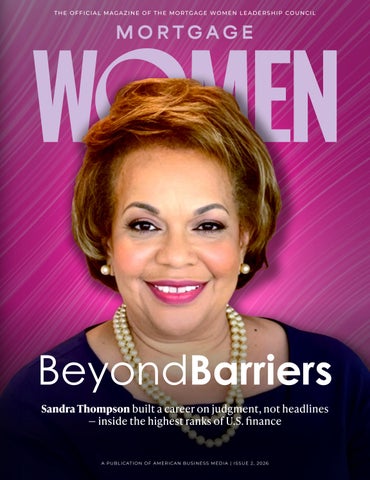
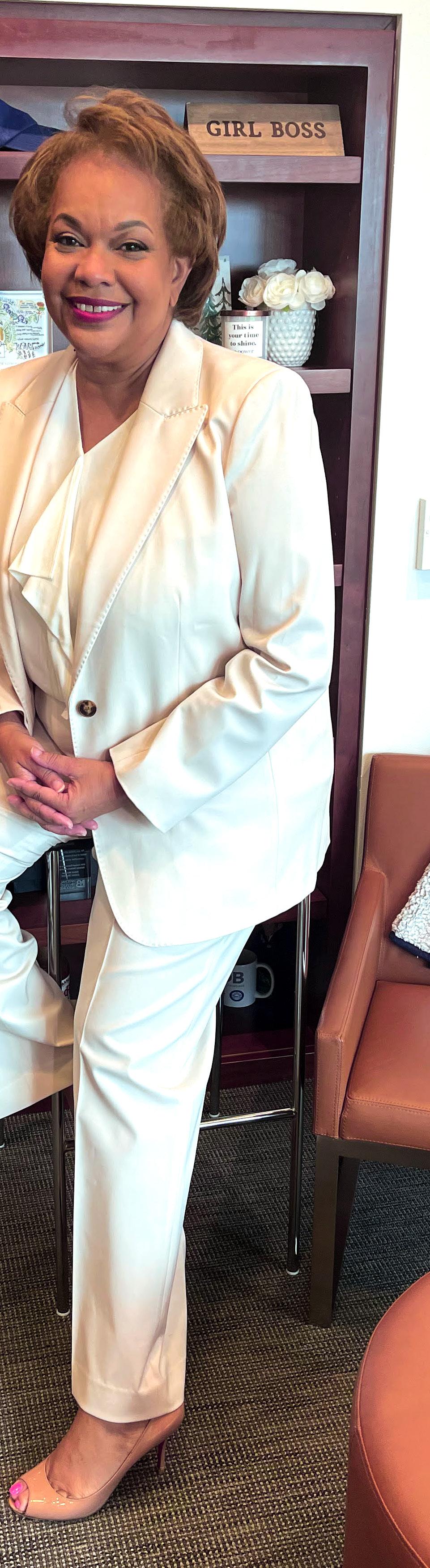
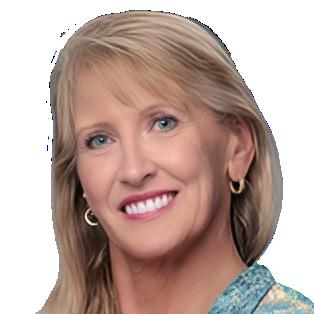
Sandra Thompson built a career on judgment, not headlines — inside the highest ranks of U.S. finance
We hope you've enjoyed recieving complimentary editions of Mortgage Women Magazine. New issues will be exclusive to members of the Mortgage Women Leadership Council.
Mortgage Women Magazine is the official magazine of the Mortgage Women Leadership Council. Membership not only guarantees your subscription to the digital magazine but also provides you with a wealth of benefits designed to empower and elevate women in the mortgage industry. These include access to a dynamic network, editorial opportunities, awards, community support, and much more. Join us in this exciting chapter by becoming a member of the Mortgage Women Leadership Council and ensure you stay connected and informed.
STAFF
VINCENT M. VALVO CEO, PUBLISHER, EDITOR-IN-CHIEF
ALISON VALVO
PRESIDENT & CHIEF OPERATING OFFICER
ANDREW BERMAN CEO, NATIONAL MORTGAGE PROFESSIONAL
BEVERLY BOLNICK ASSOCIATE PUBLISHER
KELLY HENDRICKS MANAGING EDITOR
JENNIFER RIDGEWAY ACCOUNTING MANAGER
NICK BONADIES SENIOR VICE PRESIDENT OF SALES
KOREY BELLAMY, JASON ROBERTS, GREG SHIMER MEDIA & EVENT SPECIALIST
KRISTIE WOODS-LINDIG CLIENT EXPERIENCE LEADER
EMMA WALSH MEDIA DIRECTOR
CZARINNA ANDRES MANAGING EDITOR
KATIE JENSEN
ASSOCIATE EDITOR
JENNIFER MCGUINNESS-LUBBERT CONTRIBUTING WRITER
TIMOTHY BURT MARKETING DIRECTOR
MEGHAN GOLDEN MARKETING SUPERVISOR
KATHERINE SALA
MARKETING MANAGER
KARA COLLETTI
MARKETING ASSOCIATE
NAVINDRA PERSAUD EVENTS DIRECTOR
COURTNEY VALVO EVENTS COORDINATOR
MELISSA PIANIN VP OF EVENTS
JULIE CARMICHAEL PROJECT MANAGER
STACY MURRAY, CHRISTOPHER WALLACE GRAPHIC DESIGN MANAGERS
MATTHEW MULLINS
MULTIMEDIA SPECIALIST
COVER STORY
4 Firsts, Not Friction Sandra Thompson on leading at FDIC and FHFA— and why discipline beats barriers every time
BY JENNIFER MCGUINNESS-LUBBERT
Beyond
BeyondBarriers
Sandra Thompson on reading it, leading it, and embracing the fact that perfection is never the requirement
COVER STORY
SBY JENNIFER MCGUINNESS-LUBBERT, CEO, PIVOT FINANCIAL, SPECIAL TO MORTGAGE WOMEN MAGAZINE
andra Thompson’s rise to the top of financial regulatory oversight — spanning leadership at the Federal Deposit Insurance Corp. (FDIC) and the Federal Housing Finance Agency (FHFA) — was driven not by the obstacles she faced, but by her refusal to be constrained by them.
In a career marked by historic firsts, Thompson became the first African American and the first woman to lead bank supervision at the FDIC. She later broke new ground as the first female Director of FHFA. Her legacy is measured not by the barriers she overcame, but by the discipline, judgment, and leadership she brought to roles at the very center of the U.S. financial system.
In this conversation, Jennifer McGuinness-Lubbert sits down with Thompson to discuss her career, the decisions and perspective that guided her ascent—and how her experience offers lessons other women can draw on as they build their own careers in financial services.
Jennifer McGuinness-Lubbert: When you were growing up, did you plan a career in financial services and in Washington, D.C.?
Sanda Thompson: My career was not planned. I knew I was good at math, and I wanted to work with numbers. Right before I began my freshman year at Howard University’s School of Business, I read an article in the Chicago Tribune about an African American partner at Arthur Andersen — one of few, if not the only, black partner, he was a Howard graduate. I took a chance and called his office, and he invited me to spend a day shadowing him.
That experience left a lasting impression. I saw what success could look like. In between meetings, he gave me advice I’ve carried with me ever since: he said, “don’t just do what you’re good at — do what you love.” At the time, I told him I just wanted to make money. He smiled and said, “You can do both.”
I initially majored in accounting, but it wasn’t for me. I switched to finance, which I loved. After graduating, I began my career as a programmer. This role gave me a deep understanding of how loans work — payments, interest, amortization — I found it fascinating and then moved
into mortgage finance at Goldman Sachs.
The pivotal moment of my career came when I moved to Washington, D.C. and joined the Resolution Trust Corporation (RTC) during the savings and loan crisis. I helped “stand up” the government’s securitization program and later continued that work at the FDIC, which then led to me joining FHFA and ultimately becoming Director.
JML: What advice would you give to women beginning their career in this industry?
ST: Be fearless — but with fi-
nesse. Be confident, be prepared, and be willing to speak up — but do it with professionalism and respect. Don’t be intimidated by people who know more than you do, you don’t have to be perfect. Know when to speak, and just as importantly, know when to listen. Manage your ego, don’t use your position to diminish others. Treat everyone — at every level — with dignity and respect. Focus on what you can control. Do excellent work. First impressions matter.
Be fearless — but with finesse. Be confident, be prepared, and be willing to speak up — but do it with professionalism and respect. Don’t be intimidated by people who know more than you do, you don’t have to be perfect.
> Some of Sandra Thompson's advice to women beginning their career in this industry.
function, there are office dy namics and then there’s politics. Having people you trust to help you navigate is invaluable.
At the same time, don’t carry unnecessary weight, don’t let fear or self-doubt limit how you show up. Keep your word, be on time or early, reputation matters more than people realize.
Seek out mentors who you can speak with candidly about understanding how organizations
JML: What advice would you give to women moving into a leadership role?
ST: Leadership is not about status, it’s about responsibility. Learn how to lead in all direc tions. Manage up, down, and across. Support your team, but don’t shy away from mak ing tough decisions. You won’t
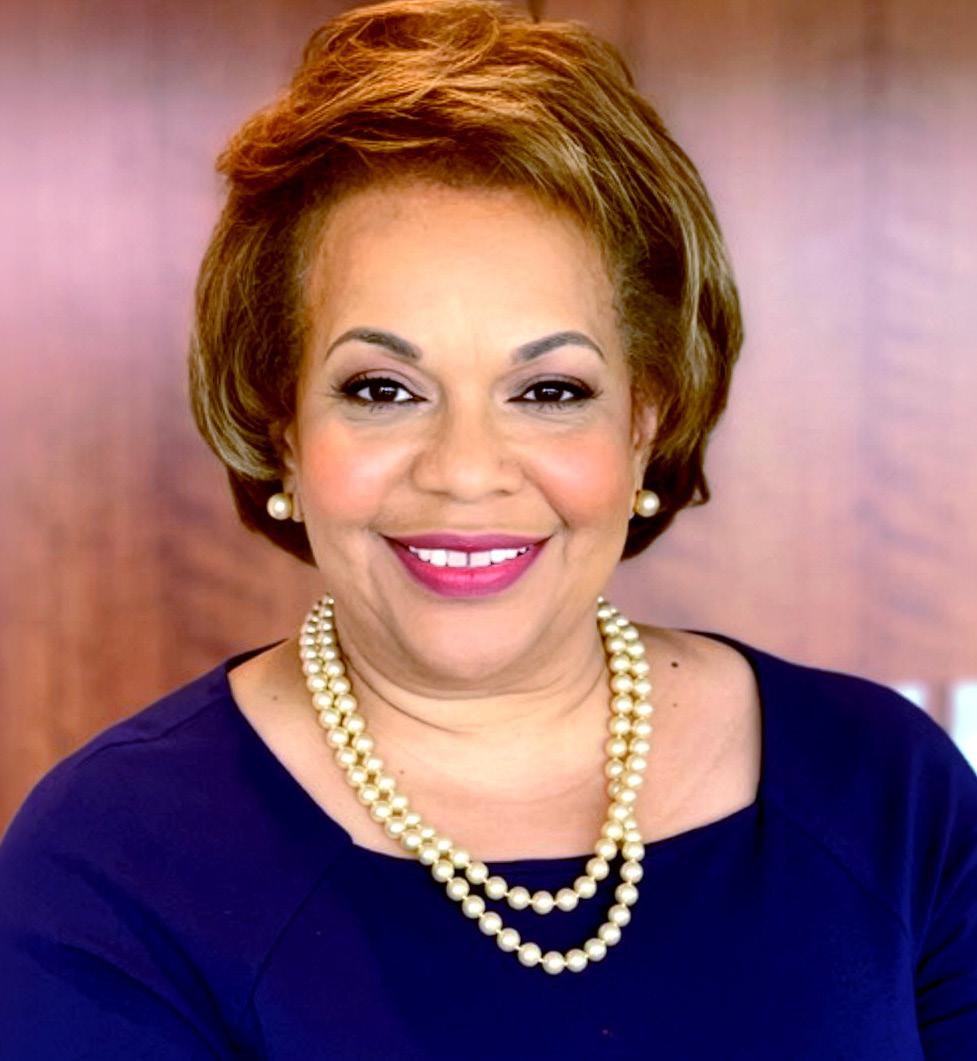
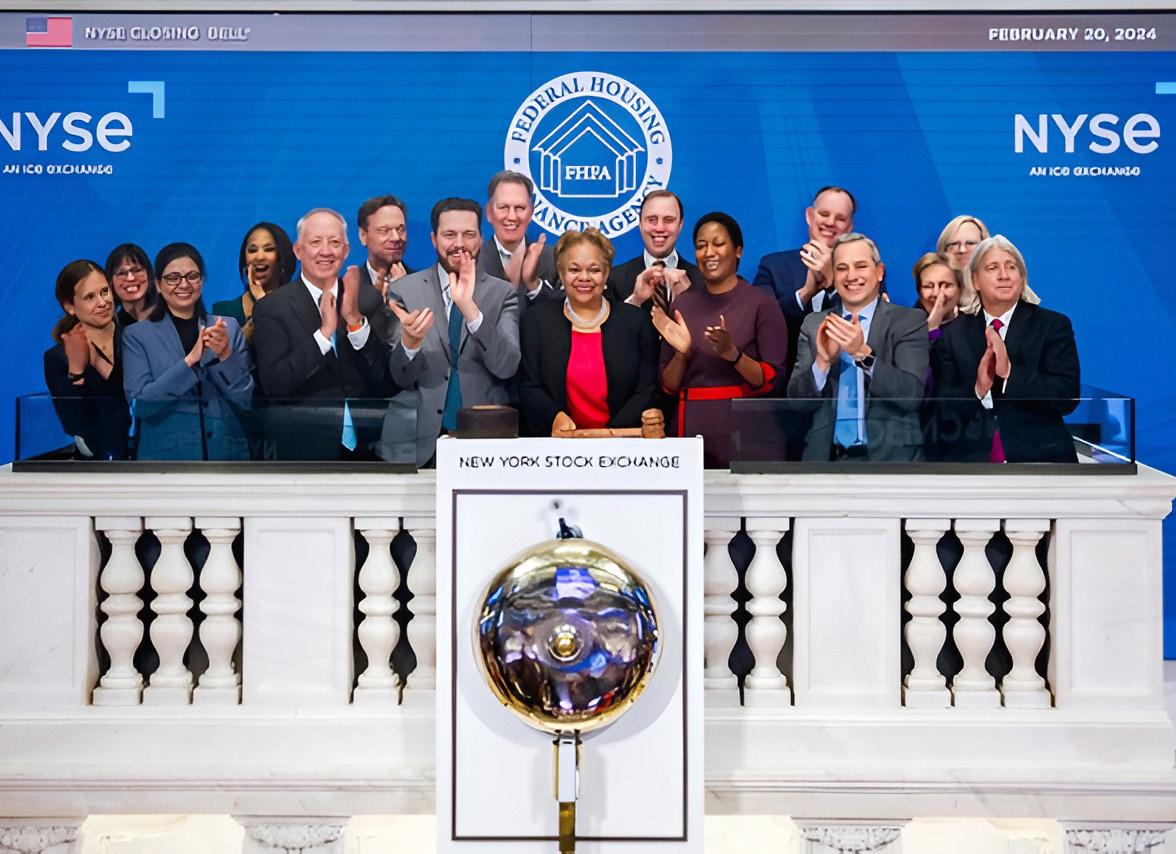
Sandra Thompson ringing the bell as the Director of the FHFA at the New York Stock Exchange
please everyone, and that’s okay — but you do have to be accountable. Take responsibility for your team, and don’t throw people under the bus, even when mistakes happen. Surround yourself with people who are smarter and more experienced than you are — and just as importantly, people who will tell you the truth, not just what you want to hear.
Set boundaries. Be kind and collaborative but understand that not everyone will interpret kindness correctly. Be polite, but firm. Know where your line is and don’t be afraid to hold it.
Finally, never lose sight of what matters most. For me, that’s family. Your career is what you do — it is not who you are.
JML: Our industry is seen generally as male dominated, has this held you back? What advice would you give on how to navigate this?
ST: Our industry is, in many ways, still male dominated — but I can’t say that it has held me back. I’ve had the privilege of serving in some of the highest-ranking roles in the federal government, including as the first African American and the first woman to lead bank supervision at the FDIC, and later as the first female Director of FHFA.
That said, I have often been the only woman in the room — and at times, the only person of color. Those experiences shape you. I grew up on the south side of Chicago, where I was grounded in both fearlessness
and love. My parents instilled in me the importance of working hard and striving to be the best, regardless of circumstances. Howard University instilled the expectation that you had to be twice as good — and had a responsibility to show up as your best self every day.
Early in my career, I spent time worrying about how I was perceived. I missed several of my son’s early birthdays because I was working. I didn’t feel comfortable sharing that I had a young child. I wanted to prove that I could keep up and was committed. Looking back, some of that pressure was in my head. When you are different from the majority, you need a thick skin and believe you must consistently demonstrate your ca-
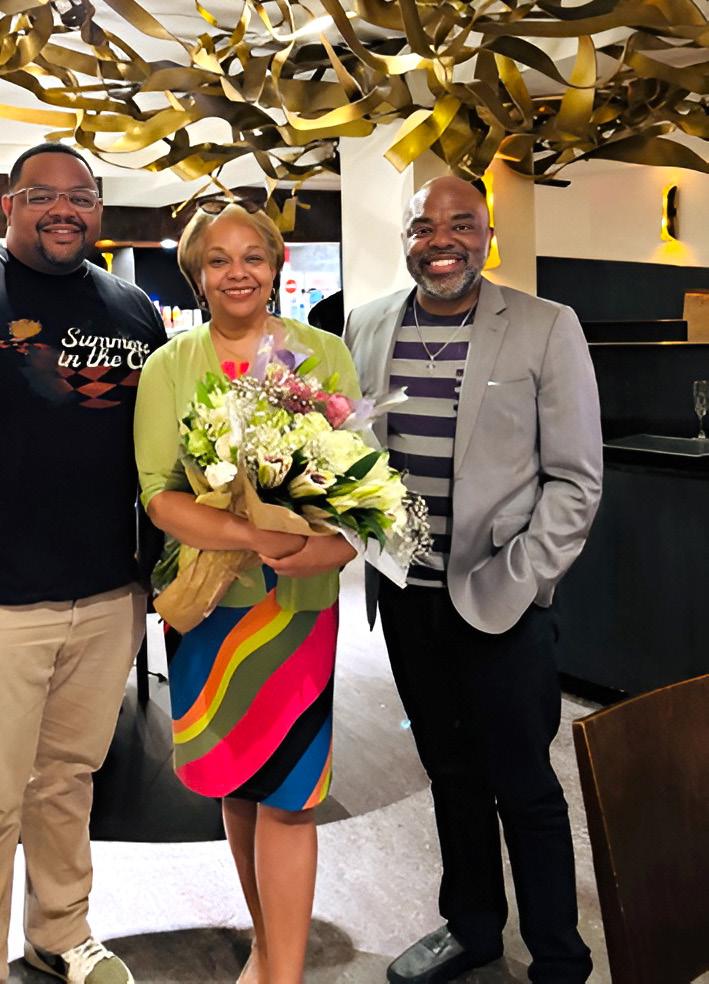
Thompson with her sons.
pability. There can be unspoken preconceived notions about who belongs and who doesn’t and this can influence decisions about opportunities and advancement. One lesson I wish I learned earlier is not to be afraid of failure. You will make mistakes — we all do. The real question is how quickly you recover. Early in my career, I would dwell on mistakes. I held myself to a level of perfection that wasn’t realistic. Over time, I’ve learned to recover more quickly. My male colleagues didn’t dwell on those moments — they moved on. I had to learn to adopt this mindset and I wish I had done it sooner.
JML: Did you have a mentor?
Someone who significantly influenced your career path?
ST: I’ve had several mentors — at almost every place I’ve worked. Formal mentorship programs aren’t common, so I sought out people I respected, who were genuinely invested in my success and took the time to get to know me — not just my work. Individuals I could be honest with. They were supportive and direct. They told me what I was doing well and where I needed to improve. It taught me to balance accountability and encouragement.
A mentor at the FDIC had a profound impact on me. He saw me through both struggles and successes and taught me lessons that have stayed with me to this day — the importance of confidentiality, the value of listening, and how to “execute with a vel-
vet glove,” meaning how to make tough decisions in a thoughtful and respectful way. He also emphasized the importance of “reading the room” — understanding not just what is being said, but what isn’t.
Even when I wasn’t in the room, he was one of my strongest advocates. When opportunities came up, he would simply say, “You should do this,” or just as directly, “I don’t think that’s the right move.” His leadership style wasn’t loud or overbearing, but it was incredibly effective — and deeply respected.
I had a similar relationship with a mentor at Goldman Sachs. After meetings, he would pull me aside and offer very direct feedback — what I did well and what I could have done differently. He made sure I had access to meaningful opportunities and wasn’t overlooked on important assignments.
I’m proud to say that they both attended my swearing-in ceremony when I became Director of FHFA. It meant a great deal to be able to acknowledge their impact on my career publicly, as it was significant.
They both taught me to give back, to mentor others, and to be that same source of support and honesty for the next generation as they were for me.
JML: Did you always want to be a leader? How did you become an effective one?
ST: I’ve always wanted to lead, but I had to learn what leadership meant for me. Early on, I often defined leadership by what I didn’t like — I knew the boss I did not want to be. I tried to imitate styles that worked for others, but that didn’t feel natural. Over time, I realized that effective leadership must be authentic. I had to develop a style that fit who I am — how I communicate, how I make decisions, and how I show up. Once I embraced that, I became much more confident and effective as a leader.
JML: How do you handle difficult conversations?
ST: I try to approach them with the goal of a win-win — not in terms of outcomes, but in how people feel. The answer may not always be what someone wants to hear, but they should leave the conversation feeling respected, not diminished. I stay focused on the issue, not the person, and I try to deliver even tough messages with care.
JML: How do you maintain calm when in the “hot seat”? What are some strategies that work for you?
ST: The first thing I do is pray. Whether I’m preparing for a
congressional hearing, delivering a speech, or navigating a difficult conversation, I pray — consistently. That grounds me, centers me, and gives me clarity before I walk into any high-pressure situation.
Beyond that, preparation is key. I do as much homework as I can, and I write my thoughts down, it’s how I process information, stay organized, and focused. I always carry a notebook, and I’ll even use my phone to capture thoughts if I need to.
When I’m preparing for a speech, I don’t just write it — I record it and listen to it. This helps me hear how it flows and whether my message is clear. I’ll also have others listen, including people who are not familiar with the topic, because if they can understand what I’m saying, I know I’m communicating effectively.
I also had to learn not to take things personally. For example, when testifying before Congress, people can be direct — or even harsh — in their delivery. You must stay composed, respond respectfully, and not react emotionally in the moment. That takes discipline, and it’s something I’ve worked to develop over time.
JML: What changes would you like to see in our industry to promote women professionals?
ST: We don’t always support oth-
We don’t always support other women in the way we should. That’s an area where we can — and should — do better. There is very little we can’t achieve together.
I would start with early exposure. Many young women simply don’t know this industry exists or what the opportunities are. We should be more intentional about showing up in high schools, at career fairs, and on college campuses—so women can envision themselves in these roles before they’ve made critical career decisions.
Sharing our experiences — both the successes and the challenges — can help demystify the path. Many of the issues women face today are not new, and it’s important for the next generation to understand that other women have navigated these challenges and succeeded.
Visibility matters. I would like to see more women highlighted — not just within women’s organizations, but across the broader industry and in national forums. Representation should not feel like an exception — it should feel expected.
Finally, we need to emphasize the importance of sponsorship, not just mentorship. Mentors advise you, and sponsors advocate for you — they open doors, create opportunities, and help position you for advancement. Increasing
this kind of active support will make a meaningful difference in how women progress in this industry.
JML: You recently moved onto a new chapter following your time as Director of FHFA, what are you focusing on now and what drives you today versus when you started?
ST: I am truly enjoying this chapter of my life. I feel incredibly grateful to have had such a fulfilling career — one that took me places I never imagined and gave me experiences that are sometimes hard to put into words without feeling overwhelmed with gratitude.
Today, I serve on two boards as an independent director, I continue to speak at conferences, and I’ve launched my own consulting practice. I’m just as busy as I was before — but at a pace and a rhythm that I now choose, and I genuinely enjoy my days.
I’m still closely connected to the industry, but my focus has shifted. Now I’m more focused on being helpful and sharing what I’ve learned. The mortgage market is complex, with many stakeholders and moving parts. When you’ve worked in it for a long time, it’s easy to forget that not everyone has that same level of understanding. I am helping to make those connections clearer.
Early in my career, I was driven by opportunity — by learning, advancing, and proving that I could succeed. Today, I’m driven by purpose and impact. I’m motivated by the ability to give back, to share knowledge, to support organizations in a meaningful way, and to help others navigate their own paths.
I’ve learned to make a difference, while also honoring the journey and the sacrifices I’ve made. I hope that I have shown others who look like me that the possibilities are endless and that dreams do come true. I’m a living example of that.
JML: What is the most important lesson
Leadership is not about status, it’s about responsibility. Learn how to lead in all directions. Manage up, down, and across. Support your team, but don’t shy away from making tough decisions.
> Some of Sandra Thompson's advice to women moving into a leadership role.
cipline, transparency, and an unwavering commitment to doing what is right — even when it is difficult. Safety, soundness and access to credit are not mutually exclusive; all are essential to a healthy and functioning system.
JML: Away from work, what are your hobbies and what do you like to do in your free time?
ST: Family is at the center of everything. I’m blessed that my parents are still living at 91 and 90, and I cherish every moment I have with them. I also spend as much time as I can with my two sons, my brother, and his children.
learned over the course of your career?
ST: The most important lesson I’ve learned is the critical importance of public confidence—particularly in the financial system. Public confidence is incredibly fragile. It is easy to lose and very difficult to rebuild. And yet, it is foundational — because no matter how strong the economy is, or how sound the structure of the financial system may appear, if people lose confidence and trust, the system will not hold. There is no greater responsibility than maintaining that confidence. It requires dis-
I’ve had the unique responsibility of working at the center of this during some of the most challenging periods in our nation’s economic history. At RTC, we were addressing the aftermath of the savings and loan crisis. At the FDIC, I was involved in supervision during the Great Financial Crisis. And at the FHFA, I led after the uncertainty of the pandemic.
The opportunity to work on behalf of the American people — to help restore and maintain confidence in the banking and housing finance systems — was the most meaningful aspect of my career. I did my best to honor the trust placed in me — by the President and by the American people. That trust is something I never took for granted, and it is what defined my work.
I make it a priority to stay connected to the people who have poured into me over the years with love and kindness. This includes lifelong friends from grammar school, high school, Howard University, and from my career. I’m also involved in my church and my sorority, Alpha Kappa Alpha Sorority, Incorporated. All of these are important parts of my life and allow me to stay connected, be of service and part of the community.
I stay active by walking and recently completed my first 5K, a personal milestone for me.
I enjoy traveling, going to the theater, and trying new restaurants, but I also appreciate the simple things — quiet moments, reflection, and time well spent with the people I love.
Jennifer McGuinness-Lubbert is the CEO of Pivot Financial and host/ creator of the MWLC's “Breaking Barriers” series.
“An excellent well organized class. Every part of the process went smoothly. Lets be honest, CE classes can be a drag but [the instructors] kept things moving along, kept the class engaged and that made the day go by just a little faster. Highly recommend MaxClass and will be utilizing them next year for myself and my team.”
James George
“What a DYNAMIC class with these 2 incredible women! This was my first year with them and it definitely won’t be my last! I highly recommend MaxClass!”
Shelley Siegel
“Just finished my 8-hour CE in Arizona for the second year in a row. This is definitely my favorite CE Class! The course was easy to follow, very engaging and actually made the renewal process pretty painless. Definitely looking forward to spending a day with MaxClass next year. Amazing job!”
Juan Stewart JR
WOMEN TECH
Code That Closes
The innovators behind the tech making loans faster, smoother, and more accessible
In this issue, Mortgage Women Magazine highlights the Women of Tech — innovators who are rethinking how mortgage works from the inside out. From streamlining workflows to enhancing the borrower experience, these leaders are applying technology in ways that make the process faster, more intuitive, and more effective for everyone involved.
Their impact goes beyond the systems they build. By bringing new perspectives into a space that has long lacked representation, they’re helping to broaden the industry’s approach to problem-solving and progress. Their work is not only advancing mortgage technology — it’s expanding who gets to shape its future.
This recognition celebrates both achievement and influence. By elevating these voices, we shine a light on the ideas and leadership driving meaningful change — and help open the door for more women to step in, contribute, and lead in the next wave of mortgage innovation.
Lisa Binkley
I believe the next generation of women in technology will continue to drive innovation through technical expertise, collaboration, empathy, and a focus on longterm impact.
What inspired you to pursue a career in technology, and how has your journey evolved along the way?
I began my career in mortgage lending at a time when most processes were manual, and I quickly saw the inefficiencies and risks that came with them. What inspired me to move into technology was the opportunity to solve real problems, improving accuracy, reducing fraud, and creating better outcomes for lenders and consumers.
Over time, my journey evolved from operations into leading enterprise quality and verification initiatives, and eventually into the technology and vendor space. I’ve had the opportunity to help build and implement systems that transformed how data is validated and used in lending. Today, my focus is on combining automation with human expertise to deliver scalable, compliant solutions that improve operational performance and the borrower experience.
What values guide your leadership and decision-making?
My leadership is guided by accountability, integrity, and a commitment to continuous improvement. I believe that technology should serve the business and consumer, and that every decision should be grounded in delivering accurate, reliable outcomes.
I also value transparency and collaboration. Strong results come from aligning teams around shared goals and creating an environment where people feel empowered to contribute and grow.
What excites you most about the future of technology — and where do you see the biggest opportunities for women?
What excites me most about the future of technology is the ability to make complex processes more accessible, transparent, and efficient for businesses and consumers. As data becomes more connected and real-time, we have an opportunity to improve decision-making and create better experiences across the mortgage lifecycle.
For women, especially, there is a significant opportunity in shaping how these technologies are developed and applied. As the industry evolves, diverse perspectives are critical to building solutions that are both effective and inclusive.
Leslie Cheshier
The goal is not to replace relationships, but to strengthen them by providing better information and more timely insights.
What inspired you to pursue a career in technology, and how has your journey evolved along the way?
I didn’t set out to pursue a career in technology … it found me. At 19, while working in a customer service role, I became deeply involved in solving problems for lender clients, which exposed me to the systems and processes behind the mortgage industry. I was drawn to the challenge of making complex technology work better for people. Over time, my career evolved from client support into account management, implementation, and product leadership roles. Each step gave me a deeper understanding of how technology, operations, and client experience intersect.
What challenges have shaped your growth in tech, and how have you navigated them?
Early on, I learned that technology challenges are rarely just technical; they’re about people, communication, and trust. Clients rely on these systems to run their businesses, so even minor disruptions can have major impacts. Navigating that requires transparency, disciplined planning and a willingness to take ownership, even in difficult situations.
How do you stay ahead of emerging trends and innovations in technology?
Staying ahead starts with staying connected to clients, to teams, and to the broader industry. I spend a significant amount of time engaging with clients to understand their evolving challenges and priorities, which often provides early insight into where technology needs to go.
How are you leveraging AI in your role today, and what impact has it had?
In my role, AI is primarily used to enhance client insights, improve operational efficiency, and support more proactive decision-making. We leverage AI and advanced analytics to better understand client behavior, identify trends, and surface opportunities to improve performance across workflows.
AI also plays a role in streamlining processes, reducing manual effort, improving data accuracy, and enabling faster response times for both internal teams and clients.
The impact has been meaningful. It allows us to be more predictive rather than reactive, improving both the client experience and operational outcomes. That said, I believe AI is most effective when paired with human judgment. The goal is not to replace relationships, but to strengthen them by providing better information and more timely insights.
Audrey Clearwater
I hope to see more women step into leadership roles, bringing operational expertise and strategic influence to drive innovation forward.
What inspired you to pursue a career in technology, and how has your journey evolved along the way?
My path into technology started on the operations side. Early in my career, while leading large teams and managing client portfolios, I saw firsthand how systems, processes, and data directly impacted outcomes for lenders and borrowers. I was drawn to the opportunity to use technology not just to improve efficiency, but to create better, more consistent experiences for clients.
What challenges have shaped your growth in tech, and how have you navigated them?
One of the biggest challenges in my career has been bridging the gap between operational execution and technology design. My interest in technology was initially driven by the need for operational efficiency. While leading largescale teams and managing complex client portfolios, I saw how critical it was to build tools that improved accuracy, delivered more reliable data, and consistently met client expectations. At the same time, I saw how often systems were built in isolation from the people who rely on them, creating inefficiencies
and limiting adoption. That realization shaped my approach and reinforced the importance of aligning operations, data, and user experience.
What excites you most about the future of technology — and where do you see the biggest opportunities for women?
I’m excited about better connecting data, systems, and workflows in ways that drive transparency and efficiency at scale. Having worked in operations, I know how complex and fragmented processes can be, and I’m energized by the opportunity to simplify them and improve outcomes across the mortgage lifecycle. I’m also extremely excited about the ethical use of AI, ensuring that as we automate and scale, we maintain trust, accountability, and responsible decision-making.
For women, there’s an opportunity to participate in this transformation and help shape it. As technology becomes more central to business strategy, there is a need for diverse perspectives to ensure solutions are practical, inclusive, and grounded in real-world application.
I’ve seen firsthand how mentorship and access to opportunity can accelerate growth. I hope to see more women step into leadership roles, bringing operational expertise and strategic influence to drive innovation forward.
Courtney Dodd
The biggest opportunity for women is to be part of shaping how that technology is built and brought to market.
What inspired you to pursue a career in technology, and how has your journey evolved along the way?
I did not set out to work in technology. I started in mortgage and quickly realized how much technology shapes the borrower experience and how lenders operate. That pulled me into fintech, where I could sit at the intersection of product, marketing, and real business impact.
Over the past 12+ years, my role has evolved from executing campaigns to leading full go-to-market strategy for complex products. I have worked across product marketing, demand generation, and brand, but what has stayed consistent is a focus on outcomes, not activity.
Today, I lead marketing at Floify, where I focus on turning innovation into pipeline and growth. That has meant leading launches like Dynamic Apps and helping position the company as a category leader in mortgage POS technology.
What values guide your leadership and decision-making?
I lead with accountability, clarity, and a bias toward action.
I believe marketing should be tied directly to business outcomes, so I hold my team and myself accountable to pipeline and revenue, not just activity. That means being clear on priorities, moving quickly, and adjusting when something is not working.
What excites you most about the future of technology — and where do you see the biggest opportunities for women?
What excites me most is how technology, especially AI, is starting to remove friction from complex processes like mortgage lending. When done right, it has the potential to make experiences faster, simpler, and more accessible for lenders and borrowers.
The biggest opportunity for women is to be part of shaping how that technology is built and brought to market. Not just participating, but leading. There is a real need for more voices who understand the customer experience and the business impact.
I also think there is a huge opportunity for women in go-to-market roles. Being able to connect product innovation to real-world outcomes is where a lot of value is created, and it is an area where strong leadership can make a significant difference.
Joy Farrell
Today’s landscape is a brave new world from where it was, and with AI, we are truly on the cusp of another transformational era.
Vice President, IT Audit and Compliance ServiceLink
What inspired you to pursue a career in technology, and how has your journey evolved along the way?
I never actually planned to work in technology. Early in my career, I was working on the business side of mortgage services, and I loved working with the technology department. My team was often a beta test site for technology projects, and I enjoyed being part of that work. Over time, they recruited me to work in technology. I always thought it was fun and interesting, and I appreciated that I was learning something new every day. Both technology and the mortgage industry have evolved significantly over the last 35 years, and my skill set evolved right alongside them. I learned as the world and industry changed. Today’s landscape is a brave new world from where it was, and with AI, we are truly on the cusp of another transformational era.
What challenges have shaped your growth in tech, and how have you navigated them?
I’m a right-brained person working in a left-brained world. So, it was a challenge for me, with my creative and intuitive nature, to learn how to collaborate with others in an environment filled with technical, analytical thinkers. One of the most important things that I learned is to keep an open mind when I walk into a room, set aside my own biases and assumptions, and listen, learn and be a good student. This has helped me grow and evolve.
What values guide your leadership and decision-making?
Having integrity is very important to me. If I say I’m going to do something, I do it. I bring my moral compass with me to work every day, and I truly try to do the right thing in every situation. At times, there are tough choices that I must make. So, I gather all the data and do an analysis to determine the right way to respond. I always strive to present things in a way that is true, honest, correct, and clear, and still present them in the best possible light. It is all about balance.
Kathy Gault
In affordable housing, better data and more connected systems can help lenders and borrowers navigate programs more easily, ultimately expanding access to homeownership.
Program Specialist
Down Payment Resource
LinkedIn: https://www.linkedin.com/in/kathygault/
What challenges have shaped your growth in tech, and how have you navigated them?
One of the most defining challenges in my career has been navigating uncertainty and rebuilding from difficult situations. When a previous employer entered conservatorship, I had to reassess my path and adapt quickly. Later, I found myself solely responsible for rebuilding an Affordable Housing Department from the ground up.
That experience taught me resilience, ownership, and the importance of creating structure where none exists.
How are you leveraging AI in your role today, and what impact has it had?
While much of my work still relies on human validation and relationship management, AI has the potential to enhance how we maintain and scale our database. It allows us to process larger volumes of information more efficiently while maintaining a high standard of data integrity.
The impact is in creating a more responsive and reliable system for lenders and housing partners. However, the human element remains essential, especially when building trust and ensuring compliance.
What values guide your leadership and decision-making?
My leadership is guided by service, integrity, and accountability. I believe the work we do, especially in affordable housing, has a direct impact on people’s lives, and that responsibility requires accuracy and care.
What excites you most about the future of technology — and where do you see the biggest opportunities for women?
What excites me most about the future of technology is its ability to make complex information more accessible and actionable. In affordable housing, better data and more connected systems can help lenders and borrowers navigate programs more easily, ultimately expanding access to homeownership.
For women, there is a significant opportunity to lead in areas where technology intersects with real-world impact. Affordable housing, in particular, benefits from diverse perspectives and strong communication skills.
I’ve seen how mentorship and support can open doors, and I believe the biggest opportunity is to ensure women not only enter these spaces but also feel confident leading within them. As technology continues to evolve, women play an important role in shaping solutions that are both effective and inclusive.
Nidhi Gupta
As a result of Gupta’s relentless commitment to excellence, Sagent is pushing the limits of what’s possible.
Nidhi Gupta directs engineering efforts across mission-critical platforms. Gupta has been a critical safeguard in the endto-end quality engineering validation of Dara by Sagent, the mortgage industry’s servicing system of record that unifies all data and user experiences for servicers and homeowners across the entire servicing lifecycle.
Gupta brings more than a decade of quality engineering and automation experience across leading financial institutions, including most recently at Bank of America and Homebridge Financial Services. Gupta has used this wealth of experience in financial and mortgage technology to push forward Dara’s development, including overcoming the challenges involved in building a netnew servicing platform from the ground up while meeting tight delivery timelines and responding to constantly evolving regulatory requirements.
Across every stage of her career, Gupta has advanced automation, strengthened platform stability, and delivered reliable fintech solutions. Her commitment to excellence sets her apart as a technolo-
gy leader who ensures mortgage servicing innovation performs reliably, evolves responsibly, and delivers relevant, measurable impact upon deployment and for many years to come.
Gupta transforms mortgage technology by making large-scale modernization operationally possible. In an industry long constrained by legacy infrastructure, innovation only succeeds if new systems perform reliably under real servicing conditions. Ensuring reliability at scale is where Gupta delivers her greatest impact — Gupta expanded Sagent’s platform system testing coverage by 90% through broader automation and more robust test suites and significantly reduced regression timelines to enable faster, more confident deployment of next-generation servicing capabilities.
While validating Dara’s AI-driven, cloud-native architecture, Gupta rigorously tested servicing integrations and data flows that power real borrower interactions. Gupta’s commitment to ensuring a seamless, unified experience for servicers and homeowners contributes to Dara’s capability of reducing operational costs by up to 40% while maintaining compliance and stability.
As a result of Gupta’s relentless commitment to excellence, Sagent is pushing the limits of what’s possible.
Corey Hampton
I believe it’s especially important for women in leadership to actively support and mentor others, helping to create stronger pathways and lift the next generation of women in technology.
What challenges have shaped your growth in tech, and how have you navigated them?
I approach every challenge as an opportunity and enjoy tackling each one that comes my way, as I find creating order from chaos deeply rewarding. There is an inherent challenge in leading complex, interdepartmental enterprise initiatives with strict technical, security, and compliance requirements. I’ve worked through modernizing legacy APIs, aligning cross-functional teams, and meeting the standards of large financial institutions.
One defining experience was leading a major enterprise rollout that required tight coordination across product, engineering, and security teams, along with rigorous identity, access, and risk requirements. Stepping in during a period of internal transition, I focused on aligning stakeholders, establishing clear ownership, and maintaining steady progress despite complexity. By breaking large challenges into structured, manageable steps and keeping communication consistent, I was able to help deliver scalable solutions and ultimately achieve zero outstanding risk findings.
How do you stay ahead of emerging trends and innovations in technology?
I stay ahead by focusing on the practical application and working to turn evolving technologies into scalable, repeatable solutions. Throughout my career, I’ve prioritized improving implementation standards, modernizing integration approaches, and building frameworks that can intentionally support future growth and change.
For me, staying ahead is less about chasing trends and more about continuously improving how we deliver technology in a way that is reliable, secure, and scalable.
What excites you most about the future of technology — and where do you see the biggest opportunities for women?
I’m especially excited about the flexibility of modern technology architectures and its impact on innovation. At Informative Research, our foundation allows us to move quickly, bring solutions to market, gather feedback, and continuously improve in ways that truly meet client needs. Having that kind of infrastructure in place creates real momentum and opens the door for meaningful advancement.
I see opportunities for women through increased visibility, mentorship, and community.
Natalie Henderson
The thing I feel most strongly about hasn’t changed: the best technology solutions come from people who genuinely understand the problem they’re trying to solve.
What inspired you to pursue a career in technology, and how has your journey evolved along the way?
My path into technology wasn’t a straight line, and honestly, I think that’s what makes it interesting. I started on the lending side of the mortgage industry, first as a loan officer and then in underwriting. That time in the trenches helped me better understand the process from the inside. I knew where the friction lived, where mistakes happened, and what it cost when things went wrong.
When I had the chance to meet the founders of LoanLogics, something clicked. They were building technology to solve the exact problems I had been living with firsthand, and I wanted in. Seventeen years later, I’m leading API Automation Services at LoanLogics and delivering automation to some of the largest originators and servicers in the country. The thing I feel most strongly about hasn’t changed: the best technology solutions come from people who genuinely understand the problem they’re
trying to solve.
How do you stay ahead of emerging trends and innovations in technology?
My most valuable source isn’t a newsletter or a conference, it’s my clients.
Working with some of the largest mortgage originators and servicers in the country means I’m constantly hearing where processes are failing, and where they see risk ahead. Client pain points are typically a leading indicator of where technology needs to go next.
What values guide your leadership and decision-making?
The value I keep coming back to is conviction — advocating hard for something you believe is right, even when the room isn’t with you yet. Early on, I learned that good ideas don’t sell themselves, especially at the intersection of a traditional industry and emerging technology. You must make the case, absorb the skepticism, and keep pushing.
I also work hard to make sure people around me feel genuinely heard, not just consulted, especially on a team of mostly women in a male-dominated industry. Good ideas go unspoken when people don’t feel empowered to push back.
Andria Lightfoot
It wasn’t about someone inspiring me to go into tech; it was more that I was genuinely drawn to what it could do for others.
VP, Client Success FirstClose
LinkedIn: https://www.linkedin.com/in/ andrialightfoot/ What inspired you to pursue a career in technology, and how has your journey evolved along the way?
I fell in love with technology at a young age. I was fascinated by how accessible it felt and how I could use it to create something that made other people happy. That early experience stuck with me. It wasn’t about someone inspiring me to go into tech; it was more that I was genuinely drawn to what it could do for others.
That interest turned into a career when I entered the mortgage industry. I helped automate an underwriter’s workflow, which immediately improved her day and was a defining moment for me. I realized technology could directly improve lives.
From there, my journey has been about scaling that impact. I’ve continued to lean into roles where I can use technology to solve real problems, create efficiency, and ultimately make work better for the people doing it.
What challenges have shaped your growth in tech, and how have you navigated them?
I think the most consistent challenge throughout my career has been being the only woman in the room. That’s something a lot of women in tech can relate to, and it shapes how you show up and advocate for yourself.
What values guide your leadership and decision-making?
Everything I do as a leader really comes back to empathy. I believe the best leaders start by truly understanding what people need and why they need it. From there, it’s about finding the right way to solve that problem, whether that’s through technology, process, or communication.
Creativity is another big one for me. In technology, the best ideas don’t always come from having the “right” answer. They come from asking better questions. I try to create an environment where my team feels comfortable challenging ideas, including mine, and exploring different ways of thinking.
And then there’s integrity. For me, that means showing up authentically and bringing my whole self to the work. When you lead with integrity, people trust you, and that trust enables teams to do their best work and push boundaries together.
Yazmin Palacios
Technology only delivers value when it is intentionally integrated into daily operations with clear ownership and accountability.
What challenges have shaped your growth in tech, and how have you navigated them?
Implementing complex technology in a highly regulated environment has been a defining challenge in my career. In mortgage lending, every system change must align with investor requirements, regulatory standards, and internal risk controls. This requires a disciplined approach to innovation, ensuring efficiency never comes at the expense of compliance or consistency.
How do you stay ahead of emerging trends and innovations in technology?
I use continuous learning, strategic evaluation, and practical application to stay one step (or two) ahead. I actively track industry developments, regulatory changes, and evolving system capabilities, but I approach new technology with intentional discernment; innovation only matters if it solves a real problem. My evaluation framework is simple: does it improve efficiency, reduce risk, or enhance the member experience? From there, I focus on execution. Technology only delivers value when it is intentionally integrated into daily operations
with clear ownership and accountability. Staying ahead is not just about adopting new tools, it’s about ensuring those tools are aligned with how work actually gets done and can be sustained at scale.
What excites you most about the future of technology — and where do you see the biggest opportunities for women?
What excites me most is the continued alignment between operations and technology and the opportunity it creates to drive more efficient, consistent, and scalable outcomes. The rapid evolution of AI is accelerating that shift, creating new opportunities to enhance decision-making, streamline workflows, and rethink how work gets done. As mortgage lending becomes increasingly system-driven, success will depend on translating technology into real operational performance.
For women, the opportunity is significant. Women already lead in operational execution, process design, and system adoption — the foundation of how these technologies function. The next step is expanding that influence into shaping, optimizing, and governing the systems themselves. There is meaningful opportunity for more women to lead, especially where strategy, execution, and innovation come together to drive real transformation.
Technology doesn’t transform organizations — people do.
Lisa Schreiber
But what excites me most is how AI is beginning to show us what is possible, enhancing what eRESI already delivers, which is a deep partnership that will only be more powerful as we progress.
SVP Correspondent Lending eRESI
LinkedIn: https://www.linkedin.com/in/lschreiber
What inspired you to pursue a career in technology, and how has your journey evolved along the way?
Early in my career, I witnessed how manual processes and disconnected systems created barriers for originators and investors alike. I started focusing on enabling technology that prioritizes user experience while meeting investors’ needs to execute with quality. Not just automating tasks, but reimagining how mortgage lending could work. That vision has guided my journey through multiple leadership roles, from building integrated platforms at American Brokers Conduit, propelling ABC to become one of the industry’s fastest-growing wholesale lenders, to championing technology-driven processes, advising national lenders on strategic technology adoption as a consultant.
What challenges have shaped your growth in tech, and how have you navigated them?
When I championed integrated platforms early in my career, many believed sophisticated technology was too expensive or complex for small- to midsized lenders. I navigated this by proving
that well-designed technology doesn’t just benefit the biggest players. It levels the playing field, giving all lenders the tools to compete effectively.
How do you stay ahead of emerging trends and innovations in technology?
I stay ahead by maintaining connections with the people actually using our technology — our lending partners and internal teams. They tell me what’s working and what’s not, which is far more valuable than any industry report. I also collaborate with our technology partners to understand capabilities and limitations rather than delegating these conversations. This keeps me grounded in what’s practical versus what’s just promising.
How are you leveraging AI in your role today, and what impact has it had?
We’re leveraging AI to enhance decision-making and streamline processes while keeping human expertise at the center. AI-powered data analytics has helped our teams prioritize what needs immediate attention. This is starting to allow our team to focus on complex scenarios that require nuanced judgment rather than spending time on routine reviews.
The impact will be significant as we continue down this path. Quicker responses, fewer errors, and better outcomes for lending partners.
Darlene Swain
Rather than chasing every new technology, I focus on understanding where innovation can responsibly deliver measurable impact in a highly regulated environment.
What inspired you to pursue a career in technology, and how has your journey evolved along the way?
I was drawn to a career in technology after seeing how powerful data and innovation can be when applied to real-world challenges. With more than 20 years in the mortgage industry, I experienced firsthand how legacy systems and manual processes constrained progress, which inspired me to help reimagine how decisions could be made smarter, faster, and with greater confidence. My journey has evolved from navigating those limitations on the lender side to actively shaping the future of collateral risk and valuations through technology. While we’ve made meaningful progress, I believe we’re still early in what’s possible — and I’m energized by the opportunity to continue modernizing the industry in ways that are more intelligent, transparent, and scalable.
What challenges have shaped your growth in tech, and how have you navigated them?
One of the most impactful challenges shaping my growth in technology has been navigating data quality and consistency in a data-dependent business. I’ve seen how fragmented data sources, incomplete records, and inconsistent standards can limit the effectiveness of even the most advanced models. Early on, I learned that no amount of sophisticated analytics can overcome poor data — and that building trust in technology starts with improving the foundation beneath it.
I navigated this challenge by shifting a lot of focus to data governance. That meant pushing for clearer data validation and stronger confidence indicators — so users understood not just the output, but the quality of the data behind it.
Ultimately, those challenges shaped how I lead today. I approach innovation with the belief that responsible technology starts with disciplined data practices — and that addressing data quality head-on is what turns insight into trust and adoption.
How do you stay ahead of emerging trends and innovations in technology?
I stay ahead of emerging trends by staying closely connected to real business problems and the regulatory realities that determine what can actually scale.
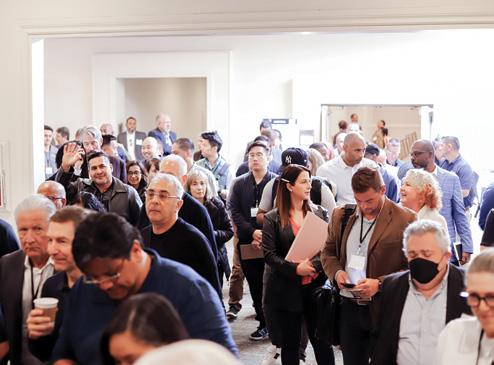
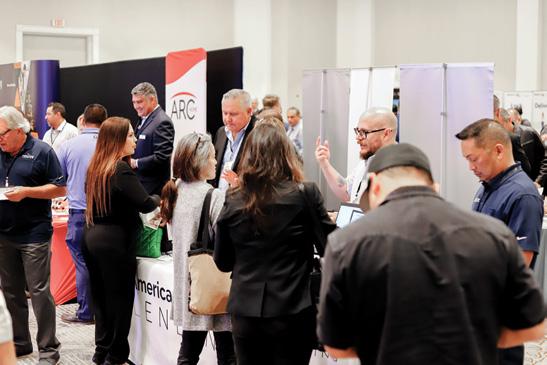
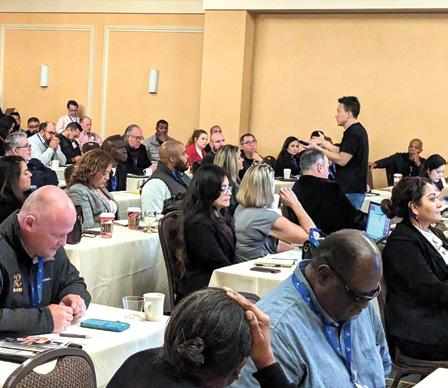
Events for mortgage brokers & originators
SAN DIEGO, CA AUG. 7, 2026
TEXAS
Empowering Women In Mortgage
Welcome to
the
Mortgage Women Leadership Council
A warm welcome to you! I’m Kelly Hendricks, the Managing Editor of Mortgage Women Magazine and Senior Vice President of Delmar Mortgage, and it brings me great joy to extend this invitation to you. Throughout my career in the mortgage industry, I’ve been fortunate to have leaders and mentors who played pivotal roles in shaping my journey. I am thrilled to introduce a transformative initiative – the Mortgage Women Leadership Council, created by Mortgage Women Magazine.
In my role, I’ve experienced the challenges that women face in leadership within the mortgage sector. These challenges led to a profound realization — the need for a dynamic network to empower women in our industry. This realization is the driving force behind the creation of the Mortgage Women Leadership Council. I believe in the power of collective support, and I am excited about the opportunity to share and benefit from each other’s experiences.
Our mission is clear: to promote and empower women’s leadership in the mortgage sector. The council aims to create a supportive environment for professional growth, mentorship, and networking. Joining the
Our
council comes with various benefits, including networking opportunities and access to industry-specific professional development resources. We understand the unique challenges women face in mortgage leadership and have tailored mentorship and support systems to address them.
I invite you to join this movement to empower women in the mortgage industry. The Mortgage Women Leadership Council is committed to fostering a welcoming and supportive environment. Your involvement will not only contribute to your personal and professional growth but also play a crucial role in advancing women’s leadership in our industry. To join or get involved, simply click here to apply.
Thank you for considering this invitation to join the Mortgage Women Leadership Council. For further inquiries about the council and details on how to join, please contact Beverly Bolnick at bbolnick@ambizmedia.com. Let’s work together to advance women’s leadership in the mortgage industry — because collective action brings about meaningful change.
Kelly Hendricks Managing Editor, Mortgage Women Magazine
Our voices
As a valued member, enjoy these benefits:
Access to a Powerful Platform: Amplify your voice and influence through Mortgage Women Magazine, exclusive sponsored programs, email newsletters, and impactful events.
Editorial Opportunities: Showcase your expertise and insights through editorial features in Mortgage Women Magazine, gaining visibility and recognition among industry peers.
Awards and Recognition: Receive well-deserved recognition through our award programs, celebrating your achievements and contributions to the mortgage industry.
Community Support: Become part of a dedicated community committed to celebrating and driving meaningful progress in the mortgage sector. Connect with likeminded women leaders, share experiences, and foster collaborative initiatives.
Mortgage Women Magazine: Enjoy your complimentary digital subscription to Mortgage Women Magazine, the premier publication for women in mortgage. Read advice, learn about industry updates, and take in the inspiring stories of your peers.
Become a member today.
Join us and be a driving force in creating a more inclusive and thriving mortgage industr y. Together, as a united community, we believe we can make real change.