How Laparoscopic Surgery for PCOS Can Support Your
Fertility Journey
For many women, Polycystic Ovary Syndrome (PCOS) can feel like a never-ending challenge. Irregular cycles, hormonal imbalances, and difficulty conceiving often leave patients searching for real, lasting solutions.
Thankfully, modern medical advancements like laparoscopic surgery for PCOS have made it possible to treat the condition more effectively, giving women renewed hope on their fertility journey.
PCOS and Its Impact
PCOS affects the way a woman’s ovaries work. It can cause multiple small cysts, which interfere with ovulation. Without regular ovulation, getting pregnant becomes difficult.
Lifestyle changes, medication, and hormone therapy can help manage symptoms, but sometimes, they aren’t enough. That’s when laparoscopic surgery for PCOS becomes an option worth exploring.
What Is Laparoscopic Surgery?
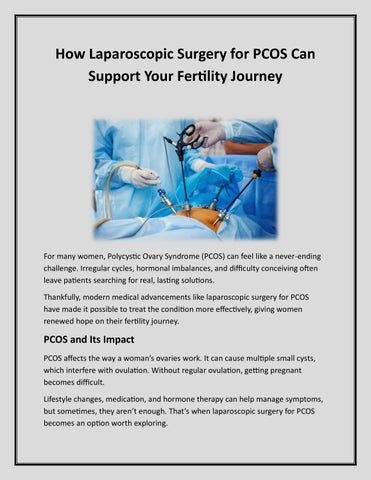
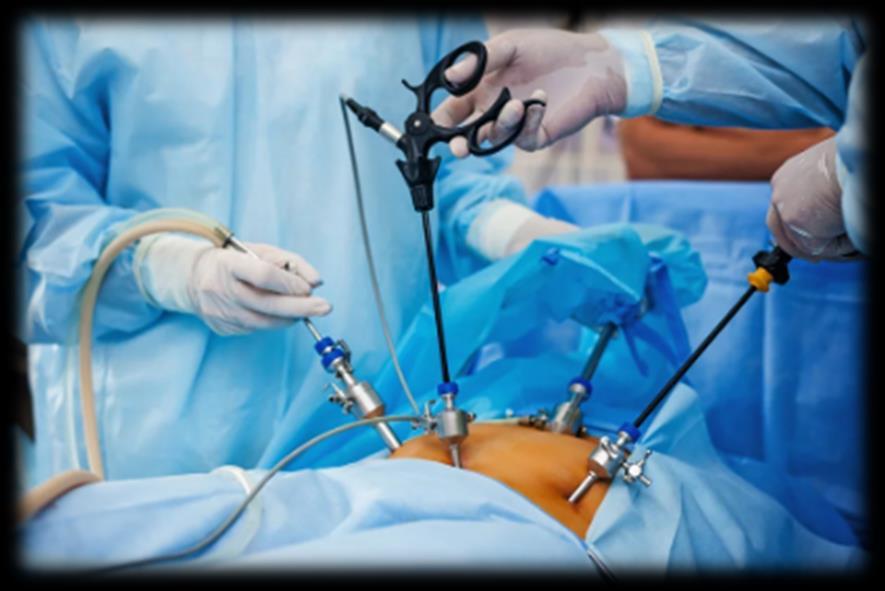
Laparoscopy is a minimally invasive surgical technique that allows doctors to see inside the abdomen using a small camera and thin instruments. Unlike traditional open surgery, it involves only a few tiny cuts, meaning less pain, faster recovery, and minimal scarring.
In cases of PCOS, the surgeon may remove small portions of the ovary’s thick outer surface to help restore normal ovulation , a procedure often referred to as ovarian drilling.
How It Helps Fertility
So, how does this surgery improve fertility? By gently reducing the excess tissue and balancing hormone levels, the ovaries can start releasing eggs again. This makes natural conception more likely within months following the procedure. Many women who have struggled with infertility due to PCOS report more regular cycles and better ovulation patterns after undergoing laparoscopy.
In some situations, doctors may recommend combining the procedure with laparoscopy hysteroscopy surgery. This combination allows them to examine both the uterus and the ovaries in one go. It’s particularly helpful when other issues, like uterine fibroids or adhesions, are suspected alongside PCOS.
Quick Recovery, Authentic Results
One of the best parts of this surgery is the recovery time. Most women can return to their normal routine within a few days. There might be mild discomfort or bloating, but that’s temporary. The results, however, can be life-changing , especially for those who have been trying to conceive for years without success.
Is It Right for Everyone?
Not all PCOS cases require surgery. Doctors usually recommend it only when other treatments haven’t worked or when fertility is the main concern. It’s important to discuss your medical history and future plans with a specialist before deciding.
For some, laparoscopy hysteroscopy surgery also helps identify hidden problems that might have gone unnoticed on scans.
Final Thoughts
For women struggling with PCOS, modern medicine offers more than just hope , it offers solutions. Laparoscopic surgery for PCOS isn’t a miracle cure, but it’s a proven way to restore balance, improve ovulation, and increase the chances of pregnancy. With the right care and guidance, it can be a turning point in your fertility journey.