PORTFOLIO
Amanda Ellisif Arnesen // Landscape Architecture
Master i Landskapsarkitektur, AHO/UiT
Landscape Heritage Master, Politecnico di Milano
International Master of Landscape Architecture, Oslo School of Architecture and Design
Amanda Ellisif Arnesen
Landskapsarkitekt MNLA
amaarn.1998@hotmail.com
+47 47363260
Hammerveien 26, 1474 Lørenskog
Jeg er en positiv og glad jente som nå sluttfører utdannelsen min i Landskapsarkitektur. Økologi og plantekunnskap er noe som har interessert meg siden starten, og jeg er glad i å jobbe med det visuelle. Faget gleder meg aller mest når man ser de gode endringene landskapsarkitektur kan utgjøre.
UTDANNELSE
2022 - 2024
AHO
Innpass på 2. året Internasjonal master i landskapsarkitektur
Diplomprosjekt: Retracing the Marka Border

2021 - 2022
2018 - 2021
2017 - 2018
2014 - 2017
Politecnico di Milano
Utveksling (60 ects) ved Landscape Heritage Master. Snitt: 28/30
AHO UiO
Integrert master landskapsarkitektur. Snitt: B
Kunsthistorie og visuelle studier (årsenhet). Snitt B
Oslo By Steinerskole Videregående skole
Studiespesialiserende med kunst. Snitt: 5.3
UTMERKELSER
2024. Jan
2024. Jan
2022. Jun
2020. Des
2019. Des
FERDIGHETER
Pressemelding angående åpning av Diplom utstilling på AHO
https://aho.no/no/nyhetsarkiv/tegner-dragscene-pa-majorstua-og-designer-tiltak-mot-klimaangst
Publikasjon på AHOs nettside
https://aho.no/no/project/retracing-marka-border
30 Cum Laude på studioprosjektet ved Politecnico di Milano
Utvalgt til å vise prosjektet vårt til Tranby kommune
Lærernes pris for beste gruppearbeid
Nominert til AHO AWARDS
SPRÅK
Rhino, QGIS, Enscape
JOBB OG SMÅOPPDRAG
2023
2021 - 2023
2020-2021
FRIVILLIGHET
2019
2019
Photoshop, InDesign, håndtegninger og skisser, modellarbeide Norsk (morsmål), Engelsk (IELTS: 9.1 / C1), forstår Iitt italiensk Lørenskog Gravlund. Sesongarbeider
Privatoppdrag: Tekniske tegninger til Tanum kommune ang ny bod
Åpent Bakeri Damplassen. Barista
IFLA konferansen. Gruppeleder foajee
IFLA Charretten. Deltagende på Performance Kunst med Kurt Johanessen
https://www.youtube.com/watch?v=bMavmxbQMoo
Bent Salmelid Driftleder Lørenskog Karin Helms. Professor ved AHO Marja Folde. Universitetslektor ved AHO
epost: marja.folde@aho.no
epost: karin.helms@hotmail.com
tlf: +47 95 86 67 32 epost: BS698@kirken.no

REFERANSER CV

CONTENT
Diploma project:
Retracing the Marka Border
School projects:
A water project in the botanical gardens of Medellin
Olaf Ryes plass
Åkerparken in Lier
Revitalizing Aregai Springs of Ticino River
Barnas Skog på Ammerud
Mellom rom at Ballstad, Lofoten
Various projects
Edge ”sickness” and the antidote: ”Three
edges”
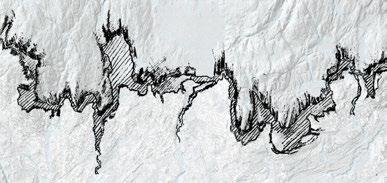
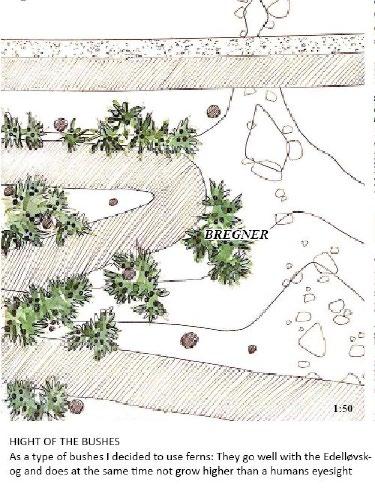
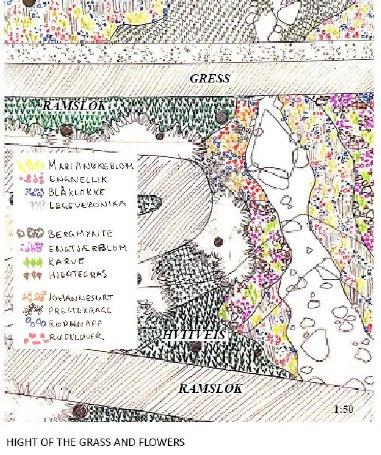
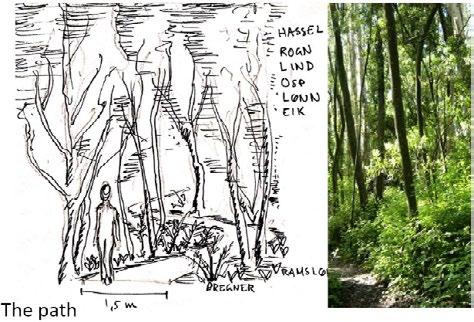
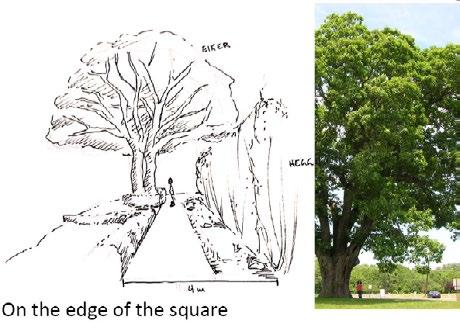
The lack of nature protection comes from the lack of a functioning buffer zone, as the city has grown into its limitations and an edge is barely existing. By wearing out and overusing these areas we could in many ways describe the forest as having gotten the condition of “edge sickness”. By proposing more” edges” along the border a natural protection will emerge. This is a proposal that addresses the urge of more coherent vegetational patterns with a vegetation solution. Three edges or transitions will be created: one outer one with dense shrubs, one intermediate edge with deciduous species and a deeper edge merging into the existing Marka forest. As infrastructure has done its dig as close to the border as possible it is only possible to propose this inside the Marka, but the need for a stronger edge is necessary either it takes area from the suburbs or the existing forest edge.

One edge Status Quo
Proposal
Inner edge
Intermediate edge
Outer edge
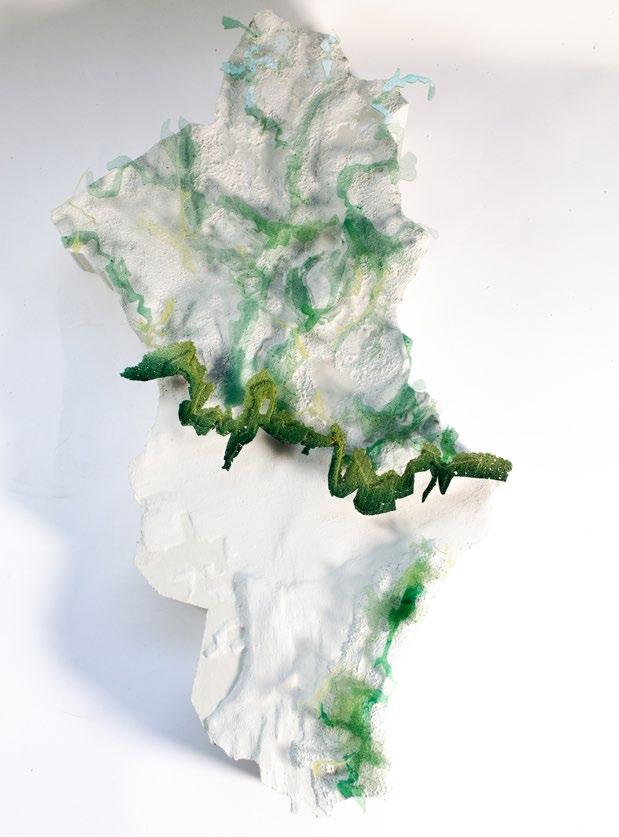 Forest corridors by Biofokus 2022
The proposed edge figure
Forest corridors by Biofokus 2022
The proposed edge figure
Picea Sylvatica Decideous All corridors combined
Strategic mapping of old forests
THE OUTER EDGE (buffer zone of dense lower trees) THE INTERMEDIATE EDGE (introduction of more decideous species)





THE INNER EDGE (forest corridors)


There are about 1.5 million people that has the Oslo Marka as their closest nature, and most of them are living in Oslo. This diploma focuses on the part of the border which is in contact with Oslo centrum and is both easily reachable and heavily pressured (ca 10 km from Vettakollen in the west to Ammerud in the east). The area concern mostly Nordmarka and Lillomarka. The high number of forests and their proximity to the city makes Oslo unique compared to other capitals with a total coverage of 68 % being forests. To many Oslo citizens it’s a prices possession, and many have a close personal relation to their neighboring forests.
Sorbus intermedia
Corylus avellena
50 m
Existing typology Existing typology Existing typology Intervention Intervention Intervention + 50 years + 50 years + 50 years
Bare
Picea abies Pinus sylvestris
rock Dead
trees
50 m 50 m
Rotten trunks
Conclution:
Retracing the Marka Border is about bring new focus to the Marka border. By committing to the three main aspects: Edge, Paths and Entrances the diploma aims to address the possible future of a more coherent Marka edge. Today the edge is of varying condition as infrastructure has eaten into the line. By proposing more” edges” along the border a natural buffer will emerge.
The Oslo municipality is now looking into what can be done to make the Marka more accessible to the greater public. By introducing a strategy of “weaving” the lower paths together a network of shorter routes emerges. In conclusion, Retracing the Marka border seeks to re-enhance the highly valuable Marka edge by ensuring its accessibility, ecological sustainability, and cultural significance for all Oslo citizens.
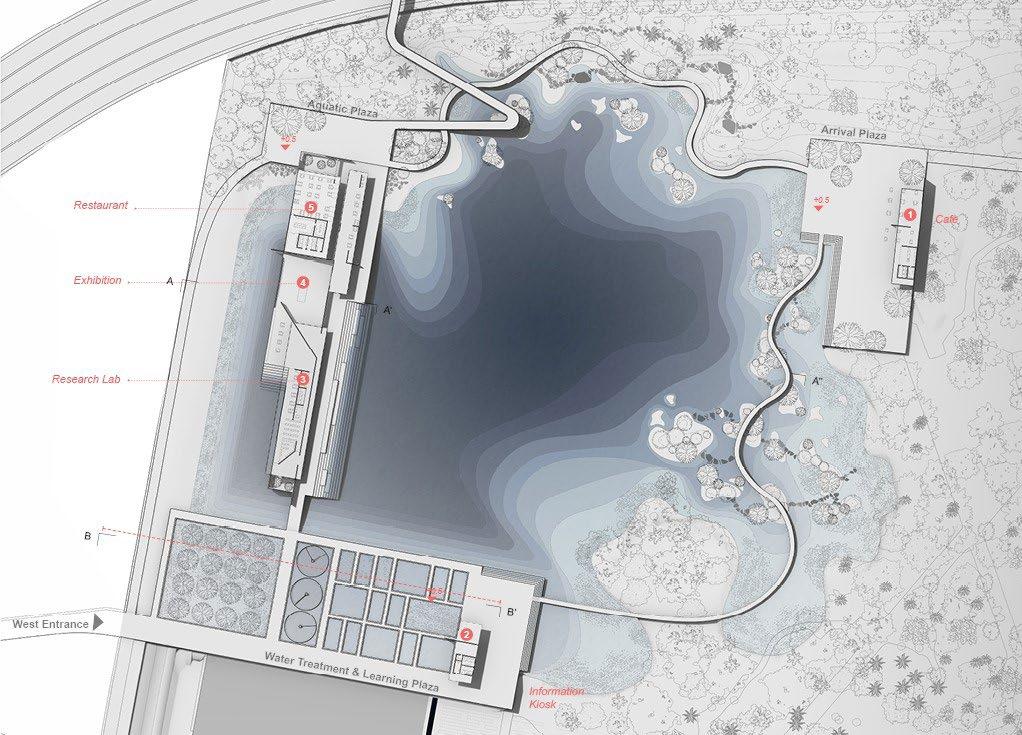
Plan of main Water Center 1:500
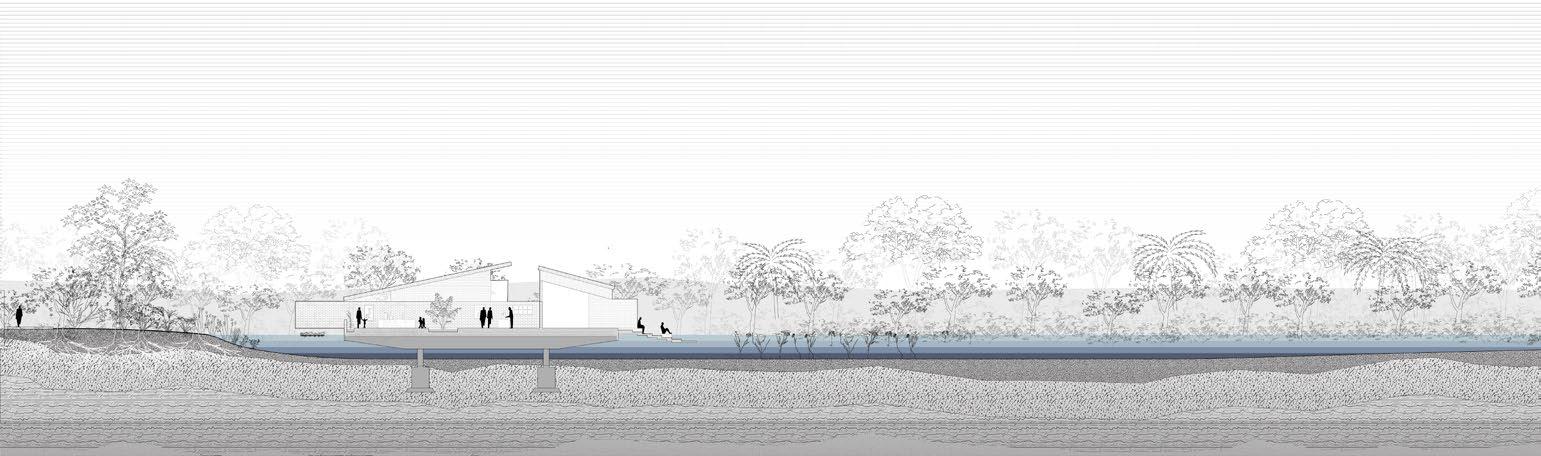
In connection to the water treatment plant will there also be a laboratory for research and collaborations among scientists on water quality, algie, aquatic plants and fish. The laboratory, a exhibition area and a restaurant is gathered together on a bridge on the side of the lake.
of Aquatic Collection Area
of Aquatic Collection Area 1:500
of Aquatic Collection Area 1:500
Plan
1:100 Plan
Section
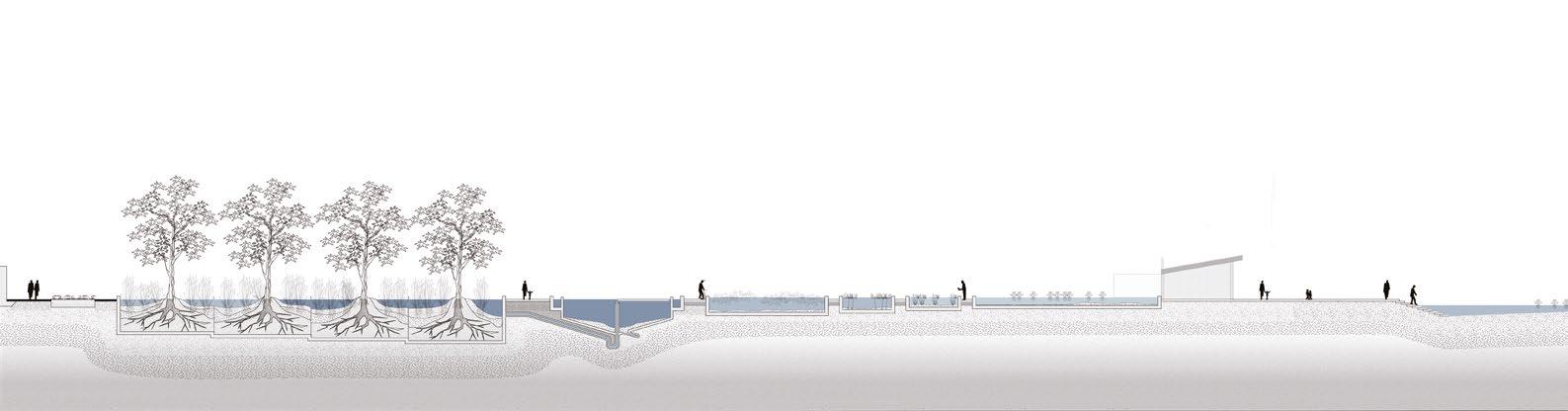
Section across lake and wetland 1:500
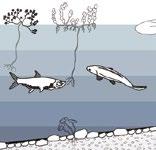
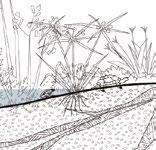
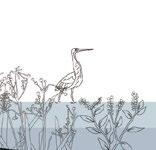
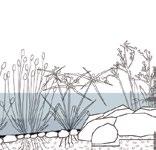
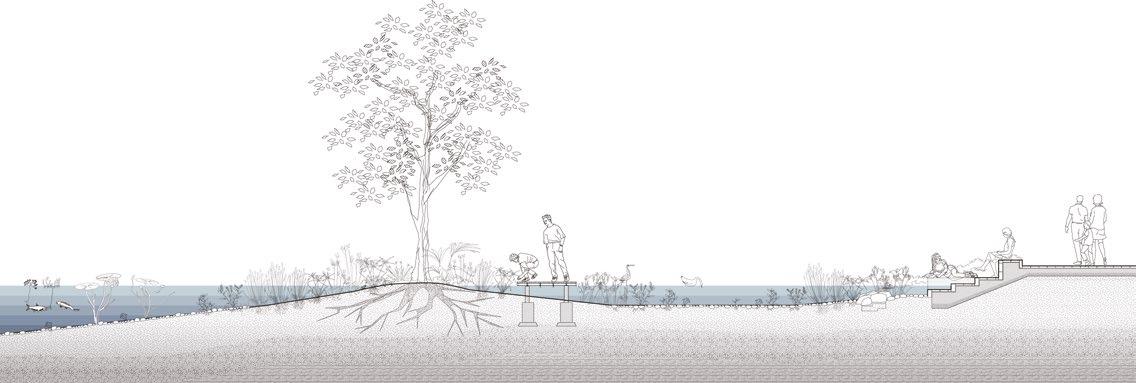

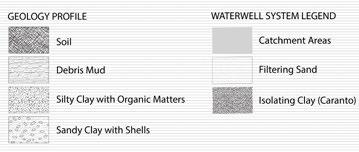
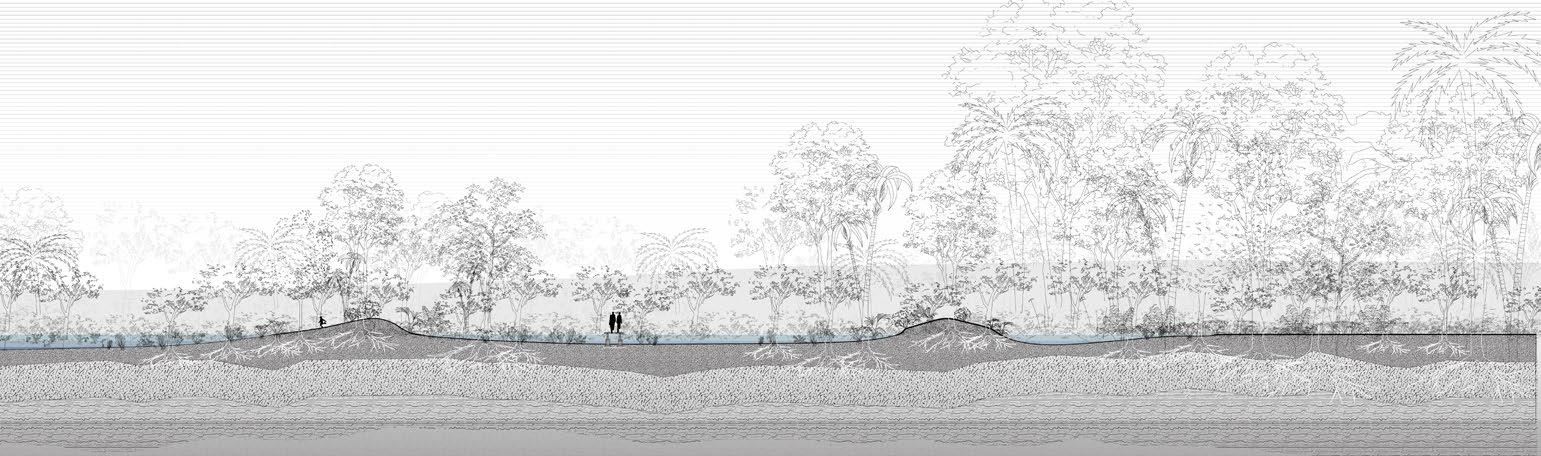
+0.0 High water levell +0.5 +0.1 -0.5 Low water level 0 -1.00 -1.25 -0.50 -0.75 -0.25 Wetland Lake Freshwater Fish Water Birds Aquatic Insects Aquatic Reptiles Shoreline Plants Aquatic Plants Terrestrial Plants Floodable Marsh Water Plaza Islands Plan of Aquatic Collection Area 1:50
of Aquatic Wetlands Area 1:50
Section
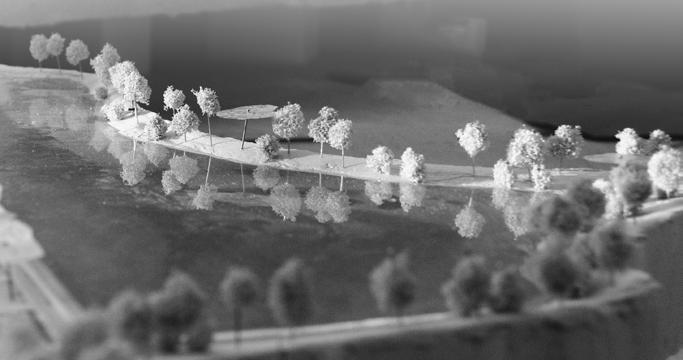
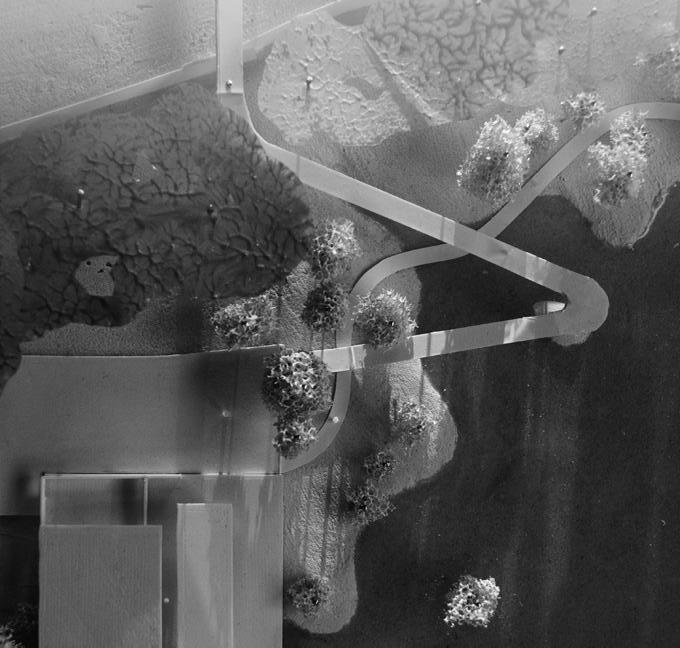
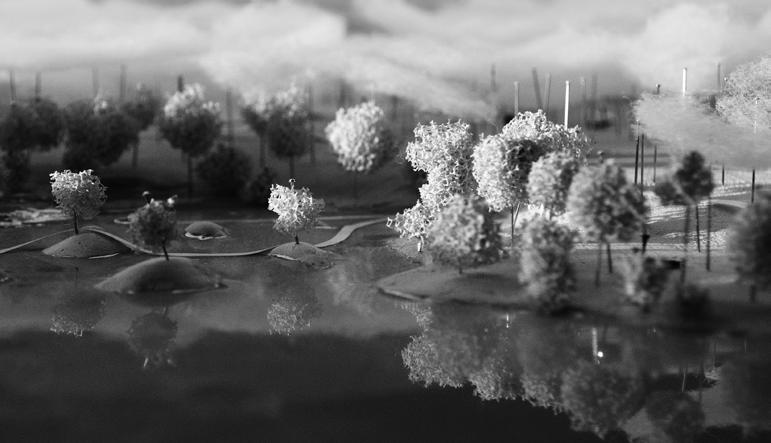
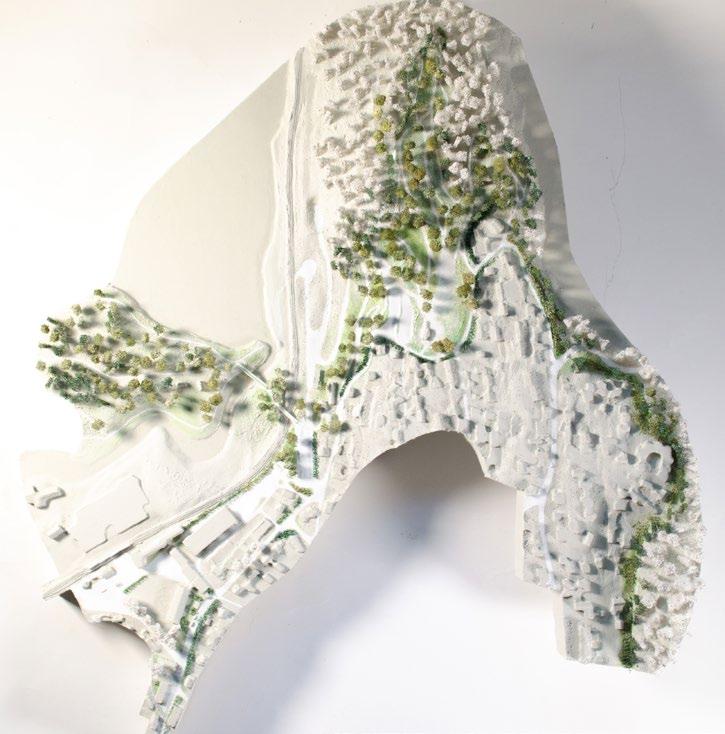
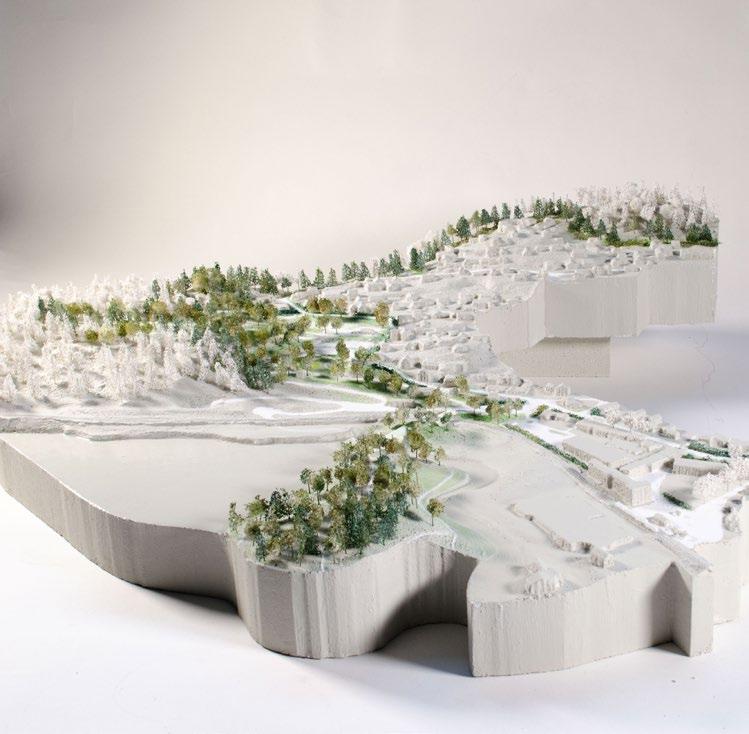
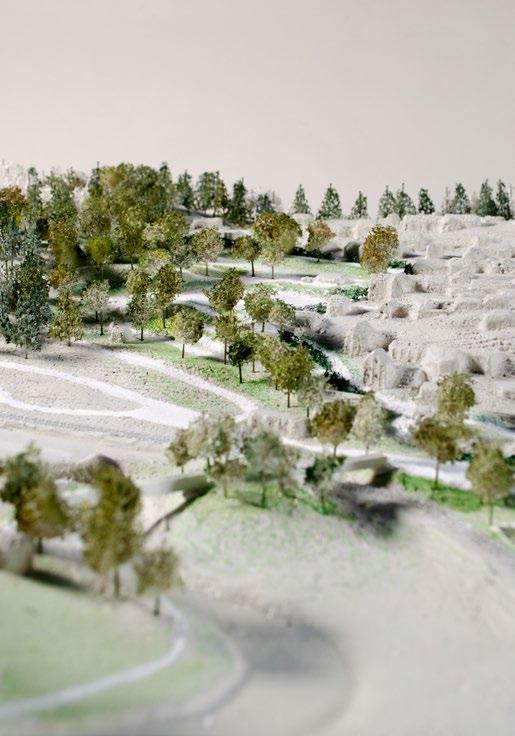
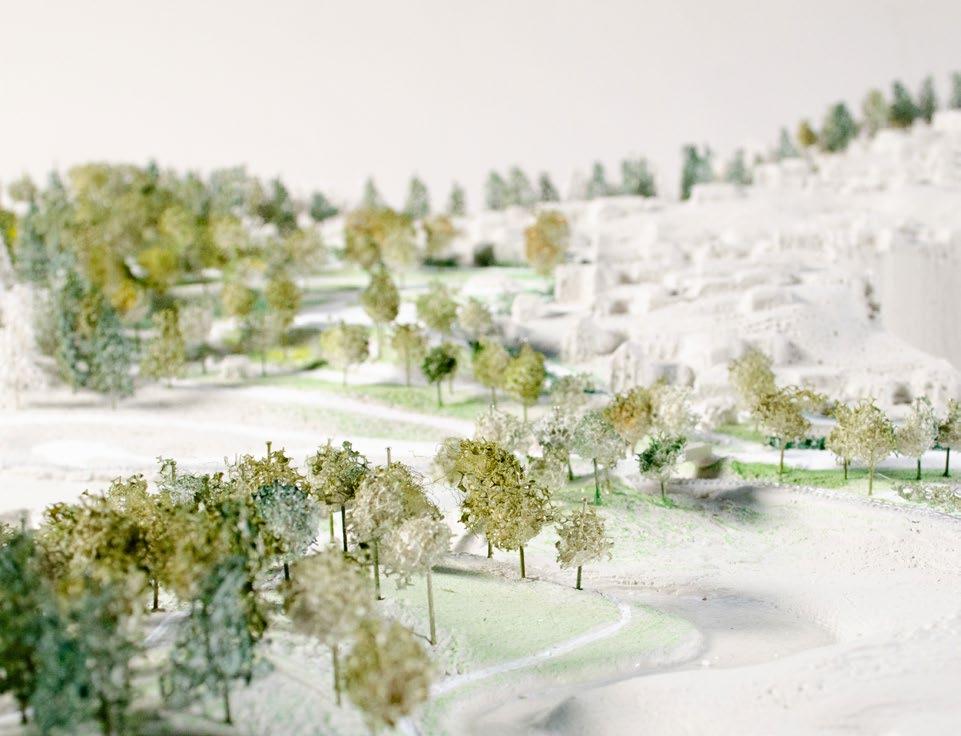
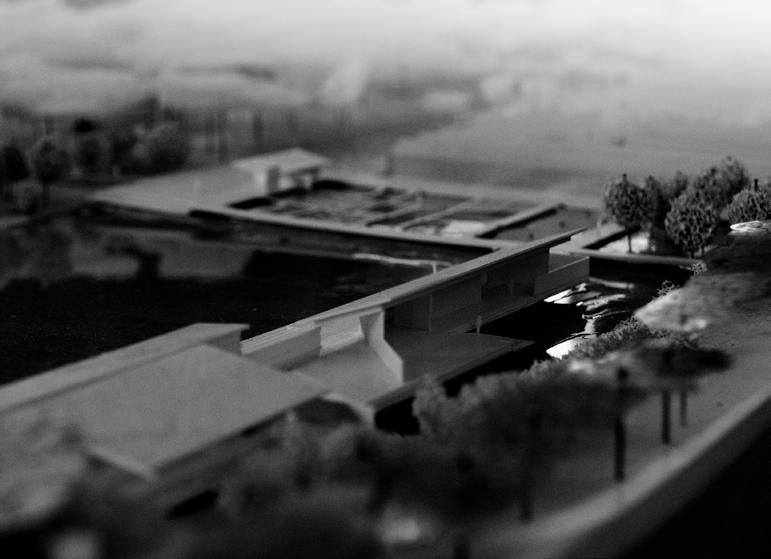 Model photo. Looking to water treatment area
Model photo. Restaurant and bridge across the highway
Model photo. Upper lake
Model photo. A walk along the wetlands
Model photo. Looking to water treatment area
Model photo. Restaurant and bridge across the highway
Model photo. Upper lake
Model photo. A walk along the wetlands
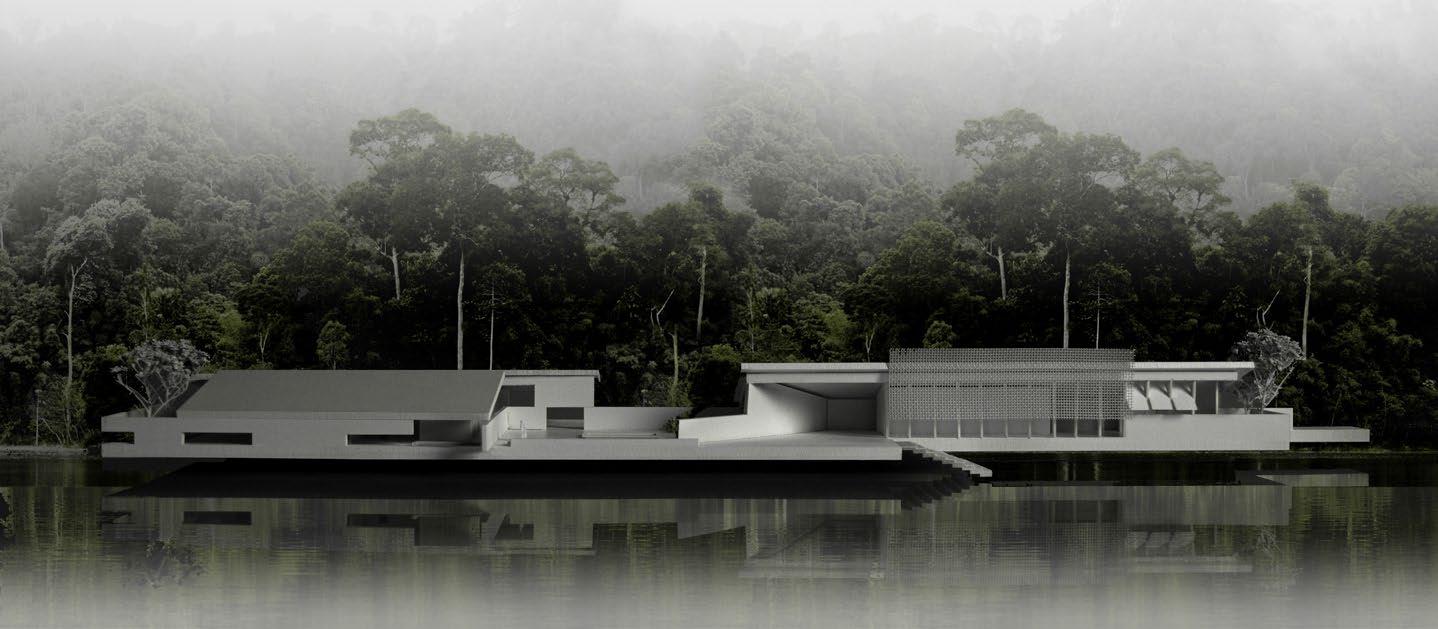
The architecture experiments on the correlation between outside and inside, as the climate does not require isolation. Steps and stairs have been made to make the water accessible. The placement of the buildings and plazas are chosen as they enhance and balance the figures of the lake, as well as the surrounding arrangements of the other themes.
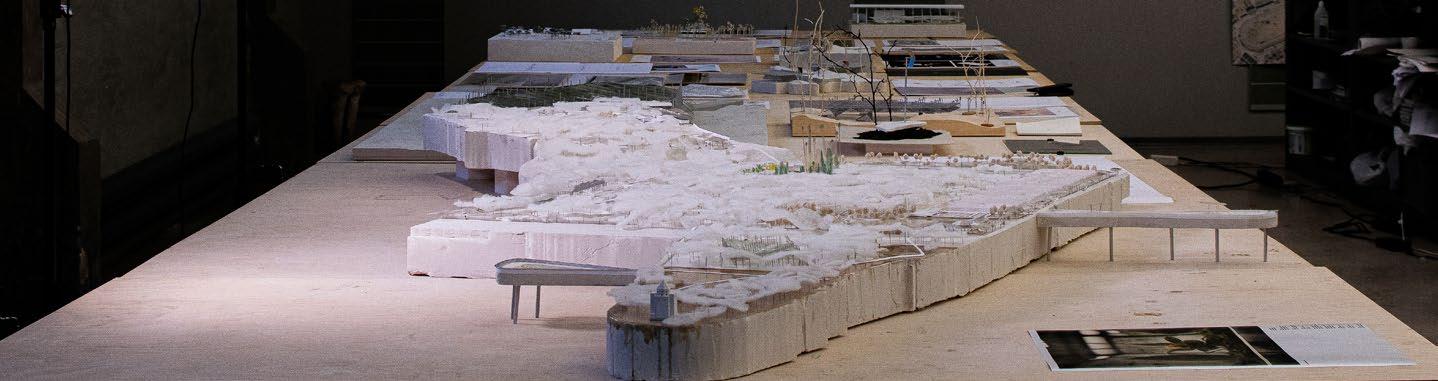 Collaborative model of the Medellin Botanical Garden
OLAF RYES PLASS
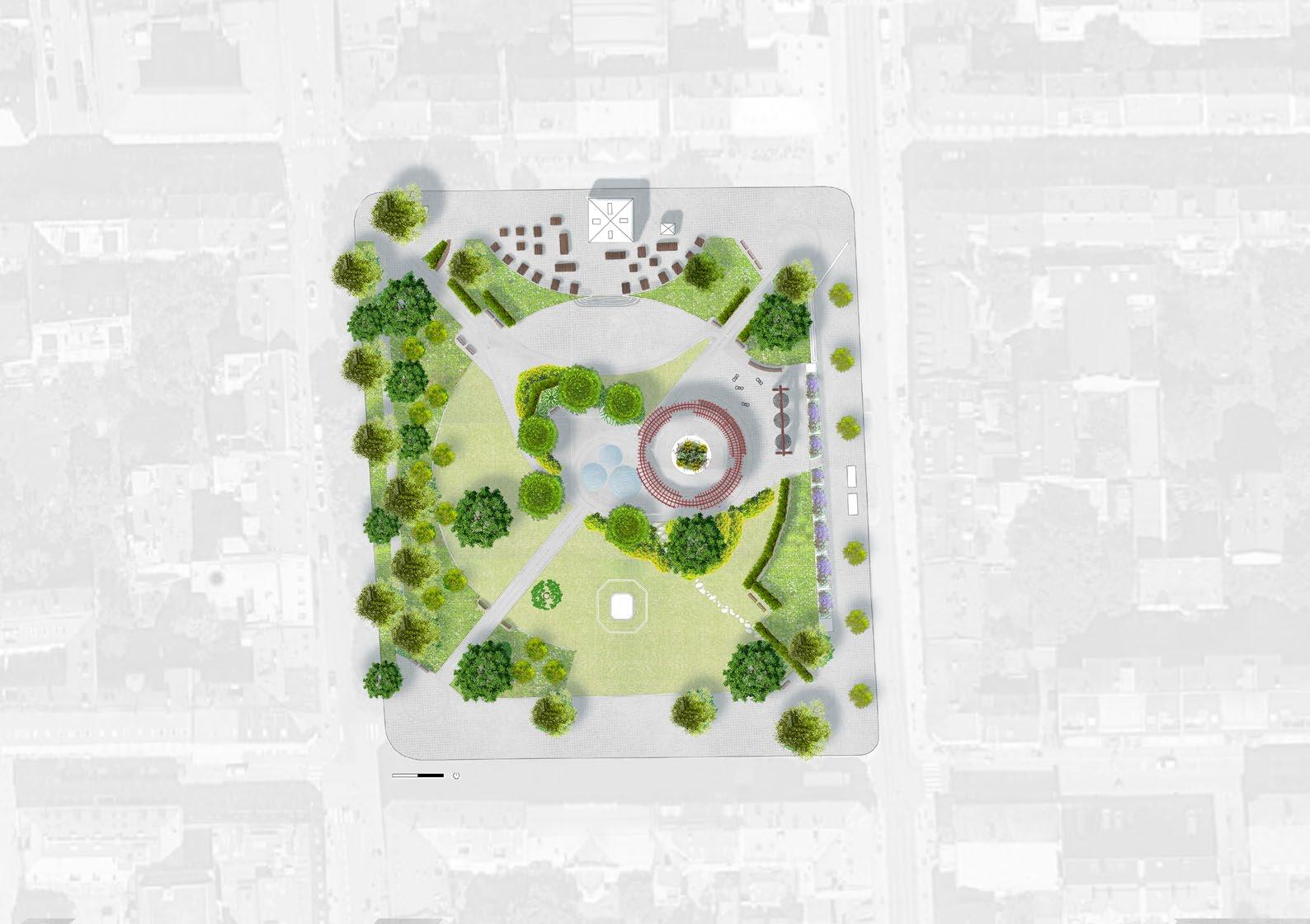
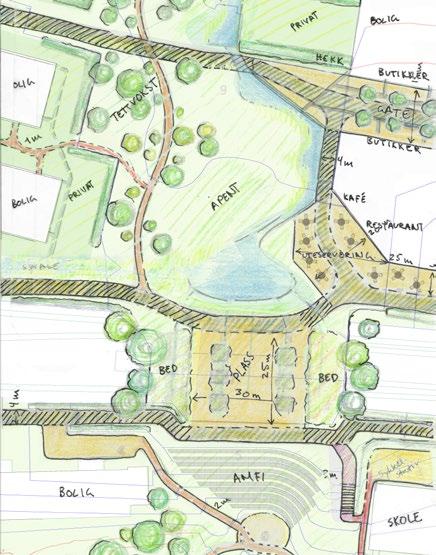
Hva om Olaf Ryes plass skulle renoveres?
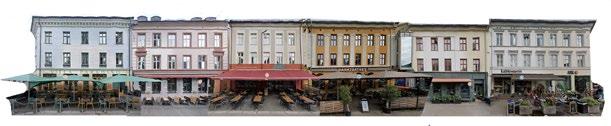
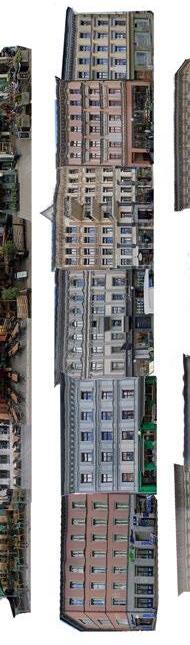
Olaf Ryes plass er en kjent liten park blant Grunerløkkas beboere og besøkere. Omkran set av kafeer, restau ranter, parkteateret og butikker ligger plassen sentralt i nærheten av buss, trikk og Akerselva.
Visjonen er å beholde deler av det eksisterende formspråket, men legge til mere harde flater (for muli ge markeder bl.a) og lekeplass.
Områdets sentralitet tilsier at flerfunksjona litet er et smart design prinsipp. Parken deles opp i flere områder med åpen plen, skyg geallé, vannspill, mar kedsplass, lekeplass og uteservering. Beplant ning og lettstelste men iøyesettende blomsterbed gjør parken til et tiltrekkende grønn plass.
Grûnersgate
Markveien
Uteservering
 Thorvald Meyers gate
Sofienberggata
Thorvald Meyers gate
Sofienberggata
og cafeer
Restauranter
Sykkelparkering
Olaf Ryes Trikkestopp
Lekeplass
Piazza
Vannspill
Pergola
Regnbed
Statue
ÅKER PARKEN TRANBY, LIER
Professors : Marja Folde, Halvor Weider Ellefsen, Andreas Kalstveit, Marianne Borge, Giambattista Zaccariotto, Michael Stas
Co-workers: Viktoria Sørsdahl Holo, Liva Barona og Hebe Robinson (the course was interdisciplinary between architecture students and landscape architecture students)
How to create a sense of local centrality by establishing large-scale industrial buildings in small communities?
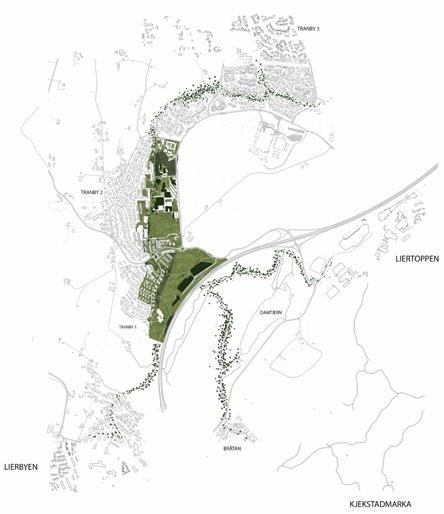
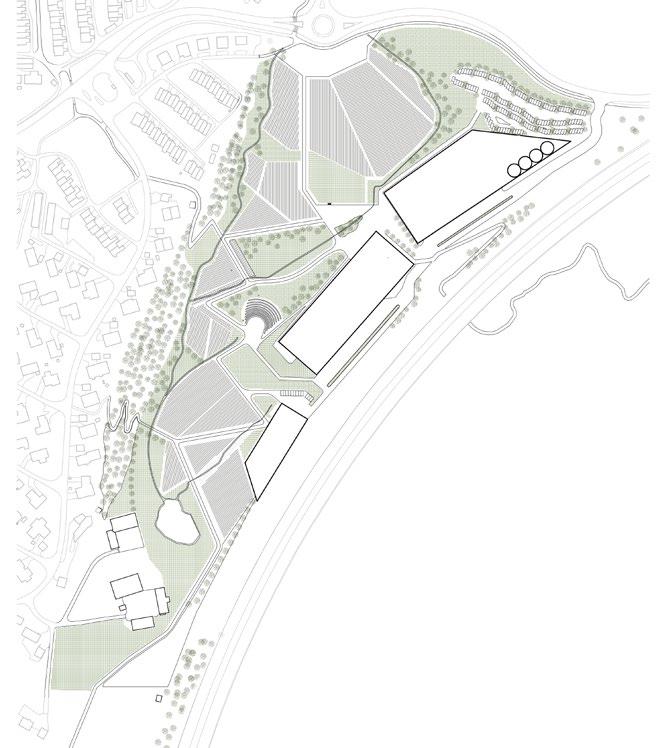
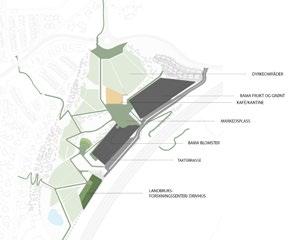
Åkerparken is a project that addresses the urge to look at how corporate investments better can get involved in community methodology. Our initial interest came when looking to the proposed plan for BAMA (vegetable and fruits distributor) inside a recreation forest with historical value. Instead we proposed the Skjeggerud-filling, a field between Tranby village and the highway E18. The site shows signs of contamination so the need for purification is evident, but also the location of the site is logical as it shows relevance to Tranbys urban fabric and the possibility of showcasting towards the highway.
Putting pressure on corporate developments in strategic places can improve the outcome for both developers and locals as the standard for quality rises. Which this location the project contributes to the expansion of Tranby center.
It also connects Tranby better to the shopping center, surrounding towns and hiking opportunities. With the right programming, “Åkerparken” can become a much needed meeting point.
Agricultural strategies have been used for the design of the outdoor areas. The park is divided into plots of acres and plots of grasslands so as not to seem too massive, and to depict the Lier landscape.
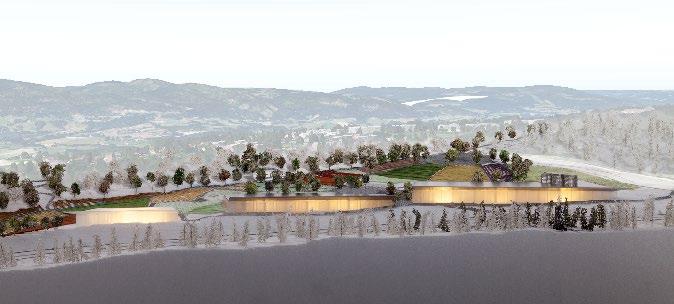
Panoramic view
Community center/kafe
Tranby neighbourhood
Water stream Park
Amfi
Parking
Bama distributions center
Public square
Bama flower center
E18
Fields
Research center/Public library/Exibition space
Path untill Liertoppen
Shopping center
DEALING WITH A FORMER LANDFILL

Water pond
Factory/ distribution storage
Research center for food production
BAMA
Foodmarket/ social meet-up Cafe/canteen
By developing the social impact Bama could have on Tranby`s inhabitants we propose both research centers for food production and social activities such as foodmarkeds and cafees. The most prominant element for the users is the park interweaving the factories with the peri-urban settlements. The park is a network of fields and acers and scenic walks along it. To grasp the typical landscape of Lier the park invites people to use the cultural landscape for recreational walks.

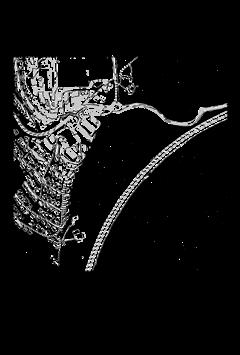
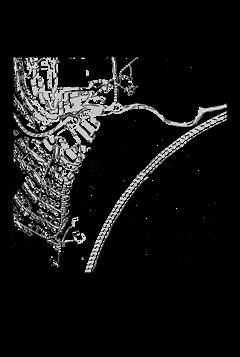
The Skjeggerud plot is a former landfill for soil and clay masses. The area currently has the status of contaminated ground with findings of arsenic, chromium and copper. With climate change, it is in any case necessary that the site is cultivated and secured so that the pollution does not spread. This can be solved by terracing the landscape and by applying an impermeable layer over the filling masses.
Since the plot is contaminated, the area must be terraced before the rest is designed. The strategy is to carry the surface water with the stream on the left side before it collects in a pond at the bottom.
The
ARSEN, As FØR FYLLMASSER ETTER FYLLMASSER SNITT IDAG
SNITT SNITTLINJE FØR FYLLING SNITTLINJE ETTER FYLLING GRUNNFORHOLD BIOTITTGRANITT HAV- OG FJORDAVSETNING DYRKBAR JORD IMPERMEABELT LAG FORURENSET GRUNN HAV- OG FJORDAVSETNING DYRKBAR JORD TERRASSERING AV LANDSKAPET IMPERMEABELT LAG FORURENSET GRUNN FORURENSET GRUNN TORV OG MYR FYLLMASSE HUMUSDEKKE KROM, Cu KOBBER, Cr3 HAV- OG FJORDAVSETNING
BEARBEIDET
PLAN
existing elevations og the Skjeggerud filling
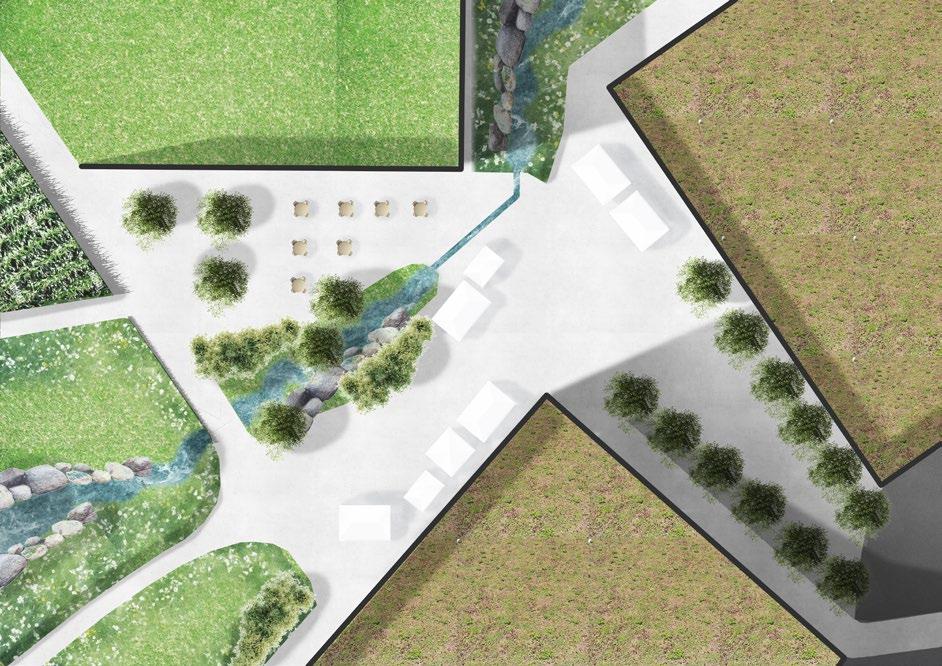
 Pedestrian bridge
Alley from road and industrial side to marked square and
Storm water stream
Flower meadow
Pedestrian bridge
Alley from road and industrial side to marked square and
Storm water stream
Flower meadow
Cafe and event room
Acers (with the example of corn)
BAMA vegetable factory
BAMA flower factory
Path to the top of the park and Tranby
Path to Tranby
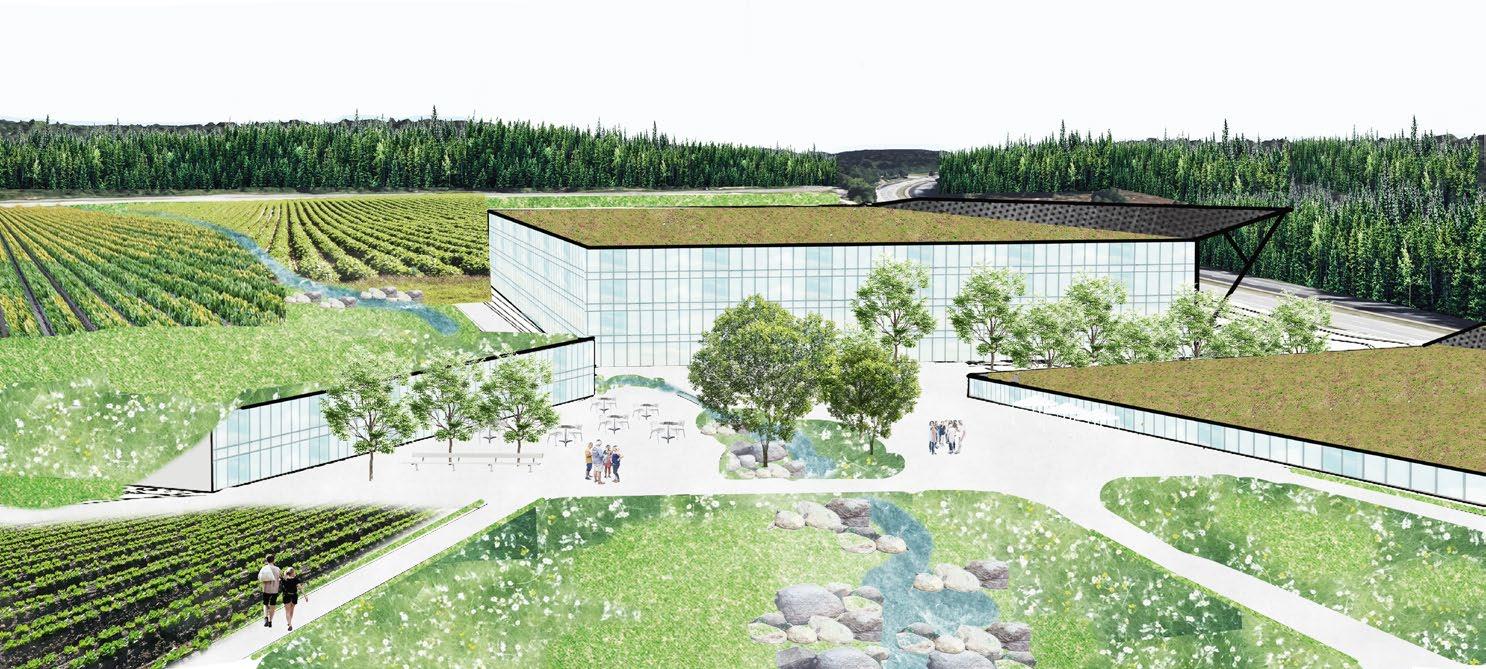
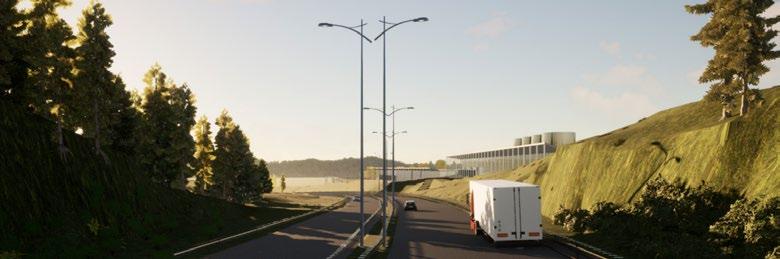
Tranby is, with its close proximity to the highway E18, an attractive place for industries. With this project we want to enlighten how large-scale corporations also can function on a human-scale and with local affilation.
This should be a part of the municipalitys strategy for buisness development.
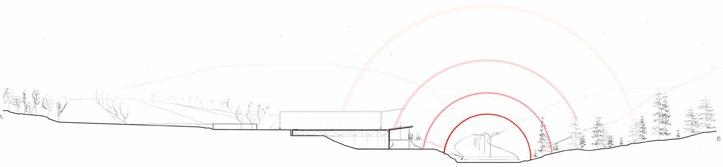
The height difference where the buildings stand means that the buildings are mostly visible from the E18 side, while the park is most visible from the Tranby side. The buildings themselves act as a noise screen for the park behind.
REVITALIZING AREGAI
Professors : Matteo Umberto Poli, Clarissa Orsini, Paolo Bozzuto, Marco Mancini, Giovanni Ravazzini, Arianna Zambelli
Co-workers: Sena Kelesoglu
SANTO STEFANO AL MARE, LIGURIA
Revitalazing Aregai is about redescovering opportunities in wastelands. Our site is by the harbour in Marina degli Aregai, Imperia, Liguria. We are changing a wasteland into a recreational park with inspiration from the region historical glory of garden culture. The site position gives possibilities of connecting it to existing infrastructure and by doing this, giving Aregai a better infrastructural hold.
While working on this project we have developed plans for collecting rainwater, transforming roofs into gardens, creating a shared street, activity and sitting areas, public squares and different plant communities.
Revitalizing Aregai will be a well-designed park which both infrastructural solutions and recreational qualities.
BARNAS SKOG
AMMERUD, OSLO
Professors : Elisabeth Ulrika Sjödahl, Nuno Almeida, Hanne Johnsrud og Eric Reid
My desire is to create:
- good passages down to and on across the river
- larger outdoor area for the kindergarten - opportunity to experience wildlife along the river
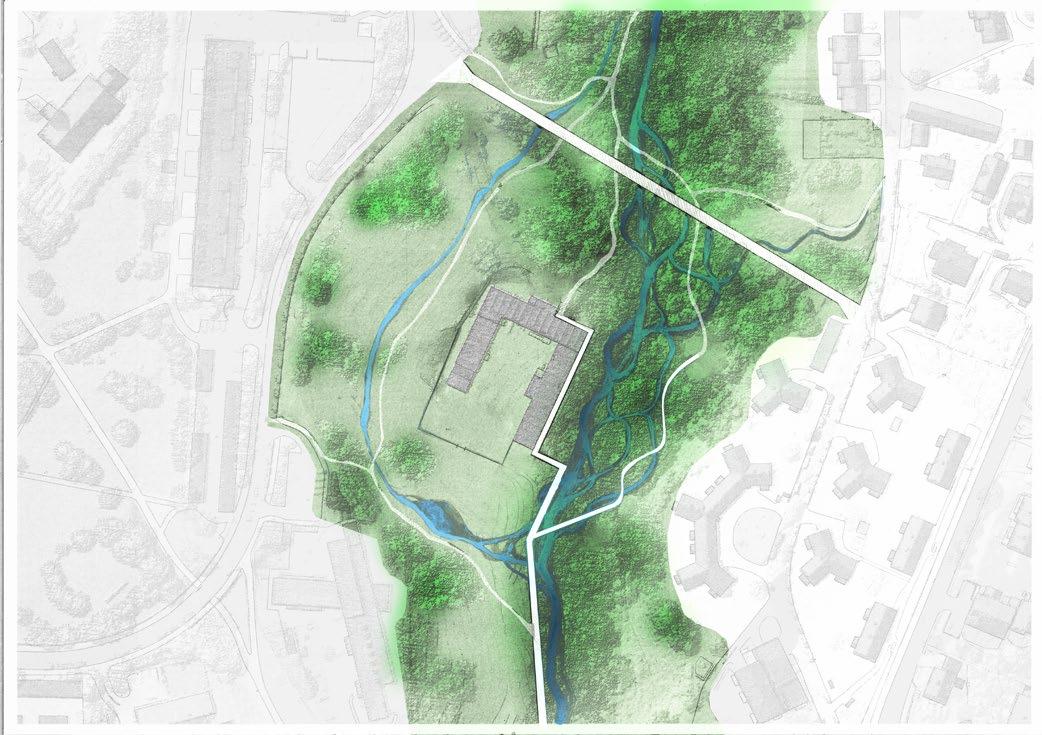
The idea is to create an exciting outdoor space around the nursery that will offer all kinds of nature experiences that are now hidden along the Alnaelva. As of today, the nursery has no relation to the river that flows by on the lower side, and I therefore want the nursery’s area to be more easily incorporated into the surrounding nature. It is my wish that the kindergarten children should be surrounded by rich biodiversity and plenty of opportunities to play in t he forest. In order to achieve this without exposing the Alna River to too much disturbance, I will make arrangements to lead an additional river above the kindergarden. This will be drawn from a higher elevation further up the Alnaelva. In this way, the children will have more direct contact with the water. This river will be led down towards Alnaelva directly behind the nursery, and along the way it will spread out and become a small pond. The pond will be shallow so that the children can play safely, with stone slabs on which to balance.
On the lower side of the kindergarden, I want to add a path to really observe the Alnaelva at close range. By undermining under the buildings right wing, you will be able to “hide” under the nursery building without disturbing the birdlife. The undermining will create a room with a view of the alder and hedge forest. Once you have passed the nursery, the path will draw closer to the river. The path will be elevated so that it is not in danger of eroding with the meandering river. While the path goes past the nursery area, it will act as a separator between the children’s play area and the birds’ habitat, with a fence on the side facing the Alnaelva.
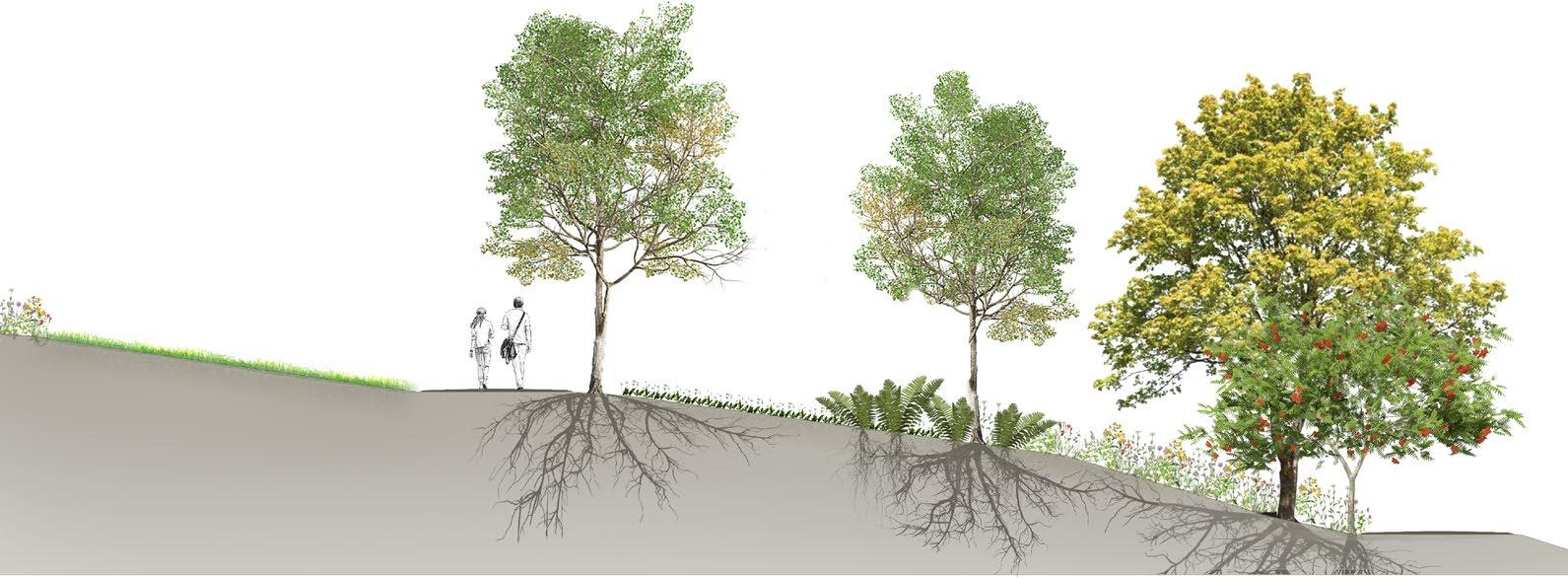
As shown in the section, I want to lower the terrain around the river itself to give it more room to play. As it is today, the river is too low either to give people an opportunity to go down there or to pull the vegetation up and out on the slopes. I hope that by smoothing out the slopes directly towards the river, the growing conditions for the natural vegetation will increase. The idea is that the wider terrain will give the river room to slow down and meander to a greater extent. This is a time-dependant process, which will constantly develop. Because of this, the gray alder and hedgerow forest should be able to spread further out, and thus make room for even more birds.
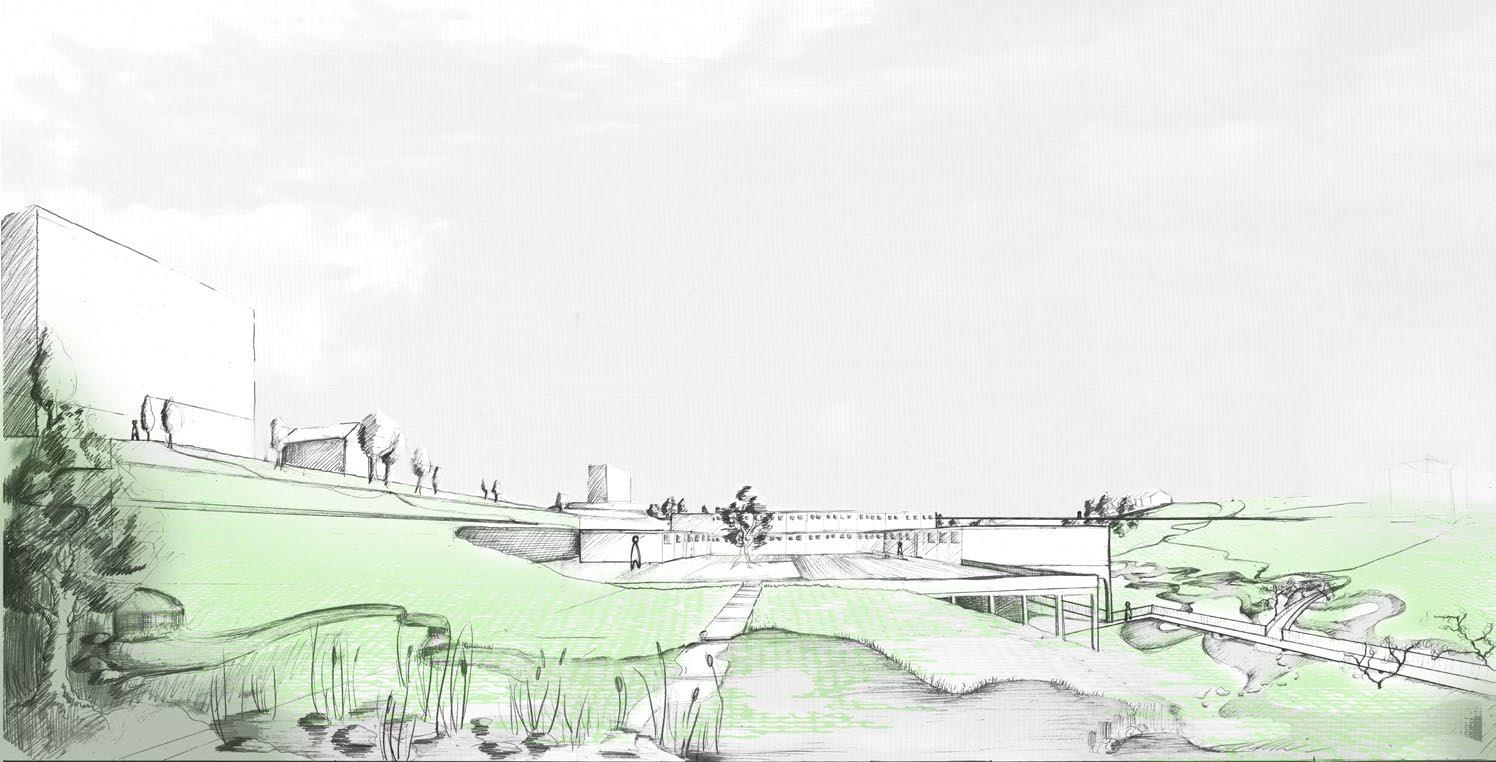
Illustrasjonsperspektiv Håndtegning og photoshop
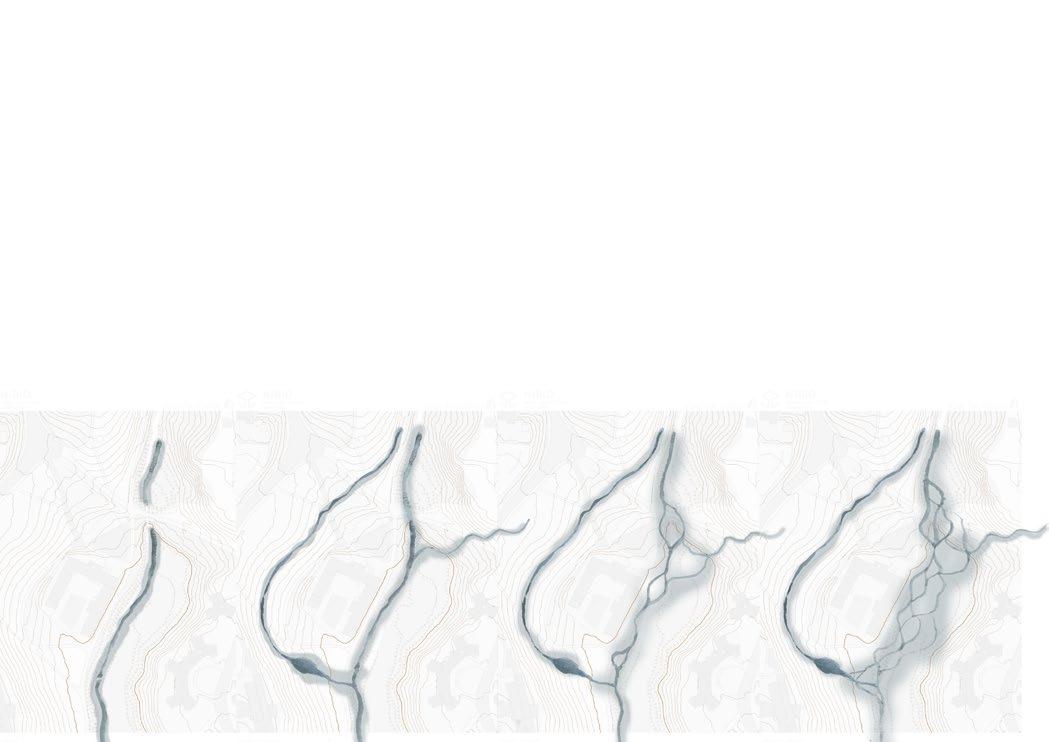
TIME ANALYSIS OF THE MEANDRING ALNA-RIVER
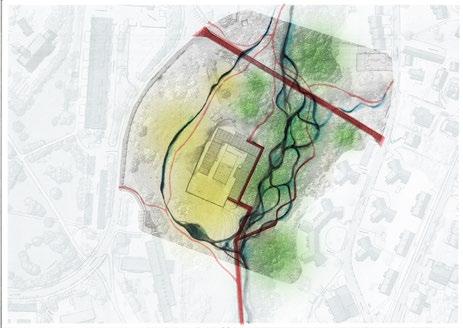
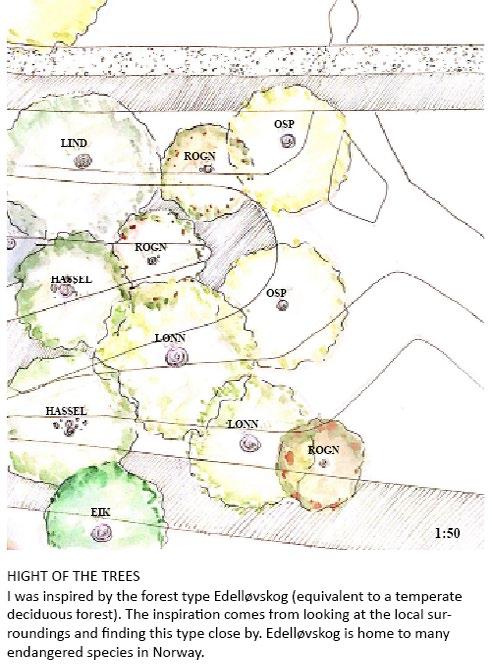
Aktivitetsområde Alnaelva Stinettverk og broer Edelløvskog
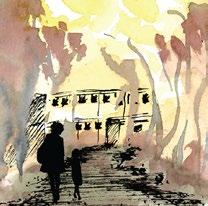
På vei til barnehagen på sti langs med elva
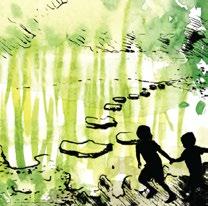
Ved dammen bak barnehagen med balansesteiner og høyt siv
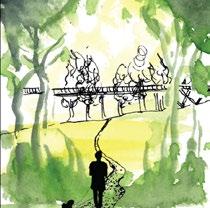
På sti under den store broa
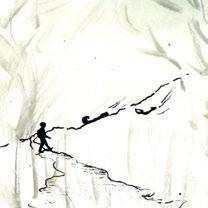
Ovenfor den nye elva om vinteren, her brukt som akebakke
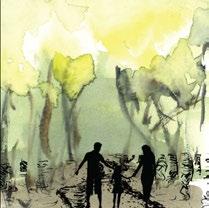
Inne i vilnisset ved den meandrerende Alnaelva
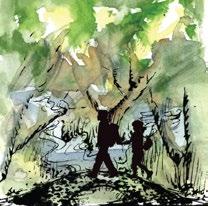
Langsmed den buktende elva på vei til den lille broa
1. Shows the river as it looks today, with a visualization of the flood capacity. Today, the river passes through a small pipe under the walkway that connects the buildings on either side of the Alna river.
3. Shows the first stage of the development of the meandering Alna River. Here the river bed will be raised and several ditches will be dug through which the water can flow.
2. Shows the improvements want to make with an artificial river above the nursery, the small pond, complete opening of the Alna River and a side stream from the left to handle storm water from the development.
4. Here it is shown how the watercourse has calmed down so much that it meanders more in smaller streams, and the flood capacity is at its maximum. With such conditions, the gray alder and hedgerow forest will thrive.
PLAN
TICINO VALLEY
ABBIATE GRASSO, LOMBARDIA
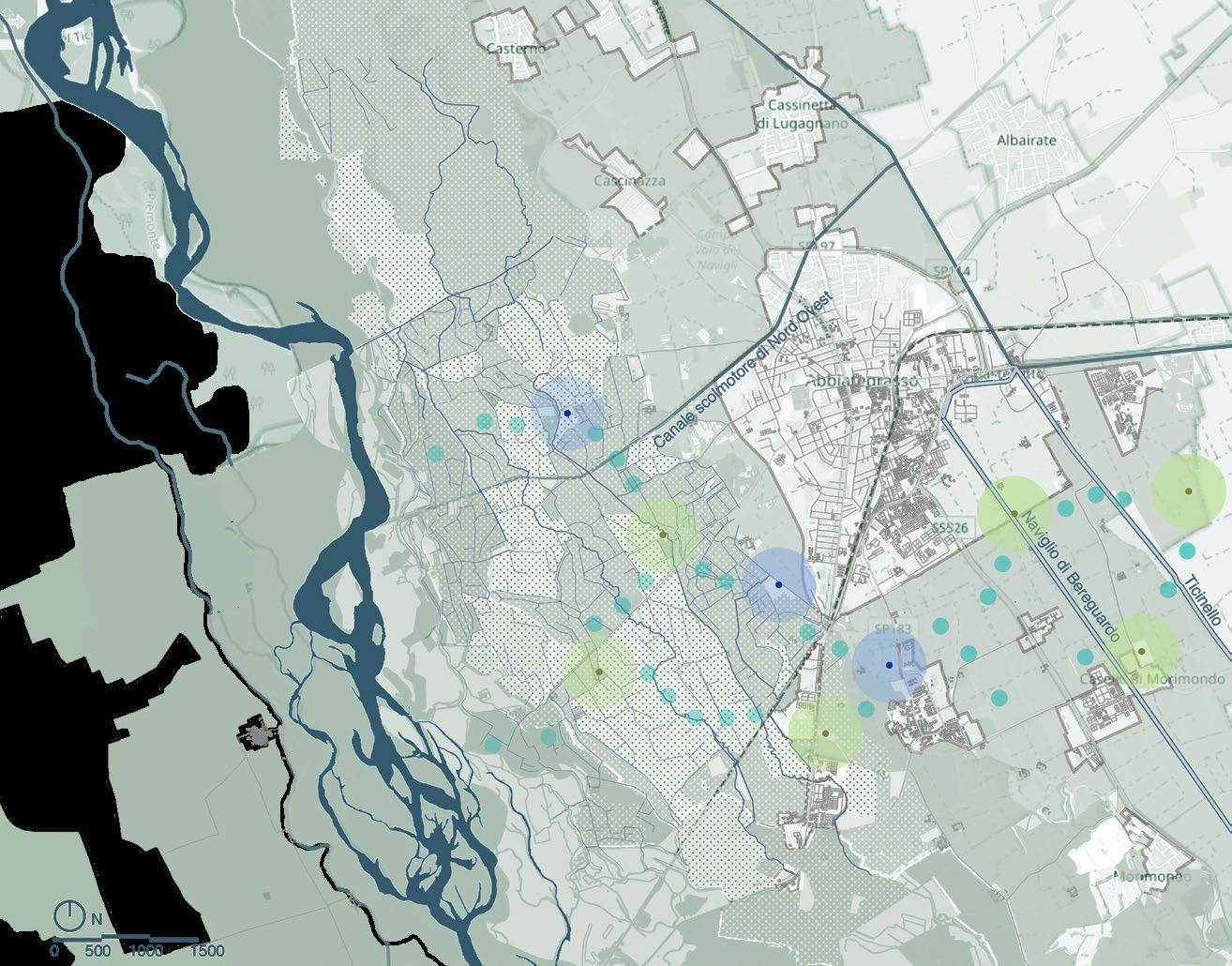
Ticino Valley is a project about redescovering waterways in the agricultural fields along the Ticino river on the west to Milano, Lombardia. Through ditches and channels the once swampy area is today struggeling with draught as the snowmelting in the Alps deminishes. The water-intensive agriculture becomes fragile as the farmers let it dry out during winter. The lack of moisture in the soils challenges the natural ecosystem, and migrating birds looses important habitat during winter.
With this project we propose to open up strategic channels for water flows also during winter, as well as digging out and discovering strategic locations for natural springs.
STRATEGY:
CREATE OPEN WATER ALLYEAR AROUND
PROBLEM
Farmers turn off the water during winter
Drought
Springs dry out
Damaging erotion along the canals
Affects the wildlife, especially bird habitats during winter
Loss of biodiversity and beauty
SOLUTION
Water in parts of the canal all year around
Collecting ground level water for recreational ponds
Runoff sulotion
Positive effect on Flora and Fauna
Roots hold soil, when in good conditions, prevent erotion along the edge
SITE GOALS:
1. CONSISTENT WATER IN SOME CANALS ALLYEAR AROUND
2. REOPEN AND REHABILITATE POND
3.CONNECT PROJECT 1AND PROJECT 2TOTHE BIGGER PICTURE
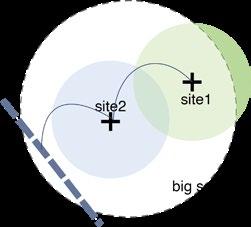
BACKGROUND HISTORY:
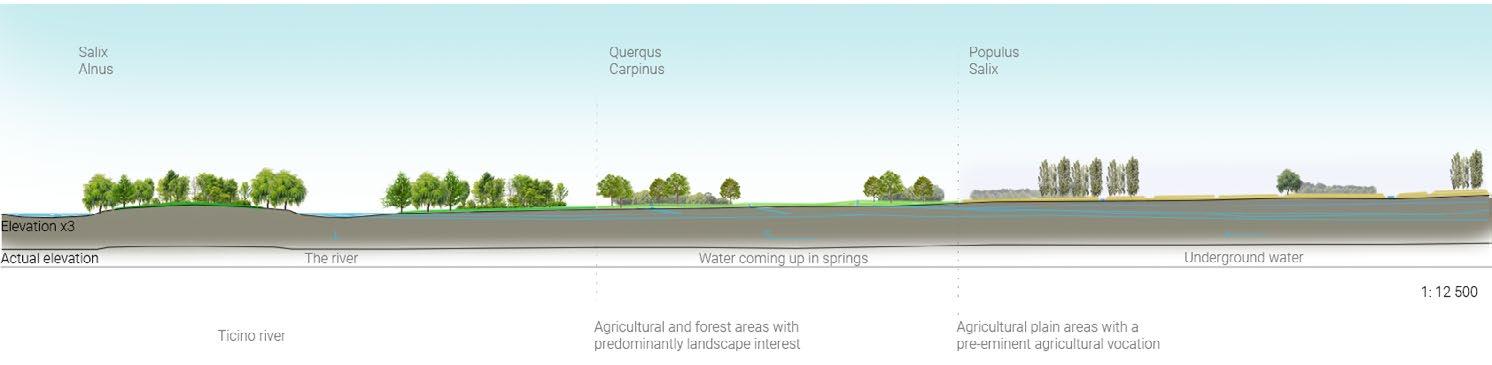
Our focus area is on the western side of Milano Municipality by Abbiategrasso and in connection with the Ticino river. The Ticino is a river coming from the Swiss alps and Lago Maggiore, running down through Lombardia before connecting with the Po river in Pavia. Its known for its high biodiversity and hosts habitats for many different species. Today it is a national park. Abbiategrasso is a village nearby dominated by agriculture. The Naviglio Grande runs out here and the fields get provided with water by a complex canal network.
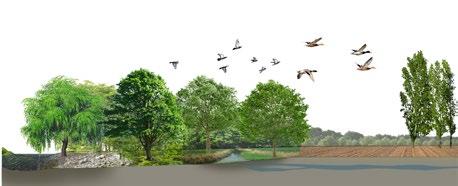
The Ticino Valley is famous for its still working marcitas and natural springs. These springs come up from the plains in these areas and provides water all year around. During our fieldtrip to the area we saw Abbiategrasso and the Ticino valley as three different zones. The top of the plateau where heavily industrial agriculture is being carried out, the Ticino valley where smaller production is being carried out and natural water springs occurs and the Ticino river where the national park takes over, and where both fauna and flora is rich.
PHILOSOPHY
As elsewhere in the Po valley huge areas of nature has been removed in order to expand the industries and agriculture. This leaves little left for the natural fauna and flora which now suffers from loss of habitats and natural water sources.
By implementing changes to both canals and possible habitatonal areas we can create a mesh which will finally provide for the wildlife.
This also creates a more sustainable agriculture for the future.
MELLOM ROM BALLSTAD, LOFOTEN
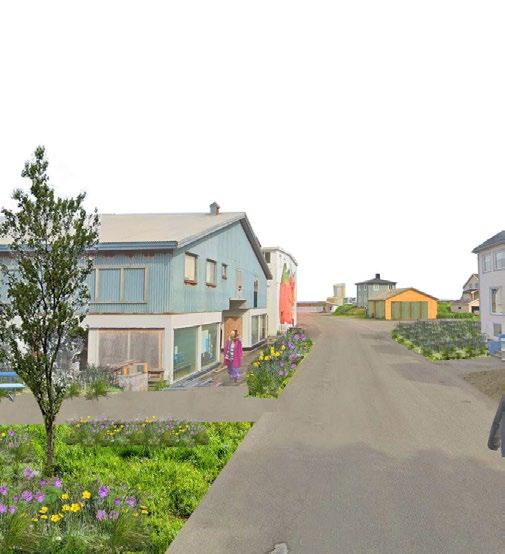
The project Mellom Rom is about redesigning outdoor areas by making use of the local vegetation. By removing unnecessary asphalt surfaces, it will be possible to create softer and more tactile outdoor spaces. This will create a new context to Ballstad, both to appeal to new residents and new social programmes.
Professors : Marja Folde, Michael Stas og Kjerstin Uhre
HVA FINNES AV VEGETASJON PÅ OMRÅDET
HVA FINNES AV VEGETASJON PÅ OMRÅDET
HVA FINNES AV VEGETASJON PÅ OMRÅDET
FINNES AV VEGETASJON PÅ OMRÅDET
VEGETASJON PÅ OMRÅDET
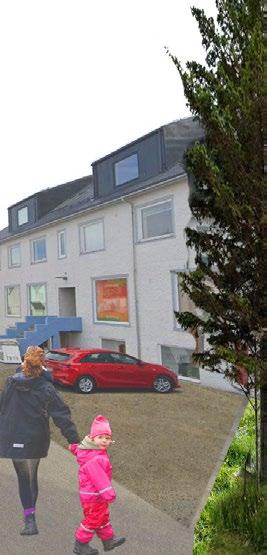
Prosjektet om å redesigne uteområder ved å ta i bruk den stedegne vegetasjonen. Ved å fjerne unødige asfaltdekker vil man kunne skape mykere og mer taktile uterom. Dette vil skape en ny kontekst på odden, både for å appellere til nye beboerne og nye sosiale programmer.
HVORDAN OMDANNE ASFALTDEKKENE
HVORDAN OMDANNE ASFALTDEKKENE
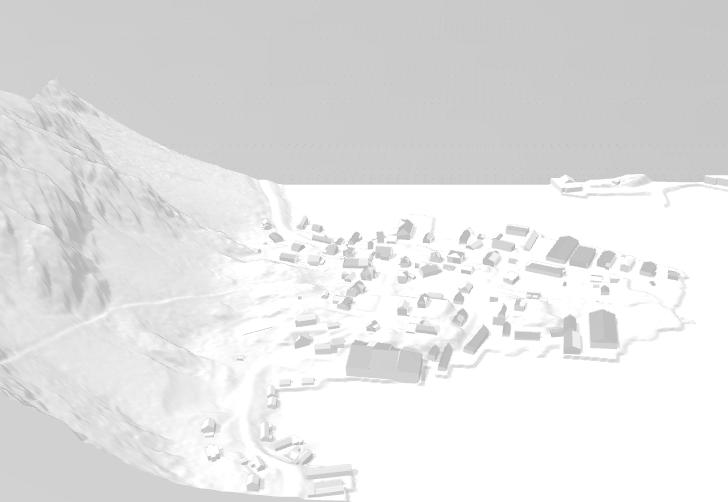
Fra 1999 av skjedde et skifte i virksomheter på odden fra mer lokal industri til kultur og turisme. Likevel har omgivelsene i liten grad endret seg. Våg arkitekter har, sammen med grunneier, planlagt boliger i noen av de tomme industribyggene langs brygga. Med dette vil odden igjen stå overfor en forandring. Det er med disse endringene fra interesse i industri til interesse i bolig at behovet for endring av uterommene oppstår. For som man kan se på grunn av områdets tidligere bruk er de fleste åpne flater i dag asfalterte.
HVORDAN OMDANNE ASFALTDEKKENE
HVORDAN OMDANNE ASFALTDEKKENE
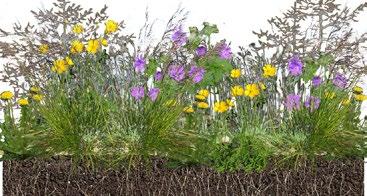
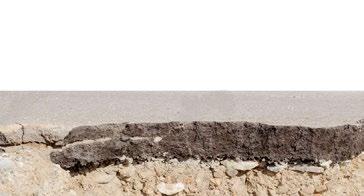
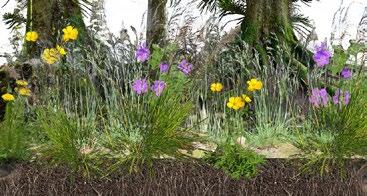
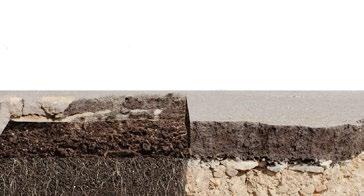
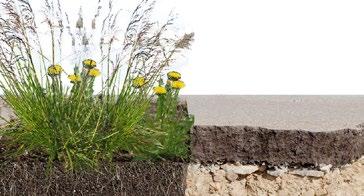
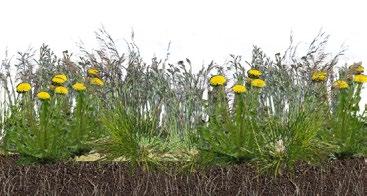
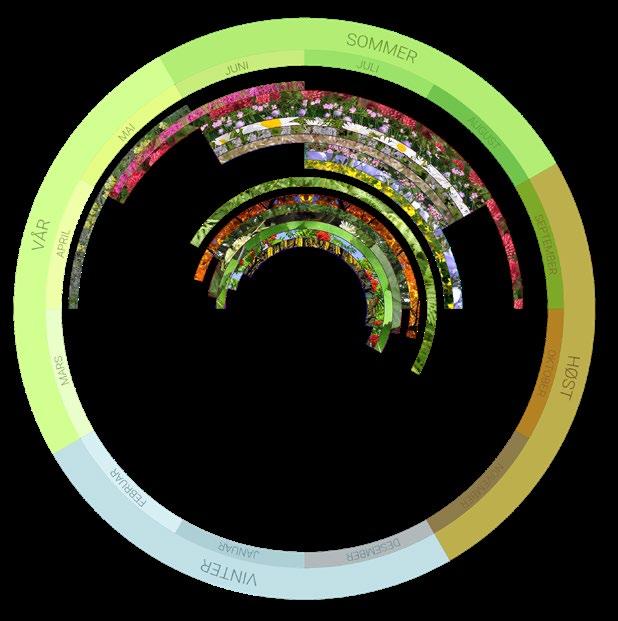
The most important thing was that the transformation for the project should be simple and realistic enough to carry out. I have examined what vegetation exists on the headland, and the area consists of communities of grass, meadow and fir forest. More specifically low perennial meadow, tall perennial meadow and meadow fir forest with tall perennial meadow. It is these vegetations that I will bring in and use when I redesign the outdoor areas on the headland.
The idea is to break up parts of the asphalt, dig out filling material, fill it up with soil and then get transplants from the surrounding vegetation. Also in some places, the idea is to crush and gravel up the asphalt so that you walk on asphalt instead of asphalt. Here, grass will be able to establish itself over time.
Viktigst var det at transformasjonen for prosjektet skulle være enkel og realistisk nok for å gjennomføre. Jeg har undersøkt hva som finnes av vegetasjon på odden, og området består av samfunn av gress, eng og granskog. Mer spesifikt Lavstaudeeng, høgstaudeeng og enggranskog med høgstaudeeng. Det er disse vegetasjonene jeg vil bringe inn og ta i bruk når jeg skal redesigne uteområdene på odden.
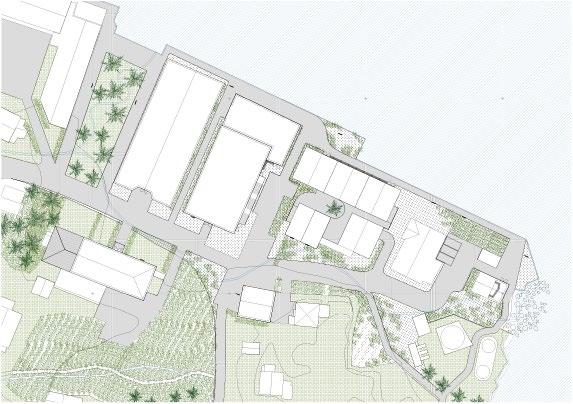
The two diagrams show the driving pattern on the site and the asphalt surface, the first shows how it is today, and the second shows how I think about it. Here I have made a decision on where it is necessary to preserve full asphalt surfaces and where it is not.
Ideen er å bryte opp deler av asfalten, grave ut fyllmasse, fylle opp med jord og så hente transplanter fra vegetasjonen rundt. Også noen steder er tanken å knuse og gruse opp asfalten slik at man går på singel istedet for asfalt. Her vil gress kunne
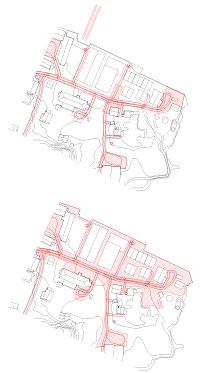
Much of the asphalt has been removed and replaced with vegetation and or broken up. I have rather made new smaller roads, some only for pedestrians and others with space for cars. Storm water is intended to go down into the park and along the road. The main square takes place in the middle along the road and next to the new cultural center, - out here, a cafe is planned and therefore there is also space for outdoor dining. I am also opening up several of the buildings for the possibility of public or commercial use. Both the garage and the old wooden warehouse are currently empty and have opportunities to be reprogrammed.
1 2
MELLOM ROM
Lavstaudeeng
Høgstaudeeng
Asfalten dekker hele bakken
5
Lavstaudeeng
Enggranskog med høgstaudeengutforming
Høgstaudeeng Kutte ut deler av bakken og legge ned jord
Lavstaudeeng
Enggranskog med høgstaudeengutforming
Asfalten dekker hele bakken
Høgstaudeeng
Kutte ut deler av bakken og legge ned jord
Viktigst var det at transformasjonen for prosjektet skulle være enkel og realistisk nok for å gjennomføre. Jeg har undersøkt hva som finnes av vegetasjon på odden, og dekker hele bakken
OMDANNE
Enggranskog med høgstaudeengutforming
HVORDAN
ASFALTDEKKENE Lavstaudeeng
Vegetasjonen vokser frem
Asfalten dekker hele bakken
Høgstaudeeng
Kutte ut deler av bakken og legge ned jord
Asfalten dekker hele bakken
Kutte ut deler av bakken og legge ned jord
Aspahlt covering it all 2. Escavate the surface and fill with local soils
1.
Høgstaudeeng
Lavstaudeeng
TO CONVERT
HOW
THE ASPHALT SURFACES
VEGETATION TYPES ON THE PENINSULA
Vegetation
3.
comes trough
Enggranskog med høgstaudeutforming
Amanda Ellisif Arnesen Takk! amaarn.1998@hotmail.com Hammerveien 26, 1474 Lørenskog Landskapsarkitekt MNLA +47 47363260