Canberra Doctor is proudly brought to you by the AMA ACT
CIRCULATION: 1,900 IN ACT & REGION
Not the tea lady: Dr Vida Viliunas' story


Informing the Canberra medical community since 1988
Why grads are choosing to stay in Canberra


Canberra Doctor is proudly brought to you by the AMA ACT
CIRCULATION: 1,900 IN ACT & REGION
Informing the Canberra medical community since 1988
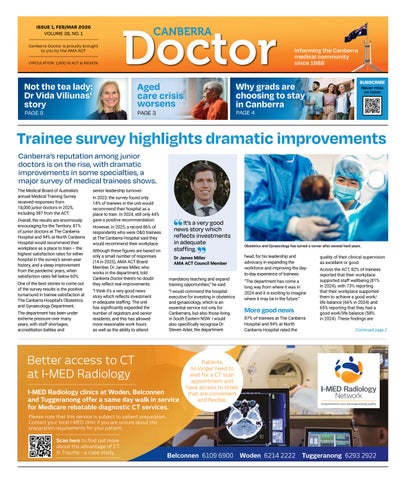
Canberra’s reputation among junior doctors is on the rise, with dramatic improvements in some specialties, a major survey of medical trainees shows.
The Medical Board of Australia’s annual Medical Training Survey received responses from 18,000 junior doctors in 2025, including 387 from the ACT. Overall, the results are enormously encouraging for the Territory. 81% of junior doctors at The Canberra Hospital and 94% at North Canberra Hospital would recommend their workplace as a place to train – the highest satisfaction rates for either hospital in the survey’s seven-year history, and a steep improvement from the pandemic years, when satisfaction rates fell below 60%.
One of the best stories to come out of the survey results is the positive turnaround in trainee satisfaction at The Canberra Hospital’s Obstetrics and Gynaecology Department. The department has been under extreme pressure over many years, with staff shortages, accreditation battles and
senior leadership turnover.
In 2023, the survey found only 14% of trainees in the unit would recommend their hospital as a place to train. In 2024, still only 44% gave a positive recommendation.
However, in 2025, a record 86% of respondents who were O&G trainees at The Canberra Hospital said they would recommend their workplace.
Although these figures are based on only a small number of responses (14 in 2025), AMA ACT Board Member, Dr James Miller, who works in the department, told Canberra Doctor there’s no doubt they reflect real improvements.
“I think it’s a very good news story which reflects investment in adequate staffing. The unit has significantly expanded the number of registrars and senior residents, and this has allowed more reasonable work hours as well as the ability to attend

It’s a very good news story which reflects investments in adequate staffing.
Dr James Miller AMA ACT Council Member
mandatory teaching and expand training opportunities,” he said.
“I would commend the hospital executive for investing in obstetrics and gynaecology, which is an essential service not only for Canberrans, but also those living in South Eastern NSW. I would also specifically recognise Dr Steven Adair, the department


head, for his leadership and advocacy in expanding the workforce and improving the dayto-day experience of trainees.
“The department has come a long way from where it was in 2024 and it is exciting to imagine where it may be in the future.”
Obstetrics and Gynaecology has turned a corner after several hard years. quality of their clinical supervision as excellent or good. Across the ACT, 82% of trainees reported that their workplace supported staff wellbeing (81% in 2024), with 73% reporting that their workplace supported them to achieve a good work/ life balance (66% in 2024) and 65% reporting that they had a good work/life balance (58% in 2024). These findings are
87% of trainees at The Canberra Hospital and 94% at North Canberra Hospital rated the



I recently came across a heartening discussion on an online noticeboard showing how much Canberrans value their GPs.
What began with a request for a GP recommendation led to a long thread of praise from grateful patients, who described their doctors with words such as ‘proactive’, ‘thorough’, ‘caring’, ‘listening’, ‘the best’, ‘amazing’, ‘wonderful’, ‘beautiful human being’, and my favourite – ‘an absolute angel’. It’s a reminder that social media is occasionally a source of encouragement. If only it could always so.
As doctors, we are all too aware how social media muddies the waters of medical information, and how challenging it is for patients

to navigate health advice when the loudest voices are not experts, and in the case of AI, aren’t even human.
A recent measles case in the ACT, as well as outbreaks in other parts of the country, together with high levels of influenza and RSV, are reminders that health professionals must be on the forefront in talking about preventative health, especially vaccines. This is a role AMA has always taken very seriously. Now more than ever we need medical leadership in communicating the science behind medical treatments, and in developing health policies that are evidence-based.
Branch Council nominations
AMA ACT is currently searching for the right people to sit on our Branch Council for the next two years. If you are someone who is passionate about looking after doctors and
looking after our community, please consider whether this is your opportunity to get involved.
We are seeking a diverse council that reflects AMA’s membership across private and public practice and at all levels of training and career. To find out more about what being a branch councillor means, see page 8. Nominations close 14 March.
AMA is currently seeking feedback from members on a range of matters, to inform our advocacy on your behalf. These include:
The ACT Budget
Help us identify key areas where targeted investment can improve health outcomes for the ACT community by filling out our survey here: surveymonkey.com/r/WWQHJ98

Conversations in Women's Health: Physical, Mental and Financial
Thurs 26 March 2026, 6:30pm to 9pm
High Courtyard North, Hotel Realm, Barton
Join us for an evening of connection and conversation, an intimate dinner with a panel discussion on advancing women's health in Australia.
• Dr Kerrie Aust, AMA ACT President (panel host)
• Dr Meredith Whiting, psychiatrist working in multidisciplinary private practice
• Rana Elmir, a clinical social worker and trauma specialist

• Dr Vida Viliunas, a local anaesthetist and mentor for female doctors
• Cutcher & Neale's financial wellbeing expert, talking to economic factors that influence women's health
This event may also be eligible for self logged CPD.
Register to secure your place – Scan the code above or go to ama.com.au/act/events

The Enterprise Agreement
AMA members are invited to take part in our survey to inform our log of claim for the next enterprise agreement. The survey can be found here: surveymonkey.com/r/C8MBWPW
Pelvic pain
We are preparing a submission for the ACT Legislative Assembly’s Inquiry into Endometriosis and other pelvic pain. If you have views about prevalence, treatments, and how to reduce barriers to care for women in need, please fill out our survey here: surveymonkey.com/r/RTZG3P5
Women’s Dinner
We are excited to be holding our inaugural Women’s History Month
consistent with improvements at the national level.
Obstetrics and gynaecology was not the only rotation at TCH to experience a rise in satisfaction ratings. 92% of trainees in psychiatry would recommend their workplace (62% in 2024); 82% of trainees in paediatrics and child health would recommend their workplace (64% in 2024); and 78% of trainees in physician adult medicine would recommend their workplace (71% in 2024).
The survey results identified key areas for continued improvement, mostly in workplace culture. Rates of bullying, discrimination, harassment (including sexual harassment) and racism remain a major concern across Australia, and ACT data reflects similar patterns. 25% of ACT trainees
said they had experienced bullying, harassment and/or discrimination in 2025, up from 20% in 2024. Mirroring a national trend, reported incidents involving senior medical staff as the source of the issue decreased to 39% (48% in 2024), while those involving patients and/or patient family/carers as the source increased to 43% (39% in 2024). The survey showed a decline in satisfaction among surgical registrars in 2025, with 70% recommending their workplace, compared with 84% in 2024. It remains to be seen whether this is a trend related to systemic issues.
AMA ACT President Dr Kerrie Aust said overall, the encouraging survey results demonstrated the value of investing in doctor wellbeing – for instance through Canberra Health Services’ Office of the Director of Prevocational
Dinner on March 26 in the beautiful courtyard of Hotel Realm in Barton. This intimate event is an opportunity to connect with like-minded peers and contribute to a national conversation about advancing women’s health in Australia. I’m delighted to be on the panel, along with psychiatrist Dr Meredith Whiting, anaesthetist Dr Vida Viliunas, and clinical social work and trauma specialist Rana Elmir. You can read more about Dr Viliunas’ story on page 8 For information and bookings, go to ama.com.au/act/events or scan the QR code above. I hope to see many of you there.

Education and Training.
“In Canberra, we’ve seen additional supports put in place for medical trainees at CHS over the last few years following concerted advocacy, including more support staff and more attention to the issue of unpaid overtime,” Dr Aust said. “It’s really pleasing to see improvements reflected in trainees’ experiences.”
“For Canberra to have the health system our community deserves, we need to be attracting the best junior doctors to the capital. That means making sure they can increasingly access protected teaching time and opportunities to advance their career, as well as ensuring fair rostering and remuneration. AMA will not stop advocating for further reforms in these areas.”
See full details of the 2025 MTS results at

BRENDAN TABER
Deputy CEO
Community Options*
The rollout of the new Support at Home program has been a tumultuous ride for hundreds of thousands of older Australians who rely on home care services. Here in the ACT, the negative impacts on patients are deeply concerning. In an ideal world, home care for older Australians would be proactive, relational, and reliable. Older people would receive the right support at the right time, delivered by workers who know them well enough to notice subtle changes before they escalate. Families would feel supported, and GPs could trust that the community system would ‘catch’ those at risk of decline.
We are still far from that ideal and in some areas, moving further away. Under the new Support at Home (SAH) model, providers across Australia are being forced to scale back personalised care due to funding constraints, administrative burden, and workforce shortages. Relationship-based care is increasingly replaced by task-based service delivery, making it harder to identify early deterioration, cognitive decline, or social risk.


The loss of trusted service providers is already having negative consequences for older people in the ACT. For instance, one woman in her eighties was recently forced to stop seeing her long-term allied health professionals because the SAH registration process was too onerous for them. Despite having surplus funds, she faced losing continuity of care
Furthermore, we have witnessed financial distress among many older people. Several older clients received large, unexpected invoices or were terminated by their provider despite payment plans or hardship applications.
The Federally-funded Care Finder program, delivered by Community Options, stepped in to assist with pension eligibility and Centrelink liaison, but the instability caused significant stress.
Another major concern is the growing number of clients who have been left without functioning alarms and other essential safety equipment, as they await approval to be included on the Assistive Technology and Home Modifications scheme.
Long delays in assessment are a huge problem for older people in our community. The assessment agency reported a backlog of 3,500 reassessments and 3,000 new assessments across NSW and the ACT. An 80-year-old man referred by ACT Police after becoming disoriented waited two months for a reassessment to even be allocated. Another client with newly diagnosed Alzheimer’s dementia waited





months for a clinical assessment, leaving her husband without respite despite escalating carer stress.
Older people deserve more than a system that keeps them afloat. They deserve one that helps them live well, stay connected, and remain in control of their own lives. That vision is achievable, but only if we insist on it. If you have feedback on your patients’ experiences of the Support at Home program, please consider making a submission to the ongoing Senate Inquiry. The closing date for submissions is 31 July.
For more information visit: aph.gov.au/Parliamentary_ Business/Committees/ Senate/Community_Affairs/ SupportatHomeProgram

*Community Options is a not-for-profit organisation that provides aged care navigation through the Federally-Funded Care Finder Program. Until recently, Community Options
also provided case management under its Care Partnering Program, however since the implementation of Support at Home it has deemed it is no longer financially viable.
A patient’s regular GP and general practice staff are often the first who see the early signs that someone is falling through the cracks.
Key indicators include:
missed appointments or difficulty organising transport
medication mismanagement or confusion
unexplained weight loss or poor nutrition
repeated minor injuries or falls
carer burnout or escalating family stress
social withdrawal or inconsistent accounts of daily functioning
delays in services starting or being withdrawn
Short, targeted questions can uncover significant risk:
Who helps you at home?
Are you waiting for services that haven’t started?
How confident do you feel managing daily tasks?
Have there been recent changes in your mobility, memory, or routine?
Are you paying for services you don’t understand or can’t afford?
When concerns arise, early escalation is critical.
Options include:
contacting the patient’s provider to
request a review if known encouraging reassessment through My Aged Care
referring directly to Care Finder for vulnerable older people who lack support, have difficulty navigating the system, or are at risk of falling through gaps
Community Options delivers the Care Finder program, and welcomes referrals from GPs and primary care teams. Early intervention can prevent deterioration, hospitalisation, or premature residential care.
communityoptions.com.au


Atlas Medical Imaging brings a new era of diagnostic imaging to the ACT. Introducing the first dual source photon-counting CT scanner in the Canberra region - Siemens Healthineers NAEOTOM Alpha. This breakthrough technology delivers unprecedented clarity, consistency, and confidence in diagnosis.


atlasmedicalimaging.com.au Ph 02 6113 6500 | Fax 02 6113 6555 | admin@atlasmi.com.au Building 1, Level 3, 70 Kent St, Deakin ACT 2600 Australia
Transforming the way Canberra experiences medical imaging Services
Atlas Medical Imaging is a next-generation, clinician-owned medical imaging practice founded by established local Canberra radiologists, together with a team of highly experienced healthcare professionals. Formed in response to the growing need for a more patient-centred, sub-specialist led service in a community setting in the ACT, Atlas was built from the ground up to combine world-leading technology with genuine, compassionate care.
For the first time in several years, a clear majority of this year’s interns at Canberra Health Services did their medical training at the Australian National University.
CHS welcomed 94 medical interns in January: 63% are ANU graduates; 26% come from other Australian universities; and 11% are international medical graduates.
By contrast, in 2024 and 2025, only 53% and 50% of CHS interns came from the ANU, leaving the service dependent on international medical graduates to fill remaining positions. A decade ago, more than three quarters of CHS interns came from the ANU.
Dr Aust warmly welcomed all the new recruits and said it was encouraging to see a swing back towards ANU medical graduates choosing to stay in Canberra for their internships this year.
“It’s great news for our health system, and for all Canberrans, that a high proportion of our best and brightest medical graduates from the ANU are staying in Canberra as interns,” Dr Aust said. “It reflects the good work Canberra Health Services has been doing to improve the experiences of junior doctors.”
“Being a junior doctor is an incredibly difficult job, with long hours and significant responsibility, but we know that doctors thrive when the culture around them is supportive, and when the working conditions are fair.
“AMA ACT is very pleased to see the growing focus at CHS on the link between wellbeing and improved patient outcomes, as we know doctors are an at-risk group.
“Nevertheless, there’s a lot more to do if Canberra is to address the long-standing challenge of attracting and retaining medical staff. Our goal is to make Canberra one of the destinations of choice for junior doctors.”
A new AMA ACT survey suggests there is opportunity to improve retention of ANU graduates in Canberra by improving junior doctor pay and working on measures that improve CHS’s reputation.
AMA ACT surveyed 49 graduating medical students in December 2025 about the factors driving their decisions about where to do their internships (see table). For those leaving Canberra, the top three factors were lifestyle/
Being a junior doctor is an incredibly difficult job, with long hours and significant responsibility, but we know that doctors thrive when the culture around them is supportive, and when the working conditions are fair.
Dr Kerrie Aust AMA ACT President
liveability; having family/friends nearby; and workplace culture.
Significantly, the fourth and fifth most important factors were workplace reputation (38% mentioned) and pay (31% mentioned). By contrast, pay and hospital reputation were rarely mentioned by those staying in Canberra.
Dr Aust commented: “Canberra is not as competitive as it should be when it comes to rates of pay for public hospital medical practitioners. That’s why AMA ACT, together with ASMOF, is hard at work negotiating with the ACT Government on an enterprise agreement that makes Canberra an attractive place to work as a doctor.”
The survey found that for those graduates staying in Canberra (47%) the most important three factors were:
familiarity with the clinical system and environment;
having family/friends local; and
lifestyle and liveability.
Dr Aust commented: “Exposure to Canberra Health Services throughout medical training is the number one factor influencing those who choose to stay in Canberra for their intern year. This underlines the importance of strengthening the close connection between CHS and the ANU medical program.”


For those staying in Canberra...
Familiarity with clinical system/environment – 87%
Family and friends local – 74%
Lifestyle and liveability – 70%
Workplace culture – 35%
Access to specialist training opportunities –
For those leaving Canberra...
Lifestyle and liveability – 85%
Family and friends local – 81%
Workplace culture – 42%
Hospital reputation – 38% Pay – 31%

*Based on a 2025 AMA ACT survey of 49 graduating ANU medical students. 23 were staying in Canberra, 26 were leaving.
From 1 July 2026, super must be paid at the same time as wages. Every pay cycle, without delay.
It’s the biggest compliance change in years, and it will impact your cashflow, your payroll systems, and the way you onboard new employees.
The good news? You don’t have to face it alone.
Payroll systems and processes
Streamline your payroll, automate super payments and eliminate errors so you meet every deadline with confidence.
Budgeting and cashflow forecasting
Understand the impact of more frequent super payments and keep your cashflow stable with clear forecasting.
Compliance support
Stay on top of the new rules with expert guidance that helps you meet every obligation and protect your business.
Practical strategies
Learn what to prioritise and refine your onboarding and payroll processes to save time, money and stress.

Support for GPs
For screening or assessment queries, contact the Clinical Coordinators directly.
Phone: (02) 5124 9257
Email: breastscreen@act.gov.au
As 2026 gets underway, BreastScreen ACT shares the following reminders and program updates to support GPs in providing optimal care to eligible patients across the Territory.
Meet the Clinical Coordinators
BreastScreen ACT’s Clinical Coordinators – Dr Anita Hutchison and Dr Jenny Ross – are both experienced GPs with a deep commitment to women’s health and early breast cancer detection. They provide direct support to Canberra clinicians navigating screening requirements, eligibility questions and assessment pathways.
Screening reminders
Routine screening
Encourage asymptomatic patients aged 50–74 to attend free, twoyearly screening.
Screening remains available to patients aged 40 to 75+.
Eligibility notes
Breast cancer survivors may return to screening five years post-treatment, with specialist approval.
Patients with cosmetic breast implants are eligible.
Transgender clients with breasts and/or those on gender-affirming hormones for more than five years (and aged over 40) are eligible.
When not to screen
Patients with new breast symptoms require GP assessment using the Triple Test, not routine screening.
Clients with bilateral implants following bilateral mastectomy are not eligible.
Clients who have had a mammogram elsewhere in the past 11 months are temporarily ineligible.
Screening is recommended annually for patients meeting the following criteria:
Personal history of breast cancer (>5 years post-treatment).
Previous high-risk borderline lesions (LCIS, ADH).
First-degree relative diagnosed with breast cancer under age 50.
Breast density reporting
Later this year, BreastScreen ACT will begin reporting breast density on screening mammograms. Guidance for GPs is available at health.gov. au/sites/default/files/2025-11/ breast-density-gp-guidance.pdf
Contrast Enhanced Mammography Project
BreastScreen ACT has introduced contrast enhanced mammography (CEM). CEM is a mammogram taken after an injection of an iodine x-ray dye (contrast agent) into a vein. CEM provides more information than shown by a conventional mammogram alone as it also demonstrates blood distribution. CEM is often performed simultaneously with tomosynthesis (a 3D mammogram) and has been proven to improve the detection of breast cancer.

With the ongoing shortage of GPs in the ACT, it’s timely to reflect on the role of the Australian National University’s medical program in graduating future GPs, and how new Federal and Territory Government initiatives impact the training pipeline.
The ACT is home to around 700 GPs who support the health and wellbeing of our community. As someone who completed my medical training locally and now works as a GP in Canberra, I’m grateful to work alongside such dedicated colleagues.
The ANU School of Medicine and Psychology (SMP) has had a high level of success over the years in graduating future GPs. Recent data show our program is ranked 4th nationally for the proportion of
graduates who enter GP training, with 47% choosing to specialise in general practice over the life of the program. Importantly, these graduates support our community – 55% of ANU-trained doctors working in the ACT are GPs. Why is our program so effective at producing GPs? A major reason is that GPs are embedded throughout the curriculum as teachers and role models. Students see patient-centred care delivered with compassion and expertise. We have a committed network of around 40 teaching practices, longstanding ACT Government funding for both the Academic Unit of General Practice and top-up payments that are paid directly to teaching GPs. Our outstanding Rural Clinical School also provides high-quality placements in rural general practice. This matters because the ACT faces a serious general practice workforce shortage. We currently have the lowest number of GPs per capita when compared with metropolitan populations in other states and territories – just 89 full-time equivalent GPs per 100,000 people, well below the national average of 111. As the population ages, demand for primary care will continue to rise, meaning we must improve how we attract, retain and sustain our GPs.
The Federal Government has
announced several measures to strengthen the GP training pipeline, including 150 additional Commonwealth-supported places in medical schools that prioritise general practice. ANU was unsuccessful in the first funding round but given our track record and the ACT’s workforce needs, I am confident we present a compelling case for a share of the remaining places.
Of course, medical school is only one part of the GP workforce pipeline. We also need sufficient pre-vocational training opportunities, high-quality registrar programs, and thriving local practices to support and retain future GPs.
The Federal Government has increased registrar training places, with improved pay and conditions for GP registrars. Both the Australian Government and the ACT Government are also supporting junior doctor placements in general practice, with the first of these now underway in the ACT. These developments are positive, but they must be matched by investment in supervisory capacity and appropriate remuneration for practices that take on trainees. We need increased capacity for training at all levels, so that expanding our registrar numbers doesn’t push
out high quality placements for junior doctors or medical students. This is an urgent consideration.
General practice in the ACT continues to face challenges, including the complex interface between Federal and Territory funding, Medicare’s limited fit for managing chronic disease, political pressures, and the realities of an ageing population and rising healthcare costs. These factors – many beyond the control of individual practitioners – can understandably lead to frustration. The issues are complex and intertwined.
Several new Federal Government initiatives are underway, including the Medicare Urgent Care Clinic at Woden and proposals for three fully bulk-billing GP practices in the ACT. These models need careful evaluation to determine their long-term sustainability, true cost and impact on the GP workforce. My concern is that they may reinforce episodic care, fragment continuity, and represent a false economy if not thoughtfully integrated with existing general practice.
The ACT Government has acknowledged the pressures in primary care through its new professional development and wellbeing fund for GPs. This is a welcome investment, and I hope it will help us support one another, strengthen our professional community, and make the ACT an attractive place to build a career in general practice. I am proud to work with GP colleagues across Canberra to showcase the value of high-quality primary care to ANU medical students. We have a strong legacy of training excellent doctors, and I am committed to ensuring students experience the breadth and rewards of a career in general practice. As a profession, we must continue to highlight the essential role GPs play in the lives of Canberrans and celebrate the enduring relationships that sit at the heart of our work.
A/Prof Martin is Bill Nicholes Chair and Head of General Practice, Academic Unit of General Practice, School of Medicine and Psychology, The Australian National University
The Academic Unit of General Practice is always interested in supporting local clinicians in medical education, research and advocacy work. To get in touch please email augp@anu.edu.au

What a relief it was to hear the Federal Government finally strike a deal with the states and territories to secure an additional $25 billion in Commonwealth funding for the nation’s hospitals over the next five years.
AMA welcomed the news about the National Health Reform Agreement with cautious optimism, noting that while it was not enough to stop the decline in hospital performance nation-wide, it was still likely to make a difference. “It will be critical for states and territories to ensure they lift their own funding levels as well,” AMA Federal President Dr Daniel McMullen warned, somewhat prophetically.
Three days later, when ABC Radio Canberra host Ross Solly interviewed ACT Health
Minister Rachel Stephen-Smith, hopes were fading fast.
Solly asked the Minister how the ACT Government plans to spend the territory’s $557 million share: “Will it be reducing waiting lists, providing new beds, getting new GPs, getting more specialists? I mean, what’s the number one priority?”
It’s the $557 million question. With hospital staff stretched to the limit and unacceptable wait times for surgery, colonoscopy and outpatient appointments, what’s the Government’s plan?
“Budget repair,” Ms StephenSmith responded. “It’ll largely be contributing to budget repair.”
How many hearts sank at hearing those words from the health minister? If you were listening in the shower, you might have mistakenly felt the water run cold.
It’s not that the money won’t go to health – it has to, she explained.
“But it will free up ACT Government funding for any additional expenditure we want to make on health, but also other areas of the budget.”
The health minister spoke with a disappointing lack of urgency for health reform. While it’s understandable that the Government wants to reduce its spending on health (a third of the annual budget), the crisis in our health system will snowball without strategic investment.
Figures from the Productivity Commission show the Australian Government spends less on General Practice in the ACT than it does in any other state or territory ($359 per person per


year in 2024-25; compared to a national average of $489 per person). Why is that? Access problems would appear at least partly to blame. We have fewer GPs per head of population than any other state or territory’s metropolitan areas. In 2024-25, 11% of people in the ACT delayed or did not see a GP due to cost –more than any other jurisdiction. The rate of patients claiming for GP management plans was lower in the ACT in 2024-25 than in any other jurisdiction. All this is inseparable from the overwhelming demand we are seeing on our public hospital system, which has been largely blamed for the $1.1 billion budget blowout. When

It will be critical for states and territories to ensure they lift their own funding levels as well.
Federal AMA President Dr Daniel McMullen
patients don’t access quality chronic disease management and early intervention through well-supported GP-led primary care, they are more likely to end up in the hospital.
Staff across the hospital system have already been making concerted efforts to find new efficiencies, but it’s not enough. We need strategic investment to support general practice, to strengthen pathways out of hospital to prevent bed-block, and to recruit and train the staff we need.
By the middle of this year, Mr Michael Walsh will deliver the findings of his independent review into the ACT health system’s
processes and culture. We expect his recommendations will demand significant investments from the ACT Government. This requires money to be set aside, despite budget pressures.
The ACT Government has done a lot of heavy lifting while waiting on the Commonwealth to come to the table on the National Health Reform Agreement. Now that they’ve finally arrived, it’s time to work together to make our health system work efficiently as it should, to end the logjam for the many real people on waiting lists who are in pain and need help. Surely that’s better than a band-aid on the budget.
Are you ready for more laughs, singing, and dancing brought to you by some exceedingly talented medical students?
The ANU MedRevue is a cornerstone event of the ANU Medical School calendar – and should be in yours too.
Breaking away from the traditional sketch-show format of university revues, the ANU MedRevue is known for its unique style. The entire production is written, produced, directed, and choreographed by medical students from all four year levels at the ANU Medical School, adding to the spirit and authenticity of the production. As we celebrate Med Revue’s 20th anniversary, we can’t wait to bring this show to the stage – so don’t miss out!
All proceeds are donated to Companion House, supporting their important work assisting refugees and survivors of torture and trauma in Australia.
Ticket sales open on 1 April | Visit facebook.com/ANUMedRevue for more info



Canberra anaesthetist, Dr Vida Viliunas, is a leading light in Australian medicine, respected by senior politicians, loved by colleagues, and revered by medical students.
As president of the Australian Society of Anaesthetists, she advocates for the profession at the highest national levels. She is also a senior figure in medical education, having been an examiner for 12 years with the Australian and New Zealand College of Anaesthetists and a previous chair of the final fellowship examination.
Nevertheless, on her ward rounds at The Canberra Hospital, patients
still occasionally mistake Dr Viliunas for ‘the tea lady’.
“For some people, the idea of a female anaesthetist is hard to get used to, despite the fact that 30% of Australian anaesthetists are women,” she says.
Dr Viliunas is not deeply bothered by the lack of recognition, but says experiences like this have left her fascinated by how people can fail to appreciate the truth of a matter even when it’s right in front of them. They’ve led her to sharpen her communication skills over the years.
“I’m really interested in what influences people and how you get their attention, because so often in life you have a very short amount of time to get your message across, and misconceptions can be very deep-seated.”
“As a profession, it’s really important that we can communicate our value, particularly in the context of scope creep and workforce planning, and I’m glad I get the opportunity to do this through my professional roles.”
Dr Viliunas is known to many

Joining the AMA ACT Council gives doctors at all stages of their career a unique opportunity to advocate for the Canberra medical community and their patients alongside fellow outstanding clinicians and strategic thinkers.
AMA ACT President Dr Kerrie Aust encouraged members at all stages of their career to consider running for Council, noting previous members ranged from interns through to semi-retired senior doctors.
doctors in Canberra for her profound influence as a supportive mentor and colleague, especially of female doctors. She is a member of the Australian Medical Association and the Medical Women’s Society, and is actively involved in both organisations.
“I grew up with a strong sense of the value of community, and I’ve carried that attitude into medicine with me,” Dr Viliunas says. “As a child of Lithuanian expats, there was never an option not to sing in the choir or dance in the dance group, and so it was a natural extension of my mindset to be actively involved in the medical community.”
Today, Dr Viliunas credits the strong medical community around her for helping her through challenging times in her career.
“Any colleague is but a phone call away. You’re never alone.”
Dr Viliunas’ father was a flying doctor in Western Australia, and she grew a love for medicine while accompanying him on hospital and community visits. Her mother would have loved to do medicine, but sacrificed that dream to support
Canberra Health Services, said it was an invaluable opportunity.
“If you’re considering putting your hand up to serve on the AMA ACT Council, I can’t encourage you strongly enough. It is a fabulous way to contribute to our local policy dialogue, to develop and practice governance and strategic thinking skills, and to meet and learn from colleagues and seniors,” she said.
Dr Bannerman said she loved the opportunity she had as a Board and Council member to provide advice at a strategic level about matters important to the Junior Medical Officer (JMO) workforce.

her husband and children.
“When my turn to study medicine came, I had the opportunity my mother didn’t, but I had my own sacrifice to make too, which was deferring having children – with all the anxiety that came with that.
“Thankfully it’s now more practical
for women to start a family while they’re training to be a doctor, but of course, there are still challenges.
“Women have a different experience of medicine to men – that’s undeniable. We need to gather together, and be at the table, helping to chart the path forward.”
Dr Viliunas will be on the panel at AMA ACT’s Women’s History Month Dinner at Hotel Realm on 26 March. Tickets are limited. For more information or to book please visit ama.com.au/act/events
If you’re considering putting your hand up to serve on the AMA ACT Council, I can’t encourage you strongly enough.
Dr Clair Bannerman, AMA ACT Council Member
from them,” Dr Bannerman said.
“I will carry these connections forward with me as I progress through my clinical career over the years ahead.”

“Having a strong Council behind the president has been a key part of my term as president. Having frank and respectful discussions brought real joy to the meetings and the Council is instrumental in responding to the ‘on the go’ elements of the presidential role.
“We are hoping for a similar level of diversity in background and career level for the next Council.”
Formerly AMA ACT had its own Board, but in December 2025 this transitioned to a Council.
Dr Clair Bannerman, who was elected to the AMA ACT Board in 2024 soon after starting work as an intern with
“I helped build the bridge between hospital-based JMOs and the AMA, so that the AMA ACT could best advocate for our needs,” Dr Bannerman said.
Dr Bannerman was also involved in advocacy work to improve pay and conditions for hospital doctors – “a busy, exciting and high-profile time for the AMA”.
“The Council is made up of a fabulous, friendly and warm community of local doctors who are committed to advocating for the Canberra medical community and our patients. It has been a real privilege to work alongside and learn
Dr James Miller is another junior doctor who joined the AMA ACT Board in 2024 as a regular member and as chair of the Council of Doctors in Training.
“Being part of the AMA ACT Council expanded my knowledge
Key details
8 Councillor positions available.
Nominations close 14 March.
of how policy directly shapes the healthcare environment and culture of a state/territory. I grew to understand the nuances and conflicts that sit below the surface and aren’t always easy to appreciate from the outside,” he said.
Dr Miller said he would encourage any doctor to consider joining the Council. “You will learn a lot, meet inspiring people, and contribute to a great profession.”
Prior governance experience is not required. Induction, briefing and staff support are provided.
Self nominations accepted.

For more information about Council member responsibilities and how to apply, scan the code or go to: ama.com.au/act/2026-act-branch-elections

DR MELANIE DORRINGTON
Chief GP and Primary Care Advisor
Office of General Practice and Primary Care Health and Community Services Directorate
What’s changed since 11 February for GPs?
From this date, the new Standing Chief Health Officer (CHO) Approval for GP ADHD continuation prescribing in the ACT commenced. Under this approval, a GP or GP registrar who has completed one of the approved training programs and submitted a notification to the CHO, may continue prescribing stimulant medications for patients with an ADHD diagnosis aged 6 and over, who are stable on medications within the specified dose range, without needing an individual CHO approval. This reduces administrative steps for GPs and reduces delays for eligible patients. Before issuing any prescription
under this approval, prescribers must review the patient’s profile in Canberra Script.
Optional, right? I don’t have to do this?
Correct – it’s fully opt-in.
If you prefer the existing sharedcare and individual CHO approval pathway, nothing changes for you.
For some patients, shared-care and individual CHO approvals may remain necessary – such as when their ADHD isn’t stable, medication doses exceed the Standing CHO Approval range, or a stimulant medication class change is needed.
Okay… so what do I need to do if I want to do this?
Just two steps:
1. Complete one approved ADHD training program:
RACGP GP Learning (2 modules)
Medcast ADHD Uncovered (2 modules)
Psych Scene’s ADHD Excellence series (3 modules)
2. Submit a notification form online (Notification of intention to prescribe a controlled medicine under the Standing CHO Approval) with evidence of training before prescribing under this pathway. Form: shorturl.at/Cu5ax
Once confirmed, you can
prescribe as usual: use electronic prescriptions, stay within the dose limits (≤50 mg dexamfetamine, ≤70 mg lisdexamfetamine, ≤108 mg methylphenidate), and review a patient’s profile in Canberra Script before each prescription. Make sure you understand the specific requirements under the Standing CHO Approval.
What about non-GP specialists – how does this affect them?
Psychiatrists, paediatricians and neurologists have their own new Standing CHO Approval, allowing them to prescribe ADHD stimulants within specified dose ranges for patients aged 4 years and over, without needing individual CHO approvals. This is not only helpful for these specialists, but also means that in shared-care arrangements, a GP’s individual CHO approval is no longer revoked when the nonGP specialist prescribes under their Standing CHO Approval. It is essential that both prescribers review Canberra Script before prescribing to reduce the risks of a patient receiving multiple scripts simultaneously, and communicate about care arrangements. Psychiatrists, paediatricians and neurologists continue to diagnose ADHD, initiate treatment, review complex cases, and guide care when stimulant class changes or complexity requires their input.

GREG SCHMIDT
Senior Workplace
Relations Advisor, AMA ACT
Bargaining for a new Medical Practitioners Enterprise Agreement (MPEA) for ACT public sector doctors is in full swing.
AMA ACT is representing members in meetings with both Canberra Health Service officials (on matters specific to the medical stream) and officers
from the Chief Minister, Treasury and Economic Development Directorate (on whole-ofgovernment employment issues).
The ACT Government made an initial pay offer of a 7.5% increase to salaries over a three-year period (in six unequal instalments). This pay offer is clearly inadequate and falls short of the expected rate of inflation over the same period. The initial feedback from AMA ACT members is that an acceptable pay increase would have to be at least 5% per year (15% over the life of a three-year agreement), and our log of claims that we put to the Government reflected this. Members are also concerned about rostering and hours of work, including the associated On-Call allowances.

Further details:
So, what’s the big picture?
This reform does not replace shared care – it strengthens it. Stable patients can gain smoother continuity through their GP. GPs who complete training have a more efficient pathway for ongoing care. Safeguards remain – higher medication dosage still requires CHO approval and mandatory Canberra Script checks. The roles of our allied health colleagues are also ongoing, with their input to support people with ADHD as relevant as ever.
Is that everything?
Not quite. Work continues with NSW Health and national partners on Stage 2 – expanding GP scope to include GP-led ADHD diagnosis and initiation, anticipated late 2026.
Notifiable instruments: GPs: legislation.act. gov.au/ni/2026-8/ non-GPs: legislation. act.gov.au/ni/2026-9/ Health Professional information website: act.gov.au/health/ prescribing-controlledand-monitoredmedicines/prescribingstimulants-for-adhd
Expanding GP scope in ADHD Care webinar recording (CHN YouTube channel): shorturl.at/w6p2n GP continuation prescribing for ADHD and how to check Canberra Script: shorturl.at/1BRm1
Questions? Email pss@act.gov.au
AMA is asking our members to be involved in two ways:
1. Take the short survey at surveymonkey.com/r/ C8MBWPW to tell us what you want to see as part of the next MPEA.

2. If you would like to appoint the AMA as your bargaining representative in the negotiations for the next MPEA go to ama.com.au/act, click the ‘Nominate us now’ button and fill in your details. Alternatively email industrial@ama-act.com.au or call (02) 6270 5410

Are you owed a salary back-payment?
Medical practitioners employed by the ACT Government between January 2023 and December 2025 are entitled to higher rates of salary because the ACT Public Sector Medical Practitioners Determination 2023-2026 was approved late last year. We understand that back payments of salary have been completed for all medical practitioners in ongoing employment with CHS, but that back payments will NOT be automatically paid to
those who have already left their public sector roles. If you, or someone you know, were employed by CHS as a salaried medical practitioner between 05 January 2023 and 04 December 2025 and have NOT received salary back payments for this service, please contact Payroll on HRSharedServices@act.gov.au to request payment. You will need to provide your full name, employee number, DOB, bank account details and current email address.

GABRIELLE SULLIVAN Principal, Sullivans Legal
For doctors in the ACT – both those employed in practices and those who own or operate medical businesses – this reform has practical, legal and cash-flow implications that are worth understanding well before commencement.
What is changing?
Currently, employers must pay SG contributions at least once per quarter. From 1 July 2026, that quarterly buffer disappears. Super will instead be linked to each pay cycle, whether salaries are paid weekly, fortnightly or monthly. The Treasury Laws Amendment (Payday Superannuation) Act 2025 requires that super contributions reach the employee’s nominated super fund within 7 business days of payday.
From 1 July 2026, Australia’s superannuation system will undergo one of its most significant compliance shifts in decades. Under the new “payday superannuation” laws that passed last November, employers will be required to pay superannuation guarantee (SG) contributions at the same time as wages, rather than quarterly.
Each pay event creates its own super due date. For practices running frequent payrolls, this represents a fundamental shift in how superannuation compliance is managed.
Why has the law changed?
The policy driver is unpaid and late-paid superannuation. Government and ATO data has consistently shown billions of dollars in SG going unpaid or being paid late each year. By aligning the payment of super with the payment of wages, the reform aims to make non-payment more visible and easier to enforce, while allowing employees to see contributions appearing in their accounts much sooner.


A new concept: “qualifying earnings”
The earning base for quarterly SG contributions has long been ordinary time earnings (OTE). Employers paying late were subject to the superannuation guarantee charge (SGC) based on a broader ‘salary and wages’ earnings base.
A key feature of the payday super regime is the introduction of “qualifying earnings” (QE).
In practical terms, QE are intended to mirror OTE – that is, the earnings on which super is ordinarily payable. The new definition is not designed to expand what super is paid on, but to do two other things:
a) to align the SG and the SGC earnings base; and b) to clarify when the obligation to pay arises. By tying super obligations to each QE payment, the law creates a clear trigger: every time qualifying earnings are paid, a new seven-business-day deadline starts.
Further, from 1 July 2026, it will be mandatory for employers to report each eligible employee’s QE and super liability to the ATO via single touch payroll. The latter will pick up super liability that is not QE but is owed under an industrial instrument such as an award or enterprise agreement.
What does this mean for employers and practice owners?
For ACT medical practices, the change is more than administrative. Cashflow management will shift, payroll systems must be robust, and penalties for non-compliance are significant. Practices should be reviewing payroll software, clearing house arrangements and approval processes well before July 2026. Super clearing houses consume business days and merely initiating a payment on time is not the same thing as the payment being
received on time, so employers must build in processing buffers to avoid breaching the law.
Independent contractor arrangements under facility services agreements are common enough in the ACT medical industry. Engaging an individual as a contractor does not automatically exempt the principal from paying super (even if an interposing entity is also a party to that agreement).
Under the Superannuation Guarantee (Administration) Act 1992, compulsory super is payable not only for employees, but also various deemed employees, such as an individual who ‘works under a contract that is wholly or principally for the labour of the person’. According to the ATO’s Tax Ruling 2023/4, the only workarounds will be where:
there is a genuine right to delegate or subcontract the work; or
the contract is for the provision or production of a given result (rather than time worked, services rendered, or ongoing availability); or
the contract is principally for a benefit other than the labour of the worker (for example, the contract is principally for the provision of equipment).
Payday super does not change this test, but it does magnify the risk of getting it wrong. Indeed, the leading case in this field (where the principal got it wrong) is a case involving a dental practitioner: see Dental Corporation Pty Ltd v Moffet [2020] FCAFC 118. Payments to contractors under s 12(3) are expressly included as QE in the changes, so now is the time to review these arrangements.
What about employed doctors?
For employed doctors, payday super should deliver earlier and more frequent super contributions, making it easier to identify problems quickly rather than months after the fact.
Payday super is not simply a payroll tweak. It reshapes cash-flow planning, payroll accuracy and ATO reporting, and contractor risk exposure. Practices that prepare early are far less likely to experience disruption when the law takes effect on 1 July 2026. For further information visit ato.gov. au/businesses-and-organisations/ super-for-employers/paydaysuper/about-payday-super


NESH NIKOLIC Strategic Psychology
Video game addiction is one of the growing problems of our profoundly digital era, disproportionately affecting young people. As with any addiction, affected individuals need support from their wider community to be restored to wellbeing and balance.
Over a billion people worldwide are active video gamers, with an estimated 3% affected by gaming addiction. Among adolescents and young adult gamers the rate
is believed to be closer to 7%.
Gaming addiction frequently manifests similarly to substance or behavioural addictions: it progressively (or sometimes abruptly) dominates a person’s attention, displacing other essential life areas until it becomes profoundly disruptive. What starts as engaging entertainment can transform into the primary source of dopamine hits and emotional escape, triggering a cascade of adverse effects: social isolation, prolonged sedentary behaviour, poor nutrition, fragmented or insufficient sleep, persistent overstimulation, negative social comparisons, disconnection from worried family or friends, diminished real-world relationships, loss of purposeful contribution, and widespread self-neglect. These consequences are rarely just a matter of inadequate willpower. Gaming preoccupation, like other addictions, flourishes where healthier alternatives for reward, belonging, and achievement are scarce or inaccessible. Many individuals turn to games for immediate gratification

amid modern stressors – academic demands, workplace burnout or social disconnection. What's more, the deliberate addictive design features of many gaming titles are well known (endless reward cycles, social ranking systems, and variable reinforcements engineered to hook attention).
As with other addictions, it is important to look beyond the affected individual and consider systemic contributors: disconnected family dynamics, peer groups that normalise excessive play, overwhelming school or work expectations that leave little room for balance, and a gaming industry that prioritises engagement.
The good news is that a supportive system can buffer risk. Involving family, friends, educators, and sometimes employers is key to creating an environment that competes constructively with gaming’s pull. This can include shared meals, group activities, proactive parental boundaries, school wellbeing programs,

structured schedules, and empathetic, non-shaming dialogue.
A guiding principle is that recovery thrives in connection, not isolation.
Gaming addiction often signals
an unmet need for stimulation and connection in a digital age. By adopting a systemic lens, we empower patients and their circles toward sustainable balance and wellbeing.
Looking after mental health in a digital age
To guide patients and their networks, I advocate these evidence-based pillars of mental health, applicable to all addictions:
Cultivate nurturing social networks – Prioritise genuine, supportive relationships.
Practice meaningful acts – Pursue purposedriven activities.
Move your body – Regular exercise counters inactivity and boosts mood regulation.
Get real sleep opportunities –Establish consistent, devicefree bedtime routines.
Reduce social toxins – Limit hostility and unhelpful comparisons; seek

Your first years as a Doctor in Training move fast. Long hours, rotations, exams, and a steep learning curve mean financial decisions often happen on autopilot, or not at all. This is when mistakes are made, not because you did anything wrong, but because no one showed you what right looked like. A few smart foundations now can save you years of catching up later and set you on a path to financial success.
1. Waiting too long to get advice
A common regret is “I thought I didn’t earn enough to need advice yet.” Acting early makes the biggest difference, but only if you’re structured properly from the start. Tax planning, salary packaging, superannuation strategy and debt structuring are far easier and cheaper to get right early than to unwind later.
2. Not understanding your payslip (or tax bill)
Hospital pays, overtime, penalties, allowances and locum work add up quickly and inconsistently. Small oversights can turn into nasty tax surprises. Understanding how income is taxed, what you can claim, and how work arrangements interact can meaningfully improve cash flow.
3. Putting superannuation in the ‘later’ basket
Delaying super often means missing compounding growth, contribution opportunities and risk protection built into the right structure. Small decisions early can quietly build long-term wealth.
4. Not protecting your most valuable asset – you Your ability to earn is your greatest asset. Many delay personal insurance, only to regret it when health issues arise or cover becomes harder or more expensive.
5. Not preparing early for the property ladder
How you save, structure debt, manage HECS and set up accounts early can significantly impact borrowing power later.
Regret-proofing starts with a conversation.
At Cutcher & Neale, we help doctors make informed decisions early so future you isn’t left thinking “if only…”.


affirming spaces.
Limit caffeine intake –Reducing stimulants prevents heightened arousal and supports better sleep.
Practice mindfulness– Try quiet meditation or a nondigital hobby for inner calm.
Reduce toxins – Minimise alcohol and other drugs that erode resilience.
Be kind and gentle with yourself – Embrace self-compassion.


On 15 February 2026, the Canberra community came together to acknowledge the retirement of Dr Clara Tuck Meng Soo, marking the close of an extraordinary 35-year career in general practice.
Clara’s medical journey began in Malaysia and continued through elite training in the United Kingdom, including medical sciences at Jesus College, Cambridge, and MBBS (Hons) at King’s College Hospital, London. After migrating to Australia in 1989, she found her professional home in general practice – a path that allowed her to combine clinical skill with a deep sense of social responsibility.
Throughout her career, Clara built and led practices that became safe, affirming spaces for those too often marginalised by mainstream healthcare. From Interchange General Practice to East Canberra General Practice and the Interchange Co-op, she championed care for gender-diverse patients, people with drug dependencies, sex workers, refugees, ex-prisoners, and individuals living with chronic disadvantage. Her own experience of navigating multiple cultural and identity transitions shaped her

empathy and her commitment to inclusive, patient-centred care.
A national leader in transgender health, Clara served as President and board member of the Australian Professional Association for Transgender Health and became a trusted advocate for genderaffirming care. Her contributions were recognised with an OAM in 2015, which she later returned in a principled stand for LGBTQIA+ equality, and with the AMA Diversity in Medicine Award in 2024, honouring her decades of leadership in inclusive healthcare.
As she steps back from clinical work, Clara leaves behind a legacy defined by compassion, courage, and innovation. Her influence will continue through the practices she built, the colleagues she mentored, and the many patients whose lives she helped transform forever.
By Dr Betty Ge, AMA ACT Council Member

DR JODI GLADING Chief Medical Officer
Healthcare works best when there’s trust, openness and resilience. Here in the ACT, we’re facing a mix of interconnected challenges: supporting doctors’ wellbeing, improving clinical incident management, and ensuring everyone has a voice in safety governance. These issues form part of a bigger picture that the Office of the Chief Medical Officer is working to address. The Every Doctor, Every Setting Framework puts the mental health and wellbeing of doctors and medical students front and centre as a national priority. My team fully supports this because safe, supportive workplaces lead to better care. Evidence shows that positive environments deliver safer,

Our new flagship collection centre in Gungahlin Marketplace is now open.
Shop H27-H28, Ground Floor
The Marketplace Gungahlin Shopping Centre
Open 7.00am to 6pm Monday to Friday 7.30am to 1.30pm Saturday P 6285 9440
Appointments available all day. Patients can visit capitalpath.com.au/appointments to make an appointment.


higher-quality outcomes. Mental health and incident management go hand in hand – a stressed workforce is more likely to make mistakes, and when mistakes lead to disciplinary action, stress only gets worse. This includes calling out racism against both fellow staff and patients. One of my goals is to help services set a culture of equity, transparency and no blame. A learning system is one where staff feel open to discussing ways of working together better. Healthcare isn’t aviation – we can’t eliminate human error. Clinical incidents will happen. But as a small jurisdiction, we can share lessons quickly across the sector to improve care for the community. That
means listening to each other and to consumer expectations.
In November, we hosted a Death Roundtable to explore coronial processes, assumptions about incident reporting, and whether current Quality Assurance Committees help or hinder learning in a small system. Balancing clinical realities, legal requirements, and consumer needs is complex. There’s no quick fix. These issues need ongoing collaboration between government, hospitals, and professional bodies. But if we keep looking at how these challenges play out here in the ACT, we can lead the way in creating a safer, healthier system – for doctors and for patients.

PhD candidate Amy McNeilage at the University of Sydney is conducting a research study exploring how GPs in Australia approach the prescribing of gabapentinoids, such as pregabalin and gabapentin.
The aim of this study is to better understand GPs’ experiences, decision-making, and views on the benefits, risks, and safe use of these medicines.
The study is seeking GPs currently practicing in Australia. Taking part in this study will involve a one-on-one interview (up to 45 minutes) via Zoom,
telephone, or in person, depending on your preference. Participation is voluntary, and your identity will remain confidential. To recognise your time and contribution, remuneration will be provided. If you would like to participate or would like further information about this study please contact: Amy McNeilage (PhD Candidate, Sydney Medical School) at amy.mcneilage@sydney.edu.au
This study has been approved by the Human Research Ethics Committee (HREC) of The University of Sydney [2025/HE00919].

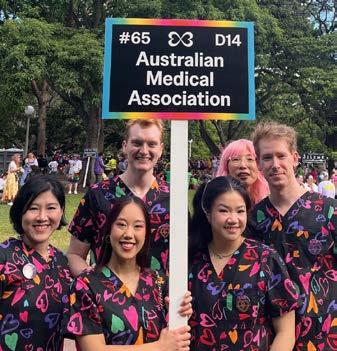
AMA ACT Council Member Betty Ge with AMA CEO Natalia Centellas; Preparing for the parade. Dr Clara Tuck Meng Soo (back right) said: “I think it’s important for our medical colleagues to see that the AMA is supporting sexual and gender diversity. And I think for the people watching the parade, it’s great to see that LBGTQIA+ doctors and allies are a diverse bunch themselves.”
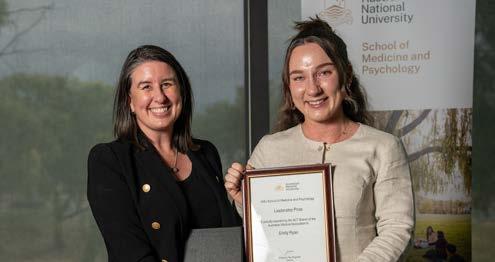
Emily Ryan received the prestigious AMA ACT Student Leadership Prize in December for her exceptional leadership, dedication and community engagement. Emily was ANU Medical Student Society Wellbeing Officer, a Rural Doctors Network Cadet, and AMA ACT’s Junior Doctor advisor. Dr Aust presented Ms Ryan with her award at the 2025 ANU MChD Prizes Presentation Ceremony.
at
&



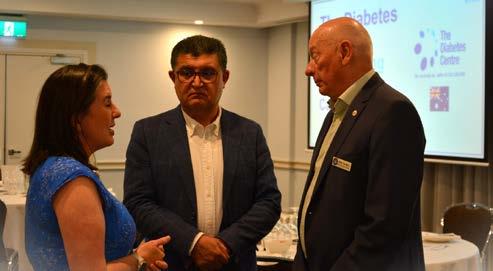
New ANU medical students had the opportunity to mingle with leading doctors and health system leaders at the annual AMA ACT Student Welcome Drinks in January. Guests included Canberra Health Services CEO Janet Zagari and CHS Chief Medical Information Officer Dr Vekram Sambasivam. Dr Kerrie Aust is pictured with lucky door prize winner Sabrina Salberg.
AMA ACT was delighted to host the annual Graduation Breakfast at the Canberra Rex Hotel in December. The ANU School of Medicine and Psychology’s Class of 2025 joined together with family and leading Canberra doctors to recognise their hard work and celebrate their achievements.



Opioid Maintenance Treatment: Building Capacity & Confidence
Saturday 21 March 9:00am – 2:15pm at Hotel Realm


Capital Health Network, together with the ACT Health and Community Services Directorate, invites GPs, GP Registrars, Nurse Practitioners, and other primary care providers working in the ACT to attend a face-to-face workshop on Opioid Maintenance Treatment (OMT).
The workshop will focus on supporting health care professionals to deliver OMT by equipping participants with the knowledge needed to become prescribers, along with a clear action plan for next steps.
AMA ACT’s Women’s History Month Dinner
Thursday 26 March, 6:30pm – 9:00pm at Hotel Realm
AMA members can access discounted rates.
AMA ACT is hosting its first Women’s History Month Dinner, an intimate event held in the beautiful courtyard of Hotel Realm. This event provides an opportunity to connect with like-minded peers and contribute to a national conversation about advancing women’s health in Australia.

The evening will feature a 2-course dinner, beverages, and interactive panel discussion, hosted by AMA ACT President, Dr Kerrie Aust. Kerrie will be joined by leading voices in women’s physical, mental and financial health, exploring the diverse and interconnected factors that shape women’s wellbeing. Places are limited, so act quick!
Managing Disruptive Clinicians Workshop
Saturday 28 March 10:00am – 2:00pm via Zoom. AMA members can access discounted rates.
This virtual workshop, facilitated by the Australian Institute of Health Executives, provides attendees with practical strategies for identifying and responding to disruptive behaviour and its impacts on patient care, team culture and clinical outcomes. This course is suitable for clinicians in leadership, supervisory or emerging leadership roles. Places are limited.
To find out more and to register visit: ama.com.au/events
Dr Danielle McMullen Press Club Address
Wed 15 April 11:30 am - 1:30pm, National Press Club
Dr Danielle McMullen, President of AMA, will address the National Press Club on the topic “Underpinning Australia’s healthcare system: strengthening the base, not the facade”.
In recent years we’ve seen some of the biggest injections of funding ever made in Australia’s healthcare system, a system consistently ranked as one of the best in the world. At the same time, we are faced with daily headlines about a system in crisis.
It’s time for a serious rethink on how to reform our healthcare system and prevent it falling further into crisis.
To register visit npc.org.au/events/dr-danielle-mcmullen
A News Magazine for all Doctors in the Canberra Region ISSN 13118X25
All electoral matter in this edition of Canberra Doctor is authorised by Peter Somerville on behalf of the Australian Medical Association's ACT branch.
Published on behalf of the Australian Medical Association ACT branch.
Level 1, 39 Brisbane Ave, Barton ACT 2600
Editorial
Sarah Colyer sarah-colyer@ama-act.com.au
Design & Advertising
Juliette Dudley jdudley@ama-act.com.au
Mailing address PO Box 560, Curtin ACT 2605
AMA ACT acknowledge the Ngunnawal and Ngambri peoples who are the traditional custodians of the Canberra area and pay respect to the Elders, past and present, of all Australia’s Indigenous peoples.
AMA ACT is committed to safe and inclusive work places, policies and services for people of LGBTQIA+ communities and their families.
Subscribe online
The stories that matter to Canberra's medical community - delivered straight to your inbox. Subscribe to our bi-monthly email newsletter to be notified when our next issue is published. Scan the code or go to to mailchi.mp/ ama-act/candocsubscribe

Contributions
Canberra Doctor welcomes reader contributions. Submit your stories or letters to editorial@ama-act.com.au
It is with great sadness that we acknowledge the passing of our esteemed colleague and friend, Dr Ian Michael Jeffery FRACP FRCP. Ian was born in Sydney. After leaving school in Parramatta, his ambition had been to join the RAAF to become a pilot but partial colour blindness prevented this. Medicine was his second option, and he graduated in 1969 from the University of New South Wales. He had excellent fellowship training at Prince Henry and Prince of Wales hospitals in Little Bay/Randwick followed by overseas postgraduate experience at Royal Free and Hammersmith hospitals in London. Whilst in England, he also worked for six months as a solo general practitioner in a small village. On his return to Australia, Ian worked at Gosford Hospital as a consultant physician and also attended the Royal North Shore Hospital as a clinical assistant in cardiology. The late Howard Peak recruited Ian to the Royal Canberra Hospital in 1981. He arrived with his young family. This was at a time when cardiology patients began to be looked after by specialist cardiologists rather than general physicians in coronary care units. Ian was
trained in cardiac catheterisation and performed these procedures at the Woden Valley Hospital. Ian was a very popular, well-liked cardiologist – kind, admired and respected by patients and colleagues. He was an excellent teacher of junior doctors with his fair, calm and reassuring demeanour. For many years, he was national examiner for the Royal Australasian College of Physicians. Many wished he was the examiner they would come across in their clinical exams. Many of the registrars he trained returned to Canberra as cardiologists; sign of a happy and successful unit.
Ian was also heavily engaged as a clinical trial investigator for many landmark multi-centred studies in cardiology, some of which led to new standard of care treatments.
For many years, Ian was treasurer for the ACT Salaried Medical Officer Federation and elected member of The Canberra Hospital private practice trust fund.
Around late 1991, the amalgamation of the cardiology departments of Woden Valley and Royal Canberra hospitals were followed by major changes

in cardiology care. The routine use of fibrinolysis, introduction of cardiac surgery and later coronary angioplasty to Canberra meant dramatic changes in what we could do for our patients. Ian in his leadership role as director of the cardiology unit from 1995 until 2004 was instrumental in implementing these services and in particular establishing the acute 24/7 angioplasty service for acute myocardial infarction – one of the first in Australia in 1999. He was on this acute roster as an interventional cardiologist and saw, as we all did, the dramatic effective results of this new reperfusion treatment in saving lives. Of course, this was obtained at the cost of many a disturbed night's sleep.
Ian and his loving wife Kerry Deans shared common enthusiasm for many interests including gardening, hiking, travel, history and dogs. Ian was devoted to his sons, David and Paul and four grandchildren. Paul gave him vicarious satisfaction by joining the RAAF and now works as a commercial pilot. Ian and his great loyal friend Stephen

Few experiences capture Canberra at its best quite like the Canberra Balloon Spectacular, returning from 14–22 March 2026 at Patrick White Lawns, Parkes. At dawn each morning, weather permitting, vibrant hot air balloons inflate and lift off from around 6am, drifting across the city skyline in a quietly breath-taking display. Australia’s longest-running balloon
festival, the event is free for spectators and especially popular with families, photographers and early risers. This year’s highlight includes a specialshape guest balloon, Finley the Turtle, making his Australian debut. Daily flight decisions are announced around 6am on the Events ACT Facebook Page. Visitors are encouraged to dress warmly and arrive early. Even on grounded mornings, the atmosphere – and breakfast options – make it worth setting the alarm.
For more information visit canberraballoonspectacular.com
Nogrady were often seen on their regular walks around Red Hill. Ian was much respected and adored by his patients for whom nothing was too much trouble. After his retirement from clinical practice, those of us who took over his patients very soon realised that we could never meet their expectations and must always be second best. Ian Jeffery, a gentleman in every sense, will be greatly missed by his family, many colleagues and friends
AUTHORS: Dr Simon O’Connor and Dr Ren Tan were both senior consultant colleagues (and former registrars) of Dr Ian Jeffery at The Canberra Hospital.


Partnered Health is your next move, without leaving the city you love.
Private billing to maximise your income.
Full clinical autonomy - you set the pace.
High patient demand with minimal downtime.
Modern facilities and experienced nursing support.
Flexible hours to fit your

• shoulder replacement, repair, reconstruction, stabilisation including Latarjet
• operative shoulder/ upper limb fracture/ dislocation management
• biceps tendon repairs




• arthroscopic and open shoulder and elbow surgery
• cubital and carpal tunnel release
• surgery for arthritis, tendinitis, ganglions and traumatic conditions of the hand and wrist






Dr Sasikala Selvadurai MBBS;
• Comprehensive Geriatric Assessments Cognitive & Capacity Assessments Falls Prevention Measures, Movements Disorders (Parkinson’s Disease)
• Medications Profile Optimisation and Goals of Care decisions Committed to elderly wellbeing and healthy ageing with a focus