


The Albanese Government’s top priority is looking after Australians today and setting us up for a more secure future. Our 2026 budget delivers more tax cuts, a fairer system for first home buyers, and an economy that works for everyone
We have taken difficult decisions for the right reasons to help around 75,000 more Australians buy their first home by making the tax rules fairer and by building more homes
Our responsible budget management will take pressure off inflation and help weather global challenges. Our $63.8 billion of savings mean the Liberal’s trillion dollars of debt will be paid off sooner, saving billions in interest payments.
Combined, these five tax cuts will give workers, on average earnings, an extra $2,816 from 2027-28
It’s a bit of extra help for every taxpayer. You can calculate your tax cut here:
We are backing small business, delivering $3.5 billion of new measures that lower taxes and support investment. We are:
Making the $20,000 instant asset write-off permanent. Delivering a permanent two-year loss carry back for companies with turnover of up to $1 billion from 1 July 2026.
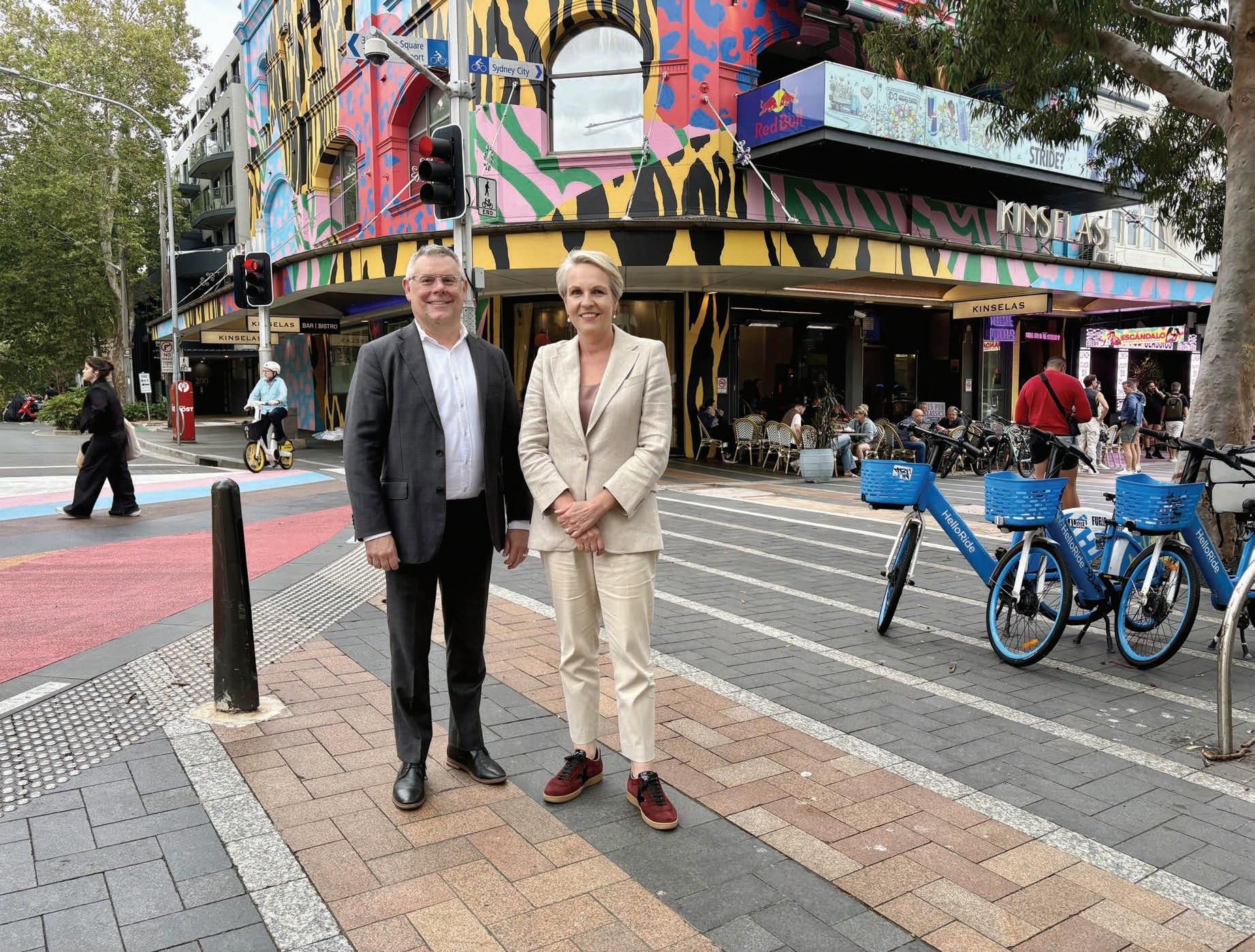
Right now, it’s too hard for too many Australians to get into the housing market and get ahead. That’s why we’re providing tax relief to workers and delivering reforms to give more Australians the opportunity to own their own home by making our tax system fairer. We are:
Delivering a new $250 tax offset to cut tax bills for 13 million workers.
Introducing a $1,000 instant tax deduction from 20262027 - you won’t need to keep your receipts
Limiting negative gearing for residential property to new builds from 2027, while grandfathering the benefit for existing investors.
Replacing the 50 per cent capital gains tax discount with inflation-adjusted indexation from 1 July 2027.
Applying a minimum 30 per cent tax to discretionary trusts from 2028-2029 so they are taxed in line with people without trusts
The Albanese Labor Government has already cut personal income taxes for every single taxpayer and there are two more cuts on the way
On 1 July, 2026 every taxpayer will receive a cut of up to $268 then up to $536 every year from 1 July 2027
Introducing loss refundability to help start-ups grow in their first two years.
Expanding tax incentives for venture capital
Helping 1.5 million sole traders with our $250 tax offset from 2027-28.
Helping small businesses transition from a discretionary trust structure by expanding rollover relief.
We’ve cut the fuel excise from 52.5 cents to 20.6 cents for three months. Fuel is expected to be about 32 cents per litre cheaper, saving $64.80 on every 200 litres
We are continuing to support Australians switching to EVs by making the 25 per cent discount on FBT permanent for non-luxury EVs and providing more support for street charging stations.
Existing leases won’t be affected and eligible EVs will remain exempt from import tariffs. For more info, scan here:

Publisher’s Assistant: Mal Moody
National Sales Director: Greg Topalian Ph: 0455 120 404
Advertising Manager: Mal Moody Ph: 0484 042 615
Advertising: sales@altmedia.net.au
Managing Editor: Chloe Sargeant
Digital Manager & Journalist: Patrick Lenton
Staff Journalist: Lydia Jupp
News Contributors: Chloe Sargeant, Lydia Jupp, Noa Valentine, Patrick Lenton, Will Thorpe
Arts Contributors: Angus Sharpe, Coffin Ed, Josh Kerwick, Mark Morellini, Naomi Lawrence, Noa Valentine, Patrick Lenton
Cover Image: Supplied / Syd Film Festival
Designer: Nadia Kalinitcheva
Mail: PO Box 843 Broadway 2007
Email: news@altmedia.net.au, arts@altmedia.net.au
Ph: 9212 5677 Fax: 9212 5633
Website: www.cityhub.com.au
PUBLICATION DATE: 28 MAY 2026
If you have a story, or any comments you’d like to share with us: news@altmedia.net.au
@CityHubSydney

BY WILL THORPE
Adjacent retirement villages are planned for Rose Bay, contributing to a cluster of prospective developments that some locals worry will destabilise the water table and cause property damage.
Two proposed developments on Wilberforce Avenue and Dover Road are being spearheaded separately by Waterbrook Retirement Living and Pathways Residences. Both are State Significant proposals able to take advantage of planning reforms by the Minns Government.
Amara Rose Bay, the Pathways project, “will offer a premier luxury retirement living experience”, and is currently being designed ahead of a development application.
“The community will feature thoughtfully designed apartments, elegant shared spaces and curated wellness and lifestyle programs. With personalised service and concierge-style support, residents will enjoy effortless luxury while staying connected to the charm and energy of the Eastern Suburbs.”
Renderings for the Waterbrook concept show a seven-storey building adorned with hanging foliage.
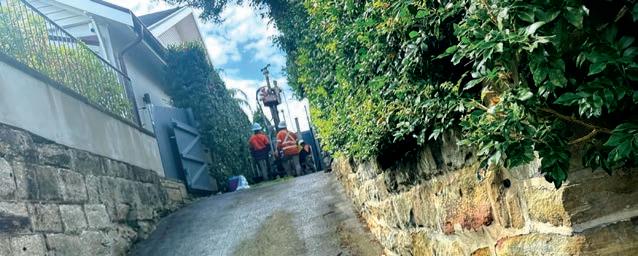
If all current proposals go ahead, there will be five major excavation sites bordering each other on the same block.
The Rose Bay Residents Action Group is composed of locals concerned about recent and planned developments. They said that the adjoining proposals “involve substantial deep basement excavation within the mapped Rose Bay Settlement Area — a low-lying coastal basin identified by Council itself as having shallow groundwater, flood susceptibility and settlement-prone soils.”
“Residents are increasingly concerned that deep multi-level basements may be fundamentally incompatible with this land. The community has already seen severe impacts associated with isolated basement excavations in Rose Bay, including comparatively modest single-storey basements.”
Nearby, the historic Hillcrest home recently suffered a partial collapse, which the builder attributed to “flawed” geotechnical advice.
Notwithstanding the risks associated with each individual development, the cumulative scenario now being contemplated is extraordinary
“Notwithstanding the risks associated with each individual development, the cumulative scenario now being contemplated is extraordinary,” the residents group warned. “Groundwater and settlement behaviour do not stop at title boundaries.”
“To progressively — and contemporaneously — excavate an entire connected block within the same groundwater basin is viewed by many residents as an extremely dangerous planning experiment, carrying foreseeable long-term structural and groundwater risks on a far broader scale than anything previously seen locally.”
“Residents are also concerned
about the potential long-term groundwater and hydraulic impacts associated with multiple tanked basement structures within the same connected aquifer system.”
The group said that developers’ responses to concerns had been “far from reassuring.”
“Concerningly, residents have provided us with photos of groundwater bores being drilled at what appears to be the highest point of the property on Wilberforce Avenue rather than at street level.”
Another concern is the construction’s potential to endanger the large trees lining the avenue.
‘NO IDEA HOW AREA WILL COPE’
Merrill Witt, a Residents First Woollahra councillor for the Vaucluse ward, is “very concerned about the cumulative impacts of all these proposed Low and Mid-Rise developments in Rose Bay and Double Bay.”
“I have absolutely no idea how the area will cope with the traffic and excavation impacts, especially given the recent history of buildings collapsing or being significantly damaged by excavation.”
Geotechnical concerns over residential developments in the two suburbs have animated the council since the implementation of planning reforms intended to speed up the delivery of housing. Witt and fellow Vaucluse councillor Julian Parmegiani, a Liberal, have frequently raised the subject.
Pathways Residences and Waterbrook Retirement Living did not respond to requests for comment by time of publication.
BY NOA VALENTINE
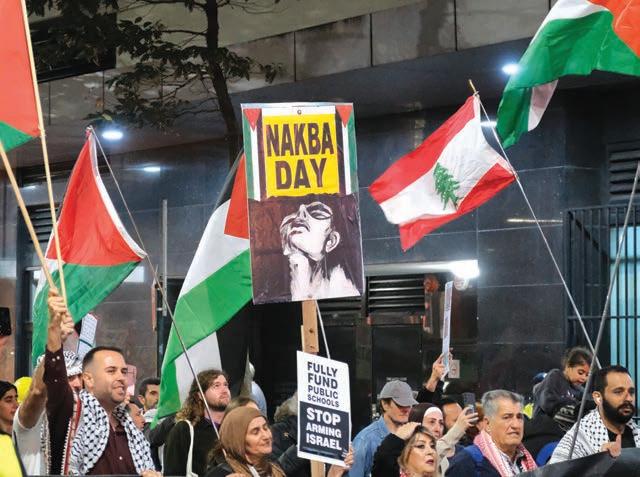
On May 15, protesters gathered in front of Sydney Town Hall in commemoration of the 78th anniversary of Nakba Day.
Nakba, meaning ‘catastrophe’ in Arabic, is the day of recognition of the mass displacement of Palestinian peoples during the 1948 Arab-Israeli war.
Organised by the Palestine Action Group and emceed by Dalia Qasem and Yasmine Johnson, the event began at Sydney Town Hall where the crowd heard speeches from ActionAid Palestine’s Country Director Jamil Sawalmeh, Greens Senator Mehreen Faruqi, Nakba survivor Fouad Shriedy, and others.
“It's obviously the biggest day of commemoration [for] the ProPalestine movement every year, but I think it's been, you know, strengthened by the increased community support for Palestine,” Yasmine Johnson told City Hub. Sydney joined ten other cities across Australia in recognising Nakba Day, using the event to protest the current IsraeliPalestinian conflict, US-Iranian conflict and attacks on Lebanon.
‘NAKBA HAS NEVER ENDED’
“Nakba has never ended, and what is accelerating alongside it globally – and here as well – is the attempted erasure of Palestinian identity, of Palestinian Indigeneity, of even the right to tell history or to speak the Arabic language with governments wanting to criminalise words like ‘intifada,’” said Faruqi, referring to the government’s attempts to restrict use of the phrases “globalise the intifada” and “from the river to the sea”.
The speeches emphasised the importance of commitment in expressing one’s desire for freedom and safety for Palestinian people, referring to the Freedom Flotilla, as well as the arrested protesters from the Isaac Herzog
rally last February, whose charges have been recently withdrawn by police.
“The message I would like to send to you today is a message of solidarity and continued support, which is deeply important. It has been felt, heard and appreciated by the Palestinian people…” said Jamil Sawalmeh in his address.
It's concerning that our government feels it's more of a priority to ban words [than] stop our complicity in a genocide
Among the criticism of the Israeli Government, and the United States’ involvement, speakers also took the opportunity to criticise the Albanese Government.
“The Labor Government is shamefully doing the dirty work for Israel… Labor laments the killing of civilians, but then supplies the weapons that kill them,” Senator Faruqi told the crowd.
Talking to City Hub, attendees shared this sentiment towards the Albanese government, believing that not enough is being done to
support Palestinian people.
“I want them to sanction Israel. I want them to stop supplying weapons. I want them to speak out with courage. I want them to support our Australian activists who are on the Samud flotilla. I want them to stand up for Australians, for the oppressed,” one attendee told City Hub.
Others felt that whilst efforts like the current Royal Commission into Antisemitism are important, the Government is losing focus on the war.
“It's also concerning that our
government feels it's more of a priority to ban words and to actually stop a genocide or stop our complicity in a genocide. I just think it's a deflection and I think it's ridiculous personally,” said another protester.
Following the speeches, crowds joined to march down George St, down Bathurst St and up Pitt St, before returning to Town Hall via Market St, with a police presence escorting the march.
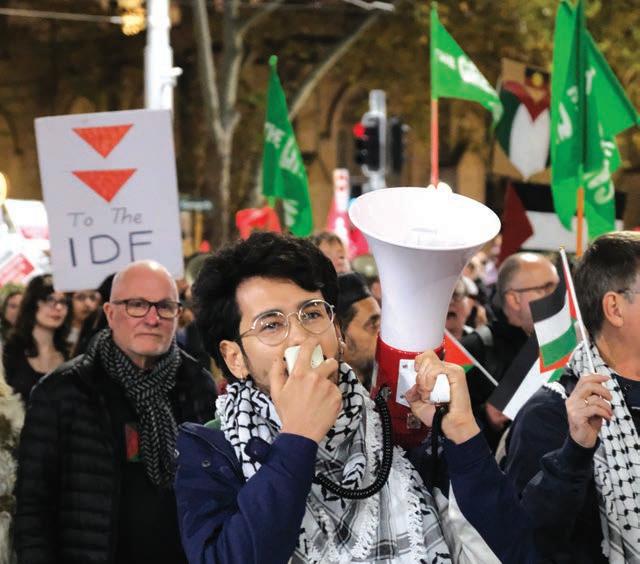
The crowd held Palestinian flags and various signs expressing their solidarity for the movement, whilst others holding megaphones and drums chanted “free Palestine”, as well as “…from the river to the sea, Palestine will be free,” which could be heard throughout the CBD.
Many of the attendees, though expressing the day’s importance in the global pro-Palestinian movement, numerous attendees when asked admitted to not knowing about the day prior to the PAG’s announcement of the rally on social media.
“I think the issue has been kind of put aside for a lot of decades; and hopefully since the genocide, people [have] become more aware,” one protester shared with City Hub.
BY PATRICK LENTON
More than $50,000 in fines have been issued to NSW landlords and real estate agents since the state government introduced its ban on no-grounds evictions last year.
The Minns government introduced the reforms last year, requiring landlords to provide a valid reason for ending a tenancy and establishing “re-letting exclusion periods” designed to stop landlords from evicting tenants under false pretences.
Under the rules, landlords who evict tenants so they or a family member can move into a property cannot re-let the home for six months. Different exclusion periods apply for renovations, demolition, sale preparation, or removing a property from the market.
NSW Fair Trading said 12 fines totalling more than $50,000 had been issued, alongside 13 formal warnings. The agency said more than 600 wrongful eviction claims had been investigated.
For the small percentage that are deliberately doing the wrong thing, I just say watch out
One real estate agent was fined $35,000 after evicting a tenant from a Campsie property claiming a landlord’s relative intended to move in — except the property was re-advertised for rent the next day.
“In this case, there seems to be a deliberate contravention to game
Has a stray kitty stolen your heart?
The Cat Protection Society of NSW can help you with affordable options to get them healthy & safe, and to become a part of your family.
Don’t delay, call the Cat Protection Society today on 9519 7201 or visit catprotection.org.au


the system,” said NSW Fair Trading Minister Anoulack Chanthivong. “And that's just not on.”
Chanthivong said the taskforce would continue monitoring for breaches.
“For the small percentage that are deliberately doing the wrong thing, I just say watch out,” he said.
NSW Rental Commissioner Trina Jones said the investigations were supported by software that scans rental advertising websites
and compares listings with bond data and end-of-tenancy surveys.
“Innovation like the re-letting tool means as regulators we can have a greater focus on problem areas without burdening compliant landlords and agents,” said Jones.
According to Fair Trading, only 4% of rental properties required investigation, with Breakfast Point, Fernhill and Parramatta recording the highest number of infringements and warnings.
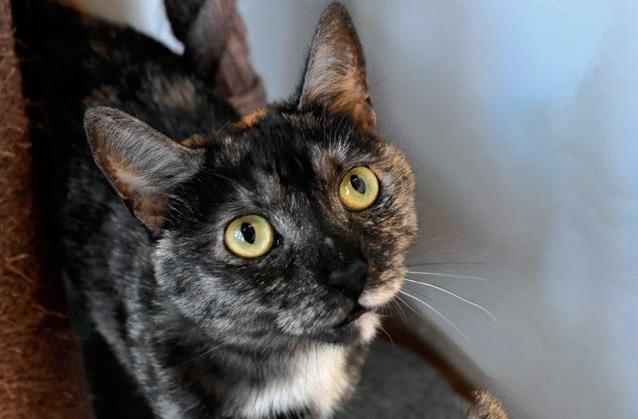
Name: SPARKLE | Age: 2 years (est)
Sex & Colour: Female Dark Tortoiseshell DSH
Sweet Sparkle is a princess of purrs! You will be spoilt with love having this little girl in your life. A delightful tortie, Sparkle is all set to dazzle with her super smoochy ways, and she’ll keep you well supplied with snuggles. While she may take a moment to settle in her new home Sparkle will be busy demanding cuddles in no time. Sparkle is quite content with the comfort and security of an indoor-only forever home but no other cats or young children please. This affectionate kitty adores being the centre of attention and wants you all to herself. Sparkle will bring a twinkle to your eye and teach you all about contentment; watching her purring away is sure to bring a sense of serenity.
INTERESTED IN ADOPTING?
visit www.catprotection.org.au
Rehoming Organisation Number: R251000224
BY WILL THORPE
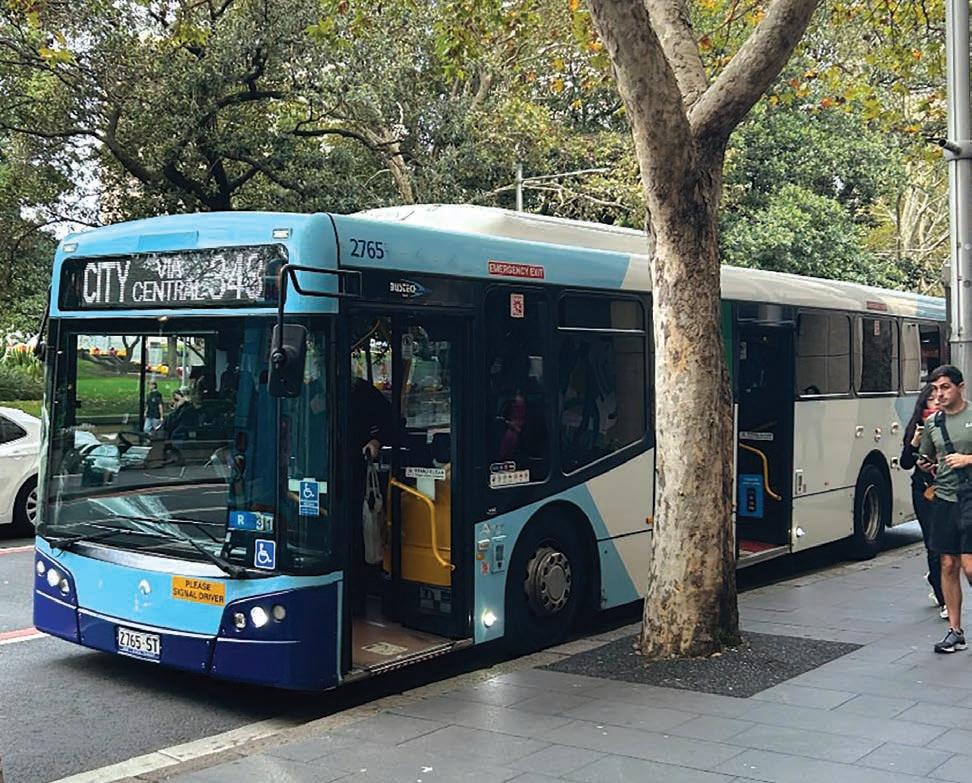
Every weekday morning, the 438 express sets off from Abbotsford, gradually amassing its battalion of office workers, university students, shoppers, retail employees, and the odd journalist, on its way to Martin Place.
It glides through Five Dock and Haberfield before Leichhardt, where it turns off Norton Street and onto the ‘varicose vein’ that is Parramatta Road. It jostles with other buses, including the fellow express 461 from Burwood, for the lead as they race between the stops toward Railway Square.
Sydney’s blue-and-white buses join our orange-andsilver trains and green-and-gold ferries as an essential part of our public transport system. Our inner suburbs are crisscrossed by a web of routes like the 438X, or the 370, which in an hour’s time winds its way from Coogee Beach to Glebe Point via Newtown. Buses often trace the path of Sydney’s former tramways, once constituting the largest network in the Commonwealth outside of London.
The Minns Government recently announced that it will reinstate the mammoth route 52 between the city centre and Parramatta via Victoria Road. So then, it must be asked: what of our inner metropolitan buses?
Beside the likes of the vaunted B-Line and the returning 52, are they as good as they should be?
Geoffrey Clifton is Senior Lecturer in Transport and Logistics Management at the University of Sydney Business School.
“Anything that improves the frequency, speed and reliability will encourage more people to use bus services,” he said. “This is particularly the case with crossregional links like the 370.”
“Frequency is obviously attractive for users. Speed is also an obvious benefit, but achieving faster buses means investing
more in straighter bus routes, dedicated bus lanes, traffic light priority and separate bus-only roadways where possible.”
“Reliability is often overlooked in Australia. It means if there is supposed to be a bus every 10 minutes, then a bus comes every 10 minutes, rather than waiting half an hour for three buses to show up all at once.”
Infrastructure upgrades allow for improvements to headway, which is the distance or time between buses. “But this is where it gets a bit controversial,” noted Clifton. “Lots of people blame privatisation of bus services for poor service quality.
“But with private contracts, the Government can set the rules to force operators to keep a reliable service,” with penalties for poor performance.
“In London, the private operators will run an extra bus unpaid just to make sure they avoid fines, and use GPS and
radios to ensure buses arrive at the advertised headway.”
Under the franchise models used there and in Sydney, all assets remain publicly owned, but the operation of services is contracted out to private companies. Labor campaigned on ending the arrangement, introduced by the Liberals to the detriment of the former State Transit Authority.
Achieving faster buses means investing more in straighter bus routes, dedicated bus lanes, traffic light priority and separate bus-only roadways
“Reliability also means consistent journey times end to end, and better infrastructure helps here too.”
Comfort is important. Newer, cleaner, quieter buses draw
ridership, but only if people know the location of the stop, as well as where they can ride to and when. The T-Way and B-Line offer such visibility — “it will be good to see if the new 52 offers the same.”
New South Wales is progressively expanding its electric fleet.
On a golden Sydney evening, you greet the driver as you climb aboard a packed bus. Perhaps it’s the 333 whisking you to the pubs of Oxford Street, or maybe it’s the 440 taking you home to Rozelle. A slice of the city surrounds you. You small-talk about the cramped conditions or the weather and try not to topple onto your neighbour.
A seat frees up. You open a book — then an acquaintance appears, with whom you chat about a mutual friend. This is community. Among all the benefits of public transport, perhaps it is the most vital.
“Cheers, mate,” you holler before stepping off.
BY LYDIA JUPP
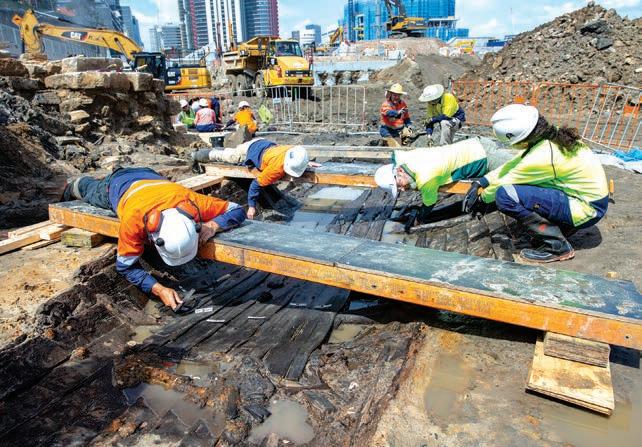
Australia's oldest surviving colonial-era boat, which was unexpectedly uncovered during excavation for the Metro, is about to be displayed at the Australian National Maritime Museum.
The vessel spent about 150 years buried under wharves, warehouses and shipyards before being unearthed at the site of the future Barangaroo Metro station in 2018.
Maritime archeologists spent two months carefully excavating all 294 pieces of timber before conducting detailed conservation work to preserve it.
The individual pieces were treated with Polyethylene Glycol to reinforce the cell structure of the wood and reduce further degradation, before it was
snap frozen for transportation to Braeside in Victoria to be professionally freeze-dried.
Also uncovered were hundreds of then-everyday items, like glass bottle fragments, decorated ceramics, leather shoes, smoking pipes, toothbrushes, and even animal bones from peoples’ meals.
This is a piece of Australian history we are determined to protect for many more centuries to come
"You can see the bite marks of humans on cow, sheep and pig bones, and then you can see where rats have gnawed into the bones after humans have thrown those bones away,” maritime
archaeologist James Hunter told the ABC
Made from Sydney Blue Gum, Stringybark and Spotted Gum sourced in the Sydney basin, it's believed that the boat was used to transport goods around Sydney Harbour and Parramatta River.
Transport minister John Graham said it was a nice bit of symmetry that aligned the most modern form of Sydney transport with the nation's oldest colonial-era boat.
“This is a piece of Australian
history we are determined to protect for many more centuries to come," he said.
“I want to thank those who carefully excavated the boat, preserved it and the Australian National Maritime Museum for giving it a permanent home so generations to come can get a unique look at life on Sydney Harbour in the early 1800s.”
The vessel is expected to be ready for permanent exhibition by mid-2027.
Before the last state election, the NSW Labor Minns Government promised to end the Coalition’s privatisation agenda and stop the evictions at the Waterloo South public housing estate.
Local Member for Heffron (the electorate which includes Waterloo South), Ron Hoenig MP even sent emails and text messages to residents in the local area claiming that only NSW Labor would stop the demolition of public housing.
Now in Government, Labor have an opportunity to keep their promise to the community. Instead, they are forging aheadevicting public housing residents in the middle of a housing crisis when they know that no new homes will be delivered at the site until at least 2035.
With over 1,000 households on the waitlist for public housing in the inner city alone - and with homelessness on the rise, the Labor Government should be fasttracking the construction of public homes on public land so that we can get more people into housing sooner.
Instead, they’re fast tracking the bulldozing of much-needed housing that people already call home - and adding even more people to the waitlist in the process.
In Question Time this month, I asked the Premier about this broken election promise - and his response was essentially that because Labor’s plans for Waterloo include slightly less privatisation than what was proposed under the former Coalition government, they are completely acceptable.
But even slightly less privatisation is still privatisation, and the Premier’s comments fail to address the core issue of breaking election promises to line the pockets of developers.
There is never any excuse for demolishing liveable public homes and evicting the people who live in them – especially not in the middle of a housing crisis when need has never been greater.
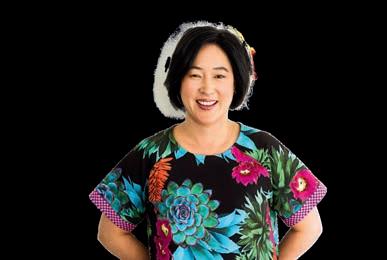
Tell NSW Labor to stop the sell-off of public housing by signing our petition - scan the QR code below or head to jennyleong.org/save_public_housing

BY CHLOE SARGEANT
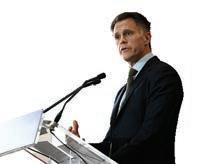
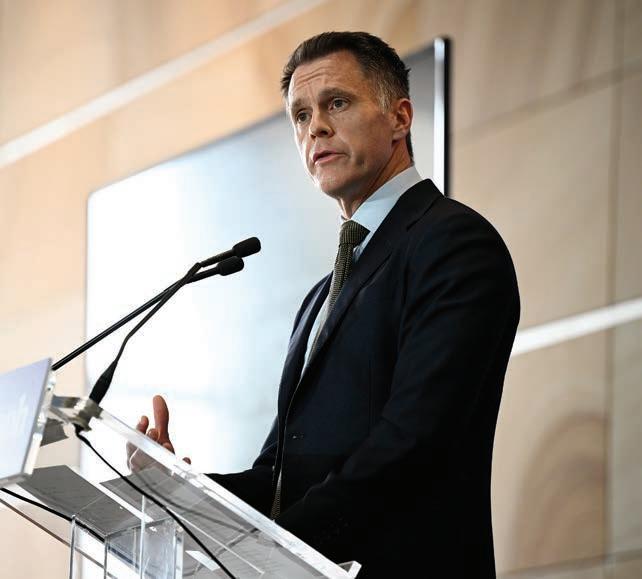
In the wake of the Giggle v Tickle case, Premier Chris Minns has become the latest politician to suggest "biological differences" must be "reflected in the law."
"While the NSW Government has done what we can, particularly as it relates to government documents for transgender members of our community, we also acknowledge that there's biological differences between people who are born male and people who were born female, and that needs to be reflected in the law," said Minns said at a press conference on May 19.
However, while other politicians, like NSW Liberal leader Angus Taylor, are calling for changes to the Sex Discrimination Act, Minns didn't call for change, saying that NSW laws already covered this, and this should be upheld.
He also said he is "not convinced [Taylor is] the right person to rewrite the Sex Discrimination Act at the federal level".
Minns brought up prisons and women's sport as examples, saying his government "won't change the law as it relates to those two things".
“If you're born biologically male and you change your government certificates to be female, it will not mean that you can change from a male prison to a female prison,” he said. These comments come not even a year after trans and gender-diverse people in NSW became able to update the sex marker on their birth certificates without requiring surgery –legislation passed by the Minns government.
discrimination, and increased the amount that Grover had to pay, from $10,000 in damages to $20,000.
Since the ruling, a number of conservative politicians and lobby groups have called for Trump-style “only two genders” policies and legislation, allegedly in the name of women's rights.
Minns’ remarks also arrive amid an escalating wave of antitrans rhetoric following the recent result of the Giggle v Tickle case.
After anti-trans activist Sall Grover appealed the Federal Court's 2024 decision, in midMay the court upheld that decision: that Grover's app Giggle for Girls discriminated against trans woman Roxanne Tickle, contravening the Sex Discrimination Act. However, the court amended the initial ruling of indirect discrimination to direct
Responding to Minns’ comments, Greens spokesperson for LGBTQIA+ communities Dr Amanda Cohn said it was “extremely concerning” to see.
It’s extremely concerning to see this rhetoric mainstreamed by both the Liberal and now Labor parties
In a statement shared to Instagram, Cohn said Minns’ comments effectively suggested that “our laws shouldn't reflect the existence of trans and gender diverse people”.
“LGBTQIA+ communities expected better of [NSW Labor] than this harmful capitulation to right-wing culture wars,” she wrote.
Speaking to City Hub’s sister outlet Star Observer, Cohn said that seeing this rhetoric platformed in Australia is concerning.
“Until recently, imported culture wars and confected outrage over trans issues was limited to fringe far right groups in Australia,” said Cohn.
“It’s extremely concerning to see this rhetoric mainstreamed by both the Liberal and now Labor parties.”
Cohn rejected the repeated claim from conservative politicians that their concern is solely women’s rights.
“Women’s safety is a real issue, but trans women are not the problem,” she said.
“In fact, trans and gender diverse people are frequently victims of discrimination, intimidation, harassment or even violence.
“Politicians claiming to care about women’s sport should fund it, and politicians claiming to care about women’s safety should fund family and domestic violence services instead of vilifying trans people.”
Cohn also urged the broader LGBTQIA+ community and allies to visibly support trans and gender diverse people amid the increasingly hostile public debate.
“Trans and gender diverse people need visible and active support from the LGBTQIA+ community and our allies,” she urged. “Let’s call out harmful transphobic rhetoric, and platform trans voices and experiences, including joy and success, so that trans people are less easily ‘othered’ by politicians seeking to sow division.”
“Trans and gender diverse people have always been here, and always will be. Politicians don’t determine your value as human beings, nor the validity of your experiences.”


BY WILL THORPE
Aparliamentary petition calling for the reintroduction of ferry services to Walsh Bay has now closed, after amassing more than 1,000 signatures.
Filed by Sydney Local Woman of the Year Yasmina Bonnet on behalf of the Walsh Bay Ferry Alliance, it argues that a connection “would significantly enhance accessibility, sustainability, and cultural vibrancy in this waterfront area.”
“The Walsh Bay Arts Precinct is vital to Sydney's creative identity, housing nine leading performing arts companies, including the Sydney Theatre Company and Sydney Dance Company, drawing thousands of visitors weekly.”
From 1801 when formerly enslaved American man Billy Blue started rowing passengers across the harbour, Dawes Point and what is now Walsh Bay were long served by successive operators. The 1932 completion of the Harbour Bridge condemned these regular operations. During biennales however, vintage vessels have provided free transportation between the bay, Circular Quay and Cockatoo Island.
Affiliates of the alliance include the arts precinct, the Millers Point Community Resident Action Group and luxury hotel Pier One.
The petition says that a link would benefit Sydney’s cultural and tourism sectors; increase connectivity for residents, visitors and workers; bridge the gap between Walsh Bay and major transport hubs at Circular Quay and Barangaroo; promote sustainable transport, reduce car reliance and congestion; enhance night life; and celebrate the area’s maritime heritage.
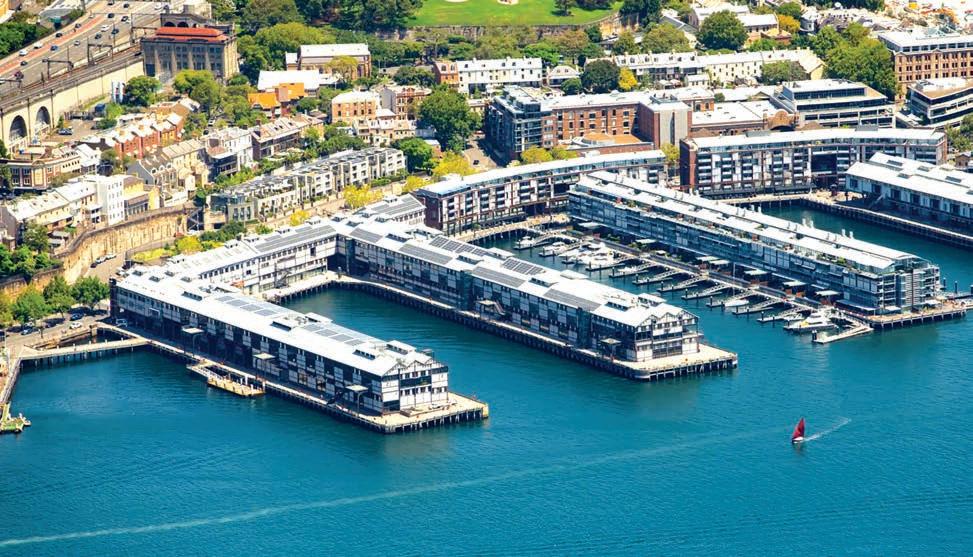
Circular Quay and the Barangaroo wharves are about equidistant, a 20 minute walk away.
“We therefore ask the Legislative Assembly to call on the NSW Government to investigate connecting Walsh Bay to the Sydney Ferries harbour network, which would bring significant benefits to this iconic Sydney destination.”
Connecting the Walsh Bay arts and culture precinct to the Sydney Ferries network is a no-brainer
Independent Sydney MLA Alex Greenwich is on board.
“Connecting the Walsh Bay arts and culture precinct to the Sydney Ferries network is a nobrainer,” he said.
“Thousands of visitors make their way to the area every week to see world class dance, theatre and music performances but there are few direct public transport options, leaving the
area heavily congested before and after shows.”
“Adding in a ferry service will only enhance the precinct, encourage more visitors and close the gap in connectivity to major transport hubs in nearby tourist spots.”
Lord Mayor Clover Moore is also in favour of the reintroduction of ferry services for Walsh Bay.
A Transport for NSW spokesperson said that the agency “acknowledges the strong interest from the local community in the potential return of ferry services to Walsh Bay.”
“We continue to work through options to determine their feasibility and operational impacts.”
Ferry services are undergoing a period of expansion. “The NSW Government has upgraded and reopened the Balmain West Wharf to services on the F3 Parramatta River and expanded the F10 ferry route with a new stop at Pirrama Park Wharf at Pyrmont.”
“We are also looking forward to ferry services to the new Sydney Fish Market.”
Captain Cook Cruises runs the Lane Cove commuter route that passes Walsh Bay, among other operations. Nick Lester is the general manager of its parent, SeaLink Sydney Harbour.
“Lane Cove is the only Government service we run.
The rest of our operations are predominantly tourism based.” In 2015, they inaugurated a private commuter run between Watsons Bay and Circular Quay.
Lester said that the commercial outcomes of a route to Walsh Bay “would have to be underpinned by some sort of government scheme, like it is with Sydney Ferries or the NRMA Manly service.”
Depending on demand, the Government could make Walsh Bay a stop on the way to Parramatta or Barangaroo, he added. “We're always in favour of a greater ferry network.”
A response from transport minister Rose Jackson is expected within 35 days of the next Legislative Assembly.
BY PATRICK LENTON
The federal government has committed more than $600 million in new spending measures following the 2025 Bondi terrorist attack, with funding directed toward security, mental health services, community recovery and countering antisemitism.
Treasurer Jim Chalmers handed down the measures in the 2026–27 federal budget on May 12, with the government describing the package as a response to “hate speech, violent extremism and terrorism” following the Bondi attack.
According to budget papers, the government will spend $604.2m on initiatives aimed at countering antisemitism, politically motivated violence and hate crimes. The
package includes $36.1m for stronger hate crime and firearms laws, and continued work on a National Gun Buyback Scheme through the National Cabinet.
We’re taking action to strengthen our national security and national unity since the devastating antisemitic terror attack at Bondi beach
In his budget speech, Chalmers said that the government was adopting all the recommendations of the Royal Commission on Antisemitism and Social Cohesion. With the NSW government, the Commonwealth committed $21.7m through Disaster
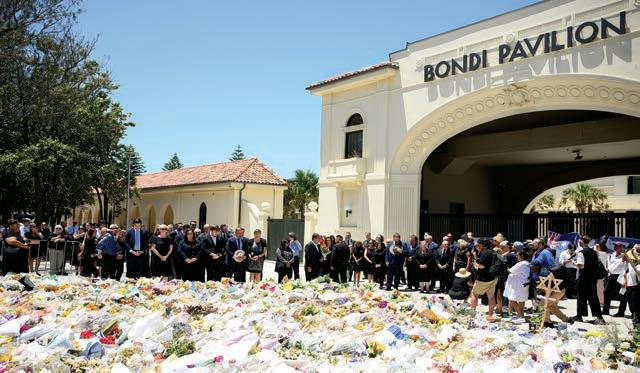
Recovery Funding Arrangements for the Bondi community, including $2m for Jewish community organisations, $1m for legal services, grants of up to $25,000 for local small businesses, and $2.8m for up to eight community recovery coordinators.
The Office of the e-Safety Commissioner will get $1m to provide online safety advice addressing antisemitism.
The Executive Council of Australian Jewry will receive $124m for extra security, $22m of which will be drawn from confiscated criminal assets.
The government announced $46.7m in financial support to the wider Jewish community, including for security and infrastructure upgrades and grant opportunities to support priority projects, including $4.4m to the Chabad of Bondi, and a combined $4m to Jewish House and JewishCare to support the victims of the shooting and their families.
The government has also committed $43m toward mental health support for those affected by the shooting and $200,000 to Bondi’s surf lifesaving clubs, whose members came to the aid.

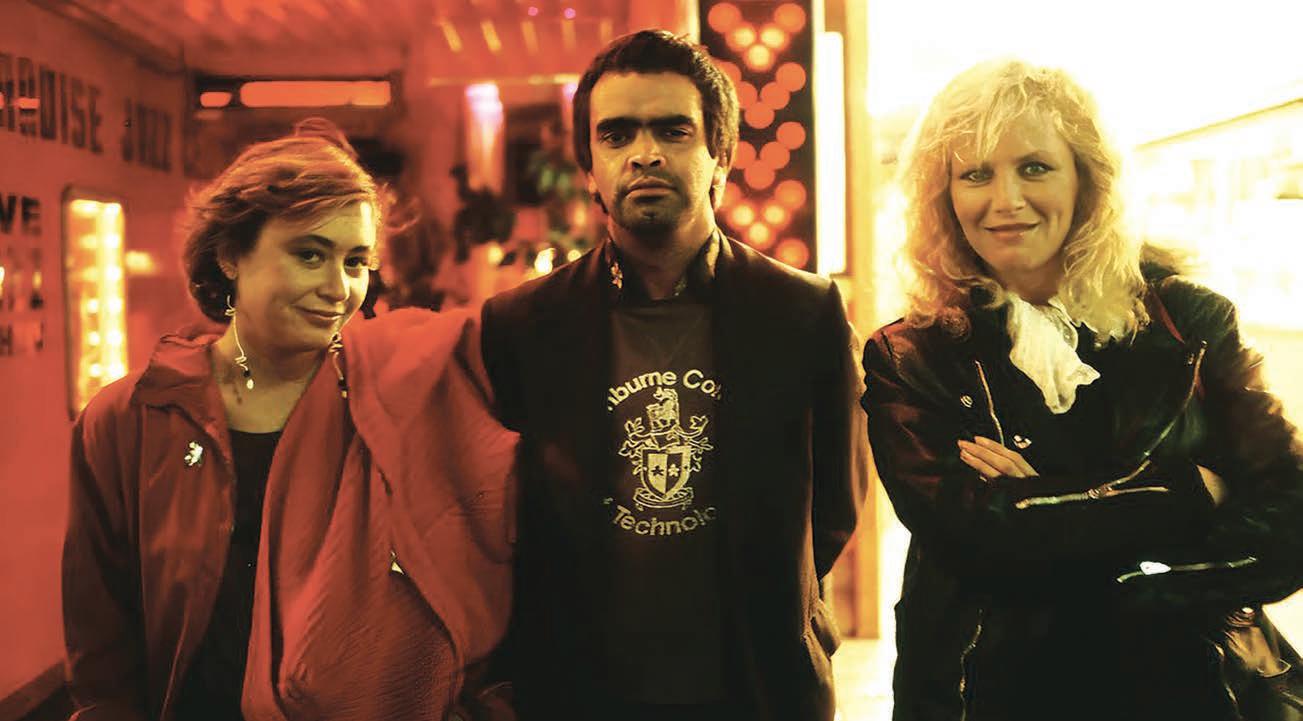
When the Australian movie Going Down, directed by Haydn Keenan, first screened in Sydney during the early 1980s, it ran for some 14 weeks and immediately connected with young audiences at the time.
The equally youthful cast included Tracy Mann, David Argue, Moira MacLaine-Cross, Julie Barry, Vera Plevnik and Esben Storm, along with music spots from groups such as Pel Mel and the Dynamic Hepnotics.
The enthusiasm of cinemagoers was also reflected by critics.
“The media response to the film on the initial release was quite overwhelming,” said Keenan. “Journalists absolutely loved the film and I don't think we got one poor review. Meghan Morris, probably the leading critic in the country, described it as one of the best in years”.
Over the past decades the movie has resurfaced at a number of film festivals and gained continued status as an Australian cult classic. With a relatively simple plot focusing on four
young girls living in a sharehouse and a frenetic night out on the town, the film has continued to gain numerous accolades.
Sydney Morning Herald critic Mark Sawyer wrote “no film I've seen has better captured the chaotic heartbeat of the young sensation-seekers.”
Despite this critical praise, the movie became somewhat lost in the cultural avalanche of history. That was until a recent episode of sheer serendipity, miles away from Australia, that has seen the rebirth of Going Down in 2026.
“It all started as what I thought was a hoax call. A female voice on the end of the line said she was a film distributor from New York, and had found a DVD of Going Down in a remainder bin,” Keenan explains. “She said she was starting up a new distribution company and wanted to license the film for North America. We reached [an] agreement and she set about positioning the film for a US release.
“I was in the UK shooting a documentary when the film was
launched in New York. I flew over for the opening of what was to become a seventeen-city release in cinemas across the USA!”
Haydn was pleasantly surprised to find: “American audiences responded almost exactly the same as Australian audiences had all those years earlier.’
Thanks largely to the generosity of Peter Richards at the Grainery in Canberra, and Josh Pomeranz at Spectrum Films, Haydn has enabled a remarkable 4K restoration of the original print.
“It looks and sounds better now than it ever did in the old mechanical analogue days,” he says. “It’s got the vibrance of a punk poster on a construction site. It jumps off the screen.”
Given its original modest budget, the movie is beautifully filmed, particularly the atmospheric dusk and night sequences shot in and around the inner city. There’s one such scene where a car carrying the girls does an abrupt turnaround on the Sydney Harbour Bridge, with no other vehicles in sight. No
fancy CGI back then, so how did they do it?
“Things were so much easier then now. The recent American production The Stunt Man spent millions getting the Harbour Bridge closed… We spent a couple of weeks talking to the Department of Main Roads and the cops shut the bridge off for half an hour at three in the morning one night – all at no cost!”
With recent preview screenings in Melbourne and Sydney, Haydn points out that audiences have clearly split into two groups.
“One group knew the film and many had seen it previously and were coming back to see how they looked when they were young and gorgeous and running wild in the city,” he said.
“The other group hadn't been born when the film was made and we're just discovering it. It was exciting to see young people coming out buzzing, excited at what they had just seen; a film they had never heard of, an outlier – but something that still spoke directly to them across the years.”

Come and say hello ��
We are proudly local, genuinely friendly, and passionate about your pets — because they are family too!

We bring you the best quality and prices for retail products for dogs and cats. Quality products at great prices for dogs and cats, including clothing, toys, beds, bowls, collars, treats, and flea & worming protection — plus more in-store and online. This is paired with personalised doggy daycare and exclusive home-based dog stays. A refined, one-on-one care in a calm, home environment.
No cages. No commercial facilities.
STORE TRADING HOURS:
8am till 7:15pm
DOGGY DAY CARE OPENING HOURS: 7:00am till 7:00pm


ALL DAYS OF THE WEEK, INCLUDING WEEKENDS AND PUBLIC HOLIDAYS









BY CHLOE SARGEANT
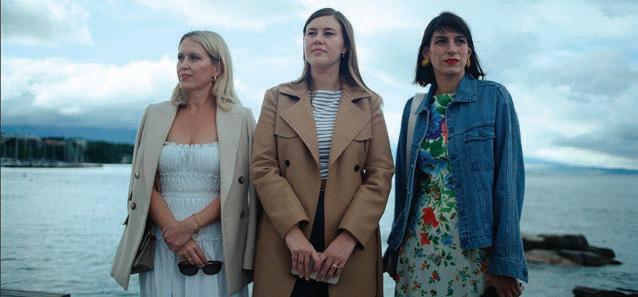
Every year when Sydney Film Festival drops its line-up, there’s always at least one Australian film that makes me go: “Woah… nobody does cinema quite like us.”
And that’s the joy of Australian filmmaking. Right now we’re making critical documentaries about cultural reckonings, horror films about desire and shame, deeply unserious films about trying not to completely lose your mind while making art, and Aussie gothic dark oddball comedies. But most of all: stellarly specific stories that could only come from here.
The 73rd edition of Sydney Film Festival takes over the State Theatre and cinemas across the city, showing a whopping 248 films from 81 countries. But among the Cannes heavy-hitters and international award darlings, the line-up of Australian films is once again proving why local filmmaking and Australian stories deserve to be seen on the biggest screens possible.
“Art and cinema help us make sense of the world, take us into the lives of people far away from us, and remind us to remain vigilant about our own rights and freedoms,” said Festival Director Nashen Moodley. “And we can't forget, they're also an enormous source of joy.”
And Australian cinema is delivering plenty of all of the above this year.
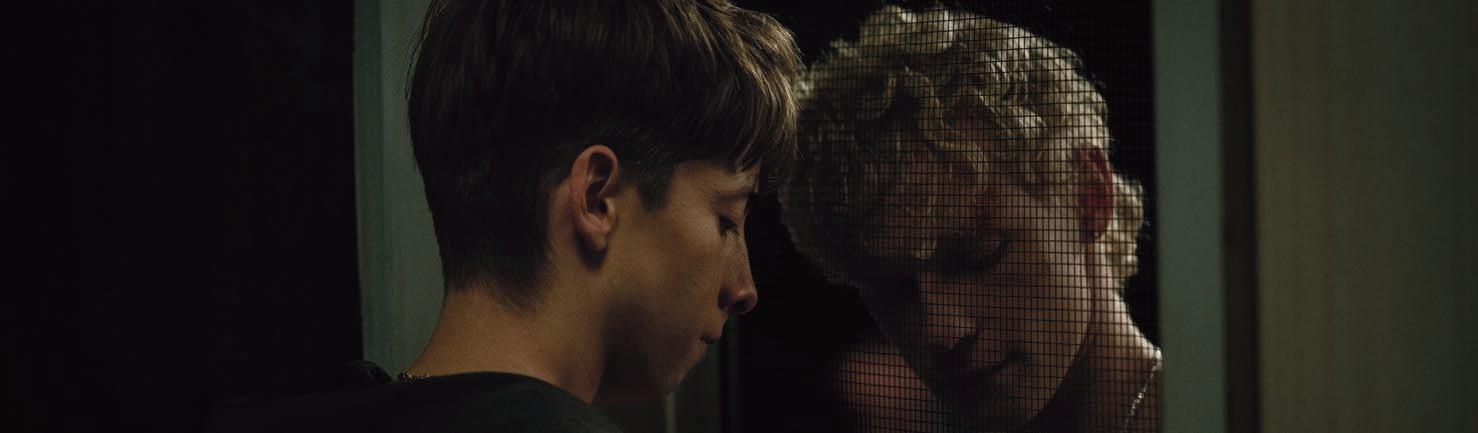
Leading the local charge is Leviticus, Adrian Chiarella’s buzzy Sundance breakout, following two teenage boys confronting an evil force that takes the form of the person they desire most — each other. It’s already shaping up as one of the festival’s most talked-about titles, continuing

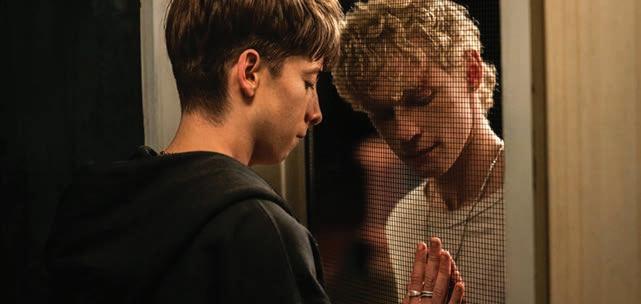
Australia’s increasingly impressive streak of queer horror.
“Sydney is my hometown and this is the festival I grew up going to. It introduced me to all kinds of films from around the world. I wouldn’t be the filmmaker I am without that kind of exposure,”
Adrian Chiarella tells City Hub. “And to screen in official competition, alongside some of my filmmaking heroes, is a real dream come true.”
Art and cinema help us make sense of the world… and we can't forget they're also an enormous source of joy
SFF’s opening night features Silenced, Selina Miles’ documentary following international human rights lawyer Jennifer Robinson as she fights the weaponisation of defamation

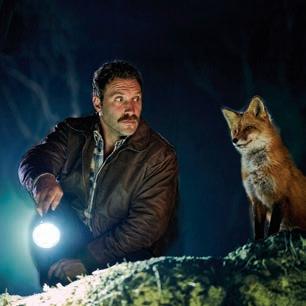
Dario Russo’s darkly comic, rural gothic folktale stars Jai Courtney as a foxhunter manipulated by a talking fox (Olivia Colman) into transforming his fiancée into “the perfect woman”. Russo describes it as “a modern fable about supernatural Australian foxes” exploring “our conflicted relationship with the natural world”.
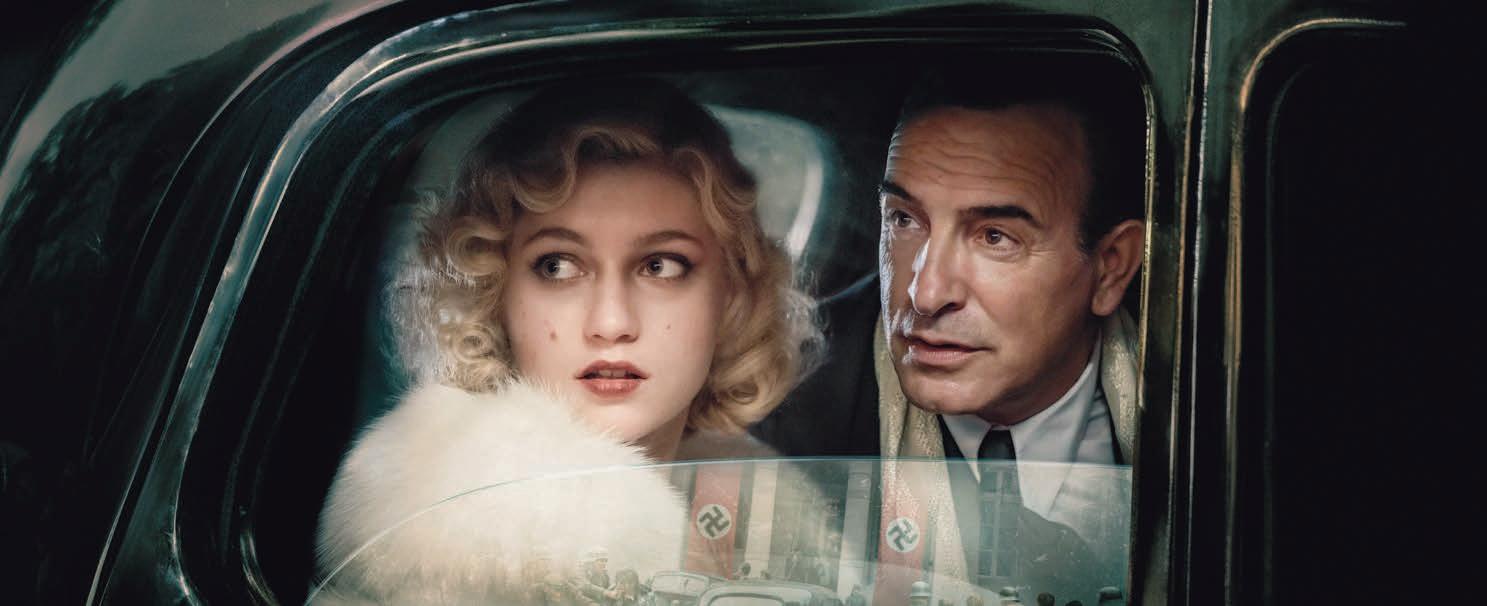
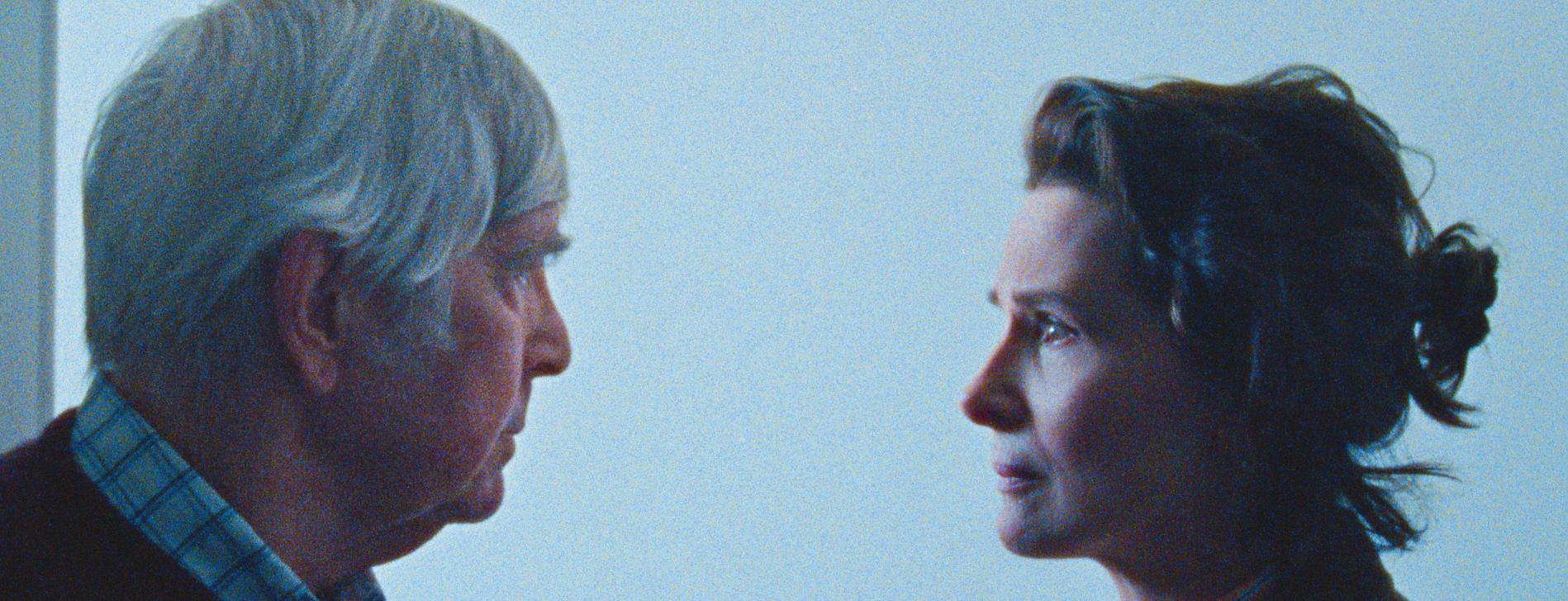
The Piano Tuner follows a Tasmanian piano tuner trying to save an endangered craft; and French Girls showcases the surreal and unsettling world of Sydney's modelling industry.
law against survivors and journalists. The documentary traces cases involving Amber Heard, journalist Catalina Ruiz-Navarro, and brave Aussie survivor Brittany Higgins, whose allegations of sexual assault in Parliament House created a media firestorm from 2021 onward.
“We are proud to open the Festival with Silenced,” Moodley said. “Selina Miles has made a clear-eyed and urgent work that challenges audiences to question the systems that decide whose voices are heard and whose are suppressed.”
Miles added that screening the film on Opening Night at the State Theatre was “a dream come true, and a testament to the power of storytelling to elevate voices that might otherwise go unheard.”
Then there’s The Fox. Director
For genre fans, The Killings At Parrish Station dives headfirst into desert noir with a sprawling story spanning decades of ritual murders, while Mockbuster documents Adelaide filmmaker Anthony Frith attempting to survive the haywire world of the studio that made Sharknado. If you’ve ever been guilty of thinking that Australian cinema is boring, Sydney Film Festival is about to prove you spectacularly wrong — so go sit in a dark room with strangers, and let local filmmakers completely blow your mind.
at the Sydney Film Festival Sponsored by Star Observer & City Hub
ENTER


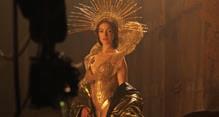
MOTHER MARY
Aesthetically stunning but haunted by wasted potential
(See p.22)
BY NAOMI LAWRENCE
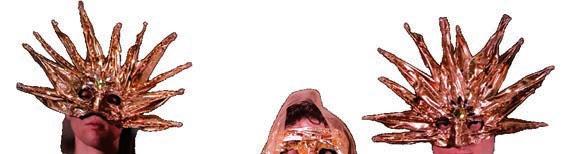
If you're familiar with the myth of Medea -– the scorned wife of Jason whose mistreatment led to tragedy – the broad strokes of this new interpretation of Medea at Qtopia Sydney will be quite familiar. But this show, from Visage Productions and written by Ian Steen, puts an interesting spin upon the story that explicitly points ire towards a society that ordains heterosexuality, when it'd be a lot easier to let people love who they want.
Medea unfurls after the legendary voyage of Jason and the Argonauts, where the hero’s
wandering eye has seen him forsake his wife for the men of Corinth. A demigod from a foreign land, Medea is soon cast out of the city for her witchy ways, while her husband marries a younger woman – sparking in her a desire for vengeance that can only be quenched with blood.
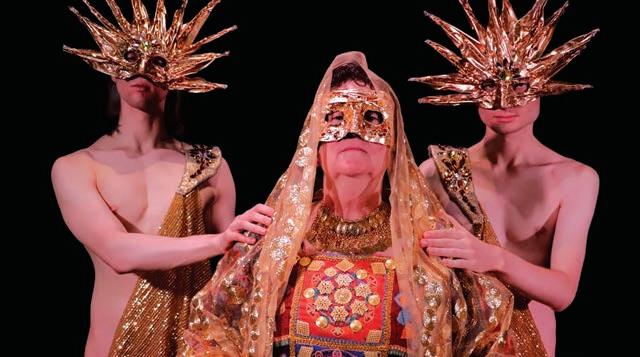
The greatest strength of Medea as a show lies in its two lead performances – Cathy Bates as the title character, and Joshua Morel as Jason. The Substation venue felt quaint at first, but their talents make the story come alive and wholly fill the room with the scale that this tragedy deserves,
alongside a wider cast who make a great ensemble.
But Bates is due for particularly high praise, rendering Medea as a woman most tragic, forced to make decisions that will paint her as irredeemable in the eyes of history. The decision to cast an older performer is a genuinely interesting one, and Bates rose to the occasion with a layered performance.
This performance is hardly the only great element of Medea, though. I found the reworked script
by Ian Steen to be delightfully written, giving its actors plenty to chew on as they navigated the increasing complexities of this tale. Its queer angle and a truly fascinating deployment of costuming made this show feel unique; a feat in itself for the retelling of a storied myth. There were some occasional mishaps, but overall this rendition of Medea was a genuinely delightful affair that’s a great example for why everyone should go see more independent theatre.
BY NOA VALENTINE
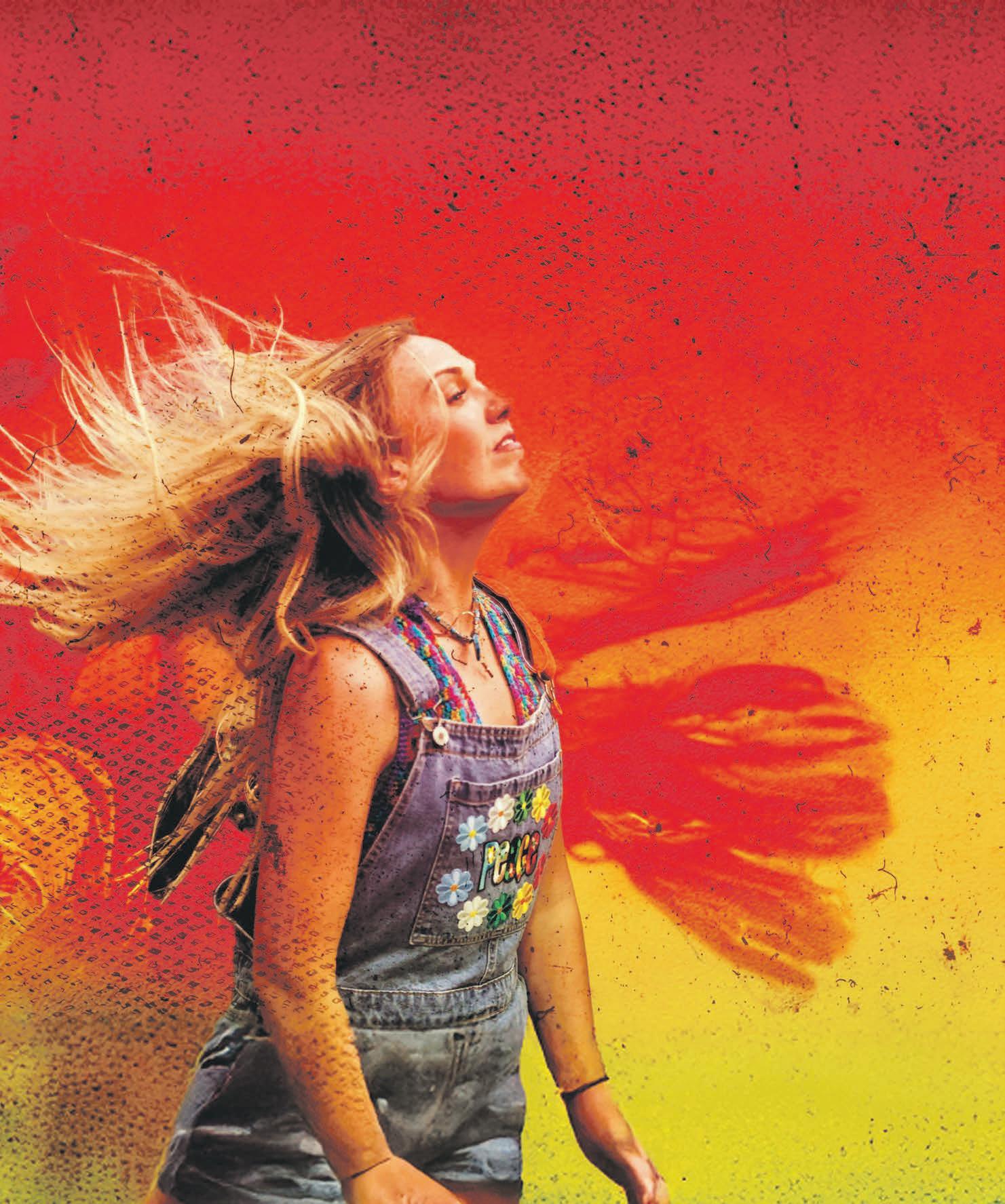
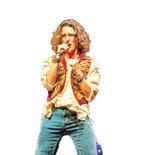
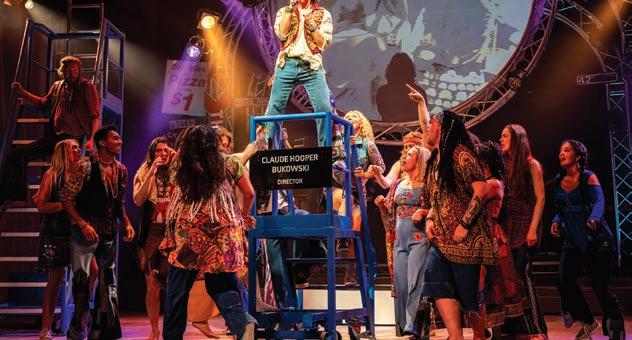
Hair: The Tribal Love-Rock Musical is making its grand return to Sydney.
Directed by Glen Elston, the production will open for a strictly limited season, bringing together a dynamic ensemble to revive its message of freedom, rebellion and hope for a new generation.
The production has cast Maxwell Simon as Berger, Alex Cooper as Claude, Elizabeth Brennan as Sheila, Tane WilliamsAccra as Hud, Niylesh Palani as Walter, Rosie Meader as Jeannie, Jackson McGovern as Woof, Mariah Lewy as Chrissy and Zohra Bednarz as Tina – and more.
“They’ve each got something distinct to bring to Hair, and I’m looking forward to seeing it all come together on stage,” said Elston.
First debuting 1967, Hair is set in the 1960s – a decade defined
by cultural revolution. It captures the counterculture spirit, telling the story of free-spirited young hippies advocating a lifestyle of pacifism and free love in a society riddled with intolerance and brutality.
Though debuting off Broadway, the show became a massive global hit, seen by roughly 20 million people globally by 1972.
The show's representation of LGBTQIA+ people and sexuality
was groundbreaking. Queerness was depicted in a normalised way, and the emphasis on “free love” was a celebration of sexuality without heteronormative sexual boundaries.
Creators Gerome Ragni and James Rado sought to create ‘fluid’ characters as a direct challenge of the traditional, rigid depictions of masculine identity audiences had grown
accustomed to in other hit shows of the time.
But the show was of course controversial, and was heavily criticised upon release. The play’s LGBTQIA+ representation, overt nudity and satirical songs like Sodomy confronted theatregoers with taboos many weren’t prepared for. The show also provided the landmark moment of the first same-sex kiss on a Broadway stage.
This led to various court cases, with groups like Operation Yorkville (later renamed ‘Morality in Media’) seeking to ban the musical.
However, Hair was victorious – ultimately leading to a strengthening in artists’ ability to tell stories about LGBTQIA+ life and sexuality without fear.
Hair: The Tribal Love-Rock Musical is on at the Theatre Royal Sydney from June 6 –July 12.
BY PATRICK LENTON
The NSW Government has announced a new package of planning and licensing reforms aimed at expanding outdoor dining, rooftop bars, live music and pop-up entertainment venues across Sydney and regional NSW.
The changes, revealed on May 21, are designed to reduce approval requirements for hospitality and entertainment operators, particularly within the growing Special Entertainment Precincts across Sydney.
Under the reforms, venues will be able to establish rooftop bars and temporary entertainment spaces in locations including town halls, commercial buildings and car parks.
The government said the reforms would also make it easier to convert vacant shops and offices into small licensed venues such as wine bars and restaurants. Clubs located on Crown Land, including RSLs, bowling clubs, surf clubs and golf clubs, will be able to introduce outdoor dining without requiring lengthy development applications.
NSW Minister for Music and the Night-time Economy John Graham said the reforms were intended to support the state’s night-time economy.
“NSW has some of the best locations in the world, but too
many of them have been tied up in red tape,” said Graham.
“As we rebuild the night-time economy we're seeing a wave of special entertainment precincts being established across NSW. This proposal will allow those communities to make those precincts even more exciting for patrons and venue operators.”
“After ending the lockout era, and cutting huge amounts of red tape for venue operators, we're now going a step further by unlocking vibrancy for our clubs on crown land, and super charging our Special Entertainment Precincts.”
NSW Planning Minister Paul Scully said the changes would help businesses expand and create jobs.
“From today we've made it easier for hundreds of clubs right across the state to host outdoor dining, so people have more places where they can gather, relax and celebrate,” Scully said.
According to the government, 24 councils are currently planning new Special Entertainment Precincts across NSW. Several Sydney nightlife districts, including Chinatown, Burwood, Canley Heights and Canley Vale, have also joined the international Purple Flag accreditation program, which recognises entertainment areas considered safe and vibrant at night.
BY PATRICK LENTON
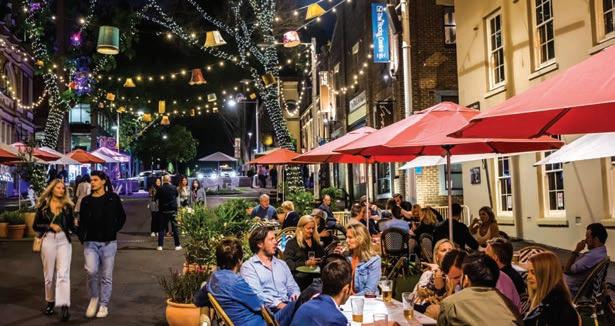
Sydney’s Hollywood Quarter has announced it will be hosting a late-night entertainment program during this year’s Vivid Sydney festival. Bars, cinemas, live music venues and restaurants across Surry Hills and Darlinghurst are extending their trading hours and hosting special events, including a massive street party.
The Hollywood Quarter After Hours program will run from
A number of hospitality venues will also offer limited-edition menus, cocktails and extended kitchen hours across the festival period.
Organisers say the initiative is designed to showcase the area’s nightlife and cultural identity during one of Sydney’s largest annual festivals, and aims to encourage festivalgoers to continue their evening after visiting Vivid’s installations and attractions.
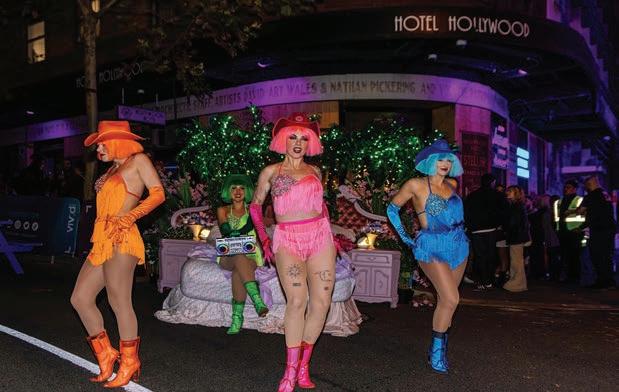
22 May to 13 June as part of the wider Vivid Sydney festival, which is set to attract millions of visitors throughout the threeweek program. The initiative spans Foster Street, Hunt Street, Campbell Street and nearby laneways.
On May 30, the streets will become a pedestrian-only zone at 4pm, offering family-friendly workshops, music and roaming performers from until 6pm, then after that, the precinct will become a full-scale street party.
Participating venues – Golden Age Cinema and Bar, Hollywood Hotel, Kiln at the Ace Hotel, Butter, Soda Factory, Surry Hills Hotel and Hotel Harry – will be offering a huge variety of events and experiences, including live music, DJs, film screenings, food events and performances. There are both free and ticketed events on offer.
“From hidden bars and live music to immersive cinema and late-night dining, Hollywood Quarter After Hours invites festivalgoers to experience Sydney after dark,” reads the program announcement.
Hollywood Quarter – located on the edge of the Sydney CBD, centred around Surry Hills and Darlinghurst near Central Station – has increasingly positioned itself as a nightlife and entertainment destination. Named after the heritage-listed Hollywood Hotel and the historic former Hollywood Studio complex, the area is known for its concentration of independent cinemas, live music venues, small bars, restaurants and late-night cultural spaces.
Vivid Sydney will run from 22 May to 13 June, with this year’s festival featuring light installations, live music, talks and food events across Sydney.
$1 STADIUM TICKET LEVY COULD BRING $3 MILLION TO LOCAL
BY PATRICK LENTON
Aproposed levy on tickets for major concerts in NSW could raise more than $3 million annually for smaller music venues, according to a recent parliamentary inquiry submission.
The proposal was included in submissions ahead of a NSW parliamentary inquiry hearing examining challenges facing NSW’s live music sector.
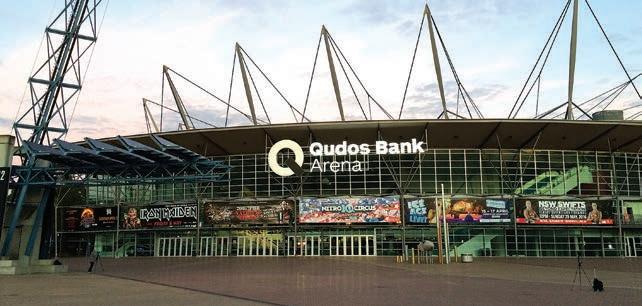
The Australian Music Venues Foundation (AMVF), which represents grassroots music venues, has proposed a $1 levy on tickets sold for concerts with capacities above 5000 people at major venues including Qudos Bank Arena, Accor Stadium and Sydney Opera House.
The AMVF said Britain has implemented a similar model, which distributed £500,000 this year to programs supporting artists, venues and touring initiatives.
Based on this, the AMVF estimated a $1 levy could generate between $3 million and $3.15 million each year from five major Sydney venues alone.
“This figure is likely an underestimate, as it does not include data from all eligible venues across the state,” the submission stated.
“A simple analysis confirms that a modest $1 levy on tickets at major venues represents a multimillion-dollar opportunity
to create a sustainable funding stream for the grassroots venues, promoters and artists.”
NSW Greens’ Night-time Economy spokesperson Cate Faehrmann argued multinational corporations should be contributing more funding to the local industry.
“There’s already multiple hidden fees and charges in every single concert ticket sold –booking fees, infrastructure fees, service fees,” Faehrmann said.
“I don’t think concert-goers should have to fork out any more fees when Ticketek and Moshtix are both owned by global music giant Live Nation and making gazillions from the fees they’re already charging.”
AMVF Chief Executive Tam Boakes said they’d prefer artists absorb the contribution.
“Olivia Dean is touring this year, and she’s donating to us, which is that exact thing and a ticket says… ‘This donation is included,’” Boakes said.
Music NSW Managing Director Joe Muller said the levy could help reinvest money into the local music industry.
“As algorithmic recommendations have changed the way that Australian audiences are engaging with local artists, I think it’s essential that we look to ways of investing in our local music ecosystem,” Muller said.
BY ANGUS SHARPE
Today, with its myriad of sub-genres blending technology and culture, it is hard to accurately explain the sound of contemporary jazz. Yet, from May 20 followed bi-monthly through to November 26, the annual program Jazz:NOW aims to do this.
Jazz:NOW is Sydney Improvised Music Association's flagship program, which has been running since 2019. Each year, it presents the more daring and diverse jazz and improvised music being made today, and the most interesting local musicians in Sydney are given an opportunity to present their take on the ever-evolving genre.
interrogating Australia’s relationship with the environment.
With each performance accompanied by several other like-minded musicians, Jazz:NOW gives Sydney audiences the chance to engage with and discover the challenging and exciting world of contemporary jazz.
“I think it's important for people to engage with it because it is so often misrepresented in our culture. That is, often people have a notion of jazz as being a cerebral background music played by people in suits at smoky clubs,” the Artistic Director of the Sydney Improvised Music Association,
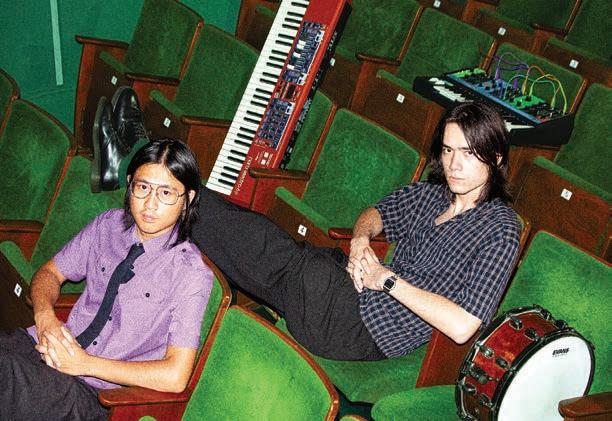
In May, Bree Van Reyk and Mick Turner’s calamity of percussion and drunk guitar echoed from the Vanguard Theatre stage. In July, Marrickville’s Red Rattler will devolve into dance with the fast, free electronic world of improvised duo Manfredo Lament. September will see classical Persian music blend with experimental Western jazz at City Recital Hall, by Hamed Sadeghi.
And in November, at the Oxford Art Factory, trumpeter/ composer Tom Avgenicos will display a contemplative multidisciplinary work
Novak Manojlovic, explained to City Hub
“To me, it is rather one of the most cathartic, expressive, honest, fresh and occasionally brutal music that is out there.”
“I will say that – beyond all the obvious remarkable and enriching things that all music can do for us – it is important for audiences to engage with jazz so they might assuage or challenge their impression that it's 'not for them', and instead uncover something that will have a profound effect on their life.”
Jazz:NOW is on from May 20 to November 26.
BY JOSH KERWICK
Idon’t think it’s a stretch to say that Obsession has all the ingredients necessary to become a modern horror classic.
Bear (Michael Johnston) is hopelessly in love with co-worker Nikki (Inde Navarrette). Instead of confessing how he feels, Bear opts to use a mysterious object from a new age shop and asks for Nikki to love him more than anyone else in the world. Horror ensues.
Nikki transforms from a friendly, somewhat flirtatious colleague into a woman totally possessed by desire. It’s everything Bear could’ve wanted at first, but over time Nikki’s behaviour grows increasingly erratic and, to put it mildly, concerning.
It’s remarkable how effortlessly Obsession builds anxiety. Bear’s
plight is initially relatable as he decides whether or not to confess his feelings to Nikki. Johnston’s performance here is superb, perfectly capturing the cringe that can only come from unrequited love.
Having already found its mark, Obsession then switches the kind of tension it’s building. The seamlessness of this is a real testament to 26-year-old writerdirector Curry Barker’s skill as a filmmaker. He also begins building dread while sprinkling in some really funny jokes – the balance between humour and horror reminds me of Zach Cregger’s work.
The needle with which he sews is the incredible Inde Navarrette. Oscillating between acts of love bombing, screaming and increasingly strange acts,
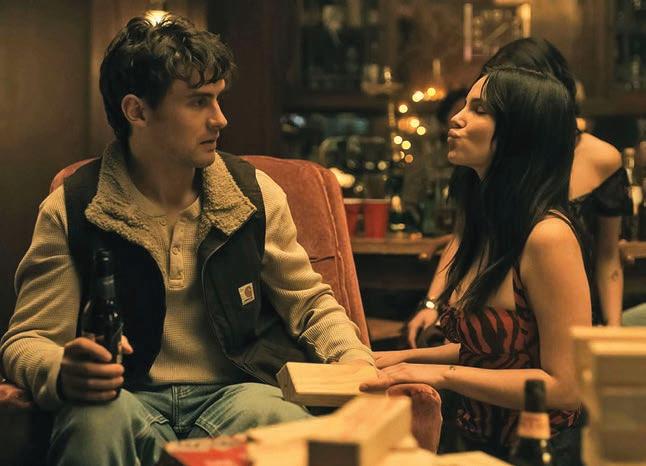
Navarrette brings her A-game in a performance that’s likely to make her a star.
Nikki’s increasingly dangerous behaviour is genuinely scary – but I found the most chilling element was Bear’s response. Though initially seeming to be an archetypal “good guy”, he reveals himself to be genuinely disrespectful of Nikki’s personhood. Whether she’s possessed by a supernatural force or not, the person Bear’s in
a relationship with is not the Nikki he fell for – but she looks like her, so he doesn’t seem to mind. It’s unnerving stuff, and that sense of dread is exactly what makes Obsession so disturbing and entertaining. Sensational performances, a tight script and an exceptional control over the art of filmmaking makes this the complete package. If horror is your thing, see this immediately. 1/2
Obsession is in cinemas now.
BY JOSH KERWICK
Perhaps it’s the overall drought of star-led comedy capers that had me enjoying Power Ballad so much, or maybe it’s simply a sincerely fun movie. Anchored by a heartfelt and hilarious script that’s elevated even further by a charismatic Paul Rudd performance, it’s an outright crowd-pleaser.
Rick Power (Rudd) is an American almost-rockstar who now plays in a wedding band in Ireland. At a gig, he happens to perform alongside Danny Wilson (Nick Jonas), a former boy band member looking to make it big. An impromptu jam session sees Rick and Danny exchanging ideas. But months later, he hears his song that he shared with Danny on the radio – and it’s a number one hit. Rick tries to resolve the issue, leading to an initially justified crashout.
It’s a credit to the script that
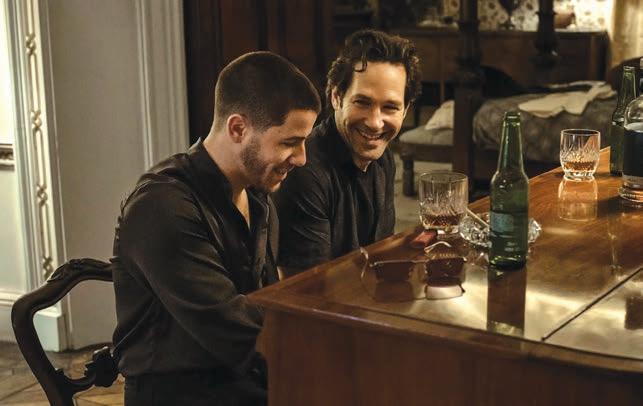
the film’s ‘antagonist’, Danny, doesn’t feel outright villainous in the hands of Jonas. Power Ballad is not exactly rife with commentary, but it does have things to say about the brutality of the music industry. Both are maligned – Rick forsook his chance to go big for his family, while Danny’s label
expects him to go hard to avoid fading into irrelevance. Their initial ability to relate with one another makes Danny’s inevitable betrayal sting that much more.
And Power Ballad is sincerely funny in an appropriately Irish manner. There’s some truly outstanding jokes in the script and delightful side characters,
like Peter McDonald as dropkick bandmate Sandy, Marcella Plunkett as Rick’s wife Rachel, or Beth Fallon as their sharptongued teenager Aja.
However, you could argue that the film gives a little too much sympathy to Danny. Power Ballad flirts with class commentary as it compares the singer’s expansive mega-mansion with the clutter of Rick’s Ireland home, but the sensitivity written for Jonas sometimes feels a bit at odds with Danny’s actions.
Alas, none of it significantly detracts from the entertainment factor that Power Ballad provides. Genuinely funny and warm, it rather appropriately feels like hearing a wedding band playing a song you love: it might not be new or innovative, but it feels good.
1/2
Power Ballad is in cinemas from May 28.
BY JOSH KERWICK
Anne Hathaway stars as the titular Mother Mary, a gothic pop star (clearly inspired by the real-world career of Lady Gaga). After a strange incident during her last performance, Mary begs her old stylist Sam (Michaela Coel) to craft a dress for her comeback.
Yet Sam is not having it – they have a terse relationship, where they were once “friends”. As the film progresses, the two realise their connection may be much more spiritual than they realised. Coel and Hathaway are able to infuse meaning into a script that has real charm before it becomes apparent how cyclical and obtuse it is. The two turn in great performances, in spite of the material.
David Lowery’s script is overly wordy and repetitive. It’s also about as queer-coded as you can get, and I believe the film could be functional if Lowery
made their relationship more explicit, but he holds his cards too close to the chest.
It's difficult not to wonder what Mother Mary is actually trying to say. Its core concept – viewing the mark someone leaves on you as a “haunting” – is fascinating, but it also fails to capitalise on what this means before moving into unpredictable territory.
Although aesthetically gorgeous, Mother Mary feels slapdash. It's clear Lowery has a strong understanding of pop iconography and there's stellar costume work, but it feels extremely disconnected from the music. Though it's nice that Charli xcx and FKA twigs contributed their writing chops to the soundtrack, the music lacks the energy that makes me believe in Mary’s superstardom.
The film seems a bit desperate to court a queer audience, which makes the shockingly inert music and Lowery's decision to avoid
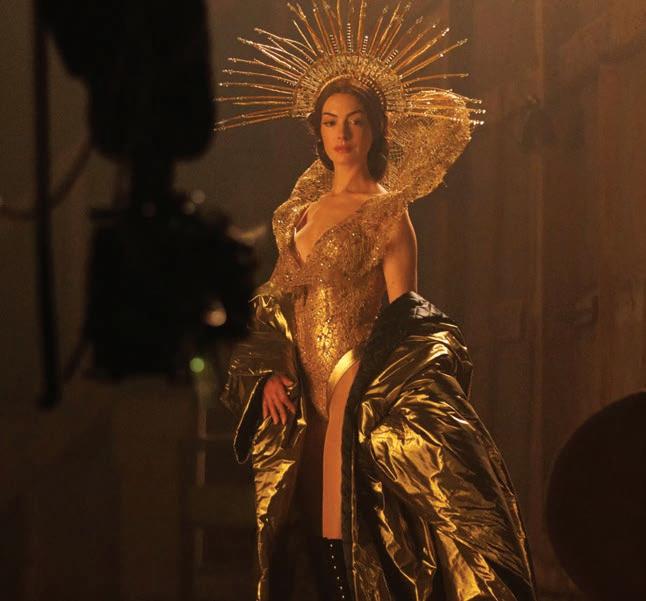
an explicit relationship feel that much more baffling. You can't take cues from Gaga without understanding what makes the marriage of her music and aesthetic so special.
So in spite of a genuinely impressive range of ideas,
Mother Mary’s commitment to obfuscating them creates a film that frustrates. The ghost of a good film was here at some point, but the only thing haunting Mother Mary is wasted potential. 1/2
Mother Mary is in cinemas now.
BY MARK MORELLINI
“Idon’t feel safe at home,” laments Sarah.
40 years old and seeking refuge in a mansion she’s selling, Sarah ponders whether a life free from her violent husband is possible. She is a strong – but silently struggling – woman who seeks new beginnings, and a safe and happy environment with her teenage son.
But is this just wishful thinking? Can she start over again?
Filmed in Sydney, Life Could Be A Dream is directed by Jasmin Tarasin and stars Maeve Dermody as the tormented Sarah. Alexander England portrays the husband, a possessive man who cuts his wife off financially when she eludes his clutches. Sonny McGee stars in his breakout role as Otis, the son who feels his mother’s anguish.
Life Could Be A Dream explores the mother/son
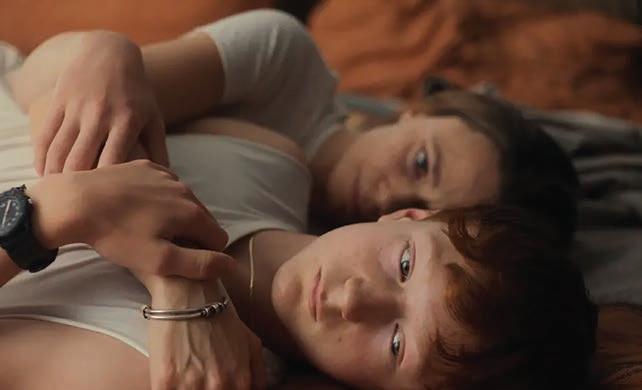
relationship, as she attempts to be a model of strength. Is it irrational for the son to believe that he may inherit his father’s darker traits, and treat his future wife in the same abhorrent manner?
There is something quite unique about this Australian film, which concerns a very real social issue. Whereas most similarly
themed dramas display graphic scenes of violence, sometimes gratuitous, writer Courtney Collins has wisely omitted such scenes. Audiences don’t need to see the violence behind closed doors – astute direction and a layered performance from Maeve Dermody successfully conveys fear, vulnerability and ultimately, resilience.
The husband is prominently seen through flashbacks and doesn’t share any scenes with his wife in real time. Sarah’s perspective drives the narrative, maximising the empathy audiences feel.
The slow-paced nature of the film works in its favour, as this technique defines the character’s reality – audiences will feel her entrapment and isolation. The soft musical score also amplifies the quiet tension – the empty house, the friends who stopped calling and the intoxicating loneliness.
Life Could Be A Dream is compelling viewing, even for people who may have lived this reality. It’s a cautionary tale which stresses that no one should live in toxic relationships — and it doesn’t just mentally scar them, but also the children. 1/2
Life Could Be A Dream is in cinemas now.
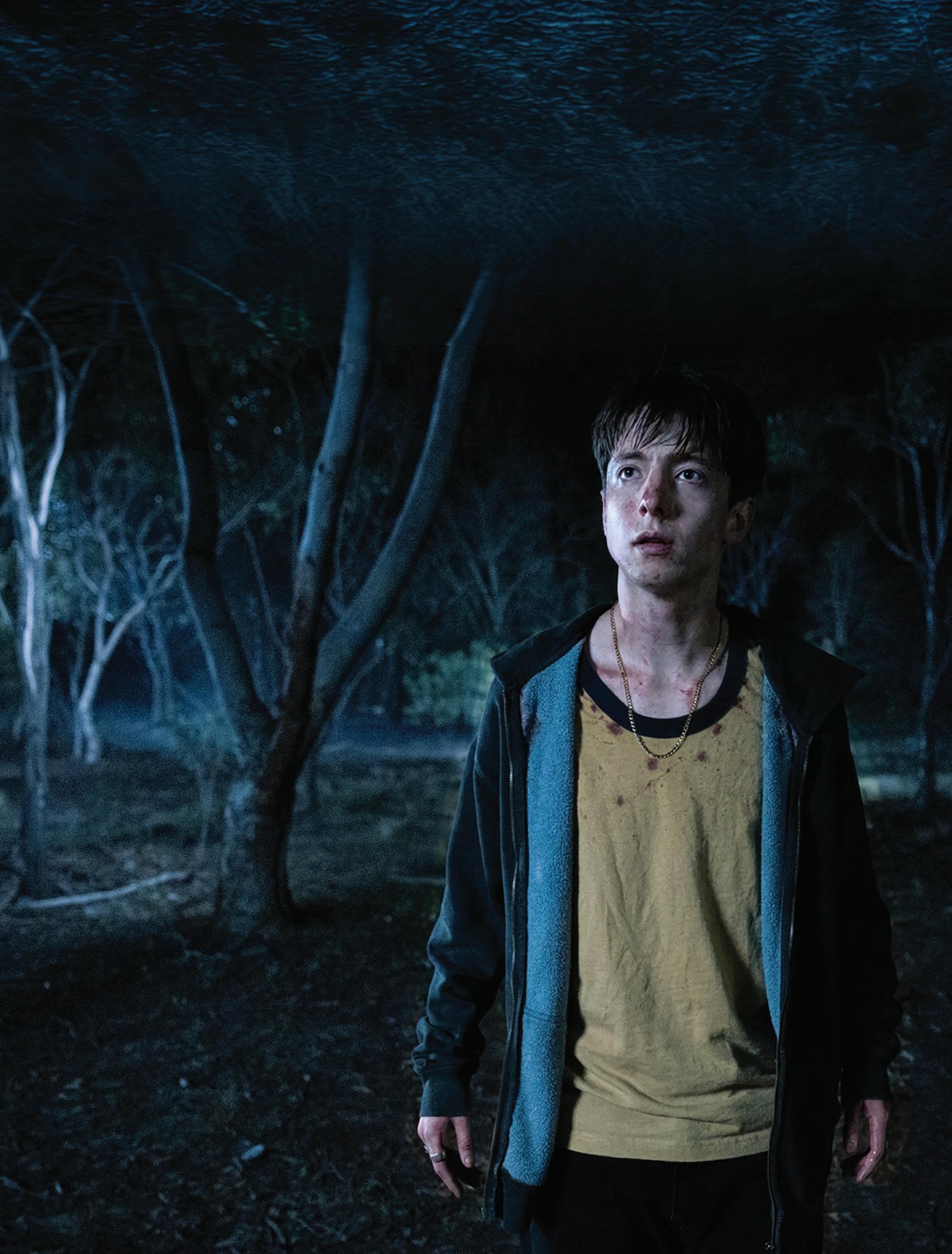
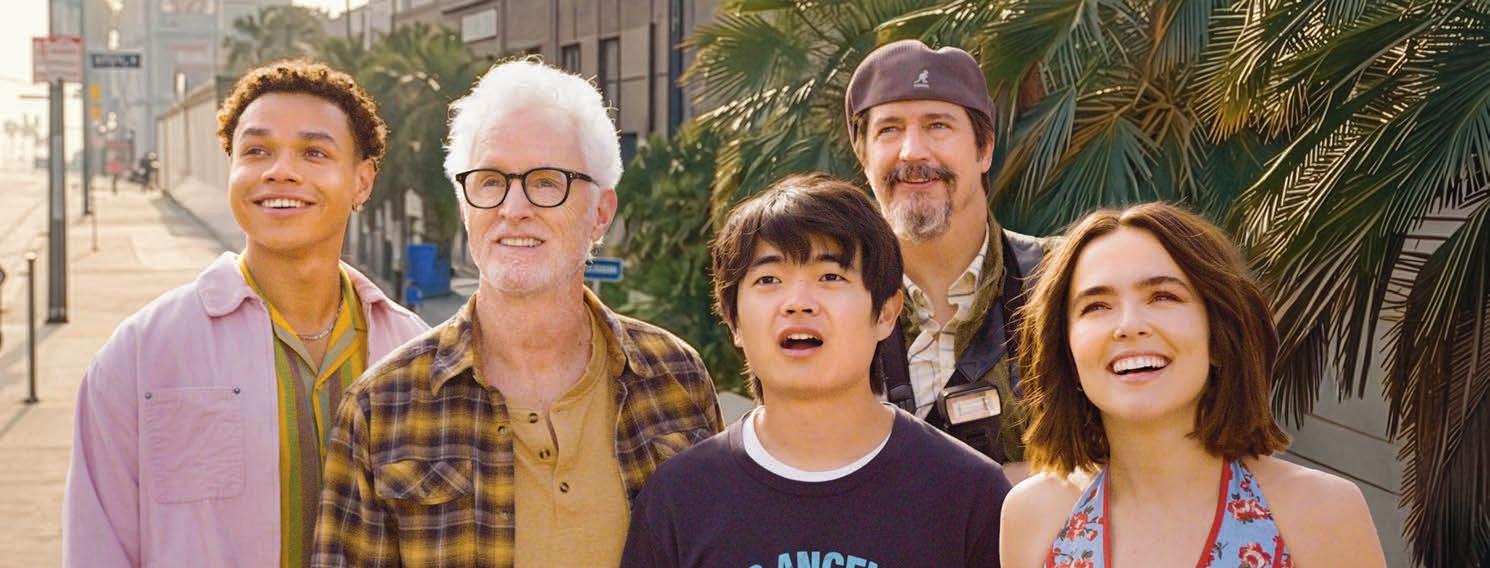
Sponsored by City Hub and Star Observer, Leviticus stole the show at Sundance.
This Australian queer horror film tells the tale of two teenage boys who contend with an evil force that takes on the form of the person they desire most: each other.

Enter to win the drawing and you will also subscribe to the City Hub and the Star Observer newsletters!