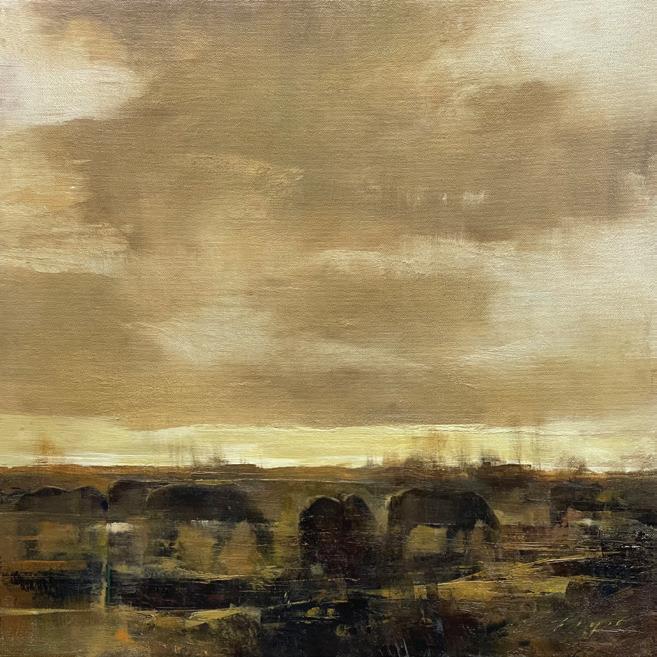
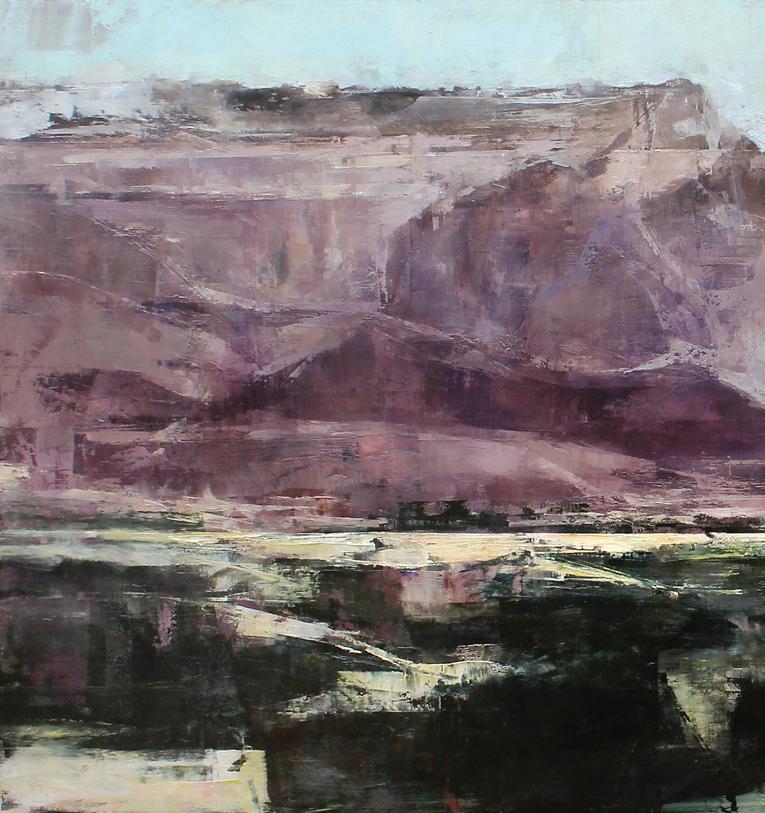
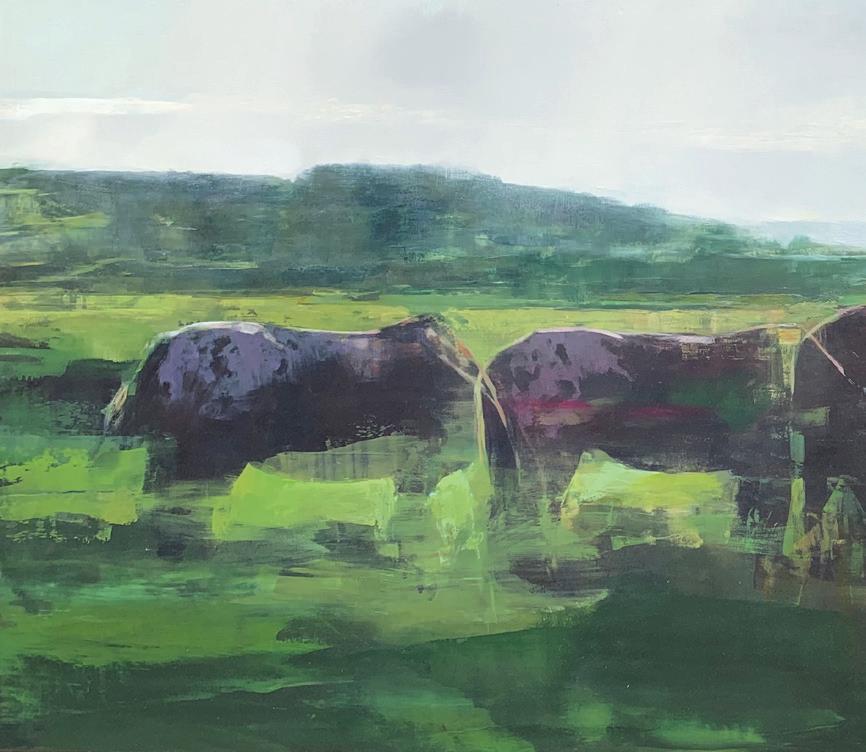
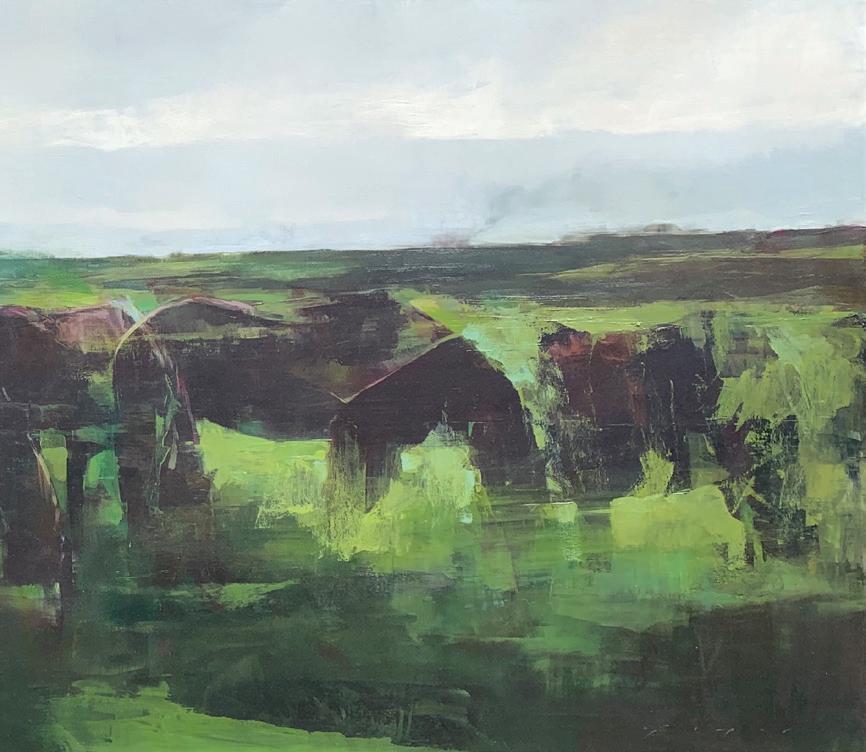
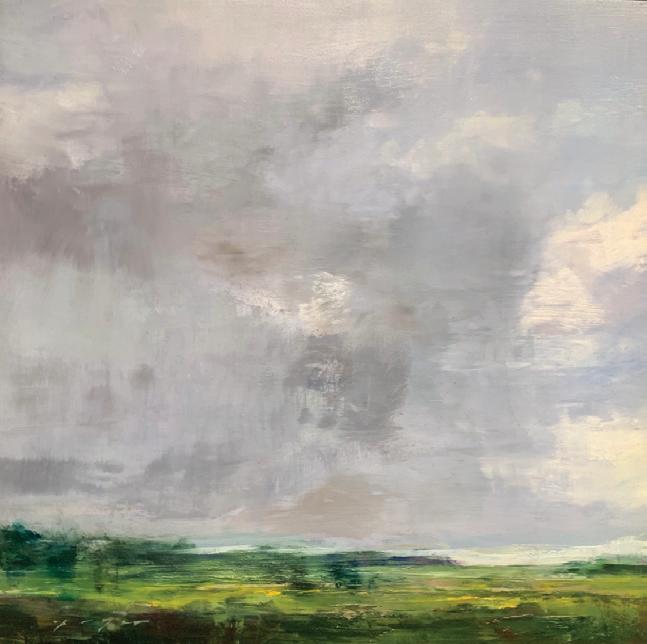
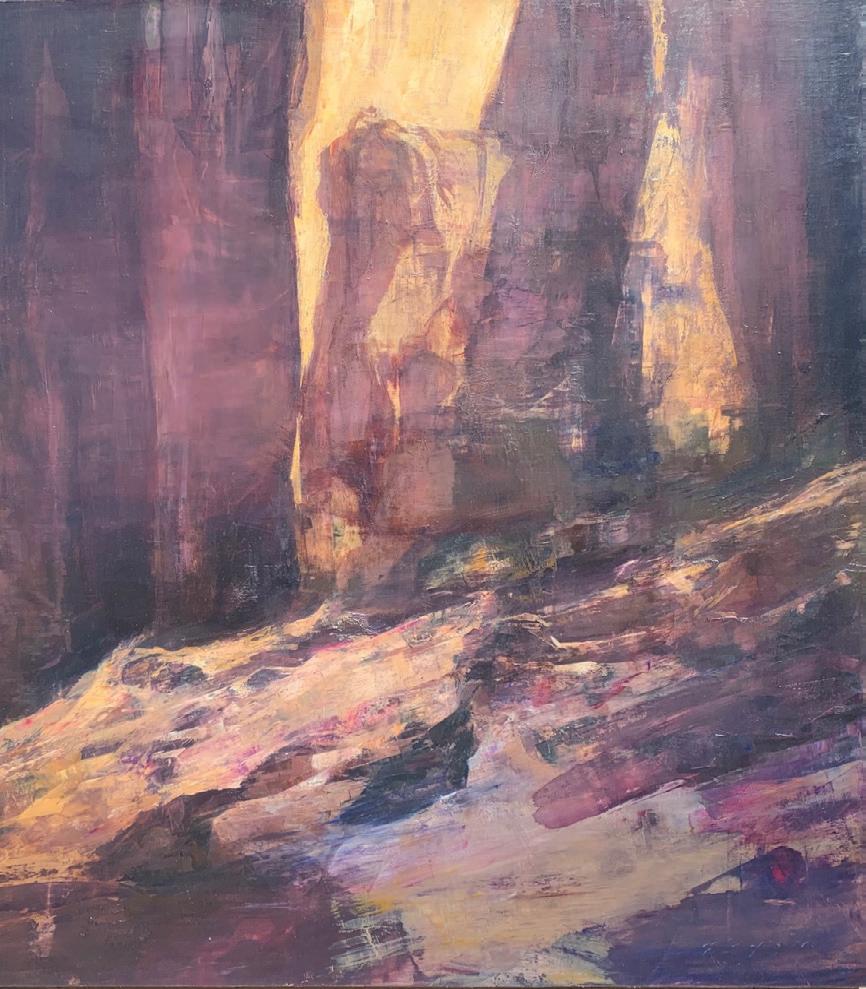
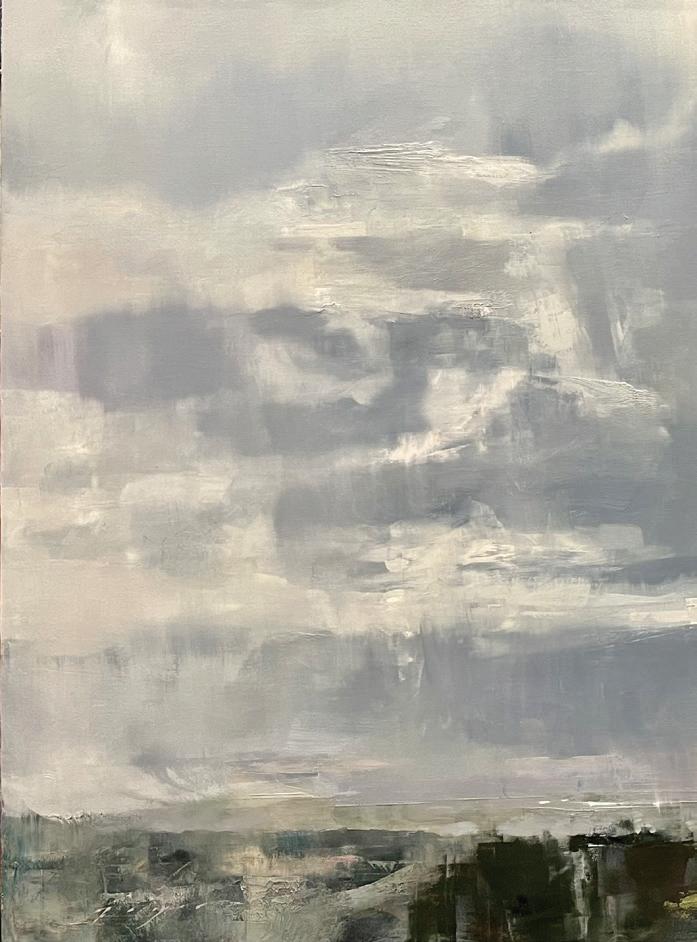
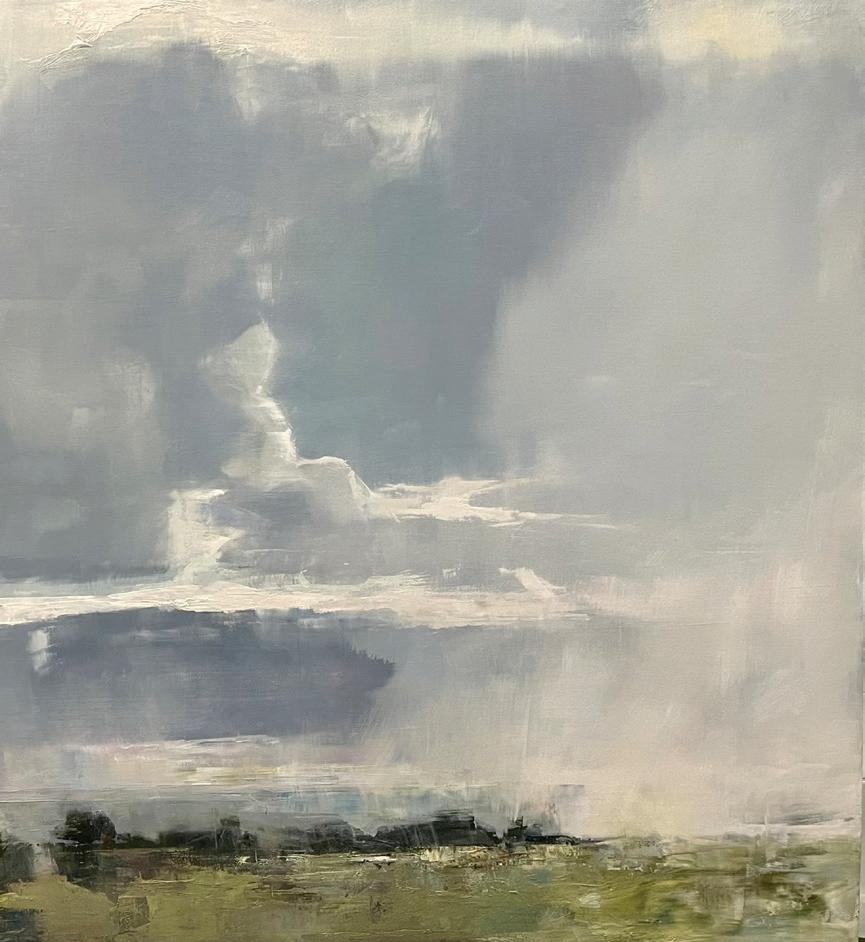
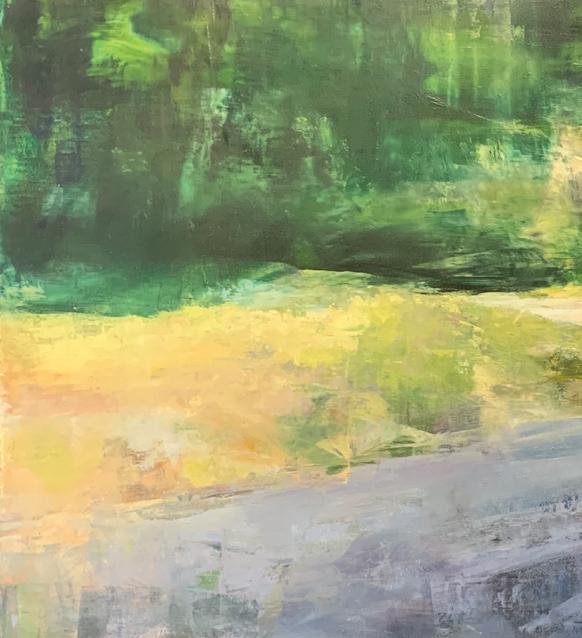
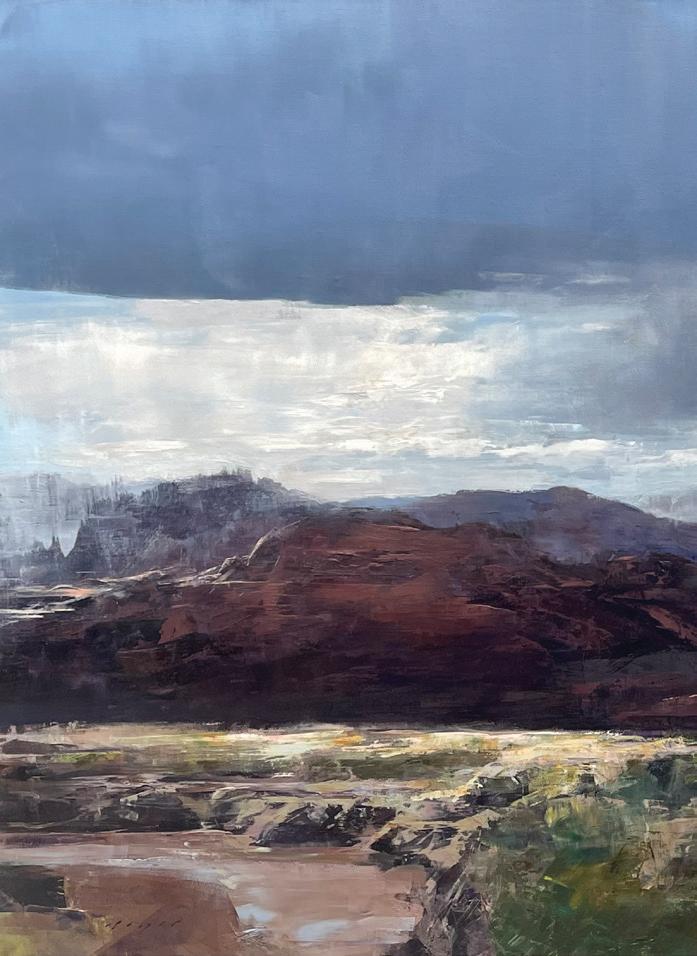
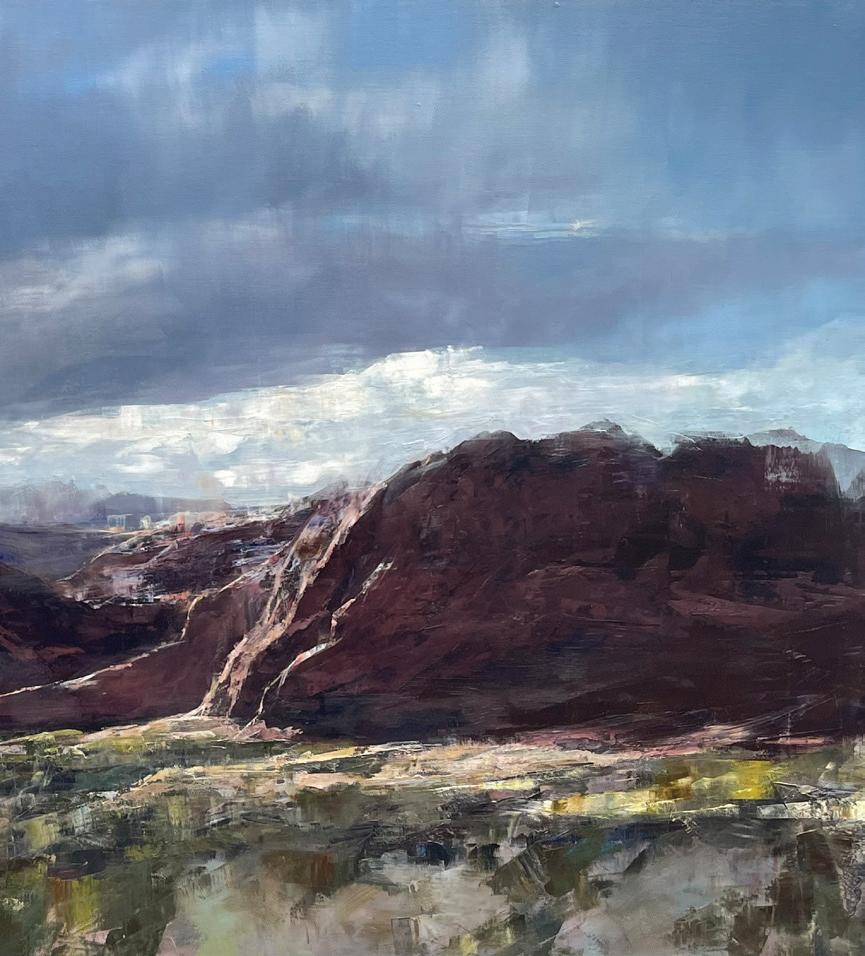
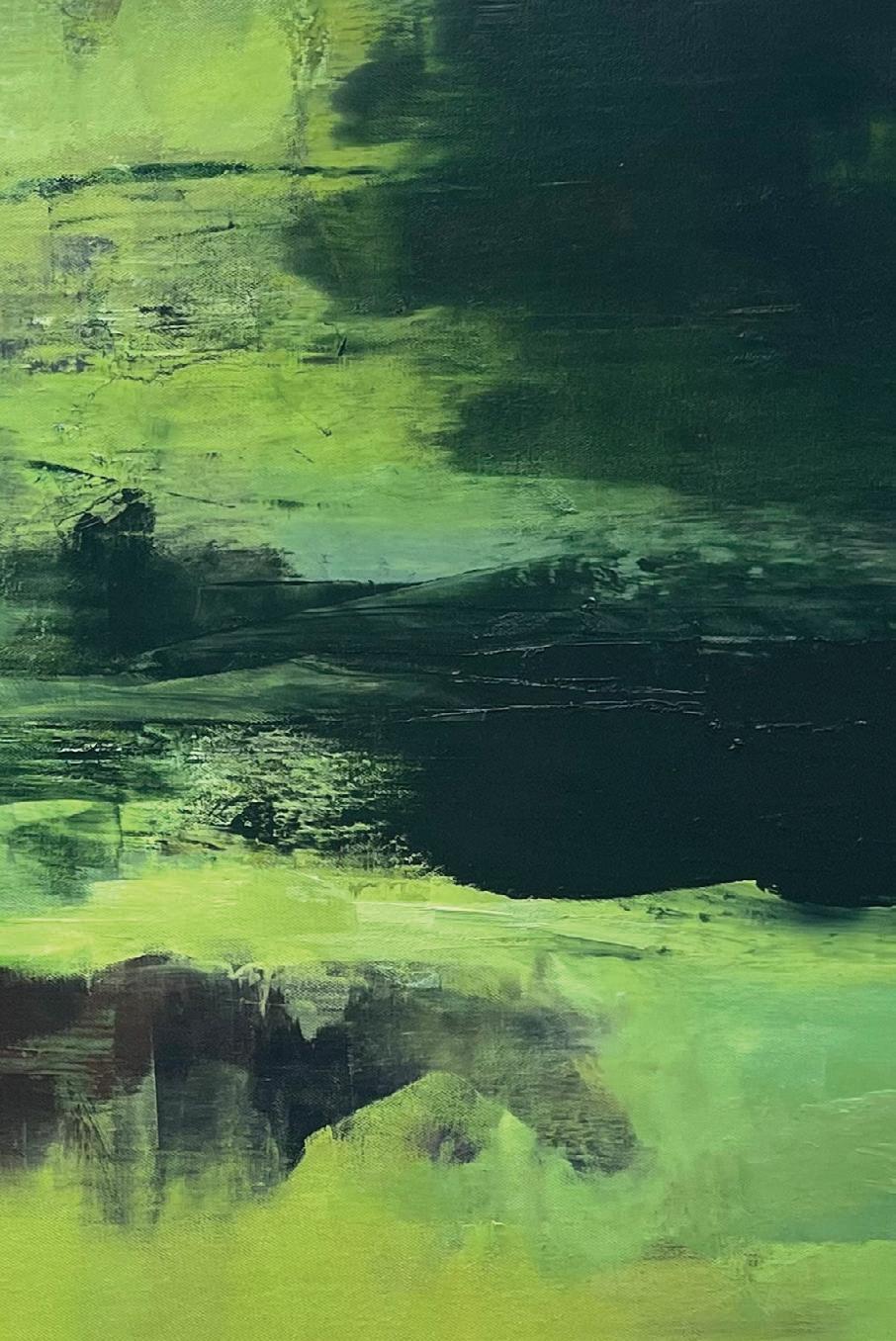
The word emergence describes the forces at play in the paintings of Douglas Fryer; the synergy between the marks he makes and the finished paintings he presents. Each brushstroke in itself, and then taken together as a composition, speak of emergence and its synonyms—disclosure, exposure, unfolding, appearance, arrival, surfacing and materializing.
Emergence considers the nature of cognitive processing. When presented with visual complexity, the brain clumps parts into the whole for the sake of comprehension. Fryer offered an example: when you walk into a room, you register the space not as a circus of components—walls, ceiling, floor, furnishings, sounds, smells—but rather a complete entity. “We sense it as a whole, not as parts. We call it a ‘room,’ we don’t call it a conglomeration of things. The same applies to my paintings,” he says. “None of the parts or pieces explain the whole in a cerebral or logical sense, because the mind registers the scene as a landscape.