The Brief

March 8, 2024
1. Markets This Week
2. Nvidia’s Journey to $2 Trillion
3. Egypt’s Economic Woes
Alphabridge
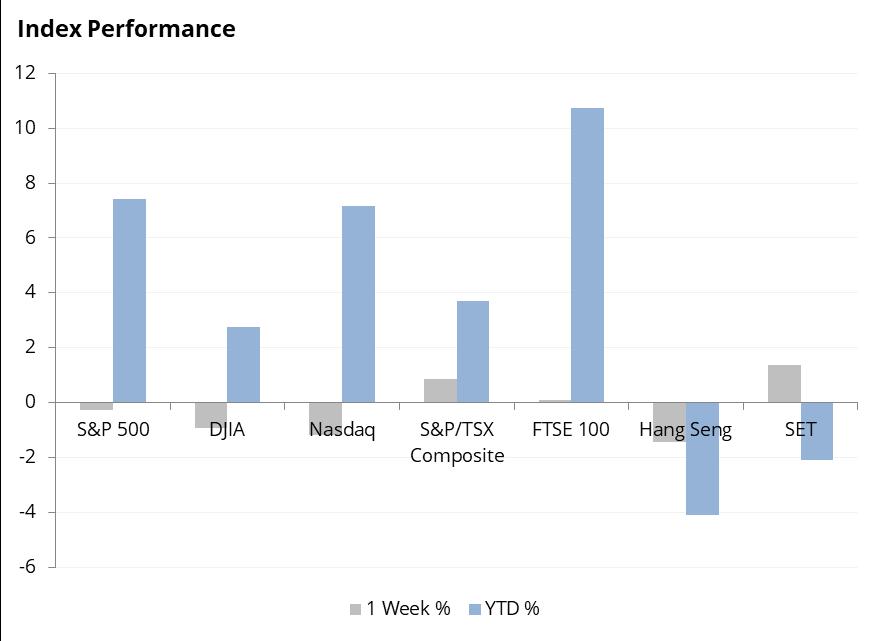
U.S. stocks slipped at the start of the week and finished with a slight loss, despite the S&P 500 closing at a record high Thursday. All three major indexes are still up on the year with the Nasdaq taking the lead, gaining 7.2%.
The tech-heavy Nasdaq benefited from another AI frenzy, fueled in part by Nvidia whose shares rose as as high as 15% during the week but ended with a 4% gain. Apple’s shares continue to wobble (down 11% this year) as weak iPhone sales in China (down 24% in the first six weeks of 2024 YoY) drove the weekly decline. Analysts fear Apple is getting left behind amidst the AI revolution as its products have yet to show real progress on that front.
Federal Reserve Chair Jerome Powell said inflation is nearing the point where officials would feel comfortable about cutting interest rates.
“We’re waiting to become more confident that inflation is moving sustainably at 2%. When we do get that confidence, and we’re not far from it, it will be appropriate to begin to dial back the level of restriction,” Powell said Thursday during testimony before the Senate Banking Committee.
The comment comes as the European Central Bank lowered forecasts for annual inflation to 2.3% this year on Thursday, although the bank chose to hold key interest rates steady, leaving its deposit facility at 4%.

Egypt’s central bank floated its currency and lifted interest rates by six percentage points. The move comes as the country faces mounting debt and declining foreign reserves. Egypt’s economy has also been weighed down by the war in Gaza. Shipping operators have rerouted their vessels away from the Red Sea to avoid the Suez Canal, reducing Egypt’s revenue from transit fees.
Electric vehicle makers continue to face tepid demand. Tesla’s sales in China slumped 19% in February from the same month last year, according to the China Passenger Car Association. BYD slashed the prices of the newer version of its bestselling Yuan Plus car and its cheapest model, the Seagull.
Bitcoin touched an all-time high topping $69,210 on Tuesday. The cryptocurrency staged a blistering rally this week. U.S. regulators approved Bitcoin ETFs earlier in the year, somewhat assuaging investors of broader institutional acceptance of the digital currency.
Shares of Victoria Secret plunged 30% during Thursday’s session. The retailer posted mixed Q4 results and disappointing guidance for the first quarter and full year.
To the everyday person, Nvidia might not be a household name, but for those in the tech world, it’s a giant. Thirty years after its founding, Nvidia is now worth $2 trillion. Its journey is marked by constant innovation, smart strategic decisions, and a steadfast dedication to pushing the boundaries of technology.
It all started in 1993 when three engineers from Silicon Valley, Jensen Huang, Chris Malachowsky, and Curtis Priem, set out with a bold idea to bring 3D graphics into the world of gaming and multimedia. Despite doubts from every corner in their early days, the founders pressed on with their vision and in 1995, introduced their first chip, the NV1. The NV1 was an ambitious graphics card that combined graphics, sound, and joystick inputs into one. While novel at the time, its unique approach and jack-of-all trade feature didn’t catch on. The software community wasn’t ready for it, leading to a lack of support.
Nvidia then redirected its efforts towards its core competency - creating high-performance, dedicated graphics cards. The launch of the RIVA TNT chip three years later put Nvidia on the map. The chip delivered more vibrant and textured graphics than other competing chips at the time, making games and media more immersive. The company worked closely with software developers and ensured strong support for its products. This strategy of specialization and collaboration would become a defining feature of Nvidia’s innovative approach.
A turning point for Nvidia came in 2006 with the introduction of CUDA. CUDA is a software layer that allowed Nvidia GPUs to handle parallel computing tasks. This innovation meant Nvidia’s hardware could now tackle complex computations beyond traditional graphical applications, opening doors to fields like scientific research and artificial intelligence. Nvidia fostered a community around CUDA by educating university students and professors, cultivating a generation of AI specialists deeply familiar with Nvidia’s platforms. These efforts helped Nvidia build a moat early on around its products.
In 2019, Nvidia made its biggest acquisition by buying Mellanox for $7 billion, a move that bolstered its offerings in high-performance computing and data

center infrastructure. This was crucial as AI models became more complex, and the demand for data processing power skyrocketed. The Mellanox deal cemented Nvidia’s lead in the AI chip market, where it now controls over 80% of GPU sales.
However, Nvidia’s path hasn’t been entirely smooth. Challenges such as geopolitical tensions, regulatory pressures, and emerging competitors have tested its resilience. Notably, U.S. restrictions on AI chip sales to China negatively impacted Nvidia’s revenue. Furthermore, companies like Amazon and Google are developing their own chips, which could challenge Nvidia’s dominance.
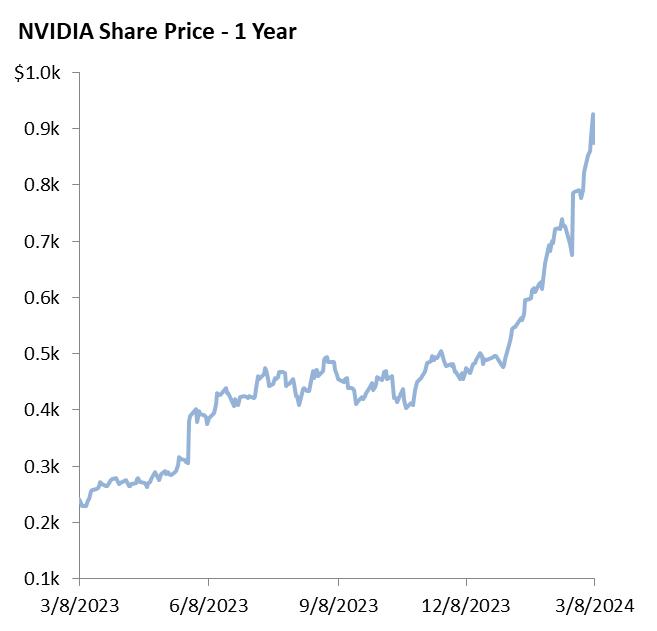
Despite these hurdles, Nvidia’s outlook remains positive. The company recently reported a record quarterly revenue of $22.1B and an annual revenue of $60.9B marking significant growth. The stock has gained some 70% so far this year.
Nvidia’s journey underscores the power of relentless innovation, strategic thinking, and thoughtful execution. By focusing on its core competencies and continually pushing the limits of their capabilities, the company has sculpted the contours of the industry that it now dominates and set a benchmark for excellence.
Since the war began, Egypt has become a key player in ceasefire negotiations between Gaza and Israel. However, even as it aids its neighbors, it’s grappling with its own economic struggles.
On Wednesday, following an $8B bailout loan agreement with the International Monetary Fund, the Central Bank of Egypt floated its currency and raised interest rates by 600bps to 27.75%. The Egyptian pound then lost about 38% of its value, trading at 49 pounds to one U.S. dollar, up from about 30 the previous day. The IMF has bailed out the Egyptian government four times thus far, making the country its second biggest debtor.
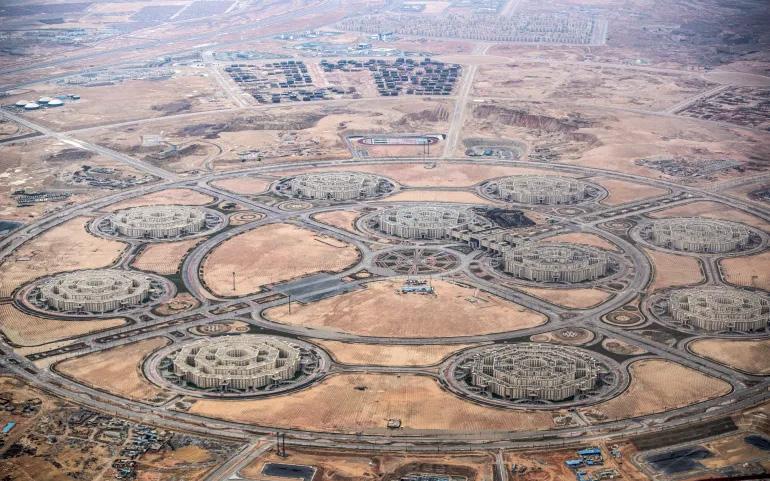
Corruption and poor fiscal discipline are among the main reasons for the country’s economic troubles. Since Abdel-Fattah al-Sisi, a former general, took power in 2013, Egypt’s external debt has quadrupled. Costly megaprojects, including a new capital, cities, and highways, have consumed funds and yielded little. For example, the $60B investment in a new capital is viewed as ineffective by many, given that most of the population cannot afford to live in it. An $8.5B investment to expand the Suez Canal in 2015 has also fallen short of its projected revenue forecast.
Military monopolies have stifled Egypt’s economy for years, marginalizing the private sector. The armed forces have owned everything from pasta and cement factories to street stalls. Mr. Sisi claims military-owned businesses ensure stability and efficiency but reality says otherwise. Food inflation reached 73% in September last year. This state of affairs prompted a decline in the private sector and a flight of foreign investors, exacerbating the pressure on the currency. Egypt’s wealthier Gulf neighbors have been hesitant to invest more capital without assurances on the Egyptian pound’s value.
The country’s weak economy was further affected by the war in Ukraine, and now between Israel and Hamas. Tourism revenues and earnings from operating the Suez Canal, both contributing 5% to the GDP, have significantly decreased. Shipping lines have rerouted their traffic to avoid the Red Sea and tourists have avoided going to the region. With limited foreign reserves, the government had little choice but to
float its currency for the fourth time since early 2022. While the authorities hope that raising interest rates will temper inflation (currently at 25%) and attract foreign investment, devaluing the currency would also cause its dollar debts to surge and increase food prices further.
Experts estimate that Egypt would need at least $10B in short-term funding to roll over its debts and cushion the impact of devaluation. Western countries and Gulf States seem ready to assist, as a bankrupt Egypt would likely heighten the threats of Jihadism and instability in the region.
The world needs a stable Egypt and the country needs to make major structural reforms to address its troubles. To start, the government needs to restore investor confidence by implementing effective fiscal policies and distancing itself from opaque military-owned businesses. Additionally, focusing on sectors that can drive sustainable economic development and diversify income sources, such as technology, renewable energy, and tourism, is crucial. Egypt’s strategic location and historical significance present unique opportunities for growth and development that, if utilized correctly, could help the country surmount its current economic difficulties.
Alphabridge
www.alphabridge.co