KASTELRUTH · SEIS AM SCHLERN · SEISER ALM · VÖLS AM SCHLERN · TIERS AM ROSENGARTEN
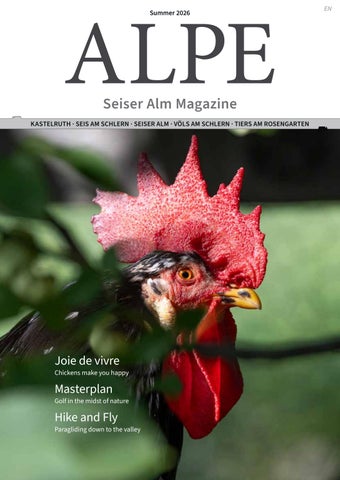
Joie de vivre
Chickens make you happy
Masterplan
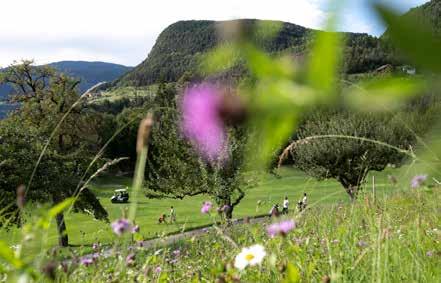
Golf in the midst of nature
Hike and Fly
Paragliding down to the valley
Dear
readers,
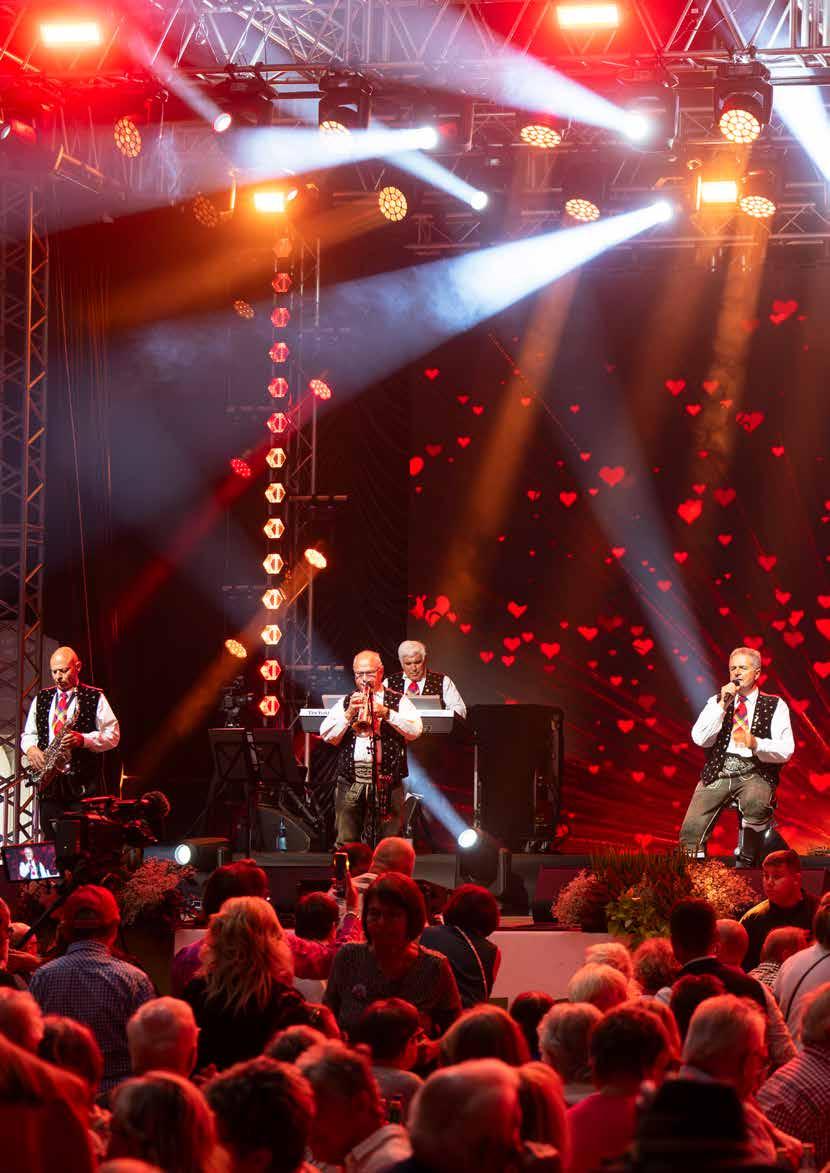
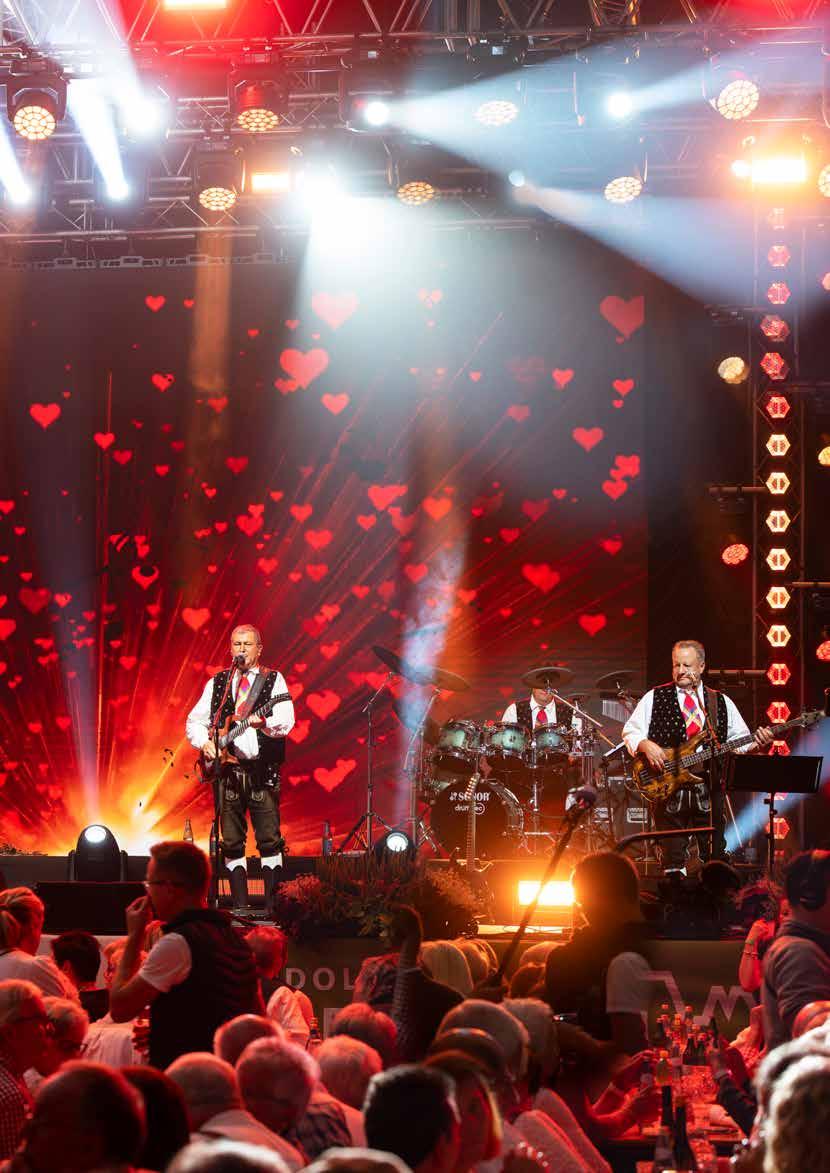
Anyone who has ever been to the “Kastelruther Spatzen Fest” – and those loyal fans among you may well have been countless times – will know the mix of happiness, fun and joy that can be experienced first-hand in the marquee at Kastelruth. For over 40 years now, the “Sparrows” have been delighting millions. Yet Norbert, Valentin, Walter, Albin, Karl, Kurt and Rüdiger have always remained the same: natural, authentic and with their feet planted firmly on the ground.
what many people long for in an increasingly complex world: genuineness, credibility and harmony between our inner selves and our outward expression. In this issue of ALPE you will find a series of examples that address this theme. Whether in the classical music of Mahler, paragliding from the Schlern or practising Kneipp therapy in Ratzes; in the vegetable gardens of Tiers or on a farm in Obervöls; hiking with youngsters in Kastelruth, golfing in St. Vigil or enjoying the quark dumplings known as “Topfennocken”: those seeking relaxation and profound experiences are particularly moved by the authentic
We also look at the topic of “people and their chickens”: here you can read how chickens are not only a vital source of food, but apparently make people happy. It is a question of being close to nature, the growing awareness of the origins of our food and, above all, slowing down.
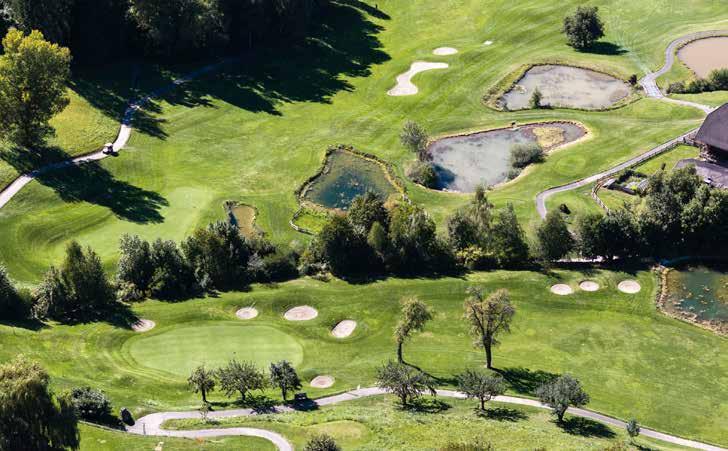
Unfortunately, this issue sees the end of our series on interesting projects by local architects. Landscape architect Eva Maria Schgaguler provides the grand finale: the St. Vigil-Seis golf course seamlessly blends immaculate greens with a precious natural and cultivated landscape.
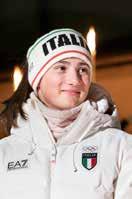
Many of you will no doubt have been following the Milano-Cortina 2026 Winter Olympics. No fewer than six athletes competed from our Dolomites region Seiser Alm – and we are incredibly proud of them! Alongside one gold and one bronze medal, there were plenty of emotions on display. We hope that you too will enjoy such positive thoughts and emotions!
We are delighted to welcome you here! And we hope that yours is a relaxing stay.
President, Seiser Alm Marketing, on behalf of the tourist authorities of Kastelruth, Seis am Schlern, Völs am Schlern, Seiser Alm and Tiers am Rosengarten
Page 4
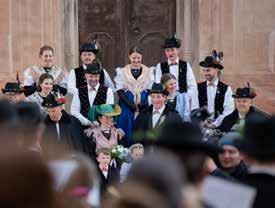
40 years of the Kastelruther Spatzen Fest
Page 6
Joie de vivre
Chickens and happiness Page 10
Masterplan
Golf and landscape
Page 16
Hike and Fly
Paragliding
Page 20
Healing power
The Kneipp facility at Ratzes
Page 26 Marinzen lift
A successful new start
Page 30
Classical Music
The Mahler revolution
Page 34
Year of the Woman Farmer
Milk ambassador
Page 38
Farming
A communal market garden
Page 42
Recipe
Quark dumplings
Page 44
Summer Highlights 2026
Page 46
Winter Preview 2026/27
Pages 48, 50 Seen & heard
Photo: SAM/Roschan Fill
One great big family
40 years of the Kastelruther Spatzen Fest
The first “Kastelruther Spatzen Fest” was held in the town of Kastelruth in the autumn of 1985. For 40 years now, these stars of folk music have been attracting tens of thousands of fans from far and wide each autumn: together in the large marquee, they celebrate music and life for three whole days. To mark this anniversary, music lovers and friends offer their warmest congratulations to the Kastelruther Spatzen and simply say THANK YOU for the wonderful times. And here’s to many more to come!
Scan the QR Code for the Alpe-Special Edition “35 years of the Kastelruther Spatzen festival” 2019
Text: Elisabeth Augustin
Photo: Helmuth Rier
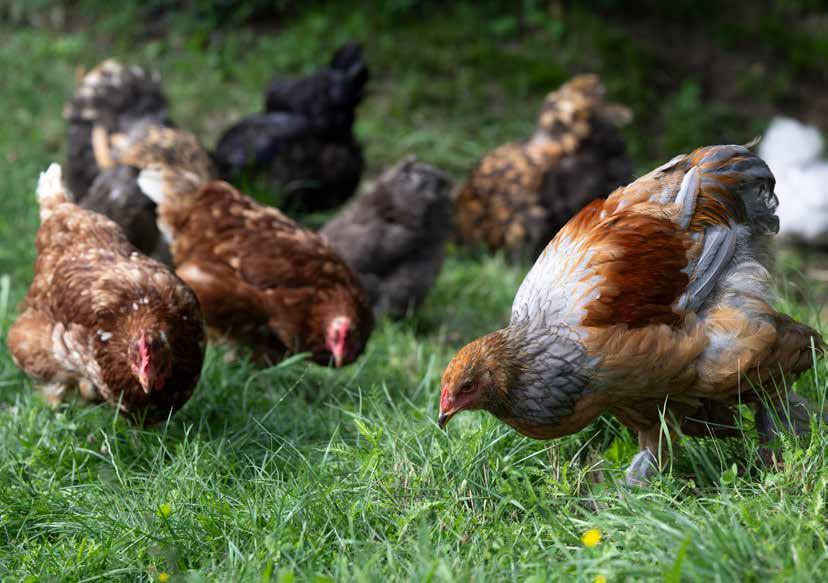
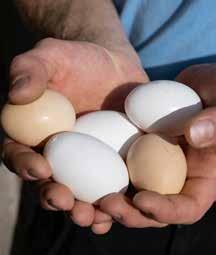
Chickens in the meadow: the birds are delighted with the lush grass; thanks to the beta-carotene, the yolks of these eggs are a deep yellow-orange colour.
Eggs and joie de vivre
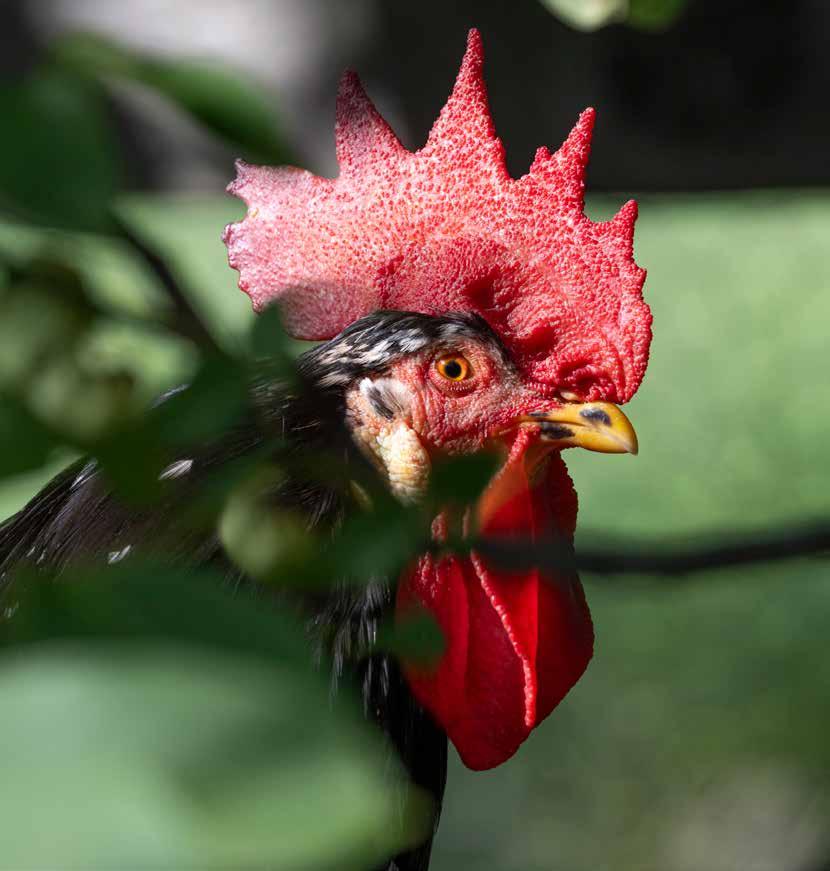
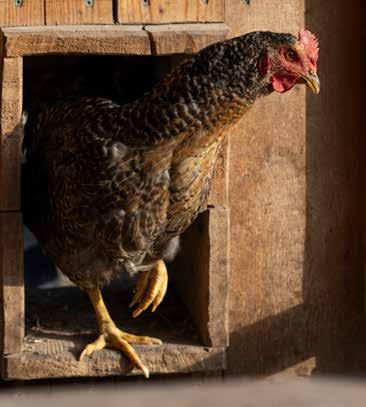
As the only farm animal that can be kept without the need for large stalls or lush pastures, chickens are also very popular with non-farmers. Chickens not only provide a valuable staple food – they also seem to make people happy!
Chickens are part and parcel of any self-respecting farm: many South Tyrolean mountain farms see them scratching around in the yard or pecking for grain in tractor tracks. It is no coincidence that the image of the red rooster indicates those places that offer farm holidays: it symbolises country life, self-sufficiency and authenticity. Chicken farming is no longer exclusively a part of everyday life on the farm, however. It is increasingly finding favour
outside its traditional milieu and among a younger generation – as a hobby, as a conscious decision for animal welfare, as a growing awareness of food origin and as a way of “slowing down”.
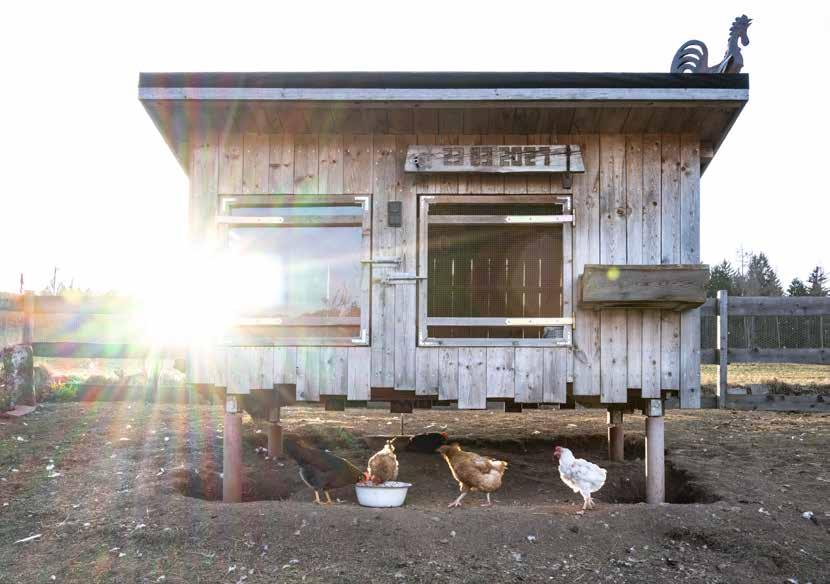
This is the case for Lukas Kritzinger, 27, who runs an electrical business with his two brothers. In 2021, he started with a self-built coop on a small, sloping piece of meadow not far from the church in the hamlet of St. Konstantin, which initially housed chickens and goats side by side. “It was the perfect use for that space, as it was hardly worth mowing such a small area”, he says, looking contentedly at the run, where a good dozen hens are busily moving about. He currently collects around seven eggs a day – more than enough for his family’s own needs.
Lukas does not keep mere brown or white laying hens, the so-called hybrid chickens that are bred solely to maximise egg production: his flock consists of different breeds of chicken, each with beautifully patterned plumage. At first, he was a purist: he wanted only one breed, such as the robust Vorwerk chickens, known for their distinctive two-tone plumage. Lukas even bought hatching eggs for his incubator and raised the chicks himself. The flock has in the meantime become more colourful as a mixture of different breeds – less
Text: Sabine Funk
Photo: Helmuth Rier
purism and more diversity. You can see how much this young man enjoys the lively animals – the handsome hens with their shiny plumage and the colourful young “Italian” cockerel that he recently added to the flock and that is now intended to assert himself as the leader of the group.
Lukas designed and built the coop himself, lovingly decorating it with numerous details. Today he would do certain things differently: “More laying nests are needed, and it would be more practical to be able to collect the eggs from outside”, he says, adding that experience has made him wiser. His four mountain goats from the Passeier Valley currently still live in the neighbourhood; they will soon move into attractive new accommodation on an adjacent meadow. His project continues to grow – a modern, pragmatic piece of country life. In particular, keeping chickens requires relatively little work, as most matters run themselves. Lukas also knows that the darker side of animal husbandry is also part of the package: if a hen is getting on in years and has stopped laying, he will not shy away from slaughtering it. He enjoys keeping animals – but without romanticism. This also applies to his goats.
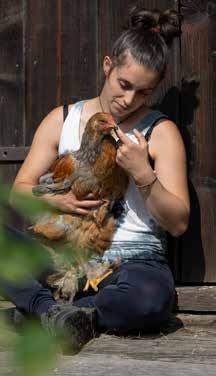
For Tabea Berger, the situation is different. Like Lukas, she is from St. Konstantin, but has been living at the Lafogl Hof farm in the village of St. Oswald for five years, where her partner’s parents live. Even as a teenager, Tabea showed an exceptionally strong commitment to animal welfare. What began as keeping animals as a private project quickly grew into a veritable rescue centre for abandoned or neglected pets at her parents’ house. Together with her mother and Kathrin Schrott, a veterinarian from Völs, she eventually founded the association named “Hilfe für Tiere in Südtirol” (Help for Animals in South Tyrol).
The sixteen hens and two roosters, lovingly cared for by Tabea along with her two small children, represent only a small part of the
diverse animal population that has found a peaceful, species-appropriate home here. Currently, no fewer than 19 sheep, 15 goats, 29 rabbits, 47 guinea pigs, six quails, five horses, two dogs and six cats live on the farm – all are in daily receipt of plenty of care and attention, but are above all there to be loved. The large proportion of small mammals in particular shows that typical family pets are often acquired without a proper knowledge of their needs. At the latest when interest wanes on the part of the family’s children, the animals are given away or abandoned. To prevent this, for a small fee Tabea offers informative encounters with her animals. Children and adults alike can learn about care requirements, the appropriate conditions for keeping animals and each one’s particular body language – ideally before they decide to get a pet of their own.
As much as her numerous four-legged friends dominate her everyday life, as an animal lover Tabea also has room in her heart for her chickens. Her colourful, lively flock contains many eye-catching examples, for example a still somewhat shy Padovana hen with her magnificent crest feathers, or a dignified Brahma cockerel. Some of these animals too are from problematic or abandoned homes or from private breeders who were dissatisfied with the colouring of certain breeds. Tabea simply discovered some of her chickens in the small ads, however, and instantly fell in love with them.
“I think chickens are so wonderful because every one has its own personality. They are curious, lively, full of joie de vivre and each day they show us how much character and emotion even such small creatures can have”, says Tabea. None of the chickens at the Lafogl Hof has to fear ending up on the chopping block: as an animal rights activist, Tabea has long been living a largely vegan lifestyle, but will occasionally enjoy an egg from her own hens – a gift that her little feathered friends are surely happy to give her. <
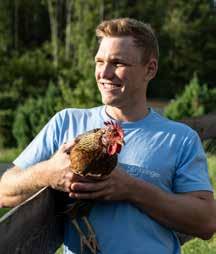
Lukas Kritzinger (above) and Tabea Berger (below) take great pleasure in their chickens, and not just for their eggs.
AFFORDABLY AND SUSTAINABLE TO THE TREKKING WONDERLAND
with the Combi Card or the Seiser Alm Card Gold
Combi Card 3 in 7* 73.00 €
In the course of 7 successive days (after first use)
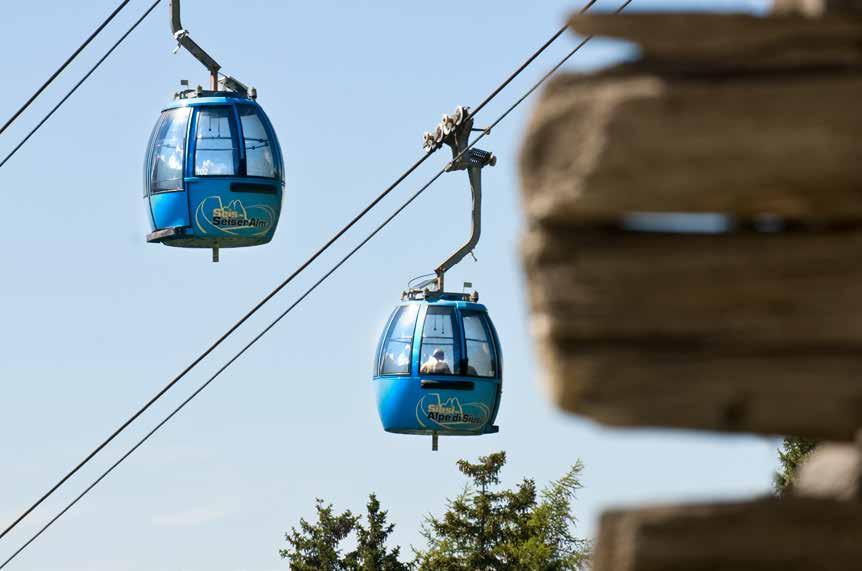
> 3 times to the Seiser Alm and back, with the Seiser Alm Aerial Cableway OR the Seiser Alm Express (route 10)
> unrestricted use of the Shuttle Bus Service (routes 2, 3, 3A, 5, 13, 15) and the Almbus (route 11)
> extra charge for bicycles: 29.50 €
> extra charge for dogs: 9.00 €
Seiser Alm Card Gold*
Combi Card 7* 94.00 €
Valid for 7 successive days (after first use)
> unrestricted use of the Seiser Alm Aerial Cableway and the Seiser Alm Express (route 10)
> unrestricted use of the Shuttle Bus Service (routes 2, 3, 3A, 5, 13, 15) and the Almbus (route 11)
> extra charge for bicycles: 38.50 €
> extra charge for dogs: 21.00 €
136.00 €
Valid for 7 successive days (after first use) | 01.06. > 11.10.2026
Combi Card 14* 143.00 €
Valid for 14 successive days (after first use)
> unrestricted use of the Seiser Alm Aerial Cableway and the Seiser Alm Express (route 10)
> unrestricted use of the Shuttle Bus Service (routes 2, 3, 3A, 5, 13, 15) and the Almbus (route 11)
> extra charge for bicycles: 57.50 €
> extra charge for dogs: 42.00 €
Combi Card Spezial 3 in 7*
73.50 € Meran 2000 & Seiser Alm
In the course of 7 days (after first use)
> 2 times to the Seiser Alm and back, with the Seiser Alm Aerial Cableway OR the Seiser Alm Express (route 10) and 1 time with the Ropeway Meran 2000 or the Gondola Falzeben into the Hiking Resort Meran 2000
> unrestricted use of the Shuttle Bus Service (routes 2, 3, 3A, 5, 13, 15) and the Almbus (route 11)
> unrestricted use of the Seiser Alm Aerial Cableway and the Seiser Alm Express (route 10)
> unrestricted use of the Shuttle Bus Service (routes 2, 3, 3A, 5, 13 and 15) and the Almbus (route 11)
> unrestricted use of the Puflatsch Aerial Cableway, the Aerial Lifts Spitzbühl, Panorama, Florian (Seiser Alm) and Marinzen (Castelrotto)
> extra charge for dogs: 21.00 € > the bicycle transport will be charged extra
The Combi Card and the Seiser Alm Card Gold are not transferable and are available at all cash desks of the Seiser Alm Aerial Cableway, at the Tourist Offices of Kastelruth, Seis am Schlern, Völs am Schlern and at some accommodation. Kids (born 2018–2026) and persons in wheelchairs ride free of charge. Juniors (born after 01.01.2008) 50% discount with the Combi Card and 30% with the Seiser Alm Card Gold.
* The Guest Card “Südtirol Guest Pass” from Dolomites region Seiser Alm, which is not available for purchase and is issued free of charge to the guests by the accomodation, includes a price reduction for the Combi Card and for the Seiser Alm Card Gold.
Seiser Alm Aerial Cableway 39040 Seis am Schlern · Schlernstr. 39 T +39 0471 704 270 · www.seiseralmbahn.it · info@seiseralmbahn.it
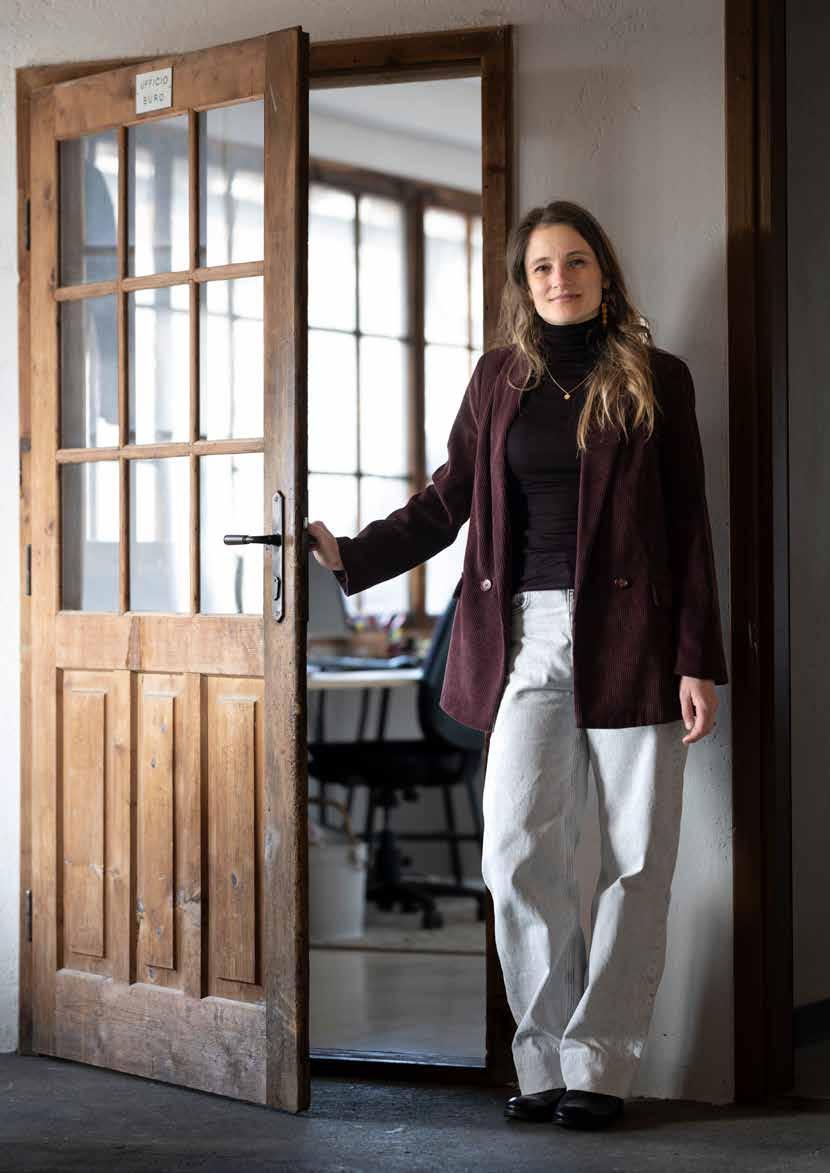
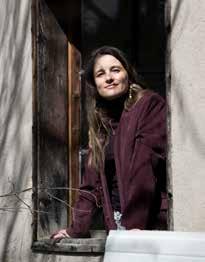
Landscape architect
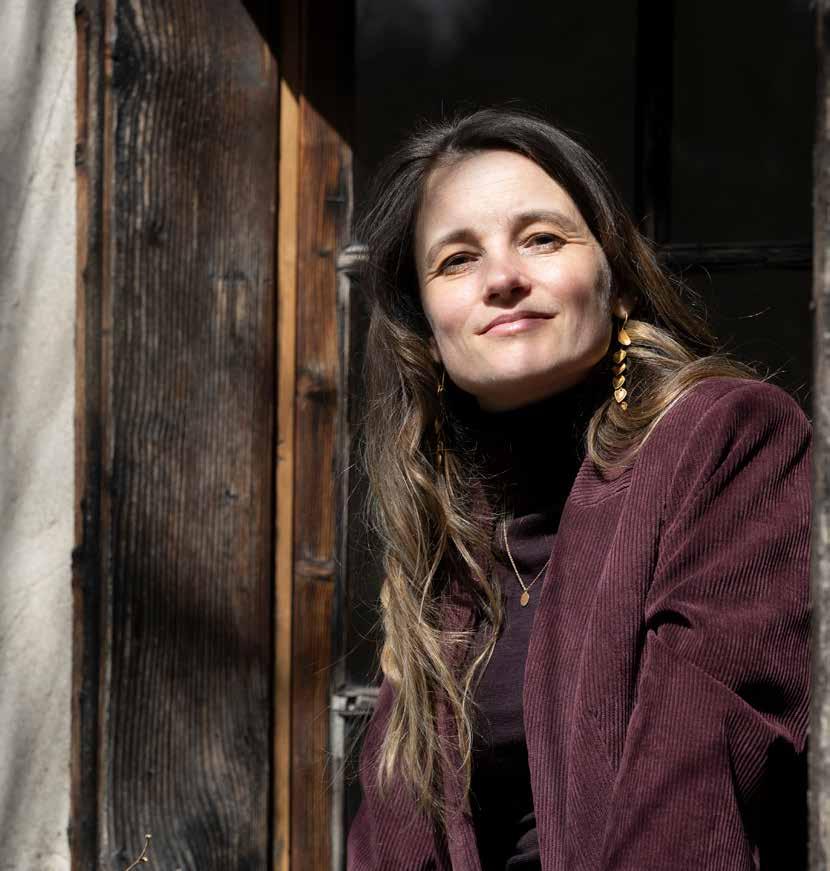
Eva Maria Schgaguler seeks to understand the spirit of a place and respond to it with her design ideas.
A keen eye for the landscape
The Dolomites region Seiser Alm is home to a number of architects who are making a name for themselves with distinctive projects – including landscape architect Eva Maria Schgaguler. She talks to ALPE about her masterplan for preserving the precious natural and cultivated landscape around the St. Vigil-Seis Golf Course.
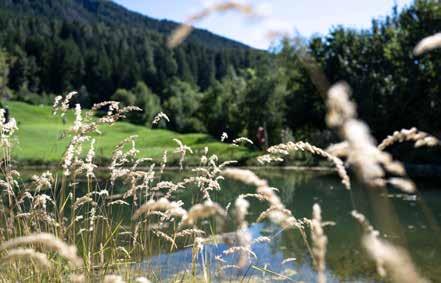
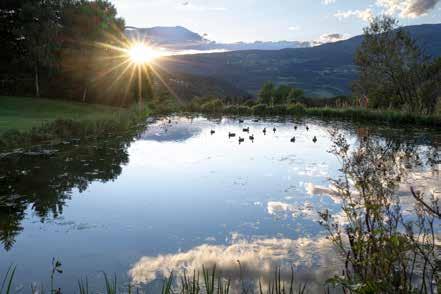
Tees and greens laid with the finest English turf – meticulously maintained and fertilised, their lush green cut smooth and perfectly manicured. For many people, these are probably the first images that spring to mind when they think of golf courses. The St. Vigil golf course in Seis am Schlern shows that this is not the whole truth: there, the Stuffer family, who own the course, have set themselves the goal of combining the most sustainable golfing experience possible, while actively protecting both biodiversity and the natural and cultivated landscape.
A golf course surrounded by unique cultivated and natural landscape
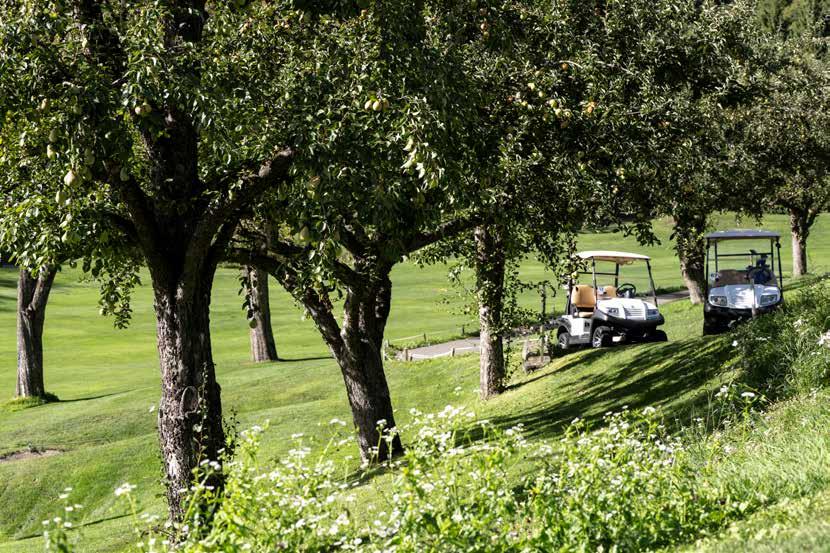
The golf course was established just over two decades ago by the Obkircher family and Oskar Fill, created from what was once farmland. It now blends harmoniously into a landscape that has evolved over the centuries: the fairways are bordered by irregularly spaced orchard trees, woods, sections of old hedgerows, flowering meadows and pastures, drystone walls, solitary trees, streams and watercourses.
To ensure that this unique environment and the site’s identity and character are preserved, landscape architect Eva Maria Schgaguler, whose office is in Seis am Schlern, drew up a long-term masterplan on behalf of the Stuffer family. “We first analysed the prevailing conditions, looked at which existing landscape elements characterise the golf course, what condition they are in and what conservation measures they will require over the coming years. The second step involved developing potential projects: the masterplan that developed from this process is primarily focused on the long-term development of the site and the planning of the course’s surroundings in order to safeguard this landscape for the future”, is how she summarises her mission. During the planning process, she defined measures and strategies that would not only preserve the site’s landscape heritage, but also enhance its aesthetic, ecological and cultural value. Schgaguler’s masterplan, completed in 2021, represents a multi-year project with certain interventions –both minor and major, but always sensitive – implemented each year. “The Stuffer family stressed the need to work only with native plants. This makes the project interesting for me too – I don’t want to plant exotic species out in the open in the mountains at 1,000 metres above sea level”, she emphasises.
Text: Simone Treibenreif
Photo: Helmuth Rier
The irregularly spaced orchard by the golf course consists mainly of apple, pear and plum trees and is now being rejuvenated.
Apples, pears, plums – the rejuvenation of mixed orchards
Irregularly spaced orchard trees are a key part of the project. “In the past, it was common for the orchards that helped farms become self-sufficient to feature a variety of tree species. If a tree died due to old age or disease, it was replaced by a new one, thus ensuring that the orchards were constantly rejuvenated”, explains Schgaguler. “With no replanting, however, this element will eventually be lost.” The orchard by the golf course consists mainly of apple, pear and plum trees and has an orthodox history, but it is now situated near the ninth hole and the clubhouse. As a result, its original function, that of providing for a farming family, is no more. “Recent years have seen numerous trees dying of old age, yet hardly any replanting has taken place, which is why the tree population has declined”, she says. “We have now planted some new trees and also commissioned the production of specially selected young plants of local half- and standard-sized old varieties.
was a sort of plant tunnel, like in Florence’s historic Boboli Gardens”, says Schgaguler. This element has been taken up and work is now proceeding on forming the entire approach as a planted tunnel. “We have planted native shrubs and trees, such as wild cherry, cornelian cherry and elder. When it gets hot on the course in summer, you can cool off there in the shade of the tunnel. Another particular effect is created by the darkness inside the tunnel: once you pass through it, a wonderful view of the entire area opens up, including the magnificent panorama.”
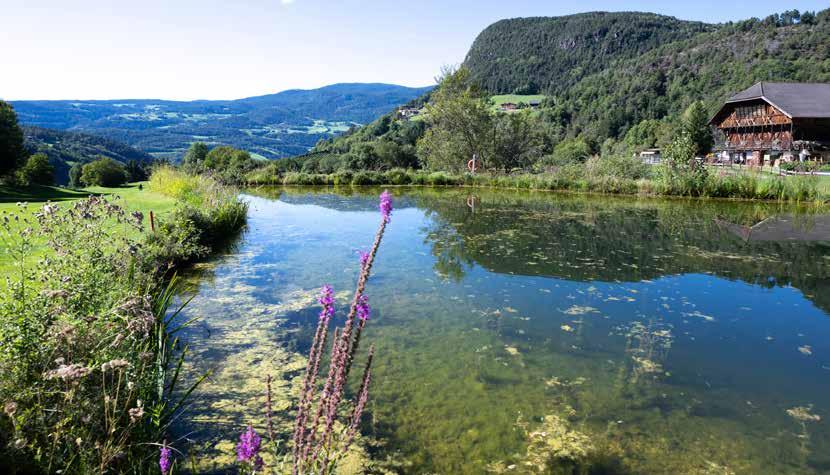
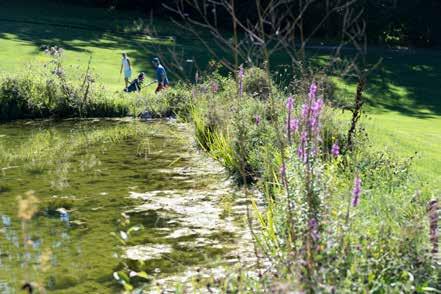
Yellow water iris and loosestrife to renature artificial ponds
The area also features a number of artificial ponds: “We have initiated a renaturing project for two of the ponds so as to better integrate them into the landscape, so we have planted a mix of native shrubs and grasses” Schgaguler explains. “In one pond, for example, we have created a shallow water area with aquatic plants such as yellow water iris, marsh meadowsweet,
““I don’t want to plant exotic species out in the open in the mountains at 1,000 metres above sea level.”
Landscape architect Eva Maria
Schgaguler
These varieties have been selected in collaboration with the SortenGarten Südtirol association, with the focus on pears. We have collected cuttings throughout South Tyrol for this project, as well as from our own orchard. Production is now underway and planting is scheduled for next spring.”
Another striking example of the sensitive interventions made on the golf course is the avenue leading to the first hole: the approach was in fact partially overgrown. “It
loosestrife, marsh marigold and others.” Native perennials such as meadow rue and lady’s bedstraw were planted along the banks.
“I really enjoy planning shrub and grass plantings so that they remain interesting throughout the year, as there is usually something in bloom or of some visual interest”, she says. With the renaturation programme so effective for the first two
Capturing the spirit of a place – what matters to Eva Maria Schgaguler in her work
“Thematically, I work on all sorts of projects – from themed trails and playgrounds to art projects. What always matters to me is understanding the place, its spirit, and responding to that through my design. Treating the existing environment and surrounding landscape with sensitivity is very important for me. I don’t want to create spaces that stand out like oddities in the landscape. My main concern in my work is that my projects should build on what has developed historically and on what is valuable. In rural areas, for example, you can take a landscape feature or an ecological corridor in the surroundings and continue with this. In urban areas, on the other hand, it is often helpful to take a historical view of how a place came into being and what are the functions it serves. I always therefore try to derive the design concept from what already exists then, building on this, I can develop bespoke concepts that combine functionality, nature and quality of life – with a clear focus on regional identity and sustainable open-space design.”
The architect
Born in 1984, Eva Maria Schgaguler grew up in Seis am Schlern, where she has also managed her landscape architecture practice since 2016, carrying out both private and public projects in Italy, Austria and Switzerland. From 2003 to 2007 she completed her bachelor’s degree in landscape architecture in Genoa, graduating with a paper on the conservation of historic gardens. She then moved to Amsterdam, working for the firm BplusB on urban planning projects and commissions for public spaces. Starting in 2008, she undertook a Master’s degree in Edinburgh, completing this in 2009 with a thesis on the remodelling of Brixen’s Hofburg Gardens. She then worked as a freelancer with Dolar Landscape in Brixen in the area
of landscape planning at local authority level. In 2010 she moved to Studio Vulkan in Zurich, where she worked until 2016 on various landscape projects in site planning and urban design. In 2016 she opened her own office, but simultaneously spent several years working as a project manager for Snohetta Studio Innsbruck, where she was responsible for, among other things, the planning and implementation of a three-hectare orchard with 170 different varieties of irregularly spaced trees at the Swarovski Crystal Business in the town of Wattens, in Austrian Tyrol.
ponds, four more ponds will soon be tackled in the same way.
As a landscape architect, what she likes about the masterplan for the St. Vigil-Seis golf course is its long-term focus – as well as the fact that she can follow the project so closely. “I live just a few minutes away and can head over whenever I like to see how the plants are developing: what’s flowering when, what’s working well and what’s not. That’s not always the case in our line of business: you often finish a project and can then no longer follow how it develops further”, she explains. “That is also the difference from architecture: an architect will for example plan a house and then, when it’s finished, that’s the high point of its existence – because it’s new.” It is different for landscape architects: they complete a project and only then will the green spaces and their plants develop. “It isn’t always easy to explain that to clients”, Schgaguler smiles.
“I really enjoy planning shrub and grass plantings so that they remain interesting all year round, as there is usually something in bloom.”
Landscape architect Eva Maria Schgaguler
In the case of the golf course owners, the Stuffer family, that was not an issue. “A lot of the work that we do isn’t visible – and that’s a good thing. The family want sensitive interventions to ensure that what is now of value will be strengthened and preserved”, she emphasises. “It is always a question of sustainability and ecological value – but of course also of aesthetics. But there shouldn’t be anything artificial.”
This not only creates a unique environment for golfers, but also provides valuable habitats for the local flora and fauna – from flowering wild roses to old walnut trees. <
Here you can read parts 1 to 4 of the
ALPE architecture series.
A recent renaturing project helps the artificial ponds to blend more naturally into the landscape.
A bird’s eye view
To live amid farms on a sunny hillside, with a large green meadow in front of the house, is wonderful. For Tassilo Seitz, this picturesque location has another, practical benefit: he can land his paraglider right outside his front door.
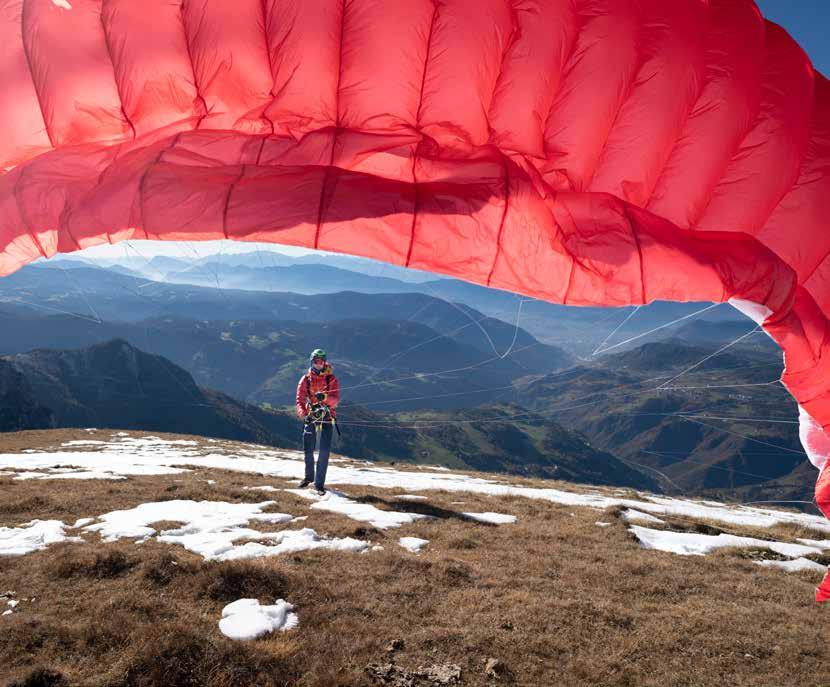
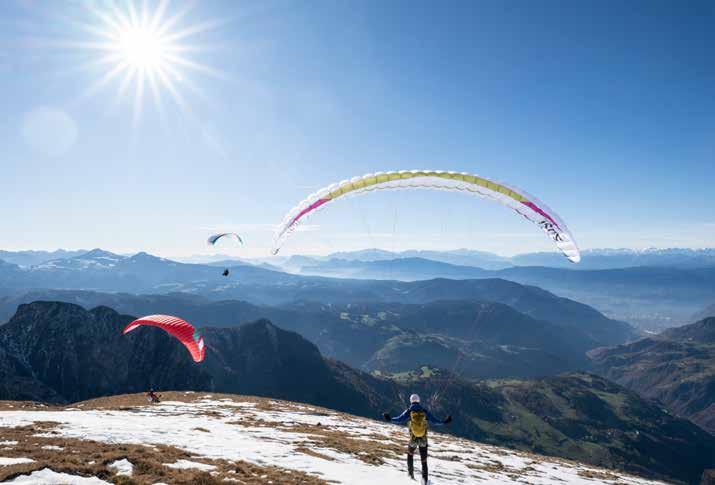
Anyone who climbs the Schlern, whether occasionally or regularly, knows that the considerable climb involved, and – even more so – the path back down to Völs am Schlern, is hard on the knees. The idea of sparing yourself this less appealing part of the route and simply gliding back down to the valley sounds too good to be true – yet can in fact be done. The name for this adventurous new type of sporting activity is “Hike and Fly”. It is nevertheless demanding and, in addition to the right equipment, requires a basic level of training.
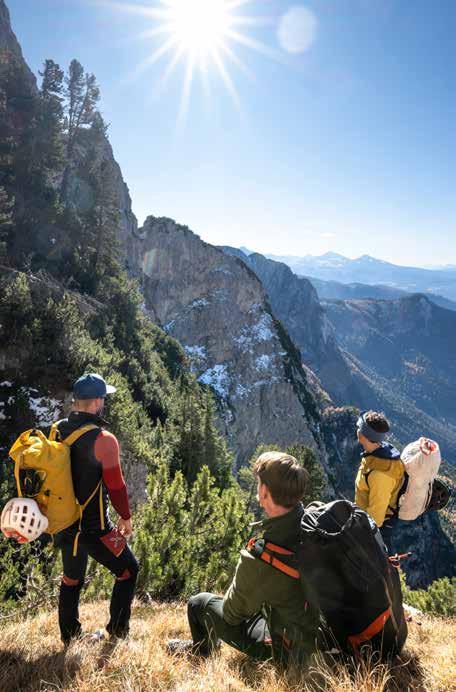
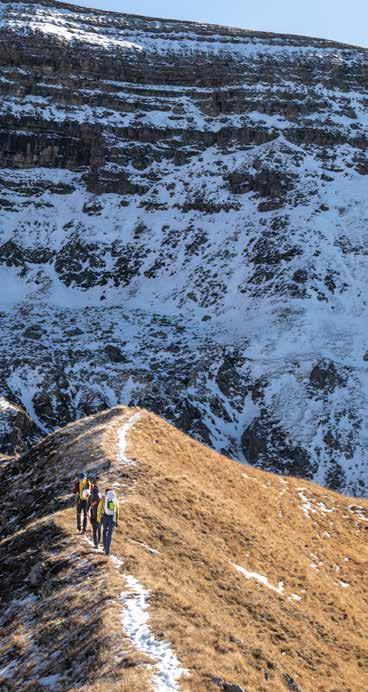
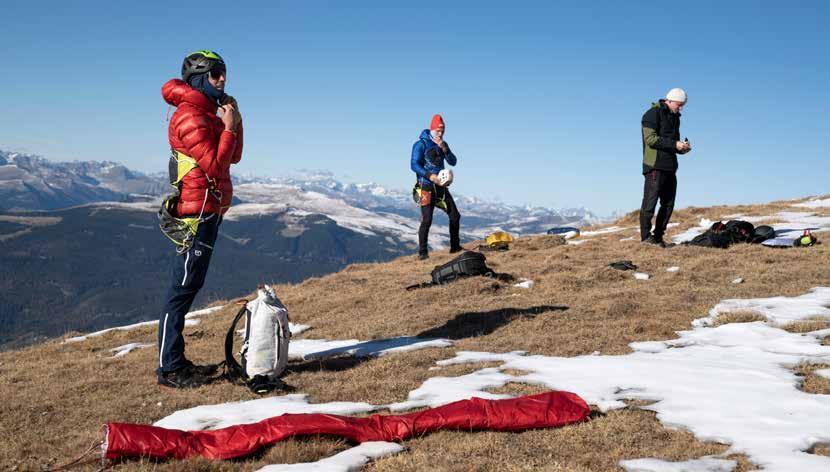
One sunny day in early November, we accompany three mountaineers – Florin Kompatscher, Markus Mauroner and Tassilo Seitz – up the Schlern, their paragliders on their backs. How does their style of flying differ from other forms of paragliding?
The basic training is initially the same: to get a licence, a certain number of flights and final tests are required. For athletically minded mountaineers, the appeal of Hike and Fly lies primarily in its potential as a training sport. “When I head up the Schäufelesteig trail to the Schlern then fly down with my paraglider, I’m back home in less than two hours”, says Tassilo.
Tassilo, a state-certified mountain and ski guide, attributes the current boom in this special combination of strenuous mountaineering and para-
gliding mainly to the enormous advances made in equipment. Fifteen years ago, a paraglider would weigh ten kilos or more, while the pack was also large. A modern paraglider weighs perhaps just under two kilos, plus around 200 grams for the harness. This weight saving is also due to the smaller surface area of the paragliders designed for alpine sports – around twelve to sixteen square metres instead of the more usual 25 square metres.
Does this minimalism entail additional risks and is it ultimately (even) more dangerous to entrust your life to this gear, which is optimised for weight and pack size? “Of course, the whole business has its dangers and, yes, accidents do happen, although these are very few in number. Such accidents tend to have fatal consequences, so it’s right to talk of a high-risk sport”, admits Tassilo. Paraglider design may also influence the safety factor: two-line versions with very good gliding characteristics, as used in competitive sports –which also exist – or for distance flights, require even more skilled operation. Paragliding in alpine conditions poses its own challenges: take-off and landing sites must be selected by individuals and assessed for their suitability, while the wind and weather conditions in unfamiliar terrain must be reliably assessed.
Text: Sabine Funk
Photo: Helmuth Rier
Hike and Fly: is possible at all times of year, but not in all weathers
On the Schlern mountain
How can such safety concerns be reconciled with his conscience when, like many mountain guides, he is also an active member of the mountain rescue service and knows the consequences of risky behaviour in the mountains better than most?
“Personally, I will only take off when I feel absolutely safe and the conditions are right. That’s why I’ve often come down from the Schlern on foot when something didn’t feel right. It’s important to always be ready to abandon your plans rather than insist on flying at all costs.”, says Tassilo. Weather conditions and winds are sometimes unpredictable, so it would be a mistake to plan your route to work by paraglider, or to assume that a descent by air will be possible. He himself has made such mistakes.
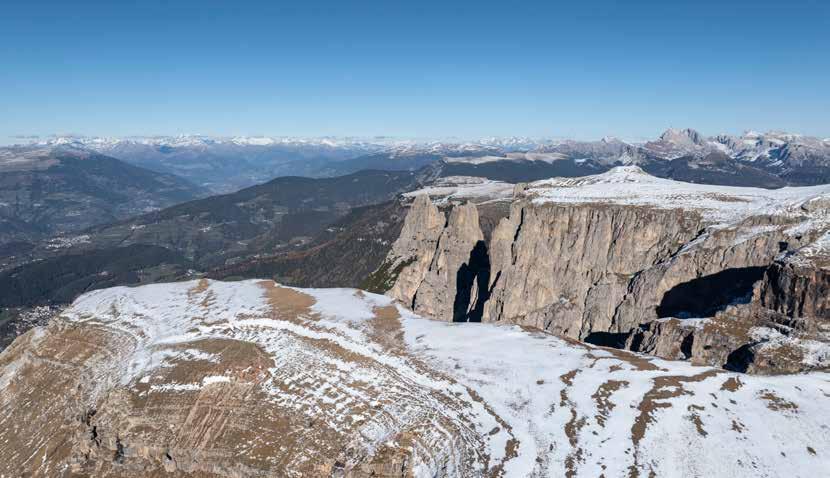
In the end, is it just the time savings that make Hike and Fly to your doorstep so attractive? No –the three mountaineers all agree that the Schlern is, above all, simply a fantastic mountain for flying from. From the Schlern plateau, at an altitude of 2,400 metres above sea level, you can launch in all directions. From the air, new structures in the rock faces can always be discovered, which is also help-
ful in exploring possible climbing routes and better understanding the structure of the terrain. As with all steeper walls, however, caution is advised: air turbulence and downdrafts are a possibility. Climbing via the Burgstall edge onto the summit of the Schlern, then flying back home by paraglider, is simply so much more interesting than circling over the prominences known as the Puflatsch or Spitzbühl. As a mountain guide, Tassilo is quite cautious when it comes to descending by paraglider: it is only an option for those who will take full responsibility for their own actions.
It is a sunny yet cold autumn morning on the Schlern. It is even chillier up in the sky: today’s conditions are nevertheless ideal. In general, Hike and Fly is possible at all times of year, but not in all weathers. The turbulent thermal conditions of summer pose particular risks. While during the warmer months the colourful paragliders are more likely to be seen in the sky in the morning or evening, alpine paragliding is becoming increasingly attractive, especially in winter. “When there is not much snow, for us it is actually the best alternative to ski touring.” <
For athletically minded mountaineers, the appeal of Hike and Fly lies primarily in its potential as a training sport.
The healing power of water
Ice-cold, clear spring water, deep breaths and an invigorating alternation between hot and cold: these are the effects of the simple water treatments offered by the Kneipp facility at Ratzes. A centuries-old health method shows the timeless way in which well-being is formed.
The water is crystal clear and icy cold. But, even though this is not my ideal temperature, I pluck up my courage and dip my arms, still warm from sunshine and hiking, up to the elbows into the extremely cold water. My arms tingle and my breath catches in my throat. “Pull your arms out. Quickly!” my brain seems to tell me. Then Maria Teresa Bortoluzzi, known as Resi, reminds me not to forget to breathe. And indeed, I manage to keep my arms in the water for a good 30 seconds. Then I pull my arms out, shake off the water and move them about to warm them up again. My head feels clear and refreshed, and I can feel my circulation working.
Bortoluzzi is a Kneipp health trainer and, on this sunny, warm August day, she shows my 12-yearold daughter and myself around the Kneipp facil-
ity in Ratzes, not far from Seis am Schlern. Water has long played a central role in the treatment of people at Ratzes: from 1723 onwards, a thermal bath with two mineral springs functioned here – one containing iron, the other sulphur. The springs were once used as a remedy for numerous ailments, from nervous debility to “women’s problems”.
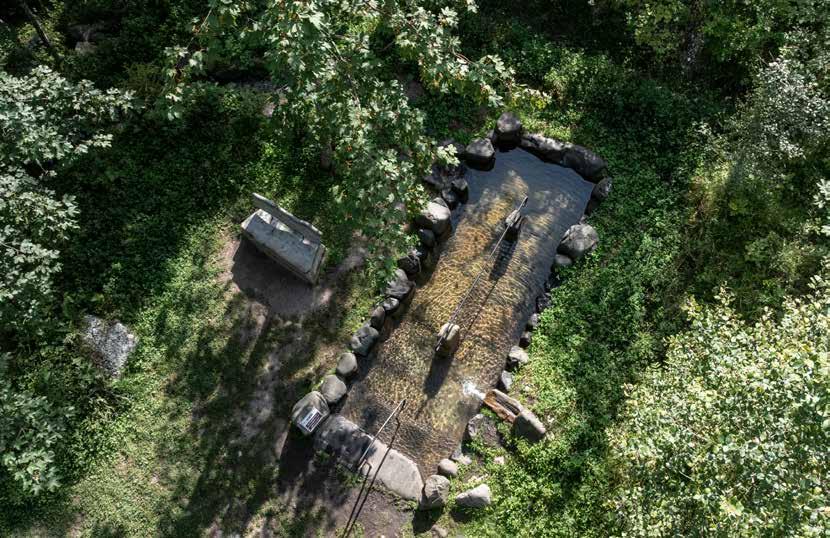
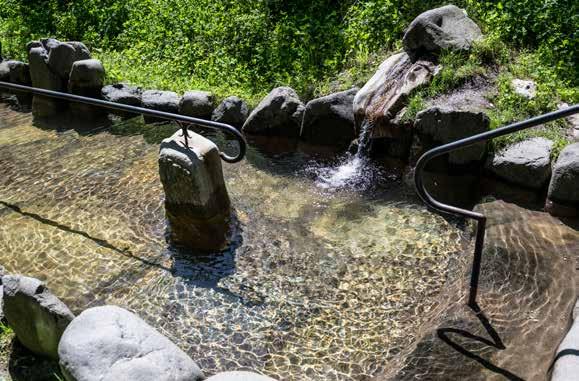
Two small basins for arm and face, one basin for the feet: the Kneipp facility at Ratzes
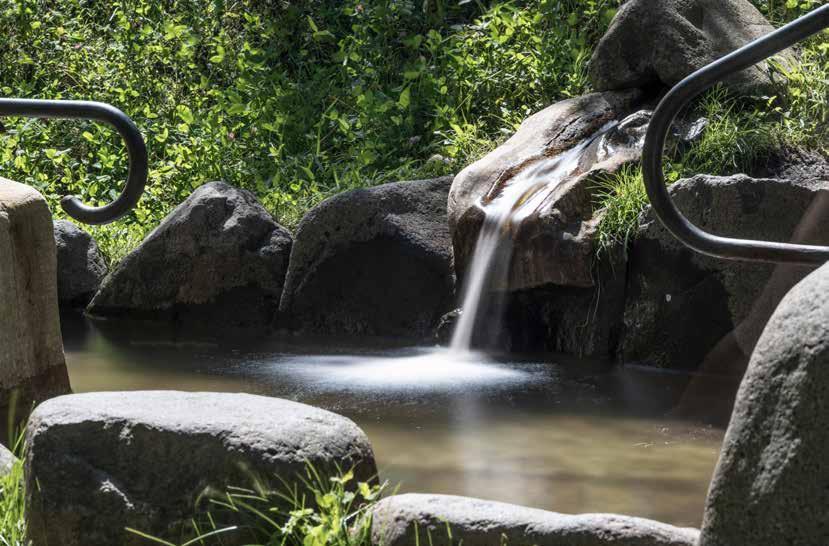
Although the mineral springs have now been buried, water still flows profusely from the surrounding steep walls of the Schlern massif and beneath the Seiser Alm – sometimes as raging torrents, sometimes quietly babbling away. And so today, amidst old, tall, deep-green
Text: Simone Treibenreif
Photo: Helmuth Rier
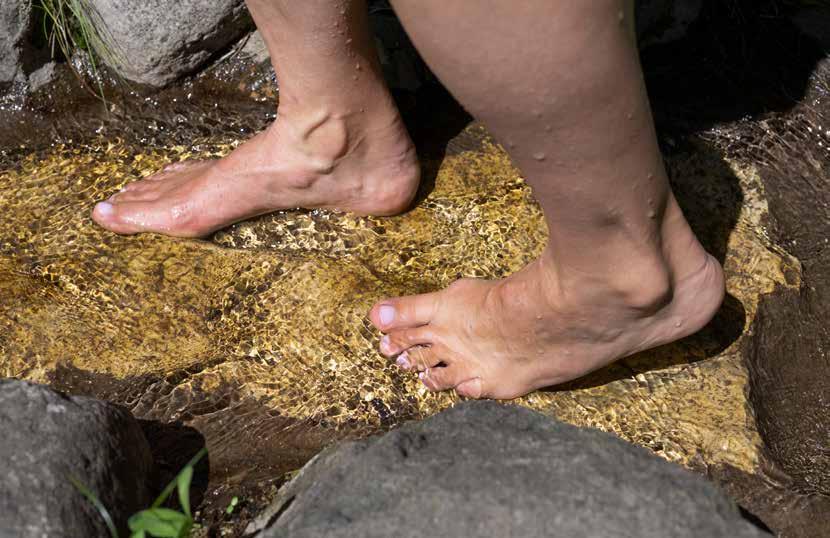
Crystal clear and icy cold: the spring water in the foot basin of the Kneipp facility at Ratzes.
Invigorating for mind and body: wading through the cold water or dipping the face in.
spruce trees, birdsong and the murmuring Frötschbach stream, an open for all Kneipp facility fed by fresh spring water, equipped with two smaller basins for bathing arm and face and a pool for wading up to the knees can be found.
Resi now stands right next to the basin for the arms, her bare feet in the soft moss, and enthusiastically states: “Every Kneipp treatment – whether for myself or others –is a caring act and therefore one of the finest things I can give”.
She continues: “Kneipp therapy is named after the Bavarian priest Sebastian Kneipp, who in the 19th century cured himself of a serious illness with the aid of water treatments”. He thereupon spread his knowledge about the healing power of water – knowledge that was not new, but only became popular thanks to Kneipp. A particularly well known action is treading in cold water, whereby one leg is alternately immersed then withdrawn. This alternation between cold and warm stimulates the circulation and promotes the flow of the blood.
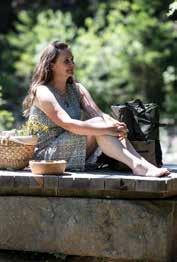
But Resi did not just bring along her knowledge of treading in water, washing and rinsing to our meeting: she has also brought a basket of food and herbs: homemade, lightly scented sourdough bread made from spelt and kamut flour, as well as numerous colourful blossoms: nasturtiums, marigolds, bee balm, mullein and many more. Treasures of nature, as Resi says: “All of them are medicinal herbs from my garden, although some can also be found growing wild. They can be used both for home remedies and in cooking so as to provide valuable nutrition”.
The five active principles according to Sebastian Kneipp
Water, nutrition and herbs are three of the five active principles on which Sebastian Kneipp based his teachings, which are then complemented by exercise and a healthy lifestyle:
1. Water. At the centre is water and the power of water. Treatments such as treading in water, rinsing, bathing, washing and cold and warm compresses have healing effects, promote the circulation of the blood, train the blood vessels and strengthen the immune system.
2. Exercise. Hiking, walking or going barefoot: regular, moderate exercise in nature is essential. This strengthens body and mind and promotes good health.
3. Diet. The basis is a simple, natural, balanced diet, with the focus on regional and seasonal foods.
4. Order in life. Everyday life should be consciously structured: plenty of sleep, breaks, stress reduction and mindful self-care –a harmonious rhythm of life promotes well-being.
5. Medicinal plants. Herbs and plants are used as supportive remedies, for example in teas, tinctures, baths and ointments.
Information!
Kneipp health trainer
Maria Teresa “Resi” Bortoluzzi explains: Kneipp therapy is in principle suitable for everyone, young and old alike.
It is however not recommended for people with acute bladder or kidney problems. Those with heart problems should also avoid arm baths.
Other rules to be observed:
· Only use Kneipp treatments when the body is already warmed up.
· If you want to do several Kneipp treatments in a row, take a break between them: for example, a break of at least one hour is necessary after treading in water.
· Ensure that the body warms up again, usually by exercising, after all cold applications.
About
her
Maria Teresa Bortoluzzi, known as Resi, is a Kneipp health trainer, forest bathing expert, herbalist and folk healer. She is full of enthusiasm about passing on her knowledge and showing people how they can use natural healing powers to promote their well-being.
In summer 2026 she will once again be accompanying those interested under the motto “Body, mind and soul in harmony” as part of Seiser Alm Balance, to be held at the Kneipp facility at Ratzes near Seis am Schlern (further information is available on seiseralm.it/balance).
Kneipp therapy is therefore no new-fangled wellness fad, but a proven, holistic health method with remarkable effects that has stood the test of time over the centuries. Kneipp summarised his philosophy thus: “The human body is a wonder and every part of it needs good care”.
Now back to the Kneipp facility in Ratzes, where some will stop after a long hike, with heavy legs and tired feet. This is exactly when walking through water or dipping the face is so invigorating. Just one treatment will have benefits. “The body and its immune system are stimulated and thus trained to become active. The more often I practise Kneipp therapy, the greater the effect and the more care it provides for the body”, emphasises Resi. “Similar to water baths, regular walks in the forest also have an invigorating effect on the body.”
Repeated Kneipp treatments not only have a positive effect on the entire metabolism, they also –as Resi explains – help with sleep and digestive disorders, circulation and blood pressure regulation, venous insufficiency and vein care, kidney and bladder problems, abdominal discom-
fort and muscular tension: they can also increase stress tolerance.
Ancient wisdom for
modern ailments
Kneipp therapy therefore helps against numerous so-called lifestyle diseases and problems –even though, with a 19th-century clergyman as its “founding father”, it might at first sight seem out of place in our hectic, fast-paced, technology-dominated world. However, the simple and clear philosophy of Kneipp therapy fits perfectly into the present day – and demonstrates that health can be maintained without the use of apps, gyms or dietary supplements.
With this in mind, I do another round in the clear, cold spring water of the foot bath at the Ratzes Kneipp facility, breathing deeply and concentrating, following Resi’s instructions: First, I put my right foot, which is furthest from my heart, into the water, toes first, then I dip my left foot in and lift my right foot out. The interaction of warm and cold feels good, as do the sun’s rays tickling my nose. <
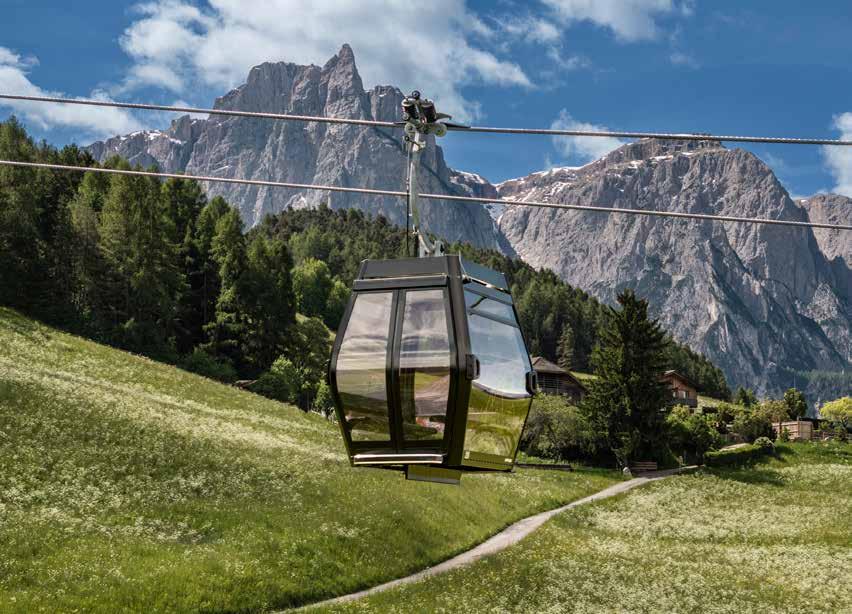
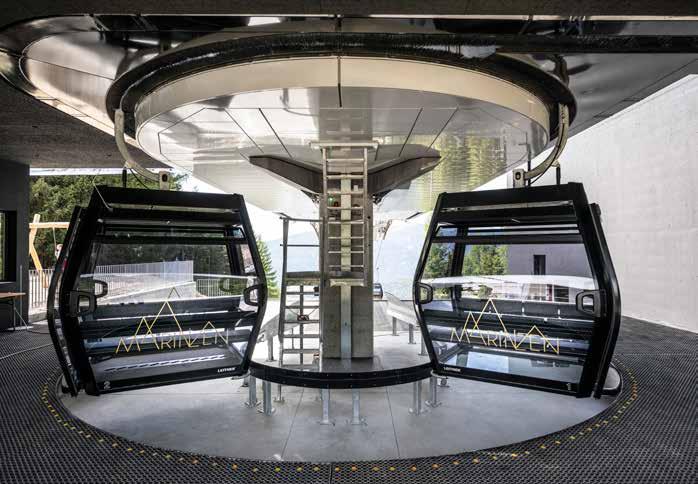
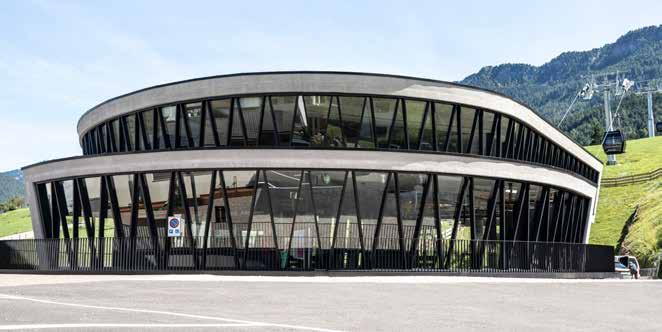
The systems and stations of the new Marinzen lift are designed to blend as much as possible into the village and the surrounding landscape, with materials and colours chosen accordingly.
184 seats and a new start
For almost three decades, the Marinzen lift carried locals and visitors alike up to the summit of the hill above Kastelruth. Since summer 2025 a gondola lift has replaced the chairlift – but there’s more to it than just a new lift system.
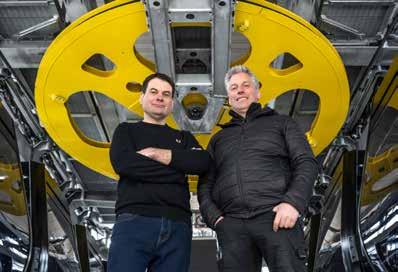
The glass doors of gondola number one swing almost silently open. Two men step out and look around. Their faces show joy – and a touch of pride. Manfred Jaider and Matthias Tirler have arrived at the top station of the gondola lift that, since summer 2025, has been connecting Kastelruth with the Marinzenalm.
For many in the village, it is simply a convenient means of transport. For Manfred and Matthias, however, it means far more. As directors of Marinzen GmbH, they worked on the project for many years – and, when necessary, they were also present on the construction site in their spare
time, with a firm resolve to awaken Kastelruth’s local hill from the slumber into which it had previously fallen. “We’ve succeeded”, they say. And yet it seems they have yet to reach their goal.
A lift in the heart of Kastelruth. When, in the 1960s, winter tourism took off in South Tyrol, interest in skiing also began to grow in Kastelruth. But, while the Gröden Valley and the Seiser Alm had already joined forces and formed one large ski area by 1966, Kastelruth had to wait some time for its first modern lift.
In 1972 all was ready and the Marinzen lift began operating. A basket lift carried visitors and locals from the dairy near the village centre up
Text: Lisa Maria Gasser
Photo: Helmuth Rier
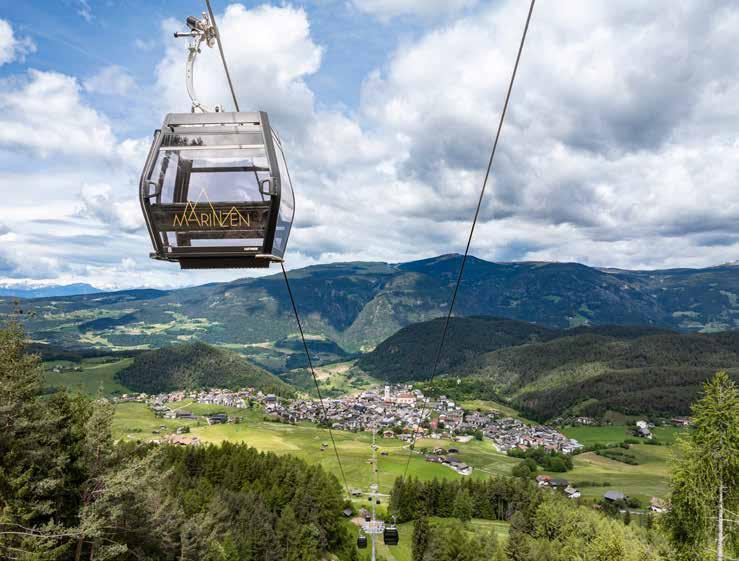
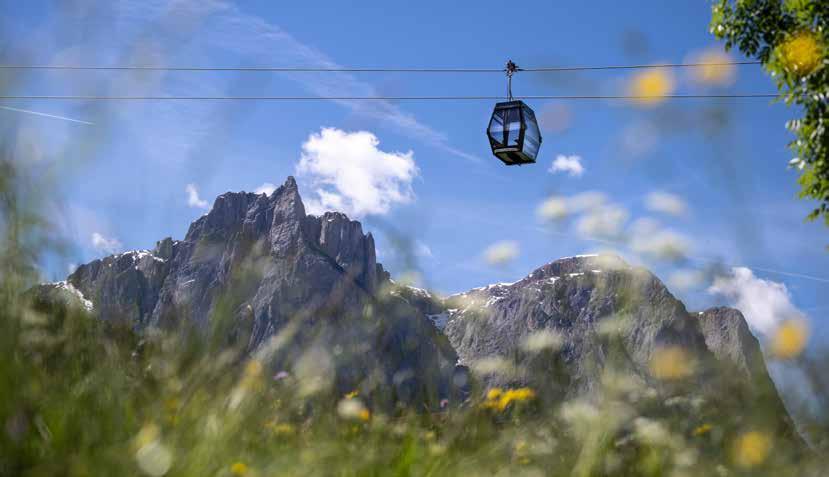
Since summer 2025, 28 cabins have been transporting locals and visitors up to Marinzen. Cabin number one is a particular highlight: its glass floor offers unobstructed views in all directions.
to an altitude of around 1,500 metres, to the Marinzenalm on the slopes of the rise known as the Puflatsch. The project had been made possible by dedicated hoteliers, shopkeepers and entrepreneurs.
The year 1986 saw the basket lift replaced by a two-seater chairlift. This was built and operated by Marinzen GmbH, a company newly founded by stakeholders in the Kastelruth business and tourism sectors. Now it was no longer only in winter that people would head uphill: summer too revealed the Marinzenalm as a popular destination for walkers, families and children, who could run around in the great outdoors or on the large playground. A mountain hut serving refreshments was added in 1991.
Together with the Fenter and Guns drag lifts, a small and lively ski resort emerged on the outskirts of the village. Countless children took their first turns in the snow here. From the late 1990s onwards, the international ski circuit regularly stopped off at the Marinzen lift. But times changed: following the 2008-09 winter season, skiing there ceased as it was no longer profitable. From then on, the 184 chairs with their orange frames would only rattle up and down the mountain on summer days. But a new idea finally emerged: a modern gondola lift.
New times, new life. Matthias Tirler, vice-president of Marinzen GmbH, explains: “By 2026, the chairlift would have needed a major overhaul”. Modernisation, including adaptation to the latest standards, would have cost two million euros – not to mention the difficult search for spare parts to equip a long-obsolete system. But it was more than just a question of technology: “The lift was simply no longer up to date”, says Manfred Jaider. Many items, such as pushchairs, bicycles or dogs, were difficult or even impossible to transport. A gondola lift was intended to make Marinzen easily accessible to all once more.
For a brief moment, the option of removing the entire system was considered – as has happened in many other Alpine regions. For Manfred and Matthias, decommissioning was , however out of the question: “The village is close to our hearts, which is why we committed ourselves to making Marinzen once more attractive as a local recreation area”. The mountain pasture had become increasingly quiet since the cessation of skiing activities: too quiet, they felt. So, from 2020, the two men joined the lift company’s board of directors. Both in their early forties, they were the youngest of the nine board members, but all worked towards the same goal in the following years: that of breathing new life into Marinzen.
Four times as fast. On 16 October 2024, the old chairlift made its final journey. Shortly afterwards, the dismantling work began; chair by chair, support pillar by support pillar, all disappeared from the landscape. Once demolition was complete, construction of the new lift immediately began –and, by June 2025, the new system was up and running: 28 cabins, each with room for ten people, while journey times have been reduced from 20 minutes to just four and a half.
But much more has changed. “We wanted a lift that would blend into both the landscape and the village as much as possible”, says Manfred. The choice was therefore made for dark cabins, natural colours for the stations, noise barriers and green roofs; mountain flowers were also sown along the route.
The village pitched in during the construction work. “Numerous locals were willing to help when the new cable had to be installed and hand-braided”, the two board members recall. Even qualified craftsmen spent hours of their free time (“We have no idea how many”, they smile) on planning and developing their own ideas to optimise the lift facility and make the Marinzenalm more child- and family-friendly.
Every pillar tells a story. By now, Manfred and Matthias know every inch of the system. On the way uphill, they point out individual pillars, explaining details and telling little stories: that pillar was clad in aluminium to reduce solar radiation and prevent the steel underneath from warping; the foundation of this one lies exactly on the boundary between two plots of land, so it had to be set differently.
They decided against using gas to heat the buildings. “We use the waste heat from the motors that power the system”, explains Matthias. Double pulleys on the pillars also help to save energy.
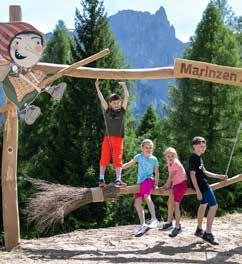
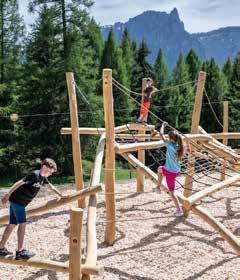
Once at the top, the view opens up onto the Schlern – and onto the refurbished playground with its trampoline, marble run and water feature. It has been particularly popular in its first year. “We’ve received a great deal of positive feedback”, the pair report. Families with young children, cyclists, dog owners – even many older people now regularly visit Marinzen again.
The next big ideas? The renovation was a suc cess and a part of village life has returned. Never theless, Manfred Jaider and Matthias Tirler do not yet seem entirely satisfied. “When you work so intensively on a project for so long”, they say with a laugh, “you always suddenly see what can be improved.” There is already talk of reopening the ski slope and establishing a training centre for young skiers. First, however, they intend to carefully assess whether such facilities would actually be used.
As they look out from the top station over the Marinzenalm, ideas simply burst out of both Matthias and Manfred. Yet they also become pensive every now and then. Something in particular has struck them up here: children often don’t need very much to be happy. Sometimes a tree, a stick or a stone is enough. Childlike contentment –perhaps a lesson for adults too? Above Kastelruth, the pair have created a place that is coming back to life. Perhaps that’s all that is needed. <
After years of inactivity, new life has been breathed into Kastelruth’s local hill –all thanks to Manfred Jaider (left) and Matthias Tirler (right) who, along with the company’s board, have realised the vision of Marinzen GmbH.
The Mahler revolution
In the clear words of the Frankfurter Allgemeine Zeitung newspaper, “The name Philipp von Steinaecker is one to remember”: while, according to the weekly Die Zeit, “a Mahler revolution is just around the corner”. Cellist and conductor Philipp von Steinaecker has achieved a veritable coup with his Originalklang [Original Sound] Project, performing the music of Gustav Mahler on instruments from the period in which it was composed.
Philipp von Steinaecker comes from Hamburg, but he has lived in Prösels for almost 30 years – insofar as, when it comes to professional musicians, anyone can actually speak of “living” in the sense of a permanent place of residence. Living out of a suitcase is normal for him and his wife, the flutist Chiara Tonelli from Bolzano, even though since the birth of their daughter they have been spending more time at their idyllic home.
in the orchestra at the Hamburg State Opera”. He studied cello in Vienna, followed by five years at the Juilliard School in New York: his goal until his late twenties was to become an orchestral musician. At the age of 17, Philipp played in the Gustav Mahler Youth Orchestra, founded by Claudio Abbado, where he first met his future wife Chiara. A number of former members went on to form the Mahler Chamber Orchestra, an unusually “grassroots democratic” ensemble, co-founded by Philipp and Chiara, to which they still belong today.
Text: Editorial board
Von Steinaecker’s path to the conductor’s podium was not predetermined; neither of his parents were musicians. Nevertheless, impressed by a visit to the opera as a child, he wished to learn an instrument with the dream of one day “playing
In his early thirties, Philipp developed a desire not only to perform, but also to shape the music himself – in other words, to conduct. Thanks in part to his good relationship with Abbado, von Stein-
Photo: Helmuth Rier
aecker was accepted into the conducting class in Vienna. His wife Chiara was then principal flutist in Florence and already possessed an apartment in Prösels as a retreat. South Tyrol was conveniently located between Vienna and Florence and, for Philipp von Steinaecker, the mountains had always represented a place of longing – his grandmother lived in Bavaria’s Chiemgau.
He has always had an interest in Gustav Mahler, that key composer and pioneer of modernism, who worked as a celebrated conductor in Vienna and New York but spent his summers in Toblach and drew great inspiration from the contrasts between the loveliness of nature and the rugged mountain world. From Prösels, the view from the other side is of the Dolomites: von Steinaecker is convinced that his place of residence has made the intellectual dimensions of Mahler’s work, as well as those touching on natural philosophy, increasingly tangible to him. While Mahler cycled through the Sexten Dolo-
mites, von Steinaecker organises his thoughts while running from Prösels towards Tschafon.
Another influential figure is Sir John Eliot Gardiner, a pioneer of the practice of historically informed performance. Symphony orchestras did not always sound the way we are used to today: wind instruments were made differently, while string instruments used gut rather than steel strings and would use vibrato more sparingly. Gardiner’s Orchestre Révolutionnaire et Romantique prompted von Steinaecker additionally to study the baroque cello, becoming principal cellist and later assistant conductor to Gardiner, with whom he remains in close contact to this day. The question of the original sound began to occupy him more and more, especially for the late Romantic repertoire – which tends to be neglected in historically informed performance – and in the music of Gustav Mahler. Over several years of research, von Steinaecker immersed himself in archives and musical scores.
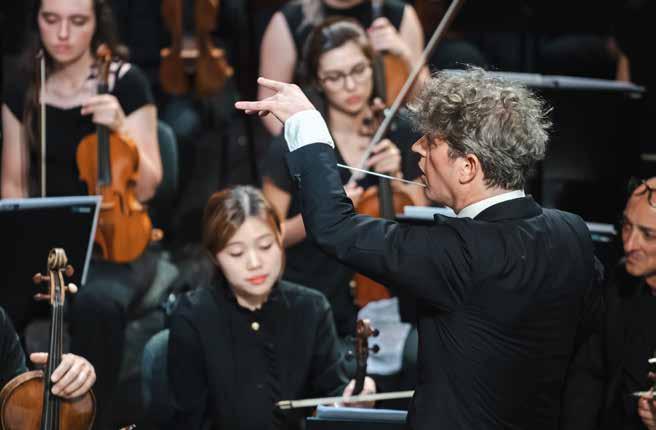
Philipp von Steinaecker has made an international name for himself as a conductor.
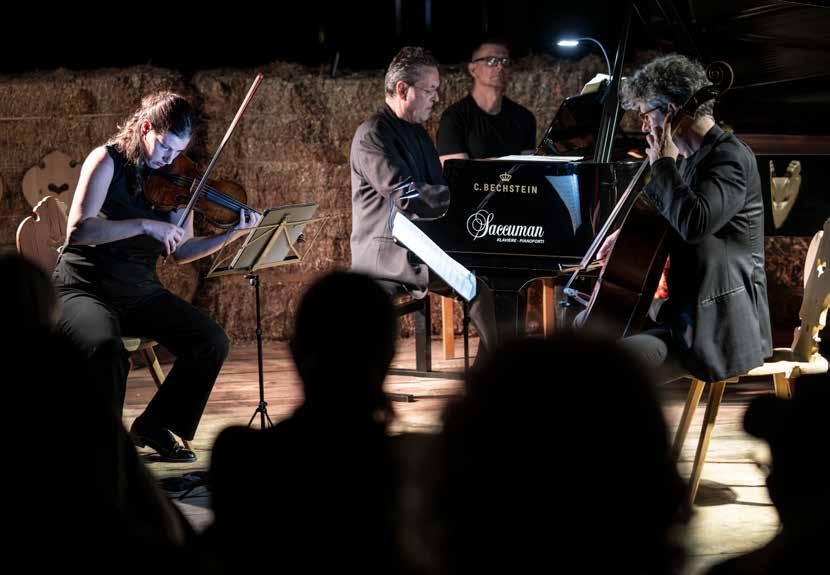
The concerts of the Schlern Music Festival feature unusual venues, such as the barn of the Huberhof farm in 2024.
How were Mahler’s detailed notes to be understood? What was the ideal sound behind his symphonies? And how could a monumental Mahler symphony be performed as it might have sounded over 100 years ago? It was a fascinating idea, but initially there was no basis for its execution – neither instruments, nor orchestra, nor funding.
Everything fell into place in Toblach, however: with the Euregio Cultural Centre Gustav Mahler Toblach-Dolomites Foundation, a partner was found that was willing to build up a collection of historical instruments. The Gustav Mahler Academy, whose artistic coordination had previously been entrusted to Steinaecker in 2013, also solved the problem of the colossal instrumentation. The search for instruments was akin to detective work: historical timpani from the Vienna Court Opera, a bass clarinet that is said to have been played at the premiere of “Tristan” in Bayreuth, finds from attics and online auctions – stories that together lend the project its own mysterious aura.
In the summer of 2022, von Steinaecker conducted Mahler’s Ninth Symphony in Toblach with some 100 musicians. For the first time since its premiere, the work was performed in the orchestral colours that Mahler would have known – a spine-tingling experience. The renowned label Alpha Classics immediately secured the rights to release the recording, which has since won numerous awards. This was followed in 2024 by a soldout tour of venues in Vienna, Paris and Amsterdam.
There has in the meantime been talk of a revolution in the performance of Mahler’s works, with the more flexible tempos and less streamlined sound of historical instruments revealing new facets of the composer’s music. “It all screeches and circles and rages”, wrote the Neue Zürcher Zeitung enthusiastically. Philipp von Steinaecker and the Mahler Academy Orchestra now tackle a new symphony each year – following the rehearsals and first performances held in Toblach and Bolzano, the orchestra embarks on increasingly longer tours, which in 2026 will take them to such venues as the Concertgebouw Amsterdam, the Elbphilharmonie in Hamburg and the Royal Albert Hall in London, among others. In between, the conductor returns time and again to Prösels – where the world’s concert stages suddenly seem very far away. <
A country outing with chamber music
Schlern Music Festival, from 13 to 17 May 2026
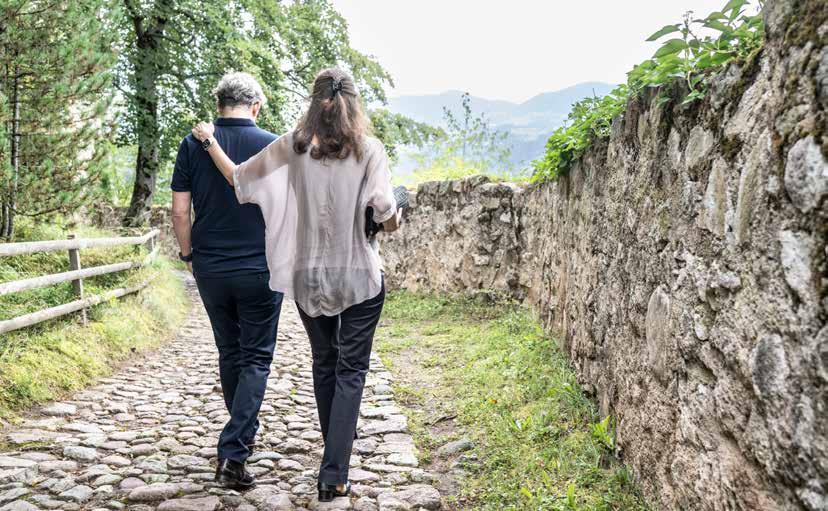
Chiara Tonelli and Philipp von Steinaecker are also active in Völs am Schlern as cultural figures and as musicians, where their talents can be experienced in close up. For several years now they have invited musicians from their international circle of friends to a chamber music festival at Prösels Castle – the place where they were married.
Since 2024, the two have been joint artistic directors of the Schlern Music chamber music festival, with high-level chamber concerts staged every two years in May at special venues in and around Völs am Schlern. The first edition, curated by these classical musicians from Prösels, was a great success.
Prösels is always a special concert venue for Chiara Tonelli and Philipp von Steinaecker.
In mid-May 2026, ten musicians will once again come together for a country outing with chamber music, away from the traditional concert stages. Guests will include chamber music legends such as Veronika Hagen (Hagen Quartet) and Volker Jacobsen (formerly of the Artemis Quartet), as well as members of leading European orchestras, including Andrea Obiso, concertmaster of the Accademia di Santa Cecilia in Rome, Martin Zalodek of the Vienna Philharmonic and Olivier Doise, principal oboist of the Orchestre Philharmonique de Radio France.
The concerts will be held at proven locations such as the stately surroundings of the Zimmerlehen residence, the Stanglerhof farm and Prösels Castle, supplemented by new venues: for the first time, concerts will take place in the former barn of the Hotel Gfell (Schönblick) and in the hall of the Koholz carpentry workshop in St. Anton. The programme will in particular focus on the string quintets of Wolfgang Amadeus Mozart.
Chaired by a compere, a talk with the artists will be held at the Hotel Heubad so as to deepen the dialogue between musicians and audience. In addition, a special concert for children and families featuring the renowned music educator Nanni Malm will be aimed at young listeners between the ages of 8 and 13.
Paula, the Milk Ambassador
2026 marks the International Year of the Woman Farmer, offering the opportunity to highlight their work and amplify their voices in public debate.
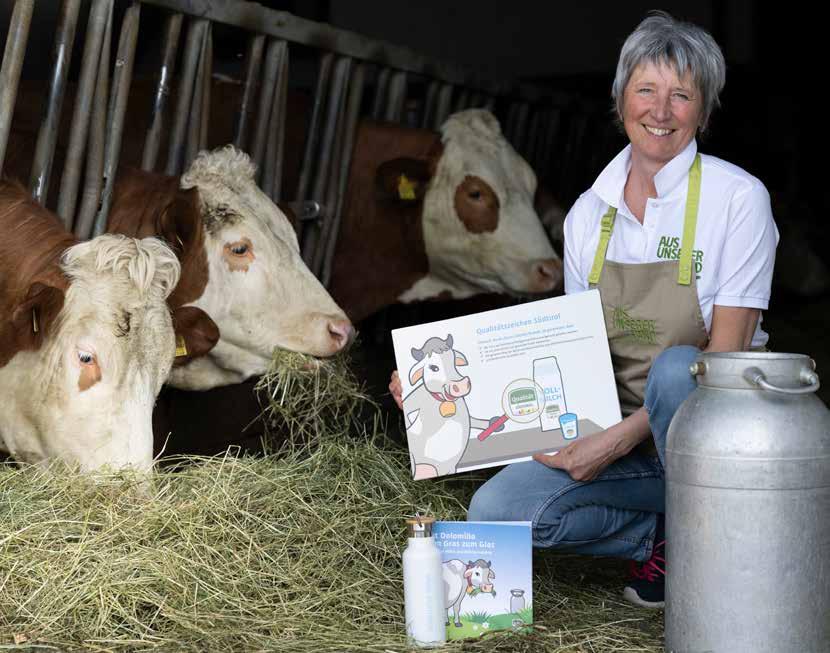
Paula Lantschner Kompatscher, a farmer from Völs, gives us a glimpse into her daily life.
The International Year of the Woman Farmer, as proclaimed by the United Nations, focuses on the central role played by women in agriculture worldwide – from South Tyrol to Zambia, from women working mountain farms to nomadic shepherdesses. Women make a decisive contribution to the success and sustainability of agricultural businesses and are widely involved in the development of rural areas. They shape, manage, preserve, develop, innovate and produce food. It is a question of the quality of life, the passing on of values and traditions, and farming that has a future.
ALPE: How did you get into farming?
Paula Lantschner Kompatscher: I grew up on a farm, but I never wanted to become a farmer. But love has a way of taking you where it will… I’ve now been living on the Funtnatscherhof for over 30 years, and I’m the mother of five grown-up children and I’m now a grandmother. Twelve years ago I gave up my job at the nursery once I decided to expand the “Farm Holidays” offer at the farm.
What is it like living on the farm?
It’s easy to balance family and
ALPE visited farmer Paula Lantschner Kompatscher at her home, the Funtnatscherhof farm. Surrounded by a unique panorama, it lies about one kilometre from the centre of Völs. The cowshed houses 15 cows (typical for an average farm in South Tyrol), while there are also calves, hens, pigs and cats. Her husband, Thomas, mainly looks after the cowshed and the animals, while Paula is responsible for the five holiday apartments, the garden and the office, as well as the household.
work on a farm. A female farmer can organise her ever-changing workload herself. The children grow up surrounded by animals and nature, and they can be taken along almost everywhere. Every farm has its own unique circumstances: the important thing is for everyone to find what works for their farm. We are very much limited by the daily work every morning and evening in the cattle shed; we also have to take the weather conditions into account. It is important to be flexible. We also have a large garden, with berries and a few fruit trees. There is always something to harvest, preserve, dry, juice or
keep. We produce a lot of our own food. We also make our own smoked ham, meat and sausages, the pear filling for “Völser Krapfen” (fritters), sauerkraut, apple cider vinegar, herbal salt and herbal teas. I use our milk to make yoghurt and cream cheese, or I use it in cooking.
What opportunities are there for women in farming?
Many female farmers also work outside the home and are financially independent. The training provided by the South Tyrolean Organisation of Women Farmers (South Tyrol’s largest women’s organisation, with over 16,700
Interview: Editorial board
Photo: Helmuth Rier
members) means that female farmers can develop a little additional source of income, for example as a speaker, a farm and garden guide, or as an ambassador. The services offered by women farmers also include direct marketing, farmhouse buffets, product presentations and much more besides. Social farming offers further opportunities, such as working as a childminder or even a life coach.
You are a milk ambassador. What are your responsibilities and goals?
As one of twelve milk ambassadors, I am pleased to run the
milk projects organised by IDM South Tyrol in primary schools. These projects demonstrate that a great deal of work goes into each and every food product. Everything is readily available at all times in the supermarket, so very few consumers really think about where their food comes from or how it was actually produced. I explain the processes on the farm, the transportation of milk, the quality controls and the further processing needed at the dairy. At the end of each presentation, we make butter and eat it with fresh bread: a short film rounds off the session. My aim is to educate people about agricul-
ture and farm working, so that their food is more appreciated.
What is the story behind your farm, and what does it mean to you personally?
As an establishment, the Funtnatscherhof farm in Obervöls has been in the family for over 200 years. We feel a sense of responsibility towards it, and have set ourselves the goal of passing this farm on to our descendants in a good condition and in keeping with the times.
What has changed most on the farm over the decades? Machinery has made the work
As a woman farmer, Paula wishes to see food more highly appreciated: she works towards this in her role as a milk ambassador.
Paula’s favourite places
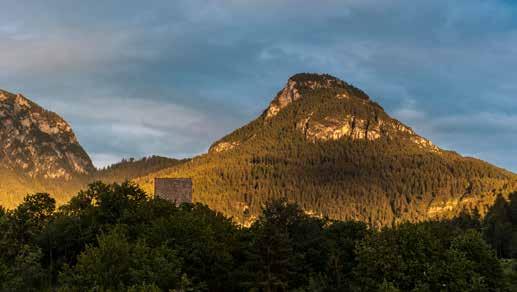
The Völseggspitze
Here, Paula is enjoying the stunning view. She takes the 176 bus to Weisslahnbad and hikes via the Wuhnleger pond up to the peak of the Völseggspitze: she then heads back home through the forest along the path beneath the Hammerwand.
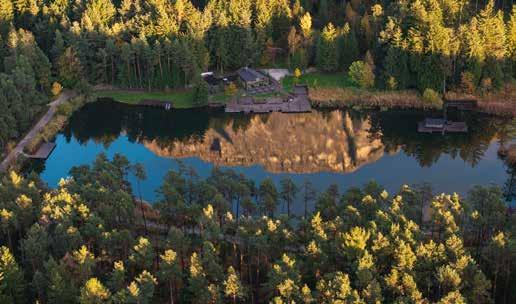
The Völser Weiher lake and its surroundings
This small lake, ideal for swimming, lies at the foot of the Schlern massif, about a 20-minute walk from Paula’s farm, and is a rewarding destination at any time of year. A dip in the lake makes for a perfect summer break.
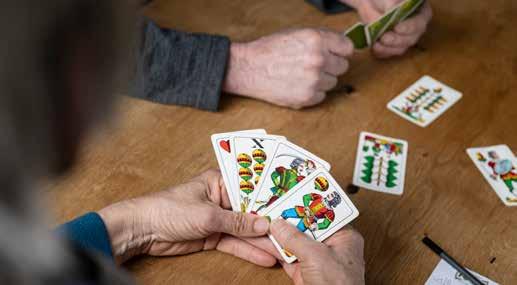
Playing “Watten”, the card game
Paula loves playing cards, so a game of “Watterle” with a group of friends – the game is typically played by four people (in two teams of two) in South Tyrol, Austria and Bavaria – makes for a welcome change in the evening.
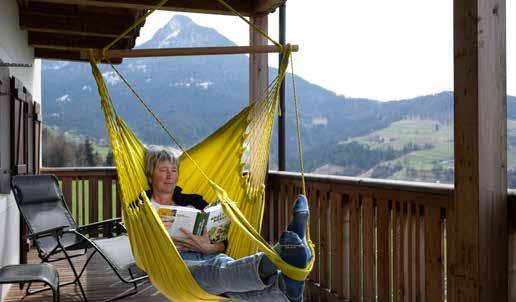
In her hammock on the balcony
Here, Paula is taking the time to relax, read a book, soak up the sun and enjoy the magnificent view – truly the perfect way to unwind every now and then.
much easier these days: in general, fewer people now work on the farm. Farmers organise themselves into “machine pools” so as to share machinery, which saves costs and keeps the fleet manageable. Digitalisation hasn’t stopped at the front door either: I can no longer imagine that, 30 years ago, we were still letting out flats by means of phone or letter. What’s more, there’s no need to go to the authorities in person, as most things are now done online. Another important change is how different generations live together on the farm. In the past, young families would often not have their own accommodation on the farm – nowadays, that goes without saying.
What does a typical day look like for you?
That’s a very difficult question. Every day is different, depending on the weather and the time of year. The daily routine – tending the cattle in the morning and evening –sets the agenda all year round. We have breakfast together at 7 a.m. and discuss the day ahead. We each have our own areas of responsibility: sometimes we don’t see each other all day, except at mealtimes. When there’s a lot of work with the haymaking, I help out in the fields and Thomas gives me a hand with cleaning the holiday apartments. Otherwise, I do the office work every day, check that everything’s in order in the garden and around the house, process our farm produce and look after the guests. There’s also always some laundry to do, so the day usually flies by. It’s a bit quieter in winter, but then I’m out and about as a milk ambassador in schools.
When is the work most physically or mentally demanding?
When it’s really hot in summer and haymaking is due. There are also days when everything seems to happen at once, or red tape becomes a pain.
What role does sustainability play on your farm and how do you put it into practice?
For me, sustainability means using the produce from our own farm, cooking with what the garden provides, and not wasting food. We heat our home with wood from our own woodland and we have had a
vital part of South Tyrolean mountain farming: there, livestock can enjoy the wonderful summer air and keep the land free from encroaching vegetation. It should also be noted that the food produced is subject to strict quality controls and is mostly sold through cooperatives.
How do you find the collaboration between agriculture and tourism?
Our guests show a great deal of interest in our work. I often joke that I’m having a year-round farm holiday. Tourism brings many benefits to the farming industry by
“People fail to realise how much work, time and investment goes into running a farm. Many people have lost touch with farming.”
Paula Lantschner Kompatscher
solar panel system for the past three years. It goes without saying that we carefully sort all waste.
What makes farming in South Tyrol unique?
Farms here tend to be small in scale and are mostly family-run. There are fruit growers, winegrowers and livestock farmers. In South Tyrol, the number of animals permitted per farm depends directly on the available fodder area and on the statutory requirements regarding stock density. It is often difficult for a farm to turn a profit, so farm holidays are an important source of additional income for many – others seek work elsewhere. The mountain pastures are also unique and a
helping us to sell our produce: dairy products, fruit, vegetables, berries, wine, meat and so on. Conversely, tourism benefits from farming because it helps to maintain the countryside. The two sectors thus need each other.
How do you deal with criticism of the farming industry?
People often fail to realise how much work, time and investment goes into running a farm. Many people have lost touch with farming and do not understand why certain tasks are necessary. Providing clear information is key to breaking down prejudices. Only those who understand how farming works can form an accurate opinion. <
Regional & seasonal
A joint project in Tiers am Rosengarten – on a field known as the Bergler Acker – is sending a strong message about the link between local farming practices and sustainable tourism.
More and more people are making a conscious effort to choose regional and seasonal foods – a trend that not only promises culinary enjoyment, but also makes a valuable contribution to climate protection. In the village of Tiers am Rosengarten this has given rise to a community project that consistently puts this philosophy into practice: the “Bergler Acker”.
The idea took shape in the autumn of 2023, when a group of hoteliers and restaurateurs from Tiers gained insights into the “Taufrisch [freshly picked]” community project on a study trip to the Ahrntal Valley. The visit to the community field in Taufers made a particularly strong impression on the group of around ten, which returned full of enthusiasm and decided to implement something similar in Tiers am Rosengarten.
Concrete planning began in the winter and spring months: costs were calculated, organisational and logistical issues discussed, and possible models considered. For a long time, however, a crucial piece of the puzzle was missing – a suitable location. Just as the project was on the verge of collapse, Edith Rauchegger, chair of the tourism as-
sociation, together with her husband made a plot of land in front of the new barn at the Messnerhof farm available free of charge. This cleared the way for the Bergler Acker. A further stroke of luck was that Fabian Pattis, who worked at the Messnerhof, happened to be a trained gardener. It quickly became clear that the project could only work as a collaborative effort; by means of combined efforts, the plot was prepared, cleared and planted and, in late summer 2024, the Bergler Acker began its first season.
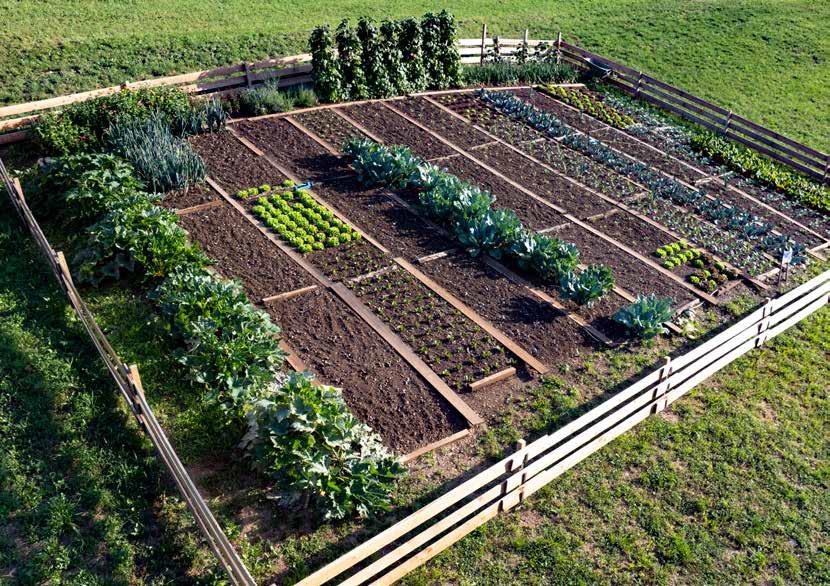
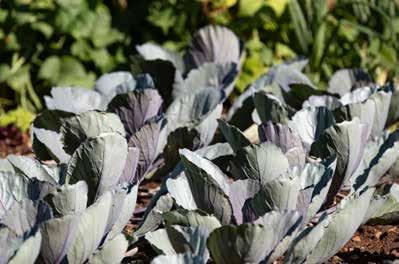
The aim was to create an organic communal market garden, managed according to the principles of mixed cropping. The goal: to harness the natural synergies that exist between plants and as far as possible to avoid the use of chemical treatments. A wide variety of vegetables now grow, adapted to the altitude, local conditions and demand from businesses – not without a degree of experimentation, as the first season showed. “We first had to find out which varieties really thrive here”, says Katharina Pircher from the Hotel Paradies. Cabbages in particular were especially plentiful in autumn: as some establishments had already closed by then, part of the crop was preserved for the win-
Text: Katja Sanin
Photo: Helmuth Rier
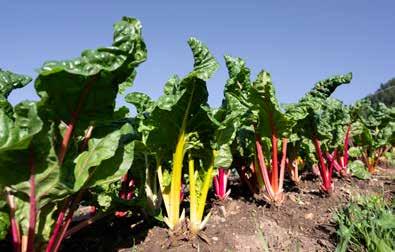
ter. The Bergler Acker also brought new inspiration into hotel kitchens: large quantities of Swiss chard, kohlrabi and beetroot demanded creativity and openness from their chefs – qualities that quickly acquired.
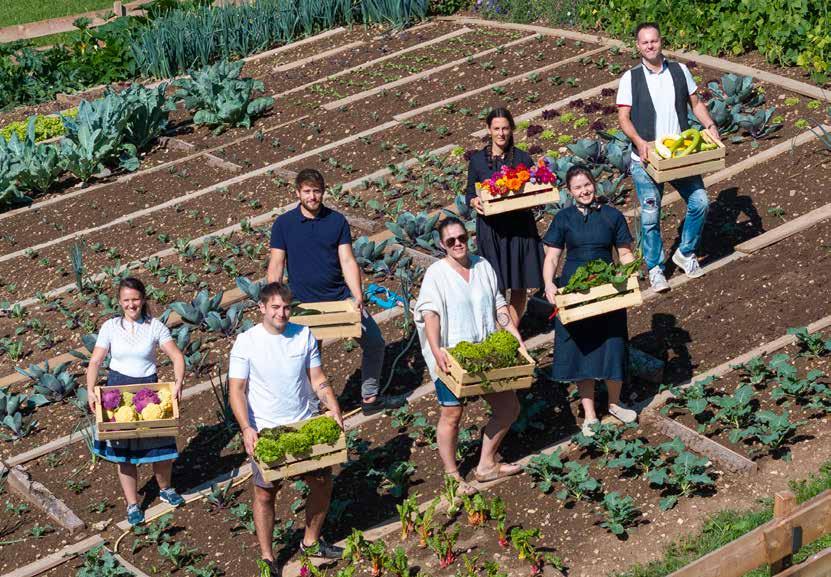
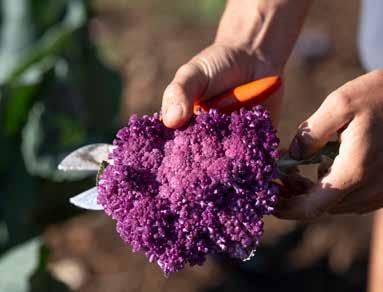
The hotels involved in the project are the Cyprianerhof, Weisslahnbad, Dosses, Vajolet and Paradies, as well as two mountain huts, Laurins Lounge and the Messnerjoch. Each receives an equal share, regardless of their size or requirement. In order to effectively arrange variety and quantity, the harvest is distributed so that these establishments take turns in receiving the entire weekly yield of a particular variety. Whether lettuce, beans, fennel, black kale or cauliflower – the vegetables either end up directly on the menu or will be preserved. This has led to the production of dishes such as Swiss chard dumplings at the Cyprianerhof, Schlutzkrapfen (filled pasta pockets) at the Weisslahnbad, potato soup at the Vajolet, Tirtlen (fritters) filled with Swiss chard at the Dosses, or even a beetroot tartare at the Hotel Paradies. Everyone helps out with the annual potato harvest, with each establishment sending one member of staff to help, share experiences and learn from one another.
The Bergler Acker strictly adheres to the zero-kilometre principle: once harvested, the vegetables are distributed directly and without any detour to each establishment, thus arriving fresh on the plate. This not only minimises the ecological footprint, but also sends a clear signal in favour of regional, responsible tourism.
The fact that many of the participating hotels are also part of the culinary venture known as the “Bergler Tafel [mountain folk cuisine]” shows just how deeply the spirit of sharing and community is embedded in the project. This summer too, guests will be able to enjoy meals made with vegetables from the Bergler Acker out in the open air on the Proa, a mountain meadow above Weisslahnbad. In addition, guided walks to the field are planned, during which the project will be presented as an invitation to consciously think about climate protection in everyday life. The Bergler Acker is therefore far more than just a market garden: it is a living example of how regional cooperation, sustainable agriculture and high-quality tourism can come together. <
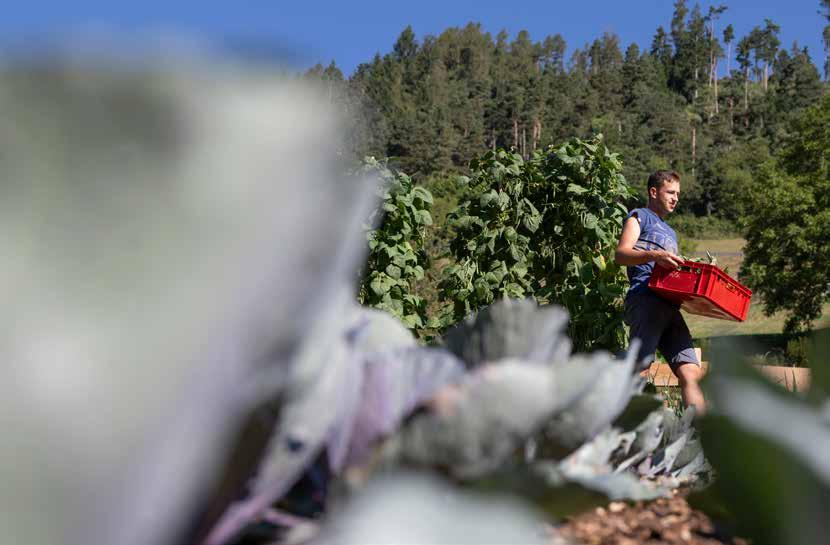
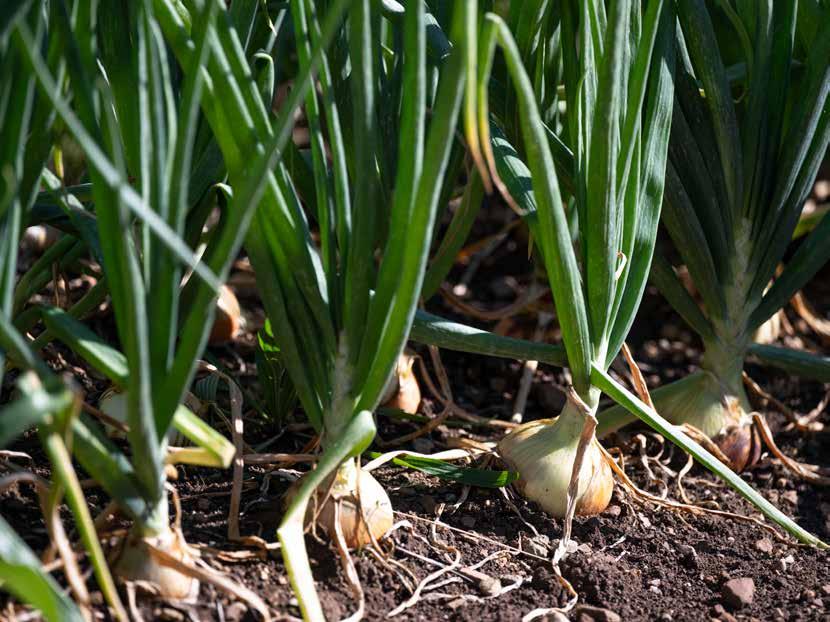
In the new community garden in Tiers am Rosengarten, delicious vegetables are growing.
Delicious quark dumplings
Topfen, quark or ricotta? In South Tyrol, Austria and Bavaria, quark (curd cheese) is known as “Topfen”. Whatever the name, it is a popular ingredient in South Tyrolean cuisine. Then there is ricotta, very similar in appearance and consistency, but slightly different in taste and composition. Ricotta, the Italian version of Topfen, is made from whey rather than milk. All three products are suitable for the following recipe.
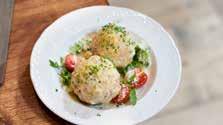
These Topfennocken are the savoury version of the popular sweet Topfen dumplings. They can be served in many different ways, for example with a salad, tossed in butter, or as a side dish.
INGREDIENTS
250 g Topfen
60 g breadcrumbs
50 g softened butter
2 eggs
40 g semolina salt nutmeg, finely chopped chives brown butter and grated parmesan
PREPARATION
Combine the Topfen, eggs and softened butter in a bowl until they all form a smooth mixture. Add salt and, if desired, nutmeg and herbs. Stir in the semolina and breadcrumbs until you have a soft but mouldable dough: leave to rest in the fridge for one hour. Use a spoon to shape the dough into dumplings, then cook them in boiling salted water for 10 minutes until they rise to the surface. Remove the dumplings with a slotted spoon, toss them in the melted butter and sprinkle with grated parmesan.
Recipe: Barbara Pichler
Photo: Helmuth Rier
ENJOY THE MOMENT!
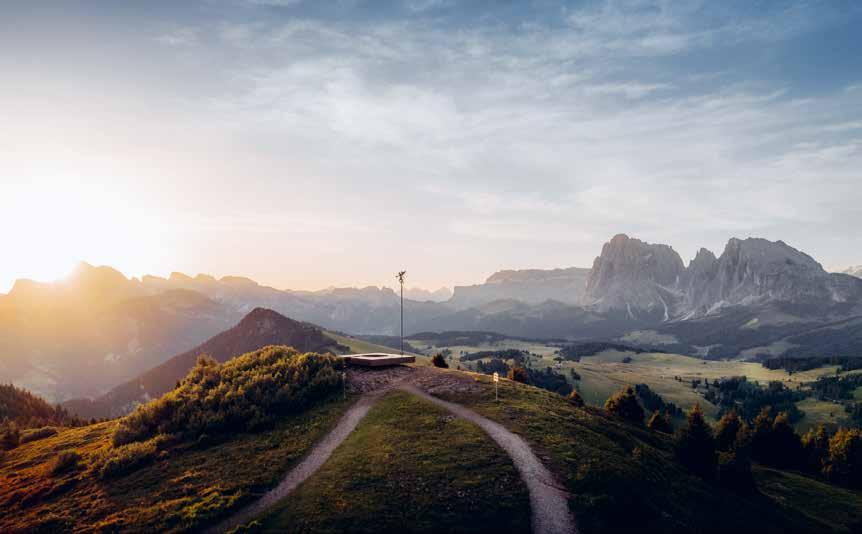
360° PHOTO POINT PUFLATSCH
ADVENTURE TOUR ON THE PUFLATSCH ...
With the Puflatsch Cableway to the 360° photo point “Engelrast“ and to the most beautiful look out points on the Seiser Alm: Filln Cross, Witches’ benches, Goller Cross ...
Open daily from 9am to 5pm
Foto:
Luca
Putzer
Komma
Graphik
Highlights Summer 2026
5 May – 30 June 2026
SEISER ALM BALANCE
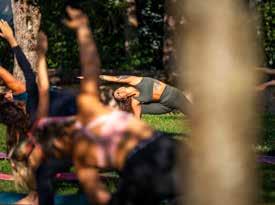
Fancy a break? When the days get longer in spring and nature awakens, the desire for outdoor exercise increases. With special “Balance” experiences you can recharge your batteries in and with nature. A morning hike to the Tschafon mountain refuge, a yoga session on the Calvary hill in Kastelruth or taking a pottery course. The Balance experiences offer movement, relaxation and well-being for body and mind. seiseralm.it/balance
6 – 21 June 2026
GOURMET WEEKS
“SCHLERNGENUSS”
100% DOLOMITES
REGION SEISER ALM
During this period, you can expect delicious dishes made from ingredients that come 100% from the Dolomites Region Seiser Alm (0 km) in all participating restaurants. Gourmets will get an insight into the large selection of local specialties. The kick-off event will be the live culinary show “Südtirol kocht” (South Tyrol Cooks) in Kastelruth on May 22, where local dishes will be cooked and tasted. seiseralm.it/culinaryweeks
Summer 2026
PRÖSELS CASTLE IN SUMMER
From 1 May to 31 October, Prösels Castle, dating back to the days of Maximilian and arguably Tyrol’s most emblematic castle, is open to the public. Guided tours will offer visitors a fascinating insight into the history of the castle and the infamous Lords of Völs, so closely interwoven in the threads of time. A series of concerts, readings and special events round off this castle’s cultural programme. Prösels Castle has two outdoor escapes. Children (9 years old and upwards) accompanied by their parents, young people and adults in groups of up to 5 people can put their skills to the test in intuition, creativity, team spirit, logic, maths and, above all, their ability to learn and have fun. And while the kids are having fun in the play park, their parents can savour the delights of local cuisine in the castle bar. schloss-proesels.it
13 – 17 May 2026
SCHLERN MUSIC –CHAMBER MUSIC BENEATH THE SCILIAR
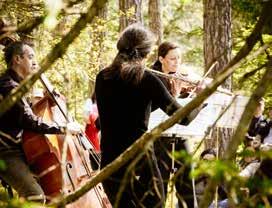
The biennial chamber music festival Schlern Music, for the second time under the artistic direction of Philipp von Steinaecker and Chiara Tonelli, presents outstanding chamber concerts with international musicians in a variety of venues – from a medieval farmhouse tavern to Castel Prösels and even a carpentry workshop. www.schlernmusic.it
29 – 31 May 2026
43RD OSWALD VON WOLKENSTEIN RIDING TOURNAMENT
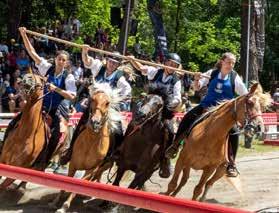
3 days, 4 locations and 36 teams: In tribute to knight and minstrel Oswald von Wolkenstein, the three villages of Kastelruth, Seis am Schlern and Völs am Schlern organise a historical riding tournament at its very finest. On 29, 30 and 31 May 2026, visitors of the Oswald von Wolkenstein Riding Tournament can leap back in time to the 14th century and experience life in the Middle Ages, admire the masterly horsemanship and feel the hospitality in South Tyrol. No other riding tournament has the good fortune to be able to offer this kind of culture, tradition, history, sport and folklore all rolled into one single event. This year, the opening ceremony and festive parade take place in the village Kastelruth. ovwritt.com
6 June 2026
„VÖLSER DORFKUCHL“ (STREET FOOD) IN VÖLS
This evening, the church square in Völs will be transformed into a unique culinary venue. Creative show kitchens and gourmet stands, led by farmers of Völs will transform the village centre into a very special gastronomic mile. seiseralm.it/culinaryexperiences
12 and 13 June 2026
KASTELRUTHER SPATZEN OPEN-AIR CONCERT
Thousands of fans make their way to Seis am Schlern to enjoy the breath-taking landscape and to experience the “Spatzen” live. They’ll be treating fans and friends to a nostalgia concert of their hits from 1993 to today. This coming year, as always, music bands from near and far will be providing fringe entertainment.
July / August 2026
WITCHES‘ NIGHTS IN SEIS AND KASTELRUTH
Experience magical evenings in the village centers of Kastelruth and Seis am Schlern, because there is a lot on offer at the Witches‘ Nights! Various live bands provide a great atmosphere, while folk dance groups show off their skills. There is a variety of children‘s entertainment for the little ones and, as a highlight, the witches dance on the village square.
Photo: OvW/Ingrid Heiss
Photo:
TVVöls/Martin Kompatscher
Photo: SAM/Roschan Fill
22 June – 7 September 2026
SUMMER CLASSICS IN SEIS AM SCHLERN
Seis offers an extraordinary series of concerts for lovers of classical music. The artists, mainly from Italy and with a wealth of international experience behind them, will be performing the works of great composers.
16 July 2026
BERGLER TAFEL MOUNTAINEERS‘ DINNER
On 16 July, a 100-meter-long table at the “Berglertafel” offers space for 170 guests, who can enjoy a five-course gourmet menu with a panoramic view of the Enrosadira at the Rosengarten. seiseralm.it/culinaryexperiences
5 July 2026
13TH SEISER ALM HALF MARATHON
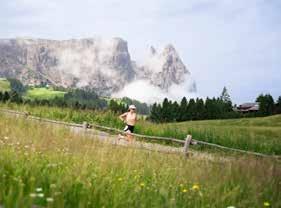
21 kilometres, 601 metres of elevation difference and 1000 participants: These are the key statistics of the Seiser Alm Half Marathon, which will start and finish in Compatsch. Surrounded by the Dolomites UNESCO World Heritage, the Seiser Alm Half Marathon is a unique experience and sporting challenge for both professional and amateur athletes. The route leads past the majestic Schlern and Plattkofel, as it weaves up to its highest point at 2,050 metres under the Goldknopf and, from here, back to Compatsch. New: This edition will also feature a children’s run. running.seiseralm.it
11 July 2026
9TH ROSENGARTEN SCHLERN SKY MARATHON
Right in the very heart of the unique Dolomites UNESCO World Heritage, a 45-kilometre Alpine Mountain Marathon with around 3,000 m of elevation difference will set off from Tiers am Rosengarten. There are two other routes to choose from: 36 km with 2,000 meters in elevation and 16 km with 800 meters in elevation. The challenging mountain race will begin in St. Zyprian at 1,136 m asl, lead round the Rosengarten Massif, over the Schlern and the Tschafon and back to Tiers am Rosengarten. The highest point of the Sky Marathon is the Grasleiten Pass at 2,630 m. skymarathontiers.it
8 September 2026
TRADITIONAL ALM MARKET
The traditional Alm Market in Compatsch is held every year on 8 September, and features live music, stalls selling a wide variety of goods, and culinary specialities.
October 2026
TRANSHUMANCE
Marking the end of the season and the return of the cattle to the valleys, this festival features whip-crackers, live music and mouthwatering traditional fare. The transhumance from the Seiser Alm to the valley will take place on 3 October and the Völs am Schlern and Tiers am Rosengarten transhumance on 4 October 2026.
9 – 11 October 2026
40TH KASTELRUTHER SPATZEN MUSIC FESTIVAL
Three days of celebrating, spending pleasant evenings together, experiencing the “Kastelruther Spatzen” live: the Spatzen-Festival in Kastelruth is a must for every fan. Surrounded by the unique scenery of the Dolomites the seven “Spatzen” mesmerise all lovers of traditional music.
1 – 31 October 2026
49TH VÖLSER KUCHLKASTL GASTRONOMIC OCTOBER CULINARY FESTIVAL
The Völser “Kuchlkastl” event has been a culinary high point of autumn in the Dolomites Region Seiser Alm for 49 years and counting. Foodies and lovers of down-home cuisine can feast to their hearts’ content from 1 to 31 October, when the restaurateurs of Völs warmly welcome guests to enjoy a “Gastronomical October.” The chefs of Völs will be cooking up traditional recipes with a sophisticated twist: Time honoured recipes reinterpreted and served with love. voelserkuchlkastl.com
1 September – 30 October 2026
AUTUMN PLEASURES IN THE DOLOMITES REGION SEISER ALM
A very special atmosphere awaits you in the golden autumn months in the Dolomites Region Seiser Alm. The Seiser Alm mountain autumn brings together outdoor experiences with a magnificent landscape and outstanding cuisine. The programme of events features sunrise hikes to the most beautiful peaks of the Dolomites with breakfast in a mountain refuge, guided hikes, cookery courses and guided tours to local producers. seiseralm.it/mountainautumn
Photo: SAM: Helmuth Rier
Photo:
Photo: SAM/Roschan
Winter Preview 2026/27
December 2026
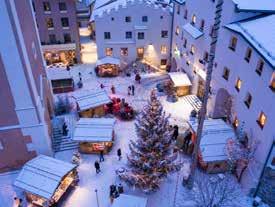
CHRISTMAS MAGIC IN THE DOLOMITES REGION SEISER ALM
When the air is thick with the scent of gingerbread, cinnamon and mulled wine, you know it’s advent time here at the foot of the Schlern mountain. The run-up to Christmas is a meaningful time here in the Dolomites Region Seiser Alm; the Christmas markets in the villages of Kastelruth, Seis, Völs and Tiers are small but incredibly beautiful, and are guaranteed to get guests and locals alike into the Christmas spirit, far from the hustle and bustle of the city. With their traditional handcrafts, specialties of South Tyrolean cuisine and Christmassy melodies, they warmly invite you to join them for a sociable Advent of companionship.
20th Kastelruth
Mountain Christmas
> 28–29 November 2026
> 4–8 December 2026
> 11–13 December 2026
> 18–20 December 2026
> 23–24 December 2026
> 26–27 December 2026
Waiting for Jesus Child in Völs am Schlern
> 7 December 2026
> 12 December 2026
> 19–20 December 2026
> 26 December 2026
> 29 December 2026
> 5 January 2027 Winterfeast
Mountaineer’s Winter in Tiers am Rosengarten Culinary delight with local products
> 12 December 2026
> 19 December 2026
> 26 December 2026
Seis on Ice
Ice skating with varied entertainment programme for young and old.
> 28 November 2026 to 9 January 2027
Winter 2026/27
PRÖSELS CASTLE IN THE WINTER
Prösels Castle is also open to visitors in winter. Winter castle tours offer a variety-packed alternative to skiing. Every Thursday from from 14 January to 11 March 2027, Prösels Castle will be awakening from its winter slumber and open its doors at 3 pm. During a one-hour tour, visitors will learn a wealth of fascinating information about the castle and its former residents and, at the same time, can visit three art exhibitions and a vast weaponry collection. On three days this winter (28.12.2026, 04.01.2027 and 11.02.2027) at 3 pm, the “Winter Cuisine & Culture” event will be held once more at Prösels Castle: After the castle tour, guests will have the opportunity to sample traditional local products free of charge in the castle grounds, where local producers will be hosting an array of stands. schloss-proesels.it
Prior booking is essential for winter guided tours and can be reserved at the Castle up to 12 pm on the day of the event: info@schloss-proesels.it
Winter 2026/27
WINTER-ADVENTURES OFF THE SLOPES
The Nature Experience programme includes pilates courses with breakfast in Kastelruth. In Seis we enjoy the evening twilight and bake bread together. In Völs, you can enjoy an exquisite gourmet experience named “hike with mill and farm tour and traditional lunch” and guided tours in the Prösels Castle dedicated to the taste, history and culture. In Tiers, we can explore the rustic Tschamin valley on a snowshoe guided hike through the untouched winter countryside. On full-moon nights, you have the opportunity to embark on a hike across the snowy Seiser Alm. Kaiserschmarrn cooking courses are also offered in an Alpine hut. seiseralm.it/winteradventure
Winter 2026/27
SCHLERN-ROSENGARTEN NATURE PARK VISITOR CENTER
While nature rests outside, the Visitor Center in Seis am Schlern offers insights into the diverse and fascinating flora and fauna of the Schlern-Rosengarten Nature Park. With the special exhibition “Countdown to Mass Extinction,” a special focus will be placed on climate change this winter. The visitor center can be visited free of charge during opening hours. seiseralm.it/visitorcenter
Photo: TVKastelruth/Helmuth Rier
Photo: SchlossPrösels/Helmuth Rier
Photo: SAM/Fabian Dalpiaz
17 January 2027
THE KASTELRUTH FARMER’S WEDDING
Over the years, it has grown to become an established tradition: The Kastelruth Farmer’s Wedding. It is an authentic reproduction of an old-fashioned farmer’s wedding as celebrated since time immemorial here at the foot of the Seiser Alm. The high point of the event is the wedding parade from St. Valentin to Kastelruth. The wedding party, dressed in traditional attire, drive to the centre of Kastelruth in a magnificently decorated horse-drawn sleigh, bringing their guests along with them on a trip back in time to the 19th century.
22 January 2027
SOUTH TYROL MOONLIGHT CLASSIC SEISER ALM
A sporting event illuminated by the glow of flickering torchlight, the chance to put your skills to the test at international level, and the magical winter backdrop of Europe’s largest mountain plateau: In 2026, the Moonlight Classic will once again be offering numerous athletes and cross-country fans the chance to spend a sensational evening on the Seiser Alm by night. Participants can opt to take part in either the 30 km or the 15 km variant of the loop route. Both variants begin and end in Compatsch and are raced exclusively in classic diagonal style. The starting pistol for this cross-country spectacle will be fired at 8 pm.
Registration required: moonlightclassic.info
February 2027
TRADITIONAL SKIJÖRING ON THE SEISER ALM
Fascinating combination of skis and horsepower! In skijoring, skiers are pulled by horses over a prepared course and engage in exciting races. A spectacular experience for participants and spectators.
06 March 2027
NOSTALGIA FUN RACE
Travel back to bygone days at the Nostalgic Jamboree ace! Numerous nostalgia groups from South Tyrol and the Alpine region have been invited to the Seiser Alm to do just that. Before the race, there will be a charming parade featuring participants in their vintage attire. Spectators can admire the period clothing from a variety of eras on the Panorama slope and meet the nostalgia skiers during the lunch break in the surrounding huts.
March 2027
EARLY BIRD SKIING WITH ALPINE BREAKFAST
Exclusive skiing experience for early risers followed by breakfast on the Seiser Alm. Weekly, three ski lifts will take turns to start running at 7 am. Early risers will have the unique opportunity to cross the freshly groomed, deserted slopes and enjoy the special morning atmosphere on Europe’s largest mountain plateau, accompanied by a ski instructor who will provide a wealth of handy tips. At 9 am, we’ll be heading to a mountain hut to enjoy a sociable Alpine breakfast.
DATES
> Wednesday, 3 March 2027
> Wednesday, 10 March 2027
> Wednesday, 17 March 2027
> Wednesday, 24 March 2027
> Wednesday, 31 March 2027
March 2027
SWING ON SNOW WINTER MUSIC FESTIVAL
For six days, the Dolomites Region Seiser Alm transforms into a unique soundscape: during Swing on Snow, folk music, brass, soul, pop, and jazz merge into an unmistakable alpine festival experience. For 21 years, the WinterMusicFestival has been inviting guests from near and far to combine the joys of winter with musical highlights. In the mornings, the first notes can be heard at the Seiser Alm cable car mountain station, at midday the music continues in the huts of the Seiser Alm. In the evenings, concerts fill the villages of Kastelruth, Seis am Schlern, Völs am Schlern und Tiers am Rosengarten – often in such an intimate setting that it feels like a private living room concert. Swing on Snow is a small yet special insider tip: the concerts are personal and intimate – and still of the highest quality. The performing musicians are by no means unknown; many are among the most exciting discoveries in folk, brass, soul, pop, and jazz music. Alongside them, renowned bands perform that usually only appear on the big stages.
swingonsnow.com
Photo: SAM/Armin Mayr
Photo: SAM/Kottersteger
Photo: SAM/Fabian
Dalpiaz
Seen & heard
Milano Cortina 2026: one gold, multiple emotions. Andrea Vötter, from Völs am Schlern returned home from the 2026 Milano-Cortina Winter Olympics with a gold medal – won by the 31-year-old alongside her doubles partner Marion Oberhofer in the artificial track luge. To top it all, she also secured bronze in the team relay. Vötter is one of six athletes from the Dolomites region Seiser Alm who competed in Olympic events last February: the youngest of the bunch was 17-year-old skier Anna Trocker, who shone on her Olympic debut with a tenth-place finish in the team event. Freestyle skier Maria Gasslitter (19) also put in an outstanding performance on her Olympic debut, and was delighted with her ninth place in the Big Air and tenth in the Slopestyle. Meanwhile, Sandra Robatscher (30) narrowly missed out on a medal, finishing fifth in her third Olympic appearance in the singles luge. The two other experienced competitors also missed out on medals: snowboarder Aaron March (40) finished ninth in the parallel giant slalom, while skier Florian Schieder placed 19th in the downhill event.
Biodiversity
Traditional hay baths have a long history in Völs am Schlern: sweating in mountain hay is said to have numerous health benefits, such as strengthening the immune system and stimulating the metabolism. At the Hotel Heubad – the original since 1901 – the hay used for bathing comes from the meadows of the Seiser Alm. A sample has now been analysed using DNA analysis to determine its composition: the study identified no fewer than 127 plant species, including numerous precious mountain herbs such as lady’s mantle, yarrow, globeflower, sweet vernal grass, hairy dandelion, golden hawksbeard, alpine coltsfoot, black viper’s grass, sheep’s fescue, buttercup, buckler mustard and alpine moor-grass, to name but a few.
Good times
As one of the magazine’s founding editors, Rosmarie Schrott Erlacher worked on the Seiser Alm magazine ALPE (previously the “Schlernbote”) for over 25 years. With her keen eye for a story, this former teacher enthusiastically set out to discover new or unusual happenings. Her interests centred on South Tyrolean customs and traditions, nature, art and sport. For many of her reports, the athletic Rosmarie would venture high up into the mountains or deep into the forest. She has now bid farewell to the editorial team at ALPE: we would now like to express our heartfelt thanks to Rosmarie and wish her all the best.
Photo: SAM/Helmuth Rier
from Tiers/Tires to the Dolomites World Heritage
Rosengarten
Seen & heard
World Cultural Heritage. December 2025 saw UNESCO officially deem Italian cuisine to be an Intangible Cultural Heritage of Humanity. This recognition highlights the fact that eating in Italy is far more than the mere act of consuming food; it is a vibrant cultural practice that strengthens social bonds. As a facet of cultural heritage, it consists not only of recipes but also of ancient knowledge, conviviality and traditions that are passed down from generation to generation. Every region, town and even family maintains its own interpretation of particular dishes, thus contributing to a culinary mosaic that tells the story of Italy through its flavours and aromas. The cuisine of northern Italy reflects the influence of the mountains, its harsh winters and its historical ties with Central Europe. Its cultural heritage thus also includes dumplings and Schlutzkrapfen – filled pasta pockets – that are an integral part of South Tyrolean cuisine.
Ski Girl Power
The winter season 2025/26 is one that Anna Trocker, a young ski talent from Völs am Schlern, will probably not forget anytime soon: at the end of December, shortly after her 17th birthday, she made her World Cup debut. Although she narrowly missed out on the second run in the giant slalom at Semmering in Austria, she turned in an impressive performance, followed by further World Cup starts and qualification for the Milano-Cortina Winter Olympics. In March, Trocker then caused a sensation at the Junior World Championships in the Norwegian city of Narvik, winning gold in the giant slalom and slalom – in each case with a clear lead over her challengers, some of whom were considerably older – as well as silver in the team combined. Her two Junior World Championship titles meant that she was allowed to compete in the World Cup Finals in Lillehammer in Norway, where she achieved two top-ten finishes (9th in the slalom, with the fastest time in the second run, and 8th in the giant slalom). Fans and media alike are celebrating Anna Trocker, while those in the know believe that this young newcomer – who has two sisters, also outstanding ski racers – is set for a great career.
The joy of coffee. Caroma, the South Tyrolean speciality coffee roastery based in Völs am Schlern, has been included in the new “Gambero Rosso Guida Caffè e Torrefazioni d’Italia 2026”. No fewer than two Caroma coffees have been awarded the guide’s top rating of 3 Macinini: the Romeo Gourmet espresso, and the Yemen Haraz Natural filter coffee. Moreover, Caroma’s Julia Gourmet filter coffee received 2 Macinini. For this famed roastery, which aims to ensure that South Tyrolean coffee culture achieves the highest possible standard, inclusion in the new national coffee guide marks another significant milestone.
IMPRINT ALPE is registered by the court of Bozen / Bolzano, n. 9/2002 R.St. Published by Seiser Alm Marketing, 39050 Völs am Schlern, Dorfstraße 15, Tel. +39 0471 709 600, info@seiseralm.it, www.seiseralm.it. Legally responsible for the editorial content: Elisabeth Augustin
Editorial Team: Elisabeth Augustin, Rosa Maria Erlacher, Sabine Funk, Barbara Pichler, Vera Rier, Katja Sanin, Simone Treibenreif; Photo: Helmuth Rier. Translations: Bonetti & Peroni. Advertising: Seiser Alm Marketing, Sabine Demetz. Graphic: Komma Graphik. Printing: Girardi Print Factory Srl/GmbH
Photo: SAM/Helmuth Rier
Respect the Dolomites
Sustainability and a mindful approach to our natural landscape are very important to us. The Dolomites region Seiser Alm is part of the Nature park Schlern-Rosengarten. It is a protected area and a part of the Dolomites UNESCO World Heritage. The project aims to raise awareness of environmentally friendly conduct among visitors, locals and tourism professionals. It seeks to encourage everyone to act respectfully and responsibly in the mountains as well as in everyday life. Its key topics are potable water and waste prevention.
South Tyrolean tap water in the Dolomites Region Seiser Alm
Pure. Natural. Fresh. Precious.
Did you know ... that tap water in our Dolomites region is drinkable and of a high quality? Water, including our drinking water, is a rare and precious commodity. Marked refill spots in the Dolomites region Seiser Alm are available for visitors to refill their own water bottles. A careful and respectful use prevent unnecessary wastage.
Less waste – more nature
Less is more.
Our mountain scenery is a delicate ecosystem. It is extremely important not to leave any rubbish behind: the climate conditions at this altitude slow down decomposition processes. Some waste, such as plastic, does not degrade at all. The best kind of waste is waste that is not produced in the first place.