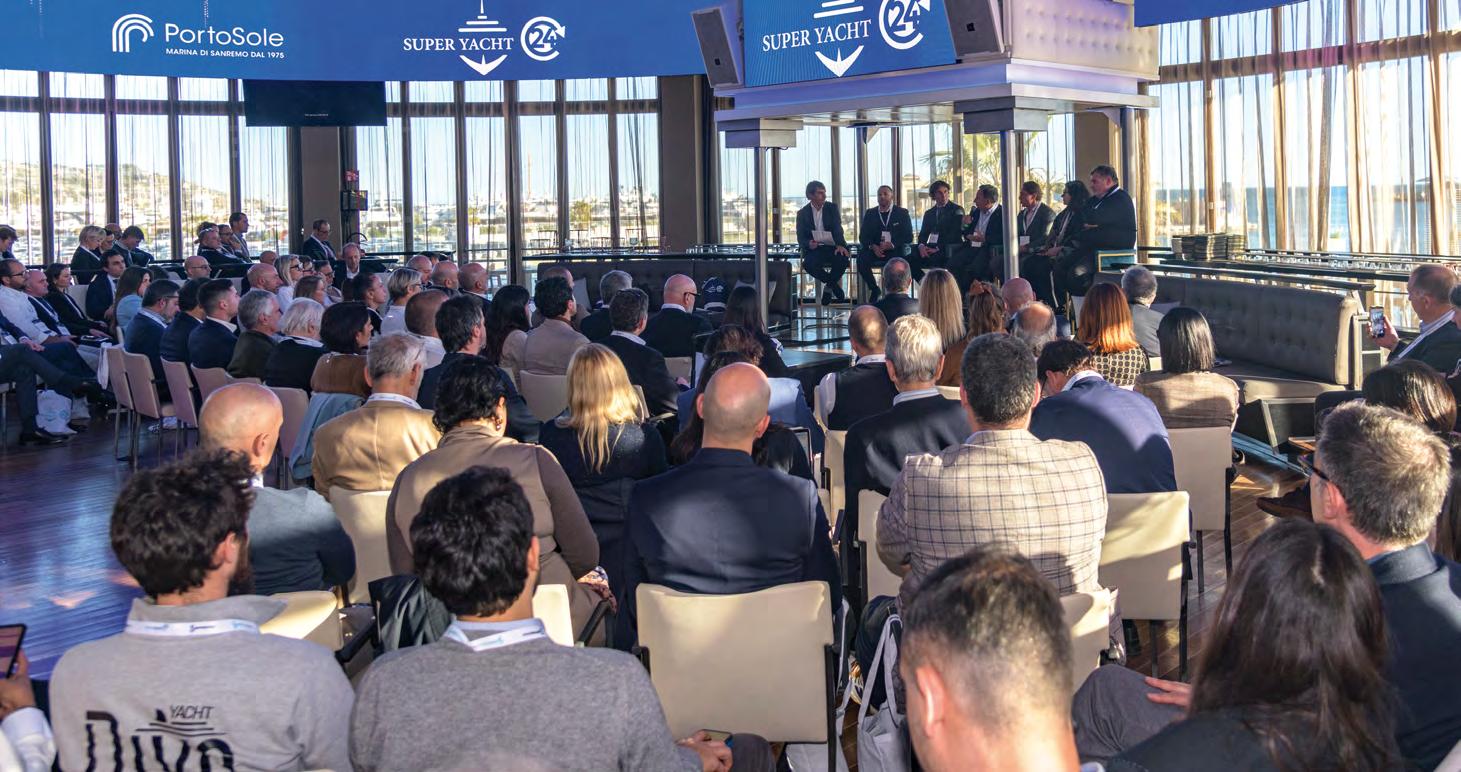
Mentre lo yachting corre verso il clou della stagione, i numeri che riguardano l’industria nautica italiana confermano che nel 2024 il settore ha generato oltre 13 miliardi di euro di valore aggiunto e quasi 168 mila occupati, con una crescita dell’occupazione del 5,6%. i rapporti realizzati dall’Ufficio studi di confindustria nautica e fondazione Edison indicano un consolidamento strutturale della cantieristica italiana e un rafforzamento competitivo dell’intera filiera. il trend rilevato dal global order book 2026 di boat international vede la quota italiana nell’industria dei superyacht in crescita di 2 punti, raggiungendo il 52%, con un numero di unità pari a 568 ordini su un totale di 1.093 (riduzione del 4% rispetto ai 1.138 totali dello scorso anno). nel settore fino ai 24 metri la quota di campione che prevede stime negative è scesa al 37%, mentre è salita al 50% la quota di chi prevede stabilità e un 13% di imprese prevede una crescita. allo stesso tempo, nel corso dell’8° forum che sUpEr YacHt 24 ha organizzato a portosole sanremo – presenti circa 200 addetti ai lavori del mondo dello yachting e dell’industria nautica, in rappresentanza di circa 90 aziende di settore – sono emerse esigenze chiare: il settore chiede regole più snelle e tecnici formati. lo ha detto bene paolo della pietra di confindustria imperia: “la difficoltà maggiore è reperire risorse davvero formate. è necessario avvicinare il mondo degli imprenditori a quello della scuola”. E questo vale su tutto il territorio nazionale, non solo la liguria. riguardo al tema normativo, è invece emerso che le complessità spingono parte degli armatori verso registri esteri più competitivi. il vantaggio competitivo italiano è forte e riconosciuto, ma richiede interventi su formazione, infrastrutture e semplificazione per essere mantenuto nel medio periodo. le medesime richieste emergono dall’approfondimento dedicato al refit, un comparto in crescita costante (nel 2024 il fatturato è stato di oltre 505 milioni di euro, crescita di circa il +2% rispetto all’anno precedente) che richiede, anche questo, maggiore semplificazione per mantenere il vantaggio competitivo dovuto alla posizione geografica ed eccellenza artigianale. Emiliano Martino, direttore di portosole shipyard a sanremo, nell’intervista all’interno del focus è stato chiaro: “la burocrazia non aiuta. in paesi a noi vicini non viene richiesta una serie di carte e procedure che non generano valore aggiunto ma sono complicazioni che potrebbero essere semplificate e che il cliente fatica a comprendere, soprattutto per noi che siamo vicini al confine. la mole di documenti fa perdere tempo e drena risorse economiche che potrebbero essere destinate ai lavori”. E non è l’unico a lanciare uno spunto di riflessione sul tema.
i taly is a leader, but its competitive advantage must be protected as the yachting world heads toward the peak of the season, figures for the italian boating industry confirm that in 2024 the sector generated over €13 billion in added value and nearly 168,000 jobs, with employment growing by 5.6%. reports produced by the re search d ep artment of confindustria nautica and the edis on Foundation point to a structural consolidation of italian shipbuilding and a strengthening of the entire supply chain’s competitiveness. the trend highlighted by boat international’s g lob al o rder book 2026 shows italy’s share in the superyacht industry rising by 2 percentage points to reach 52%, with 568 units on order out of a total of 1,093 (a 4% decrease compared to last year’s total of 1,138). in the segment up to 24 metres, the share of the sample expecting negative estimates has dropped to 37%, while 50% foresee stability and 13% of companies anticipate growth.
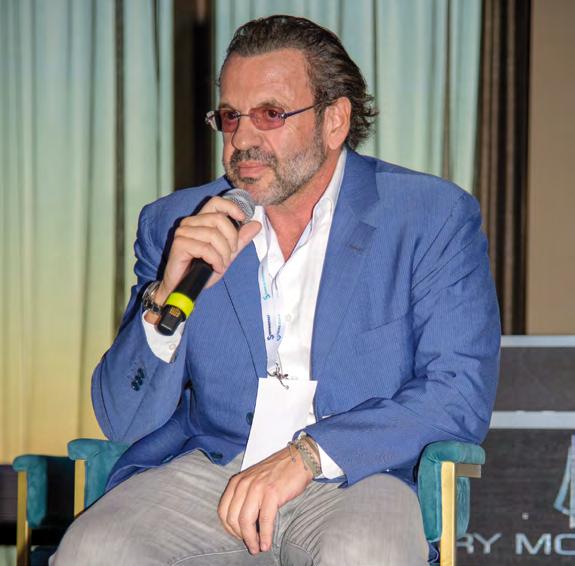
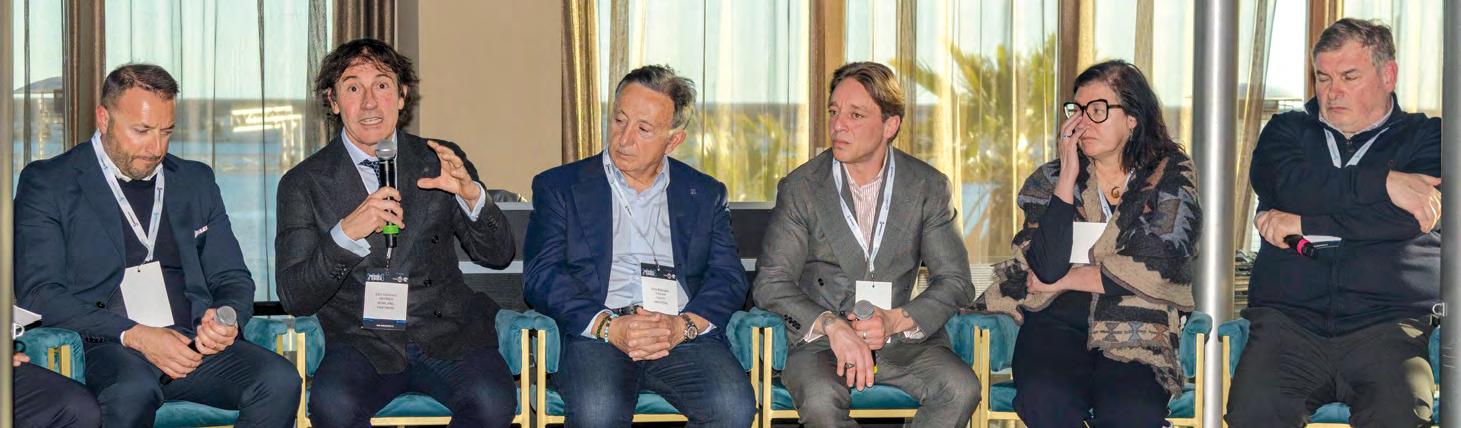
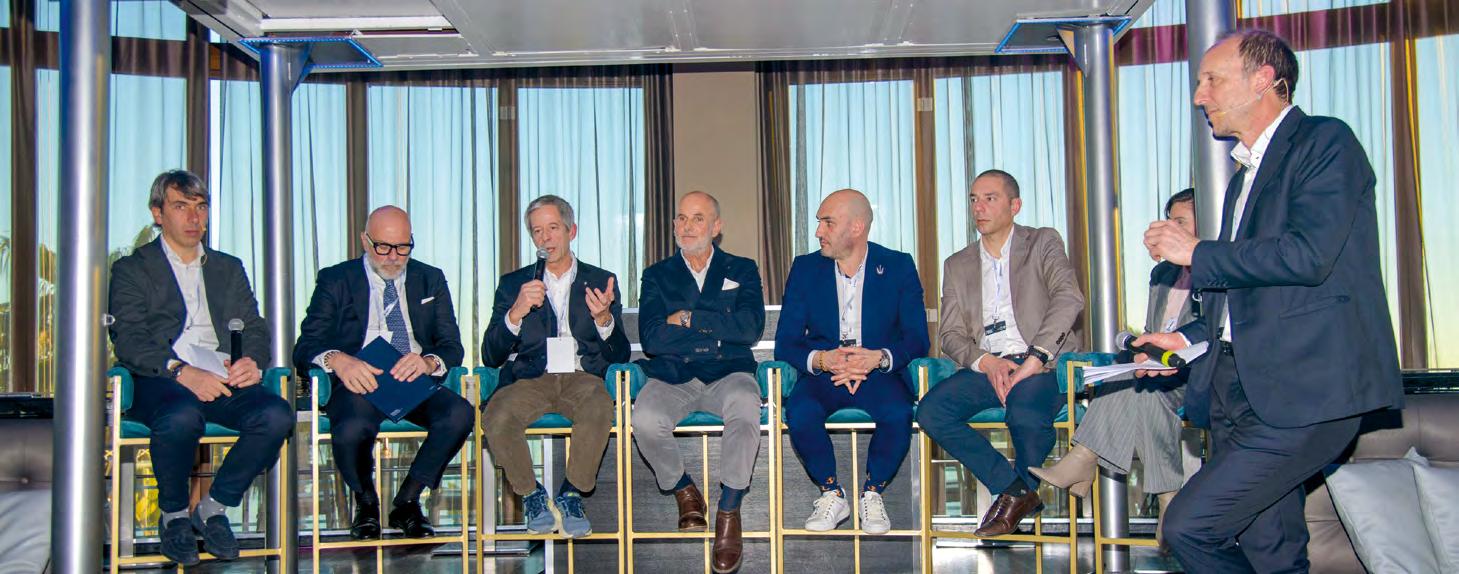
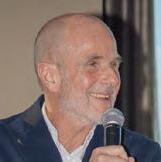
at the same time, during the 8th Forum organized by super yacHt 24 in portosole s anremo – attended by around 200 professionals from the yachting and marine industry, representing about 90 companies – clear needs emerged: the sector is calling for more streamlined regulations and better-trained technicians. paolo d ella pietra of confindustria imperia put it well: “ the greatest difficulty is finding truly skilled resources. it is essential to bring the business world closer to the education system.” and this applies across the entire country, not just liguria. o n the regulatory front, it also emerged that complexity is pushing some yacht owners toward more competitive foreign registers. italy’s competitive advantage is strong and widely recognized, but it requires action in training, infrastructure, and simplification to be maintained in the medium term.
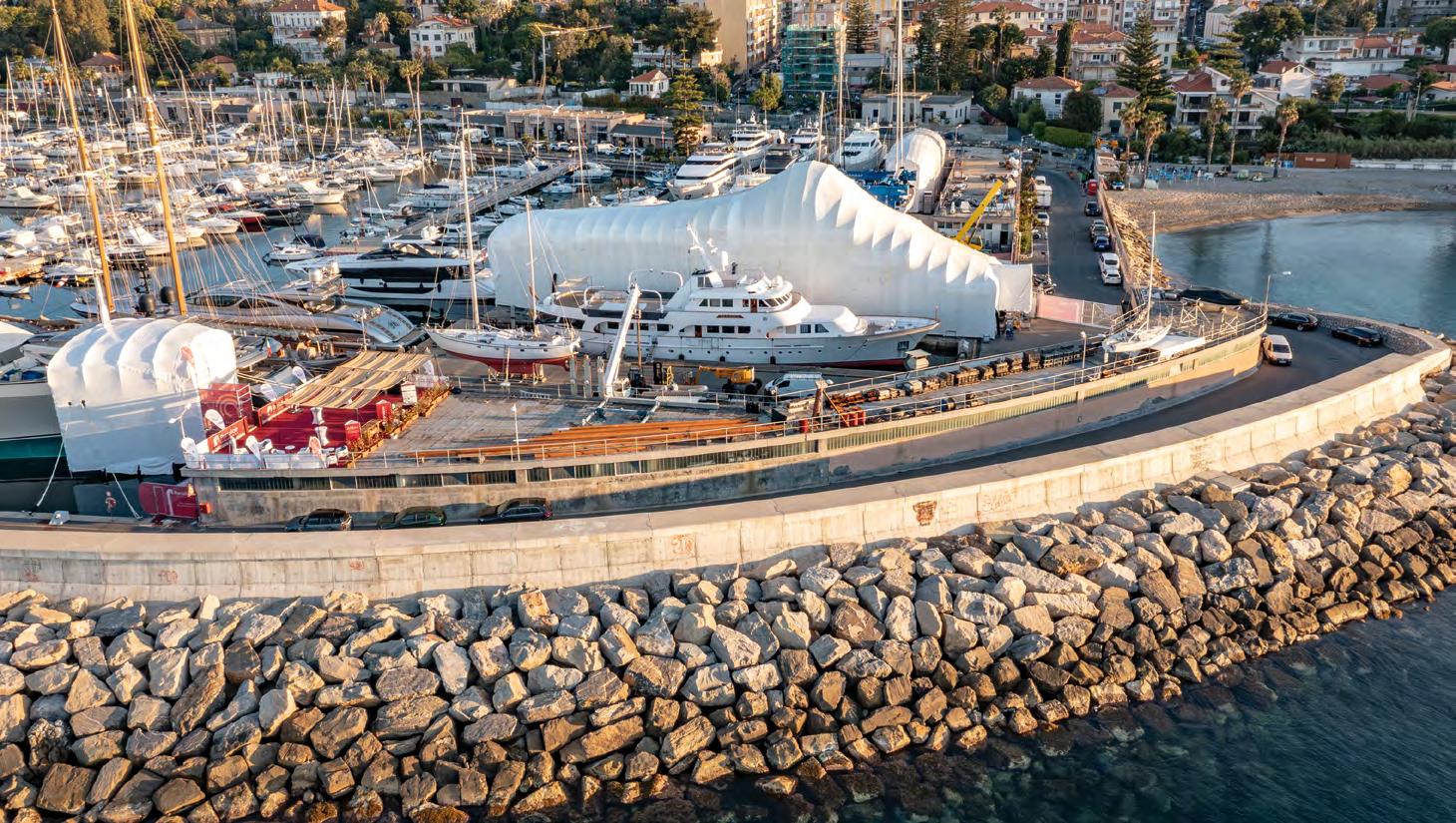
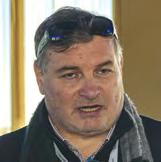
the same concerns emerge from the in-depth focus on refit, a segment that is steadily growing (in 2024 turnover exceeded €505 million, up by around +2% compared to the previous year) and which also requires greater simplification to maintain the competitive advantage driven by geographical position and artisanal excellence. emiliano martino, director of portosole s hipyard in s anremo, was clear in his interview featured in the focus: “bureaucracy doesn’t help. in countries close to us, a whole series of documents and procedures is not required—these do not generate added value but are complications that could be simplified and are difficult for clients to understand, especially for us operating near the border. the volume of paperwork wastes time and drains financial resources that could instead be allocated to the work itself”. and he is not the only one raising important points for reflection on this issue.
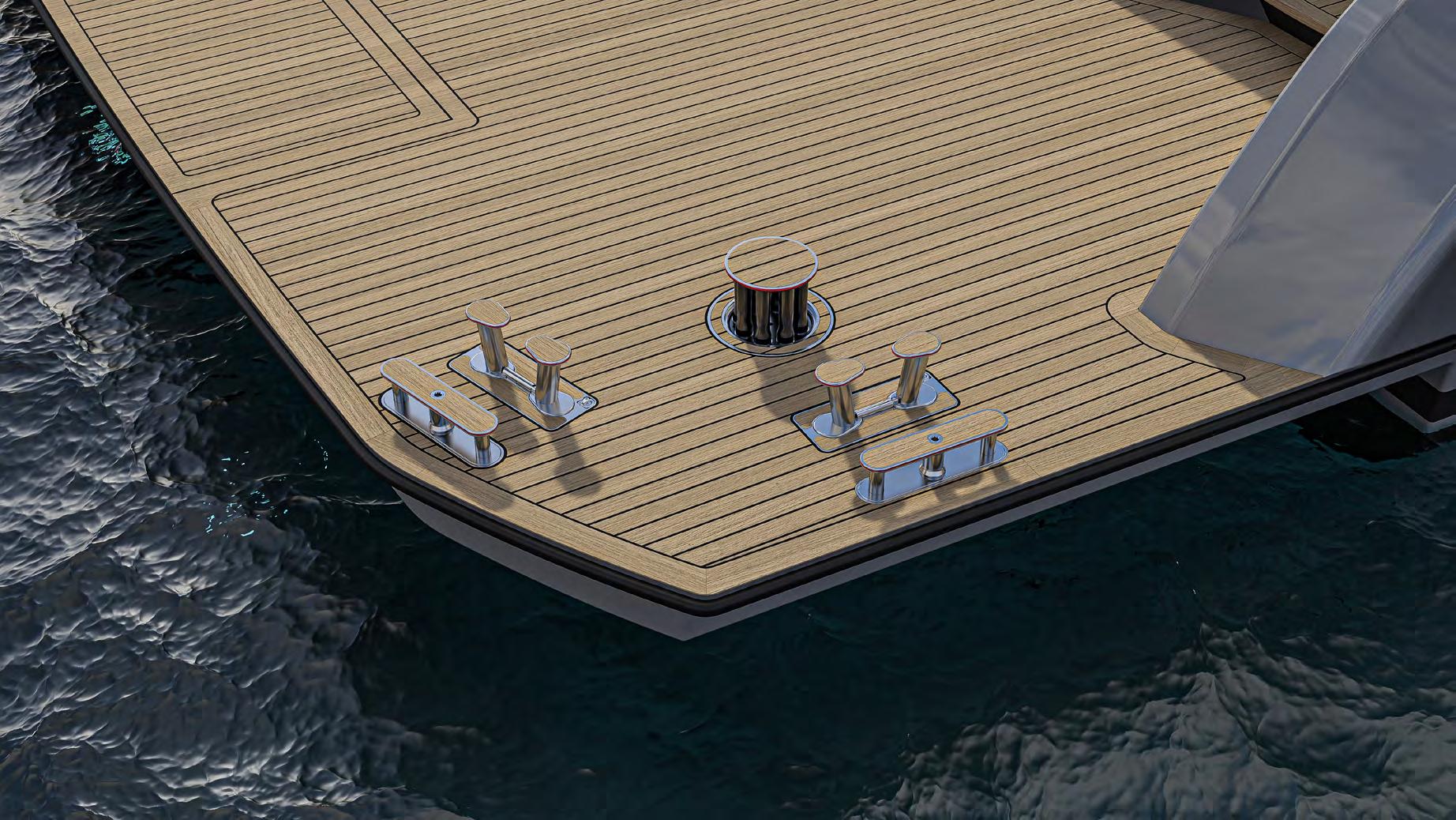
Retractable
CLR MOORING SYSTEM
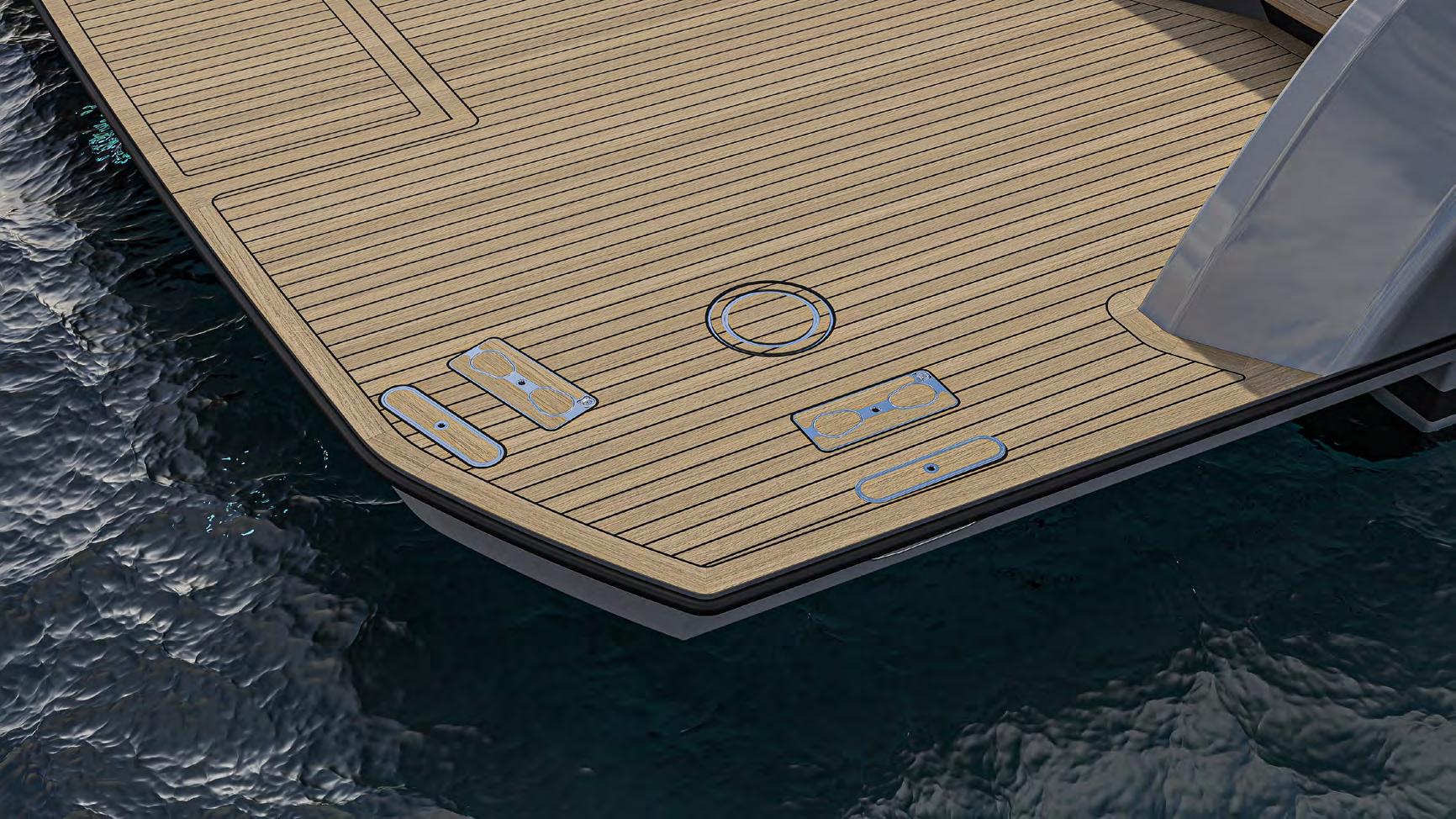
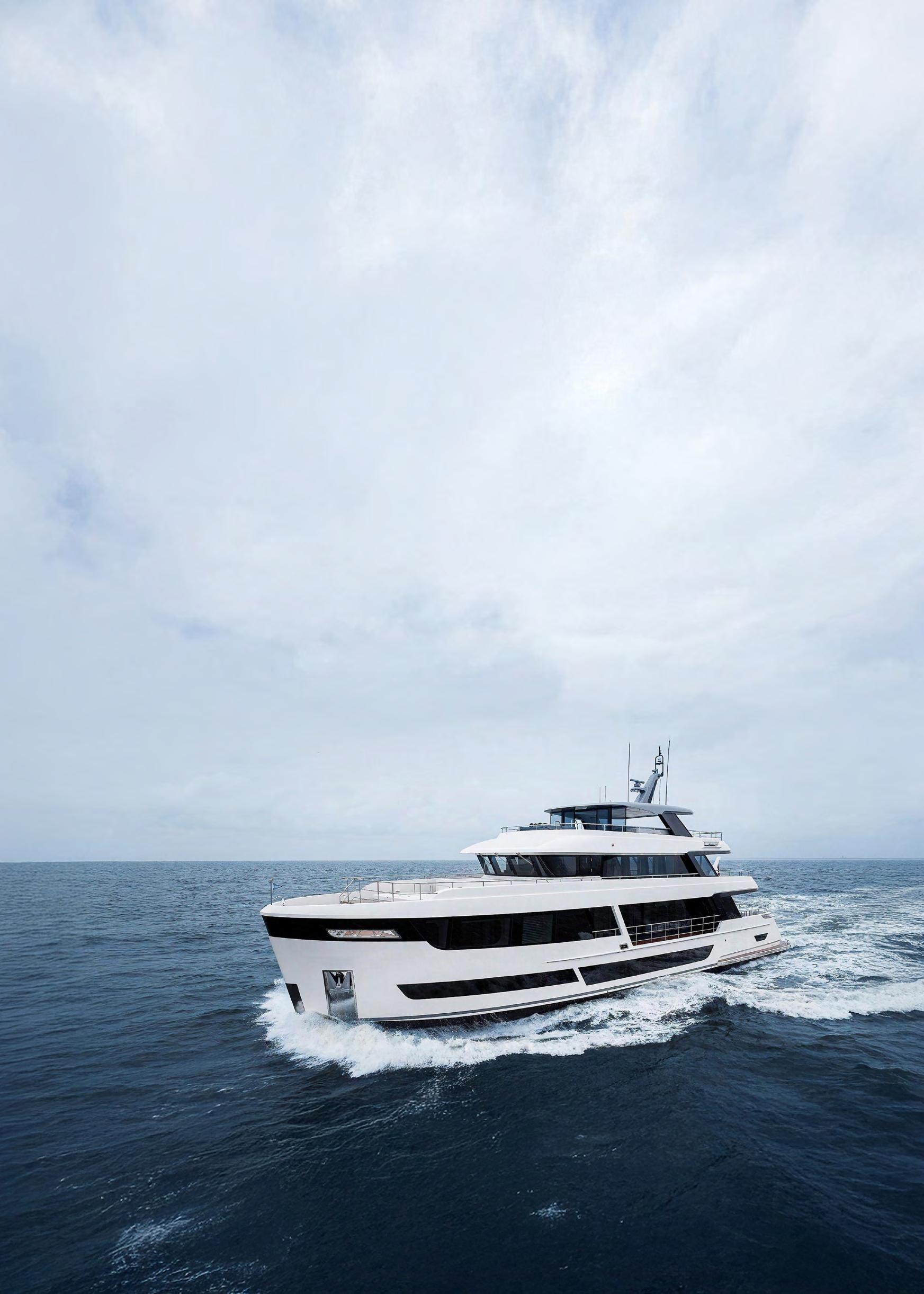
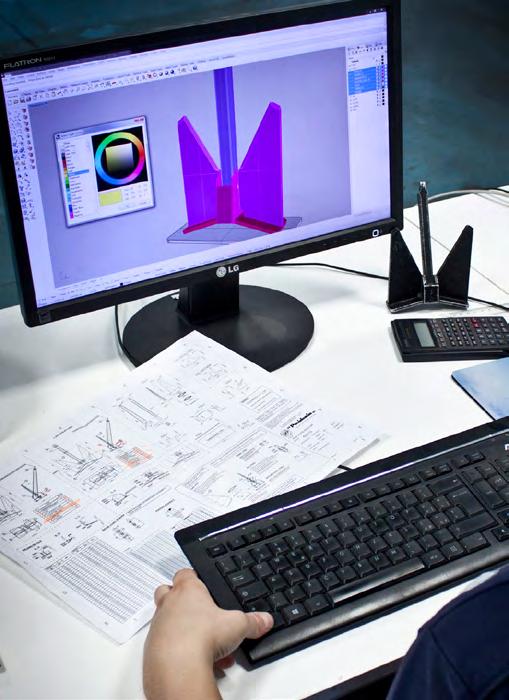
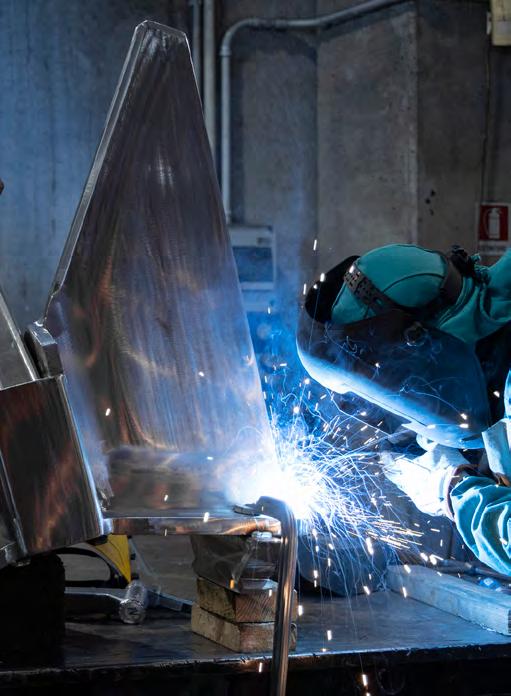
The Harken CLR system rede nes megayacht mooring with a clean, high-performance, fully retractable solution. It includes a bollard, fairlead, and mooring winch, keeping the deck ush and uncluttered when not in use. During mooring operations, the three elements work in perfect synergy, delivering maximum control and power.
8° sUpEr YacHt 24 forUM sanrEMo 40 42 44 46 48 50 52 54
- ALOC i N
A - p iazza roberto b aldini 7/75, 16149 g enova +39 010 9703071 | info@alocinmedia.it editor in C hief: n icola c apuzzo | capuzzo.nicola@gmail.com +39 334.788.9863
co -E ditor in c H i E f: a lberto Mariotti | mariotti@superyacht24.it + 39 328.29.37.133
p rog E tto grafico c laudia g iorgini | claudiagiorgini@gmail.com
contrib U tors: c inzia g arofoli, a lberto Mariotti, g iuseppe o rrù
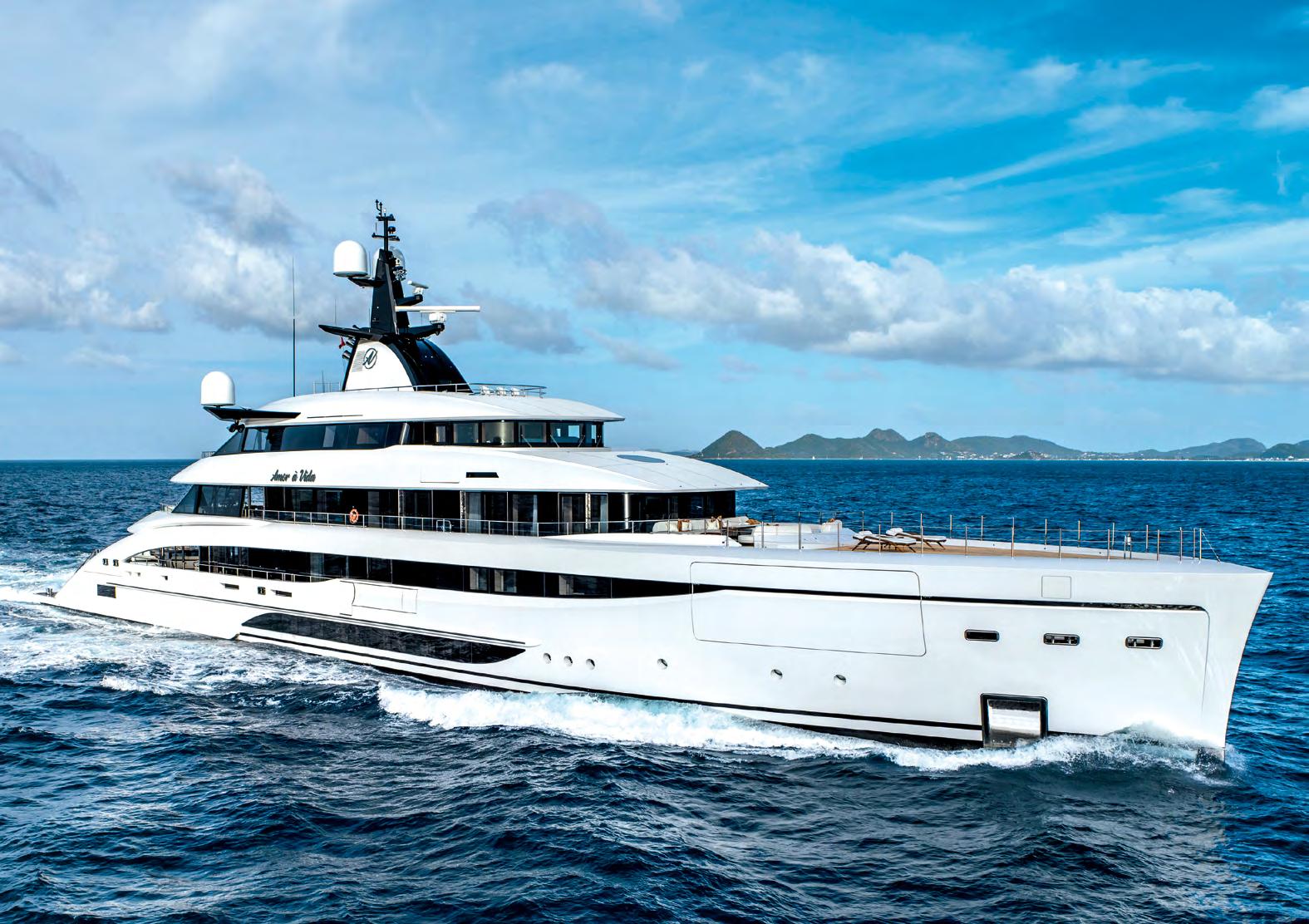
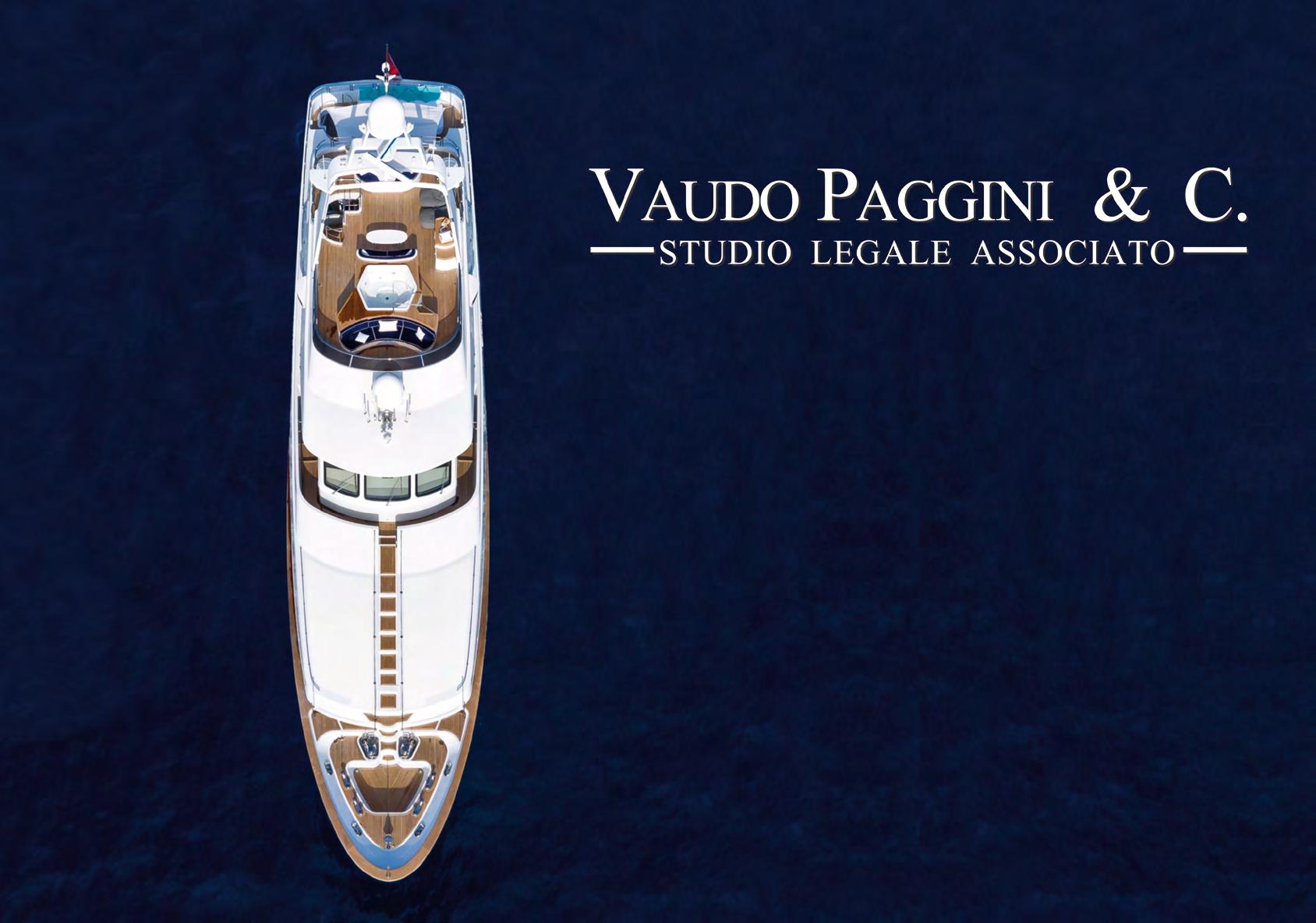
cov E r p H oto: crn a mor à v ida, photo by Maurizio paradisi
a dv E rtising & Mark E ting: per informazioni sulle opportunità di marketing, pubblicità e visibilità For information on marketing, advertising and visibility opportunities s abrina c arozzino | marketing@alocinmedia.it | + 39 350.071.6304
il 67 metri amor à Vida è dotato di uN imPiaNto sViluPPato iNsieme a siemeNs eNergy Che CoNseNte uN’ottimizzazioNe dei CoNsumi e del fabbisogNo eNergetiCo ComPlessiVo, sia Per i serVizi sia Per la ProPulsioNe
First C r N with hybrid system
the 67-metre Amor à VidA is equipped with A system de Veloped together with siemeNs eNergy thAt Allows optimizAtioN oF CoNsumptioN ANd oVer All eNergy demANd, both For oNboArd serViCes ANd propulsioN
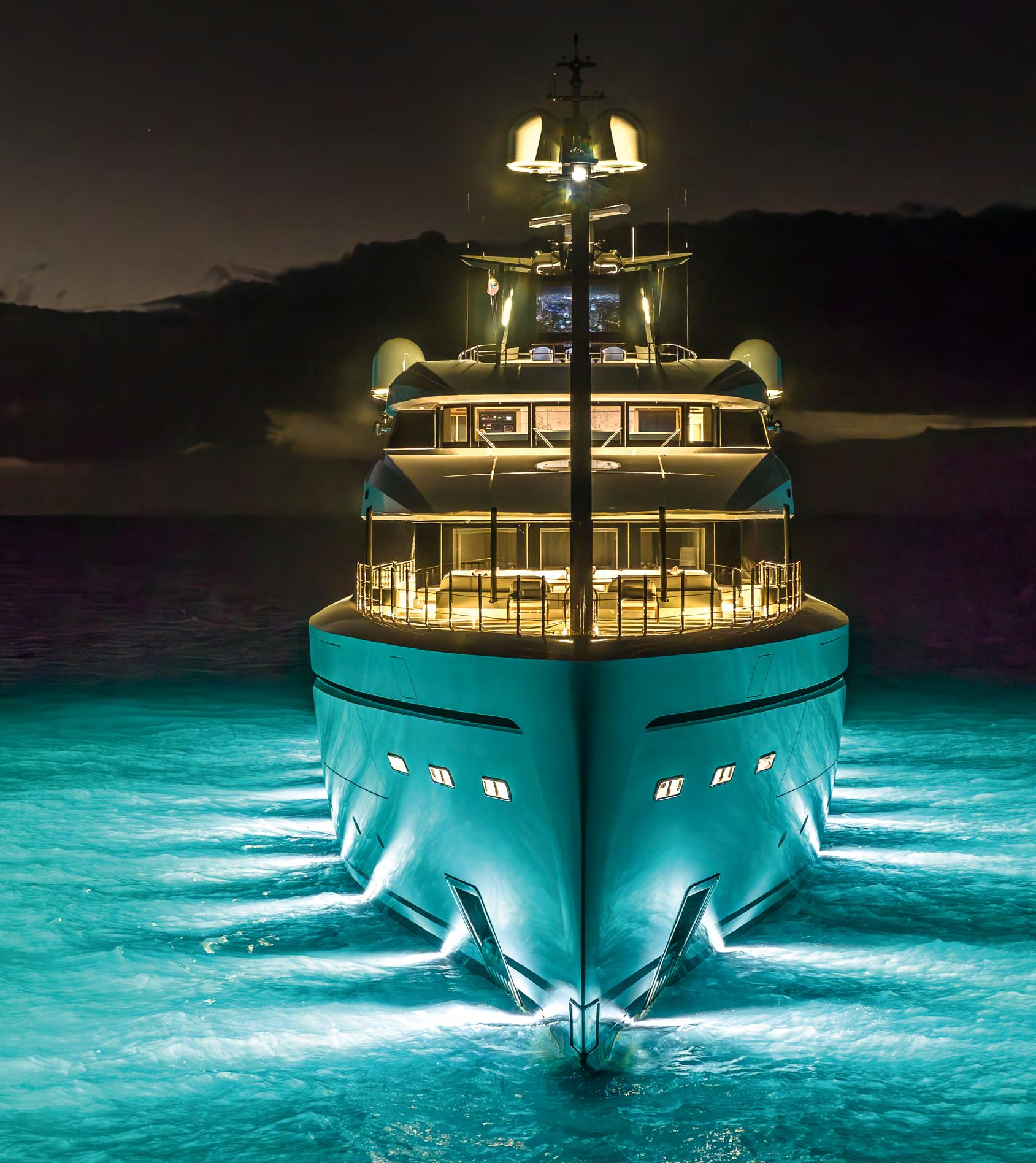
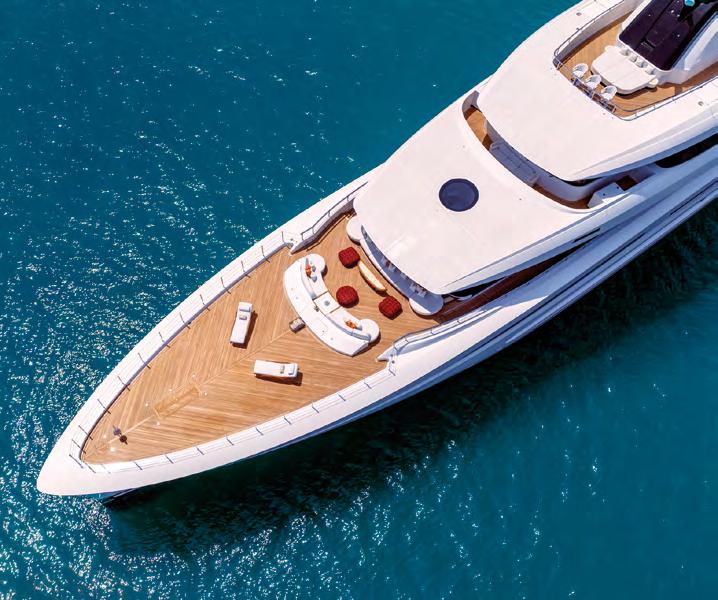
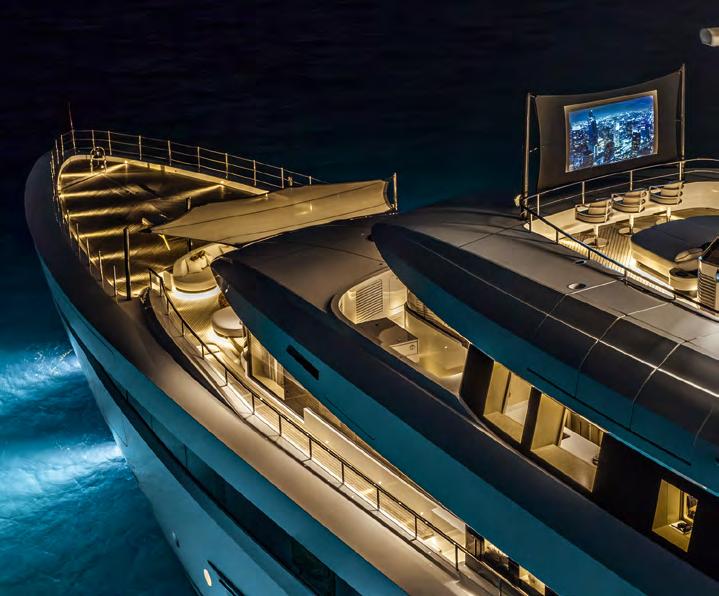
Lungo 67,55 metri fuori tutti e largo 11,80, Amor à Vida è il primo Crn dotato di propulsione ibrida - sviluppata insieme a Siemens Energy - per aumentare l’efficienza dei consumi di carburante, sia dei motori principali sia dei generatori. Lo yacht è dotato anche di un sistema di recupero del calore riduce il consumo energetico e i costi operativi, soprattutto in rada. Lo yacht è stato disegnato da Nuvolari Lenard con interni curati da Valentina Zannier, interior art director di Nuvolari Lenard e in collaborazione con Moran Yacht & Ship, che affianca l’armatore e che lo ha rappresentato durante l’intero iter progettuale e costruttivo. Amor à Vida si sviluppa su sei ponti, ha un gross tonnage di 1.447 Gt e accoglie fino a 14 ospiti in cinque cabine Vip e una suite armatoriale. L’upper deck è interamente dedicato all’armatore con un appartamento a prua, una vista panoramica a 180° e un’area outdoor esclusiva dedicata. Il superyacht è utilizzato per crociere private degli armatori e loro ospiti, e in periodi dedicati nel corso dell’anno è disponibile per attività di charter. SUPER YACHT 24 ha intervistato il project manager per entrare più nel dettaglio delle caratteristiche tecniche dello yacht.
Quali sono state le principali sfide del progetto e quali i materiali di costruzione?
“Amor à Vida è il primo yacht Crn dotato di ibrido, sistema che consente un’ottimizzazione dei consumi e del fabbisogno energetico complessivo, sia per i servizi sia per la propulsione. Il progetto ha richiesto uno stategico lavoro di team commessa nave, lato cliente e lato cantiere, in tutte le fasi che ha permesso di consegnare lo yacht con successo. Il progetto rientra nella tradizione costruttiva con scafo in acciaio e la sovrastruttura in alluminio, con vantaggi in termini di peso, sicurezza e stabilità - avendo la parte più pesante in basso - e benefici anche sui consumi”.
Come è strutturato il sistema ibrido e quali modalità operative consente?
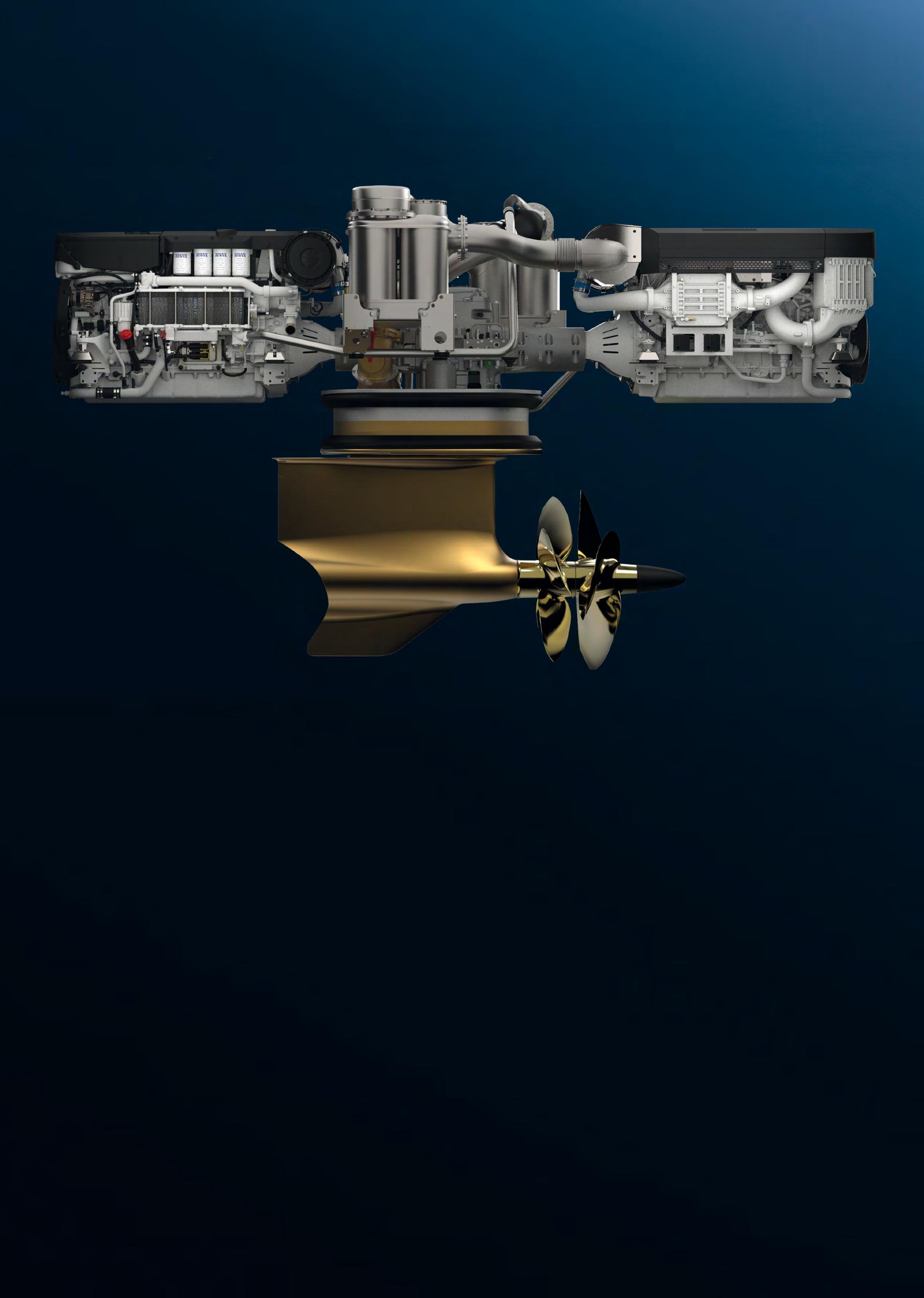
“È stato sviluppato insieme a Siemens Energy ed è composto da due motori termici di propulsione Mtu 12V4000 M63 da 1500 Kw@1.800 giri, due generatori principali Cat C9.3 246 ekW, 400V-50 Hz più uno di emergenza Cat C7.1 143 ekW, 400V-50 Hz, prese Pto e Pti calettate sul motore per recupero o generazione di energia elettrica e motori elettrici in linea d’asse che possono spingere la nave in pro-
Measuring 67.55 metres overall with a beam of 11.80 metres, Amor à Vida is the first CrN equipped with hybrid propulsion - developed in collaboration with Siemens Energy - to improve fuel efficiency for both the main engines and the generators. The yacht is also fitted with a heat recovery system that reduces energy consumption and operating costs, especially at anchor. The yacht was designed by Nuvolari lenard, with interiors curated by Valentina Zannier, interior art director at Nuvolari lenard, in collaboration with Moran Yacht & Ship, which supported the owner and represented them throughout the entire design and construction process. Amor à Vida spans six decks, has a gross tonnage of 1,447 GT and accommodates up to 14 guests across five Vip cabins and an owner’s suite. The upper deck is entirely dedicated to the owner, featuring a forward-facing apartment, a 180-degree panoramic view and a private outdoor area. The superyacht is used for private cruising by the owner and their guests, and is also available for charter during selected periods throughout the year. SUpEr YACHT 24 interviewed the project manager to explore the yacht’s technical features in greater detail.
What were the main challenges of the project and what materials were used in the construction?
Amor à Vida is the first CrN yacht equipped with a hybrid system, which enables optimisation of both fuel consumption and overall energy demand, for onboard services as well as propulsion. The project required a strategic team effort between the owner’s representatives and the shipyard at every stage, ultimately leading to the successful delivery of the yacht. The construction follows a traditional approach, with a steel hull and an aluminium superstructure, offering advantages in terms of weight, safety and stability—thanks to the heavier mass being positioned lower—as well as improved fuel efficiency”. How is the hybrid system structured and what operating modes does it allow?
“it was developed together with Siemens Energy and consists of two MTU 12V4000 M63 propulsion engines rated at 1,500 kW at 1,800 rpm, two main CAT C9.3 generators (246 ekW, 400V–50 Hz) plus one emergency CAT C7.1 generator (143 ekW, 400V–50 Hz), pTO and pTi units connected to the engines for energy recovery or generation, and electric motors installed on the shaft
pulsione elettrica. Il pacco batterie è da 270 kWh e i motori elettrici sono sincroni in corrente alternata da 400 V e sprigionano 200 kW ciascuno. Attraverso la piattaforma di gestione dell’energia abbiamo totale flessibilità di scelta della sorgente: si può navigare solo con i motori attingendo da questi l’energia elettrica per i servizi e l’hospitality a bordo, utilizzando le batterie come riserva quando c’è un picco di richiesta e i motori non bastano, in questo modo si evita l’avviamento di uno o più generatori. Oppure si può navigare con generatori accesi e motori spenti alimentando il battery pack e il motore elettrico calettato sull’asse fino a circa 7 nodi. In rada è possibile rimanere con i motori termici spenti e alimentare l’hotellerie solo con le batterie. Il sistema bilancia continuamente produzione e consumo: quando l’energia è in eccesso carica le batterie, quando non è sufficiente le batterie compensano il picco”. Quali risultati avete ottenuto alle prove in mare in termini di prestazioni?
“Il progetto prevedeva di raggiungere i 16 nodi di massima, ma abbiamo superato questa velocità, raggiungendo quasi i 17 nodi. La velocità di crociera dichiarata a 15 nodi all’85%
dell’Mcr (maximum continuous rating, cioè il 100% della potenza del motore, n.d.r.) è risultata essere di 16,71 nodi. Anche l’autonomia, prevista in circa 4.500 miglia nautiche, e abbiamo raggiunto le 5.200 miglia in base alle prove in mare realizzate. Questo significa che abbiamo lavorato sulla definizione della carena e sul controllo dei pesi senza eccedere. La nave è certificata Imo Tier III”. Come funziona l’impianto di recupero del calore?
“L’acqua di raffreddamento dei motori termici passa attraverso uno scambiatore con un circuito secondario e recuperiamo gran parte del calore dissipato che viene utilizzato per riscaldare l’acqua delle piscine e l’acqua dolce della nave, immettendo acqua già preriscaldata nel circuito. Anche l’acqua per il lavaggio ponti e le serpentine dei boiler beneficiano del sistema”. Parliamo del comfort acustico e controllo delle vibrazioni.
“Come su ogni yacht Crn, abbiamo previsto uno studio dedicato all’insonorizzazione per abbattere rumore e vibrazioni nei locali interni ed esterni attraverso la nostra costante ricerca e sviluppo. Con l’installazione di materiali insonorizzanti e smorzanti abbiamo ottenuto risultati inferiori ai limiti contrattuali.
line capable of driving the yacht in electric mode. The battery pack has a capacity of 270 kWh, while the electric motors are 400 V AC synchronous units delivering 200 kW each. Through the energy management platform, there is complete flexibility in selecting the power source: the yacht can run on the main engines while drawing electrical power for onboard services and hospitality directly from them, using the batteries as a reserve during peak demand to avoid starting additional generators. Alternatively, it can operate with generators on and main engines off, powering both the battery pack and the electric motor on the shaft, allowing speeds of up to around 7 knots. At anchor, the yacht can remain with thermal engines switched off, relying solely on batteries to supply hotel loads. The system continuously balances production and consumption: when there is excess energy, it charges the batteries; when energy is insufficient, the batteries compensate for peak demand.”
What results did you achieve during sea trials in terms of performance?
“The project target was a top speed of 16 knots, but we exceeded this, reaching nearly 17 knots. The declared cruising speed of 15 knots
at 85% MCr (maximum continuous rating, meaning 100% of the engine’s power, ed.) actually proved to be 16.71 knots. range also exceeded expectations: it was projected at around 4,500 nautical miles, while sea trials recorded 5,200 nautical miles. This confirms the work carried out on hull design and weight control without excess. The vessel is iMO Tier iii certified”.
How does the heat recovery system work?
“The cooling water from the main engines passes through a heat exchanger connected to a secondary circuit. We recover a large portion of the dissipated heat, which is then used to warm the pool water and the yacht’s freshwater system, feeding pre-heated water into the circuit. The system also benefits deck-washing water and the boiler coils”.
Let’s talk about acoustic comfort and vibration control.
“As with every CrN yacht, we carried out a dedicated soundproofing study to reduce noise and vibrations in both interior and exterior areas, supported by our ongoing research and development. Thanks to the installation of insulating and damping materials, we achieved results below the contractual limits. The yacht is extremely quiet and vibration-
mariotti
ste dell’armatore. L’illuminazione è invece gestita grazie ai sistemi Lutron Electronics con diversi scenari”. E per la cyber security?
“Sono stati implementati firewall Ips e Ids, intrusion prevention system e intrusion detection system. Il sistema di telecamere a circuito chiuso è esteso e prevede anche il controllo di movimenti non desiderati. Sempre riguardo alla sicurezza, una selezione di allarmi di bordo confluisce tramite Uhf nel sistema radio dello staff con una serie di recall che informa l’equipaggio in caso di evento non desiderato”.
Come sono stati scelti i tender e
Mercury da 600 cavalli”. Quali criteri avete seguito nella selezione dei fornitori?
“Crn lavora con fornitori qualificati e selezionati, tutti estremamente specializzati. Principalmente si tratta di fornitori italiani. Carpenteria, scafo, montaggio mobili, vetri, movimentazioni, tessuti: sono aziende italiane, molte locali, fidelizzate. Noi proponiamo i nostri fornitori, perché abbiamo la garanzia di professionalità e tempistiche, qualora il cliente richieda espressamente un fornitore diverso o straniero, troviamo un punto d’incontro che sia in linea con i suoi desiderata”.
large screens, all flush-integrated with lift and rotation mechanisms. Together with our design partner Videoworks, we developed the automation system based on Apple. The owner requested to replicate a familiar onboard environment, with the same setup and programming used in their residences. Connectivity is ensured by three systems: terrestrial 5G, Starlink for satellite connection, and a VSAT system as backup. The SDWAN system has also been implemented, allowing connection to US-based servers without the need for foreign VpNs, replicating the owner’s specific set-
selecting suppliers?
“CrN works with qualified and carefully selected suppliers, all highly specialised. Most of them are italian. From metalwork and hull construction to furniture installation, glazing, handling systems and fabrics, these are italian companies—many of them local and long-standing partners. We usually propose our own suppliers because we can guarantee both quality and timelines. However, if the client specifically requests a different or international supplier, we always find a solution that aligns with their expectations”.
EasY sailing, fUll ElEctric
Un 43 MEtri pEr navigarE in giro pEr il Mondo, dovE ogni scElta tEcnica rispondE a Una logica prEcisa di gEstionE, controllo E affidabilità. il pM E boat captain Mattia bEllEri ripErcorrE lo svilUppo dEl progEtto a 43-meter yacHt designed to sail around tHe world, wHere every tecHnical cHoice Follows a precise logic oF management, control, and reliability. pm and boat captain mattia belleri retraces tHe project’s development
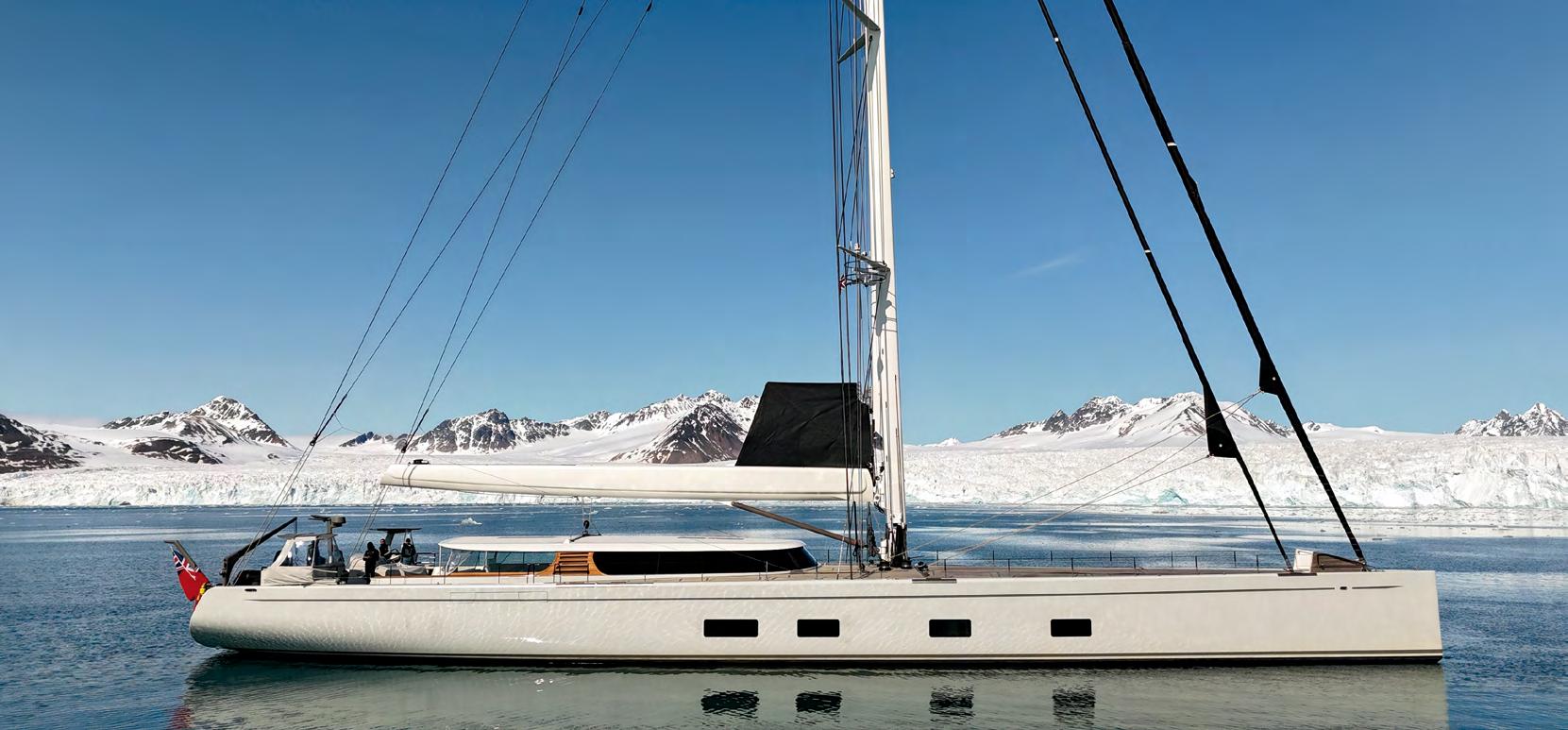
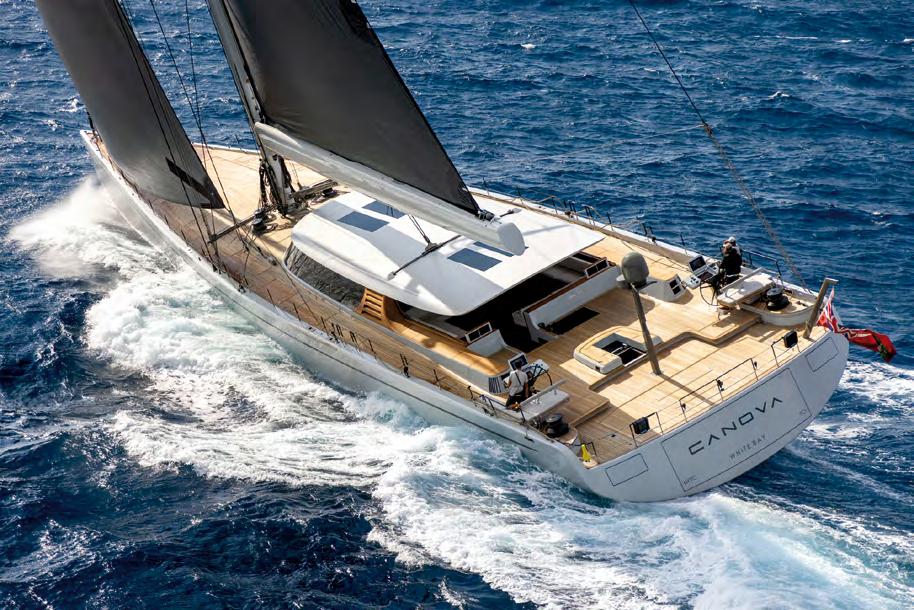
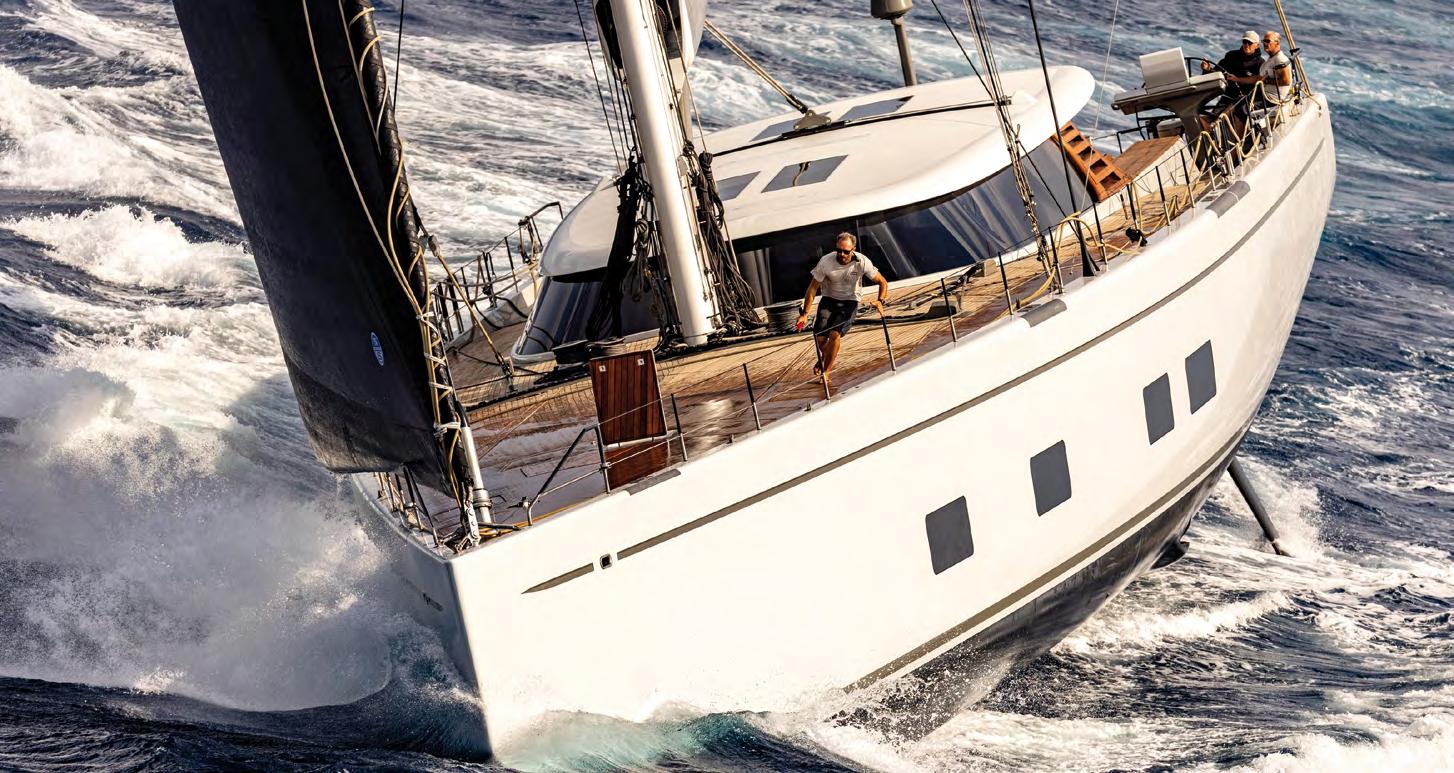
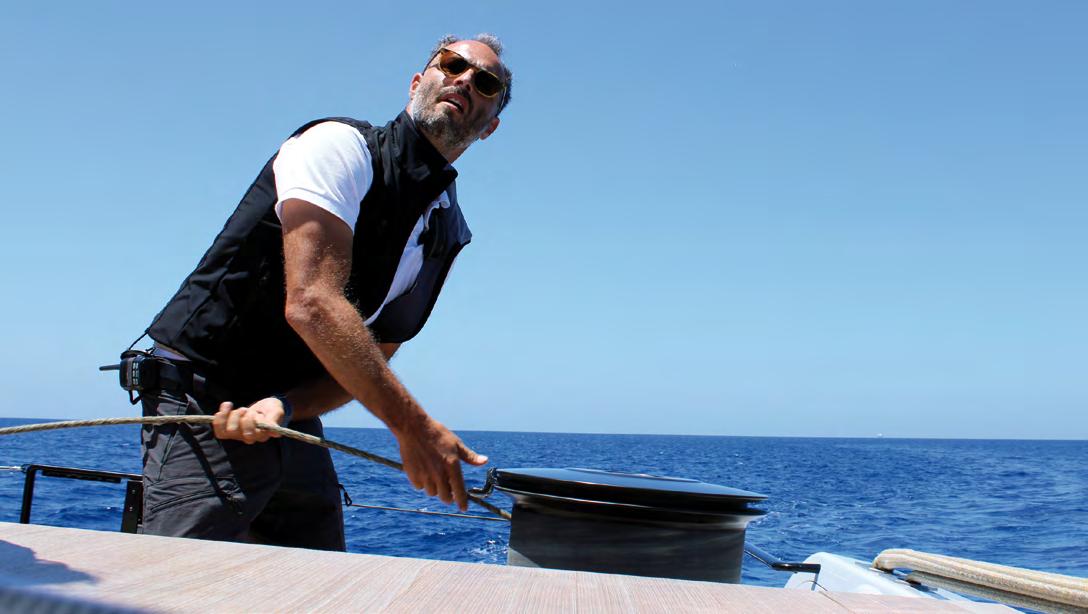
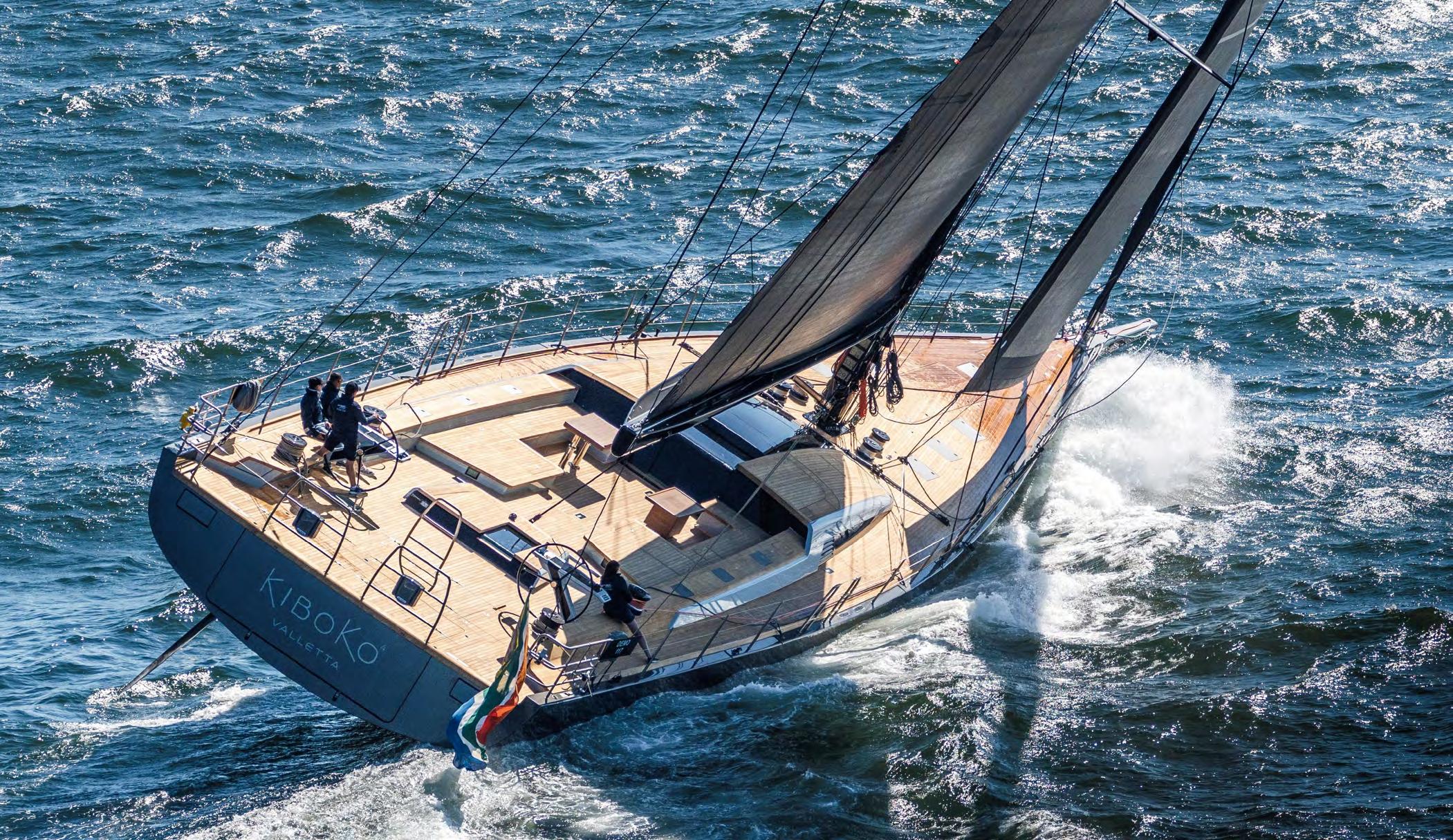
Genova - pensato per affrontare lunghe traversate con equipaggio ridotto, questo 43 metri costruito dal cantiere finlandese Baltic Yachts si sviluppa su una piattaforma tecnica centrata su integrazione e gestione dei sistemi. Dalla chiglia retrattile alla propulsione elettrica con pod azimutale, fino al controllo dei carichi del piano velico e alla ridondanza impiantistica, il progetto affronta in modo molto strutturato aspetti importanti come affidabilità, facilità di manutenzione ovunque nel mondo e regolarità di esercizio. super YaCHt 24 è stato a bordo dello yacht e ha ha intervistato mattia Belleri, project manager e boat captain, per analizzarne impostazione e scelte ingegneristiche.
Quali sono stati i principi cardine del progetto?
“La barca è stata costruita con l’idea del bluewater: era il primo punto davvero rilevante. poi easy sailing, quindi la possibilità di portarla a vela in condizioni interessanti con poco equipaggio. e infine easy maintenance, perché la barca doveva essere usata, macinare miglia, e quando hai queste dimensioni sai che se fai soluzioni troppo delicate o custom ti condizionano: non hai materiale disponibile”. Come avete definito la lunghezza finale dello yacht?
“siamo partiti da un’ipotesi molto più grande dei 43 metri attuali, ma conoscendo bene l’armatore che veniva da un 36 metri ho cercato di ‘proteggerlo’ suggerendogli di arrivare al massimo a 40 metri. passare a 50 metri avrebbe significato perdere sensibilità al timone e performance. poi alcuni elementi di layout e living hanno riportato la barca un po’ più in su come misure.
Il tema dei tender è stato centrale: volevamo due tender, entrambi non visibili e non in coperta, per evitare limitazioni in navigazione. e volevamo un tender ‘grosso’: ne abbiamo messo uno da 7 metri nel garage di prua. In più desideravamo una linea della tuga molto slick, pulita, senza tempo. tra proporzioni, altezze e lunghezze, il dimensionamento finale naturale è diventato 43 metri”. E le scelte progettuali successive?
“più o meno tutte le decisioni sono state prese in coerenza con i brief. ad esempio la poppa: è una poppa vera, chiusa. abbiamo spostato la paratia stagna all’estremità ottenendo vari vantaggi. primo: quando la apri hai una poppa bella e fruibile senza la tenda. s econdo: il garage è stagno e non porta acqua o sale nelle zone tecniche. Inoltre ci permette di gestire il tender in ogni condizione: con mezzo metro d’onda lo tiriamo su in assoluta sicurezza senza i rischi di un sistema tradizionale. La deckhouse spesso limita la visuale, ma noi l’abbiamo studiata per il contrario. Con gli osteriggi aperti vedi la prua, gli attacchi degli stralli in coperta e con i cuscini montati hai una posizione di timoneria completamente aperta. La scotta randa è stata portata sulla tuga per garantire massima sicurezza e fruibilità”.
Cosa significa easy sailing per l’armatore?
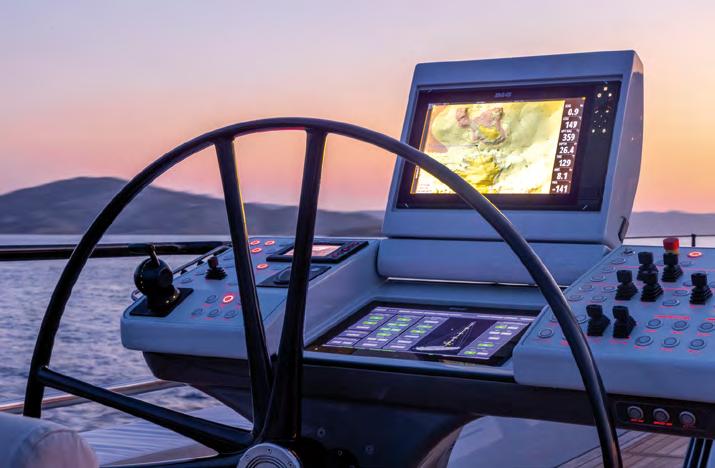
“Che quando la barca è a segno la porta da solo. Ha timone, scotta randa, vang, trinchetta e fiocchi a portata di mano. abbiamo studiato un’impostazione in cui il chartplotter scompare per timonare sentendo solo la barca e il vento. e timonare da soli un 43 metri che fila a 16 nodi è un’esperienza par-
Genoa - Built to undertake long passages with a reduced crew, this 43-meter yacht constructed by the Finnish shipyard Baltic Yachts is based on a technical platform focused on system integration and management. From the retractable keel to electric propulsion with an azimuth pod, to sail load control and system redundancy, the project addresses key aspects such as reliability, ease of maintenance anywhere in the world, and operational consistency in a highly structured way. SUpEr YACHT 24 visited the yacht and interviewed Mattia Belleri, project manager and boat captain, to analyze its approach and engineering choices.
“The yacht was built with the bluewater concept in mind; that was the first truly key point. Then easy sailing, meaning the ability to sail her in demanding conditions with a small crew. And finally easy maintenance, because the
yacht had to be used, to cover miles. With these dimensions, if you adopt overly delicate or highly customized solutions, you risk limitations: you won’t find spare parts available”. How did you define the final length of the yacht?
“We started with a much larger concept than the current 43 meters, but knowing the owner well, who previously had a 36-meter yacht, i tried to ‘protect’ him by suggesting we go no further than 40 meters. Jumping to 50 meters would have meant losing helm sensitivity and performance. Then certain layout and living requirements pushed the size slightly upward. The tender issue was central: we wanted two tenders, both invisible and not stored on deck, to avoid navigation limitations. And we wanted a large tender: we placed a 7-meter one in the forward garage. We also wanted a very sleek, clean, timeless deckhouse line.
ticolare. abbiamo sviluppato con Baltic un sistema di monitoraggio completo per gestire il rigging con i carichi degli stralli di prua, dei carrelli, delle sartie diagonali e verticali, la compressione dell’albero, scotta randa, base randa, cunningham, paterazzi. È tutto monitorato e registrato su scatola nera. puoi essere un grande velista e avere sensazioni ‘di pancia’, ma capire se una diagonale sta caricando 25 o 35 tonnellate senza strumenti è impossibile”. I tender sono stati un tema rilevante?
“Volevamo due tender e li volevamo entrambi invisibili. Il principale è un limo tender da 7 metri con entrobordo diesel da 220 cavalli, stiva fino a mille litri di carburante e funziona come bunker: l’equipaggio lo rifornisce e a sua volta il tender rifornisce la barca senza che l’equipaggio o gli ospiti debbano
aspettare ore in porto. Il secondo tender è nel garage di poppa”. Come avete organizzato l’accessibilità tecnica sotto coperta?
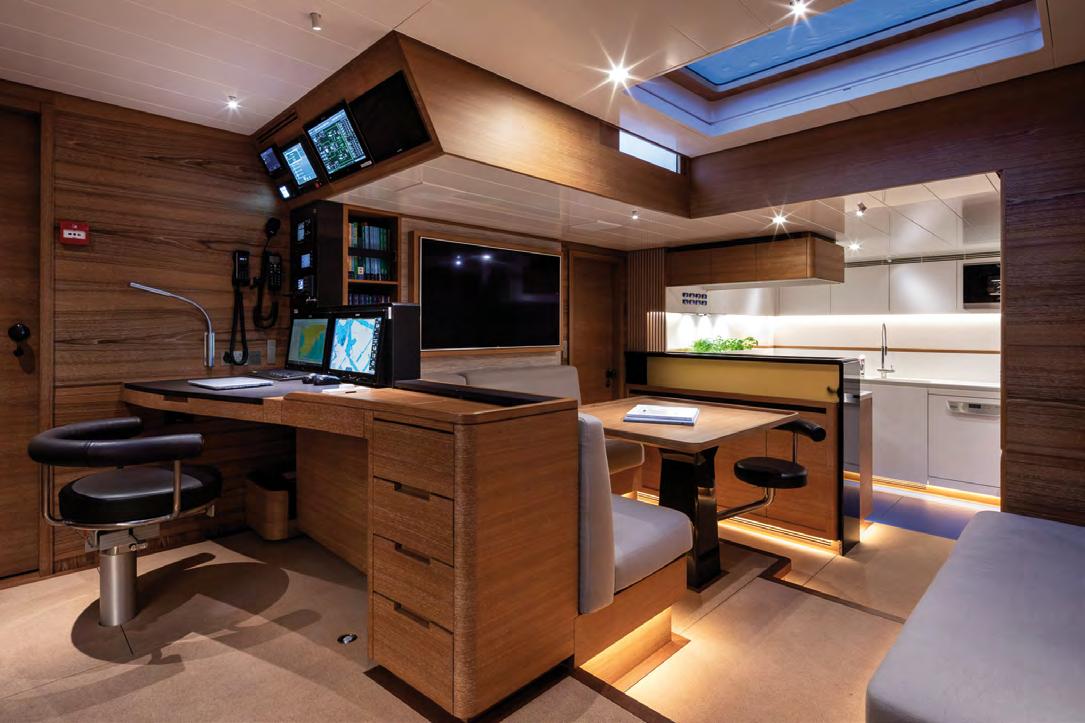
“ tutta la barca è disseminata di passa uomo, molti dei quali nascondono impianti che solitamente sono in sentina. Nella parte di prua la barca ha doppio ponte con 1,10 metri di differenza tra i livelli: in questo ‘mondo di mezzo’ abbiamo messo attrezzature che di solito creano problemi di accessibilità: captive winch, idraulica, canalizzazioni dell’aria, dorsali dell’aria condizionata, impianti, linea acqua, tutto. È una soluzione che tiene pulite le zone ospiti e permette all’equipaggio di fare manutenzione senza disturbare gli ospiti smontando e rimontando mobili. e qui si torna all’easy maintenance”. Quanti captive winch ci sono?
“Ce ne sono otto, uno Harken e sette rondal che abbiamo reinge-
Between proportions, heights, and lengths, the natural final dimension became 43 meters”.
And the subsequent design decisions?
“More or less all decisions were taken consistently with the brief. Take the stern, for example: it is a true, closed stern. We moved the watertight bulkhead to the very end, gaining several advantages. First, when opened, you have a beautiful and fully usable stern without the need for a tent. Second, the garage is watertight and does not bring water or salt into the technical areas. it also allows us to handle the tender in any condition: with half a meter of waves, we can haul it safely without the risks of a traditional system. The deckhouse often limits visibility, but we designed it to do the opposite. With the hatches open, you can see the bow and the forestay attachments on deck, and with the cushions in place you have a comple-
tely open helm position. The mainsheet was led onto the coachroof to ensure maximum safety and usability”. What does easy sailing mean for the owner?
“it means that once the yacht is properly trimmed, he can sail her alone. He has the helm, mainsheet, vang, staysail, and headsails within reach. We developed a setup where the chartplotter disappears, allowing you to steer feeling only the yacht and the wind. Steering a 43-meter yacht alone at 16 knots is a special experience. Together with Baltic, we developed a complete monitoring system to manage the rigging loads: forestays, cars, diagonal and vertical shrouds, mast compression, mainsheet, outhaul, cunningham, backstays. Everything is monitored and recorded in a black box. You can be an excellent sailor and rely on instinct, but knowing whether a diagonal is carrying 25 or 35 tons without instruments is impossible”. Were the tenders a significant topic?
“We wanted two tenders and we wanted both to be invisible. The main one is a 7-meter limo tender with a 220-hp inboard diesel engine, fuel capacity up to 1,000 liters, and it works as a bunker: the crew refuels it, and in turn the tender refuels the yacht, so neither crew nor guests have to wait hours in port. The second tender is in the stern garage”.
How did you organize technical accessibility below deck?
“The entire yacht is dotted with access hatches, many of which conceal systems that are usually located in the bilge. Forward, the yacht has a split-level arrangement with a 1.10-meter difference between decks. in this ‘in-between world’ we installed equipment that typically creates accessibility issues: captive winches, hydraulics, air ducts, airconditioning trunks, systems, water
albErto Mariotti
gnerizzato con loro per renderli più robusti e più leggeri di circa 200 kg ciascuno per un totale di una tonnellata e mezzo in totale. s ono tutti strutturali, compatti e soprattutto in posizione furba: la drizza e la scotta randa sono raggiungibili senza avere un ragazzo in sentina che lavora alla cieca con la radio. Qui tocchi, vedi, lavori avendo tutto sotto controllo”.
Come gestite le vele di prua?
“Ci siamo ispirati ai grandi navigatori solitari e agli Imoca60, dove i velisti gestiscono tutto da soli su un 60 piedi in mezzo all’oceano. Nella zona di prua il doppio ponte finisce e lascia il posto al sail locker vero e proprio. Lì abbiamo due ‘sail drum’, tamburi per avvolgere le vele di prua su stralli flessibili. È stato un altro elemento chiave per l’easy sailing, peraché con cinque stralli di prua - a3, Code 0, fiocco, trinchetta e tormentina - avevamo bisogno di gestire vele molto grandi da 1.200 mq e stralli da 65 metri di lunghezza senza sacchi in coperta. La vela, già arrotolata sul suo cavo flessibile, viene infilata nel tamburo e avvolta. Non pieghi il cavo, non stressi nulla e soprattutto ogni vela ha il suo posto”.
E le sartie?
“s ono Carbolink, ellittiche: non vibrano, hanno enorme stabilità, e soprattutto sono maintenance free”.
Avete trovato soluzioni specifiche anche per l’ormeggio?
“s ì, abbiamo creato un pozzetto d’ormeggio chiuso dove nascondere tutto. I verricelli delle due ancore sono posizionati 7-8 metri più a poppa rispetto alla prua. Così portiamo indietro il peso delle catene, migliorando bilanciamento e beccheggio. I due verricelli sono inoltre backup l’uno dell’altro: se uno si rompe, la catena viene deviata sull’altro tornando però nel gavone corretto”.
Che caratteristiche ha la chiglia?
“Volevo la chiglia tra il vetro della tuga e l’albero, con accesso immediato e senza dover aprire il vetro come accade in tante barche. a bbiamo addirittura arretrato un po’ il vetro rispetto ai desiderata per ottenere questa configurazione che permette di fare pulizie, ingrassare, controllare tubi e castagne con estrema semplicità. tutto è in super duplex, acciaio inossidabile ad altissima lega e non diamo antivegetativa sul bulbo: rimane quasi a specchio. Con a pm-Keels abbiamo studiato una soluzione per appoggiare quasi tutto il peso della barca sulla chiglia retratta quando, in luoghi remoti, non troviamo un travel lift da 850 tonnellate con vasca da 10 metri per essere tirati su e appoggiati sulle nostre selle. a bbiamo studiato castagne speciali per appoggiare la barca quasi su tutta la lunghezza, in emergenza”.
È possibile navigare a vela con la chiglia in posizione sollevata?
“s ì, con poco vento tiriamo su la chiglia per sbandare di più, con 6 nodi d’aria facciamo quasi 10 nodi di velocità. una barca grande, con vento, cammina sempre. una barca grande con 6 nodi in genere va a motore: noi no, andiamo a vela”. Parliamo della propulsione. “abbiamo un motore elettrico con pod azimutale a 360° e passo variabile di Hundested propeller. È una soluzione che ci consente un controllo millimetrico dello yacht. Quando si va a vela rigenera con il motore elettrico che diventa una dinamo capace di tirare fuori anche 30 kW. In certe condizioni di vento e velocità diventiamo autonomi: ricarichiamo tutto ciò che consumiamo. L’impianto lavora a 750 volt in continua, una tensione alta ma sotto la soglia dei 1000 volt che definirebbe l’alta tensione. Questo ci permette sezioni dei cavi ridotte, trasporto efficiente dell’energia, minor manutenzione. tutto il sistema è stato sviluppato da Visedo, oggi parte di Danfoss. utilizzano componenti industriali ‘off the shelf’ che si trovano ovunque, Ip68 e super compatti: un oggetto grande come una scatola di scarpe dal peso di circa 15 chili gestisce fino a 200 kW”.
Com’è strutturata la sala macchine in un sistema full-electric come il vostro?
“abbiamo il motore elettrico da 600 cv, molto più piccolo di un diesel ma con una coppia impressionante. Il pacco batterie è di circa 200 kWh con cui facciamo 7-8 ore con i motori spenti, mantenendo tutto acceso - cucina elettrica, sauna, aria condizionata, hotel load. I generatori li abbiamo costruiti insieme a Baltic: le macchine standard, a parità di ingombro,
lines, everything. it is a solution that keeps guest areas clean and allows the crew to perform maintenance without disturbing guests by dismantling furniture. This is where easy maintenance comes back into play”.
How many captive winches are there?
“There are eight: one Harken and seven rondal units that we re-engineered together with them to make them stronger and about 200 kg lighter each, saving a total of one and a half tons. They are all structural, compact, and above all cleverly positioned: the halyard and mainsheet are reachable without having someone working blindly in the bilge with a radio. Here you can touch, see, and work with everything under control”.
How do you manage the headsails?
“We took inspiration from great solo sailors and from iMOCA 60 yachts, where sailors manage everything alone on a 60-foot boat in the middle of the ocean. in the bow area, the split-level deck ends and gives way to the actual sail locker. There we installed two sail drums to furl the headsails on flexible forestays. it was another key element for easy sailing because, with five forestays - A3, Code 0, jib, staysail, and storm jib - we had to manage very large sails totaling 1,200 square meters and 65-meter-long stays without having sail bags on deck. The sail, already furled on its flexible cable, is inserted into the drum and wound. You don’t bend the cable, you don’t stress anything, and above all each sail has its own place”.
And the shrouds?
“They are Carbolink, elliptical: they do not vibrate, they have enormous stability, and above all they are maintenance-free”.
Did you find specific solutions for mooring as well?
“Yes, we created a closed mooring cockpit to hide everything. The windlasses for the two anchors are positioned 7–8 meters aft of the bow. This shifts the weight of the chains backward, improving balance and pitching behavior. The two windlasses
also act as backups for each other: if one fails, the chain can be diverted to the other while still returning to the correct locker”.
What are the keel’s characteristics?
“i wanted the keel located between the deckhouse glass and the mast, with immediate access and without having to remove the glass as happens on many yachts. We even moved the glass slightly aft compared to the original wishes to achieve this configuration, which allows cleaning, greasing, and checking pipes and bearings with extreme ease. Everything is in super duplex, a very high-alloy stainless steel, and we do not apply antifouling on the bulb: it remains almost mirror-polished. Together with Apm-Keels, we studied a solution to rest almost the entire weight of the yacht on the retracted keel when, in remote locations, you cannot find an 850-ton travel lift with a 10-meter pit to haul and support her on custom cradles. We designed special supports to rest the yacht almost along her full length in emergencies”.
is it possible to sail with the keel raised?
“Yes. in light wind we raise the keel to increase heel; with 6 knots of wind we make almost 10 knots of speed. A big yacht, with wind, always moves. A big yacht with 6 knots usually motors; we don’t - we sail”.
let’s talk about propulsion.
“We have an electric motor with a 360° azimuth pod and variable pitch by Hundested propeller. it’s a solution that allows millimetric control of the yacht. When sailing, it regenerates: the electric motor becomes a dynamo capable of producing up to 30 kW. in certain wind and speed conditions, we become energy autonomous, recharging everything we consume. The system operates at 750 volts DC - a high voltage, but below the 1,000-volt threshold that would classify it as high voltage. This allows reduced cable sections, efficient energy transmission, and lower maintenance. The entire system was developed by Visedo, now part of Danfoss. They use industrial
arrivavano a 80-85 kW, le nostre sono da 210 kW. abbiamo accoppiato una macchina elettrica ad alto voltaggio, raffreddata a liquido, a un motore Cummins da propulsione. La gestione dei regimi è ottimizzata: vanno sempre a 160 kW, se necessario a 210 kW. Inoltre la temperatura è bassissima. Quando siamo al nord, per entrare in sala macchine serve la giacca. Non abbiamo inerzia termica perché manca il grande motore termico di propulsione. Niente 50-55°C, niente plastiche cotte, niente pitture rovinate. Dopo sei anni è tutto come nuovo”.
Quali vantaggi offre questa configurazione?
“Navigare a 9 nodi, con tutto l’hotel load, usando un solo generatore a regime basso. s econdo: caricare le batterie in un’ora scarsa. Facciamo 3-4 ore di generatore al giorno invece di 24. significa fare sei volte meno ore motore, sei volte meno manutenzione, sei volte meno cambi olio e filtri. In 6 anni abbiamo fatto 100.000 miglia: i motori hanno 4.000 ore, nulla”.
Qual è il livello di ridondanza?
“ tutte le funzioni critiche sono anche a comando manuale: nel control room una persona può regolare il pitch e ruotare il pod a mano, accelerare sul motore, ovviare a qualunque failure di comunicazione. È un sistema che garantisce sempre la possibilità di governare la barca, qualunque cosa succeda. abbiamo il ‘backup montato’ su ogni impianto importante - pompe di raffreddamento, pompe acque nere, linee di condizionamento, watermaker, raffreddamenti tecnici - oltre alla pompa principale c’è la pompa di rispetto già installata. ruoti le valvole, selezioni dal pLC, e sei operativo. In termini di peso non cambia nulla: nei ricambi avrei comunque portato tutto”.
Quali altri fornitori italiani rientrano nell’impiantistica tecnica di bordo?
“Idromar per i watermaker, Frigonautica per la refrigerazione, High tender marine per il tender limo, vari costruttori per impiantistica e movimentazioni. abbiamo scelto molto italiano perché la qualità e l’affidabilità sono eccellenti”. Come funziona il foil?
“È un accessorio: la barca è nata per essere bluewater, quindi solida e autonoma di per sé, con stabilità di peso e forma e una chiglia che da sola garantisce un momento raddrizzante elevato. Il Dss (Dynamic stability system) serve solo come elemento di sicurezza e comfort: togliere 7-8 gradi di sbandamento cambia completamente la vita a bordo; inoltre si riducono beccheggio e rollio e sulle lunghe navigazioni è un beneficio enorme: la barca diventa più docile, è sui binari e richiede meno correzioni al timone. ma la barca funziona bene anche senza: se lo vuoi, lo metti al-
trimenti lo chiudi o addirittura lo rimuovi. La movimentazione avviene tramite cime e un captive winch push-pull sviluppato con Harken”. Qual è stata la filosofia con cui avete sviluppato gli interni?
“L’idea era evitare spazi immobilizzati per funzioni che occupi un’ora al giorno. Volevamo zone multifunzione, vivibili, leggere e facili da manutenere. L’armatore vive tanto in barca: doveva essere una casa vera, una villa sul mare, performante, veloce, ma soprattutto comoda. L’armatore vive qui lunghi periodi dell’anno. era fondamentale che fosse casa sua: pratica, accogliente, ottimizzata, senza personale costretto a passare la giornata a pulire tende o superfici delicate. Le zone tecniche sono tutte concentrate in aree accessibili, lontane dalle cabine, per garantire privacy e silenzio”.
Cosa distingue la cabina armatoriale?
“È larga quasi 9 metri perché avvolge la scassa del foil e la zona della chiglia. È nel punto più centrale e stabile della barca. Il letto misura 2x2 metri, quindi puoi dormire in entrambe le direzioni e posa su un pannello basculante di carbonio che ruota di ± 12° annullando lo sbandamento della barca”. La barca ha vetri dimmerabili, perché?
“Non volevamo tende: sono manutenzione, polvere, pulizie continue. abbiamo scelto vetri con pellicola dimmerabile Vision systems. alimentandoli o disalimentandoli orienti gli elettroni e li scurisci o li rendi trasparenti. Hai controllo termico, luminoso e privacy senza avere nulla da lavare o sostituire. per un uso intensivo come quello dell’armatore è perfetto”. Quali scenari hanno messo alla prova la barca?
“ s icuramente il Nord. Lì capisci la qualità di costruzione, la gestione termica, la robustezza degli impianti. Nelle svalbard, con 80° Nord sul G ps, la barca era perfetta: niente vibrazioni, niente rumore, sala macchine fredda, elettrico stabile. In queste condizioni capisci se le scelte di progetto erano giuste”.
off-the-shelf components that can be found anywhere, ip68-rated and extremely compact: a unit the size of a shoebox, weighing about 15 kg, can manage up to 200 kW”.
How is the engine room structured in a full-electric system like yours?
“We have a 600-hp electric motor, much smaller than a diesel but with impressive torque. The battery pack is about 200 kWh, allowing us to run 7–8 hours with generators off while keeping everything operational - electric galley, sauna, air conditioning, full hotel load. We built the generators together with Baltic. Standard units of similar size produced 80–85 kW; ours deliver 210 kW. We coupled a high-voltage, liquid-cooled electric machine with a propulsion-rated Cummins engine. Engine speed management is optimized: they normally run at 160 kW and, if necessary, at 210 kW. Temperature levels are also extremely low. When we are in northern regions, you need a jacket to enter the engine room. There’s no thermal inertia because we don’t have a large combustion propulsion engine. No 50–55°C temperatures, no overheated plastics, no damaged paint. After six years, everything still looks brand new”.
What advantages does this configuration offer?
“Sailing at 9 knots with full hotel load using just one generator at low regime. Secondly, charging the batteries in under an hour. We run the generators 3–4 hours per day instead of 24. That means six times fewer engine hours, six times less maintenance, six times fewer oil and filter changes. in six years we’ve covered 100,000 miles: the engines have 4,000 hours - practically nothing”.
What is the level of redundancy?
“All critical functions also have manual control. in the control room, one person can manually adjust the pitch, rotate the pod, throttle the engine, and override any communication failure. it’s a system that always guarantees the ability to control the yacht, no matter what happens. We have ‘installed backups’ on every major systemcooling pumps, black water pumps, air-conditioning lines, watermaker, technical cooling systems. in addition to the primary pump, a backup pump is already installed. You simply rotate the valves, select from the plC, and you’re operational. in terms of weight, it makes no difference: i would have carried
those spare parts onboard anyway”. Which other italian suppliers are part of the technical systems onboard?
“idromar for the watermakers, Frigonautica for refrigeration, High Tender Marine for the limo tender, and various manufacturers for onboard systems and handling equipment. We chose many italian suppliers because quality and reliability are excellent”.
How does the foil work?
“it’s an accessory. The yacht was conceived as a bluewater vessel - solid and autonomous by nature, with inherent weight and form stability and a keel that alone provides a high righting moment. The DSS Dynamic Stability System serves purely as a safety and comfort element. reducing heel by 7–8 degrees completely changes life onboard. it also reduces pitching and rolling, which is a huge advantage on long passages: the yacht becomes more docile, runs on rails, and requires fewer helm corrections. But the yacht performs well even without it: if you want it, you deploy it; otherwise, you retract it or even remove it entirely. Movement is managed through lines and a push-pull captive winch developed with Harken”.
What philosophy guided the interior design?
“The idea was to avoid immobilized spaces used for just one hour per day. We wanted multifunctional areas that are livable, lightweight, and easy to maintain. The owner lives extensively onboard: it had to be a real home, a villa at sea - high-performing and fast, but above all comfortable. He spends long periods of the year onboard. it was essential that it truly felt like his home: practical, welcoming, optimized, without crew having to spend their days cleaning curtains or delicate surfaces. All technical areas are concentrated in accessible zones away from cabins to ensure privacy and silence”. What distinguishes the owner’s cabin?
“it is almost 9 meters wide because it wraps around the foil case and keel area. it’s located at the most central and stable point of the yacht. The bed measures 2x2 meters, so you can sleep in either direction, and it rests on a carbon tilting platform that rotates ±12°, cancelling out the yacht’s heel”.
The yacht has dimmable glasswhy?
“We didn’t want curtains: they mean maintenance, dust, constant cleaning. We chose dimmable glass with Vision Systems film. By powering or depowering it, you orient the electrons and darken or clarify the glass. You get thermal control, light control, and privacy without anything to wash or replace. For intensive use like the owner’s, it’s perfect”.
Which scenarios truly tested the yacht?
“Definitely the North. That’s where you understand build quality, thermal management, and system robustness. in Svalbard, at 80° North on the GpS, the yacht was perfect: no vibrations, no noise, a cold engine room, stable electrical systems. in those conditions, you truly see whether your design choices were right”.
l’EqUipaggio è Un sistEMa: procEdUrE
E standard coME in aviazionE
l’ar M ator E a ndr E a agostinon E spi Ega abit U dini di navigazion E , sc E lt E op E rativ E E il proprio approccio alla gEstionE di bordo graziE a rUoli dEfiniti E qUalità dEl sErvizio
tHE crEW is a sYstEM: procEdUrEs and standards as in aviation
owner a ndrea agostinone explains H is navigation H abits, operational c H oices, and H is approac H to onboard management t H roug H clearly de F ined roles and quality o F service
IImprenditore e armatore con un’esperienza maturata su diverse tipologie di yacht, andrea agostinone ripercorre con super YaCHt 24 un percorso che va dalle prime barche fino alla gestione di unità di fascia superiore, un Baglietto Fast 120, integrando uso privato e charter. Quando nasce la sua passione per le barche?
“mi piacciono le barche fin da quando ero piccolo. Quando comprai la mia prima macchina, una Citroën da combattimento, la prima cosa che feci fu andare a monte-Carlo: parliamo dei primi anni 90. Lì, in porto, vidi un mangusta 80 e ricordo che mi sedetti su una panchina a guardare quella barca per ore, al punto che il comandante mi chiese se stessi bene. alla fine mi invitò a visitarla perché non c’era l’armatore, e io uscii giurando a me stesso che un giorno avrei avuto una barca del genere”.
Qual è stata la prima barca?
“La prima è stata un Bruno abbate primatist 40 che andava come un razzo, si chiamava Castigamatti. all’inizio ho avuto diverse barche offshore, mi piaceva andare forte”. Poi il suo modo di andare per mare è cambiato?
“Con il tempo sì, mi sono rilassato e sono passato a barche più importanti. Ho avuto anche un periodo con barche più piccole, perché avevo casa in Costa azzurra e uscivo
soprattutto con barche giornaliere. Negli ultimi 30 anni ho avuto esperienze diverse: sono passato da barche sportive a benzina a semidislocanti con propulsioni più semplici. Ho quindi maturato un’esperienza ampia, sia dal punto di vista della navigazione, del management e dell’aspetto tecnico. a un certo punto ho comprato un Leopard 80 disegnato da andrea Bacigalupo, che è stato il primo salto verso yacht di un’altra categoria e progressivamente sono arrivato al Baglietto attuale, che è già una misura più importante. L’esperienza maturata nella gestione delle mie barche nel tempo è poi diventata anche una forma di business, oggi gestisco anche barche importanti di altri proprietari che cercano ‘conforto’ nel charter per ottimizzare i costi”. Quando è entrato in gioco il charter?
“Dopo anni di utilizzo privato, ho iniziato a farmi anche due conti. L’entusiasmo iniziale per la barca nuova c’è sempre stato, però a un certo punto capisci che avere una barca ad uso privato esclusivo, oltre a essere molto costoso, significa anche usarla non a sufficienza, a meno che uno non abbia il privilegio di passare tre mesi a bordo, ma non è una cosa così semplice nella vita reale. per questo, soprattutto per una persona come me che fa l’imprenditore, diventa naturale ra-
An entrepreneur and owner with experience across a range of yacht types, Andrea Agostinone talks to SUpEr YACHT 24 about his journey from his first boats to managing a highend vessel, a Baglietto Fast 120, combining private use with charter operations.
When did your passion for boats begin?
“i’ve loved boats since i was a child. When i bought my first car, a battle-worn Citroën, the first thing i did was drive to Monte Carlowe’re talking about the early ’90s. There, in the harbor, i saw a Mangusta 80, and i remember sitting on a bench watching that boat for hours, to the point that the captain asked me if i was okay. in the end, he invited me on board because the owner wasn’t there, and i left promising myself that one day i would have a boat like that”.
What was your first boat?
“The first was a Bruno Abbate primatist 40 that went like a rocket - it was called Castigamatti. At the beginning i had several offshore boats, i liked going fast”.
Did your way of going to sea change over time?
“Yes, over time i relaxed and moved on to more substantial boats. i also went through a period with smaller boats, because i had a house on the Côte d’Azur and mostly went out on day boats. Over the
past 30 years i’ve had diffe rent experiences: i moved from sporty gasoline boats to semidisplacement yachts with simpler propulsion systems. So i’ve built up broad experience, both in terms of navigation, management, and the technical side. At a certain point bought a leopard 80 designed by Andrea Bacigalupo, which was my first step into a different category of yachts, and gradually i arrived at my current Baglietto, which is alre ady a larger size. The experience i gained managing my own boats over time has also become a form of business - today i also manage important boats for other owners who look for ‘comfort’ in charter to optimize costs”.
When did charter come into play?
“After years of private use, i started doing the math. The initial excitement of a new boat is always there, but at a certain point you realize that owning a boat for exclu sive private use, besides being very expensive, also means not using it enough - unless you have the privilege of spending three months on board, which isn’t so easy in real life. For this reason, especially for someone like me who is an entre preneur, it becomes natural to think about charter as well, trying to manage the boat more efficiently from a cost perspective”. Today there’s a lot of talk about
gionare anche sul charter, cercando di gestire la barca in modo più efficiente dal punto di vista dei costi”. Oggi si parla spesso della possibilità di lavorare stabilmente a bordo: quanto è realistico?
“secondo me è un modo di vedere le cose piuttosto ottimistico. Conosco molte persone che hanno yacht importanti, ma non conosco nessuno che passi ad esempio mesi continuativi a bordo. sicuramente al giorno d’oggi è frequente avere a bordo tutti i sistemi che permettono di non interrompere la vita normale, anche lavorativa. Io stesso sono passato da una situazione in cui a bordo ero praticamente fuori dal mondo a una in cui oggi faccio le stesse cose che farei a Dubai o in europa, ma al largo della sardegna o della Corsica. però questo non significa che si viva davvero a bordo per periodi lunghissimi. In genere si fanno una settimana, cinque giorni, le due settimane ad agosto. a meno che uno non abbia barche molto più grandi, da 80 o 90 metri, permanenze mensili, per persone attive nel mondo del lavoro, le vedo ipotesi poco realistiche”. Quanto usa la barca nel corso dell’anno?
“In media un mese o un mese e mezzo all’anno, non continuativi, riesco sempre a farli senza problemi, anche se la barca è impegnata con i charter. Nel mio caso l’utilizzo
è abbastanza flessibile e dipende molto dalla stagione. Non amo personalmente usare la barca in alta stagione quando c’è affollamento nei porti e nelle rade. potendomi spostare rapidamente, anche con breve preavviso, se per esempio termina un charter e restano alcuni giorni liberi, raggiungo la barca con l’aereo, salgo a bordo e mi faccio una settimana in barca prima che riparta il charter successivo. Del resto, la pianificazione dei charter stagionali viene fatta con grande anticipo (alcune volte anche di mesi), ed è quindi facile organizzarsi per usufruire della barca quando non è impegnata”.
Che tipo di armatore è: porto o rada?
“a me non piace stare nei porti, non vedo il senso di ormeggiare in luoghi con la gente che guarda e le barche attaccate di fianco, per di più pagando cifre non indifferenti. mi piace molto di più stazionare in rada. Ho i miei luoghi dove butto l’ancora, scendo con il tender e mi godo la vita di mare vera. mi piace proprio l’idea di stare e anche dormire in mezzo al mare. Il momento più bello è la sera, quando si cena sul fly nelle serate estive senza vento. La temperatura è perfetta, sei in mezzo al mare nel silenzio più completo, con la musica giusta e lo chef che prepara la cena. In quei momenti c’è davvero una sensazione
the possibility of working permanently on board: how realistic is that?
“in my opinion, it’s a rather optimistic way of looking at things. i know many people who own important yachts, but i don’t know anyone who spends, for example, continuous months on board. Nowadays it’s certainly common to have all the systems on board that allow you not to interrupt your normal life, including work. i myself have gone from a situation where i was practically cut off from the world on board to one where today i do the same things i would do in Dubai or in Europe, but offshore in Sardinia or Corsica. However, that doesn’t mean you actually live on board for very long periods. Generally it’s a week, five days, two weeks in August. Unless someone owns much larger yachts, 80 or 90 meters, month-long stays, for people who are active in the working world, seem rather unrealistic to me”. How much do you use the boat over the year?
“On average, about a month or a month and a half per year, not consecutively - i always manage to do it without any issues, even if the boat is engaged in charters. in my case, usage is quite flexible and depends a lot on the season. personally, i don’t like using the boat in high season, when ports and anchorages are crowded. Since
i can move quickly, even on short notice, if for example a charter ends and there are a few free days, i fly to the boat, get on board, and spend a week there before the next charter begins. After all, seasonal charter planning is done well in advance - sometimes even months ahead - so it’s easy to organize and use the boat when it’s not booked”. What kind of owner are you: marina or anchorage?
“i don’t like staying in marinas - i don’t see the point of mooring in places where people are watching and boats are packed side by side, especially while paying significant fees. i much prefer staying at anchor. i have my own spots where i drop anchor, go ashore with the tender, and enjoy real sea life. i really like the idea of being - and even sleeping - out at sea. The best moment is in the evening, dining on the flybridge on summer nights with no wind. The temperature is perfect, you’re out in the middle of the sea in complete silence, with the right music and the chef preparing dinner. in those moments, there’s a true sense of total peace”.
When you’re underway, are you involved in maneuvers?
“i keep myself trained fairly regularly and now and then i handle a maneuver myself, but my philosophy is to give full responsibility to my captains and crew. i’ve always
di pace totale”.
Quando naviga è operativo alle manovre?
“mi tengo allenato con una certa regolarità e ogni tanto una manovra la faccio io, ma la mia filosofia è dare piena responsabilità ai miei comandanti e all’equipaggio. Ho sempre avuto grande rispetto per il lavoro dei miei comandanti e quindi cerco di non intervenire troppo, perché preferisco che la gestione operativa resti nelle loro mani. avendo esperienza di mare, supervisiono e seguo però sempre con molta attenzione le operazioni e ho un sistema che mi permette di vedere su tutti i televisori della barca, compreso quello nella mia cabina, i parametri di navigazione in tempo reale: velocità, posizione, parametri dei motori e impianti, rotta e tempi di arrivo”.
Come imposta il rapporto con comandante ed equipaggio?
“È un aspetto che ho imparato nel tempo. all’inizio tendevo a impostare il rapporto in modo più amichevole, poi ho capito che più crescono le dimensioni più è necessario mantenere un rapporto professionale, basato su rispetto, educazione e cordialità. Lavoriamo insieme come una squadra, ma è giusto che i ruoli restino chiari, anche perché stiamo parlando di mezzi che valgono milioni di euro e che devono essere gestiti con grande responsabilità. La logica che seguo è semplice: prima si sceglie il comandante e con lui si fa un briefing chiaro su aspettative e modalità di lavoro. La capacità di condurre la barca è il minimo; quello che mi aspetto davvero è che sia un manager dell’equipaggio. per questo motivo è lui a scegliere le persone con cui lavorerà: l’equipaggio deve essere il suo team. Io non intervengo nelle scelte, a meno che non ci siano problemi evidenti, cosa che finora non è mai successa”.
A bordo avete procedure operative particolari?
“ tutto parte dalla fissazione di standard operativi e di sicurezza di bordo, precisi e facilmente condivisibili. abbiamo procedure stabilite in tutti i campi: manuali, checklist e modalità operative definite per ogni ruolo. Il comandante supervisiona tutto e garantisce che il lavoro venga svolto secondo standard minimi condivisi, un po’ come avviene in aviazione, dove i piloti operano tutti con gli stessi protocolli per garantire sicurezza e professionalità. C’è poi un altro aspetto importante: uno yacht è, in fondo, un albergo con le eliche (o altra propulsione). per chi sale a bordo conta molto di più la qualità del servizio, il comportamento dell’equipaggio, la cucina e l’esperienza complessiva, più che la velocità o altri aspetti tecnici. Quando metti la barca in charter stai vendendo un’esperienza, e chi paga 20 o 30 mila euro al giorno si aspetta un livello di servizio coerente con quella cifra. È anche per
people - andrea agoStinone
questo che la mia barca è molto richiesta: ho sempre impostato il servizio a bordo sugli standard che io stesso mi aspetterei da ospite, pagando tali cifre”.
In occasione del forum di SUPER YACHT 24 a Sanremo c’è stata una polemica riguardo alla nazionalità del suo equipaggio. Qual è il punto?
“Quando ho detto che non avevo mai avuto italiani mi riferivo ai clienti, non agli equipaggi! Le mie parole sono state forse fraintese; in realtà ho avuto diversi professionisti italiani a bordo: ingegneri di macchina italiani, chef quasi sempre italiani e anche una hostess italiana con cui mi sono trovato molto bene. Il punto non è la nazionalità, ma la lingua. I miei clienti sono tutti non italiani: americani, australiani, famiglie dei paesi del Golfo e così via. s e il mio comandante intervista una persona molto brava e capace nel servizio, ma che non è abbastanza forte sull’inglese, purtroppo diventa difficile inserirla in equipaggio. Non è una questione di preferenze personali: semplicemente il tipo di clientela richiede un livello di comunicazione internazionale molto fluido. Il mio team è sempre composto da membri di diverse nazionalità: la lingua ufficiale di bordo è l’inglese, e se ci sono problemi di comunicazione è un guaio, che tendo a evitare chiedendo al comandante di selezionare professionisti che siano prima di tutto fluenti in inglese”. Parliamo di come è arrivato al suo Baglietto attuale.
“L’ho comprato usato e, come spesso succede, in modo abbastanza casuale. all’epoca avevo una barca più piccola e stavo iniziando a pensare a una barca più grande, ma senza avere un obiettivo preciso. tramite una conoscenza, venni a sapere che ai cantieri Baglietto era in vendita questa unità. andai a vederla senza una vera intenzione di acquisto, più che altro per curiosità. Dal punto di vista estetico era un po’ stanca, ma la base era eccellente: sia per costruzione che per manutenzione era nelle migliori condi-
had great respect for my captains’ work, so i try not to interfere too much, because i prefer operational management to remain in their hands. That said, having sea experience, i always supervise and follow operations very closely, and i have a system that allows me to view real-time navigation data on all the TVs on board, including the one in my cabin: speed, position, engine and system parameters, course, and estimated time of arrival”.
How do you structure your relationship with the captain and crew?
“it’s something i’ve learned over time. At the beginning, i tended to approach the relationship in a more friendly way, then i realized that as size increases, it’s necessary to maintain a professional relationship, based on respect, courtesy, and good manners. We work together as a team, but it’s important that roles remain clear, also because we’re talking about assets worth millions of euros that must be managed with great responsibility. The logic i follow is simple: first you choose the captain, and with him you have a clear briefing on expectations and working methods. The ability to handle the boat is the minimum requirement; what i really expect is that he acts as a crew manager. For this reason, he is the one who chooses the people he will work with - the crew must be his team. i don’t interfere in those choices unless there are obvious issues, which so far has never happened”.
Do you have specific operational procedures on board?
“Everything starts with setting precise and easily shareable operational and safety standards on board. We have established procedures in every area: manuals, checklists, and defined operating methods for each role. The captain supervises everything and ensures that the work is carried out according to shared minimum standards, much like in aviation, where pilots all operate with the same protocols to guarantee safety and professiona-
lism. There’s also another important aspect: a yacht is, ultimately, a hotel with propellers (or other propulsion). For those coming on board, the quality of service, crew behavior, cuisine, and the overall experience matter far more than speed or other technical aspects. When you put a boat on charter, you are selling an experience, and those who pay 20 or 30 thousand euros per day expect a level of service consistent with that price. That’s also why my boat is in high demand: i’ve always set onboard service standards based on what i would expect myself as a guest paying those figures”. At the SUPER YACHT 24 forum in Sanremo, there was some controversy regarding the nationality of your crew. What’s the point?
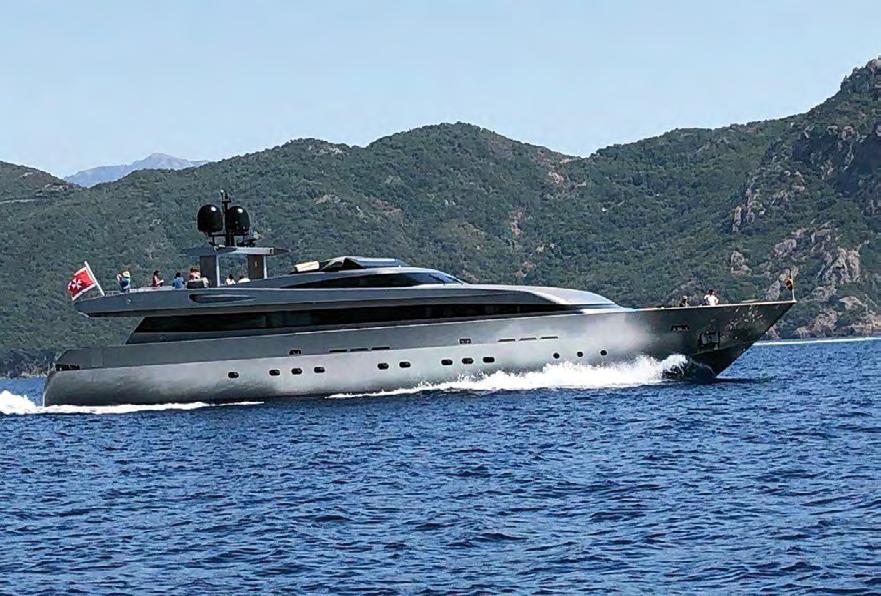
“When i said i had never had italians, i was referring to clients, not crews! My words may have been misunderstood; in fact, i’ve had several italian professionals on board: italian engineers, almost always italian chefs, and also an italian hostess i worked very well with. The point isn’t nationality, but language. My clients are all non-italian: Americans, Australians, families from Gulf countries, and so on. if my captain interviews someone who is very skilled and capable in service but not strong enough in English, unfortunately it becomes difficult to include them in the crew. it’s not a matter of personal preference: it’s simply that the type of clientele requires a very fluent level of international communication. My team is always made up of members of different nationalities: the official language on board is English, and communication issues are a problem i try to avoid by asking the captain to select professionals who are, above all, fluent in English”. Let’s talk about how you came to your current Baglietto. “i bought it second-hand and, as often happens, in a fairly random way. At the time i had a smaller boat and was starting to think about a larger one, but without a specific goal. Through an acquaintance, i heard that this unit was for sale at the Baglietto shipyard. i went to see it without any real intention of buying, more out of curiosity. Aesthetically it was a bit tired, but the foundation was excellent: both in terms of construction and maintenance, it was in the best possible condition. Baglietto yachts built in Varazze were constructed with a ship-like logic rather than a typical yacht approach. For me, Baglietto has always been a ‘dream’ shipyard: i grew up with the myth of Baglietto, and the day i bought one i truly felt i had ‘made it’ as an owner. i purchased it at a favorable price and carried out a major refit, completed in 2017. Years later, the boat is still beautiful. i think it was one of the most successful refit projects i’ve done as an owner. it’s a Baglietto Fast 120 with a semi-displacement
zioni possibili. I Baglietto varazzini erano costruiti con logiche da nave, più che da yacht. Baglietto per me è sempre stato un cantiere “da sogno”: sono cresciuto con il mito del Baglietto e il giorno che ne ho acquistato uno mi sono sentito davvero “arrivato” come armatore. L’ho acquistata a un prezzo vantaggioso e ho fatto un refitting importante, completato nel 2017. a distanza di anni la barca è ancora bellissima. penso sia stato uno dei progetti di ristrutturazione meglio riusciti che abbia fatto come proprietario. È un Baglietto Fast 120 con carena semidislocante disegnata dall’Ing. sculati negli anni Ottanta ed è rimasta un riferimento: ha un’efficienza marina impressionante. se la spingi arriva a 30 nodi, ma naviga benissimo anche a 14/16 nodi, un’andatura decisamente più rilassata, il tutto con un profilo di consumi davvero eccezionale”.
hull designed by Engineer Sculati in the 1980s, and it has remained a benchmark: it has impressive seaworthiness efficiency. if you push it, it reaches 30 knots, but it also cruises very well at 14–16 knots, a much more relaxed pace, all with a truly exceptional consumption profile”.
What were the main works carried out and where?
“The work mainly focused on the aesthetics of the interiors and exteriors, as well as a very substantial upgrade of the electronics. Over time, all telecommunications systems have also been renewed: today we have Starlink and an internet infrastructure that manages the entire onboard system, from entertainment to navigation. it was a demanding project, both in terms of time and investment - the budget was about half the purchase price of the boat.
Le Marina Suite aprono un nuovo S eg M ento turi Stico
nuova forMuL a di oSpitaLità SuLL’acqua inSerita neL piano di SviLuppo deL Marina Ligure. L’a.d. gianLuca Ma zza Spiega Str ategia, nuovi Servizi e inveStiMenti per rafforzare L a coMpetitività
Marina SuiteS open a new touriSM SegMent
A new hospitA lity concept on the wAter h A s been intr oduced A s pA rt of the development pl A n of the l iguri A n m A rin A ceo g i A nluc A mA z z A expl A ins the str Ategy, new services A nd investments A imed At strengthening competitiveness
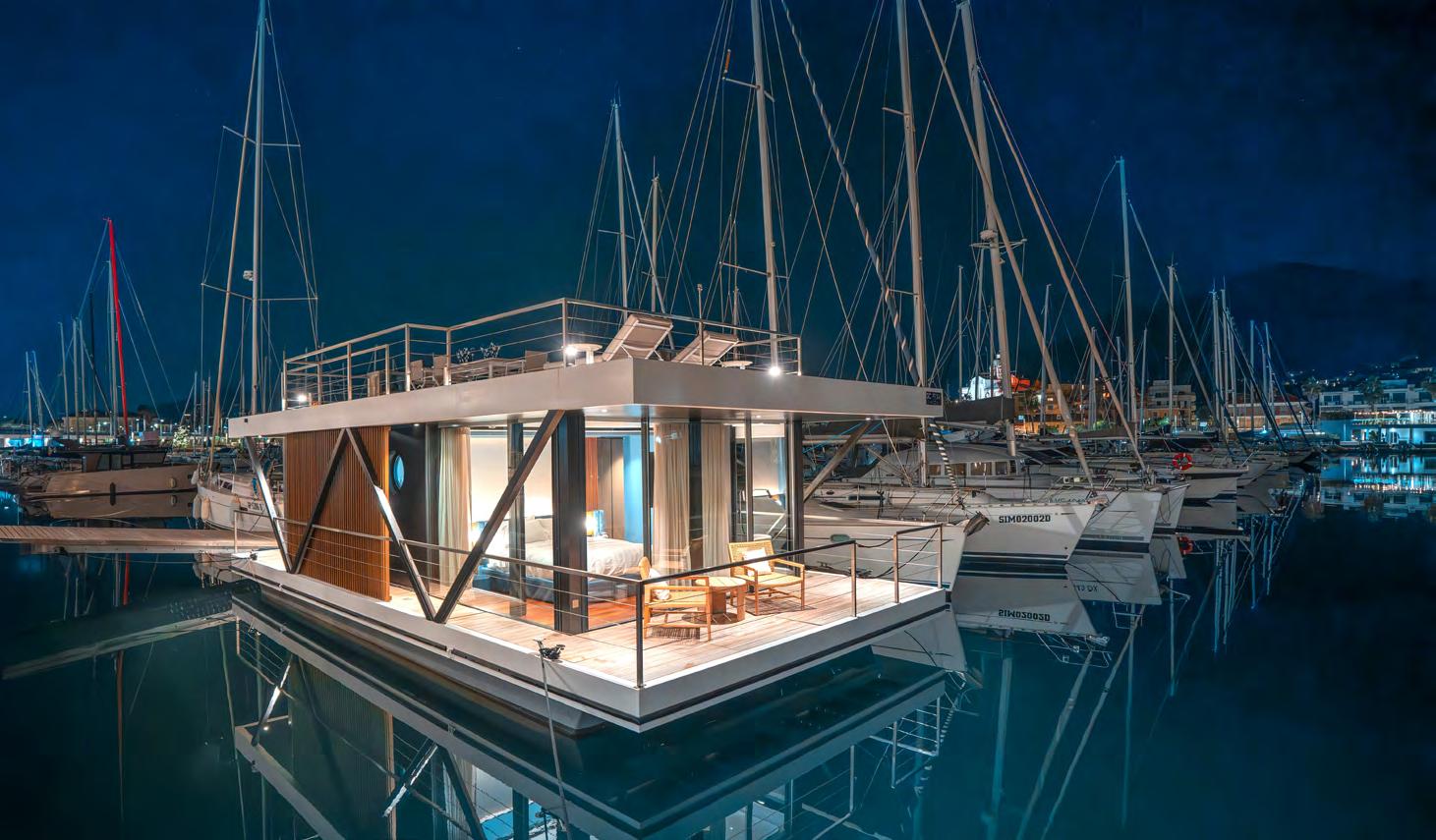
Marina di Loano sta portando avanti un percorso di sviluppo che punta a rafforzare il porto come destinazione integrata, ampliando servizi, offerta ricettiva e attività commerciali. Tra le novità presentate di recente anche le Marina Suite, un format che unisce soggiorno in hotel e vita a bordo, inserito in un progetto più ampio di evoluzione della marina. SUPER YACHT 24 ne ha parlato con l’amministratore delegato Gianluca Mazza.
Perché avete sentito l’esigenza di introdurre il format delle Marina Suite?
“Vogliamo continuare a rafforzare il vantaggio competitivo che contraddistingue la marina. Le Marina Suite rappresentano un’offerta innovativa e trasversale, un mix tra soggiorno in barca e soggiorno in hotel. Si tratta di una nuova proposta turistica, anche considerando che oggi l’offerta di questo prodotto è ancora limitata. Questo ci consente di ampliare il target di clientela valorizzando al tempo stesso i servizi della marina, che è una
struttura 4 stelle plus, introducendo un prodotto ancora poco diffuso nelle marine italiane”.
Qual è il target di clienti e quali servizi sono annessi?
“Il target è trasversale: non è solo il viaggiatore che sceglie l’hotel e non è neppure l’appassionato che noleggia uno yacht, ma un punto d’incontro tra queste due esperienze. Parliamo di clienti che cercano una modalità di soggiorno diversa, capace di unire il comfort di un hotel con l’esperienza di vivere sull’acqua. In una dimensione di circa 40 metri si ritrovano abitabilità, altezze interne e flybridge tipici di un’imbarcazione importante, con una suite di dimensioni generose. È un connubio tra due mondi che riteniamo possa incontrare l’interesse del mercato. I servizi saranno quelli tipici dell’hotel: fitness, solarium, area wellness, la spiaggia della marina con dog beach e area Vip, piscina all’aperto e servizi di mobilità come auto e biciclette elettriche, oltre alla possibilità di organizzare cooking a bordo”.
Le Marina Suite sono un progetto
Marina di loano is pursuing a development path aimed at strengthening the port as an integrated destination, expanding services, accommodation offerings and commercial activities. Among the recently introduced innovations are the Marina Suites, a format that combines a hotel stay with life on board, included in a broader project for the evolution of the marina. SUpEr YACHT 24 discussed this with CEO Gianluca Mazza. Why did you feel the need to introduce the Marina Suite format?
“We want to continue strengthening the competitive advantage that distinguishes the marina. Marina Suites represent an innovative and cross-sector offering, a mix between staying on a boat and staying in a hotel. it is a new tourism proposal, also considering that the supply of this product is still limited today. This allows us to expand the customer target while at the same time enhancing the services of the marina, which is a 4-star plus facility, by
introducing a product that is still not widely available in italian marinas”. What is the target clientele and what services are included?
“The target is cross-segment: it is not only the traveler who chooses a hotel and it is not only the enthusiast who rents a yacht, but rather a meeting point between these two experiences. We are talking about clients looking for a different type of stay, capable of combining the comfort of a hotel with the experience of living on the water. Within a length of about 40 meters there are the habitability, internal heights and flybridge typical of an important vessel, with a generously sized suite. it is a combination of two worlds that we believe can meet market interest. The services will be those typical of a hotel: fitness, solarium, wellness area, the marina beach with dog beach and Vip area, outdoor swimming pool and mobility services such as cars and electric bicycles, as well as the possibility of organizing cooking experiences on board”.
Are the Marina Suites an isola-
isolato o fanno parte di una trasformazione più ampia?
“Sono parte di un progetto più ampio di sviluppo che mira a rafforzare Marina di Loano come destinazione. Abbiamo lavorato alla riqualificazione generale della struttura, alla razionalizzazione degli uffici e a una strategia di marketing territoriale per promuovere la marina insieme al suo territorio. In questo percorso abbiamo trasformato la foresteria di nove camere in un albergo quattro stelle da 25 camere, che sarà gestito in franchising da Una Hotels, marchio del gruppo Unipol come Marina di Loano. Attraverso anche la classificazione Marina Resort abbiamo ampliato l’offerta di servizi con conciergerie, palestra, spesa a bordo, un servizio di toelettatura per cani e un’area dedicata ai bambini. Le Marina Suite rappresentano l’ultimo tassello di questo percorso di sviluppo”.
Con livelli di occupazione vicini alla saturazione, l’obiettivo è crescere ancora o valorizzare meglio l’esistente?
“L’occupazione è piena per gli yacht fino a 25 metri, mentre per i superyacht si attesta intorno all’85-90% nei periodi di alta stagione. Stiamo lavorando per ampliare la stagionalità, perché nei mesi estivi molte imbarcazioni sono in crociera e la domanda tende a ridursi. L’obiettivo è aumentare la presenza anche in quella fase dell’anno e arrivare a una piena occupazione su base annuale. Per farlo continuiamo ad ampliare i servizi e a confrontarci con armatori e comandanti per comprenderne le esigenze, anche se non sempre è immediato tradurle in nuovi servizi. Tra i progetti in pipeline c’è la ricostituzione dell’elisuperficie, oggi ad uso temporaneo, che vorremmo rendere operativa 365 giorni all’anno, 7 giorni su 7 e H24”. Cosa significa per i clienti avere un sistema integrato tra porto, servizi e territorio?
“Rappresenta un elemento distintivo. Loano è stata indicata tra le dieci marine più belle del mondo e vogliamo continuare a rafforzare questa posizione. Un’offerta articolata di servizi, la sicurezza del porto e le caratteristiche della struttura contribuiscono a creare attrattività per clienti e diportisti. I servizi sono parte integrante dell’asset e rappresentano uno dei fattori principali che determinano l’attrattività complessiva della marina”.
La crescita dei ricavi e dell’Ebitda da quali leve è stata determinata?
“Dal 2020 a oggi i ricavi sono quasi raddoppiati mentre l’Ebitda è cresciuto quasi tre volte. Questo risultato deriva da un’attenzione alla struttura dei costi ma anche da un lavoro sulle singole business unit, con l’obiettivo di renderle tutte profittevoli, responsabilizzando il personale, ottimizzando così i rispettivi conti economici.
Abbiamo inoltre introdotto nuovi servizi a valore aggiunto, rafforzato la comunicazione e investito sugli asset immobiliari, razionalizzando alcune
unità e creandone altre nuove. Circa il 20% del risultato deriva dalla gestione immobiliare, mentre il resto è legato al core business dei posti barca. Una marina più efficiente, con nuovi servizi e nuove attività commerciali, migliora inevitabilmente anche i risultati economici”.
Le nuove tecnologie, tra ibrido ed elettrico, sono ancora una nicchia?
“Abbiamo installato colonnine per la ricarica di auto e imbarcazioni elettriche, ma non abbiamo ancora registrato una domanda significativa. Il mercato osserva con attenzione queste tecnologie, tuttavia la presenza di imbarcazioni a propulsione elettrica è ancora limitata. Si tratta di un segmento interessante e in evoluzione, ma che non ha ancora raggiunto una diffusione significativa”.
Quanto incide la sostenibilità nelle scelte degli armatori?
“La marina dispone di diverse certificazioni ambientali e di un impianto fotovoltaico da circa 334mila kW che contribuisce al fabbisogno energetico. La sostenibilità è un tema sempre più rilevante, soprattutto per la nuova generazione di comandanti e clienti, più sensibile a queste tematiche. Disporre di queste caratteristiche rappresenta certamente un elemento competitivo in più. Sottolineo peraltro che Marina di Loano opera nel rispetto della strategia climatica adottata nel 2022 dal Gruppo Unipol e che prevede un percorso puntuale di riduzione delle emissioni climalteranti prodotte dal proprio patrimonio immobiliare fino ad arrivare all’azzeramento nel 2050.”
Quali sono i prossimi traguardi che ritiene importante ricordare?
“A breve inaugureremo tre nuove attività commerciali e, entro la fine dell’anno, sarà completato il nuovo albergo dello Yacht Club con 25 camere e tutti i servizi connessi. È inoltre prevista un’area attrezzata per lavori su imbarcazioni fino a 16 metri che si affiancherà al cantiere di refitting già operativo. Negli ultimi anni abbiamo investito per rafforzare la struttura e mantenere il nostro vantaggio competitivo e contiamo di vedere i risultati di questo percorso. Nel 2026 si chiuderà il ciclo principale di investimenti, mentre continueremo a lavorare sul miglioramento dei servizi”.
ted project or part of a broader transformation?
“They are part of a broader development project aimed at strengthening Marina di loano as a destination. We have worked on the general redevelopment of the structure, the rationalization of offices and a territorial marketing strategy to promote the marina together with its surrounding area. As part of this path we transformed the nineroom guesthouse into a four-star hotel with 25 rooms, which will be managed in franchising by Una Hotels, a brand of the Unipol group like Marina di loano. Through the Marina resort classification we have also expanded the range of services with concierge, gym, onboard grocery delivery, a dog grooming service and an area dedicated to children. Marina Suites represent the latest step in this development path”. With capacity levels approaching full capacity, should the aim be to expand further or to make better use of existing resources?
“Occupancy is full for yachts up to 25 meters, while for superyachts it stands at around 85–90% during the high season. We are working to extend seasonality because during the summer months many vessels are cruising and demand tends to decrease. The goal is to increase presence even in that phase of the year and reach full occupancy on an annual basis. To achieve this we continue to expand services and engage with owners and captains to understand their needs, even though it is not always immediate to translate them into new services. Among the projects in the pipeline is the reactivation of the helipad, currently for temporary use, which we would like to make operational 365 days a year, 7 days a week and 24 hours a day”.
What does it mean for customers to have an integrated system between port, services and territory?
“it represents a distinctive element. loano has been indicated among the ten most beautiful marinas in the world and we want to continue strengthening this position. A structured offer of services, the safety of the port and the characteristics
of the facility contribute to creating attractiveness for clients and boaters. Services are an integral part of the asset and represent one of the main factors determining the overall attractiveness of the marina”. What factors drove the growth in revenues and EBITDA?
“From 2020 to today revenues have almost doubled while EBiTDA has grown nearly threefold. This result comes from attention to the cost structure but also from work on individual business units, with the goal of making them all profitable by empowering staff and optimizing their respective profit and loss accounts. We have also introduced new value-added services, strengthened communication and invested in real estate assets, rationalizing some units and creating new ones. About 20% of the result comes from real estate management, while the rest is linked to the core business of berths. A more efficient marina, with new services and new commercial activities, inevitably also improves economic results”.
Are new technologies, between hybrid and electric, still a niche?
“We have installed charging stations for electric cars and boats, but we have not yet recorded significant demand. The market is observing these technologies with interest; however, the presence of electrically powered vessels is still limited. it is an interesting and evolving segment, but one that has not yet reached significant diffusion”. How much does sustainability influence owners’ choices?
“The marina holds several environmental certifications and has a photovoltaic system of about 334,000 kW that contributes to its energy needs. Sustainability is an increasingly relevant issue, especially for the new generation of captains and clients, who are more sensitive to these topics. Having these features certainly represents an additional competitive advantage. i would also like to point out that Marina di loano operates in accordance with the climate strategy adopted in 2022 by the Unipol Group, which includes a clear pathway to reduce climate-altering emissions generated by its real estate assets, with the goal of reaching net zero by 2050”. What are the next milestones you consider important to mention?
“in the near future we will inaugurate three new commercial activities and, by the end of the year, the new Yacht Club hotel with 25 rooms and all related services will be completed. An equipped area for work on boats up to 16 meters is also planned, which will complement the refitting yard that is already operational. in recent years we have invested to strengthen the facility and maintain our competitive advantage, and we expect to see the results of this path. in 2026 the main investment cycle will be completed, while we will continue working on improving services”.
bEllE brisE, anatoMia di Una ricostrUzionE
sUsanna corsagni riporta in MarE Un’icona: il sailing YacHt dEl 1993 torna a navigarE dopo Un intErvEnto radicalE cHE Ha Unito tEcnologia attUalE E savoir-fairE d’Epoca
bEllE brisE,anatoMY of a rEconstrUction
susanna corsagni brings an icon back to tHe sea: tHe 1993 sailing yacHt returns to navigation aFter a radical intervention tHat combined modern tecHnology witH period savoir-Faire
Il ritorno in acqua di un perini Navi è sempre un evento, ma quello del 48 metri Belle Brise (già Corelia) assume il valore di una vera rinascita filologica. Non si è trattato di un aggiornamento estetico, ma di una ‘ricostruzione’ profonda che ha coinvolto le maestranze storiche del cantiere perini Navi e i fornitori originali degli anni d’oro. In questa intervista esclusiva, susanna Corsagni – nel doppio ruolo di Owner’s representative con la sua seamotion e di madrina al varo – svela a super YaCHt 24 i dettagli tecnici di un cantiere durato due anni e mezzo presso Lusben. un’operazione che restituisce al mare non solo una barca, ma un pezzo di storia della vela, oggi più sicura e performante che mai, senza tradirne l’anima originale.
Susanna Corsagni, la sua storia con questa barca sembra un cerchio che si chiude. Da dove inizia questo legame con il Perini 48 metri?
“Ho lavorato 31 anni a perini Navi e questo mi ha dato la possibilità di avere un know-how del prodot-
to particolare. Quando si costruisce una barca è ben diverso da quando si refitta: si sa già dall’inizio dov’è che passa ogni cavo, ogni impianto, ogni centimetro tecnico. Questa barca inoltre io la conoscevo bene. si chiamava Corelia, un nome che univa i nomi degli armatori originali, Corinna ed elias, che l’hanno tenuta con amore sin dal 1993. Quando è arrivato il nuovo acquirente, l’originale proprietario aveva 87 anni: era un’età veneranda e i figli non gli permettevano più di fare il bagno o pescare in libertà; solo per questo ha accettato di venderla. sono stata io ad organizzare il loro incontro, si sono piaciuti subito. Il nuovo armatore si è innamorato immediatamente di quel sapore rétro, del mogano massello che caratterizza gli interni. per me questo lavoro ha rappresentato una soddisfazione enorme: ero arrivata in perini quando questa barca era in completamento; averla di nuovo in mano oggi è stato come rivivere il prodotto al quale tutti noi ex perini siamo legatissimi”. Come siete arrivati alla decisione
The relaunch of a perini Navi yacht is always an event, but the return to the water of the 48-meter Belle Brise (formerly Corelia) represents a true philological rebirth. This was not a simple aesthetic update, but a deep “reconstruction” involving the historic craftsmen of the perini Navi shipyard and the original suppliers from its golden years. in this exclusive interview, Susanna Corsagni - in her dual role as Owner’s representative with her company Seamotion and as godmother at the launch - reveals to SUpEr YACHT 24 the technical details of a project that lasted two and a half years at lusben. The operation returns to the sea not just a yacht, but a piece of sailing history, now safer and more efficient than ever, without betraying its original soul Susanna Corsagni, your story with this yacht seems like a circle closing. Where does your connection with this 48-meter Perini begin?
“i worked at perini Navi for 31 years and this gave me a very particular
know-how of the product. Building a yacht is very different from refitting one: from the beginning you know exactly where every cable runs, every system, every technical centimeter.
i also knew this yacht very well. it was called Corelia, a name that combined the names of the original owners, Corinna and Elias, who loved and kept her since 1993. When the new buyer arrived, the original owner was 87 years old - a venerable age - and his children no longer allowed him to swim or fish freely; that was the only reason he accepted to sell her.
i was the one who arranged their meeting, and they immediately liked each other. The new owner instantly fell in love with that retro flavor, with the solid mahogany that characterizes the interiors. For me this work has been an enormous satisfaction: i joined perini when this yacht was being completed; having it back in my hands today was like reliving a product to which all of us former perini people are deeply attached”.
di cambiare la destinazione d’uso della barca?
“siamo partiti con un budget già importante per gli upgrade ma, data la profondità dell’intervento, l’armatore si è chiesto se potesse valere la pena di ottenere anche la certificazione commerciale. Non è una sfida banale per un’unità del 1993, concepita originariamente per uso puramente diportistico. Insieme al registro aBs e alla bandiera malta abbiamo trovato la formula dello short range. È stata una scelta strategica che stiamo portando a compimento oggi con l’attuale armatore, subentrato durante il percorso di ricostruzione. un full commercial non sarebbe stato possibile perché avremmo dovuto modificare completamente gli spazi interni dell’equipaggio e probabilmente anche delle paratie strutturali, snaturando la barca. Lo short range ci ha permesso di ottenere deroghe accettate, dovendo comunque seguire protocolli rigidissimi. Nello specifico: abbiamo dovuto aggiornare l’isolazione, la sala macchine, la cucina con una isolazione B15, la zona pompe e ridisegnare alcuni spazi, come lo studio del comandante vicino alla timoneria che è diventato una cabina. senza questa formula, il charter non sarebbe stato possibile”. Entriamo nel dettaglio tecnico:
quali lavori avete affrontato?
“Il lavoro che abbiamo fatto in questi due anni e mezzo dovrebbe essere definito di ricostruzione, e non di refit. abbiamo sabbiato interamente lo scafo in acciaio togliendo tutto lo stucco vecchio, cosa che non si fa quasi mai nei refit ordinari. La verniciatura oggi poggia su uno stucco nuovo: è un lavoro fatto per durare anni. all’interno, abbiamo svuotato tutto ciò che era tecnico. La sala macchine è stata completamente smantellata, le sentine sabbiate e ricostruite con equipaggiamenti nuovi di zecca. abbiamo installato due nuovi motori man V8-800 Hp conformi alle ultime normative ambientali, completi di sistema urea, e due nuovi generatori Caterpillar da 80 kW. Ogni sistema è stato rivoluzionato: dal trattamento acque nere Hamann al sistema di separazione idrocarburi Dvz Oilchief, fino al nuovo impianto di aria condizionata Dometic della Francesconi, con uta e fan coil nuovi. abbiamo sostituito il 70% delle tubazioni e rifatto integralmente l’impianto elettrico e i quadri con Cantalupi. perfino il sistema sanitario è nuovo, con tecnologia vacuum e nuove tubazioni. Nulla è stato lasciato al caso: abbiamo sostituito 30 oblò - prima apribili - con il design originale di Fabbri Fiore, ora in configurazio-
How did you arrive at the decision to change the yacht’s intended use?
“We started with an already significant budget for upgrades but, given the depth of the intervention, the owner wondered whether it might also be worth obtaining commercial certification. That is not a trivial challenge for a 1993 yacht, originally designed purely for private use. Together with ABS and the Malta flag we found the Short range formula. it was a strategic choice that we are completing today with the current owner, who joined during the reconstruction process. A full commercial certification would not have been possible because we would have had to completely modify the crew areas and probably even some structural bulkheads, which would have altered the yacht’s character. The Short range solution allowed us to obtain accepted exemptions, although we still had to follow extremely strict protocols. Specifically, we had to upgrade the insulation, the engine room, the galley with B15 insulation, the pump area, and redesign certain spaces - such as the captain’s office near the wheelhouse, which became a cabin. Without this formula, charter operations would not have been possible”.
Let’s go into the technical details:
what work did you carry out?
“The work we carried out over these two and a half years should really be called a reconstruction rather than a refit. We completely sandblasted the steel hull, removing all the old fillersomething that is almost never done in standard refits. Today the paint system sits on completely new filler: it is work meant to last for years. inside, we removed everything technical. The engine room was completely dismantled, the bilges sandblasted and rebuilt with brandnew equipment. We installed two new MAN V8-800 Hp engines compliant with the latest environmental regulations, complete with a Urea system, and two new 80 kW Caterpillar generators. Every system was revolutionized: from the Hamann black water treatment system to the Dvz Oilchief oil separator, up to the new air-conditioning system by Dometic supplied by Francesconi, with new air handling units and fan coils. We replaced 70% of the piping and completely rebuilt the electrical system and switchboards with Cantalupi. Even the sanitary system is new, with vacuum technology and new piping. Nothing was left to chance: we replaced 30 portholes - previously opening - with the original design by Fabbri Fiore, now in a fixed configuration and ABS-certified. We
ne fissa e certificati con abs, oltre ad aver ricostruito ex novo la cucina con coibentazione antincendio B15”. Sul piano velico e in coperta quali sono stati gli interventi?
“abbiamo eseguito un overhaul completo del sartiame e degli alberi: questi ultimi sono stati sbarcati per controlli Ndt, riverniciati e interamente ricablati. Il rod rigging è stato integralmente sostituito con soluzioni rigpro-sails, così come le crocette, ora firmate rondal. anche le cime sono state rinnovate, mentre il piano velico è un mix di elementi nuovi e revisionati da Doyle.
In coperta, dopo la rimozione del vecchio teak, abbiamo livellato e sabbiato il fondo prima di posare il nuovo deck. per la conformità alle normative commerciali, sono stati installati nuovi capping rail e candelieri. Completano il refit il ripristino funzionale dei winch originali perini Navi (sottoposti a un top-level overhaul) e l’acquisto di nuovi tender Lomac euforia 460 con relative selle”. Come avete gestito il ‘contrasto’ tra i nuovi impianti e i mobili d’epoca in mogano?
“È stata una sfida enorme. abbiamo trovato una ditta che ha accettato di lavorare ‘ad occhi chiusi’, smontando e catalogando ogni pannello in un magazzino. sono stati a bordo ogni giorno perché, per passare le nuove condotte dell’aria condizionata o i cavi dell’impianto elettrico, elettronico e del sistema audio-video Videworks, dovevamo tagliare e ripristinare il legno originale. abbiamo mantenuto i marmi originali, come il bellissimo portoro nei bagni, e restaurato i mobili della timoneria che ora ospita una suite di navigazione Furuno di ultima generazione, bussola giroscopica anschutz e doppio sistema starlink. È una barca vintage nel sapore, ma con una performance e una sicurezza da nuova costruzione”.
Un lavoro così complesso richie-
de anche dal cantiere un impegno costante.
“siamo stati dall’inizio lavori con Lusben, durante il percorso il management Lusben è cambiato. Ferdinando pilli ci ha aiutato molto in questa fase di ‘ricostruzione’ e il cantiere ha affrontato ogni passaggio complicato con elasticità; devo riconoscere che la loro capacità di essere cooperativi è stata la chiave del successo. Ci hanno permesso di integrare il nostro programma di produzione e le nostre ditte nel loro flusso di lavoro. La nostra è una cooperazione che continua: stiamo già facendo insieme un altro refit importante su un’altra perini di 39 metri nel loro cantiere di Viareggio”.
Lei ha avuto il ruolo di madrina di Belle Brise dopo questo lungo percorso di restauro: cosa direbbe a chi rivede oggi, per la prima volta, questa barca?
“Voglio essere molto chiara: se un armatore cerca una perini Navi originale, dovrebbe comprare questa barca. e lo dico perché so come è stata fatta. È stata ricostruita dalle stesse maestranze che costruivano le nuove perini negli anni d’oro, persone che ci hanno messo una passione immensa. Ho ritrovato i fornitori originali che l’hanno completata ex novo. rispetto a una barca pleasure che magari ha protocolli di manutenzione più ‘light’, questa, essendo diventata commerciale, deve sottostare a regole rigidissime, il che rappresenta una garanzia assoluta per chi la usa. È una barca cruise, non da regata, ma ora ha motori più potenti, generatori nuovi e un’affidabilità totale. Ha il sapore del mogano del ‘93 e la tecnologia del 2026. È pronta subito, affidabile e bellissima. per me, averla riportata al suo massimo splendore è una soddisfazione che va oltre il dovere professionale: è un atto di affetto verso un prodotto che ha fatto la storia della vela”.
also rebuilt the galley from scratch with B15 fire insulation”.
What about the sailing systems and deck work?
“We carried out a complete overhaul of the rigging and the masts: the masts were removed for Ndt inspections, repainted and entirely rewired. The rod rigging was completely replaced with solutions by rigproSails, as were the spreaders, now supplied by rondal.
The running rigging was also renewed, while the sail plan is a mix of new and refurbished elements by Doyle. On deck, after removing the old teak, we leveled and sandblasted the surface before laying the new deck. To comply with commercial regulations, new capping rails and stanchions were installed. The refit was completed with the functional restoration of the original perini Navi winches - subjected to a top-level overhaul - and the purchase of new lomac Euforia 460 tenders with their dedicated cradles”.
How did you manage the “contrast” between the new systems and the period mahogany interiors?
“it was a huge challenge. We found a company willing to work almost ‘blindfolded’, carefully dismantling and cataloguing every panel in a warehouse. They were on board every day because, in order to route the new air-conditioning ducts and the cables for the electrical, electronic and Videoworks audio-video systems, we had to cut and then restore the original wood. We kept the original marbles, such as the beautiful portoro in the bathrooms, and restored the wheelhouse furniture, which now houses a latestgeneration Furuno navigation suite, an Anschutz gyrocompass and a dual Starlink system. it’s a yacht with a vintage soul, but with the performance and safety of a new build”.
A project of this complexity also requires constant commitment
from the shipyard.
“We have been working with lusben since the beginning of the project, and during the process the lusben management changed. Ferdinando pilli helped us greatly during this ‘reconstruction’ phase, and the shipyard handled every complicated step with flexibility. i must acknowledge that their ability to cooperate was the key to success. They allowed us to integrate our production schedule and our contractors into their workflow. Our cooperation continues: we are already carrying out another major refit together on another 39-meter perini at their Viareggio yard”. You were also the godmother of Belle Brise after this long restoration journey. What would you say to someone seeing this yacht today for the first time?
“i want to be very clear: if an owner is looking for an original perini Navi, they should buy this yacht. And i say that because i know exactly how it was done. it was rebuilt by the same craftsmen who built the new perini yachts during the golden years, people who put enormous passion into their work. i managed to track down the original suppliers who essentially rebuilt her from scratch.
Compared to a pleasure yacht that might follow lighter maintenance protocols, this one, having become commercial, must comply with extremely strict regulations, which represents an absolute guarantee for anyone who uses her. it’s a cruising yacht, not a racing boat, but now she has more powerful engines, new generators and total reliability. She has the flavor of 1993 mahogany and the technology of 2026. She is ready immediately, reliable and beautiful. For me, bringing her back to her full splendor is a satisfaction that goes beyond professional duty: it is an act of affection toward a yacht that made sailing history”.
i l r E fit cr E sc E , la M anodop E ra sp Ecializzata M anca
sEcondo l’a.d. di piloda YacHting la doManda di rEfit è in crEscita, Ma gap norMativi E il nodo dElla forMazionE sono Un frEno
rEfit groWs,skillEd laboUr falls sHort
according to t H e ceo o F p iloda yac H ting, demand For re F its is on t H e rise, but regulatory gaps and training issues are H olding t H e sector back
piloda Yachting, divisione di piloda Group dedicata a refit, repair, maintenance e new build (con la lobster boat ad astra 60 disegnata da Francesco Guida) conta su una rete di strutture che si sviluppano tra torre annunziata, Napoli e Brindisi consentendo di operare su unità fino a 40 metri. super YaCHt 24 ha intervistato Walter Di palo, a.d. di piloda Yachting e co-founder di piloda Group. Sig. Di Palo, come sta evolvendo il mercato del refit?
“Nell’ultima stagione abbiamo registrato un incremento significativo della domanda di refitting, in particolare sulle imbarcazioni medio-grandi. La flotta mondiale di superyacht è cresciuta costantemente negli ultimi quindici anni e una parte rilevante di queste unità sta entrando nella fase naturale di refit. parallelamente, il mercato del nuovo sta attraversando una fase di pressione: quando si riduce la vendita di nuove costruzioni, gli armatori tendono a investire sulle unità esistenti per preservarne il
valore, migliorarne le performance e garantirne la sicurezza nel mediolungo periodo. Osserviamo inoltre un rinnovato interesse per il cosiddetto ‘vintage’ su alcune tipologie di imbarcazioni: si ricercano prodotti con una storia e un’identità, da riportare agli standard qualitativi originari. In molti casi si interviene con personalizzazioni mirate o con un ripristino dell’idea progettuale iniziale. Le richieste riguardano sia interventi tecnici complessi sia refit completi. Oggi piloda Yachting è percepita come un partner strategico in grado di pianificare gli interventi con visione pluriennale e approccio proattivo”.
Quali sono le principali criticità del refit italiano rispetto ai Paesi limitrofi?
“Le criticità sono principalmente legate al sistema delle formalità italiane: burocrazia, tempistiche amministrative, aggiornamenti normativi e prescrizioni in materia di sicurezza. riteniamo che la cantieristica navale di porto non riceva ancora un adeguato riconoscimen-
piloda Yachting, the piloda Group division dedicated to refit, repair, maintenance and new build (with the lobster boat Ad Astra 60 designed by Francesco Guida), relies on a network of facilities located between Torre Annunziata, Naples and Brindisi, allowing it to operate on units up to 40 meters. SUpEr YACHT 24 interviewed Walter Di palo, CEO of piloda Yachting and co-founder of piloda Group Mr. Di Palo, how is the refit market evolving?
“During the last season we recorded a significant increase in demand for refitting, particularly for medium-large yachts. The global superyacht fleet has grown steadily over the past fifteen years and a significant portion of these units is now entering the natural refit phase. At the same time, the new-build market is going through a period of pressure: when sales of new constructions decline, owners tend to invest in existing units to preserve their value, improve performance and
ensure safety in the medium to long term. We are also observing renewed interest in what could be defined as ‘vintage’ in certain types of boats: people are looking for products with a story and an identity, to be brought back to their original quality standards. in many cases, interventions involve targeted customizations or the restoration of the original design concept. requests range from complex technical work to full refits. Today piloda Yachting is perceived as a strategic partner capable of planning interventions with a multi-year vision and a proactive approach”.
What are the main challenges for the Italian refit sector compared to neighboring countries?
“The challenges are mainly related to the system of italian formalities: bureaucracy, administrative timing, regulatory updates and safety requirements. We believe that port-based shipbuilding still does not receive adequate institutional recognition,
PIONEERS IN STABILISATION
to istituzionale, nonostante l’Italia sia il primo produttore mondiale di megayacht e il primo esportatore nel segmento pleasure. Nel settore shipping, invece, scontiamo un gap infrastrutturale rispetto a paesi come Corea e turchia. sarebbe auspicabile un maggiore sostegno alla categoria, attraverso una semplificazione burocratica e una maggiore competitività fiscale. In Italia non esistono ‘refit zone’ dedicate e la normativa resta meno competitiva rispetto ad altri contesti europei e mediterranei”.
Quanto incide il tema della formazione?
“Incide in maniera determinante. Oggi formare manodopera specializzata è complesso, anche per la carenza di incentivi strutturati a supporto di questi percorsi. se aziende e giovani fossero messi nelle condizioni di considerare la formazione artigianale come una prospettiva professionale stabile e qualificata, l’intero settore ne trarrebbe beneficio. L’imprenditore si trova spesso nella condizione di dover rispondere a una domanda crescente di servizi senza poter contare su risorse adeguatamente formate in determinate categorie professionali. per questo abbiamo istituito la piloda academy, con convenzioni universitarie finalizzate allo scouting di nuove competenze e alla loro formazione interna”. E i punti di forza?
“L’Italia è leader mondiale nel design nautico e può contare su una tradizione artigianale unica. Questa competenza ci consente di affrontare lavorazioni ad alto contenuto di manualità e personalizzazione, ambiti nei quali altri paesi risultano meno competitivi. Nel nostro caso, beneficiamo della tradizione dei mastri d’ascia della penisola sorrentina, storicamente legati alla costruzione di imbarcazioni da pesca. si tratta di competenze rare, che ci permettono di offrire servizi altamente specialistici difficilmente reperibili in altri mercati”.
Registrate una crescita delle richieste legate all’efficientamento energetico?
“s ì. Gli armatori richiedono sempre più spesso soluzioni evolutive su sistemi di carico, batterie, riduzione delle emissioni e minore utilizzo di generatori e motori tradizionali. L’innovazione tecnologica si sviluppa inizialmente nel comparto shipping, dove i numeri e gli investimenti sono maggiori, e successivamente viene trasferita allo yachting. Il settore navale rappresenta, di fatto, una piattaforma sperimentale fondamentale”.
Cosa ha comportato l’entrata in servizio del bacino galleggiante Donn’Anna?
“L’entrata in servizio del bacino galleggiante annamaria, 143 metri per 30 con capacità di sollevamento fino a 6.000 tonnellate, ha ampliato il nostro perimetro operativo. Oggi possiamo gestire richieste che in passato potevamo soddisfare solo parzialmente, operare su più commesse contemporaneamente, aumentare l’affidabilità nelle tempistiche e ridurre il rischio operativo. Questo si traduce in maggiore competitività anche nei contratti con la pubblica amministrazione - Guardia Costiera, Guardia di Finanza e marina militare - dove velocità ed efficienza sono determinanti. Nel refitting di superyacht e navi, l’infrastruttura ci consente di presidiare un mercato nel mediterraneo in cui le strutture disponibili, soprattutto dal punto di vista logistico, sono ancora limitate”.
despite italy being the world’s leading producer of megayachts and the top exporter in the pleasure segment. in the shipping sector, on the other hand, we suffer from an infrastructure gap compared to countries such as Korea and Turkey. Greater support for the sector would be desirable, through bureaucratic simplification and improved tax competitiveness. in italy there are no dedicated ‘refit zones’, and regulations remain less competitive than in other European and Mediterranean contexts”. How important is training?
“it is absolutely crucial. Today it is difficult to train specialized workers, also due to the lack of structured incentives to support these training paths. if companies and young people were put in the position to see craft training as a stable and qualified professional opportunity, the entire sector would benefit. Entrepreneurs often find themselves having to respond to a growing demand for services without being able to rely on adequately trained resources in certain professional categories. For this reason we created the piloda Academy, with university agreements aimed at identifying new talents and training them internally”.
And the main strengths?
“italy is a global leader in yacht design and can rely on a unique craft tradition. This expertise allows us to handle work with a high level of manual skill and customization, areas in which other countries are less competitive. in our case, we benefit from the tradition of the master shipwrights of the Sorrentine peninsula, historically linked to the construction of fishing boats. These are rare skills that allow us to offer highly specialized services that are difficult to find in other markets”. Are you seeing growing demand for energy efficiency solutions?
“Yes. Owners are increasingly requesting advanced solutions
related to charging systems, batteries, emission reduction and reduced use of traditional generators and engines. Technological innovation initially develops in the shipping sector, where the numbers and investments are larger, and is later transferred to yachting. The naval sector is in fact a fundamental experimental platform”.
What has the commissioning of the Donn’Anna floating dock meant?
“The commissioning of the Annamaria floating dock, 143 meters by 30 with a lifting capacity of up to 6,000 tons, has expanded our operational scope. Today we can handle requests that in the past we could only partially meet, work on several projects simultaneously, increase reliability in terms of timing and reduce operational risk. This translates into greater competitiveness also in contracts with the public Administration - Coast Guard, Guardia di Finanza and the Navy - where speed and efficiency are crucial. in the refitting of superyachts and ships, this infrastructure allows us to serve a Mediterranean market where available facilities, especially from a logistical point of view, are still limited”.
Your activity is not limited to yachting. What other activities do you deal with?
“We operate in an integrated way between the public sector, shipping and yachting.
g li on E ri b U rocratici p E sano s U lla co M p E titività
il dirEttorE di portosolE sHipYard analizza criticità E vantaggi dEl rEfit italiano da Un ossErvatorio a dirEtto contatto con la concorrEnza EstEra
rEd tapE WEigHs on coMpEtitivEnEss
p ortosole sH ipyard’s director analyses t H e strengt H s and weaknesses o F i talian re F it F rom a vantage point in direct contact wit H Foreign competition
portosole shipyard opera nel refit di yacht e superyacht all’interno del marina di portosole sanremo, dove porto e cantiere condividono la stessa area operativa per un sistema integrato di grande valore. La struttura può ospitare unità fino a 100 metri in galleggiamento e fino a 55 metri a terra, con attività che spaziano dalla carpenteria metallica alla falegnameria, fino alle lavorazioni meccaniche, elettriche ed elettroniche. tra le infrastrutture distintive figura un impianto di alaggio ad aria compressa da 600 tonnellate e un sistema interno di depurazione. super YaCHt 24 ha intervistato il direttore del cantiere emiliano martino per approfondire strategie, investimenti e posizionamento nel refit mediterraneo.
Come sta andando il mercato? “Direi che il mercato sta andando discretamente bene. Questo dato è confermato anche per l’andamento di portsole shipyard. abbiamo commesse sfidanti, è un momento positivo e cerchiamo di portare a
casa il miglior risultato”. Guardando al sistema Italia cosa penalizza la competitività?
“La burocrazia non aiuta. In paesi a noi vicini non vengono richieste una serie di carte e procedure che non generano valore aggiunto ma sono complicazioni che potrebbero essere semplificate e che il cliente fatica a comprendere, soprattutto per noi che siamo vicini al confine. La mole di documenti fa perdere tempo e drena risorse economiche che potrebbero essere destinate ai lavori. Da parte nostra cerchiamo di compensare con trasparenza nel dialogo, flessibilità e risposta pronta per dare il massimo in termini di qualità e cura del dettaglio, anche nelle comunicazioni con il cliente. Il nostro motto è tailored refit trusted Quality e ci crediamo. puntiamo su questi elementi per ovviare a rallentamenti che non dipendono dalla nostra volontà”.
Quali elementi invece ci distinguono?
“Lo spunto principale è la qualità, che ha un valore imprescindibile nel
portosole Shipyard operates in the refit of yachts and superyachts within the portosole Sanremo marina, where the port and shipyard share the same operational area, creating a highly valuable integrated system. The facility can accommodate vessels up to 100 meters afloat and up to 55 meters ashore, with activities ranging from metal carpentry to joinery, as well as mechanical, electrical, and electronic works. Among its distinctive infrastructures is a 600-ton compressed-air lifting system and an in-house water treatment plant. SUpEr YACHT 24 interviewed shipyard director Emiliano Martino to explore strategies, investments, and positioning in the Mediterranean refit market How is the market performing?
“i would say the market is performing fairly well. This is also confirmed by the performance of portosole Shipyard. We have challenging projects underway; it is a positive period and we aim to achieve the best possible results”. Looking at the Italian system,
what affects competitiveness?
“Bureaucracy does not help. in neighboring countries, many of the documents and procedures required here are not requested. They do not create added value but represent complications that could be simplified and are difficult for clients to understand, especially for us being close to the border. The volume of paperwork wastes time and drains financial resources that could instead be invested in the work itself. On our side, we try to compensate with transparency in dialogue, flexibility, and prompt responses, delivering the highest standards in quality and attention to detail, including in client communications. Our motto is Tailored refit Trusted Quality, and we truly believe in it. We focus on these elements to overcome slowdowns that are beyond our control”.
What elements distinguish Italy instead?
“The main factor is quality, which is essential to the final result. For
risultato finale. per noi la qualità, ad esempio, è anche nei ponteggi: un elemento fondamentale perché garantisce la sicurezza degli operatori. Da questo punto di vista l’Italia ha una regolamentazione stringente, per noi è importante perché negli altri paesi non sempre è così. Capita però che vi siano differenze, seppur lievi, di costi legati ad attività secondarie e propedeutiche all’attività principale, e quindi si debba spiegare e argomentare. Quando poi i clienti vedono realizzato il manufatto comprendono il perché di alcune differenze. Conquistare la fiducia con i fatti è fondamentale. La qualità e la sicurezza sono una condizione essenziale e imprescindibile”.
Avete indicazioni circa il vostro trend di crescita?
“ portosole s hipyard è una recente acquisizione di portosole, agosto 2024, quindi la storicità sulla quale possiamo ragionare è limitata. a bbiamo completato un anno intero, il 2025, perché il 2024 era parziale e il 2026 è appena iniziato: è quindi il primo esercizio pieno su cui fare valutazioni, ed è stato positivo. Le dimensioni delle barche sono importanti e stiamo concentrando le nostre energie per incrementare ulteriormente il target di dimensione considerando che al momento possiamo ospitare in galleggiamento unità fino a 100 metri e a terra fino a 55 metri e qualcosa in più”.
La posizione all’interno di un marina incide nella gestione dei refit?
“Credo sia un’opportunità per i clienti che trovano ormeggi accoglienti in un porto tranquillo, e riparato, con servizi importanti, una città ospitale come s anremo e, nello stesso sito, anche un cantiere in grado di offrire servizi dal più semplice al più complesso. per la parte cantiere è importante avere un bacino di utenza e di clientela in casa,
con il quale vi è un costante e continuo dialogo. Quest’anno abbiamo già un portafoglio di svariate unità che sono stanzialmente in portosole, oltre a quelle che arrivano da fuori. e per il cliente è un’occasione anche per contenere i consumi e i costi di trasferimento”.
Come siete organizzati per l’ospitalità degli equipaggi?
“L’ospitalità all’interno di portosole è presente grazie a una serie di locali che sono diventati negli anni il punto di riferimento degli equipaggi. per quanto riguarda il cantiere, faremo un investimento nei prossimi mesi per allestire uno spazio dedicato agli equipaggi, una crew lounge con postazioni di lavoro e postazioni relax dove trovare accoglienza durante i lavori in barca”.
In quali lavorazioni vi sentite più competitivi?
“La fortuna di portosole s hipyard è spaziare su molteplici competenze, a partire dalla verniciatura, per passare alla falegnameria, alla carpenteria metallica, passando per la parte meccanica, elettrica ed elettronica. In questo anno e mezzo abbiamo strutturato collaborazioni con ditte del territorio. Cerchiamo di attingere alle risorse locali, famiglie di artigiani che tramandano competenze importanti che altrimenti andrebbero perse. e questo ci consente di essere sempre il più competitivi possibile”.
us, quality also extends to scaffolding, for example, a fundamental element because it ensures operator safety. in this respect, italy has strict regulations, which are important to us, as this is not always the case elsewhere. There can, however, be slight cost differences related to secondary activities that support the main work, which must be explained and justified. When clients see the final result, they understand the reasons behind certain differences. Earning trust through facts is essential. Quality and safety are indispensable conditions”. Do you have indications about your growth trend?
“portosole Shipyard was recently acquired by portosole in August 2024, so the historical data we can rely on is limited. We have completed one full year, 2025, since 2024 was partial and 2026 has just begun. it is therefore the first full financial year on which to base evaluations, and it has been positive. The size of the yachts we handle is significant, and we are focusing our efforts on further increasing our target size, considering that we can currently accommodate vessels up to 100 meters afloat and slightly over 55 meters ashore”.
Does being located within a marina affect refit management?
“i believe it is an opportunity for clients, who find welcoming berths in a calm, sheltered port with excellent services, a hospitable city like Sanremo, and, in the same location, a shipyard capable of offering services from the simplest to the most complex. For the shipyard, it is important to have a built-in customer base with which there is constant dialogue. This year we already have a portfolio of several vessels permanently based in portosole, in addition to those arriving from elsewhere. For clients, it is also an opportunity
to reduce fuel consumption and transfer costs”.
How are you organized for crew hospitality?
“Hospitality within portosole is well established thanks to a range of venues that have become reference points for crews over the years. As for the shipyard, we will be investing in the coming months to create a dedicated space for crews, a crew lounge with workstations and relaxation areas where they can feel welcome during the refit period”.
In which areas do you feel most competitive?
“The strength of portosole
Shipyard lies in its broad range of expertise, from painting to joinery and metal carpentry, as well as mechanical, electrical, and electronic works. Over the past year and a half, we have structured collaborations with local companies. We aim to draw on local resources, families of craftsmen who pass down valuable skills that might otherwise be lost. This enables us to remain as competitive as possible”.
Can you describe a particularly significant project?
“On the 90-meter Benetti Kingdom 5Kr, we rebuilt the bow stem in metal carpentry, replacing the structures and external plating and repainting the entire area. it was a major and challenging project, carried out in collaboration with the classification society.
Guidi srl - Via delle Acacie, 2 - 28075 Grignasco (NO) - Italia
pUntiaMo sUlla taglia 15-30 MEtri
MEntrE i cantiEri si attrEzzano pEr Unità sEMprE più grandi, gEnoa sE a sErvicE consolida il proprio focUs sU Un sEgMEnto prEciso, lUxUrY tEndEr E vEla
targEting tHE 15-30 MEtrE rangE
wHilst sHipyards are gearing up to build ever-larger vessels, genoa sea service is consolidating its Focus on a speciFic segment: luxury tenders and sailing yacHts
Genoa sea service opera nel refit di yacht e tender nel porto di Genova, con un target dichiarato tra i 15 e i 30 metri. una scelta controcorrente rispetto alla tendenza del mercato, che spinge molti cantieri verso dimensioni sempre maggiori. Il cantiere sta completando un potenziamento infrastrutturale con l’allungamento della vasca e l’installazione di un nuovo travel lift da 140 tonnellate. super YaCHt 24 ha intervistato il titolare Nicolò De angelis su strategia, mercato e investimenti.
Come sta andando il mercato del refit, per Gss e in Italia?
“per noi funziona molto bene, le aree operative al momento sono sature, abbiamo più progetti e commesse rispetto allo scorso anno. sono soddisfatto, adesso abbiamo 30 progetti aperti tra i 15 e i 25 metri, questo richiede impegno e trasversalità”.
Quali sono le principali criticità?
“Bisogna selezionare paese e paese, però principalmente c’è un tema di costi di gestione, che per un’azienda in Italia non sono equiparabili in molti
casi con quelli di un’azienda estera. a impattare è la legislazione locale che impone determinati costi amministrativi e burocratici. se parliamo nello specifico di nautica, conta anche come è impostata la struttura. Con un modello più ‘in house’ avrai più costi fissi e quindi un listino di un certo tipo. se invece subappalti in maniera preponderante puoi avere più elasticità e, in base alla commessa, fare valutazioni diverse. Quando i costi sono fissi quella è la matrice da rispettare per rendere la struttura sostenibile. Noi abbiamo assunto un Hse manager (Healty, safety, environment, n.d.r) per gestire gli aspetti di sicurezza, dall’accesso delle ditte esterne all’iter interno, formazione Dpi (dispositivi protezione individuale, n.d.r.) del personale ed esterni. È un costo importante annuo e un costo fisso che incide nella struttura. Ci sono realtà che non hanno queste figure e altre che le hanno. Quando cresci devi adeguarti, altrimenti non rientri negli standard qualitativi richiesti. e questo è uno standard qualitativo”. E invece i punti di forza?
Genoa Sea Service specialises in the refit of yachts and tenders in the port of Genoa, with a stated focus on vessels between 15 and 30 metres in length. This represents a departure from the prevailing market trend, which is driving many shipyards towards ever-larger vessels. The shipyard is currently completing an infrastructure upgrade involving the extension of the dry dock and the installation of a new 140-tonne travel lift. SUpEr YACHT 24 interviewed the owner, Nicolò De Angelis, on strategy, the market and investments. How is the refit market performing, for GSS and in Italy?
“For us it’s going very well. Our operational areas are currently full, and we have more projects and contracts than last year. i’m satisfied. At the moment we have 30 open projects between 15 and 25 metres, which requires commitment and the ability to work across different areas”. What are the main challenges?
“You have to look at it country by country, but the main issue is mana-
gement costs, which for a company in italy are often not comparable with those of a foreign company. What has an impact is local legislation, which imposes certain administrative and bureaucratic costs. if we talk specifically about boating, the way the structure is set up also matters. With a more ‘in-house’ model you will have higher fixed costs and therefore a certain type of price list. if, on the other hand, you subcontract extensively, you can have more flexibility and, depending on the project, make different evaluations. When costs are fixed, that becomes the framework you must follow to keep the structure sustainable. We hired an HSE manager (Health, Safety, Environment) to manage safety aspects, from access for external companies to internal procedures, as well as ppE (personal protective equipment) training for staff and external workers. it’s a significant annual cost and a fixed one that affects the structure. Some companies don’t have these roles and others do. When you grow you have
“sicuramente la mano d’opera, la capacità e la conoscenza di chi progetta e di chi esegue. un pensiero così logico e creativo ce l’hanno in pochi. I partner stranieri sono molto schematici e la differenza la fa la cultura con cui siamo cresciuti. È l’ago della bilancia che sposta la qualità di un cantiere italiano rispetto a uno straniero”. Quali sono i principali target per il refit di Gss?
“I principali settori di riferimento per noi sono due. Da una parte i tender, che per noi è un business fondamentale avviato 15 anni fa e che oggi occupa in larga parte anche il capannone nuovo per lavorazioni al coperto con standard da superyacht. Dall’altra le barche a vela e a motore tra i 15 e i 30 metri, il nostro cuore operativo. È su queste dimensioni che abbiamo scelto di specializzarci, offrendo tutti i servizi annessi e puntando su una struttura dedicata e coerente con quel target. Credo sia una strategia valida per Gss”.
molti cantieri rincorrono la crescita dimensionale, voi avete invece deciso di fermarvi intorno ai 30 metri. Perché e quali sono le implicazioni?
“La nostra è una scelta strategica ben precisa. molti cantieri stanno potenziando le infrastrutture per arrivare a 40, 50 o 60 metri, noi invece abbiamo deciso di arrivare fino a quella
soglia con il nuovo travel e con l’allungamento della vasca, mantenendo il focus su barche tra i 15 e i 30 metri. Gli yacht di quella dimensione esisteranno sempre e avranno sempre bisogno di supporto tecnico, mentre su taglie superiori la competizione richiede strutture e investimenti molto diversi. L’implicazione è che puntiamo sulla specializzazione. Chi viene da noi vuole un partner tecnico che conosca bene quel segmento. se fai troppo di tutto rischi di non essere riconosciuto come riferimento in nulla. restare coerenti con una dimensione ci permette di organizzare meglio la struttura, controllare i costi fissi e mantenere uno standard qualitativo alto, sia sui refit completi sia sul lavoro tender, che per noi è un ramo fondamentale”. partiamo dai lavori di allungamento della vasca e del nuovo travel lift.
to adapt, otherwise you won’t meet the required quality standards. And this is a quality standard”.
What about the strengths?
“Definitely the workforce, the skills and the knowledge of those who design and those who carry out the work. Very few people have such a logical and creative mindset. Foreign partners are very schematic, and the difference is made by the culture we grew up with. That’s the factor that tips the balance and raises the quality of an italian shipyard compared to a foreign one”.
What are the main targets for GSS refit activities?
“Our main reference sectors are two. On one side there are tenders, which for us is a fundamental business that started 15 years ago and today occupies a large part of the new shed for indoor work carried out to superyacht standards. On the other side there are sailing and motor yachts between 15 and 30 metres, which is our operational core. These are the sizes we have chosen to specialize in, offering all related services and focusing on a structure dedicated and consistent with that target. i believe this is a valid strategy for GSS”.
Many shipyards are chasing larger sizes, while you have decided to stop at around 30 metres.
Why, and what are the implications?
“Ours is a very precise strategic choice. Many shipyards are upgrading their infrastructure to reach 40, 50 or 60 metres, while we decided to go up to that threshold with the new travel lift and the extension of the basin, keeping the focus on boats between 15 and 30 metres. Yachts of that size will always exist and will always need technical support, while in larger sizes the competition requires very different structures and investments. The implication is that we focus on specialization. Those who come to us want a technical partner who knows that segment very well. if you do a bit of everything, you risk not being recognized as a reference point in anything.
il rEfit divEnta più continUativo E
MEno
stagionalE
dalla crEscita strUttUralE dEl rEfit allE ricHiEstE di aggiornaMEnti tEcnici Ed EfficiEntaMEnto EnErgEtico. rEnato Marconi analizza dinaMicHE E criticità di Un MErcato sEMprE più stratEgico
rEfit bEcoMEs MorE continUoUs and lEss sEasonal
From tHe structural growtH oF reFit activities to tHe increasing demand For tecHnical upgrades and energy eFFiciency improvements. renato marconi analyzes tHe dynamics and cHallenges oF an increasingly strategic market
Nel comparto nautico il refit sta assumendo un ruolo rilevante, spinto da armatori che scelgono di investire nell’aggiornamento delle proprie imbarcazioni invece di sostituirle. Il mercato mostra una domanda più stabile e meno stagionale insieme a un crescente interesse per interventi tecnici e miglioramenti delle prestazioni. super YaCHt 24 ha approfondito il tema con renato marconi, a.d. di marinedi.
A fine 2025 il gruppo ha annunciato la nuova categoria Refit e manutenzione nel proprio sito internet. Avete aggiunto nuovi servizi?
“Negli ultimi anni abbiamo lavorato molto per strutturare in modo organico l’offerta tecnica della rete. La sezione refit e manutenzione nasce proprio per dare visibilità a un’attività che in parte esisteva già, ma che oggi viene proposta come sistema integrato fra le diverse location. Il vero cambiamento non è tanto l’introduzione di singoli servizi, quanto il passaggio da una logica locale a una logica di rete: oggi il cliente può
contare su più poli tecnici distribuiti lungo le coste italiane, con standard condivisi e competenze coordinate. Questo ci permette di offrire continuità operativa e maggiore flessibilità, elementi sempre più richiesti dal mercato. per raggiungere tale obiettivo abbiamo selezionato personale esperto e partner tecnici che ci permettono di offrire l’alta qualità di servizio che caratterizza la nostra rete”.
Come giudica il mercato attuale per la vostra rete di cantieri e quali segnali rileva?
“Il mercato è in crescita strutturale. stiamo registrando una domanda più continuativa, meno stagionale, rispetto al passato. molti armatori preferiscono valorizzare l’imbarcazione di loro proprietà piuttosto che sostituirla, investendo in aggiornamenti tecnici e miglioramenti estetici. un altro segnale interessante è l’aumento di clienti internazionali, che scelgono l’Italia non solo per la qualità della cantieristica, ma anche per il contesto territoriale e
in the boating sector, refit is taking on a growing role, driven by owners who choose to invest in upgrading their vessels rather than replacing them. The market is showing a more stable and less seasonal demand, together with a rising interest in technical interventions and performance improvements. SUpEr YACHT 24 discussed the topic with renato Marconi, CEO of Marinedi.
In late 2025 the group announced the new Refit and Maintenance category on its website. Have you added new services?
“Over the past few years we have worked extensively to organize the network’s technical offering in a more structured way. The refit and Maintenance section was created precisely to give visibility to an activity that partly already existed, but which is now presented as an integrated system across the various locations. The real change is not so much the introduction of individual services, but the shift from a local logic to a network logic: today
clients can rely on several technical hubs distributed along the italian coastline, with shared standards and coordinated expertise. This allows us to offer operational continuity and greater flexibility, elements that are increasingly requested by the market. To achieve this goal we have selected experienced staff and technical partners who allow us to offer the high level of service that characterizes our network”. How do you assess the current market for your network of shipyards and what signals do you see?
“The market is experiencing structural growth. We are seeing a more continuous demand, less seasonal than in the past. Many owners prefer to enhance the value of the boat they already own rather than replace it, investing in technical upgrades and aesthetic improvements. Another interesting signal is the increase in international clients who choose italy not only for the quality of its shipbuilding industry, but also for the local context and the quality of
la qualità della vita durante le soste tecniche”.
Notate un incremento di richieste legate a sostenibilità o innovazioni?
“a ssolutamente sì. Crescono le richieste legate a efficientamento energetico, sistemi ibridi, riduzione dei consumi e aggiornamenti impiantistici. anche materiali più sostenibili e soluzioni di retrofit tecnologico sono sempre più richiesti, soprattutto da armatori nord-europei”.
Guardando al sistema Italia, dove percepite minore competitività rispetto ad altri Paesi?
“L’Italia resta un punto di riferimento mondiale, ma sconta alcune rigidità strutturali: tempi autorizzativi, complessità burocratica e talvolta difficoltà infrastrutturali. altri paesi hanno lavorato molto su semplificazione e logistica, e questo incide sulla competitività complessiva”. Al contrario, quali sono i punti di forza?
“I punti di forza restano solidissimi: competenze tecniche, cultura cantieristica nautica, filiera completa e capacità di personalizzazione. a questo si aggiunge un elemento unico: il contesto italiano, che unisce qualità tecnica e qualità della vita”.
Su quali spazi, strutture e impianti può contare Marinedi e fino a quali dimensioni potete gestire?
“La rete marinedi può contare su sette cantieri distribuiti strategicamente tra tirreno, adriatico e sud Italia. Le strutture includono travel lift di diverse portate, aree tecniche attrezzate, piazzali per lavorazioni prolungate e banchine dedicate. I siti sono Chiavari, Villasimius, teulada, Balestrate, l’hub principale di trapani, policoro e Brindisi. In base al sito operativo, possiamo gestire imbarcazioni di diverse dimensioni, dalle unità diporto medio piccolo fino a yacht di dimensioni fino ai 70 metri, con una forte specializzazione nel segmento tra i 12 e i 35 metri, che rappresenta la fascia più dinamica del mercato”.
life during technical stops”. Are you noticing an increase in requests related to sustainability or innovation?
“Absolutely. requests related to energy efficiency, hybrid systems, fuel consumption reduction and system upgrades are increasing. More sustainable materials and technological retrofit solutions are also increasingly in demand, especially from Northern European owners”. Looking at the Italian system, where do you perceive less competitiveness compared to other countries?
“italy confirms itself as a global benchmark, but it suffers from some structural rigidities: authorization timelines, bureaucratic complexity and sometimes infrastructure difficulties. Other countries have worked extensively on simplification and logistics, and this affects overall competitiveness”.
On the other hand, what are the strengths?
“The strengths remain extremely solid: technical expertise, a strong shipbuilding culture, a complete supply chain and the ability to customize. Added to this is a unique element: the italian context, which combines technical quality with quality of life”.
What spaces, facilities and
equipment can Marinedi rely on and what vessel sizes can you handle?
“The Marinedi network can rely on seven shipyards strategically distributed between the Tyrrhenian Sea, the Adriatic and Southern italy. The facilities include travel lifts with different lifting capacities, equipped technical areas, yards for long-term work and dedicated docks. The sites are located in Chiavari, Villasimius, Teulada, Balestrate, the main hub in Trapani, policoro and Brindisi.
Depending on the operational site, we can handle vessels of different sizes, from small and medium recreational boats up to yachts of around 70 meters, with a strong specialization in the 12 to 35 meter segment, which represents the most dynamic range of the market”.
pU ntia M o a n U ovi ass E t n E l distr E tto. l ivorno pronta
p E r i giganti da 140 ME tri”
il gEnEral ManagEr analizza la satUrazionE dEi siti prodUttivi E l’intErEssE pEr lE arEE di carrara E la spEzia. dall’approdo dEl lürssEn da 138 MEtri alla crEazionE di Un nEtWork di ManodopEra qUalificata
WE’rE targEting nEW assEts in tHE district.
livorno is rEadY for 140-MEtrE giants”
mentre il comparto delle nuove costruzioni mostra segnali di stabilizzazione, il settore del refit mantiene un dinamismo crescente. Lusben, società del Gruppo azimut Benetti specializzata in refit, riparazione e manutenzione, celebra i 70 anni di attività analizzando nuovi scenari industriali. In questa intervista, il general manager Ferdinando pilli descrive la saturazione dei siti produttivi, l’interesse per nuovi asset strategici e l’evoluzione dei servizi logistici per l’equipaggio.
according to t H e ceo o F p iloda yac H ting, demand For re F its is on t H e rise, but regulatory gaps and training issues are H olding t H e sector back read THe fUll
Ingegner Pilli, il mercato del refit si muove oggi in controtendenza rispetto al rallentamento del “new building”. Qual è lo stato di salute di Lusben?
“Il refit attraversa una fase di forte operatività. Notiamo un cambio di mentalità: abbiamo già contratti firmati per la prossima stagione, con una programmazione anticipata che in passato era
rara. I comandanti hanno compreso che programmare è l’unico modo per garantire il valore dell’asset nel tempo. per Lusben le prospettive sono positive, ma questo comporta una sfida logistica: nonostante gli investimenti a Livorno, il sito è prossimo alla saturazione. La necessità di nuovi spazi e nuovi fronti operativi è diventata indispensabile.”
Whilst the new-build sector is showing signs of stabilising, the refit sector continues to grow in momentum. lusben, an Azimut Benetti Group company specialising in refits, repairs and maintenance, is celebrating 70 years in business by analysing new industry trends. in this interview, General Manager Ferdinando pilli discusses the saturation of production sites, interest in new strategic assets and the evolution of logistical services for crews.
Mr Pilli, the refit market is currently bucking the trend of the slowdown in new-builds. How is Lusben faring?
“The refit sector is currently experiencing a period of intense activity. We are seeing a shift in mindset: we already have contracts
signed for next season, with advance planning that was rare in the past. Skippers have realised that planning is the only way to ensure the asset’s value over time. The outlook for lusben is positive, but this presents a logistical challenge: despite the investments in livorno, the site is nearing capacity.
tHE latEst rEfit nEWs on oUr WEbsitE
biancHi (sangiorgio MarinE): “il rEfit Una partE fondaMEntalE dEl nostro bUsinEss”
albErto Mariotti
per il fondatore del cantiere il bilanciamento tra le attività di riparazione e quelle di nuove costruzioni permette di dare continuità al lavoro e alla struttura. tra le barche in lavorazione anche i due southern Wind
Kiboko e Grillo parlante
palUMbo sUpErYacHts rEfit satUra la capacità prodUttiva
E procEdE con il più grandE rEfit Mai avviato
giUsEppE orrù
Crescita operativa nel 2025, sette cantieri pieni e agenda quasi completa per le prossime due stagioni. Il network, sempre più in espansione, torna a uscire dai confini napoletani
t. Mariotti E san giorgio dEl porto coMplEtano il rEfit dEl
MEgaYacHt kingdoM 5kr
Conclusi a Genova due mesi e mezzo di lavori per l’iconico 86 metri. È l’undicesima commessa in dieci anni per i cantieri parte del Gruppo Gin
con aprE aMarE rEfit il cantiErE sorrEntino accoMpagna i sUoi gozzi nEl tEMpo
apreamare fa il punto dei primi otto mesi di attività della divisione nata per offrire nuova vita ai gozzi del marchio che hanno fatto la storia della nautica mediterranea
d isp E rsioni t E r M ic HE ridott E
di oltr E il 50%
sEcondo l’a.d. di viravEr la tEcnologia pErMEttE ridUzioni di pEso dEl 15/25%, dEll’EnErgia solarE dal 50% al 37% E dEl rUMorE fino a 3/6 db
tHErMal dispErsion rEdUcEd bY MorE tHan 50%
according to v iraver’s ceo, t H e tec H nology enables weig H t reductions o F 15-25%, solar energy reduction F rom 50% to 37%, and noise reduction o F up to 3–6 d b
Fondata nel 2000 e con sede a san pietro Viminario, nel distretto padovano specializzato nella lavorazione del vetro, Viraver progetta e produce vetri piani e curvi di grandi dimensioni, sistemi strutturali, soluzioni ad alte prestazioni per controllo termico e ottico affiancando cantieri e designer dall’analisi alla posa in opera con gestione ‘chiavi in mano’ dei progetti. super YaCHt 24 ha incontrato marco mazzarolo, amministratore delegato di Viraver, per un approfondimento su tecnologie, processi e prospettive nella nautica.
Quali sono gli elementi che definiscono l’approccio di Viraver allo yachting?
“Viraver è un’azienda a conduzione familiare con una solida organizzazione manageriale e una forte vocazione all’innovazione. uno dei nostri principali punti di forza è avere tutti gli impianti e le attrezzature all’interno dei nostri stabilimenti, questo consente di mantenere il controllo di processi, tempi produttivi e garantisce elevati standard
qualitativi e un approccio flessibile verso il cliente: la costruzione di uno yacht, soprattutto nei superyacht, è complessa, e in fase di allestimento il cantiere può richiedere delle modifiche. Nella gestione delle commesse proponiamo un servizio “chiavi in mano”, che parte dalle attività di pre-progettazione e si estende fino all’installazione e all’assistenza post-vendita. Grazie ai rapporti diretti con i principali registri come rina, Lloyd’s register, american Bureau of shipping (abs) e Bureau Veritas, riusciamo a gestire anche la parte di test e certificazioni in casa”.
Su quali tipologie di prodotto si concentra l’attività?
“Il nostro punto di forza è il vetro curvo. partendo anche dal nome Viraver, che richiama il termine nautico virare, il cuore della nostra attività è proprio il vetro curvo, anche di grandi dimensioni. Oggi arriviamo a 6 metri per 3,21 e siamo in grado di curvare grandi lastre e realizzare vetrocamere curve, sia cilindriche sia sferiche, oltre ai gran-
Founded in 2000 and headquartered in San pietro Viminario, in the padua district specializing in glass processing, Viraver designs and manufactures large flat and curved glass panels, structural systems, and high-performance solutions for thermal and optical control, supporting shipyards and designers from initial analysis to final installation with full turnkey project management. SUpEr YACHT 24 met Marco Mazzarolo, CEO of Viraver, for an in-depth discussion on technologies, processes, and prospects in the yachting sector. What are the key elements that define Viraver’s approach to yachting?
“Viraver is a family-run company with a solid managerial structure and a strong focus on innovation. One of our main strengths is that all our plants and equipment are located within our own facilities. This allows us to maintain full control over processes and production timelines, ensuring high quality standards and a flexible
approach towards the client. Yacht construction, especially in the superyacht segment, is complex, and during the outfitting phase the shipyard may request modifications. in managing projects, we offer a turnkey service that starts with pre-design activities and extends through installation and after-sales support. Thanks to our direct relationships with major classification societies such as rina, lloyd’s register, American Bureau of Shipping (ABS), and Bureau Veritas, we are also able to handle testing and certification in-house”.
Which product categories does your business focus on?
“Our main strength lies in curved glass. Even our name, Viraver, echoes the nautical term to tack, and the core of our business is precisely curved glass, including large-scale panels. Today we can reach dimensions of 6 by 3.21 meters, and we are able to bend large sheets and produce curved insulating glass units, both cylindrical and spherical, as well as large flat
di vetri piani, sempre con un piano qualità molto elevato”. Quali sono le principali esigenze di cantieri e progettisti?
“si progettano yacht sempre più efficienti per cercare di abbassare i consumi e renderli più green possibile. I miglioramenti sono concreti e misurabili: dal punto di vista strutturale, le tecnologie più recenti permettono spesso di ottenere le stesse prestazioni meccaniche con vetrate sensibilmente più leggere, con riduzioni di peso che possono arrivare indicativamente al 15/25%, a beneficio dell’efficienza complessiva dello yacht. sul piano energetico, rispetto a un laminato tradizionale, le soluzioni più evolute consentono di ridurre le dispersioni termiche anche di oltre il 50%, migliorando l’isolamento e contribuendo alla diminuzione dei carichi di climatizzazione. anche il controllo solare ha fatto passi avanti importanti: oggi è possibile ridurre in modo significativo l’energia solare entrante, passando da valori tipici intorno a 50% fino a circa 37%. Dal punto di vista acustico, le tecnologie di laminazione avanzata permettono di incrementare l’abbattimento sonoro di 3/6 dB rispetto a configurazioni standard, un miglioramento percepibile soprattutto nelle cabine e nelle aree di relax. L’obiettivo non è più soltanto soddisfare i requisiti normativi, ma progettare la superficie vetrata come un vero elemento attivo di comfort, efficienza e sostenibilità”.
E le principali performance richieste?
“La riduzione del peso, del calore e del rumore. Questi risultati si otten-
gono lavorando sulle composizioni dei vetri integrando le tecnologie più avanzate disponibili sul mercato, rispondenti alle norme dai registri navali.”
Sono tecnologie nuove per lo yachting?
“Non tutte sono nuove, capita che alcune tecnologie utilizzate in altri settori le ri-adattiamo per il mondo dello yatching, che non è il nostro unico settore, ma è il principale.
L’azienda è stata strutturata proprio per questo, tutti gli impianti e le attrezzature sono pensati per lo yachting”.
Ci sono tecnologie emergenti che potrebbero arrivare in futuro?
“I laboratori stanno testando moltissime tecnologie, come i vetri che producono energia elettrica, ma oggi parliamo di test di laboratorio su piccolissime dimensioni. Gli investimenti sono elevati e l’ambiente marino, con sollecitazioni continue, calore, salsedine e differenze di esposizione al sole, rende tutto più complesso. È un tema interessante, ma ad oggi non c’è ancora qualcosa di realmente applicabile su larga scala”.
panels, always maintaining a very high quality standard”. What are the main requirements of shipyards and designers?
“Yachts are being designed to be increasingly efficient, with the aim of reducing consumption and making them as green as possible. The improvements are concrete and measurable. From a structural standpoint, the latest technologies often allow the same mechanical performance to be achieved with significantly lighter glazing, with weight reductions that can range from approximately 15% to 25%, benefiting the yacht’s overall efficiency. From an energy perspective, compared to traditional laminated glass, more advanced solutions can reduce thermal dispersion by over 50%, improving insulation and contributing to lower air-conditioning loads. Solar control has also made significant progress: today it is possible to substantially reduce incoming solar energy, moving from typical values of around 50% down to approximately 37%. in acoustic terms, advanced lamination technologies make it possible to increase sound insulation by 3 to 6 dB compared to standard configurations — a noticeable improvement, especially in cabins and relaxation areas. The goal is no longer simply to meet regulatory requirements, but to design glazed surfaces as a truly active element of comfort, efficiency, and sustainability”. And what are the main performance targets?
“Weight, heat, and noise reduction. These results are achieved
by working on glass compositions and integrating the most advanced technologies available on the market, in compliance with naval register standards”.
Are these new technologies for yachting?
“Not all of them are new. in some cases, we adapt technologies already used in other sectors to the yachting world, which is not our only field but certainly our main one. The company has been structured precisely with this in mind — all our plants and equipment are designed specifically for yachting”. Are there emerging technologies that could arrive in the future?
“laboratories are testing many technologies, such as glass capable of generating electricity, but at the moment we are talking about laboratory tests on very smallscale samples. investments are high, and the marine environment — with constant stress, heat, salt exposure, and varying sun exposure — makes everything more complex. it is an interesting topic, but as of today there is nothing truly applicable on a large scale”.
l a sfida è g E stir E l E co MME ss E
co M pl E ss E
con la crEscita dEllE sUpErfici vEtratE aUMEntano coMplEssità tEcnica E di gEstionE MassiMo zaMpiEri spiEga coME Maritan affronta il sEgMEnto naUtico cHE valE circa il 50% dEl fattUrato
tHE cHallEngE is Managing coMplEx projEcts
a s glass sur Faces grow larger, bot H tec H nical and management complexity increase. m assimo z ampieri explains H ow m aritan addresses t H e nautical segment, w H ic H accounts For about 50% o F its turnover
maritan Glass è attiva dal 1975 nella trasformazione del vetro e oggi affianca ai settori tradizionali una presenza consolidata nello yacht e nel superyacht, che rappresentano circa il 50% del fatturato. Negli ultimi anni l’azienda ha lavorato sull’incremento delle dimensioni lavorabili e, soprattutto, sul rafforzamento del servizio tecnico: gestione di commesse complesse, prevenzione delle criticità in cantiere, riduzione degli spessori e attenzione alle prestazioni energetiche sono i principali ambiti di sviluppo. super YaCHt 24 ha intervistato massimo Zampieri, sales manager di maritan Glass, per approfondire strategie e prospettive nel segmento.
Quali sono oggi i principali sviluppi di Maritan?
“La sfida è entrare in mercati nuovi. maritan lavora già nei settori dell’arredamento di lusso, shop fitting, industriale e adesso stiamo spostando parte della produzione anche su automotive e via-
bilità speciale. stiamo ampliando la struttura in termini di personale e di spazi produttivi con la costruzione di un nuovo capannone di 4.000 metri quadrati. stiamo inoltre integrando un sistema Irp per la gestione delle commesse collegato a un mes che ci aiuterà a seguirle in modo più preciso e puntuale. È un’attività da grossa azienda per dare un servizio migliore al cliente”.
Può dare qualche numero sull’azienda?
“siamo 40 persone, abbiamo un turnover di 6 milioni e mezzo, sempre in crescita perché negli ultimi anni l’azienda ha triplicato sia il fatturato sia il personale. Negli ultimi cinque o sei anni c’è stata una crescita importante ed esponenziale”.
Nel vostro business quanto vale oggi la nautica?
“attualmente la nautica copre circa il 50% del fatturato e lo scorso anno ha avuto un picco determinato da diversi fattori e dal fatto che abbiamo iniziato a lavorare
Maritan Glass has been active in glass processing since 1975 and today, alongside traditional sectors, has built a strong presence in the yacht and superyacht industry, which represents about 50% of its turnover. in recent years the company has focused on increasing the size of the glass it can process and, above all, on strengthening its technical service: managing complex projects, preventing issues at the shipyard, reducing thickness, and improving energy performance are the main areas of development. SUpEr YACHT 24 interviewed Massimo Zampieri, sales manager of Maritan Glass, to explore strategies and prospects in the segment.
What are the main developments at Maritan today?
“The challenge is entering new markets. Maritan already works in luxury furniture, shop fitting and industrial sectors, and now we are shifting part of our production toward automotive and special road infrastructure. We are expanding
the company in terms of staff and production space with the construction of a new 4,000-squaremeter building. We are also integrating an Erp system for project management connected to a MES that will help us follow projects more accurately and precisely. it is a big-company type of operation aimed at providing better service to customers”.
Can you share some figures about the company?
“We are 40 people and have a turnover of 6.5 million euros, constantly growing because in recent years the company has tripled both revenue and staff. Over the last five or six years there has been significant and exponential growth”.
How importanr is boating for your business today?
“Currently the nautical sector accounts for about 50% of turnover and last year it reached a peak due to several factors and because we started working with superyachts. With a turnover of 6.5 million euros, when you take on three or
con i superyacht. Con un fatturato di 6 milioni e mezzo, quando prendi tre o quattro yacht importanti è normale che il fatturato si sbilanci verso la nautica. ma vogliamo mantenere ben distinti tutti i settori per questioni di mercato, perché la nautica ha un andamento ondivago, con grossi momenti di picco ma anche momenti negativi. una scelta che difende l’azienda e soprattutto i clienti”.
Quando avete deciso di entrare nel segmento superyacht?
“abbiamo deciso di fare il salto quando i dati del settore sotto ai 24 metri indicavano una possibile flessione negativa. L’azienda era strutturata per fare anche barche grandi perché gli impianti sono i medesimi, la differenza vera è il servizio e su quello stiamo puntando molto”.
Cosa implica puntare sul servizio?
“abbiamo implementato l’ufficio tecnico e gli strumenti che mettiamo a disposizione per gestire le commesse e fare il rilievo a bordo. abbiamo messo in piedi una filiera che parte dalla consulenza al cantiere su come realizzare determinati vetri per avere certe performance, passa dalla produzione e arriva fino al montaggio, ed è un lavoro che abbiamo costruito in poco tempo ma che non è scontato”.
Come vi distinguete nel segmento superyacht?
“La qualità ormai ha raggiunto livelli molto elevati e abbastanza simili per tutti, la differenza la fa il servizio, la reattività e soprattutto la prevenzione dei possibili problemi nello sviluppo di una commessa”.
Avete lavorato sul M/Y Tankoa
Diamond Binta, cosa può raccontare?
“È stato un successo, una commessa con la quale abbiamo dimostrato di essere un fornitore affidabile, e come dicevo prima, capace di prevenire i problemi e reattivo nei momenti di difficoltà che possono sempre accadere. II cantiere è un ambiente complesso, gestito da molte persone e farle ‘parlare’ per cercare di evitare i problemi è stato apprezzato. È un cantiere esigente con un focus maniacale sulla qualità e sulle tempistiche e il fatto di averle soddisfatte senza difficoltà è stato un test molto positivo per maritan”.
Quali sono stati gli aspetti tecnici più rilevanti?
“Lo yacht ha vetri molto grandi e una piscina completamente vetrata con lastre ad alto spessore e resistenza, quindi vetri complicati. Negli ultimi tre o quattro anni abbiamo incrementato i nostri impianti per fornire vetri di dimensioni sempre più importanti e oggi abbiamo forni di curvatura che arrivano a sei metri per tre”.
four major yachts it is normal for revenue to shift toward the nautical sector. However, we want to keep all sectors clearly separated for market reasons, because the nautical sector has a fluctuating trend, with major peaks but also negative periods. This is a choice that protects the company and, above all, the clients”.
When did you decide to enter the superyacht segment?
“We decided to make the move when data in the under-24-meter segment suggested a possible negative slowdown. The company was already structured to work on large boats because the equipment is the same; the real difference is the service, and that is where we are focusing a lot”. What does focusing on service imply?
“We have strengthened the technical department and the tools we provide to manage projects and carry out onboard surveys. We have built a supply chain that starts with consulting shipyards on how to manufacture specific types of glass to achieve certain performance levels, continues with production and reaches all the way to installation. it is a system we built in a short time, but it is not something that can be taken for granted”,
How do you differentiate yourselves in the superyacht segment?
“Quality has now reached very high and fairly similar levels for everyone. What really makes the difference is service, responsiveness, and above all the ability to prevent potential problems during the development of a project”.
You worked on the M/Y Tankoa Diamond Binta. What can you tell us about it?
“it was a success, a project through which we demonstrated that we are a reliable supplier and, as i said before, capable of preventing problems and being responsive when difficulties arise, which can always happen. A shipyard is a complex environment managed by many different people, and getting everyone to ‘communicate’ in order to avoid problems was appreciated. it is a demanding shipyard with a meticulous focus on quality and timing, and the fact that we met those expectations without difficulty was a very positive test for Maritan”. What were the most relevant technical aspects?
“The yacht features very large glass panels and a fully glazed swimming pool with thick, highstrength glass, so they were complex elements. Over the last three or four years we have expanded our facilities to supply increasingly large glass elements, and today we have bending furnaces that can handle panels up to six by three meters”. read THe
sUpErato il liMitE storico
dEl vEtro, la fragilità
graziana abbrUzzEsE di inglas vEtri analizza l’EvolUzionE di MatEriali, procEssi E ricHiEstE dEi cantiEri tra plastici strUttUrali, tEMpEra cHiMica, qUalità ottica E controllo dElla trasparEnza
bEYond tHE Historic liMit of glass: fragilitY
inglas vetri ceo graziana abbruzzese analyses tHe evolution oF materials, processes and sHipyard requirements, From structural interlayers and cHemical tempering to optical quality and transparency control
Inglas Vetri nasce nel 1974 a s anta maria a monte, in provincia di pisa, come vetreria artigiana e oggi opera nel settore dello yachting sviluppando superfici vetrate su misura per scafi, sovrastrutture e ambienti interni con applicazioni che spaziano dal nuovo al refit. La produzione comprende vetri stratificati, temperati chimicamente e soluzioni a controllo della trasparenza. super YaCHt 24 ha intervistato Graziana abbruzzese, a.d. dell’azienda, per approfondire l’evoluzione tecnologica del vetro nello yachting e le nuove richieste di cantieri e designer.
Quali sono le principali novità di prodotto su cui state lavorando?
“s ono tre i prodotti che ci distinguono. Il primo si chiama One Way ed è il nostro fiore all’occhiello, diventato uno standard a bordo dei modelli Bluegame. È un vetro pensato per garantire la privacy: impedisce di guardare all’interno, mentre dalla cabina permette di godersi il panorama. stiamo poi la-
vorando su sunblock, un vetro che se riscaldato dai raggi del sole diventa opaco. È ideale per gli hardtop perché blocca i raggi Ir e uv garantendo il comfort all’interno e sotto al vetro.
Quando il sole tramonta e la temperatura cala, torna trasparente permettendo di vedere fuori. Il terzo è lo switch, un vetro che consente di variare il suo grado di trasparenza, da totale ad opaco, con tutte le gradazioni intermedie. È utilizzato soprattutto per applicazioni interne, ma contiamo di presentarlo in modo adeguato anche per le vetrate esterne dell’imbarcazione”.
Ha citato Bluegame, può spiegare le caratteristiche dei vetri One Way?
“Dall’esterno risultano quasi invisibili e identici al colore dello scafo. Dall’interno invece il vetro si presenta nero, ma la vista viene catturata dalla trama dei forellini trasparenti e l’occhio cancella il nero della pellicola, percependo solo la luce e quindi l’esterno”.
inglas Vetri was founded in 1974 in Santa Maria a Monte, in the province of pisa, as a small artisan glassworks. Today it operates in the yachting sector, developing custom glass surfaces for hulls, superstructures and interiors, with applications ranging from new builds to refits. production includes laminated glass, chemically tempered glass and transparency-control solutions. SUpEr YACHT 24 interviewed Graziana Abbruzzese, CEO of the company, to explore the technological evolution of glass in yachting and the new demands coming from shipyards and designers.
What are the main product innovations you are currently working on?
“There are three products that really set us apart. The first is called One Way and it’s our flagship product, now a standard feature on board Bluegame models. it’s a glass designed to ensure privacy: it prevents people from seeing inside, while from the cabin you can fully
enjoy the view outside. We are also working on Sunblock, a glass that becomes opaque when heated by the sun’s rays. it’s ideal for hard tops because it blocks ir and UV rays, ensuring comfort both inside and beneath the glass. When the sun sets and temperatures drop, it turns transparent again, allowing visibility outside. The third product is Switch, a glass that allows its level of transparency to vary from fully transparent to opaque, with all the intermediate shades in between. it is mainly used for interior applications, but we plan to present it properly for the yacht’s external glazing as well”.
You mentioned Bluegame. Can you explain the characteristics of the One Way glass?
“From the outside, it is almost invisible and matches the hull colour perfectly. From the inside, the glass appears black, but your view is captured by the pattern of tiny transparent holes. The eye cancels out the black film, perceiving only the light and therefore the outside scenery”.
Come stanno evolvendo le richieste di cantieri e designer?
“Negli ultimi anni l’evoluzione è stata esponenziale. abbiamo superato il limite storico del vetro, cioè la fragilità, inserendo plastici rigidi come l’s g (s entryglas, n.d.r.) e utilizzando la tempera chimica e termica. In alcuni casi il vetro è diventato praticamente indistruttibile, soprattutto quelli applicati sugli scafi, dove si utilizzano plastici da 3.04 o 4.56 mm (interlayer strutturali di grande spessore, n.d.r.). Questo ha permesso di allargare gli orizzonti: oggi le sovrastrutture sono quasi tutte in vetro e trovarsi seduti in uno yacht con una visione a 360 gradi del mare è una sensazione bellissima. Lo stesso vale per le cabine e la zona notte, dove si riesce ad avere la visione del mare a filo d’acqua, migliorando notevolmente la qualità della vita a bordo”. Quali sono le innovazioni che stanno cambiando il settore?
“La vera rivoluzione riguarda la possibilità di installare vetri anche esterni che garantiscano la privacy regolando il grado di opacità. È una tendenza forte, come già avvenuto con il One Way, che permette di eliminare le tende e utilizzare il vetro anche come elemento funzionale alla privacy. L’al-
tra grande rivoluzione è l’utilizzo di plastici resistenti che ha consentito di ampliare le superfici vetrate, cambiando il concetto di vetro nello yacht”.
Il peso del vetro è un problema?
“Il tema del peso esiste, ma è stato in parte risolto grazie a plastici molto rigidi e resistenti che permettono di ridurre gli spessori rispetto ai vetri monolitici o stratificati con plastici più morbidi, alleggerendo il peso complessivo”.
Che ruolo hanno oggi i vetri nella riduzione dei consumi energetici?
“esistono interlayer e vetri che respingono i raggi solari e garantiscono isolamento termico, anche per imbarcazioni che navigano nei mari del Nord e necessitano di protezione dal freddo.
How are the demands of shipyards and designers evolving?
“in recent years the evolution has been exponential. We have overcome the historic limit of glass — its fragility — by introducing rigid interlayers such as SG (SentryGlas) and by using both chemical and thermal tempering. in some cases, glass has become virtually unbreakable, especially when applied to hulls, where 3.04 or 4.56 mm structural interlayers are used. This has broadened the horizons: today superstructures are almost entirely made of glass, and sitting on a yacht with a 360-degree view of the sea is an incredible feeling. The same applies to cabins and sleeping areas, where it is now possible to enjoy sea views right at water level, significantly improving quality of life on board”.
What innovations are transforming the sector?
“The real revolution lies in the possibility of installing external glass that guarantees privacy by adjusting its degree of opacity. it’s a strong trend, as already seen with One Way, which makes it possible to eliminate curtains and use glass itself as a functional privacy element. The other major revolution is the use of highly resistant
interlayers, which has allowed us to expand glass surfaces and change the very concept of glass on board yachts”.
Is glass weight an issue?
“Weight is certainly a factor, but it has been partially addressed thanks to very rigid and resistant interlayers that make it possible to reduce thickness compared to monolithic glass or laminated glass with softer interlayers, thereby lowering the overall weight”. What role do glass products play today in reducing energy consumption?
“There are interlayers and glass types that repel solar rays and ensure thermal insulation, even for vessels sailing in the Northern seas that require protection from the cold.
il vEtro si avvicina al liMitE tEcnologico
sEcondo Hard glass sUpErfici sEMprE più EstEsE, ridUzionE dEgli spEssori E nUovE solUzioni spingono il vEtro vErso i sUoi liMiti progEttUali E prodUttivi
glass approacHEs its tEcHnological liMit
according to Hard glass, increasingly large surFaces, reduced tHicknesses, and new solutions are pusHing glass toward its design and production limits
Da oltre 50 anni Hard Glass sviluppa e produce soluzioni vetrate ad alta complessità per yacht e superyacht, dalle grandi superfici piane ai vetri curvi con funzione anche strutturale. In un contesto in cui il vetro assume un ruolo sempre più centrale nella progettazione degli yacht, crescono anche la complessità tecnica delle lavorazioni e le richieste di cantieri e designer. sullo sfondo anche operazioni industriali come la nascita del brand Ocean Glass e l’espansione produttiva dell’azienda. super YaCHt 24 ne ha parlato con la sales manager michela Borile e l’executive manager teresa Furlan.
Partiamo dalla notizia della nascita del brand Ocean Glass grazie alla collaborazione tra voi e la tedesca Yacht Glass.
“La collaborazione con Yacht Glass nasce da una visione industriale comune: creare una realtà in grado di unire competenze, capacità produttive e presenza internazionale per affrontare le sfide future del segmento dei super e megayacht.
Ocean Glass, la nuova società che abbiamo costituito per proporre sul mercato i prodotti di Hard Glass e Yacht Glass, si presenta quindi con una propria identità nel mercato esprimendo il meglio che entrambe le società produttrici offrono in termini di tecnologia, esperienza e qualità. Il principio è semplice: unendo le forze possiamo affrontare il mercato con maggiore solidità e sviluppare progetti ancora più ambiziosi”. Quali sono le altre novità dell’azienda?
“Negli ultimi anni Hard Glass ha avviato un importante percorso di crescita che coinvolge sia la struttura produttiva sia l’organizzazione interna. Nel 2023 è stato lanciato un piano di sviluppo che prevede il raddoppio della superficie produttiva entro il 2028. La prima fase del progetto è già stata completata e ha comportato un significativo incremento della capacità produttiva. In particolare sono stati installati nuovi forni per la curvatura e per il rinforzo chimico del vetro che consentono oggi di lavorare lastre fino
For over 50 years, Hard Glass has been developing and manufacturing highly complex glass solutions for yachts and superyachts, ranging from large flat surfaces to curved glass with structural functions. in a context where glass is playing an increasingly central role in yacht design, the technical complexity of production processes and the demands of shipyards and designers are also growing. in the background are also industrial developments such as the creation of the Ocean Glass brand and the company’s production expansion. SUpEr YACHT 24 discussed this with sales manager Michela Borile and executive manager Teresa Furlan.
Let’s start with the news of the creation of the Ocean Glass brand through your collaboration with the German company Yacht Glass.
“The collaboration with Yacht Glass stems from a shared industrial vision: to create an entity capable of combining expertise, produc-
tion capacity, and international presence in order to tackle the future challenges of the super and megayacht segment. Ocean Glass, the new company we established to bring the products of Hard Glass and Yacht Glass to the market, presents itself with its own identity, showcasing the best that both manufacturers offer in terms of technology, experience, and quality. The principle is simple: by joining forces, we can approach the market with greater strength and develop even more ambitious projects”. What are the company’s other developments?
“in recent years, Hard Glass has embarked on a significant growth path involving both its production structure and internal organization. in 2023, a development plan was launched that предусматри the doubling of production space by 2028. The first phase of the project has already been completed and has led to a significant increase in production capacity. in particular, new furnaces for glass bending
a dimensioni di 7 metri per 3,3 metri. Inoltre stiamo sviluppando soluzioni sempre più performanti dal punto di vista strutturale, ottico ed energetico, cercando di anticipare l’evoluzione progettuale del settore”.
Quali innovazioni ritiene più rilevanti?
“Il vetro ha assunto un ruolo sempre più centrale e assistiamo a una crescita significativa delle superfici vetrate a discapito di quelle in vetroresina e alluminio. si stanno affermando nuove tecnologie come i vetri smart, ad esempio elettrocromici o Lcd, che possono cambiare stato passando da opachi a trasparenti tramite attivazione elettrica. Cresce l’attenzione verso le prestazioni strutturali, la qualità ottica e la sicurezza. L’aumento delle dimensioni delle lastre richiede tecnologie sempre più avanzate nei processi di tempra, stratificazione e curvatura. un altro ambito di sviluppo riguarda le aperture nello scafo, che puntano a rendere sempre più luminose e vivibili zone che un tempo erano dotate soltanto di piccoli oblò. La progettazione e la fornitura di vetrate in posizioni critiche per la navigazione, che diventano parte integrante dello scafo e quindi soggette a eccitazioni e pressioni significative, richiede uno studio approfondito”.
Vede nuove tecnologie in arrivo? “Nel settore dei superyacht siamo vicini al limite tecnologico. Le dimensioni delle lastre stanno diventando sempre più grandi, ma la fisica rimane la stessa e le pressioni non cambiano. Il lavoro si concentra quindi soprattutto sulla riduzione degli spessori mantenendo o aumentando le performance del vetro. e sistono materiali diversi dal classico vetro sodico calcico temperato chimicamente che potrebbero offrire performance superiori, ma che presentano ancora limiti nella produzione di grandi lastre. È possibile ottenere prestazioni molto elevate anche con vetri sottilissimi, talvolta superiori a quelle di vetri più spessi, ma è necessario valutarne con attenzione l’utilizzo”.
and chemical strengthening have been installed, allowing us today to process panels up to 7 meters by 3.3 meters. We are also developing increasingly high-performance solutions from a structural, optical, and energy standpoint, aiming to anticipate the sector’s design evolution”.
Which innovations do you consider most relevant?
“Glass has taken on an increasingly central role, and we are seeing a significant growth in glass surfaces at the expense of fiberglass and aluminum. New technologies are emerging, such as smart glass, for example electrochromic or lCD glass, which can change state from opaque to transparent through electrical activation. There is growing attention to structural performance, optical quality, and safety. The increase in panel size requires ever more advanced technologies in tempering, lamination, and bending processes. Another area of development concerns hull openings, which aim to make spaces that were once fitted only with small portholes increasingly bright and livable. Designing and supplying glazing in critical navigation positions — which become an integral part of the hull and are therefore subject to significant stress and pressure — requires
in-depth study”.
Do you see new technologies on the horizon?
“in the superyacht sector, we are approaching the technological limit. panel sizes are becoming larger and larger, but physics remains the same and pressures do not change. The focus is therefore mainly on reducing thickness while maintaining or increasing glass performance. There are materials other than traditional chemically tempered soda-lime glass that could offer superior performance, but they still present limitations in the production of large panels. Very high performance can be achieved even with extremely thin glass, sometimes exceeding that of thicker glass, but its application must be carefully evaluated”.
dU rabilità, p E so E irraggia ME nto
sono i principali svilUppi tEcnologici sEcondo giancarlo pErlini di isocliMa groUp, cHE racconta coME il vEtro stia passando da Un ElEMEnto con liMiti a Uno cHE valorizza il dEsign
dUrabilitY , WEigHt,andsolarradiation
tHese are tHe key tecHnological developments according to giancarlo perlini oF isoclima group, wHo believes tHat glass is evolving From an element witH limitations into one tHat enHances design
Il Gruppo Isoclima opera nello sviluppo e nella produzione di soluzioni trasparenti per diversi settori, dallo yachting all’aerospazio, passando dalle auto ad elevate prestazioni, veicoli blindati civili e militari, il mondo del ferroviario sino all’architettura di sicurezza. Ha una presenza industriale tra Italia, Croazia e stati uniti, cinque siti produttivi e un fatturato che nel 2025 ha superato i 150 milioni di euro. super YaCHt 24 ha intervistato Giancarlo perlini, Group chief commercial & marketing officer, per approfondire dinamiche, sviluppi e prospettive del settore.
Isoclima è attiva in diversi settori: quali sono i vantaggi di questo posizionamento?
“Operiamo in ambiti esigenti come yachting, sicurezza civile e militare, aerospazio, ferroviario, vetture ad alte prestazioni ed architettura di sicurezza. Questo consente di sviluppare una contaminazione continua e unica di competenze su materiali, tecnologie e processi: uno dei nostri principali fattori distintivi che permette una crescita solida e diversificata”.
Quali sono oggi i principali sviluppi su cui state lavorando?
“In tutti i settori osserviamo una crescita costante della complessità e delle aspettative prestazionali. Le direttrici sono chiare: riduzione del peso, durabilità e controllo dell’irraggiamento solare, sempre più anche attraverso soluzioni smart e adattive. stiamo inoltre rafforzando la capacità industriale, combinando elevata specializzazione e scalabilità, un elemento chiave per gestire sia progetti altamente custom sia produzioni più strutturate”. Ha parlato di calore: come viene affrontato a bordo dei superyacht?
“Il controllo dell’irraggiamento solare è oggi centrale. Gli interlayer avanzati rappresentano una tecnologia chiave per filtrare la radiazione. a questi si affiancano soluzioni dinamiche come i vetri elettrocromici, che modulano attivamente la trasmissione della luce, migliorando il comfort a bordo e contribuendo alla riduzione delle emissioni indirette. stiamo inoltre sviluppando tecnologie di nuova generazione basate su coating avanzati con componenti attivabili elettricamente, che permettono maggiore libertà progettuale su grandi
isoclima Group operates in the development and production of transparent solutions for a variety of sectors, ranging from yachting to aerospace, including high-performance cars, civilian and military armored vehicles, the railway industry, and security architecture. The company has an industrial presence across italy, Croatia, and the United States, with five production sites and revenue that exceeded €150 million in 2025. SUpEr YACHT 24 interviewed Giancarlo perlini, Group Chief Commercial & Marketing Officer, to explore the dynamics, developments, and prospects of the sector. Isoclima is active in several sectors: what are the advantages of this positioning?
“We operate in demanding sectors such as yachting, civilian and military security, aerospace, railways, high-performance vehicles, and security architecture. This allows us to develop a continuous and unique cross-fertilization of expertise in materials, technologies, and processes: one of our main distinguishing factors that enables solid and
diversified growth”.
What are the main developments you are working on?
“Across all sectors, we are seeing a steady increase in complexity and performance expectations. The directions are clear: weight reduction, durability, and control of solar radiation, increasingly also through smart and adaptive solutions. We are also strengthening our industrial capacity by combining high specialization with scalability, a key element in managing both highly customized projects and more structured production”.
You mentioned heat: how is this addressed on board superyachts?
“The control of solar radiation is now central. Advanced interlayers represent a key technology for filtering radiation. These are complemented by dynamic solutions such as electrochromic glass, which actively modulates light transmission, improving onboard comfort and contributing to the reduction of indirect emissions. We are also developing next-generation technologies based on advan -
superfici e geometrie complesse, superando i limiti delle stratificazioni tradizionali”.
In che modo stanno evolvendo le richieste di armatori, designer e cantieri?
“L’evoluzione è rapida e strutturale. L’ingresso di nuove generazioni di ultra high net worth individuals sta trasformando il modo di vivere lo yacht, sempre più concepito come spazio abitativo oltre che di navigazione. Cresce la richiesta di superfici vetrate ampie, anche semisommerse o sommerse, maggiore luminosità e una continuità più fluida tra interno ed esterno. La sfida è chiara: massimizzare la luce riducendo il calore. Comfort e qualità dell’esperienza diventano centrali, e il vetro assume un ruolo sempre più determinante”.
Il limite tecnologico è vicino?
“se avessimo raggiunto il limite non ci sarebbe più ragione d’essere. Direi quindi il contrario. Il vetro sta evolvendo da elemento vincolante, che in passato richiedeva strutture e poneva limiti progettuali, ad elemento strutturale e abilitante, capace di valorizzare esperienza a bordo, stile e design. soluzioni come Visionplus consentono, ad esempio, di integrare visivamente il vetro con lo scafo mantenendo la trasparenza, rispondendo alle esigenze dei designer senza compromessi”.
Altri sviluppi su cui state puntando?
“stiamo spingendo su grandi formati, curvature complesse e performance elevate. Nel sito di Borgo Veneto disponiamo del più grande forno di tempra chimica al mondo, che consente di realizzare vetri
fino a 10 metri con caratteristiche strutturali uniche. siamo quindi in grado di realizzare superfici vetrate strutturali continue prive di montanti verticali, con transizioni tra pannelli quasi impercettibili. Continuiamo a sviluppare anche soluzioni esperienziali, come applicazioni semi-sommerse e sommerse, che aprono nuove modalità di vivere il mare. tra le soluzioni più avanzate, citerei senza dubbio il secure solar shield che permette di ridurre oltre il 50% dell’irraggiamento solare, migliorando il comfort a bordo e contribuendo all’efficienza energetica, soluzione che ha ottenuto il Blue Wake label nella scorsa edizione del monaco Yacht show”.
Quali sono i principali rischi per il vetro in ambiente marino?
“La sfida principale è la durabilità nel tempo in un ambiente aggressivo. È un ambito in cui Isoclima ha costruito un vantaggio competitivo distintivo, vincendo questa sfida sin dal principio. abbiamo sviluppato un approccio integrato che combina controllo delle condizioni di processo, camere bianche avanzate, tecnologie proprietarie nei promotori di adesione e sistemi evoluti di sigillatura dei bordi”.
ced coatings with electrically activatable components, which allow greater design freedom on large surfaces and complex geometries, overcoming the limitations of traditional lamination systems”.
How are the demands of owners, designers, and shipyards evolving today?
“The evolution is rapid and structural. The entry of new generations of ultra-high-networth individuals is transforming the way yachts are experienced, increasingly conceived as living spaces as well as vessels for navigation. There is growing demand for large glazed surfaces, including semi-submerged or submerged applications, greater brightness, and a smoother continuity between interior and exterior spaces. The challenge is clear: maximize light while reducing heat. Comfort and quality of experience are becoming central, and glass is taking on an increasingly decisive role”.
Is the technological limit close?
“if we had reached the limit, there would no longer be any reason for us to exist. i would therefore say the opposite. Glass is evolving from a constraining element, which in the past required supporting structures and imposed design limitations, into a structural and enabling element, capable of enhancing the onboard experience, style, and design. Solutions such as Visionplus, for example, make it possible to visually integrate glass with the hull while maintaining transparency, meeting designers’ needs
without compromise”. Are there any other developments you are focusing on?
“We are pushing forward on large formats, complex curvatures, and high performance. At our Borgo Veneto site, we have the largest chemical tempering furnace in the world, which allows us to produce glass panels up to 10 meters long with unique structural characteristics. This means we can create continuous structural glazed surfaces without vertical mullions, with transitions between panels that are almost imperceptible. We also continue to develop experiential solutions, such as semi-submerged and submerged applications, which open up new ways of experiencing the sea. Among the most advanced solutions, i would certainly mention the Secure Solar Shield, which makes it possible to reduce solar radiation by more than 50%, improving onboard comfort and contributing to energy efficiency-a solution that received the Blue Wake label at the last edition of the Monaco Yacht Show”.
rE attori da 1 M W, il n U cl E ar E è possibil E s U i MEgaYac H t?
l a doManda è attUalE: i nUovi sistEMi ModUlari aprono scEnari ancHE nEllo YacHting. tra aUtonoMia, vincoli progEttUali, norME E pErcEzionE pUbblica, rina analizza opportUnità E liMiti
1MWrEactors:isnUclEarpoWErpossiblEonMEgaYacHts? it’s a timely question: new modular systems are opening up scenarios in yacHting as well. between autonomy, design constraints, regulations and public perception, rina examines tHe opportunities and limitations
rina ha avviato un’attività di analisi sul potenziale del nucleare nel settore marittimo, con un focus sui reattori di nuova generazione e sulle possibili applicazioni anche nello yachting. Lo studio prende in esame aspetti tecnologici, normativi e di accettazione sociale, evidenziando opportunità e criticità di una soluzione ancora in fase evolutiva. In questo contesto si inserisce il tema degli small modular reactor e degli scenari di integrazione a bordo. super YaCHt 24 ne ha parlato con matteo magherini, head of North europe Yachting Centre di rina approfondendo impatti progettuali, modelli operativi e prospettive di sviluppo.
Quali condizioni tecnologiche e normative sono necessarie affinché il nucleare diventi una soluzione concreta?
“Dal punto di vista tecnologico lo sviluppo dei nuovi reattori di quarta generazione, i cosiddetti smr - small modular reactor - è l’elemento più avanzato: hanno progettazione modulare, sono compatti,
possono essere costruiti in serie e anche trasportati. La caratteristica fondamentale è la sicurezza intrinseca: se il reattore opera fuori dal range operativo previsto si spegne da solo senza bisogno di un intervento esterno o di un’altra sorgente di energia, possibile grazie anche al tipo di fuel utilizzato. La tecnologia sta avanzando più velocemente del lato normativo. sono progettati per applicazioni su terra e devono ottenere una licenza nazionale, con revisione tecnica, test e messa in esercizio. Nel marine devono anche rientrare nelle convenzioni internazionali e sotto l’Imo va aggiornato il Nuclear ships code, che risale agli anni 70 ed è pensato per tecnologie di prima generazione, quindi non descrive adeguatamente le nuove soluzioni”.
Quali sono le tempistiche realistiche per l’evoluzione normativa?
“Il tema è che la tecnologia applicata nel navale è soggetta a varie giurisdizioni e devi mettere d’accordo più stati. se una nave con propul-
rina has launched an analysis activity on the potential of nuclear power in the maritime sector, with a focus on next-generation reactors and possible applications in yachting too. The study looks at technological, regulatory and social acceptance aspects, highlighting both opportunities and critical issues of a solution that is still evolving. in this context comes the topic of small modular reactors and their possible onboard integration scenarios. SUpEr YACHT 24 discussed it with Matteo Magherini, head of the North Europe Yachting Centre at rina, exploring design impacts, operational models and development prospects. What technological and regulatory conditions are needed for nuclear to become a concrete solution?
“From a technological point of view, the development of new fourth-generation reactors, the so-called SMrs – small modular reactors – is the most advanced
element: they have a modular design, are compact, can be massproduced and even transported. The key feature is intrinsic safety: if the reactor operates outside its intended range, it shuts down automatically without the need for external intervention or another energy source, also thanks to the type of fuel used. Technology is progressing faster than regulation. These systems are designed for land-based applications and must obtain a national license, with technical review, testing and commissioning. in the marine sector, they must also comply with international conventions, and under the iMO the Nuclear Ships Code needs to be updated, as it dates back to the 1970s and was designed for first-generation technologies, so it does not adequately describe new solutions”. What are realistic timelines for regulatory evolution?
“The issue is that technology applied to shipping is subject to multiple jurisdictions, and you
sione nucleare parte dal porto a e va verso il porto B, entrambe le nazioni devono riconoscere quella tecnologia come sicura e questo rende il processo complesso. Nel marittimo si pensa che nei primi anni del 2030 si inizierà a vedere qualche unità privata, soprattutto nel trasporto commerciale, con reattori nucleari. Oggi esistono nel mondo circa 190 unità marittime a propulsione nucleare, ma sono tutte proprietà dello stato, militari, sottomarini o rompighiaccio. Il vero cambio di paradigma è l’ingresso degli armatori privati. In questo passaggio il tema assicurativo è fondamentale: finché la tecnologia non è certificata e testata le assicurazioni non coprono. Grandi gruppi assicurativi stanno però iniziando a seguire gli sviluppi e a dialogare sul tema”. Quali impatti progettuali comporta l’introduzione di un reattore nucleare a bordo?
“Negli studi che abbiamo fatto su navi da 150, 160 o 180 metri l’impatto principale è il peso concentrato dell’impianto, soprattutto per la schermatura. È un peso non usuale che incide sulla struttura e sul layout. a livello di general arrangement servono spazi tecnici aggiuntivi. tuttavia, molto dipende dalla taglia del reattore. Nel nostro documento redatto con l’azienda Newcleo abbiamo considerato un reattore da 30 mW, quindi parliamo di yacht molto grandi o di navi piccole. s e invece si sviluppano reattori da 1 mW, le dimensioni cambiano radicalmente e l’integrazione diventa più compatibile con yacht di 40 o 50 metri”.
Quali scenari si aprono con reattori da 1 mW?
“ u n reattore da 1 mW con dimensioni di circa 3 metri per 2 metri potrebbe essere installato su uno yacht di 50 metri. s e si riuscisse a certificare e rendere operativo questo tipo di tecnologia per uso marittimo, ci sarebbero armatori interessati. Il costo avrebbe un impatto significativo, ma i produttori stanno lavorando a modelli di business in leasing: l’armatore non acquista il reattore, paga il servizio in base all’energia prodotta, per esempio a kilowatt, e il produttore mantiene il controllo e la gestione tecnica del sistema”. Il nucleare è economicamente sostenibile nel segmento superyacht?
“Nel marittimo il nucleare può essere sostenibile nel medio-lungo periodo, perché a fronte di un costo iniziale elevato si ha una riduzione significativa dei costi operativi, soprattutto legati al fuel. m olto dipende dal profilo operativo della nave, dal quadro normativo e da come evolveranno le politiche sulle emissioni: avere una soluzione che azzera le emissioni diventa un vantaggio concreto.
need to align several states. if a nuclear-powered vessel departs from port A and sails to port B, both nations must recognize that technology as safe, which makes the process complex. in the maritime sector, it is expected that in the early 2030s we will start to see some privately owned units, especially in commercial shipping, equipped with nuclear reactors. Today there are about 190 nuclearpowered vessels worldwide, but they are all state-owned-military ships, submarines or icebreakers. The real paradigm shift will be the entry of private shipowners. in this transition, insurance is a key issue: as long as the technology is not certified and tested, insurers will not provide coverage. However, major insurance groups are beginning to follow developments and engage in discussions on the issue”. What design impacts does the introduction of a nuclear reactor on board involve?
“in the studies we carried out on vessels of 150, 160 or 180 meters, the main impact is the concentrated weight of the system, especially for shielding. it’s an unusual weight that affects both structure and layout. From a general arrangement perspective, additional technical spaces are required. However, much depends on the size of the reactor. in our document prepared with Newcleo, we considered a 30 MW reactor, so we are talking about very large yachts or small ships. if, on the other hand, 1 MW reactors are developed, the dimensions change radically and integration becomes more compatible with 40- or 50-meter yachts”. What scenarios open up with 1
MW reactors?
“A 1 MW reactor of around 3 by 2 meters could be installed on a 50-meter yacht. if this type of technology were to be certified and made operational for maritime use, there would be interested owners. The cost would have a significant impact, but manufacturers are working on leasing-based business models: the owner does not purchase the reactor but pays for the service based on the energy produced, for example per kilowatt, while the manufacturer retains control and technical management of the system”. Is nuclear power economically sustainable in the superyacht segment?
“in the maritime sector, nuclear can be sustainable in the medium to long term, because despite a high initial cost, it significantly reduces operating costs, especially those related to fuel. Much depends on the vessel’s operational profile, the regulatory framework, and how emissions policies will evolve: having a solution that eliminates emissions becomes a real advantage.
p r E stazioni costanti con M ar E
i M p Egnativo
il nUovo ModEllo con Motori volvo d13 da 900 cv, Hard-top cEntralE E flY riprogEttato MantiEnE 23,7 nodi di pUnta E Una crociEra stabilE a 15/16 nodi dUrantE Una prova con ondE iMportanti
consistEntpErforMancEinroUgHsEaconditions
tHe new model witH 900 Hp volvo d13 engines, a central Hard top, and a redesigned Flybridge reacHes a top speed oF 23.7 knots and maintains a steady cruising speed oF 15–16 knots during a test in Heavy waves
Cannes (Francia) – Il cantiere turco sirena da sempre è attento alle esigenze di un armatore “giovane”, anagraficamente e di mentalità. Non per questo meno esperti, ma che comunque vogliono navigare a lungo senza approdare al segmento delle navi da diporto. una scelta che lo porta a disegnare layout smart e a modernizzare il concetto di flybridge, dove ciò che più conta sono gli spazi e la loro vivibilità. Il nuovo sirena 60 non è da meno. Nasce da un’evoluzione del fortunato modello sirena 58 e ha dimostrato di avere ottime doti marine. La prova non è stata delle più semplici. mare mosso, con onde che raggiungono picchi di un paio di metri, vento teso e 16 persone a bordo (spesso i seatrial vengono annullati per molto meno). s iamo a bordo della versione con i motori optional, una coppia di Volvo penta D13 1350 da 900 cv (la versione standard sono i D11 da 670 cv), con oltre 3.300 litri di liquidi tra carburante e acqua e in sala macchine un s eakeeper 9 che con questo mare si rivela provvidenziale, data anche l’altezza dell’imbarcazione. Nonostante queste condizioni proibitive, manchiamo
la velocità massima dichiarata dal cantiere (25,8 nodi) di soli 2 nodi, fermandoci a 23,7. ma la velocità di crociera, quella ideale per ottimizzare comfort e consumi, è di 15-16 nodi, regime a cui, in queste condizioni, consumiamo 200 l/h. Il minimo di planata, invece, lo rileviamo a 10 nodi. Con il mare di poppa s irena 60 naviga in modo stabile e piacevole. puntando la sua prua dritta contro le onde, come per tagliarle, ovviamente si salta e il mix di vento e spruzzi ci costringe ad attivare i tergicristalli per pulire il parabrezza in perfetto stile navetta, con tanto di montante centrale. ma l’impatto sulle onde resta comunque morbido e a bordo non si registrano impatti violenti.
Gli spazi esterni e interni, funzionali, ben curati e in stile mediterraneo, sono organizzati in modo da utilizzare ogni angolo della volumetria. Nel garage è possibile stivare lungo 3,9 metri. rispetto al suo predecessore sirena 58, il 60 propone aggiornamenti significativi su linee esterne, spazi e volumetrie interne. Le finestrature più ampie e il flybridge ridisegnato offrono maggiore luminosità e fruibilità, mentre gli spazi
Cannes (France) – The Turkish shipyard Sirena has always paid special attention to the needs of a “young” owner, both in age and mindset. Not necessarily less experienced, but someone who still wants to cruise long distances without moving into the superyacht segment. This approach leads to smart layouts and a modern take on the flybridge concept, where space and livability are key. The new Sirena 60 is no exception. it is an evolution of the successful Sirena 58 and has proven to have excellent seaworthiness.
The test was far from easy. rough seas, with waves reaching peaks of around two meters, strong winds, and 16 people on board (sea trials are often canceled for far less). We are on board the version equipped with the optional engines, a pair of Volvo penta D13 1350s rated at 900 hp (the standard version comes with 670 hp D11s), with over 3,300 liters of fluids between fuel and water, and a Seakeeper 9 in the engine room that proves invaluable in these conditions, especially given the yacht’s height. Despite these challenging conditions, we fall short of the shipyard’s declared
top speed (25.8 knots) by only 2 knots, reaching 23.7. The cruising speed-ideal for optimizing comfort and consumption-is 15–16 knots, where in these conditions fuel consumption is 200 l/h. Minimum planing speed is recorded at 10 knots. With following seas, the Sirena 60 delivers a stable and enjoyable ride. Heading straight into the waves, as if cutting through them, the boat inevitably lifts and drops, and the mix of wind and spray forces us to switch on the wipers to keep the windshield clear, very much in shuttle-style fashion, complete with a central mullion. Even so, the impact with the waves remains soft, and no harsh slamming is felt on board. Functional, well-finished and inspired by a Mediterranean style, the exterior and interior spaces are arranged to make the most of every inch of volume. The garage can accommodate a tender up to 3.9 meters in length. Compared to its predecessor, the Sirena 58, the 60 introduces significant updates to the exterior lines, as well as to interior space and volumes. larger windows and a redesigned flybridge provide increased natural light and usability, while outdoor areas, both forward and aft, are notice-
SCHeda TeCNiCa TECHNiCAl DATA
daTi | SpECiFiCATiONS
lUNgHezza f.T | leNgTH o.a. 19,45 m
lUNgHezza SCafo | HUll leNgTH 17,18 m
l argHezza | Beam 5,36 m
peSCaggio | drafT 1,24 m
diSloCameNTo | diSplaCemeNT 35,9 T
CarBUraNTe | fUel 3.600 l
aCqUa | WaTer 800 l deSiNg exT/iNT: SireNa deSigN Team
esterni, sia a prua che a poppa, risultano notevolmente ampliati.
Le linee, ideate da Frers Naval architecture e riviste dal team interno di sirena, mantengono la firma stilistica del cantiere: prua verticale, piattaforma di poppa estesa e contrasto tra superfici vetrate scure e fiancate bianche lucide. Gli interni puntano su ergonomia e materiali di pregio, con Corian, tappezzerie di alta qualità e finiture resistenti all’ambiente marino. Gli alloggi equipaggio sono separati e funzionali, garantendo operatività efficiente senza interferire con gli spazi owner.
La configurazione standard prevede tre cabine: master full-beam a centro barca, Vip a prua e una cabina modulare con letti scorrevoli da doppia a due letti singoli. tutte le cabine offrono ampi spazi di stivaggio. a prua, la lounge e la zona pranzo esterna con sedute e sunpad convertibili rappresentano un’area conviviale di alto livello. Il flybridge è stato ottimizzato in comfort e funzionalità, con cruscotto e sedute pilota modernizzate, top in Corian per il bar e sunpad con poggiatesta regolabile. Interessante il montante centrale dell’hard top, intorno al quale
ruota la vita di bordo, con mobile cucina, zona pranzo e timoneria, verso prua, dove è possibile far passare aria fresca aprendo il tettuccio soft. Verso poppa, invece, la copertura integra una doccia per rinfrescarsi dai lunghi bagni di sole senza dover per forza raggiungere la spiaggetta. La piattaforma di poppa estesa facilita l’accesso a tender e giochi d’acqua. La motorizzazione standard prevede due Volvo D11 da 670 cv ciascuno, con opzione 900 cv, consentendo velocità massime di 23–25 nodi. Il design dello scafo e l’efficienza dei motori garantiscono stabilità e autonomia per crociere offshore, riducendo al contempo l’impatto ambientale.
“siamo entusiasti - dice Cagin Genc, amministratore delegato di sirena Yachts - di presentare sul mercato il sirena 60, come naturale evoluzione del nostro fortunato sirena 58. Ideale per diportisti esperti in cerca di comfort, flessibilità e prestazioni in una barca di dimensioni gestibili, si adatta perfettamente a famiglie e proprietari socievoli che vogliono godere di capacità di navigazione a lungo raggio senza entrare nel segmento dei superyacht”.
ably expanded. The lines, developed by Frers Naval Architecture and refined by Sirena’s in-house team, retain the yard’s signature style: a vertical bow, extended swim platform, and the contrast between dark glazed surfaces and glossy white hull sides. The interiors focus on ergonomics and premium materials, with Corian, high-quality upholstery, and finishes designed to withstand the marine environment. Crew quarters are separate and functional, ensuring efficient operations without interfering with the owner’s spaces. The standard layout features three cabins: a full-beam master amidships, a Vip forward, and a modular guest cabin with sliding beds that can convert from a double to twin configuration. All cabins offer generous storage space. Forward, the lounge and outdoor dining area, with seating and convertible sunpads, create a high-end social space. The flybridge has been optimized for both comfort and functionality, with a modernized helm station and seating, Corian bar tops, and sunpads with adjustable headrests. A notable feature is the central pillar of the hard
top, around which life on board revolves, integrating the galley unit, dining area, and helm station toward the bow, where fresh air can be brought in by opening the soft-top section. Aft, the structure incorporates a shower, allowing guests to cool off after long sunbathing sessions without needing to go down to the swim platform. The extended stern platform makes access to tenders and water toys easier. Standard propulsion consists of twin 670 hp Volvo D11 engines, with an optional upgrade to 900 hp, allowing top speeds of 23–25 knots. The hull design and engine efficiency ensure stability and range for offshore cruising, while also reducing environmental impact.
“We are delighted - says Cagin Genc, CEO of Sirena Yachts - to present the Sirena 60 to the market as the natural evolution of our successful Sirena 58. ideal for experienced boaters seeking comfort, flexibility, and performance in a manageable size, it is perfectly suited to families and sociable owners who want to enjoy long-range cruising capabilities without entering the superyacht segment”.
parati E stagn E , cras H box E doppio aUtopilota
l a priMa Unità da diporto dEl cantiErE è Un blUEWatEr in allUMinio disEgnato da nicolas pUrnU. si distingUE pEr lE sUE doti di sicUrEzza, Marinità E qUalità dEi MatEriali
WatErtigHt bUlkHEads,crasH box and dUal aUtopilot
tHe sHipyard’s First recreational unit is an aluminum bluewater yacHt designed by nicolas purnu. it stands out For its saFety Features, seawortHiness and build quality
port Ginesta (Barcellona, spagna) – Nominato per l’european Yacht of the Year 2026 nella categoria Bluewater Cruiser, lo stem 50 è la prima unità dedicata al diporto di stem marine, divisione di stem, azienda fondata nel 1988 da ezio menna e con sede a medesano (parma), che progetta e costruisce attrezzature e dispositivi per il soccorso e l’antincendio, in acqua e a terra. stem marine è invece conosciuta per le sue imbarcazioni da lavoro per salvataggio, antincendio, soccorso e pattugliamento. stem 50 e Cnb62 (oggi parte di solaris) erano le uniche due imbarcazioni italiane nominate per questa edizione del premio, mentre i progettisti italiani sono stati rappresentati da Lorenzo argento e roberto
Biscontini con il Bénéteau Oceanis 52, ancora Lorenzo argento con il First 30 – vittorioso nella categoria performance monohull –, Nauta Design per il Lagoon 38 e umberto Felci con il Dufour 48.
Lo stem 50 è il risultato di un grande sforzo e di una collaborazione interessante tra l’architetto navale francese Nicolas purnu, il navigatore italiano Luca s abiu e michele Corradi, direttore generale del cantiere. proporre una nuova imbarcazione in alluminio, in Italia, non è scontato: entra in un segmento di nicchia solido e presidiato da cantieri consolidati, soprattutto francesi, ma non solo, come dimostra il tedesco pure 42, vincitore nella categoria Bluewater Cruiser. anche questa è la prima barca di un nuovo cantiere, che ha scelto lo stesso materiale di costruzione, ma su misure inferiori e con un look molto fresco. Il design è unico e ben riconoscibile e il progetto si distingue per alcuni elementi costruttivi che contribuiscono alla grande solidità e sicurezza della barca: crash box a prua e poppa e tre paratie stagne; chiglia fresata dal pieno per evitare saldature; due autopiloti indipendenti e, in generale, un’elevata qualità di ogni componente e materiale
port Ginesta (Barcelona, Spain) – Nominated for the European Yacht of the Year 2026 in the Bluewater Cruiser category, the Stem 50 is the first leisure-dedicated model from Stem Marine, a division of Stem, a company founded in 1988 by Ezio Menna and based in Medesano (parma), which designs and builds equipment and systems for rescue and firefighting, both at sea and on land. Stem Marine, on the other hand, is known for its workboats used in rescue, firefighting, emergency response and patrol operations. The Stem 50 and the Cnb62 (now part of Solaris) were the only two italian boats nominated for this year’s award, while italian designers were represented by lorenzo Argento and roberto Biscontini with the Bénéteau Oceanis 52, again lorenzo Argento with the First 30 – winner in the performance Monohull category –Nauta Design for the lagoon 38 and Umberto Felci with the Dufour 48 The Stem 50 is the result of a major effort and an interesting collaboration between French naval architect Nicolas purnu, italian sailor luca Sabiu and Michele Corradi, the shipyard’s general manager. launching a new aluminum yacht in italy is far from obvious: it enters a solid niche segment dominated by
well-established shipyards, particularly French ones, but not only, as demonstrated by the German pure 42, winner in the Bluewater Cruiser category. This too is the first boat from a new shipyard, which has chosen the same construction material, but on a smaller scale and with a very fresh look. The design is distinctive and easily recognizable, and the project stands out for several construction features that contribute to the yacht’s exceptional strength and safety: crash boxes at the bow and stern, three watertight bulkheads, a keel milled from a single block to avoid welds, two independent autopilot systems, and, overall, a very high quality of every component and material used on board. During the test week in port Ginesta, the boat demonstrated its strengths along with a few details that could still be improved. Among its strong points are undoubtedly the helm feel and performance. With steady wind between 14 and 20 knots and flat seas, the Stem 50 sailed upwind at speeds between 7 and 9 knots, with a surprisingly light helm-more reminiscent of a performance cruiser than a solid aluminum bluewater yacht. Switching to the gennaker, with wind approaching 20 knots, speeds easily exceed 10 knots. The helm position
VeloCiTà BarCa VeNTo reale aNgolo VeNTo reale Vele
lUNgHezza f.T. | leNgTH o.a. 16,06 m lUNgHezza SCafo | HUll leNgTH 15,00 m lUNgHezza al gall | WaTerliNe leNgTH 14,34 m l argHezza | Beam 4,42 m peSCaggio | drafT 2,40 m diSloCameNTo a VUoTo | diSplaCemeNT ligHT 15 T diSloCameNTo pieNo CariCo| diSplaCemeNT 17 T CarBUraNTe | fUel 350 l aCqUa | WaTer 620 l aCqUe Nere | BlaCk WaTer 120 l aCqUe grigie | graY WaTer 20 l progeTTo | projeCT pUrNU/Corradi
utilizzato a bordo.
Durante la settimana di test a port Ginesta la barca ha dimostrato le sue qualità e qualche dettaglio su cui è possibile migliorare. tra le prime ci sono senz’altro il feeling al timone e le prestazioni. Con un vento teso tra 14 e 20 nodi e mare piatto, lo stem 50 ha navigato di bolina con velocità comprese tra i 7 e i 9 nodi, con una sorprendente, almeno rispetto alle aspettative, leggerezza al timone che ricorda più un performance cruiser che un solido bluewater in alluminio. Quando si passa al gennaker, con il vento che sfiora i 20 nodi, la velocità supera facilmente i 10 nodi. La posizione al timone è comoda e l’unico appunto riguarda la distanza minima tra le ruote e le colonnine, che a volte è fastidiosa per le mani del timoniere. tutto il pozzetto è protetto da un hard-top che funziona anche come supporto per il trasto di randa e per i pannelli solari da 600 W (in questa unità i tedeschi sunWare); è accessibile tramite gradini integrati nei due montanti ed è circondato da un solidissimo corrimano, utile quando ci si sposta in coperta. tanta protezione da mare e vento anche al suo interno, grazie al paramare elevato e al parabrezza con tre vetri elettri-
moTore | eNgiNe YaNmar 80 Hp omologazioNe | omologaTioN Ce a
ci che salgono e scendono. Vista la posizione dei sei winch (tutti antal) –due ai lati interni delle timonerie, due dietro le panche e altri due ai lati della discesa verso gli interni – in navigazione il pozzetto può risultare affollato di persone e cime, con un passaggio non sempre agevole intorno al tavolo (regolabile elettricamente). allo stesso modo è apprezzabile, ancora una volta, la protezione offerta a chi manovra le scotte quando le condizioni meteo peggiorano. Qualche dubbio, invece, la giuria lo ha sollevato sulla posizione dei due winch vicini alle timonerie, che costringono le scotte del genoa/gennaker a un angolo di 90° e a uno sforzo maggiore, ma il cantiere è già al lavoro con alcune modifiche. a poppa non manca la plancetta servoassistita con doppia scaletta e doccia. Negli interni le altezze sono abbondanti, sempre oltre i 2 metri, e la barca è disponibile negli allestimenti Cruising standard (in prova), Holiday ed explorer, con quest’ultima che sacrifica la cabina ospiti di dritta in favore di uno spazio tecnico e di stivaggio e, a prua, offre una cabina con un letto a murata invece che centrale. La differenza tra le prime due riguarda soprattutto la dimensione della
zona carteggio, che nella seconda è inferiore per la presenza di un bagno più generoso e della doccia separata a prua. Il tavolo da carteggio in stile racer oceanico è la parte più interessante degli interni, con la sua posizione centrale, subito davanti alla scala d’ingresso, da cui domina tutto il salone. È servito da una seduta che scompare sotto al piano quando non serve, ma che, a barca sbandata – soprattutto mura a dritta – non offre un supporto per appoggiarsi. La vera chicca di questa zona è il quadro elettrico a vista con la pianta della barca disegnata e gli interruttori che rimandano a ogni zona e funzione. Non si vedono spesso soluzioni di questo tipo. Lo stesso ‘cruscotto’, con tutti gli strumenti di navigazione, non è da meno. Il cantiere lascia ampi margini di personalizzazione all’armatore su materiali, dotazioni e funzionalità degli interni. pur non avendo vinto il premio lo stem 50 ha dimostrato una struttura solida, buone sensazioni al timone e prestazioni convincenti. Qualche dettaglio in coperta può essere ancora affinato, soprattutto nella gestione delle manovre, ma rimane la bontà di un nuovo progetto bluewater, di alluminio, tutto italiano.
is comfortable, with the only remark being the minimal distance between the wheels and the pedestals, which can sometimes be uncomfortable for the helmsman’s hands. The entire cockpit is protected by a hard top that also serves as a support for the mainsheet traveler and for the 600 W solar panels (SunWare units on this boat); it is accessible via integrated steps on the two supports and is surrounded by a very sturdy handrail, useful when moving around on deck. There is also excellent protection from sea and wind inside the cockpit, thanks to the high coaming and the windshield with three electric panes that can be raised and lowered. Given the position of the six winches (all Antal)-two on the inner sides of the helm stations, two behind the benches and two more on either side of the companionway-the cockpit can feel crowded while sailing, with people and lines making movement around the table (electrically adjustable) not always easy. At the same time, the level of protection for those handling the sheets in rough conditions is once again a clear advantage. The jury did raise some concerns about the position of the two winches near the helm stations, which force the genoa/gennaker sheets into a 90-degree angle, increasing the load, but the shipyard is already working on modifications. At the stern, there is a powered swim platform with a double ladder and a shower. inside, headroom is generous, always over 2 meters, and the boat is available in Cruising Standard (the version tested), Holiday and Explorer layouts. The latter sacrifices the starboard guest cabin in favor of technical and storage space and, forward, offers a cabin with a berth along the hull side rather than centrally positioned. The main difference between the first two versions lies in the size of the chart table area, which is smaller in the Holiday layout to allow for a larger bathroom and a separate shower forward.
The ocean-racer-style chart table is the most interesting feature of the interior, with its central position just ahead of the companionway, dominating the entire saloon. it is served by a seat that disappears under the table when not in use, but when the boat is heeled-especially on starboard tack-it does not provide much support. A real highlight of this area is the exposed electrical panel with a diagram of the boat and switches corresponding to each zone and function, a solution not often seen.
The same attention is evident in the “dashboard,” which integrates all navigation instruments.
The shipyard offers extensive customization options for the owner in terms of materials, equipment and interior functionality. Although it did not win the award, the Stem 50 proved to have a solid structure, excellent helm feel and convincing performance. Some deck details could still be refined, particularly in sail handling, but the overall quality of this new all-italian aluminum bluewater project stands out clearly.
8° forUM di sUpEr YacHt 24
al rEcEntE E vEnto di sanrEMo il confronto tra opEratori Ha E vidEnzia Una filiEra solida E doManda attiva, Ma ancHE criticità sU pErsonalE qUalificato, bUrocrazia E infrastrUttUrE
at tHe recent event in s anremo, discussions among industry operators HigHligHted a solid supply cHain and strong demand, but also critical issues related to skilled workForce, bureaucracy and inFrastructure
sanremo – L’industria nautica italiana conferma solidità della domanda e dinamismo degli investimenti, ma continua a confrontarsi con criticità strutturali che incidono sulla competitività nel mediterraneo. È quanto emerso all’8° Forum di super YaCHt 24, che ha riunito circa 200 operatori e 90 aziende del settore, con un focus su filiera, mercato e prospettive di sviluppo. Nel primo panel, dedicato alla competitività, il confronto ha evidenziato tre principali fattori di pressione: carenza di personale qualificato, complessità amministrativa e limiti infrastrutturali. Il territorio ligure presenta un’offerta articolata tra marina, cantieri refit e servizi, ma fatica ad attrarre e formare risorse
tecniche adeguate. parallelamente, la lentezza burocratica rappresenta un elemento di incertezza per gli investitori, mentre la disponibilità di infrastrutture non sempre allineate agli standard richiesti riduce l’efficacia del sistema. sul piano industriale, resta centrale la capacità italiana di offrire flessibilità progettuale e personalizzazione, fattori che continuano ad attrarre armatori internazionali. tuttavia emergono criticità nella catena di fornitura, con un numero limitato di partner affidabili e la necessità di ampliare la base produttiva. Il refit si conferma segmento in espansione, sostenuto dalla domanda e dalla valorizzazione di unità esistenti, ma richiede competenze e organizzazione adegua-
Sanremo – The italian yachting industry continues to show solid demand and active investment, but still faces structural challenges affecting its competitiveness in the Mediterranean. This emerged at the 8th SUpEr YACHT 24 Forum, which brought together around 200 industry professionals and 90 companies, focusing on the supply chain, market dynamics and future outlook.
in the first panel, dedicated to competitiveness, the discussion highlighted three main pressure points: shortage of skilled workforce, administrative complexity and infrastructure limitations. The ligurian territory benefits from a well-developed ecosystem of marinas, refit yards and
services, but struggles to attract and train qualified technical personnel. At the same time, slow bureaucracy creates uncertainty for investors, while infrastructure not always aligned with industry needs reduces overall system efficiency.
From an industrial perspective, italy’s ability to offer design flexibility and customization remains a key strength, continuing to attract international owners. However, constraints are emerging within the supply chain, with a limited number of reliable suppliers and the need to expand the production base. refit is confirmed as a growing segment, driven by strong demand and the upgrading of existing yachts, but it requires adequate skills and organization to consolidate
te a consolidare il posizionamento competitivo.
Il secondo panel ha spostato l’attenzione sulla dimensione internazionale della filiera, individuando nell’affidabilità operativa, nella rapidità di risposta e nella collaborazione tra cantieri e fornitori i principali fattori distintivi. La competitività si gioca sempre più sulla capacità di integrare competenze tecniche avanzate, con un crescente peso dell’elettronica e dei sistemi ad alta tensione a bordo. sul fronte sostenibilità, il dibattito evidenzia un approccio pragmatico: più che sulla scelta dei carburanti,
i salUti istitUzionali E gli intErvEnti
institutional greetings and tHe contributions
l’attenzione si concentra sull’efficienza energetica e sulla riduzione dei consumi. allo stesso tempo, resta aperto il tema normativo, con complessità che spingono parte degli armatori verso registri esteri più competitivi.
Nel complesso, la leadership italiana nello yachting si fonda su una combinazione di cultura tecnica, filiera integrata e capacità di adattamento. un vantaggio competitivo riconosciuto, che però richiede interventi su formazione, infrastrutture e semplificazione per essere mantenuto nel medio periodo.
its competitive positioning.
The second panel shifted focus to the international dimension of the supply chain, identifying operational reliability, responsiveness and close collaboration between shipyards and suppliers as key competitive factors.
Competitiveness increasingly depends on the integration of advanced technical expertise, with a growing role for electronics and high-voltage onboard systems.
On sustainability, the discussion pointed to a pragmatic approach: rather than focusing solely on fuel
types, attention is directed toward energy efficiency and consumption reduction. At the same time, regulatory complexity remains a key issue, with some owners turning to foreign registries offering more competitive frameworks.
Overall, italy’s leadership in yachting is based on a combination of technical culture, an integrated supply chain and strong adaptability. A recognized competitive advantage that, however, requires action on training, infrastructure and regulatory simplification to be maintained in the medium term.
guido orSi tankoa YaChtS
ezio vannuCCi MooreS rowland partnerS
giaCoMo ardito poSidonia
paolo della pietra ConfinduStria iMperia
gino Battaglia italian YaCht Ma Ster
veroniCa feSta CMC Marine
giorgio gallo rina
giorgio Ca Sareto Marina di portoSole
riCCardo Ciani Med YaCht ServiCeS
andrea piCCione volvo penta
eManuele CeCChini harken italY
BarBara aMerio aMer YaChtS
giorgio Ca Sareto Marina di portoSole
gianluCa Mazza Marina di loano
andrea agoStinone arMatore
SAILING SUPER YACHT FORUM
November 27th
Italian shipyards: state of the art & new development routes
The supply chain: where Italian excellence stands out
Rigging & sails: advanced materials and technologies
Service provider: legal, insurance, and technical support for yachts