Foodsight
Independent Education Edition
Navigating inflation volatility
What’s driving food price rises?
Beans take centre stage
The pledge driving more sustainable menus

Benedict’s Law explained The legislation set to impact schools

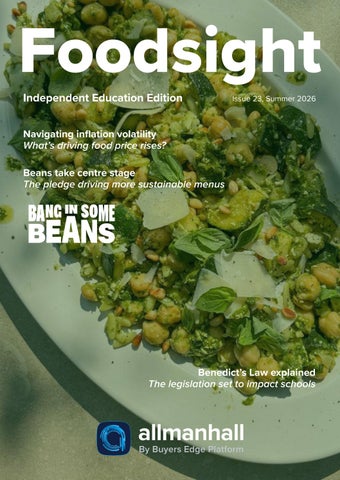
Independent Education Edition
Navigating inflation volatility
What’s driving food price rises?
Beans take centre stage
The pledge driving more sustainable menus
Benedict’s Law explained The legislation set to impact schools
As we move through 2026, independent schools continue to navigate a challenging operating environment. Geopolitical tensions, energy market disruption and ongoing supply chain pressures are contributing to uncertainty across global food markets, with recent developments around the Strait of Hormuz adding further pressure to transport and food costs. Combined with wider inflationary pressures, continued food price volatility is expected in the months ahead. Read more on pages 6-8.
At the same time, schools are balancing declining pupil numbers, tight budgets, nutritional responsibilities and increasingly ambitious sustainability commitments. Finding solutions that support all these priorities can be difficult, particularly when maintaining quality and value remains paramount.

That’s why this edition of Foodsight focuses on one ingredient with the potential to make a meaningful difference to both budgets and the planet: beans and pulses.
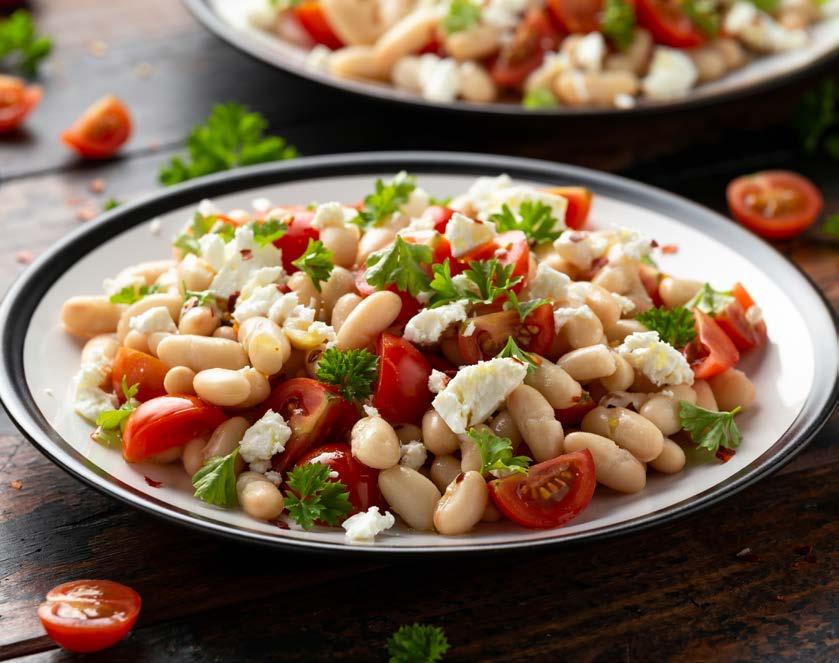
Affordable, versatile and nutritious, beans offer schools an opportunity to manage costs while supporting healthier menus and reducing environmental impact.
Small changes to recipes and menu planning can collectively deliver significant benefits for both budgets and sustainability goals.

To help drive this change, allmanhall are launching our Bang in Some Beans pledge - a commitment to increase bean and pulse uptake across our client base by 30% by 2028
Through our procurement expertise, nutrition and sustainability support, supplier partnerships and industry insight, we’ll be helping schools identify practical ways to make beans a bigger part of the menu.
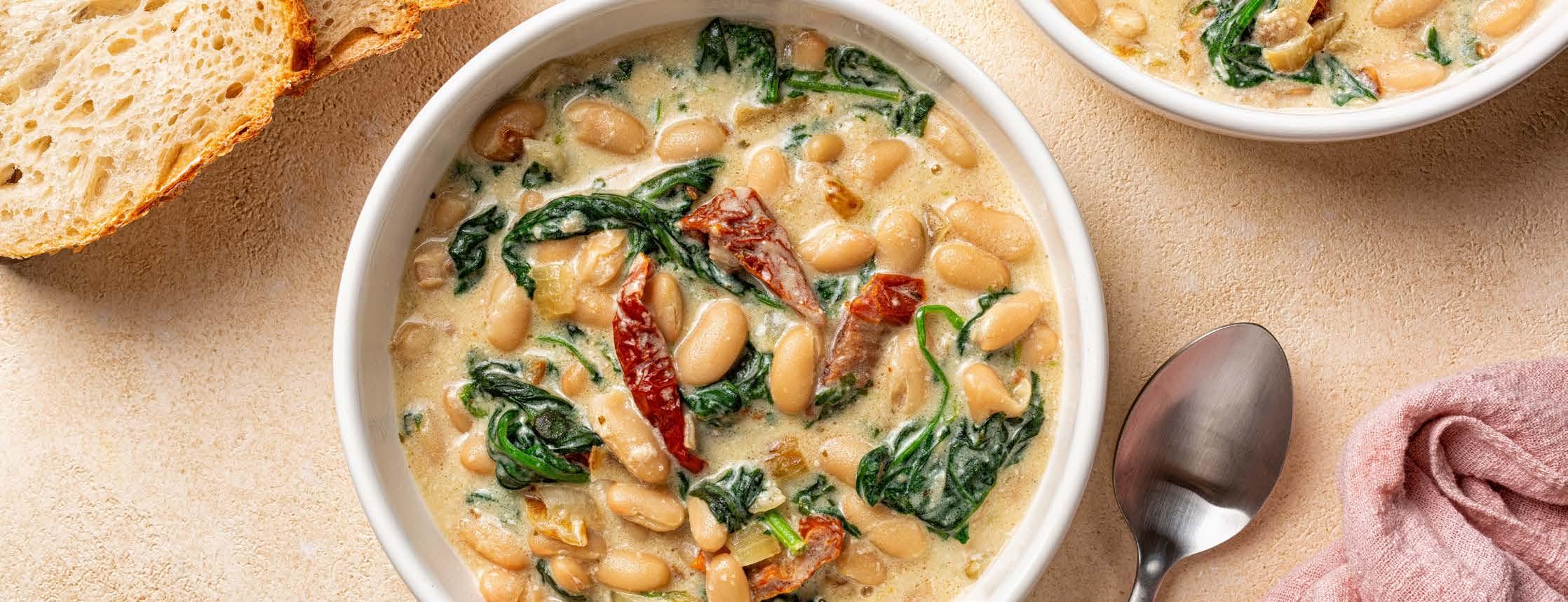
Throughout this special edition, you'll find market insight, nutritional guidance, recipes, and practical ideas to help you explore the opportunities that beans and pulses present.
Together, we can demonstrate how small changes can deliver meaningful outcomes for cost control, health, and sustainability.
I hope you find this edition useful and inspiring.
Jo Hall Managing Director



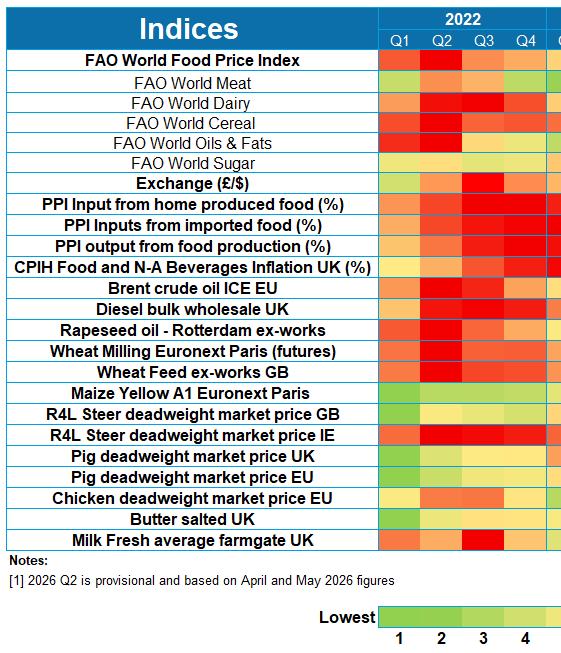
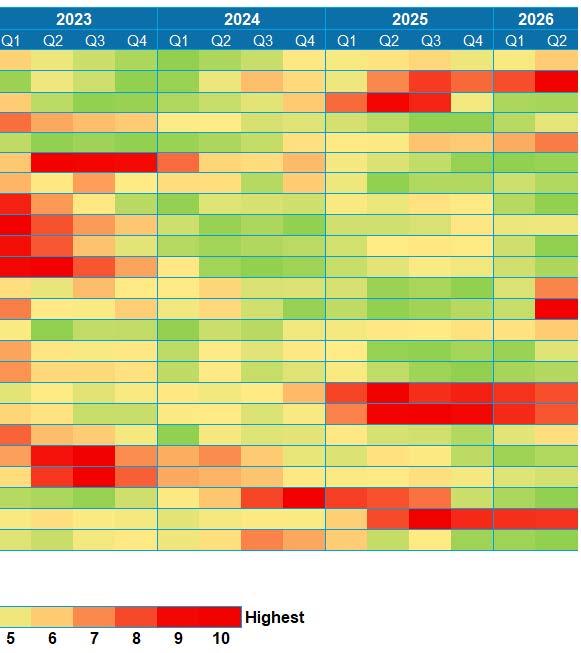
Food inflation may have eased from the highs experienced in recent years, but the outlook suggests cost pressures are far from over. Rather than a short-term spike, the industry is now facing a prolonged period of elevated costs driven by global uncertainty, policy changes, wage costs and weather-related disruption.
While supply chains have stabilised since the peak of the pandemic, new challenges are emerging across food production, distribution and logistics. For schools, this means planning beyond short-term fluctuations and preparing for sustained inflationary pressure throughout 2026 and into 2027.
Global disruption and energy markets continue to influence cost:
Geopolitical tensions in the Middle East have reshaped the inflation outlook, extending the period of cost exposure beyond earlier expectations. Although the recent US-Iran agreement has reduced some immediate risks, higher oil costs continue to work their way through the food supply chain. Cost pressures are set to persist, impacting each stage of the supply chain with the increase being pushed through onto the final product.
Cost increases are gradually reaching the market



Businesses have spent the last two years absorbing rising costs to protect demand and remain competitive. However, this approach is becoming increasingly difficult to sustain.
As margins tighten, more of these costs are expected to be passed through the supply chain during 2026 and 2027. Foodservice operators are likely to experience these increases first, while supermarkets may continue to absorb costs for longer in an effort to maintain market share.

This means foodservice inflation is expected to outpace headline food CPI, which is largely influenced by supermarket pricing.
Government policy is adding permanent costs
Alongside market-driven inflation, a number of upcoming policy changes will add further pressure to operating costs.
Key upcoming policies include:
• Budget 2026 tax and pay measures
• Cost to implement the Employment Rights Act
• New National Living Wage from April 2027
• Year 2 of Extended Producer Responsibility (EPR) from Oct 2026
• Year 3 of Extended Producer Responsibility (EPR) from October 2027
The government has also introduced several shortterm measures designed to support the sector, including reductions in agri-food tariffs, continued fuel duty support, and additional assistance for transport and agriculture.
While welcome, these measures are unlikely to offset the longer-term inflationary impact of structural cost increases.
Importantly, unlike commodity or energy markets, policy-driven costs rarely reverse and often become a permanent part of the industry’s cost base.
Inflation will vary by category
Not all food categories will experience inflation in the same way. Grain markets remain heavily influenced by global growing conditions and international supply, while dairy prices are more closely linked to domestic factors such as herd numbers and milk production levels.
As a result, inflation is likely to remain broadbased but uneven across categories. Understanding the specific drivers behind individual commodities will be increasingly important when planning budgets and procurement strategies.

Weather remains one of the biggest unknowns
Weather continues to be one of the most significant risks facing global food production.
A strengthening El Niño pattern, which typically raises global temperatures and drives more extreme weather and rainfall patterns, now has an 80% probability of occurring, according to the World Meteorological Organisation (WMO).
Adverse weather can reduce yields, disrupt supply chains and increase costs across a range of commodities, including wheat, maize, rice, sugar, coffee and soy. These impacts often extend beyond individual products, influencing wider commodity markets and creating additional inflationary pressure.

Earlier forecasts suggested food inflation could reach 8%. More recent market movements have softened that outlook, with current expectations now closer to 5%, compared with May’s CPI food inflation rate of 2.2%.
However, inflation is expected to remain elevated throughout 2026 and into 2027. Over a two-year period, this could result in compound food inflation approaching 10%.
These forecasts assume relative political stability, predictable National Living Wage increases, and commodity markets gradually returning towards long-term averages. While this remains a reasonable baseline for budgeting purposes, schools should consider building additional contingency into forecasts. The growing risk of extreme weather events, geopolitical disruption, and supply chain volatility means upward pressure on costs could return quickly.
Food inflation may no longer be accelerating at the pace seen in recent years, but it is unlikely to disappear. Schools who plan proactively and build resilience into their procurement strategies will be best placed to manage the challenges ahead.
This is where a robust procurement strategy becomes increasingly valuable. allmanhall clients already benefit from regular market intelligence, commodity reporting, and expert procurement support that helps them anticipate change and respond proactively to cost pressures.
If you’d like to understand how your organisation could benefit from the same level of insight and support, we’d be happy to help.

When catering budgets are under pressure, it is easy to focus on inflation and commodity markets. Yet some of the most effective savings can come from everyday purchasing decisions in the school kitchen.
With ongoing market volatility, independent schools are looking for ways to maximise value without compromising quality, choice or nutritional standards. Alongside allmanhall’s expert procurement support, buying behaviours can make a real difference.
One simple opportunity is purchasing format. Split cases offer flexibility and help reduce waste, but for high-volume products with predictable usage, switching to full cases can unlock valuable savings without changing menus or specifications.
Recent analysis by allmanhall’s procurement team identified savings of up to 13% by moving to full cases.
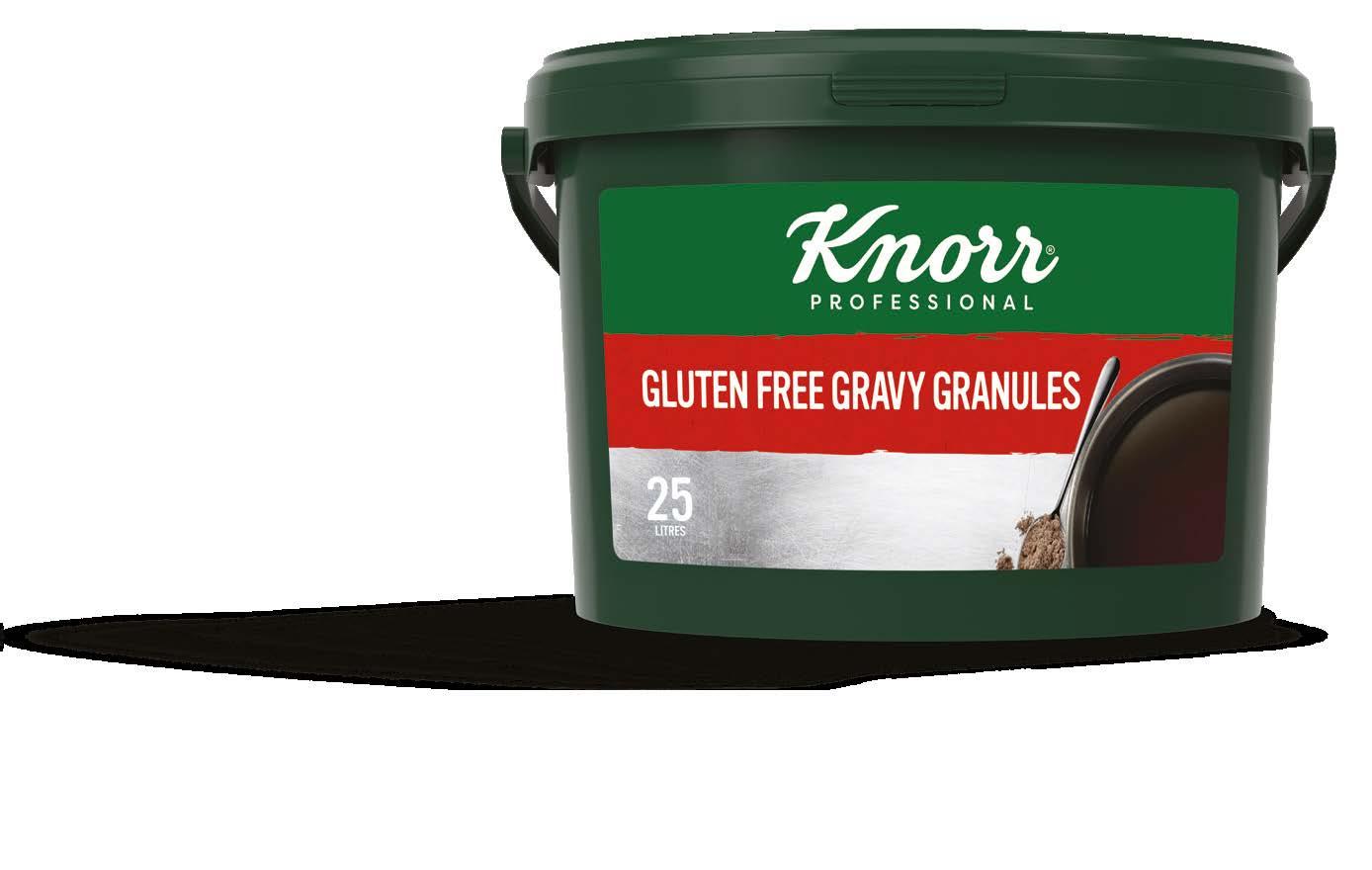
Our clients can now save even more on these Bidfood lines:
The best purchasing strategies balance cost, usage, and waste. Full cases may suit fast-moving lines, while split cases remain ideal for lower-volume products, menu trials and reducing excess stock.
By choosing the right format for the right product, schools can make every pound work harder and unlock additional value across their food spend.
What if one of the most powerful tools for managing your food costs, improving your pupils’ nutrition, and reducing your school’s environmental impact was already sitting in your store cupboard?
Beans may be humble, but their potential is anything but.

Across the education sector, schools are facing increasing pressure to balance budgets, support health and wellbeing, and deliver on sustainability commitments. Finding solutions that address all three can be challenging. Yet one simple ingredient offers an opportunity to make meaningful progress in every area.
That’s why allmanhall are launching our Bang In Some Beans pledge - a commitment to increase bean uptake across our client base by 30% by 2028.

This pledge isn't about radical menu changes or asking your pupils and staff to give up the foods they love. It's about embracing small, practical changes that can collectively deliver a significant impact.
Whether that's adding beans to existing recipes, creating new plant-rich dishes or simply offering greater choice, every bean counts.
As food procurement experts, we're uniquely positioned to help schools turn good intentions into measurable action. Through our strong supplier partnerships and our expert nutrition and sustainability team, we'll be championing the role that beans can play in creating healthier, more sustainable and cost-effective menus.
Because sometimes the simplest solutions can have the biggest impact.

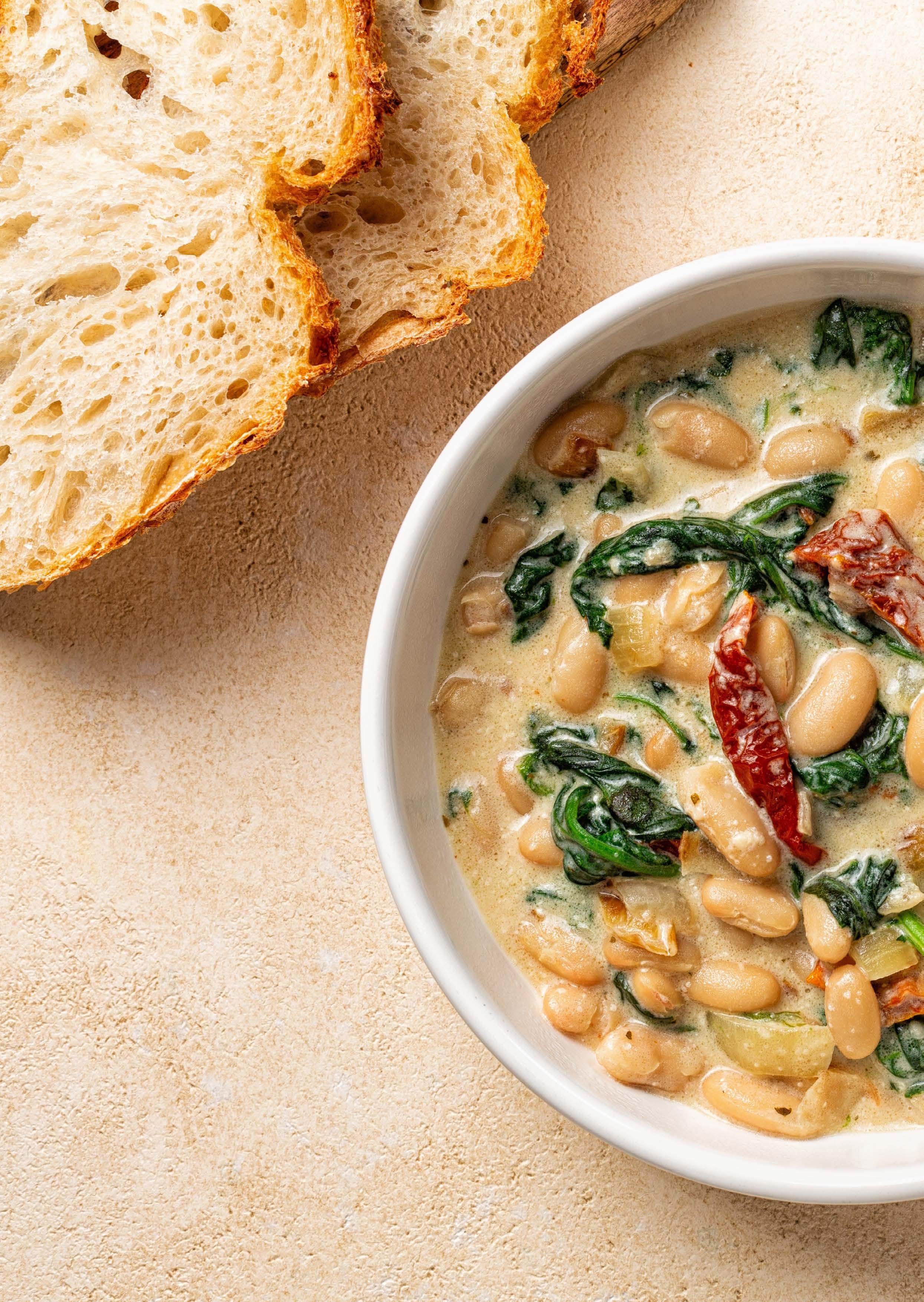
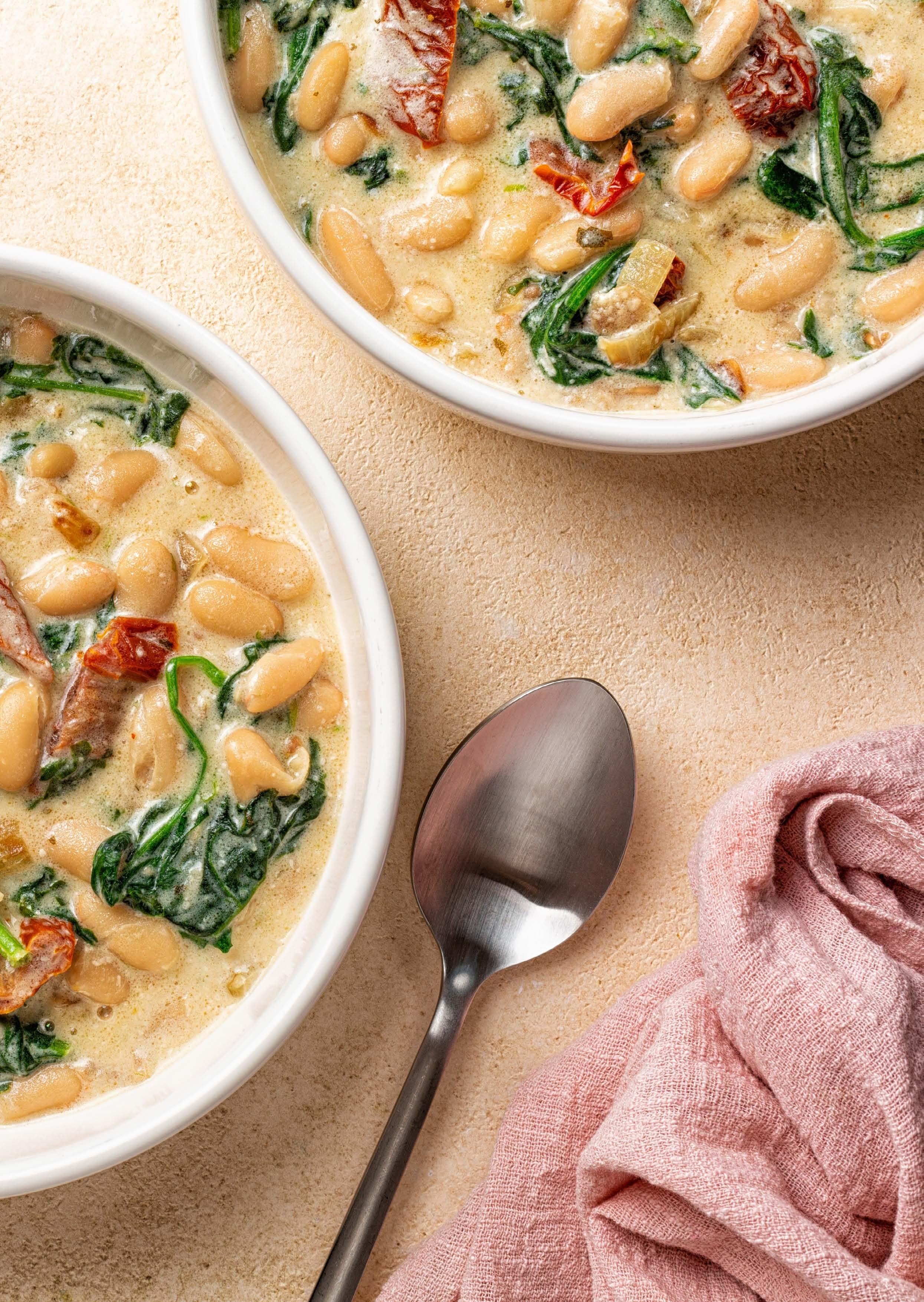
Beans have long been a staple ingredient in cuisines around the world, yet they remain under-utilised in many school kitchens.
They offer an impressive combination of benefits:
• High in protein and fibre
• Rich in essential vitamins and minerals
• Naturally low in fat
• Cost-effective compared with many animal proteins
• Versatile across multiple menu formats
• Significantly lower carbon footprint than many meat-based alternatives
At a time when school caterers face ongoing challenges around rising costs, sustainability targets, and nutritional requirements, beans represent a practical solution that can support all three priorities.

Be part of the 30% challenge
We’re on a mission to increase bean uptake by 30% by 2028 and we’d love you to be part of it.
Every additional bean-based recipe, menu innovation, and purchasing decision helps move us closer to a food system that is healthier, more sustainable and better value.
Over the coming months, we’ll be sharing ideas, insights, recipes, supplier innovations, and success stories to help make it happen.
Follow the campaign, share your progress, and join the growing community committed to proving that small changes really can make a big difference.
Let’s bang in some beans - and together, achieve 30% by 2028.
Independent schools are facing no shortage of challenges. We help!
Declining pupil numbers, rising food costs, increasing sustainability expectations, administrative pressures, and supply chain uncertainty continue to place demands on bursars and catering teams alike.
These themes dominated conversations at this year's ISBA Annual Conference in Newport, where allmanhall welcomed delegates to our stand for a lighthearted game of Whacka-Mole with a serious message behind it.
The challenge quickly became a talking point, reflecting a reality familiar to many schools: solve one catering issue and another can appear just as quickly. Shrinking budgets. Rising costs. Expectations to do more
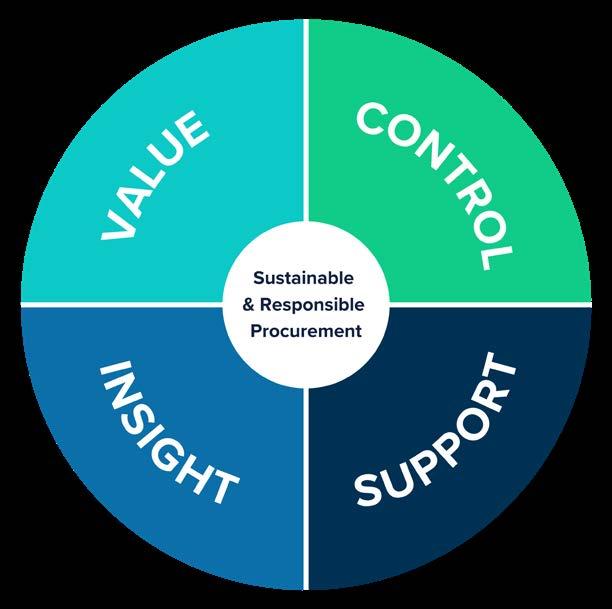
That’s where allmanhall’s approach resonated. Discussions centred around how food procurement can deliver more than cost savings through a combination of value, insight, control, and support.
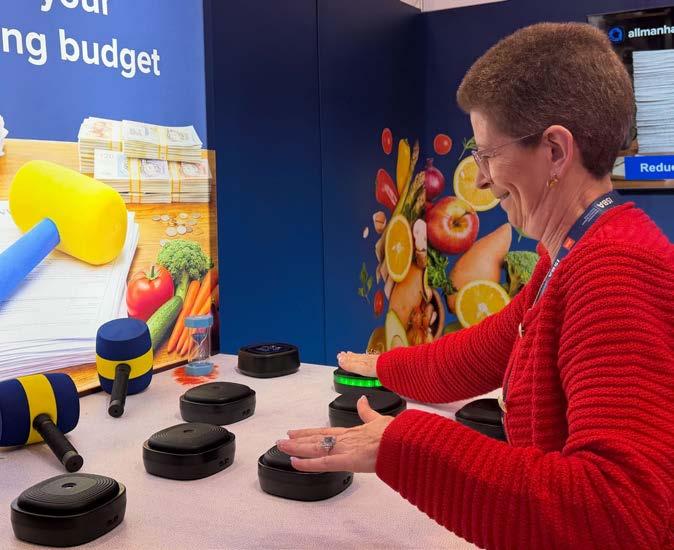
The outcome was clear. Schools want trusted partners who can simplify complexity, provide meaningful data, and help them navigate challenges with confidence.


Thank you to everyone who visited our stand, took part in the challenge and shared their experiences. We left the Conference encouraged by the sector’s commitment to delivering high-quality food experiences while balancing financial and environmental responsibilities. After all, when the right procurement strategy is in place, catering challenges stop feeling like a game of Whack-a-Mole and start becoming opportunities for long-term success.
Concerned about declining pupil numbers and the impact on budgets? Discover how allmanhall's expert foodservice consultancy can strengthen your commercial performance, improve operational control, and optimise processes.

“allmanhall managed to negotiate down proposed supplier price increases in April 2026.
And we’ve staved off increases to the majority of volatile lines over the summer too, all for the benefit of our client partners, to help manage catering budgets and food costs.”

Hayden Hibbert Client Relations Director
Stay up to date on our blog or, for allmanhall clients, on The Pass.
“Global shocks like the US-Iran conflict reinforce the importance of proactive procurement and forward planning. It’s not just about reacting to rising prices –it’s about using insight, forecasting and collaboration to protect both quality and financial stability for the long term. We’re here to help.”

Jo Hall Co-owner & Managing

Based on availability and price...
Dairy: The dairy market remains oversupplied, although supply and demand are beginning to rebalance as milk production slows and processor volume controls take effect.
Wholesale butter, cheese, and cream prices remain lower than last year, creating shortterm opportunities for schools. However, ongoing geopolitical tensions and supply chain cost inflation continue to present risks later in the year.

Fresh produce: Weather disruption across Southern Europe created significant pressure on salad crops during early 2026, driving sharp price increases accross several key lines.
Menu opportunities:
Pork, dairy, rice, and seasonal salads currently offer the best combination of value and availability.
Watchlist:
Beef, poultry, white fish, and rapeseed oil continue to face significant inflationary pressures. Potato crop development & weather conditions should also be monitored throughout the summer.
Availability has improved as Northern European production has come online, helping to stabilise markets. In potatoes, attention is shifting to crop development, with prolonged dry weather creating uncertainty around yields and quality later in the season.
Meat: Meat markets remain mixed. poultry continue to face supply constraints and elevated pricing due to reduced production and disease pressures, while pork remains comparatively stable and offers good value.


Meat market direction will continue to be influenced by supply availability, input costs and changing consumer purchasing behaviour.
Fish: Fish markets remain firm, with white fish continuing to experience tight supply and elevated pricing driven by lower quotas, weather disruption and strong demand. Salmon markets have stabilised following improved Norwegian harvest volumes, although prices remain historically high. Schools may wish to consider alternative species where appropriate to manage costs and maintain supply continuity.
Harvested commodities:
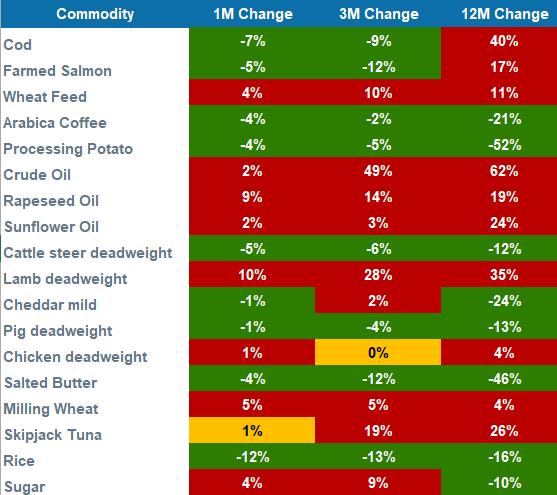
Harvested commodity markets are showing mixed trends.

Coffee prices have fallen sharply as Brazilian production improves, while rapeseed oil remains under upward pressure due to tight global supply. Wheat and rice markets are currently well supplied, but weather developments, geopolitical tensions, and rising input costs could influence pricing as the year progresses.
Whilst some categories are beginning to stabilise following the volatility experienced over the past 18 months, markets remain highly sensitive to weather events, geopolitical developments, and ongoing supply chain disruption. Schools should continue to monitor key categories closely, maintain flexibility within menus where possible, and work proactively with suppliers to manage both cost and availability risks.
Follow the link below
For the full, detailed allmanhall commodity update for Summer 2026, click below! [Full Commodity Report]


This autumn, allmanhall are partnering with Unilever Food Solutions on the Buy to Give initiative - a simple way for schools to create a meaningful social impact through their everyday purchasing decisions.

Independent schools do far more than educate; they help shape healthier, stronger communities through the values of care, inclusion and opportunity.
At a time when many families across the UK continue to face food insecurity while good food goes to waste, Buy to Give offers schools an easy way to extend that positive impact beyond the classroom and support vulnerable people in communities nationwide.
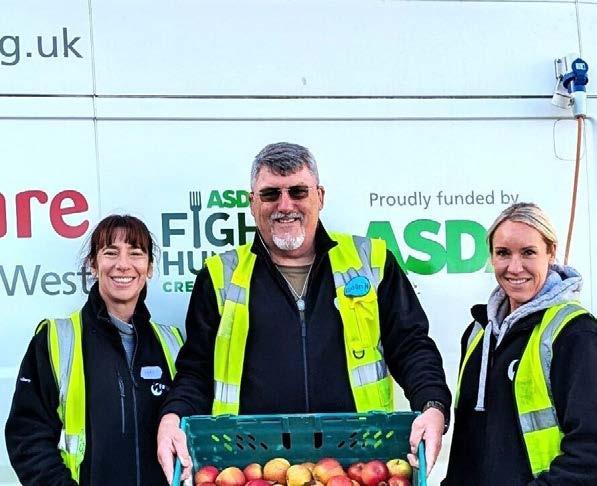
Between 1 September and 16 October 2026, when allmanhall clients purchase Unilever Food Solutions products through Bidfood, allmanhall and Unilever Food Solutions will donate 4% of sales to Felix (formerly FareShare and The Felix Project).

Felix rescues surplus food and redistributes it to charities, schools, holiday programmes, community organisations and food banks across the UK.

A
simple way to make a difference
Getting involved couldn’t be simpler. There are no forms to complete, no additional administration and no extra cost. Schools simply continue purchasing qualifying products as they normally would, while allmanhall and Unilever Food Solutions make the donation on their behalf.
To view the full Unilever Bidfood product list, click here.
By taking part, schools can help support vulnerable communities, reduce food waste and contribute to a more sustainable food system through procurement choices they are already making.
allmanhall believe food procurement can deliver more than cost control. It can also help organisations support sustainability, strengthen communities, and create meaningful social value.
Buy to Give is a great example of how collective purchasing power can create positive change, helping ensure good food reaches more people who need it and making every meal count.
Promotion applies to all Unilever Food Solutions products purchased through Bidfood by allmanhall clients between 1 September and 16 October 2026. During the promotional period, allmanhall and Unilever Food Solutions will donate 4% of qualifying sales to Felix.

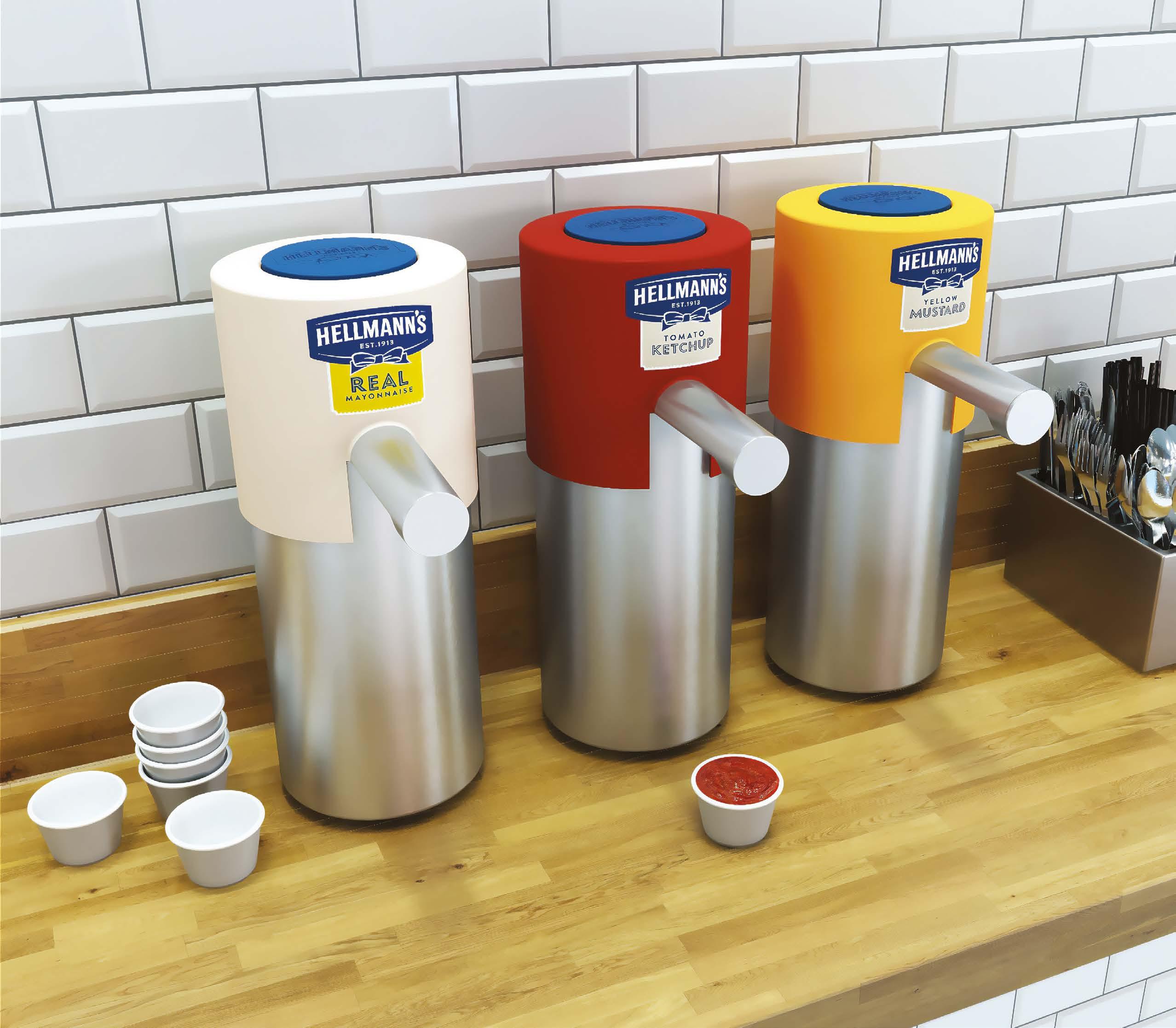
60% less plastic vs singleuse portion packs*
Mess-free dispensing
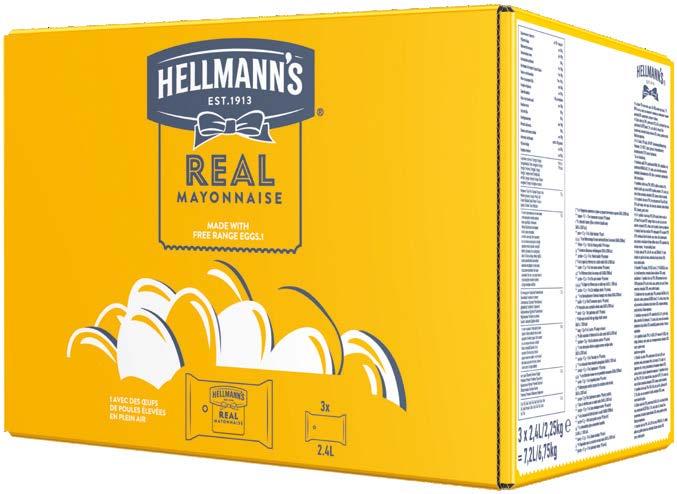
Hellmann’s Real Mayonnaise made with free range eggs
The Nation’s favourite Mayonnaise**

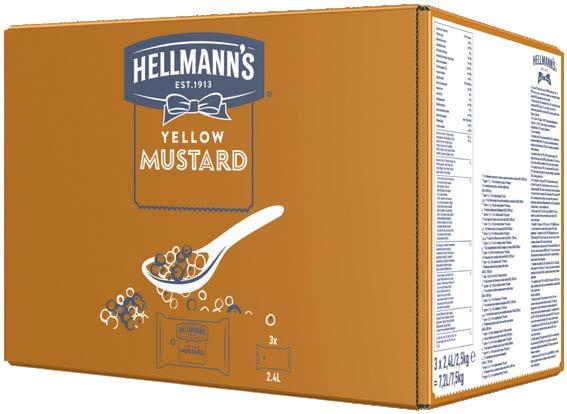

Scan
If you have a LinkedIn account, be sure to follow @allmanhall for the latest market updates, industry news, foodie insights, sustainability guidance, recipe inspiration, and much more!
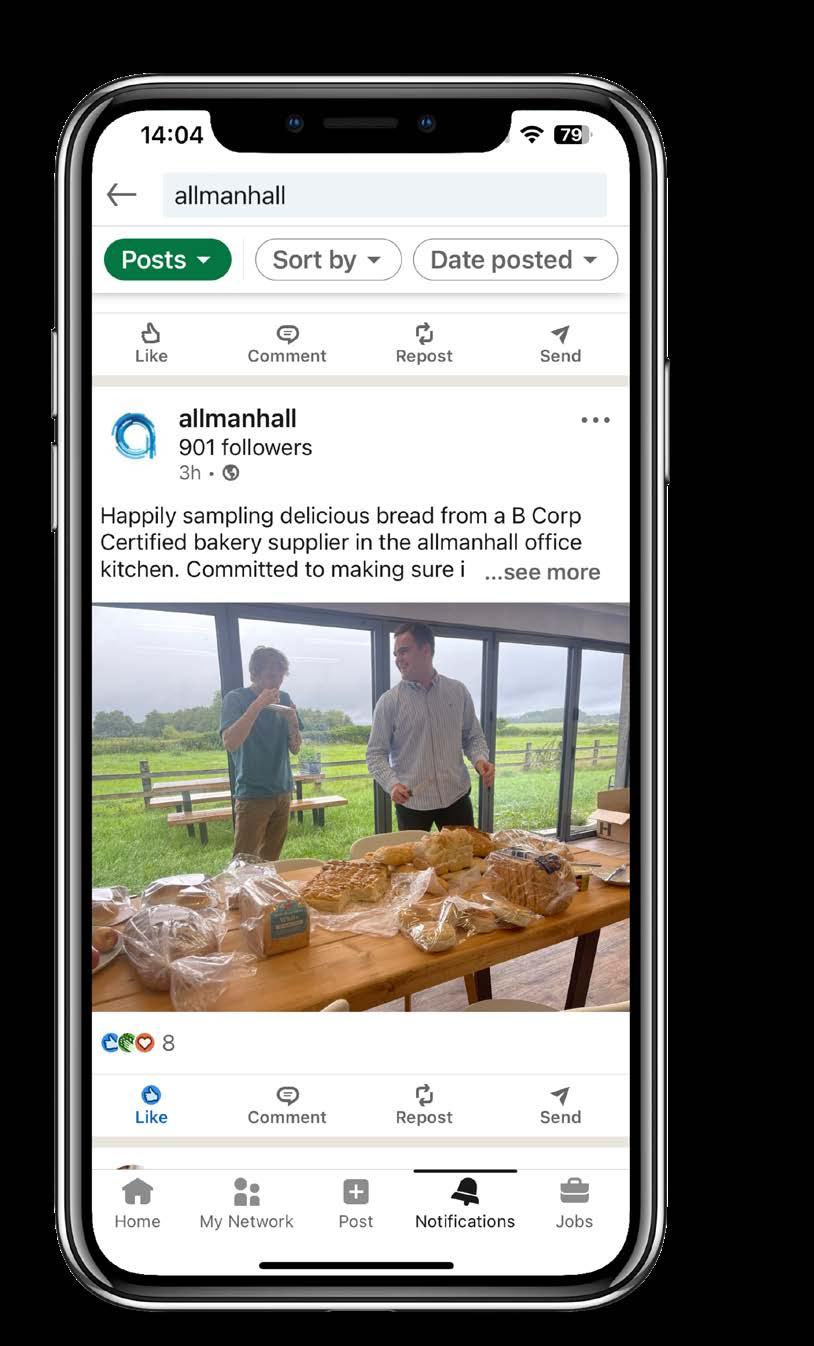

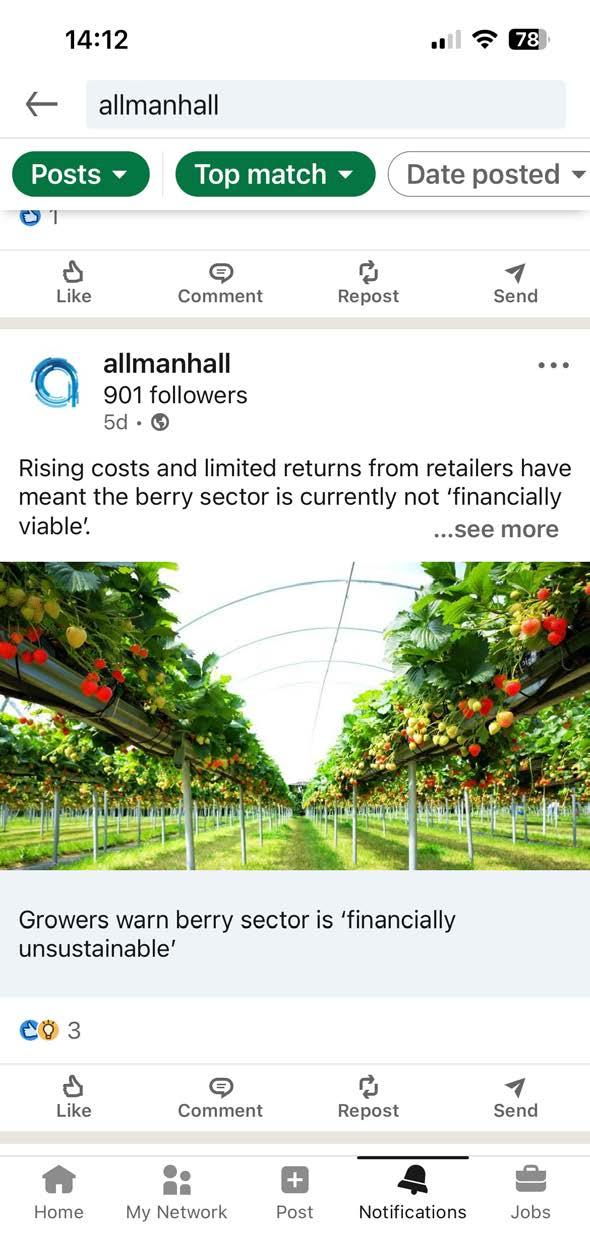
As well as sharing insights and updates, we regularly collaborate with partners including Foodsteps, UN Global Compact and Jamie’s Farm.
You will also get to see behind-the-scenes photos of our team and what we get up to!


I’m Jo Hall, MD and co-owner of allmanhall. I started here 10 years ago, following a corporate career. The plan was to just ‘help out in marketing’ for a short while… a decade on, I’m still here!
allmanhall are owner-managed, with the Hall family still holding a significant number of shares. My husband and father-in-law founded allmanhall in 2006 and, when I joined them, we were in a growth period and needing extra helping hands to make the next leap. I quickly fell in love with the ethos, the team, the aspirations of the leadership team. And I’ve never looked back…
I became permanent and have been on the Board for around five years. In April 2026, I stepped up into the role of Managing Director, a role previously held by my husband, Oliver. I’m incredibly excited about this next chapter and continuing the growth and development of allmanhall, the team and our services, for the benefit of our clients and our partners.
What is a typical day for you?
There’s no such thing! The variety and pace are some of the things I love the mostand getting to work with such passionate, talented, professional individuals, both in the team here and also with our suppliers and our clients, or prospective clients. A lot of what I do is about listening and then communicating and supporting a plan to drive improvements, both internally and for our clients. I love coming up with a solution and inspiring the team to do the same.
What are you most proud of?
The recognition and results we achieve and the organisations we support and work with. We’ve come a long way from two men in a shed 20 years ago!
Three words to describe your role: Rewarding. High-energy. Supporting.

I’m Tim Bruton, Development Director at allmanhall. My role is focused on supporting the growth of the business by developing our strategy for winning new clients and building strong partnerships across a range of sectors.
Throughout my career, I’ve delivered growth through strategic leadership, innovation and a strong focus on people. I’m passionate about creating environments where talented individuals can thrive, fostering collaboration and empowering teams to achieve ambitious goals while delivering exceptional outcomes for clients.
What is a typical day for you?
Much of my time is spent focused on strategy, helping to shape the future direction of the business and ensuring we have the right people, processes, and relationships in place to support sustainable growth. I enjoy working collaboratively with colleagues across allmanhall, sharing ideas, challenging thinking, and driving innovation that helps us deliver even greater value to clients.
Developing talent is also a key part of my role. Supporting individuals to grow in confidence and capability, while nurturing a positive, accountable, and collaborative culture, is something I find particularly rewarding.
What are you most proud of?
I’m most proud of being part of a team that is helping allmanhall grow while staying true to its values. It’s incredibly rewarding to see more organisations benefit from sustainable, responsible food procurement that delivers value, supports wellbeing, and creates positive outcomes for people and the planet. I’m also proud of helping to build a culture where talented people can develop, succeed, and contribute to our shared ambition.
Three words to describe your role: Motivating. Inspiring. Innovative.

I’m Tess Warnes. I’m allmanhall’s Head Of Nutrition & Sustainability, having recently been promoted to the role. I’m also a Registered Dietitian, holding a BSc (Hons) in Nutrition and Dietetics, and I am registered with The Health and Care Professions Council (HCPC).
My career has spanned a variety of nutrition-focused roles, from working in large teaching hospitals in London to leading a nutrition consultancy business.
What is a typical day for you?
No two days are the same for me, and that’s one of the things I love about my new role at allmanhall.
Recently, for example, I hosted a webinar attended by more than 100 delegates on the new allergy management regulations for schools introduced in response to Benedict’s Law.
A significant part of my role is now focused on helping clients enhance their sustainability initiatives, often combining this with nutrition guidance across schools, hospitals, and care homes. This includes supporting the development of plant-rich menus that are good for both people and the planet, while ensuring they remain nutritious, practical, and cost-effective.
What are you most proud of?
I’m proud of the sustainability ethos that sits at the heart of everything we do. It encourages innovation and helps our clients achieve positive outcomes across nutrition, environmental impact, and value.
Three words to describe your role: Evidence-based. Impactful. Rewarding.



part of new statutory guidance commonly referred to as Benedict’s Law.
For education settings, this marks a major shift in responsibility.

No longer viewed as an operational issue confined to the dining hall, allergy safety is being recognised as a whole school responsibility, embedded into policy, culture, training, and leadership. And for many families, it could be life changing.
“Gaps in allergy communication, medication, and education are putting children at risk of severe illness or death. Measures need to be put in place to keep children with allergies in England safewhat is in place now is not good enough. Pupils and their families deserve better”.
- Helen Blythe, Founder and Director, Benedict Blythe Foundation
Why it’s called Benedict’s Law
The legislation follows the tragic death of five-year-old Benedict Blythe, who suffered a fatal allergic reaction at school in 2021 after exposure to cow’s milk despite having known multiple allergies. Investigations found that although systems existed, critical failures in communication, awareness, training, and emergency response contributed to the tragedy.
Benedict’s parents have since campaigned tirelessly for national reform.
The statistics surrounding allergies in schools are sobering. According to the Benedict Blythe Foundation’s REACT report:
• 680,000 pupils in English schools have one or more allergies
• 1–2 children in every classroom has a food allergy
• 18% of allergic food reactions happen in school settings
• Half a million school days are missed each year due to allergy-related issues
• Anaphylaxis happens more in school than in any other setting.
Despite this, allergy management standards have varied significantly between schools.
The same report highlighted that:
• Around 70% of schools lacked key allergy safety measures
• Almost half of schools did not hold their own emergency adrenaline medication
• 40% of teachers did not feel confident managing allergies
• 1 in 5 teachers had never been trained to use an adrenaline auto-injector (AAI)
These findings helped drive the Government’s decision in February 2026 to commit to mandatory statutory allergy guidance for schools.
One of the most important aspects of Benedict’s Law is that it reframes allergy management as a whole-school safeguarding responsibility.
Historically, allergies may have been seen as primarily the responsibility of catering teams, first aiders, or school nurses. Under the new guidance, that approach is no longer considered sufficient.


The expectation is now that all staff will have a role to play in allergy safety.
That includes:

• Teaching staff
• Catering teams
• Support staff
• Breakfast and after-school club teams
• School transport staff
• Supply staff
• Senior leadership teams
• Governors and trustees

This is a significant culture change. Allergy management can no longer be treated as a “tick-box exercise.” Instead, schools will be expected to demonstrate that allergy awareness is embedded into everyday operations, decision-making, training, and safeguarding practices.

The draft statutory guidance outlines several key requirements schools will need to implement ahead of September 2026.
Schools will be expected to have a standalone allergy policy available on the school website, with evidence that staff have read and understood it.
Importantly, the policy must include:
• Procedures for managing allergies safely
• Emergency response protocols
• Arrangements for induction and training of new staff
• Guidance for supply and cover staff
• Reporting systems for incidents and near misses
The growing importance of emergency preparedness
One of the strongest themes within Benedict’s Law is preparedness.
Anaphylaxis is time-critical, and delays in administering adrenaline are associated with fatal outcomes. Schools are therefore expected to hold spare adrenaline autoinjectors in accessible locations.
Importantly, schools are being reminded that severe allergic reactions can occur even in children without a previous diagnosis - making preparedness essential for every setting.
You can download a free template from Spare Pens in Schools to take to your local pharmacy.

The guidance also recommends:
• Clear storage and access procedures
• Annual anaphylaxis drills
• Staff awareness of emergency equipment locations
• Improved recording of incidents and near misses
IMPORTANT: allmanhall’s clients can benefit from a discounted price for AAIs, if purchased from Kitt Medical. For more information, click here.
Inclusion matters too
While much of the focus is rightly on safety, the guidance also emphasises inclusion.
Children with allergies should not be excluded from activities unnecessarily. Instead, schools are encouraged to adapt activities to ensure all pupils can participate safely.
This includes reviewing risks associated with:
• Cooking lessons
• Science experiments
• Art projects
• Themed lunch days
• School trips
• Craft materials and packaging that may contain allergens
Similarly, pupils with allergies should not be segregated at mealtimes.
Please always check labels and packets for allergens.

Schools are encouraged to develop discreet but robust identification systems that maintain both dignity and safety.
Leadership and accountability
Another major development is the expectation that schools appoint:
• A designated Allergy Lead
• A named Governor responsible for allergy safety oversight This reflects the increasing recognition that allergy management is a governance and safeguarding issue, not simply an operational matter.

What schools should be doing now
Although final statutory guidance is still being prepared, schools shouldn’t wait until September 2026 to act.
Recommended next steps include:
Benedict’s Law represents one of the most significant changes to school safeguarding and medical management in recent years.
• Conducting an allergy management audit
• Reviewing all Individual Healthcare Plans and Allergy Action Plans
• Implementing wholeschool staff training
• Purchasing spare AAIs
• Reviewing incident reporting systems
• Appointing Allergy Leads and Governor Leads
Early preparation will help schools avoid last-minute compliance pressures and, more importantly, create safer environments for pupils and staff alike.
If you feel that your school needs support preparing for the upcoming changes, get in touch with allmanhall’s expert team here.

At its heart is a simple but powerful message: allergy safety cannot depend on luck, individual awareness, or inconsistent systems. Every child deserves to feel safe at school.
For education providers, September 2026 is not just a compliance deadline. It is an opportunity to build a stronger culture of awareness, preparedness, inclusion, and care that could ultimately save lives.
allmanhall are here to support schools through these changes - helping education settings build practical, effective allergy management systems with confidence.
If you're a client partner, for all you need to know about allergen management, go to The Pass.
Tackling the impacts of climate change is fundamental to foodservice, catering operations and the food supply chain as the food industry both contributes to and is vulnerable to its effects.
allmanhall are constantly looking for new supplier partners with sustainable product innovations and great ideas that don’t cost the earth. Through our partnership with Vegetarian Express, we've been delighted to find Eat Curious.
We recently visited the Eat Curious headquarters in the heart of the Northamptonshire countryside for a fascinating and delicious insight into their cost-effective plant-based range.
Laura Taylor, one of allmanhall’s Senior Buyers, chatted with Rhys Richardson, Eat Curious’ Head of Development & Innovation, to find out more...



Rhys Richardson
LT: Let’s start with the basics. For those who may not have come across you so far, who are Eat Curious?
RR: Eat Curious is a plant-based food development company dedicated to providing innovative and sustainable solutions to the foodservice industry.
We are committed to creating versatile products that are minimally processed, have a good nutritional profile and are full of flavour.
Laura Taylor allmanhall Senior Buyer

LT: And what’s unique about Eat Curious and your vegan products?
RR: Our products are an affordable solution and free from the 14 major allergens.
Made from just three ingredientspea and fava bean protein, and salt, our range is produced without the use of isolates.
That means no chemical shortcuts, contributing to a cleaner product.
Our dehydrated products are stored ambient, so they are affordable and often more cost-effective than animal proteins.
LT: Where did the product and ideas originate from?
RR: We saw the problems facing the plant-based sector. The options available were ultraprocessed, made with allergens and isolates, poor in texture, and limited in their applications, making adaptation to various cuisines challenging.
We set out on a mission to create food for health by offering plant-based solutions that are not only versatile but also prioritise delivering in quality and nutritional value.
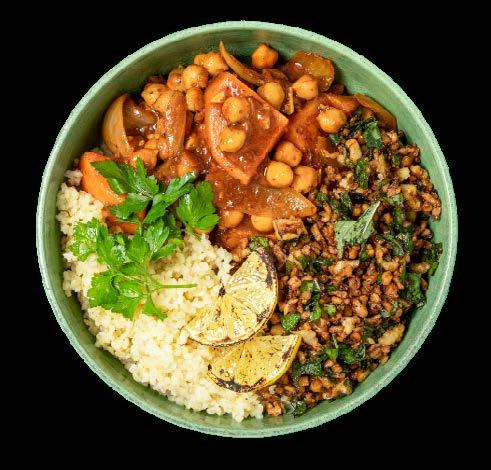
We have developed our own range of plant-based products made from a blend of pea and fava bean protein. They are adaptable to any cuisine, and we created them with a focus on quality protein, a good nutritional profile, free from the 14 major allergens, sustainable, and having minimal ingredients.
LT: And what support can you offer clients?
RR: We help our clients with:
• Preparation and application support: We aid catering teams with our growing bank of delicious recipes, as well as a variety of method videos to ensure ease of use when cooking with Eat Curious products.
• Chef demonstrations: Our culinary team can offer demonstrations to chefs, clients, and customers. These demonstrations explore the preparation of the Eat Curious range, as well as innovative recipes. They are tailored to provide menu support and help businesses reach their goals, whether that be reducing carbon impact, reducing volume of meat, improving the nutritional profile of menus, or expanding plant-based lines.
• Pop-ups and sampling sessions: We can offer support on-site through pop-ups and sampling sessions, providing effective engagement with customers.
LT: How do you develop your recipes?
RR: We try to ensure our recipes align with our customers’ sustainability goals while delivering on taste, nutrition, and operational efficiency. This approach allows us to create balanced, high-impact dishes that not only meet customer expectations but also support broader ESG targets. We develop our recipes with a menu management system which gives us nutritional breakdown but also a footprint score that displays the carbon emissions and water usage of each dish.
LT: And do you have a favourite?
RR: It’s hard to choose a favourite! A practical favourite would be one of our wet dish recipes, such as a chilli, which showcases our ingredient’s functionality and depth of flavour, while keeping things simple for chefs to execute at scale.
A popular choice at samplings and pop-ups is always our coconut protein power ball!

LT: So why is switching to a vegan alternative important?
RR: With the growing demand for businesses to meet sustainability targets, our product range works well in both plant-based and hybrid dishes. Rather than creating a hard line between meat-eaters and those who choose to eat a plant-based diet, sites can find success in blending the two, providing an additional option that offers a variety of benefits for consumers.
One of the key motivators in consumers and businesses looking for plant-based options is the environmental impact of meat production.
Providing plant-based and hybrid dishes with the texture, flavour, and appearance of familiar and well-loved options allows meat-eating consumers to comfortably enjoy more sustainable alternatives. Our products are made for health! We avoid the use of protein isolates, instead our range is made from protein concentrates.
Our ingredients contain more fibre and less saturated fat than conventional products, whilst also being free from the main food allergens.
Mixing animal proteins with our plant-based products would also allow you to keep dishes high in protein whilst increasing fibre and reducing fat.
Our plant-based products are an accessible, low-cost solution, helping businesses to navigate inflation challenges while sustaining competitive pricing and optimal portion sizes.
Plant-based proteins like our Eat Curious dehydrated products are not only cheaper to purchase than animal proteins, but they are also more cost-effective to store. Swapping out a percentage of conventional animal protein for a plantbased alternative can be an effective strategy to reduce costs without sacrificing texture and flavour.
LT: What is the sustainability impact of your products?
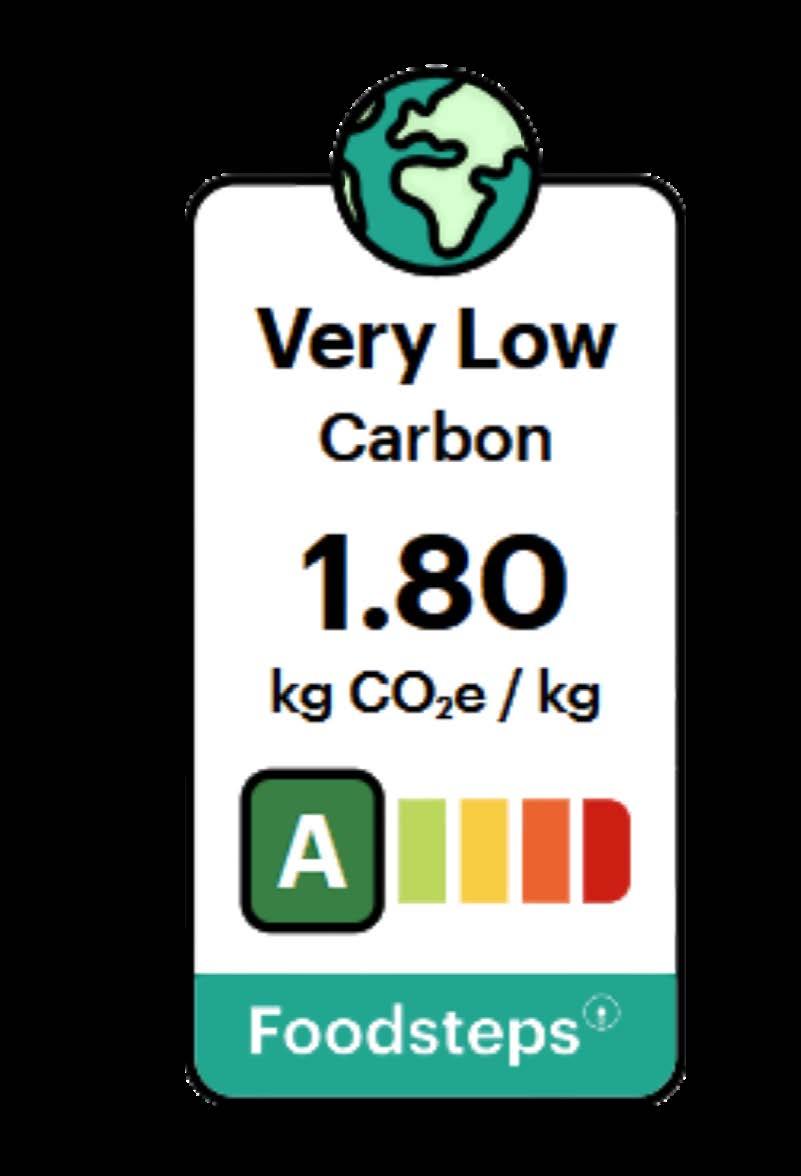
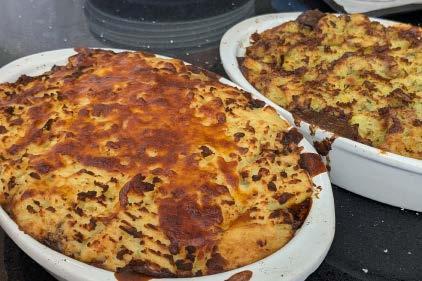
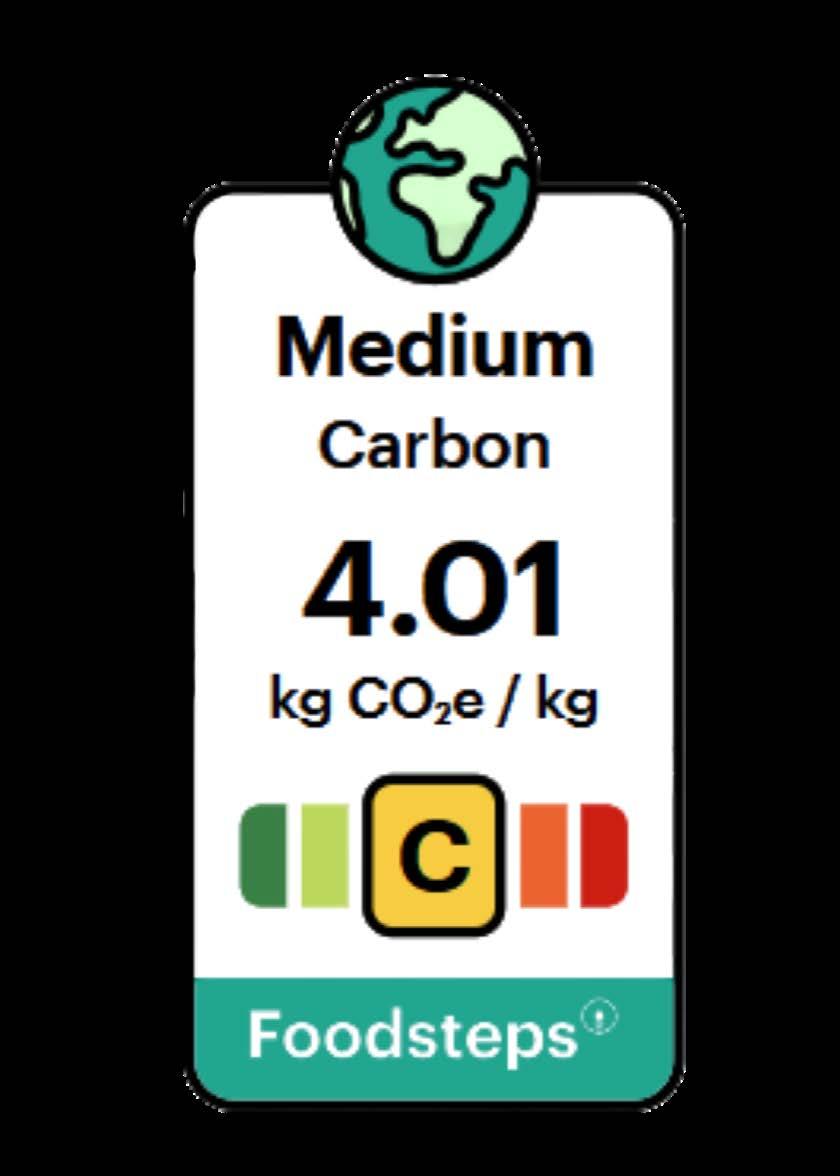
RR: Eat Curious products are better for the planet. The climate impact of our ambient ingredients when hydrated is approximately just over 1 Kg CO2e/kg of product.
These ingredients are also produced without the use of isolates, synthetic emulsifiers, and stabilisers.
LT: And what are the biggest challenges you face within the market?
RR: Our biggest challenge is shifting perceptions around plant-based and allergenfree alternatives, ensuring they are seen as high-quality, flavourful, and operationally seamless rather than just a substitute.
To address this, we focus on hands-on engagement, including live demonstrations, menu ideation sessions, and real-world application case studies.
LT: What can we expect next from Eat Curious?
RR: We’re exploring lots of innovative ideas for foodservice solutions, so watch this space!
In the meantime, of course our products are available through allmanhall and Vegetarian Express.
Independent schools may not be bound by the new School Food Standards, but following the nutritional guidance is a smart step towards healthier, more balanced menus. Read on for the details...
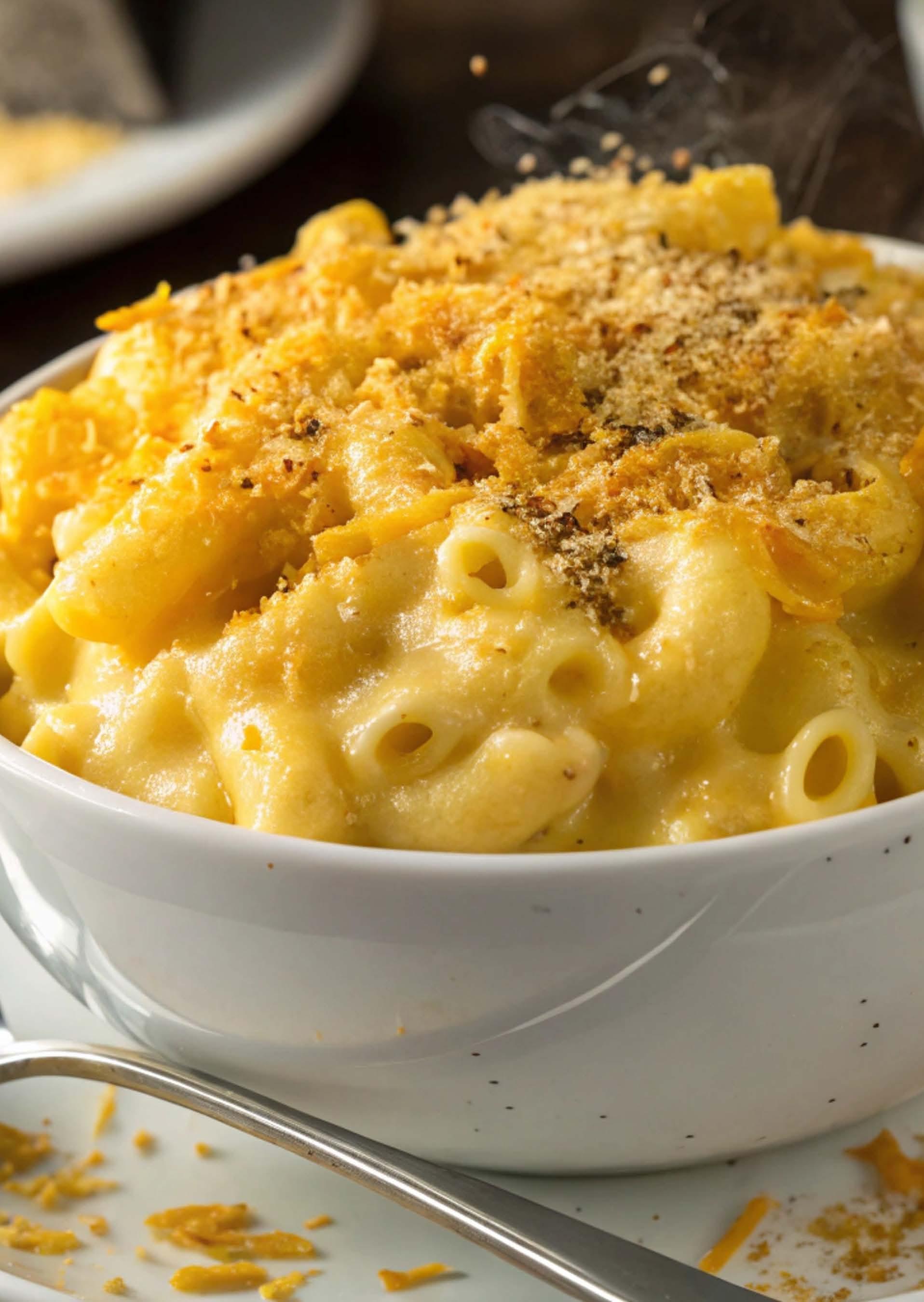
Under the Government's proposed new School Food Standards, one of the most talked-about changes could see schools restricting cheese as a main ingredient to a maximum of two days per week from September 2027.
For many schools, this raises immediate questions. Does macaroni cheese still make the menu? What about cheese and tomato pasta? And if cheese is reduced, what takes its place?
While the headlines may focus on cheese, the proposed reforms are part of a much broader ambition to improve children’s nutrition by increasing fibre intake, encouraging more plant-rich proteins, and reducing foods high in saturated fat, salt and sugar.
For schools and caterers, the challenge now is understanding what these changes to the current School Food Standards could mean in practice.
Whilst the proposed restrictions on cheese have generated plenty of discussion, they could also provide an opportunity to improve the nutritional quality of plant-led meals and introduce greater diversity across school menus. The real question is not whether schools can reduce cheese, but how they can do so successfully whilst maintaining pupil appeal.
The proposed reforms respond to ongoing concerns about childhood nutrition.
Research continues to highlight concerns around childhood obesity, excess sugar consumption, and low fibre intake amongst school-aged children. The Government’s proposals aim to address these challenges by encouraging healthier eating habits and creating greater consistency in school food provision.

Before schools can begin redesigning menus, three practical questions need answering:
What exactly counts as a cheese-based meal?
How will the new drinks rules be interpreted in practice?
Can healthier eating habits be encouraged beyond the lunch counter?
Alongside restrictions on certain foods, the new standards seek to increase the consumption of vegetables, pulses, wholegrains and fruit, helping schools support both pupil wellbeing and educational outcomes.
For many schools, the proposed restrictions on cheese may be the most visible change within the new standards. However, the proposal is about far more than removing popular menu items - it represents a shift towards more diverse, fibre-rich, plant-led meals.
From a nutritional perspective, limiting cheese as a main ingredient is a proportionate and practical measure. Cheese can be a valuable source of calcium and protein, but it is also a significant contributor to saturated fat intake.
Restricting the number of meals where cheese is the primary component encourages schools to explore a wider range of protein sources and supports the broader objective of creating healthier, more balanced menus.
Importantly, this change could strengthen the nutritional integrity of plant-rich options.
For many years, cheese has been the default substitute for meat in school catering. The proposed standards encourage a shift towards more diverse plant-based proteins such as lentils, beans, and pulses.

These ingredients not only contribute valuable protein but also help increase fibre intake, support gut health, and expose pupils to a wider variety of foods.
Increasing plant diversity within school meals aligns closely with both nutritional best practice and wider sustainability objectives. A more varied plant-led offer can improve nutrient intake, reduce dependence on a single ingredient category, and develop more balanced, inclusive, and innovative menu cycles.

For catering teams, this shift will also require careful menu planning and procurement strategies to ensure new ingredients can be introduced costeffectively whilst maintaining consistency and pupil acceptance. Find out how allmanhall can help.
The devil’s in the detail
While the direction of travel is positive, several areas would benefit from greater clarification before implementation.
What counts as a cheesebased meal?
The consultation proposes limiting cheese as a main ingredient to no more than two meals per week. However, there remains uncertainty around how this will work in practice.
For example:
• Would traditional macaroni cheese count as one of the two permitted cheesebased meals?
• Could pasta dishes containing cheese still be served if the cheese is considered a garnish or secondary ingredient?

• How will schools determine when cheese moves from being a component to being the primary ingredient?

Clear guidance will be essential to ensure consistency across schools and catering providers.
Clarification on drinks and naturally occurring sugars
The Government’s proposed new school food standards for England aim to reduce sugar and improve children’s diets.
However, one aspect of the plans is already raising eyebrows: flavoured milk drinks would be heavily restricted, while some sugar-free flavoured waters containing sweeteners could still be available in senior schools.
This is particularly controversial because many children are not getting enough calcium.
Milk is one of the richest and most accessible sources of calcium in young people’s diets, yet the proposed standards would only allow plain milk, while permitting certain fruit-flavoured drinks and flavoured waters with sweeteners.

Under the current standards, schools can offer flavoured lower-fat milk containing less than 5% added sugar. The new proposals would move towards plain, unsweetened milk only.
While reducing added sugar is necessary, removing lightly sweetened milk could discourage some children from drinking milk altogether, potentially reducing calcium intake.
At the same time, the proposals would allow sugarfree flavoured waters and fruit-flavoured drinks with sweeteners in senior schools, raising questions about whether the policy is being applied consistently.
The consultation reflects a difficult balancing act between tackling obesity and tooth decay on one hand, and ensuring children receive enough essential nutrients on the other. As schools, parents and nutrition experts respond to the proposals, many will be asking whether replacing flavoured milk with sweetened flavoured water is really the healthiest choice for children.


Another practical consideration is the role of packed lunches.
Schools can directly influence the nutritional quality of meals they provide, but many pupils continue to bring food from home. This raises a broader question: if schools are required to meet increasingly stringent standards, how will similar nutritional objectives be encouraged amongst packed lunch provision?

While education and parental engagement will undoubtedly play an important role, enforcing nutritional expectations beyond school-provided meals presents a significant challenge. Perhaps the biggest question of all is whether the full benefits of the new standards can be realised if a significant proportion of pupils continue to consume food and drink outside the school’s control.
The debate may have started with macaroni cheese, but the real opportunity lies in creating school menus that are more nutritious, more diverse, and better equipped to support the health and wellbeing of future generations. Overall, the proposed School Food Standards represent a welcome and evidence-based move towards healthier school food.
The focus on increasing fibre, promoting wholegrains, expanding the use of pulses, and reducing saturated fat has the potential to improve children’s dietary habits while encouraging greater menu innovation. The proposed reduction in cheese-heavy vegetarian meals is a particularly positive development, creating opportunities for more nutritionally balanced and diverse plant-based options. However, successful implementation will depend on clear guidance, practical support for schools and caterers, and a realistic understanding of the operational challenges involved.
As the consultation progresses, schools and catering providers will be looking for greater clarity on how these standards will work in practice. If achieved, the result could be a school food system that better supports children’s health, learning, and long-term wellbeing, while still delivering meals that pupils enjoy eating.
While independent schools are not required to follow these regulations, many will choose to use them as a benchmark, recognising the guidance they provide on supporting children's health and wellbeing.
Prep time: 5 minutes Cook time: 30 minutes Total time: 35 minutes
Serves: 10 prep school | 7 senior school
Method:
Ingredients:
• 1 x 570g jar Bold Bean Co Queen Butter Beans with their bean stock
• 4 tbsp neutral oil
• 2 chopped onion
• 4 minced garlic cloves
• 1/2 tsp ground ginger
• 1 tbsp tomato puree
• 2 tsp ground cumin
• 2 tsp garam masala
• 2 tsp ground coriander
• 1 tsp ground turmeric
• 1/2 tsp chilli powder
• 400g tin chopped tomatoes
• 75g frozen peas
• 200g cubed halloumi
• 1-2 tbsp greek yoghurt
• 1 tsp mango chutney
• fresh chopped coriander
Please always check labels and packets for allergens
1. Heat two tablespoons of oil in a large pan over medium heat. Add the onion and cook for 8-10 minutes until softened. Then add the garlic and ginger and cook for a further 2 minutes until fragrant.
2. Add the tomato purée and spices with a small splash of water and stir to create a paste. Fry for a couple of minutes, until the purée turns a deep red colour and everything smells fragrant.
3. Pour in the chopped tomatoes and peas with a pinch of salt, stir to combine, and cook for 8–10 minutes to let the flavours infuse - you want the peas to turn from a vibrant green to a more muted green.
4. In a separate non-stick frying pan, heat a little oil over a medium heat and llightly fry the halloumi cubes for 2-3 minutes on each side until golden.
5. Pour the butter beans and their bean stock into the tomato sauce, stir, combine and simmer gently for 3-4 minutes to warm through. Then add the fried halloumi and fold it gently into the sauce.
6. Stir in 1–2 tablespoons of yogurt (depending on how creamy you like it) and a tsp of mango chutney for sweetness. Check seasoning and adjust to taste.
7. Serve into bowls with cooked rice or naan. Finish with fresh coriander and, if you like, a sprinkle of nigella seeds.


Tess Warnes, Registered Dietitian, Head of Nutrition & Sustainability allmanhall
Tess Warnes, Registered Dietitian:
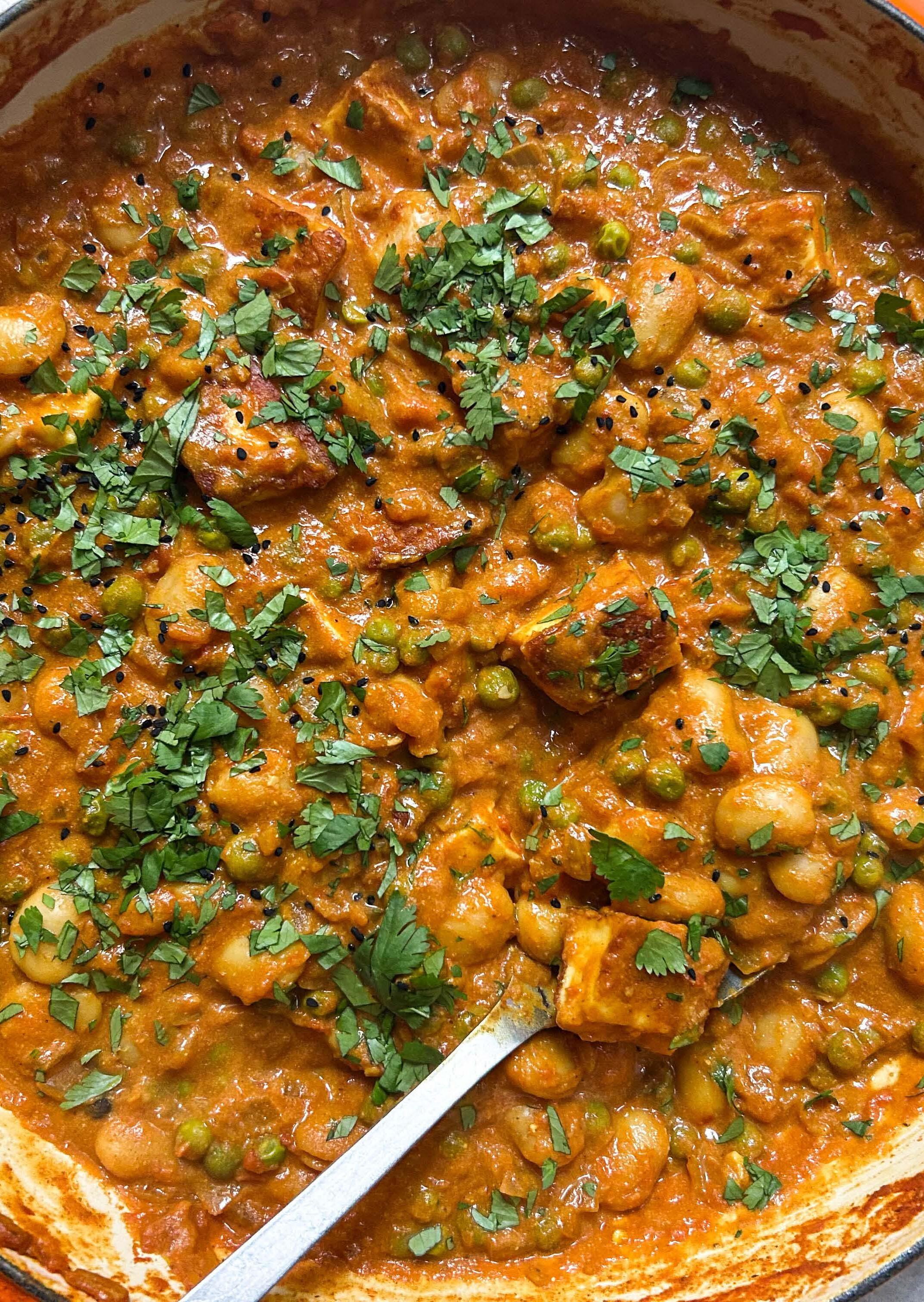
“A gentle, frangrant curry that delivers maximum comfort with minimal effort. Golden halloumi cubes add irresistible salty-chewy bites alongside the creamy butter beans, and a swirl of yogurt and mango chutney brings everything together with sweetness and tang.”
Prep time: 5 minutes
Cook time: 15 minutes
Serves: 10 prep school | 7 senior school
Method:
Total time: 20 minutes
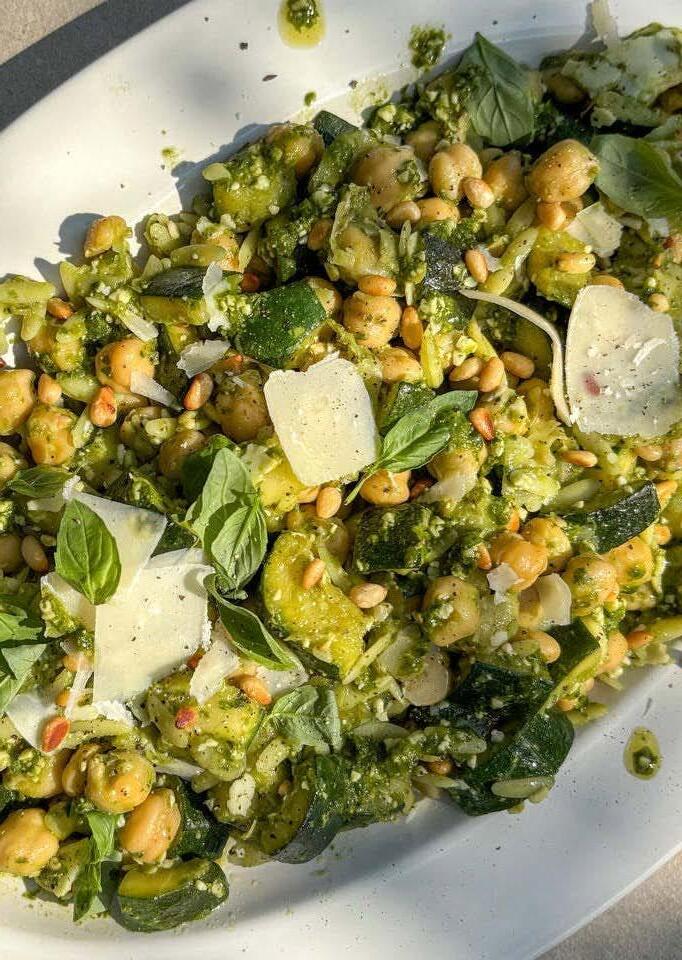
Ingredients:
• 1 x 570g jar Bold Bean Co Queen Chickpeas, drained
• 400g dried orzo
• 4 tbsp olive oil
• 4 heaped tbsp pesto
• 3 large courgettes, cubed into bite sizes
• 1 lemon, halved
• basil leaves & toasted pine nuts for garnish
• 40g parmesan, shaved
For the pesto:
• 15g fresh basil
• 25g toasted pine nuts
• 1 large garlic clove
• 25g parmesan cheese
• 4-5 tbsp olive oil
Please always check labels and packets for allergens
1. Cook the orzo in a pan of boiling, salted water until al dente, around 8-10 minutes. Drain the orzo into a sieve and refresh under cold running water, then shake off the excess water. Drizzle a little extra virgin olive oil to prevent it sticking together.
2. Heat the olive oil in a medium sized frying pan over a medium heat. Once hot, add the courgettes with a pinch of salt and fry until soft and slightly golden on the edges, about 7-8 minutes.
3. If you’re making the pesto from scratch, add all of the ingredients to a blender or food processor and blitz until smooth. Season to taste.
4. To a mixing bowl, add the drained orzo, drained chickpeas, courgettes, pesto, juice of half a lemon and a good crack of black pepper and stir gently until well combined. Check for seasoning and add more lemon juice or pesto to your taste.
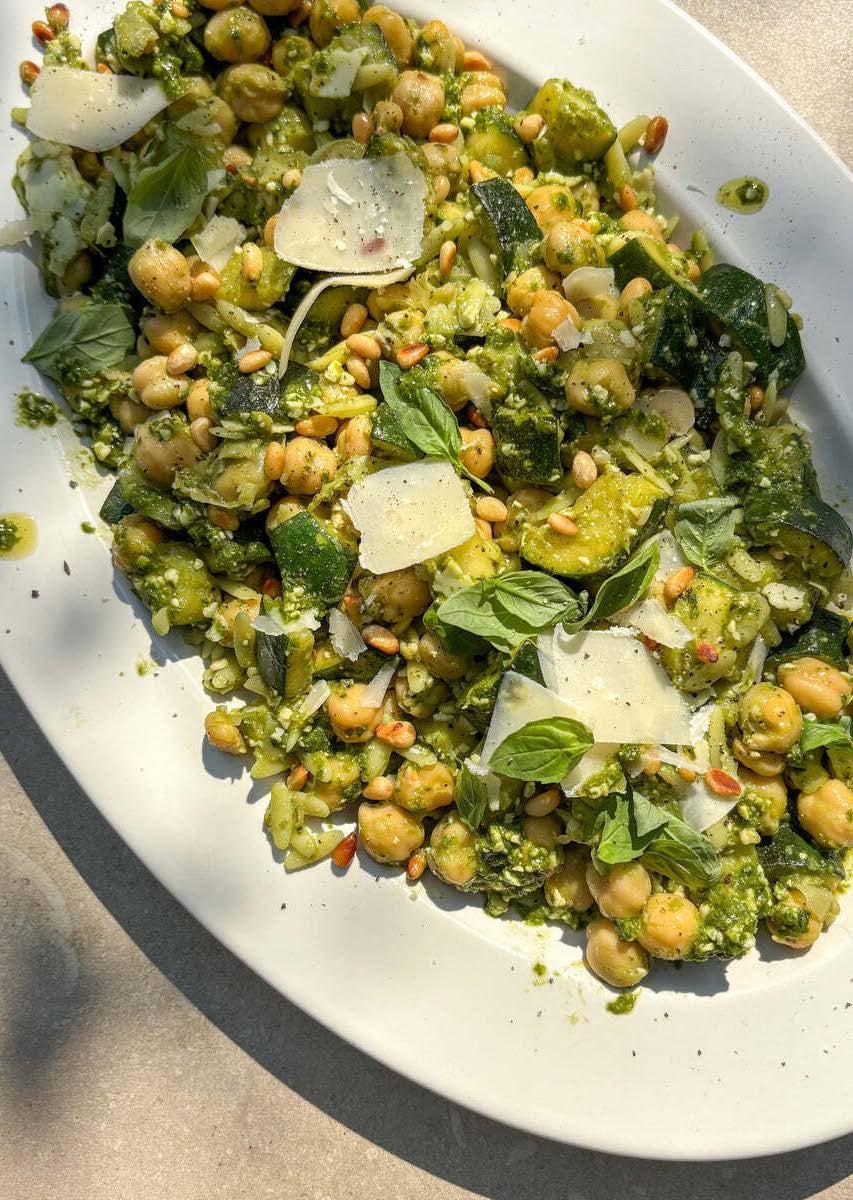
5. Serve into bowls, top with toasted pine nuts, a few shavings of parmesan and fresh basil leaves. Serve alongside some fresh, crunchy rocket, and top with burrata or feta too, if you like. Keeps in the fridge for up to 3 days.
Tess Warnes, Registered Dietitian, Head of Nutrition & Sustainability allmanhall
Tess Warnes, Registered Dietitian:
“Pasta salads are always a winner, but Queen Chickpeas make them even better. Creamy, nutty and wonderfully plump, they add flavour, texture and a satisfying bite. Perfect for a quick lunch or easy meal prep.”