Bird tickets are available until 31 May 2026.



Bird tickets are available until 31 May 2026.
Yikes!! 2026 Q1 is all but over! Time is flying by…
We are excited and in the mad planning phase for this year’s gala – picking photographers, picking colours, picking styles and all the fun bits!!
This magazine edition though is all about COURAGE, CURIOSITY & CONFIDENCE. Something we as health professionals could all use a little more of don’t you think?!
• Curiosity to have a look, give things a go, throw your hat in the ring
• Courage to step out of your comfort zone, to step into the lime light
• Confidence to reflect on what you and your team are doing - what’s working? Why?
• Confidence to own that and share that with your allied health community for the greater impact…
This is where the power is.
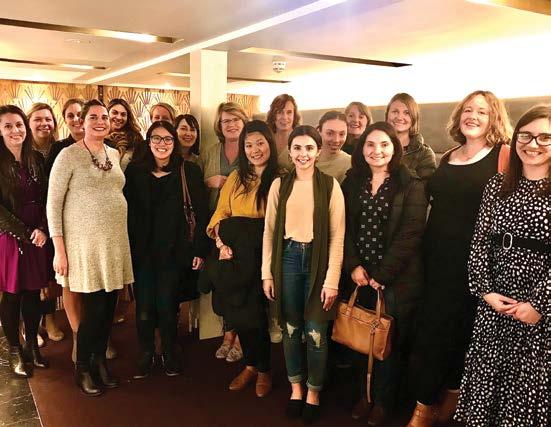
In our last mag, we heard some of the voices from around the country who have attended our Networking Events… now we will hear some tips, tricks and lessons from previous winners, from the selection panel and WHY getting the courage to join in and get nominating MATTERS
Together we can do more and certainly have more FUN!!!
See you soon,
Sarena Founder – Allied Health Awards

Each year, nominations for the Australian Allied Health Awards arrive from teams working in clinics, hospitals, private practices and community services across Australia.
Some represent large multidisciplinary services supporting complex patient needs. Others come from small teams making a meaningful difference within a single community. The settings vary widely, and so do the stories behind them.
Once judging begins, something interesting happens. After reading enough nominations, certain patterns start to emerge. The entries that stay with judges are rarely the longest or the most elaborate. More often, they are the ones that make it easy to understand how a team works together and what changed because of that collaboration.
Sometimes, the difference comes down to just a few lines.
Many nominations begin by introducing the team, which makes perfect sense. But what judges are really looking for is how that team actually works together in practice.
For example, it’s quite common to read something like:
“Our team includes physiotherapists, occupational therapists and speech pathologists who work together to support patients.”
There’s nothing wrong with that description. It simply doesn’t tell the full story yet.
Now compare that with something slightly more specific:
“Our physiotherapist and occupational therapist began co-planning rehabilitation sessions so patients could move directly from mobility training into daily living exercises during the same visit.”
Suddenly you can picture the collaboration. You can see professionals thinking together, not simply working alongside each other.
And that small shift makes a nomination far more memorable.
“The nominations that stay with judges aren’t always the longest ones. They’re the ones that make collaboration easy to see.”
Another pattern judges often notice is the difference between broad statements and clear examples of impact.
Teams understandably want to highlight the positive outcomes of their work. But the nominations that stand out tend to show the result rather than simply stating it.
For instance, a nomination might say:
“Our service significantly improved patient access.”
Which is encouraging to read, but it leaves judges wondering what actually changed.
A more detailed line might look like this:
“Within six months of introducing the new referral pathway, wait times for paediatric speech assessments reduced from 14 weeks to five.”
It doesn’t need to be complicated. Often, one clear example is enough to help judges understand the scale of a team’s contribution.
Another thing that becomes apparent during judging is how easy it can be for a nomination to shift toward highlighting one individual. Strong teams almost always have strong leaders, mentors and innovators within them. But the nominations that resonate most tend to keep returning to the collective effort.
Instead of focusing on a single person driving change, these entries reveal how professionals supported one another, shared ideas and built improvements together. That sense of shared ownership is often what defines an exceptional team.
By the time judging concludes, the nominations that remain vivid are usually the ones that told a clear and honest story. They show how a team recognised a challenge, approached it together and created something better for the people they serve.
Often, these stories are not dramatic or grand. They are thoughtful examples of professionals combining their expertise to improve care in practical ways. And in allied health, that spirit of collaboration is often where the most meaningful progress begins.
If your team is preparing a nomination, it can help to step back and look at the bigger picture.
Ask three simple questions:
• What challenge brought the team together?
• What did the team try or change?
• What improved because of that work?
When those answers are clear, the story of the team usually becomes clear as well.

ADELAIDE 27 JUNE 2025
PERTH 14 AUGUST 2025
SYDNEY 17 OCTOBER 2025
MELBOURNE 13 NOVEMBER 2025
BRISBANE 13 FEBRUARY 2026
PERTH 23 APRIL 2026
MELBOURNE 17 JULY 2026 Where will we head next? Stay
Each year, the Australian Allied Health Awards receives nominations from across the country. These submissions highlight clinicians, leaders, researchers and teams who are making a real difference in the allied health profession and in the lives of the communities they serve.
Behind every finalist announcement is a thoughtful and structured judging process designed to recognise genuine impact while maintaining fairness, credibility and professional integrity. Here are five things to know about how nominations are assessed.
When nominations close, submissions are allocated to members of the judging panel and reviewed independently. Each judge takes the time to read the nomination in full and consider the information provided in the application.
Judges look closely at the nominee’s achievements, their professional journey and the outcomes of their work. The goal is to understand not only what has been accomplished, but also the broader difference the nominee has made to their clients, workplace or community.
The judging process focuses on meaningful contributions rather than seniority or years of experience. A strong nomination demonstrates how an individual or team has made a measurable difference within the profession.
Judges consider examples of leadership, collaboration, innovation and the ways in which the nominee has contributed to improving outcomes for patients, colleagues or the wider allied health community.
The judging panel brings together professionals from across the allied health sector. This may include clinicians, educators, researchers, leaders within the profession and previous award winners.
Because of this breadth of experience, nominations are assessed by individuals who understand the realities of allied health practice in Australia and the dedication required to deliver high quality care.
Protecting the credibility of the awards is a central part of the process. Judges must declare any potential conflicts of interest before reviewing nominations. If a conflict exists, the nomination is reassigned to another member of the panel to ensure the evaluation remains impartial.
Nominees must also meet professional eligibility requirements, including actively practising within their field and, where applicable, being registered with the Australian Health Practitioner Regulation Agency or their relevant professional body.
After nominations have been assessed, scores from the judging panel are compiled and reviewed. The highest scoring nominations in each category are then selected as finalists. From there, finalists are announced and celebrated across the Allied Health Awards community, with winners revealed at the annual gala.
While the judging process is structured and rigorous, the heart of the awards has always been about people. Every nomination represents a story of dedication, care and impact. The judging process simply helps bring those stories forward so the wider allied health community can celebrate the individuals and teams shaping the future of the profession.



The quiet dialogue many allied health professionals have before putting themselves forward

It usually starts with a simple thought.
“Should I nominate?”
Then another voice appears almost immediately.
“Maybe
someone else deserves it more.”
Allied health is a profession built on quiet impact. Across Australia, clinicians and practitioners are improving services, mentoring colleagues and introducing new ways of supporting patients and communities. Much of this work happens behind the scenes, rarely attracting attention beyond the people it directly helps.
But when nominations for the Australian Allied Health Awards begin to come in each year, those stories start to surface and reveal the remarkable work happening across the sector.
“I’m
just doing my job.”
It is one of the most common responses you will hear when allied health professionals are asked about their achievements.
For many, the work simply feels like part of the role. Supporting patients, mentoring colleagues, strengthening services and improving access to care often become woven into the rhythm of everyday practice.
“Often the professionals making the biggest difference are the least likely to put themselves forward.”
But viewed more broadly, those everyday actions are often shaping something much bigger.
• They represent leadership.
• They represent innovation.
• They represent a profession constantly evolving to better serve patients and communities.
What feels routine within one clinic can represent meaningful progress across the wider allied health sector.
“Maybe my work isn’t that significant”
This is where the confidence conversation often gets stuck. Because when professionals look at their own work, they see the effort, the challenges and the long hours. What they do not always see is the impact.
Yet when nominations are reviewed each year, the judging panel sees something remarkable. They see clinicians introducing new approaches to care that improve patient outcomes. They see leaders building stronger teams and workplace cultures. They see professionals whose dedication has strengthened services within their communities. Many of those stories almost went untold.

Shortcut to the Nominations
“I nearly didn’t nominate”
It is a reflection shared by many past finalists and winners. Some were encouraged by colleagues. Others were nominated by team members who recognised their impact. Occasionally it simply took someone asking a straightforward question.
That small moment of encouragement often allows an important story to be shared.
For many professionals, the shift happens during a quiet moment of reflection.
• A moment to think about the patients they have supported.
• The services they have improved.
• The teams they have strengthened.
• The communities they have helped along the way.
Every nomination tells a story. Some highlight innovation, others leadership, collaboration or dedication to care. And sometimes the most important step in sharing that story begins with answering a simple question.
Recognition does more than celebrate individual achievements. It strengthens the profession as a whole. By highlighting the work happening across allied health, awards help share new ideas, spotlight innovation and inspire others across the sector. They also bring visibility to the professionals improving patient outcomes and supporting communities every day. In doing so, they help ensure the role of allied health continues to be recognised within the broader healthcare system.

Sometimes recognition begins with a simple question:
Why backing yourself might be the best thing you do this year
Here is a quick experiment… Ask an allied health professional to nominate a colleague for an award and they will immediately start listing all the reasons that person deserves it. Ask them to nominate themselves and suddenly things become much more complicated. Across clinics, hospitals, private practices and community services around Australia, allied health professionals are doing incredible work every day. Yet many of them would never think to put themselves forward for recognition. That is exactly why self nominations are welcomed at the Australian Allied Health Awards.
In fact, many of the inspiring finalists and winners recognised each year began their journey by doing exactly that. They simply decided to put their name forward.
Nominations for the awards can come from many places. Colleagues, managers, mentors, clients and professional peers are all welcome to recognise someone whose work deserves to be celebrated. And yes, you can absolutely nominate yourself.
Self nomination plays an important role in the awards process because the reality is that allied health professionals are busy. Between patient care, documentation, team meetings and the countless tasks that fill a typical day, many people simply do not get around to nominating others.
By allowing self nominations, the awards ensure that important stories of dedication, innovation and leadership still have the opportunity to be shared.

The Allied Health Awards were created to celebrate the meaningful impact allied health professionals have on patients, families and communities across Australia.
Often, the professionals making the greatest difference are also the least likely to talk about their own achievements. Self nomination gives those individuals the opportunity to step back and reflect on the work they have done and the difference it has made.
Many past finalists and winners nominated themselves. What mattered most was never who submitted the nomination, but the strength of the story behind it and the impact of the work being recognised. Sometimes the hardest part is simply taking that first step.
Writing about your own achievements can feel a little uncomfortable at first. Most people are not used to putting their accomplishments into words.
A helpful way to approach the nomination is to focus less on yourself and more on the outcomes of your work. Think about the changes you have helped create, the people you have supported and the improvements you have introduced within your workplace or community.
Judges are looking for genuine examples of leadership, innovation, collaboration and commitment to improving care. You do not need to list every achievement or milestone. Instead, focus on a few meaningful examples that show the real difference your work has made. Often the strongest nominations are the ones that clearly tell the story of impact.
If you are not quite sure where to begin, start with a few simple questions that can help guide your thinking:
• What impact has my work had on patients or communities?
• What innovation or leadership have I demonstrated in my role?
• What makes my contribution unique within my workplace or profession?
Taking a few moments to reflect on these questions can often reveal the stories and achievements that deserve to be shared.
Allied health professionals spend their careers focused on helping others grow, recover and thrive. Taking a moment to recognise your own contribution can feel unfamiliar, but it is an important part of celebrating the profession as a whole.
Every nomination tells a story of dedication, care and impact. And sometimes the most important step in sharing that story is simply deciding to back yourself.

Strong allied health teams rarely happen by accident. Behind every successful service or program is a group of professionals working together with trust, shared purpose, and a commitment to continuous improvement.
Across the years, the Australian Allied Health Awards have recognised teams who have demonstrated exactly that, teams who have strengthened patient care, built supportive workplace cultures, and shown what effective collaboration can achieve.
While every workplace is different, many of these award-winning teams share similar approaches to leadership, communication, and professional growth. Their experiences offer valuable insights for others working across the allied health sector.
We asked several past team award winners to share their reflections on building strong teams, supporting colleagues, and creating environments where professionals (and patients) can thrive.

YEAR AND AWARD CATEGORY YOU WON
2020 Allied Health Paediatric Team Excellence Award.
TELL US A LITTLE ABOUT YOUR TEAM AND THE WORK YOU DO.
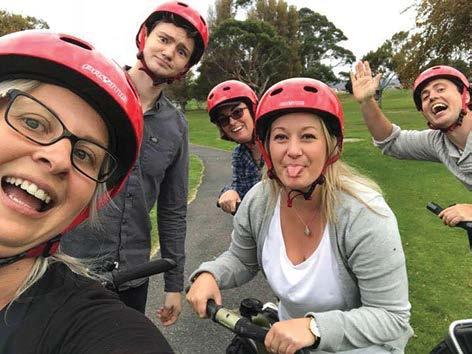
Our team is based in rural regional Tasmania, in an area with the highest levels of unemployment, lowest education rates and highest suicide rates, we are passionate about making sure we turn these statistics around. We aspire to help each child and family that have contact with us to reach their potential, building relationships with them in a family like environment, and working together with our local partners (schools and other community services) to work out a plan for each child and family.
As a team, we work together in our town of Latrobe, one of the fastest growing areas in our country. We reach families and children in over 15,000km2 of our region, and support each other to make a huge difference. Our team is like family, multidisciplinary experts in mental health, allied health professionals supporting each other to help others.
We work with individual children, with parents, with families, and with our community, and more recently with other professionals to support trauma informed education, health and wellbeing. Providing training, supervision and support for early career professionals, and working with general practitioners, paediatricians and health services to use our developmental expertise across the lifespan and our collective knowledge of mental health and wellbeing, to build individualised programmes and services to improve each individual and family’s mental health.
WHAT DO YOU THINK MADE YOUR TEAM STAND OUT IN THE AWARDS?
IN YOUR VIEW, WHAT FACTORS CONTRIBUTED TO YOUR TEAM WINNING THE AWARD?
Our innovative approaches to mental health and wellbeing, in an area of extremely high need, and with significant challenges due to our remote and sparse services.
Along with our unique environment, where our practice is like a home, and encourages ALL people
from all walks of life in our rural community, where we prioritise our most vulnerable people and families with innovative models of funding, and high-quality care.
We don’t just prioritise our clients, we prioritise our team – and our culture is second to none, both as a physical environment, but also with the support, social and professional, and training and ongoing relationships, with over 30% of our team having spent 10 years in our ‘psych caffe family’ environment.
IN YOUR EXPERIENCE, WHAT MAKES A STRONG ALLIED HEALTH TEAM?
Connected, supported, engaged, and innovative approaches to teams that all feel a part of something and have a shared and united approach to excellence in what they do.
HOW DO YOU BUILD CONFIDENCE AND GROWTH WITHIN YOUR TEAM MEMBERS?
We work hard to attract the right people with a mindset that matches our team. From day one, we work on not just skills, but culture, and continue that from student placements, and onboarding of new teams, to weekly consultations, individual supervision and in-house training and support.
Lunch is a connection point in our shared office spaces, where we all close from 12-1pm and engage as human beings, not just professionals. Embedded over time, we include weekly peer consultations, and opportunities to connect at bimonthly meetings, and team days that we hold that include training and information but always end with fun activities. This builds trust, openness and communication over time.
WHAT ROLE DOES COLLABORATION PLAY IN THE WAY YOUR TEAM WORKS?
Collaboration is everything. From the top to the bottom of the team and back up, our team consists of 28 individuals, and a therapy dog or two, and includes collaboration with our clients, who are regularly invited to contribute, and we listen, adapting ideas, holding community events, and advocating for our local community needs.
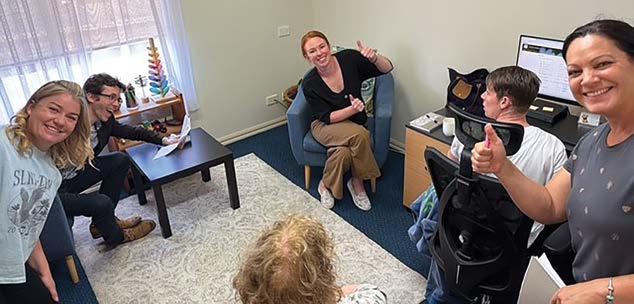
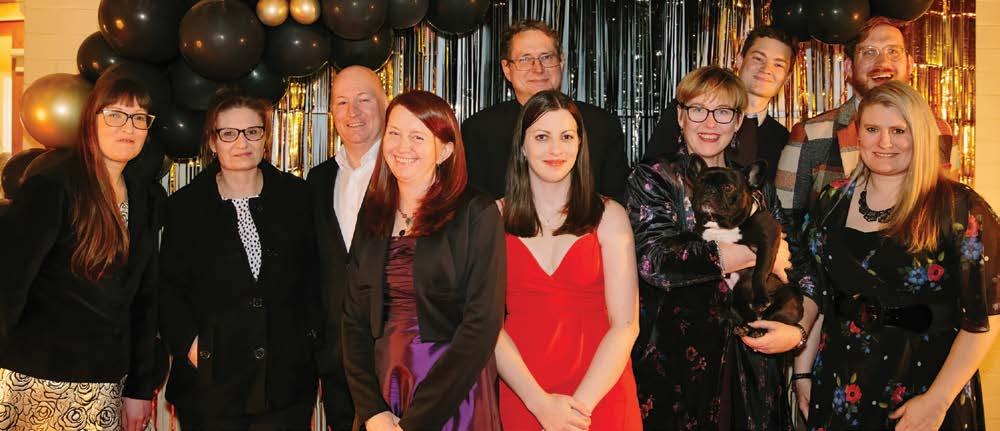
Collaboration extends beyond our team, and our clients, into our community of shared professional expertise, where we provide supervision and support to our health and education colleagues, and our first responders – both formally and informally, and recovery and response when our communities are impacted by traumatic events, drawing together our collective knowledge of what works.
HOW WOULD YOU DESCRIBE THE CULTURE WITHIN YOUR TEAM?
Simply outstanding. We really are like a big family. Many of us have worked together for over a decade, (some even longer!) and many have returned to us after trying out other workspaces, and spreading their wings, and others seek us out from interstate for placements, and many stay in contact after they have left and drop in – that says a lot.
WHAT’S SOMETHING PEOPLE MIGHT BE SURPRISED TO LEARN ABOUT YOUR TEAM?
Many of us are aspiring gardeners, we all LOVE animals, and spend a lot of time bushwalking, hiking and camping, surfing and swimming – even in Tasmania!
WHAT LEADERSHIP PRACTICES HAVE HELPED YOUR TEAM SUCCEED?
Lead from behind, identify the “one thing” that will make the biggest difference, hire the person and then the profession.
HOW DO YOU SUPPORT COMMUNICATION AND COLLABORATION ACROSS DIFFERENT DISCIPLINES?
A ‘flat structure’ in terms of allied health professionals that are credentialed and members of their respective professions, then, value and respect their unique contribution – as we all complement each other – there is no competition – only too much demand! So let’s work together to effectively listen and learn. Weekly multidisciplinary consultations and peer learning at our inhouse training all develop communication and collaboration across professionals.
THE TEAM COFFEE ORDER IS USUALLY…
Almond Latte, Flat White, Long Black, Short Black, Chai Latte, and a Hot Chocolate!
IF YOUR TEAM HAD A THEME SONG, WHAT WOULD IT BE?
Don’t Stop Believin’ – Journey
IF YOUR TEAM WERE A MOVIE GENRE, IT WOULD BE…
A bit of everything, really!
IF YOUR TEAM HAD AN EMERGENCY BUTTON, IT WOULD BE LABELLED…
You have GOT this!
IS THERE ANYTHING ELSE YOU WOULD LIKE TO SHARE ABOUT YOUR TEAM’S JOURNEY?
We have had the most amazing five years – so much has happened, and we have had no time to apply for awards again – but WOW do we love working together and we have been through so much, births, deaths, marriages and more. It must be time for some more celebration of what we do, as it has been 15 years this June. What a ride!
YEAR AND AWARD CATEGORY YOU WON 2023 Allied Health Innovative Product Excellence Award
TELL US A LITTLE ABOUT YOUR TEAM AND THE WORK YOU DO.
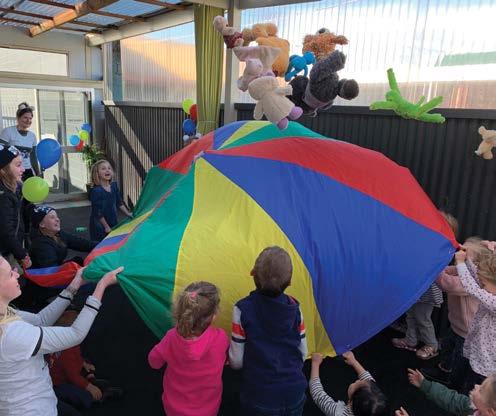
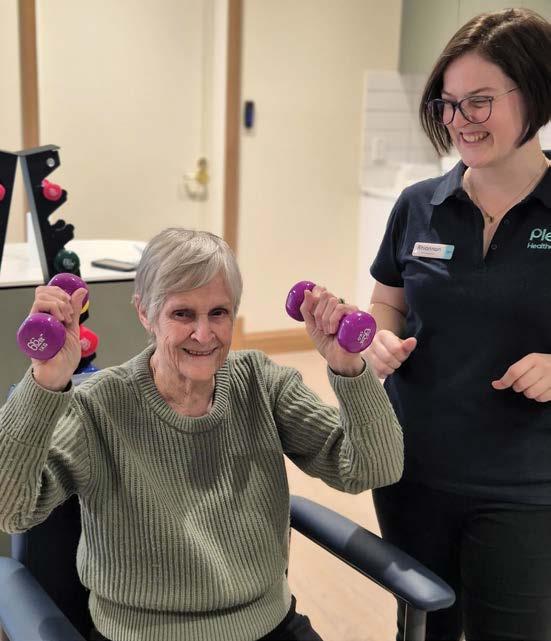
We have an amazing team of Physiotherapists, Occupational Therapists, Speech Pathologists, Dietitians, Podiatrists and Allied Health Assistants who do wonderful work every day in the aged care sector. We primarily deliver therapy services to older Australians in their homes and in residential care, co-designing care aligned to client goals and striving to make a real difference in the sector.
WHAT DO YOU THINK MADE YOUR TEAM STAND OUT IN THE AWARDS?
IN YOUR VIEW, WHAT FACTORS CONTRIBUTED TO YOUR TEAM WINNING THE AWARD?
The Plena Healthcare team are particularly outstanding because of our ability to collaborate with our industry partners to design leading models of care. In 2022, our team designed, tested and implemented Australia’s most impactful model of care – The Plena Care Pathway – in response to the funding model change in residential aged care. We advocated for Allied Health to remain central to the model of care in aged care, and we ensured the industry understood the importance of the role of Allied Health in preventative and restorative care outcomes. We stood out because we were bold, courageous and innovative in our mission to ensure older Australians receive outstanding healthcare services.
IN YOUR EXPERIENCE, WHAT MAKES A STRONG ALLIED HEALTH TEAM?
Trust, agility and a solution-focused mindset.
HOW DO YOU BUILD CONFIDENCE AND GROWTH WITHIN YOUR TEAM MEMBERS?
We are strong believers in empowering our team to spread their wings. All Allied Health Professionals have an incredible ability to touch the lives of their clients. We embrace their talents and encourage our team to advocate for themselves and their profession to spread positive change.
WHAT ROLE DOES COLLABORATION PLAY IN THE WAY YOUR TEAM WORKS?
Our service delivery model is largely mobile, yet our teams collaborate, share and support to no end. It’s credit to our team - we make meaningful connections with our colleagues and with our clients, collaborating honestly to ensure we are aligned in our purpose. We’re very proud of the culture we have created within our team, and we see that shine through every day.
HOW WOULD YOU DESCRIBE THE CULTURE WITHIN YOUR TEAM?
Our culture, like many allied health teams, is outstanding. The desire to help one another, to support our clients, to be honest and direct when we need to be, has fostered a terrific, high performing, but ultimately, safe and fun environment. The way our team look out for one another is outstanding –something we’re very proud of.
WHAT’S SOMETHING PEOPLE MIGHT BE SURPRISED TO LEARN ABOUT YOUR TEAM?
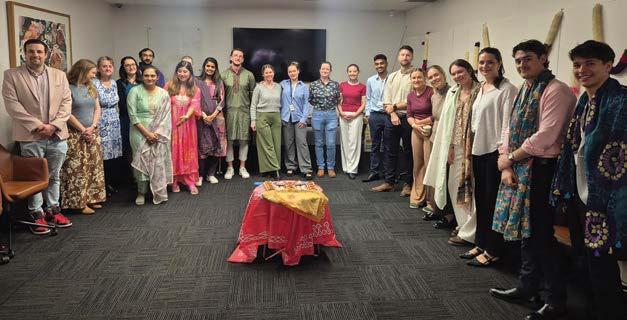
Our team have the opportunity to partner with Plena to give back to our clients. We have so many incredible stories of bringing smiles to the faces of older Australians. In one example, our team had learned one of our residents was a talented artist, however, did not have access to their usual tools and supplies. Our team member went out of their way to track down those supplies and this resident now practices their art every day. We always look for ways to make someone’s day – big or small.

WHAT LEADERSHIP PRACTICES HAVE HELPED YOUR TEAM SUCCEED?
We always try to put on the hat of the key stakeholders we are constantly interacting with or influencing within the industry. Whether that’s the clients we serve or their families, our contracted partners, our allied health allies or the governing bodies. We challenge ourselves to be holistic in our strategic approach and we play that role every day.
HOW DO YOU SUPPORT COMMUNICATION AND COLLABORATION ACROSS DIFFERENT DISCIPLINES?
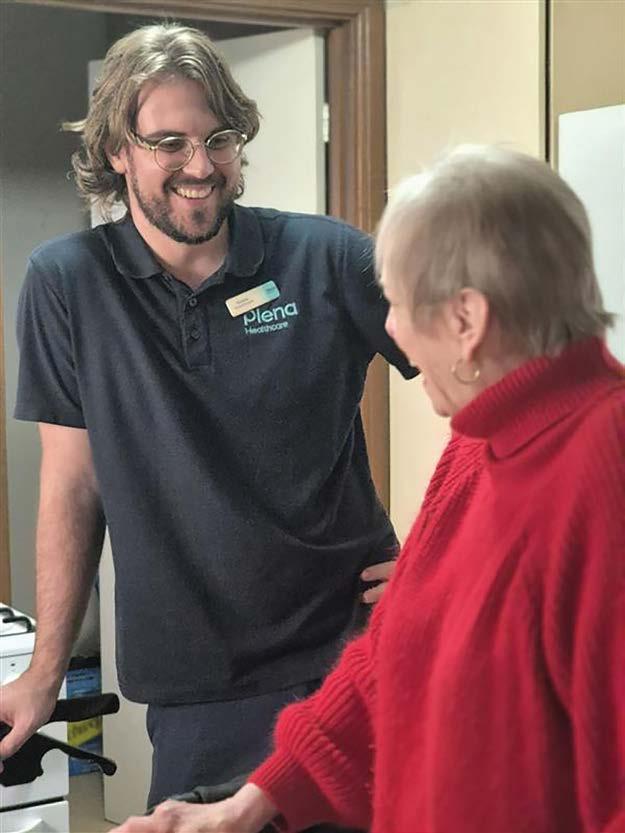
We are grateful to house Australia’s largest multidisciplinary mobile allied health team – it’s what we do. Every day, we interact, collaborate and plan our services together.



THE TEAM COFFEE ORDER IS USUALLY…
Someone always says “just tea for me thanks”
IF YOUR TEAM HAD A THEME SONG, WHAT WOULD IT BE?
You Can Call Me Al(llied Health) – Paul Simon
IF YOUR TEAM WERE A MOVIE GENRE, IT WOULD BE…
Feel-good comedy
IF YOUR TEAM HAD AN EMERGENCY BUTTON, IT WOULD BE LABELLED…
Push Don’t Pull

YEAR AND AWARD CATEGORY YOU WON 2023 Allied Health Paediatric Team Excellence Award
TELL US A LITTLE ABOUT YOUR TEAM AND THE WORK YOU DO.
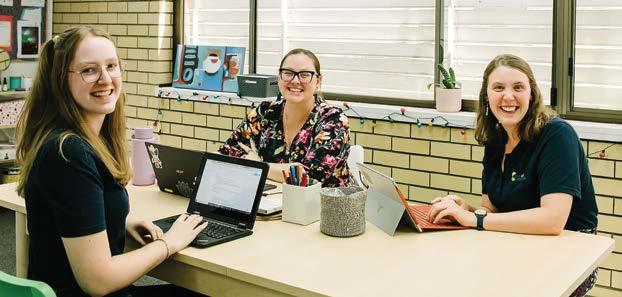
Cooee is a paediatric multidisciplinary practice offering exceptional clinic based services in Brisbane. Our team and business is focused on excellence, and has 15 years experience delivering quality services to families, alongside training and mentoring clinicians.
WHAT DO YOU THINK MADE YOUR TEAM STAND OUT IN THE AWARDS?
IN YOUR VIEW, WHAT FACTORS CONTRIBUTED TO YOUR TEAM WINNING THE AWARD?
Two things have stood out over time at Cooee, both our intentionality – we are deliberate in our planning and design of services, and secondly the structure of the processes that build a foundation for excellence in our approach.
IN YOUR EXPERIENCE, WHAT MAKES A STRONG ALLIED HEALTH TEAM?
Willingness of the team members involved to grow, stretch themselves and pursue innovation and change – both personally and professionally.
HOW DO YOU BUILD CONFIDENCE AND GROWTH WITHIN YOUR TEAM MEMBERS?
At Cooee we embed an approach for personal growth into our whole philosophy, so from recruitment, training and through to development of team pathways and progression – the understanding of the synergy between the individual and the organisation, and how each shape the other towards goals is emphasised.
WHAT ROLE DOES COLLABORATION PLAY IN THE WAY YOUR TEAM WORKS?
Its core to high quality service provision, we have no desire to work in isolation. The team at Cooee are there because we love working together, working within our local community and supporting our industry (and emerging clincians) – so collaboration includes families, stakeholders, alongside universities and students.
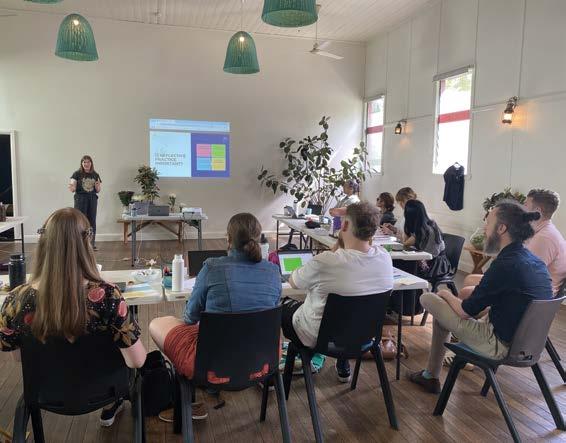
HOW WOULD YOU DESCRIBE THE CULTURE WITHIN YOUR TEAM?
It’s growth-focused, warm and collaborative but with an intention to grow, challenge and adopt change.
WHAT LEADERSHIP PRACTICES HAVE HELPED YOUR TEAM SUCCEED?
We’ve embedded principles of Integral Theory into our leadership principles and approach over the last 7 years – which quite naturally builds a more holistic approach to bringing about change and leading the way for the team.
HOW DO YOU SUPPORT COMMUNICATION AND COLLABORATION ACROSS DIFFERENT DISCIPLINES?
We build the system or processes as the foundation, and upskill the team to understand why they’re important, and work 1:1 and in whole team training to build the skills to execute the specific actions involved.
THE TEAM COFFEE ORDER IS USUALLY… We like to challenge the coffee shop with about 20 different individual requests!
notjustbendy.com
YEAR AND AWARD CATEGORY YOU WON
2024 Allied Health Adult Team Excellence Award
TELL US A LITTLE ABOUT YOUR TEAM AND THE WORK YOU DO.
Our team at Not Just Bendy is a physiotherapy team focused on working with people who have hypermobility such as Hypermobility Spectrum Disorder and Hypermobile-Ehlers Danlos Syndrome. A lot of our clients have had long healthcare journeys and often come to us feeling frustrated or unsure what to do next, so a big part of our role is helping them make sense of what’s going on and giving them a clear way forward.
We combine hands-on treatment, exercise, and education, but what really matters to us is that care feels tailored and realistic for each person. As a team, we’re always refining how we work and learning from each other, with a shared goal of helping our clients feel more confident in their bodies and more in control of their symptoms.
WHAT DO YOU THINK MADE YOUR TEAM STAND OUT IN THE AWARDS?
IN YOUR VIEW, WHAT FACTORS CONTRIBUTED TO YOUR TEAM WINNING THE AWARD?
I think what stood out is that our culture is very intentional and strongly grounded in a shared vision, “Empowering Hypermobile Lives Through Transformative Care. ” That is not just a statement for us; it genuinely guides how we work day to day. There is a real sense across the team that we are here to make a difference for a population that has not always been well supported, and that creates strong alignment and purpose.
A big part of that is that many of our team have a personal connection to this work, whether through lived experience or a deep understanding of the challenges our clients face. That creates a level of empathy and commitment that you can feel within the team. Combined with a culture where people support each other, share knowledge, and want to keep improving, it means everyone is pulling in the same direction, and I think that is ultimately what set us apart.
IN YOUR EXPERIENCE, WHAT MAKES A STRONG ALLIED HEALTH TEAM?
A strong allied health team is built on trust, clarity, and a shared purpose. People need to feel safe to ask questions, challenge ideas, and admit when they are unsure, especially when working with complex clients.
HOW DO YOU BUILD CONFIDENCE AND GROWTH WITHIN YOUR TEAM MEMBERS?
We try to create a really open environment, where people feel comfortable asking questions and learning from each other. We encourage all team members to be involved in supporting and training newer clinicians, which helps build both confidence and a strong sense of team connection. Our one-on-one sessions include client discussions and technique development, but also focus on personal mentoring. We spend time exploring things like values, boundaries, and how clinicians want to show up in their work, because that plays a big role in building sustainable confidence and long-term growth.
WHAT ROLE DOES COLLABORATION PLAY IN THE WAY YOUR TEAM WORKS?
Within our team, collaboration is a key part of how we manage clinical complexity. We regularly discuss cases, share ideas, and support each other in decision-making, which helps build confidence and ensures consistency in care. It creates an environment where clinicians are not working in isolation, but instead feel part of a team that is collectively responsible for outcomes.
Externally, collaboration is just as important. Because we have chosen to focus deeply on a specific client group within physiotherapy, we work closely with a broader multidisciplinary network outside our practice. This allows us to draw on the expertise of other professionals when needed and ensure our clients receive well-rounded, coordinated care that goes beyond what we can provide alone.
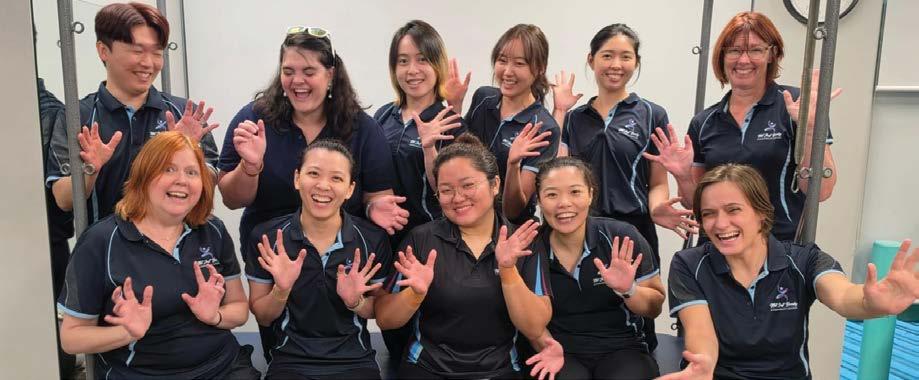
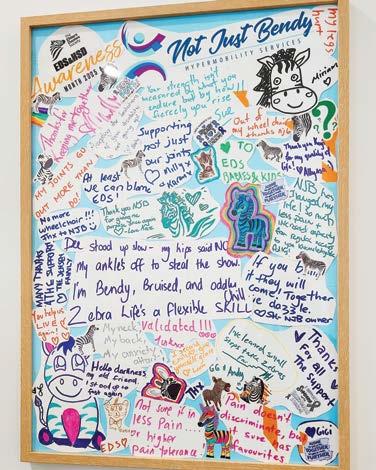
HOW WOULD YOU DESCRIBE THE CULTURE WITHIN YOUR TEAM?
Our culture is supportive, accountable, and purpose-driven. People feel comfortable speaking up and asking for help, but there is also a clear expectation around clinical standards and growth. It is a team that genuinely wants to do good work and support each other in doing it.
WHAT’S SOMETHING PEOPLE MIGHT BE SURPRISED TO LEARN ABOUT YOUR TEAM?
Probably some of the small things that reflect our culture day to day. We have a fridge covered in magnets from team members’ interstate and overseas holidays, and a “fur baby” wall in the staffroom, which says a lot about how connected people feel to the space and each other. We have also learnt that while we pride ourselves on clinical skills, our drawing skills during things like Pictionary team challenges are not quite as strong. It is probably a good thing we no longer rely on stick figures for home exercise programs.
WHAT LEADERSHIP PRACTICES HAVE HELPED YOUR TEAM SUCCEED?
It has been a bit of a wild ride over the past six years, and I have always tried to be a “what you see is what you get” type of leader. Being genuine, showing up consistently, and not trying to be something you are not has been really important in building trust within the team.
It is a mix of striving to lead within the industry, while also bringing humour and vulnerability into the workplace. Having a strong management team around me has also been key, both to support our staff and to provide balance and perspective. That combination has helped create a culture that feels both grounded and sustainable.
HOW DO YOU SUPPORT COMMUNICATION AND COLLABORATION ACROSS DIFFERENT DISCIPLINES?
We support communication and collaboration by building strong relationships with our external network, maintaining clear referral pathways, and keeping the focus on shared goals to achieve the best outcomes for our clients.
THE TEAM COFFEE ORDER IS USUALLY…
Electrolytes
IF YOUR TEAM HAD A THEME SONG, WHAT WOULD IT BE?
Don’t Stop Believin’ – Journey
IF YOUR TEAM WERE A MOVIE GENRE, IT WOULD BE…
A bit of everything, really!
IF YOUR TEAM HAD AN EMERGENCY BUTTON, IT WOULD BE LABELLED…
Sugar, salt and strapping tape
IS THERE ANYTHING ELSE YOU WOULD LIKE TO SHARE ABOUT YOUR TEAM’S JOURNEY?
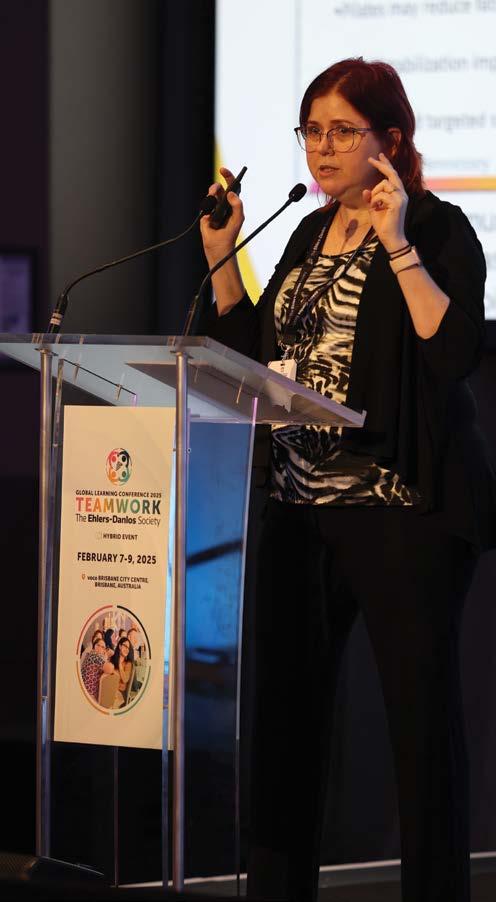
We are excited about our clinician training division called “The Hypermobility Project.”
Check it out hypermobilityproject.com
3 reasons collaboration deserves to be recognised
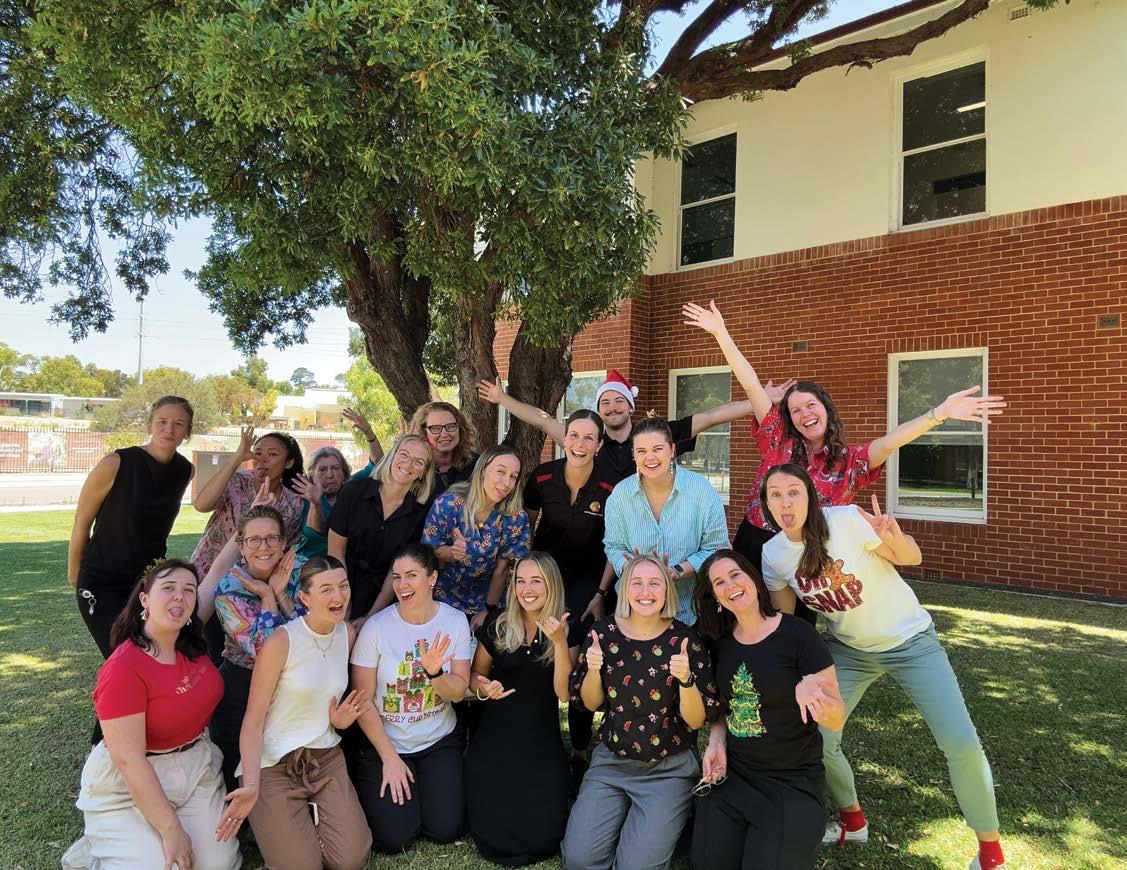
Allied health has never been a solo profession. Behind many of the sector’s most meaningful achievements are professionals working together across disciplines.
A physiotherapist collaborating with an occupational therapist. A speech pathologist coordinating with psychologists and educators. A multidisciplinary team supporting a patient whose needs cross several areas of care. While individual clinicians play important roles, progress in allied health often happens through collaboration. Recognising teams highlights something fundamental about the profession: better outcomes are often the result of people working together.

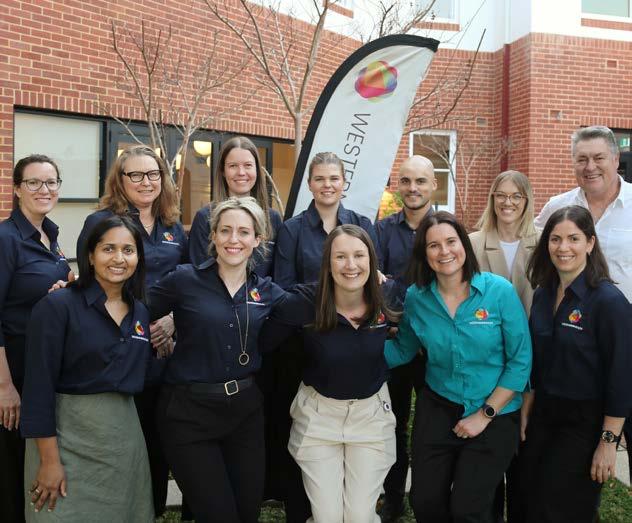
Patients rarely experience healthcare through a single professional. Their needs often involve physical, psychological and social dimensions that require different areas of expertise.
Allied health teams allow professionals to combine those perspectives.
A physiotherapist may address mobility. An occupational therapist focuses on daily function.
A speech pathologist supports communication or swallowing.
A psychologist contributes behavioural or emotional support.
When these perspectives come together, care becomes more comprehensive and responsive to the patient’s needs. In many cases, the most effective treatment plans are built through collaboration.
Collaboration does more than improve patient outcomes. It also strengthens the allied health profession. Strong teams create environments where professionals can share knowledge, learn from one another and develop new ideas.
Senior clinicians mentor emerging practitioners. Different disciplines exchange expertise. Teams collectively solve challenges that no individual could address alone. These environments support professional growth while encouraging innovation across services. Over time, this shared learning helps the entire sector evolve.








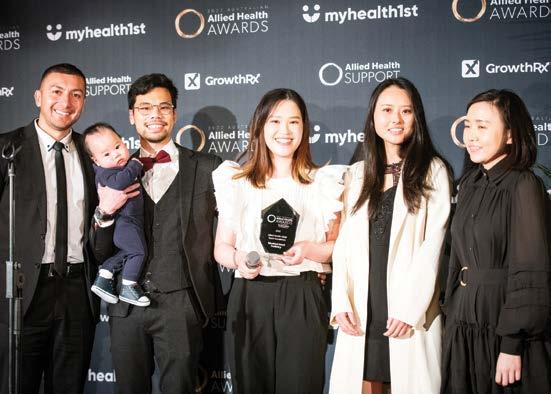
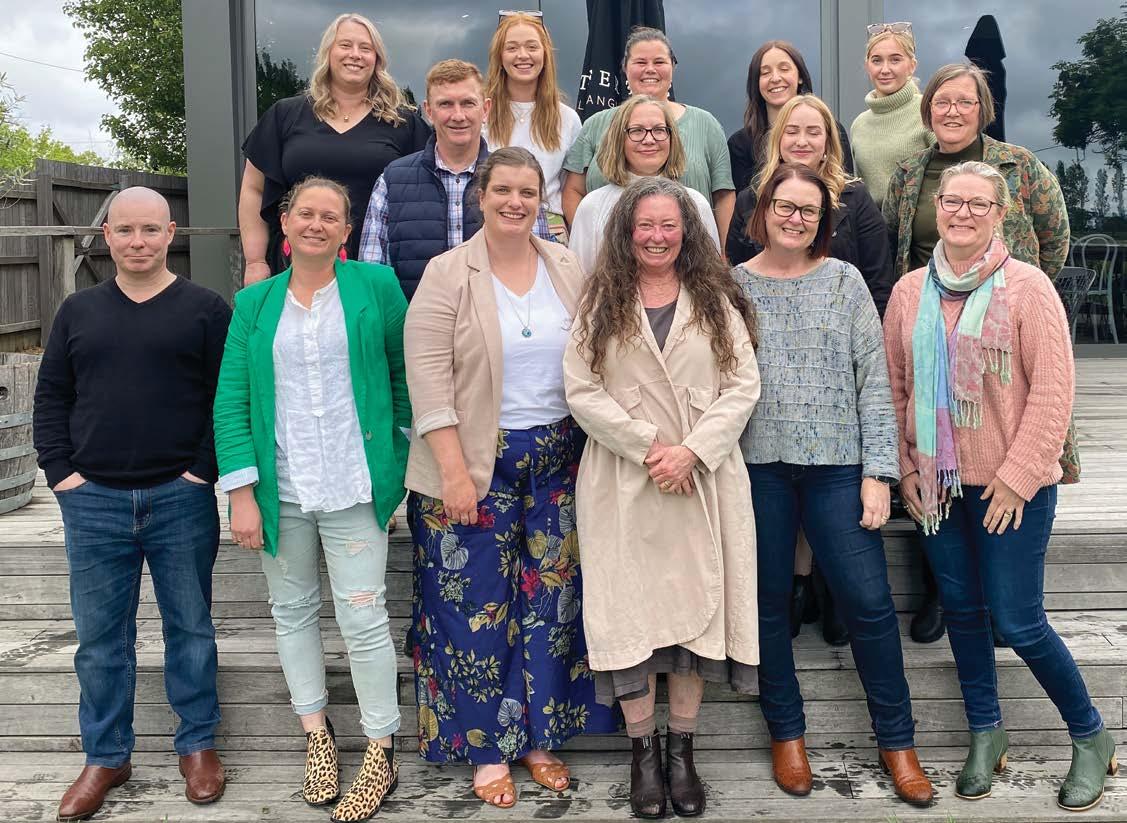
Behind innovative programs, improved services and stronger patient outcomes are often groups of professionals who worked together to make those changes possible. Team awards recognise these collective achievements. They highlight the leadership, collaboration and culture that allow teams to succeed.
By celebrating teams, the profession acknowledges that progress is rarely the result of one individual. Instead, it reflects the combined efforts of people working toward a shared goal.

Some of the most meaningful progress in allied health happens when professionals combine their expertise rather than work alone.
Each year, the Australian Allied Health Awards recognises teams whose collaboration has strengthened services and improved outcomes for patients and communities across Australia. These teams represent the spirit of allied health at its best: professionals sharing knowledge, supporting one another and working together to deliver better care. Because while individual contributions matter, some of the most powerful achievements in allied health are the ones accomplished together.