
How the region’s shifting demographics make the lower manhattan office market an attractive proposition for employers.
How the region’s shifting demographics make the lower manhattan office market an attractive proposition for employers.
Lower Manhattan employers have benefited from a young and well-educated workforce for decades, and a new analysis by the Downtown Alliance of the most recently available U.S. census data (2022) reveals that the district’s competitive advantage has grown stronger in recent years. This competitive advantage has allowed Lower Manhattan’s economy to become what it is today—a diverse driver of job creation and investment producing over $62B in city tax revenue and supporting over 235,000 private sector employees.
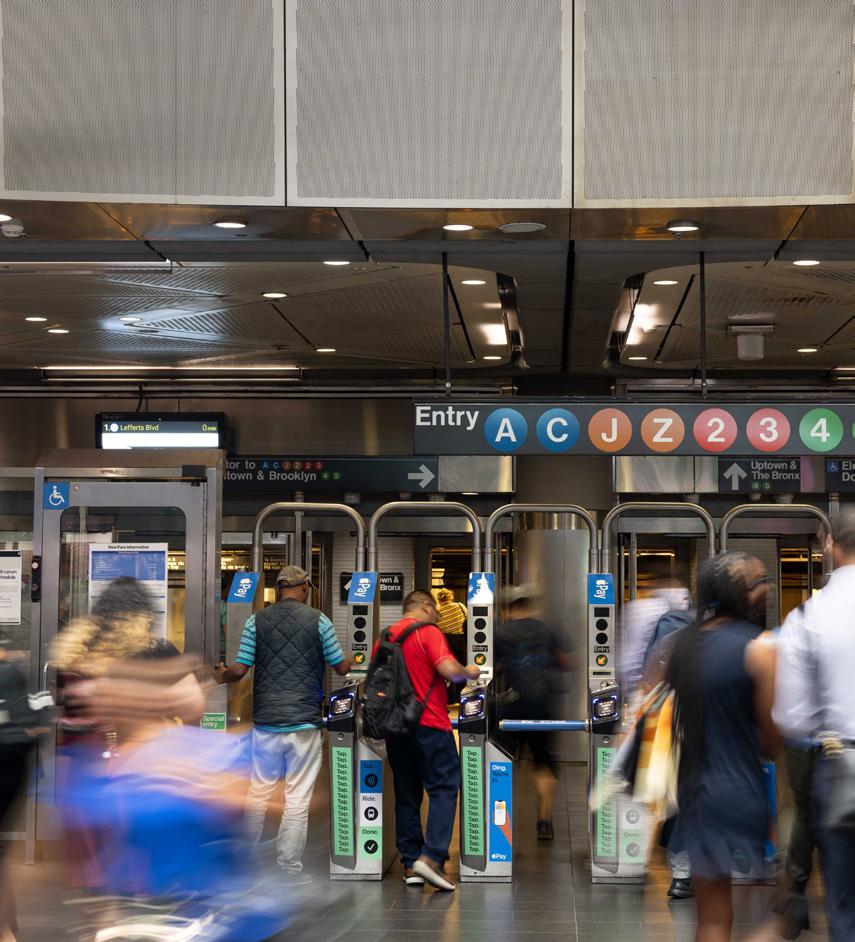
Access to a talented workforce is among the most important factors owners, executives and entrepreneurs consider when choosing a new office location, and few areas can compete with Lower Manhattan’s access to young, college-educated workers. In fact, our analysis shows that Lower Manhattan’s 30-minute commute (via public transit) for in-demand talent is disproportionately greater than the rest of the metropolitan area.Lower Manhattan’s diverse office stock is connected by 13 subway lines, six local and 24 express bus routes, multiple ferry routes, as well as PATH service to and from New Jersey. Approximately 70% of Lower Manhattan’s private sector employees live in the five boroughs with downtown businesses providing employment for New Yorkers living in every one of the city’s community districts. This extraordinary public transit network also allows 970,000 college graduates aged 18-44 to commute to Lower Manhattan in 30 minutes or less. In 2012, these college grads numbered 788,000, which means that over the 10 year period there was an increase of 182,000. Over that same time period, college educated young people working in creative and professional industries living within 30 minutes of the district increased by more than 131,000, a 22% increase.
What’s more, Lower Manhattan’s access to talent is only expected to grow in the future. Over 88,000 units of new housing — 45% of all housing units currently under construction in New York City — are within a 30-minute commute of Lower Manhattan. And just over 10% of those new housing units are planned or under construction in Lower Manhattan. As both the city and state take action to build more housing the number of New Yorkers with easy access to Lower Manhattan’s job market will only increase.

Young Creative & professional workers within 30 minutes of the district grew by
131,000+
Since 2012 & 22%
Increase in young creative & professional workers living within 30 minutes of Lower Manhattan

The first two decades of the 21st century witnessed the culmination of a long brewing demographic shift as young, well-educated workers increasingly prioritized urban living. The transformative force of that shift was felt nowhere more potently than in Lower Manhattan.
A district once solely defined by FIRE based industries is a relic of the past. Lower Manhattan is home to advertising giants WPP and Droga 5, media players like Conde Nast, VOX Media and Harper Collins, headquarters of fashion icons like Gucci and Hugo Boss, renown companies such as Diageo, Spotify, Uber and countless other industry leaders from tech to law to heritage sectors leaders like Goldman Sachs and American Express all draw upon this well of geographically concentrated and connected talent.
Despite the distorting impact of the COVID-19 epidemic, the fact is that young and well-trained talent still heavily favor the urban core. College graduates in today’s workforce have continued to flock to communities within Lower Manhattan’s 30-minute commute area. Neighborhoods in that geography are now home to 970,000 working-age college graduates, up 182,000 since 2012 and 9,000 more than any other region in the MSA. Workers between ages 25 and 34 surged by 100,000 in the 30-minute commute area since 2012, while the 35 to 44 age group’s population increased by 87,000. (Those aged 18 to 24 with college education fell by 5,000.)
Moreover, our analysis reveals that half of New York City’s top 10 neighborhoods in regards to growth of educated adults are located within Lower Manhattan’s 30-minute commute zone. Bed-Stuy, Williamsburg and Jersey City all rank in the top four neighborhoods.
college graduates (ages 18–44)
live 30 minutes or less from
...And the population of young college graduates has grown in Lower Manhattan’s 30 minute commute area more than any other metro area geography

Likewise, the influx of creative and professional workers in the 30 minute commute area has greatly accelerated compared to the rest of the metropolitan area over the past 10 years. Communities within a 30 minute commute of Lower Manhattan welcomed 131,549 new workers in these industries, which translates to a 22% growth rate compared to a 12% growth rate across the rest of the metro area.
The young college educated creative and professional employees who are now living close to Lower Manhattan work for businesses across a variety of industries. Industry-level data reveals that the professional services industry (which includes technical services including but not limited to consulting, architecture and design, and legal services) added 85,000 of these employees over the last ten years. The finance, insurance and real estate (FIRE) industries likewise saw a workforce increase of 25,000. Communities close to Lower Manhattan also saw their information workers increase by 16,000. Arts and entertainment workers increased by 5,000. Many other parts of New York City experienced losses with these workers. And even though the remaining metro region saw healthy increases compared to its 2000-2013 numbers, Lower Manhattan’s 30-minute commute area continued to be the primary engine of growth in creative and professional services employees — extending a two-decade trend.
Neighborhoods in Brooklyn and New Jersey’s Hudson County that are easily accessible to Lower Manhattan lead growth in creative and professional services employees. The Downtown Alliance analyzed the growth of workers in these industries in 163 census-defined neighborhoods across the metro area and found that seven of the top 10 growth districts are within Lower Manhattan’s 30 minute-commute zone. Williamsburg, Bed-Stuy, Jersey City and Bushwick led the charge, with Williamsburg alone adding over 20,000 new residents employed in these sectors for the highest absolute increase among all districts.
Young Creative and Professional Workforce Growth within the 30-Minute Commute Area
Ages 18-44
Young Creative Worker Growth (Past 10 Years)

45% all NYC construction units within 30-Minute Commute Area


According to the most recently available data 70% of Lower Manhattan’s workforce lives in the five boroughs, providing downtown employers with a unique advantage when it comes to its proximity to top talent. And based on housing supply data broken down by New York City neighborhoods, that advantage is projected to grow well into the future. According to data published by the New York City Department of City Planning, the 30-minute commute area currently has 88,206 units in the construction pipeline, which makes up 45% of all construction units in NYC — which is quite substantial considering that the 30-minute commute area only accounts for 29% of New York City geographies!
Access to talent is a critical fundamental when it comes to locational decision making. Lower Manhattan’s extraordinary position with respect to an ongoing demographic change, a change that is driving high value knowledge workers nearer and nearer its core augers well for its future. This demographic reality combined with rich and varied transportation options, sectoral diversity, best in class tenants and a growing cultural, nightlife and culinary scene make Lower Manhattan a magnetic destination. Companies eager to attract the regions’ best and brightest have every reason to set up shop in Lower Manhattan.
This study covers workforce, education and age demographics. Workforce figures are based on 2012 and 2022 ACS 5-year estimates. They cover trends in the FIRE, professional services, arts & entertainment and information sectors. When combined, the study refers to the umbrella sector as creative and professional services. The study also uses educational attainment by age (2012 and 2022 ACS 5-year estimates) to drill deeper into the movement of talent surrounding Lower Manhattan. Finally, the study also points to residential development trends occurring in areas across New York City and Jersey City.
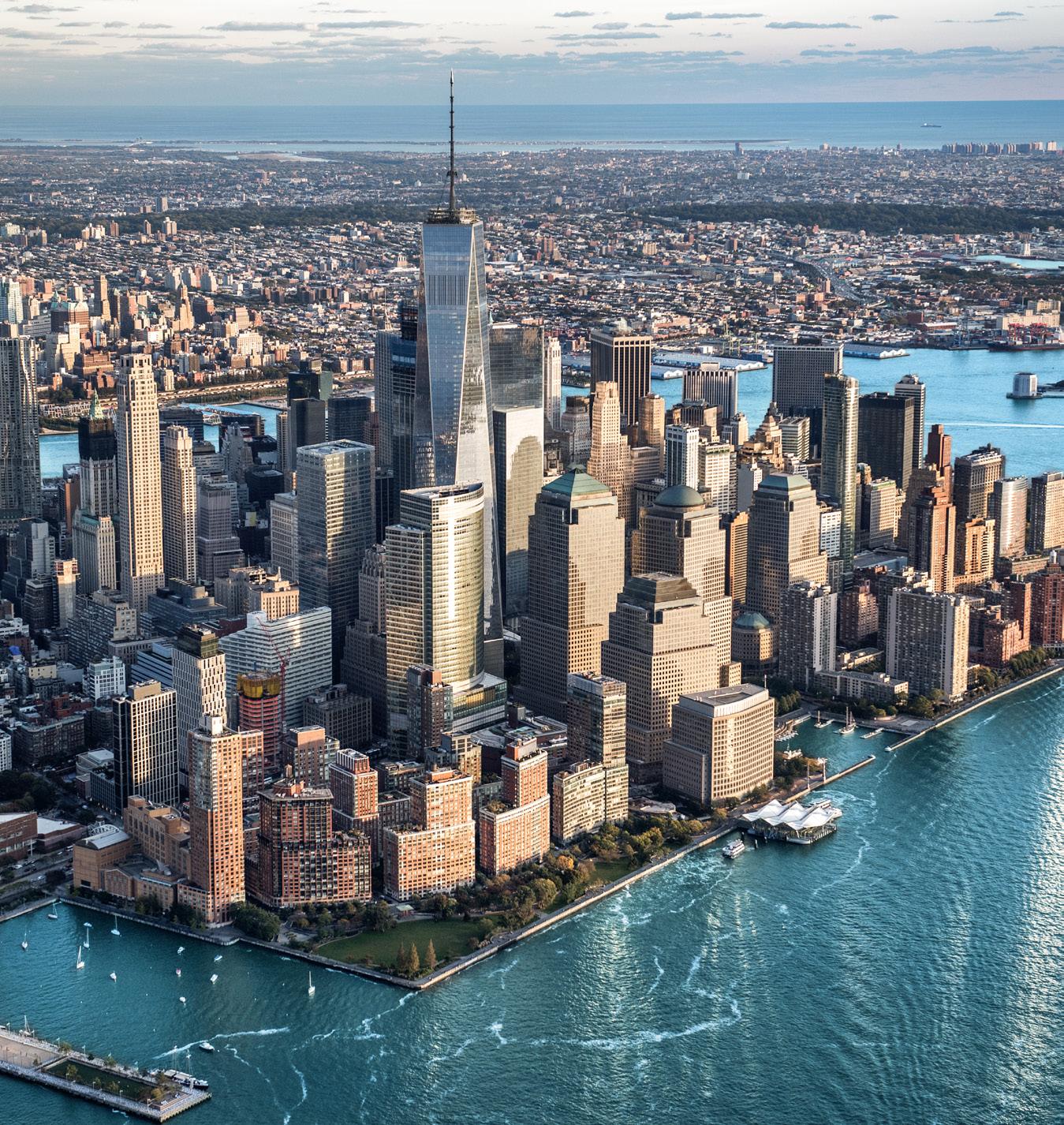
The study area is the New York City Combined Statistical Area (NYC CSA), which includes areas from New York, New Jersey, Connecticut and Pennsylvania. For the purpose of this study, we have divided the CSA into Long Island, Westchester/Hudson Valley, Southwestern Connecticut, parts of New Jersey, the 30-minute commute area and the rest of New York City. New Jersey geographies cover mostly the eastern part of the state, while Connecticut geographies span the southwestern region of the state. The 30-minute commute region covers geographies immediately surrounding the Lower Manhattan area: northwest and southwest Brooklyn as well as Manhattan, parts of Staten Island and Jersey City.