Greenville, SC
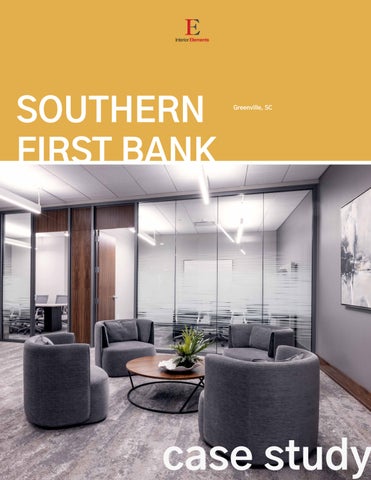
SOUTHERN FIRST BANK case study
SFB Greenville, SC
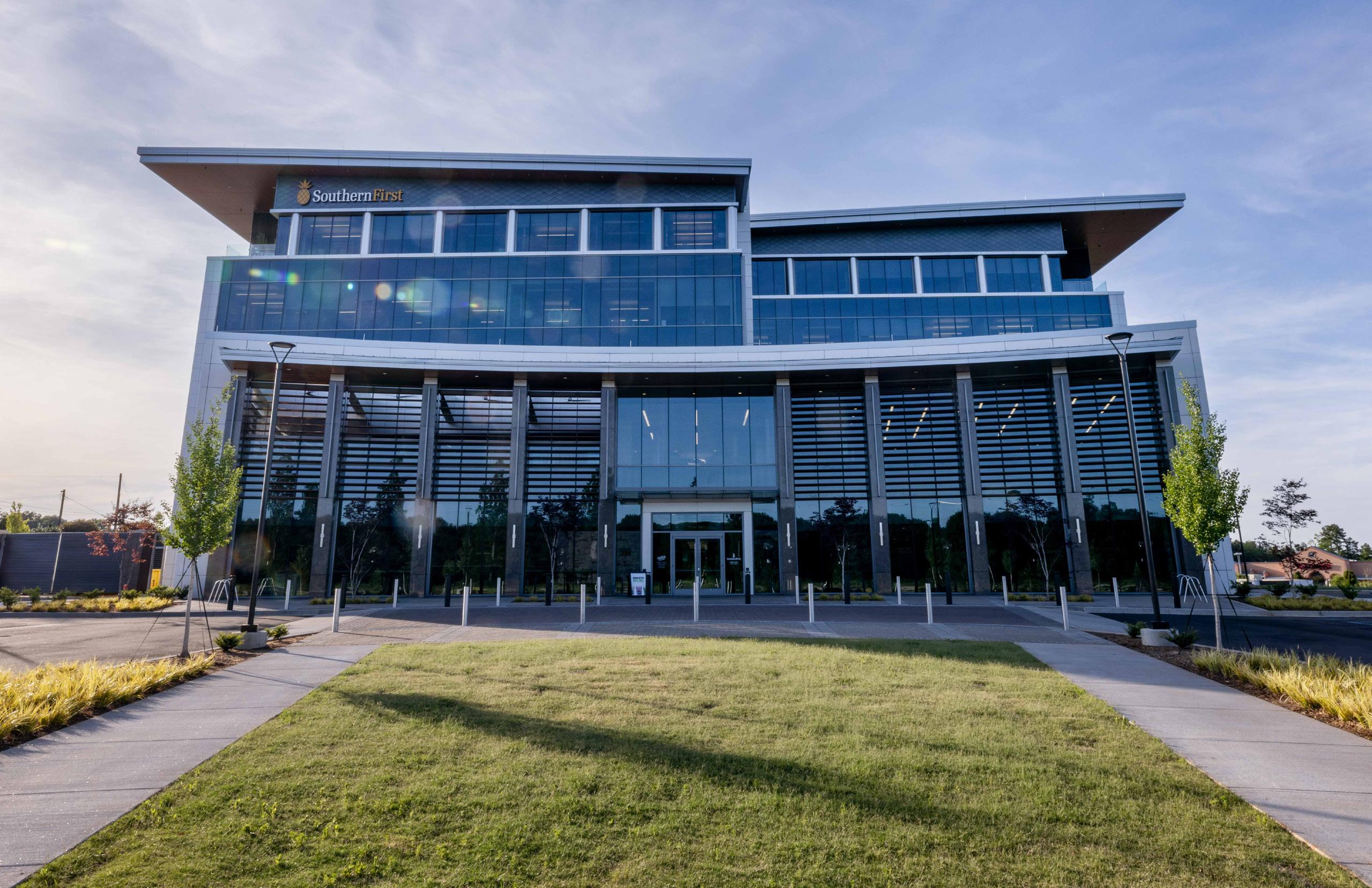
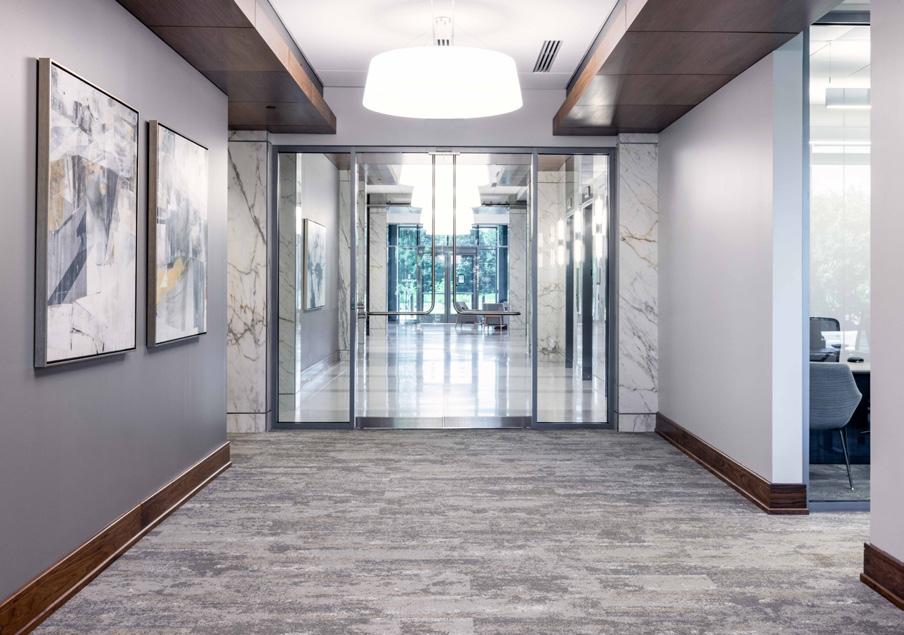
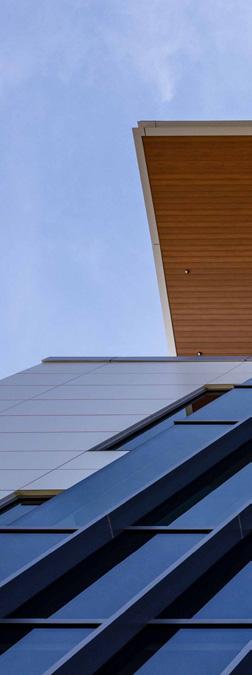
Southern First Bank, headquartered in Greenville, SC, is not your typical bank. Unlike many of its competitors, Southern First puts relationships first, all the time. Prioritizing people—clients, employees, and the community— drove every aspect of the decision-making process of building their new headquarters building at 6 Verdae Boulevard.
107,000SF 5 STORIES 1 TEAM

PROJECT GOALS
No project is the same. Interior Elements understands that, and they approach each project with proactive planning, thoughtful technology inclusion, and a communicationbased relationship-first approach. This playbook can flex with each client, while maintaining the level of professionalism and efficiency that they’re known for.
The overarching project goals for the Southern First Bank project included:
Provide budget-conscious, beautiful, brand-centric furniture solutions appropriate for each unit within the bank
Maintain a relationship-first, collaborative, and respectful team approach
Ensure future agility by preparing proactively
Include thoughtful technology to support (but not replace) the human component
Coordinate consistent, clear communication with all stakeholders
PROJECT TEAM


Day King Interior Design


“Everyone had a voice in the project and the process. We all wanted to create a space people wanted to work in, and the team approach made the project so much easier.
--Becky Ness, IE
“I was impressed with Interior Elements’ confidence that they could meet the aggressive schedule, provide design options within the budget, and deliver and install the furniture in time. And they did.”
--Day King, Interior Designer
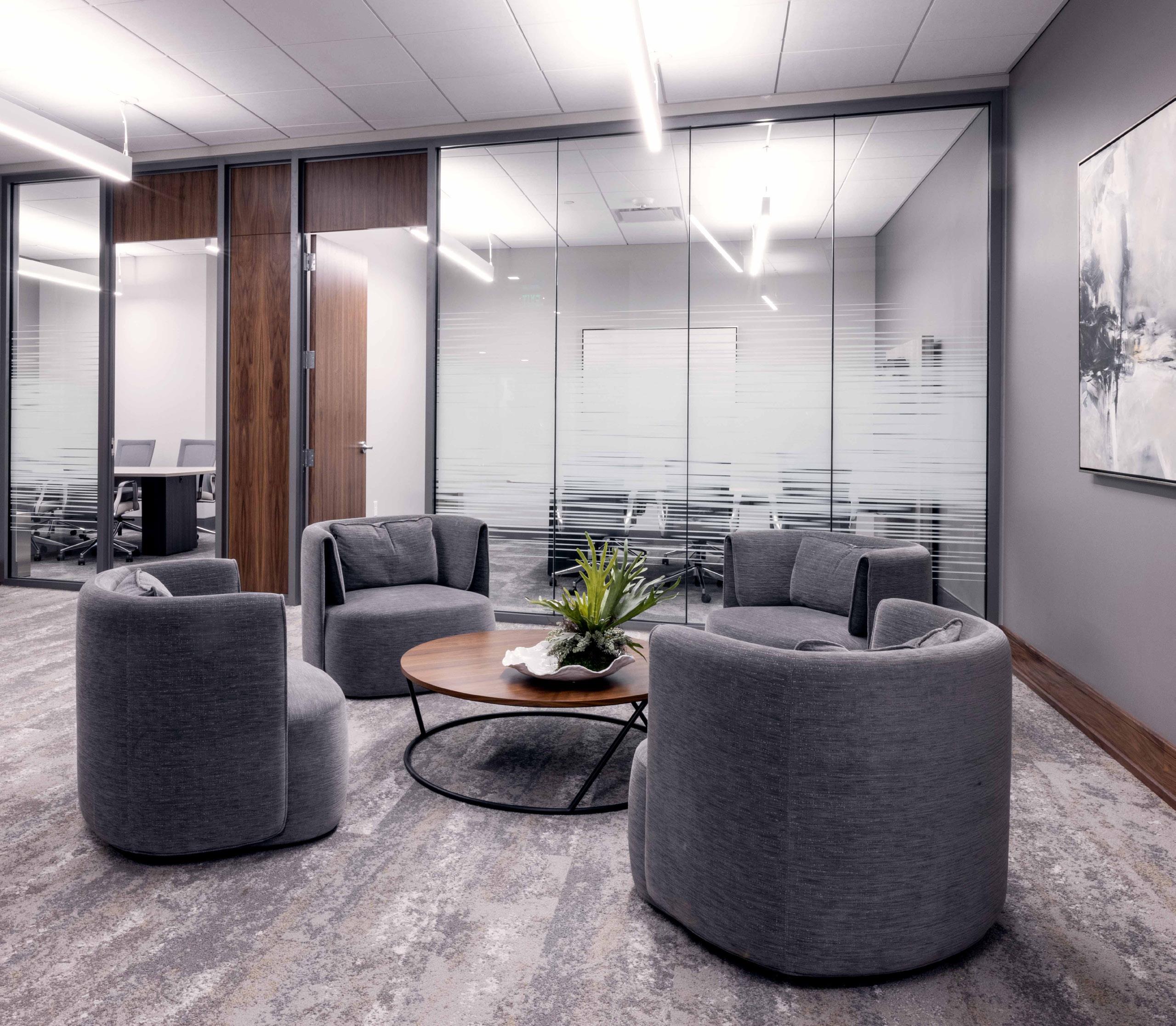
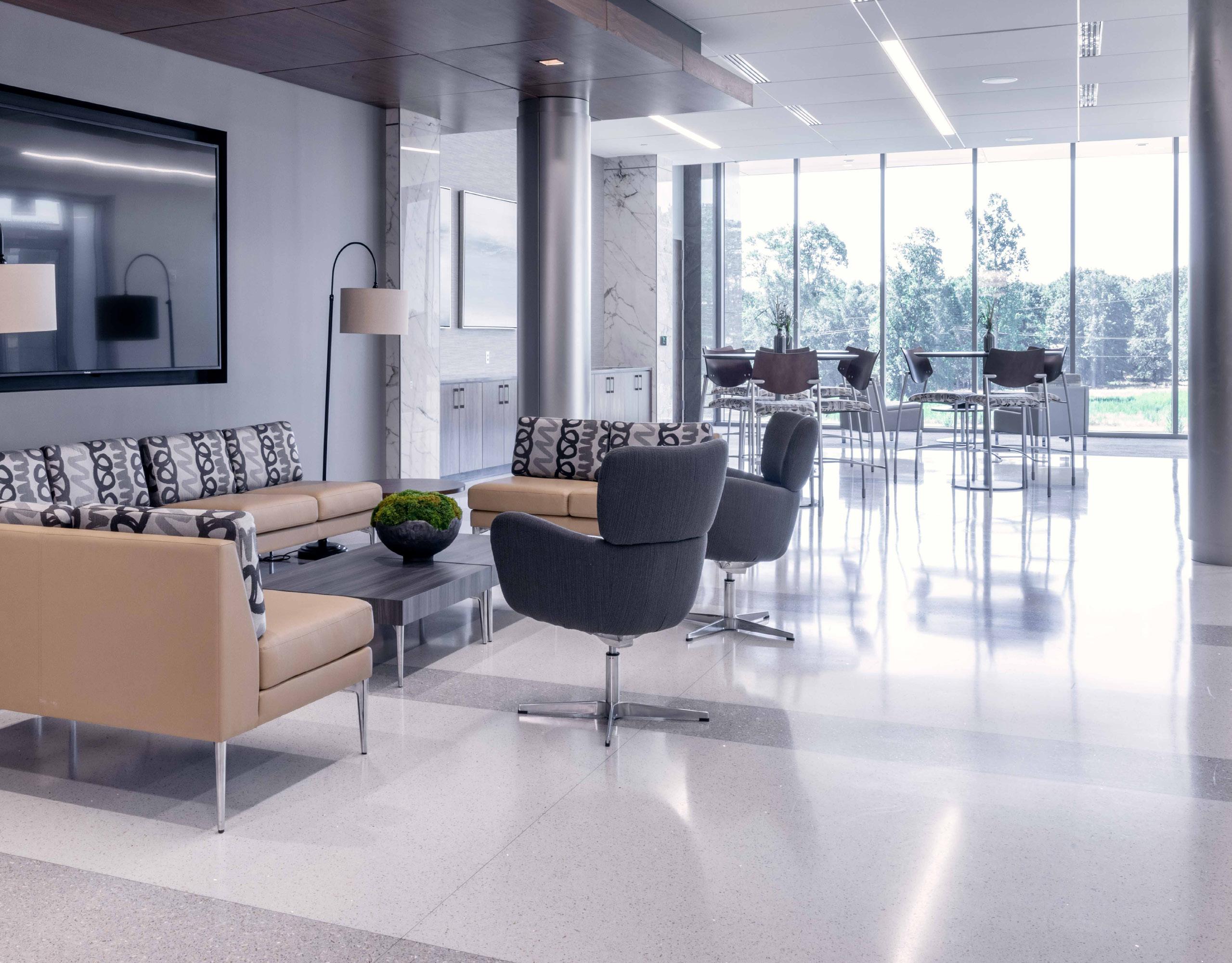
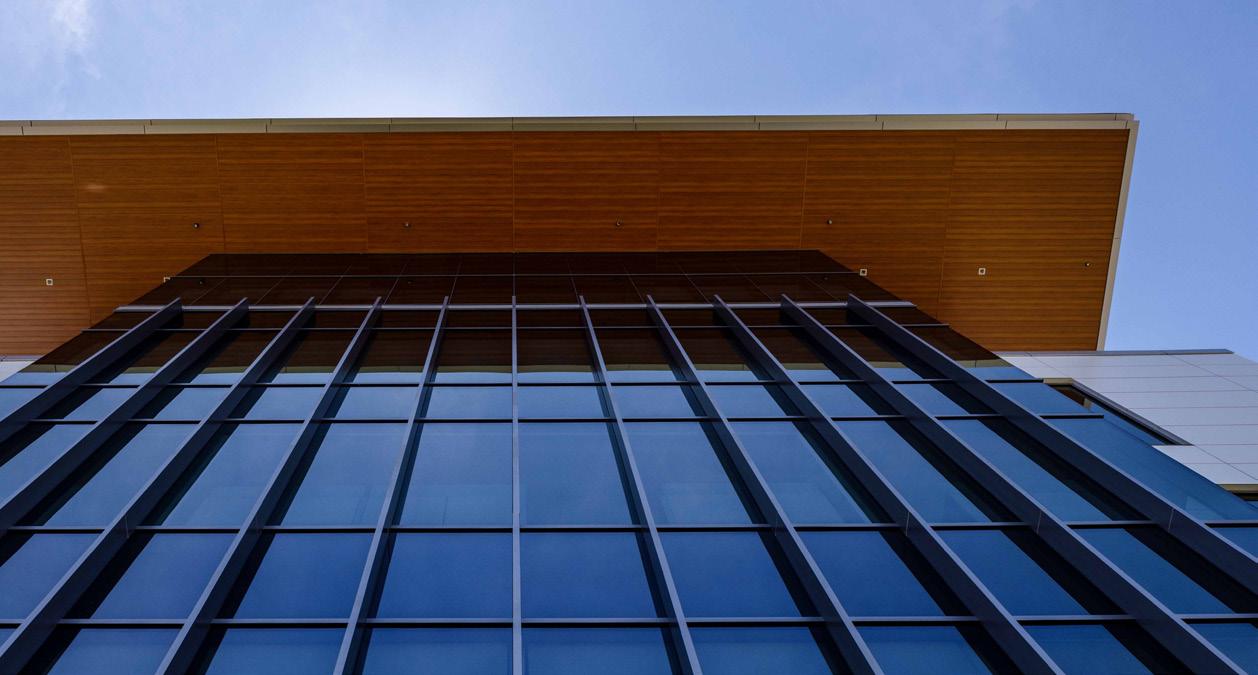
Southern First Bank is re-branding the banking experience and wanted to create an environment that reinforced this vision: a building that supported employees, and warmly welcomed clients, and embraced the local community.
Craig Gaulden Davis (Greenville, SC) partnered with SMHa (Charleston, SC) to design the building itself; Day King of Day King Interior Design (Greenville, SC) was contracted to put together and coordinate the furniture package, an integral component to the success of the project. The team understood that a successful interior package meant more than just the lowest bid price, so rather than go through a formal bid process, they put together a more informal and much smaller scale request for quote (RFQ) that they sent out to six different furniture dealers.
After narrowing down the responses to three dealers, Southern First conducted in-person interviews with each.
The Approach
Interior Elements approached the interview as if they had already been awarded the job. They showed up with the team that would work on the project, a technology package to streamline communication, and a fully developed timeline for the project from space planning to an installation plan, with durations that acknowledged the inevitable post-covid shipping delays.
Even though the Southern First team had never worked with Interior Elements before, they were impressed with their proposed approach to the project.
The Challenges
The project presented four major challenges: timeline, logistics, budget, and communication.
The timeline was extremely compressed, as the team
CASE STUDY
would have a short amount of time to complete both schematic design and design generation phases, which included visioning, space planning, design decisions, finish selection, and any value engineering necessary to remain within budget.
It’s a process that typically takes about a year for a five-story building—and the team only had two months. Interior Elements laid out a timeline that included details on specific design decisions, order placement, shipping durations, and installation plans.
This timeline also tackled logistics, another project challenge. In the post-covid world of manufacturing, production and shipping delays are not only common, they’re expected. Interior Elements understood that had to be approached proactively, not reactively. IE also understood that every project has a “punch list”—a list of items that need to be addressed or adjusted before the project is complete.
By planning for this inevitability before the orders were even placed, IE showed that they cared deeply for every aspect of the project, and not just the order placement.
On any project, remaining within a budget is
It’s not just a building. It’s contributing to the community, and IE really understood that.
--Sandy Boozer, SFB
crucial, and this was no different. To achieve Southern First’s design goals, strategic decisions about product selection and configuration had to be made. Interior Elements knew this and before even being award the job had devised a plan to achieve goals while remaining in budget.
Communication is often where projects can fall apart. When there are several different stakeholder groups—including the owner, multiple architecture and design firms, a contractor, subcontractors, and a furniture dealer—and each stakeholder group has multiple individuals communicating with everyone, creating a swarm of emails, sticky notes, and change orders.
Having worked on hundreds of projects ranging in size, Interior Elements knew firsthand how vital communication is to a project, but also how quickly miscommunication or missed communication can undermine success.
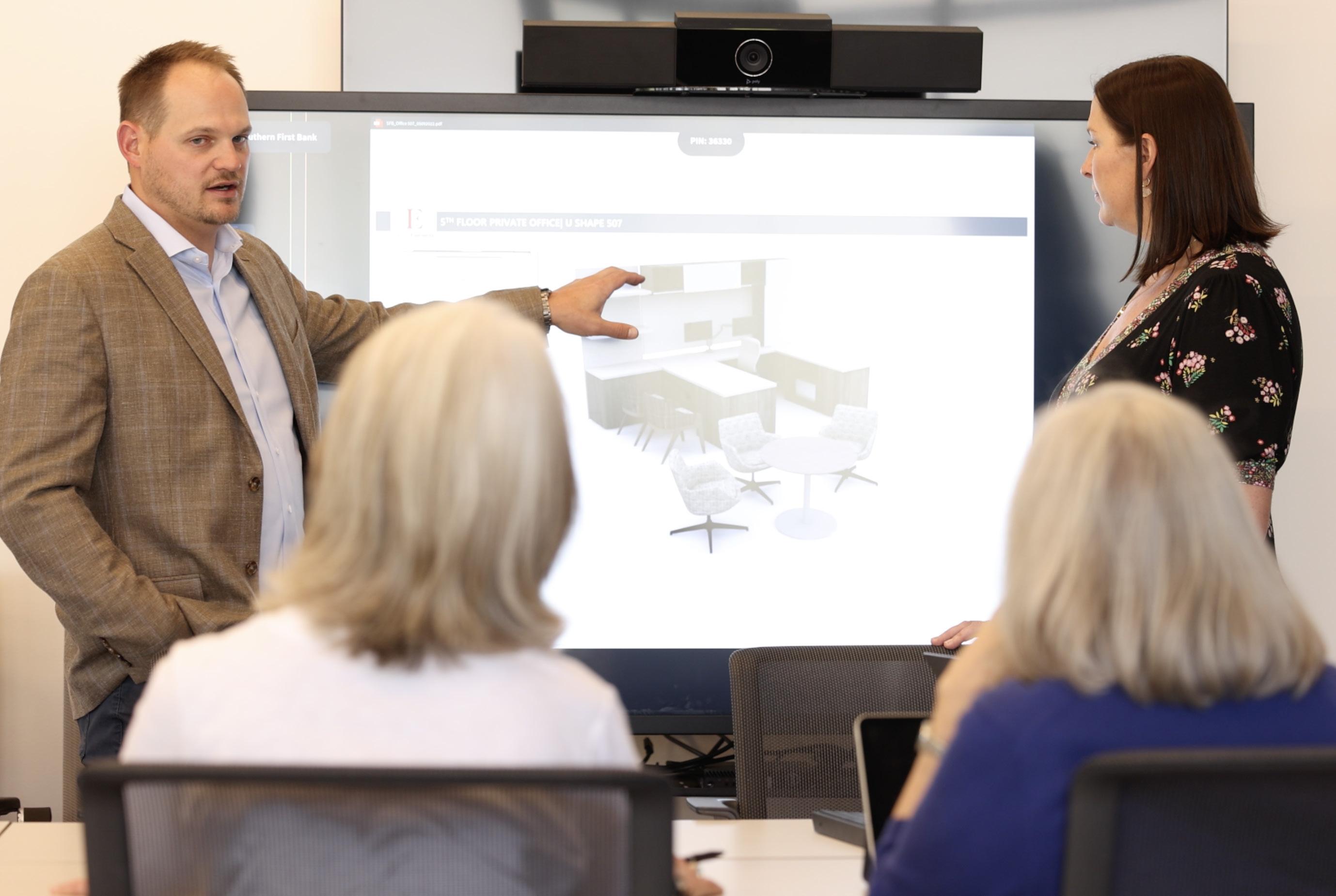
In the interview, IE proposed utilizing a technology called Bluescape: a program that allows live collaboration, inclusion of attachments, use of whiteboards and sticky notes, and generally streamlines communication by keeping meeting notes, files, and most of what could be emailed in one centralized location.
The Southern First design team was immediately fascinated by this technology; with Bluescape, the likelihood of searching through emails for that one particular attachment was virtually eliminated.

“Bluescape was such a value-add,” stated Day. “It really helped keep us on the same page and all focused towards our goal.”
The Implementation
After being awarded the project, Interior Elements
immediately set to work with the Southern First team. Weekly meetings were established and, due to the compressed schedule, were often up to eight hours long. The team worked through needs assessments, design decisions, finish selection, and logistics navigation, always working together toward the common goal, often using Bluescape to streamline meetings and contain meeting notes, files, and next steps.
Caroline Langford, a designer at Interior Elements, was integral to the process as she was able to design options for the team live in the meetings, while Will Tuten (Market Development, IE Greenville) and Becky Ness (VP of Market Development, IE Charleston) worked with Sandy Boozer (SVP Corporate Administration, Southern First Bank) and Day King (Owner, Day King Interior Design) to understand the nuance of each employee group and what they needed to work.


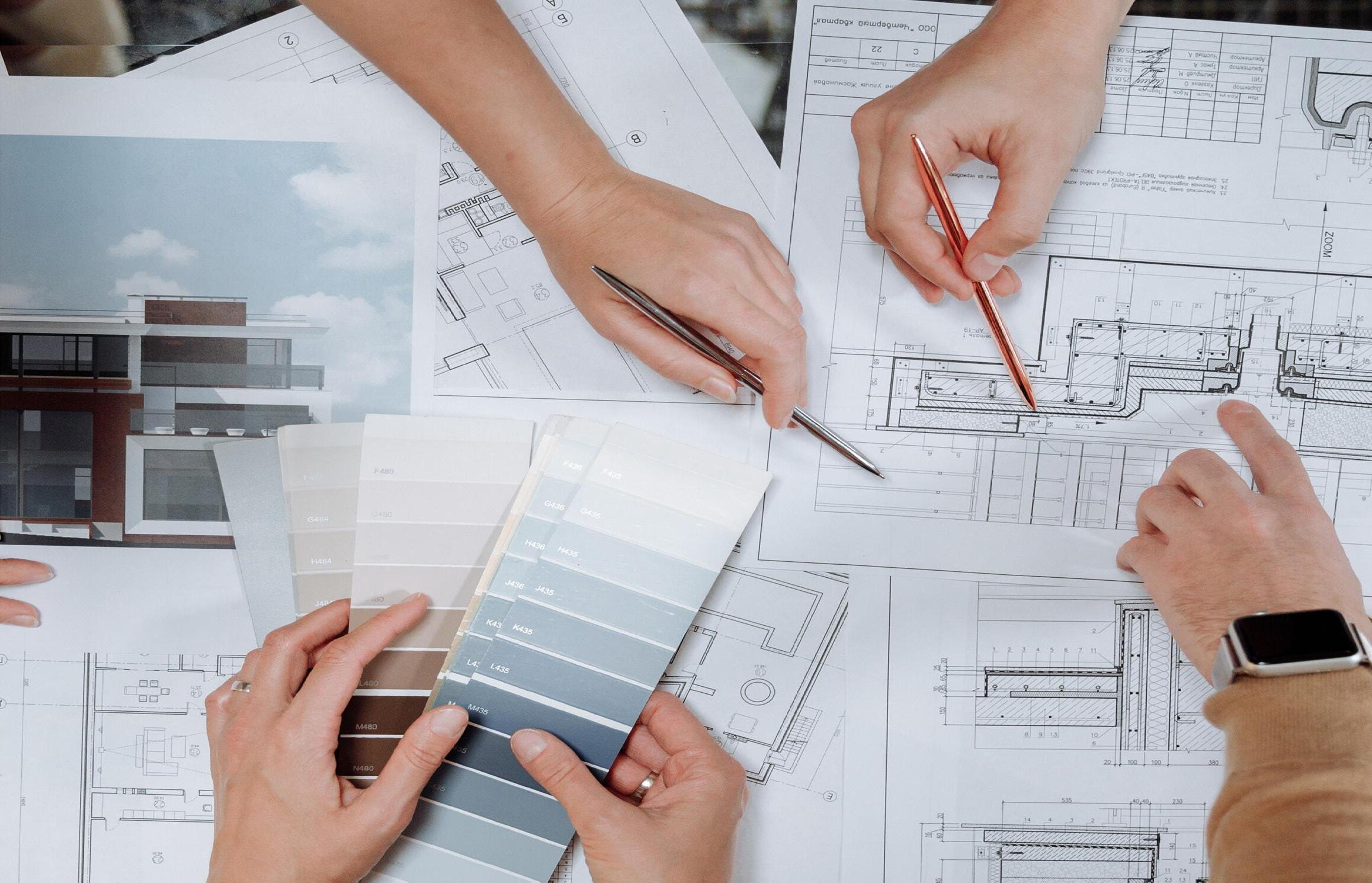
It became clear that the compact timeline necessitated rapid decisions that would affect every employee, and the team wanted to make sure that the best decisions regarding furniture selection and configuration were being made. They didn’t want to rely solely on photographs of items.

THE MART
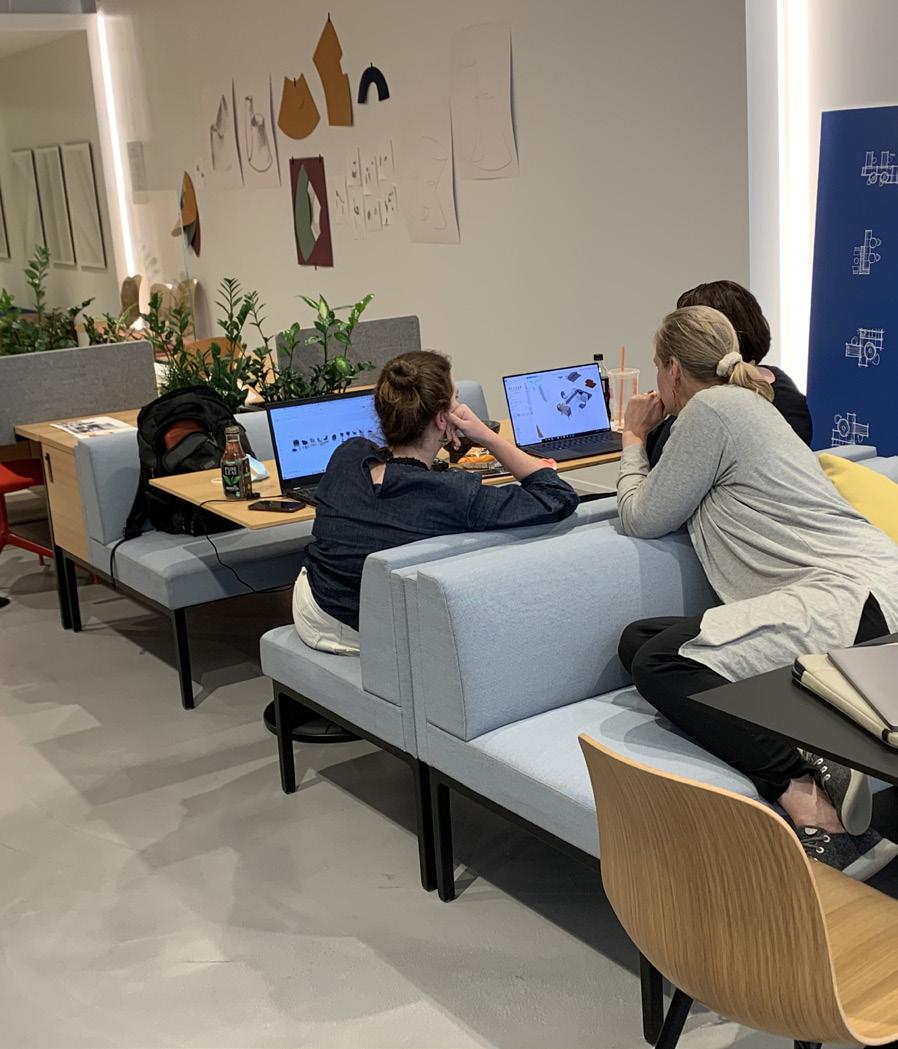

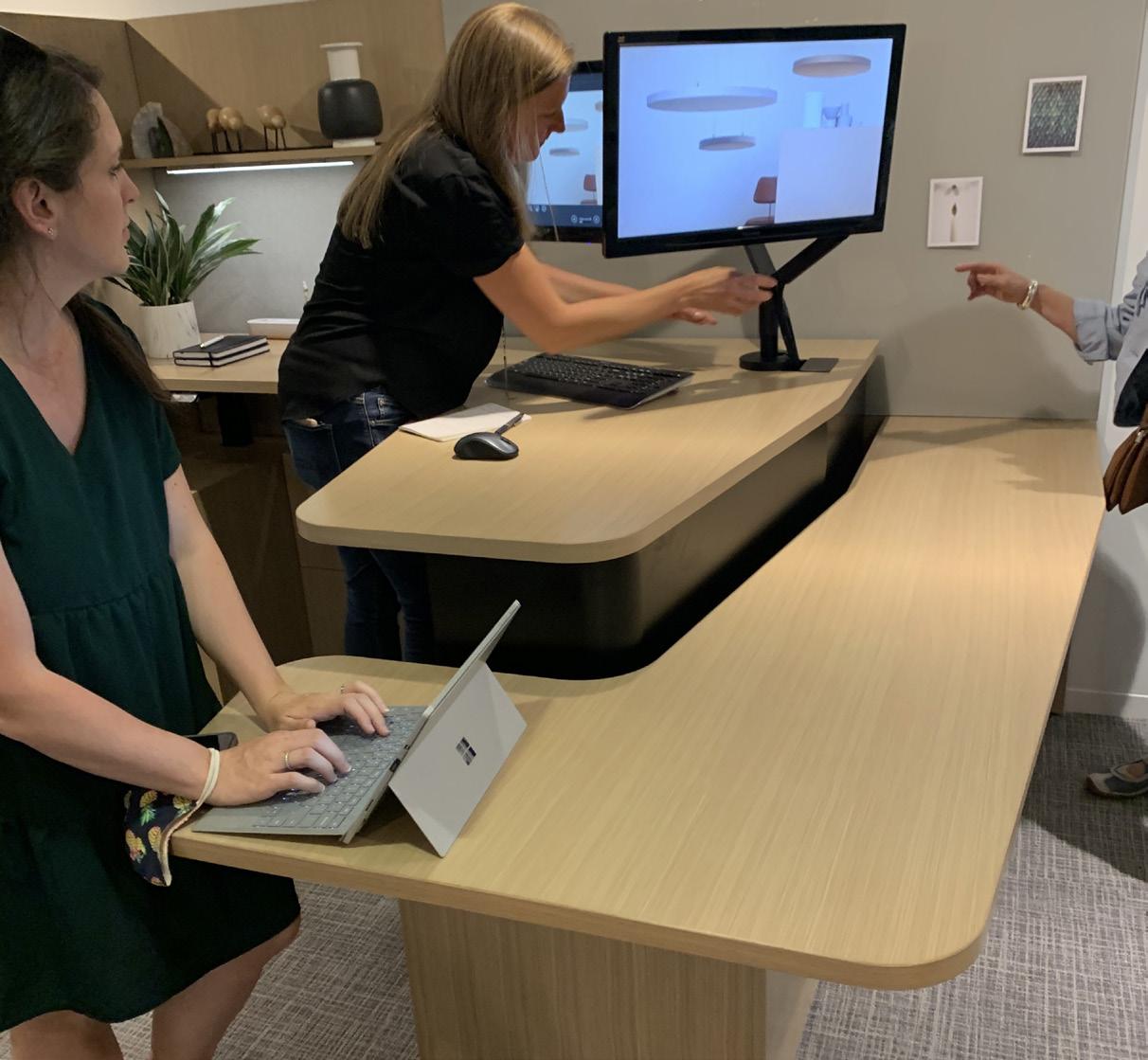
So much to see, so little time. The team split up at times and documented their observations and logged photos in Bluescape, in order to streamline collaboration and keep good records.
COMMITTED
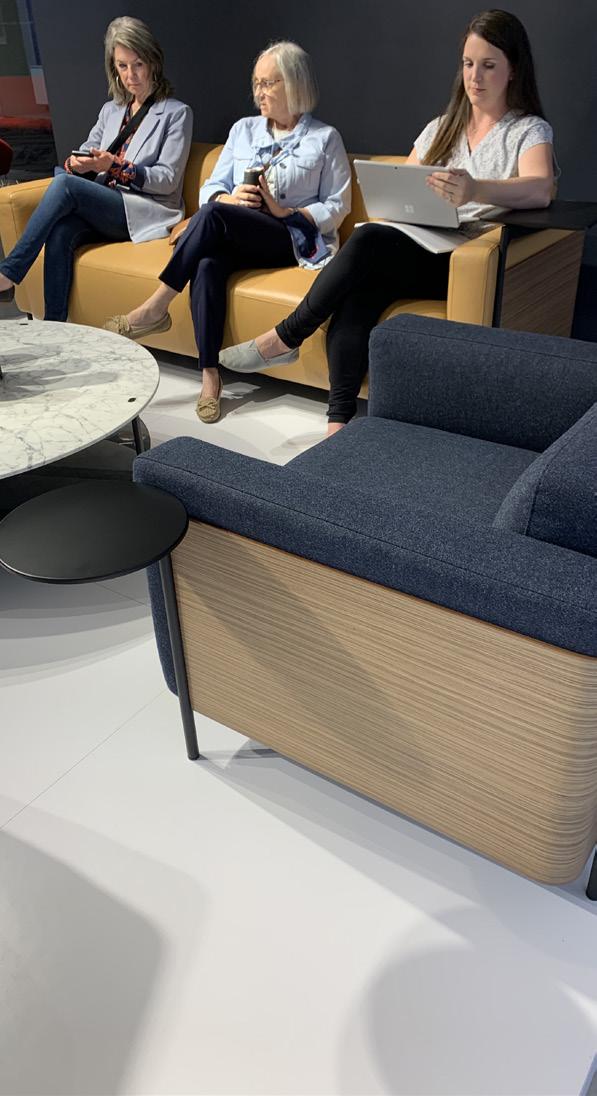
Interior Elements determined that the best approach was to take the team to the Chicago Merchandise Mart, where dozens of furniture showrooms appropriate the project were located in one building.
Like everything else with this project, the trip was swift; in 48 hours, 9 people (Margie Longshore, Corrine Corte, Samantha Meinders, Day, Sandy, Bryan Mullins (Executive VP of Market Development, IE), Will, and Becky) visited over 20 showrooms to touch, feel, and experience all the different types of furniture the project would require. The team members divided and conquered, taking photos and uploading them to Bluescape, where everyone was able to provide feedback and opinions.
The Chicago trip effectively streamlined design
decisions, and it also served to coalesce the team, which strengthened communication, confidence, and agility as they navigated challenges throughout the project. Meetings were more productive since a culture of trust had been fostered, and the team achieved their deadline.
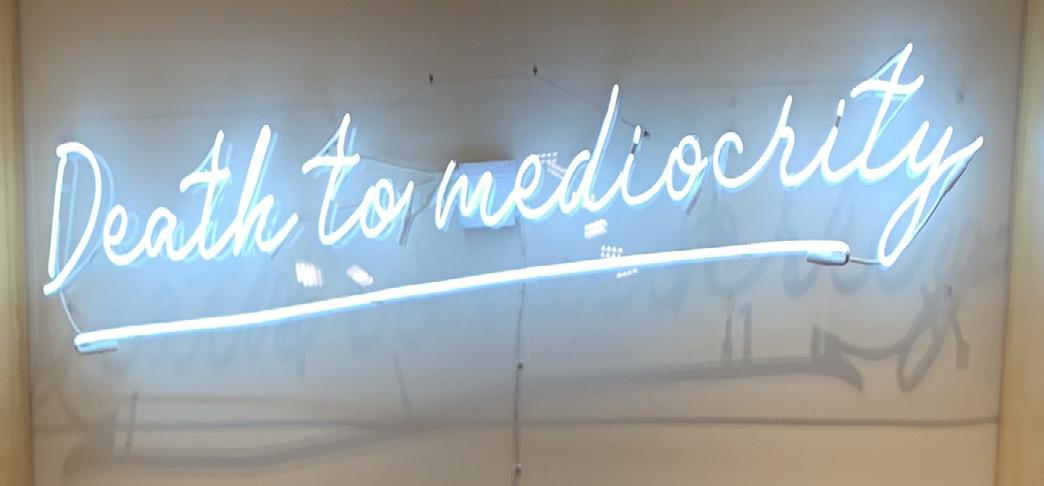
“Visiting Chicago and seeing all of the furniture in person was probably the most beneficial thing we did. It was so worth the time and effort to ensure we made the best decisions. Especially about chairs—we had to purchase so many chairs, and we wanted to get that right.”
--Sandy Boozer, SFB
The Installation
The furniture order deadline was achieved, but delays caused construction to fall behind schedule—which delayed the buildings’ readiness to receive furniture. Unable to turn 18-wheelers full of furniture around, Interior Elements approached the challenge proactively.
They coordinated a plan with the general contractor to store the furniture on site, rotating it throughout the building as different areas became ready. And once again, a respectful, collaborative approach opened up solutions.
“There were a number of challenges outside of anyone’s control, with materials and shipping delays, construction and rain delays, covid-related delays…globally things were happening that we’ve never seen before,” stated Becky. “Working with the architects and GC, everyone was respectful of each other’s craft and trade, and we had to work well together in order to keep the project on track.”
The Human Spaces
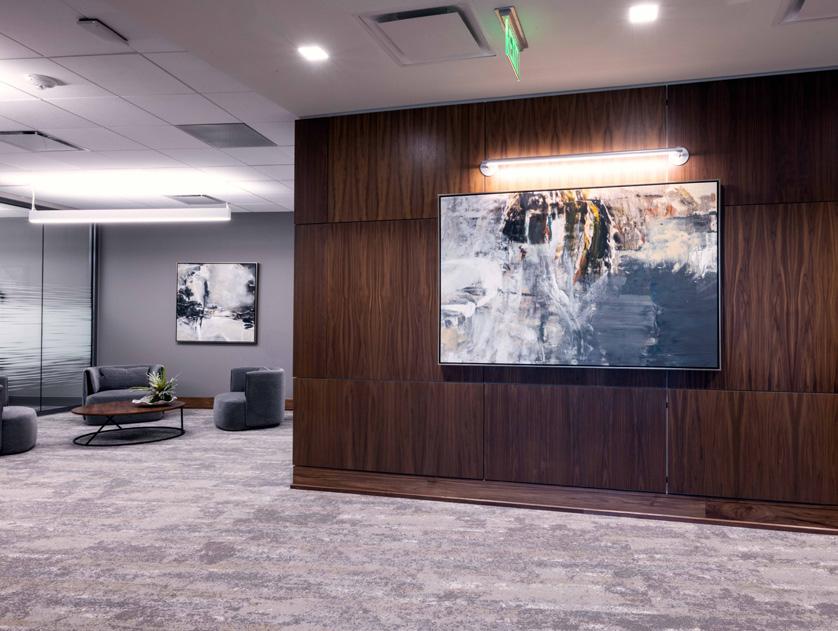
The team was thoughtful about every design decision for the building. Southern First wanted to create a timeless building that employees and clients would want to be in.
“Day had a beautiful vision,” said Becky Ness. “I adored working with her and Sandy. Everyone had a voice in the project and the process.” Sandy agreed, stating that “the team approach was the only way to do this.”
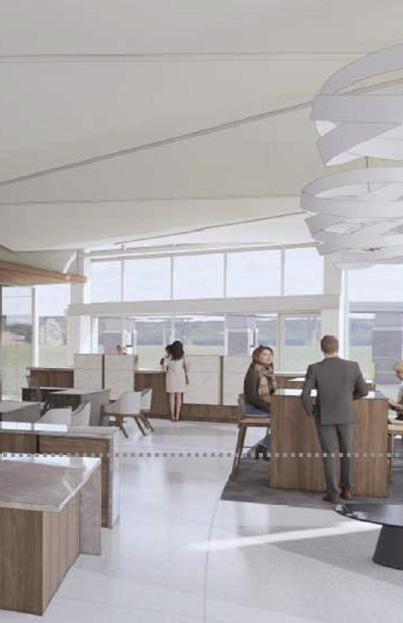
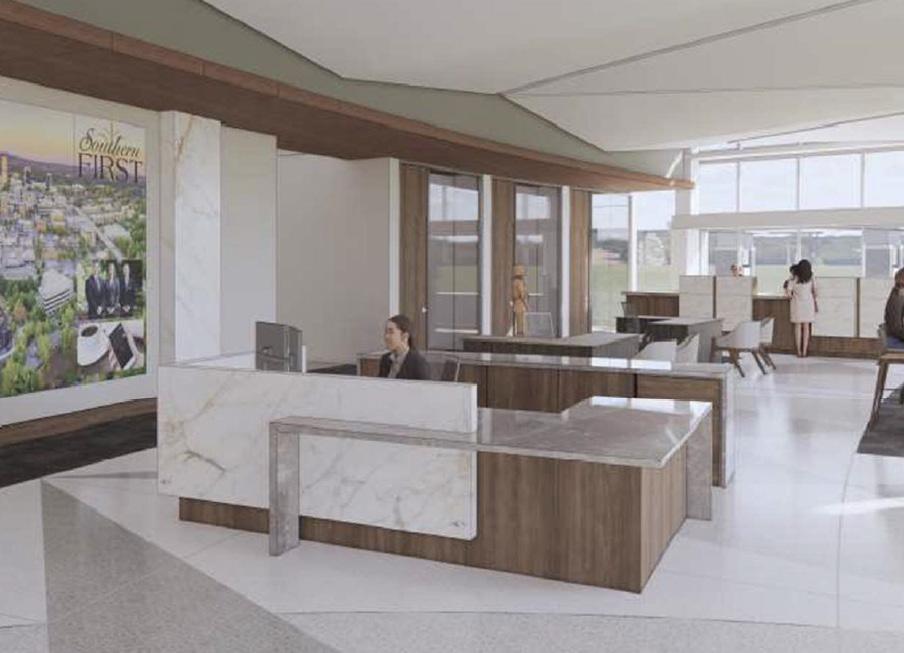
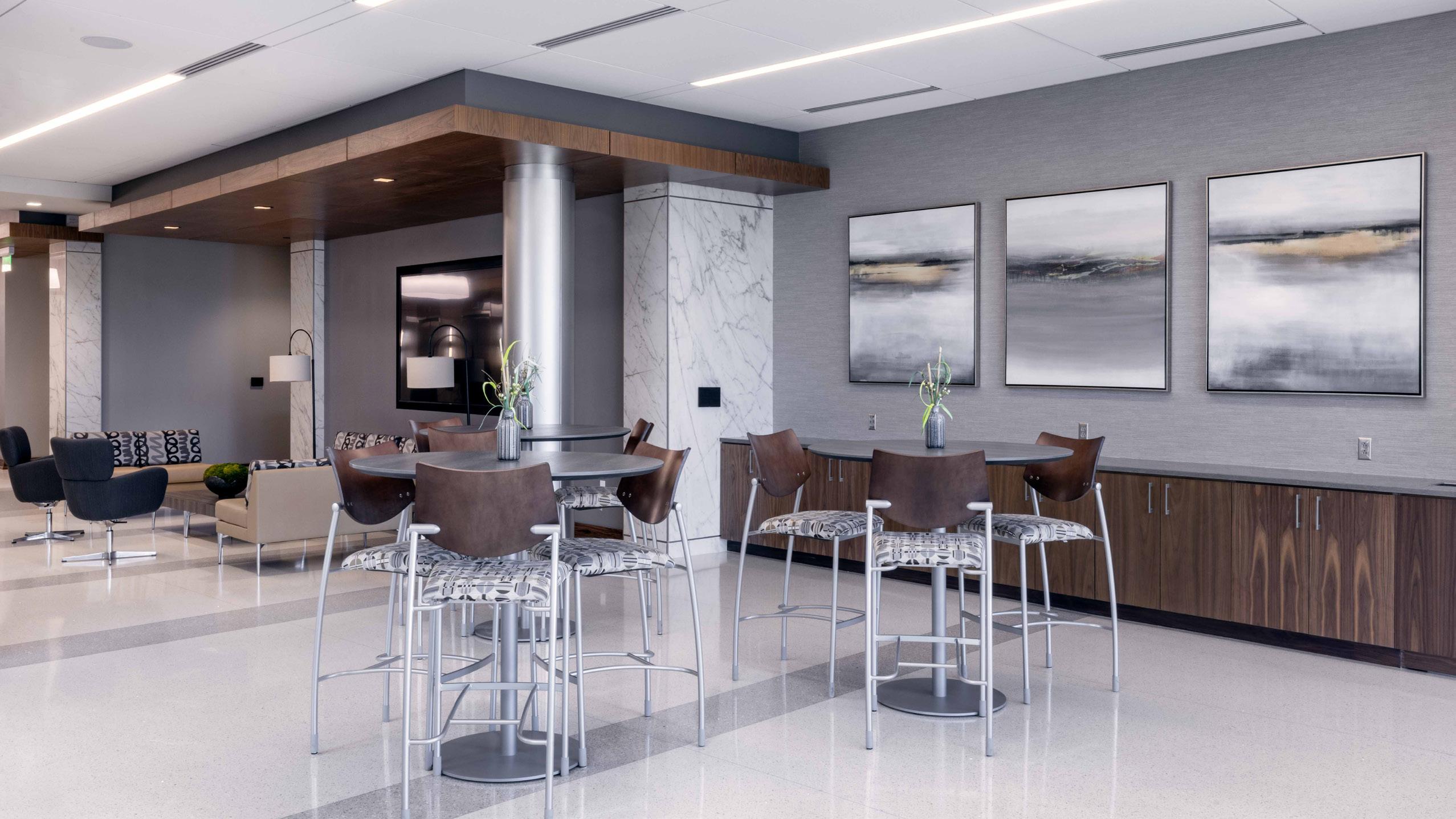
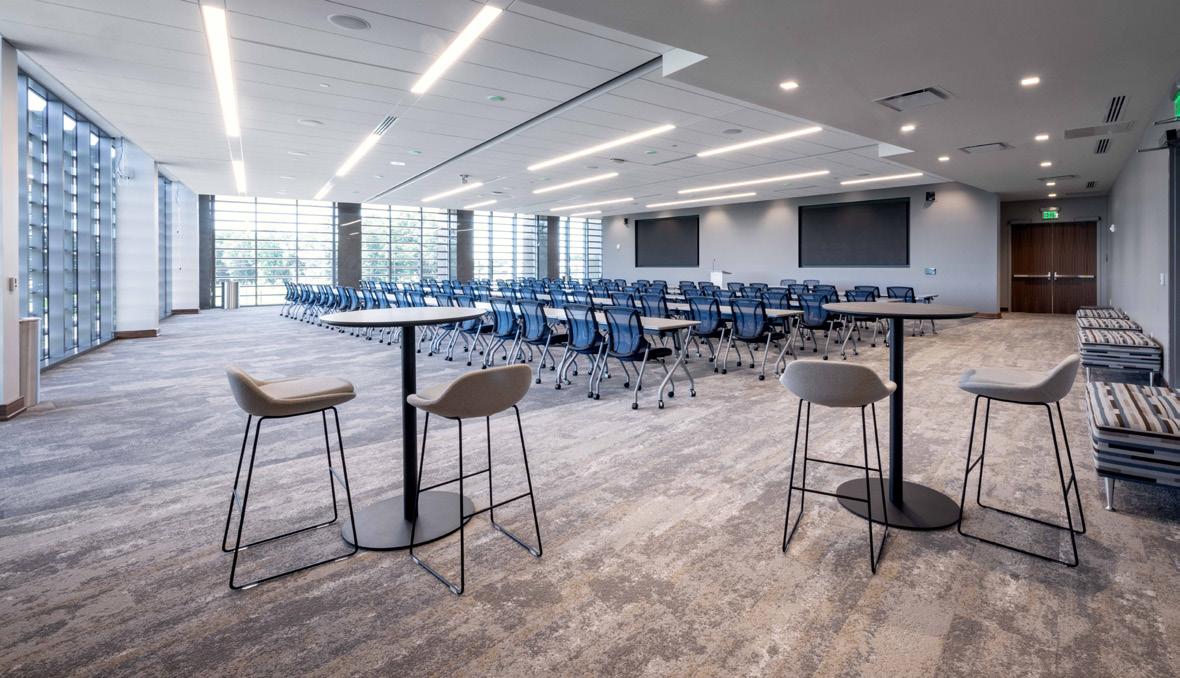
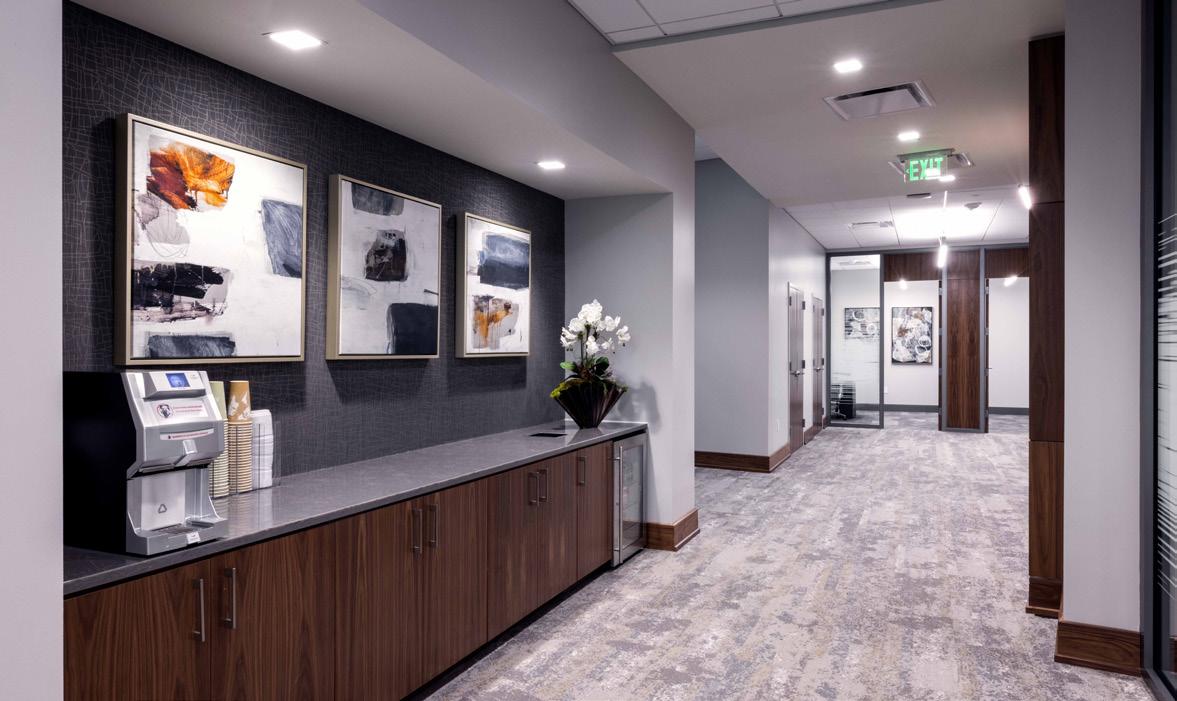
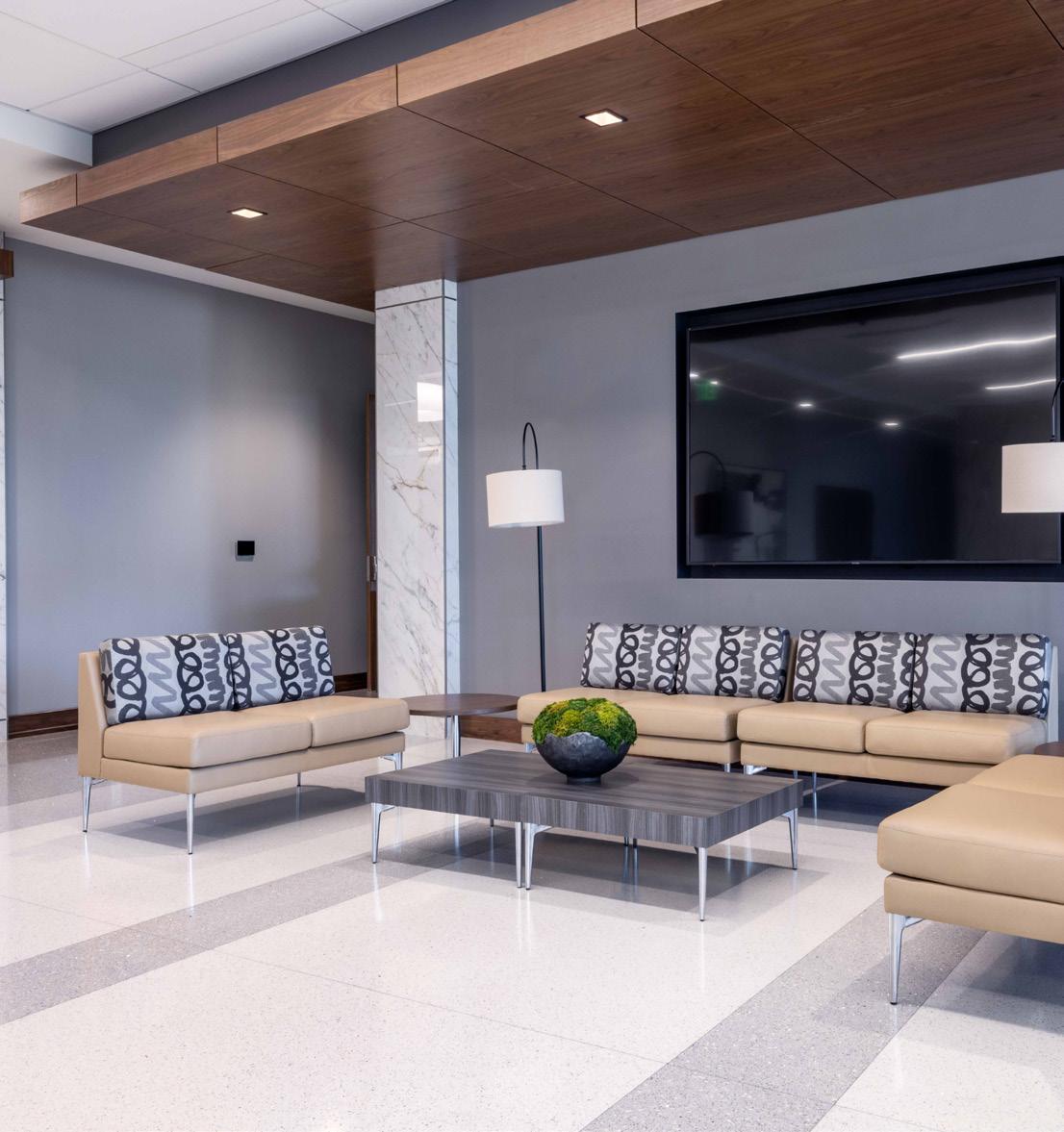
The public areas of the building reinforce the vision of relationship-driven banking. For example, a mini-fridge was designed into the receptionist’s workspace so that clients can be offered a cold water.
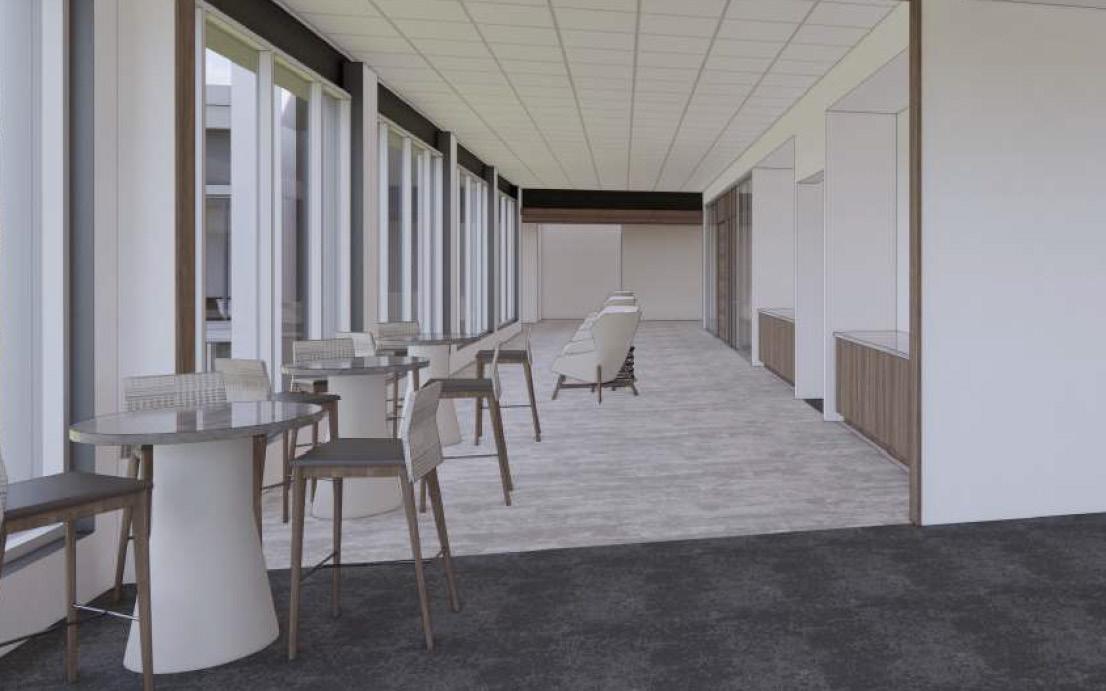
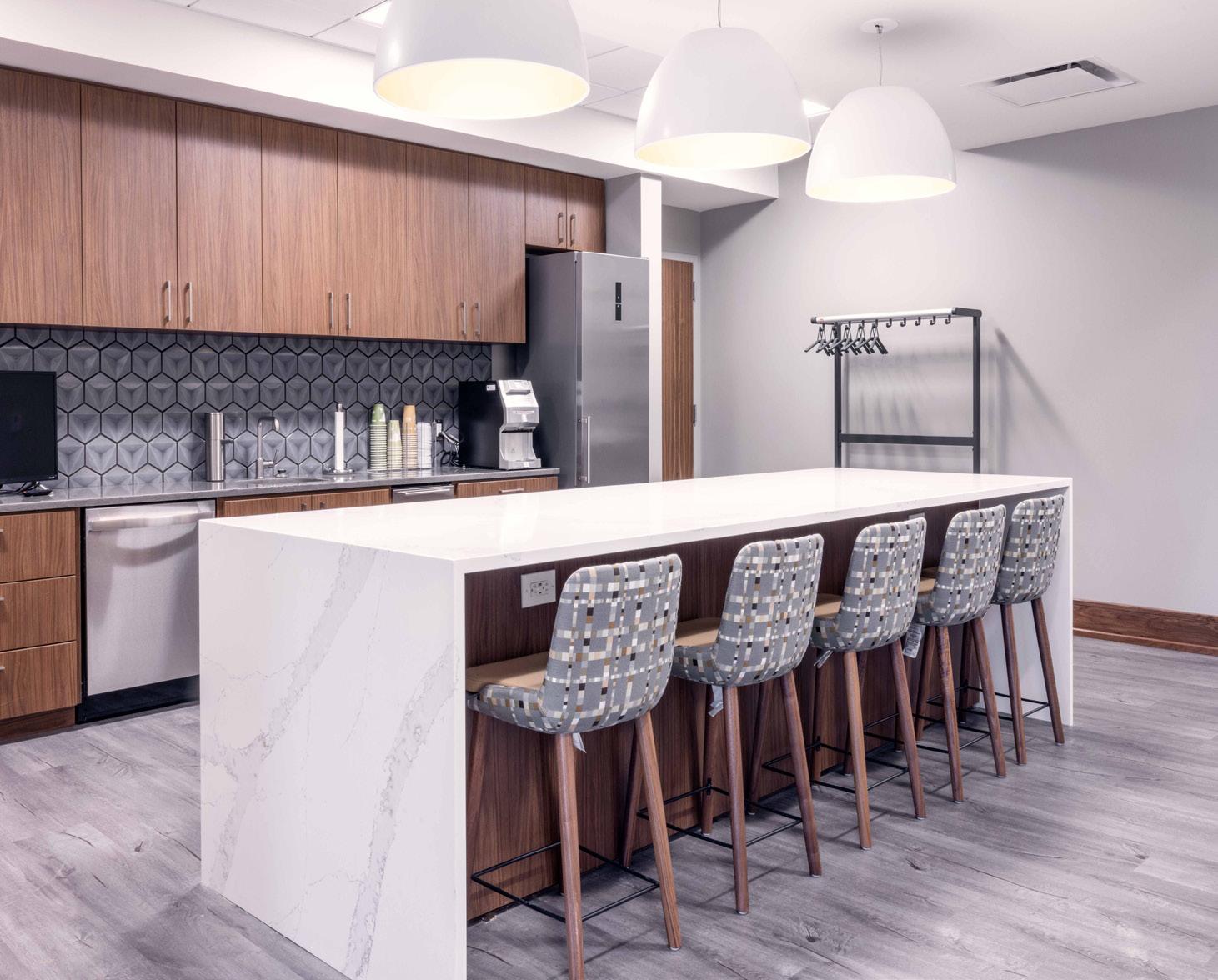
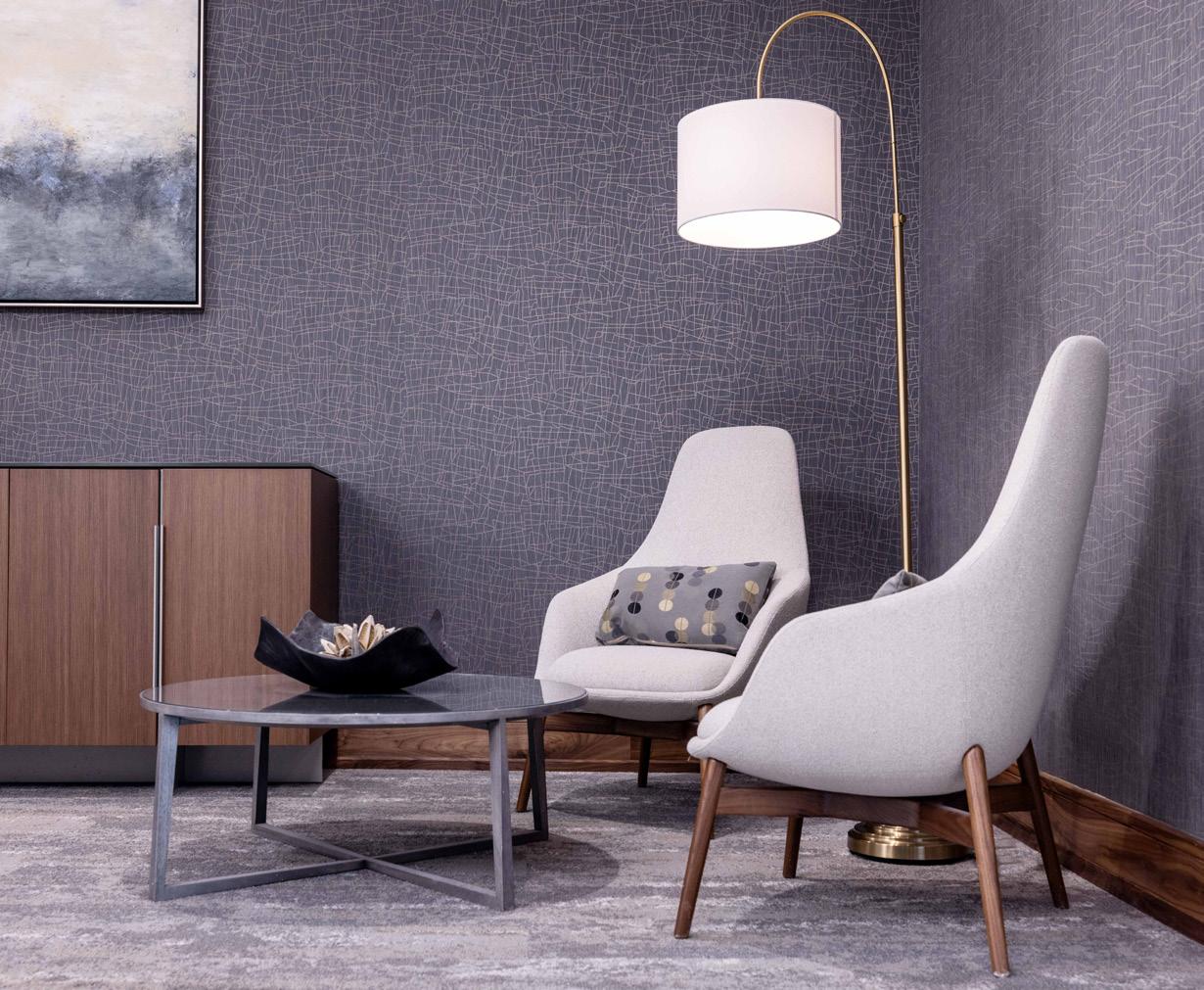
A cafe space welcomes the community into the building, and comfortable seating around the monumental functional fireplace gives clients a place to relax before conducting business, acknowledging that everyone who walks in the door is important, and deserving of a well-designed space.
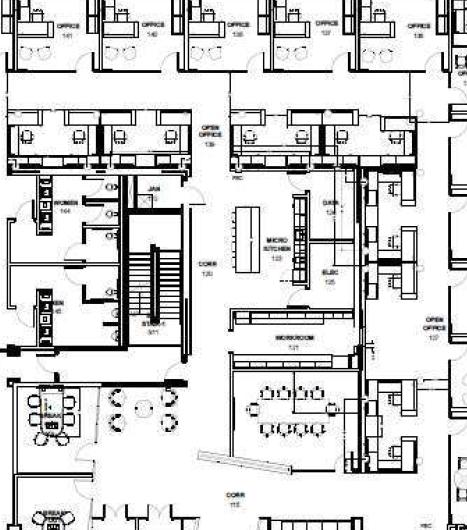
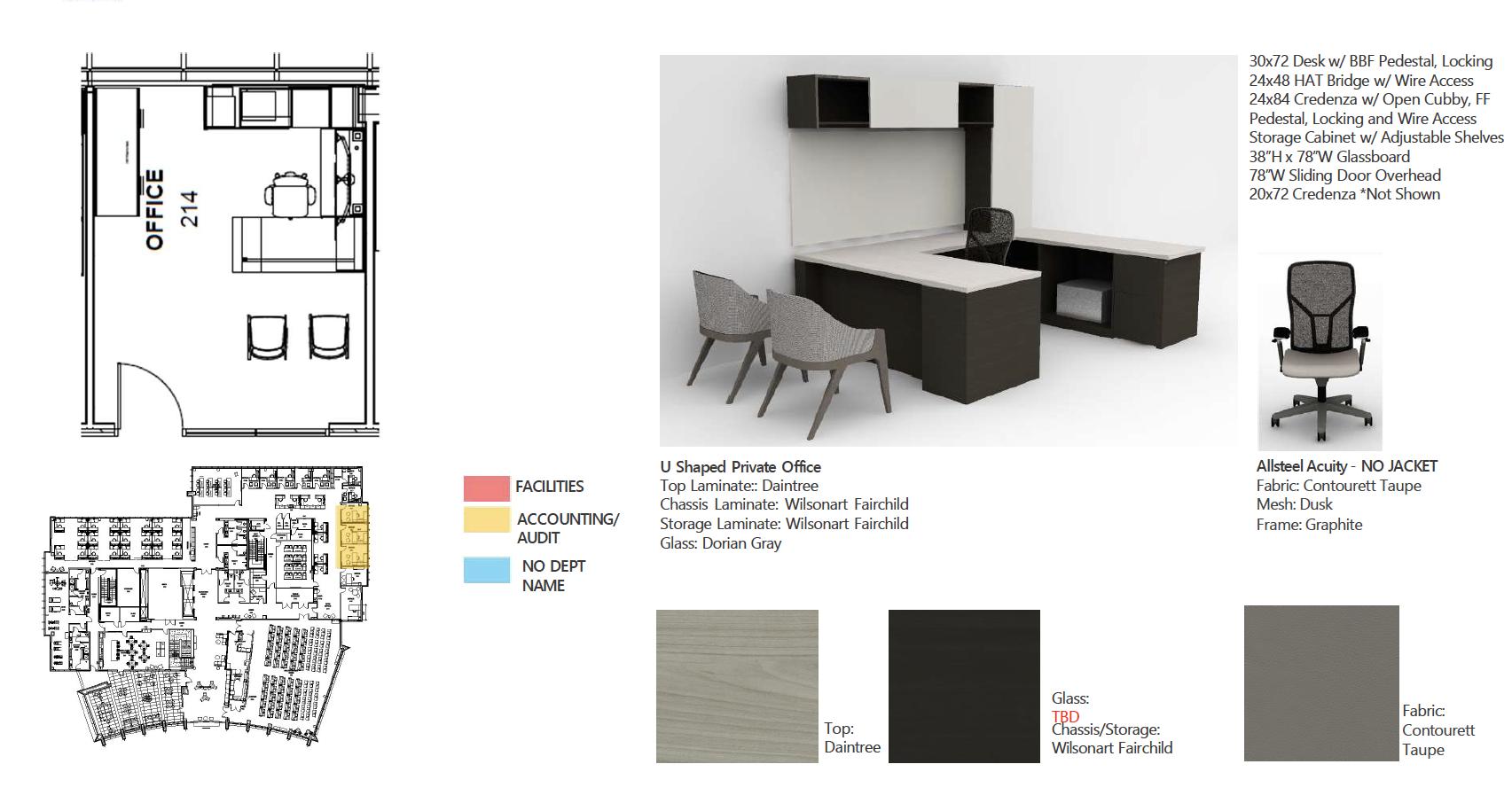
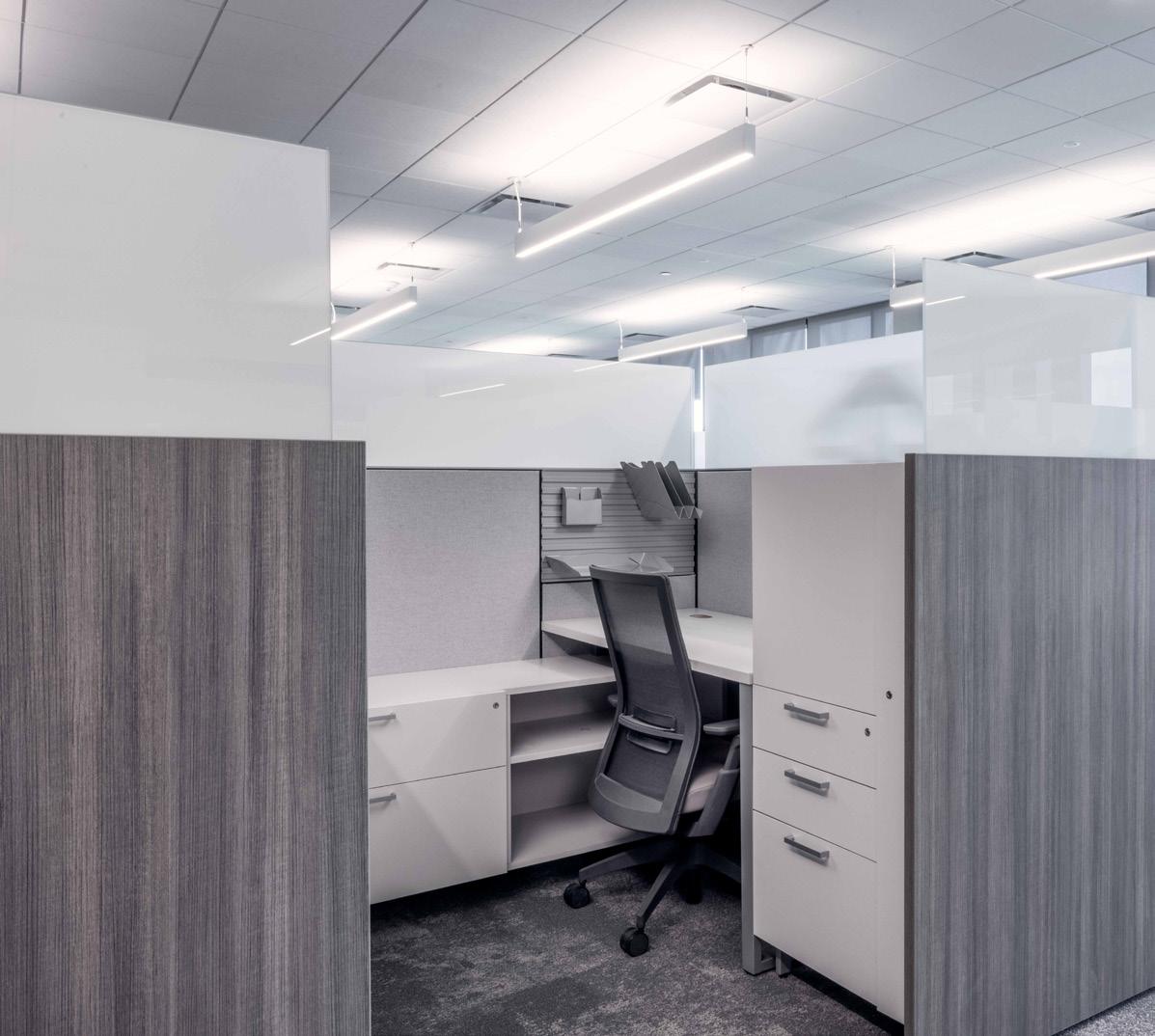
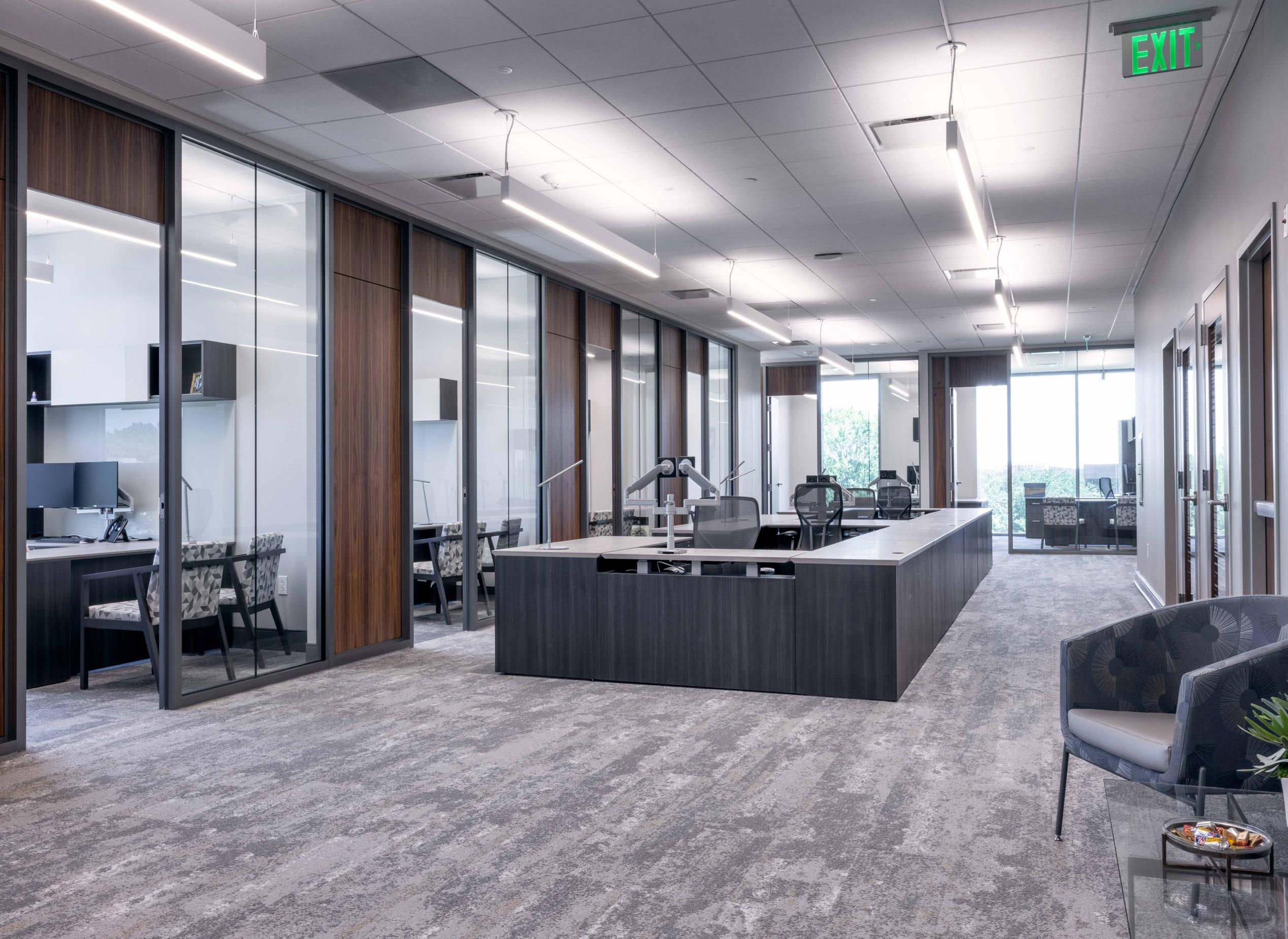
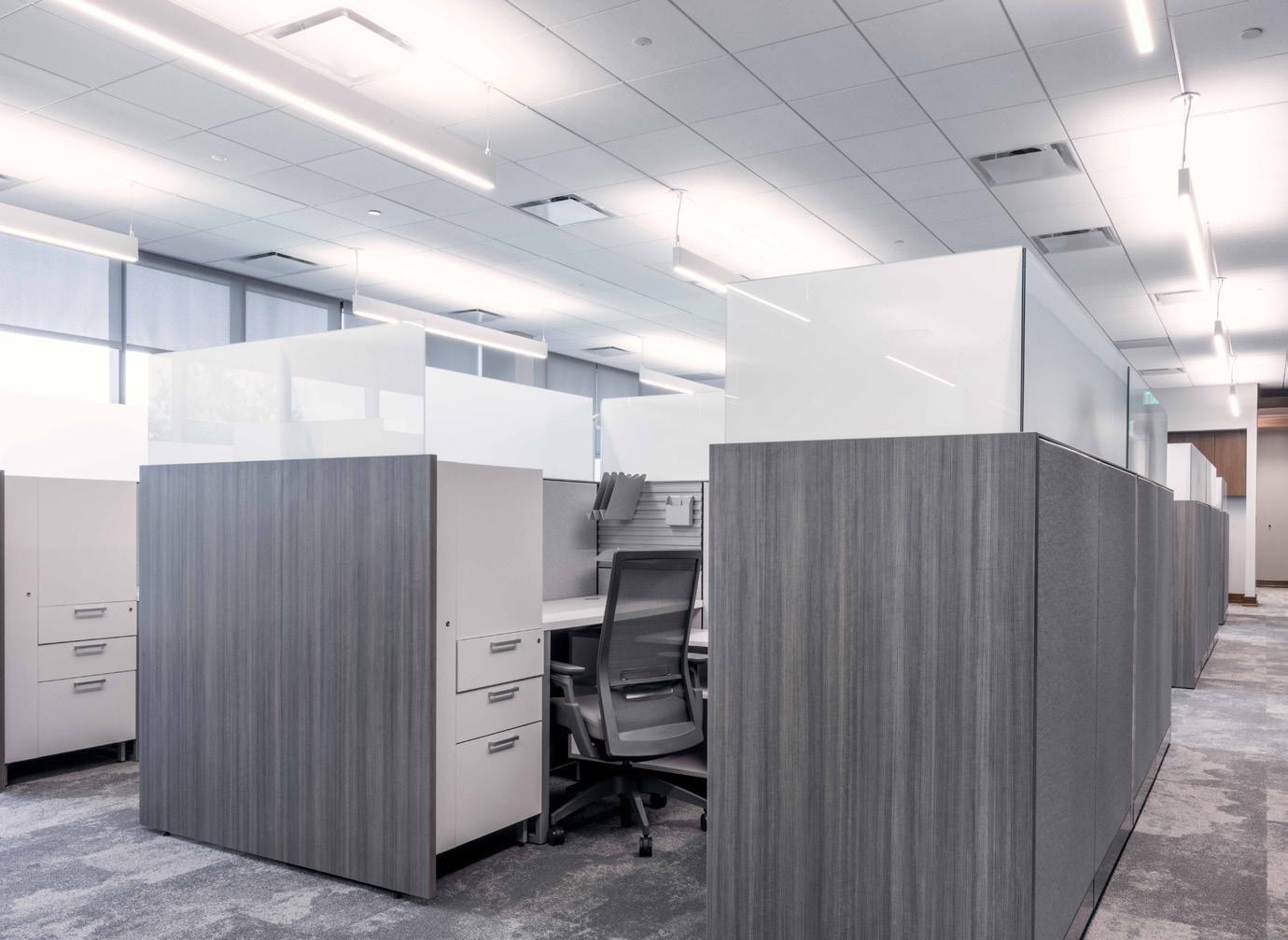
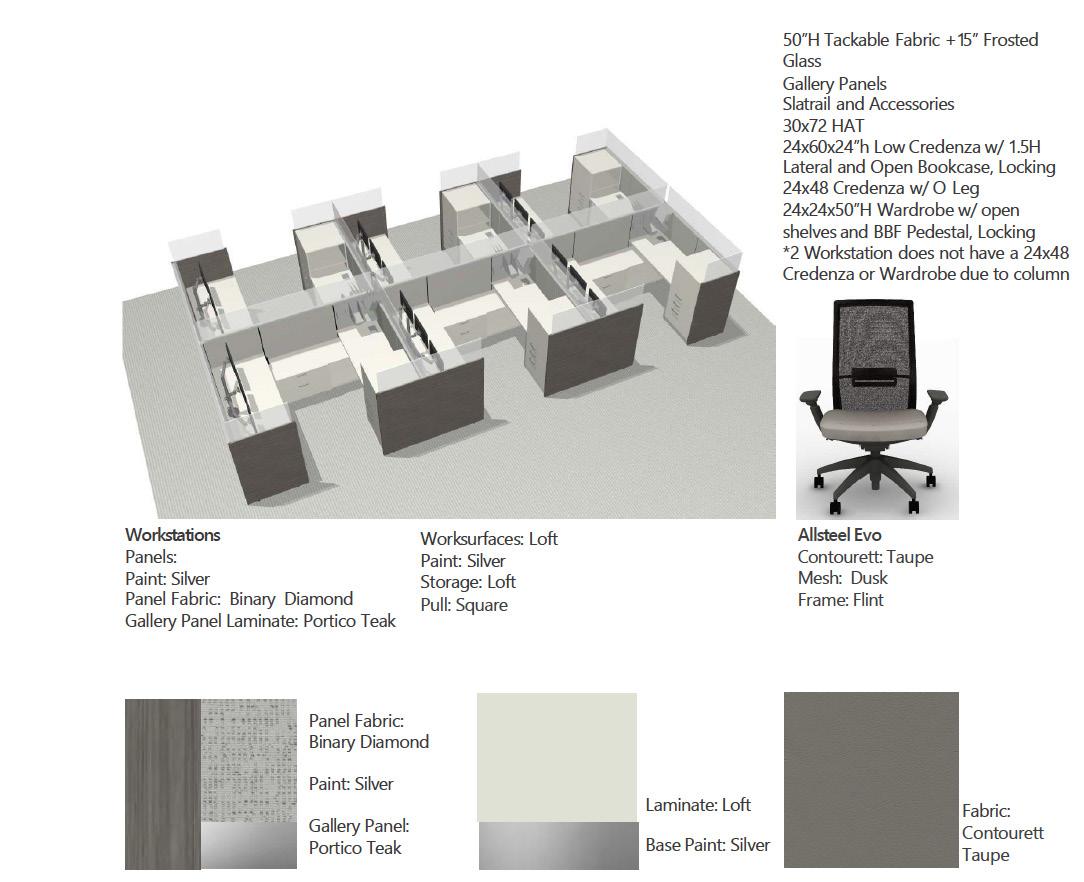
Southern First extended this respect to their employees, working with the design team to establish a design package for workspaces that was timeless, reconfigurable, had appropriate wire management,
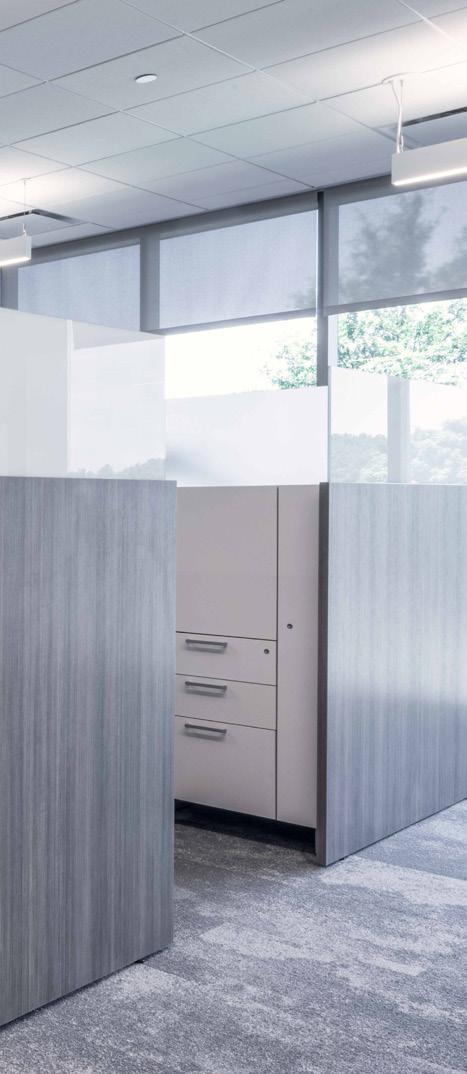
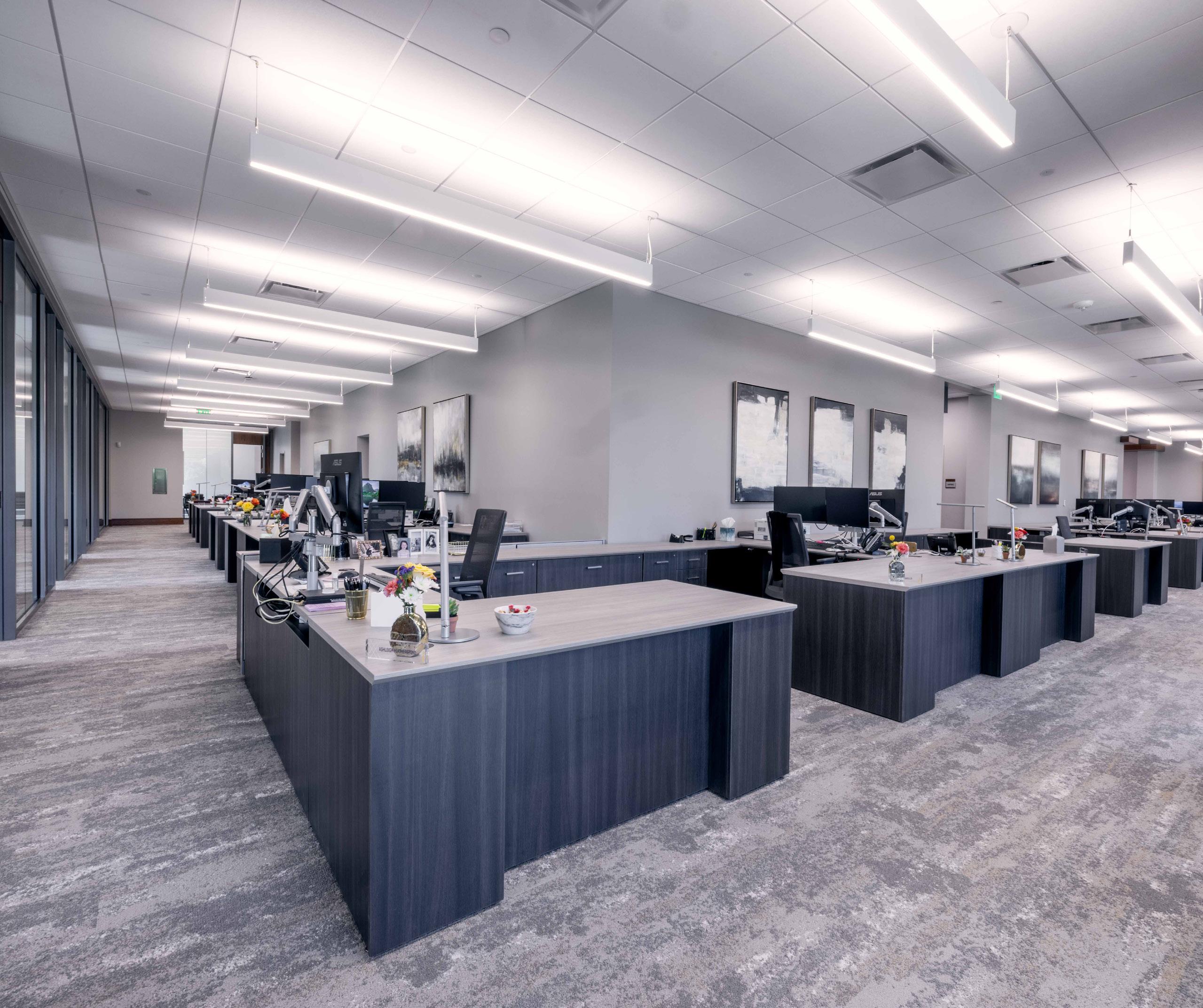
and was able to be personalized by the occupant. Every group’s needs were a little different—some were on the phone more, others deal with sensitive information, some needed extra monitors, etc.—so a “typical” workstation varied depending on the employee group.
Some things remained constant, however: every employee had access to organization accessories like slat rail and work tools, a wardrobe for personal storage, access to natural light, and every workstation and private office had a height-adjustable desk, allowing employees to choose their preferred posture throughout the day.
The Board Room
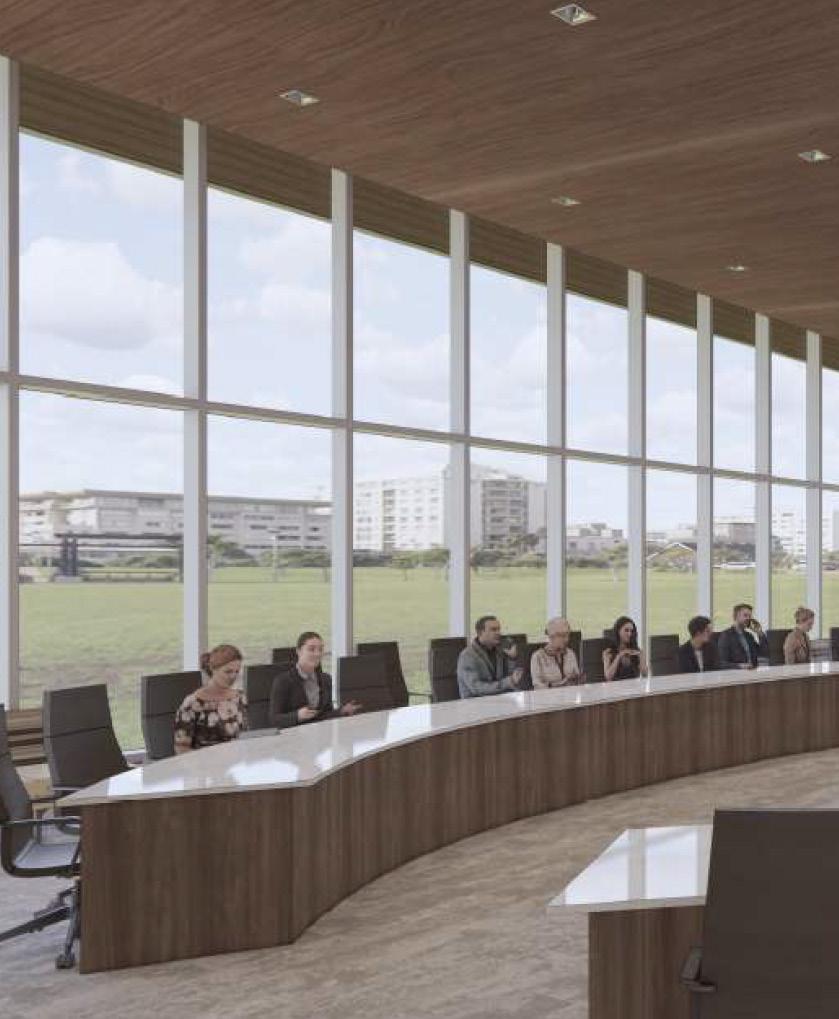
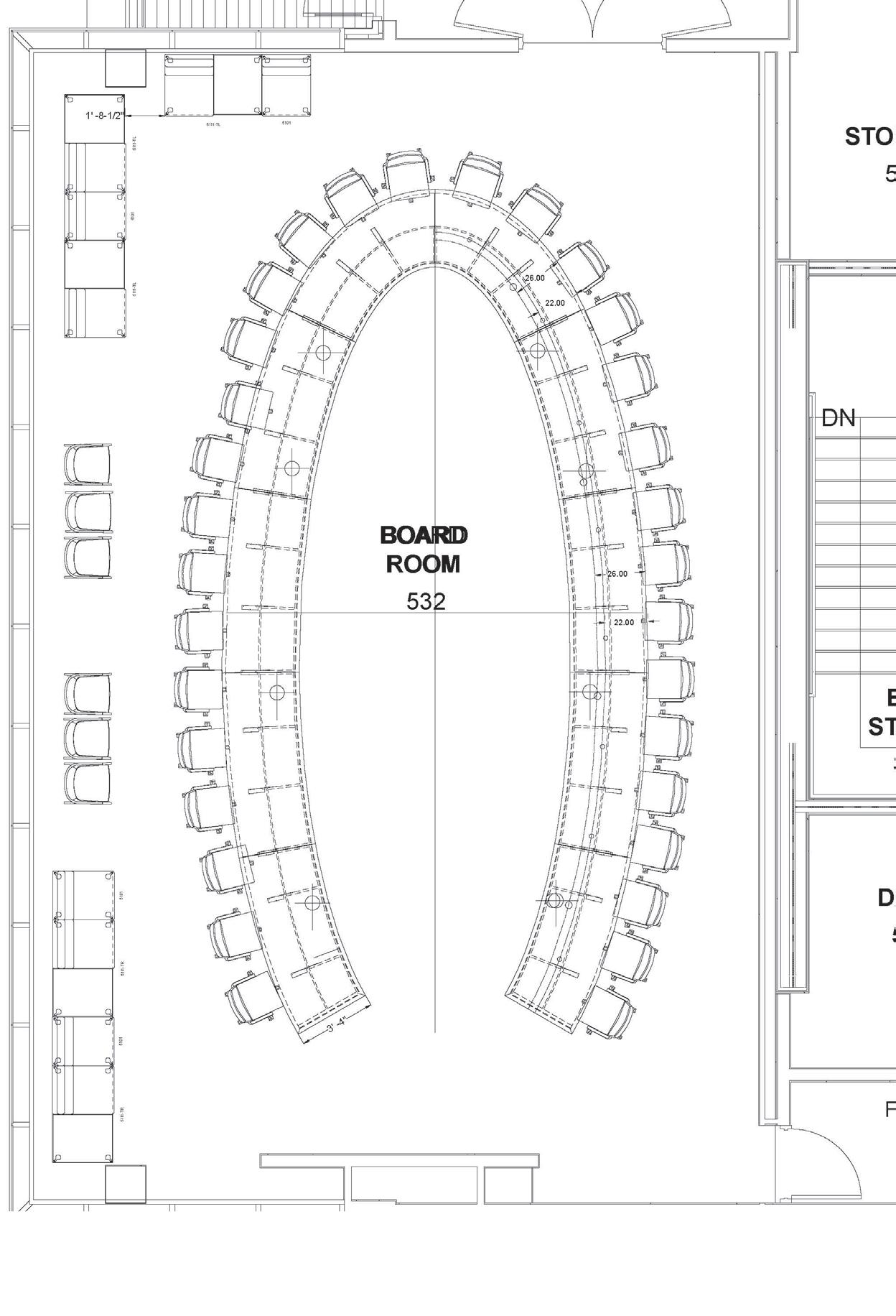
One of the biggest challenges of the project was ensuring that the board room was executed well. The completely custom curved table was designed to seat 36-40 and had to be placed perfectly on the power receptacles in the floor.
The architects worked with the contractors to ensure that the power was located accurately during construction, and Interior Elements worked with the architects to ensure that the table was built to fit on those receptacles exactly.
“We had to reselect the quartz several times due to product shortages,” remarked Caroline Langford. “And getting the finished table into the building was a
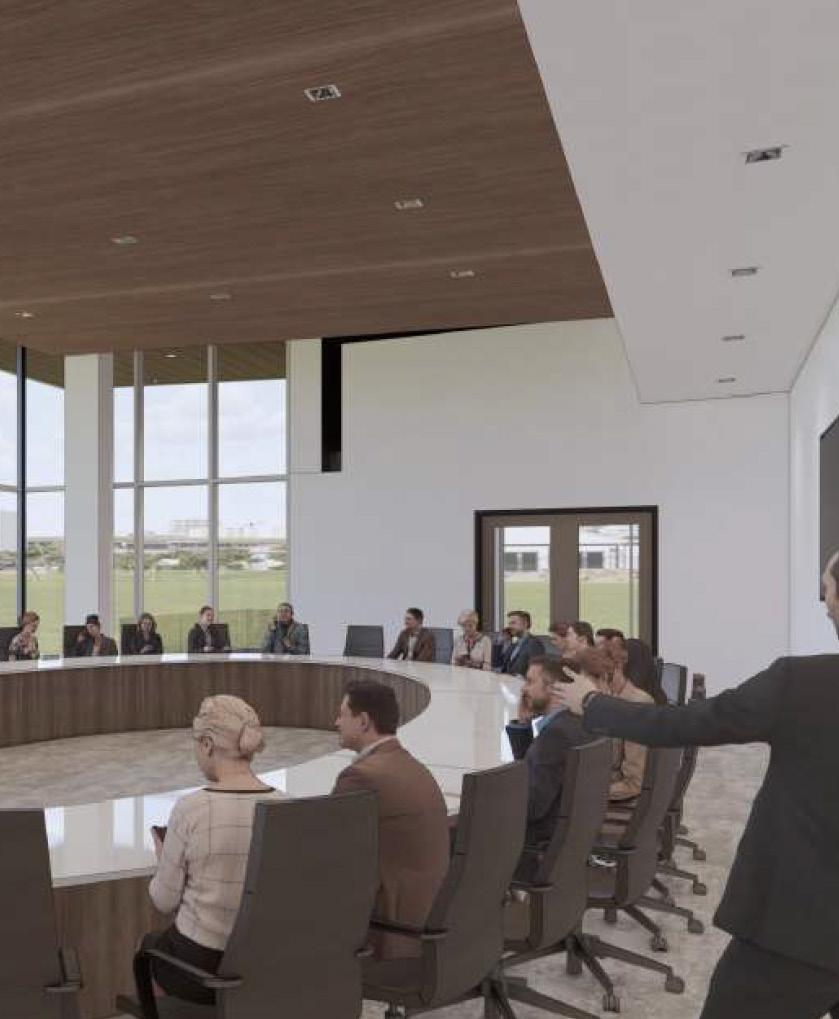
challenge we had to proactively plan for—you couldn’t crane it in, you couldn’t stair carry it—it had to be designed from the beginning to be constructed of pieces that fit into an elevator that wasn’t even built yet.” Becky agreed, stating that “the board room was an engineering feat.”
“What
a mess we would be in if we had not found IE and how good they are at logistics. Furniture vendors have to be flexible, but they went way beyond flexibility.”
--Sandy Boozer, SFB
The Takeaways
Even though the team faced unexpected and unprecedented challenges, the outcome was a triumph for all involved.
“Southern First was a great partner to work with,” said Will Tuten. “A large part of the success are the relationships we built alongside the project, starting with communicating effectively and preparing for potential challenges.”
Of course every project and every client is different. But proactive planning, with thoughtful technology inclusion, and a communication-based and relationshipfirst approach are the playbook that Interior Elements uses when tackling projects of any size.
KEY TAKEAWAYS
A truly collaborative, respectful team approach moves the project forward efficiently and effectively
A prepared and proactive timeline can provide future agility when inevitable challenges arise
Inclusion of thoughtful technology supports, but doesn’t replace, the human component
Coordination and consistent, clear communication through all aspects of the project by all stakeholders supports fulfillment of project goals
SFB New Building Case Study 2022
Project photos copyright High 5 Productions
Stock photos courtesy of pexels.com
Text copyright Anna Ruth Gatlin, Ph.D. For more information about this project or to discuss a future project, visit https://in-elements.com/contact/