MANAGER OF OPERATIONS AND FINANCE Elizabeth Yurkovich eyurkovich@acms.org
BULLETIN STAFF
MANAGING EDITOR
Sara Hussey, MBA, CAE ACMS Executive Director shussey@acms.org
BULLETIN DESIGNER Victoria Gricks koonacreative@gmail.com
2026 BULLETIN EDITORIAL BOARD
MEDICAL EDITOR
Natalie Gentile, MD acmsbulletin@acms.org
EDITOR EMERITA
Reshma Paranjpe, MD
ADDITIONAL MEMBERS
Lillian Emlet, MD
Marsha Haley LoAlbo, MD
Alexandra Johnston, DO
Vinnie Kaschauer OMS-1
Anthony Kovatch, MD
Timothy Lesaca, MD
Najya Williams, MD
EDITORIAL/ADVERTISING OFFICES:
Bulletin of the Allegheny County Medical Society, 850 Ridge Avenue, Pittsburgh, PA 15212; (412) 3215030; fax (412) 321-5323. USPS #072920. PUBLISHER: Allegheny County Medical Society at above address.
The Bulletin of the Allegheny County Medical Society is presented as a report in accordance with ACMS Bylaws.
The Bulletin of the Allegheny County Medical Society welcomes contributions from readers, physicians, medical students, members of allied professions, spouses, etc. Items may be letters, informal clinical reports, editorials, or articles. Contributions are received with the understanding that they are not under simultaneous consideration by another publication.
Bulletin of the Allegheny County Medical Society reserves the right to edit all reader contributions for brevity, clarity and length as well as to reject any subject material submitted.
The opinions expressed in the Editorials and other opinion pieces are those of the writer and do not necessarily reflect the official policy of the Allegheny County Medical Society, the institution with which the author is affiliated, or the opinion of the Editorial Board. Advertisements do not imply sponsorship by or endorsement of the ACMS, except where noted.
Publisher reserves the right to exclude any advertisement which in its opinion does not conform to the standards of the publication. The acceptance of advertising in this publication in no way constitutes approval or endorsement of products or services by the Allegheny County Medical Society of any company or its products.
Annual subscriptions: $60
Advertising rates and information available by calling (412) 321-5030 or online at www.acms.org.
COPYRIGHT 2026: ALLEGHENY COUNTY MEDICAL SOCIETY POSTMASTER – Send address changes to: Bulletin of the Allegheny County Medical Society, 850 Ridge Avenue, Pittsburgh, PA 15212. ISSN: 0098-3772
When Autonomy Fades
A LETTER FROM THE ACMS BULLETIN MEDICAL EDITOR
I got to sit in on the most recent ACMS Board Meeting, and the conversation was riveting. But before getting to the details, some context is important.
Medicine has changed dramatically in a short period of time. As healthcare systems consolidate, physicians are spending more time navigating metrics, productivity targets, and administrative burdens, and less time shaping care delivery. Many feel they have lost agency over how they practice medicine.
In Pittsburgh, healthcare systems are among the region’s largest employers and most influential institutions. The overwhelming majority of physicians now work within large employed models, while independent private practice continues to shrink.
Because of this, physician autonomy is no longer an abstract concern. It directly affects patient care, physician retention, burnout, and the future of the profession.
So now to the board meeting. The topic of “collective bargaining” came up. For many physicians, collective bargaining evokes images of traditional labor unionization. But this conversation is not fundamentally about labor politics; it is about physician representation in environments where individual negotiating power has steadily diminished. Over the past several months, I have watched many of my colleagues navigate contract negotiations within a rapidly
written by NATALIE GENTILE, MD
changing healthcare model that increasingly distances physicians from decision-making and professional agency. In fact, this is happening in real time in Pittsburgh, as our colleagues in primary care and some specialties are working with lawyers to address increasing pressures from large healthcare systems around unrealistic patientfacing hour requirements, opaque RVU reporting and tracking, noncompetes, and more.
Collective bargaining is not inherently adversarial, and it is not about abandoning professionalism. It is about ensuring physicians have a meaningful voice in decisions that affect clinical practice and working conditions. Physicians deserve representation proportional to their responsibility.
These concerns extend to safe staffing, clinical decisionmaking, scheduling expectations, administrative burden, compensation transparency, and protection from retaliation when advocating for patients. When physicians lose influence over the practice of medicine, patients lose as well.
Organizations like ACMS are uniquely positioned to help physicians navigate this evolving landscape because Pittsburgh is uniquely shaped by healthcare consolidation. A small number of large systems influence the regional healthcare landscape. Many physicians feel professionally isolated despite working within massive institutions. Younger
physicians increasingly enter employment models with little negotiating power. Conversations about collective advocacy and bargaining are no longer theoretical here.
This is not about dismantling healthcare institutions, but about creating healthier partnerships between physicians and systems.
The stakes are high for the future of medicine, and the pressures facing physicians are becoming increasingly difficult to ignore. As one board member observed during the discussion, “physicians are waking up.” Autonomy and agency are crucial in preventing moral injury and physician exodus. We are seeing more and more physicians leaving medicine entirely, and early retirement is becoming increasingly common.
A profession that cannot advocate for itself will struggle to advocate effectively for its patients.
ACMS is uniquely positioned to encourage thoughtful discussion and meaningful physician engagement in leadership, advocacy, and governance. As healthcare continues to evolve, physicians must remain active participants in shaping the systems in which they practice, not simply carrying out decisions made for them. Preserving the physician voice is not simply about professional satisfaction; it is essential to protecting the future of patient care itself.
T R Y Mergers, acquisitions, and joint ventures Practice management and employment law HIPAA, ACA, and fraud & abuse compliance Contract negotiations and provider agreements Medicare/Medicaid audits and reimbursements Medical staff credentialing, peer review, and licensing
Jessica A. Ellel Chair of Health Care Practice jaellel@hh-law com 412 288 2260 Contact
Courteny N Hager hagercn@hh-law.com 412-288-2266
Stronger Together
WHY YOUR ACMS MEMBERSHIP HAS NEVER MATTERED MORE
written by GEOFFREY F.S. LIM, MD – CHAIR OF ACMS MEMBERSHIP TASK FORCE
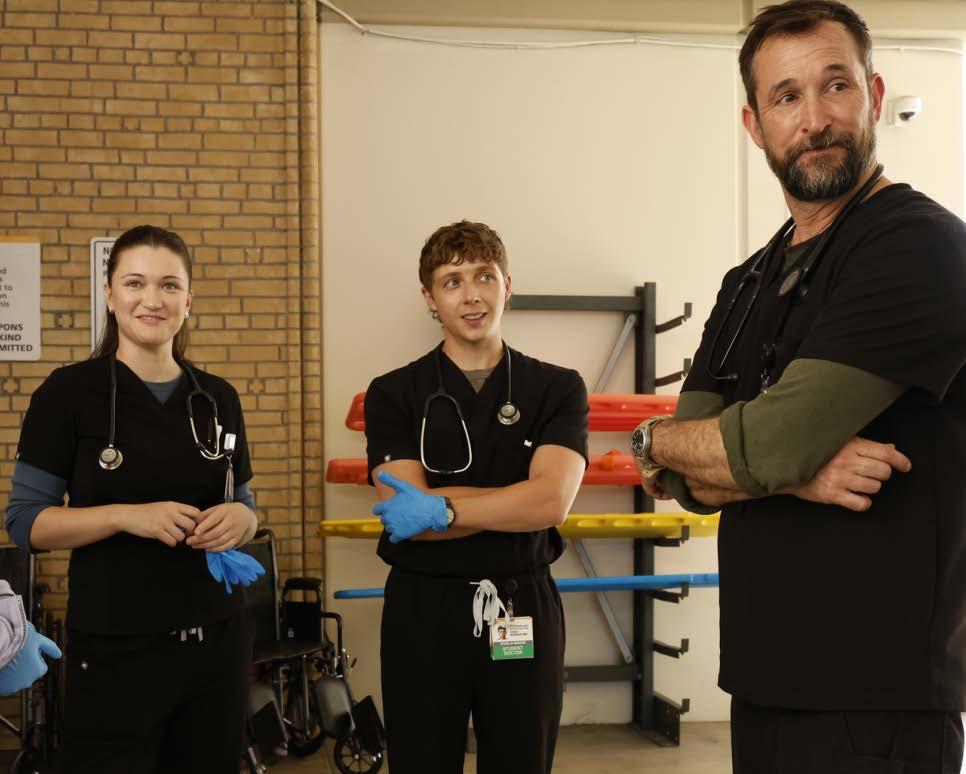
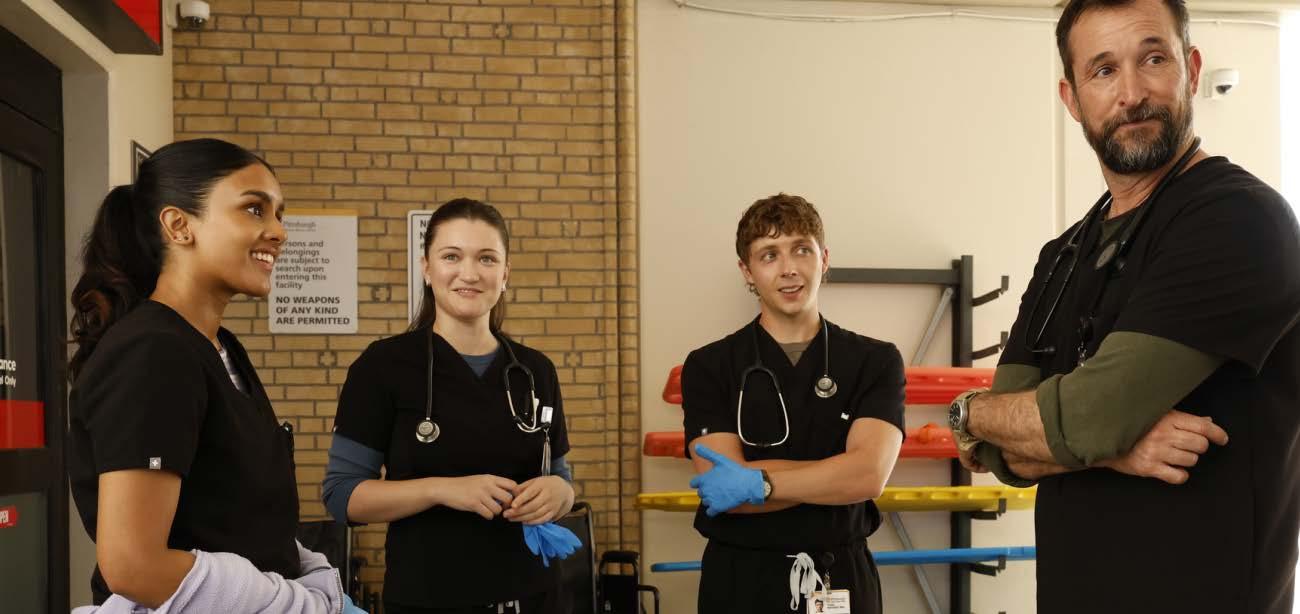
If you have not yet tuned into HBO Max’s The Pitt, you may want to clear an evening. The medical drama, which is set entirely within a single 15-hour shift in a Pittsburgh emergency department, has drawn widespread acclaim for its unflinching, minute-by-minute portrayal of what it actually feels like to practice medicine today. No heroes. No easy answers. Just physicians, nurses, and staff navigating a relentless tide of patients, administrative pressures, moral injuries, and personal exhaustion while leaning on one another to get through it.
For many of us watching, it felt less like fiction and more like a mirror.
The show’s central truth—that no physician survives this work alone— is precisely the reason the Allegheny County Medical Society exists. It is
also why your membership matters more right now than perhaps at any point in our organization’s history.
THE SHIFT THAT NEVER ENDS
In The Pitt, each episode represents one hour of a single grueling shift. There’s no reset and no clean break between patients. The weight accumulates clinically, emotionally, and professionally until the people carrying it have no choice but to rely on each other.
Sound familiar?
Our careers have increasingly come to feel the same way. The challenges facing physicians in Allegheny County (and across the country) do not clock out. Prior authorization battles bleed into evenings. EHR documentation consumes hours that should belong to patients or families. Reimbursement pressures
squeeze practice margins down to the bone. Workforce shortages leave remaining staff stretched beyond reasonable limits. Regulatory burdens multiply year after year. Beneath it all, physician burnout has reached levels that represent a genuine public health crisis.
None of these problems are yours alone. Every physician reading these words has felt some version of them. That shared experience is not incidental. It is the foundation on which organized medicine was built and the reason collective action through your medical society remains indispensable.
WHAT BANDING TOGETHER ACTUALLY LOOKS LIKE
One of the most compelling elements of The Pitt is watching physicians with vastly different backgrounds, specialties, and
Image courtesy of The Hollywood Reporter
temperaments discover that their survival, both clinical and personal, depends on trusting the team around them. The attending who has been doing this for decades and the resident just finding her footing both need the same thing: people who understand what they are going through and who have their back.
The ACMS is that team for physicians across every specialty and practice setting in Allegheny County. When you are a member, you are not a solo practitioner navigating an indifferent system. You are part of a community of colleagues actively working to improve the conditions in which we all practice.
That work takes many forms.
The ACMS advocates before the Pennsylvania Medical Society and directly with legislators on issues such as scope of practice, prior authorization reform, and Medicaid reimbursement rates. We convene physicians across specialties to develop local consensus on public health priorities. We support physicians in crisis through wellness resources and peer connection programs. We offer continuing medical education, practice management tools, and networking opportunities that connect earlycareer physicians with mentors and colleagues who can help them build sustainable careers in this region.
None of that happens without members. Advocacy carries weight proportional to the number of physicians standing behind it. A medical society with a broad, engaged membership commands attention in Harrisburg and in health system boardrooms in a way that individuals, no matter how accomplished, simply cannot.
THE COST OF GOING IT ALONE
There is a recurring tension in The Pitt between the physician who tries to absorb everything independently—the one who insists they are fine, refuses help, closes the door, and carries it alone—and the physician who learns, often the hard way, that isolation makes everything worse. The show does not romanticize either approach. It shows honestly what the weight of this work does to people who carry it without support.
Physician disengagement from organized medicine carries its own version of that cost. When physicians opt out (understandably, given how much is already being asked of us), the organizations that exist to represent our interests lose the very numbers that give them power. Decisions about how medicine is practiced, reimbursed, and regulated do not wait for physicians to re-engage. They are made with or without our input. The question is simply whether our voice is in the room.
THIS IS YOUR ORGANIZATION
The ACMS is not an abstraction. It is run by physicians, for physicians, in this county. The task forces, committees, and leadership positions within the society are filled by people who share your waiting rooms, your call schedules, and your frustrations. When you bring a concern to the ACMS, whether about a regulatory burden, a practice challenge, or a public health issue you are seeing at the bedside, you are bringing it to colleagues who understand it in the same way you do.
Membership is also your entry point into shaping what this organization does. Committees need physicians with clinical and community expertise. Task forces
need people willing to translate the pressures they experience daily into policy positions that can actually move. Mentorship programs need senior physicians willing to invest in the next generation. These are not ceremonial roles. They are the mechanism by which the ACMS remains relevant and effective.
THE SHIFT CONTINUES, TOGETHER
By the end of The Pitt’s first season, what stays with the viewer is not any single dramatic moment. It is the cumulative picture of what it takes to endure: the small acts of covering for a colleague, the conversations in the break room, and the willingness to say, “I see what this is doing to you,” and mean it. The show understands, in a way that feels earned, that medicine is not sustainable as a solitary endeavor.
The same is true of the profession at large. The structural forces bearing down on physicians in 2026 are not going to yield to individual resolve. They require organized, sustained, collective action, the kind that only happens when physicians choose to show up for one another through institutions like the ACMS.
If your membership has lapsed, we hope you will renew. If you have never joined, we hope you will consider becoming part of the organization. If you are already a member, thank you, and please encourage a colleague to join you.
The shift is long. It is harder alone. Let’s face it together.
To renew or join the Allegheny County Medical Society, please visit www.acms.org or contact the ACMS office directly.
ON LOSING TO MACHINES
ARTIFICIAL INTELLIGENCE AND THE EVOLVING IDENTITY OF THE PHYSICIAN
written by VINCENT J. KASCHAUER – FIRST YEAR MEDICAL STUDENT AT DUQUESNE UNIVERSITY NASUTI
THE FIRST LOSS: LEARNING I CANNOT WIN I never beat the computer at chess. Not once. I tried when I was younger, sitting cross-legged on the floor with my iPad on a pillow, clicking icons forward with the optimism that comes from not yet understanding. I studied openings. I memorized moves. I learned how to build pressure on the queenside and when to trade lesser pieces. It did not matter. It never mattered.
The computer never rushed. It never swore out of frustration. It just operated.
Eventually, I stopped playing. I told myself chess was not all that important.
Years later, in medical school, I would recognize that same feeling in myself again. Medical school trains
COLLEGE OF OSTEOPATHIC MEDICINE
you to believe in effort. If you work hard enough, you will succeed. If you memorize enough pathways, understand enough mechanisms, and practice enough questions, you will become competent. So, I work. I sit at my desk until my shoulders ache. I wake up early and go to bed late and tell myself this is what it feels like to become a physician. But in the background of it all is a quiet awareness: the machine already knows this. I am back playing chess.
WHEN CHESS BECAME MEDICINE
Lately, the conversations are louder. People speak about it casually now, not if, but when. I read about artificial intelligence (AI) drafting legal briefs, algorithms automating customer service, and tools reducing the need for jobs once thought secure. Entire professions are being asked to reconsider what parts of their work
are uniquely human, and which parts may be delegated to machines.
Medicine does not feel separate from those questions. I hear about AI systems detecting changes in imaging, creating differential diagnoses in a fraction of the time it takes a clinician, and taking on tasks that once belonged entirely to trained professionals. Mentors and peers speculate about which specialties may change most. Sometimes those conversations leave me wondering not which field will be affected, but whether those of us entering medicine now are simply arriving at a profession already being transformed beneath our feet.
What further complicates that anxiety is seeing that AI is not only something discussed in theory; it is already being incorporated
into clinical practice. I hear physicians describe using tools like OpenEvidence to rapidly review evidence, verify treatment considerations, or navigate evolving literature at the point of care. Not as a replacement for judgment, but as an extension of it, a way of managing the volume of medical knowledge no individual can fully hold alone, all at once. Watching practicing physicians use these tools makes it harder to frame AI simply as a threat. It suggests something more nuanced: that the future of medicine may not belong to physicians or machines, but increasingly to physicians learning how to work with machines.
The irony of my fear is that AI has already become part of how I learn medicine. I use it to generate practice questions when I need to test whether I truly understand a concept rather than merely recognize it as a choice. I use it to explain topics in simpler language when it feels too dense to grasp the first time through. In a way, AI has not arrived in some distant future for me; it is already at my desk, folded into my studying. And that complicates my fear. Because the technology I sometimes worry may one day diminish my role as a physician is also helping me become one. I do not simply see AI as a competitor, but as a tool, a tutor, and at times even a kind of sparring partner.
And yet, there are moments when that relationship feels less like collaboration and more like confrontation. Sometimes the questions it generates are harder than I expect, exposing gaps in my reasoning I did not know were there. Sometimes I ask for help understanding a concept and receive an explanation so immediate and organized that I
feel, for a moment, diminished by comparison. There are days when working beside something so fast, so knowledgeable, and so seemingly tireless leaves me feeling insufficient, as though my own slow and imperfect process of learning is being quietly measured against a standard I cannot meet. It can feel belittling, not because the machine intends judgment, but because it reflects back my limitations with unsettling clarity.
A thought echoes through me: If AI can diagnose better than me, why am I here?
I am learning lab values that can be retrieved in milliseconds. I am practicing differential diagnoses that software can generate instantly. I am building clinical reasoning skills that are already being benchmarked against algorithms trained on multitudes of cases. And yet, perhaps that discomfort is also part of education. To learn medicine is, in some sense, to be humbled repeatedly. AI has become another mirror in which I encounter that.
CHECKMATE:
THE MOVE ONLY HUMANS CAN MAKE
What nobody tells you is that replacement does not feel dramatic. There is no sudden moment where the machines arrive and escort everyone out. It happens quietly. First, they assist. Then they recommend. Then they outperform. Then they become standard. And eventually, they become invisible. Like electricity. Like the internet. Like every other technology that reshaped the world without asking permission.
And I am the student who is just now starting his medical education. I sit with that often. How I dreamed of this career since I was a child, just to see it get refined by soulless
algorithms. I think about the years ahead. The rotations. The call nights. I think about how much of myself I am pouring into a profession whose shape I cannot fully see. Some days it feels foolish. Some days it feels brave. Maybe AI will diagnose faster. Maybe it will predict outcomes better. Maybe it will one day design treatment plans more elegantly than I ever could.
But medicine is not only diagnosis. It is witness. It is presence. It is walking into rooms where people are having the worst day of their lives and staying.
I think back to chess. The computer always won.
But it never felt discouraged afterward. It never wondered whether the game mattered. It never questioned its place on the board. I did. And maybe that questioning is the point. I am not here because I will outperform machines. I am here because when someone tells me they are scared, something shifts inside me. Because I can be tired and imperfect and still show up. Because I can learn not just anatomy and physiology, but humility. Because I can grow alongside the technology instead of surrendering to it. My only true purpose is not to conquer disease or defy death, but to serve the suffering and restore what it means to be human.
The future of medicine will not look like the past. I accept that. So, I keep studying to be a part of that future. Winning against machines means understanding that being a physician was never about winning against intelligence, but about serving where intelligence alone is not enough.
Shaping the Future
NOMINATIONS NOW OPEN FOR THE 2027 ACMS LEADERSHIP POSITIONS
JOIN THE BOARD OF DIRECTORS & ACMS HOUSE OF DELEGATES! NOMINATIONS DUE: JULY 15, 2026.
JOIN THE ACMS DELEGATION TO THE PAMED HOUSE OF DELEGATES ON OCTOBER 22 - 24, 2027.
BOARD POSITIONS
For the 2027 membership year, the ACMS Board of Directors will seek to fill six vacancies: five fullterm seats and one partial-term seat.
WHY JOIN THE BOARD?
• Influence and Impact: Shape the future of healthcare and make your voice heard in crucial decisions.
• Networking: Connect with leading professionals and create invaluable relationships.
• Professional Development: Gain leadership experience and new skills that will propel your career forward.
• Personal Fulfillment: Make a difference in your community and be part of something bigger.
KEY DETAILS
• Meetings: Four times a year (quarterly) with a preference for in-person attendance.
• Special Meetings and Events: Attend exclusive leadership socials and legislative events.
• Eligibility: Open to all ACMS physician members in good standing.
WHY BECOME A DELEGATE?
• Make a Difference: Play a key role in shaping policies that affect the medical community.
• Grow Your Network: Meet and collaborate with peers and leaders in the field.
• Boost Your Career: Enhance your resume and gain valuable experience in governance.
KEY DETAILS
• Delegates: Serve for two years (up to three consecutive terms).
• Alternate Delegates: Serve for one year with unlimited consecutive terms.
• Attendance: In-person participation is highly encouraged to make the most of this experience.
HOW TO NOMINATE
To nominate yourself or a colleague, use our online submission portal at www.acms.org/ nominations/. For questions, contact ACMS Executive Director Sara Hussey at shussey@ acms.org or Richard B. Hoffmaster, MD, Nominating Committee Chair and ACMS President-Elect, at board@acms.org. Don’t miss this chance to elevate your career and contribute to the medical community in a meaningful way. This next seat could be yours!
Who Inspires You?
NOMINATIONS FOR ACMS DISTINGUISHED AWARDS ARE NOW OPEN
The Allegheny County Medical Society (ACMS) Distinguished Awards celebrate outstanding contributions to healthcare, leadership, and community service. Mark Goodman, MD, Awards Chair, is pleased to announce nominations are now open and will be accepted through July 24, 2026. Honorees will be recognized at the ACMS Annual Meeting and Distinguished Awards Program scheduled for Thursday, November 12, 2026, in the UPMC Club at Acrisure Stadium.
These awards celebrate excellence in both clinical practice and community impact, recognizing physicians and non-physicians alike who exemplify the highest ideals of service, leadership, and compassion in medicine. We invite you to nominate deserving colleagues, organizations, and community partners using the online ACMS Distinguished Awards Nomination Form.
AWARD CATEGORIES
The ACMS Distinguished Awards are presented in two primary categories: community awards and physician awards.
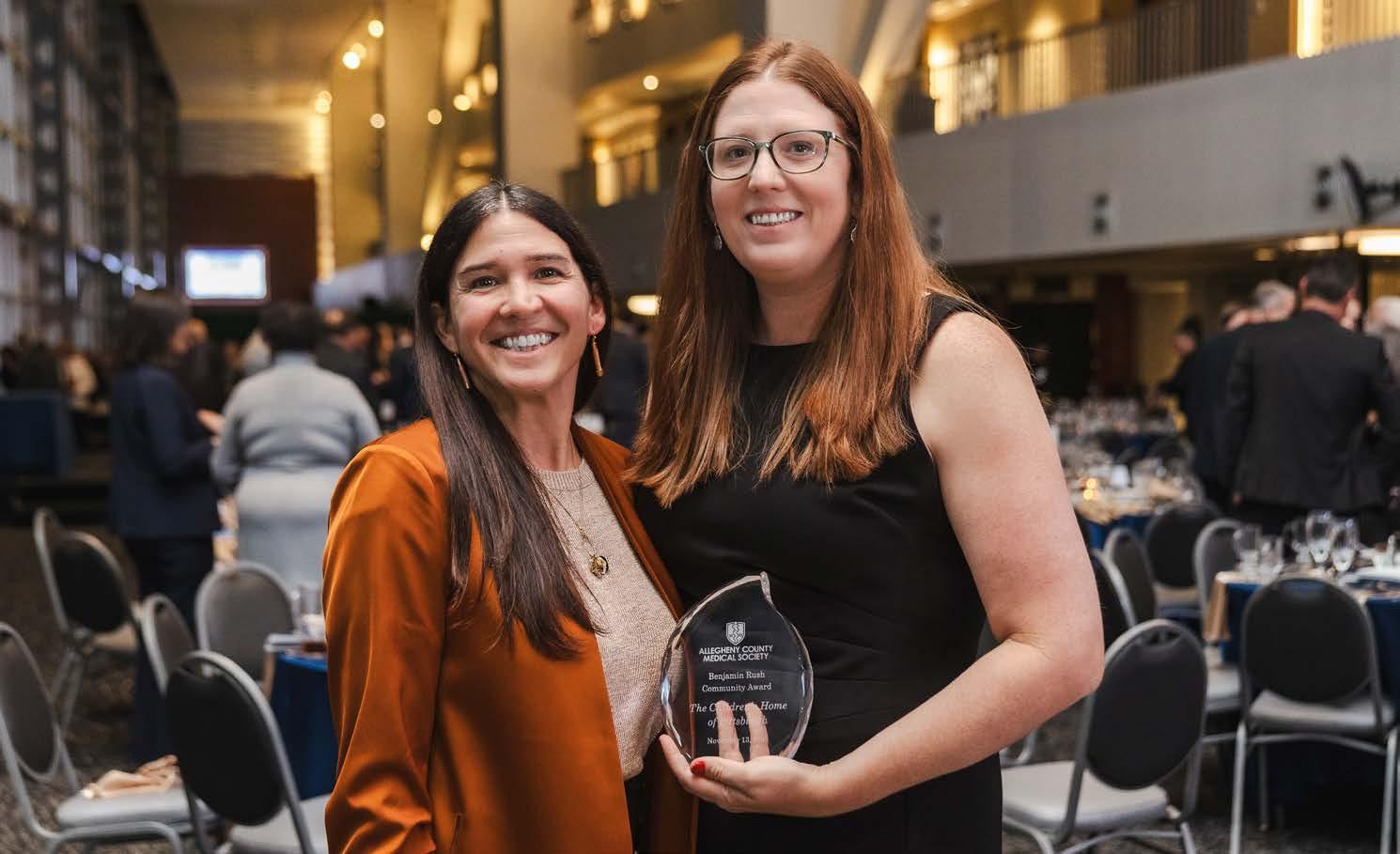
Community Awards – Benjamin Rush Awards
These honors recognize the essential contributions of nonphysician individuals and organizations that strengthen public health and improve the well-being of our communities.
• Benjamin Rush Individual Award: Presented to a nonphysician who has made significant contributions to the health and well-being of the community.
• Benjamin Rush Community Organization Award: Recognizes an organization that addresses critical community health needs and improves quality of life.
Physician Awards
These awards recognize physicians whose work reflects exceptional commitment to patient care, professional leadership, and compassionate service.
• Nathaniel Bedford Primary Care Award: Honors a primary care physician who demonstrates extraordinary commitment to comprehensive, patient-centered care.
• Ralph C. Wilde Leadership Award: Recognizes exceptional physician leadership in clinical care, medical education, and professional service.
• Richard E. Deitrick Humanity in Medicine Award: Celebrates physicians who exemplify compassion, respect, integrity, and humanity in caring for patients and families.
In addition, the Spirit of Service Award is presented to an ACMS member in recognition of their extraordinary dedication to public service and physician advocacy. The awardee is selected by the leadership of the Allegheny County Medical Society.
The ACMS Distinguished Awards celebrate the very best in medicine, not only excellence in clinical practice, but also leadership, compassion, advocacy, and service to others. We encourage you to reflect on the individuals and organizations in your professional or community circles whose contributions deserve recognition in 2026.
Your nomination is an opportunity to honor those who make a lasting difference in the lives of patients and the health of our communities.
Visit https://www.acms.org/ acms-distinguished-awardsnominations-2026/ to learn more and to nominate someone today.
Camp Doctor
WHAT HAPPENS WHEN YOU’RE THE DOCTOR AND THERE’S NOWHERE ELSE TO GO
written by RICHARD H. DAFFNER, MD, FACR
State laws require that every overnight summer camp have medical personnel tending to dayto-day medical issues. In most cases the on-site medical team consists of either a Registered Nurse (RN) or an Emergency Medical Technician (EMT), or both. Larger camps usually have multiple qualified people. In addition, camps are also required to have a nearby physician available for consultation, as well as ready access to the nearest hospital emergency department. If the Camp Directors know there is already a physician in attendance (as a unit leader), they will frequently call upon them for advice and/or treatment.
I have been a scout leader for 50 years. I have been attending summer camp for up to two weeks since 1981 (skipping 2020 because of Covid). Many of our physician members can attest to being asked for medical
advice when participating in similar activities. After I had experienced my first summer camp as a physician, I asked a lifelong friend and medical school classmate, Dr. James Strosberg (Jimmy) what my responsibilities would be as a “Camp Doctor”. He told me that I was already known for having and using good judgement, and that I had the requisite skills necessary to do the job. Then he pointed out that there were only two decisions to be made with each patient: 1). Is this something that I can treat here (in camp)? or 2). Do I need to send this patient to the nearest hospital? And, in fact, over the years that I was consulted, those were the only two situations I had to address.
So, how was a diagnostic radiologist qualified for such a position? During my two-year tour of duty in the Air Force I was a General Medical
Officer (GMO) working in a wellstaffed base hospital (later dubbed a medical center) in a Family Practice situation. The GMOs were responsible for staffing the Emergency Department (ED) during the day and being one of the two physicians on duty in the ED after hours and on weekends. The other physician was a hospital specialist. The medical corpsmen functioned as physician’s assistants, drawing blood, starting IVs, and suturing nonfacial lacerations. Facial lacerations were sutured by the physicians. In that regard, our hospital’s one plastic surgeon gave the GMOs a hands-on tutorial on performing basic plastic repairs and requested to be called only for complicated lacerations.
Following my military service, I began my residency at Duke. During that time, I moonlighted first in an Emergency Room in a small
community hospital an hour away, as well as covered the practice of the sole physician in rural Caswell County, about 45 minutes away. After residency I was the team physician to the Louisville Blades hockey team and later coach and team physician to the Duke hockey club. All those experiences qualified me to sit for the inaugural examination of the American Board of Emergency Medicine.(at that time there were no Emergency Medicine residencies). I am also a certified Wilderness First Aid instructor.
What sort of things did I deal with?
The staff medics typically dealt with minor cuts and bruises, poison ivy, bee stings, minor burns (the scouts cooked their own meals), and cases of homesickness. I was called for advice on broken bones (send), firecracker injury with missing fingers (Life Flight to facility with a hand surgeon), appendicitis (send), copperhead bite (send), and hypothermia (treat on site).
Regarding lacerations that required suturing, I had several options. The camps stocked a supply of suture material in their infirmaries, to be used by physicians only. I had medical licenses in Pennsylvania and North Carolina. Although I retired in 2013, I kept both licenses active for five years. In 2018 I surrendered my North Carolina license and converted my Pennsylvania license to “Active Retired” - a status that allowed me to treat and prescribe for family only. Before 2018, if a patient with a laceration that needed suturing was an adult, I offered them two choices: go to the local hospital ED, or I could do the repair at camp. If the patient was a child whose parent was with him/her (yes, we had moms and girls at camp), I would offer the same option; if there was no parent, we would send the child to the local
ED. After 2018, I no longer did any suturing.
Some consultations were challenging. Eight years ago, while attending the Wednesday night campfire, the Camp Director and one of the camp medics approached me and handed me an EKG that had been obtained on one of the senior camp staff, a 60-year-old man. The tracing was abnormal, but not what I (a radiologist) would call “bad abnormal” – elevated S-T segments and inverted T waves. Fortunately, one of the other adult leaders with me was an ICU nurse. I showed him the EKG, and he concurred with my assessment. And so, he joined me as we went to see the patient, who was in no distress. He had gone to the infirmary because he was having sinus problems. The medic on duty looked at his patient’s health exam record and noted that there was a history of atrial fibrillation. He also noted the man had swollen legs and obtained the cardiogram. One of my “Medical Pearls” for students and residents was, “If you do enough tests, you’ll eventually find something you can’t explain.”
I observed that the man’s leg swelling extended from the knees down and was accompanied by erythema – classic findings of venous insufficiency, not heart failure. I asked him how his A-fib had been treated and he told me he had undergone an ablation procedure three years previously. A phone call to the hospital where he had been treated, and exchanging permission and other legal documents, resulted in the hospital faxing his most recent EKG to us. And, as I anticipated, the two studies were identical. I told my patient to keep the latest EKG with him to have if he ever needed another cardiogram. (I do the same thing since my own post MI EKG will never be normal).
Finally, a few years ago, the camp medic called me to advise him after he was unsuccessful in removing a turtle hook (“a fishhook on steroids”) from the leg of a scout. The medic had been trying the “string method” for an hour to free the barb of the hook. (Hint. It doesn’t work.)
“Well,” I said, “It’s time for Plan A.”
“I thought I was using Plan A,” he replied.
“No. You’re using Plan D,” I said. Then I told the boy to grit his teeth, and when he did, I quickly advanced the hook, so that the barb came out through the skin. I then cut the barb off with my Leatherman® tool. Afterward, I told the medic that I had never seen the “string method” work. I also called the ED at Allegheny General to find out if the boy needed to take antibiotics (the hook had never been used) and was told to check the wound in the morning. In addition, I was told what antibiotic to order if there was any sign of infection. There wasn’t.
One of the other troop leaders had accompanied me on my “consultation”. She was aware of my restricted license and said, ”That scout isn’t family.”
“Right,” I replied.
“But you treated him.”
“Right.”
“But you have a restricted license.”
“Also, right.”
“So, how come you treated him?”
I smiled and then said, “That’s Wilderness First Aid. I’m a certified instructor.”
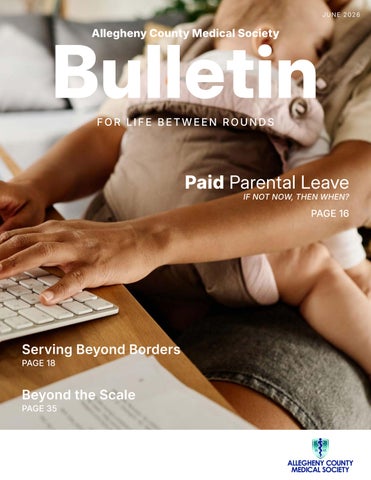
Paid Parental Leave
IF NOT NOW, WHEN?
written by DEVON RAMAEKER, MD – MATERNAL-FETAL MEDICINE PHYSICIAN
The United States remains a global anomaly in its inability to provide a national paid parental leave policy, leaving millions of families to navigate the vulnerable postpartum period without economic security. Of the countries in the United Nations, only the United States, Suriname, and Papua New Guinea do not provide paid time off for new parents. While nearly every other developed country recognizes that investing in families yields public health and economic benefits, the American system relies on a patchwork of employer policies and state laws. This fragmented system is deeply unequal and undermines the physical, mental, and economic well-being of women, infants, and families.
Research from leading policy and public health institutions reveals that implementing paid parental leave
is not a radical idea, but rather, an economic and public health necessity. The current framework for parental leave in the United States leaves the vast majority of workers unprotected. According to the U.S Bureau of Labor Statistics, fewer than 30% of employees report that their employers offer paid parental leave benefits.1 Instead, families must rely on the Family and Medical Leave Act (FMLA), which only guarantees unpaid, job-protected leave. Even then, FMLA criteria leave roughly 45% of the workforce ineligible due to strict employer size and hourly requirements.2
This patchwork approach leads to stark socioeconomic inequity. The KFF Women’s Health Survey highlights this inequity: 49% of higher-income women have access to paid family leave, compared to just 33% of lower-income women.3,4
This lack of financial protection forces many women back to work prematurely, often within days of giving birth, interrupting their physical recovery and bonding process with their newborn.
The medical benefits of parental leave are well documented. Paid maternal/parental leave significantly improves maternal mental and physical health, child health, and family economic security. These benefits are heavily influenced by the duration and financial structure of the leave program.
Paid family leave is associated with fewer postpartum mood symptoms. A recent systematic review found that at least 8–12 weeks of paid parental leave was protective against postpartum depression, anxiety, stress, and overall poorer mental health.5 Research in the American
Journal of Epidemiology reported an 8% reduction in postpartum depression from baseline with paid parental leave.6 Paid leave is also linked to better maternal physical health, including up to a 51% reduction in maternal rehospitalization during the first 21 months postpartum.7 Evidence also suggests longer-term benefits, such as lower blood pressure and higher rates of exercise.8
Global and national data link paid parental leave to lower infant mortality and morbidity. Economists analyzing the Organisation for Economic Co-operation and Development (OECD) countries found that a 10-week increase in paid parental leave is associated with a 2.5 to 3.4% reduction in infant mortality rates.9 Data published in the American Journal of Public Health found that after New York State implemented its paid family leave program in 2018, infant hospitalizations for RSV bronchiolitis and lower respiratory tract infections
dropped by 30 percent.10 Paid leave also increases overall breastfeeding duration and significantly raises the probability that a mother will achieve the 6-month exclusive breastfeeding threshold recommended by both the World Health Organization and the American Academy of Pediatricians.11
Data also suggests an overall positive economic impact whereby paid leave secures maternal workforce attachment. When a woman has access to a modest period of paid leave, she is 40% more likely to return to her job than a woman who receives no pay.12
Data from states that pioneered their own paid leave programs show an average 10% to 17% increase in weekly work hours for mothers of young children in the years following implementation.13 Rather than driving women out of the economy, paid leave acts as a structural bridge that keeps them in it. It reduces long-term recruitment and training costs for employers and mitigates the "motherhood wage penalty"
Source: Wellable
that structurally depresses women's lifelong earnings.
Paid parental leave leads to healthier infants, stronger maternal mental health, and a more stable workforce. A paid parental leave policy can reduce socioeconomic disparities at birth and give every family a healthier start.
Acknowledgement: Many studies focus on maternal leave, while others examine parental leave more broadly. Although these studies primarily included women, we acknowledge and support all birthing persons.
Recently, the ACMS issued this statement in response to the proposed parental leave policy for all employees in Allegheny County: The ACMS supports thoughtful efforts that strengthen maternal health, improve family well-being, and create healthier communities across Allegheny County. Access to adequate parental leave is associated with improved maternal and infant health outcomes, stronger workforce retention, and reduced physician and healthcare worker burnout. Policies that support maternal health and early family bonding represent meaningful forward progress for public health, At the same time, successful implementation will require ongoing dialogue among healthcare leaders, employers, policymakers, and community stakeholder to ensure long-term sustainability, and positive outcomes for employees, families, and the broader workforce.
Scan the QR code to view the article’s full list of references.
Serving Beyond Borders
A PITTSBURGH PHYSICIAN REFLECTS ON 2 DECADES OF MISSION WORK IN HONDURAS
written by ROBERT H. POTTER, JR., MD
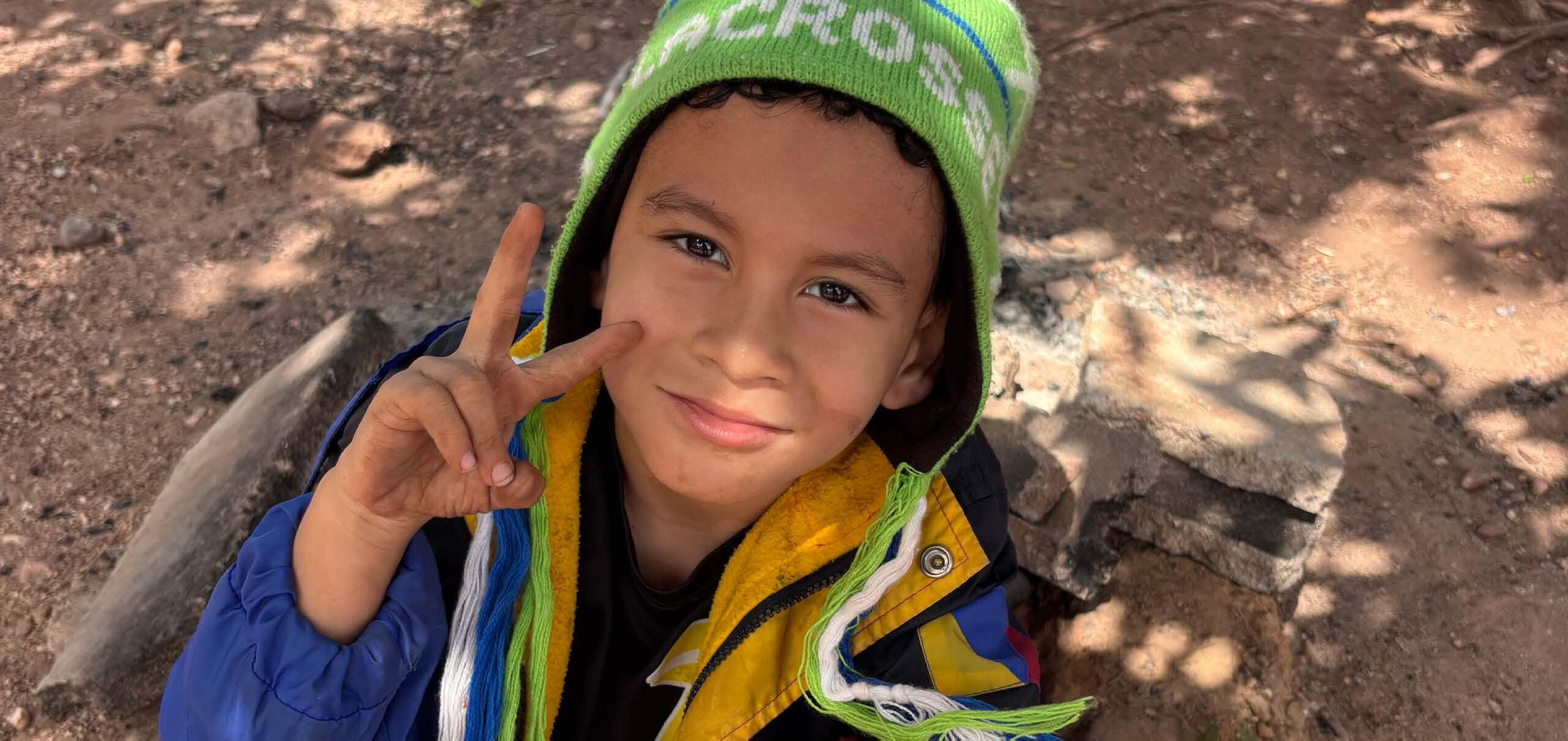
Early on a Monday during our annual mission trip to La Villa de San Francisco in central Honduras, a young mom carried her four-yearold daughter into the busy clinic. She said that God had determined that her daughter would never walk. Dr. Bill Bentz saw the little girl and called for Dr. Cindy Potter, a pediatric physical therapist, to evaluate her. Bill and Cindy recognized that the girl had cerebral palsy. Cindy evaluated her, started physical therapy treatment, and, to make a long story short, had the little girl taking steps by the end of the week.
You could see her mother’s eyes brighten. She recognized that her daughter had more potential than she thought. There was an older sister, and Cindy taught her how to help her young sibling with exercises. We continued to see that little girl on subsequent mission
trips, and Cindy was able to provide additional advice to the family. Our mission purchased new shoes and created orthotics for Anna as well.
This is an example of the kind of difference our intervention can make to an individual and a family: providing hope where there had been none and positively affecting lives with interventions that we in the United States take for granted. This is the kind of thing we see every year we visit Honduras.
Honduras Hope Mission has been traveling annually to La Villa de San Francisco for a medical mission trip for 21 years. Prior to the start of the medical aspect of the mission, an organization from Western New York, The Promise Children, had been providing support to children and families in that area for years, starting with an orphanage. We still
work together with that group.
Every year in late January or early February, our group of 20–25 North Americans travels to provide care and support. Our team includes doctors, dentists, pharmacists, physical therapists, nurses, physician assistants, nurse practitioners, and invaluable nonmedical missionaries. On site, another 20–25 Hondurans join us to deliver services.
"WE WANT TO SHARE GOD'S LOVE IN TANGIBLE WAYS WITH THE HONDURAN PEOPLE.
OUR MISSION
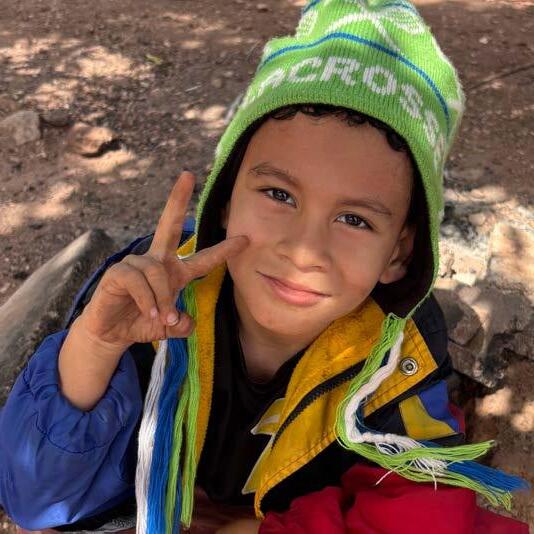
Providing underserved Hondurans access to medical care, food, clean water, housing, and educational opportunities. We hold clinics in the central town of La Villa de San Francisco but also travel to conduct clinics in six additional remote communities in the valley.
During the week, we see between 1,600 and 2,000 people, the vast majority of whom are women and children. Our clinics are very much appreciated by the local population. We have had instances in which families begin lining up for our clinic the evening before.
We set up our own traveling pharmacy with medications purchased in Honduras. Many people who are not acutely ill at the time of our visit but take advantage of the opportunity to see a doctor and obtain medications to keep on hand, such as acetaminophen or antacids. We also see people with significant medical issues such as uncontrolled blood pressure or diabetes, and we aim to provide medication to treat those conditions. We also inject many joints for pain relief. It’s an agricultural community, and many people have physically demanding jobs. They are grateful for the care we provide.
Elias Giron was a 17-year-old high school student when he served as my translator during clinics many years ago. I found him to be a very bright young man. He picked up the medical terminology quite readily and even helped assist me with some minor procedures. Today, he is Dr. Giron, having completed his medical education in Tegucigalpa, Honduras. He is now in private
practice and comes to our village every two months to provide followup care and prescription refills.
As physicians, we know that a community's health depends on many factors, only one of which is access to medical care. Clean water has been our focus for decades. With support from individuals and sponsors, including Ingomar Living Waters, we have provided thousands of personal water filters to families in central Honduras.
This year, we opened a water treatment facility at our site in La Villa de San Francisco that, according to local authorities, provides some of the purest water in Honduras based on laboratory testing. Honduras Hope Mission also provides assistance with food, housing, and clothing for several of the poorest families.
The water treatment facility is located on the property where we built the Hope Center, which houses our programs. We have a school that provides supplemental education to many local children and adults. We offer classes in English, computers, music, and art taught by teachers from the community. Many of the children who attend our school have been recognized as outstanding students by teachers at their regular schools.
The Hope Center site also has a large modern kitchen facility used by mothers both to prepare meals for their children in the programs and to support their own businesses. The Promise Children organization has provided seed money to single mothers in the community to help them become entrepreneurs. Some have started businesses selling clothing or other items. One group has been especially successful in creating and operating a baking
company. Many are becoming selfsupporting. It is extremely exciting for us to see these primarily single mothers apply their skills to support themselves and their families.
Honduras Hope Mission is a 501(c) (3) organization in the United States and is also a registered nonprofit in Honduras. We rely entirely on donations and volunteers. We have no paid U.S. staff, and all of us pay our own travel expenses to conduct the clinics. We do have year-round paid staff in Honduras for the Hope Center. We raise money through word-of-mouth outreach, newsletters, mailings, and an annual golf outing each October at Olde Stonewall Golf Club.
I know many Allegheny County physicians generously donate their time to participate in mission trips both domestically and internationally. Anyone who does mission work will, I am sure, agree with me when I say that we get more out of it than we put into it. It is an opportunity to use our hard-earned skills to help a population that otherwise would not have access to quality health care. It is extremely rewarding.
We are always recruiting volunteers and supporters. If you are interested in supporting Honduras Hope Mission — whether by joining our annual trip, participating in our golf outing, volunteering, or contributing financially — please contact me at rhpotterjr@gmail.com or visit www. Hondurashopemission.org
ROBERT H. POTTER, JR., MD
Dr. Robert H. Potter, Jr. is a retired family physician and lifelong Western Pennsylvanian. A graduate of Allegheny College and the University of Pittsburgh School of Medicine, he practiced family medicine for nearly four decades.
Survivorship Care
STRENGTHENING PRIMARY CARE COLLABORATION IN ALLEGHENY COUNTY
written by KRISTEN LUCAS, MS – PROJECT COORDINATOR OF SURVIVORCONNECTTM
Survival rates for childhood cancer have never been higher. Today, approximately 1 in 350 individuals in the United States is diagnosed with cancer before age 20, and longterm survival now exceeds 80%. As a result of these advances, survivors of childhood cancer represent a rapidly growing—and aging— population. Many are thriving into adulthood, but their cancer history and treatment exposures place them at increased risk for long-term health complications.
At the UPMC Children’s Hospital of Pittsburgh Survivorship Program, under the direction of Jean Marie Tersak, MD, our mission is to support pediatric and young adult cancer survivors as they move from active treatment into lifelong, health focused survivorship. We help patients understand their medical history, potential late effects, and the importance of ongoing preventive care. Our team develops individualized Survivorship Care Plans, provides risk-based screening recommendations, and delivers education aimed at empowering survivors to take an active role in their long-term health.
Late effects of treatment vary widely and may involve the heart, lungs, endocrine system, bones, fertility, cognition, or risk of secondary cancers. While not all survivors will experience complications, up to two thirds will develop at least one late effect, and about one quarter will experience a serious or life threatening one. Because these risks extend throughout the lifespan, consistent and coordinated followup care is essential.
This is where primary care physicians play a vital role. While not all survivors remain connected to specialized survivorship programs, all need a reliable medical home that understands their cancer history and ongoing risk profile. Primary care clinicians are often the first to identify emerging late effects, monitor preventive health needs, and ensure adherence to recommended longterm surveillance. Strong partnerships between primary care and survivorship specialists are essential to improving health outcomes and quality of life for survivors in our region.
To strengthen these connections, our program is building a network of healthcare partners focused on supporting clinicians who care for childhood cancer survivors in Allegheny County and the surrounding region. This collaborative effort aims to support primary care physicians with treatment summaries, risk-based guidelines, educational materials, and direct access to our team for consultation. By sharing expertise
and supporting coordinated care closer to home, we aim to help community clinicians confidently address survivors' long-term needs.
We invite primary care providers in Allegheny County to partner with the UPMC Children’s Hospital of Pittsburgh Survivorship Programwhether by connecting survivors to our clinic, utilizing survivorship care plans in ongoing care, or consulting with our team as questions arise. Together, we can ensure that childhood cancer survivors in our region receive knowledgeable, coordinated care as they age and thrive. We hope you’ll consider joining us in this important work.
For information on how to partner with UPMC Children’s Hospital of Pittsburgh Survivorship Program, please contact: Kristen Lucas, SurvivorConnectTM Program Coordinator, at lucask7@upmc.edu
Intentional Presence
FINDING WHOLENESS BETWEEN PATIENT CARE, PARENTHOOD, AND EVERYTHING IN BETWEEN
written by LILLIAN LIANG EMLET, MD, MS, CHSE, CPC, ELI-MP, FCCM
You know this season, don't you? It's "Maycember" – when your calendar looks like a game of Tetris gone wrong.1 Soccer practice at 6, spring concert at 7:30, graduation parties on weekends, and somehow you're still expected to show up for your patients, your colleagues, and your family. You're toggling between reviewing labs, cheering from the sidelines, difficult diagnoses and proud parent moments.
Being an excellent physician and being present for your family feels exhausting. Better time management won't save you. What actually works is learning to inhabit each moment. That deep breath before your child's performance, the mindful sip of coffee between patient calls... neuroscience shows these pauses help you feel whole again.
You've mastered rapid transitions: from exam room to exam room, from work brain to parent brain, from
listening to chest sounds to your listening to for your teenager's car in the driveway. Medical training never covered this. Brief moments of intentional presence, like watching your child at bat or placing a gentle hand on a patient's shoulder, let you show up fully.
WHAT CONSTANT MOTION COSTS US
You might physically be at the baseball game, but mentally reviewing lab results. Or fully engaged with a patient's case while your worry about missing the school concert. This constant mental motion can leave you feeling like you're not quite present anywhere – not fully the doctor you want to be, not fully the parent you want to be.
Constant cognitive pressure erodes your ability to notice subtleties and appreciate nuance. When your mind juggles too many things at once, you experience what researchers
call extraneous cognitive load –mental noise pulling your attention from what's right in front of you. This overload forces your brain to take shortcuts, favoring quick gut-reaction thinking over more thoughtful reasoning. When you're mentally drained, you can't see the good intentions behind someone's actions. You fixate on the end result. Negative reactions happen automatically, but recognizing positive intentions requires mental energy you don't have when you're cognitively exhausted.2
For us as physicians, this means:
• Missing the small moments of connection with patients
• Operating on autopilot
• Less capacity to savor the meaningful parts of our days
Think about your last shift: Did you have time to truly connect with a patient's story, appreciate a colleague's insight, or feel
satisfaction in your clinical skills?
For you, this also means:
• Rushing through patient appointments because you’re thinking about getting to the parent-teacher conference
• Feeling too drained to fully appreciate your work or the joy on your child’s face
• Feeling like you're never quite "enough" in any role
When did you last feel completely present, whether diagnosing a complex case or watching your child discover something new?
THE GIFT OF INTENTIONAL PAUSES
When you deliberately pause, you create space to shift between your multiple selves with intention. This is where the magic happens. You fully inhabit your role as the physician who just helped someone feel better, then completely shift into being the parent cheering from the stands.
When you create these transition moments, your brain springs into action. It consolidates the satisfaction of your successful patient interaction and processes the pride of watching your child's performance. Your brain weaves your professional purpose and personal joy into something whole.
HOW PAUSING ENHANCES PRESENCE
Brief pauses during work do more than improve wellbeing. They enhance your capacity for presence and connection, especially when stress peaks.
Think of your mind like a smartphone battery. Constant app switching drains it faster than focused use. But when you close the apps and let it rest, it restores itself. Your intentional pauses – between patients, work-
self and family-self – do more than restore mental energy. They let you show up authentically in each role.
Here's what we often forget: you don't have to manage this alone. A strong support system at home and at work is what allows you to show up fully for both your patients and your family. This is how highfunctioning people build sustainable practices. Accepting help is its own form of intentionality.
For you, managing both demanding patients and demanding family schedules, this is heart-centered intention. That moment of gratitude before your child’s game, the deep breath between hard patient conversations, truly tasting your coffee while your kids get ready for school. They’re what help you show up for both your patients and your family.
SIMPLE WAYS TO PAUSE AND SAVOR
Arriving at Your
Child's Event
Before rushing from car to bleachers, take three breaths. Let your physician-mind settle so your parent-heart can be fully present for whatever magic is about to unfold.
Between Work and Home
Create a small ritual in your car. Maybe it's one song, maybe it's a moment of gratitude for both the patient you helped and the family waiting for you. Let yourself transition intentionally.
During Routine Moments
Whether you're reviewing a straightforward case or packing lunch boxes, practice "savoring"through deliberately noticing what's good. The satisfaction of clinical expertise, your teenager actually talking to you, the trust in a worried parent's eyes when you explain their child's condition.
Sunday Evenings
Instead of dreading Monday's schedule, spend five minutes appreciating the weekend's highlights: your child's laughter, a meaningful patient interaction, a quiet coffee with your spouse. Let these moments fuel you rather than racing past them.
THE BOTTOM LINE
Your life will always have seasons of intensity. Maycember comes every year. Patients need you urgently. Your children have events that matter. Here's what I want you to remember: you don't have to choose between excellence and presence. The quality of your attention—whether listening to heart sounds or cheering at graduations— matters more than the speed of your transitions.
Your next moment of deep satisfaction won't come from managing your time better. It comes from those small pauses when you let yourself fully arrive in whatever moment you're in. You are enough. You're doing enough. You deserve to savor the beautiful complexity of all the lives you're living.
What moment will you choose to savor today-at work, at home, or in that precious space between? Lillian Liang Emlet is an energy leadership coach for healthcare professionals, adult critical care physician, and a simulation medical educator. Find her on LinkedIn and Transforming Healthcare Coaching
Scan the QR code to view the article’s full list of references.
Gepotidacin (BlujepaTM)
A NEW uUTI ANTIBIOTIC HAS ENTERED THE MARKET, BUT WHERE DOES IT TRULY FIT?
written by EMILY BIRMINGHAM, PHARMD AND DIAMOND ORJI, PHARMD
BACKGROUND
Gepotidacin is a newly approved oral antibiotic for the treatment of uncomplicated urinary tract infections (uUTIs). It received FDA approval on March 25, 2025 for use in female adult and pediatric patients 12 years and older who weigh 40 kg or more. Gepotidacin is the first agent in a novel drug class called triazaacenaphthylenes. It acts as a bactericidal agent by inhibiting bacterial DNA replication through dual targeting of DNA gyrase (topoisomerase II) and topoisomerase IV. It demonstrates activity against common uUTI pathogens, including Escherichia coli, Staphylococcus saprophyticus, Citrobacter freundii, and Klebsiella pneumoniae. However, it does not provide coverage against anaerobic organisms, Pseudomonas species, or organisms producing extendedspectrum beta-lactamases (ESBLs). This marks the first approval of a new antibiotic for uUTIs in over two
decades. Prior to the introduction of gepotidacin, available treatment options for uncomplicated urinary tract infections included nitrofurantoin, fosfomycin and cephalosporins which share a similar sensitivity profile to gepotidacin. Trimethoprim-sulfamethoxazole is also recommended in the current guidelines, although it has become less frequently used due to rising resistance rates. Standard courses of therapy with these antibiotics typically range from a single dose (fosfomycin) to 3 days (trimethoprim-sulfamethoxazole) or 5 days (nitrofurantoin).1,2
SAFETY
The safety of gepotidacin was assessed based on the occurrence of treatment emergent adverse events (TEAEs).2 TEAEs occurred in 35% of patients receiving gepotidacin versus 22% in the nitrofurantoin group. Most events were mild in severity.
Most adverse events were mild in severity. Drugrelated events leading to discontinuation occurred in 26% of patients treated with gepotidacin, compared with 12% of those receiving nitrofurantoin. In EAGLE-3, the gepotidacin group reported 570 adverse events, while the nitrofurantoin group had 325.2 Again, 35% of patients in the gepotidacin group experienced TEAE, with the majority classified as Grade 1 (mild). Discontinuation due to drugrelated adverse events occurred in 27% of gepotidacin patients, compared to 14% in the nitrofurantoin group. Diarrhea was the most reported TEAE, affecting 14% (11 of 766) of patients in EAGLE-2 and 18% (147 of 804) in EAGLE-3. Clostridioides difficile infections were reported in the gepotidacin group and were classified as mild to moderate; no such infections occurred in the nitrofurantoin group during EAGLE-2.
Adverse events potentially related to acetylcholinesterase activity were noted in 22% of gepotidacin-treated patients in both EAGLE-2 (169 of 766) and EAGLE-3 (178 of 804), compared to 8% in the nitrofurantoin groups (60 of 760 in EAGLE-2 and 64 of 798 in EAGLE-3). Most of these events were gastrointestinal in nature. No clinically significant changes were observed in vital signs (systolic/diastolic blood pressure, pulse, temperature). Additionally, no QTc intervals exceeding 500 milliseconds (ms) or increases greater than 60 ms from baseline were identified.2
TOLERABILITY
Gepotidacin has been marketed as generally well tolerated. In clinical trials, the most reported adverse effect was diarrhea, occurring in 16% of patients compared to 3% in the nitrofurantoin (control) group. Other frequently observed side effects included nausea, abdominal pain, and flatulence across both studies.2 Approximately 5% of patients receiving gepotidacin discontinued treatment due to adverse reactions, compared with 2% in the nitrofurantoin group.1 The primary reasons were nausea and diarrhea.1
EFFICACY
The approval of gepotidacin in uUTIs was based on two randomized, multi-center, doubleblind, non-inferiority phase 3 trials titled EAGLE-2 (n=1531) and EAGLE-3 (n=1605).2 These studies investigated the use of gepotidacin as another potential first-line option for uUTIs through comparing the efficacy and safety of oral gepotidacin 1500mg twice daily for five days to that of oral nitrofurantoin 100mg twice daily for five days with a 10% non-inferiority margin. The primary outcome of these trials was therapeutic success, as defined
by combined clinical success (i.e., complete symptom resolution) and microbiological success (i.e., reduction of qualifying uropathogens to <103 CFU/mL) without other systemic antimicrobial use. The differences in percent therapeutic success in EAGLE-2 and EAGLE-3 were 4.3% (95% CI –3.6 to 12.1) and 14.6% (95% CI 6.4 to 22.8), respectively. Oral gepotidacin was declared as non-inferior to oral nitrofurantoin, as the observed Z statistic for therapeutic success was greater than the boundary in both trials (EAGLE-2: 3.5554 [boundary: 2.065], EAGLE-3: 5.8838 [boundary: 2.098]). In addition, oral gepotidacin met superiority to oral nitrofurantoin in EAGLE-3 regarding therapeutic success, as the one-sided p-value for superiority was 0.0003 with a boundary of 0.018.
PRICE
Gepotidacin’s retail price for a 5-day supply is $2,280. However, there is a BlujepaTM savings coupon available on the manufacturer’s website that may reduce the price for a 5-day supply to as little as $30 for patients with commercial insurance.3,4
SIMPLICITY
Gepotidacin is a twice daily medication dosed as two 750 mg tablets taken approximately 12 hours apart. Moreover, this medication is recommended to be taken after a meal to decrease gastrointestinal upset and should not be taken concomitantly with strong CYP3A4 inducers or inhibitors or medications extensively metabolized by CYP3A4 that have a narrow therapeutic window. Lastly, gepotidacin is contraindicated in patients with an eGFR<30mL/min (including those on dialysis), and it is contraindicated in patients with severe hepatic impairment.1
BOTTOM LINE
Gepotidacin is the first agent in its novel drug class, triazaacenaphthylene, and appears to be generally well-tolerated, with side effects being increased diarrhea and/or gastrointestinal upset compared to nitrofurantoin. Gepotidacin was found to be noninferior to nitrofurantoin based on two phase 3 trials, and it may be superior to nitrofurantoin regarding therapeutic success based on the latter phase 3 trial. Gepotidacin may work for patients who have bacterial resistance or allergies to other first-line medications to treat uUTIs. Furthermore, it is not yet approved in males. It does not appear to offer additional benefits over current first-line options due to similar dosing frequency, higher incidence of gastrointestinal side effects, and increased cost. Overall, gepotidacin represents a new, first-in-class medication for uncomplicated UTIs that is safe, effective and may fit a clinical need for female patients.
EMILY BIRMINGHAM AND DIAMOND ORJI
Dr. Emily Birmingham is a PGY1 Pharmacy resident at UPMC St. Margaret and can be reached at birminghame@upmc.edu. Dr. Diamond Orji is a PGY2 Ambulatory Care Pharmacy resident at UPMC St. Margaret and can be reached at orjidc@upmc.edu. Dr. Alexandria Taylor, PharmD, BCPS, the Director of the PGY1 Pharmacy Residency served as editor and mentor for this work and can be reached at tayloram9@upmc.edu
Scan the QR code to view the article’s full list of references.
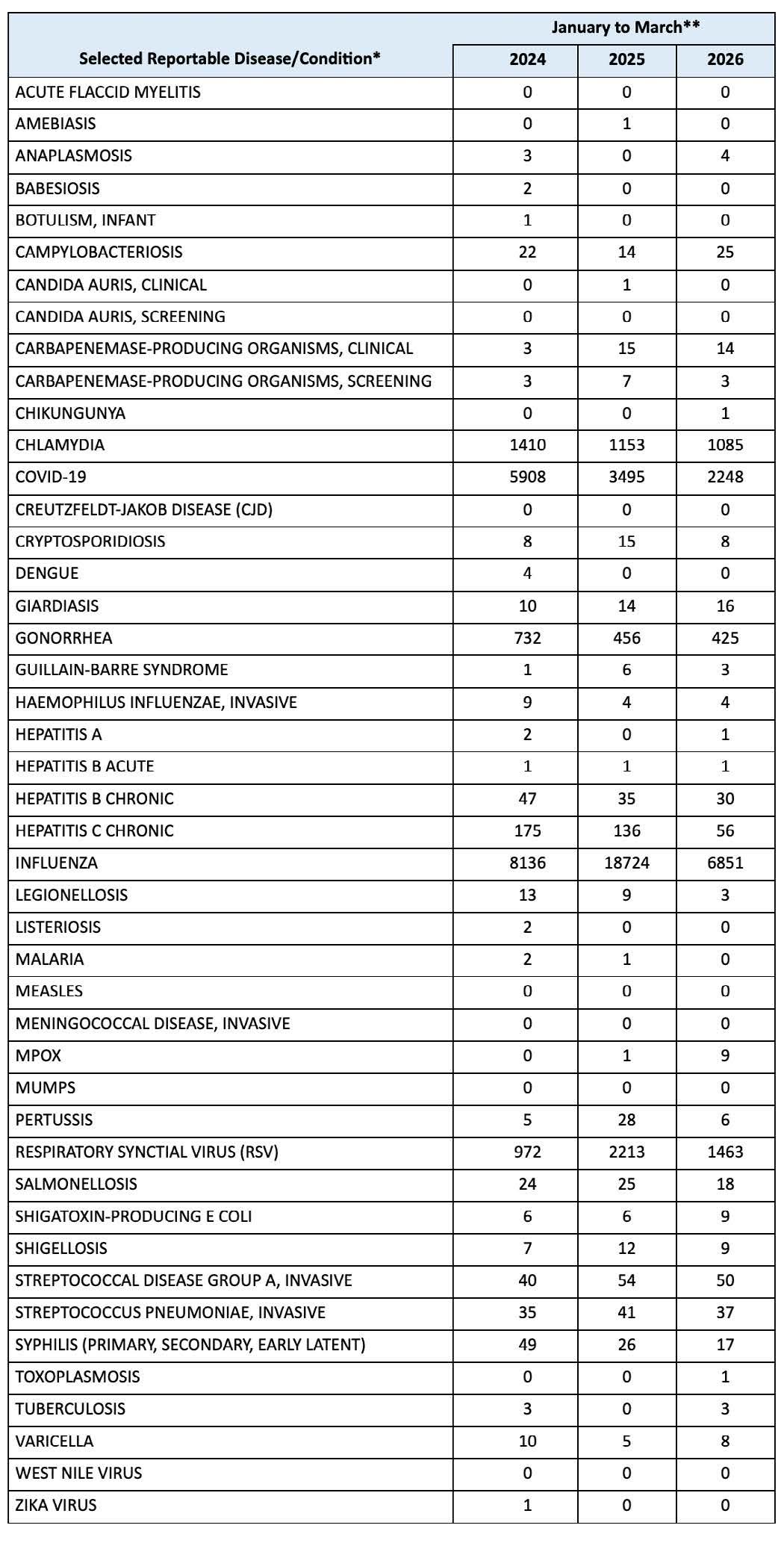
Reportable Diseases: Q1
ALLEGHENY COUNTY HEALTH DEPARTMENT SELECTED REPORTABLE DISEASES/CONDITIONS
* Case classifications reflect definitions utilized by CDC Morbidity and Mortality Weekly Report.
** These counts do not reflect official case counts, as current year numbers are not yet finalized. Inaccuracies in working case counts may be due to reporting/investigation lag.
NOTE: Disease reports may be filed electronically via PA-NEDSS. To register for PA-NEDSS, go to https://www. nedss.state.pa.us/NEDSS. To report outbreaks or diseases reportable within 24 hours, please call the Health Department’s 24-hour telephone line at 412-687-2243. For more complete surveillance information, see ACHD’s 10year summary of reportable diseases: https://www.alleghenycounty.us/Services/Health-Department/CommunityIndicators-and-Health-Data/Infectious-Disease-Epidemiology/Disease-Surveillance
Protecting The Classroom
HOW VACCINE COVERAGE IN OUR SCHOOLS HELPS SAFEGUARD THE COMMUNITY
written by LEAH POPE, LEAH ROMANO, JILLIAN IRWIN, MD, AND JEN FIDDNER
DECLINING IMMUNIZATION COVERAGE
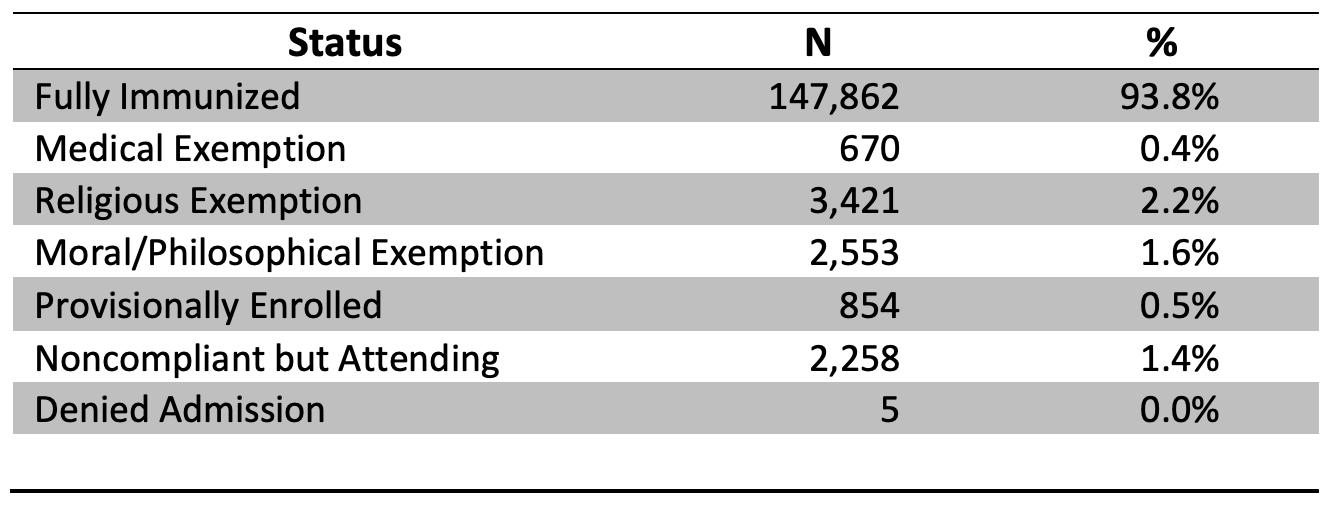
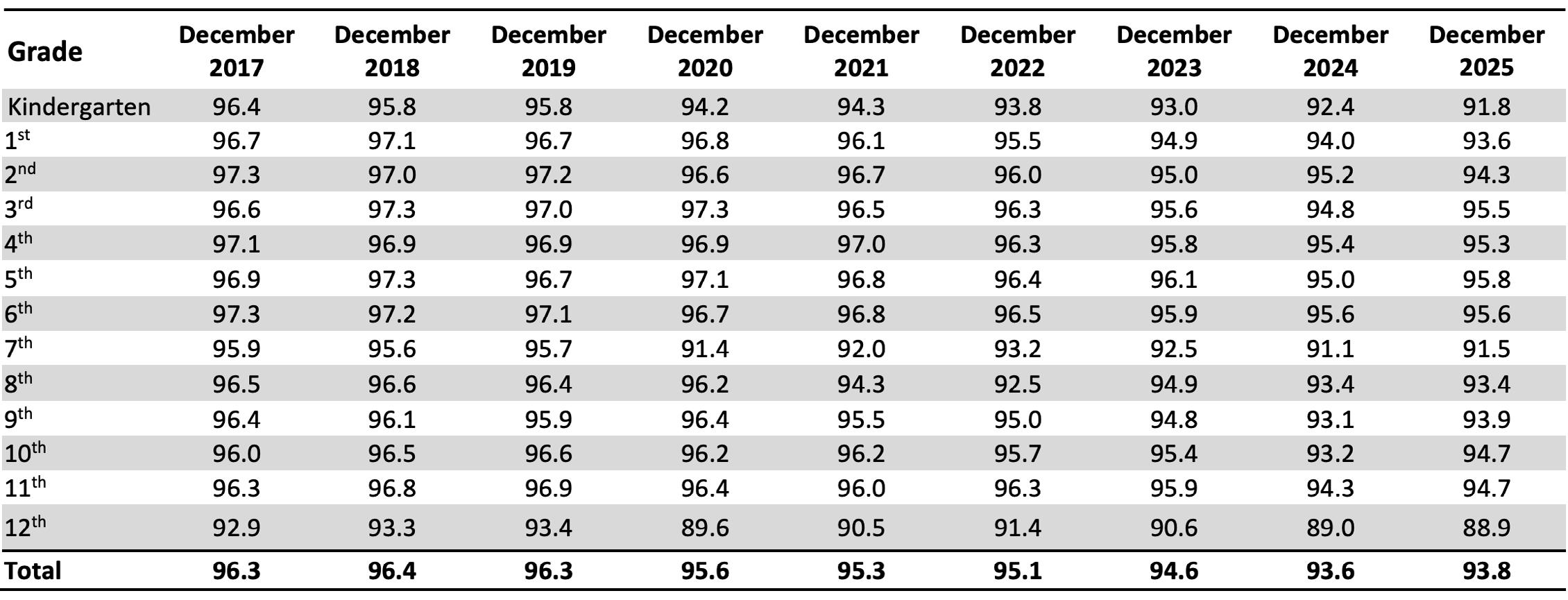
Vaccine coverage among Allegheny County students has been decreasing for over a decade. In the 2025-26 school year, 93.8 percent of students were reported to have all vaccines required for school entry, compared to 96.3 percent in the 2017-18 school year. This decrease in coverage corresponds to an increase in vaccine exemptions, which excuse a student from one or more vaccine. In the 202526 school year, 3.8 percent of students submitted a medical, religious, or moral exemption for one or more vaccine, and 1.4 percent were noncompliant at the time of the survey. In religious/ parochial schools, 8.5 percent of students had a religious or moral exemption. This is a 47 percent increase from the previous year, when 5.8 percent of students at religious/parochial schools had a religious or moral exemption.
Among homeschooled students in Allegheny County during the 202526 school year, 28.4 percent had a moral or religious exemption. While homeschooled students may not attend the same on-campus classes as other district students, they are eligible to participate in their school district’s sports and extracurricular activities. Improving vaccination coverage among this population can help reduce the risk of an outbreak of vaccine preventable disease in Allegheny County.
Coverage of individual vaccines is higher than the percentage of students who have completed all vaccine series required for school. While the percent of students with complete immunizations is 93.8 percent, individual vaccine coverage ranges from 94.6 percent (MCV) and 96.7 percent (Hepatitis B) for all students in Allegheny County. The HPV vaccine, which is not required for school entry but is reportable in the school immunization survey, has the lowest coverage of all vaccines
Figure 1. Percentage of Fully Immunized Students by School Year and Grade, Allegheny County, 2017-18 to 2025-26
reported. In December of 2025, 59 percent of seventh graders received at least one HPV vaccine dose and 64.1 percent of twelfth graders received two or more HPV vaccine doses. Comparatively, approximately 92 percent of seventh and twelfth graders received the additional MCV4 doses required for their grade.
SCHOOL IMMUNIZATION REQUIREMENTS
Routine childhood vaccinations protect against serious diseases, such as measles and whooping cough. As of May 21, 2026, 1,952 confirmed measles cases were reported in the United States in 2026. While no cases of measles have been identified in Allegheny County since an outbreak in 2019, the Pennsylvania Department of Health has identified 23 cases in other areas of the state between April 23 and May 23, 2026. The source of the exposure for many of these was likely communityassociated.
Vaccinations are required for children to attend school in Pennsylvania. While the Pennsylvania Department of Health (PADOH) collects immunization data on kindergarten, seventh grade, and twelfth grade students each
year, the Allegheny County Health Department (ACHD) ensures that schools in Allegheny County are complying with Pennsylvania state and county immunization regulations by requiring all schools (public, private/independent, parochial/ religious, charter, and cyber) to submit the immunization status of students in all grade levels annually.
Students are required to have the appropriate number of doses of the following vaccines: diphtheria, tetanus, and pertussis (DTaP); measles, mumps, and rubella (MMR); hepatitis B; polio; and varicella. For students enrolled in seventh grade, two additional vaccines are required at a single dose each: tetanus, diphtheria, and pertussis (Tdap) and meningococcal conjugate vaccine (MCV). An additional dose of MCV is required for all twelfth graders. Vaccines that are not required for school entry in Pennsylvania but are recommended for children by the American Academy of Pediatrics include those for rotavirus, Haemophilus influenzae type B, pneumococcal disease, influenza, hepatitis A, COVID-19 and human papillomavirus.
Provisional enrollment allows students who have at least one
dose in a multi-dose vaccine series to start the school year if there is an explicit plan in place for either receiving or scheduling the remaining required doses within the five-day provisional period. If the provisional period expires before the student receives, or has scheduled to receive, all required doses, regulations state that the student should be denied admission to school. Admission decisions are made by school administrators. Students may also be admitted to school without being fully immunized if their parents have submitted paperwork for an exemption. Exemptions can be medical, religious, or moral/ philosophical, and they do not expire. Medical exemptions can be obtained for students who have a condition for which a vaccine is contraindicated and must be documented by the student’s physician. Religious and moral/ philosophical exemptions are submitted in writing by the student’s parent or guardian. Students experiencing homelessness are exempt under the McKinney Vento Act. Students attending school without documentation of having received all required immunizations and without a documented exemption are considered noncompliant.
Figure 2. Immunization Status of All Students, Allegheny County, School Year 2025-26
VACCINE HESITANCY
Vaccine hesitancy determinants can range from a lack of trust in experts and institutions, concern about safety, resistance to prescriptive guidance and restrictions, convenience factors (i.e. transportation and access) and/or personal reluctance to get vaccinated or acceptance of others receiving vaccinations.
In 2024, the ACHD partnered with IEM International Inc. to gauge public sentiment about vaccine awareness and adoption. Several local organizations, including the African American Chamber of Commerce of Western Pennsylvania, Primary Care Health Services, Casa San Jose, Braddock Carnegie Library Association, the Latino Community Center, Pennsylvania Women Work, and The Brashear Association, helped to disseminate a 13-question community survey to members, clients, patients, and stakeholders. The survey was available in in five languages: English, Spanish, Portuguese, Ukrainian, and Uzbek. Of 513 respondents, only 22 respondents stated that childhood vaccinations were not necessary. There were no ethnic or gender identity differentiators among those who do not believe that childhood vaccinations are necessary. Of the 22, the majority (16) receive their information from their primary care doctor, and some (9) receive their information from social media. When the 22 were asked about where they trust information, the responses were highest with healthcare professionals (8), friends and family (8) and US government (6).
Overall, Allegheny County respondents receive and trust their information about vaccines through their primary care doctor. TV/news and social media followed behind with the second most responses.
While this survey offered important insights in 2024, the political situation is rapidly evolving and today, in 2026, there are more pockets of immunization undercoverage in Allegheny County and nationwide. To this end, the ACHD has partnered with The Pittsburgh Foundation and several community organizations to develop a new survey to gain updated insight into residents’ perceptions of vaccines.
Please use the QR code below to share this survey widely with your professional networks and patient panels to help us tailor our Immunization efforts to be more effective.
PUBLIC HEALTH ACTION
The Allegheny County Health Department maintains consistent communication with school nurses to provide guidance on immunization requirements and vaccine preventable disease outbreak mitigation, conducts surveys, and publishes reports and dashboards characterizing trends in vaccine coverage. The health department encourages parents to make sure children are up to date on their vaccinations before returning to school. Parents can schedule an appointment today with their child’s doctor, at any Federally Qualified Health Center, or at the ACHD Immunization Clinic.
In addition to providing families with sound guidance about vaccines, healthcare providers can help ensure that schools report complete
vaccination data by assisting school nurses who reach out to pediatric practices to confirm student vaccination histories. Providers can also connect with colleagues, public health partners, schools, community organizations, and local leaders working to improve immunization education, access, and vaccine confidence across Allegheny County by joining the Allegheny County Immunization Coalition
ABOUT THE AUTHORS
Leah Pope is an Applied Epidemiologist at the Bureau of Health Promotion and Disease Prevention at the Allegheny County Health Department. Leah Romano is the Public Health Administrator of the Bureau of Clinical Services at the Allegheny County Health Department. Jillian Irwin, MD is the Medical Director and Deputy Director of the Bureau of Clinical Services at the Allegheny County Health Department. Jen Fiddner is the Infectious Disease Epidemiology Program Manager at the Bureau of Health Promotion and Disease Prevention at the Allegheny County Health Department.
Friday, September 18th, 2026
Renaissance Pittsburgh Hotel, 107 6th St, Pittsburgh, PA 15222 SPONSORED BY
COURSE DIRECTORS
Prerna Mewawalla, MD Associate Professor Hematology & Cellular Therapy
Please contact Samantha Kunvatanagarn in the CME office at samantha kunvatanagarn@ahn org for more information
Honoring Our Gifts
CULTIVATING PHYSICIAN INFLUENCE IN A CHANGING HEALTHCARE LANDSCAPE
written by ROSEMARY HANRAHAN, MD, MPH, PCC
In my coaching conversations and my personal experience of practicing pathology for over 30 years, physicians manifest three attributes: curiosity, compassion, and commitment to lifelong learning. A fundamental challenge we face is how to honor these gifts in today’s healthcare environment.
The image of our healthcare system that comes to my mind is that of an enormous ship, floundering in stormy waters, whose very caring, skillful, and extremely exhausted crew must contend with a broken navigation system. In this system, administrative burdens, financial pressures, unwieldy technology, and workforce reductions and shortages have sapped our sense of autonomy and control over our own lives as physicians and over the patient relationship. (This list could be longer!) Trust in the system has been broken. Our psychological safety – at times – physical safety are threatened. We spend time and energy feeling frustrated, discouraged, and even angry.
Patients also express frustration and mistrust of the system and their providers. They are fearful for their health and well-being because they don’t feel seen or heard. They are confused and overwhelmed by the information and misinformation that floods their minds and inboxes each day and angry at the obstructive processes they encounter in accessing care for themselves or family members.
When patients and physicians come together, often for a mere 15
minutes, these emotions and worries are front of mind. It’s a lot!
A key factor that must be considered if we are to effect change is the evolving role of physicians. While we continue to lead the care of patients, the past sense of “positional authority" often afforded us because of education and other factors has changed. We no longer control many aspects of our days, our relationships, and the processes that we must follow to care for our patients and sustain a livelihood.
Clearly, a paradigm shift is needed if we are to honor our professional values and ethics in caring for our patients, ourselves, and one another. How do we influence the changes that are essential to a new paradigm? One approach is by understanding and embracing the mindset, skills and behaviors that are important to "influencing" others.
WHAT IS INFLUENCE?
Influence in leadership is the ability to use persuasion and collaboration rather than authority to affect others’ behavior, attitudes, and actions in pursuit of shared goals. It is a measure of trust, connection, and credibility. Influencing others is a core leadership skill that is vital for leading in any direction – upward, downward, or horizontally.
Before we can embrace the concept of influence, we must understand how minds, hearts and hands are influenced. As physicians, we tend to be expert problem solvers – data-focused and results driven. Curiously, not everyone we
encounter in our daily endeavors is influenced by logical appeals. Most of us, consciously or unconsciously, are also influenced by our emotions, our gut sense, and by feeling deeply connected with those around us.
In all cases, influence is earned by expertise, trust, and relationship rather than by position. Once we embrace the power of influence rather than position, we can begin to fully use our gifts of curiosity, learning, and compassion to effect the changes that need to happen.
HOW DO WE INFLUENCE AMIDST COMPLEXITY AND CHANGE?
None of us entered this caring and arduous profession expecting it to be easy. But today’s practice environment is a different kind of hard than any of us imagined. Most of us were never taught the mindset and skills required to navigate the complexity and change that has become the norm. Curiously, it turns out, just as we learn how to prescribe and monitor a new drug for diabetes or replace an aortic valve without cracking a patient’s chest, we can learn how to change a floundering system.
Influence is not merely an outwardfacing skill that we use to get what we want. It starts with being curious and noticing how we are influenced and how we naturally influence others.
Having a clear sense of oneself is critical and fundamental. In coaching, I encourage clients to ask themselves critical questions. What strengths, values, and gifts do I authentically bring to relationships and situations that are important to me, my teams, and my patients? How do I communicate with clarity and kindness? What needs to change so that I can be more effective?
As essential as self-awareness is, it is still insufficient. Physicians really need to be skilled at extending influence beyond the boundaries of their immediate practice environment.
BOUNDARY SPANNING
We often talk about boundaries in coaching, usually in the context of needing to be better at setting and holding them to protect personal life, relationships and sanity. But recently, I came across the concept of “boundary spanning.” The Center for Creative Leadership defines this as building and maintaining relationships, knowledge exchange, and operations across departments and teams within an organization, between organizations, and with external partners.
Common boundaries in healthcare include the vertical (between hierarchical levels within an organization), horizontal (between functions within an organization), geographic (across localities), demographic (with various groups), and those with stakeholders (external groups).
Using our influence to build bridges that span the boundaries in healthcare involves:
• Organizational intelligence: Understanding how to get things done in a timely, efficient manner and embracing the reality of working within organizational politics to move teams and initiatives forward
• Trust-building: Establishing and maintaining the trust and safety that are essential in guiding people through the choppy waters of risk and change
• Authentic self and team promotion: Rising above the chaos to authentically and confidently promote oneself and others while also promoting what’s good for the entire organization
• Leveraging networks: Drawing on our connections with others to harness collective power and shift dynamics
Physicians can span boundaries in a formal role, such as a liaison position, or in an informal role, such as a committee member. The qualities of an effective bridge builder include
• a solid foundation in one’s usual group and a clear understanding of how to get things done as well as the tradeoffs, and potential roadblocks,
• personal attributes such as staying curious, approaching issues with a learner’s mind, and being an active listener,
• a willingness to consider multiple perspectives and to challenge personal assumptions,
• openness to engaging in productive, respectful conflict when necessary, and
• skill in cultivating alliances within one’s own team and between teams.
BUILDING ALLIANCES
When I think of building alliances, a quote comes to mind that is often cited as an African Proverb.
“If you want to go fast, go alone; if you want to go far, go together.”
Dismantling systemic barriers and building bridges can be accomplished and sustained only by building alliances. This may start within a small practice group that seeks to improve care for patients, or in a large multiorganizational coalition that seeks to provide services to an under-resourced community.
As bridge builders who understand their own value and the value of their teams, we are well-positioned to be a sponsor, a mentor, an advocate, or a champion for others. In this way, we carry our gifts forward and outward, honoring our deepest desires and our legacy.
Without doubt, there is a critical need for physician leadership during this time of massive disruption and transformation in medicine. As physicians, we need to be open to transforming ourselves so that we
can fully share our gifts of curiosity, compassion, and love of learning with our colleagues, patients, and the system that supports and constrains us. By understanding how we can influence hearts, minds, and hands, span boundaries, and build alliances, we can develop skills that will turn the tide, right the ship, and set us on a truer, more sustainable course.
The ACMS Physician Wellness Program is a wonderful opportunity for us to deepen our learning about ourselves, cultivate our new curiosity, and build alliances that support and sustain our individual and collective efforts and growth.
REFERENCES
1. Hallenbeck, J. (2024, July6) How to Influence People: 4 Skills for Influencing Others. https://www. ccl.org/articles/leading-effectivelyarticles/4-keys-strengthen-abilityinfluence-others/. Accessed May 20,2026.
2. Loignon, A. et al. (2025, January 28). Why You Should Collaborate Across Boundaries.https://www. ccl.org/articles/leading-effectivelyarticles/boundary-spanning-theleadership-advantage/. (Accessed May 20,2026).
3. Self-Compassion Institute (n.d.): https://self-compassion.org.
Rosemary Hanrahan brings three decades of experience as a physician, public health leader, and nonprofit professional to physicians and individuals throughout their healthcare careers. As principal of Beyond Words Wellness Resources, she helps clients cultivate the selfawareness, vision, and resilience needed to navigate uncertainty and conflict through one-onone coaching and professional development workshops. Rosemary also serves as an Instructor and Mentor Coach for Novellus Coaching Academy and the Benedictine Coaching Program in Pittsburgh. Contact: beyondwordswellness@gmail.com
Beyond the Scale
CHALLENGING THE WEIGHT STIGMA IN HEALTHCARE
I used to perpetuate weight stigma in medicine.
I believed that if my patients simply ate and exercised the way I did, they would be healthier. And by “healthier,” I meant thinner. When a patient would be on our inpatient service and their BMI was above normal, I’d never miss an opportunity to mark it down as a diagnosis on the problem list, thinking how all of their other ailments were surely tied to this one major issue.
What I failed to understand was that weight is only one small piece of health, and often not the most important one. And weaponizing my views and opinions about the “right” body size only impaired my judgement and ability to best help my patients. Over the past several years, I’ve become interested in understanding weight stigma in healthcare, how we can promote health at any body size, and challenging my own implicit bias as a physician.
Weight stigma in healthcare impacts screening, diagnosis, adherence and trust, which then directly impacts outcomes.
Preventive medicine has an opportunity to lead a more nuanced, evidence-based, and humane model of care by adopting weight-inclusive principles.
Before discussing how this shows up clinically, it’s important to define a few key concepts.
Weight bias can be explicit, implicit
written by NATALIE GENTILE, MD
and internalized. It includes explicitly displaying negative attitudes and beliefs about weight. Implicitly it can manifest itself as saying that obesity is an individual responsibility. This can also be internalized, applying these thoughts toward ourselves, feeling anxious about weight and thinking oneself deserves unfair treatment because obesity is their own fault. Healthcare professionals demonstrate implicit and explicit weight bias across disciplines.
What assumptions do you make when you see a patient in a larger body?
In a sample of 400 family physicians, 33% reported frustration with patients with obesity, 28% perceived patients with obesity as non-adherent, 18% reported disgust over patients in larger bodies, ~50% believed higher-weight patients increased healthcare demand.
Weight stigma is a manifestation of weight bias and shows up as harmful social stereotypes about weight. In some cases, this even progresses to weight-based discrimination, leading to unfair treatment of patients because of their weight.
This is not an argument that weight is irrelevant, it is an argument against reducing health to a number.
In practice, this bias can subtly shape almost every part of a clinical encounter: shortened visits, anchoring bias (i.e. everything is because of weight), missed diagnosis, and less patient-centered communication. It is important to
note here that most clinicians are not intentionally harmful, Bias is often systemic and culturally reinforced.
Weight stigma itself can become a health risk.
Patients who feel judged or dismissed in healthcare settings are less likely to seek preventive care, follow up regularly, or trust medical recommendations. If a patient presents to a clinic and is lectured about their weight in a manner that feels one-sided or judgmental, they are less likely to engage in medical care. They experience stress around their body habits and health, increasing cortisol and inflammation over time that is already worsened in a state of obesity. Worsening health behaviors could lead to further weight gain, and if that patient does choose to engage in healthcare again, further weight stigma would perpetuate this cycle. Distinguish between correlation of higher weight with disease risk and the independent harm caused by stigma If stigma worsens health outcomes, then reducing stigma becomes preventive medicine.
Take this patient example:
A 34-year-old female, HT, living with obesity presents to the primary care clinic with a sinus infection. It’s a 15-minute slot, the doc is running behind, so by the time the exam room door opens, everything feels rushed. Before even sitting down, the physician has already made assumptions based on her body size. The chart notes that HT is behind on all her health maintenance: pap smear, general physical, annual labs… she hasn’t been in for years. After a cursory examination and chat about symptoms, the doc says it's viral sinusitis and recommends conservative management. She also recommends that HT consider weight loss given that her BMI is elevated today and her blood pressure is 134/87. HT leaves the clinic with an After Visit Summary talking about her weight and some generic recommendations from the American Heart Association for a heart healthy diet and guidelines around exercise.
What are the chances that HT will come back to clinic any time soon?
Traditionally, or at least when I was in training, healthcare often equates weight loss with assured health improvement. The reality of this weight-centered care is that there is low long-term sustainability of substantial weight loss. It also misses the dangers of weight cycling and metabolic adaptation. There are many patients who make impactful behavioral changes that don’t necessarily result in weight loss but have lasting benefits from a cardiometabolic perspective. And let’s not forget about the risk of perpetuating disordered eating and eating disorders in a population that already suffers from this at higher rates. How about a patient living with obesity who has an eating disorder?
On the flip side, weight-inclusive care focuses on health behaviors over body size and is a respectful, stigma-free approach that partners with patients. It emphasizes respectful, patient-centered language, acknowledgment of body diversity, harm reduction, and sustainable behavior change rather than shame-driven interventions.
This approach perfectly aligns with preventive and lifestyle medicine as it highlights the importance of nutrition, sleep, stress management, physical activity, and cardiometabolic risk reduction across the body size spectrum.
Weight inclusive care is not “glorifying obesity” or “anti-weight loss”. Instead, it is aligning with our patients’ goals and resources, never forgetting their unique context of social determinants of health. Patients do not need perfect bodies to deserve respectful, evidencebased healthcare.
When talking to patients about weight, there are some practical communication strategies that go a long way in establishing trust. Asking permission is something that I incorporate regularly: “Would it be okay if we talk about your health goals or weight today?” Identifying
goals beyond a number on the scale or bodily appearance is key. This looks like identifying functional goals such as mobility, confidence, energy levels, and more. Avoiding moralizing language, around food especially, is important. When counseling about nutrition in the setting of diet culture, patients do not need to hear about “good vs. bad” foods or “cheat meals”. This type of moralizing only further equates these choices to value and worth, a common issue that many face in our society, let alone those who have struggled with weight.
Patients frequently ask what their “goal weight” should be. I think what they’re really asking is: “what should I aim for to be healthy or accepted?”. We can answer that without anchoring to a number.
This is an opportunity to redirect toward evidence-based measures of health, including metabolic markers, behavioral changes, and quality of life measures. In other words, a goal weight is not an arbitrary number, but a place where your body lands that allows for improvements in cardiometabolic health, function, and quality of life. This comes down to shared decision making, and alignment with patient priorities rather than our own assumptions.
Now is a good time to talk about body mass index (BMI). This population-level screening tool has its place in public health and research, but as an individual marker it is lacking. Developed in 1832 by Adolphe Quetelet, this weight-toheight ratio was a statistical tool to define the “average man”. It was later adapted by Ancel Keys in 1972 and defined as the body mass index, to be used for population level analysis. Over time, influenced by insurance data, and the recognition of obesity as a global problem by WHO, it has now become widely used as clinical/public health tool even though it is not a generalizable clinical measurement for much of our patient populations. Given that BMI does not take into account
fitness, muscle mass, metabolic health, age, fat distribution or social determinants of health, I’d argue BMI should be used cautiously and never as a stand-alone marker of health.
There are several alternative markers of “health” that I use regularly in clinical practice. In my own practice, I focus on a broader picture of health: blood pressure, metabolic markers, sleep quality, strength, endurance, body composition, mobility, relationship with food, and mental health. Patients can become significantly healthier even when their weight changes very little.
Weight inclusive care is the future of preventive healthcare. From a larger systems perspective, many patients
feel alienated from healthcare, and weight stigma contributes to distrust and disengagement. When patients are disengaged, we run the risk of missing disease processes earlier on. From a public health perspective, whole-person, longitudinal care is imperative.
The goal is not to ignore weightrelated disease.
The goal is to treat patients comprehensively, respectfully, and effectively.
The question is not whether weight matters in health. The question is whether we can finally stop letting it overshadow everything else that matters too.
Dining with Reshma
SUMMER NOURISHMENT
written by DEVAL (RESHMA) PARANJPE, MD, MBA, FACS
Hello from the other side, gentle readers! It’s an honor to be asked back to write for the new Bulletin to bring you the restaurant report. Summer is finally here, and with it come many delicious new openings and delights to explore. Here are some worth checking out:
THE EASTMAN
520 EAST OHIO STREET
PITTSBURGH, PA 15212
You’ll love this if you are the least bit homesick for Buffalo or Albuquerque. A senior year residency rotation in ABQ triggered a lifelong love of Hatch green chile and New Mexican food for me, but it’s so hard to find in the wild in our area. Imagine my delight to find it so close to home. This place is heavy on New Mexican flavor, with green and red chile infusing most dishes. Try the signature Green Chile Burger, the Green Chile Philly Cheesesteak or the Chimayo hot honey chicken. The Buffalo crowd will enjoy the authentic Beef on Weck and wings, of course. There are authentic buildyour-own taco, burrito and bowl options—you will feel the sunshine coursing through your veins by the time you’ve finished courtesy of that sublime green chile infusion.
VIEUX CARRE AT SEA MONKEY
2305 SMALLMAN STREET PITTSBURGH, PA 15222
If you are looking for an exclusive, decadent New Orleans experience (and if hungry, have money burning a hole in your pocket), try this secret speakeasy behind an unmarked door within the Sea Monkey
nightclub/restaurant. The cocktails are the real reason to go if you are cocktail history geek or New Orleans devotee—on the menu you’ll find everything from a Ramos Gin Fizz to a St. Charles Punch, Hurricanes, the eponymous Vieux Carre, Daiquiris, a Roffignac for two, Bananas Foster Blue Blazer, tropical Old Fashioned, an actual Whiskey Cocktail and a Brandy Crusta (mother of the Sidecar). Dine elsewhere, unless you feel like paying $36 for a burger, $66 for a decadent happy meal with chicken nuggets, or $46-$120 for a lobster parfait depending on the caviar you choose. The service is excellent and the speakeasy is intent on creating regulars.
TITUSZ
4129 BUTLER STREET
PITTSBURGH, PA 15201
This brand-new Austrian and Hungarian restaurant is the place to
be—while we have one Hungarian dining spot in town on the North Side, this place fills the desire for travel to Vienna now that fuel prices are so high. The delights on this menu will range from Liptauer (authentic cheese spread) to duck, dumplings, salads, fish, and chicken paprikash. Soups range from sorrel to cherry—and in cherry season we are promised all sorts of cherry related extravaganza to enjoy from soups to mains to desserts, of course. Ah, the desserts! Look for a chocolate-chestnut torte and German rhubarb cake, along with violet sorbet with champagne. Austro-Hungarian beers and cocktails are on the menu, but more astounding is the number and variety of Austrian and Hungarian wines on offer to explore in the wine program. Run (don’t walk) to try this gem.
Have a wonderful summer!
Source: Titusz
Specialty Group Updates
UPDATES FROM SPECIALTY GROUPS
ALLEGHENY COUNTY IMMUNIZATION COALITION
2025-2026 Chair: Jenny Bender, MPH, BSN, RN, CIC
The Allegheny County Immunization Coalition will host its next General Membership Meeting on Thursday, June 18, 2026, from 9:00–11:00 AM. The meeting will be held in person and virtually and will focus on “RSV Illness in Adults: Prevention Starts with Awareness.”
Registration is available through the ACIC event page. Additional meeting details, including attendance options and registrant information, will be managed through the event registration system. If you are interested in attending, please sign up here: https://acic10.wildapricot. org/event-6694668
AMERICAN COLLEGE OF SURGEONS SOUTHWESTERN PENNSYLVANIA CHAPTER
2025-2026 President: Richard Fortunato, DO, FACS
The American College of Surgeons–Southwestern Pennsylvania Chapter hosted its annual “Most Interesting
Case” spring competition and dinner on Wednesday, May 20, 2026, at Eddie Merlot’s. The event brought together residents, surgeons, and medical professionals for an evening of education, competition, and networking. Eight outstanding cases were presented while guests enjoyed dinner and drinks, and three residents were recognized for their exceptional work.
Congratulations to our resident winners:
• 1st Place – Selim Gebran, MD, AHN
• 2nd Place – Anthony Gebran, MD, UPMC
• 3rd Place – Arruj Hassan, MD, Conemaugh
Save the date for our next resident event! All surgeons are invited to join us for Resident Surgical Jeopardy on Wednesday, October 14, 2026, at Acrisure Stadium in the Press Box Room from 6:00–9:00 PM. This fun and lively event brings together residency programs from across the Pittsburgh region as they compete against one another in a fast-paced
surgical knowledge competition. The evening will provide an exciting opportunity for education, networking, and camaraderie among residents and attending surgeons alike.
Thank you to everyone who attended the 34th Annual Clinical Update in Geriatric Medicine Conference. After a five-year return to in-person learning, the event brought together more than 150 healthcare professionals from multiple states for two days of education, collaboration, and innovation in older adult care. Grounded in the Age-Friendly Health Systems 5Ms framework, the conference featured practical, case-based sessions focused on improving care across medication, mentation, mobility, multicomplexity, and what matters most. We are especially grateful to our speakers, partners, exhibitors, and organizers whose efforts made this impactful
SELIM GEBRAN, MD First Place Winner
ANTHONY GEBRAN, MD Second Place Winner
ARRUJ HASSAN, MD Third Place Winner
event possible and helped foster meaningful collaboration and renewed energy in advancing geriatric care.
As part of the Society’s return to an in-person conference, the 2025 Geriatric Teacher of the Year Awards were presented during the dinner reception. This distinguished honor recognizes outstanding educators for their commitment to geriatrics education and contributions across healthcare disciplines. The awards committee was highly impressed by the exceptional quality of this year’s nominations, resulting in the recognition of four recipients—two physicians and two healthcare professionals.
Congratulations to Anita Chandra, MD; Jessica Cunningham, MD; Suzanne Colilla, DNP, CRNP; and Autumn Moss Corcoran, MA, in recognition of their outstanding dedication and impact in geriatric education.
PITTSBURGH OPHTHALMOLOGY SOCIETY
2026 President: Laurie A. Roba, MD Laurie A. Roba, MD, President, along with the POS Board of Directors, is pleased to announce the 2026–2027 schedule for the Pittsburgh Ophthalmology Society’s Monthly Meeting Series and Annual Meeting.
A total of six in-person meetings are scheduled, beginning in September and culminating with the 62nd Annual Meeting on March 19, 2027. Monthly meetings will be held at the PNC Champions Club at Acrisure Stadium (100 Art Rooney Ave, Pittsburgh, PA 15212), located on Pittsburgh’s North Side with several nearby parking options.
Monthly Meeting Dates
(all meetings are held on Thursdays):
• September 24, 2026
• October 15, 2026
• November 5, 2026
• December 10, 2026
• January 14, 2027
Registration for each monthly meeting begins at 4:00 p.m., with the first lecture commencing at 4:40 p.m. Planning is currently underway to finalize this year’s guest faculty. Once speakers are confirmed, members will be notified via email and are encouraged to visit the POS website periodically for updates and additional meeting information.
The 62nd Annual Meeting and 47th Ophthalmic Personnel Meeting will take place on March 19, 2027, at the Omni William Penn Hotel in Pittsburgh, PA. Additional details regarding the program and guest faculty will be shared as they
become available. Members are encouraged to check the POS website regularly for updates.
We look forward to welcoming both members and non-members to the Pittsburgh Ophthalmology Society’s monthly meetings. Physicians interested in confirming their membership status or learning more about becoming a member are encouraged to contact Nadine Popovich, Administrator.
As part of the Society’s commitment to fostering professional collaboration and continuing education, ophthalmologists who are not currently members — or whose membership has lapsed for two or more years — are invited to attend one monthly meeting as a guest of the Society. Physicians interested in taking advantage of this opportunity are encouraged to contact Nadine Popovich for additional details.
UPMC SYMPOSIUM: PITT MCGOWAN WOUND CARE CONSORTIUM
ACMS is pleased to provide administrative services for the 13th Annual UPMC Symposium: Pitt McGowan Wound Care Consortium. Registration is now open, taking place September 11–12, 2026, at the Regional Learning Alliance in Cranberry Township, with both in-person and virtual attendance options available. Participants can earn up to 12.5 AMA PRA Category 1 Credits™, up to 12.5 Nursing Contact Hours, and 10.91 Podiatric Continuing Education Contact Hours, with physical therapy and dietitian credits pending approval. Early bird registration rates are available through July 20, and attendees are encouraged to register early. https:// cce.upmc.com/13th-annual-upmcsymposium-pittmcgowan-woundcare-consortium
More Than a Strategic Plan
A VISION FOR THE FUTURE OF ACMS
written by SARA HUSSEY, MBA, CAE – ACMS EXECUTIVE DIRECTOR
Over the past several months, the ACMS Board of Directors, staff, physician leaders, and community partners have spent a great deal of time talking honestly about the future of organized medicine, not just nationally, but right here in Allegheny County.
Some questions we have posed throughout this process have included:
• What should a county medical society look like in 2026 and beyond?
• What do physicians actually need from us today?
• Where can ACMS make the biggest impact moving forward?
Those conversations ultimately shaped our newly approved ACMS Strategic Plan for 2026–2029.
As Executive Director, I’m genuinely excited about where this plan takes us because it doesn’t feel like a dramatic departure from what ACMS has always been. Instead, it feels like a natural evolution of the role we already play in this community - one that reflects the realities physicians are facing today.
Healthcare is changing quickly. Physicians are balancing increasing administrative burden, workforce shortages, burnout, public mistrust, changing practice models, and growing pressure to navigate issues that extend beyond clinical care. At the same time, many physicians are seeking connection, advocacy, and support that may not always look like traditional membership engagement.
Our strategic plan recognizes that reality.
One of the biggest themes that emerged throughout this process was the idea that ACMS has an opportunity to become more visible, more engaged, and more willing to speak up on issues impacting physicians, patients, and the health of our community. In many ways, we have already started to see that evolution take shape over the past year through initiatives like the creation of the Advocacy Task Force, the expansion of the Women Physicians Committee, and stronger collaboration with community partners around public health initiatives.
That doesn’t mean becoming political for the sake of being political. In fact, quite the opposite.
It means leaning into the areas where physicians remain deeply trusted voices.
Whether we are talking about physician wellness, public health, access to care, maternal health, prior authorization, workforce challenges, or protecting the physician-patient relationship, there is a growing need for credible, local physician leadership.
Our recent partnership work with the Allegheny County Immunization Coalition (ACIC) is one example of how ACMS can help bring physicians, public health leaders, and community organizations
together around issues that directly impact patient care and public trust.
This strategic plan reflects a belief that ACMS can continue serving as a professional home for physicians while also becoming a stronger public voice for medicine locally. It also reflects the understanding that engagement may look different moving forward. Some physicians may attend events. Others may engage through advocacy efforts, mentorship, wellness initiatives, community partnerships, or digital conversations. All of those touchpoints matter.
The plan also reinforces something I feel strongly about personally: organized medicine still matters at the local level.
In a healthcare environment that often feels increasingly corporate, fast-paced, and disconnected, there is real value in having a physicianled organization that understands the local landscape, can respond quickly to community issues, and creates space for physicians to connect with one another beyond their health systems or specialties.
That evolution also requires us to continue investing internally. Since I started at ACMS in March of 2022, ACMS has expanded investments in staff support, communications, social media, and strategic outreach, and we will continue adapting our team and consultant partnerships to meet the needs of a growing and increasingly visible organization. Just as importantly, this strategic
plan helps create stronger organizational continuity for staff, even as volunteer leadership evolves from year to year.
I’m also excited about the continued growth of the ACMS Foundation and the role it can play in expanding our community impact. Programs like the Physician Wellness Program have shown us that physicians are looking for meaningful support systems and authentic community connection, and I believe there is tremendous opportunity to continue building in that space.
Most importantly, this plan is not intended to simply live in a Board packet or sit on a shelf.
It is intended to guide decisionmaking, shape priorities, and help us stay focused on the areas where ACMS can have the greatest impact over the next several years. Some initiatives will evolve quickly. Others will take time. But the overall direction is clear: we want ACMS to remain relevant, visible, collaborative, and deeply connected to the physicians and patients our member serve.
I’m incredibly grateful to everyone who helped shape this process through surveys, conversations, interviews, and thoughtful feedback. This plan truly reflects a broad range of perspectives and ideas, and I think that makes it stronger.
The future of organized medicine will likely look different than it did 20 years ago (as it should). But I believe there is still tremendous opportunity for organizations like ACMS to lead, convene, advocate, and create meaningful connection in our medical community.