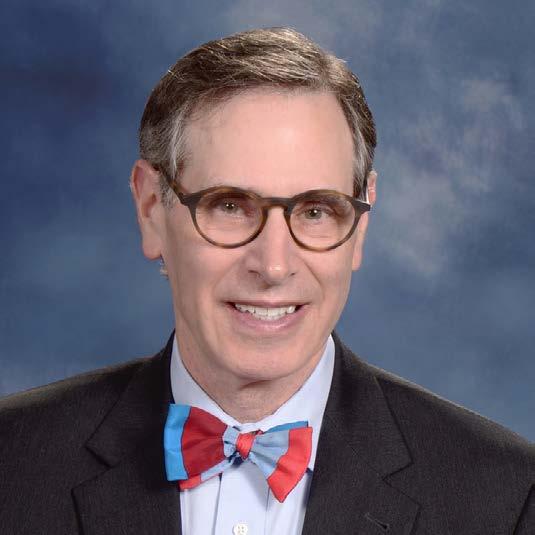
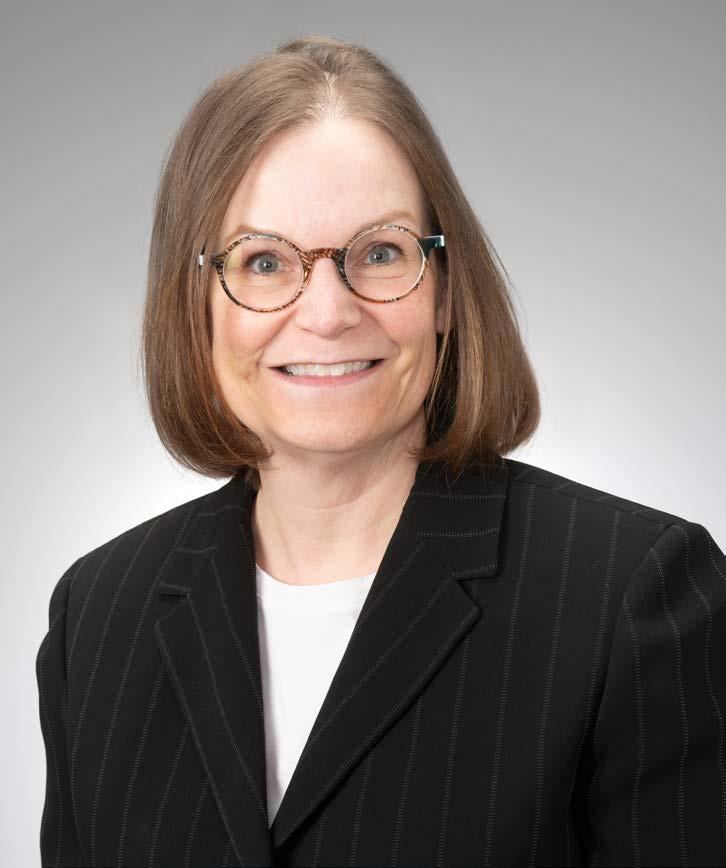
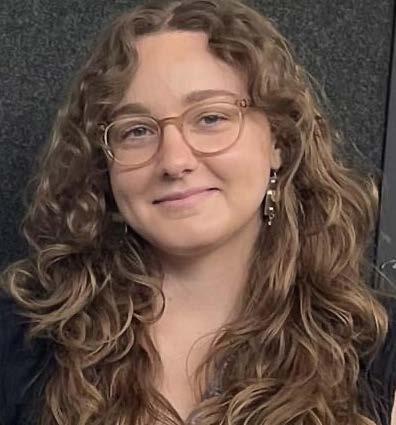
Sara Hussey, MBA, CAE ACMS Executive Director shussey@acms.org
BULLETIN DESIGNER Victoria Gricks koonacreative@gmail.com
2026 BULLETIN EDITORIAL BOARD
MEDICAL EDITOR
Natalie Gentile, MD acmsbulletin@acms.org
EDITOR EMERITA
Reshma Paranjpe, MD
ADDITIONAL MEMBERS
Lillian Emlet, MD
Marsha Haley LoAlbo, MD
Alexandra Johnston, DO
Vinnie Kaschauer OMS-1
Anthony Kovatch, MD
Timothy Lesaca, MD
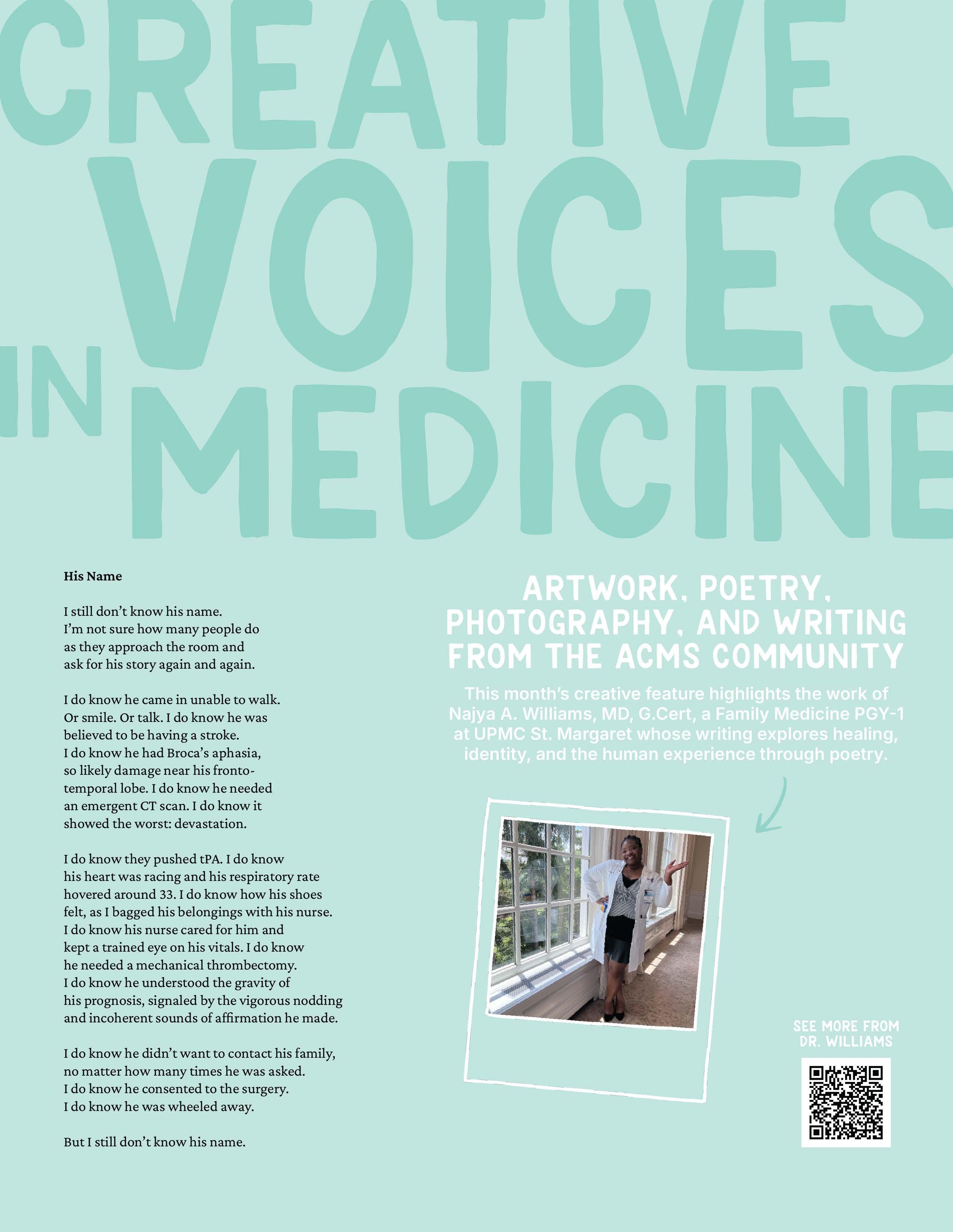
Najya Williams, MD
EDITORIAL/ADVERTISING OFFICES:
Bulletin of the Allegheny County Medical Society, 850 Ridge Avenue, Pittsburgh, PA 15212; (412) 3215030; fax (412) 321-5323. USPS #072920. PUBLISHER: Allegheny County Medical Society at above address.
The Bulletin of the Allegheny County Medical Society is presented as a report in accordance with ACMS Bylaws.
The Bulletin of the Allegheny County Medical Society welcomes contributions from readers, physicians, medical students, members of allied professions, spouses, etc. Items may be letters, informal clinical reports, editorials, or articles. Contributions are received with the understanding that they are not under simultaneous consideration by another publication.
Bulletin of the Allegheny County Medical Society reserves the right to edit all reader contributions for brevity, clarity and length as well as to reject any subject material submitted.
The opinions expressed in the Editorials and other opinion pieces are those of the writer and do not necessarily reflect the official policy of the Allegheny County Medical Society, the institution with which the author is affiliated, or the opinion of the Editorial Board. Advertisements do not imply sponsorship by or endorsement of the ACMS, except where noted.
Publisher reserves the right to exclude any advertisement which in its opinion does not conform to the standards of the publication. The acceptance of advertising in this publication in no way constitutes approval or endorsement of products or services by the Allegheny County Medical Society of any company or its products.
Annual subscriptions: $60
Advertising rates and information available by calling (412) 321-5030 or online at www.acms.org.
COPYRIGHT 2026: ALLEGHENY COUNTY MEDICAL SOCIETY POSTMASTER – Send address changes to: Bulletin of the Allegheny County Medical Society, 850 Ridge Avenue, Pittsburgh, PA 15212. ISSN: 0098-3772
The Physician's Voice
A LETTER FROM THE ACMS BULLETIN MEDICAL EDITOR
First off I'd like to say how much of an honor it is to serve as the new Medical Editor for this Bulletin. I know it is a big responsibility to steward a publication representing our medical community. Thus, I aim, along with our Editorial Board, to make sure this bulletin is a personal reflection of who we are as physicians in Allegheny County, and address topics pertinent to our work.
Last month I was a guest at the ACMS Board meeting. I was inspired by the level of dedication and volunteer leadership of our colleagues that are committed to things like healthcare reform, physician wellbeing, advocacy, and more. It was also interesting to have a glimpse into their insights around the complexity of organized medicine behind the scenes. As a direct primary care physician, my views into the world of healthcare systems and insurance based private practice is through the windows of my colleagues. It is so important that we continue taking any and all opportunities to talk about our experiences, call for change, and lean on each other. I have a renewed appreciation for the service of these leaders of the Board and the associated committees
Physician voices matter. In what seems like unprecedented times of rapid change, both in healthcare and public health, we as physicians hold something large on our shoulders: the potential to influence and educate patients who may be confused, scared, and overwhelmed by misinformation. It is our duty to
written by NATALIE GENTILE, MD
shape the narrative in medicine, rather than react to it. Know that this Bulletin is a commitment to elevating thoughtful, evidence-based, and community-centered dialogue that hopefully will empower you in your clinical practice and beyond.
Recently my dad retired from medicine after 60 years. From an early age, watching the trajectory of his career path shaped my understanding of medicine. I learned about the importance not only of professionalism and integrity, through his unwavering commitment to patients, but of responsibility. Responsibility to stay true to one’s guiding values and mission, regardless of outside influence. I watched as, despite the impact of changing healthcare systems in our city and pressures on how he was allowed to practice medicine, he upheld the personal responsibility to put the needs of his patients first.
We talk a lot about this concept of “work life balance” in healthcare. My dad is from a generation of physicians that established very few boundaries between their work and their lives. Over time, I’ve seen that lack of boundaries lead to physicians putting their own interests or talents outside of medicine on the back burner. Identifying ourselves as physicians first is a beautiful and noble thing. But two things can be true: we can devote our energies to patient care and have interests beyond medicine.
A key approach to preventing burnout and moral injury is through
identity expansion. I regularly hear from colleagues in the community who are feeling disheartened in their practices, grieving the fact that the way medicine looks today is not aligned with how they envisioned this calling to play out. One thing can help is diversifying our energy through art, advocacy, entrepreneurship, family, writing, research, and more.
Recently we had our first meeting with the Editorial Board. It was so exciting to see the range of specialties, backgrounds, and career stages represented in this group. We see the diversity of our team as a reflection of our community, and as an intellectual strength. We want this Bulletin to elevate voices across gender, race, generation, practice model, and perspectives. We are encouraging members to submit pieces that reflect their full humanity, not just clinical expertise Ideally, this type of publication will encourage and inspire you in the quest for professional sustainability and integrity.
Know that this Bulletin will be a platform for thoughtful discourse and an opportunity to amplify member voices. We will highlight innovation, advocacy, ethics, and public health. We invite you to submit your writing. We encourage dialogue in our shared mission to support the voices of our physicians. In closing, I am optimistic and grateful about this publication and, on a greater scale, about the future of medicine in our region.
Arensberg Lawyers
in All Major Healthcare Law Issues Including:
• Compliance
• Reimbursement
• Mergers & Acquisitions
• Peer Review and Credentialing for Physicians
• Employment Contracts and Restrictive Covenants
• Tax & Employment Benefits
For additional information contact any of the following attorneys at (412) 566-1212
• Adam Appleberry - Compliance, Credentialing, Reimbursement, and Physician Contracts
• Jeremy Farrell - Labor & Employment and Commercial Litigation
• Jerry Russo - Criminal Defense and Investigations
• Paul Welk - Mergers & Acquisitions
• Barbara Zemlock - Licensing Defense, Board Investigations, Disciplinary Proceedings, and License Reinstatement
Visit medlawblog.com for the latest news and information for your medical practice. For regular updates, follow @the.doctors. lawyer on Instagram and @thedoctorslawyer on TikTok.
Midlife Hormone Health
INSIGHTS FROM THE WOMEN PHYSICIANS’ COMMITTEE PERIMENOPAUSE PANEL
written by MARIELLE WILLIAMSON-REA, DO, DIPABLM
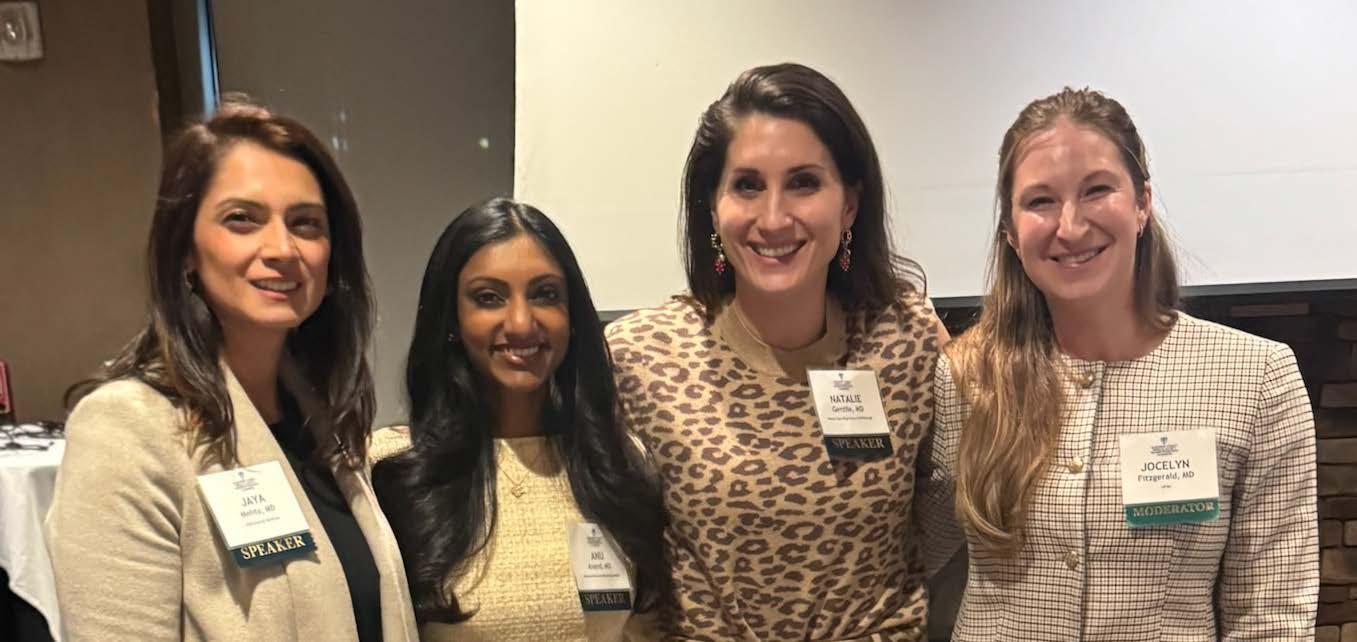
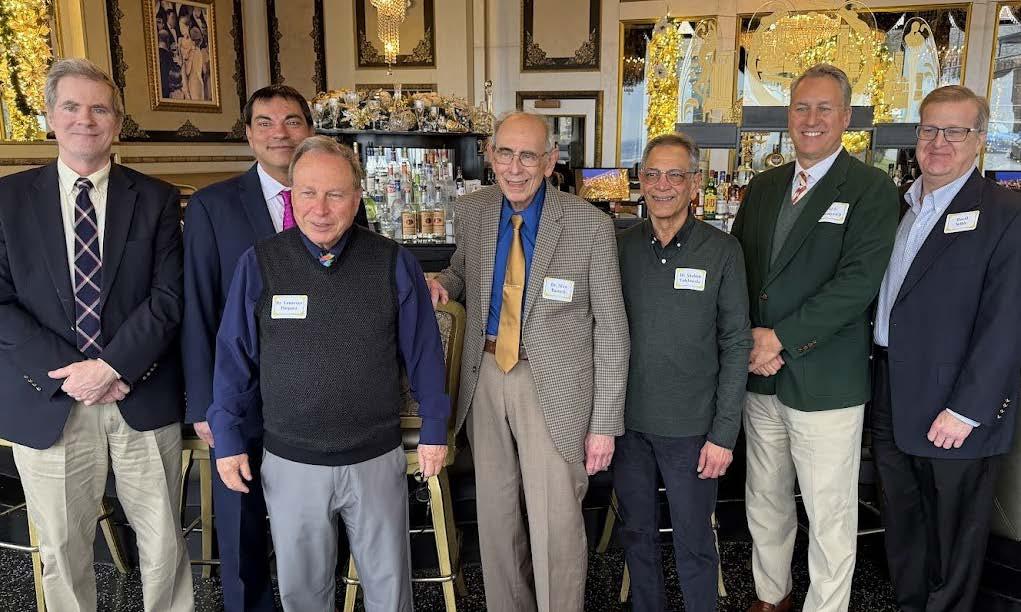
On February 24th, the ACMS Women Physicians Committee hosted presentations and a panel discussion titled: Perimenopause: What We Need to Know for Ourselves and Our Patients. Walking into the dining room reserved for the event, the space was filled with esteemed physicians, surgeons, scholars and researchers– several of whom I recognized as attendings who taught me during my not-so-long-ago residency training in Pittsburgh. As a physician myself, I can’t help but to see in each of them the years that shaped them – years of sacrifice, devotion and grit to surpass the challenges of medical training. On top of that, many continued to collect degrees and board certifications, teach, create businesses, conduct research– and for some, even do it all and experience pregnancy and motherhood! I walked into the space feeling a deep respect for them all.
The topic of the night created an unusual moment, in which all these respected physicians leaned in and engaged in discourse on a condition that actually had, or will, personally affect many or all of them: perimenopause and menopause. Like many in attendance, I’ve heard my patients’ express concerns on whether they’ll be believed about their symptoms during this phase of life, and whether they’ll receive the care that may not have been offered to their mothers, aunts or sisters in the years and decades following the Women’s Health Initiative (WHI) study. The initial reaction to the WHI was characterized by widespread abandonment of hormone therapy (HT), with prescriptions in the US dropping by 70-80%. The focus then was almost exclusively on risks, with many physicians avoiding HT altogether, even for symptomatic women. Many physicians were not
taught the basics of HT prescription, while non-evidence-based practices and “menopause myths” flourished in communities. The majority of guideline recommendations made after the WHI still stand, but guidelines now emphasize a more favorable risk-benefit profile for younger women initiating therapy close to menopause. More physicians are learning HT prescription and gaining comfort in providing it to patients. A hushed discussion has been growing louder in the office, in social circles, and on social media: menopause is again having its “moment.” In case you missed it, here are some of the key take-aways from the presentations and panel.
The event featured three distinct perspectives from experts in the field: Dr. Jaya Mehta, Dr. Natalie Gentile, and Dr. Anu Anand, each
providing a unique lens through which we can view perimenopause.
Jaya Mehta, MD, MSCP, is an internal medicine boarded physician practicing at AHN Internal Medicine and is a Menopause Society Certified Practitioner (MSCP). She opened the discussion with her review: “Perimenopause: Physiologic changes and symptom relief,” which provided actionable insights for evidence-based hormone therapy:
• Timing is key: in healthy symptomatic women, HT benefits generally outweigh the risks if initiated under age 60 or within 10 years of the final menstrual period (FMP). We should avoid starting HT in patients older than 60 or >10 years from menopause, due to excess cardiovascular risk and breast cancer risk.
• The FDA approved indications for HT use include: Vasomotor symptom management, Prevention of bone loss, Treatment of premature hypoestrogenism and genitourinary symptoms. HT is not indicated for the primary prevention of CVD or dementia, prevention of aging, or management of skin, hair, or weight changes.
• Hormone Therapy Benefits: Beyond vasomotor symptoms, HT supports bone health, cardiometabolic health, sleep, sexual function, mood, and cognition.
• Contraindications: unexplained vaginal bleeding, history of estrogen-sensitive cancers, history of stroke/MI or dementia, severe active liver disease, or high-risk VTE.
• Estrogen formulations include a patch, pill or gel; progesterone is generally prescribed as oral micronized progesterone, continuously or cyclically
for endometrial protection unless the patient has had a hysterectomy. The hormonal IUD can sometimes be used off label for this as well (this local option doesn’t provide the systemic benefits of progesterone).
• Notably, standard HT doses do not provide contraception; perimenopausal patients still require contraception if pregnancy prevention is desired.
• Testosterone for HSDD: Evidence supports the efficacy and short-term safety of transdermal testosterone for Hypoactive Sexual Desire Disorder (HSDD) in postmenopausal women. It is important to note that diagnosis is based on clinical distress, not serum levels, though monitoring should keep patients within the premenopausal physiologic range. Testosterone is not indicated for prevention of agerelated conditions like bone or muscle loss, mood changes, cognition changes - only indicated for HSDD.
• Non-Hormonal Alternatives: For those with contraindications, new Neurokinin B (NKB) receptor antagonists like fezolinetant and elinezanetant offer effective relief for vasomotor symptoms.
Natalie Gentile, MD, DipABLM, is a Family Medicine and Lifestyle Medicine boarded physician and founder of Direct Care Physicians of Pittsburgh, as well as founder and fitness instructor of the lifestyle medicine wellness center Rebel Wellness. She continued the discussion with her presentation: “Lifestyle Medicine & Perimenopause.” Dr. Gentile emphasized that perimenopause is a cardiometabolic pivot point, and
a highly symptomatic period that occurs in a woman’s peak leadership years. Because symptoms often overlap with burnout and depression, particularly in healthcare workers, it’s crucial to recognize the symptoms and lifestyle intervention targets for our patients:
• Nutrition: the most evidencebased is the Mediterranean dietary pattern. This pattern should be largely plant-forward.
• Key nutrients in the perimenopause and menopause include:
» Protein: should include focus on 1.0–1.2 g/kg/day. Some highlighted protein sources include legumes, oily fish, tuna, nuts/seeds.
» Fiber: at least 25–35g of fiber daily. Many Americans do not meet fiber goals.
» Fats: from sources high in omegas like olive oil, avocado, seeds, walnuts, soybeans, tofu, dark greens and fish; minimizing saturated fats.
» Vitamins: Calcium- 700-1200 mg for women over 50, and vitamin D in deficiency (very common in our area).
• Exercise: An evidence-based multicomponent approach— combining resistance training, cardio, and balance—is superior to any single modality for maintaining muscle mass and bone density.
» Exercise during perimenopause helps to maintain muscle, improve insulin sensitivity, protect bone, reduce cardiometabolic risk, and reduce central/visceral adiposity, and improve balance and mobility.
» Resistance training: increases lean body mass and bone density, decreases inflammation, decreases resting heart rate and blood pressure
• Avoidance of alcohol and other substances: We should counsel patients that alcohol worsens sleep and vasomotor symptoms, increasing the risk of many conditions including breast cancer risk (even light drinking, with risk rising as consumption increases).
Anu Anand, MD, FAAPMR, is a Physical Medicine and Rehabilitation boarded physician and founder of Advanced Pain and Rehab Specialists. She explored the "aging as a signaling problem" framework, discussing how a decline in anabolic signaling (GH, sex hormones) contributes to perimenopausal
symptoms. Clinical considerations for the wellness space include:
• Peptides including GLP-1 Therapies: GLP can be used if metabolic syndrome is present and must be paired with resistance training to prevent lean muscle loss. Ipamorelin and CJC-1295 are being utilized in the wellness space to stimulate endogenous Growth Hormone release, which may support sleep, fat loss, and skin elasticity.
• Regenerative Aesthetics: Platelet Rich Plasma (PRP) and PRF are increasingly used for facial rejuvenation and hair restoration, focusing on biologic signaling rather than just adding volume.
The panel discussion was energized and engaged. The overarching message of the event
was clear: perimenopause care is essential health care and must be personalized and evidencebased. After a long period without common prescription of HT due to concerns raised by the Women’s Health Initiative study, many physicians received little training in the management of perimenopause and menopause. In that void, “menopause myths” arose. Now we return to evidence-based perimenopause and menopause care, which requires rigorous clinical judgment. By doing so, we don't just manage symptoms; we empower our patients—and ourselves—to navigate peak leadership years with health and resilience. The women and physicians gathered to teach each other essential knowledge for managing this nearly universal women’s experience, and I look forward to the next ACMS Women Physician Committee event.
A Closer Look at Autism
UNDERSTANDING THE DIFFERENT PRESENTATIONS OF AUTISM SPECTRUM DISORDER
written by ANTHONY KOVATCH, MD
So goes the legend: As Pittsburghnative Gertrude Stein—avant-garde writer and champion of the “Lost Generation” in 1920’s Paris—was on her death bed, she was posed this rhetorical question by her companion Alice B Toklas: “What is the answer?” Apparently, Toklas was hoping to hear the solution to the existential dilemma of all mankind.
After the period of silence that followed, Stein weakly laughed and responded: “What is the question?” Then she died.
The most enduring symbol of the complexity of the condition now referred to as “autism spectrum disorder” (ASD) has been the puzzle piece, a representation of the many question marks that pervade this disorder. The puzzle piece symbol for autism was first introduced in 1963 by the National Autistic Society
(NAS) in the United Kingdom. It was designed to represent the prevailing uncertainty and mystery of autism, reflecting the notion that there are many pieces to understanding the genetic disorder and the individuals who live with it. The original design depicted a crying child within the puzzle piece, which aimed to evoke empathy and raise awareness about the struggles associated with the challenging condition.
In the half century that I have personally been clinically involved with these neurocognitivelyspecial children, TNTC theories regarding the classification, etiology, prevalence, sex distribution, genetics, biochemical aberrations, long-term outlook, etc., have been proposed, heralded, and then refuted. The term “Asperger’s syndrome” is obsolete, as are the postulates that the disorder is
dramatically increasing in frequency, caused by childhood vaccinations, related to maternal use of Tylenol during pregnancy, a result of parental neglect, amenable to grading by severity, to name a few.
A prevailing theory at the turn of the century hypothesized that, as a consequence of a larger than anticipated head circumference/ brain size, the grey matter of an autistic child underwent a mandatory “pruning” around the second year of life; this process became excessive to the point where essential synaptic connections were haphazardly diminished, leading to deterioration of that individual’s cognitive functioning. We now realize that this theory was over-simplified. Perhaps, we have not been asking the right questions!
There is only one universally
reporter Ariana Cha, author of the revelatory article in the Washinton Post (2), for her excellent synthesis of the results and discussion of the ramifications of the data. Her distillation of the conclusions of the monumental study is vital for their application for all clinicians who work with these children and adults. The authors identified 4 distinct categories among the 5,000 individuals whose data were analyzed:
The largest group, around 37 percent, met early developmental milestones on time yet often grappled with other conditions later on, including ADHD, anxiety, depression or obsessivecompulsive disorder. These last two groups previously included those uniquely talented, highly focused older patients previously diagnosed with Asperger’s Syndrome.
acknowledged, abiding principle regarding this disorder which impacts nearly all primary care providers: “One size fits none;” this concept (along with the puzzle piece) emphasizes the universal diversities that exist within the autism spectrum that require uniquely personalized management.
A landmark study published in July, 2026 in Nature Genetics (1) was able to correlate the 7 broad core clinical features of ASD — limited social communication, restricted and/or repetitive behavior, attention deficit, disruptive behavior, anxiety and/ or mood symptoms, developmental delay and self-injury — with the hundreds of genetic markers identified in clinically-diagnosed individuals and the age that the diagnosis was established. The ultimate goal was essentially to match phenotypical data with genetic data and find within the vast heterogeneity of the disorder distinct categories that could help establish guidelines and prognoses.
The study was conducted jointly at the Center for Computational Biology, Flatiron Institute in New York City and the Department of Computer Science at Princeton University and was heavily laden with statistics. I must thank national
• Broadly affected: The smallest group — about 10 percent of participants — faced the steepest challenges, marked by developmental delays, difficulties with communication and social interaction, and repetitive behaviors that touched nearly every part of life.
• Mixed autism with developmental delay: Roughly 19 percent showed early developmental delays but few signs of anxiety, depression or disruptive behavior. Researchers call this group “mixed” because its members vary widely in how strongly they display social or repetitive behaviors.
It is thought that the genetic defects — both de novo and inherited — of these groups of autistic children are primarily expressed in utero. Children in these two groups who demonstrate autoantibodies that appear to block folate receptors in the brain are the ones that might benefit from therapy with leucovorin.
• Moderate challenges: About a third of participants fell into this group, showing the hallmark traits of autism — social and communication differences and repetitive habits — but in subtler ways and without developmental delays.
• Social and/or behavioral:
It was concluded in this far-reaching study that the genetic defects in this last group are primarily expressed post-natally; furthermore, it was remarkable that these individuals tended to be diagnosed later (6-8 years old), in contrast to the majority of children in the three other groups, who exhibit noticeable symptoms before the age of 3 and are amenable to detection by the autism screening questionnaire administered during pediatric checkups.
As a corollary of the expansion of autism to 4 subgroups, I think it is now widely accepted that the apparent dramatic increase in the prevalence of autism from 1 in 150 children in the US in 2000 to 1 in 31 in 2022 was NOT related to a sudden epidemic of environmental factors affecting the neurodevelopment or autoimmune status of genetically-vulnerable children, but rather to an expanded appreciation of its variability, especially its more “silent” forms in older children. Screening via the M-CHAT (Modified Checklist for Autism in Toddlers) has been universally employed for at least 2 decades. Referral for definitive diagnosis has been crystallized to ensure that therapy is availability to all. As above, the diagnosis has been expanded to the older population of children (and even adults) who
The original autism puzzle piece.
were previously singularly treated for ADHD, anxiety disorders, OCD, depression, etc.
Similarly, the long-held prejudice that autism affects a preponderance of males was recently challenged by researchers in Sweden. A study in the British Medical Journal (3) from February, 2026 that tracked nearly 3 million subjects over decades found that, while boys are diagnosed more often in childhood, girls steadily catch up and close the gap during their teenage years, so that by early adulthood, autism diagnoses are nearly equal between the two sexes! The large difference has often been explained by the fact that girls tend to have stronger social and communication skills which can
create an observational bias. Further longitudinal epidemiologic studies across life stages are planned. So, in response to the compelling question researchers have posed for decades regarding the definition and cause of autism, a viable answer has been provided by Natalie Sauerwald, one of the lead authors of the study in Nature Genetics:
“There isn’t just one autism. There are many autisms.”
As we continue to ask the right questions, I believe the medical community will be more and more capable of "sizing up" the growing number of recognizable subtypes of this entity shared by so many beloved individuals!
REFERENCES
1. Decomposition of phenotypic heterogeneity in autism reveals underlying genetic programs. Litman A, Sauerwald N, et al: Nature Genetics 57: 1611-1619, July 25, 2025
2. Cha A. New science points to 4 distinct types of autism. Washington Post December 26, 2025
3. Fyfe C.et al. Time trends in the male to female ratio for autism incidence: population based, prospectively collected, birth cohort study. BMJ, February 4, 2026
Advocacy in Action
MAJOR TAKEAWAYS FROM THIS YEAR’S AMA NATIONAL ADVOCACY CONFERENCE
written by SARA HUSSEY, MBA, CAE – ACMS EXECUTIVE DIRECTOR
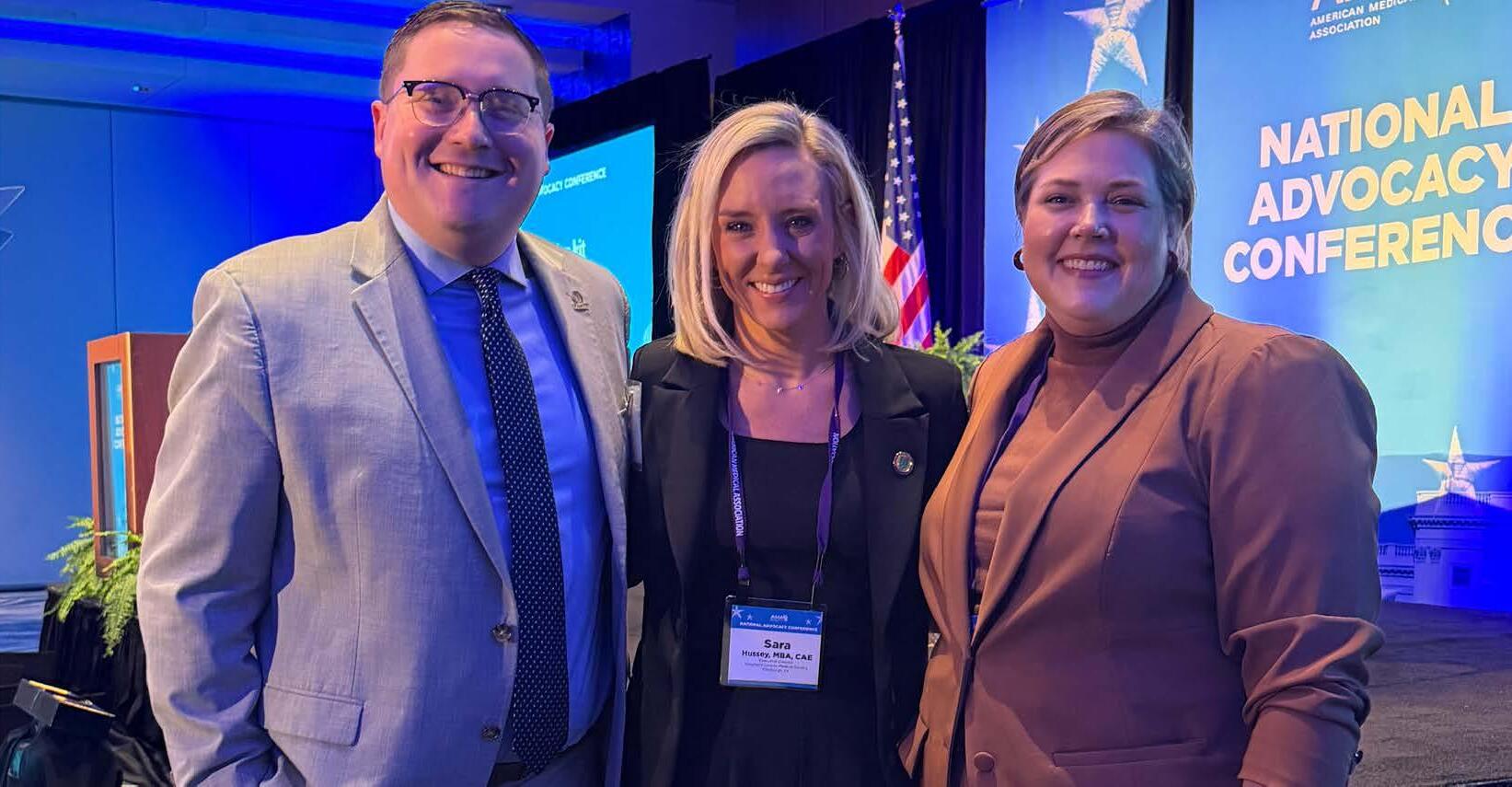
In late February, I joined physician leaders from across the country in Washington, DC for the American Medical Association National Advocacy Conference (NAC). The conference brings together organized medicine to strengthen advocacy skills and elevate physician voices on policies that protect patient access to care and support the sustainability of the profession.
This year’s discussions focused on several national priorities, including Medicare physician payment reform, prior authorization, Medicaid access, and healthcare affordability. At the same time, many conversations centered on trust, communication, and the evolving role of physicians in a very complex healthcare environment.
I encourage any ACMS member
interested in advocacy to consider attending the conference in 2027. NAC offers physicians a valuable opportunity to engage directly in national policy discussions and bring the perspective of our local medical community to the table. This article includes a recap of this year’s conference.
Physician and journalist Sanjay Gupta, MD spoke about the growing erosion of trust in institutions and information sources. In an environment shaped by social media and fragmented news consumption, credible voices are more important than ever.
Physicians are uniquely positioned to help fill that gap, but doing so requires intentional communication. Simplifying complex medical information is not “dumbing it down,” but making it understandable. Dr. Gupta also noted that demonstrating humility - including acknowledging uncertainty when appropriate - can strengthen credibility and build trust.
Rather than focusing solely on persuasion, he encouraged physicians to offer perspective. Data and policy matter, but behind every statistic is a human story. Helping patients and policymakers understand those lived experiences can bridge divides more effectively than argument alone.
AFFORDABILITY, & SYSTEM PRESSURES
Entrepreneur (and Western PA native) Mark Cuban offered a candid
critique of structural inefficiencies driving healthcare costs, highlighting opaque pricing structures, pharmacy benefit manager practices, and insurance designs that leave many patients struggling with high deductibles and out-of-pocket costs.
His message was straightforward: healthcare affordability cannot be separated from real household economics. Even insured patients may delay care if they cannot afford the financial burden.
Cuban also emphasized the growing financial pressure on independent physicians and pharmacists, underscoring the importance of continued advocacy for transparency and accountability within the healthcare system.
NAVIGATING A SHIFTING FEDERAL LANDSCAPE
The message from Washington was unmistakable: disruption in healthcare policy is accelerating. Political volatility, regulatory shifts, and the approaching midterm elections are creating an environment where priorities can change quickly and implementation timelines remain uncertain. Healthcare affordability will remain central to national debate, but the policy path forward is likely to continue recalibrating rather than settling into predictability.
One message rose above the noise: trust lives locally. Patients may distrust institutions and politics, but they trust their own physicians. That trust gives physician voices credibility - and responsibility.
PRACTICE SUSTAINABILITY, PAYMENT, & ADMINISTRATIVE BURDEN
Conference discussions repeatedly returned to the long-term sustainability of physician practice and patient access to care. As Bruce Scott, MD, AMA Immediate Past President, noted, “If there aren’t any doctors, there won’t be any access for beneficiaries.”
Speakers highlighted concerns around physician payment, site-ofservice payment disparities, and the growing administrative burden associated with prior authorization and utilization management. While originally intended to ensure appropriate care, these processes now frequently delay treatment and strain physician–patient relationships.
Federal officials acknowledged the need to reduce administrative complexity and modernize processes so physicians can spend more time caring for patients rather than navigating paperwork.
ARTIFICIAL INTELLIGENCE & THE FUTURE OF CARE
processes such as medication refills or other transactional care functions may become increasingly automated in the coming years.
At the same time, presenters emphasized that physicians must remain the final arbiters of clinical decision-making. AI should function as an input - not a substitute - for medical judgment. Responsible implementation will require transparency, physician oversight, and continued focus on maintaining patient trust.
ADVOCACY ON CAPITOL HILL
As part of the conference, the Pennsylvania delegation met with members of Congress and their staff to share frontline perspectives from physicians and patients. I was paired with PAMED Board
TRUST REMAINS THE CORNERSTONE OF CARE. BY PROVIDING PERSPECTIVE - NOT JUST DATA - PHYSICIANS CAN BRIDGE DIVIDES AND SHAPE BETTER POLICY.
Artificial intelligence emerged as a major topic throughout the conference. Dhruv Khullar, MD, MPP, described AI as a technology with significant potential to improve healthcare delivery, particularly by reducing administrative burden.
Tools that automate documentation, assist with diagnostic synthesis, or streamline routine tasks could help return time to patient care. Some speakers suggested that routine
HEALTHCARE POLICY TRENDS TO WATCH IN 2026
Affordability will drive policy decisions. Healthcare costs and household economic pressures will shape priorities.
Expect continued policy movement. Regulatory actions and election dynamics may shift direction quickly. Administrative burden remains under scrutiny. Prior authorization and documentation reform remain key pressure points. Independent practice sustainability. Payment and regulatory policy will influence community-based care viability.
Chair Lorraine Rosamilia, MD, and PAMED staff member Allison Meckley for our Hill visits. We met with Lloyd Smucker to discuss national policy priorities and potential Medicare changes affecting constituents.
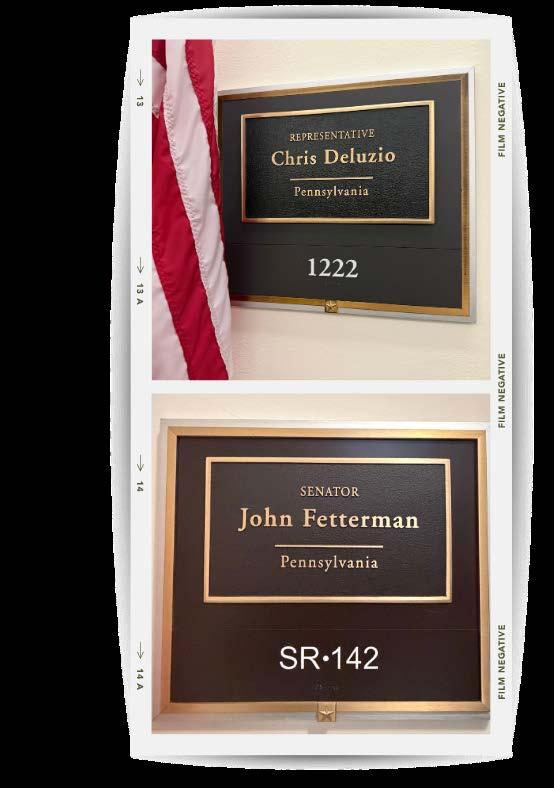
In a meeting with staff from Chris Deluzio’s office, we discussed opportunities to collaborate more closely with ACMS and our physician members. Our delegation also met with staff from John Fetterman and Dave McCormick, reinforcing the importance of continued dialogue between policymakers and practicing physicians.
These conversations help ensure that the realities of patient care in Allegheny County, and Pennsylvania, inform federal policy discussions.
WHY THIS MATTERS LOCALLY
Healthcare policy may be written in Washington, but its consequences show up in our exam rooms and communities.
Patients may distrust institutions, insurers, or government, but they trust their own physicians. When physicians share real patient experiences and advocate for policies that reduce barriers to care,
those perspectives help ground policy decisions in the realities of clinical practice.
County medical societies play an important role in connecting physician voices to policymaking. By elevating frontline experiences, we help safeguard patient access to care and strengthen the health of our communities.
MOVING FORWARD
Advocacy is not a single trip to Washington or a single trip to visit your local legislator. It is a continuous commitment to patients, communities, and the future of medicine.
Whether communicating with patients, elevating frontline experiences, advocating for affordability and access, or guiding the responsible use of emerging technologies, physicians help shape a healthcare system grounded in trust and compassion.
In a time of rapid change, one truth remains constant: the voice of a trusted physician carries extraordinary weight. Staying engaged ensures that voice continues to guide a system worthy of the people it serves.
AI adoption is accelerating. Transparency, safety, and physician oversight will guide responsible use. Trust is local. Patients trust their physicians, making physician voices essential.
Sara Hussey - ACMS Executive Director, with PAMED team members Zachary Gates and Allison Meckley
Don't Make Us Share
WHY NATIONAL DOCTORS’ DAY SHOULD REMAIN A DAY TO RECOGNIZE PHYSICIANS
written by MARSHA HALEY LOALBO, MD – ACMS BULLETIN ASSOCIATE EDITOR
I wrote this article back in 2021 about National Doctors’ Day. Unfortunately, despite the hard work and sacrifices physicians made during the pandemic, many health systems showed very little appreciation for their medical staff. This became glaringly obvious during Doctors’ Day.
Now that Doctors’ Day 2026 is approaching, I wondered if things had improved. In 2022, Dr. Hala Sabry wrote that while some health systems have done a great job in celebrating their physicians, there are still “concerns over not feeling appreciated and valued at their hospitals, especially when many other health care lines of business have hefty budgets for celebrations and festivities for every day of the week, rather than just one calendar day.” In 2025, some organizations were specific in recognizing the skill
and dedication of their physicians during Doctors’ Day 2025, including Kaiser Permanente, UT Medical Center, Virginia Department of Health, and WakeMed Health and Hospitals, to name a few. Several doctors took to social media to praise or shame their health systems on Doctors’ Day 2025. If we had a Razzies Award for Doctors’ Day 2025, it would include the hospital who gave doctors a brick from the old hospital after moving to a new hospital, Penn Medicine Chester County Hospital for a poster in the Doctor’s Lounge, and the many hospitals who - rather than celebrate their doctors - solicit donations on behalf of Doctors’ Day (of course the doctors don’t receive any of the proceeds.)
Doctors aren’t asking for anything elaborate or excessive. Just like anyone else who works hard, we appreciate when people notice and
value our contributions. I think it is best summed up by Brian Canfield, the CEO of Blessing Health System, who asked people to “consider saying thank you after your next encounter with a physician.” It really is as simple as that.
On March 30, we celebrated National Doctors’ Day. Doctors’ Day was established on March 30, 1933, in Winder, Ga., by Eudora Almond, wife of Dr. Charles B. Almond. The first observance included mailing greeting cards and placing flowers on graves of deceased doctors. On Oct. 30, 1990, President Bush signed S.J. RES. #366 (which became Public Law 101-473), designating March 30 as National Doctors’ Day to honor the contribution of physicians who serve our country. Doctors’ Day falls within National Physicians’ Week, which was
founded in 2016 by Dr. Kimberly Jackson.
As a physician, it feels good to receive recognition on Doctors’ Day. My coworkers make me feel valued and needed, and my physician colleagues and I return this sentiment each year when we celebrate Nurses’ Week, Nurse Practitioners’ Week, Physician Assistants’ Week, Respiratory Therapists’ Week, Healthcare Environmental Services Week, National Medical Laboratory Professionals Week, Radiology Technology Week, Medical Assistants’ Recognition Day, and Administrative Professionals Day.
I am fortunate to work in a health system which recognizes the work that physicians do and celebrates this special day with us. Our administration recently highlighted one of my physician colleagues who is giving up his weekends to administer COVID vaccines in underserved communities. An ophthalmology colleague spends his vacations in Honduras volunteering to perform eye surgeries. This extra time and effort by physicians to serve not only at work but beyond the job goes often unnoticed. Fortunately, many health systems appreciate their physicians and made them feel valued this Doctors’ Day, including Ascension, University of Kansas Health System, CHI Memorial, Ohio State, Medical University of South Carolina, and Texas A&M, among others.
Medicine is changing in a way that is negatively affecting doctors. Governmental policies and reimbursements have made it extremely difficult for physicians to own their own practices. Most physicians have lost autonomy and are now employees of corporate medical groups. In many cases,
the takeover of local hospitals by these corporate groups has led to prioritizing profits above the wellbeing of patients and staff. Since 2019, dozens of doctors have left medical centers over concerns for patient safety. Doctors have been fired and replaced with “providers” who did not attend medical school or residency, for exercising professional judgment. Stressful work settings, work-life challenges, lack of support, exhaustion, lack of autonomy, and longer work hours are contributing to the rising physician suicide rate, which is twice that of the general population.
This past year, frontline workers sacrificed personal safety, time with loved ones, and even their lives, to care for patients with COVID-19. Doctors were no exception. Sadly, despite this sacrifice, some health systems chose not to highlight their physicians on Doctors’ Day. The Johns Hopkins Medicine Facebook page posted the following Doctors’ Day message: “During COVID-19, we are thankful now more than ever to have not only our doctors but also nurses, PA's, environmental services and other healthcare workers by our side at Johns Hopkins Medicine. We are grateful to all of our staff who are on the frontlines during #COVID19. #NationalDoctorsDay”. The post prompted hundreds of comments. One physician said that Johns Hopkins “doesn’t value their physicians. They do not give due recognition to their hard-working, burnt-out physicians who have sacrificed blood, sweat, and tears so that Hopkins can be ranked a Top Hospital.”
Hopkins was not alone in its tonedeaf approach to Doctors’ Day. Emblem Health sent an email to its physicians that said, “Thank you Providers!”. Van Buren County Hospital celebrated Doctors’ Day
by posting photos of its Nurse Practitioners. University of Maryland Medical System Foundation posted, “With #NationalDoctorsDay on 3/30, we invite you to celebrate our hardworking physicians, nurses, and care team members.” Sadly, these health systems seem oblivious to the moral injury and burnout that are prevalent in medicine today, and that the simple acts of recognition and saying “thank you” go a long way.
My physician colleagues and I delight in joining our health systems to celebrate the weeks and days dedicated to our colleagues in other areas of medicine and letting them know the special contribution they give to the patient care team. Physicians likewise appreciate receiving — and deserve to receive — recognition on Doctors’ Day for the unique role we serve.
Let us have our day.
MARSHA HALEY LOALBO, MD
Marsha Haley LoAlbo, MD, is a Clinical Associate Professor of Radiation Oncology at the University of Pittsburgh School of Medicine. She notes that the views she expressed are her own and not those of her employer.
Zuranolone (Zurzuvae™)
CLINICAL CONSIDERATIONS FOR THE FIRST ORAL TREATMENT FOR POSTPARTUM
DEPRESSION
BACKGROUND
written by ALEXANDRA MANNINO, PHARMD & CAMRYN MOLNAR, PHARMD
Zurzuvae (zuranolone) is a neuroactive steroid gammaaminobutyric acid (GABA)-A receptor positive modulator indicated as monotherapy or as an adjunct to antidepressants for the treatment of postpartum depression (PPD) in adults.1 During pregnancy, allopregnanolone, a metabolite of progesterone, increases and acts as a positive allosteric modulator of GABA-A receptors. Progesterone decreases abruptly following childbirth, and its decrease is thought to play a role in PPD.2 Zuranolone acts as a positive allosteric modulator of GABA-A receptors and therefore can act as a replacement and help with PPD.3 Zuranolone is the first FDA approved oral agent specifically indicated for the acute treatment of severe, postpartum, unipolar depression.
SAFETY
The SKYLARK study assessed safety
data from 98 patients treated with zuranolone 50 mg and 98 patients treated with placebo.4 The primary outcome was symptom improvement on the Hamilton Depression Rating Scale (HAMD-17) at day 15. The HAMD-17 ranges from 0 to 54, with 0 to 7 indicating normal range, and a score of 20 or higher indicating at least moderate depression severity. Safety and tolerability were assessed by the incidence and severity of treatment emergent adverse events (TEAEs), dose reduction rates, and treatment discontinuation. TEAEs were reported in 66.3% of zuranolone-treated patients and 53.1% of placebo-treated patients. In patients that experienced TEAEs, most were reported as mild in both zuranolone (50.8%) and placebo (75%) groups. Moderate symptoms were reported in 44.6% of patients taking zuranolone and 23.1% of patients in the placebo group. TEAEs in the zuranolone group included somnolence (26.5%), dizziness (13.3%), sedation (11.2%), headache (9.2%), diarrhea (6.1%), nausea (5.1%), urinary tract infection (5.1%), and COVID-19 (5.1%). Treatment discontinuation due to TEAEs was seen in 4.1% of patients receiving zuranolone and 2.0% in patients receiving placebo, with the main reason being somnolence (2.0%). Serious TEAEs were reported in 2.0% of zuranolone patients and none in the placebo group. The package insert states that zuranolone can increase the risk of suicidal thoughts and behaviors, however there was no evidence of increased suicidal ideation observed in the study completed by Deligiannidis et al5. In addition, an FDA Boxed Warning states that zuranolone may impair the ability to drive or perform hazardous tasks, and patients may not recognize their impairment, which was added after a randomized controlled trial showing that zuranolone 50 mg significantly increased driving impairment6
To mitigate risk, patients should avoid driving or operating heavy machinery for at least 12 hours after taking the medication. Currently there are no contraindications for zuranolone use.
TOLERABILITY
Zuranolone is generally welltolerated with most adverse effects being mild to moderate in severity. In phase 3 clinical trials, the most common adverse events (≥10%) with zuranolone were somnolence, dizziness, and sedation.4,5 This effect typically occurred within the first few days of medication initiation and can impair activities requiring alertness such as driving. Other adverse events reported in the clinical trial included fatigue, diarrhea, and headache. These have been shown to occur early in treatment and often resolve without needing to discontinue the medication. It is also noted that this medication has an increased risk of suicidal thoughts or actions in people 24 years of age and younger and should not be used in children.1
EFFICACY
The ROBIN study asessed efficacy A double-blind, randomized, placebocontrolled phase 3 clinical trial, assessed efficacy of zuranolone for the treatment of PPD in adults.5 The primary end point was change from baseline in HAMD-17 score for zuranolone against placebo at day 15. Individuals with a history of bipolar disorder, psychotic disorder, and attempted suicide were excluded from the trial. A total of 153 patients were randomized, with 77 patients assigned to zuranolone and 76 patients to placebo. Zuranolone demonstrated significant HAMD-17 score improvements from baseline compared to placebo (−17.8 vs −13.6; difference, −4.2; 95% CI, −6.9 to −1.5). In addition, HAMD-17 scores favoring zuranolone were observed
from day 3 (difference, −2.7; 95% CI, −5.1 to −0.3) through day 45 (difference, −4.1; 95% CI, −6.7 to −1.4).
PRICE
Without insurance, zuranolone is marketed at $15,900 for a 14-day treatment course7. This medication is currently only dispensed by a specialty pharmacy. The manufacturer, Biogen and Sage Therapeutics, offers a program called “Zurzuvae For You” to help provide support to patients who are interested in the medication. A Zurzuvae savings card is also available for eligible patients with commercial insurance, in which patients may pay as little as a $0 copay.8 For comparison, the wholesale acquisition cost for a full course of brexanolone, prior to being withdrawn from the market, was listed by the manufacturer as $37,250. Current insurance coverage for zuranolone is unclear.
SIMPLICITY
Zuranolone is currently available as 20 mg, 25 mg, and 30 mg capsules. The recommended dosage of zuranolone is 50 mg by mouth once daily in the evening, taken with a fatty meal (400–1,000 calories, 25%–50% fat) for 14 days. Patients should also stop breastfeeding during the treatment period, as individuals in clinical trials were advised to stop lactating while taking zuranolone. Experts recommend a dose reduction to 40 mg daily if central nervous system depressant effects arise. In the case of severe hepatic or moderate to severe renal impairment, dosing should be initiated at 30 mg. Dose adjustments are also required for individuals taking medications that are strong CYP3A4 inhibitors such as fluconazole and clarithromycin. Concomitant use with CYP3A4 inducers like phenobarbital and
rifampin should be avoided.
BOTTOM LINE
Zuranolone is a neuroactive steroid acting on GABA-A receptors, offering a rapid-acting, short course oral medication option for PPD. The American College of Obstetricians and Gynecologists recommend consideration of zuranolone for severe PPD that has onset in the third trimester or within 4 weeks postpartum. The decision to use zuranolone should balance the benefits with the associated risks and challenges such as potential suicidal thoughts or behavior, sedation that precludes performing daily activities such as driving or operating heavy machinery, and overall cost of the medication. It is also important to counsel patients on taking this medication with a fat-containing meal in the evening. Currently, zuranolone is the only FDA approved treatment for PPD in adults with evidence demonstrating its rapid symptom relief.
ALEXANDRA MANNINO AND CAMRYN MOLNAR
Dr. Alexandra Mannino is a PGY1 pharmacy resident at UPMC St. Margaret and can be reached at manninoam2@upmc.edu.
Dr. Camryn Molnar is a PGY2 Ambulatory Care Pharmacy resident at UPMC St. Margaret and can be reached at molnarc2@upmc.edu. Dr. Alexandria Taylor, PharmD, BCPS, Director of the PGY1 Pharmacy Residency Program served as editor and mentor for this work and can be reached at tayloram9@upmc.edu.
Scan the QR code to view the article’s full list of references.
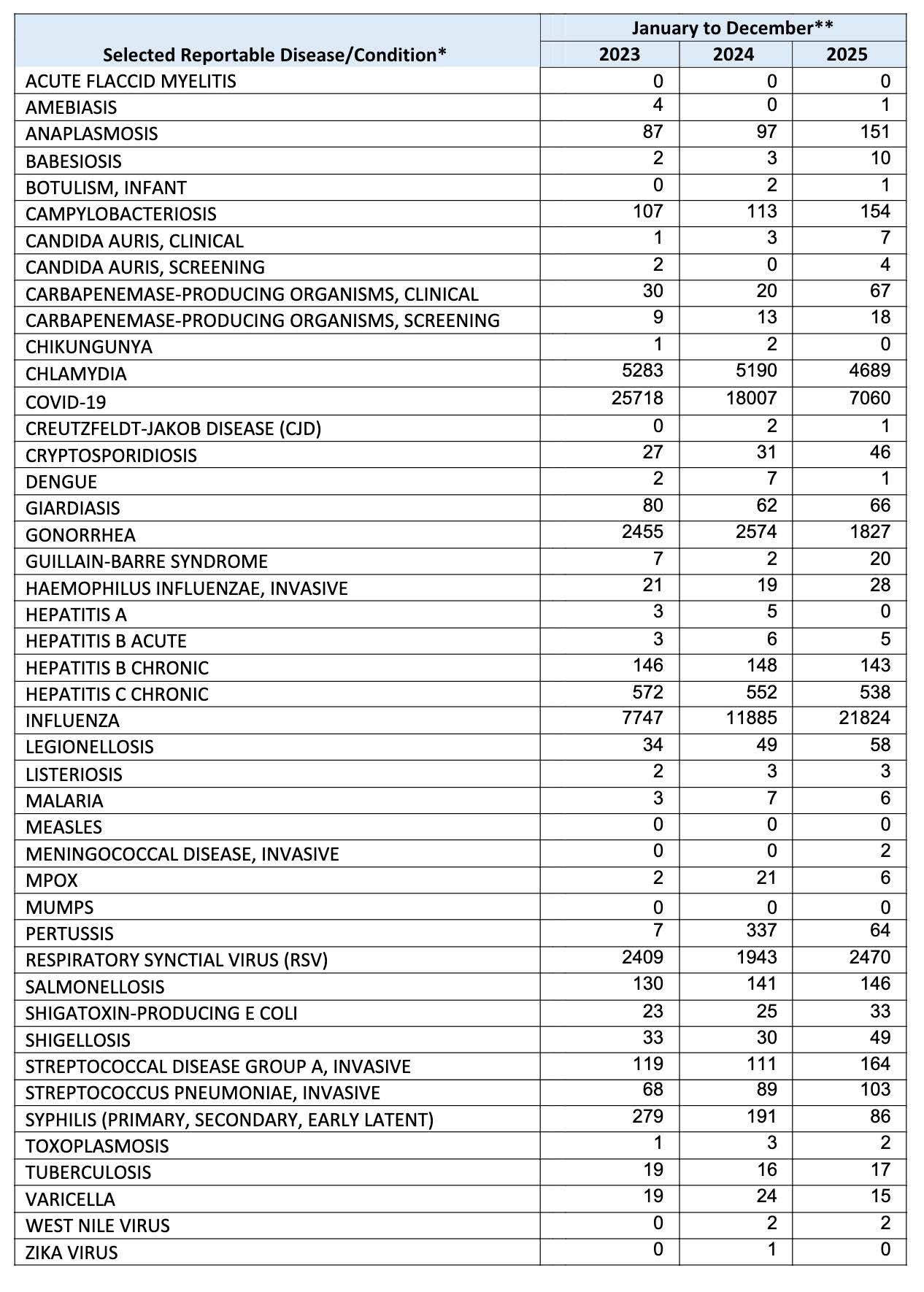
Reportable Diseases
ALLEGHENY COUNTY HEALTH DEPARTMENT OVERVIEW OF REPORTABLE DISEASES/CONDITIONS FOR 2025: Q1-Q4
* Case classifications reflect definitions utilized by CDC Morbidity and Mortality Weekly Report.
** These counts do not reflect official case counts, as current year numbers are not yet finalized. Inaccuracies in working case counts may be due to reporting/investigation lag.
NOTE: Disease reports may be filed electronically via PA-NEDSS. To register for PA-NEDSS, go to https://www. nedss.state.pa.us/NEDSS. To report outbreaks or diseases reportable within 24 hours, please call the Health Department’s 24-hour telephone line at 412-687-2243. For more complete surveillance information, see ACHD’s 10-year summary of reportable diseases: https://www.alleghenycounty.us/Health-Department/Resources/Data-andReporting/Infectious-Disease-Epidemiology/Epidemiology-Reports-and-Resources.aspx.
Follow Us on Social Media or visit pagswd.org
Mark Your Calendar!
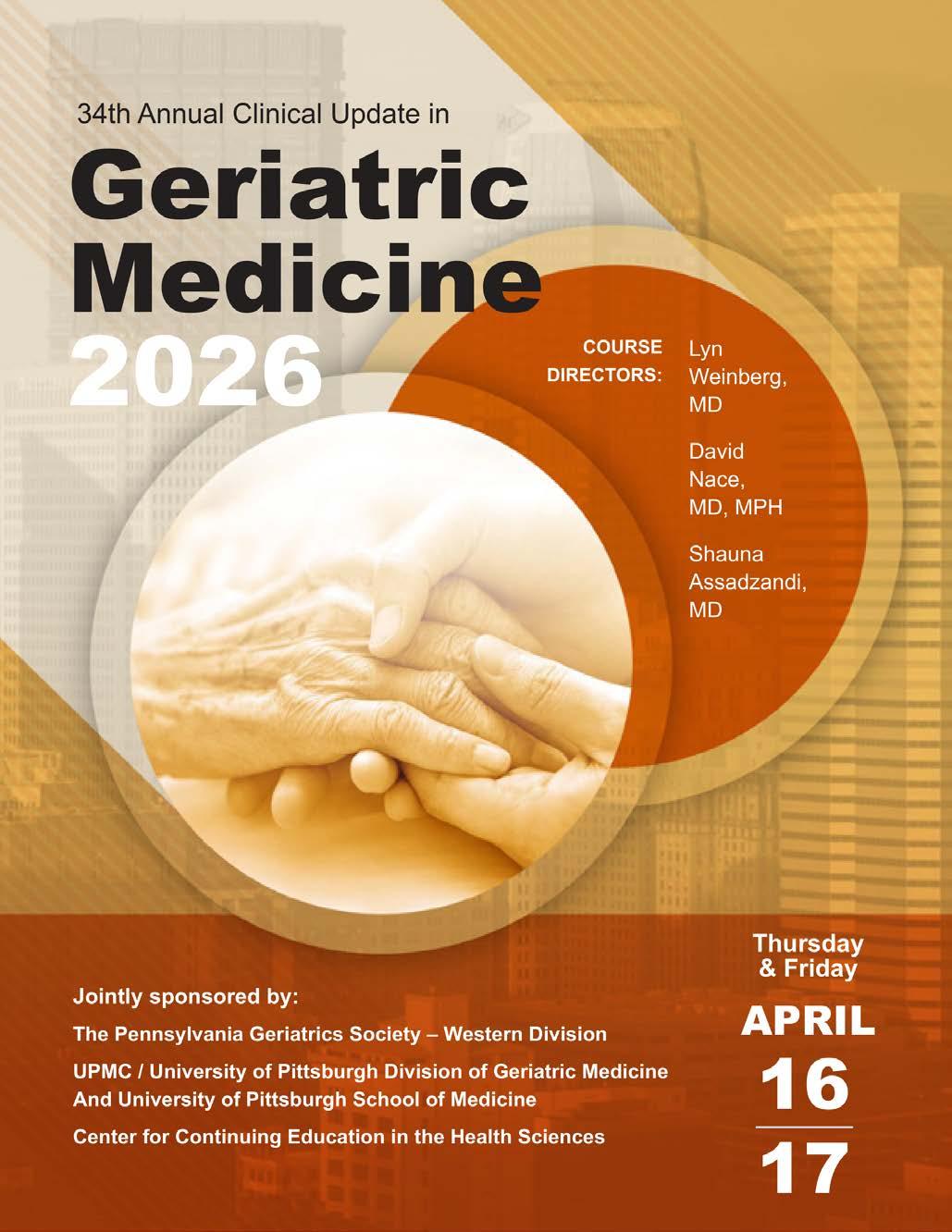
The 34th Annual Clinical Update in Geriatric Medicine will be held April 16–17, 2026, at the Sheraton Pittsburgh Hotel at Station Square.
Get the latest evidence-based strategies, earn CME, AAFP, Nursing, and Pharmacy credits, and reconnect with colleagues in person. Focused on the 5Ms of Age-Friendly Care, this program equips clinicians to improve care for older adults
Conference credits include AMA PRA Category 1 credits™, AAFP, Nursing, Risk and ACPE credits.
For full details on credit offerings and conference information visit the conference website by scanning the QR code.
HONORING OUR ACMS FEATURED MEMBER, ANDREW ELLER, MD
Andrew Eller, MD, is a vitreoretinal surgeon and Professor Emeritus at the University of Pittsburgh School of Medicine. He completed medical school at Hahnemann Medical College (now Drexel University College of Medicine) in 1979, followed by an internship at Presbyterian–University of Pennsylvania Medical Center. He completed his ophthalmology residency at Wills Eye Hospital and a fellowship in vitreoretinal diseases and surgery with Retina Associates at the Massachusetts Eye and Ear Infirmary, affiliated with Harvard Medical School.
Dr. Eller joined the University of Pittsburgh faculty in 1985 and has spent more than four decades practicing ophthalmology in an academic setting. During that time, he has taught medical students, ophthalmology residents,
and vitreoretinal fellows while maintaining an active clinical practice specializing in vitreoretinal surgery.
Within the Department of Ophthalmology, he has served in numerous leadership roles, including Director of the Ocular Trauma Service, Director of the Retina Service, and Program Director of the Vitreo-Retinal Fellowship. His academic contributions include 73 peer-reviewed publications and participation as a co-author on more than 100 publications from multicenter clinical trials. He has also received numerous teaching awards from residents and medical students.
Dr. Eller currently works part time, staffing an eye clinic at the Oakland VA and a laser clinic at the UPMC Vision Institute. He serves on the Board of the ACMS.
CAN YOU TELL US ABOUT YOUR CURRENT ROLE AND WHAT A TYPICAL WORKDAY OR WEEK LOOKS LIKE FOR YOU?
After 40 years of practicing ophthalmology in an academic setting, I am now working part time.
During the first 40 years of my career, I juggled a busy clinical practice with office visits and surgery, while also teaching and mentoring medical students, residents, and fellows. At the same time, I remained involved in research and, most importantly, spent time with my family.
My initial plan was to work at Pitt for five years and then return home to Harrisburg to enter private practice. That was almost 41 years ago, and I am still here. I have had an amazing and satisfying career with no regrets and would not change a thing.
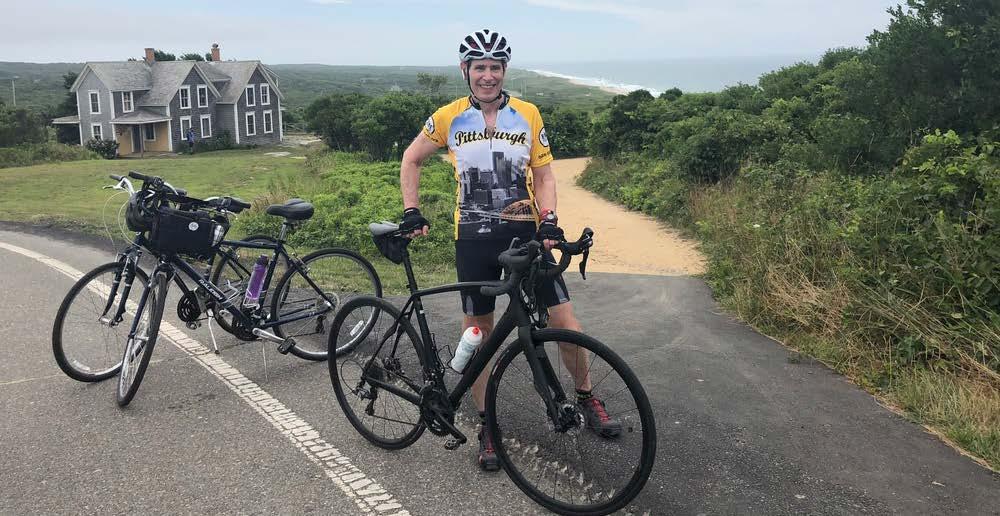
Dr. Andrew Eller enjoying one of his favorite activities!
WHAT INSPIRED YOU TO PURSUE YOUR CURRENT SPECIALTY?
I don’t think there was a single rotation in medical school that I did not enjoy. Whether it was assisting in autopsies or examining children, I found each rotation to be interesting and challenging.
I was exposed to vision care very early in life because I had two uncles who were optometrists. They encouraged me to go to medical school and keep an open mind while experiencing all the specialties, while at the same time considering ophthalmology. I followed their advice and I can look back and know that I made the correct decision.
HOW DID YOU FIRST GET INVOLVED WITH THE ALLEGHENY COUNTY MEDICAL SOCIETY?
My primary involvement with organized medicine has been through ophthalmology, including the Pittsburgh Ophthalmology Society and the Pennsylvania and American Academies of Ophthalmology.
In the past, I have been peripherally involved with ACMS by attending health fairs and serving as an alternate to the Pennsylvania Medical Society. Now that I am
partially retired, I am looking forward to having the time and energy to increase my involvement with ACMS. I currently serve on the ACMS Board of Directors and I am a member of the ACMS Advocacy Task Force.
ARE THERE ANY ACMS OR PAMED INITIATIVES OR EVENTS THAT YOU ARE PARTICULARLY PASSIONATE ABOUT?
I am most interested in working with the Advocacy Task Force. It is the legislators in Harrisburg who exert the greatest influence on how we practice medicine on a daily basis.
Several years ago, my younger brother, an internist, called me when he was 62 years old and said that he had all the signs and symptoms of physician burnout. Fortunately, he was able to retire to Colorado, where he is very happy hiking, skiing, camping, and playing pickleball.
Physician burnout is becoming increasingly common. Programs like those offered through ACMS can help physicians, but we also need to seriously evaluate the root causes of burnout and address them head on.
WHAT DO YOU THINK IS THE BIGGEST CHALLENGE FACING HEALTHCARE TODAY?
Burnout is one of the biggest challenges facing healthcare today.
Many physicians are no longer intellectually challenged and no longer find it “fun” to practice medicine. In some respects, we have to reinvent how we practice medicine.
HOW DO YOU SEE THE HEALTHCARE FIELD EVOLVING IN THE NEXT 5–10 YEARS?
Two words: Artificial Intelligence.
WHAT ADVICE WOULD YOU GIVE TO MEDICAL STUDENTS OR EARLY-CAREER PHYSICIANS?
I can only hope that you will find the same level of satisfaction that I have experienced over the course of my 41 years in practice.
OUTSIDE OF MEDICINE, WHAT ARE YOUR HOBBIES OR INTERESTS?
I enjoy bicycling, skiing, hiking, traveling, and a touch of golf.
WHAT IS ONE SENTIMENT YOU’D LIKE TO SHARE WITH YOUR FELLOW ACMS MEMBERS?
When we talk about work-life balance, those “balls” we are juggling include work, family, children, spouses, relatives, friendships, exercise, and many other commitments.
While keeping all those balls in the air, we sometimes lose focus on how fortunate we are to be physicians. I can think of no profession that provides as much satisfaction.
Sometimes, as we are wandering through the trees, we forget that we live in an amazing forest. We need to take a step back, take a deep breath, and realize how lucky we are to be doctors. Smile and enjoy what we do so it doesn’t feel so much like work. Find the fun in work as well as in life.
Health Starts Outside the Exam Room
INSIDE THE 2026 ACMS FOUNDATION COMMUNITY NETWORKING BREAKFAST
written by MELANIE MAYER – ACMS FOUNDATION MANAGER
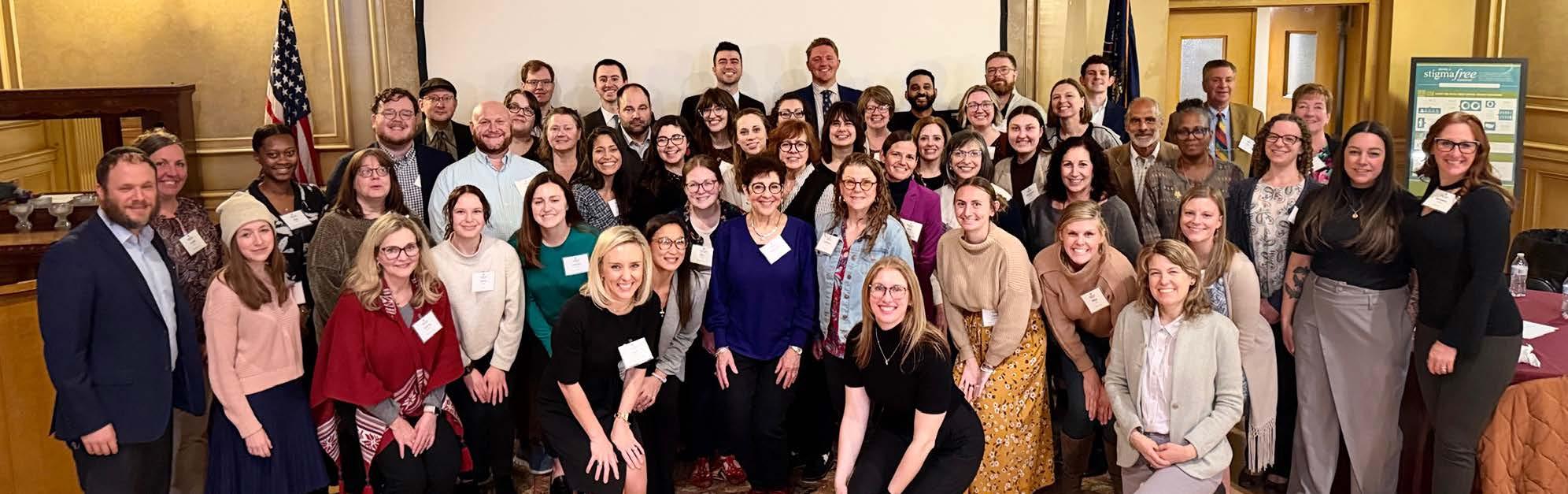
More than 70 attendees representing 36 local nonprofits gathered for the 2026 ACMS Foundation Community Networking Breakfast. The event brought together current grantees, past recipients, and organizations that have reached out to the Foundation about funding. The goal was straightforward: get people in the same room who are working across housing, food access, behavioral health, family support, and community health, and give them time to talk with one another.
There were no formal presentations and no long speeches. Most of the time was spent in conversation. Discussion prompts focused on shared mission, current pressures facing nonprofit work, and where collaboration makes sense. This reflects how the ACMS Foundation approaches its work. Grant funding matters, as do relationships,
coordination, and shared learning.
Opening remarks grounded the conversation in something familiar to ACMS members. Health outcomes are shaped outside the exam room through housing stability, access to food, behavioral health services, education, and transportation. The World Health Organization identifies social determinants of health, like housing, food access, and transportation, as major drivers of health inequities, influencing access to care and long-term outcomes.
The table discussions moved through three rounds. The first focused on introductions and mission moments, giving organizations a chance to share who they serve and why their work matters. The second addressed uncertainty, including funding pressures, workforce challenges,
and rising service demands. These conversations reflect what many organizations are experiencing. The National Council of Nonprofits reports continued increases in service demand alongside staffing shortages and financial strain across the sector.
Feedback from attendees underscored the value of the format. One participant shared, “Thank you for hosting such a warm and thoughtful networking event this morning. It was a pleasure meeting other organizations, hearing what they’re working on, and building relationships that will lead to real collaboration.” Another wrote, “We are truly grateful not only for the support your organization has provided to ours, but also for creating opportunities for meaningful engagement and networking with our fellow grantee organizations.”
Megs Yunn, Marissa Escajeda, Fr. Paul Abernathy, Bassie Rosenfeld, and Julia Hazlet
That focus on connection has led to tangible relationships in the past. At this year’s breakfast, representatives from Our Giving Kitchen Pittsburgh and Community Human Services shared how a previous ACMS Foundation gathering helped bring their organizations together. What started as a conversation at the table turned into follow-up discussions and collaboration around shared goals, showing how conversations can grow into real working relationships. For the Foundation, this is part of the impact, helping relationships take shape organically and supporting collaboration rooted in trust and shared purpose.
While the ACMS Foundation cannot fund every organization, it remains committed to supporting the broader network working to improve health across Allegheny County. Past Community Networking Breakfasts have led to partnerships that continued beyond the event, reinforcing the value of shared space and structured conversation.
For ACMS members, the relevance is clear. Community organizations help address many of the factors that shape patient health before, during, and after clinical care. The CMS Innovation Center, part of Medicare and Medicaid, tests new ways to improve care and control costs by trying ideas in real healthcare
settings before expanding them more widely. Evidence from this work shows that when people are asked about basic needs like food and housing and then connected to community support, they are less likely to end up in the emergency room or hospital, which also helps lower healthcare costs.
By investing in both grant funding and opportunities for organizations to connect, the ACMS Foundation strengthens the systems supporting patients and families across Allegheny County. The Community Networking Breakfast reflects that commitment through focused conversation, shared learning, and relationships built to last. By bringing partners together in one room, the Foundation helps spark collaborations that can lead to meaningful, lasting impact in the community.
For more information, please visit our website: www.acms.org/acmsfoundation/about-thefoundation/
ACMS FOUNDATION GRANT AWARDS
In the 2025-2026 grant cycle, the ACMS Foundation awarded a total of $245,000 to 15 organizations serving Allegheny County. These grants support programs addressing health, wellness, and access to care across the community.
• Anchorpoint Counseling Ministry
• Angels' Place, Inc.
• Beverly's PGH
• Familylinks
• Global Links
• Jeremiah's Place – Pittsburgh Relief Nursery
• Light of Life Ministries, Inc.
• Mary & Alexander Laughlin Children's Center
• The Children's Institute Foundation
• The Dragon's Den
• The Neighborhood Resilience Project
• North Hills Affordable Housing (HEARTH)
• Our Giving Kitchen Pittsburgh
• Roots of Faith
• Sojourner House
Member Acknowledgements
RECOGNIZING THE PHYSICIANS WHO STRENGTHEN OUR MEDICAL COMMUNITY
DR. STANLEY M. MARKS HONORED FOR LIFELONG CONTRIBUTIONS TO CANCER CARE
Stanley M. Marks, MD — renowned oncologist, chair and chief medical officer of UPMC Hillman Cancer Center, and a leader in advancing patient-centered cancer care — will receive the 2026 PNC Elsie Hillman Distinguished Scholar Award recognizing his enduring impact on cancer treatment and research.
Dr. Marks has played a pivotal role in building one of the nation’s largest integrated cancer networks and expanding access to world-class oncology care close to home.
An engaged leader in organized medicine, Dr. Marks served as President of the Allegheny County Medical Society in 1991 and is a past recipient of the ACMS Ralph C. Wilde Leadership Award, reflecting his longstanding commitment to physician leadership and community health.
His legacy includes co-founding community organizations, supporting cancer research funding initiatives, and championing compassionate, patient-focused care across the region.
DR. JOHN C. BYRD RECOGNIZED FOR TRANSFORMATIVE IMPACT IN BLOOD CANCER CARE
John C. Byrd, MD, director of UPMC Hillman Cancer Center, received the 2025 Blood Cancer United Excellence in Scientific Service Award honoring his pioneering contributions to blood cancer research and patient care. Dr. Byrd’s work helped replace traditional chemotherapy with targeted therapies for chronic lymphocytic leukemia and advance precision approaches for acute myeloid leukemia, improving outcomes and quality of life for patients worldwide.
DR. KALATHIL SURESHKUMAR HONORED FOR LEADERSHIP IN KIDNEY AND TRANSPLANT CARE
Kalathil Sureshkumar, MD, FRCP, FASN, of Allegheny Health Network has been recognized with a Medical Achievement Award honoring his extraordinary leadership, innovation, and lifelong dedication to advancing kidney care.
An accomplished transplant nephrologist and educator, Dr. Sureshkumar’s academic work has helped advance clinical understanding and guide patient
care, improving outcomes for kidney transplant recipients and those living with chronic kidney disease.
DR. LIRON PANTANOWITZ RECOGNIZED FOR ADVANCING DIGITAL PATHOLOGY AND AI Liron Pantanowitz, MD, PhD, MHA, FCAP, chair of pathology at the University of Pittsburgh, received the 2025 College of American Pathologists (CAP) Pathology Advancement Award for his pioneering contributions to pathology informatics and digital pathology.
A national leader in diagnostic intelligence and artificial intelligence applications in pathology, Dr. Pantanowitz has helped develop widely adopted digital pathology guidelines, co-founded the Pathology Informatics Essentials for Residents (PIER) curriculum, and advanced validation standards for whole slide imaging used in primary diagnosis. His work enabled broader adoption of remote case review during the COVID-19 pandemic and continues to shape AI-assisted diagnostics worldwide.
Do you have an acknowledgement to share? Complete our online form at www.acms.org/membership/memberacknowledgement-form/
Stanley M. Marks, MD
John C. Byrd
Kalathil Sureshkumar
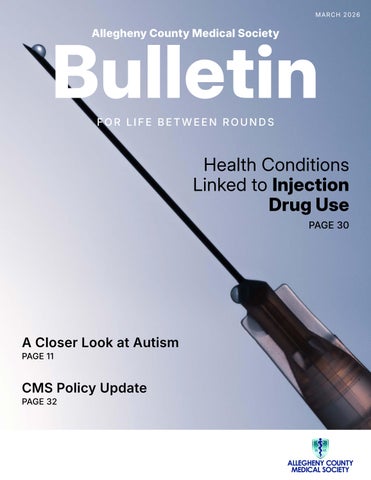
Health Conditions Linked to Injection Drug Use
ALLEGHENY COUNTY IS EXPERIENCING INCREASING RATES OF VIRAL AND BACTERIAL CONDITIONS ASSOCIATED WITH INJECTION DRUG USE.
written by MALEA RUSSELL, MPH & JENNIFER FIDDNER, MPH, CIC
OVERVIEW
The opioid crisis, one of the greatest public health challenges facing the U.S., has resulted in an increase in viral and bacterial infections associated with injection drug use (IDU). This syndemic continues to affect the health of people who live in Allegheny County.
HCV TRENDS
Hepatitis C is a liver disease that results from infection with the hepatitis C virus (HCV), which is spread primarily through contact with the blood of an infected person. Hepatitis C infection can be classified as either “acute” or “chronic.” Cases are referred to as “acute” if the infection is newly acquired. Acute infection generally leads to chronic infection, as only 30% percent of persons clear the infection without treatment. HCV, if left untreated, can result in cirrhosis, liver cancer, and death. There is currently no vaccine available for HCV, but effective medications are
available to cure the disease in over 95 percent of infected individuals.
Today, most people become infected with HCV by sharing needles or other equipment to inject drugs. The virus can also be transmitted from an infected mother to her infant during
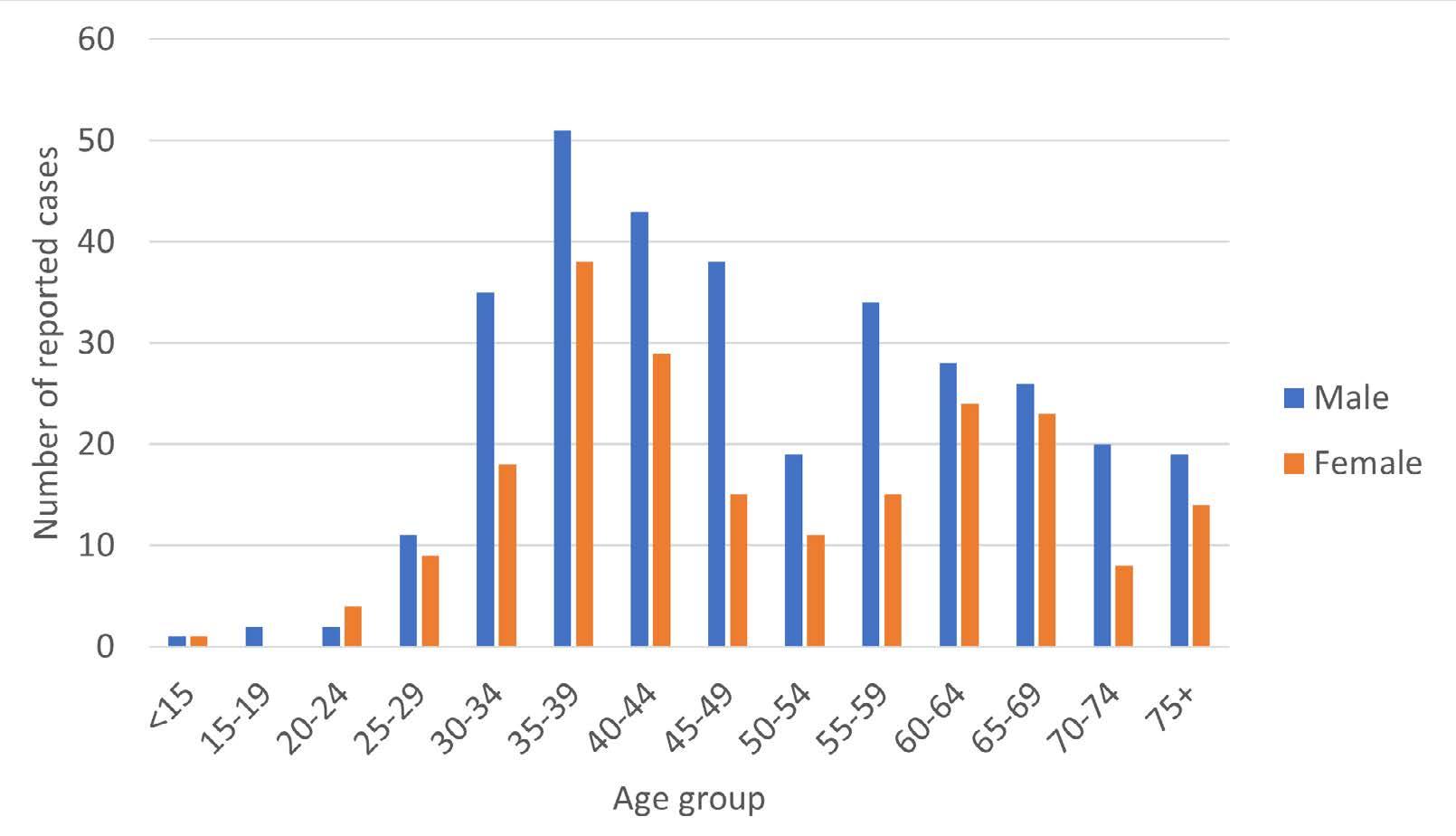
pregnancy. Chronic HCV infections are most commonly reported in the 35-39 year age group. Compared to ten years ago, women of reproductive age make up a larger proportion of chronic HCV cases, attributed to higher rates of opioid use in younger populations.
Figure 1. Chronic HCV cases by age and sex, Allegheny County, 2025 (preliminary)
IDU-RELATED BACTERIAL INFECTIONS
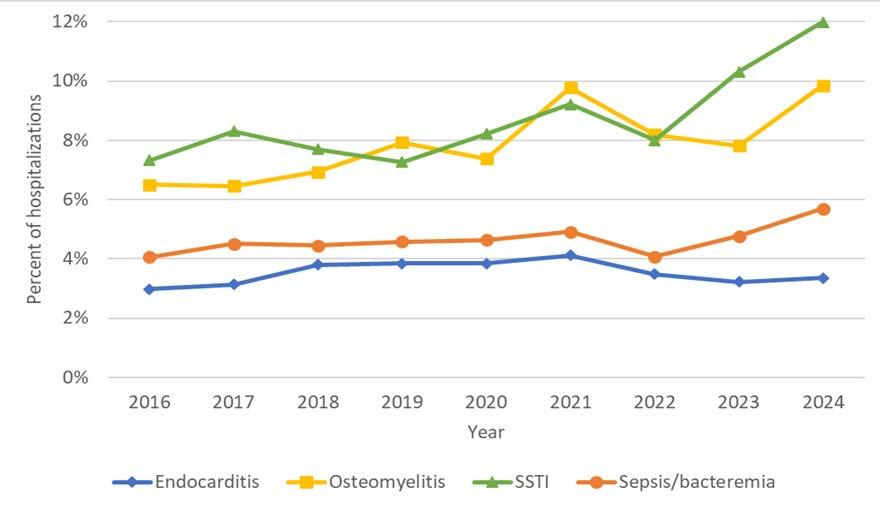
PWID are also at higher risk of experiencing serious bacterial infections (SBIs), including heart infections (endocarditis), bone infections (osteomyelitis), blood infections (sepsis/bacteremia), and skin or soft tissue infections (SSTI). The proportion of hospitalizations for SSTI, osteomyelitis, and sepsis/ bacteremia that are associated with IDU has increased since 2016. This may be related to changes in the illicit drug supply and the introduction of xylazine, a veterinary sedative, which can cause serious wounds when injected. According to Prevention Point Pittsburgh, 94 (68%) of the 138 street fentanyl samples tested in 2024 contained xylazine. The percent of samples containing xylazine declined significantly in 2025, but coincides with the introduction medetomidine in the illicit drug supply. Unlike xylazine, medetomidine is not associated with wounds, but does cause prolonged sedation and severe withdrawal symptoms.
PUBLIC HEALTH ACTIONS
Hepatitis C, HIV, and SBIs associated with IDU are preventable. Routine periodic HIV and viral hepatitis testing and low barrier access to PrEP is recommended for people who inject drugs. Ensuring that people have access to harm reduction services, including syringe service programs, wound care supplies and services, and evidence-based substance use treatment services can help decrease the number of SBIs and new HCV and HIV infections associated with IDU. By identifying new infections early, patients can be treated for HIV, or cured of HCV, and stop additional infections from occurring. Hep C Free Allegheny and AIDS Free Pittsburgh offer healthcare providers resources to support
their patients. A new program in Allegheny County, MATTERS, supports healthcare providers who want to help patients access harm reduction services and care for substance use disorders. Healthcare providers are encouraged to join the Allegheny County MATTERS referral network by calling 765-MATTERS or by signing up on the MATTERS webpage here.
JEN FIDDNER, MPH, CIC
Jen Fiddner, MPH, CIC, manages the Allegheny County Health Department’s Infectious Disease Epidemiology Program, where she oversees disease surveillance, reporting, and outbreak response activities. She is a founder of the Hep C Free Allegheny viral hepatitis elimination initiative and chairs data committees for Hep C Free Allegheny and AIDS Free Pittsburgh. She is committed to approaching the opioid epidemic with a syndemic perspective, supporting better integration of physical and behavioral healthcare.
MALEA RUSSELL, MPH
Malea Russell, MPH, is an applied epidemiologist at the Allegheny County Health Department where she focuses on viral hepatitis elimination efforts.
Figure 2. Percentage of hospitalizations for an SBI that are IDU-related by infection type and year, Allegheny County, 2016-2024
CMS Policy Update
NEW RULES FOR CERTAIN ASC SERVICES
The Centers for Medicare & Medicaid Services (CMS) has increasingly used prior authorization as a tool to address improper payments and unnecessary utilization in the Medicare program. For several years, CMS has required prior authorization for certain services performed in Hospital Outpatient Departments (HOPDs).
In January 2026, CMS expanded this approach to the Ambulatory Surgical Center (ASC) setting through a new Prior Authorization Demonstration for Certain ASC Services. This article provides an overview of the demonstration, identifies the states where it currently applies, and explains what physicians and ASCs should expect operationally.
WHAT IS THE ASC PRIOR AUTHORIZATION DEMONSTRATION?
written by ADAM J. APPLEBERRY, ESQ.
The ASC Prior Authorization Demonstration is a five-year CMS initiative requiring participating ASCs to obtain prior authorization for certain procedures before services are provided to Medicare Fee-forService beneficiaries. Importantly, the program does not create new medical necessity standards. Instead, CMS is moving the medical necessity review earlier in the process so that potential coverage issues can be identified before a claim is submitted and paid.
Although the prior authorization process is technically voluntary, ASCs that do not submit a request should expect their claims to undergo prepayment medical review, which can significantly delay payment and increase the risk of denial.
WHERE AND WHEN THE
DEMONSTRATION APPLIES
CMS rolled out the demonstration in two phases during early 2026.
The first phase began in January 2026, when ASCs in California, Florida, Tennessee, Pennsylvania, Maryland, Georgia, and New York began submitting prior authorization requests for affected services. A second phase followed in February 2026, expanding the demonstration to ASCs in Texas, Arizona, and Ohio.
The program applies only to Medicare Fee-for-Service claims, and Medicare Advantage plans are not affected.
WHICH SERVICES ARE INCLUDED?
CMS has limited the demonstration to several service categories that
it believes carry a higher risk of improper utilization. These include:
• Blepharoplasty and related eyelid procedures
• Botulinum toxin (Botox) injections
• Panniculectomy and related services
• Rhinoplasty and related services
• Vein ablation procedures
CMS has published a detailed list of affected HCPCS and CPT codes, which ASCs should review carefully. Some codes have already been removed as incidental or packaged services, and CMS has indicated that the list may continue to evolve during the demonstration.
HOW THE PRIOR AUTHORIZATION PROCESS WORKS
Submitting a Prior Authorization Request
A Prior Authorization Request (PAR) must be submitted before the procedure is performed. The request typically includes documentation that ASCs and physicians already maintain to support medical necessity and is submitted to the ASC’s Medicare Administrative Contractor (MAC).
Review Timeframes
CMS has established relatively short review periods:
• Standard Review: Decision issued within 7 calendar days
• Expedited Review: Decision issued within 2 business days if delay could jeopardize the patient’s health
Possible Outcomes
The MAC may issue one of three determinations:
• Provisional Affirmation: The documentation supports Medicare coverage and
payment.
• Non-Affirmation: The submitted documentation does not support coverage.
• Partial Affirmation: Some services are approved while others are denied.
WHAT HAPPENS IF PRIOR AUTHORIZATION IS NOT OBTAINED?
While the program is technically voluntary, bypassing prior authorization has significant practical consequences.
If an ASC submits a claim without a prior authorization decision, the claim will generally be stopped for prepayment medical review. The MAC will issue an Additional Documentation Request (ADR), and payment may be delayed or denied.
If a service receives a nonaffirmation and the ASC proceeds with the procedure anyway, the claim will be denied. In some cases, associated facility services and related claims may also be affected.
WHY THIS MATTERS FOR PHYSICIANS
Although the demonstration primarily targets ASCs, physicians should understand how the program affects clinical and operational workflows.
From a practical standpoint:
• Documentation issues may now surface before payment rather than during post-payment audits
• Non-affirmed requests provide no payment protection if the procedure is performed anyway.
• Repeated non-affirmations could attract increased audit scrutiny.
• Denials may extend beyond the primary procedure to related services.
At the same time, a provisional affirmation provides some protection by confirming that the submitted documentation supports Medicare coverage and payment requirements.
For physicians and ASCs operating in demonstration states, prior authorization for these services is not optional as a practical matter. Understanding the program now can help avoid delays, denials, and administrative complications later.
ADAM J. APPLEBERRY, ESQ.
Adam J. Appleberry, Esq., is Senior Counsel at Tucker Arensberg, P.C. in Pittsburgh and a member of the firm’s Business & Finance and Healthcare practice groups. He advises physicians, healthcare practices, and other healthcare organizations on regulatory compliance, contracts, mergers and acquisitions, and other legal matters affecting medical practice.
Specialty Group Updates
THIS MONTH’S UPDATES FROM SPECIALTY GROUPS
ACMS ALLIANCE
1925 was a pivotal year in the U.S., marked by the Scopes “Monkey Trial”, the novel The Great Gatsby, the rise of Art Deco at the Paris World’s Fair, life-saving Diphtheria Antitoxin and Mount Rushmore’s congressional approval. Most important to the Allegheny County Medical Society Alliance was its formation and first president Mrs. James I. Johnston.
On Sunday December 28th, 2025, the ACMSA commemorated its 100th year with a Winter Luncheon at Lemont Restaurant. Patty Barnett, third time as President at the helm, celebrated with Board members and colleagues. Patty stated in her speech that “over the years each and every member has had the unique opportunity to shine and participate in her own way”.
Yearly donations to dozens of notable charities have benefited the
Greater Pittsburgh community. Past recipients include ACMS Foundation, CCAC Allied Health Scholarships, University of Pittsburgh School of Medicine, Pittsburgh Women’s Shelter, WTAE Project BundleUp, Children’s Health Safety Fair
and Hillman Cancer Center. This year’s charity recipients are: Mercy Hospital’s Operation Safety Net (Dr. Withers), Duquesne University School of Osteopathic Medicine scholarships and Family Care Connection Center in Mt. Oliver, PA.
Back Row: Sandra DaCosta, Sandy Colatrella, Patty Barnett, Sandra Lima, Kathleen Lee, Marilyn Lakdawala, Tina Purpura, Sharon Wible Mankovich, Doris Delserone Front Row: Liz Blume
Charlie Blume, C.J. Reshmi, Dr. Larry Purpura, Dr. Alan Barnett, Dr. Lakdawala, Rich Mankovich, and David Wible at the ACMS Alliance Winter Luncheon
ALLEGHENY COUNTY IMMUNIZATION COALITION
2025-2026 Chair: Jenny Bender, MPH, BSN, RN, CIC
The Allegheny County Immunization Coalition (ACIC) convenes healthcare, public health, education, and community partners to strengthen immunization awareness, access, and trust across Allegheny County.
ACIC General Membership Meeting: March 26, 2026 | 9:00 - 11:00AM | In-person and Virtual Physicians who care about improving vaccination access and public health across our region are invited to join the Allegheny County Immunization Coalition for its March General Membership Meeting. ACIC brings together clinicians, pharmacists, school nurses, public health professionals, and community organizations working to strengthen vaccination education, access, and collaboration in Allegheny County. Attend in person at the AIU Building (475 E. Waterfront Dr., Homestead) or join via Zoom. This month’s program features Trish Klatt, PharmD, BCPS, CTH, and Kate Brownlee, MPM from the University of Pittsburgh Vaccination and Health Connection Hub, who will discuss how the Hub supports pediatric and community vaccination access.
ACIC membership is free. Learn more or join at www. immunizeallegheny.org.
AMERICAN COLLEGE OF SURGEONS SOUTHWESTERN PENNSYLVANIA CHAPTER
2025-2026 President: Richard Fortunato, DO, FACS
The American College of Surgeons – Southwestern Pennsylvania Chapter (ACS-SWPA) is pleased to begin planning for its 2026 resident-focused programming and to announce the dates for
several engaging educational and networking events throughout the year.
ACS-SWPA will once again host three signature resident programs: Debates & Dilemmas, Most Interesting Case, and Resident Surgical Jeopardy. These events are designed to foster academic discussion, showcase clinical expertise, and encourage collegial competition among surgical trainees across the region.
The first event of the year, Debates & Dilemmas, will take place on March 31, 2026, from 6:00–9:00 PM at Eddie Merlot’s. The competition is open to general surgery residents and surgical specialty residents.
These programs provide valuable opportunities for residents to present complex cases, engage in thoughtful debate on current surgical topics, and connect with peers and faculty in the region.
PENNSYLVANIA GERIATRIC
SOCIETY WESTERN DIVISION
2026 President: Heather Sakely, PharmD, BCPS, BCGP Pennsylvania Geriatric Society Educational Series: Journal Club The Pennsylvania Geriatric Society hosted an engaging virtual discussion on March 25, 2026, from 6:00–7:00 PM EST, featuring Smita Nayak, MD, Physician Scientist, and Lauren Fasth, PharmD, PGY2 Geriatric Pharmacy Resident.
This inaugural session marked the launch of a new educational series designed to connect authors with learners to review and discuss recently published research on key topics in geriatric medicine. During the CE-accredited program, participants reviewed and discussed Dr. Nayak’s recent publication, “A Systematic Review and Meta-
Analysis of Sequential Treatment Strategies for Osteoporosis,” which was published in September 2025 in Osteoporosis International.
Attendees had the opportunity to explore the article’s key findings, discuss its clinical implications for the care of older adults, and engage directly with the author. Time at the end of the session was dedicated to a live Q&A with Dr. Nayak, allowing participants to further explore the research and its applications in clinical practice.
34th Annual Clinical Update in Geriatric Medicine
The 34th Annual Clinical Update in Geriatric Medicine will take place April 16–17, 2026, at the Sheraton Pittsburgh Hotel at Station Square. This two-day conference will bring together clinicians and healthcare professionals for an engaging educational program focused on improving the care of older adults.
This year’s program marks a special milestone as the conference returns to an in-person format after five years of virtual learning, offering attendees a valuable opportunity to reconnect with colleagues, exchange ideas, and engage in collaborative learning.
Educational sessions will be organized around the Age-Friendly Health Systems 5Ms Framework, which emphasizes Medication, Mentation, Mobility, Multicomplexity, and What Matters Most. The program will provide evidencebased updates and practical strategies to help clinicians address the increasingly complex medical needs of older adults.
Registration is currently open, and additional details are available online. https://cce.upmc.com/34thclinical-update-geriatric-medicine
Starting With Why
A MESSAGE FROM YOUR ACMS PRESIDENT
written by KIRSTEN LIN, MD – 2026 ACMS PRESIDENT
This is my first article for the ACMS Bulletin as President, and I want to begin the year by focusing on one simple question: Why?
STARTING WITH WHY
Leadership expert Simon Sinek is known for the idea of “Start With Why”, the belief that before organizations focus on what they do or how they do it, they should be clear about why they exist in the first place. That concept feels especially relevant right now.
So let me start there.
WHY WE JOIN
If you asked ACMS members why they first joined, you’d hear many different responses:
• To find professional and social connections
• To advocate for physicians and patients during a time of rapid change
• To seek confidential support during challenging times through our Physician Wellness Program
• Or because a trusted colleague encouraged them to join
MY WHY
I re-joined ACMS in 2021, during the height of the COVID pandemic. By a strange twist of fate, my small primary care practice received some of the first COVID vaccines to arrive in Pittsburgh, but I didn’t have the space or staffing to administer them at scale. When I reached out to ACMS, the response was immediate: “We can help.” What followed were
Dr. Sam Urick, Dr. Natalie Gentile, Dr. Kirsten Lin, her daughter Isabella (who helped check in patients), Dr. Lela Dougherty, and two medical students
large community vaccine clinics in the Babb Building ballroom, made possible by dozens of ACMS member volunteers. That experience showed me what ACMS truly represents: physicians supporting one another to care for our patients and community when it matters most.
That experience shaped my “why.”
WHY THIS MATTERS NOW
Last year, ACMS conducted interviews with past and current members and learned something important. Many members found it difficult to clearly articulate what ACMS is or the full value of membership. Not because the value isn’t there, but because we haven’t always told our story clearly or consistently.
As president, I see this as an opportunity.
LOOKING AHEAD TO 2026
This year, we are intentionally reconnecting with our purpose. We’ve begun by revisiting our mission and value proposition, creating a shared elevator pitch, and launching a strategic planning process to help shape ACMS’s vision over the next three to five years. Our goal is simple: to ensure that every member understands what ACMS stands for and can confidently share that with colleagues who may be looking for connection, advocacy, and support.
AN INVITATION
As we move into 2026, I invite you to reflect on why you joined ACMS and how you can help shape and share what ACMS stands for in the year ahead and beyond.
I’m honored to serve as your president and excited for the work ahead. Together, we define the future of ACMS.
The Allegheny County Medical Society (ACMS) is a trusted, physician-led membership organization dedicated to supporting doctors - both professionally and personally. From benefits like continued education, a physician wellness program, advocacy made easy, and social events for peer connection, ACMS empowers members to shape their own experience and advocate for the future of medicine in Allegheny County.
On March 13, the Allegheny County Medical Society Board of Directors gathered for a strategic planning retreat to reflect on the organization’s current landscape and identify priorities that will guide ACMS over the next three years. Discussions focused on strengthening physician advocacy, expanding programming that connects physicians with one another and the community, and identifying new ways to attract and retain members - particularly early-career physicians and students - while enhancing public outreach and communication.
The Board also explored operational and financial considerations to support ACMS’s long-term sustainability, including staffing structure, strategic investments, and creative approaches to membership and dues models. A more detailed strategic planning report will be shared with members later this spring. We thank the ACMS Board members who took time away from their many responsibilities to participate in this full-day retreat.
The Civility of Care
SMALL HABITS THAT SHAPE THE CLINICAL ENCOUNTER
written by TIMOTHY LESACA, MD – ACMS BULLETIN ASSOCIATE EDITOR
The most consequential gesture in a clinic visit is sometimes the smallest one: a hand on the door handle. The plan has been explained, the orders entered, the day is already running late. Then, as you angle toward the hallway, the patient says, almost as an aside, “One more thing.” In that pause—whether you turn back, whether your face stays open, whether your attention returns— an entire moral weather system reveals itself. The patient may not remember the lab values, but they will remember what happened to them in that moment.
As a young man, George Washington copied—by hand—a list of 110 “Rules of Civility in Conversation and Behavior.” He did not write them. The maxims are often traced back to a sixteenth-century Jesuit manual on decorum, translated and circulated through English schools before arriving in colonial Virginia. Washington transcribed them as an exercise in discipline. He did not compose the rules; he practiced them.
That distinction matters. The point was not obedience for its own sake. These were sentences meant to shape a person from the inside: to cultivate restraint, humility, and attentiveness, especially where power is involved. Long before Washington was entrusted with authority, he was training himself in the manners by which authority can remain human—and in the ease with which it becomes careless when left unexamined.
Medicine unfolds in a similar landscape. Each clinical encounter is more than an exchange of information; it is a meeting shaped by an asymmetry of knowledge, authority, and vulnerability. Illness disrupts not only physiology but identity, time, and agency. The clinician enters that unsettled space not as a neutral observer, but as one whose words and decisions carry consequence. How that presence is enacted matters—and is often remembered long after the diagnosis is forgotten.
Civility, in this sense, is not polish. It is an ethical posture: a disciplined way of inhabiting authority in the presence of another person’s exposure. Like Washington’s copybook, it is a practice—repeated, imperfect, and formative. The rules below are not techniques to execute; they are orientations to renew, sometimes in gestures so small they feel like nothing. Taken together, they help ensure that the encounter does not collapse into a transaction.
THE RULES
Listen before speaking. Listening is an act of respect before it is a method of diagnosis. Symptoms may fit patterns, but lives do not. To listen before speaking is to delay the comfort of premature certainty long enough for the meaning of the illness—not only its mechanism—to emerge. It may cost thirty seconds. Those seconds are often the difference between being managed and being understood.
Apologize when appropriate. An apology acknowledges harm at the level of experience, not merely outcome. It says: I recognize what this has been like for you. In moments of error, delay, or misunderstanding, apology restores equilibrium without surrendering competence. Authority does not confer exemption from accountability. A plain “I’m sorry this happened” can steady a room more than a paragraph of explanation.
Receive every question with seriousness.
Questions are often made of fear. They arrive as repetition, as hesitation, as “just checking.” To take a question seriously is to treat it as an expression of agency rather than an inconvenience. Respect requires patience with uncertainty— even when the answer feels obvious to the one giving it. A rushed dismissal teaches the patient what not to ask.
Attend to what is worthy of affirmation.
Illness narrows a person’s identity
to symptoms and deficits. The chart becomes a biography written in problems. Recognition restores dignity where illness erodes it. To affirm perseverance, clarity, humor, or resolve is to refuse reduction. Many patients will remember that acknowledgment as distinctly as they remember the prescription.
Speak ill of no one. Contempt is corrosive, and it spreads quickly in clinical spaces. When speech becomes dismissive, the moral climate of care shifts. To speak ill of a colleague—or of a patient—in the presence of others is to grant them permission to do the same. Restraint may feel like swallowed impatience, but it is also a form of protection for the whole room.
Extend equal concern to all. Distress does not present uniformly. It may appear as gratitude, hostility, compliance, or resistance. Equal concern requires steadiness toward every version of suffering, including the ones that complicate the schedule. Justice in the clinic begins with the disciplined refusal to divide persons into categories of worth. It is not always easy, which is why it must be practiced.
Guard privacy in word and manner. Privacy is not merely regulation; it is reverence. Vulnerability is entrusted, not surrendered. A lowered voice in the hallway, a closed screen, a careful chart, a discreet gesture— these signal that what has been shared will not be handled casually. A single careless remark can undo what trust required years to build.
Be present, however briefly. Presence depends on attention, not time. Even under constraint, attention can be whole: sitting down for thirty seconds, turning from the screen, letting your gaze land on
the person rather than the problem. A patient who feels seen is not only reassured; they are recognized. Anyone who has stood at a bedside late in the evening knows how unmistakable the difference is between being looked at and being looked through.
Exercise humility with humor. Humor can soften fear and narrow hierarchy, but it is also sharp. When directed at the clinician’s own limitations—or at the absurdity of the situation—it can be a form of solidarity. When directed at the patient, even in jest, it becomes exclusion. Civility asks for levity that never requires another person to be smaller so you can feel larger.
Let the patient end the encounter. Illness strips control from daily life in a hundred small ways. Allowing the patient to release the encounter restores a measure of agency. A hand on the door handle before the patient has finished speaking is an assertion of exit, not an act of care. Civility is the final pause that belongs to them—even when the hallway is already calling.
These rules do not require softness. Civility is compatible with truth, with boundaries, with saying no. It asks only that firmness be delivered without contempt, and that efficiency never be purchased at the price of humiliation. The clinician’s authority can remain intact while their manner stays humane.
Ultimately, conscience is not a flame that burns automatically. It is a fire that must be tended with deliberate, repetitive labor. Character in medicine is not forged only in dramatic saves or technically perfect procedures. It is formed in the quiet acts of restraint: the retort not spoken, the extra breath taken before entering a room, the decision
to turn back from the doorway, the refusal to let a patient’s dignity be the cost of one’s own exhaustion.
Civility does not promise clinical perfection, nor does it guarantee a cure. It asks for disciplined attentiveness—the recognition that while a clinician may see twenty patients in a day, for the person in the gown this may be the most significant hour of their year. To honor that weight is to practice these rules long before the crisis arrives, until they are less a checklist than a habit of the hand and a steadiness of the mind.
TIMOTHY LESACA, MD
Dr. Lesaca is a psychiatrist in Pittsburgh and a member of the Allegheny County Medical Society.