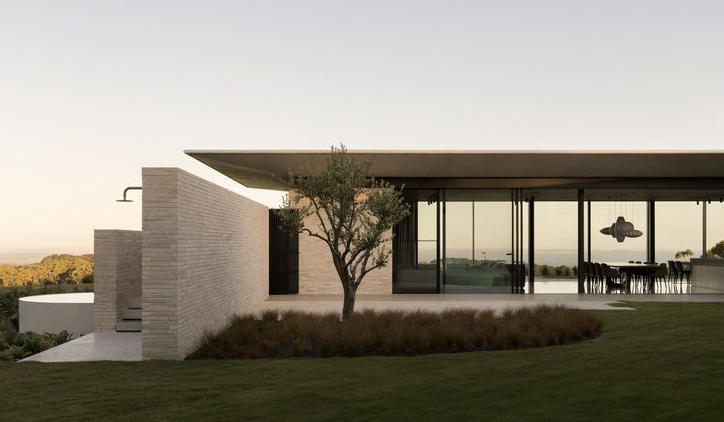
This concept package marks the beginning of Stage B2 — where your conversations, values, and lived experience of Morris Road are translated into architectural possibilities shaped by land, climate, and intention.
Included in the following pages are a series of early concept directions exploring how the home, water, landscape, and outdoor rooms might work together across the site. Each concept responds to the openness of the land, expansive views, solar opportunity, and prevailing winds — testing ways to harness light and outlook while creating shelter, intimacy, and calm.
These concepts are grounded in your brief: to create a soulful, high-performing family retreat that treads lightly on the land, supports intentional living, and fosters a deep connection to nature and to each other. Ideas range from compact, protective forms through to more open, courtyardled arrangements, including exploration of a central water element as a cooling, grounding heart to the home.
These are not final answers, but starting points — designed to test possibilities, prompt discussion, and guide the next stage of refinement. I look forward to exploring them with you.
NEXT SEPS
PRINCIPAL DESIGNER
YOUR TEAM
Charlotte Muschamp
PRINCIPAL DESIGNER
Charlotte Muschamp is an award-winning Architect (USA) and the founding director of Alki Design, a Wanaka-based studio known for crafting high-performance, character-rich buildings across Aotearoa. With a strong foundation in both architecture and construction, Charlotte brings a thoughtful, hands-on approach to every project — where beauty, functionality, and sustainability go hand in hand.
Charlotte’s work is grounded in a deep respect for place, people, and the natural environment, guided by a design ethos that values natural materials, long-term performance, and meaningful spatial experiences. As your lead designer, she is committed to creating a home that is elegant, adaptable, and deeply livable — balancing comfort, resilience, and beauty with care and intention to support family life now and into the future.
3 Alki Architecture + Design Studio, Concept Henry + Rachel Wilson Wilson Residence
PROJECT SCOPE
SCOPE
This project involves concept design, design development, and building consent documentation for a new highperformance family home on the Morris Road site in Wānaka. The scope explores the organisation of the home, outdoor rooms, water, and landscape in response to the site’s scale, exposure, and rural setting.
This phase establishes a clear master-plan direction, testing how architecture and landscape can work together to provide shelter, connection, and seasonal comfort, while forming the framework required to progress through consenting.
The scope extends through detailed design to support a building consent application, with the potential for interior design services to be incorporated as an additional service.
INFLUENCES
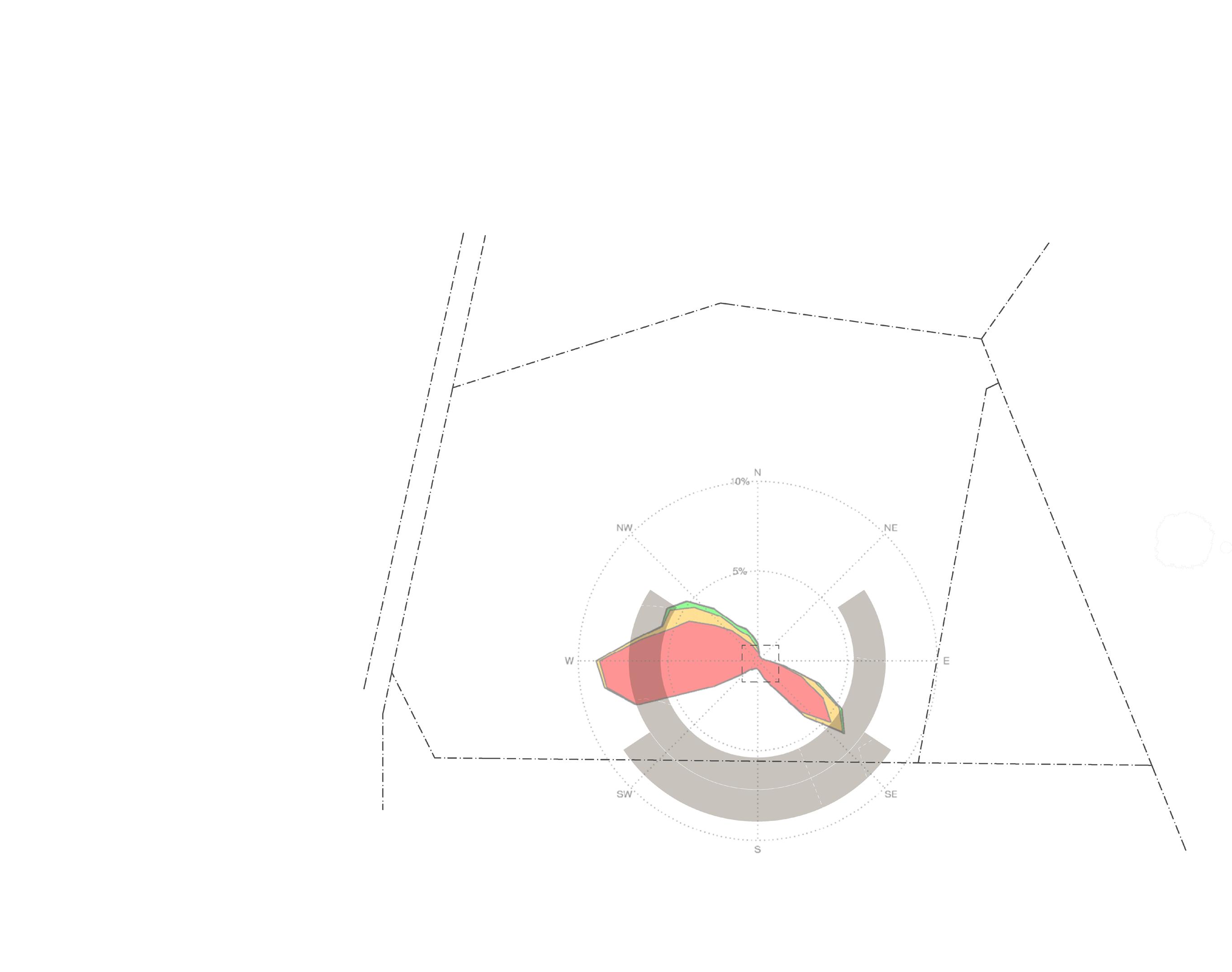
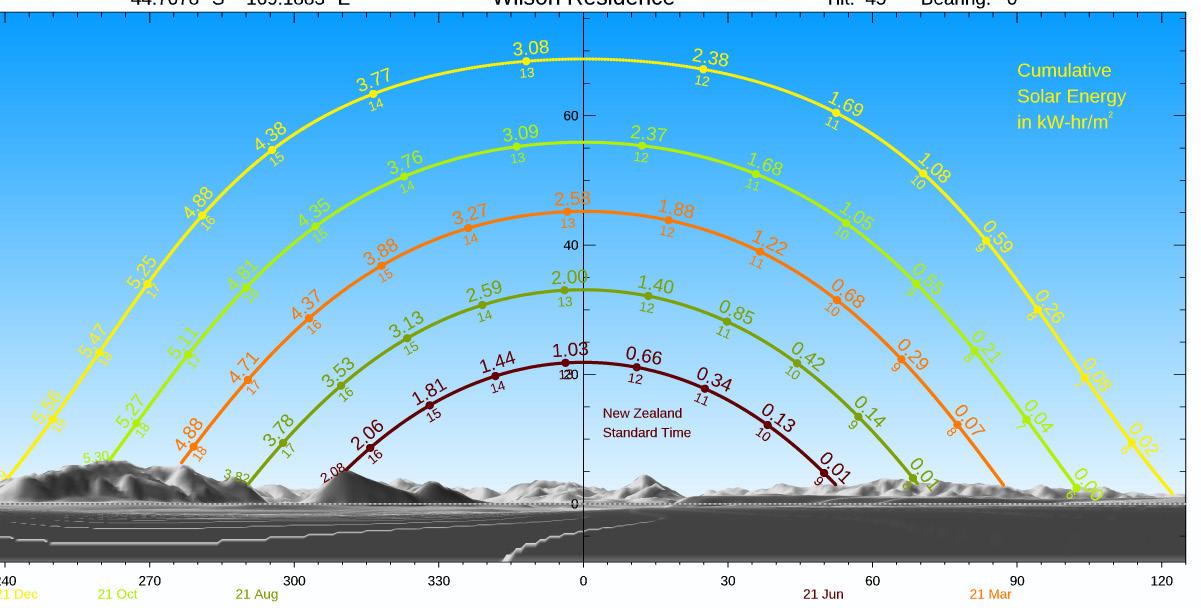
The design is shaped by the site’s openness, north-facing slope, and 360-degree outlook, alongside natural shelter provided by hedging to the south and exposure to strong north-westerly winds. Solar opportunity, wind patterns, and long views inform orientation, massing, and the placement of courtyards and outdoor rooms.
Environmental stewardship, resilience, and biophilic principles underpin the approach — prioritising passive performance, low-impact systems, and a close relationship with land, water, and sky. The material language is grounded and restrained, favouring natural textures, durability, and a quiet dialogue with the rural landscape.
ESSENCE
At its heart, this project is about intentional living — creating a home that supports connection, calm, and longevity while treading lightly on the land.
The concept phase seeks to establish a clear, soulful direction: a place of retreat and gathering, shaped by climate, landscape, and daily ritual. It is a home designed to perform quietly, adapt over time, and foster a deep, enduring relationship between family, architecture, and nature.
4 Alki Architecture + Design Studio, Concept Henry + Rachel Wilson Wilson Residence
GOALS
GOAL №1
Design a high-performing, low-impact home
Create a resilient, future-ready home guided by Passive House and Homestar principles, integrating rainwater collection, greywater management, on-site storage, solar generation and batteries, and efficient heat-exchange hot water systems — reducing energy demand while increasing autonomy and environmental stewardship.
GOAL №3
Encourage intentional living and family connection
Shape the home as a place for presence rather than distraction — with no permanent televisions, carefully considered built-in furniture, and cosy, human-scaled spaces that support daily rituals, rest, and meaningful connection to both family life and the surrounding land.
GOAL №2
Prioritise longevity, simplicity, and ease of maintenance
Select natural, durable materials that weather gracefully over time, require minimal upkeep, and support healthy indoor environments. Through biophilic design principles, the home will foster a deep connection to nature while remaining robust, practical, and timeless in the face of Central Otago’s climate.
GOAL №4
Enable flexibility through intelligent planning
Create a highly functional, adaptable home where spaces can expand, contract, and evolve over time. Through clear zoning, efficient circulation, and thoughtful relationships between rooms, the design will support changing family needs while remaining intuitive, calm, and deeply livable.
SITE ANALYSIS
FEASIBILITY
We have undertaken an initial review of the Morris Road site, legally described as Lot 1 DP 527136, comprising approximately 16.65 hectares of rural land within the Queenstown Lakes District.
The property sits within the Rural Zone, with an established and consented building platform located centrally on the site, set back from road boundaries and neighbouring land.
The scale and openness of the site provide considerable flexibility in siting, massing, and landscape integration, allowing architecture to sit lightly within the land rather than define it.
Alki
+
Studio,
Henry + Rachel Wilson Wilson Residence
SITE ANALYSIS
SITE PLAN
CLIMATE + ENVIRONMENTAL CONDITIONS
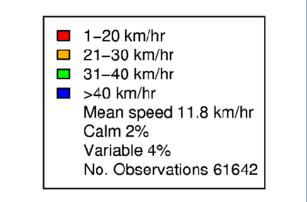
The site is located within BRANZ Climate Zone 6 and Earthquake Zone 3, with Exposure Zone B and a Very High Wind Zone classification. The property experiences strong prevailing westerly and north-westerly winds, particularly in spring, coinciding with key view corridors toward Roys Peak. While these views are a defining feature of the site, they require careful consideration of wind mitigation through building form, courtyards, and landscape structure.
The land gently slopes to the north, creating excellent opportunity for passive solar gain and winter warmth, while the semi-arid Central Otago climate brings hot, high-UV summers and cold winters. These conditions necessitate robust solar control, high thermal performance, and shelter to maintain yearround comfort while reducing reliance on mechanical heating and cooling.
PLANNING + MATERIAL CONSTRAINTS
The site is subject to the Rural Zone provisions of the Proposed District Plan, which seek to maintain rural character and visual amenity by encouraging buildings that are recessive in form, colour, and reflectivity. External materials are required to sit within muted, natural tones, with low light reflectance and minimal glare, ensuring development does not visually dominate the surrounding landscape or contribute to light pollution.
This planning framework strongly influences material selection, favouring natural, durable finishes such as muted timber, stone, plaster, and dark metals, alongside shadow-rich detailing. Building form is expected to remain low-profile and visually subservient to the land, reinforcing an architectural approach that is grounded, restrained, and integrated into the wider rural setting.
While the site has an established building platform, there is flexibility to refine its orientation as the design develops. Following concept selection and preliminary energy modelling, the platform may be subtly adjusted to better respond to solar gain and wind conditions, with any changes confirmed through detailed survey and formalised as part of the consenting process.
CLIENT PROFILE / HENRY + RACHEL WILSON
Henry and Rachel are shaping the Morris Road project as a return to intentional living — creating a high-performance family home grounded in landscape, resilience, and connection to place.
They are seeking architecture that treads lightly while supporting daily rituals, family life, and seasonal comfort. These early concepts explore how the home, outdoor rooms, and water elements might work together across the site — serving as starting points to guide the evolution of a calm, future-ready retreat.
8 Alki Architecture + Design Studio, Concept Henry + Rachel Wilson Wilson Residence
Concept One
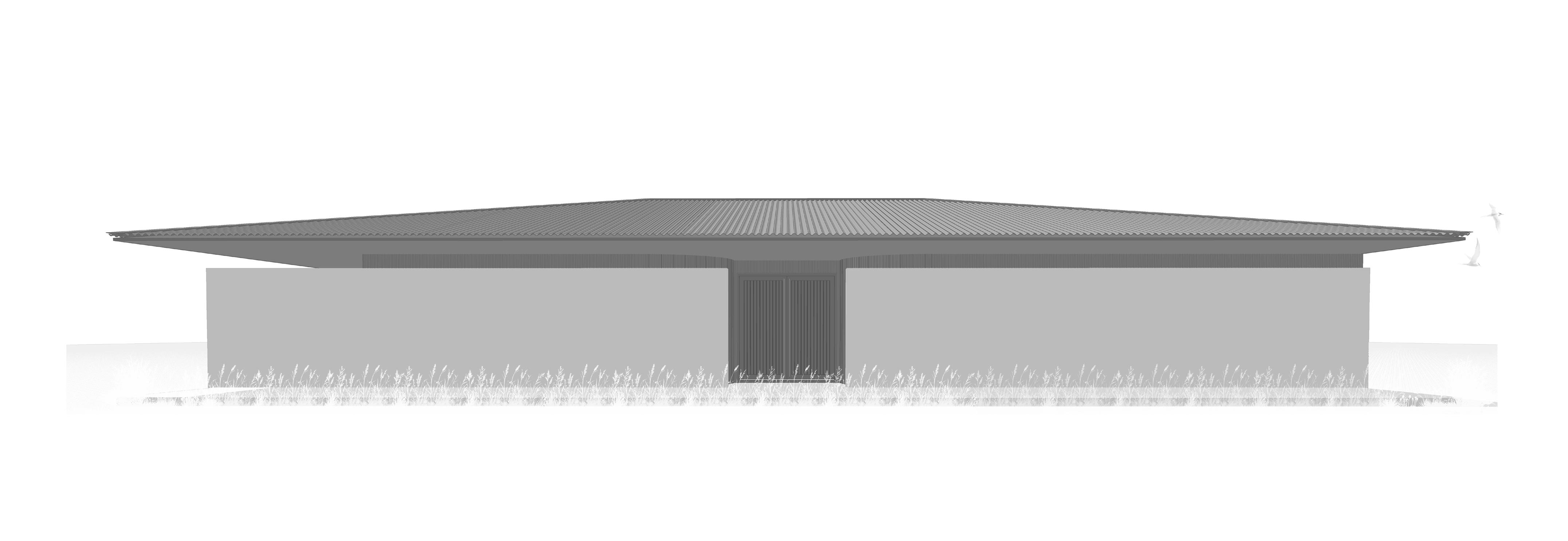
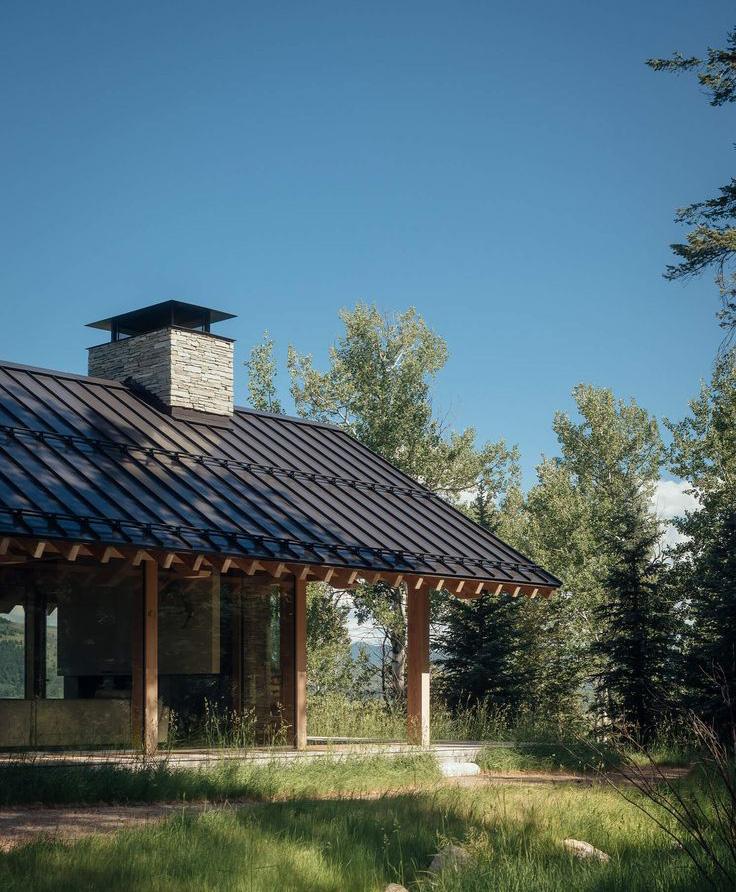
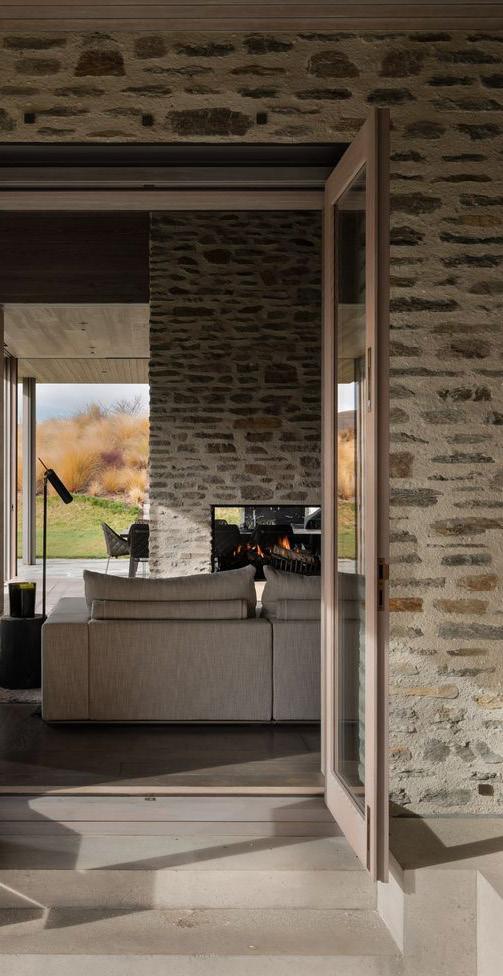
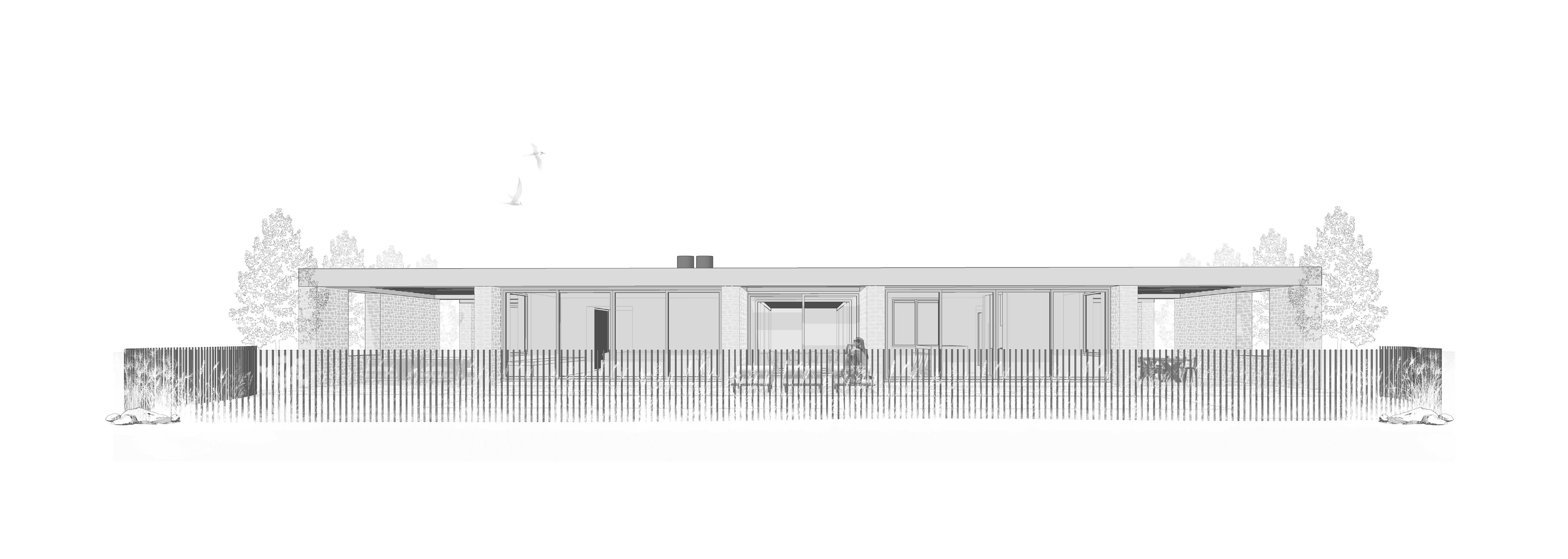
This concept presents the home as a long, low, and grounded form, deliberately closed to the west. A floating roof plane stretches horizontally over solid earth-anchored walls, creating a composed and protective arrival. Threequarter-height rammed earth (or insulated concrete) walls flank the façade, buffering prevailing westerlies and eliminating openings on this elevation.
Above, recessed timber-framed walls clad in yakisugi soften the mass through shadow and depth. The result is a calm, resilient exterior — anchored to the land, tuned to climate, and uncompromising in its response to wind, heat, and longterm durability.
PROJECT INSPIRATION
long and low roofline
large eaves with rammed earth base + charred timber cladding
INSPIRATION
Materiality is restrained and performance-driven. Rammed earth or insulated concrete walls provide thermal mass, durability, and solar protection, while yakisugi cladding offers low maintenance and UV resilience. A low-reflectance corrugated roof completes the palette, complying with rural planning controls. Together, these materials create a quiet, shadow-rich exterior that sits lightly within the landscape while ageing gracefully over time. extended
courtyard garden
Concept
One.
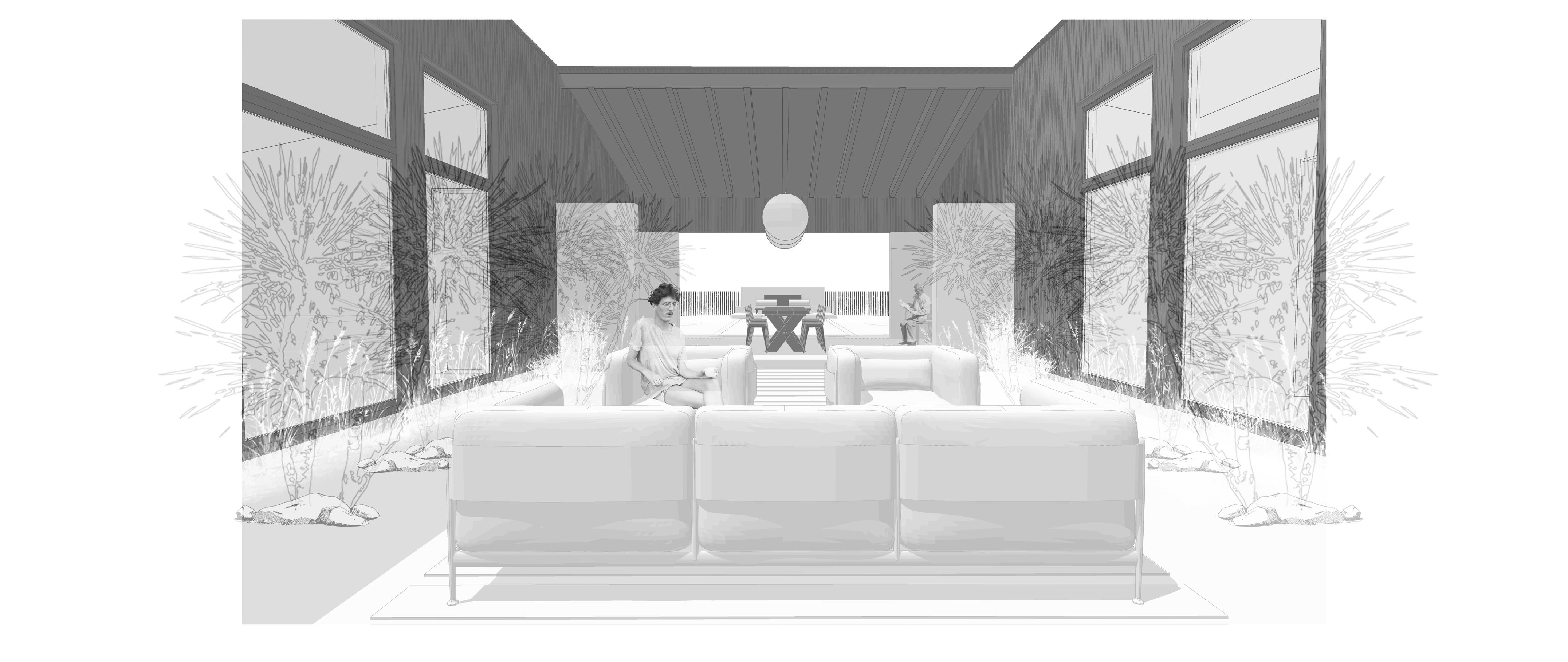
This view looks directly down the primary axis of the home — from entry to fire, water, and garden beyond. Upon entering, the courtyard is immediately revealed, acting as the hearth of the house. Protected from westerly winds, it forms a calm, biophilic core visible from all major spaces.
The outdoor kitchen, natural pool, and covered dining area align along this axis, culminating in an outdoor fireplace. The sequence is intentional: compression at entry, followed by expansion into air, light, water, and fire — anchoring daily life around nature rather than walls.
CONCEPT ONE
FLOOR PLAN
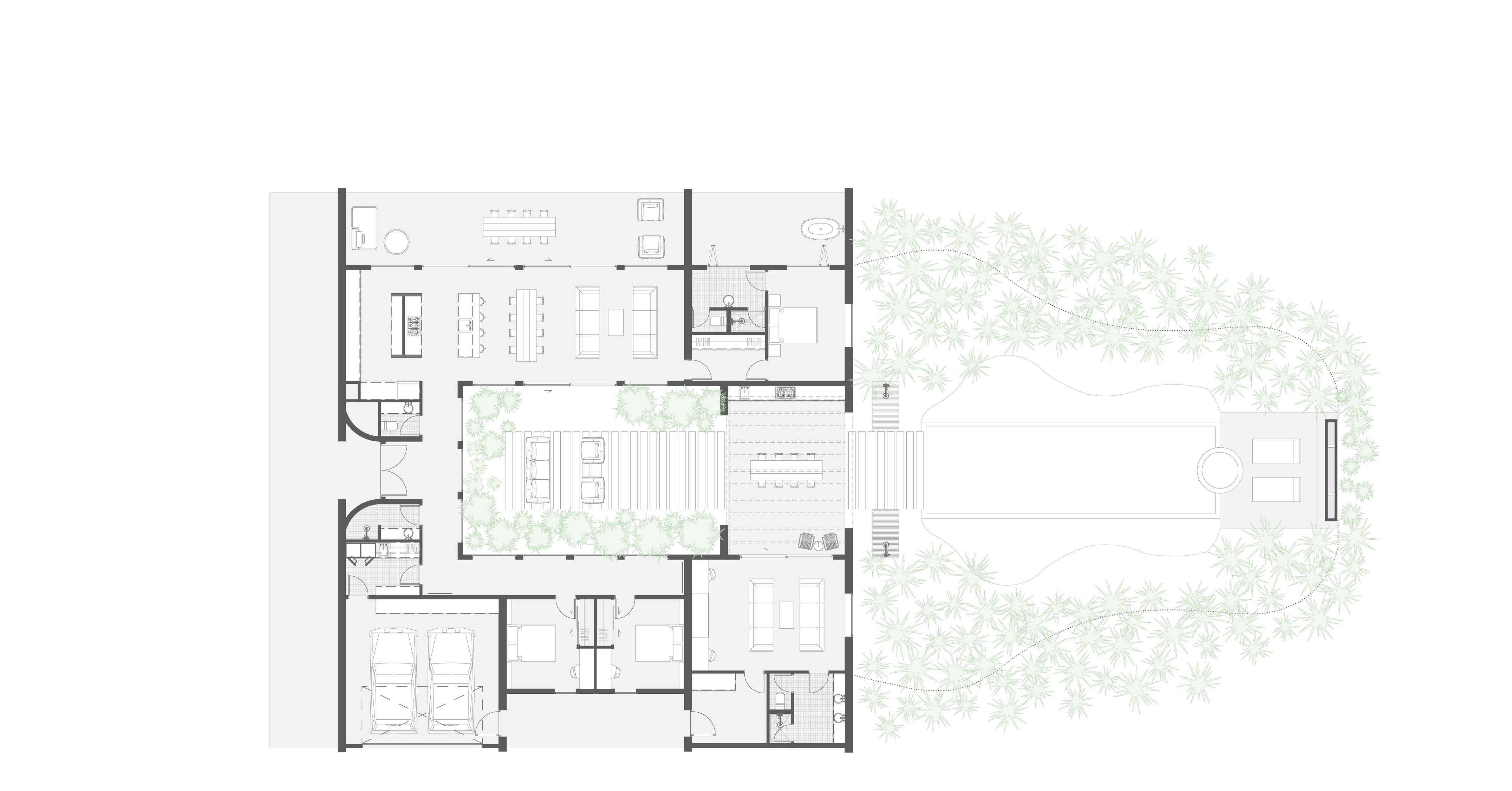
The plan is organised as a loop around the central courtyard, maintaining constant visual and physical connection to landscape. Living and kitchen spaces open both north to panoramic views and inward to the protected courtyard, enabling year-round use.
Bedrooms are zoned for privacy: the master suite is separated from children’s rooms and utility spaces, while a flexible studio occupies the south-east corner. Circulation is efficient and intuitive, eliminating corridors and ensuring every space has purpose, outlook, and crossventilation. HOUSE ON THE
PRAIRIE
12 Alki Architecture + Design Studio, Concept Henry + Rachel Wilson Wilson Residence
CONCEPT ONE
ROOF PLAN
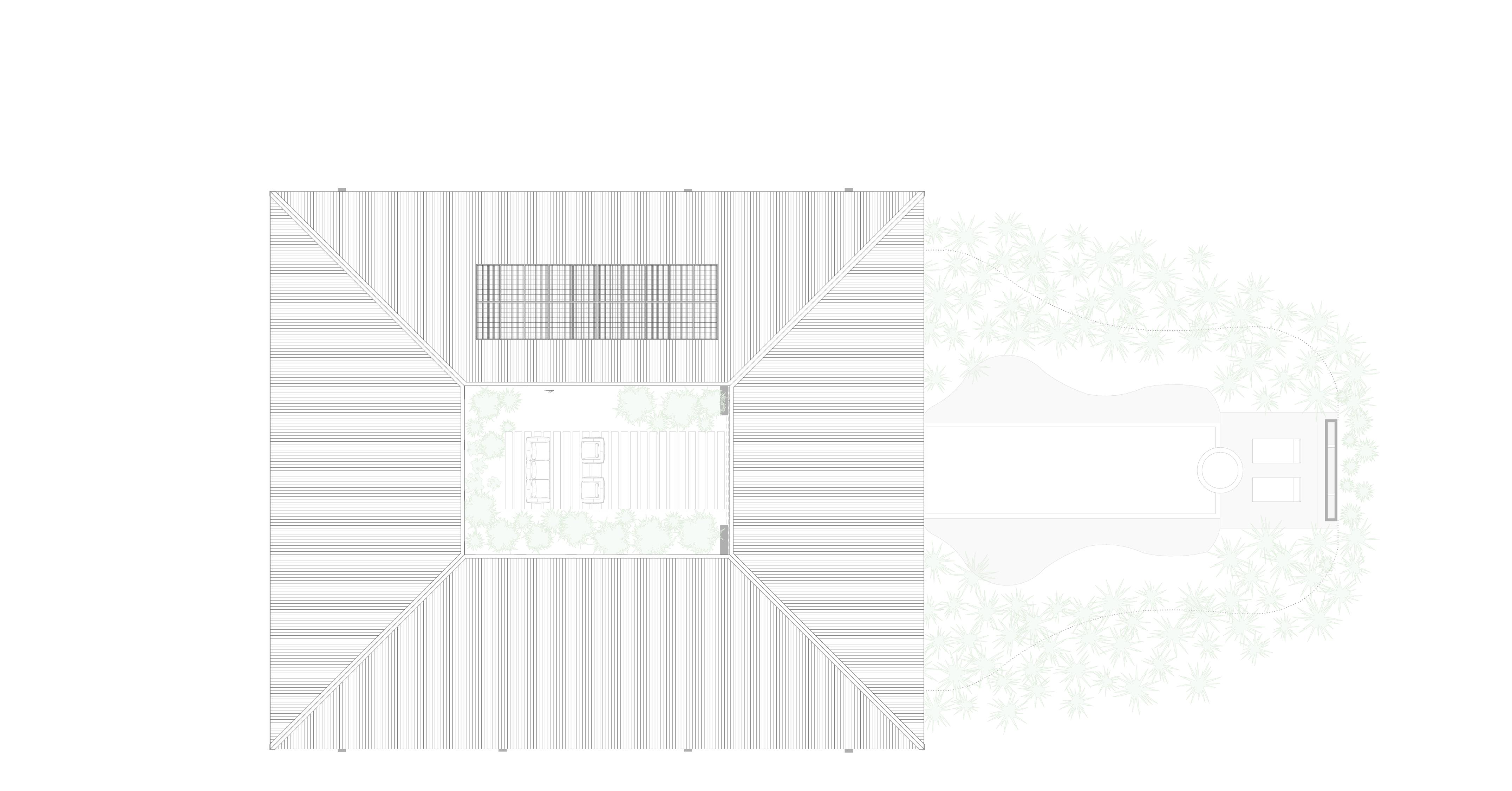
The roof is a key performance element. Deep, exaggerated eaves provide summer shading while allowing low winter sun to penetrate for passive heat gain. The continuous roof plane reinforces the home’s horizontal expression and protects openings on the north and courtyard elevations. Its form works in tandem with the solid west and east walls to deflect wind, reduce overheating, and support a stable internal environment with minimal mechanical intervention.
HOUSE ON THE PRAIRIE
solar panels
13 Alki Architecture + Design Studio, Concept Henry + Rachel Wilson Wilson Residence
INSPIRATION
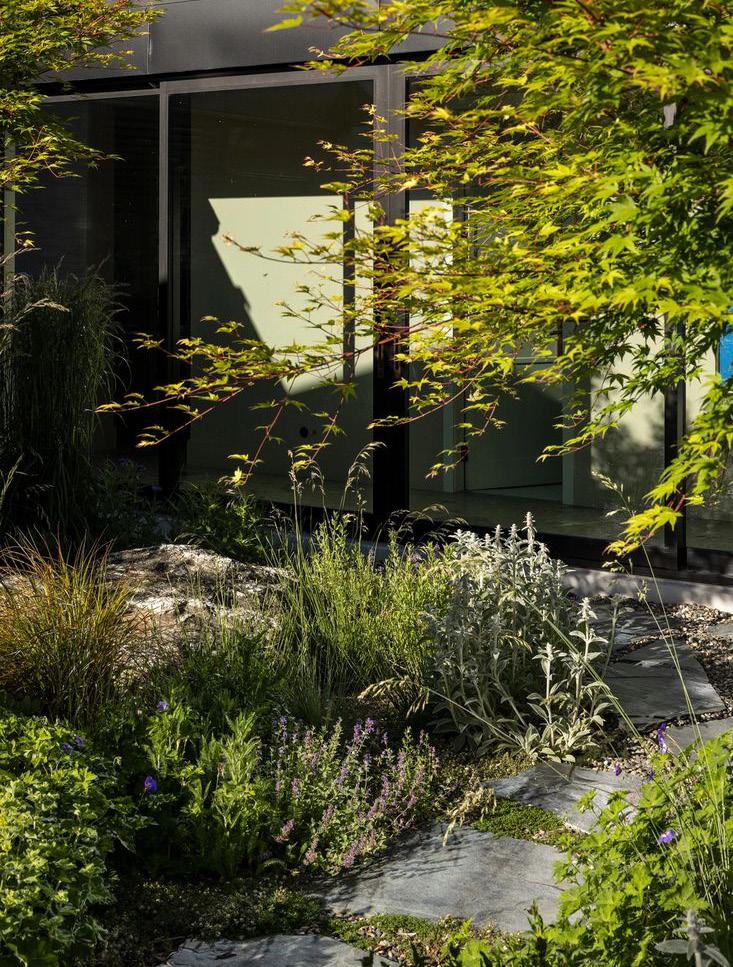
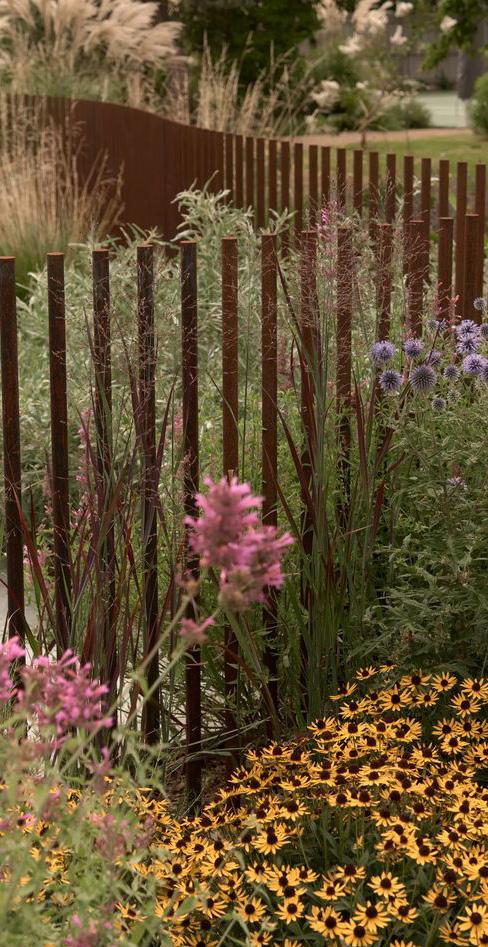
Internally, the palette remains muted and tactile — earth, timber, and shadow forming a calm backdrop to living. Built-in furniture reinforces efficiency and intention. Landscape provides contrast and vitality: lush planting animates the courtyard, while the natural pool dissolves into a transparent fence and wildflower meadow beyond, allowing the foreground, mid-ground, and mountains to visually merge.
pole frence and wild meadow
Concept One Fin.
This view shows the home opening fully to the north. Living spaces extend onto a sheltered patio, engaging expansive views toward Mount Maude, Grandview, and beyond. Multiple outdoor zones offer choice depending on wind and season — inward-facing retreat or outward-facing openness.
While the house appears closed from the west, it is generous to the north and within, balancing protection with openness. The result is a home that feels both grounded and expansive — resilient on the outside, rich and connected on the inside.
Break
Concept Two
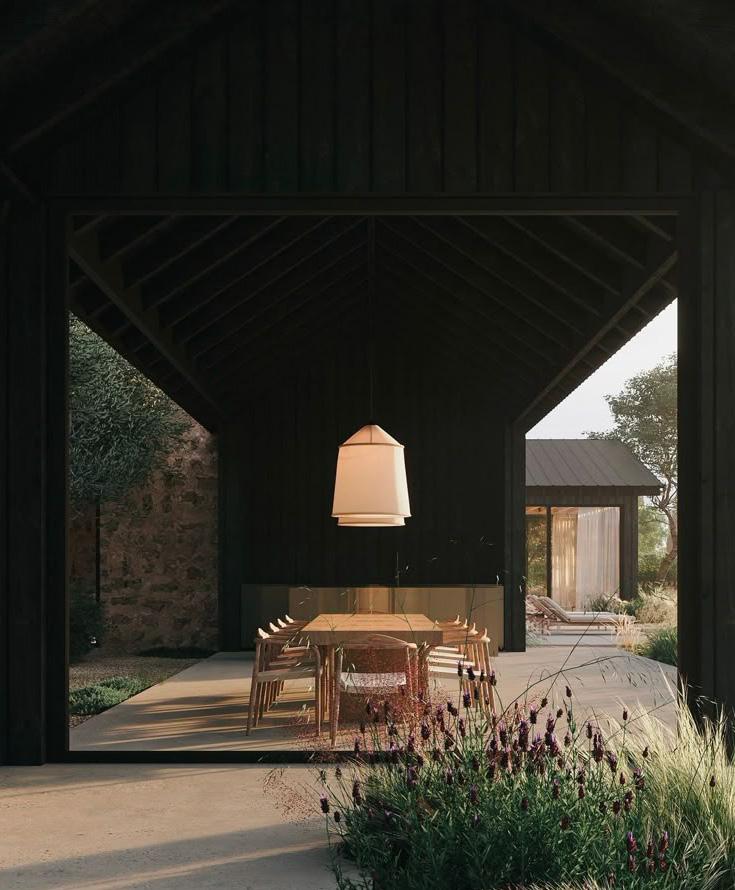
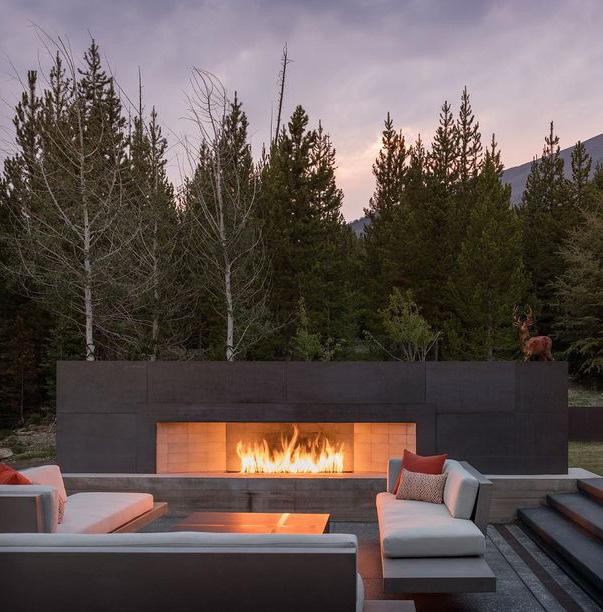
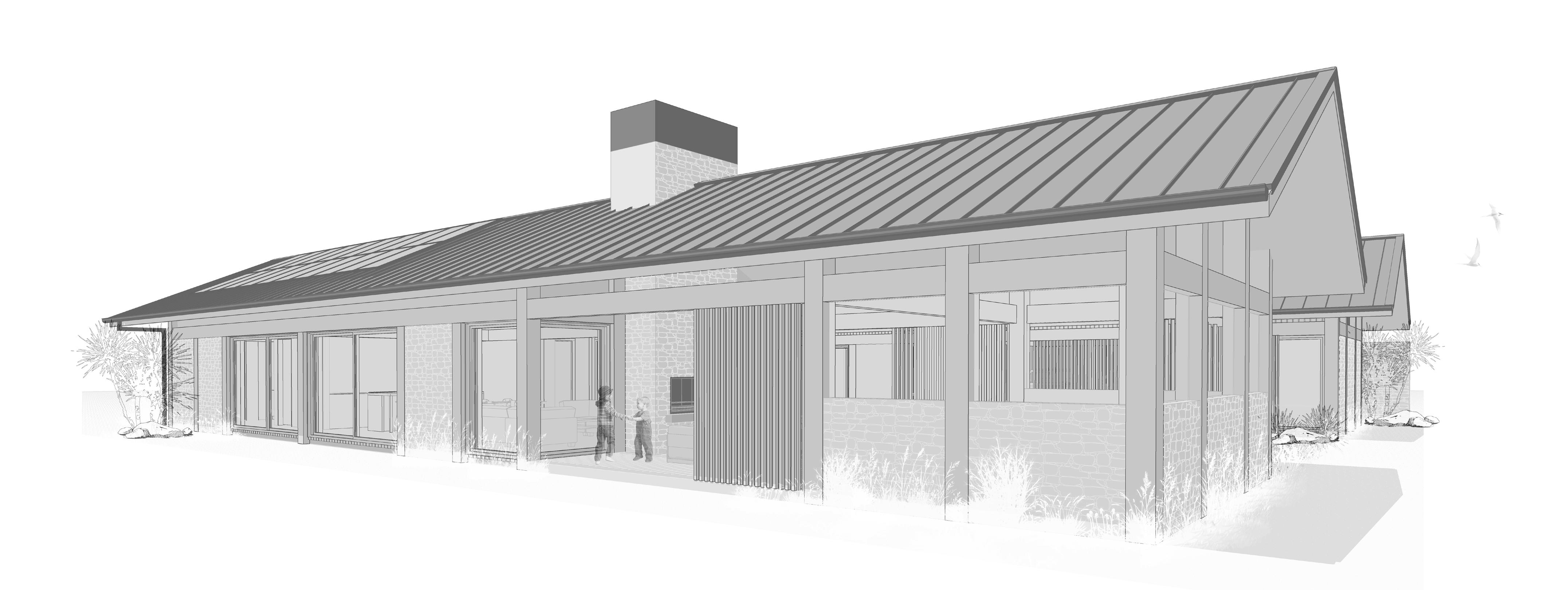
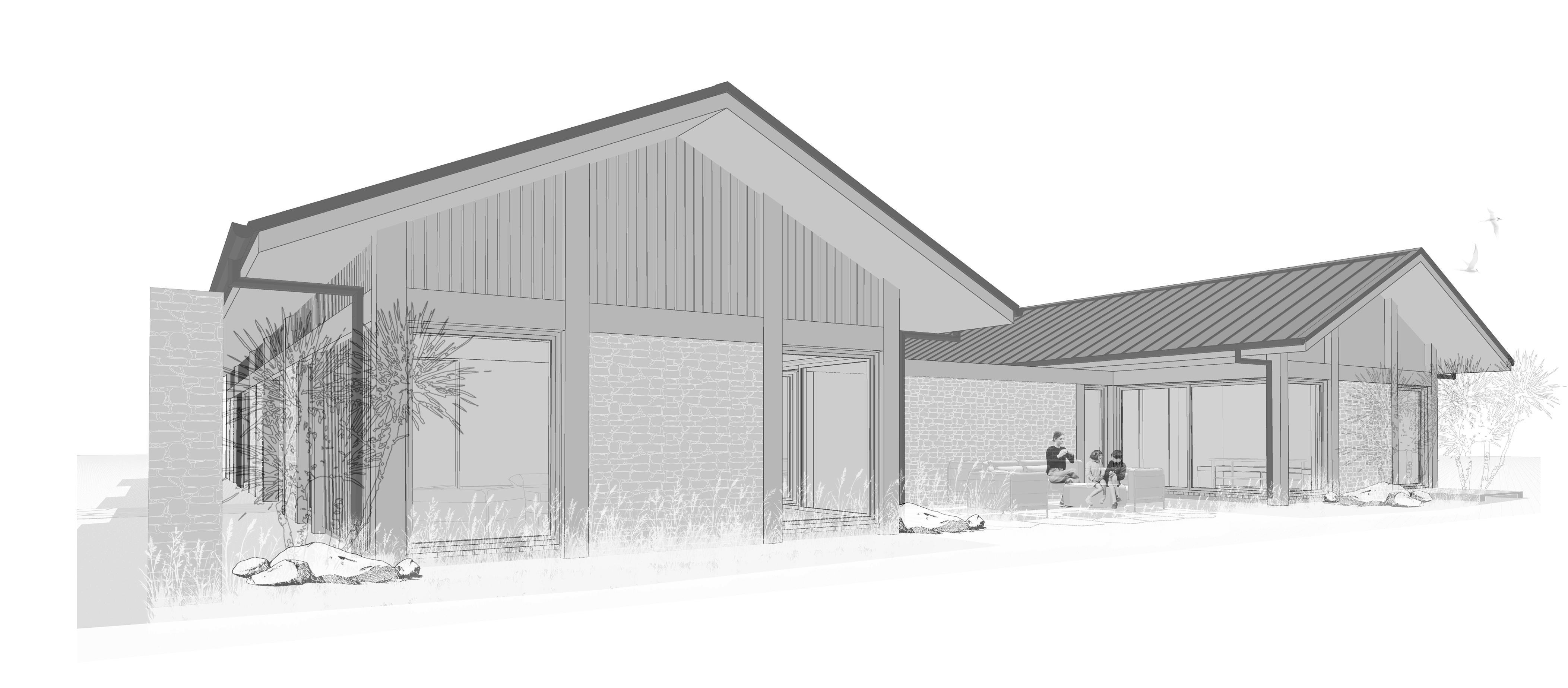
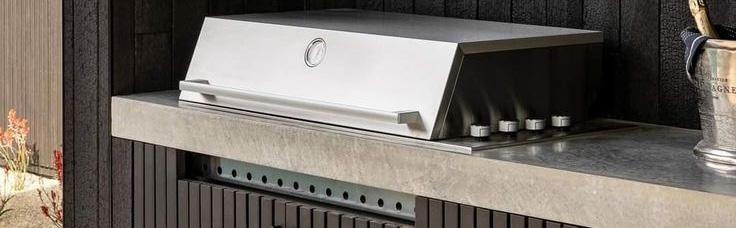
This concept is organised as two east–west pavilions, positioned to prioritise views, solar access, and sheltered outdoor living. The primary living pavilion opens northwest to a covered outdoor kitchen, dining, and living zone, anchored by an Escea EK-series outdoor cooking fireplace. A continuous gable roof extends over this space, creating a protected threshold between inside and out.
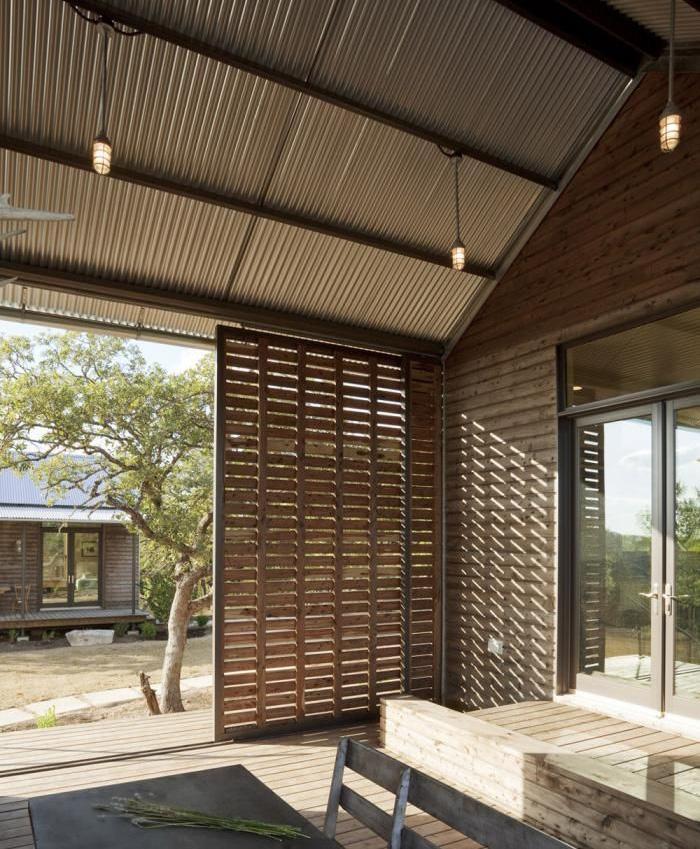
Operable sliding shutters sit either side of the pavilion, diffusing prevailing winds when required or opening fully to integrate the expansive prairie and mountain landscape beyond. These shutters also perform as pool fencing to the natural pool, embedding safety into architecture rather than overlaying it.
PROJECT INSPIRATION
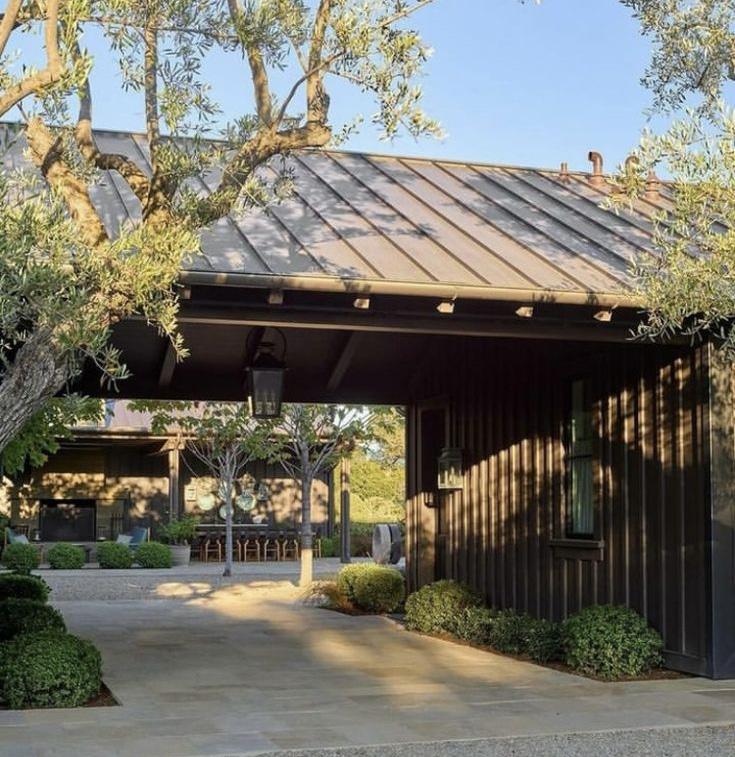
multi-pavillion + material palette drive through carport
INSPIRATION
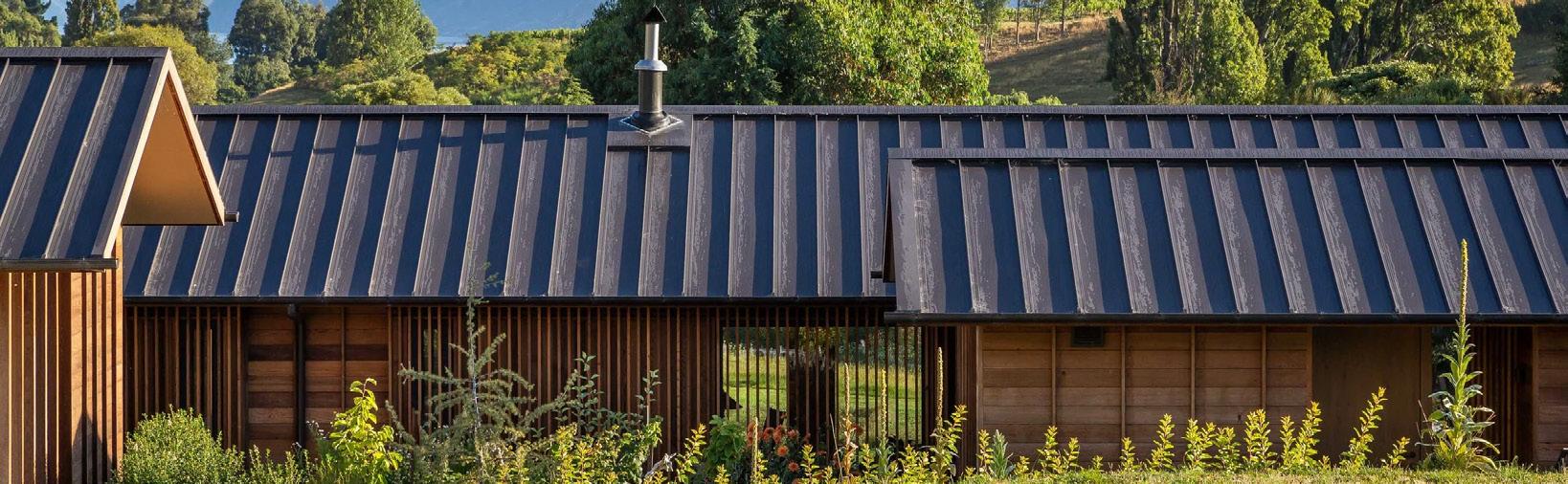
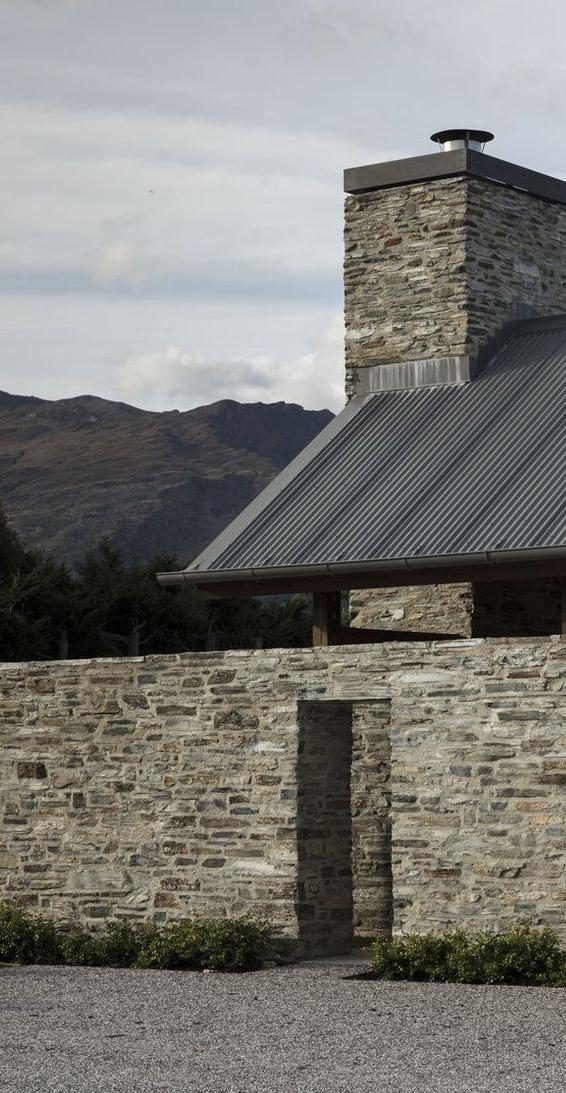
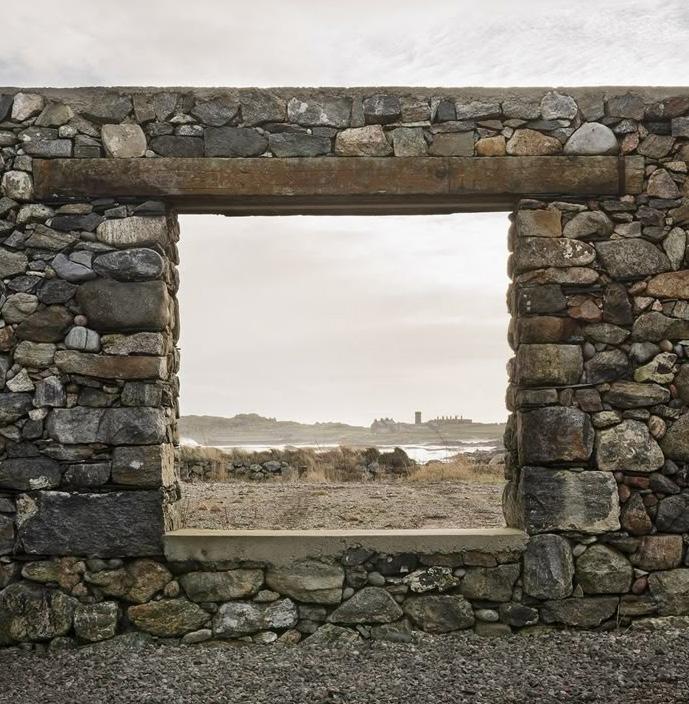
Materiality is robust, restrained, and regionally grounded. Lowreflectance standing-seam metal roofing forms the unifying roofscape, optimised for north-facing solar panels at a 25-degree pitch. Cedar shiplap cladding sits above pockets of schist and Wānaka stone, providing warmth while maintaining durability at ground level. Purpleheart hardwood posts and beams frame key zones, adding structure, rhythm, and depth. Together, these materials balance mountain vernacular with contemporary clarity and long-term resilience.
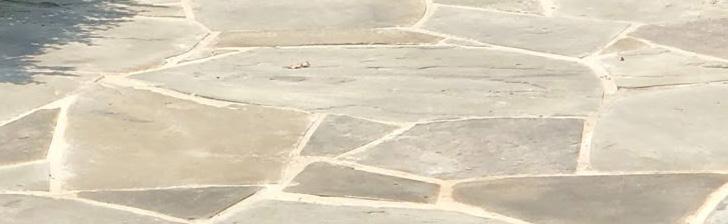
stone fortress wall
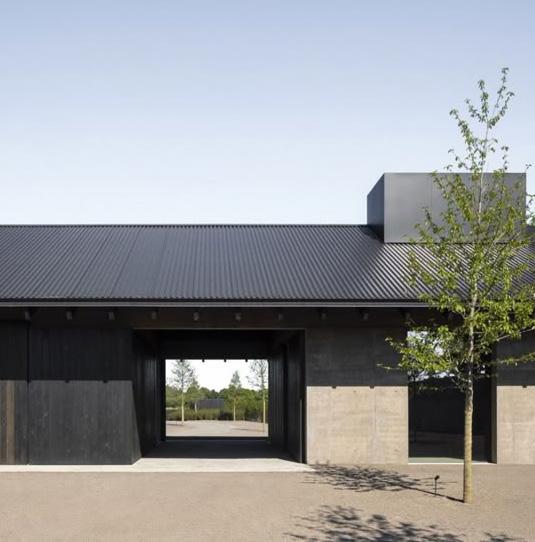
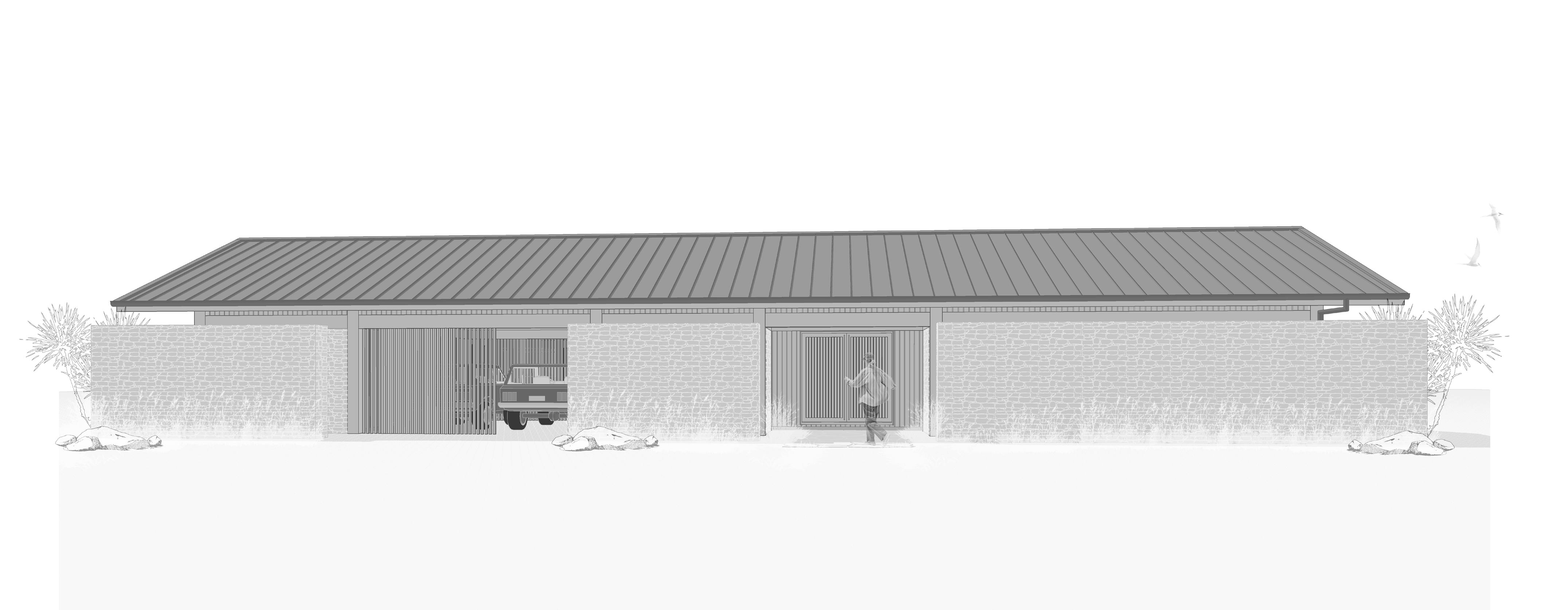
Arrival is defined by a freestanding stone wall running the length of the southern utility pavilion. This wall anchors the building into the land, shelters the façade from weather, and establishes privacy. Gaps in the stone form controlled moments of entry — including a drive-through carport — creating a deliberate compression before release into the open landscape beyond.
The carport incorporates operable shutters that mirror those at the outdoor living pavilion, offering security, pool protection, and wind control. The axial alignment continues beyond the wall, visually lightening the pavilion volumes and reinforcing cohesion under a single gable roof.
CONCEPT TWO
FLOOR PLAN
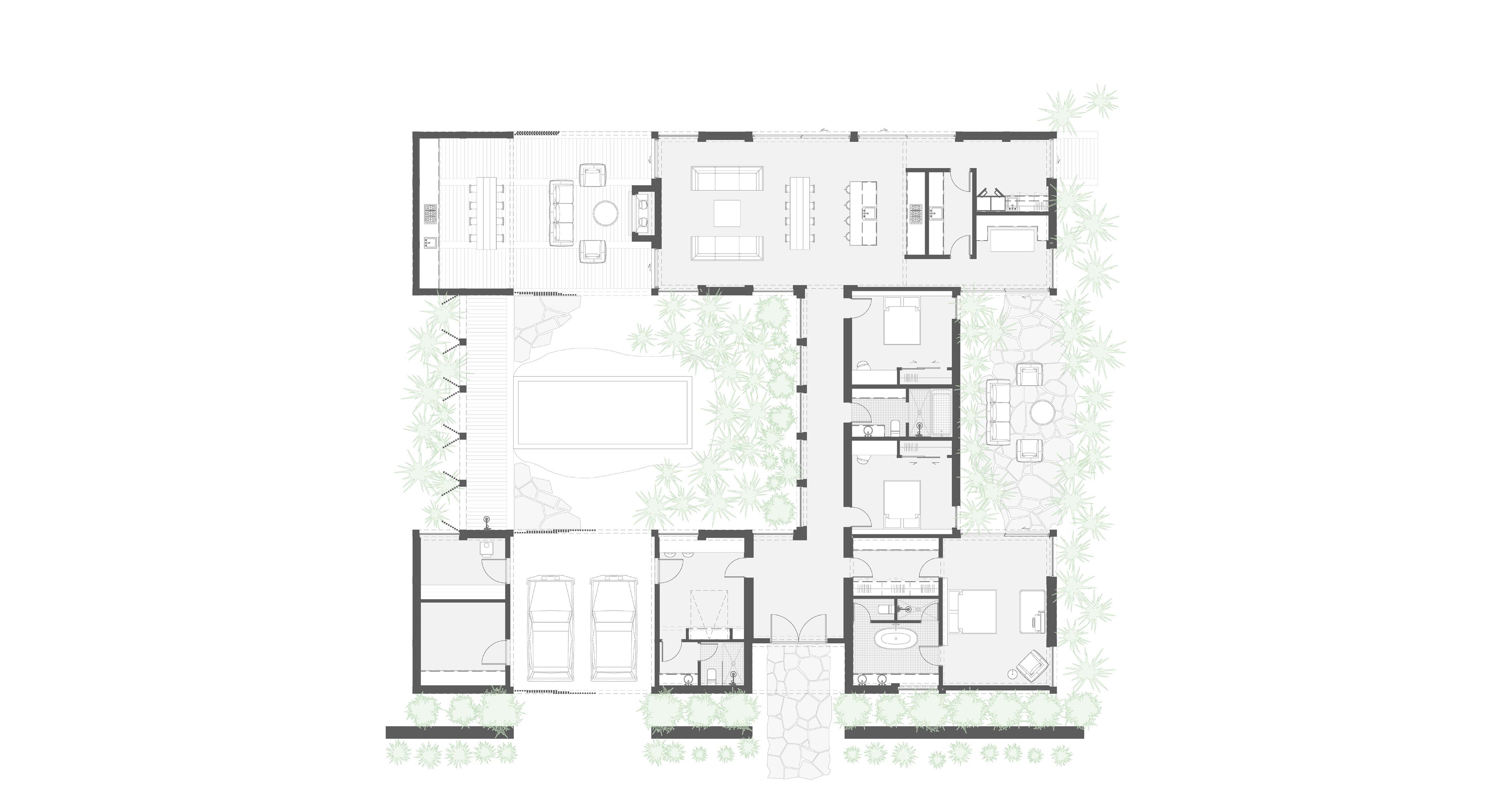
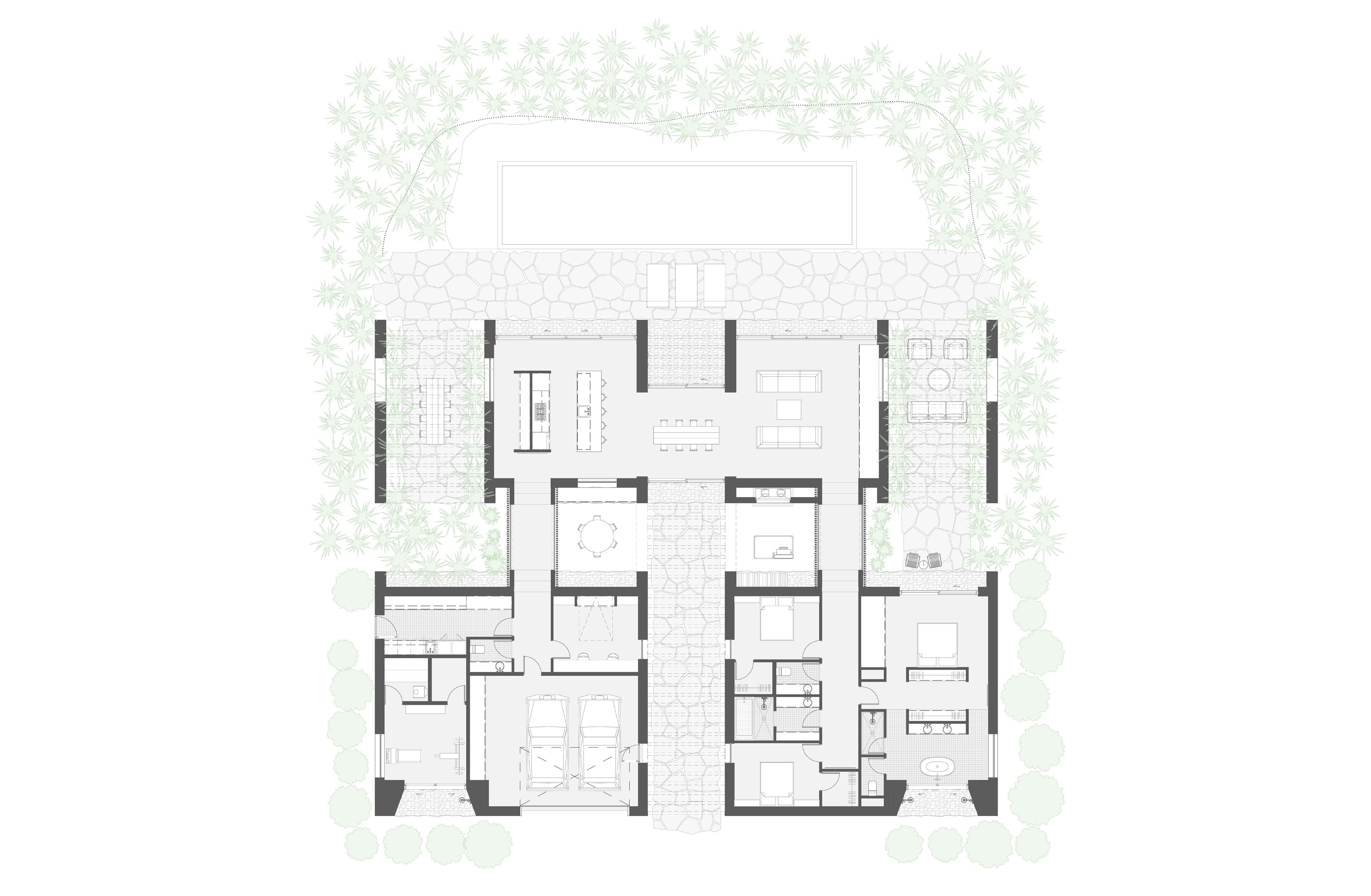
The plan balances efficiency, flexibility, and clear zoning. Two pavilions linked by a central circulation spine framing the western pool courtyard — the heart of the home. This spine is animated by timber beams and glazing, with dappled light from water and planting, while a continuous stone wall shelters the children’s bedrooms and anchors movement through the house.The southern pavilion houses utility, studio, and master suite functions, while the northern pavilion is dedicated to open living and kitchen spaces. Circulation is intuitive, with flexible rooms designed to adapt over time without disrupting the household.
wildflowers
HOUSE ON THE PRAIRIE
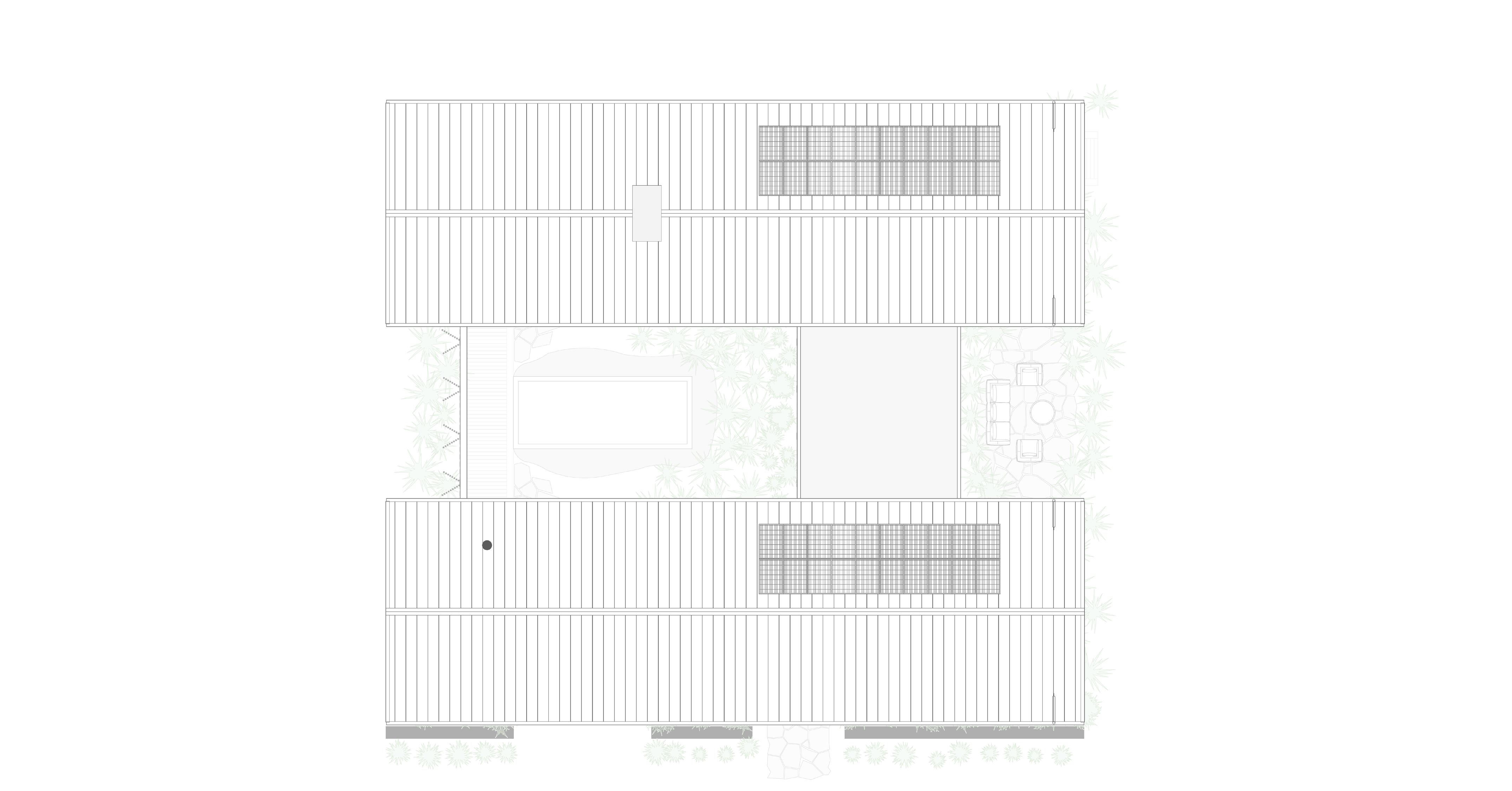
CONCEPT TWO ROOF PLAN
Two simple gabled pavilion roofs run east–west, optimising solar orientation and minimising complexity. A low flat roof links the pavilions, bridging the western pool courtyard and eastern morning courtyard to unify the master plan.
Generous overhangs provide summer shading while allowing winter sun to penetrate living spaces. The roof supports sheltered circulation and covered outdoor living, acting as an active contributor to comfort and performance rather than a passive cover.
HOUSE ON THE PRAIRIE
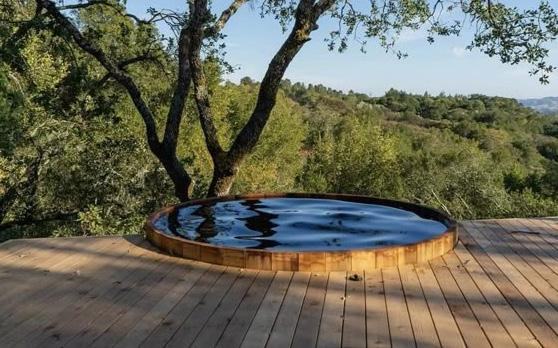
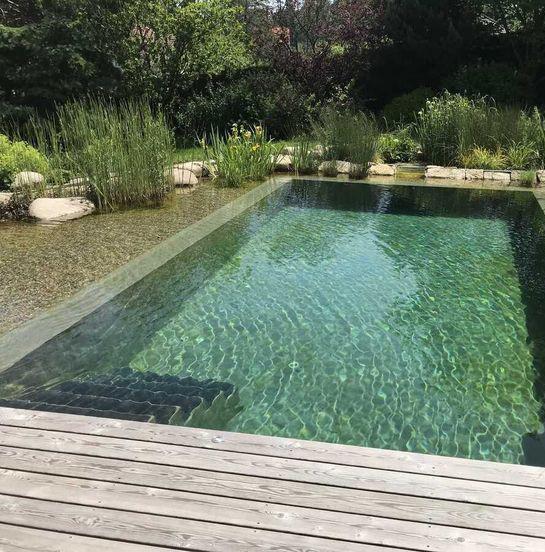
fieldstone features natural pool with deck edge
INSPIRATION
Internally, stone and timber define the experience. A schist wall anchors the circulation spine, extending the exterior material narrative into the heart of the home. Heavy timber posts create rhythm and shadow, while built-in furniture supports flexibility and restraint. Landscape is integral: planting is woven between stone walls and buildings, softening edges and creating private outdoor rooms. The natural pool transitions seamlessly into meadow planting, allowing landscape to dissolve into the wider prairie
operable shutters + wind screens
Concept Two Fin.
The eastern elevation reveals the master-plan logic: two pavilions separated by a lower bedroom wing that forms a protected morning courtyard. This space captures early sun and offers year-round shelter — a counterpoint to the western pool courtyard. The master suite opens onto this eastern patio, allowing slow mornings with light, warmth, and privacy.
Together, the dual courtyards create choice — retreat or openness — ensuring outdoor living remains usable in all conditions. The result is a home that is flexible, grounded, and deeply responsive to both land and climate.
Break
Concept Three
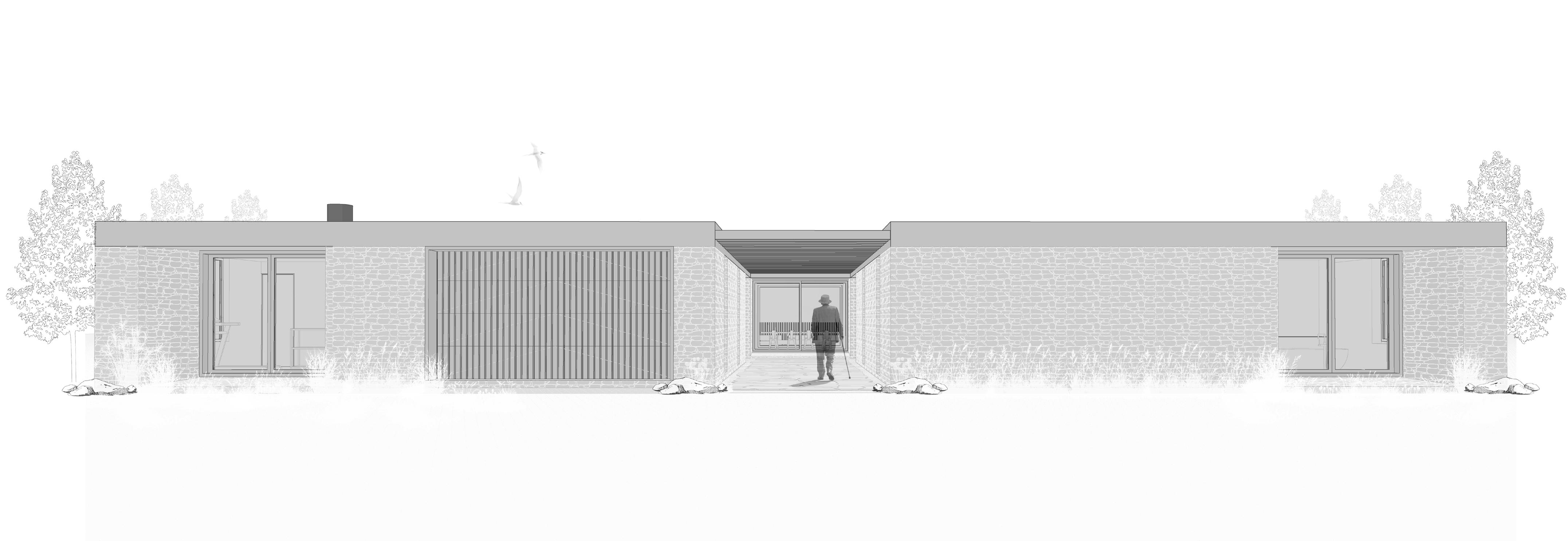
This concept is organised around a strong central axis that divides the home into three wings. As you approach from the south, two solid stone volumes — garage and gym to the south-west, bedrooms to the south-east — bunker the home into the slope. Between them, a timber trellis-lined spine forms a light, open runway guiding arrival.
Stone provides weight, privacy, and weather protection, while the trellis introduces rhythm, shadow, and orientation. This axial entry draws you deliberately through solidity into light, centring arrival on the heart of the home within the northern living wing.
PROJECT INSPIRATION
hardwood trellis stone to frame views
INSPIRATION
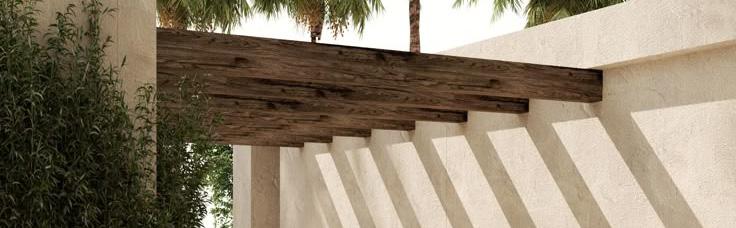
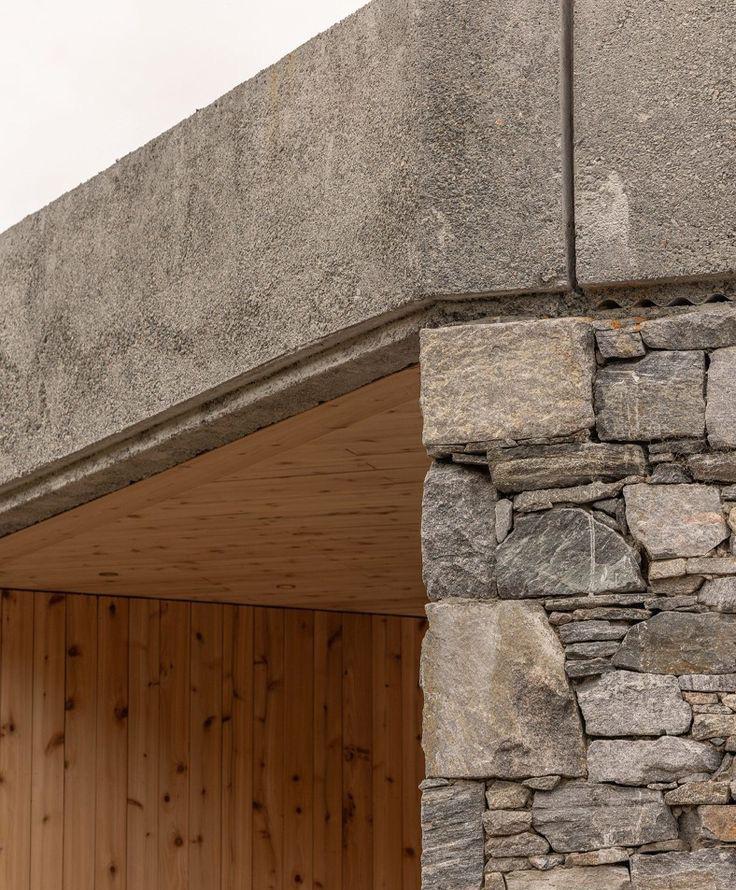
The architecture draws from Spanish Mediterranean precedents, grounded in stone, concrete, and shadow. Heavy masonry walls and stone “cubes” anchor the home to the land, while concrete caps and deep overhangs temper sun and heat. Hardwood trellises soften the mass, filtering light and creating shifting shadow patterns throughout the day. Materials are robust, low-maintenance, and tactile — celebrating permanence while allowing lightness where it matters.
stone with concrete capping
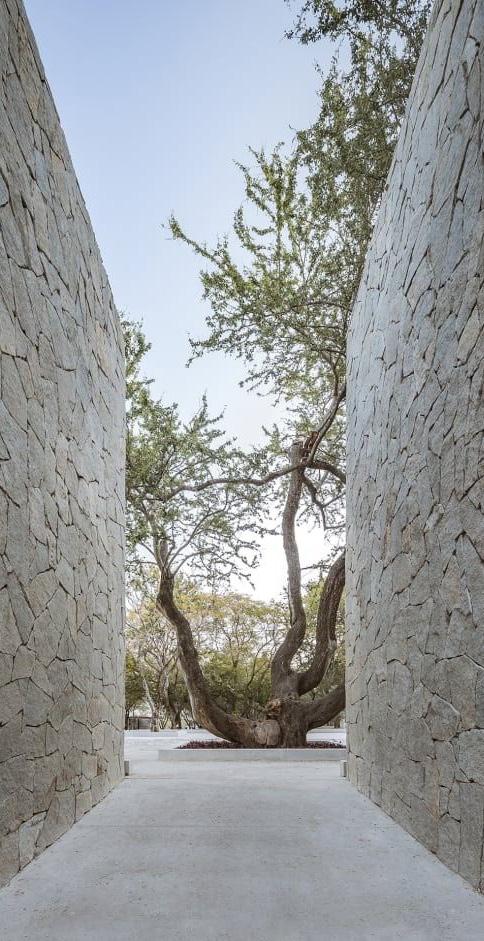
long axial walkways flanked with stone
Concept Three.
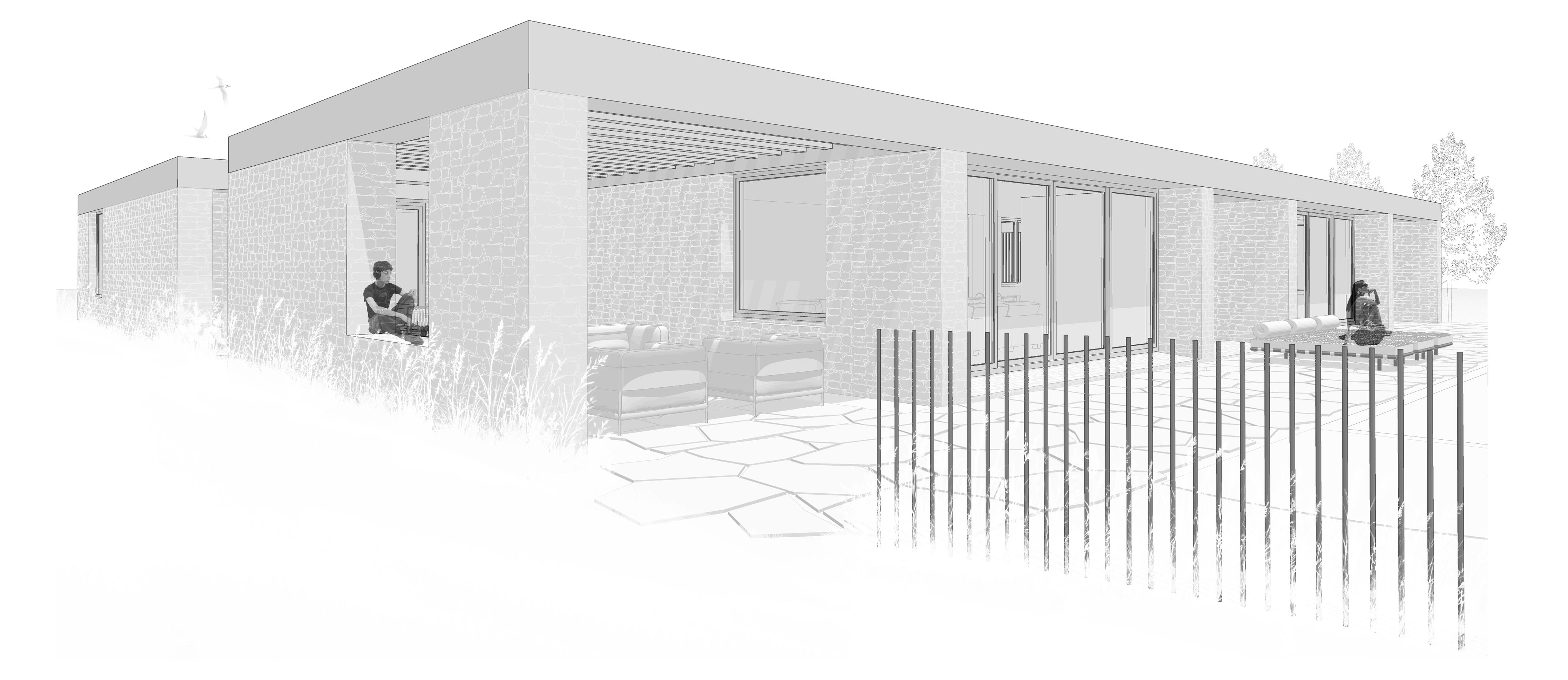
This view focuses on the north-east corner, where the northern living wing opens to a trellised morning courtyard. A framed square seating nook captures views to the Grandview Range, creating a quiet place for early light and stillness.
The northern wing walls extend beyond the glazed living spaces, working in tandem with roof overhangs and trellises to shield low west sun and reduce summer overheating.
Openings to the east and west are intentionally restrained, favouring performance and thermal stability over excess glazing. The master suite opens directly onto this garden, allowing slow mornings immersed in dappled light, planting, and water. The natural pool sits alongside the northern wing, edged by a discreet pole fence buried within meadow planting, allowing the courtyard, pool, and prairie to visually merge.
CONCEPT THREE
FLOOR PLAN
The plan is organised into three wings: a northern living pavilion and two southern wings split by the central entry axis. The spine connects directly through the home, aligning circulation, views, and landscape. The northern wing houses open living, kitchen, and dining spaces with strong indoor–outdoor flow to the pool and terraces. The south-east wing is dedicated to bedrooms, prioritising morning light and thermal comfort, while the south-west wing accommodates garage, gym, services, and flexible rooms. The layout allows clear zoning while offering choice and adaptability throughout the day.
row
HOUSE ON THE PRAIRIE
CONCEPT THREE
ROOF PLAN
The roof reinforces the axial clarity of the plan. Generous overhangs to the northern wing control solar gain — excluding high summer sun while allowing winter warmth to engage with concrete floors and high thermal-mass walls.
Roof forms work in concert with the trellised courtyards to moderate light, heat, and wind, supporting passive performance across seasons. The symmetry of east and west courtyards balances the massing, while the central axis remains legible from entry through to landscape beyond.
HOUSE ON THE PRAIRIE
solar panels
trellised morning courtyard
trellised evening courtyard
trellised entry spine
trellised pool deck
29 Alki Architecture + Design Studio, Concept Henry + Rachel Wilson Wilson Residence
INSPIRATION
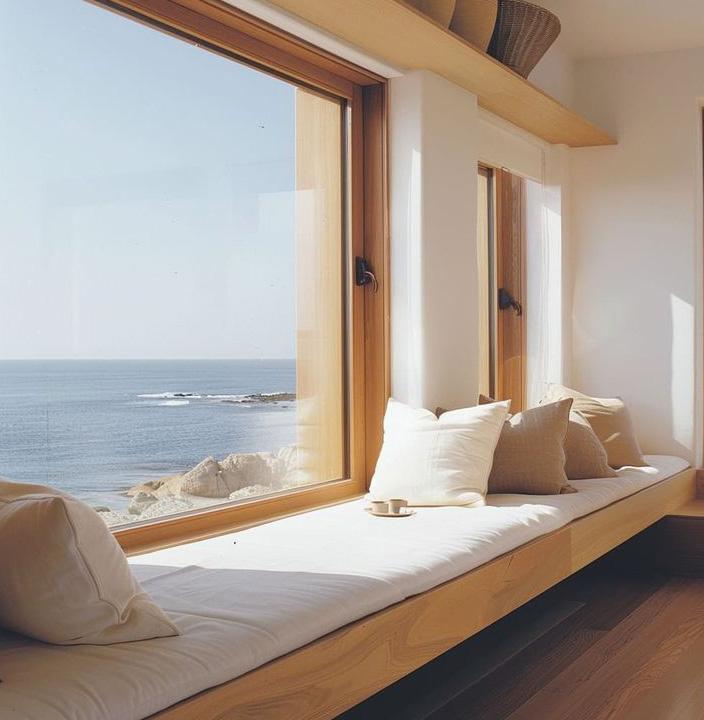
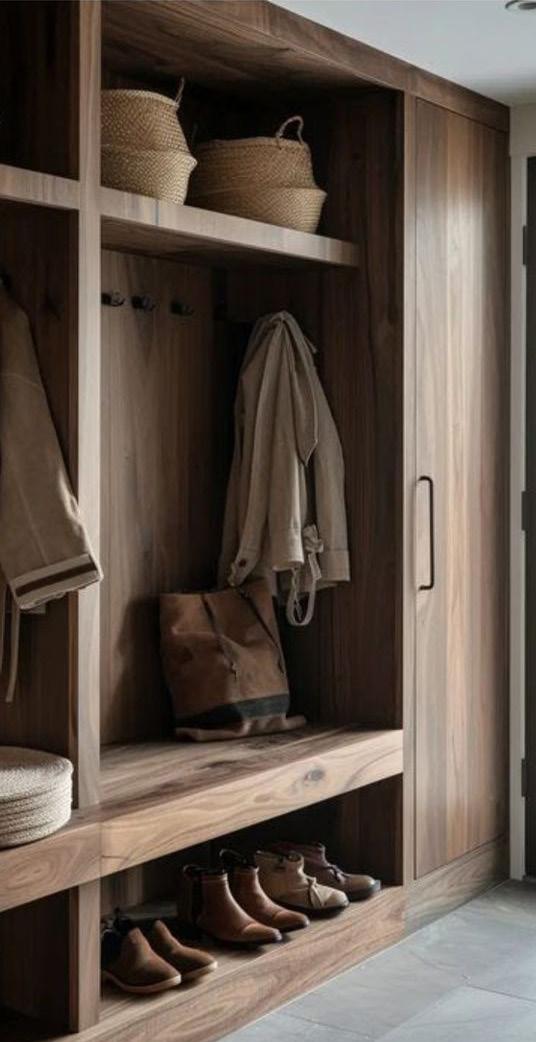
Interiors emphasise built-in furniture, sitting nooks, and moments of retreat within open spaces. Reading corners, window seats, and integrated joinery create a balance between openness and intimacy. A generous mudroom with locker-style storage forms a practical transition from outside to inside, capturing daily mess before it enters the home. Landscape works as an extension of architecture — stone, trellis, planting, and water combining to soften edges and animate spaces with light, texture, and seasonality.
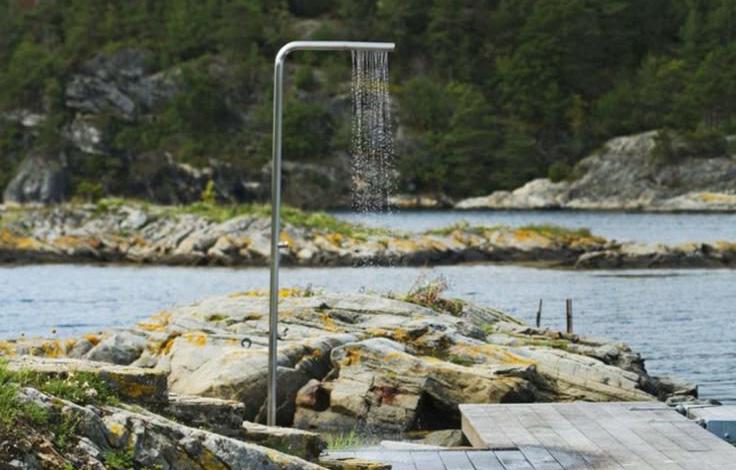
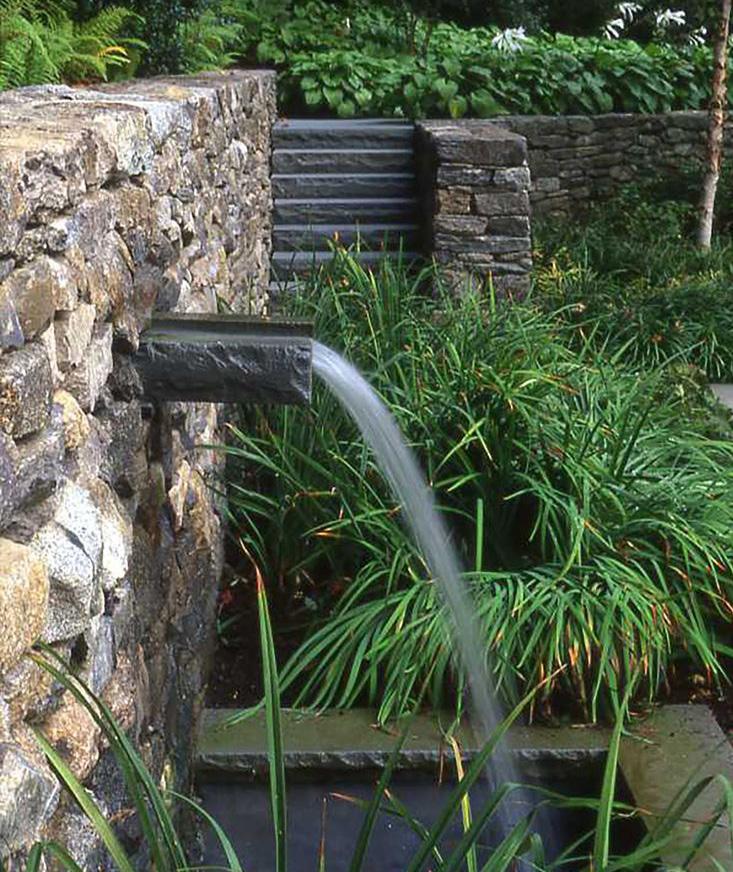
outdoor shower + waterfeatures
wetroom storage + shelves
meadow + pole fence around natural pool
Concept Three Fin.
The northern elevation reveals the full organisational logic of the home. The central spine extends through the façade, aligned precisely with Mount Maude and the long natural pool running parallel to the living wing. East and west trellised courtyards sit in balance, offering sheltered outdoor spaces for morning and evening use depending on conditions.
All northern living spaces engage directly with pool reflections, meadow planting, and distant mountain views, ensuring the home is continuously oriented to landscape, light, and climate.
NEXT STEPS
NEXT STEPS
YOUR REVIEW Take your time to explore each concept, sit with the ideas, and reflect on what feels most aligned with your hopes for this next chapter. This is your space to dream, to imagine, and to shape a project that truly reflects your intention.
OUR REVIEW Let’s catch up in person to walk through the concepts together. I’ll have the 3D model on hand so we can explore the layout, materials, and sense of space in more detail. Allowing us to better understand where to next..