This package represents the next step in the design process, building on the initial concept explorations and our recent discussions. Based on your feedback, the following pages refine two preferred directions for the home at Waimana Place.
At this stage, the concepts are developed further to test spatial relationships, landscape integration, and architectural expression — while remaining flexible enough to allow for continued dialogue and refinement. Each option explores a different level of intervention, ranging from a measured evolution of the existing home to a more expressive architectural transformation.
Together, these preliminary designs help clarify the path forward, allowing us to evaluate the opportunities, character, and scope of each approach before progressing toward a more resolved architectural direction.
Your feedback on the initial concept package highlighted a strong preference for Concept Three, particularly its Yakisugi cladding and the way it begins to shift the home toward a more grounded alpine vernacular while still respecting the existing structure. You responded positively to the darker material palette, stronger architectural language, and improved relationship between the living spaces and the landscape.
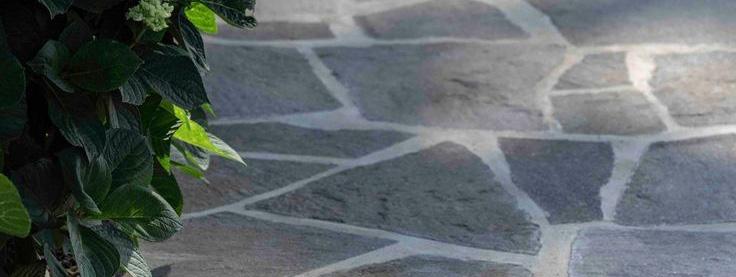
At the same time, we discussed maintaining a pragmatic approach by keeping the pool in its existing location and focusing on refinements that strengthen indoor–outdoor flow rather than relocating major site elements. Key refinements to explore include simplifying the pool-side architecture by removing buttresses and pillars, widening doors to improve connection to the pool terrace, introducing schist paving at the entry and pool areas, and exploring microcement flooring internally to work with the existing underfloor heating.
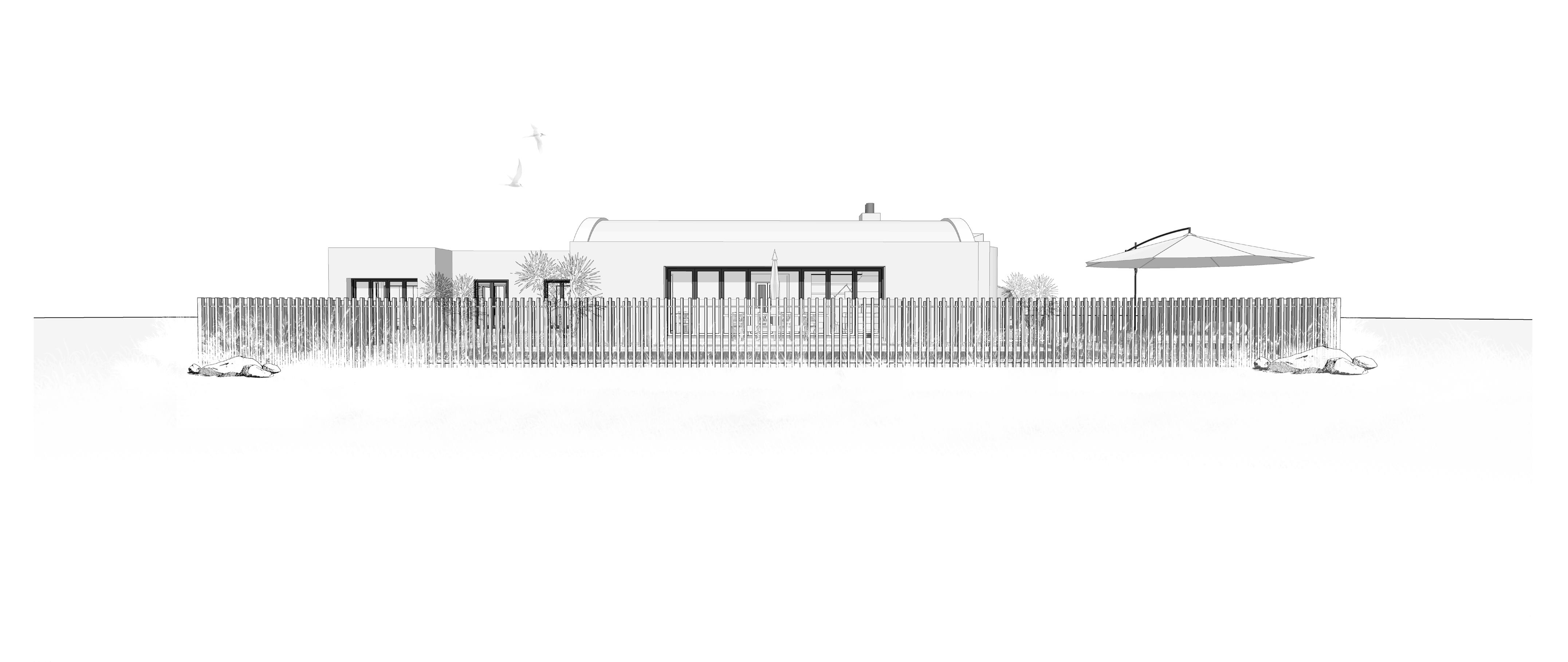
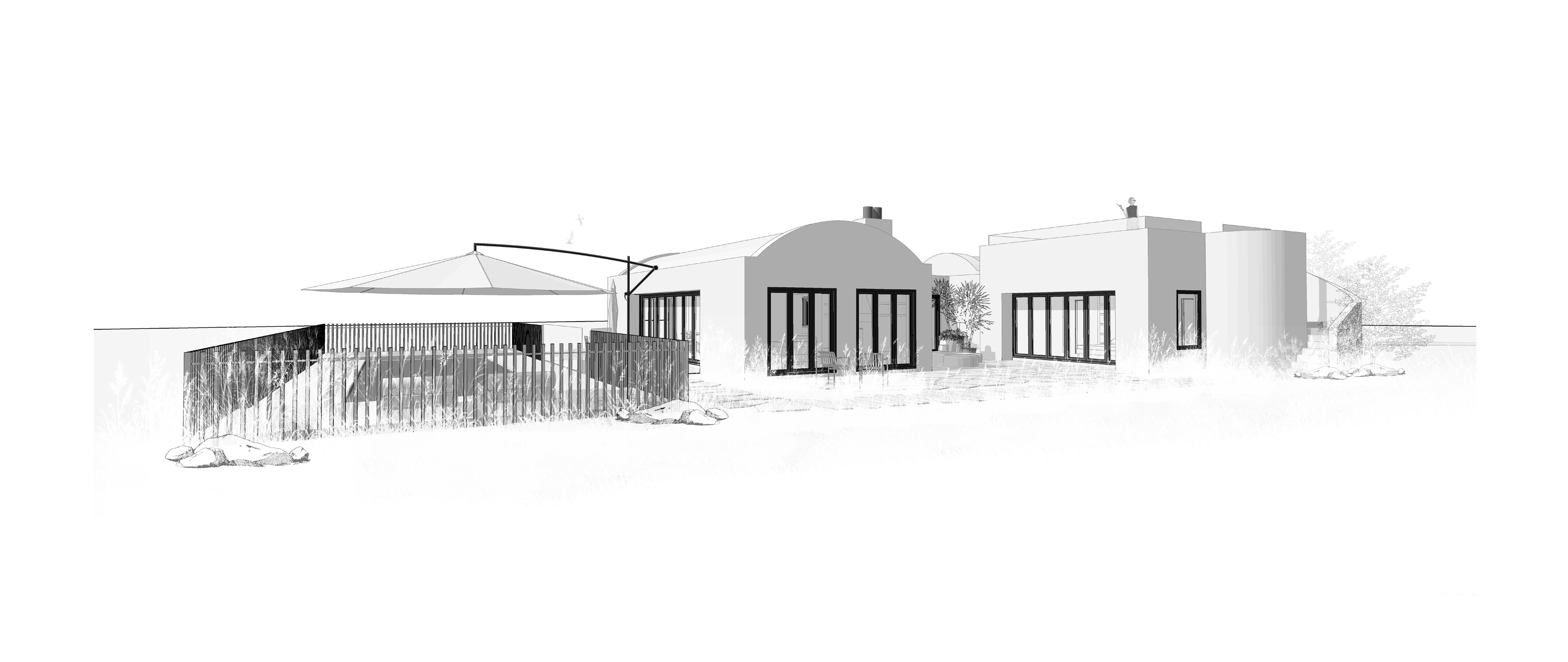
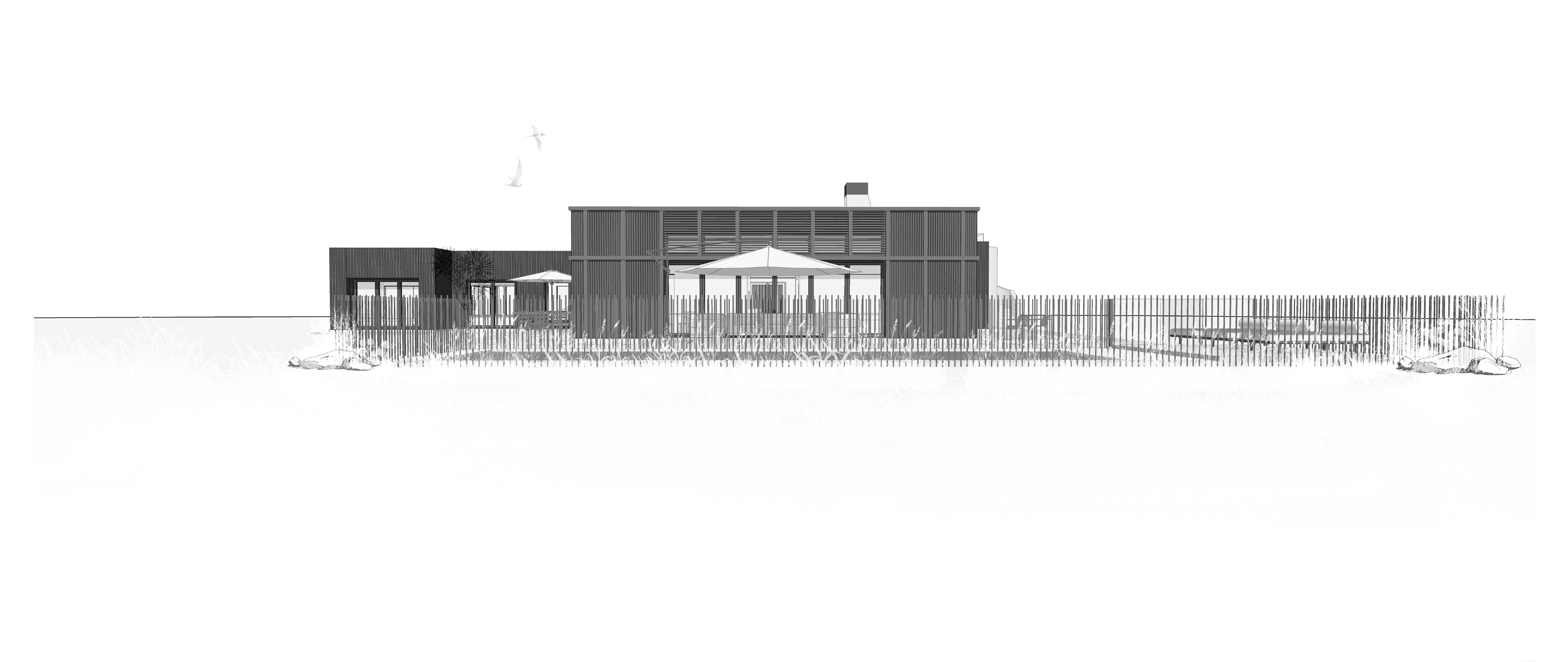
Preliminary 001 explores how the existing home can evolve through refinement rather than reinvention, simplifying elements along the northern living façade while maintaining the warmth and character of the Mediterranean-inspired architecture. Existing pillars and buttresses are rationalised to allow a wider timber bifold opening, strengthening the connection between the living room and the pool terrace while preserving the home’s original material language.
Material continuity anchors the design. Microcement flooring extends through the interior and entry, while concrete paving forms the primary terrace outside the living room and along the southern edge of the pool. Raised timber lounging decks at each end provide sheltered seating above the splash zone, while timber post fencing dissolves into meadow planting and wildflowers, allowing the landscape to soften the pool edge and visually connect the home to the wider alpine setting.
OVERVIEW
PRAIRIE IN CONTEXT
The landscape strategy strengthens the relationship between the home, pool terrace, and surrounding meadow while keeping the pool in its existing location. Arrival to the property is softened through a forest of birch trees along the driveway — a simple but elegant gesture that creates a shaded procession toward the house.
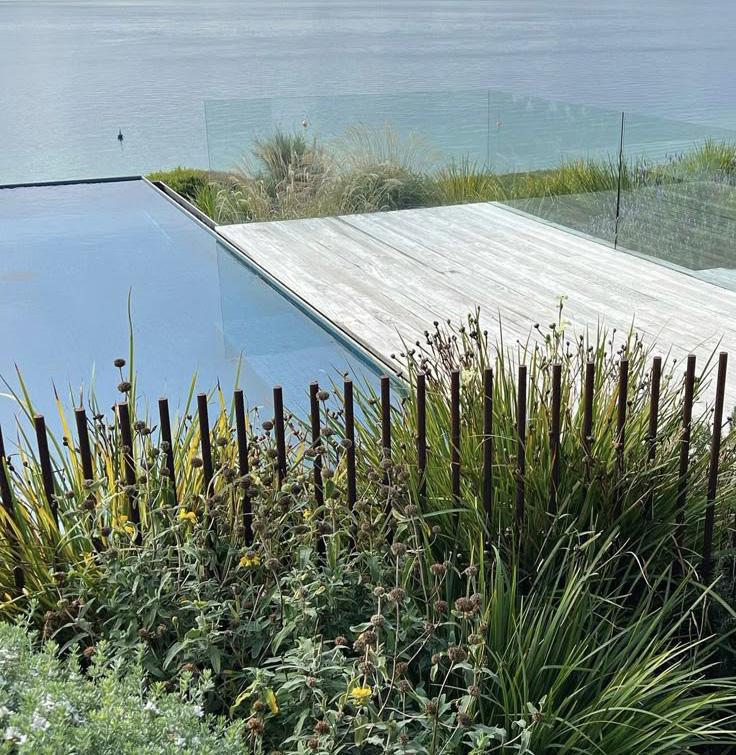
From the living room, a terrace extends toward the pool, forming the primary connection between interior living spaces and the outdoor environment. Seating areas at each end of the pool create natural gathering points, while the northern pool edge is intentionally softened with meadow planting and wildflowers that dissolve the boundary between water and landscape.
Macrocarpa post fencing blends into this planting to maintain safety while visually disappearing into the grasses beyond. A glass balustrade between the living terrace and the pool preserves uninterrupted sightlines, allowing views to extend across the water and into the wider alpine landscape.
This concept reimagines the pool terrace as a calm extension of the living space, centred around a wider timber bifold opening that strengthens the connection between interior and landscape. A concrete patio extends outward from the living room to form a simple northern terrace, tying the interior microcement flooring to the pool edge.
Raised timber lounging decks at the east and west ends of the pool provide comfortable seating areas slightly elevated
above the splash zone. Between the terrace and pool, a glass balustrade maintains uninterrupted views from the living room across the water and into the surrounding landscape.
Around the remainder of the home, existing concrete patios are replaced with schist fieldstone paving. This allows meadow planting and wildflowers to soften the building edges, drawing the landscape closer to the house and letting it bleed naturally toward the surrounding prairie.
raised pool deck at both ends
demolition of pillars + trellis
SPATIAL PLAN
FLOOR PLAN
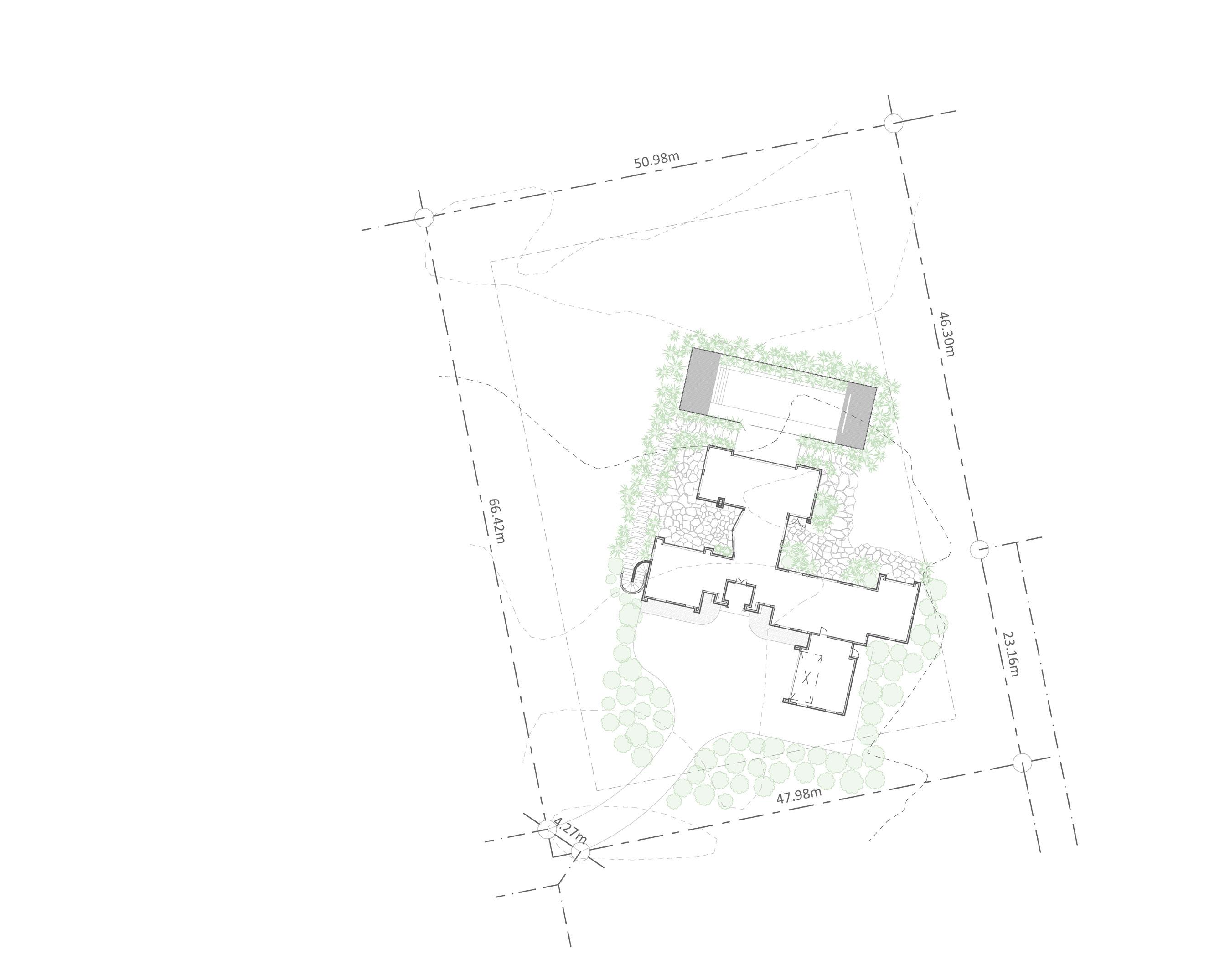
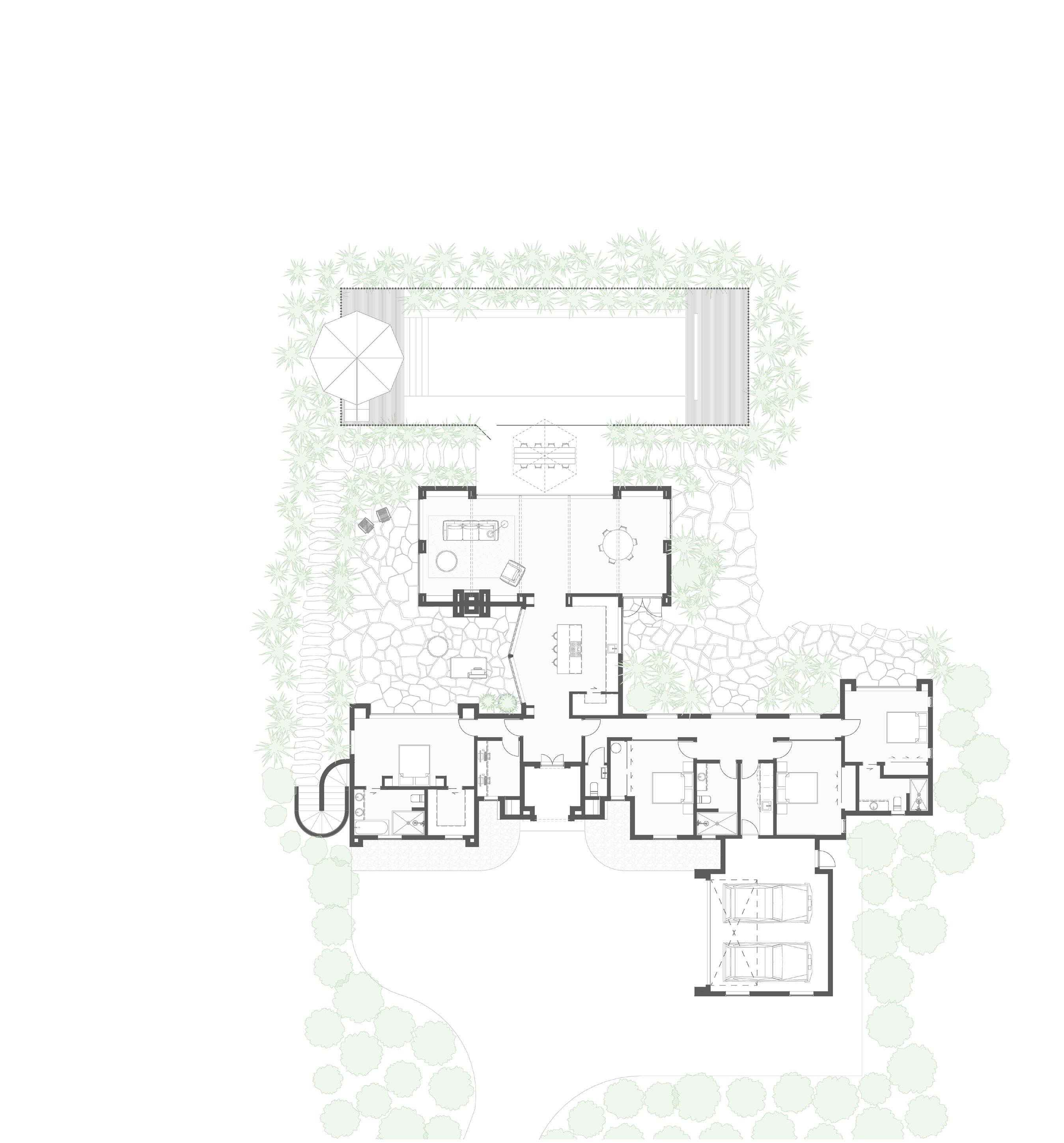
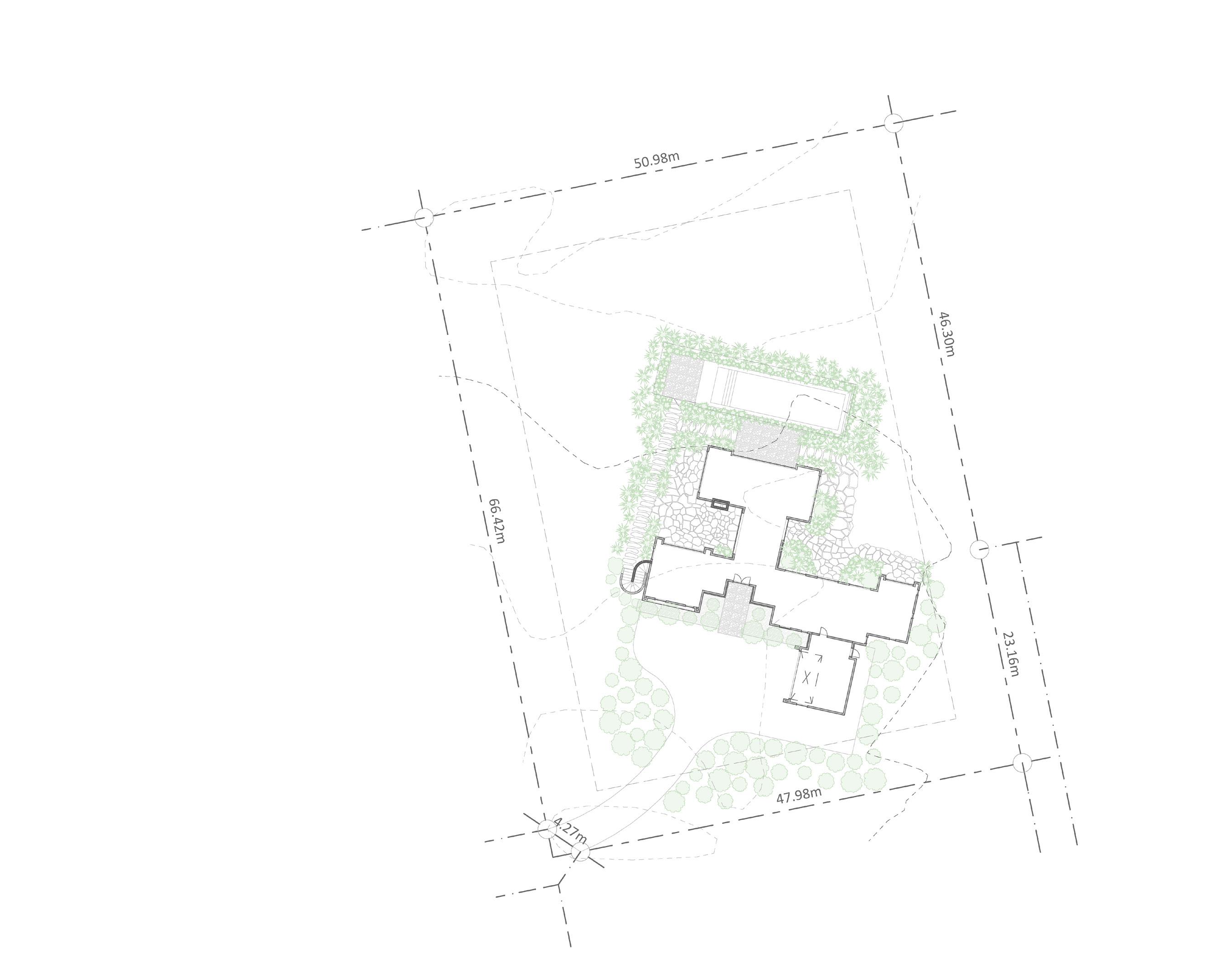
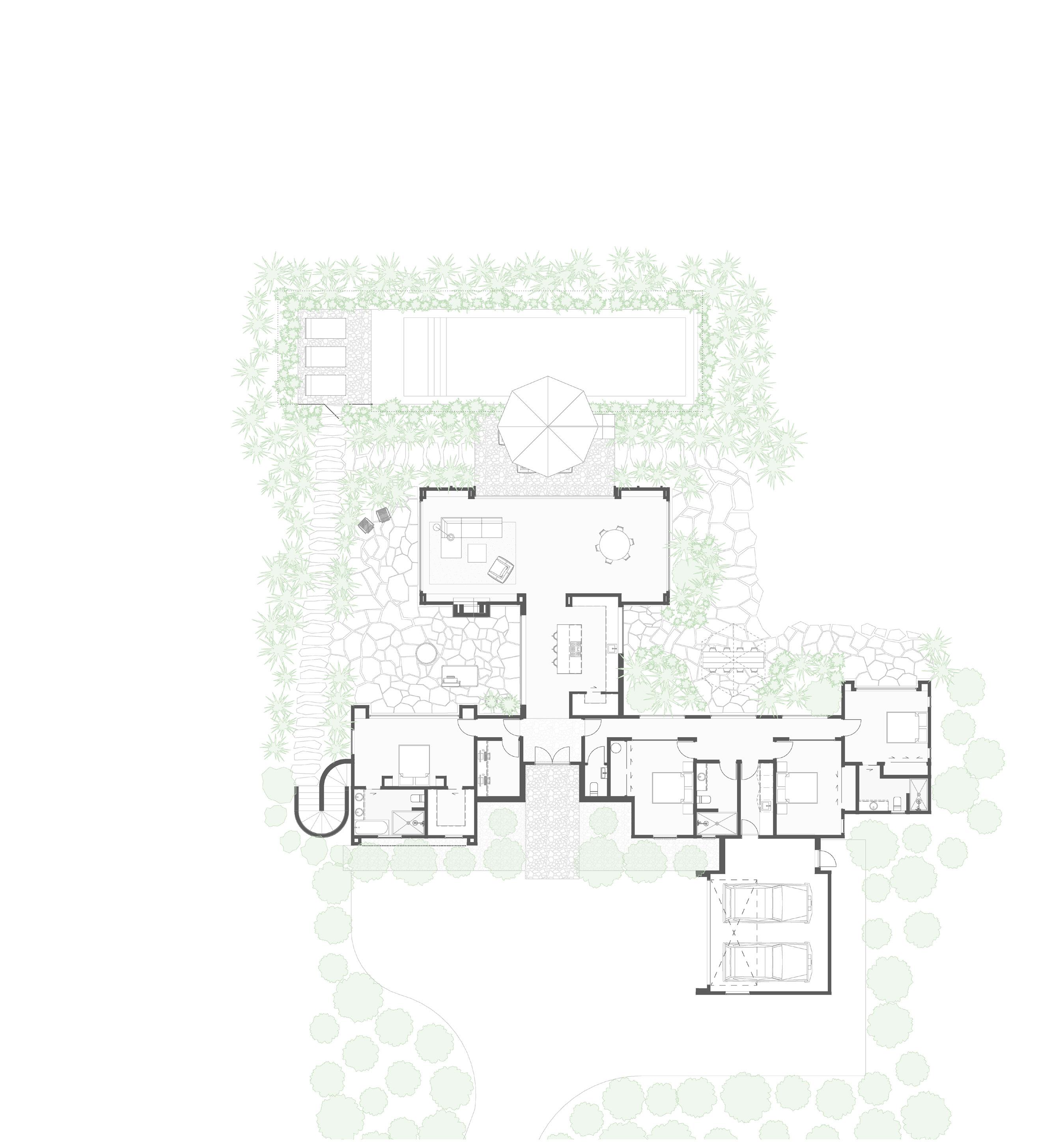
The spatial plan focuses on refining the relationship between the living spaces, pool terrace, and surrounding landscape while maintaining the integrity of the existing home’s layout. The principal architectural intervention occurs along the northern living façade, where existing pillars are removed and replaced with a wider timber bifold opening supported by a new structural lintel. This adjustment allows the living room to open more generously to the pool terrace while preserving the warmth and character of the home’s original timber joinery.
A concrete terrace extends outward from the living room and continues along the southern edge of the pool, forming a clear circulation spine that connects the interior with seating areas positioned at either end of the water. Pool steps shift toward the western end to improve movement along this terrace, while the eastern deck discreetly accommodates the recessed pool cover.
Beyond this central terrace, the existing concrete patios around the home are replaced with schist fieldstone paving. These smaller paved pockets sit between planting beds and meadow edges, helping break down the scale of the house and soften its boundary with the landscape. Grasses, wildflowers and garden planting move closer to the building, allowing the landscape to wrap gently around the architecture and extend outward toward the surrounding prairie.
SPATIAL PLAN
ROOF PLAN
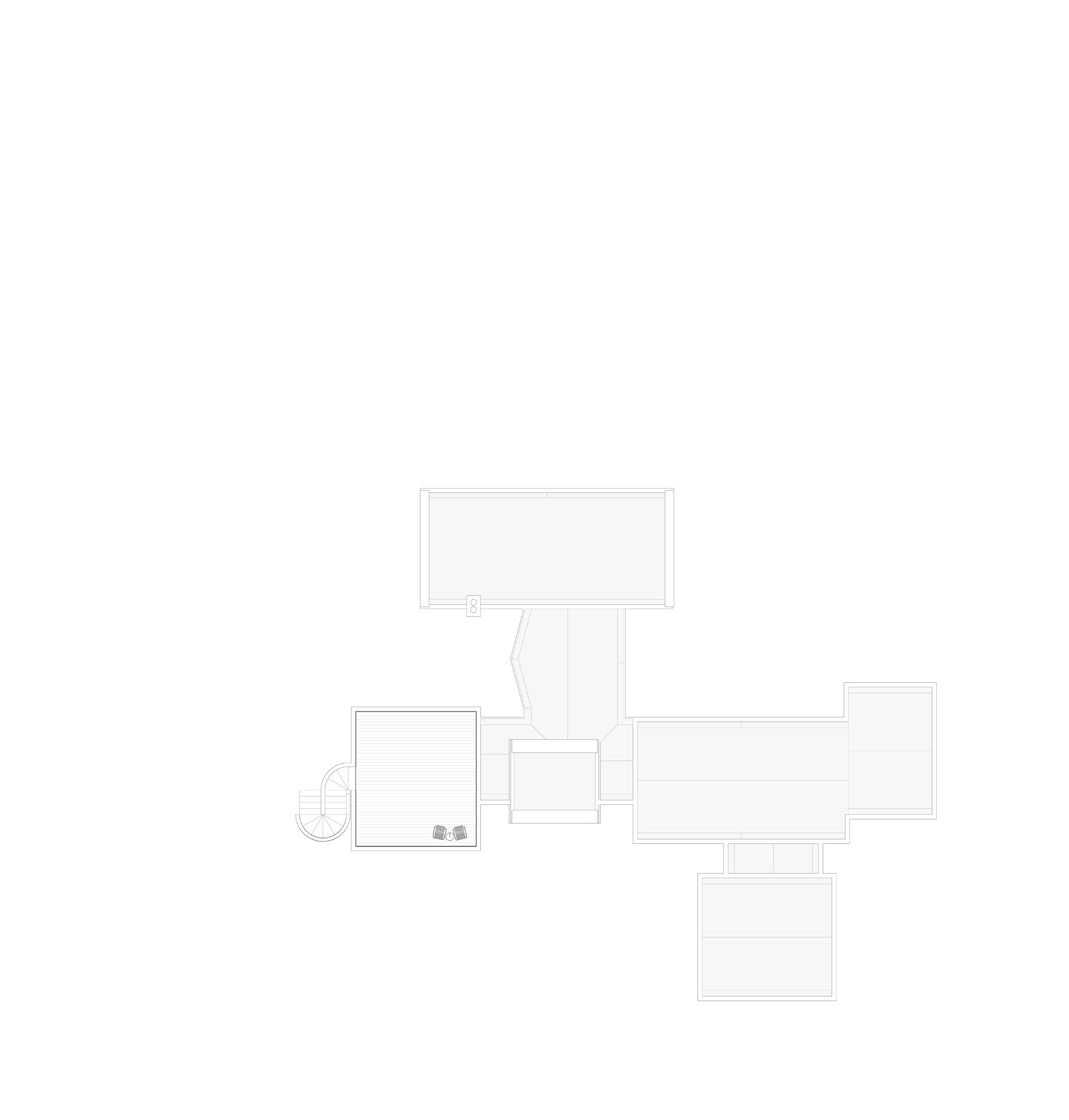
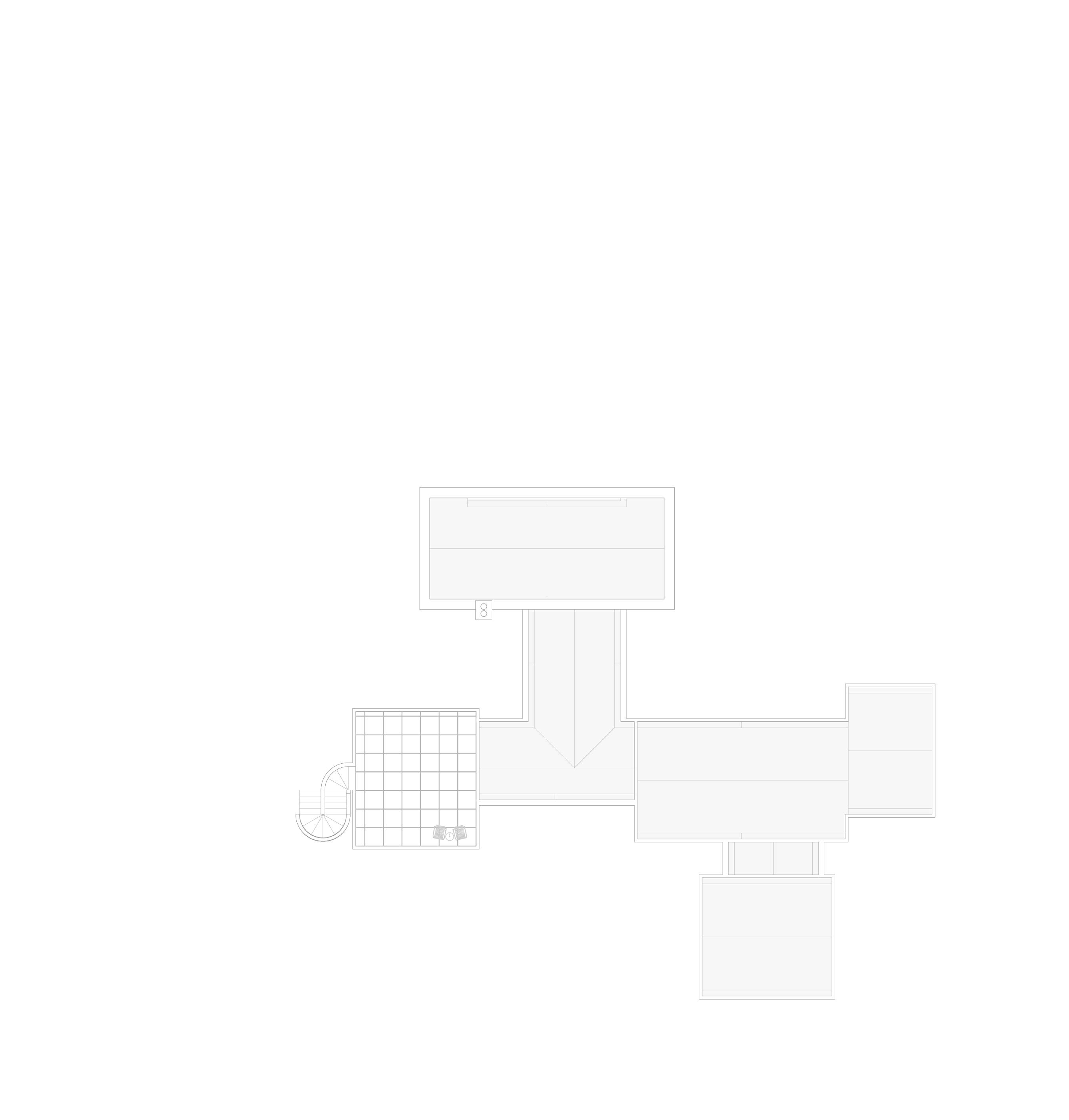
The roof form remains largely unchanged, preserving the existing curved membranes, parapets and rooftop deck that give the home its Mediterranean character. By maintaining the existing roof geometry, the project avoids unnecessary structural intervention while allowing the architectural language of the house to remain intact.
The primary change occurs below the roofline, where the removal of the northern pillars allows a wider opening between the living room and pool terrace. These adjustments are resolved through structural lintel support rather than alterations to the roof structure itself. As a result, the overall massing of the home remains familiar, with the architectural refinements focused instead on improving spatial connection, light and flow at ground level.
1. roof deck
raised timber pool decks timber post pool fence concrete pool deck
INSPIRATION
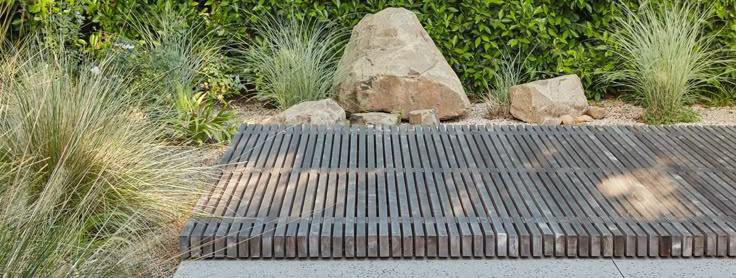
The material palette builds on the home’s Mediterranean character while grounding it within the surrounding alpine landscape. Timber lounging decks and macrocarpa post fencing introduce warmth and rhythm, allowing the pool boundary to dissolve gently into meadow planting.
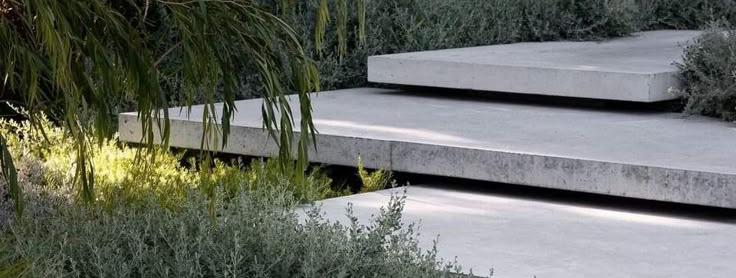
Concrete forms the primary pool terrace, creating a durable surface that connects naturally with the interior microcement flooring. Beyond this terrace, schist fieldstone paving replaces existing concrete patios, softening the building’s edges and allowing grasses and wildflowers to move closer to the home.
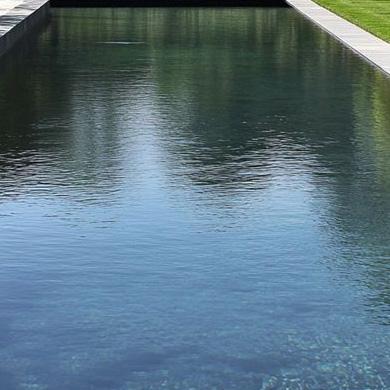
A darker pool tone anchors the composition, providing contrast against lighter plaster, timber and stone surfaces while reflecting the surrounding landscape.
Preliminary One Fin.
Arrival unfolds through a grove of birch trees lining the driveway, where filtered light prepares the transition from open landscape to home. Fieldstone paths, meadow planting and timber elements soften the building’s edges, allowing the landscape to move gently toward the architecture.
With targeted refinements to the living façade and pool terrace, this concept improves flow and connection to the outdoors while retaining much of the existing structure and cladding. The result is a measured upgrade — enhancing beauty, usability and landscape integration with minimal architectural intervention.
Break
Preliminary Two
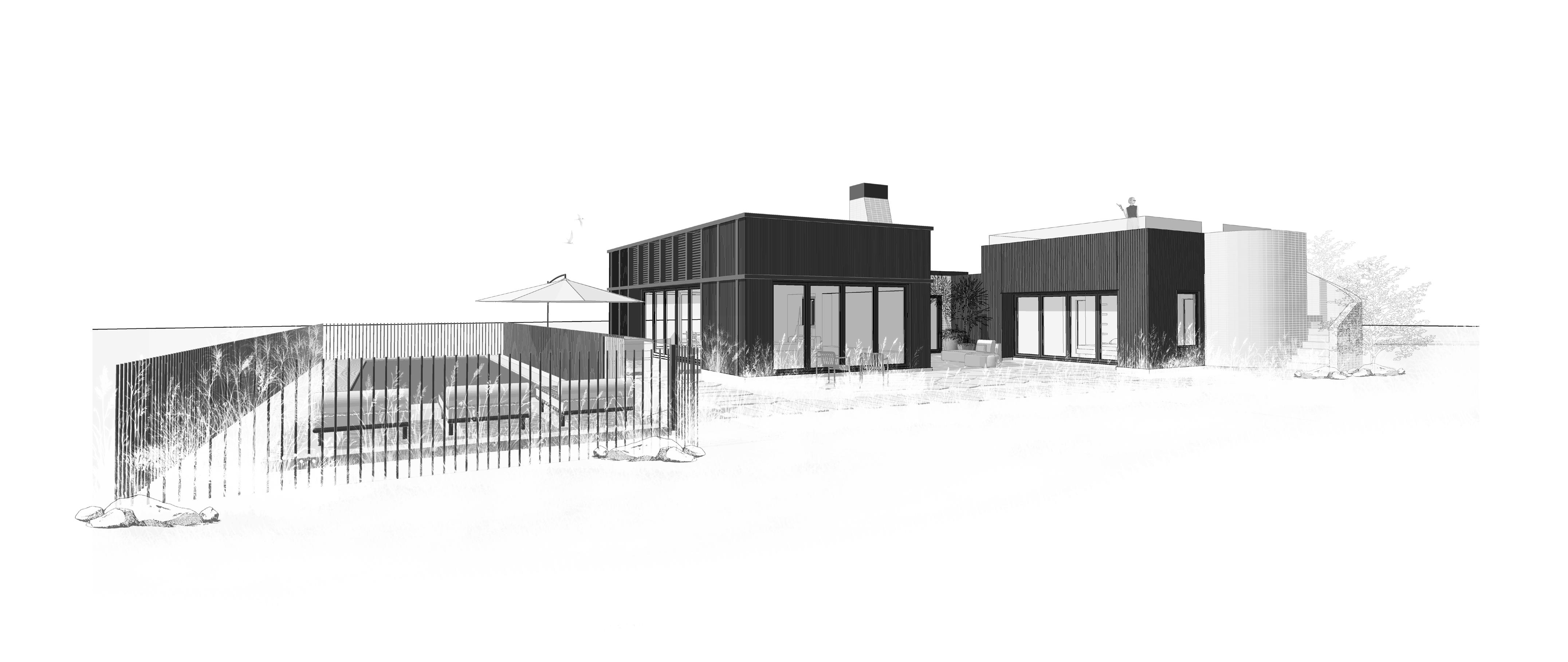
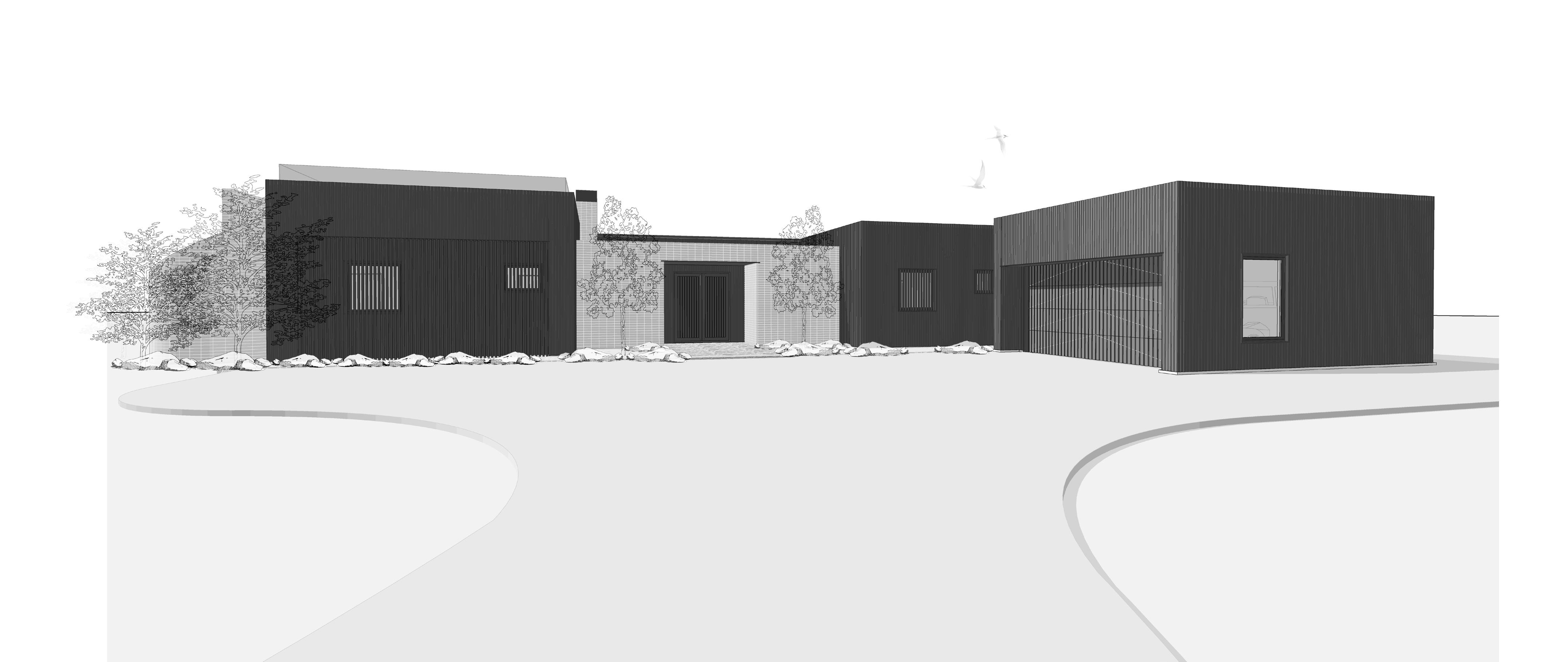
Preliminary 002 explores a more significant architectural transformation of the living wing, evolving the ideas first introduced in Concept Three. The existing plaster cladding, pillars and roof forms are removed and replaced with a simplified volume clad in vertical Yakisugi timber.
While elements of the existing structure may be retained where possible, the demolition and rebuilding of the living wing — including new roof geometry and wider door openings — represents a more substantial intervention than Preliminary 001. This option therefore carries greater structural and cost implications, but allows the architecture to shift toward a clearer and more contemporary expression.
pole fence with meadow right to pool edge
OVERVIEW
SITE PLAN
PRAIRIE IN CONTEXT
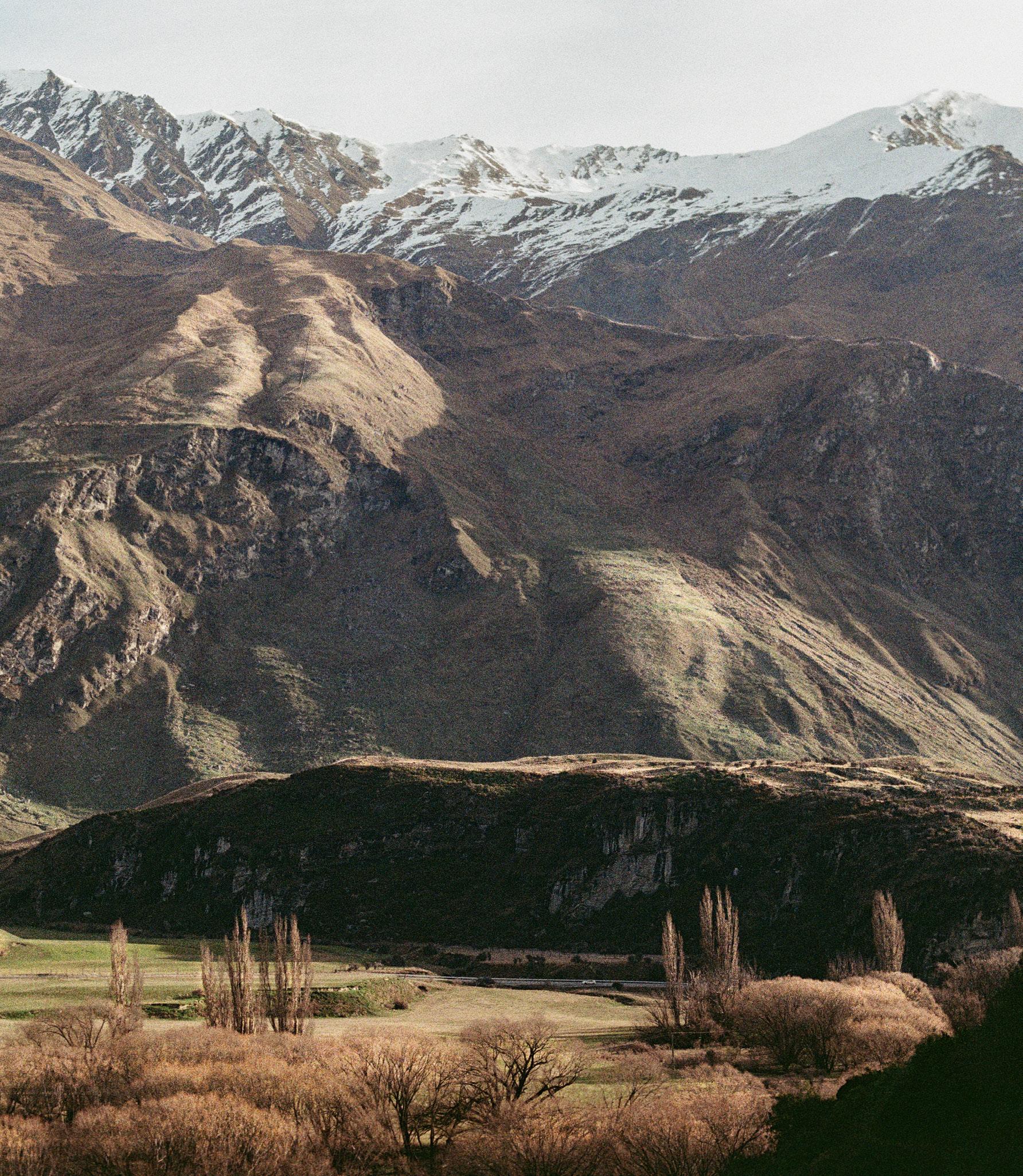
The site strategy shifts the focus from terrace to landscape, allowing the garden to frame the pool rather than surrounding it with paving. Arrival remains defined by the birch grove along the driveway, creating a quiet procession toward the house before the landscape opens toward meadow and mountains beyond.
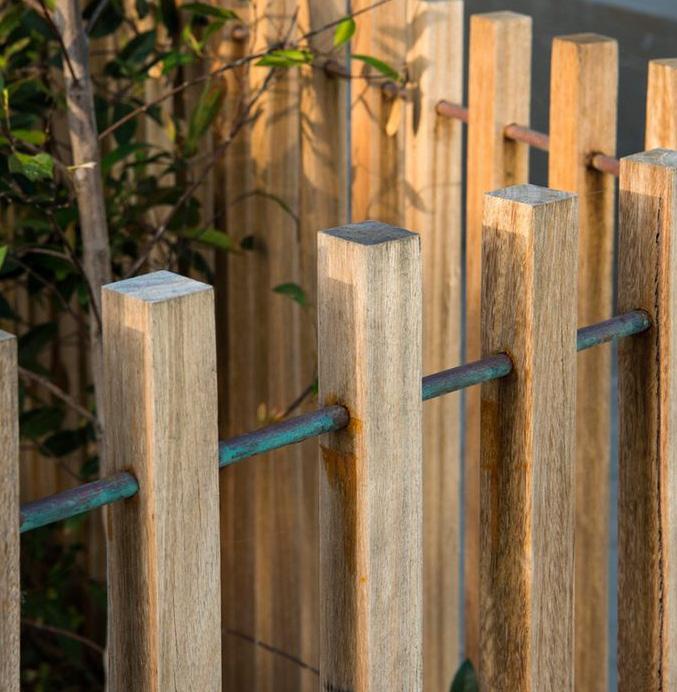
The pool remains in its existing location, but the surrounding ground condition becomes softer and more natural. Meadow planting and wildflowers extend to the pool edge on three sides, allowing the garden to visually dissolve the boundary between water and prairie. A slender steel pole fence traces the safety perimeter while remaining visually quiet within the grasses.
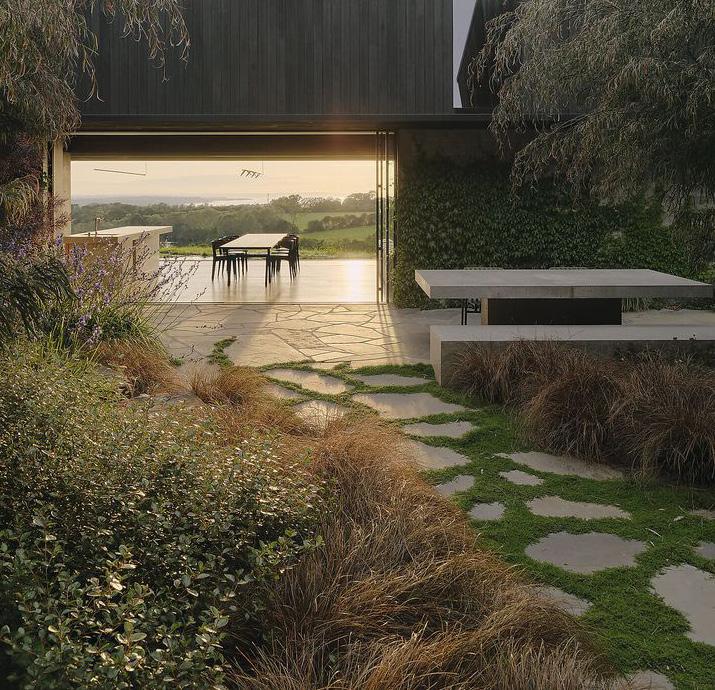
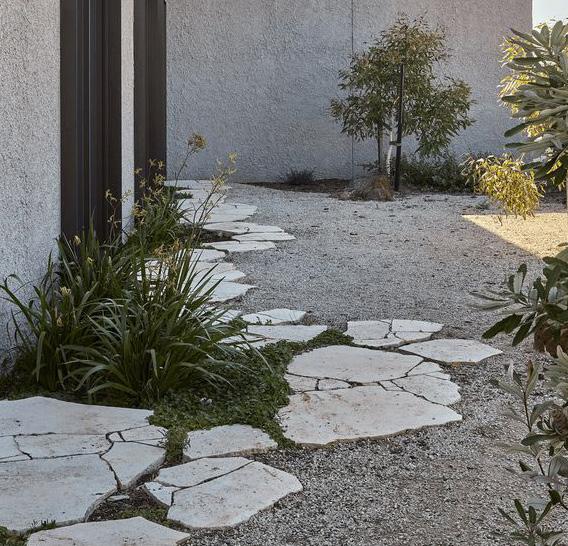
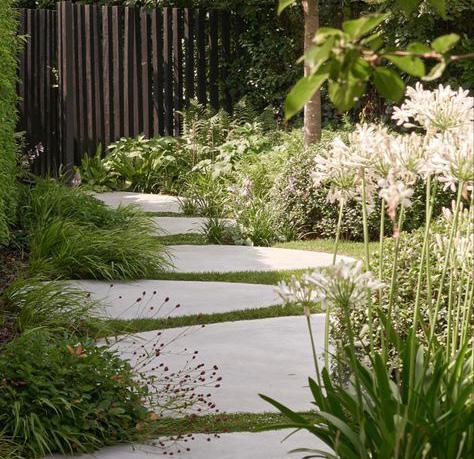
Circulation is defined through a series of schist fieldstone paths and patios that move through the meadow rather than enclosing the pool. These stone surfaces connect the entry, northern patio and pool deck while allowing the landscape to remain the dominant experience across the site.
The pool terrace is intentionally restrained, allowing landscape and water to become the primary experience. Rather than surrounding the pool with paving, meadow planting extends directly to the water’s edge on three sides, softening the boundary and allowing the garden to frame the pool.
A schist fieldstone terrace sits to the west, accessed by stone paths that meander through wildflower meadow. This space becomes the place to sit, gather and observe — separating
the act of swimming from the quieter experience of simply being outdoors.
Pool entry shifts to the left side where a widened first step forms a subtle wading ledge, while a recessed stainless steel pool cover is concealed within the western edge. The result is a pool that feels held within the landscape rather than set apart from it.
fieldstone patios + walkways
SPATIAL PLAN
FLOOR PLAN
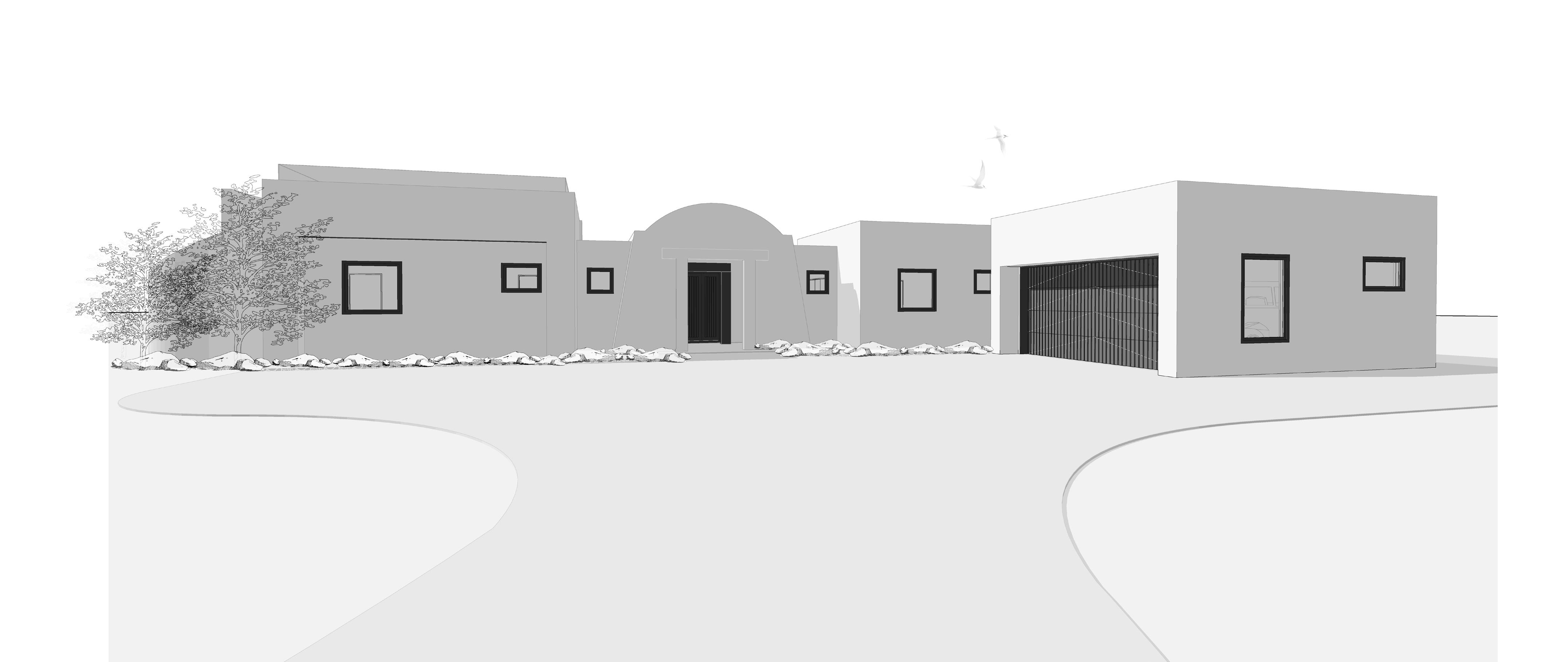
This concept focuses its architectural intervention on the living wing, where much of the existing structure is stripped back to allow a clearer and more contemporary spatial arrangement. The plaster cladding, roof form, exterior pillars and trellis elements are removed, allowing the volume to be rebuilt as a simpler pavilion clad in vertical Yakisugi timber.
Openings are widened significantly with new aluminium joinery and insulated glazing units, improving daylight, connection to the landscape and indoor–outdoor flow. The angled kitchen walls are squared off to rationalise circulation and create a more generous and functional relationship between the kitchen, living area and outdoor spaces. The entry sequence is also simplified, with the existing barrel vault removed and the geometry squared off to align with the calmer architectural language of the new living wing.
Internally, the palette shifts toward a darker and more refined material language. Microcement floors provide continuity with the existing underfloor heating system, while limewash plaster walls, dark timber cabinetry and stainless steel accents introduce a contemporary and tactile interior atmosphere.
The result is a living space that feels calmer, more open and more connected to the landscape beyond, while still working within the footprint and overall organisation of the existing home.
SPATIAL PLAN
ROOF PLAN
The existing barrel-vaulted roof above the entry and living wing is removed and replaced with a simplified flat membrane roof that aligns with the existing roof plane above the kitchen. This creates a calmer and more cohesive architectural form, allowing the living wing and entry to read as a unified volume rather than a collection of competing roof shapes.
The rebuilt living pavilion adopts this same flat roof language, reinforcing the contemporary architectural expression introduced through the Yakisugi cladding and larger openings below.
Above the master suite, the existing rooftop deck remains in place but is upgraded with 900 × 900 pavers, creating a more refined surface while maintaining the elevated outlook toward the lake and surrounding mountains.
1. roof deck
Alki Architecture + Design Studio, Concept Charlotte Walsh Walsh
PROJECT INSPIRATION
concrete tone + fieldstone patios
garden to pool edge framed by concrete border
steel pole pool fence + garden
INSPIRATION
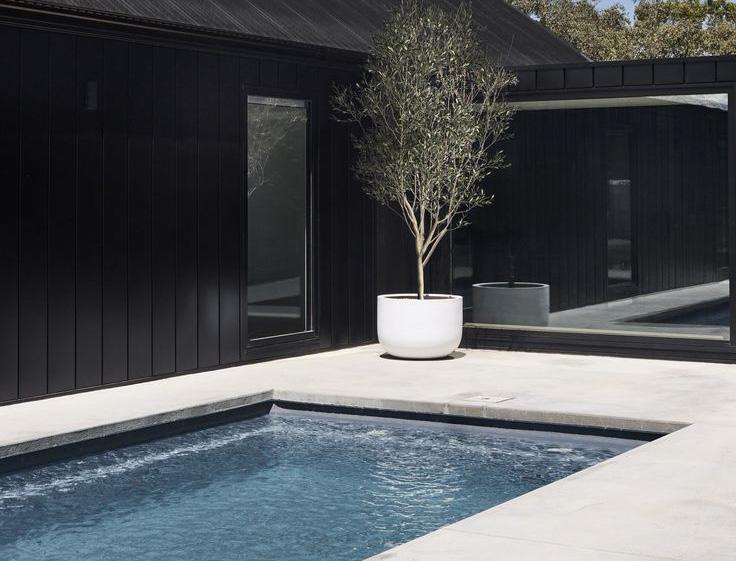
The material palette is intentionally restrained, allowing landscape and water to lead the experience. Schist fieldstone pavers and soft concrete tones form the primary ground surfaces, while meadow planting and grasses extend directly to the pool edge to dissolve the boundary between architecture and landscape.
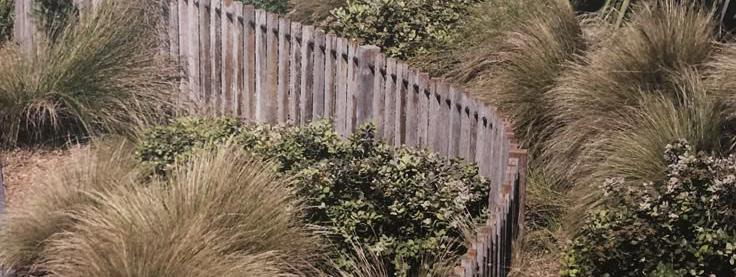
Stone paths tighten to define slower zones of sitting and gathering, then loosen as grasses weave between pavers — subtly guiding movement through the garden. A slender black steel pole fence provides pool safety while visually disappearing within the meadow planting.
The Yakisugi-clad architecture acts as a quiet backdrop — a dark canvas against which light, shadow and water reflections can shift and animate the space over time.
pathways + patios
Preliminary Two Fin.
Preliminary 002 explores a more substantial architectural evolution of the home, focusing on the transformation of the living wing and the introduction of a clearer contemporary language through Yakisugi cladding, simplified roof forms and expanded openings to the landscape.
While this option carries greater structural and cost implications than Preliminary 001, it allows the architecture
to become calmer and more intentional — acting as a quiet backdrop to the surrounding garden, water and alpine landscape.
The result is a home where architecture recedes slightly, allowing light, landscape and reflection to become the defining experience of living on this remarkable site.
remodelled brick entry
fieldstone 'moat' over river stone garden
NEXT STEPS
NEXT STEPS
REVIEW Take your time to explore each preliminary variation. Let's catch up over Zoom to walk through the designs together. I’ll have the 3D model on hand so we can explore the layout, materials, and sense of space in more detail.
PROJECT PATHWAYS
Following this preliminary exploration phase, there are a few possible pathways forward for the project.
1. Pause and Reflect
Many clients choose to take some time to sit with the ideas and possibilities presented during the concept and preliminary stages before progressing further. This can be a helpful period for reflecting on priorities, budget considerations, and long-term goals for the property.
2. Continue Design Development
If you decide to progress the project toward a buildable scheme, the next stage would involve more detailed design development, including structural coordination, refined material selections, and preparation of drawings suitable for consent and construction.
3. Future Collaboration
As mentioned earlier in the process, my current project commitments mean that my availability for continued design work is limited until later in the year. Should you wish to continue developing the project with me, we can certainly revisit timing and scope when my studio capacity allows.
In the meantime, the material developed in this package provides a strong architectural foundation should you wish to progress the ideas either independently or with another designer.