
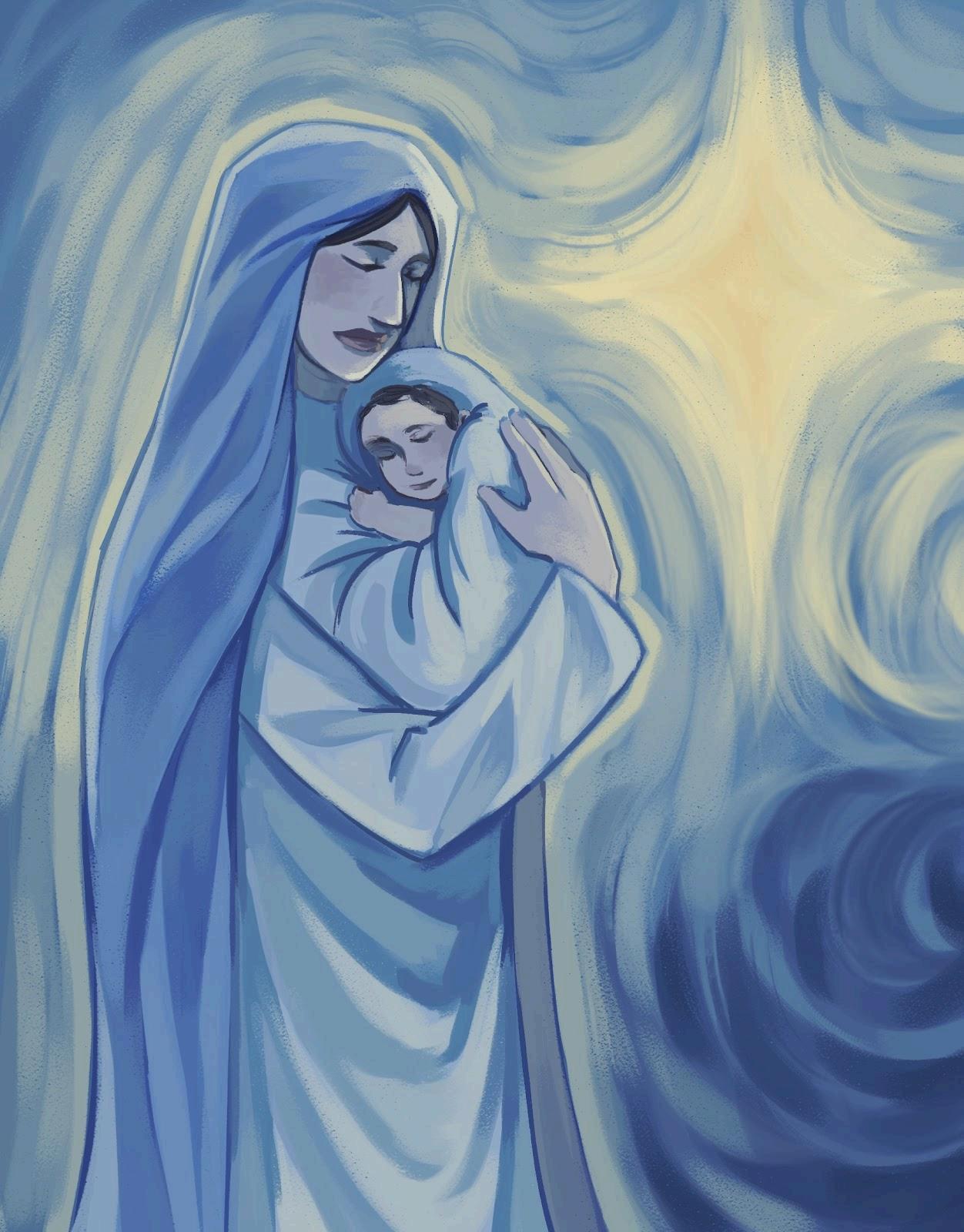
Mary and Baby Jesus (Digital Art)
By Lisa Vo
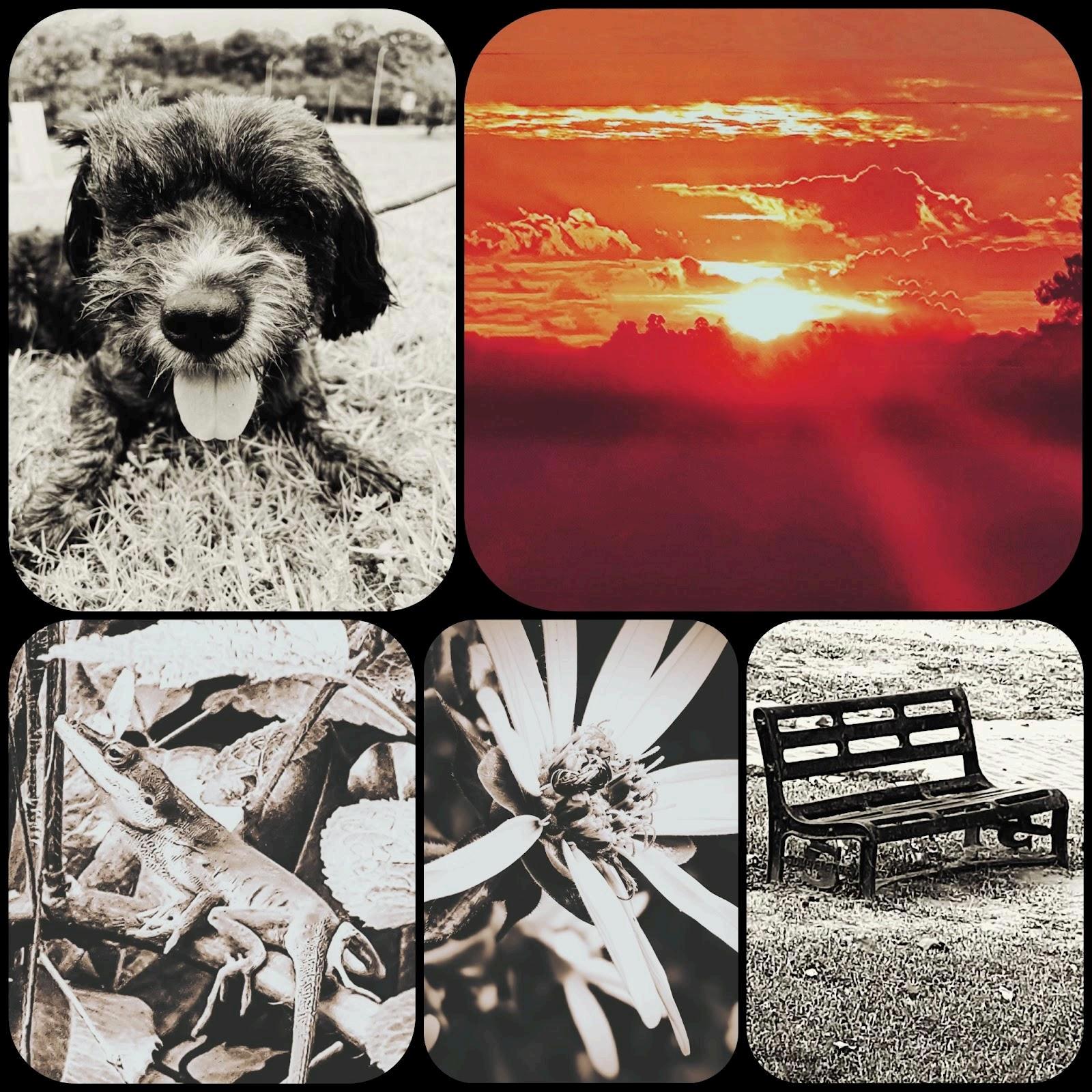
Color Block (Photography)
By Riley Culver
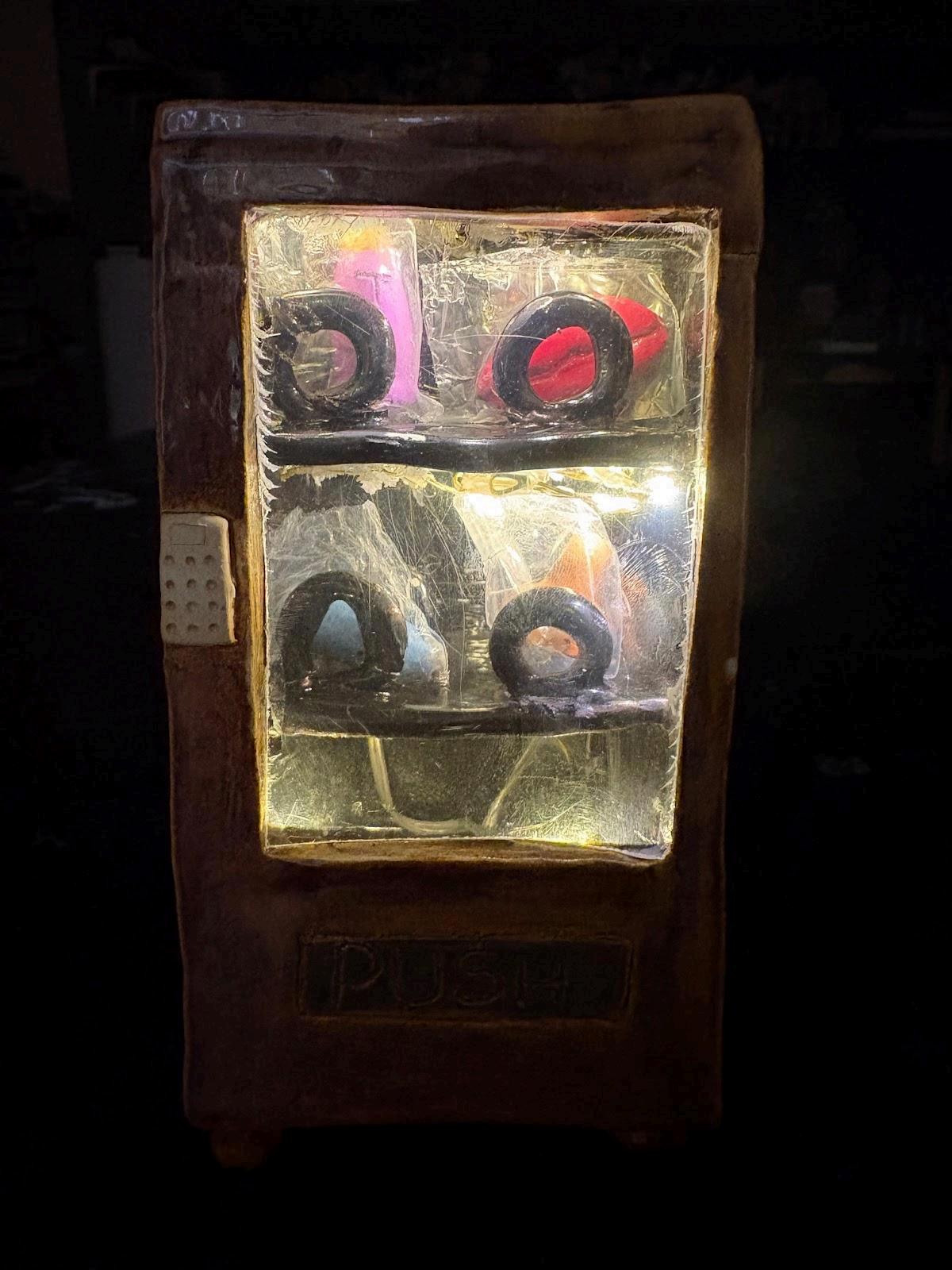
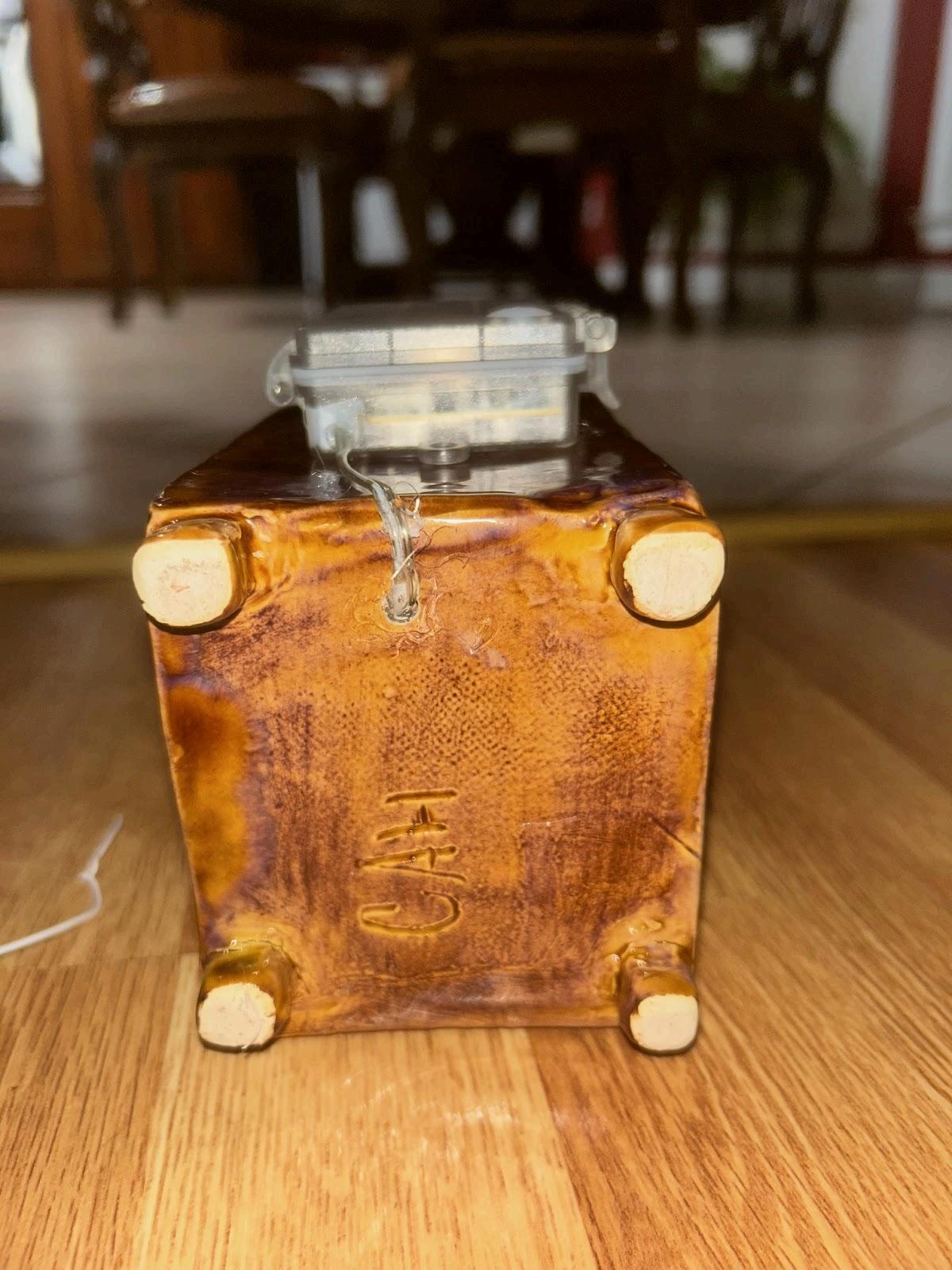
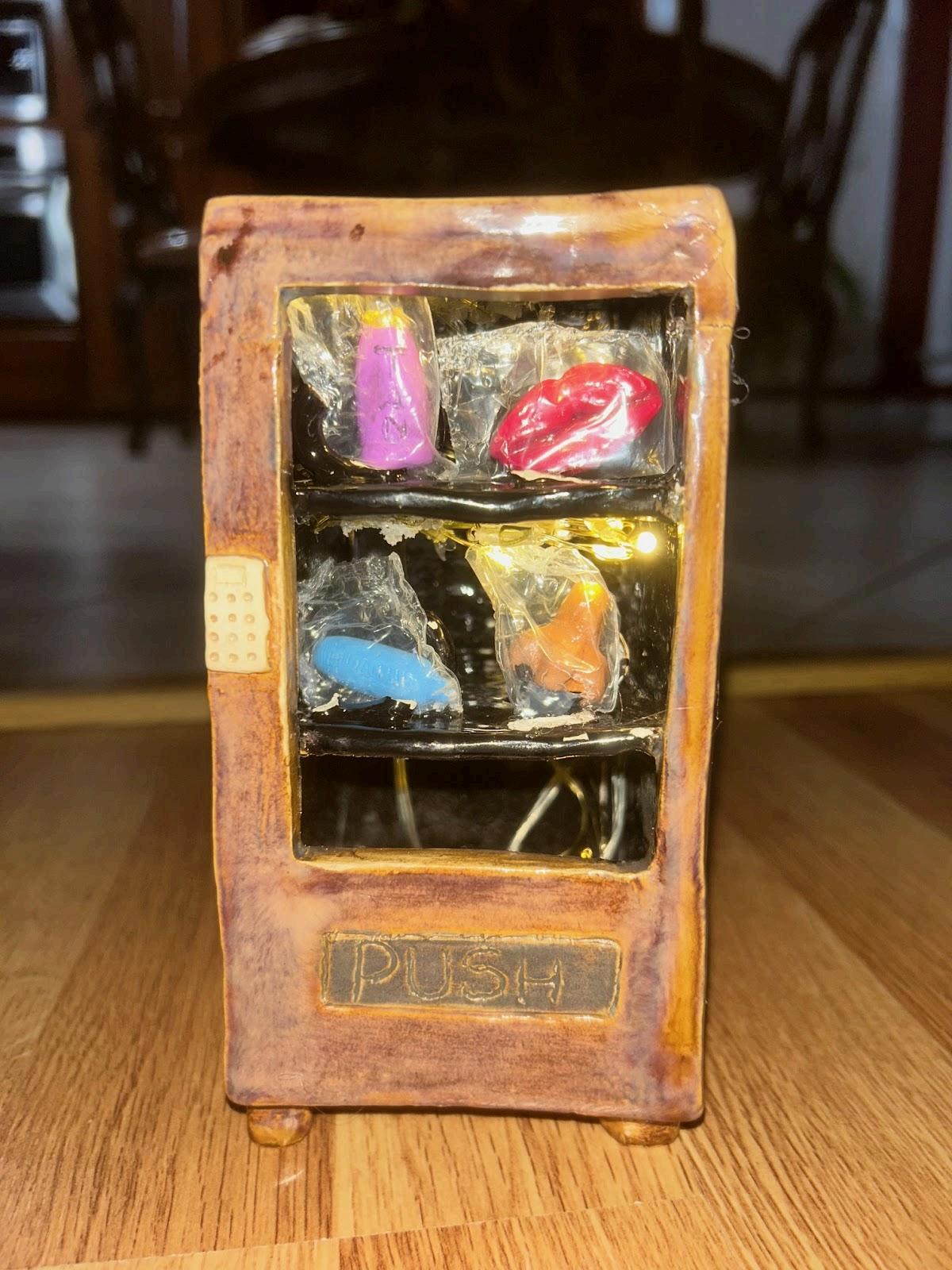
Vending Machine (Ceramics)
By Ciara Hill
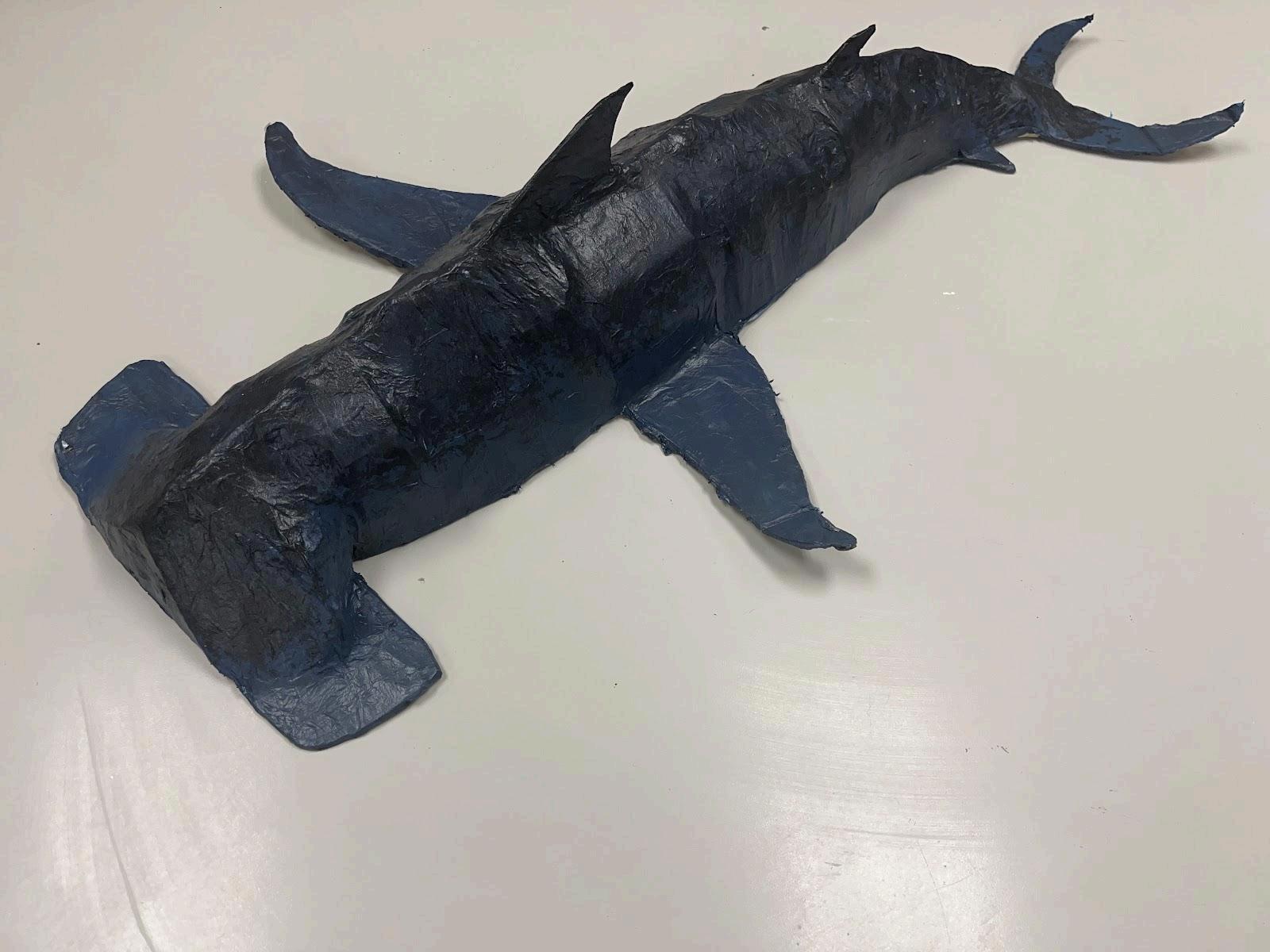
Under the Sea (Paper Mache)
By Chaney Madan
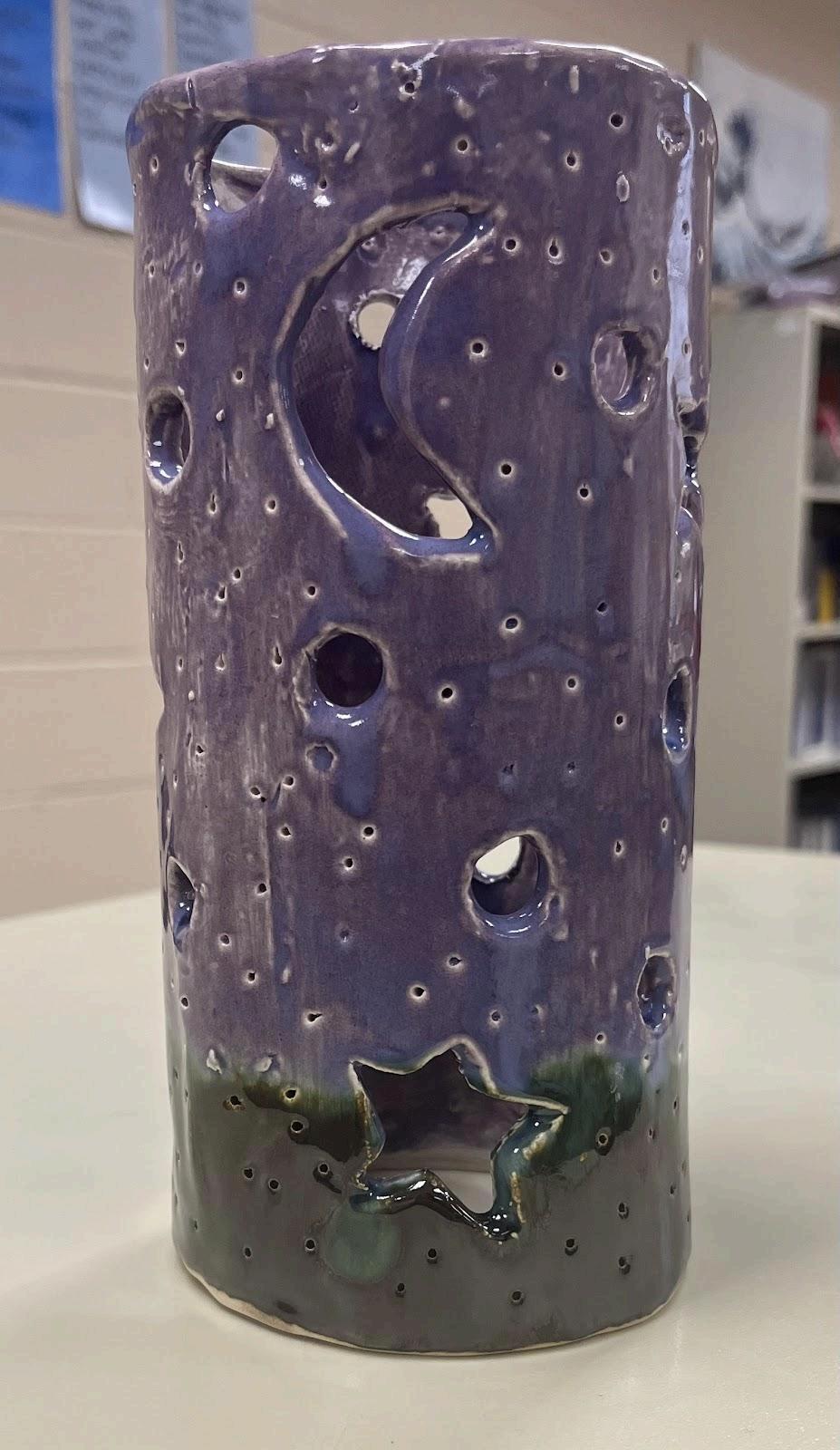
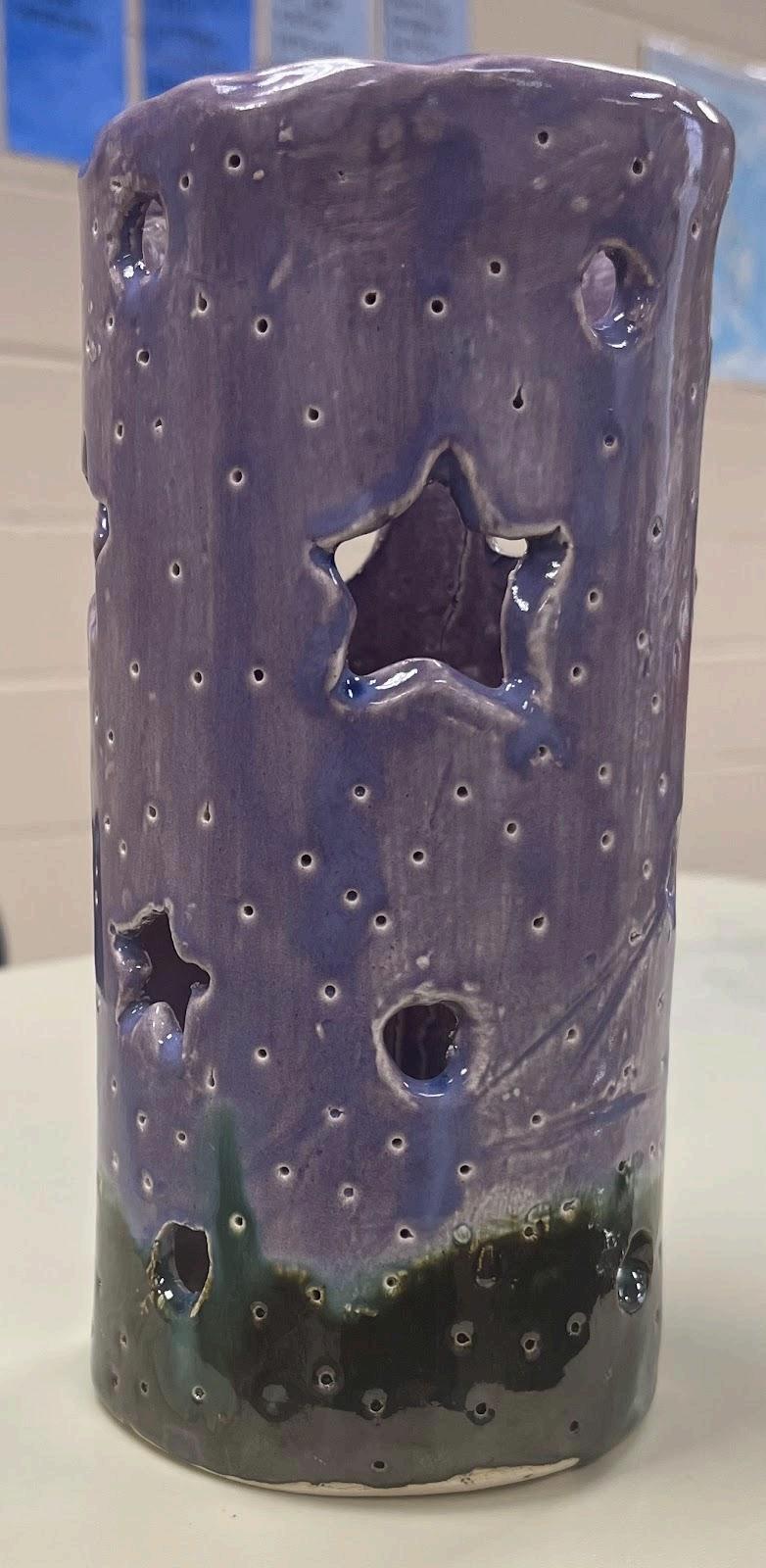
Bright Night Sky (Ceramics)
By Jackson Rowley
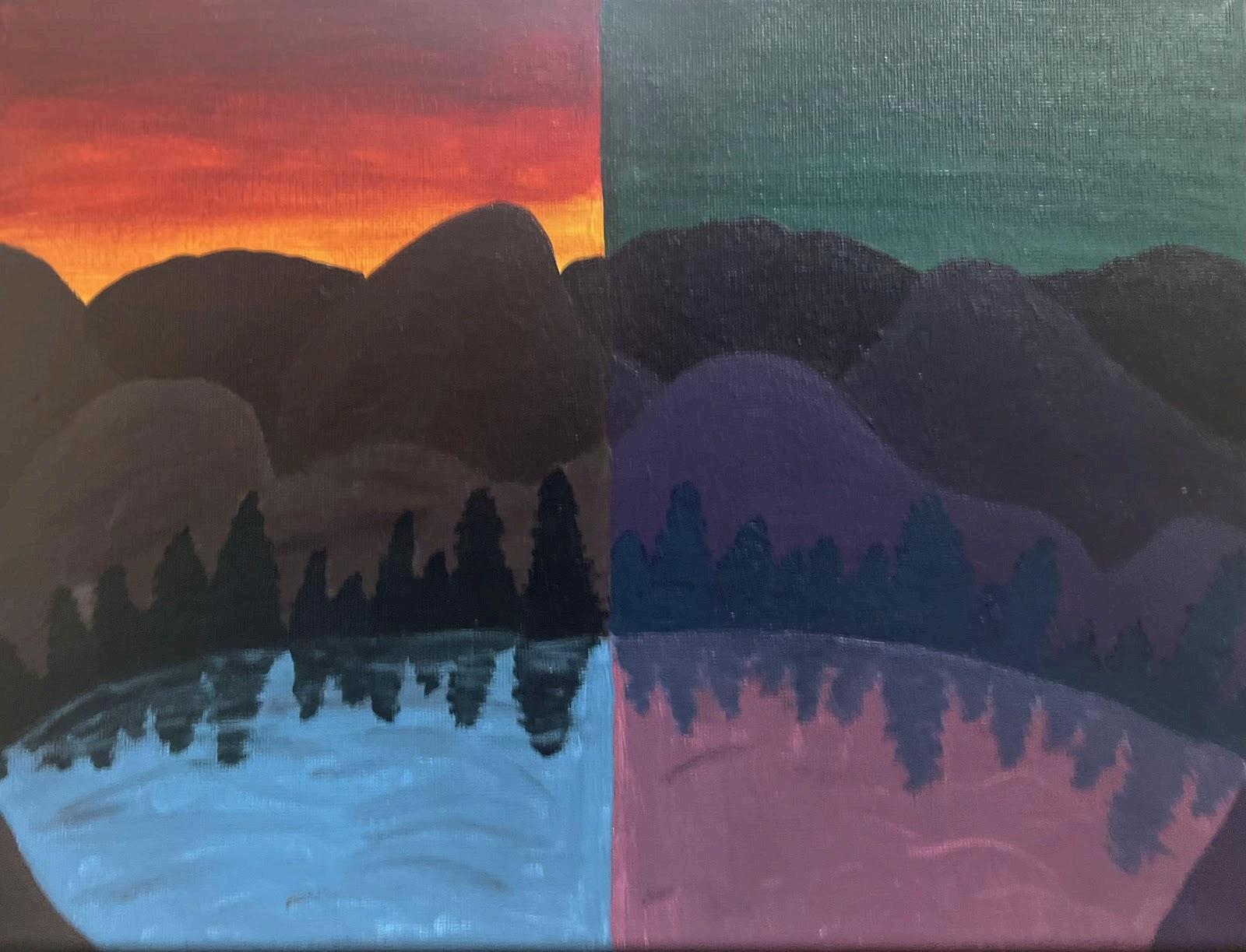
Split Realities(Acrylic Paint)
By McKenna Arnold
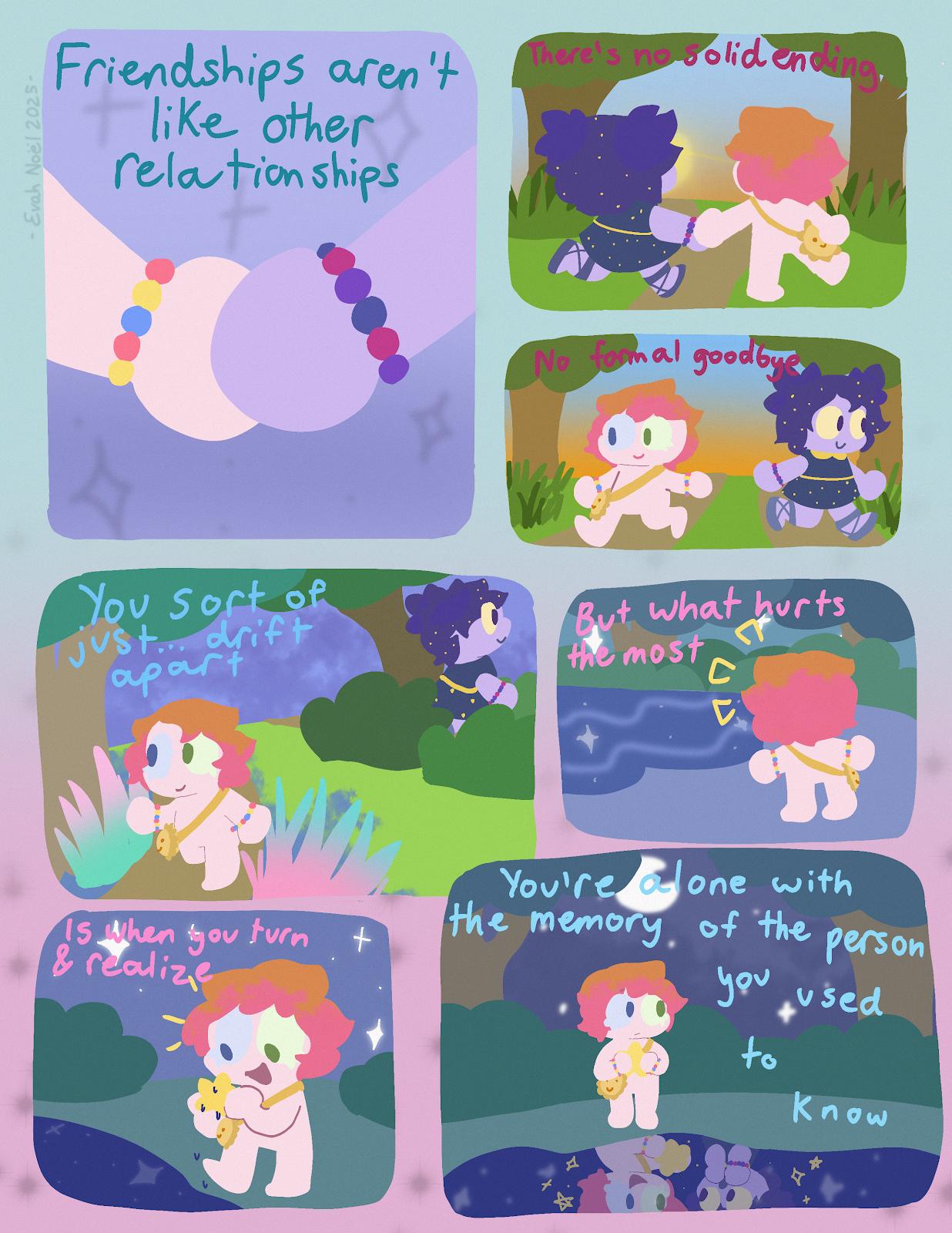
Friendship (Digital Comic)
By Evah Noel
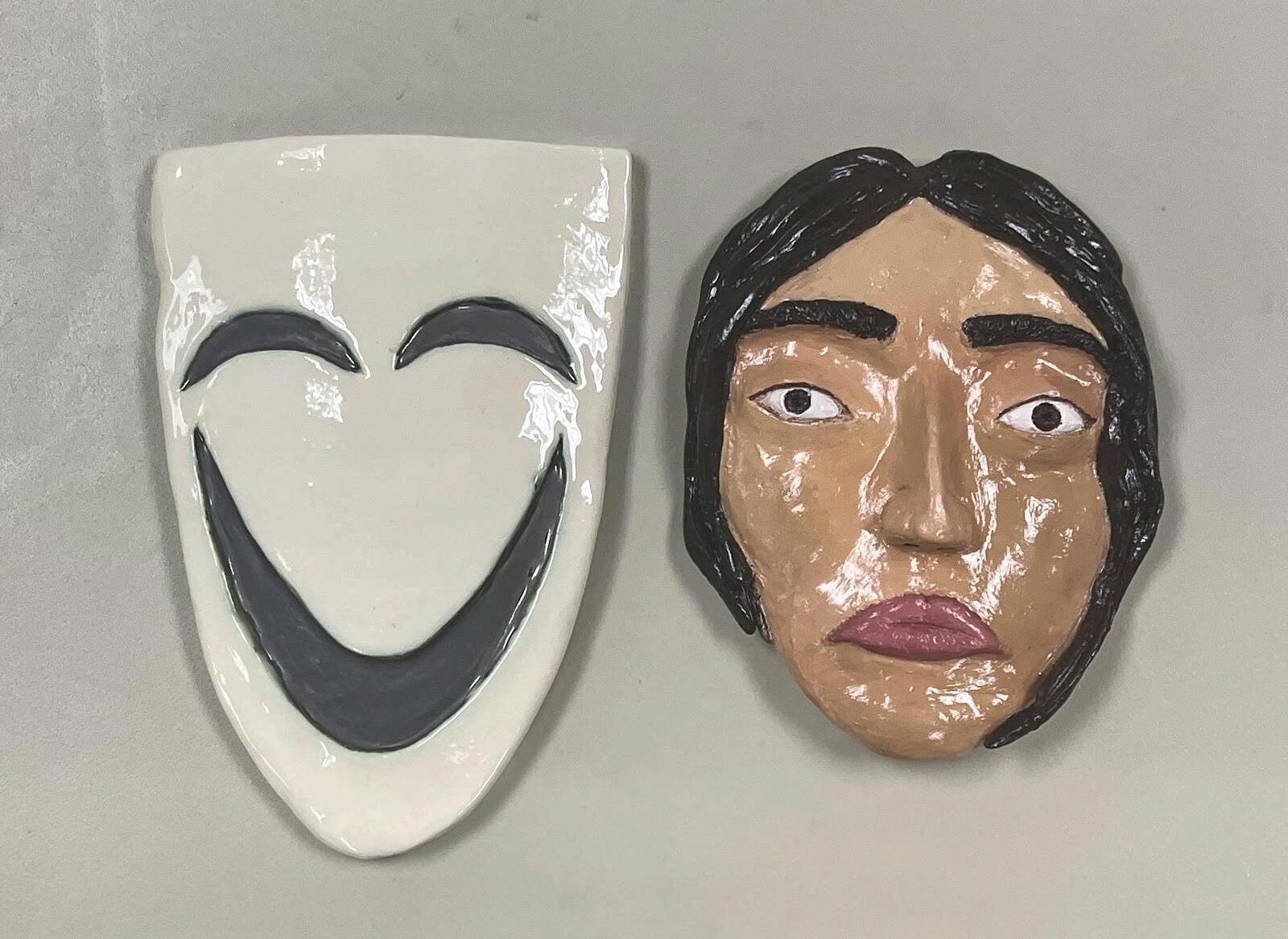
Mask of Happiness (Ceramics)
By Marie Tan
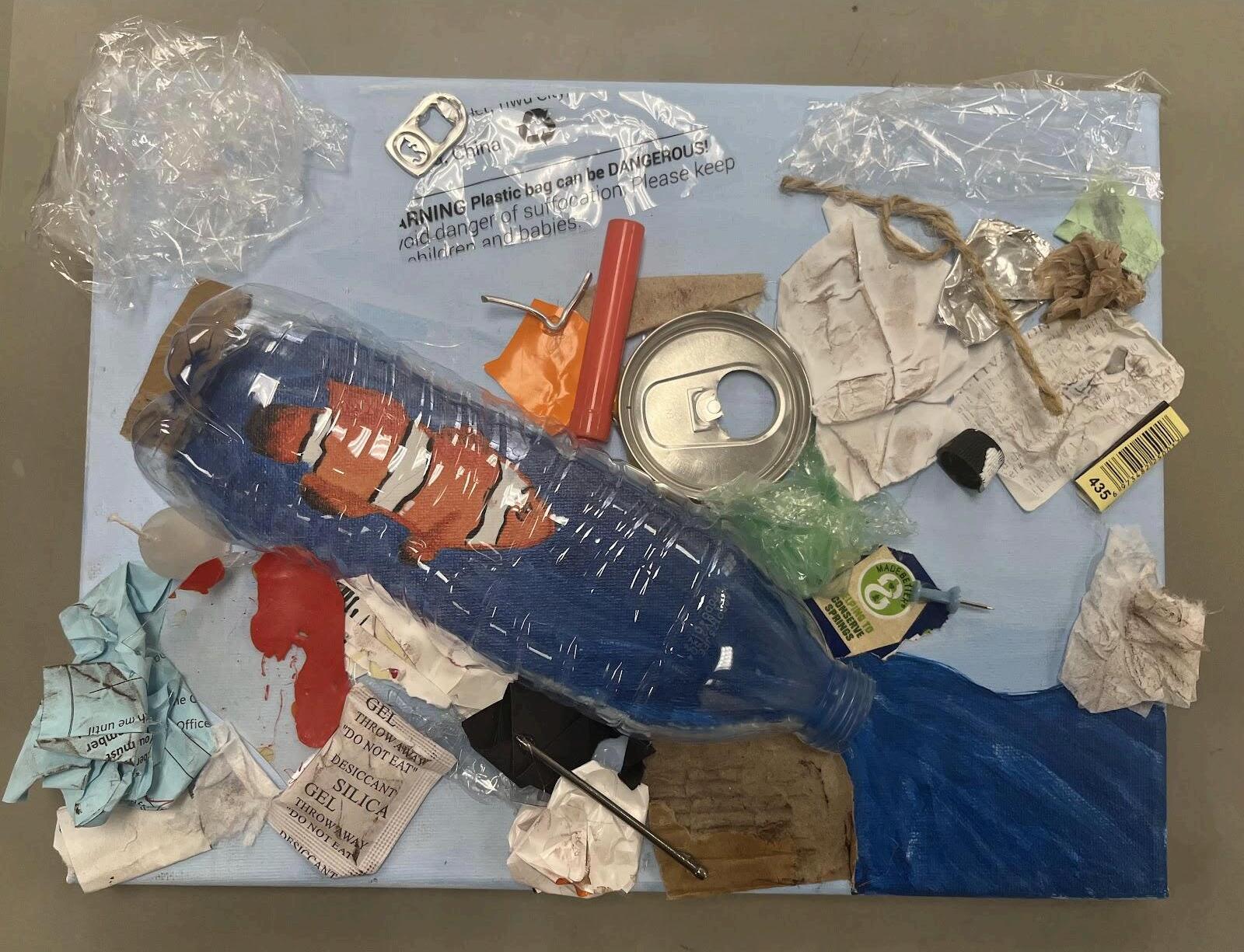
The Clownfish (Acrylic Paint with Found Objects)
By Maddie Kayden
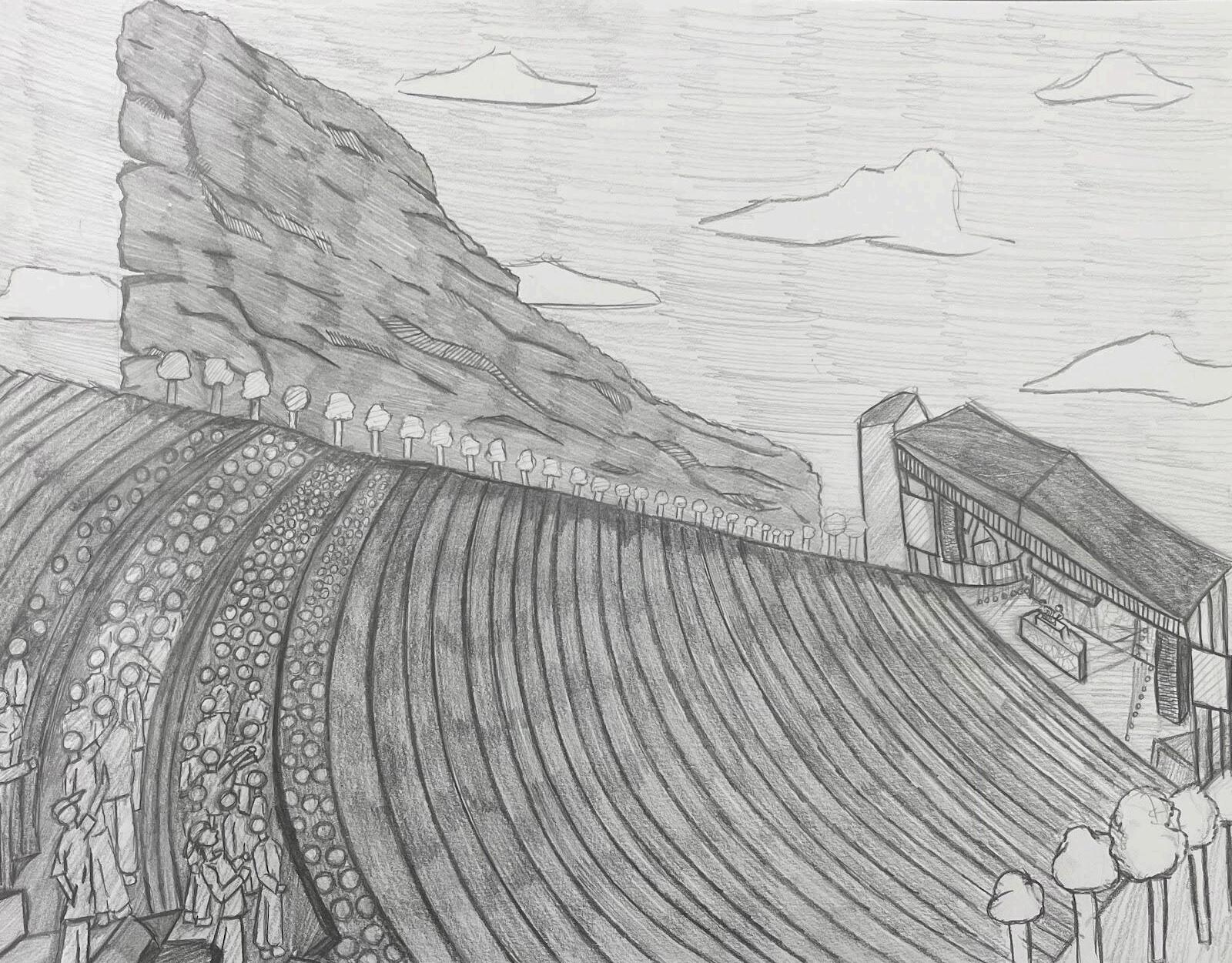
Red Rocks (Pencil)
By Matthew Lewis
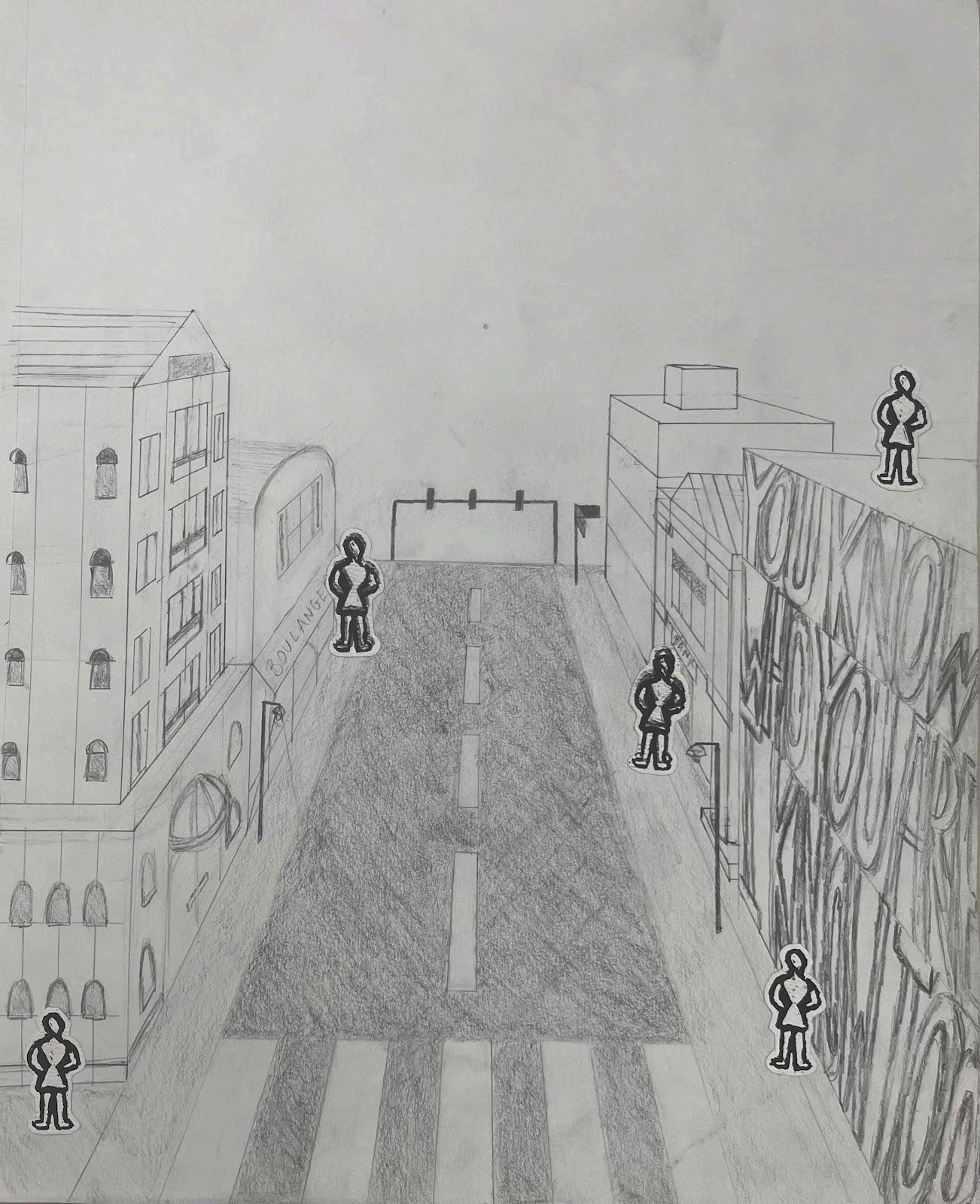
Can you run? (Mixed Media)
By Beatriz Bernardino Paschoini
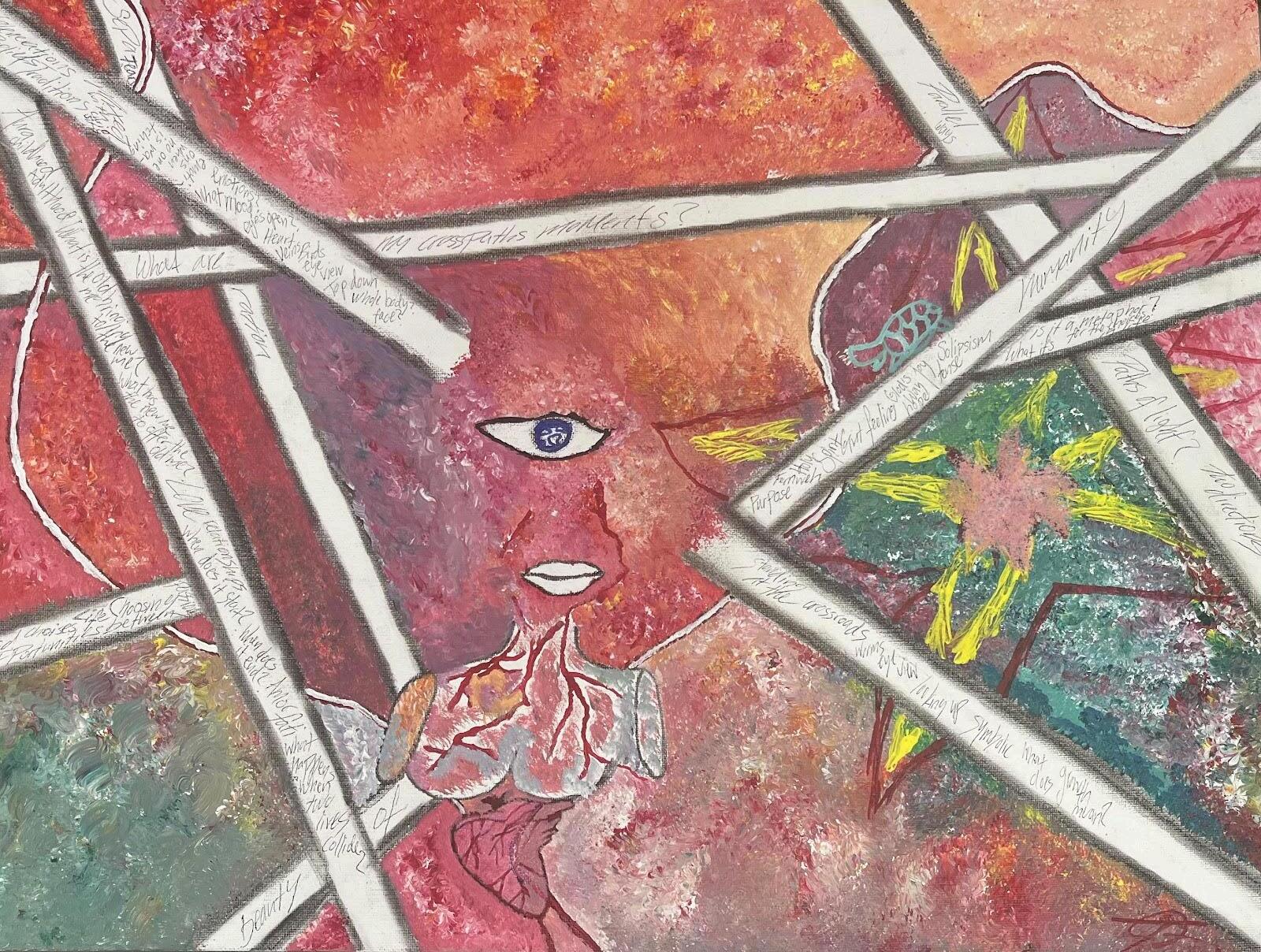
Life’s Crosspaths (Mixed Media)
By Tequitah Mulindi
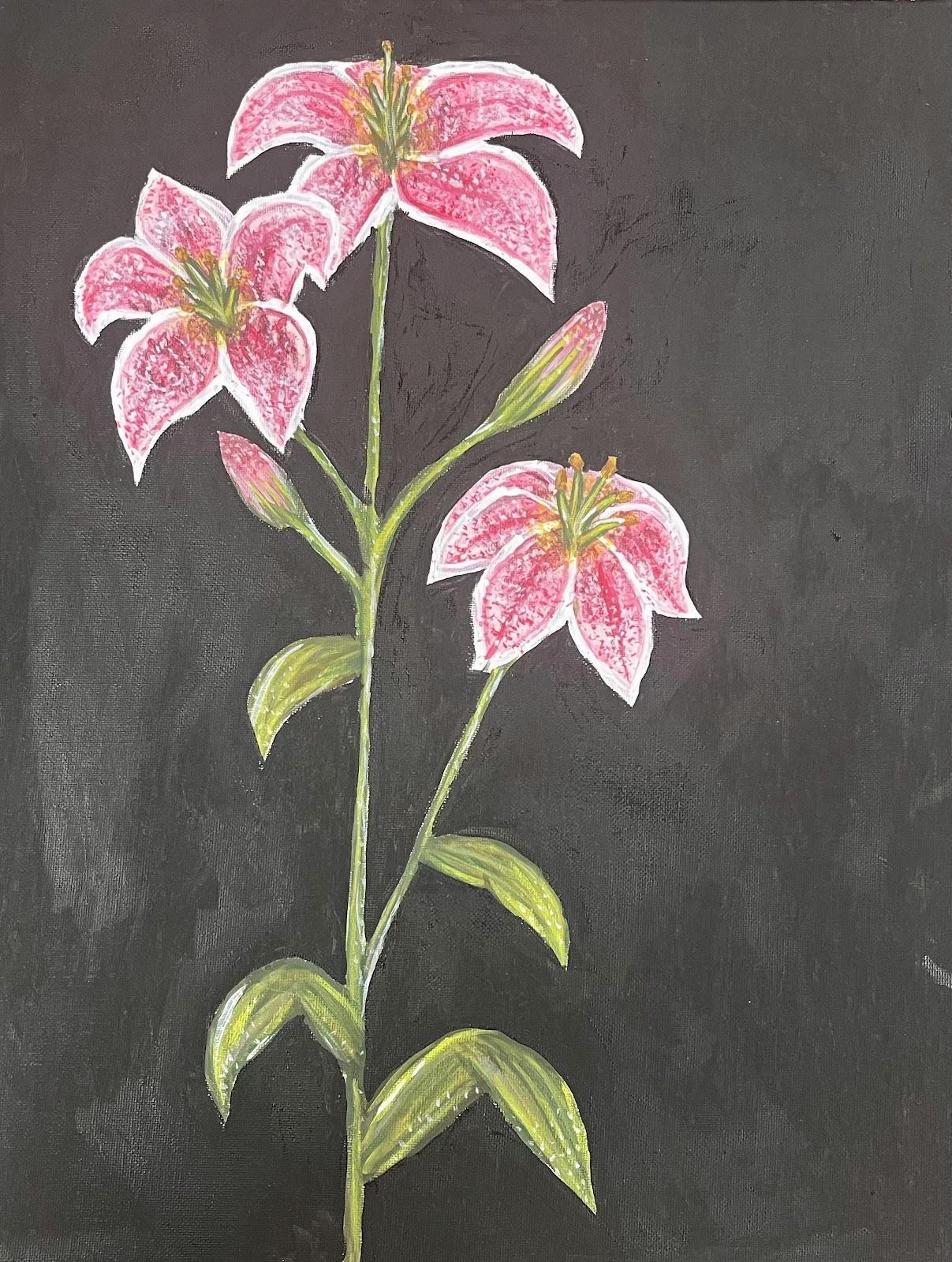
Tiger in the Night (Acrylic Paint)
By Addy Hunte
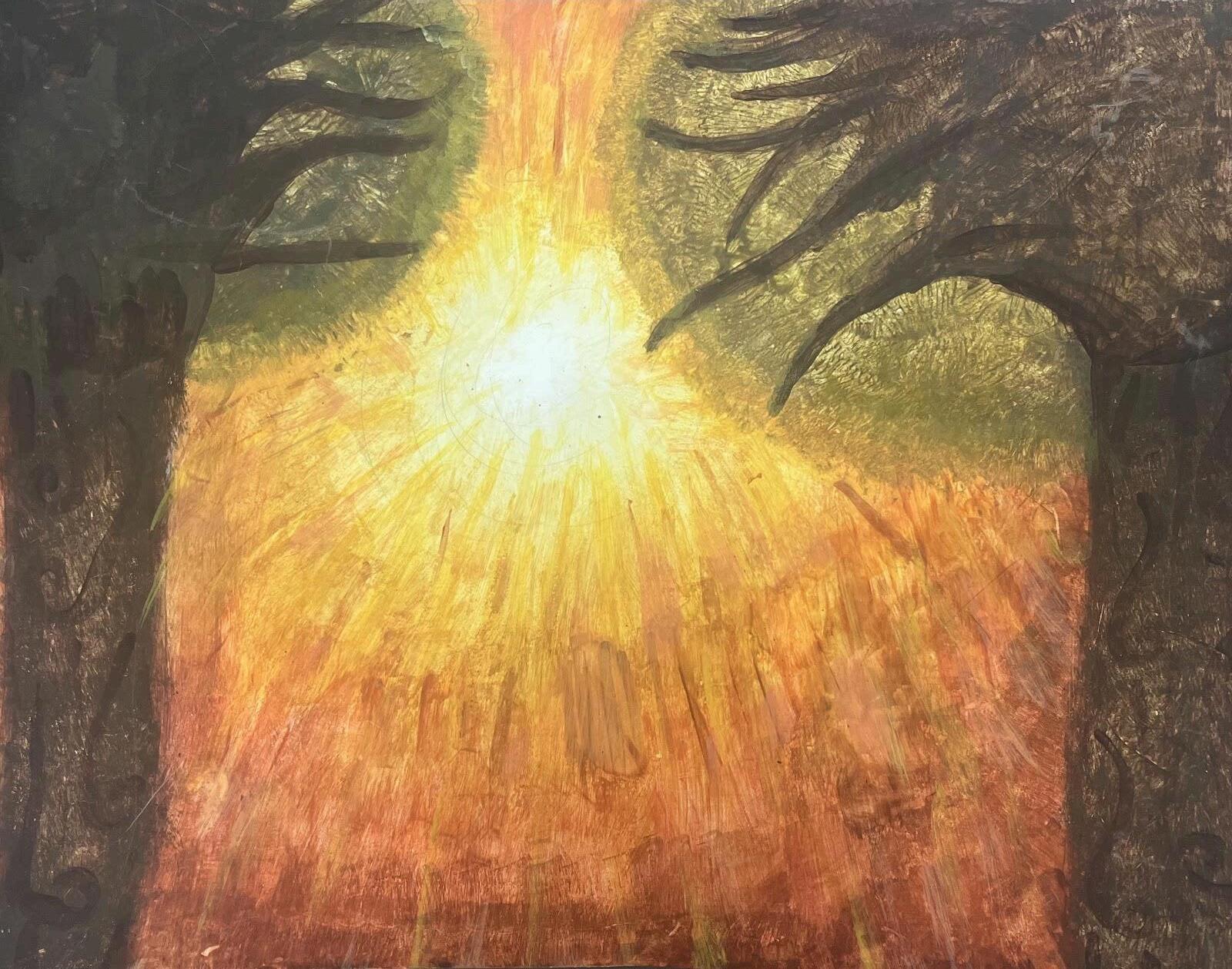
Sunny Rays (Acrylic Paint)
By Addy Hunte
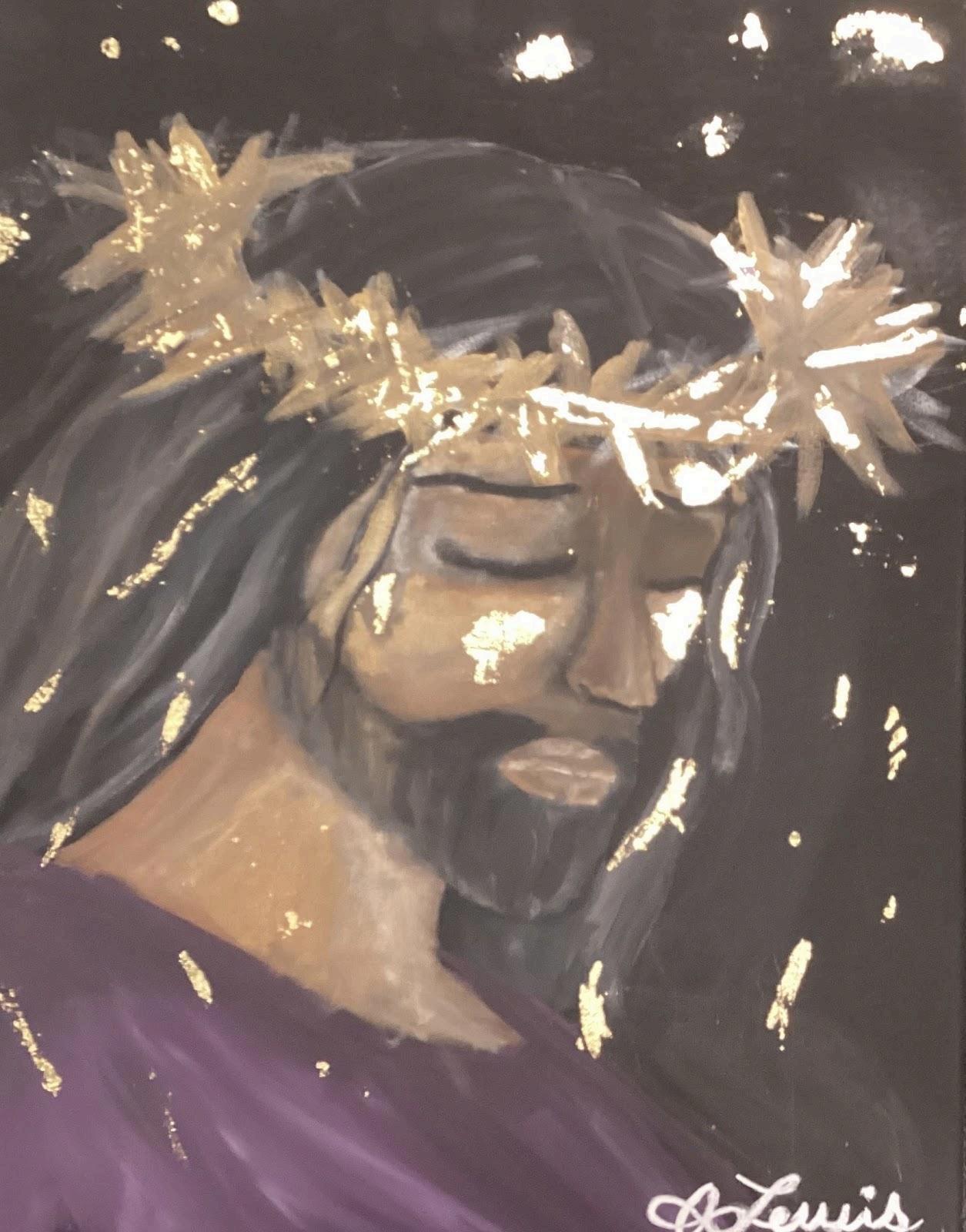
Crucified in Gold (Acrylic Paint + Gold Foil)
By Ashlee Lewis
Wreckage
by Eliza Buck
The screen goes dark
The call goes dead
I will never escape
The thoughts in my head
A dopamine shot
Is all that it ever takes
Why can’t I survive
With these life or death stakes
A band-aid on a break
At least it stops the bleeding
I find myself returning
To wanting, yearning, needing
Anything but the present
Anything but reality
I walk through my ruins
My ankles roll over debris
If progress is unattainable
Then why drag forward?
I sailed this far out
Why turn back shoreward?
I try to stay ahead
To keep endlessly running
What happens when my legs break?
Will I sit and take the shunning?
It’s painful to breathe
To move, to think, to live
The injuries I’ve sustained
I have not the will to forgive
I’ve been hit far too hard
One too many times
Must I get back up
And continue to pay for my crimes?
I fear I must have lost myself
Amongst the wreckage and pain
I must find her before it’s too late
And she’s washed away by the rain
A Moment to Realize
by Ella Germann
As if it wasn’t more than just a plan, We kept the story going, Unless we stop, it’ll be the fall of man.
Valleys growing darker, Trees growing thin, Life is disappearing In this world we ’ re in
Streams that once carried minnows die, As we dump in what’s left of us.
Polluted waters, low and high Our waste we could not dispose of.
It’s not just trees falling too, As nests drop silently into dirt. The birds flutter, looking for a place to stay.
‘Til then, they continue to fly all day.
Coral fades into a thin white bone, While the sun is steaming our water There will be more plastic than fish, If we make this world any hotter.
Flowers bloom for no audience. Silent blossoms under our sky, The polar bears are going to And we all really know why.
Most of us turn our heads, “Not my problem anyway. ”
But some of us suffer quietly, Knowing just caring won’t save the day.
Even so, nature still feeds us; Accepting what we offer. Still we poison the hand that reaches back Giving us one last chance.
If we don’t take action Don’t take part
The wonderful world we once knew, will be gone forever, but still in our hearts.
Unfinished
By Carina Sarlay
I’ve always felt incomplete, like there was a part of me that was missing.
Must’ve been why I felt so different compared to everyone else. They knew what they were supposed to do in life, and I w
There were some days it felt like I was barely keeping m y se l f to g e t h er, while they were still holding strong.
I wondered what was wrong with ME.
Why was I the only one like this.
Out of all the people in the world, both past, present, and future, WHY ME??
There were some times when I thought the world would do better without me.
One less burden to deal with.
One less trouble.
One less issue.
One less mistake.
One less cause.
One less worry.
One less thought.
ONE LESS
But then…
I realized… almost..everyone does… some way or another.
We always want to please, We always want to succeed, to go beyond, to BE the ���������������������� instead of the inspired,
We always want to hide the ᵣₒᵤgₕ and cᵣₐcₖₑd parts of Ø
Sometimes we lie awake at night, crying into our pillows, thinking it would be so much easier to have what THEY have, to live like THEY live, to act how THEY act, to look how THEY look, to engage how THEY engage, TO BE THEM; but it is not US! IT is not ME!!!
So although I we need to accept the sense of “ me, ” and how it always shifts and changes, grows and shrinks; we need to learn to accept this.
Because at the end of the day, at the end of our life, It is US;
And we are all made up of these changes. these quirks. these dents. these problems. these mistakes. these issues. these lessons. these people. these stories. these experiences.
Yet, after everything we did that I did , no matter how big or small, we will always wish and want for MORE. I will always want for MORE, because, after everything I’ve been through, after everything I’ve done, I’m still unfinished…
And that’s okay.
Different
By Katelyn Battle
It’s weird being different, not in a bad way, but in a strange way. Most people see the difference as good, but some see it as peculiar. Difference is a quiet hum beneath the loud, chaotic energy of teenage life. Teachers like students who are different, the students who are quiet and kind. The world, however, puts social pressure on individuality. In society, difference is not celebrated but viewed with suspicion, fear, or contempt. In society, having the courage to be different is a bold reach into the unknown. So instead of dimming the bright light you shine, let it shine brighter than the sun, because being different is a blessing in disguise.
Untitled
By Beatriz Bernardino Paschoini
Long before time was kept
The poets cried, the muses wept
See, the world had fallen out of tune
And everything seemed to be doomed
Spring was short
The food was scarce
The winds were strong
The men were harsh
The only King lived down below
Further than the sun could reach
And his Lady had begun to grow
Away from the life he chose to preach
She came up, bringing sunlight warm
And fixed the trees that once were torn
But then as he took her down again
The cold winter’s night began
There was a girl, in this world of gods
She met a boy: a poet and a singer
But this boy saw the world’s good linger
And he set out to beat the odds
He thought the song could right the wrongs And he labored on the melody. The girl was skeptical at first; She had been hurt, being Eurydice.
The world was messed up, so he knew He could fix it all, Orpheus thought He’d remind the deciding few Of the things that know, they ought
Eurydice saw the wind pick up, She looked for food and firewood The chorus, Orpheus picked up Taken from a story of good
The storm was gathering, The offer was made: Hades would stop her starving, If she went to sing down in his cave.
Eurydice’s heart ached to stay
But the flesh was stronger than she knew She called for her lover, but he was blind; And so she had to leave him behind
She went to the boss’ office, signed the deal, She got her place in the assembly line, She sold her life and started feeling fine. But Orpheus wanted to stop this ordeal.
He walked, all the way to her
Singing a song of their love
The walls cried and let him in
He wanted to, their new chance, begin
She told him it wasn't quite that easy
She really couldn't go anywhere
So the boss gave the boy a hear
And the factory felt a sudden breeze
The poet reminded Hades of the past
Of when his love flowered and grew
And why he tried to build things to last
Because his wife had started to be through
The foreman was caught in the crossroad
How to not seem soft, but not seem cold?
He’d let the two try to walk the long road
But one condition, they would be told
Orpheus could not look behind
To make sure that his wife was coming
He’d have to walk while being blind
If he looked back, she’d be returning
The two decided to take their chance
To give their love another try
While Hades and his wife shared a dance
The couple set out to seek the sky
Orpheus went first, followed by Eurydice
The workers walked along with them
But the walk was long and filled with uncertainty
And all of his fears came for him
Out of love, he turned around
Though no one knows quite why
Did he hear his lover fall?
Or had his song simply gone dry?
Eurydice, who now died again
Did not think to utter a complaint
She didn’t even feel any pain
He loved her, and he showed no restraint
What more could she ask of a lover?
Even if she had to die
She could let the air escape her
And know that he never did lie
So, the tale was told,
The song was sung
The men became bold,
And spring now sprung.
And we tell the tale, with its rhyme
So we can know how it ends
And still sing it again
As if it could work out this time.
It's how we see the way the world could be, not just the way that it is And Orpheus, with that gift of his, Helped Eurydice see.
Mother Nature
By Edward Massey
As the woods bent in cryptic shapes, I felt the cold wind blow in. I took a knee to rest and felt a presence behind me. Its aura was made from pure odium. Its breath was cold and wet as it let out a bovine squeal. Its bones crackled like breaking twigs. I slowly turned to face this horrid monster. Its face was covered by a wooden mask , with its eyes flickering as if they were candles. Its teeth were stone and cracked, with what seemed to be its jaw cracking back and forth as it snarled at me. Atop its ignoble head lay a crown made from vines and decaying flowers. I slowly began to feel squeamish after seeing its rotten wood that had been nailed into its corpulent body. It slowly began to approach my face, and I began to run. It dragged its wretched body across the muddy path as I did my best to escape the monster. I fell into the mud and started to scream as the monster approached me. It grabbed me by the wrist, and I knew I was susceptible to any attack the beast would make. It pulled me from the mud and brushed the dirt off my leather jacket. It placed me down slowly, and I began to step away until it grabbed me by the hand. Its hand, wrapped in brown vines creating a makeshift gauntlet, dipped its fingers into the mud and painted my forehead with it. It drew two hearts in a very fancy way with one on top of the other. Then it suddenly let me go and dissipated into the greenery of the forest. As it ran into the woods, I noticed its body and shape were that of the woman. I was left in awe and shock from this life changing encounter. As I arrived in Athens, I told my story; nobody believed what I had to say…
The Church Key
By Lleyton Michael Kane
Some time after my father died, my mother called me home. Home-home. She started moving things. Not selling, not giving away, just carrying them from room to room like they were pets that needed different windows. She pulled the winter coats from the hall closet and brushed them ‘til the nap lay down like a tamed field. She packed three sets of plates into two boxes and then put them back again when the cupboard looked wrong without them. She lined his boots heel to heel along the baseboard and said they’d sleep there for a while. On the second afternoon, she took the nail that had held the kitchen crucifix, above the phone, by the calendar, and slid the metal bottle opener off it. We called it a church key. It had lived on that nail since we took the Cross to Gram’s nursing home. When she left, Jesus went with her. Twice. A ghostly shadow of itself was left in the grime next to the receiver, where we learned of births and storms and which uncle had fallen off which ladder. She turned the opener in her hand as if deciding which drawer meant absolution. “This doesn’t belong there anymore, ” she said, meaning the opener, meaning the wall, meaning him. Then she dropped it into the junk drawer, the one with the rubber bands and the pencils with good erasers and the tape that never stuck to anything you needed it to.
That night, when she was out, I took the church key from the drawer and hung it back where it had been. I didn’t make a point of it. I just reached for the phone, saw the empty nail, and felt the same pinch I’d felt the first time I left the house without my wallet. The opener knew where it lived. It wasn’t piety. It was muscle memory: cap, hiss, a small surrender of air, the swing on the nail.
In the morning, she made coffee and stood in the doorway with the cup balanced in both hands. “I moved that,” she said. “I put it back,” I said. She nodded like we were discussing the weather. “It doesn’t belong there anymore, ” she repeated, and put it in the drawer again, this time under the Ruritan phone book. That evening, while the casserole warmed, I hung it back. We didn’t speak about it. The house did. Doors breathed when they shut; the floor answered every step; the refrigerator ticked like a slow insect. Grief rearranges, but the air remembers the old shapes.
On the third day, she took down the church key and the nail. She didn’t announce it. The wall simply revealed its blank benediction where time never reached. The nail joined the rubber bands; the opener went in her pocket. She was not hostile. She was tidying. Later in the week, she showed me a box of things for the church rummage: sweaters that made my dad itch, mugs from the feed store, and a typing manual no one had finished. The church key went in on top, bright as a fish. I took it out, rescued the nail from the bands, and hung it back. “Stop it,” she said, not loudly. “It’s tacky. Your father did that.” Meaning he nailed the sacred and the ordinary together, like sneaking a flask to church.
My father had a practical mind. He nailed things where hands already went: the jar-opener screwed under the counter by the sink, a hammer behind the basement door, the dog’s leash on the porch post. He thought nothing of convenience dressed as doctrine. The crucifix nail was already there. Why add another hole? It was efficient. On Sundays after church, while the roast rested, he’d open a bottle as he said grace, the cap ’ s hiss marking the amen. To my mother, the sound had been small profanity; to him, it was punctuation.
We went on like that for a week: she relocated the opener to drawers, to the box marked CHURCH, to the tin with the spare keys; I returned it to its nail without making a scene of it. The house kept the argument for us. When the phone rang, your hand, any hand that had lived there, rose to the place where the opener should be and then figured out how to be empty. On a Thursday evening, after the condolence pie came and went, I found the opener in the utensil jar among wooden spoons. It slouched there like an adult at the kid’s table. I set it back on the nail. The wall accepted it without sighing.
Friday, a woman from church arrived with roller lines in her hair and a stack of casseroles to portion into smaller kindnesses. She saw the nail, then the opener, then the faint cruciform where time had failed to gather. She did not comment, which was its own liturgy. She put her hand on my mother’s shoulder, side-eyed the church key, and said time would make a path. My mother nodded an I-hope-so, and later, when the woman left, she took the opener down again and placed it on the counter inside a baking pan. Folded the dish towel over it like a burial.
“We could hang a watercolor there,” she said, “Something that belongs.” I said a watercolor would belong anywhere. She said that wasn’t the point, then corrected herself and said it was.
On the last morning before I drove back to the city, I found the opener in the junk drawer under a layer of dish towels, cold as a coin. I didn’t touch it. Just stared down at it. My mother stood at the sink, looking out at the strip of yard where the snow kept its bargains. Without turning around, she asked if I’d take the church key with me, “ so the house can be plain for a while.” I put it in a small brown lunch sack, wrapped twice. She kissed the air near my cheek, the way you do when you ’ ve run out of softer things to press. Leaving the kitchen, I reached up without
thinking. I felt the naked nail bite my finger. I wiped the small dot of blood on my jeans. It left no mark you could point to later.
Driving away, I tried to decide which of them was right. Objects want what hands teach them to want. The opener had belonged there because we had made it so. The crucifix had belonged there because Gram had needed it to. The nail had stayed. My father’s way, use what’s handy, call it sensible, had always seemed like nature. My mother’s way, untangling the sacred from the daily, looked like tidying until it looked like mercy.
At the edge of town, I stopped at the store for gas and a bottle of soda. The boy behind the counter couldn’t find the opener. He started to use his teeth; I told him to hold off and pulled the sack out from under my jacket. He grinned the way kids do when an older kid does something unexpected. In the car, I drank slowly, listening to the fizz die. When I got to my place, I set the sack, softened like cloth, on my bedside table.
The next afternoon, my mother called to ask if I’d gotten home. I said yes. We talked about whether I’d made it to Mass on time, and whether the neighbor’s plow had nicked the mailbox again, whether my freezer was full. Before we hung up, she asked me if I found a place for it.” I didn’t ask which it she meant.
Later, when the house had gone quiet on its winter breath, I pictured our old kitchen the way it had always been, phone, calendar, nail, and felt my hand rise to open something that wasn’t there. What doesn’t belong is never the object. It is the space left by it. I reached for the bedside table, set my palm on the lunch sack, and let the fizzing in my ears belong to the night.
The Sun & Night
By Isabelle Panek
Away in the fields and forests afar
Dappled in sunlight and dew drops a top
Lying in a field a meadow surrounded by arrays
A colorful pallet of sun kissed and orchids astray
As the sun dipped down and the rays went away
The moon rose up for the night critters to play
As the wind did creep the trees did creak
The critters of day rested away for the day
A twig did break as the little one strayed
A path once followed leads the way
What will you do?
A
motivational By Victoria Patterson
From the moment we are born, we are a part of history. From the moment you took your first steps, you marked the world with a record of you. We live for a purpose. You have two choices: become something or be nothing. No matter what path you choose, there is no easy route. Life isn't easy and was never meant to be easy; without struggle, you can’t become someone.
Some of us start struggling, and some of us start with a silver spoon in our mouths.
From the moment we enter first grade, we are given commands like Sit in your chair, take your pencils out, and follow what your authority says.
Don’t act out, or you're considered bad, but don't speak up, and you're a wimp.
Don’t dress like you ’ re homeless, but don't overdress.
Don’t perform poorly, but don’t be a nerd.
Just do what the book says; just do what they say.
We are trained to conform and lock up our individualism, and when we release it, it's weird. You can't make history if you're forced to lock away the thing that makes history.
Whether your ancestors fought for freedom from a king, slavery, or communism, we all have a purpose or a passion we want to pursue to change the world. That could be freedom from oppression, hatred, or maybe something else more complex. We all have something that needs to be solved, something that keeps us going every day. We have passion, a hunger for success, and our own way of doing things because that’s what makes us who we are.
So, why do we serve the rich while they would never serve us? Why do we turn a blind eye to struggles around the world and in our society because they don’t affect us? So, the question I’m asking is, what will you do?
At War With a Friend
By Asher O. Pratt
I woke up to a sudden jolt in the vehicle and groaned, then sat up. The air was cold, and I could feel tiny snowflakes hitting me. We had been riding for three hours, and everyone was exhausted. I noticed that Leon, my friend, was also awake and I started to chat with him.
“Where do you think we are?” I asked.
“Don’t know, I only know we are close to our destination,” replied Leon.
“How do you know that?” I said, “Have you been here before?”
“No, I have been studying the map we were given,” he replied.
After he said that, I took out my map and realized that he was right. Around twenty minutes later, we arrived and started to unload all of our supplies and gear from the truck. We were then told to report to the command tent to be processed into the unit. As Leon and I were walking to the tent, we saw a lot of vehicles and men digging trenches and foxholes. On a road about sixty meters in front of us, a panzer was driving into a defensive position. Once we made it to the command tent, we saw a long line of men in uniform and got in line behind them.
Twenty minutes later, we entered the tent and saw two men in officers' uniforms. Their black boots were perfectly scrubbed and shone in the light, their buttons polished, their shirts were wrinkle-less, and their eyes were stone cold and cut into us, examining every detail.
“Papers,” said the man sitting at a table situated in the middle of the room. We gave him our papers and were then told to follow the other officer in order to receive our unit markings and rations. Leon and I followed him and received all of our items. The officer then instructed
us to report to Unteroffizier Kristof. Leon and I went over to Unteroffizier Kristof’s sector and reported to him.
“At ease, ” he said, “I assume you two are our reinforcements?”
“Yes, sir!” we replied.
“Good, I want you two to dip defensive positions between those two trees,” he told us.
“Yes, sir!” we said and then ran over to where he indicated. Once we got there, we pulled out our e-tools and started digging. After five minutes, I was starting to get a little tired because the ground was firm since it was winter.
“How deep are we supposed to dig?” I asked.
“Deep enough so that you won’t get shot,” Leon replied. Once we had finished, it was getting dark, and we decided to eat our dinner and then go to sleep. The dinner wasn’t very good, but was still better than what we had back in the deutschland. Constant American and British bombing was making food harder and harder to come by, and most of the food we could find was sent off to the army in order to feed the soldiers. A few minutes later, I was asleep, and Leon was taking first watch for the night.
Around midnight, Leon woke me up and told me it was my turn to take watch. I groaned, got up, grabbed my helmet, and started my watch. Right after Leon fell asleep, I heard a faint whistling sound and thought nothing of it.
That is, until I heard someone yell at the top of their lungs, “Artillery strike!”
Immediately, I woke Leon up and told him what was happening. Right after the final words left my mouth, a large explosion echoed through the forest. Leon grabbed me by the belt and threw me to the ground inside our little trench. Right when I hit the ground, a shell
exploded no more than sixty meters away from our trench. All throughout the forest, we could only hear the exploding shells, sticks, trees breaking. After what seemed like an eternity, the shelling stopped, and I got up and checked to see if enemy soldiers were advancing. Now, throughout the forest, there were cries for sanitäter, and I could see men running from trench to trench trying to administer aid where able. Once things started to settle down, Leon tried to go to sleep again, but was unable to. So Leon pulled out a deck of cards he always kept with him, and we played poker until the sun rose.
After a week of being on the front lines, I now know that artillery strikes are not rare. The enemy has not attacked our position yet, but Leon thinks they will soon. Every once in a while, Unteroffizier Kristof will hold an inspection of our equipment and defensive positions. Leon and I have passed every time, and we are both proud of it. Today was not standing out in any way, that is, until it was around noon.
Out of seemingly nowhere, a single shot rang out, and then another and another. I thought they were just some of our guys shooting, but after a fourth shot rang out, I realized that the shots did not sound like our rifles. Off to my left, I heard something metal bounce off a rock, and before I could think of what it could have been, it exploded. That’s when I realized what was happening: the enemy was attacking. The moment I realized this, the whole world seemed to light up around me. Gunshots ringing out from all directions, grenades exploding to my left and right, and my Unteroffizier calling out to return fire. I grabbed my rifle and started randomly firing into the forest, not knowing where the enemy was, just shooting, hoping to hit something.
Off to my right, I heard our tank firing shots out, and I saw trees collapse from a direct hit. All of a sudden, I heard a large explosion and looked to where the tank was, now a burning pile of metal. I continued
firing into the forest, but now I could see faint outlines of what I can only assume are the enemy. Leon, to my left, threw a grenade and continued to fire into the forest with me.
“I need more ammo!” I shouted, and Leon handed me three clips of bullets. Explosions were still ringing out around me in all directions. I looked over to my right and saw no one in the trench. A few moments later, I felt a sharp pain in my left arm. I looked down and saw blood trickling down and landing on the ground. I opened up my haversack and got out my bandages, wrapping them around my arm just how I had been taught.
After my bandages were secured onto my arm, I heard a low rumbling. Assuming it was one of our own tanks, I kept firing into the forest. But things quickly changed once I heard one of my shots hit metal. I then paused to listen to what direction the sound was coming from and was horrified to realize that it was not coming from behind me, but rather from in front of me.
“Enemy panzer!” I yelled and then heard an explosion go off to my left. Dirt launched up from the explosion and landed on my helmet, and then I saw the enemy panzer. The tank was painted white, and the engine rumbled in a low tone. The tank commander was firing his machine gun from on top of the tank and was looking right at me. He fired a short burst from his gun and missed me, but I heard a thunk next to me, and something hit the ground. I looked down and saw Leon, my friend from home, the only person who truly understood me, who was dead on the ground. Grief rushed over me, and a sense of dread, because I knew I was next and could do nothing about it. I had run out of ammo, and I knew that Leon was out, too. I had no sidearm or grenades. At this point, I accepted my fate and threw down my rifle, landing on my foot and then onto the ground. The enemy commander
looked right at me and fired. I felt bullets hit me in the chest, arms, and legs. I collapsed to the ground and landed next to Leon. While still alive, I thought about all the good times I had as a child, remembering meeting Leon, getting out of school, and so much more. I thought about my family that I would never see again, and thought about what I would tell them if I could say anything to them. After thinking about all these things, I smiled, not because I was dying, but because I knew that I would still be with my friend. Knowing that we would not be separated by a war not our own. After all that, I breathed my last and stayed with my friend.
The Art of Making a Friend for Life
By Louis McMickle
The brisk air brushed through the half leafless trees, rustling the forest floor and sending audible confirmation that it was the middle of fall to anyone outdoors, a place where Sam Howitz happened to be. Heading through the woods with a cooler and rod in hand, he beelined straight to the lake a little ways behind his house, his dark brown labrador trailing closely behind him. As they trotted down the hill to the lake, Adam watched from a distance. Being neighbors, they knew each other about as well as you’d expect, but from that knowledge, they know that they have nothing in common. Sam was the definition of an outdoorsy kid, absolutely relentless in his pursuit to find and say hello to anything hidden in a hole, nest, or lake. Adam, on the other hand, absolutely hated anything that had to do with nature; instead, he loved to draw machines and tinker with circuit boards. Of course, being neighbors, their parents had tried to get them to hang out more, but to no avail. When Sam went over to Adam’s house by coercement of his parents, his visit often entailed briefly greeting Mr. and Mrs. Troden and then asking Adam if he wanted to go out to the lake. Adam on the other hand simply did not want to socialize at all, especially not with someone who lives and breathes nature.
It was a nice February weekend when Adam was called down into the living room by his parents. As he sat down, he noticed a look of deep sorrow as both his mother’s and father’s heads hung a bit lower than normal. Confident he wasn’t in trouble, Adam wasn’t expecting any bad news, but the mixed emotions from him and his parents veered him off any thought of hearing good news. They sat there in silence for a few
moments before his mother spoke up. To Adam’s horror, she told him that Sam had been in a horrible car accident last night and was paralyzed from the waist down. Adam was outright stunned. As he walked back to his room, he couldn’t help but ask why. Why in the world would this happen to someone so energetic and happy all the time? He knew how much Sam loved to run through the woods, he had been out there almost every day since Adam could remember, rain or shine. Adam had no idea what to do. He couldn’t really go over and say hi, he was too shy for that, and his mother said he was still in the hospital.
About a month went by and Adam was tinkering in his room when he saw Sam for the first time since the accident, in his driveway, in a wheelchair. His labrador was by his side as they slowly strolled around the concrete, clearly making an effort not to go too far. Even from his window, he could make out the heart-wrenching emotions Sam was going through, unable to do the thing that made him who he was. His entire life he had been jumping over streams and climbing trees; he’d never be able to do that again. A few weeks passed as the leaves began to form on the dogwoods and flowers sprouting in the brush, but there was no sight of Sam. Adam hadn’t heard much from him either, so he decided to walk over and see how he was. As he dared to step outside his comfort zone and stroll down the neighborhood street, he couldn’t help but notice the green forming on the trees and throughout the forest floor. Reaching the Howitz’s residence, Adam knocked on the door and was quickly greeted by Sam’s mother. After exchanging some somber words, Mrs. Howitz directed Adam to Sam’s room. Walking through the foyer, he saw a multitude of pictures on the wall, most being of Sam when he was younger and consisting of backgrounds full of tall trees, large rocks, or wide oceans. Adam stopped outside of Sam’s room, the
door was closed. Knocking, he heard Sam call out, “ come in.” Adam opened the door and took a few steps inside; Sam was in the corner sitting in his chair, playing video games. His blinds were closed, so the only light was coming from recessed lights in the ceiling, a fan slowly spinning in above, casting shadows across the whole space. As they chatted, the gravity of it all hit Adam like a truck.
Back home, Adam’s mind was a whirlpool of thoughts as he spun around on a chair in his room, his eyes darting around to find inspiration somewhere on the walls. His gaze rested on a poster of one of his favorite movies, an early 2000s film about a robot invasion. A little to the left of the main character, there was a tank; a tank with tracks; all-terrain tracks. Adam knew immediately what he wanted to try to do. With his poster in hand, Adam ran downstairs and tossed it into the garage. Before he started tinkering, he moved most of his equipment downstairs into the garage which thankfully had enough space for all of it. After a few concerned looks from his parents, Adam squeezed his old salvaged 3D printer into a corner and set it up; he was ready to roll.
Over time, Adam worked tirelessly, balancing school, life, and planning his new project to get them all set and done before summer. For the first couple of weeks, Adam was holed up in his room, drawing up specifications and ideas for an offroad wheelchair; he had the theme of the tank tracks, but it all needed to go onto paper. Originally, he thought about hosting a fundraiser for Sam to just buy one, but after doing some research, realized that twenty thousand dollars wasn’t something that’s so easy to come by, especially in such a short amount of time. Once his schematics were finalized, he began to get to the physical aspects. In the evenings out of sight from Sam, he would get out and test prototypes. He didn't like to get out when it was too dark
since he was overly anxious about the critters that could be roaming in the shadows. Over the next month, Adam would continually go outside and conduct trial-and-error experiments, much to his dissatisfaction of not being in the safety of his garage. Without realizing it, he began to enjoy the crisp air and slight breezes more and more.
As finals started to roll around, Adam had no choice but to put his project aside until after the school year, forcing him to have to work overtime afterwards to make it before the end of summer. It was a tough decision to make, especially how hard it was to ride by Sam’s house and not see him outside, knowing that he could change that, just not today.
Sam was sitting outside with his dog in the driveway when he heard a strange whirring sound, something akin to a golf cart. He spun around to a sight he would have never imagined he would see in a million years: Adam was wheeling up in what looked like a mix between a tank, a car seat, and some strange contraption straight from Dr. Evil’s lair. Paired with that, he had on a pair of sunglasses and a smug smile, something Sam couldn’t help but break out laughing and crying at.
Adam awkwardly invited him to go fishing, something Sam hadn’t been able to do for many months. Grabbing the gear, something Sam could do now with the extra space he had, they headed down the path to the lake. Once they arrived, Adam had no idea how to do anything, nor why he agreed to this, but nonetheless he was there and wasn’t going to back out now. Sam taught him how to bait a hook and toss the line out, making sure he didn’t wrap it around a tree. Adam got the first bite of the evening, and with Sam’s laughing but commanding voice telling him to reel it in, the first catch-and-release as well. Adam had given Sam a newfound freedom, and without knowing it, Sam had given Adam a life outside of his room. Out of tragedy, the most unlikely friendship had formed, and this was only the beginning.
Layout Staff:
Page Break Staff
Beatriz Paschoini
Louis McMickle
Editing Staff:
Louis McMickle
Beatriz Paschoini
Emily Bell
Art Staff:
Faculty Sponsor:
Riley Culver
Ms. Eileen Carlson
Cover Art:
Advertisement Flyers:
Ashlee Lewis
Madisyn Cabiness