



SCAN TO LEARN MORE

PERSONAL SPACE
22 20 24 14 21 11
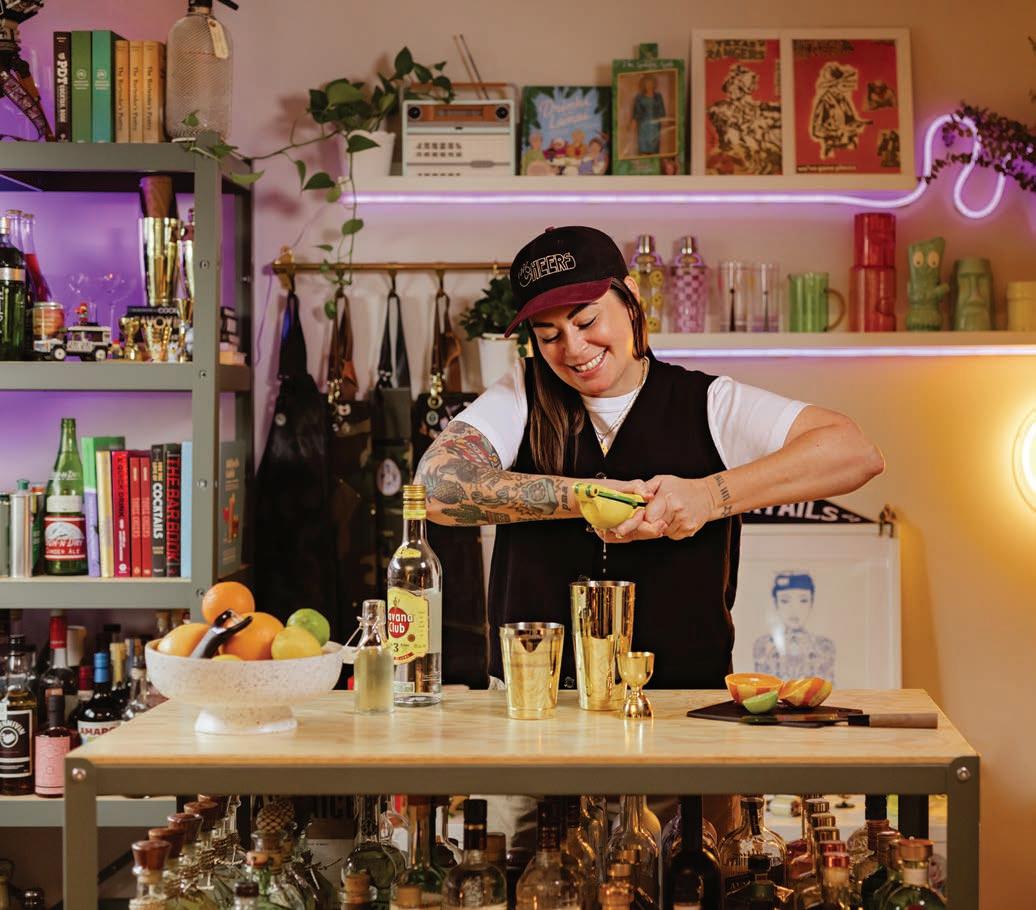
World champion bartender
Kaitlyn Stewart mixes things up with her home bar.
SHOP HOP
Where to source the city’s best athletic gear (for sweating or just stylin’).
SO FUN CITY
Our arts and culture picks to brighten up your February
MADE IN VANCOUVER
Furniture designer Heidi Rey is building something special with Studio Heidle.
THE HAUL
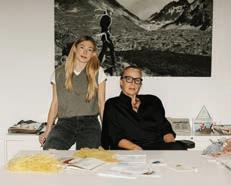
Design duo Catherine and Eva Regehr share their fave finds.
A Beautiful Ending is an invitation to approach grief and death head on.
AT ISSUE

FIFA World Cup is coming this summer. Is Vancouver ready?
KNOW IT ALL
What’s with Robson Street’s mysterious clocks?





Give It Up
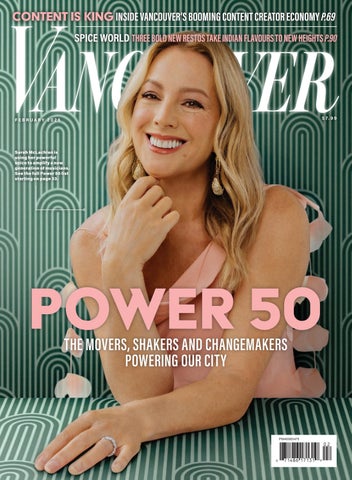
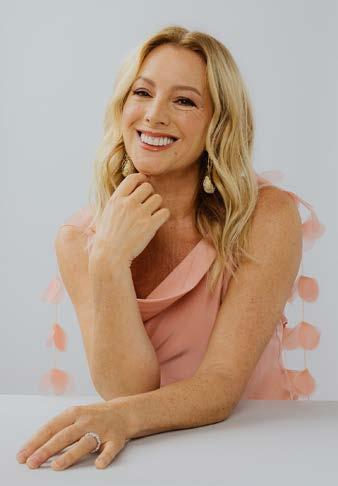
Our Power 50 list this year includes hometown hero Sarah McLachlan and newcomer Thomas Müller. Turn to page 33 to learn more about how the musician and soccer star are making their marks on the city.


90 REVIEWS
A trio of new Indian rooms are bringing the flavour.
IN SEARCH OF
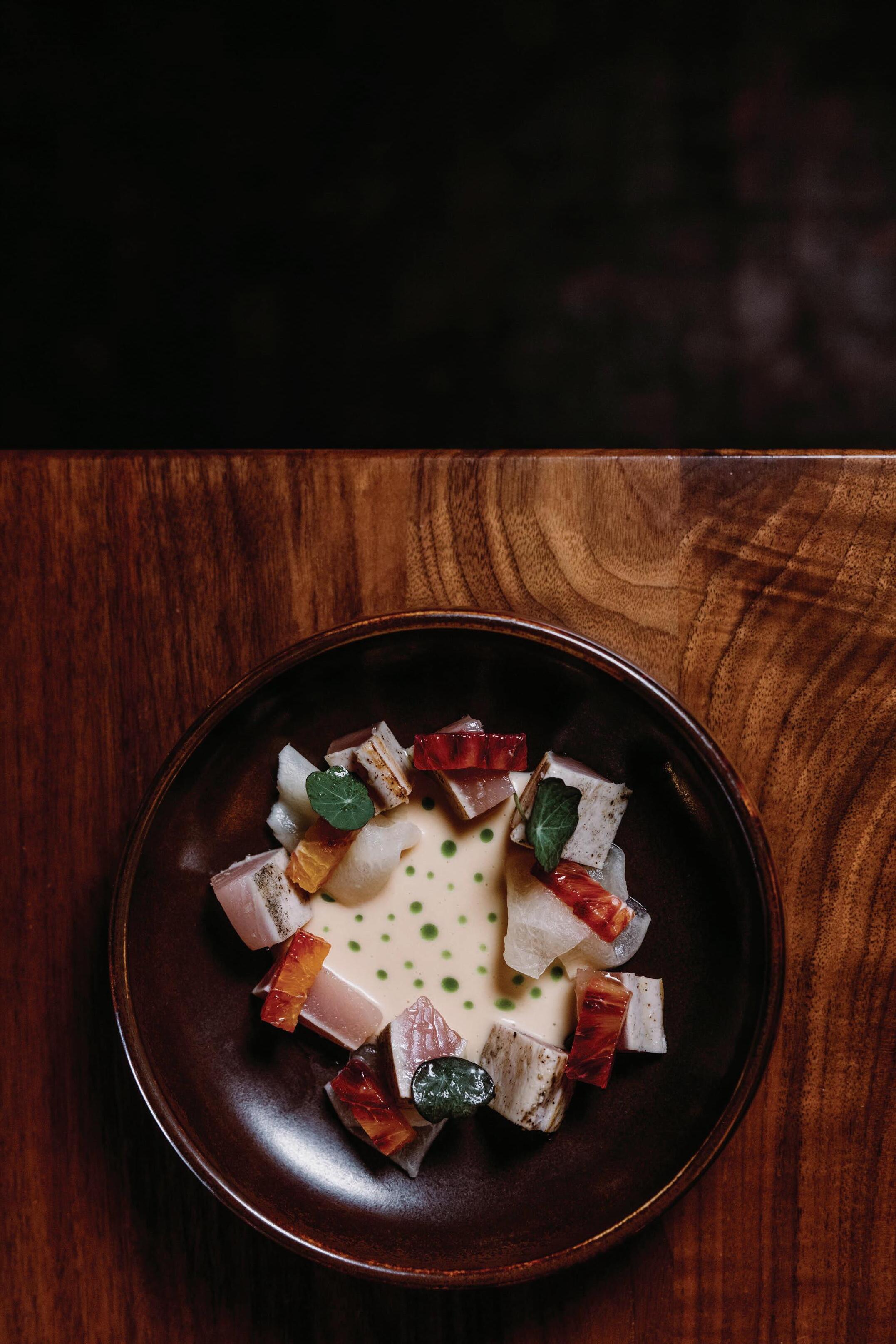
Where to find the best beef tartare in the city.
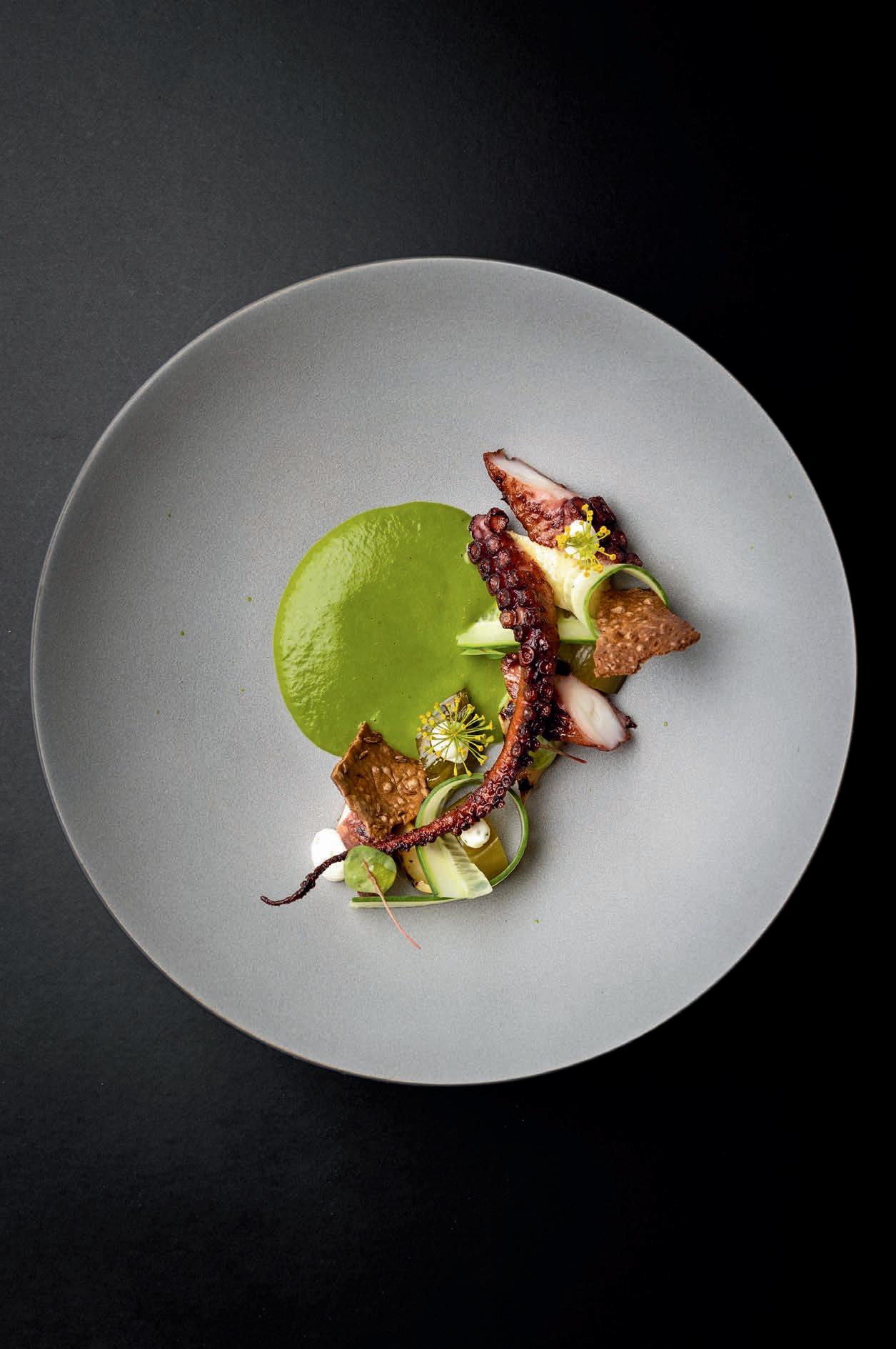
BEST THING I ATE
These fish collars from Fanny Bay delight.
THE WINE LIST
Your lambrusco primer, in time for Wet February.
MEET CUTE
Dating columnist Kerri Donaldson gets off the apps.
33
THE 2026 POWER 50 LIST
Our annual rundown of the impressive changemakers shaping our city right now, from inspiring entrepreneurs to passionate philanthropists. Whether they’re making waves in the board room or behind the scenes, these are the folks who are truly powering our city.
Vancouver’s content creators have quietly built a booming entertainment economy—but is a 24/7 job, beholden to the algorithm, really the modern career dream?
ceo and group publisher Ryan Benn
group vp , publishing and operations Nina Wagner
editorial
vice - president , content Anicka Quin
editors - in - chief Stacey McLachlan ( Vancouver ), Darcy Matheson (BCBusiness), Anicka Quin (Western Living)
senior editor Mihika Agarwal (BCBusiness)
managing editor , food and culture Kristi Alexandra
managing editor Dani Wright (on leave)
assistant editor Kerri Donaldson (Vancouver, Western Living)
wine and spirits editor Neal McLennan
contributing editors Frances Bula, Melissa Edwards, Alyssa Hirose, Matt O’Grady
editorial interns Emma Bolzner, Ashley Kim, Valentina Barrera Arguello email mail@vanmag.com
digital
vice - president , digital Darcy Matheson
digital marketing manager Rebekah Ho
brand partnerships/digital copywriter Sandrine Jacquot
design
creative director Jenny Reed art director Stesha Ho ( Vancouver , BCBusiness )
advisory council
Angus An, Maenam; Patrick Barron, Telus; Victoria Emslie, Nicola Wealth; Peter Jackman, Terminal City Club; Carol Lee, Vancouver Chinatown Foundation; Carol Liao, UBC Peter Allard School of Law; Matt McClenaghan, Edgar Developments; Jennifer Murtagh, Maturn; Gary Pooni, Pooni Group; Audrey Plaskacz, Bosa Properties; Greg Zayadi, Rennie Group
sales representation
vice - president , sales Anna Lee
senior media specialists Brianne Harper, Mira Hershcovitch, Cathy Huynh, Sheri Stubel (on leave)
program lead and sales coordinator Victoria Nwaeze mail sales@canadawide.com
u s sales specialist Hayes Media Sales tel 602-432-4868 email lesley@hayesmediasales.com
production / administration
group vp , education and administration Jane Griffiths
operations manager Emily Heffring director of circulation Tracy McRitchie
manager , hr and administration Fiona Cochrane
executive assistant and event producer Julie Fisher
events and office manager Julia Jarman
production manager Kim McLane
procurement manager and business support specialist Natasha Jayawardena
production support technician Ina Bowerbank
customer service Kelly Kalirai
finance
group vp , finance Conroy Ing, CPA, CMA vp of finance Sonia Roxburgh, CPA, CGA accounting Terri Mason, Eileen Gajowski
address Suite 130, 4321 Still Creek Drive, Burnaby, B.C. V5C 6S7 tel 604-299-7311
In the heart of downtown Vancouver


You might be tempted to believe that I, as editor-in-chief of this publication and author of this little introductory letter in every issue, am an independent and almighty kingmaker. But the truth is, I couldn’t build—we couldn’t build— our annual Power 50 issue without a lot of help. And I’m extremely proud of that.
I would happily argue that our ability to reach out for support and expertise is a strength, not a weakness; that collaboration makes us better at what we’ve set out to do... which is to identify 50 individuals who are making a positive, lasting impact on the city we love. Though our own editorial team pours plenty of our blood, sweat and tears (and coffee—lots of coffee) into the production of this issue—from the moment it kicks off with our advisory council dinner in September to the day we honour the winners on stage—we know the final product truly shines because of all the players who lend a hand along the way.
This list would be nothing without the research support of the great urban affairs writer Frances Bula; the generously given time, attention and hot gossip of media insiders and real estate power brokers over americanos; the thoughtful (and, honestly, sometimes a little rowdy) dinnertable discussion with our committee of hyper-connected intelligentsia, bringing their industry insights from the worlds of mining, politics and education; and our publisher, Ryan Benn, who champions this program, year after year, from a place of true passion. (He calls our advisory council dinner one of his “favourite nights of the year,” and I know that’s not just because of the excellent wine selection at Terminal City Club.)
Not that I’m angling for anyone to include me on a future edition of Power 50, but I see my team’s passion for collaboration reflected in this year’s list. Though there are always some impressive lone wolves among our top 50 changemakers (we’re looking at you, Brian Grange, #8 this year—it takes a pretty singular vision to turn a fleet of cruise ships into housing), the vast majority of honourees for 2026 wowed our advisory board with their incredible ability to lead teams, build community and give back.
For the past several years, we’ve been approaching our Power 50 list as more than a ranking of Vancouver’s richest or most well-connected—it’s a collection of the people who are powering our city. What’s driving us forward right now isn’t necessarily just big bank accounts or impressive job titles, but, rather, compassion, connection and care.
Though: is it really surprising that these qualities are what we prize highly in 2026, at a time in history where so many are struggling or feeling disconnected from each other? True power, as we see it in 2026, standing here on the shoulders of the team who help us make these awards a reality, isn’t about making a list—it’s about making a difference. Together.

STACEY McLACHLAN editor

Secrets of the City
We’re packing this issue with 50plus insider tips from the smartest, coolest people we know, with the goal of making life in Vancouver easier, tastier and way more fun.
Real Weddings
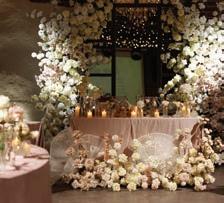
Plan the perfect Vancouver wedding with a little local inspiration as we explore today’s hottest trends and inspiring wedding-day stories from real Vancouver couples.

For each of our four collector’s edition covers, we embraced a different wild pattern from local wallpaper brand Otto. Stylist Kristin Morawski from Holt Renfrew dressed our stars (local heroes Fred Lee, Carol Lee, Sarah McLachlan and Thomas Müller) in beautiful contrasting hues.



Hand-engraved 18K gold necklace with silk-like finish. Experience its infinite styling possibilities.

Arriving soon at Inspiration Furniture.



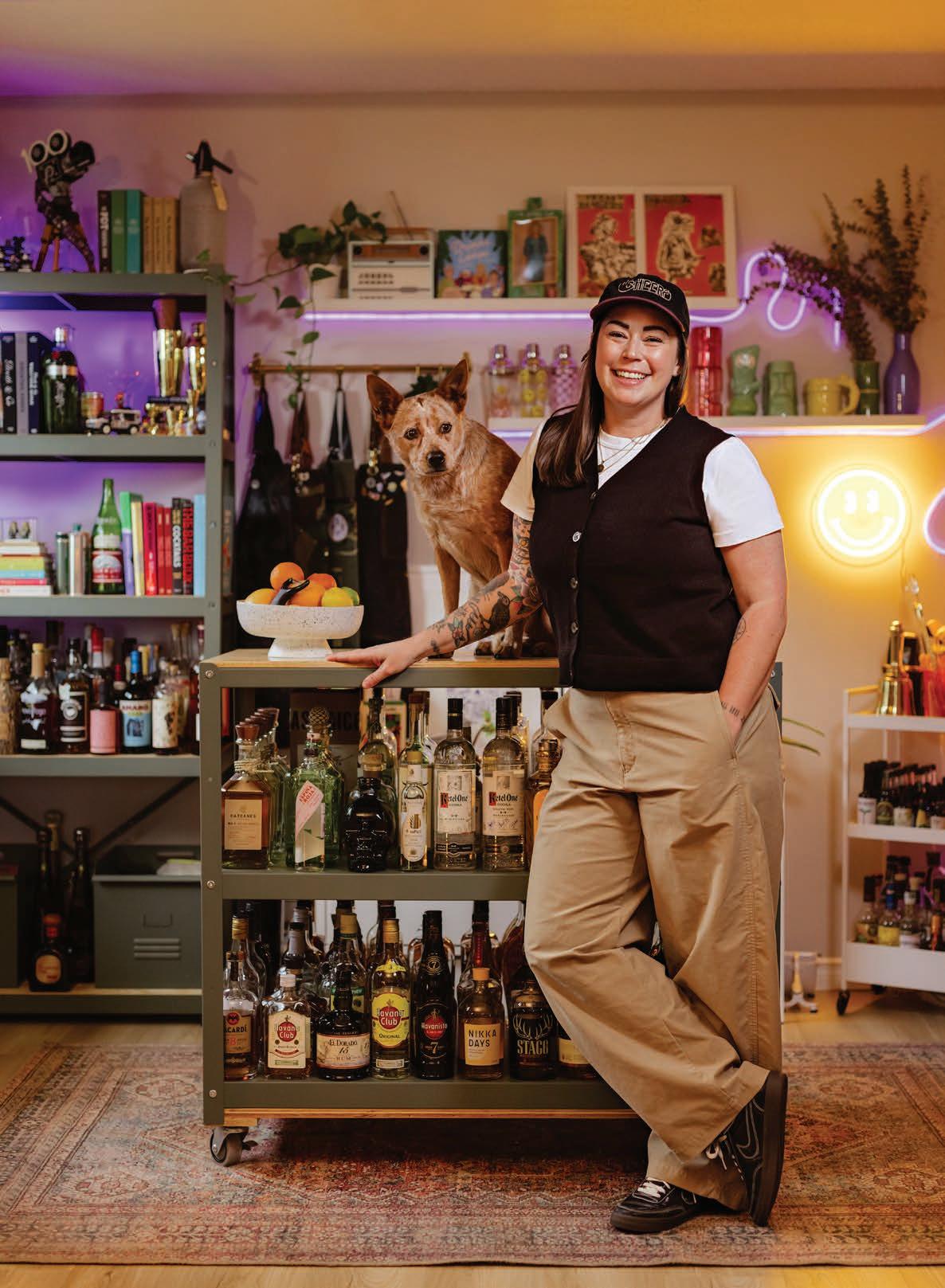
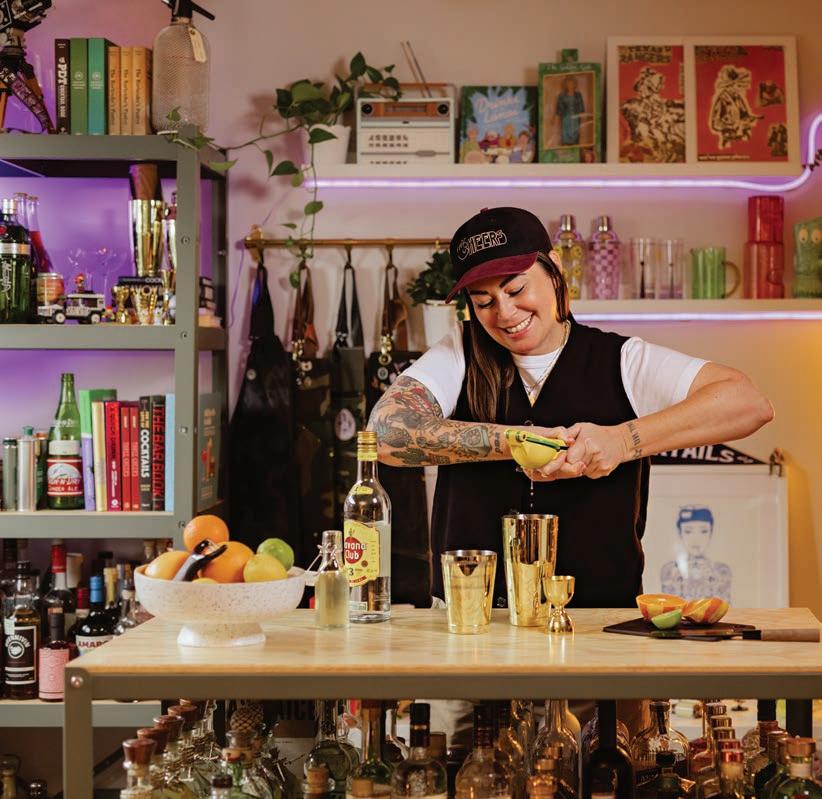
up a stool at mixologist
You’d expect Kaitlyn Stewart—one of the world’s most acclaimed bartenders—to be hosting cocktail parties every night. And you’d be wrong: the 2017 World Class Bartender of the Year champion is actually a happy homebody.
“My partner doesn’t drink, and I rarely want to drink alone,” she laughs. “Plus I do so much stuff with alcohol for work. Home is a place to detox and decompress.”
All of which is to say: you’re most likely to find Stewart mixing a mocktail, not a martini, under the neon lights at her home bar. The joyful, trinket-strewn nook in the apartment she shares with girlfriend Emily Huffman, the web manager for Lainey Gossip, and their pets (dog Timber, cats Cowboy and Goose) is the same space where she developed all the recipes you’ll find in her new Three Cheers book—her first. It’s also the backdrop for all the digital content she films for the hundreds of thousands of social media followers on her Likable Cocktails channels.
But while it’s artfully composed, this is definitely her home, not a set: a true showcase of Stewart’s playful personality (and extensive glassware collection). “I want my videos to feel like me, for people to glimpse inside my personality and feel welcomed into my home,” she says.
The bar zone exists in what previous tenants probably used as a dining area, and every square inch is optimized for storage or for showcasing, say, a collection of grape-flavoured treats Stewart collected on her world travels, or spare tiki glasses.
by Brick
If it wasn’t clear from the Lego radio, the Lego ship in a bottle and the Lego Flintstones car on display: “I’m a Legohead,” admits Stewart, who likes to work with her hands even on her off days. Her partner permits only a certain number of pieces out at any given time, but “I push my limits, that’s for sure,” Stewart laughs.
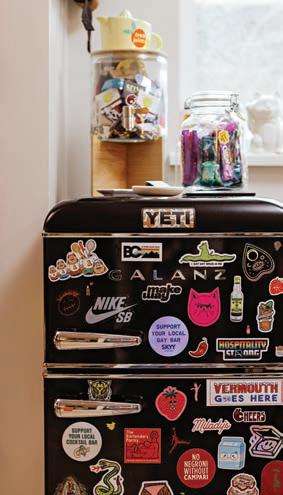
’Em All Atop her mini fridge (which stores liqueurs and syrups), find a vessel holding matchbooks and swag from bars across the world. It’s next to another container holding grapeflavoured treats from Stewart’s travels.
By the Book
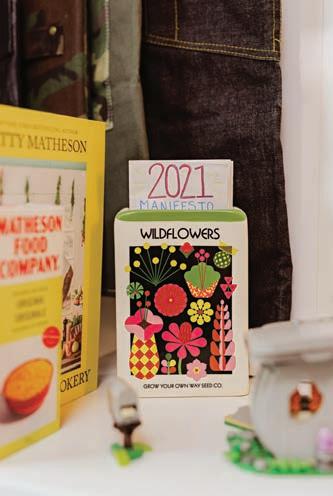
Every year, Stewart writes a manifesto: her goals and dreams for the year. They’re collected in a rectangular vase. “It’s funny to read back and see what actually came true,” she says.
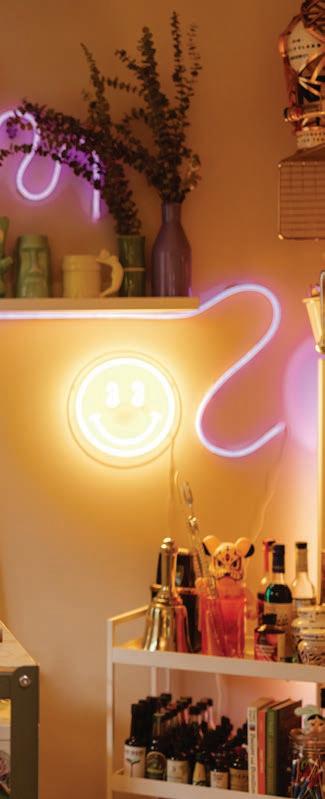
The dining area has been replaced by the bar area, so Stewart and Huffman mostly eat on their couch, or pull up some stools to the bar—which technically is a workbench
Stewart found in Ikea’s gardening department.
“Our dining table at our old apartment just became the spot to drop everything,” says Stewart. “We don’t miss it.” During parties, Stewart will push the bar over to the side (her dad added wheels) to improve the flow or set it up to be a buffet table.
Bottle Service
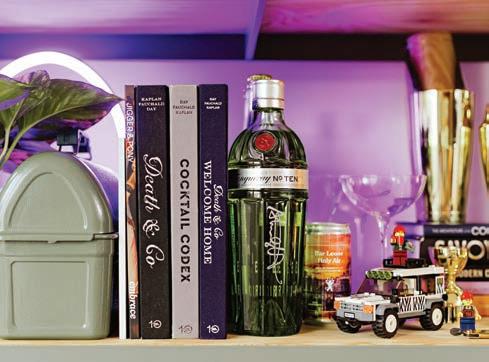
Stewart couldn’t even guess how many bottles she owns. “I’ve been bartending for 20 years and you just collect them along the way, and people give them as gifts,” she says. “The cabinets are full, and there are a bunch in my storage unit, too.” There’s only one, though, signed by Stanley Tucci—a Tanqueray bottle from when he and Stewart were both doing work for the gin brand.
Light It Up In addition to a neon smiley face light from 33 Acres (“Three is my lucky number... and they’ve got a really good cider,” says Stewart), she lights the space with bendy neon tube lights from Govee that can be shaped to her whims and controlled via a phone app.
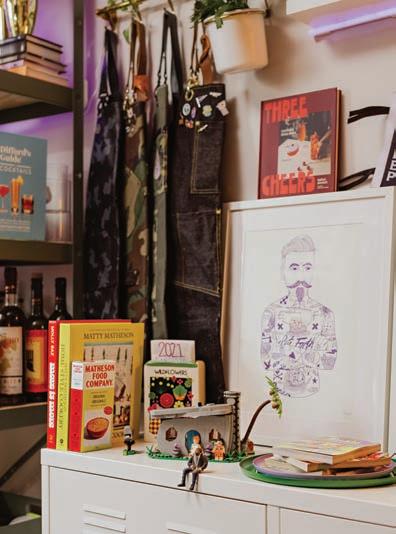
Book Club There are copies of her own book, Three Cheers , here, tucked next to cookbooks and cocktail books from both pals and heroes. “I can say more than half of these people I consider friends. It’s cool to get to celebrate their wins,” she says. “This industry is one big happy family. A dysfunctional family, but still.”
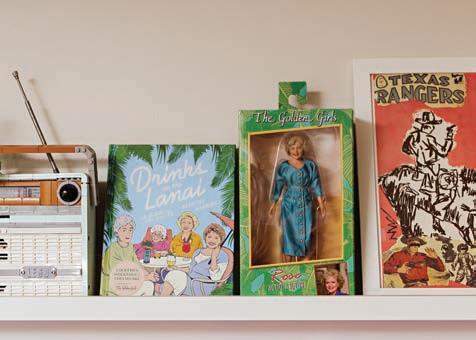
You’re Golden
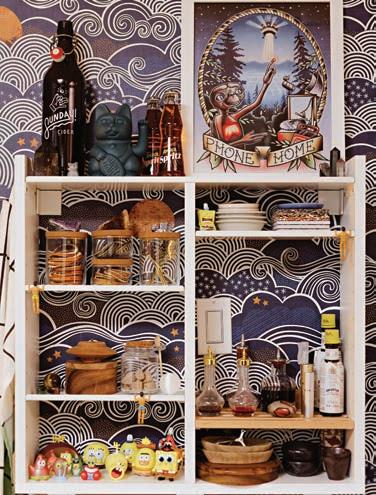
If you need some company as you peruse the Golden Girlsthemed cocktail book (Drinks on the Lanai ), just grab Stewart’s Rose Nylund action figure. Other popculture obsessions represented here include Spongebob and Archie comics.
An Ikea workbench is the centre of Stewart’s self-described “controlled chaos”; the island is surrounded by a sea of bottles and colourful baubles. There are as many toys here as there are halffinished tequilas—Spongebob blind-box figures, Lego sets and Golden Girls memorabilia line the shelves both here and throughout the home. “I’m a giant kid at heart,” Stewart shrugs. Cheers to that.
Whether you’re looking for athletic duds for a sweat sesh or prefer to use your spandex for endurance couch-potatoing, these Vancouver shops offer gear that’s both stylish and stretchy. by
Caroline Mitchell

Samsara 2170 Fir St., samsara-cycle.com
Made-in-Vancouver, high-performance women’s cycling gear that will make you the belle of the Grand Fondo.
The short-sleeved Endurance jerseys ($225)—made from lightweight Italian fabric in UPF 50+—come in fun patterns, and, more importantly, they’ve got an aerodynamic fit for reduced drag.

House Concepts
701–1431 Continental St., house-id.com
jThe fitness studio’s house brand of fitness gear. It’s all form-fitting, buttery-soft and designed to make your workouts extremely aesthetic.
The Seamless Asymmetrical sports bra ($78) probably isn’t your best bet for a well-supported run, but it looks damn good with the extreme butt-boosting Seamless bike short ($78).
THE STORE GO FOR THE ESSENTIAL FITNESS

Reigning Champ 1148 Robson St.; 2119 W 4th Ave., reigningchamp.com
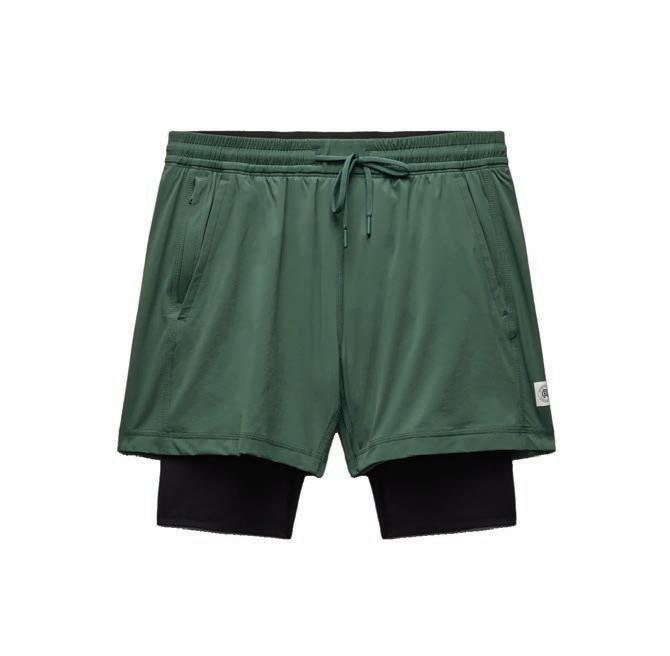
Clothes that fall into four cate gories—golf, training, tennis and “recovery.” Performance shorts and chore coats alike are crafted with premi um materials and infinite street cred.
Turf 2041 W 4th Ave., ourturf.com
Matchy-match cool-girl sets designed by Deanne Schweitzer and Summer Wilson (co-founder of Lululemon) and tested by Turf’s most beloved instructors.
The subtly sexy Corsettish top ($60) is made from lightweight, proprietary “En’rgi” fabric to layer j

Run As You Are 2033 W 4th Ave., runasyouare.co
Fast-kid run club essentials that will surely help you get that new PR on your next 10K.
The highly breathable Ciele RD singlet ($140) in lime green is ideal for daily training (and dazzling your opponents on the track).



OUR SPECIAL WORLD CUP COMPANION EDITION OF THE VANCOUVER MAGAZINE CITYGUIDE IS COMING THIS SUMMER.
Don’t miss your chance to get in front of hundreds of thousands of active, engaged Vancouver visitors—book your ad spot now!



Here’s your go-here, do-this guide to being a fun person. by Kerri
TRIVIA PURSUED:
BAYSIDE TRIVIA NIGHT
WHEN Mondays at 8 p.m.
WHERE Bayside Lounge
COST Free to play (drink minimums apply)
Brains meet brews in this West End pub quiz where the questions are sharper than the craft cocktails and your team’s moment of glory may just be spelled “third place.”
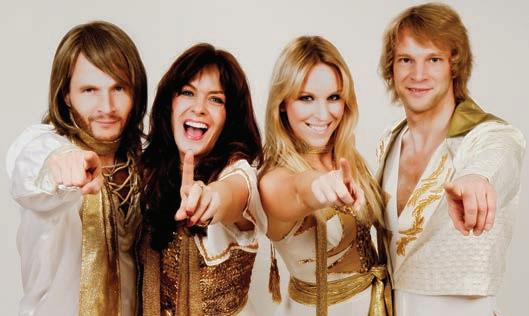
DANCING QUEEN: THE MUSIC OF ABBA— ARRIVAL FROM SWEDEN
WHEN February 3 and 4
WHERE Orpheum Theatre COST $43
Sing, sway and pretend you’re Amanda Seyfried on a Greek island looking for your dad—with the VSO backing you (and the tribute band).
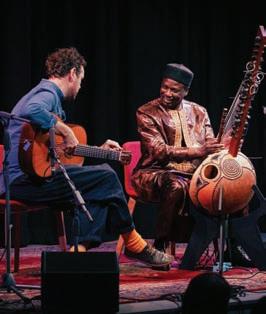
STRINGS ATTACHED: BALLAKÉ SISSOKO AND DEREK GRIPPER
WHEN February 7
WHERE Chan Shun Concert Hall
COST From $30
Two acoustic legends on one stage. If your idea of fun includes hyper-clarified calm, this is the perfect night out on the town.
WINTER PUSH‑OFF: PUSH INTERNATIONAL PERFORMING ARTS FESTIVAL
WHEN January 22 to February 8
WHERE Various venues
COST $15 to $50
Mid-winter surprise factory: theatre, dance and audio-visual chaos that makes you glad you left your duvet.
Donaldson
GOTTA GET DOWN ON FRY DAYS: LA POUTINE WEEK
WHEN February 1 to 7
WHERE Participating Vancouver restaurants
COST Varies by dish
Think: fries for the table but the table is Vancouver and those fries are covered in cheese and gravy.
JOY DECISION:
JUSTINE A. CHAMBERS’S THE BRUTAL JOY
WHEN February 5 to 6 (artist talkback February 6)
WHERE Scotiabank Dance Centre
COST From $30
Part dance, part existential cardio, this high-impact performance asks what joy looks like when you’re out of time. Less Swan Lake, more “What if your nervous system choreographed a protest?”
ROOTED IN ART: THAT GREEN IDEAL: EMILY CARR AND THE IDEA OF NATURE
WHEN Opens February 6 (runs to November)
WHERE Vancouver Art Gallery COST Regular admission
Witness B.C.’s favourite painter wrestle the wilderness while you appreciate it sans hiking boots.

THE GREAT: CATE
WHEN February 4
WHERE Fox Cabaret COST $32
A Canadian-born, Nashville-based singer-songwriter bringing country-pop power ballads to your soul—think Dolly meets Hannah Montana in Taylor Swift’s spare room.
BEATS THAT HEAT: INFIDELS JAZZ PRESENTS AFRICA!
WHEN February 7
WHERE Fox Cabaret
COST $40
Two powerhouse bands—Yoro Noukoussi and the African Masters and Kidannes’ Ethio-Jazz Ensemble—bring the heat, the horns and the hips to defrost your February blues. Hydrate responsibly.
FUNKMASTERS: ETHNIC HERITAGE ENSEMBLE
WHEN February 6
WHERE The Revue COST $44
Chicago jazz titan Kahil El’Zabar rolls into town with a percussionfuelled mission: to funk up your February. It’s their 52nd Black History Month tour—so, yeah, they know exactly what they’re doing.
GIVING NOTES: VANCOUVER CHOPIN SOCIETY CONCERTS
WHEN February 16 and 28
WHERE Orpheum Theatre (February 16) and Vancouver Playhouse (February 28)
COST From $38
An exquisite excuse to dress up and pretend you’ve always known the difference between a mazurka and a nocturne.
CHILD’S PLAY: VSO KIDS CONCERTS’ WALL TO WALL PERCUSSION
WHEN February 8
WHERE Orpheum Theatre COST From $20
Get ready for a kitchen-sink concert: drums, air-drumming, making instruments at home and a kid jam session all thrown into one show (that hopefully gets it out of their system by the time you get home).
SEA YOU THERE?: MERMAID TEARS
WHEN February 21
WHERE Hollywood Theatre COST From $35
A washed-up musician, a mermaid’s magic and BBQ-fish nightmares collide in this cabaret-theatre mash-up. Not sure what that all means? Only one way to find out...

INFINITE MOVES: BALLET BC’S INFINITY
WHEN February 26 to 28
WHERE Queen Elizabeth Theatre
COST From $19
Bodies in motion, ideas in flight. Expect leaps, bounds and the kind of awe you can enjoy from your seat because just because your body can be in motion, doesn’t mean it needs to be.
FEED YOUR TAMAGOTCHI: ROB ANDERSON’S ARE YOU AFRAID OF THE ’90S?
WHEN February 27
WHERE Vogue Theatre
COST From $54
TikTok’s reigning nostalgia king drags the ’90s through glitter and chaos. If you’ve ever had beef with Berenstain Bears or trust issues from Amelia Bedelia, this one’s for you.

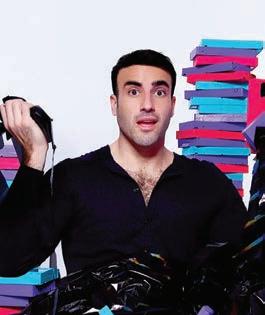
SLAM JAM: BOOM PRO WRESTLING
WHEN February 27 and 28
WHERE Commercial Drive Legion COST $35
One ring to rule them all—and it’s at your neighbourhood Legion, run by the guy who made #50 on our Power 50 list this year. Get ready for an evening of slams, sweat and one ripped Abraham Lincoln. Seriously.
STAR POWER: NATIONAL GEOGRAPHIC LIVE’S COSMIC ADVENTURES
WHEN February 12
WHERE Vancouver Playhouse COST $53
Space-geek Tracy Drain takes you Mars-to-Jupiter and beyond. Take that, Katy Perry.

MISE EN SCENE: BROADWAY ACROSS CANADA PRESENTS LES MISÉRABLES
WHEN February 26 to 28
WHERE Queen Elizabeth Theatre COST From $215
Jean Valjean and the gang are back to sing and chorus line their way into the French revolution and your heart. Or something like that, I’ve not seen it.
EDGE OF YOUR SEAT: VANCOUVER INTERNATIONAL MOUNTAIN FILM FESTIVAL
WHEN February 27 to March 9
WHERE Various theatres COST Varies
Cliffhanger stories, adrenaline highs—and popcorn. Because you can’t simply wait until another Spider-Man comes out to go to the movies.


What Cassie Sharpe, two-time Olympic medallist and B.C.-based freestyle halfpipe star, is streaming, spinning and crying over as she prepares for Milano Cortina 2026 (February 6 to 22).

THE ESSENTIAL LIVE EVENT Harmony Arts Festival in West Vancouver
“Live music, food trucks, local artists—my daughter dances the whole time.”

THE ON REP EAT ALBUM Paid in Memories by Jessie Reyez
“I mostly listen while driving, so anything that pumps me up is great: I love dance-pop. But right now I’ve got Jessie Reyez on repeat. Her energy and lyrics are too good.” THE YOUTUBE RABBIT HOLE Daily Fun

from Doug Sharpe
“This is my brother—his show is informative and fun!”
THE EMOTIONAL MOVIE The Wild Robot

“This wrecked me in a good way. I cried like a baby on the plane.”
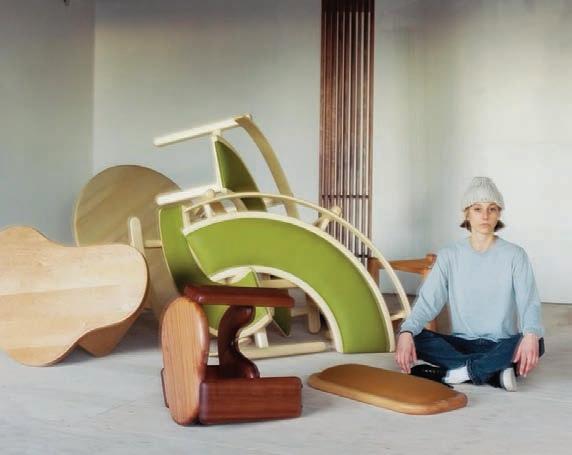
Heidi Rey spent years trying to fit her creative brain into conventional shapes. Now, with Studio Heidle, she’s designing her own. by
Stacey McLachlan
No one can accuse Heidi Rey of just assuming she could be an artist for a living. “I had that classic young person experience of being told there’s not really a space for artistry and having a career,” she says. Instead, she studied real estate and business and more (“I went to a bunch of schools,” she laughs) until it was finally, truly clear she wasn’t satisfied with any of it. “I was just like, what am I doing?” Rey recalls. She dropped business and instead signed up for a cabinetry and joinery program at BCIT, before adding one last credential to her long transcript: an industrial design degree from Emily Carr.
From there, she landed at furniture company Article for a few years, designing some of their top sellers (like the Quincy kitchen island) and then working in research and system development, but the constraints of being part of a production line were sometimes challenging. “It was an amazing experience and so validating, but being creative nine-to-five isn’t always how it works,” she says. “I’m a pretty neurodivergent person, and I’ve learned a lot about the poetics of how my brain works in the past couple of years. I see I was trying to force it into a shape that it didn’t quite fit.”
To get back to the love of actually making things—getting physical with furniture again—she took a leap out of the corporate world and into her very own Studio Heidle in 2023.
What started as select commissions is evolving now into a line of intentional sculptural pieces, including kitchen and servingware, a range of tables and other unique “objects of observation.” (She was named a One to Watch in Western Living’s 2024 Designers of the Year awards.) It’s a move that happened alongside some recent meaningful time with her family—time that’s given her a new perspective about what really matters. “Heidle stuff now carries more meaning and more punch,” she says. studioheidle.com
A few of Heidi Rey’s favourite shopping spots and homegrown makers.
NOON JEWELLERY
noonjewellery.com
“Sophia Armstrong is phenomenal. She actually made my ring when I got engaged last winter, and it was a really beautiful, deeply love-felt experience.”


OLD FAITHFUL
320 W Cordova St. and 1985 W 4th Ave., oldfaithfulshop.com
“It’s my favourite place for gifts. From a design perspective, you can trust that the intention behind every object there is understood deeply. I appreciate the curation.”
CREAM PONY
2190 Main St.
creampony.ca
“Cream Pony does great doughnuts and chicken. They’ve just opened their second location on Main Street and it’s run by a mother-daughter duo exemplifying doing what they love with such great intentions.”

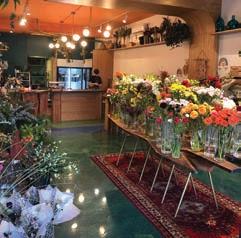
STUDIO FULL BLOOM
1319 Commercial Dr., studiofullbloom.com
“They have their flower stalks all in vases, so you can just walk in and put together your own bouquet and they don’t look at you weird or anything.”



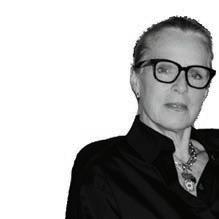
Catherine Regehr has been a staple of Vancouver’s fashion scene since the ’90s—flip back through the Vanmag archives to see her feminine silhouettes and luxurious fabrics throughout our fashion coverage over the decades. Today, the legend designs collaboratively with daughter Eva, and their latest collection doubles down on off-the-shoulder elegance and surprisingly versatile feathered gowns. Here’s what delights both designers when they’re not busy sketching your new favourite cocktail dress.
1. Dries Van Noten Ristos Belted Trench Coat
CATHERINE: My black
Dries Van Noten trench coat must be at least 10 years old at this point. It’s a timeless shape and very comfortable. $2,915, holtrenfrew.com
2. Flos Bellhop Portable Table Lamp
EVA: I love my portable table lamp from Flos. I’m one of those people that avoids overhead lighting at all costs. I bring this lamp outside on my patio to read at night, or into the kitchen when I’m making something later


in the evening for a nice ambient light. From $370, lightformshop.com
3. Mohair Blanket
CATHERINE: Scottish mohair throws are incredibly cozy! They’re light as a feather and very warm. I get them from this wonderful shop called Rhubarb Designs on Salt Spring Island, also owned by a mother-daughter duo. $455, rhubarb designs.com
4. Oju Inu Dimple Mugs
EVA: A friend of mine makes beautiful ceramics here in Vancouver. She

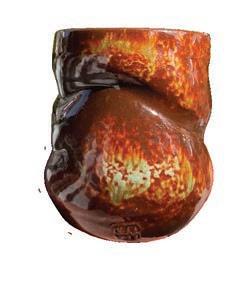



made me a few dimple mugs that I use for everything. I love having pieces that someone has made with their hands; to me it feels like they carry a nice energy. DM for purchase inquiries, @ojuinu.clayarts
5. Dôen Ischia Midi
Dress
EVA: I bought a Dôen nightgown a few years ago and I live in it, especially in the summer. As someone who works in the garment industry, I really appreciate when something is made with quality. The one I bought is sold out, but this Ischia


midi dress (in black) captures the same spirit. $590, holtrenfrew.com
6. Martha Sturdy Resin Vases
CATHERINE: In my Salt Spring home, I have two extra-large ones on my kitchen island for big floral displays. I also have low ones, end to end, for low floral displays on my dining room tables. I’ve known Martha for years and have collected many of her large resin bowls and side tables that colour coordinate with my environments Prices vary, ebay.ca
7. Xirena Beau Shirt
CATHERINE: I love these Xirena shirts. They’re made in a very lightweight soft cotton. The cut is very good. I’ve got them in many different colours. $280, gravity pope.com
8. Jao Brand Go Oil
EVA: I keep this beautiful Goē oil from Jao Brand right by my bed and use it at night on my hair, lips and hands. It’s made with natural oils and is free of harsh chemicals or synthetic fragrance, which I’ve been paying more attention to lately. $78, sunjalink.com
CATHERINE: I wear them when I’m gardening at my place on Salt Spring Island in rainy weather. I like the men’s boots. They’re very comfortable and high enough to prevent soaks. $90, hellyhansen.com
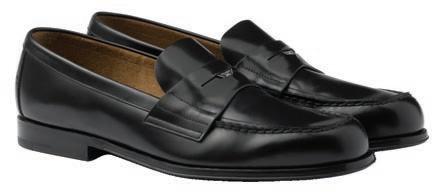
10. Prada Brushed Leather Men’s Loafers
CATHERINE: Mine must be at least 10 years old. They’re made of fine leather—calfskin. They feel like a pair of old slippers and work with most of my wardrobe. $1,590, prada.com
A Beautiful Ending is changing how we live with death.
by Sara Harowitz
The lights inside studio 114 at the City Centre Artist Lodge are dim, the small space aglow with flickering tea lights and dotted with mismatched furniture. A big thermos by the door is filled with steaming tea, which people pour into a series of handmade ceramic cups. A harpist is tucked cozily in a corner, playing ethereal chords that wash the space in a dream-like atmosphere. A dozen or so people mill about—some familiar with each other, some meeting for the first time.
They’ve all gathered here for a free ceramics workshop put on by A Beautiful Ending (the ABE Project): a Vancouver-based nonprofit organization offering holistic and culturally inclusive end-of-life support, whether it’s for someone living with a terminal illness or grieving a loss.
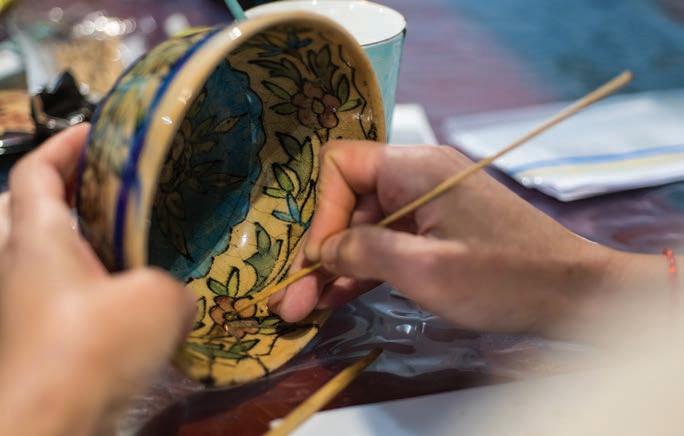
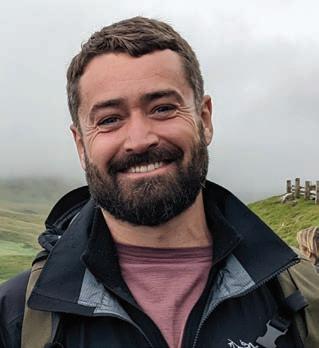
At the ABE Project’s heart is founder Labhrás Quigley, known to most people as Lar: a friendly Irishman with bright eyes and a calming presence. After a few minutes of unstructured socializing, Quigley softly greets the gathered group and explains the run of show for the evening: participants will be led around the corner to one of the Lodge’s other studios, where they will be taught a contemporary

version of kintsugi. The Japanese artform involves repairing broken pottery with glue that’s been combined with gold or silver powder, rendering the piece not only mended, but even more beautiful than it was in the first place.
It’s certainly a fitting theme for an event about grief: the idea that a person’s brokenness is not an ending, but rather an invitation for transformation. Or, perhaps better: that a person in pieces is not really broken at all.
The first half hour of the workshop is quiet as a local ceramicist leads the group through the initial steps of kintsugi. Before long, though, the participants begin to talk. One person is facing a life-limiting illness. Another
works with end-of-life patients at a local hospice. Yet another is raw with the grief of a recent loss. Despite these differences in their relationships with death, what they all share is a common desire to discuss them—to pull back the drapes and to let the light in. This idea is central to Quigley’s mission.
“There’s such a death phobia in our culture,” he says. “Conversations around death and dying aren’t typical, which is strange, given that we’re all guaranteed to die at some point in our lives. You hear conversations about birth and nobody bats an eyelid, but for some reason, we seem to have sanitized all these aspects of death, dying and bereavement.”
Quigley has lived in Vancouver for the better part of 20 years, and spent most of them working in the tech industry. It was during the pandemic lockdowns, with nothing much to do but sit with his thoughts, that he realized he had been suppressing a lot of unprocessed grief since he was a teenager and his brother died. The revelation was profound, and led him on a months-long journey of introspective work.
“Toward the end of that period, I experienced what felt like a download—a clear vision guiding me toward a different path, one rooted in community and end-of-life care,” he recalls. He stepped away from his tech career and spent time travelling

Lar Quigley (centre) is the founder of A Beautiful Ending, which offers a variety of death-centred services, including kintsugi workshops (below) designed to spark community conversation around grief in all forms.
large funeral companies and small family-run homes care for the dead.”
When he was ready to come back to Vancouver, he began working with deathfocused organizations here, including the Vancouver Hospice Society and Dying with
events designed to hold space for grief in all its forms and stages. “Death isn’t a problem to solve, or something that we need to get right,” Quigley reflects. “We’ve clinicized it, but it’s not a medical event. It’s a human, cultural, relational process.”
around Europe and the States, exploring how other cultures engage with death and dying. “I spent time in places reimagining our relationship with death, from human composting centres to green burial grounds where I helped lay someone to rest,” he says. “I also spent time behind the scenes, learning how both

Dignity, eventually channelling everything he learned into his own venture.
The ABE Project now hosts regular arts and culture
Each ABE event is based on an interactive activity designed to put people at ease. “People start by calming their nervous systems—using their hands as a way to relax the body and mind,” explains Quigley. “From there, they can begin to talk about grief in a community setting, rather than in a therapeutic one, where you’re sitting across from someone in a chair or in a structured group circle.”
Bijal Patel knows all too well how powerful creativity can be in the healing process. She moved from London to Vancouver eight years ago, when she was deep in the throes of grief after the sudden death of her husband. Though she was working as a
psychologist at the time, Patel had always loved painting and drawing, and began to use those mediums to process this profound loss. Now she’s a fulltime artist, running her own artistic practice and hosting workshops out of her Granville Island studio.
“Art helped me live with the living and not with the dead,” she says, standing in the candlelit room at the start of the kintsugi workshop. Patel met Quigley just one week earlier, but their kinship was instant: he started talking with her about his unique approach to death and grief before having any idea that she was a widow. “I got goosebumps,” she recalls. When Patel learned about ABE, she wanted to join the next event. And it couldn’t have come at a better time: just a few days before the anniversary of her husband’s death.
Grief is a painful enough experience without it also being a lonely one. The ABE Project aims to lessen the burden on those grappling with death by showing them that there is a better way: that they can find and lean on community; that what they’re going through is not only normal, but profoundly human; and that it’s not only okay to talk about it—it’s healthy. It might even be necessary.
“The sooner we begin to explore our own impermanence, the more we can start to focus on what it truly means to be alive and to enjoy life fully,” Quigley asserts. “When we live from a place of fear or avoidance of death, we miss something essential about what life can be.”

With a $1-billion tidal wave of economic impact predicted to come from FIFA World Cup, is the city ready for the flood? by
Rob Shaw
To truly understand the impact the FIFA World Cup will have on Vancouver, think of it like this: it will be bigger than any concert ever hosted in the
city (including Taylor Swift), bigger than the 2010 Winter Olympics and bigger, even, than if the Vancouver Canucks won the Stanley Cup finals.
It is, says lead organizer Jessie Adcock, without exaggerating, “the most-watched competition on earth.”
“Just the global viewership of one regular group stage match exceeds the viewership of a Super Bowl and we are going to have seven of those matches in Vancouver,” says Adcock, who is heading Vancouver’s host committee for the World Cup. “I think
the whole province is going to come alive.”
Vancouver is one of 16 host cities for the 2026 World Cup, where 48 teams will play 104 matches across Canada, Mexico and the United States. The only other Canadian city is Toronto.
The vast scale of what is about to occur in June and July is difficult to wrap your head around, especially for people who aren’t fans of “the beautiful game.” To put it simply: it’s huge. FIFA will pump $1 billion in spending into the province over five years,
as well as bring an additional one million visitors to the province (more than 360,000 of whom will be there just for the World Cup period itself), according to Destination BC and government estimates.
The cash-strapped provincial government will see a $224-million windfall in FIFA-related tax revenues (though it is also expected to have to spend up to $624 million in security, organization and venue upgrades).
“I don’t think Vancouverites understand how massive this will be,” says Vancouver

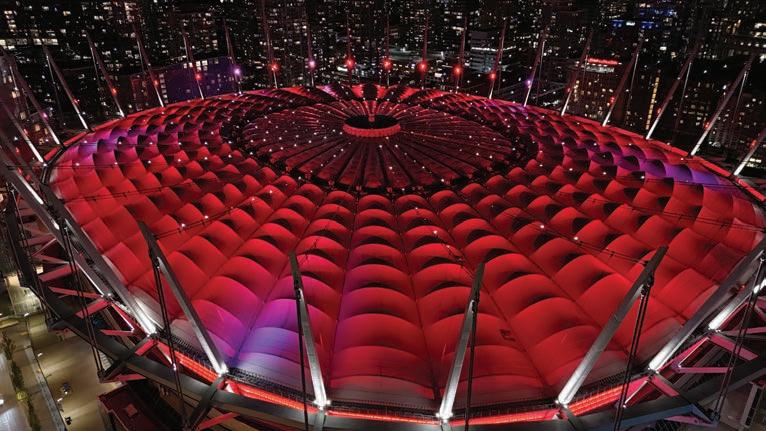
World Cup Fever BC Place (opposite) is adding three major event spaces to the stadium for FIFA, including Corner Club, a 600-person event space with direct sightlines to the bowl through floor-to-ceiling windows and balcony access.

mayor Ken Sim. “If you thought Expo 86 or the 2010 [Olympics] were big, they actually pale in comparison. The whole world is going to be looking at us.”
One major difference, though, is that B.C. won’t be left with any permanent new attractions—like BC Place, Science World or the SkyTrain system after Expo 86, or even the Sea to Sky Highway
upgrades and Canada Line SkyTrain extension that we continued to enjoy after the Olympics were over.
Instead, the 44-year-old BC Place stadium will get new hospitality upgrades, refreshed dressing rooms, a renovated media broadcast centre and a new central video display board. The artificial field will be replaced with grass in order to meet FIFA requirements,
but (sadly for the Whitecaps) it’s only temporary.
Tourism groups hope to extend the benefits outside of the Lower Mainland, enticing visitors who have extra days before and after the games to explore the rest of the province. To capitalize, FIFA Vancouver organizers have created a “community activation playbook” with information on how municipalities,
organizations and people can host viewing parties (basically, keep it below 1,000 people to avoid broadcast licensing fees), avoid legal pitfalls (don’t reference the FIFA name, logo or brand without explicit permission) and even make a profit (for the first time, FIFA will let some applicants use its trademarks to create unique local merchandise).
The province expects expanded liquor licences, patios, outdoor festivals and parties across B.C., built around community experiences for watching the games.
These viewing parties and events may prove to be essential for most Vancouverites interested in watching matches. Getting a ticket to go in-person could be tough. More than 4.5 million people registered in the Visa pre-sale program for early tickets. Those lucky enough to score one will get access to a special FIFA celebration area around BC Place. The rest of us are invited to the “FIFA Fan Festival” party at Hastings Park.
For Vancouver businesses, the World Cup matches could mean a surge of downtown activity. The games are during the day, but the city is expected to come alive at night with all the visitors.
“I am confident our businesses will see a benefit from FIFA,” says Jane Talbot, president of the Downtown Vancouver Business Improvement Association. It’s a view shared by the folks at City Hall, as well. “If you have a business in Vancouver and know how to run it, this is just the start of something absolutely amazing,” says Mayor Sim.

Still, there will be road closures to downtown as part of a two-kilometre “controlled area” around BC Place on game days. And it’s widely expected that various levels of government will try to minimize the visible street disorder and homelessness downtown before the international tourists arrive.
“I’ve been very clear with anyone with any decision-making capacity around FIFA that the narrative cannot be: don’t come downtown,” says Talbot. “We’ve heard that with other large-scale events and we’re just asking that’s not the narrative this time. Our members are looking forward to this event, our members are ready to support this event.”
At a recent briefing for municipal officials, anti-poverty advocates encouraged FIFA organizers to consider building things like outdoor
Airbnb, which is lobbying the province to loosen the short-term rules during FIFA, says it estimates up to 15,000 fans may not be able to find a space to stay on game days, and that hotel prices could spike more than 200 percent (echoing surge pricing that occurred during the 2024 Taylor Swift concert).
Adcock says one of the lasting legacies of FIFA in Vancouver will be the “operational muscle” that comes from bringing together the city, province, First Nations, businesses, tourism groups,
bathroom facilities that would remain permanent fixtures after the games to help the city’s most vulnerable.
For those visiting, Vancouver organizers say they are confident there will be enough accommodation spaces to handle the surge in soccer fans. Not everyone believes that, what with the already chronic hotel shortage and government restrictions on short-term rentals.
“I’ve been very clear with anyone with any decisionmaking capacity around FIFA that the narrative cannot be: don’t come downtown.”
— Jane Talbot, President, Downtown Van
security experts and others into a group that can actually pull off a world-class major event. It could be a “bright moment” for the province on an international stage, she says. The organizing committee has spent years working on the plan. But even Adcock admits we won’t truly appreciate the immensity of the world’s largest sport, on its biggest stage in our own backyard, until it starts this summer.




David Long, being recognized in Power 50, reflects more than leadership; it signals transformation. At the Greater Vancouver Food Bank, our vision is a British Columbia where everyone has access to healthy food, made possible through efficient distribution, innovation, and partnerships. We apply entrepreneurial thinking to our organization by redesigning systems, scaling smart solutions, and aligning partners to deliver province-wide impact.
Last year, we distributed over 9.5 million pounds of food, with over 75% fresh. Through initiatives like Food Preservation and FRESH Start Program, we are reframing the traditional model. We are building a more resilient food system designed for long-term, measurable impact.

We are not your average food bank.






If you’ve ever wondered what phase the moon is in, these clocks have you covered.
I’ve written a lot of articles by this stage in my career. It’s only natural to forget about some of them. The brain only has so much storage space (250GB for standard models, 500GB if you splashed out on Human Brain Pro Max). Sometimes when I’m trying to access a deep memory about, say, whether or not I ever interviewed that


topless woman who always runs for mayor, I can actually hear my brain making the same sort of violent vibrating grunts that our wheezing family computer would emit whenever I tried to crack open a cool Capri-Sun and kick back for big Saturday night with my Encarta 95 CD-ROM. Which is to say, I have complete empathy for retired architect Richard Hulbert, who initially told me he was “not familiar” with Robson CentrePlace, despite some pretty compelling evidence (his architecture firm’s own website) to suggest that the Hulbert Group did, in fact, design the “56,000 square foot urban retail development” that opened its doors in 1996. With a little prompting, he came around and took credit for designing a complex that both commands some of the city’s highest commercial rent and proudly employs Vancouver’s most dead-eyed Banana Republic employees. He refused, however, to give me a satisfying answer to my real question: what’s with the clocks?
by Stacey McLachlan
by Ane Arzelus
Got a question for Know-It-All?
stacey.mclachlan@ vanmag.com
Next time you’re on Robson Street, searching for the perfect suede boot that will only be appropriate for Vancouver weather exactly three days a year, look up. You’ll see twin clockfaces, wrapped around the corner tower at Robson and Thurlow, quietly sharing the current time with passersby in a way that’s dignified and understated, unlike some other aggressively performative clocks in town I could name. But in case “time”
isn’t enough information about the current status of our shared physical reality, you can let your eyes keep wandering: also mounted on Robson CentrePlace—a building designed to have the appearance of five smaller buildings from different time periods—are four more Art Deco-inspired clocks reporting on the temperature, the month of the year, the direction of the wind and (obviously!) the phases of the moon.
Maybe true power shoppers can see a benefit to this intel. Could a westerly wind at one’s back make the walk to Sephora easier? Should I be avoiding Zara during a full moon? Hulbert certainly doesn’t know. He reports that the addition of the clocks came after his firm completed the project: a flourish of the development company that commissioned the complex.
That development company was Hartleywood Holdings, a Singapore-based real estate firm that sold Robson CentrePlace in 2024 to an undisclosed buyer for an undisclosed amount (though it has been assessed at $105.3 million—a cool $17.5 mil per clock). I’ve tried calling the listed number for Hartleywood dozens of times to hear from the clock instigators themselves about the meaning of these unusual devices, but it rings and rings and rings. It’s the soundtrack to the one mystery I couldn’t solve, at least in time for filing this column: the clock is telling me it’s quarter to February already.
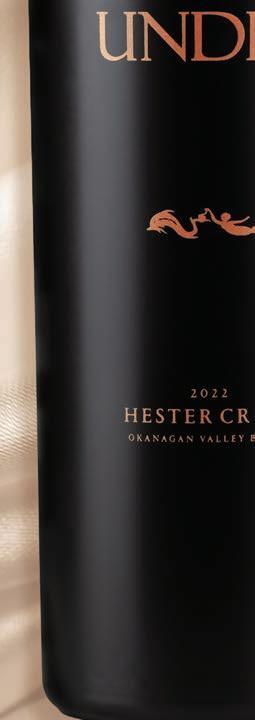
“ The wine begins with bright aromas of cherry, cola, mocha and spice. The palate is polished and layered with flavours of cherry, chocolate and vanilla, mingled with sagebrush. This wine can be enjoyed now, which reflects the gentleness of the Italian ganimede fermenters or can be aged up to 10 years.”
JOHN SCHREINER
john schreiner on wine






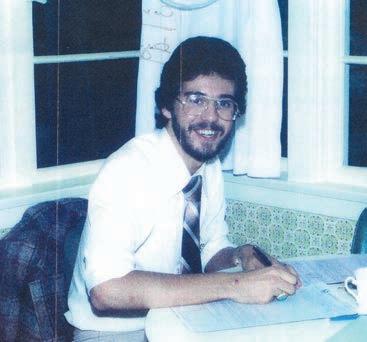
On December 15, 2025, Bob Rennie marked 50 years in real estate. From day one, he’s been guided by facts, data, and housing solutions—grounded in a clear philosophy we at the home o ce a ectionately refer to as BOBISMS.
On these two pages, we wanted to share with you some of Bob’s philosophy, and the strength and simple wisdom that have shaped the culture of the rennie group of companies. For the past 50 years, these guideposts have shown up daily, in how we advise consumers, support the development industry, and collaborate with government.
“We don’t mourn the relationship we lost; we mourn the relationship we imagined.”
– Bob Rennie
“JUST BECAUSE I’M NICE DOESN’T MEAN I’M STUPID.”
– Bob Rennie
“We are all a brand—the only way to become a brand is to plan on it, be deliberate. It’s not very Canadian.”
– Bob Rennie
“A person that adheres to a position previously stated when times change is an idiot.”
– Mieko Rennie, 1988
“When two people are drowning, save yourself first. Otherwise, you’re no good to anybody.”
– Bob Rennie
“Whoever gets to the truth first, wins.”
– Bob Rennie
“In business, I’m monogamous when I’m with you.”
– Bob Rennie
“Everybody’s problems are bigger than yours—because they are their own.”
– Bob Rennie
“GENEROUS PEOPLE DO NOT LIKE TO BE TOLD TO BE GENEROUS.”
– Bob Rennie
“We all survive on our similarities, but in the end, we will only be remembered for our differences.”
– Bob Rennie
“Find one thing and do it better than anybody else.”
- Joe Segal, 1989
“Nothing comes into the collection that doesn’t speak to the collection.”
– Bob Rennie, when it comes to art
“Anybody can get in the game, but very few people stay in.”
– Bob Rennie
“LIFE IS JUST LIKE CHESS — IF YOU WANT TO LOSE, SURROUND YOURSELF WITH YOURSELF.”
– Bob Rennie
“When one of us has a problem, we all have a problem.”
– Bob Rennie
“A painting must be seen in the light that it was painted in.”
– Bob Rennie, when it comes to art
“That ain’t ground you’re standing on, it is the shoulders of others.”
– August Wilson’s Gem of the Ocean
“4% of the world are assholes, and they take up 96% of our time.”
– Bob Rennie
“Always skate o the ice—don’t get kicked o .”
– Bob Rennie
“Anybody can tell me what happened yesterday. Your job is to tell me what’s going to happen tomorrow.”
-Jack Poole, 1992
“We don’t buy trophies, we own trophies.”
– Bob Rennie, when it comes to art
“Your first
loss is your best loss.”
Jimmy Pattison, expo 86
“By the time we understood it, we couldn’t a ord it.”
– Moo Anderson
“Rich people can a ord to wear sweatpants.”
– Bob Rennie
“The more we talk about our relationship, the less we are in one.”
– Bob Rennie
“SIZE 4 HAT, 44 PANTS, NO BRAINS, BUT LOTS OF GUTS.”
- My Dad
“Everyone is entitled to their own opinion, but not their own facts.”
– Senator Daniel Patrick Moynihan
“Once you’re conscious, you can’t pretend to be unconscious.”
– Lynn Zettle
“I can’t be me unless I let you be you.”
– Bob Rennie
“Be at the top of your class or be at the bottom of your class…but for God’s sake, do not be in the middle.”
– Diana Vreeland to her son
“THE FOUNDERS ARE THE BIGGEST DETRIMENT TO THE GROWTH OF A COMPANY...BECAUSE THEY WANT YESTERDAY BACK.”
– Bob Rennie
“FRIENDS DON’T COME WITH INSTRUCTIONS.”
– Bob Rennie
“The roll-up-your-sleeves, blood-andguts, all-in mindset required to build an asset will require a di erent team to maintain and protect that asset.”
– Bob Rennie
“Is it social justice or social jewelry? Unfortunately, it’s usually just social jewelry.”
– Bob Rennie
“I’m tired of pretending I’m stupid to make you feel comfortable.”
– Bob Rennie



Bob, 2025



The more fires we detect, the more communities we protect
TELUS Early Wildfire Detection, powered by Dryad Networks, uses solar-powered gas sensors to detect fires in their early stages, giving first responders a crucial head start. By investing in wildfire detection, we’re helping Canadian communities, businesses, and forests stay safe.

An organic theme always emerges as we put together our annual list of the people who power this city—and this year, philanthropy and community are the threads holding this group of impressive Vancouverites together, after countless weeks of polling experts around the city and even more deep research. So, yes, you’ll find entrepreneurs and C-suite leaders among the 50 as always, but in 2026, we’re more likely to be celebrating them for what they do beyond their financial reports. These are folks putting B.C. onto the global stage, developing world-class sustainability initiatives, creating jobs during a tough economic time or raising record-breaking amounts for the causes closest to home. And alongside these thought leaders, we’re also honouring artists, athletes and activists who are doing their part to make life in Vancouver the best it can be. Whatever industry they’re coming from: this is people power at its finest.
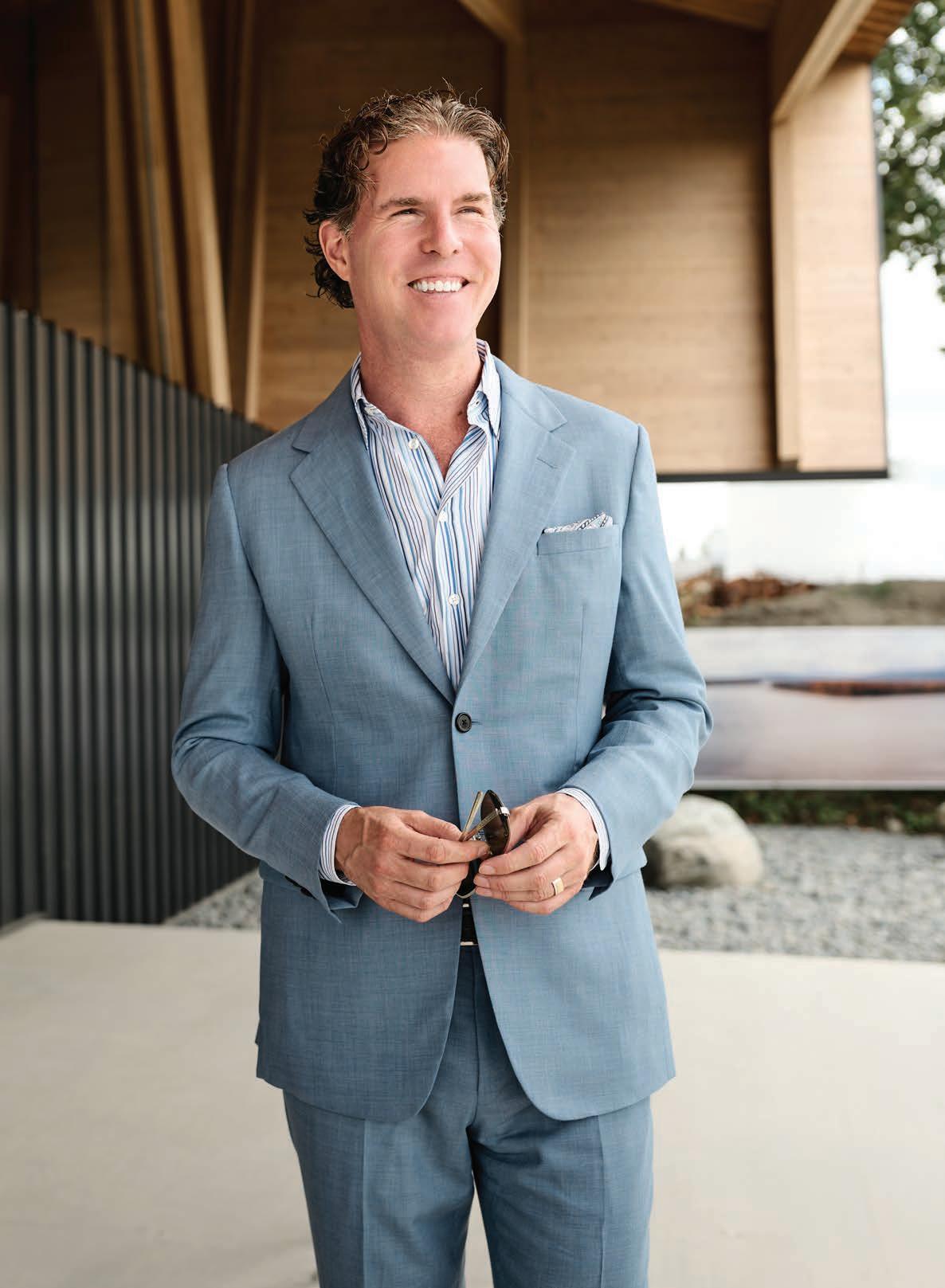
IF YOU BUILD IT
For building communities and giving back in equal measure
PRESIDENT, BEEDIE PREVIOUSLY 2025
When Ryan Beedie took the helm of his family’s namesake business in 2001 at the age of 33, he didn’t just expand it—he transformed it into something his late father Keith could hardly have imagined. Today, Beedie stands as one of British Columbia’s largest commercial property managers and one of Canada’s leading real estate developers, with a footprint that extends across Western Canada and into Nevada. Operating through three divisions—Beedie Industrial, Beedie Living and Beedie Capital—the company has completed development on more than 35 million square feet of industrial space and manages a portfolio of more than 200 properties.
The company’s “Built for Good” motto isn’t just marketing language; it’s a guiding principle embedded in both its urban developments and its resource-sector partnerships. The ambitious Fraser Mills master-planned community in Coquitlam—5,500 homes across 96 acres of reclaimed waterfront—demonstrates long-term city-building: environmental remediation of a former mill site, major investments in public infrastructure and the creation of a complete community with parks, jobs and public waterfront access. Likewise, Beedie’s partnerships with six First Nations on the Blackwater Mine project near Prince George reflect a commitment to equitable development. By working with Indigenous governments as genuine partners (not mere stakeholders), the company supports shared economic opportunity, local employment and community-led stewardship.
But Ryan Beedie’s impact extends far beyond construction sites and balance sheets. Together with his wife Cindy (a regular on the Power 50 list herself), he’s committed over $140 million to more than 350 charities, with education emerging as a cornerstone of their giving. Beedie Luminaries, the scholarship program he launched for his 50th birthday with a $50-million investment, has now granted over 1,000 scholarships totalling $6.9 million to students facing financial barriers—so far, the program has seen a 95-percent graduation rate. And then there’s his biennial Stanley Park concerts, which have become legendary fundraisers: 2025’s Def Leppardheadlined event raised $2.5 million for the Greater Vancouver Food Bank, surpassing even his previous record.
In 2025, Beedie was inducted into the Business Laureates of British Columbia Hall of Fame—just as his father once was—and was given the Order of British Columbia, too. It’s appropriate acclaim for a local boy who has spent a career building a legacy not just for his family, but also for his home province. For Beedie, building for good means building communities—and investing deeply in the people who live in them.

For bringing the world’s biggest sporting event home
VICE PRESIDENT, FIFA; PRESIDENT, CONCACAF NEW
East Vancouver’s own Victor Montagliani has spent his career elevating Canadian soccer from local fields to the global stage— and now he’s bringing the world to his hometown. As vicepresident of FIFA and president of Concacaf (the Confederation of North, Central America and Caribbean Association Football), Montagliani was instrumental in securing Canada’s place as a co-host nation for the 2026 FIFA World Cup, which kicks off this summer. Vancouver will host seven matches in what Montagliani calls “a once-in-a-lifetime moment” for the city: a moment he can take much of the credit for.
Though we’re celebrating his work from this past year, the truth is, this achievement represents the culmination of a journey that began at BC Soccer, progressed through his presidency of the Canadian Soccer Association starting in 2012 and led to his election as Concacaf president in 2016. Along the way, he championed Canada’s successful hosting of the 2015 FIFA Women’s World Cup and has consistently pushed a strategic, long-term vision for the sport across North and Central America—a vision that will come to life this summer.
To be clear, Montagliani’s influence extends beyond securing the tournament itself. He’s ensured local infrastructure investment, including major upgrades to BC Place—new suites and elevators—and he passionately engaged with Vancouver’s business community to help them prepare for the economic boost (a projected $1.7 billion!) and global spotlight the World Cup will bring. This past September, Mayor Ken Sim even proclaimed “Victor Montagliani Day” in Vancouver, recognizing his lifelong dedication to football and his role in transforming Canada into one of the world’s emerging footballing nations. “My goal has always been to give back by making a positive and measurable impact on our game and our nation in every way possible,” said Montagliani at the proclamation ceremony.

MAKE SOME NOISE
Sarah McLachlan’s 25-yearold music school serves 1,200 youth annually, while her principled stands prove she’s still making noise where it matters most.
For giving voice to a generation— and giving music to the next
FOUNDER, SARAH McLACHLAN SCHOOL OF MUSIC NEW
When Sarah McLachlan founded Lilith Fair in the ’90s, she rewrote the rules of the music business. Today, her most powerful legacy is still unfolding at home: the Sarah McLachlan School of Music, now in its 25th year and serving more than 1,200 young musicians annually across Vancouver, New Westminster and Edmonton. A new partnership with Douglas College widens that pipeline even further, removing barriers for youth who might never otherwise pick up an instrument. This year’s record-breaking $3.3-million Barefoot in the Backyard fundraiser proved the city is still rallying behind her conviction that music education is a right, not a luxury.
But in 2025, McLachlan also reminded fans she’s never shied away from principled stands. While promoting Better Broken, her first album in a decade, she pulled out of the Disney-affiliated U.S. premiere of her Lilith Fair documentary in protest of what she called an “insidious erosion” of free speech—a move that aligned her with embattled host Jimmy Kimmel. Days later, she appeared on Jimmy Kimmel Live! as a surprise guest, performing her new single in solidarity after the show’s suspension sparked a national debate over censorship and political pressure.
Three Grammys, 12 Junos, 40 million albums sold and an Officer of the Order of Canada distinction later, McLachlan is still using her platform the way she always has: to make noise where it matters—whether that’s in a classroom or on a stage that others are trying to silence.
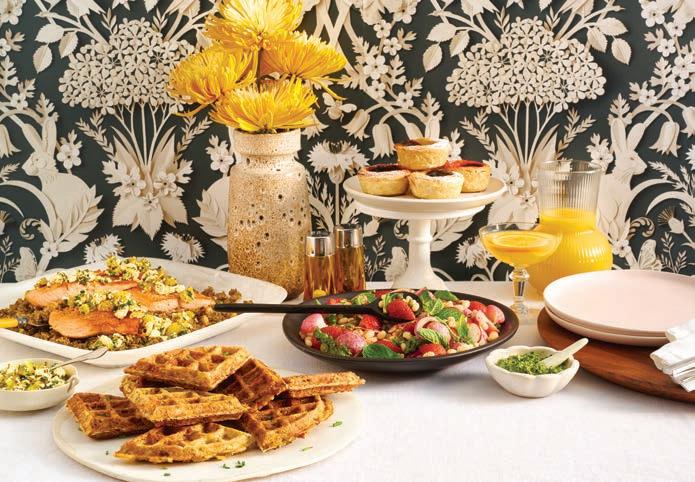

Lead with confidence.
When critical decisions arise, you need a strategic partner who speaks both law and business. From ambitious startups to established enterprises, we deliver practical solutions in select areas of law:
• Commercial Real Estate & Development
• Corporate/Commercial
• Lending/Insolvency
• Litigation/Arbitration/Dispute Resolution
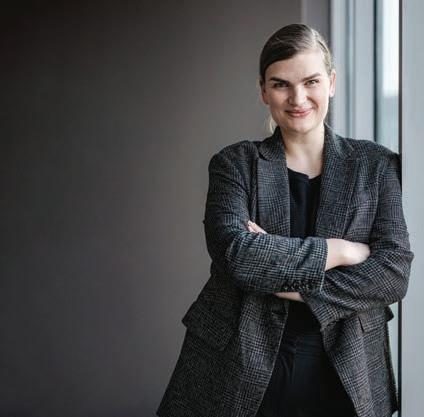
• Securities/Corporate Finance/Mergers & Acquisitions
• Tax/Trusts
Let’s navigate your next chapter together.
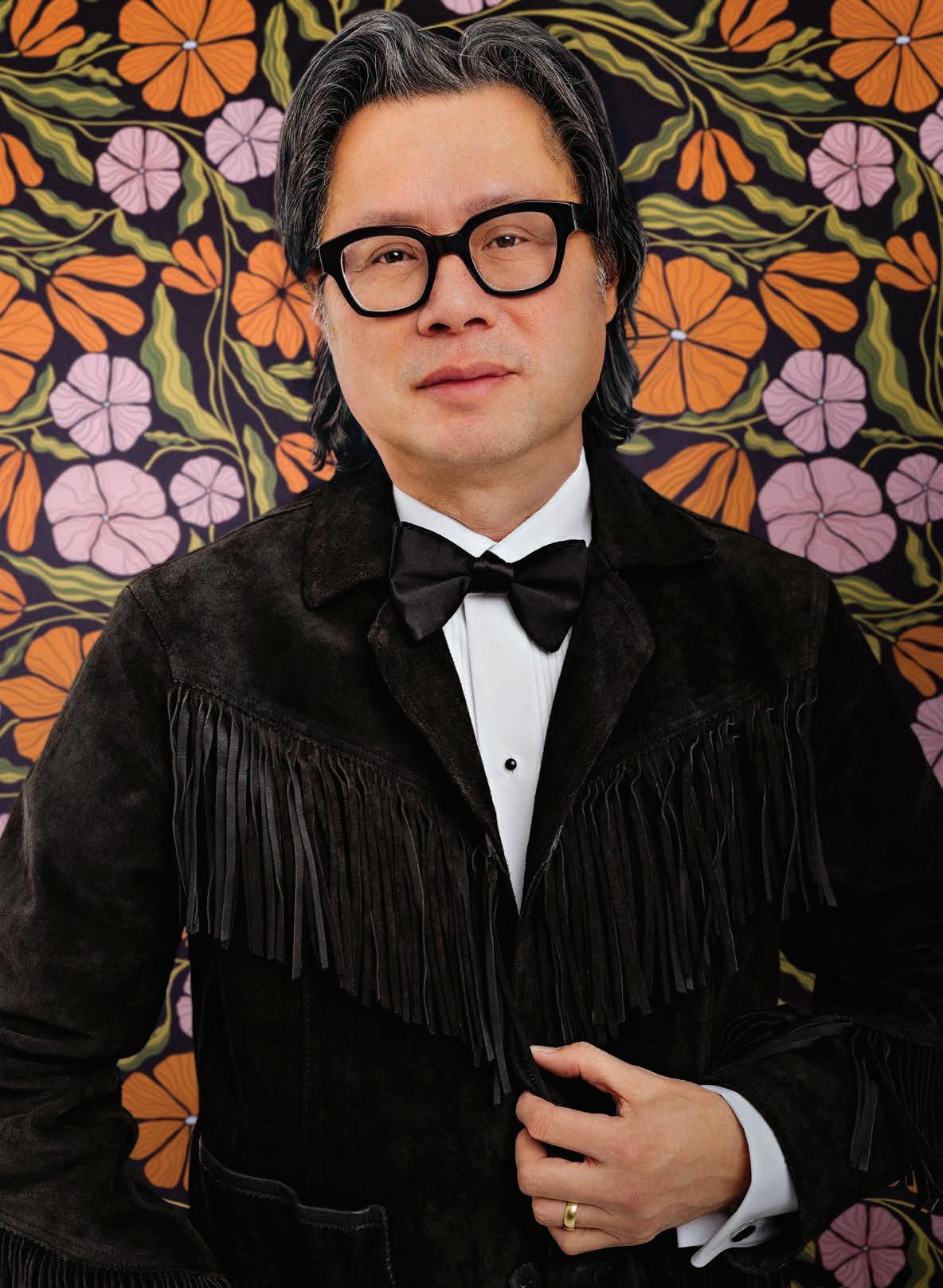
Fred Lee’s infectious energy and auctioneering mastery make him Vancouver’s most sought-after charity host, warmly coaxing millions from crowds for great causes.
For supporting just about every charity in town
MAN ABOUT TOWN, AUCTIONEER PREVIOUSLY 2025
Does a charity event exist in 2026 without the enigmatic Fred Lee, the man whose magic on the mic coaxes dollars out of guests’ pockets and into the cause du jour? His skill at warmly revving up a crowd—who inevitably clap along as he calls out raised paddle numbers in joyful rhythmic count—sees charities clamouring to lock him in as early as they can (and literally scheduling an event around his availability; sometimes he’ll stack up two fundraisers in one night).
He’s shockingly tireless in his contributions. Even though he holds a day job with UBC’s Alumni Engagement, he serves as a partner for each charity he hosts, advising them on success strategies well in advance of the big day. And while he’s seemingly on the auction floor every night of the week, he finds the time to amplify causes close to his heart too, serving as an advisor for UBC’s CampOUT, a summer leadership camp for 2SLGBTQIA+ youth and their allies.


For bringing the roar back to BC Lions
OWNER, BC LIONS; CEO, FUTURA CORPORATION PREVIOUSLY 2025
PRESIDENT, JIM PATTISON GROUP NEW 6. 5.
Amar Doman has re-energized Vancouver’s CFL heartbeat through his ownership of the BC Lions—and 2025 was a standout year. Since stepping in, he’s backed a major renovation of the Lions’ aging Surrey practice facility, launching a multistage upgrade that will create a modern performance hub with new training, locker and lounge spaces. Off the field, his commitment earned him the CFL Commissioner’s Award in late 2024 for revitalizing club operations and community engagement. On the field, the Lions—now thriving under refreshed leadership— pushed their way to the Western Final in 2025, signalling that the organizational investments are paying off.
Doman’s momentum with the Lions mirrors the success of his broader business portfolio. Through Futura Corporation, he has continued to scale a North American operation generating roughly $3.5 billion in sales last year and supporting about 4,000 employees. That level of commercial stability provides the financial backbone for long-term investment in the Lions. With infrastructure upgrades, a fan-first approach and the support of a business empire, Doman is helping rekindle pride in local football and strengthening Vancouver’s place in Canadian sports culture.
For steering one of Canada’s largest private companies
Vancouver’s own Ryan Barrington-Foote has quietly spent the past two decades shaping one of Canada’s most influential business empires—and this year, his impact on the city is impossible to miss. As president of the Jim Pattison Group, Barrington-Foote stands at the helm of a conglomerate whose reach touches everything from groceries to media to manufacturing. This year represents a turning point. Under Barrington-Foote’s leadership, the Pattison Group executed some of its most ambitious moves in a generation: acquiring California-based Save Mart to expand the company’s North American footprint, and spearheading the reimagining of Pattison ID—a Vancouver-rooted signage and branding powerhouse—through major U.S. expansion and a shift toward sustainability and advanced manufacturing. These decisions don’t just grow the company (originally founded by Power 50 Hall of Famer Jimmy Pattison); they reshape the economic landscape of the region, drawing cross-border investment, creating jobs and signalling a renewed era of West Coast ambition.

Thomas Müller’s arrival from Bayern Munich represents the Whitecaps’ most significant signing ever—bringing elite talent, global attention and a winning culture to Vancouver.
For bringing a winning attitude to Vancouver
FORWARD, VANCOUVER WHITECAPS FC NEW
When Thomas Müller left FC Bayern Munich after 17 legendary seasons (and 250 goals), he could have gone anywhere. Instead, the 2014 World Cup champion chose Vancouver—and he chose it specifically to win.
Müller’s arrival in August 2025 represents the most significant signing in Whitecaps history and one of the highestprofile additions in MLS’s 30 years. His resumé speaks for itself: 13 Bundesliga titles, six DFB-Pokals and two Champions League trophies. But what convinced him to come to Vancouver wasn’t money or marketing opportunities—it was head coach Jesper Sørensen’s tactical vision and the Whitecaps’ position as legitimate MLS Cup contenders.
The impact has been immediate, both on and off the field. Jersey sales surged. German media now cover the Whitecaps regularly. His massive following in China—where he ranks third behind only Messi and Ronaldo—has given Vancouver visibility in the world’s largest market. But Müller’s most important contribution might be cultural. “When I came here, I talked to some people and they said we’re never winning anything,” he said to Sports Illustrated. “I got the feeling that Vancouver people accept not winning. I’m not used to that, and I want to change it.” For a city hungry for championships, Müller brings more than elite talent—he brings the expectation of victory.

8.
For taking sustainable housing out to sea
CEO AND CO-FOUNDER, BRIDGEMANS SERVICES GROUP PREVIOUSLY 2025
It’s a Vancouver pastime to look at empty buildings and dream of transforming them into housing; Brian Grange has taken things one step further—and, importantly, actually followed through. As co-founder and CEO of Bridgemans Services Group, he transforms retired cruise ships into “floatels”—fully equipped floating hotels that accommodate up to 1,400 workers on projects across Africa, Asia, North America, Australia and Europe. His ambitious idea has become a multinational enterprise that’s changing how remote industrial projects house their workers.
What started 12 years ago as a niche solution has evolved into a comprehensive marine services powerhouse. Bridgemans’ floatels feature luxury amenities—memoryfoam beds, big-screen TVs, 8,000-square-foot gyms—while pioneering sustainability in industrial housing. The company’s flagship vessel near Squamish operates as netzero accommodation using industrial-sized heat pumps, all powered by hydroelectricity instead of diesel generators.
Meanwhile, Grange’s Clean Oceans program, launched in 2021, has at this point eliminated hundreds of thousands of single-use plastic bottles through advanced water purification systems. His approach leaves no environmental trace: floatels float in, tie up and float out without requiring deforestation or permanent land-based structures.
Last year, Grange was named EY’s 2025 Entrepreneur of the Year, and he is setting new standards for sustainability and safety while partnering with First Nations communities to create lasting career opportunities.

For showing Vancouver what real 20/20 vision looks like
CEO, KITS EYECARE PREVIOUSLY 2025
When one of Vancouver’s top-performing stocks comes from an eyewear company, you start paying attention to the guy running it. In 2025, Kits Eyecare dominated the TSX, powered by record-breaking growth and a milestone that felt more like a cultural shift than a metric: over one million active customers. That’s not a customer base: that’s a fanbase. Hardy kept the momentum local, scaling Kits’ Vancouver lens lab, creating jobs and manufacturing capacity and pushing the brand from online disruptor to national contender with its first Toronto store opening in early 2026. And beyond the business win? There’s Hardy’s mentorship and philanthropy work— hosting 30-under-30 leaders, investing in next-gen founders and using Hardy Capital to boost emerging talent.

For leading with purpose in times of crisis


CHIEF COMMUNICATIONS AND BRAND OFFICER, TELUS PREVIOUSLY 2025 10. 11. 12.
When disaster strikes, Jill Schnarr mobilizes. As Telus’s chief communications and brand officer, she’s helped the company deliver over $100 million to Canadian charities through its Community Boards—funding a wide range of grassroots programs, from KidSafe in the Downtown Eastside Women’s Centre to initiatives supporting evacuees during the Jasper wildfire.
But her leadership extends beyond crisis response. As part of the leadership team, she helped earn Telus’s recognition by Time magazine as North America’s most sustainable telecommunications company in 2025, and maintained its spot on the Dow Jones Sustainability Index’s North American Index—which it has now held for 24 consecutive years, a run unmatched by any other North American telecom. She’s also championed programs like Telus’s She Can Coach, breaking down barriers for women in sports, and the Reforestation Initiative which backs startups restoring wildfire-scorched areas. As one industry insider notes, “In times of crisis, Jill Schnarr has been a helper of the highest order.”
For leading the charge to protect B.C.’s wild spaces
FOUNDING CHAIR, BC PARKS FOUNDATION NEW
Ross Beaty built his fortune in mining—founding Pan American Silver Corp., now the world’s secondlargest silver producer, and building his Equinox Gold into a top-15 global gold producer. But his most ambitious project is rewilding British Columbia. “All my life, I’ve been interested in preservation,” he said to Business in Vancouver. “The only thing that has changed is my wealth.”
As founding chair of the BC Parks Foundation since 2018, Beaty is leading one of the most ambitious land protection efforts in Canadian history: a $500-million campaign to help B.C. protect 30 percent of its land mass by 2030, aligned with global commitments to address biodiversity loss and climate change. In under a decade, the foundation has already raised over $350 million, protected more than 114,000 hectares across 75 projects and developed programs in nature-based health, education and stewardship that reach hundreds of thousands of British Columbians annually.
His philanthropic reach extends further through the Sitka Foundation, which he leads with his wife, Trisha. Since its inception, Sitka has distributed over $70 million to more than 225 environmental organizations, making it one of Canada’s leading environmental foundations. Most recently, the Beatys donated to the $45-million expansion of UBC’s Beaty Biodiversity Centre, creating new research space to tackle biodiversity loss—demonstrating that global business leaders can channel their success into transformative action for their home communities.
For tackling Vancouver’s housing crisis head-on
DEPUTY CITY MANAGER, CITY OF VANCOUVER PREVIOUSLY 2025
After 32 years of strategizing affordable housing at BC Housing—where her team delivered 23,000 homes across the province and averaged 3,500 units annually—Armin Amrolia brought her expertise to the City of Vancouver in 2021. Now, as one of three deputy city managers, she’s pursuing even more ambitious targets. Vancouver’s new 10-year housing plan, approved in June 2024, sets out to build more than 83,000 homes between 2024 and 2033, with 75 percent designated as rental housing. It’s the kind of audacious goal that requires both vision and execution—qualities Amrolia demonstrated at BC Housing by creating the HousingHub program for middle-income housing and a redevelopment department to unlock density at provincially owned sites.
A YWCA Woman of Distinction and Urban Land Institute Outstanding Leader, Amrolia stands as a rare example of effective bureaucracy at city hall— proof that the right expertise in the right role can make transformative change possible.




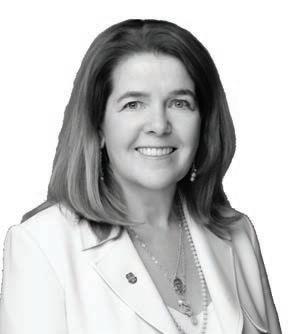
13.
For redefining the food bank model
CEO, GREATER VANCOUVER FOOD BANK NEW
When David Long arrived at the Greater Vancouver Food Bank in 2019, he went beyond steadying a 40-year-old institution: he pushed it into the future. The former chef-turned-CEO has spent the past five years doing something no one thought possible in a system built on borrowed warehouse space and canned donations: turning the GVFB into a freshfood powerhouse with a permanent home.
In 2025, Long closed the deal that changed everything: the purchase of the food bank’s longtime warehouse on Lougheed Highway, ending decades of nomadic operations. With enhanced refrigeration, freezers and processing capacity, the GVFB now distributes an eye-popping 88 percent fresh or perishable food—produce, dairy, proteins— sourced through tightly knit partnerships with farmers across B.C.
But Long didn’t stop at stabilizing the supply chain. His new FRESH Start Program brings job services, mental-health supports, newcomer resources and other community partners directly into the facility, turning a basic food-distribution model into a holistic support hub for more than 16,000 people each month.
14.

15.
For building B.C.’s biotech engine
CEO, LIFE SCIENCES BC NEW
B.C. leads Canada in the life sciences industry in everything from commercial scale biopharmaceutical and medical manufacturing to genomics research for the medical industry—and the champion for translating the importance of said industry (and what it all means for the general public) is Wendy Hurlburt. She’s seen her group, Life Sciences British Columbia, become the steam engine behind attracting investment in the industry—over $15 billion in the past decade—and members include heavy hitters like AbCellera and Acuitas (steered by Power 50 alumni in their own right). “These collaborations don’t happen overnight,” she told Health Tech World in August of last year. “This is years and years of deep scientific excellence that is resulting in the pace of innovation we see now.”
For transforming cardiovascular care in Canada
CO-FOUNDER, DILAWRI AUTOMOTIVE GROUP PREVIOUSLY 2023
When Dr. David Wood saved his father Ram’s life without open-heart surgery, Ajay Dilawri decided to “pay that gratitude forward” in a transformative way. As co-founder of Canada’s largest automotive dealership group—with more than 4,000 employees and 85 franchises representing 38 brands—Dilawri certainly had the means to make a historic impact: through the Dilawri Foundation, he announced a $60-million donation to Vancouver General Hospital and UBC, the largest philanthropic gift in either institution’s history.
The donation will fund a proposed multi-use tower at Oak Street and West 12th Avenue ($35 million) and establish an innovation fund ($25 million) creating a national cardiovascular research and clinical care network with partner sites throughout Europe and the U.S. The resulting institute will include 15 specialized centres ready to treat patients immediately, including centres for Indigenous heart health, women’s heart health and youth heart health, as well as for AI and data science innovation. Since launching the Dilawri Foundation in 2002, the family has donated millions to charitable causes, but this gift sets a new standard for healthcare philanthropy in Canada.
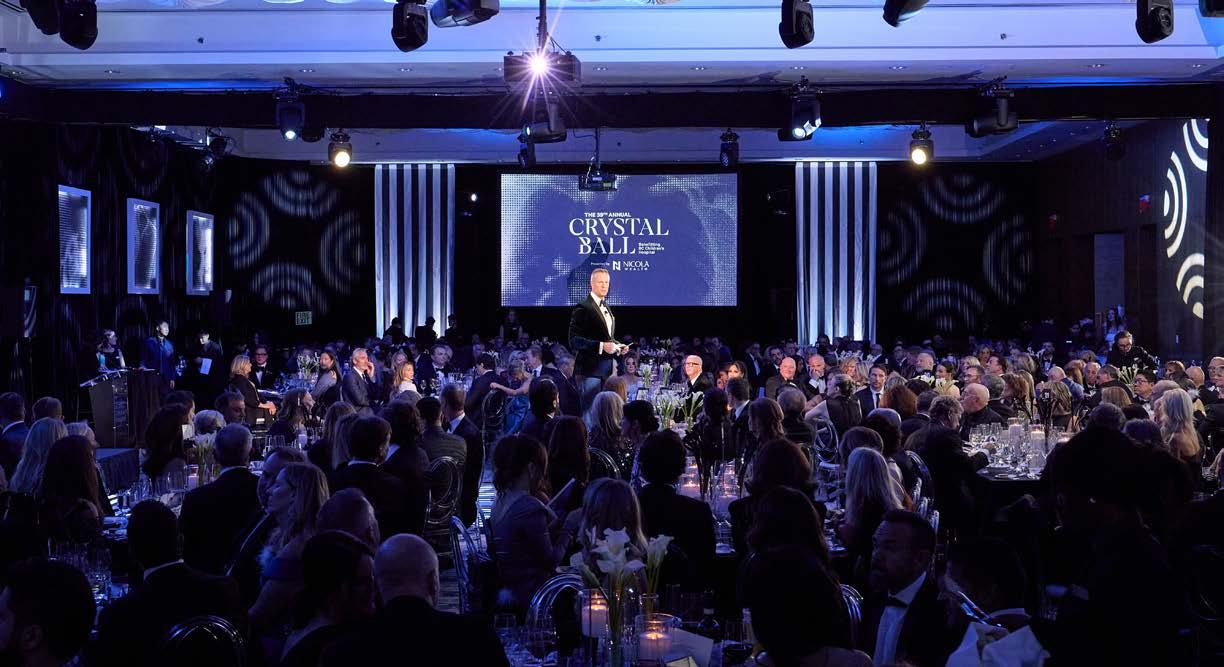
For nearly four decades, Crystal Ball has been the philanthropic home of Vancouver’s most influential changemakers. These are leaders who understand that power carries responsibility, and who use their reach to lift others, fuel breakthroughs and shape the future of children’s health across BC and beyond.
Together, this community has raised more than $65 million to reimagine pediatric care—from first-of-their-kind therapies and next-generation diagnostics to expanded mental health supports, healing environments and true family-centered care.
The power behind Crystal Ball isn’t found in the ballroom alone. It lives in the collective impact of individuals dedicated to driving meaningful change for children and families. Year after year, they come together because they believe every child deserves access to exceptional care.
As we approach our 40th anniversary gala on November 28, 2026, we celebrate this remarkable community united by purpose. To the Crystal Ball leaders and changemakers powering what’s possible: thank you.
Learn more at crystalball.ca
> 50 cutting edge clinical trials launched through the Clinical Trials Super Hub, giving 145 children access to life-saving therapies
> $6M raised for mental health initiatives
> Fuelled innovative childhood cancer research, advancing personalized treatments
> Equipped BC Children’s with next-gen diagnostic technologies
> Transformed healing spaces in the Teck Acute Care Centre through the Children’s Healing Experience Project, featuring over 400 pieces of purposeful artwork.
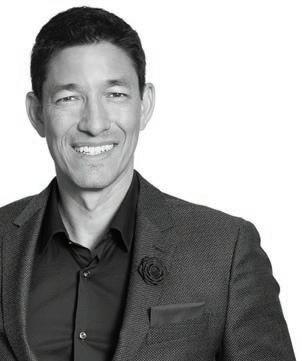

17.

16.
For proving that real power is the kind you share
EXECUTIVE VICE-CHAIR AND PRESIDENT OF INSTITUTIONAL, NICOLA WEALTH MANAGEMENT; CHAIR, WOMEN’S LEAD PREVIOUSLY 2025, 2025
David and Tassan Sung spent 2025 showing how influence works when money meets community. Nicola Wealth’s expansion into real estate—including the acquisition of a prime Coromandel property—signalled that the firm isn’t just managing assets, it’s shaping the city’s future. Being named one of B.C.’s Top Employers didn’t hurt the momentum either.
Off the balance sheet, the Sungs doubled down on culture. David remains a key force behind Arts Umbrella and the Vancouver Police Foundation. Tassan, newly honoured with a King Charles Medal, continues to champion women’s leadership (primarily as chair of Women’s LEAD) and next-gen philanthropy. Their ongoing support of the Audain Art Museum puts action to their belief that a thriving city needs thriving arts. Two years after first appearing together on this list, the Sungs return as a duo, still setting the tone for what civic-minded leadership looks like in Vancouver.
For shaping Vancouver’s culture with two of the city’s biggest entertainment empires
PRESIDENT, VANCOUVER CANUCKS SPORTS AND ENTERTAINMENT; PRESIDENT, TOPTABLE GROUP NEW
If you’ve ever been out even once for a night of entertainment in Vancouver, it’s likely that Michael Doyle had something to do with it— whether it was the restaurant you dined at, the sports game you attended or the show you caught. Doyle is both president of the Vancouver Canucks (overseeing business operations for the city’s mostwatched team, along with the Abbotsford Canucks, Vancouver Warriors and Seattle Surge) and of Toptable Group, the restaurant group responsible for stellar dining haunts such as Blue Water Cafe, Elisa, CinCin and Thierry.
He definitely put in his time to get to the top, though—for a decade, Doyle ran food and beverage programs at Rogers Arena until taking over all nonhockey operations in 2021. Now, he’s straddling major sports and major dining— which lands him in the position of being one of the city’s largest employers. Now that’s something to cheer about.

18.
For building Indigenous knowledge into the city
PRINCIPAL, GINGER GOSNELL-MYERS CONSULTING PREVIOUSLY 2025
Ginger Gosnell-Myers has spent the past year making sure Vancouver’s future is built on more than good intentions. As the Indigenous engagement specialist for the West End Community Hub Renewal, she pushed the project to centre Coast Salish values in everything from design principles to public-space storytelling—a shift that will shape how thousands of residents experience the neighbourhood. She also continues to wield major influence from her post as SFU’s first Indigenous Fellow, where her research and policy work are quietly steering the city’s planners, architects and civic leaders toward genuinely decolonized urbanism. And when she takes a mic—whether at a major planning summit or local forum—she’s the voice reminding Vancouver that reconciliation isn’t a box to tick but a blueprint for better citybuilding. In a year of big conversations about land, belonging and climate, her leadership kept Vancouver’s compass pointed forward.

For inviting the world to Vancouver
PRESIDENT AND CEO, DESTINATION VANCOUVER PREVIOUSLY 2025
Through all the mega-events this city has hosted in the last few years—Swift-fest, Invictus and Web Summit, to name a few—Royce Chwin has been a key behind-the-scenes player in ensuring our city is the shiny destination that visitors want to come back to. He’s been a big force in pushing the city to adapt its hotel policy so more can get built faster, which Vancouver desperately needs. And his work is paying off for the city: in 2024, Vancouver had 11.3 million overnight visitors, an increase over 2023—and 2026 is looking to continue on an upward trajectory with the world’s biggest football match (otherwise known as FIFA World Cup) arriving this summer.
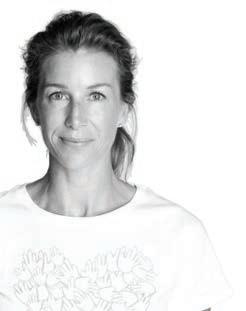
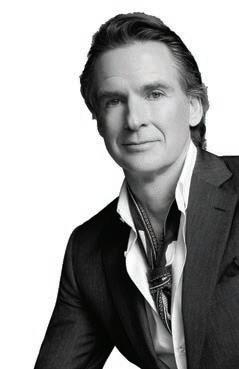
For turning their post-Aritzia era into a masterclass in giving back
FOUNDER AND EXECUTIVE CHAIR, ARITZIA; FOUNDER AND CHAIR, CAUSE WE CARE FOUNDATION NEW
Brian and Andrea Hill spent 2025 proving that stepping out of the spotlight doesn’t mean stepping back. Brian’s move to sell some of his Aritzia shares signalled a shift from empirebuilding to legacy-building, while Andrea’s Cause We Care continued its steady, hands-on support for single mothers across Vancouver. Their philanthropy stretched well beyond one sector: the Hills backed the Invictus Games, supported the Capture Photography Festival, helped fund the Spearhead alpine huts and contributed to community spaces from Penticton to Whistler. The power couple may have traded retail runways for mountain trails and charity galas (well, mostly; Brian is still executive chair of the Aritzia board), but their influence continues to be unmistakable. In their quieter chapter, they’re making some of their most meaningful moves yet.

For leading the fight for gender equity and safe housing
CEO, YWCA METRO VANCOUVER NEW
Since becoming CEO of YWCA Metro Vancouver in June 2022, Erin Seeley has transformed one of B.C.’s largest multiservice charities into a powerful advocate for systemic change. Leading a team of 500 across 42 locations delivering over 80 programs—from transitional housing to employment services to early childhood education—Seeley secured $40.7 million in federal funding to build and repair 3,400 affordable homes in Burnaby and New Westminster, including YWCA Marion’s Place with 32 units for women and families. But her impact extends beyond housing. After a horrific killing in Kelowna made the news, Seeley wrote to Premier Eby demanding that British Columbia declare gender-based violence an epidemic; she soon became a prolific voice against domestic violence. In January, Eby followed through with an acknowledgement of just how serious and pervasive the issue is, making Seeley’s requested declaration in his mandate letter to Minister of Finance Brenda Bailey.

For making sci-fi medicine feel suddenly real
CEO AND CO-FOUNDER, ASPECT BIOSYSTEMS NEW
Tamer Mohamed spent 2025 turning heads in one of the toughest biotech markets in years. Aspect Biosystems—the company he took over before he hit 30—landed a $115-million (USD) Series B round, one of the biggest private financings in Canadian biotech that year. Add in major federal and provincial backing, and it’s clear investors and governments see the same thing he does: bioprinted human tissue is no longer a moonshot. Under Mohamed’s lead, Aspect is pushing toward implantable, functional tissues that could one day treat chronic disease in ways medicine hasn’t caught up to yet. In a sector full of maybes, Mohamed delivered momentum—and put Vancouver firmly on the map for next-generation regenerative tech.

For proving Vancouver tech can scale—and still show up for its community
CEO, CLIO NEW
Jack Newton spent 2025 reminding everyone that Clio isn’t just Vancouver’s biggest tech company—it’s also a company with a conscience. Fresh off last year’s blockbuster vLex acquisition, the legal-tech giant rolled out new AI tools that make it easier for law firms to work efficiently and for ordinary people to get help: streamlined digital intake for underserved clients, better support for unbundled and lowcost services and cloud tools that let legal clinics reach people who can’t make it into an office.
But Newton’s most telling move wasn’t technical at all—it was civic. His $3-million gift to UBC Sauder’s new Powerhouse project made a pointed case that Vancouver’s tech sector shouldn’t just hire local talent, it should invest in it. And through Clio Gives, the company continues donating millions in software to pro-bono organizations like Rise Women’s Legal Centre and the California Innocence Project. Newton’s long game is unmistakable: build a world-class company, and expand who gets access to justice along the way.

For refusing to let women founders get sidelined
CEO, THE FORUM PREVIOUSLY 2025
Kirsten Koppang Telford spent 2025 turning The Forum into one of the country’s strongest engines for women-led businesses. She showed up everywhere from national radio to the Globe and Mail, calling out Canada’s persistent funding gaps and making a compelling case that women entrepreneurs deserve more than cheerleading. Under her leadership, The Forum continued to expand its mentorship and capital programs, giving thousands of women and gender-diverse founders real support instead of vague platitudes. Koppang Telford already had her successful exit with her business, ePACT; she could’ve taken the easy route. Instead, she’s pushing to rebuild the system so the next wave of founders doesn’t have to fight the same battles.








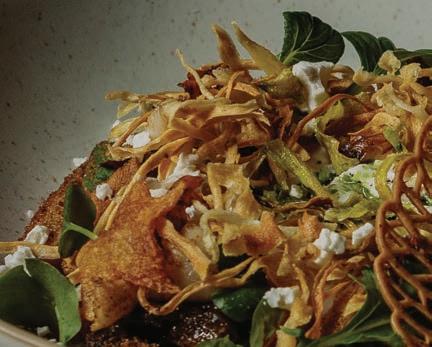


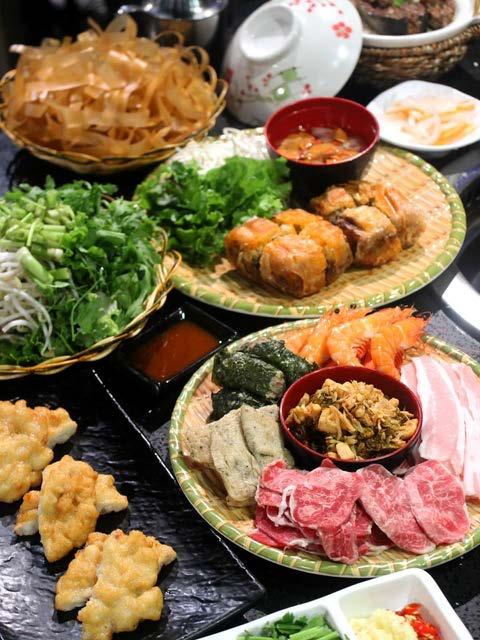




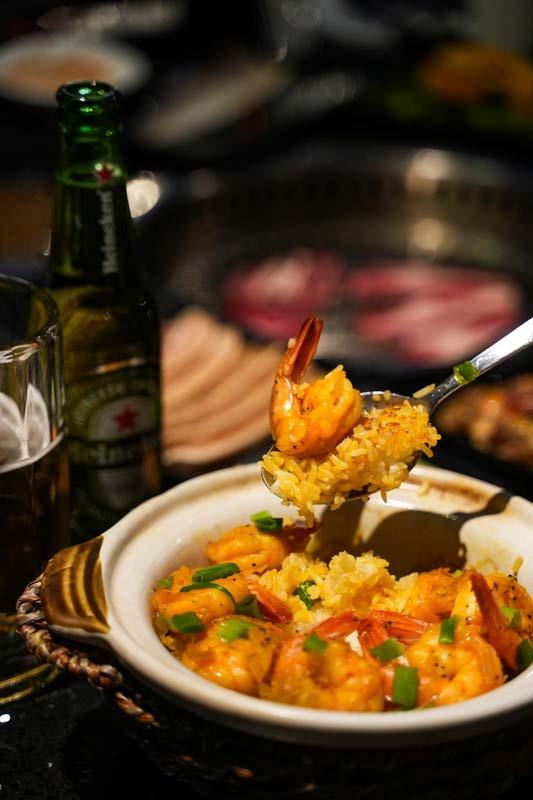

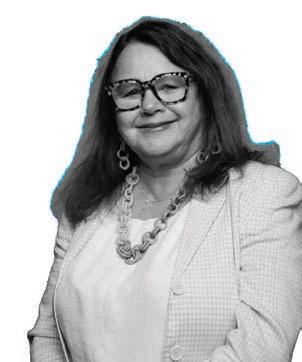
For creating (and protecting) Vancouver’s artist spaces
ARTISTIC DIRECTOR, EASTSIDE ARTS SOCIETY
The influence of Esther Rausenberg’s work reaches back decades. The contemporary photographer was one of the founding artists of the Eastside Arts Society—the group that’s been helming the wildly popular Eastside Culture Crawl for nearly 30 years. The four-day crawl sees artists open their homes and studios to share their creative wares, from paintings to jewellery to ceramics and textiles. The event is “literally a mob at 1000 Parker Street during the crawl,” writes one of our Power 50 advisory committee members, but that alone isn’t what has Rausenberg making the list: she also co-leads the Creative Cultural Collaborations Society, which launched the Blue Cabin floating artist residency and continues to initiate new cultural projects and festivals.
This year, she pushed the fight to preserve artists’ space even further as an outspoken advocate for arts support with the City of Vancouver, expanding the Culture Crawl’s territory and earning the Eastside Arts Society a rare honour: a Canadian Institute of Planners Award for Planning Excellence. It’s an unusual but telling recognition of how vital her work has become to the city’s cultural planning.


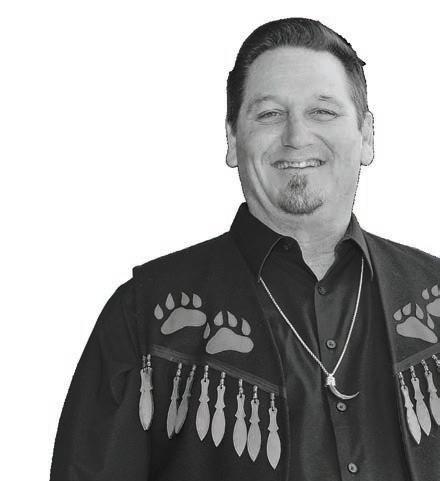
For rebuilding Vancouver through an Indigenous lens
COUNCIL CHAIRPERSON WILSON WILLIAMS OF SQUAMISH NATION; CHIEF WAYNE SPARROW OF MUSQUEAM NATION; CHIEF JUSTIN SKY-GEORGE OF TSLEIL-WAUTUTH NATION PREVIOUSLY 2024
Few forces have reshaped Vancouver’s present—and its future trajectory—more profoundly than the united leadership of the Musqueam Indian Band, Squamish Nation and Tsleil-Waututh Nation. Together, they are transforming what decision-making, land stewardship and urban power look like on the West Coast. Over the past year, their collective impact has been felt across policy, housing, culture and development.
In partnership with the City of Vancouver, the three Nations helped advance the city’s UNDRIP Action Plan, embedding Indigenous rights and governance into civic systems. They led major steps toward attainable housing, including thousands of below-market homes at Heather Lands, and elevated cultural visibility—from raising their flags permanently in Stanley Park to co-shaping Vancouver’s hosting of the 2026 FIFA World Cup.
Through the MST Development Corporation, their economic and urban influence is unprecedented: a $2-billion real estate portfolio encompassing the Jericho Lands— now planned for 13,000 homes with transit, schools and community amenities—along with the multi-phase St. Paul’s redevelopment, key roles in the Broadway Subway extension and a hand in the new Vancouver Art Gallery design. In April 2025, city council unanimously approved MST’s expanded Jericho vision, cementing it as one of the most transformative city-building projects in Vancouver’s history. Collectively, the Musqueam, Squamish and Tsleil-Waututh Nations are shaping neighbourhoods, and redefining the region’s future in the process.
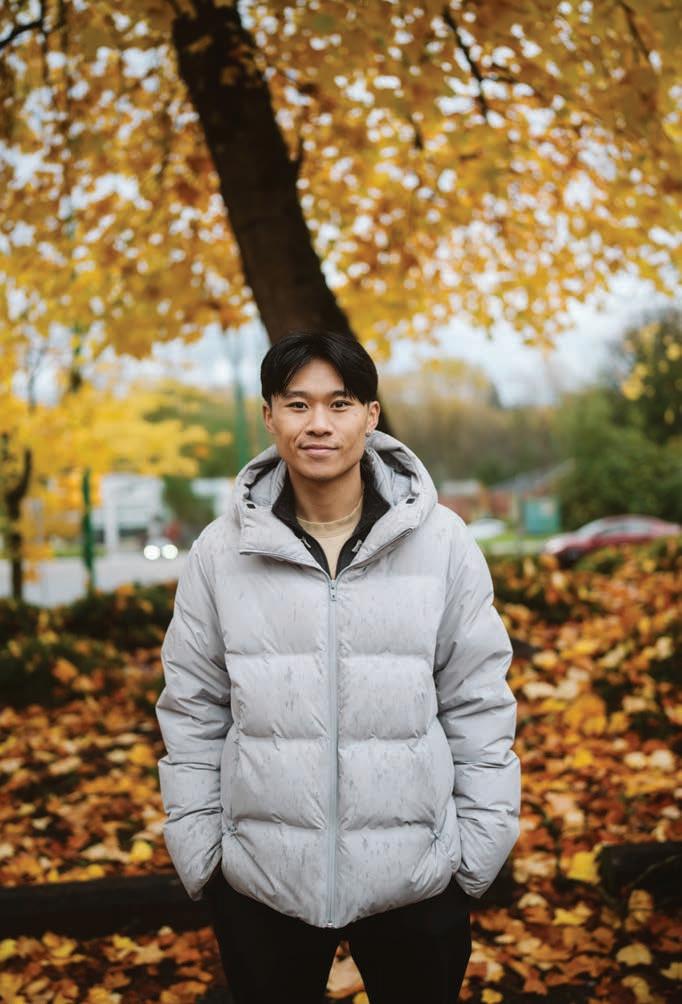


Thanks to our generous supporters and donors, over $378,000 was raised at the 24th Annual Hope in the City Breakfast presented by Craftsman Collision. Because of you, we continue to feed, clothe and shelter the community’s most vulnerable. Because of you, we are Giving Hope Today and every day.




















For rebuilding a restaurant empire
FOUNDER AND CEO, LFG GROWTH PARTNERS PREVIOUSLY 2025
A co-founder of the North Vancouverincepted Cactus Club, Richard Jaffray stepped away from his share in the culinary giant back in 2022. He went to work quietly on driving a portfolio of high-end restaurants under his firm LFG Growth Partners, which included acclaimed names such as Oddfish, Nook, Radish and Nightingale, and, in 2025, his strategic shopping spree continued. In late September, it was announced that LFG had purchased a hearty stake in The Keg, one of Canada’s most enduring, iconic and reliable restaurant brands. In addition to the big acquisition, Yaletown and Kitsilano Nightingale locations are in the works for 2026, making it clear that Jaffray’s influence on Vancouver’s dining scene will continue to be immense.

For steering us through the smoke, to the future
CHAIR OF WILDFIRE COEXISTENCE, UBC FACULTY OF FORESTRY NEW
As B.C.’s wildfire season stretches into a year-round threat, Lori Daniels is leading the charge to help communities prepare, respond and rebuild. An internationally recognized expert in forest ecology, she’s conducted close to 300 media interviews as a wildfire specialist and participated in the UN General Assembly’s Expert Roundtable on Wildfire and Forest Resilience.
As inaugural chair of wildfire coexistence at UBC Forestry, Daniels launched the Centre for Wildfire Coexistence with a $5-million donation, bringing together research on historical fire regimes, post-fire recovery and society’s relationship with fire. Her work emphasizes Indigenous-led approaches: a recent $790,000 grant from the Paul G. Allen Family Foundation supports collaborative research with four First Nations on prescribed and cultural burning practices. Between climate, topography, vegetation and Indigenous land stewardship, “there are so many pieces to this puzzle,” Daniels said in the Vancouver Sun. Her centre is creating predictive tools to help communities respond faster and build resilience—addressing both how we got here and how to undo the unintended consequences of past fire suppression policies, all while helping us adapt to our climate-changed future.

For turning financial clout into community good
REGIONAL PRESIDENT, BRITISH COLUMBIA, RBC ROYAL BANK PREVIOUSLY 2025
Martin Thibodeau doesn’t just run the B.C. arm of Canada’s biggest bank—he runs to every community cause in Vancouver. Fresh from navigating RBC’s HSBC integration, he spends his days ensuring local developers get their share of loans; after hours, he’s a fixture of city events and nonprofit boards alike. Under his leadership, RBC invests millions annually across hundreds of charities (from Arts Umbrella to Science World) and events, but Thibodeau personally gives and volunteers, too. This year he also advanced the Indigenous Business and Community Award programming at the B.C. Achievement Foundation with an $80,000 sponsorship from RBC. Thibodeau’s combination of financial clout, personal generosity and hands-on engagement makes him a rare civic powerhouse.
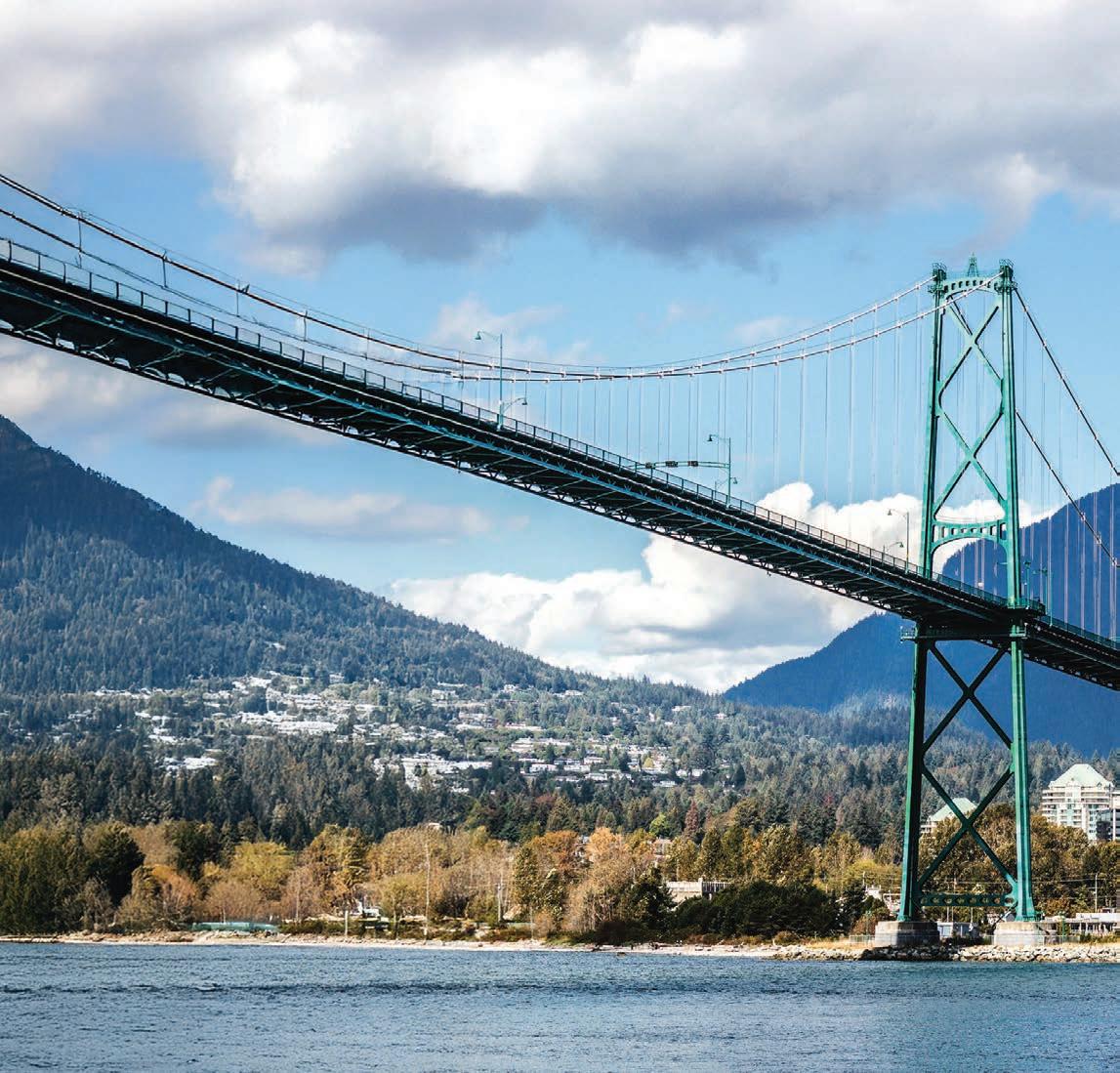
For over 30 years, Nicola Wealth has proudly served the community by providing investment and wealth planning advice to its business owners, entrepreneurs and affluent families across Canada.

For connecting the city’s movers and shakers

PRINCIPAL, POONI GROUP PREVIOUSLY 2025 30. 31.
Gary Pooni has become an influential shaper of urban change in the Lower Mainland, quietly steering some of the region’s most complex developments. As president of Pooni Group, he’s the behind-the-scenes strategist translating political ambitions and community needs into buildable reality. Over the past year, his influence has only grown— guiding transit-oriented projects, championing thoughtful density, supporting student athletes through his Pooni Foundation and pushing for city-wide planning that balances livability with growth. In a housing-strained metropolis, Pooni’s power comes not from public spotlight but from his ability to align developers, policymakers and residents toward a shared vision of Vancouver’s future.
For being the music men
PRESIDENT/CEO AND EXECUTIVE VICE-PRESIDENT, DAYHU GROUP OF COMPANIES; FOUNDERS, MUSIC HEALS PREVIOUSLY 2025
If this doesn’t strike a chord in bettering the city, we don’t know what will. By day, philanthropic brothers Jonathan and David Barnett run one of Vancouver’s major real estate investment and development firms, but by night, they turn the volume up on the benefits of music therapy through their charity, Music Heals. Having raised millions to bring music therapy into children’s hospitals, palliative care wards, cancer programs, seniors’ care and dozens of community facilities since its inception in 2012, the foundation shows no sign of turning the dial down (according to its funding report, which only shows a growing reach).
Also this year, the Barnetts’ real estate firm, Dayhu Group of Companies, purchased Kitsilano’s historic Hollywood Theatre, adding the cultural landmark to its portfolio with the goal of preserving live venues—music to our ears.

For crafting modular housing with holistic impact
CEO AND FOUNDER, NUQO MODULAR NEW
Though the modular homes Rory Richards builds with her Indigenous-founded housing company, Nuqo, may be compact, her impact on the housing market is huge. Nuqo is behind a major, $21-million development in Burnaby; in 2024, it completed the build of Eskékxwi7ch tl’a Sp’ákw’us Place in Squamish, a 27-unit social housing complex for Squamish Nation women and their children. Not only does the flexible, modular housing approach hope to create social impact, Nuqo’s business model also makes way for more environmentally friendly ways to build (there’s no “tossed” worksite materials when the jobsite takes place in a factory). Deservedly, Richards was a nominee for the 2025 YWCA Women of Distinction Awards.
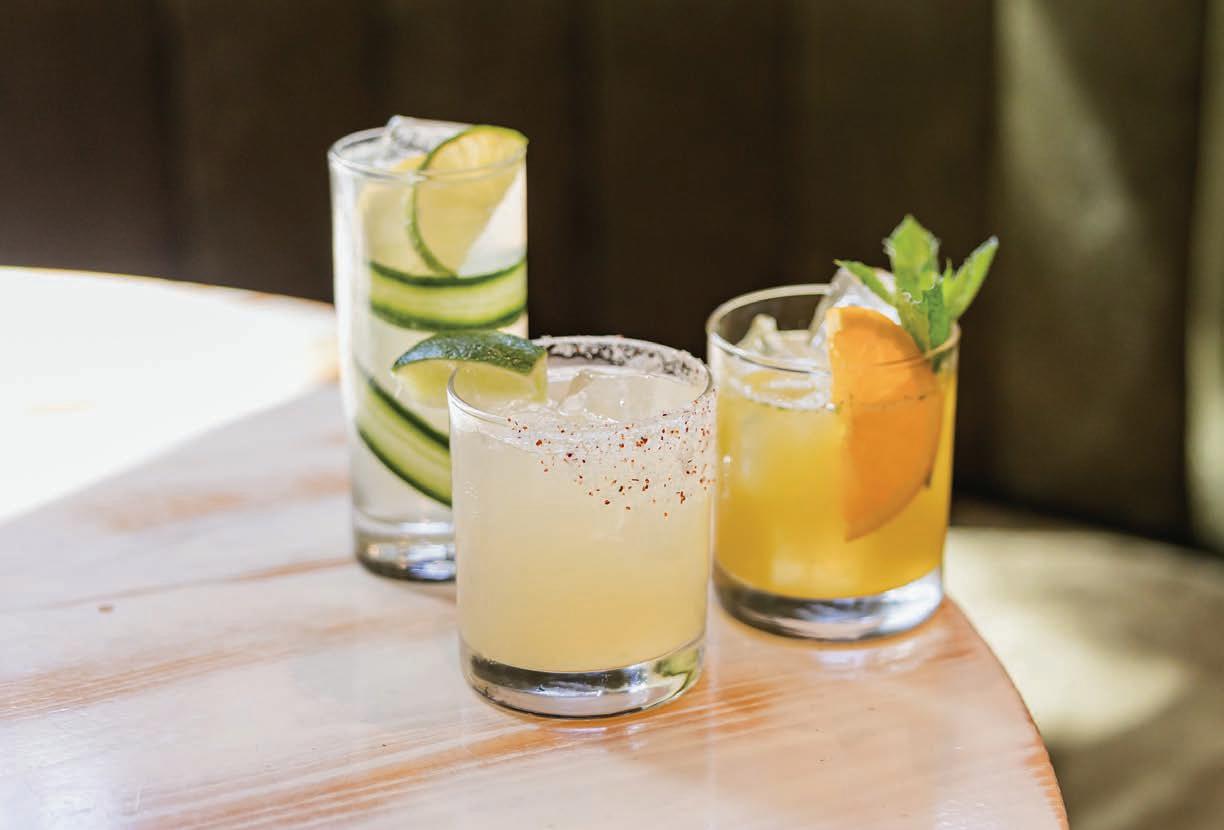
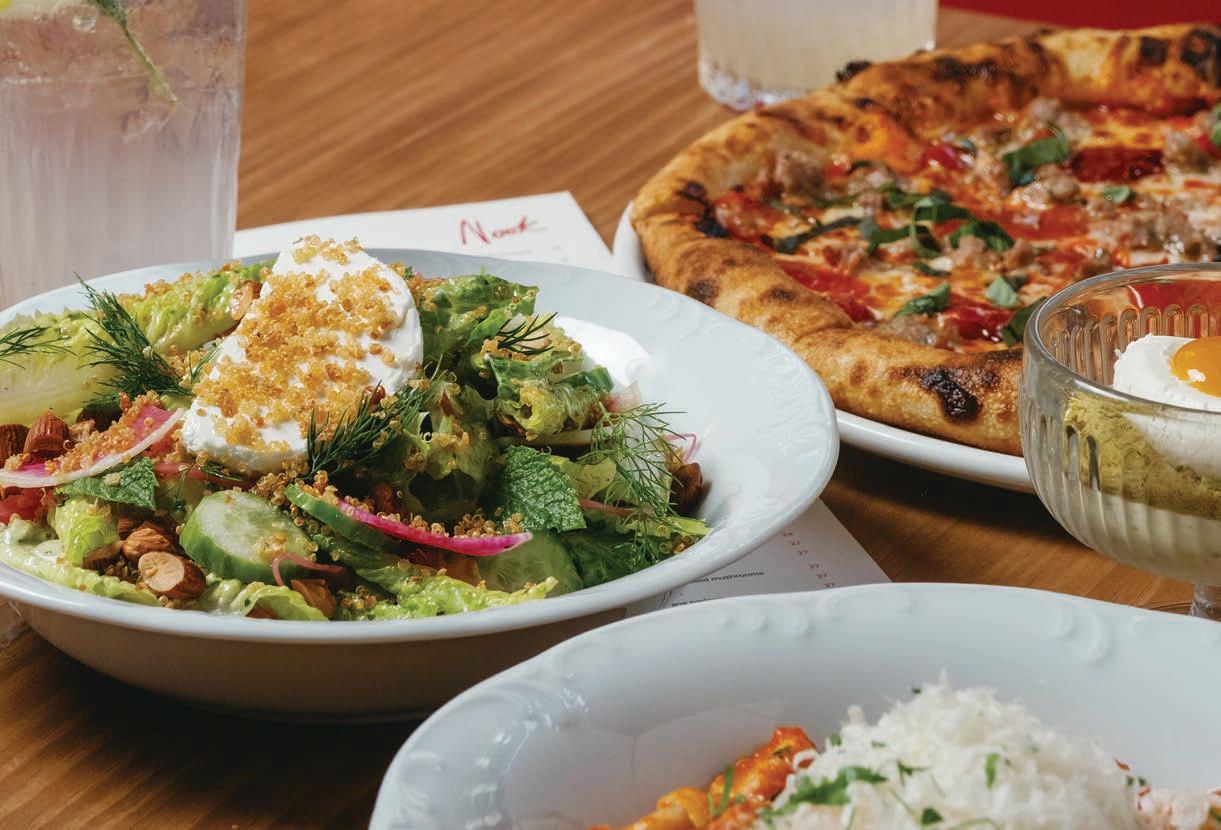
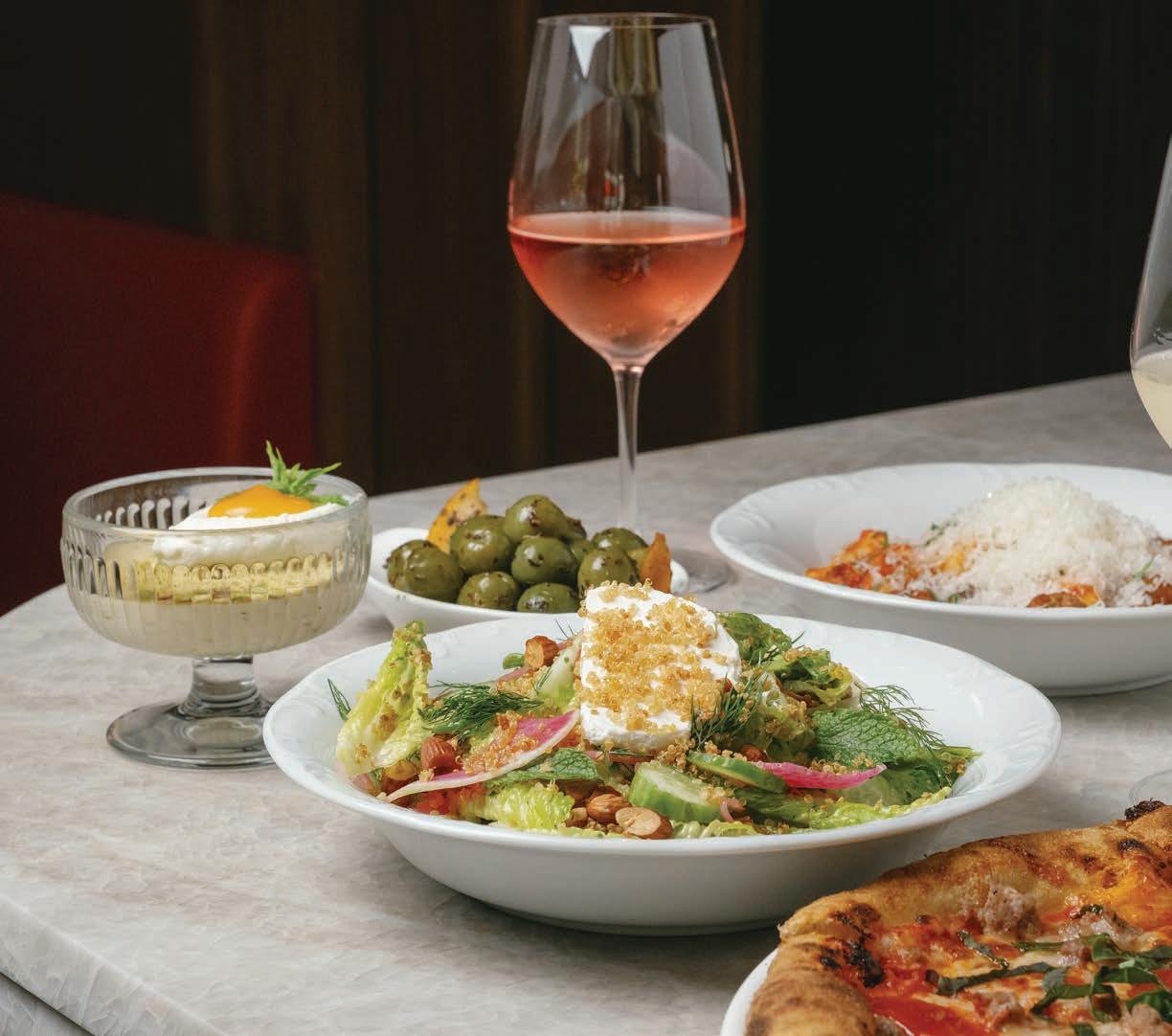
Premium workforce accommodations for the most challenging locations.
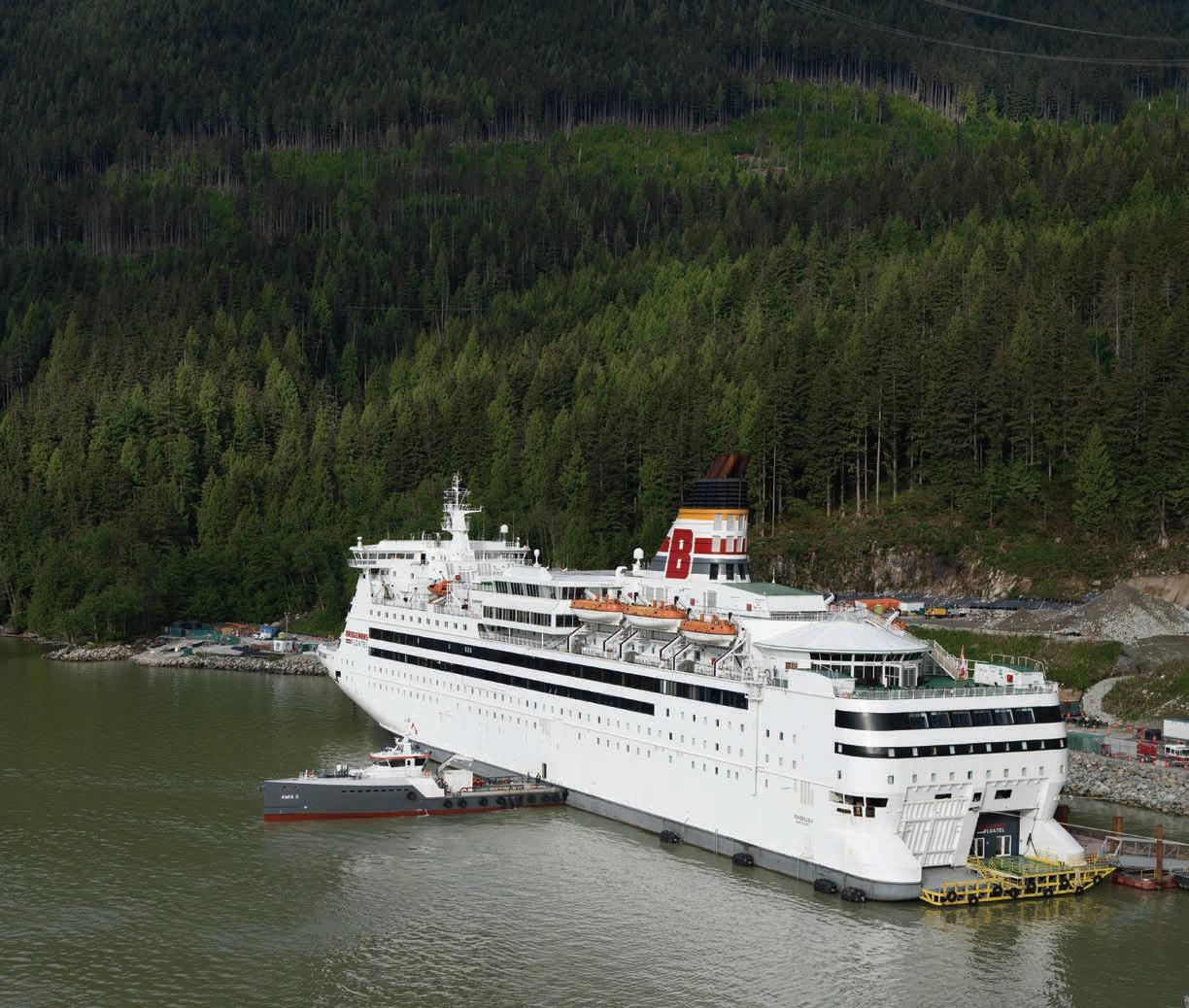
Bridgemans is the driving force behind your most ambitious marine projects. With deep industry experience and a hands-on approach, we provide a fully integrated system with three divisions: Bridgemans Floatels, Marine Services and Marine Construction.
With relentless attention to detail, Bridgemans Floatels are elevated in every aspect, customized to client specifications and held to the standards of a premium hotel. To expand our ability to deliver in even the most remote and challenging environments, our Marine Services and Marine Construction divisions provide marine transportation as well as construct docks, berths, breakwaters, and more. Bridgemans brings precision and an unwavering commitment to every project — Turning your ambition into real-world results.


For building the future of digital ownership
FOUNDER AND CEO, DAPPER LABS NEW
While crypto markets have faced volatility, Roham Gharegozlou has been quietly building durability. As founder and CEO of Dapper Labs—the company behind NBA Top Shot, NFL All Day and Disney Pinnacle—he’s minted more than 200 million NFTs on the Flow blockchain, proving digital collectibles have staying power beyond the hype. Its valuation in 2025 was around $7.6 billion (USD), making it not just a unicorn (a private company valued at over a billion)—but also one of Canada’s highestvalued tech firms.
A Stanford-trained entrepreneur who has co-founded five companies and invested in nearly 100 others, Gharegozlou is now positioning Vancouver as a Web3 hub. In March 2025, Dapper Labs partnered with Coinbase for a “Stand with Crypto” event, bringing together builders, regulators and advocates to grow Canada’s blockchain ecosystem—establishing our fair city as a global centre for digital innovation.

For forging the relationships that shape Vancouver’s economy
PARTNER, CAI CAPITAL PARTNERS NEW
When Tracey McVicar joined CAI Capital Partners in 2003, she did more than build a successful private equity firm—she rebuilt an institution. After the retirement of four of the company’s five founders in 2015, McVicar took the helm and re-established the brand, raising capital and growing the firm’s reputation for consistent investment returns.
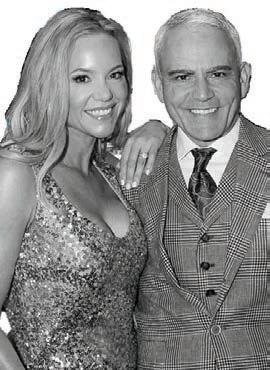
PHILANTHROPISTS; CHAIR AND CEO, GOLD ROYALTY CORP. NEW 34.
For turning their family values into action
From her start in RBC’s investment banking program, McVicar has become one of Vancouver’s most respected business leaders, serving as past director of Teck Resources and BC Hydro. Her influence stems from what she calls her “interpersonal dynamics”—building trust-based relationships that transcend the boardroom. She’s also a dedicated philanthropist, founding the BC Orca Bursary Program supporting foster youth. Honoured with the King Charles III Coronation Medal in June 2025, McVicar remains focused on mentoring young professionals, especially women in finance.
Christie and David Garofalo are quietly transforming Vancouver through a rare combination of business acumen and hands-on philanthropy. David, as chair and CEO of Gold Royalty Corp., guides one of the city’s most respected resource companies, while Christie has spent the past three decades volunteering, fundraising and serving on boards. In the past year alone, their impact has touched organizations including Arts Umbrella, Face the World Foundation, Canadian Foundation for AIDS Research, Vancouver Police Foundation and the Giustra Foundation’s We Got You Family Day, helping to raise critical funds for local families and national initiatives. Celebrated at the 2025 Business Laureates Gala, the power couple’s giving is personal, thoughtful and strategic—anchored in family values and community connection.
36.
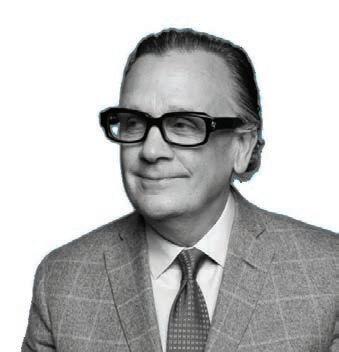
For reining in the VAG redesign
CEO AND PRESIDENT, RELIANCE PROPERTIES; CHAIR, VANCOUVER ART GALLERY BOARD OF TRUSTEES NEW
When the Vancouver Art Gallery’s flashy new building design ballooned from $400 million to $600 million, gallery board chair Jon Stovell had a difficult call to make: stick with an unwieldly plan that had taken years to develop... or start from scratch. Under his leadership, the board made the call last fall to abandon the extravagant Swiss architects and champion Canadian talent instead. Indigenous-led firm Formline Architecture and Urbanism and KPMB Architects are now hard at work to create a “more realistic and practical and still visionary concept.”
The decision exemplifies Stovell’s approach across his 30-year career in real estate development. As CEO and president of Reliance Properties, he works across acquisitions, finance, civic approvals and construction, and served for 15 years as chair of the Urban Development Institute board (the position’s longest term ever), shaping industry policy and advocacy.
With Stovell at the helm, the gallery shifted to full financial sustainability with a balanced budget, while retaining major donor commitments (think the Audain Foundation and the Chan Family) while getting the public excited again about a project we’d all but given up on.
“Obviously it’s a difficult adjustment but, I think, a decision that had to be made,” Stovell told the Vancouver Sun.

For bringing star power to women’s hockey in Vancouver
When Sarah Nurse scored the Vancouver Goldeneyes’ first-ever goal in front of a sold-out Pacific Coliseum crowd of nearly 15,000, the Olympic gold medallist admitted she’d never felt anything like it. “I’ve played a lot of really big hockey games, and I’ve never felt emotional like I have in that first 20 minutes,” she told the Globe and Mail. “It felt like something different was in the air.”
The 30-year-old Hamilton native is one of professional women’s hockey’s biggest stars, ranking fifth all-time in the PWHL with a 0.82 points-per-game average and earning Second Team All-Star honours. But her impact extends beyond statistics. As PWHL Vancouver GM Cara Gardner Morey noted to Hockey News, Nurse’s “unwavering commitment to building an inclusive hockey community makes her a fan favourite everywhere she goes.” Her signing represents a transformative moment for women’s hockey in the city—and she’s making every game count.
For holding the front line
FIRE CHIEF, VANCOUVER FIRE RESCUE SERVICES PREVIOUSLY 2023
Forget the fact that she’s made history as Vancouver’s first-ever female fire chief: Karen Fry’s real legacy is the way she transformed how the city responds to its most pressing crises. In 2024, her firefighters responded to more than 7,500 overdose calls, administering naloxone over 880 times to save lives amid the toxic-drug crisis. Another life-saving measure: the ban of continuous-flame butane lighters, which resulted in an 80-percent monthly decrease in structure fires, particularly in the Downtown Eastside.
Fry has championed both innovation and inclusion: Vancouver now operates North America’s first net-zero fire hall and Canada’s first electric fire engine, while increased enforcement and fire-safety training for SRO operators addresses rising building-fire incidents. Her datadriven approach uses analytics to optimize response times and resource allocation. But perhaps her greatest achievement is cultural: rebuilding trust within the department and with marginalized communities, proving that effective leadership combines operational excellence with genuine compassion.
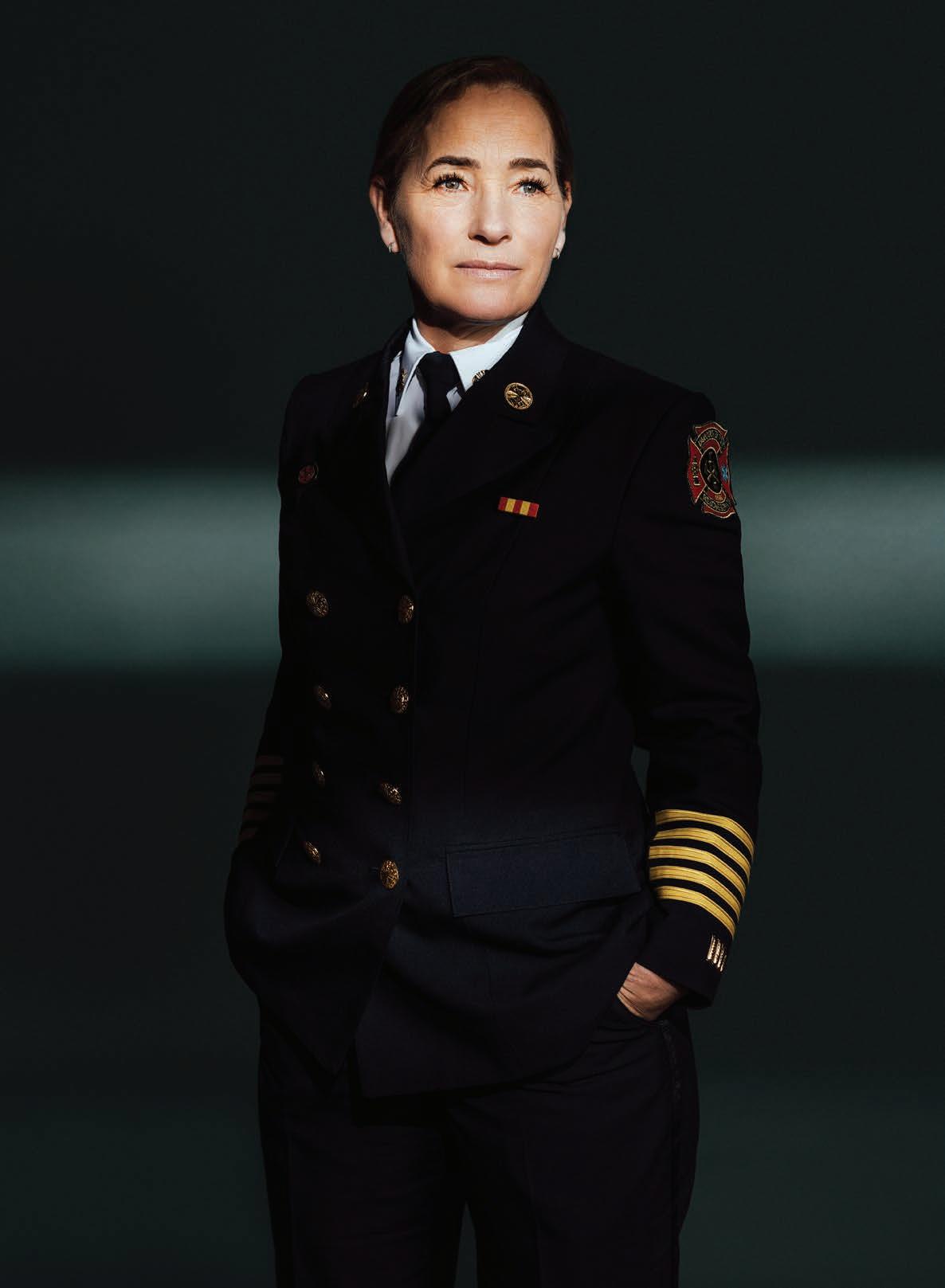
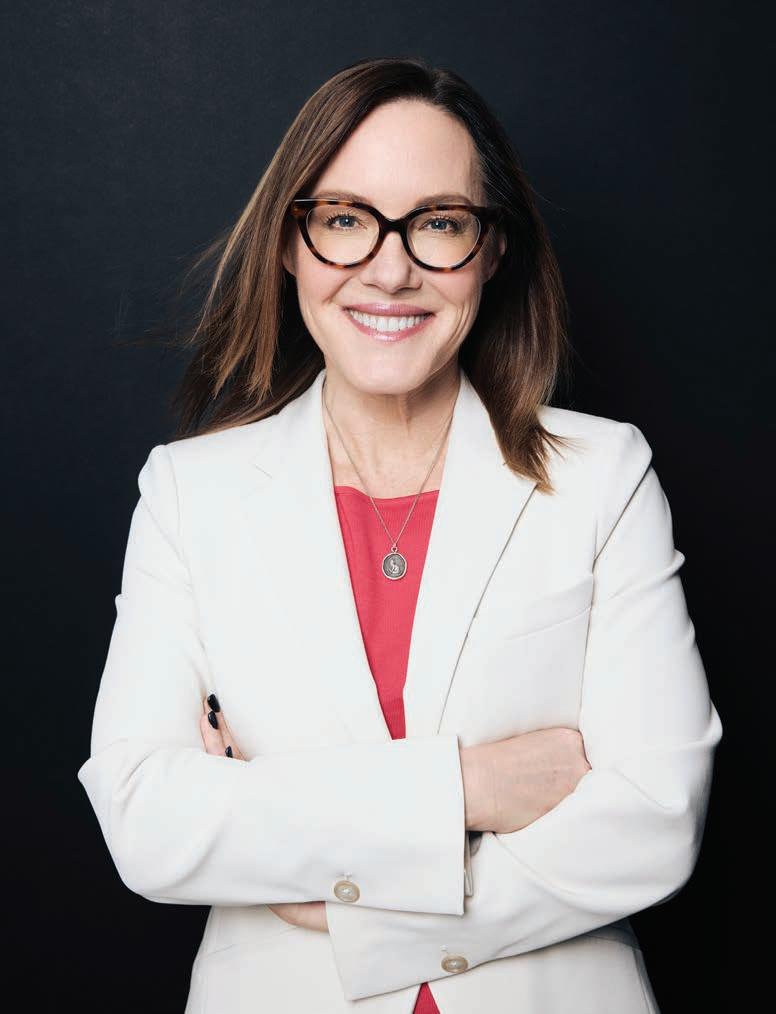
For fighting to keep downtown’s heartbeat strong
CEO, DOWNTOWN VAN PREVIOUSLY 2025
Jane Talbot, admittedly, is facing an uphill battle—but that only makes her impact more impressive. As CEO of the Downtown Van business association, she represents nearly 8,000 businesses. And at a time when every North American city is grappling with empty offices, sluggish retail and public-safety anxiety, Talbot has become one of Vancouver’s clearest voices on what’s at stake. In 2025 she pushed hard for data-driven solutions, using Downtown Van’s research to spotlight the sharp dip in workers and visitors, and speaking publicly about the safety measures needed to restore confidence. She’s also championed activation efforts that bring people back with energy, not obligation. Some leaders wait for momentum to return. Talbot is trying to build it herself, one street, one storefront and one very public conversation at a time.

For keeping indie cinema alive
CEO, THE RIO THEATRE NEW
When East Van cultural pillar The Rio was under threat of shuttering completely in 2018 due to rising rents, operator Corinne Lea rallied the funds to purchase the building in its entirety; its community-focused programming has carried on ever since, to the delight of fans of horror flicks, indie films and live burlesque.
This year, Lea took her commitment to the indie film community even further, joining a group (which includes Osgood Productions’ Chris Ferguson, Stranger Things actor Finn Wolfhard and others) to purchase the iconic Park Theatre on Cambie Street, making sure yet another historic venue remains open to the public—and that pledge was after she announced on her Instagram page that The Rio would be expanding with a new bar concept (yet to open). Perhaps Vancouver’s newest adage goes like this: when an indie theatre’s door is about to shut, Corrinne Lea lodges a foot in there to keep it open.

For elevating B.C.’s dance scene to new heights
ARTISTIC DIRECTOR, BALLET BC NEW
Since stepping into the artistic director role in 2020, Medhi Walerski has transformed Ballet BC into a modern arts organization with open arms (or “in second position,” in ballet terms). The 2024/2025 season marked the company’s most successful in nearly 40 years, drawing over 32,000 audience members in Vancouver alone—including for the critically acclaimed Trilogy—and led a prestigious international tour to Paris’s Théâtre des Champs-Élysées.
But Walerski’s impact extends beyond packed houses. He’s established a new home on Granville Island, expanded educational outreach to schools and communities, secured sponsorships, welcomed Indigenous choreographers to Ballet BC’s artist-inresidence program and implemented a 52-week salary for dancers. As Ballet BC celebrates its 40th anniversary this year, Walerski proves that contemporary dance can thrive while remaining inclusive, innovative and financially sustainable—a move worthy of a bow.


For turning addiction care into a real, accessible lifeline
FOUNDERS, ROAD TO RECOVERY NEW
Through their leadership of Road to Recovery—a seamless, first of its kind continuum of care for substance use that launched at St. Paul’s Hospital in late 2023— Seonaid Nolan and Cheyenne Johnson are reshaping Vancouver’s response to addiction. Under their guidance, hundreds of individuals have already accessed detox, stabilization, transitional housing, treatment and aftercare, often within a day of seeking help. The initiative’s expansion across the region brings hope, faster support and a culturally safe, evidencebased path to healing. Their work is turning addiction care from fragmented to connected, offering real second chances, dignity and community-minded recovery. Vancouver is better—and lives are saved—because of it.

For speaking out and up for the Filipino community
CHAIR, FILIPINO BC NEW
When tragedy befell Vancouver’s Filipino community at the Lapu Lapu Festival last spring, RJ Aquino was on the front lines—not just to mourn with the rest of the community and city, but to demand action and government support for his community as chair of Filipino BC.
His leadership extends beyond crisis response: he’s continued to be a vocal champion for the creation of a Filipino Community and Cultural Centre. Rooted in the values of kapwa (shared humanity) and bayanihan (mutual support), the centre is intended to be a permanent home where traditions are preserved and culture celebrated—while delivering programs that fill service gaps and extend care beyond the Filipino community to all Vancouverites.
This year, the calls were finally answered, and the FCCC received federal funding commitment in Canada’s 2025 budget— placing it alongside the Chinese Canadian Museum and upcoming South Asian Museum as key cultural priorities.

For modernizing Canadian health care at scale
CEO AND FOUNDER, WELL HEALTH
For holding steady in turbulent times
PRESIDENT AND CEO, GREATER VANCOUVER BOARD OF TRADE PREVIOUSLY 2025
It’s no easy task to helm the Greater Vancouver Board of Trade at a time when trade is so tumultuous, but president and CEO Bridgitte Anderson has turned unprecedented challenges into opportunities for action. During a year of rising geopolitical tensions and Trump’s tariffs on Canadian goods, she led over 100 Cascadia leaders on an advocacy mission to Washington, D.C., meeting with White House officials and trade representatives to defend Canadian interests. As chair of the Canadian Global Cities Council, she’s been positioning Vancouver well to capitalize on major 2026 opportunities, including the FIFA World Cup and Web Summit. Times may be tough, but it’s clear Anderson is tougher.
When Hamed Shahbazi’s mother was diagnosed with frontotemporal dementia in 2013, he experienced firsthand the brutal inefficiencies of Canadian health care. But instead of wallowing in the frustration, the tech entrepreneur took action. Over the past decade, his Well Health Technologies platform has become the country’s largest owner-operator of outpatient medical clinics, while simultaneously developing the technology to help address some of the problems in our public health system.
Since founding Well in 2016, Shahbazi has completed over 80 acquisitions and taken the firm from zero to one of B.C.’s fastest-growing companies, with revenues exceeding $950 million in 2025. The company provides digital health tools and electronic medical record services, but also now operates more than 175 medical clinics across Canada, employing thousands of people and serving patients with AI-powered tools that help doctors spend less time on paperwork and more time on care.
For turning Vancouver’s AI scene into the city’s buzziest conversation TECH ARTIST
In 2025, Vancouver’s AI scene found a beating heart in Kris Krüg. As founder of the grassroots BC + AI Ecosystem and curator of the monthly Vancouver AI Community Meetup, Krüg transformed what too often feels like a domain of code and capital into a cross-disciplinary cultural conversation. Under his leadership, the meetups drew hundreds per gathering—a mix of researchers, artists, Indigenous knowledge keepers, students and entrepreneurs—drawn together by curiosity, creativity and social purpose. More than a facilitator, Krüg has become the informal “connector in chief,” using his platform to push for ethical AI, inclusive access, and tech grounded in human values rather than hype. In a city hungry for community-rooted innovation, he’s quietly turned AI into a scene—diverse, messy, inspiring and distinctly Vancouver.
Vancouver’s newest hospitality group, led by some of the best in B.C.’s industry, promises to change how Vancouverites go out.

There’s no question that Vancouver has a vibrant and diverse restaurant scene brimming with talent. The après, however, could use some new life.
Enter: The Key Collection, a new hospitality venture promising to redefine entertainment and dining in Western Canada.
Officially launched in October 2025, The Key Collection blends elevated dining, intentional design and human-centred experiences. The venture has two main divisions: venues and hospitality, and entertainment (tours, artist bookings and festivals).
Founders Matt Coolen (COO) and Justin Smith (CEO) are set to open nine concepts across dining and entertainment in Vancouver within the year—along with two more in Calgary and Edmonton. Think: new restaurants, nightclubs, event centres, speakeasies and lounges.
Sounds ambitious? Coolen and Smith have decades of experience in restaurants and entertainment, respectively, and they knew they would need to assemble “the Avengers of hospitality,” as Coolen puts it, to achieve this goal. With that mighty all-star team now in place, Coolen says, it’s been smooth sailing as they work on three to four openings at a time.
Within only a month of its launch, The Key Collection opened the first of its planned nine spots: Osetra Coastal Cuisine in downtown Vancouver. The 65-seater opened with a splash in November 2025 at the corner of Homer and West Georgia Streets. The restaurant boasts an elegant lineup of modern seafood-inspired dishes and cocktails, curated by culinary director Ira Matthew, chef de cuisine Tim Nguyen, cocktail director Zoe Bates (Sula, Ellipsis) and beverage director Shawn Jones (Coast, Hawksworth, Chambar).
But it’s The Key Collection’s February openings that promise to really set the city’s evening scene in motion.
Their up-and-coming nightclub, Heist, is “bringing back the old Yaletown,” Coolen says. For millennials and older Gen Z, Heist is a spot to stay out late (or arrive earlier) for an elevated evening cocktail. After all, commercial designer Ste Marie Studio (Prophecy Bar, Kissa Tanto) is taking charge of designing the space, which was formerly Bar None.
But the flagship venue that started it all is The Key. By the Plaza of Nations at

Vancouver’s False Creek waterfront, The Key will raise the bar on what artists and entertainers can bring to concert halls in Vancouver, says Coolen, adding that the scale and production level of the venue will be unlike anything the city has ever seen. With a capacity of 1,000, weekends will see the likes of large DJ sets, while weekdays will feature a lineup of special events from country to comedy to rap.
EVENING ECOSYSTEM
It all started when Smith first approached Coolen with the idea to open The Key. Coolen’s reply: “If we’re putting resources into the city, we should do it properly.”
So, they set out with the intention to build out their very own hospitality ecosystem in Vancouver—eat at Osetra, go for drinks at Heist, then end the night with a DJ show at The Key. And there are still six more spots to open in Vancouver alone.
With The Key Collection unlocking a new era in entertainment and hospitality in Vancouver, Coolen says they want to give new life to the city—and give people a reason to want to go out.


For fighting to lower the voting age to 16

For turning B.C.’s biggest health challenge into a rallying point
48. 49.
PRESIDENT AND CEO, BC CANCER FOUNDATION
For being a bright light in the global design scene
The Beastie Boys might have been fighting for their right to party back in their youth, but twin brothers Jerry and Jason Song are fighting for the right to vote. Making headlines in the past year for their #Vote16 initiative, the Song twins are arguing that lowering the voting age will make for more engaged citizens, even taking to the B.C. legislature to make their point. Though the City of Vancouver didn’t see fit to consider the proposition— council rejected their proposal without debate—the City of Squamish pledged their support. They certainly won’t be resting on that one victory, though. The teens continue to make their voices heard via their politics podcast and by making media appearances across B.C. in favour of #Vote16.
In 2025, Sarah Roth showed how leadership and fundraising can shape an entire province’s fight against cancer. At the helm of the BC Cancer Foundation, she guided the historic $500-million Beyond Belief campaign past its goal, unlocking critical funding for research, clinical trials, and expanded care across B.C. The campaign is already enabling the development of four new BC Cancer centres in Burnaby, Nanaimo, Kamloops and Surrey, with some facilities breaking ground and others in planning. Under Roth’s guidance, the Foundation’s revenues have reached record highs, fuelling programs that support patients, accelerate treatments and strengthen B.C.’s research ecosystem. While cancer touches more families every year, Roth’s combination of strategic vision and relentless advocacy ensures that communities see tangible progress—a rallying point in the province’s ongoing battle against its biggest health challenge.
FOUNDER, BOCCI
There’s a game the editors of our sister publication, Western Living, used to play: try to spot a gorgeously designed home that didn’t have a Bocci light somewhere in it—it was nearly impossible. Omer Arbel’s Vancouver-based lighting company has become an international behemoth since he launched it in 2005. Through his firm, Arbel has revolutionized lighting design with sculptural, artistic fixtures that merge form and function in unexpected ways. Beyond aesthetics, Arbel has placed Vancouver firmly on the global design map, attracting creative talent and elevating the city’s reputation as a hub for innovation. Bocci’s 20th anniversary seems like the perfect time to celebrate Arbel’s radiating impact and illuminating design ideas.

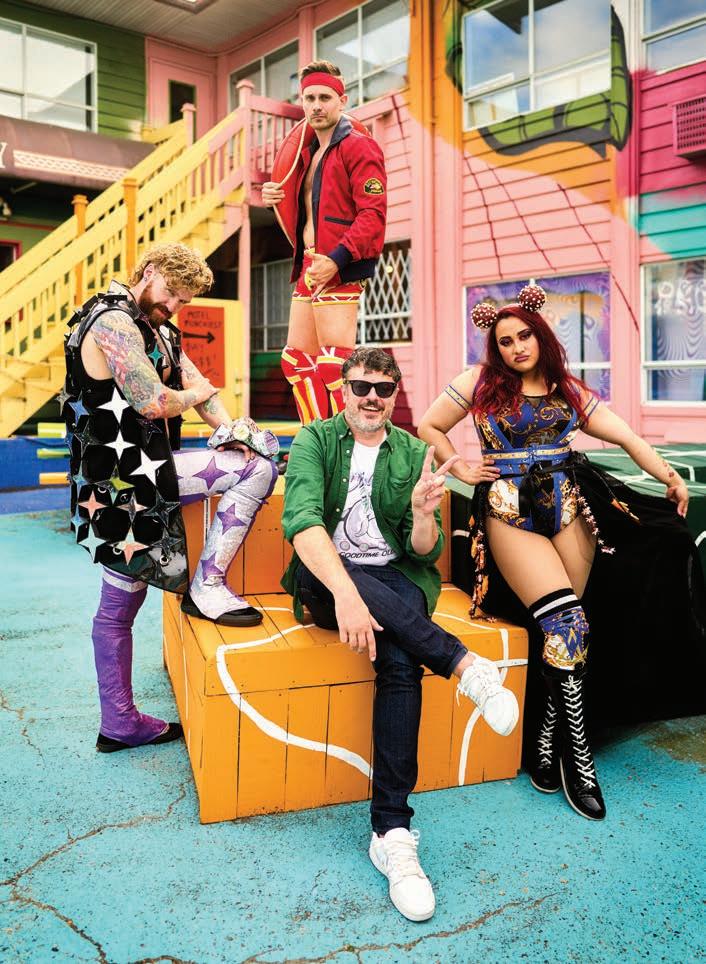
Our Power 50 Hall of Fame is an opportunity to honour the people who endure as consistent sources of positive influence in the city—including these three pivotal power players for 2026.
For proving the city isn’t boring—it just needed a wrestling ring
OWNER AND FOUNDER, BOOM PRO WRESTLING NEW
It turns out, Vancouver gets a whole lot friendlier once you throw a wrestling ring in the middle of it. Three years in, Max Mitchell’s DIY sensation Boom Pro Wrestling has turned the Commercial Drive Legion into a twice-a-month madhouse of spandex, soap-opera drama and joyful chaos. Full disclosure: Mitchell is married to our editor in chief, but his nomination came straight from the advisory council, impressed by the passionate community he’s built around his sensational performances. Every show sells out. The line wraps around the block. The crowd behaves like it’s Game Seven. Mitchell’s “Boomiverse”—a cast of gloriously unhinged heroes and villains—somehow unites sports fans, artists, families and curious Drive wanderers into one roaring organism. The moves are fun, but the magic is in the fandom: loud, loyal and fully committed, signs and all.
Boom even played the Commodore Ballroom this summer—and yes, that 800-capacity show sold out too, proving the hype has legs beyond its East Van home base. (No wonder, then, that Mitchell introduced a third popular monthly show in Kitsilano this past fall.) In a city accused of being “no fun,” Mitchell built a place where everyone belongs, even though yelling is practically a civic duty.
Since founding the Vancouver Chinatown Foundation in 2011, Carol Lee has become the neighbourhood’s leading ambassador— revitalizing its streets with Light Up Chinatown, Taste of Chinatown and the Chinatown Storytelling Centre. A serial entrepreneur with ventures like Chinatown BBQ and Foo Hung Curios on the go, she’s also behind Bob and Michael’s Place, the new 231-unit socialhousing project transforming West Hastings. And in 2024, she stepped into a full-circle role as chair of UBC Properties Trust, continuing her family’s civic legacy.
Lawyer-turned-entrepreneur Malik Talib has shaped Vancouver through ventures in real estate and food processing, all while remaining a prominent leader in the charitable Ismaili community. A former head of the Aga Khan Council for Canada, he now serves on the National Committee of Aga Khan Foundation Canada and chairs the Ismaili Leaders International Forum. His civic work spans BC Children’s Hospital, United Way and the Vancouver Foundation—where he championed its landmark loneliness study—all with a focus on strengthening community.
As CEO of Creative BC since 2015, Prem Gill has been one of the province’s strongest cultural champions—supporting everything from publishing and music to the engine of Hollywood North. After helping steady B.C.’s film industry during last year’s strikes, she continued the momentum in 2024 by directing $600,000 to 12 local production companies through Creative BC’s Slate Development Program, bolstering jobs and ensuring Vancouver’s creative sector remains a global force.
than
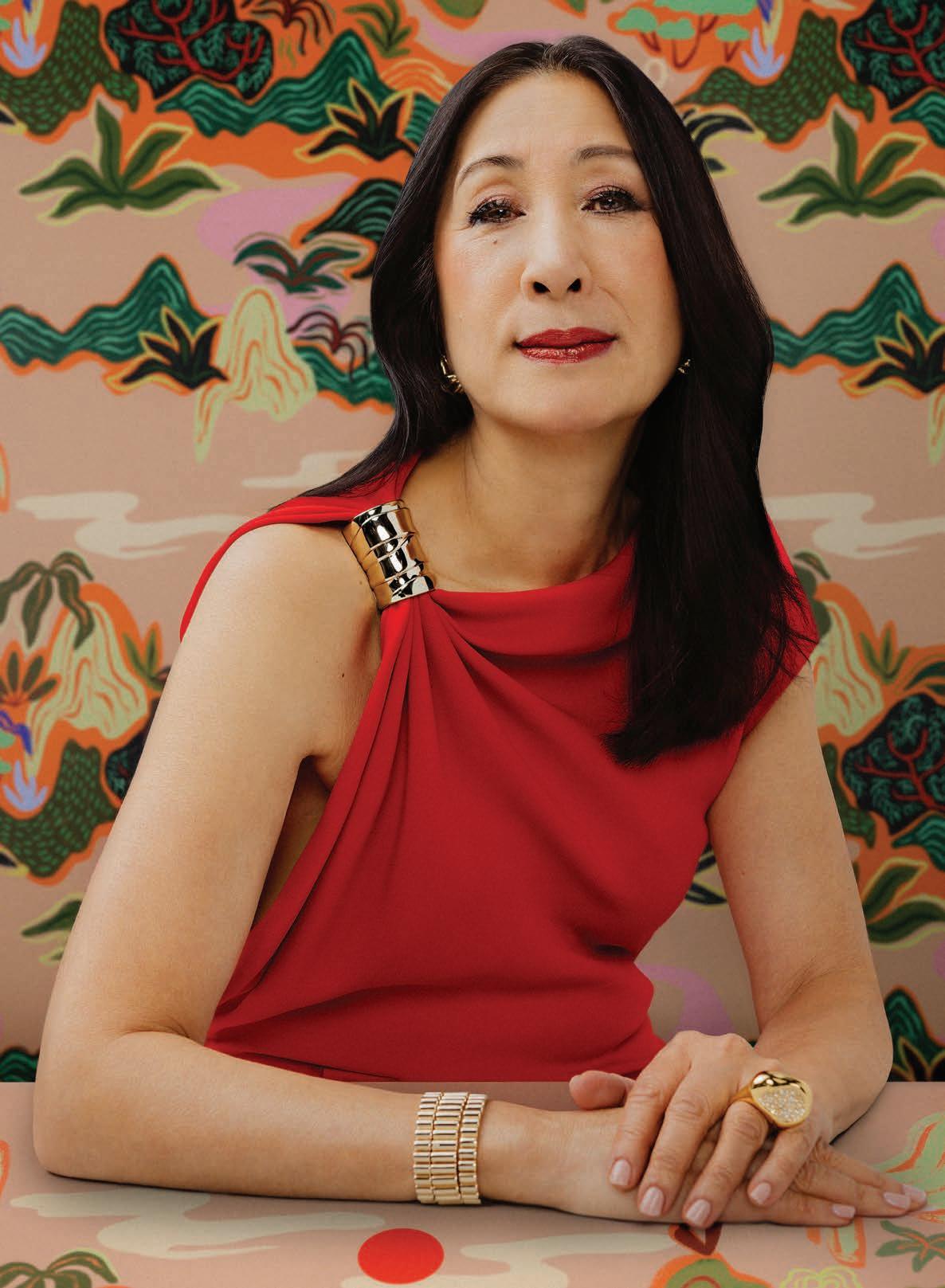
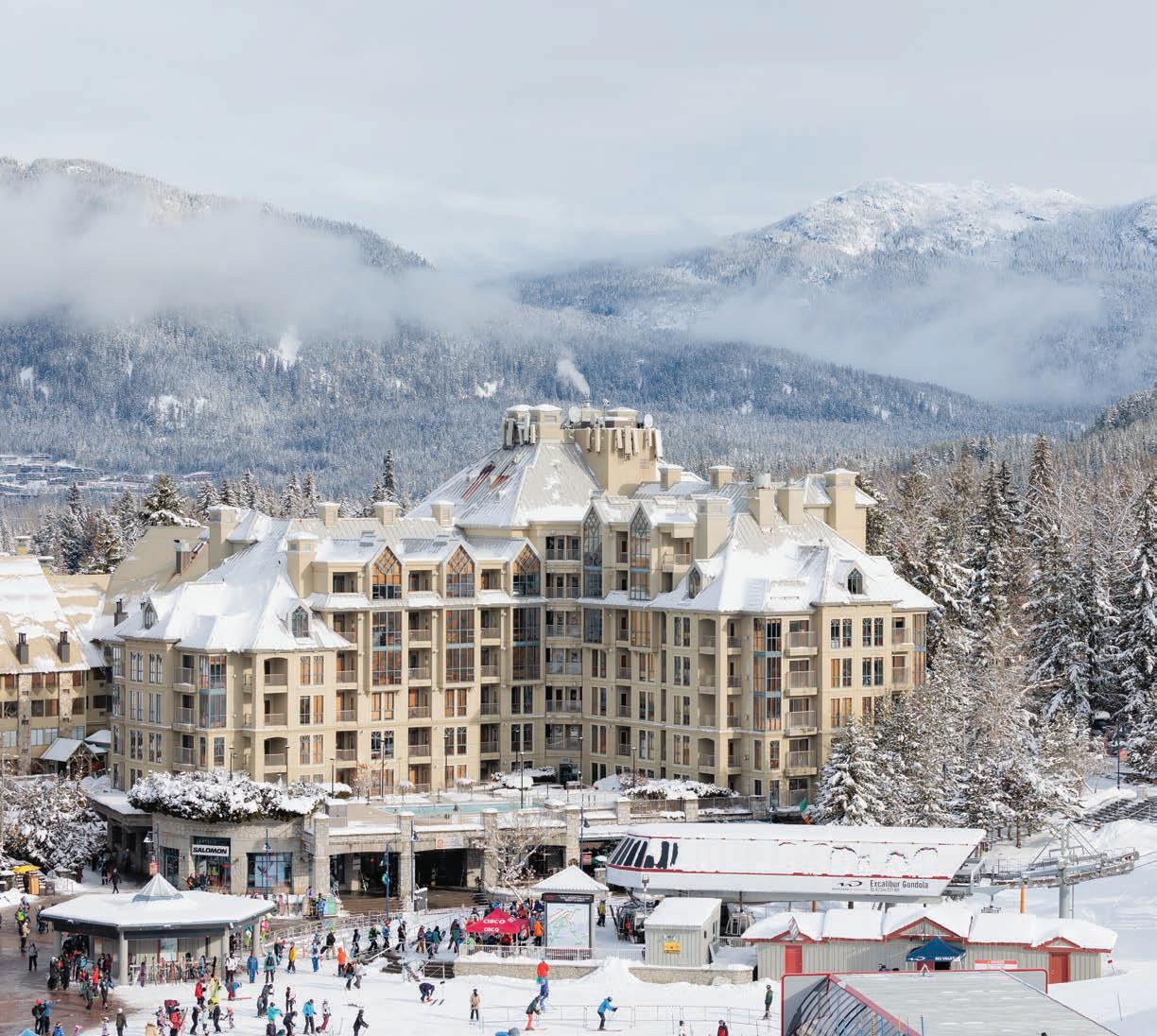

BY STACEY M c LACHLAN
It brings in millions and employs tens of thousands of Vancouverites. Is it time to finally take the content creator economy seriously?
Every day for the past 14 years, the Vancouver food content creator has been feeding her 462,000 Instagram followers a steady stream of restaurant reviews, viral food trends, DIY recipes and product tests. She’s essentially a one-woman Food Network— and, since 2021, it’s been her full-time job.


“They see it in 20 seconds, but it took eight hours of my life to create it,” says Ip (@eatingwithkirby), whose commitment to the craft has transformed her from a marketing professional at companies like Lululemon and Microsoft into one of Vancouver’s most successful influencers. Her husband covered her half of the mortgage as she got started; now, he works for her behind the scenes, handling bookkeeping, reporting and subcontractor management so she can focus on content. “I was his investment,” she jokes.
The Good Life Consistency has been key to Kirby Ip’s success as a content creator, and her work has given her opportunities that range from indulgent restaurant meals to celebrity chef photo ops to travel.
Ip is part of an invisible economy thriving in Vancouver’s shadows. While the city’s film and television industry employs around 90,000 people in a given year (says CreativeBC) and
platforms. If Vancouver has perhaps 10 percent of that base—a plausible estimate given the city’s size, creative economy and media industry— that’s roughly 88,000 people building careers from their phones.
Collectively, they’re capturing a significant share of the approximately $920 million spent on influencer marketing in Canada in 2024, according to Statista—even as broadcast television advertising continues a decade-long plummet. As legacy broadcast media

has earned Vancouver the nickname Hollywood North, content creators remain decentralized, independent and regularly misunderstood by older generations. Yet, according to Nielsen Canada, there are over 882,000 active influencers across the country on major
struggles to stay afloat (last year saw the closure of 14 TV stations across Canada), these creators are building an ecosystem of new, individually run media networks that are leaner and more lucrative.
Those who join its ranks, though, are often doing so by accident.
The common thread among Vancouver’s most successful content creators is the organic nature of their rise. They posted about things they loved—a great meal, a cool coffee shop, a fun hike—and attracted an authentic, engaged audience that clamoured for more. Not everyone sets out with the dream to be a content creator: content creatordom is often thrust upon them.
Daniella Atkinson—known to her 138,000 Instagram followers as @daniella_atk, or “Vancouver’s News Reporter”—started as an on-air reporter for the Market Herald. Her 5 a.m. call times left her with afternoon hours to kill; just for fun, she began doing street interviews on social media, asking people about salary transparency. “I had no idea what anyone in the reporting industry made, and then realized that no one made as much money as I wanted to,” she says. “I don’t want to get up in the middle of the night to maybe make $90K in 20 years.” When her top video hit 19 million views and her bosses didn’t care, she decided to bring her audience to companies that would. She gave her notice in January 2023; in 2024, she brought in $175,000 from partnerships and brand deals.
Atkinson is aware, of course, of the precariousness of self-employment. “Every day I’m like, this could end in two seconds,” she admits. But in the meantime, she’s making the most of it—as a correspondent with the Junos, a partner for Tim Hortons and Subway and an ambassador for the Shangri-La. These are all opportunities she’s brokered herself, without a manager.
Ben Kielesinski’s journey was even more serendipitous. He was working for his family’s events company in Cloverdale, but was laid off by his own dad when COVID hit. “No favouritism there,” he jokes. With the city shut down and nothing to do, he started spending time outdoors. When a friend mentioned that an agency was casting remotely for a wilderness commercial, he edited a video on TikTok—purely because it was a free editing tool—and sub-
mitted it. He didn’t get the commercial, but the video got 10,000 views.
“All the comments were so positive, like: ‘I can’t wait to get back to B.C.,’ or ‘I’m stuck inside and this is so cool to see,’” he says. He started posting more nature content to his @benjaminkielesinski account, usually beginning with “Do you want to come on an adventure with me?”
A January 2022 video got a million views in six hours. Today, Kielesinski has 2.7 million followers on TikTok and 510,000 on Instagram. He never went back to work with Dad.
Like with any creative freelance job, there’s a surprising amount of unpleasant administration involved in following your passion. It’s not enough to just be a great on-camera personality or skilled video editor—you also need to be your own bookkeeper, marketer, agent, project manager and salesperson.
Sam, who prefers to keep her last name private despite sharing her life with 57,000 Instagram followers, learned this the hard way. A former elementary school teacher, she was working for an ed-tech startup when layoffs hit in May 2024. “I was
DANIELLA ATKINSON, CONTENT CREATOR
“I don’t want to get up in the middle of the night to maybe make $90K in 20 years.”


We’ve been chatting with our BC community, and here’s what we learned
DINING HABITS: DID YOU KNOW THAT 72% OF VANCOUVERITES DINE OUT 1-2 TIMES A WEEK ?
OUTDOOR ADVENTURES:
We love the great outdoors! WALKING is Vancouver's favorite outdoor activity ( 87% ), followed by HIKING ( 53% ) and PICNICKING ( 39% ).
WHAT MATTERS TO US: Vancouverites are passionate about the cost of living , healthcare , and affordable housing . Are these topics important to you too? Now we have a question for you! What generalizations or stereotypes do people make when they find out you're from British Columbia?
FOR YOUR CHANCE TO WIN 1 IN 5 $100 VISA GIFT CARDS




shocked and sad, but then immediately I was like: This is not even a question. I’m going to do this full-time.” She’d been running a personal account, @omgheysam, to share Vancouver’s hidden gems and hot spots in other destinations, and she felt momentum building. By August of that
MICHELLE LAN, PUBLICIST, ARMSTRONG + LAN
“Traditional media coverage carries a sense of credibility that’s hard to replicate elsewhere, but the rise of social media has shifted expectations.”
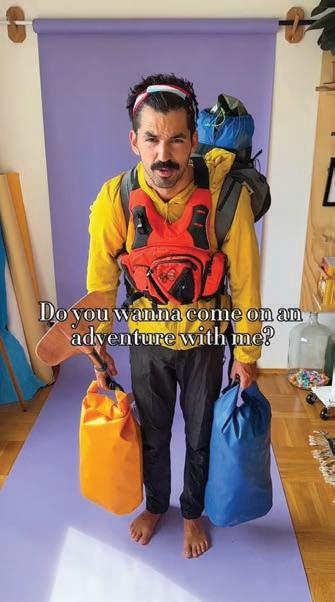
year, she hit five figures in brand deals. But the learning curve was steep. “Actually understanding a 20-page contract, knowing what to charge, negotiating contracts—it’s a challenge that I wasn’t really prepared for,” she says. “If you’re used to a paycheque every two weeks,
Career Shift
The content creators behind popular Vancouver channels @omgheysam (bottom left) and @benjaminkielesinkski each took the plunge into full-time social media production after a job loss.
this is a whole new world.” She credits the transparency of fellow creators for helping her navigate those early days: she often DMed other women to ask about rates. “They were like, ‘Sam, honestly, we don’t really know either, but here’s a ballpark.’ It helped so much.”
The challenges extend beyond contracts. As Sam notes, there are countless variables in every deal: “It’s not just about the video, it’s also like: Does the company want usage rights? Do they want exclusivity? Do they want Stories? There are so many pieces of the puzzle.”
Atkinson has faced her own frustrations with the business side. “Companies sometimes take advantage, knowing you’re a single person trying to chase down payments. I’ve had clients be eight months late on big payments.”
But perhaps no challenge looms larger than the capricious nature of platform algorithms. Ip experienced this firsthand after taking a cruise without wifi—her first real vacation in 15 years. She was offline for 10 whole days. When she returned, her
posts struggled to get reach. “I was penalized,” she says—punished by Instagram’s algorithm for daring to log off.
It’s this reality that makes the work feel like a “hamster wheel” at times, as Ip describes it. The benefits are obvious— flexibility, autonomy, high earning potential—but the invisible work is enormous. “It’s 24/7 but it’s 24/7 that I enjoy. There are no office hours,” says Atkinson. “It’s not something you can do unless you’re fully passionate about it.”
Vancouver’s smaller market compared to major hubs like New York, L.A. or Toronto, many creators are content to stay. Ip knows she could make more money in the States and feels the pressure sometimes—she could get a big talent management company, meet clients in person—but the quality of life available here matters. “I like how all the things we love are here, and how safe it is here. I won’t be moving just for that.”
Atkinson echoes this sentiment. “I always get asked ‘would you move to L.A.,’ but I always say I’d rather be a big fish in a small pond.” While other cities might offer more branded events and opportunities, that comes with different headaches and competition. “We’ve got our own niche here, and Vancouver is catching up. Big brands are starting to do activations here.”
Ip has met other content creators in Vancouver who make half a million a year, but she says most influencers here feel like they’re not reaching their full earning potential. “We’re definitely a small-potato city,” she says. Still, she’s not complaining. Neither is Kielesinski: “I’m not going to say it’s hard. If you’re working in the service industry, that’s hard. I get to spend most of my time doing something I love and I feel so lucky.”
Atkinson estimates there are 30 or so content creators she sees consistently at local events. “We’re pretty close knit,” she says. Ip, however, notes a more mixed dynamic: “It’s both competitive, and a community. I’ve met some amazing people but there’s a competitive aura among certain creators in my niche. I can think of five people or less I can speak to openly about this work. It can be lonely.”
Tom Yawney is a co-founder of the Influence Agency, a Canadian agency that connects content creators with brands. Based in Toronto but working with influencers worldwide, he’s witnessed the astronomical rise of influencer marketing over the last decade. “In 2017, influencer marketing was pretty underdeveloped in Canada compared to the U.S. We’d meet with people eight years ago, and it was a foreign concept. They’d be like, ‘What are you talking about? What is this? Why would we do this?’”
Today, it’s standard practice. The biggest change, Yawney notes, is the shift from broad reach to niche categories that “fill in all the crevices of the internet.” Brands no longer just want a mom with a big following—they want a mom specifically making content for parents raising gymnast kids with food allergies. He might connect brands with a bundle of smaller influencers—25 creators with 4,000 highly engaged followers each instead of one creator with 100,000.
Vancouver-based PR firm Armstrong and Lan Communications has seen similar evolution. The team typically balances traditional media and influencers, depending on client objectives, but, says co-principal Tara Armstrong, “Content creators have become an essential extension of how we tell stories and reach audiences.” The focus of the firm has shifted from follower count to “engagement, audience quality, content style and long-term impact,” Armstrong notes.
“Our clients still see traditional media coverage as incredibly valuable—it carries a sense of credibility and permanence that’s hard to replicate elsewhere,” says Armstrong’s partner, Michelle Lan. “However, the rise of social media has shifted expectations. Brands appreciate the direct-to-consumer aspect, the ability to see immediate reactions, comments and measurable engagement.”
For most creators, the journey starts with in-kind opportunities—$500 worth of makeup, an invitation to try a restaurant. As follower numbers creep up (Yawney says 10,000 is the sweet spot), modest financial offers tend to follow. “People get stuck for a period of time in this middle ground,” says Yawney. They’re not businesspeople,
they’ve never negotiated a contract. But once you break through to the next level—or develop enough business acumen—there’s opportunity for six- or seven-figure deals.”
While many of the content creators interviewed for this story said that living in Vancouver limits their opportunities, Yawney disagrees that physical location can hinder an influencer’s success.
“There are huge content creators in Australia, in Abu Dhabi, in Romania— there are people all over the world that are developing huge audiences. Social media has broken down the doors set up by traditional media gatekeepers, and it’s a bridge that anyone can cross.”
The most successful creators guard their authenticity fiercely. Kielesinski is picky about partnerships, saying no to most offers his manager brings.
“It’s my face, my name. I want to choose partnerships that feel true,” he says. He’s particular about the cases where he’ll use his “come on an adventure” tagline for paid promotions. “My audience hears that and think they’re getting a treat; I use it responsibly.”
People reach out to Yawney weekly saying they want to become an influencer.
“And I have to tell them: This isn’t how it works. It’s not a job you apply for.” So many people who build careers around content creation arrived there through circumstance: doing something they had an interest in, building it consistently and watching as community follows.
It’s the kind of career that requires total immersion. Sam works around the clock, but she sees that as a universal experience for entrepreneurs of any kind, especially in the early days. “If you’re in your first few years of running a business, I think it has to be that way, you know?”
The work may be all-consuming, potentially harmful to relationships and family life. But for those who’ve found their niche, posting about the things they love to audiences who love them back, it beats getting up at 5 a.m. to maybe earn $90K 20 years from now.
Even if it means the algorithm is always watching, waiting for you to take a vacation.



More British Columbians are leaving legacy gifts in their wills. These charitable donations serve the community, now and into the future.
As older Canadians start passing down properties, savings and other assets to the younger generations, more of these wealth transfers include a legacy gift to charity through people’s wills. These legacy donations play an important role in supporting the health and well-being of the community—the type of support that can only be provided through philanthropy. Here’s how nonprofits support Metro Vancouver and B.C. with the legacy donations they receive.
Every day, families in Burnaby and East Vancouver rely on Burnaby Hospital for care when it matters most. Burnaby Hospital & Community Foundation (BHCF) ensures that care continues to grow and improve and stays close to home, thanks to donors’ generosity.
A legacy gift is one of the most powerful ways to support the health and wellness of Burnaby and East Vancouver.

“These gifts help secure the future of healthcare in our community,” says Kristy James, president and CEO of BHCF. “It’s a meaningful way to ensure exceptional care long after your lifetime.”
Legacy gifts help fund advanced medical equipment and technology, education grants that strengthen healthcare expertise, healthy living programs, and the multi-phase redevelopment of Burnaby Hospital, first built in 1952 and now preparing for its future.
The Foundation’s next priority is raising funds for Phase Two of the hospital campus redevelopment. This phase will deliver a new, modern 12-storey acute care tower, including an ICU, medical imaging department, inpatient oncology unit, cardiac telemetry unit and a regional Cancer Centre.
As the health needs of the community grow, long-term support matters more than ever. Including

“These gifts help secure the future of healthcare in our community. It’s a meaningful way to ensure exceptional care long after your lifetime.”
–KRISTY JAMES, president and CEO, BHCF
BHCF in your will allows you to reflect your values while helping ensure quality care for those who follow.
For many people, a legacy gift can have a greater impact than annual donations. As more Canadians plan their estates, they are choosing to include the causes that mattered most in their lives.
“Legacy giving is growing as the largest intergenerational wealth transfer in history unfolds,” says James. “Your gift will continue to provide care for the people you love and touch the lives of countless others you may never meet, strengthening healthcare in your community for generations.”

When you leave a legacy gift in your will, your donation can be designated to a specific purpose or initiative within a charity, or it can be open for the charity to allocate.
“Most donors choose to support the highest-needs priorities, providing flexibility for the charity each year,” says Kyle Tiney, director of development at Family Services of Greater Vancouver (FSGV). FSGV offers support to people in crisis along with services to help people develop the skills, knowledge and confidence to create positive change in their lives.
“Over the years, legacy gifts to FSGV have contributed to our endowment fund, which continues to provide sustainable, unrestricted revenue every year for us,” says Tiney. “This allows the organization to focus on creating new programs that meet the needs of the community, expanding our reach and continuing to support clients for as long as needed.”
Tiney notes that different types of donations—a legacy gift versus an annual gift—support organizations in different ways. “Legacy giving is unique because it allows someone to make a meaningful contribution without affecting their daily financial needs,” he says. “While annual gifts support today’s programs, legacy gifts help ensure stability, resilience and innovation for decades to come.”
These forward-looking gifts are notably important as day-to-day financial realities inevitably shift for charities.
“The nonprofit sector continues to adapt through changing economic times, evolving government priorities and increased demand for services,” notes Tiney.
“Legacy gifts are a much-needed source of revenue for charities to keep up with demand and the changing financial landscape.”
This stability through uncertainty is particularly important for organizations like FSGV that provide vital support to individuals in crisis or in vulnerable situations.
“A legacy gift to FSGV is a profound way to strengthen the well-being of families, survivors of violence and unhoused youth for generations to come. If you believe in building more resilient communities with a brighter tomorrow, this is one of the most meaningful ways to make that commitment last.”
–KYLE TINEY, director of development, Family Services of Greater Vancouver (FSGV)
“A legacy gift to FSGV is a profound way to strengthen the well-being of families, survivors of violence and unhoused youth for generations to come,” he says. “If you believe in building more resilient communities with a brighter tomorrow, this is one of the most meaningful ways to make that commitment last.”




As B.C.’s population grows and ages, the number of British Columbians living with cancer also rises. “More than 80,000 British Columbians and their families are living with cancer today,” says Elissa Morrissette, senior vice president & chief development officer at the BC Cancer Foundation. “The need for long-term, sustainable investment in cancer research, treatment and infrastructure has never been greater.”
Legacy giving, she notes, plays a vital role, now more than ever, in shaping the future of cancer care in this province. “Legacy gifts provide a unique opportunity to plan ahead and invest in transformative solutions,” says Morrissette.
A legacy gift with the BC Cancer Foundation goes toward the future of cancer care, whether it’s driving breakthroughs, fuelling cutting-edge research programs, acquiring bestin-class technology or supporting compassionate and expert care close to home.
“Breakthroughs in areas like precision medicine, early detection and discovery research require sustained support. Legacy giving helps provide this continuity.”
–ELISSA MORRISSETTE, senior vice president & chief development officer, BC Cancer Foundation
“Every dollar donated stays right here in our province, advancing world-leading research and treatment options in the very communities where we live, work and raise our families,” she says.
Currently, the BC Cancer Foundation is fundraising for four new BC Cancer centres across the province in addition to the existing six locations. “Breakthroughs in areas like precision medicine, early detection and discovery research require sustained support,” she says. “Legacy giving helps provide this continuity.”
Morrissette offers the example of the late John Jambor’s transformative estate gift that has already led to meaningful change for future generations. “In the estate plan John Jambor and his grandson William McCarthy created, he left a bequest to the BC Cancer Foundation that grew to $21.4 million and was gifted to BC Cancer Foundation in 2012,” she says. “This was the largest charitable bequest in B.C.’s history at the time.”
In recognition of this gift, the organization named its John Jambor Legacy Circle after the late philanthropist. “This circle celebrates our community of legacy donors, creates meaningful opportunities to learn about the impact of philanthropic investment in BC Cancer, and allows us to recognize individuals according to their preferences,” says Morrissette.
A legacy gift doesn’t have to be large to have an impact—and it can come from anyone. “Everyone should have an estate plan, and anyone who wishes to make a lasting difference can plan for a legacy gift,” she says.
“Estate plans involve gifts of wealth, rather than income, and often allow donors to make a much bigger impact than otherwise possible.”
Legacy donations are also a great way to align your legacy with your values and ensure the causes you care about continue to make an impact after your lifetime.
“Last year, donors collectively contributed over $20 million through their estate plans to the BC Cancer Foundation—a truly transformational impact and a testament to the power of legacy giving,” notes Morrissette.


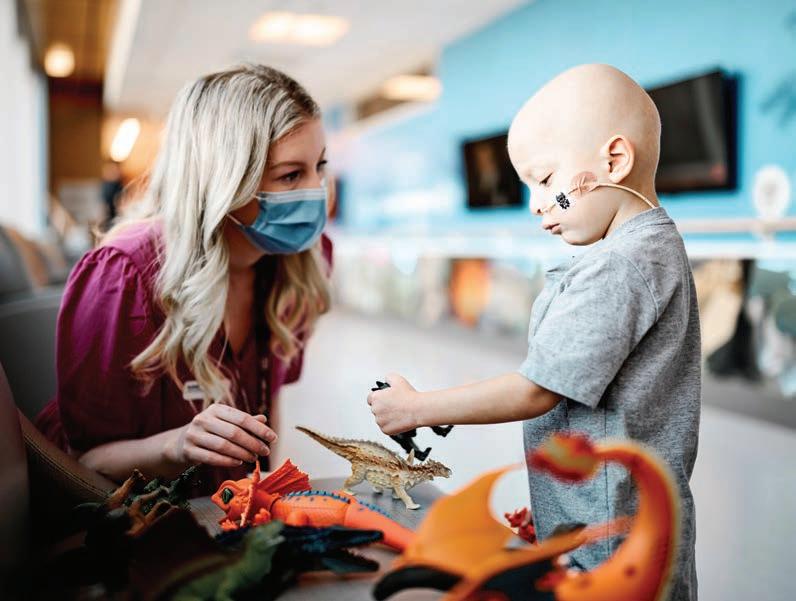
There’s only one hospital in all of B.C. and Yukon that’s dedicated exclusively to children’s care. And it serves a pediatric population of almost one million.
“Legacy gifts support innovations and advances that provide the best health outcomes for kids and families—and ensure that BC Children’s continues to rank among the top pediatric hospitals in the world,” says Hilary Beard, director of gift and estate planning for BC Children’s Hospital Foundation.
Thanks, in part, to legacy gifts, BC Children’s Hospital has achieved many firsts in healthcare. It was the first Canadian hospital to implant a new pacemaker into a newborn, giving new hope to those with severe heart conditions. Researchers developed the first simple test predicting a serious transplant complication months before it would occur,
“Legacy gifts support innovations and advances that provide the best health outcomes for kids and families—and ensure that BC Children’s continues to rank among the top pediatric hospitals in the world.”
–HILARY BEARD, director of gift and estate planning, BC Children’s Hospital Foundation
supporting preventive care. The hospital also launched the Clinical Trials Super Hub, the first of its kind in Canada, bringing the world’s most advanced treatments closer to home.
“Legacy gifts fuel this kind of groundbreaking work that’s not only improving the health of kids across B.C., but also setting new standards worldwide,” says Beard. “With breakthroughs we can’t yet imagine, a legacy gift can drive medical advancement beyond what’s possible today.”
The need for donor support is high, Beard notes, adding that children’s healthcare needs are becoming more complex and demanding. “Over 30 percent of Canadian children and youth live with chronic diseases, one in five experiences chronic pain and many children now wait longer for essential health services than adults do,” she says. “Canada invests just 1.6 percent of its GDP in children and youth—less than half of other leading countries. Our country now ranks 19th out of 36 wealthy countries in the health and well-being of children and youth.”
Legacy gifts play an important part in closing this investment gap while supporting future generations’ health. “In speaking with many
community members across B.C. who have made their legacy plan, often in their will, I’ve noted their deep satisfaction and sense of inner peace that their future legacy might be the biggest achievement of their decades of hard work,” says Beard. “It is for some a way of sharing success—a form of ‘paying it forward.’”
Beard adds: “You can make a meaningful legacy gift without changing your current lifestyle or business. You can support the future while taking care of today.”

A better future for kids is possible. When you leave a gift in your Will, your support can fuel leading-edge technology and groundbreaking pediatric research that transforms lives for generations to come.
Visit bcchf.ca/legacy

“Our programs and services support people at critical points in their lives. Generous legacy donors ensure that these programs and services continue to be available for individuals when they need them.”
Almost 30 percent of British Columbians age 15 and older live with a disability, according to the provincial government. Easter Seals BC/Yukon provides supportive programming and helps individuals with disabilities develop self-esteem and independence.
“Our programs and services support people at critical points in their lives,” says Tristan Klassen, acting CEO of Easter Seals BC/Yukon. “Generous legacy donors ensure that these programs and services continue to be available for individuals when they need them.”
Gifts fund core programs at Easter Seals, like summer camps for children and adults with disabilities—a place where they can gain confidence, develop social skills and build relationships. Donations also support Easter Seals House, which provides convenient and comfortable accommodation for people who
The Greater Vancouver Food Bank (GVFB) distributes approximately 9.5 million pounds of food annually to those in need. More British Columbians are turning to services like the GVFB given the rising cost of groceries, housing and other necessities, which makes it increasingly difficult for families to put nutritious food on the table.
A legacy gift to the GVFB ensures ongoing access to fresh, healthy food for people in need, furthering the organization’s reach across communities in the Greater Vancouver area, and creating a secure and sustainable future that addresses food insecurity in the community.
Joe B. is a regular volunteer and a monthly supporter of the GVFB. After witnessing firsthand the positive impact
the organization has on the community, Joe and his wife Pat decided to leave a gift in their will.
“As a volunteer, I became aware of the wide range of work being done by the GVFB and the work’s positive impact,” Joe recalls. “Pat and I made a mindful decision to donate to the GVFB. We have been fortunate in our circumstances in our lives and want to provide a gift that helps others. There may always be people in need. A gift to others in your will could be considered a very Canadian legacy.”
The GVFB has made it easier for more Canadians to create a legacy by partnering with Epilogue Wills, an online will platform created by experienced estate planning lawyers, offering supporters the opportunity to create a will at 50 percent off with the discount code GVFB50.
“When I hear from someone who has made a gift to the GVFB in their will, I am overjoyed,” says Greg Douglas, senior director of development at GVFB. “It is one of the most fulfilling aspects of my job—to know that someone cares about the GVFB’s work so much that they want to ensure it continues well into the future.”
must travel to Vancouver to seek medical care for themselves or a loved one.
The impact of legacy donors on Easter Seals BC/Yukon lasts for decades. “In addition to being a regular donor to the organization, one donor who stayed in the Easter Seals House years ago during a medical emergency left us a gift in their will,” he explains. “The funds left by this person meant we were able to carry out muchneeded updates to one of the guest rooms at Easter Seals House, ensuring many more people would be able to receive and benefit from the same service the donor received all those years ago.”
Legacy gifts have never been more important, Klassen notes, reiterating that there is an increasing demand for programs offered by the charitable sector.
“Having a reliable source of future income ensures that charities can better plan and the impact of their programs continues,” he says. “By leaving a gift in your estate plans, you guarantee that the crucial work being done by Easter Seals BC/Yukon to support individuals with disabilities will affect generations beyond our own, just like it has for almost eight decades.”
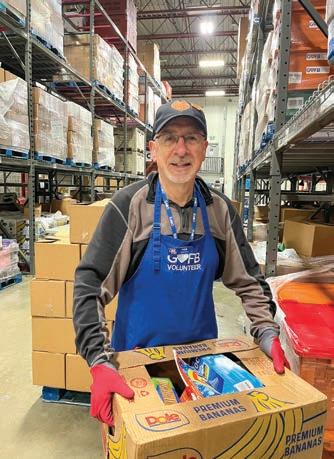




The Salvation Army is the largest non-governmental direct provider of social services in the country, offering a range of services from meal programs, housing support, addiction rehabilitation, life skills development and children and youth programming.
“Demand for programs and services is continuously rising with the increase in population and economic uncertainty impacting people’s work and home,” says Kim Findlay, divisional director of development at The Salvation Army.
Because charities do not budget for legacy donations, these gifts allow organizations like The Salvation Army to help more individuals and families through increased services, new programming or improving infrastructure.
“During times like this, where the demand for services and programs has grown by 30 to 40 percent, any additional funding not budgeted allows us to respond where the needs are greatest,” he notes.
Findlay shares the example of Christopher Braun and his wife, who left a legacy gift to The Salvation Army in their will. Braun moved to Canada after WWII, where he later met his wife at a community hall dance. They began buying duplexes in Vancouver to renovate and rent out. Later, they also built apartment buildings to rent out. Each day, Braun would walk around the city and see the many unhoused people living in downtown Vancouver. So, through their will, he and his wife directed their gift to go towards Salvation Army shelters for the unhoused in Greater Vancouver, Vancouver Harbour Light and Belkin House.
“Creating a will with gifts to charities helps provide clear and intentional directions for your family and loved ones, as well as putting your mind at ease.”
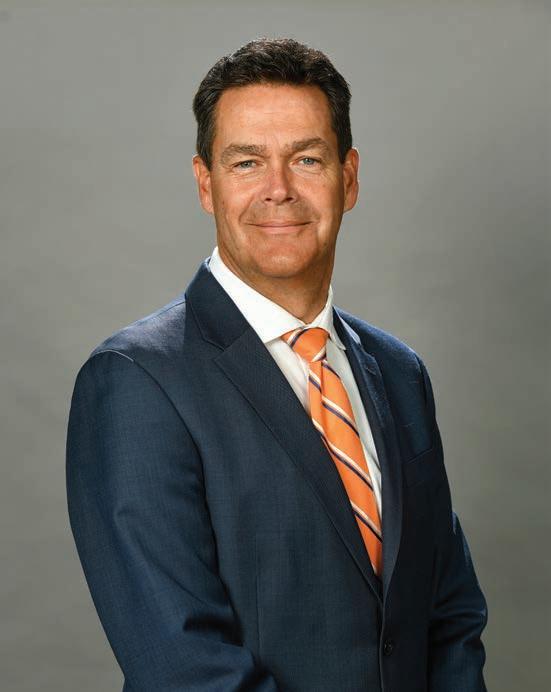
–KIM FINDLAY, divisional director of development, The Salvation Army
Through legacy gifts like Braun’s, people can make a future-focused, meaningful impact on the community where they live and work. Those who leave a legacy gift
LEARN MORE ABOUT LEGACY GIVING AT:
with The Salvation Army are part of the Circle of Hope, Findlay notes, which is a group of people who “strongly share the belief that our community becomes a better place when we offer hope and dignity to vulnerable people.”
Findlay reminds everyone to think about what they want their legacy to be. “Creating a will with gifts to charities helps provide clear and intentional directions for your family and loved ones, as well as putting your mind at ease,” he says. “When you think about the values that are important in your life and the ideals you wish to be remembered for, consider including The Salvation Army in your legacy.”
Burnaby Hospital & Community Foundation | bhfoundation.ca/legacy
Family Services of Greater Vancouver | fsgv.ca/you-can-help/giving/legacy
BC Cancer Foundation | bccancerfoundation.com/ways-to-give/leave-a-gift-in-your-will
BC Children’s Hospital Foundation | bcchf.ca/legacy
Easter Seals BC/Yukon | eastersealsbcy.ca/legacy-giving
Greater Vancouver Food Bank | foodbank.bc.ca/ways-to-give/legacy-giving
The Salvation Army | salvationarmy.ca/create-your-legacy
If you don’t look after your health, who will ?
No one.

Get reliable information to help improve your life. Accurate information can change people’s lives for the better, and illumi.health is the place to find it. The content is engaging, easy to understand, and relevant to Canadians of all ages and backgrounds. Best of all, there’s no cost to join, and no personal information is collected. Let’s all work together so that we can have a long, happy, and healthy life.

Raw Skill
Kavita’s beef tartare shows off chef Tushar Tondvalkar’s rare talent, marrying bold Indian flavours with delicate French technique.

There’s a new crop of chefs elevating Indian cuisine in the city—naturally, we needed to put them all to the (taste) test. Read on for the inside scoop on this Indian boom—plus, our picks for city’s best beef tartare, hottest resto openings and essential lambrusco bottles.
We’re not just talking about heat and spice: Indian restaurants in Vancouver are so hot right now.
by Kristi Alexandra
For a long time, Vij’s had the market cornered on high-end Indian food in Vancouver. A mention of the foodie landmark (Michelin Bib Gourmand for the last three years, by the way) would elicit daydreams of juicy, tender lamb popsicles, chaat salad and goat curries. And, as much as the multi-hyphenate Vikram Vij (chef, restaurateur, TV personality, author) has my heart, a welcome new crop of contenders has entered the upscale dining scene, each of whom are pulling inspiration from their hometowns and childhoods to remind us that Indian cuisine has so much more to offer than takeout butter chicken.
So who’s behind the big Indian boom? We visited three new spots to find out.
Colourful floral wallpaper, gold plated shelving and a glittering wall of tealights all draw my eye to downtown’s Desi Indian Lounge as I’m standing on the corner of Hornby and Pacific streets. The dazzlingly decorated room is where former chef at Sula (winner of Best Indian Restaurant in the 2025 Vancouver Magazine Restaurant Awards) Bal Ajagaonkar has been calling home since it opened in January 2025, creating elevated versions of Indian street food. Ajagaonkar also won bronze at the Great Kitchen Party in Vancouver in the last year, so as much as I’m delighted by my visit to Desi Indian Lounge, I’m not surprised that his dishes are knockouts.
Though the main menu boasts a sampling of popular happy hour mainstays, it’s the chef’s tasting menu that leads me to his culinary heart. The chickpea sago cassava tikki (part of the spot’s $45 five-course tasting menu), for example, is drizzled in sweet yoghurt and
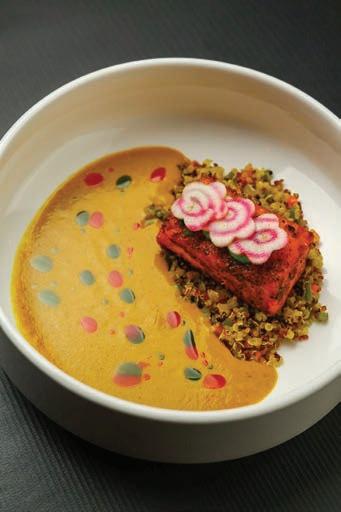
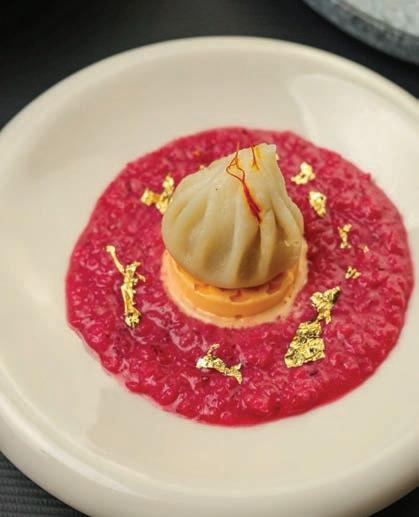
seasonal chutney in a dazzling psychedelic display of greens, oranges and whites—the colours of the Indian flag.
Spotlighting local ingredients through Indian technique, the tasting menu also serves up a Malabar salmon made with a creamy spiced tikka, quinoa pilaf and a fennel cream sauce, topped with a delicate pickled ginger flower. The bhareli vangi, meanwhile, comes in two options: lamb or vegetarian. The idea stays the same: a stuffed baby eggplant that delicately falls apart when forked, swimming in a coconut sauce (which can also be mopped up with millet roti).
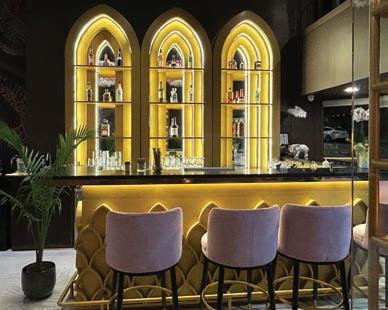
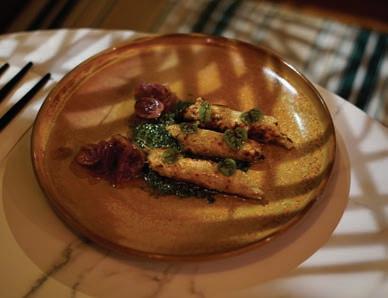
Capping my meal is the fragrant ukadiche modak dumpling, sitting in a bath of cranberry rice pudding with a medallion of mango ice cream. The Maharashtrian dish is made with steamed coconut jaggery, delicately sprinkled with gold flakes to reflect—at the time—the season of light, Diwali.
While the menu also comes with wine pairings for an additional $25 (including a
selection of B.C.-based wines), the cocktail program continues the taste tour around India. Each of the six signature cocktails on the menu travels to a different region of the country. Golden Shores takes drinkers to


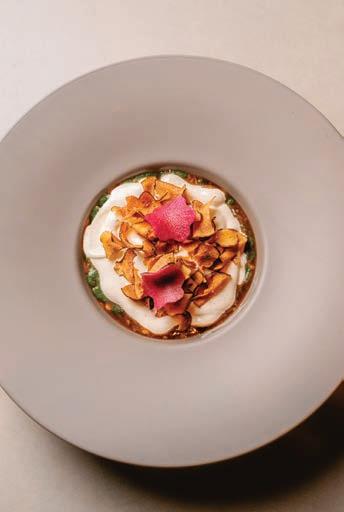
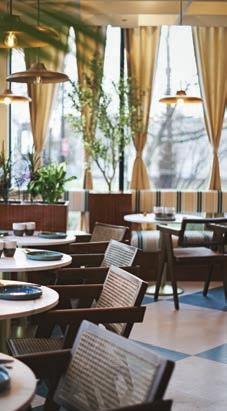
New in Town
Desi Indian Lounge’s Malabar salmon (1); their ukadiche modak dumpling (2); Kavita’s sunchoke chaat (3), Amma Panna cocktail (4) and goat kebab stuffed morels (5); Peya’s interior (6) and rabbit kebab (7); Desi’s interior bar (8).
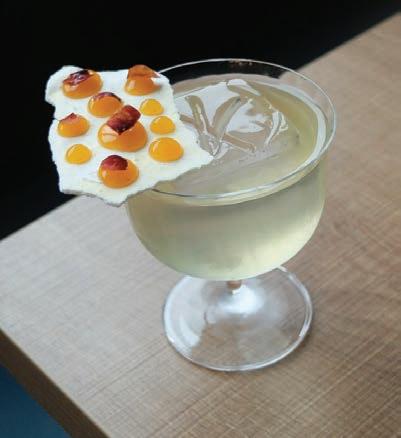
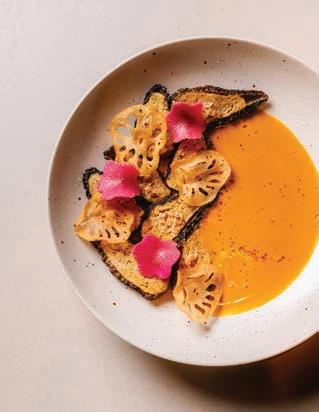
Kerala (known as “God’s Own Country”); City of Dreams places you in the electrified city of Mumbai and Crimson Beach sets you on the shores of Goa—and that’s just half of your options.
As the meal comes to an end, so too does my transportive trip to India through Chef Bal’s tasting menu. I savour my last moments of the lush surroundings, punctuated by botanical design and plush, velvet chairs, before landing back out in the rain again—but it won’t be long before I’m back for another trip. 1355 Hornby St., desilounge.ca
Storytelling and personal history is at the root of restaurateur and chef Tushar Tondvalkar’s new concept, Kavita, and that’s clear on my arrival at the new Olympic Village restaurant. The 1,500-square-foot space is airy and brightly lit and features clean lines and a beautiful open kitchen (which I peer into as the chefs make and plate my food). The open-kitchen concept might also be an allegory for the nature of Tondvalkar’s cooking—when it comes to his recipes, he’s an open book.
From any of the 46 seats in the restaurant you can keep your eye on the bar, where mixologist and bar manager Kabir Sehgal (formerly of Chupito) mixes up inventive and beautiful cocktails.
The Amma Panna ($22), for example, is a Patron and mezcal drink with mint and green mango cordial, lime and butterwashed milk punch that Sehgal tells me was inspired by the mango tree in his backyard growing up in India. Complete
with a tart rice crisp, the cocktail is a blend of gastronomic science and storytelling—and that’s much the case with the rest of the cocktail menu.
The name Kavita comes from Chef Tushar’s own mother (and is also the Marathi word for “poetry”), so it makes sense that many of these dishes, like Sehgal’s, come from his own childhood memories, in his case, in Mumbai.
Stories and senses also intertwine on the food menu—a small plates and a large plates mix—that can be ordered “amma kase” style (both an ode to the Japanese serving method and a nod to the word “mother” in several Indian languages).
The chili cheese garlic naan ($9) made with black garlic and a chutney, also topped with freshly scraped garlic, whets my appetite for what’s about to come. Though I previously hadn’t connected India with beef dishes, Kavita’s beef tartare ($26) feels like a mouthful of poetry: podi masala and crispy curry leaves intertwine with a runny egg yolk on top, as a bowl of colourful tapioca crisps lies on the sidelines.
A beautifully spiced jumbo prawn rechado ($28) is made with spicy sour chili paste and kachumber and bursts with flavour on my tongue, while the sunchoke chaat ($21) with smashed chickpeas, spiced yoghurt, tamarind and mint chutney and goat kebab stuffed morels ($32) tastes like a dialogue between B.C. ingredients and contemporary Indian flavours, bathed in a korma sauce with green peas.
Moving on to the large plates menu, the paneer nettle saag ($34) with a Himalayan mustard and chili tadka and corn puree round out the warming vegetarian options I was hoping for, while a dry-aged Fraser Valley duck curry ($49) in a kerala coconut sauce with heirloom rice turns the idea of Indian ingredients on its head.
The beauty of it all is the delicate dance between Tondvalkar’s favourite childhood dishes and B.C. ingredients—the wild morels and the nettles had been wild-foraged by the chef and team earlier in the summer—in dishes that display a personal and precise mastery of culinary art. 250 W 3rd Ave., restaurantkavita.com
There’s lounge-y French music playing, pinkvelvet upholstery wrapping bench booths mid-restaurant and tall bar stools with brass legs resting under a warm, walnut-toned bar. Everywhere else there are rattan accents, and brass pendant lights are dropped over tables— it’s clear that Peya is a vibe.
The French-Indian brasserie has a rabbit and elephant motif, evidenced by the cartoonish drawings on the wall—giving a nod to the restaurant’s mixed fusion culinary sensibilities. I see the motif extending into their drink offerings as cocktails in many exciting vessels whizz past me (including the Sassy Lassi, $20, in an elephant-shaped cup; the trunk, of course, is the handle).
The unique beauty of the restaurant matches the menu offerings: both clean and layered, not overly complex, and yet novel.
Where many Indian restaurants offer up tandoori-style menu items, Peya has an actual tandoor—a traditional, high-heat cylindrical clay oven that often gives its dishes a smokey and charred quality. And that’s exactly where I start my meal, with a steaming hot cheese spinach naan ($15) fresh from the tandoor.
The pull-apart naan comes with a herby and fluffy crème fraîche with chives to dip it in (with an option to glam it up with a spoonful of Northern Divine caviar). From the petit chhota menu, I order the rabbit kebab ($24), which arrives sitting on a bed of bright green pistou. The house-made skewer is both juicy and light, herbaceous with zippy grape and cumin relish on the side.
Then, to embrace the French techniques that are partnered with the Indian ingredients, I opt for the spiced duck kulcha ($25), made with pineapple raita and hints of coriander. But the main event is the fish à la saag ($42), a seven-ounce halibut cooked saag-style sitting in a pool of smoked tomato coulis and sprinkled with pickled shiitake mushrooms. A crunchy crust forms at the top of the fish, but forks away in perfect, flaky striations.
Not wanting to stray too far from tradition, I choose to end my meal with chai. But here that means chai tea crème brulée ($15) with coconut macaroons and edible flowers—a tasty reminder to expect the unexpected at this French-Indian spot. 2101 E Hastings St., peya.com
By Kristi Alexandra
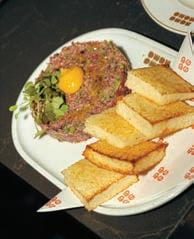
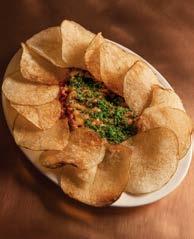
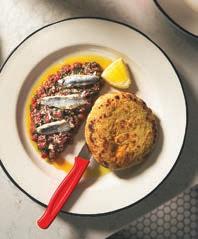
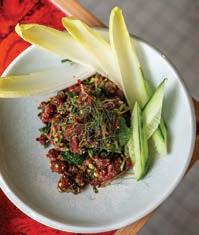
At Commercial Drive’s newest Japanese snack bar, Nomo Nomo (see page 94), the steak tartare ($26) is a medium chop of rich Carrara wagyu beef served with a fragrant perilla leaf. Here, Asian flavours take hold of the French staple, with soy, sesame and a splash of citrus creating an umamidriven bite (which pairs well on the toasted milk bread served with the dish). 1268 Commercial Dr., @nomonomo
June on Cambie takes many classically indulgent dishes and makes them playful, and the spot’s beef tartare ($22) is no exception. The dish is a snackable take: a finely chopped savoury tartare is served with a halo of crisp potato chips dusted in dill. It’s a texture contradiction that works: crispy potatoes against a soft, bright and herby tartare make for an easy bite. 3305 Cambie St., juneoncambie.com
Over at Fraserhood’s French-Canadian concept Chez Céline, the dish is made homey. Their beef tartare with anchovies ($26) is punchy and fatty, perfect for spreading on torn pieces of rustic bread. Somehow, they make the sophisticated European dish feel like a comfort (perhaps it’s that all-Canadian angle they’re going for), which pairs well with a glass of the Pinard and Filles honeymoon wine (a Frontenac noir)—from the heart of Quebec, of course. 4298 Fraser St., chezcelinerestaurant.com
Our 2025 Chef of the Year Angus An puts a Southeast Asian spin on tartare in his new West End room. An’s Isaan beef tartare ($21) is a medium-ground delight loaded with fresh Isaan herbs (like lemongrass, sawtooth coriander and holy basil) with chili and rice powder, delivering a distinctly Thai take on the French dish. 1235 Davie St., @sainamrestaurant



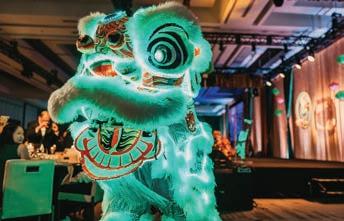
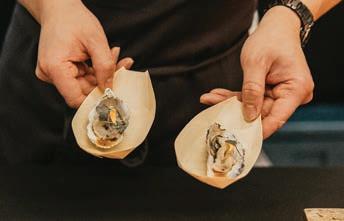







by Kristi Alexandra
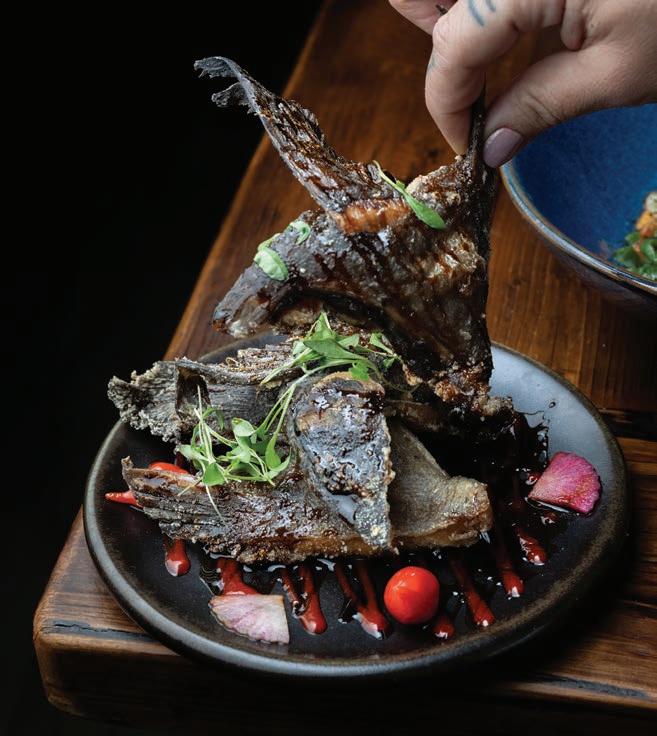
Call me crazy, but I’ve never thought I’d unironically be singing the lyrics of the deceptively catchy ’80s novelty song “Fish Heads” by Barnes and Barnes—but after tearing into Fanny Bay Oyster Bar’s sablefish collars ($19), all I hear melodically echoing in my brain is, “eat them up, yum!” And it’s no joke.
These tender collars are definitely worth singing about. Whereas some cuts of seafood discard whole parts of the fish, the soymarinated, fried black cod collars at the Michelin-recommended seafood restaurant don’t waste much. The sablefish collars here, entirely awash with an umami-rich Korean BBQ glaze, are served up with fins and all.
How does one even eat a fish collar, you might wonder, if you haven’t grown up with such a delicacy: Gingerly, with a fork and knife? Picking away at them with chopsticks? Nope. These deepfried collars demand a two-hand experience, much like a chicken wing—and, surprisingly, the texture is similar. A crispy, crunchy exterior gives way to tender and juicy meat on the inside, the cheeks of which provide quite a bit of substance.
So while wings are flying (no pun intended) off happy hour menus across the city, I’ll keep coming back to the sablefish collars that just make me want to sing. fannybayoysters.com
The new
a lighter,
we’re used to, including familiar flavours such as the margherita, ortolana and prosciutto e arugula. Of course, the spot doesn’t ignore Italy’s other famous dishes: a selection of antipasti, handmade pastas and paninis are available here, too. ondayvr.ca
Opened August 2025 | 1610 Salt St.
Snack Attack East meets West at inventive Commercial Drive Japanese snack bar Nomo Nomo . The prawn toast (served up on a fluffy, savoury Chinese doughnut) and a melt-in-your-mouth Ibérico tomahawk, but the cocktail program is the real standout here, featuring drinks like the peachy Tonka (served with baguette ice). @nomonomo
Opened September 2025 | 1268 Commercial Dr.
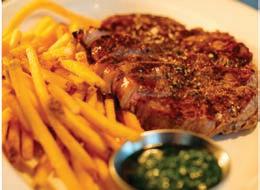
We’ve Got Beef
All things beef are on display at the new West End haunt Handson Frites . Think: hearty cuts of steak, beef tartare and, of course, steak frites. Order the beef tenderloin to cook the meat to your liking on a sizzling platter tableside. Despite caviar being on the menu, Handson serves up a decidedly unfussy take on the steakhouse experience. @handsonyvr
Opened August 2025 | 847 Denman St.
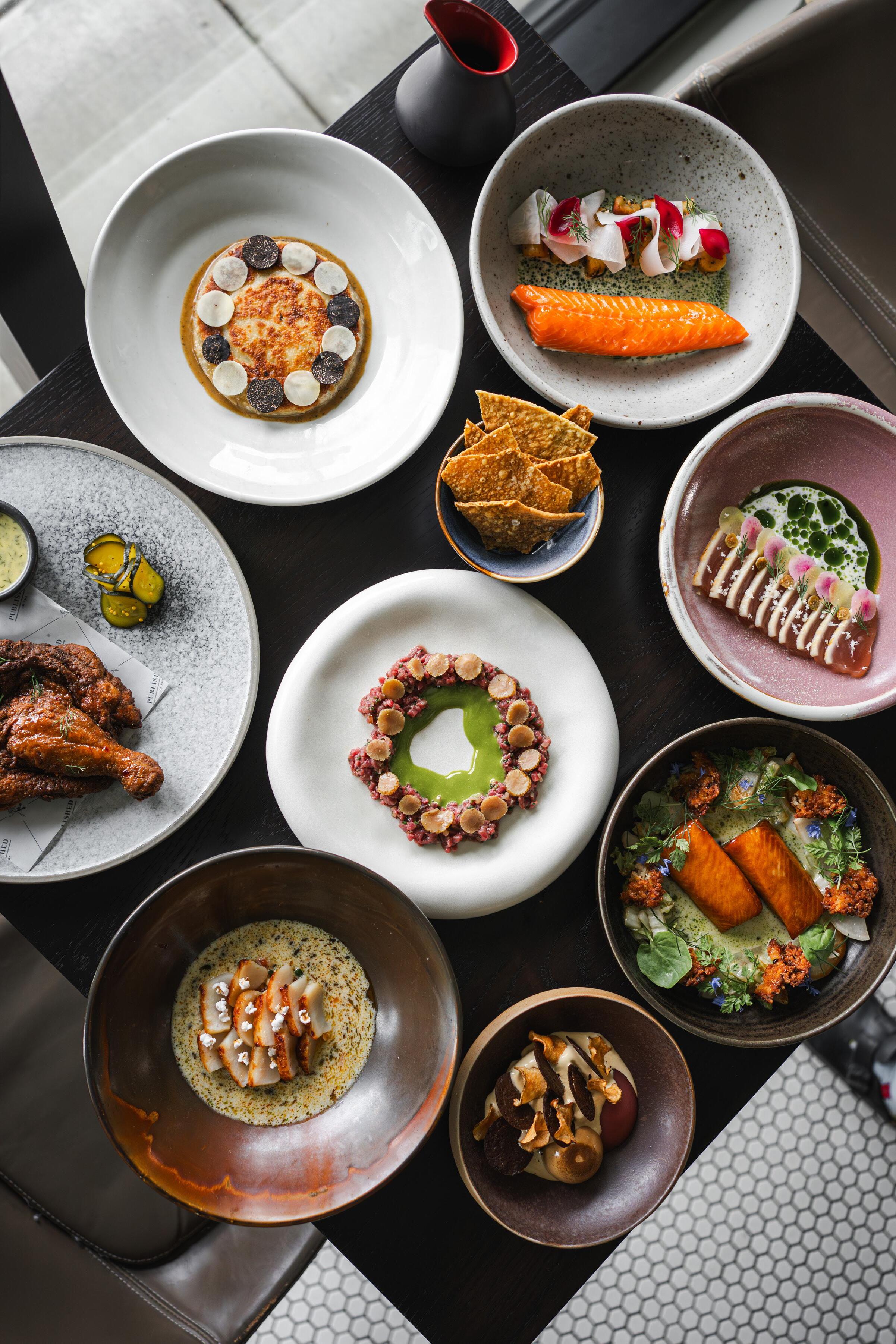


by Neal McLennan
Stop us if you’ve heard this one: there’s a low-alcohol sparkling wine out there that comes from a faraway land, is reasonably priced and widely available, and pairs with almost everything. Need another hint? During the 1970s it was one the biggest-selling imported wines in North America. That last fact is the reason you may still recoil at the word lambrusco. Back in the day, this import from Italy’s Emilia-Romagna was crafted in an overly sweet, berry-forward presentation that suited the over-indulged decade of Watergate and men getting perms. The irony is that the lambrusco grape (actually, it’s a collection of related grapes but let’s not nerd out) is naturally high in acidity and, when the wine is made properly, it isn’t sweet at all but instead delivers red fruit across the spectrum while still keeping things tight on the acid front. That’s why it’s the darling of local somms across town who’ve adopted the wine as their own, making YVR a lambrusco hotbed. 1
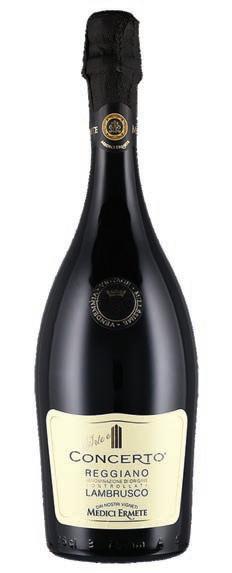
Medici Ermete Concerto, $23
This organic wine is the pioneer of the new lambrusco because it undoes preconceptions on the first sip. It’s endlessly vibrant, with deep notes of violets and dark chocolate that cause the lips to smack in the best way. And its price has gone up all of $3 in the last decade, making it one of the great steals at the BCL.
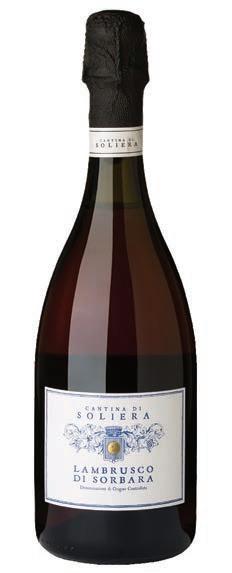
Sorbara is both the highest in acidity and the lightest in colour of the lambrusco varieties. That means you get rosé bubbles that eschew any sense of sweetness in favour of a crunchy, justripe raspberry vibe that can start as an apertivo and work all the way through to a perfect pairing for a chocolate budino. Endlessly versatile.
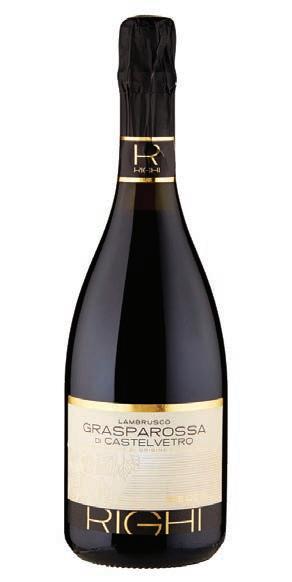
This small wine region is located south in Modena in the shadow of the Ferrari factory in Maranello, and the wine itself is, fittingly, a bit more bold: broody, tannic and full bodied with more dark cherry and blackberries, but with a sneaky-low eight-percent alcohol. Vroom, vroom.
Explore 600+ wines from 14 countries at four fantastic tastings, then find your favourites at the BCLIQUOR pop-up.
WINE & DINE
11 outstanding wine-paired dinners at top Vancouver restaurants and three lively Saturday lunches.
TASTE & LEARN
Increase your wine IQ at engaging seminars.
MIX & MINGLE
Laid-back tastings with select wines and light bites to please your palate.
TICKETS & QUESTIONS
VanWineFest.ca
604.873.3311 / 1.877.321.3121 boxoffice@vanwinefest.ca
A Vancouver millennial’s speeddating adventure at Honey Salt, complete with cocktails, chaos and exactly four dogs (none of whom cared).
by Kerri Donaldson
My speed-dating event ticket promised: For the Love of Pups. The dream? A dog-fuelled romance on a Vancouver patio. Rom-com energy with fur and wagging tails. The reality? Four dogs total—three hanging off shoulders in carriers like Louis Vuitton handbags—and men who’d done this enough times to call it their side hustle. Unfortunately, this is not a love story. And the dogs wanted nothing to do with me. (A ruff realization, to say the least.)
The event unfolded at Honey Salt, inside the JW Marriott Parq Vancouver, this past fall. Guests entered through the main hotel lobby, past marble floors and cocktail bar chatter, then out to the covered back patio. It was technically dog-friendly—there were bowls and leash hooks—but by early evening only a couple of sleepy pups had made an appearance. Tables were arranged in an oval; it was dimly lit, with patio heaters humming against the fall chill. The vibe was less “dog park meet-cute” and more “networking mixer with better lighting.”
The night was run by MyCheekyDate, a U.K.-born company founded in 2007 that now hosts speed dating in more than 50 cities. Their pitch is “sophisticated simplicity”: no whistles, no cheesy nametags. They even claim to screen out people who might make the crowd “uncomfortable” (good luck!). After their events, you log into the MyCheekyDate app before midnight, mark “yes” or “no” for each person, and wait. It didn’t feel like passion so much as filing your taxes on time, but it must work: though their “matches” don’t even happen live.
Globally, they’ve been profiled everywhere from the New York Times to Bravo’s Rate the Date. In Vancouver, they are prolific, running multiple events each week at venues like BC Kitchen, Karma Lounge and Honey Salt. They’re not the only game in town—25Dates.com and Flare Events also host—but MyCheekyDate dominates on sheer volume.
On this September night, the event was led by a mother-daughter duo. The daughter had big "clipboard energy." The mother, clearly in her retirement years, looked a little bewildered by the logistics. Honestly, same. Speed dating is like binge-watching the worst parts of dating on fast-forward: two years of awkward intros crammed into two hours. Women stayed seated; men shuffled nervously table to table. Some forgot their water glasses when they rotated, so by round six I was hosting what looked like a hydration station at the Sun Run. And because there were more men than women, at one point a whole collection of guys ended up benched together at their own table—like substitute players waiting to be called in. Picture a mini bachelor party where no one knows each other and everyone’s nursing a glass of water (except those who left theirs at my table).
My tactic? Commit fully. “Let’s skip the resumé—what’s your biggest fear? Cake or pie? And what do you think happens when we die?” By table eight I was basically running my own late-night talk show, complete with monologues no one asked for.
Each round ended with Clipboard whispering “time” behind a man’s shoulder
like a shy ghost. They jumped every time, and I don’t blame them. She got me a few times too... and I was facing her direction. Across the oval, the women looked like marathoners at mile 18: exhausted but too stubborn to quit. We were raw-dogging (pun extremely intended) this event without the serotonin hit of actual puppies. Cruel. But there was solidarity. Every eye-roll across the room was a reminder: we’d survive this together.
At least Honey Salt leaned into theme. The Yappy Hour menu offered cocktails with names like The Best Worst Dog Ever—a tart mix of tequila, grapefruit and hibiscus. Strong enough to remind me I was alive. By round 12 of conversation, tequila wasn’t a beverage: it was emotional support.
Speed dating isn’t for the tenderhearted. If you’re fresh out of a breakup, it could send you sprinting back to your ex. If you’re nostalgic for a cinematic meet-cute in the produce aisle, you’ll suddenly miss grocery shopping. But if you want to practice talking to strangers, test your charisma or treat dating like reps at the conversational gym, it’s not the worst gamble.
Just don’t expect dogs. As the Baha Men once asked, Who let the dogs out? The answer here: not these guys. Just a sold-out patio of women too polite to leave, men in their cleanest button-ups and just four dogs who—honestly—were the only ones with the good sense to nap through the whole thing.
And so begins this new column: my ongoing experiment with taking Vancouver’s face-to-face dating scene one awkward evening at a time. Each month, I’ll go where singles allegedly gather, then I’ll test the waters and report back. You can even send me your suggestions— classes, events, that weird café you think has “the vibe.”
Because someone has to boldly go where no single Vancouverite seems to want to anymore: offline.