Upgrading to higher-efficiency equipment may help lower your business’s energy use and help you save on operational costs. Plus, our rebates can help improve your return on investment.
We’ve got rebates for gas heat pumps, heating, ventilation and air conditioning controls, LED lighting, refrigeration, restaurant equipment, optimization measures and more. Improving energy efficiency is one of the ways we’re working towards a lower carbon energy future.
Energy for a better B.C.
THE BRIEF
9. INBOX
B.C. aviation-tech firm Airble fills empty private jet seats, widening access to luxury air travel.
11. GO FIGURE
Fun runs to marathons—we track the footprint of B.C.’s fast-growing running culture.
12. BUSINESS CLIMATE
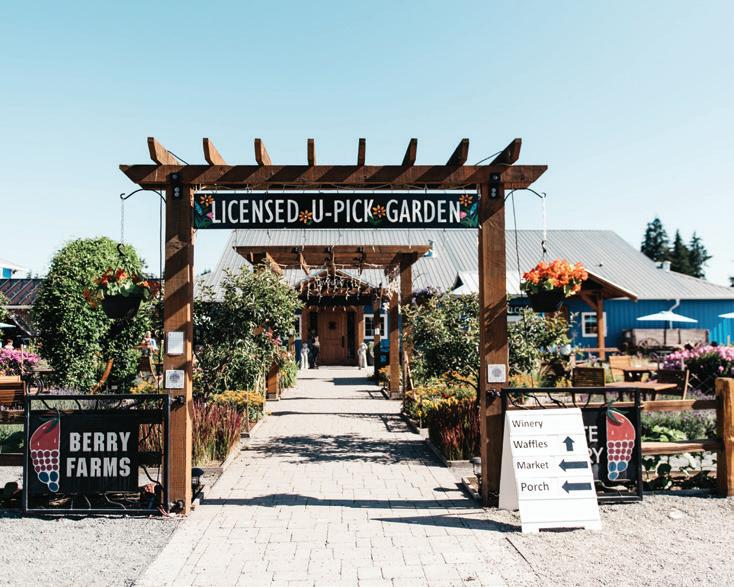
As extreme weather upends harvests, berry breeders race to develop hardier crops for a hotter future.
16. THE CONVERSATION
NorthX CEO Sarah Goodman on scaling Canada’s climate hard tech economy.
18. LAND VALUES
The rise of community land trusts tests a disruptive idea: housing that’s never put back on the market.
20. SMALL TOWN SUCCESS
In remote Vancouver Island communities, local chefs are creating tourist-drawing dishes.
WORK/LIFE
59. THE PIVOT
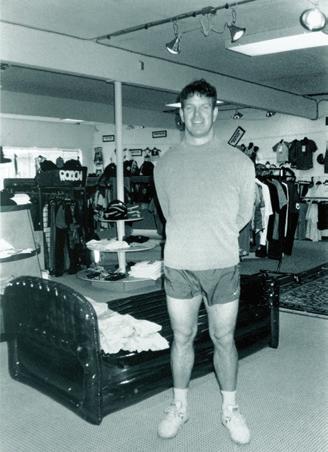
Jason Sarai turned lessons from fitness and finance into a bespoke menswear business.
61. SOCIAL CUES
With stress tests and open feedback loops, Pearhaus has turned social media into a proving ground for its DIY lash extensions.
62. INVENTORY
These B.C.-based food and drink brands are giving junk food a clean makeover.
64. CARRY ON
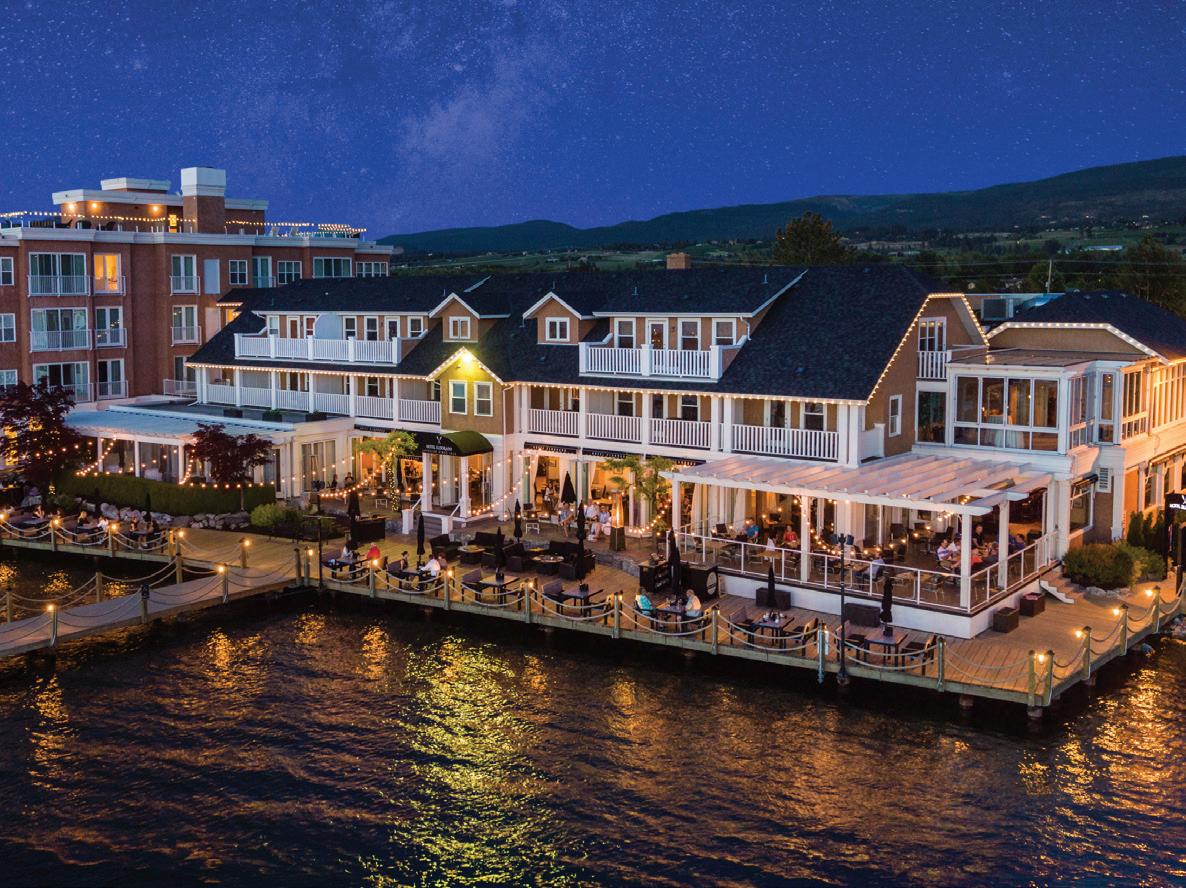
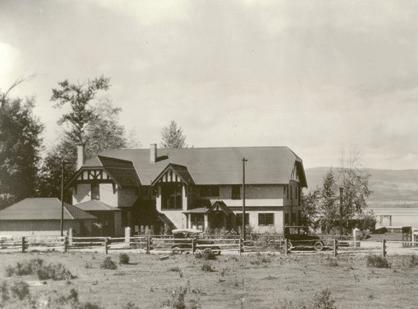
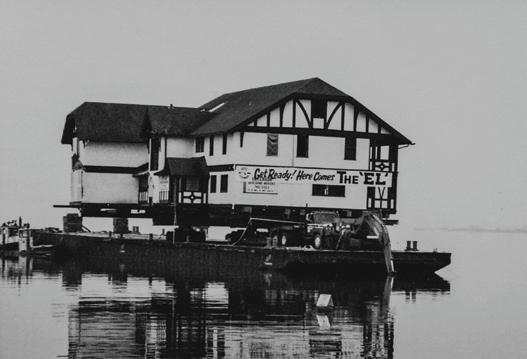
Destroyed by fire, moved by barge and passed through generations of stewards, Kelowna’s Hotel Eldorado celebrates 100 years as an unlikely survivor of B.C.’s hospitality history.
CONTENTS
FEATURES
23. IS B.C. BUILDING ITS OWN AI FUTURE—OR SOMEONE ELSE’S?
B.C.’s AI sector is scaling globally, but slow local adoption may leave the province watching its own innovation from the sidelines.
28. THE STRETCH TEST: IS IT THE END OF LULULEMON’S GOLDEN AGE?
Vancouver’s most beloved brand is at a turning point. Lululemon built athleisure; now competition, internal leadership tensions and Wall Street are closing in.
37. B.C.’S MOST ECONOMICALLY RESILIENT CITIES IN 2026
Our 12th annual economic scorecard reshuffles the deck, with Langley leaping to the top, Island strongholds slipping and Okanagan communities gaining serious momentum.
50. LANGLEY IN FULL BLOOM
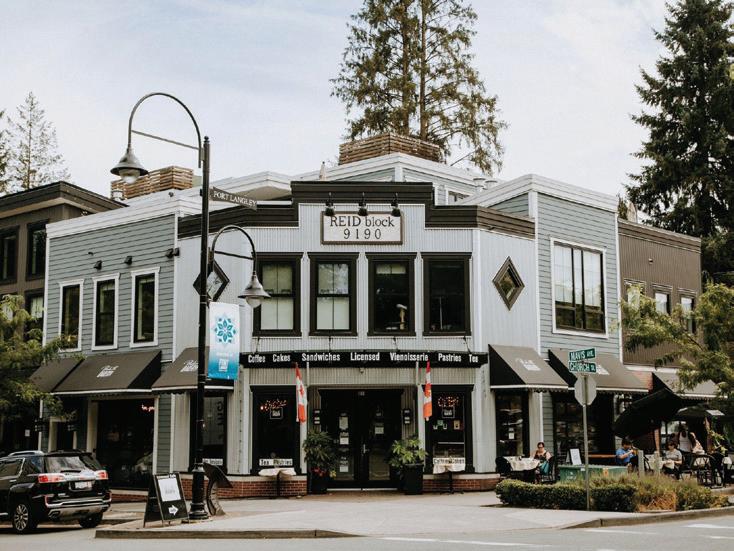
Our most resilient city this year proves diversification isn’t just economic—it’s social, cultural and deeply local—even as growth strains the seams.
PLUS
66. MONEY MAKERS
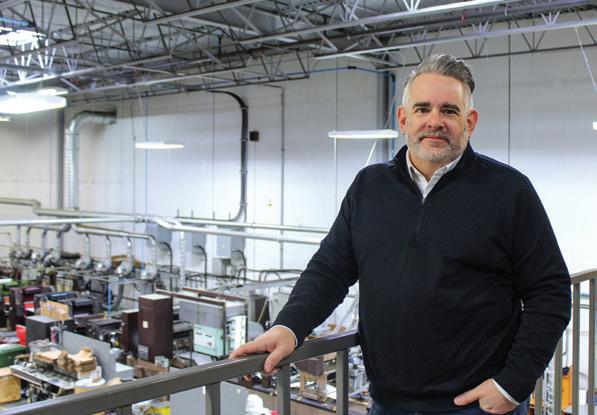
At 49, this Comox-based transportation worker is earning his highest salary yet. So why does it still feel like survival?
Frances Bula has been writing about housing for decades, but reporting for this issue about the surge of community land trusts as a new model for nonprofit housing in B.C. surprised her. “It has been remarkable to watch,” she says. “Most are still in the trainingwheels stage, but the ideas and the passion are great.” A veteran real estate journalist, Bula has reported from across B.C., from Haida Gwaii to the Kootenays and Vancouver Island.
Kristi Alexandra is the managing editor, food and culture, at Canada Wide Media. In this issue of BCBusiness, she steps onto a private jet and talks to Saeed Golzar, a commercial pilot and the CEO of Airble, a new retaildirect platform for private flights— because why shouldn’t anyone be able to get from rainy Vancouver to sunny Kelowna in less than an hour, in style and on demand?
A PUBLICATION OF CANADA WIDE MEDIA LIMITED
CEO & GROUP PUBLISHER Ryan Benn GROUP VP, PUBLISHING & OPERATIONS Nina Wagner
CONTRIBUTING EDITORS Frances Bula, Melissa Edwards, Alyssa Hirose, Michael McCullough, Jennifer Van Evra, Riley Webster
EDITORIAL INTERNS Valentina Barrera Arguello, Emma Bolzner, Ashley Kim EMAIL bcb@canadawide.com
DESIGN
CREATIVE DIRECTOR Jenny Reed
ART DIRECTOR Stesha Ho (Vancouver magazine and BCBusiness)
DIGITAL
VICE PRESIDENT, DIGITAL Darcy Matheson
DIGITAL MARKETING MANAGER Rebekah Ho
BRAND PARTNERSHIPS & DIGITAL COPYWRITER Sandrine Jacquot
ADVISORY COUNCIL
Angus An, Maenam; Patrick Barron, Telus; Victoria Emslie, Nicola Wealth; Peter Jackman, Terminal City Club; Carol Lee, Vancouver Chinatown Foundation; Carol Liao, UBC Allard School of Law; Matthew McClenaghan, Edgar; Jen Murtagh, Maturn; Gary Pooni, Pooni Group; Audrey Plaskacz, Bosa Properties; Ken Tsui, Telus Originals; Greg Zayadi, Rennie
SALES REPRESENTATION
VICE PRESIDENT OF SALES Anna Lee
VICE PRESIDENT, CUSTOM PUBLISHING & AGENCY SERVICES Chad Brealey
SENIOR MEDIA SPECIALISTS Brianne Harper, Mira Hershcovitch, Cathy Huynh, Sheri Stubel
SALES COORDINATOR Victoria Nwaeze
EMAIL sales@canadawide.com
PRODUCTION/ADMINISTRATION
GROUP VP, EDUCATION AND ADMINISTRATION Jane Griffiths
OPERATIONS MANAGER Emily Heffring
DIRECTOR OF CIRCULATION Tracy McRitchie
MANAGER, HR AND ADMINISTRATION Fiona Cochrane
EXECUTIVE ASSISTANT & EVENT PRODUCER Julie Fisher
EVENTS & OFFICE MANAGER Julia Jarman
PRODUCTION MANAGER/DIGITAL AD COORDINATOR Kim McLane
PRODUCTION ASSOCIATE Natasha Jayawardena
PRODUCTION SUPPORT TECHNICIAN Ina Bowerbank CUSTOMER SERVICE Kelly Kalirai
FINANCE
GROUP VP, FINANCE Conroy Ing, cpa, cma VP OF FINANCE Sonia Roxburgh, cpa, cga ACCOUNTING Terri Mason, Eileen Gajowski
ADDRESS Suite 130, 4321 Still Creek Drive, Burnaby, B.C. V5C 6S7 TEL 604-299-7311 FAX 604-299-9188 WEB bcbusiness.ca EMAIL sales@canadawide.com
ROOTING FOR THE HOME TEAM
Twenty years ago, when I moved to Vancouver, Lululemon was truly at the absolute apex of its coolness. Wearing a pair of their signature yoga pants was comfortable and stylish, yes, but also a signal that you were hip, health-conscious and plugged into something special—rooting for a hometown brand that was really hitting its stride.
Back then, the brand’s modest HQ sat above their central West 4th Avenue location in Kits, humble beginnings ahead of a meteoric rise. Founder Chip Wilson was heralded as a visionary, transforming a single design studio into a publicly traded company valued at nearly $10 billion (U.S.) within a decade.
DARCY MATHESON Editor-in-Chief bcb@canadawide.com
By 2010, Oprah Winfrey, the queen tastemaker herself, had anointed them, adding their $98 Relaxed Fit Pant to her “Ultimate Favourite Things” list, declaring, “Anything that cuts your butt in half should be your favourite thing too!” At a time when she was one of the most trusted voices in America, the “Oprah Effect” was a well documented economic phenomenon, capable of launching brands into the stratosphere. There really was no other brand like Lulu.
But two decades on, Lululemon has found itself at a crossroads. Quality concerns have crept in. New premium lifestyle brands like Alo and Vuori are snatching market share. Missteps, like the short lived $500M acquisition of the Mirror home workout system, have taken their toll. And an allout public war waged by Wilson against the brand he built has created a genuine crisis of identity. Lululemon is now a global name, but bigger hasn’t necessarily always meant better, and the question of what its second act looks like is very much unanswered. Still, it would be remiss to count them out. At a conference in Singapore this spring (coincidentally about Canadian companies operating in Asia), I felt an unexpected swell of pride spotting a Lululemon flagship alongside some of the world’s biggest retail brands. And watching Team Canada athletes represent in their gear in Milan? That homegrown pride doesn’t just disappear.
In this issue (p. 28), senior editor Mihika Agarwal takes a deep look at the brand’s rise and its uncertain future, examining what went wrong, and what could still go right, in an increasingly competitive and fragmented retail landscape.
Just as no self-respecting Vancouverite gives up on the Canucks during a rough season (and is it ever a rough season), we’re not giving up on our favourite homegrown export.
We’re rooting for you, Lulu.
Number of homegrown AI firms currently operating in B.C. On page 23, Rob Shaw examines the revolution being built in our own backyard.
$63,000
Annual salary of a Vancouver Island transportation worker who says he and his family are “just getting by” with the high cost of living. We break down the math in this issue’s Money Makers on page 66.
61.29
Points out of a possible 90 the new winning city (on the mainland this year!) earned in our 12th annual Most Resilient Cities economic heat map. Starting on page 37, Michael McCullough breaks down the stats to show which cities are thriving.
Let’s raise the game, together.
We’re proud to partner with Vancouver Whitecaps FC on the First Goals program, supporting equitable access to soccer for more than 13,000 youth in British Columbia, including 1,900 Indigenous youth across 20 Nations.
From grassroots to the global stage, we’re helping create opportunities that extend beyond the field.
Learn more at telus.com/soccer
Your next business move starts in Surrey.
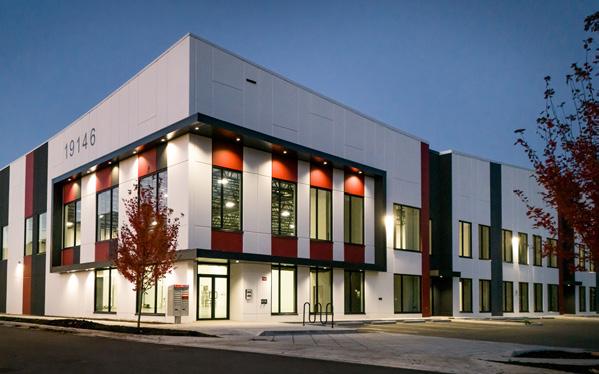
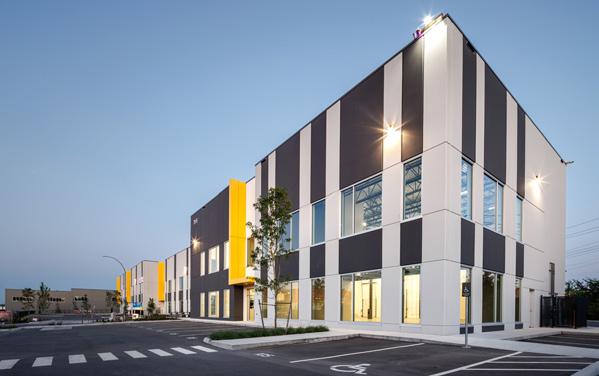
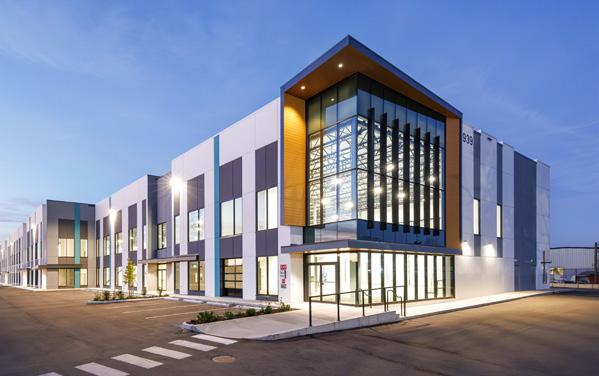
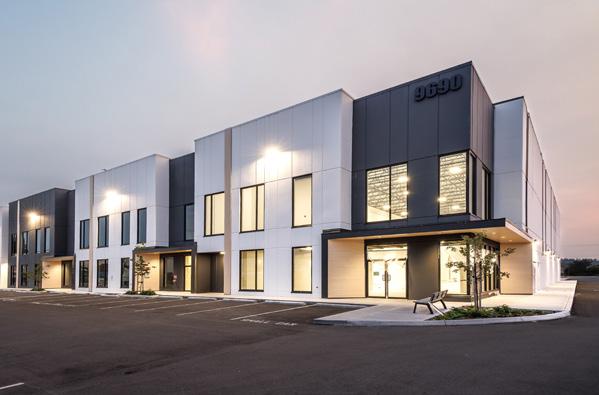
Beedie’s new industrial strata units in Newton and Port Kells are designed for efficiency and ready for occupancy. With premium warehouse spaces from 6,700 to 14,800 SF across four developments, these ownership opportunities offer the flexibility and location today’s modern businesses need to grow.
Whether expanding, relocating, or investing, now is the time to secure your spot along one of Metro Vancouver’s most active industrial corridors.
Learn More
THE QUAD BY BEEDIE
7915 130TH STREET
ANVIL BY BEEDIE
THE BRIEF
Celebrating bold ideas and big moves
Taking Flight
Direct-to-consumer private aviation platform Airble is turning empty seats into high-end travel opportunities.
—
By
Kristi Alexandra
THE INBOX
IT WAS RAINING when I got to the Helijet terminal at YVR, big drops of water soaking into my silk dress. Sure, it wasn’t the attire I’d usually wear when getting on a plane—yoga pants and loose sweaters would have been more par for the course— but on that particular fall day, I was flying private.
Thirty-five minutes later I was having iced coffee in the sun at an Okanagan café—far from Vancouver’s rain—on my way to a winery in West Kelowna, having miraculously skipped the four-hour drive up the Coquihalla Highway the trip would normally require.
The experience of changing locales (and weather patterns) drastically, in less than an hour and without the traditional airport hassle, is the convenient result of a much bigger idea: Airble, a B.C.-born aviation tech platform connecting consumers directly with available private flights.
It’s the solution to a problem that the company’s founder and CEO, Saeed Golzar, found himself dealing with in back in 2018 when he was stranded in Whistler, trying to get home to Vancouver. The commercial pilot was willing to charter a helicopter to get back to the city, but he was unable to simply book one. The inconvenience felt absurd to him. At that time, not even Uber was available in British Columbia.
“They say there are a lot of rich people in Vancouver. It’s a luxury city, but why can’t you book a helicopter?” Golzar
remembers wondering. “I knew how many airports we had.”
At the time, Golzar— originally from Iran—was in the process of converting his commercial pilot licences to Transport Canada standards. He came to know the aviation landscape intimately: Canada has over 900 licensed air operators and more
Why not use my aircraft when I’m available and when it’s on the ground for someone else to use? Sure, instead of $1,000, I make $950 and send $50 to Airble. That’s still $950 I wouldn’t have had.”
than 2,000 airports, heliports and water aerodromes (designated spots for seaplanes to land and dock), but the average person knows very few of them.
“We know [the major airlines] and that’s about it,” he says. “But there’s this entire
parallel aviation economy sitting idle.” He made it his goal to connect the population to aviation operators through technology— the same way ridesharing platforms like Uber connect the population with drivers— starting with B.C.
Airble’s retail-direct model works by making use of “empty leg flights.”
When it comes to flying, every aircraft has a base, Golzar explains. When a charter is booked, the aircraft often must fly empty from its base to pick up passengers, then return empty after drop-off. The customer pays for all of those legs (plus landing permits, staff and additional premium services), which is why flying private is so expensive. Using Airble’s platform, consumers can find those “empty legs” and purchase them—for example, if I wanted to catch a private flight back to Vancouver after a day spent in an Okanagan vineyard, I could find it on Airble.
To charter that exact flight path might cost anywhere between $11,500 and $68,000 depending on the aircraft, but finding an empty leg on Airble could cost $3,150.
“The first customer has already paid for it,” Golzar says. “So why not use that empty time to create value for someone else?”
Downtime is unavoidable for some providers, so turning an idle aircraft into revenue beats leaving them on the ground.
“Why not use my aircraft when I’m available and when it’s on the ground for someone else to use?” asks Golzar as a pilot. “Sure, instead of $1,000, I make $950 and send $50 to Airble. That’s still $950 I wouldn’t have had.”
SKY’S THE LIMIT
With Airble, a variety of private aircrafts and helicopters are available to book.
While many tour operators already partner with wineries, resorts, golf courses and lodges, Airble integrates those experiences directly into the booking system, allowing passengers to purchase aviation-and-experience packages in one transaction—kind of like Expedia does, but for private charters. For example, you could book a private tour of prehistoric glaciers and peaks, kicking off in Squamish, on a Cessna 172 for an upcoming anniversary.
The company also enables “jetpooling,” the aviation equivalent to Uber Pool. Users can signal interest in a route or experience, allowing the platform to match like-minded travellers who can then split the cost. With major global events like FIFA on the horizon, the demand for shared private flights is already emerging, says Golzar.
It’s this innovative thinking that earned Airble the Innovation Award at the BC Tourism Industry Awards in 2025, a recognition that Golzar feels validates his platform’s overall impact.
“A lot of operators in Canada are family-owned and Indigenous small businesses, often far from cities. What our platform does is not only onboard them, but we also sell their product and market for them so people know these places exist,” says Golzar. As of now, Airble works with 70 air operators across Canada (plus the U.S., Europe, Argentina, Mexico and Indonesia) , using more than 430 aircraft.
“I’m honoured [to receive] that award. If someone asks what Airble is, the answer would be a tourism-slash-transportation company. We are empowering tourism in British Columbia.”
As my flight touched back down in Vancouver after a day spent in the vineyard, I was welcomed home to the rain: a reality both sobering and hopeful. With a consumer-ready tech platform at my fingertips, even I (a lifelong economy traveller) was able to access an industry as exclusive as private aviation.
GO FIGURE
Running Wild
As we approach the peak of the annual race calendar, we take a statistical look at B.C.’s ever-growing running culture.
By Michael McCullough
B.C.’s Big Races
EVENT
Vancouver Sun Run (10K) Times Colonist 10K (Victoria)
BMO Vancouver Marathon
• Full marathon
• Half marathon
• 8K
2026 DATE 2025 FINISHERS
April 19
April 26
May 3 > 39,000 > 9,000 6,886 10,375 2,042
More than 25,000 athletes registered for the BMO Vancouver Marathon in 2025 (including half marathon and 8K races), a record. There were just 32 finishers in the first Vancouver Marathon, held in 1972. of Canadian adults ran or jogged for exercise in 2023. 27%
According to the fitness app Strava, Copenhagen is the major city with the world’s fastest runners, with an average pace of 8:52 per mile in 2025.
Parkrun is a free, timed 5-km run/walk held every Saturday morning at 2,800 locations around the world. There are now 15 Parkruns in B.C. and 60 in Canada that have seen more than 500,000 finishes. The oldest such event in Canada is Okanagan Parkrun in Kelowna, which has staged more than 400 events and seen 27,000 finishes by 3,403 runners.
Sources: RunVan, Vancouver Sun, CBC, CHEK News, BC Athletics, Statistics Canada, Parkrun Canada, Strava
THE NEW BREED
How B.C. berry breeders are using specialized crops to face down climate change.
By Jennifer Van Evra
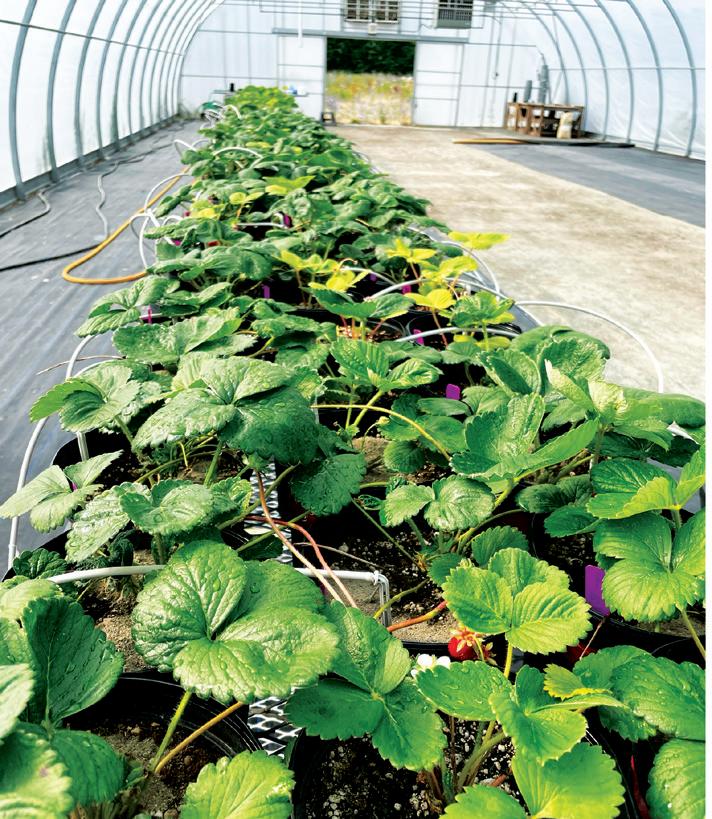
Michael Dossett knows all too well that when extreme weather descends on B.C., it can be devastating for berry growers.
Whether it’s a frigid cold snap, a drenching atmospheric river, a searing heat wave or a parching drought, even a short stretch of unusual weather can—and does— wipe out swaths of strawberry, raspberry and blueberry crops.
“We talk about a 30-year average, but there is no average anymore,” says Dossett. “It’s just the average between extremes.”
But for Dossett—a berry breeder and geneticist tasked with developing the most reliable and resilient plants for the conditions—extreme weather events also present an opportunity. Every year he develops 15,000 berry plant strains, each one genetically unique, and determines which are the most likely to thrive in a changing climate— and when those weather extremes arrive, it’s sink or swim.
BUDDING INNOVATION
Lauren Erland
This blooming blueberry plant is one of 15,000 plant strains that berry breeder Michael Dossett develops yearly.
MOVING PROJECTS, INDUSTRIES, AND PEOPLE FORWARD.
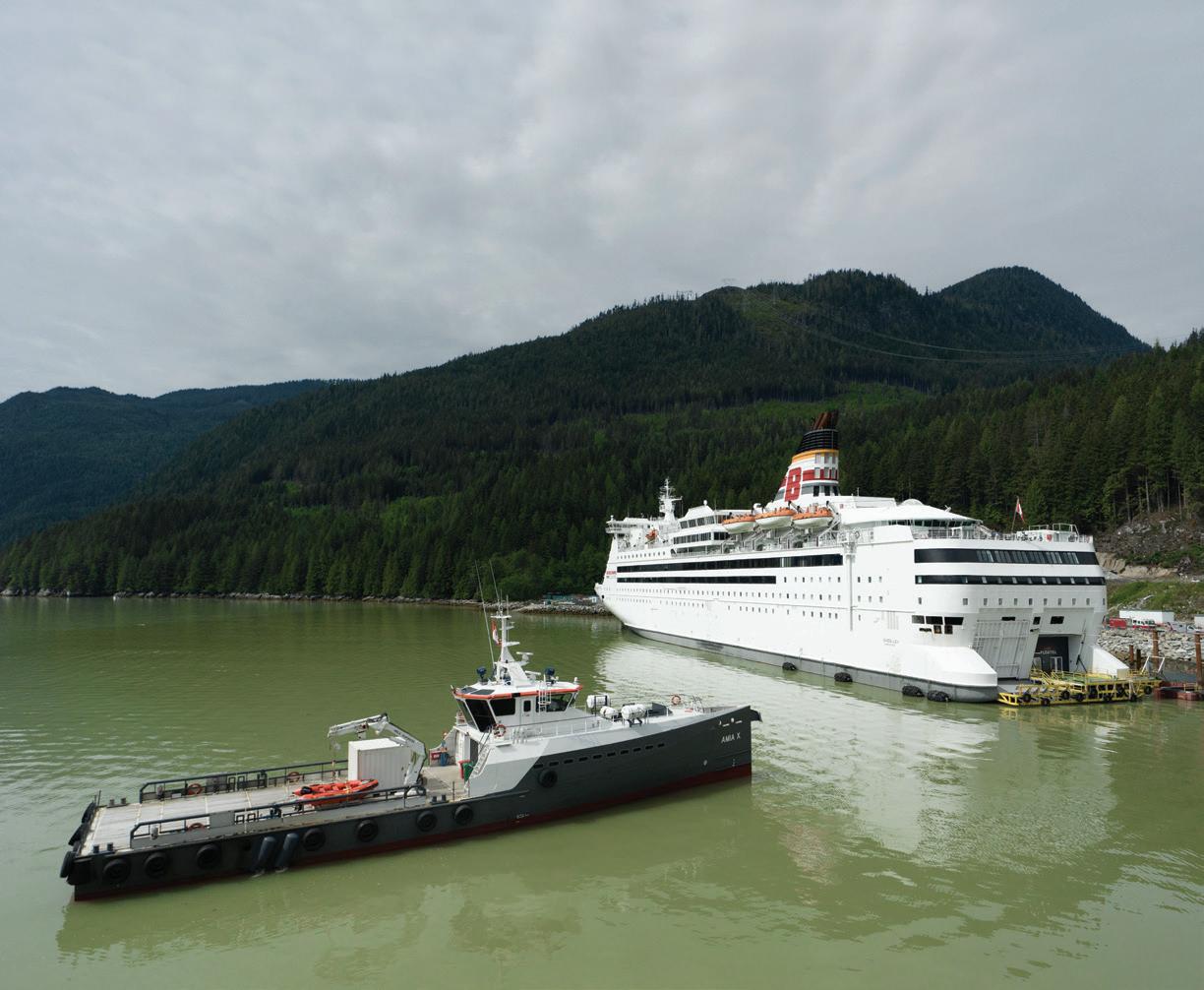
Premium workforce accommodations and marine solutions for complex global projects.
Bridgemans is the driving force behind your most ambitious marine projects. With deep industry experience and a hands-on approach, we provide a fully integrated system with three divisions: Bridgemans Floatels, Marine Services and Marine Construction.
With relentless attention to detail, Bridgemans Floatels are elevated in every aspect, customized to client specifications and held to the standards of a premium hotel. To expand our ability to deliver in even the most remote and challenging environments, our Marine Services and Marine Construction divisions provide marine transportation as well as construct docks, berths, breakwaters, and more. Bridgemans brings precision and an unwavering commitment to every project — Turning your ambition into real-world results.
“It’s a way of putting selection pressure on the plants and saying, ‘I had these under consideration and some of them failed because of the weather extreme and some of them didn’t,’” explains Dossett, who painstakingly monitors the seedlings as they audition for the next phase of competition. “So now we know which ones we’re going to drop and what we’re going to move forward with.”
The plants that make the cut are then replicated and grown in small plots for several years; of those, the best performers are given to farmers in small batches for growing trials. Eventually, the fittest hit the market.
Still, there’s a heck of a hitch: the trials for strawberries take eight to 10 years on average, and roughly 15 years for raspberries and blueberries—and that’s if everything goes according to plan. (Occasionally a particularly stellar strain gets the equivalent of a talent show “golden buzzer” and is fast tracked, but will still take years.)
What’s more, the berry plants not only need to be tough enough to withstand an unpredictable climate, the fruits must also have just the right firmness and taste, and have the longest possible shelf life, to satisfy finicky consumers with myriad options.
But while Dossett can’t speed up the process to match the rapid march of climate change, he uses today’s extremes to hedge his bets. “When I make a cross, I’m really thinking, ‘What are growers going to need 20 years from now?’” says Dossett, who works with the BC Blueberry Council, the Raspberry Industry Development Council and the BC Strawberry Growers Association. “Because the reality is, by the time the growers plant it and start seeing fruit, we’re looking 20 years into the future.”
There is no average anymore. It’s just the average between extremes.”
MICHAEL DOSSETT , BERRY BREEDER AND GENETICIST
Climate swings have hit berry crops hard. According to one United Nations report, the 2021 heat dome damaged roughly 75 percent of British Columbia raspberry crops, and 10 to 30 percent of blueberry crops. In 2023, after an unusually warm, dry spring, blueberry farmers saw their smallest crop in over a decade. Given that B.C.’s berry business represents hundreds of millions of dollars annually, the losses for farmers can be disastrous.
Lauren Erland, assistant professor and Canada Research Chair in berry horticulture at the University of the Fraser Valley, wasn’t in the region during the 2021 heat dome, but has spoken with berry growers who described walking through fields of jam.
She says when it comes to climate change, there isn’t one particular challenge such as heat, cold or drought that’s imperilling berry crops; rather, it’s the unpredictability that makes it harder for growers to manage.
Because traditional breeding programs take so long, Erland is trying a different approach: take cranberry varieties that already exist and stress them to determine which are most likely to withstand climate change.
The research involves putting plants under small, opentopped plexiglass structures that warm them up by roughly two degrees to emulate future temperature rise while still exposing them to today’s wild weather swings.
“It’s a really accessible, hands-on way of evaluating these different varieties that are going to have to perform under climates 50 years from today,” says Erland, adding that a cranberry plant can often produce for 75 years, so it’s not a crop that is turned over quickly.
“In some varieties, we’ve got 70 percent losses in yield with the warming—but we have others where you can’t even tell the dome was there,” she says. “If you pick up the chamber, the plant looks exactly the same as everything around it. So we definitely have options coming up from this.”
One of the biggest barriers facing farmers looking to replant is cost, and last fall the B.C. government announced a second round of the Enhanced Replant Program, which funds farmers looking to try more climate-resilient, high-value fruit varieties. The first round saw over 2,000 acres of B.C. perennials replaced, including roughly 733 acres of berry crops.
Replanting is part of the natural cycle of farming, says Lana Popham, B.C.’s minister of agriculture and food, but growers are struggling to keep up with the pace of climate change and the ensuing extreme weather events.
“Farming isn’t going to get any easier over the next
few years, whether it’s drought, whether it’s flooding—you name it,” says Popham. “We’re battling on the front lines of agriculture, but we are also working with farmers to try to find the best way through it.”
Back in the Fraser Valley, Dossett says ongoing investments and emerging tech will be essential for farmers and berry breeders facing climate change. High-throughput phenotyping—which uses sensors and imaging tech to automatically measure plant traits and performance—is among the technologies beginning to take hold, he says, and will change the game over time as costs come down.
Lenore Newman, director of the Food and Agriculture Institute at the University of the Fraser Valley, agrees. Sensor technology paired with precision irrigation, and targeted genetics using CRISPR breeding—a method of developing new plant varieties by making small, precise changes to a plant’s DNA—are showing great promise. Newman also points to companies like Heritable Agriculture, founded by former Google researcher Brad Zamft, that are using AI and large biological datasets to predict how different plant breeds will respond to climate stresses.
“[Zamft] realized you could build a virtual farm and have the AI develop your new crop, and then you can make the CRISPR changes in the DNA to match that. So instead of a 10-year cycle of crop development, maybe you can do it in two or three, which is a big breakthrough,” says Newman. “I think we’re going to hear a lot about that, and there are a lot of Canadian investors going into Heritable Agriculture.”
Still, Newman warns that technology on its own likely won’t be enough. To that end, she is calling on leaders to create a national, unified approach when it comes to agricultural technology adoption, food security and food sovereignty—and at the same time to address the elephant in the room.
“We’re not miracle workers. We’re working as hard as we can to stay ahead of these changes. But at the end of the day, we really need climate change to stop,” she says. “If we just, unchecked, continue to drive average temperature up and drive up extreme weather, no, we can’t build an agriculture industry that survives that. And that’s a real challenge.”
There’s
There’s always something to celebrate! and we love celebrating!
There’s
Innovations to Solve Climate Challenges
Calling climate change “the existential crisis of our generation,” Sarah Goodman, president and CEO of NorthX Climate Tech, is tackling the issue head on. Leading an investment powerhouse that’s supported 80 projects and helped catalyze $475 million in funding for technologies like next-generation batteries, clean fuels, carbon removal and industrial electrification, she’s enabling climate cleantech companies to thrive in B.C. and beyond. We sat down with Goodman for a frank chat about early stage investing and B.C.’s climate industry advantages. By Darcy Matheson
You’ve had quite a journey, from advising Justin Trudeau on climate policy to consulting and now leading NorthX. What thread connects these experiences?
The through line is working at the intersection of the economy, the environment and society. I’ve always been drawn to blended-value models and how you create public good using business. Even early in my career, working in forestry coming out of the “War in the Woods,” I was involved in joint ventures between First Nations and industry that were trying to move from volume-based thinking to value-based thinking—long before we had the language around reconciliation or ESG (environmental, social and governance). I’ve always been interested in how you bring people with different interests together and find solutions that work for everyone.
What was the pivotal moment when you realized climate hard tech was where you needed to focus?
Canada can’t out-Silicon-Valley Silicon Valley, and we can’t out-manufacture China. But we can lean into our strengths. Too often we treat the tech sector and the resource sector as separate, when Canada’s real advantage is actually combining the two. Climate hard tech lives right there. Think about companies asking how to get more copper out of low-grade ore or waste rock, or how to turn mining waste into an asset. That’s where innovation meets industrial reality and where Canada can truly compete.
You talk about being willing to “write the first cheque.” What does de-risking look like in practice? These technologies often come out of university labs. There’s already deep research behind them, but they’re too early for traditional venture capital and too risky for banks. We fund early projects that remove some of the hardest technical, commercial and operational risks—creating the proof points other investors need to step in and scale. Increasingly, we’re also focused on writing second and third cheques, so companies don’t stall after early momentum.
Only 2 percent of global venture capital goes to women-led companies. What barriers do you see women founders facing?
Women are more likely to be asked about downside and risk, while men are asked about upside. There’s also a lack of capital allocators who look like them. Only about 15 percent of VC firms have female partners. There’s a confidence piece, too. Women often don’t ask for as much capital and are more likely to volunteer risks upfront. Ironically, that transparency builds trust, but it doesn’t always play well in traditional pitch environments.
You’ve said climate tech is industrial strategy, not just environmental policy. How do you make that case?
Climate tech makes industries more competitive. Companies like Arca, CO280 and Moment Energy are taking waste streams, mining waste, pulp mill emissions and used EV batteries and turning them into new revenue streams. That fundamentally changes the economics of traditional industries. You don’t have to believe anything specific about climate to believe in competitiveness.
Canada ranks second globally on the Cleantech 100 list. Could we be better?
Being second actually means we’re punching above our weight. But the challenge is scaling here. We’re conservative buyers and conservative investors, and too often companies have to go abroad to find their first customers. We need more early adopters of domestic innovation and to build enough scale that companies have a reason to stay.
What are you most excited for?
B.C. is really starting to catch its stride in carbon dioxide removal. It feels like we’re building a real cluster in an emerging global industry, and I’m excited to see some of those early bets turn into meaningful capital and commercial scale. Second, I’m watching to see how Canadian business rallies to this moment, whether we move beyond performative talk about sovereignty and
competitiveness and start doing the substantive work of partnering differently, buying differently and building the capabilities we need to grow our innovators into next-generation companies.
In 2026, do you feel more or less optimistic than when you started this work?
I feel determined. We have to do this differently, or we’re in trouble. But the innovation is happening here, often right in our neighbourhoods. That’s a privilege to witness and a responsibility to act on.
QUICK HITS
Pet peeve Pants without pockets. I have never been accused of choosing style over substance.
Hobby Weight training. It builds discipline. Progress comes from consistency over time.
Most recent TV binge It’s All Her Fault
Most memorable concert Pink. Total command of her craft.
If I had a superpower, it would be... To help build the solutions that solve climate change.
Favourite place in B.C. On a remote lake in a canoe. Bowron Lakes, Murtle Lake, the Sayward Forest canoe chain. I take one extended trip every year to test my limits, reset my perspective and remember what is worth building.
Last book I read Messy Perfect by local author Tanya Boteju. A thoughtful story about identity and the work of becoming yourself.
Best leadership advice Keep the main thing the main thing.
The small building on Powell Street in Vancouver’s Downtown Eastside doesn’t look like the start of a small real-estate revolution.
But it is. The three-storey Powell Rooms near Oppenheimer Park, home to 23 people in its small rooms, plus a childcare program on the ground floor, will be the first building acquired by the recently created Downtown Eastside Community Land Trust by the time you read this.
The trust will hold it forever, with the aim of keeping tenants and childcare there at the lowest possible rates. And its advocates hope this is just the beginning of their acquisitions of low-income housing that will be preserved forever for the benefit of the community.
“This comes from an urge to try to do something other than just have the province buying buildings,” says Andy Bond, the executive director of the area’s land trust since 2023.
It’s the latest development in a movement that has been percolating steadily in Canada and the U.S. It envisions a different kind of nonprofit housing: one that isn’t the standard, government-subsidized social housing, isn’t supportive housing meant for the most challenged and isn’t co-op housing.
Instead, community land trusts, which have been springing up from Nova Scotia to Ontario to Alberta to here in the past decade, do things that those other, more familiar forms don’t.
Yes, the main idea (as with other forms of government-supported housing) is to provide places for people to live that aren’t part of the regular real-estate market, with the ever-present threat it poses of speculative buying, aggressive rental pricing and redevelopment that is not at all aimed at existing local residents.
But they’re also different.
They are committed to keeping forever any real estate they acquire. (Nonprofit social housing buildings can always be sold by the organization or their lease can be ended by the government that holds it.)
They are run by a group of people from the community, including neighbourhood residents and sometimes local business owners. (Co-op building boards are made up of residents, but don’t include anyone
LAND VALUES
Trust Fall
Community land trusts are buying buildings with a radical promise: they’ll never sell. As the model spreads in B.C., advocates say it could change how affordable housing gets built and protected.
By Frances Bula
UNIFIED LIVING
Renderings of the Black Community Hub at Main and Union. The Afrocentric design of the building draws on the baobab tree, also known as the “Tree of Life” that provides shelter.
housing organizations and building-specific co-ops don’t have that kind of heft.)
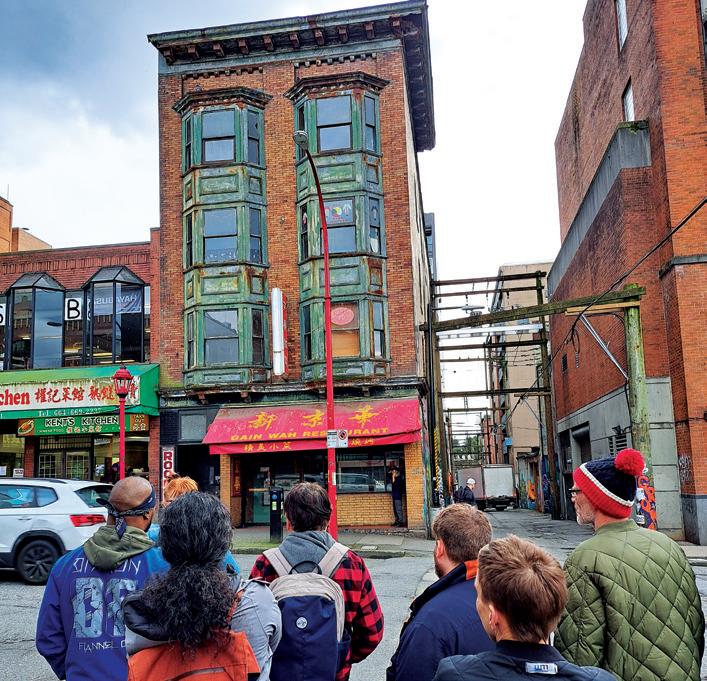
So far, B.C. has four community-based land trusts initiated by groups of local advocates and residents: the Downtown Eastside; Hogan’s Alley, whose group is working to re-create a hub for the region’s Black community on the edge of Chinatown; an Indigenous-focused one being spearheaded by Marcel Swain, CEO of the Lu’ma Native Housing Society; and South False Creek, Vancouver’s innovative housing development from the 1970s—plus an unusual giant Community Land Trust under the umbrella of the Co-operative Housing Federation of BC.
That trust, headed by federation CEO Thom Armstrong, helps small nonprofits, city governments, churches and other groups tap into a growing pool of resources and expertise when they look at develop -
outside the co-op, which tends to produce a focus on mainly the functioning of their particular building as opposed to setting aside some of their units for, for example, youth out of foster care.)
And they can get big enough to develop a critical mass of resources that makes them more able to undertake property acquisition and development. (Again, small nonprofit
ing or re-developing. Some smaller housing organizations have handed over their asset to the trust already, finding that it’s become too complex for a small group to manage and possibly re-develop. Having the provincial Community Land Trust negotiating with government works out better than having dozens of small organizations who aren’t very expert trying to do that job.
Armstrong thinks community land trusts are a powerful vehicle for developing lowcost housing that doesn’t just rely on giving massive amounts of density to private developers, which has been one of the dominant strategies in Vancouver and Burnaby in recent years.
“This is an opportunity for the public and private sectors to build out a much more robust nonprofit sector,” says Armstrong. If that nonprofit sector gets stronger, “I think we can do some things the private sector can’t do.”
The struggle that all community land trusts have, here and elsewhere, is that they’re a relatively new strategy that many, including government housing officials and people inclined to give money to worthy causes, are unfamiliar with.
The province has been cautious about
backing the Downtown Eastside group, wanting to see proof that it has long-term stability and organizational capacity. So it has granted the trust the right to operate the Keefer Rooms in Chinatown, damaged by fire and currently being repaired, for two years and, if that is successful, will move on to helping finance a purchase. But it was not willing to provide capital
This comes from an urge to try to do something other than just have the province buying buildings.”
ANDY BOND, EXECUTIVE DIRECTOR, DTECLT
for acquiring buildings yet. Vancouver city council also turned down a request for a proposed $1-million capital grant to help buy Powell Rooms, with members saying they didn’t really understand the proposal.
In spite of that, the Downtown Eastside trust did generate enough informed interest that it managed to raise the million it needed to buy the Powell Rooms from private donors.
(The Hogan’s Alley trust is moving ahead with a brand-new building at the corner of Main and Union, largely due to a $25-million mortgage granted by the federal government.)
But everyone working on this idea in B.C. is hoping that, soon, the province and various cities will start to catch on, as has happened in Toronto, which has seen neighbourhood and community land trusts spring
up in several districts, including Parkdale, Kensington Market, Little Jamaica and Etobicoke.
The Parkdale Neighbourhood Land Trust is seen as an example to aspire to. It has grown very quickly, partly because the city helped out in various ways. Toronto city councillor Gordon Perks, using money that councillors there are allowed to spend any way they want in their wards, helped by allocating funds to acquire their first building.
The city also established a special fund in 2021—the Multi-Unit Residential Acquisition (MURA) program—that provides money to nonprofit groups trying to acquire existing cheap housing. So far, it has given out $165 million to almost two dozen groups, including community land trusts. The Parkdale trust now owns 86 buildings that house about 500 people. And, in November 2025, the city of Toronto chose that group to develop a 175-unit community rental building.
Wendy Pedersen, who has spent years working with low-income people in Vancouver’s aging residential hotels through the SRO Collaborative Society, is beyond excited about the idea of land trusts. It’s something she sees as the best option for salvaging the half of current residential hotels in the Downtown Eastside that are in reasonable condition.
“The thing about this model,” she says, “is that it really taps into the community’s own passions and interests.”
HIGH FOOT TRAFFIC
A walking tour group stops in front of the Keefer Rooms building in Chinatown.
Off the Beaten Plate
These restaurants might be in the small corners of Vancouver Island but that doesn’t mean they’re any less innovative, ambitious or celebrated than those in bigger cities. From Bamfield to Lantzville, local chefs are redefining what it means to create and share exceptional cuisine with locals and visitors alike.
By Riley Webster
Pluvio Restaurant and Rooms | UCLUELET
Warren Barr and Lily Verney-Downey met as cooks at Tofino’s Wickaninnish Inn, each dreaming of one day opening a small restaurant and hotel. Pluvio was born from this shared vision, bringing to life an intimate hospitality experience deeply rooted in the wild, remote beauty of Vancouver Island’s west coast.
In January 2019, they purchased a restaurant space, reopening its doors that April and completing the hotel rooms by July. Pluvio remains intentionally small and hands-on, enabling their close-knit team to craft an intimate dining experience inspired by the region’s seasons and stories. “We work with what the Island gives us—local fishers, small farms, foragers and producers—while also drawing on global influences and personal memories,” shares Verney-Downey.
The small-town setting encourages a slower, more immersive experience. Ranked third on Tripadvisor’s national Top 10 list in 2024, Pluvio has become a true destination.
Camas Restaurant | LANTZVILLE
Fine dining and relaxed hospitality used to be elusive, yet at Camas Restaurant in Lantzville, a husband-and-wife duo thrive in that pairing. Now, it’s a place the community embraces and visitors go out of their way to discover.
“We create an experience that feels special and refined without being intimidating,” shares chef and co-owner Sarah Wallbank. “Here, guests feel like they are having dinner at a friend’s place.”
Guest feedback plays a central role in shaping Camas, and its customer reviews have earned the restaurant a Tripadvisor Travellers’ Choice award, placing it among the top 10 percent of restaurants worldwide. Since opening in 2020, Camas has prioritized thoughtful, ingredient-driven cuisine—with fresh, seasonal and sustainable ingredients sourced from local farms, fisheries and artisan producers. Named after a staple-food plant that was long cultivated, harvested and traded by many Coast Salish nations, Camas nods to the tradition, history and continuous stewardship of the land.
Flora’s Restaurant | BAMFIELD
Across the inlet from Ucluelet sits Flora’s Restaurant, a West Coast fusion spot perched above the boardwalk in West Bamfield. With sweeping views and frequent bear and whale sightings right from the patio, Flora’s offers diners an immersive taste of the wild coast.
Owner and chef Gillian Bradley has worked in kitchens since she was 12. After years in hospitality and a post-COVID shift in perspective that came from working in remote lodges, she opened Flora’s in May 2024, taking over on-site accommodations in January 2025.
“I wanted to create a space where people could connect and build memories in what I believe to be one of the most beautiful places in the world,” Bradley says. “Being able to walk outside our front door, drop prawn traps, go fishing and forage mushrooms, berries and herbs is something I never take for granted.”
Flora’s stands out with local, seasonal menus and a beverage program featuring more than 50 B.C. producers, offering a genuine Island experience to anyone who makes the journey.
Designed to support Healing Better
We’re creating a medical campus where care wraps around every patient and innovation transforms lives.
At St. Paul’s Hospital, health care isn’t just about treating: it’s about healing. What truly sets us apart is the way we combine deep compassion with bold innovation.
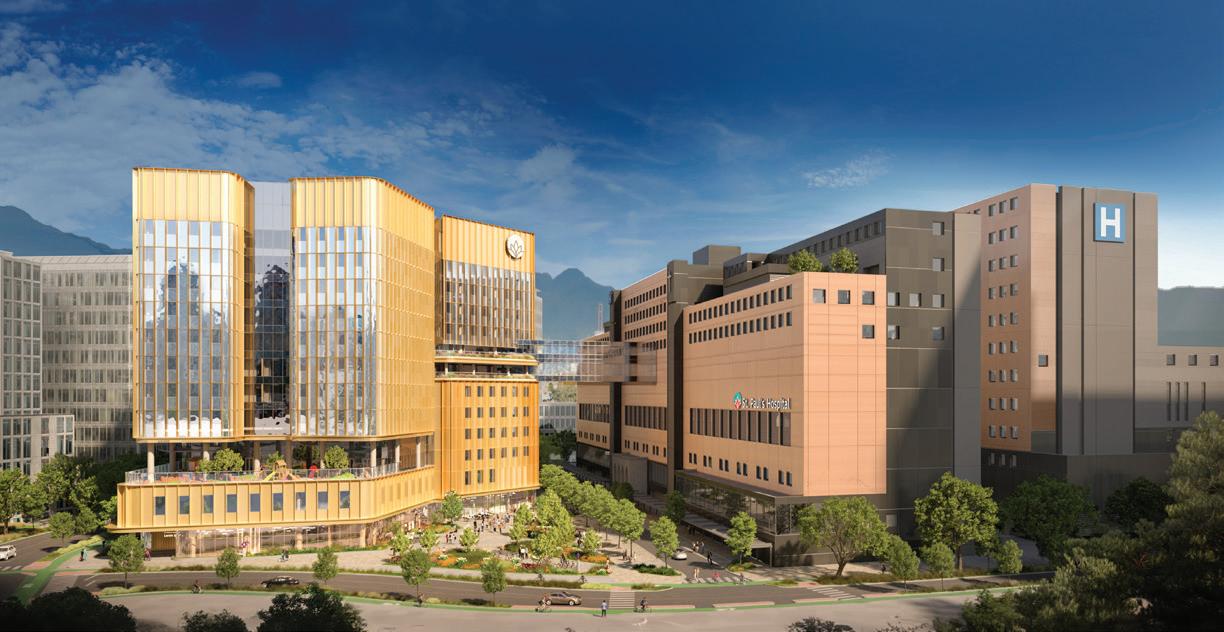
The Jim Pattison Medical Campus, home to the new St. Paul’s Hospital and Clinical Support and Research Centre, will create a patient-centred health ecosystem that encourages the cross pollination of ideas, establishes a hub for medical innovation, and supports new models of care that help people heal better—physically, emotionally, and spiritually.
In addition to delivering exceptional health care, the Jim Pattison Medical Campus will drive economic growth by attracting top talent, sparking new investment, and accelerating the commercialization of BC-made innovations.
About the new St. Paul’s Hospital—Opening in 2027
PRIVATE ROOMS: Every inpatient will have a private, digitally connected room designed to bring comfort, dignity, and seamless care.
DIGITAL TRANSFORMATION: Smart bedside technology will enhance patient connection and personalization, while the PA Woodward Foundation Care Coordination Centre will improve patient flow by harnessing real-time data.
IMPROVED EMERGENCY: The Teck Emergency Department will feature a flexible new zone model of care to streamline and improve the patient experience, helping those with urgent needs to receive care faster.
FAMILY-CENTRED NICU: In the new Neonatal Intensive Care Unit, parents and babies can heal together in a private room—supporting vital bonding, reducing stress, and promoting better health outcomes.
CARE ACROSS THE LIFESPAN: The Shinozaki Family Centre for Healthy Aging will be BC’s first centralized hub for seniors care—connecting home, hospital, and specialized services to help older adults age with dignity.
Unparalleled
IS B.C. BUILDING ITS OWN AI FUTURE— OR
SOMEONE
ELSE’S?
Homegrown firms are selling world-class solutions to foreign governments and Fortune 500 companies, while slow adoption and self-imposed limits means the province risks missing the AI revolution being built in its own backyard.
BY Rob Shaw
BriTIsh Columbia is haVIng itS ai momenT in the waY it teNdS to haNdle new te C h N ology: no T wi T h a moonshot laB or a tRillion-dollaR model whirling in a fRozeN buNkeR, buT wiTh a swarm of moRe than 700 pRacTical compaNIes simply boltiNg maChiNe learNing onTo real-woRld pRoblemS and then selliNg those solutionS to the reSt of the globe.
It’s an approach that has made B.C. quietly successful and increasingly anxious at the same time.
Founders describe a province caught between ambition and self-imposed limits, eager for AI-driven productivity and data sovereignty in a Trump-era world while rationing the electricity the emerging compute economy desperately needs.
Handol Kim, co-founder of Vancouver’s Variational AI, says B.C. is “strong in the creation of applied AI companies,” even if the big breakthroughs in model architecture tend to come from researchers elsewhere in Canada.
To understand how early this all still is, Kim suggests swapping “AI” for “internet” and imagining 1997, when Netscape ruled the browser wars and people tied up phone lines logging into AOL.
“The scale and the scope of the disruption is abstract until it happens,” he says. “This is Noah’s Ark. You are on it or you are
dead. And I fear... that when it comes to AI, people in B.C. in general are slow to adopt.”
Kim’s thinking captures the conflicting emotions in B.C.’s tech sector: excitement at the immense opportunity of AI, mixed with anxiety the province will lag on adoption, allow talent to drift south and fail to utilize the work of local companies who will then sell their world-class tools everywhere except at home.
There are cases for that hiding in plain sight in B.C.
Variational is using generative AI to design molecules for drug discovery, chasing a global industry measured in the trillions. In 2025, Variational landed a deal potentially valued at $349 million (U.S.) with U.S. pharma giant Merck and Co. Inc. to
“ThiS is Noah’s ark. You are on it or you are dead. and I fear... that when it comes to ai, people in B.C. in geNeral are slow to adopt.”
handol kim, Co-founder of VarIatIonal ai
HALTED PROGRESS
B.C. has squelched the expansion of massive AI data centres in 2026 with new electricity limits
run a customized version of its Enki platform trained on Merck’s proprietary drug data to identify new drug candidates.
It’s the kind of deal provincial officials like to cite as proof B.C. can compete globally. But it also subtly underscores how often its most valuable AI work is commercialized elsewhere.
In Victoria, Green Edge Computing Corp.—or GECCO—is building rugged, toaster-sized compute pods meant for the back rooms of businesses that could replace massive servers and unlock affordable, local AI computing power.
“We’re in conversations with no less than half a dozen national governments in the world who are all, for lack of a better term, scrambling in some way to define a sovereign AI and compute strategy that doesn’t require the building of many large and expensive data centres,” says co-founder Jeff MacMillan, who expects the company to triple in size in 2026. Ottawa is expressing some interest, but most clients are outside of Canada.
In the West Kootenay ski town of Rossland, ThoughtExchange is using AI to help American school districts and local governments analyze the human text that pours out of community engagement. The company says it helped a U.S. school district identify warning signs that let it intercept a gun on the way to a classroom.
“I’m B.C. born and raised myself. I wear a chip on my shoulder about this: I feel B.C. can and ought to be a place where worldclass companies win and thrive and grow,” says CEO George Psiharis, whose company has 170 employees and a valuation in the hundreds of millions.
“I think that’s going to be how we reinvent our economy and drive economic growth in B.C. and Canada.” He adds: “We have to make a choice to stick it out here. It comes with pros and cons.”
The company’s biggest impact stories come from the U.S., not because the technology isn’t relevant in B.C., but because adoption of AI here remains slower.
B.C. is partly boxed in on AI by government decisions.
Federal policy has largely positioned the province as a supplier of applied AI talent. Ottawa placed the country’s three main AI research hubs in Edmonton, Toronto and Montreal, and has effectively crowned
“we’re at a veRY piVotal momenT in time where ai is eveRywhere and we are in an inflecTion poInT kiNd of change beTween Canada haVIng been a reSearCh countRy inTo beIng a counTry that needS to adopt [ai]."
—RoB goehrINg, eXeCuTIVe dIReCtoR, ai NeTwoRk oF Bc
Toronto-based Cohere Inc. as the country’s main large language AI model.
The B.C. government, meanwhile, squelched the expansion of massive AI data centres in 2026 with new electricity limits. The goal is to keep hydro rates low and power flowing to projects that produce more jobs, says Rick Glumac, B.C.’s minister of state for AI.
“It’s stupid,” counters Opposition BC Conservative tech critic Gavin Dew. “We are rationing electricity like wartime butter.”
The most successful countries pick a lane in the AI marketplace and drive it forward for a competitive advantage, says Psiharis.
AI founders largely agree on what would help: predictable and fast immigration pathways, retaining local graduates with incentives, reducing housing and living costs, tax incentives for venture capital, matchmaking companies to clients, breaking down procurement barriers and having governments lead by example in adopting local AI products.
Plus, stay out of the way and leave AI regulation to Ottawa.
“They should not be regulating AI at the provincial level,” says Jill Tipping, president of the BC Tech Association. “I don’t think they intend to, but you never know. That would be a really bad idea.”
B.C.’s goal is to double tech-sector employment to 400,000 people over the
next decade, and it recently struck a K-12 AI advisory committee to look at altering the education curriculum for early AI learning.
“We’re at a very pivotal moment in time where AI is everywhere and we are in an inflection point kind of change between Canada having been a research country into being a country that needs to adopt [AI],” said Rob Goehring, executive director of the AI Network of BC.
The change drives fear of job losses, privacy breaches, stolen data, risk and financial failures. Federal AI minister Evan Solomon is trying to put in place AI frameworks to bolster public trust. But there’s only so much governments can do, says Variational AI’s Kim.
“It’s bigger than whole governments. It’s about a wholesale change in culture of Canada and British Columbia, and that’s beyond any bureaucrat’s paygrade,” he says.
The risk isn’t that AI will pass B.C. by, says Kim. It’s that B.C. companies will deploy their best ideas elsewhere, and the province will become a late adopter of what’s sitting in its own backyard.
“The biggest thing we can do, for any business owner large or small and anyone working in policy or regulation, is to adopt AI. Use it,” he says. “Do it when it’s a choice. And use that against other competing companies, before you are forced to adopt it to defend yourself.”
Tanya Goehring
HOW VCC IS PREPARING B.C.’s WORKFORCE FOR THE CLEAN ENERGY TRANSITION
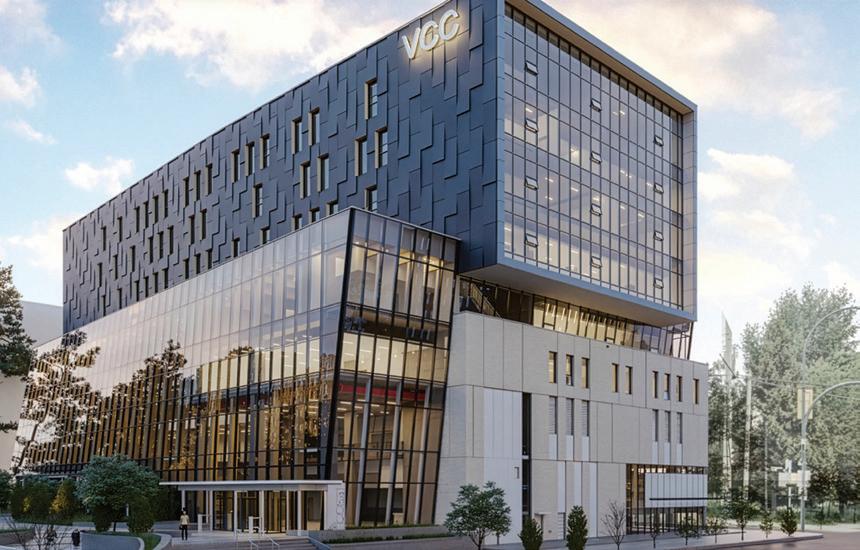
VCC’s new Centre for Clean Energy and Automotive Innovation will train the next generation of sustainable workers in B.C.
B.C.is at a turning point on its journey to a more sustainable future.
By 2050, the province’s clean energy sector is expected to provide more than 400,000 jobs for British Columbians—up from 83,100 in 2025. However, Canada currently faces a shortage of workers with the skills needed to meet this target; recent research shows that by 2032, 40 percent of new jobs in trades, transport and equipment will require an enhanced skill set as Canada transitions toward a net-zero economy.
The new hub for clean energy and automotive research and innovation at
Vancouver Community College (VCC) will help evolve B.C.’s clean energy workforce.
The $291.3-million Centre for Clean Energy and Automotive Innovation (CCEAI), expected to open in 2027, will help meet industry demands by upskilling B.C.’s next generation of clean energy and automotive specialists. It will enable VCC to welcome another 700 new full-time equivalent students.
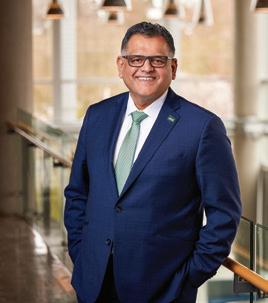
“As the city’s oldest public post-secondary institution, VCC has continuously evolved to stay ahead of labour market demands,” explains Ajay Patel, VCC’s president and CEO. “Now is no exception. Thanks to our longstanding industry relationships, many of our instructors are working professionals who have helped us build new clean energy programs that meet the real-time expectations of B.C.’s job market.”
Ahead of the CCEAI opening, VCC is launching a range of programs aimed at training students for future careers in clean energy.
These new programs span key growth areas for B.C., from construction to transportation. They will produce workers who are environmentally conscious, technically skilled and ready to make a long-term impact in vital industries.
“With the new CCEAI building and programs, VCC is uniquely positioned to equip B.C.’s workforce with skills that broaden their opportunities and future-proof their careers in line with job market needs both now and in the future,” says Patel. “But our work doesn’t stop here—VCC will continue working with industry to meet B.C.’s labour market needs and sustainability goals, creating a more sustainable future for generations to come.”
Learn more about VCC’s CCEAI building at vcc.ca/campus-plan
You can also learn more about VCC’s clean energy programs at vcc.ca/clean-energy Stay connected to VCC via: @Vancouver Community College | @VCC | @myvcc
Left: Rendered image of the atrium within VCC’s new Centre for Clean Energy and Automotive Innovation, situated on VCC’s Broadway Campus.
Above: Ajay Patel, president and CEO of Vancouver Community College.
The Stretch Test Is It the End of Lululemon’s Golden Age?
Once a scrappy Vancouver startup run from a Kitsilano storefront, Lululemon skyrocketed into a global athleisure empire. Now, amid cultural drift, internal tension and investor pressure, its next chapter is anything but clear.
By Mihika Agarwal
Illustrations by Spencer Flock
THE COMPANY’S CONTROVERSIAL FOUNDER, CHIP WILSON , ESCALATED HIS LONG-RUNNING CRITICISM OF THE LEADERSHIP BY
TAKING OUT A FULL-PAGE AD IN THE WALL STREET JOURNAL
“LULULEMON
IN A NOSEDIVE”—PUBLICLY ATTACKING ITS STRATEGY AND AGITATING FOR BOARD CHANGE.
WHEN LULULEMON ATHLETICA
opened its first official store in Vancouver’s Kitsilano neighbourhood in 2000, its head office consisted of a one-floor space located right above the store. The then general manager of the store, Darrell Kopke, was one of six people making up the initial executive team, the same team that would “run downstairs to work on the retail floor and fold yoga pants when it got busy,” recalls Kopke, who is now a serial entrepreneur and faculty member at UBC Sauder School of Business.
Yoga itself was barely an industry then. There were only a few studios in Vancouver. Bikram Yoga was just beginning to take hold, and the idea that stretchy black pants could underpin a global business bordered on absurd. Even as Kopke wrote Lululemon’s first business plan in 2002, mapping growth across a few “compelling yoga markets,” he never imagined the brand would go on to become a cultural and commercial powerhouse valued at more than $20 billion (U.S.).
Nearly three decades later, the outline of an empire under pressure has come into view. In the past two years alone, Lululemon has been battered by a convergence of crises that critics and analysts now describe as signs of a brand in decline.
In 2025, U.S. sales fell, the company’s stock price dropped more than 50 percent and market value collapsed amid intensifying competition, higher input costs—including pressure from U.S. tariffs—and growing investor unease. The company’s controversial founder, Chip Wilson, escalated his long-running criticism of the leadership by taking out a full-page ad in the Wall Street Journal—“Lululemon in a Nosedive”—publicly attacking its strategy and agitating for board change. Weeks later, Lululemon announced that longtime CEO Calvin McDonald would step down after more than seven years
at the helm, with chief commercial officer André Maestrini and chief financial officer Meghan Frank named interim co-CEOs as the board continued its search for a permanent successor. That search is already contested: activist investor Elliott Investment Management, which has built a stake of more than $1 billion (U.S.), is pushing for the appointment of former Ralph Lauren executive Jane Nielsen to the top role.
In January, the company said it would cut roughly 100 jobs in its customer-care division, underscoring the operational strain now facing the business.
At the same time, former employees have come forward with accounts of racism, body-shaming and toxic workplace dynamics, complicating years of corporate messaging around inclusion and culture. Once
the undisputed tastemaker of athleisure, Lululemon is now routinely described as culturally irrelevant and outpaced by newer athleisure brands like Alo and Vuori. So, how did it all come undone?
The answer may lie in how Lululemon Athletica rose in the first place. Kopke traces Lululemon’s early success to a rare alignment (and powerful trifecta) of timing, customer and strategy. The brand, he says, arrived just as the so-called “urban superwoman” was coming of age, offering a technically advanced fabric at the exact moment Wilson understood that vertical integration could unlock both control and margin. Layered onto that was a community-based marketing model that cultivated a tribe—bringing together like-minded, values-aligned customers through free yoga classes, ambassador programs, manifesto-adorned shopping bags and events that garnered a cult-like fan frenzy, like the SeaWheeze Half Marathon. As Lululemon went public in 2007 and expanded rapidly beyond Vancouver, opening stores in North America, Australia, Europe and Asia, that sense of community scaled alongside the business, turning a niche yoga-wear company into a global lifestyle brand and cultural icon.
By the time COVID-19 hit, Lululemon was already a well-oiled machine—and the moment acted as a powerful accelerant. Retail analyst Bruce Winder describes the pandemic as a “turbo thrust” for the brand. As work moved home and self-care became a cultural preoccupation, athleisure surged— and Lululemon, long positioned as both performance brand and wellness signal, benefitted enormously. A company that had once been heavily store-driven accelerated
its e-commerce business at pace, with online sales, revenue and share price all climbing sharply. Pandemic-era demand delivered years of growth in a matter of months, fuelling double-digit annual gains—including a 61-percent surge in revenue in the second quarter of 2021 and annual sales that nearly doubled from about $3.3 billion (U.S) in 2018 to more than $6 billion by 2021—prompting significant reinvestment in digital channels. The momentum carried forward, with the firm’s stock closing at an all-time high of $511.29 on the Nasdaq at the end of 2023. For a time, Lululemon felt untouchable.
Former CEO Calvin McDonald’s tenure coincided with—and helped steer—this lucrative period in the brand’s history. After taking the helm in 2018, McDonald sharpened the company’s focus around three clear growth pillars: expanding menswear, accelerating international growth—particularly in China—and doubling its digital revenue. The strategy delivered. Revenue climbed year after year, margins held and the brand pushed confidently into new categories, including footwear, menswear and loungewear, while expanding its global footprint. “For a few years, Lulu was just rolling in terms of their results,” Winder says.
Just like the brand’s making was “a combination of the right product at the right time for the right customer told by the right people in the right way,” as Kopke believes, Winder see its recent downfall as “a comedy of errors, sort of a perfect storm of issues.” The fallout is evident in the market: after peaking in 2023, Lululemon’s stock slid sharply, falling as low as $159.25 on the Nasdaq in September 2025.
Culturally, too, evidence of the brand’s fading pull is easy to find online. Scroll through social media threads dedicated to Lululemon and the tone is blunt, even dismissive. One user recently described the product as “overpriced spandex pants,” while another questioned the value proposition altogether, arguing that comparable items can now be found at Costco for a fraction of the price—a claim Lululemon itself is contesting in court, having filed a lawsuit against the retailer over alleged knockoff designs. More recently, the company was forced to temporarily pull a new line of tights—“Get Low”—from its website after customers complained they were seethrough and impractical for movement. Wilson called the moment “a new low” for the firm. Lululemon later re-listed the leggings with added disclaimers around sizing and undergarments, echoing a similar episode in mid-2024, when shoppers criticized a V-shaped seam on the back of another new release. The product quality concerns gained weight when chief product officer Sun Choe quietly exited the company in May 2024, with no replacement announced.
For Winder, the headwinds reflect a broader economic squeeze on the aspirational and semi-luxury consumer, where brands once able to command a premium are now being scrutinized more harshly. Kopke, meanwhile, sees the problem as cultural as much as economic. In his view, newer entrants—like Alo Yoga, Vuori, Aritzia and Skims—have siphoned off the brand’s edge, particularly among younger demographics. Alo, he argues, “stole the sex appeal from Lulu,” leaving Lululemon profitable, but no longer dominant in the cultural imagination.
The erosion of Lululemon’s edge has prompted a deeper critique of its strategy: that in trying to broaden its appeal, the brand diluted what once made it distinctive. As Winder frames it, the question is whether the brand tried to become “everything to everyone.”
THE EROSION OF LULULEMON’S EDGE HAS PROMPTED A DEEPER CRITIQUE OF ITS STRATEGY: THAT IN TRYING TO BROADEN ITS APPEAL, THE BRAND DILUTED WHAT ONCE MADE IT DISTINCTIVE.
In hindsight, he suggests, restraint may have served the company better—staying relentlessly focused on execution, remaining bestin-class in its core categories and allowing international growth to do the heavy lifting. The ill-timed $500-million (U.S.) acquisition of connected-fitness startup Mirror in 2020, which was ultimately shut down just three years later, has become shorthand for that drift. Kopke is blunter. “The problem,” he says, “is you can’t articulate in one sentence what business Lululemon is in anymore.”
The question of a lost core is now playing out in a high-stakes tug-of-war between founder and major shareholder Chip Wilson and activist investor Elliott Investment Management. Wilson, who effectively controls roughly 8.8 percent of Lululemon’s outstanding shares—about 9.9 million shares held through family trusts and related entities as of December 2025—remains one of the company’s most influential stakeholders. He has used that leverage to push for a return to the brand’s creative roots and product-led ethos, launching a proxy battle aimed at reshaping the board. On the other side is Elliott, known for pressing underperforming companies to unlock short-term value. “It’s a bit of a battle of Godzilla and King Kong,” says Winder.
If Lululemon is searching for a playbook, Winder points to a familiar name much closer to home. Aritzia, he argues, has managed a balance Lululemon has struggled to strike—between investor expectations and consumer desire. The brand has expanded deliberately, posting strong results without trying to fundamentally reinvent itself. Rather than chasing every adjacent category or market, Aritzia has stayed tightly focused on design, pacing its growth and anticipating post-pandemic fashion shifts before they fully materialized. “They’re doing it slow and smart,” Winder says. “They’re expanding, they’re
putting up great numbers—but they’re not trying to change what they are.” Indeed, the growth is evident. The homegrown retailer is set to take over the 40,000-square-foot former Nordstrom flagship in downtown Vancouver and also recently acquired the iconic L.A. brand Fred Segal.
Kopke widens the lens further. For him, the athleisure brands doing “authentic growth” right now aren’t necessarily the biggest, but the most specific. Gymshark, he notes, built its business around a tightly knit online community of gym-focused influencers, while newer players—like Rhone, Born Primitive or Wicked Rose—are deliberately going niche. Each is clear about who it serves and why. That specialization, Kopke argues, is precisely what’s eroding at Lululemon.
THE STRETCH TEST:
For all of the turbulence, Lululemon Athletica’s underlying economics remain strong—its December 2025 earnings report showed gross margins north of 50 percent and operating margins close to 20 percent. The brand also served as the official outfitter of Team Canada for the Olympic and Paralympic Games at the Milano Cortina 2026 Winter Olympics. In a statement to BCBusiness, the retailer confirmed its plans to “accelerate our U.S. business, maintain our international momentum and protect our operating margin with a focus on longterm improvement,” emphasizing its confidence in the current executive team as well as future opportunities for the brand.
Now, the athleisure giant remains profitable but without a clear sense of direction, as leadership tries to walk the tightrope between Wall Street expectations and cultural resurgence. Winder describes it as “floating a little bit without a rudder,” but still sees runway in its international markets. “It depends on whether they can get their act together to seize it,” he adds. Over the past year, Lululemon has signed franchise partnerships covering Greece, Austria, Poland, Hungary, Romania and India, alongside opening a new store in Milan—moves the company says will all include physical retail locations.
For now, Vancouverites and British Columbians are left watching—waiting to see whether our most famous export can still turn a setback into a second act.
Lululemon: A Timeline
Founded in Vancouver by Chip Wilson
Opens first U.S. store in Santa Monica, California
Goes public, listing shares on the Nasdaq
Customer backlash over see-through yoga pants; Wilson resigns as board chair after uproar over comments on women’s bodies
Calvin McDonald brought on as CEO
Pandemic surge nearly doubles revenue to $6B
Opens first stores in Thailand; stock closes at an all-time high of $511.29 on the Nasdaq; shuts down Mirror
Stock loses over half its value, triggering leadership upheaval; McDonald set to step down as CEO; activist investor Elliott takes over $1-billion stake 1998: 2000: 2003: 2004: 2007: 2009: 2011: 2013: 2014: 2018: 2020: 2021: 2022: 2023: 2024: 2025: 2026:
Opens first official store in Kitsilano
Opens first store in Australia
Launches global e-commerce site
Hosts first SeaWheeze Half Marathon
Opens first store in London, England, and Hong Kong SAR; enters menswear market
Acquires interactive fitness startup Mirror
Enters footwear category; opens first stores in Spain
Chief product officer
Sun Choe exits company; begins to lose market share to competitors like Alo and Vuori
Announces over 100 layoffs in customer service division; pauses leggings sales temporarily after quality complaints
B.C.’S M o ST ECo N o MICALLY R e SILI e NT
CITI e S IN 2026
After years dominated by cities on Vancouver Island, a new mainland winner has emerged in our 12th annual flyover of the province’s economic heat map—and the Okanagan is getting hotter. By Michael McCullough
THIS IS THE 12TH
straight year we’ve tried to pinpoint the communities that are thriving across the province. What began as B.C.’s Best Cities for Work, focused on job markets, has broadened into a statistics-based survey attempting to identify the strongest local economies according to a variety of data points (see the details in our methodology section on page 48).
Our 2026 survey could be the most revealing yet. It shows that no one community has all its ducks in a row. The Township of Langley, our top-ranking municipality, earned 61.29 points out of a possible 90. While it exemplified economic diversification, rental market balance, strong population growth and resident sense of belonging, it scored slightly below average in household financial security and home sales activity. By the same token, the Victoria suburb of Colwood scored a perfect 10 out of 10 in two categories
but lagged in others, dragging it down to tie for the No. 6 spot overall.
One trend clearly evident in this year’s numbers is that southern Vancouver Island is loosening its grip on many of the top spots. In the years immediately following the COVID-19 pandemic, an influx of remote workers and strong public-sector job growth made the Capital Region, especially, hard to beat. But our 2026 numbers show the job and real estate markets in Metro Vancouver and the Southern Interior to be rebounding somewhat, making them more competitive in our ranking.
CY=City; T=Town; DM=District Municipality; RM=Resort Municipality. Full methodology on page 48.
STAND o UTS BY CAT e G o RY
Nonetheless, population growth and per capita housing starts in Langford are still off the charts. (Literally, in the case of new housing; we had to fudge the weighting, bell curve-style, lest other cities’ construction rates be dismissed.) North Saanich boasts the lowest rate of household financial vulnerability. Farther up the Island, Parksville has the province’s busiest residential real estate market on a per-capita basis.
Surveys by our research partner Environics Analytics showed that residents of the City of North Vancouver enjoy the strongest sense of belonging in their community. And, believe it or not, Pitt Meadows could be the place to be in the event of a recession—its
North Vancouver
residents work in the greatest variety of industries. If any one of those industries gets hit by tariffs or another shock, expect the lights to still be on.
Langley Township’s rise to #1 from #15 is impressive, but there were bigger gainers over the past year. Port Coquitlam climbed 33 positions to #9; Summerland rose 26 to tie for #6. The big losers over the past year were Saanich (-31), Nanaimo (-30) and Sechelt (-29).
We also welcomed 10 mostly bedroom municipalities to the 2026 list that hadn’t been ranked in the past due to their small job markets. But if COVID taught us anything, it’s that people carry out their jobs virtually everywhere. And adding in the likes of North Saanich, White Rock and West Vancouver makes our list more competitive. As a result, several ranked cities from past years—most notably Prince George—did not make the Top 50 cut for 2026 out of 59 eligible municipalities.
CY=City; T=Town; DM=District Municipality; RM=Resort Municipality. Full methodology on page 48.
Parksville
TH e LUR e o F TH e OKANAGAN
Jason Richards, the founder and CEO of Minga, a Kelowna-based developer of student behaviour and engagement software for K-12 schools, belongs to an informal “surf club” made up of fellow entrepreneurs. Every Friday during the warm months, members hit the water of Okanagan Lake at 6 a.m. for a casual wake surfing session. They are in their respective offices by 9 a.m. Kelowna may not have the critical mass in technology of Toronto or Vancouver or even Kitchener–Waterloo, but it still “punches way above its weight class” in the industry, says Richards, whose company ranked #4 in Canada in the Companies to Watch category in Deloitte’s 2025 Technology Fast 50 program. And, being a smaller city, businesspeople here have tighter relationships with each other than you might find in a big urban centre.
Okanagan Lake paddleboarding
Okanagan Lake beach
LIFESTYLE ANCHORS
While a job boom has kept Kelowna firmly grounded in the top 10 of our resiliency list, the arts is a lifestyle draw to the city too, as evidenced by Athrú, the 2022 mural created for the Uptown Rutland Mural Project.
“Kelowna’s a really fascinating environment. A lot of people move to Kelowna and their first reason is lifestyle,” Richards says. Recruiting top tech talent, both within and outside the community, is easier than you might expect, he adds—important considering Minga doubled its head count to 90 in 2025. “When you have these lifestyle anchors that you build your company and your community with, it creates so much more of a powerful connection between people.”
What’s kept Kelowna and its neighbour municipalities of the Central Okanagan con sistently contending for the ranks of the top 10 Most Resilient Cities over the past few years—it came in at #10 for 2026, while Lake Country landed at #12 and Summerland tied for that 6th—is an impressive record of job creation. As our data shows, the pattern persisted this year; the region recorded a 15.9-percent rise in the number of employed residents between October 2024 and the same month in 2025. (Compare that with the Capital Region around Victoria, which actu ally lost jobs over the same period, despite scoring well in a number of other criteria.)
“WHEN YOU HAVE THESE LIFESTYLE ANCHORS THAT YOU BUILD YOUR COMPANY AND YOUR COMMUNITY WITH, IT CREATES SO MUCH MORE OF A POWERFUL CONNECTION BETWEEN PEOPLE.”
JASON RICHARDS, FOUNDER AND CEO, MINGA
Although we use the term “city” throughout, our annual survey is technically a ranking of municipalities, as legally defined by the B.C. Local Government Act.
Our sample is limited to municipalities of 10,000 or more permanent residents. The City of Quesnel, which appeared in past years, dipped below that population threshold in 2025 and was, as a result, not included in the survey.
Langley and North Vancouver are represented on the ranking by both their city and district municipalities. Data for Duncan and North Cowichan were combined as a single urban area.
We work with research partner Environics Analytics because we believe it has the best data available—but even the best data has its limitations. To produce municipal-level population growth numbers, for example, Environics Analytics used regional-level estimates from Statistics Canada to make 2025 projections.
Job numbers and unemployment rates come from StatCan’s monthly Labour Force Survey and only present figures for B.C.’s eight economic regions and four largest census metropolitan areas for the first three quarters of 2025. Similarly, month ly housing starts figures provided by Canada Mortgage and Housing Corp. (CMHC) and quarterly residential sales figures from BC Assessment only reflect the year-to-date figures collected to the end of September. As such, those indicators won’t account for economic trends evident from October 2025 onward.
GROW
YOUR
BUSINESS VERNON, BRITISH COLUMBIA
Consistently voted as one of the Best Cities for Work in BC, Vernon offers a thriving business community with unmatched quality of life. Join the revolution of work/life balance and contact us today to find out how you can join in the success.
250.550.3570 ecdev@vernon.ca investvernon.ca
Annual rental vacancy rates provided by CMHC represent the “primary rental market” or private apartment unit market only. However, the primary rental market rates for several cities on our list were not reported due to unreliable or insufficient data. In these cases, we used data from larger neighbouring municipalities as a proxy.
WATERFRONT VIBES
With events like Canadian Country Music Week (seen here) on the Kelowna waterfront, the vibrant city is becoming a top pick for young folks deciding where to live based on lifestyle.
“WE WERE ABLE TO BUILD A TEAM QUITE QUICKLY AND TO INNOVATE. IT’S BEEN A REALLY GOOD PLACE TO DO BUSINESS IN OUR SPACE.”
SHANE BISHOP, FOUNDER AND CEO, CUSTOM HEALTH
Shane Bishop can’t imagine a better place from which to launch and grow his tech-enabled medication delivery and clinical services company, Custom Health, which now has pharmacy operations and institutional customers across North America. Kelowna boasts a significant population of angel investors that helped finance his initial company’s early years, Bishop says, and having the 10th busiest airport in Canada makes connecting face-to-face with investors, customers and 230 far-flung employees relatively painless. UBC Okanagan and Okanagan College, meanwhile, help provide a stream of trained pharmacy technicians and other head-office staff.
“We were able to build a team quite quickly and to innovate,” says Bishop, a pharmacist who founded Catalyst Healthcare in 2012, which eventually merged into Custom Health. (The company is now preparing to go public on the Toronto Stock Exchange.) “It’s been a really good place to do business in our space.”
How We Crunched the Numbers
In our quest to identify British Columbia’s most economically resilient cities, we analyzed nine key metrics for 59 municipalities with populations of 10,000 or more. Data for each criterion was converted into a proportionate score out of 10. Adding up the individual scores, we assigned each municipality a total score out of 90 points on which we based our rankings.
The criteria:
Five-year population growth (maximum score of 10 points)
This figure represents the population growth for each city from 2020 to 2025, according to Environics Analytics. We gave the highestgrowth city 10 points and scored the others in proportion to that.
Household financial vulnerability (10 points)
This figure—an index created by Environics Analytics—looks at a range of household financial variables, including debt, liquid assets and discretionary income, to show how precarious a typical household’s finances are in a given city. The higher the index value, the more vulnerable a city’s households are on average. Therefore, we gave the lowest value 10 points and scored the others in relation to that.
Resident sense of belonging (10 points)
This value represents the sense of belonging that a resident has within their community, as derived from Environics Analytics’ Community Life Survey. We combined index scores (where the Canadian average=100) of residents reporting a “very strong” or “somewhat strong” sense of belonging and assigned the municipality with the highest total a score of 10, with all other values ranked in relation to that.
Rental vacancy rate (10 points)
This indicator reflects the reported vacancy rate for rental housing units from Canada Mortgage and Housing Corp.’s annual Rental Market Survey. The highest scores were awarded to municipalities with vacancy rates closest to 3 percent, considered a balanced market. Cities with vacancy rates significantly lower or higher than 3 percent scored proportionately less.
Residential
sales per 10,000 residents (10 points)
This number, derived from quarterly BC Assessment data, reflects the year-to-date sales totals for single-family and strata residential properties to the end of September 2025. After dividing sales totals by total city population, we multiplied that figure by 10,000 to determine the number of sales per 10,000 residents. We gave the highest value 10 points and scored the others accordingly.
Housing starts per 10,000 residents (10 points)
We derived this value from the year-to-date housing starts from CMHC’s monthly Starts and Completions Survey to the end of September 2025. The city with the highest number of housing starts per 10,000 residents received a score of 10, with the other cities scoring in relation to that.
Change in number of jobs (10 points)
This figure measures the change in the employed labour force from October 2024 to October 2025, derived from Statistics Canada’s monthly Labour Force Survey. The municipality showing the greatest percentage job increase was assigned a score of 10 and the rest ranked in relation to that.
Unemployment rate (10 points)
For this indicator, we took unemployment rates for each city from October 2025 as reported in StatCan’s monthly Labour Force Survey. We gave the city with the lowest rate 10 points and evaluated the others in relation to that.
Economic diversity (10 points)
This value is derived by applying the Herfindahl–Hirschman Index—a formula used to measure market and industrial concentration—to StatCan employment data to determine the diversity of a city’s employment base by 19 sectors. The closer this number is to 10,000 the less diverse a city’s workforce is while a number closer to 0 represents a more diverse workforce. Therefore, we gave the lowest value 10 points and scored the others in relation to that.
LANGLEY IN FULL BLOOM
Ranked as BCBusiness’s most resilient city this year, the Township of Langley has mastered diversification—from agritourism and film to craft beer. Yet its greatest edge might be the way people, not industries, are stitched together, even as rapid growth tests the limits of infrastructure, housing and governance. By
Mihika Agarwal
When Scott Paper’s groundwood pulp mill in New Westminster closed in the early 2000s, ending its demand for Fraser Valley cottonwood, it forced third-generation Métis farmer Melanie MacInnes to rethink the future of her family’s land. The 100-acre farm had already morphed from dairy supplier to cottonwood plantation for toilet paper and equestrian operations—but it was a passing film crew, circling overhead in search of the perfect set for Scary Movie 4, that would change its future. MacInnes had no idea she was about to enter Langley’s film economy.
Today, that chance flyover has become a full-fledged film operation called Jamestown, turning MacInnes Farms into a cornerstone of B.C.’s screen-industry footprint. The farm’s backlot has since hosted many popular productions, ranging from When Calls the Heart and Avatar: The Last Airbender to Riverdale, Fire Country and Wild Cards.
Yet, film is only part of the story. Like many of the Fraser Valley’s most entrepreneurial farms, MacInnes Farms has become a tightly woven ecosystem—part brewery and cidery, part orchard and grain field, part community hub and, soon, part glamping retreat with its own sauna. It’s a fitting microcosm of the Township of Langley, where more than 70 percent of the land is protected for agriculture,
Courtesy Tourism Langley
but the economy has found a way to become far more layered than the rows of crops that sowed its original seeds.
“These industries don’t compete for the same resources—they complement one another,” explains Shauna Wilton, executive director of Tourism Langley, which recently spearheaded an initiative to connect audiences with real Langley locations they’ve seen on screen. “Film crews support local hospitality businesses. Warehouse workers live in communities supported by retail and services. Agricultural tourism brings visitors who spend money across multiple sectors.”
Tim LaHay of the Barley Merchant describes the local business ethos as “co-op”etition. LaHay, who grew up in Langley and whose taproom curates a wide offering of local craft beer, helps lead the Langley Loop—a loose collective of breweries, cideries and distilleries across the township that meets regularly to share challenges, trade solutions and cross-promote one another. In an industry built on collaboration rather than territorialism, he says. The experience isn’t about choosing one stop—it’s about visiting all of them. Each brewery, LaHay
The Barley Merchant
Filming Lady Bandit in Jamestown on MacInnes Farms
notes, reflects a different pocket of Langley: Brookswood Brewing, rooted in its South Langley neighbourhood; Dead Frog, one of B.C.’s original craft pioneers; Trading Post in Fort Langley, with its legacy brewers and cult-favourite chicken burgers; Smugglers Trail and Camp Brewing, racking up awards; Roots and Wings Distillery, where dogs, trees and tasting rooms come together; and the Fraser Valley Cidery and Farm Country Brewing, where orchards and fields are as much part of the experience as the pint glass. “You could almost map Langley through these breweries,” LaHay says.
The handshake economy is a big part of what lends the township its resiliency, besides policy and planning. Case in point: during last year’s B.C. liquor strike, LaHay’s shelves stayed stocked thanks to direct relationships with local brewers and distillers. He then helped other bars find B.C. substitutes that could supply their bars.
At Sabà Bistro in Fort Langley, owner Simone Hurwitz puts the collaborate-not-compete philosophy into practice by sourcing as much as she can from local producers, even as costs rise. Hurwitz moved to Langley for her daughter’s fine-arts school but stayed because of what she found here: a place where rich farmland sits right next to a real, functioning village-like community. Dairy farms, cheesemakers and produce fields are minutes away, and the same people pass through her doors every day. For an immigrant chef shaped by European food cultures, it was one of the few places in the Lower Mainland where sourcing locally and building a true neighbourhood restaurant could happen at the same time.
The intimacy Hurwitz describes is backed up by the data. In BCBusiness’s resilience research, the Township of Langley scores 8.49 out of 10 for resident sense of belonging—and on a recent morning at Sabà’s spinoff European café, it was visible in small ways. Hurwitz greeted guests by name, checked in on regulars and quietly comped a customer’s breakfast when she learned they were having a bad day.
Step outside Fort Langley’s quaint, cafélined streets and a more complicated picture comes into view. As LaHay puts it, the township is juggling two polar-opposite identities. Head south from Walnut Grove along 16th Avenue and Glover Road and you pass the picturesque sports fields, working farms,
“THESE INDUSTRIES DON’T COMPETE FOR THE SAME RESOURCES—THEY COMPLEMENT ONE ANOTHER. FILM CREWS
SUPPORT LOCAL HOSPITALITY
BUSINESSES.
WAREHOUSE WORKERS LIVE IN COMMUNITIES SUPPORTED BY RETAIL AND SERVICES. AGRICULTURAL TOURISM BRINGS VISITORS WHO SPEND MONEY ACROSS MULTIPLE SECTORS.”
a golf course and cider orchards—a landscape that still feels unmistakably rural and pristine. Just a few blocks west, the scene flips. Drive down 200th Street from Highway 1 toward Langley City and you’re pulled into a very different rhythm: big-box retail, the Langley Events Centre, freight trains slicing through traffic and long stretches of stop-and-go congestion. The contrast captures both Langley’s appeal and its growing pains—a fast-growing community trying to hold together two ways of life while infrastructure strains to keep up.
At the 200-acre Krause Berry Farms, that tension shows up in unexpected places— most clearly in who can, and can’t, get to work. The 50-plus-year-old farm has become one of the township’s busiest agritourism destinations, known for its U-pick fields, bakery, winery and towering berry pies. Yet owner-operator-duo Alf and Sandee Krause say they regularly lose qualified job applicants because transit simply doesn’t reach them. With no SkyTrain access and fewer bus options than they had 15 years ago, even a thriving operation can struggle to staff up. Highway 1 construction and piecemeal
“WHILE THE TOWNSHIP CAN APPROVE HOUSING UNITS, IT
IS THE RESPONSIBILITY OF THE PROVINCIAL AND FEDERAL GOVERNMENTS TO FUND THE CONSTRUCTION OF PURPOSE-BUILT HOUSING THAT SERVES THESE POPULATIONS. IN THE MEANTIME, PROPERTY-TAX-FUNDED EMERGENCY SERVICES—SUCH AS FIRE, POLICE AND BYLAW ENFORCEMENT—ARE LEFT TO MANAGE THE ISSUE ON A DAYTO-DAY BASIS.”
ERIC WOODWARD, MAYOR OF LANGLEY
Wendel's Bookstore & Café
Courtesy Tourism Langley
HOW THE POWER OF DIRECT MAIL HELPS BUSINESSES THRIVE IN TODAY’S MARKETING ENVIRONMENT
DataCore president David Prodanovic explains why direct mail is often underestimated, yet highly valued by businesses that know the results it delivers.
When David Prodanovic took the helm of Burnaby-based direct mail company DataCore in early 2025, he admits he did not fully appreciate the power of direct mail as a marketing channel.
“Like many business leaders in my generation, my exposure to marketing was dominated by digital media,” he says. “Direct mail simply was not on my radar.”
That perspective changed quickly.
Despite the steady decline of personal letter writing, physical mail remains one of the most effective and results-driven marketing tools available to businesses today.
“Companies may send fewer personal letters than they once did, but as a business medium, direct mail is not only alive, it is growing,” Prodanovic says. “Organizations rely on it because it consistently delivers measurable results.”
Prodanovic joined DataCore shortly after the merger of two Vancouver-based industry leaders, Mail-O-Matic Services Ltd. and DataCore Mail Management Ltd., which combined under the DataCore name. The expansion created the largest direct mail company in Western Canada, operating from more than 40,000 square feet of space and serving blue chip corporations, small businesses and not-for-profits across Canada.
“I stepped into a company with an outstanding client roster and an exceptionally talented team,” he says. “My focus was to
consolidate operations, align strategy and position us for the next phase of growth.”
That growth, he believes, is closely tied to renewed awareness of what physical mail can achieve.
“Without question, it is one of the most underestimated marketing tools available,” Prodanovic says. “When used strategically, it can fuel meaningful growth.”
The data supports his view.
According to a study by the Data and Marketing Association in the U.K., direct mail generates up to 10 times the response rate of email, online search, social media or digital display advertising. The same research found that up to 90 percent of mail is opened, and 85 percent of consumers say they open mail that looks interesting. Those are engagement levels few other channels can match.
Additional research from the U.S. Postal Service found that recipients of direct mail spend 28 percent more than those who do not receive the same piece.
“These are powerful numbers,” says Prodanovic. “It is difficult to find another channel that consistently performs at that level.”
Meanwhile, many digital channels are seeing reduced effectiveness due to saturation, rising costs and increased exposure to fraud and deceptive practices.
“It is not that digital does not work. It absolutely does, and it is essential,” he says.
“But it is becoming more expensive while delivering less impact than it once did. Businesses need balance.”
Modern direct mail is far from outdated. Today’s campaigns are highly sophisticated and data-driven, integrating advanced targeting, personalization and analytics while leveraging decades of proven response techniques.
“Both digital and direct channels are results-focused,” Prodanovic explains. “But physical mail has a unique advantage. It feels personal. It engages the senses. That tactile experience builds connection and recall in a way that screen-based marketing simply cannot replicate.”
For organizations looking to diversify their marketing mix, DataCore positions itself as more than a mail processor.
“Unlike many providers, we guide clients from strategy and planning all the way to execution and delivery,” Prodanovic says. “We help businesses integrate direct mail into a broader marketing strategy that drives measurable outcomes.”
As companies navigate an increasingly crowded and digital-first landscape, Prodanovic believes revisiting traditional channels with a modern, data-informed approach may offer a competitive edge.
“In today’s environment, standing out is harder than ever,” he says. “Direct mail gives businesses a way to cut through the noise and create meaningful engagement.”
LANGLEY IN FULL BLOOM
road widening only add to the challenge of moving people around a rapidly growing municipality.
That connective gap is one the township hopes the much-anticipated Surrey–Langley SkyTrain extension will begin to close. The under-construction project will extend the Expo Line 16 kilometres, running primarily along Fraser Highway from King George Station in Surrey to 203 Street in the City of Langley. Slated to push rapid transit deeper into the Fraser Valley, the expansion is expected to reshape commuting patterns, unlock labour pools and intensify development around key nodes like Willowbrook. Even so, mayor Eric Woodward frames the development as both an opportunity and test, noting ongoing concerns about whether neighbouring municipalities are adequately prepared to invest in public safety such as police and fire services.
Woodward is also candid about the other pressures that come with rapid growth, specifically around housing challenges. Homelessness, he notes, has become an increasingly urgent issue for his government—one they are often expected to manage without the funding tools to properly address it. “While the township can approve housing units, it is the responsibility of the provincial and federal governments to fund the construction of purpose-built housing that serves these populations,” he says. “In the meantime, property-tax-funded emergency services—such as fire, police and bylaw enforcement—are left to manage the issue on a day-to-day basis.”
The teething challenges are hardly surprising given Langley’s pace of growth. The township’s population rose 27 percent between 2011 and 2021, and by 2024 had reached roughly 160,000 residents, increasing pressure on housing. Vacancy rates and supply remain challenges across B.C., but Woodward says the township has focused on delivering a mix of housing types and has created the Langley Housing Trust to support community-owned, purpose-built rental housing for local workers.
And for all the pressures of growth, Woodward says the township is largely on track. Langley is approaching its long-standing goal of a one-to-one ratio between jobs and its labour force—an aspiration embedded in its official community plan since the early
1990s—while recent reforms have cut red tape, lowered business licence costs and shortened permitting timelines to help new employers get up and running faster. At the same time, the township has accelerated long-needed infrastructure investments— from new athletic facilities and upgraded parks to road expansions and a new fire hall. Taken together, Woodward argues, those efforts are about ensuring Langley’s growth is matched by opportunity, amenities and quality of life—not just for today’s residents, but for the next generation as well.
Blacksmith Bakery
Krause Berry Farms
We’ve been chatting with our BC community, and here’s what we learned
DINING HABITS: DID YOU KNOW THAT 72% OF VANCOUVERITES DINE OUT 1-2 TIMES A WEEK ?
OUTDOOR ADVENTURES:
We love the great outdoors! WALKING is Vancouver's favorite outdoor activity ( 87% ), followed by HIKING ( 53% ) and PICNICKING ( 39% ).
WHAT MATTERS TO US:
Vancouverites are passionate about the cost of living , healthcare , and affordable housing . Are these topics important to you too? Now we have a question for you! What generalizations or stereotypes do people make when they find out you're from British Columbia?
FOR YOUR CHANCE TO WIN 1 IN 5 $100 VISA GIFT CARDS
The balance sheet that goes beyond the 9-to-5
THE PIVOT
From Finance to Fittings
WORK/ LIFE
Jason Sarai parlayed careers in fitness and wealth management into a bespoke style empire betting big on relationships and redefining luxury as time.
By Darcy Matheson
for
including an
LA DOLCE VITA Sarai’s consulting takes him around the world
scouting trips,
annual pilgrimage to Pitti Uomo in Italy ahead of Milan Fashion Week.
Alessandro Michelazzi
AMID DAPPERLY DRESSED mannequins, fabric books and contemporary art, one striking feature dominates Jason Sarai’s Gastown showroom in Vancouver: a wall. Framed photos of clients in his custom creations climb from floor to ceiling, showcasing weddings, milestone birthdays, awards nights. One stands out: Grammy award-winning crooner Michael Bublé, a longtime client who Sarai has outfitted in more than 50 bespoke suits, including looks for international tours and television specials with Jimmy Fallon.
The 4,000-square-foot Sarai Bespoke space feels like someone’s well-appointed home. There’s plush seating, a bar where he can mix you up a killer negroni and an unhurried atmosphere designed to signal that what’s being sold here isn’t just clothing, it’s a bespoke experience. “Luxury is doing something the right way—taking time,” Sarai says. “Most clients aren’t chasing trends. They want timeless pieces.”
That philosophy wasn’t born in fashion. Sarai’s first ambition was professional sport. A standout NCAA Division I soccer player, he was picked up by Wolverhampton in England before a string of knee injuries, including two torn ACLs, sidelined that dream. Long hours in physiotherapy nudged him toward kinesiology at SFU. After graduating, Sarai joined Innovative Fitness in South Surrey and White Rock. There, he discovered something that would quietly shape every future career move: successful professionals are willing to outsource their health, and they value trust as much as results. “I was always more about the relationship,” he says. “Really building a rapport and a friendship.”
That insight carried him into an unlikely next chapter. Right before global markets collapsed in 2008, Sarai entered the wealth management sector as an advisor with RBC Dominion Securities. While the commission-only pay structure and high failure rate could have fazed him, Sarai leaned into his connections with his clients. In the downturned market, instead of cold calling folks for new business, he started throwing lavish yet unorthodox events he knew would appeal to his well-heeled prospects.
“We’d bring in high net worth people: sell some art, parties at the horse races before
Luxury is doing something the right way—taking time. Most clients aren’t chasing trends. They want timeless pieces.”
Deighton Cup, dressing up, not knowing I was ever gonna do a lifestyle business,” he says, emphasizing that he prioritized culture over the transactional nature of banking and wealth management. “I was finding unique ways to get in front of people.”
But while the investment business was growing, his heart was no longer in it. Five years in, he faced a familiar question: was success about staying the course or choosing work he actually loved? The aha moment arrived, unexpectedly, from the film Crazy, Stupid, Love. Clips of Ryan Gosling’s impeccably dressed style-mentor character kept landing in his inbox. “I saw the opportunity,” Sarai recalls.
The rise of Instagram proved a lowrisk outlet to showcase his creative vision. After testing his consulting service on his brother, in 2014 Sarai went all in by launching an entire clothing collection of 13 pieces, ranging from suiting to sport coats, selling it under the label Sarai Bespoke at the boutique Baracos and Brand in West Vancouver. “It allowed me to step into the world of design,” he says. Style by Sarai Consulting launched full time in 2016.
Operations that started in a 150-squarefoot, one-room fitting space now occupy nearly an entire floor, with Sarai knocking down walls between units at the Dominion Building as operations grew—while laying
A BESPOKE LIFE
In his Gastown showroom; in his finance days; during his fitness era; Michael Bublé in a Style by Sarai custom suit alongside Jimmy Fallon.
out plans to expand even further in the future. Clothing offerings range from oneof-a-kind wedding outfits to full wardrobes (with 20,000 fabric choices) for CEOs, execs, founders and public speakers—high net worth clients who value discretion and efficiency as much as aesthetics.
“I took what I learned from fitness and finance,” Sarai says. “You learn someone’s story, where they want to go; you build a plan and everything is built on trust.”
His clients share two things: limited time and appreciation for quality. Initial appointments can last 90 minutes or more but the emphasis is more on conversation than cloth as they get to know each other. The goal is building repeat, long-term clientele. Most already are. Now, 12 years into bespoke garments and 14 years into style consulting, Sarai has created thousands of pieces, works with renowned Italian and English mills and travels around the world for client appointments and men’s fashion weeks, including Pitti Uomo and Milan. “You have to be there,” he says.
For anyone considering a career pivot, Sarai’s advice is direct: be honest about what you need and design your environment accordingly. “You can do anything if you’re all in,” he says. “It would take a lot for me to leave this. I love it.”
S CIAL CUES
Lash Brand Pearhaus Bats Thousands of Likes on Social Media
Vancouver-based beauty entrepreneur Sandy Huang goes online to show how her products work IRL.
By Rebekah Ho
Two years ago, Vancouver-based Sandy Huang founded Pearhaus, a DIY lash extension brand, after searching for something suited for smaller, almond-shaped eyes. Since then, Huang has built a dedicated community online by sharing behind-the-scenes content about her journey and showcasing the quality of her lash products.
Lashes speak louder than words Pearhaus lashes are advertised as swim-proof, cry-proof and sweat-proof—and what better evidence is there than putting her products to the test? The brand’s Instagram page is full of videos of Huang rubbing her eyes, going swimming and even pouring a whole water bottle on her face to demonstrate how her products are designed to be long-lasting.
3,156 likes 123k views
Ready in a blink
The DIY lash extension category isn’t new, but if you haven’t tried them, it can be intimidating. Pearhaus shares low-stress how-to tutorials to show that their product application is convenient and quick. Huang also shares lash tips so good that viewers actually save and rewatch the videos.
1,782 likes 135k views
See content through your audience’s eyes
It can be tempting to fall into the hole of constantly promoting your brand and product on social, but sometimes you need to stop and ask yourself what really engages your viewers. Pearhaus creates content like makeup ideas that serve the audience’s needs without being pushy on the sales side—while still showcasing the goods.
17.7k likes 427k views
Snacks and Sips (the
better-for-you edit)
These six B.C. food and drink companies reimagine cravings with healthier product swaps.
1. PURDYS NOSUGAR-ADDED CHOCOLATES
After more than a century of selling high-end treats, Purdys Chocolatier has introduced no-sugar-added versions of its classics, including its salted caramels ($30). The 12-piece set offers the same creamy texture and flavour as the original, sweetened with plant-based maltitol for just one gram of sugar per bite. purdys.com
2. BIG MOUNTAIN FOODS MEAT-FREE PROTEINS
Lifelong vegans and flexitarians may know Big Mountain Foods’ meat-
By Kristi Alexandra
free protein alternatives from grocery stores across Canada and the U.S., but the brand actually started in Vancouver’s Kitsilano in 1987. They offer 14 plant-based, mostly allergen-free options, including the Original Veggie Patty, CauliCrumble Veggie Grounds and Broccoli Boost Veggie Grounds. bigmountainfoods.com
3. FARMING KARMA FRUIT CO SODAS
Okanagan farmers Karma and Kuku Gill have kept their family orchard thriving for three decades, but now they’ve grown something new by turning their fruit into no-added-sugar,
preservative-free soda. Farming Karma Fruit Co crafts all-natural, lightly carbonated sodas from Okanagan fruits like nectarine, cherry, pear and apple ($7.99 per fourpack), and has expanded to a mocktail line featuring flavours like Conscious Cosmo and Mellow Mimosa ($9.99 per four-pack). farmingkarma.ca
4. HARDBITE CHIPS
ROOT VEGETABLE
LINE
While we admit fried chips aren’t technically “good for you,” Surrey’s Naturally Homegrown Foods have changed the narrative with Hardbite Chips. Their root
vegetable chips come in fun flavours like Eat Your Parsnips, 18 Carrot Gold, Drop’n Mad Beets and The Beet Goes On, and are often found lining the aisles of your major local grocer. hardbitechips.com
5. IN GOOD COMPANY MOCKTAILS
Founded in 2025, In Good Company makes functional, zero-proof mocktails infused with adaptogens and caffeine. Each can has 50 mg of green coffee bean extract, four grams of prebiotic fibre and natural compounds for relaxation and mental clarity. Their four flavours—The Comeback, 21 Coastline, Capitol
Peak and Holy Smoke ($25 per four-pack)—are available at specialty retailers. drinkingoodcompany.com
6. DAIYA FOODS INC. DAIRY-FREE CHEESE
Girl dinner is a little more difficult for the lactose intolerant and those who steer clear of animal products altogether, but Burnaby-based dairy-free cheese creators Daiya Foods have solved the issue. Their line of plantbased dairy products— from block, shredded and sliced cheese alternatives to pizzas and “cheezecakes”—can be found at major grocers. daiyafoods.com
An Okanagan Lakefront Gem Turns 100
The Hotel Eldorado has been destroyed by fire, moved by barge and passed through countless hands, yet this quirky Kelowna landmark endures.—By Sara Harowitz
Those who know and love the Hotel Eldorado talk fondly of its spirit: an intangible presence that coats the lakefront Kelowna property in a quiet but undeniable charm.
And there does seem to be, even for this first-timer, a distinct sense of something in the air. It’s hard to put a finger on, but it’s there in the creaky staircases, the shiny cork floors, the framed black-and-white photos of lake divers and rowers, the terrarium-inspired swimming pool, the tucked-away corners of vintage wooden furniture (so intriguing that one might find themselves sneakily opening a drawer or two, just to see what’s inside). Some people say this place is haunted by the ghost of its founder, but to this author it feels much more whimsical than it does spooky. What lies within these walls is pure warmth.
Which might explain, at least in part, how the Eldorado has endured for as long as it has. The property is celebrating its 100th anniversary this year—no small feat for any hotel, let alone an independent one.
“This place has a spirit,” confirms Tarynn Liv Parker, the hotel’s director of marketing. “I came here as a teenager, as a kid; my parents have come
CENTENARY STUNNER
Hotel Eldorado (above) is celebrating its 100th with parties all year, including a boat show and vintage-inspired waterfront parties.
here. This is my dad’s local bar. He kept his boat here for decades. So to me, it means something. It’s almost an unofficial community centre.”
But this centenary milestone, of course, did not come without its obstacles.
It all began in 1926 with Irene May Blair—better known Countess Bubna—after she married an Austrian count who came from a well-off family in Oxford, England. After divorcing her husband (a scandal at the time) and inheriting her mother’s fortune, she
VINTAGE CHARM
A 1930s photo of the Eldorado Arms Hotel (right), Okanagan Mission, Kelowna. The 1926 building was orginally built by Countess Bubna.
A COMPLICATED PAST
travelled to Canada and fell in love with B.C.’s Okanagan Valley. Determined to lure her friends to the untapped beauty of this place, she purchased a parcel of lakefront land and built the Eldorado, which she originally called the Eldorado Arms. The Victorian-style inn soon became a hot vacation spot for well-to-do international travellers, known for its extravagant garden parties and its larger-than-life host.
Countess Bubna sold the hotel in 1933, and since then a string of owners have acted as stewards of its founder’s vision. Among them is former Kelowna mayor John Hindle, known for throwing legendary parties, boat shows, dog shows and volleyball matches in the 1970s; and Jim Nixon, who in 1989 saved the building from demolition and moved it, via barge, a few kilometres up Lake Okanagan to its current location. Only a month later, it was destroyed by a fire—to this day, no one knows how the blaze started—and was painstakingly rebuilt in the style of the original.
In 2014, the Eldorado changed hands again when Nixon sold it to local developer Argus Properties. Owner Ted Callahan grew up coming to the hotel with
Moving the Eldorado by barge (top left) from its original location to its new site on March 12th, 1989. The building burned down in a mysterious fire only a month later.
REWRITING HISTORY
The reopening of Eldorado in 1990 (top right); Jim Nixon, Mayor Jim Stuart, Grant Styles and Tom Weisbeck (L-R).
WATERFRONT DREAMING
The exterior and interior of the beloved lakefront gem (bottom).
his parents and has lovingly helped usher it into its next era, ensuring it continues to act as a beacon of lakefront leisure hospitality along the water’s edge. Among Callahan’s investments was the purchase of the next-door hotel, now called Manteo at Eldorado Resort, offering more accommodations than the Eldorado’s modest 53 rooms, as well as an excellent Mediterranean restaurant called Maestro’s to complement the Eldorado’s fine-dining offering. Later this year, the hotel’s marina will open as a full, amenity-brimming yacht club; gentle renovations to upgrade some of the common areas—while not losing the vintage charm that makes them special—are also underway.
“In terms of hotels, there’s certainly nothing as old [in the area],” says Parker, “so we just keep protecting that.”
The Eldorado is celebrating its centenary with a number of events throughout the year, including a St. Patrick’s Day bash, a mid-summer birthday party, a boat show, special culinary menus and vintage-themed parties—each one a worthy opportunity to experience the hotel’s spirit firsthand. Like with most magic, seeing is believing.
MONEY MAKER$
Real people. Real finances. From six-figure earners to side hustlers, we’re pulling back the curtain on how British Columbians make, spend and think about money—no filters, just facts.
At 49, this Comox-based transportation worker is earning more than he ever has—$79,000 a year—yet it still feels like he’s treading water. With home prices out of reach and the cost of living relentlessly rising, his family is, as he puts it, “just getting by.” Yet, he spends freely on what matters most—his child’s private schooling and dance lessons—while cutting out anything he considers unnecessary.
Feeling underpaid, he’s been focusing less on lifestyle and more on long-term security: a workplace pension, RRSPs invested in stocks and working extra hours when he can. For him, financial success is about being mortgage-free, building income-generating assets and saving enough to give his child a stronger future.
MEET THE EARNER
Age: 49
Location: Comox
Industry: Transportation
Role: Administrative assistant
Pronouns: He/him
Total Income: $79,000 Annual Salary: $63,000
LIFE IN DOLLARS
Biggest Splurge: Kid’s education and development.
Hard Pass:
Extra warranty coverage.
How He Defines “Rich”: To live mortgage-free while growing assets that generate income and long-term security.
$15,000 Passive
$1,000
MONTHLY SPENDING (ESTIMATES)
WEALTH WISDOM
Open for business
Canada’s first fully sovereign AI factory
Turn your bold ideas into breakthroughs with highly secure Canadian infrastructure, controlled under Canadian laws and regulations, coupled with world-leading AI computing powered by NVIDIA GPUs and networking. Develop AI products, streamline operations, and create the future on your own terms with TELUS’ Sovereign AI Factory.
See how we can help build your future: telus.com/AIfactory