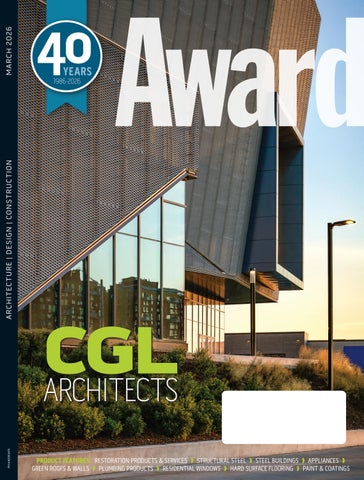
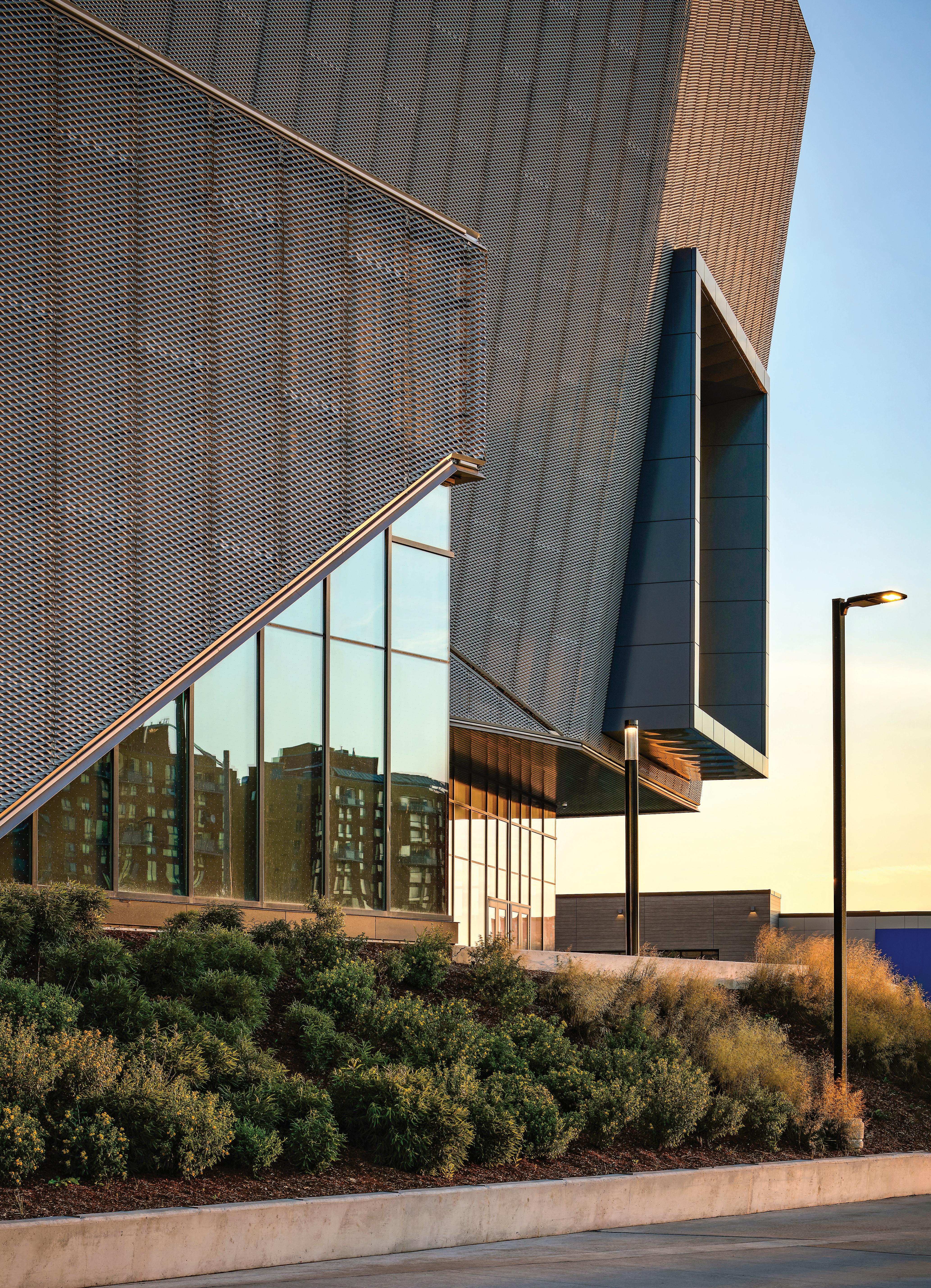
CGL ARCHITECTS
PERSPECTIVE
Listening to the next generation.
HUMAN TOUCH
CGL Architects reflects on four decades of dialogue-driven design.
PRESERVING WHAT TRULY MATTERS
Restoration companies are tackling unique projects by combining traditional expertise with modern materials and methods.
The steel building industry proves resilient amid on-again, off-again tariff uncertainty.
REFLECTING ON TRENDS
From design to durability, Canadian window offerings continue to raise the bar.
Paint and coatings chase a richer palette while pushing the boundaries.
Canada’s green roofs and walls battle policy shifts.
Hard surface flooring is embracing bold, large-format, and textured trends.
Canada’s structural steel industry adapts to trade pressures as fabrication, supply chains, and infrastructure projects evolve.
Plumbing companies are transforming homes, blending craftsmanship
to create more enjoyable living spaces.
Appliances

by FIONA HAMILTON mraic, Director Representing Interns and Intern Architects
Listening to the next generation
In spring 2025, architectural interns from across Canada were invited to share candid perspectives on their experiences, challenges, and expectations as they navigate the path toward licensure. Their responses offer a grounded, first-hand view of internship today and a clear signal of how the next generation understands the profession they are preparing to inherit.
Taken together, the insights highlight persistent structural challenges within architectural practice, emerging pressures facing firms, and opportunities to better support early-career professionals at a moment of significant change across the construction and design sector.
PRESSURES SHAPING THE INTERN EXPERIENCE
Interns consistently identified compensation as a central concern. Many described salaries that do not align with education level, responsibility, or hours worked, with unpaid overtime and job precarity adding to financial strain. These issues are not new, but they remain deeply felt, particularly as the cost of living rises in many Canadian cities.
Access to required internship experience also emerged as a major challenge. Interns reported difficulty completing certain categories of required hours, especially those related to site visits and construction administration. In some cases, firm size, project typology, or procurement structure limited exposure to later project phases. As a result, many interns expressed concern about entering licensure without having participated in the full lifecycle of a project.
The licensure process itself remains a source of stress. The structure, timing, and cost of the Examination for Architects in Canada were frequently cited, with internationally trained professionals noting additional complexity related to credential recognition and differing career pathways. While mentorship is strong in some workplaces, access remains uneven, leaving some interns uncertain about expectations, responsibilities, and how best to progress.
HOW INTERNS VIEW THE PROFESSION’S FUTURE
Interns are not focused solely on short-term hurdles. Many are thinking critically about the long-term sustainability of architectural practice. Workforce pressures were frequently raised, including concerns about talent retention, limited advancement pathways, and attrition driven by compensation, workload, and work-life balance.
Technological change is another defining issue. Interns anticipate that artificial intelligence, automation, and rapidly evolving digital tools will reshape design and delivery. While there is optimism about efficiency and innovation, there is also concern about preserving professional judgment, creativity, and the human dimensions of design. Rising software and operational costs were noted as a particular challenge for smaller practices.
Environmental and social responsibility were featured prominently. Many interns expressed a strong desire to see climate action and sustainable design embedded more consistently into everyday practice,
not treated as optional or peripheral. Others noted a growing tension between architectural values and real-world constraints, particularly in relation to affordability, policy frameworks, and development economics.
Across these themes, interns emphasized the need for the profession to more clearly articulate the value of architectural services. As expectations increase and scope expands, they see communication, advocacy, and public understanding as critical to the profession’s future relevance.
WHAT EARLY-CAREER PROFESSIONALS ARE ASKING FOR
Interns are seeking practical, accessible support that aligns with the realities of contemporary practice. Frequently cited needs include lowcost or free training opportunities, digital tools to streamline internship tracking, and online learning aligned with required competencies. There is strong demand for clearer guidance around licensure and more structured preparation resources.
Beyond procedural support, interns highlighted the importance of mentorship, mental health resources, and clarity around workplace expectations. Many want greater transparency around employment standards, equitable advancement, and inclusive professional cultures. They are also seeking a stronger sense of belonging within the profession, particularly those working in small firms, rural contexts, or equity-seeking communities.
THE IMPORTANCE OF COMMUNITY AND CO-ORDINATION
A recurring theme was the desire for connection. Interns expressed interest in a national community that enables peer learning, mentorship, and shared problem-solving. Virtual engagement, structured peer groups, and opportunities to contribute to broader professional conversations were all identified as meaningful ways to strengthen connection and retention.
Interns also pointed to persistent confusion around roles and responsibilities across regulators, employers, academic institutions, and professional organizations. Many called for clearer, more consistent communication across jurisdictions, along with national tools that can support mobility and help standardize expectations without diminishing regional context.
LOOKING AHEAD
The message from interns is consistent and pragmatic. They are motivated, committed, and eager to contribute, but they are navigating a system under strain. Their insights point to areas where firms, professional bodies, and the broader industry can adapt to better support emerging professionals while strengthening the profession as a whole.
Listening to these perspectives is not simply an exercise in workforce development. It is an opportunity to reflect on how architectural practice is evolving, how values are being transmitted across generations, and how the profession can remain resilient, relevant, and equitable in a changing built environment.

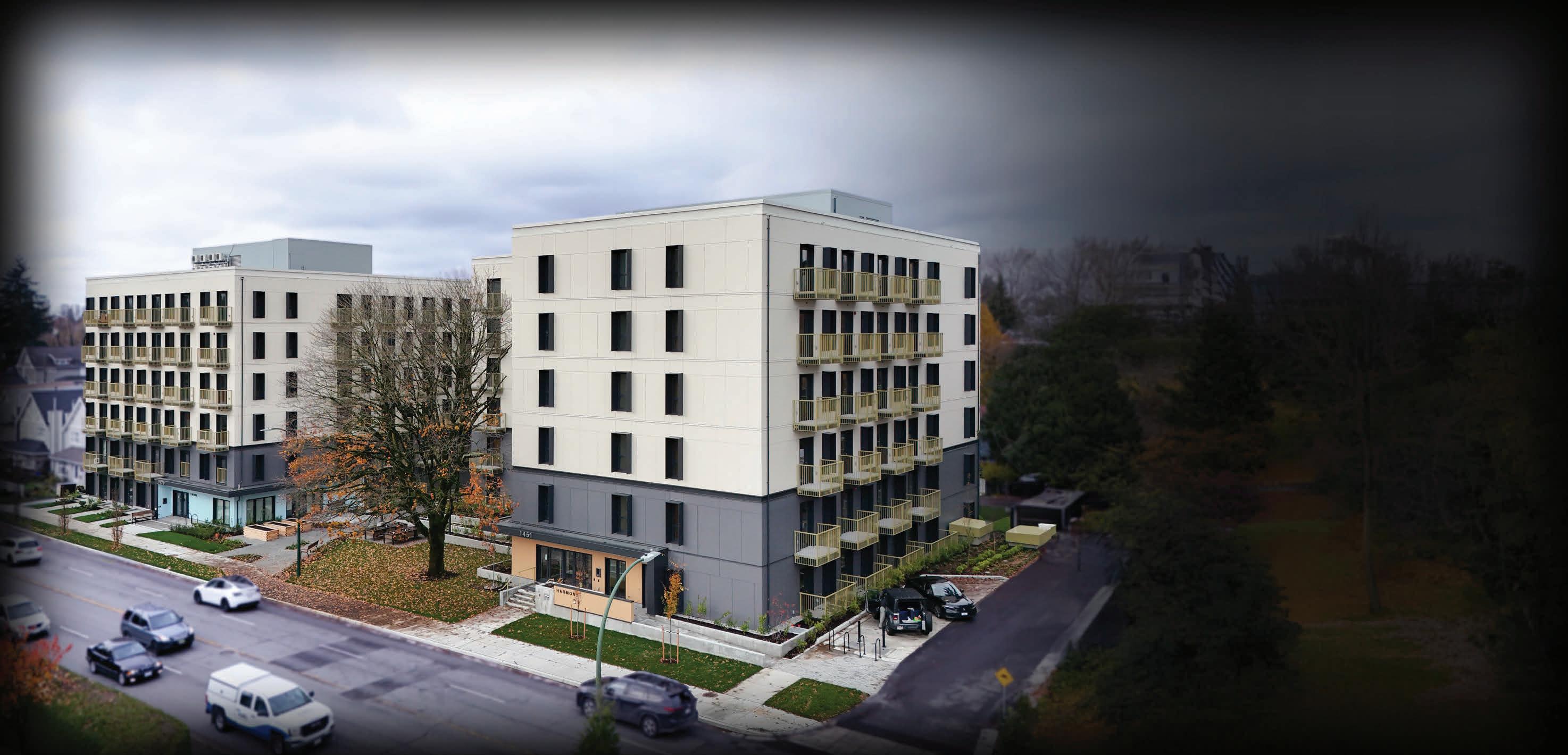
Build Faster. Build Smarter.
Build with Prefab Precast Concrete.
BUILD Faster. BUILD Smarter. BUILD with Prefab Precast Concrete.
BUILD Faster. BUILD Smarter.
BUILD with Prefab Precast Concrete.
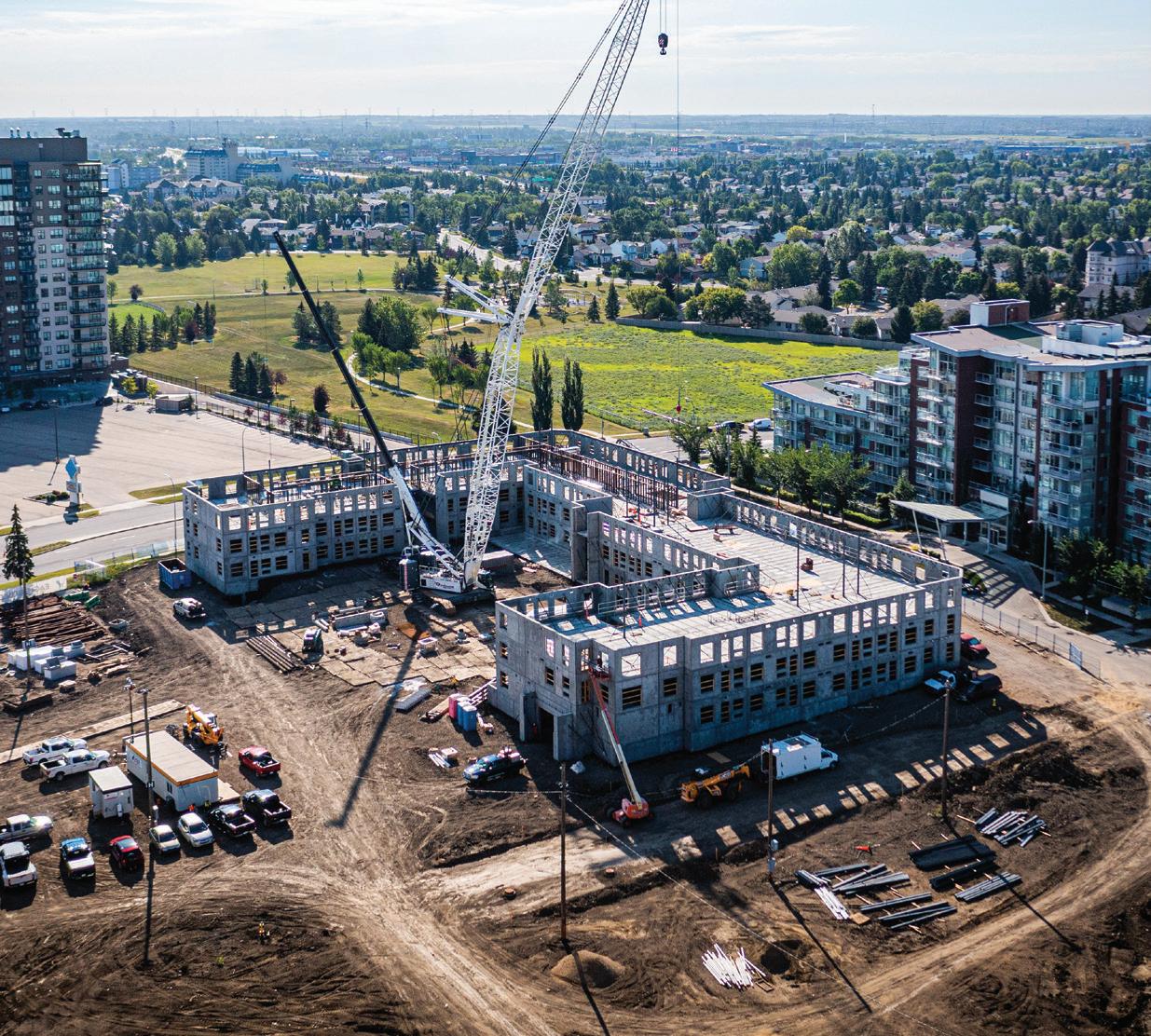
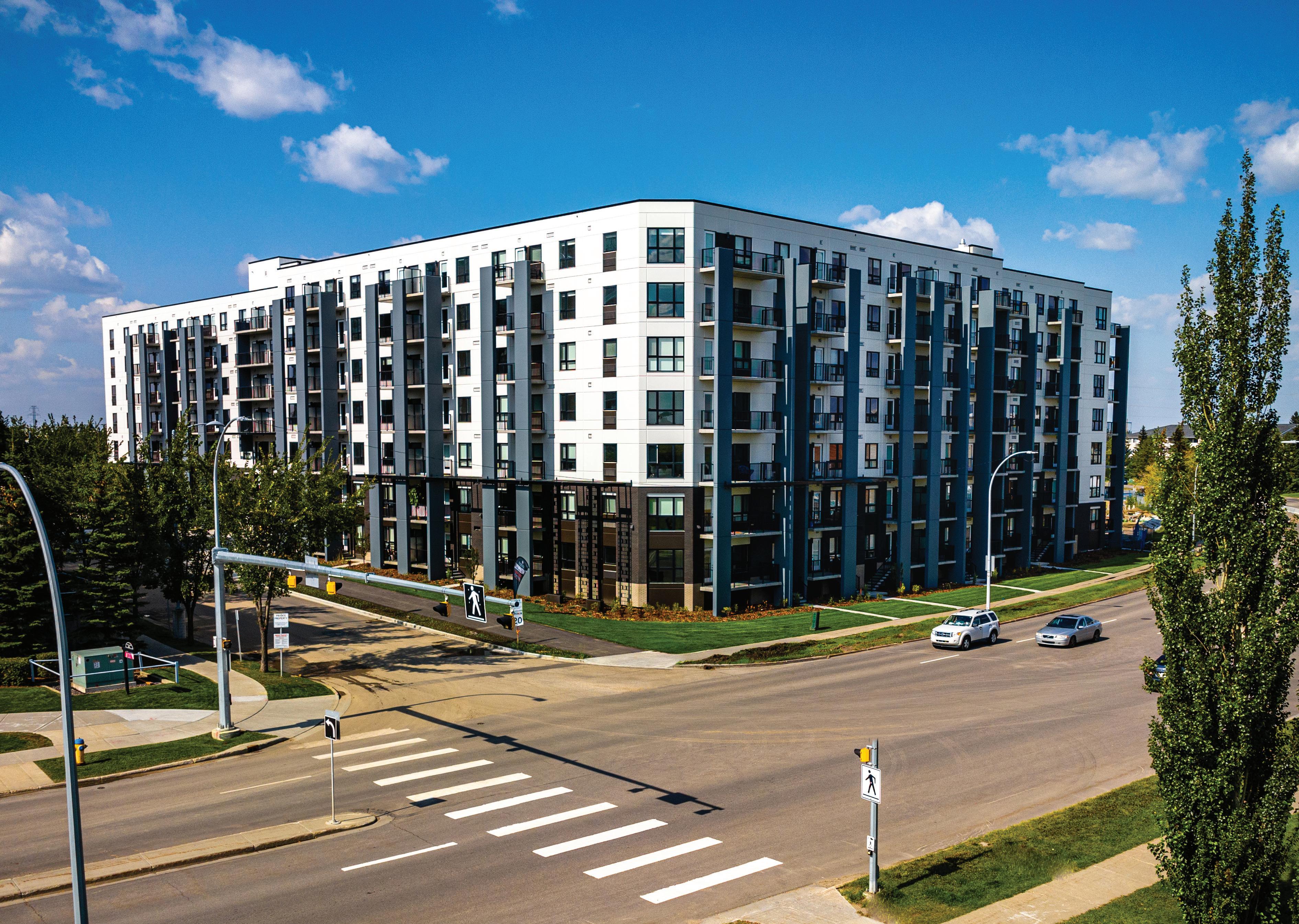
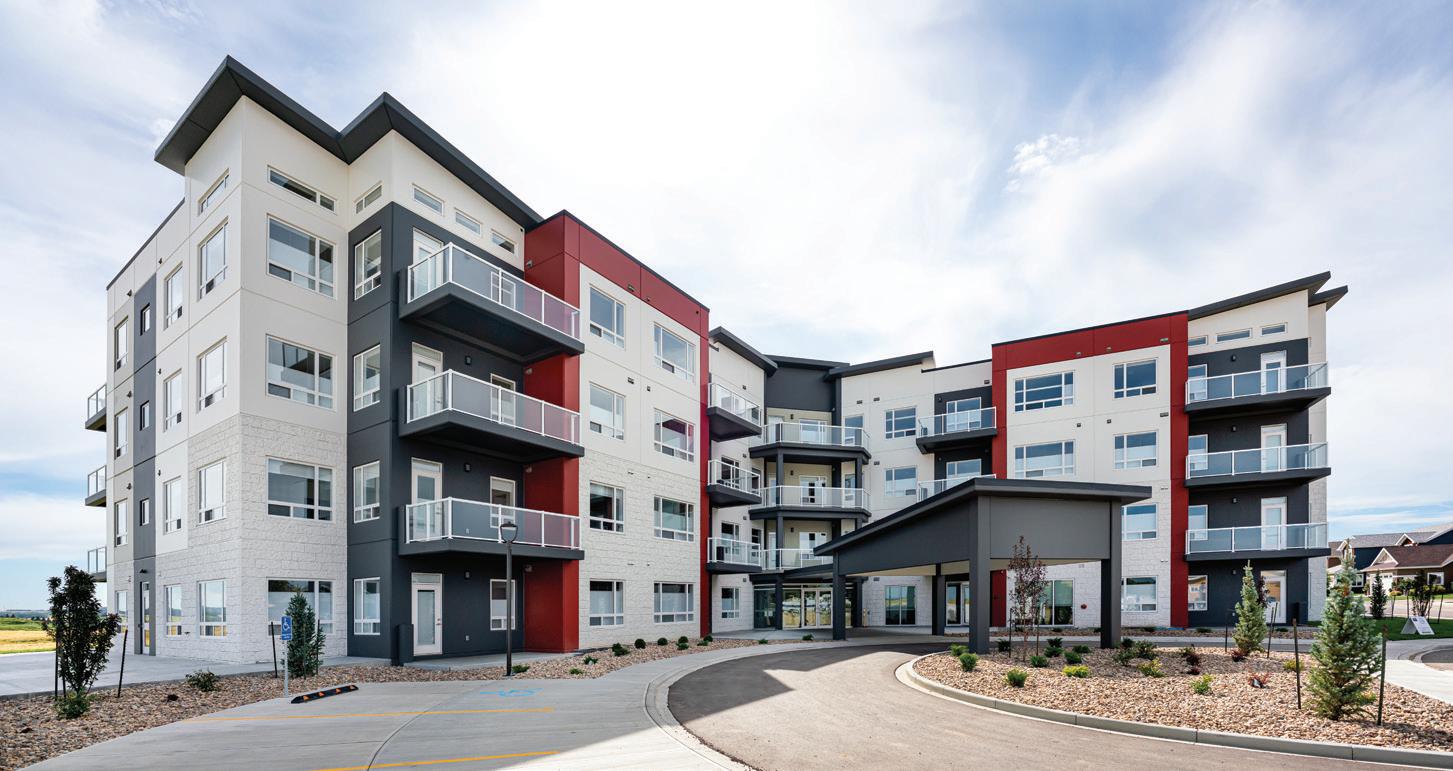
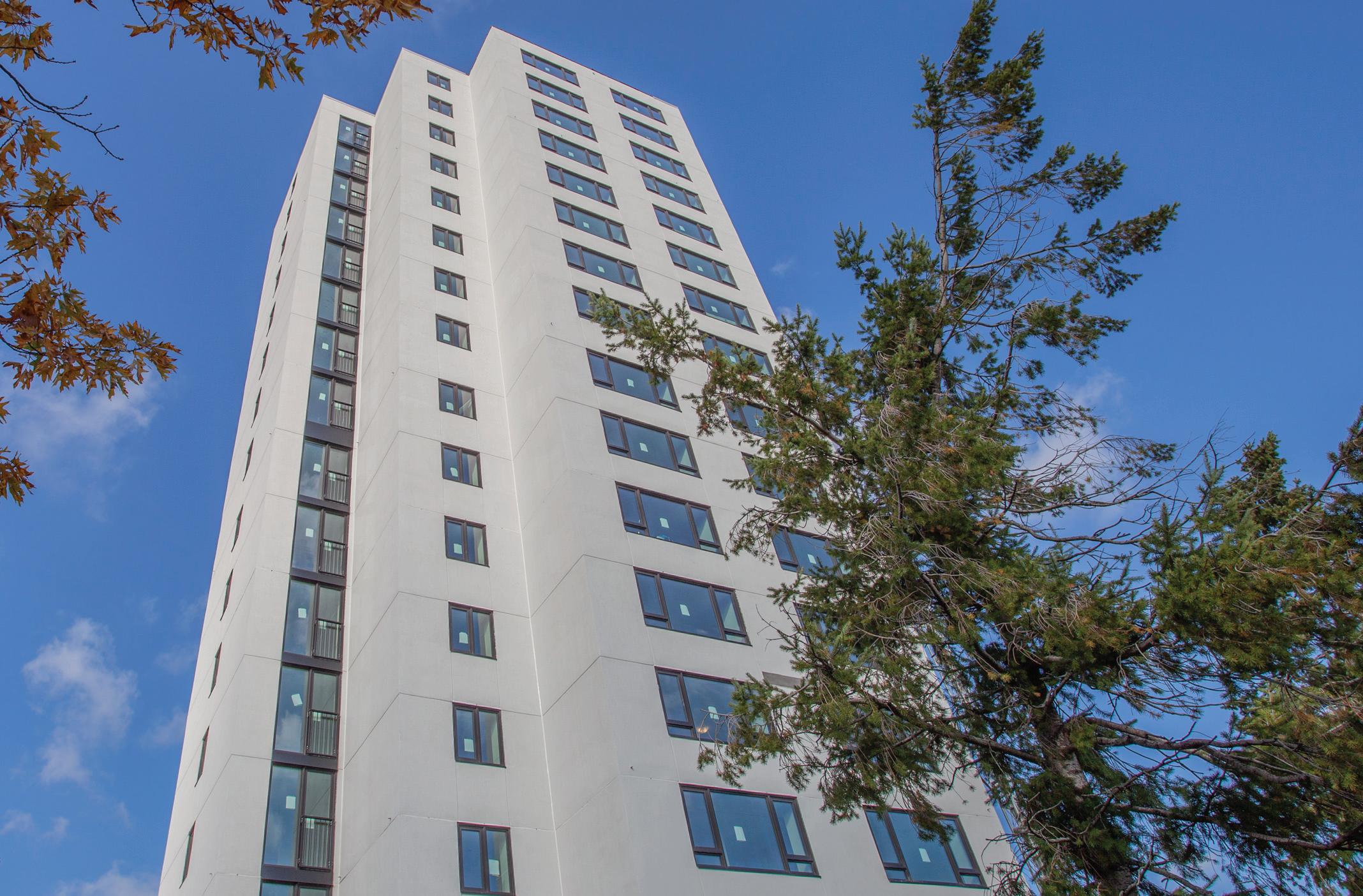
In response to Canada’s housing needs, prefab precast concrete provides a powerful solution. It is faster, durable, and cost-effective, as each component is made in a controlled environment. Prefab precast concrete offers superior quality, making it a resilient and sustainable approach to addressing Canada's mid to high–rise housing shortage.
Find out more about the benefits of using prefab precast concrete for your next project.
Let’s build fast, affordable housing together!
Owner: K&H Developments | Architect: Gardner Architecture Inc. | Engineer: Grubb Engineering
Precast Supplier: Eagle Builders LP | Photos courtesy of Eagle Builders LP

For more information, visit: www.cpci.ca/publications or scan the QR Code.
| 877.937.2724
If 2025 taught us anything, it was that no matter how skilled technology becomes, architecture still lives or dies by the human touch, and this is exactly where Toronto-based architectural and interior design firm CGL Architects truly shines.
THE HUMAN TOUCH
CGL Architects reflects on four decades of dialogue-driven design
by NATALIE BRUCKNER | photography + renderings
courtesy CGL ARCHITECTS
For four decades, CGL has built a reputation for truly listening to its clients, engaging them in a dialogue to uncover what they want and need from a building, not just what they think they need. Their ethos has remained unchanged. Instead of imposing personal aesthetic preferences during concept development, CGL allows the project’s parameters, purpose, budget, site, regulatory context, and sustainability goals to quietly guide the way towards a solution that is both functional and intelligent. It’s a collaborative process by nature, shaped through close relationships with principals, staff, and a trusted network of professionals.
To understand how CGL has weathered the peaks and troughs of the profession, you have to go back to the beginning. As partner Bob Green explains, he and David Climans first met as undergraduates at the University of Toronto before heading west to complete their graduate studies in architecture at The University of British Columbia. After graduating, both returned to Toronto where they apprenticed at firms of very different scales, experiences that would later inform the practice’s balanced approach. It was a friendship rooted in deep understanding and respect.
“There were a couple of early iterations of the firm with other architects involved,” Green explains, “and that evolved into CGL Architects, which has been in operation since 1988.” In tracing the evolution of CGL, it would be remiss not to note Carson Liang, the firm’s third partner, who sadly passed in 2022. A prolific designer, Liang’s legacy and passion for architecture continue through the many projects to which he contributed.
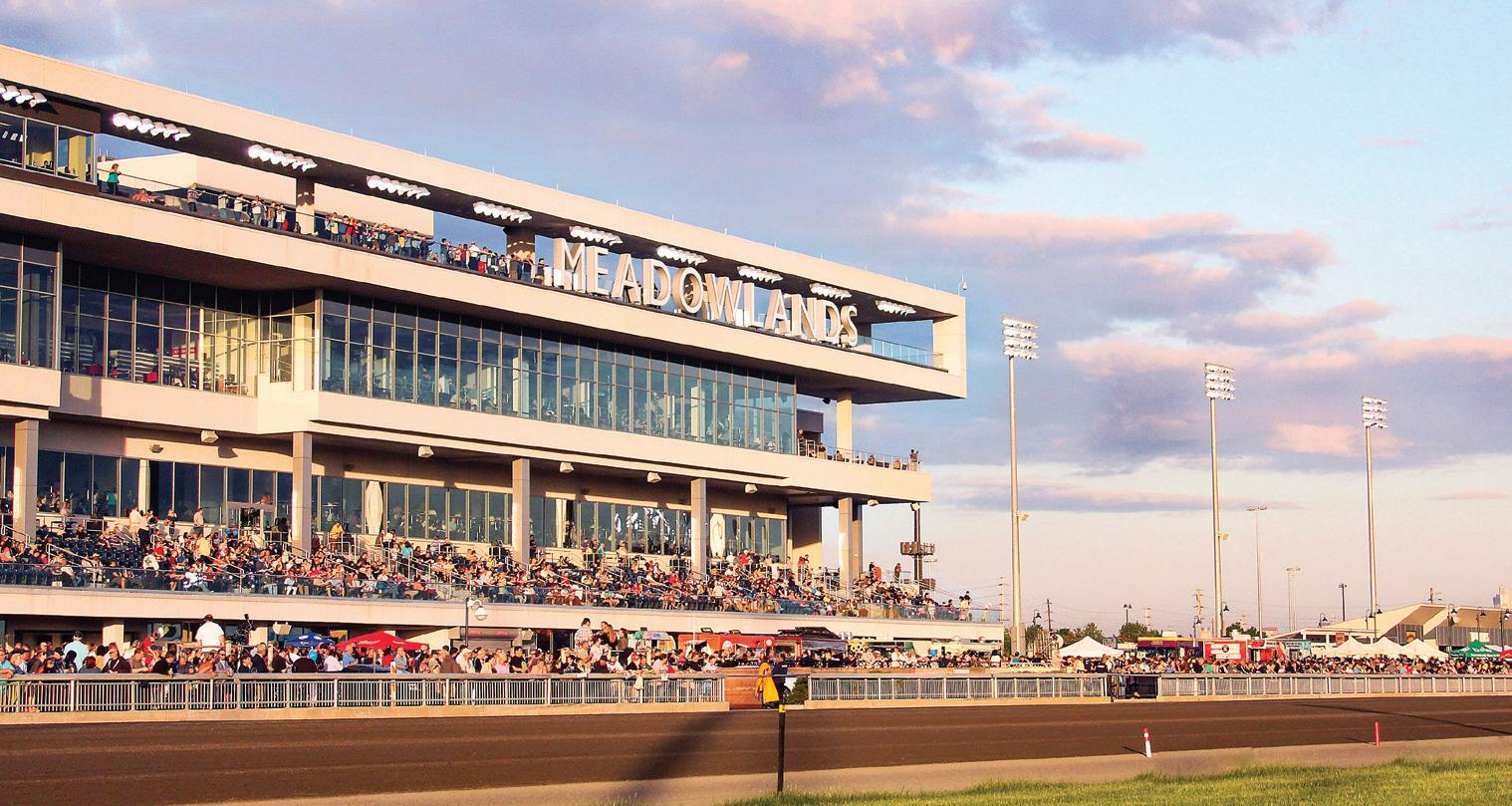
Building on the foundations established by its partners, and having weathered the recession of the early 1990s, a pivotal moment for the firm came in the late ’90s, when the Ontario government legislated gaming devices at horserace tracks, opening up a new and highly specialized building type. “We realized the opportunity to develop this type of project, known as a racino [a combination of racetrack and casino],” explains Green. “Our first project of this kind in Ontario, Georgian Downs, became the catalyst for the design of many significant entertainment projects not just across Canada, but also in the U.S. and the Caribbean.”
Reflecting on that period, Climans adds, “That really changed the dynamic of the firm. We saw the potential in this market, and there wasn’t much competition because it was highly specialized. We learned the sector, built our expertise, and went on to secure some significant projects. This niche set us apart and allowed the firm to grow in ways we hadn’t imagined.”
CGL’s experience across gaming, hospitality, and entertainment projects, which encompasses casinos, hotels, performance venues, retail spaces, and food and beverage facilities, has fostered a level of expertise that extends beyond any single building type. This expertise informs the firm’s work across commercial, retail, multi-unit-residential (mid- and high-rise), custom residential, and interior design projects. The perspective is made even richer by the fact that CGL is not simply an architectural firm but also provides interior design services, allowing the studio to approach each project holistically and consider how the architecture and interiors work together to create spaces that feel cohesive, intentional, and fully realized.
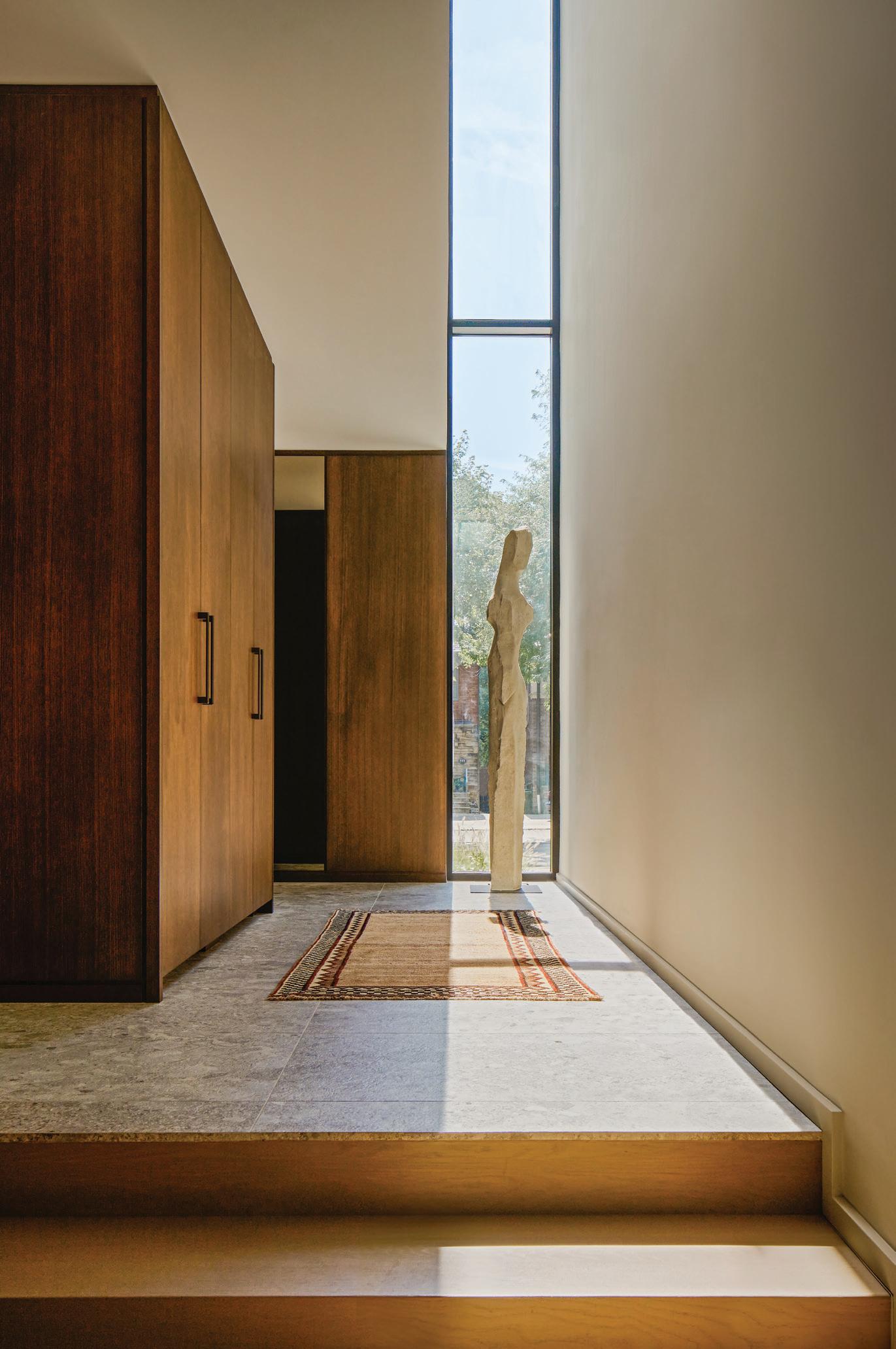
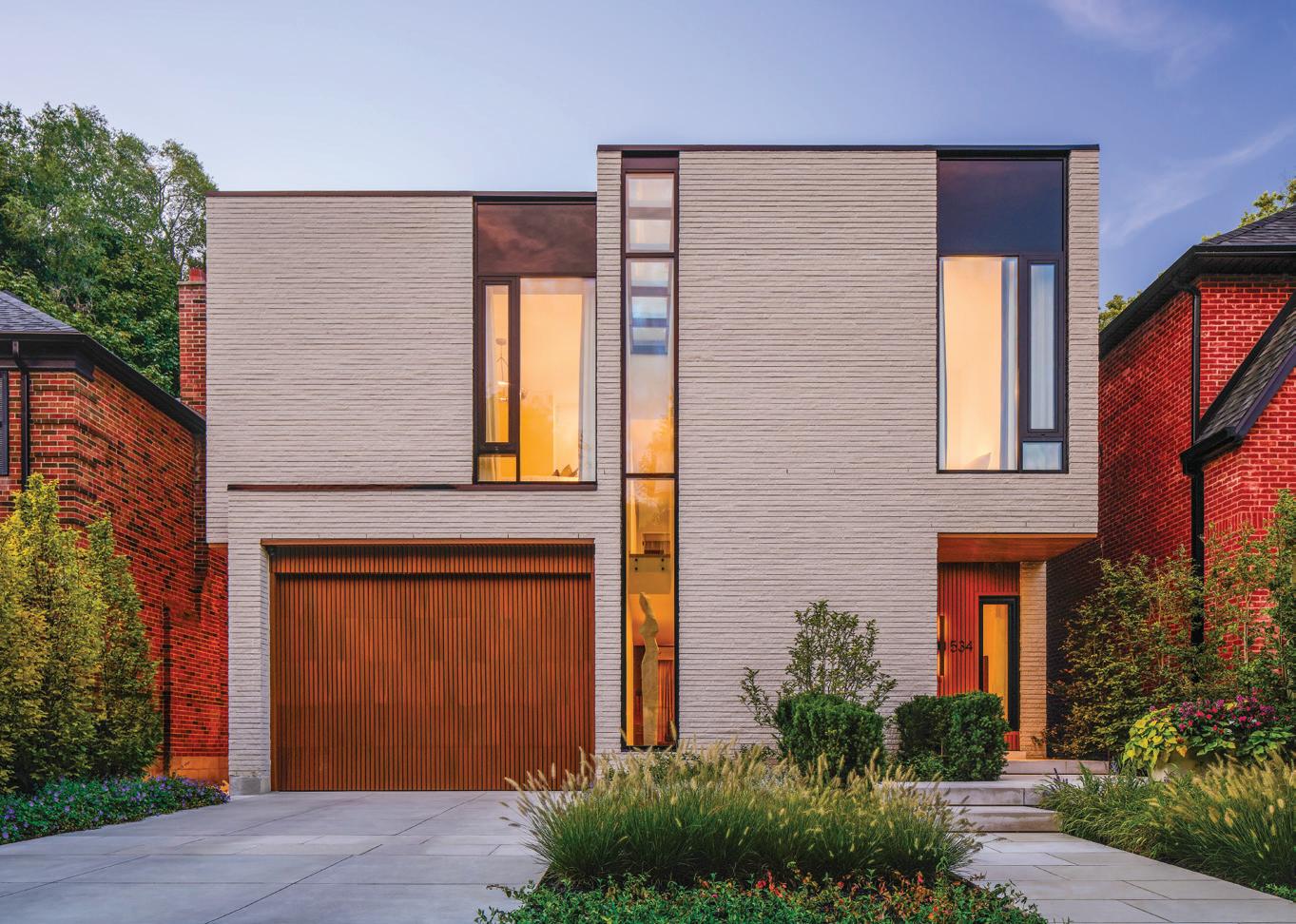
Private residence in Toronto.
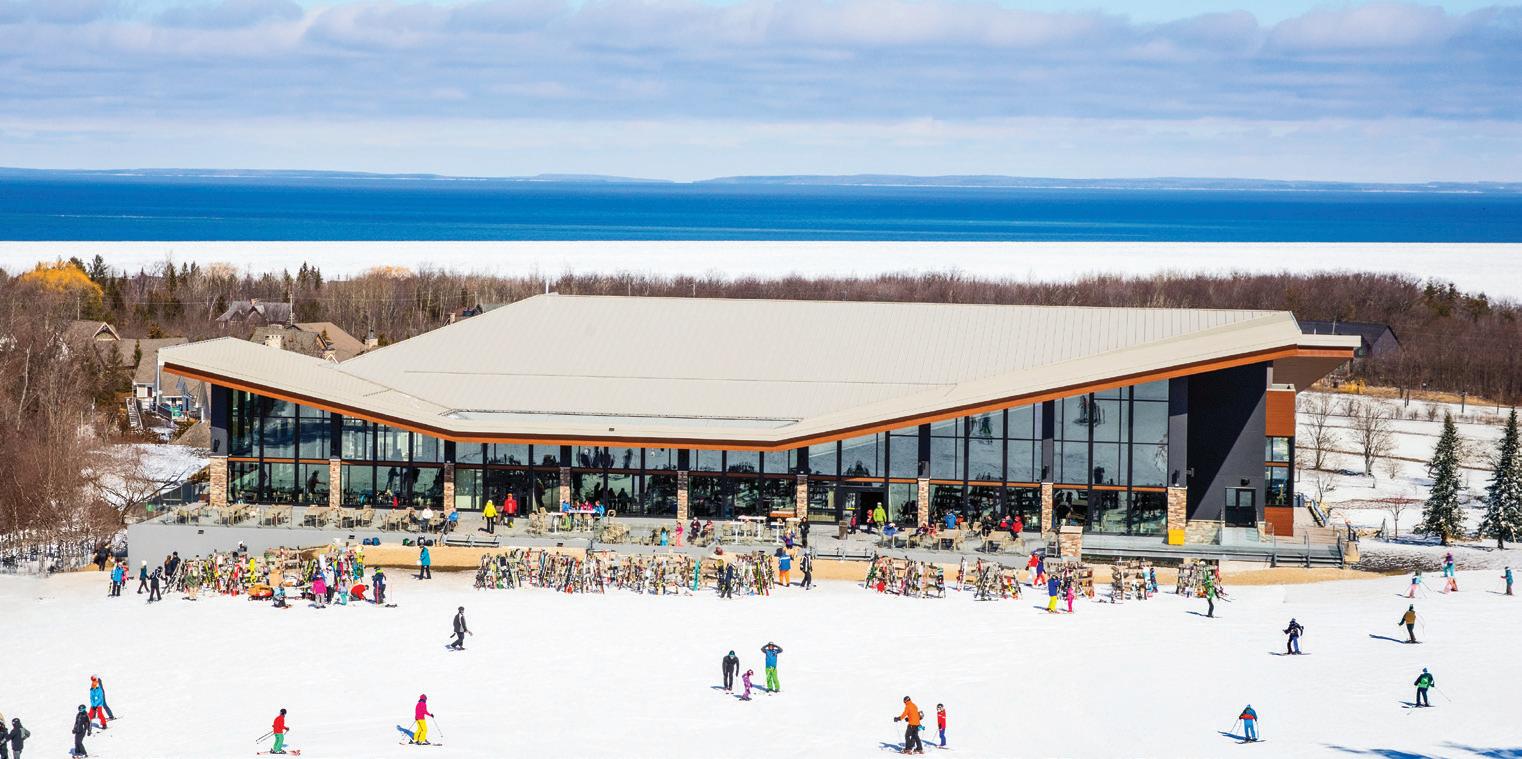
Alpine Ski Club in the Blue Mountains.
Examples of this approach are plentiful. One particularly illustrative project is the Alpine Ski Club in the Blue Mountains, which demonstrates CGL’s commitment not only to design excellence but also to managing construction budgets and schedules, as well as to close collaboration with client representatives, the construction manager, and the project team.
“We had previously renovated the original clubhouse, and in 2008, while we were partway through drawings for a major renovation, the financial crisis hit and the project was halted,” says Green. “About six months later, the new club president contacted us and asked if we would prepare a concept for an entirely new clubhouse in a different location. We agreed on the condition that we pursue a modernist design rather than replicating the existing clubhouse style architecture. That concept eventually became the completed project, transforming how the club operates socially and functionally. It’s a reminder that projects often evolve in unexpected ways.”
Working with club member/contributing architect David Pontarini of Hariri Pontarini Architects, CGL brought this vision to life. The new lodge embraces the spectacular Escarpment and Georgian Bay views, while introducing a contemporary approach to functionality for Alpine’s members and guests.
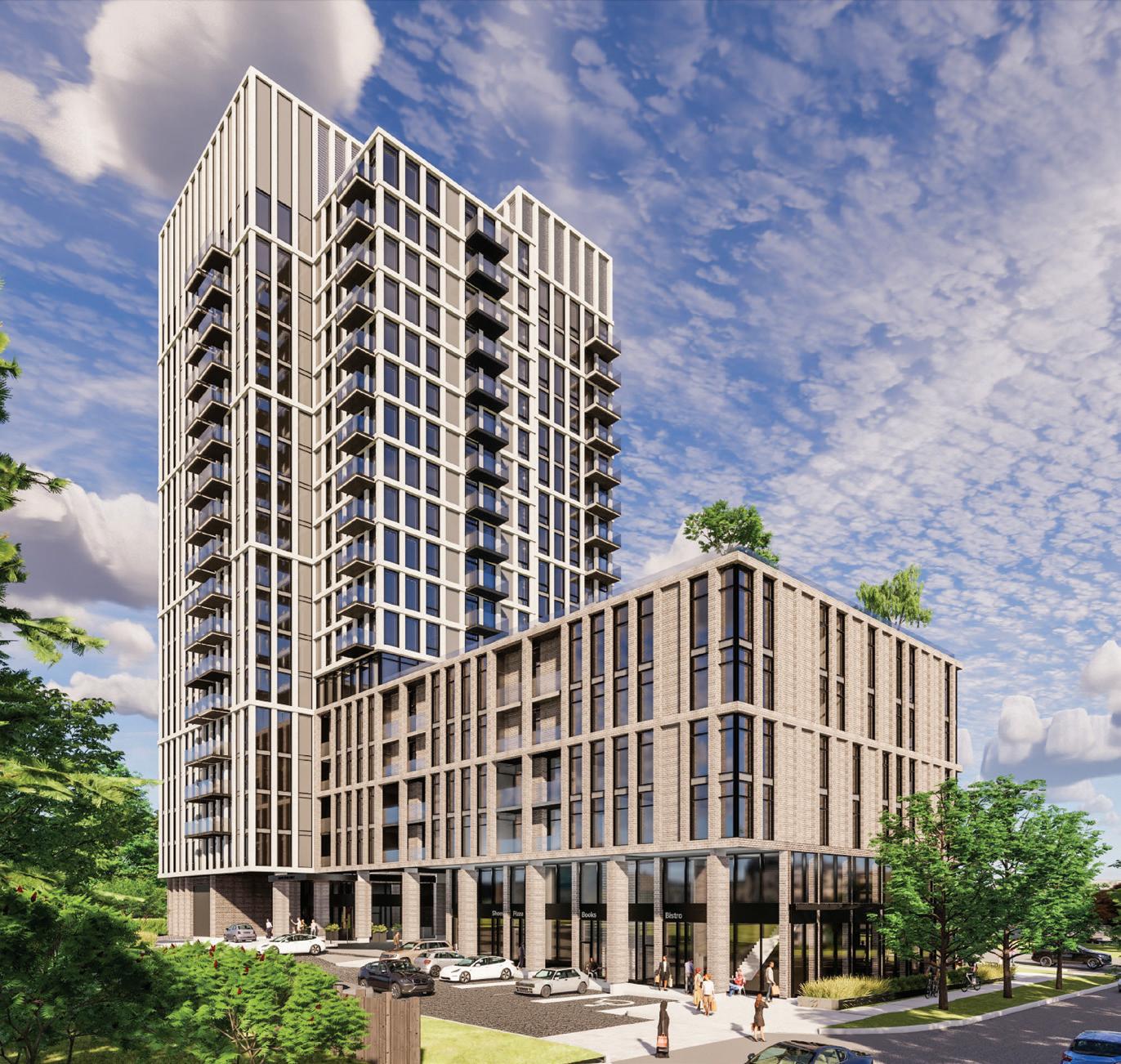
Another project that highlights CGL’s expertise is the Whitby residential building at 108 Victoria Street. Design director and associate Jeffrey Jean explains: “This project is a mid-rise building with a six-storey podium. Because it was conceived as a purpose-built rental building with an affordable housing component, we wanted to individuate the units. The plan is articulated so each unit has its own projection on the façade, and the building reads as a series of
connected modules sitting on top of the podium, which also allowed many of the units to have corner views.” With a largely context-less site, including a GO Transit depot, parking, and open space, the design generates its own context while creating connections to the surrounding streets and community.
Beyond Alpine and Whitby, CGL’s portfolio contains decades of projects that showcase their skill in architectural design at varying scales. These range from the Performance Venue at Woodbine in Toronto, which sets a new standard in multipurpose space design, innovation, and efficient construction across 70,000 square feet, constructed with innovative materials, to the sculptural, modernist residences that helped shape the firm’s approach to larger scale residential developments.
Through their wide-ranging projects, CGL has developed a distinctive style that leans toward modernist design while responding carefully to each context. As Jean explains, “We tend toward modernist design, but it’s very project specific. Context is always important, whether that’s urban, cultural, or material. Some projects call for a stronger statement, others for a more restrained response. Even in residential work, we balance modern design with sensitivity to scale, surroundings, and character. Context, materiality, and experience all play a role in how we approach each project.”
It’s an approach that has earned CGL a loyal clientele that spans generations and continues to set the firm apart. “Trust is key,” says Green. “When there’s mutual understanding between client, architect, and construction professionals, the process becomes far more enjoyable. We still find joy in what we do, and both David and I remain actively involved, remaining hands-on at every stage and deeply engaged in all our projects, always learning about design, building science, technology, and collaboration. We see ourselves as conductors, bringing together talented consultants and builders, and I still get excited watching projects take shape on site. Architecture is a team effort, and collaboration is a big part of our success.” A
Meadowlands Racing & Entertainment.
Whitby residential building at 108 Victoria Street.
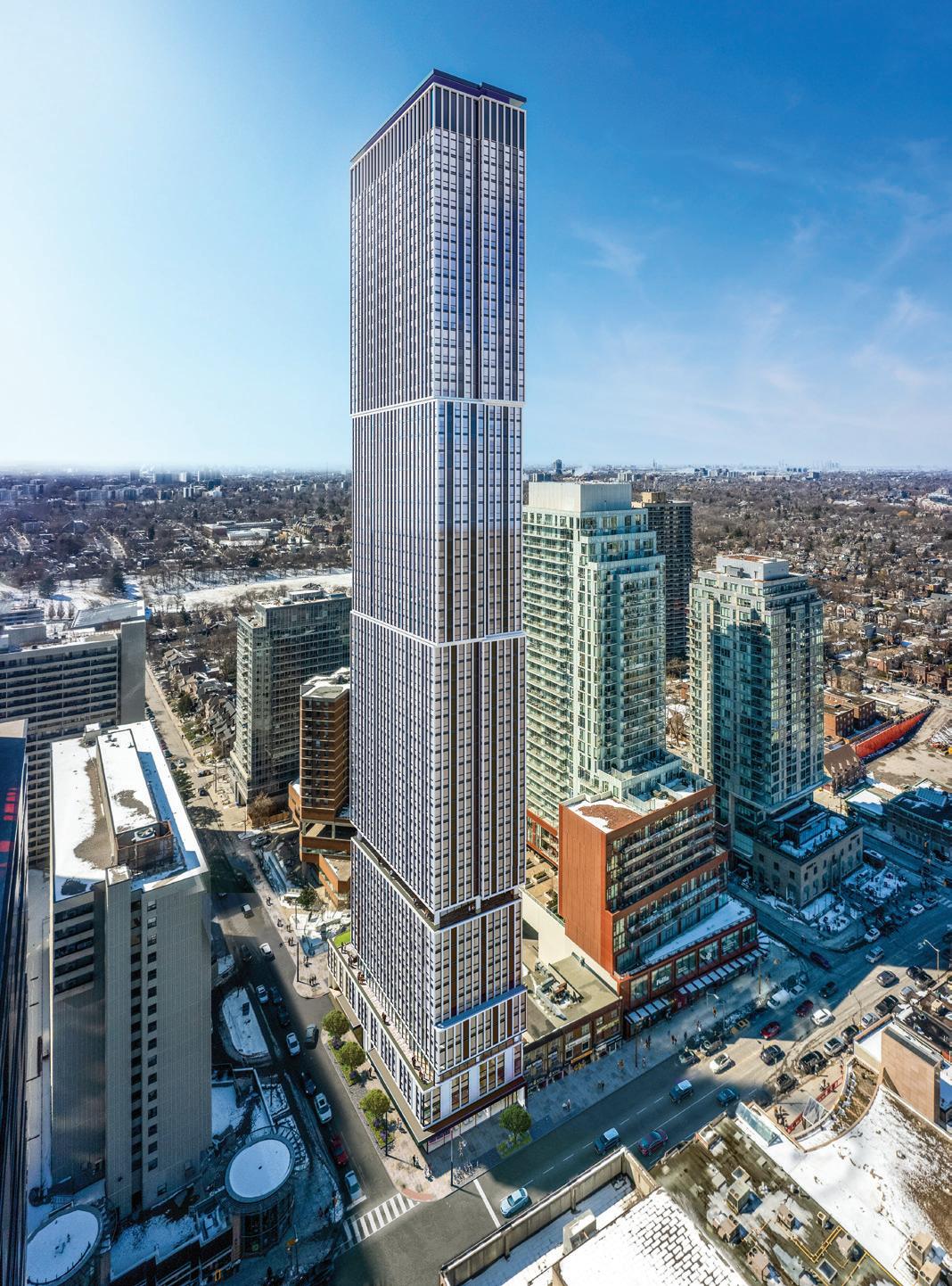
2346 Yonge Street, Toronto.
Private residence in Toronto.
YOUR VISION, BUILT IN PRECAST PERFECTION
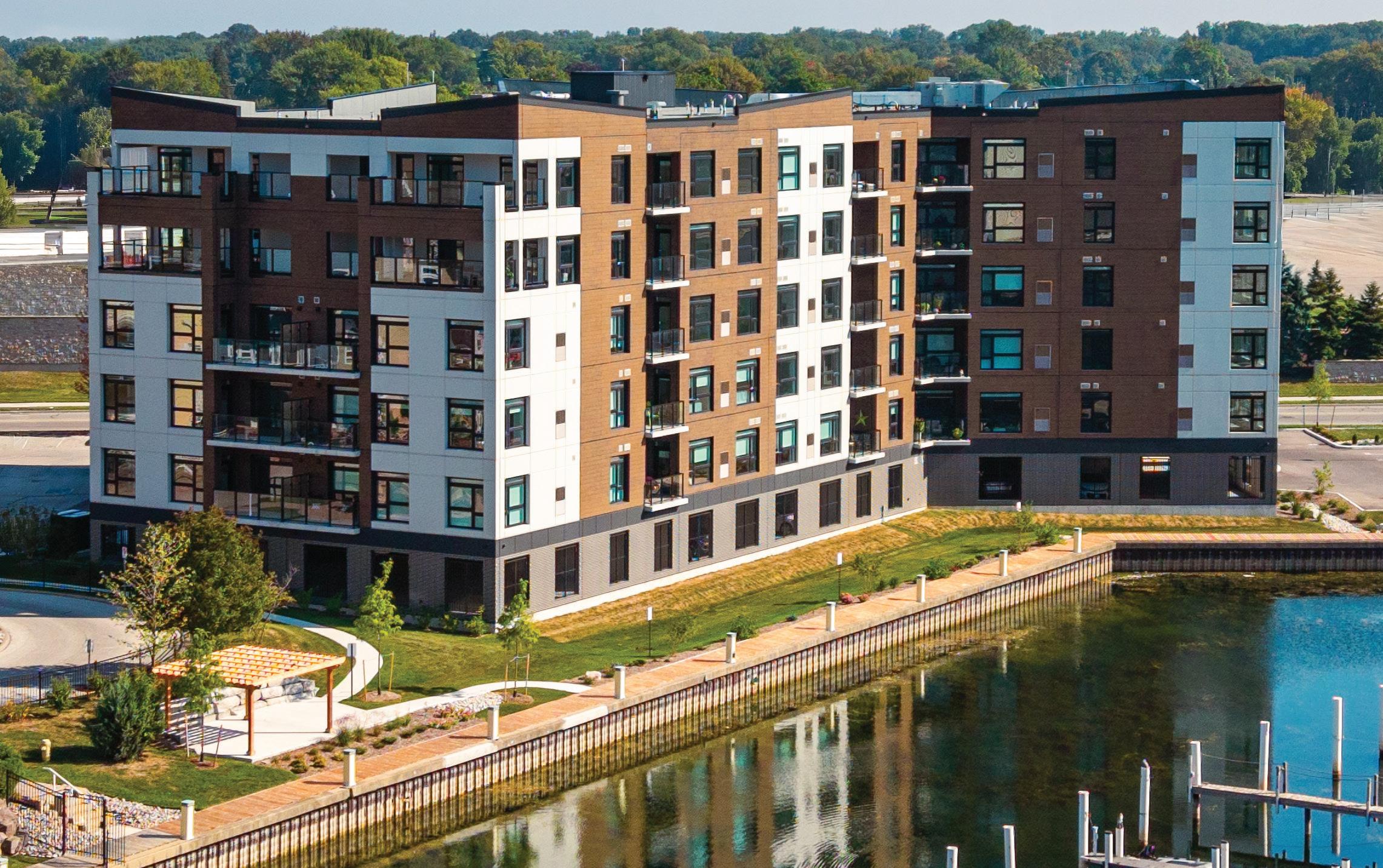
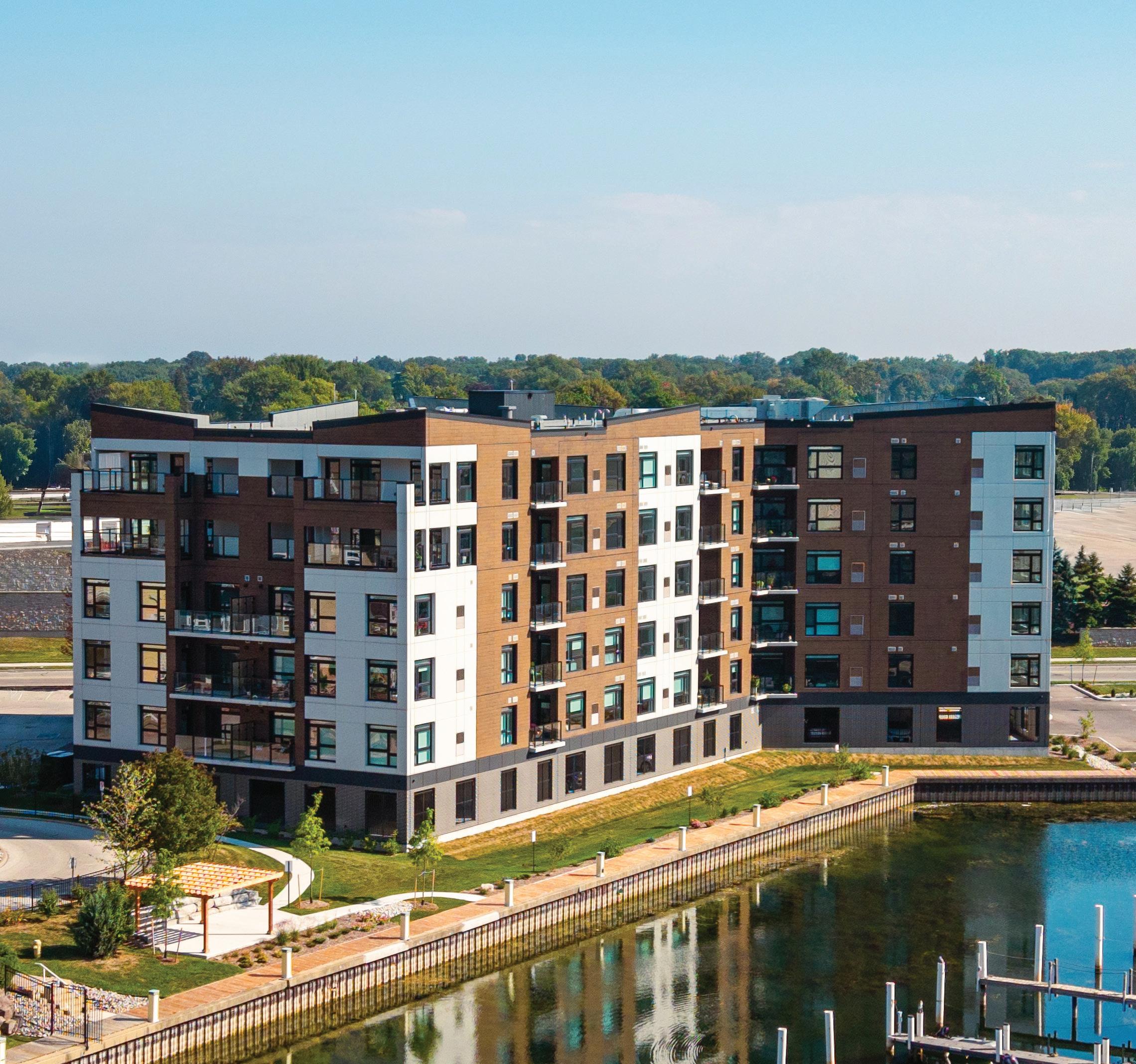
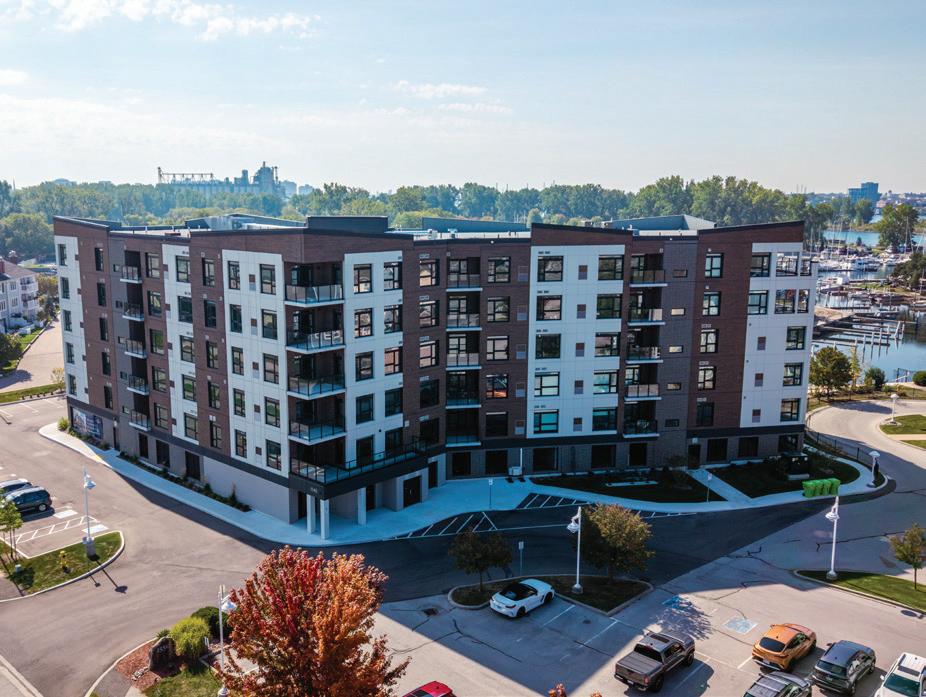

Your project deserves more than just concrete — it deserves a partner who understands deadlines, budgets, and design goals.
Stubbe’s Total Precast solutions deliver strength, efficiency, and flexibility, ensuring a seamless process and a building that exceeds expectations from planning to installation.
Discover how our precast systems can transform your next project.

Preserving What Truly Matters
Restoration companies are tackling unique projects by combining traditional expertise with modern materials and methods
by ROBIN BRUNET
The rise of eco-friendly solutions continues to shape restoration products and services, as providers respond to concerns about finite resources, challenging weather conditions, and the potential benefits of sustainable practices for health, as well as regulatory compliance.
Quebec-based Atwill Morin understands this implicitly, having spent more than 50 years building a reputation as a masonry restoration specialist while also offering new masonry construction, concrete and structural work, and scaffolding services.
The company is coming off a busy 2025, in which it was nominated by the Heritage Toronto Awards for its restoration of the IMMIX Clock Tower. Built in 1872 as Fire Hall No. 3, the tower stood out for its height and remarkable architectural details. Decommissioned in the 1950s, it later housed the St. Charles Tavern, and after that venue closed in 1987, the site hosted various businesses until the launch of the Halo project, which consists of 423 condominiums and also the restoration of adjacent Victorian commercial façades.
Atwill-Morin restored the heritage envelope, including masonry cleaning, repointing, brick replacement, and precise reproduction of windows and dormers. The company also restored heritage woodwork, undertook slate roof refurbishment with copper finishes, and, for the historic clock, disassembled it, sandblasted the parts, repainted and reinstalled it.
Atwill-Morin continues to strengthen its presence in the Greater Toronto Area, motivated by the number of projects completed in that region (including The United Bldg. and the Elgin & Winter Garden Theatres, in addition to the Clock Tower). It recently appointed Fabio Fialho as its first president for the GTA, and Matthew Atwill-Morin, president and CEO of the Atwill-Morin Group, says of this development, “We are particularly proud to have contributed to the restoration of numerous large real estate complexes which, like Atwill-Morin, cultivate values of safety and well-being for their users.”
Fialho, who made his mark for nearly 20 years in large-scale industry, adds, “I’m excited about the bright future ahead for Atwill-Morin in the Greater Toronto Area, which continues to make strides in real estate development and economic growth.”
Clifford Group is a recognized leader in masonry, cladding, and historical restoration, and 2025 was no exception to its award-winning record. The company received the Architectural Conservancy of Ontario Heritage Awards – Peter Stokes Restoration Award for the Sundial Folly project, the iconic sphere in Harbour Square Park West, designed by Jonathan Fung and Paul Figueiredo. It also earned the ACO Special Jury Award for its work on the St. Lawrence Market North Archaeological Remains Salvage.
In addition, Clifford Group’s FitzGerald Building Revitalization at the University of Toronto and the 2 Queen Street West project were honoured with Heritage Toronto awards.
Many other recent restoration projects have kept Clifford busy. The company’s scope of work on the National Memorial to the Fallen in Kingston included the installation of the four granite pillars, four granite benches, and two granite kiosks.
On the Niagara Escarpment in the West Credit River Valley, significant restoration was required for the more than a century-old stone fountain at Belfountain Conservation Area, as the fountain had become heavily disfigured by moss, algae, mineral buildup, and coating. Clifford was retained to undertake the cleaning, conservation, and repair of the fountain and its surrounding pool.
The project overcame environmental challenges by employing a layered, chemical-free cleaning approach that included heated-water washing. Repairs included repointing masonry, conserving stone and marble details, repairing metal elements, and replacing damaged coping stones.
Achieving energy efficiency is a perpetual goal of restoration products and services providers, and on that score, Maxime Duzyk, senior global director, building science and engineering at Huntsman
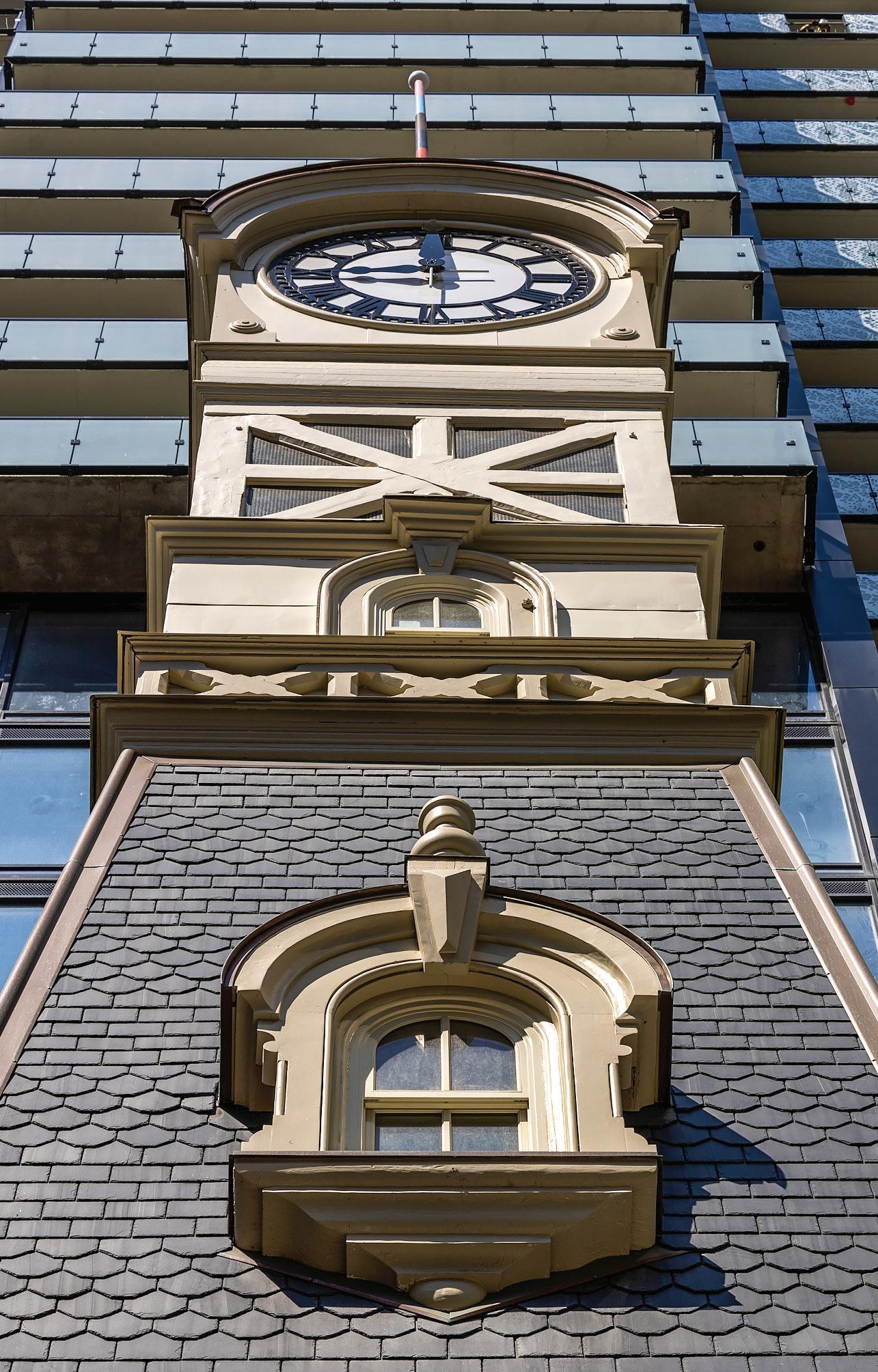

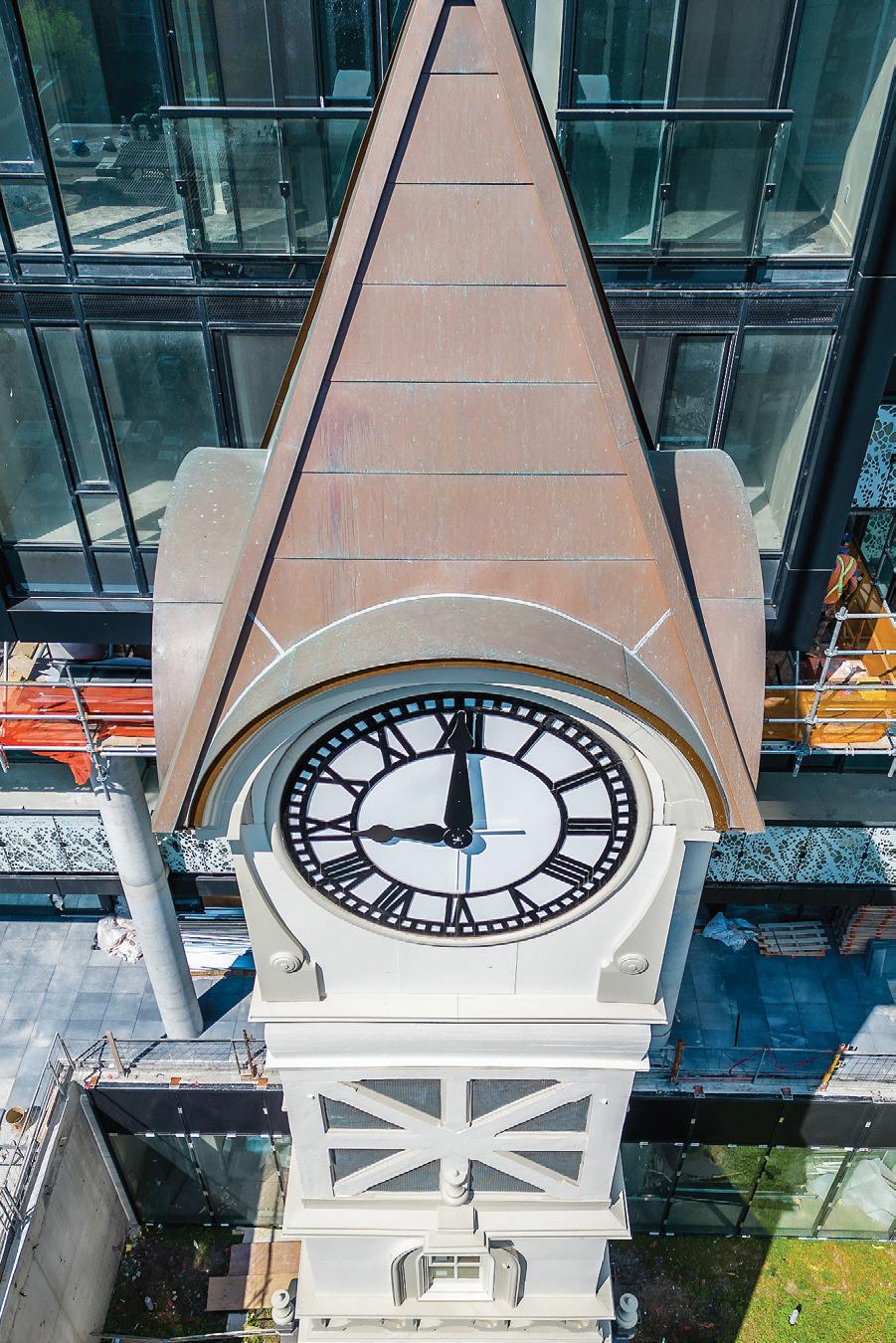
Restoration of the IMMIX Clock Tower.
PRECAST CONCRETE QUALITY ASSURANCE!
THE CPCQA CERTIFICATION PROGRAM
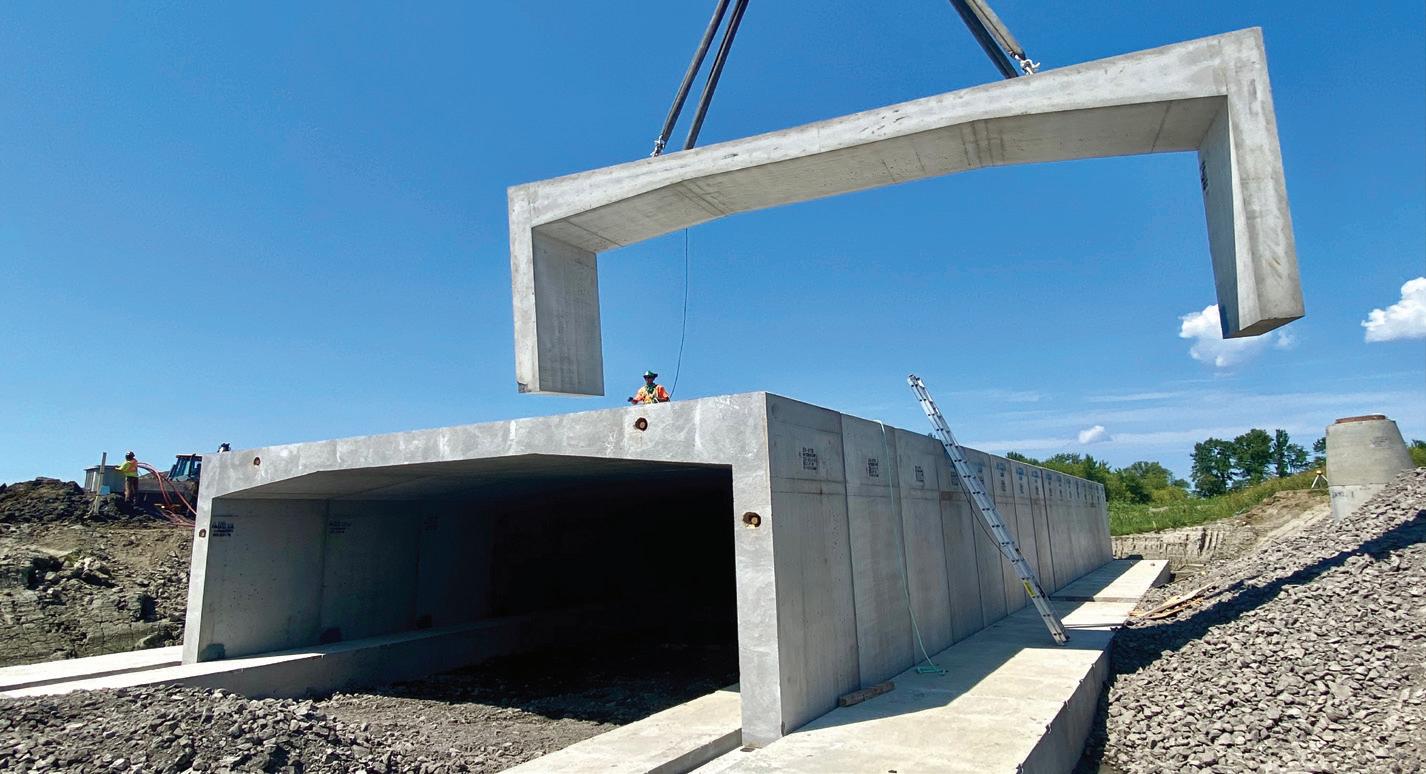
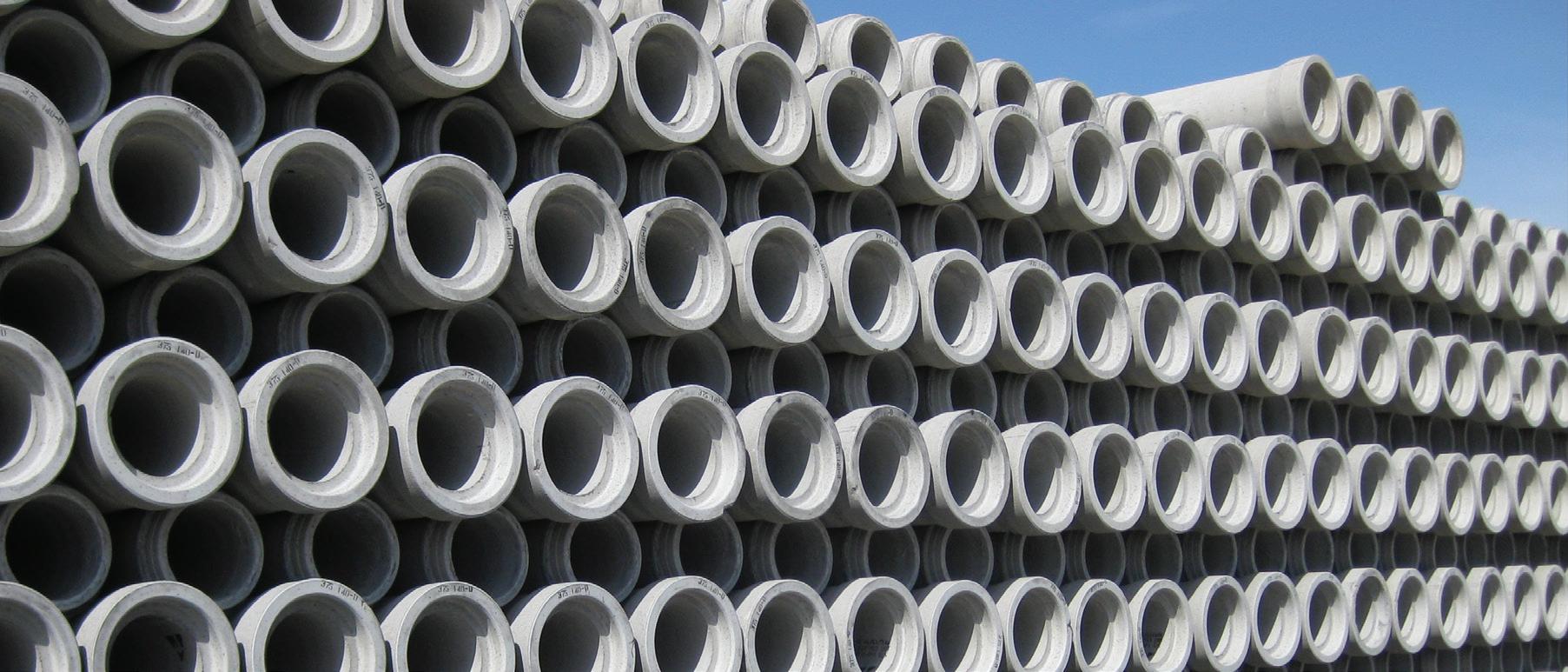
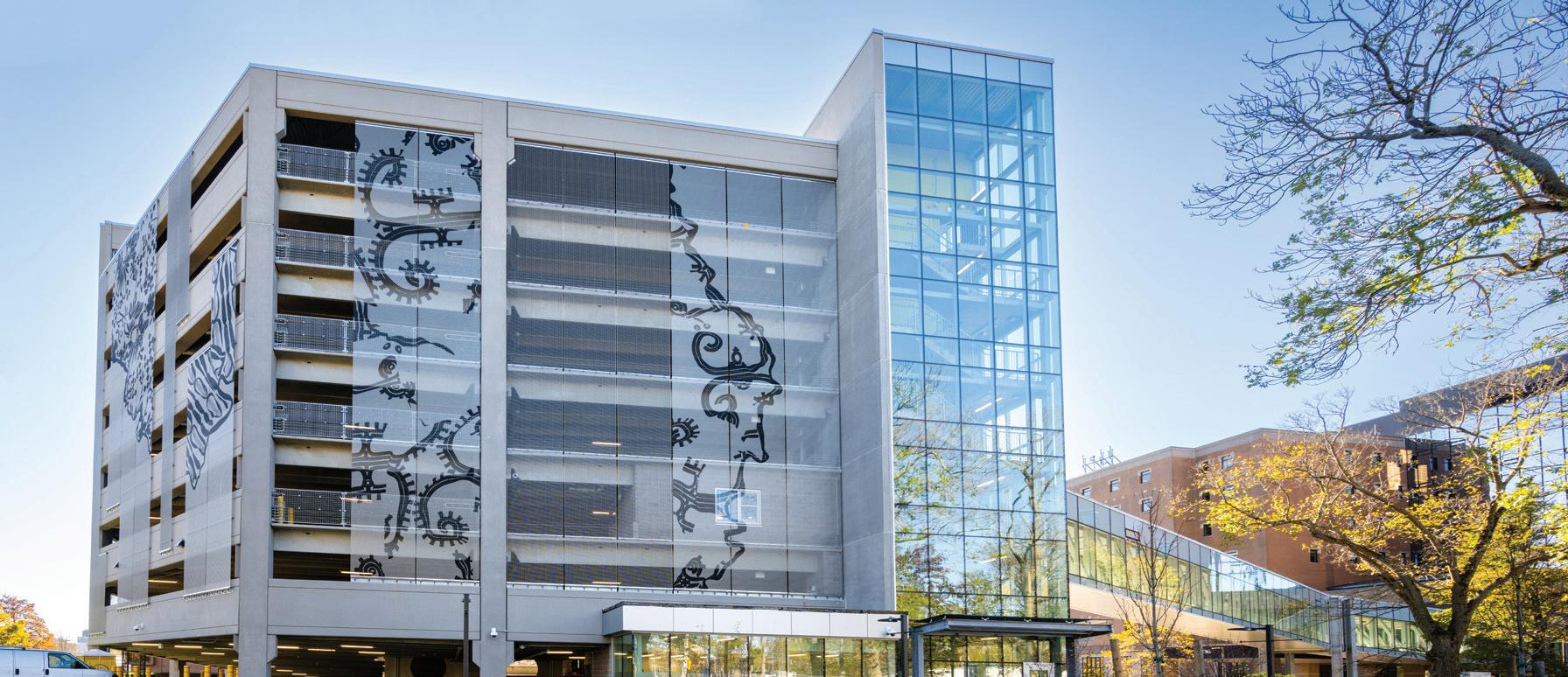
The Canadian Precast Concrete Quality Assurance (CPCQA) Certification Program prequalifies precast concrete manufacturers who fabricate structural, architectural and specialty precast concrete products, including concrete pipe and underground utility and drainage products.
Manufacturers adhere to the CPCQA certification program requirements, and to the applicable requirements of the CSA, PCI, ASTM, and Provincial Standards.
THE CPCQA CERTIFICATION PROGRAM OFFERS KEY BENEFITS TO ARCHITECTS, CONTRACTORS, ENGINEERS, GOVERNMENT AUTHORITIES AND OWNERS.
Endorsed by the Canadian Concrete Pipe and Precast Association (CCPPA) www.ccppa.ca and the Canadian Precast/Prestressed Concrete Institute (CPCI) www.cpci.ca

For more information, scan the QR Code or visit www.precastcertification.ca
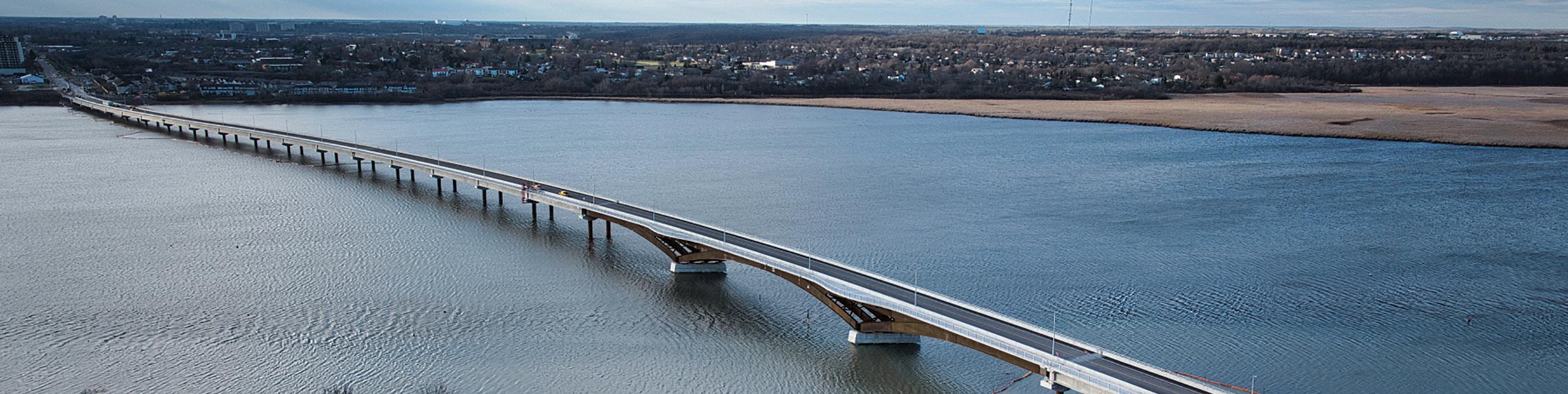
Project: Champagne Quarry Park, Calgary, AB
Architect: Gibbs Gage Architects
CPCQA
Building Solutions, reports that the company continues to be increasingly sought for its D-Max Wall Assembly, which allows the installation of spray foam insulation from the interior of the building while managing the thermal bridging of the studs and the structure.
“D-Max is always gaining in popularity, with many more recent projects all across Québec province,” Duzyk says. “General contractors appreciate the cost and time savings of the assembly, while architects appreciate the simplicity of details, adaptability, durability, and quality of the building envelope. Plus, D-Max is recognized as the easiest path to meeting new energy efficiency requirements.”
Duzyk goes on to note that an increasing number of projects are relying on the Coatlok polyurea product from Huntsman, “specifically underground concrete drainage system protection projects, one of which we completed in 2025.”
Huntsman stayed busy in 2025 supplying products to several Quebec-based schools, including Mirabel Primary in Mirabel, Saint-Pierre School in Ste-Thérèse, Prévost Primary in St-Jérôme, and Salaberry School in Montréal. “Looking at 2026, we anticipate an expansion of D-Max products as well as a greater focus on resiliency, a broad category that includes structural strength, wind uplift resistance, fire and flood resilience, and high wind load resistance,” Duzyk says.
Arguably, no products in the restoration sector are more well-known or innovative than those using Kryton International Inc.’s crystalline
concrete waterproofing technology and durability admixtures. The company recently expanded its commitment to engineers, contractors, and developers in India through a new website. In that market, significant investments continue in metro rail, water and wastewater infrastructure, smart cities,
and commercial development – all of which demand long-lasting, sustainable concrete solutions.
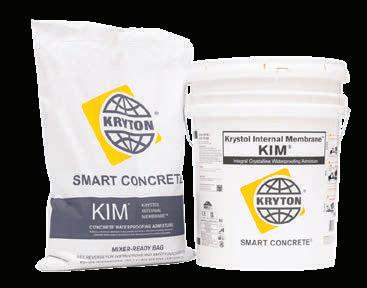
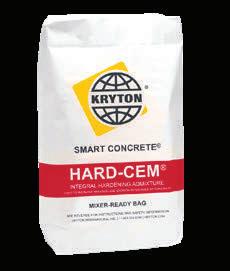
Kryton sales director John Andersen discusses the company’s role in a major local project. “Esquimalt Harbour on Vancouver Island is being restored using products such as our Hard-Cem,” he says. Hard-Cem





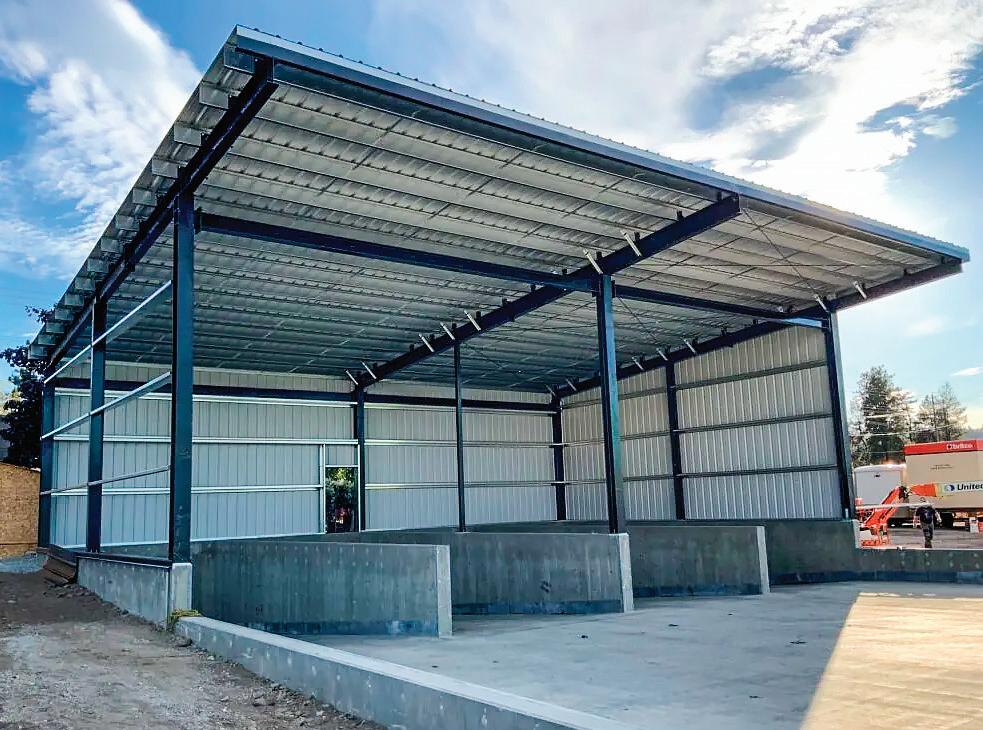
Hard-Cem admixture used for concrete aprons and floor slabs at a waste collection facility.
The Hive
is an admixture with a unique metal-mineral microstructure that is blended directly into concrete. It fortifies existing cement paste, making the concrete more resistant to abrasion and erosion. According to a third party verified EDP, concrete treated with Hard-Cem may have double the wear life of the same untreated concrete, while eliminating the risks associated with conventional hardeners or densifiers.
Andersen adds that the multi-year Esquimalt restoration involves large-scale remediation by the Department of National Defence to remove historical seabed contaminants from nearly 200 years of military and industrial use, alongside major jetty upgrades for the Royal Canadian Navy. “The focus is on capping hot spots while modernizing jetties for future naval needs and creating a healthier marine habitat through careful planning, removal, and monitoring.”
Andersen also reports that Krystol T1 is in use on the Mammoth Lakes Outpost building in California, a 1980s structure that is being completely reimagined after years of neglect and unfortunate modifications. “This client required negative side repair to a CMU wall, and T1 was the only option,” says Andersen. Krystol T1 is a surface-applied crystalline slurry treatment that transforms new or existing concrete into a permanent waterproofing barrier. Unlike other crystalline solutions that react with free lime and eventually deplete over time, Krystol T1 chemically reacts with water and unhydrated cement particles. Any moisture introduced over the lifespan of the concrete will initiate crystallization, ensuring permanent waterproofing protection.

Andersen cites another project outside of Canada benefiting from his company’s technology: “Krystol Repair Grout is currently being used at an airport in Hawaii to restore areas in the basement that are below sea level.” This is another crystalline waterproofing product, which permanently repairs leaking cracks, holes, and joints in concrete, and can also be used to resurface and waterproof defective, damaged, or deteriorating concrete. The grout employs advanced fibre technology and shrinkagecontrolling additives to prevent cracking.
George Ceh, technical sales representative at Euclid Admixture Canada, describes his company as “big on providing solutions to a wide variety of challenges facing buildings and infrastructure due to our harsh climate.”
Euclid Admixture is part of the Euclid Chemical Company, a leading manufacturer of products for the concrete and masonry construction industry in North America, providing products and technologies that include admixtures, fibre, integral colour, shotcrete, grouts, repair mortars, bonding agents, adhesives, coatings, curing and sealing compounds, dry shake hardeners, joint fillers, sealants, densifiers, waterproofing, repair, and other products.
While the solutions are numerous, Ceh points out that, “Four products in particular, with some of them relatively new at three years old, have become go-to products for the restoration market and fulfil LEED requirements.”
The products in question include Eucoweld 2.0, a liquid latex bonding agent for cement-based mortar

repairs and concrete; the Versaspeed line, a rapidhardening, low-shrinkage reinforced repair mortar for horizontal and form-and-pour repairs or for projects requiring a non-breathable coating within hours; Eucorepair V100, a single-component, quicksetting, low-shrinkage repair mortar formulated with unique polymers and fibre reinforcement; and Eucorepair SCC, a single-component, self-consolidating repair mortar that is shrinkage-compensated and polymer- and microfibre-modified. “These products cover a lot of applications, and Eucoweld in particular has quickly become a staple due to its ease of use,” Ceh says.
Finally, products and services of a different kind that are vital to restoration projects come from TuffWrap Canada. This company utilizes over 25 years of experience in providing flexible, temporary barrier and hoarding containment solutions, each of which boasts impressive performance characteristics. For example, TuffWrap EXT doublereinforced exterior walls provide reliable protection without the need for stud framing, and TuffWrap Walls and Doors resist wind gusts up to 72 kilometres per hour.
One of the strengths of TuffWrap is that it maintains a no-subcontractor policy. Only TuffWrap employees work on job sites, which enables the company to deliver uniform safety training and enhanced product knowledge. Plus, the TuffWrap project team customizes applications to fit each job’s requirements when utilizing suspended cover/tarp barriers or interior and exterior protection. A
BUILDING THE FUTURE
world’s largest residential Passive House EnerPHit retrofit


















Canada STRONG
Any sector that achieves success finds itself evolving to meet increasing expectations, and in Canada’s steel buildings industry, customers have not only come to expect durability and architectural elegance, but flexible design choices and ever-faster installation times.
Sandrine Fortier, marketing and communications manager at Honco Group (which consists of Quebec-based companies that specialize in steel processing for the steel building industry, the manufacturing of building products, and the environmental field), cites other trends affecting her company in 2026.
“The market is very active and we continue to be busy, particularly with mining projects up north; but due to economic uncertainty, we’re finding that in general, development decision cycles are taking longer,” Fortier says. “The only thing we can do to help is to offer complete transparency, along with our expertise and a focus on reducing risk for clients wherever possible.”
The second trend pertains to the flexibility of design and installation. “Due partly to increasing code compliance and building performance standards, more and more clients are asking us for turnkey solutions, as opposed to simply providing manufacturing and installation services, and we’re well-equipped to accommodate this need,” Fortier says, adding that the cost difference between providing turnkey instead of clients hiring other contractors is “very reasonable and contributes to the risk reduction they are seeking.”
The steel building industry proves resilient amid on-again, off-again tariff uncertainty
by ROBIN BRUNET
As for expectations of architectural elegance, Fortier stresses that while a significant portion of Honco’s current work is for mining operations in the northern part of the country, “the very same architectural elements we use for sport arenas and community centres in southern locations are easily applied to our industrial projects, to augment facilities that are developed to high performance and engineering standards.”
EXO Construction Group of Surrey, B.C., is an example of a company whose innovative spirit is key to meeting client expectations. Specifically, it has distinguished itself from the norm by developing a prefabricated Structural Steel Insulated Panel (SSIP), which combines structure, insulation, vapour barrier, and exterior finish in a single component. These SSIPs have proven to be a huge advantage in providing customizable solutions to meet the needs of institutional, industrial, and commercial building projects.
The made-in-Surrey panels, along with EXO’s design-build services and construction management expertise in modular building, have led to the company growing its portfolio to include construction projects of all types. The most recent is the commencement of construction on a two-storey classroom expansion at Kitchener Elementary School in Burnaby, for School District 41. Designed by studioHuB architects and delivered under a hybrid progressive design-build approach, this 30,000-square-foot facility blends seamlessly with the school’s heritage-listed building while introducing modern, high-performance learning spaces to fulfill the district’s growing needs.
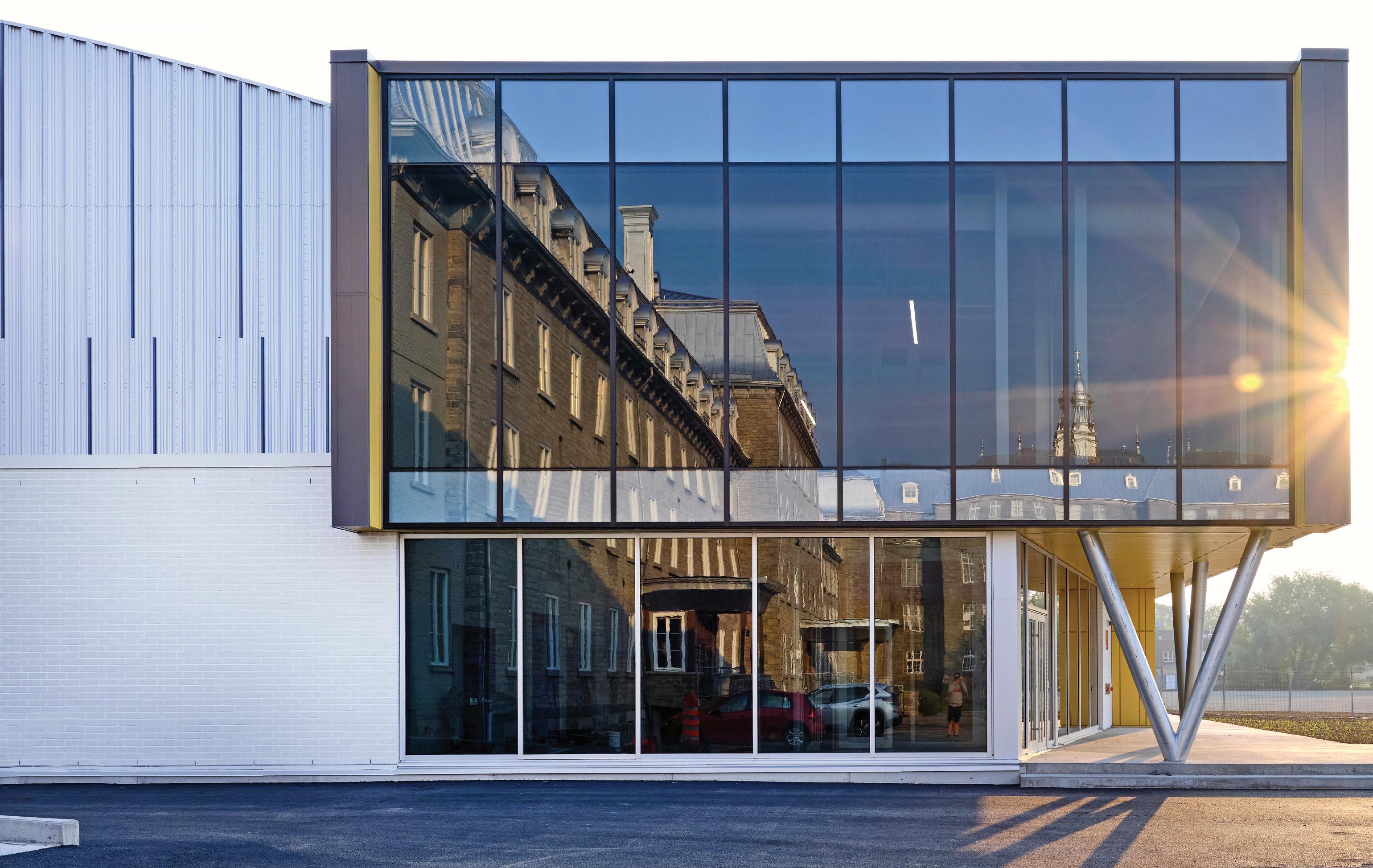
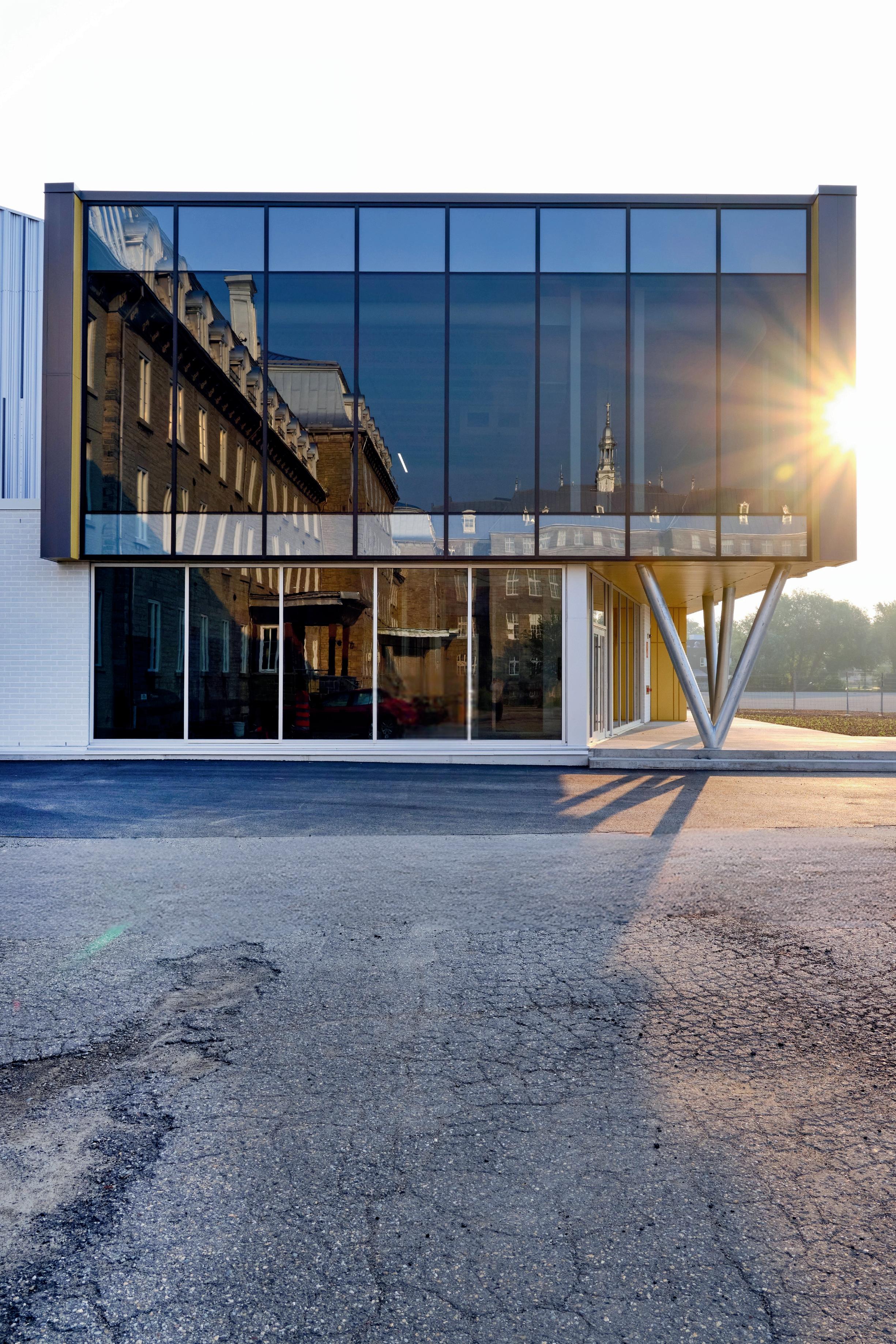
Multisport Desjardins Complex , Levis, QC
The expansion consists of 20 new classrooms, along with office and support spaces in a layout that promotes learning. The project serves as a showcase for EXO’s proprietary Panelized Modular Building System, which utilizes insulated and structural wall and roof panels. These panels, combined, significantly accelerated the completion time of the building envelope, allowing trades to begin their work earlier in the construction process.
Kitchener came on the heels of EXO’s work on the two-storey modular classroom addition at Scott Middle School in Coquitlam, for School District 43. Built on a concrete foundation, this 13,400-square-foot addition features a structural steel frame system with prefabricated SSIPs; as a design-builder, EXO
WHERE STRUCTURE MEETS DESIGN

partnered with DA Architects + Planners from concept to completion to ensure that the School District’s needs were met and the addition would complement the architecture and aesthetic of the existing school.
Brandon Kinley, district sales manager, Western Canada for Nucor Building Systems, reports that his U.S. company faced challenges moving product into Canada in 2025. “In our case, we were hit by the Canadian counter-tariffs to the U.S. tariffs,” he says.
This inspired Kinley to study the tariff situation in depth, “And as a result I learned that some developers had assumptions about the tariffs that were incorrect – such as them affecting engineering and design of steel buildings, when in fact they did not,” he says. “Armed with this information, I was able to rebuild confidence to a certain degree.”
This, in turn, has contributed to a growing sense of optimism for business opportunities this year for Nucor, which is one of North America’s largest and most experienced manufacturers of metal building systems.
Kinley says, “All indications are it will be a fantastic year, with new projects – leaning overall to industrial facilities in the north, along with more intricate projects in which a pre-engineered building is the best solution for the scope of work – and a continuous flow of quotes. It could be that people have gotten used to the tariff-infused market and are moving forward with projects anyway. Certainly, demand is high. And our value proposition is that we’re a steel buildings powerhouse with huge resources, which is what you want when work is voluminous to the degree that local providers could eventually be overwhelmed.”
As steel building manufacturers in 2026 concentrate on improved engineering for wind and snow loads; high-strength, cold-formed steel for improved load performance; and better coatings that resist corrosion, more than ever the case is being made that pre-engineered metal buildings (PEMBs) represent the future of sustainable construction.
This was precisely the message Robertson Building Systems, which has been in operation since 1873, imparted in December in an online think piece whose premise is that in today’s construction landscape, sustainability is no longer optional; it’s imperative.


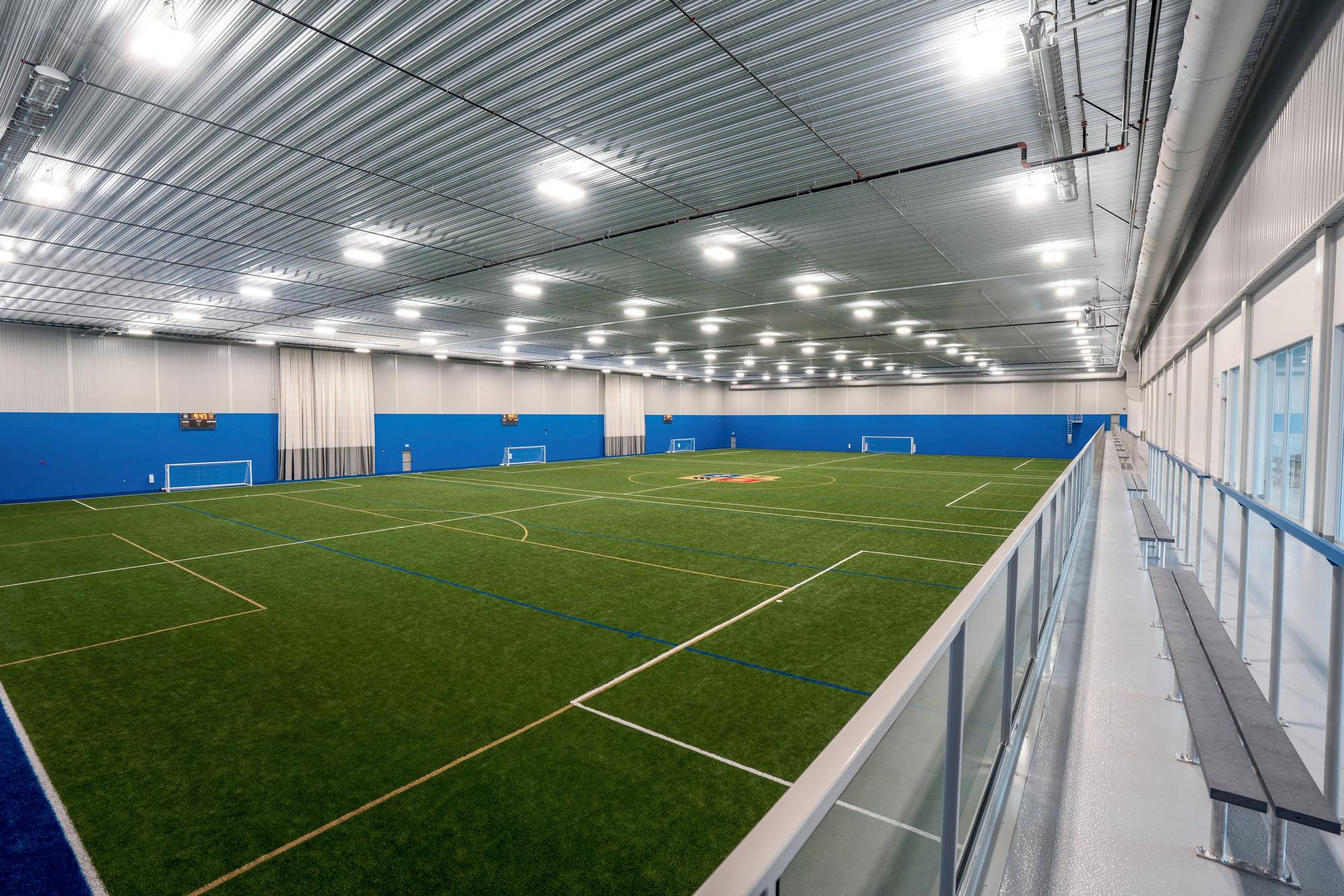
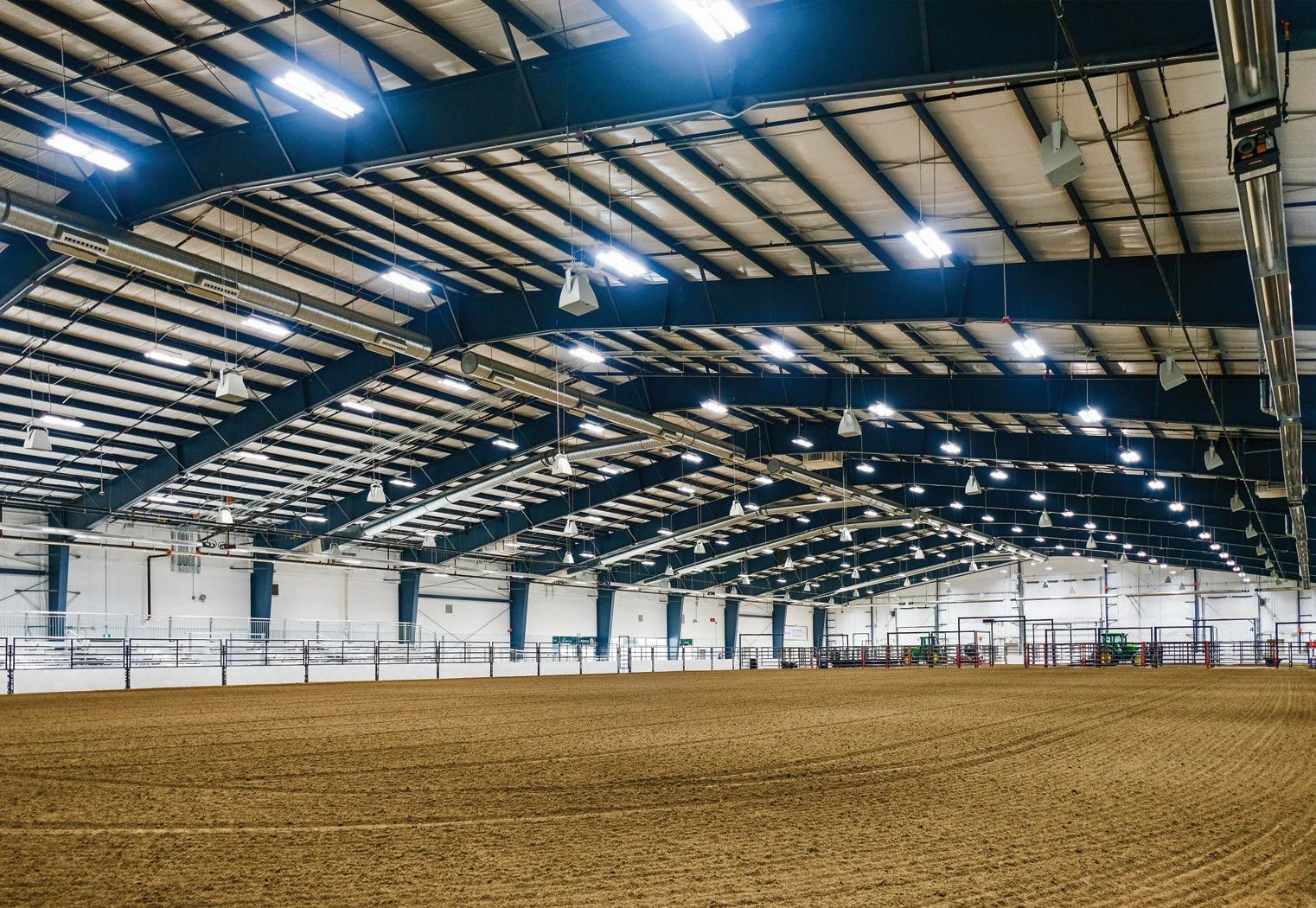
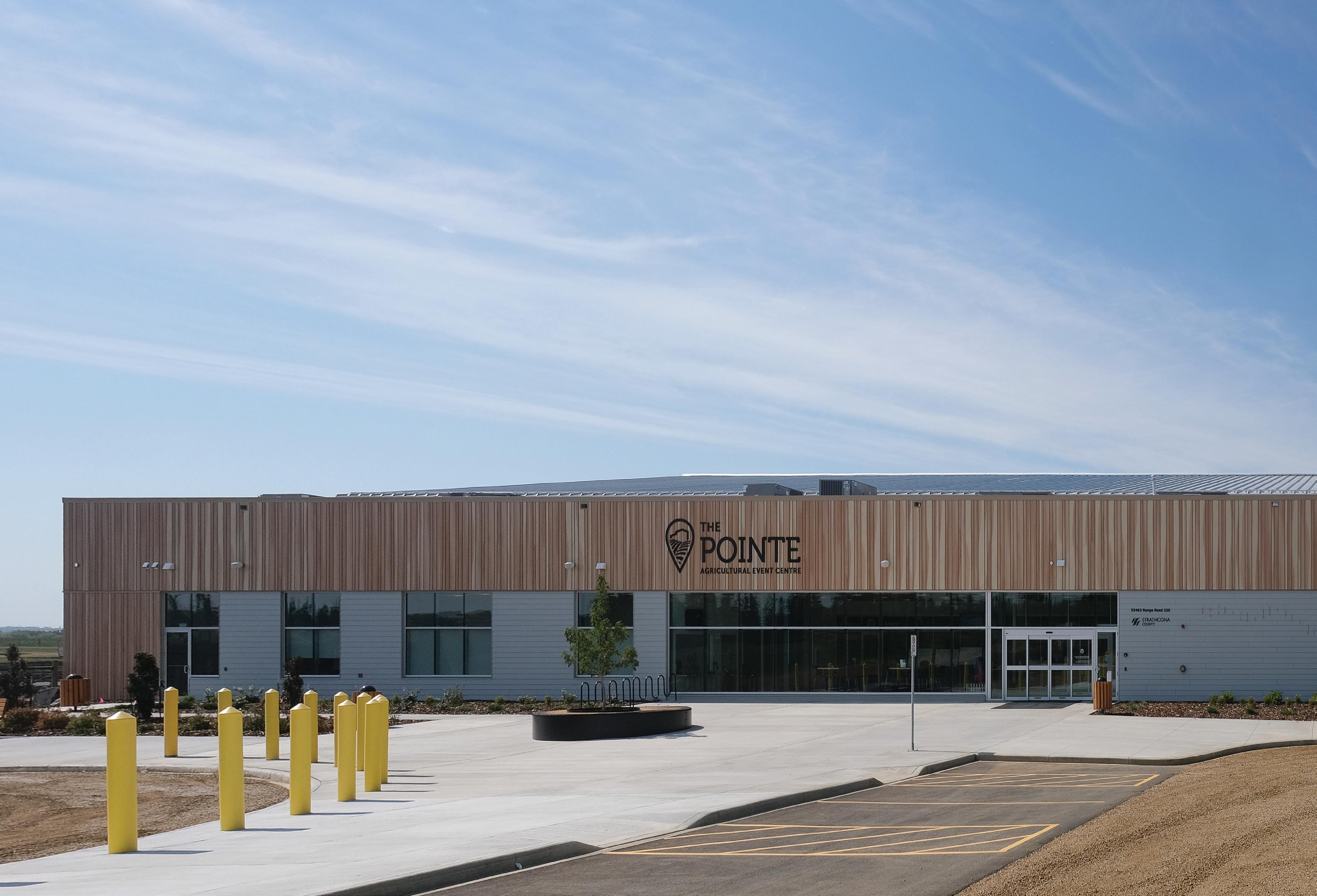
The Pointe Agricultural Event Centre at Pointe-Aux-Pins Acres, Sherwood Park, AB
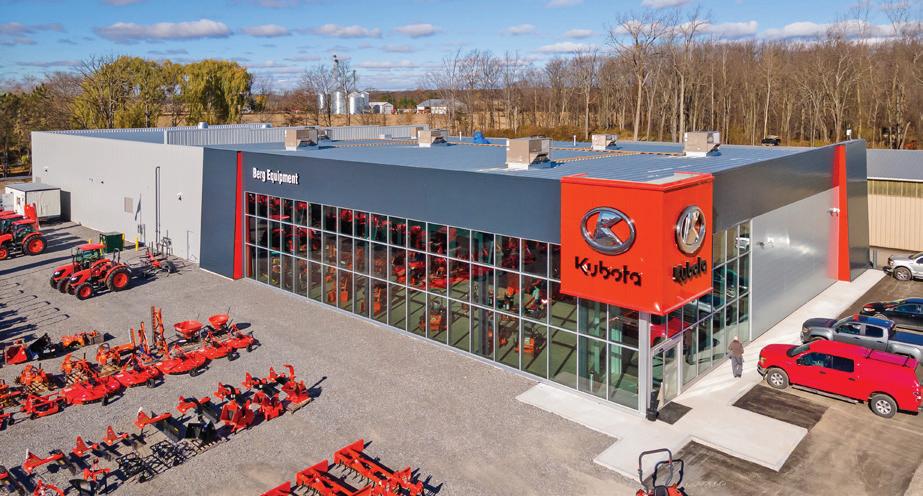
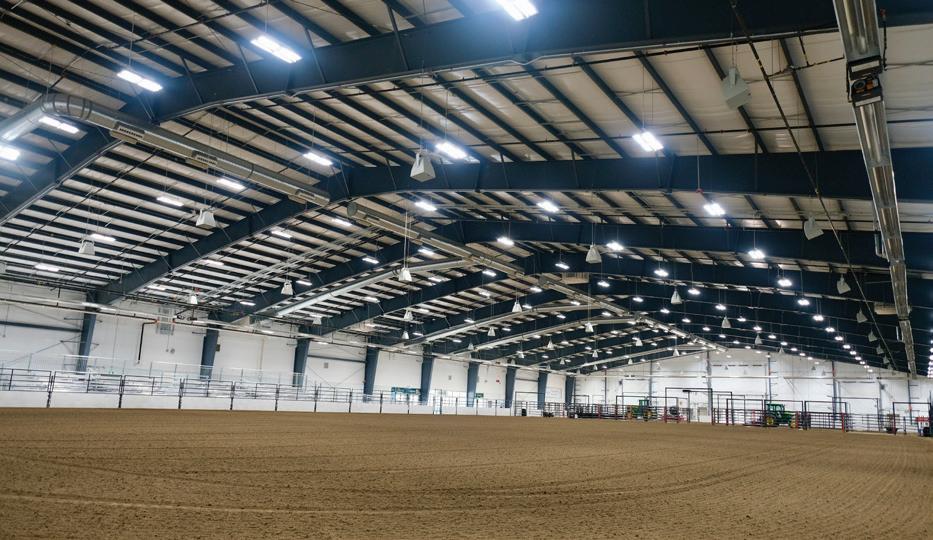
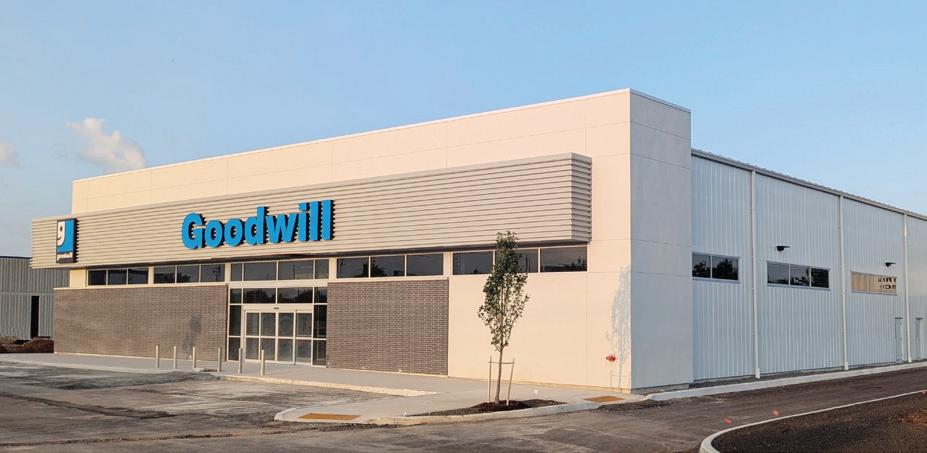
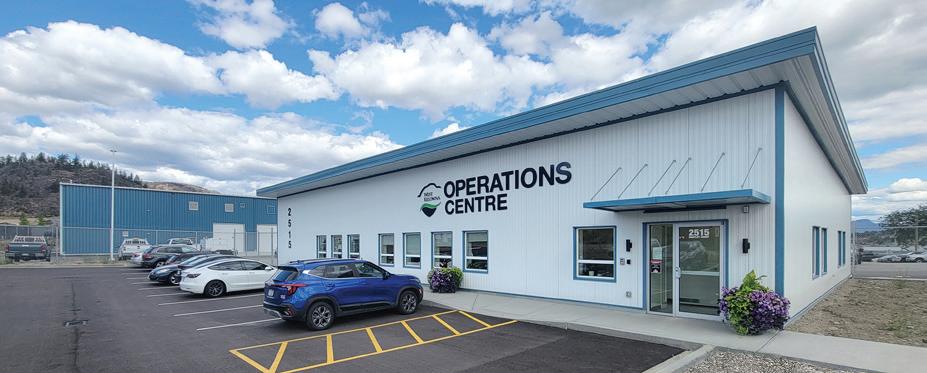
EXPERIENCE THE NUCOR ADVANTAGE
As the construction industry has grown more sophisticated, so has the versatility of custom metal building systems. By adopting advanced tools, practices and products, Nucor Buildings Group actively evolves to meet industry demands. Metal building systems are flexible by design and can be tailored to fit the needs of any market, offering the ability to incorporate energy-efficient products like insulated metal panels and advanced insulation systems alongside architectural elements such as stone and glass.
Whether your building is simple or complex, from a 1-million square foot mega project to a small specialty building, we work together with our Authorized Builder Network to offer products and solutions that bring our customers’ dreams to life.

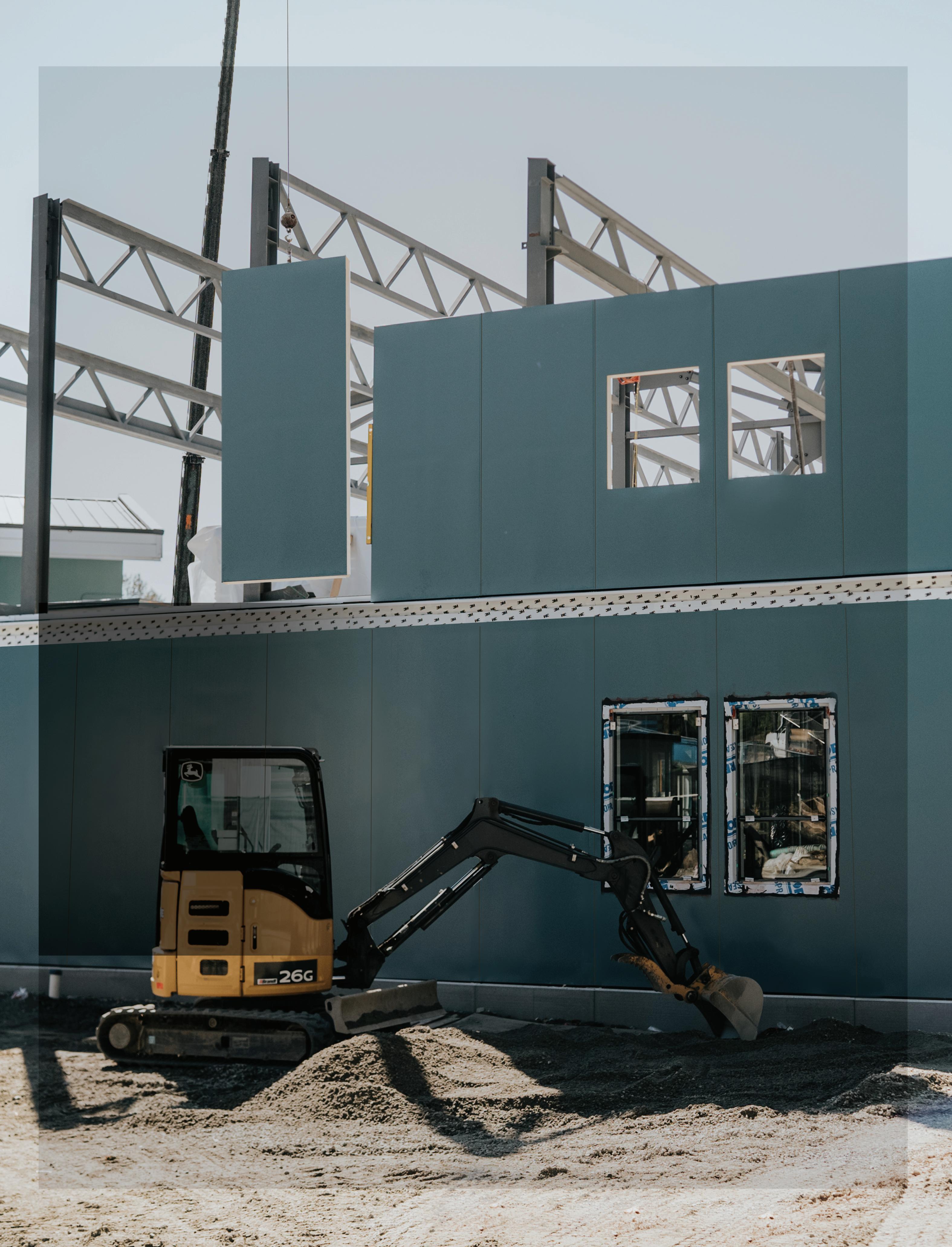
Robertson outlined five reasons why its PEMBs are driving the future of green construction. First is proven energy performance: “Our precision-fabricated systems seamlessly integrate advanced insulation solutions, eliminating thermal bridging and dramatically improving envelope performance. With options for ultra-high R-value panels and cool-roof coatings, Robertson PEMBs help reduce heating and cooling demands.”
Second is the fact that Robertson maximizes the advantage of steel being the most recycled material on the planet: “Every PEMB we deliver contains a high percentage of recycled content, and at the end of its service life [often spanning decades], the entire structure can be recycled without down-cycling. This closed-loop approach drastically reduces reliance on virgin materials, cuts embodied carbon, and keeps valuable resources in use indefinitely.”
The third reason is that unlike traditional site-built projects that can generate up to 15 percent material waste, Robertson’s PEMBs are produced in facilities using digital design and automated manufacturing with every component arriving on site ready for bolt-up assembly. In short: dramatically less scrap, lower fuel use, and cleaner job sites.
Flexibility of design, resiliency, and affordability are among the fourth and fifth reasons why Robertson’s PEMBs represent the future of green construction. Indeed, Robertson’s product assortment includes over 90 variations of metal roof and wall panels; its high-tensile steel panels with Galvalume coatings and specially formulated paints are backed by a 45-year film integrity warranty. Meanwhile, its insulated metal panels create effective thermal barriers, reducing heating and cooling needs in extreme temperatures.
As is the case with so many steel building providers, self-reliance continues to be especially beneficial to business in 2026. “The market’s been wild due to the on-again, off-again pattern of tariffs between the U.S. and Canada, but we enjoyed a very successful 2025 and expect the same this year,” says Sean Lepper, senior vice president at Behlen Industries. “That’s because we rely on an all-Canadian supply chain, and the few odds and ends we need for projects that aren’t Canadian can easily be obtained offshore.
of projects have demonstrated, the wall system can incorporate windows, overhead doors, glass, wood, precast masonry, and cladding materials to provide creative design flexibility.
Behlen’s Rigid Frame buildings offer solutions for complex projects, with appealing building envelope options such as Artspan Insulated Metal Panels that are the trending choice over cladding due to their superior thermal performance. These panels are available in an assortment of profiles and colours for walls and standing seam roofs.
One of the key advantages of Butler Manufacturing is the company’s designbuild approach, which helps streamline the design and construction processes and reduce timelines, and this is especially important in catering to a growing trend of a building type that is ideally suited to metal structures: data centres.
Valued at $3.3 billion in 2025, Canada’s data centre construction market is on pace to reach $5.7 billion by 2030 with an 11 percent CAGR, according to Outpost Recruitment. Alberta is becoming a North American location for such facilities due to land availability and streamlined permitting, while Ontario and Quebec are becoming noted for data centre construction combining green energy and public sector investment.
As a global PEMB leader, Butler’s involvement in this market is considerable: more than two million square feet of the most advanced hyperscale data centre ecosystems in the world today are Butler buildings.
Additionally, the company has established a centralized program management for the construction of data centres: this ensures greater continuity, consistency, and design standardization, and the repeatability of its data centre construction program is crucial to meeting the pace of market growth.
Butler considers applying design-build to the construction of data centres a logical approach, because when the manufacturing process is design-driven,
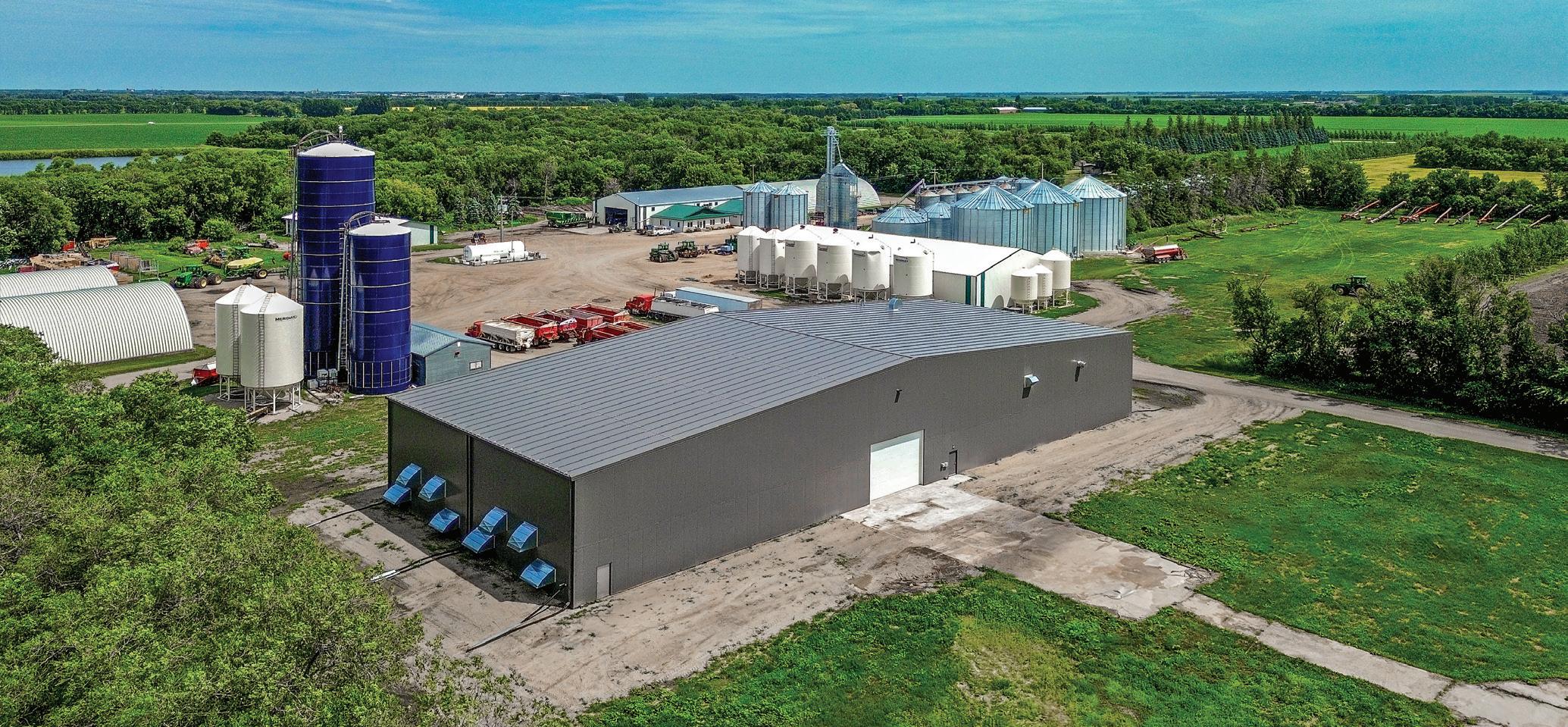
“We’re not totally immune: our Quonset buildings for agricultural use targeted at the U.S. market got hit by tariffs, but this is only a small portion of our revenue. We’re involved with a huge number of mines across Canada, a sector that is really taking off in 2026. We’re currently building a few big hangars in Vancouver as well as other structures, and the work is so voluminous that even in December of last year, we were booking all the way into May of 2026.”
Lepper credits Ottawa for supporting industrial projects in Canada as well as for legislation such as Bill C-5, which enacts free trade and labour mobility in the Building Canada Act. “What with the tariffs causing a renewed surge of ‘Buy Canadian’ sentiment that seems to be gaining strength instead of diminishing, maybe we’re finally realizing our potential as a country,” he says, adding that his company continues to get inquiries for two key products: Frameless and Rigid Frame building systems.
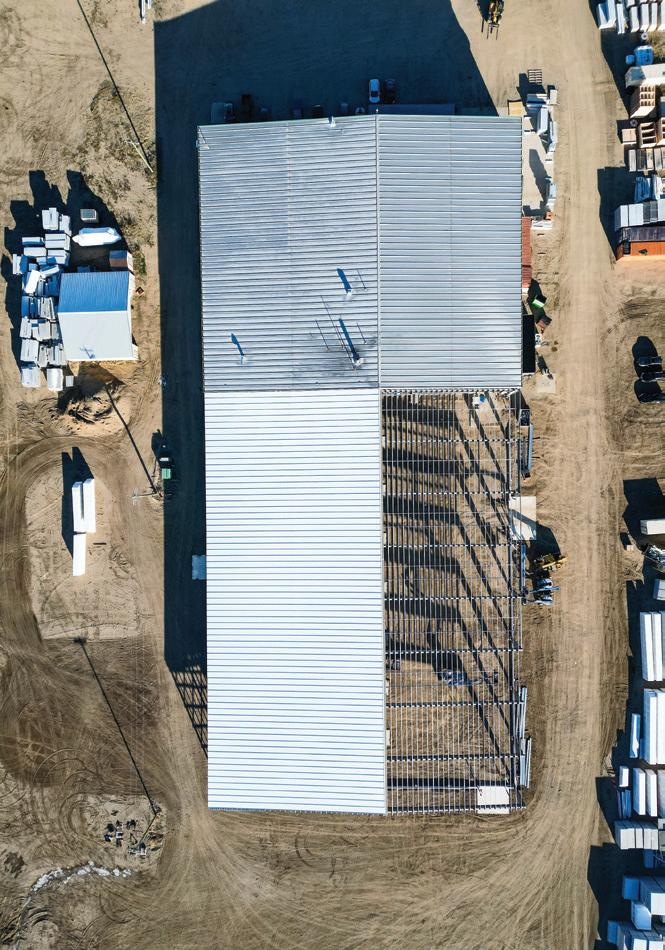
For the former, the entire building is manufactured from heavy gauge engineered panel (galvanized, Galvalume, or stainless steel, depending on the requirements) with an exclusive roll formed corrugation process that provides the structural integrity. The wall system uniformly transfers the load to the foundation, thus eliminating expensive heavy foundations, piers, and piles. As hundreds
it provides maximum flexibility, transparency of costs, and allows for valueengineering enhancements, all while simplifying the supply chain.
In a blog post, Butler states: “While we have found ways to simplify and repeat data centre construction, it is important to understand that these are not cookie-cutter solutions. Each client comes with a unique set of requirements that we assess and enhance when possible. That’s why we approach each project with an open mind and a range of options, including pre-engineered building systems or conventionally designed structures. Sometimes, the best answer is a hybrid solution using both methods.”
Butler’s well-known products are at the heart of every successful project, including the MR-24 roof system (said to be the industry’s most specified metal roof) combined with Butler’s engineered wall systems (which come in a variety of styles, from flat and fluted to walls with a stucco-like appearance).
Last but hardly least, Butler owns the industry’s only Guarded Hot Box, which it uses to test actual eight- by 10-foot roof or wall sections, assembled to the specifications of the project. This provides extremely accurate estimates of the building’s heating and cooling energy consumption and allows the company to specify the correct size HVAC units for maximum energy efficiency. A
Hespler Farms Potato Storage Facility, Winkler, MB
Manufacturing facility expansion, Brandon, MB


Windows have always received strong focus from builders and designers for their vital role in contributing to soundproofing, energy efficiency, and aesthetic possibilities, and of late, that focus has intensified, much to the benefit of Canadian manufacturers and suppliers.
A major reason for this is the U.S. tariffs imposed upon Canada. Winnipeg-based Silex Windows and Doors stresses to its clients that specifying Canadianmade fibreglass windows isn’t just about patriotism, it also mitigates risk and protects budgets from tariff shock. Plus, border delays aren’t an issue.
Silex in particular is a trusted source of fibreglass windows and doors, both in the commercial and residential sectors across Canada. Its pultrusion manufacturing process creates a product with lower embodied carbon (compared to aluminum systems) and has contributed to the company publishing a third-partyverified Environmental Product Declaration (EPD).
The U.S./Canada trade war has inspired the company to become especially bullish about its products, and the focus on Canadian-made has given it a good platform upon which to discuss the advantages of fibreglass over aluminum. “In this era of net-zero and Passive House standards, aluminum’s high
ReflectingOn Trends
From design to durability, Canadian window offerings continue to raise the bar
by ROBIN BRUNET
thermal conductivity is a liability,” Silex notes. “Even with thermal breaks, aluminum conducts heat at a rate significantly higher than composite materials.”
By contrast, fibreglass expands and contracts at nearly the same rate as the glass it holds. This reduces seal failure and stress cracks, common issues in Canada’s extreme freeze-thaw cycles. Plus, it has been estimated that fibreglass is 500 times less thermally conductive than aluminum.
Additionally, the performance of Silex’s VisionPlus fibreglass profiles compares favourably to that of other materials. They are roughly eight times stronger than vinyl and rival aluminum’s structural integrity. “This allows us to engineer large window and door openings using fibreglass with razor-thin sightlines. You get the sleek, continuous look of a curtain wall with the cost efficiency and ease of installation of a window wall.”
Michael Bousfield, technical director at Langley, B.C.-based Cascadia Windows & Doors, is also a strong supporter of the benefits of fibreglass window systems. In his case, he gained a renewed appreciation for the material’s resiliency when his company participated in an RDH Building Science engineering study for best practices in wildfires.
He explains, “Windows are a specific vulnerability during wildfires and their failure is the main reason why entire homes burn to the ground. So, in the spring of 2025 we participated in the test, which consisted of a sample wall built inside an outdoor non-combustible hut; the sample wall was set ablaze with a propane-fuelled burner located under the sill.
“Various window systems, including our Universal Series fibreglass products, were subjected to a series of fires that each lasted eight minutes at full intensity. Vinyl frame products quickly melted
Fibreglass windows from Silex Windows and Doors.
Dare to Accelerate Change
BUILDEX



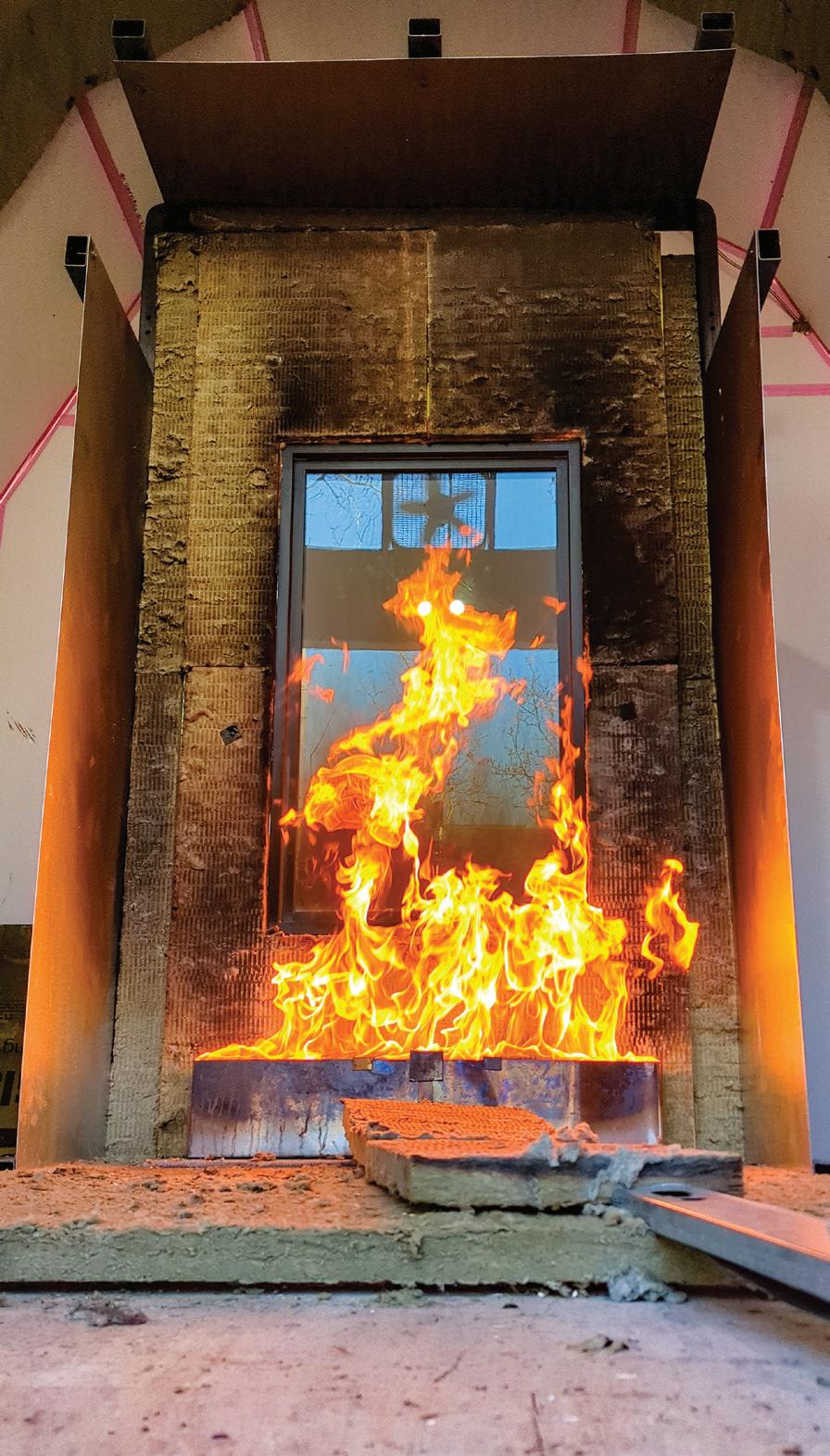
and the windows collapsed, but our windows withstood the heat extremely well, and this led us to tweak our existing product line by way of joinery improvements, replacing plastic mesh with aluminum, and other changes. The result is our Wildfire Resistant Window line, which is only about three percent more expensive than our standard line.”
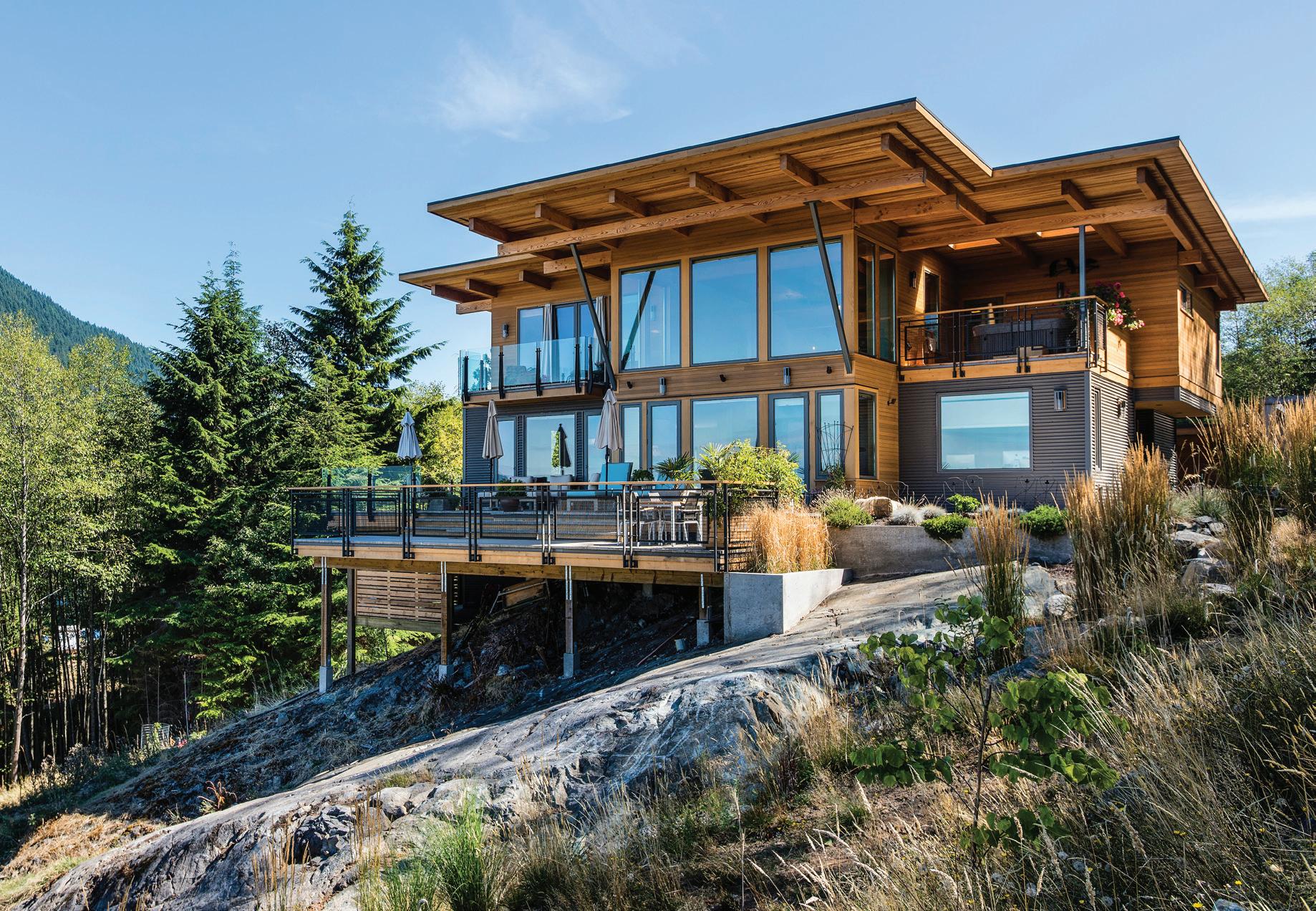
Withstanding wildfires is another example of how Cascadia has, for the past decade, led the high-performance fenestration sector, on the heels of its products improving the thermal performance and energy efficiency of buildings by up to 250 percent (in the case of its commercial-grade fibreglass frames).
Cascadia is the first and only Canadian window manufacturer to have passed wildfire exposure testing, and this is significant to the home building sector because as wildfires increase in severity (Canada’s 2023 wildfire season burned nearly 18 million hectares of land, exceeding the 10-year national average), architects, engineers, and builders are under growing pressure to design structures that have a better chance of surviving new extremes. “B.C., like California, has updated its building codes and guidelines to prioritize wildfire resilience,” Bousfield says. “A particular focus is development in Wildland-Urban Interface zones where housing meets natural vegetation and where building materials and design choices matter the most.”
At Edmonton-based All Weather Group, vice president of marketing Tracy Nadiger reports that while the tariffs contributed to a slow start to 2025, “business picked up and we had quite a strong year, finishing close to budget.” Nadiger predicts this year will see hot spots being Calgary and Saskatoon and the renovation market picking up.
All Weather is also bullish about a new product to the market, the quad pane advanced IGU, which uses a new type of glass technology called fusion
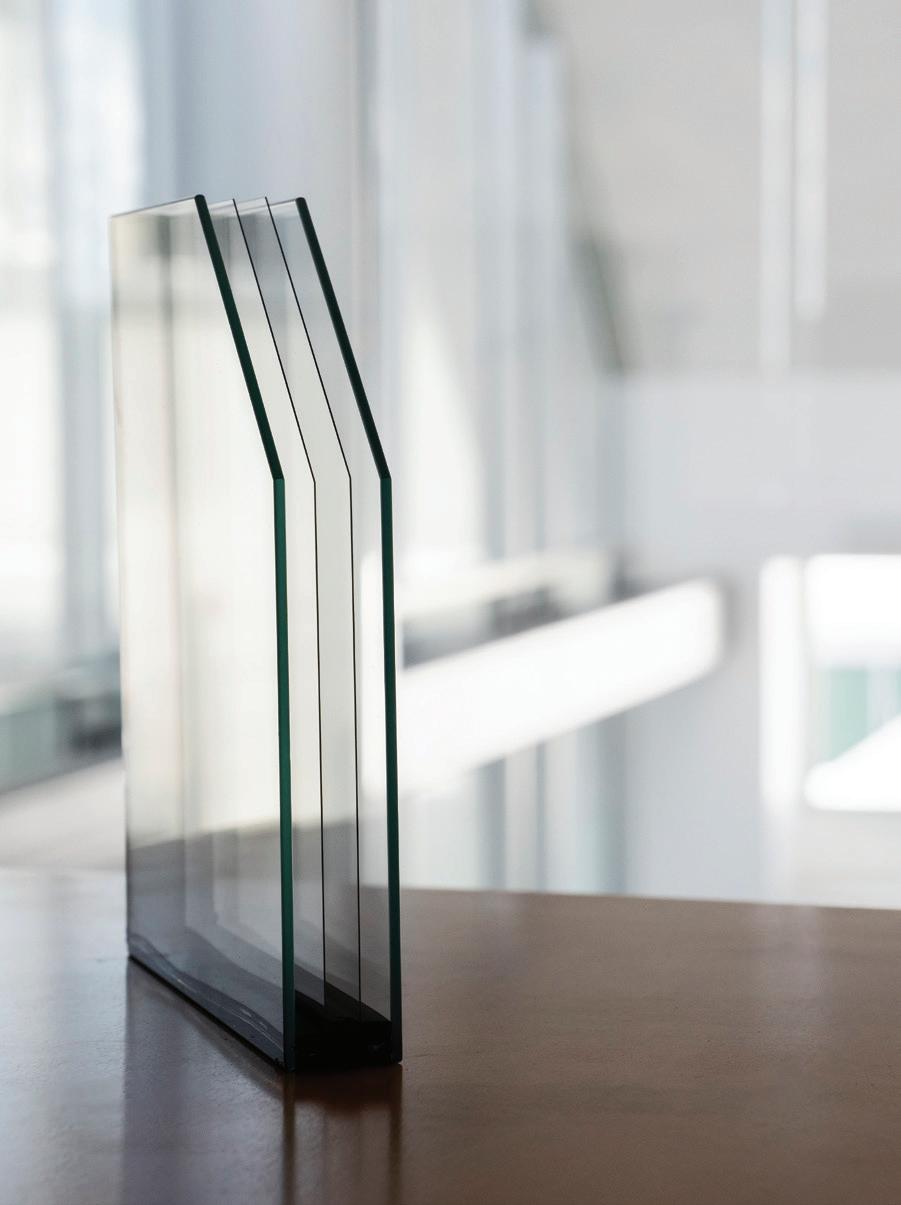
glass (similar to that used in cell phones). “We are running a pilot program with Corning to use 0.5 mm glass as the two centre lites in a quad pane window,” Nadiger says. “The energy efficiency of the quad pane with two coats of low-E on the regular 3 mm glass – the two outboard glass lites – will be equal to a regular triple pane with two low-E coatings, but the weight reduction will be 28 percent.
“We are working with our partners to develop the ability to apply low-E coating on the 0.5 mm glass, and once that is in place we’ll be seeing performance in the R12 range.”
For over 35 years, Delta, B.C.-based Vinyltek has pushed the boundaries of vinyl window resiliency. Through Canadian uPVC extrusion leader P.H. Tech, it produced the first vinyl window (the Boreal series) to pass Miami-Dade impact structural and cyclic pressure tests.
Vinyltek’s dedication to quality recently resulted in a new offering that is visually striking and suitable for both residential and commercial applications: obscured glass options that range from a sand blast texture to a rain effect, as well as Cross Reed (a square pattern) and other styles that enhance privacy and provide a tactile visual flair.
Viewmax Windows and Doors Ltd. of Concord, Ontario, is yet another company that can lay claim to pushing the boundaries of window and door technology, to the point where it holds over 100 patents and four software copyrights related to its ultrahigh-performance products.
Of late, Viewmax has focused on something every homeowner – whether in urban, suburban, or even rural regions – would like less of: external sounds. Its solution is European soundproof windows, whose multi-chamber frames and triple glazing alone dramatically reduce unwanted noise. Insulated spacers help regulate temperature and prevent vibrations that transmit sound, and airtight compression seals eliminate sound leakage around the frame.
The result is a system that can reduce external noise, such as that produced by nearby train tracks or busy roads, by as much as 90 percent compared to lower-quality windows. This makes Viewmax’s European soundproof windows ideal for downtown residences, homes near airports, or custom-built luxury homes and cottages whose investors expect a high degree of comfort and peace.
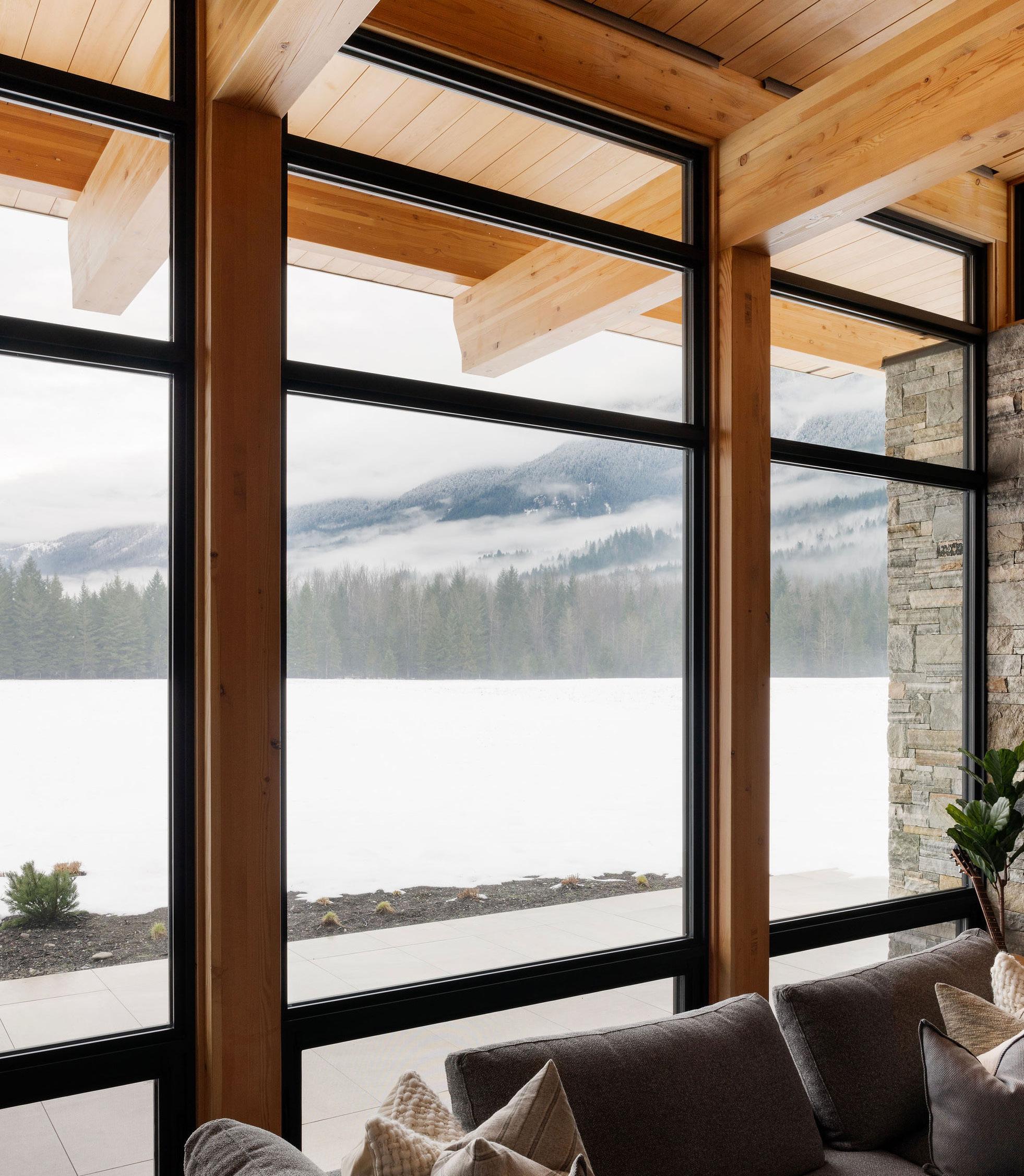
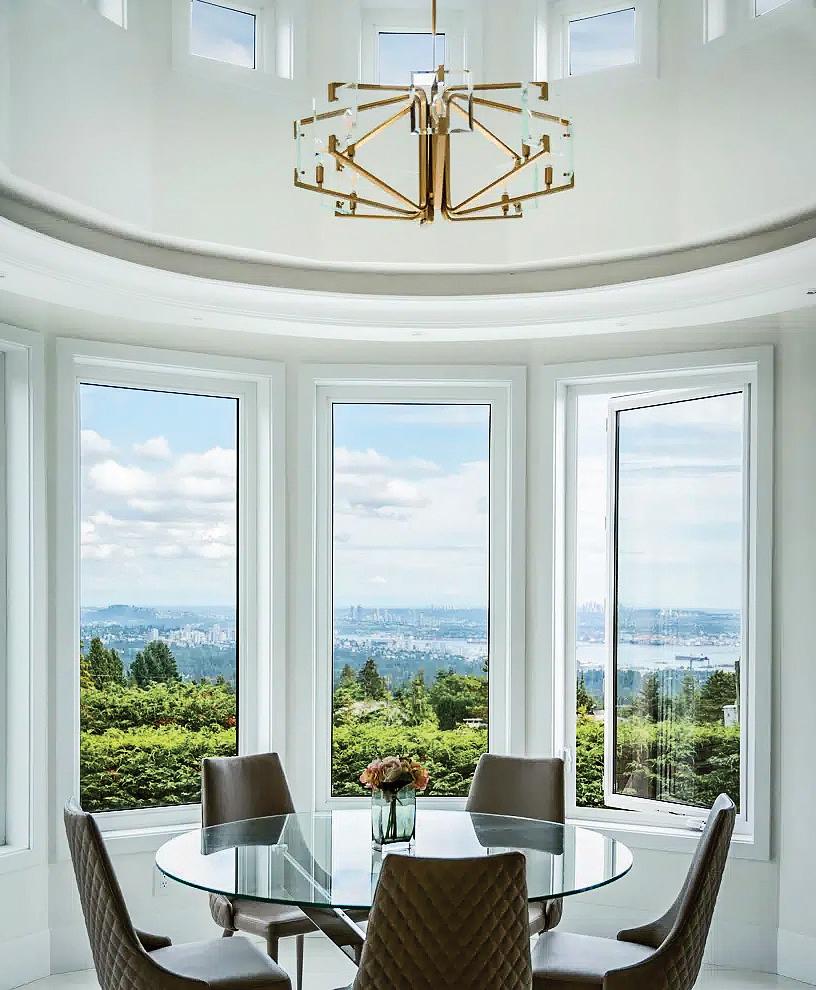
Meanwhile, B.C.-based Varsa Windows & Doors, which was established in 2006, takes a different approach to providing its high-end clients with quality. “Our beautiful aluminum windows are made by third-generation glazers in Greece and shipped here,” says sales development manager Jag Cheema, adding that buying directly from the manufacturer means no price markups or warranty issues.
The main advantage of sourcing from Greece is that Varsa provides oversized window heights and sizes that other companies can’t match, “and this seems to be a growing demand in Canada, especially for new upscale home development where 13-foothigh glazing is not uncommon,” Cheema says.
Wildfire Resistant Window line from Cascadia Windows & Doors undergoes testing in an RDH Building Science engineering study.
Cascadia is the first and only Canadian window manufacturer to have passed wildfire exposure testing.
Cutaway of the quad pane advanced IGU from All Weather Group.

Cheema goes on to note that Varsa’s goal is to be “the Ferrari of the window industry in terms of product as well as service.” To that end, the company’s in-house engineering team turns around shop drawings quickly, answers technical questions fast, and co-ordinates smoothly with production and installation (this means fewer delays and surprises). “We also have an in-house insulation team with Red Seal glazers who ensure the proper performance of each window system,” Cheema says.
Consequently, Varsa has forged strong relationships in the custom home, multi-family, and large-scale commercial sectors. Currently, it is supplying all the windows for the new Westrich Bay waterfront community in West Kelowna as well as participating in the renovation of the Sandman Suites in Vancouver. It also recently supplied windows for the 106,000-square-foot student housing commons at North Island College for client Urban One Builders.
Better still, 2026 is shaping up to be a year of equally high demand. “With a brand-new showroom in South Surrey and expansion of our presence in Kelowna, we expect this year to be an exciting one,” Cheema says.
As with any building product provider, mergers and acquisitions often lead to opportunities for new product development and benefits for end users. Such is the case with Marvin Canada, which, as part of the 100-year-old-plus Marvin Windows and Doors (rebranded simply as Marvin in 2019), enjoyed status as an award-winning manufacturer of beautifully designed, quality products.
As of December 1, Marvin Canada transitioned its operations in Toronto and Montreal to the experienced team at Ultimate Windows, Doors, & More, whose website declares the company to be the exclusive Marvin dealer in Eastern Canada.
In addition to Marvin, Ultimate Windows, Doors, & More partners with Trustile, Extreme Windows and Doors, NanaWall, Mastergrain to provide carefully curated solutions for a wide range of construction projects. “Our relationship with Marvin dates back to the 1980s and they’re our largest supplier of high-quality windows and doors,” says owner Nicholas Jay. “Although this acquisition has been in the works for some time, the company will continue to retain its manufacturing and corporate facilities, and we’re both excited by the prospect of expanding our markets in 2026.”
Without disclosing details, Jean Marc Soucisse, regional sales manager at Marvin Canada, says, “The acquisition is extremely good news for us. We’ll have better offerings on the market and be more agile, as clients will discover this year.”
Davyd Funk, president and CEO of Delta, B.C.-based EuroLine Windows Inc., and his team are also anticipating an exciting year with some breakthrough products.
Founded in 1993, EuroLine has carved out a unique position in the window sector with its Europeanstyle, high-performance uPVC window systems, and Funk has gone on record stating that his goal in developing his company was to “bring European technology to Canada because we saw the gap in the market for superior products.”
EuroLine’s development was aided greatly by a partnership with aluplast, a global leader in window systems famous for its innovation and strong customer relationships.
As 2025 draws to a close, Funk says, “In early 2026, we will be launching a new casement window to the market. It was co-developed with aluplast and we are very excited because the window will provide improved thermal performance – in fact, the best in North America with a similar glass package. It will also be available in a dark base colour sure to appeal to discerning consumers looking for a specific aesthetic.
“The new casement window is extruded in Germany, which is rare for a North American fenestration system, and its thick outer walls, which are common of premium systems, will provide strength and allow the manufacture of best-in-class sizes.”
Alfred Jury, business development manager at EuroLine and its Certified Passive House Consultant, adds as a teaser, “We are also in the final stages of certification of a completely new Passive House window and door system that will be launched in 2026. This will be a busy and exciting new year for us.” A
Honor Your Design. Rely on the Right Fire Safety.
Satisfy safety regulations and reward your creativity with Aluflam, the key system featuring true extruded aluminum vision doors, windows and glazed walls, fired-rated for up to 120 minutes.
Aluflam products are indistinguishable from non-fire-rated doors and windows and are available in a wide portfolio of most architectural finishes.
Casement windows from EuroLine.
CONFIDENCE WITH PAINT SPECIFY
Master



LIVING COLOUR
Paint and coatings chase a richer palette while pushing the boundaries
by NATALIE BRUCKNER
As a 100 percent Canadian, family-owned company since 1933, Cloverdale Paint has long been a trusted name in colour and design. Trish Picariello, the company’s Colour Specification and Design Specialist, says the last few years have marked a major shift in how Canadians use colour, and that we are now entering a really exciting time for trends. “The grey trend that came before COVID stayed on far too long and we became very weary of it,” she explains. After a brief move into stark black and white contrasts, homeowners began gravitating toward warmth again. “All of a sudden we started to see whites turning creamier and warmth coming back. Brown really took hold. I always say brown is the hug we all needed.”
Now, richer, more saturated tones are emerging to reflect our changing mood. Cloverdale’s 2026 Colour of the Year, DaySpa Blue, embodies that shift. “DaySpa makes a statement, but it doesn’t overwhelm,” Picariello says. “We chose it because it feels comforting, yet it works in all kinds of environments: indoors, outdoors, with neutrals, and even with other deeply saturated colours like rich reds, browns, and that popular sunstone and terracotta base. It really plays well with many things.”
To complement DaySpa Blue, Cloverdale has developed three additional trend palettes for 2026. The first features mineral-inspired neutrals, such as travertine, to help ease the transition. The second is a warm heritage palette with terracotta, sunstone, deep greens like Wingman, and the versatile red Picante. The third introduces soft, clean pastels, reflecting “a rising appetite for gentle, natural colour,” Picariello says.
“We’re going to see brighter colours emerging as the year progresses, but in subtle ways, through texture, accents, pillows, not necessarily painting a whole room chartreuse,” Picariello adds. “We are entering a fun time, and what better way to play than with paint.”
Cloverdale’s palettes show how homeowners are embracing warmth, comfort, and richer hues, but colour trends in 2026 are not limited to cozy interiors. Across the country, designers are turning to nature-inspired greens to bring a sense of grounding and optimism into homes. Dulux in Canada, which now comes under the CIL banner, is seeing green pastures ahead for 2026 with the unveiling of Pine Forest (DLX1134-7) as its 2026 Canadian Colour of the Year. This marks the first time the brand has identified a distinct Canadian rather than global forecast for the year’s most popular colour.
“Canadian patriotism is at an all-time high, so we thought it only fitting as a Proudly Canadian brand to identify a colour of the year that best reflects Canadian sentiments and directions,” says Mitsu Dhawan, marketing director for Dulux.
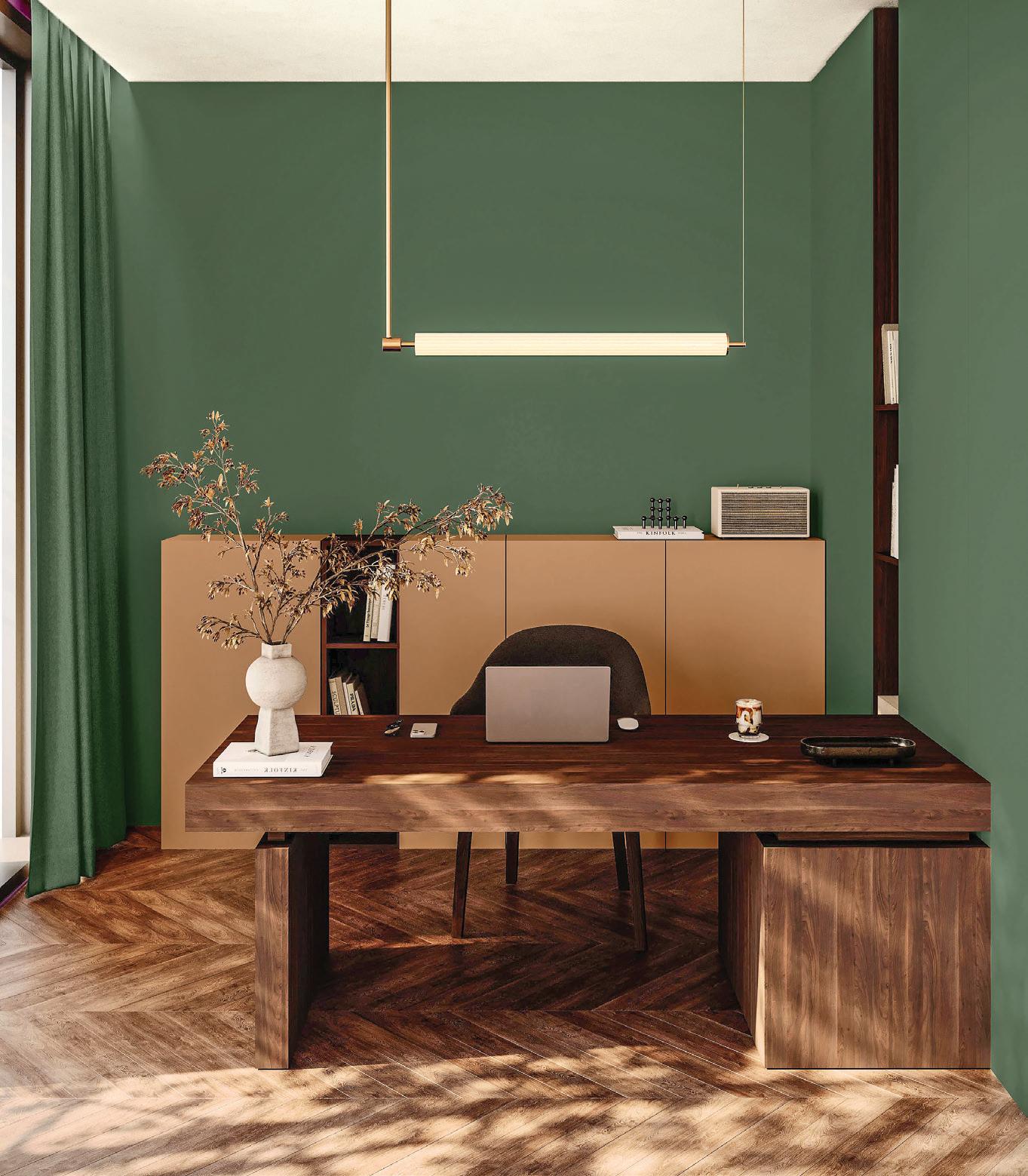
“Pine Forest is a grounding, serene evergreen tone, rooted in the resilient spirit of the forest, and emanating a sense of optimism, strength, and renewal,” Dhawan says. “With about 40 percent of Canada’s geography covered in forests, green shades are truly representative of our country and are on the cusp of becoming a sustainable and enduring trend in home decor.”
Pine Forest works well in any room and with a range of colours and textures. To incorporate the new green into your home, Dhawan suggests painting an accent wall with deep green as a rich backdrop for calming, warm mid-tones like soft gold (such as Dulux’s Welcome Home DLX1092-5), rose (such as Dulux’s Just Gorgeous DLX1047-3), or sand (such as Dulux’s Blank Canvas DLX1085-1), infusing the space with a classic yet cozy feel.
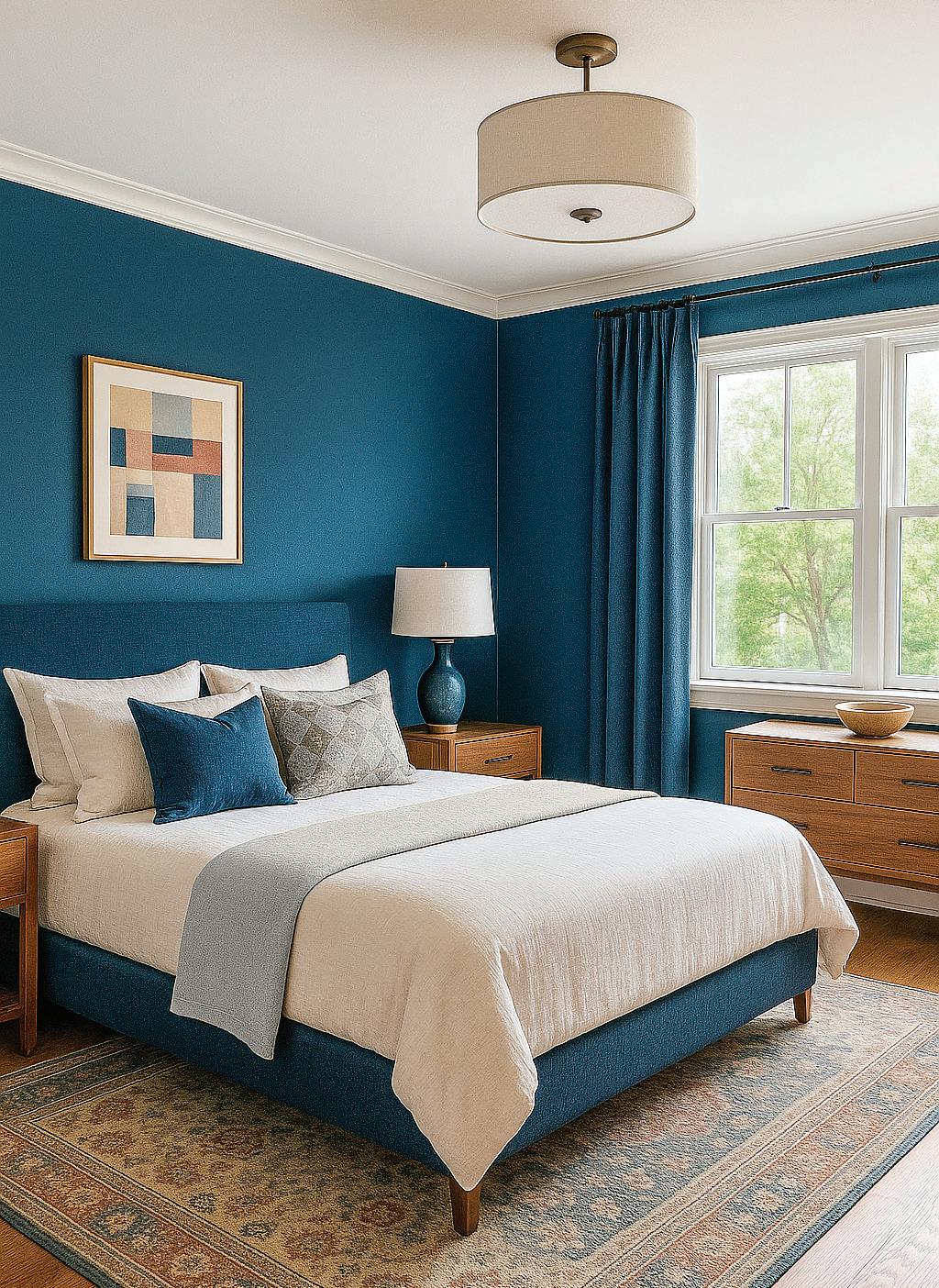
DaySpa Blue from Cloverdale Paint.
Pine Forest from Dulux Paints / CIL.
For a modern take on a nature-inspired green colour scheme, add elements of black – whether in furniture, accent pieces, frames or lighting fixtures – to add style and sophistication.
While Pine Forest draws on the serenity and resilience of Canada’s forests, Sherwin-Williams’ 2026 Colour of the Year, Universal Khaki, reflects a different kind of grounding: one rooted in simplicity, functionality, and timeless elegance. A midtone neutral from the Classic/Complex palette in Colormix Forecast: Anthology Volume Two, it celebrates the beauty of the bare essentials, offering timeless functionality, nature-inspired warmth, and quietly layered elegance.
This choice reflects a shared vision for the year ahead, signalling the hues that will shape homes and spaces nationwide. “There is something enduring about khaki; it bridges the past and future in a way that feels both familiar and forwardthinking,” says Sue Wadden, trendsight team colour strategist and director of colour marketing. “Historically, khaki dates to the mid-19th century. Its name comes from a Persian word meaning ‘dust’ or ‘earth,’ a nod to its natural roots.”
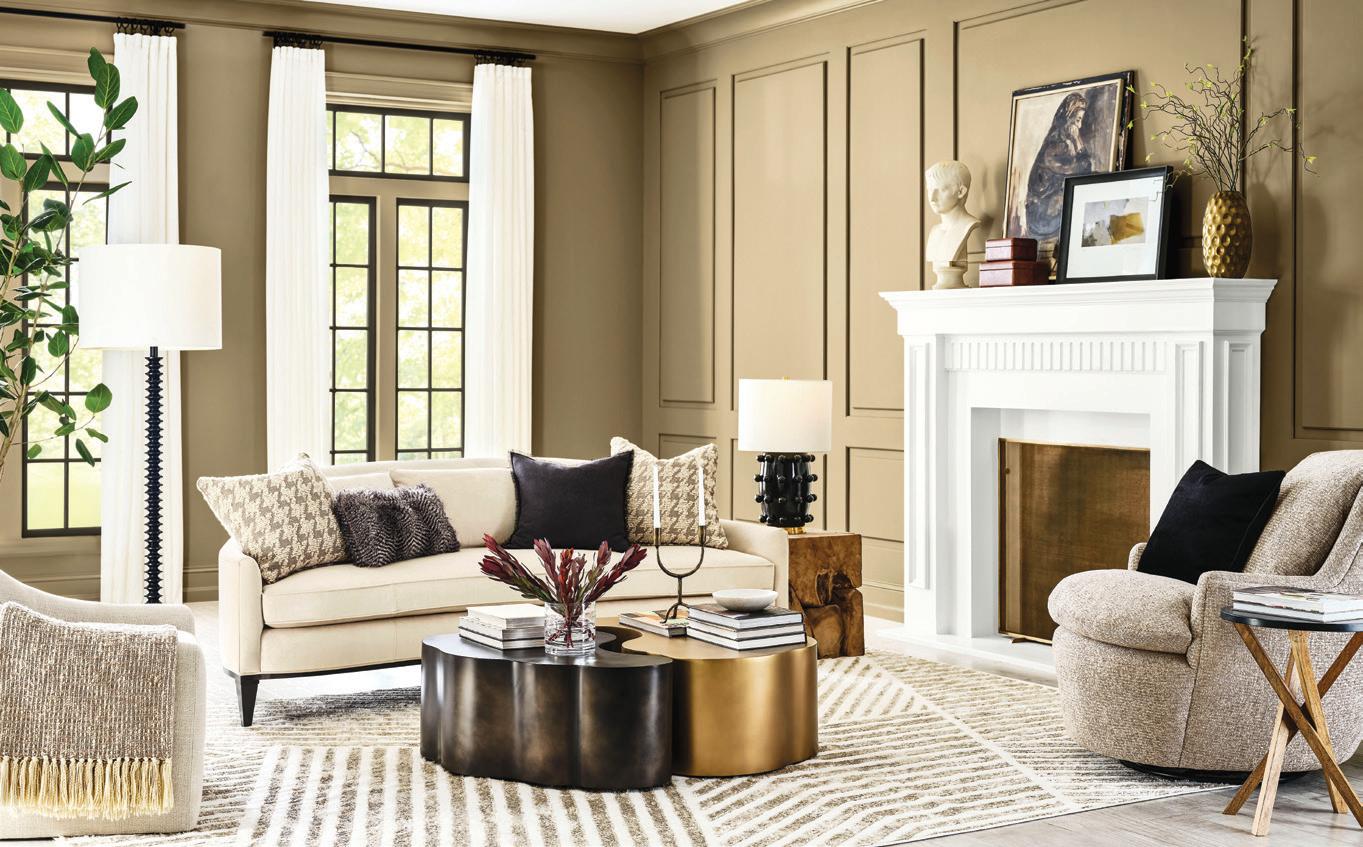
Universal Khaki resonates with the desire for intentional design and lifestyle, representing a new era of luxury defined by purpose, simplicity, and pride in a lifestyle anchored in functionality and practicality. Its earthy midtone tan with a hint of yellow, reminiscent of canvas, uniforms, and outdoor gear, evokes practicality and performance. “Khaki feels inherently sustainable,” Wadden notes. “Through recycled finishes or biodegradable materials like mycelium, it reflects a raw, organic sensibility. Honest, grounded in nature, and timeless, this versatile hue mirrors the rise of essentialism, where intentionality is everything.”
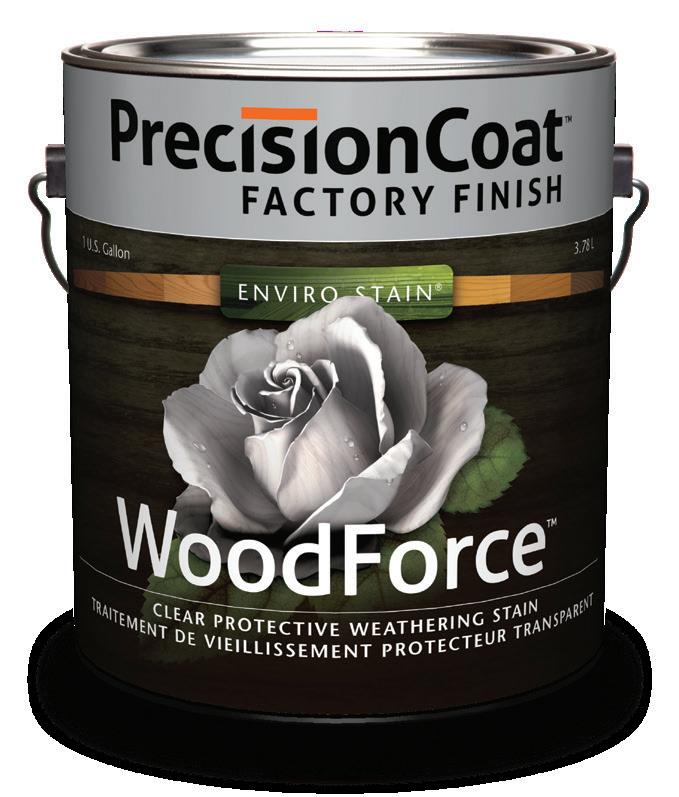
Moving from interiors to exteriors, 2026 colour trends are not just about hue, they’re about how surfaces age, texture, and performance shape the overall look. The Sansin Corporation, a global leader in environmentally responsible, high-performance wood protection, has reimagined the appeal of grey with WoodForce Mist Gray WF-02, its 2026 Color of the Year. Mist Gray is a natural weathering, vintage grey tone designed for exterior wood surfaces. Its subtle blend of grey and soft white allows the wood’s natural grain to remain visible, creating a gently weathered aesthetic that evokes the calm of morning mist.
“Homeowners, architects, and builders are increasingly drawn to vintage and weathered wood finishes,” said Sjoerd Bos, managing director of Sansin. “WoodForce Mist Gray provides a durable, two-coat finish that protects wood surfaces from water and UV damage, while allowing a naturally aged appearance on multiple wood species.”
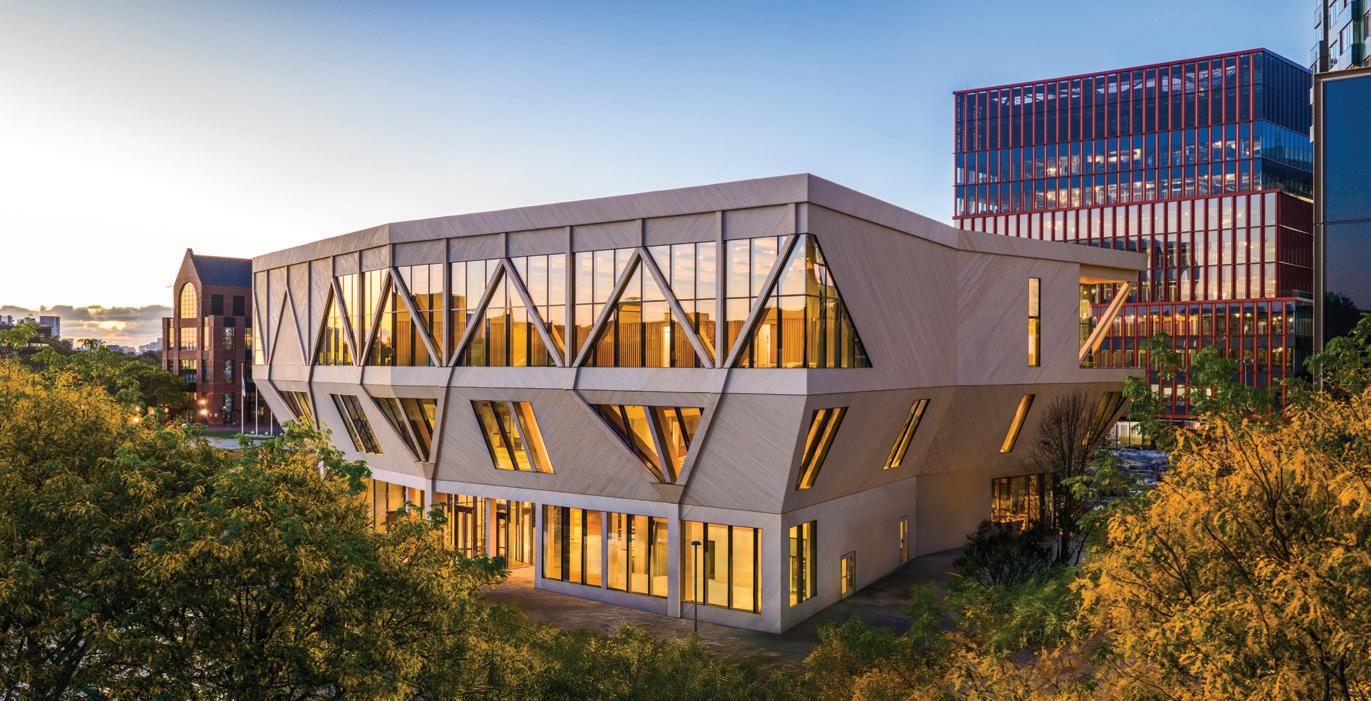
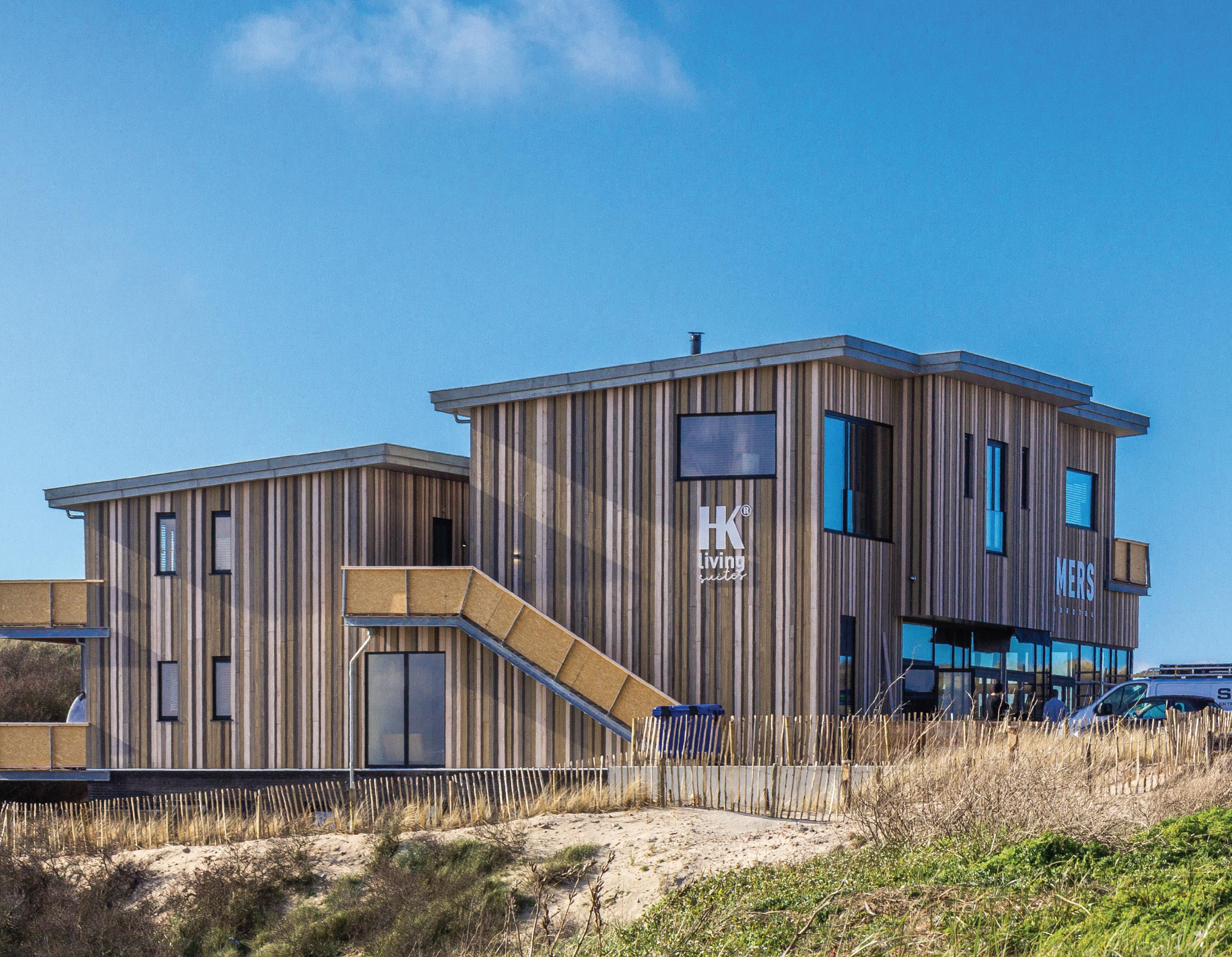
Mist Gray is available in Sansin’s tintable WoodForce system and can also be formulated for Precision Coat, designed for factory finishing and consistent production quality. Precision Coat WoodForce achieves Euro Class D, s1, d0 fire rating on 18-millimetre vertically oriented, rough-sawn spruce with a shiplap profile, providing reliable protection in fire-retardant applications.
COLOUR THAT CARES
When it comes to paint, colour is only part of the story. Increasingly, what is in the paint matters as much as the hues on the wall, and Benjamin Moore is pushing the boundaries with the next generation of Eco Spec, the company’s greenest and lowest-odour formulation. Designed for both residential and commercial spaces, Eco Spec achieves striking results while maintaining zero volatile organic compounds and zero emissions, even after tinting.
“Eco Spec is thoughtfully crafted for sensitive environments, including patient rooms, offices, guest rooms, and schools,” says Alfredo Valiente, product manager for commercial and professional brands at Benjamin Moore. “Its formula makes it ideal for those who demand good indoor air quality, particularly individuals with asthma or allergies, and those seeking a responsible solution that supports well-being without sacrificing quality or durability.”
What sets Eco Spec apart is not just its low odour or its ability to be reoccupied within an hour, but its chemical resilience and antimicrobial formulation, which prevents mould and mildew on dry paint film. Independently certified by organizations including the Asthma & Allergy Friendly Certification Program, Green Seal, and LEED Indoor Air Quality Standards, it represents a meaningful shift in how paint can support healthy, sustainable interiors.
Available in four sheens and over 3,500 colours, Eco Spec proves that innovation in paint is no longer just about colour, but about what surrounds us and how it shapes our environment.
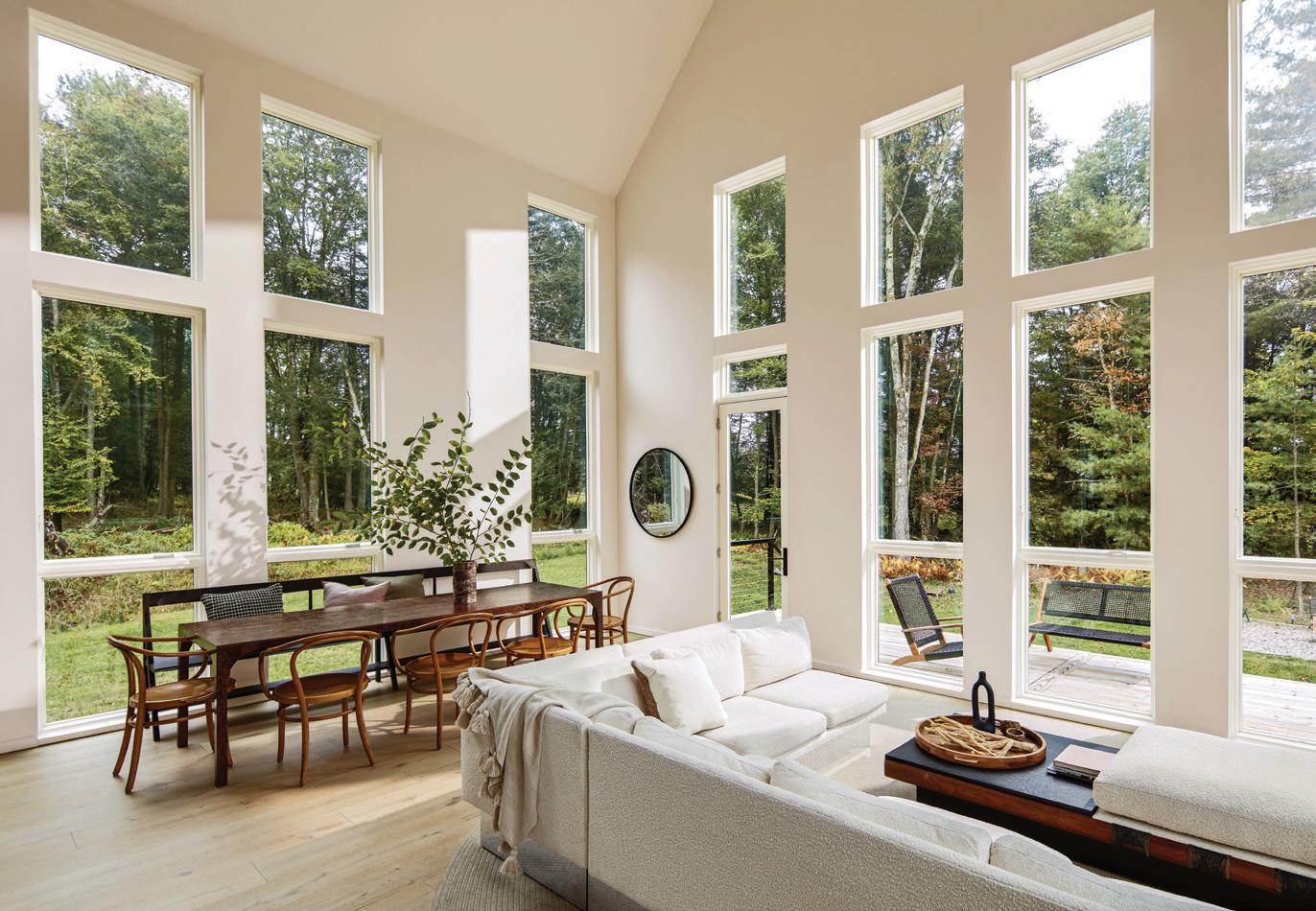
STAIN WITH STAYING POWER
When it comes to finishing masonry, stain is increasingly recognized as the more intelligent and enduring solution. Unlike paint, which sits on the surface, masonry stain penetrates the material itself, allowing brick, stone, and concrete to retain their natural texture while achieving consistent, lasting colour. Few companies understand this distinction better than Nawkaw, which has spent more than three decades focused exclusively on masonry stain.
This depth of specialization shows in how stain performs across climates, from extreme cold to intense heat, and in its ability to deliver subtle colour correction without masking the character of the material beneath. For architects working on landmark projects, stain offers a rare balance, enabling seamless transitions between old and new construction while preserving visual authenticity.
The environmental case for stain is equally compelling. Because it lasts longer and requires fewer recoating cycles, stain reduces material use, energy consumption, and long-term waste. Water-based, low-VOC formulations further support healthier air quality and contribute to sustainability goals, including LEED certification.
Nawkaw continues to push the category forward with innovations such as photocatalytic stain technology, which uses sunlight to break down airborne pollutants and bacteria. It is a reminder that in masonry finishing, performance, longevity, and environmental impact matter as much as appearance. A
Eco Spec from Benjamin Moore.
WoodForce Mist Gray from the Sansin Corporation.
Universal Khaki from Sherwin Williams.
Sansin Precision Coat™. High performance wood protection for mass timber structures.
PC WoodForce has a 20-year history of performance. As a newly certified Euroclass D s1, d0, fire retardant coating, PC WoodForce can be used as a topcoat for ASTM E84 “Class A” treated timber. PC WoodForce will provide added value and beauty as it weathers naturally, making long term maintenance easy. Warrantied for up to 20 years, Precision Coat factory finishes deliver the color, transparency and performance that architects, engineers and builders can count on.
Contact us about our specification program so we can help you achieve the perfect finish and protection, every time.
Zoomers Beach Hotel | Castricum, Netherlands Photographer: Courtesy of Leegwater












































ON SHAKY GROUND
Canada’s green roofs and walls battle major policy shifts
by NATALIE BRUCKNER
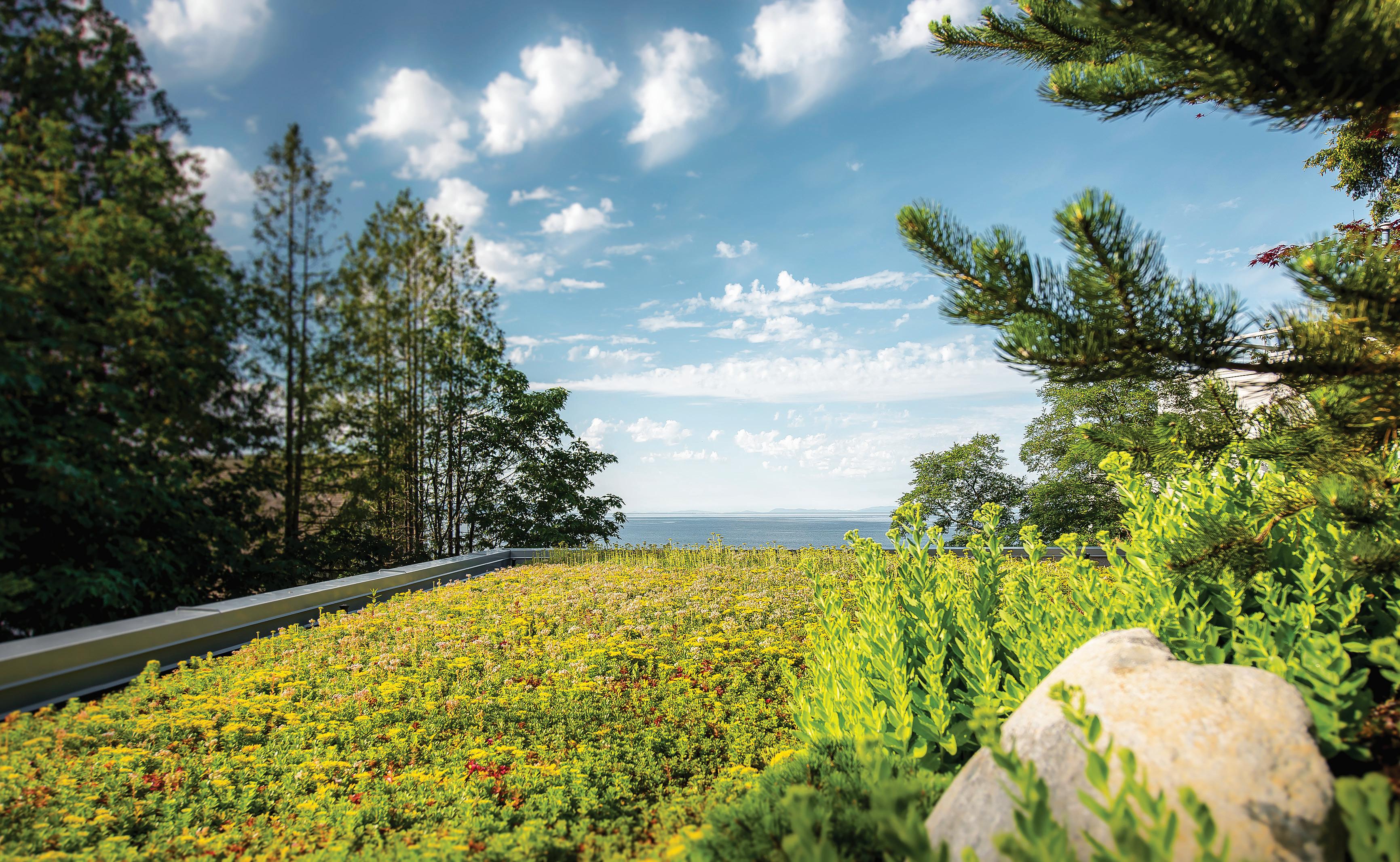
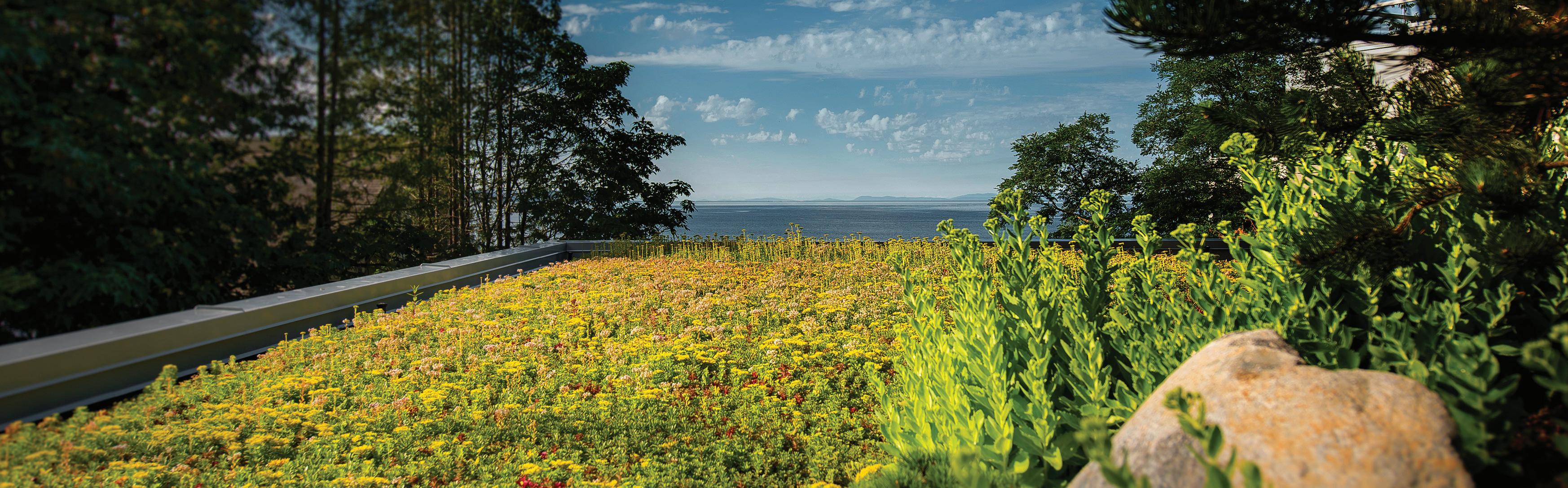
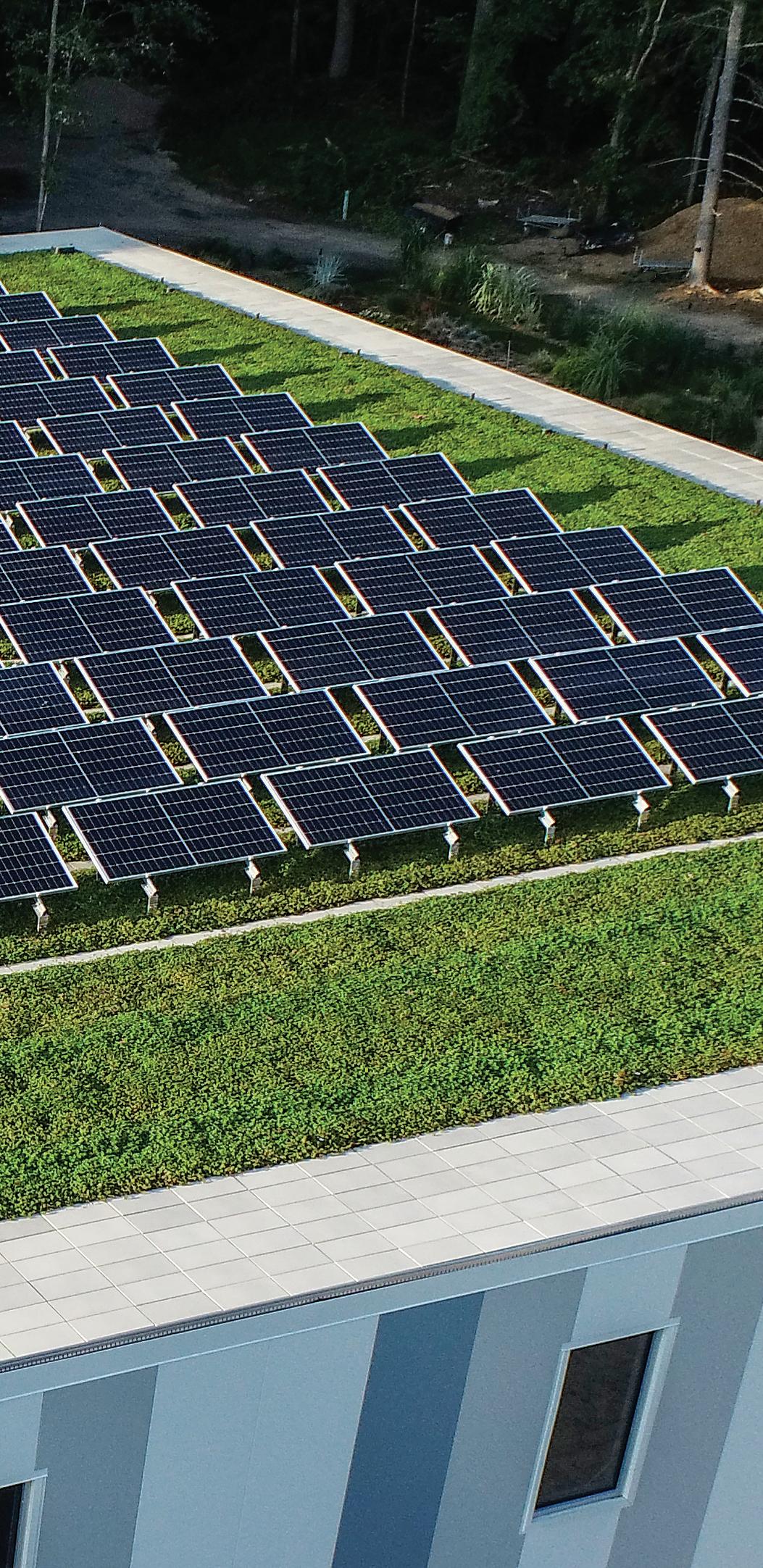
The Canadian green roof and wall industry was shaken in 2025 when, in November, the Ontario provincial government announced it had repealed Toronto’s Green Roof Bylaw, a law enacted in 2009 that required green roofs on new commercial, institutional, and multi-unit residential buildings above a certain size.
“There are companies in Toronto whose entire business model was reliant on the GTA mandate and a lot of them are probably not going to survive,” says Ron Schwenger, president of Architek. Schwenger warns the decision reflects a broader policy retreat: “We are not building our cities in a healthy manner; short-term money is driving everything.”
Letitia Silk, national director of business development and growth at Architek, stresses the practical consequences of this move. “The lack of understanding or knowledge in the industry is unbelievable,” she says, noting that research and education have yet to translate into consistent practice. Both experts argue that piecemeal municipal action is insufficient: “The only way forward is to embed sustainable planning in the national building code,” Schwenger says.
Together, Schwenger and Silk frame the repeal not as an isolated administrative change but as part of a larger challenge facing Canadian urban policy, one that will feature prominently as other experts weigh in on how to rebuild momentum for green roofs and living walls.
Despite policy turbulence, Architek has remained stable thanks to a diversified business model and national growth. The company expanded
eastward in 2022 with the opening of a new office in Cambridge, Ontario, establishing itself as a national provider. It has also been busy with its stainlesssteel division and vertical greening and facade systems across Ontario, Quebec, the Maritimes, and Montreal. Their commitment to the industry is further reflected in the Architek Sustainable Urban Environmental Grant with the LACF, which demonstrates the company’s dedication by supporting research- and education-based initiatives that drive meaningful change for the environment, future generations, and national policy.
Ginkgo Sustainability, whose core business is in Ontario, agrees that rescinding this pioneering bylaw is a shift in the wrong direction. Milena Smodis, director of marketing at Ginkgo, says the policy created a predictable pipeline that supported sustainability, job creation, and resilient communities. It set a construction standard that delivered quality installations, effective stormwater performance, and maintenance models, while addressing gaps in municipal infrastructure.
“The need for climate-adaptive buildings/housing is more important than ever, especially in dense and fast-growing cities, as the storms are faster and more furious, insurance flood claims continue to increase,” says Smodis. Green roofs remain a primary tool for managing stormwater at its source and easing pressure on “already burdened city sewer systems.” They also help mitigate heat-island effects, filter air pollutants, reduce energy use, and provide scarce urban green space.
Ginkgo has recently completed several impressive projects, including a standalone mega exterior living wall designed like origami featuring 875
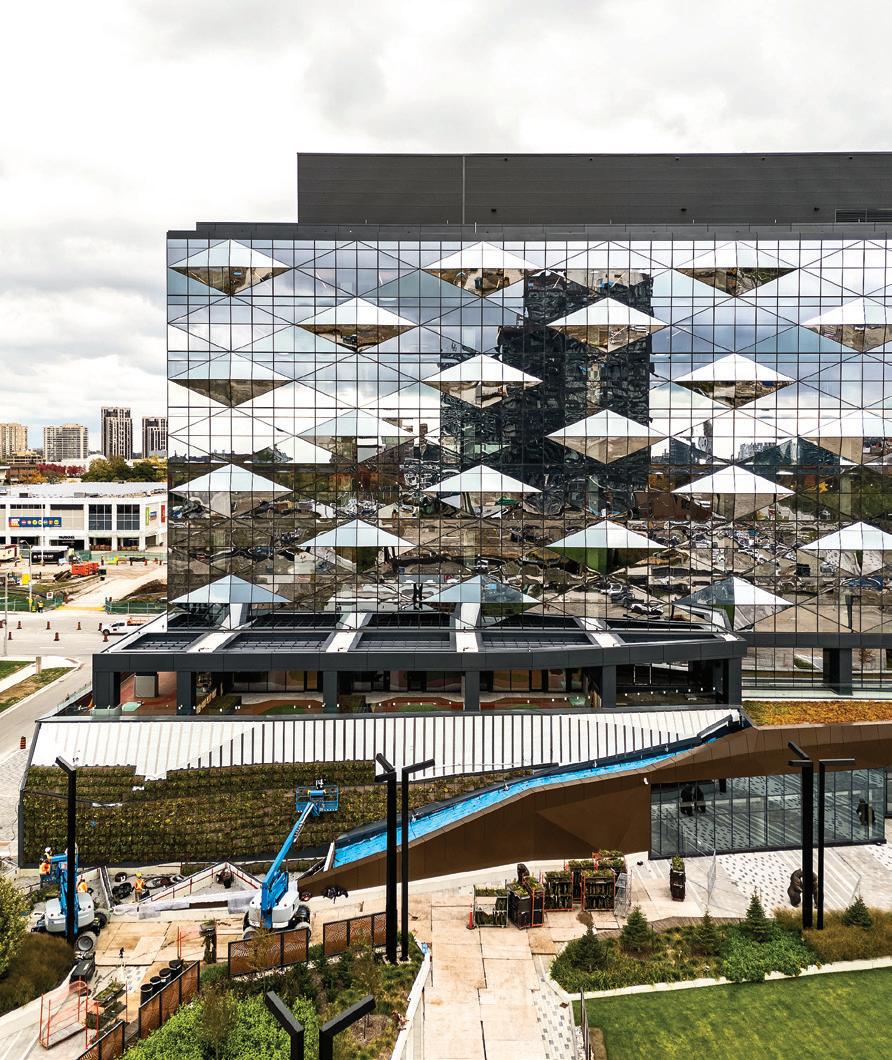
pre-grown panels with 20,000 plants. The commercial site also includes three green roofs and is part of Crosstown Place, a major 60-acre urban revitalization integrating residential, commercial, and green space with transit-oriented living. With nearly 4,900 planned units, including Habitat for Humanity partnerships, the area emphasizes nature through trails and walkways.
Ginkgo is also soft-launching Stomata, a proprietary hybrid air-purification system using genetically modified plants supported by sensors and data, addressing the reality that most pollution exposure occurs indoors.
Crosstown Place, Toronto, ON

INTRODUCING

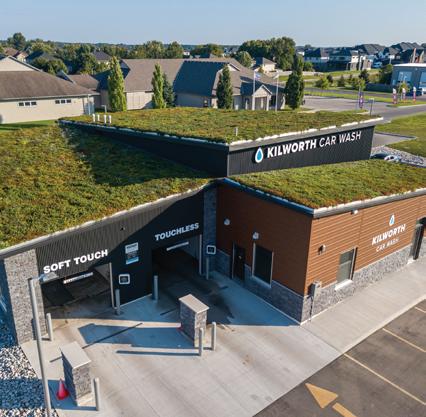


Kees Govers, technical sales manager at LiveRoof Ontario, is another expert who agrees that the repeal of the Green Roof Bylaw is “short-sighted,” particularly when paired with provincial signals to eliminate mandatory municipal enhanced construction standards, including lot-level stormwater control requirements. Like other experts, he stresses that green roofs remain “by far the lowest cost lot level stormwater control system available to developers and municipalities.” By comparison, he notes, “upgrading and replacing old sewer systems is incredibly expensive when compared to including green roofs and other waterabsorbing surfaces on the roof of buildings.”
In response, Ontario’s green roof sector is forming an industry association to more clearly communicate the value of green roofs. “We want to put that message clearly to provincial legislators, municipalities, developers, and other stakeholders,” Govers says. He points to a long history of industry collaboration, including the development of CSA A123.24, the national wind resistance testing standard for vegetated roof assemblies, and ongoing work with the National Research Council of Canada on stormwater performance standards.
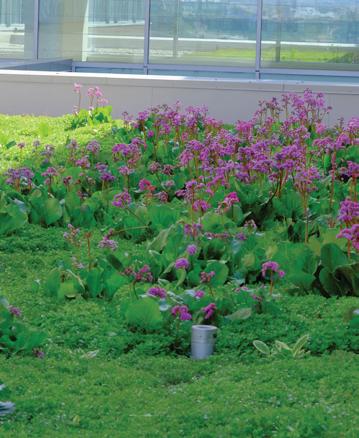
Despite policy uncertainty, Govers remains optimistic and points to recent projects such as Limberlost Place and Aqualuna on Toronto’s waterfront, both featuring biodiverse green roofs, as evidence that “the time has come to go beyond the technical aspects of green roofs and truly put them on the map as building solutions.”
FUTURE POSITIVE
When it comes to the repeal of the bylaw, Roxanne Miller, Sopranature director at Soprema Canada, brings a slightly different perspective. She says the reasons cited for the repeal (including costs, construction delays, and permit applications) are overstated and not truly connected to green roofs. “Green roofs are not even one percent of the total building cost,” she says, adding that permit delays of a few weeks or a month are minimal within the overall development process.
Miller says the discussion has largely ignored the consequences of removing the requirement. “They’re not stating the negatives, which is the blue roof application, stormwater management,” she says, noting green roofs were intended to reduce pressure on costly underground stormwater systems. She says that when you look at provinces and cities outside of the GTA, however, there’s no bylaw, and yet green roofs still exist.
Rather than focusing on reinstating the bylaw, Miller believes the industry should push for green roofs to be embedded into the Ontario Building Code. “Because it’s not part of a construction standard, we’re not evaluating, for example, how much stormwater is actually retained,” she says. Without a construction standard, Miller says the burden is pushed back onto project teams. “The financial burden is put back on the promoter, and the design burden is pushed back on the designers. They have to design a green roof no matter what,” she says. “So what happens? Often, the design and install might not meet the quality standard we are aiming for and they are rarely maintained.”
While she emphasizes that she is not saying it is a good thing the bylaw was repealed, Miller believes it is a chance to come together and refocus. “There’s going to be a step back, and then a shift to, ‘Okay, we don’t have to do it, but we want to,’” she says. “That
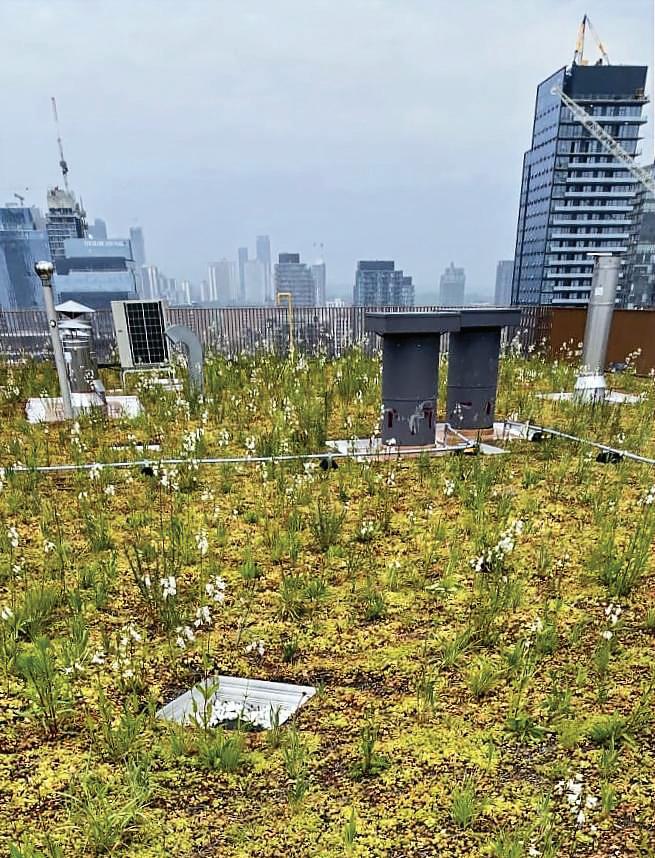
Yet when properly installed and maintained, Buist says green roofs offer one of the most cost-effective tools for mitigating peak stormwater flow, reducing the burden on aging sewer systems, and helping prevent combined sewer overflows. Buist emphasizes that real performance depends on understanding water balance: how roofs store water, how plants use it, and how evapotranspiration reduces runoff. High-performing plant communities, particularly those including C3 and C4 species, can dramatically increase water use and cooling benefits.
In the end, he argues, the “magic formula” is no mystery: long-term success comes down to sound engineering, good horticulture, and choosing plants that actively move water back into the atmosphere.
GREEN WALLS
In more positive news, living walls are increasingly being understood as functional building components rather than purely decorative features, a shift that experts at Nedlaw Living Walls say has become more pronounced in recent years as expectations around sustainability and wellness continue to
gives us the chance to design a great green roof, install it properly, and maintain it year over year to keep it as an asset. Overall, I think this can have a very positive impact on Toronto’s green infrastructure’s quality.”
INSTALLATION & MAINTENANCE
Governments and private enterprise today are faced with the growing need to reduce the environmental impact on public and private infrastructure, and are increasingly turning to green roofs as a way to decrease that pressure, says Rick Buist, president at Bioroof. As the industry matures, expectations have shifted from broad claims of environmental benefit to a requirement for verifiable, data-driven performance, especially around stormwater management.
Buist notes that while standards from ANSI, ASTM, UL, and CSA have strengthened green roof practices, two persistent challenges still undermine performance: improper installation and lack of maintenance. Drainage layers are often compromised by small detailing errors, and roofs that are not cared for quickly decline, resulting in supersaturation, plant loss, and even structural risks.
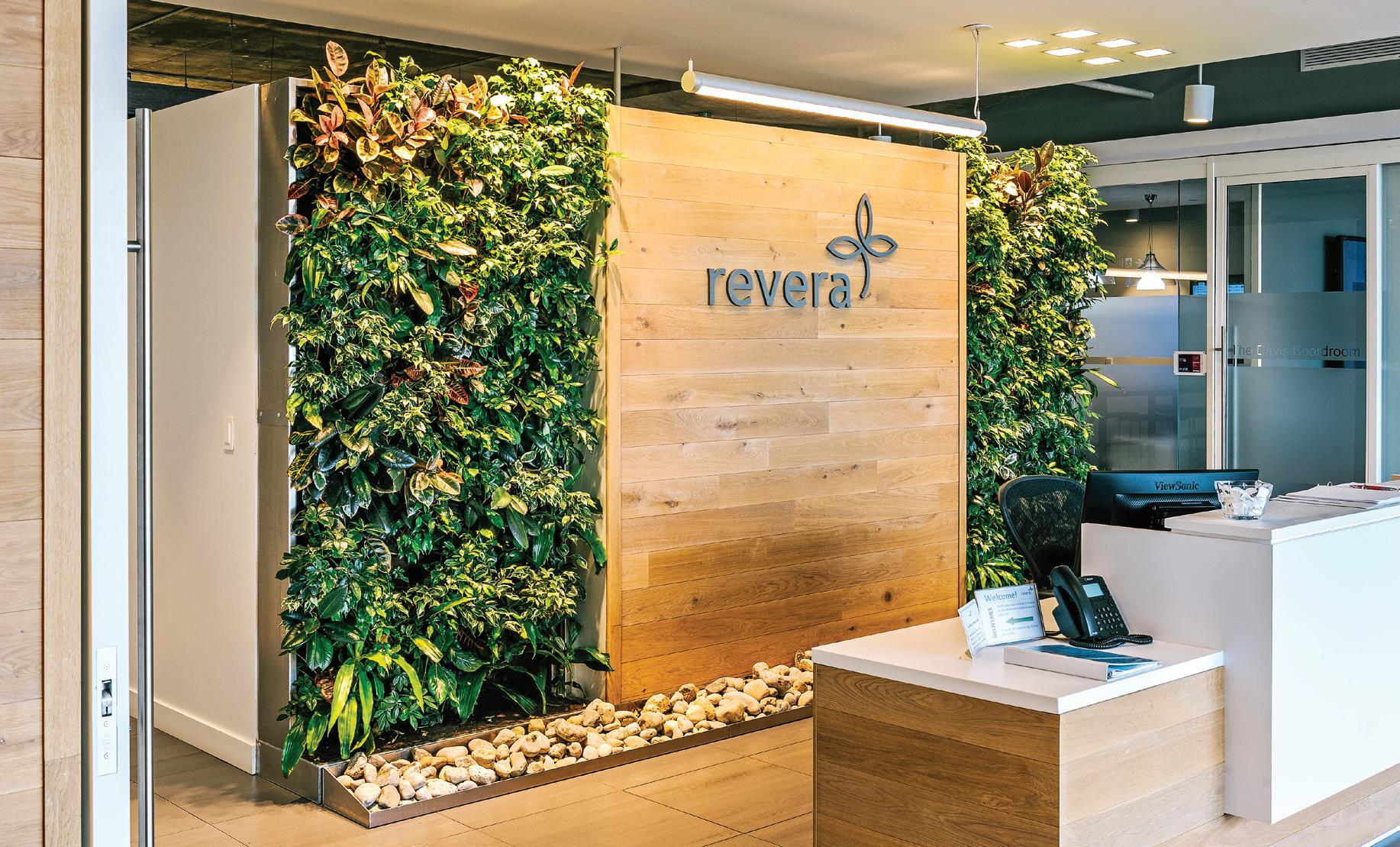
evolve. “A few years ago, the conversation was often centered around aesthetics. Today, architects and owners are asking much deeper questions, such as how does this improve indoor air quality, support occupant wellness, and align with long-term sustainability goals?” Arjun Binning, account manager – Living Walls & Living Roofs, says. He also notes that there has been growing interest in fully engineered systems that prioritize reliability, research-backed performance, and long-term durability, particularly as frameworks such as LEED, WELL, and Fitwel gain wider adoption and place greater emphasis on measurable outcomes.
That shift has been especially visible in healthcare and long-term care projects completed in 2025, where living walls are being integrated into broader wellness strategies aimed at creating calmer, more welcoming environments. “What makes these projects special is how thoughtfully the walls are integrated into the overall design, while following a wellness approach,” Binning explains, adding that similar considerations now shape large commercial and institutional installations where living walls
Aqualuna, Toronto, ON
Revera Headquarters, Toronto, ON
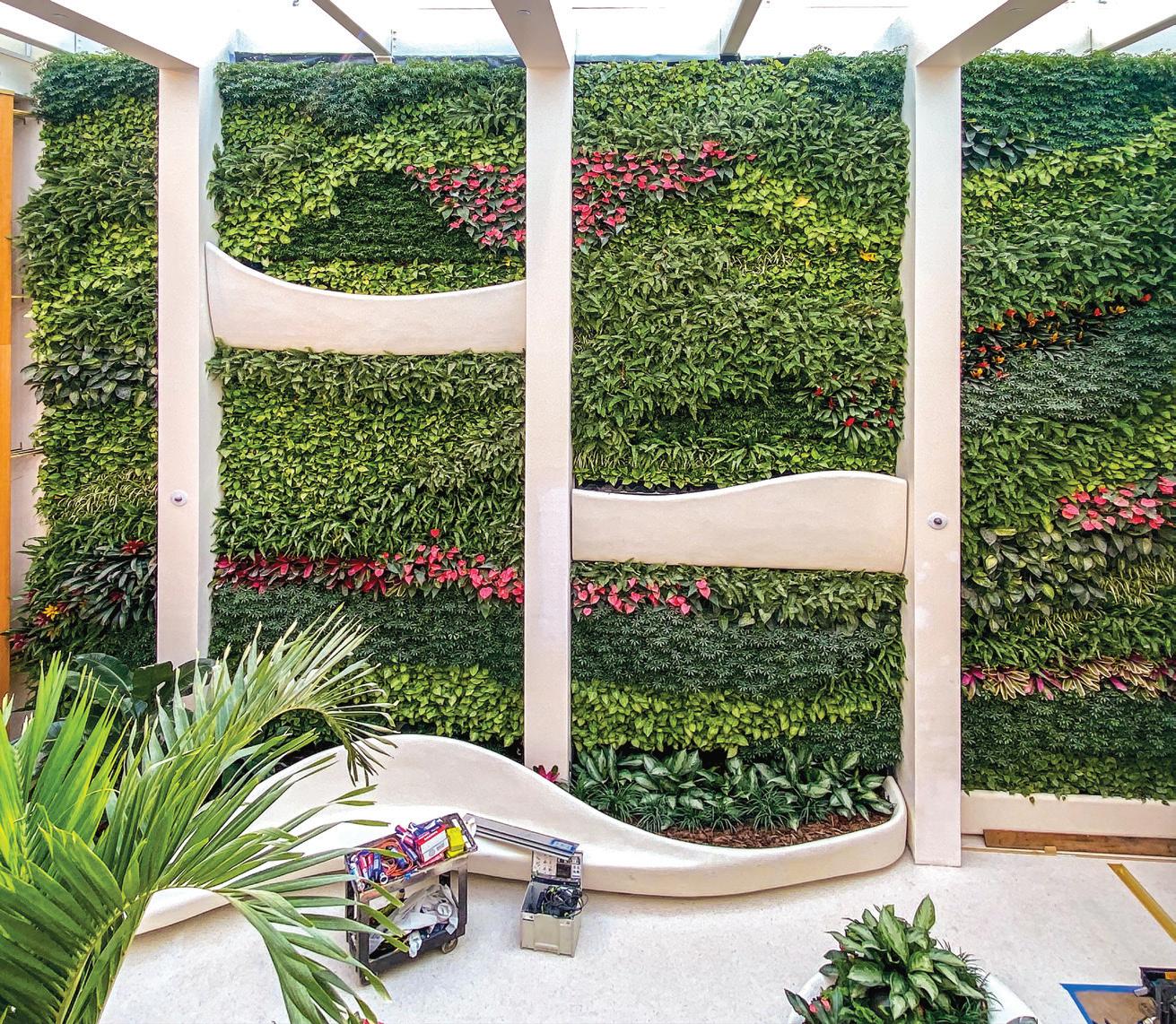
often function as central architectural elements in high-traffic spaces and require close co-ordination to ensure systems perform as intended over time.
Living green walls also continue to find their way into a range of other interior environments, including airports, private lounges, and luxury retail spaces; settings where durability, maintenance, and long-term performance are closely scrutinized. GSky has recently worked on several of these project types, in some cases supplying both living walls and integrated planters to create unified interior planting schemes for companies such as British Airways and American Express’ lounges.
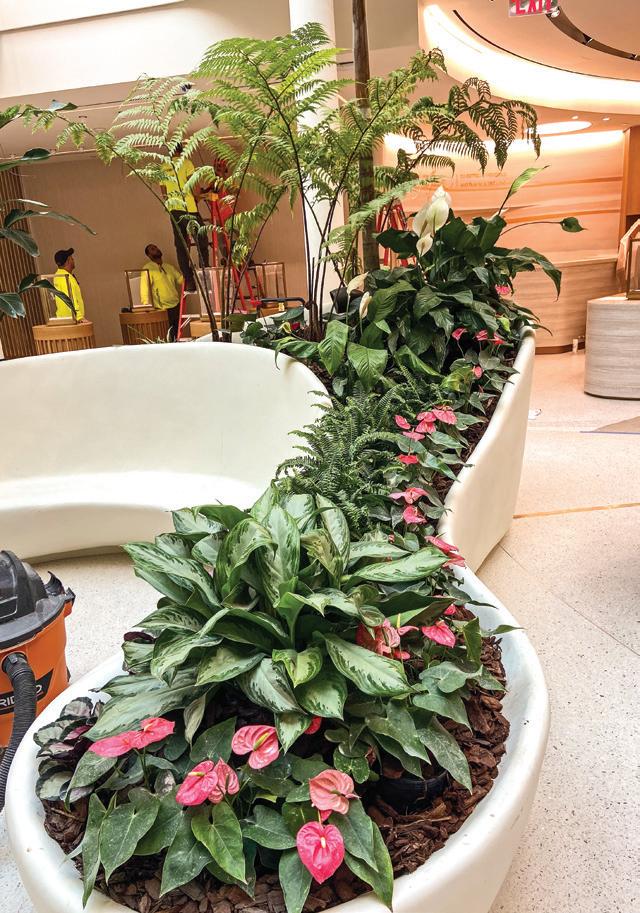
Those projects have unfolded against a difficult backdrop for green roofs and walls. Inflation, slow permitting, labour shortages, and material sourcing challenges have disrupted schedules and increased uncertainty. Living green walls also continue to face lingering misconceptions around cost, maintenance, irrigation, and long-term reliability. As Hal Thorne, chairman and CEO of GSky, has observed, these perceptions can slow adoption even as interest in biophilic design grows.
Thorne identifies several key forces shaping the market in 2026, including increasing urban density,
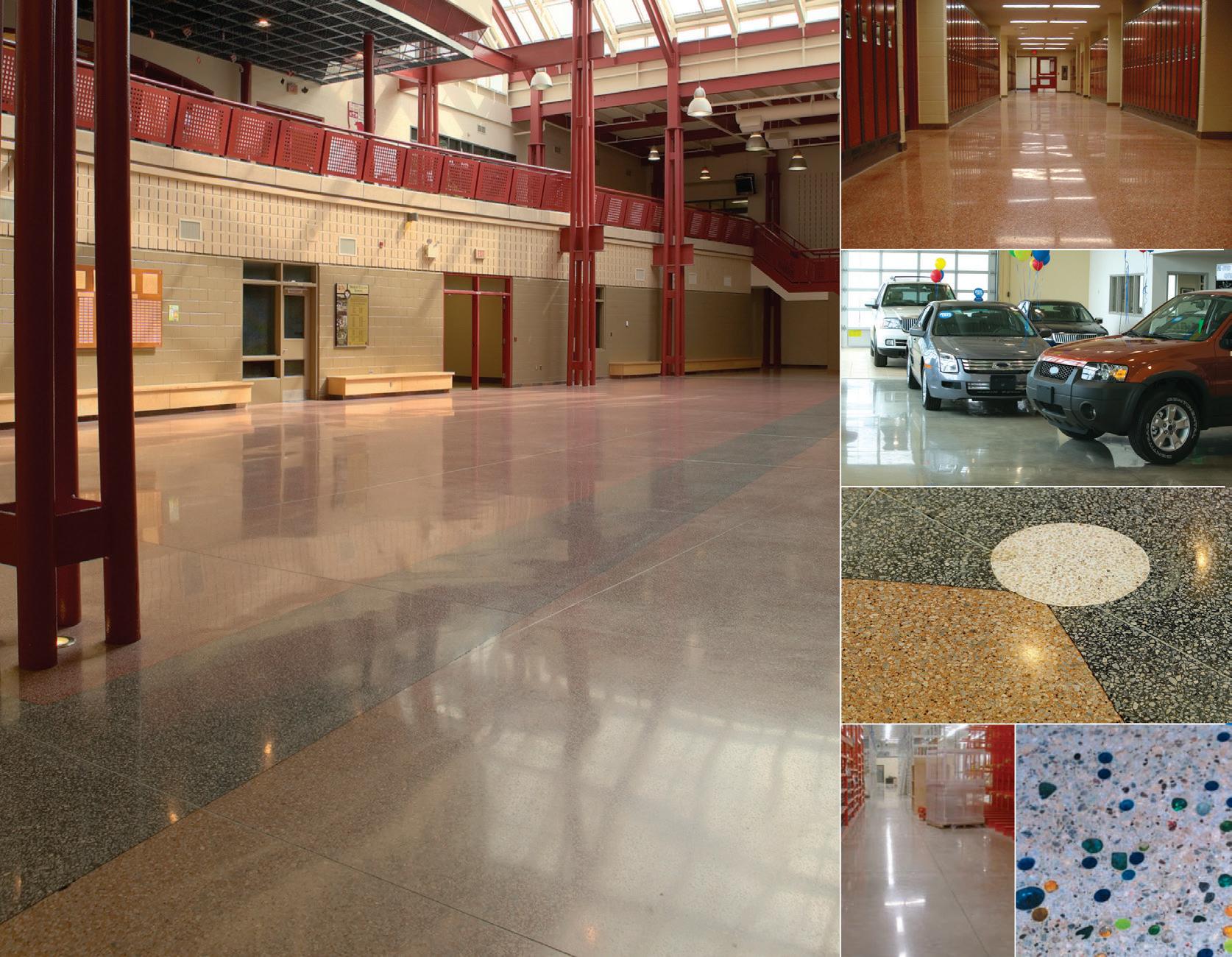
Diamond Polished Concrete. A Strong & Beautiful Concrete
Flooring Solution
biophilic design’s relationship to well-being and productivity, evolving green building standards, and concerns around air quality and noise abatement.
Fortunately, GSky’s systems have been designed with flexibility in mind, allowing projects to tailor plant palettes, sizes, locations, budgets, and installation timelines. “We are now offering planters and plants to go along with our walls to provide clients with one vendor for all their plant needs,” says Thorne. GSky living walls are irrigated by low-flow drip emitters on programmable controllers and, in many cases, can be equipped with recycling components to create an extremely efficient low water usage system.
And finally, when it comes to new approaches to indoor environmental quality, systems like Respira Pro point to how building technologies are evolving. The modular living-wall biofilter is designed to integrate with existing mechanical systems, using plant root zones to help capture and break down airborne pollutants such as VOCs, formaldehyde, and benzene.
Its adaptability makes it suitable for retrofit projects, where space and infrastructure constraints often limit options. The system can be configured for different wall sizes and mechanical layouts, allowing it to be installed in lobbies, offices, corridors, or shared residential spaces. By operating as an active filtration system, it may also reduce reliance on outdoor air for ventilation, potentially easing HVAC energy demands – an increasingly relevant consideration for buildings working to improve overall energy performance metrics, including Thermal Energy Demand Intensity (TEDI). A
Diamond Polished Concrete is a unique, advanced flooring system that brings out the natural beauty of concrete, helps reduce maintenance costs and enhances the natural durability of concrete surfaces. The Tri-Con Diamond Polish System employs an innovative 7-step grinding and polishing process that utilizes progressively finer diamond grinding heads. This system also uses the most advanced penetrating sealer technology.
Tri-Con Concrete Finishing is an industry leader with more than 30 years experience in the concrete industry. We are a one-stop supplier capable of pouring new floors to exact specifications as well as restoring existing concrete surfaces with endless versatility. We guarantee that we deliver on time, on budget and on spec every time.
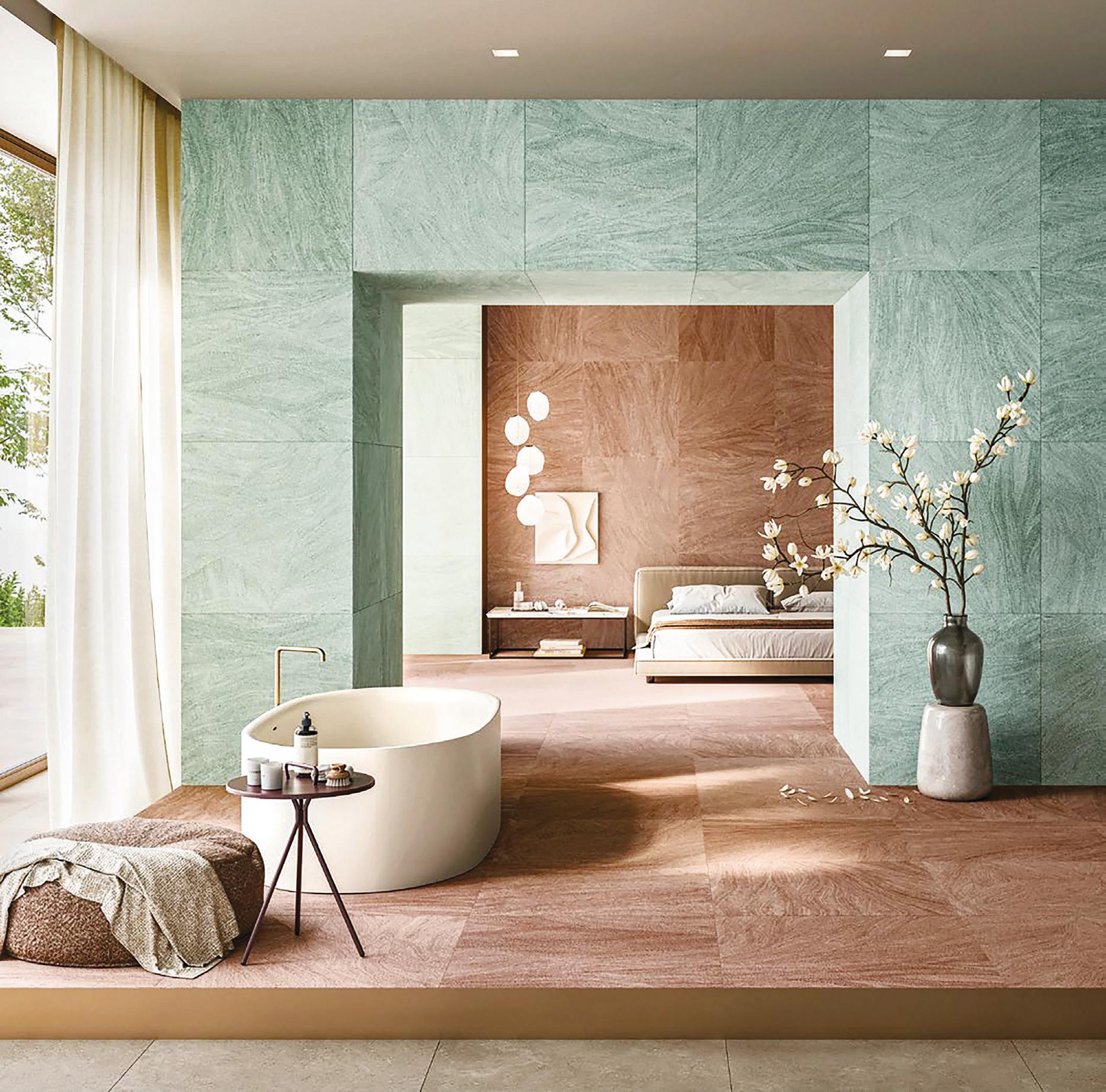
The world of flooring is ever evolving as clients continue to seek style and modernity. Fortunately, manufacturers and distributors have a steady flow of designs to meet the needs of both residential and commercial projects.
According to the team at Ames Tile & Stone, a compelling trend in tile formats this year proves that bigger isn’t just better; it’s transformative. “This movement is perfectly captured by Ames Tile & Stone’s newest collections, Bitter & Umami,” says Nicole Goetz-Turner, global sourcing specialist. “The 48- by 48-inch large-format tiles directly address the upcoming demand for seamless, monolithic surfaces. While you may think larger tiles are only for commercial projects, Bitter and Umami prove otherwise. Large-format tiles reduce grout lines, creating a smooth, continuous look that tricks the eye. This can make even smaller areas appear more spacious and tidy.”
Both collections draw inspiration from the authentic, traditional limestone of the Mediterranean. Bitter captures the raw, earthy essence of quarried rock through a textured surface, offered in warm tones such as almond, beige, and tortora. Umami complements this with a softer, subtly textured surface that brings timeless elegance and a natural connection to any project.
“The industry buzz around these aesthetics is palpable,” says Goetz-Turner. “We saw this textural, large-format trend dominate Cersaie 2025. Clients are craving surfaces that engage the senses, moving past cold, flat visuals. This combination of visual warmth, Mediterranean inspiration, and modern performance positions Bitter and Umami to define the aesthetic palate for 2026 and beyond.”
Olympia Tile+Stone has introduced Ink, a porcelain tile collection designed for those who value simple design and dependable performance. “Its surface is defined by fine, hand-drawn lines that create a soft texture across each tile,” says Javier Pinilla, marketing specialist. “The pattern is subtle and consistent, giving floors and walls visual interest without overpowering the space.”
Pinilla explains that the surface design changes slightly depending on light and viewing distance. “From across a room, Ink looks calm and uniform. Up close, the texture becomes more visible, adding depth and character. This makes the collection well suited to larger areas where a continuous look is important, such as open living spaces, bedrooms, and bathrooms.”
Ink is made using advanced porcelain production methods that ensure strength, durability, and easy maintenance. It performs well in everyday residential settings and is designed to hold up over time with minimal upkeep. The colour palette
GO BIG Or GO HOME
Hard surface flooring is embracing bold, large-format, and textured trends
by LAURIE JONES
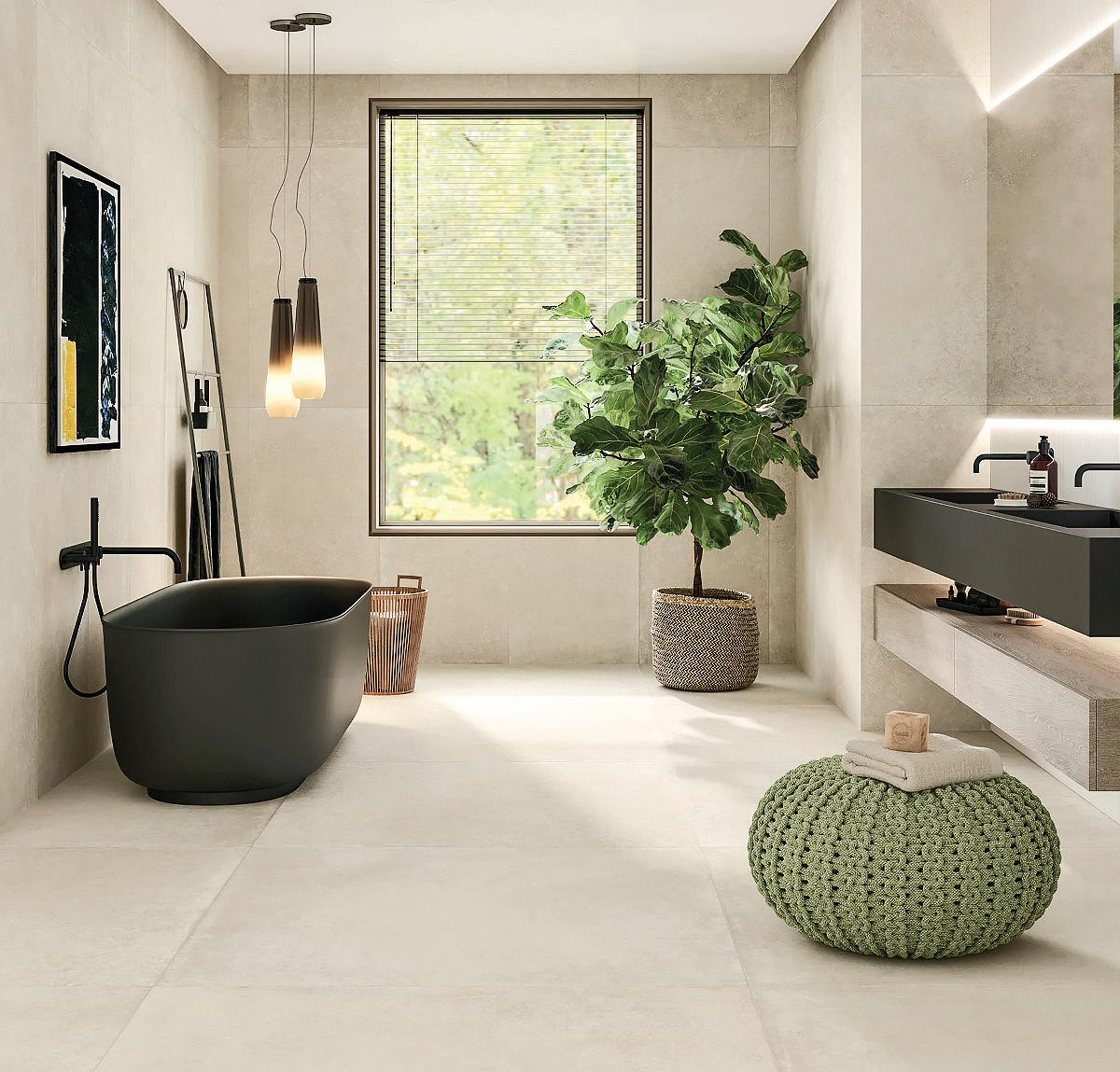
includes a range of neutral and contemporary tones that pair easily with wood, stone, and modern finishes, making the collection simple to integrate into a variety of interior styles.
The collection has also been recognized for its design quality, earning distinction at the Archiproducts and ADI Awards 2025, where it was both longlisted and named a winner. This recognition reflects Ink’s balance of thoughtful design and practical use, making it a reliable choice for modern homes.
Ink offers a straightforward flooring solution for homeowners seeking a refined, durable surface that fits naturally into everyday interiors.
Ink porcelain tile collection from Olympia Tile+Stone.
Umami large-format tiles from Ames Tile & Stone.

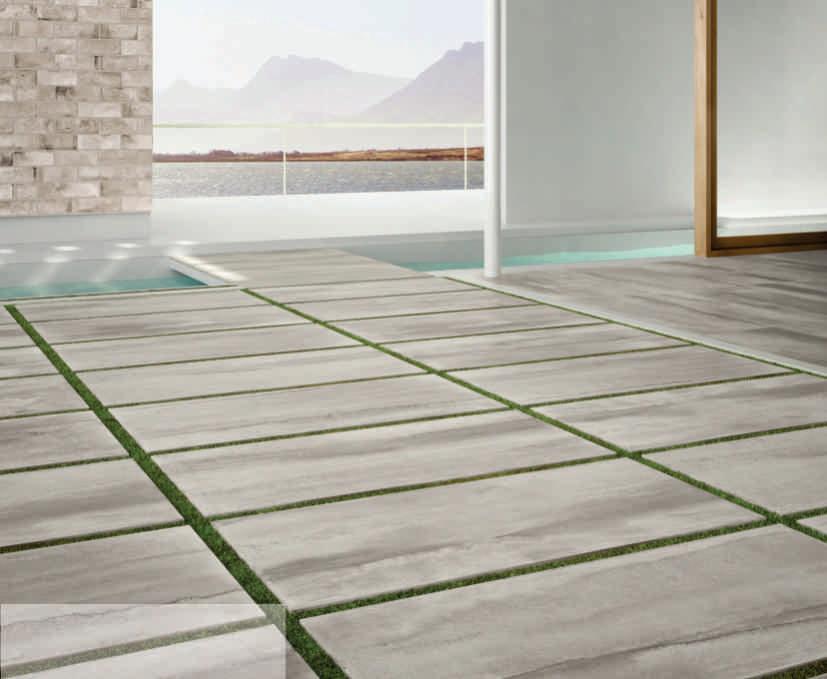
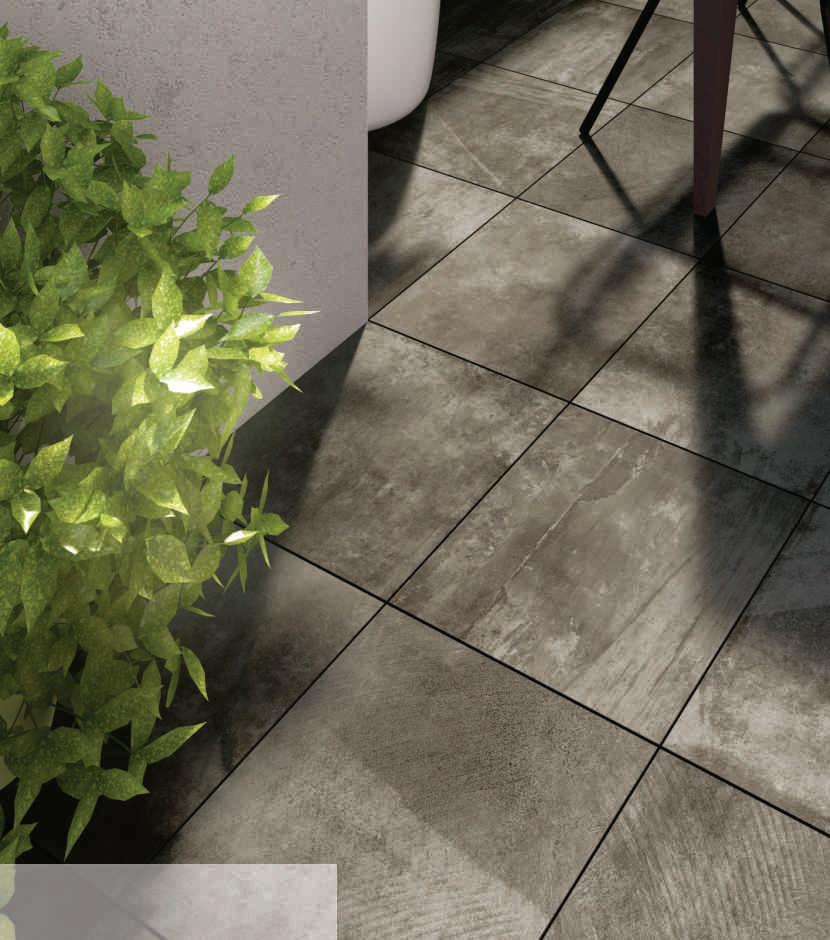
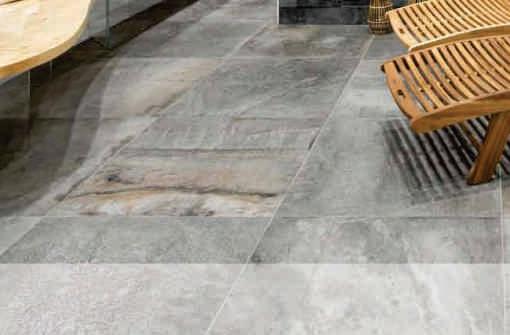
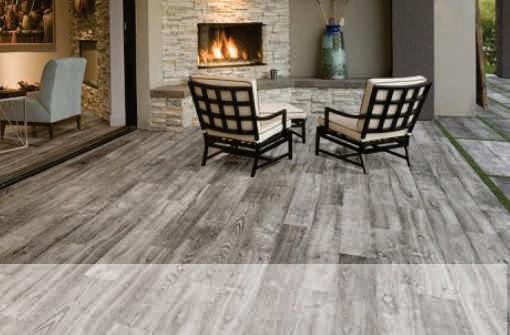
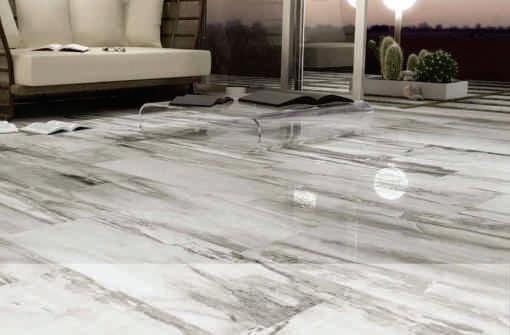
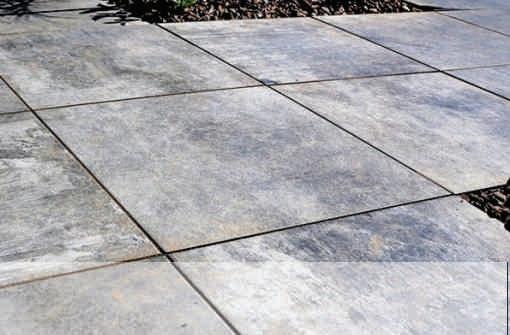
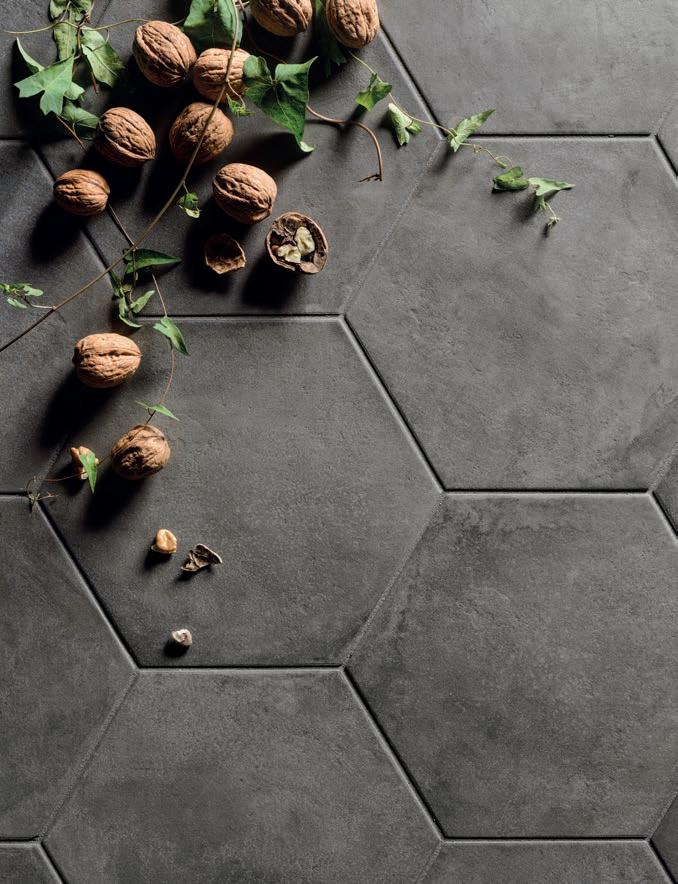
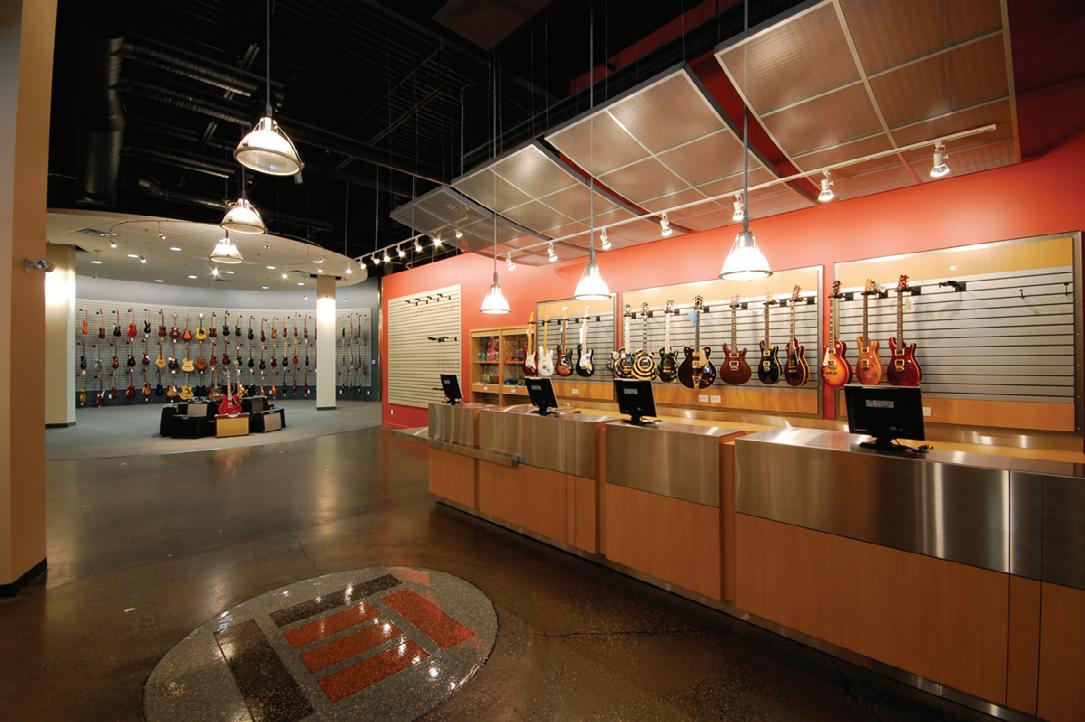
Recently named one of the 10 Most Iconic Buildings in the World, The Butterfly in downtown Vancouver offers 330 suites over 57 floors of elegance, with luxury tile throughout. “We installed a number of products, including marble and porcelain, that reflect the high-end intention of The Butterfly,” says Dejan Nesic, director of Modena Tiling. “The visual is elegant from the moment people walk through the front door, with white, four-foot by four-foot marble installed on all the main floor areas.”
Nesic explains that inside all the suites, the flooring consists of 120-centimetre (cm) by 120-cm white porcelain tile. On levels two through 39, bathrooms received bookmatched 120-cm by 120-cm Italian porcelain Calacatta Gold tile. In suites on levels 40 through 52, bathrooms feature five-foot by four-foot real marble Calacatta Gold bookmatched tiles, while the penthouses on levels 53 to 57 have bathrooms with full-slab Calacatta Gold marble bookmatched tiles.
In the breezeway corridors and on balconies of all floors, 24-inch by 48-inch cream-coloured pavers were laid. For the Olympic-size 50-metre pool, the deck tiles are 12-inch by 24-inch Italian tiles, with two-inch by two-inch tiles in the pool itself. The sauna and spa areas feature large-format Italian tiles.
ALTERNATIVE STYLE
Architectural and decorative concrete continues to gain momentum across Canada. According to Frank Guida, president of Tri-Con Concrete Finishing, one theme came through clearly: concrete today is no longer just a structural necessity; it is a design-driven finish that performs at the highest level.
“Tricon’s reputation has been built around delivering industrial-grade concrete finishes that meet demanding commercial requirements, while still supporting architectural intent,” Guida explains. “We’ve provided Diamond Polished Concrete, joint-free seamless concrete floors, and superflat floors, finishes that are now commonplace in distribution centres, manufacturing facilities, and large commercial interiors. The addition of Patterned Concrete Ontario to our portfolio has been an exciting development.”
Guida notes that designers want control to match the hard surface to an interior’s theme, and the brand offers a wide range of patterns, textures, and colours that integrate seamlessly with modern architectural styles rather than overpowering them. “Patterned Concrete is a registered trademark consisting of licensed and trained professionals across the globe specializing in the field of architectural concrete construction,” Guida says.
A standout example is Patterned Concrete’s PCRT MM500, a Motivo Moderno pattern very suitable for interior environments. With its understated texture and refined surface profile, PCRT MM500 delivers visual interest without distraction, making it ideal for lobbies, retail spaces, hospitality interiors, and contemporary commercial settings. As a systems manufacturer, Patterned Concrete can fully customize a finish to a designer’s specifications, offering solutions that are durable, adaptable, and architecturally intentional, both indoors and outdoors.
THE LOWER-CARBON FUTURE
As part of an ongoing commitment to responsible manufacturing, Schluter Systems has introduced meaningful updates to both its thin-set mortars and primers, balancing performance expectations with a reduced environmental footprint.
“Cement production is a carbon-intensive process, responsible for approximately eight percent of global carbon dioxide emissions,” says Dale Kempster, director of standards and methods. “In response, the industry has moved toward Type IL cements, which incorporate roughly 10 percent limestone into the cement blend. This formulation has been shown to lower carbon emissions while maintaining strength in many common applications.”
Kempster adds that Schluter has now transitioned all of its thin-set mortars to Type IL cement formulations, including Set and All-Set. Adapting Type IL cement for thin-set mortars, however, presented unique challenges. “Unlike structural concrete, thin-set mortars must meet specific requirements for pot life, adhesion, and early strength. Schluter’s R&D team refined the formulations to address these performance demands, resulting in mortars that meet established Schluter quality expectations with minimal noticeable change to the installer experience.”
Thin-set bags featuring the green leaf icon on the front clearly identify the new lower-carbon formulations. Any previous formulations still in distribution will be beyond shelf life as of January 2026.
Schluter has also continued to refine its primer offerings to support reliable bonding across a range of applications. “Primer-U is a ready-to-use universal primer designed to enhance mortar adhesion on hard-to-bond substrates, while Primer-PS is a ready-to-use, quick-drying topical primer developed specifically for Schluter peel-and-stick membranes,” says Kempster. Both primers are available in 946 millilitres and 3.78 litres and are easily distinguished by colour, with Primer-U in orange and Primer-PS in a blue-grey tone.
Recent updates to Primer-U include an expanded application temperature range, now suitable for use from five degrees Celsius to 30 degrees Celsius, as well as an extended shelf life of 18 months. Together, these updates reflect Schluter’s continued focus on performance, clarity, and long-term sustainability across its installation systems.
INDUSTRY MOVES
The team at Shnier and Division 9 understands that builders need fast decisions, predictable supply, and consistent installation. The company’s product management team shapes its ceramic and porcelain strategy around those needs, focusing on programs that simplify specification, reduce waste, and elevate finished spaces.
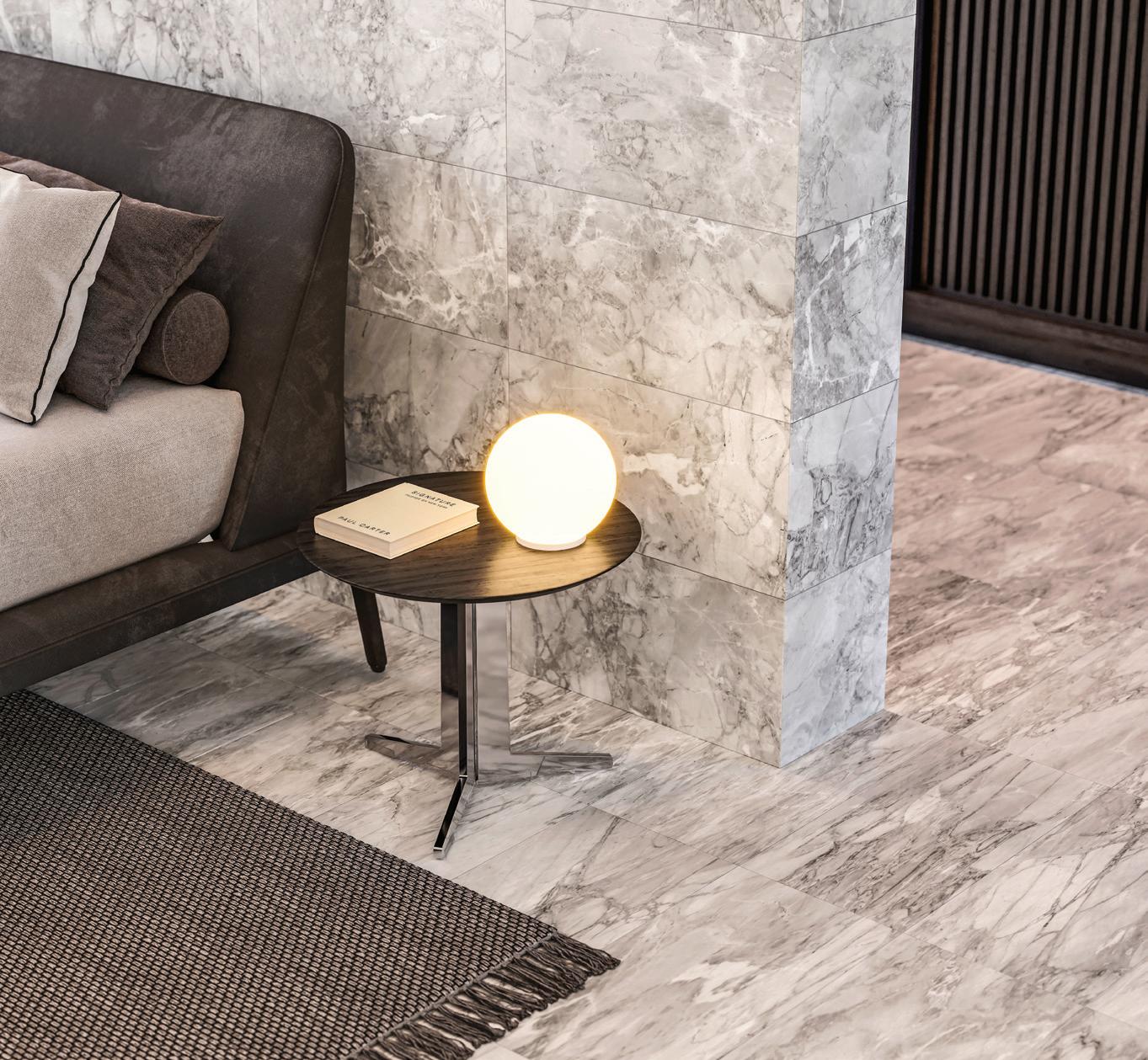
“Our assortments are built for modern styling and dependable availability. Collections like Lumino, Coliseo, Locale, Artifact, Fancy, Otta, Plata, Valencia, and our Lucidity wall tile line give designers and buyers straightforward choices for single-family, multi-family, and light commercial work,” says Greg Vrantsis, director of product development and marketing. “Responsible sourcing is also central to our approach. Across Richmond Flooring and Division 9, we partner with manufacturers who deliver measurable environmental performance, including recycled content, efficient internal water recycling, and local raw material sourcing. This foundation supports a growing range of reduced-impact and carbon-neutral tile solutions, such as Native Wood, Plaster 2.0, Area 51, and NetZero, offering builders a balance of design, sustainability, and long-term value.”
Vrantsis says that beyond tile, Shnier provides one of the most comprehensive hard-surface portfolios in Canada, representing brands such as AHF Contract, Armstrong, Tier Element, Teknoflor, AVA, and Kaindl. “Our mandate is simple,” Vrantsis says. “We provide Canadian builders with future-ready surface solutions backed by reliable service, expert product knowledge, and a stable national inventory.”
ADHESIVES, GROUTS & TOPPINGS
At Maxxon Corporation, which has worked with concrete flooring for decades, the industry has evolved from traditional durable solutions to a preference for exposed aggregate, used to create an organic architectural design in both commercial and residential properties. Challenges remain, however, as structural load limitations can restrict allowable slab thickness, and accelerated project schedules may affect the curing time required for decorative concrete.
Maxxon offers a solution with the Maxxon Commercial VersaTop EZ. This hydraulic cement floor topping produces the salt-and-pepper aesthetic without the need for multiple passes of polishing or extended timelines. The surface can be ground as early as the next day, or weeks later, without changing the level of difficulty, allowing greater flexibility in project scheduling. With this product, the look of concrete floors can be incorporated into a variety of architectural designs, giving flooring contractors access to this trending finish. A
Lumino Grigio tile from Shnier.
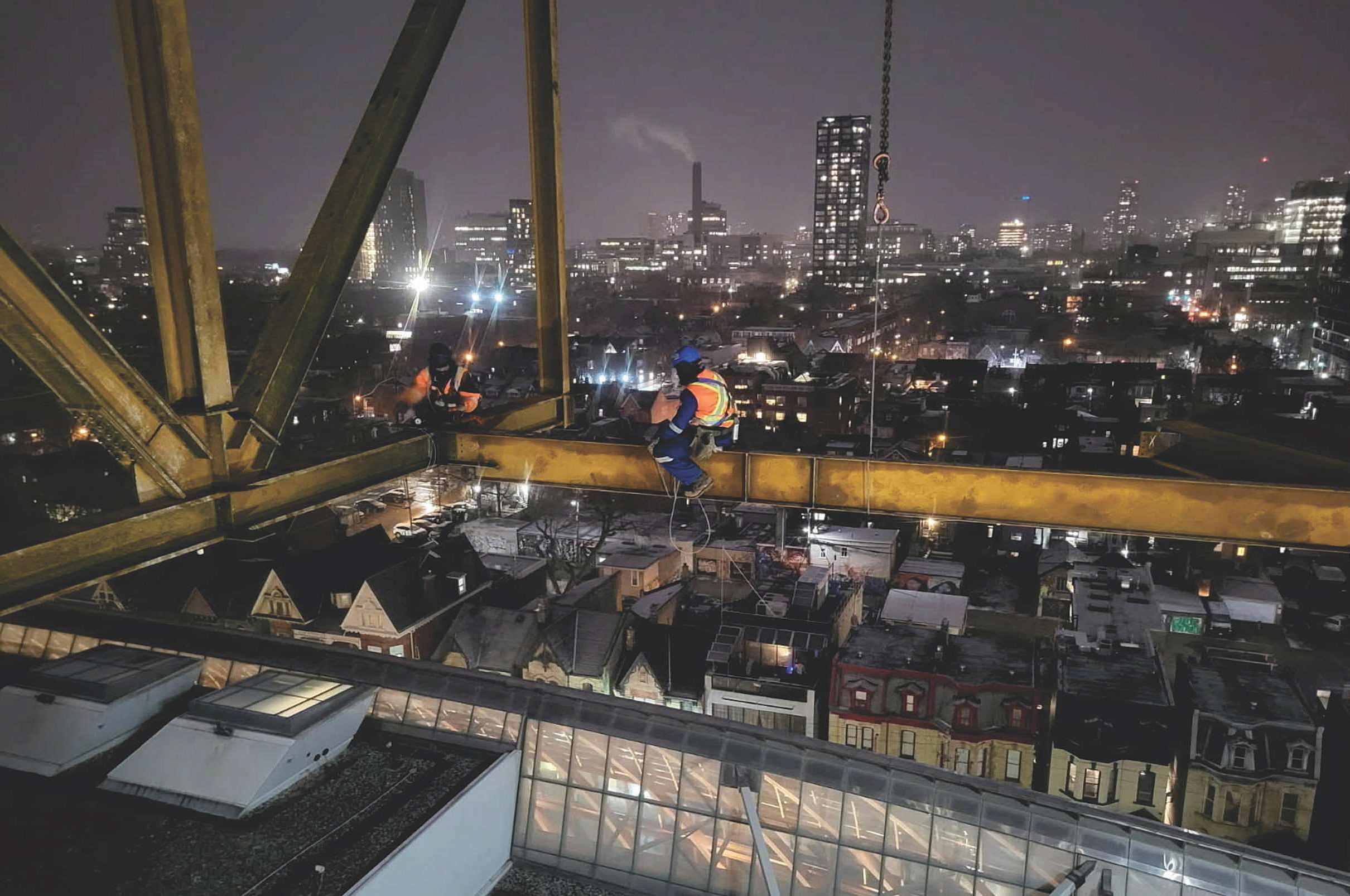


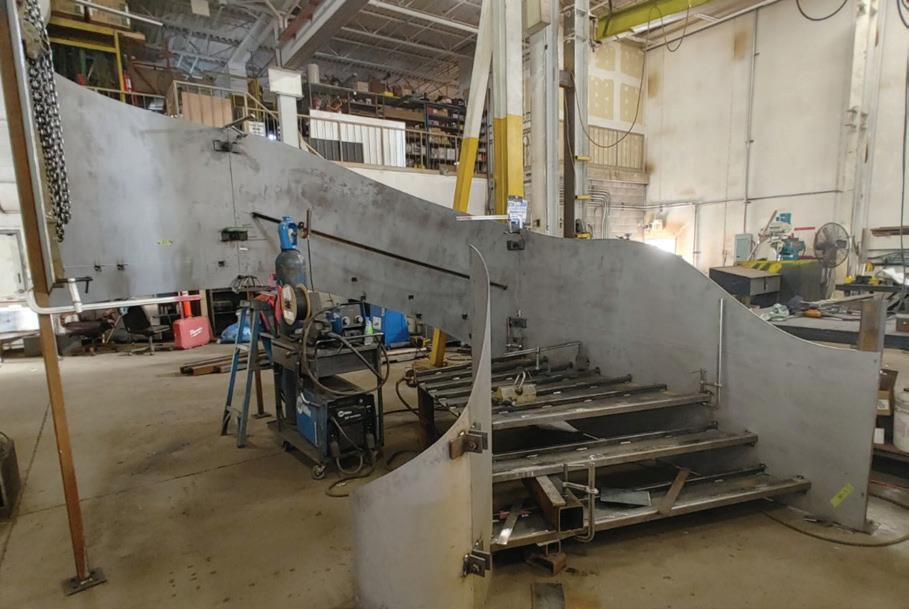
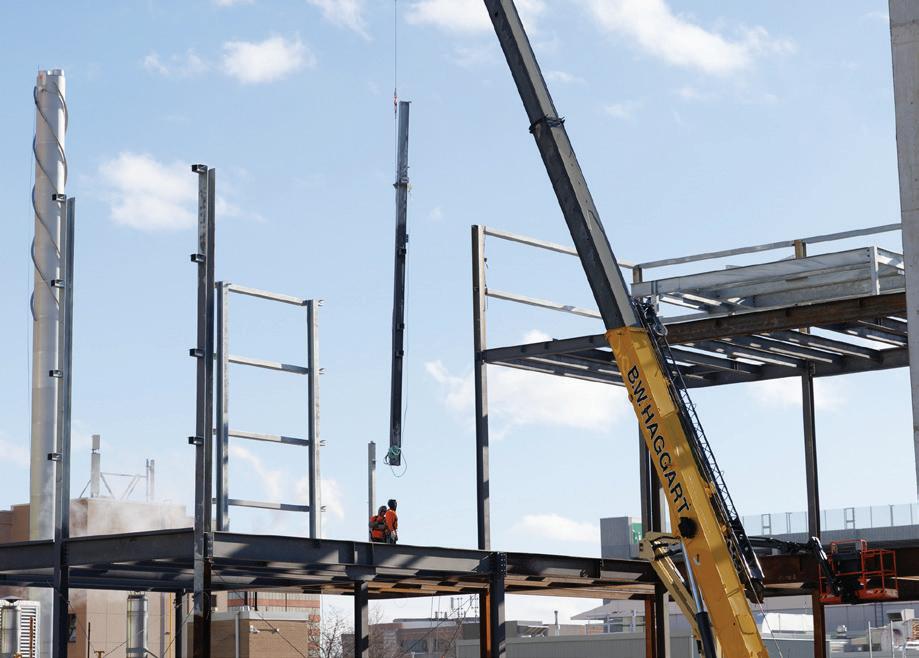
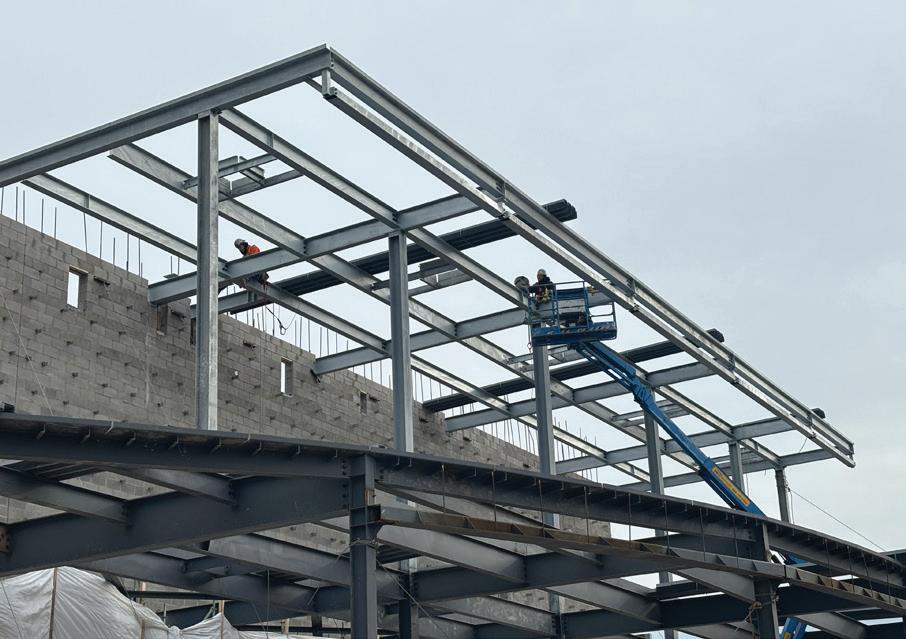
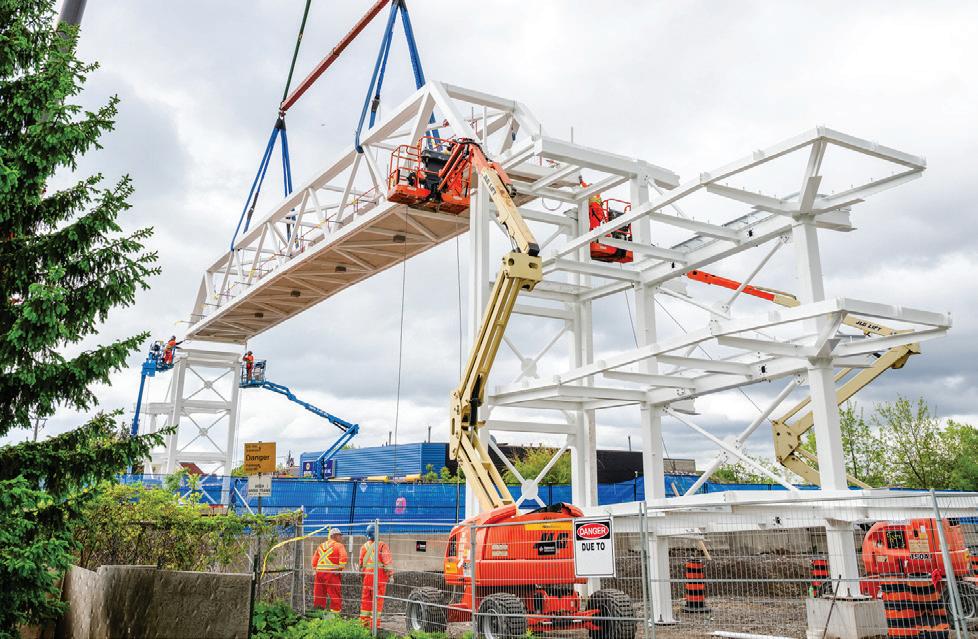
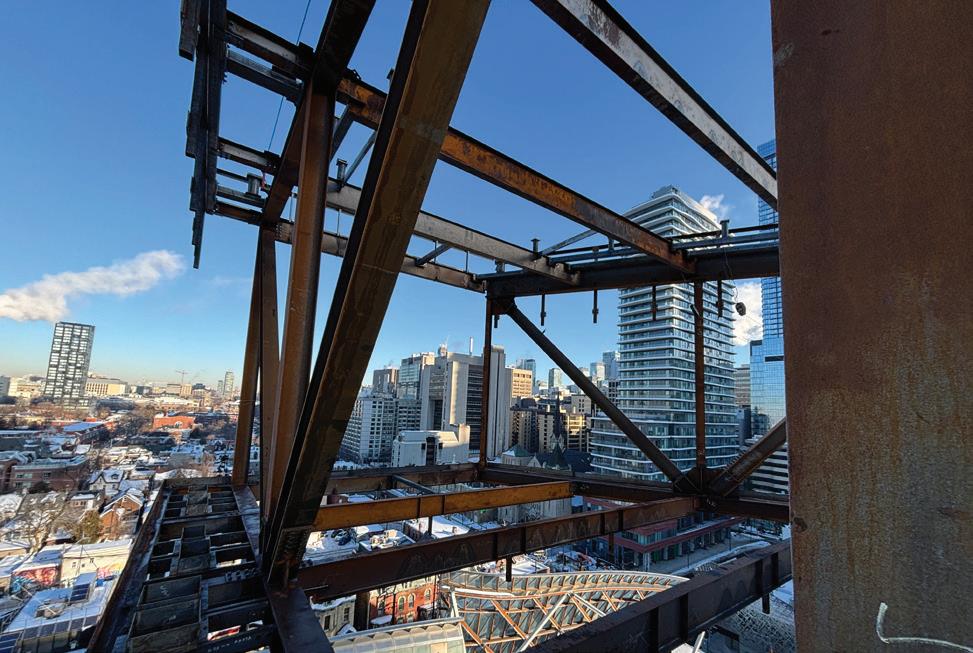
Time To Brace Yourself

Canada’s structural steel industry adapts to trade pressures as fabrication, supply chains, and infrastructure projects evolve
by ROBIN BRUNET
It’s no secret that Canada’s structural steel sector had its fair share of challenges in 2025. The question is, what will this year bring? That was very much on the mind of Mitchell Redshaw, marketing and communications co-ordinator at the Canadian Institute of Steel Construction (CISC), when approached for his thoughts. “The problem with the call for us to find other markets in order to reduce the effects of Washington’s tariffs is that no other international trading partner can fill the void of the U.S. market, which we have long-established supply chains with,” Redshaw says.
“As a result, we’re hoping for some kind of deal between Ottawa and Washington. In the meantime, we’re advocating for strategic policy responses to support the sector. The sector recently saw some relief with a necessary tariff exemption for wide flange beams, which are not made in Canada and are primarily imported from the U.S. and which we need to complete construction projects.”
In November, the CISC applauded the federal government’s announcement of enhanced trade measures to protect Canada’s steel industry, in the form of introducing global tariffs of 25 percent on targeted imported steel derivative products and formally recognizing the critical role of the steel fabrication sector. Ottawa also announced it will work with railway companies to reduce freight rates for transporting Canadian steel by 50 percent, beginning in Spring 2026.
“We look forward to working closely with the government on the implementation details and forthcoming ‘Buy Canadian’ policy, to ensure these
policies deliver maximum benefits for Canada’s steel fabrication sector and the tens of thousands of workers in it,” says CISC president and CEO Keanin Loomis.
Loomis also favours elements of the new federal budget intended to strengthen the long-term competitiveness of Canada’s steel construction industry. These elements include $115 billion in infrastructure investments over five years and $25 billion over five years for housing. The budget also supports a Buy Canadian procurement policy, including $98.2 million to fund the implementation of the new Buy Canadian Policy and $79.9 million for the new Small and Medium Business Procurement Program. Additionally, $5 billion will create the Trade Diversification Corridors Fund. This fund aims to develop infrastructure to move steel products to global markets, strengthen supply chains, and unlock new export opportunities. Loomis remarks that these measures will help “keep Canadians working during this critical time.”
Redshaw says his organization will continue to advocate in 2026 for “the implementation of domestic procurement requirements for publicly funded construction projects that leverage federal funding; government investments into new public construction and infrastructure projects to support businesses, provinces, and municipalities that commit to using Canadian steel products; and for the federal and provincial governments to work with industry to diversify Canada’s export markets.”
Tariff troubles aside, prominent steel companies continue to work on high profile projects, one example being Canam’s involvement in the South Common
Community Centre renovation in Mississauga, a hybrid construction project combining concrete, steel, and mass timber. In addition to helping ensure a seamless integration of the three materials, Canam also helped organize the provision of Glulam beams from Europe, since the supply of such oversized products is limited in Canada. The renovation is expected to be completed sometime in 2027.
Another recent project for Canam was the office and garage rebuild of Usine Sartigan Inc. in St. Honoré-de-Shenley, Quebec. This project required 32 Murox prefabricated steel wall panels, 30 tons of structural steel, and 16 tons of joists. The steel components were installed in a limited space in order not to interrupt production in the existing factory.
One of Canam’s most high-profile undertakings of late is the three-phase $870-million project to replace the Montreal Olympic Stadium’s roof and technical ring, which in October entered its second phase. Canam’s work included dismantling pipes, cylinders, and some anchor boxes; manufacturing and supplying a mock-up of the new technical ring; supplying steel for the new technical ring, perimeter roof, and interior roof; and fabrication and installation of the new ring and roofs. The upgraded Stadium is expected to be completed in 2027.
Another company with a recent tally of high-profile projects is Wesbridge Steelworks of Delta, B.C., which typically supplies and installs for projects with an annual capacity ranging up to 3,000 tons. It recently supplied the concrete- and steel-framed roof over the Mall Living Room of the massive Oakridge Centre redevelopment in Vancouver. It also contributed to the Royal Columbian Hospital
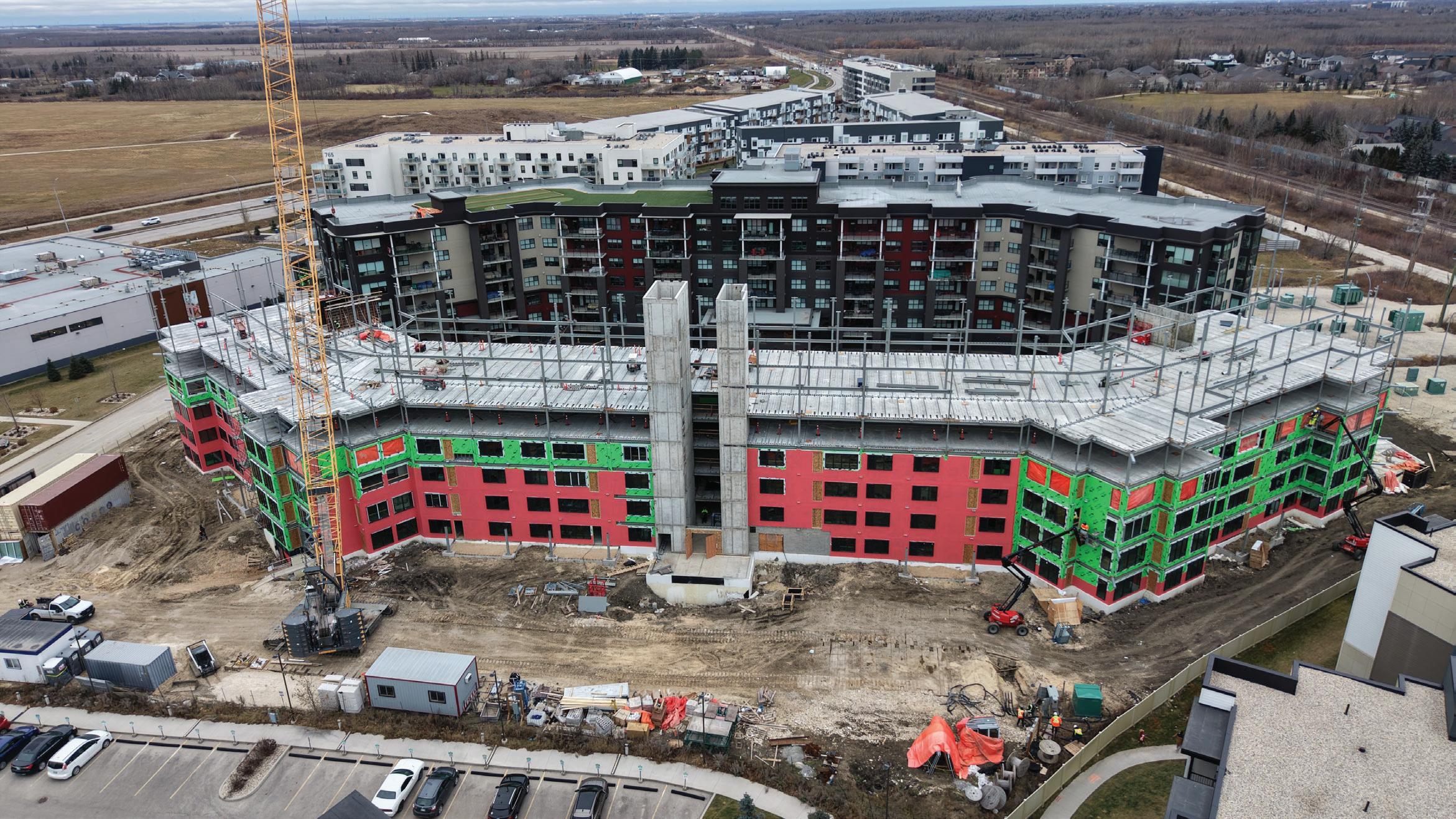
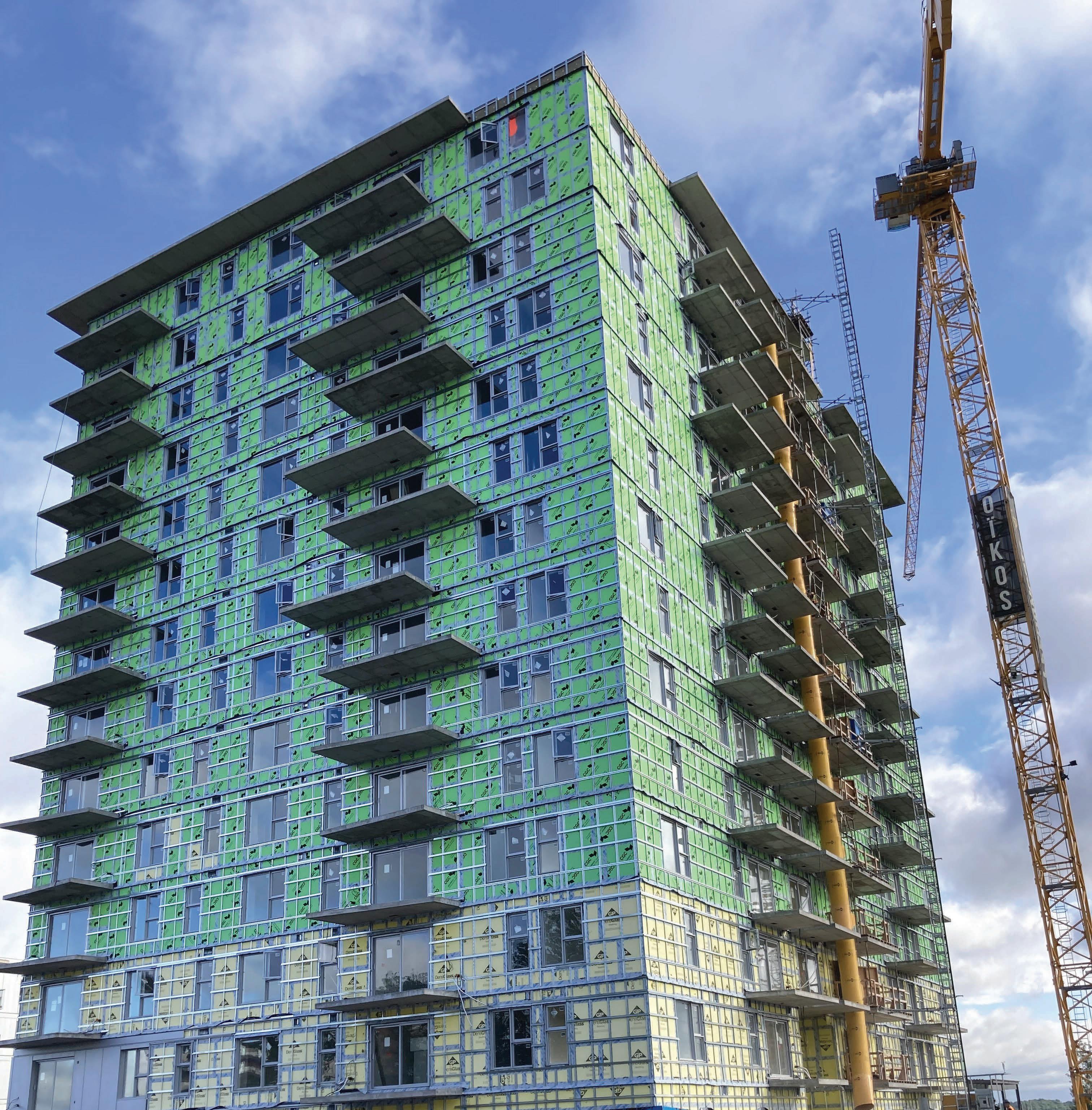






redevelopment in New Westminster, now in its third and final phase of construction. For this project, it supplied a concrete- and steel-framed addition: a vent stack that was assembled on the ground and lifted into place by crane. Also, a connector bridge with a steel-framed multi-level bridge corridor was constructed to link to the existing hospital.
In Toronto, the $130-million Royal Ontario Museum’s OpenROM renovation project retained Ontario-based Benson Steel as its structural steel partner, in order to supply, fabricate, and erect major steel and mass timber systems for the Museum’s project upgrades. The renovation of this 86,000-square-foot facility, which began in 2024 and is scheduled for completion in 2027, will create more than 6,000 additional square feet of new gallery space on the second and third levels. But the standout feature by far is a foyer that will lead to a soaring, fourstorey atrium capped with a sweeping, high-performance diagrid glass ceiling.

As challenging as 2025 was for the steel sector, some companies were not affected at all by the U.S. tariffs and enjoyed brisk business, along with new growth opportunities anticipated this year. That is the case with SteelBuilt Corp of Stouffville, Ontario, whose long-standing pride in being 100 percent Canadian from ownership to manufacturing and engineering has taken on added importance in the current business climate. As its website states, “No tariffs, no import fees, no exchange rates; only the best of Canadian craftsmanship.”
John Cabrelli, project estimator at SteelBuilt, says, “We had a very busy 2025 and we’re excited to hit the ground running in the spring of 2026. One ongoing project for us is Smash Pickleball Collingwood, which is half-pre-engineered and half structural steel in terms of design, and is architecturally angular and complex. The steel for it is coming from Hamilton, and it will take a good portion of 2026 to get it closed in.” This 15,400-square-foot facility, which will contain five courts, a café, and a pro shop, is considered world-class for the fastgrowing sport.
But perhaps more importantly, SteelBuilt continues to expand on its specialty of offering barndominiums as a home option through BarndoCanada, part of the SteelBuilt Corp group of companies, headed by Marc Reynolds. Barndominiums are designed to last a lifetime and are assembled on concrete foundations. SteelBuilt has evolved the concept to provide considerable versatility and all-important curb appeal, and the company has designers and trades from coast to coast to handle any project. “BarndoCanada homes are built in as little as two to four months, at a much lower cost than traditional residential construction. Cost efficiency, speed of build, and strength and durability are just a few of the advantages of building a Barndominium.
As far as Hellen Christodoulou, president and CEO of the Canadian Galvanizing Institute (CGI-IGC), is concerned, 2026 will be a banner year for her organization. She believes it will be a game-changer for the country’s architecture, engineering, and construction community. She explains: “As governments invest in sustainable infrastructure, as architects and engineers seek clarity and innovation, and as fabricators push to strengthen domestic capacity, one critical element has been missing in our national ecosystem. That element is a unified, technically credible, industry-driven institution dedicated to galvanizing and steel protection.”

Galvanize Better.
Why Galvanize?
Maximum Protection
Galvanizing forms a durable barrier against corrosion, for prolonged structural integrity.
Maintenance Free
Galvanizing offers the optimal and best performing protection saving time, resources and money.
Longer Lasting than any Coating
Galvanizing guarantees longevity against corrosion and wear, more than any other coating, as confirmed by industry and indicated in codes.
Best Return on Investment
Galvanization delivers an unmatched value, a cost-effective solution, maximizing your investment and peace of mind.
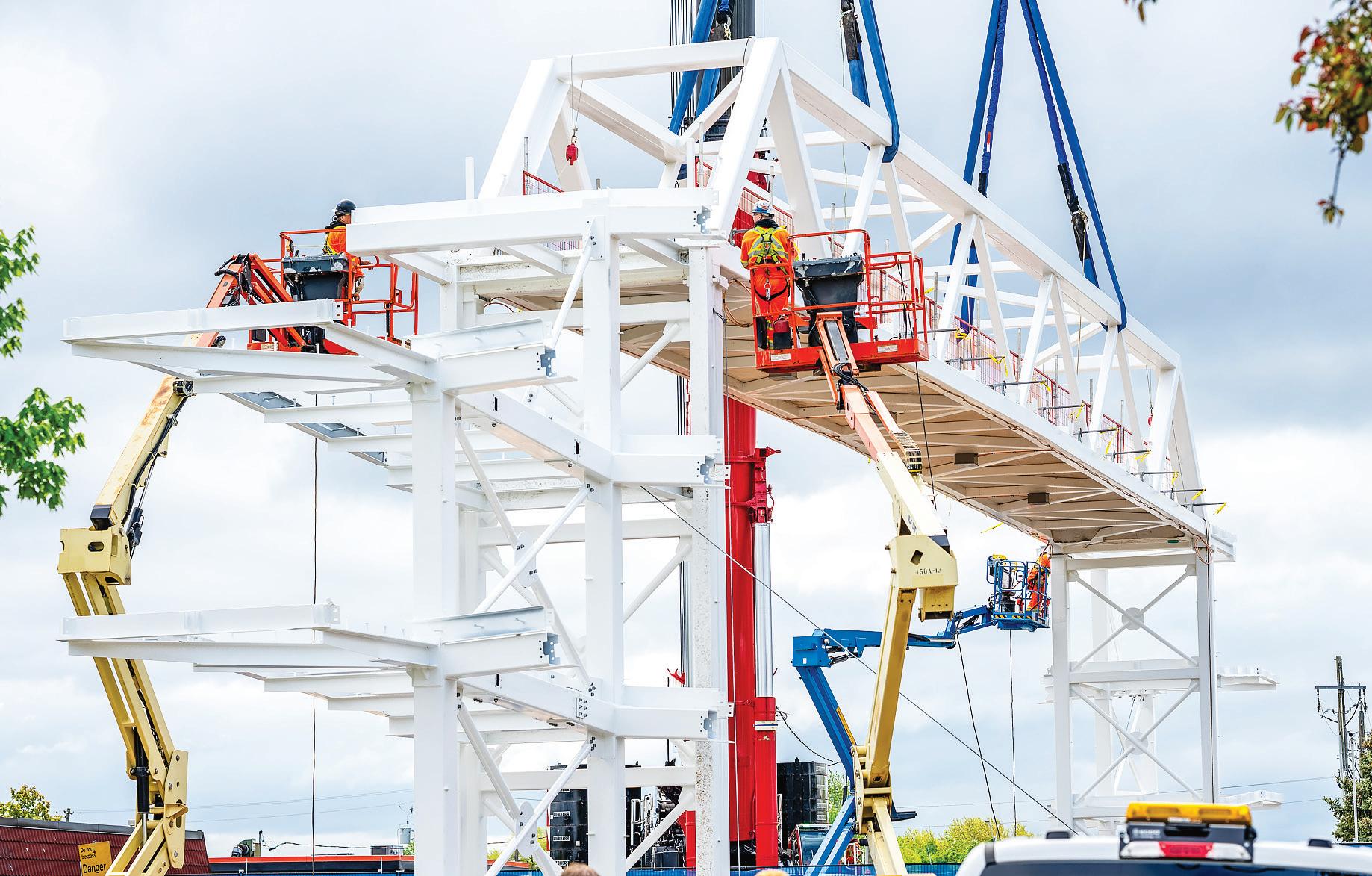
“The creation of the Canadian Galvanizing Institute fills this gap and does more than simply represent galvanizers. Its purpose is to transform how Canada designs, builds, protects, and sustains its infrastructure.”
The CGI-IGC is uniquely positioned to become a national force for innovation, a credible technical partner for designers, and a collaborative body that bridges steel, concrete, coatings, welding, and sustainable procurement. Christodoulou expects
its impact will extend beyond galvanizing plants. It will be the first fully integrated network linking structural steel institutes and fabrication associations, universities and research laboratories, and other leading construction organizations.
As a result, the CGI-IGC in the architecture and engineering realms is specifically mandated to provide technical leadership, develop Canadianspecific guidelines, and publish modern standards that designers can rely on with confidence. This will eliminate guesswork, reduce design risk, and enable more innovation in both structural steel and reinforced concrete systems.
“We’re committed to moving the industry forward and putting the days of, for example, piggybacking on grossly outdated U.S. standards behind us,” she says. Indeed, Canada’s galvanizing specifications are currently scattered across multiple standards (CSA, Transport and Infrastructure Ministries, SSPC/NACE, ASTM). Many designers have long asked for harmonization of coating and galvanizing requirements, Canadian-specific guidance rather than U.S.-centric defaults, practical detailing and inspection standards, and guidance that reflects Canadian climate and project realities.
Christodoulou concludes, “Considering the galvanizing industry touches every corner of this country’s built environment – from bridges and buildings to transportation systems and waterworks – we intend to influence the next generation of Canadian infrastructure development. To that end, we’ll launch a major media blitz highlighting our purpose by mid-2026.” A

Erection of the Drury Lane Bridge, Burlington, ON.
SOAKING IT IN
Plumbing companies are transforming homes, blending craftsmanship and innovation to create more enjoyable living spaces
by ROBIN BRUNET
Creativity and bold design are too often credited to young talent, but in the residential plumbing category at least, some of the most intriguing new products are from companies over a century old.
Nowhere is this more evident than at Kohler, which for more than 140 years has brought style and functionality via its kitchen and bath products, wellness products, and services. For example, in 2024 it launched Rista, a 3D-printed bathroom sink; Kohler’s revolutionary method of 3D printing vitreous china was augmented by hand finishes from skilled artisans, making each sink unique.
More recently, Kohler partnered with Control4 to help deliver a new level of connected luxury shower experiences at home. Launched in September of 2025, the integration of Anthem+ with Control4 brings together Kohler’s advanced water delivery technology with Control4’s robust automation platform. This allows people to automate their shower as part of whole-home daily routines, customize settings to suit individual users, and activate personalized presets with voice or mobile app control.
Anthem was already known for its spa like features, but Anthem+ now includes control of Invigoration Series steam, SoundTile shower speakers, and an ice shower function, all intended to rejuvenate the senses. Plus, the smart showering platform automatically displays water usage after every shower.
Kohler was also recently responsible for launching something that could eventually become a residential trend in the wellness category: premium indoor and outdoor saunas, contemporary structures available in small, medium, and large configurations to accommodate individual relaxation or a shared wellness experience.
Masco Canada Limited, too, is more than a century old, yet through the brands it represents it continues to inspire the design of homes across the country. In November, the Delta Essa Touch2O with Touchless Technology was named a Winner in the Kitchen and Bath Category of the 2025 CIPHEX West Show New Product Showcase, which highlights new and innovative products and technologies.
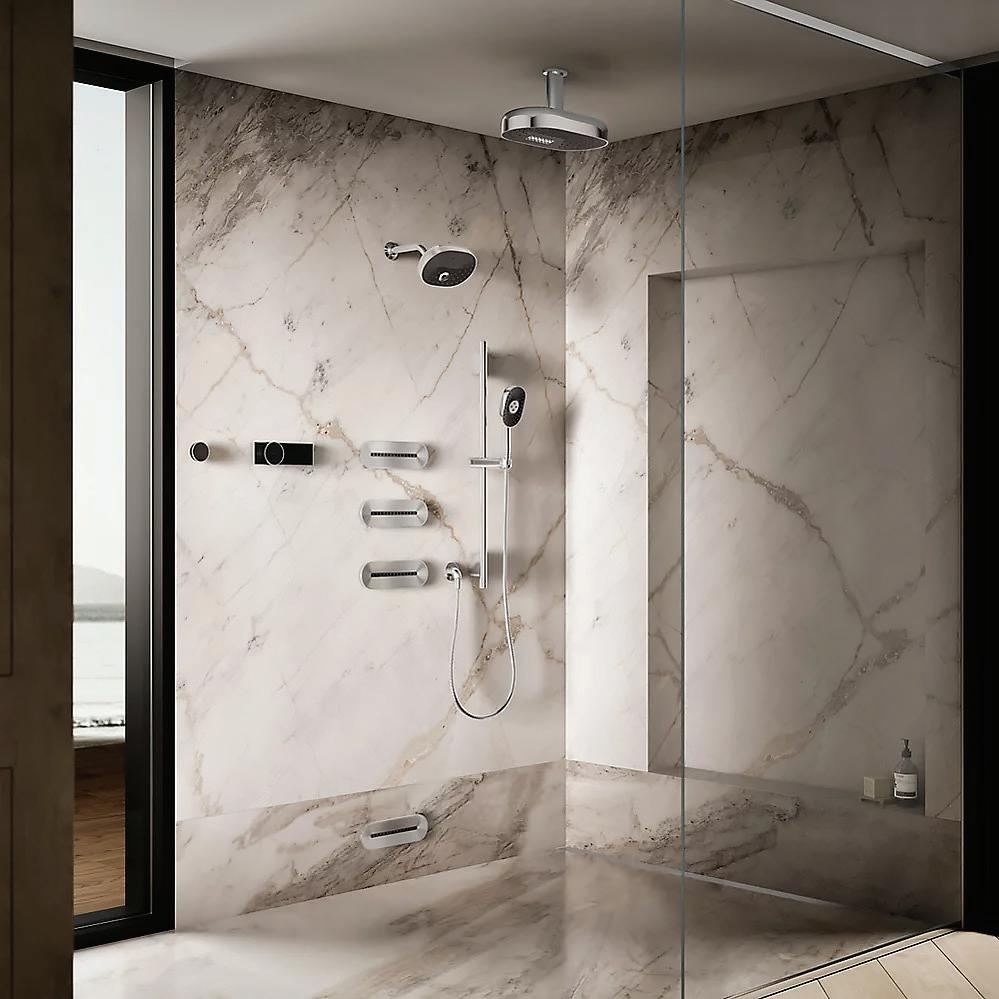

Lindsay Barber, president of Masco Canada, closed 2025 by recapping the company’s presence in the Canadian building and home improvement market: “We’re always excited to introduce new products and technologies that deliver better living possibilities and are incredibly proud of our breadth of offerings across these brands,” referring to Delta, Mirolin, Brizo, Hansgrohe, Axor, Peerless, Waltec, Delta Commercial, Master Plumber, and many more.
Examples of recently released plumbing solutions include the new Beauclere Bath Collection from Brizo, whose design cues from British manor homes impart a stately, bespoke appearance to any residential bathroom. On a more utilitarian and performance-related level, Master Plumber’s new Premium Elastomer Toilet Gaskets, available only in Canada, do not freeze or melt, making them perfect for homes in colder climates and/or those with heated floors.
The Anthem+ smart showering plaform from Kohler, featuring Control4 automation.
Yet another century-old company in the Canadian residential plumbing realm is Blanco Canada Inc., which has consistently anticipated emerging trends and embraced innovation in its chosen focus on kitchen solutions. Edyta Drutis, vice president, brand marketing, North America for Blanco, cites one recent launch of particular interest: the new Inteos workstation sink designed to simplify workflow.
With a curated selection of accessories and a thoughtfully planned range of sink models, Inteos maintains a clean, uncluttered design while offering maximum workstation function. This product was developed to fit into every Inteos sink model, regardless of size or material (every model is available in stainless steel or Silgranit, with size options of 30, 33, 39, and 45 inches). A simplified offering with oven-safe trays defines the accessories, which were designed for frequent use (they can be stacked to one side or stored neatly below in the Inteos Organizer Bag, thereby keeping the workstation organized and clutter-free).
Further innovation is achieved by pairing Inteos with a sleek BlancoCulina II faucet, water filtration system, garbage disposal, and clever under-sink storage solutions to create the Inteos Blanco Unit, marketed as the ultimate culinary powerhouse. This cohesive solution redefines kitchen efficiency, turning everyday workflows into exceptional kitchen experiences. Culina II faucet has sophisticated details like dark inlays and a sleek magnetic spray holder, giving this second-generation product a striking, contemporary look.
Unsurprisingly, the Inteos workstation sink and the BlancoCulina II faucet (along with Blanco’s Universal Bag and Storage Caddy) received 2025 Red Dot Product Design awards, which honour products that stand out for innovation, function, and design excellence. “These awards underline once again that we have developed a design language within our Blanco DNA, which is now manifested throughout our products from the faucet to the base cabinet,” says Marcel Moritz, head of design and innovation at Blanco. “We aim to create the perfect balance of aesthetics and function to make everyday kitchen life more convenient and enjoyable, while also offering a visible premium value and experience.”
Pedro Perez, business manager at Stylish International Inc., notes that of the extensive new product offerings (or upgrades of existing products) his company unveiled in 2026, the most significant is the introduction of the Onyxo sinks series.
“Finished in exclusive nano graphite black Duratek, Onyxo is the ultimate expression of luxury and performance for the modern kitchen,” Perez says. “Crafted from premium embossed steel, it is scratch, stain, and rustproof, with advanced surface technology that repels fingerprints and watermarks. Also, its custom-fitted accessories are a perfect colour match with the sink, helping to turn everyday prep into a seamless and elegant experience.”
Other products of note include the Versa K+ series, an upgrade of the company’s Versa workstation series now enhanced with black matte accessories; and the Pietra K+ series composite granite sinks, which feature an extra cutting board in black for outstanding beauty. Outdoor and concealed sinks include the Elevare series, built for durability with insulated walls, and with foldable faucets to save space; and Stylish’s bathroom collection, which includes the compact and elegant P-205, P-211H, P-229H sinks as well as (and new as of January 2026) the B-113, B-114, B-124 faucets, featuring the B-114 Aleen. “That’s our new pull-out faucet innovation,” Perez says.
Under the American Bath Group’s umbrella are several companies renowned for the thoughtful approach they take in product development. One is Maax, North America’s largest bath product manufacturer, responsible for such developments as the easy-to-install and crackproof Utile shower wall panels, plus the AcrylX bathware finish that provides a truer, brighter white finish and increased surface durability.
Another member of American Bath Group is Quebec-based Produits Neptune, whose philosophy is that since the bathroom is an essential part of daily life, it’s important to develop beautiful products in an environmentally friendly fashion (it is the first North American bathroom products manufacturer to obtain both Level 1 and Level 2 Ecoresponsible certifications).
In addition to surrounding its customers with beauty, Produits Neptune has released products that result in cost savings, are suitable for new construction projects, and acknowledge the aging-in-place trend that is growing across Canada.
Sarah Bernard, product development manager, explains, “For example, our Viva Glue-up scratch-resistant wall tiles come in a compact box containing five tiles covering just over 17 square feet, making them very easy to load in one’s car. They can also be glued over existing tiles and are very customizable, with the ability to be cut into any size for any dimension or living space. Viva is a good example of us always looking for ways to save on installation time, which in turn results in cost savings.”
In terms of imparting opulence to bathrooms, Produits Neptune offers the Galatea product collection. “This series, which was launched last year, is
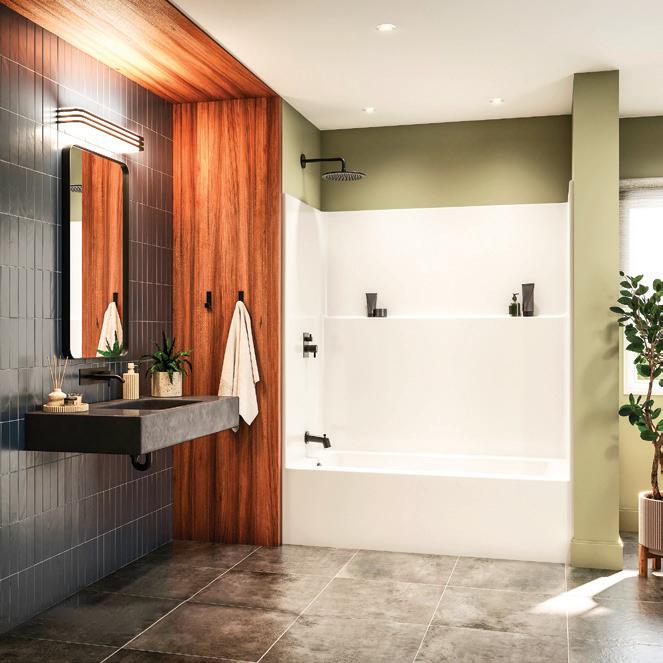
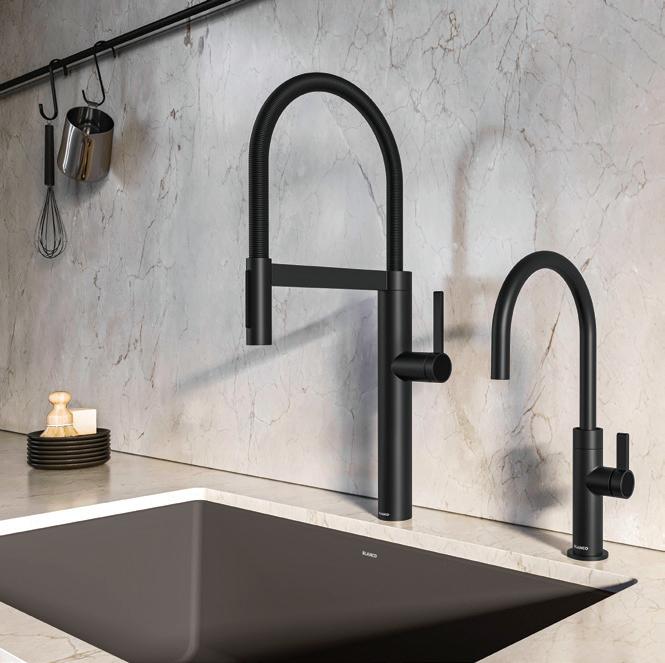
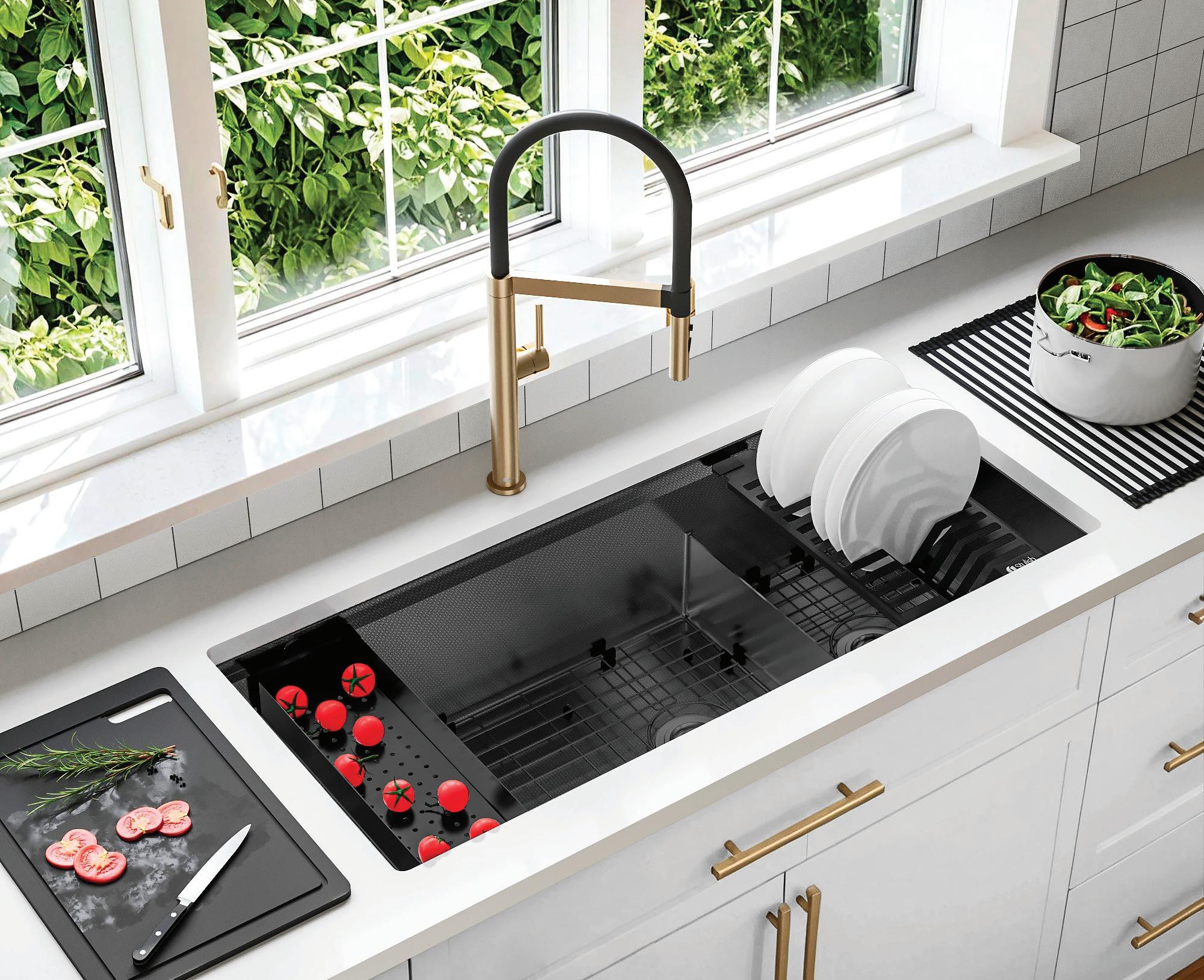
all about giving users a textural experience, and includes transparent tubs, suspended tubs, solid surface tubs with an especially velvety feel, in addition to eye-catching shower bases and vanity consoles,” Bernard says.
Each piece is carefully fashioned using top-quality materials: a blend of limestone and advanced polymers creates a non-porous, durable, and seamless surface. Quality also equals resiliency and the velvety smooth surface is resistant to stains, impacts, and scratches, while the solid surface bathtubs retain heat longer than standard tubs.
By contrast, Produits Neptune’s Entrepreneur Series is an affordable solution for new construction or renovations, thanks to hassle-free installations tailored to suit specific needs.
“We’ve also addressed the growing trend of aging-in-place in the Galatea product collection by offering grab bars and teak wood benches with suction cups, designed along the same high aesthetic standards as our other products in order to get away from the institutional look of these kinds of products,” Bernard says.
Finally, in the realm of providing domestic hot water and space heating to buildings, Aqua-Tech Sales & Marketing Inc. is currently in its fourth decade of being the Canada-wide master distributor for Lochinvar Boilers and Water Heaters (except Quebec). Lochinvar’s range of products includes gas, electric, and heat pump water heaters, boilers, and pool heaters.
Aqua-Tech president Darryl Singleton and Grant Erickson, VP sales and marketing, report that one trend in the plumbing and heating market almost sure to gain further traction this year is hybrid heating systems. “Specifically, natural gas is being integrated with heat pump systems,” the former explains.
Singleton adds, “These hybrids enhance Canada’s grid resiliency, and they’re a good example of the wise policy of not putting all the eggs in one basket when it comes to providing heating systems to residential homes.”
As for business at Aqua-Tech, Singleton says, “The counter-tariffs to the tariffs imposed against Canada by the U.S. affected us directly in 2025. But we also enjoyed our largest-ever increase in sales thanks to us finding avenues to mitigate the threat. At the end of the day, the need for HVAC is perpetual, and we’re grateful to serve Canada’s high-rise residential sector along with longterm care facilities and even military bases.” A
The Galatea product collection from Produits Neptune.
The BlancoCulina II faucet from Blanco Canada Inc.
The Onyxo sinks series from Stylish International Inc.
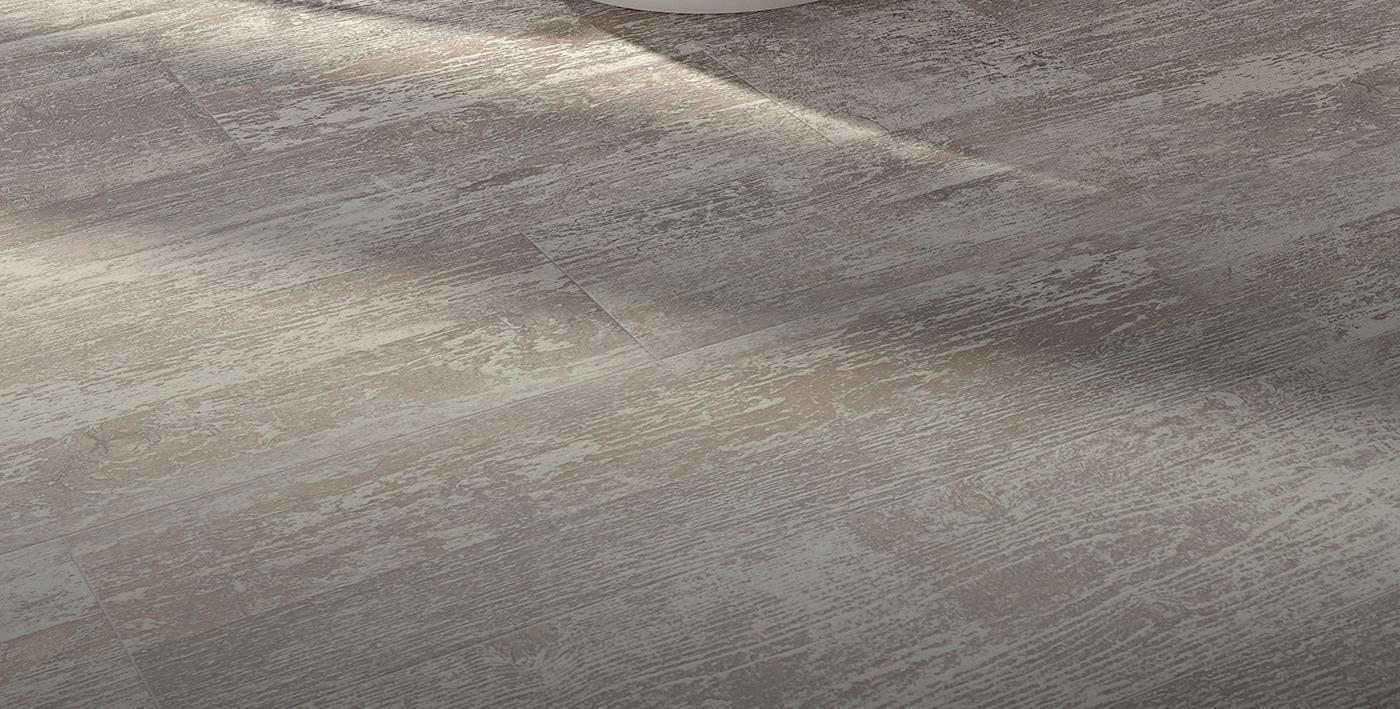
produitsneptune.ca
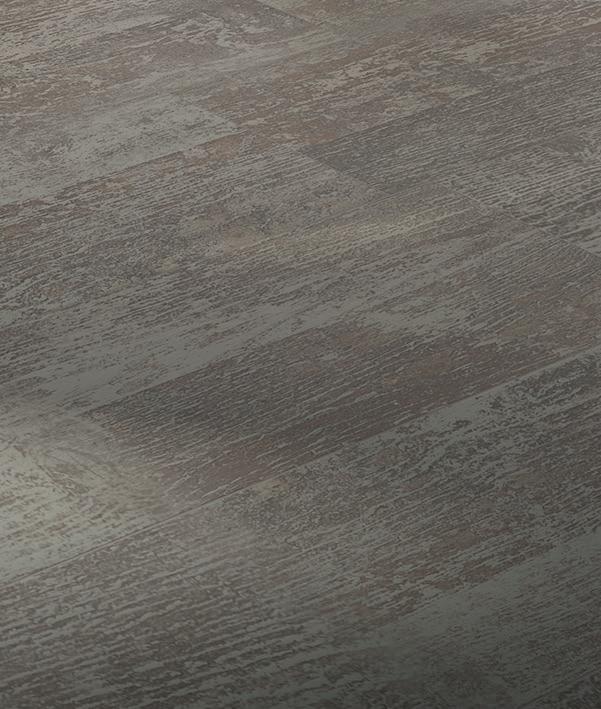
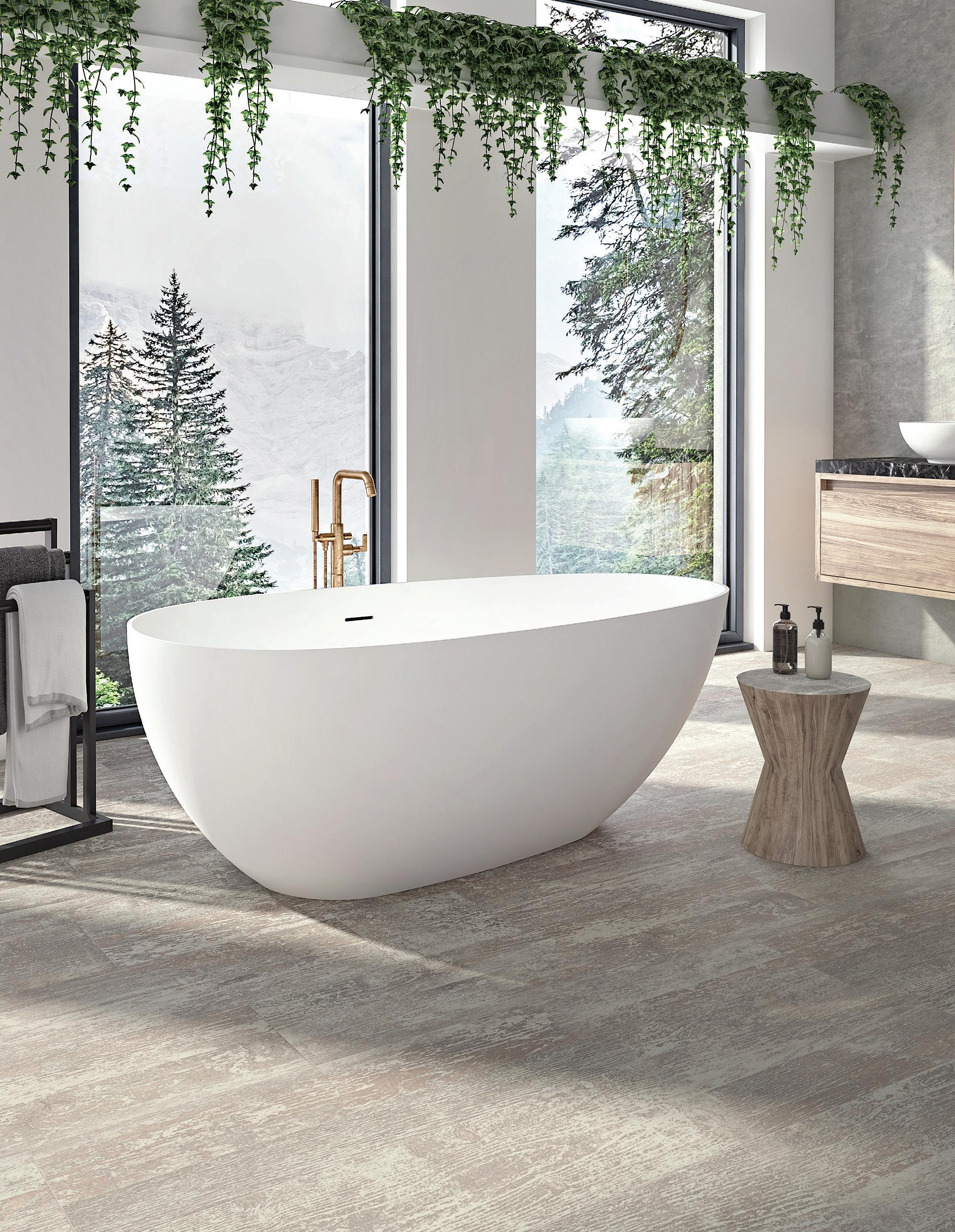
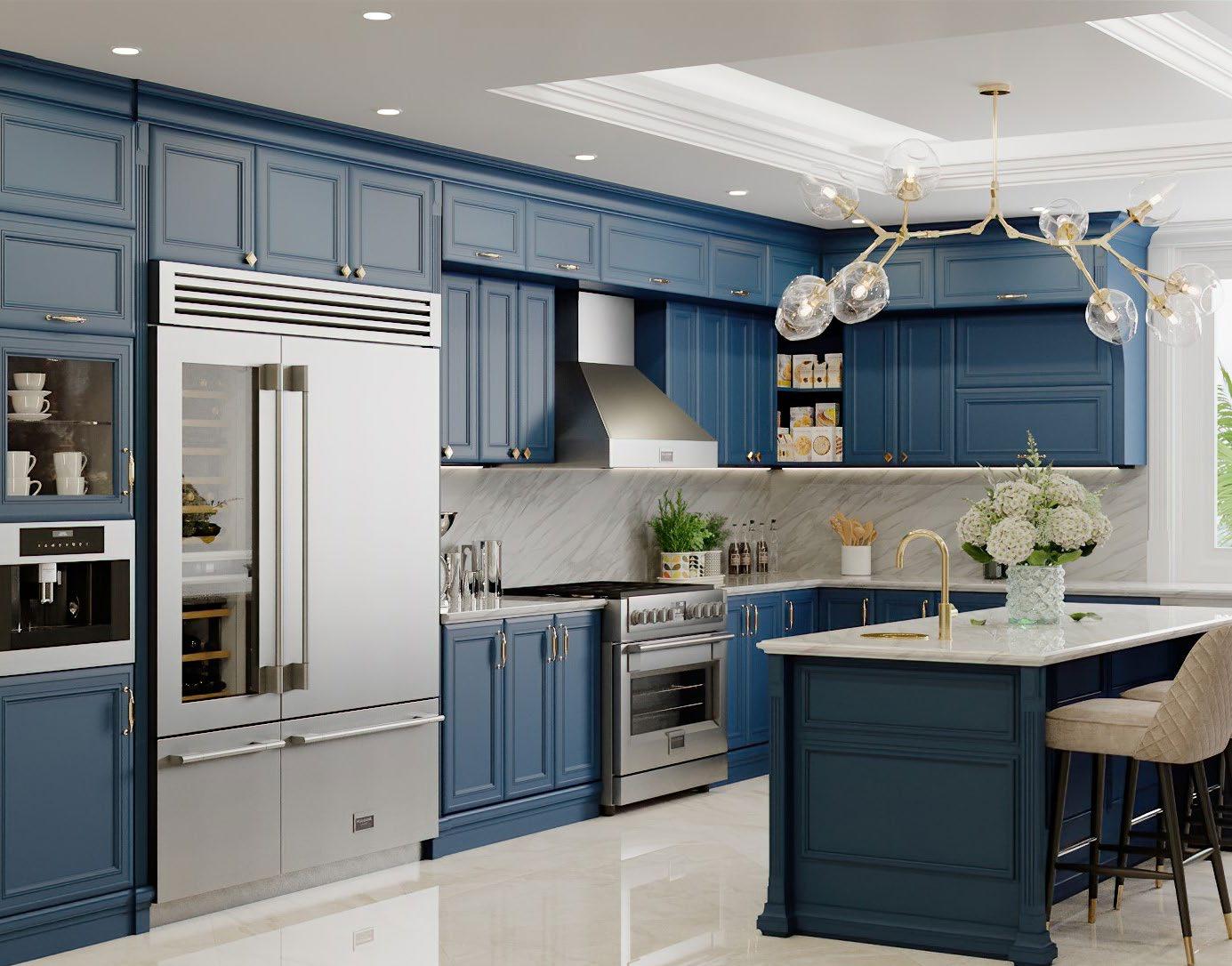
JUNIOR ACOUSTICS

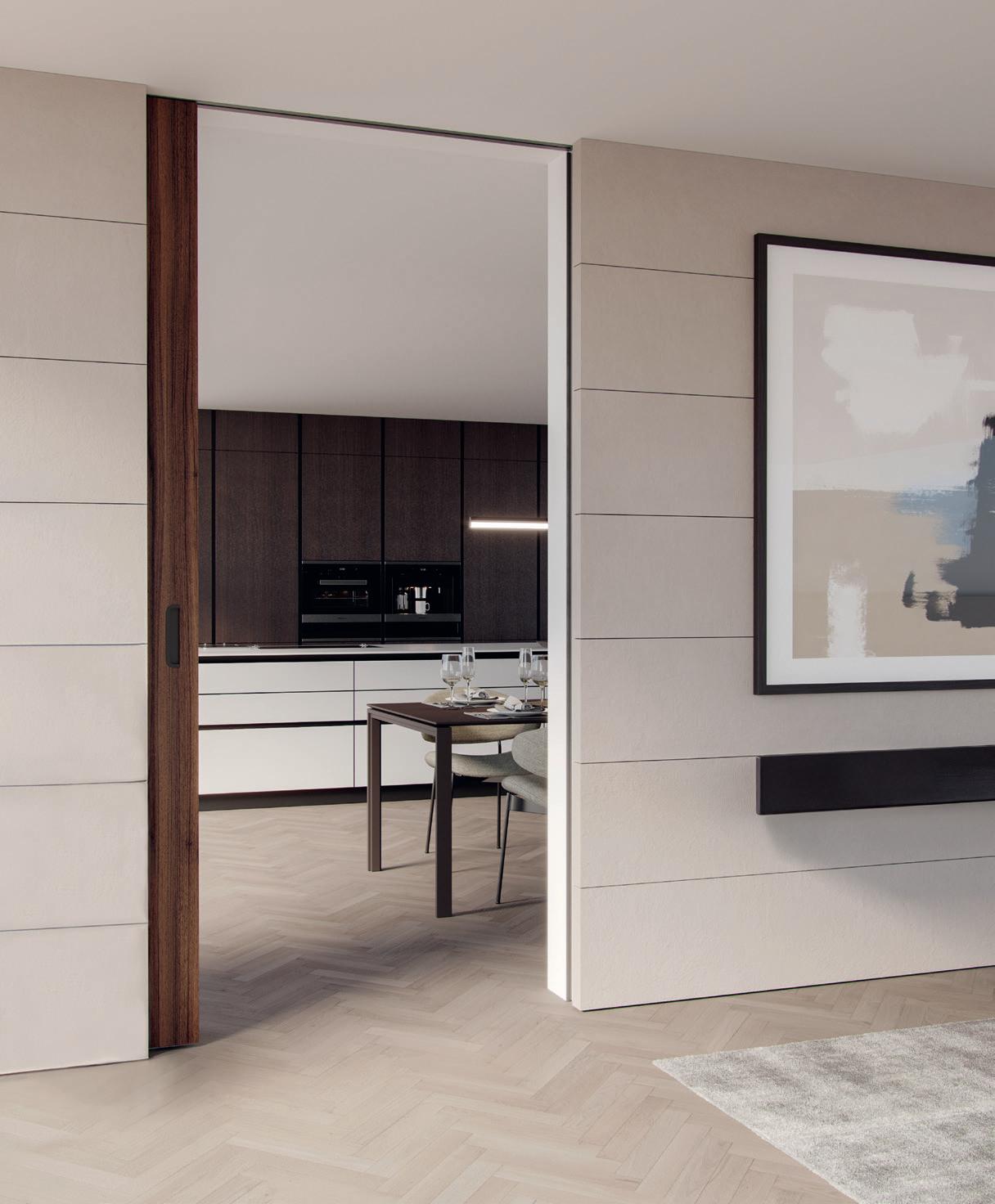
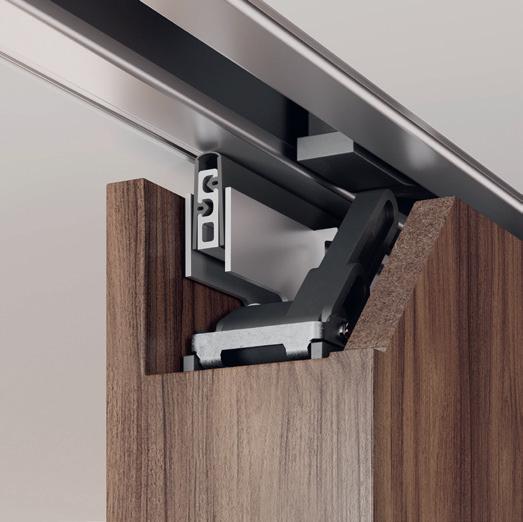
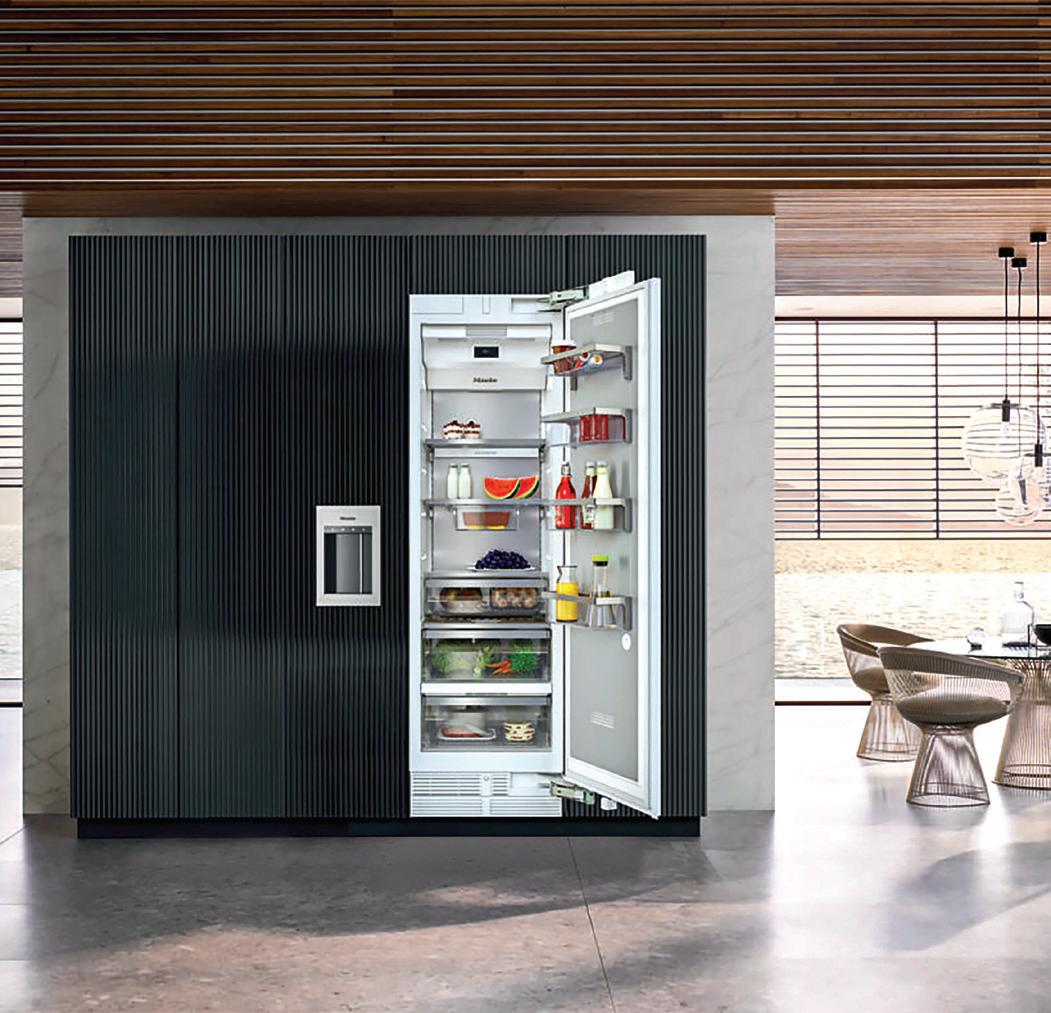
Mastering The Modern Home
Appliances today offer unmatched efficiency and smarts that transform everyday living
by LAURIE JONES
As design footprints shrink and “less is more” lifestyles take hold, appliance manufacturers are rethinking how products fit into more efficient spaces.
TJ Sajan, director of builder sales at Trail Appliances, notes that in today’s modern homes, where design and performance go hand in hand, the Samsung Bespoke All-in-One Washer Dryer combo offers a refined and highly efficient laundry solution. “By combining washing and drying into a single, streamlined appliance, it eliminates the need to transfer clothes between machines, saving time and simplifying everyday routines. This makes it an ideal choice for busy households, apartments, and spaces where efficiency matters most.”
Sajan explains the unit’s generous 6.1 cu. ft. capacity easily accommodates large family loads and bulky items, reducing the number of cycles needed each week. At the heart of its performance is Samsung’s AI Opti Wash & Dry technology, which automatically senses fabric types and soil levels, adjusting settings to deliver optimal cleaning and drying with minimal effort from the user.
Ease of use is further enhanced through smart features such as a sleek seven-inch LCD display, voice control compatibility, and Wi-Fi connectivity via SmartThings, allowing users to manage laundry remotely with confidence and ease. The ventless
heat pump drying system dries clothes gently while using less energy and requiring no external venting. Operating on a standard 120V outlet, installation is flexible and convenient. Flex Auto Dispense, capable of holding detergent for up to 47 loads, completes the experience with true set-it-and-forget-it convenience.
Middleby Residential Canada has introduced Viking Veil Integrated Refrigeration, a system conceived as a seamless extension of the kitchen itself. “This unit is adaptable to any lifestyle and customizable to any design vision,” says Blair Bishop, regional sales manager. “With reveals as slim as ¹/8 inch, the system delivers a true built-in, furniture-like aesthetic that disappears into surrounding cabinetry. Inward-opening doors allow for hinge-to-hinge installation, maximizing access and flexibility while maintaining the clean, uninterrupted lines designers and homeowners demand.”
Bishop says that beneath the refined exterior is advanced engineering developed exclusively for Viking. “The Plasmacluster Ion Air Purification technology actively eliminates airborne bacteria, mould, and odours, extending freshness and improving overall food preservation in select configurations. The lateral cooling technology ensures even air circulation and consistent temperatures across every compartment, minimizing spoilage, and maintaining optimal conditions throughout the interior.”
Additionally, a stainless-steel back wall reflects top- and side-mounted LED lighting to enhance
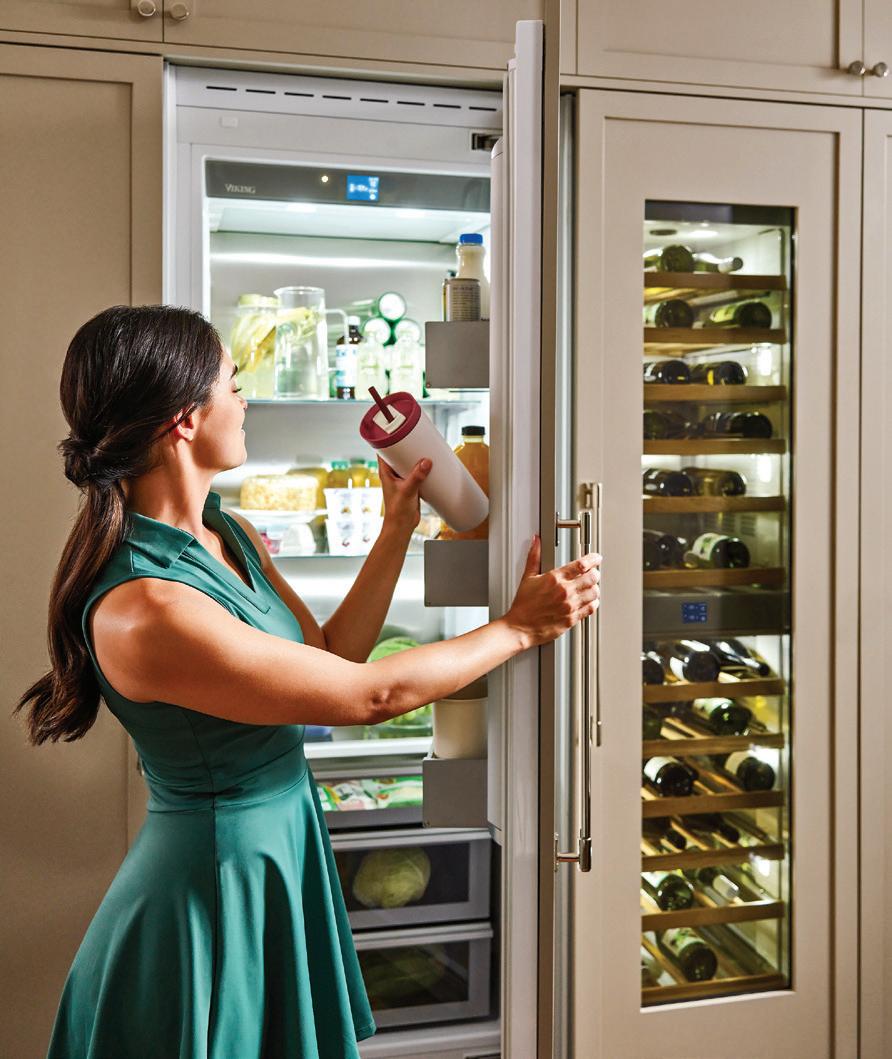
visibility while reducing energy consumption. A full-colour Smart Touch TFT display provides intuitive control, making it easy to navigate settings and features at a glance. Inside, repositionable shelves and door bins adjust effortlessly to evolving storage needs without leaving their rails, while antibacterial, bead-blasted stainless-steel drawers add an extra layer of hygiene where it matters most.
Midland Appliance has introduced the GE Profile all-in-one washer/dryer. “This two-in-one washer/ dryer combination unit allows you to wash and dry a full load in one step, with no need to move clothes between machines,” says Sylvia McDonald, client
Miele MasterCool refrigeration series.
Viking Veil Integrated Refrigeration system.
Samsung Bespoke All-in-One Washer Dryer
relations representative. “The ventless heat-pump drying system with high-airflow gives efficient, gentle drying, even for large loads or delicate items, and doesn’t require an exhaust vent. It also requires only a standard 110V outlet.”
The space-saving design takes roughly half the footprint of a separate washer and dryer. “It has a large capacity, 4.8 cu. ft., which is big enough to handle large or bulky loads, such as comforters or bedding,” says McDonald.
She adds that the GE Profile offers smart dispensing and energy-efficient drying. The built-in detergent and softener dispenser holds up to 32 loads, while the ventless heat-pump provides up to 50 percent more energy-efficient drying compared with standard electric dryers. Advanced cycle options further enhance the GE Profile, including multiple wash and dry cycles such as sanitize, delicate, bulky/bedding, sanitize with Oxi, ventless dry, eco-cool wash, downloadable specialty cycles, and remote start via app.
Pacific Specialty Brands is featuring Breda appliances, with a harmonious blend of air and water. Built by a renowned European appliance manufacturer, Breda is available in eco-friendly dishwashers, clothes washers, and the exceptionally efficient ventless heat-pump dryer.
“The whisper-quiet dishwasher features a stainless-steel interior, with a versatile rack that fits everything from stemware to cookie sheets,” says Kirsten Poelzer, marketing specialist. “It has an auto program that senses how much water and time is needed to get the best results, with varying temperatures and water pressure.”
The Breda 24-inch front-load washer has a 23 cu. ft. capacity, or 19.3 lbs., and offers 14 programs, including auto wash, allergy care, down wear, active wear, cotton dark, cotton colour, whites, heavy duty, and quick wash. Also available is the 24-inch stacking ventless heat-pump dryer.
THE WELLNESS ERA
Ocean blues have long dominated home design trends, appearing in cabinetry, kitchen appliances, and laundry pairs alike. While these cool-toned blues made a statement, today’s consumers are moving into what many designers are calling the “Wellness Era” – a shift toward spaces that feel grounded, calming, and intentionally warm. Highgloss whites and ultra-sleek finishes are giving way to softer, more embracing environments that support comfort and well-being at home.
“Natural hues are taking centre stage in home appliance trends,” says Alicia Harmon, national flooring, merchandising, and marketing manager at Canadian Appliance Source. “Deep greens, warm, earthy blacks, layered wood accents, and subtle golden or bronzed hardware are becoming increasingly popular, often paired with matte finishes that allow the eye to rest and take in the space more gently. Together, these elements create interiors that feel comfortable, organic, balanced, and thoughtfully curated.”
She says leading brands are embracing this movement, with KitchenAid taking the helm in major kitchen appliances through their recent colour launches. “Juniper, a sophisticated deep bluish-green, shifts beautifully depending on its surroundings, appearing more of a bold teal-green or a softer, deep, earthy green depending on lighting and material pairings. Black Ore, a warm, metallic-yet-flat black, provides depth and contrast while allowing natural wood grain in cabinetry or marbling in countertops
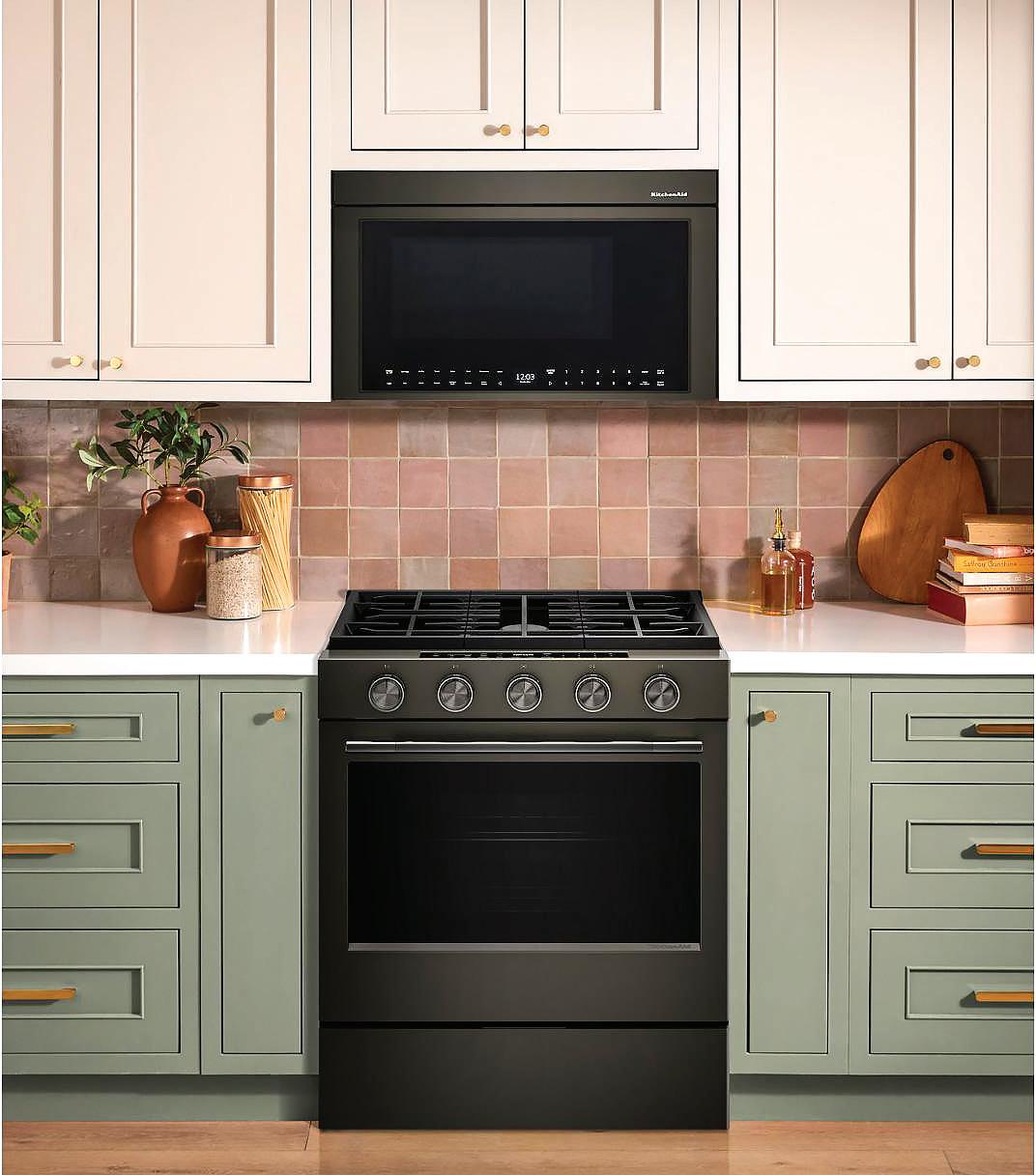
to truly shine. KitchenAid has also redesigned the wood accents in some of their refrigeration products, moving towards a neutral oak tone that reinforces the growing desire to bring the outdoors in.”
CUTTING-EDGE INNOVATION
Tasco Appliances redefines luxury living with design-forward aesthetics and cutting-edge innovation. Their showroom features customizable accessories in mixed metals and wood, ensuring every kitchen is as functional as it is beautiful. “Stirling, our homegrown appliance manufacturer, brings a new luxury wine cellar and beverage centre to the market — a rare jewel in Canadian appliance design,” says Iris Brown, director of store merchandising and promotions at TG Appliance Group. Brown explains the line is proudly crafted in Canada and engineered with locally sourced Canadian black walnut accents, reflecting the growing trend of personalized, artisanal kitchens.
“Today, we are the only residential refrigerator manufacturer in Canada and are proud to produce a range of premium built-in refrigeration products, made from locally sourced quality components, with an emphasis on superior design, exceptional performance, and sustainability,” says Phil Greenway, vice president of Stirling.
Also available at Tasco is the Miele MasterCool next-generation refrigeration series. The redesigned line combines exceptional cooling performance with refined aesthetics and innovative features that deliver more convenience, flexibility, and sustainability to today’s luxury kitchens. “With the redesign of MasterCool, Miele now offers a fully integrated premium kitchen suite for Canadian homeowners,” says Ekaterina Dobrokhotova, vice president of marketing. “The expanded sizes, flexible installation options, and advanced technology set a new standard for luxury refrigeration.”
The new MasterCool line introduces a completely reengineered interior in ColdSteel stainless steel accented with dark design elements, creating a harmonious and elegant appearance. Available in 30-, 36-, and 42-inch widths in both bottom-mount and French-door configurations, the series is designed to fit standard “True Niche” dimensions, making replacements of older or competitive models easier without costly cabinet modifications. All models can be installed flush with kitchen cabinetry or with Miele’s stainless-steel panels.
Expanding its top-of-line Series 11 integrated column refrigerators, freezers, and bottom-mount refrigerator freezers, Fisher & Paykel introduced a suite of new premium models that represent the pinnacle of design, innovation, and environmental responsibility. The new premium models feature optimized energy usage, enhanced storage capabilities, and integrated technology, as well as a thoughtfully refreshed interior, giving users the ability to completely tailor these solutions to their lifestyle.
The new Series 11 integrated column offerings feature two evaporators to create variable temperature zones for optimal food preservation. The preset temperature modes provide the ideal environment for ingredients, including Pantry, Fridge, and Chill for refrigerators, as well as Soft Freeze, Freeze, and Deep Freeze for freezers. Each column refrigerator is equipped with the brand’s Active Smart Technology, automatically adjusting temperatures within two degrees Fahrenheit based on users’ daily habits and a highly efficient vacuum insulation to minimize heat transfer.
A redesigned touch control panel maintains the same user-friendly functionality while offering a refreshed look. Additionally, the column refrigerators can connect to the brand’s SmartHQ application, enabling remote control of temperature zones, maintenance alerts, such as water filter replacement reminders, and access to Flavorly AI, which suggests meal ideas and recipes based on available ingredients.
BLENDING SUCCESS
Hestan Commercial, the award-winning manufacturer of premium commercial and residential indoor and outdoor kitchen appliances, announced a new partnership in 2025 with Euro-Line Appliances Inc., which will serve as Hestan’s exclusive distributor in Canada. This strategic alliance expands Hestan’s presence across Canada, bringing both its indoor and outdoor product lines – celebrated for their innovation, design, and performance – to a wider network of culinary professionals, dealers, and discerning homeowners.
“We are thrilled to partner with Euro-Line Appliances to bring Hestan’s exceptional indoor and outdoor cooking equipment to Canada,” says Jan Heck, president and CEO of Hestan Commercial Group. “Canada has always been an important market for us, and this partnership allows us to work with a premium distributor who understands both the expectations of Canadian dealers and the value of true performance and design.”
Mark Eglington, president of Euro-Line Appliances Inc., shared his excitement about the collaboration: “At Euro-Line Appliances, we take great pride in curating a portfolio that represents the pinnacle of innovation and craftsmanship across every corner of the home. It is a genuine pleasure to announce the addition of Hestan’s extraordinary indoor and outdoor residential products to our portfolio, perfectly completing our vision.
“Together with Liebherr’s world-renowned refrigeration, Galley’s perfectly crafted workstations, among other brands, Hestan enhances a seamless ecosystem of luxury appliances – a collection unrivaled in its depth, design, and performance.” Hestan’s award-winning product portfolio – spanning residential ranges and outdoor grills and cooking suites – has redefined culinary excellence with unmatched engineering precision and distinctive design. A
KitchenAid appliances presented in Black Ore.
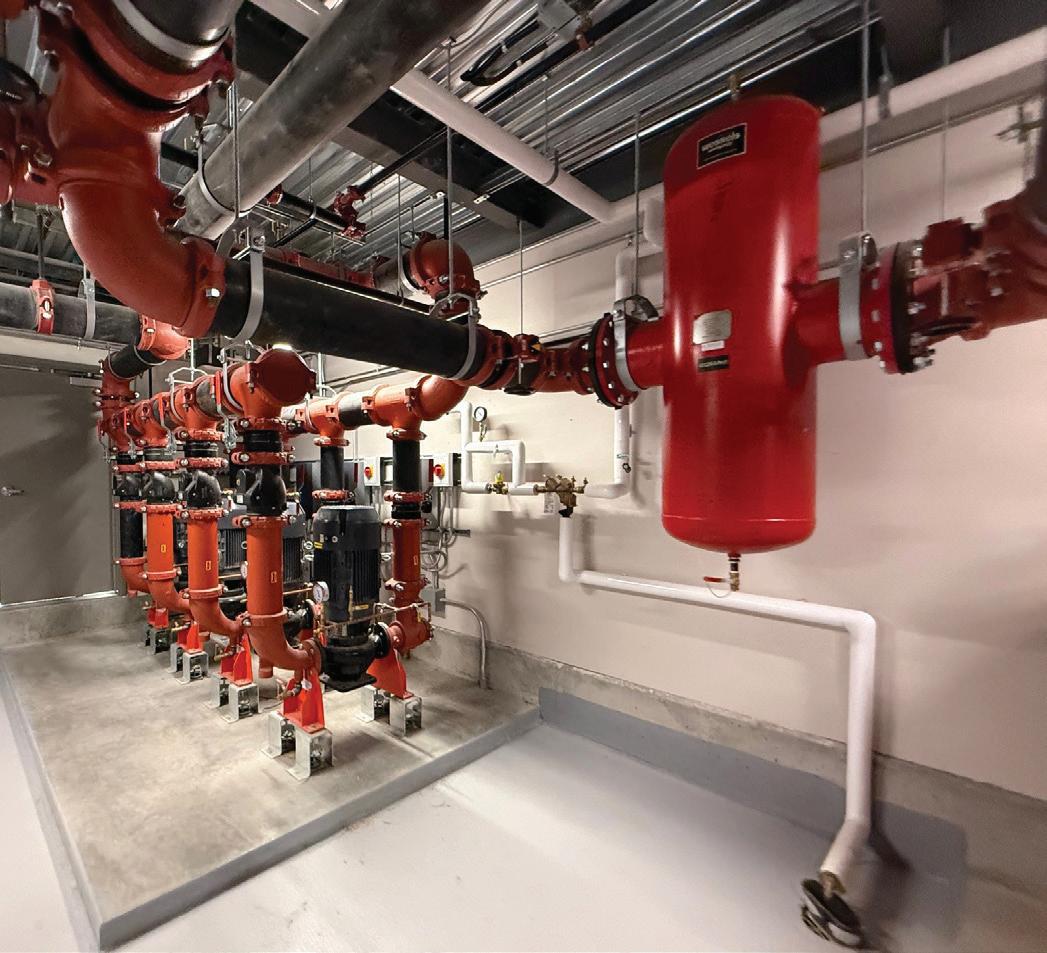
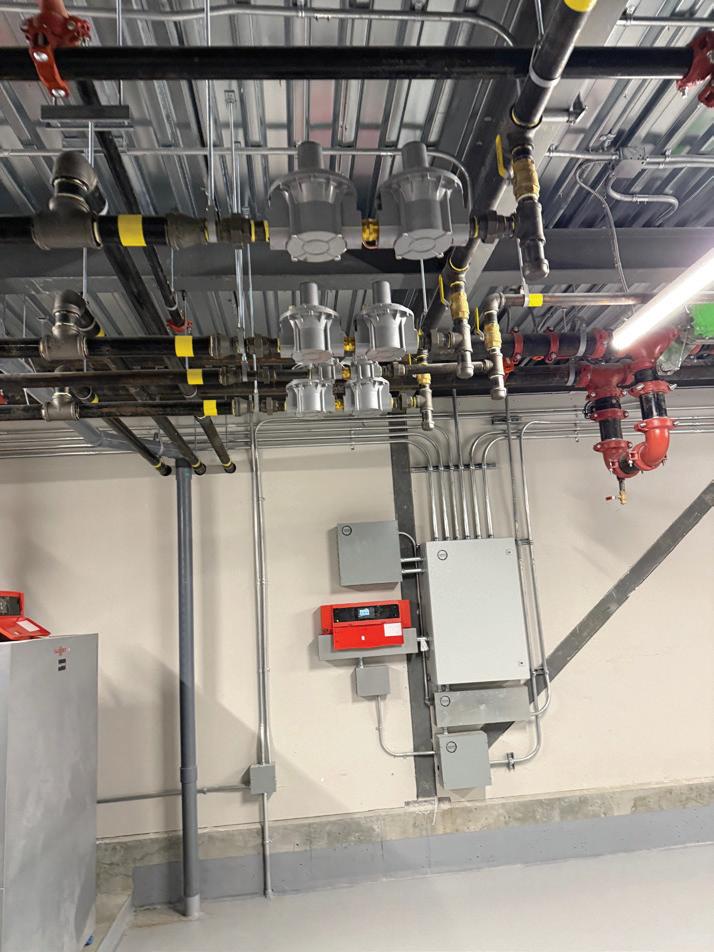
Kal-West Mechanical, Trident Manufacturing, Genesis Controls and Inland Technical are proud to have been the Mechanical team for Movala. Congratulations to Stober Group and Greyback for an amazing project.
MOVALA KELOWNA
by NATALIE BRUCKNER
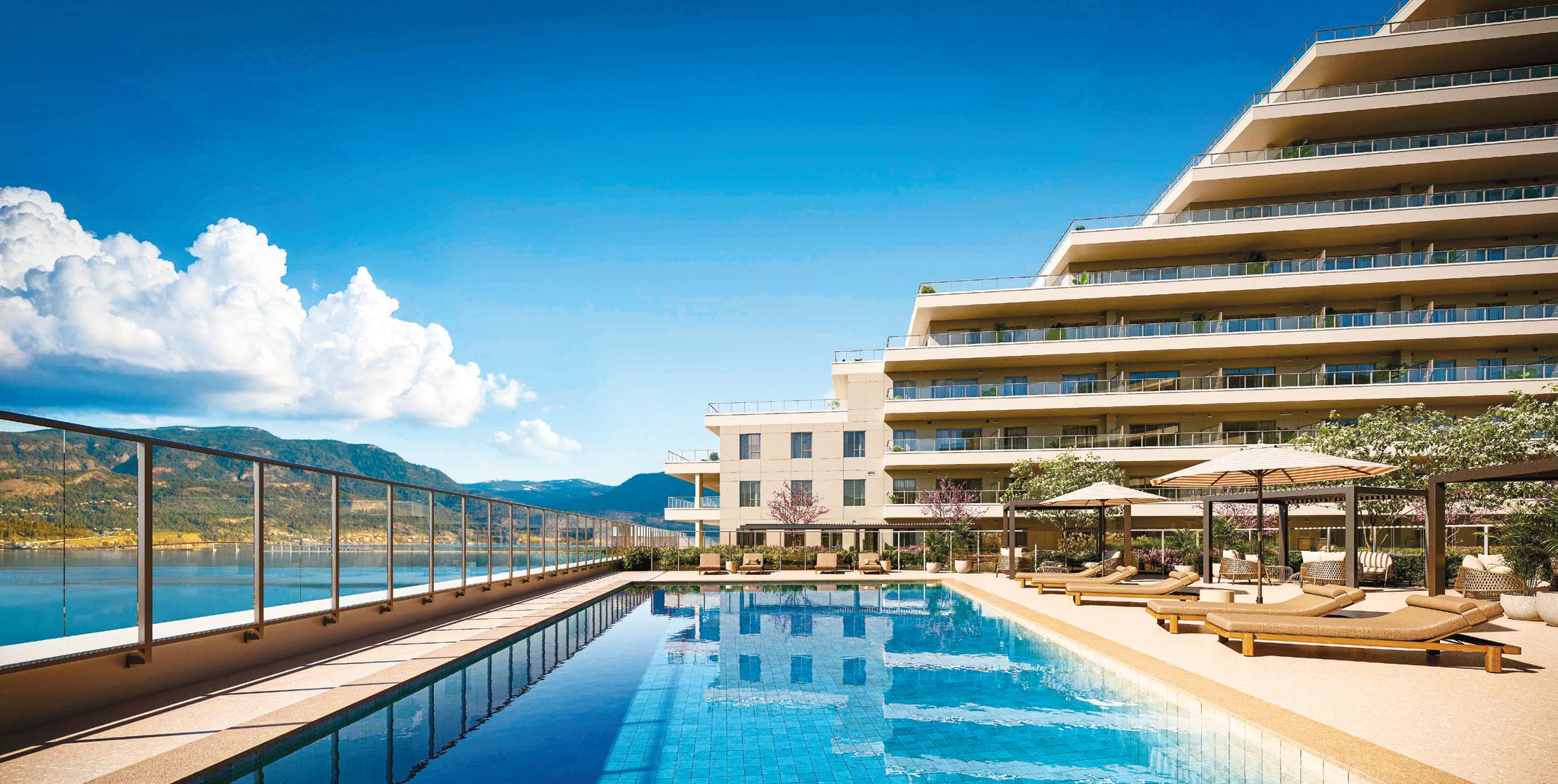
If you’ve spent time in Pandosy Village, it’s easy to see why it has earned a reputation as one of Kelowna South’s most desirable neighbourhoods, and with Stober Group’s latest landmark development, MOVALA, that appeal is now enriched by a new layer of livability.
MOVALA originated from a longheld vision: to thoughtfully develop a rare semi-waterfront site that had been held by the Stober family for more than 30 years. “From the outset, the intent was to deliver a legacy multifamily development that responded to the Okanagan’s natural setting while elevating expectations around architectural quality, construction rigour, and long-term livability,” says Lisa Lock, CEO at Stober Group.
Situated on 4.4 acres at the intersection of Kelowna South and Gyro Beach, the lakeside project comprises two terraced condominium towers above a three-storey podium featuring groundlevel townhomes, live-work units, parking, and commercial spaces.
Working closely with award-winning Meiklejohn Architects and GGA-Architecture, as well as general contractor Greyback Construction, Stober Group recognized that the site’s proximity to Okanagan Lake and its expansive views of the lake, valley, and surrounding mountains would shape the building’s form and layout. “Orientation and massing were carefully studied to maximize view corridors, solar exposure, and indooroutdoor connections while managing wind, shadowing, and privacy impacts at grade,” explains JoAnne Adamson, director of development at Stober Group. Given the scale and technical complexity of MOVALA, the construction process was highly structured and coordination driven. “Early engagement
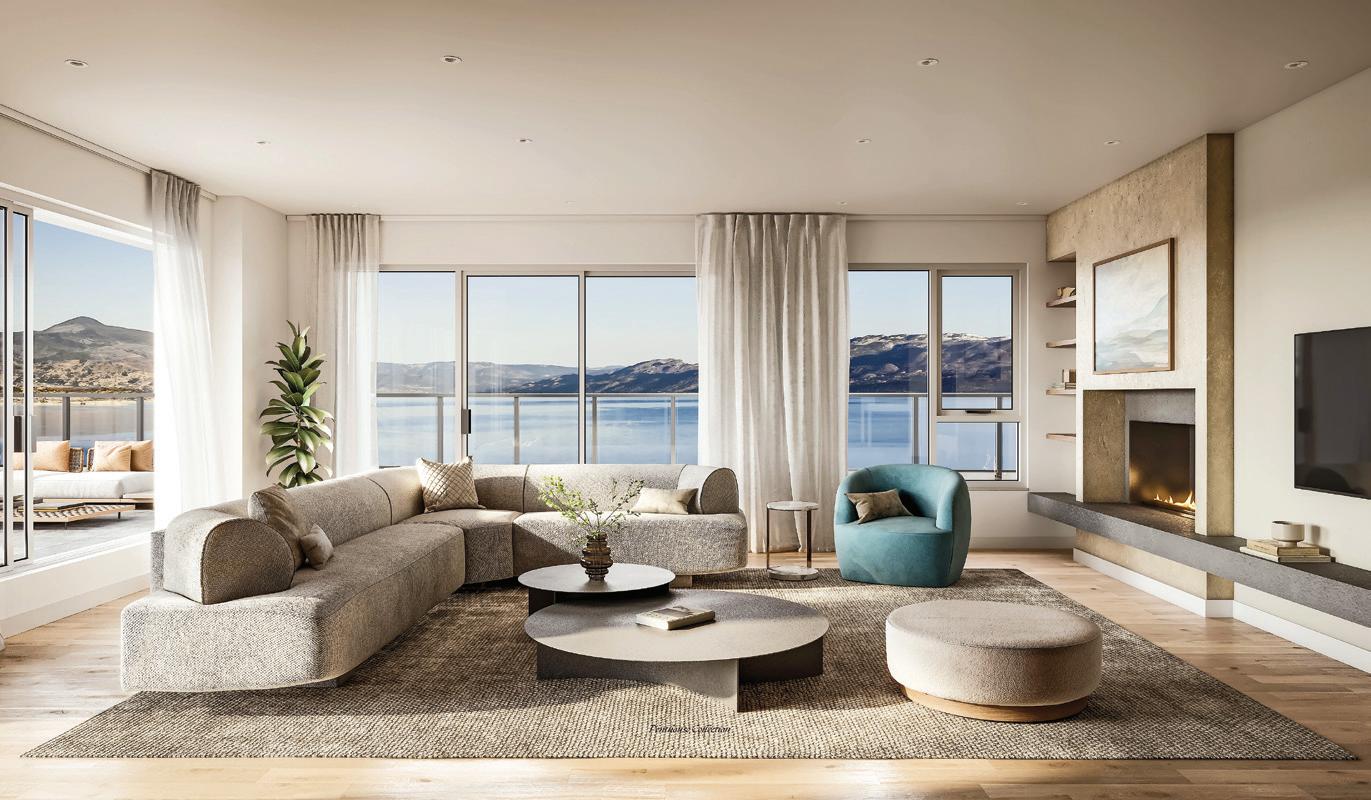
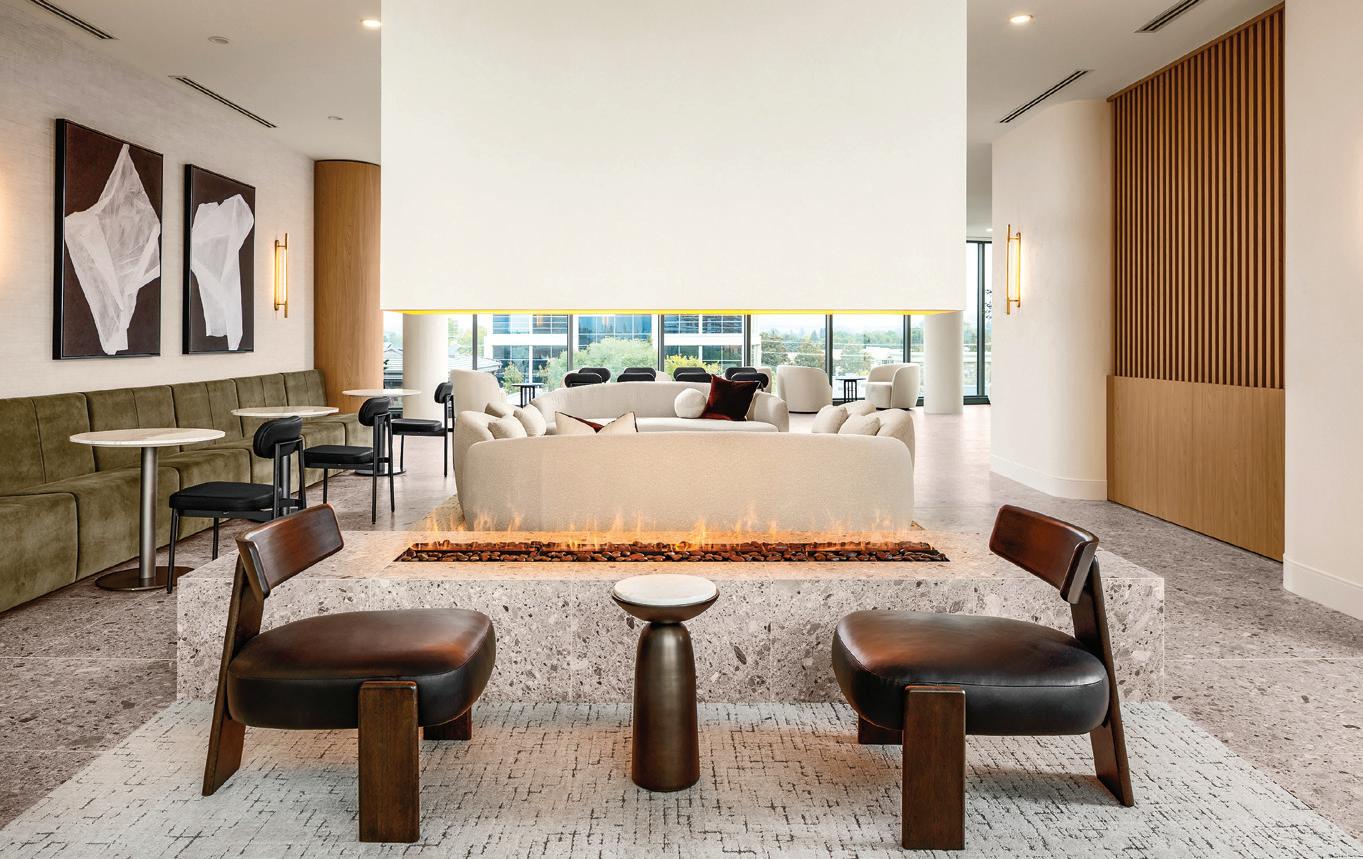
between key trades was critical to resolving complex structural, mechanical, and architectural interfaces before work commenced on site,” says Robert Downey, general manager of construction at Stober Group.
The project relied extensively on 3D modelling across all suite types and building systems to identify conflicts, streamline installation, and maintain quality control. Downey explains
that sequencing of the podium, transfer slabs, and tower construction required detailed planning, particularly where extensive cantilevers and curved concrete elements were involved. “Greyback’s execution of the formwork quality greatly exceeded our expectations and was a key differentiator on this project. They even had the concrete forms laser cut to achieve seamless curves for the building.”
LOCATION
3316 Lakeshore, Kelowna, B.C.
OWNER/DEVELOPER
Stober Group
ARCHITECTS
Meiklejohn Architects / GGA-Architecture
GENERAL CONTRACTOR
Greyback Construction
STRUCTURAL CONSULTANT
RJC Engineers
MECHANICAL/ELECTRICAL CONSULTANT
Smith + Andersen
TOTAL SIZE
650,000 square feet
TOTAL COST
$200 to $250 million
The design of MOVALA is really quite something. The project responds thoughtfully to a site that follows a rectangular street grid at the north end, then transitions into a more suburban rhythm. “We developed two towers slightly rotated to each other: the south tower responds to the southern grid, and the north tower to the northern grid. That rotation –the ‘twist’ in the site – helped shape the building design,” explains Jim Meiklejohn, principal. The wedgeshaped property, with no right angles in its boundaries, presented both challenges and opportunities, allowing the towers to preserve neighbours’ sightlines while creating a distinctive form.
Proximity to the lake inspired curved arcs and terraces throughout the building, aligning with the city’s vision for a high-quality gateway design. “Terracing along Watt Road and Lakeshore, combined with curved balconies, softens the towers and enhances visual interest,” says Aaron McCracken, manager, architectural technology at GGA-Architecture.
Lakeshore frontage is wrapped in commercial space, with two-storey townhouses lining the north and west sides. The north tower rises 14 storeys, the south 10, creating a harmonious composition that balances context, views, and architectural expression. Meiklejohn notes, “The name ‘Movala’ is formed from the first two letters of mountains, valleys and lakes, reflecting both the site’s landscape and the project’s character.”
Downey highlights the exterior expression: “It is defined by exposed concrete, extensive curved parapet walls, and high-quality glazing systems that frame lake and mountain views. Custom CNC-cut concrete formwork was fabricated from lumber
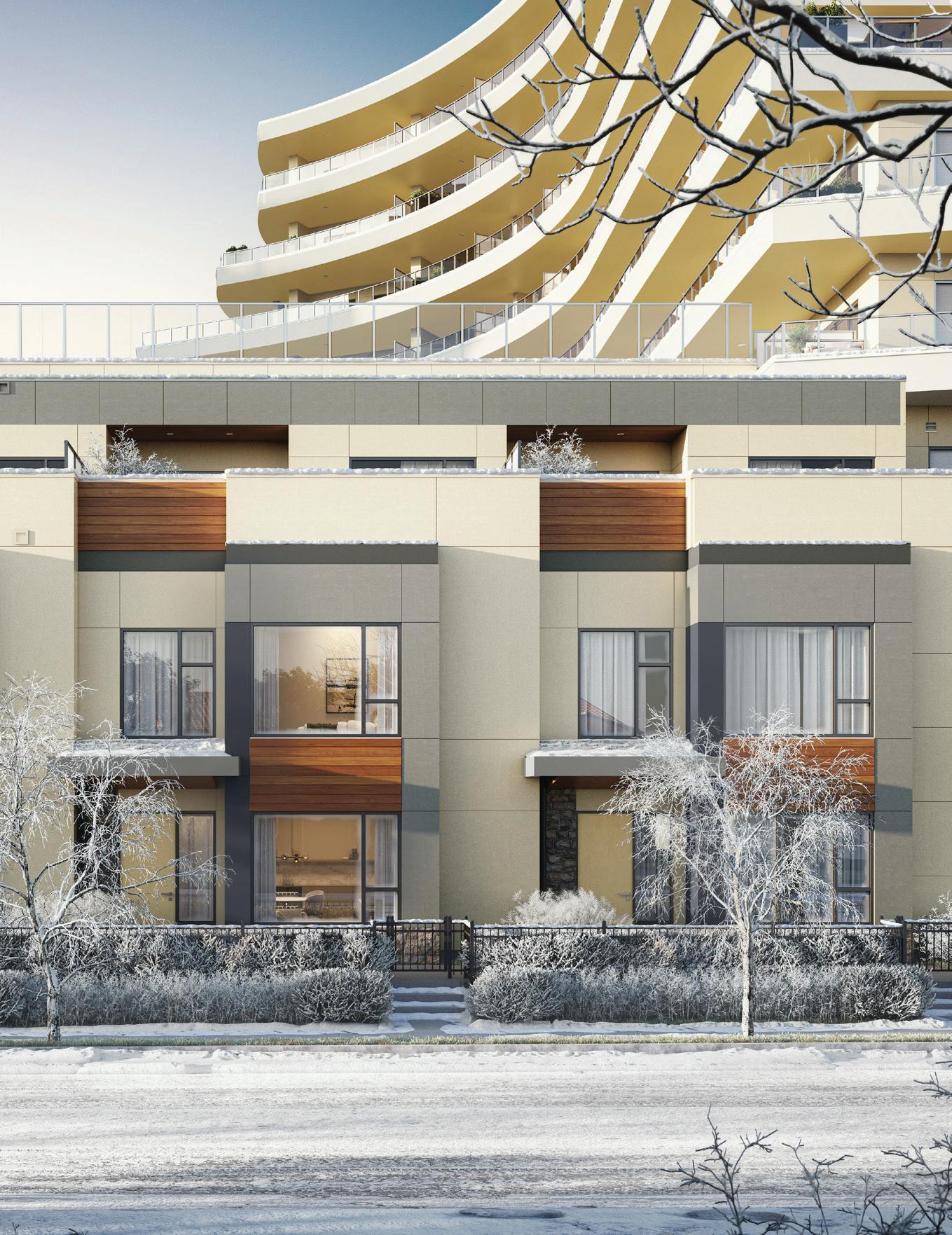
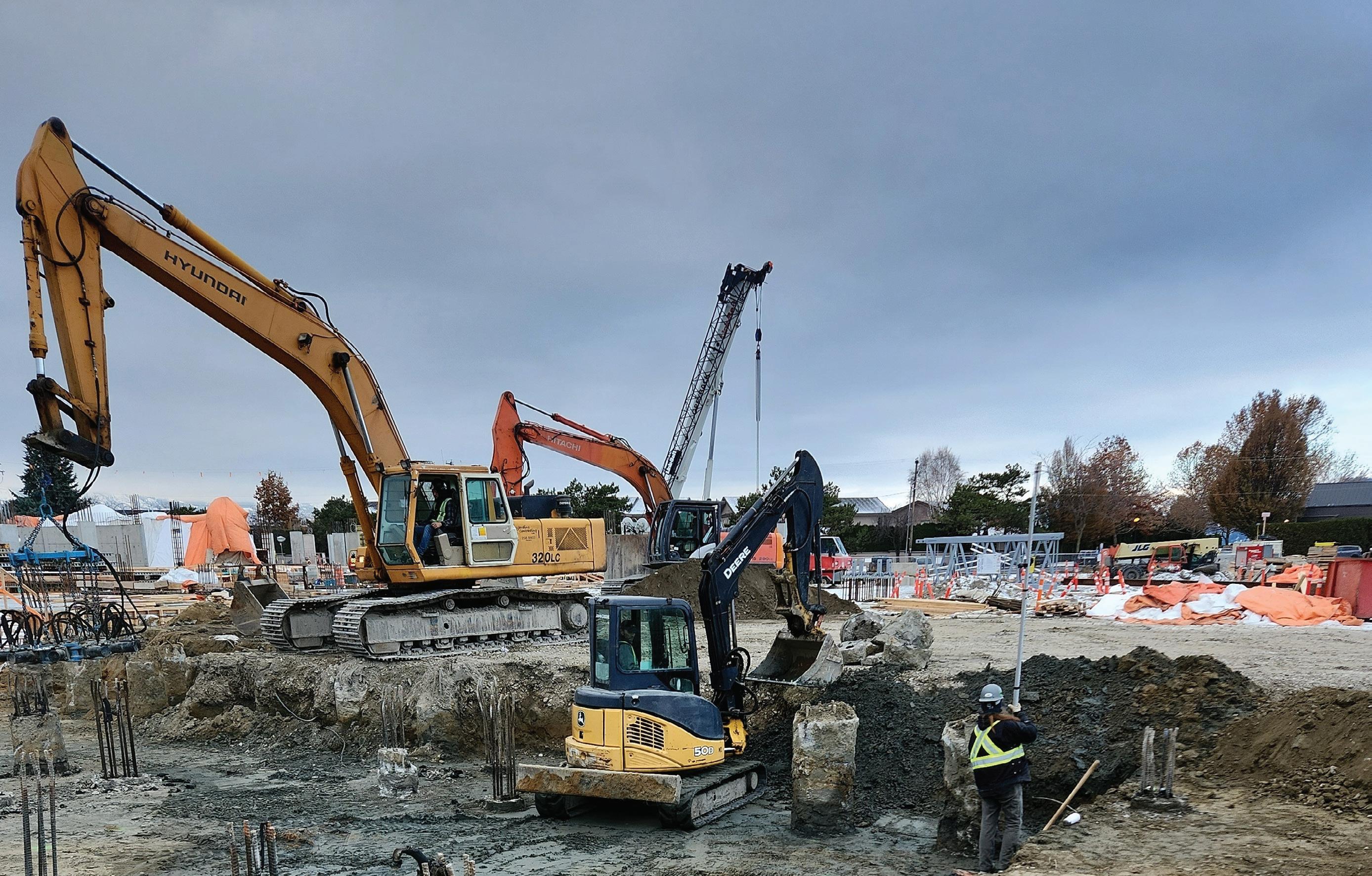

to achieve consistency across the project’s complex curvilinear geometry.”
Structurally, MOVALA incorporates extensive cantilevered slabs, achieved through upstand parapet walls acting as stiffeners and beams, combined with precise cambering techniques. A 44-inch-thick transfer slab beneath both towers required custom rebar configurations and recessed block-outs to accommodate complex plumbing and servicing routes. Continuous Flight Auger piles were selected for the foundation system to maximize structural efficiency while minimizing noise and vibration impacts on adjacent properties. Multiple directions of delay strips were introduced across four floors of large-format slabs, each approximately 128,000 square feet, to manage shrinkage and mitigate cracking risk.
Inside, the podium accommodates all 475 parking stalls due to a high water table that prevented underground parking. The project offers 90 unique suite types ranging from one- to three-bedroom homes, and interiors feature nine-foot clear span ceilings, full-size kitchens, and generous storage, balancing elegance and livability. Interior materials emphasize
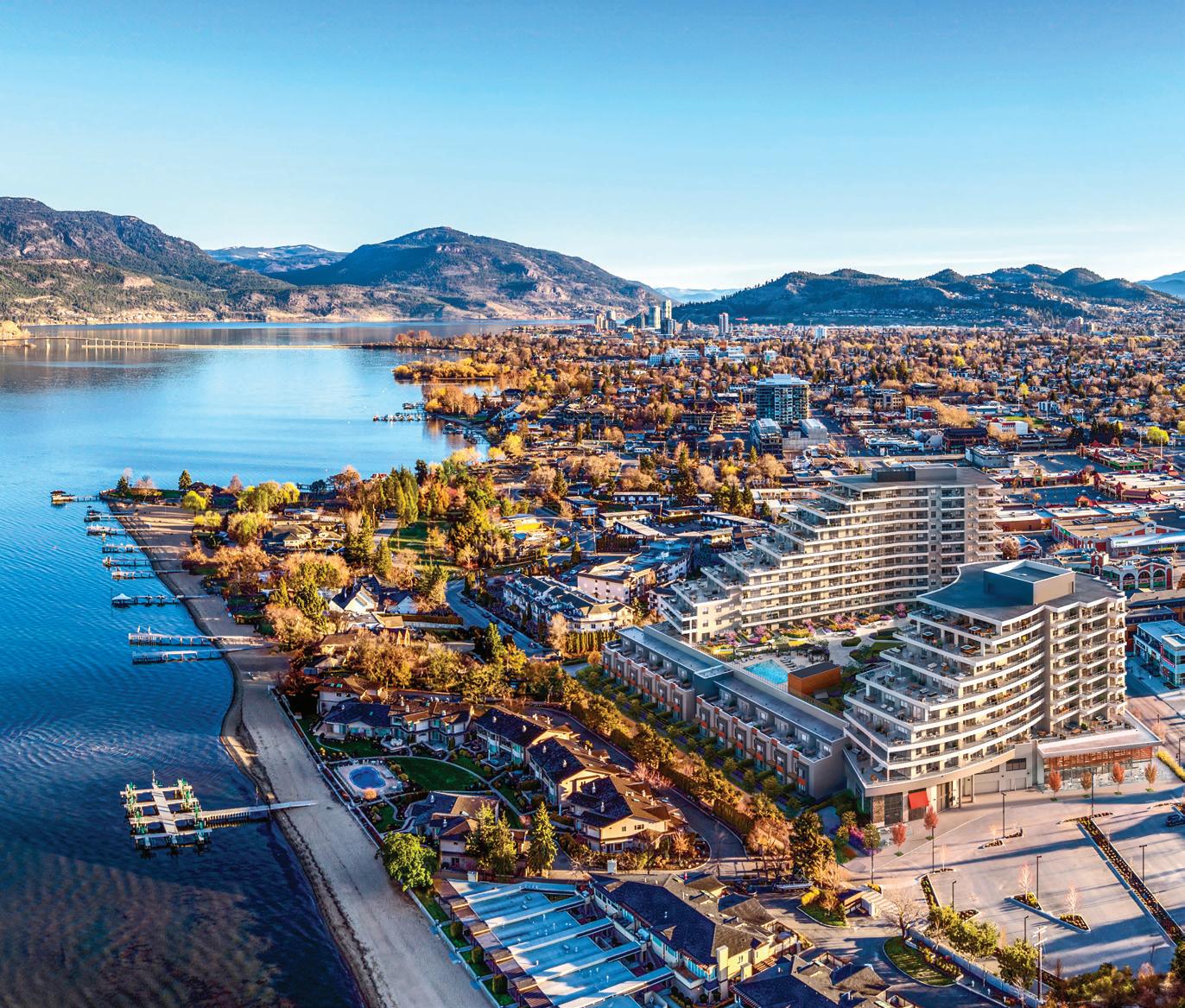
natural textures, neutral palettes, and long-term durability. The towers are connected by spaces for billiards, fitness, dance, socializing, and quiet reading, all designed with an interior team to set the stage for meaningful interaction. The expansive amenity

pumps, a water-saving adiabatic fluid cooler, EV-ready infrastructure at every stall, and LED lighting with advanced controls.
Construction started in April 2022 and the South Tower now has occupancy, while the North Tower is expected to be completed in July 2026. What stands out about MOVALA is how closely the finished project aligns with the original vision. “MOVALA brings together architecture, landscape, and livability in a way that feels both grounded and distinctive within the Okanagan,” says Lock. Despite its scale, MOVALA feels intentional rather than generic. “As Stober Group’s legacy project, it was built on a piece of land unlike any other in Kelowna, and I believe we have done the location justice,” she says.
program encourages community connection and wellness.
Mechanical and electrical systems have been designed to support LEED certification targets and longterm operational efficiency, including high-efficiency water source heat
Lock concludes by saying that the most rewarding thing of late “has been seeing how residents are using the building as it was intended: enjoying the connection to the outdoors, the changing seasons, and the sense of community created through shared spaces. MOVALA stands as a project that balances ambition with restraint and leaves a lasting contribution to the neighbourhood and the lakeside environment.” A
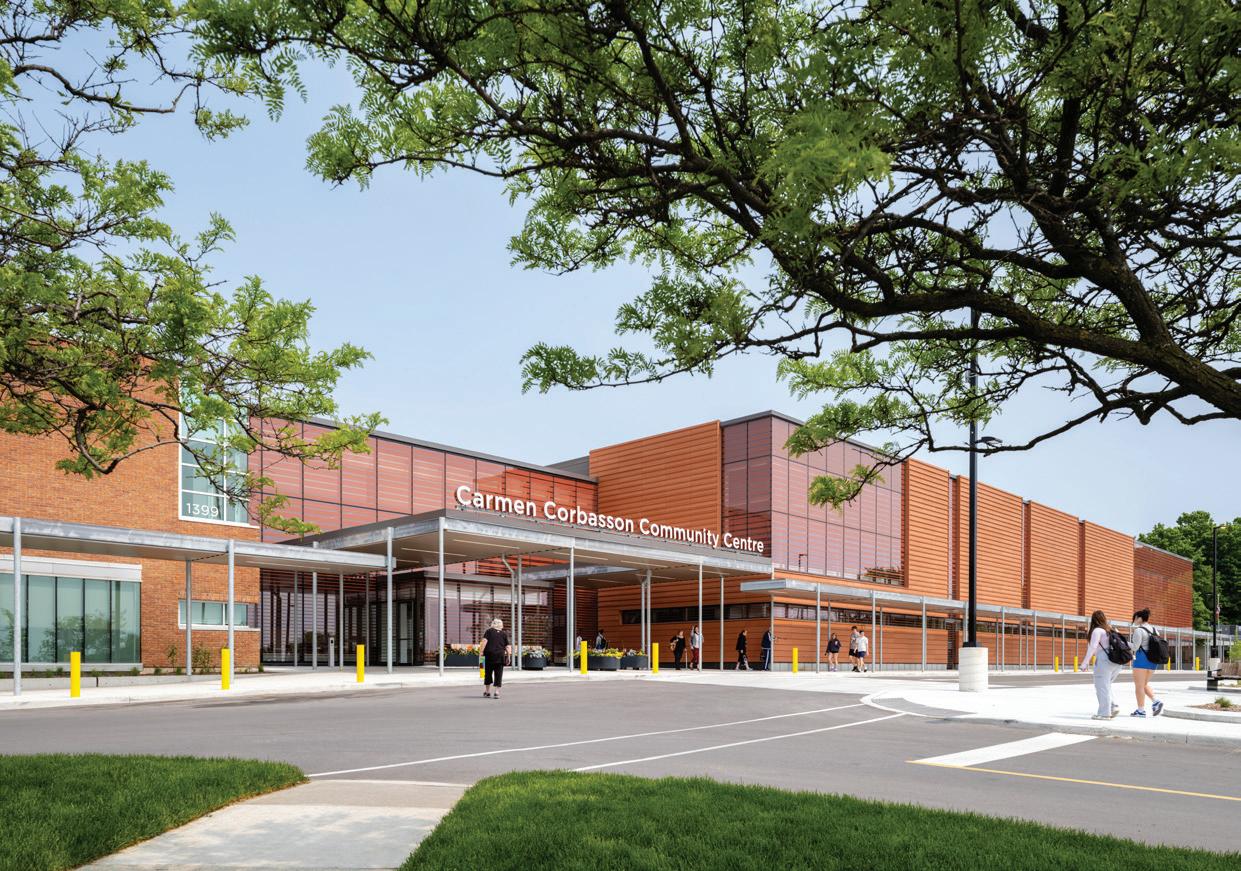


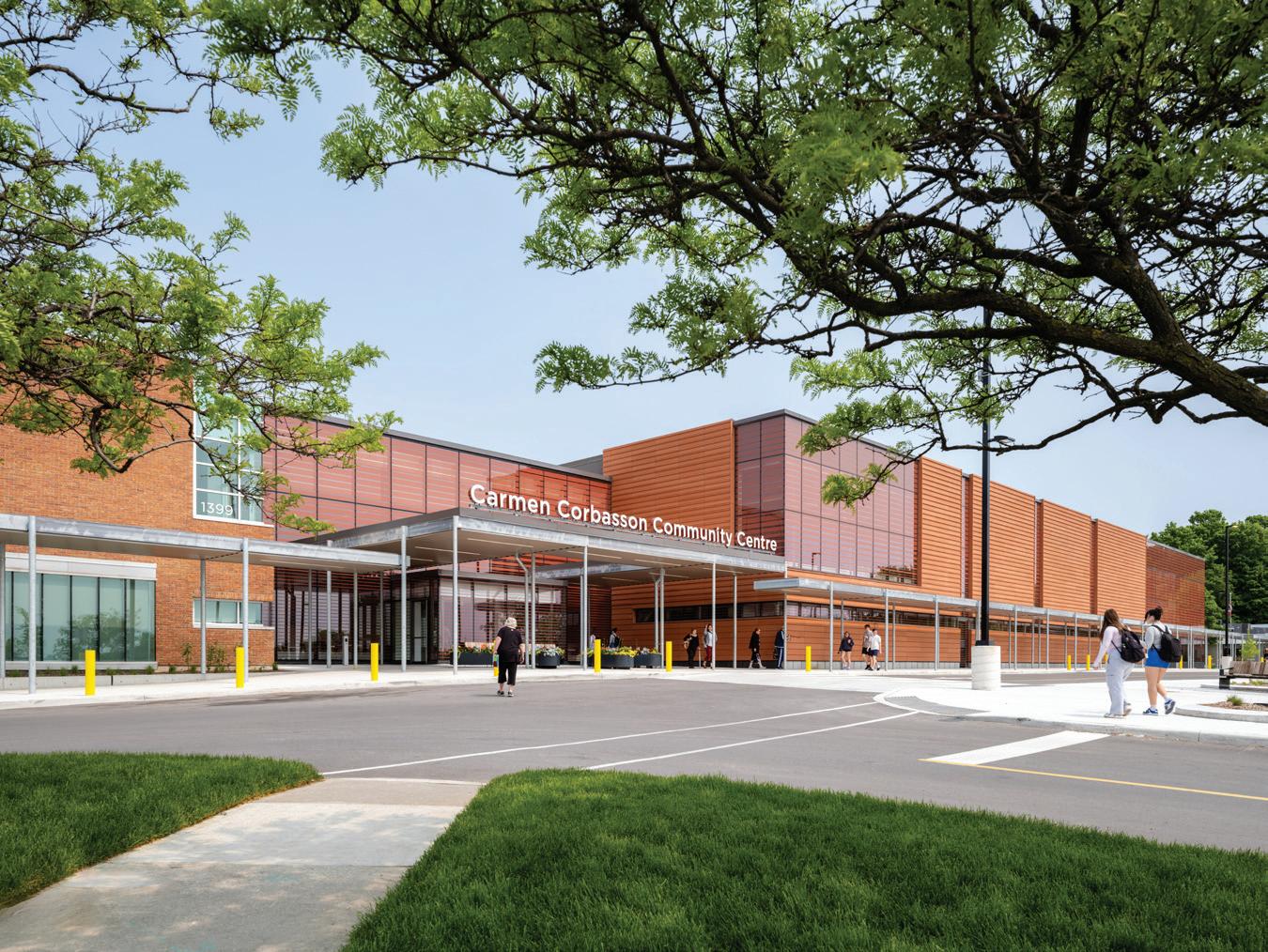
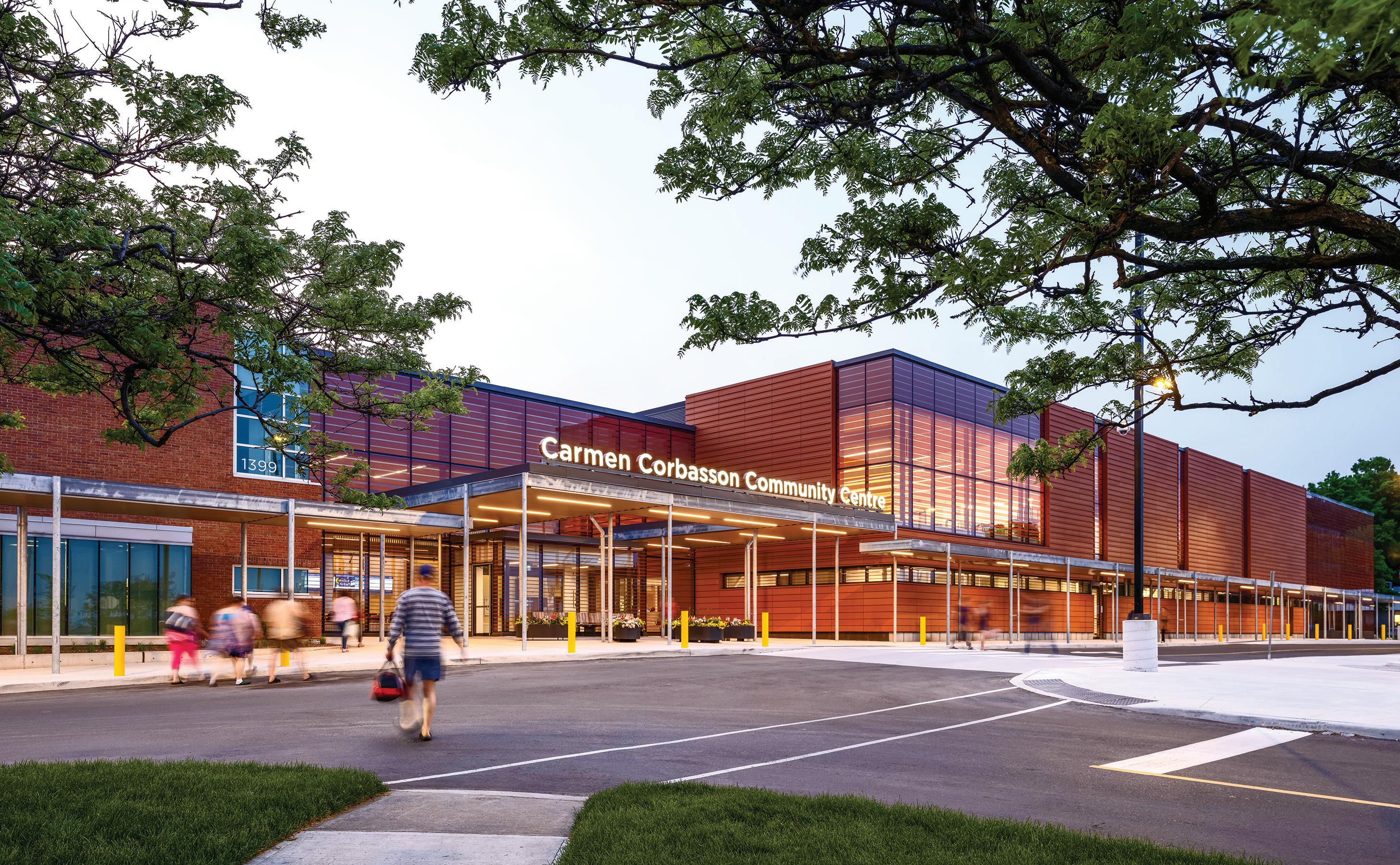
CARMEN CORBASSON COMMUNITY CENTRE
by ROBIN BRUNET
The opportunities to improve the quality of recreational service to residents of any given Canadian community are perpetual, and this is certainly the case for Mississauga with regards to the Carmen Corbasson Community Centre.
The original facility was built in 1972 as the Cawthra Arena and underwent an expansion by Diamond Schmitt Architects 28 years later to add a gymnasium to the west side of the facility and a connecting east-west galleria.
The second expansion was informed by several community engagement exercises. Feedback was also gathered from a 2021 virtual public information session and an online survey. “A community centre is strongest when it is built with input from the people who use it,” says Lisa Boyce-Gonsalves, director of recreation and culture for the City of Mississauga. “By listening to the community and including their feedback, we created a space that truly meets everyone’s needs.”
This led to the development –again helmed by Diamond Schmitt – of a 45,000-square-foot addition featuring an indoor aquatic and fitness centre connected to the southeast side of the existing building,
providing the natatorium with spectacular views of Cawthra Wood (home to a deep stand of mature forest).
Jarle Lovlin, principal at Diamond Schmitt, says the intent of the addition was to make Carmen Corbasson a “pavilion in the forest” with the design drawing from the language of the existing structure: a staggered series of brick planes, interrupted by glazing that maximizes views and natural light.
The project was facilitated by the fact that the overall massing of the new expansion (basically, a two-storey rectangular prism) would be located on space previously used as a parking lot. “And since there was already plenty of parking space to the south, there was no need to create additional parking slots elsewhere,” Lovlin says.
Fundamental to the appearance of a pavilion in the woods was mass timber for the 10,800-square-foot natatorium. “We brought that to the table and encouraged other material options, and fortunately the City of Mississauga endorsed the mass timber, which also helped this project achieve net zero carbon status,” Lovlin says.
Douglas fir glulam columns placed at regular intervals along the east façade support glulam beams stretching east to west across the width of the room.
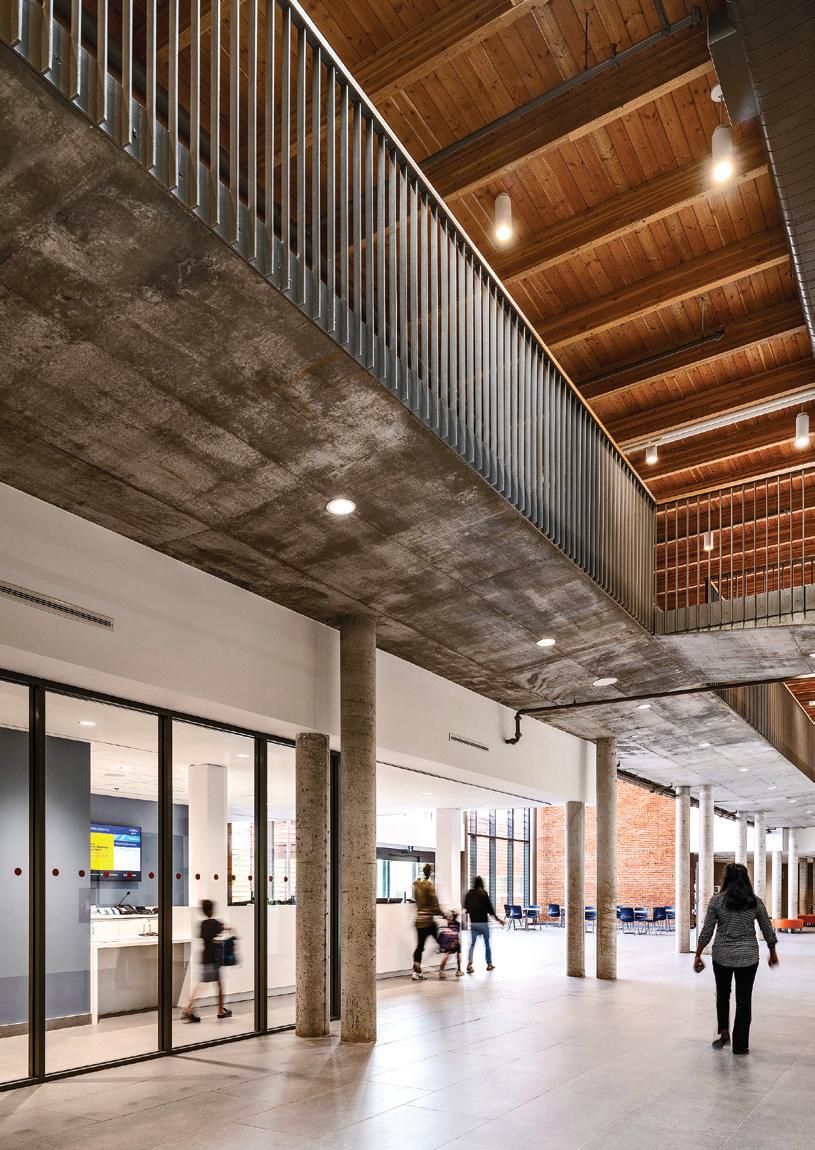
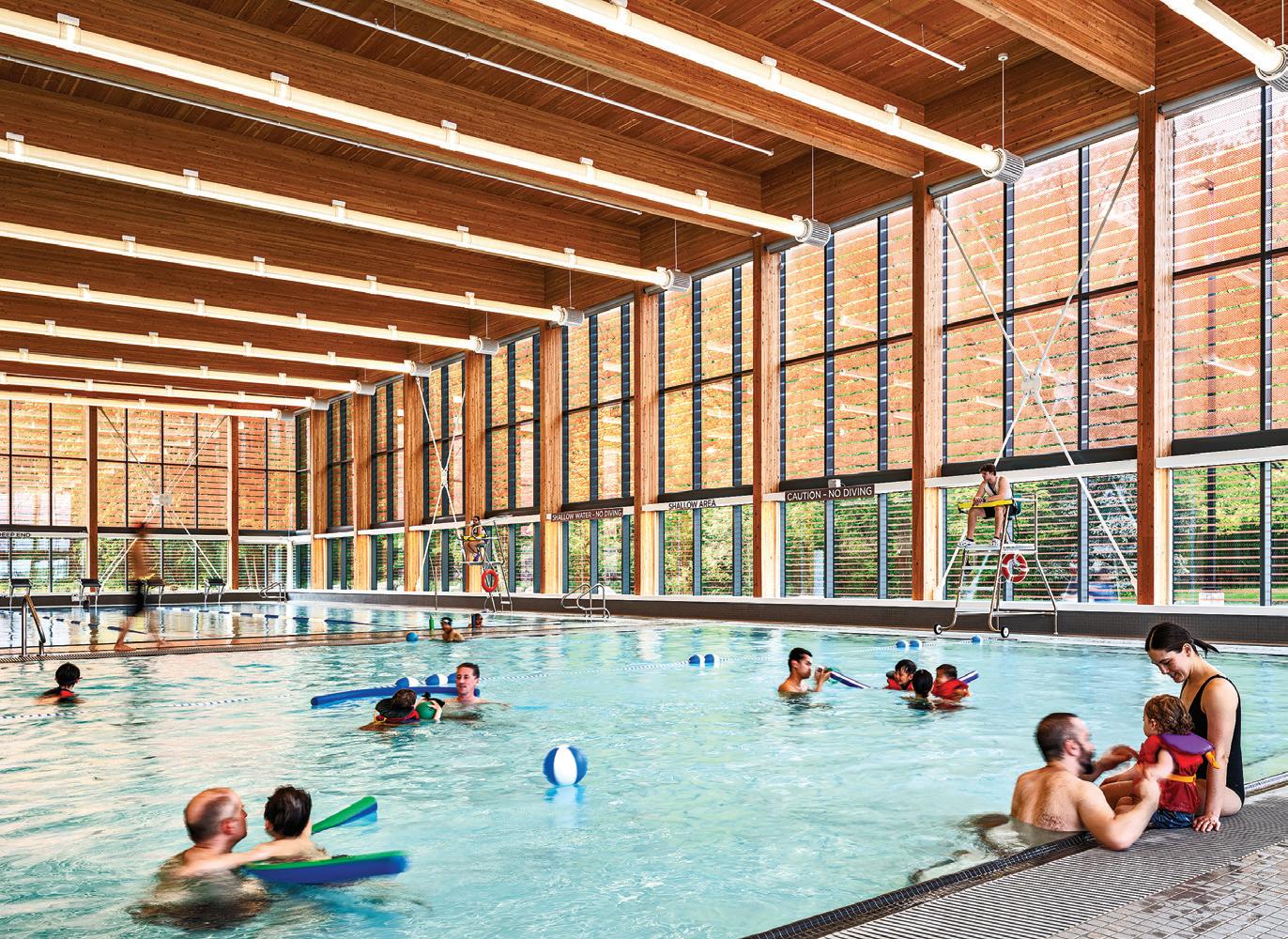
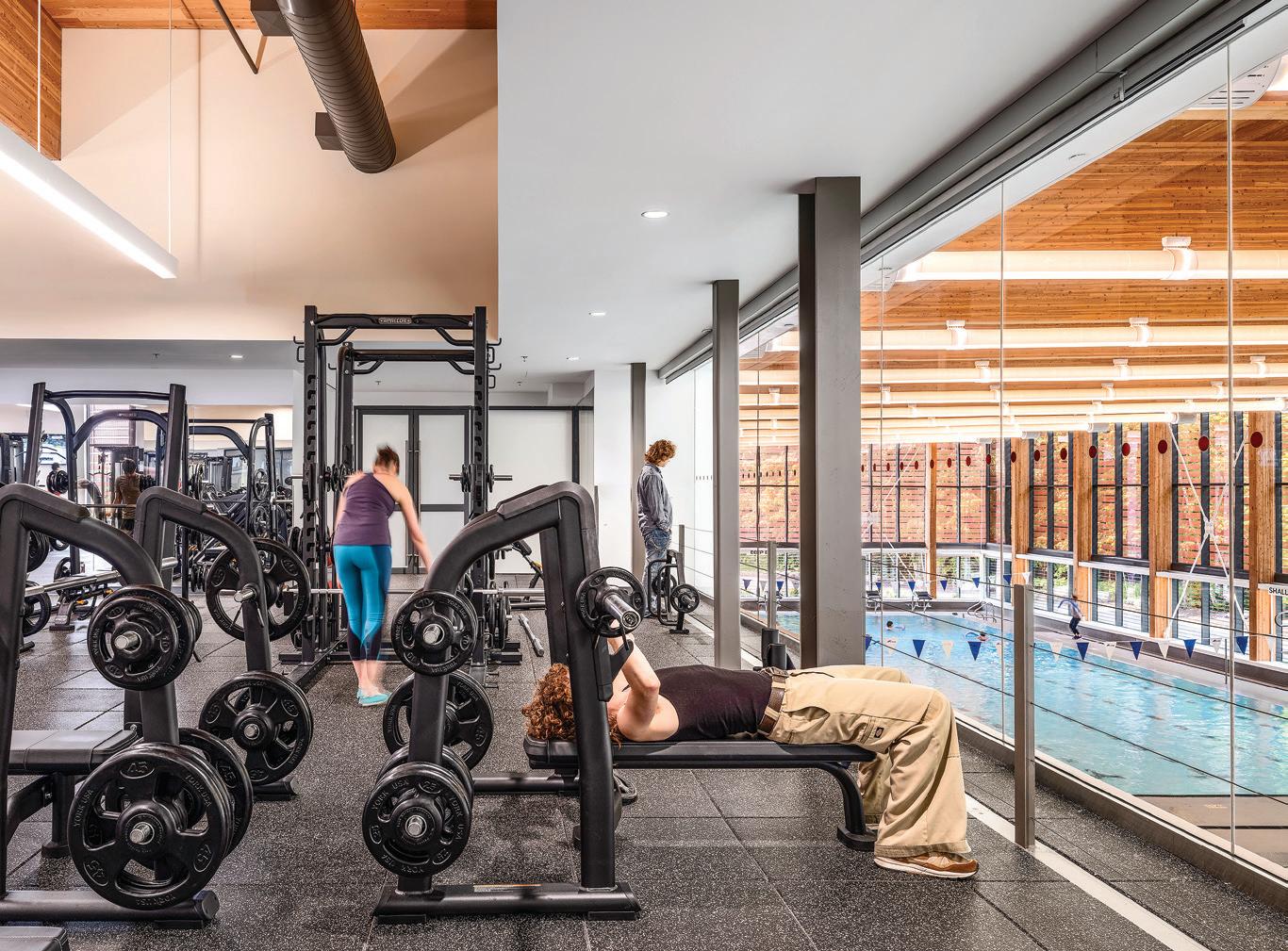
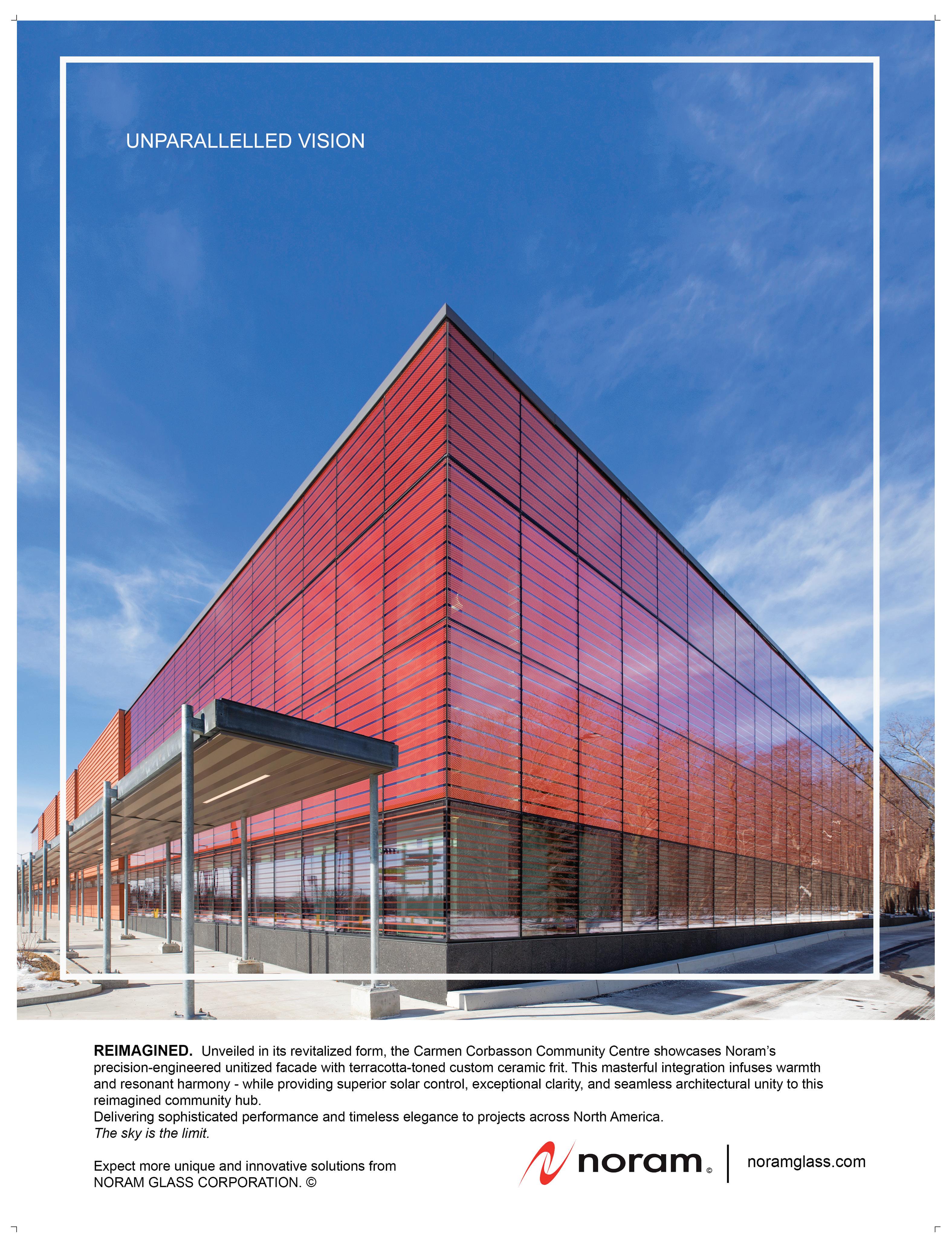
A cross-laminated timber roof deck sits atop these beams, providing a variegated surface that aids in diffusing the acoustic resonance of the natatorium. Clear glazing along the lower portion of the natatorium at water level clarifies the relationship with the adjacent forest, and the components of HVAC air distribution were hidden within a bench that extends around the perimeter of the pool.
Mass timber was also used as the structure of the 5,600-square-foot fitness room and was a significant exterior material, along with terracotta and a curtain wall glazing featuring a custom frit pattern.
A new glazed vestibule was created to serve as the main entrance; it leads to a large, double-height lobby illuminated from the south, with glazed openings creating clear and intuitive wayfinding throughout.
Aquicon was the construction manager for the expansion of Carmen Corbasson and provided design-assist and value engineering services, as well as constructability reviews. “By the time construction commenced in 2023, the price fluctuations of building materials that characterized the lockdown era had thankfully stabilized,” Lovlin says.
Aquicon also upgraded the lobby and reception zones, gymnasium, arena viewing areas, washrooms, and circulation corridors with enhanced finishes, millwork, and new lighting (90,000 square feet of interior renovations in total). Major mechanical
and electrical system upgrades were undertaken as well, along with reconfiguring site layouts to improve pedestrian safety, traffic circulation, and transit connections.
The Carmen Corbasson Community Centre officially opened in July of 2025.
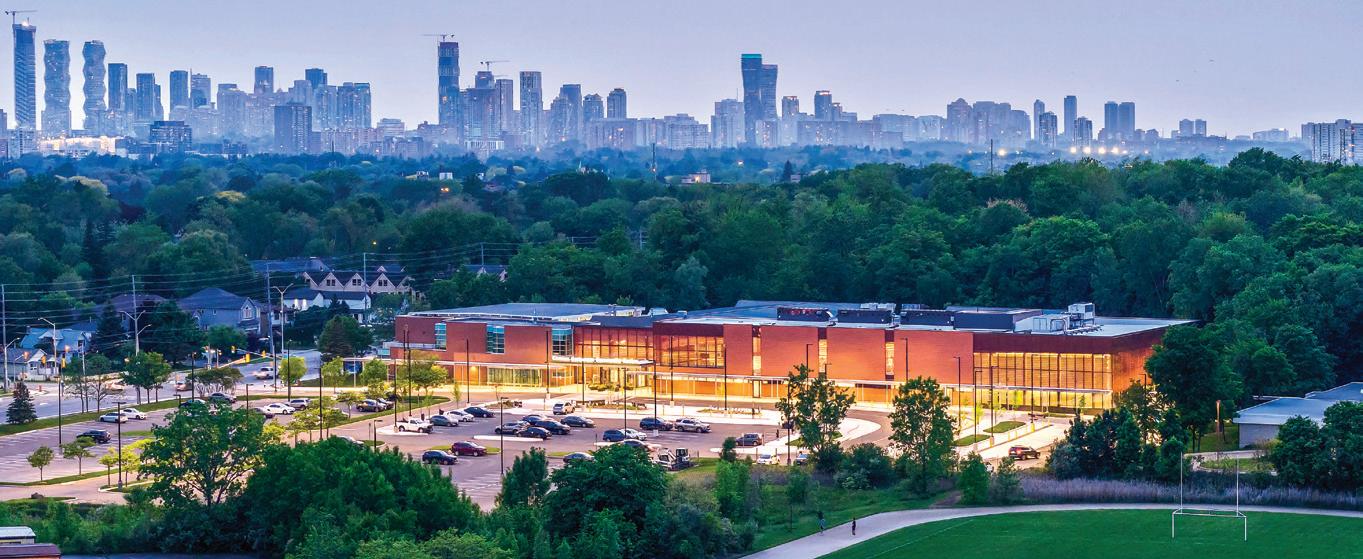
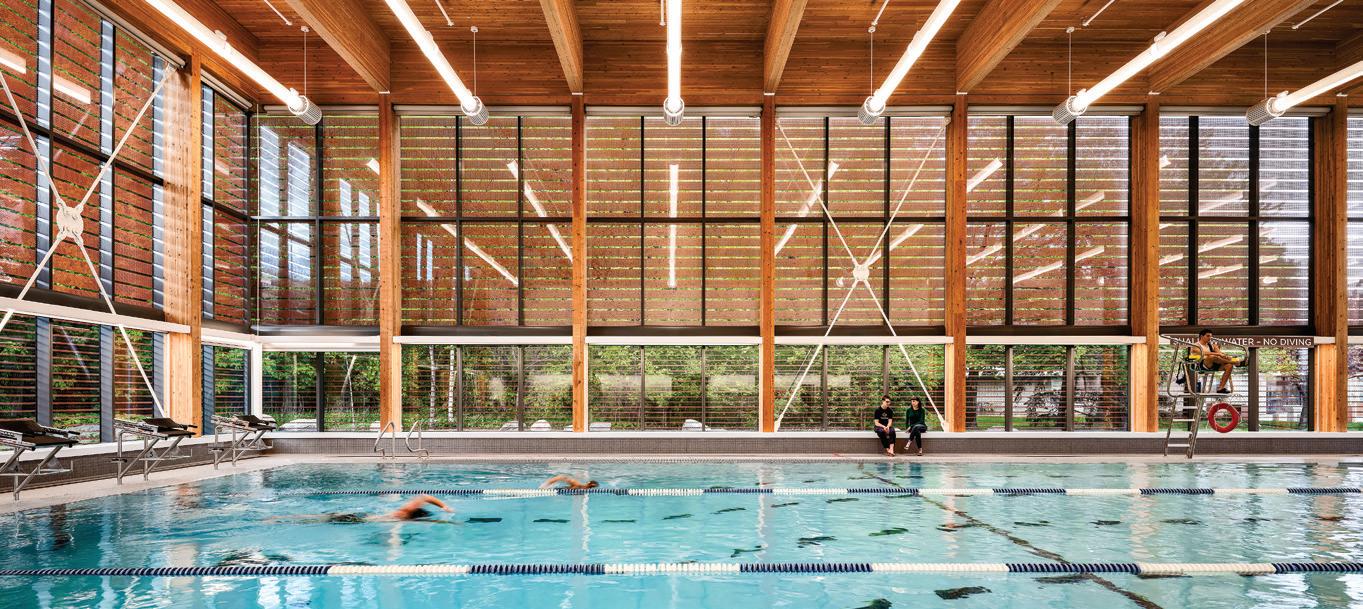
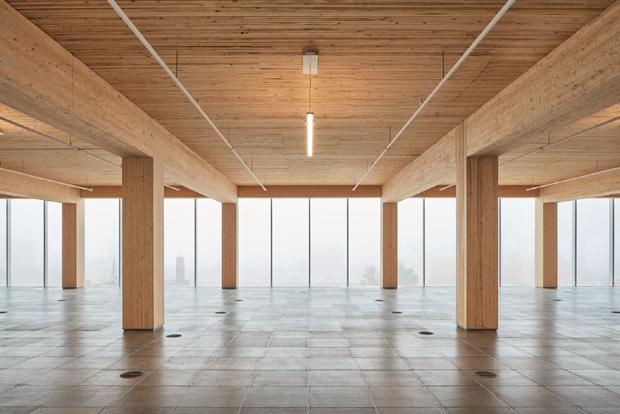

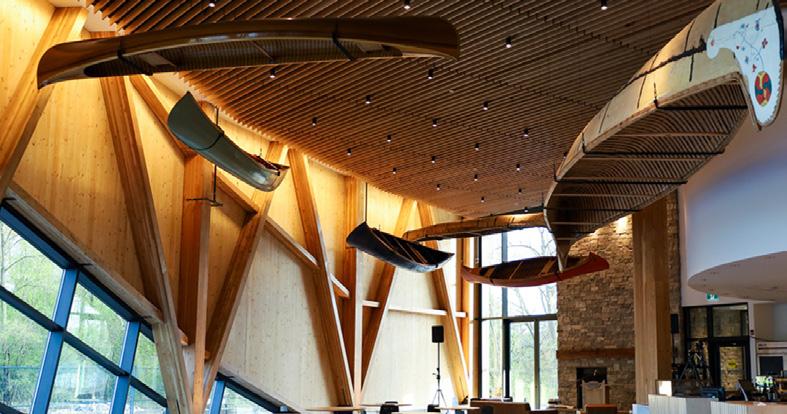
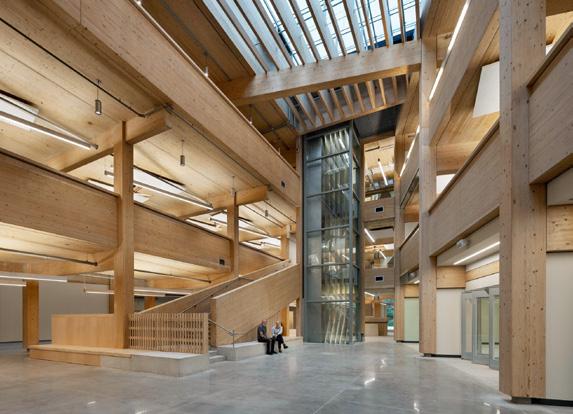

“This is a thoughtful, welcoming facility featuring modern design, natural light, and an open plan that allows for transparent views and clear circulation,” says Anna Cascioli, director, facilities and property management at the City of Mississauga. “It’s a hub for community connection and growth, offering residents and visitors a space to learn, participate, and thrive at the centre of the neighbourhood.” A
LOCATION
1399 Cawthra Road, Mississauga, Ontario
OWNER/DEVELOPER
City of Mississauga
ARCHITECT
Diamond Schmitt Architects
CONSTRUCTION MANAGER
Aquicon Construction
STRUCTURAL CONSULTANT
Moses Structural Engineers Inc.
MECHANICAL/ELECTRICAL CONSULTANT
Salas O’Brien
LANDSCAPE ARCHITECT
PMA Landscape Architects Ltd.
TOTAL SIZE
45,000 square feet (addition)
TOTAL COST
$52 million
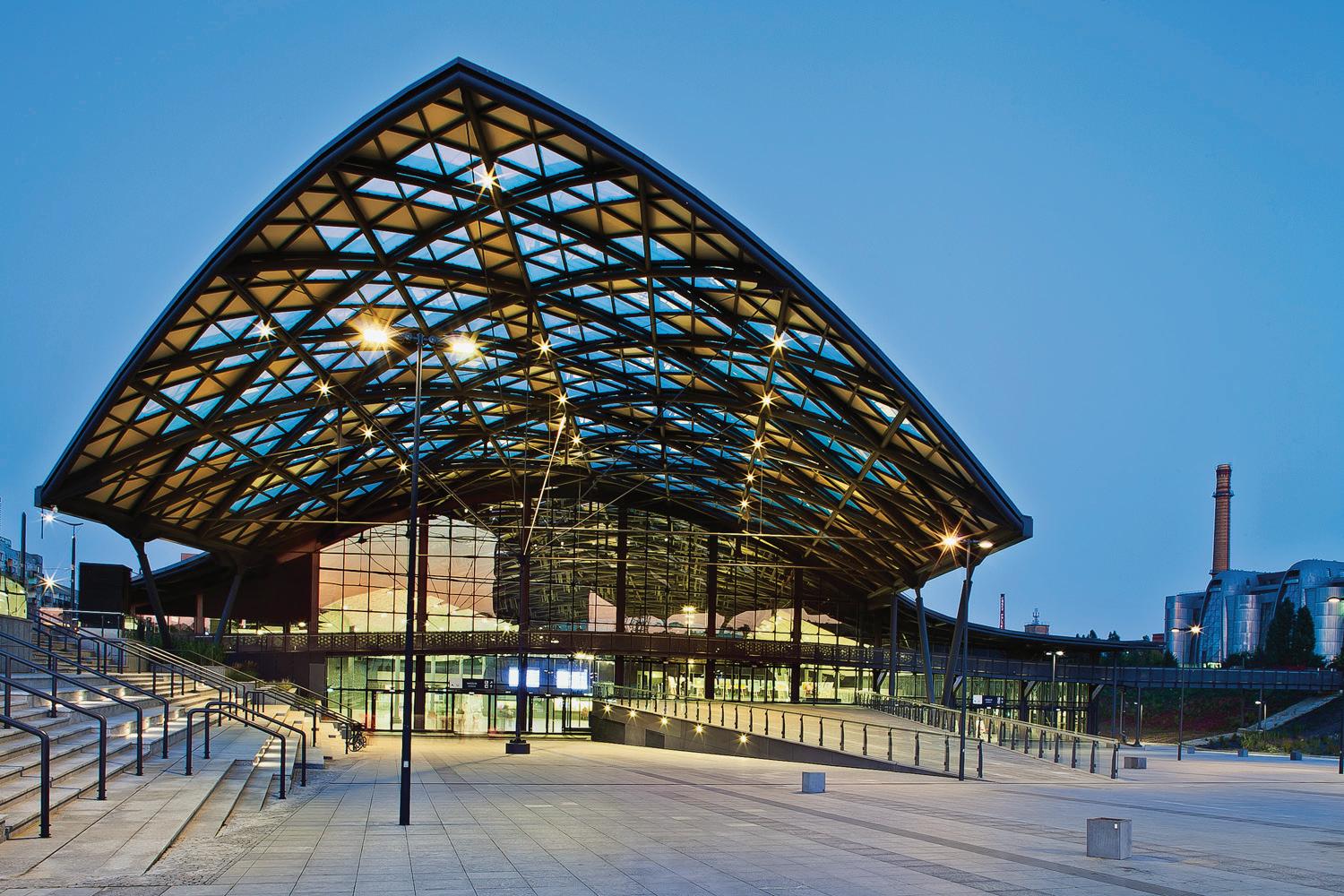
Carmen Corbasson Community Centre

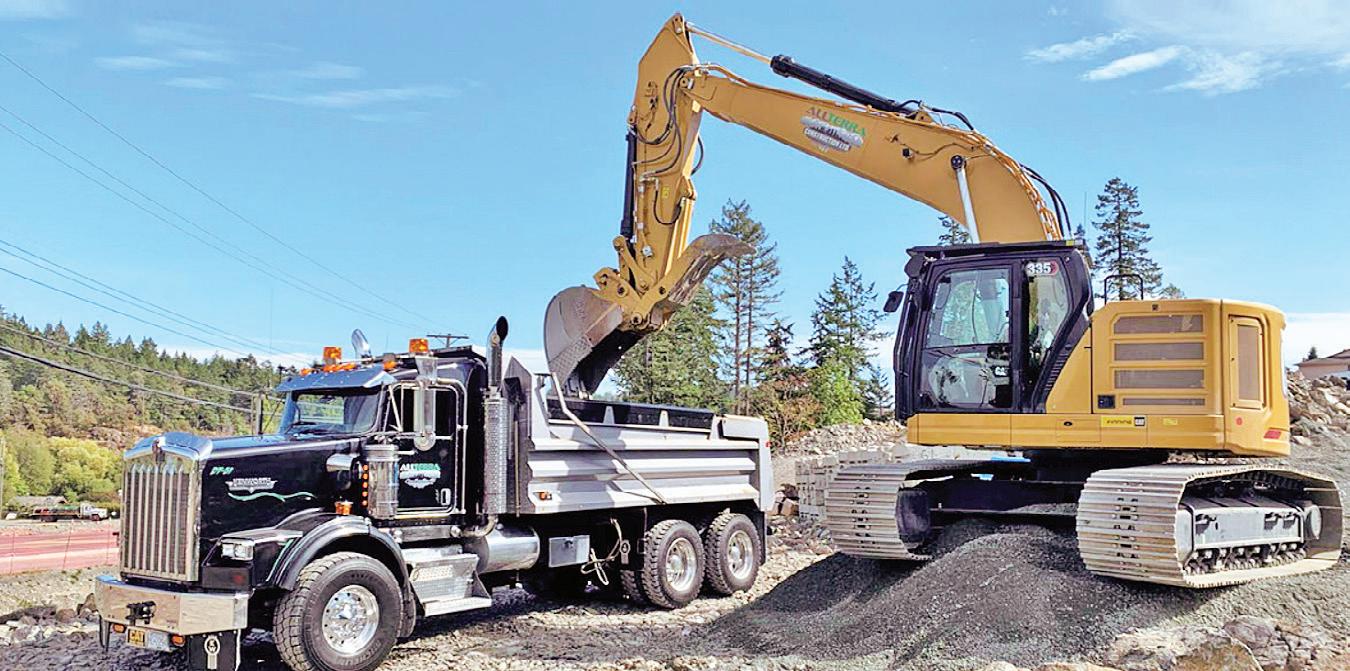
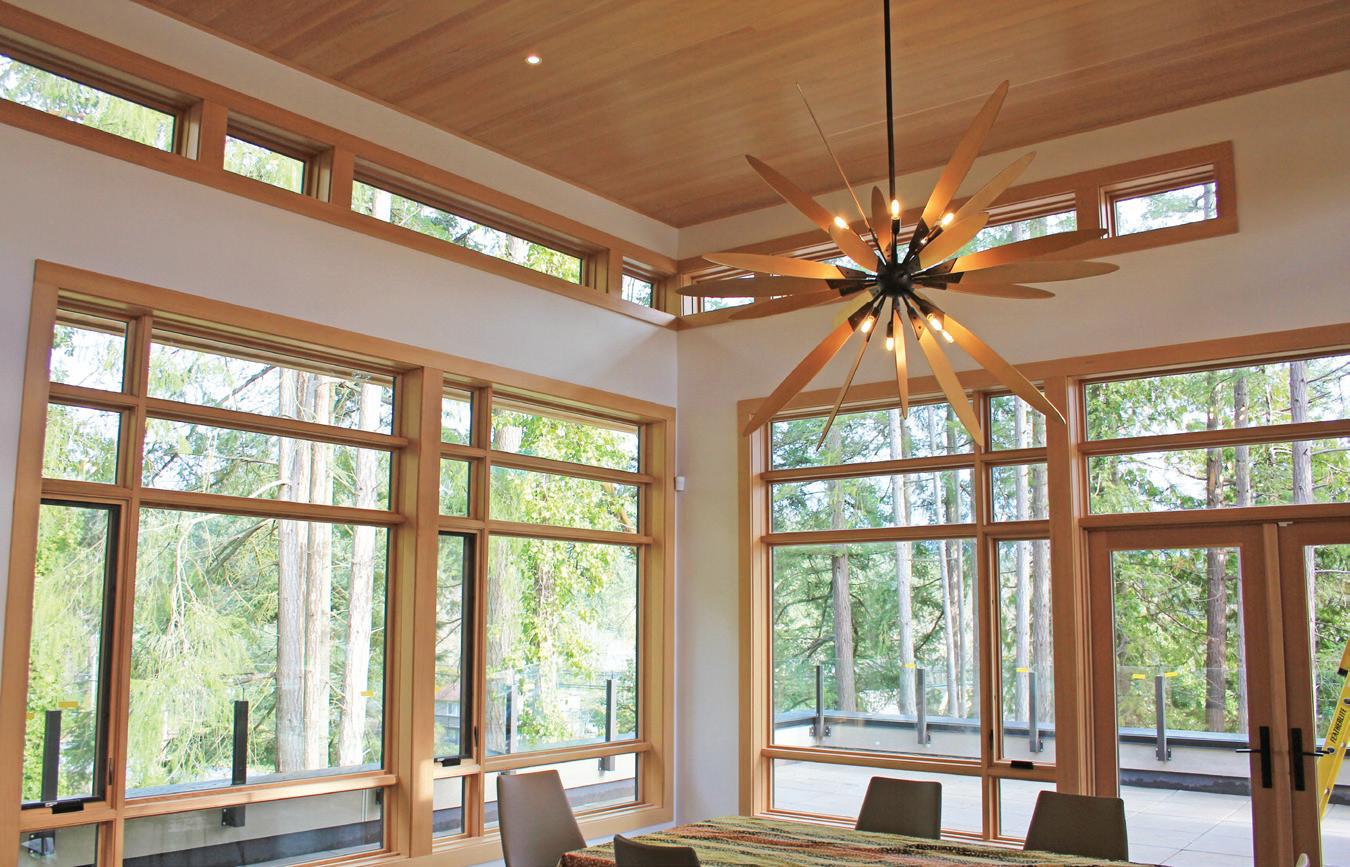

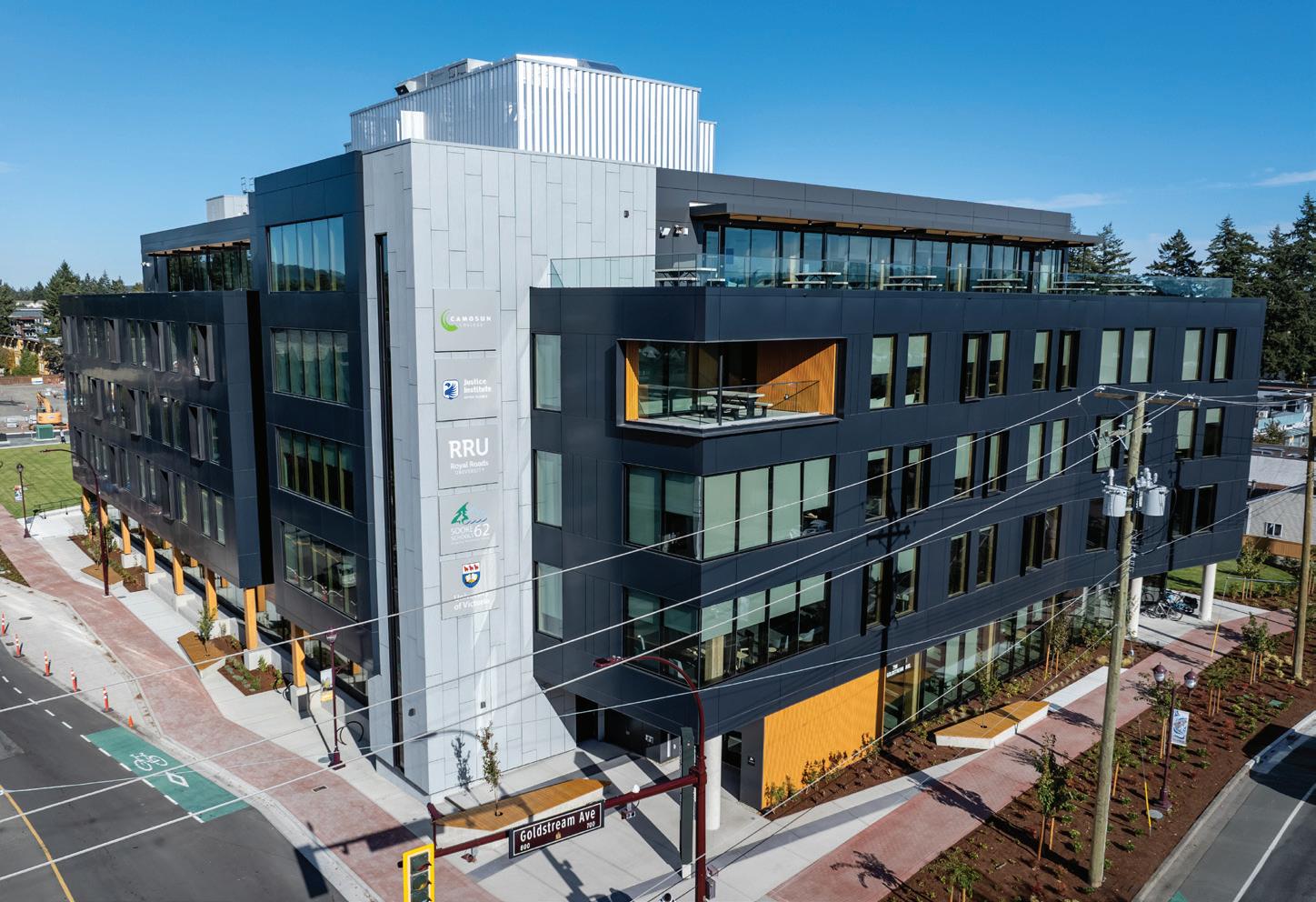
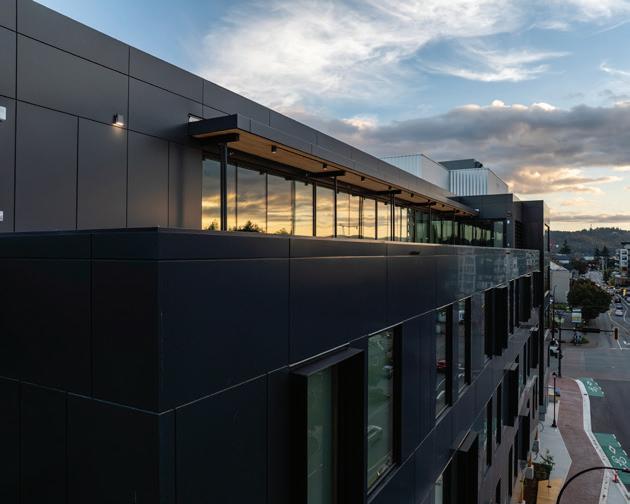


LOCATION
798 Goldstream Avenue, Langford, B.C.
OWNER/DEVELOPER
Royal Roads University
ARCHITECT
hcma architecture + design
CONSTRUCTION MANAGER
Durwest Construction Management Inc.
STRUCTURAL CONSULTANT
RJC Engineers
MECHANICAL CONSULTANT
AME Group
ELECTRICAL CONSULTANT
AES Engineering Ltd.
LANDSCAPE ARCHITECT
LADR Landscape Architects
TOTAL SIZE
103,527 square feet
CONSTRUCTION COST
$87.6 million
JOHN HORGAN CAMPUS – ROYAL ROADS UNIVERSITY
by ROBIN BRUNET
With the recent completion of Royal Roads University’s John Horgan Campus in Langford on Vancouver Island, the delivery of higher education has been drastically changed – to the degree it could influence how other new learning institutions are developed.
The campus evolved when in March 2018, what was then called the Ministry of Advanced Education, Skills and Training provided Royal Roads University with funding to “support planning for a new West Shore campus in consultation with the Ministry.” Royal Roads subsequently invited representatives from the University of Victoria, Camosun College, School District No. 62, the SC’IANEW Nation, and local governments to participate in the development of the report, and hcma architecture + design was asked to conceptualize what a campus of this nature might look like, including a range of post-secondary possibilities while addressing issues of geography and transition rates.
A major takeaway for hcma principal Stuart Rothnie was the perspective of students. “They told us the high costs of tuition and living made it too difficult to afford moving to a remote campus,” he says.
Alex Kortum, vice president of finance and operations at Royal Roads, adds that students also felt traditional universities constrained their ability to easily switch programs. “They wanted greater flexibility,” he says.
The findings fortified the City of Langford’s desire to develop a local facility for higher learning. Royal Roads purchased land in the downtown core, and, with the concerns of young
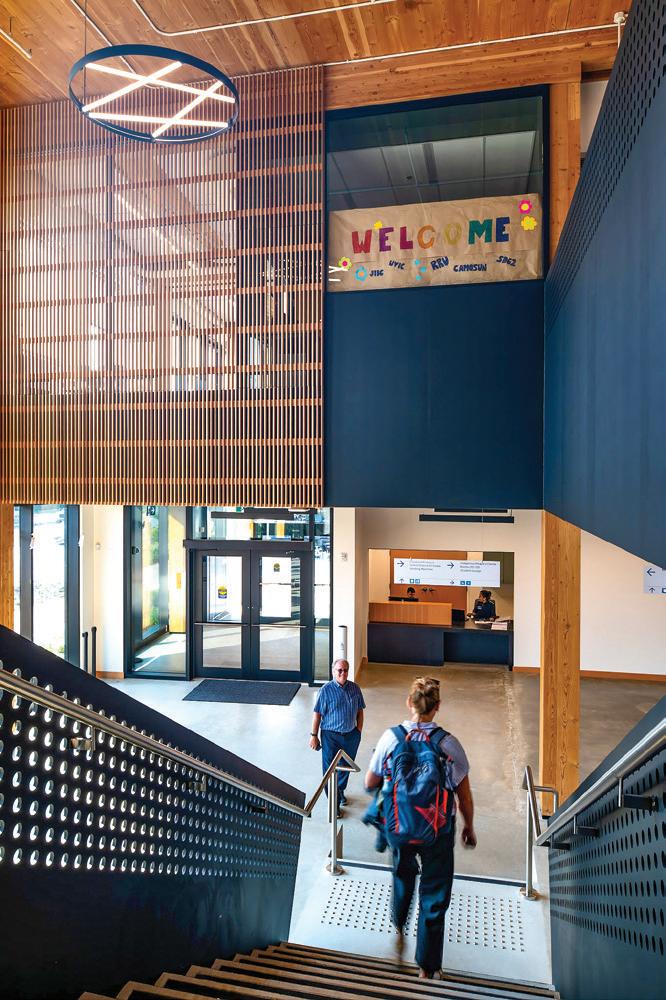
learners in mind, the funding body of the provincial government encouraged a first-of-its-kind partnership between Royal Roads, the University of Victoria, Camosun College, the Justice Institute of British Columbia, and the Sooke School District to provide multiple integrated post-secondary options for 1,300 students under one roof.
Funding was approved for a five-storey LEED Gold mass timber building. The partnership and hcma envisioned flexible classrooms and study spaces; an Indigenous Centre for Indigenous students to gather, cook, and connect; and a space to host mentorship opportunities for students and community events to foster local entrepreneurship and innovation.
“The corner site inspired us to design an L-shaped building with entry at the juncture, and the wings
of the ‘L’ angled to follow the angle of the roads,” Rothnie says. “On the first level, the glazing is set back to provide a window into the public areas, but on the second level it is angled out, which provides ground-level shelter.
“The fifth-level penthouse is set back so as not to make the facility imposing in relation to nearby buildings. We also designed a main level interface with a community hub that opens at the back to a landscaped courtyard.”
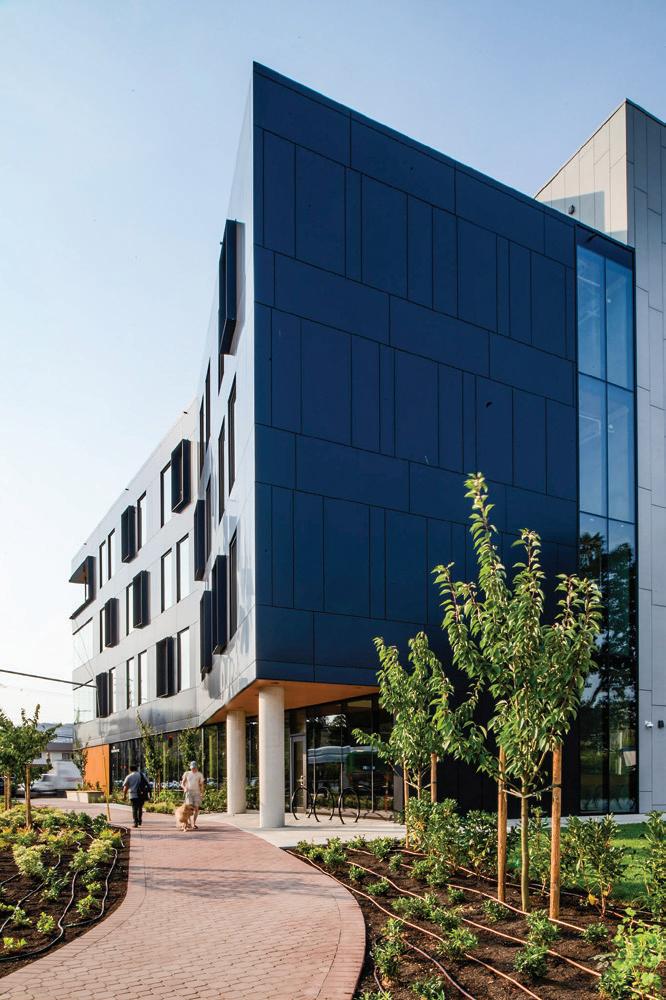
Considering the site is big enough to accommodate future buildings, hcma created a development strategy for the entire property. “We massed various building types, such as podium structures with a tower above,” Rothnie says, adding that retail and commercial components were avoided because the new campus
is in the heart of existing shopping, dining, and other businesses.
Ground broke on the project in 2022. A combination of cross-laminated timber slabs and glulam posts and beams was the bones of the structure. To speed up construction and reduce the impacts of moisture, the project team chose a prefabricated system including laminated strand lumber panels, glulam battens, window frames, and membrane constructed off-site.
Dallas Miles, project manager at Durwest Construction Management Inc., says, “We were able to install between six and 10 panels daily out of a total of 150 panels. First came the mass timber columns and beams, then panels were dropped between the columns for a structural floor. The wall panels were positioned on these floors, tilted up to connection points, and bolted into place.”
One factor benefited the Durwest team. “The site had an ideal sandy, gravelly composition, so the entire building rested on footings, no piles required,” Miles says. Concrete cores, shear walls, and stairwells helped meet the building’s seismic and fire requirements.
Rothnie is especially proud of the interior. “We left most of the wood elements exposed, and the effect is absolutely beautiful,” he says.
West Isle Industries provided custom architectural woodwork throughout the building. “This covered millwork and cabinetry in teaching spaces, innovation studios, labs, offices, common and collaboration areas, washrooms, and circulation zones, including casework, integrated
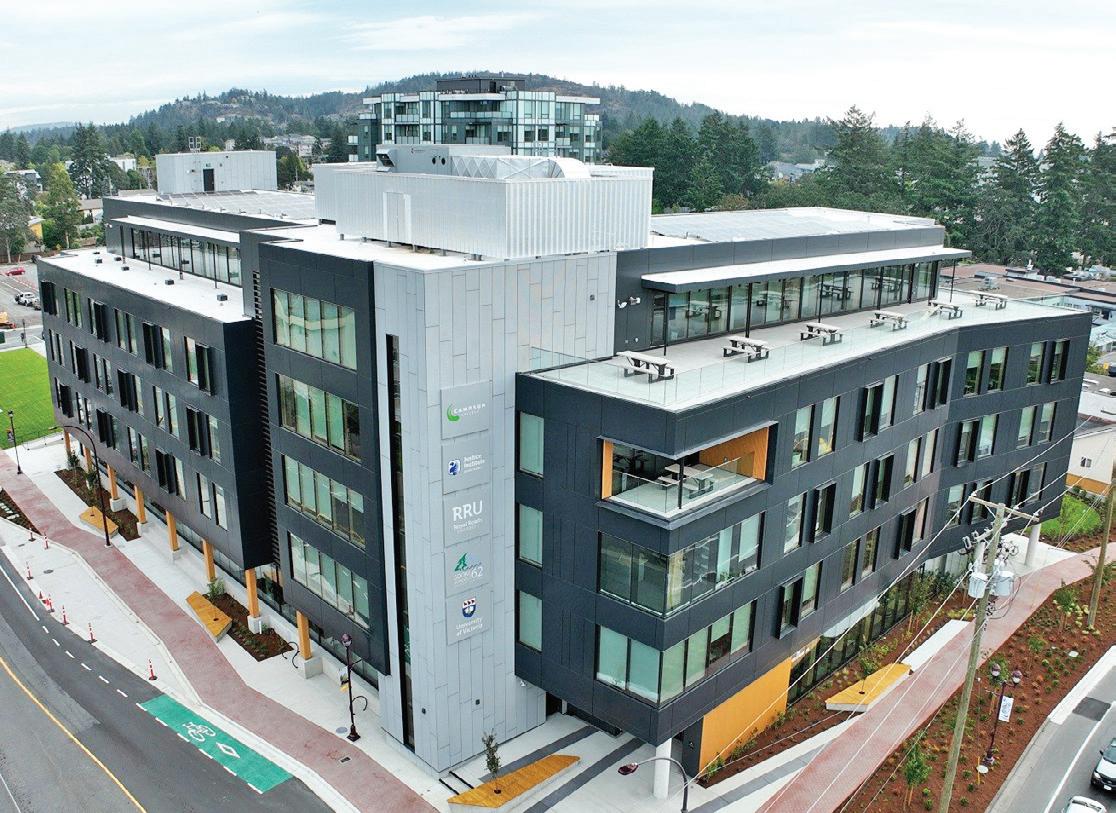
Top Line Roofing proudly served as the Building Envelope Contractor and Cladding Installer for the new John Horgan Campus in Langford, BC.
We were honored to collaborate with HCMA Architecture + Design and Durwest Construction Management on this successful project.

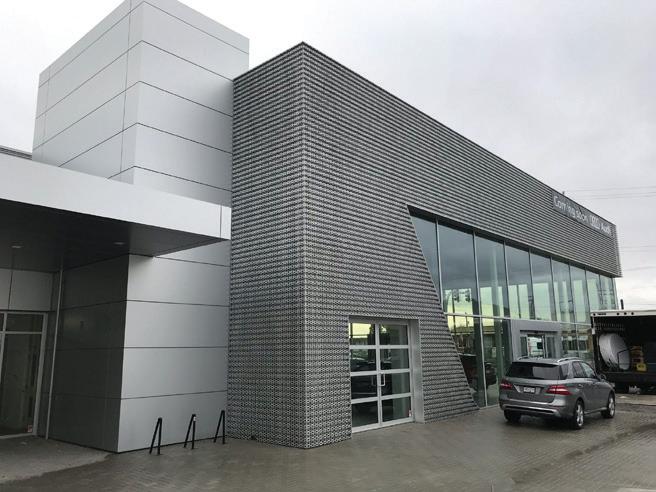
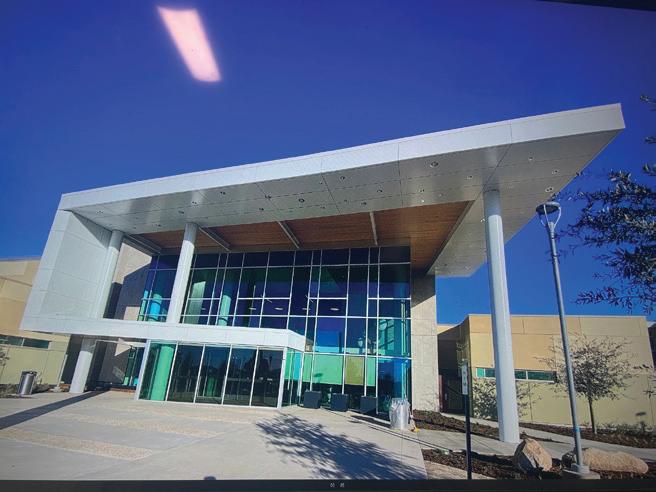
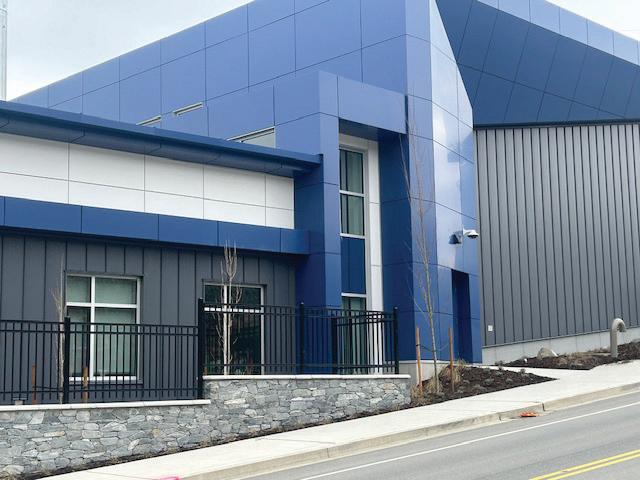
Accurate
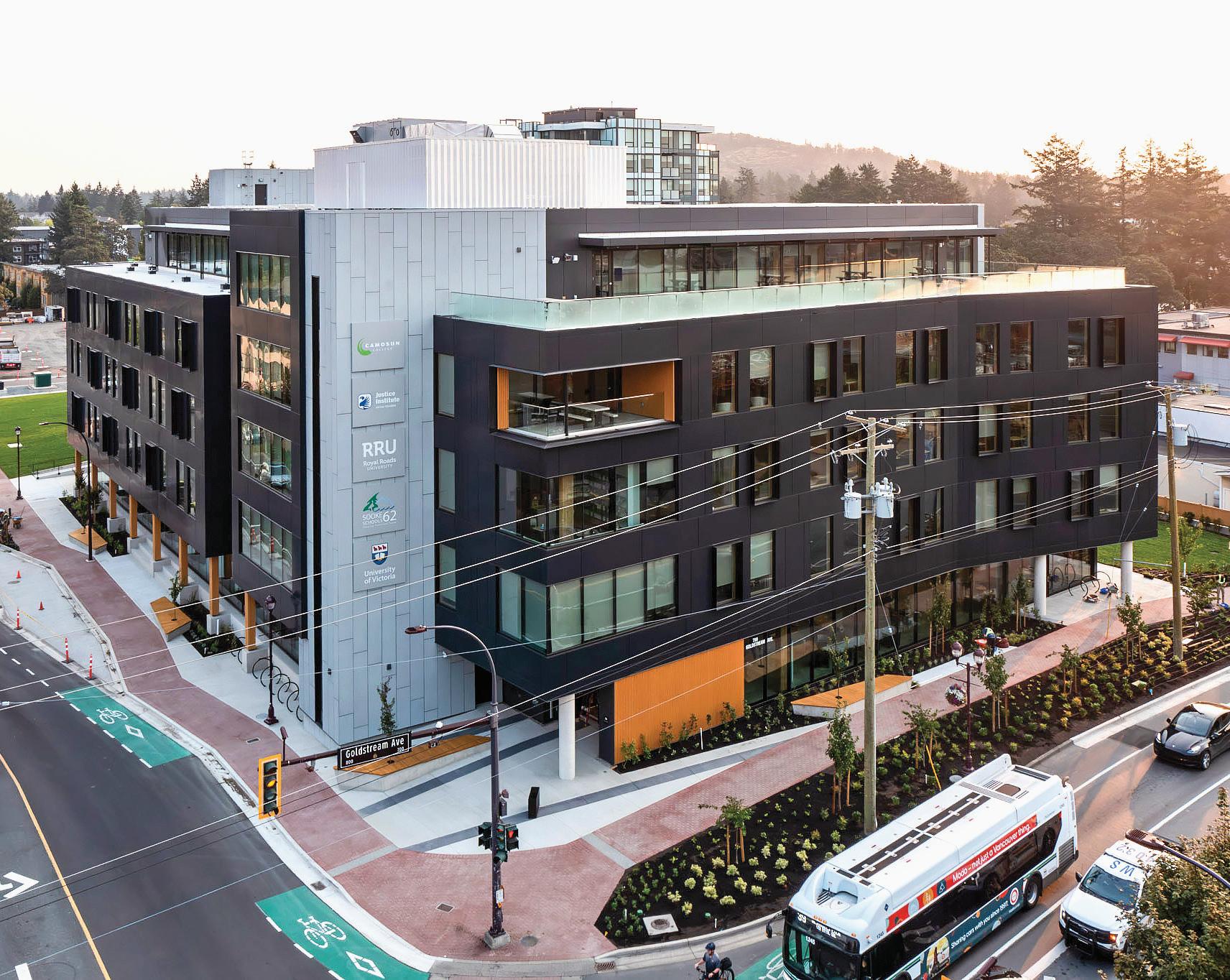
benches and seating, custom reception desks, and built-in storage,” says West Isle president Lee Noble.
Noble says. “Managing the logistics of moving oversized pieces, then executing precise on-site joining and finishing, required careful planning and a high level of craftsmanship.”
Along with passive design strategies such as compact massing, active systems include air-source heat pumps for heating and cooling distributed through radiant panels. On the roof, a photovoltaic array reduces energy use, thus contributing to LEED requirements. The project has received Zero Carbon Building (ZCB) Design certification and will receive LEED Gold certification in the coming months.
As of late January, 650 students were enrolled in the new campus, and Kortum says the facility will reach capacity within four years. “It’s a beautiful, welcoming building, and the interior is a mix of dedicated areas – such as for the Justice Institute’s paramedic training – and bookable areas managed by a central booking system.
“Another challenge involved the fabrication and installation of several large solid surface Corian elements,”
West Isle’s experience allowed the company to design and fabricate surfaces and built-in elements for the facility’s shared and high-traffic collaborative spaces that are intended to perform reliably for decades.
“We’re currently studying the feasibility of creating student housing on site next, but in the meantime we’re so grateful to our partners, the province, and the design and construction teams for bringing the John Horgan Campus to life.” A
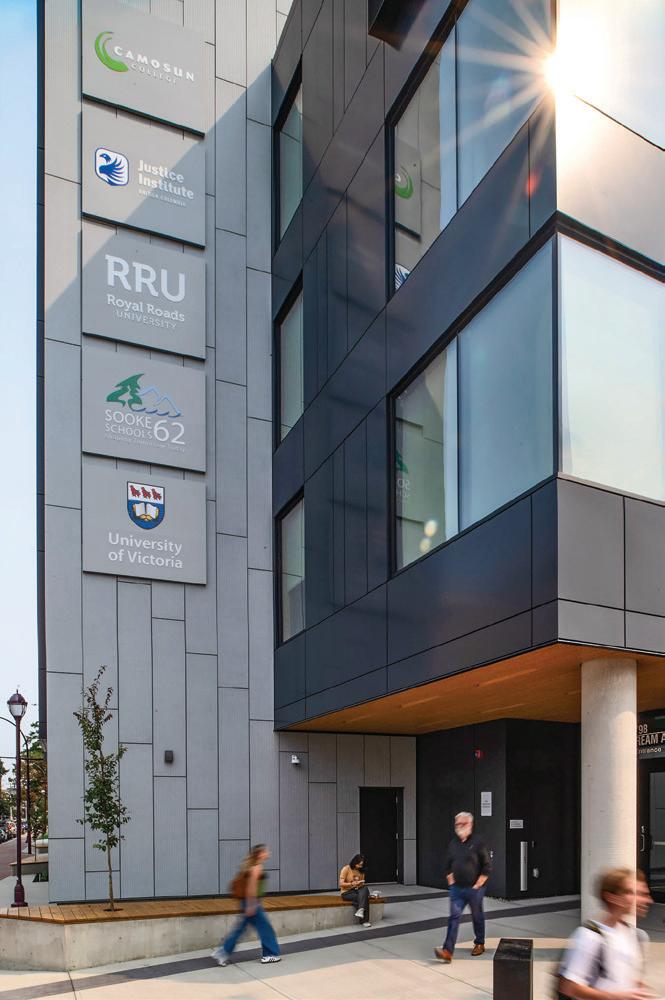



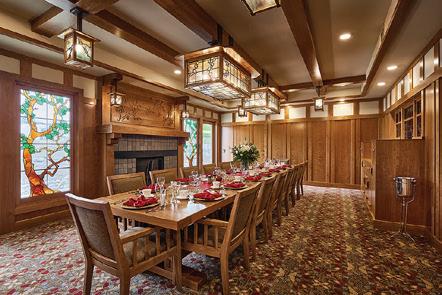
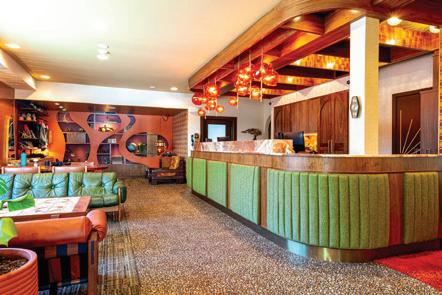
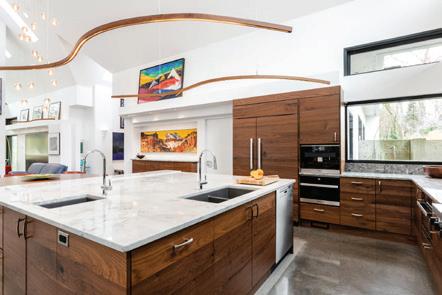



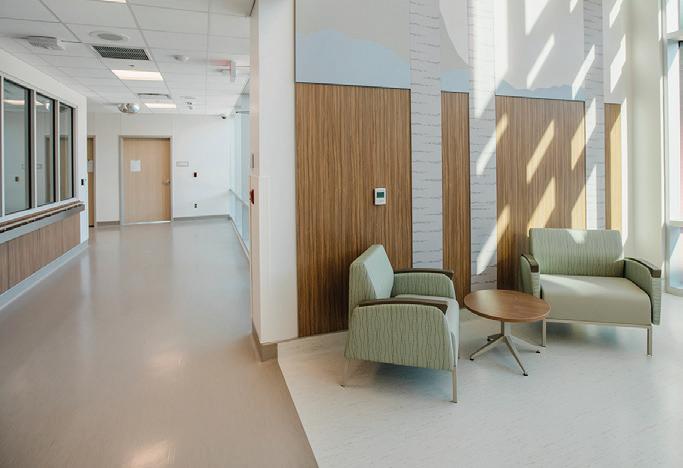

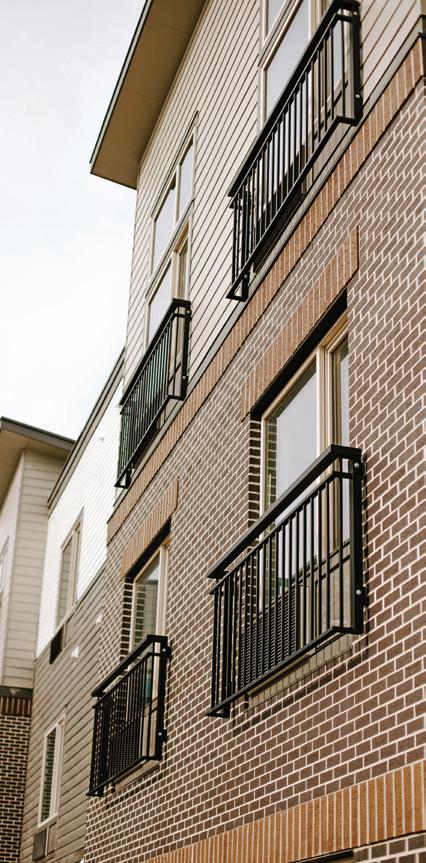
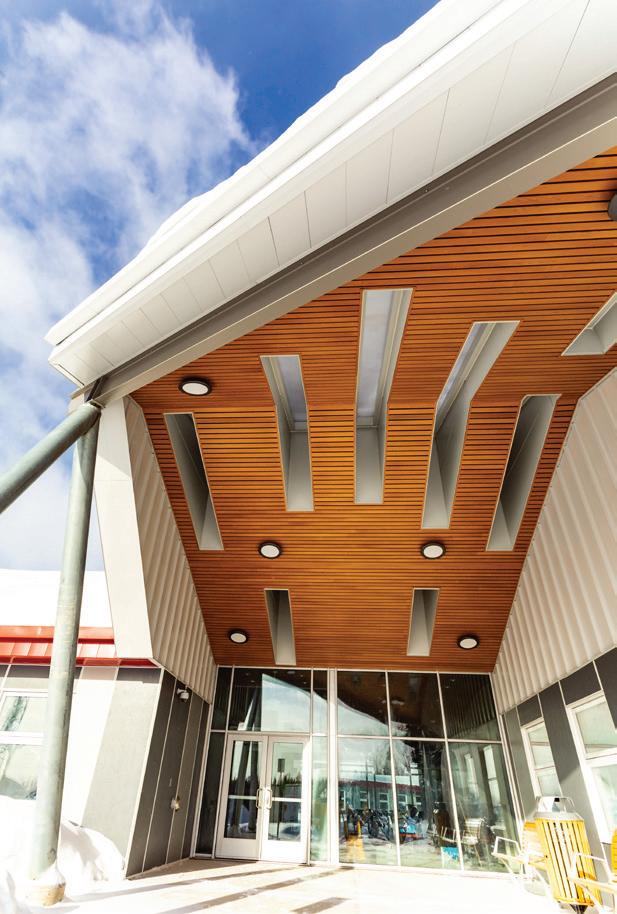
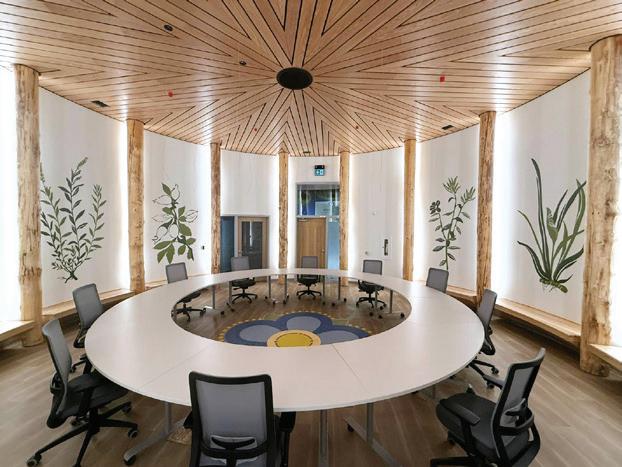
•

Fuchs Decorating.indd
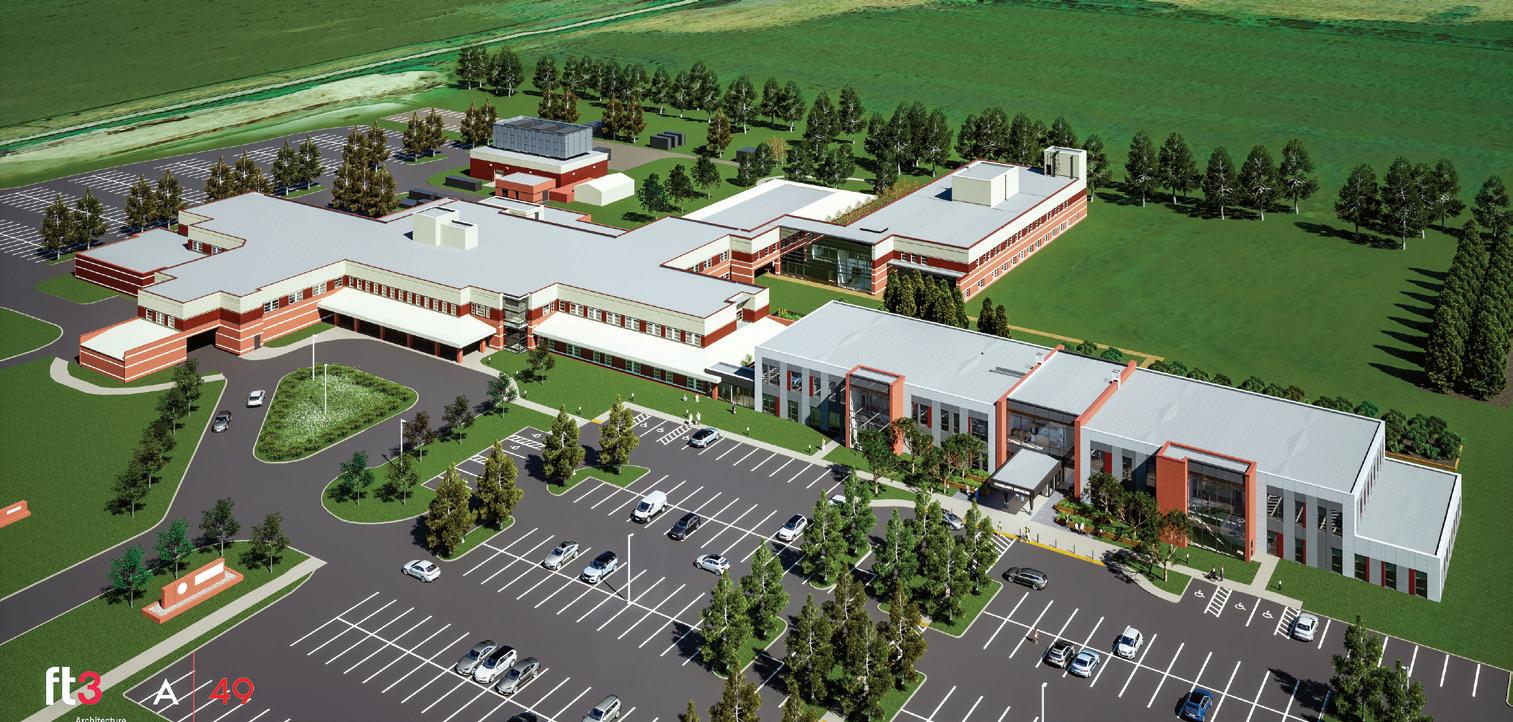
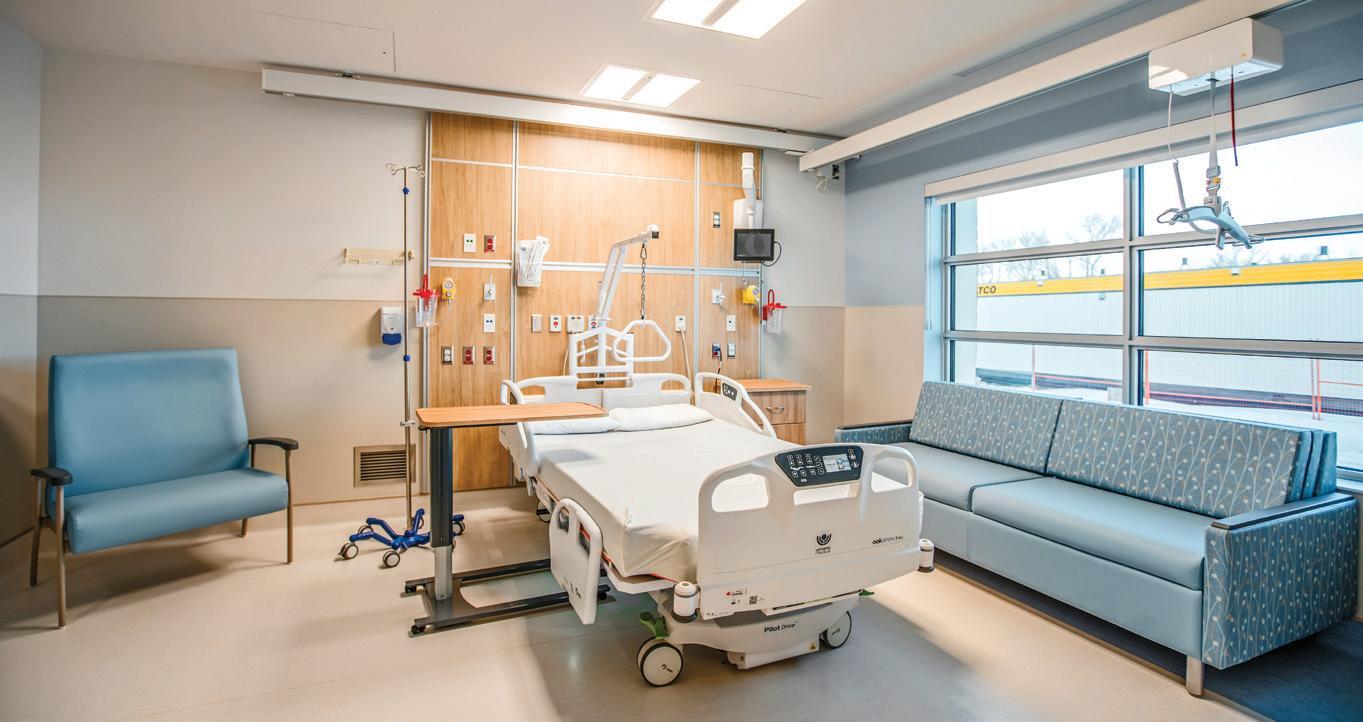
BOUNDARY TRAILS HEALTH CENTRE
by ROBIN BRUNET
Reshaping the health-care landscape takes time: just ask Kyle MacNair, implementation lead for clinical planning at Southern Health-Santé Sud health region in Manitoba. He says, “It was about a decade ago when the community and region began discussing the idea of expanding the Boundary Trails Health Centre in Winkler, Manitoba.
“By the time proposals were put forward in 2019, southern Manitoba’s rapid growth was such that Boundary Trails badly required additional beds and services, having long outgrown its original footprint.”
MacNair goes on to note: “Originally, we planned to build a community services building, fill it with key components of the hospital, then renovate the hospital to accommodate the increased demand for cancer care, emergency services, and operating rooms. Proposed future phases would include an increase of inpatient beds and a nursery addition.
“However, in 2021, the government agreed to fund an all-in-one build, which included the Community Services Building, an inpatient addition, and also a new energy centre and generators providing upgraded power, cooling, and back-up power to a greatly enlarged campus.” This was one of the first projects in the province delivered under a new oversight structure led by Department Led Capital in partnership with Southern Health-Santé Sud. Architecture49 and ft3 Architecture Landscape Interior Design had formed a partnership and responded to a request for proposal for prime consultant services for the Government of Manitoba’s investment in building and renovating health care facilities in the province. The partnership was successful in securing design work for the Boundary Trails Health Centre project and the new Portage Regional Health Centre.
Igor Cabrilo, associate architect at ft3 Architecture, says, “The Portage District General Hospital began design/construction first with ft3 acting as prime consultant on the project. Boundary Trails followed shortly after. In retrospect, the new Portage hospital was easier to design than Boundary simply because it was a standalone facility that didn’t require any renovation/connection to existing buildings.”
Jim Weselake, principal at Architecture49, adds, “We were the prime consultant and ft3, with Igor, was the project manager for all of the Boundary Trails projects; I focused on the Inpatient Unit while Igor presided over the development of the Community Services Building and Energy Centre.”
The Inpatient Care Unit was developed as a two-storey addition to the existing hospital; the first level contains 24 adult medical inpatient rooms, including two Airborne Infection Isolation Rooms. The second level has future capacity for eight Level 2 nursery beds and nine Labour, Delivery, Recovery Postpartum rooms.
The design concept was to create a patient-centred healing environment of single-bed rooms, maximizing access to daylight and nature, appropriate lighting, noise reduction, fall prevention measures, and sustainable materials. “We also aimed to provide staff with clean and bright spaces to promote their wellness, and functional workspaces integrated technology and digital solutions,” Cabrilo says, adding that wood and wood-replicate materials were an important factor in imparting an ambiance of comfort.
“Also, for the exterior of the inpatient expansion, we benefitted from the fact that the original hospital had been built in the early 2000s and therefore a lot of materials used for its construction were still largely available,” Cabrilo says. Weselake adds, “The Community
Services Building was intended to be a standalone building with its own distinctive visual identity, so we used a combination of cementitious panels and brick to achieve this. The red brick and red panel accents we drew from the existing Boundary Trails Health Centre to create a visual link between the two structures.”
“For the Community Services Building we used Hardie Board panel and brick trims, extending the red brick of Boundary Trails and providing this building with a more distinctive visual identity.”
Programs were added to the twostorey community services building as its design evolved, and construction materials and finishes underwent a similar evolution. “Overall, we benefitted from intense interaction with Southern Health-Santé Sud and the contractors, who couldn’t have been a more supportive group,” Weselake says, adding that clear communication all around enabled the project to accommodate several building code updates with minimum disruption.
Programming efficiencies were achieved through careful planning. “For example, existing outpatient services each had their own registration desk and waiting area, but we developed a single registration desk and waiting area for multiple services,” MacNair says.
Penn-co Construction broke ground on the site in the spring of 2023, and MacNair says, “We were fortunate that Boundary Trails had been built in the middle of a field, so there was plenty of space for staging. We were even able to allot space for a helipad and future expansion.”
The architects are now designing the renovation to the interiors of Boundary Trails and expect construction to commence this summer with final completion in 2027-28. “Once we start renovating within the existing
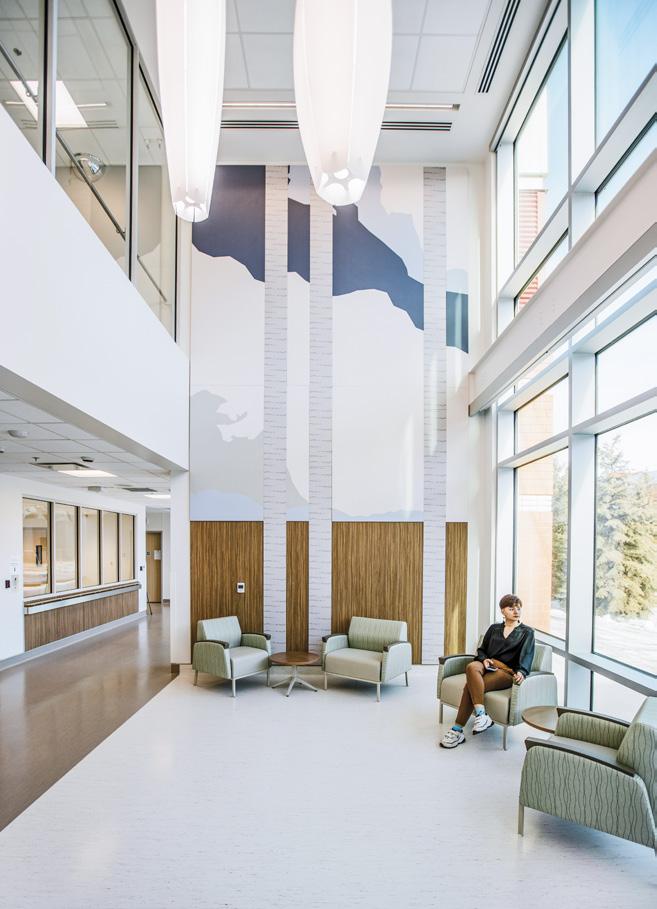
emergency department, there will be more visible impact on patients and staff,” MacNair says. “We’re planning carefully to maintain safe, continuous care throughout.” The renovated ED will feature more treatment areas, vertical care spaces, and internal waiting rooms to improve patient flow and reduce wait times.
MacNair adds, “The project as it stands is still at or below budget, and thanks to the skill of our architects and builders we are very confident of a successful completion.” A
LOCATION
Junction Highway 3 & 14, Winkler, Manitoba
OWNER/DEVELOPER
Southern Health-Santé Sud / Department Led Capital Projects ARCHITECTS/LANDSCAPE ARCHITECTS
Architecture49 / ft3 Architecture Landscape Interior Design
CONSTRUCTION MANAGER
Penn-co Construction
STRUCTURAL CONSULTANT
Crosier Kilgour
MECHANICAL/ELECTRICAL CONSULTANT
SMS Engineering Ltd.
CIVIL CONSULTANT
KGS Group
TOTAL SIZE
83,370 square feet (additions); 19,270 square feet (renovations)
TOTAL COST
$64.4 million
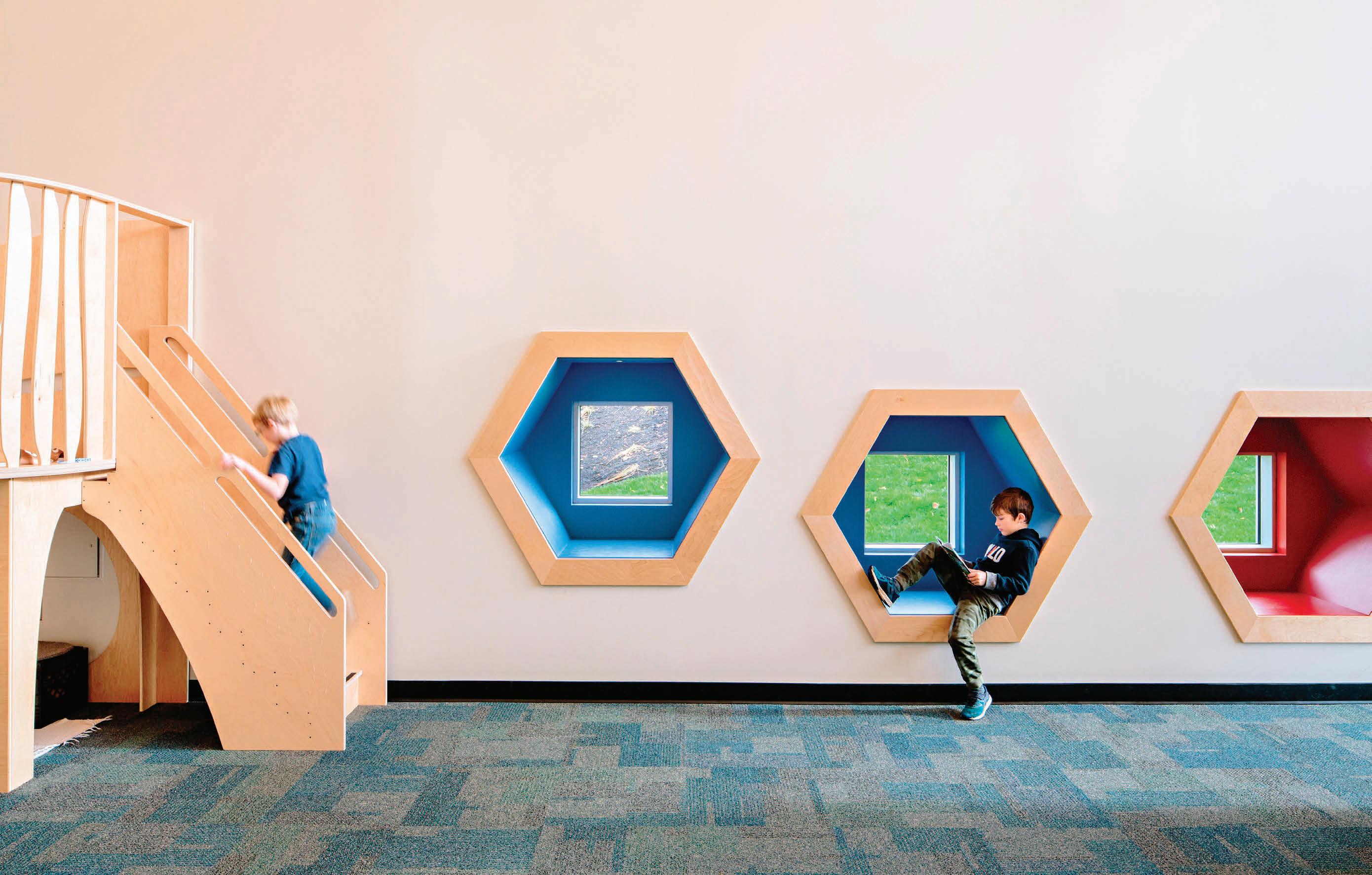
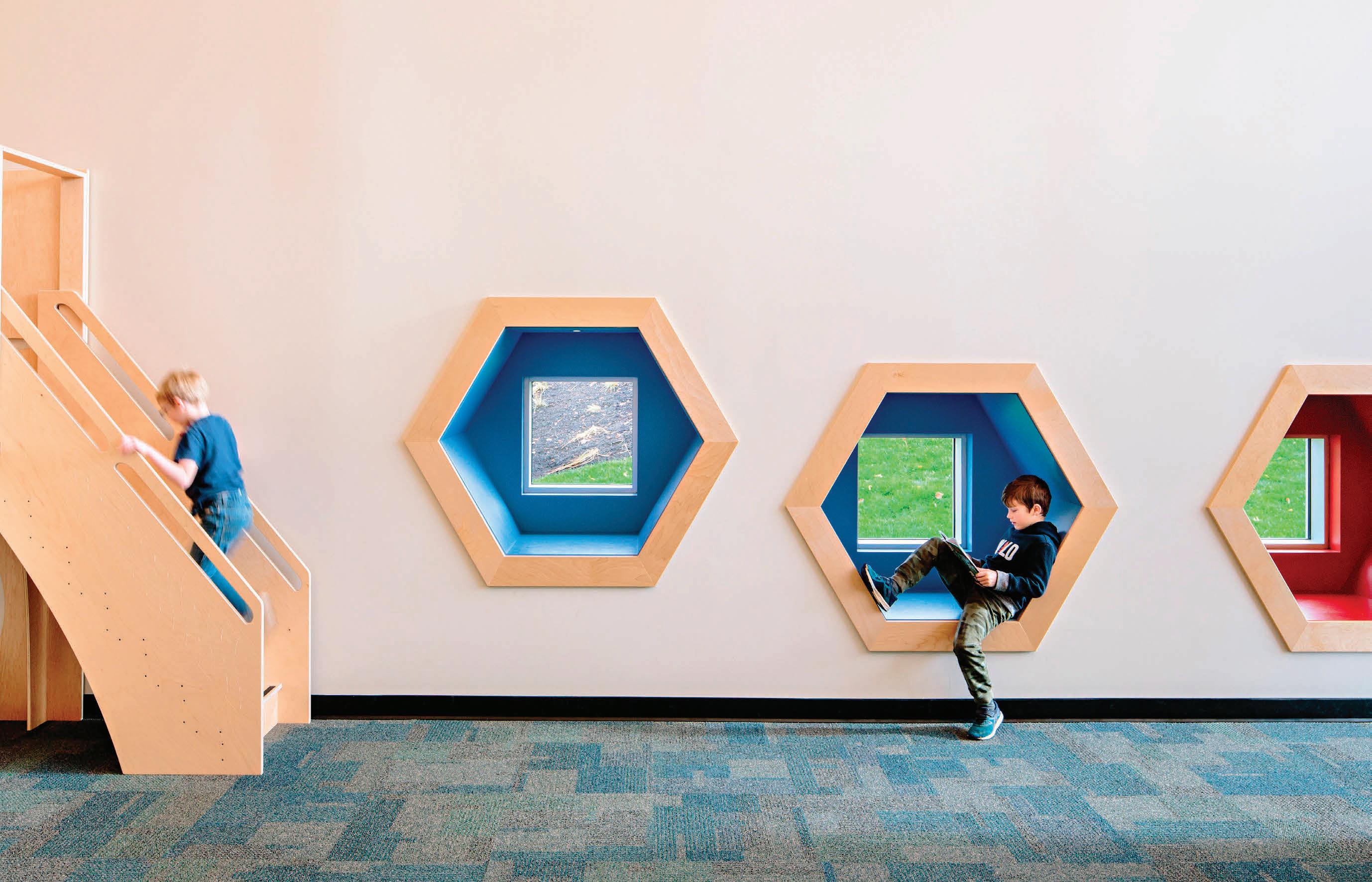
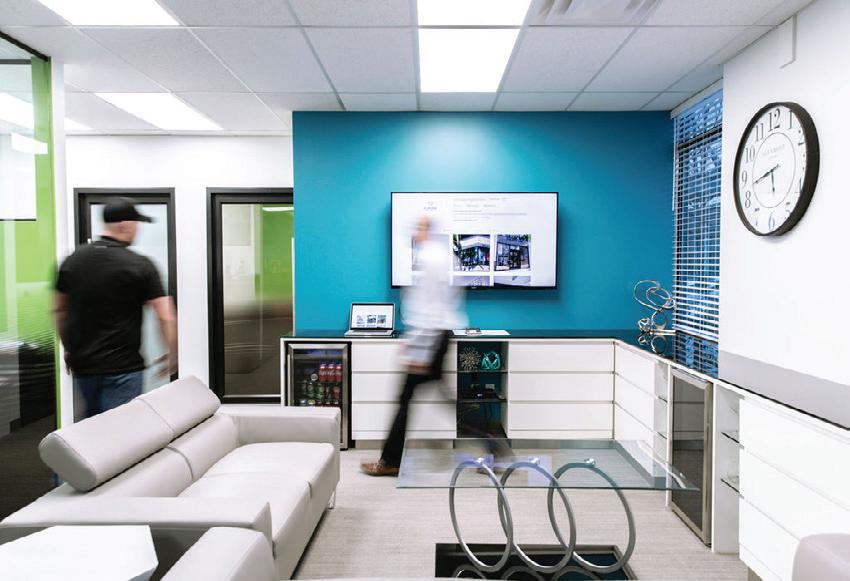
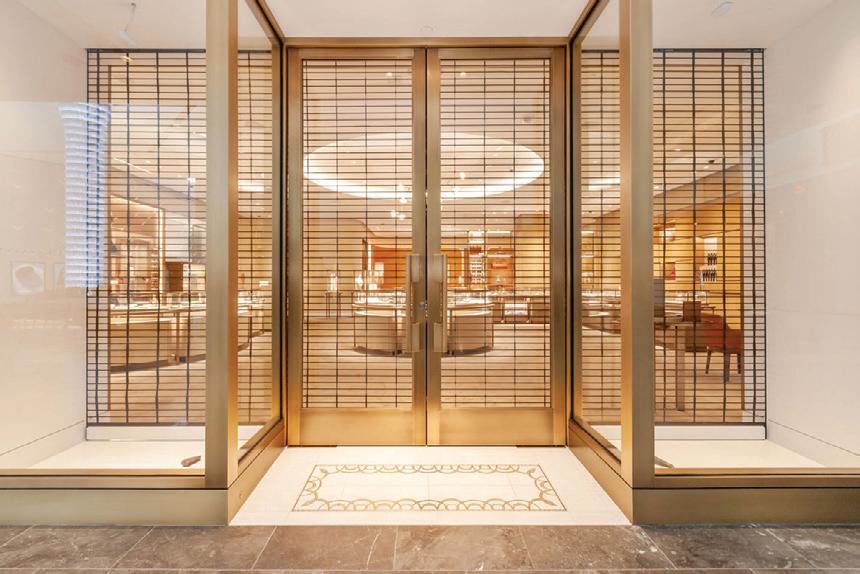

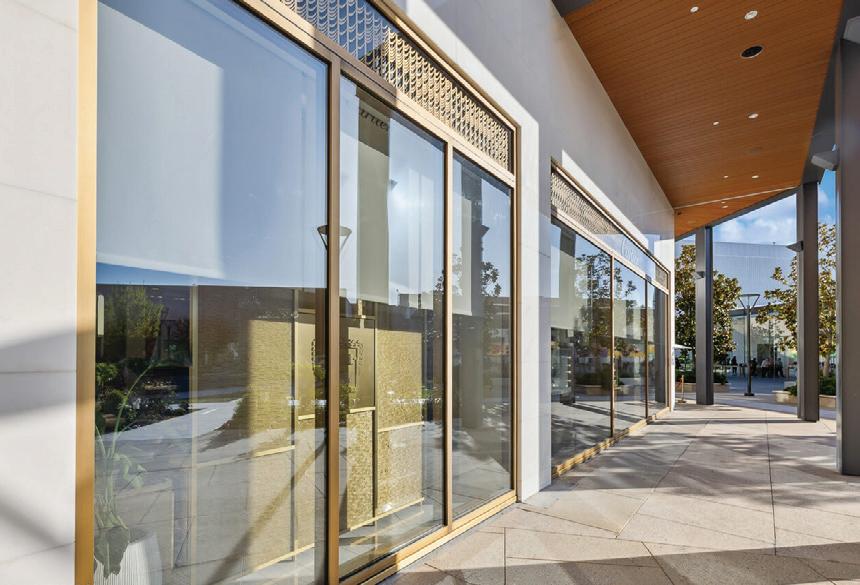
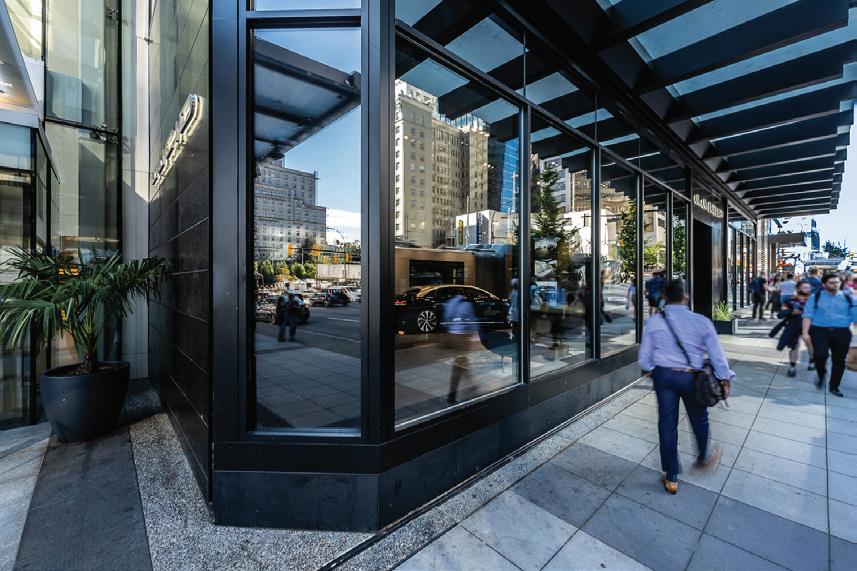
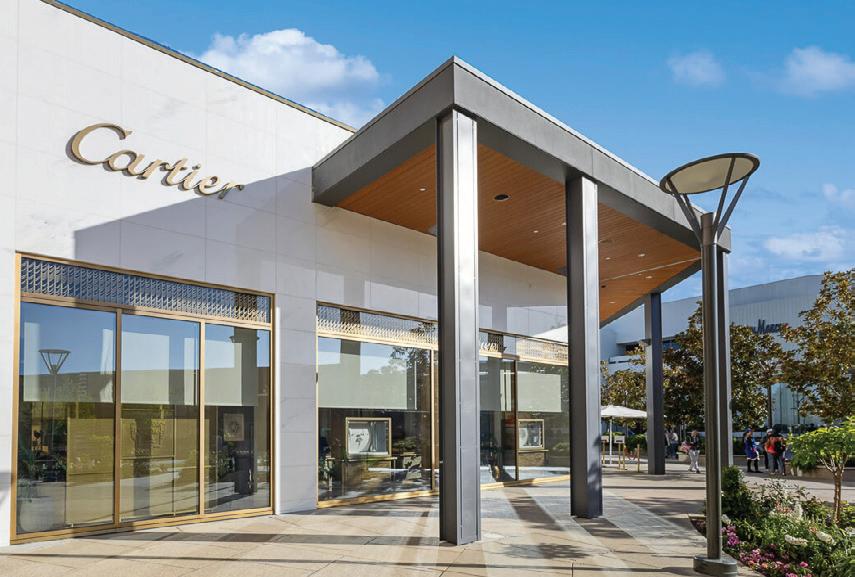
CARSON ELEMENTARY SCHOOL
by LAURIE JONES
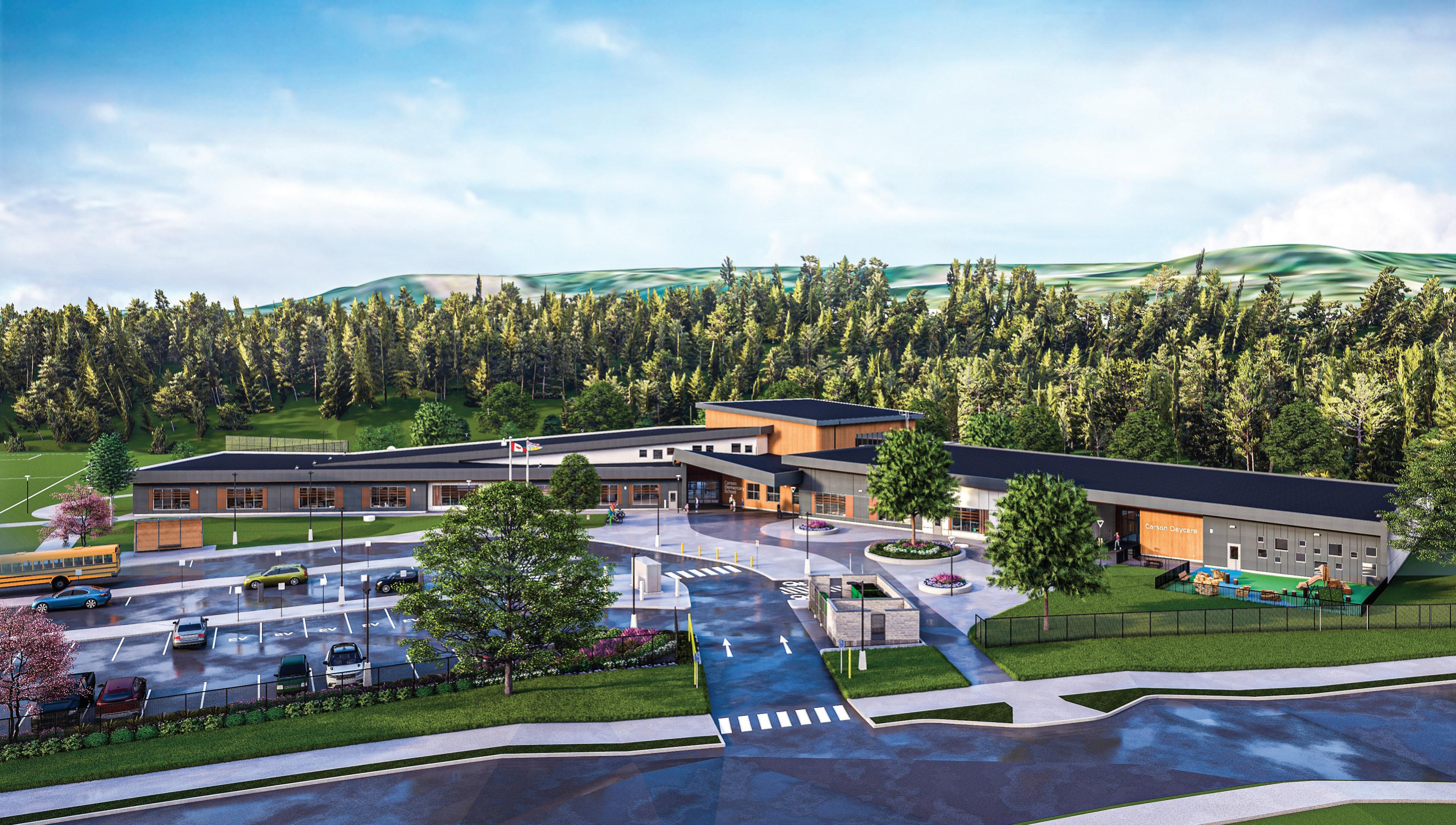
When Carson Elementary school faced the wrath of Mother Nature with a catastrophic landslide in 2021 that significantly affected the foundation, the decision was made to construct a new building, approximately one kilometre away, but in the same catchment.
Meeting modern safety guidelines, the new single-storey facility will increase the school’s capacity by 195 seats for a total of 390 spots for students (an operating capacity of 350) and features the significant addition of a childcare centre within the school.
Carson Elementary is set to open in the spring of 2026, with students officially starting classes in September. The new building will feature a grand entry filled with natural light, creating a welcoming environment.
“The design draws on the natural surroundings, with the Fraser and Quesnel Rivers nearby,” says Dan Lowndes, superintendent for Quesnel School District 28. “Its design is complementary to the Quesnel Middle School, which is located nearby.”
As with many schools in the modern era, team teaching was an important consideration in creating the design for Carson Elementary. “Its design has the option to open walls between classrooms and the bright Learning Commons for collaborative instruction and student participation,” he adds. “I think the entire space will provide flexibility for staff and the students.”
Justin Dyck, CEO and principal at Station One Architects, says in keeping with local Indigenous traditions and culture, the architectural concept of the building was about nature, especially since it is so close to the river. “The layout of the school and selections of colours are very much about water, the flow of the river, and the pebble texture of riverbanks,” he explains. “The raised roofline provides higher ceilings in the main entry, which extends to the Learning Commons, the gym, and the whole central area. It’s a cultural hub.”
Adding to the design’s wow factor, a wall of glass surrounds the gym, allowing students to watch activities inside while maintaining a visual connection to the outdoors. An operable wall in the gym opens up to a multi-purpose area featuring a flat floor so students can showcase plays, or participate in yoga classes, while a basketball game is going on in the main floor area.
Inclusive education is very important in today’s curriculum, and to that point, Carson Elementary features small breakout rooms where an educational assistant or educator can work with the student in an acoustically controlled room. “We also designed the space to suit the size of students, with window sills closer to the floor, lower drinking fountains, and aligned toilets and counter cabinetry. But we also built to regular heights under the
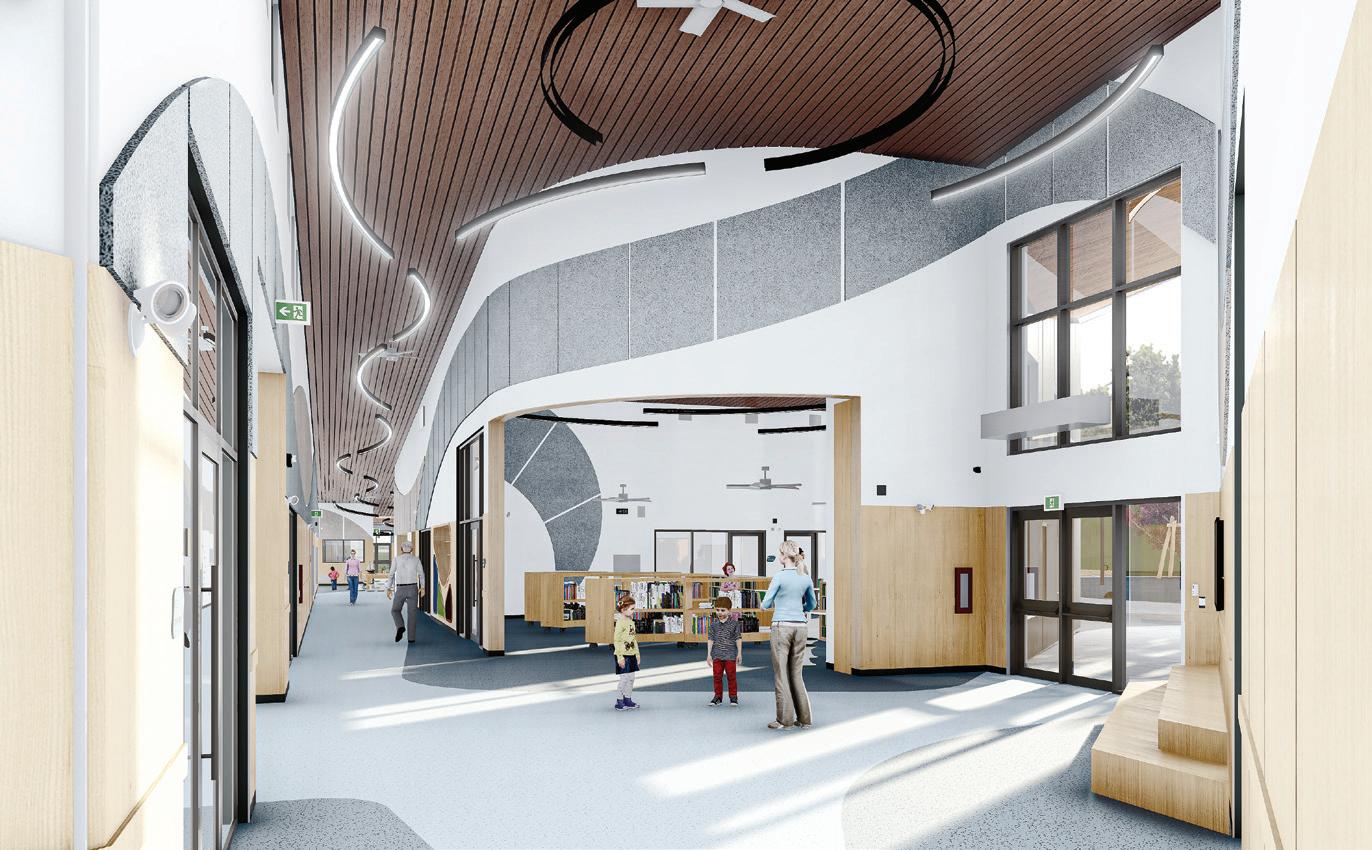
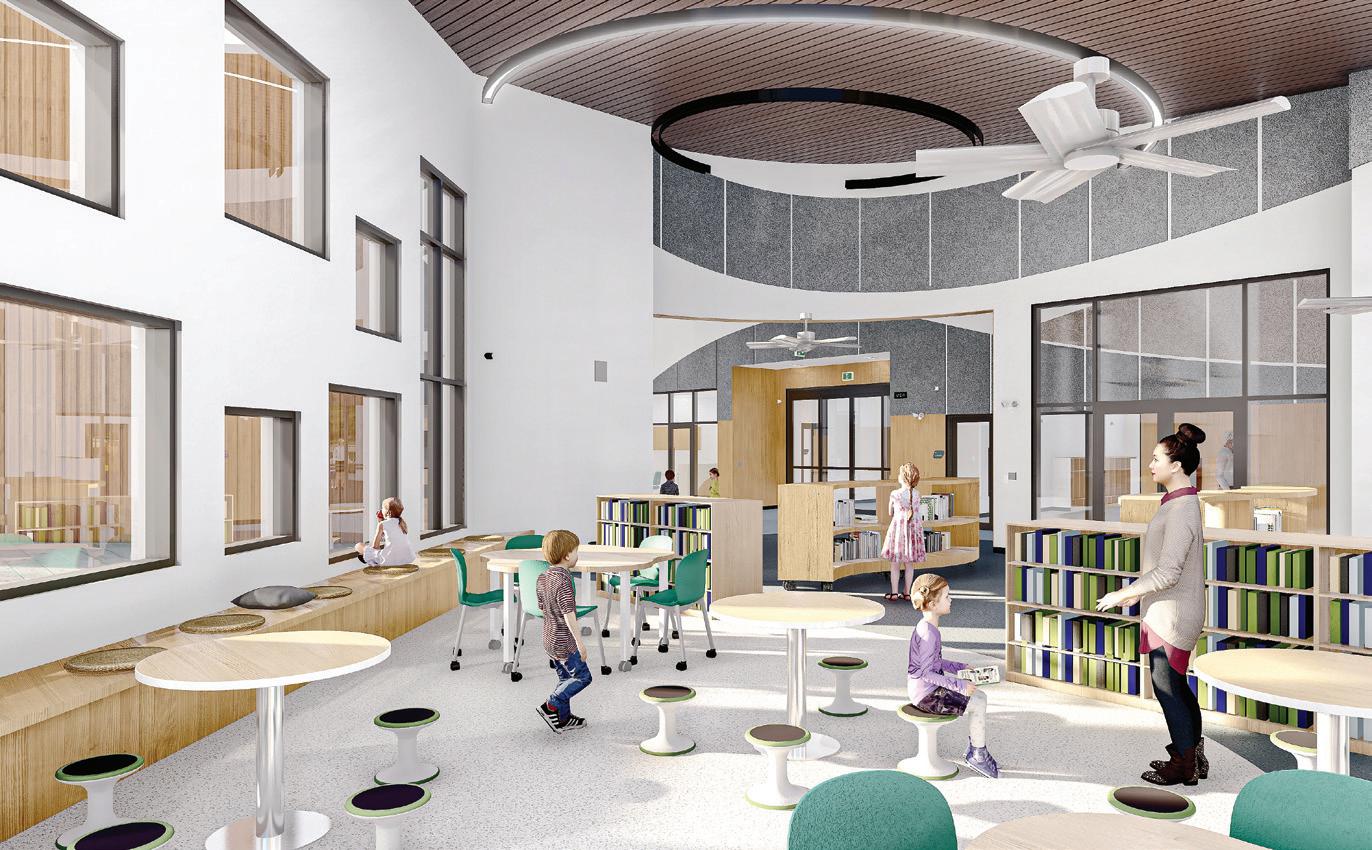
philosophy that in the child’s home, they use adult facilities,” says Dyck. The washrooms are fully individualized and non-gender, with a bank of hand washing sinks that are open to the corridor. “This encourages hygiene and also eliminates bullying and shenanigans in typical washrooms,” he says.
The key addition to the design is the childcare centre – a wing on the end of the school that was built for three different age groups: infant, toddler, and three- to five-year-olds. “Not every school gets that opportunity where parents can drop off their baby and a seven-year-old at the same location,” he explains.
With the cold winters of Northern B.C., having a properly insulated exterior is critical. “To achieve thermal protection, we sprayed foam interior insulation on all the exterior walls, and an additional exterior insulation assembly on the outside as well,” says Ryan Pankratz, project manager at Yellowridge Construction. He notes the winter conditions were challenging during the build when excavating and pouring concrete in the cold.
One special feature in the gymnasium is sweeping Glulam beams.
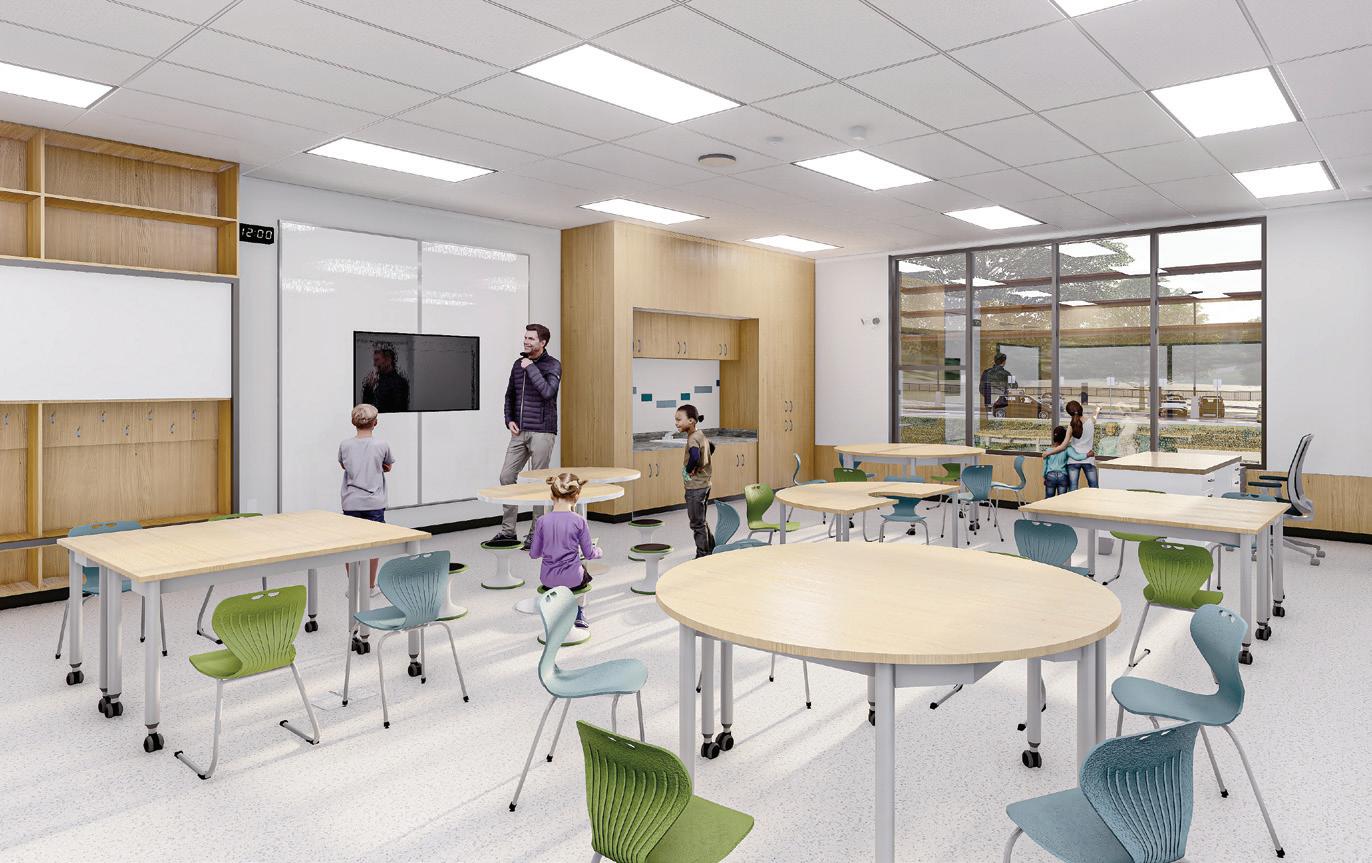
These beams highlight the two-storey height of the gym and address geotechnical stability issues. Cement pylons were installed in the ground under the school footprint which raised the entire structure, creating a fully suspended main floor and a two-metre crawl space that spans the length of the building.
Other modern touches to Carson Elementary include a covered bus shelter and a drop-off area with electric vehicle charging facilities. A

LOCATION
1255
ARCHITECT
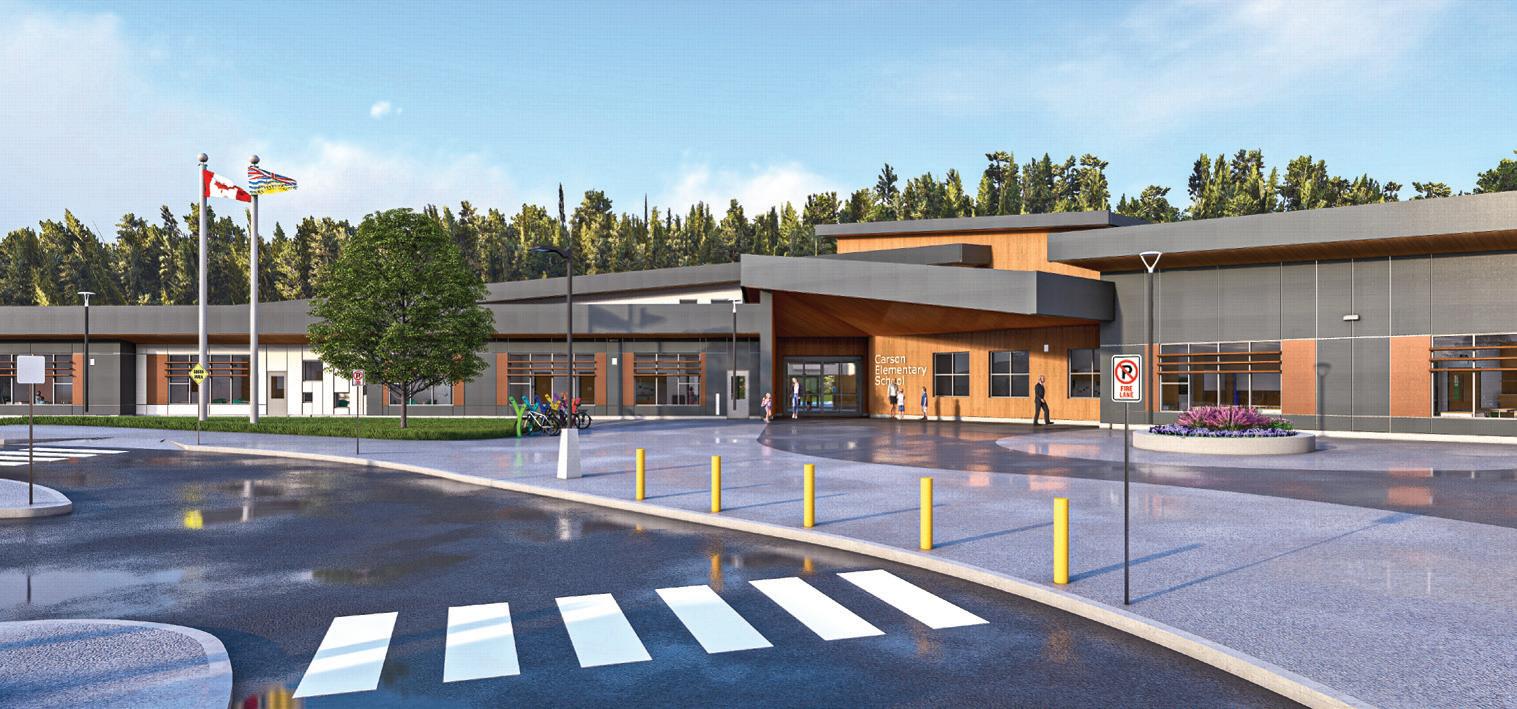



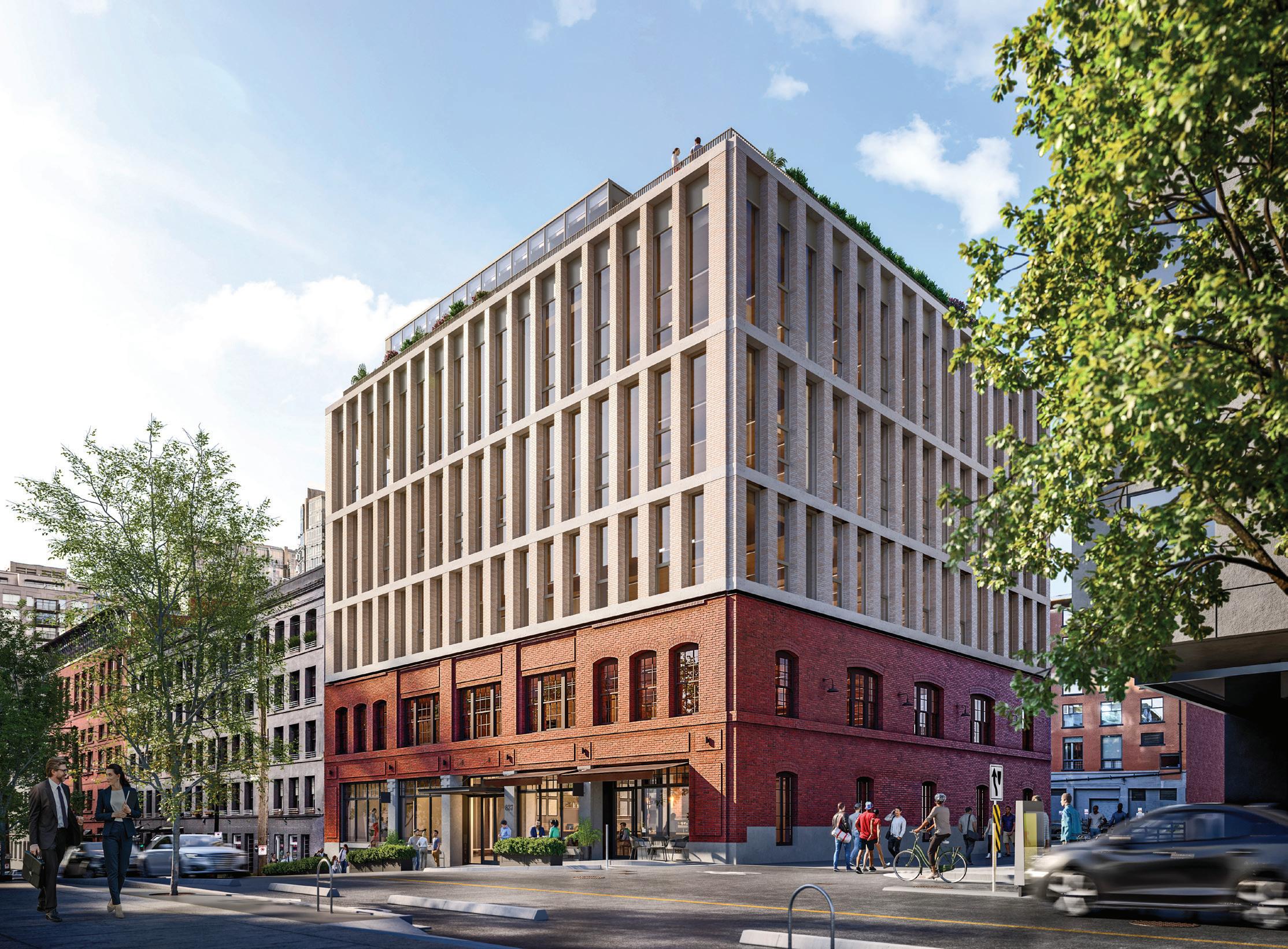
837 BEATTY STREET
by CHRISTINE MORRISSEY
For more than a century, the warehouse at 837 Beatty Street in Vancouver has stood through the city’s rapid growth. Long dormant in its ambitions, it now rises with a fourstorey mass timber addition, realizing a vision its original designers could only have dreamed of.
With retail at the lower levels and a four-storey mass timber office addition above, the project’s adaptive reuse and contemporary expansion uncover an underappreciated gem whose unique qualities had been obscured by layers of paint and unsympathetic renovations, giving the building a renewed role through carefully considered design, construction, and materials.
That ambition, however, came with structural challenges. “The building was designed to have an addition built on top, but trusting engineering from the early 1900s to support a modern structure isn’t realistic. A new core provides seismic reinforcement,” explains Glenn Stainton, project manager at Turnbull Construction Project Managers, the owner’s representative.
Bryan Lemos Beça, associate principal at office of mcfarlane biggar architects + designers inc. (omb), who joined the project in 2019 when owners Reliance Properties approached them about adding to the heritage building, expands on the idea: “During a tour of the building with
the structural engineers Fast + Epp, we admired the existing heavy timber and thick masonry walls. Robert Jackson from Fast + Epp commented that the columns ‘had a lot of juice in them.’ Researching the 1911 drawings, we realized the building had been designed with a future vertical expansion in mind. We discussed this with the heritage consultant, Donald Luxton & Associates, and learned that this was a common practice at the time.
“In the early 20th century, with the anticipation of the opening of the Panama Canal, investment was pouring into Vancouver’s warehouse district, located at the terminus of the Canadian Pacific Railway. Many developers would submit a building permit for a shorter structure to expedite work, then amend the permit to increase the height later. In the case of 837 Beatty St., WWI halted investment and ensured the expansion would never be delivered – until more than 100 years later, when we realized there was an opportunity to complete the building’s story.”
Brad Janzen, construction manager at ETRO Construction, details that the existing structure from the lower level to level 3 was primarily built with large old growth Douglas Fir columns and beams, along with a nail-laminated timber floor assembly. Its concrete substructure was under-designed for today’s seismic
LOCATION
837 Beatty Street, Vancouver, B.C.
OWNER/DEVELOPER
Reliance Properties Ltd.
OWNER’S REPRESENTATIVE
Turnbull Construction Project Mgmt
ARCHITECT
office of mcfarlane biggar architects + designers
GENERAL CONTRACTOR
ETRO Construction
STRUCTURAL CONSULTANT
Fast + Epp
MECHANICAL/ELECTRICAL CONSULTANT
MCW Consultants Ltd.
HERITAGE CONSULTANT
Donald Luxton & Associates
CODE CONSULTANT
GHL Consultants Ltd.
ENVELOPE CONSULTANT
Entuitive
LANDSCAPE ARCHITECT
Amy Tsang Landscape Architect
TOTAL SIZE
38,427 square feet
TOTAL COST $21.2 million
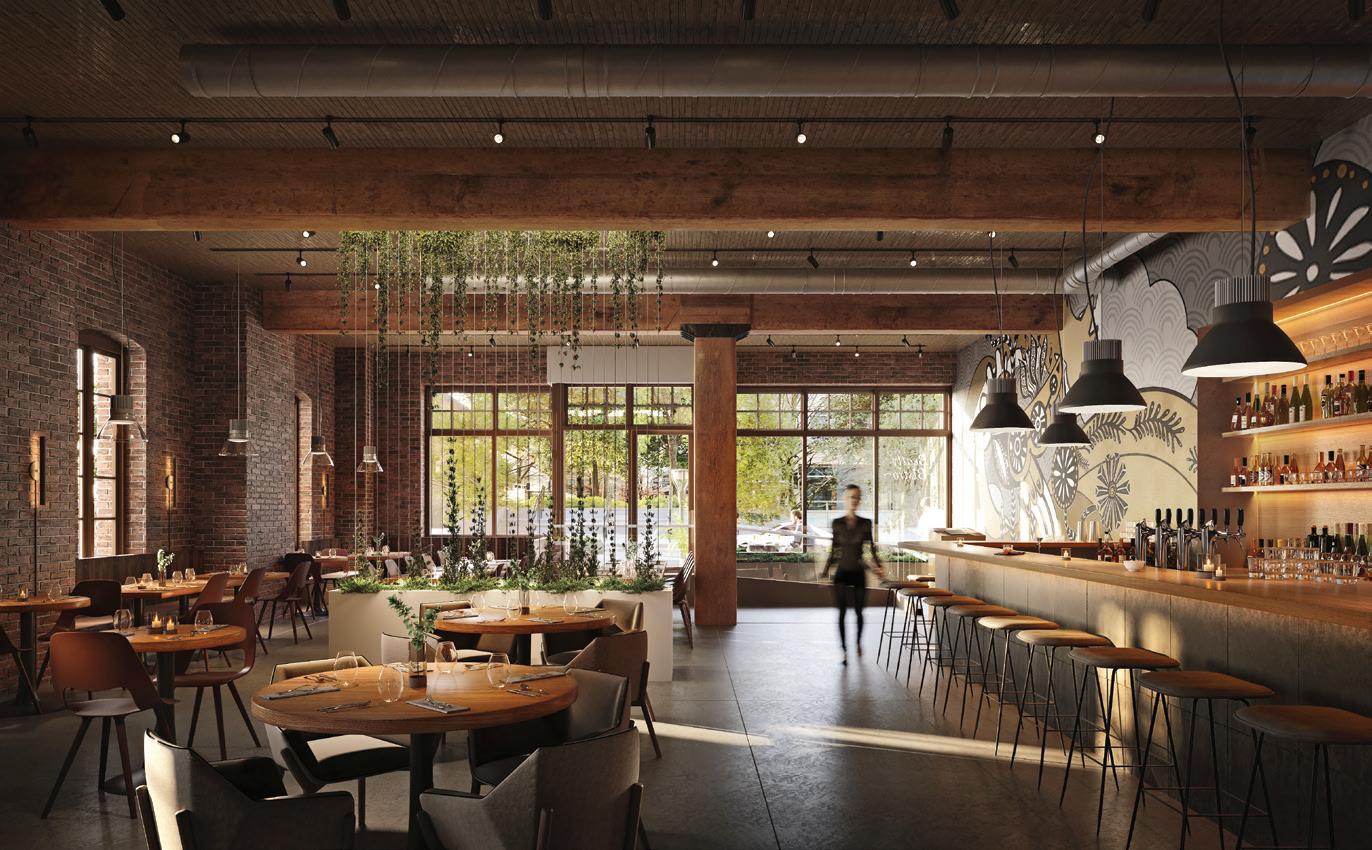
standards. A complete absence of rebar in the footings, and only the occasional twisted steel bar in the 26-inch-thick concrete foundation walls. This led to the addition of micropiles and a modified steel saddle system at each column to properly transfer the loads of the structure.
Excavation revealed footings that did not match the century-old handdrawn as-built drawings, and soil conditions required careful evaluation. “We also unearthed a pair of railroad tracks in the back lane, likely used to deliver the large columns, beams, and floor structures to the site for craning into place,” says Janzen.
The new mass timber structure from levels three to six was prefabricated on Vancouver Island, shipped to site, and installed directly off the truck. The glulam columns and beams were stitched together with
hidden structural fasteners while the NLT floor system was panelized but intended to mimic the look of the existing NLT floor systems. Concrete slabs were placed not only to act as the diaphragm of the building but to help conceal the majority of the electrical conduits keeping the ceilings virtually free of conduit runs.
For the design, Lemos Beça says the architectural expression was driven by a desire to respect and continue the structural logic of the existing building, using mass timber and masonry to create a modern yet harmonious expression that balances weight, openness, and material honesty. By aligning the new design with the original Edwardian building and thoughtfully modulating the brick façade, the project earned unanimous support from both the Urban Design Panel and Vancouver Heritage Commission.

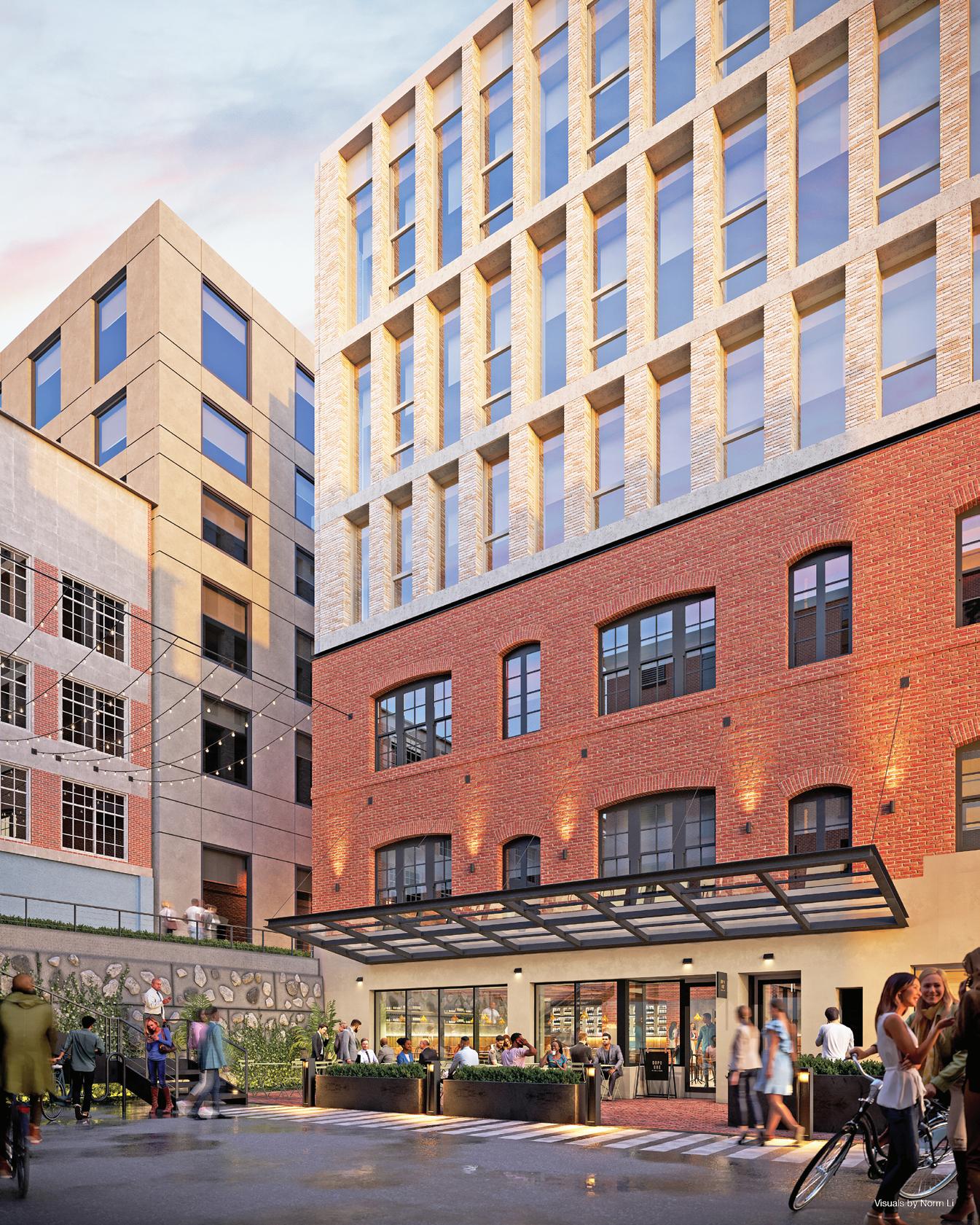
“Our approach involved carefully studying the structural rhythms and proportions of the existing building to find the underlying logics, then using those logics to develop a design for the addition that would fit with the old. Our client, Rob Leshgold, has a strong music background, and together we used an analogy from music of polyrhythm, where two distinct rhythms occur simultaneously and may not be immediately perceived as having a shared underlying structure, but when looked at carefully, one can see how they fit together,” says Lemos Beça.
Inside the building, several features highlight the intersection of old and new. The third floor – the first floor of the addition – features a concrete ring beam that transfers the loads of the perimeter mass timber down concrete columns tucked against the existing brick walls. Above the beam, openings are bright and open, while façade details such as bird’s-mouth corner masonry and the deep reveal gasket at the junction between the existing and new building reference the original structure and provide critical construction tolerances.
From ETRO’s perspective, key interior elements include the combination
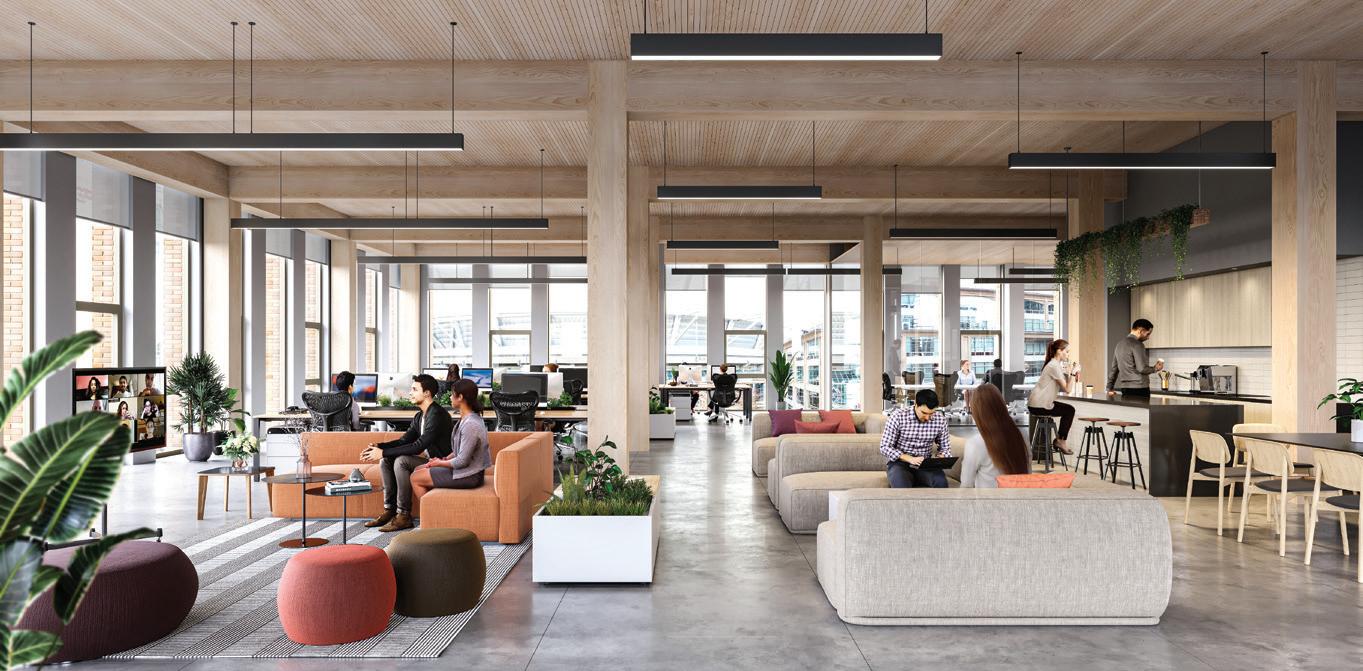
of wood, brick, and concrete; the large spans of existing and new timber floors; the lack of perimeter lateral bracing typical of mass timber
buildings; and the quality of the original heavy timber. Other standout features include refurbished heritage windows on Levels 1 and 2, new



floor-to-ceiling windows, exposed finished concrete slabs, and minimal, carefully co-ordinated electrical and mechanical services, reflecting the precision of the design and construction.
With the project now near completion, Lemos Beça reflects on its significance: “This project reinforced the importance of our process, which always begins with a deep investigation into the site’s physical, cultural, and social context and histories. Our project demonstrates that a wholebuilding approach to rehabilitation and adaptive reuse can preserve important structures while enabling the continued evolution of our cities. Our hybrid mass timber approach can serve as a model for facilitating ambitious additions within constrained urban sites. We hope this building helps others tackle challenging adaptive reuse projects.”
Stainton concludes by saying: “Kudos go to Reliance Properties for committing to restoring the building, as well as omb and ETRO, who have done fantastic work. It has been a challenging project, but when it’s done, we will be able to walk by that building and say, ‘I helped build that.’ And that counts for a lot.” A

Subcontractors supplying steel stud, insulation, drywall and acoustical ceilings. One of the leading full service drywall

Innovative Facade Solutions

Energy-Driven Performance.
Building envelopes engineered to exceed modern energy standards.
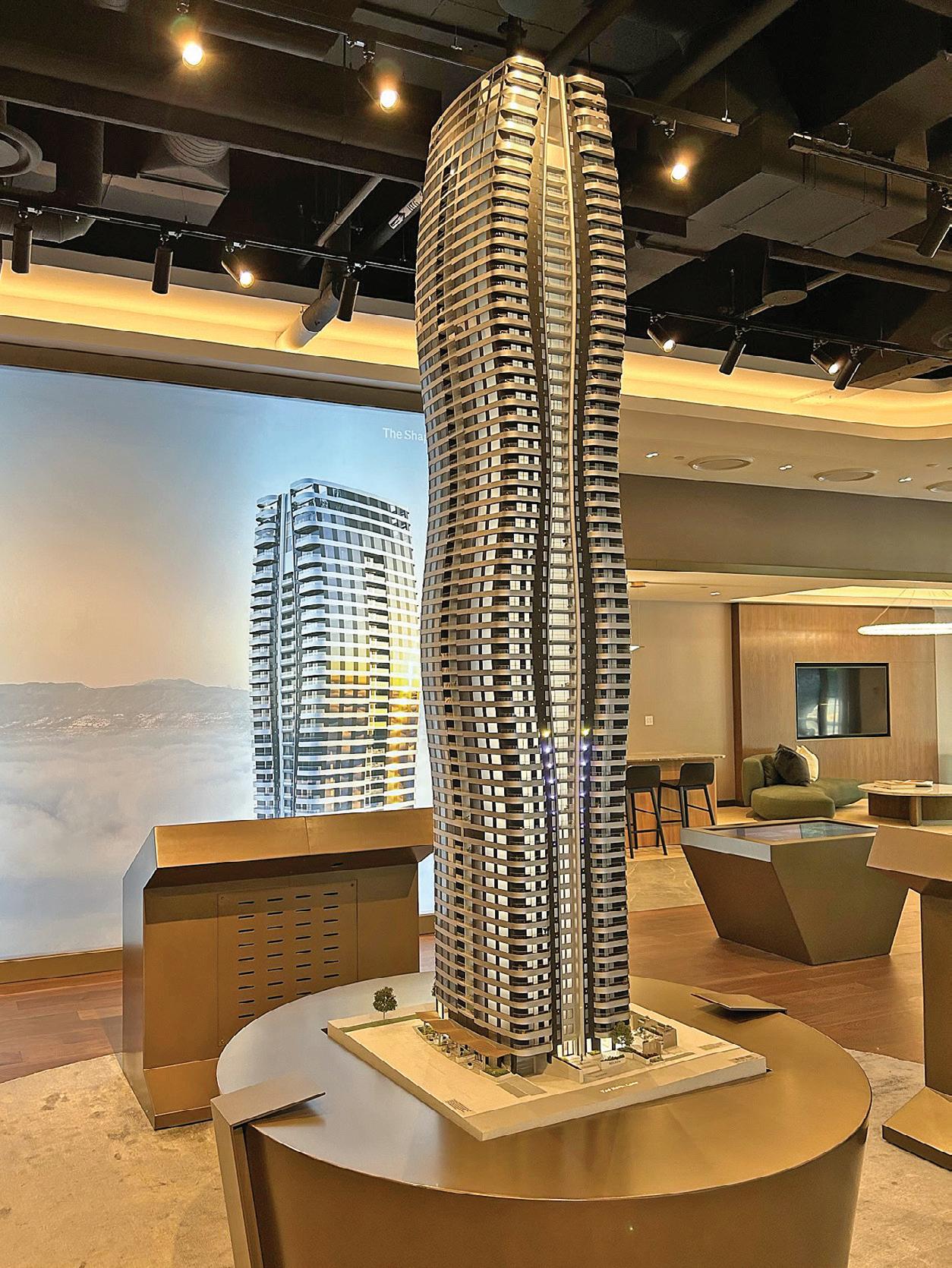
Residential
Cost-efficient

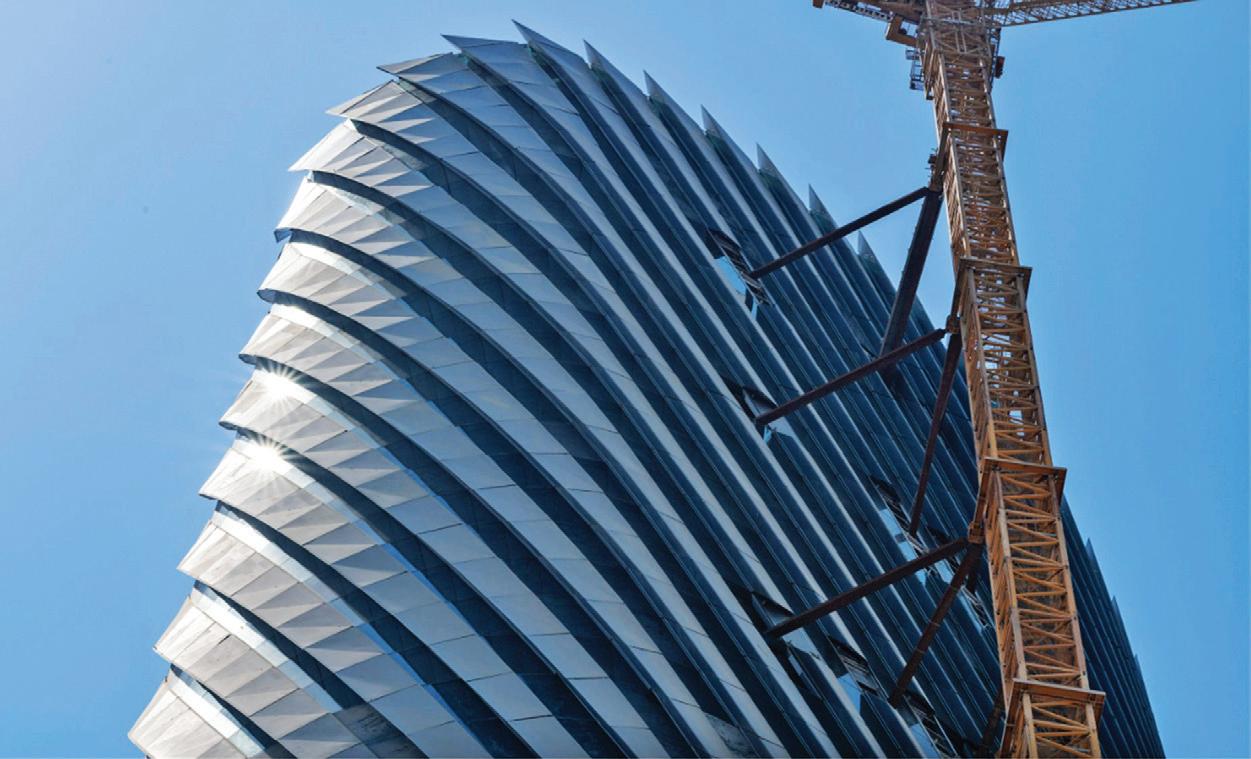
Facades for Ambitious Architecture.
High-performance curtain wall systems supporting landmark designs.
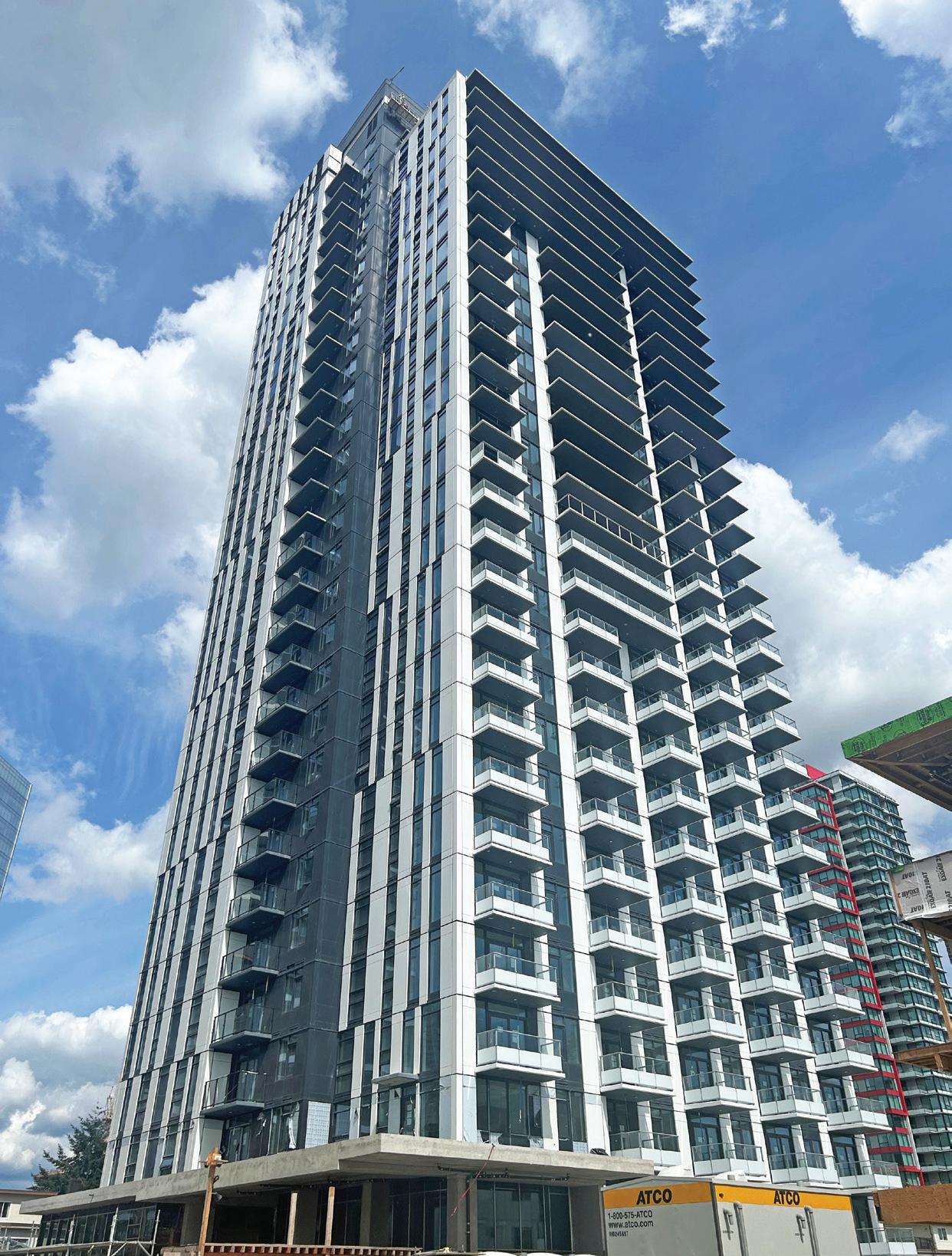
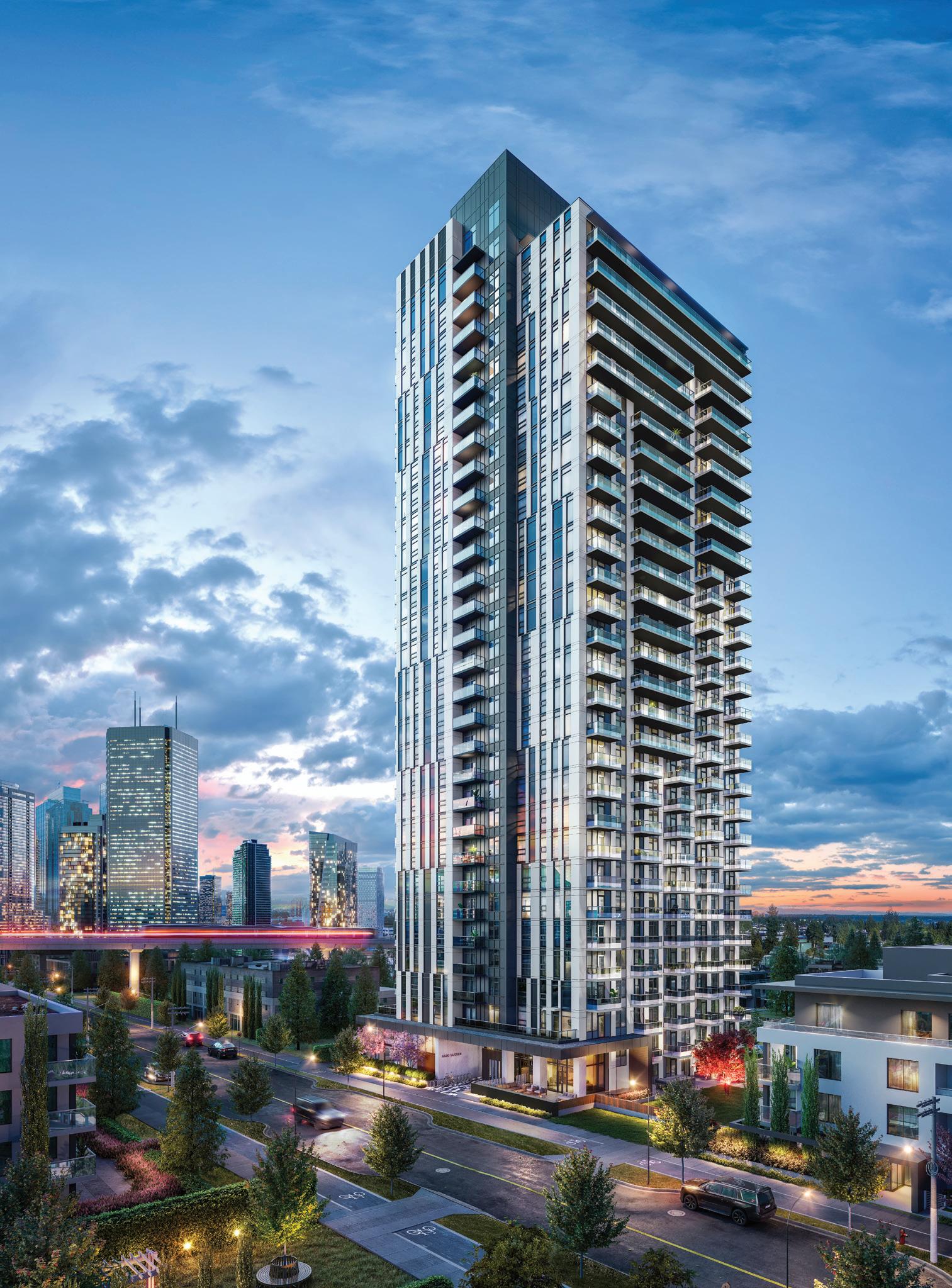
O2 METROTOWN
by ROBIN BRUNET
The 30-storey O2 residential tower, located in the heart of Burnaby’s Metrotown business district, is the outcome of a strategic partnership between Keltic Canada Development Co. Ltd., BC Housing, and the New Vista Society to implement affordable housing as a major component of this project.
Designed by dys architecture, O2 consists of 285 high-end strata apartments and a dedicated four-storey building with 52 affordable studios and one- and two-bedroom apartments. Ground-floor amenities of the tower include a yoga room, gym, meeting rooms, and a children’s playground. Additionally, a community garden is located on the roof.
The project also adheres to the WELL Building Standard that aims to create healthy living environments; in this case, via advanced air purification and water filtration systems, as well as steam showers for a spa experience in the vast majority of apartments.
O2’s genesis dates back to 2018, when New Vista Society’s CEO was introduced to Keltic and its construction director, Mike Wurm. “We were motivated to work with a non-market housing operator to deliver affordable housing and contribute to Burnaby in
ways that go beyond writing a cheque, since too often a developer’s contribution is perceived solely as a financial payment,” Wurm says.
Norm Chin, principal at dys architecture, was brought onboard in 2019 and collaborated closely with Keltic and stakeholders to establish project objectives. Once the size and density of the tower and adjacent building was determined (as well as the window-to-wall ratio, which maximized the effectiveness of the envelope, yet still enabled natural light to penetrate deep into each apartment interior), Chin and the team drew inspiration from the surrounding neighbourhood. In short, they were inspired by downtown Burnaby’s unusual blend of high-rise and low-rise structures.
“Honouring the neighbourhood was our guiding principle and led to a simple, timeless design in keeping with the WELL philosophy,” he says.
One example of incorporating features of the cityscape into the design was varying vertical and horizontal expressions of the exterior walls and balconies, abstractly mirroring dynamic downtown Burnaby.
“The design of the balconies, converging to form horizontal banding, pays homage to the layers of low-rise
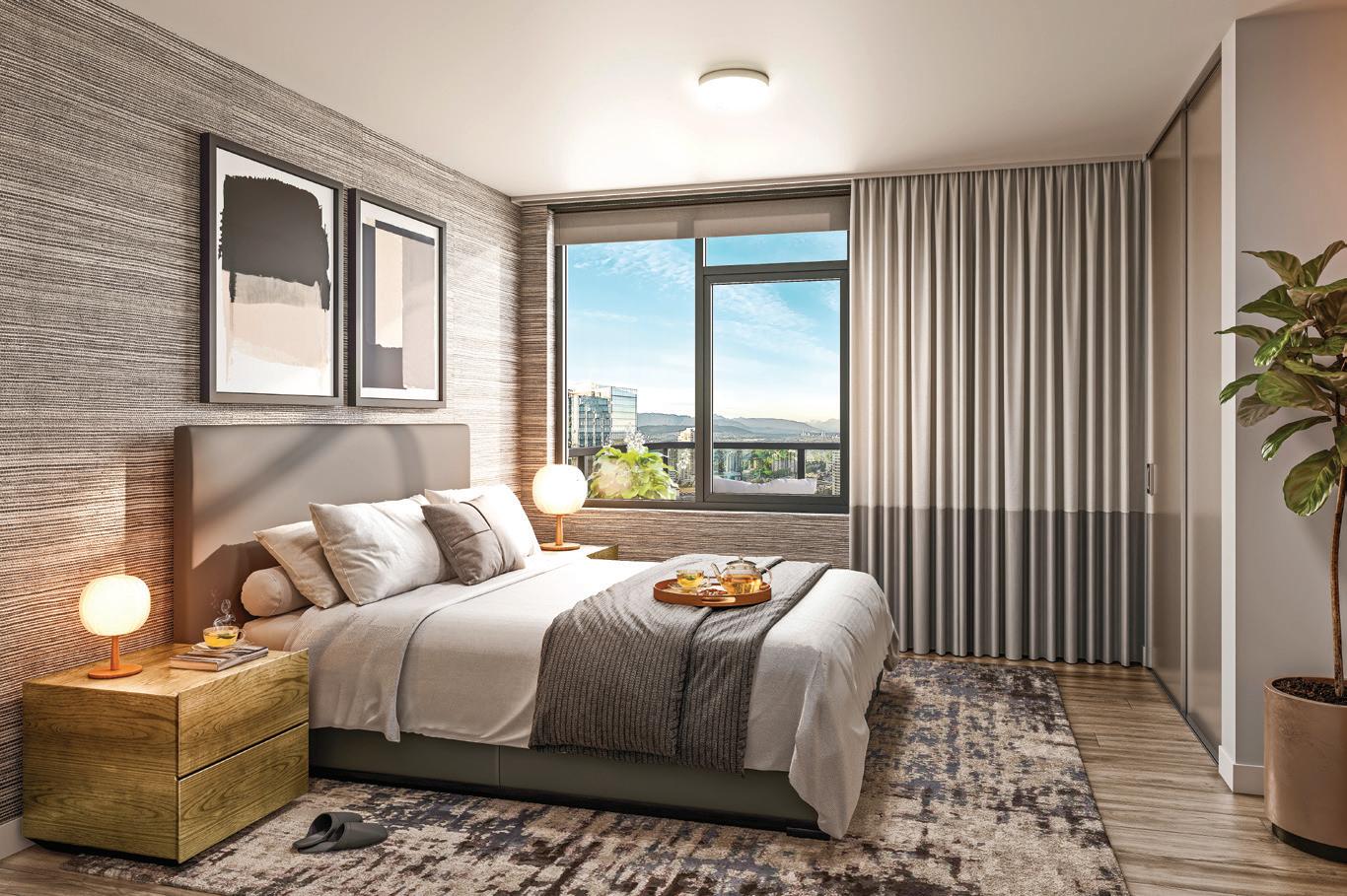
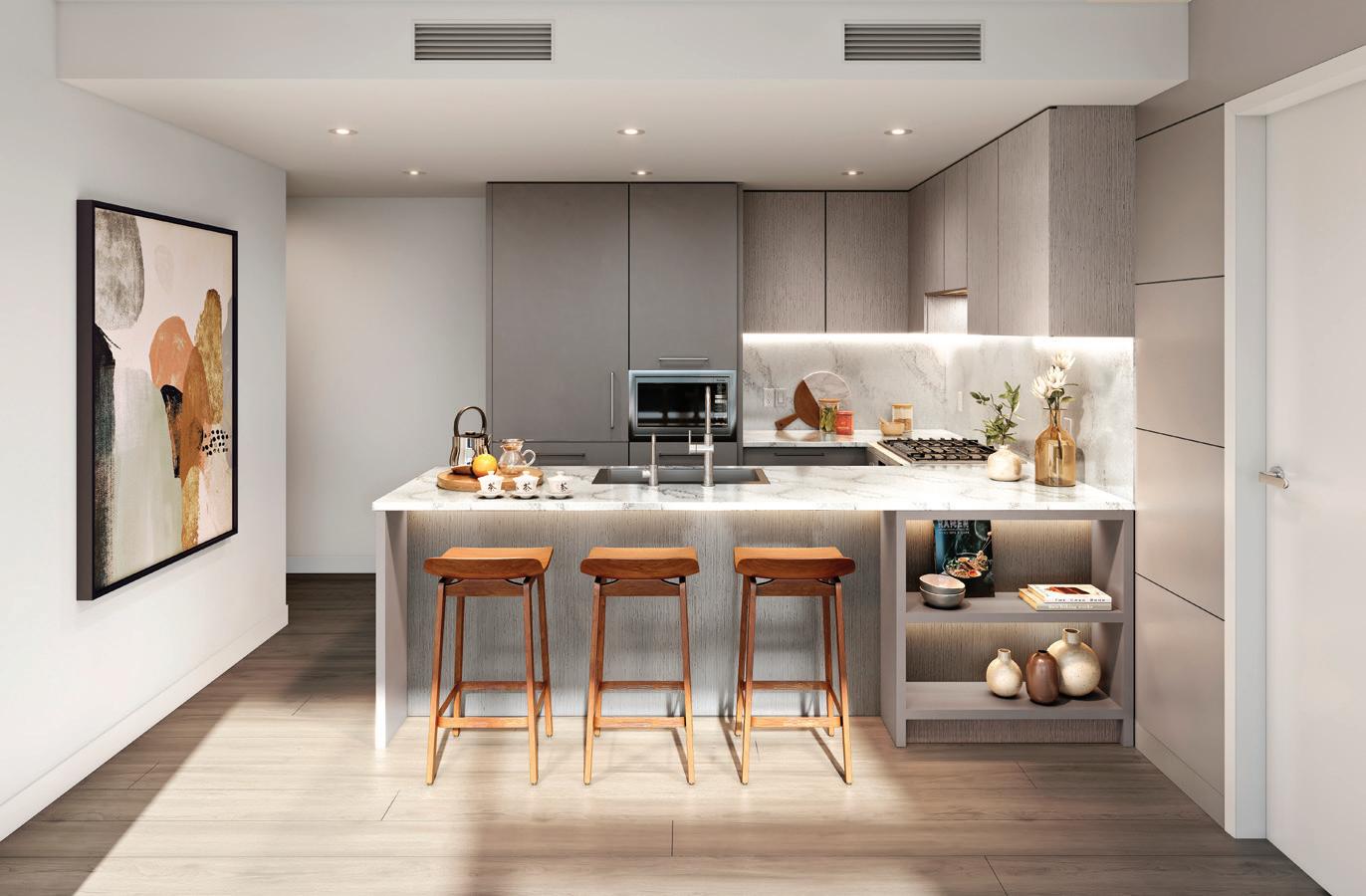
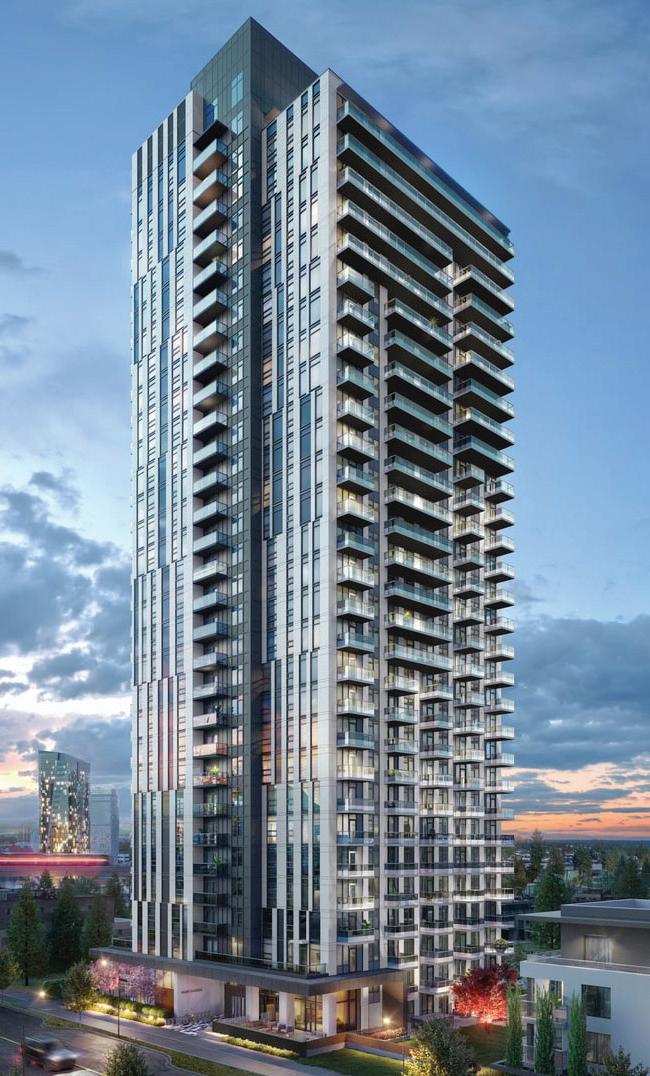
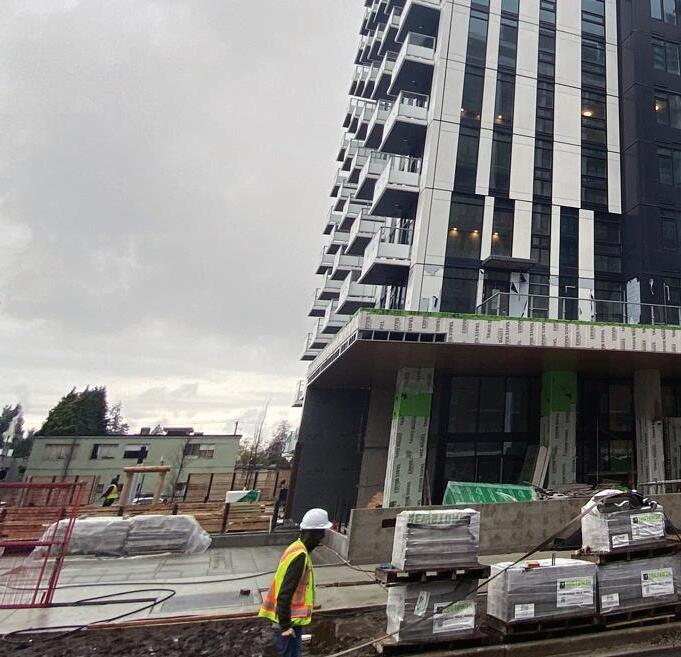

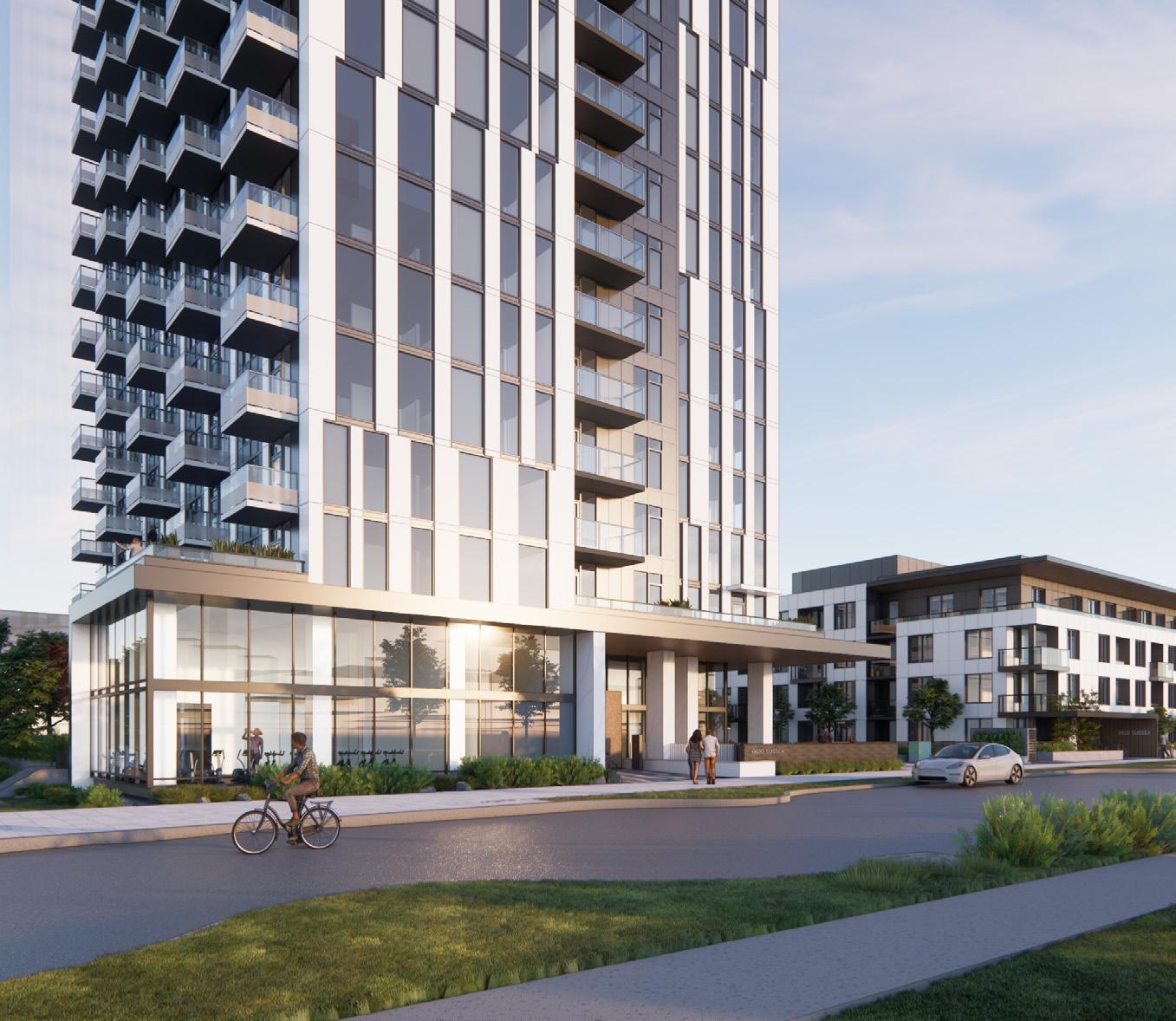

Durante Kreuk.indd 1
apartments and single-family homes characteristic of the neighbourhood,” Chin says.
Similarly, the shifting verticality of window arrangements and balcony groupings evokes the modern density increase observed in urban centres. “We wove together traditional and innovative elements to create a cohesive architectural statement, augmented by a high-contrast colour palette,” Chin says, adding that his firm collaborated with interior designer Trepp Design Inc., specifically on the ground floor arrival experience, so that exterior materials such as marble would continue and resonate inside.
Trepp created apartments featuring open plan layouts, office spaces, dedicated workstations, and elevated ensuites, in addition to the integrated health technologies.
Graham Construction commenced excavation in May of 2023, and work proceeded smoothly, with pouring the north side P3 deck taking place in January of 2024; slab-on-grade for the entire site was completed the following month; and footing, column, and wall installations, with waterproofing ahead of wall forming and footing installs were undertaken with
a minimum of issues. “Graham was very organized and a fantastic part of the larger development team,” Chin says. “They contributed significantly to making this a low-stress project.”
Keltic also commissioned Coast Salish artist Thomas Cannell to create bespoke public artwork for O2, as well as meticulously designed light boxes to enhance ground-level walkways.
As of February, Wurm was anticipating the impending influx of
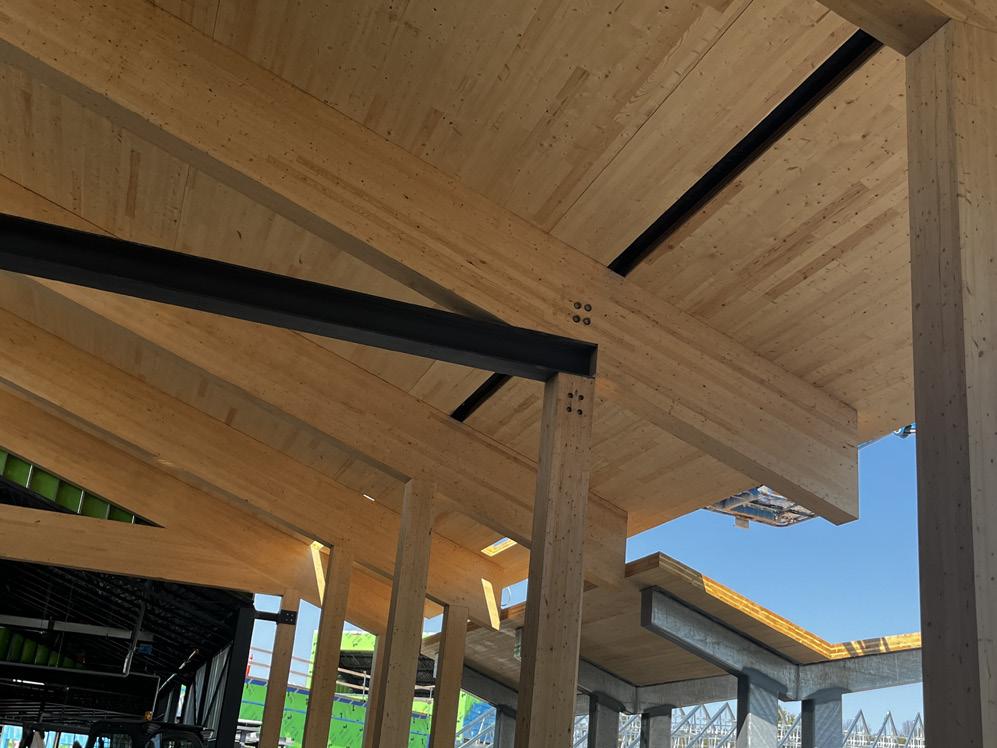
tenants to O2. “We’re proud to have helped drive a project in which two different end-users have been considered equally,” he says. “The O2 tower replaces several dilapidated low-rise apartment buildings, and a good portion of their tenants will move into our new living units.
“When the will to achieve something special is coupled with talented designers and builders, projects such as O2 are the result.” A
LOCATION
6620 Sussex Avenue, Burnaby, B.C.
OWNER/DEVELOPER
Keltic Canada Development Co. Ltd.
ARCHITECT
dys architecture
GENERAL CONTRACTOR
Graham Construction
STRUCTURAL CONSULTANT
Glotman-Simpson
MECHANICAL CONSULTANT
Yoneda & Associates
ELECTRICAL CONSULTANT
Nemetz (S/A) & Associates Ltd.
INTERIOR DESIGN
Trepp Design Inc.
TOTAL SIZE
266,000 square feet
TOTAL COST
$140 million
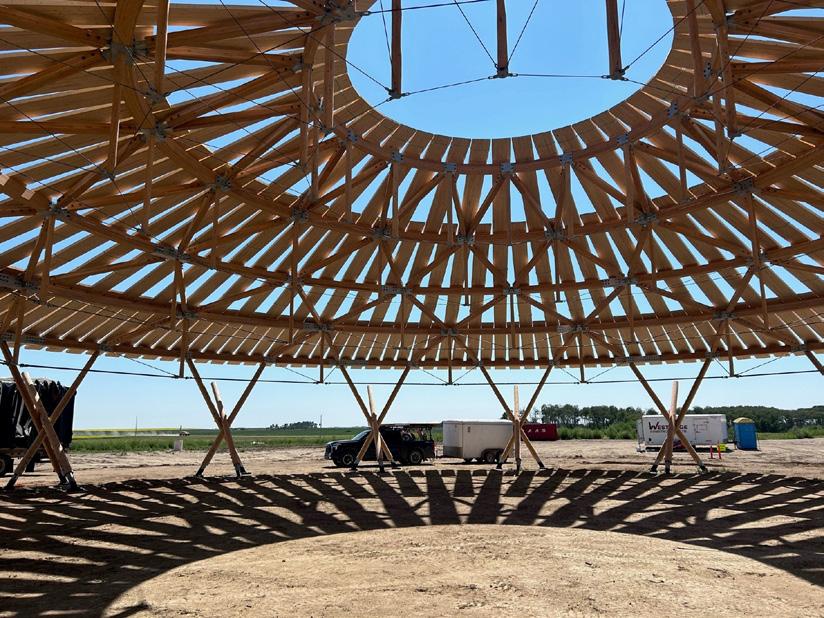
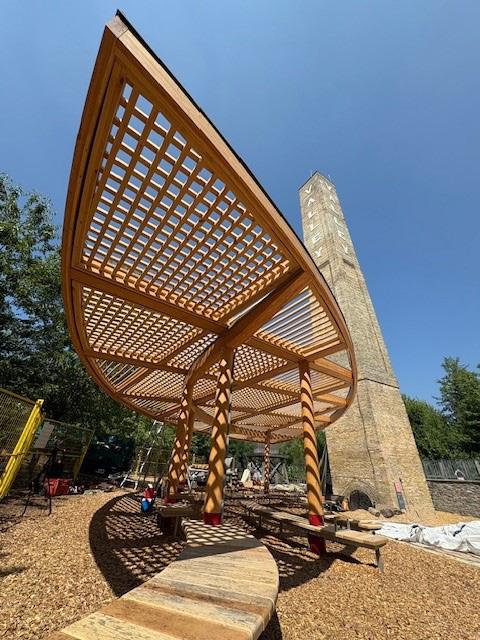
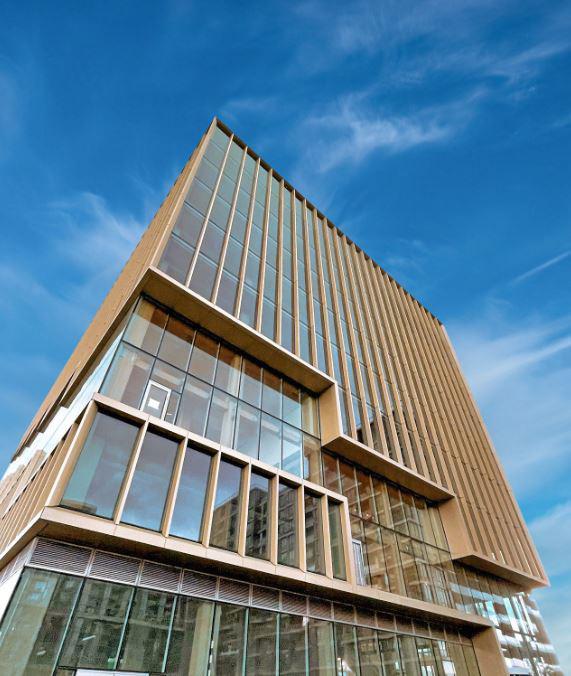


NARS- North American Rapid Supplies YOUR “ONE-STOP-SHOP” FOR COMPLEX PROJECTS
We offer a complete and hassle-free solution for all your opening needs, including metal frames, metal and wood door leaves & a variety of other architectural building material supplies - regardless of your project size.
DISCOVER THE DIFFERENCE WITH OUR COMPANY
• Experience the NARS Advantage
• Elevate Your Project with NARS
• See What Sets Us Apart
• Why Choose North American Rapid Supplies?
• Unlock Excellence with Our Solutions
• Your Gateway to Hassle-Free Project Success
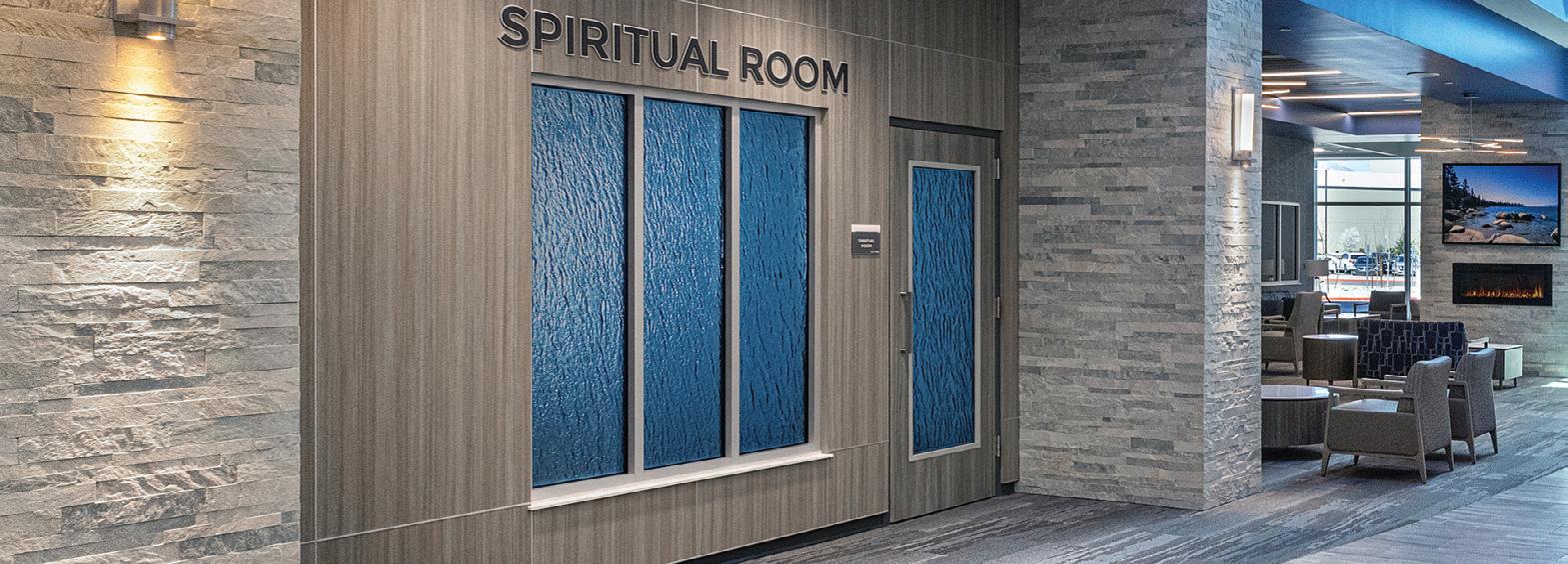
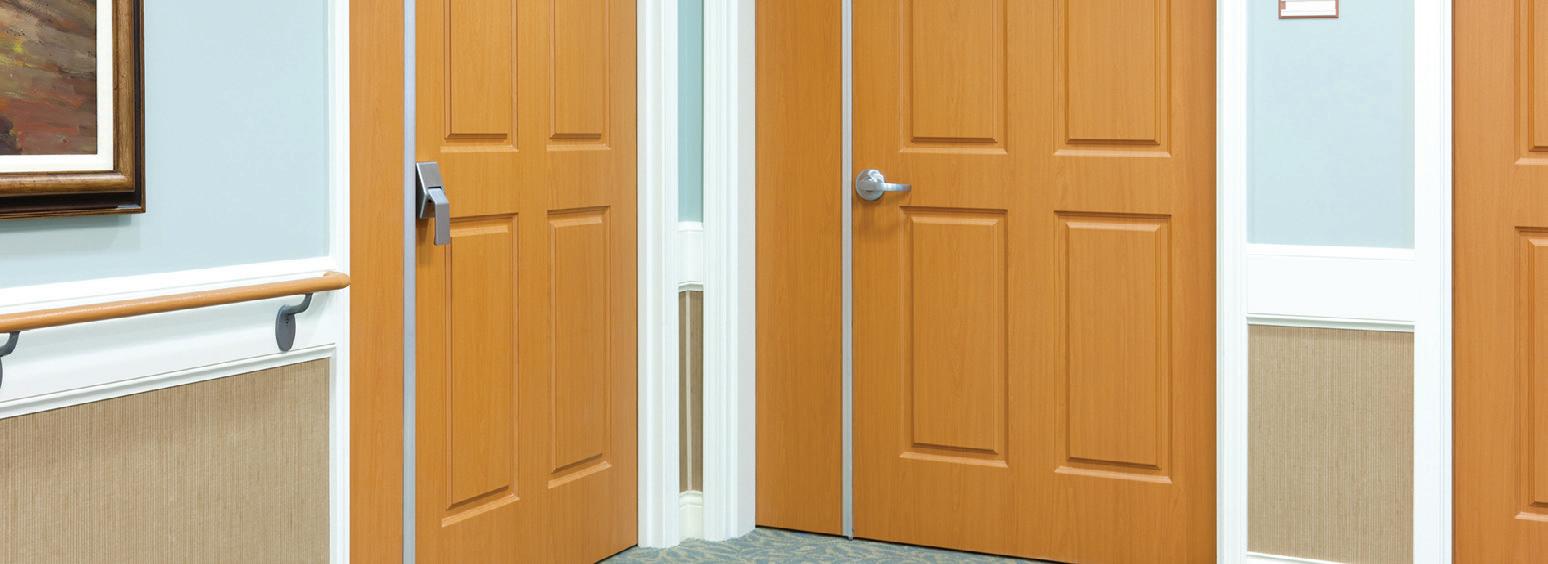
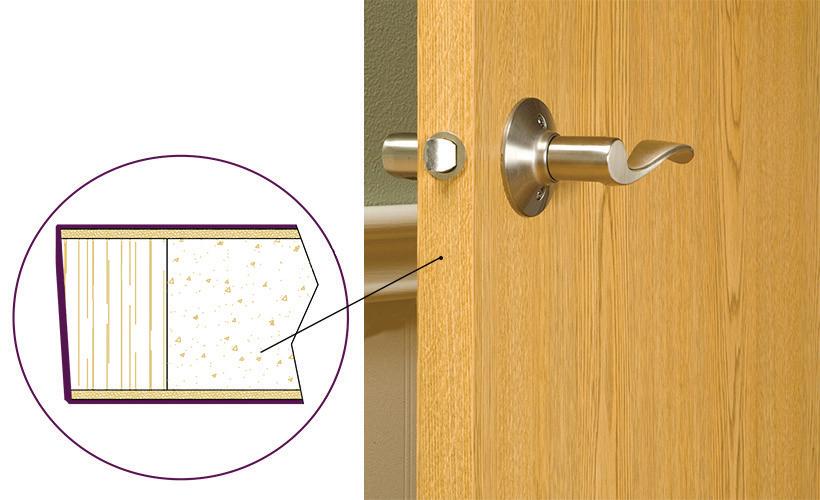


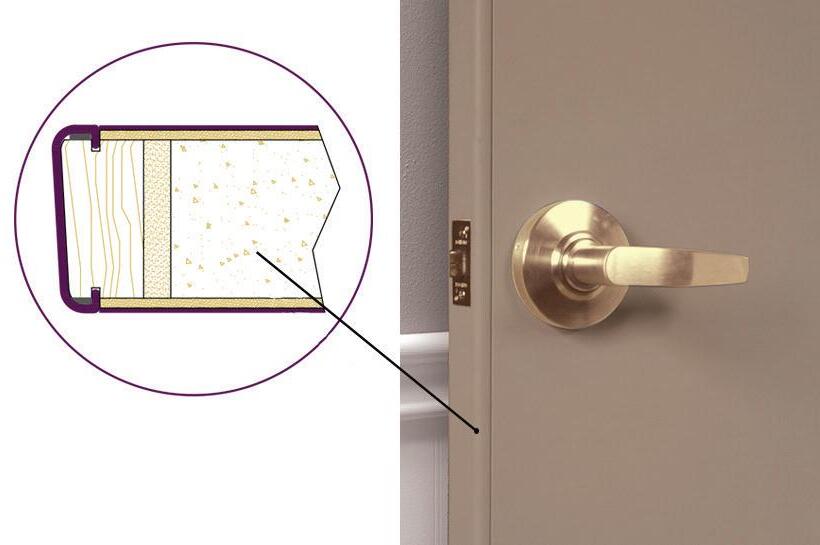

ACROVYN WOOD DOORS
PLASTIC LAMINATED WOOD DOORS
MOHAWKS OF THE BAY OF QUINTE ELDER CARE HOME
by PETER STENNING
Mohawks of the Bay of Quinte (MBQ) Chief R. Donald Maracle views the development of the Mohawks of the Bay of Quinte Elder Care Home as a major milestone for his community. “This is a model for similar First Nations projects moving forward,” he says. “It’s the result of strong advocacy to insist that much-needed facilities be created, and it has opened the door for other development opportunities for First Nations.”
Located on Tyendinaga Mohawk Territory, the new Mohawks of the Bay of Quinte Long-term Care facility addresses an urgent gap in seniors housing and health services for Ontario First Nations by providing an opportunity for elders to age in their community. With 128 longterm care (LTC) beds, it is the largest on-reserve LTC home in Ontario.
The motivation to develop the facility began in earnest in 1993. “For generations, our people were forced to go to homes off the reserve – either that, or children would have to forego school to care for the elderly while their parents went to work,” Maracle says.
Still, as of 2017, only four of 133 communities had long-term care
facilities, so the Ontario Chiefs Assembly that year created a tri-lateral long-term care working group; this group in turn lobbied the provincial and federal governments to work together and issue development licenses and capital funds to First Nations. “We also lobbied long and hard for investments to be made in partnership with us for supportive housing,” Maracle says.
In 2022, the Ontario government announced licensing for First Nations and an additional subsidy for construction projects starting before August 31, 2023. This was part of a $6.4 billion commitment to build more than 30,000 net new beds by
2028 and 28,000 upgraded longterm care beds across the province.
Mohawks of the Bay of Quinte was approved for a license to construct a 128-bed care facility on June 9, 2023. It was decided to locate the new build on the east side of the Tyendinaga Territory, where municipal water and sewer systems were located.
Snyder Architects Inc. was retained to develop the MBQ long-term care facility. “We were actually involved since 2018 at the feasibility stage, and our goal was to de-institutionalize the design of the home to create a culturally safe space for Elders, while still meeting the provincial standards of long-term care, which leans towards
the institutionalized approach,” says Rochelle Moncarz, principal at Snyder Architects. “We accomplished this in part by breaking down the long-term care model to its smallest possible components.”
The design features 32-bed Residential Home Areas (RHA) divided into smaller wings of eight to 12 private rooms (seen from above, the facility resembles four cross-shaped wings spanning out from a central hub, each with their own dining room, lounge, and activity space), an Adult-Day Centre, multiple flexible community gathering areas (both inside and out), and enhanced HVAC and natural ventilation. “We imparted a village-like
ambiance by developing the project as a series of residential-style gable and shed-roofed buildings,” Moncarz says.
At the heart of the building, a bright, welcoming central community gathering space was created for families and cultural programming.
“Because the Mohawks of the Bay of Quinte was adamant that this be a single-storey facility, we were able to design all resident rooms and common areas with a connection to the surrounding landscape, featuring Indigenous gardens and plantings, habitat for species at risk, and areas of archaeological finds,” Moncarz says.
Extensive use of natural materials contributed to the village feel, including stone in the fireplace areas and mass timber in the atrium (which also contributed to the facility achieving a zero carbon certification).
Corebuild Construction Ltd. broke ground on the greenfield site in August of 2023 and occupancy is scheduled starting for May of this year. The location is also part of a larger development intended to include seniors housing for those who remain able to live independently.
MBQ’s Elder Care Home is just the fifth licensed long-term care facility on an Ontario First Nation territory to date, but Maracle is proud of the achievement, pointing out that its commitment to First Nations culture and community identity honours the teachings and heritage of the Mohawk people.
He concludes, “Our persistence has not only brought this project to life but created a framework that will facilitate government and private funding of other badly-needed First Nations services.” A
MECHANICAL/ELECTRICAL
SUSTAINABILITY
CIVIL CONSULTING
First Nations Engineering Services
TOTAL SIZE
Triumph delivered a multiscope project at the Mohawks of the Bay of Quinte Elder Care Home, completing both the metal roofing and solar PV installations.
The project included the installation of approx. 900 solar panels, totaling 600 kW DC, mounted on Triumph’s standing-seam metal roof system. By managing both scopes—from design through installation— Triumph ensured seamless execution and provided the owner with a fully integrated roofing and solar warranty.
Solar energy offsets a building’s electricity consumption and presents a strong financial case, particularly given the current incentives available in Ontario.
With sustainability at the forefront, Triumph offers complete building envelope solutions, including roofing, cladding, glazing, waterproofing, geothermal systems, and solar energy.

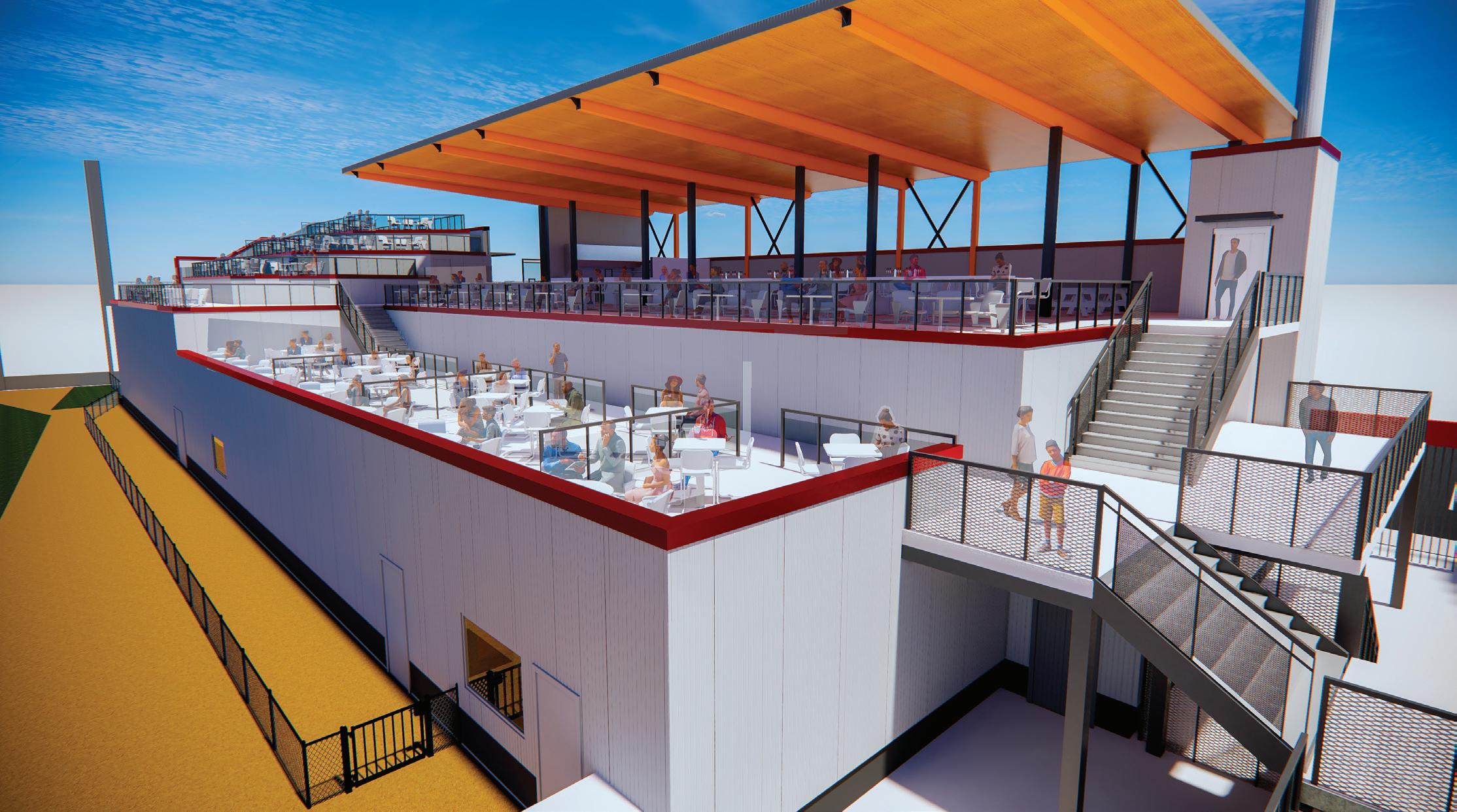
ROGERS FIELD AT NAT BAILEY STADIUM
by NATALIE BRUCKNER
When fans return to Rogers Field at Nat Bailey Stadium on April 7, they’ll be celebrating more than the stadium’s 75th birthday. The Vancouver Canadians’ historic home, fondly referred to as ‘The Nat’, has undergone a $20-million, multi-phase renovation that reshapes the 75-year-old ballpark while preserving the character that has made it a beloved fixture in the city.
“We take great pride in not only being a professional baseball team but serving as stewards of this historic ballpark – 75 years of special moments and memories have happened here, and we’re committed to preserving this place for the next 75 years and beyond,” explains team general manager Allan Bailey.
The state-of-the-art upgrades bring the stadium in line with modern Minor League Baseball standards and reflect a broader investment in the franchise’s long-term future. “Our fans are at the core of what we do, and to be able to both align The Nat with industry standards and elevate the fan experience is a testament to the creativity and hard work of everyone involved,” says Bailey.
A new natural grass field now anchors the playing surface, replacing the previous turf and restoring a traditional look and feel to the game. Beneath the stands, renovated clubhouses and expanded training areas provide players and staff with contemporary facilities designed for development, recovery, and performance.
Beyond the infield, the most visible change rises in right field, where a new two-storey structure introduces
expanded social space and a large patio designed to accommodate groups and create new sightlines into the park. The addition broadens how fans experience the stadium, offering more flexible gathering areas while maintaining the intimate scale that has defined the venue for generations.
Having previously worked with the Vancouver Canadians, both Francl Architecture Inc. and general contractor Smith Bros. & Wilson were already familiar with the site and the processes, a familiarity that proved invaluable in meeting the project’s requirements, tight site, and timeline.
Smith Bros. & Wilson began providing pre-construction services on the renovation project in Q4 of 2024.
“It’s a fairly concise project, but there’s a lot involved,” explains Jeff Lovett, general superintendent, special projects group, Smith Bros. & Wilson.
“We’re working within the City of Vancouver, with very tight parking in the area and a nearby community centre. During the season, we had to work around games and the fans.”
Phase 1 of the renovation on the east side, along the third-base line, saw upgrades to the clubhouse locker room, bathrooms, commissary, and staff spaces. Phase 2 introduced the new training centre and fan area (formerly the BBQ section), along with a new home team clubhouse, batting cages, and seating for fans in time for the 2026 season.
Andrew Weyrauch, principal at Francl Architecture Inc., explains that the design was largely driven by player requirements. “Because the program didn’t fit within the existing stadium, we designed the new building
adjacent to it. We wanted to complement the existing stadium, which has a certain aesthetic of its time, while building with new materials and different construction methods. At the same time, we tried to stay in keeping with the existing stadium’s colours, trim, and detailing.”
Steel forms the backbone of the new addition, while insulated metal panels wrap the exterior, chosen for both durability and ease of construction. Prefabrication became a key strategy, allowing large components to be assembled quickly and precisely on site.
“We introduced curtain wall glazing on the parking lot side to bring daylight into the batting tunnels and practice areas. On the public-facing side, we replicated the existing stadium’s baseball graphic panels, leaving space for future artwork while tying the new addition visually to its historic neighbour,” says Weyrauch.
Beyond the player-focused spaces, the team reimagined the fan experience with a striking rooftop spectator area featuring open-air seating atop the new building. Weyrauch and Lovett both highlight the effect of the new structure. “We introduced a large CLT canopy that covers much of the spectator area, so that when you’re sitting in the stands and look up, you see this warm texture of wood,” says Weyrauch. Lovett adds: “It has a fantastic cantilever designed not to disrupt sightlines for the fans, and it pops visually. The warmth it brings fits well with the outdoor setting.”
Lighting was another key focus throughout the renovation. Exterior lights were carefully positioned to prevent shadows on the field, while
LOCATION
4601 Ontario Street, Vancouver, B.C.
OWNER/DEVELOPER
Vancouver Canadians
PROJECT MANAGER
CORE Project Management
ARCHITECT
Francl Architecture Inc.
GENERAL CONTRACTOR
Smith Bros. & Wilson
STRUCTURAL CONSULTANT
WHM
MECHANICAL/ELECTRICAL CONSULTANT
Smith + Andersen
CIVIL CONSULTANT
Aplin Martin
TOTAL COST
$20 million
the batting tunnels were designed to replicate outdoor conditions and meet precise performance standards. Mechanically, integrating food service areas and other systems into the compact site required careful co-ordination and planning, ensuring both players and fans have everything they need.
Total Energy Systems Ltd. is delivering the full mechanical scope of works, providing all HVAC and plumbing systems across each phase of construction. Its role spans design, co-ordination, and installation, covering heating, ventilation, air conditioning, hydronic services, drainage, and plumbing throughout the development.
“Our team is responsible for bringing together every mechanical element within the building,” explains Josh Susser, business development and marketing at Total Energy Systems. “From early coordination through to installation, we are focussed on ensuring performance, efficiency, and reliability across all systems, while maintaining a clear focus on long-term serviceability throughout the facility.”
With the project nearing completion and The Nat getting ready to welcome in a new era of baseball, everyone involved is getting excited about the upcoming season. “I’ve called The Nat home for nearly 20 years. It’s special for so many people, me included. I’m honoured to be a part of preserving and improving this incredible ballpark for generations to come. We can’t wait to welcome back C’s fans from all over the world,” concludes Bailey. A
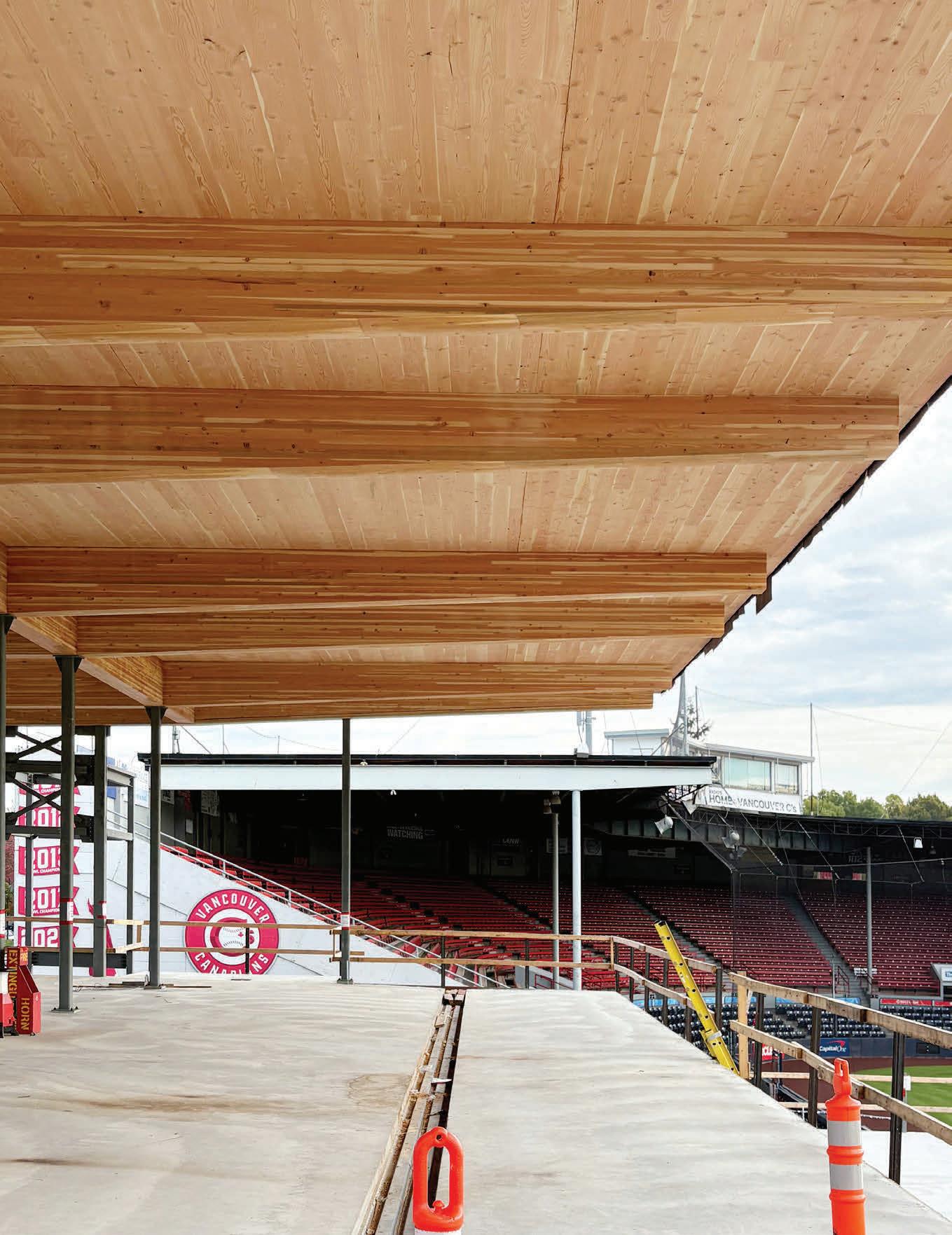
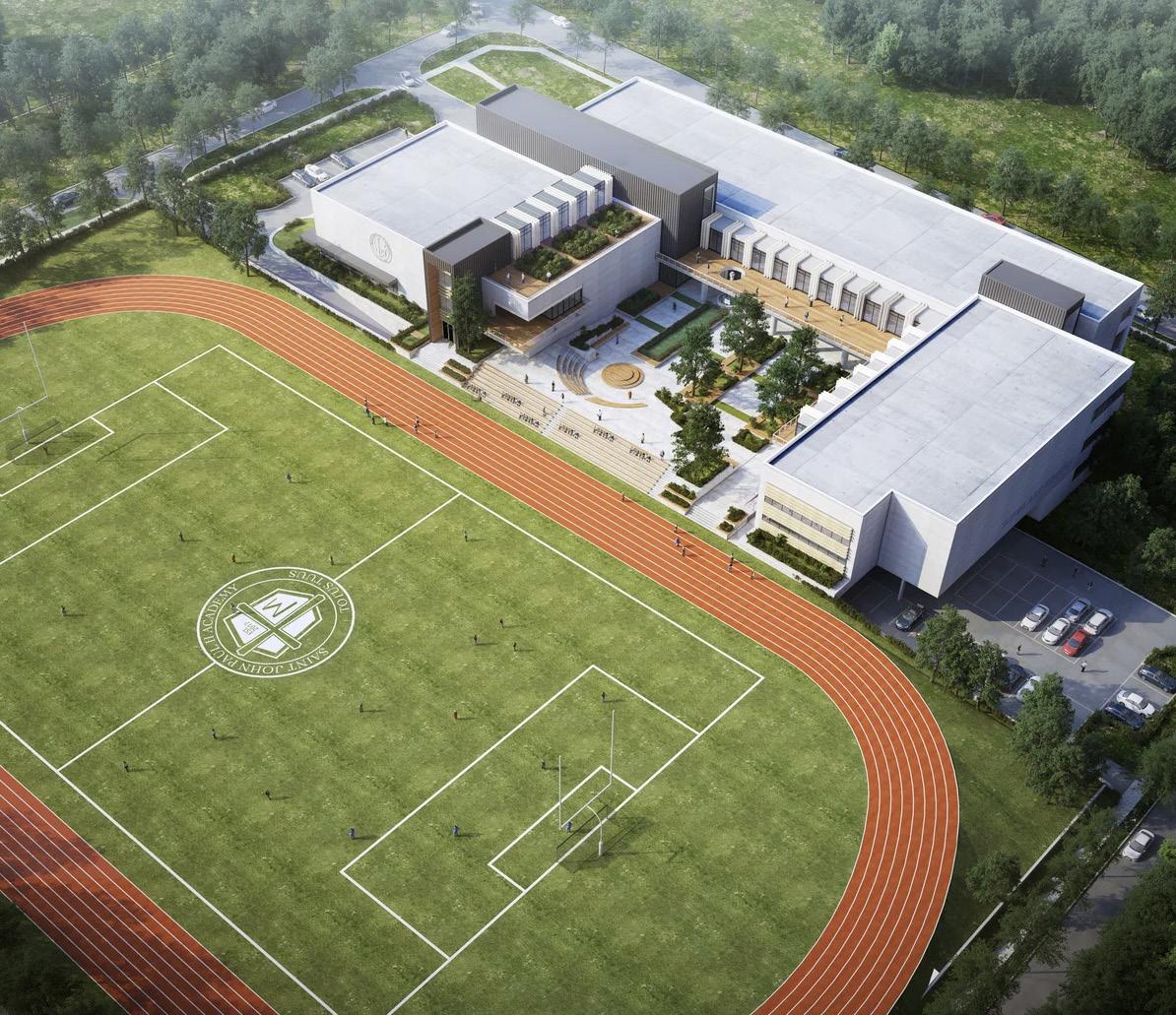




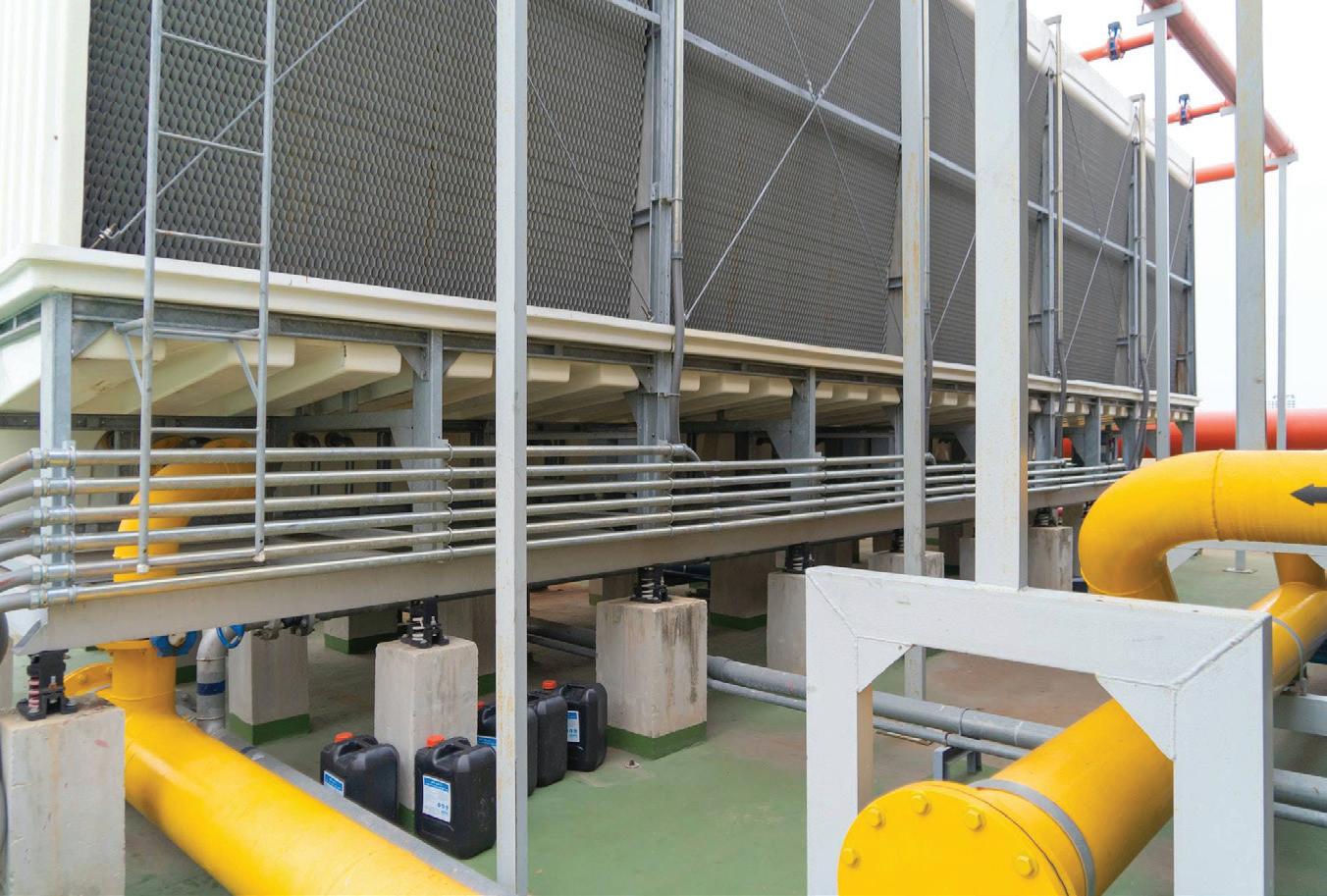
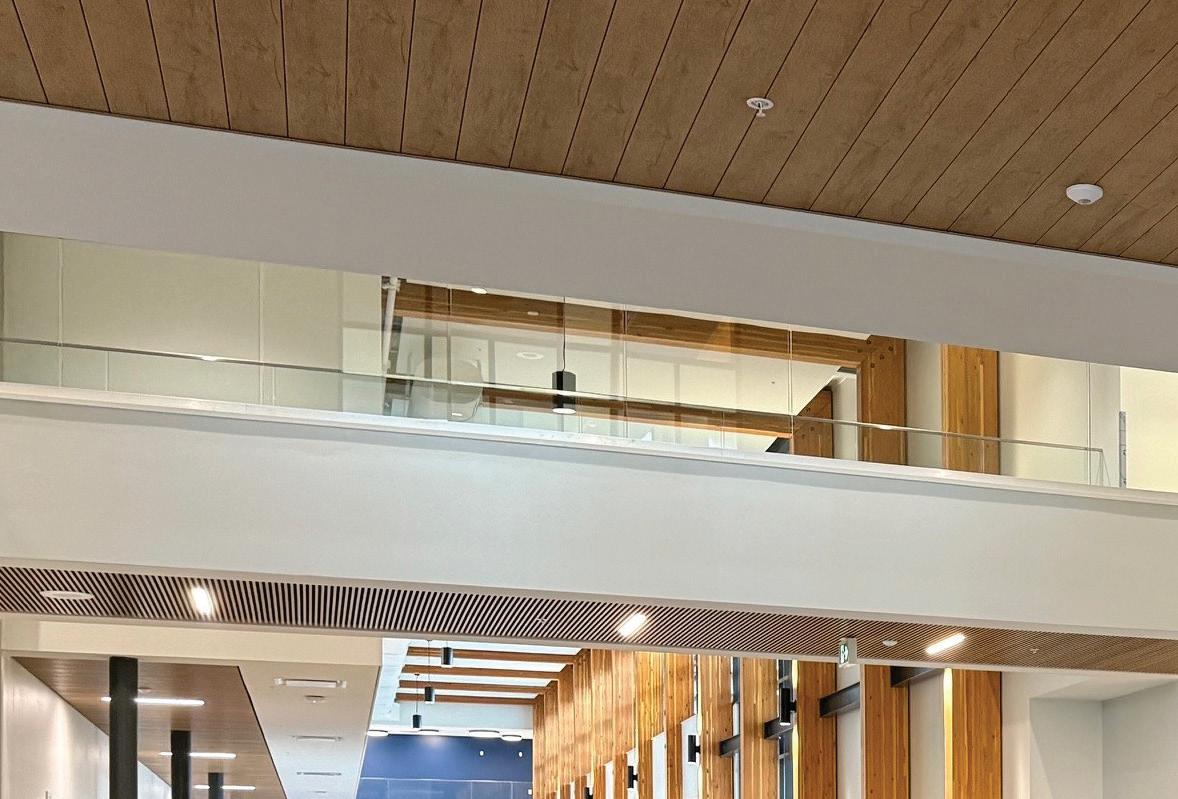

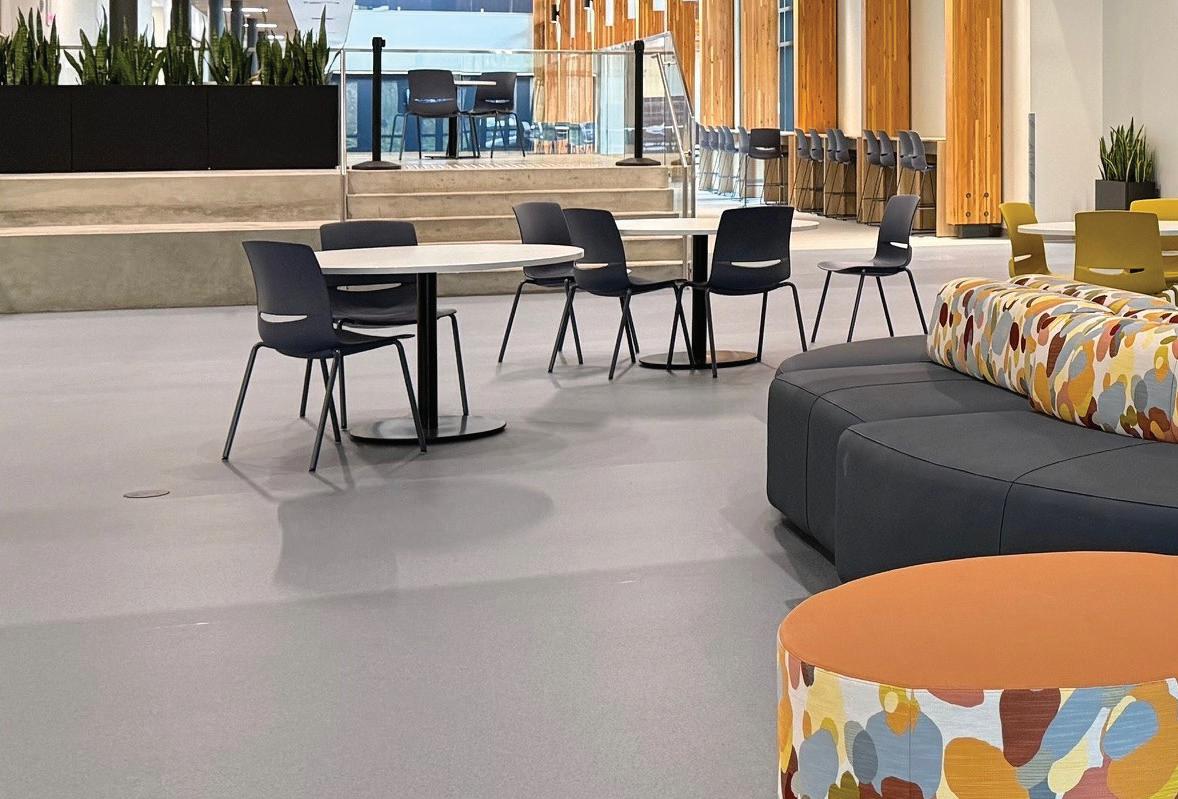
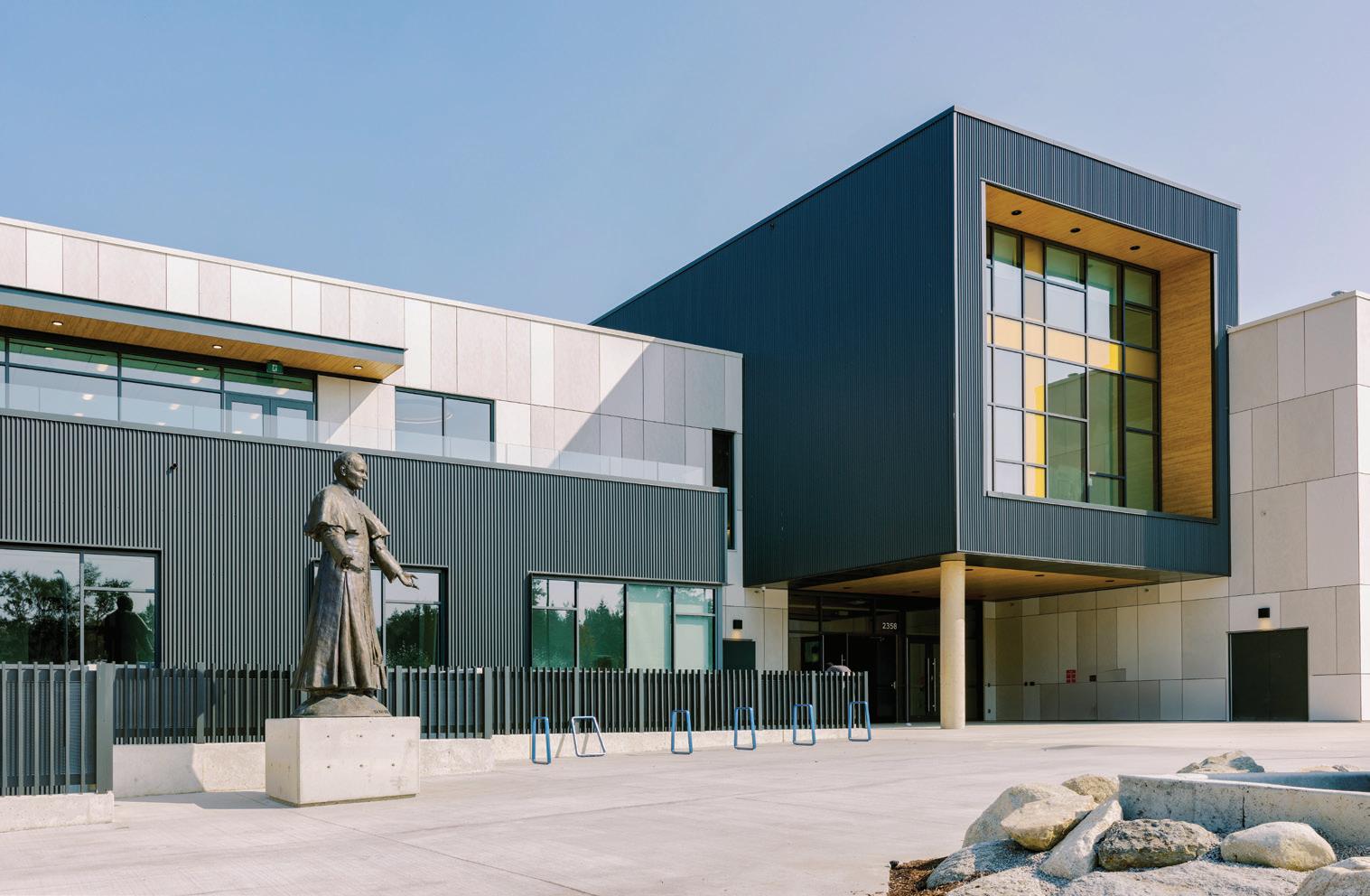
ST. JOHN PAUL II ACADEMY
by ROBIN BRUNET
Located on nine acres in an area of South Surrey that is still rural but earmarked for future development, the new Saint John Paul II Academy was developed to serve Grade 8 to 12 students.
Envisioned as a way to embrace Catholic education, the Academy evolved as a fully functional independent Catholic secondary school. Strategic phased planning allowed it to welcome an initial wave of students for September 2025, with future phases rolling out over a multi-year plan to meet an eventual enrolment of 800 students. The Academy will consist of a full gymnasium and sport field to complement the academic spaces of Phase 1, with future additions focusing on the expansion of dedicated theatre and technology wings.
Silveria Roselli, president of the Saint John Paul II Academy Foundation and director of advancement, says, “The Archdiocese of Vancouver provided not only the land, but also a lot of support,” and she credits Troy Van Vliet (the Academy’s founder and chair) for guiding a team of visionaries in the 13 years of discussions, fundraising, and regulatory requirements necessary to bring the school to life.
Roselli also singles out architecture firm Ekistics for creating a 123,000-square-foot facility that celebrates the spiritual essence of Catholic education. “We retained principal Mark Blackwood, whose past work impressed us enormously, and left the design up to him, with all the major decisions flowing through Troy and our building committee,” she says.
Ekistics was initially retained to envision and test-fit the Academy’s spatial needs on several different sites; however, the selected site offered the best potential. Blackwood and the Ekistics team created a concept that organizes the school into three
primary wings (for classrooms, an arts program, and athletic program) organized in a horseshoe shape with a south-facing central courtyard and sport field beyond. A double-height student commons flooded with natural light serves as the primary circulation spine and cafeteria for the students.
“We opted for a clean and wellcrafted building form instead of unnecessary complex geometry,” Blackwood says, adding that this philosophy also applied to materials selection and building details.
“We used two-toned fibre cement panel boards from Europe to impart a mosaic effect on the facade and contrasted this with dark corrugated metal siding. A generous use of glass to promote natural daylighting was also important to the design. Inside, the materials used also reflect a refined and minimal material palette: wood accents and slatted wood ceilings bring warmth to the interior and acoustic attenuation.”
The two-storey student commons is framed by heavy timber glulam beams looking out to the courtyard. At the west end of this spine is the school’s main entrance with a 150-seat chapel proudly poised above. “We designed huge windows at both ends of the chapel with tinted glass shaped like an abstracted cross. These are visible both from the exterior and interior of the school,” Blackwood says.
The topography of the site worked to Ekistics’ advantage. “It is sloped upward from north to south and enabled us to situate the parking below grade and maximize outdoor spaces and the sports field,” Blackwood says.
The biggest challenge of the entire project was not the school’s construction, but the site itself. Crystal Roche, senior project manager at Westbourne Projects Ltd., explains: “The land
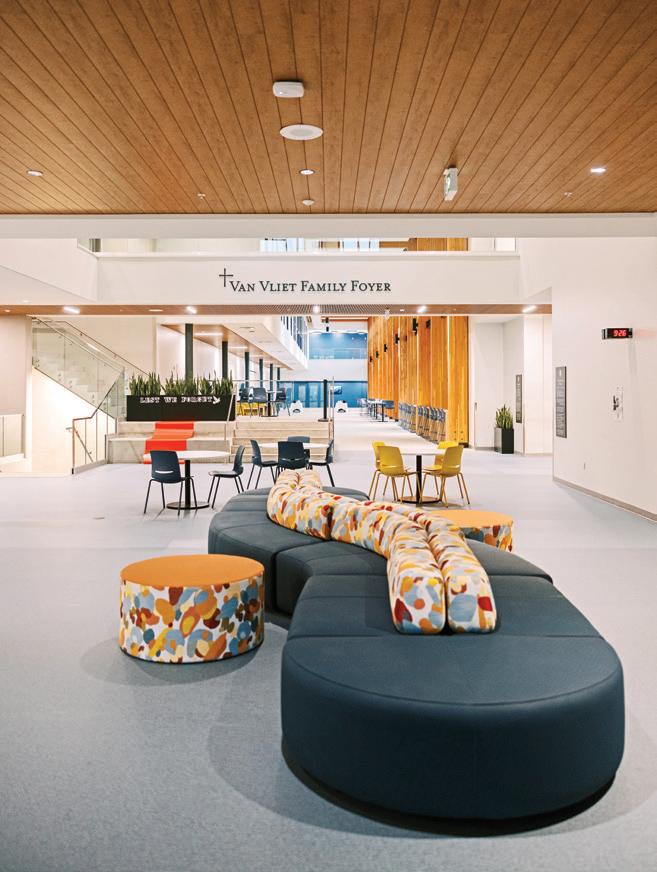
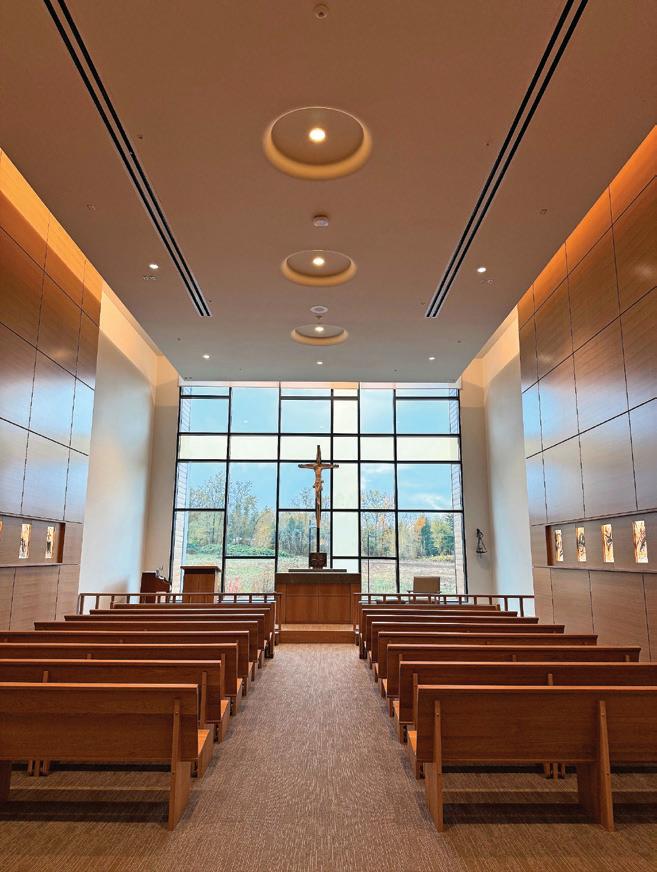
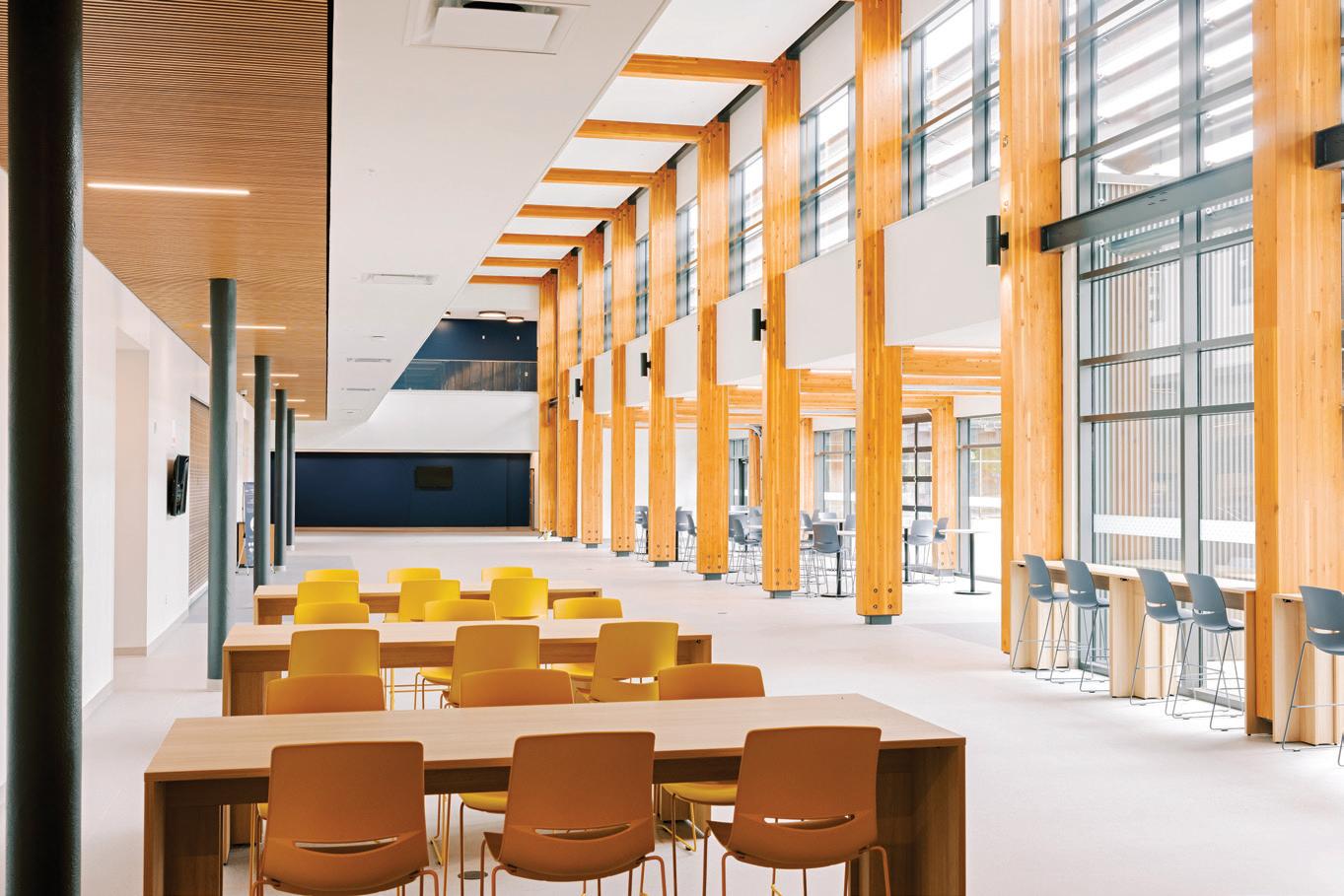
surrounding us is undeveloped, so offsite work was very extensive, beginning with clearing the land and redirecting a manmade ditch that the City of Surrey had re-designated as a nutrient-bearing stream.
“Over 2.6 kilometres of sanitary piping had to be installed and run uphill, combined with the development of a pump station and holding tank. An extensive stormwater management system had to be developed, and a U-shaped road around the school site had to be constructed.”
On the plus side for Westbourne and DGS Construction, “Soil conditions were fantastic, with hard-packed glacial till everywhere,” Roche says, adding that DGS was able to construct the steel-frame school on concrete foundations with a minimum of issues.
While the new St. John Paul II Academy welcomed 145 students in its first academic intake in September, Roselli notes that the arts and theatre portion of the facility remains an empty shell, “and on that score we’re busy fundraising to complete that portion of the project, along with the exterior track.”
But even in its unfinished state, Roselli and her colleagues are
humbled by the talent and drive expended to bring the school to life. “It’s truly a beautiful building,” she says. “It exudes a feeling of pure joy that is overwhelming, and we’re so grateful to the architects and builders, as well as the greater community, for making our vision come true.” A
LOCATION
18230 24th Avenue, Surrey, B.C.
OWNER/DEVELOPER
Saint John Paul II Academy Foundation
OWNER’S REPRESENTATIVE
Westbourne Projects Ltd.
ARCHITECT
EKISTICS
GENERAL CONTRACTOR
DGS Construction
OFFSITE CONTRACTOR
B&B Contracting Group
STRUCTURAL CONSULTANT
WHM Structural Engineers
MECHANICAL CONSULTANT
AME Group
ELECTRICAL CONSULTANT
AES Engineering Ltd.
TOTAL SIZE
123,000 square feet
TOTAL COST
$88 million
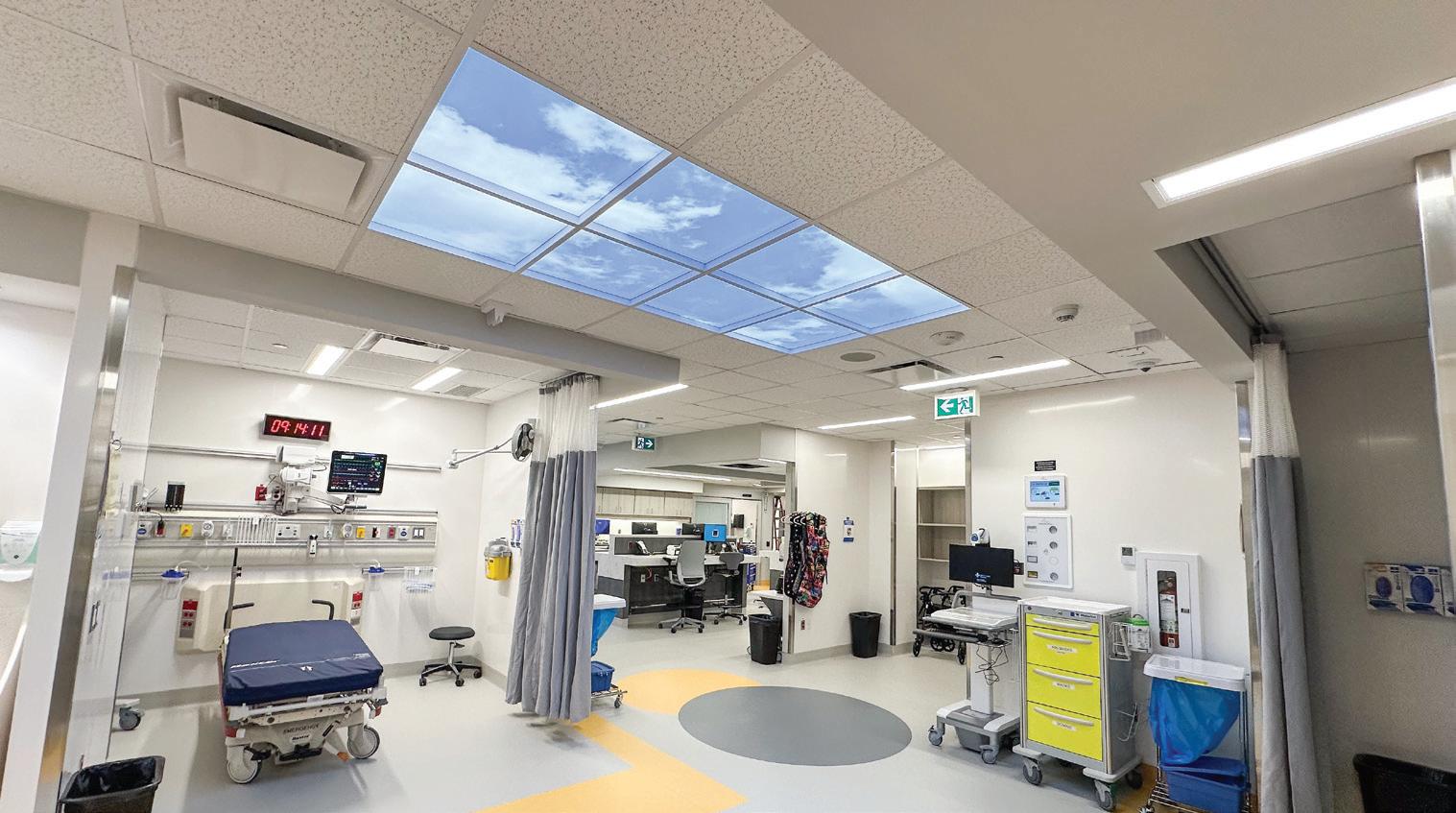
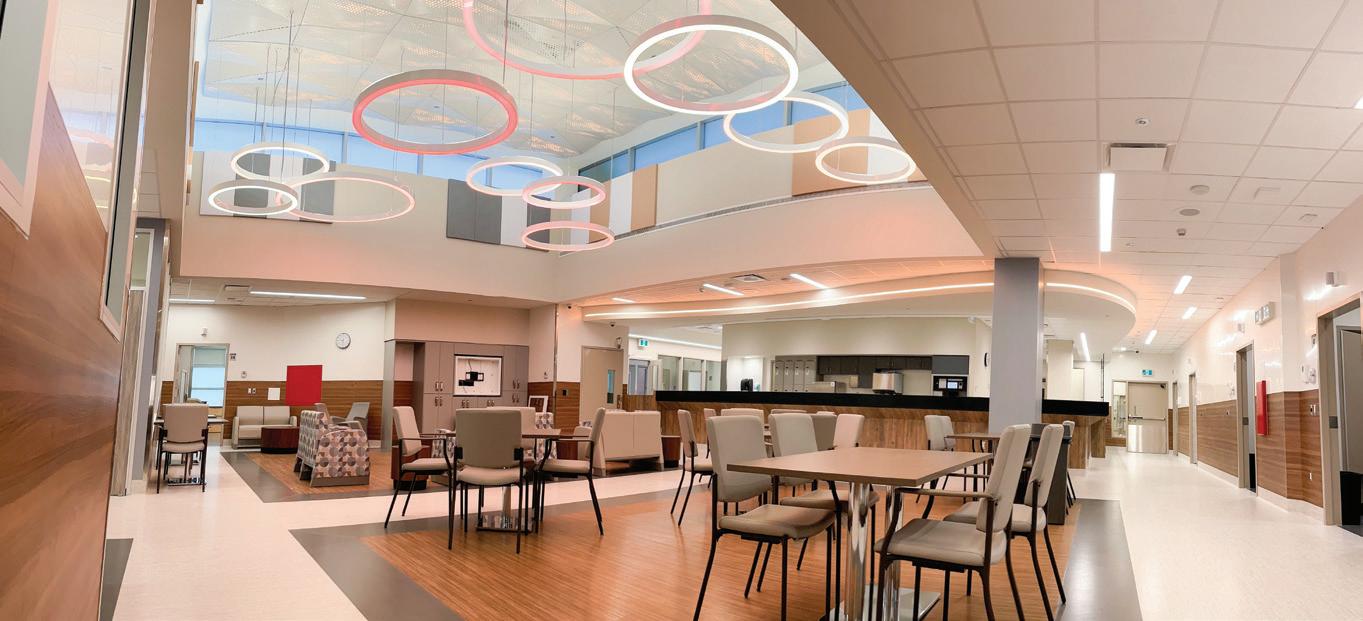
PETER LOUGHEED CENTRE EMERGENCY DEPARTMENT, MENTAL HEALTH INTENSIVE CARE UNIT AND LABORATORY REDEVELOPMENT
by PETER STENNING
When the $151-million expansion at the Peter Lougheed Centre in Calgary was completed in December 2025, Matt Jones, the provincial minister of hospitals and surgical health services, summarized the need for the long-awaited emergency department renovation by remarking, “Completing this expansion represents a significant increase in capacity in Calgary and will help ensure more Albertans receive the care they need in a timely manner.”
For Scott McKay, partner at McKay Hlavacek Architects Ltd. (MHA), December was the culmination of work that began in 2020 and encompassed eight projects, including the Mental Health Short Stay Unit, the Rapid Response Laboratory, Minor Surgeries Women’s Health & Bronchoscopy, the Psychiatric High Observation Unit (PHOU), ICU Offices, Simulation, and the Emergency Department relocation, renovations, and expansion.
“All aspects of our design work went fairly smoothly, helped along by a 30-year relationship we’ve enjoyed with Alberta Health Services,” he says.
In fact, the most challenging aspect for McKay was something familiar to all architects in 2020: the pandemic lockdowns. “But conducting online instead of in-person meetings had an advantage inasmuch as it allowed us to welcome more stakeholders on board,” he says. “At one point we had 50 people during a single session.”
Carmen Thirsk, project manager, operations at EllisDon Construction Services, points out that intense consultation was necessary considering this was a well planned, phased project that would require precise co-ordination once construction work began. “As it turned out, we would tender one project while starting another one on
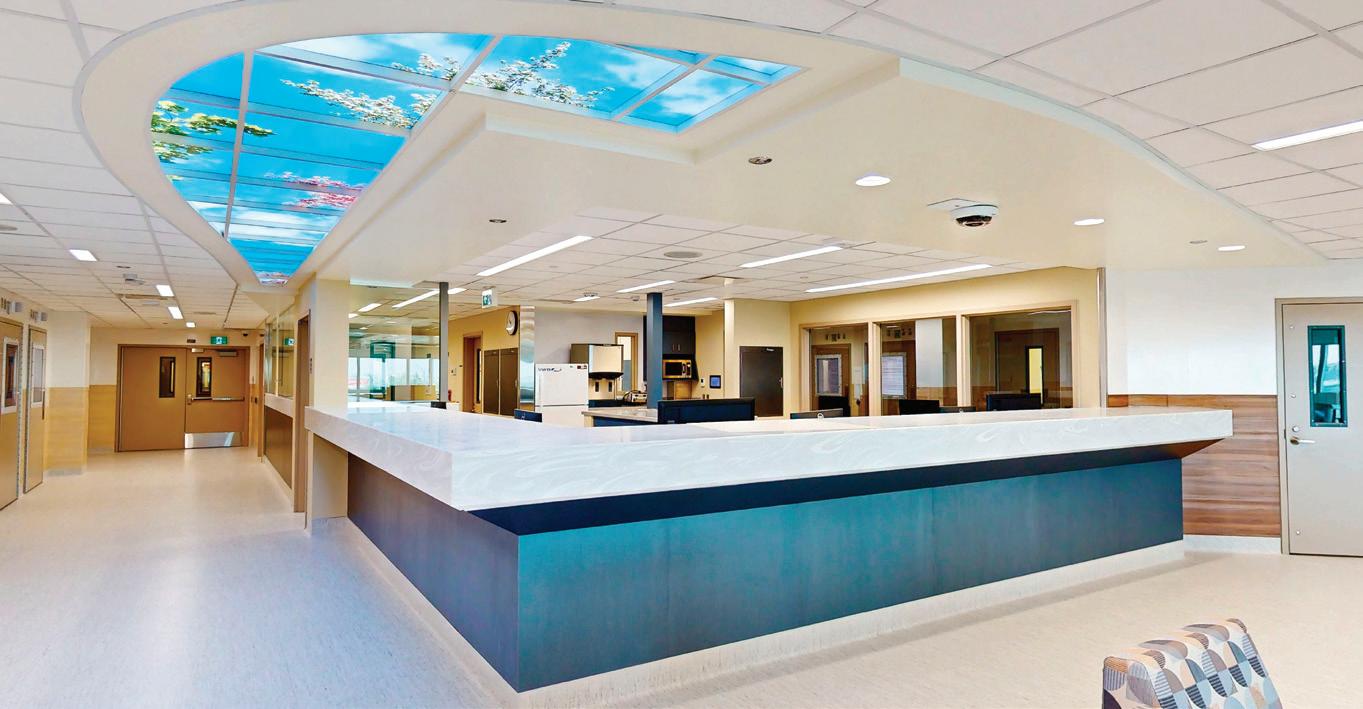
site, with multiple teams keeping the momentum going,” she says.
McKay describes much of the design work as “a shell game, but in a very positive sense: for example, for the emergency department we developed shell space, moved everything over to that space, then renovated the now-empty space.
“We followed a similar procedure for the laboratory expansion as well as the short-stay mental health department. The old lab was moved to a new space on the hospital’s sixth floor, and the old lab space was decommissioned to be repurposed for another use in the future.”
While reorganizing layouts to such a complex degree was MHA’s chief task, architectural creativity was also a major aspect of his work: “As with so many hospital renovations we wanted to impart a welcoming feel by using specific colours and finishes [including wood-like sheet flooring and cabinetry], and we did an especially deep dive into lighting,” McKay says.
This resulted in the use of virtual skylights from U.S. firm Sky Factory, whose solutions for health care ameliorate claustrophobia by generating a perceived opening overhead with
programmed sky-view environments. “The effect is uncannily realistic and allowed us to provide what seems like natural light deep into the hospital,” McKay says. “We augmented this with wall lights, dimmers, and lighting of varying hues and intensities.”
EllisDon’s expertise solved supply chain issues due to the lockdowns; material delays were confined to minor items that could be installed after the bulk of construction was completed. Extensive collaborations were required with Alberta Infrastructure and Alberta Health Services to ensure furniture and equipment delivery was aligned with the construction schedule and building operations.
Thirsk points out that EllisDon’s team faced a familiar challenge: carrying out work with a minimum of disruption within a functioning hospital. “So there was a tight scheduling of specialized hoarding and very stringent cleaning, plus the generation of negative air flows that pulled dust into negative air units to comply with Infection Prevention and Controls requirements. We also had to keep fire systems and sprinklers functional at all times, even though
portions of them had to be shut down depending on the project, so continuous planning and co-ordination with facilities maintenance was required.”
Thirsk cites another challenge endemic to hospital renovations. “We had to be mindful of generating noise, which was no small task considering many units had to be demolished right down to the concrete floor and ceiling.” Hospital administrators solved the most significant noise and vibration issues by relocating especially sensitive units – such as a vulnerable baby unit –away from the areas of activity.
Now that the Peter Lougheed Centre is complete, McKay and Hlavacek look back on their five-year involvement with considerable pride. “It’s always great to work with Alberta Infrastructure, Alberta Health Services, and EllisDon, and this expansion was particularly fulfilling,” the latter says. “There’s even a bit of shell space remaining in the hospital if required in the future.” A
LOCATION
3500 26 Ave NE, Calgary, Alberta
OWNER/DEVELOPER
Alberta Infrastructure
ARCHITECT
McKay Hlavacek Architects Ltd.
CONSTRUCTION MANAGER
EllisDon Construction Services
STRUCTURAL CONSULTANTS
Williams Engineering Canada / LEX3 Engineering Inc.
MECHANICAL CONSULTANTS
Reinbold Engineering Group / Remedy Engineering
ELECTRICAL CONSULTANT
SMP Engineering
TOTAL SIZE
108,802 square feet
TOTAL COST
$151 million

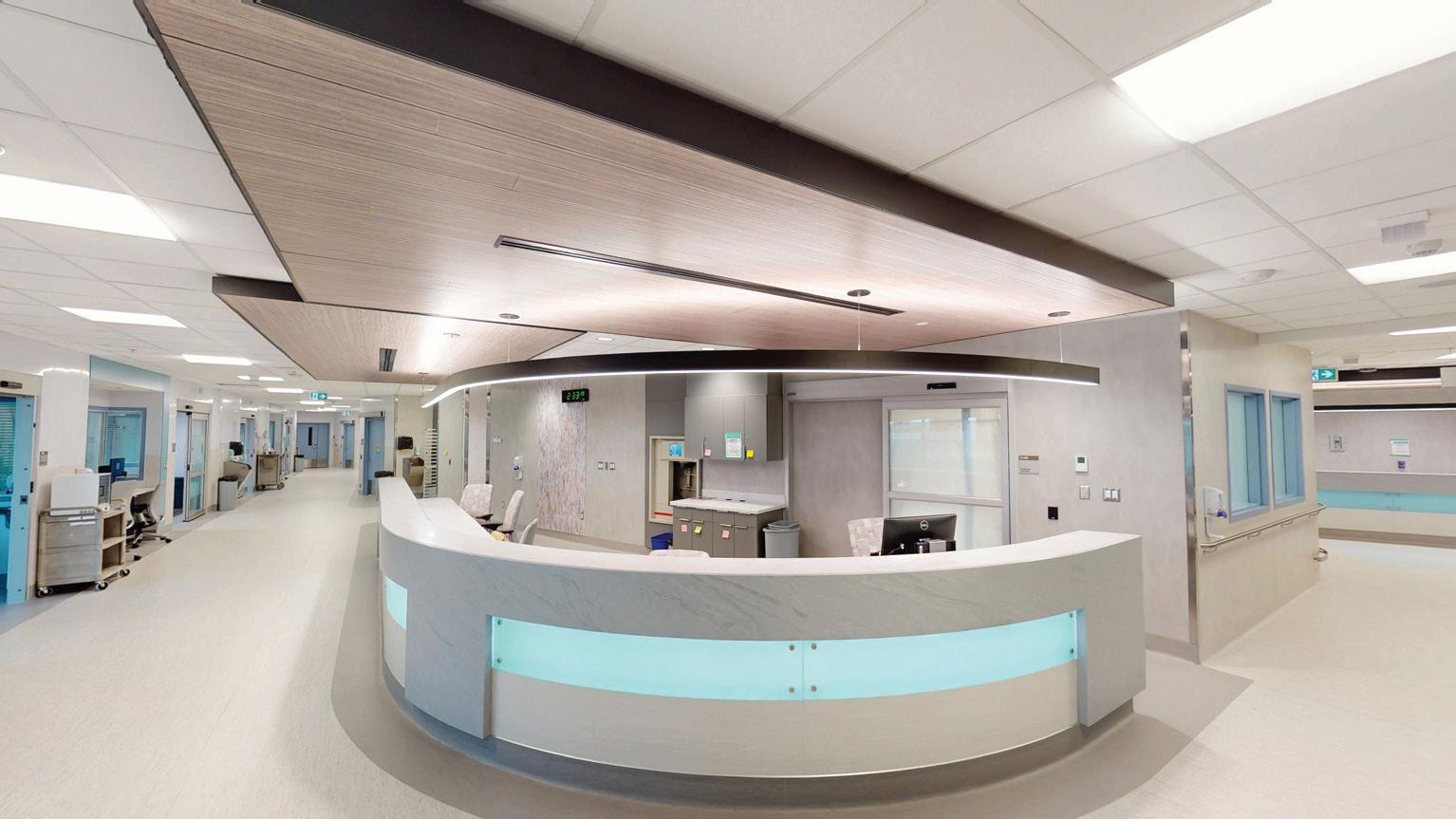
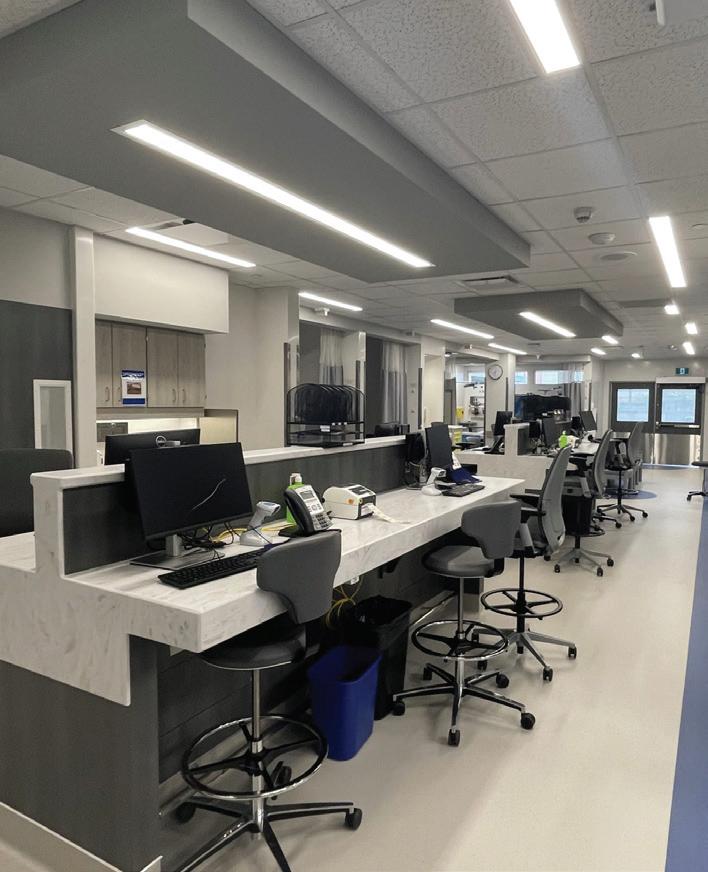

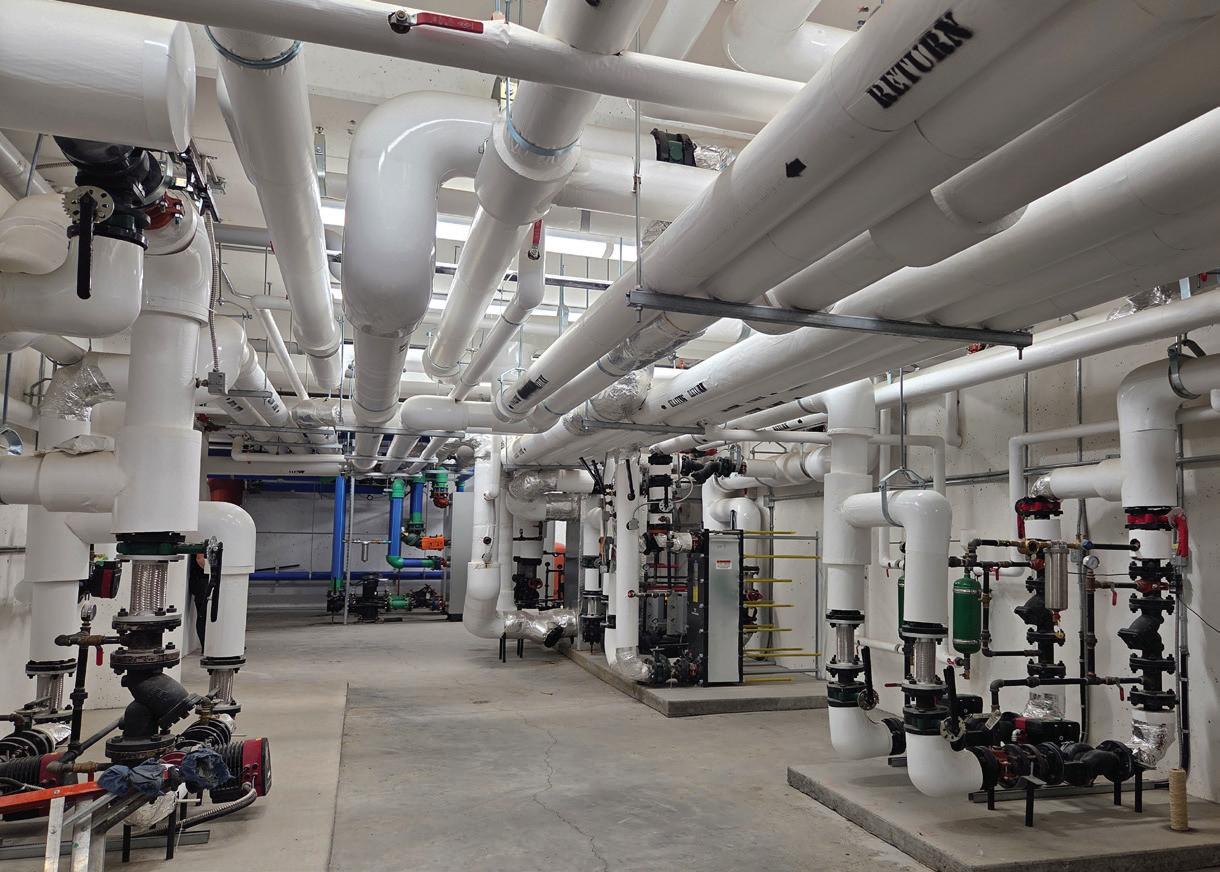

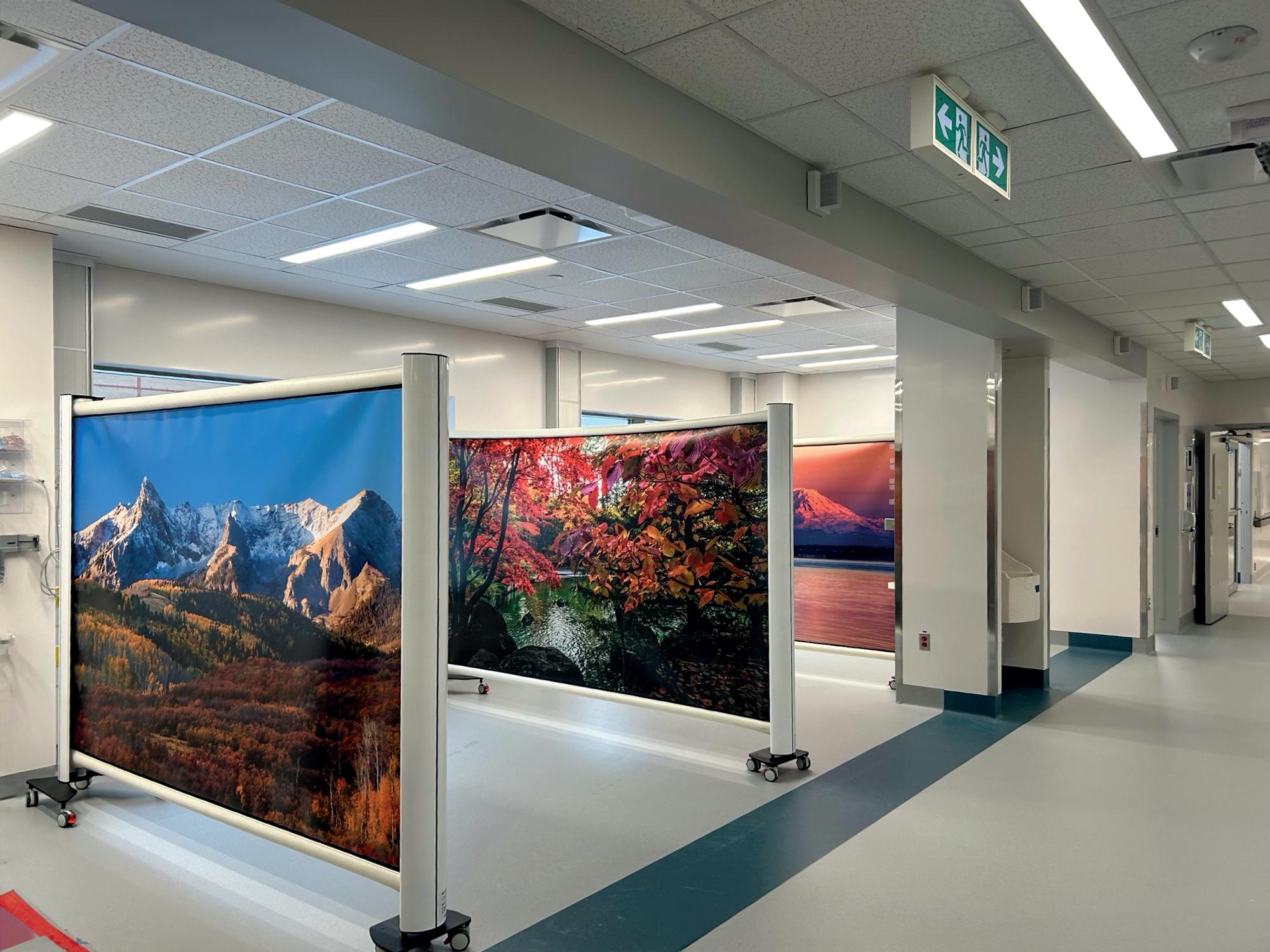

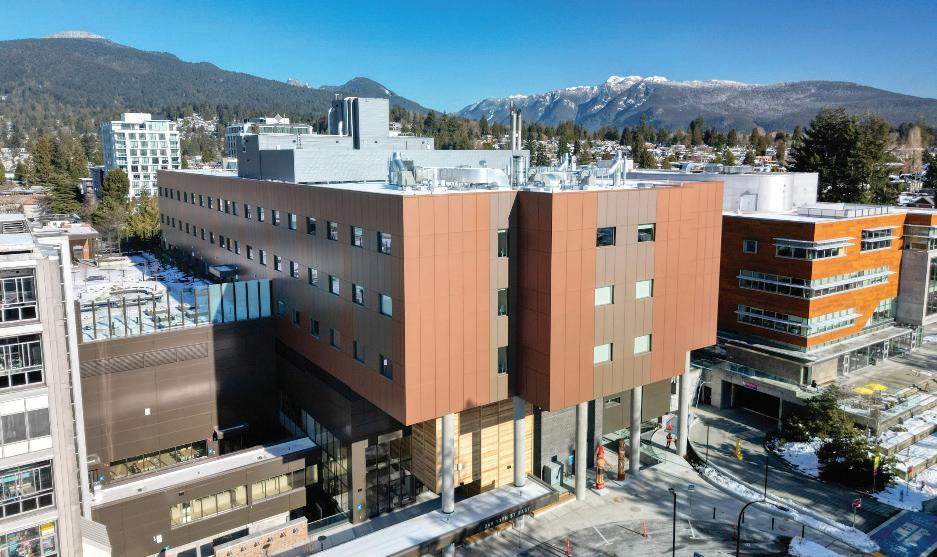

PAUL MYERS TOWER AT LIONS GATE HOSPITAL
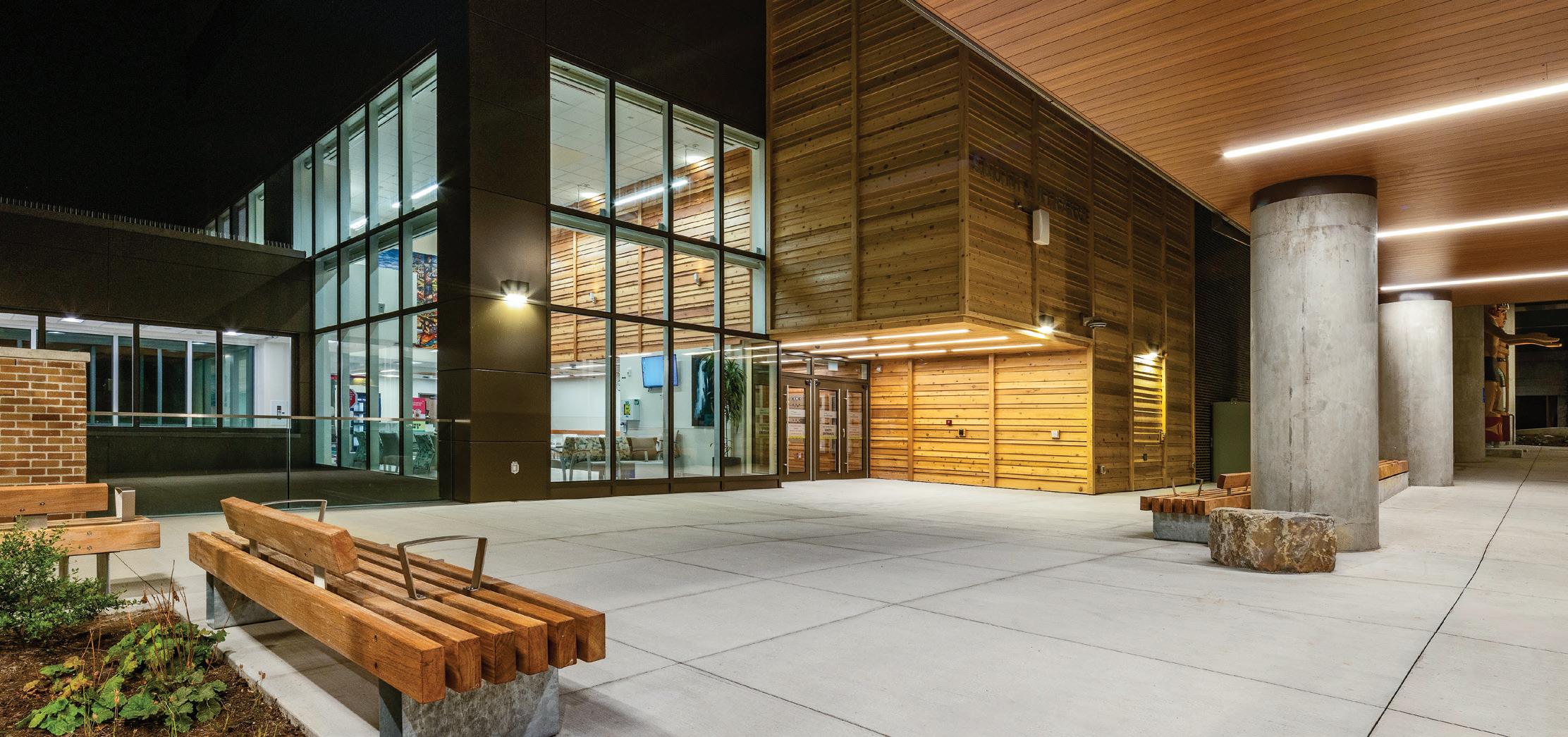
by NATALIE BRUCKNER
The opening of the Paul Myers Tower at Lions Gate Hospital on March 9, 2025, marked the completion of a highly complex health care project on the North Shore. It was the result of years of co-ordinated effort by clinical staff, designers, builders, health authority leadership, government partners, and community members, all working toward a shared goal: to improve how care is delivered for the patients and families who rely on this hospital 24/7.
The new acute care tower expanded the hospital’s capacity and capability at a moment when both were under sustained pressure, introducing state-of-the-art operating rooms, single-patient rooms each with a private ensuite (including airborne isolation inpatient rooms, operating room, and post-surgical recovery bays) and advanced technologies designed to support both staff workflow and patient experience, while honouring the traditional, unceded territories of the Sḵwx̱wú7mesh Úxwumixw and səlilwətaɬ Nations through collaboration with host Nation advisers.
Designed by HDR and dys architecture, the six-storey facility integrates seamlessly with the South Tower, the Northern Expansion building, and the Hope Centre, while accommodating connections to existing levels at three distinct areas, requiring precise structural alignment and engineering.
Delivering the project on an active hospital site required a phased approach that included building demolitions, relocation of the oxygen tank farm, re-routing egress pathways, temporary entrances and parking, and a new interim support facility. Project delivery director at HDR, Mike Doiel, says: “Co-ordinating underground storage tanks, providing access for servicing, all while maintaining pedestrian movement between two streets and existing buildings was challenging.”
The site’s physical constraints were among the project’s greatest challenges.
Travis Prystai of PCL Constructors Westcoast explains, “The new facility connects to the existing hospital on the west side and sits very close to buildings to the north and east. This left only the south side available for most construction activities.” To manage this, the team implemented a Work Interference Minimization plan and held regular co-ordination meetings with Vancouver Coastal Health to keep users aligned and minimize disruption.
The team used model-based animations to plan sequencing, map tie-ins, and visualize how trades would operate in tight spaces. Extensive use of off-site prefabricated multi-trade racks, containing the building systems in the ceiling spaces of inpatient corridors, improved quality control, enhanced safety by reducing overhead work, and helped keep the project on schedule.
The tower’s design blends metal panels, brick, and horizontal wood slats to create a modern, cohesive look while honouring the unceded territories of the host nations. The story of the wood is a central element. Trees at the 13th Street entrance had to be removed to make way for the new tower. “It took convincing with the city to remove them because of elevation and drop-off constraints,” recalls Doiel.
The cedar from trees removed was then milled into horizontal slats that now wrap from the exterior into the interior entrance, echoing traditional longhouse construction. Knut Boeck, architect at dys architecture, emphasizes the care involved: “Jason, the lead designer, is a woodworker and studied traditional First Nations joinery and was able to masterfully replicate those teachings in detail. The reused wood also maintains and honours that connection to the original trees.”
Inside, the Indigenous design narrative continues with the “Tide to Sky” concept, a guiding theme for each floor that reflects stories of land and water from host nation advisors: basement mineral, level one marine, level
two shell, level three medicine, level four feather, level five forest, and level six mountain. This theme is expressed through colour palettes, artwork, and finishes, creating a cohesive journey from the building’s foundation to its rooftop garden.
Within this cultural and spatial framework, the tower brings together a wide range of clinical and support functions, including eight operating rooms, 39 pre- and post-operative bays, a Medical Device Reprocessing Department, outpatient clinics, an outpatient phlebotomy lab, integrated operations centre, multipurpose hall, and retail amenities.
Connecting the new facility to existing campus structures was another interesting aspect. Doiel explains, “The building had to connect on three floors to existing levels, spanning between two buildings. The floor-tofloor heights were all from the 1960s, much lower than current standards, so the main challenge was co-ordinating everything while maintaining proper ceiling heights.” Boeck adds, “We also had to link the tunnels to the central utility plant at the far end of the site. With underground storage tanks and tight grades between two streets, careful planning was essential to get everything aligned.”
Cultural and community considerations are integrated throughout with Welcome Figures at the 13th Street entrance honouring the Sḵwx̱wú7mesh Úxwumixw and səlilwətaɬ Nations, while a multidenominational Sacred Space and House of Elders office provides for around-the-clock access for Indigenous patients and families. Features include wide entrances for beds, ventilation for smudging, acoustic controls, dimmable lighting, and tea stations. Boeck notes, “The dedicated sacred space has a window facing the water, responding to First Nations input.”
Accessibility and innovation are also central to the design of the tower. Handrails, automatic doors, tactile
LOCATION
East 13th Street and St. Andrews Avenue, North Vancouver, B.C.
OWNER/DEVELOPER
Vancouver Coastal Health
ARCHITECTS
HDR / dys architecture
GENERAL CONTRACTOR
PCL Constructors Westcoast Inc.
MECHANICAL/ELECTRICAL CONSULTANT
Introba
STRUCTURAL CONSULTANT
RJC Engineers
LANDSCAPE ARCHITECT
Hapa Collaborative
TOTAL SIZE
270,000 square feet
TOTAL COST
$325 million
warning strips, wheelchair spaces, designated parking, and multilingual signage (including Braille and host nations’ languages) make the building welcoming and navigable for all.
The Tower’s design continues upward with a 1,200-square-metre rooftop garden off the fourth-floor Inpatient Unit that stretches across the skyline, offering walking loops, seating areas, and the Two Sisters Outdoor Gathering Space, all framed by sweeping views of the North Shore mountains and ocean. The space was designed to be both ecologically and culturally meaningful, providing areas for ceremonies, smudging, and drumming, while giving patients, staff, and visitors a chance to connect with nature and find moments of calm.
Boeck reflects on the decision to preserve the garden: “It’s a beautiful feature that really connects the outdoor and indoor experience.” Doiel adds, “The rooftop courtyards that highlighted ornamental artifacts from the original hospital, designed by Hapa, turned out better than I could have imagined.”
The new Paul Myers Tower demonstrates what careful planning and collaboration can achieve in a complex, active hospital environment.
Prystai reflects, “Large construction projects are a group effort, and we had an excellent team at Lions Gate, from architects and engineers to subcontractors, suppliers, and the Vancouver Coastal Health team. It was incredible to be part of something where everyone worked together to create a facility that will serve the community and region for many years to come.”
“The Paul Myers Tower is a perfect example of how the input and partnership with the operational teams on every step of the project results in a facility that works for staff in the delivery of health-care services to patients and their families on a daily basis,” concludes Shelly Fleck, chief clinical planning officer, VGH and LGH Major Redevelopments, VCH. A
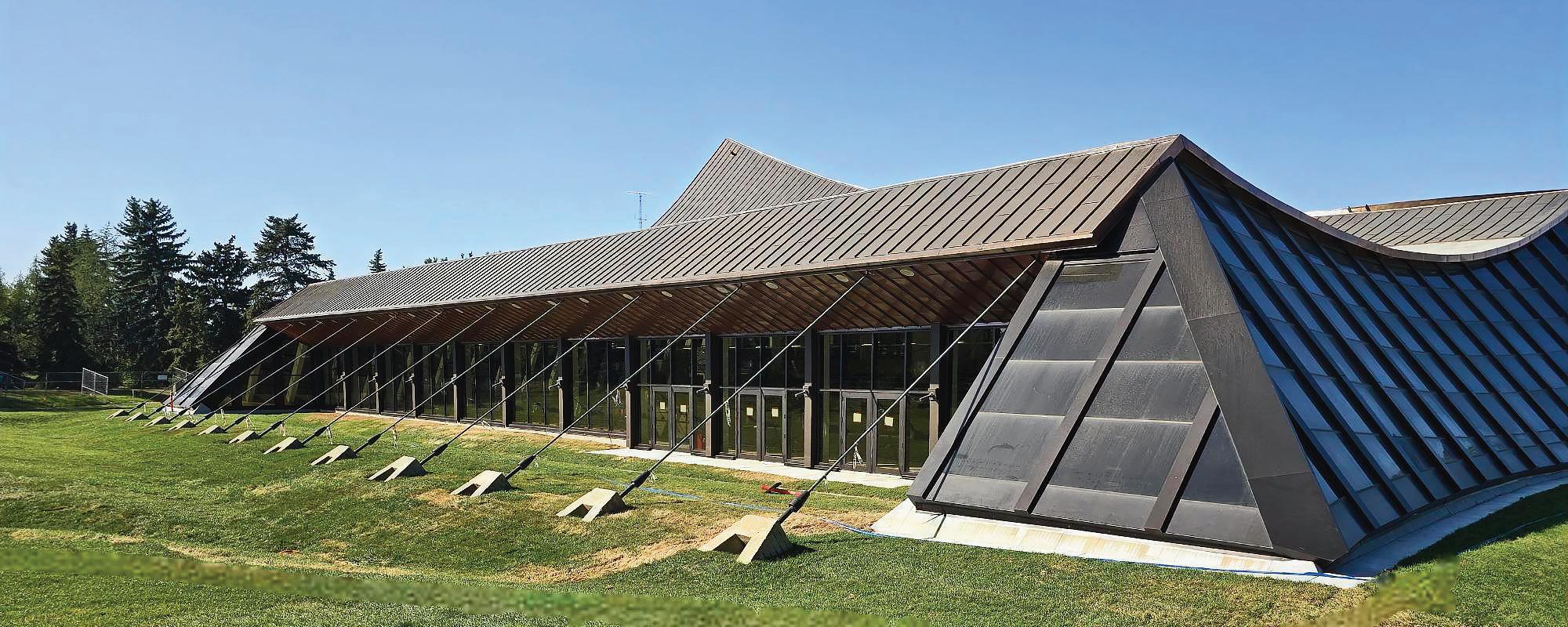
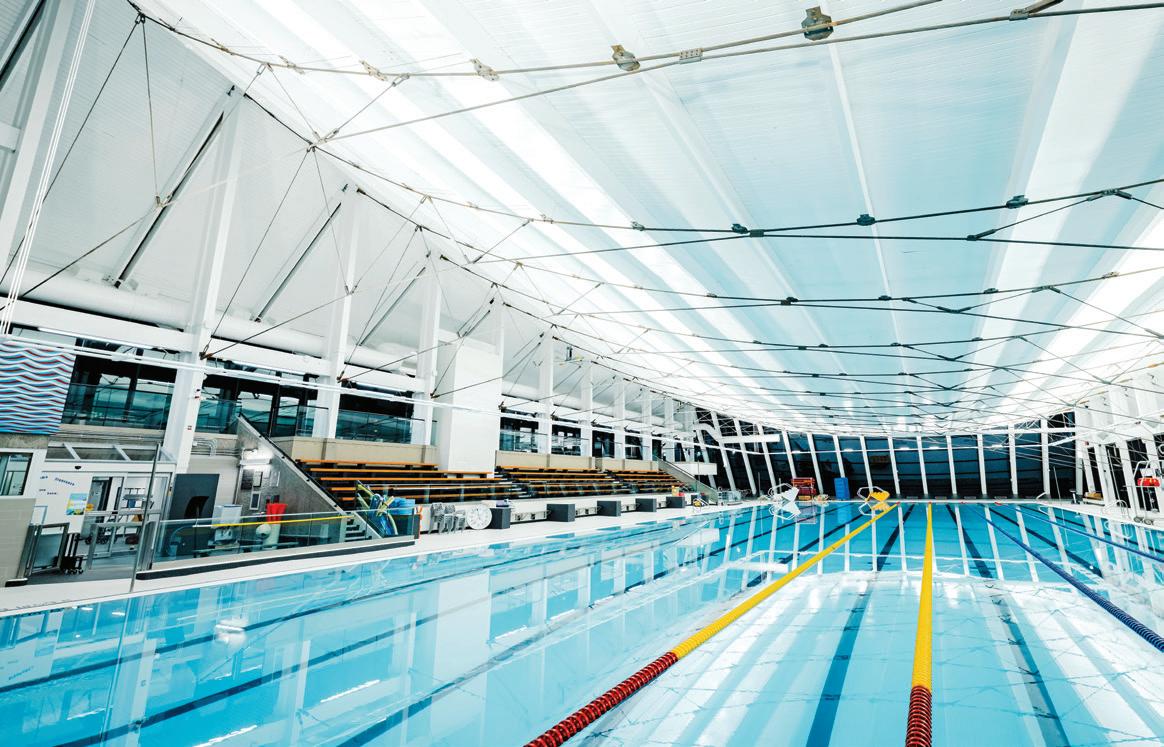
PETER HEMINGWAY AQUATIC CENTRE REHABILITATION
by NATALIE BRUCKNER
As Edmonton’s first recreation-oriented building to be designated a Municipal Historic Resource, the Peter Hemingway Aquatic Centre holds a unique place in the city’s architectural and cultural history.
Officially reopened earlier this year, the centre has undergone a major rehabilitation that modernized one of Edmonton’s most beloved recreational landmarks.
The decision to proceed with rehabilitation followed a series of condition assessments and operational reviews. “Facility condition assessments and operating business partner feedback revealed the facility’s performance was declining due to various factors, including its age and wear and tear,” says Matthew Everett, general supervisor with the City of Edmonton’s Facilities Infrastructure Delivery branch. Based on those findings, the facility was identified as a priority in the City’s 2019–2022 Capital Budget.
As the scope was refined, it became clear that the work would need to extend beyond upgrades. Everett notes that the building’s electrical, mechanical, and structural systems had reached the end of their service lives and required replacement to meet current and future demands, building codes, and the Alberta Health Pool Standards.
Preserving the building’s historical exterior characteristics was a central requirement. Widely regarded as an award-winning example of Modern Expressionist architecture, the building’s form and material palette have long distinguished it from conventional recreation facilities. “It was important to the project team that the rehabilitation respect the building’s historical significance,” says Everett, pointing to the facility’s origins as the former Coronation Pool and Peter Hemingway Fitness and Leisure Centre and its design by noted Edmonton architect Peter Hemingway. That architectural identity is defined by the expressive use of glass, concrete, cables, and wood, assembled into a
sculptural composition anchored by embedded piers and tensioned elements. The facility’s dramatic, sweeping roofline evokes a tent structure covering the pool, symbolizing the geographical shift from the Rocky Mountains and foothills to the flatlands of the Prairies.
General contractor Chandos was tasked with modernizing the curved glass curtain wall system as part of the rehabilitation, improving energy efficiency, and reducing greenhouse gas emissions while maintaining the original design intent. The updated envelope would also help enhance interior daylighting and thermal comfort, thereby contributing to the long-term sustainability of the building’s lifecycle.
Indeed, the facility’s distinctive silhouette remains one of its defining features. “Completed in 1969, the building features swooping angles and a dramatic roof form that sets it apart from more conventional recreation facilities,” says Jason McConaghie, principal, ACI Architects. He adds that material continuity was critical to maintaining the building’s visual clarity. “The copper roof naturally oxidizes over time, taking on a darker brown tone in Western Canada,” he says. “That relationship with the bronze-anodized elements is what makes the curtain wall so prominent.”
Replacing the hyperbolic paraboloid roof was technically demanding. Chandos removed and replaced more than 12,000 square feet of copper across the complex double-curved structure, a process that required careful co-ordination to preserve the geometry and detailing of the original design.
The rehabilitation was delivered through a phased approach that evolved as work progressed. During Phase One rehabilitation work, unexpected issues with the building envelope, pool basin, and mechanical and electrical systems were uncovered. According to Everett, these conditions posed risks to operations and public safety, requiring their inclusion in the initial phase alongside other priority upgrades.
Phase Two was subsequently developed to address the remaining issues and integrate City of Edmonton accessibility and sustainability policies.
“The planning and design of this phase was co-ordinated with a City of Edmonton Heritage Conservation Unit to ensure the historical significance of the building was respected and protected,” says Everett.
Integrating the new and adjacent Coronation Park Sports and Recreation Centre introduced multiple logistical challenges as well, which the teams handled very well. “Co-ordinating two different architects and two contracts was challenging, but it allowed us to create a cohesive hub for aquatic and fitness activities,” McConaghie says. “The challenge was connecting a new, modern facility to a designated heritage building while preserving the elements people value most. That balance was successfully achieved by everyone involved.”
While the exterior and integration with Coronation Park were major achievements, the most dramatic visual changes are inside the facility. “The original pool area was dark, painted a chocolate brown over the original light wood. We brightened the space and painted it white, completely changing the atmosphere. The pool now feels vibrant and inviting,” McConaghie says.
New aquatic amenities further enhance the user experience. The addition of a cold plunge pool complements the existing sauna and hot tub, supporting contemporary wellness programming. McConaghie adds that the original pool did not meet current regulations for a 50-metre facility, which was addressed during the rehabilitation. “The whirlpool was also fully redesigned, and the cold plunge was added.”
Jesse McKee, senior project manager at Chandos Construction, says one of the most meaningful moments of the Peter Hemingway Pool project for him was when they began refilling the pool. “After four years of collaboration, problem-solving, and dedication
from the entire project team, watching the pool fill with water felt like the true culmination of that effort. It was a powerful reminder that we were just steps away from returning this important facility to the community, and it remains a moment I’m especially proud to have been part of.”
Chandos’ interior scope focused on system performance, accessibility, and safety. Enhancements included the addition of an elevator and ramps, mechanical and HVAC upgrades, lighting improvements, and drainage work, all aimed at improving comfort, water quality, and long-term durability while meeting modern health and performance standards.
The rehabilitation of the Peter Hemingway Aquatic Centre is widely regarded as a major achievement. “It’s one of our biggest accomplishments to date,” says McConaghie.
Everett agrees, giving particular recognition to the City of Edmonton Heritage Planning Unit for lending expertise and guidance throughout the rehabilitation. “The City of Edmonton is proud of how the project has improved the user experience,” he says, adding that its significance as a historic building, which was officially designated in January, is also a major step forward. A
LOCATION 11425 142 Street NW, Edmonton, Alberta
OWNER/DEVELOPER
ARCHITECT ACI Architects
GENERAL CONTRACTOR Chandos Construction
STRUCTURAL CONSULTANT RJC Engineers
MECHANICAL CONSULTANT Englobe
ELECTRICAL CONSULTANT Aecom
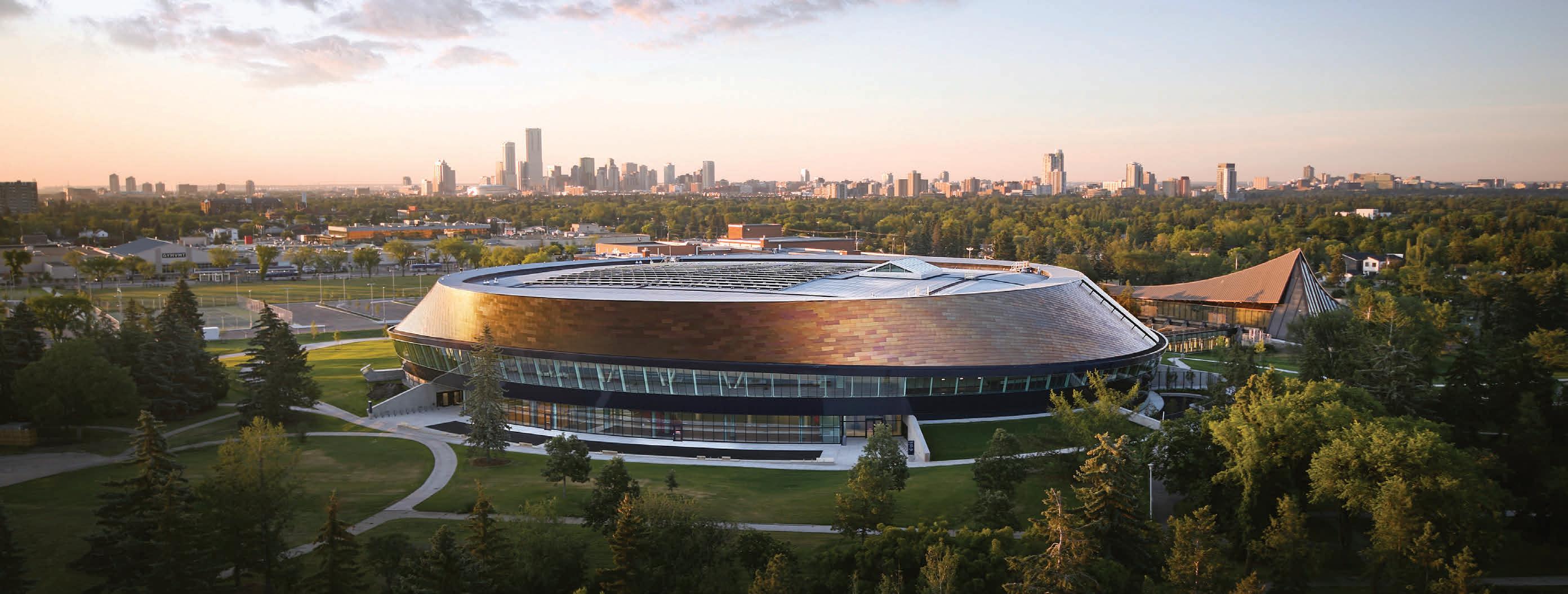
WE ARE COMMUNITY BUILDERS
Building thriving communities inspires everything we do. Let’s make an impact together.


EDMONTON | CALGARY | KELOWNA VANCOUVER | RED DEER | YELLOWKNIFE
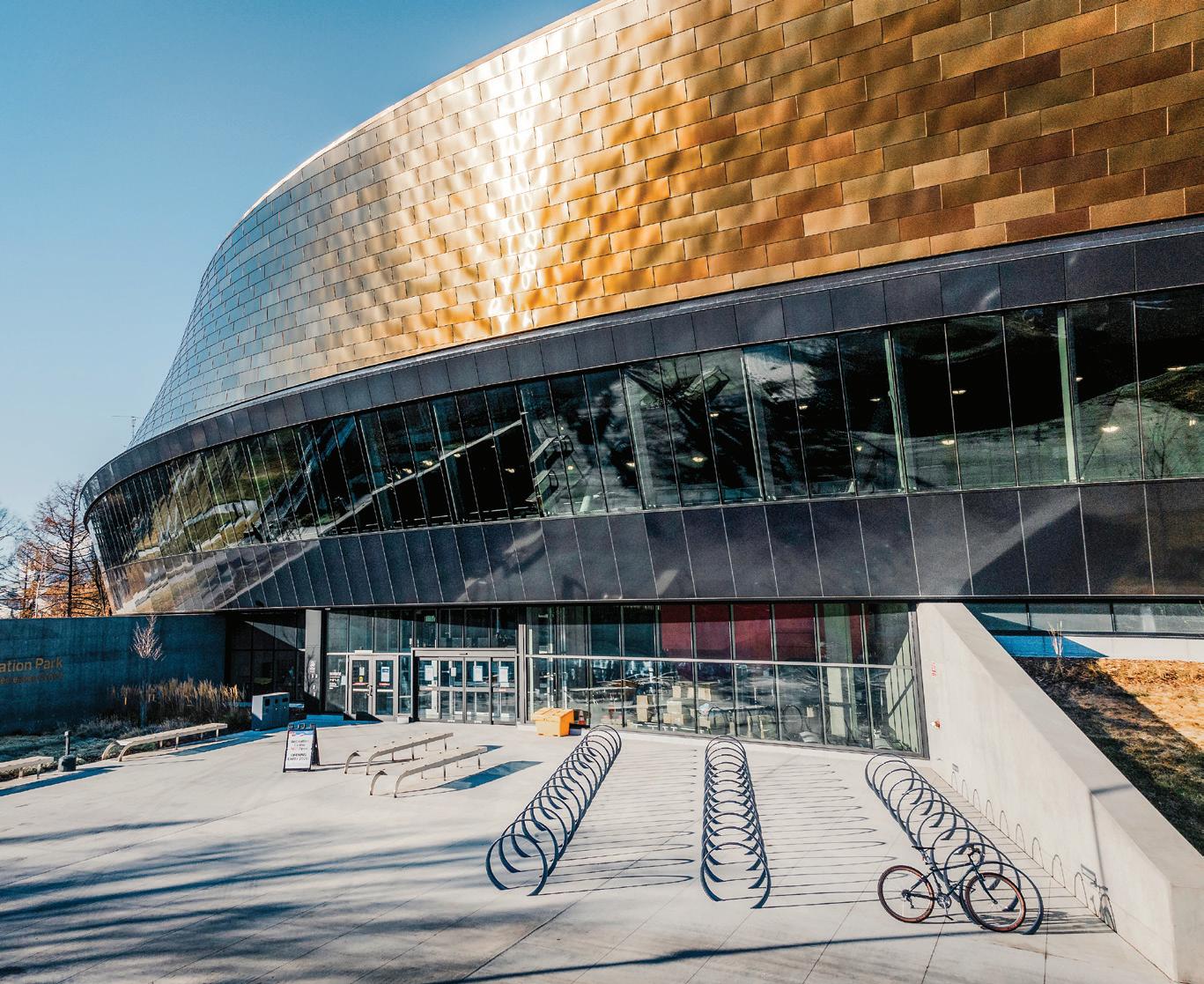
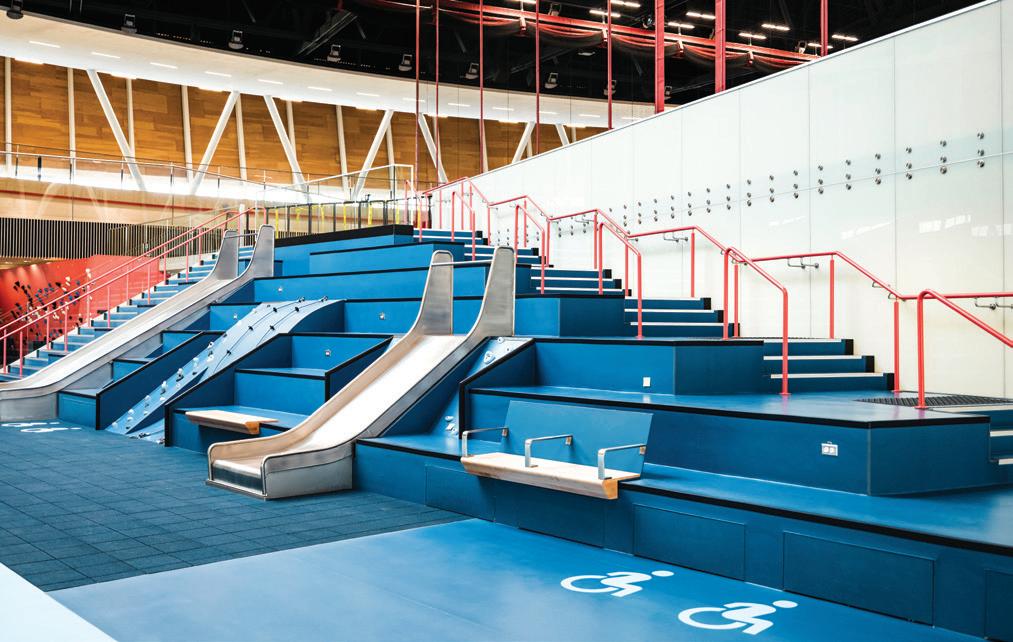
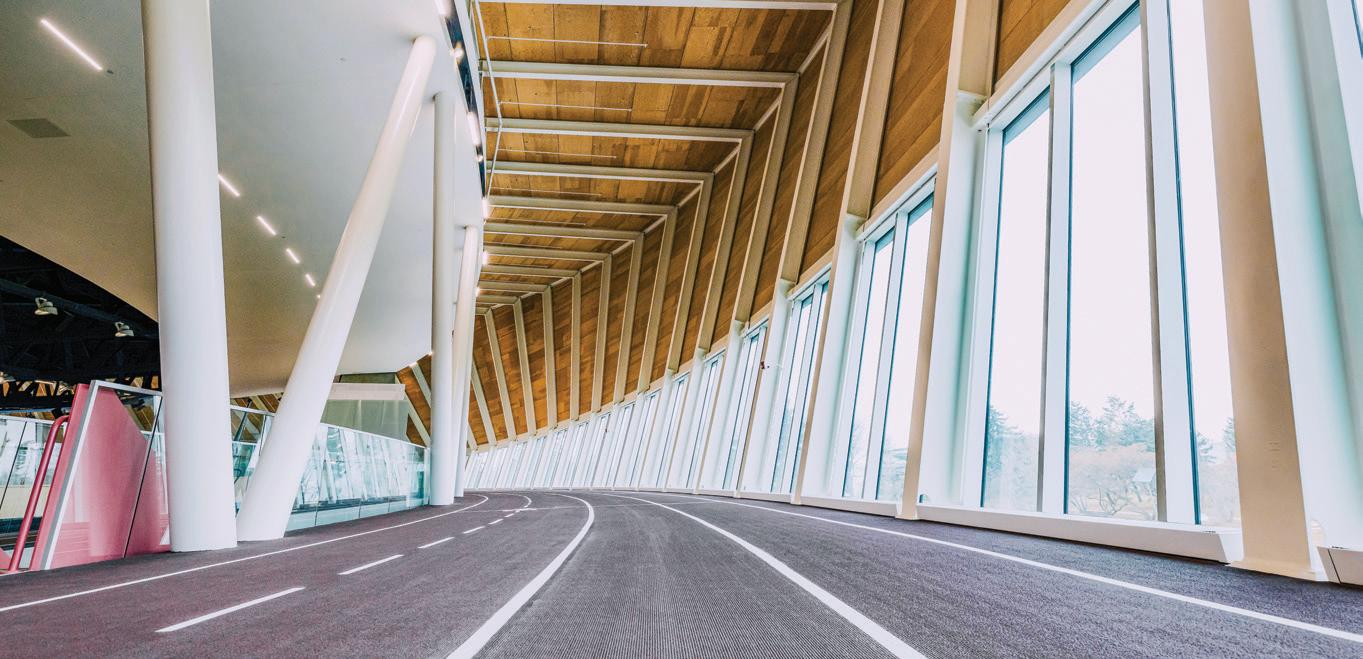
CORONATION PARK SPORTS AND RECREATION CENTRE
by ROBIN BRUNET
Rising above the central-north Edmonton landscape, the Coronation Park Sports and Recreation Centre is an enormous yet elegant twisting oval structure. The centre is an integrated facility connected by an above-ground link to the recently rehabilitated Peter Hemingway Aquatic Centre. This integration has created the first indoor triathlon training facility in North America, supporting year-round training and events.
Inside Coronation Park Sports and Recreation Centre is a 333-metre indoor running/walking track, an indoor cycling track, a 50 metre pool, infield courts, bouldering wall, a unique urban court, a fitness centre, functional training spaces, multi-purpose studios, an indoor playground, and more.
Matthew Everett, general supervisor, integrated infrastructure services at the City of Edmonton, says of the recreation centre’s oval form designed through an architectural partnership between hcma architecture + design and Dub Architects (in association with FaulknerBrowns), “it was influenced by the programming it was built to support, specifically the velodrome and indoor running/walking track.”
Michael Dub, principal architect at Dub Architects, elaborates that the design “is a rational solution to the velodrome problem, whose large footprint often results in cumbersome buildings. Our central idea was to raise the cycling track to the second level with the running track around it, thus creating community use spaces underneath.”
The exterior also radiates colourful hues, due to 4,700 interlocking façade shingles that change colour based on sun exposure, and this too was a rational solution. Michael Henderson, principal at hcma, explains, “The oval form cantilevers out on one side and cantilevers in on the other to impart a dynamic appearance; and because it was a twisting shape, shingles were the ideal cladding solution.”
In 2007, Edmonton City Council approved the Medium Term Recreation and Sports Field Plan, which identifies Coronation District Park as a site for the development of a community recreation centre close to Peter Hemingway Fitness and Leisure Centre (which was later renamed Peter Hemingway Aquatic Centre).
This strategy was based on an extensive community needs assessment and public consultation.
Planning and design for this project began in 2011. Brad Badger, director, community, recreation and culture at the City of Edmonton, says “the project addressed an identified need for a multi-purpose recreation facility in response to population growth in central-north Edmonton.”
The design of the roof was based on the performance needs of the velodrome, which required clear views of cyclists at all times; additionally, the Category A indoor cycling track required 43-degree curves at each end. “Our partnership benefitted from FaulknerBrowns’ expertise in the professional cycling track realm,” Henderson says, adding that while all three architectural
firms were responsible for the main design aspects and site planning, they later focused on specific elements: FaulknerBrowns for the tracks, Dub for the building envelope, and hcma for the interior planning and finishings, “with plenty of overlap throughout the project.”
Brenden Wiun, project manager at Clark Builders, notes that 20 months of pre-construction was spent before site work began in January of 2022, and he adds that site conditions were fortified by the installation of plastic cells in landscaped areas to slow the rate of water discharge.
When asked to identify the biggest challenge of constructing the cast-inplace concrete facility, Wiun replies, “It was an oval with angled and curved walls: the formwork alone was a task.”
The facility’s decking was also a challenge as it required the careful bending and twisting of 40-foot panels, followed by temporary wrapping to protect them while the building was still exposed to the elements.
John Arnott, senior contracts manager at Clark Builders, adds, “There were no traditional gridlines, so we retained two surveyors who worked full time for two years laying everything out with robots and computers.” Extensive computer modelling also allowed the builders to hide all of the HVAC and power systems underneath the second level track and preserve its clear sightlines.
The main roof structure consists of a 76-millimetre-deep steel deck supported by open-web steel joists that span east to west. The joists are
supported by a series of steel trusses that vary in depth and consist of wide-flange chords. The trusses are supported by a built-up curving girder (ring beam) at the perimeter of the roof; V-shaped circular hollow structural section columns and four concrete stair cores on the north and south ends of the roof in turn support this girder. Essentially, the columns and stair cores support the entire roof structure.
The City of Edmonton recognizes that the completed facility furthers Edmonton’s commitment and connection to sports excellence, and Arnott views the facility as a triumph of design and construction. He says, “It’s a once-in-a-lifetime project we will always be proud of.” A
LOCATION
11160 135 Street NW, Edmonton, Alberta
OWNER/DEVELOPER
The City of Edmonton
ARCHITECTS
hcma architecture + design / DUB Architects Ltd. in association with FaulknerBrowns
GENERAL CONTRACTOR
Clark Builders
STRUCTURAL CONSULTANT
Fast + Epp
MECHANICAL/ELECTRICAL CONSULTANT
Williams Engineering
CIVIL CONSULTANT
WSP
LANDSCAPE ARCHITECT
PFS Studio
TOTAL SIZE
16,416 square metres
TOTAL COST
$153.4 million
WEST COAST CONTEMPORARY LINE
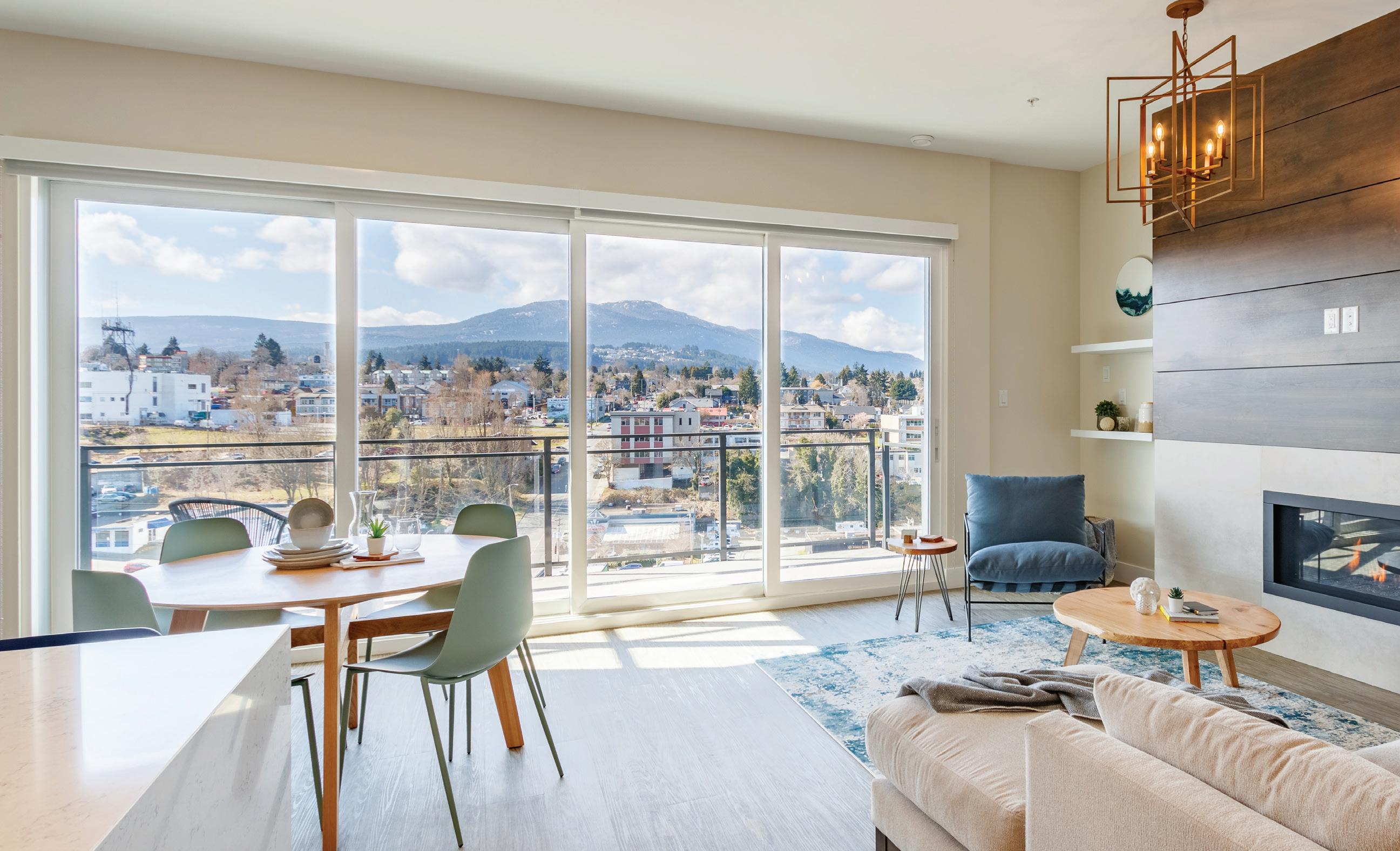
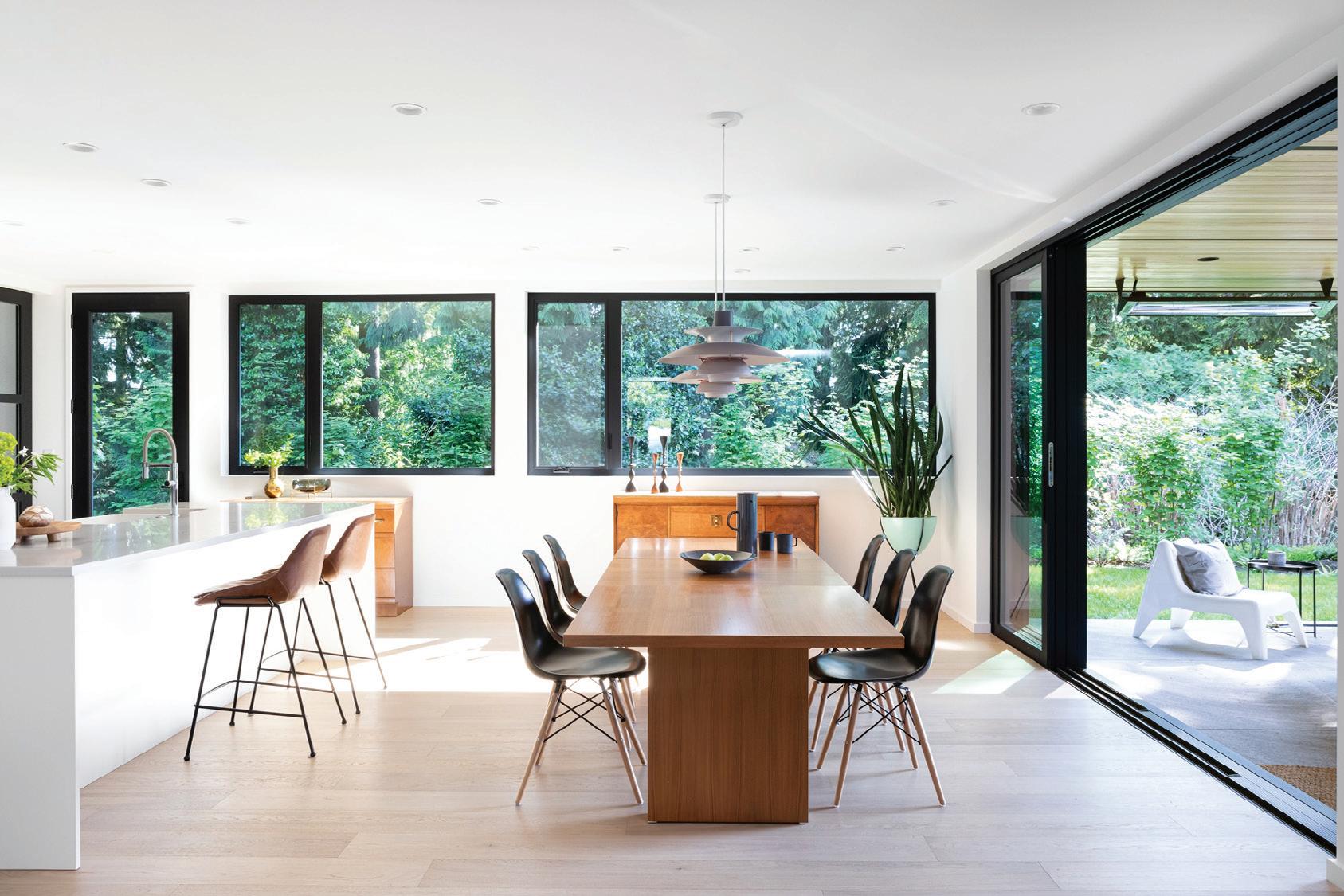

A custom home build is quite often the single largest investment in one’s life. This is a tremendous responsibility to entrust to the construction community.
Understanding this concept and exceeding customers’ expectations are what Westeck strives for and is at the core of the Westeck culture.