PORTFOLIO architecture 2026
Ali Tolba
Architecture Student
McEwen School of Architecture
Atolba@laurentian.ca
+1 (647) 920 -1370
Sudbury, Ontario
A 3rd year architecture student with an interest in environmentally responsive design and community-centered architecture. My work explores the relationship between architecture, landscape, and human experience, with a focus on creating spaces that connect people with nature and place.
1. Laurentian University Muslim Student Association, President — Sudbury, Ontario
2025 – PRESENT
• Organizing community events and student initiatives
• Leading campus engagement and cultural programming
• Managing event planning, logistics, and coordination
2. DARA for Modern Facades, Site Operations Assistant (CO-OP) — Cairo, Egypt
Summer 2025
• Assisted with facade installation and site coordination
• Observed curtain wall and ACM cladding systems
• Participated in material inspection and construction supervision
• Coordinated with engineers and contractors on site operations
• Fabrication Tool Safety Training — 2023
• Emergency First Aid & CPR Level C/AED — 2023
• Portfolio Designs Award — 2023 McEwen School of ArchitectureSite
1. Bachelor's Degree, Laurentian University — McEwen School of Architecture Sudbury, Ontario
2023 – PRESENT
2. High School Diploma, Manor House School Cairo, Egypt
Spring 2019
1. Early Learning Center - Little Haven Daycare . Fall 2025
2. Environmental Education Center - EcoBridge Learning Center . Winter 2025
3. Lake Laurentian Sauna - Rooted Sauna Retreat . Fall 2024
4. Teaching Lodge Furniture - Elder’s Chair . Fall 2024
5. Ice Station Installation - Ad Astra . Winter 2024
Project Type: Early Learning Center
Location: Flour Mill, Sudbury
Course: 3rd Year Studio
Semester: Fall 2025
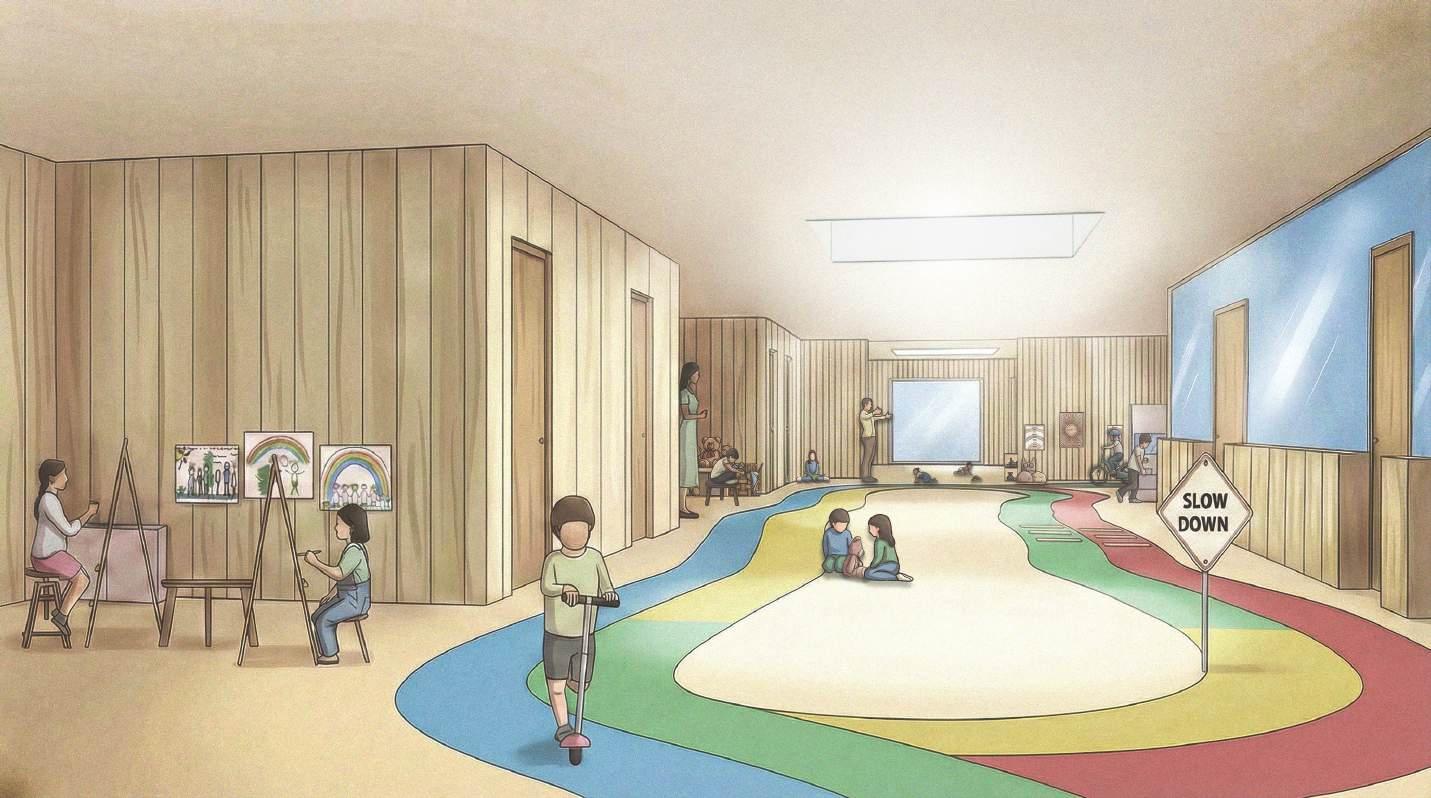
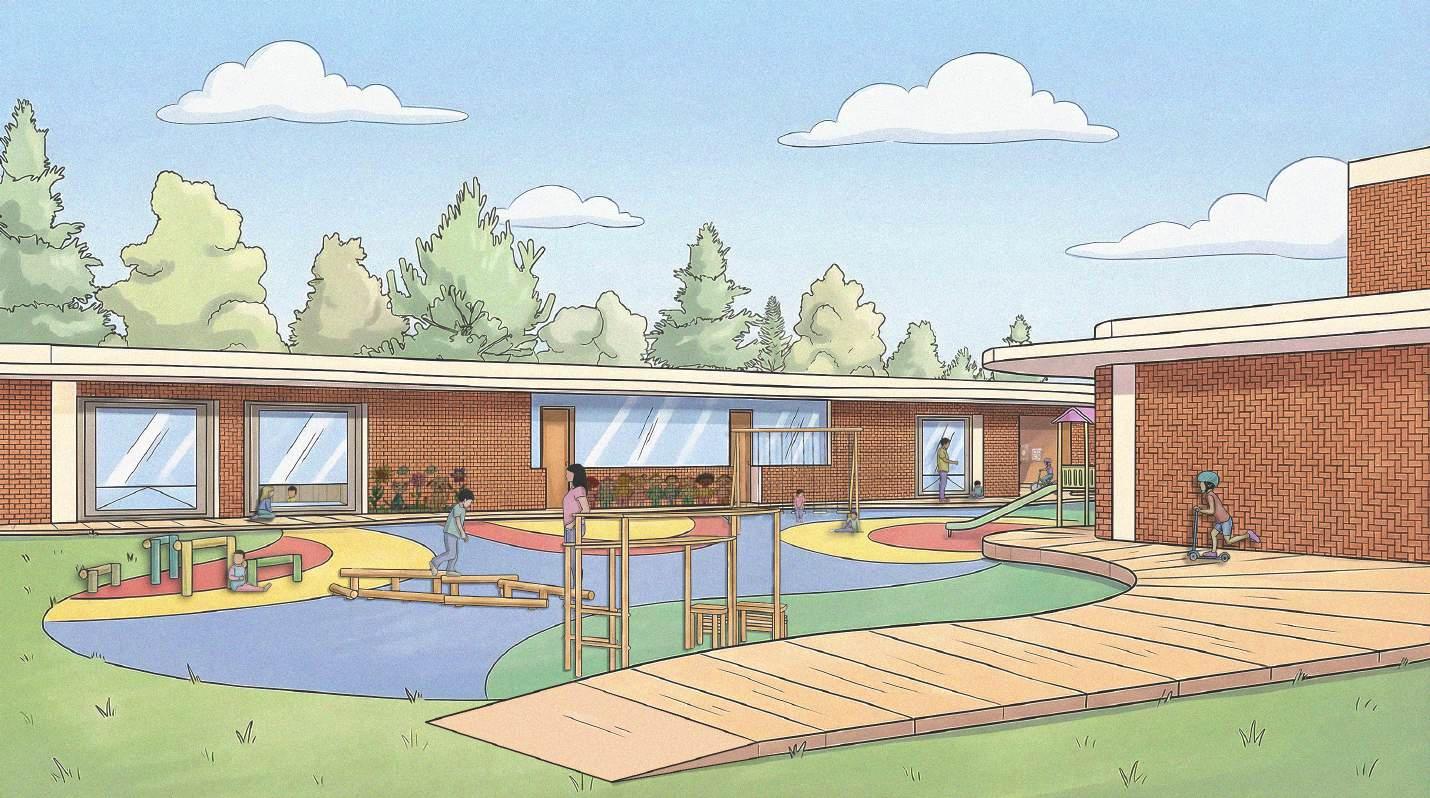
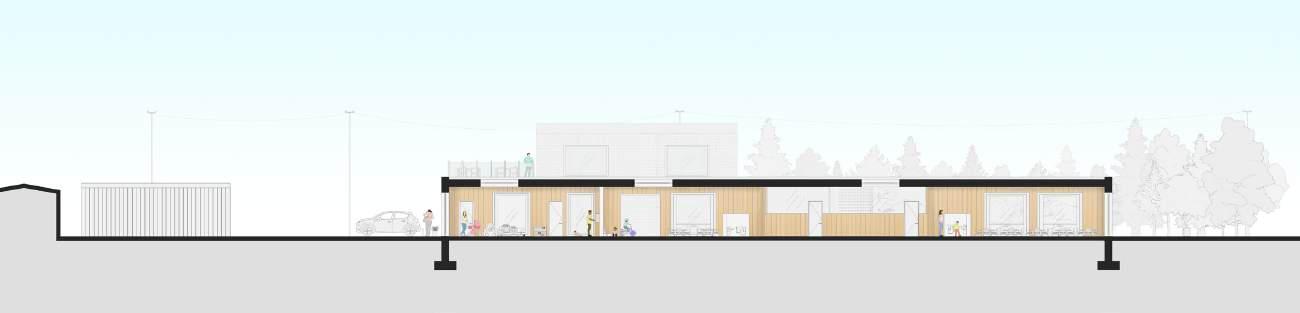
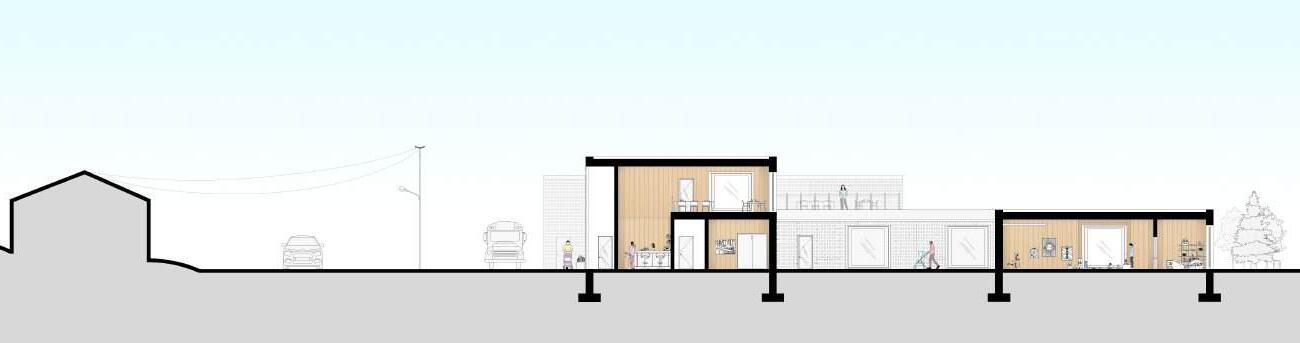
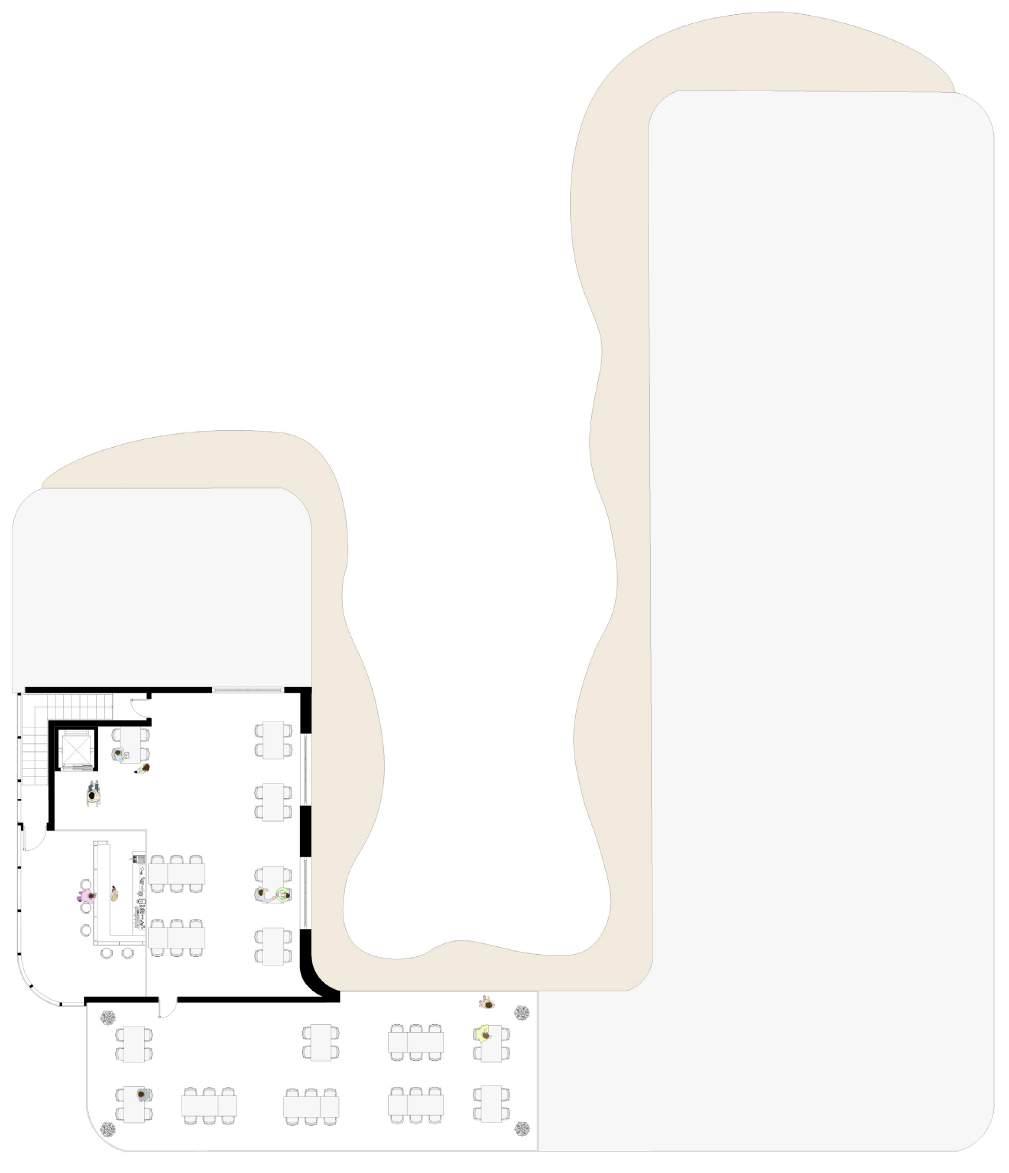
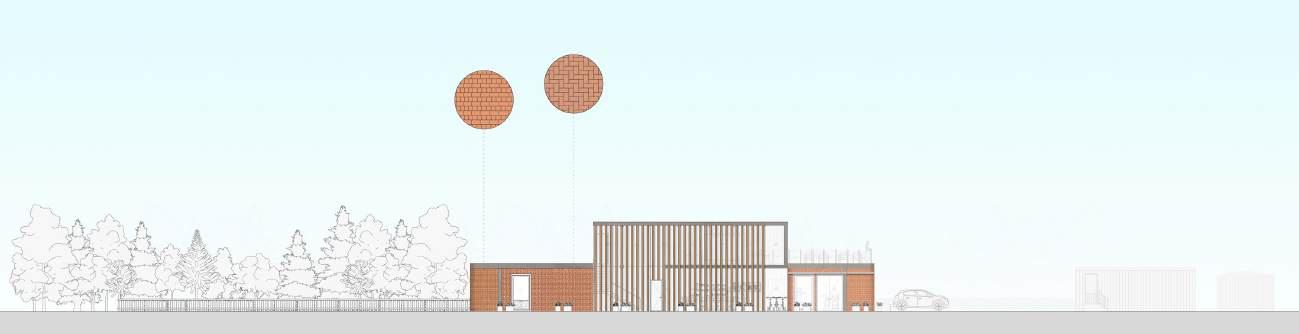
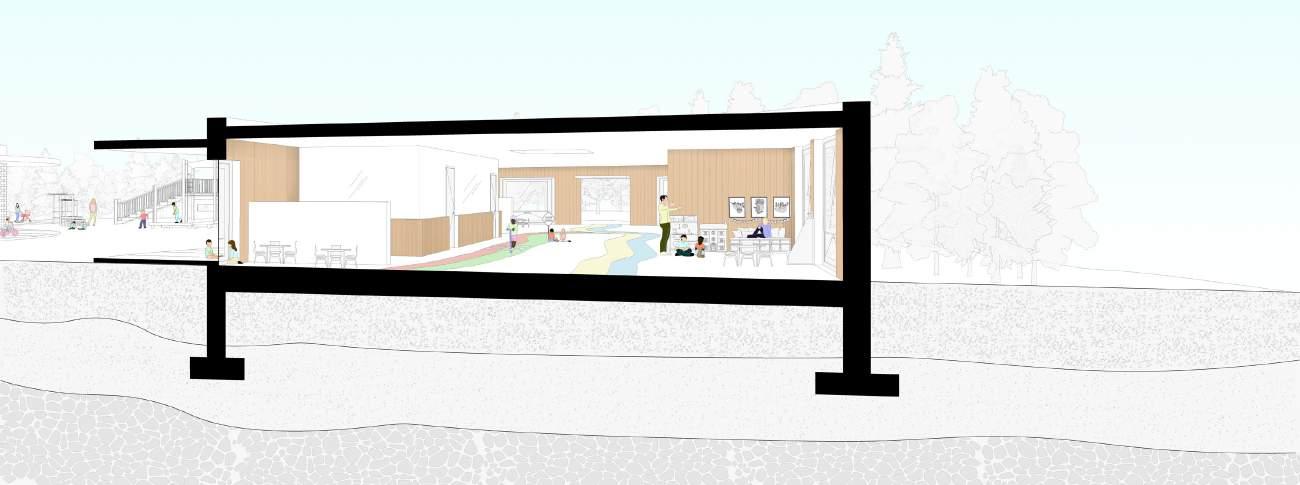
The Early Learning Centre is conceived as a protective and nurturing shelter. Three wings form a U-shaped refuge that embraces the children, shielding them from the noise and chaos of surrounding streets while opening toward light, nature, and spaces for play and exploration
The building not only protects children from the outside world, but also provides moments of comfort and ease within. Soft boundaries, curved edges, and warm materials create calming spaces that support emotional well-being and comfort.
Through a balance of protection, openness, and connection to nature, the design creates an environment where children can explore, learn, and grow in a safe and comforting setting.
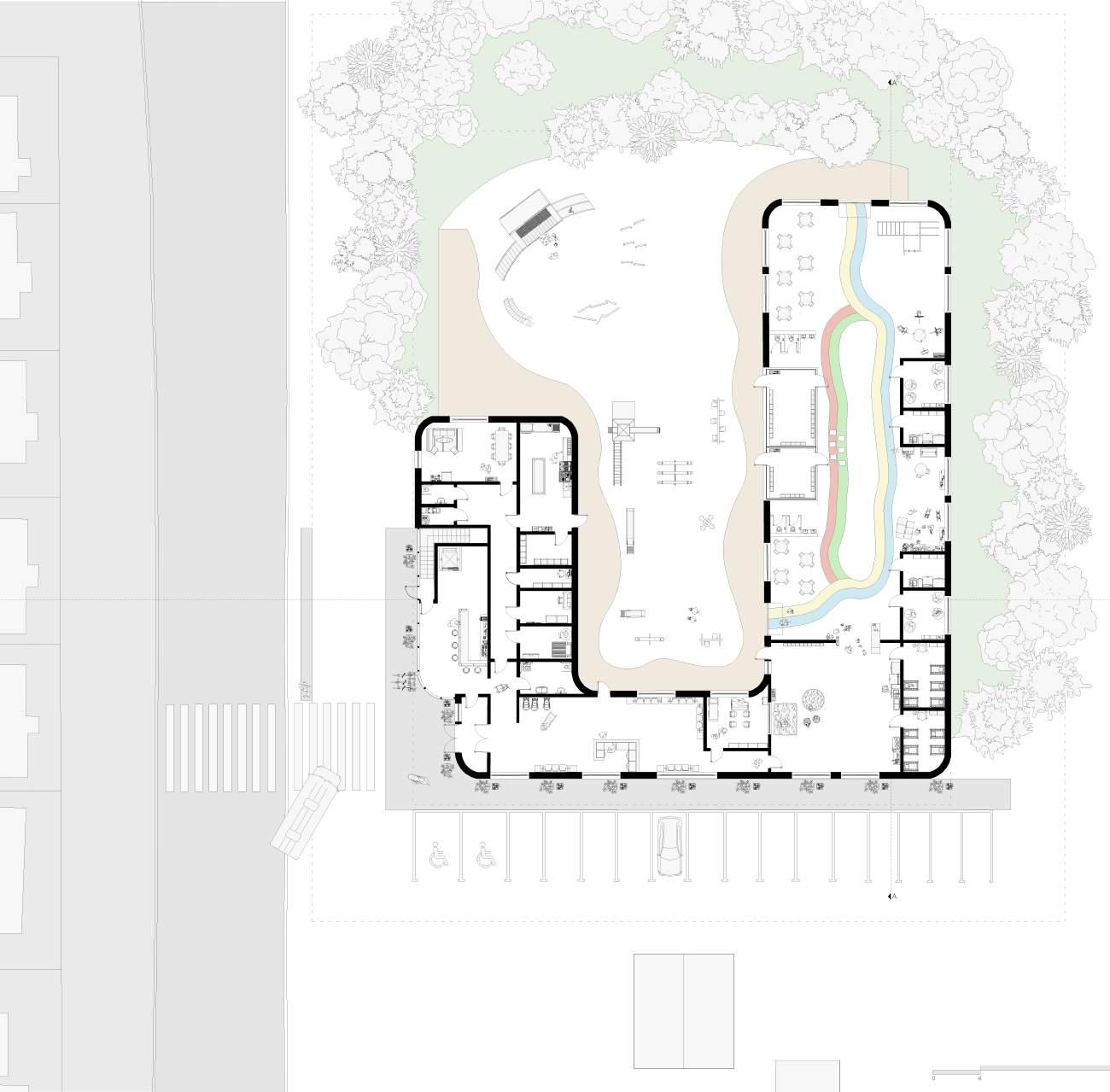
1- The massing begins as a U-shaped enclosure, an arm like embrace, protecting and sheltering the children.
2- Three wings are arranged to reinforce the U-shape, enclosing the play space and strengthening the protective barrier.
3- The mass closest to the road becomes the public wing, while the opposite side forms the quiter learning wing. The building opens toward the tree line, using the forest as a soft protective buffer.
4- The corners were rounded to soften the form, making the building feel more playful and child-friendly
Project Type: Environmental Education Center
Location: Lake Laurentian Conservation Area, Sudbury Course: 2nd Year Studio Semester: Winter 2025
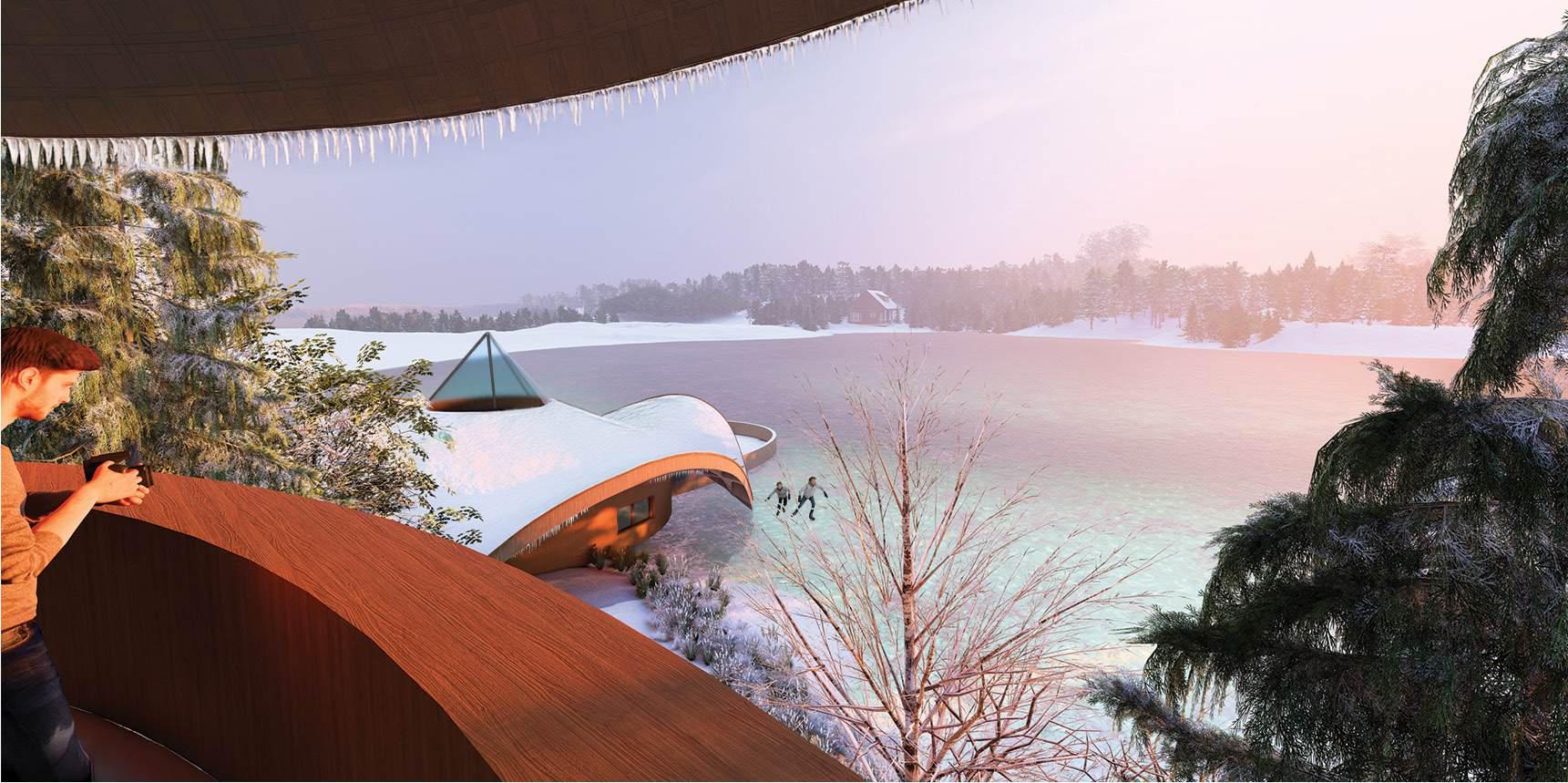
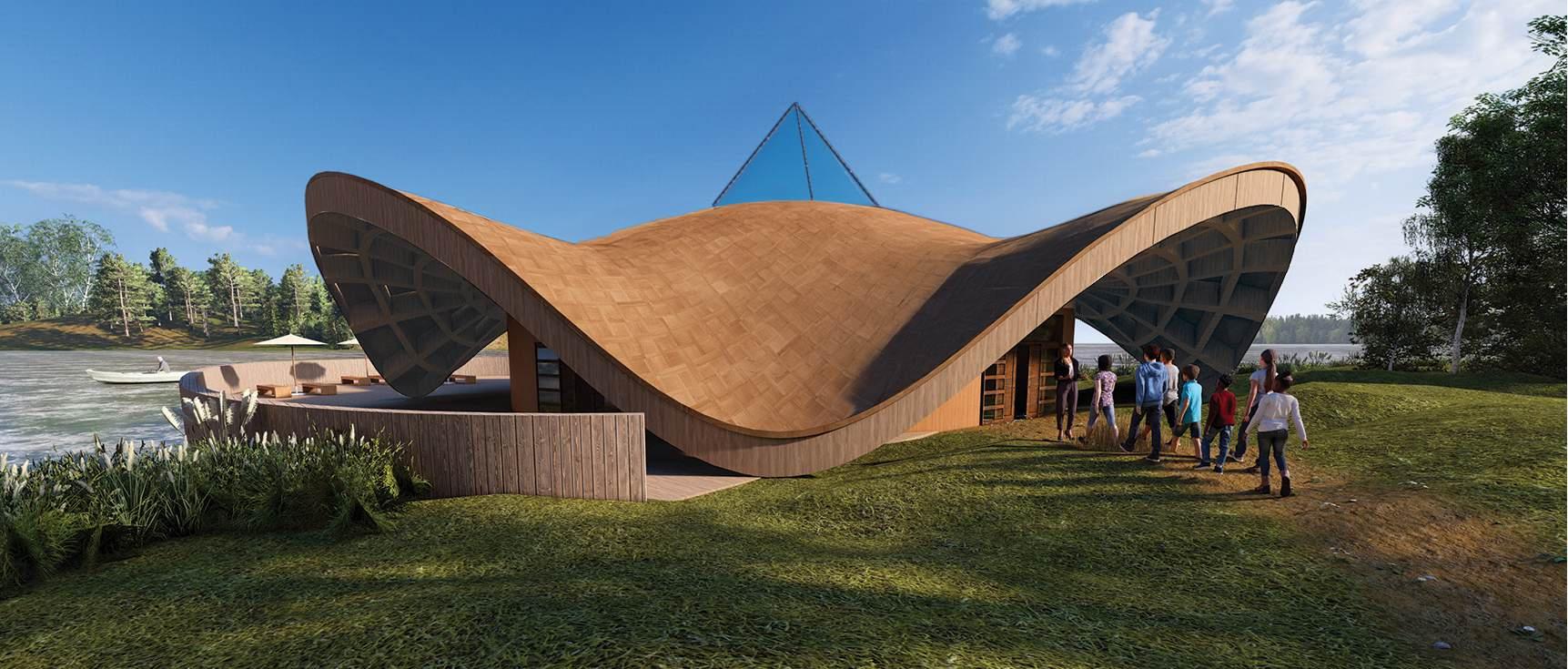
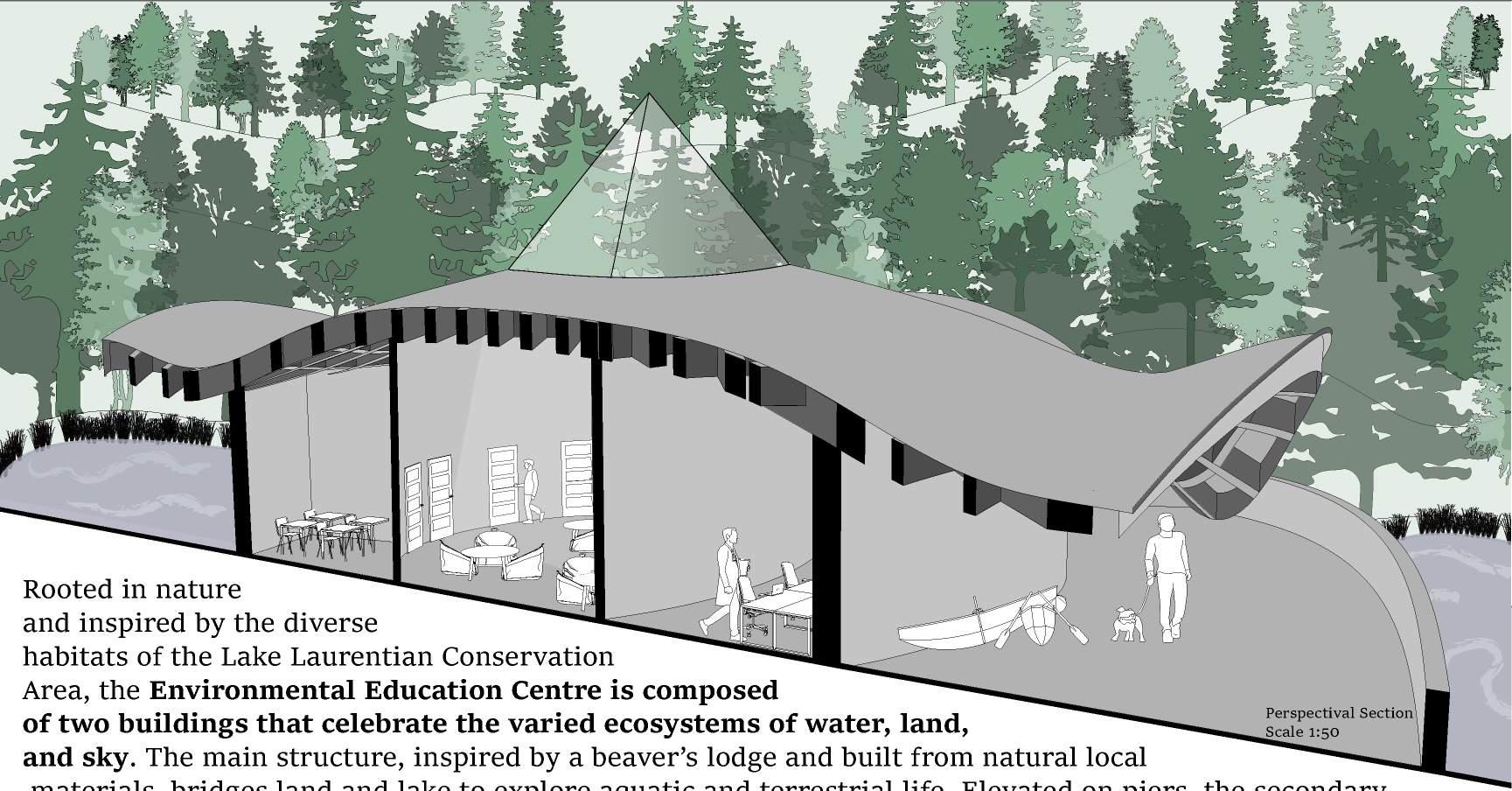
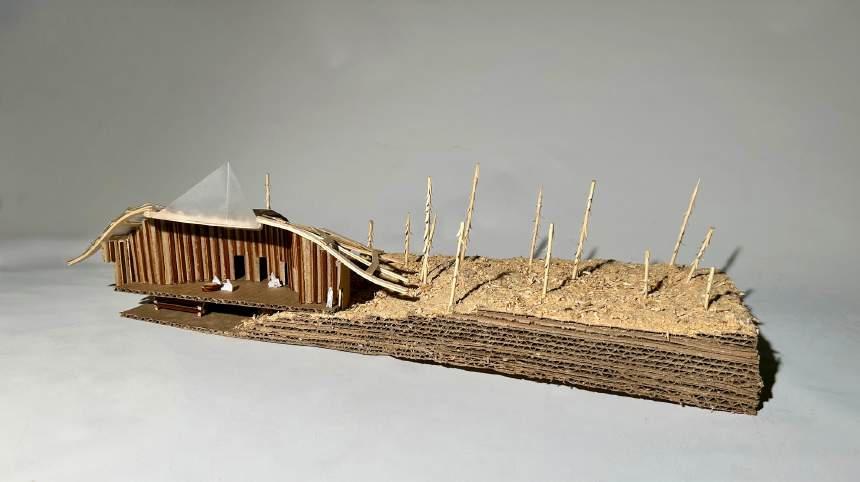
Rooted in nature and inspired by the diverse habitats of the Lake Laurentian Conservation Area, the Environmental Education Centre is composed of two buildings that celebrate the varied ecosystems of water, land, and sky. The main structure, inspired by a beaver’s lodge and built from natural local materials, bridges land and lake to explore aquatic and terrestrial life.
Elevated on piers, the secondary building mimics a bird’s nest, offering an immersive experience of the aerial ecosystem along with breathtaking views of the lake. Together, they invite curiosity, learning, and a deeper connection to the environment.
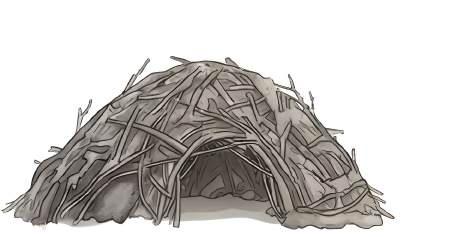
1- The natural structure of the beaver lodge serves as the conceptual inspiration for the main building form.
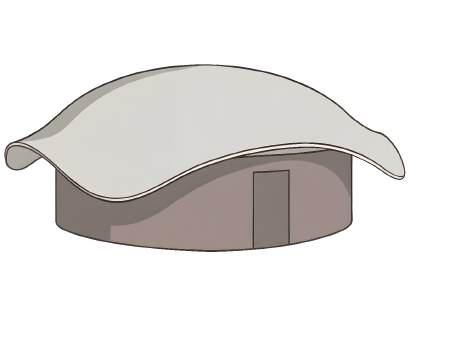
3- The roof expands outward to create a broader canopy that enhances shelter and environmental protection.
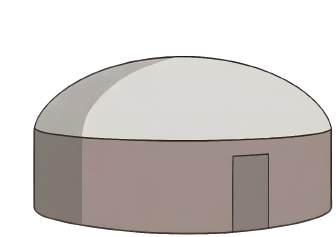
2- The lodge is abstracted into a simple cylindrical structure with a protective domed roof.
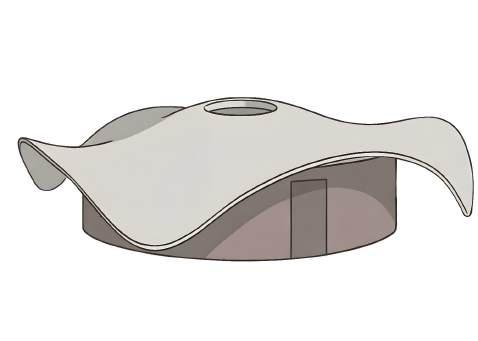
4- The roof transforms into a fluid, organic form that responds to the surrounding landscape while integrating a central
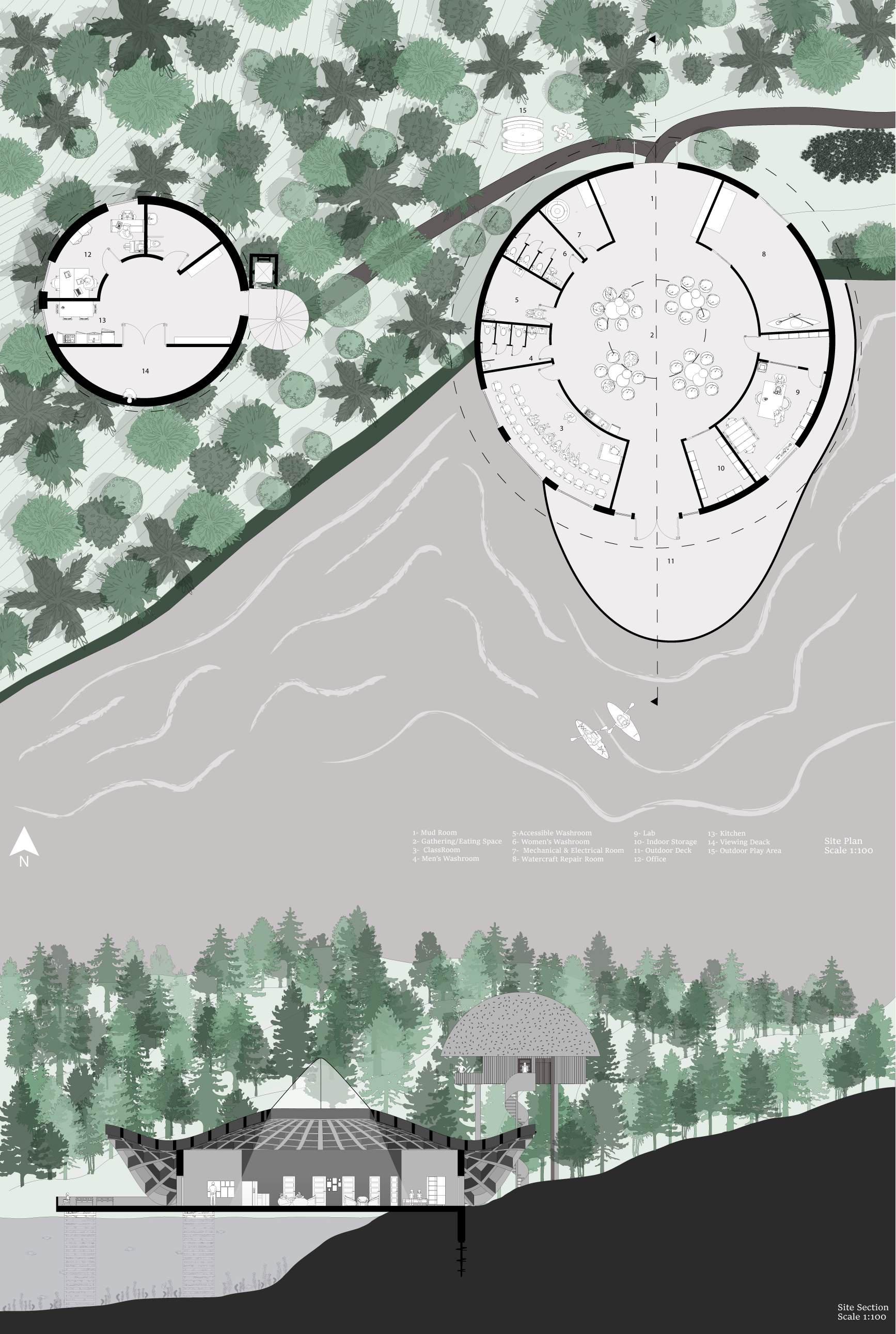
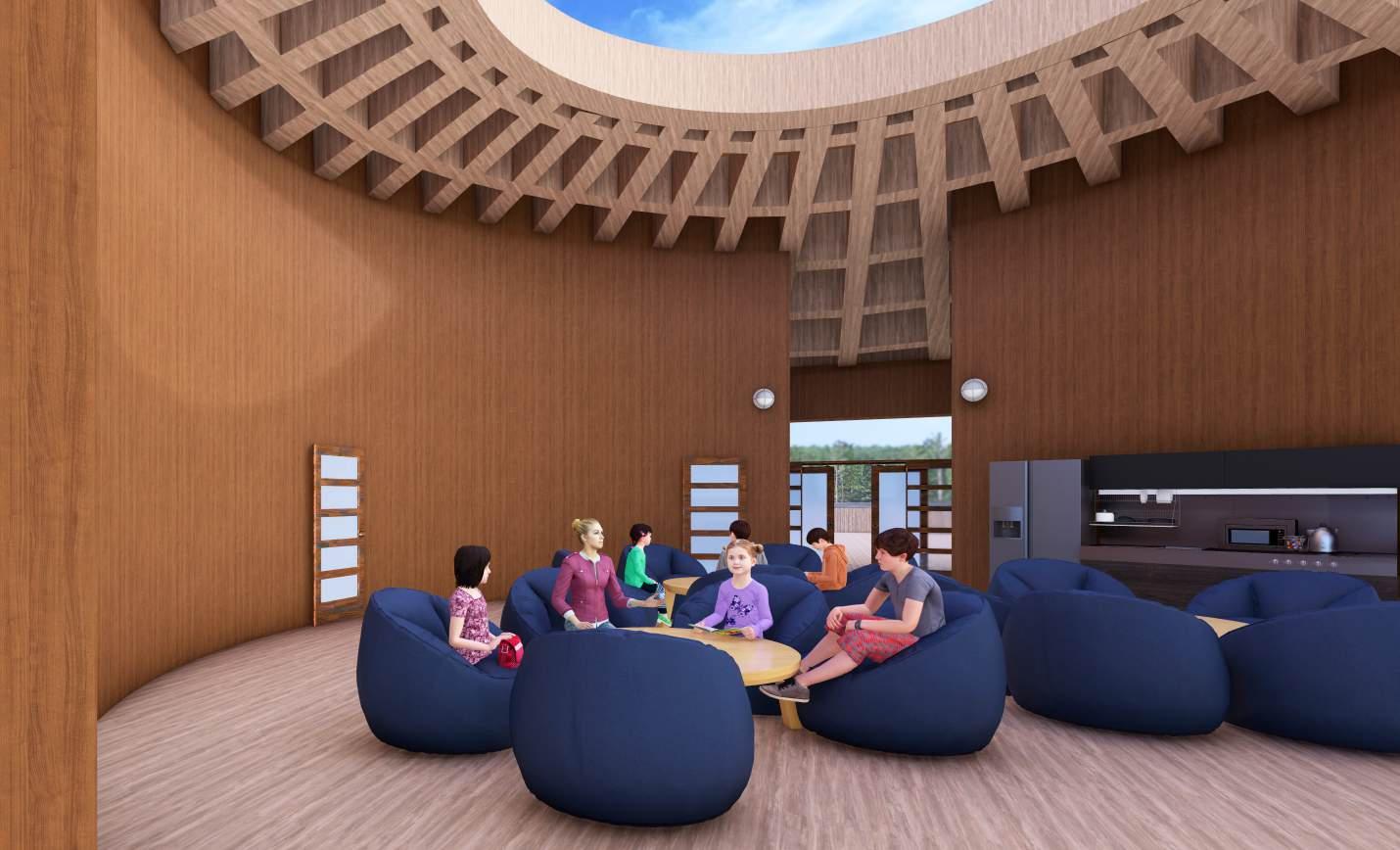
The roof structure is composed of a series of curved glulam timber rafters arranged radially around a central compression ring beam. The ring beam frames the circular skylight and stabilizes the roof by tying the structural members together and distributing loads evenly across the system.
From this central ring, the rafters extend outward to support the flowing roof geometry. Above the structural framework, timber decking and wood cladding form the outer skin of the roof, allowing the structure and materiality to work together in expressing the building’s organic form.
Project Type: Community Sauna
Location: Lake Laurentian Conservation Area, Sudbury
Course: 2nd Year Studio
Semester: Fall 2024
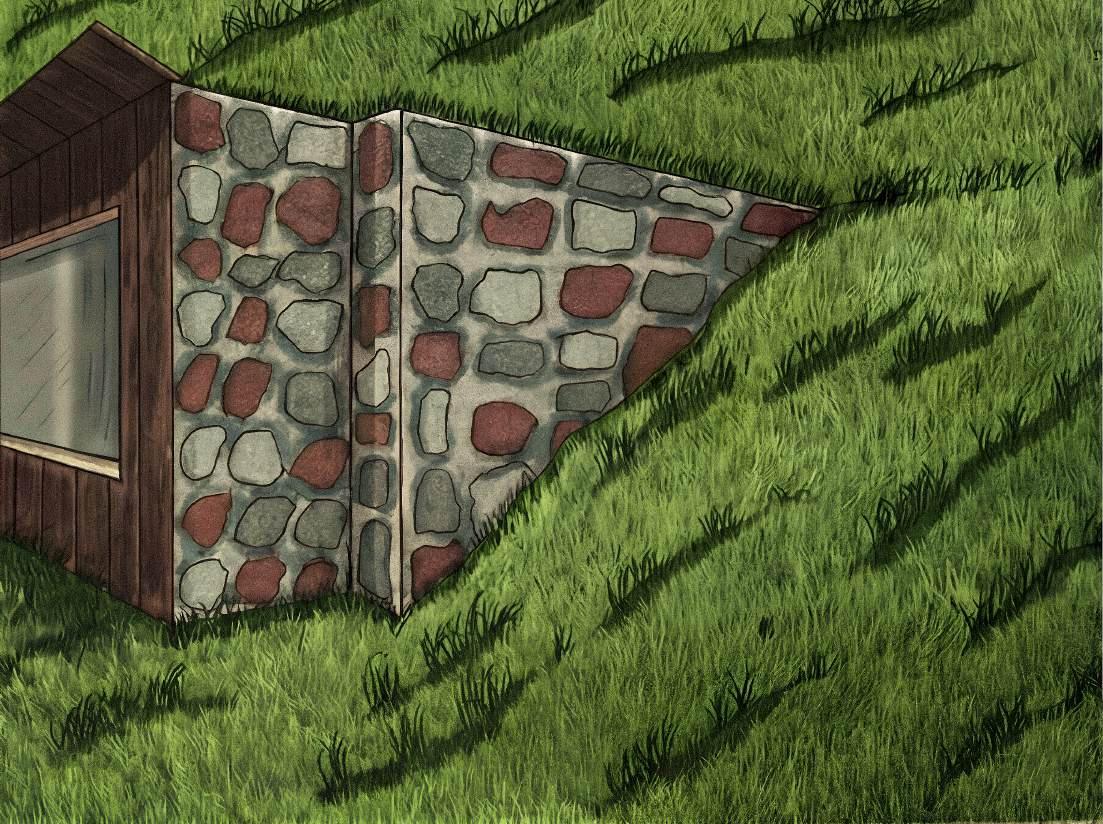
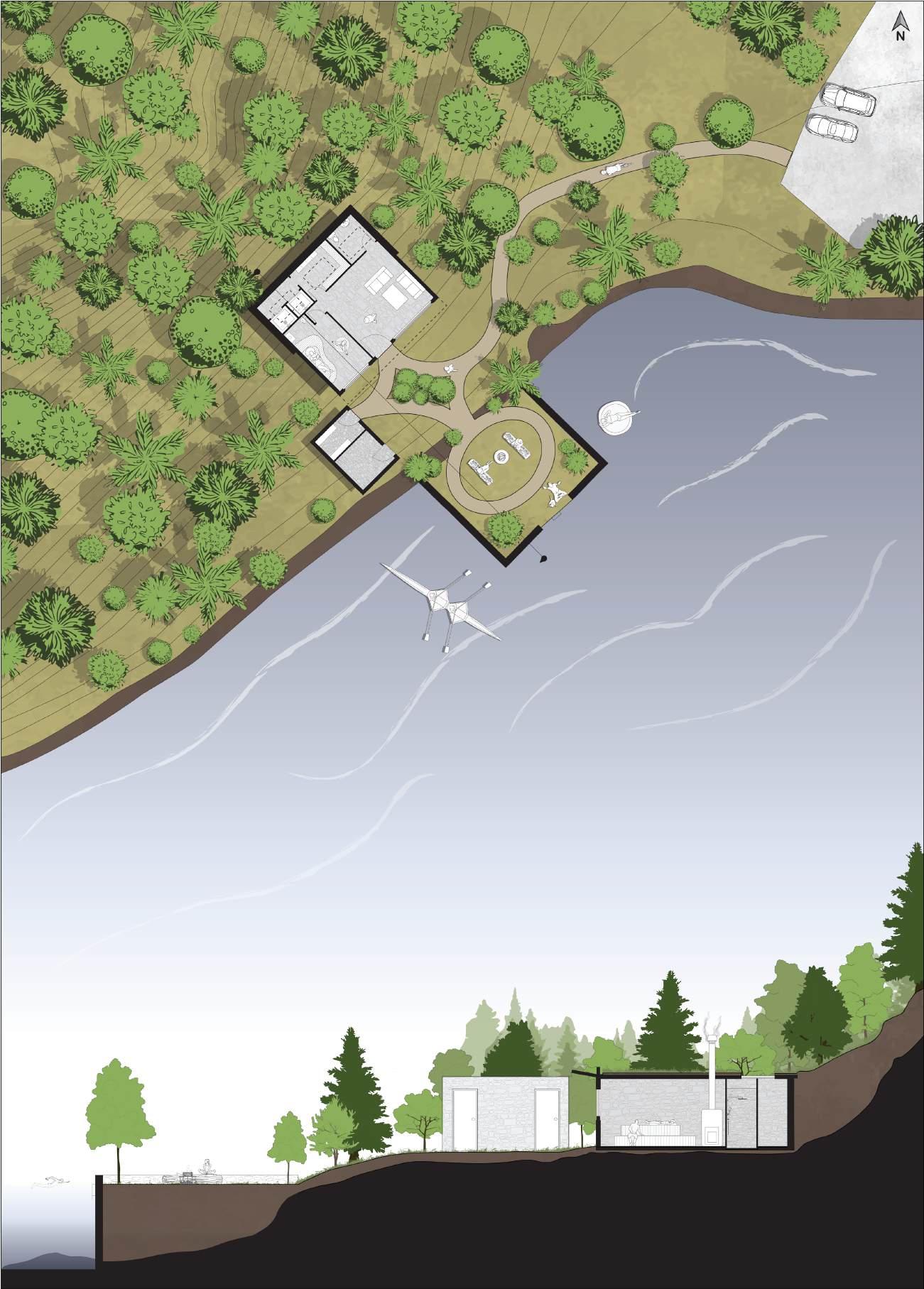
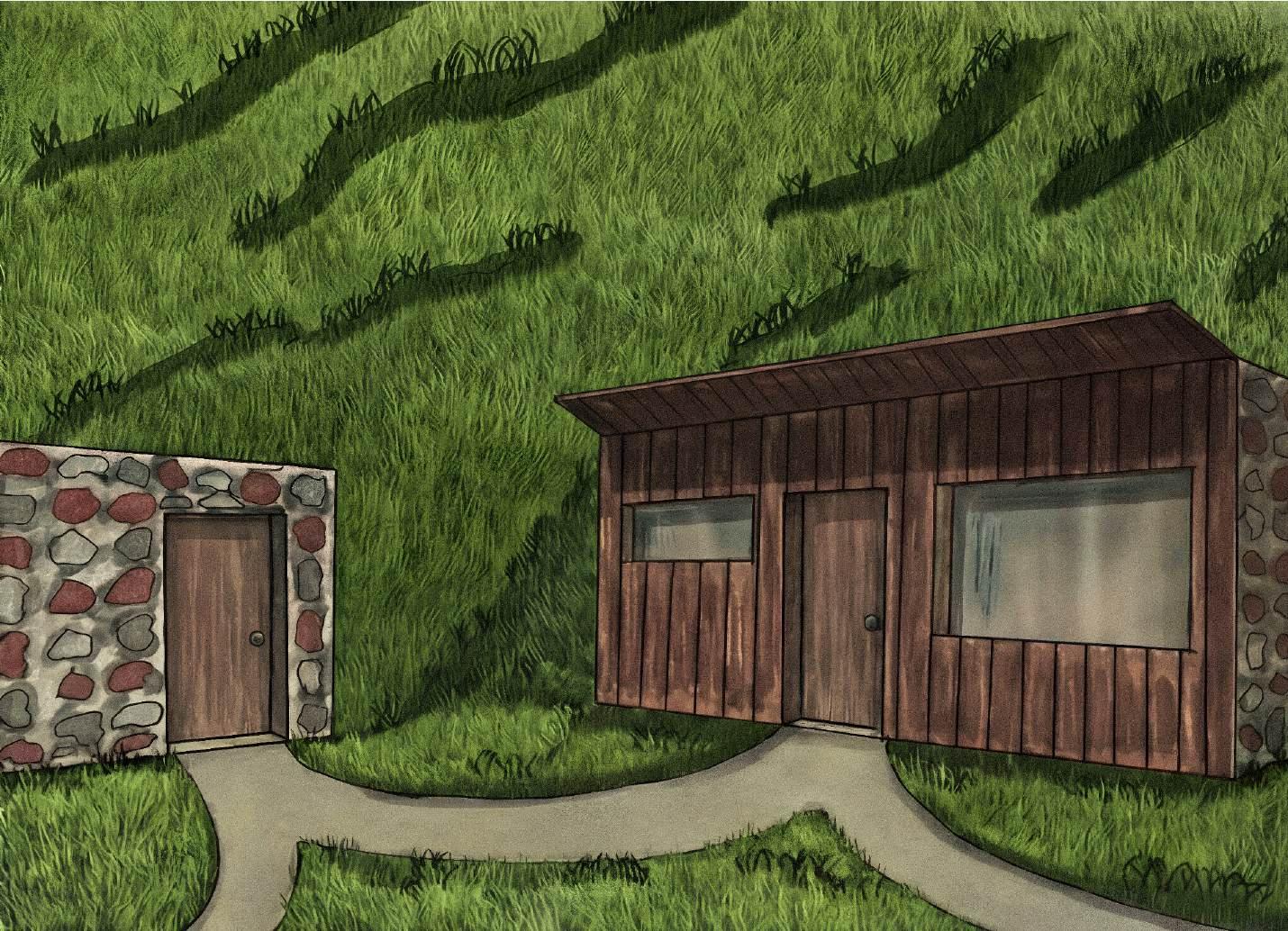
The sauna is conceived as an immersive architectural experience that blends with the surrounding landscape by embedding the building into the hillside. Rather than sitting on the terrain, the structure is carved into the earth, allowing the architecture to emerge from the site while using the surrounding soil as natural insulation for the sauna environment.
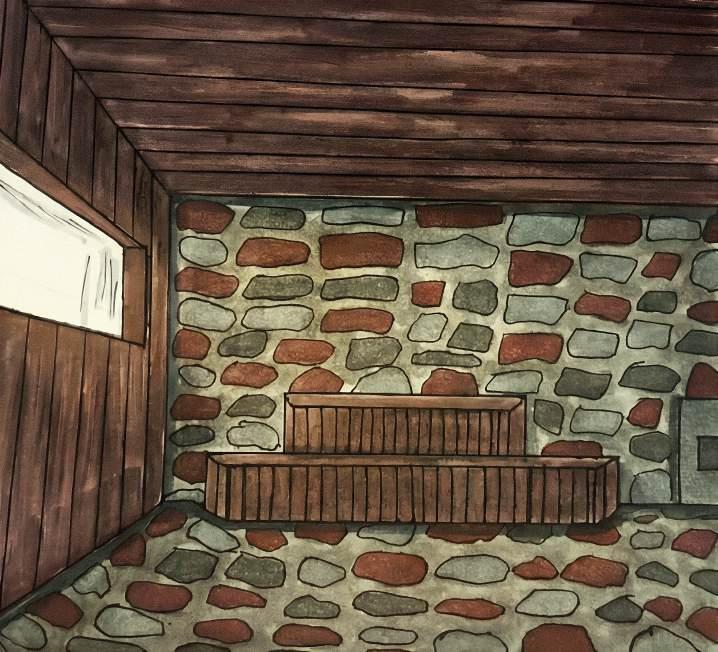
The design follows principles of biophilic architecture, which seek to strengthen the relationship between people and the natural environment. Local natural materials such as stone and wood are used to reinforce this connection, while natural light, surrounding vegetation, and views toward the lake help create a calm and restorative atmosphere.
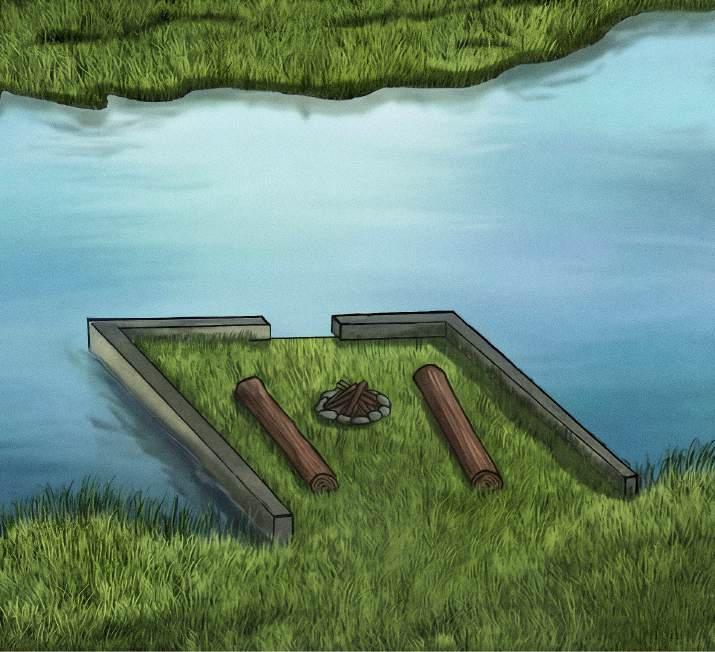
A cut-and-fill strategy further integrates the project with its site. The soil excavated from carving the building into the hillside is reused to create a small lakeside gathering platform, balancing what is removed from the landscape with what is reintroduced through the design.
1- The project begins with the natural hillside condition sloping toward the lake. The terrain and vegetation define the existing relationship between land, water, and the surrounding environment.
2- A portion of the hillside is excavated to carve space for the sauna building. This cut into the terrain allows the architecture to become embedded within the landscape while using the surrounding earth as natural insulation.
3- The sauna structure is inserted into the carved hillside and stabilized with retaining walls that hold the surrounding soil back. The excavated earth is redistributed on site to form a lakeside gathering platform, creating a balanced cut-and-fill landscape strategy.
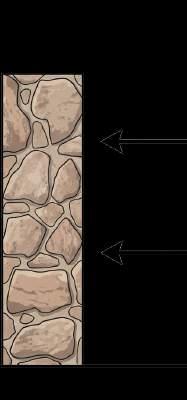
The use of natural stone walls provides thermal mass that absorbs and retains heat over time. This helps stabilize interior temperatures, improving comfort while supporting the sauna’s heating performance, especially during colder seasons.
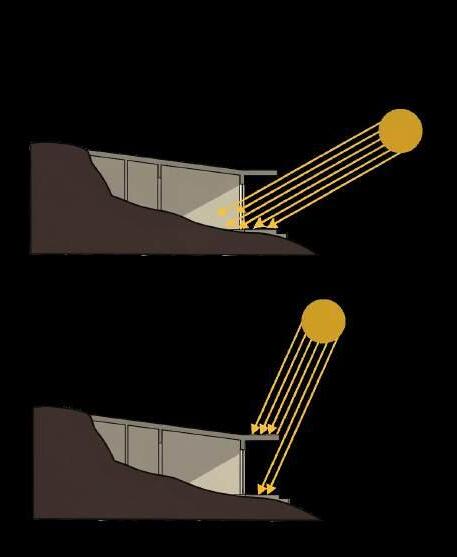
The building is oriented to maximize natural daylight by placing large windows toward the southeast, allowing low winter sun to penetrate deeper into the interior spaces. During summer, the roofoverhang helps block the higher sun angles, reducing excessive solar heat gain while still allowing soft daylight into the building.
Project Type: Teaching Lodge Furniture
Location: Laurentian University Campus, Sudbury Course: 2nd Year Studio Semester: Fall 2024
Craft and Tradition
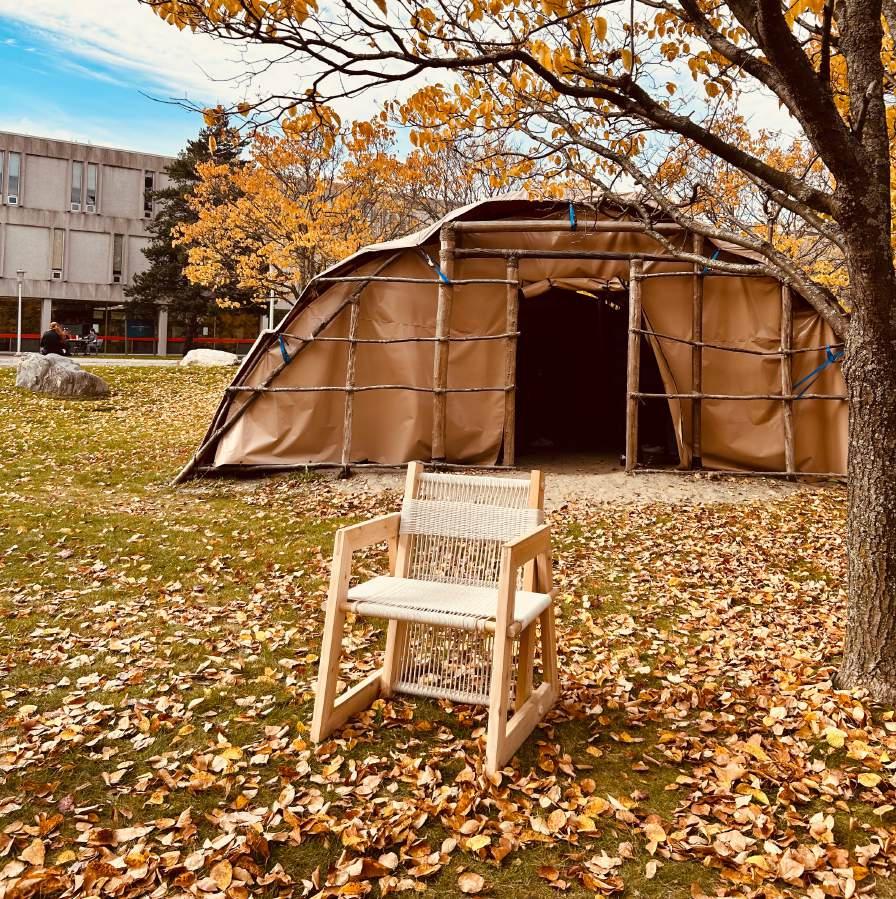
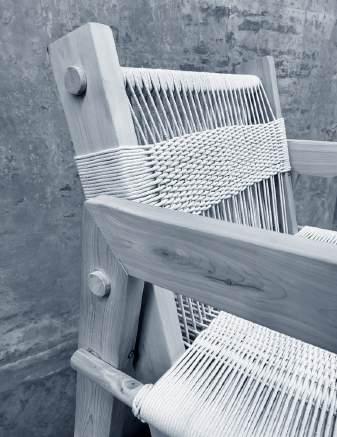
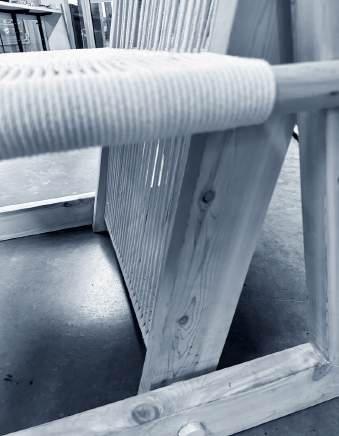
Inspired by traditional Anishinaabe furniture and craft techniques shared by representatives of the Indigenous Sharing and Learning Centre, the chair was developed through a group collaboration and designed to reside within the Teaching Lodge at Laurentian University.
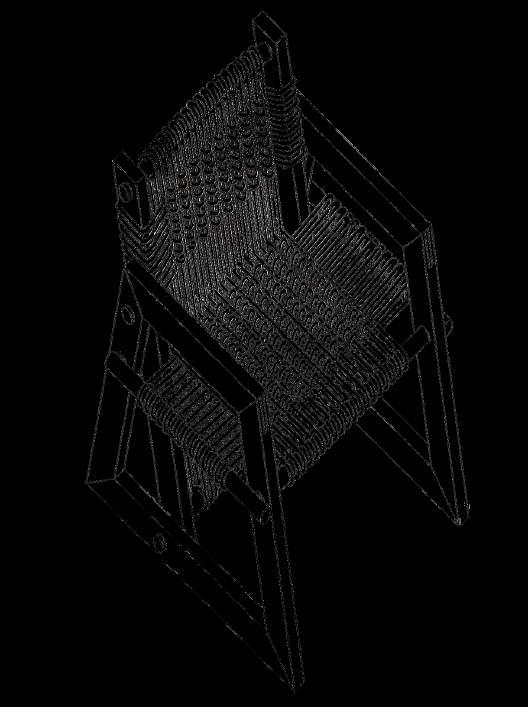
Constructed from eastern white cedar, the design explores Indigenous lashing techniques and biodegradable cord-line weaving to create a loom-like seating surface.
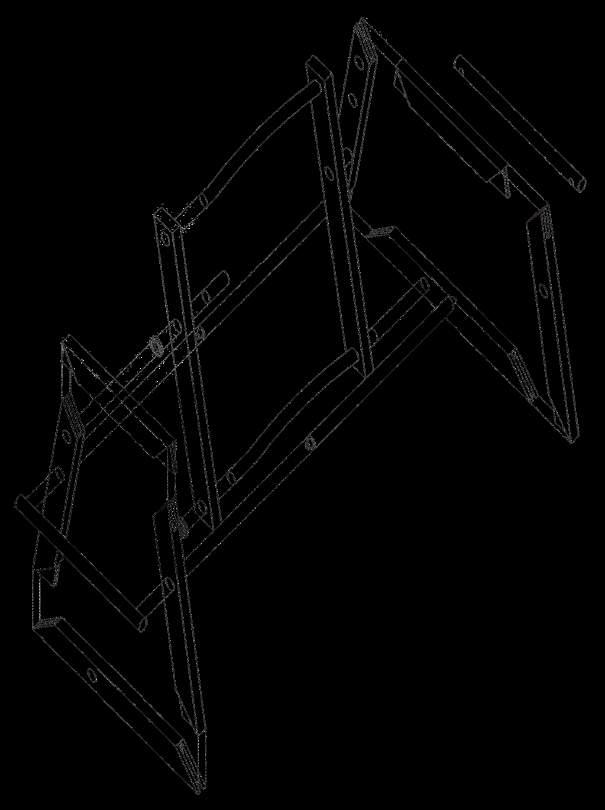
The structure uses angled miter bridle joints, dowels, and circular mortise-and-tenon connections that stabilize the frame while supporting the woven backrest and seat.
Weaving Process Video:
Project Type: Ice Station Installation
Location: Bell Park, Sudbury
Course: 1st Year Studio
Semester: Winter 2024
Framing the Cosmos
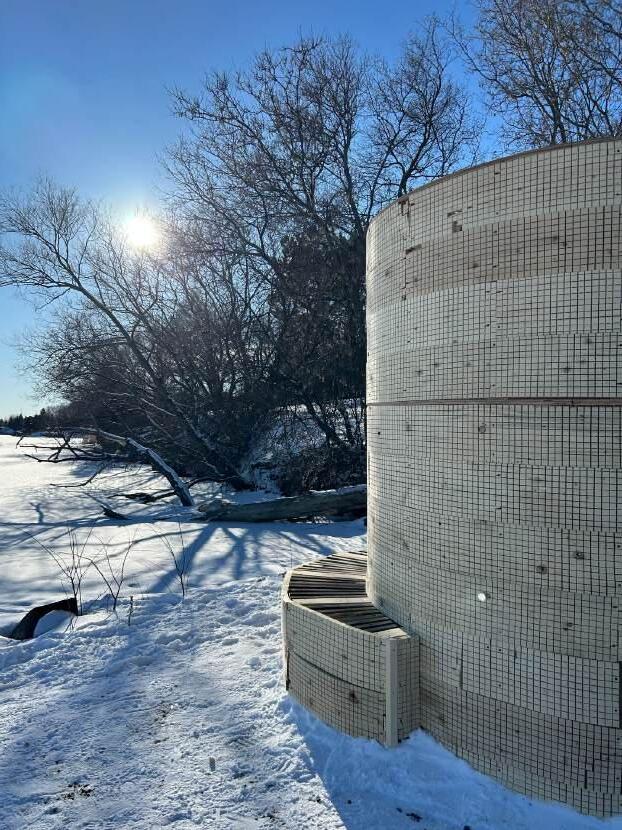
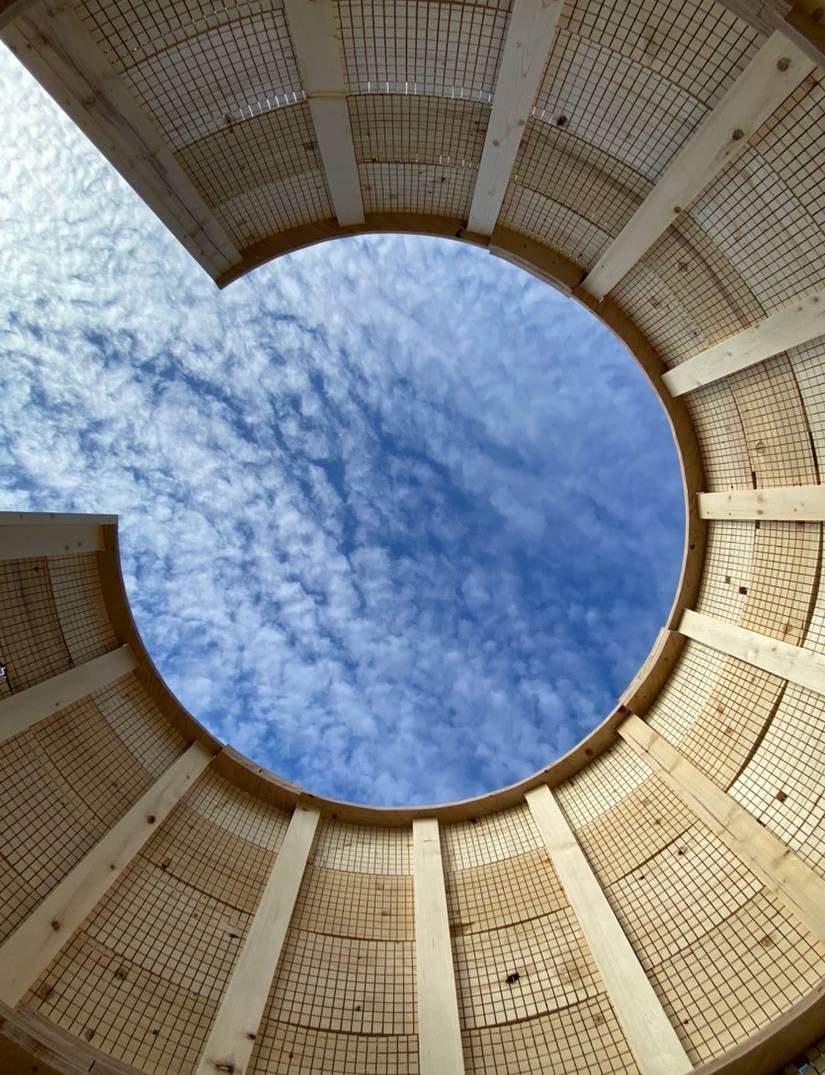
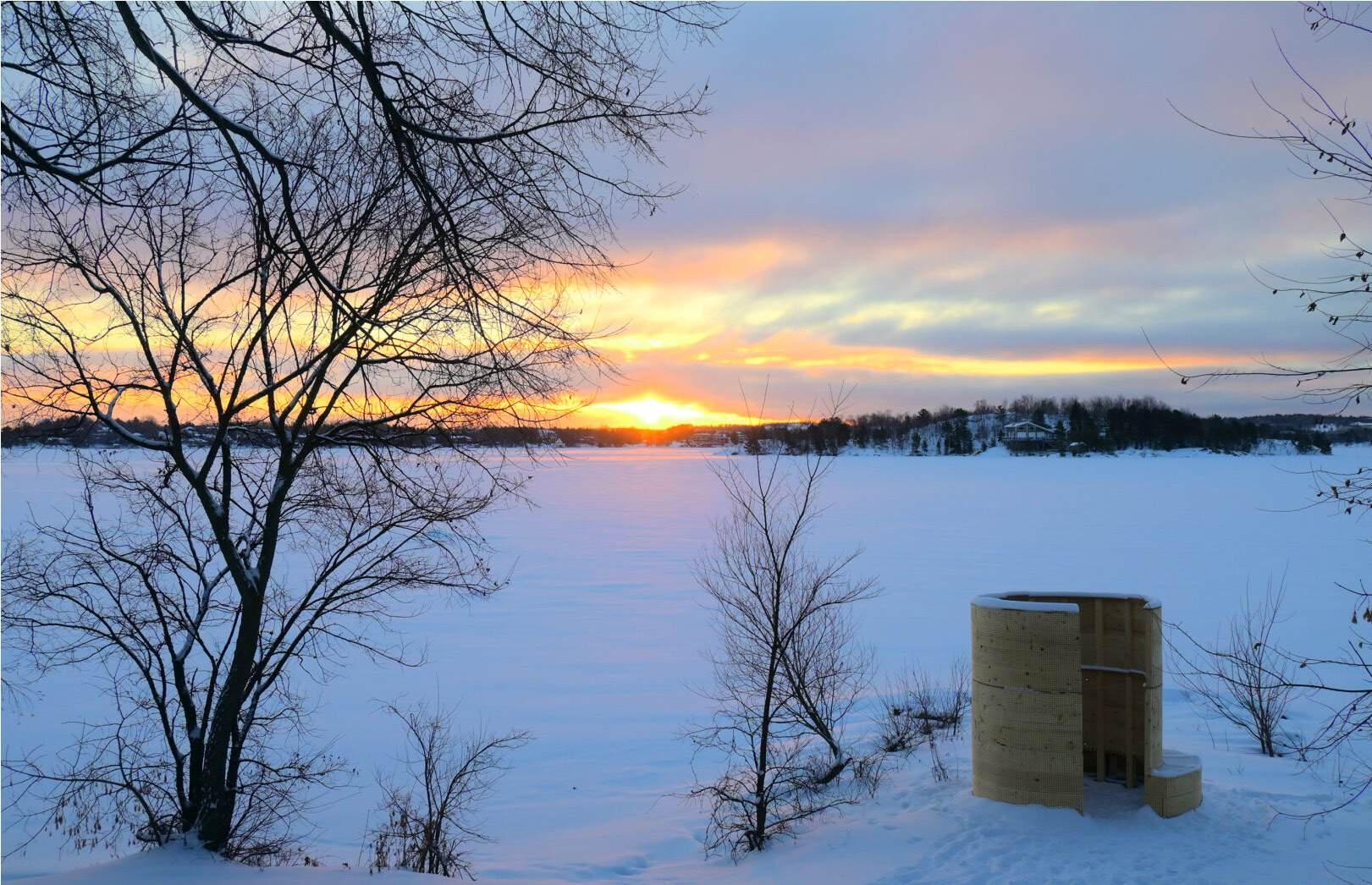
Inspired by the form of decaying leaves, this group-built installation explores the observation of stars through a telescopic structure wrapped in perforated kerf-cut wood cladding. Approximately 9,000 cuts creates a dynamic shell that responds to changing light conditions.
During the day, sunlight passes through the openings to cast shifting patterns within the structure, while at night the apertures frame views toward the sky, encouraging moments of quiet observation.
The kerf-cut technique also introduces a deliberate fragility. The many curved cuts weaken the wooden segments, allowing them to gradually break or weather over time. Rather than being repaired, this process is embraced as part of the installation’s concept, reflecting the cycles of decay
The installation was designed using two offset circular frames forming the interior and exterior benches. This arrangement creates a sheltered space that blocks northern winds while opening toward the south to capture winter sunlight.