Alison Schrag: Remote Coastal Exploration of Hidden Shores

Page 1


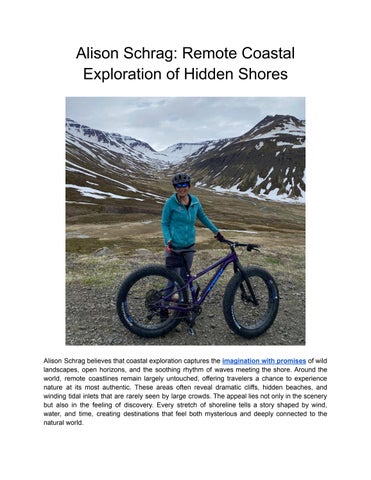
Alison Schrag believes that coastal exploration captures the imagination with promises of wild landscapes, open horizons, and the soothing rhythm of waves meeting the shore Around the world, remote coastlines remain largely untouched, offering travelers a chance to experience nature at its most authentic These areas often reveal dramatic cliffs, hidden beaches, and winding tidal inlets that are rarely seen by large crowds The appeal lies not only in the scenery but also in the feeling of discovery. Every stretch of shoreline tells a story shaped by wind, water, and time, creating destinations that feel both mysterious and deeply connected to the natural world.

Their powerful geology and unique ecosystems define many remote coastal regions Rocky headlands rise above crashing waves while sea caves and natural arches form where water slowly carves through stone These geological features often develop over thousands or even millions of years, creating landscapes that are visually striking and scientifically fascinating. Coastal wetlands and tidal pools also play an essential role in these environments. Small marine creatures, shells, and colorful sea plants thrive in these pockets of water, forming delicate ecosystems that support a wide variety of life.

Wildlife is another defining feature of remote coastal exploration. Seabirds circle high above cliffs, while seals and sea lions gather along quiet beaches In some regions, dolphins can be spotted swimming through clear water near the shore These encounters often happen unexpectedly, making them feel even more memorable. Because many remote coastlines remain protected or difficult to access, they serve as vital habitats for marine animals and birds Responsible travelers who respect these environments help ensure that these species continue to thrive in their natural homes.

Remote coastlines also preserve cultural and historical stories that are deeply tied to the sea Fishing villages, historic lighthouses, and small harbors reflect generations of people who relied on the ocean for survival and trade These communities often maintain traditions that highlight the connection between local culture and the coastal environment. Old maritime routes, shipwreck legends, and weathered docks reveal how important these waters once were for transportation and commerce Exploring these places offers more than scenic beauty It provides insight into the human history shaped by life near the sea.

Adventure is central to discovering remote coastal landscapes. Hiking trails along rugged cliffs offer sweeping ocean views and dramatic natural scenery Kayaking along quiet coves reveals hidden beaches and rocky formations that are not visible from land Even simple walks along the shoreline can uncover treasures such as driftwood sculptures, colorful stones, or unique shells shaped by years of ocean currents These small discoveries add to the sense of exploration that defines remote coastal travel

The emotional impact of these environments often stays with travelers long after the journey ends. Standing beside a vast ocean horizon creates a powerful sense of calm and perspective. The sound of waves, the scent of salt in the air, and the steady movement of tides form a peaceful atmosphere that encourages reflection In remote locations where crowds are rare, visitors can fully appreciate the quiet beauty of nature. These experiences remind people of the importance of protecting coastal ecosystems for future generations

As interest in nature travel continues to grow, remote coastal destinations are attracting explorers seeking meaningful experiences Responsible tourism plays an important role in preserving these fragile environments. Travelers who follow conservation guidelines, support local communities, and respect wildlife help protect the delicate balance of coastal ecosystems Coastal exploration is not only about discovering beautiful places It is about understanding the value of the ocean, the landscapes it shapes, and the communities that depend on it.

Turn static files into dynamic content formats.

Create a flipbook