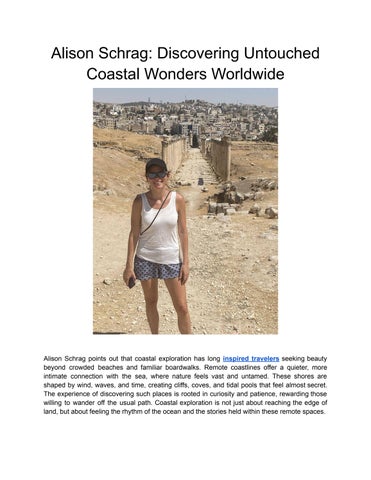
Alison Schrag: Discovering Untouched Coastal Wonders Worldwide

Alison Schrag points out that coastal exploration has long inspired travelers seeking beauty beyond crowded beaches and familiar boardwalks. Remote coastlines offer a quieter, more intimate connection with the sea, where nature feels vast and untamed These shores are shaped by wind, waves, and time, creating cliffs, coves, and tidal pools that feel almost secret The experience of discovering such places is rooted in curiosity and patience, rewarding those willing to wander off the usual path Coastal exploration is not just about reaching the edge of land, but about feeling the rhythm of the ocean and the stories held within these remote spaces
Many remote coastal regions remain largely untouched due to their isolation and rugged terrain Reaching them often requires long drives, boat crossings, or careful hikes along uneven paths. This effort becomes part of the experience, building anticipation and a sense of accomplishment. Once there, the scenery often feels raw and powerful, with crashing waves, open skies, and a silence broken only by seabirds or the tide. These landscapes invite reflection, allowing visitors to slow down and absorb the details that are easy to miss in busier destinations.

The emotional pull of remote coastal exploration lies in its ability to make people feel both small and connected Standing at the edge of a vast ocean can bring humility and calm at the same time The changing light, shifting tides, and endless horizon create moments that feel deeply personal. Many travelers describe a sense of clarity when exploring these areas, as if the sea washes away mental noise This emotional response is one reason why coastal exploration remains a powerful form of travel and self-discovery.
Wildlife encounters are another defining element of exploring remote coasts These areas often serve as habitats for seabirds, marine mammals, and unique coastal plants. Observing animals in their natural environment adds depth to the experience and reinforces the importance of conservation. Respectful exploration helps protect these fragile ecosystems while allowing visitors to appreciate their richness. Coastal exploration encourages awareness of how closely land and sea are connected, and how human presence can impact that balance

Remote coastal regions also carry cultural and historical significance. Many have been shaped by fishing communities, maritime trade, or indigenous traditions tied to the sea Weathered structures, old harbors, and coastal paths reflect generations of life influenced by ocean conditions Exploring these places offers insight into how people adapted to harsh environments and relied on the sea for survival Coastal exploration becomes a journey through both natural beauty and human history, blending landscape with lived experience.
The rise of sustainable travel has renewed interest in lesser-known coastal destinations Travelers are increasingly drawn to places that prioritize preservation and responsible access. Remote coasts often benefit from this mindset, as visitors tend to approach them with care and respect. Choosing eco-friendly lodging, following local guidelines, and minimizing environmental impact help ensure these areas remain unspoiled. Coastal exploration done thoughtfully supports local communities while protecting the natural character that makes these shores special.

Coastal exploration is about discovery in its purest form. It offers the chance to reconnect with nature, experience solitude, and witness landscapes shaped by elemental forces Remote shores remind travelers that beauty does not need crowds or convenience They invite curiosity, reflection, and appreciation for the natural world. As more people seek meaningful travel experiences, coastal exploration continues to stand out as a journey that satisfies both the senses and the soul